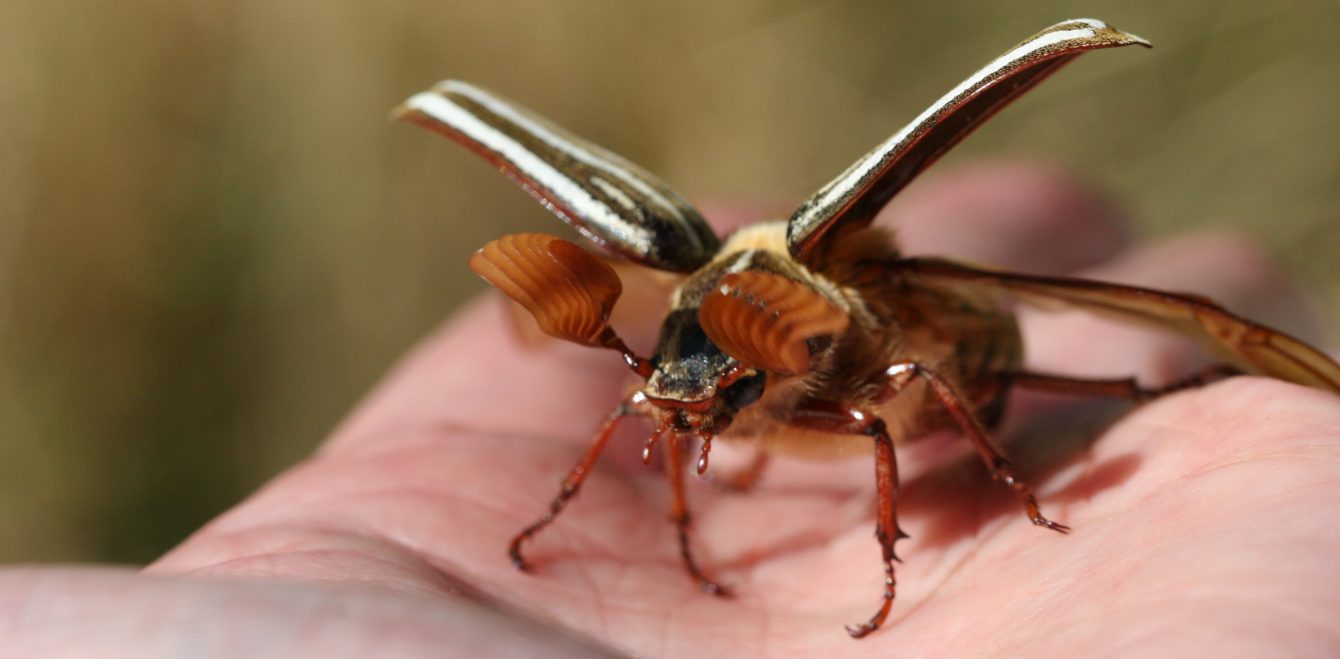
I found a’nutter weevil! They’ve been everywhere this week! Looks like this may be the Nut Leaf Weevil (Strophosoma melanogrammum). These weevils feed on the leaves of broad leafed shrubs. I saw it on a chunk of rotting alder. It was pretty small and tough to photograph in low light. Probably about 3.2 mm in size. San Juan Island, WA October 13, 2021.
The headline, “Spider Bites Woman’s Lip“ popped out in my news feed yesterday. As an entomologist, these bizarre reports are click bait for me. I bit. As I read through the linked piece, my first thought was, “Yes!” Someone was definitely hallucinating!”
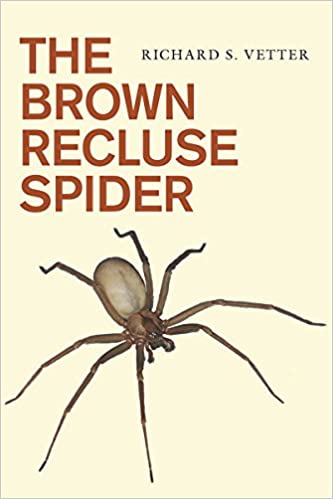
My other knee jerk conclusion is we have doctors who have absolutely no diagnostic skills whatsoever. In reconsidering, he may not be the one at fault though, or at least not entirely. In fact, it would be interesting to hear the physician’s side of this story. Did he definitively state it was a Brown Recluse Bite? Or, did he suggest it “might be?” Are the patient and the Newsweek reporter the ones guilty of the hyperbole here?
It’s got to be fantastic to be featured in Newsweek, right? Please note my sarcasm! The media is a huge problem when it comes to sensationalizing stories and egging on the screaming fear folks have around spiders. You’re welcome to take a look at this story yourself, but please come back because I’m gonna tell you what’s wrong with it!
First off, there is NO spider. No one collected a spider. No one brought a spider to the doctor to ID. Even if there had been an actual spider, since when have physicians become expert taxonomists and actually have the skills to identify arachnids or insects. Strangely, the story reports the woman didn’t even think much about the bite when it happened. Her words. Not mine. I really wonder about this mystery “spider.”
Secondly, the bite occurred, I presume, when she was paddling her kayak through a waterway. Brown Recluse spiders don’t make webs in the air, and certainly not over the water like that. Of course, I suppose it is possible for a spider to have been in the kayak, crawled up her legs and torso, and then crawled all the way up to her face where it bit her on the lip. You’d think she would have seen it. Also, Brown Recluse spiders like to live with other Brown Recluse spiders, so it’s difficult to imagine not finding a spider somewhere in the kayak to bring to the doctor.
Third. Lots of things can cause spider bite-looking lesions. I’m surprised the doctor declared it a Brown Recluse bite. There is no test to diagnose that someone has been bitten by a Brown Recluse. Again, no spider was brought in, so why was this deemed a spider bite when it could have been numerous other things? For instance, UC Riverside’s Department of Entomology webpage about Brown Recluse Spiders states,
“The following can cause lesions similar to the lesion from a bite of a Brown Recluse spider …mites, bedbugs, a secondary Staphylococcus or Streptococcus bacterial infection and “Three different tick-inflicted maladies have been misdiagnosed as brown recluse bite: Lyme disease, Rocky Mountain Spotted Fever and the bite of the soft tick, Ornithodoros coriaceus. “
What about her hallucinations? My first thought was she has had an outbreak of a herpes lesion and could have developed herpes simplex encephalitis. Please DO look this up! I did. It’s one of the side effects of getting a nasty cold sore. https://rarediseases.org/rare-diseases/encephalitis-herpes-simplex/
Now, I’m not a doctor. I didn’t take this woman’s medical history. I’m just pointing out some OTHER possibilities. Possibilities that are actually much more likely than the sensationalized over-reaching claim it was a Brown Recluse spider. Hmmmm… Hysteria and hyperbole. I hope she recovers, and I hope she will be able to kayak again soon. I just wish there was a way to stop the inevitable slaughter of innocent spiders that will ensue. It’s a shame.
***Note*** We do NOT have Brown Recluse Spiders in the San Juan Islands. Please take a look at the attached distribution map and show it to anyone who tries to convince you otherwise. https://spiders.ucr.edu/spiders-map
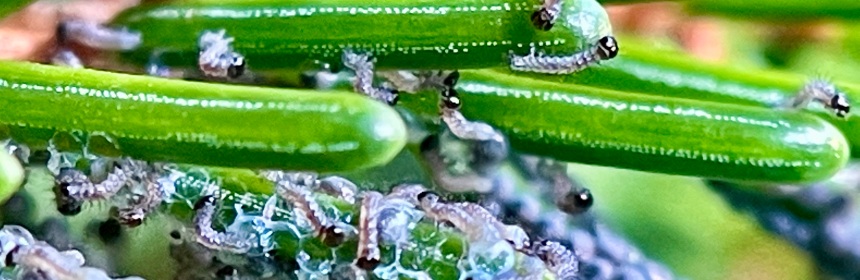
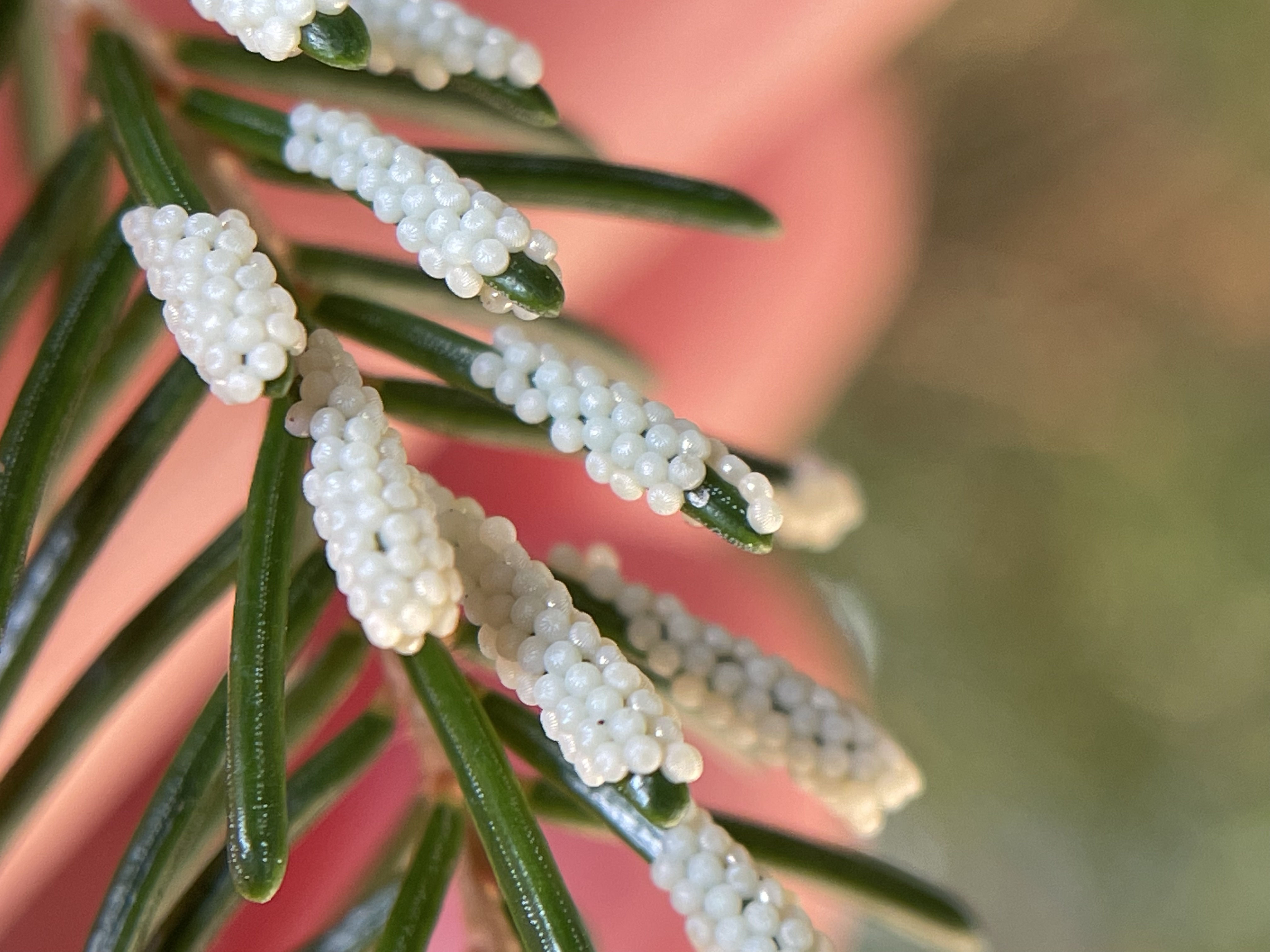
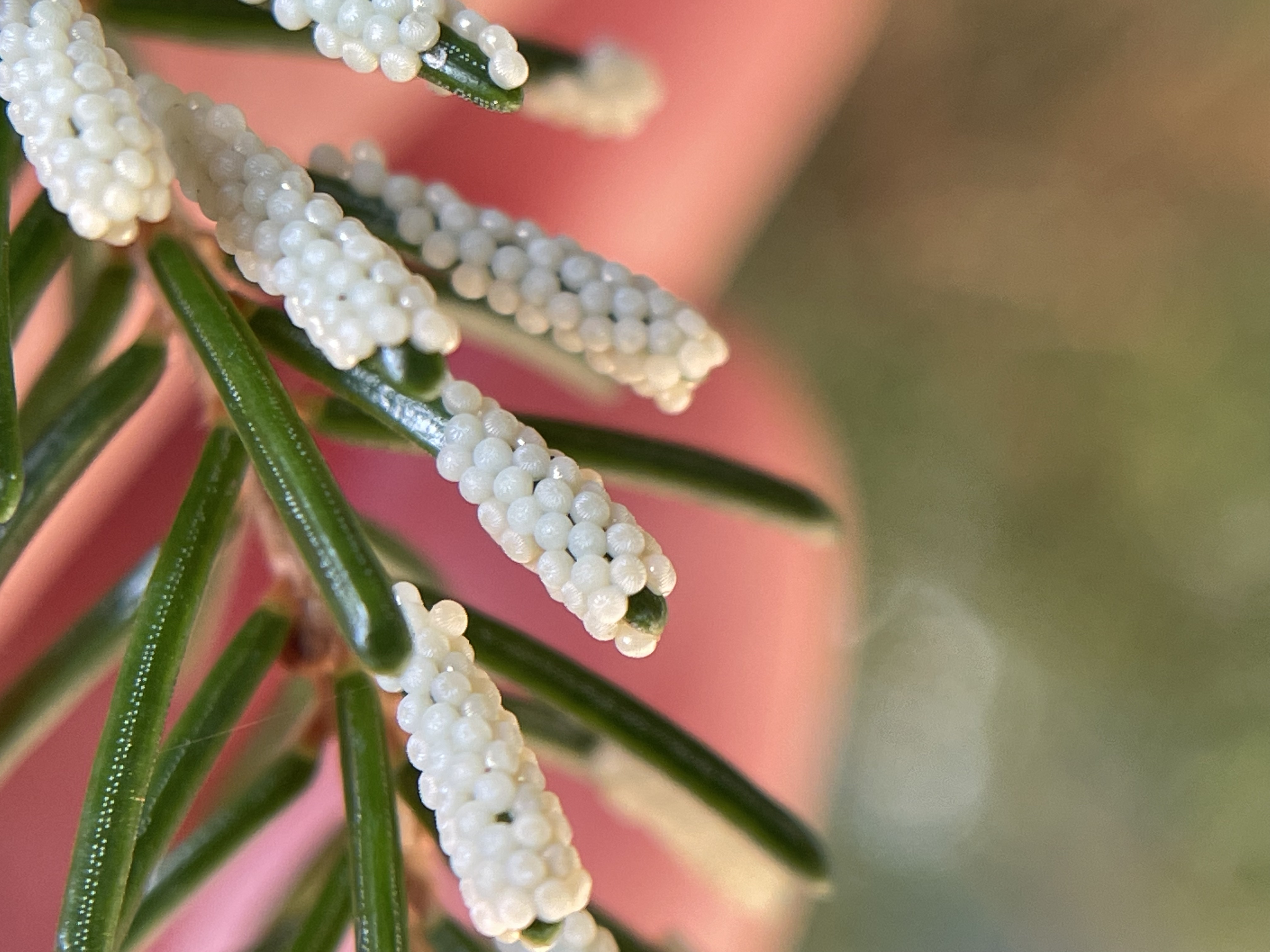
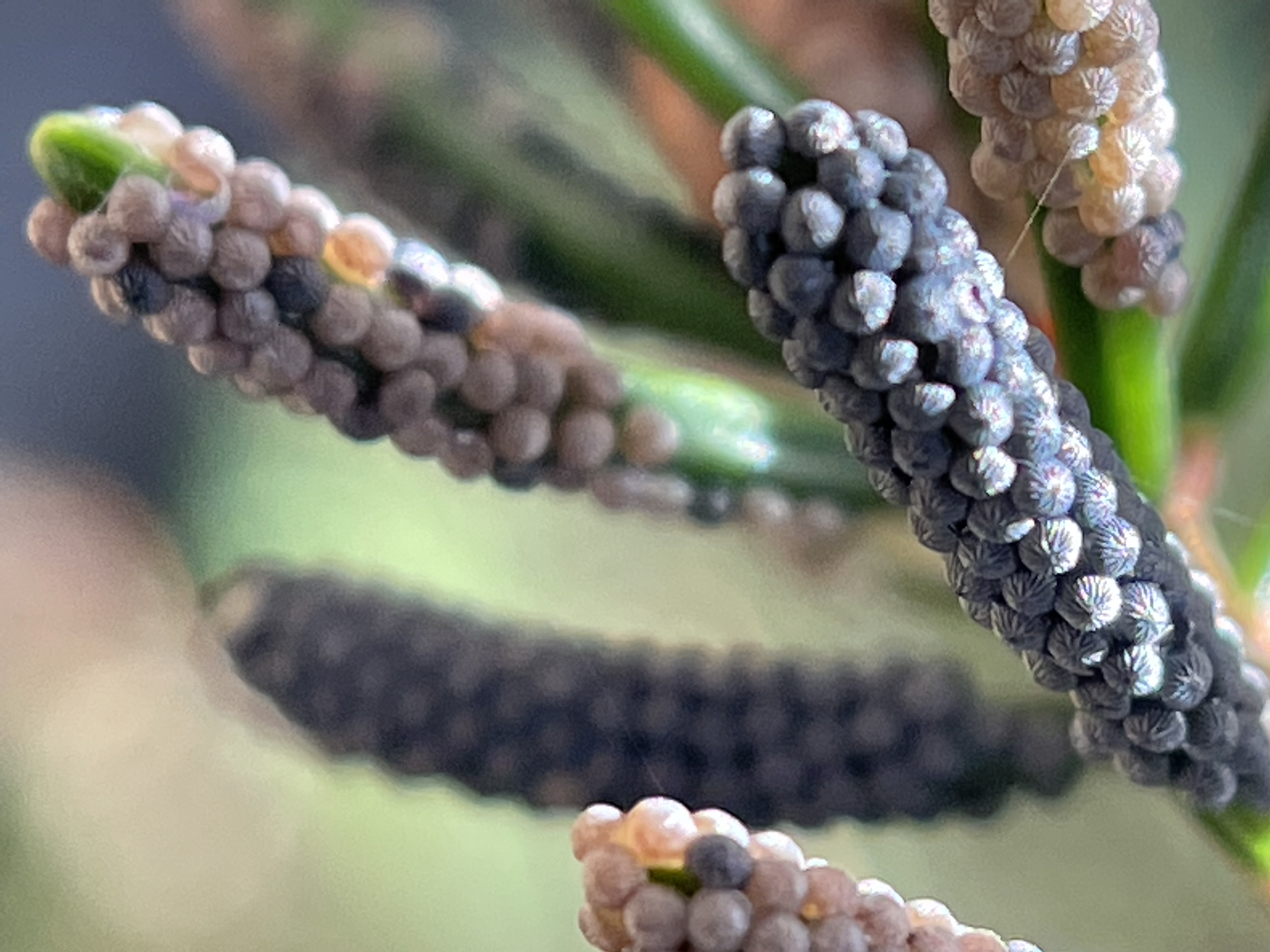
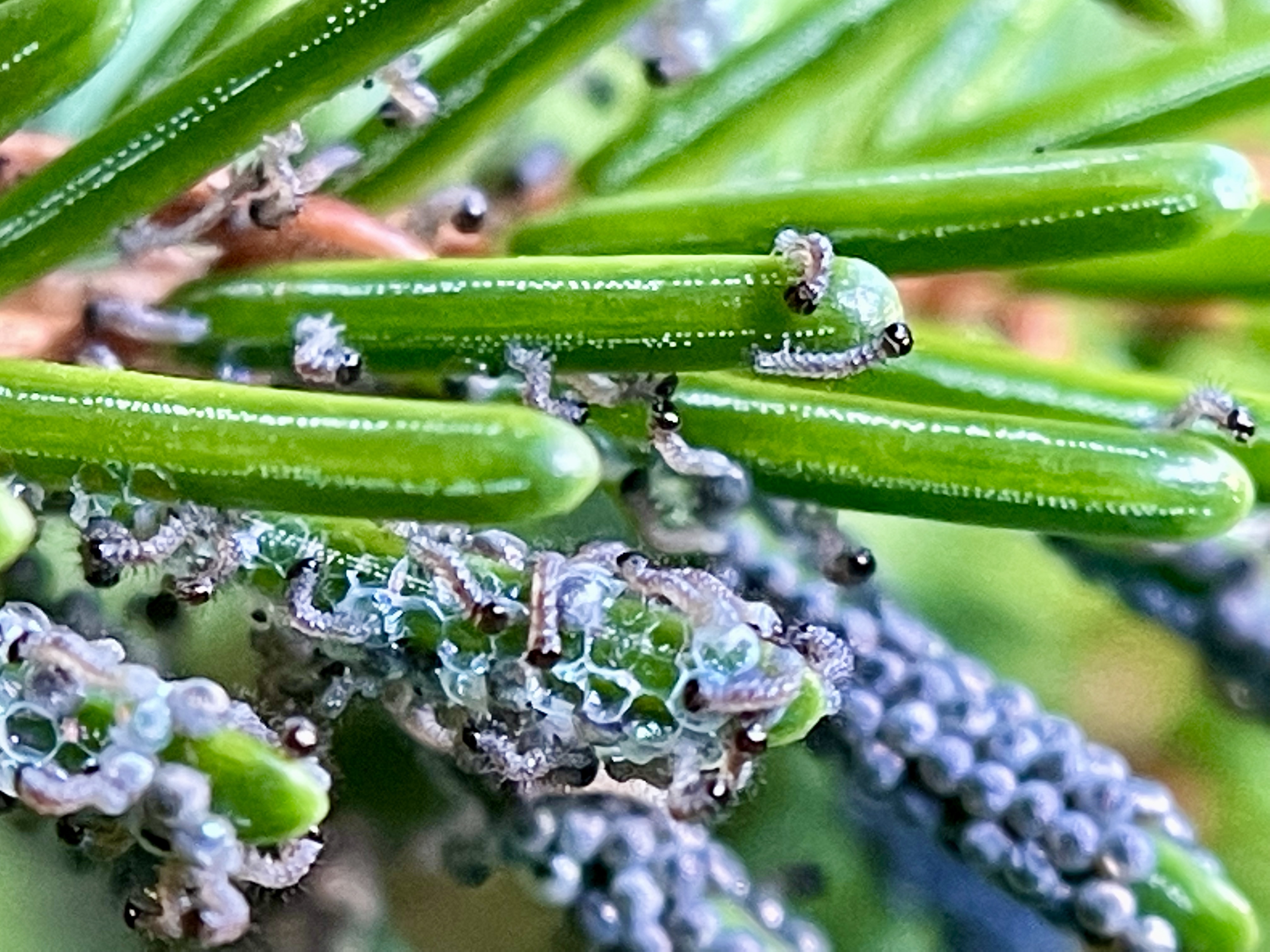
Well, I was wrong in my theory about these possibly being Nepytia phantasmaria orPhantom Hemlock Loopereggs, so my next steps will be to review all my moth photos from early September to try and thread out any other possibilities. That may take some time. Initial observation (date eggs laid) was Sept. 12, 2021. Today is Oct. 7, 2021. They are indeed pretty tiny and if you look closely, you can see the caterpillar body rolled up in the eggs that haven’t hatched. The tree is a Caucasian Fir (Abies nordmanniana).
eggs on Caucasian Fir, San Juan Island, WA 09.12.2021eggs on Caucasian Fir, San Juan Island, WA 09.12.2021Eggs darkening – September 18, 2021 San Juan Island They hatched! Oct. 7, 2021
Mystery moth eggs hatch – October 7, 2021
Thanks for reading! Stay tuned for further updates. I’ll do my best to figure out an ID for these. 🙂
Last month I held my 2nd annual virtual event, “September Spider Sleuthing in the San Juans.” Little did I know it would turn out to be so popular. Even the Journal of the San Juan Islands interviewed me. One of the questions asked was, “What led me to create the event in the first place?” Let me answer that for you.
Well, I happen to be an entomologist (someone who studies insects), but after living here for twelve years, I’ve come to LOVE the diversity of spiders that share our islands. I want to help others understand how important spiders are in our ecosystem and dispel some of the unfortunate and undeserved myths associated with our eight-legged friends.
This week, the spider sleuthing continues, albeit informally. I received some emails about spiders, and actually had two folks drop off spiders at my husband’s office in little cups for me to take a look at. “What ARE these?” inquiring minds wanted to know.
One was a suspected Black Widow that turned out to be a look-a-like False Widow (Steatoda grossa). While instinctively protective of the little sack of clustered eggs laid in a matrix of messy web in the plastic cup, I could sense she was alarmed. I was able to remove the lid and take a few photos without disturbing her too much. For now, she remains in the plastic cup. I may relocate her and her egg sack to our greenhouse tomorrow. Steatoda grossa spiders are not medically significant to humans. She’s a friend. Her presence helps keep the actual black widow spiders from colonizing our homes.
Steatoda grossa spider with egg sackSteatoda grossa spider with egg sackSteatoda grossa spider with egg sackSteatoda grossa ventral view
The other cup held two spiders. All I knew ahead of picking them up was they were presumed deceased. One of those two spiders moved ever so slightly when I opened the lid. Where there is movement, there is LIFE! I was mesmerized with this spider, a Woodlouse hunter (Dysdera crocata). After photographing this beauty, I set it free in our stack of cut wood that doubles as a fence along the edge of our property. It will find plenty of isopods in the forest floor and the wood will double as a nice winter home with all its nooks and crevices. Woodlouse hunters are also harmless to humans. Consider them friendly!
Woodlouse Hunter (Dysdera crocata)
Dysdera crocata
The last poor little soul was unfortunately frozen after it was collected. Yes, I opened the lid knowing this, but imagining movement, and hoping that maybe it hadn’t been frozen long enough to kill it. I don’t personally enjoy killing bugs. They’re much more interesting to me alive. I took the post mortem photos, but I’d have preferred being able to resurrect it.
Callobius severus
This sweet little dude is a Hackelmesh Weaver. His scientific name is Callobius severus. He’s harmless (a friend). He was only trying to find a mate. Male spiders often wander this time of year in search of a female. Look at those little palps! Those are the organs the male spider uses to transfer sperm to the female. They looks like little paws…or maybe tiny furry boxing gloves. I’m sorry this fella didn’t find a friend. May he R.I.P.
The social media giant we all have become overly dependent on in recent years, had a big, giant F-A-I-L today. The entire site was down. I couldn’t share bug photos or look to see what crazy or amazing things my friends had been up to. I also couldn’t watch the fabulous video of the frog and bearded dragon that I’ve been replaying over, and over, and over because it’s so DARN cute! You can find it on Tik Tok if you can’t find it on Facebook.
In the void, I resorted to the fail safe backup. It’s called E-mail. I really feel old because I actually remember how we communicated before the advent of cyberspace – handwriting letters that you put a stamp on and eventually were delivered by USPS.
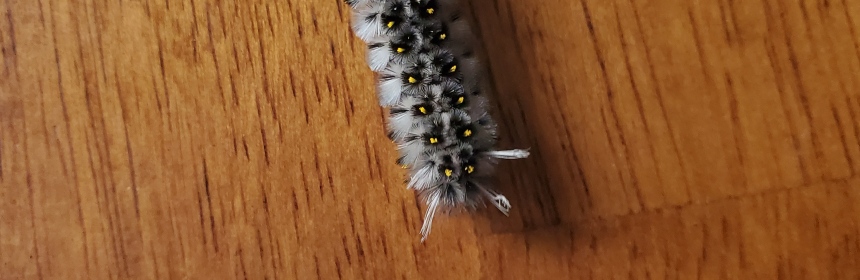
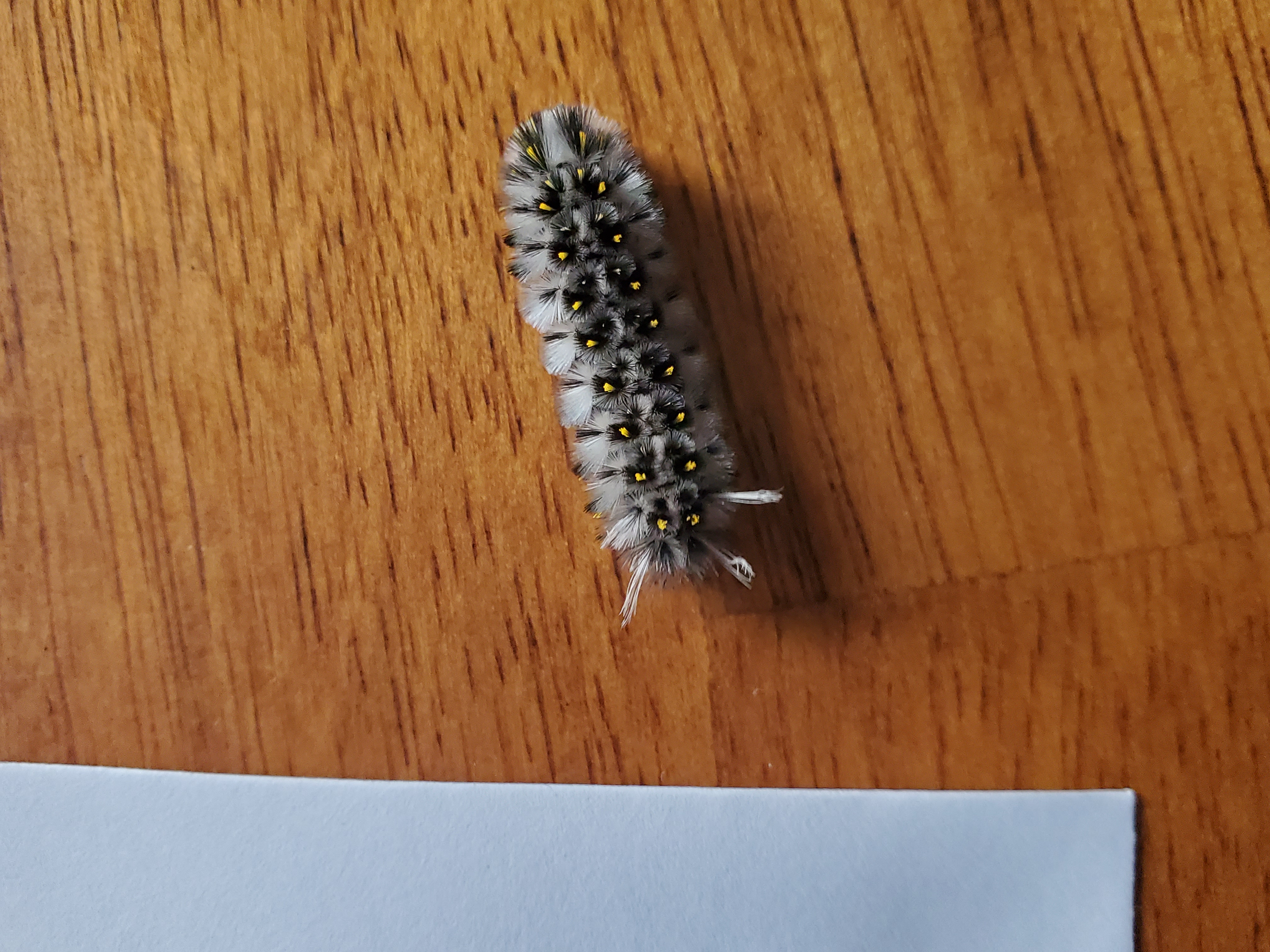
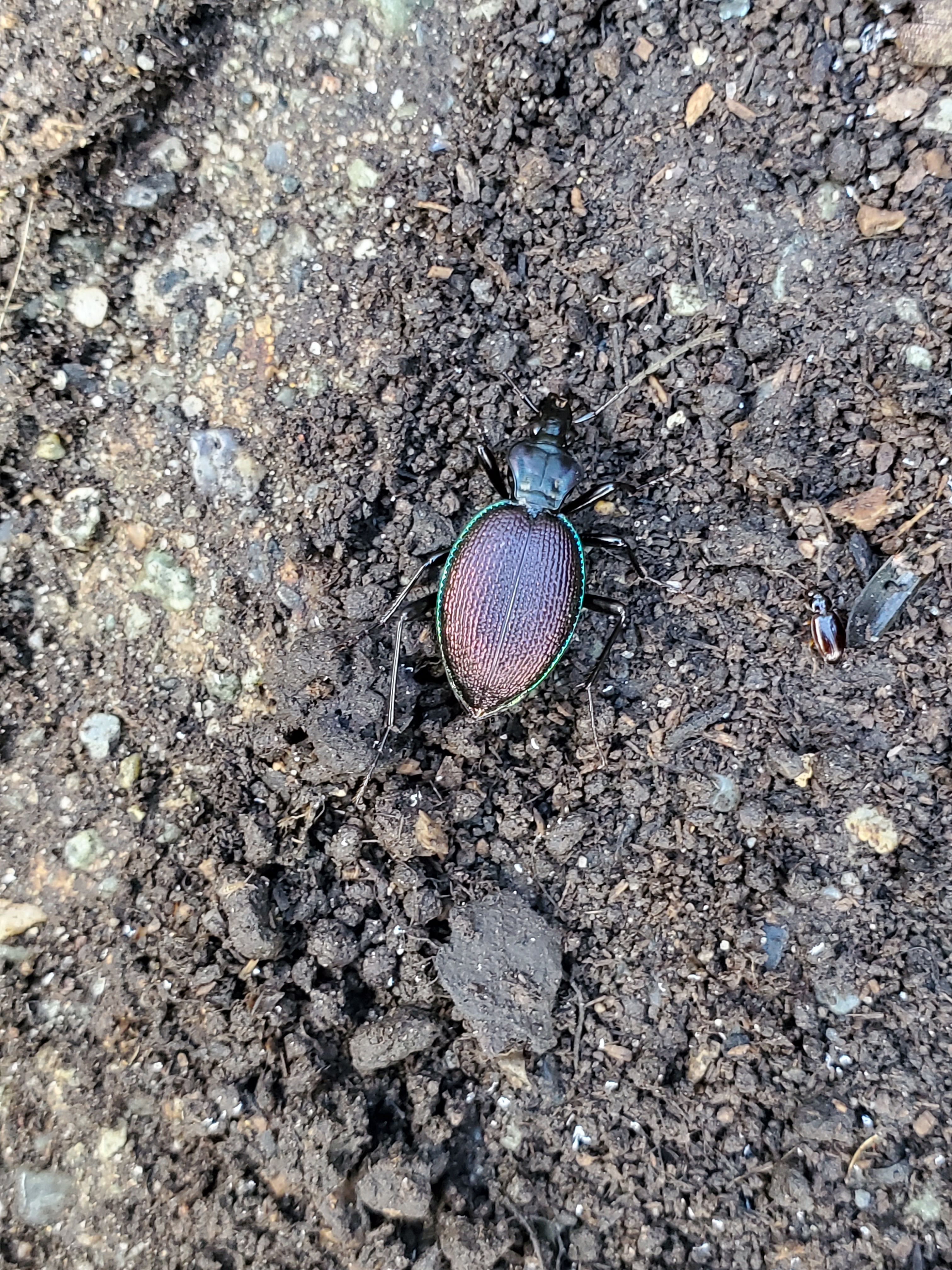
So, in my email, I actually had received two nice bug pictures I want to share with you. Victoria Compton (who is running for Friday Harbor Port Commissioner btw) sent these to me. The first, a caterpillar, is going to turn into my favorite moth, Lophocampa roseata or the Rosy Amelia Moth. The 2nd, is a ground beetle in the family Carabidae (Scaphinotus marginatus) – also sometimes called the Margined Snail-eating Carabid Beetle.
Happy Bug Viewing! Thanks for checking these out and thanks for sending the photos Victoria! You have my vote. 😉





 Bugging You From San Juan Island