Monthly Archives: March 2022

Porch Light Bug Viewing – Who’s Watching Whom?
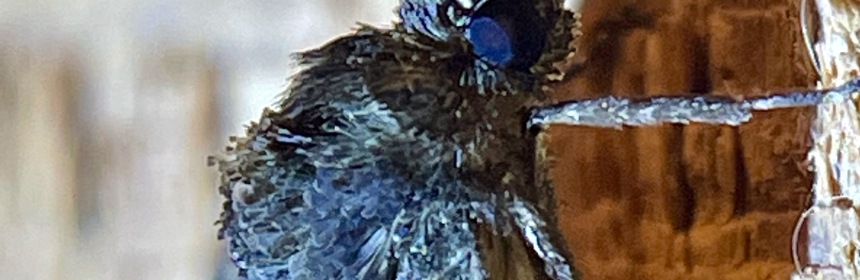
Some of you might cringe at the idea of standing below a porch light while an eclipse of moths (yep, that’s what a group of moths are called) are whirling and gyrating around your head. I find it fascinating, even as they hit at my face or hair, before bouncing back towards the light or disappearing off in the dark night.

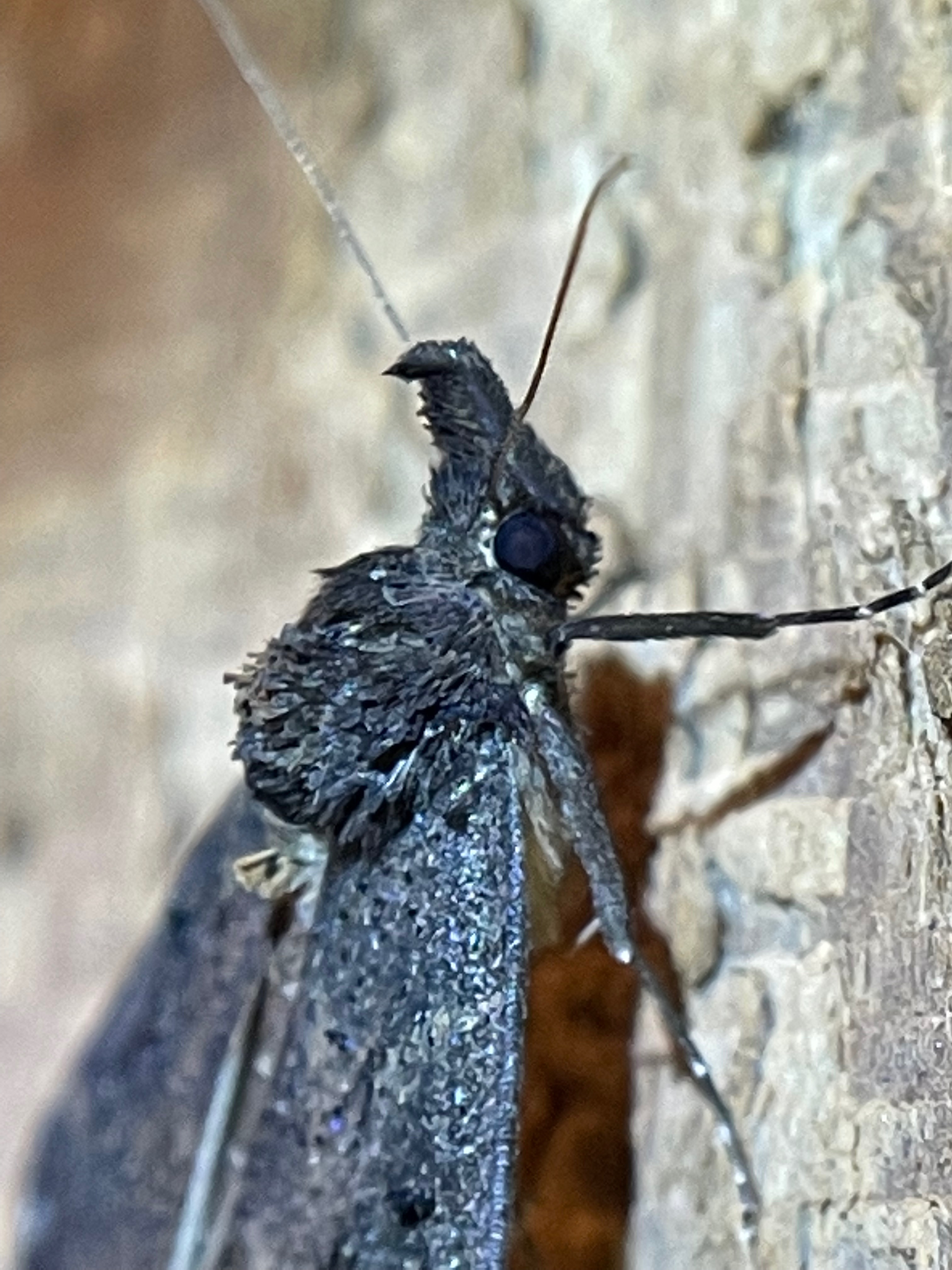
Camera in hand, I wait for them to settle on the wood siding beneath the glow. Stealthily, I focus my lens to capture the delicate shimmer of scales and patterns, or eyes and antennae of my subject. Last night, I actually felt I was the one being observed.

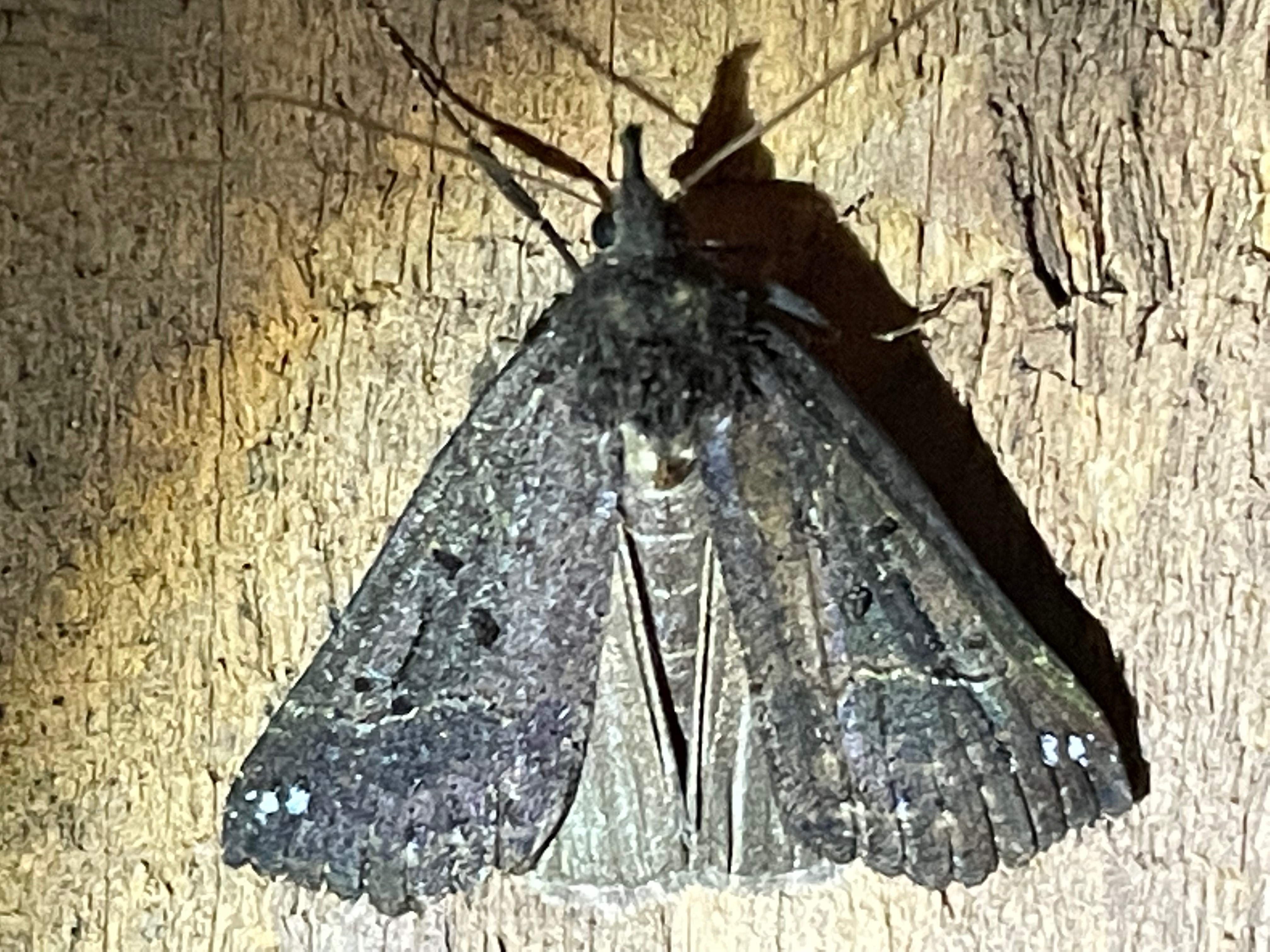
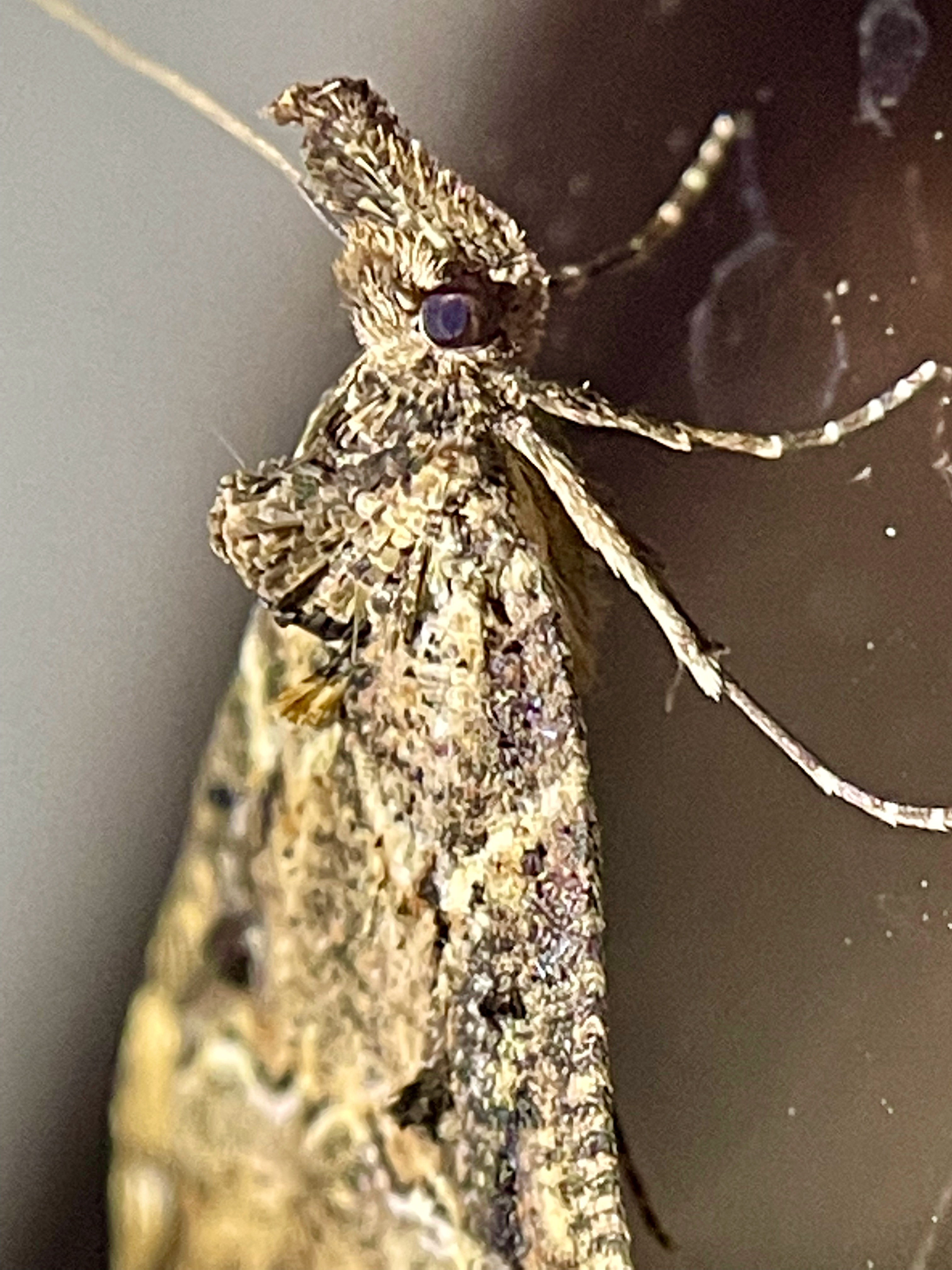
This particular moth is in the genus Hypena. The species is Hypena decorata. It is a medium sized (15-18mm), somewhat drab moth. This species is sexually dimorphic – meaning the males look differently than the females. Males are slightly larger than females, with sooty brown forewings marked with two white spots near the apex or bottom edge of the wing.
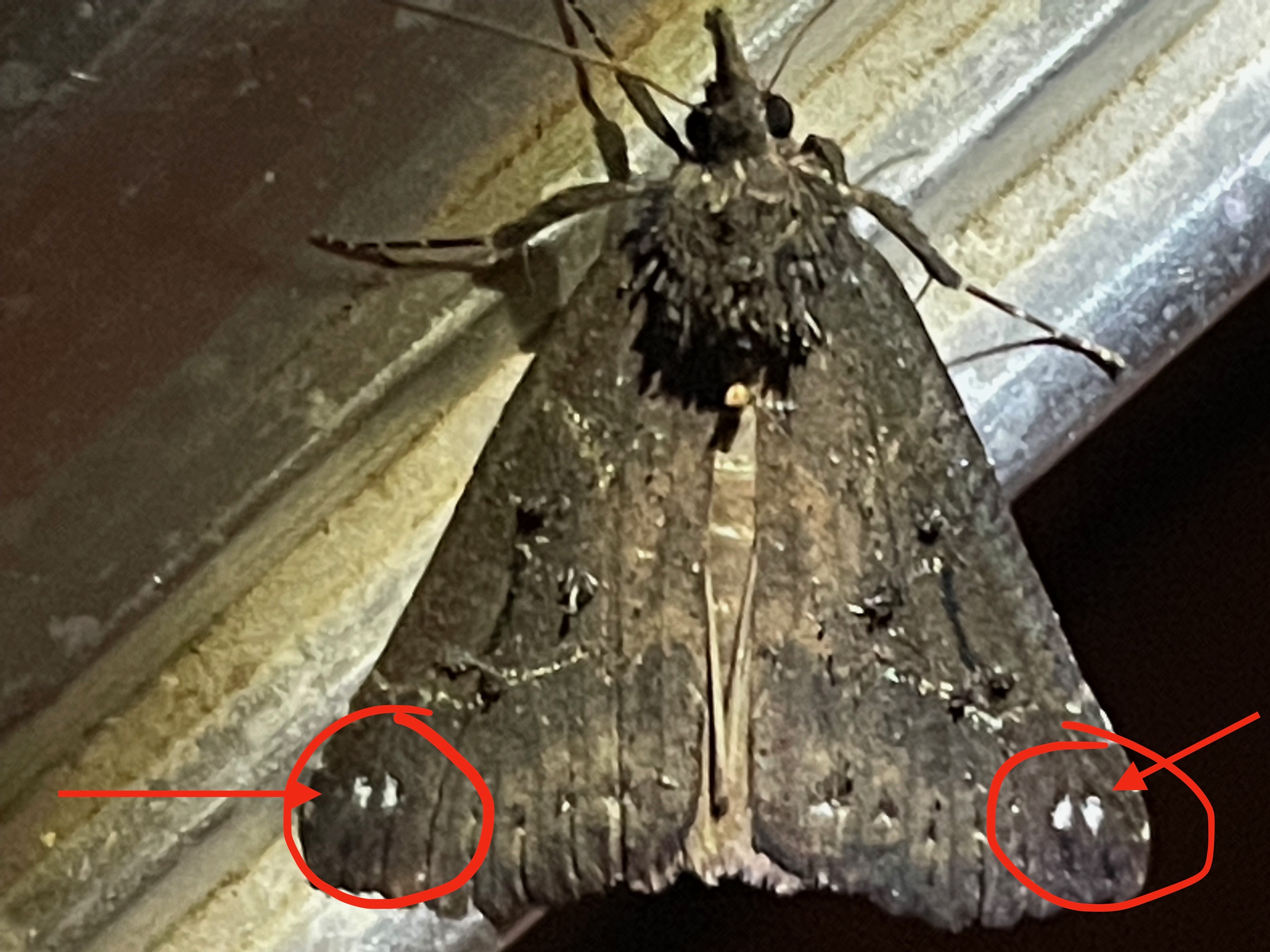
Male Hypena decorata moth

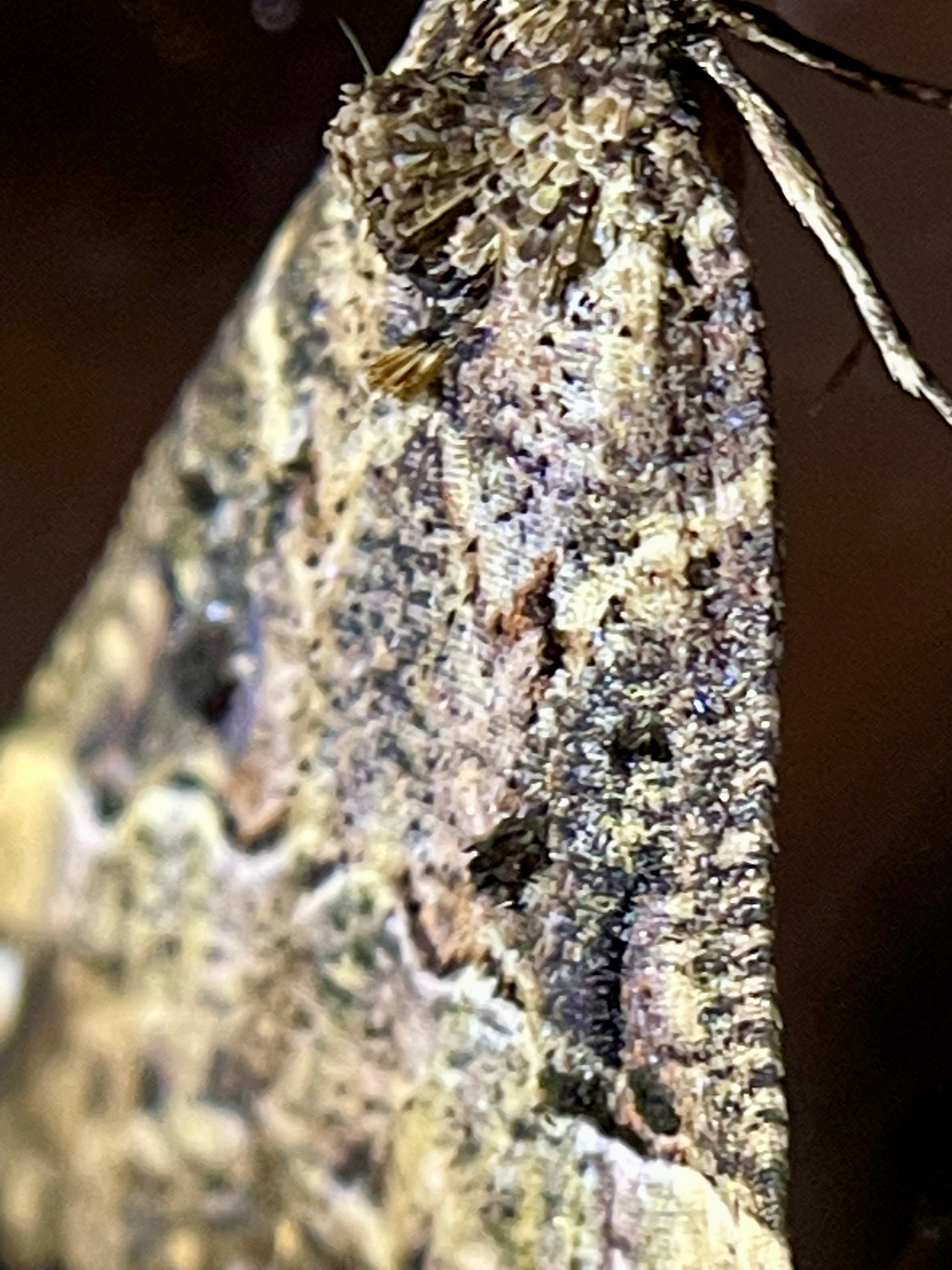
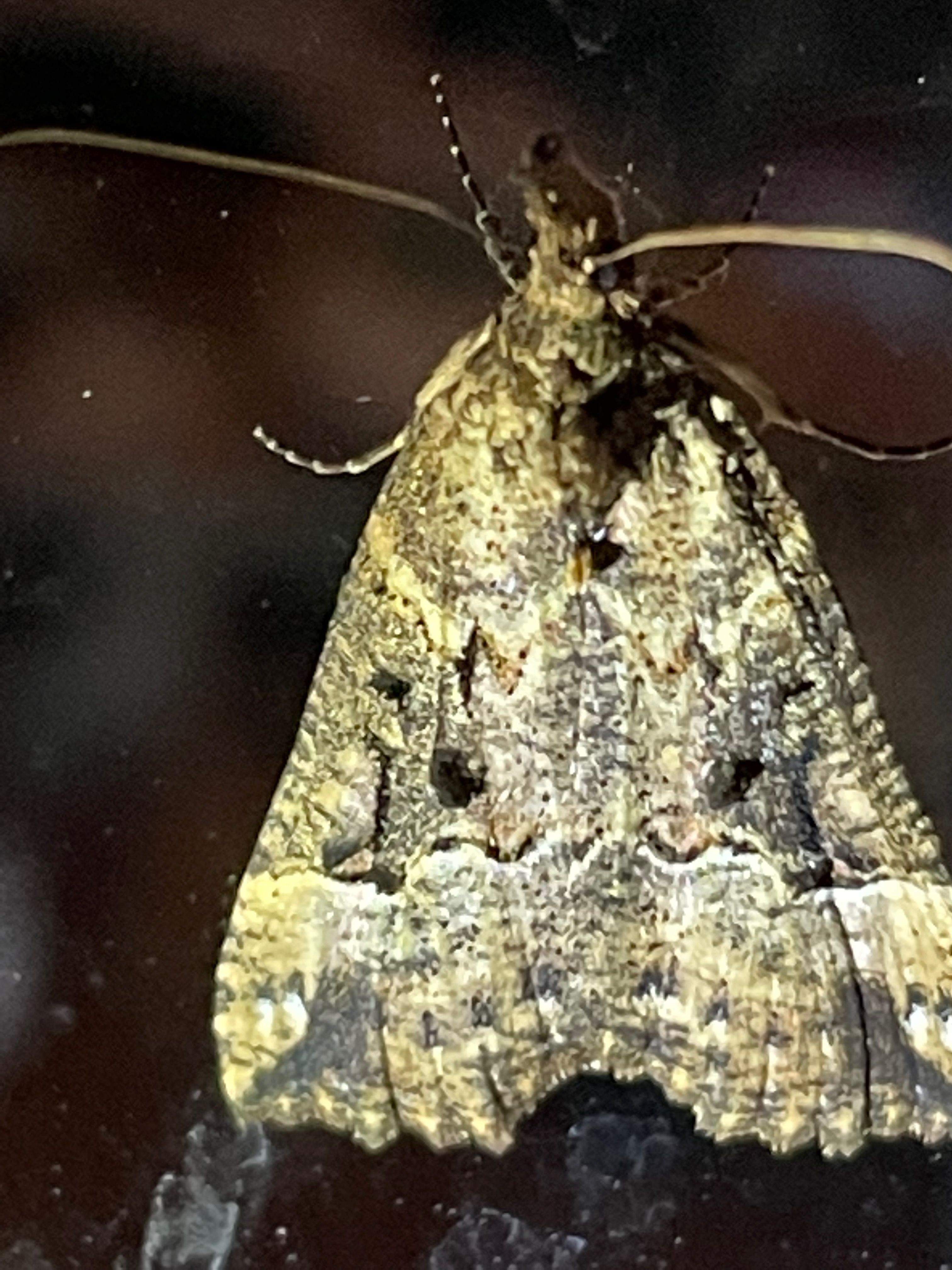
Females of this species are more mottled in coloration, some with a purply hue. They also have a small patch of raised dark scales in the median area. More about distinguishing male and female specimens can be accessed here http://pnwmoths.biol.wwu.edu/browse/family-erebidae/subfamily-hypeninae/hypena/hypena-decorata/

On occasion, there can be an odd form, like this one I found in August of 2019 https://buggingyoufromsanjuanisland.com/2019/08/22/hypena-decorata/
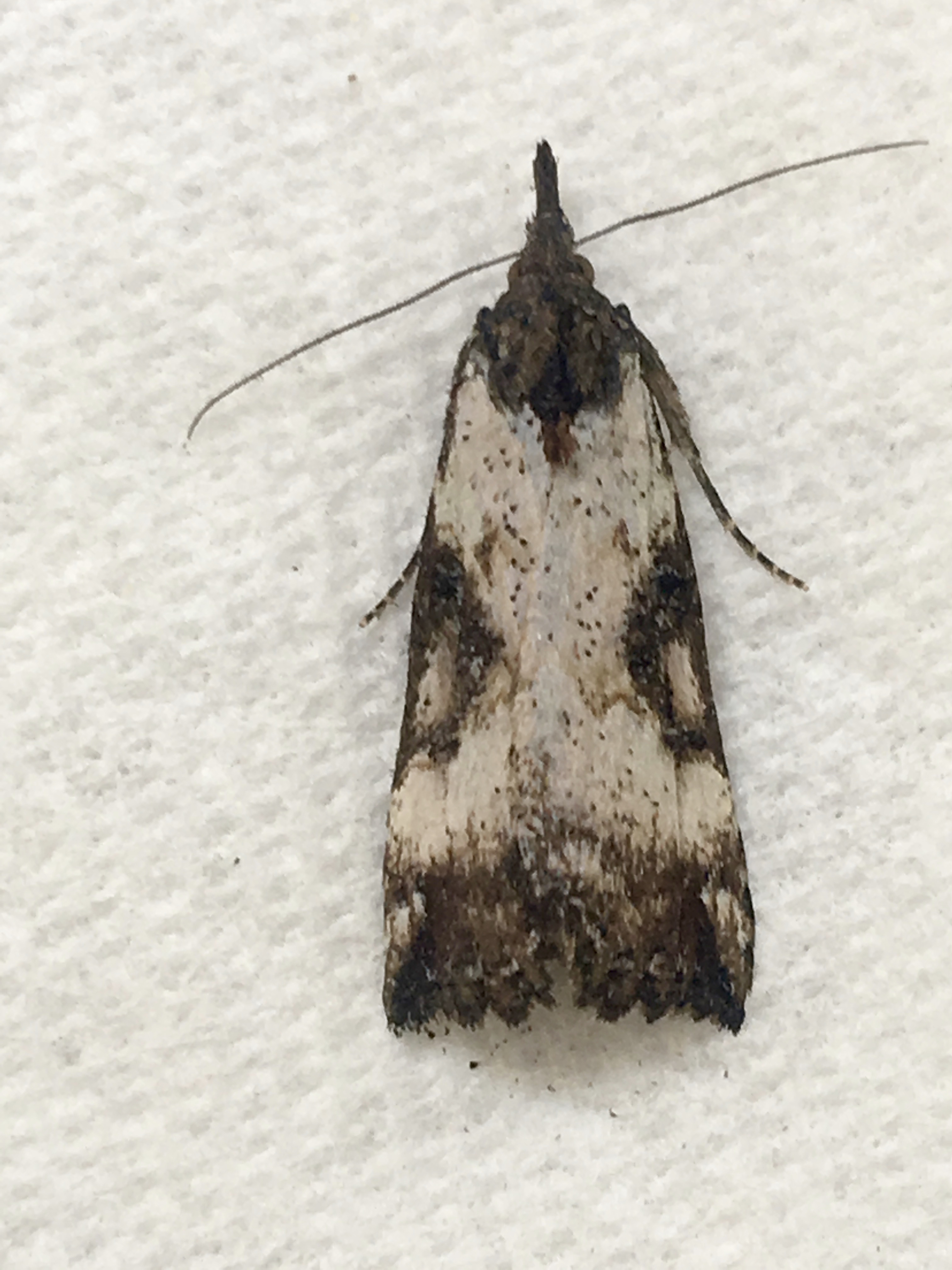
Food/host plants for Hypena decorata are nettles  (Urtica spp.) in the Urticaceae. These moths range from BC to Southern California. There appears to be two broods per year (April and August). Adults come to lights and can be found flying from April to September.

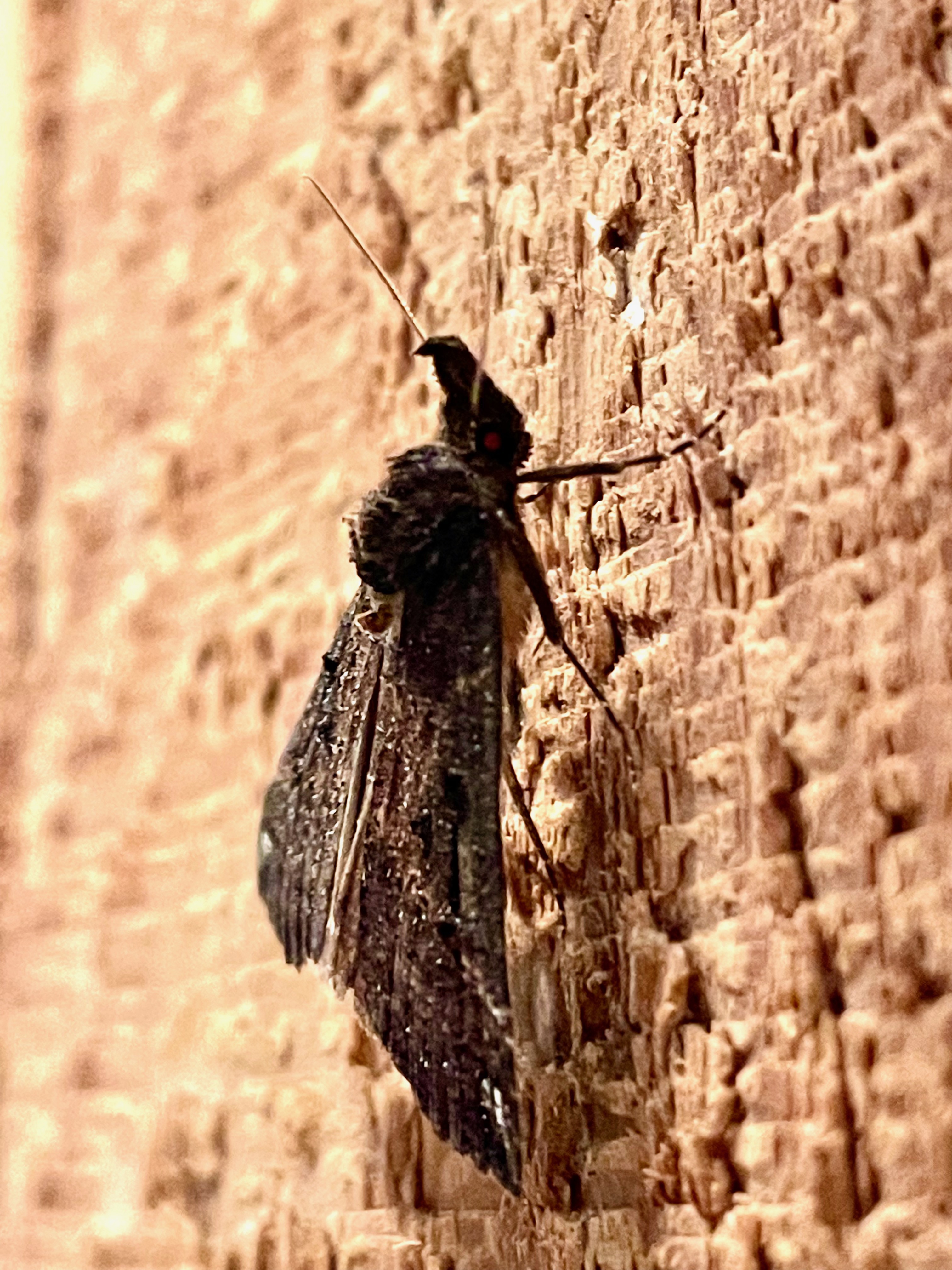
While this may appear to be merely another drab, ordinary moth, I want to show you the photos I took of the male and the nearby female last night. I missed it when I first went through my photos, but the second time around, it definitely appeared that the male moth was turning his head to watch me. Sort of like how Drago, my dragon lizard will do the same thing.

It’s a mysterious world, and much more rich when we recognize we aren’t the only ones that are aware. Some humans (I’m ashamed of researchers for this) do horrible things like cut off moths antennae to try and figure out how they fly (or can’t fly after being mutilated in this way). If we could only recognize they have a desire to live, find mates, food, and shelter – just like humans, maybe we would care more.
References and Further Reading

Bradley H. Dickerson, Zane N. Aldworth, Thomas L. Daniel; Control of moth flight posture is mediated by wing mechanosensory feedback. J Exp Biol 1 July 2014; 217 (13): 2301–2308. doi: https://doi.org/10.1242/jeb.103770

Bugguide https://bugguide.net/node/view/511337

Bugging You From San Juan Island (Hypena decorata) https://buggingyoufromsanjuanisland.com/2019/08/22/hypena-decorata/

Pacific Northwest Moths (Hypena decorata) http://pnwmoths.biol.wwu.edu/browse/family-erebidae/subfamily-hypeninae/hypena/hypena-decorata/

Thompson, A. 2007. Mystery of Moth Flight Uncovered. LiveScience https://www.livescience.com/4338-mystery-moth-flight-uncovered.html

Author’s note – When it comes to experimenting on living beings, the aim of science shouldn’t always be to prove a hypothesis. Sometimes we need only to experience the extraordinary wonder of meeting the spirit within some of earth’s most unassuming characters. Be kind to those around you. Even the ones with scales and chitin.

Dolerus sp. Sawfly

I found another species of Sawfly in our above ground pool today. This one is entirely black. Size is approximately 7-8mm. This looks to be in the genus Dolerus. From what I’ve found about host plants, it looks like the larvae feed on most grasses and horsetail. Females deposit eggs into the plant tissue where they hatch and the larvae will feed for approximately one month before exiting and pupating overwinter in the surrounding soil. There is one generation (univoltine) per year and adults emerge in early spring. Adults are recorded as feeding on tree sap from Maple (Acer), Apple (Malus), and Pear (Pyrus). They also take nectar from Willow (Salix) flowers, and from Cherry and Plum (Prunus) flowers. This means they do provide some pollination activity.

Looks like WWU Biology Department is working on a web page for Sawfly identification, but it’s not up and running yet. You can find their link below and bookmark it to check out at a later date.

Dolerus sp. Sawfly
Dolerus sp. Sawfly – San Juan Island, WA 03.29.2022
Dolerus Sawfly – Specimen #2

References and Further Reading

Baine Q, Looney C (2019) Plant associations for three sawfly species (Hymenoptera, Tenthredinidae) in the Pacific Northwest. Journal of Hymenoptera Research 74: 27–33. https://doi.org/10.3897/jhr.74.46795

bugguide.net https://bugguide.net/node/view/13561

Looney C, Smith DR, Collman SJ, Langor DW, Peterson MA (2016) Sawflies (Hymenoptera, Symphyta) newly recorded from Washington State. Journal of Hymenoptera Research 49: 129–159. doi: 10.3897/JHR.49.7104

Sawfly GenUS https://idtools.org/id/sawfly/factsheet.php?name=17498

WWU Biology PNW Sawflies http://pnwsawflies.biol.wwu.edu/accounts/login/

Strawberry Muppets

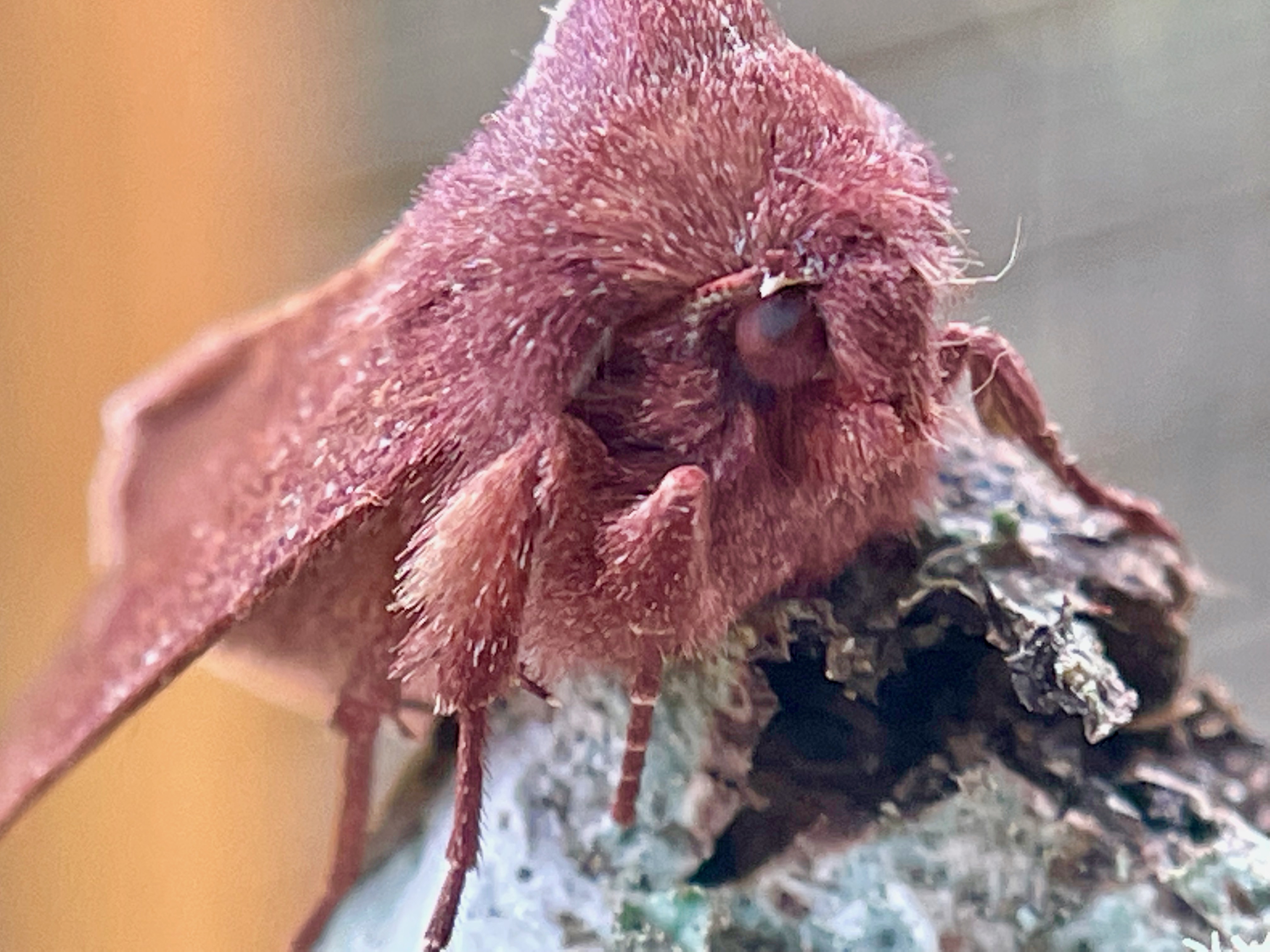
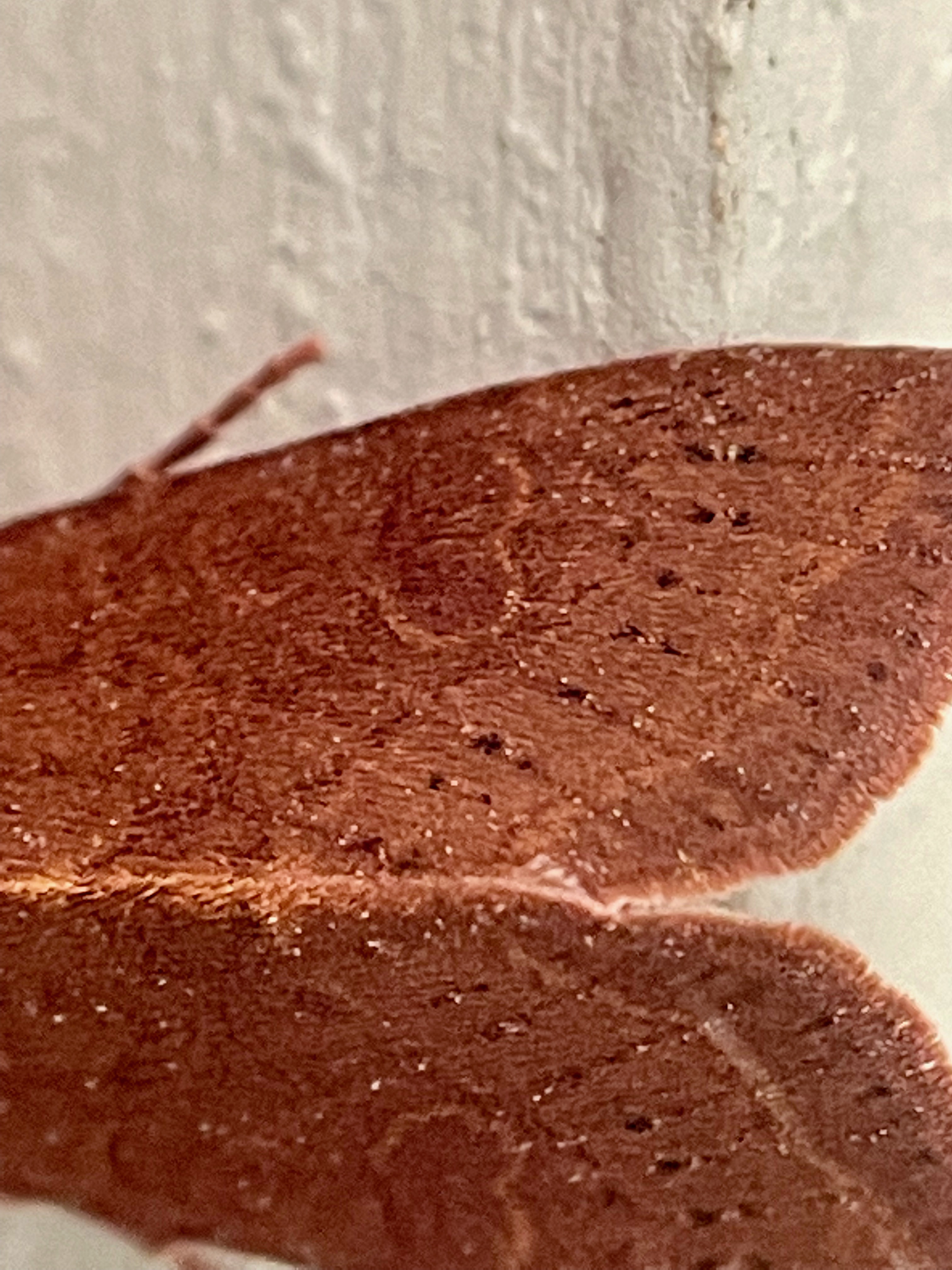
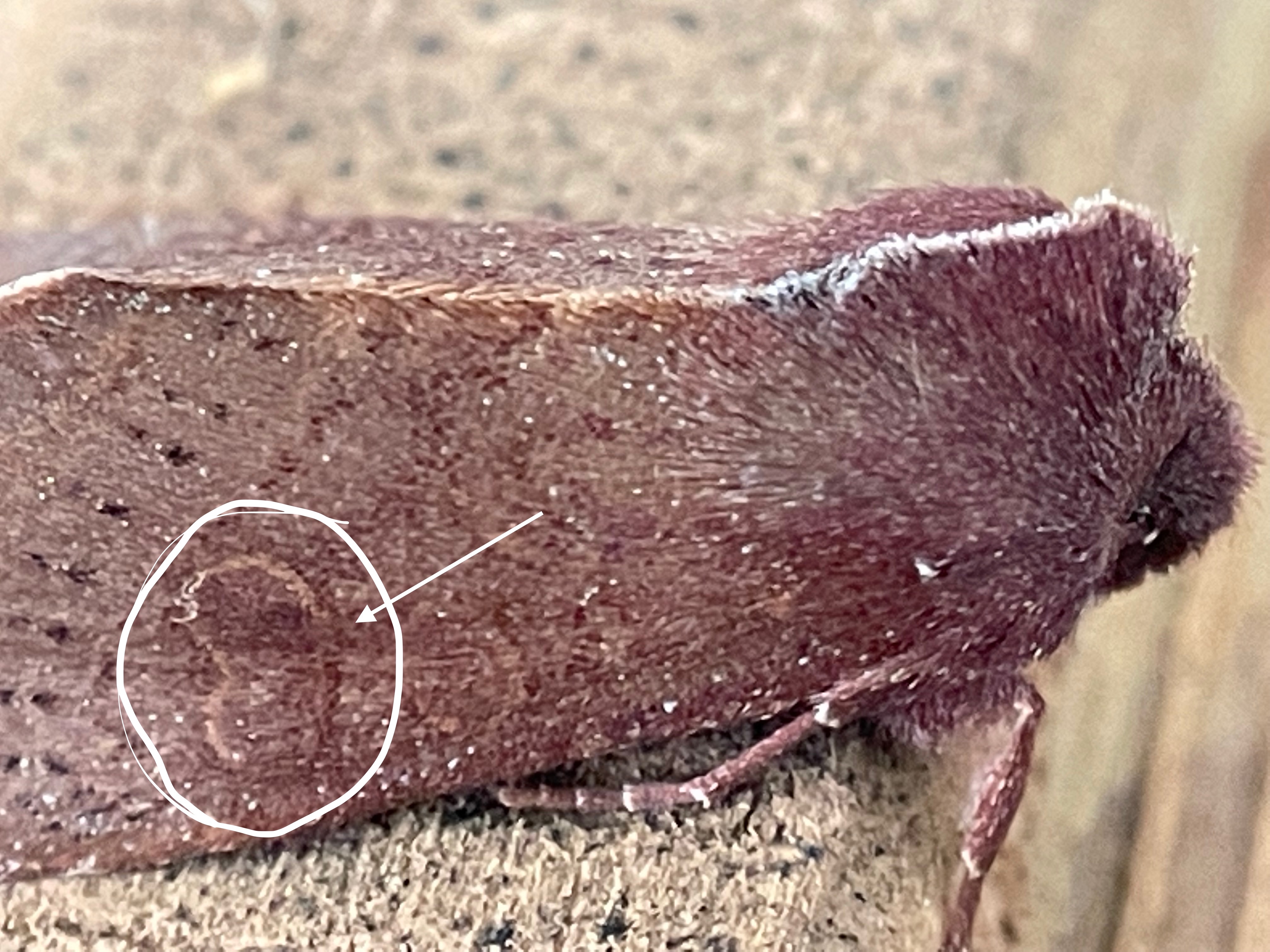
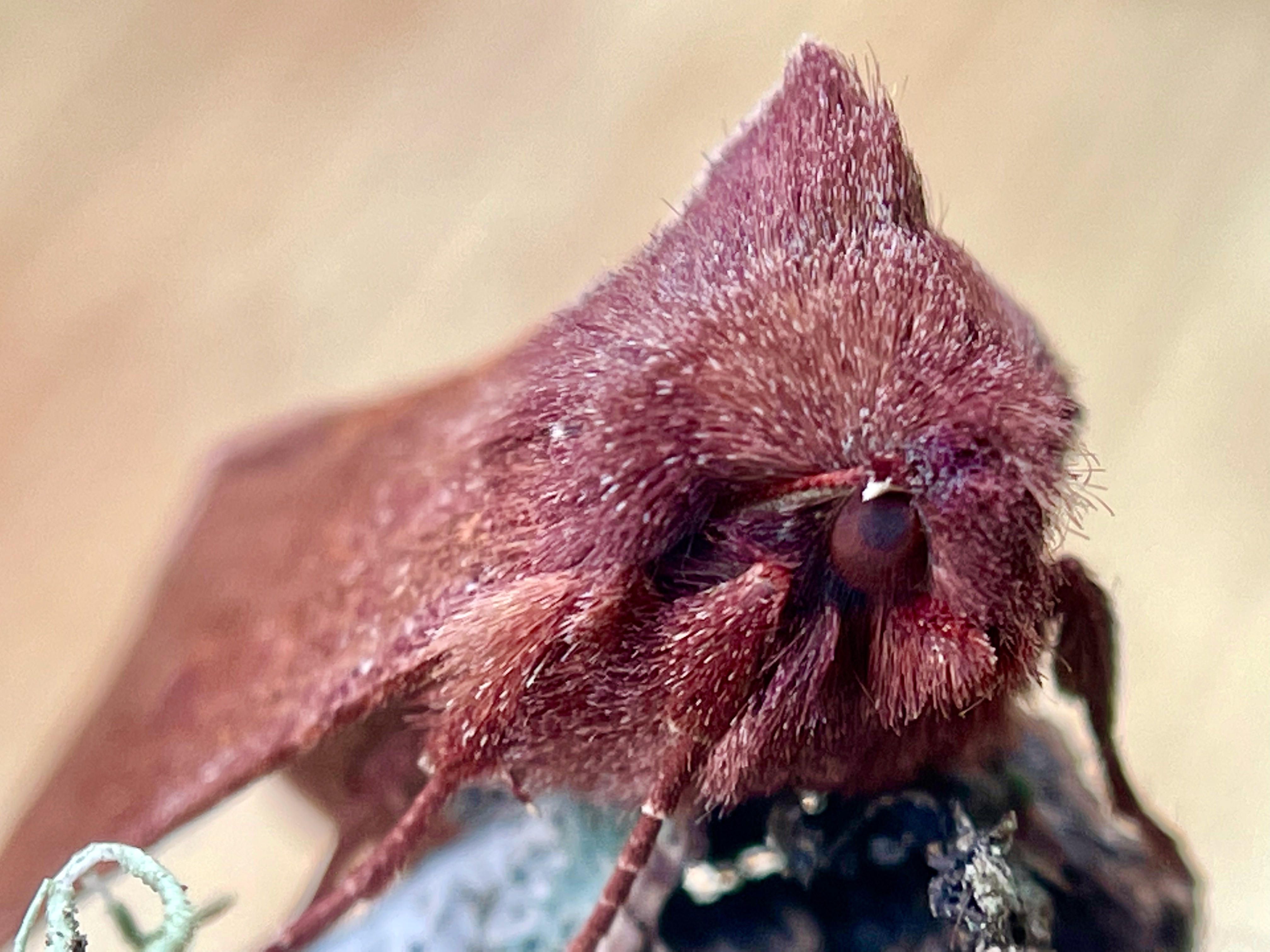
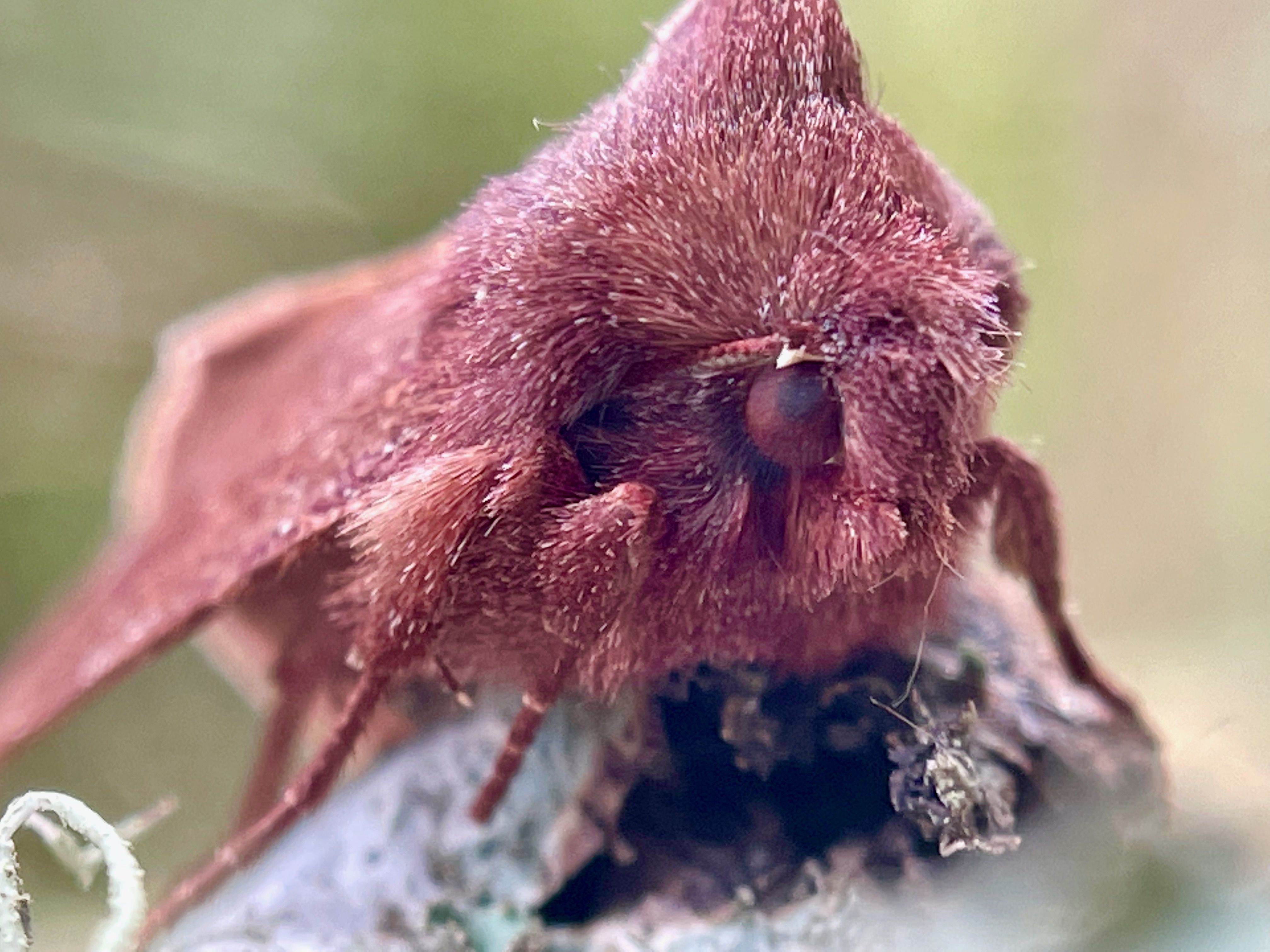
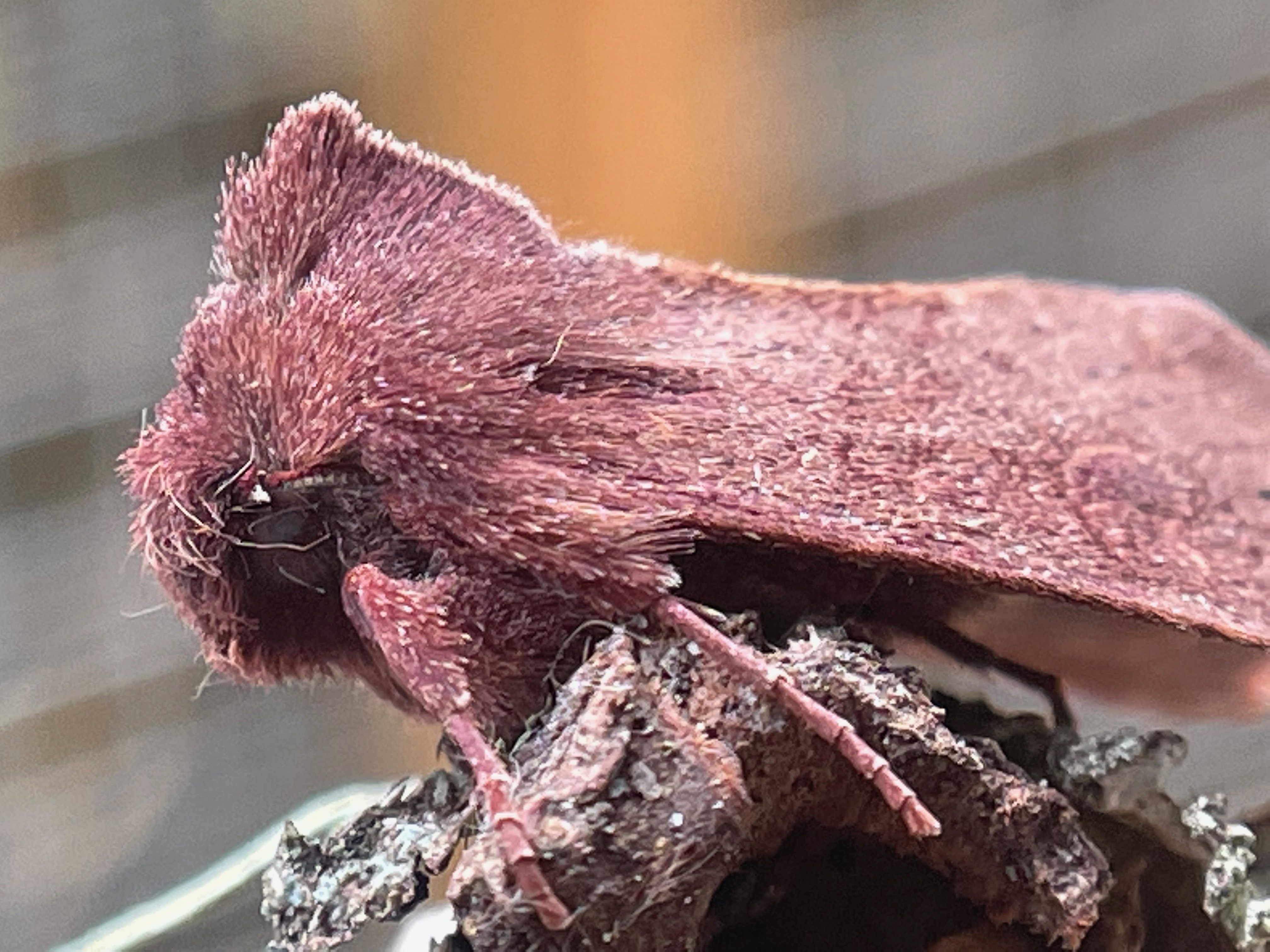
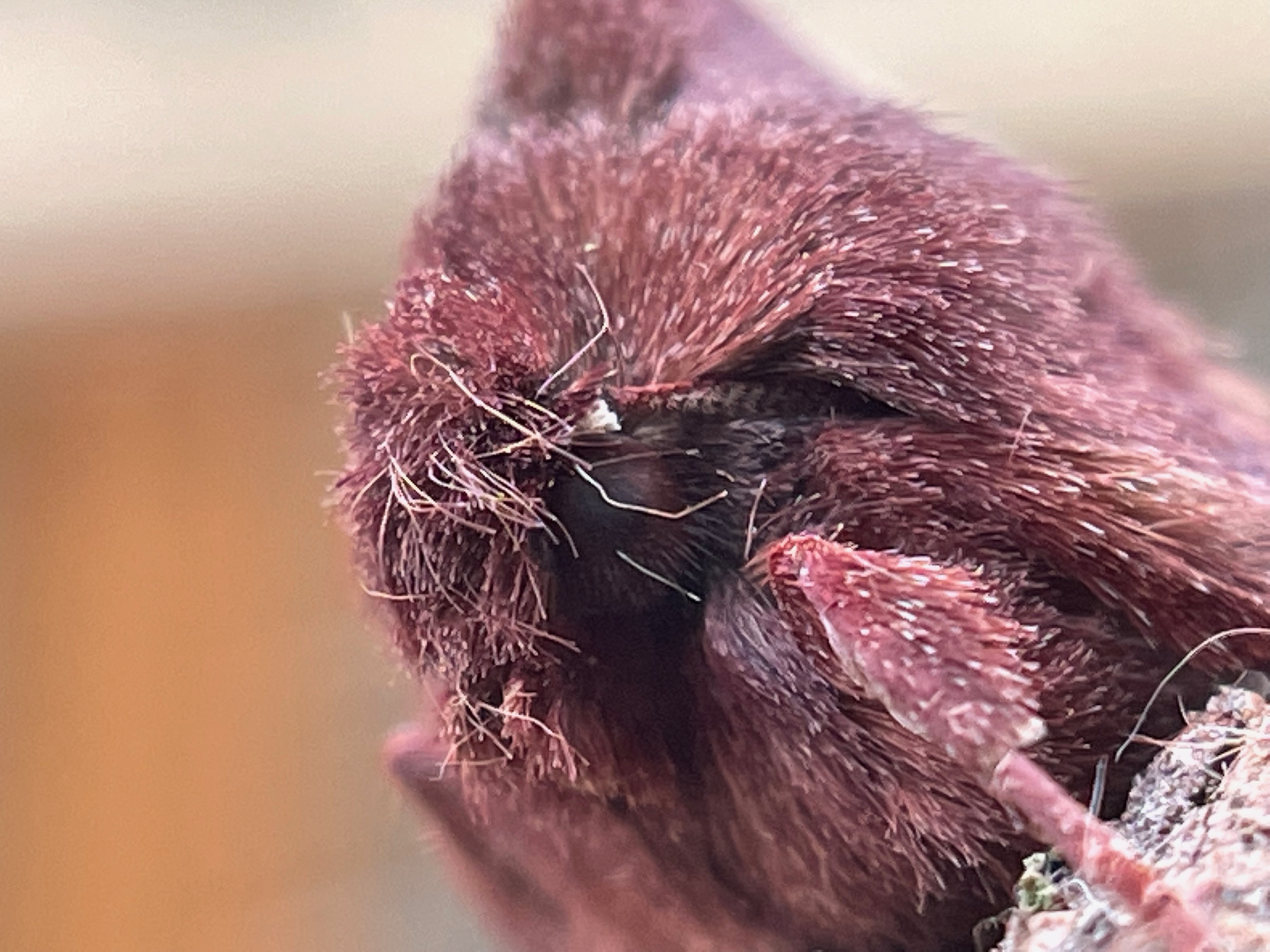
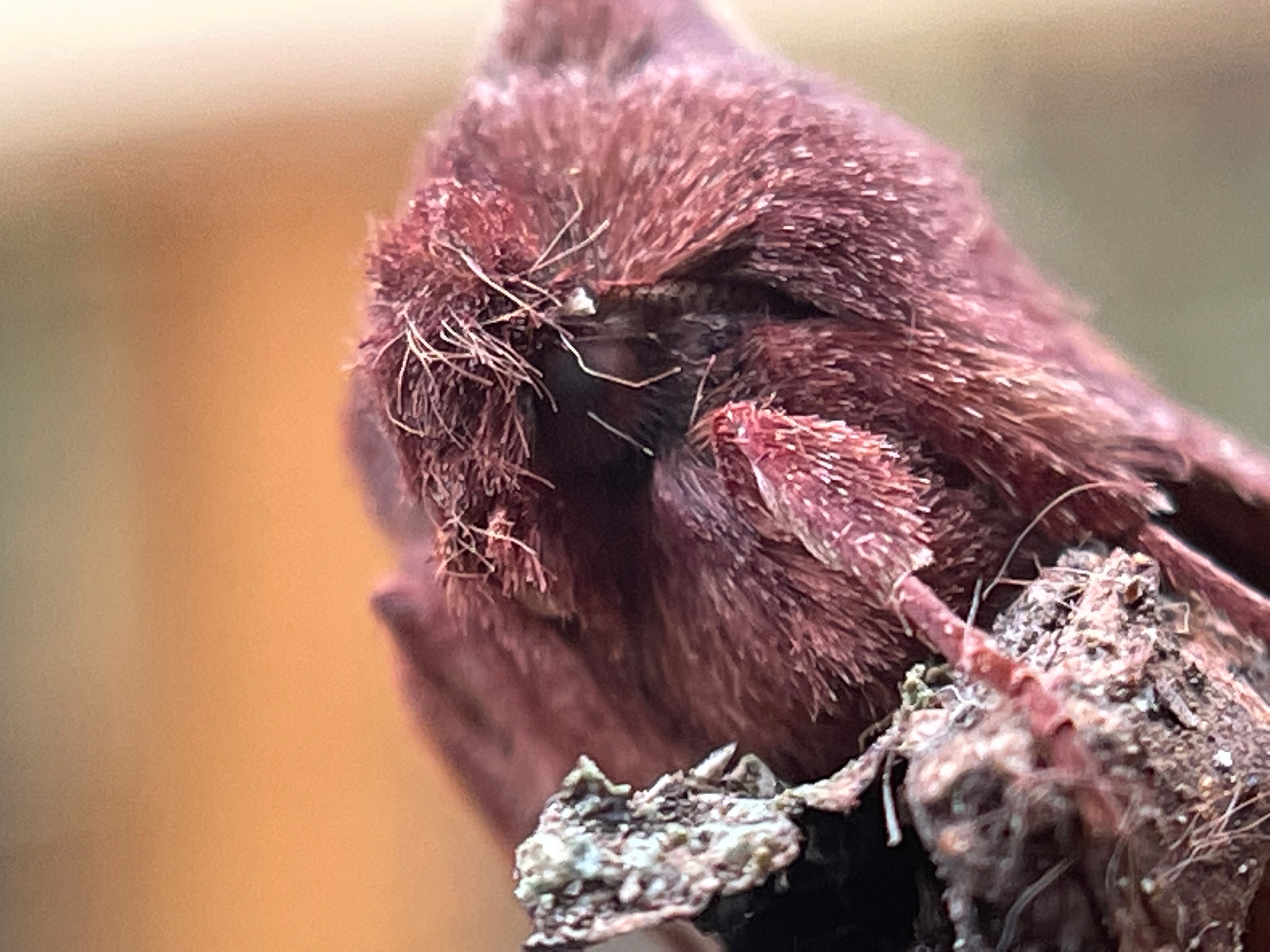
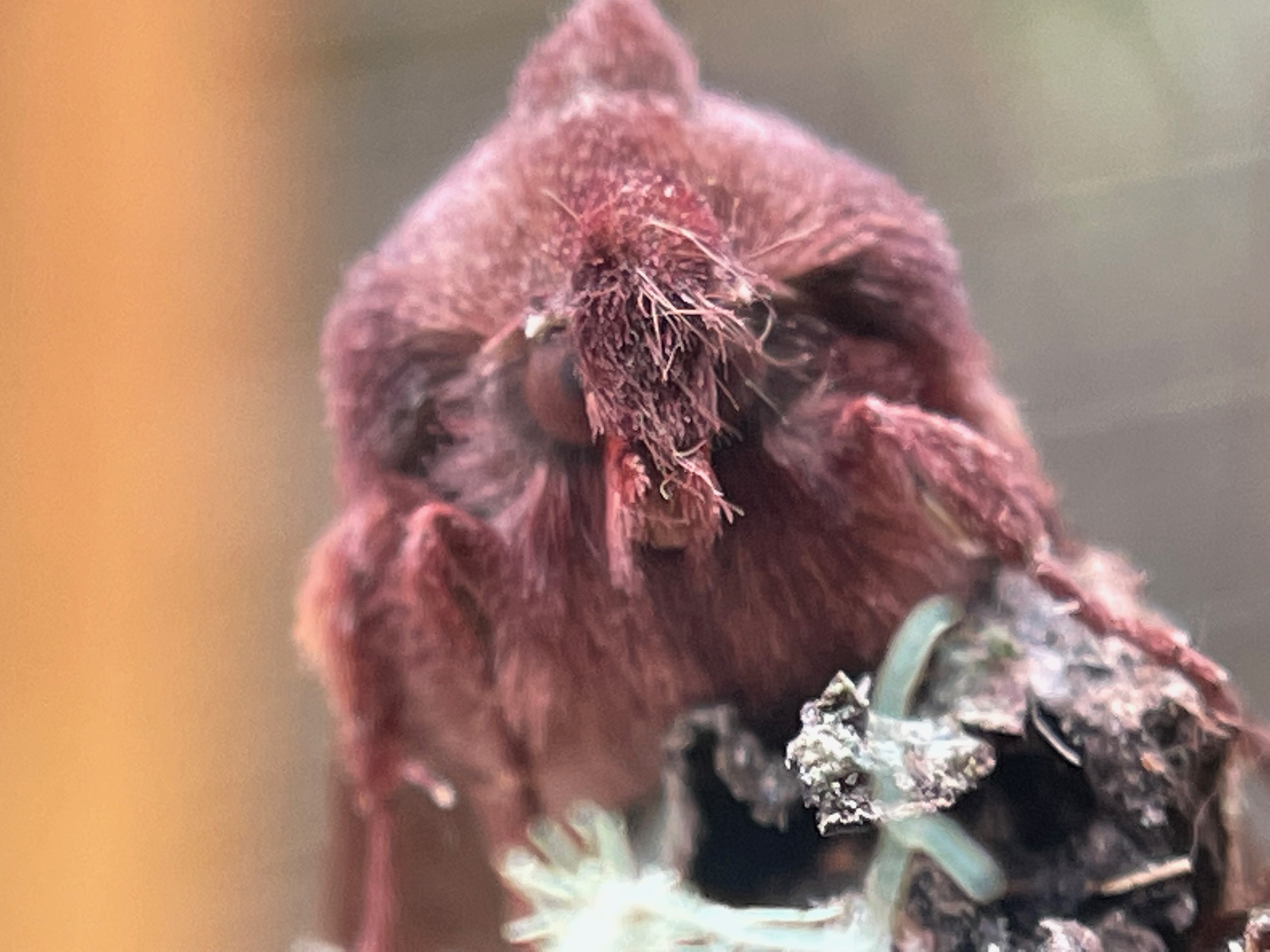
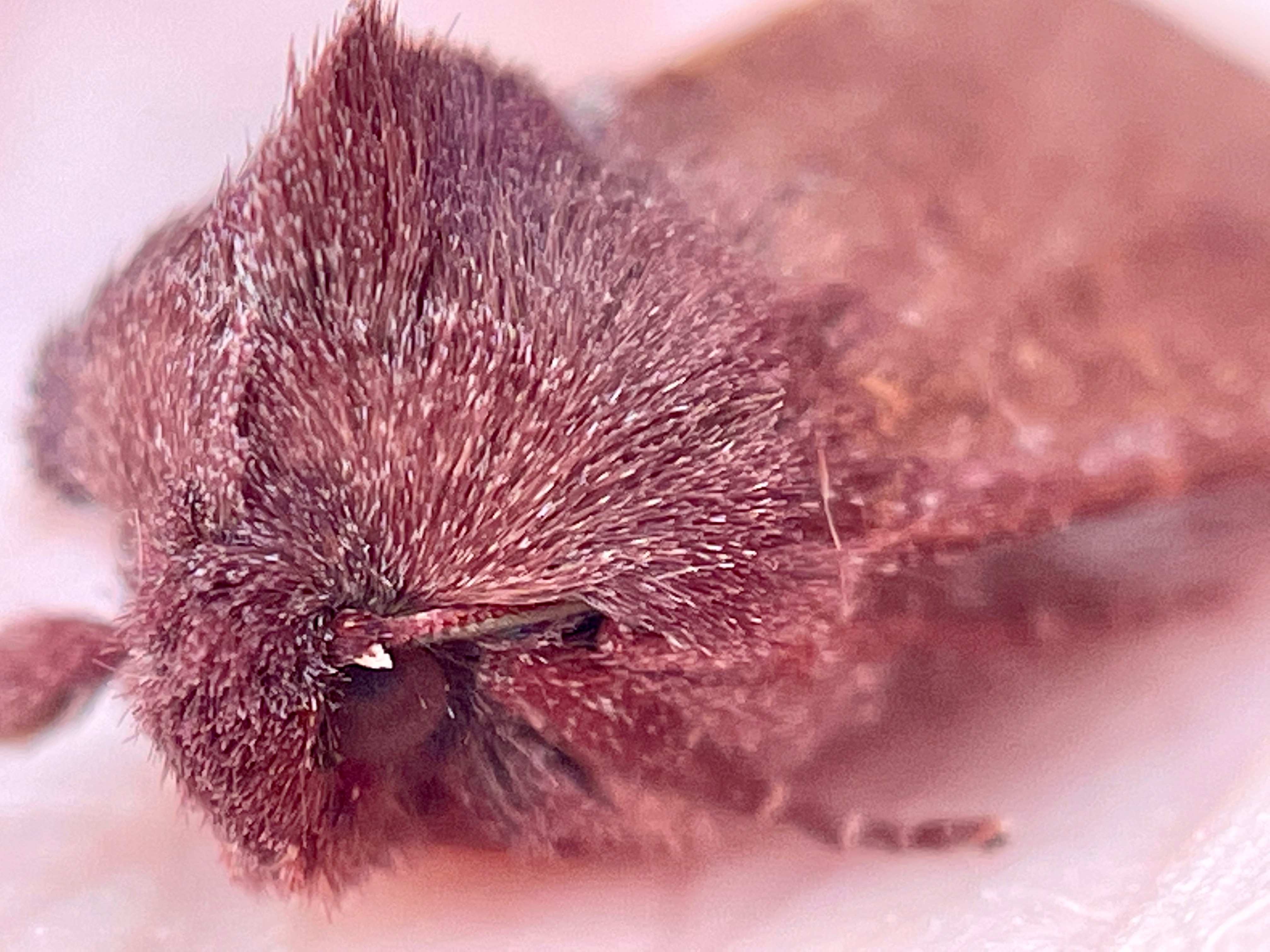
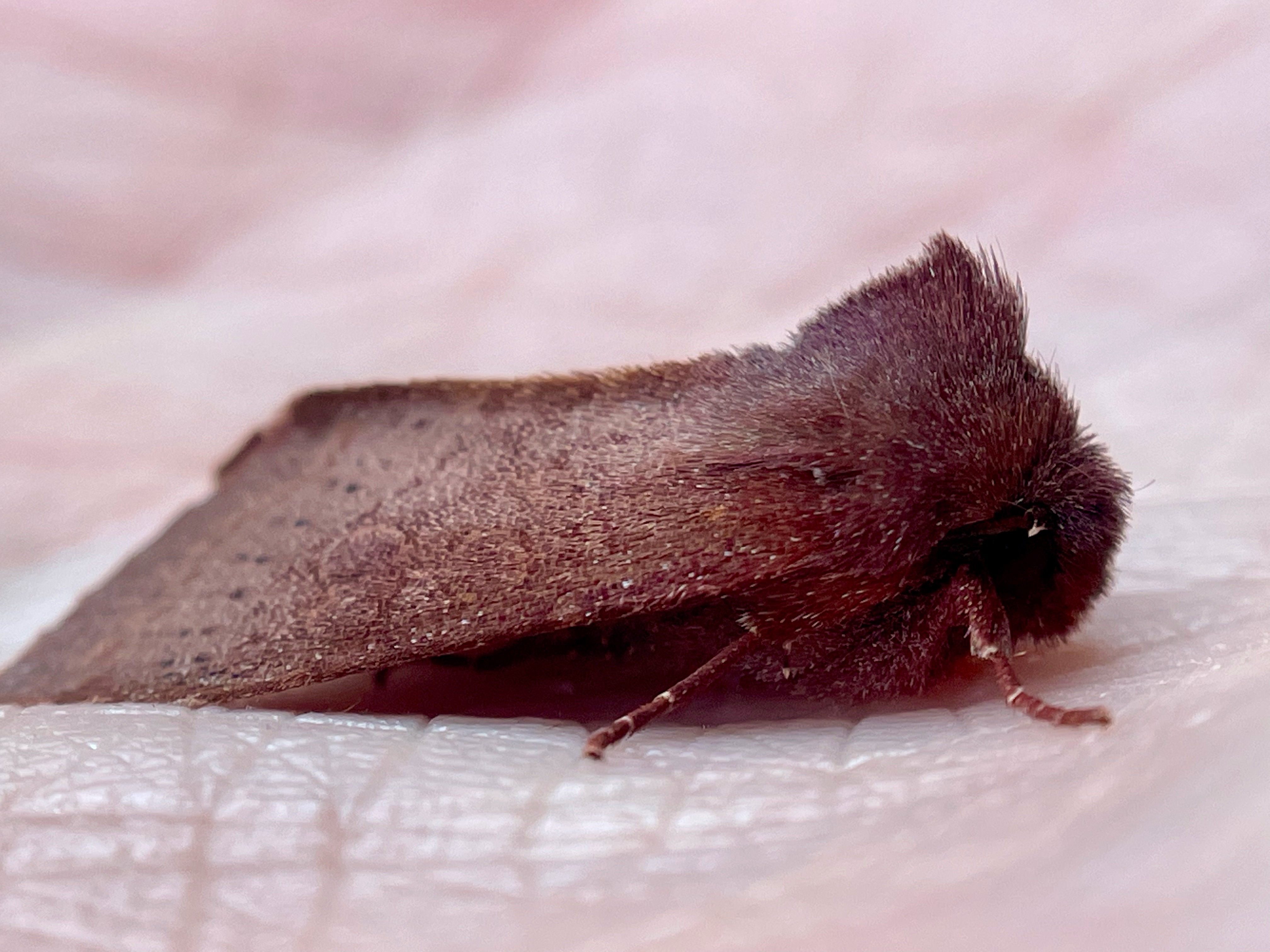
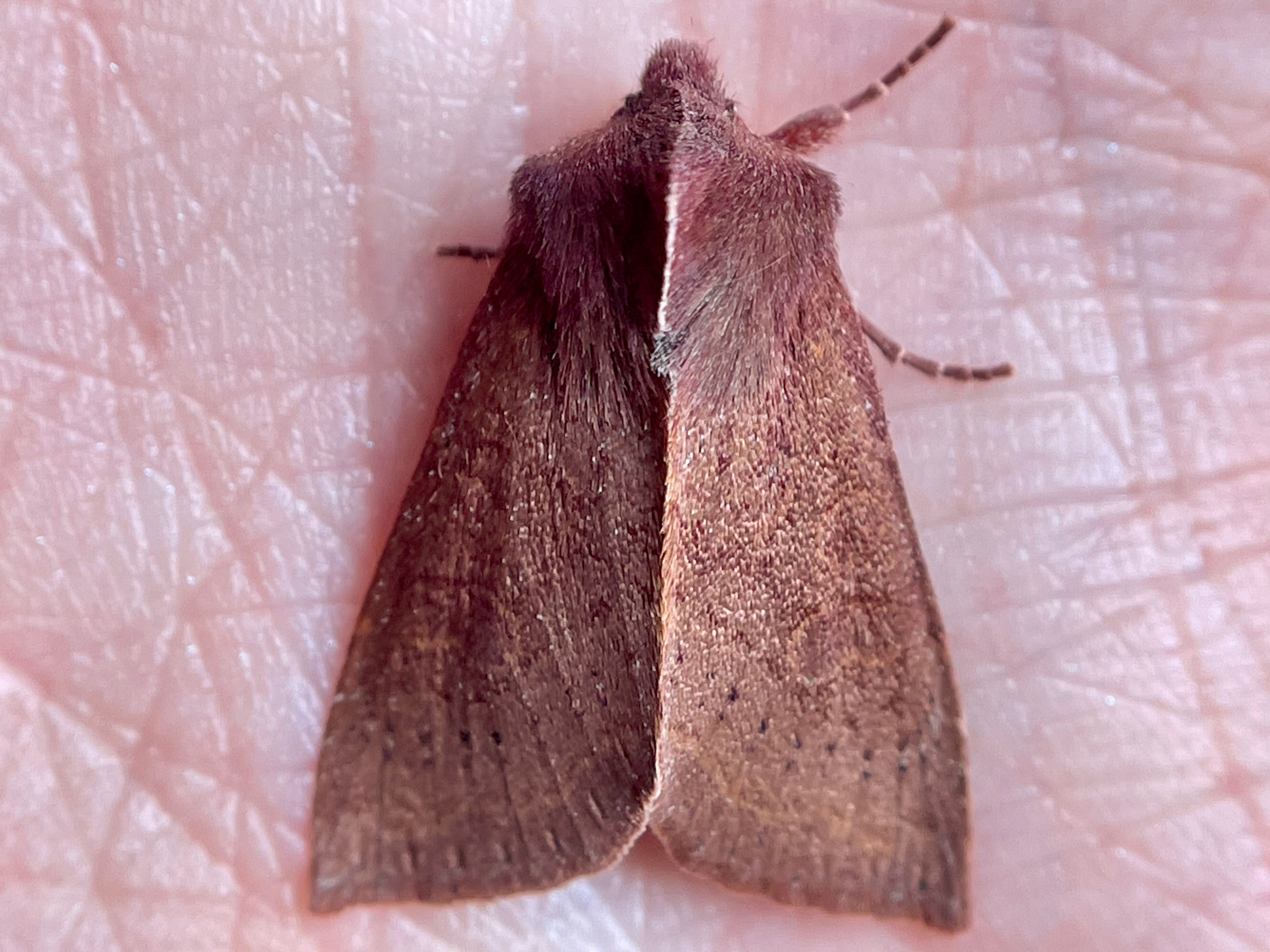
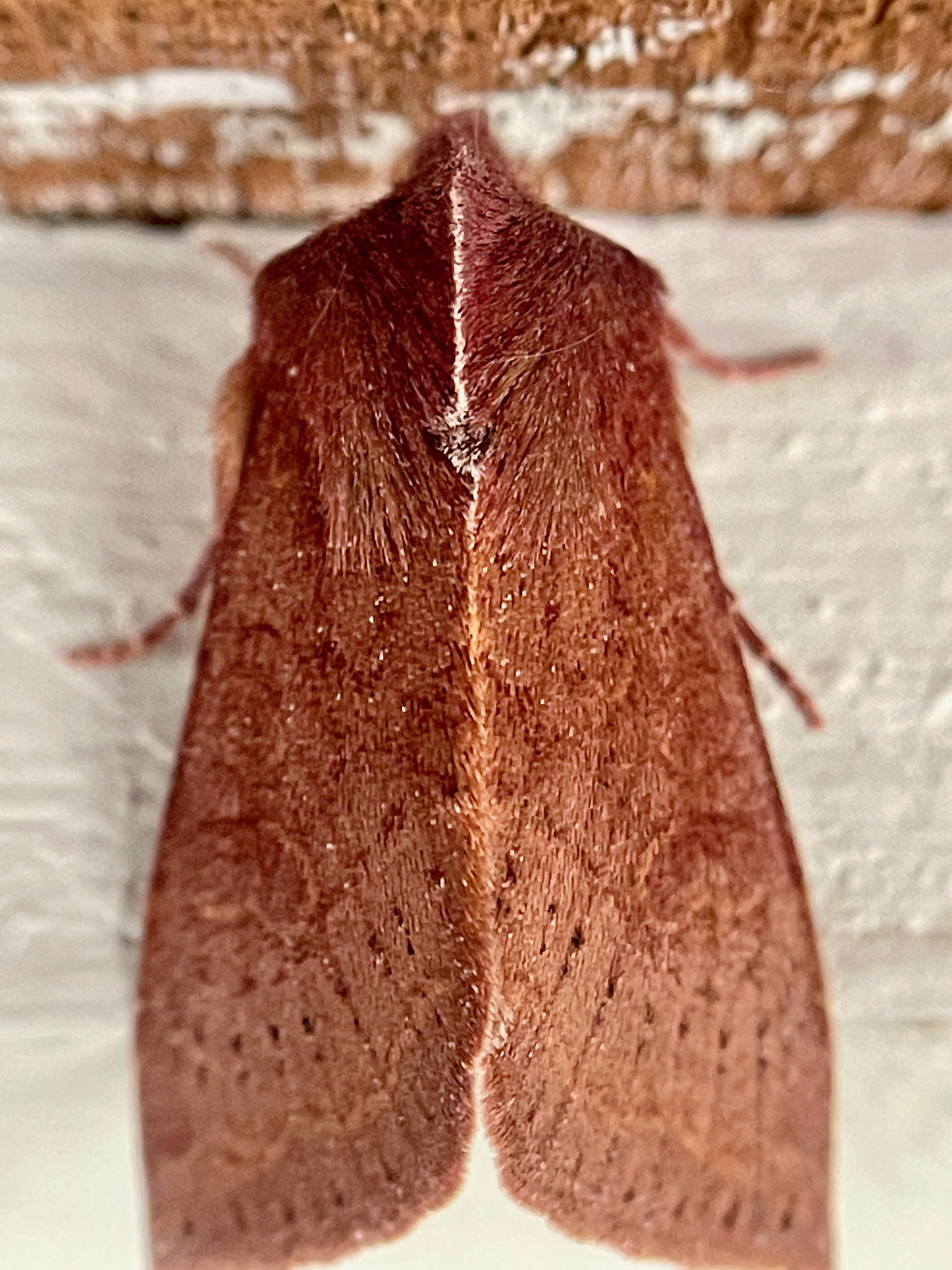
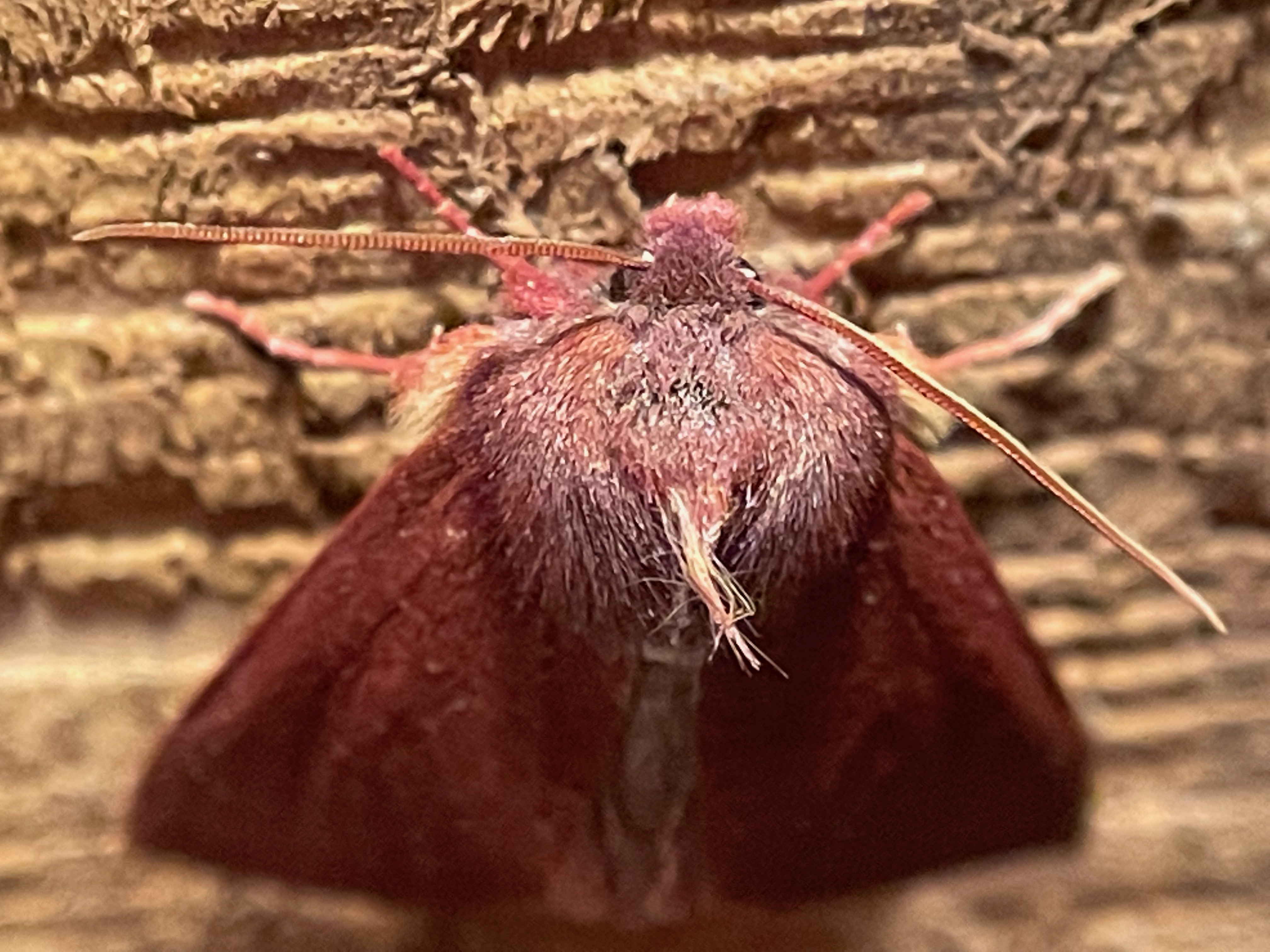
Orthosia transparens – the Transparent Quaker Moth

I’d really love it if I could rename this moth. Strawberry muppet heart moth is what I’d call it. Check out the little heart-shaped markings on it’s wings.

Orthosia transparens – with heart mark on wing

Orthosia transparens is a medium sized (15-17mm) , brownish red Noctuid moth that flies in our region in early spring. The common name for the species is Transparent Quaker Moth.   Caterpillar food plants include salal (Gaultheria shallon), madrone (Arbutus menziesii), and rhododendron (Rhododendron macrophyllum). This species is native to the PNW region and not considered pests of economic significance. A map of the geographic distribution can be accessed here – http://mothphotographersgroup.msstate.edu/species.php?hodges=10479

Noctuidae is the family with the awful common name, “cutworm,” which leads folks to deem them evil little garden gremlins that should be stomped on or tossed out on the ground for birds to scavenge. Not all cutworms are bad, and certainly many more of us would embrace them if we knew they were going to turn out to be so cute.

I’m fine with a bit of herbivory on our salal, madrone, and rhododendrons. These little Strawberry Muppets are welcome to fly to my porch light any spring night.

Check out the gallery below for more photos and if you’re interested in reading more about this moth, check out my friend, Dan’s nice write up on his blog here – http://10000thingsofthepnw.com/2022/02/03/orthosia-transparens-transparent-quaker-moth/

Thanks for reading!

Is He Stuck or Just Sleeping?

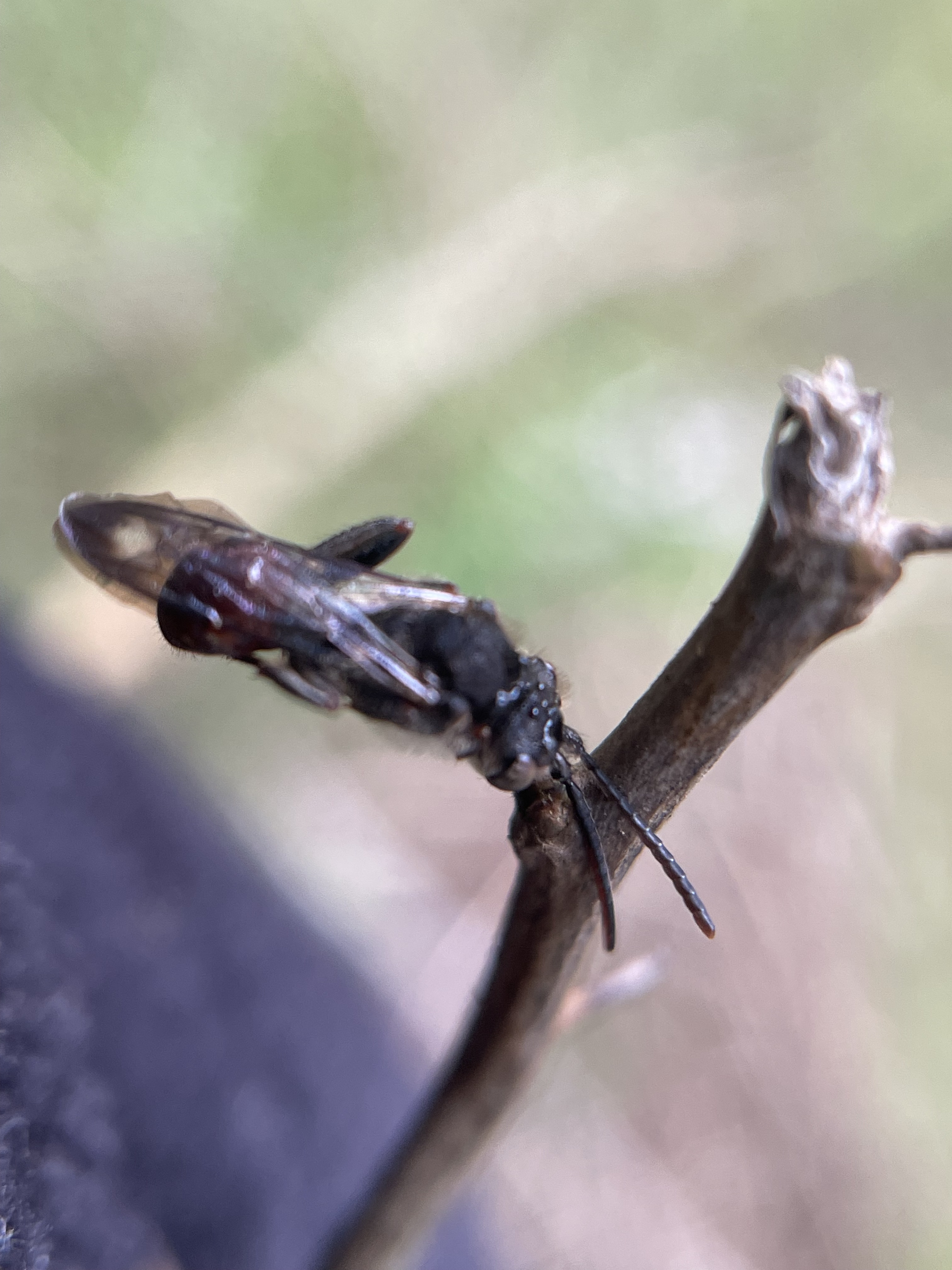
I found this tiny bee who looked to be stuck to a thorn on my Bois D’Arc tree this afternoon. At first glance, I thought perhaps a March fly, and a dead one at that, but it turned out this is a most likely a “he” Nomad bee, and he wasn’t stuck at all, but just sleeping.

Nomad Bee – Stuck or Just Sleeping (March 26, 2022)

I learned something new today about bees that I did not know. My friend, Eric Eaton’s wife (link to Eric’s book about wasps in my Read More section) , shared with me that some bees will often sleep in this manner, attached to a substrate like this thorn or a twig, by their mandibles. Thanks Heidi! 🙂

Nomad Bee – Stuck or Just Sleeping (March 26, 2022)

Nomad Bee – Stuck or Just Sleeping (March 26, 2022)
Nomad Bee (March 26, 2022)

My bee was definitely gripping the end of the thorn with its mandibles. Before I found out my bee was only napping, I wasn’t certain what was going on. I worried maybe the bee had fallen victim to some weird fungus and was now locked in a death vise. Worries unfounded! The little bee released his grip as I was about to clip the end of the twig (with bee attached) and take it into the house to view under the microscope.

Nomad bees are pretty cool. They are cuckoo bees, cleptoparasites of other bees (usually Andrena bees or Melitta bees) and target the nest provisions gathered by the host bees for their own young. Nomad bees will find the nests of host bees using olfactory and visual cues. The fertilized female will lay her eggs in these nests, where her offspring will develop after devouring the offspring of the host bee, and eating the food the host parent had provisioned.

Nomad Bee (March 26, 2022)

Check out the video footage of this little bee as he woke up this afternoon and read more about Nomad bees in the attached links in my Read More section.

Read More About Nomad Bees Here

  1. Bugguide.net – Nomada https://bugguide.net/node/view/5211
  2. Alexander, B. A. 1994. Species-groups and cladistic analysis of the cleptoparasitic bee genus Nomada (Hymenoptera: Apoidea). University of Kansas Science Bulletin 55: 175-238. (Full Text)
  3. Eaton, Eric. 2021. Wasps: The Astonishing Diversity of a Misunderstood Insect. Princeton University Press. https://press.princeton.edu/books/hardcover/9780691211428/wasps
  4. Rankin, C. 2021. Introducing the Nomad Bees. Natural History Society of Northumbria. https://www.nhsn.org.uk/nomad-bees/

Thanks for reading!

Cynthia Brast is an independent entomologist living on San Juan Island. Check out her YouTube Channel, Bugging You From San Juan Island to see more amazing 6 and 8-legged creatures found in the San Juans. https://www.youtube.com/user/buggingyoufromsji/featured

Creepy Evil Cutworms?

What adjective would you use to describe a cutworm? Perhaps pest? Something like the evil caterpillar, Mister Mind, one of Captain Marvel’s archenemies in the DC comic strip series?

If you’re a gardener, the name “cutworm” may conjure up an evil worm that wants to eat your vegetables.

If you have a lawn or own a golf course, cutworms may be the gremlins that destroy turf grass. Now personally, I think five year olds should make policy around cutworms because there aren’t many five year olds who actually WANT to eat their veggies. They’ll see reason in defending the cutworm gremlin.

I’m not a golfer, and don’t have a lawn, so I personally don’t care too much if cutworms munch turf grass. Those sites should be classified as biohazard sites right along with nuclear waste if you ask me. They’ve had so many chemicals dumped on them over the years, they can’t be anything but noxious, environmentally toxic sponges.

Seriously, stop for a moment and Google “cutworm.” What pops up? Ads for every sort of pesticide imaginable. There may a be one or two advertised as “Safer” (yep, that’s a brand name), or natural, but they are designed with the same, single, solitary mission. Nuke the cutworm.

How many average American citizens do you think, can really distinguish between one sort of cutworm or another? Did you know the name, cutworm, is used to describe the larval or caterpillar form of a whole grouping of Lepidoptera that fall into the family Noctuidae?

If you’re really into bugs, or you are an entomologist (like me), then you also might know that the family Noctuidae has another name. These so-called cutworms (some are also called army worms) are the OWLET MOTHS. Why do you think? Well, because when they grow up, they look so unbelievably cute – like owls. Also, like this one! I named him Henry!

Henry is the cutest little dude around. His scientific name is Stretchia muricina. I think that name sounds a little bit Italian to me, but he’s not part of the mafia. Actually, Henry looks more like a teeny little lion or maybe even like Orson the Wheely Bird in Sid and Marty Krofft’s late 60’s TV show, HR PufnStuff.

Seymour the Spider and Orson the Wheely Bird – HR Pufnstuf

Whatever YOU see when you look at Henry, you’ve got to agree that he’s cute.

Henry (Stretchia muricina), an Owlet Moth

Henry used to be a cutworm. People are trying to kill him!

Henry isn’t a horrible garden pest though. When Henry was a caterpillar, he was more interested in eating a bit of your native currants. Sure, we all love to look at the beautiful flowers on our currants in the springtime, but he didn’t eat the flowers. He just ate a few leaves. There aren’t many cutworms like Henry. Just a few. They aren’t the same as the massive hoards of army worms that show up in the grass, or the cutworms that want to enjoy your newly sprouted veggies.

It’s pretty tough for a regular person to positively ID a caterpillar, so Henry recommends resisting the urge to grab that powder, spray, or torch. Don’t judge all cutworms to be evil. There are some tools you can take advantage of to help you sort caterpillars. Take a look at these links below and embrace diversity in the world. Caterpillars have feelings too!

  1. Calscape.org https://calscape.org – Lists plants and invertebrates associated with plants. While some may be out of our region, many do overlap. Extremely useful. I wish WSU had one of these sites!
  2. Caterpillar ID https://www.caterpillaridentification.org
  3. Caterpillar ID Washington State – https://www.caterpillaridentification.org/caterpillars-by-state-listing.php?reach=Washington
  4. Washington Native Plant Society Caterpillars https://www.wnps.org/blog/some-washington-caterpillars
  5. Pacific Northwest Moths http://pnwmoths.biol.wwu.edu
  6. Washington Moths https://www.butterflyidentification.org/moths-by-state-listing.php?reach=Washington
  7. Bugs of the San Juan Islands https://www.facebook.com/groups/bugsofthesanjuanislands
  8. Stretchia muricina species page http://mothphotographersgroup.msstate.edu/species.php?hodges=10473
  9. Stretchia muricina Bugguide species page https://bugguide.net/node/view/134890

Check out the rest of Henry’s adorable photos here. I found him last night hanging out on our deck. He was afraid of me at first and actually played dead (the entomological term for that is Thanatosis, so you can impress your family and friends). Once Henry figured out I had no intent to harm, he decided to pose and show off a bit. After his photoshoot, Henry went back to his spot on the wood siding.