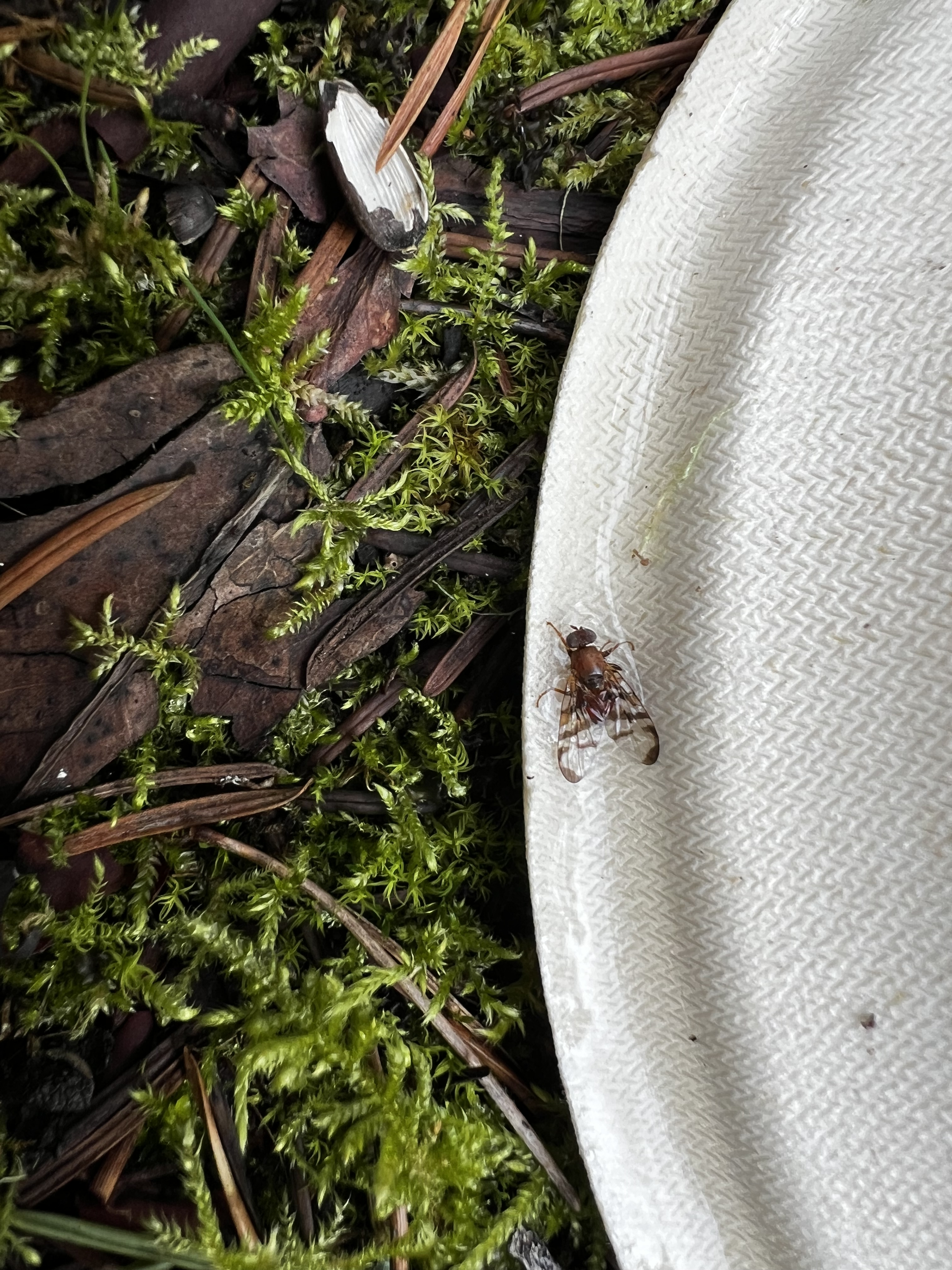
Here’s a unique specimen I have to show you. I found this fly on Wednesday after lunch when I went to look for a different species of fly around our above ground pool. I was actually looking for Woodpecker Flies when I found this one. Since I’ve committed to doing a presentation about them for the Scarab Society in September, I’m hoping to observe these weird Woodpecker flies again in the wild and take additional photos and videos to add to what I have collected already.
I didn’t expect to see anything IN the pool. Mostly, I was looking at vertical surfaces, like the sides of the pool and the sides of a nearby tree. When I glanced across the surface of the water, this little one stood out right away. I got a paper bowl to gently scoop it out, expecting it was deceased. It surprised me when it moved just a bit, then wiggled and flipped off the bowl onto the ground.
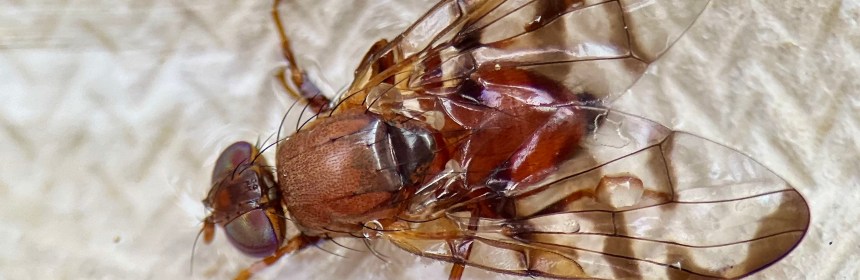
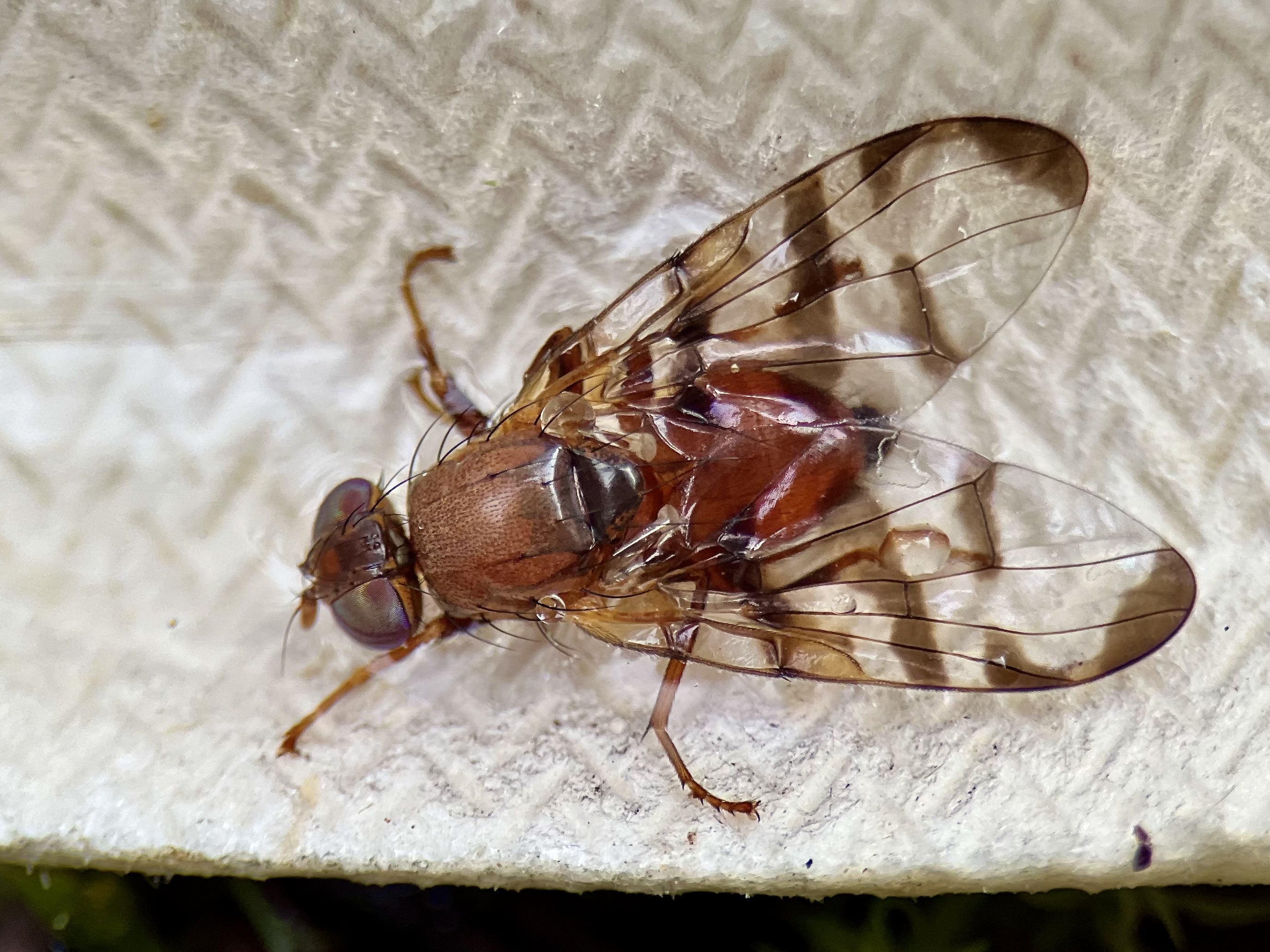
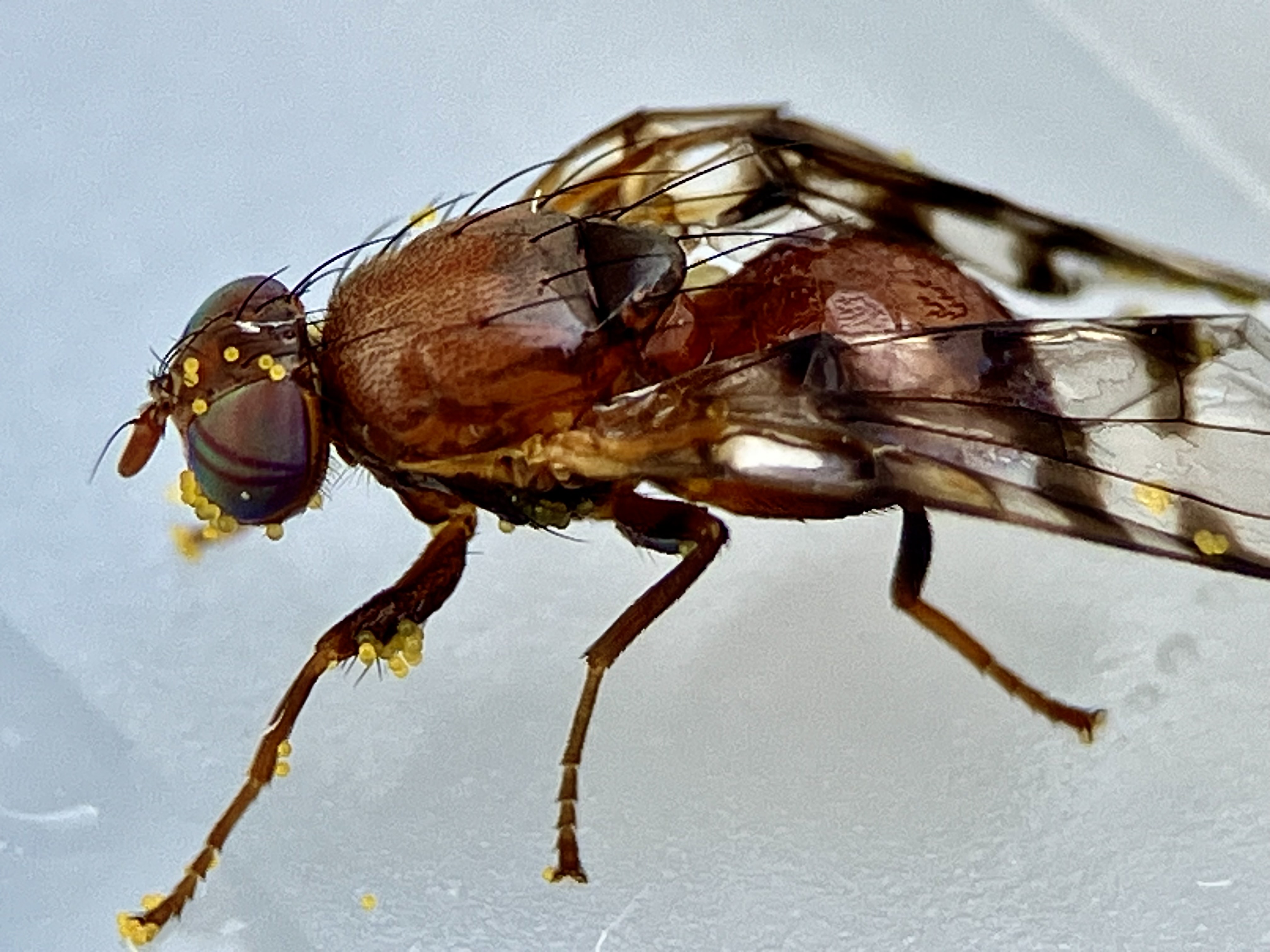
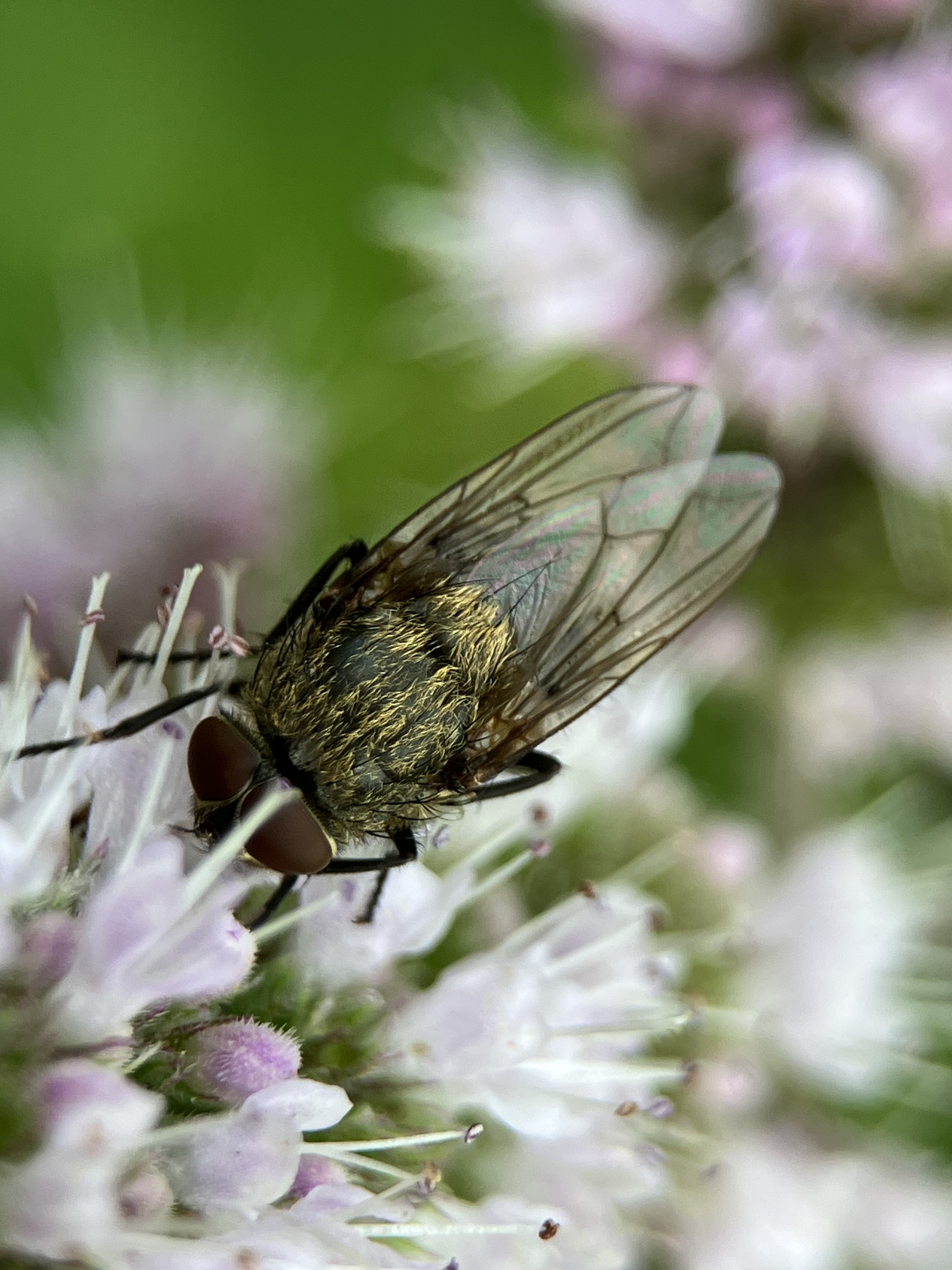
Chetostoma californicum
I bent down to inspect it, and when I touched it, it flipped around again like a fish out of water. Strange.
I had a plastic cup, so I managed to recapture the fly, wet and bedraggled as it was. I took it back into the house long enough for me to get my other camera. The lighting was better outside, so back out we went.
In case you are wondering, this is one of the Picture Wing Flies in the family Tephrididae. Also known as Fruit Flies. “Picture” references the patterned spots or stripes on the wings. There are other flies, like Drosophila sp., called fruit flies that aren’t actually fruit flies at all. THIS is a true fruit fly.
Many species of fruit flies are known for their pest status, however, there are over 4,300 described species in this family and the great majority of them are not pestiferous at all. They are merely a part of the local, natural ecosystem at large.
I used a key and geographic distribution records to determine the species for this one and believe it to be Chetostoma californicum. Trying to find host plant information led to me to do some deeper digging and to actually order a few more reference books on Tephridid flies. I have another fruit fly specimen I found when we were in Mexico, and plan to share that one with you next Friday. As I learn more about this particular one though, I will update my blog post accordingly.
The reference material I did find about Chetostoma californicum was largely from California and Arizona. Inferring from the documented host plant relationships recorded, it is likely one relationship possible in our immediate area is with native honeysuckle (Lonicera sp.). I also read adults of this species have been collected from Pines (Pinus sp.). We have a Pine tree just next to our above ground pool where the fly was collected.
Chetostoma californicum, identified by the oral edge of bucca (cheek) with a row of about 10 coarse, black bristles with a few finer black setae at the posterior end of the row. (LeBlanc, 1959)
The only additional personal record I have of this fly on San Juan Island is from February 16, 2024. I would conclude, based on my own observations, that this fly is not particularly an abundant species here. In checking for reports of the species on San Juan, my two posted observations are two of three total for the county.
Now if I can just find out what’s behind the fish flippy behavior…..stay tuned!
Chetostoma californicum (with pollen stuck to it after I accidentally dropped it into a Crocus flower)
Cole, F. 1969. The Flies of Western North America. University of California Press. Berkeley and Los Angeles.
Foote, R.H. and Blanc. F.L. 1963. The Fruit Flies or Tephritidae of California. Bulletin of the California Insect Survey. University of California Press. Berkeley and Los Angeles. https://essig.berkeley.edu/documents/cis/cis07.pdf
LeBlanc, 1959. A new species of Chaetostoma from California (Diptera: Tephritidae). Pan-Pacific Entomologist. 35:201-204. https://biostor.org/reference/225819
Wasbauer MS. 1972. An annotated host catalog of the fruit flies of America north of Mexico (Diptera: Tephritidae). Occas. Pap. Calif. Dep. Agric. Bur. Entomol. 19:1–172.
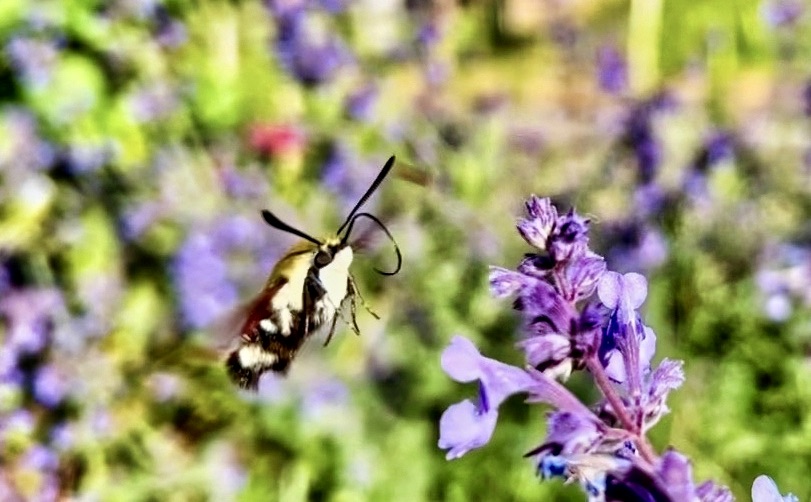
Hemaris thetis moth nectaring at Catmint (Nepeta sp.)
With spring around the corner, I thought it might be a good time to write up a post about bees. For those of you who don’t know me, I’ve been a San Juan Island resident now for over 17 years. When I was finishing my Masters Degree in Entomology and Nematology, I was required to take bee keeping as part of my advanced Apiculture coursework.
My former bee keeping days! 2010
I won’t lie, I did enjoy the bees. I had one of the hives under a bedroom window, and it smelled so wonderful to open that window and smell the bees in the house. In my studies, I learned a lot about social insects. The other thing I learned was bee keeping sure is an expensive endeavor.
Why? Well mostly because the bees had to be replaced every year after they died over the winter from starvation. They didn’t always starve, but in the 6 years or so of keeping bees on the island, I think my longest surviving hive lasted about 4 seasons. That one, I can assure you, only lasted that long because I fed them sugar water. I was feeding the bees a quart of sugar water at least twice a day. They had all of that, and I never took any honey from my hives. All the costs added up. They also sting.
In my experience, I concluded honey bees weren’t exactly the best pollinators here either. As I spent more and more time in my study of insects and moved to a property with an old orchard (plums and apple trees), I saw the insects doing most of the pollination were flies. We have some incredibly cool species of flies too! At night, the insects pollinating these trees included many moths. Just an FYI, flies and moths are particularly attracted to the color white (same color as early flowering fruit trees).
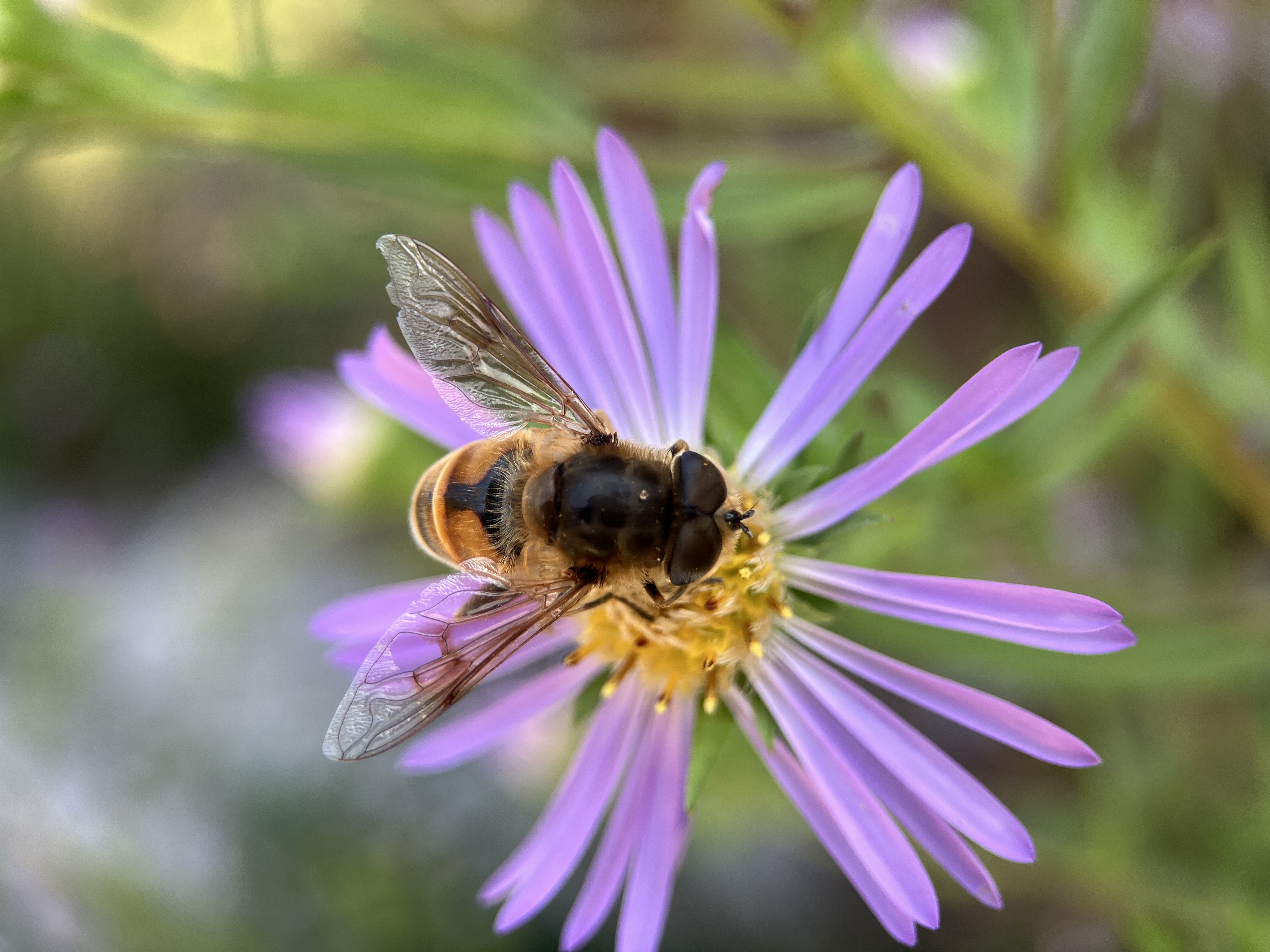
Eristalis tenax fly on Aster
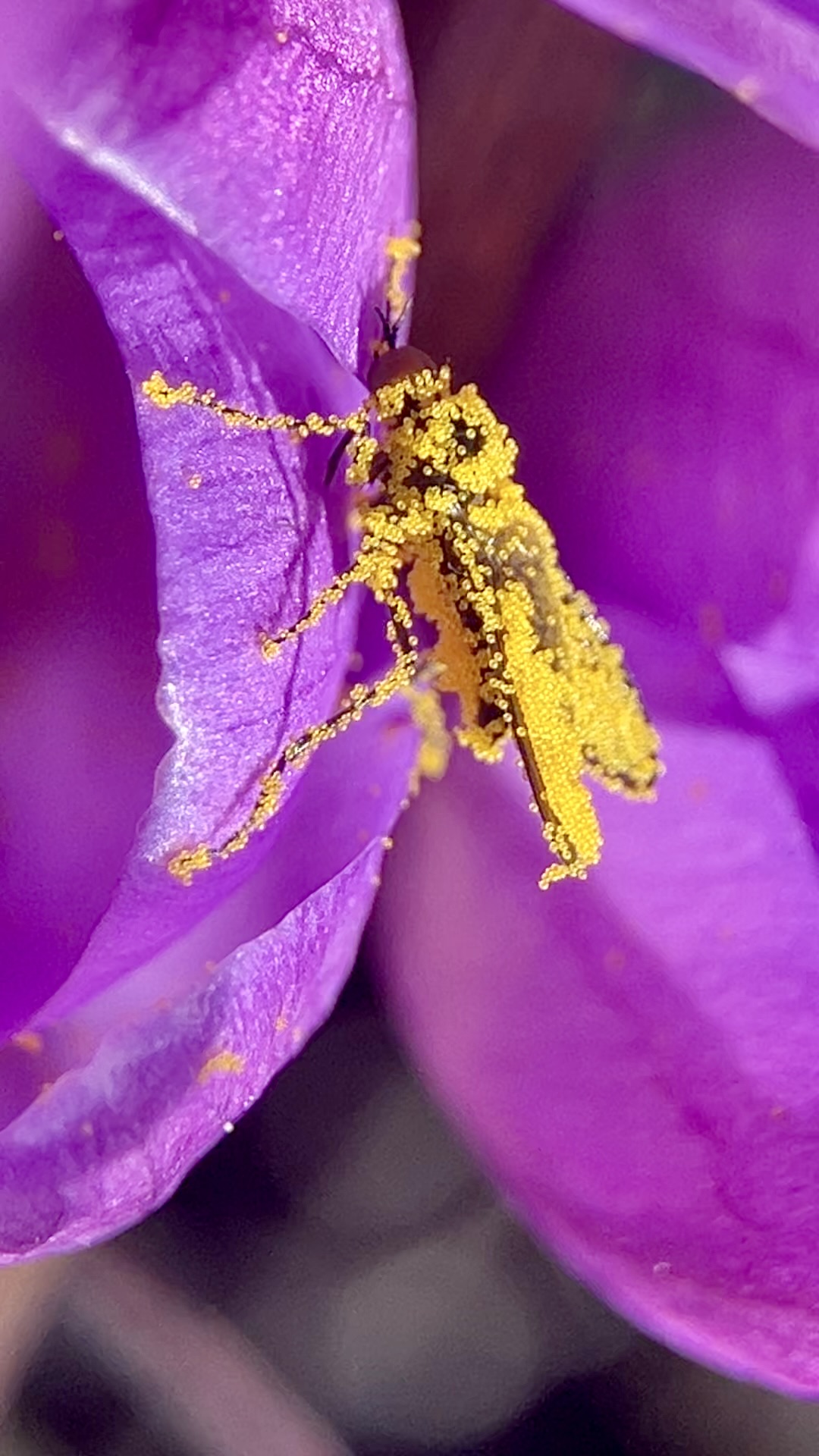
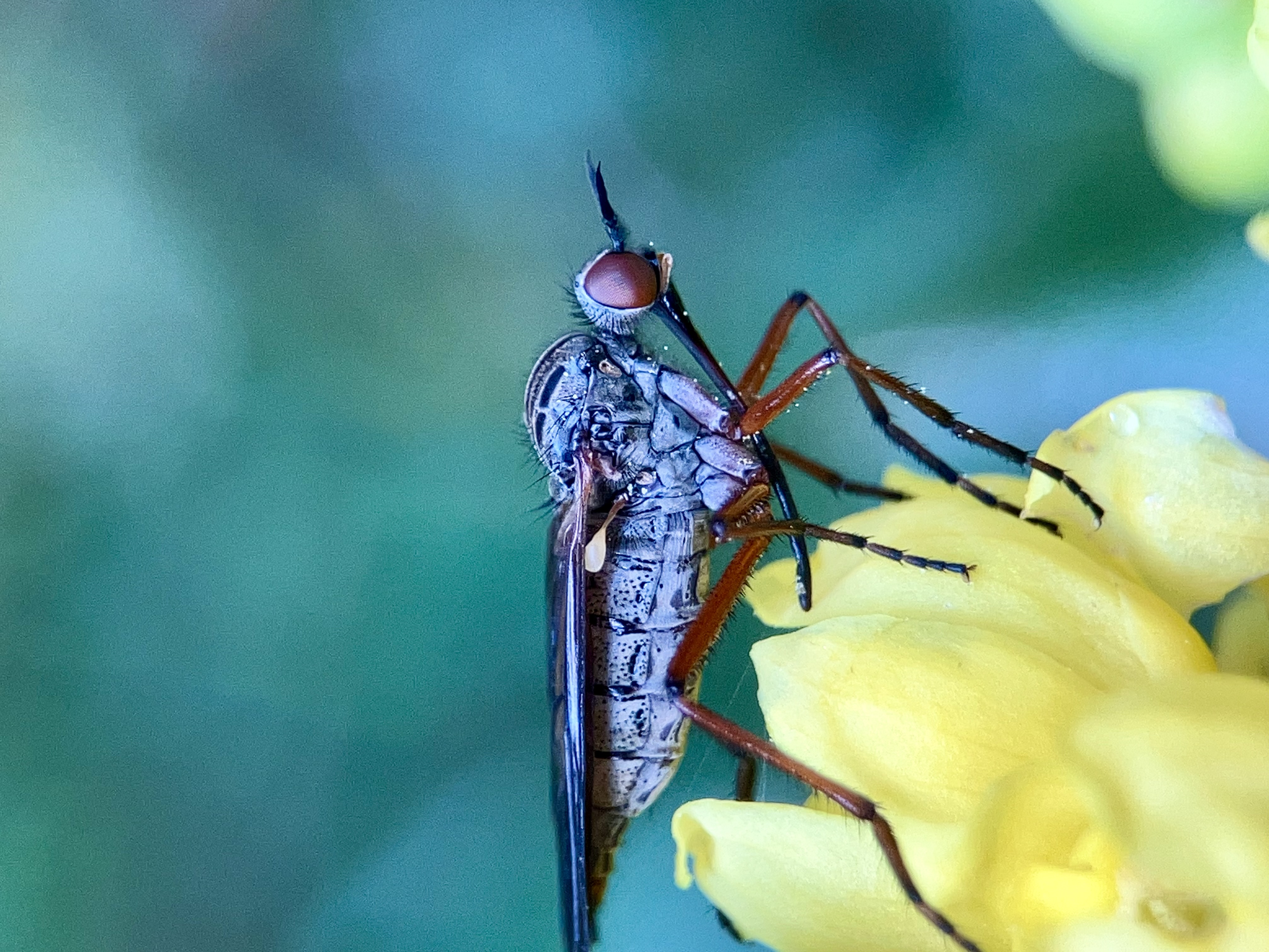
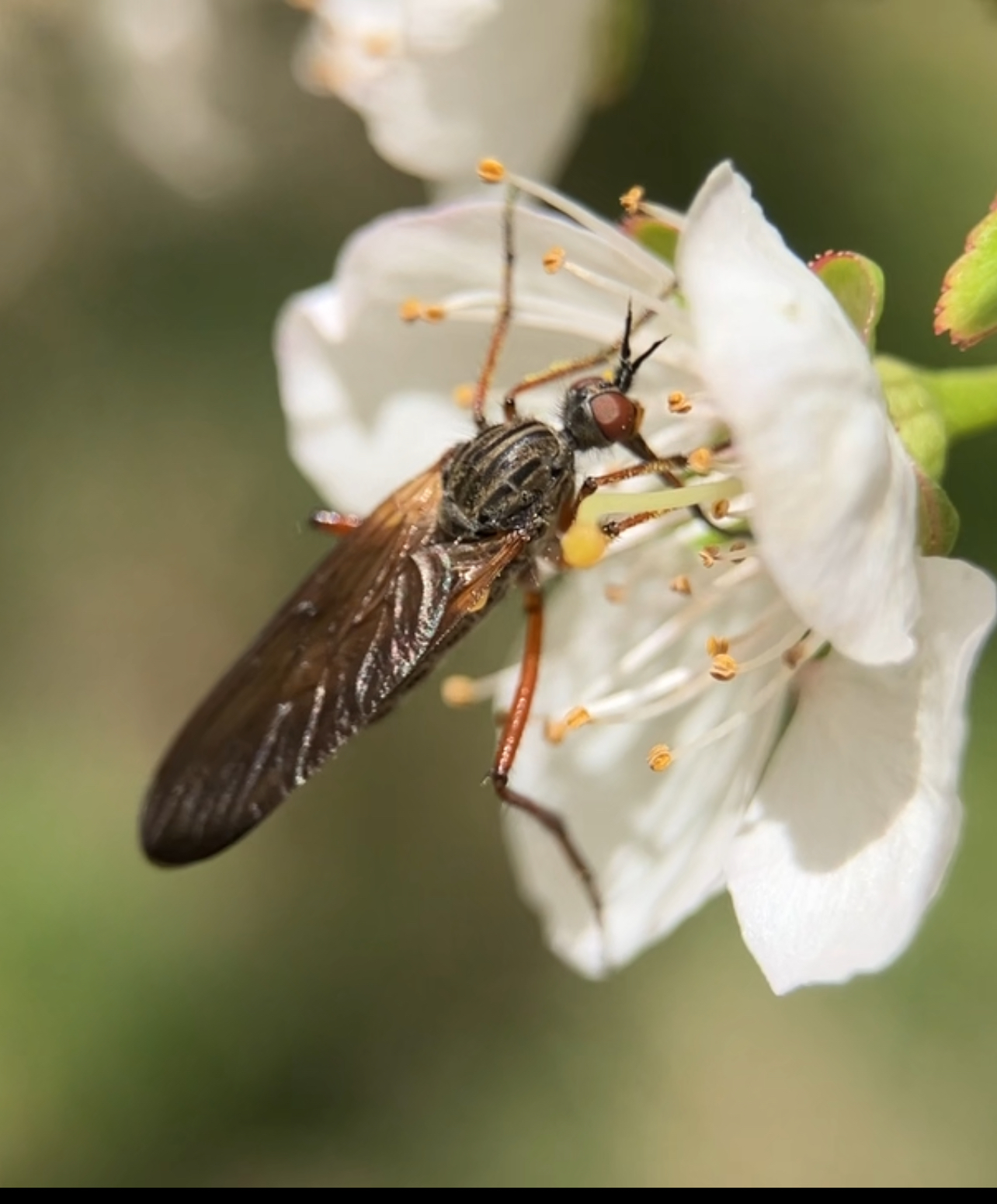
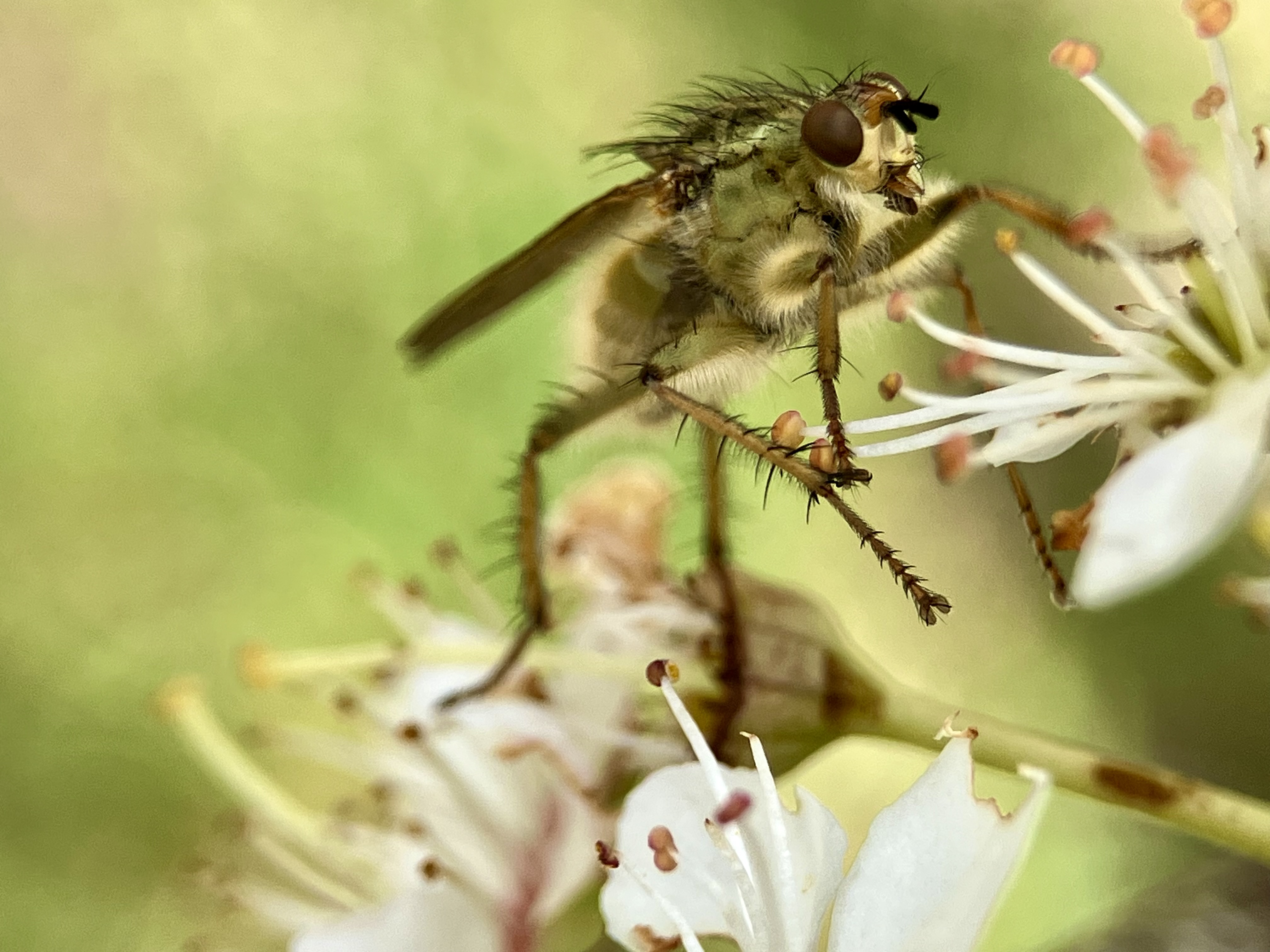
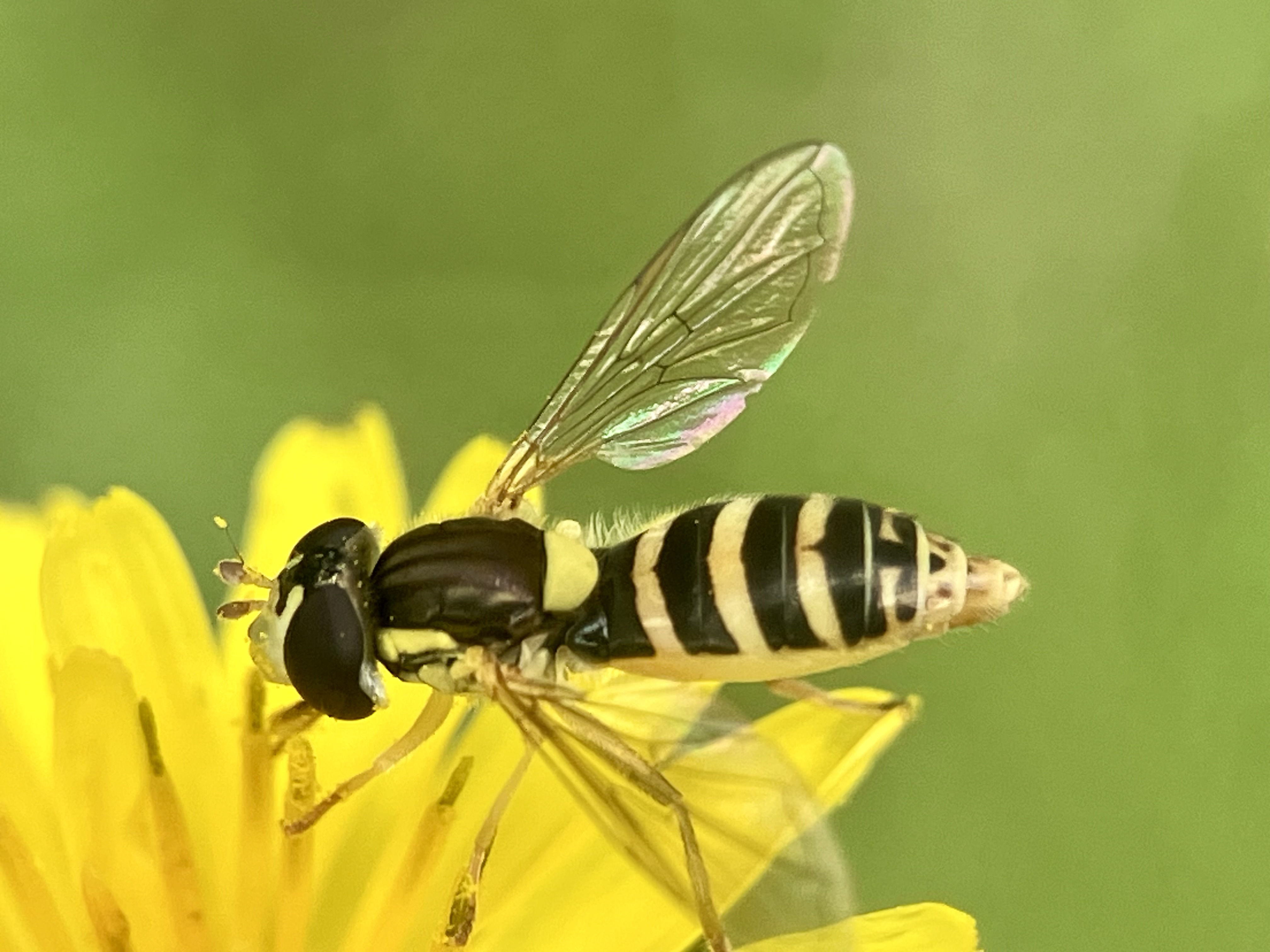
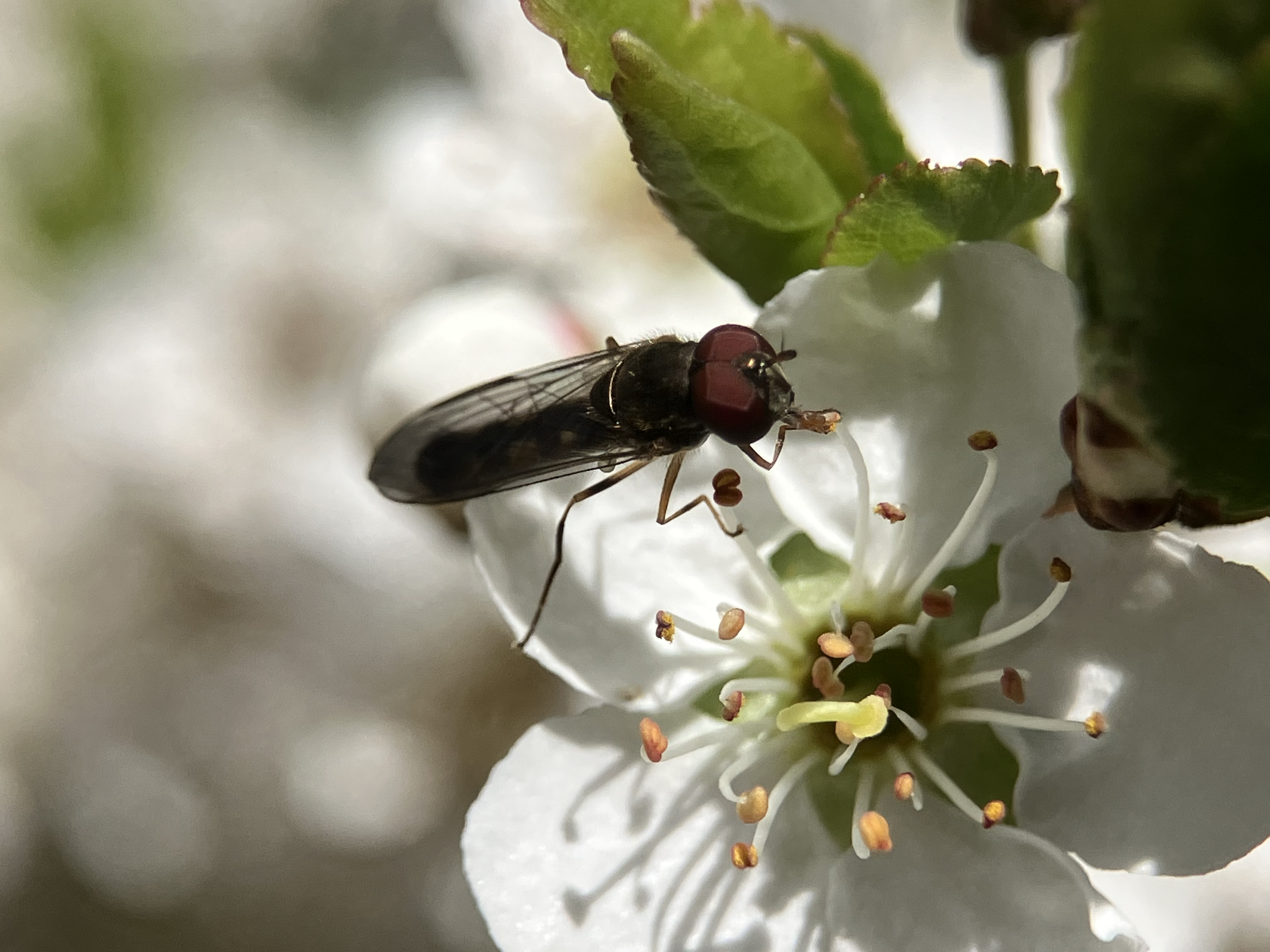
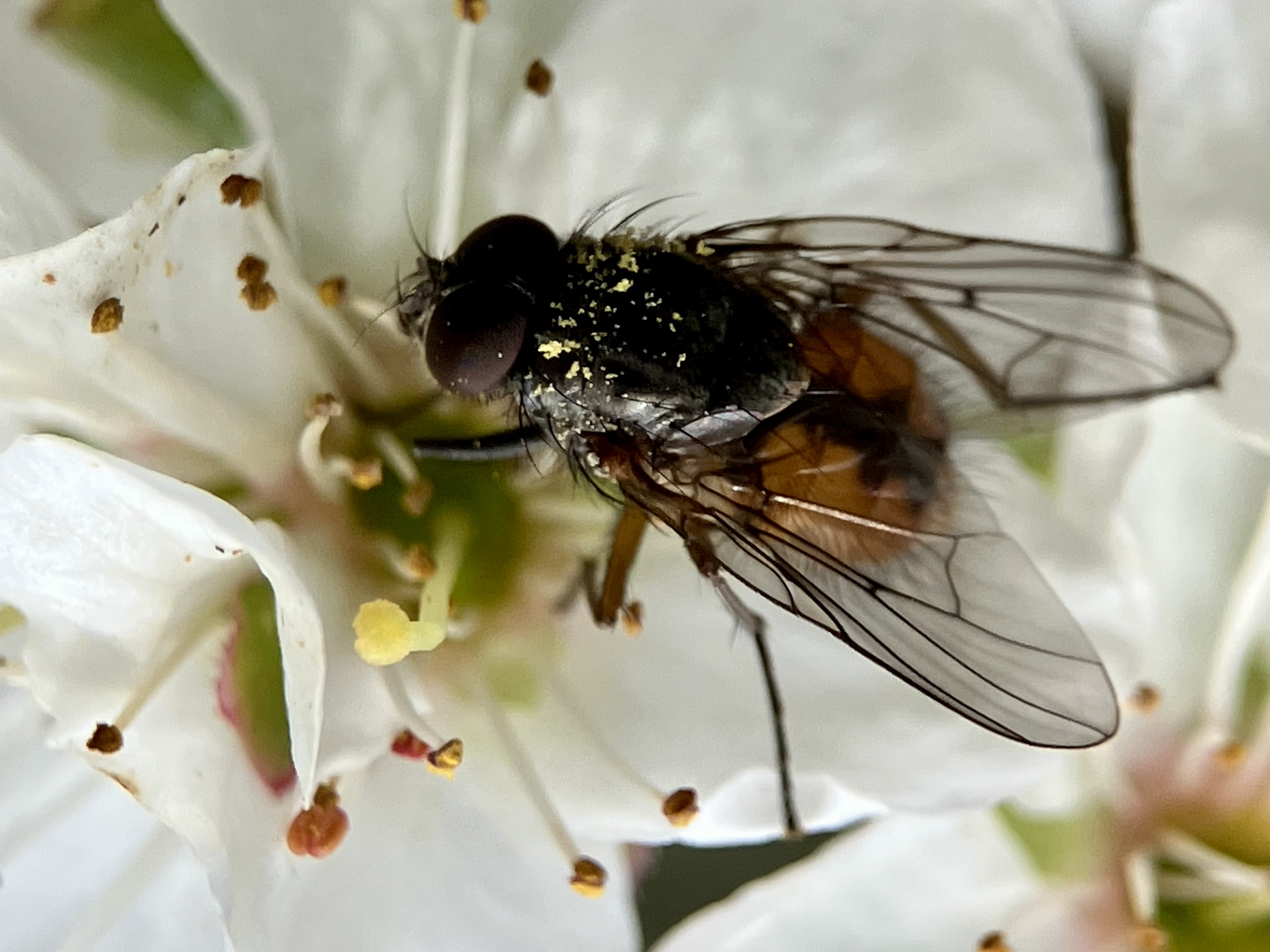
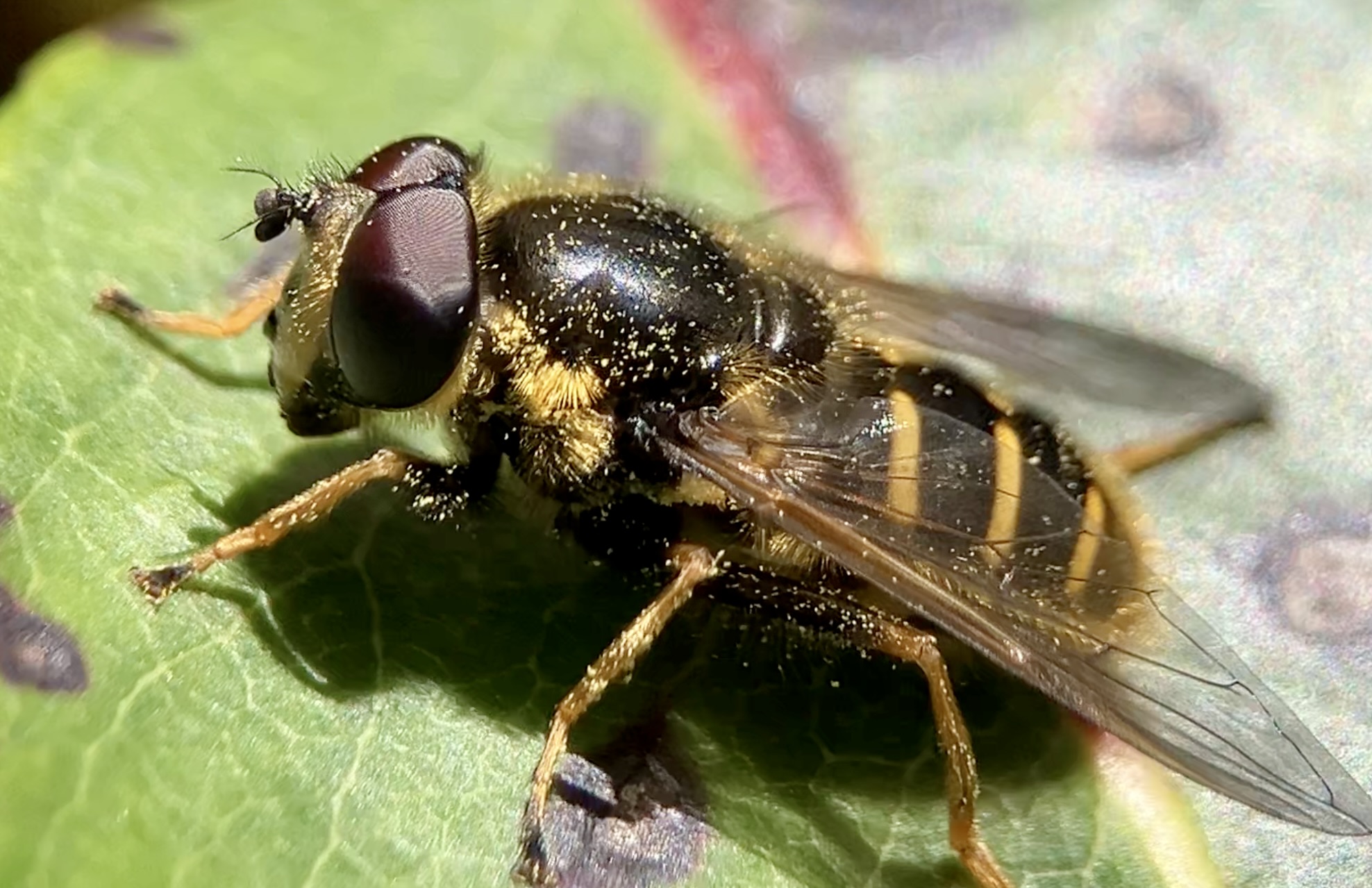
Empididae Dance Fly Covered in PollenEmpis barbatoidesEmpis sp. Golden Dung Fly (Scathophaga stercoraria) Forked Globetail (Sphaerophoria sulphuripes ), a Syrphid Fly Melanostoma mellinum Variable Duskyface Fly, a Syrphid Fly Musca sp. (I believe Musca autumnalis)Sericomyia chalcopyga – Western Pond Fly, A Syrphid FlyPollenia sp. Cluster fly
Honestly, I am not much of a food gardener, but I do love watching for insects in our garden and observing the relationships that exist. Not just between the insects and the plants, but also the relationships between different species of insects (and I’ll lump spiders in here too).
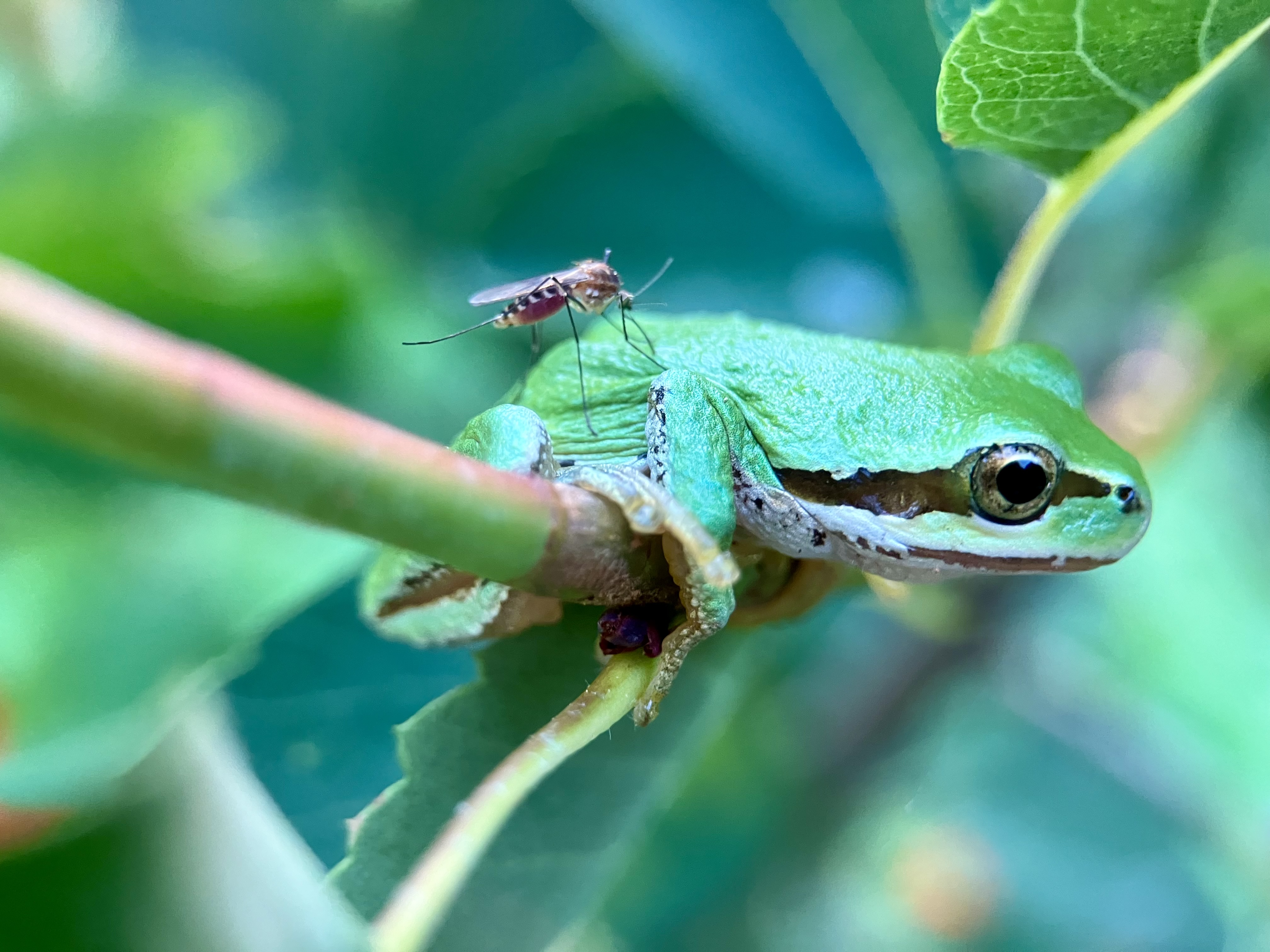
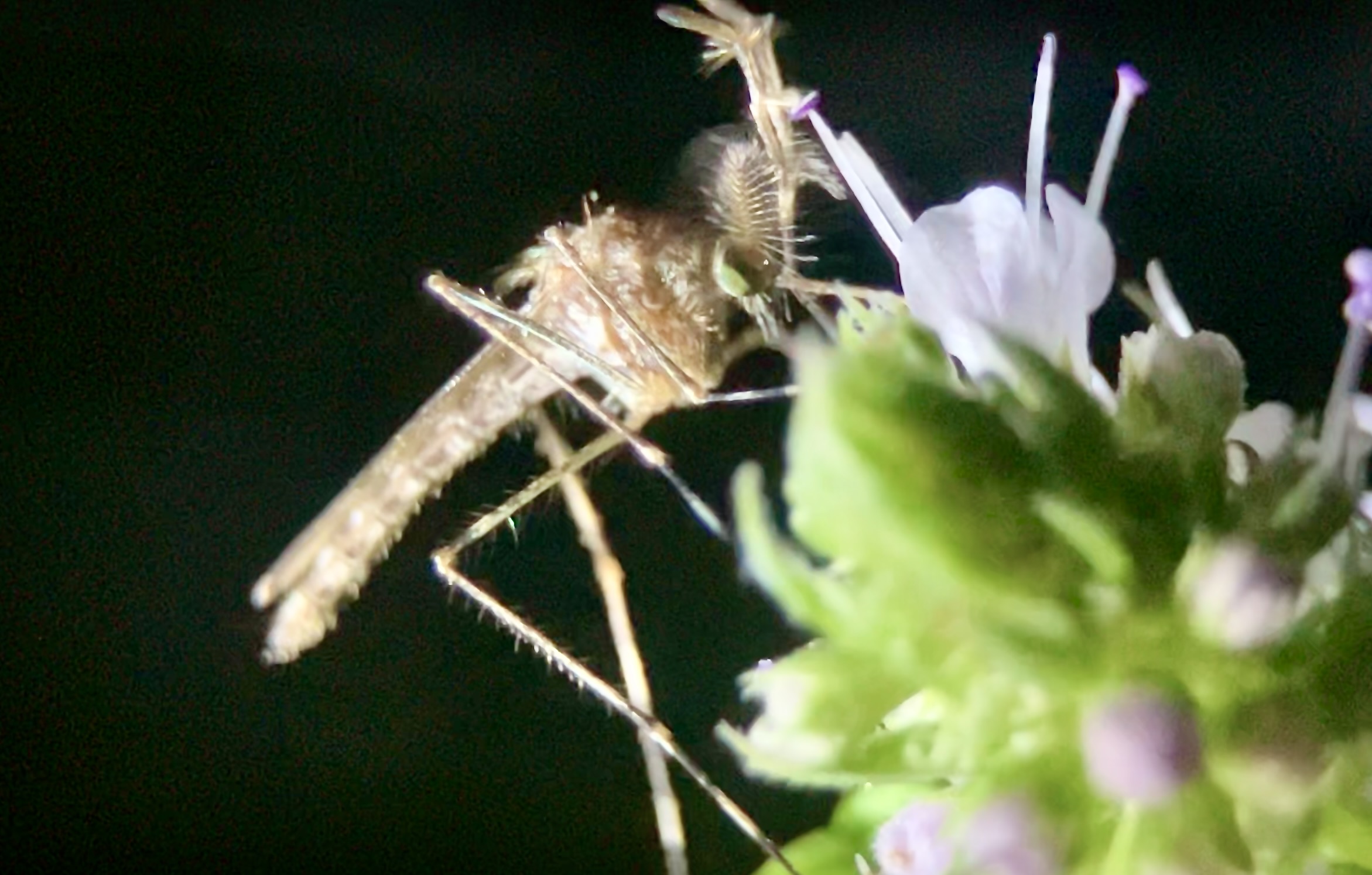
Every year, I watch our resident chickadees and nuthatches glean insects off twigs and branches. Nature’s pest control. The little tree frogs gobble bugs off garden plants. Those same frogs are also food for a species of female mosquito. Yes, you might detest mosquitoes, but even mosquitoes are pollinators. Go out at night with a flashlight and look at those fruit tree flowers!
Culex territans mosquito feeding on tree frogMale mosquito, night time pollinator
Even now, in February, I watch our year round, Anna’s hummingbirds zip along eaves of our home taking spider webbing to glue their nests together. They also eat many small bugs like fungus gnats and other small flies, even spiders!
If you just take a moment to look closely, there are many varied relationships between species at all trophic levels going on around us that have evolved to work in balance in our island ecosystem. Native species usually have multiple roles in the ecosystem. Some are pollinators, but also pest predators. Others we may consider pests, but they are also predators of pests. Most are food for some other organism in the food chain. Remember too, that just as we are healthier with a diverse diet, other organisms also stay healthy from sourcing nutrients from an assortment of food. When we lose diversity, we all suffer. We need a complex working ecosystem, and that comes from nature!
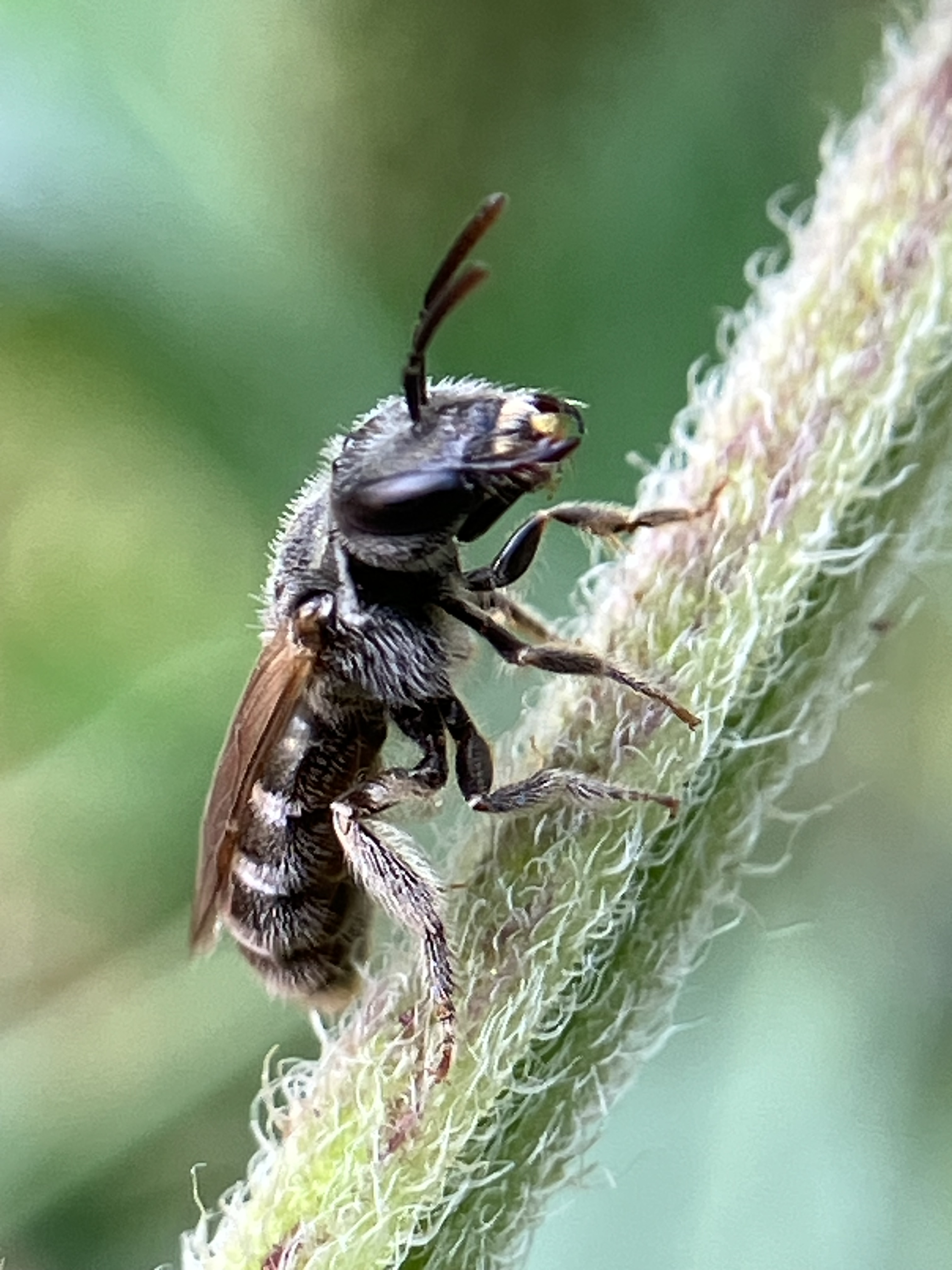
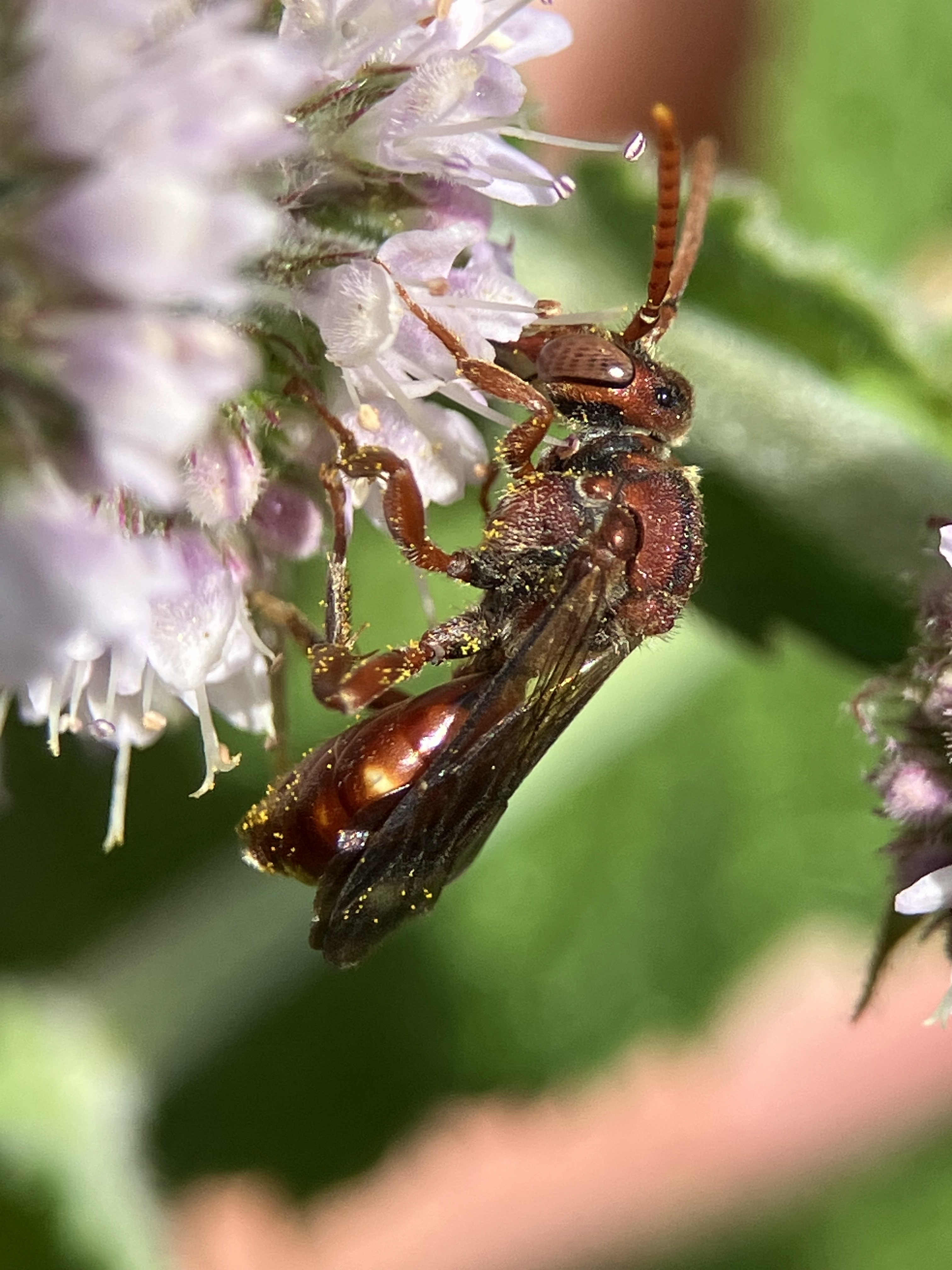
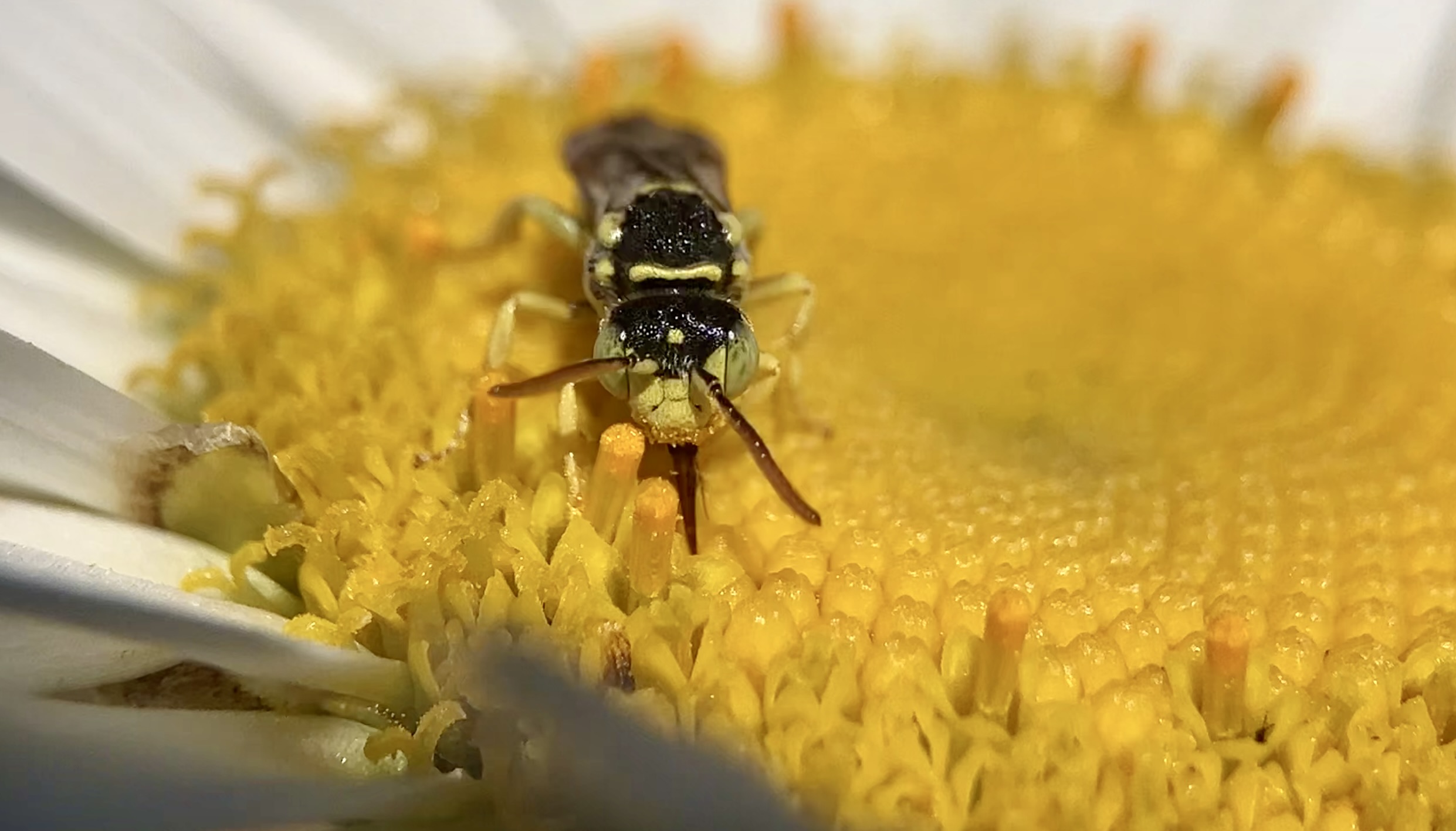
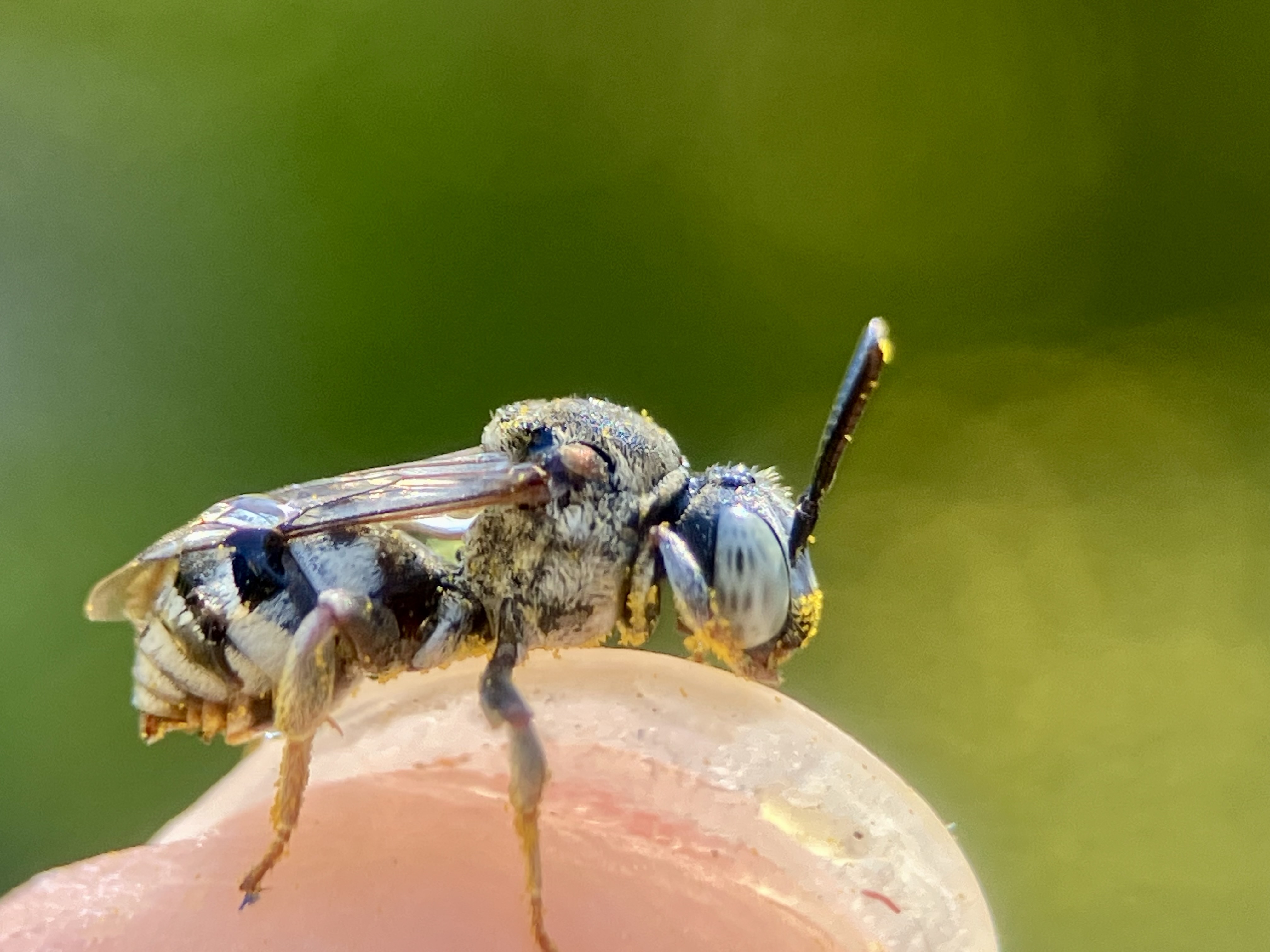
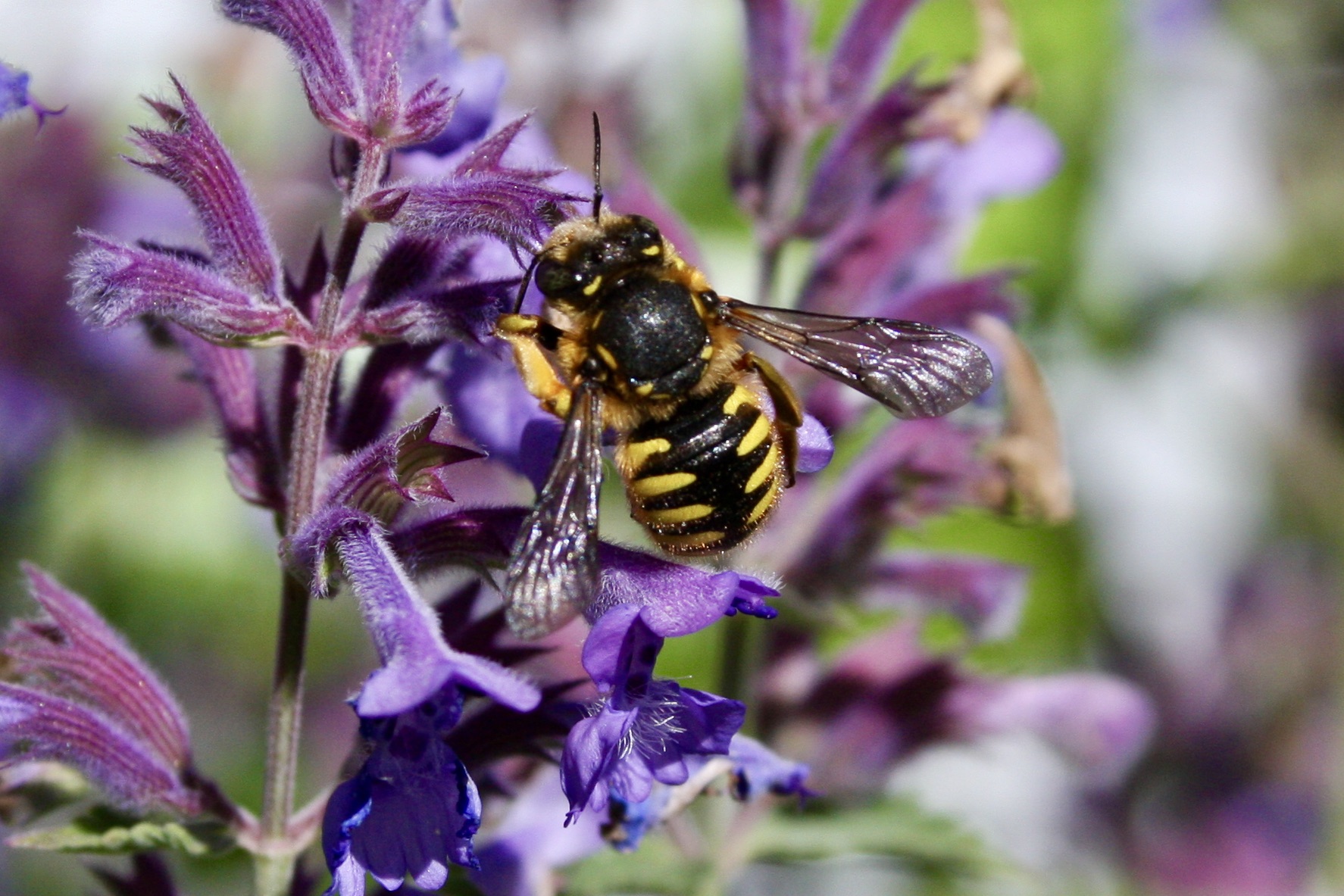
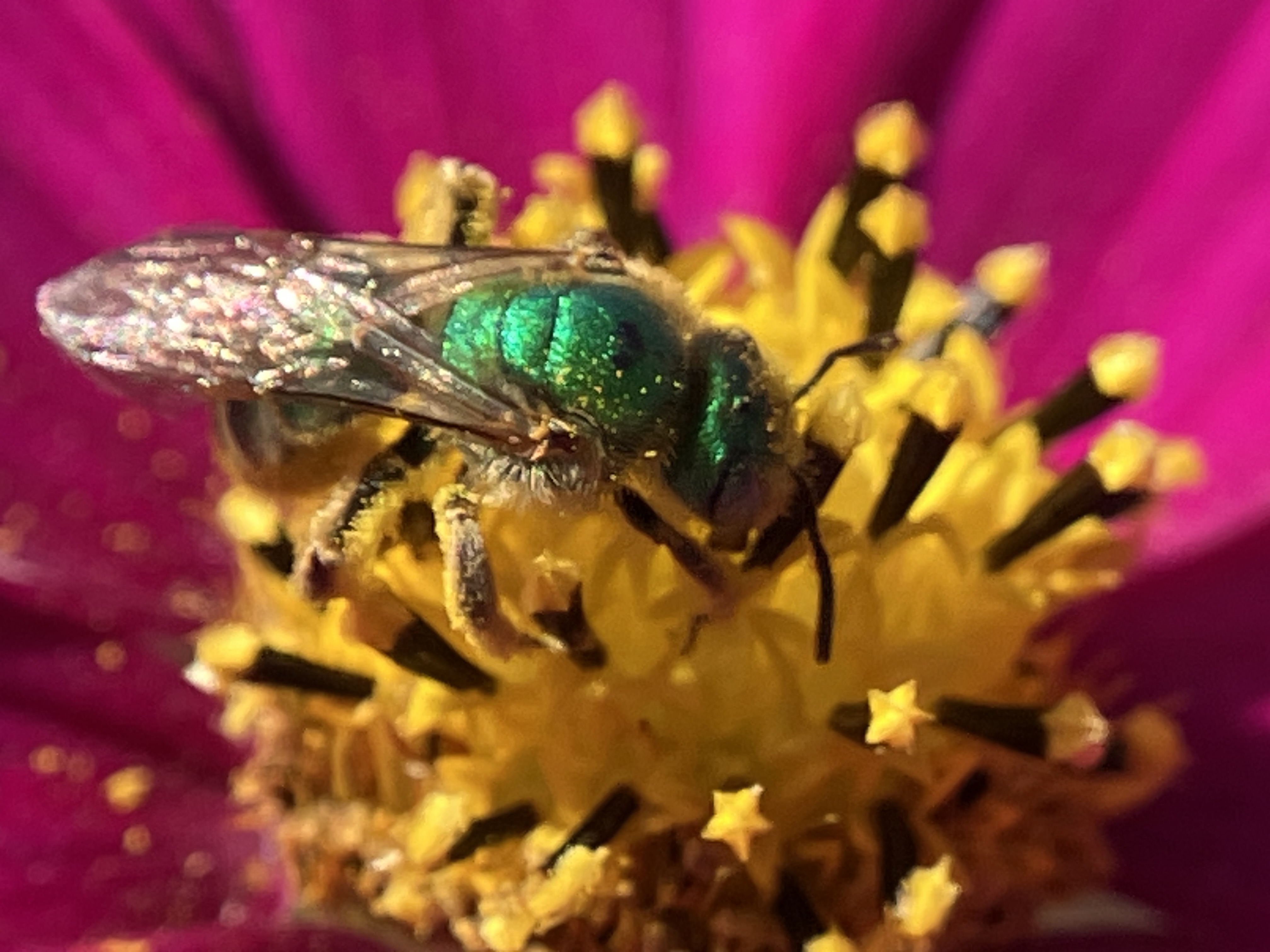
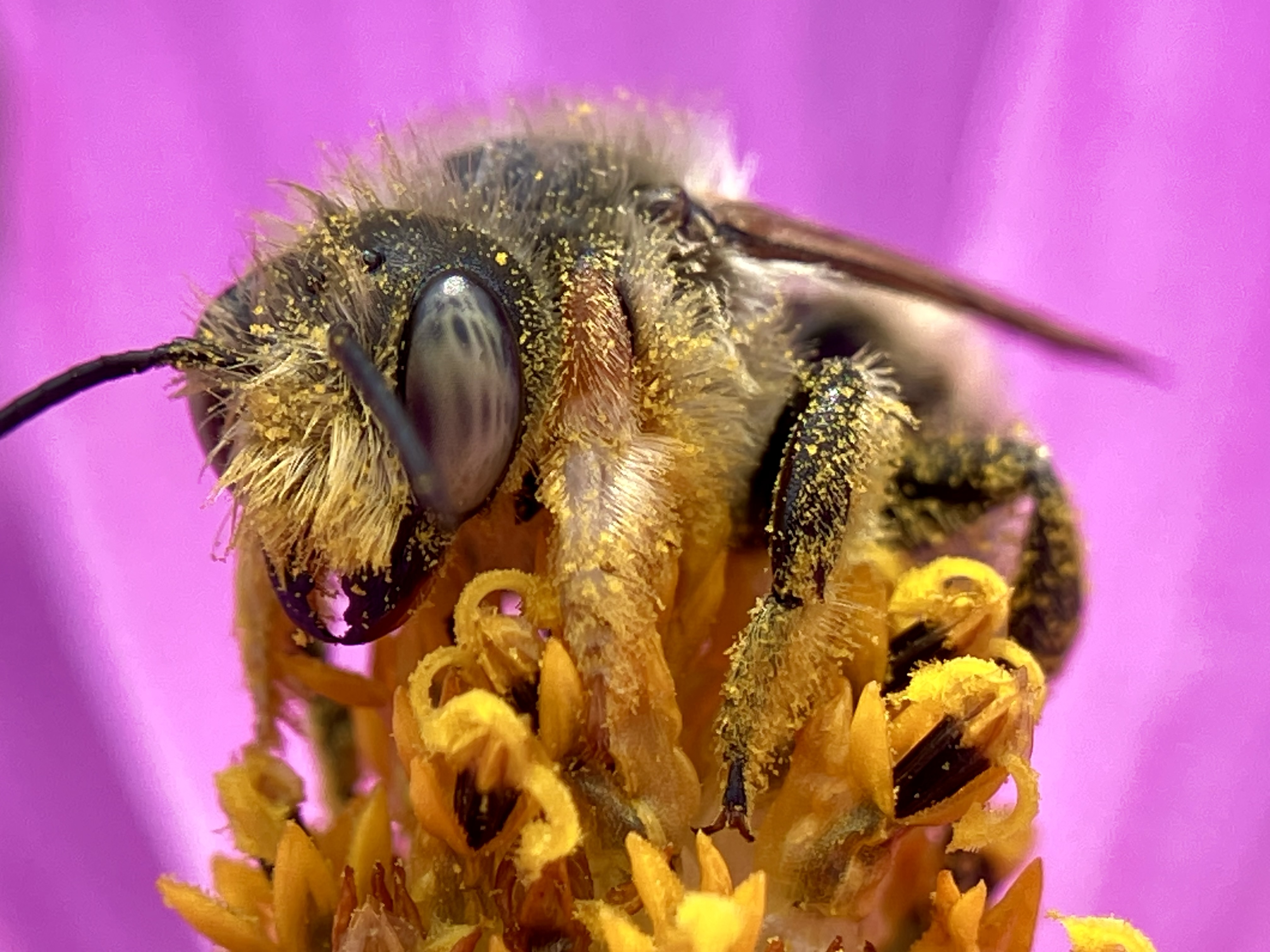
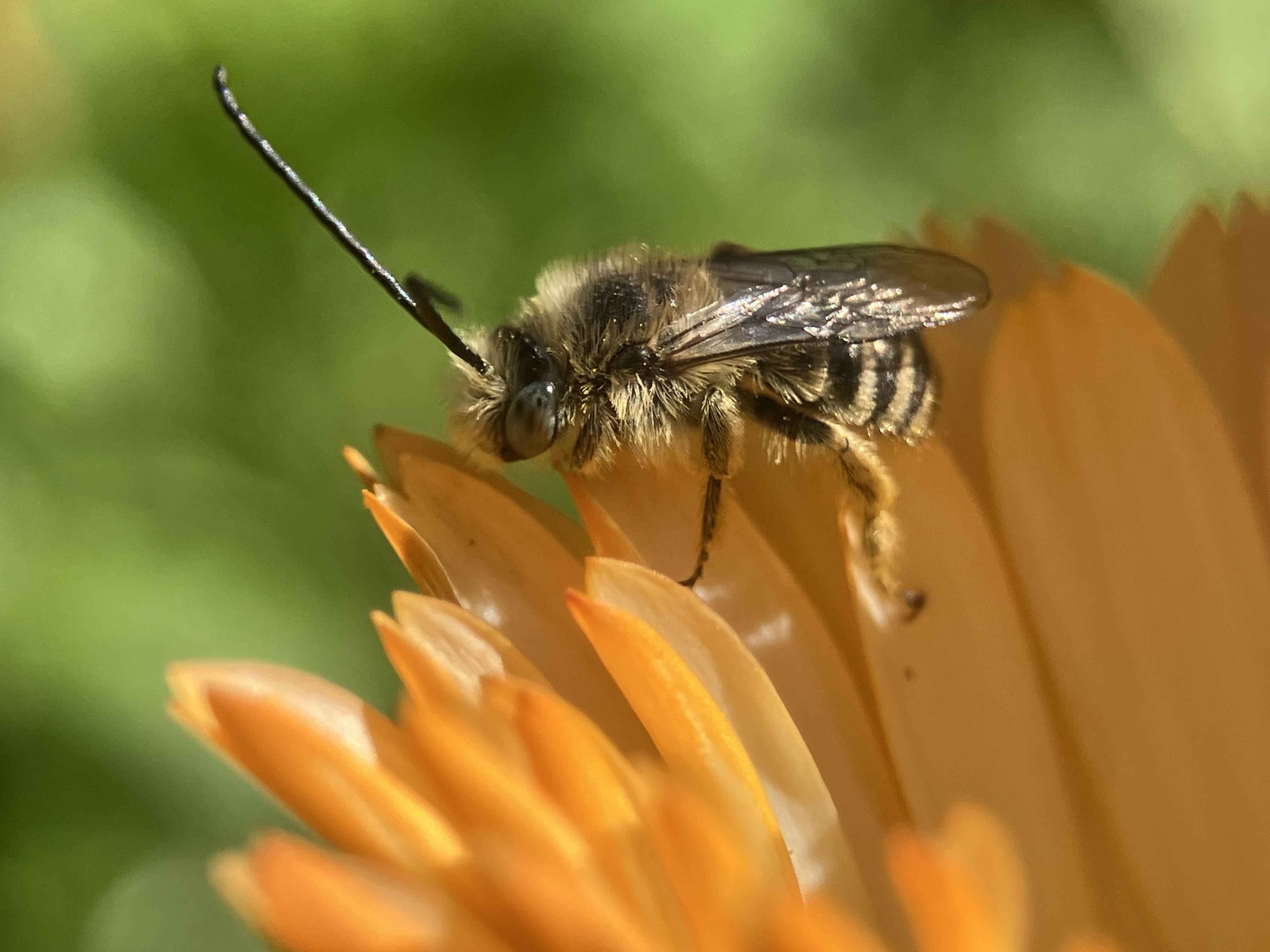
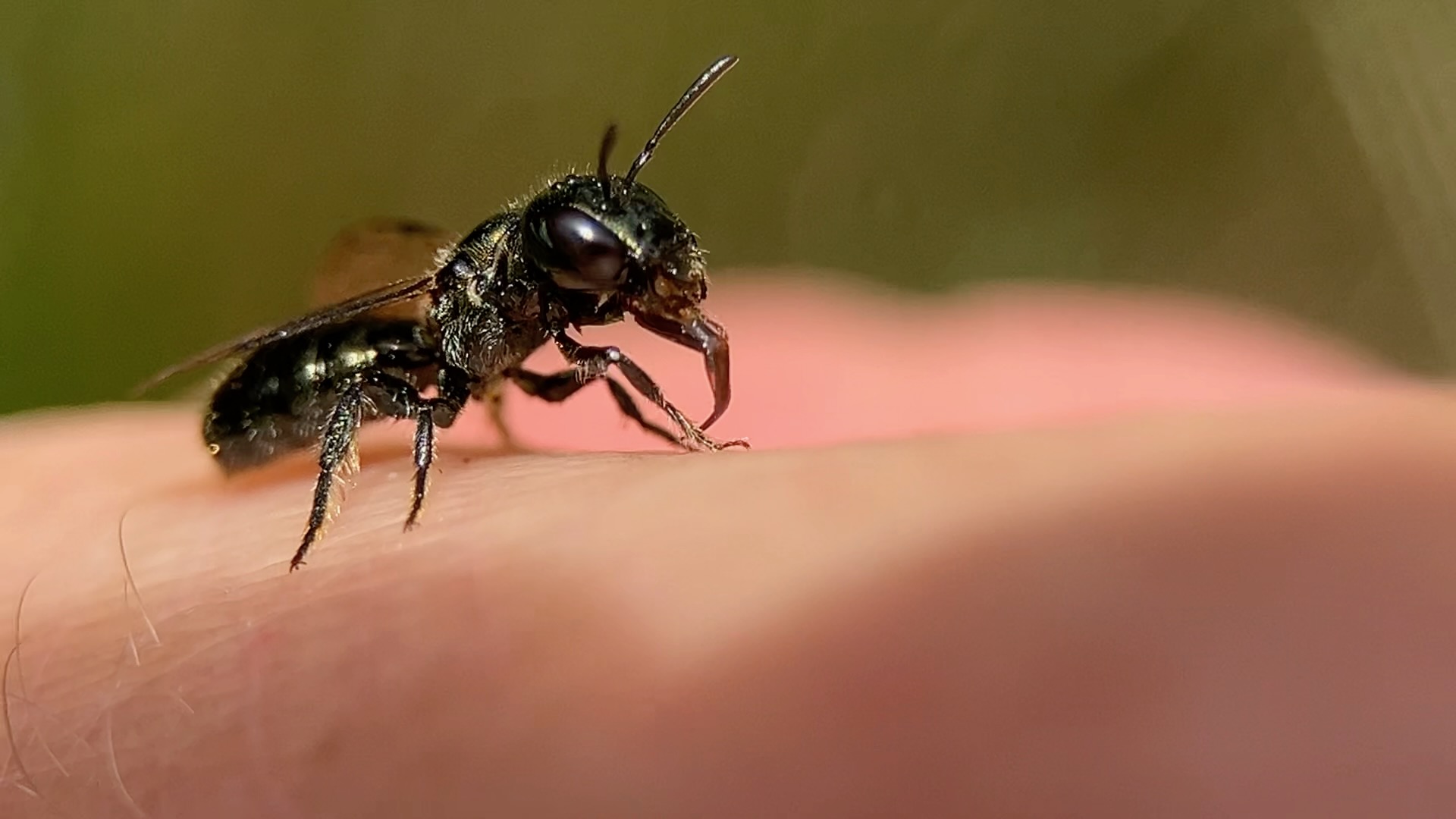
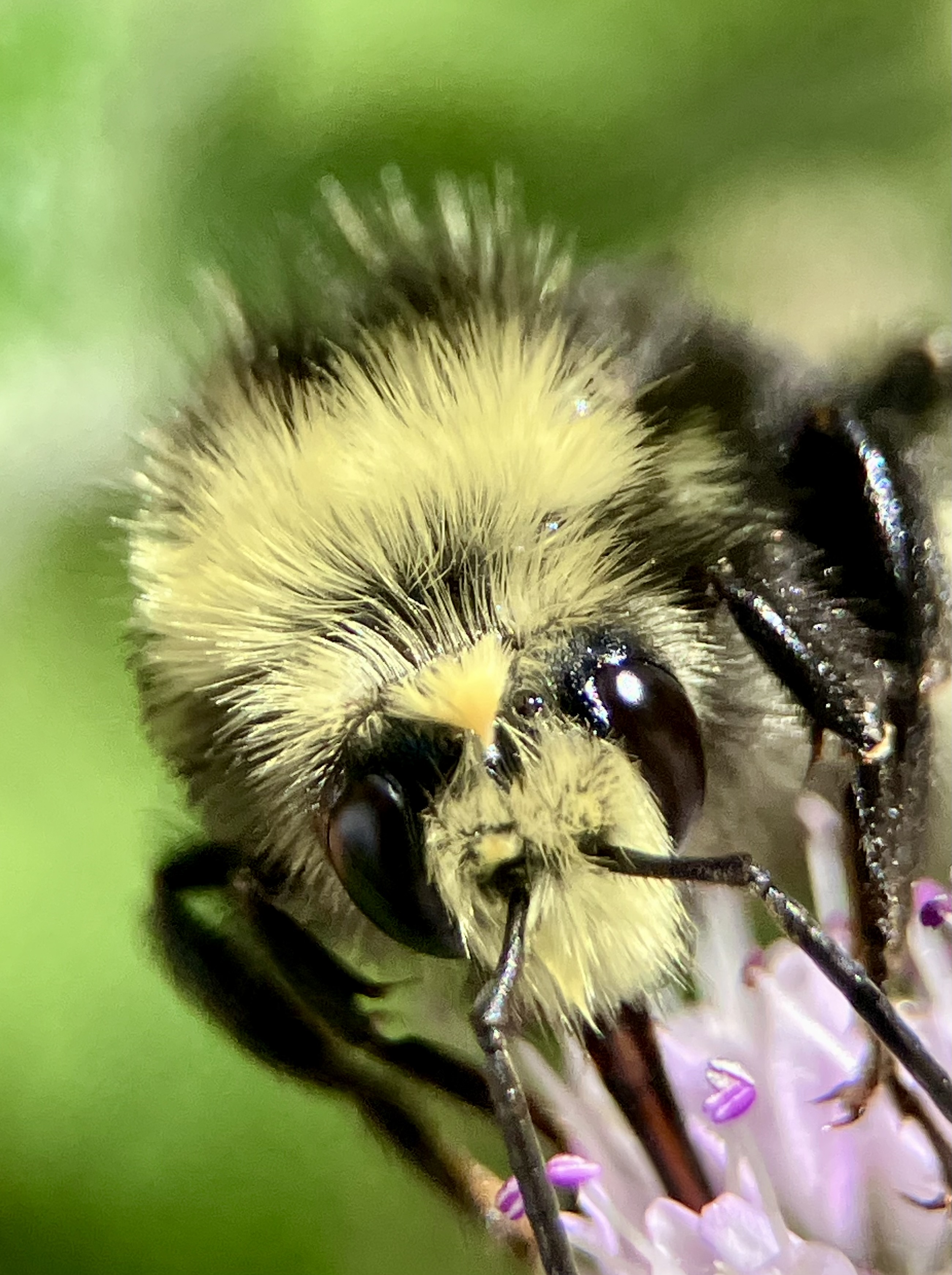
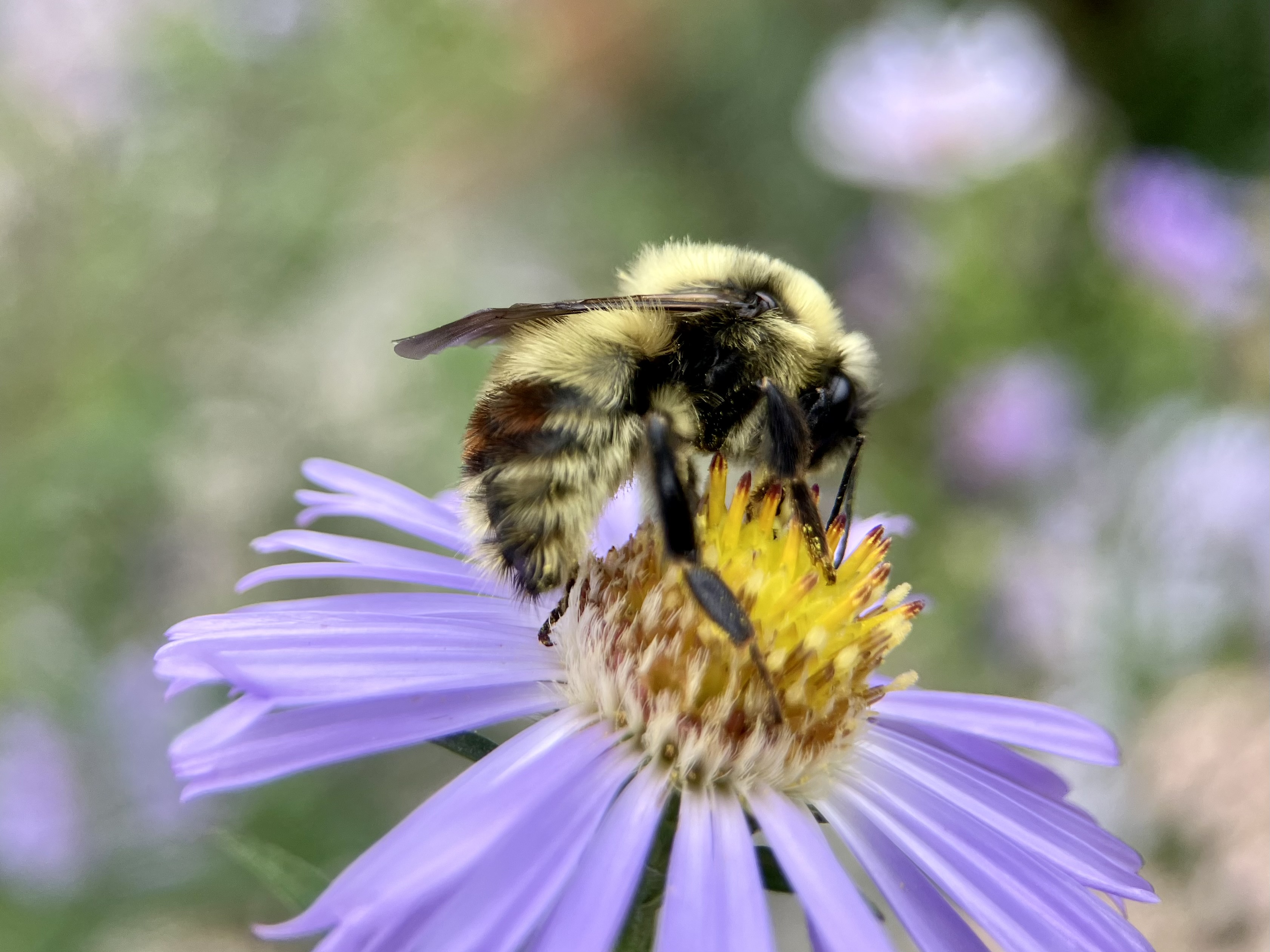
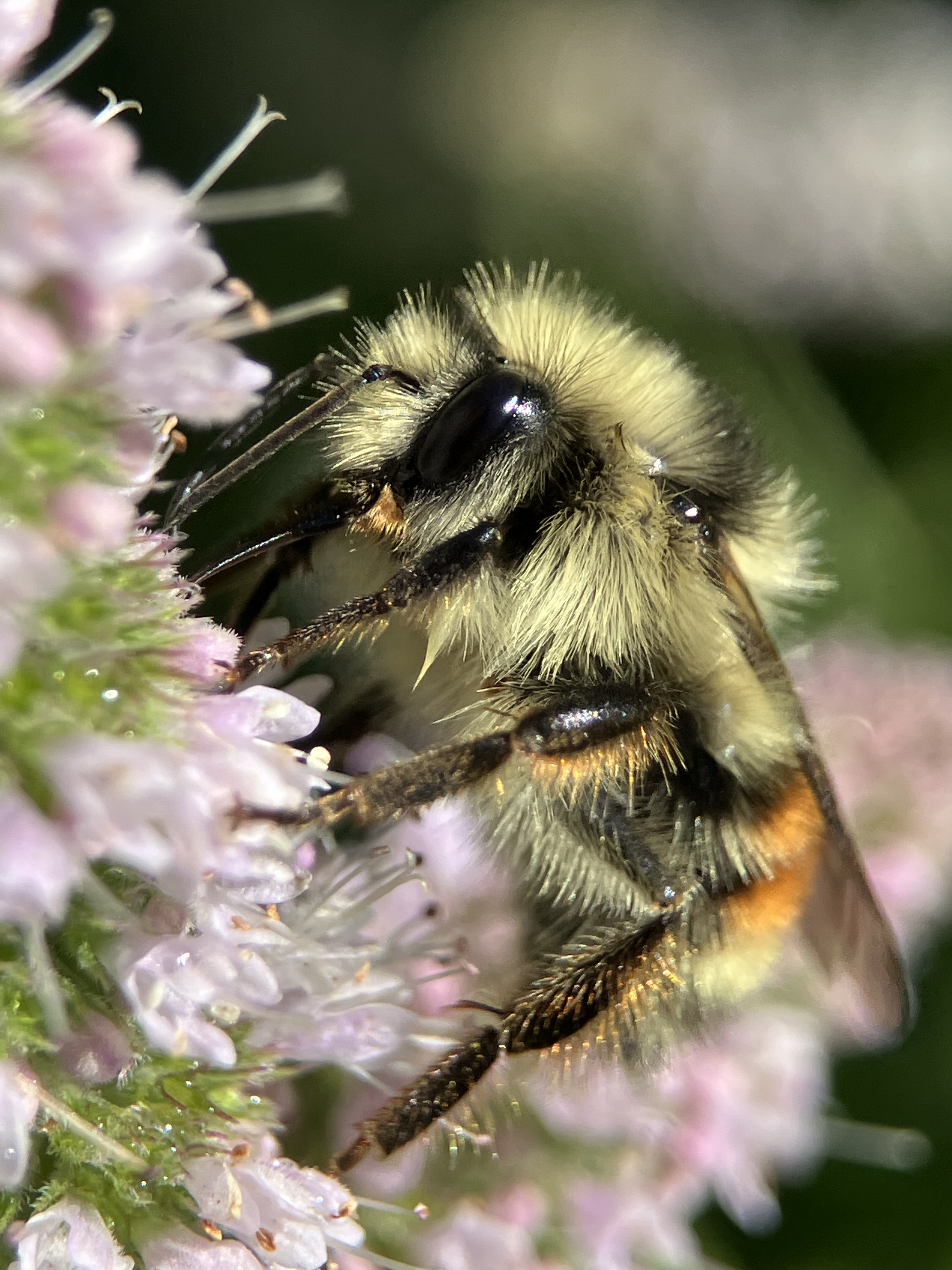
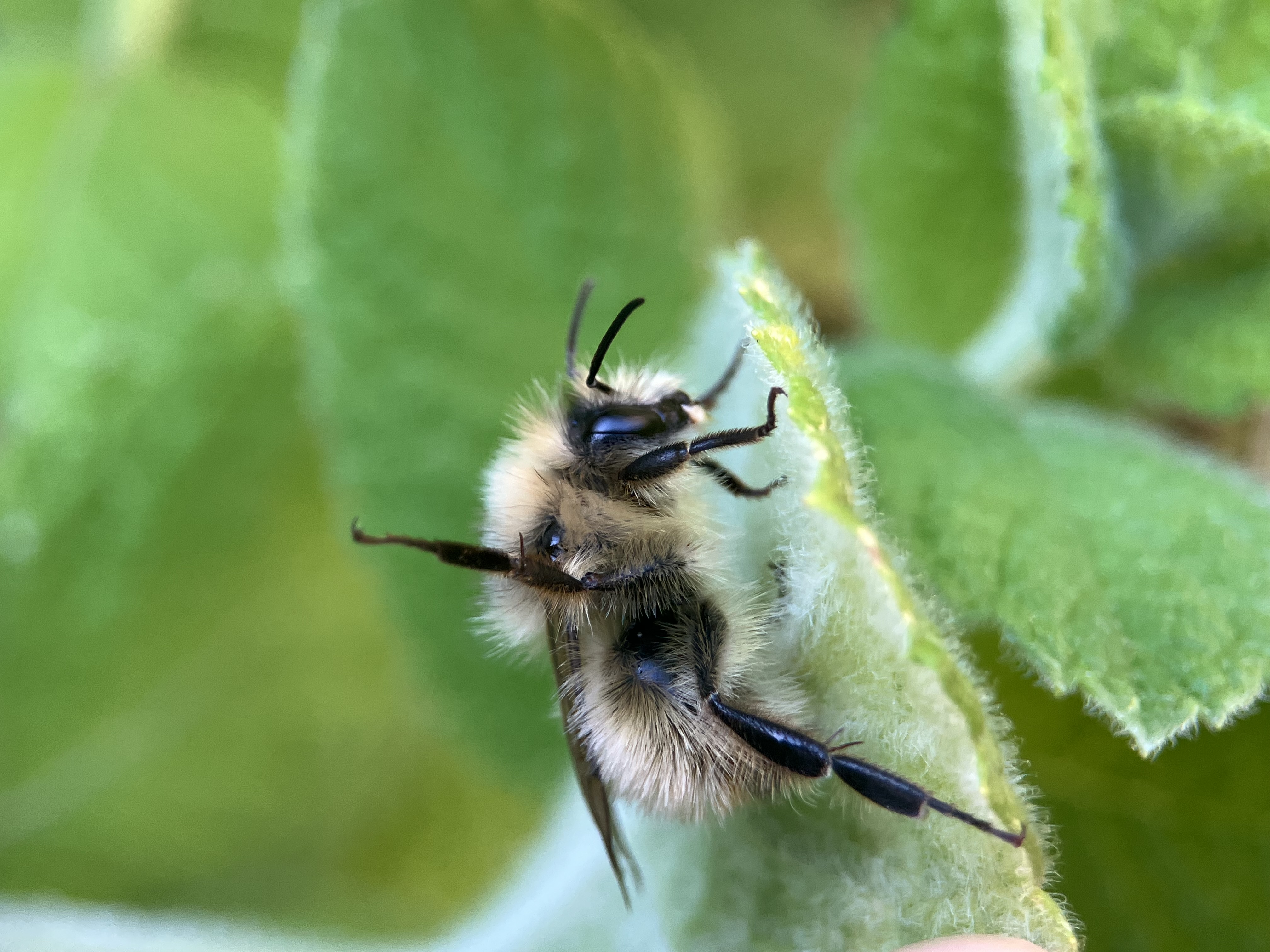
Some of our island native bee pollinators include bumble bees, sweat bees, alkali bees, blood bees, orchard bees, leaf cutter bees, nomad bees, digger bees, fairy bees, and others. These bees may not produce honey, but they are pollinators of immensely great value.
Golden Furrow Bees Subgenus Seladoniaa member of Furrow Bees Genus HalictusNomad BeeNomad BeeTriepeolus Cuckoo BeeMining Bee (Genus Andrena)Lasioglossum bee Sleeping beeAnthidium manicatum European Wool Carder Bee 06.28.2020Agapostemon Sweat beeMegachile bee
In fact, research over the past decade is illuminating just how critical these native bees and other native pollinators are for biodiversity. Biodiversity that is disappearing from our world due to habitat loss, land use changes, agricultural practices, and competition over resources with non-native species (like honey bees). You don’t have to take my word for it though. The Washington Native Bee Society and the Xerces Society will give you similar information.
Try Googling a bit on your own and you might find some pretty cool statistics about how native bees are actually better pollinators than honey bees, AND that their pollination services can yield larger, healthier fruits (like blueberries and strawberries for example). Competition over resources and displacement of native bees due to honey bee keeping isn’t limited to our island or our state. It’s been something happening world wide where honey bees are used for agricultural practices, whether for pollination or honey production. The encouraging news is that supporting native pollinators is gaining momentum. I’ve compiled a resource list for you to look at, read, and share if you are inclined.
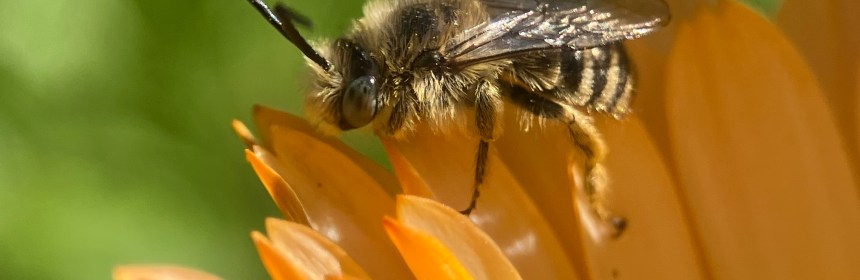
Ceratina bee
If you are still dead set on setting up a honey bee hive, I’m happy to walk you through it. I can give you a list of everything you’ll need, provide the cost of all those supplies, and advise you on how not to get stung, why you should never eat a banana near your bee hive, what problems you can anticipate with pests and pathogens, and how to avoid losing your bees due to swarming. I will also tell you that if you set up a honey bee hive, you must file and register your colony with WSDA per state law. Hopefully, you will make your way to the same conclusion as I have. It’s cheaper and also ethically responsible to support native pollinators and conserve habitat in your own yard for pollinator diversity. It’s also quite fun and rewarding to watch and learn about native bees and the bugs you probably never even knew existed.
KEARNS, C. A. 2001. North American dipteran pollinators: assessing their value and conservation status. Conservation Ecology 5(1): 5. [online] URL: http://www.consecol.org/vol5/iss1/art5/
MacInnis, G, Forrest, JRK. 2019. Pollination by wild bees yields larger strawberries than pollination by honey bees. J Appl Ecol. 56: 824– 832. https://doi.org/10.1111/1365-2664.13344
Mallinger, R.E. and Gratton, C., 2015. Species richness of wild bees, but not the use of managed honeybees, increases fruit set of a pollinator-dependent crop. J Appl Ecol. 52: 323-330. https://doi.org/10.1111/1365-2664.12377
Angelella GM, McCullough CT, O’Rourke ME. 2021. Honey bee hives decrease wild bee abundance, species richness, and fruit count on farms regardless of wildflower strips. Sci Rep. Feb 5;11(1):3202. doi: 10.1038/s41598-021-81967-1. Erratum in: Sci Rep. 2021 Aug 17;11(1):17043. doi: 10.1038/s41598-021-95368-x. PMID: 33547371; PMCID: PMC7865060. https://pmc.ncbi.nlm.nih.gov/articles/PMC7865060/
Page, Maureen L., and Neal M. Williams. 2023. “ Honey Bee Introductions Displace Native Bees and Decrease Pollination of a Native Wildflower.” Ecology 104(2): e3939. https://doi.org/10.1002/ecy.3939
Lorenzo Pasquali, Claudia Bruschini, Fulvia Benetello, Marco Bonifacino, Francesca Giannini, Elisa Monterastelli, Marco Penco, Sabrina Pesarini, Vania Salvati, Giulia Simbula, Marta Skowron Volponi, Stefania Smargiassi, Elia van Tongeren, Giorgio Vicari, Alessandro Cini, Leonardo Dapporto. 2025. Island-wide removal of honeybees reveals exploitative trophic competition with strongly declining wild bee populations. Current Biology. 35(7) : 1576-1590.e12, ISSN 0960-9822, https://doi.org/10.1016/j.cub.2025.02.048https://www.sciencedirect.com/science/article/pii/S0960982225002623
Thomson, D. (2004), COMPETITIVE INTERACTIONS BETWEEN THE INVASIVE EUROPEAN HONEY BEE AND NATIVE BUMBLE BEES. Ecology, 85: 458-470. https://doi.org/10.1890/02-0626
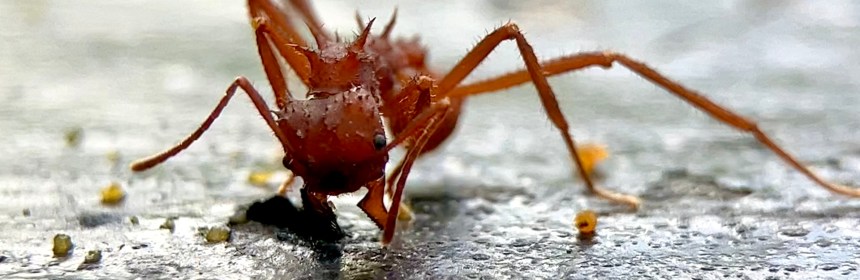
Acromyrmex octospinosus scraping something off the railing that led down to the Cenote. I’m not sure what the bird species was in the background. Location: Tulum, Quintana Roo, MX
This is a Neotropical leaf cutter ant, Acromyrmex octospinosus, a taxonomically challenging species complex of fungus farming ants found ranging from Brazil to Northern Mexico, and including Cuba and the Lesser Antilles (Mera-Rodriguez et al.,2025).
I observed more than a few of these while we were visiting in Quintana Roo, MX in late January. This one was on the handrail of the steps leading down to a cenote in a shaded area in Tulum. I also found specimens daily in the swimming pool at the property where we lodged during our stay.
These spiky, dark-red leaf cutter ants practice what is known as fungiculture, meaning they utilize fresh vegetation, including flowers, to grow their obligate fungal symbionts. The spiny projections on the exoskeleton of the ant help it to maneuver vegetative material around on their backs. These fungus-farming ants provide their fungal cultivars with food, dispersal, waste management services, and protection.
This fungus farming practice is extraordinarily sophisticated and the ants’ investment in labor even includes “weeding” their food garden. The ants even have their own sanitizing and pharmacy tools on hand. They have special infrabuccal pockets https://sci-hub.su/10.1016/j.asd.2022.101154 to filter the material they collect for their fungus gardens, screening out spores of fungal contaminants that might interfere with the ants’ specialized garden (Quinlan, 1978). They are also able to produce antimicrobials to protect their fungi from pathogens. The ant farmers utilize the fungi they cultivate as their main food source for themselves and their larvae.
Leaf Cutter Ant in Tulum, MX
I don’t have time to go into an extensive write-up about them, but did link some interesting papers and websites for your review in case you’re interested in learning more.
Thanks for reading! 🙂
References
AntWiki. 2026. Acromyrmex octospinosus. https://www.antwiki.org/wiki/Acromyrmex_octospinosus#Life_History_Traits Barke, J., Seipke, R. F., Grüschow, S., Heavens, D., Drou, N., Bibb, M. J., … & Hutchings, M. I. 2010. A mixed community of actinomycetes produce multiple antibiotics for the fungus farming ant Acromyrmex octospinosus. BMC biology, 8(1), 109.
Mera‐Rodríguez, D., Fernández‐Marín, H., & Rabeling, C. 2025. Phylogenomic approach to integrative taxonomy resolves a century‐old taxonomic puzzle and the evolutionary history of the Acromyrmex octospinosus species complex. Systematic Entomology, 50(3), 469-494.
Quinlan, R.J., Cherrett, J.M. 1978. Studies on the role of the infrabuccal pocket of the leaf-cutting ant Acromyrmex octospinosus (Reich) (Hym., Formicidae). Ins. Soc 25, 237–245 . https://doi.org/10.1007/BF02224744
Quinlan, R.J. and Cherrett, J.M. 1978, Aspects of the symbiosis of the leaf-cutting ant Acromyrmex octospinosus (Reich) and its food fungus. Ecological Entomology, 3: 221-230. https://doi.org/10.1111/j.1365-2311.1978.tb00922.x
Wetterer, James. 1991. Foraging Ecology of the Leaf-Cutting Ant Acromyrmex Octospinosus in a Costa Rican Rain Forest. Psyche. 98. 361-371. 10.1155/1991/46737.




 Bugging You From San Juan Island