Let’s break down this fear you have about spiders! Take the word ARACHNOPHOBIA here. If you break it into parts Arach -NO-phobia, it will be easier. Just focus on the NO PHOBIA part, and watch the short clip below of my jumping spider friend who came out daily to “play” in our sunroom for over a week. Yes…every day at 3 o’clock, it would peek out from behind our door trim and hop onto my finger.
Spiders don’t want to bite you. They are our friends! Sweet little souls who provide wonderful (free) pest control services in and around our homes.
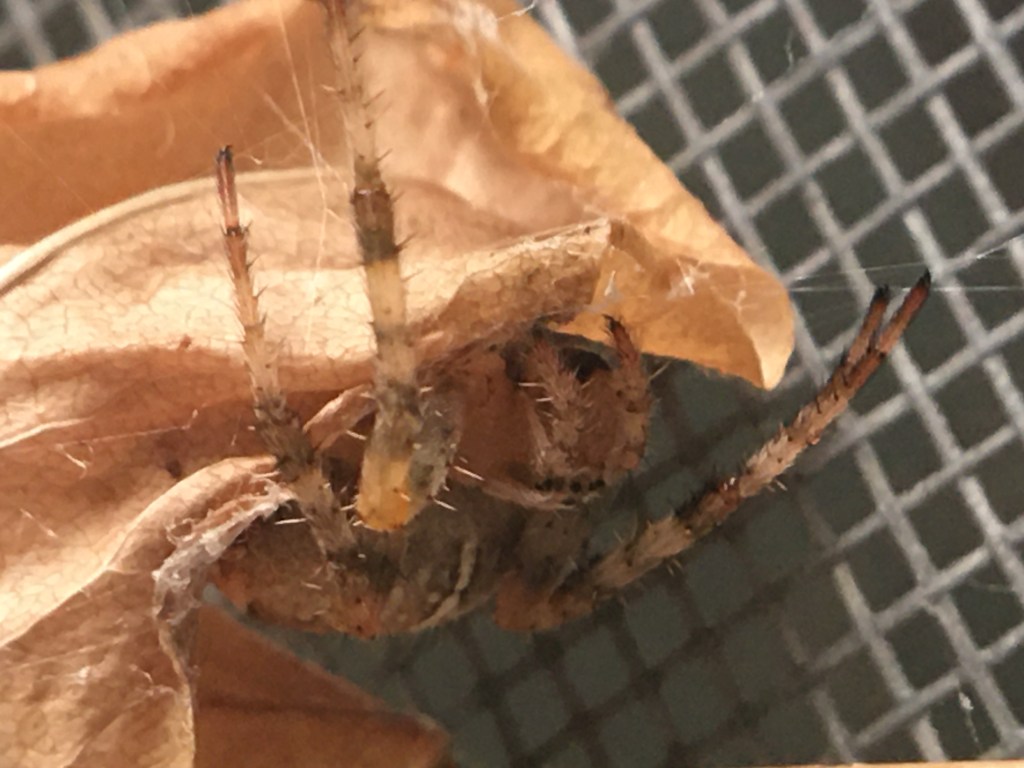
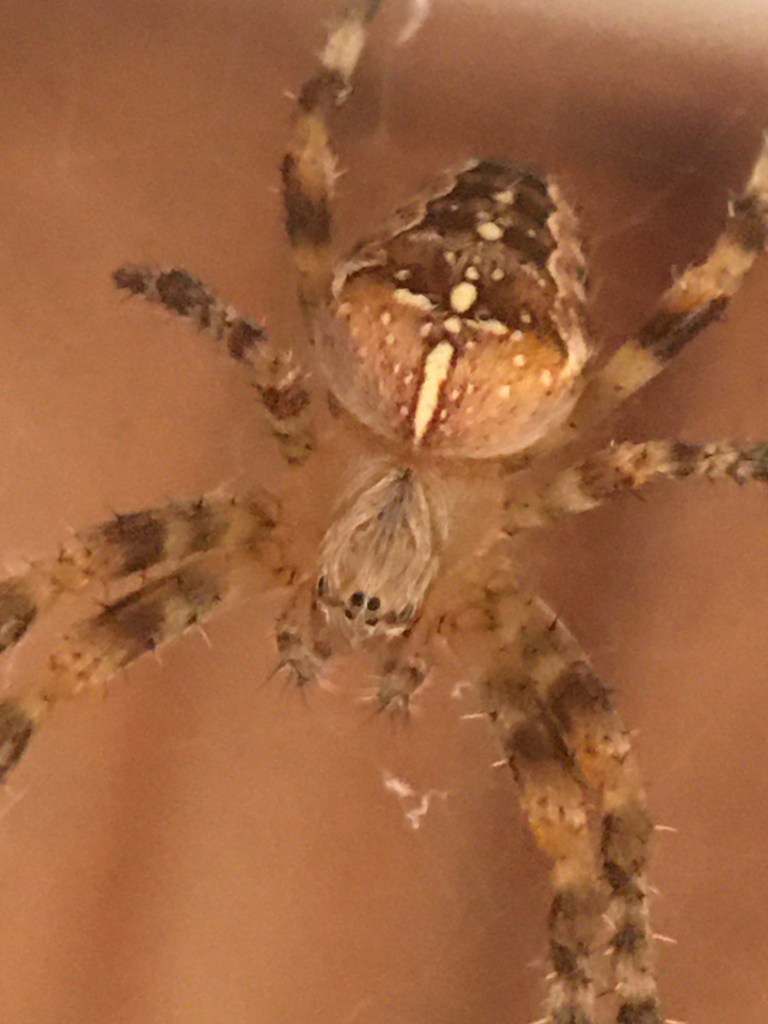
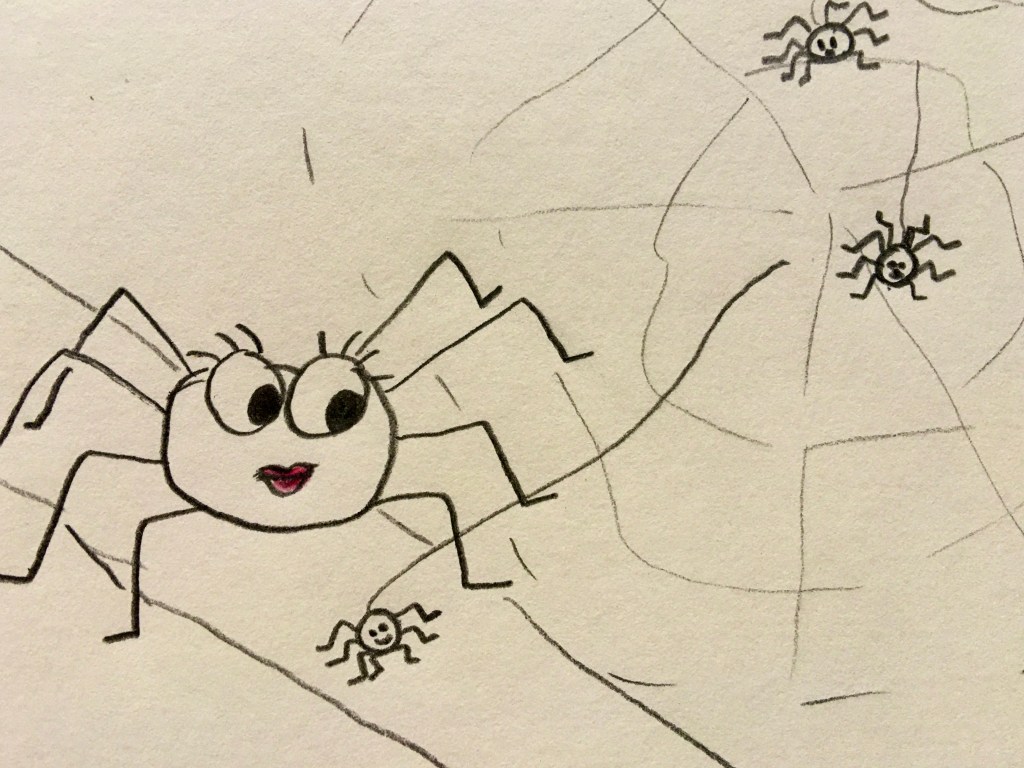
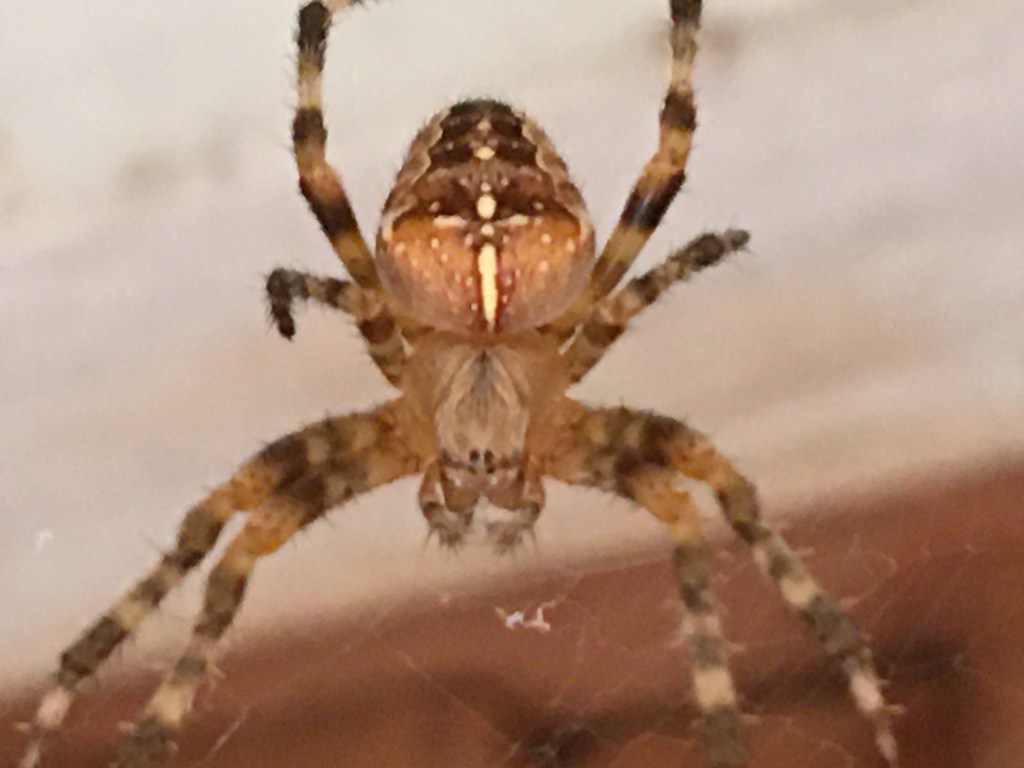
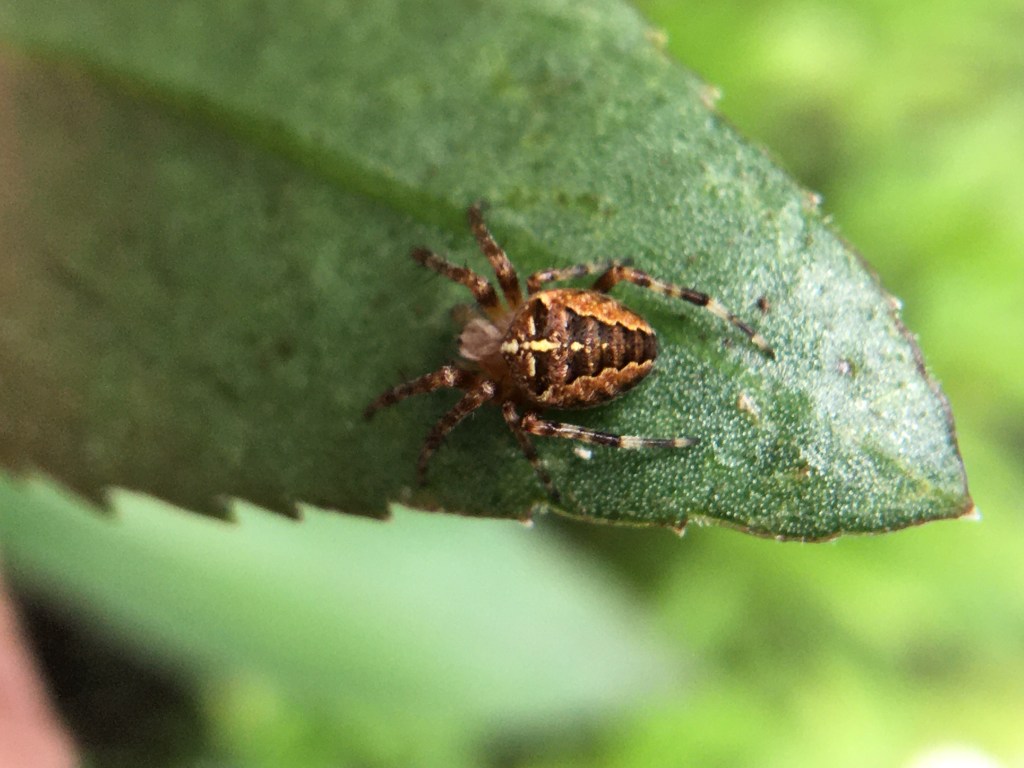
Meet Scarlette! She is my sweet little resident Cross Orb Weaver (Araneus diadematus). Scarlette has a web, but she knew it was going to rain and sought shelter in this leaf stuck to the screen door. I just went and checked on her and she is securely tucked into her little leaf hidey, safe from the wind and rain in the San Juan’s today.
If you’re an observant person, you may have the good fortune to see one of Scarlette’s relatives at your house. Orb Weavers are very common and often found hanging out near your doorway, under an eave, or on shrubs near your home or in your garden.
If you are actually reading this, you’re likely already a spider lover or at least someone who appreciates the natural world. Sadly, many folks are extremely fearful and reactive around spiders. Before I go today, I have a request. Will you share with this with your friends who may be arachnophobes?
Maybe we can work together to dispel some of those unfounded rumors about spiders biting folks. It just doesn’t (or very rarely) ever happen! Spiders don’t go around biting people. They need to conserve their energy for hunting and catching their own food, and for spiders that means little invertebrates like flies and occasionally other spiders. They don’t want to eat people. Also, their fangs aren’t designed to penetrate tough human skin. It’s way more likely for a human to harm a spider than the other way around.
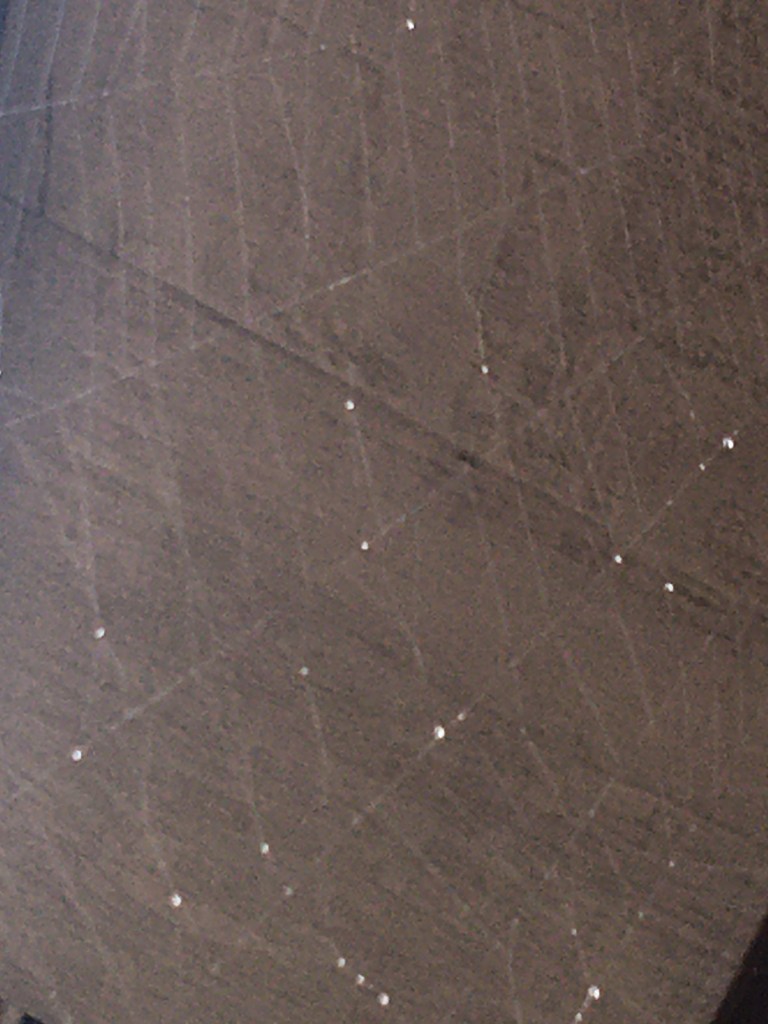
Scarlette, the Orb Weaver San Juan Island, WA 09.18.2020Scarlette the Cross OrbweaverScarlette is sheltering under her leaf Scarlette’s webCross Orbweaver (Araneus diadematus)
For more about Cross Orbweavers, take a look at the link below:
Here’s my collection of spiders from the weekend roaming around our home and yard. None of these are spiders you should fear, nor would a bite to you be medically significant. The ones most at risk are the poor little spiders who just want to avoid you. Be kind!
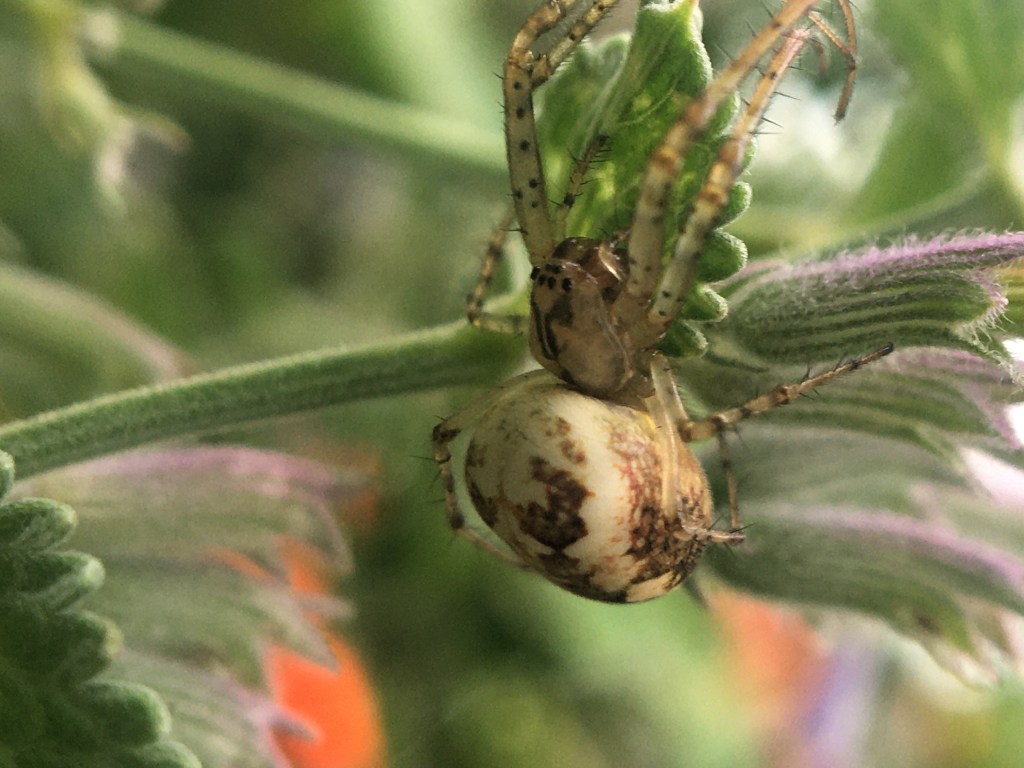
Cross Orb Weaver (Araneus diadematus)
San Juan Island, WA
09.18.2020
Cross Orb Weaver (Araneus diadematus)
San Juan Island, WA
09.18.2020
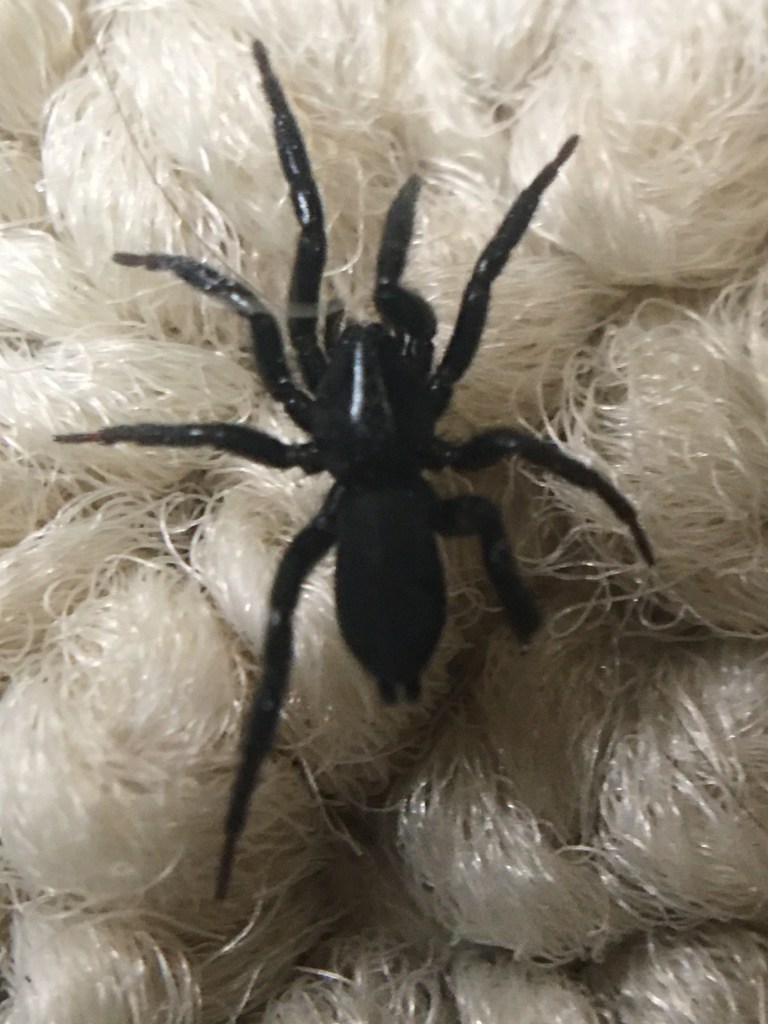
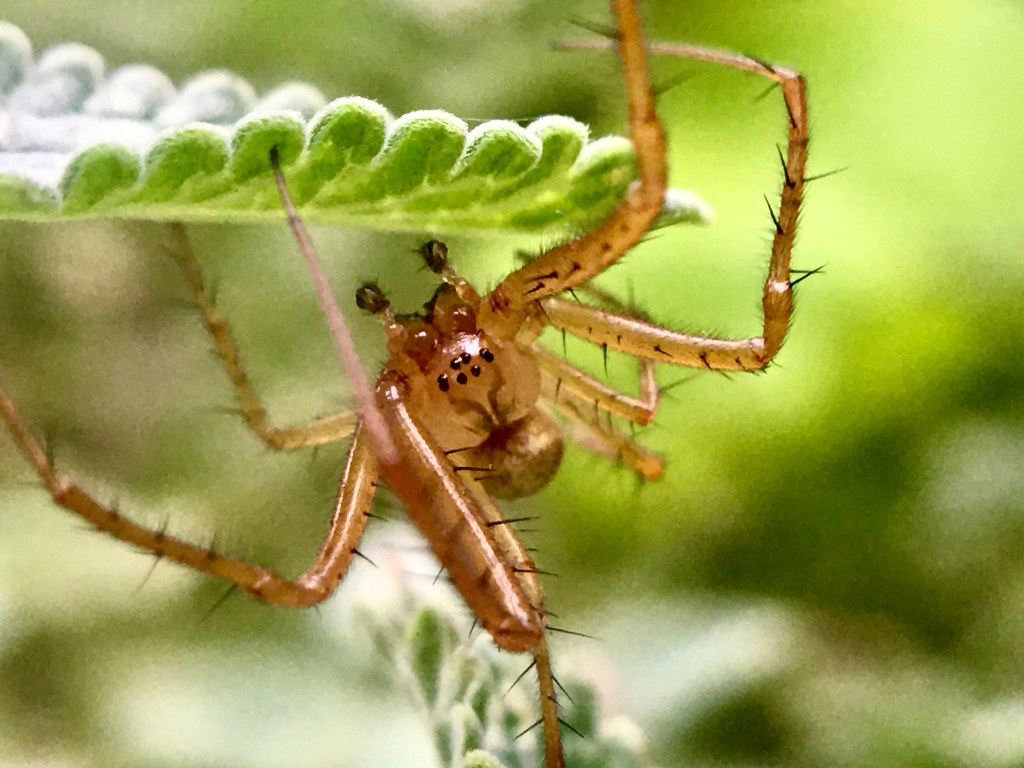
Gnaphosid sp. (maybe Zelotes sp.)
The Gnaphosids are known as the Stealthy Ground Spiders
San Juan Island, WA 09.18.2020
Found inside home on carpet
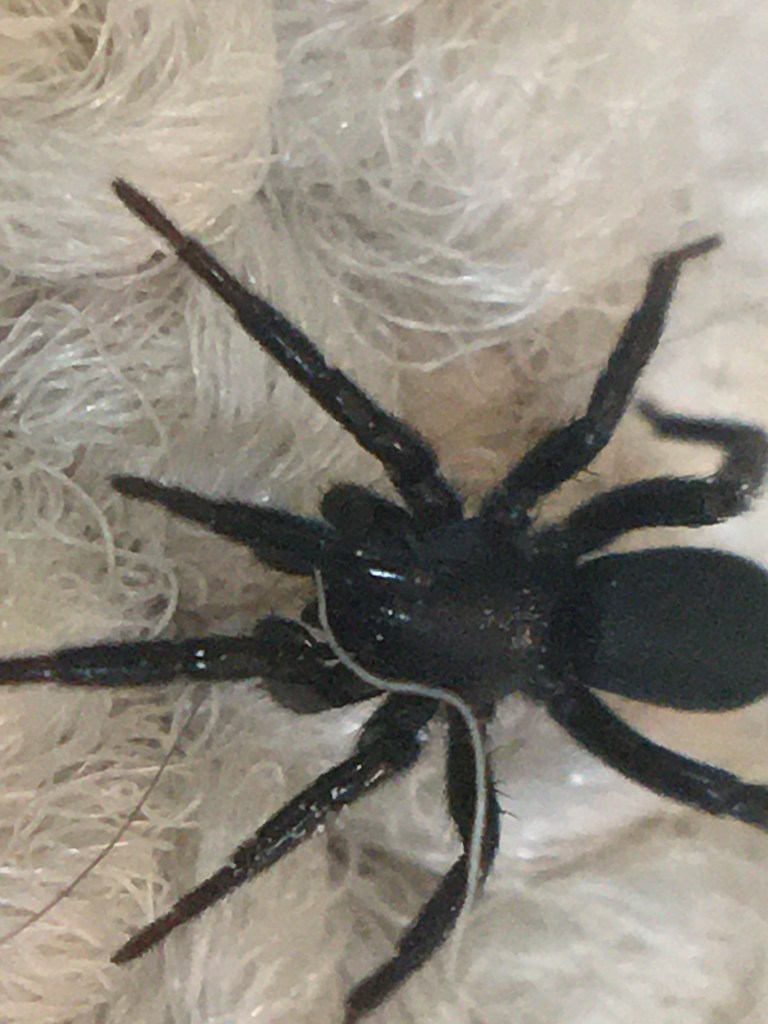
Gnaphosidae (maybe Zelotes sp.)
San Juan Island, WA 09.18.2020
found inside home on carpeting
Metellina sp. Orb Weaver
San Juan Island, WA 09.18.2020
female
Metellina sp. Orb Weaver
San Juan Island, WA 09.18.2020
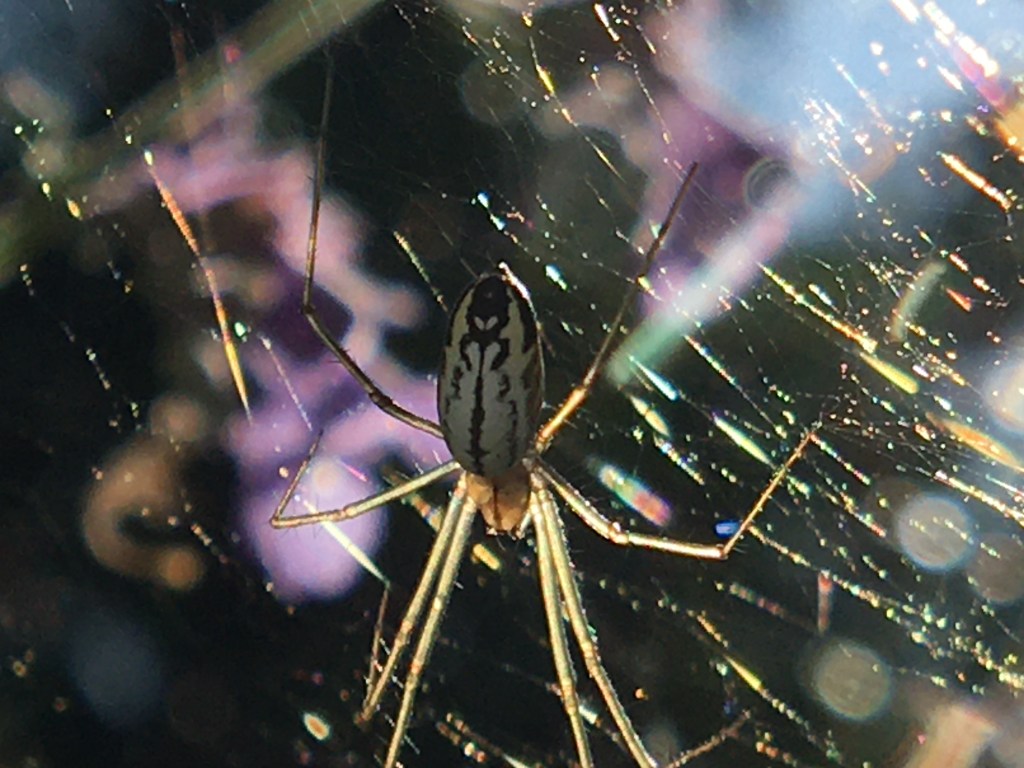
Sierra Dome Spider (Neriene litigiosa)
San Juan Island, WA
August 13, 2020 (I believe same individual as photographed 09.18.2020)
female ?
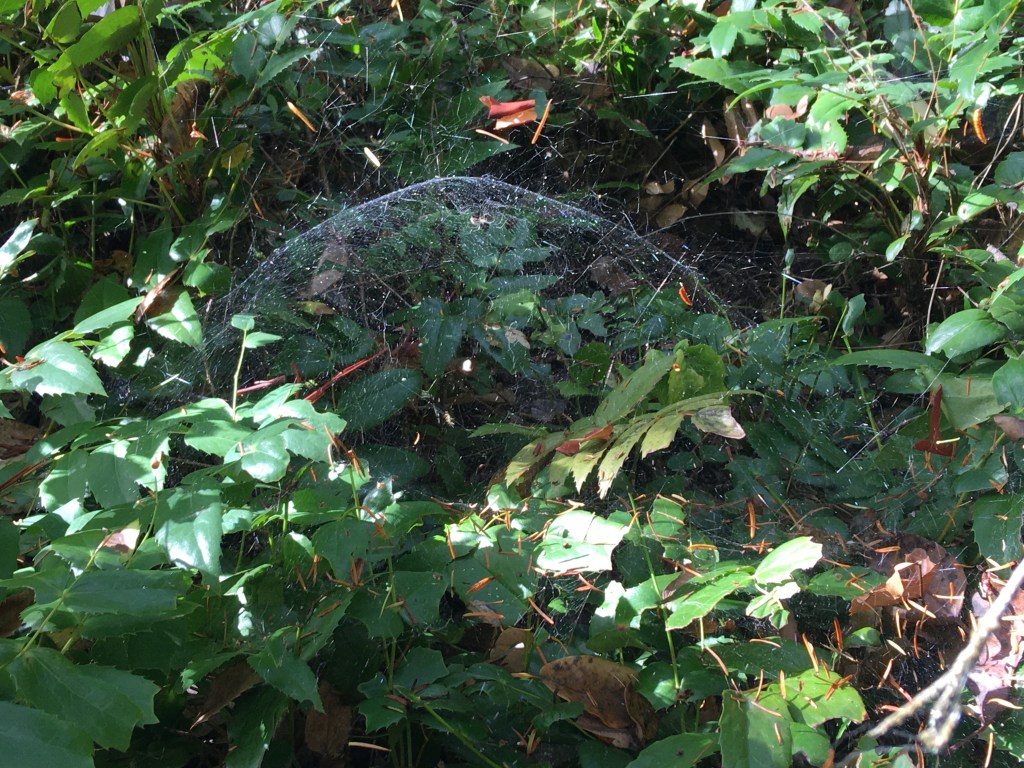
Sierra Dome Spider Web
San Juan Island, WA
This was photographed at San Juan Island NHP’s English Camp (Bell Point Trail) on 08.23.2020
Calymmaria sp.
San Juan Island, WA
outside near rock pile (they make conical webs often suspended beneath ledges or in caves
Saturday, September 19, 2020. San Juan Island, WA – Caterpillar rescue!
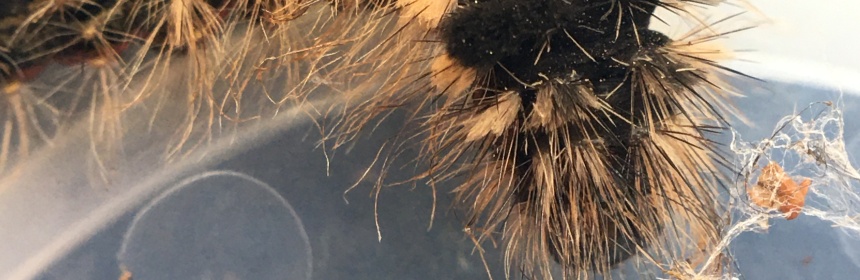
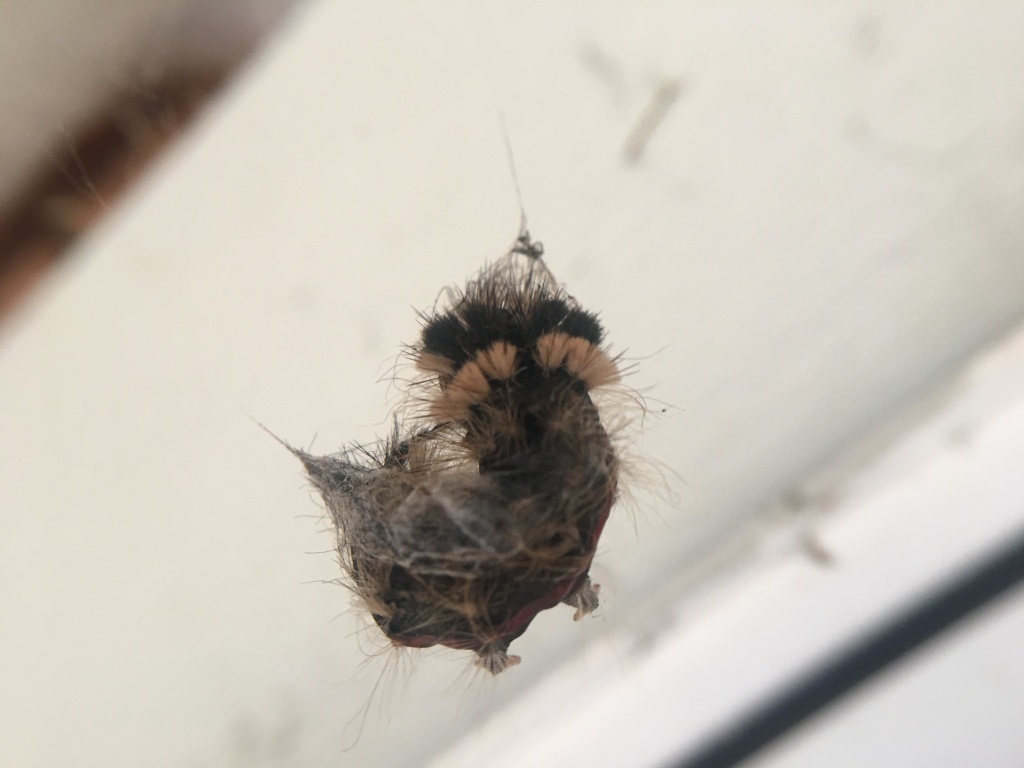
Acronita impleta – Yellow-haired Dagger Moth caterpillar. San Juan Island, WA 09.19.2020
I found one of these several years ago (September 20, 2017 to be exact), so I recognized it immediately when I saw it squirming in the spider webbing along the house this morning. My husband said I should just leave it alone. “Nature is ugly sometimes and you can’t interfere.” Well, when it was still there four hours later, suspended mid air, and still squirming, my tendency to SAVE things kicked in. The spider living above that web was actually dead. I’m not feeling very guilty about stealing food from a dead spider.
Acronita impleta – Yellow-haired Dagger Moth caterpillar. San Juan Island, WA 09.19.2020
Acronita impleta – Yellow-haired Dagger Moth caterpillar. San Juan Island, WA 09.19.2020
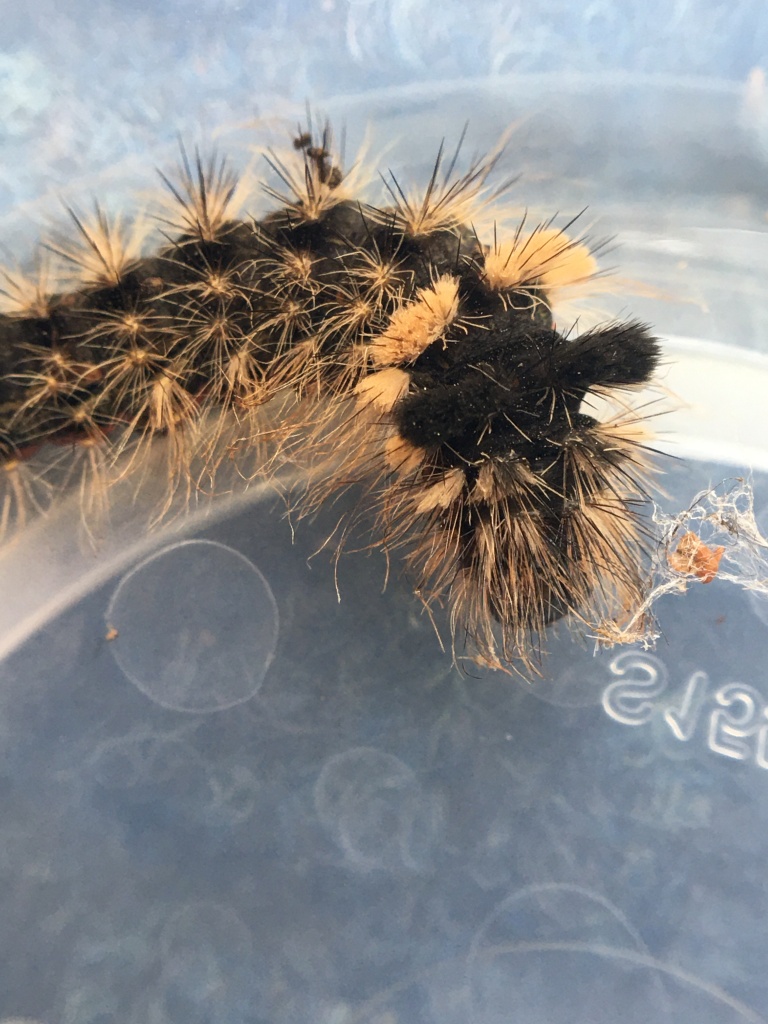
I got a cup and gently pulled at the web and began the process of freeing this caterpillar. It took finding my reading glasses and getting some fine-pointed tools to gently ply away the sticky bonds and clean the strands off the caterpillar hairs.
Acronita impleta – Yellow-haired Dagger Moth caterpillar. San Juan Island, WA 09.19.2020
Yellow-haired Dagger Moth (Acronita impleta)
I think it looks pretty good! I even picked it some dinner and we’ll see if I can keep it healthy through pupation and adulthood.
I had to take the weekend off! Fatigue is setting in from the smoke and the yellow haze cast over the island isn’t helping. I’m weary of viewing responses from folks about how they want to “kill” any poor hapless spider that makes its way into their home. Arachnophobia is tough, but thousands of innocent creatures could escape a horrible death (stomping, squishing, flushing) as a result of human hysteria if only….if ONLY…that human might take a moment to educate themselves about the poor soul they just MURDERED. If you are guilty of this and you’re feeling badly, GOOD! It means there is hope for you to change your ways. Become an arachnid A-D-V-O-C-A-T-E!
A friend of mine shared the article linked below on Facebook today. It’s timely in that it speaks to the over sensationalized media reports that cast a negative light on spiders…and other insects. We need to change how we think of them! Check it out.
For today, please don’t relocate your little (or big) house spider outdoors! Leave it in the corner to do its thing. It’s going to wander a bit, but it isn’t going to bite you or harm your pets. Be curious about it. If you name it, it can become part of your family! If you want an ID for that spider, send me a message or post a photo on my Facebook Page (Bugs of the San Juan Islands).
One of my high school friends from Texas posted this cool video the other day of these “Synchronized sunbathers.” They emerged all at once, ALL over the golf course in Paige, TX.
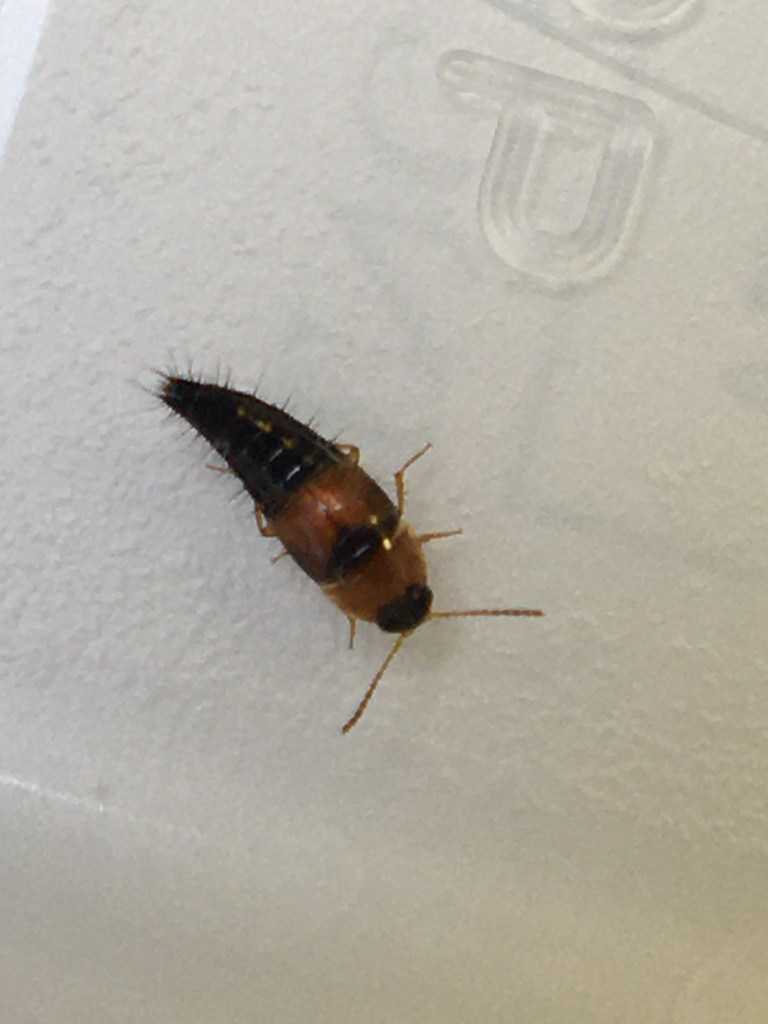
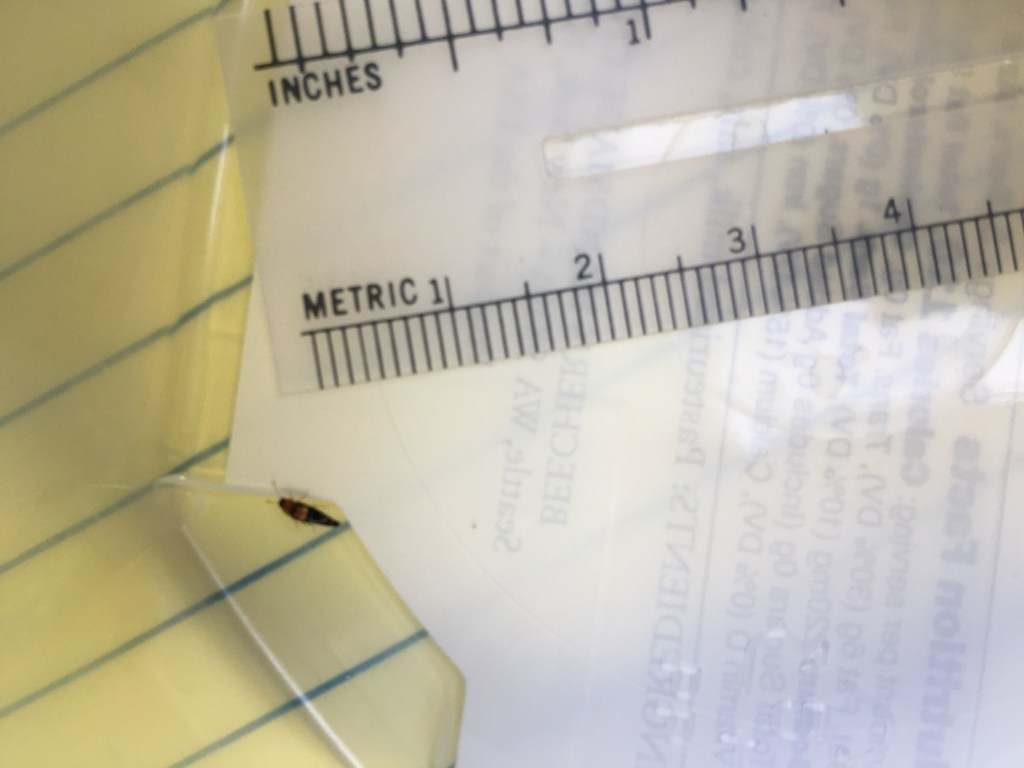
I found this teeny Staphylinid or Rove Beetle roving across my bathroom floor this morning. When I say “teeny,” it is exactly that! At about 3mm, I’m surprised I even saw it. 👀
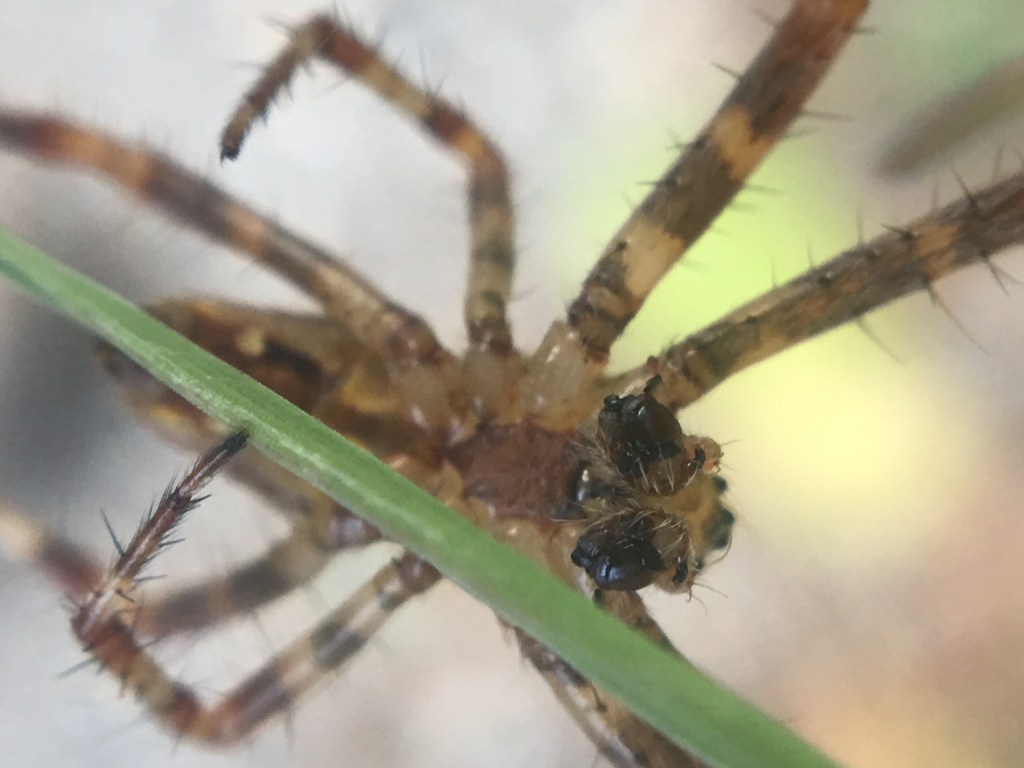
Tachinus or Crab-like Rove Beetle – San Juan Island, WA 09.11.2020Tachinus or Crab-like Rove Beetle – San Juan Island, WA 09.11.2020Tachinus or Crab-like Rove Beetle – San Juan Island, WA 09.11.2020
This beetle has weird little setae all over the abdomen. I had to take some photos (and video) before I let it go back to doing whatever it was doing. Maybe it was heading back to somewhere behind the wall where it has its own little home. 🏡, or maybe this 🏕, or even this….🏰
Tachinus or Crab-like Rove Beetle – San Juan Island, WA 09.11.2020
“What sort of Rove Beetle is this?” you might ask. Well, this rove beetle is in the insect order Staphylinidae and genus Tachinus, the Crab-Like Rove Beetles. Check out the link on bugguide.net to read more about them. https://bugguide.net/node/view/14062
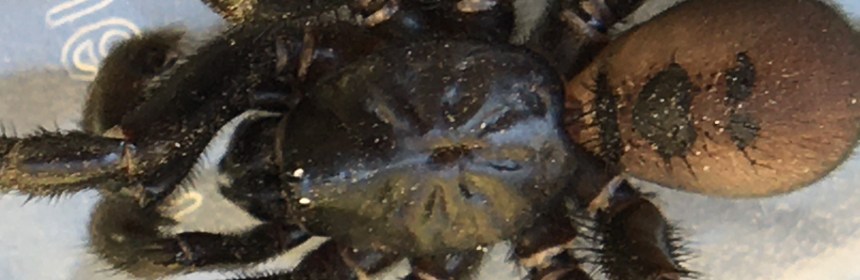
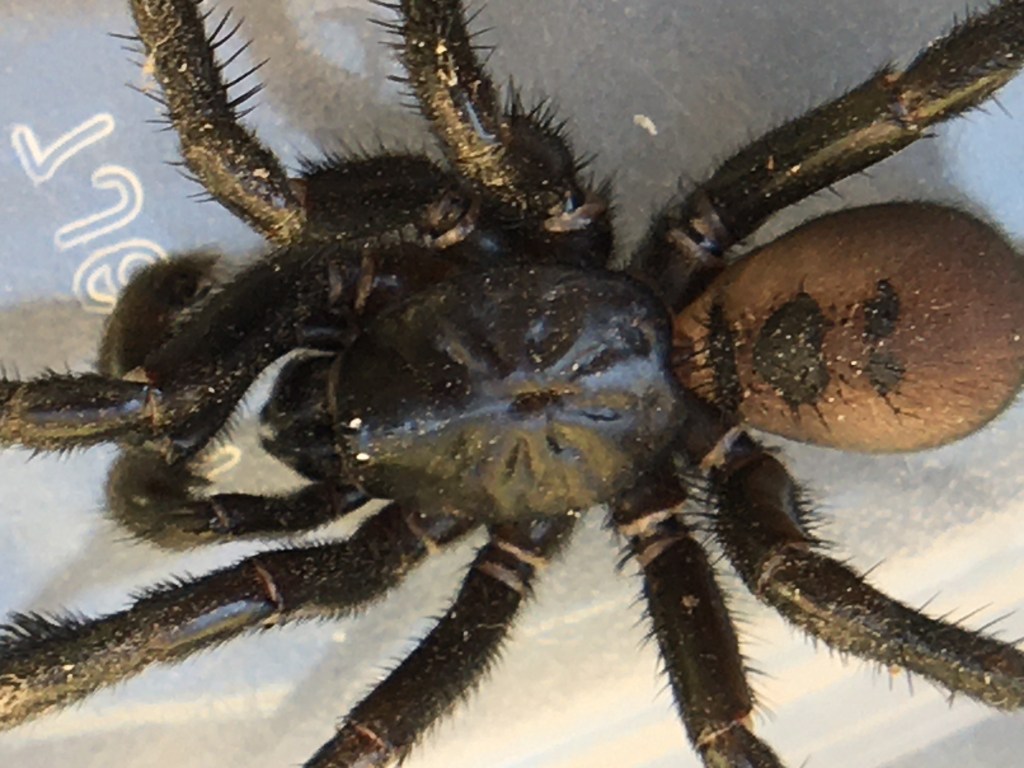
I found this spider in our barn in August and thought it was dead, so I did what I often do – grab it and pick it up! Hmmm. This spider moved. It was alive.
This is a Folding Door Spider, Antrodiaetus pacificus. While I’m not 100% certain, I do believe this is a male since there was no burrow nearby and it’s “wandering” season. Most of the time, females are inside or near the entrance to their burrow.
Folding door spiders are the “tarantulas” of the Pacific Northwest. Their scientific name comes from Greek antrodiaitos (αντροδιαιτος)- “living in caves”, from antron (αντρον)- “cave” + diaita (διαιτα)- “way of life, dwelling” – according to https://bugguide.net/node/view/23442 They build their homes (burrows) in rotting or decaying wood or moss, living in moist, forested areas where they are rarely seen.
Females are approximately 13mm in size, with males a bit smaller at 11mm. They are classified as Mygalomorph spiders, the more primitive spiders with one pair of book lungs.
Occasionally, they become victims of spider hunting wasps. These wasps sting and paralyze the spider, then drag them into a burrow. The wasp lays her eggs on the spider, then leaves. The developing larvae feast on the poor spider while it is still alive.
Please be kind to these harmless, gentle giants!
Antrodiaetus pacificus – San Juan Island, WA 08.10.2020Antrodiaetus pacificus – San Juan Island, WA 08.10.2020Antrodiaetus pacificus – San Juan Island, WA 08.10.2020
Yesterday my husband was outside working on our deck (without much help from me). The weekend projects can be overwhelming, especially when I’m so easily distracted every time I find a BUG. This one was perfect for my post today!
First off, it’s a SHE spider! This fall beauty is a female Cross Orb Weaver, Araneus diadematus. She was hanging out on the side of the house, just under the eave. I had to carefully climb a ladder to get a photo, but it was completely worth the risk.
Female Cross Orb Weaver, Araneus diadematus.
Female Cross Orb Weaver, Araneus diadematus.
Female Cross Orb Weaver, Araneus diadematus – San Juan Island, WA 09.07.2020Female Cross Orb Weaver, Araneus diadematus 09.07.2020
Orb Weavers are in the family Araneidae. These are some of the most beautiful and commonly seen spiders in our area. They weave the classic and typically vertical, orb-shaped web that we often see in our gardens.
March 29, 2013, Photo by Cynthia Brast-Bormann
While Araneus diadematus is not a native species and was introduced from Western and Northern Europe, it has become naturalized here and ranges across North America now. Bugguide.net gives the North American (including Canada) range for A. diadematus as the following localities – “diadematus – BC, WA, OR, MI, OH, PA, ON, NY, QC, RI, MA, NS, NL.”
Male and female specimens have different morphology (size, shape). Female body length can be from 6-20mm and they are fuller and more rounded. Male body length varies from 6-13mm and they are more narrowed in body shape.
Male A. diadematus
Male A. diadematus
Male A. diematus
Male A. diematus
Male A. diematus
Male A. diadematus
Typically, even though they are around in spring, we don’t notice them until later in the fall (like now). Females will be waiting on their web for a wandering male to find them. Males are not usually seen on webs since they are often on the move to find “Miss Right.”
The female A. diadematus will lay her last clutch of eggs in fall before dying, usually timed with our first frost. The eggs will overwinter. The eggs will hatch in springtime when temperatures warm, releasing hundreds of baby spiderlings!
June 13, 2013 – San Juan Island “Orb-Weaver Spiderlings”
I found this interesting poem online about Orb Weavers that I’ll leave you with today. Thanks for stopping by!
Araneus diadematus
Our cradle empty, we shall climb
To a high place, to catch the wind
And fly, strewing gossamer as we go,
Singly, flowing without will, to land
Wherever.
We shall know, by the compass
Blotched in white upon our backs,
Where to spin the spokes, and how
To spire the wheel; with one leg, feel
The trembling.
Approach too fast, and we shall quake,
And blur the whorl with shaking
From the underside, the compass
Pointing down, our legs the eight points
Taking.
At night we eat the orb, conserve
The silk, to spin again by morning,
Indelicately, cramming all
Into open mouths, every spoke
Consuming.
We spin the globes of nurture
After mating, span them so,
With loving claws, adore the
Minor worlds we make, compass
Turning.
Entwined in silk, their spinnerets
Are forming, massed bundles
Of eyes, and legs, and fangs
Entangling. Each of us
Expiring.
Source material. Veronica Godines, Araneus diadematus, http://animaldiversity.ummz.umich.edu. Theodore H. Savory, The Spiders and Allied Orders of the British Isles, London, 1945, pp. 130–131. The common “Garden Spider” has a characteristic “cross” on its back, and is the archetypal orb-weaver. Immatures, already orphans by the time they emerge, go out to seek their fortunes by abseiling more or less at random on air-currents, attached to an anchor point by nothing but a thread of gossamer.
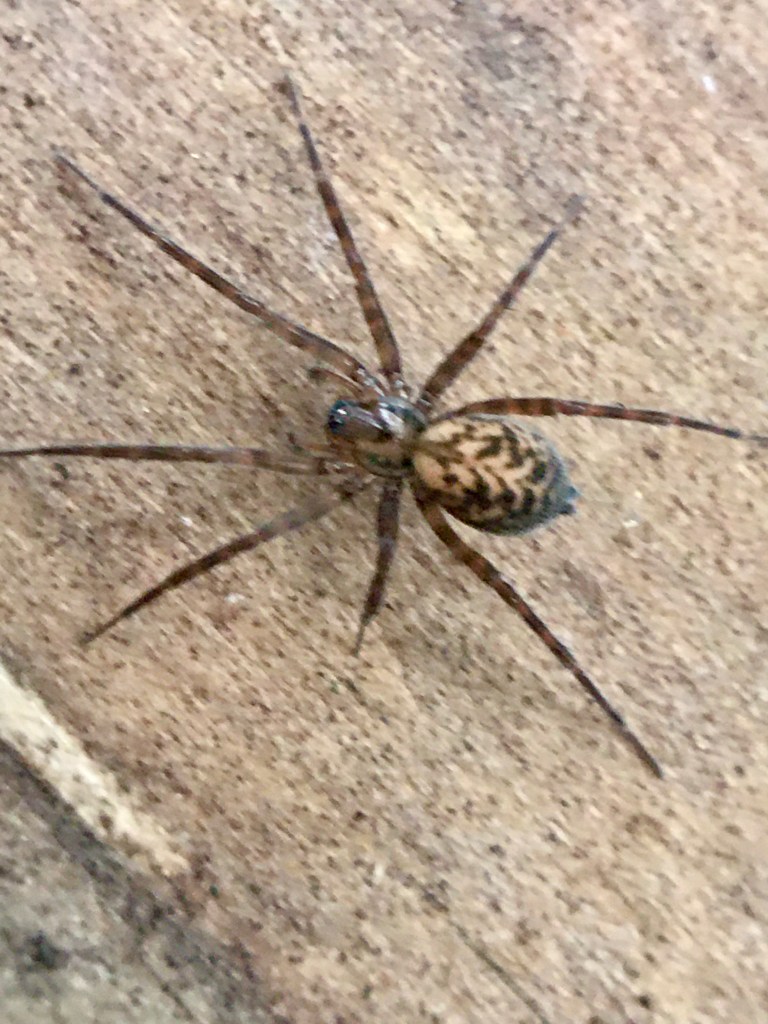
Today, I’m going to introduce you to Rod Crawford in my post. Rod is the curator and spider expert (GENIUS) at the Burke Museum in Seattle. He is the go-to guy for anything you would possibly want to know about spiders.
One thing I really like about Rod are his efforts to debunk some of the most common myths about spiders. For instance, putting that spider you find in your house outdoors is good for the spider and where it belongs. Nope. Nope. Nope,….and one more big ole’ NOPE! Take a look here to read what Rod says about where some spiders live (including indoors), and why tossing them outdoors is not a good idea.













 Bugging You From San Juan Island