Please Don’t Poison Me or Take Away My Food
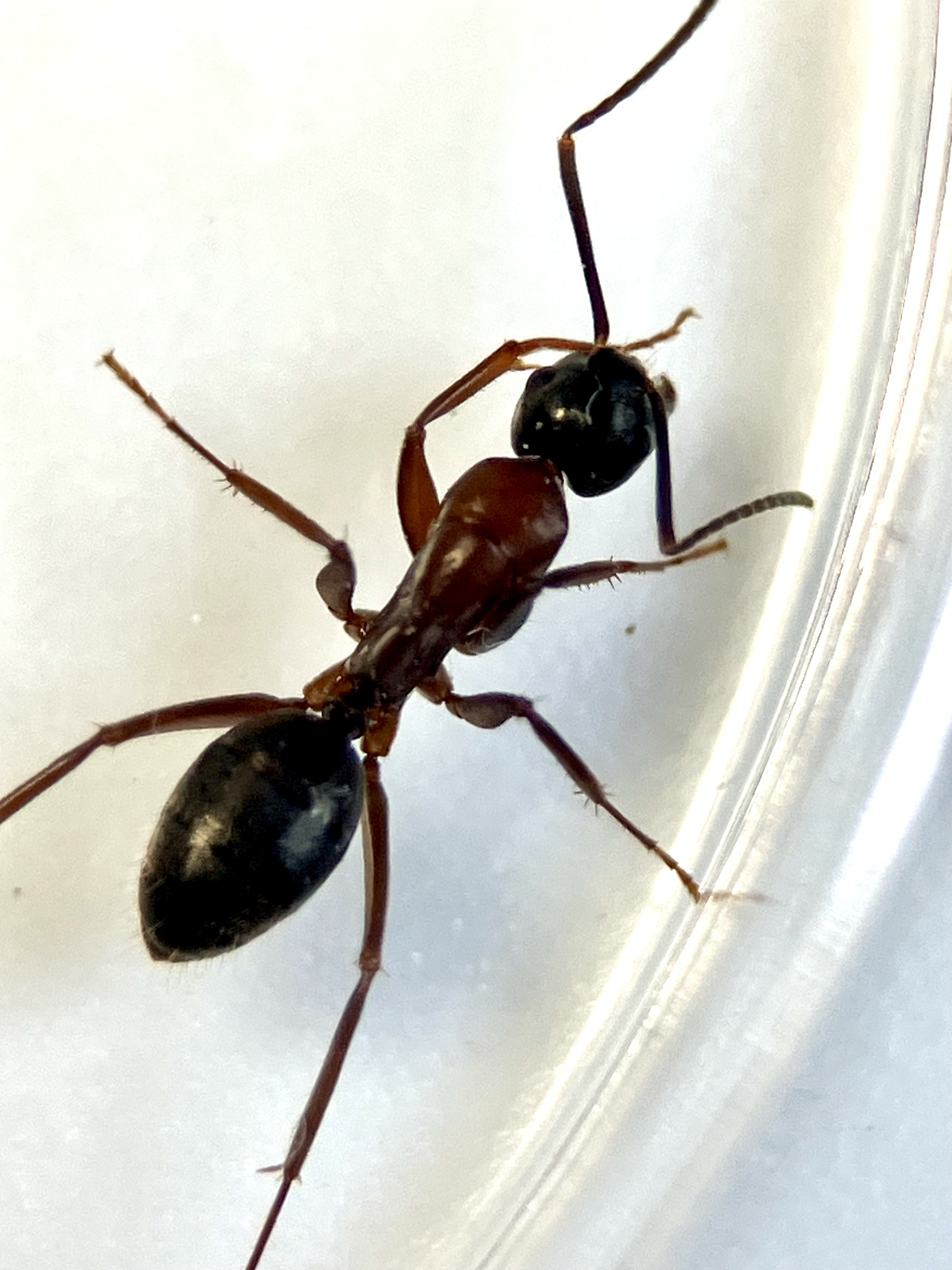
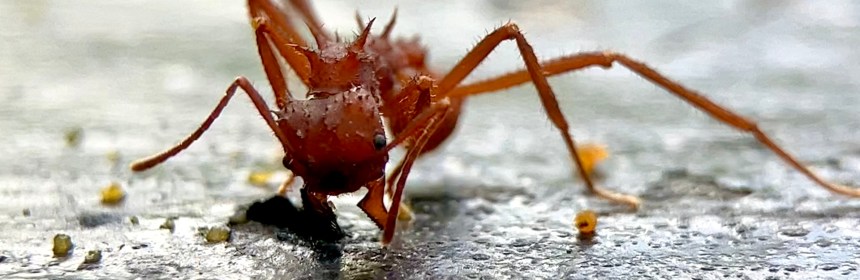
This post is for the folks living on San Juan Island and in San Juan County, but also for the wider PNW area. After seeing multiple posts this morning about Carpenter Ants showing up, and I personally have seen three or four Carpenter Ants in our house this past week (Camponotus vicinus), I felt compelled to do a write-up that can be shared more easily into social media groups and read by those who aren’t on social media sites.
It is the time of year when you may see activity in your own home. Don’t freak out. Their appearance does not mean you have an infestation, but if you see one crawling around on the floor or wall, you should use this as a sign to check around your home carefully. Annual inspections are an important part of caring for your home and investment.
Once upon a time, we found issues in our own home. There were carpenter ants in the wood trim around our skylight. Our roof had been leaking for some time and that rotted the wood. I told my husband one morning that I could HEAR them chewing. I could. They were up there munching away. He got a ladder, removed the wood trim, and then danced like he was at a rave. I’m surprised, and thankful, he didn’t fall off the ladder. The entire colony dumped out onto his head. They were biting him and spraying him with formic acid. Fortunately, I had the shop vac handy. Once we vacuumed them up and he replaced the wood and fixed the roof leak, we have been ant-free (almost 10 years now).


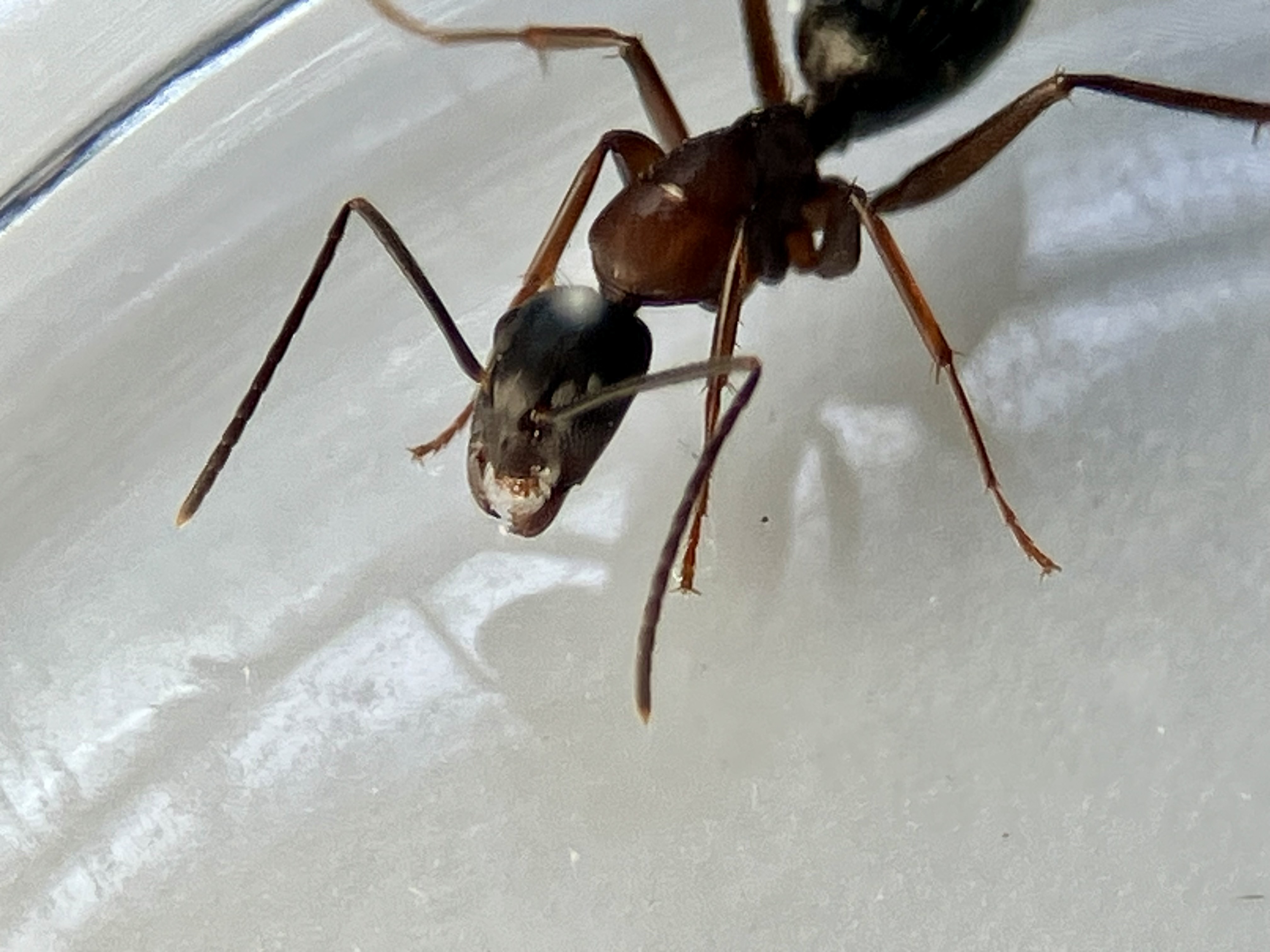
In your home, I recommend inspecting for water leaks, repairing them, and replacing any rotten or damp wood. If you have trees or vegetation overhanging and touching your home, trim this back. Avoid leaving stacks of firewood near or against your home. Also, avoid mulching near your foundation. Fix any areas near your yard where water is not draining properly and seeps back towards your foundation . Keep the humidity low in your home, especially in basement areas. If you can’t do this yourself and you live in San Juan County, I do recommend calling Paul at San Juan Pest Control (360) 378-2941- who can check all the things I just recommended. In my experience, Paul has been careful about minimizing use of pesticides or baits. Please, please, do not go to the home store and pick your poisons out and apply them yourself. If you won’t consider any alternatives I’ve suggested here, at least get a professional to help you with this.
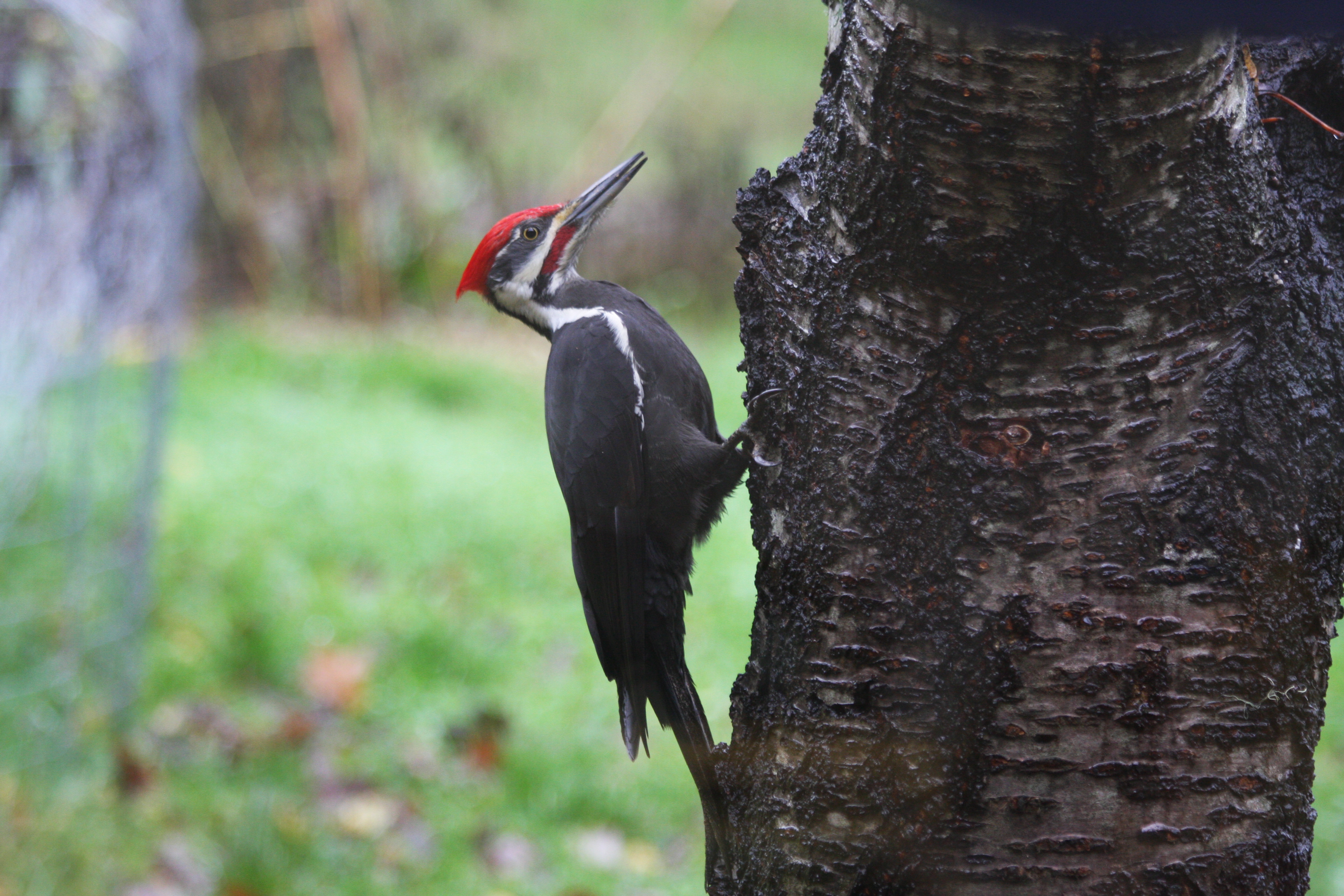
You might ask, “Why are you so against toxic baits and chemicals?” Well, aside from the dangers of using pesticides in your home for yourself and your pets, they are highly toxic to wildlife. These toxic chemicals or baits go through the food chain, impacting non-target species.
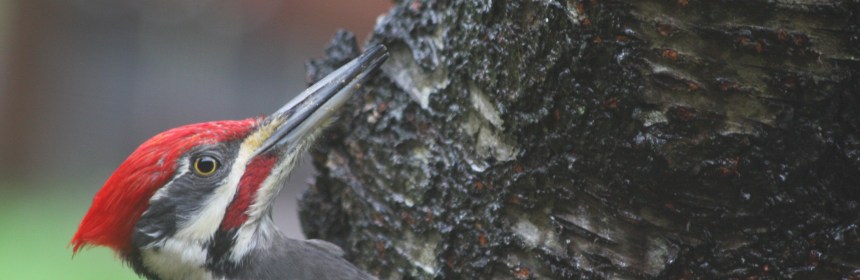
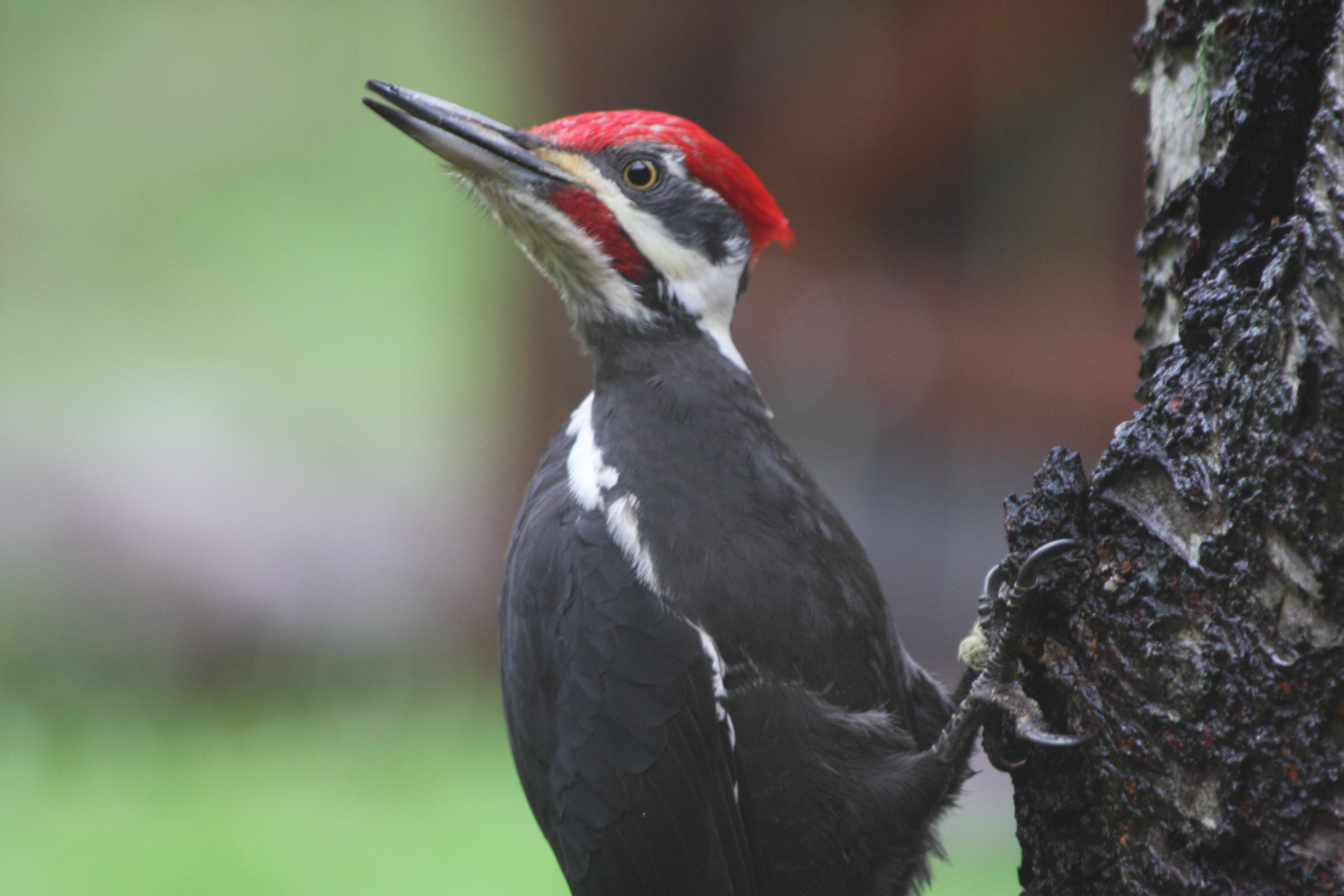
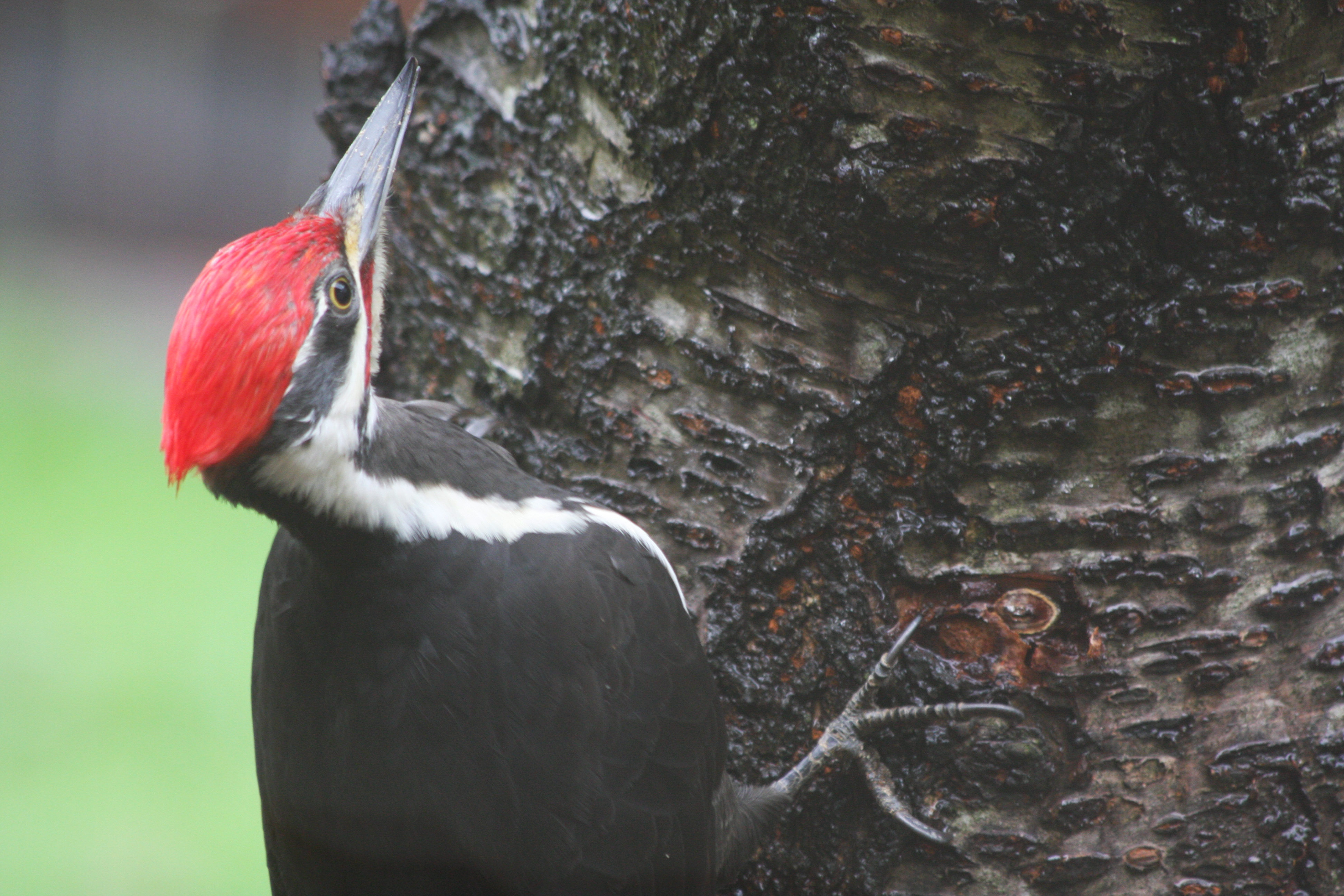
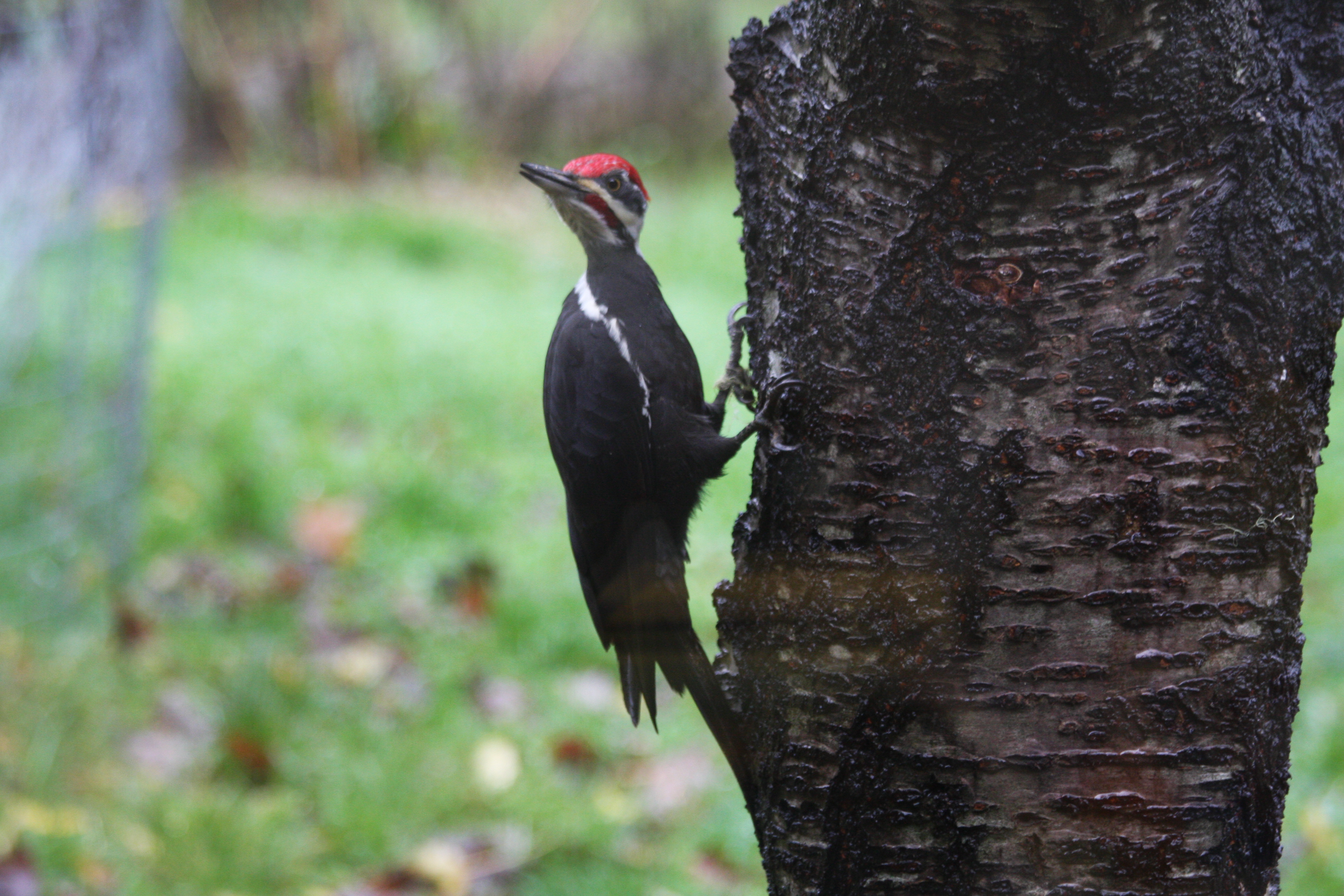
For instance, the diet of our beautiful Pileated Woodpecker species is comprised of 54-60% carpenter ants. They will be feeding nestlings soon, as will other bird species that utilize ants for food. Applying pesticides can impact these birds directly through the poisons going through the food chain or by removing their food source. We want to protect our structures, but also need the reminder to protect our avian neighbors. Just as you don’t want to go hungry and starve, neither do they.
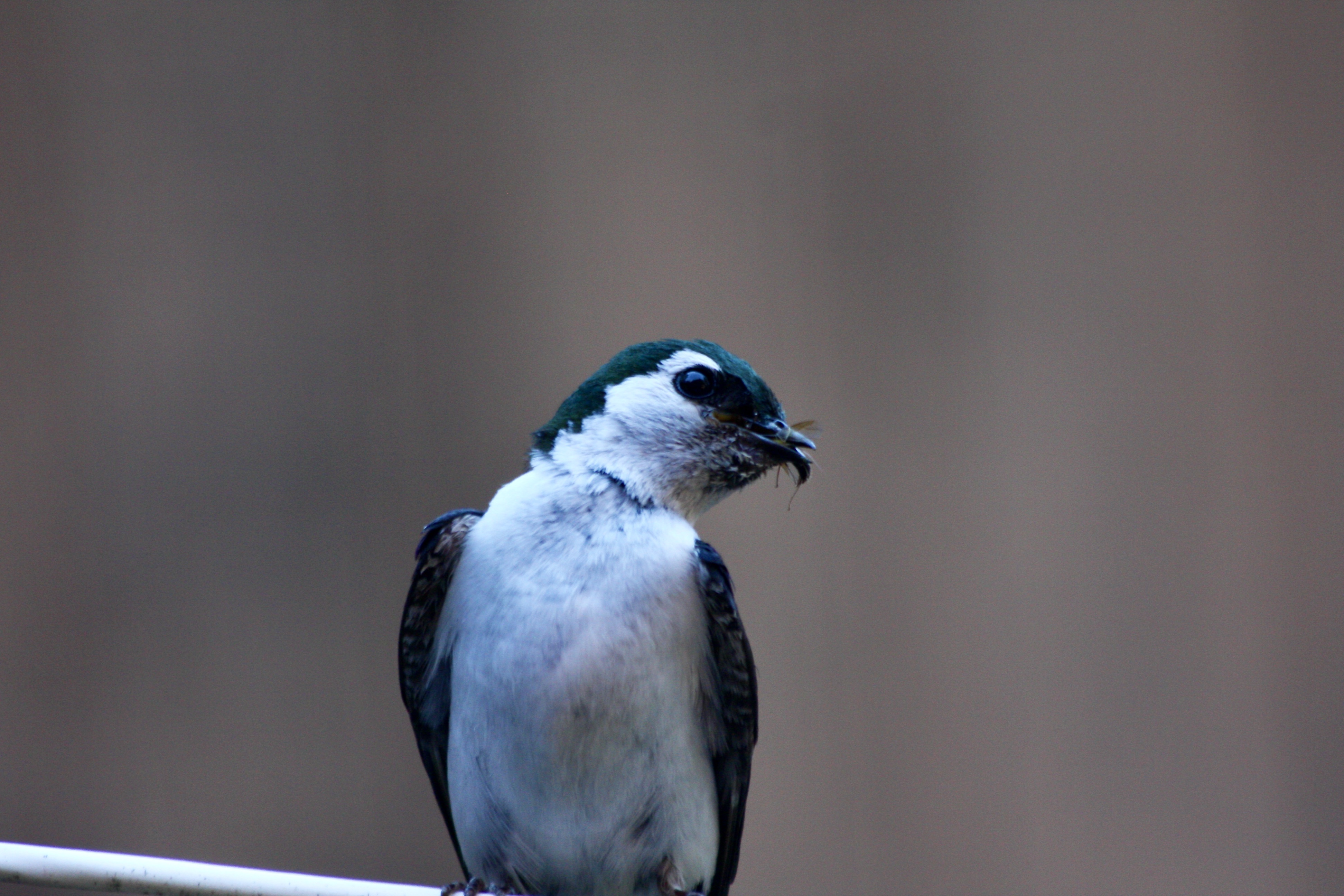
I guess I should go a bit further here in my ecology connection. If we are feeding the birds, why do we need to worry about ants or other bugs in the first place? Bird seed and suet cakes, and even sugar water solution for hummingbirds, provides them with a supplementary food source when they need extra energy. Supplementing with feed can help birds before leaving, or after arriving from a long migration, after a winter season when food sources decline or are scarce or harder to access. Supplementing with feeders can also provide them with extra calories before they begin nesting, or if they are compromised in some other way.
Feeding birds, however, is primarily for our entertainment. We feed them because we appreciate nature and bird watching. Suet, seeds, and sugar water are not their main diet components though. Especially not for baby birds that need protein sources.
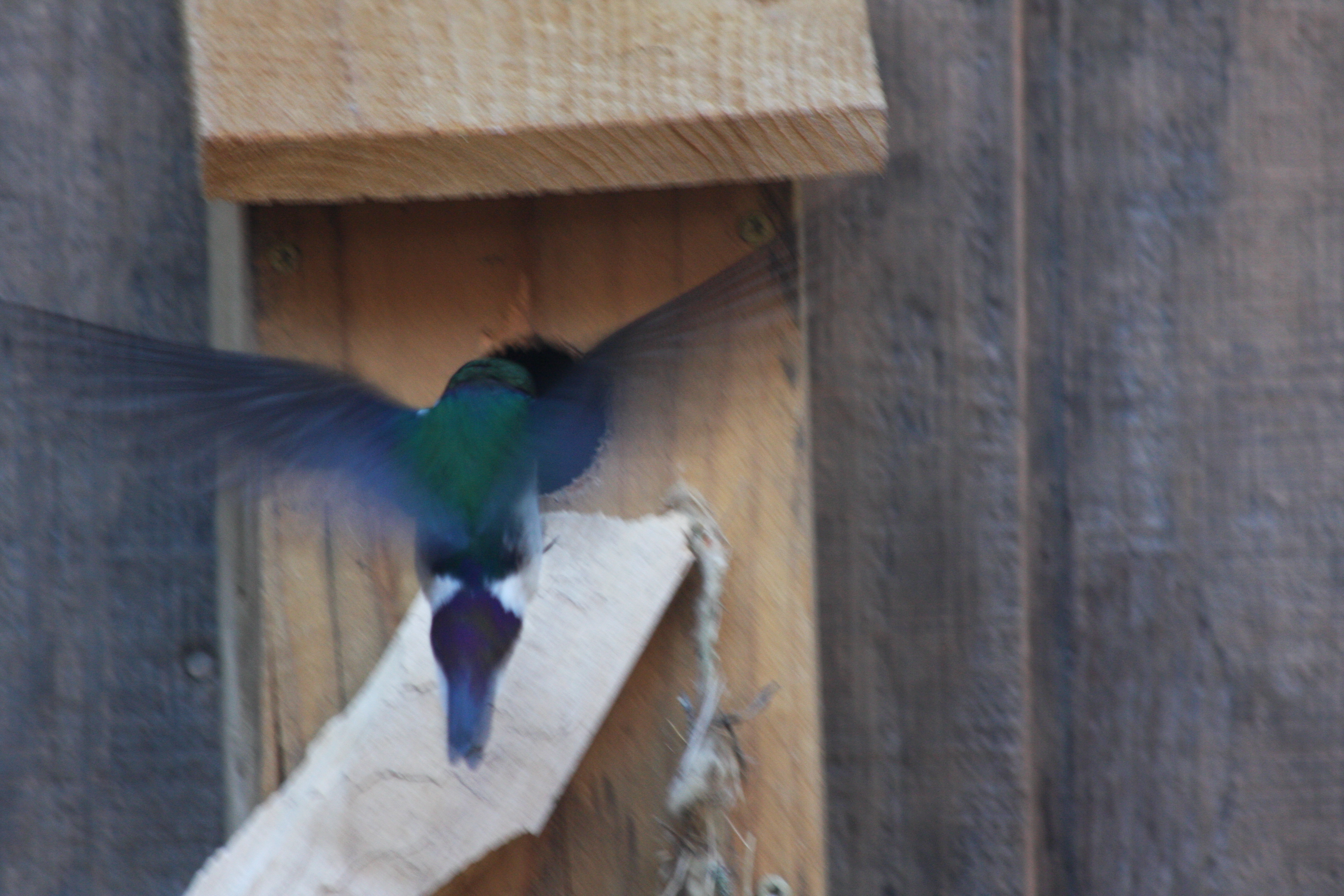
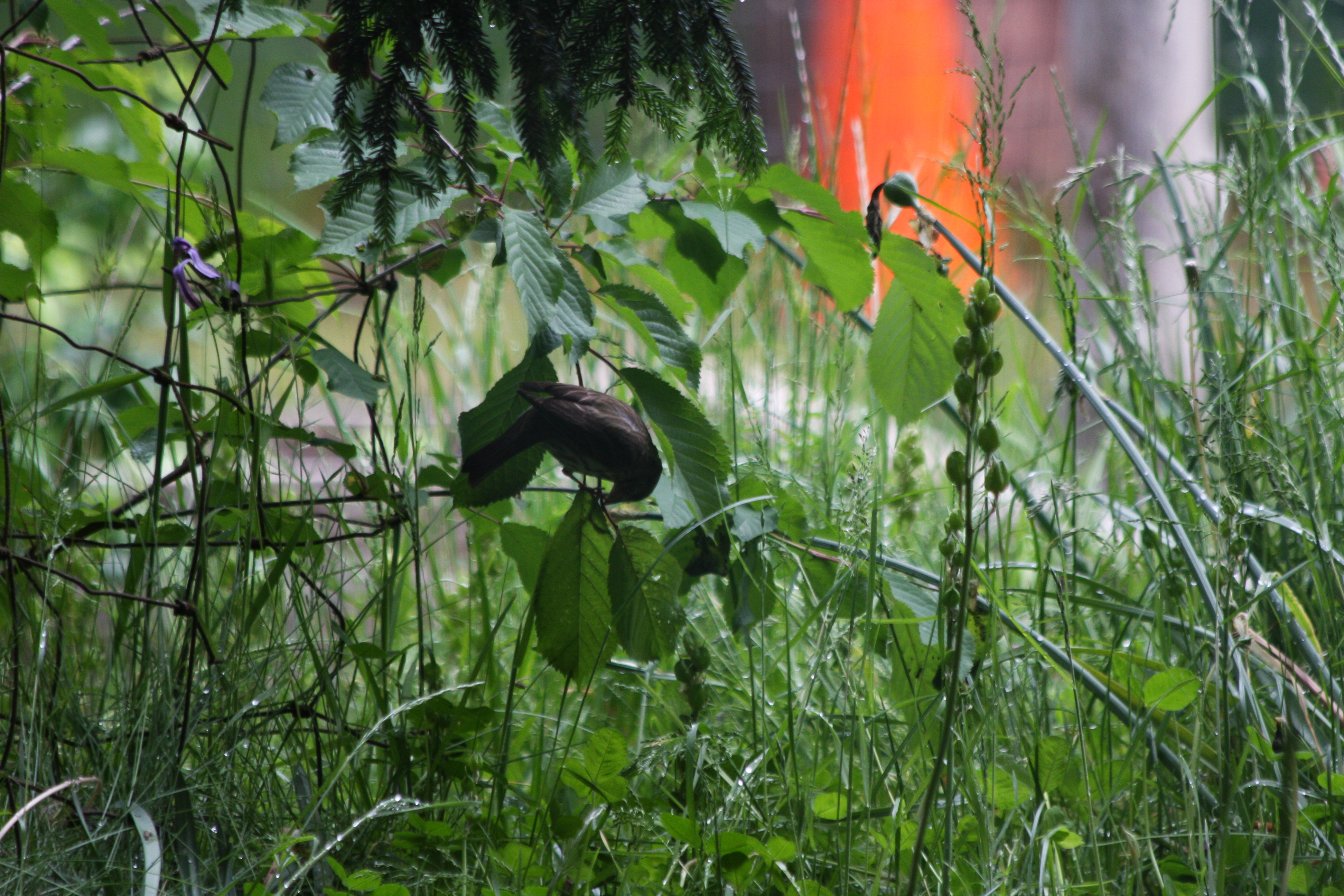
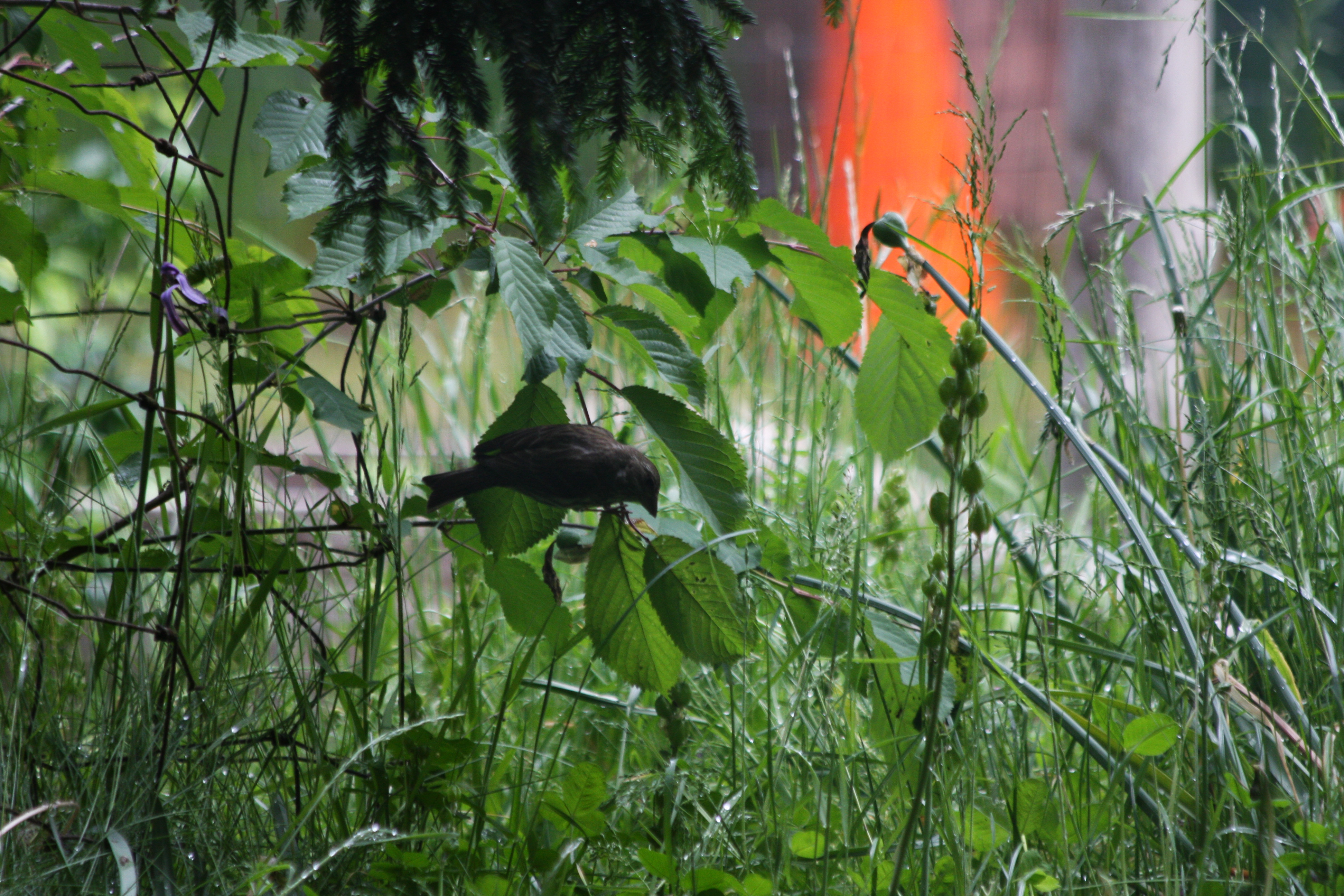
Birds need BUGS. Even hummingbirds feed their baby birds bugs. Spiders are a favorite because baby birds need taurine, an amino acid necessary for brain development. Spiders are a source of taurine.
All birds need essential minerals, amino acids, and vitamins that aren’t found in bird seed, suet, and sugars. They will visit sources of sap, nectar, and forage in tree stumps, standing dead snags, under rocks, in the soil, and all through the leaves and twigs of our trees. I’ve seen hummingbirds taking small insects and spiders from beneath the eaves of our home. The “environment,” or what little remains that has not been altered, degraded, or poisoned by humans, is literally the “grocery store” for wildlife. Wildlife, including birds and even other insects or spiders are nature’s best pest control. Let’s make sure we protect them and acknowledge their value in choosing how we live.
References and Further Reading ***noting here that Carpenter Ants also provide valuable pest control for species of insects that defoliate our fruit and forest trees! ***
Akre, R. D., L. D. Hansen, and E. A. Myhre. 1995. My house or yours? The biology of carpenter ants. Am. Entomol. Soc. 41:221–226.
Bull, E. L. 1987. Ecology of the pileated woodpecker in northeastern Oregon. Journal of Wildlife Management 51: 472–481.
Bull, E. L., R. C. Beckwith, and R. S. Holthausen. 1992a. Arthropod diet of pileated woodpeckers in northeastern Oregon. Northwestern Naturalist 73: 42–45.
Bull, E. L., C. G. Parks, and T. R. Torgersen. 1997. Trees and logs important to wildlife in the Interior Columbia River Basin. U.S. Forest Service General Technical Report PNW-GTR-391, Portland, Oregon, USA.
Campbell, R.W., and T.R.Torgersen.1982. Some effects of predaceous ants on western spruce budworm pupae in north central Washington.
Environ. Entomol. 11:111-114.
Cruz, A., and D.W. Johnston. 1979. Occurrence and feeding ecology of the common flicker on Grand Cayman Island. Condor 81:370-375.
Furniss, R. L., and V. M. Carolin. 1977. Western forest insects. U.S. Forest Service Miscellaneous Publication number 1339, Washington, D.C., USA.
Hansen, L. D., and R. D. Akre. 1985. Biology of carpenter ants in Washington State (Hymenoptera:Formicidae:Camponotus). Melanderia. Volume 43. Washington State Entomological Society, Pullman, Washington, USA.
Hansen, L. D., and A. L. Antonelli. 2005. Carpenter ants: their biology and control. Washington State University Extension Bulletin 0818, Pullman, Washington, USA.
Hansen, L. D., and J. H. Klotz. 2005. Carpenter Ants of the United States and Canada. Ithaca, N.Y.: Cornell University Press.
Mankowski, M. 2001. Biology of the Carpenter Ants Camponotus vicinus (Mayr) and Camponotus modoc(Wheeler) in Western Oregon. Ph.D. dissertation, Oregon State University, Corvallis.
Mannan, R. W. 1984. Summer area requirements of pileated woodpeckers in western Oregon. Wildlife Society Bulletin 12: 265–268.
RALEY, C.M. and AUBRY, K.B. (2006), Foraging Ecology of Pileated Woodpeckers in Coastal Forests of Washington. The Journal of Wildlife Management, 70: 1266-1275. https://doi.org/10.2193/0022-541X(2006)70[1266:FEOPWI]2.0.CO;2
Ramsay, S.L. and Houston, D.C. (2003), Amino acid composition of some woodland arthropods and its implications for breeding tits and other passerines. Ibis, 145: 227-232. https://doi.org/10.1046/j.1474-919X.2003.00133.x
Torgersen, T. R., and E. L. Bull. 1995. Down logs as habitat for forest-dwelling ants—the primary prey of pileated woodpeckers in northeastern Oregon. Northwest Science 69: 294–303.
Torgersen, T.R., R. R. Mason, and H.G. Paul. 1983. Predation on pupae of Douglas-fir tussock moth, Orgyia pseudotsugata (McDunnough) (Lepidoptera: Lymantriidae). Environ. Entomol. 12:1678-1682.
University Of Glasgow. “Super Spiders Make Bolder Birds.” ScienceDaily. ScienceDaily, 29 August 2007. http://www.sciencedaily.com/releases/2007/08/070824220328.htm







 Bugging You From San Juan Island