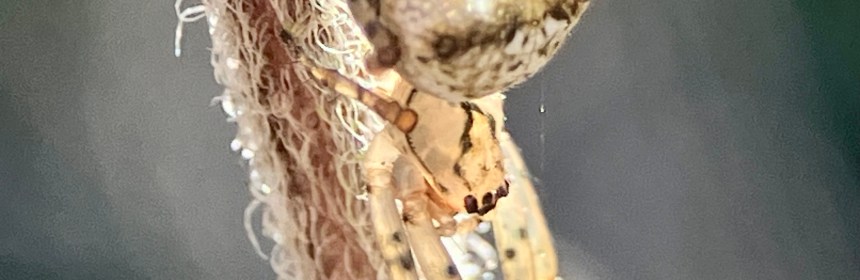
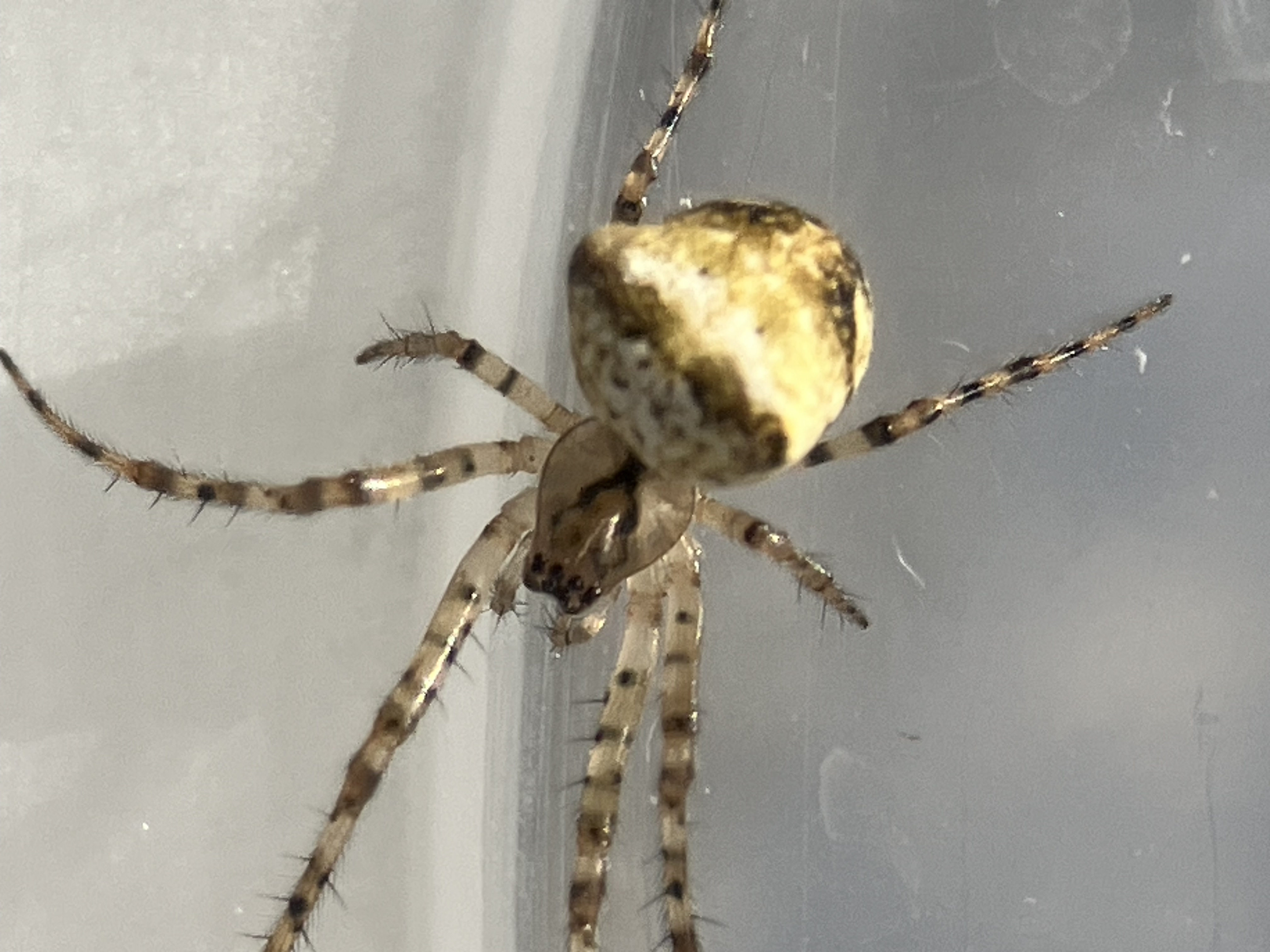
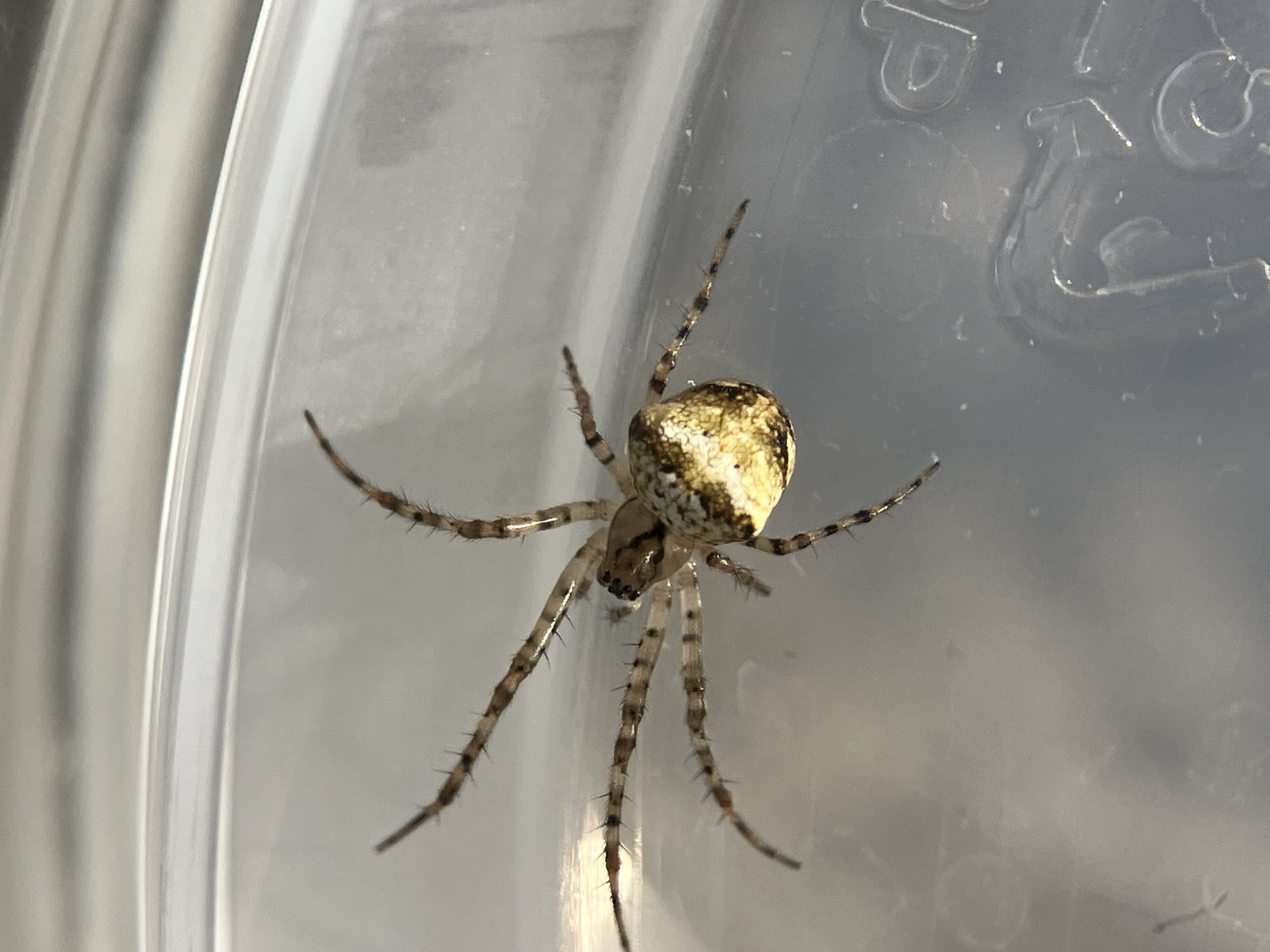
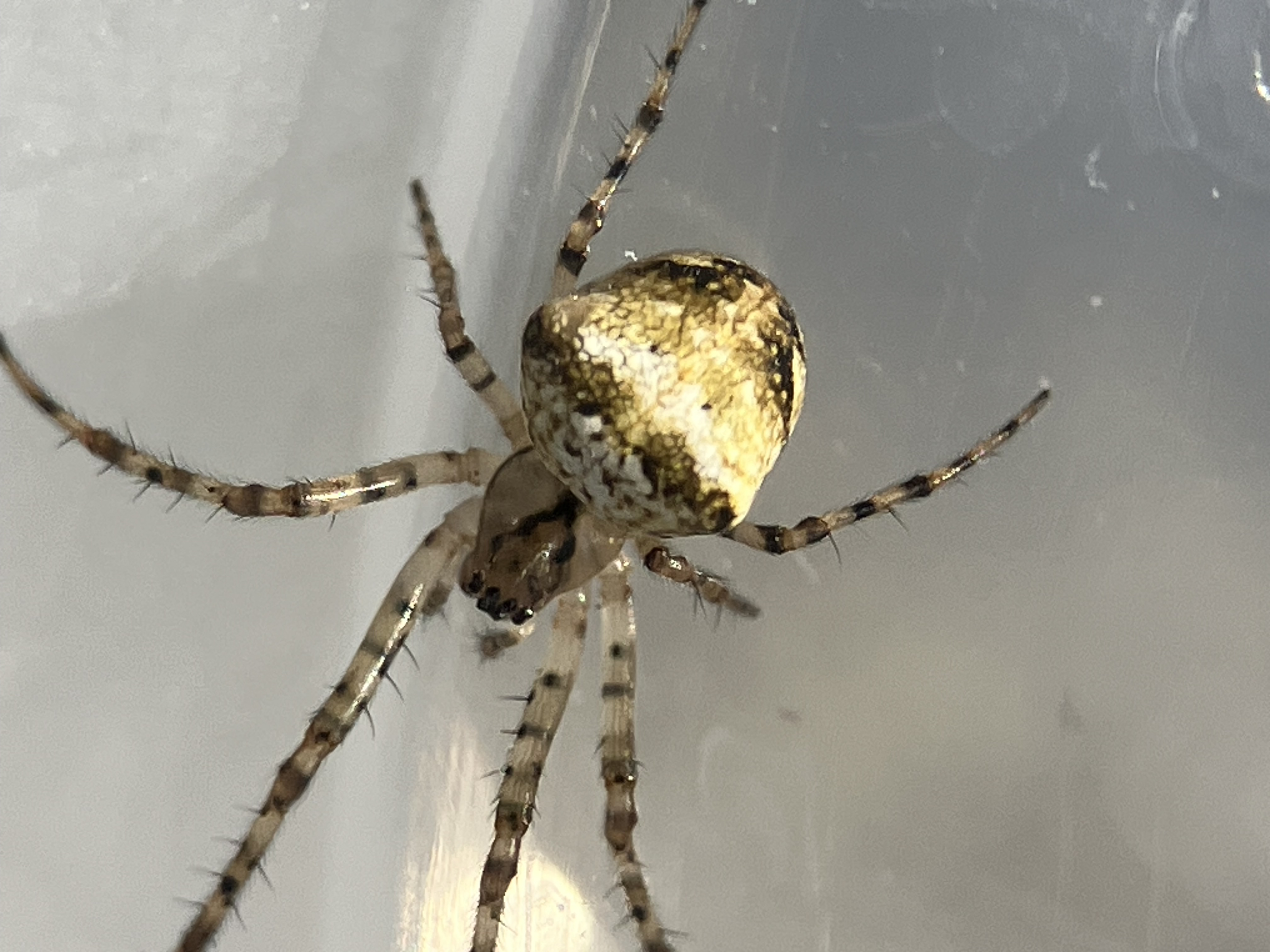
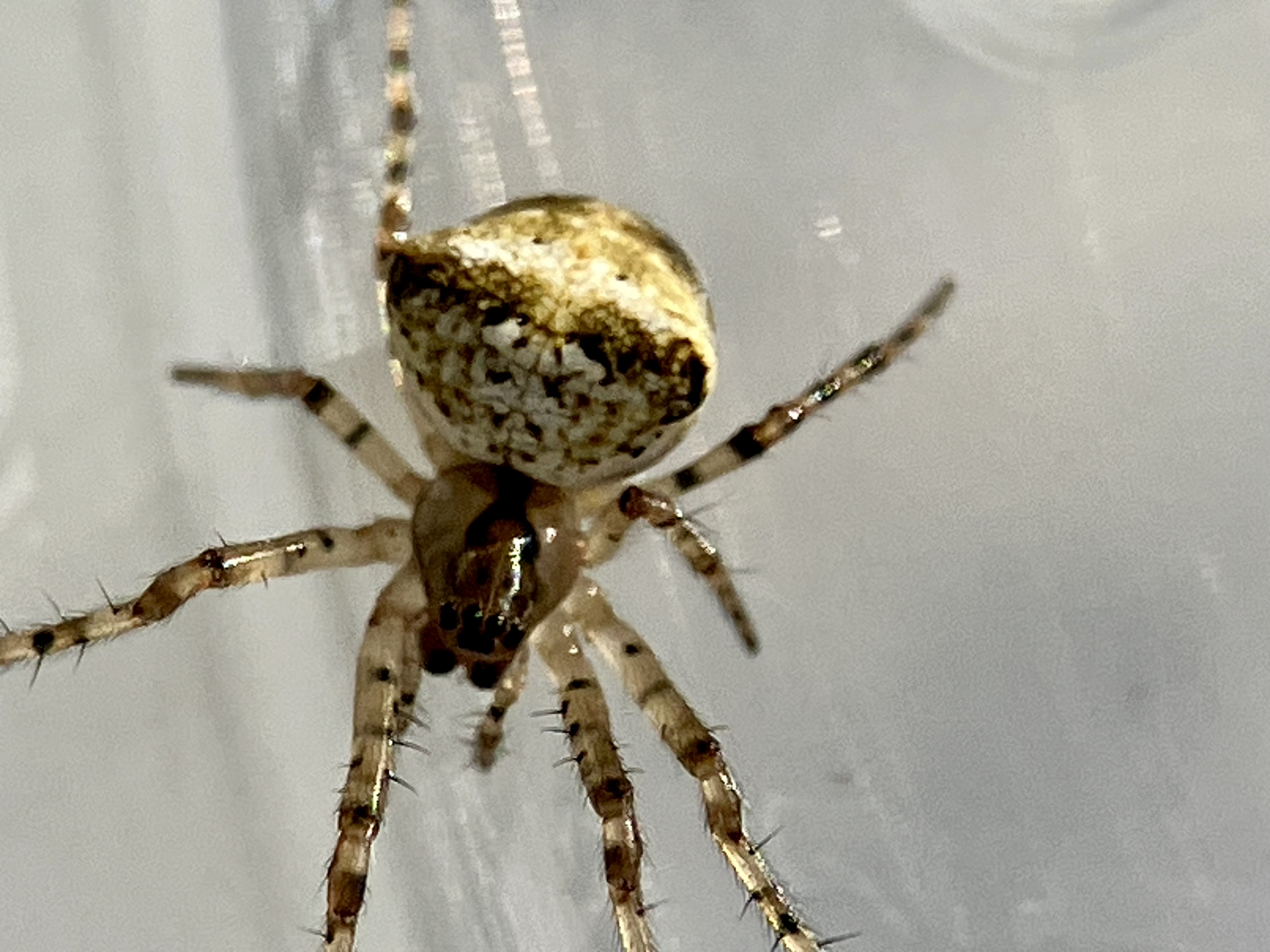
I thought I’d take a moment to profile a new-to-me spider found in my kitchen last week. This one was awfully small at about 4-5 mm, and threading the beginning of a web from my kitchen counter to the dishwasher. I needed a cup for my morning coffee, and the kitchen (at least our kitchen) is not a safe place for a free roaming spider. Not with Herman the Persian and his furry duster of a tail.
I collected her gently, took these photos, and released her outdoors on one of my mint plants. My efforts at ID-ing this unusual beauty, beyond family Tetragnathidae and possibly genus (Metellina) necessitated sending the photos to my friend, Rod Crawford at the Burke Museum, for further help.
Rod quickly wrote back with, “Metellina mimetoides, only local species in genus with humped abdomen.”
Metellina mimetoides is a species native to North America and found along the Pacific Coast from Southern California through Northern Washington. I would say these are not particularly abundant though. This was my first ever sighting of one on San Juan Island, WA.
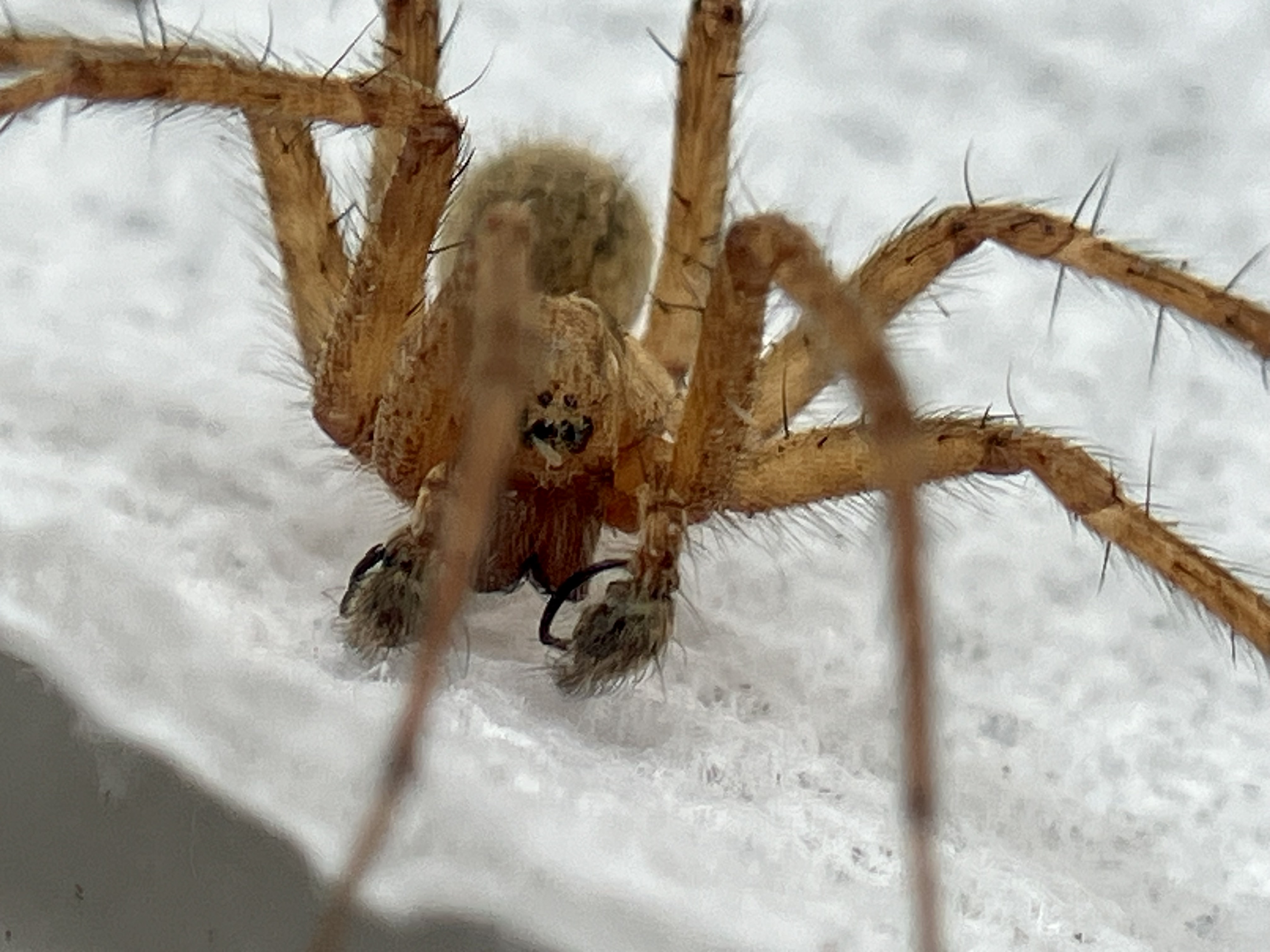
Some folks run screaming from spiders, but I am enjoying getting to know the ones that live around our home. They are all friendly and harmless and such. Spiders are more likely to be intimidated by a human, but some of them seem to be getting over their fear and might actually even recognize me. This morning I got this little one to agree to pose so you can see the uniqueness of his palp (scroll through the photos to find the red arrow). It’s unique because of the extra long embolus (read some interesting stuff about this linked below). This is a male funnel weaver (Agelenopsis oregonensis). I had help from Rod Crawford identifying him when I first spied him at my bug light a few weeks ago. Now, we are having daily morning meetups and this little spider is getting over his shyness.
Scared of Spiders? Here’s a go-to info-sheet (that I plan to update as time allows) with links to verifiable, research-backed Spider Information/Literature. Let’s end all the misinformation and our arachnophobia. Too often people buy into false reports. Don’t listen to someone’s tall tale of horror. These stories are sensationalized and inaccurate. Know the facts. Dispel the rumors. Spiders are not out to kill you. It’s just not true.
YOU have to do the reading! These are scientifically based, accurate studies with information related to spider bites.
*Bennett RG, Vetter RS. An approach to spider bites. Erroneous attribution of dermonecrotic lesions to brown recluse or hobo spider bites in Canada. Can Fam Physician. 2004 Aug;50:1098-101. PMID: 15455808; PMCID: PMC2214648 https://www.ncbi.nlm.nih.gov/pmc/articles/PMC2214648/pdf/15455808.pdf.
*Melissa M. Gaver-Wainwright, Richard S. Zack, Matthew J. Foradori, Laura Corley Lavine, Misdiagnosis of Spider Bites: Bacterial Associates, Mechanical Pathogen Transfer, and Hemolytic Potential of Venom From the Hobo Spider, Tegenaria agrestis (Araneae: Agelenidae), Journal of Medical Entomology, Volume 48, Issue 2, 1 March 2011, Pages 382–388, https://doi.org/10.1603/ME09224
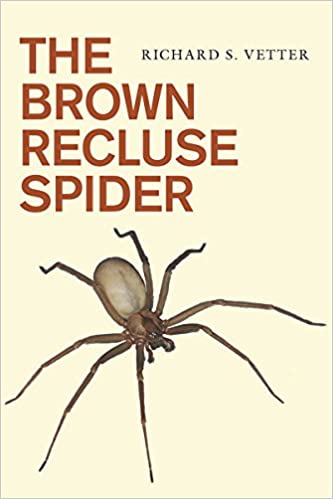
Brown Recluse Spiders (Loxoceles sp) – NO! I repeat “NO, none, nada!” established populations in our area.
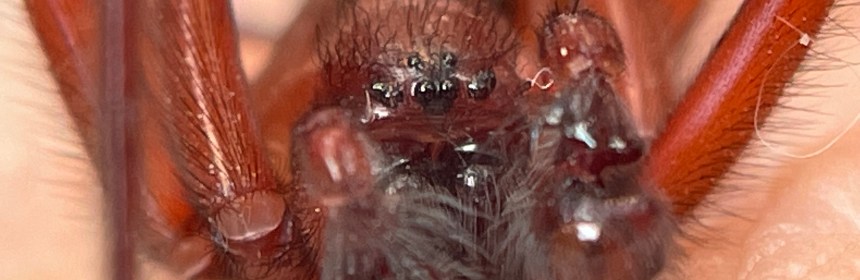
In the attached links below, you will find links to information about the Brown Recluse Spider. Information that comes from a verified, reputable source – from an actual expert. Brown Recluse spiders do not live in the San Juan Islands. Caveat: this is not to say that if you move here from an area where there ARE established populations, one might be found hitching on your moving boxes. It’s possible, BUT – they have not been able to survive and breed here. If you see a large brown spider in your house – especially on the ceiling, it is most likely (99.99%) going to be a Giant House Spider (Eratigena duellica). They are very common and harmless. If you don’t like them, just catch in a cup and take it to a sheltered area outside – preferably another structure where it might have a chance to survive. They won’t hurt you.
Map showing distribution of Brown Recluse spiders (Please note that San Juan County is NOT found on this map) – https://spiders.ucr.edu/spiders-map
Map of Brown Recluse Spider distribution – UC Riverside
Where else can I find reliable information on Spiders?
There are a few sources I’ll list here. The first two are the ones you should look at first. They are valuable resources with information from highly credentialed experts in all things arachnid-related. If you read something written by either Rod Crawford (Seattle Burke Museum curator of the arachnid collection) or by Rick Vetter (UC Riverside Department of Entomology), you can be assured it is correct.
As a local resource, you can also check out the Facebook Bug Group (Bugs of the San Juan Islands). There are several group “experts” with experience identifying spiders. These folks generously volunteer their time and knowledge, so keep that in mind and please refrain if you feel inclined to INSIST they are wrong and there are INDEED Brown Recluse Spiders living in your house in San Juan County. If you have a spider you’d like identified, it helps to have a couple of clear photos to submit. Try and get a shot of the dorsal (top) of the spider, and if you’re able, one of its face – showing eye pattern. You may contact me, Cynthia Brast-Bormann at cynthiabrast@icloud.com to submit live or deceased specimens for identification. I will help you coordinate a drop off point for collection. Please don’t indiscriminately KILL a spider though and ask me to ID it. It will likely make reliable identification more difficult. Just get a cup and a lid with some air holes punched in the top. I appreciate your showing kindness to the helpless creature you’ve caught. I will ID and humanely release.
Bugs of the San Juan Islands Facebook Group – There are at least 4 spider group experts and folks with entomology degrees or experienced backgrounds in the group who are more than qualified to help you. https://m.facebook.com/groups/bugsofthesanjuanislands/about/
Great YouTube information and fun links to watch from one of Bugs of the San Juan Island’s group experts, Arlo Pelegrin (entomologist and arachnologist)
Spiders of the West and their Medical Significance – Arlo Pelegrin at Dept of Health
Did you know spiders don’t just eat bugs? That’s right! You can amaze your friends when you share your knowledge about our eight-legged friends chowing down at the salad bar.
Spiderlings with Pollen Plates Orb Weaver Spider on Web
Researchers have observed various species of spiders (over 60 species worldwide) feeding on plant foods to supplement their invertebrate prey (Nyffeler et al. 2016). What exactly does this mean? Are they going to eat the leaves of your garden plants? Nah! Not to worry. They are primarily pest predators in your garden – little helpers to keep those aphids away.
Spiders have long been thought to only consume insects and other invertebrates. However, in recent studies, we are finding this isn’t entirely the case. Observations of spiders foraging in nature has broadened our understanding of the diets of our arachnid friends. Our prior assumptions were incorrect. Spiders actually eat pollen grains, floral and extra-floral nectar, Beltian and Müllerian bodies (structures produced by plants on their leaf tips or petioles, plant sap, honeydew (a plant-derived sugar produced by homopteran insects like aphids), seeds, spores, and even the vegetative material in the guts of their invertebrate prey (Nyffeler et al. 2016).
Tree Pollen collected in ground vegetation
I found several papers on this topic, but one of the most interesting to me talked about how pollen is an important source of protein for spiders in early spring when prey may be scarce. It also pointed out that pollen is a critical food source for newly hatched spiderlings. Baby Orbweavers for instance. We have these here in the San Juans. They are delightful!
Orb Weaver Spiderlings on my garden chair
Well, since the pollen floats through the air, quite a lot will stick to webs, landing exactly where the little spiders can easily access it. Smith and Mommsen (1984) even found that Orb Weaver spiderlings doubled their life expectancy by eating pollen. Eggs and Sanders (2013) concur that pollen is an important dietary supplement for Orb Weaver spiders and found that juvenile orb weaving spiders’ diets consist of approximately 25% pollen.
So, now you know! Our little spider friends, or some of them at least, are more complex than we knew. It’s a good reminder about how important it is to eat a varied and healthy diet. We can put this into practice ourselves. Good nutrition is vital for health and survival – for all living beings.
I first spotted this beauty on October 1, 2021 while I was taking a walk along our road on San Juan Island. There was a cluster of sun loving mullein (Verbascum thapsus) mixed with one or two thistles (probably Canada thistle) growing along the road. The glistening silk threads woven between them drew me over to investigate. There were several Cross Orb Weavers sharing the space here, but one of these was not like the other. The spider that caught my attention was quite a bit darker than the others. Describing it as brown just doesn’t do it justice. Brown sounds much too plain. She was a lovely brunette amongst a few redheads!
Since I often enjoy walking on our road on sunny days, I started looking for her when I passed her home – the Mullein “apartments.” It wasn’t just the spiders enjoying the sunny housing complex, but these units housed a few other species as well. I found some Stilt Bugs (Neoneides sp.) and some Pentatomidae hiding in the fuzzy star shaped trichomes (little hairs) of the Mullein leaves.
Now that autumn has ushered in falling leaves, falling temperatures, and a good bit of rain, I thought of my friend Louisa, the Orb Weaver out in the cold. Had she managed to find a sheltered spot to survive the recent storms? Several times over the past two weeks I’ve looked for her, but she was just gone. Since the lifespan for this species is only a year or less, I suspected she’d reached her end with our last dip in temperatures, gusty winds, and precipitation. I held out a tiny bit of hope though. Just a bit!
Today (November 6, 2021), my husband and I walked our road. It was sprinkling and the precipitation was cold. When we got down to the point on the road to turn around, shortening our walk to just the point where the old cabin used to be, I asked him to wait one second while I looked one more time at that patch of Mullein and the drying stand of thistles.
As I bent down to look closely, I saw a single strand of silk. Examining the attachment and following closely, it led me to Louisa. She was tucked under the dried nodding inflorescence of the thistle. Once a purply-pink sugar treat for pollinators, the now nodding blooms have been repurposed into a thatch roof to keep this little spider dry.
I’ve thought about relocating her so the county doesn’t mow her when they scalp the roadside vegetation. It is bound to happen at some point. For now, I’m going to leave her be, and just keep a close eye on her. Maybe I’ll make a sign! Be Nice to Spiders. ❤️ Louisa lives here!
Fun Fact! Did you know that 25% of the diet of Orb Weaver spiderlings is pollen? Check it out. Article linked in my list of sources below.
Araneus diadematus (Cross Orb Weaver) October 1, 2021 – San Juan Island, WA
Araneus diadematus (Cross Orb Weaver) October 1, 2021 – San Juan Island, WA
Araneus diadematus (Cross Orb Weaver) October 1, 2021 – San Juan Island, WA
Araneus diadematus (Cross Orb Weaver) October 13, 2021 – San Juan Island, WAAraneus diadematus (Cross Orb Weaver) October 16, 2021 – San Juan Island, WA
This is “Louisa,” the Land Bank Orb Weaver Spider. She lives on a Mullein plant alongside the road. I’ve been watching her since October 1, 2021. Hoping she will not become a casualty of San Juan County’s pre-winter roadside mowing. She’s also an expecting mom!
This is “Louisa,” the Land Bank Orb Weaver Spider. She lives on a Mullein plant alongside the road. I’ve been watching her since October 1, 2021. Hoping she will not become a casualty of San Juan County’s pre-winter roadside mowing. She’s also an expecting mom!
Araneus diadematus (Cross Orb Weaver) November 6, 2021 – San Juan Island, WAAraneus diadematus (Cross Orb Weaver) November 6, 2021 – San Juan Island, WAAraneus diadematus (Cross Orb Weaver) November 6, 2021 – San Juan Island, WA
Gucker, Corey L. 2008. Verbascum thapsus. In: Fire Effects Information System, [Online]. U.S. Department of Agriculture, Forest Service, Rocky Mountain Research Station, Fire Sciences Laboratory (Producer). Available: https://www.fs.fed.us/database/feis/plants/forb/vertha/all.html [2021, November 6].
Horton DR, Lewis TM (2003) Numbers and types of arthropods overwintering on common mullein, Verbacsum thapsus L. (Scrophulariacae), in a central Washington fruit-growing region. Journal of the Entomology Society of British Columbia 100, 79–87.
Oxford, Geoff & Gillespie, Rosemary. (1998). Evolution and ecology of spider coloration. Annual review of entomology. 43. 619-43. 10.1146/annurev.ento.43.1.619.
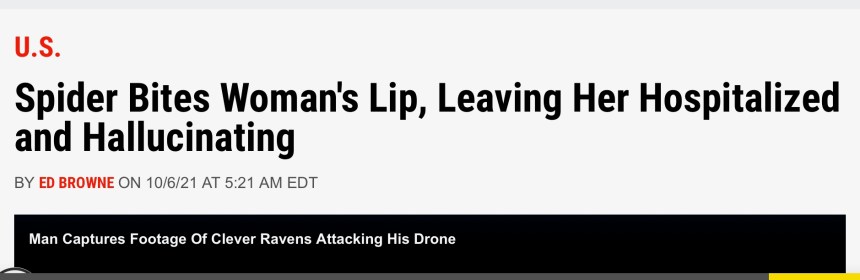
The headline, “Spider Bites Woman’s Lip“ popped out in my news feed yesterday. As an entomologist, these bizarre reports are click bait for me. I bit. As I read through the linked piece, my first thought was, “Yes!” Someone was definitely hallucinating!”
My other knee jerk conclusion is we have doctors who have absolutely no diagnostic skills whatsoever. In reconsidering, he may not be the one at fault though, or at least not entirely. In fact, it would be interesting to hear the physician’s side of this story. Did he definitively state it was a Brown Recluse Bite? Or, did he suggest it “might be?” Are the patient and the Newsweek reporter the ones guilty of the hyperbole here?
It’s got to be fantastic to be featured in Newsweek, right? Please note my sarcasm! The media is a huge problem when it comes to sensationalizing stories and egging on the screaming fear folks have around spiders. You’re welcome to take a look at this story yourself, but please come back because I’m gonna tell you what’s wrong with it!
First off, there is NO spider. No one collected a spider. No one brought a spider to the doctor to ID. Even if there had been an actual spider, since when have physicians become expert taxonomists and actually have the skills to identify arachnids or insects. Strangely, the story reports the woman didn’t even think much about the bite when it happened. Her words. Not mine. I really wonder about this mystery “spider.”
Secondly, the bite occurred, I presume, when she was paddling her kayak through a waterway. Brown Recluse spiders don’t make webs in the air, and certainly not over the water like that. Of course, I suppose it is possible for a spider to have been in the kayak, crawled up her legs and torso, and then crawled all the way up to her face where it bit her on the lip. You’d think she would have seen it. Also, Brown Recluse spiders like to live with other Brown Recluse spiders, so it’s difficult to imagine not finding a spider somewhere in the kayak to bring to the doctor.
Third. Lots of things can cause spider bite-looking lesions. I’m surprised the doctor declared it a Brown Recluse bite. There is no test to diagnose that someone has been bitten by a Brown Recluse. Again, no spider was brought in, so why was this deemed a spider bite when it could have been numerous other things? For instance, UC Riverside’s Department of Entomology webpage about Brown Recluse Spiders states,
“The following can cause lesions similar to the lesion from a bite of a Brown Recluse spider …mites, bedbugs, a secondary Staphylococcus or Streptococcus bacterial infection and “Three different tick-inflicted maladies have been misdiagnosed as brown recluse bite: Lyme disease, Rocky Mountain Spotted Fever and the bite of the soft tick, Ornithodoros coriaceus. “
What about her hallucinations? My first thought was she has had an outbreak of a herpes lesion and could have developed herpes simplex encephalitis. Please DO look this up! I did. It’s one of the side effects of getting a nasty cold sore. https://rarediseases.org/rare-diseases/encephalitis-herpes-simplex/
Now, I’m not a doctor. I didn’t take this woman’s medical history. I’m just pointing out some OTHER possibilities. Possibilities that are actually much more likely than the sensationalized over-reaching claim it was a Brown Recluse spider. Hmmmm… Hysteria and hyperbole. I hope she recovers, and I hope she will be able to kayak again soon. I just wish there was a way to stop the inevitable slaughter of innocent spiders that will ensue. It’s a shame.
***Note*** We do NOT have Brown Recluse Spiders in the San Juan Islands. Please take a look at the attached distribution map and show it to anyone who tries to convince you otherwise. https://spiders.ucr.edu/spiders-map
Last month I held my 2nd annual virtual event, “September Spider Sleuthing in the San Juans.” Little did I know it would turn out to be so popular. Even the Journal of the San Juan Islands interviewed me. One of the questions asked was, “What led me to create the event in the first place?” Let me answer that for you.
Well, I happen to be an entomologist (someone who studies insects), but after living here for twelve years, I’ve come to LOVE the diversity of spiders that share our islands. I want to help others understand how important spiders are in our ecosystem and dispel some of the unfortunate and undeserved myths associated with our eight-legged friends.
This week, the spider sleuthing continues, albeit informally. I received some emails about spiders, and actually had two folks drop off spiders at my husband’s office in little cups for me to take a look at. “What ARE these?” inquiring minds wanted to know.
One was a suspected Black Widow that turned out to be a look-a-like False Widow (Steatoda grossa). While instinctively protective of the little sack of clustered eggs laid in a matrix of messy web in the plastic cup, I could sense she was alarmed. I was able to remove the lid and take a few photos without disturbing her too much. For now, she remains in the plastic cup. I may relocate her and her egg sack to our greenhouse tomorrow. Steatoda grossa spiders are not medically significant to humans. She’s a friend. Her presence helps keep the actual black widow spiders from colonizing our homes.
Steatoda grossa spider with egg sackSteatoda grossa spider with egg sackSteatoda grossa spider with egg sackSteatoda grossa ventral view
The other cup held two spiders. All I knew ahead of picking them up was they were presumed deceased. One of those two spiders moved ever so slightly when I opened the lid. Where there is movement, there is LIFE! I was mesmerized with this spider, a Woodlouse hunter (Dysdera crocata). After photographing this beauty, I set it free in our stack of cut wood that doubles as a fence along the edge of our property. It will find plenty of isopods in the forest floor and the wood will double as a nice winter home with all its nooks and crevices. Woodlouse hunters are also harmless to humans. Consider them friendly!
Woodlouse Hunter (Dysdera crocata)
Dysdera crocata
The last poor little soul was unfortunately frozen after it was collected. Yes, I opened the lid knowing this, but imagining movement, and hoping that maybe it hadn’t been frozen long enough to kill it. I don’t personally enjoy killing bugs. They’re much more interesting to me alive. I took the post mortem photos, but I’d have preferred being able to resurrect it.
Callobius severus
This sweet little dude is a Hackelmesh Weaver. His scientific name is Callobius severus. He’s harmless (a friend). He was only trying to find a mate. Male spiders often wander this time of year in search of a female. Look at those little palps! Those are the organs the male spider uses to transfer sperm to the female. They looks like little paws…or maybe tiny furry boxing gloves. I’m sorry this fella didn’t find a friend. May he R.I.P.
It’s wet and rainy out today, so I thought I’d share an indoor spider post for you to view. This isn’t my own, but I just watched it and it’s an informative, short, DIY on how to set up a vivarium for a jumping spider. Yes! Sometimes having a dog or a cat is impractical or impossible. Time, space, and affordability can impact our choice of animal companion. There’s also the environmental impact. Hmmm, how many of us really consider that? On the enviro-scale, keeping a spider is far greener than probably any other pet you could choose. No greenhouse gases!
Yesterday I was literally in bed most of the day recovering from a precautionary step to prevent severe illness. I felt like I had been in a bad auto accident, but that’s got to be better than actually having and/or dying from a virus, right? Well, I used the time to read. Mostly I read spider behavior stuff. Believe me, some of these things are pretty interesting! Spider sex for instance. Who knew! I found this somewhat sensational spider story. This spider doesn’t live in the San Juans, but it’s so weird, I just have to share!
DID YOU KNOW there is such thing as a Eunuch spider? (Tidarren sisyphoides), one of the Theridiidae or Tangle Web Spiders, AMPUTATES one of its own pedipalps (the male sex organs). The species name (Tidarren sisyphoides) is a combination translation from Gosiute-Greek meaning ‘small male’. Male spiders of this species are very tiny (1mm) in comparison to females ( only 1% the size of the female).
According to R.J. Adams (2014) and Ramos et al (2004), Tidarren sisyphoides male spiders are born with, and develop two palps, just like other spiders, but at the penulitimate (next to last) molt (shedding of the exoskeleton as part of growth/development), the male spider amputates one of these palps ON PURPOSE!
The amputation process isn’t done by chewing or anything of that sort. The tiny spider wraps it in a silk scaffold, then dismembers the palp by twisting or moving around in circles until it breaks off. The remaining palp is quite large in proportion to the 1mm sized body of this tiny spider, making up 10% of the total body mass.
Why would the spider amputate one of its palps? Well, turns out that males with one palp can move around and chase females much faster with only one palp. It is supposed to give these guys an evolutionary reproductive advantage. Males only mate once, so the reproductive drive is stronger than the drive to preserve one’s palp! Once he’s inserted that single palp, he will die within minutes, still attached to the female. Hmmm, getting laid might not be so lucky depending on how you look at it.
After mating, the female will extricate the palp from her epigynum (the female reproductive receptacle). While some other species of spiders are known to eat the male after mating, this species does not. She will merely discard the body.
Interesed in reading more? Check out these links, and read my blog about spider sex too!
Adams, R. J., & Manolis, T. D. (2014). Field Guide to the Spiders of California and the Pacific Coast States (1st ed.). University of California Press. http://www.jstor.org/stable/10.1525/j.ctt5hjhpb
Kuntner, M., Agnarsson, I. and Li, D. (2015), The eunuch phenomenon: adaptive evolution of genital emasculation in sexually dimorphic spiders. Biol Rev, 90: 279-296. https://doi.org/10.1111/brv.12109
Ramos,M., Irschick, D. J., and Christenson, T.E. 2004. Overcoming an evolutionary conflict: Removal of a reproductive organ greatly increases locomotor performance. Proceedings of the National Academy of Sciences 101 (14) 4883-4887; DOI: 10.1073/pnas.0400324101 https://www.pnas.org/content/101/14/4883
Trashline Orb Weaver (Cyclosa sp.) San Juan Island, WA 09.06.2021
I am very nearly blind when I try to see things up close, so it truly surprises me how I SEE things like the tiny “laundry” line of dead bugs this little orb weaver had strewn along a filmy thread between the boughs of our fir tree. At first, I thought it was just debris, stuck to the remnant of a spider thread, long abandoned. Upon closer inspection, I saw more threads and then my attention focused on the center, where I was able to discern what looked like teeny legs curled up around a body.
Trashline Orb Weaver
I used my clip on macro lens to get a better look. Indeed, there was a tiny spider in the center. I thought it was dead. That’s EXACTLY what the spider was hoping I’d think, and then I’d move on and the spider could enjoy the morning sun, and maybe a tiny bug for breakfast too.
Trashline Orb Weaver
Cyclosa sp. Trashline Orb Weaver 09.07.2021
Trashline Orb Weaver (Cyclosa sp.) San Juan Island, WA 09.07.2021
Trashline Orb Weaver
I had a hard time getting decent photos. Even with the macro lens, focusing was tough. The wind would blow at just the WRONG second and I’d have to start all over again. I couldn’t find my tripod, but finally got a decent pole to help me balance, and went out to take photos at different times over a period of 2 days. I even went out last night and took a picture.
Awake or Sleeping? Trashline Orb Weaver (Cyclosa sp.) at night. San Juan Island 09.07.2021
It was fairly easy to identify the spider to Genus (Cyclosa), but species ???? . After going through the literature I had, I narrowed it to 2 possibilities, but reached out to Rod Crawford for help. Rod is the curator of arachnids at Seattle’s Burke Museum and this is what he says,
“Yes, it’s a Cyclosa. This time of year all Cyclosa are juvenile, and I for one cannot distinguish between our 2 species (C. conica, C. turbinata) as juveniles. However, C. conica is more common.”
So, my little spider with a laundry line of bugs is either Cyclosa conica or Cyclosa turbinata.
Why exactly do they string the debris along their web lines? Well, again, this debris is usually made up of dead bugs and other tiny bits of debris attached to the silk line. Typically, the spider is positioned somewhere in the middle, using the debris as camouflage against predators. Often, the female spiders’ egg sacks are attached to this “laundry line” too. I think laundry line sounds better than trash line, but I don’t think I get to rename the spider.
There are five species of Cyclosa spiders in North America, north of Mexico. I believe we only have the two mentioned by Rod here. I’m going back out to check on my new friend after I finish my post. Enjoy the day and remember to Be Nice to Spiders!










 Hmmm, how many of us really consider that? On the enviro-scale, keeping a spider is far greener than probably any other pet you could choose. No greenhouse gases!





 Bugging You From San Juan Island