Category Archives: Arachnid

Cicurina spp. February 19, 2020
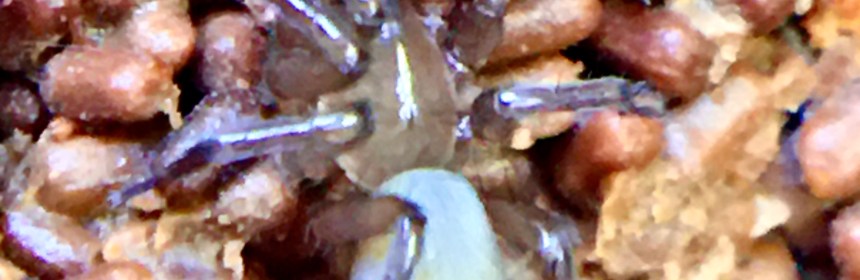
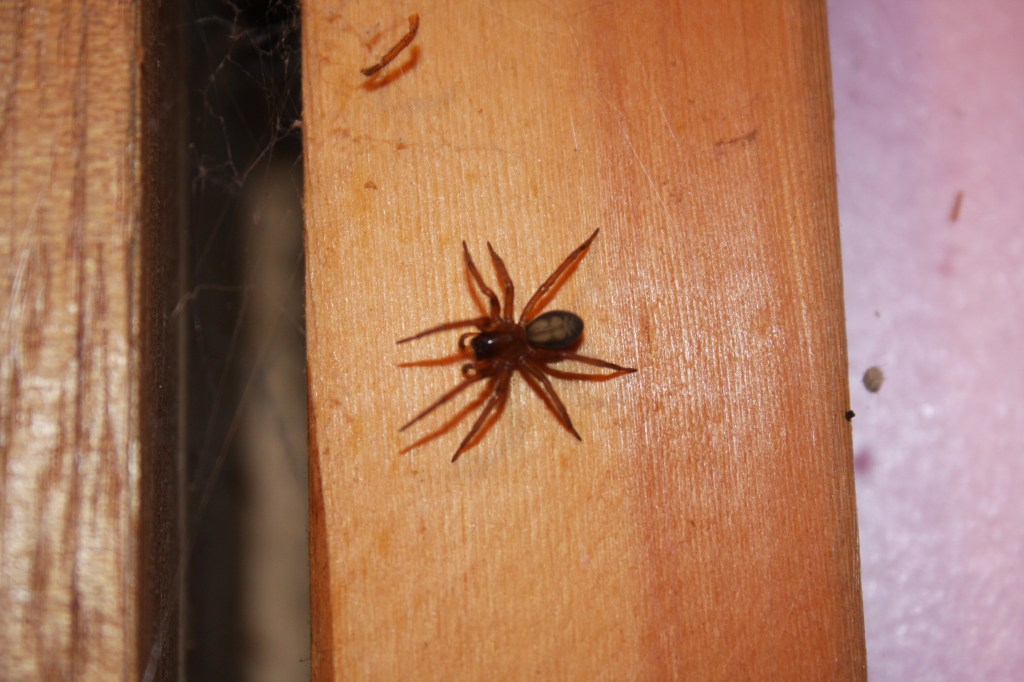
This spider is in the genus Cicurina, also known as the Cave Meshweaver or Cave Spider. Pronounced “sik-uhr-EYE-nuh,” the Latin name translates to “tame” or “mild.”

From Buggide.net and according to Rod Crawford:

Cicurina of Western Washington: “C. pusilla is by far the commonest. C. simplex and C. “idahoana” (really an undescribed species related to idahoana, in my opinion) are moderately common. Cicurina tersa is less common than the previous three. The other Cicurina of western Washington are actually rare here, C. tacomaand C. intermedia.” ~Rod Crawford

Cicurina spp.
Found in Rotting Fir log. 2.19.2020. Three Corner Lake Road, San Juan Island, WA
Size – approx 5mm
Photo by Cynthia Brast-Bormann
Identified by A. Pelegrin and L. Paxson at Pacfic Norwest Bugs
Cicurina spp.
Found in Rotting Fir log. 2.19.2020. Three Corner Lake Road, San Juan Island, WA
Size – approx 5mm
Photo by Cynthia Brast-Bormann
Identified by A. Pelegrin and L. Paxson at Pacfic Norwest Bugs

References:

Adams, R.J. 1970. Field Guide to the Spiders of California and the Pacific Coast States. California Natural History Guides. University of California Press. Los Angeles.

https://www.facebook.com/photo.php?fbid=10219387419670050&set=gm.3092310434134350&type=3&theater&ifg=1

https://bugguide.net/node/view/236713

Steotoda grossa (The False Widow)

It’s been raining a lot in the Pacific Northwest. Between the deluge and the cool temps, it’s definitely not the season for bug viewing. Being indoors, in rainy winter weather, when you live on an island equals boredom, cabin fever, and winter blues. You have to make your own sunshine or you get SADD.

I found my sunshine today in the barn. I went down to take better photos of the spiders I discovered over the weekend residing in the well pump house (inside the barn). I get really excited finding any sort of invertebrate this time of year.

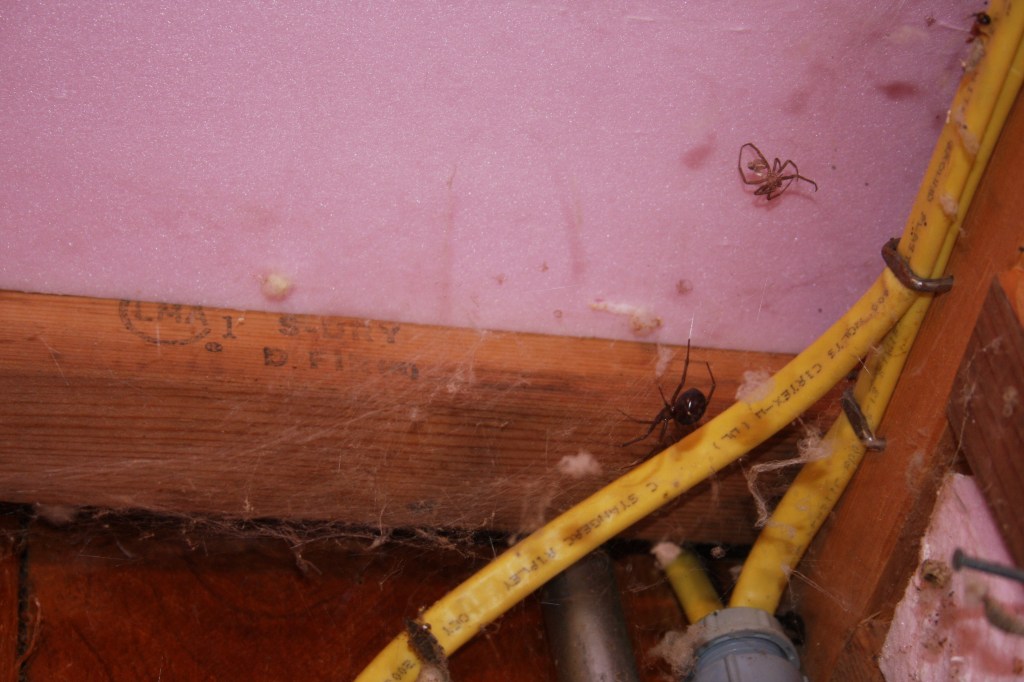
This shiny arachnid had me fooled the first time I found one. She’s not a real widow, but a False Widow (Steotoda grossa). False widow spiders are not native to Washington. They were imported from Europe, but are widely distributed and considered a cosmopolitan species. We have lots in the basement of our house!

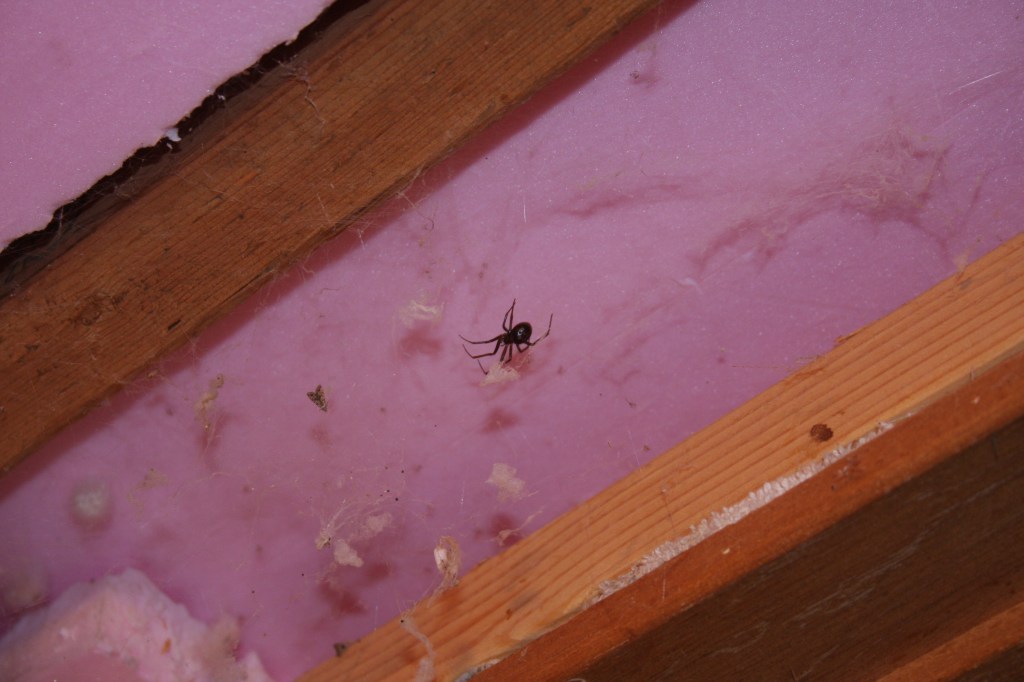
When I was in the well pump house, I found three females, each in her own corner, tending her egg sacks.

A very shiny Steotoda grossa female

I also found a lone Callobius severus (male?) on the wall… just hanging out. He was alive. I gently blew on him to see if he moved. He did.

Callobius severus (male?)

Steotoda grossa spiders are actually quite beneficial, preying on invertebrates like pillbugs, but they are famous for eating other spiders that humans don’t particularly want to encounter, like Hobo spiders or Black Widows. They construct flimsy or loosely woven, somewhat messy webs and seem to love corners in outbuildings and basements (at least from my personal experience). Female Steotoda grossa spiders have been recorded living as long as 6 years, while males have a much shorter lifespan no longer than 1.5 years.

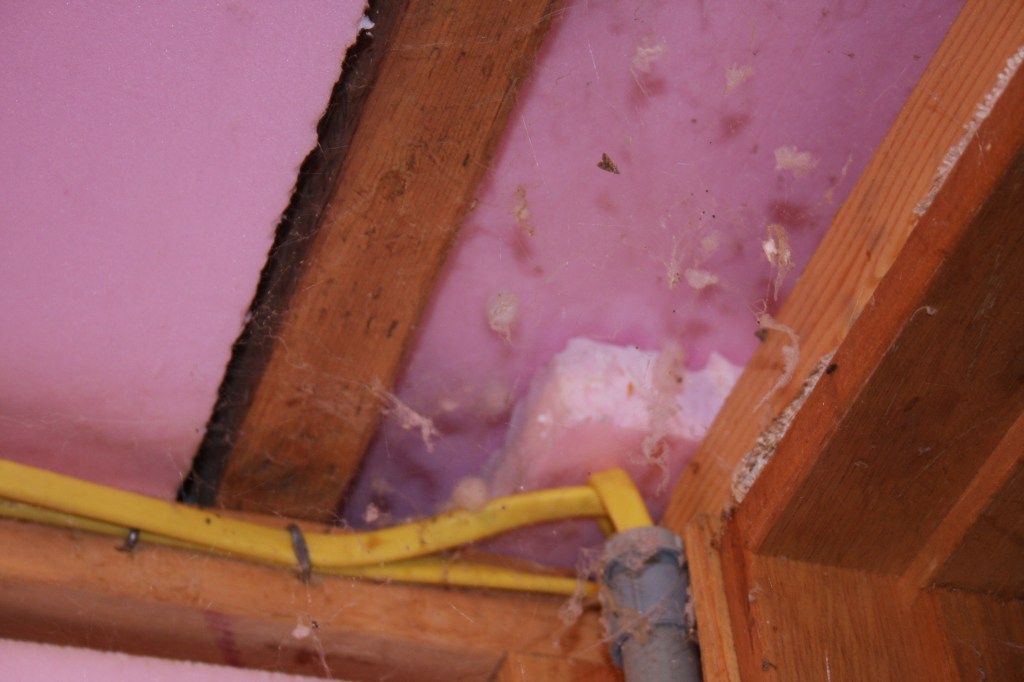
Loosely constructed Steotoda grossa web with round egg sacks

While not aggressive, Steotoda grossa spiders will sometimes bite people. They see very poorly and react mostly to vibrations when responding to threats. A bite from a False Widow is not life threatening, but some individuals may have a localized reaction to the bite.

Thanks for reading! 🕸🕷

Steotoda grossa female with egg sack

Steotoda grossa female (upper center, above red mark) with egg sacks

Not a Spider!

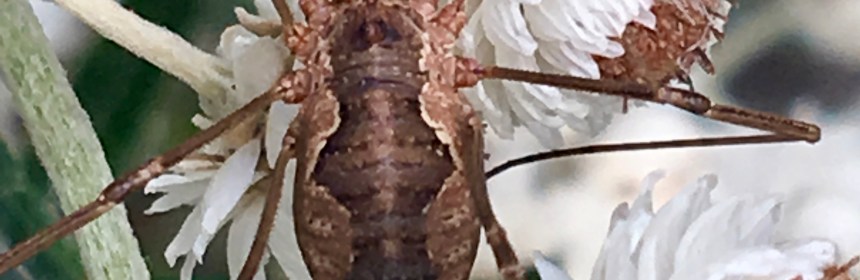
Harvestman probably Phalangium opilio

I found this the other morning (Sept. 8, 2018) when my husband had to drive over to unlock the gates at Mount Grant, San Juan Island Land Bank Preserve.

While I was waiting for him at the top, I had a chance to photograph this really interesting spider (or so I thought). It had 8 legs and looked like a spider to me, but not one I’d seen before on San Juan Island. I spent that evening going through my spider ID book without any luck.

So I sent off an email to Rod Crawford, curator of the arachnid collection at the Burke Museum in Seattle and all around “spider man” genius. Here was his response.

“Dear Cyndi,
The reason you could not find the top specimen in the Adams spider book, is that it isn’t a spider. It’s a harvestman (member of a separate order of arachnids). Even a scorpion is more closely related to a spider, than a harvestman is. Harvestmen have segmented bodies that are all in one piece (not 2 separate pieces), 2 eyes close together on a little bump, totally different mouthparts, respiratory system and reproductive system, no venom and no silk. Yours is probably the common European import Phalangium opilio.”

So, I learned something new today. I hope this will inspire you to read up on Harvestmen or Opiliones. I know that’s what I’ll be doing this evening for my light reading! Here’s a link to get you started ~ https://bugguide.net/node/view/33857 and while you’re at it, check out Rod Crawford’s great spider myth’s website at https://www.burkemuseum.org/collections-and-research/biology/arachnology-and-entomology/spider-myths

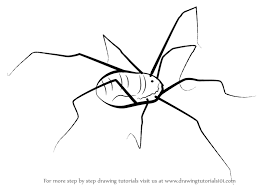
Illustration of a Harvestman

Spider Sleuthing in the San Juans – Day 9 – How to get that spider out of your bathtub!

IMG_7516

Eek there’s a spider in the tub!

Eek! There’s a spider in the bathtub!  Do you really want to turn on the water and drown it?  Hopefully you are not nodding your head “yes,” but instead finding courage to overcome your arachnophobia and finding a tiny bit of compassion.  Just take a deep breath.  Get a towel, or a cup and a card, and find your brave inner self to save this poor little eight-legged individual to live out its life.   Say this mantra with me….”Be NICE to spiders!”  Then say it over and over and over to yourself.  It will make you a much more confident person. You can tell your friends and co-workers about how YOU got a spider out of the BATHTUB!

At my house, the number one threat to spiders is my cat.  Millhouse is determined his job is to be spider exterminator.  He squashes them.  He used to eat them!  Once he ate one.  He fainted.  I had to rush him to the vet.  He revived on the way.  The next time, he bit one and spit it out.  I don’t know if the spider was foaming from being punctured or if the cat was foaming because well….maybe cats foam at the mouth sometimes when they eat something they shouldn’t.  In any case, he’s evolving his kill techniques.  Now he eats too much cat food and uses his massive body weight (he thinks it’s muscle) to flatten them.

I’m on the other side.  My job is to save them. It was a good thing I saw this one before Millhouse did.  You see, Millhouse loves to drink his water out of the bathtub.  I have to leave the water dripping for him.  That’s why you’ll note the stain on the tub.  It’s from hard well water.  One day I will scrub off the yellowing, but for now, pretend it’s not there.

The first thing I recommend to get the spider out is to grab something like a hand towel or a plastic cup and some sort of paper (mailer, index card, envelop, etc.).  I used a towel.  Watch my video and see how easy it is!  The spider isn’t going to bite you.  It just wants OUT of the tub.  Probably it was thirsty.  See my post from October 27, and you can read all about how to give a dehydrated spider a drink.  At this point, it needs your help.  It is stuck.  The sides of the tub are too slippery for it to crawl out.    It’s really easy!  Here goes…

The general idea is to be extremely gentle.  You don’t want to injure the spider.  Keep chanting your mantra…”Be nice to spiders!”  Over and over and over!

Hackelmesh Weaver Callobius.severus

Safe!

See!  It’s not that hard.  The spider didn’t attack me.  Isn’t it so cute! By the way, this spider is a Hackelmesh weaver (Callobius severus) https://bugguide.net/node/view/7018 .  I checked later today and it has crawled off somewhere.  Happy to escape the cat!

The lone wolf at my door! Tarentula kochii a.k.a. Alopecosa kochii

Here’s a clip of my little Wolf Spider, Tarentula kochii a.k.a. Alopecosa kochii (ID credit to  Rod Crawford at Seattle’s Burke Museum). He ever-so-kindly responded to my email query for help.  According to Rod, this spider is “a local native wolf spider and somewhat uncommon and rare.”   I found it in the doorway two days ago (10-23-18) and worried the cat injured it, but as you can see, it is moving a little. After examining it carefully, it looks uninjured, but possibly suffering from another spider bite…recent molt…or dehydration.   I attempted to get it to drink some water using a tiny syringe but was unsuccessful…or perhaps too late.  I also got some great advice on the correct way to give spiders a drink of water from Rod, who says:  “For future reference, the way to give a spider a drink is to rest the mouth area (under the front of the “head”) directly in a drop of water.”


If you are interested in learning more about this species of Wolf Spider, here are some links to check out:

https://bugguide.net/node/view/1490575

Click to access A42-42-1990-17-eng.pdf


Recent Entries »