Category Archives: Diptera

Why You Should Appreciate Native Plants: Ocean Spray Insights

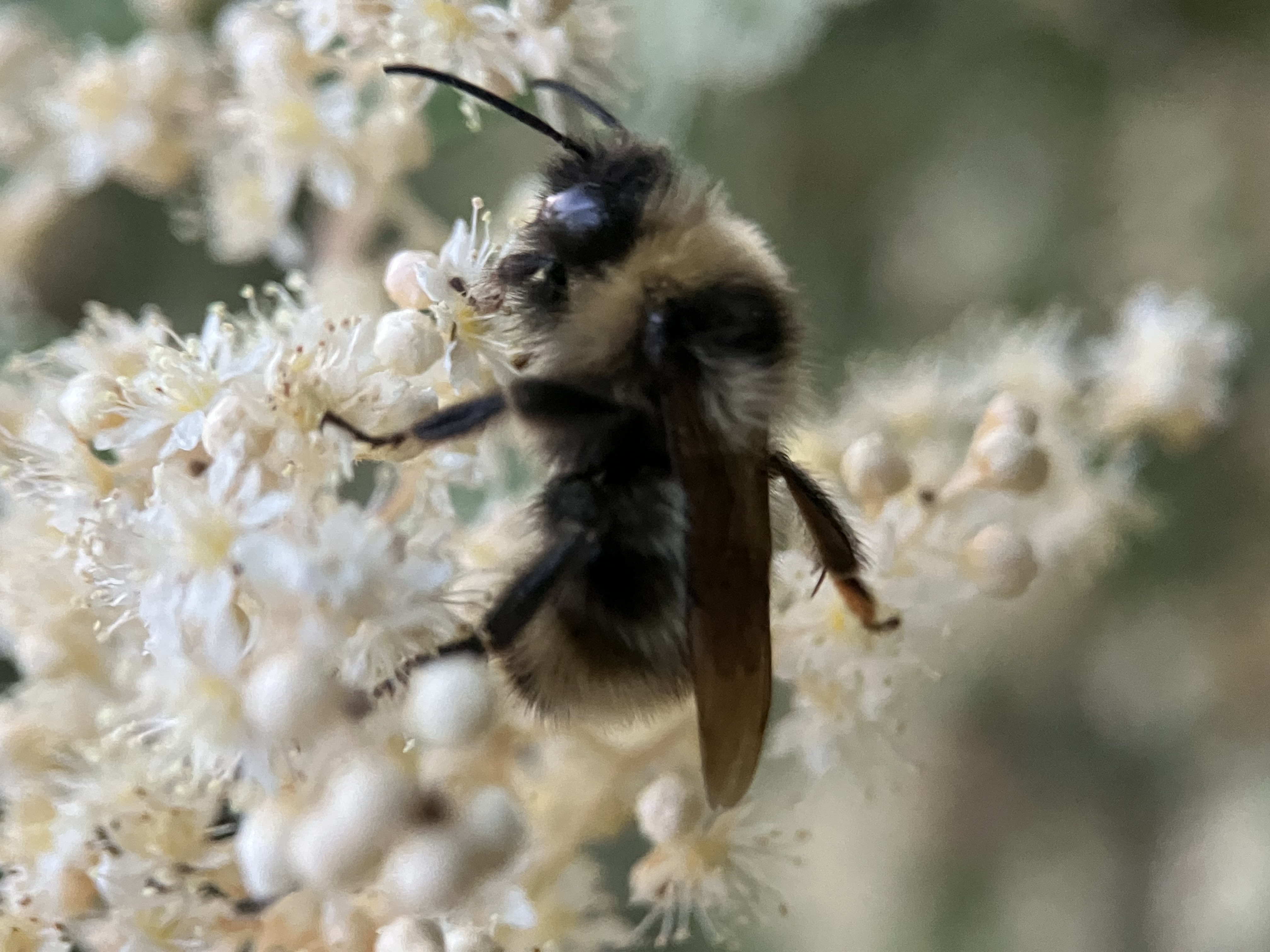
Cuckoo Bumble Bee on Ocean Spray

For the past few years, I have observed one of our native shrubs to see what pollinators are visiting. Calscape has recorded Ocean Spray (Holodiscus discolor) as a host plant to approximately 14 species of Lepidoptera. Yet, I have actually never seen a single pollinator visiting the cascades of snowy white, delicate blossoms. I’ve also heard from a handful of local folks on San Juan Island. They say Ocean Spray is “invasive” and should be brush-hogged. According to them, it’s a “fire hazard.” This view is disturbing to me. I felt it important to find concrete evidence of this native plant’s value in our ecosystem.

Bombus flavidus ssp. flavidus

Well, the other evening, I documented the first pollinator I’ve ever seen visiting these blossoms. There is a gorgeous Ocean Spray out our bathroom window. I noticed movement in the upper portions of the shrub. It wasn’t windy, so something else was causing the movement. I went out later, around 9:00 pm, to investigate the cause of the disturbances. Can you guess what I found? Bumble bees!

Bombus flavidus ssp. flavidus

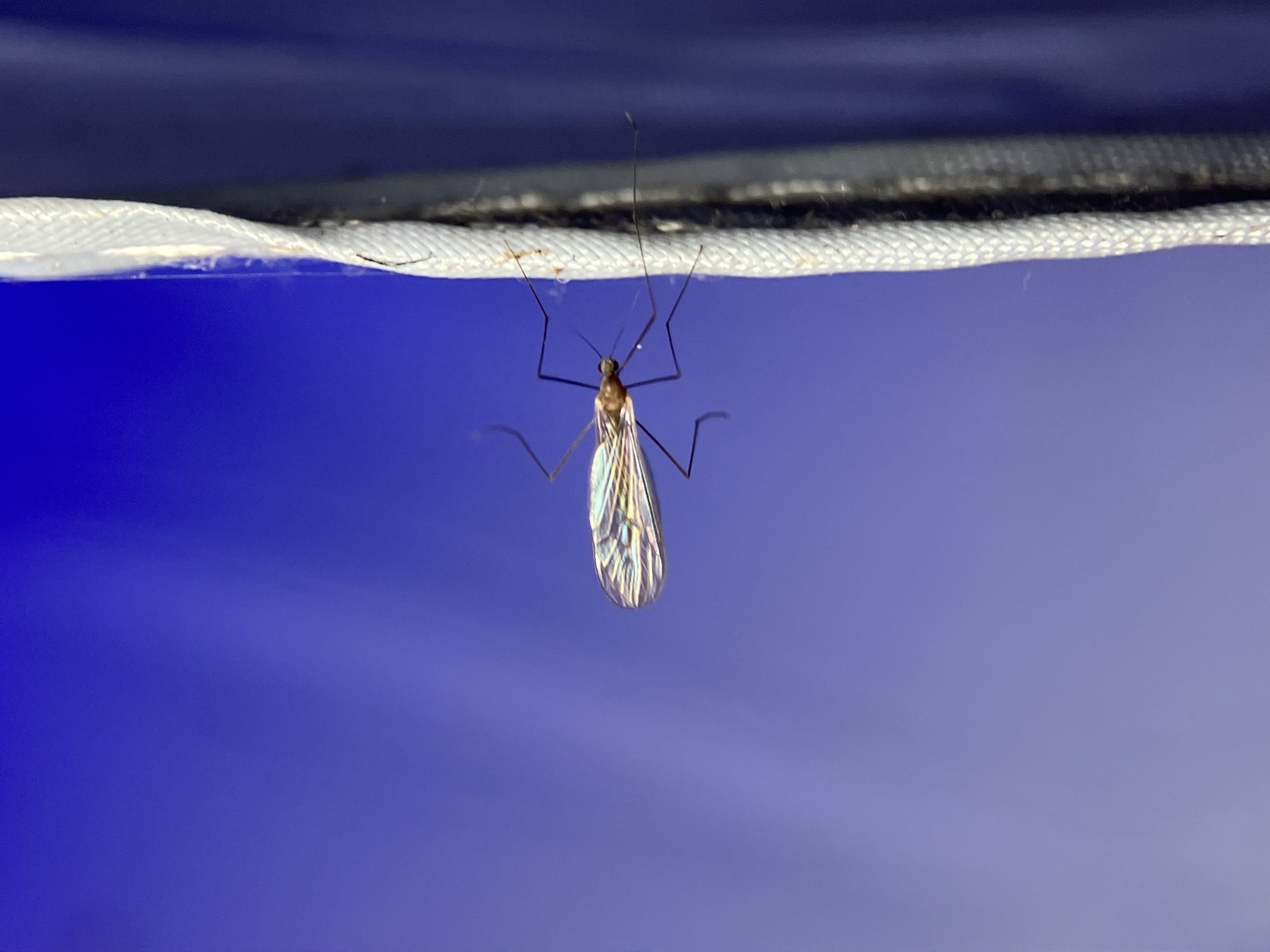
I also experienced annoyance from another buzzer. A Cattail mosquito, Coquillettidia perturbans (say co-KEE-luh-tih-dee-uh PURR-tuh-binz) promptly discovered my bare arm. It slipped its hypodermic proboscis into my epidermis with effortless precision, a precision superior to any medical professional’s injection. I didn’t feel it at all.

Cattail mosquito (Coquillettidia perturbans)

I would describe the bites from these mosquitoes as a very mild annoyance. I didn’t have any after-reaction at all. It was certainly not anything like the bites from some of the other insects I’ve experienced here, especially not thrips. I’m definitely not a thrips fan! You can read about thrips here in case you’re interested. https://buggingyoufromsanjuanisland.com/2021/06/29/public-health-alert-and-some-free-advice/


Getting back to the other buzz in the Ocean Spray. The buzz I was so happy to discover is the bumble bee (Bombus flavidus ssp. flavidus). I didn’t make the identification to subspecies on my own. That was with the help of a fellow named John Ascher on iNaturalist. If you’re curious about his work, you can learn more here: https://extension.oregonstate.edu/podcast/pollination-podcast/137-john-ascher-problem-measuring-bee-decline

Bombus flavidus ssp. flavidus

Bombus flavidus is a species of Cuckoo Bumble Bee, and one of the most widespread species in the world. These bees don’t have a worker cast like other species of bumble bees. They find nests of other bumble bees to occupy and invade these nests. The host bumble bee workers then rear the offspring of the cuckoo bumble bee along with their own offspring.

I hope my discovery leaves you curious about what pollinators visit Ocean Spray in your yard. My next goal is to make nighttime observations. I want to see what is visiting the flowers while they are still in bloom. I suspect they have nocturnal pollinators. If you find any, I hope you’ll report your findings with me. 🙂


To see more of San Juan Island’s invertebrates, please join and follow me on iNaturalist – https://www.inaturalist.org/observations?place_id=any&user_id=cyndibrast&verifiable=any . If you have never used iNaturalist, try it out! I love it because it’s a way to connect with other entomologists. It also helps me organize my findings into appropriate categories for referencing when I want to look something up.

You can also find my bug observations on Facebook at https://www.facebook.com/cynthia.brast.bormann or join one of the bug groups I help admin: Bugs of the San Juan Islands at https://www.facebook.com/groups/3594158544144419 or Pacific Northwest Bugs at https://www.facebook.com/groups/904079732957442/


Also, please don’t go crazy with the brush hog. Nature loves messy. Humans cause fires. We can do much on that end to prevent them by changing our behaviors and being more careful. Scraping the earth bare and/or parking out your parcel to be “fire wise” is actually not kind to nature. We need to protect habitat for the wild things, not eradicate it. Even mosquitoes have a role in the food web.

Thanks for reading!

Bombus flavidus ssp. flavidus

References

Brast, C. 2021. IT’S ALL CONNECTED! KNOW YOUR ECOSYSTEM – BUTTERFLIES AND MOTHS LOVE OCEAN SPRAY (HOLODISCUS DISCOLOR). Bugging You From San Juan Island. https://buggingyoufromsanjuanisland.com/tag/holodiscus-discolor/

No author. 2024. Fernald Cuckoo Bee Bombus flavidus. Bumble Bee Atlas and the Xerces Society for Insect Conservation. https://www.bumblebeeatlas.org/pages/bombus-flavidus

No author. No date. Ocean Spray (Holodiscus discolor). Calscape – California Native Plant Society.

Mayer, M. 2021. Cuckoo Combo: Re-Classification Makes Bombus flavidus World’s Most Widespread Bumble Bee. Entomology Today. https://entomologytoday.org/2021/04/28/cuckoo-combo-reclassification-bombus-flavidus-worlds-most-widespread-bumble-bee/

Murray, T. 2024. Species Coquillettidia perturbans. Bugguide. Iowa State University. https://bugguide.net/node/view/26971

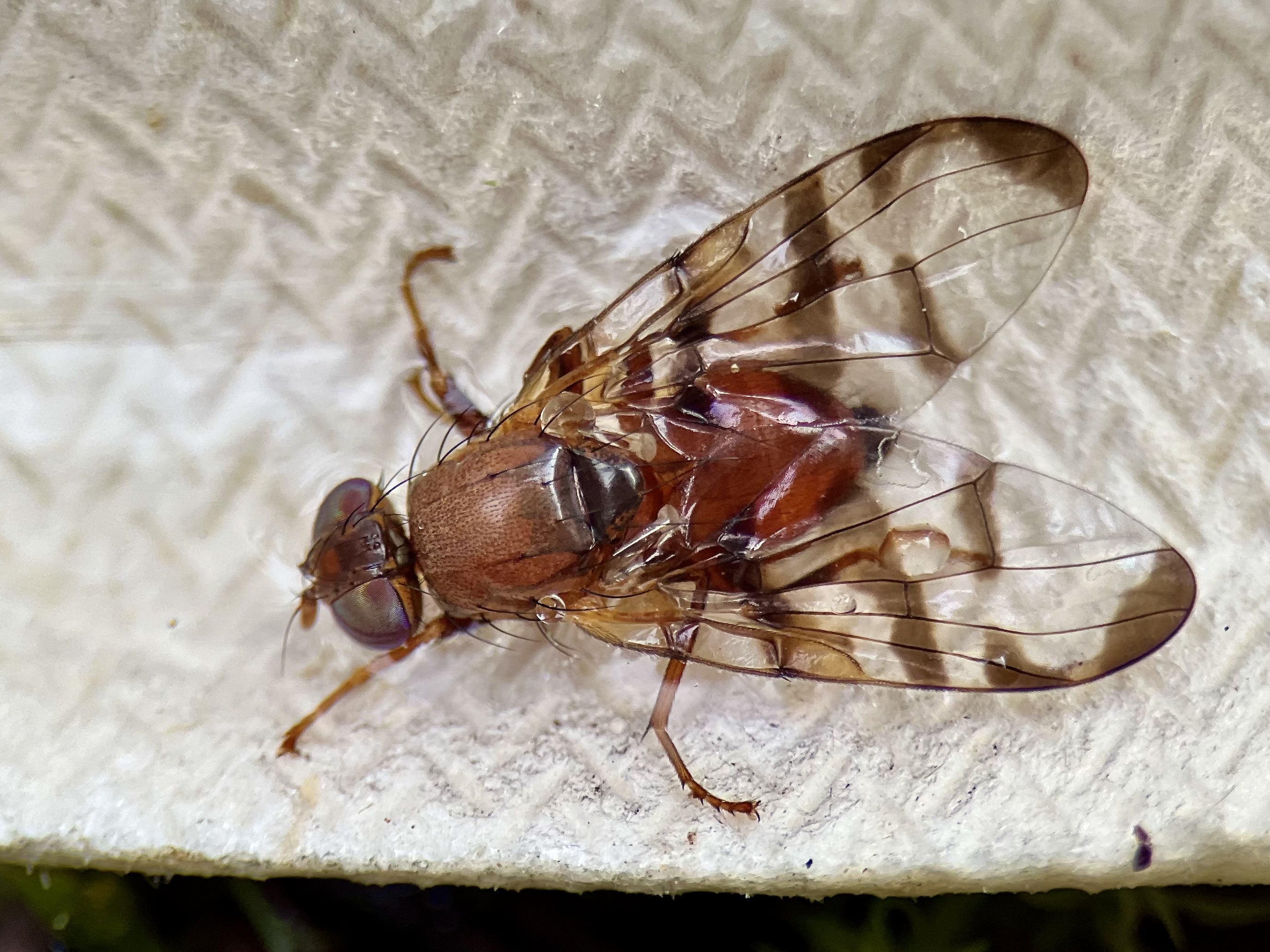
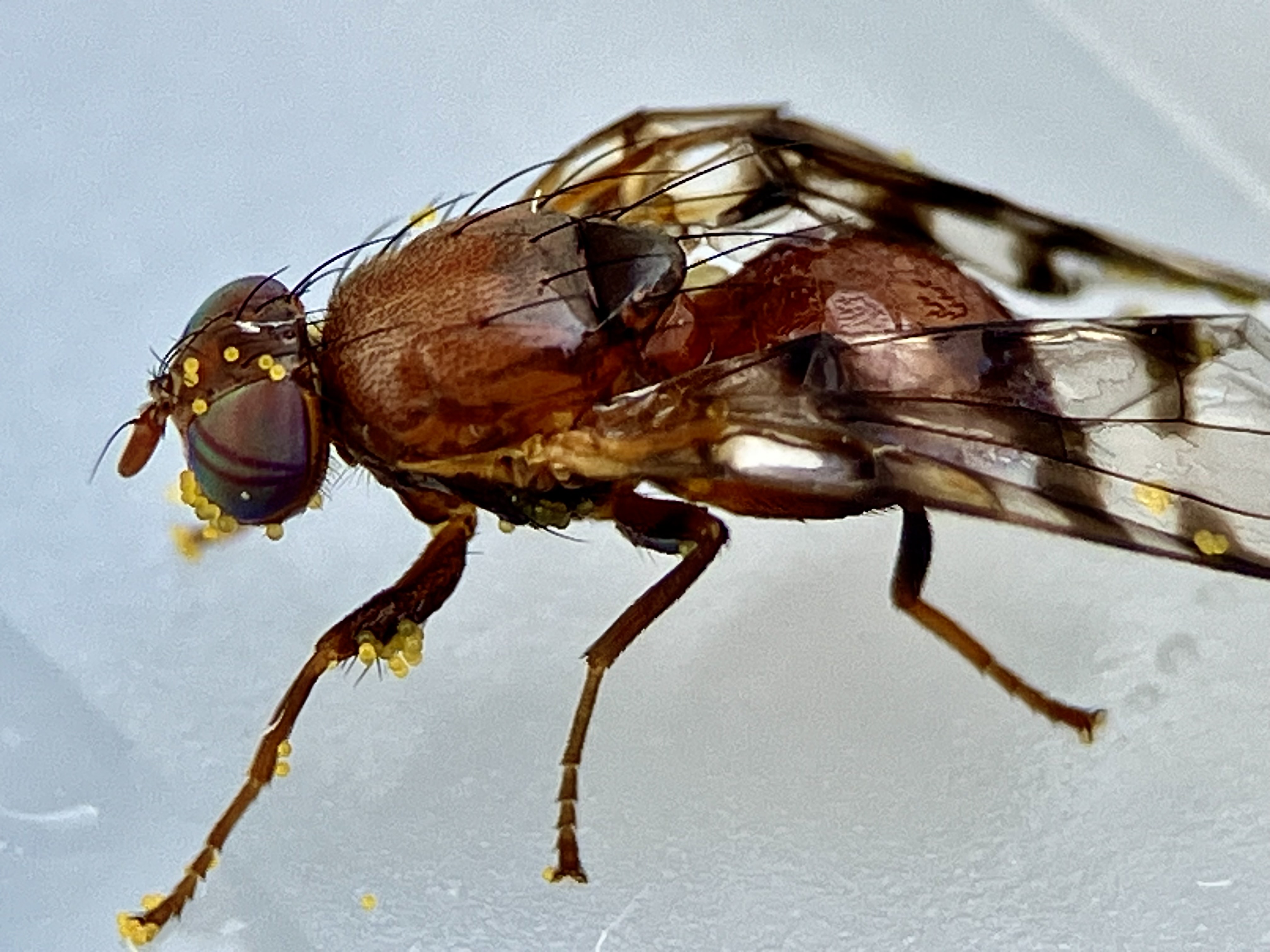
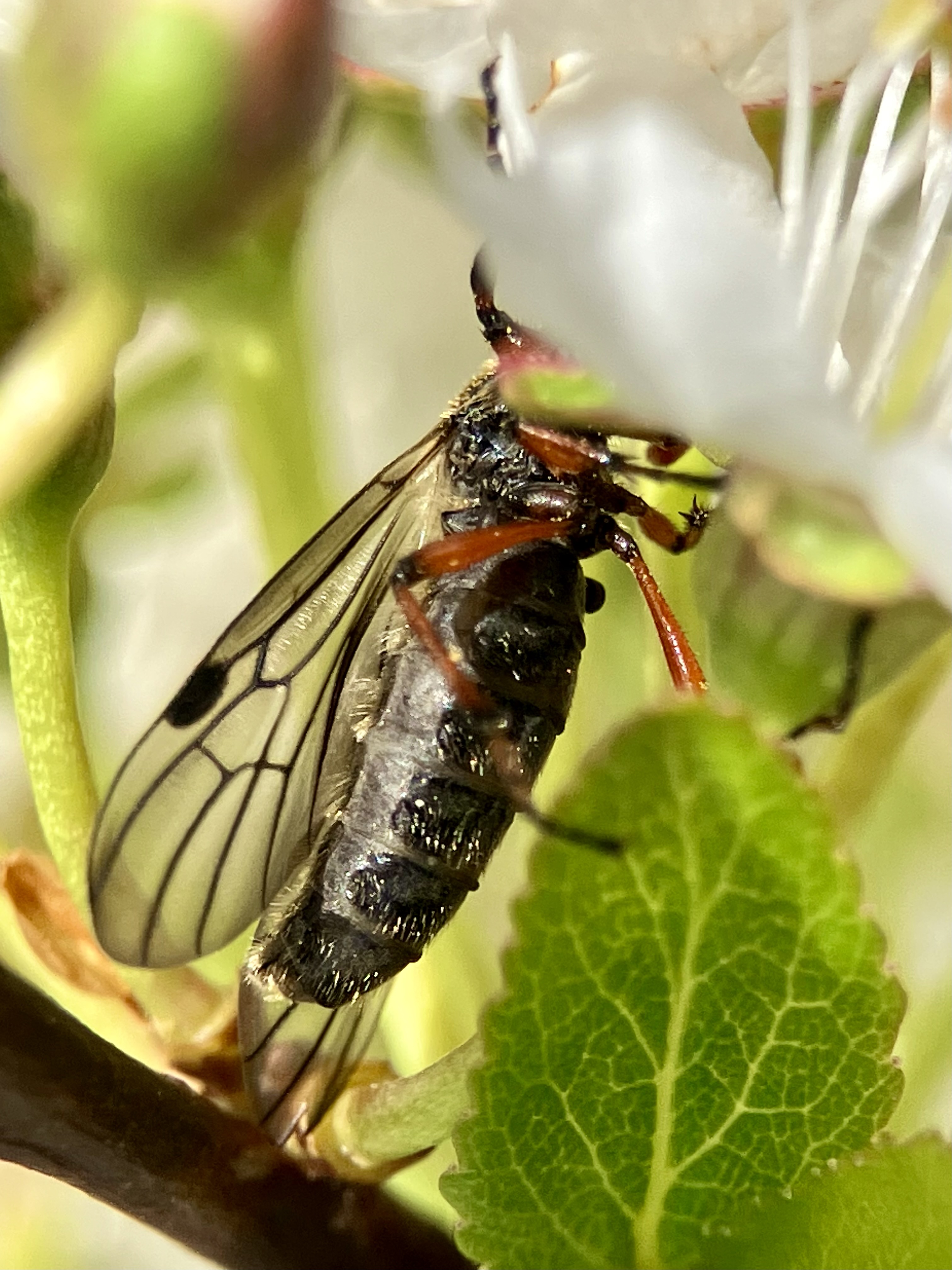
Identifying the Nicocles canadensis Robber Fly

Robber Fly (Asilidae), Nicocles sp.

It has taken a bit of time to finally sort out genus and species for this very cool Robber fly with beautiful caramel-brown mottled wings I spied the evening of June 6, 2025. It perched on a dried apple mint stem from last season, no doubt scouting the terrain to see what might be on the menu for dinner. Robber flies (Family Asilidae) are predatory. They catch other small invertebrates to eat, paralyzing them with special salivary digestive enzymes and then sucking up the liquified contents through the proboscis (Cannings, 2013).

Getting to an identification beyond Genus for this one has been incredibly frustrating, and complicating the process is the limitation of the key I was using (Wilcox, 1946), which primarily describes male specimens.

Robert Cannings has studied the Asilidae for many years in British Columbia and states this genus “sorely requires systematic attention.” I finally just gave up and reached out to Rob for help. He wrote me and said, “I’m pretty sure this is Nicocles canadensis. It’s a female, and some females are difficult, even when under a scope, because the Wilcox key, which is the best we have for now, deals with them poorly and concentrates on males. Nicocles canadensis is the species in the genus most often seen on BC’s south coast and, I assume, in your area.”

This is the only Nicocles fly I’ve ever found on our property on San Juan. According to Rob’s 2014 publication (linked in the references below) in Canada, ” Nicocles canadensis is restricted to Garry oak savanna and adjacent dry woodland on southern Vancouver Island (Saanich is the type locality),” so I anticipate this may be similar for our neighboring area.

Check out the attached references if you are interested in learning more about Robber Flies in our region.

Thanks for reading!

References

Cannings, R.A. 2014. The Robber Flies (Diptera: Asilidae) of Western Canadian Grasslands. 10.3752/9780968932179.ch7. https://www.researchgate.net/publication/268524943_The_Robber_Flies_Diptera_Asilidae_of_Western_Canadian_Grasslands

Cannings, R.A. 2013. Robber Flies (INSECTA: DIPTERA: ASILIDAE) Of The Montane Cordillera Ecozone.

Cannings, R.A. 1994. Robber Flies (Diptera: Asilidae) new to Canada, British Columbia, Yukon,
and the Northwest Territories with notes on distribution and habitat. J. Entomol. Soc.
British Columbia
: 91: 19-26. https://www.biodiversitylibrary.org/part/213777

Cole, F. R. 1969. The Flies of Western North America. University of California Press. Berkeley and Los Angeles.

Fisher, E.M., and Wilcox, J. 1997. Catalogue of the robber flies (Diptera: Asilidae) of the
Nearctic Region. Unpublished preliminary draft.https://staff.royalbcmuseum.bc.ca/wp-content/uploads/2013/08/Catalog-Nearctic-Fisher-Wilcox-1997-manuscript-copy.pdf

Geller-Grimm, F. 2008. Robber Flies (Asilidae). Internet site at http://www.geller-grimm.de/asilidae.htm

Melander, A.L. (1924) Studies in Asilidae (Diptera). Psyche [1923] 30: 207-19. https://onlinelibrary.wiley.com/doi/pdf/10.1155/1923/83461

Wilcox, J. 1946. New Nicocles with a key to the species (Diptera, Asilidae). Bulletin of the Brooklyn Entomological Society 40 (1945): 161-165; New York – Lancaster. https://www.biodiversitylibrary.org/page/50573094#page/180/mode/1up

Fantastic Fly Friday

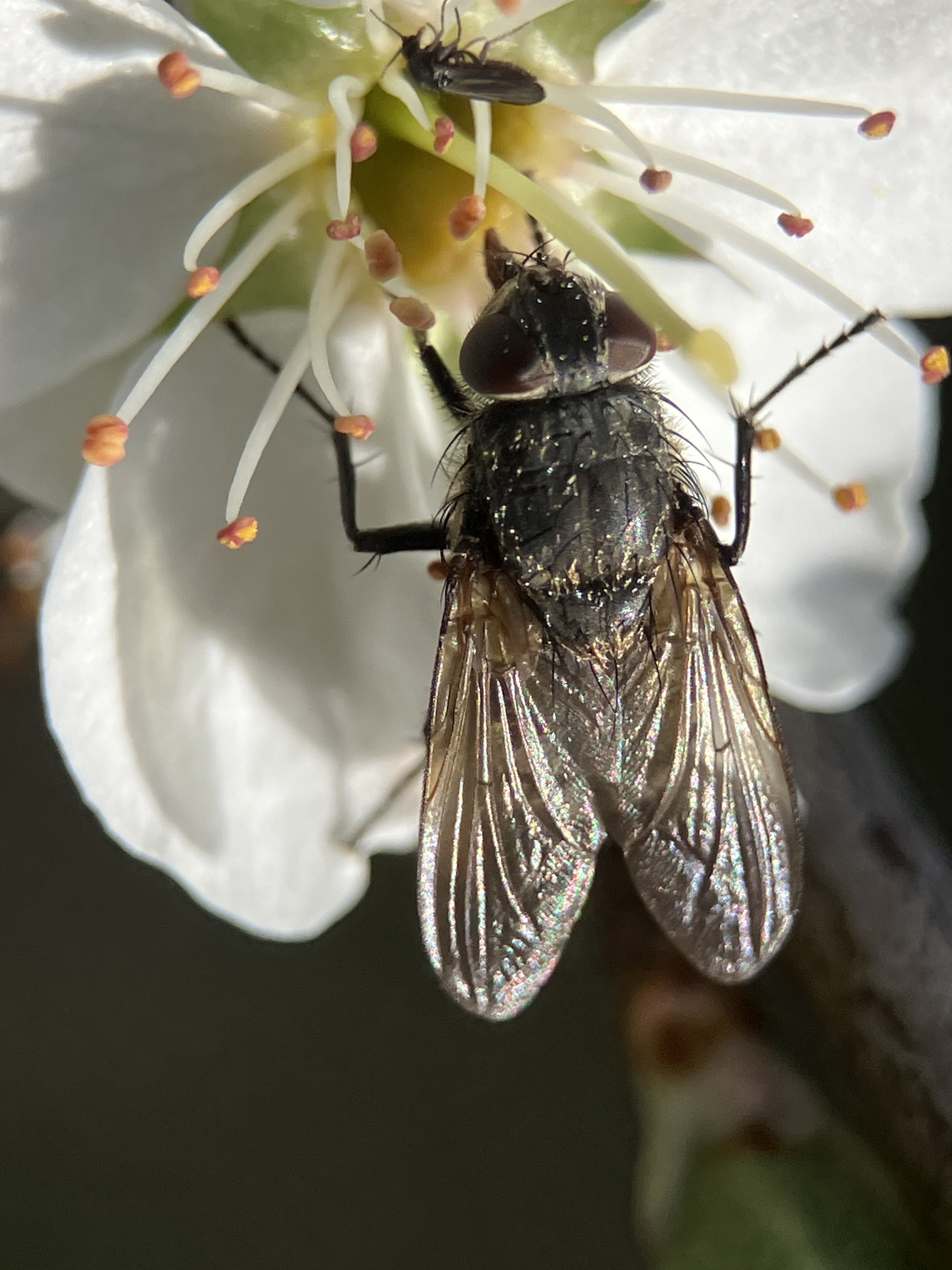
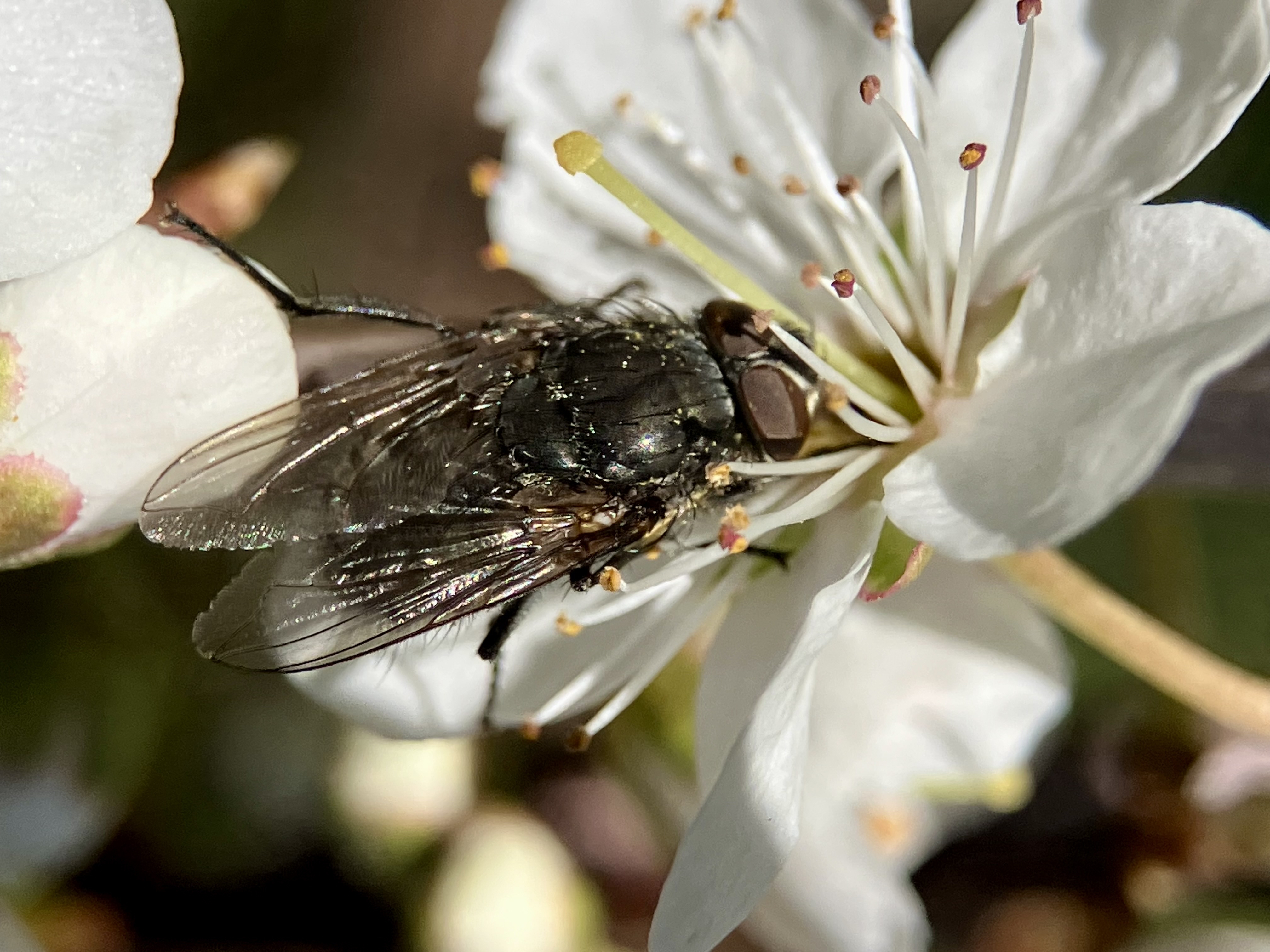
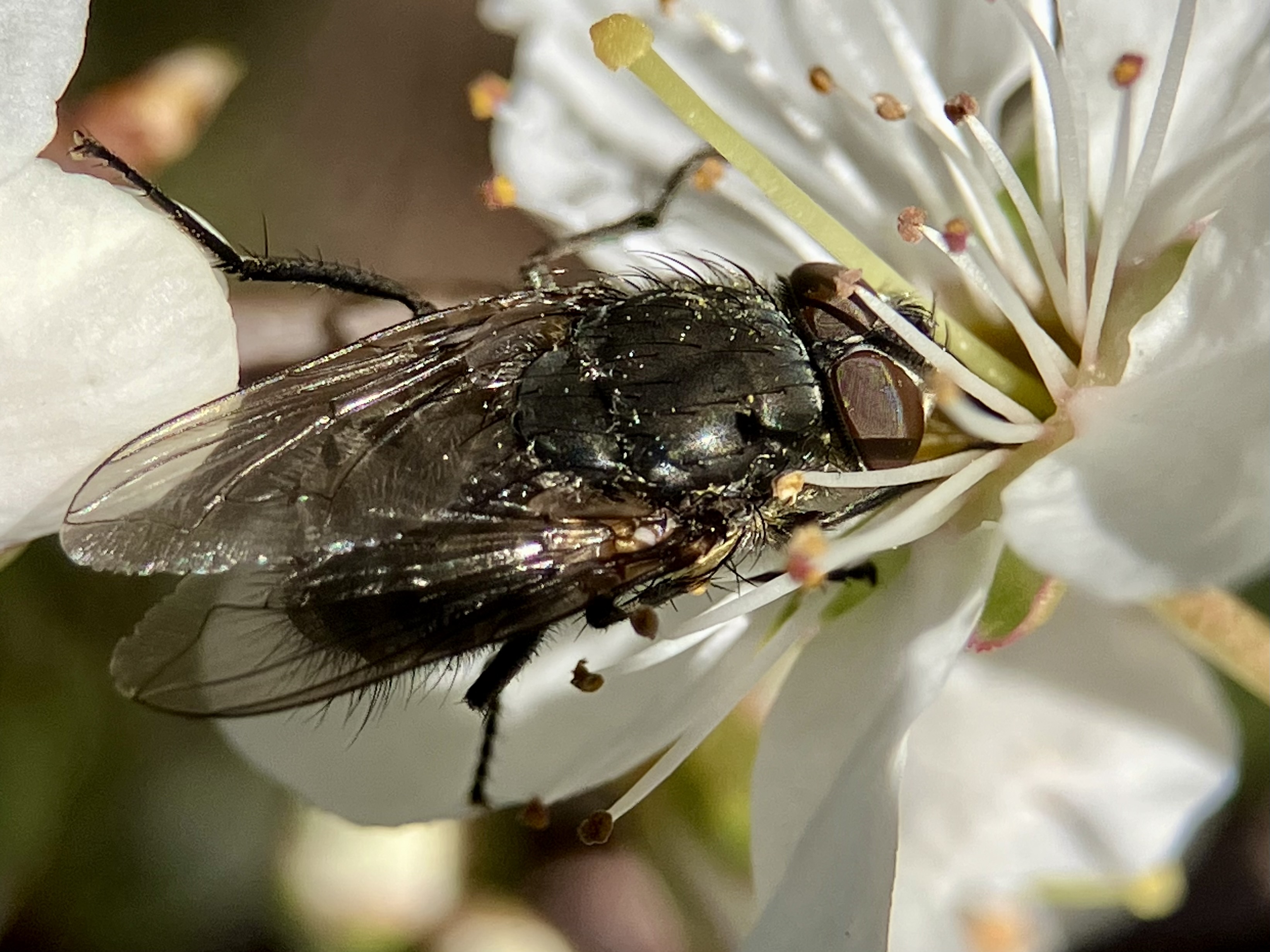
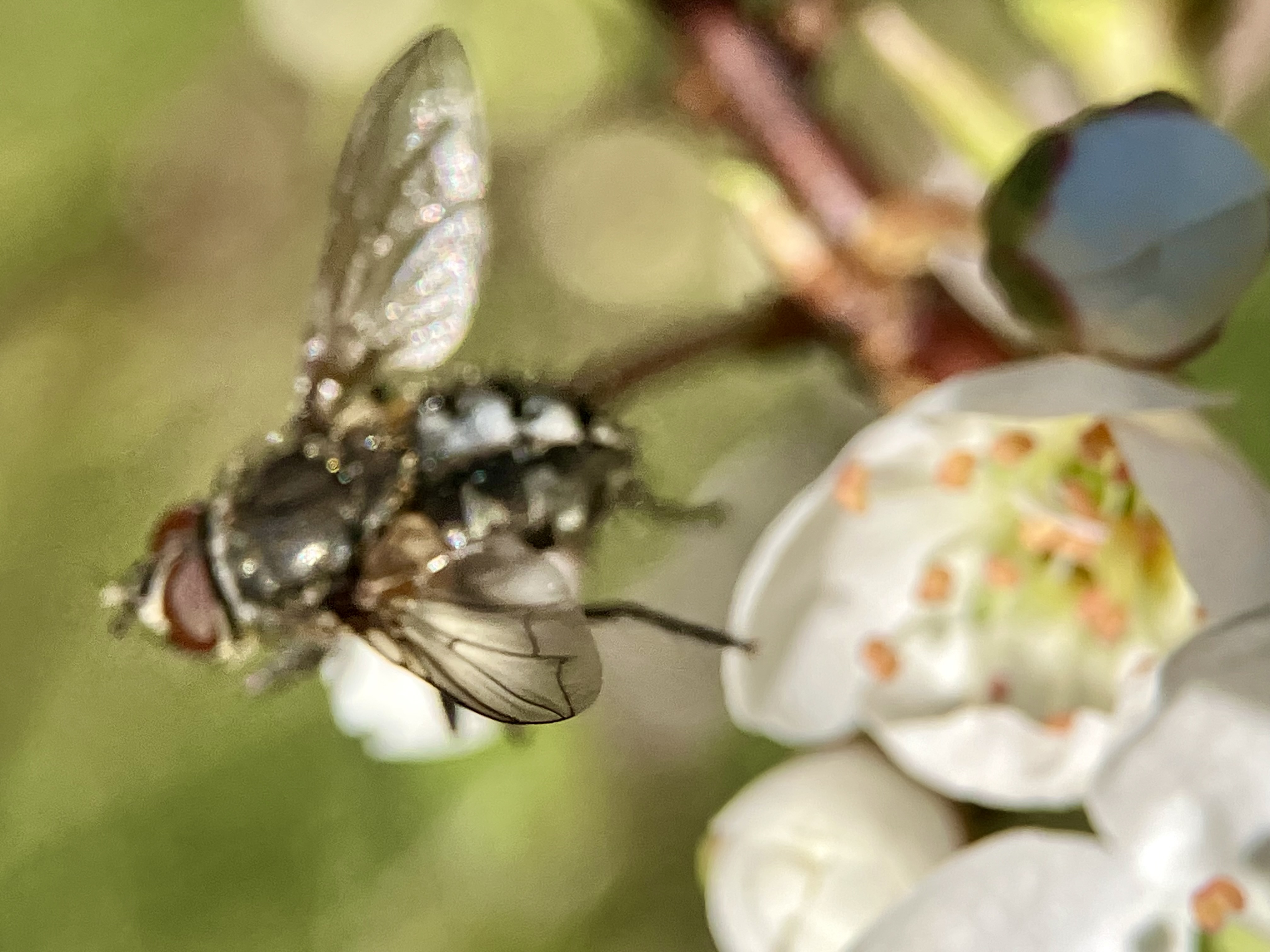
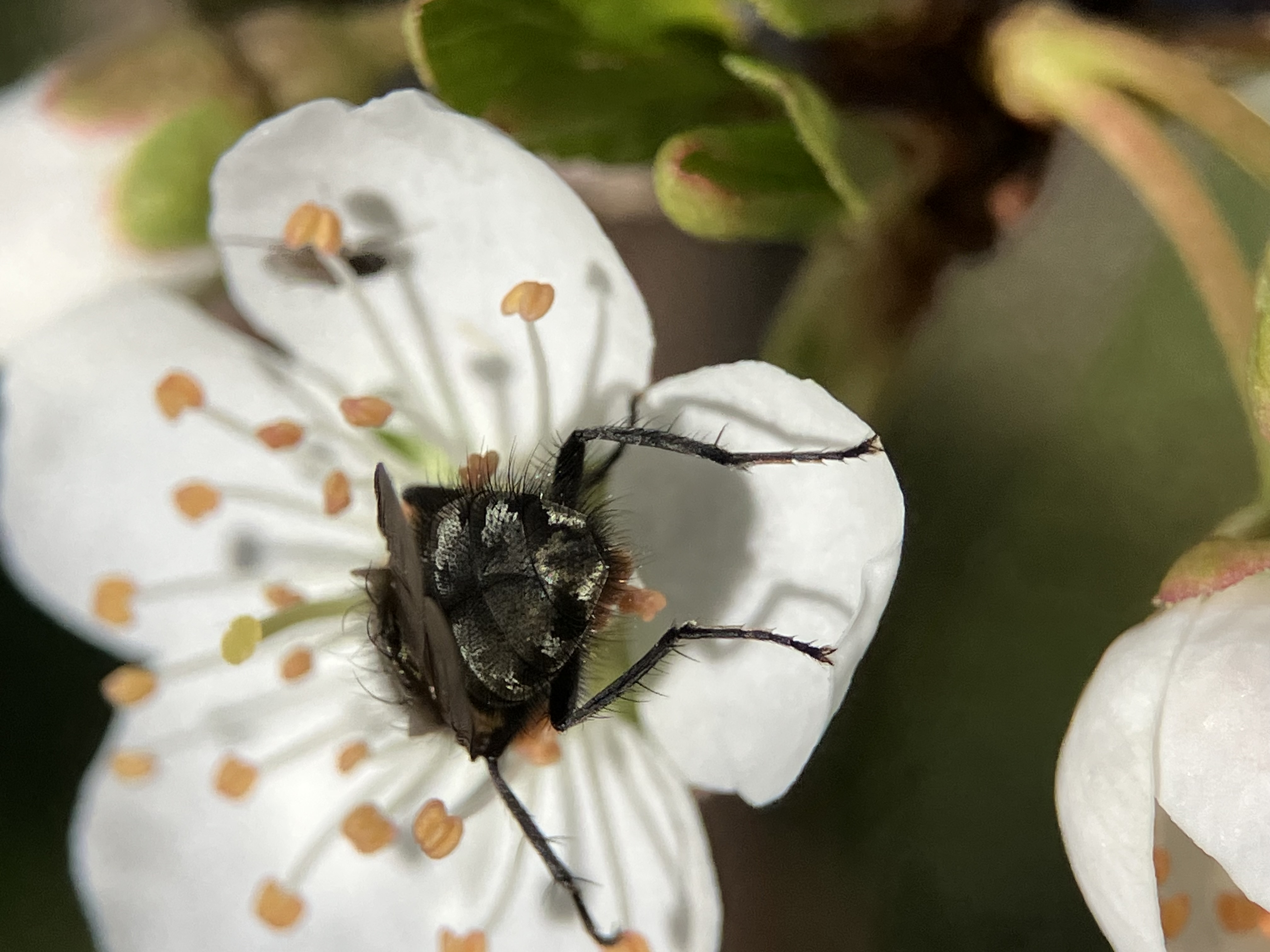
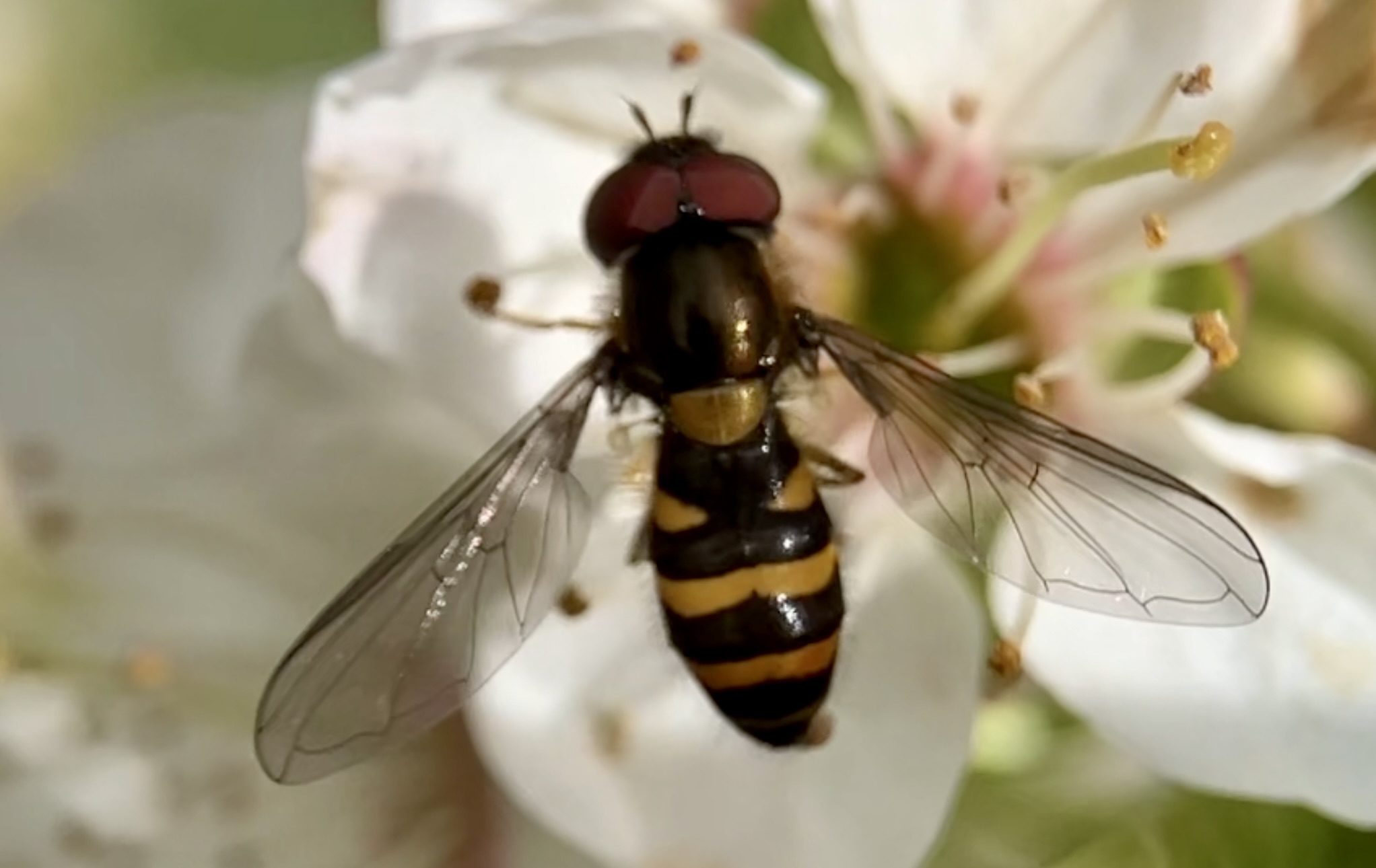
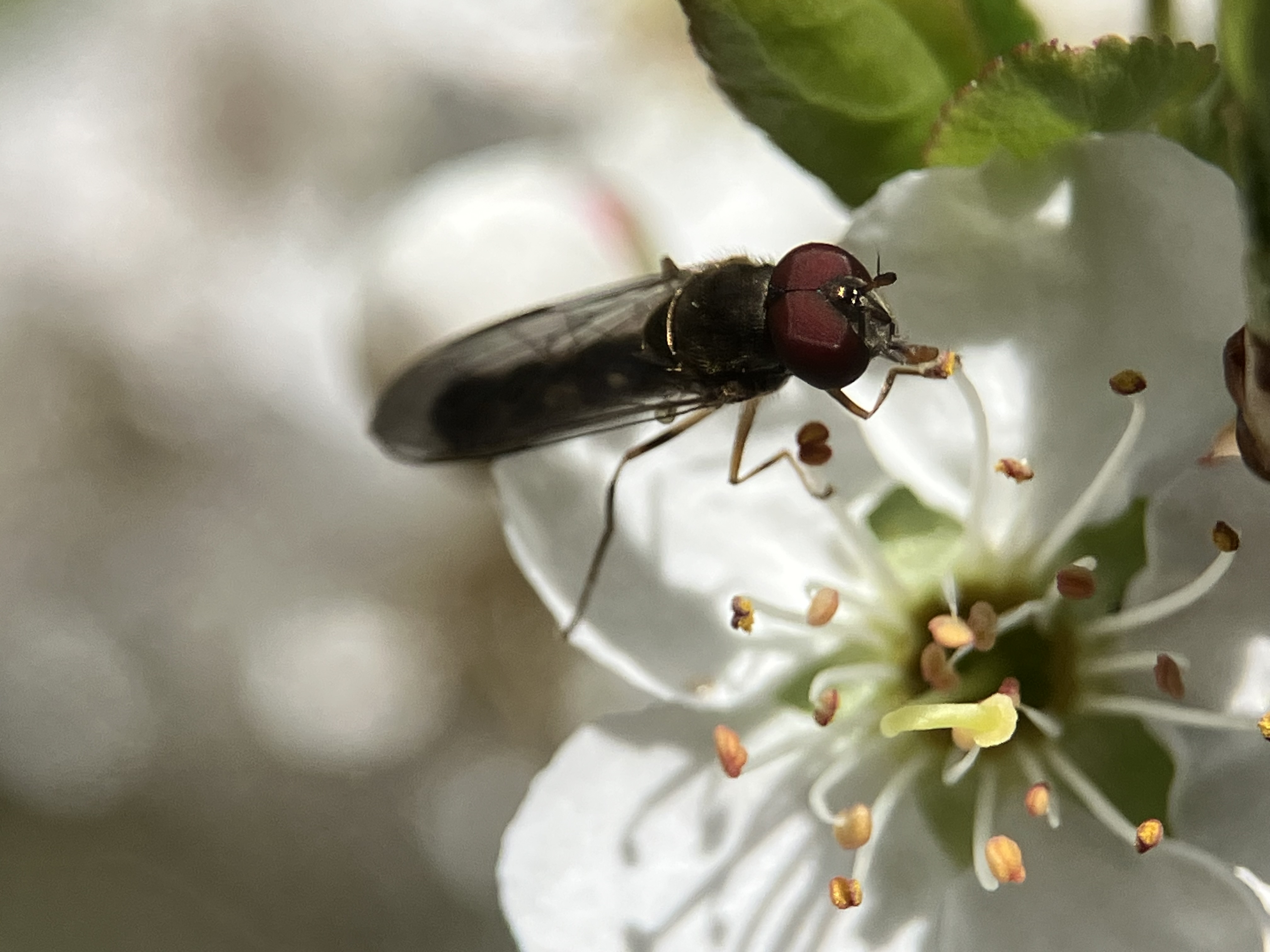
I thought I’d write up a short post about all the wonderful flies (and a few others) pollinating our plum trees in this cool spring weather. Why feature the flies? Well, for starters, the plum tree blossoms are white and flies love the color white. Another reason to feature the flies is because they are under-recognized and under appreciated, but very important pollinators. Some fly larvae even serve as pest predators, eating aphids. Others, like the tachinid fly below, use caterpillars that defoliate trees as hosts for their larvae to develop. Flies are also awesome because they do not sting! Some even “dance!” My favorite fly hasn’t shown up yet. It’s a Conopid Fly. More about that one later though…

Tachinid Fly (Epalpus signifier)

This past week in the media, there have been so many posts about the decline in honey bees. While there are some (unwanted) honey bees showing up on days when the temperatures climb above 50 degrees, honey bees aren’t active if it is cooler. Flies, on the other hand, are quite busy at work pollinating and do just fine when it might only be 40 outside. Flies are awesome! They need our support and appreciation.

I’d like to add (and I do know something about this because of my entomology background), that honey bees are just not necessary on San Juan Island. In fact, they might even be a very bad thing. They showed up at our plum tree as the temperature warmed up the other day, and as they arrived in increasing numbers, they kicked off ALL of the native pollinators that I had been observing. 😦

For honey bees to fly out of the hive and forage, they need temperatures above 50 degrees. In my experience keeping bees (as part of my graduate school work), they typically do not survive well on the island unless they are fed supplemental sugar water. Think about the ecological footprint of growing sugar to feed the bees!

Feeding honey bees attracts (and supports) the buildup of yellow jacket populations which are attracted to honey bee hive resources (including eating the honey bee brood developing in the hive), and honey bees also bring pests and pathogens that impact native bees (especially bumble bees). One more thing! If you are growing tomatoes, bumble bees are your pollinators, not honey bees.

I hope you will read and consider this recent study published about how honey bees were negatively impacting native pollinators on Giannutri Island in Italy. They were causing a decline in the populations of wild bees. In fact, the study cited an “alarming 80% decline in wild bee abundance over 4 years” (Pasquali et al. 2025). You can access this study to read it yourself here: https://www.cell.com/current-biology/pdfExtended/S0960-9822(25)00262-3

Enjoy the gallery of the native pollinators that I was fortunate to photograph and be able to share. Be a fly fan! Be a native bee fan! Learn about our unseen, but important night time pollinators (moths), and PLEASE LEAVE THE HONEY PIGS for the mainland industrial farm operations.

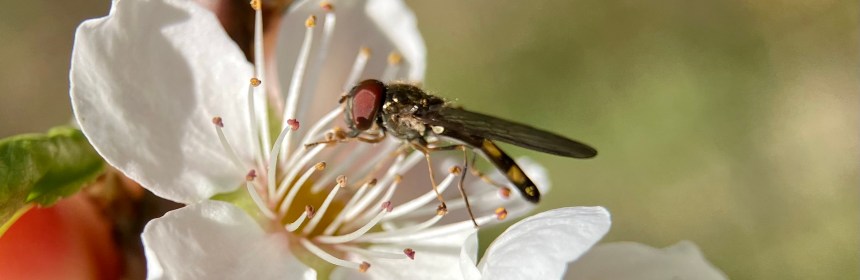
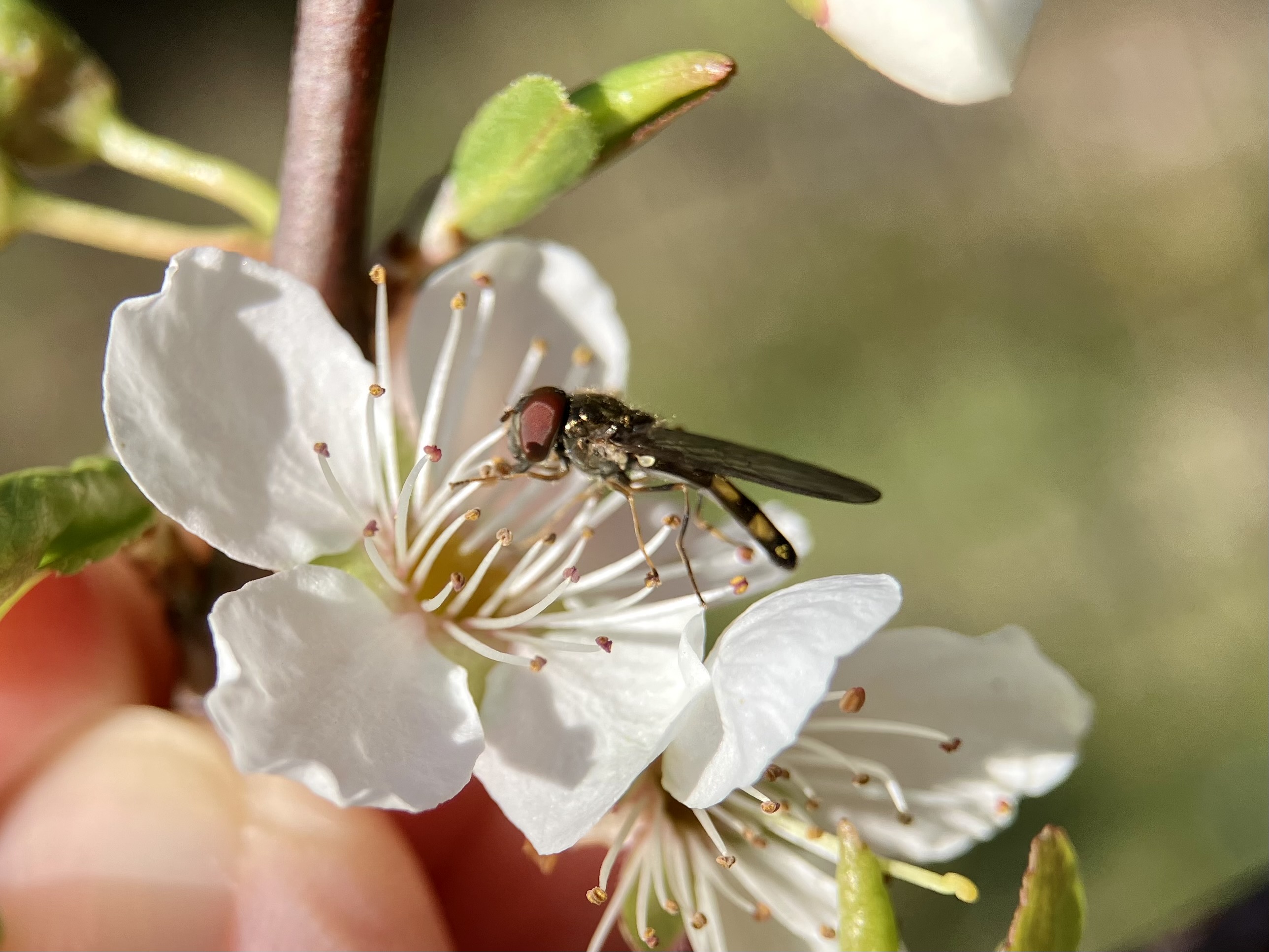
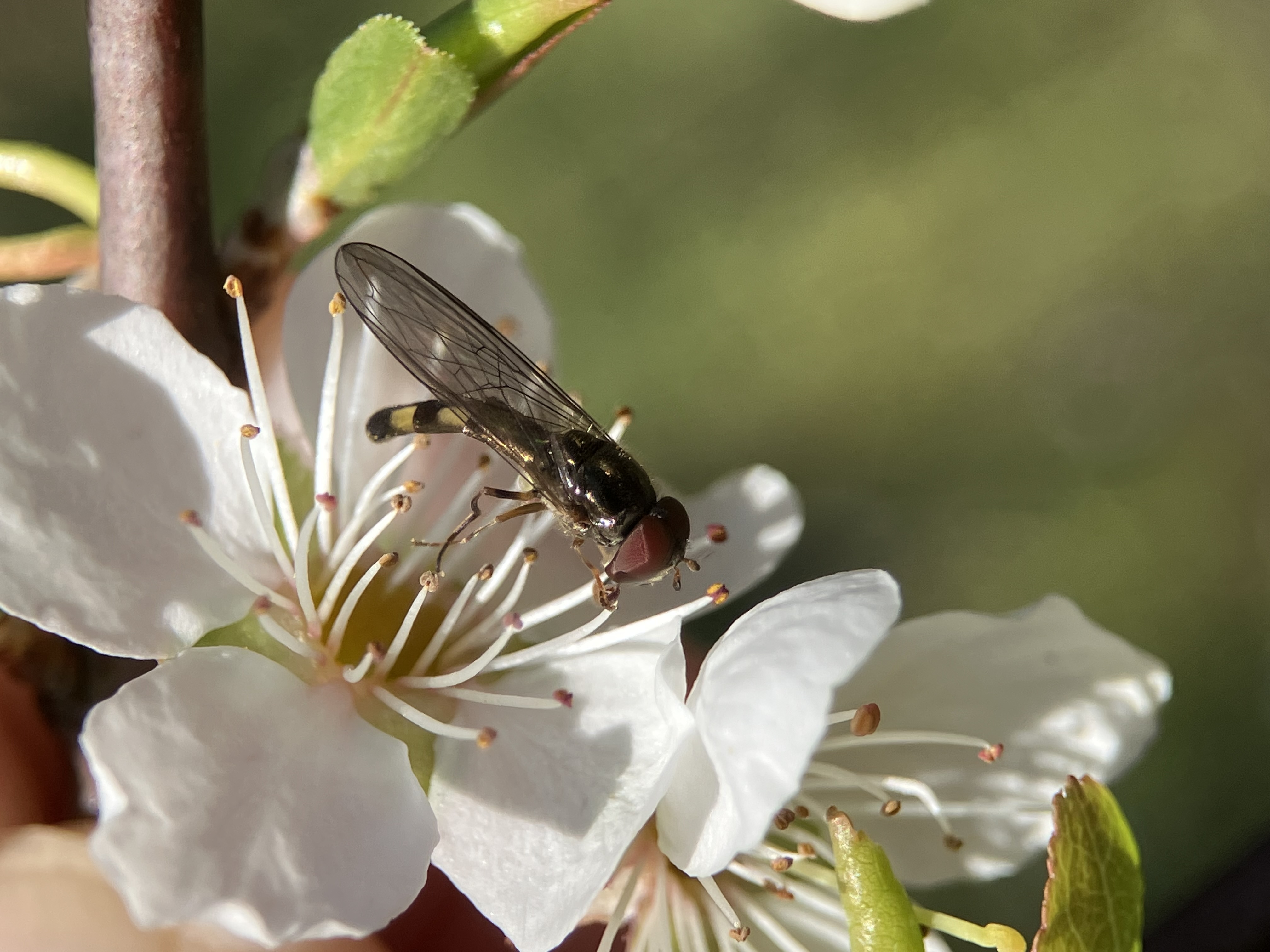
Syrphid Fly (Tribe Syrphini )
Golden Dung Fly (Scathophaga stercoraria)
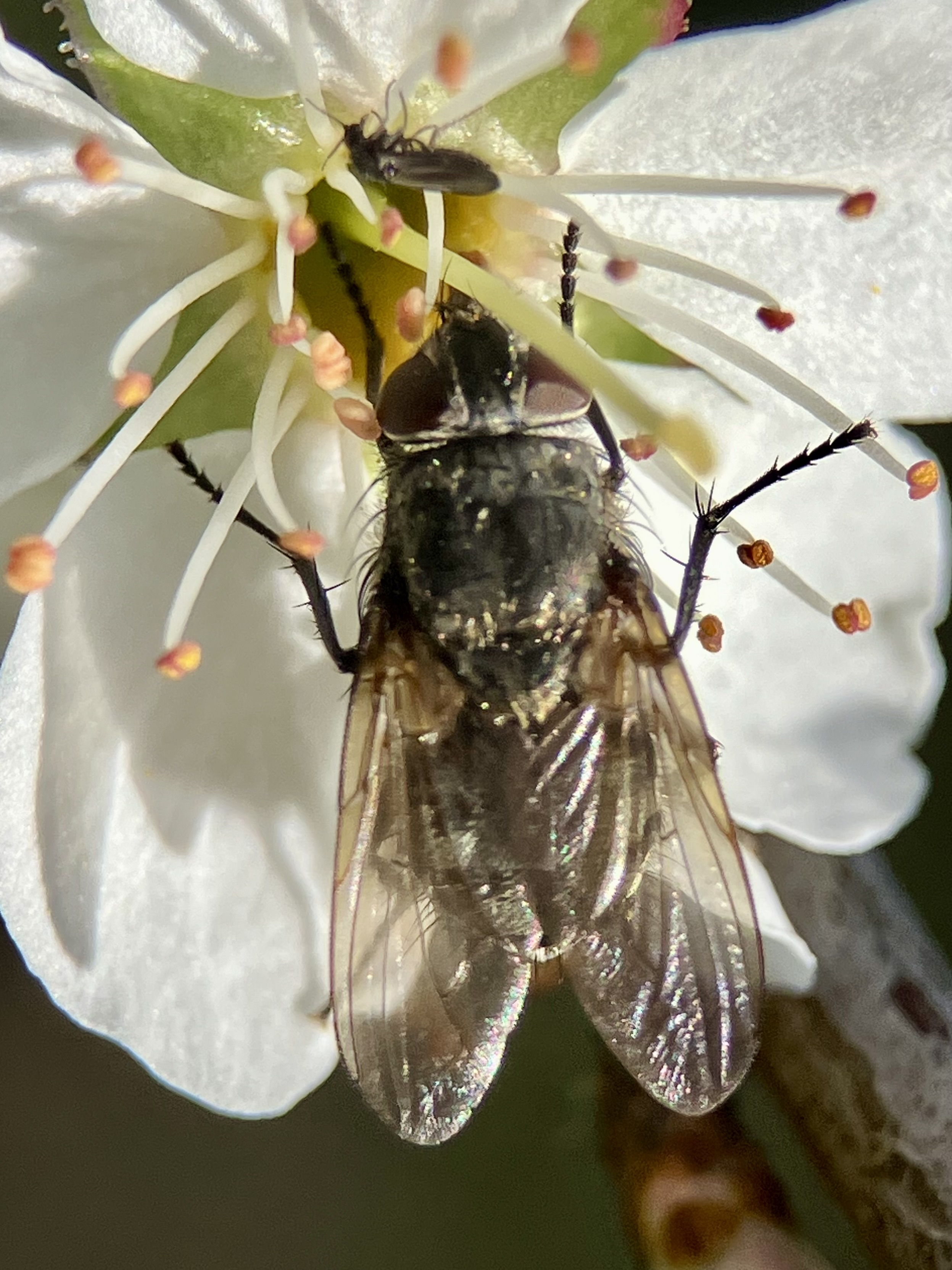
Cluster Fly (Genus Pollenia)

Musca autumnalis
Sericomyia chalcopyga Western Pond Fly
Bibionid Fly (Bibio sp.) and Hybotidae Dance Fly (Bicellaria sp.)
(Melanostoma mellinum) Variable Duskyface Fly

References

Anderson, H. L. D. (2024). Nocturnal moth communities and potential pollinators of berry agroecosystems in British Columbia (T). University of British Columbia. Retrieved from https://open.library.ubc.ca/collections/ubctheses/24/items/1.0447737

KEARNS, C. A. 2001. North American dipteran pollinators: assessing their value and conservation status. Conservation Ecology 5(1): 5. [online] URL: http://www.consecol.org/vol5/iss1/art5/

Pasquali, Lorenzo & Bruschini, Claudia & Benetello, Fulvia & Bonifacino, Marco & Giannini, Francesca & Monterastelli, Elisa & Penco, Marco & Salvati, Vania & Simbula, Giulia & Skowron Volponi, Marta & Smargiassi, Stefania & van Tongeren, Elia & Vicari, Giorgio & Cini, Alessandro & Dapporto, Leonardo. (2025). Island-Wide Removal of Honey Bees Reveals Exploitative Trophic Competition with Strongly Declining Wild Bee Populations. 10.2139/ssrn.5081459. https://www.sciencedirect.com/science/article/pii/S0960982225002623#:~:text=Article-,Island%2Dwide%20removal%20of%20honeybees%20reveals%20exploitative%20trophic%20competition,strongly%20declining%20wild%20bee%20populations

Ssymank, A., Kearns, Bonn & Carol. Flies – Pollinators on two wings. The Diptera Site. https://diptera.myspecies.info/diptera/content/flies-–pollinators-two-wings

April 5, 2025 – Herman finds a fly

That’s right! Herman the Persian found something interesting in the yard when we were outside sunning ourselves a bit this afternoon. He found one of the Bibionid March flies (a female). If you read my post yesterday https://buggingyoufromsanjuanisland.com/2025/04/04/nuptial-gifts/, you might note that Bibionid flies were being hunted by Empis flies who rolled them into little balls as nuptial gifts used to woo the lady Empids to mate.

Female Bibionid fly digging chamber to lay her eggs.

Evidently, a few of these Bibionid flies escaped that destiny and actually mated with their own kind. THIS one, that Herman found, was hard at work digging her own death chamber where she would expire soon after laying her eggs. Incidentally, the adults are very short-lived, and in fact, live only about 5-7 days with the primary objective of mating, and for the adult female to lay her fertilized eggs. In spite of their brief existence, adults are also thought to be important early pollinators of orchard trees. Yes, you heard me right! Flies don’t get nearly as much credit for pollinating as they deserve to receive.


I watched her digging with her fossorial forelegs. It seemed to be an impossible task, but she made slow and steady progress. She was still hard at work before we went back into the house about half an hour later. I marked the spot with a rock so I could go back and check, but I suspect even with the rock nearby as a marker, it will be next to impossible to detect any disturbance in the soil tomorrow. We’re supposed to get rain this evening.


In approximately 30-35 days, the eggs she lays will hatch underground. The larvae will live in the top layer of soil and feed gregariously on leaf and needle litter, decaying organic matter, and sometimes on below-ground parts of plants.

If you’re curious, you can read more about Bibionid flies in the attached links. I did see some additional Empis fly males dancing about today with their Bibionid “balloons” or nuptial gift balls for prospective mates.

Thanks for reading. 🙂

References

Bugguide.net. 2025. Family Bibionidae – March flies. https://bugguide.net/node/view/3834

Morris, H. No date. The larval and pupal stages of the Bibionidae. Entomological Department, Institute of Plant Pathology, Rothamsted Experimental Station, Harpenden. https://core.ac.uk/download/pdf/212009582.pdf

A Sedgesitter

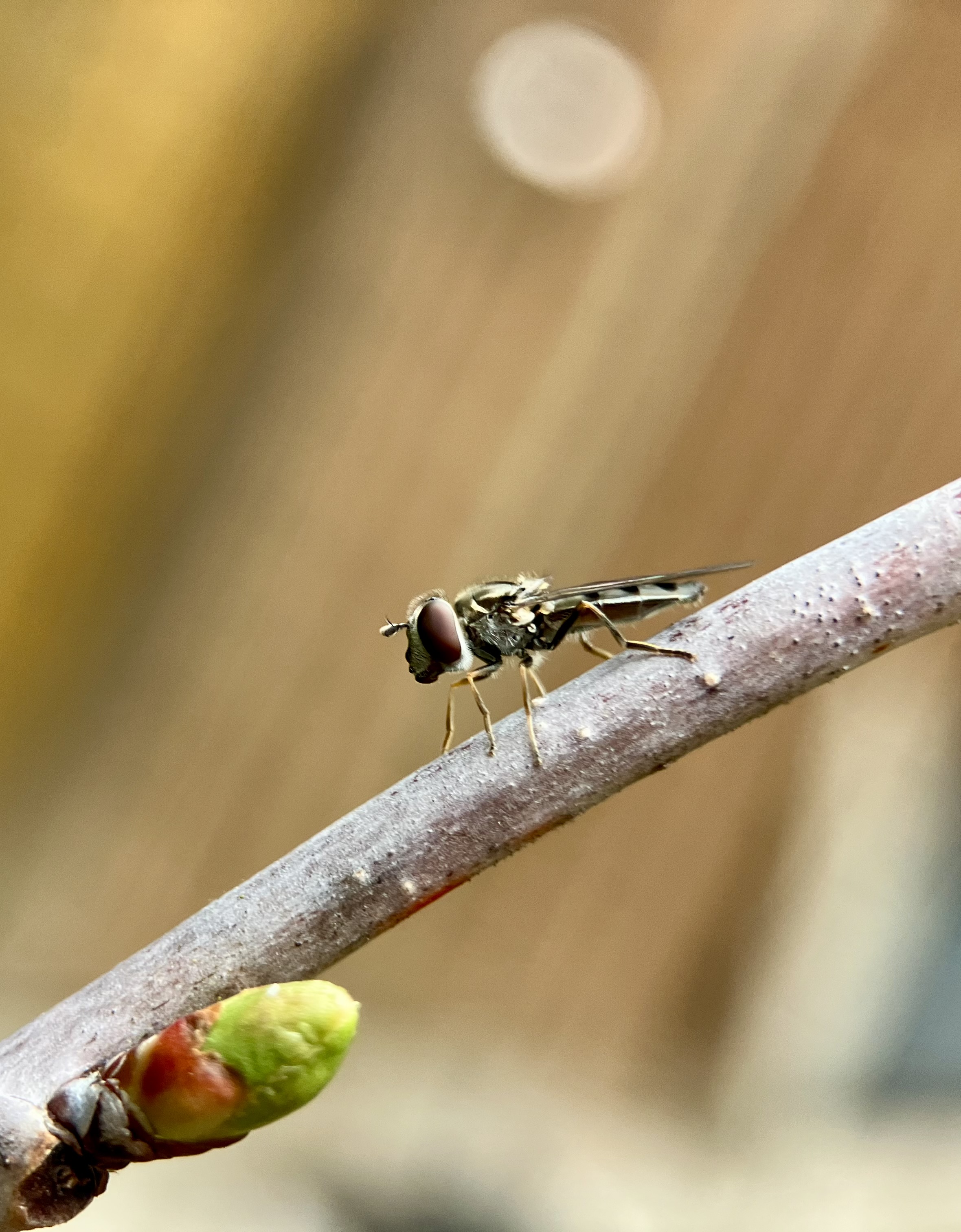
This was Wednesday’s bug of the day. I’m a day behind writing up my post. Although I have tried to get out for a quick bug search every day, it’s been overcast and/or drizzly here this past week. I was excited to see this little fly hunkered down on a twig of our fruitless cherry tree, the tree that I whacked off as an unwanted upstart for several years before I discovered how interesting it is.

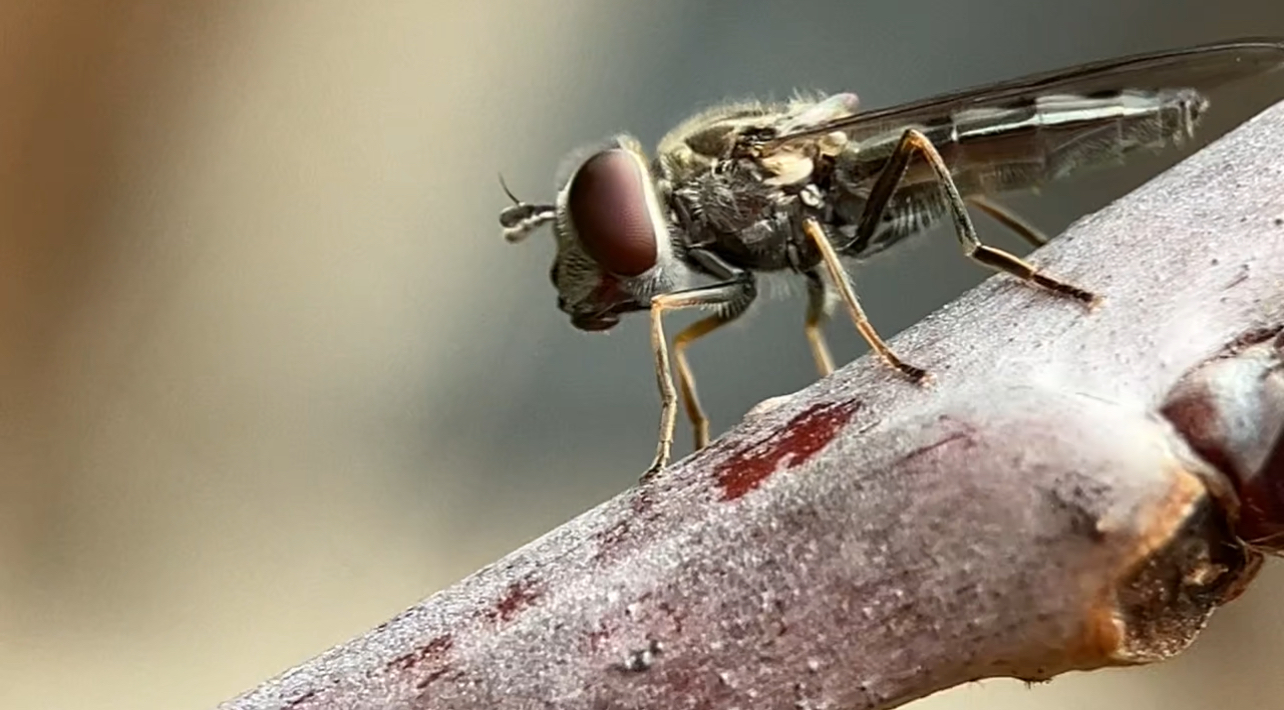
Western Forest Sedgesitter, (Platycheirus trichopus), I believe

That tree is a mini ecosystem: floral nectaries that feed the aphids, aphids, slave making ants that have fights to the death (winning) with the carpenter ants that try to invade our home every spring, and the birds that rip the leaves apart trying to get the aphids. Now I can add Syrphid flies to the list!

That’s what this is. A syrphid fly. Syrphid flies eat aphids. It would make perfect sense for this adult to lay eggs on the tree, though I’m not sure what would happen because the ants that farm those aphids are certainly willing to die defending them. I could definitely see the ants overtaking the syrphid fly larvae. Nevertheless, the fly flew off. Somewhere.

I believe this particular fly is the Syrphid fly species Platycheirus trichopus, the Western Forest Sedgesitter. While difficult to ID to species, I did reference the helpful ID guide by fly expert, Even Dankowicz. https://docs.google.com/presentation/d/19F1qRGpmNDgaGE13M2SMUBlI846JicTOYjIescjVTHw/preview?slide=id.g8918834f0e_0_92

This species, as mentioned earlier is pretty small at only about 6.8-9.4 mm. Geographic distribution ranges from the Rocky Mountains west from Alaska to Mexico (bugguide.net). Adults of this genus are known to feed on the pollen of wind pollinated plants like Willow (Salix sp.) and various grasses (Poaceae), and sedges (Cyperaceae). It is believed they are better adapted to activity in cooler temperatures and that fits with yesterday’s rather gloomy spring day.

Thanks for reading!

References:

Dankowicz, Even (2023). “Common Pipizini, Paragini, and Bacchini Species of the Southwestern U.S. (CA NV AZ UT NM CO)”The Fly Guide: Field/Photo ID for Flies. pp. 9–10.

Bugguide.net. 2025. Syrphidae. https://bugguide.net/node/view/196

Culex territans, the Northern Frog Biting Mosquito

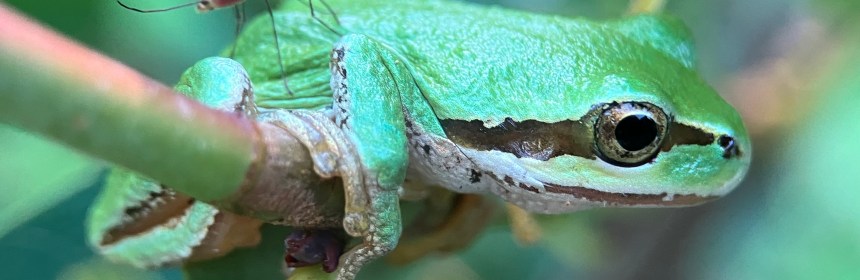
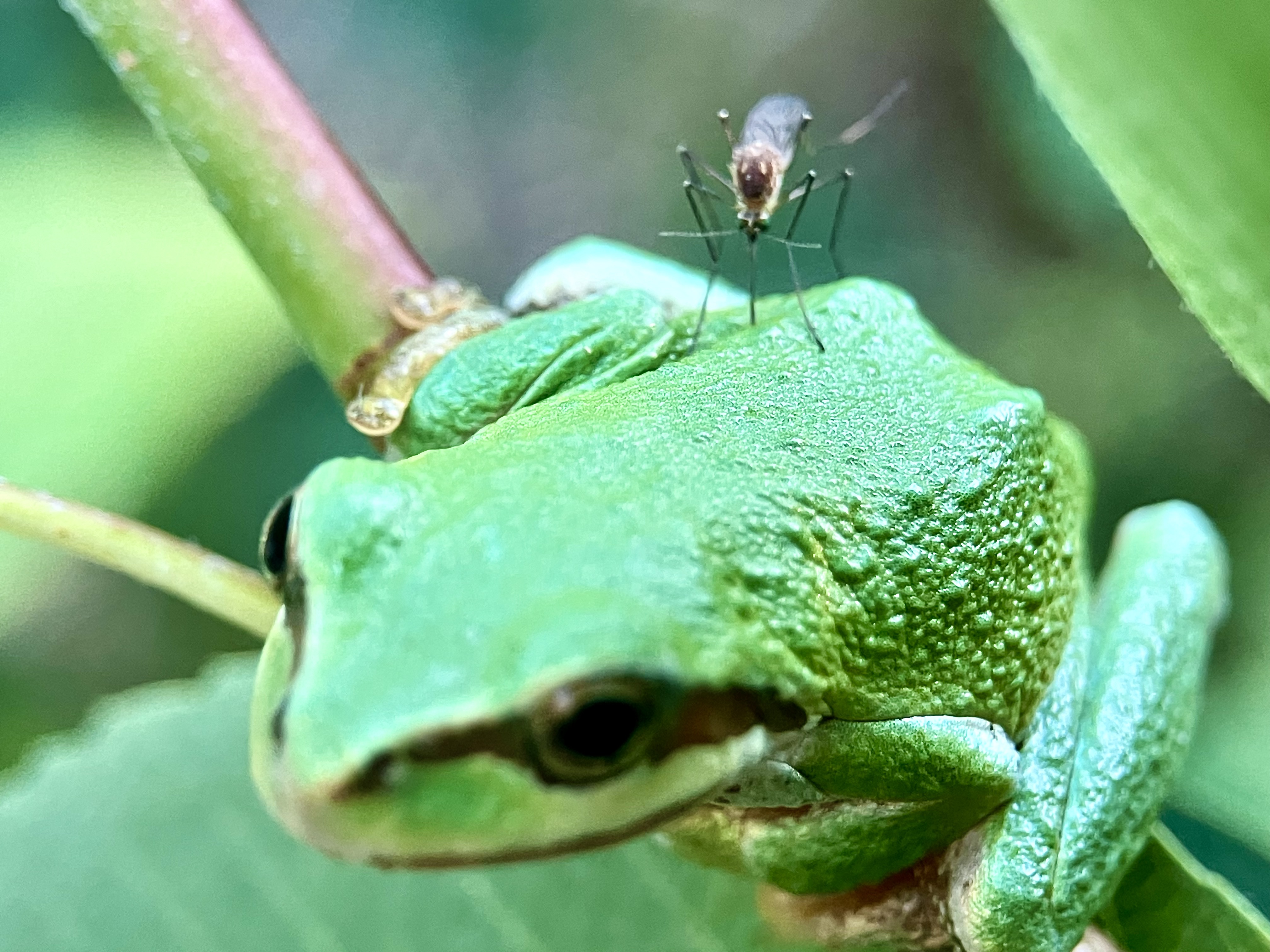
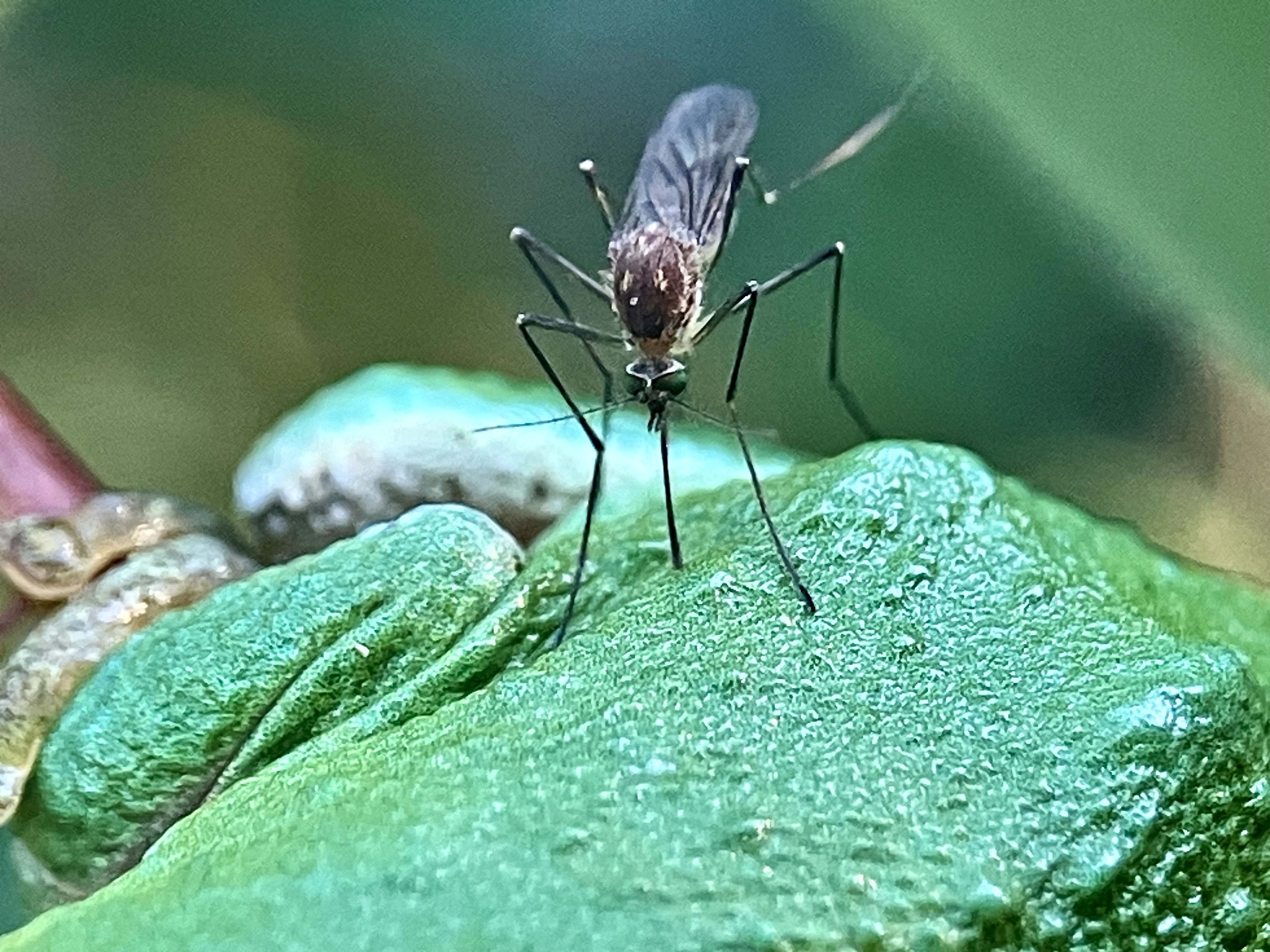
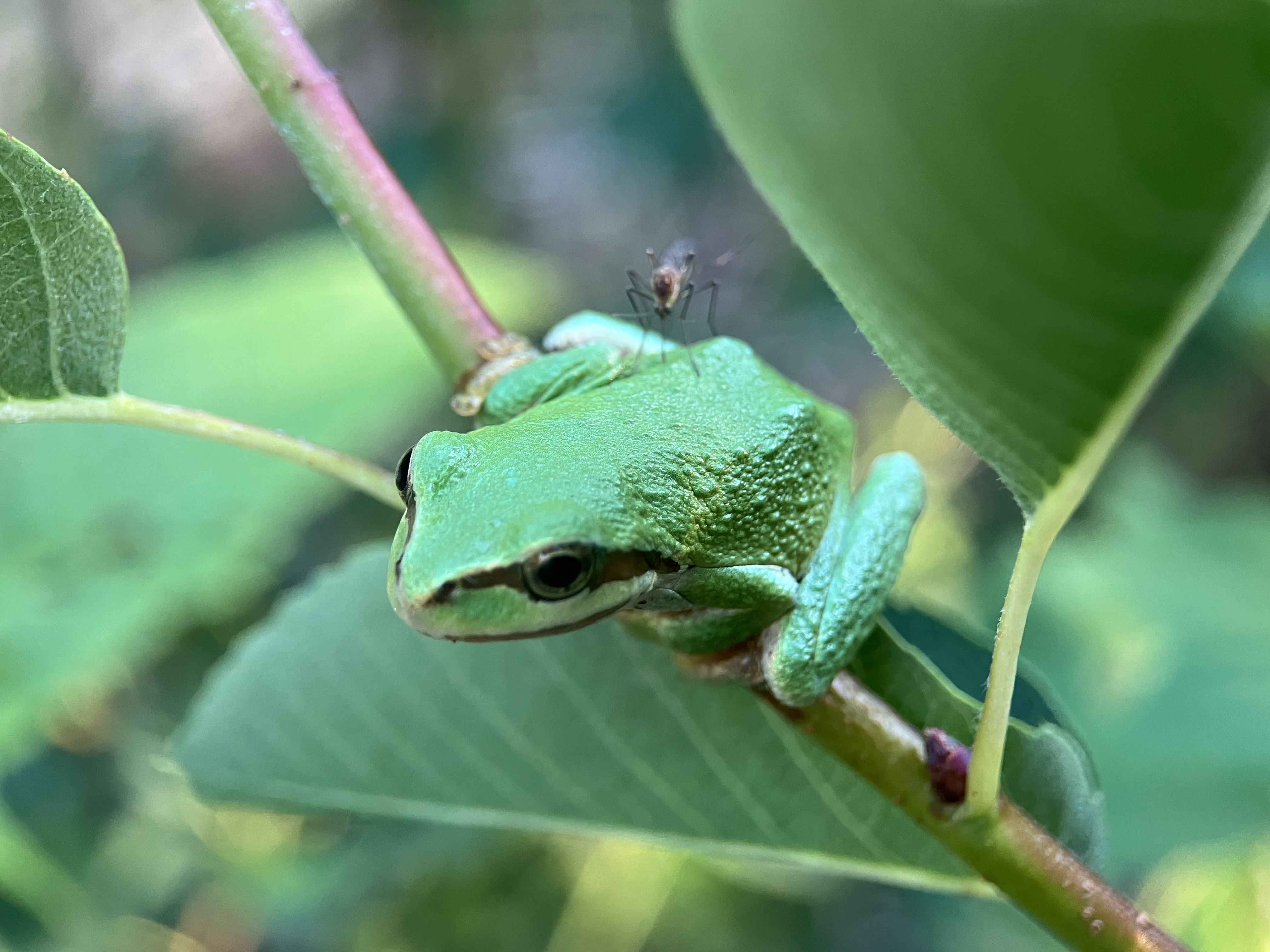
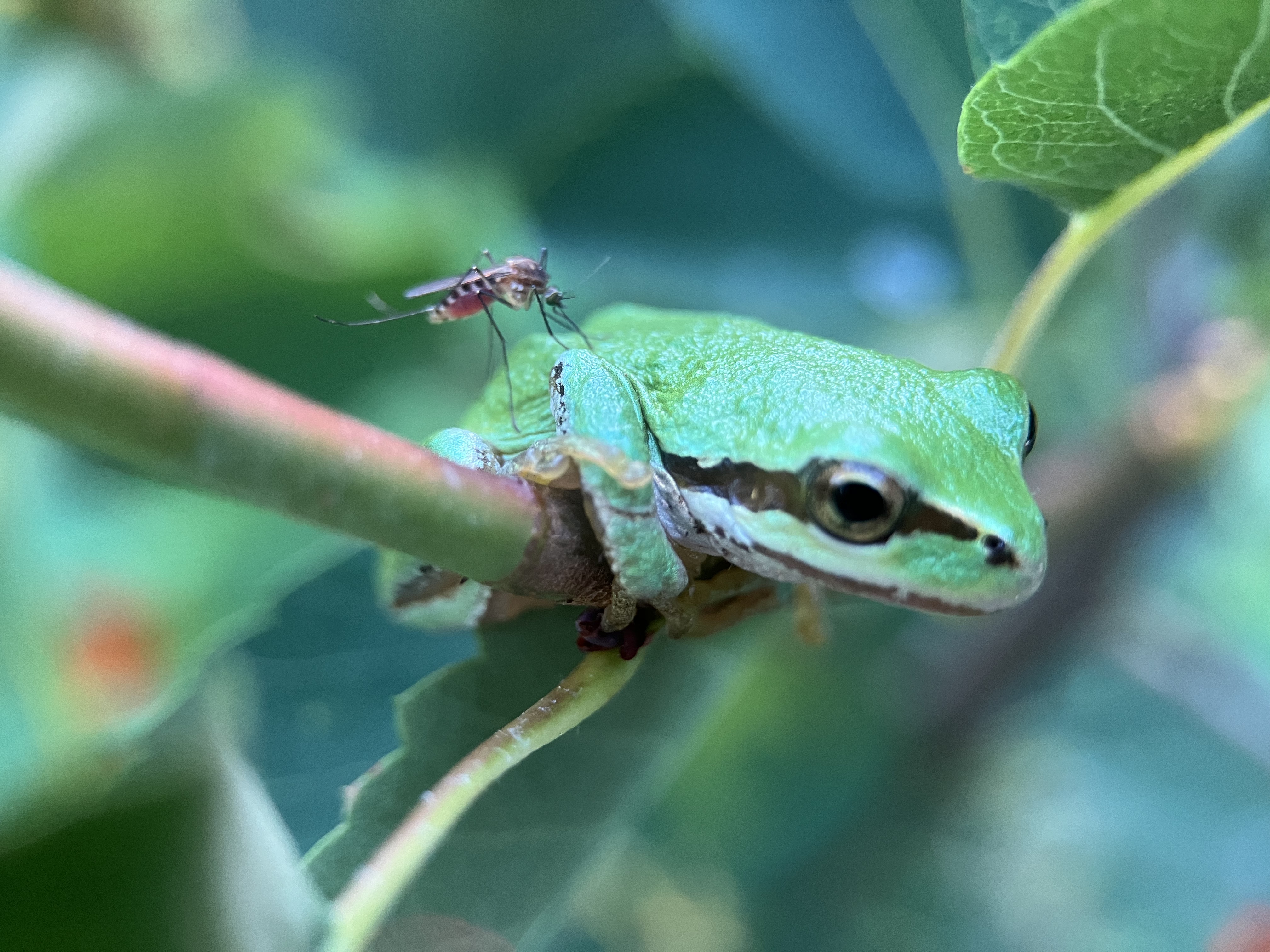
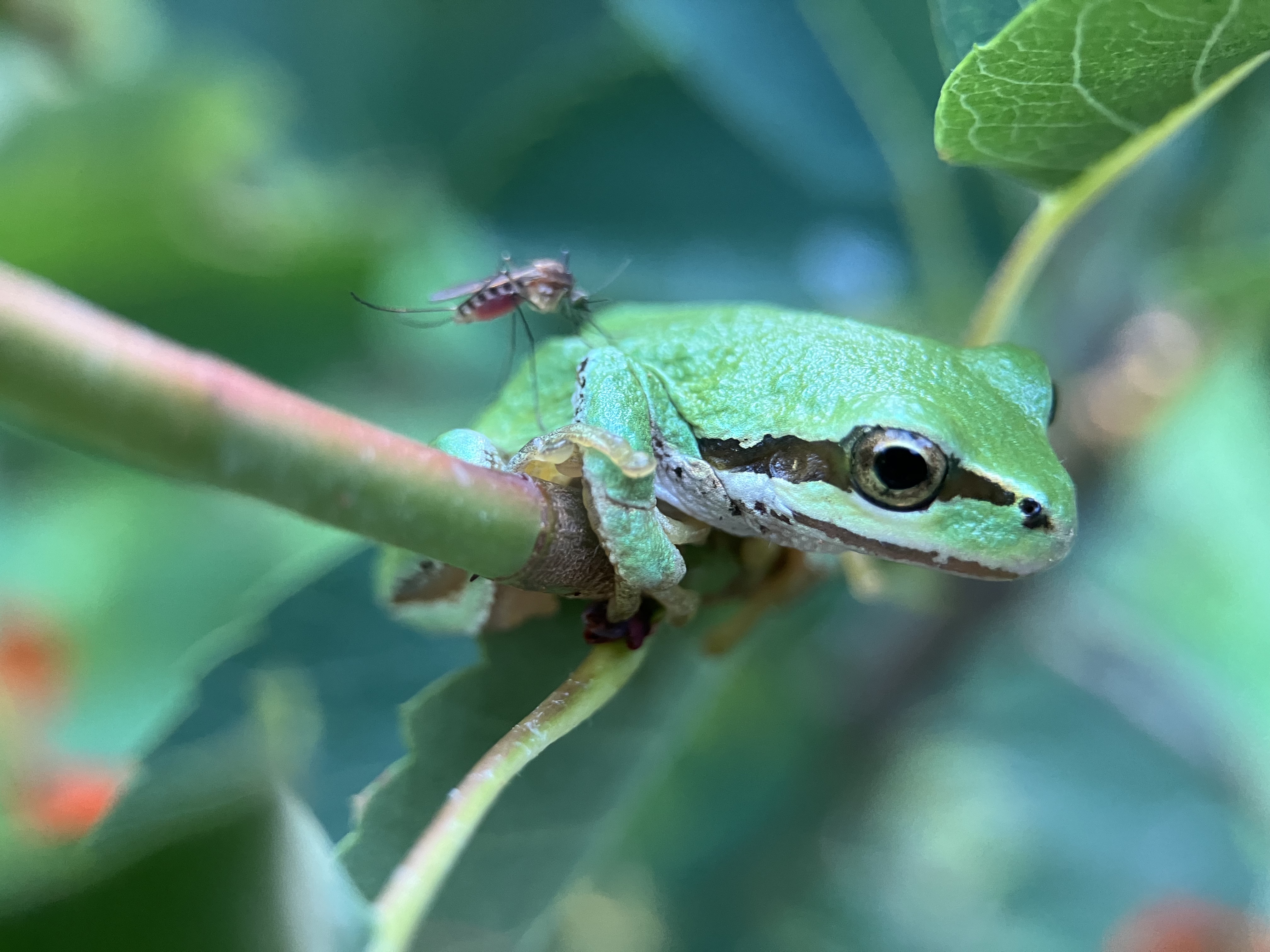
Watch and you’ll see this incredibly amazing association. This is Culex territans, the Northern Frog Biting Mosquito. Culex territans is found in a wide variety of habitats, but is most commonly associated with freshwater marshes, bogs, and ponds or streams with emergent vegetation.

Culex territans prefers feeding on cold blooded animals (amphibians and reptiles), but feeds most frequently on Anurans (frogs and toads). Here you see the mosquito feeding on a Pacific Tree Frog (Pseudacris regilla). The MOST interesting thing about this species is that females find their amphibian hosts via phonotaxis. This means they find their host via acoustics. They utilize the frog vocalizations to locate these animals for bloodmeals (Bartlett-Healy et al., 2008b). Mosquitoes can hear! 🦟🦻🏻

Location: San Juan Island, WA
ID: Culex territans (my ID confirmed by UF mosquito expert, Lawrence Reeves)
More info.: https://edis.ifas.ufl.edu/publication/IN1394

References and Further Reading

Barnhart, Max. 2023. A male mosquito’s hairy ears tune into mates. New research suggests we can stop that. Goats and Soda. Stories of Life in a Changing World. NPR. https://www.npr.org/sections/goatsandsoda/2023/08/18/1194390459/hairy-ears-of-male-mosquitoes-help-them-find-the-ladies-can-we-disrupt-their-hea#:~:text=It’s%20true!,waves%20pass%20through%20the%20air.

Bartlett-Healy,K. Wayne Crans, Randy Gaugler. 2008. Phonotaxis to Amphibian Vocalizations in Culex territans (Diptera: Culicidae), Annals of the Entomological Society of America. 101 (1) 95–103. https://doi.org/10.1603/0013-8746(2008)101[95:PTAVIC]2.0.CO;2

Bhosale, Chanakya R., Burkett-Cadena, N.D., Mathias, D.K., 2023.  NORTHERN FROG BITING MOSQUITO CULEX TERRITANS (WALKER 1856) (INSECTA: DIPTERA: CULICIDAE). UF IFAS Extension PUBLICATION #EENY-803. https://edis.ifas.ufl.edu/publication/IN1394 

Bugguide.net. 2023. Culex territans. Iowa State university Extension. https://bugguide.net/node/view/60953

Hoover Pantoja-Sánchez, Brian C. Leavell, Bianca Rendon, W. A. Priyanka P. de-Silva, Richa Singh, Jian Zhou, Gil Menda, Ronald R. Hoy, Ronald N. Miles, Neil D. Sanscrainte, Ximena E. Bernal; Tiny spies: mosquito antennae are sensitive sensors for eavesdropping on frog calls. J Exp Biol 15 December 2023; 226 (24): jeb245359. doi: https://doi.org/10.1242/jeb.245359
McIver SB. 1969. Notes on the biology of Culex territans Walker. Mosquito News 29: 135 -136. https://doi.org/10.1111/j.1752-7325.1969.tb02823.

Bubbles

Well, this little fly got my attention yesterday. We had a contest. The fly bet it could outlast my grip on my phone as I took video of the bubble blowing. We called a tie somewhere around the 4 minute mark when my hand was shaking and I was about to drop my phone. The fly, quite satisfied with its performance, waltzed about on the mint leaf and posed for a few still photos, after I got the blood flowing into my hand again.

This is a Black Blow Fly (Phormia regina) in the family Calliphoridae. These flies are found ranging throughout North America, Eurasia, and Hawaii. They are a species of importance in the science of Forensics. Blow flies are attracted to dung and carrion, and when found on a corpse, they can be used to estimate time of death. The larvae or maggots of sterile blow flies are also used in the cleaning of wounds, removing decaying flesh and secreting antimicrobial peptides as they feed (Díaz-Roa et. al. 2018). Occasionally, they can contribute to secondary myiasis “fly-strike” of wounds in livestock, wildlife, and pets.

Phormia regina Fly – San Juan Island, WA 07.11.2024

Why is the fly blowing bubbles? It’s not black bubblegum. I’m not sure why the bubbles were black in color. Perhaps something to do with what the fly had been eating. The fly is blowing bubbles to cool down and it’s actually called BUBBLING. Take a look at Ray Cannon’s Nature Notes and you’ll learn it’s part of an evaporative process where the fly moves a droplet of fluid in and out and of their buccopharyngeal cavity over and again before eventually swallowing it (Gomes et al., 2018, Cannon, R. 2020).

Phormia regina Fly – San Juan Island, WA 07.11.2024

Flies aren’t the only group that practices bubbling. Various species of Hymenoptera also use this method to cool themselves and also to evaporate the excess water from the food (nectar) they’ve consumed (Portman et. al. 2021).

Thanks for stopping by!

References and Further Reading

Cannon, Ray. 2020. Flies Blowing Bubbles. Ray Cannon’s Nature Notes. https://rcannon992.com/2020/09/07/flies-blowing-bubbles/

Díaz-Roa A, Patarroyo MA, Bello FJ, Da Silva PI Jr. 2018. Sarconesin: Sarconesiopsis magellanica Blowfly Larval Excretions and Secretions With Antibacterial Properties. Front Microbiol. Sep 28;9:2249. doi: 10.3389/fmicb.2018.02249. PMID: 30323791; PMCID: PMC6172317. https://www.ncbi.nlm.nih.gov/pmc/articles/PMC6172317/

Gomes, G., Köberle, R., Von Zuben, C. J., & Andrade, D. V. 2018. Droplet bubbling evaporatively cools a blowfly. Scientific reports8 (1), 1-7.

Murray, T. 2023. Species Phormia regina – Black Blow Fly. Bugguide. https://bugguide.net/node/view/53678

Portman, Z., Ascher, J. & Cariveau, D. 2021. Nectar concentrating behavior by bees (Hymenoptera: Anthophila). Apidologie 52, 1169–1194. https://link.springer.com/article/10.1007/s13592-021-00895-1

Know Your Pest Predators – Make Friends with Eudioctria sackeni

Eudioctria sackeni Robber Fly

This is one of my favorite garden residents (Eudioctria sackeni), or the Sacken Longhorn Robber. I remember the first time I saw one of these, I thought, “Wow, it’s an Ombre Fly!” If you didn’t know, “ombre” means the blending of one particular color hue to another, often from light tints to dark. The coloration in this particular fly is distinctly “ombre,” though it varies in individuals within the species.

Eudioctria flies are in the family group, Asilidae or Robber flies. They are voracious predators of small insects that can be pests of gardens and orchards. Here, you see this one enjoying a small dipteran (fly) of some variety, perched on the leaf of one of my mint plants. The mint is a popular scouting platform. On any given day in the summer, I’ll see 4 or 5 of these flies in a six foot strip of mint which has become quite abundant in the yard over the past few years. The mint seems to be quite attractive to pollinators, and it also provides shelter for other bugs and critters. Our little tree frogs love to sit in the mint too.

Reference and further reading

Species Eudioctria sackeni – Sacken Longhorn Robber. BugGuide. https://bugguide.net/node/view/60617

What’s Biting Me? Episode ONE, San Juan Sniper

I’m going to start a new bug series called “What’s Biting Me?”  

I’m starting this series because I have such bad reactions to bug bites in general, and I’m exasperated when people blame mosquitoes and spiders for everything.  Also, if you’re one of those who is tired of it getting crowded here in the San Juans, feel free to share this with anyone who is thinking about moving here – or with anyone you WISH would move off the island.   Maybe they’ll decide to live somewhere else.   😉


Epidode ONE, the San Juan Sniper

This is one of the Rocky Mountain Bite Flies (Symphoromyia sp.).  It’s a Snipe fly in the family Family Rhagionidae, and it bit my husband today.   Those are NOT my hairy legs.  They’re my husband’s.  

Rocky Mountain Bite Flies (Symphoromyia sp)

After getting some pictures, I went inside to look up what information I could find about the Genus and narrow down what species are in WA state. In doing so, I came across this interesting, and disturbing medical case report of a woman who had a severe allergic reaction to the bites of these flies.  Now this was in the 70’s, in Forks, WA, but if this fly had bitten ME instead of my husband, it’s very likely I’d be the next case write up.  

Rocky Mountain Bite Flies (Symphoromyia sp)

Attaching the paper in the link here if you care to read it.  The woman could have D-I-E-D from anaphylactic shock.  

You’ve been warned.  

No worries, just stay indoors and you’ll avoid being bitten by the San Juan Sniper.  


Symphoromyia Genus

Size: 4.7-9mm

Food: Females of some species of this genus are blood feeders. Symphoromyia females are common biting pests in the west. Males do not take blood meals. Both adults and larvae will prey on small insects.  

Habitat: Adults are commonly found in woods near moist places, often found on foliage or grass, positioned with head resting head downward. Larvae occur in moist meadow soil, moss, decaying wood (incl. galleries of wood-boring insects), under bark, occasionally in water (bug guide.net).

References and Further Reading

Aldrich, J. M. 1905. A Catalogue of North American Diptera. Smithsonian Miscellaneous Collections 46:680.

Bowser, Matt. 2017. Refuge Notebook: The bad biter par excellence. Peninsula Clarion. https://www.peninsulaclarion.com/life/refuge-notebook-the-bad-biter-par-excellence/#:~:text=Very%20little%20research%20has%20been,not%20known%20to%20transmit%20disease.

Bugguide.net. Family Rhagionidae (Snipe Flies). https://bugguide.net/node/view/116

Kerr, Peter H. 2004. REVISION OF THE GENERA OF THE RHAGIONIDAE OF THE WORLD (DIPTERA: BRACHYCERA). Doctor of Philosophy Dissertation. University of Maryland, College Park. https://drum.lib.umd.edu/items/7f964daf-76bd-467e-ac36-18a523ac5e5a

Turner WJ. A case of severe human allergic reaction to bites of Symphoromyia (Diptera: Rhagionidae). J Med Entomol. 1979 Feb 8;15(2):138-9. doi: 10.1093/jmedent/15.2.138. PMID: 448692 https://www.tesble.com/10.1093/jmedent/15.2.138

Mitten feet

This is one of my “Know your pest predators” posts, featuring one of our PNW flies. Flies are all too often maligned and under-appreciated. We think of flies as spreading disease and being a nuisance, yet many of them perform incredibly important jobs as pollinators and pest predators. Yesterday I was sleuthing flies in the yard and found these metallic green beauties. Here is a Dolichopus (“doe-LICK-uh-pus”) male and female. The “dolicho-“ part means “long”, and the “-pus/-pod” part means “leg” or “foot.”

Some species of Dolichopus males (like this one) have little “flags ” or “mitten” front feet they wave or flap around to woo the ladies. Reading about this very large group of flies has been interesting and you can learn more about their courtship behaviors in Van DuZee et al. (1921).

Dolichopus sp. male fly

These flies are predators of small, soft-bodied invertebrates as adults and during their larval stage. You can thank them for helping keep populations of aphids under control in your garden.

Dolichopus sp. fly (male)

You’ll find these flies in northern latitudes in North America. “Dolichopus species are among the largest and most common members of the family Dolichopodidae in North America. The majority of Dolichopus species prefer humid habitats and some are restricted to saltmarshes,” (Pollet et al. 2004).


References:

MARC A.A. POLLET, SCOTT E. BROOKS, JEFFREY M. CUMMING. 2004. “CATALOG OF THE DOLICHOPODIDAE (DIPTERA) OF AMERICA NORTH OF MEXICO,” Bulletin of the American Museum of Natural History, 283, 1-114,

Van Duzee, M. C., Cole, Fr R., and Aldrich, John Merton. 1921. “The dipterous genus Dolichopus Latreille in North America.” Bulletin of the United States National Museum. i–vi, 1-304, 16 pls. https://doi.org/10.5479/si.03629236.116.i

Key to male nearctic Dolichopus species here – https://digitallibrary.amnh.org/items/5c3c75c8-27ae-47e6-acac-59ec0c30d1cb/full

« Older Entries