Identifying the Nicocles canadensis Robber Fly
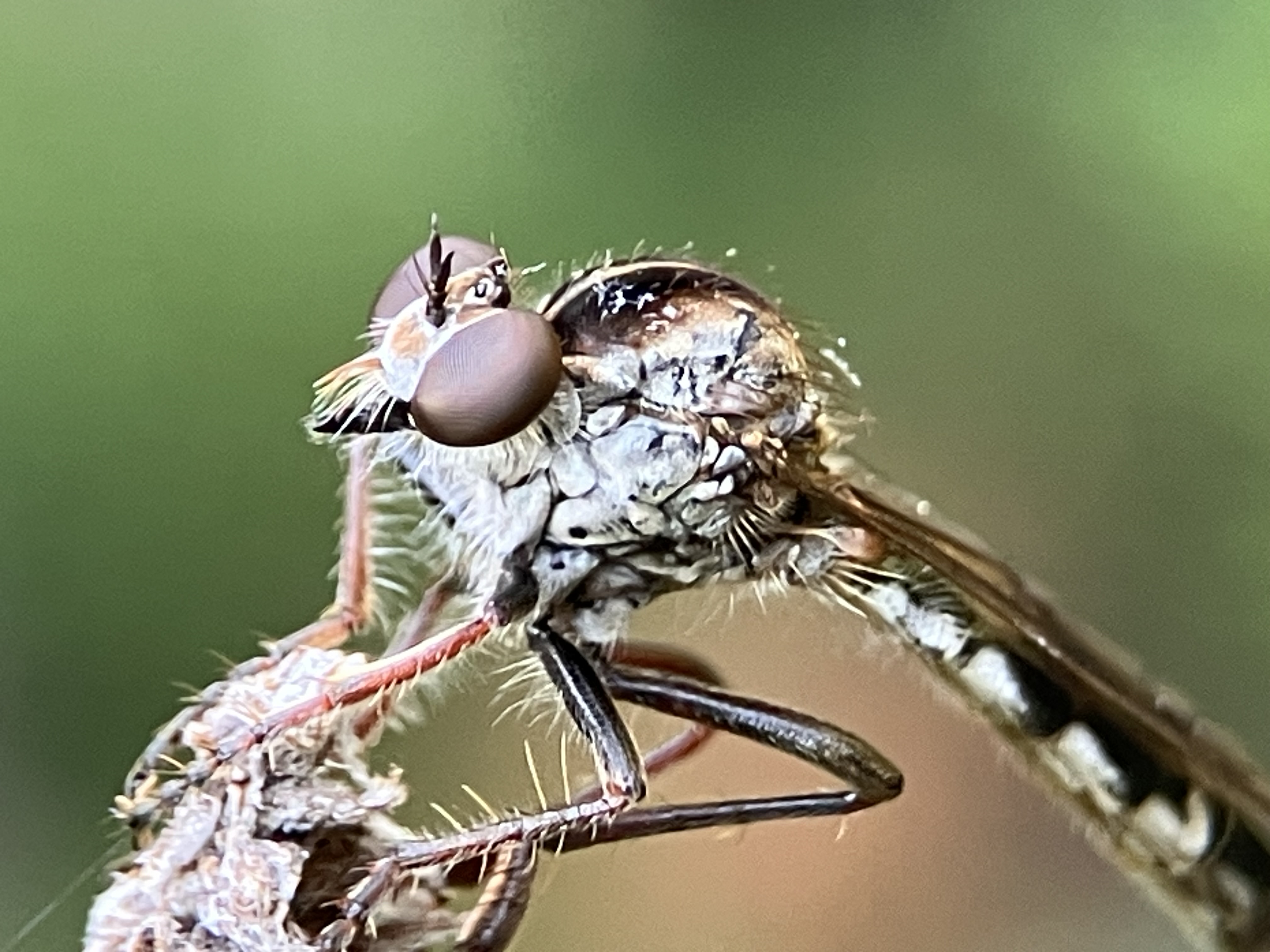
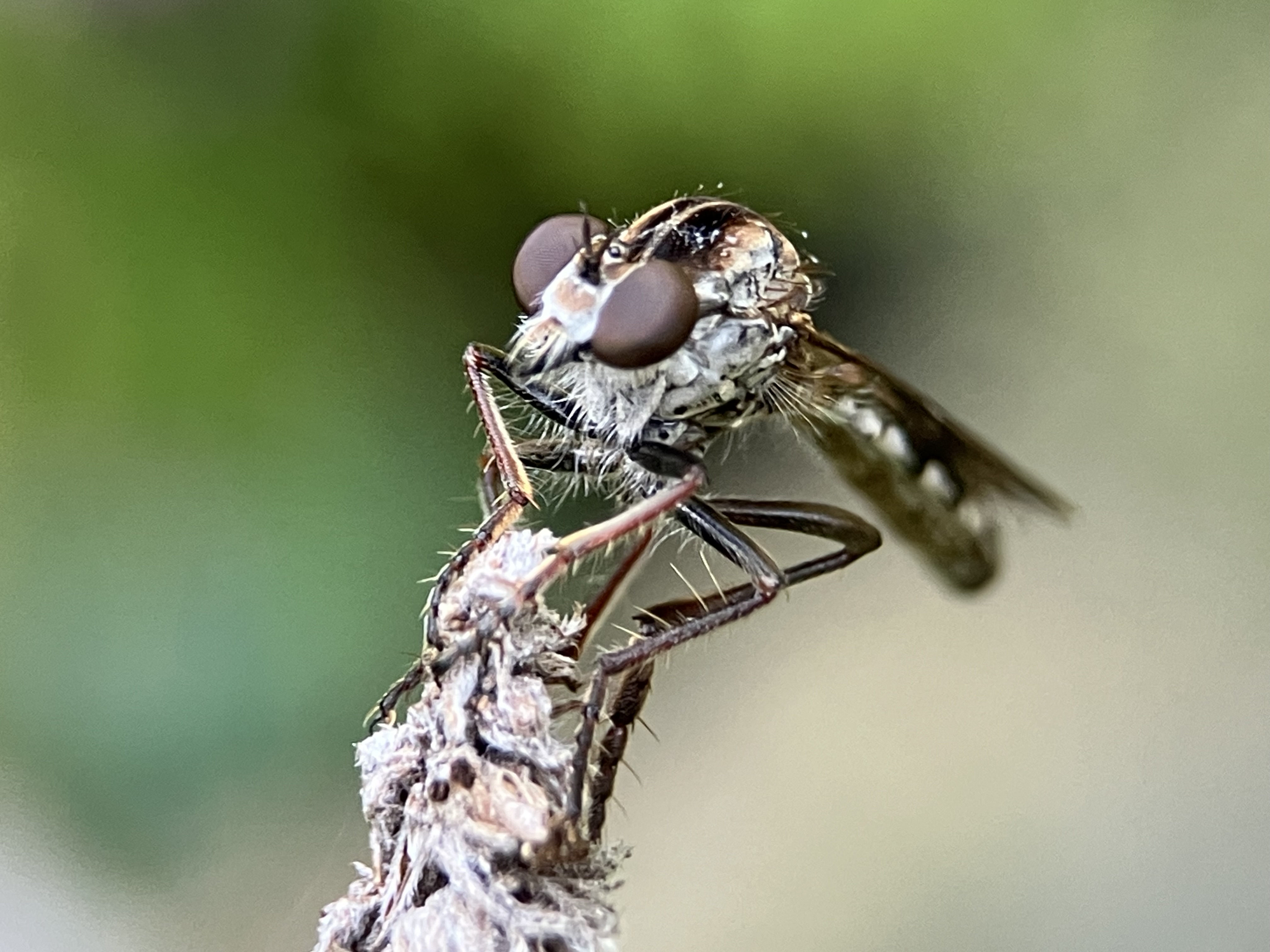
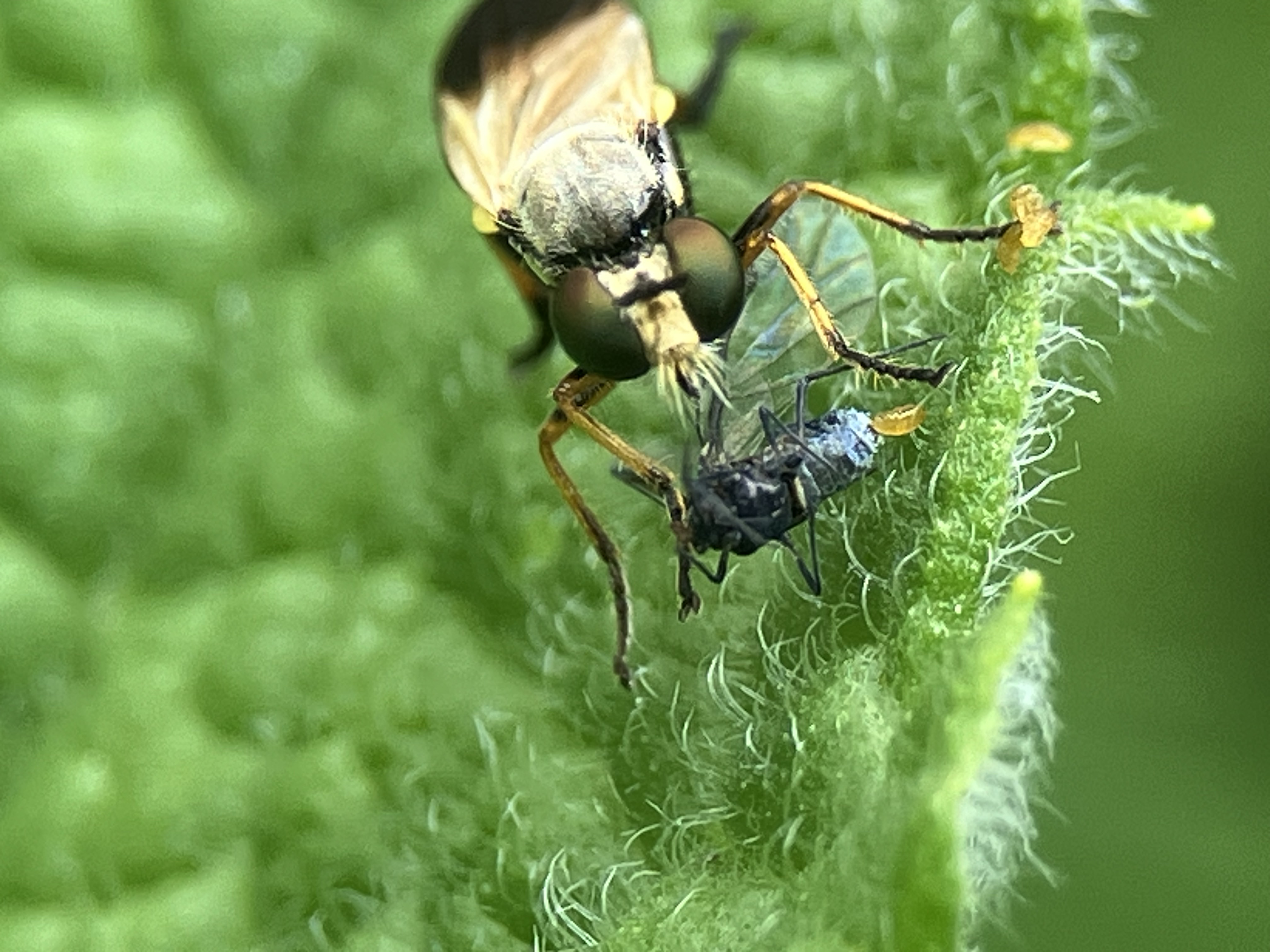
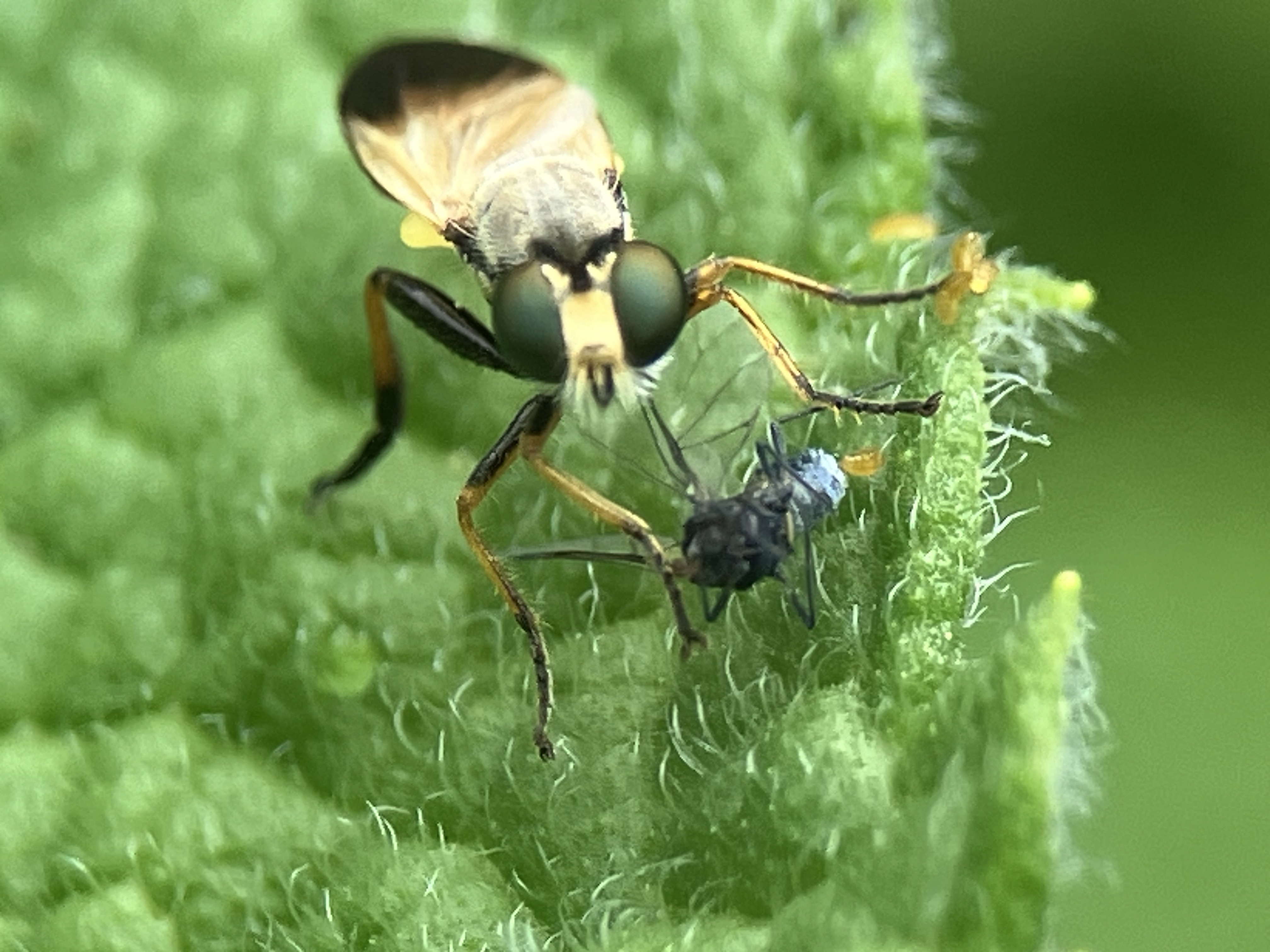
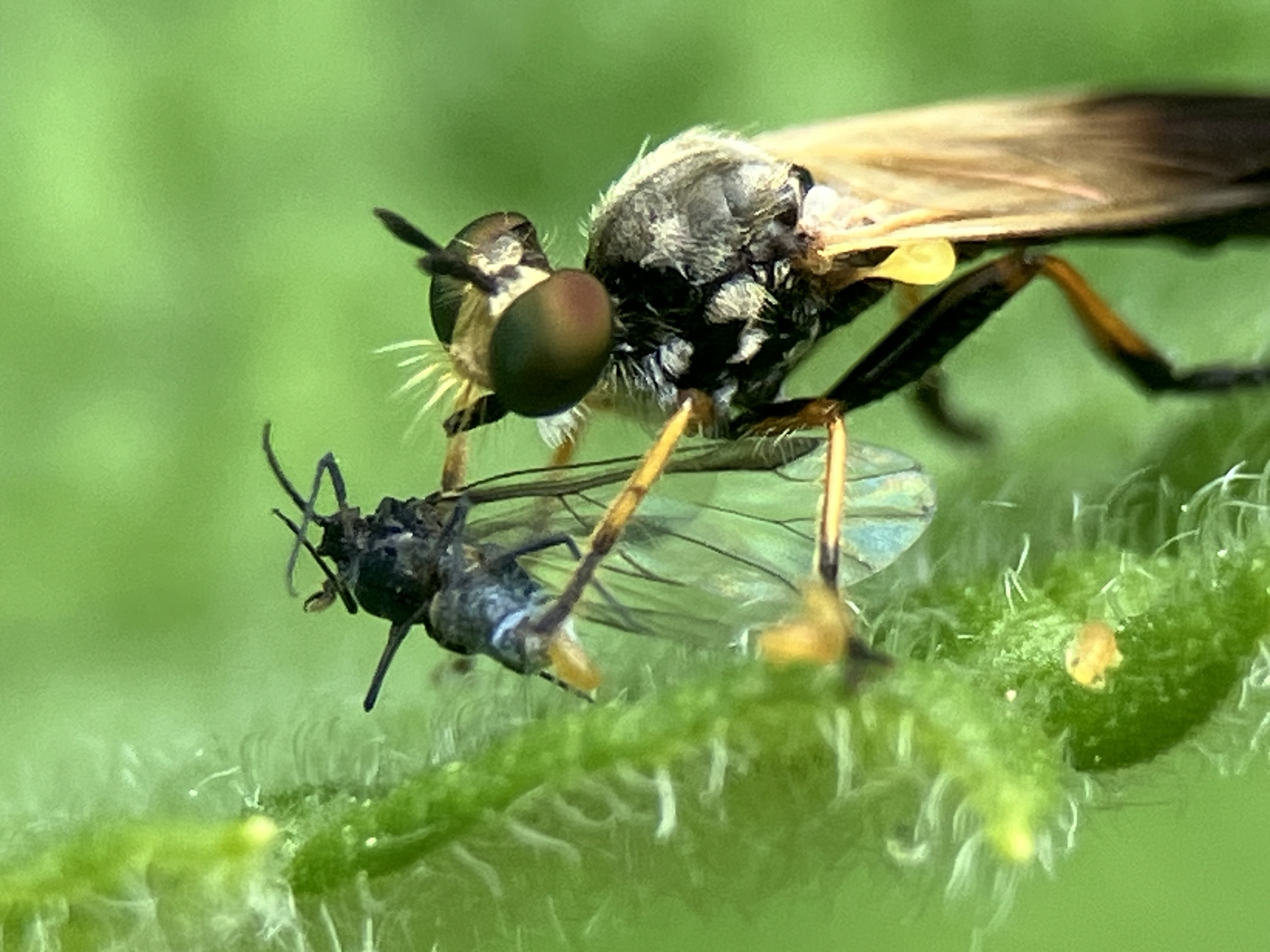
It has taken a bit of time to finally sort out genus and species for this very cool Robber fly with beautiful caramel-brown mottled wings I spied the evening of June 6, 2025. It perched on a dried apple mint stem from last season, no doubt scouting the terrain to see what might be on the menu for dinner. Robber flies (Family Asilidae) are predatory. They catch other small invertebrates to eat, paralyzing them with special salivary digestive enzymes and then sucking up the liquified contents through the proboscis (Cannings, 2013).
Getting to an identification beyond Genus for this one has been incredibly frustrating, and complicating the process is the limitation of the key I was using (Wilcox, 1946), which primarily describes male specimens.
Robert Cannings has studied the Asilidae for many years in British Columbia and states this genus “sorely requires systematic attention.” I finally just gave up and reached out to Rob for help. He wrote me and said, “I’m pretty sure this is Nicocles canadensis. It’s a female, and some females are difficult, even when under a scope, because the Wilcox key, which is the best we have for now, deals with them poorly and concentrates on males. Nicocles canadensis is the species in the genus most often seen on BC’s south coast and, I assume, in your area.”
This is the only Nicocles fly I’ve ever found on our property on San Juan. According to Rob’s 2014 publication (linked in the references below) in Canada, ” Nicocles canadensis is restricted to Garry oak savanna and adjacent dry woodland on southern Vancouver Island (Saanich is the type locality),” so I anticipate this may be similar for our neighboring area.
Check out the attached references if you are interested in learning more about Robber Flies in our region.
Thanks for reading!




References
Cannings, R.A. 2014. The Robber Flies (Diptera: Asilidae) of Western Canadian Grasslands. 10.3752/9780968932179.ch7. https://www.researchgate.net/publication/268524943_The_Robber_Flies_Diptera_Asilidae_of_Western_Canadian_Grasslands
Cannings, R.A. 2013. Robber Flies (INSECTA: DIPTERA: ASILIDAE) Of The Montane Cordillera Ecozone.
Cannings, R.A. 1994. Robber Flies (Diptera: Asilidae) new to Canada, British Columbia, Yukon,
and the Northwest Territories with notes on distribution and habitat. J. Entomol. Soc.
British Columbia: 91: 19-26. https://www.biodiversitylibrary.org/part/213777
Cole, F. R. 1969. The Flies of Western North America. University of California Press. Berkeley and Los Angeles.
Fisher, E.M., and Wilcox, J. 1997. Catalogue of the robber flies (Diptera: Asilidae) of the
Nearctic Region. Unpublished preliminary draft.https://staff.royalbcmuseum.bc.ca/wp-content/uploads/2013/08/Catalog-Nearctic-Fisher-Wilcox-1997-manuscript-copy.pdf
Geller-Grimm, F. 2008. Robber Flies (Asilidae). Internet site at http://www.geller-grimm.de/asilidae.htm
Melander, A.L. (1924) Studies in Asilidae (Diptera). Psyche [1923] 30: 207-19. https://onlinelibrary.wiley.com/doi/pdf/10.1155/1923/83461
Wilcox, J. 1946. New Nicocles with a key to the species (Diptera, Asilidae). Bulletin of the Brooklyn Entomological Society 40 (1945): 161-165; New York – Lancaster. https://www.biodiversitylibrary.org/page/50573094#page/180/mode/1up




 Bugging You From San Juan Island