Fabulous Fly Friday – Willow Lover
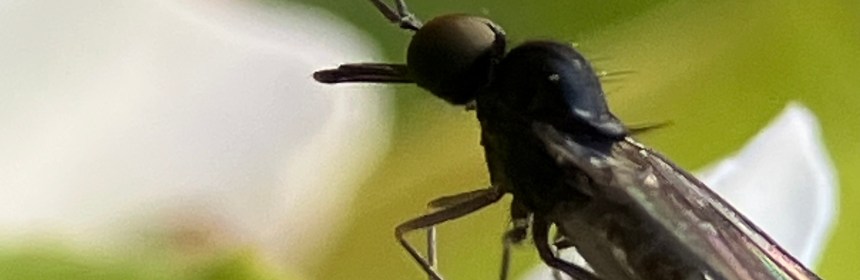
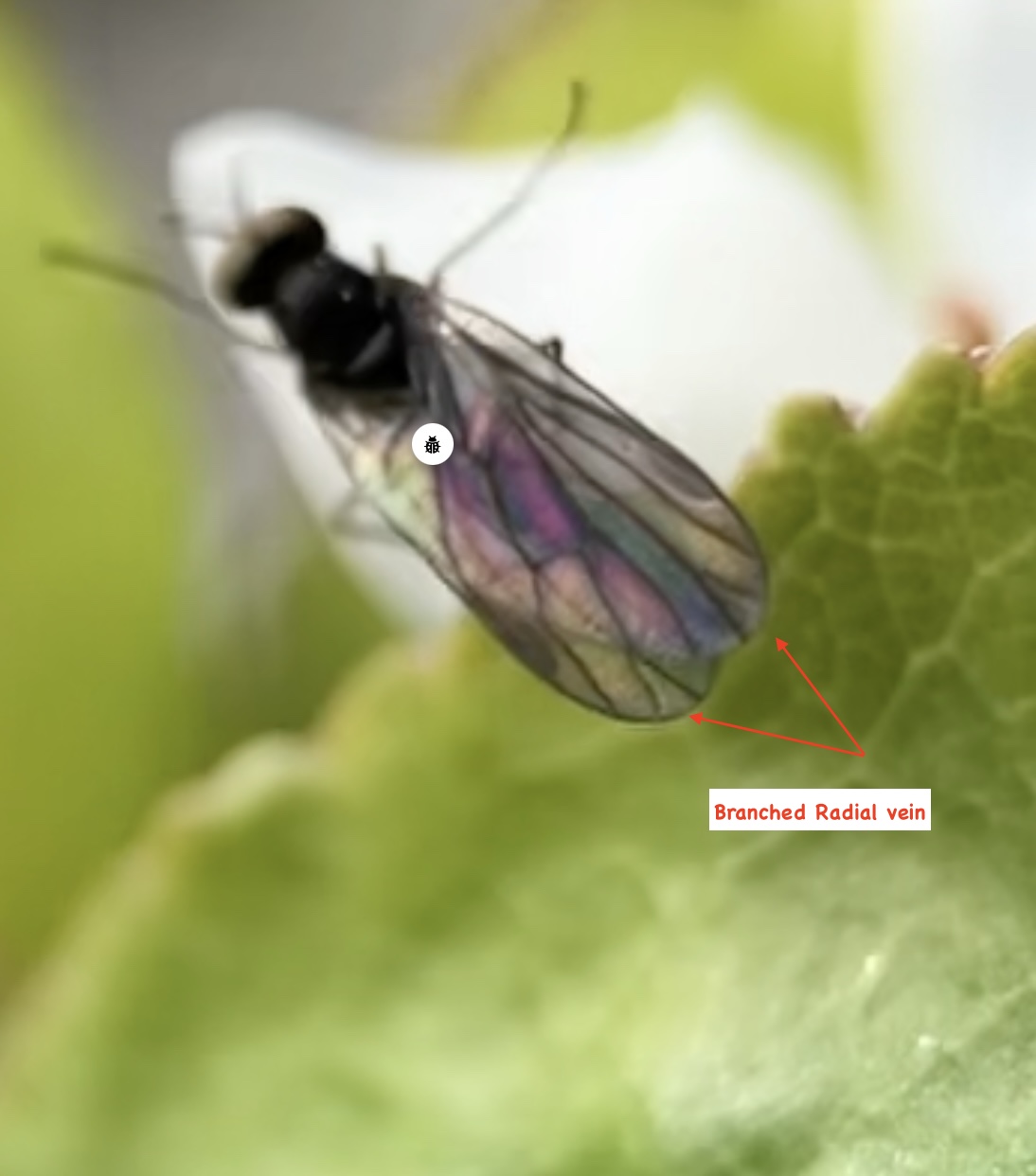
Today, I am sharing photos I took yesterday of one of our PNW early spring pollinators. This interesting specimen is a male species of Dance fly in one of my favorite fly groups, the Empidoidea ( Dance Flies, Long-legged flies, and allies). It is in Genus Iteaphila. The name Iteaphila translates to “Willow lover” (from Greek ἰτέα, willow, and φιλία, love).
These small, blackish flies are quite frequently found in early spring visiting the flowers of willows, salmon berries, wild cherry, maples, and currants. My specimen was visiting the flowers of our yellow plum trees. Flies in this genus are exclusively anthophilous, feeding only on pollen (Sinclair & Shamshev, 2012). Others in the superfamily Empidoidea are predatory on smaller invertebrates.
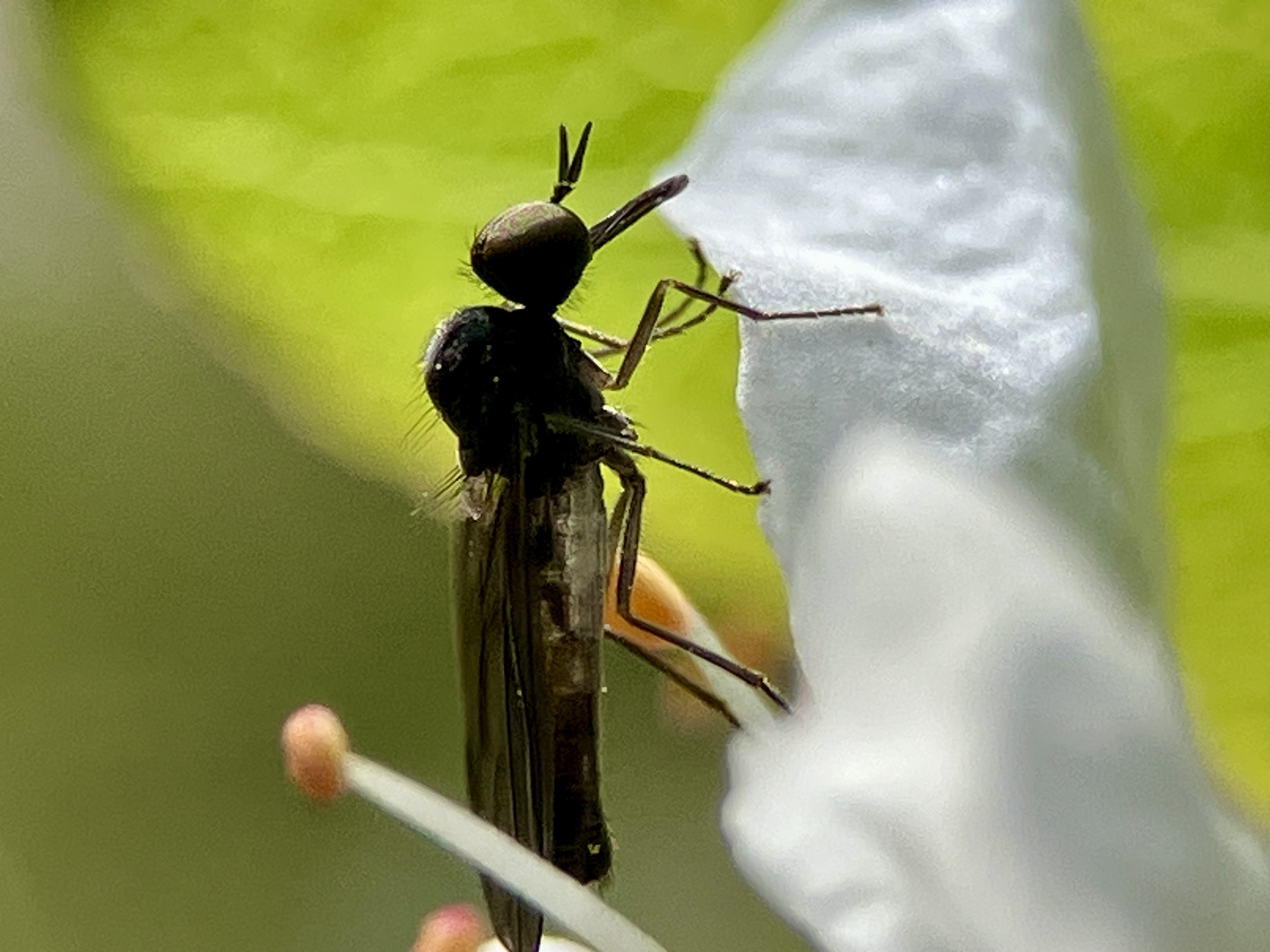
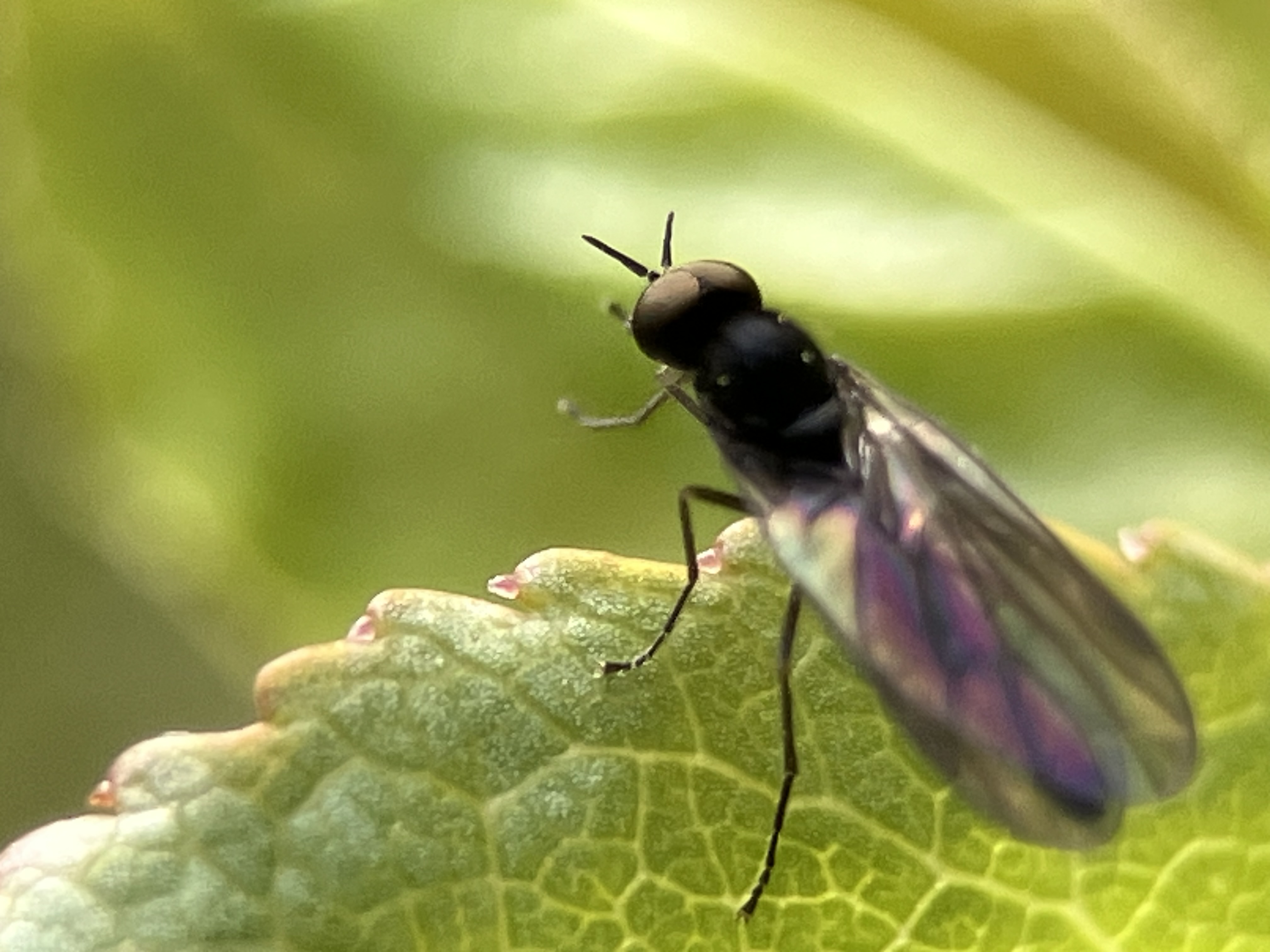
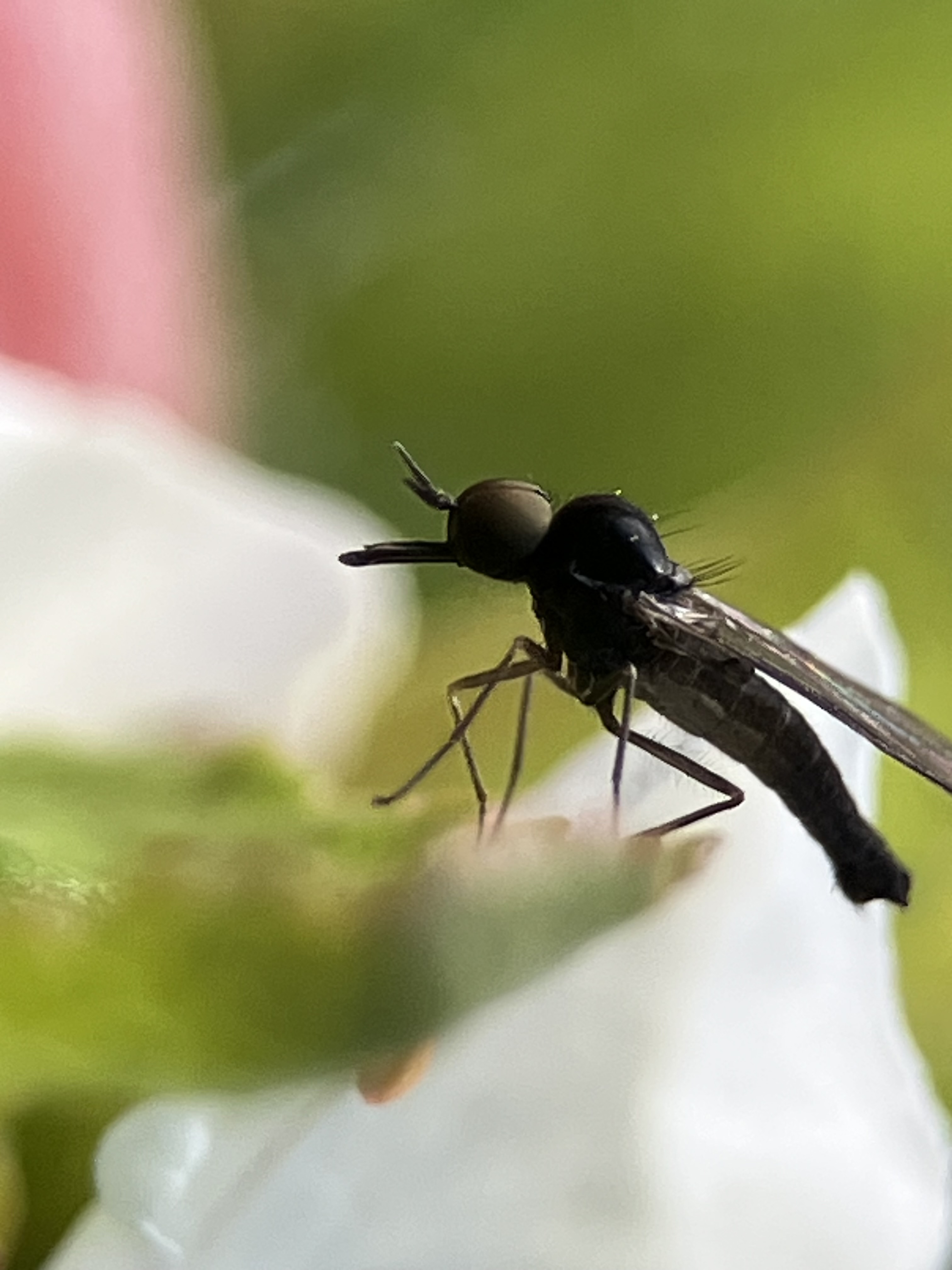
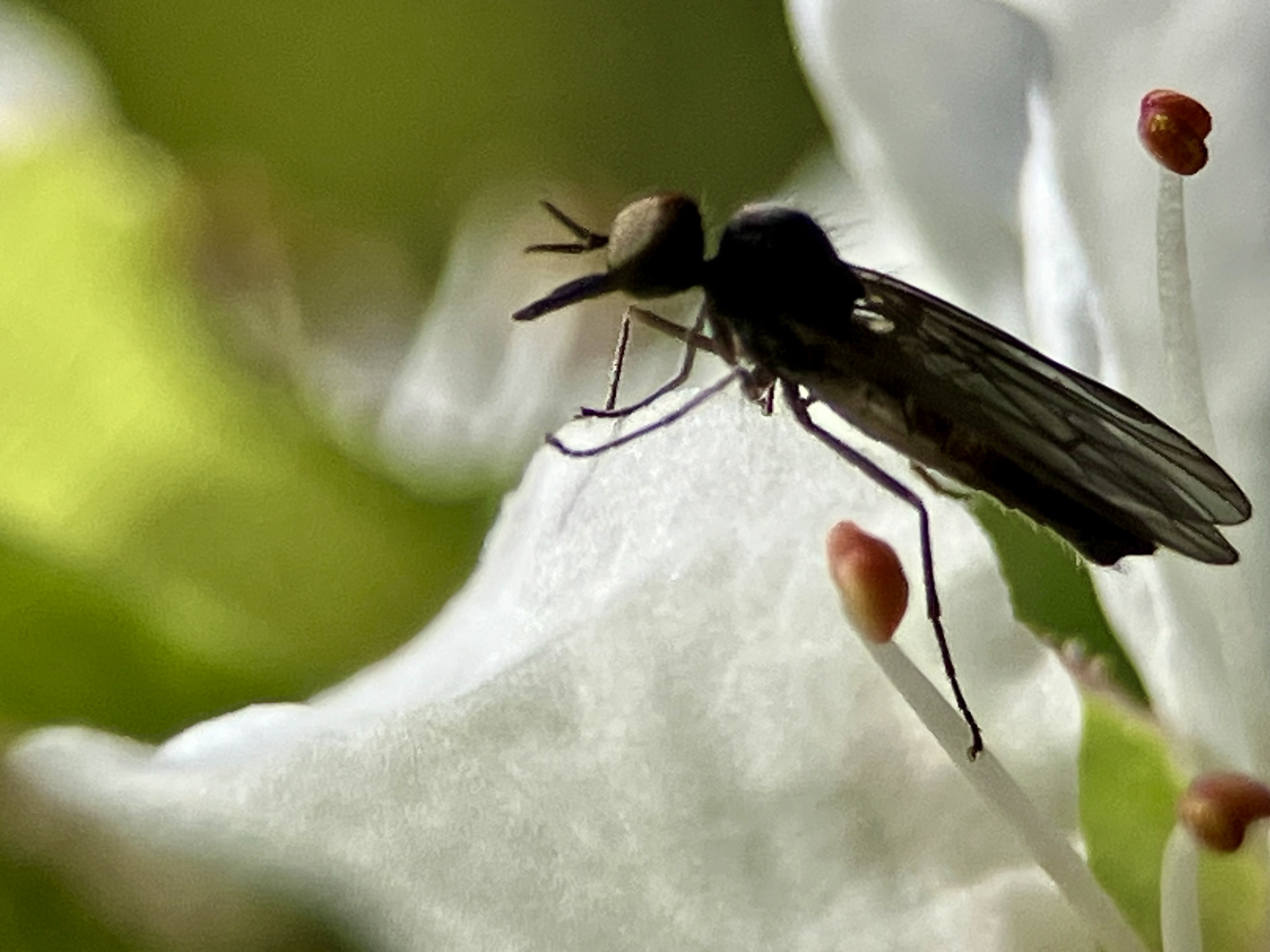
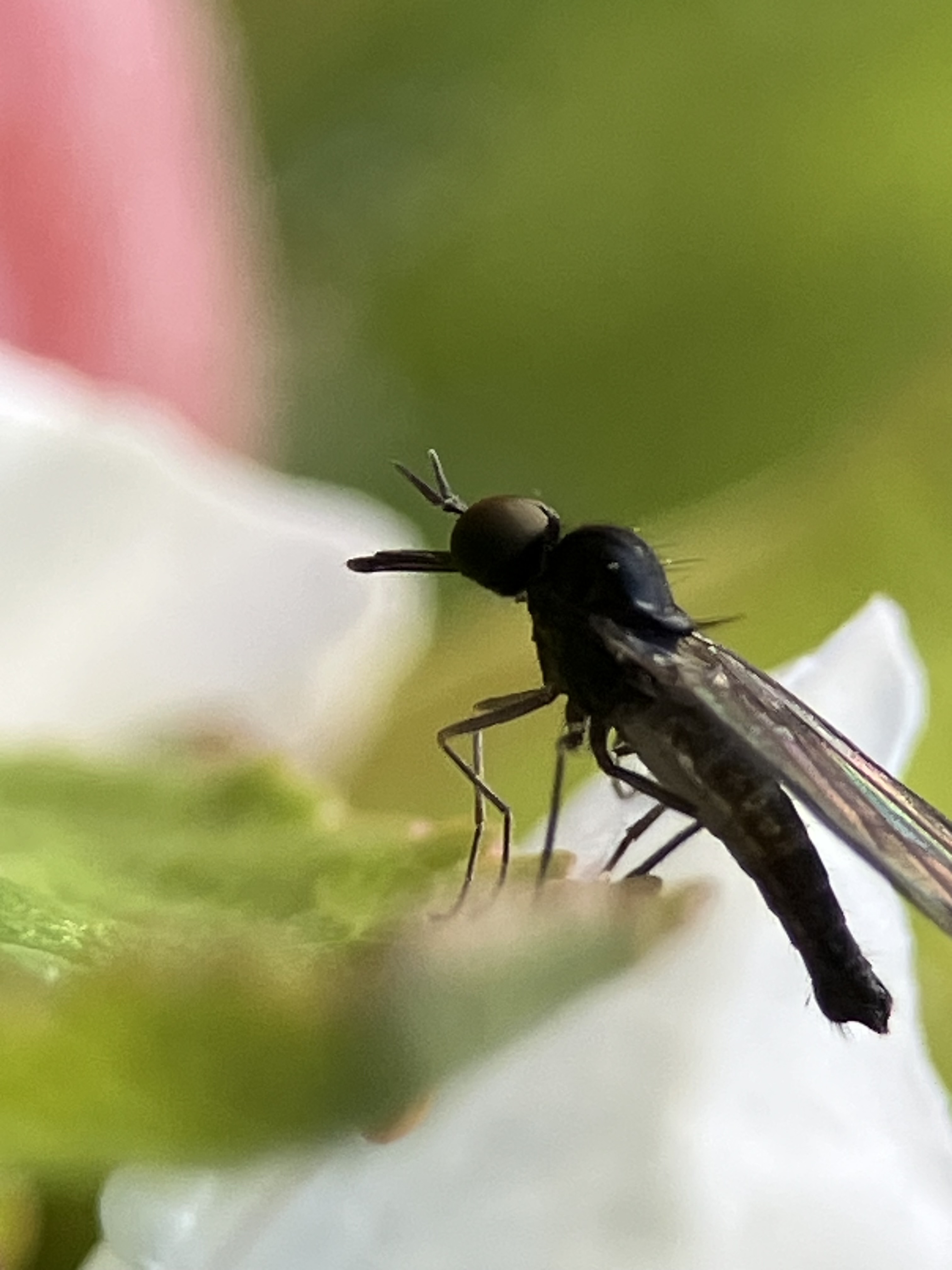
The Iteaphildae have undergone some taxonomic revisions. Now, they include individuals with both branched and unbranched radial wing veins. On this specimen, I was able to discern the presence of a branched radial wing vein. There is also the distinguishing scutellar setae (seen in Figure D) in the diagram (Sinclair et al., 2023).
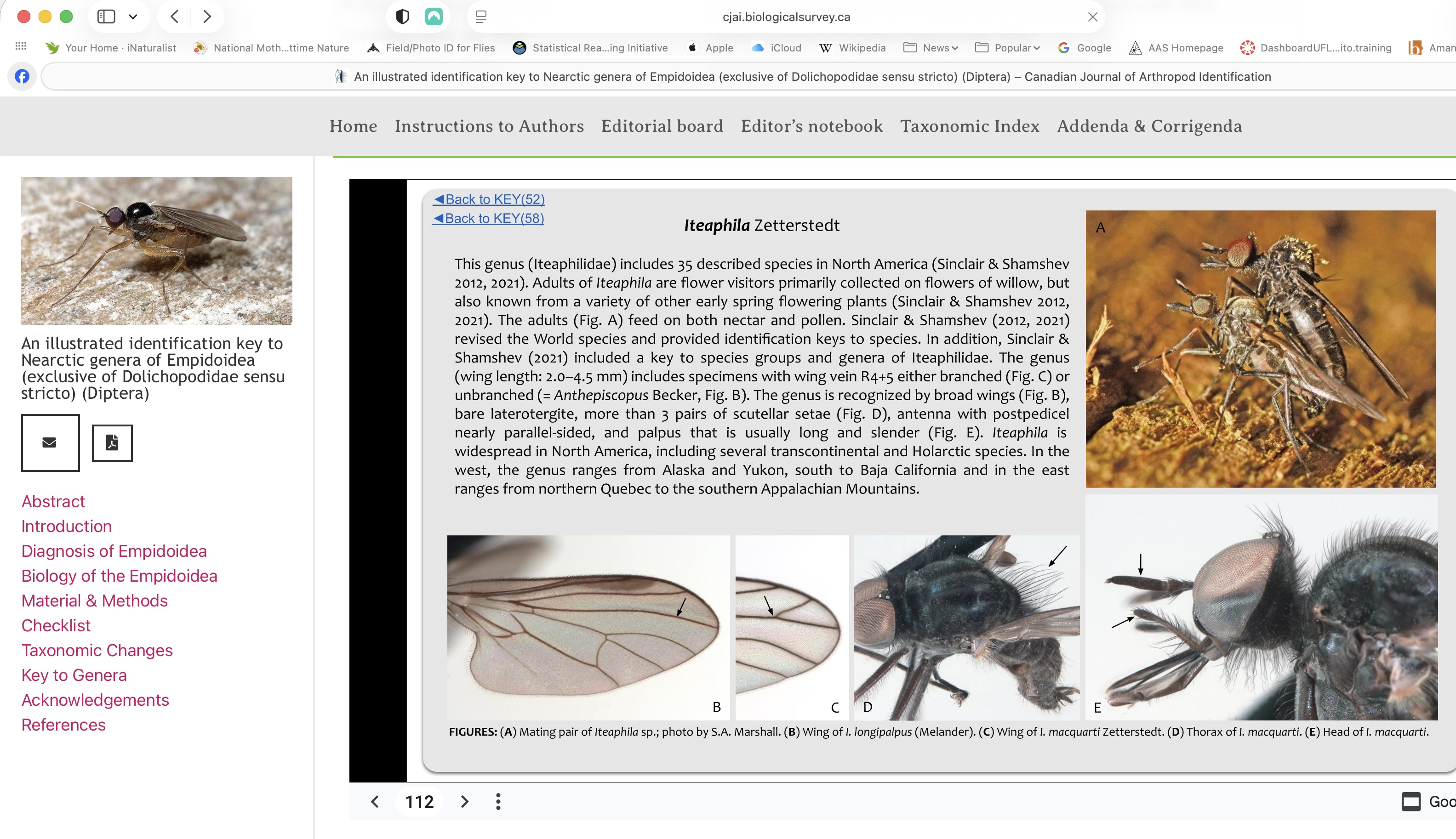
Iteaphila flies are widespread across North America. The Genus ranges from Alaska and the Yukon, south to Baja, California in the West and from Northern Quebec to the southern Appalachian Mountains in the East.
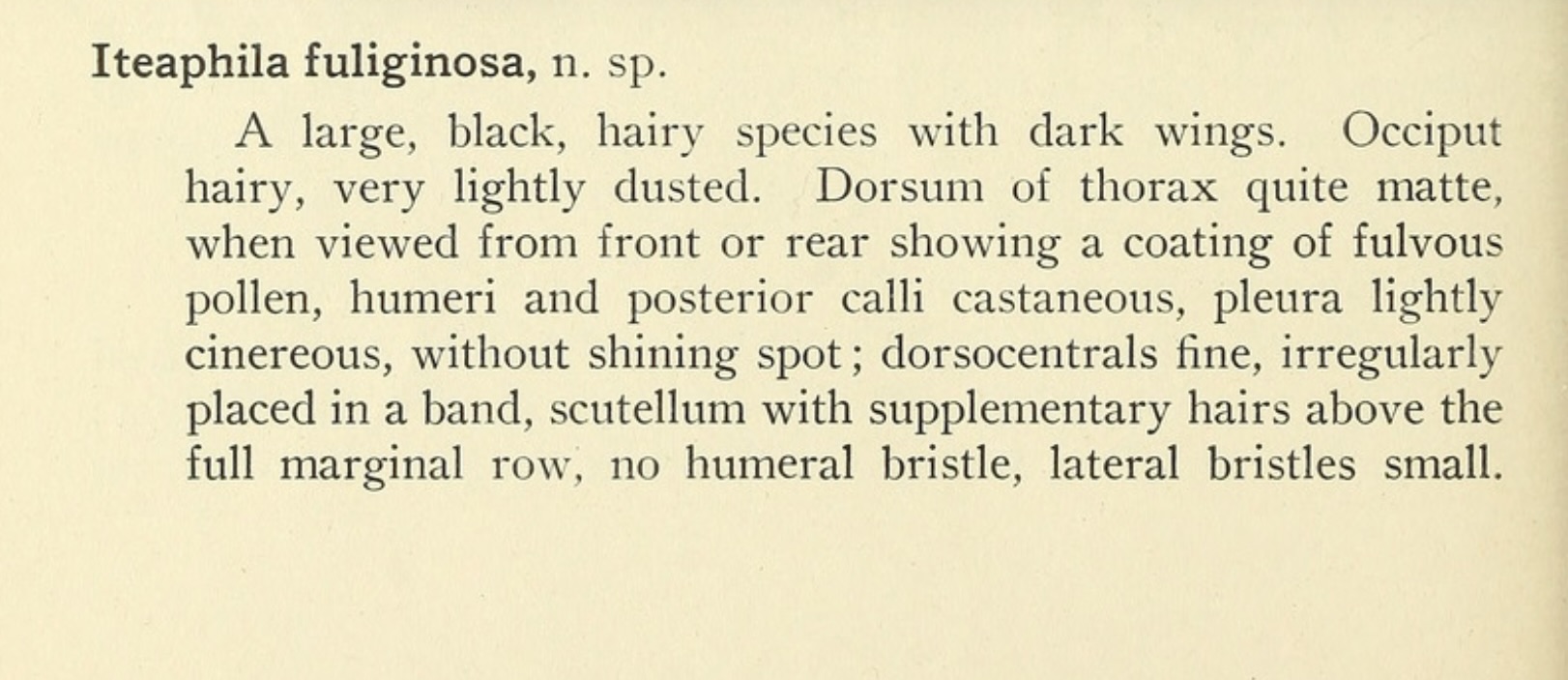
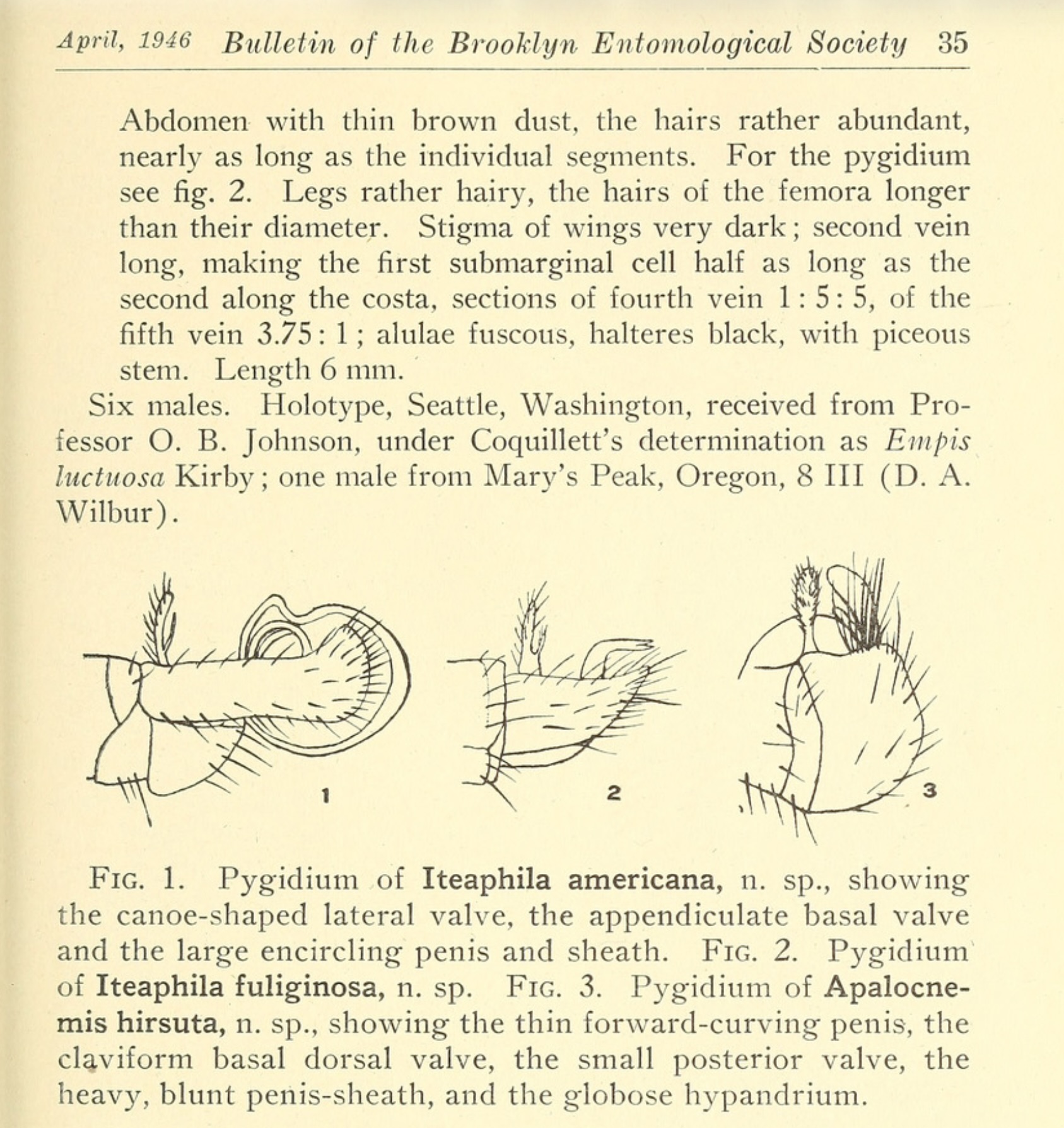
I spent a fair amount of time reading over the literature I used in my references throughout the day when I could take a break. It’s getting late, and I’d hoped to have my post finished earlier. Working later in the evening is a mixed bag. It’s quiet and calm, but fatigue sets in and you can easily make a mistake. I may come back and revise this, but after going through the taxonomic keys by Anderson, I believe this is quite likely to be the species Iteaphila fuliginosa. Then again, I may end up corrected by someone more knowledgeable than me, or I may end up correcting myself. I’m 100% certain, I wouldn’t be the first to do this either.
One might ask, “What is the value of a small, seemingly insignificant fly like this?” Aside from its role as an early spring pollinator, flies like this are part of the overarching food web. They provide nourishment for many organisms, ranging from other invertebrates (insects and spiders) to amphibians, reptiles, and baby birds. I would add that there is also value in the wonder of diversity in nature. It enriches our world. Hopefully we don’t take it for granted. It may be that a day comes along when it all disappears.
References
Anderson, D.R. 1973 A revision of the genus Iteaphila Zetterstedt of North America (Diptera: Empididae). MSc thesis, Utah State University, Logan, Utah, 59 pp.
Anderson, Douglas R., 1973. A Revision of the Genus Iteaphila Zetterstedt of North America (Diptera: Empididae). Biology. 389. https://digitalcommons.usu.edu/etd_biology/389
Bugguide. 2026. Iteaphila. Bugguide.net. Iowa State University Department of Plant Pathology, Entomology, and Microbiology. https://www.bugguide.net/node/view/332912
Cole, F. 1969. The Flies of Western North America. University of California Press. Berkeley and Los Angeles.
Melander, A.L. (1946) The Nearctic species of Iteaphila and Apalocnemis. Bulletin of the Brooklyn Entomological Society, 51, 29–40.
Sinclair, B.J. & Shamshev, I.V. 2012. World revision of Iteaphila macquarti group (Diptera: Empididae). Zootaxa, 3561 (1), 1–61. https://doi.org/10.11646/zootaxa.3561.1.1
Sinclair BJ, Shamshev IV. 2021. World revision of Iteaphila with unbranched radial vein (Diptera: Empidoidea: Iteaphilidae). Zootaxa. May 7;4968(1):189. doi: 10.11646/zootaxa.4968.1.1. PMID: 34186945.
Sinclair, B.J., Brooks, S.E., and Cumming, J.M. 2023. An illustrated identification key to Nearctic genera of Empidoidea (exclusive of Dolichopodidae sensu stricto) (Diptera). Canadian Journal of Arthropod Identification. CJAI 48. doi:10.3752/cjai.2023.48 https://cjai.biologicalsurvey.ca/articles/sbc-48/
 Bugging You From San Juan Island