Category Archives: Diptera

Hidden Daggers

Spring has arrived and with it comes beautiful daffodils popping up across the landscape, but also pollen, windy days, and those dreaded allergies many of us suffer from. I’ll bet as you’re reading, you’re might visualize little pollen grains as daggers that blow up our noses and make us sneeze! Personally, when I visualize pollen grains, I picture them as the equivalent of microscopic land mines. Even though pollen grains can be quite unique when viewed under a microscope and cause quite SHARP “achoo’s” into that handkerchief, there’s another DAGGER you’ll have to go search for in those daffodils.


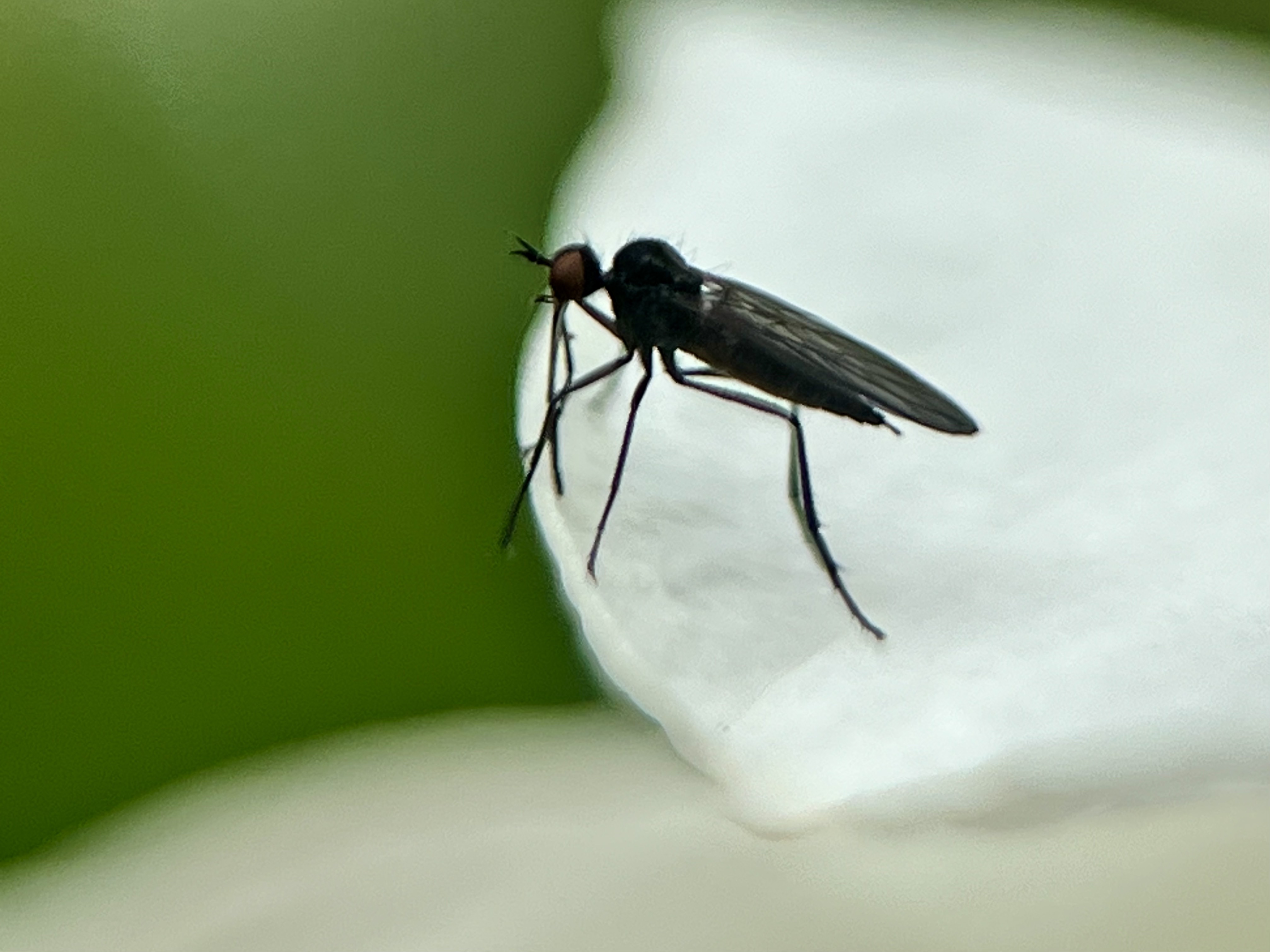
Rhamphomyia fly - Dagger Fly on Daffodil
Rhamphomyia fly – Dagger Fly on Daffodil

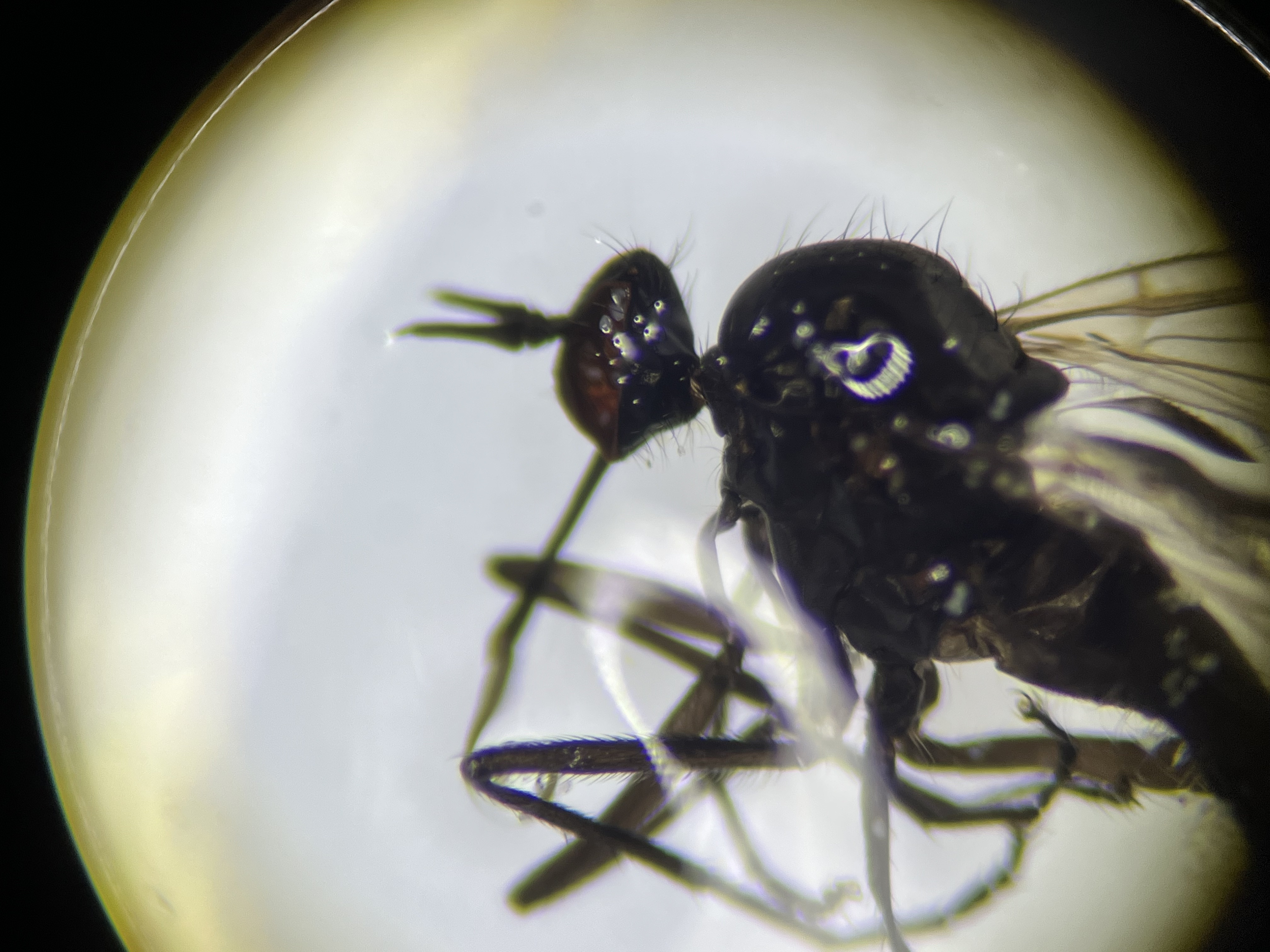
When I first saw this bug and took some photos with my phone, I didn’t realize that EXTRA leg was not a leg at all, but a beak of sorts. More close up photos yielded some images of this particular specimen that reminded me of the sinister hood worn by doctors during the Plague that looks like a giant bird beak.

This BUG I found in the daffodils with the strange “beak” or proboscis, a scientific term for an appendage-like mouthpart of an organism, is a type a fly. The common or vernacular moniker being Dagger Fly.

Rhamphomyia fly - Dagger Fly on Daffodil
Rhamphomyia fly – Dagger Fly on Daffodil

From here, I’ll take you through my process of determining the fly’s classification. First off, to understand it is a FLY, you must look at the number of wings. Flies are taxonomically categorized into the insect order Diptera. Di=two and ptera = wings. Two wings or one pair of wings = FLY. Now the Flies or Diptera are an enormously diverse and large group of organisms. Fly classification or taxonomy is one of the hardest groups I’ve ever worked through and in my rudimentary assessment, I managed to identify my specimen as far as the Family Empididae or the Dance flies. This fly wasn’t exactly “dancing” though. It was poking its beak around in the daffodil, and there were several of them in one flower – all doing exactly the same thing.

Rhamphomyia flies – https://bugguide.net/node/view/8957

At this point, I turned to the fly group I belong to on a popular social media site. I posted my photos with date/location/and my suggested family (Empidiae), then asked if someone could help me with further classification. About two days later, I checked back. The suggestion in the comments was for Genus Rhamphomyia. It would be particularly challenging to identify this particular fly to species. Bugguide.net cites Arnett’s American Insects: A Handbook of the Insects of America North of Mexico, stating there are over 400 undescribed species in our area with 450 undescribed worldwide.


While Genus Rhamphomyia falls under the Empididae or dance flies, Rhamphomyia translates from Greek rampho ‘beak’ + plus myia ‘fly.’ Beak flies they are indeed!
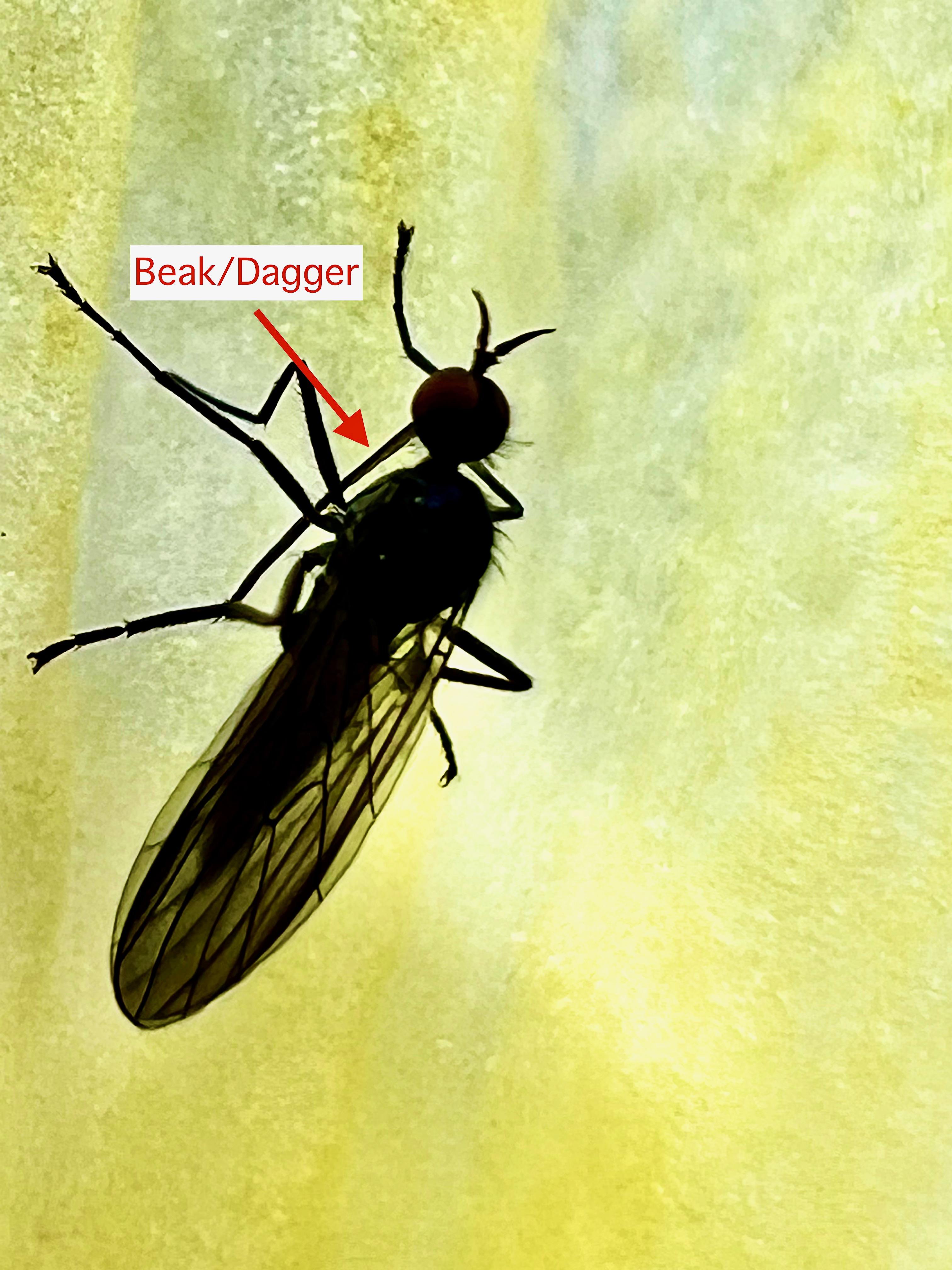
Dagger Fly (Rhamphomyia sp.)

Delving past the taxonomical classification of the genus I discovered some interesting bits of information involving mating behaviors. Like other groups of flying insects, males and females will often form swarms of groups, sometimes referred to as leks. In the Rhamphomyia, these groups can be either all male or all female (a reversed-role lek) or mixed.

If the group is single sexed, it may be the opposite sex does not form a group, but rather enters the single sex group to select a mate. There may also be a group of females and a nearby group of males and individuals from each group will leave and mix with the opposite sex group to choose a mate. Different species of this genus may swarm at different times of the day. Some species may spend the entire day swarming, while others only a select time such as right before dusk or early morning. Swarm locations are selected around some sort of visual marker or landmark which may range from very specific ( a particular branch or limb overhanging a pond) or quite general (the southern slope of a hillside adjacent to a stream or a farm field).

The most intriguing behavior is the habit of male flies to collect and bring nuptial gifts to a female. Alcock (2016), describes this fascinating ritual where female flies gather in swarms low over open woodlands, high in treetops, or over grassy hayfields in early morning or late evening. The swarms lasted 1-2 hours each with female Rhamphomyia flies holding their highly ornamented legs wrapped around their abdomens. In these swarming female groups, males enter and gift their selected female a small insect for her to consume. Examples of tiny insects selected for nuptial gifts include drosophila flies, small syrphid flies, or tiny caddisflies (Alcock 2016). Kuiter, Findlater-Smith, and Lindhe (2017) recorded nuptial gifts to include “fungus-gnats (Myctophylidae), crane flies (Tipulidae), other Empididae flies, and occasionally small moths (Lepidoptera). ”


Reading a bit more led me to Funk and Tallamy (2000) who describe the plight of the female Dagger fly. She is unable to hunt for prey and wholly dependent on these nuptial gifts of protein necessary for development of her offspring. In the swarming leks, she seeks these nuptial gifts from male suitors in exchange for copulation.

While I didn’t witness the formation of swarming leks of these flies, I did find some handsome daggers hanging out in the daffodils. I kept reading and found they can use their beaks not only to pierce small insects, but also to pierce and extract nectar from flowers. As they feed, pollen collected on their bodies may be distributed to other flowers (Sezen 2015).

Rhamphomyia Dagger Fly on Daffodil

Probably the grand finale in my literature search yielded the paper written by Kuiter, Findlater-Smith, and Lindhe (2017) titled Pollination of the Bearded Greenhoods (Orchidaceae) by Dagger Flies (Diptera: Empididae). They describe a unique relationship between the orchid and another species of Dagger Fly. Located in Victoria,Australia, the authors document the case of mistaken identity – the male dagger fly is lured to the orchid by both chemical and physical attributes mimicking the female fly’s sex pheromones and her morphology.

While daffodils aren’t the orchid described by Kuiter et al, (2017), I considered their observations to offer one possible reason the flies I found could become so awkwardly stuck. Kuiter et al. (2017) suggest the flies observed bringing nuptial gifts to the Bearded Greenhood orchid (Pterostylis plumosa) are attracted by the orchids’ kairomones which mimic the Empididae female flies’ sex pheromones. In the case of this particular orchid, the hairy labellum inside the flower head acts as a visual cue, arousing the male who mistakes it for the hairy legs of a female Empididae fly (Kuiter et al, 2017). They believe the bearded orchids may have evolved the hairy labellum for holding the nuptial gift of the male fly just as females of the fly species have hairy legs for receiving the nuptial gift – a very species-specific relationship ensuring the orchid is pollinated.

I believe this relationship provides a possible explanation (at least for me) as to why I found deceased flies stuck within the filaments and stamen inside several daffodil flowers. I actually found four flowers with stuck flies, so it seemed more than merely coincidence. Is it remotely possible the species of male Dagger fly I found mistakes parts inside the daffodil flower for a female fly and cannot extricate himself from the situation? Mistaken identity? Or, did he merely shelter there in the cool of the night and expire in slumber? https://nossaorg.files.wordpress.com/2017/05/finalbeardedgreenhoodpollinatorlrs.pdf

Rhamphomyia Dagger Fly in Daffodil

I’ll end with a note of my own. Many of these relationships between plants and pollinators are highly complex, understudied, and/or, as in this group of flies, un-described. Many species of plants and animals, including and especially pollinators, are under immediate threat due to climate change, habitat loss, and land use changes. You can help by minimizing your impact and changing long-held habits. Avoid clearing around your property, try the “no-mow” approach. We mow only trails and leave the rest. Plant native plants, leave brush piles instead of making burn piles, build a smaller home, be a smart consumer. We are altering systems that enable our own survival. Get outdoors and learn about the diverse life that shares your space. Check out the iNaturalist app and see what you can record in your own backyard. These unseen living critters around us are unique, intriguing, and worth saving!

Thanks for reading!


View more photos in my Dagger fly gallery here:


Vocabulary

Leks – aggregation of (male) animals gathered to engage in competitive displays and courtship rituals, known as lekking.

Kairomone – allelochemicals where the chemical signals are favorable to the organism that receives the signal. A familiar example is the lactic acid component of human sweat that attracts the mosquito Aedes aegypti (Augustin, 2016).

Morphology -the study of the form and structure of organisms and their specific structural features.

Pheromone – semiochemicals that influence the physiology or behavior of members of the same species. They include sex attractants, alarm substances, aggregation pheromones and trail markings (Augustine, 2016).

Proboscis– tubular feeding and sucking organ of certain invertebrates such as insects.


References and Further Reading

Alcock, J. The Mating Behavior of an Undescribed Species of Rhamphomyia (Diptera: Empididae). J Insect Behav 29, 153–161 (2016). https://doi.org/10.1007/s10905-016-9545-5

Augustine, T.J. 2016. Kairomones. Organic Materials Review Institute (OMRI) https://www.omri.org/kairomones

Bugguide.net. 2003-2023. Genus Ramphomyia. https://bugguide.net/node/view/8957

Kuiter, R., Findlater-Smith, M.J., and Lindhe,R.E. 2017. Pollination of the Bearded Greenhoods (Orchidaceae) by Dagger Flies (Diptera: Empididae). Aquatic Photographics. Short Paper 1. https://nossaorg.files.wordpress.com/2017/05/finalbeardedgreenhoodpollinatorlrs.pdf

Funk, D. H., & Tallamy, D. W. (2000). Courtship role reversal and deceptive signals in the long-tailed dance fly, Rhamphomyia longicauda. Animal Behaviour, 59(2), 411–421. doi:10.1006/anbe.1999.1310
10.1006/anbe.1999.1310

Mischenko, M. and Frostic,M. 2009. Scanning Electron Microscope Still Image of Pollen Particles. Scientific Visualization Studio. NASA/Goddard Space Flight Center. https://svs.gsfc.nasa.gov/10394

Sezen, U. 2015. Common Mallow Pollinated By Dagger Fly. Nature Documentaries. http://naturedocumentaries.org/10098/common-mallow-pollinated-dagger-fly/
Western Calligrapher (Toxomerus occidentalis)

I sat outside today in the sunshine, forced convalescence if you will, exhausted and achey after getting my Covid Omicron Variant booster vaccine yesterday at the San Juan County Fairgrounds. My outdoor time was unfortunately cut short because we have been inundated with construction development noise. I’m fairly certain I will be forever challenged to have an amiable relationship with our newest neighbors. In part, because they sited their VACATION home, right in front of our view. Mind you, they could have moved over 100 feet and we would not have to look across the top of our driveway at their newly constructed 2nd home. It has definitely impacted us. We’ve lost a lot of our privacy out here in the woods. It was never my desire to have close neighbors. I am a bit of a recluse….which is what the new neighbor said about his wife, yet, it begs me to ask again, WHY DID YOU BUILD YOUR HOUSE RIGHT ON TOP OF US?

Oh, and the jackhammering! That noise is enough to make a person homicidal. We had an entire summer of jackhammering from the former owners of that property. Really, truly, that property should never have been zoned for development. Not any development. It’s partly (half) wetland, and the other half is bedrock. Imagine the task of trying to excavate enough to bury your septic lines down the hill when you have solid bedrock! Also, our house is on that same shelf of bedrock, so the hammering shakes the walls and vibrates the floors of our home in the process of all this construction. The development on this lot has gone on for multiple years. I’m really tired of the disruption.

I digress. Sorry, I just had to vent. San Juan Island would be a much friendlier place for wildlife and bugs and such if we didn’t allow anyone to build a 2nd, or 3rd home here. We are outgrowing our space and it isn’t pretty.

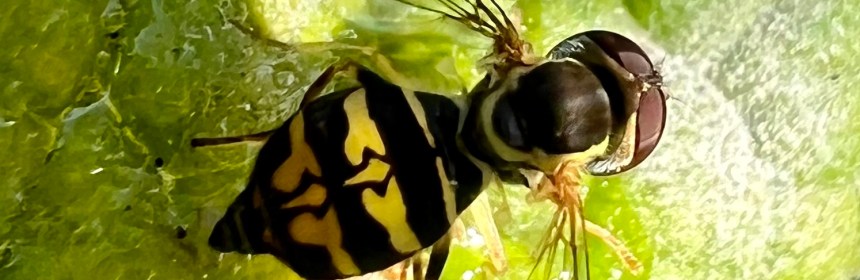
Here’s my bug of the day. This beauty is a Western Calligrapher Fly (Toxomerus occidentalis). I was mesmerized watching it rest on the mint leaf. The patterning on the dorsal side of the abdomen reminds me of some sort of totem design.

The adults of this fly species are pollinators. They lay eggs on plants near aphids and when larvae emerge they are predatory on the aphids. It is believed that late instar larvae overwinter, pupation takes place in the soil cavities in the spring and adults emerge later in summer. The name for this group of flies comes from Greek toxon ‘bow’ + meron ‘thigh’ (refers to the bow-shaped hind femur). You can see the curve in the first photo below, circled in red. Something else interesting pertaining to the adult coloration I found on bugguide.net: “Colors vary with overall temperature during pupation: if it was hot, the yellow/orange increases and the background becomes lighter, but if it was cold, the dark/black increases and the yellow/orange becomes darker like the background.”

Enjoy the last few days of sunshine and embrace our native pollinators. We are heading into the dark part of the year. For those of us who live here year round, you know what to expect. Lots and lots of rain.

Thanks for reading!

Western Calligrapher Fly (Toxomerus occidentalis)

Western Calligrapher Fly (Toxomerus occidentalis)

Biting Black Flies on San Juan Island

This little critter landed on me the morning of August 14, 2021 (with a few friends). I managed to collect the specimen for a photo op session. AND, I let it bite me. It felt like it was sawing into my skin. I have a pretty high pain tolerance though, so it wasn’t so awful. My husband suggested I save the specimen in case I came down with any weird disease!

I have it in a vial on my desk. ID…for starters, it’s a fly (Diptera). This is a black fly (Simulium sp.) and I’ve found the larvae in the seasonal stream near our house before. At some point, I’ll write up a better post for you about these, but for today, you can watch as this female uses her serrated mouthparts to cut through my skin and take a blood meal. She’ll use the protein to help her with egg development.

Black Fly (Simulium sp) – San Juan Island August 14, 2021
Black fly (Simulium sp) biting my finger
April 8, 2020 – San Juan Island, WA – Black Fly larvae in stream

My recommendation if you’re visiting or planning to visit the San Juan Islands in summertime is to bring long sleeves and wear long pants. With climate change, my guess is we will have more biting flies out in the summer evenings.

More about black flies on BugGuide – https://bugguide.net/node/view/16613

Thanks for reading!

Green Bean leaf Grabs Miss Fly Snuffleupagus

Every once in awhile you observe something in nature that makes a story to share. I hope you will enjoy this one.

I have a love hate relationship with my climbing green beans. First of all, I don’t really like eating greens beans that much. The leaves are pretty to look at, but they are lethal to my poor bugs!!!


This morning when I was watering my bean vines, I noticed a teeny little fly, seemingly stuck to one of the leaves. My eyesight is terrible up close, so I had to use both my reading glasses AND my clip on macro lens attached to my Iphone camera to take a closer look.

Not only was the little fly stuck, but it looked like the green bean had somehow glued her to the leaf by her proboscis. I swear that poor little fly LOOKED at me with a plea for help.


Of course I was going to help, but I wasn’t exactly sure how to go about it without causing further injury or accidentally amputating her mouthpart (the proboscis), which looks like a teeny little trunk and reminded me of the character, Mr. Snuffleupagus from Sesame Street.


Finding the tiniest piece of straw on the ground, I gently pried her free. She flew away, filled with relief and maybe a wee bit of gratitude for my efforts in helping her.

Be kind to all living beings.

A Beneficial Buzz!

This fly was in my yard last week. San Juan Island, WA. 06.19.2021. It’s taken me about a week to get around to ID, but I believe this to be Eupeodes fumipennis (the Western Aphideater, a syrphid fly that happens to be a bee mimic.

In case you are wondering about that name. The Western Aphideater does actually eat aphids in the larval stage. To see what a syrphid fly larva looks like in action, check out my blog post with more video footage here –https://buggingyoufromsanjuanisland.com/…/honeysuckle…/ – also viewable in the photo below. While I have not been able to identify the species name of the syrphid fly larva in that post, you can definitely see where the Western Aphideater fly might get its name.

Unidentified Syrphid fly larva with aphid

Thanks for reading!

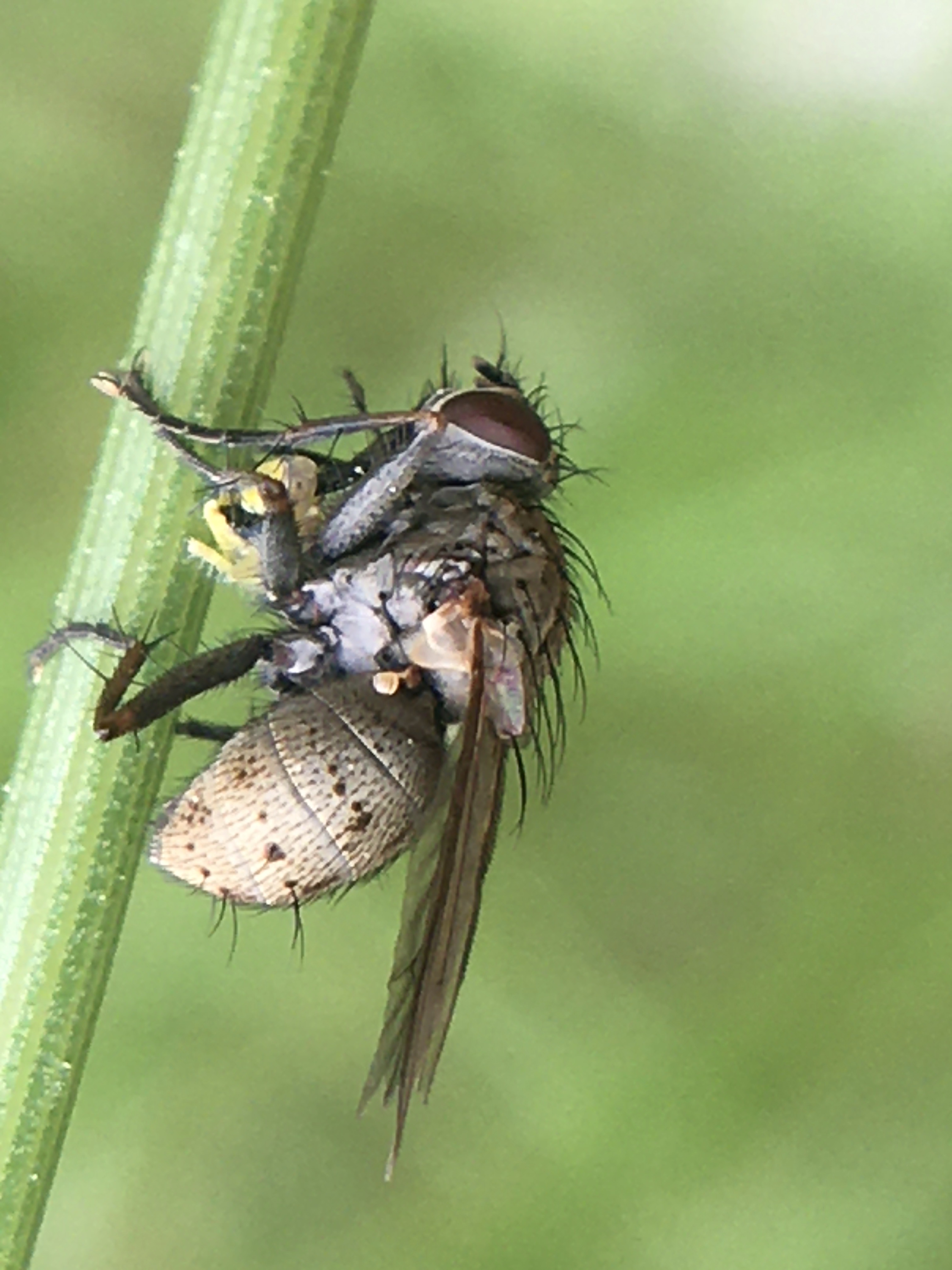
Tiger Fly (Coenosia sp.) with prey

This amazing little creature is a Tiger Fly in the genus Coenosia, and I believe C. tigrina. Photographed on May 30, 2021 with prey that appears to be a spittlebug nymph.

This particular tiger fly is a European native, introduced to North America in the 1800’s. It is now found throughout the northeastern and western United States and adjacent Canada.

Tiger flies, also sometimes known as hunter or killer flies, are indeed fantastic predators of other pest insects, including Drosophila sp. flies. Even the larval stage of this fly is predatory on other organisms. Because of their success in hunting, they are often used as biological control of pests in greenhouses.

Tiger Fly with prey (Coenosia sp.)
Tiger fly wit prey (Coenosia sp.)
Tiger Fly with prey

References

https://bugguide.net/node/view/518144

https://diptera.info/articles.php?article_id=17

https://www.researchgate.net/publication/259422430_Biology_of_the_predatory_fly_Coenosia_tigrina_Fab_Diptera_Anthomyiidae_reproduction_development_and_larval_feeding_on_earthworms_in_the_laboratory

SWD – Can You Guess What That Stands For?

I found another “new-to-me” bug on the island the other afternoon. This fly was a surprise. It is really small at about 3mm, with big red eyes, and clear wings with a little black dot on each one . Guess what? It’s a SWD! That’s the abbreviated form of Spotted-Wing-Drosophila or Drosophila suzukii (also sometimes called the Vinegar Fly). I’m attaching an info. sheet here for you to reference http://entnemdept.ufl.edu/creatures/fruit/flies/drosophila_suzukii.htm

It’s amazing how quickly the SWD fly can reproduce. I’m curious as to whether they’ve been seen out and about by other folks on San Juan. We have an apple orchard, but honestly, I didn’t check the fruit this year for pests and I wouldn’t use spray anyway because I love our birds. We’ve had lots of chickadees, nuthatches, and juncos in our trees, as well as gorgeous round orb weaver spiders in the garden and around the house, so I’m banking on them keeping these (and other) insects categorized as pests in check.

Drosophila suzukii – Spotted Wing Drosophila or (SWD)

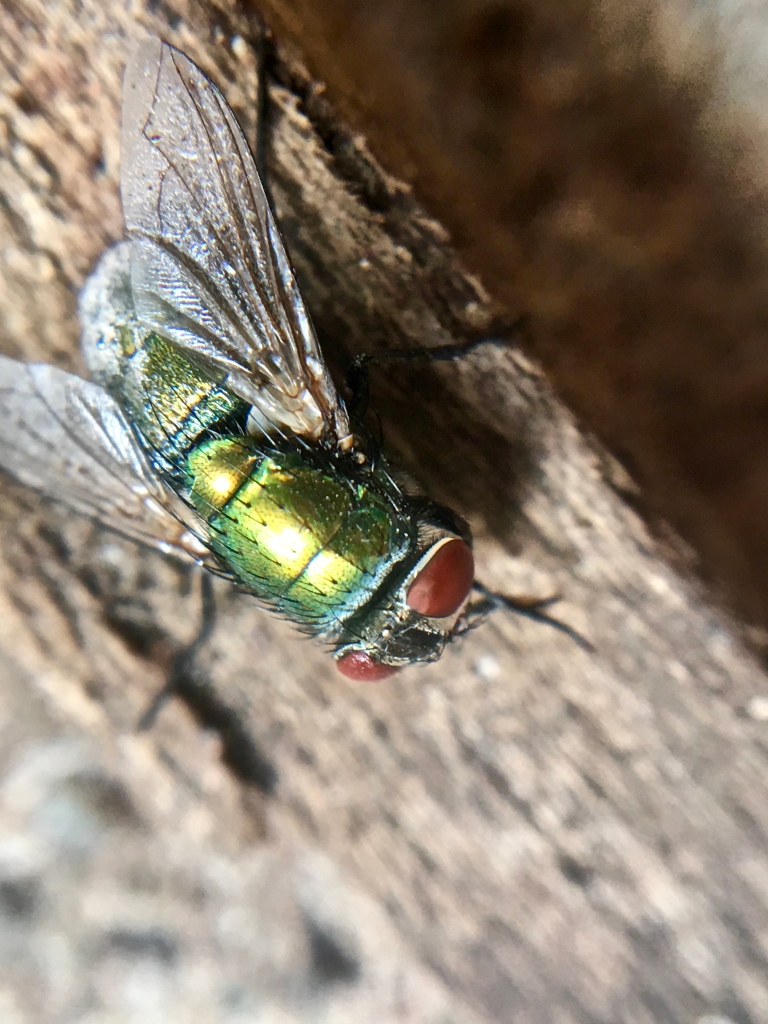
Green Bottle Fly (Lucilia sericata)

Green Bottle Fly (Lucilia sericata) July 9, 2019 San Juan Island, WA

This shiny green bottle fly, a blow fly in the family Calliphoridae, is widely distributed across North America. A frequent visitor to garbage, feces, and carrion, it can mechanically transmit disease, but it is probably more well known for other notable roles it plays in veterinary, medical, and forensic science.

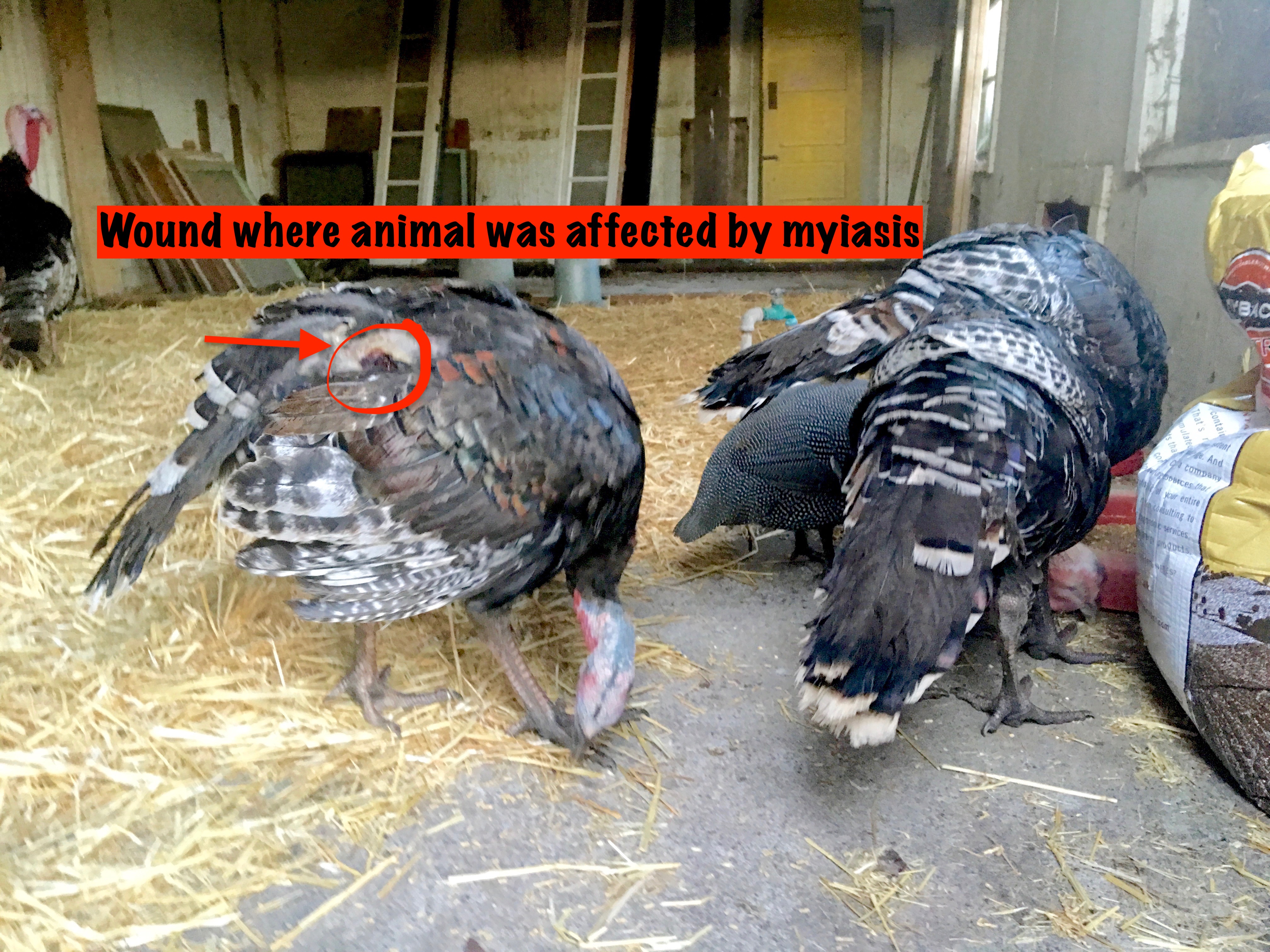
In veterinary science, Lucilia sericata can cause loss of livestock when animals are affected by the larval form of the fly in a condition known as myiasis or fly strike. Animals affected by fly strike can die when fly larva invade living tissue if they are not treated.

In July of 2016, I helped rescue some turkeys someone had dumped near our home. Upon closer examination of the photos I had taken of them, I was able to see a wound one of the turkeys had. The veterinarian who examined the turkey determined there was serious tissue damage due to fly strike and the turkey was euthanized. So, all animals (even birds) are subject to this condition. Good animal husbandry includes regular examination of animals and treating wounds promptly, with appropriate wound care/dressing to protect the animal from fly contact.

In medical science, Green bottle fly larva are known for their role in wound care. In a practice called maggot therapy, larva of Lucilia sericata are placed on an infected wound to clean out the necrotic tissue. Interestingly, as the larvae feed on the dying tissue, they secrete enzymes that are bactericidal, further aiding in healing the wound.

Finally, in forensic science, the timing of the development of this fly has been adapted and well utilized for establishing a time of death, aiding in law enforcement investigations when a body is found.

If you’d like to read more about this shiny little fly, please check out the links below.

http://entnemdept.ufl.edu/creatures/livestock/flies/lucilia_sericata.htm

htthttps://bugguide.net/node/view/53775

https://www.hindawi.com/journals/criid/2018/5067569/

https://pdfs.semanticscholar.org/d1a4/97c592968996ff73b91740b25e9005f09433.pdf

Western Horse Fly (Tabanus punctifer)

Found this specimen in the parking lot at Marketplace in Friday Harbor yesterday. Glad I didn’t turn into the “grabber” I can sometimes be and instead used a box to scoop up my big find. Probably if you were watching me, you’d have been scratching your head wondering WHY is this woman going through her grocery sacks and opening a snack box of tuna?  That box made an excellent fly “trap!”

IMG_7027

Big is an understatement! This is the LARGEST fly I’ve collected on the island.  It measures over 1 inch long or more than 2 cm.  The Western Horse Fly (Tabanus punctifer) can bite through your clothing, although it is the female that needs a blood meal (males feed on nectar and pollen). The adult female lays egg masses (over 300 per mass) on vegetation along ponds and lakes. When the eggs hatch, the larvae develop in the water and here is what I read about them from my sources at Bugguide.com…

“These larvae are aquatic. They have mouthparts that are identical to those of rattlesnakes in structure. A pair of hollow fangs that are connected to a poison/anaesthecic salivary gland further back in the body. These mandibles can easily break through human skin and inject the immobilizing contents of the salivary glands. Normally used to paralyse, and perhaps digest, prey. They are capable of quickly immobilizing/killing animals as large as frogs. They are strictly carnivores and eat ‘meat’.”

I guess this means that the toe-biters aren’t the only ones you should avoid when you go for that swim!

If you care to read more, I suggest this excellent informative guide I found online.   It is a 1921 publication from Sanitary Entomology:  The Entomology of Disease, Hygiene and Sanitation ~ https://play.google.com/books/reader?id=eIQoAAAAYAAJ&printsec=frontcover&pg=GBS.PA237Sanitary Entomology


Greater Bee Fly (Bombylius major)

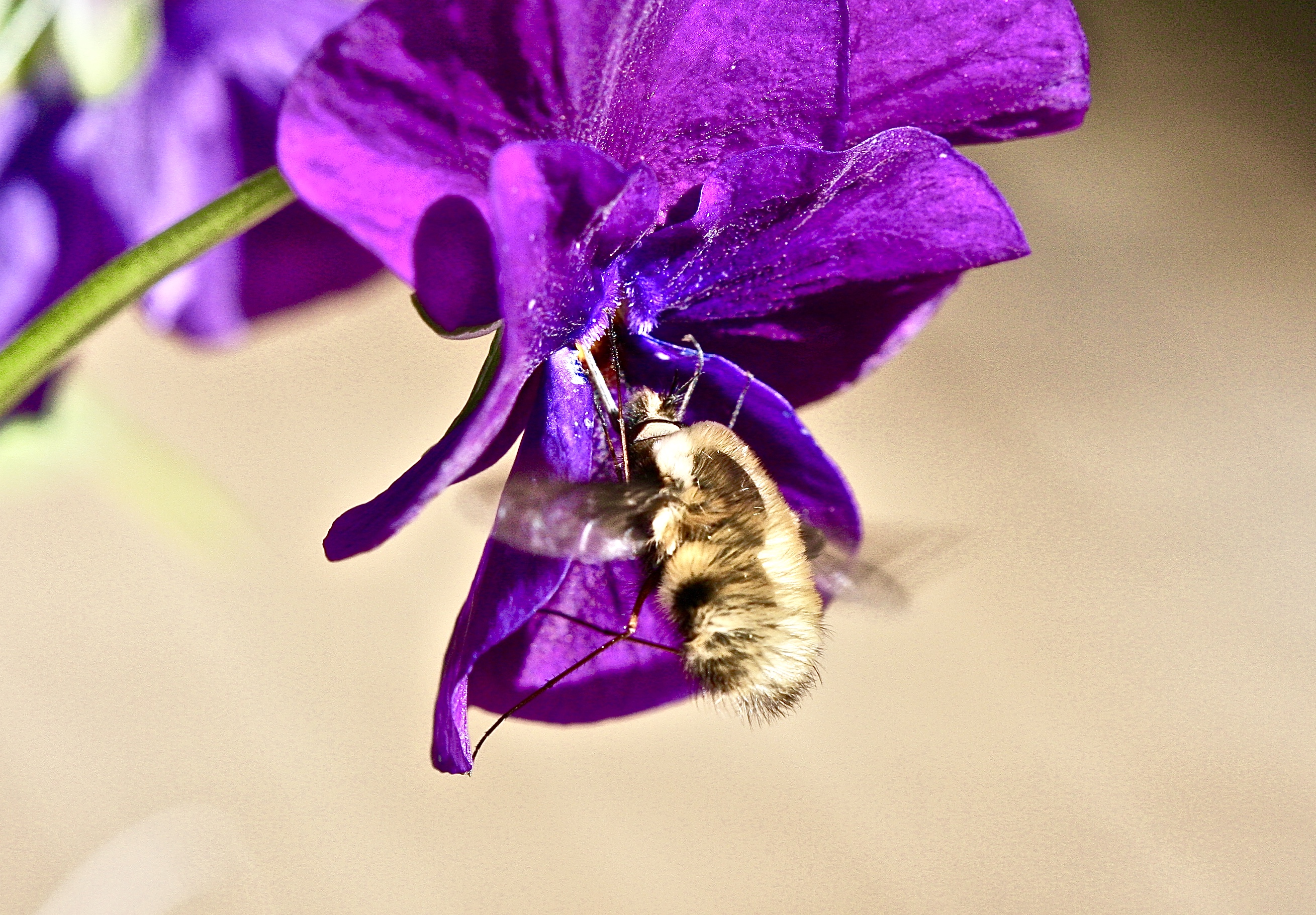
Thankfully the sun was out for a bit yesterday afternoon.  The gray skies and temperatures hovering in the mid 40’s make for a long springtime in the Pacific Northwest.  Fortunately, the rain brings spring blooms for the pollinators that are emerging and I was thrilled to finally get a (relatively)  clear shot of the Greater Bee Fly as it visited one of the pansies in my hanging basket.   For those who may have never attempted to photograph a bee fly, all I can say is that they are incredibly fast and extremely camera shy!

fullsizeoutput_1d08

Greater Bee Fly (Bombylius major)

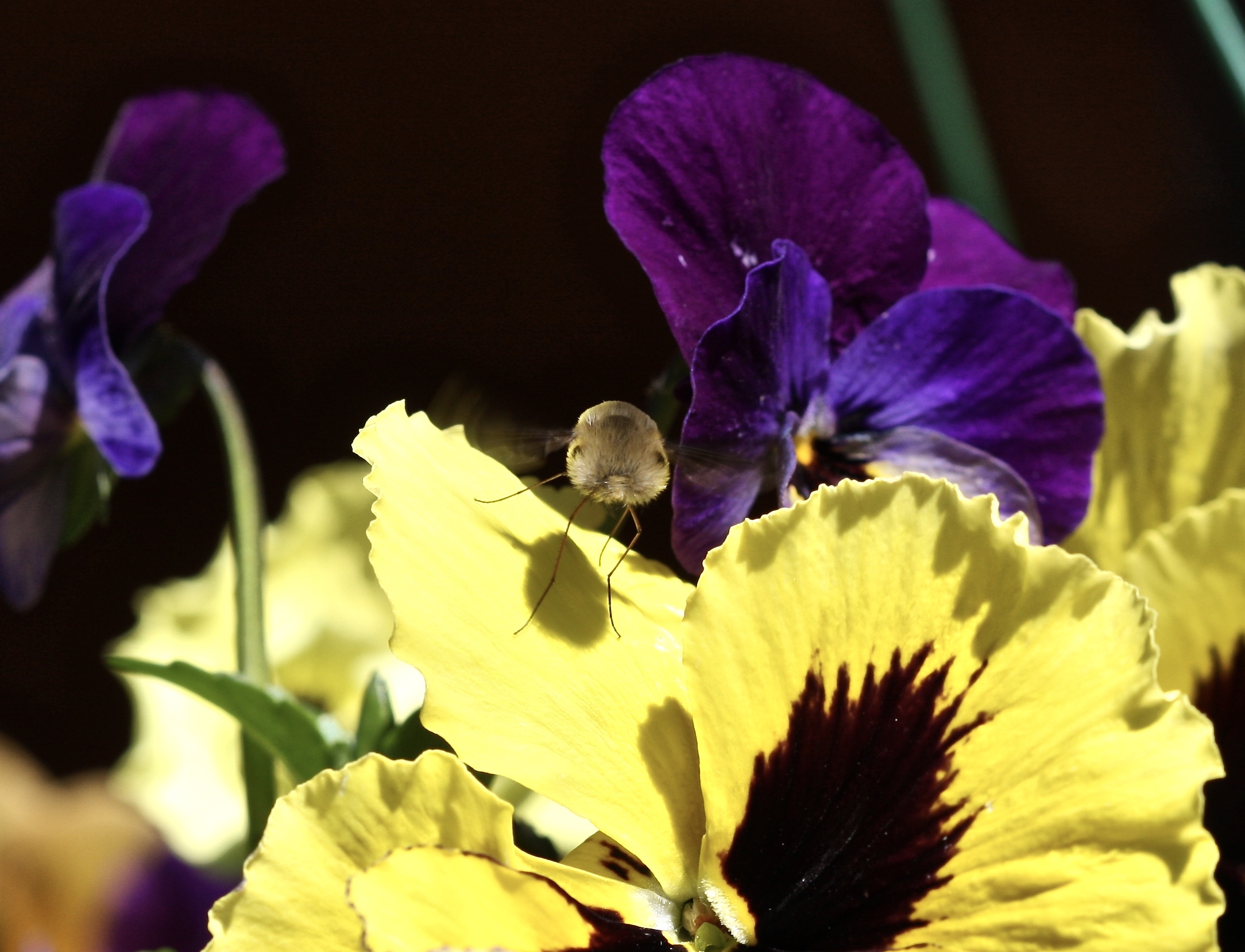
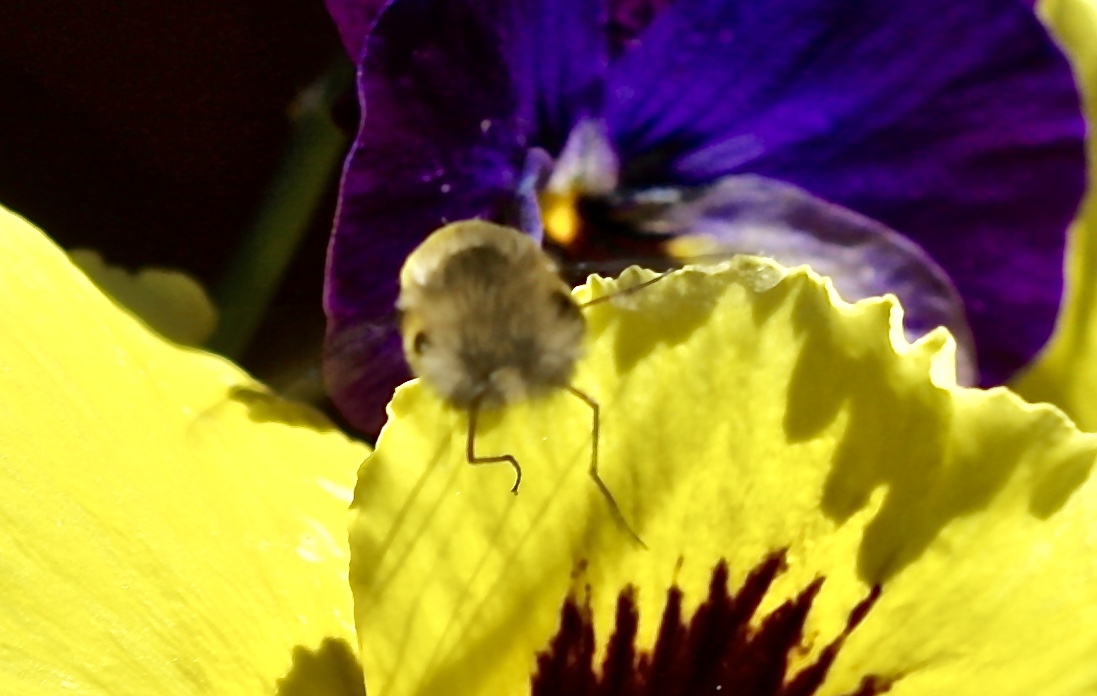
The bee fly is an early pollinator and it is not a bee, although it really looks like one with all of its fuzzy hair.  The Bee Fly is actually a FLY in the insect order Diptera.  This means it has only one pair of wings (actual bees in the order Hymenoptera have TWO pairs of wings!), stubby antennae, and very large eyes.  This photo I took capturing the back of the bee fly shows how closely their hind legs resemble the legs of other diptera, like mosquitoes and crane flies.  Two other amazing features of the Bee Fly are its incredibly long proboscis or “tongue,” enabling it to reach deep into flowers with tubular shapes (like those on Red-Flowering Currant ~ Ribes sanguinium) and its ability to hover mid-air and zoom away, much like the aerobatic maneuvers of a hummingbird!

fullsizeoutput_1cfd

Greater Bee Fly

fullsizeoutput_1d05

Mosquito-like legs of Greater Bee Fly

Bee Fly adults emerge and fly from late March through May.   Their preferred habitat is along the edges of woodlands where they fly about seeking nectar from flowers of herbaceous plants (like my pansies!).   If you take a walk about on a sunny day, you may find them visiting emerging wildflowers… like the ones in this great book ~ https://www.amazon.com/Wildflowers-Pacific-Northwest-Timber-Press/dp/0881927457 .  I have also seen them visiting flowers on shrubs we have in the Pacific Northwest, including Salmonberry (Rubus spectabilis) and Thimbleberry (Rubus parviflorus).

Although a pollinator, the “dark” side of bee fly livelihoods is their nature of taking advantage of other pollinators.  While bee fly adults are happy to fly around taking sips of nectar, they aren’t very interested in caring for their brood or offspring.  Instead, the bee fly female will seek out ground nests of solitary bees like those in the Genus Andrenidae (mining bees), and also those in Colletidae (plasterer bees) and Halictidae (sweat bees).  The bee fly can hover over the open nest cavities of these bees and drop eggs down into them or nearby.  Bee fly larvae hatch and compete with the bee larvae for the pollen provisioned inside these nests.  As they grow, the bee fly larvae become carnivorous and eat the developing bee larvae.   If you would like to read more about this process, check out this really informative article by Louise Kulzer here ~ https://crawford.tardigrade.net/bugs/BugofMonth19.html


Further reading:

https://www.fs.fed.us/wildflowers/pollinators/pollinator-of-the-month/bee_flies.shtml

http://drawwing.org/insect/bombylius-major-wing-0.  (Wing venation of Bombylius major)

https://bugguide.net/node/view/14997


« Older Entries Recent Entries »