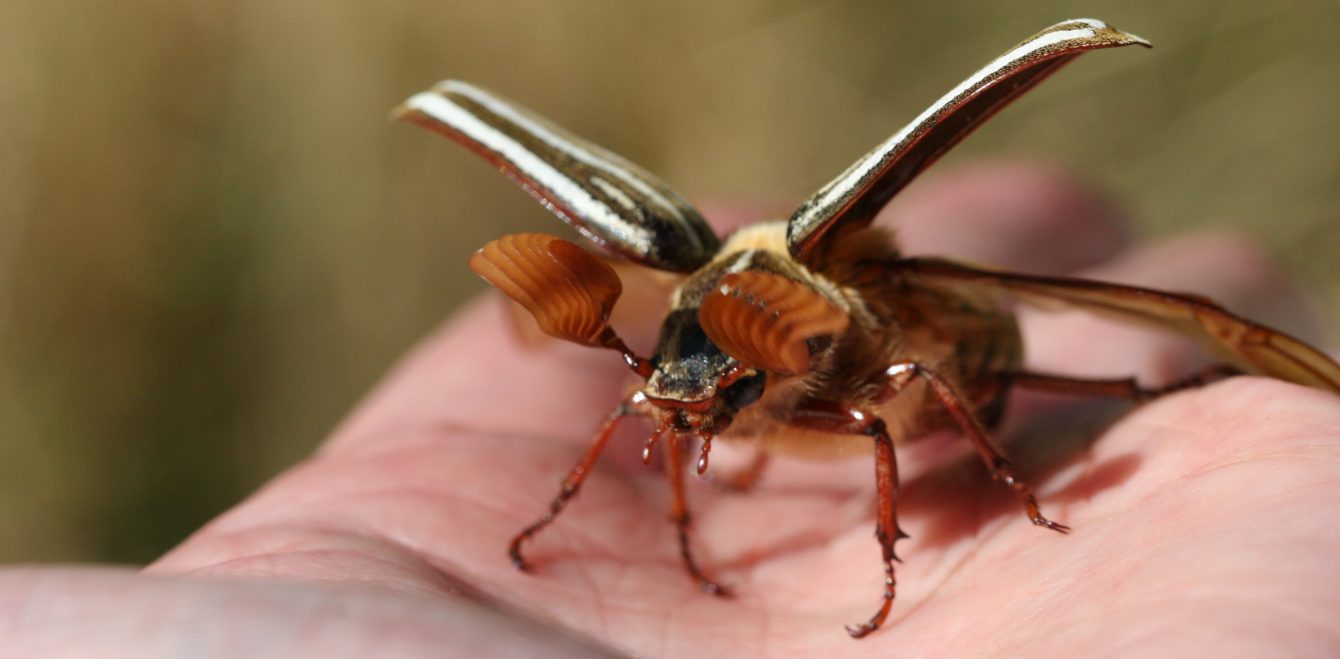
Odonteus obesus, the Geo-trooper
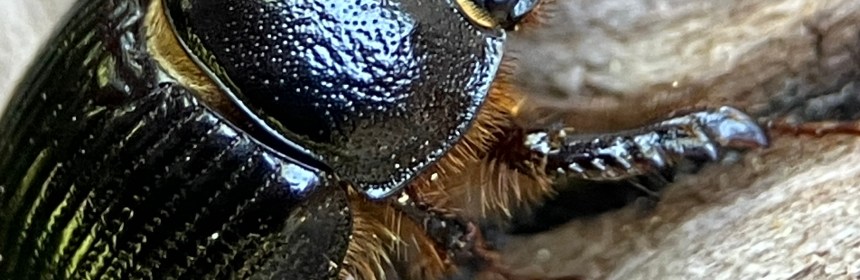
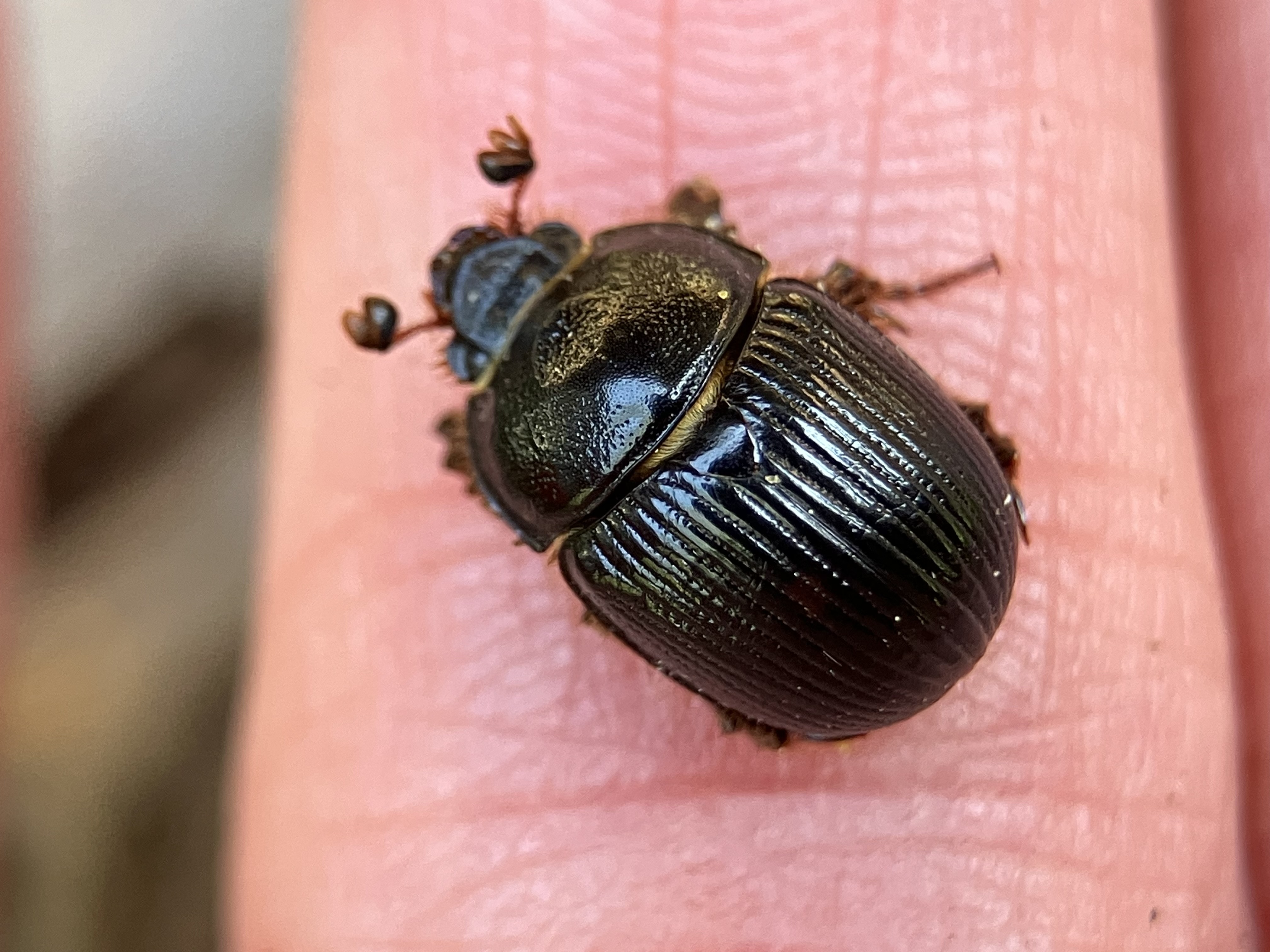
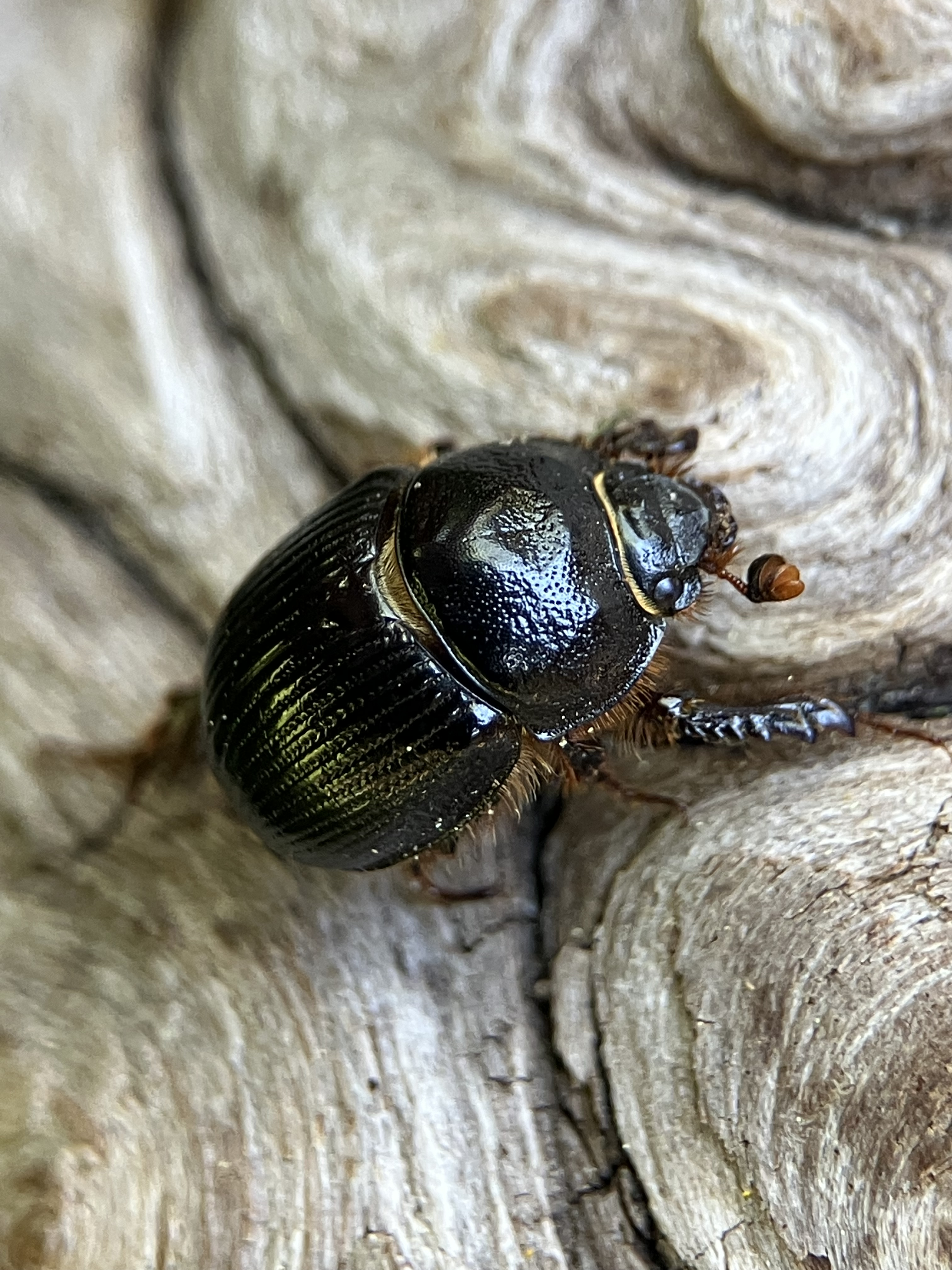
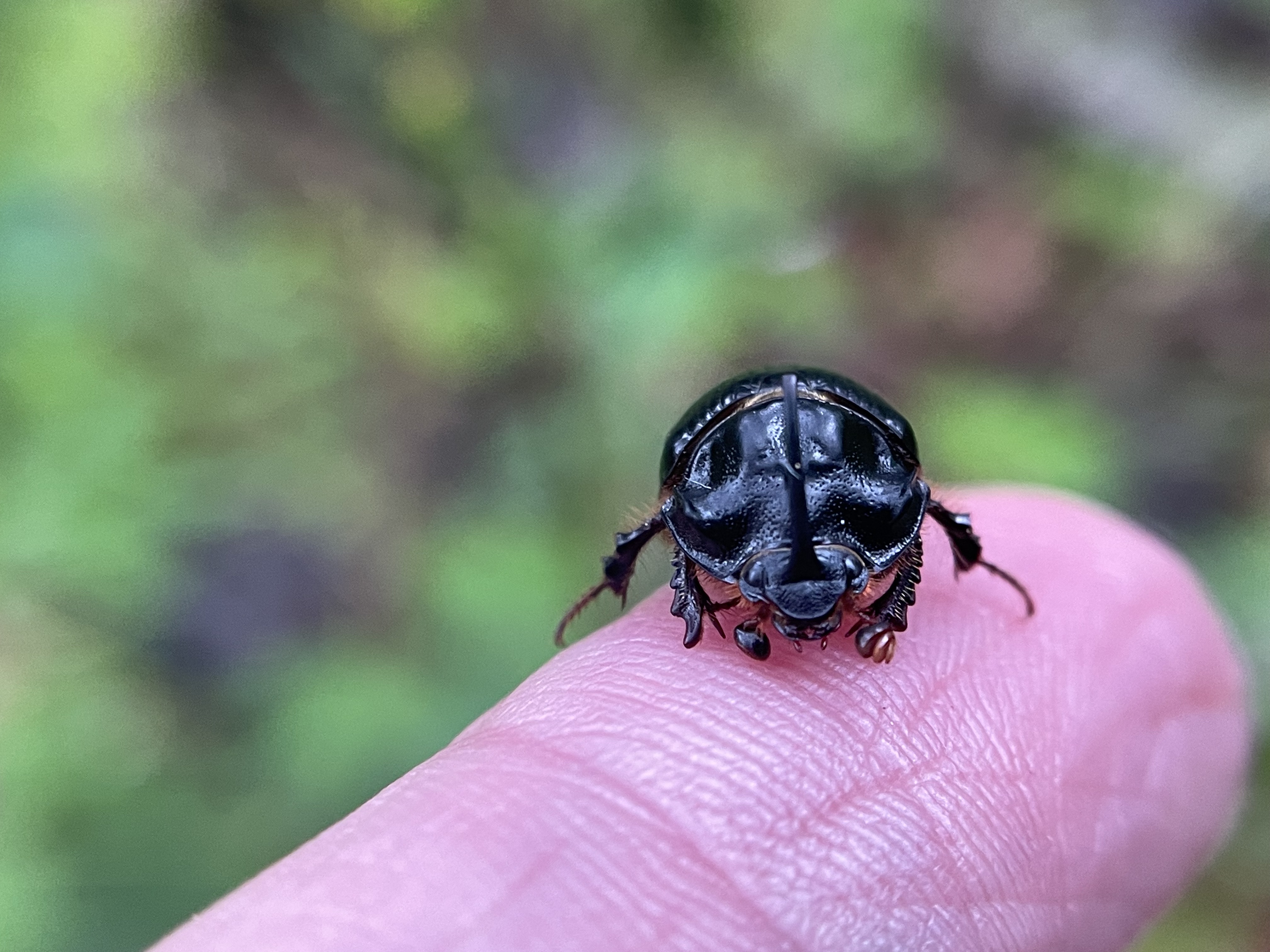
This is a post about one of the most unusual beetles I’ve ever found on San Juan Island. The species is Odonteus obesus. I’m hoping to attract a male specimen to my bug light after finding this female over the weekend, but haven’t had any luck yet. A few years ago, I found a male though. They are simply incredible, beautiful and weird all at once… like finding a unicorn in the forest. Literally! The male of this species has a sharply pointed unicorn horn that protrudes from the front of its head. If you are curious to see a male specimen, check out an earlier blog post I wrote about them here – https://buggingyoufromsanjuanisland.com/tag/odonteus-obesus/
These beetles are in the family Geotrupidae. “Geo” from Greek, meaning earth, and “trypetes” or “trupes” which means to bore or drill. In Europe, these beetles are referred to as dor beetles. “Dor” because they hum. Check out the etymology I’ve copied for you below for the word Dor.
Greek “dor” (δορ):. Primarily used in Proto-Indo-European languages, “dor” and “dorn” meant “bee,” “hornet,” or “drone,” as explained by Wiktionary. It’s related to the Middle English “dorre” and Old English “dora,” also meaning “humming insect,”.
Geotrupid beetles live in the earth in burrows they excavate that can be up to 4 feet deep, often in material composed of dead leaves, cow or horse dung, or humus. We don’t have any horse or cow dung in our yard, so I’m guessing the decaying forest leaf litter is a suitable substrate for them or perhaps they are incorporating deer or the dung of other wildlife (fox, raccoon, or rodents) for use.
Why are Geotrupid beetles (and other dung beetles ) extremely beneficial? They are a source of food for other wildlife that eat them, but perhaps even more important for the role they play in improving soils by adding nutrients and removing animal waste. The beetle’s burrowing nature helps build healthy soil by incorporating organic matter, resulting in increased soil friability (it isn’t as clumpy), improved soil aeration, as well as improved water-holding capacity.
Additionally, these, and other species of dung beetles, have been found to be effective biological control agents for gastrointestinal parasites of livestock. In agricultural areas, they “clean” the pasture by removing manure or decomposing material as they burrow into the earth https://attra.ncat.org/publication/dung-beetle-benefits-in-the-pasture-ecosystem/.
Unfortunately, the increasing dependence of livestock producers on veterinary anthelmintic medications is threatening populations of nature’s best (and free) helpers. Many of the worming medications (like Ivermectin) given to livestock, pass through into the dung and then kill off the dung beetles when they feed. The result is an increased reliance on veterinary medications to control livestock pests and parasites and decreased pasture health because there is no beetle to break down the animal dung. As the pasture is littered with scattered dung, it becomes harder for the livestock to feed because they will avoid areas contaminated with dung.
To learn more about this species and other dung beetles, please check out the linked references below.
Thanks for reading!


References and Further Reading
Brast, Cynthia. 2022. Radar love. Odonteus obesus. Bugging You From San Juan Island. https://buggingyoufromsanjuanisland.com/tag/odonteus-obesus/
Bugguide.net. 2023. Geotrupidae Earth-Boring Scarab Beetles. Iowa State University. https://bugguide.net/node/view/6810
Entomologist.net. No Date. Beetles Dor Beetle (Geotrupes stercorarius) https://entomologist.net/beetles/62-geotrupes-stercorarius.html
Jameson, Mary Liz. 2005. Geotrupidae. Generic Guide to New World Scarab Beetles. UNL State Museum. https://unsm-ento.unl.edu/Guide/Scarabaeoidea/Geotrupidae/Geotrupidae-Overview/GeotrupidaeO.html
Thomas, Michelle. 2001, and Rodriguez, O. 2020. Dung Beetle Benefits in the Pasture Ecosystem. ATTRA Sustainable Agriculture. National Center for Appropriate Technology. https://attra.ncat.org/publication/dung-beetle-benefits-in-the-pasture-ecosystem/




 Bugging You From San Juan Island