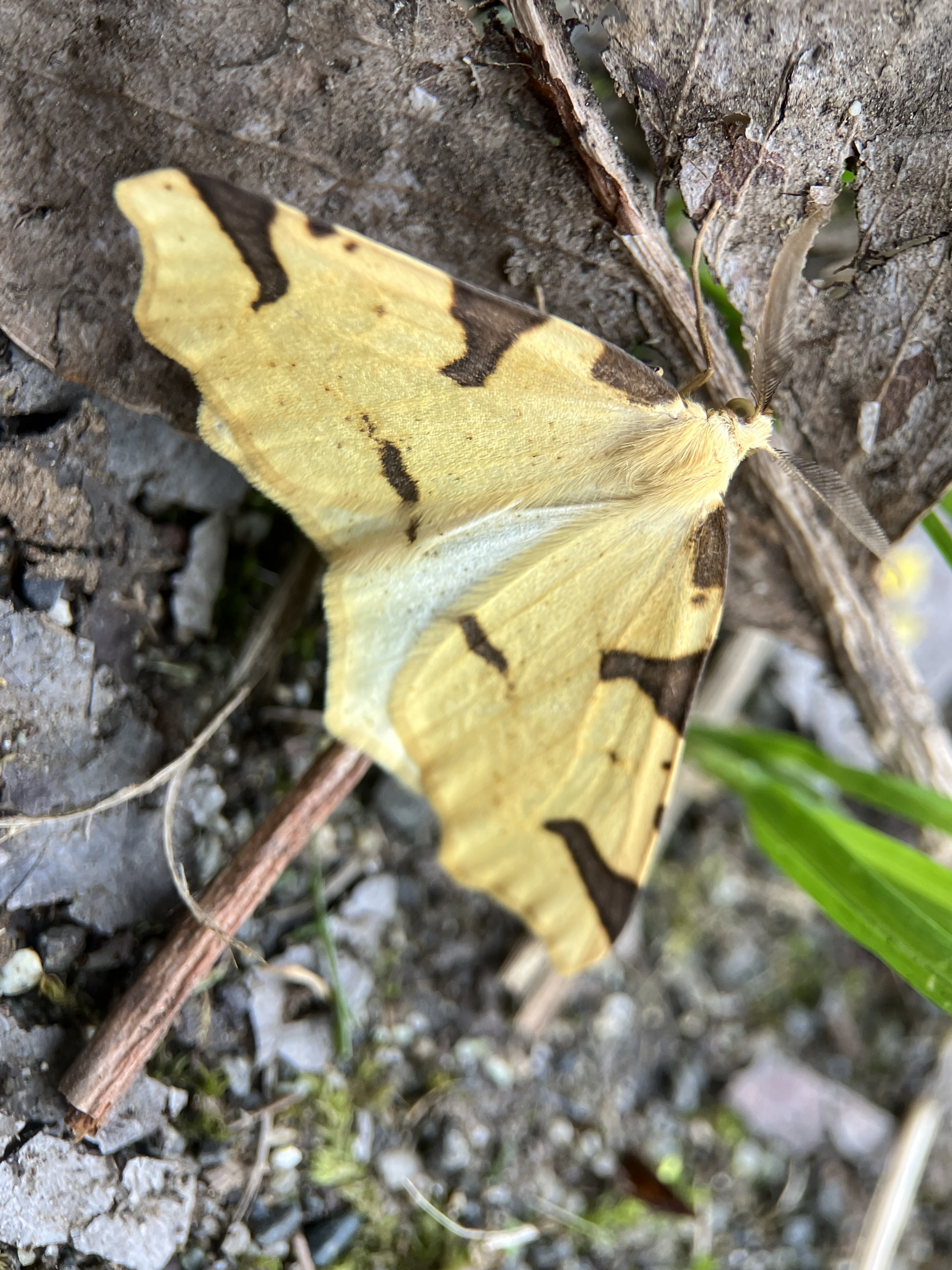
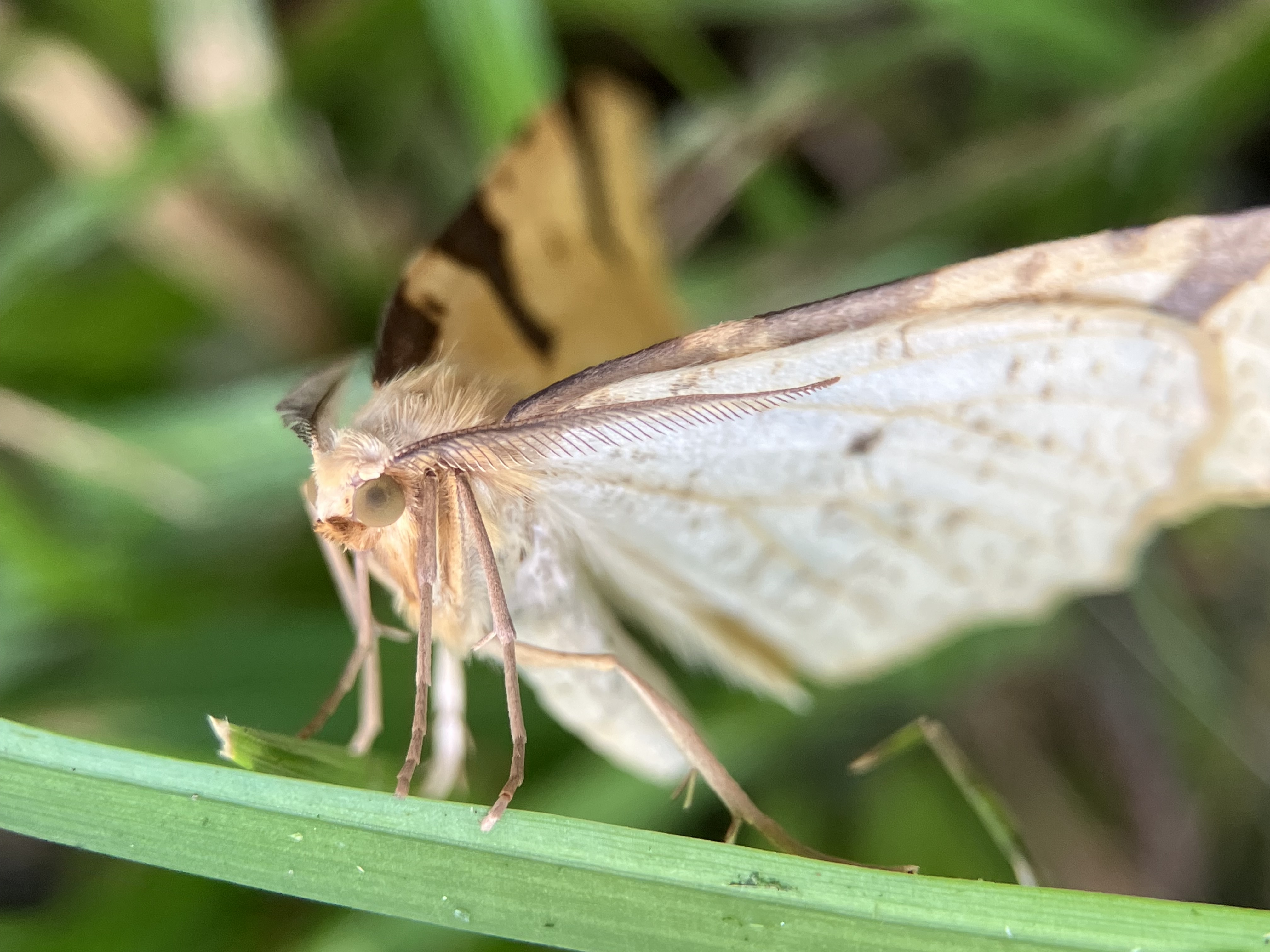
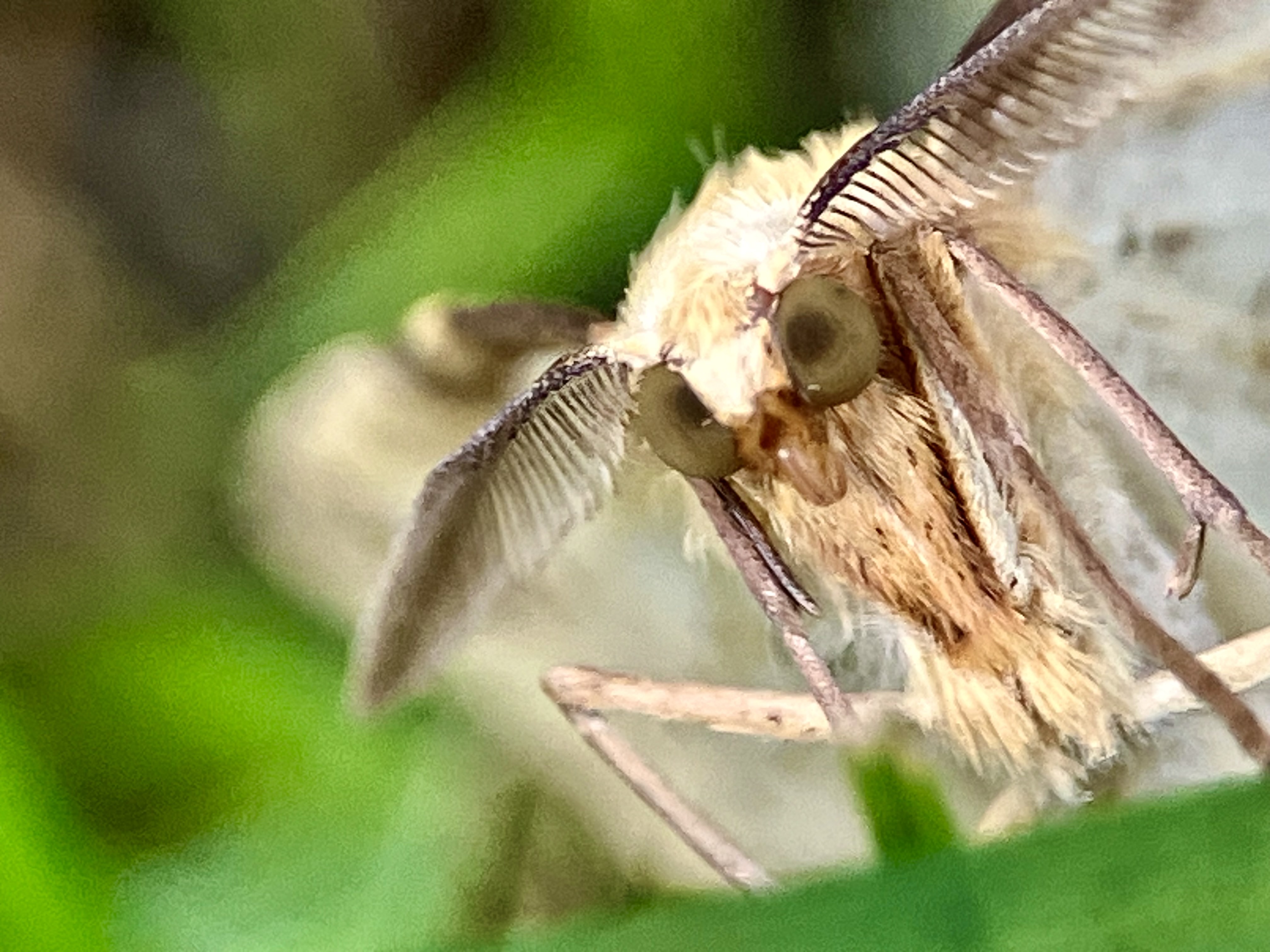
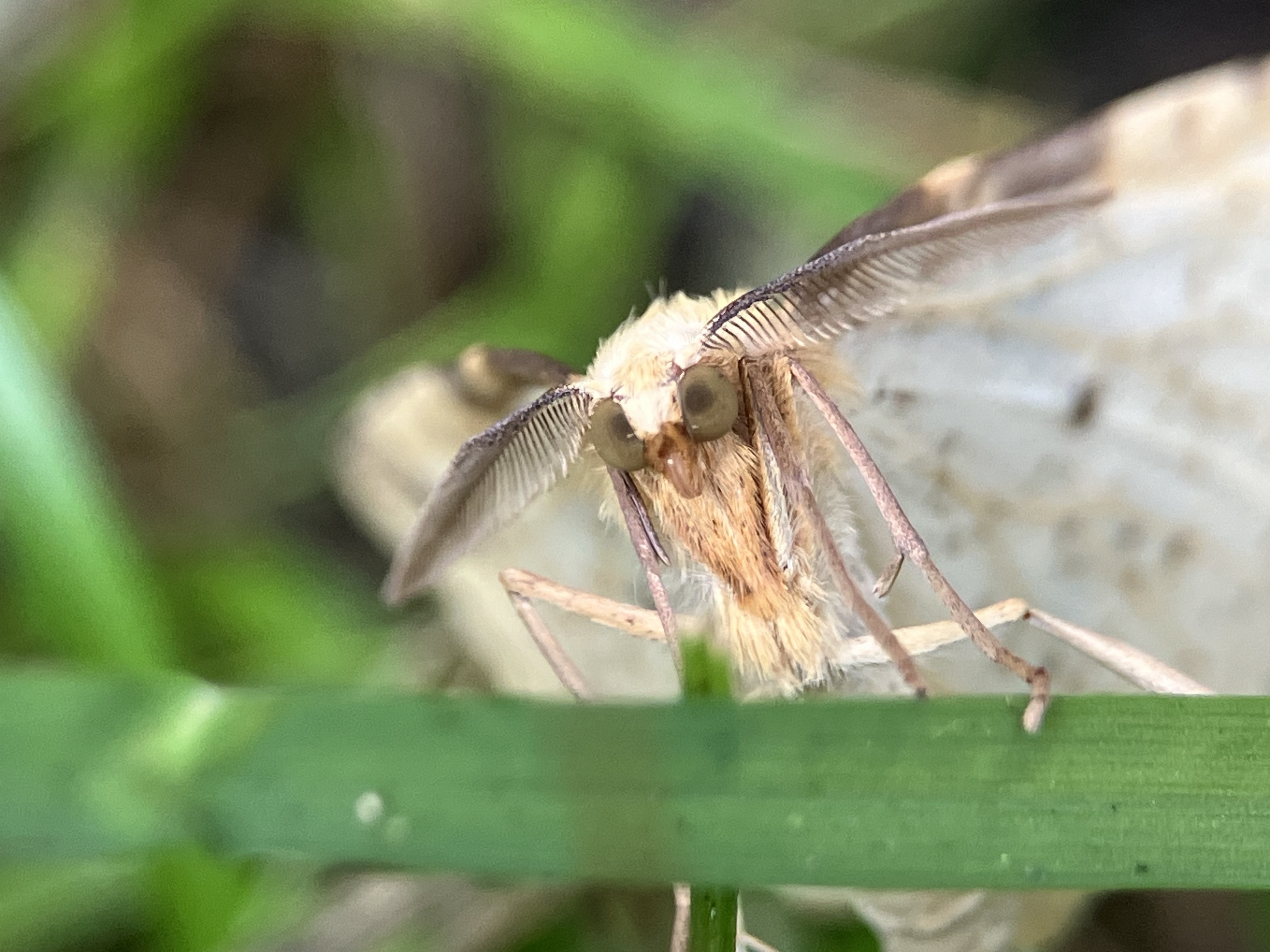
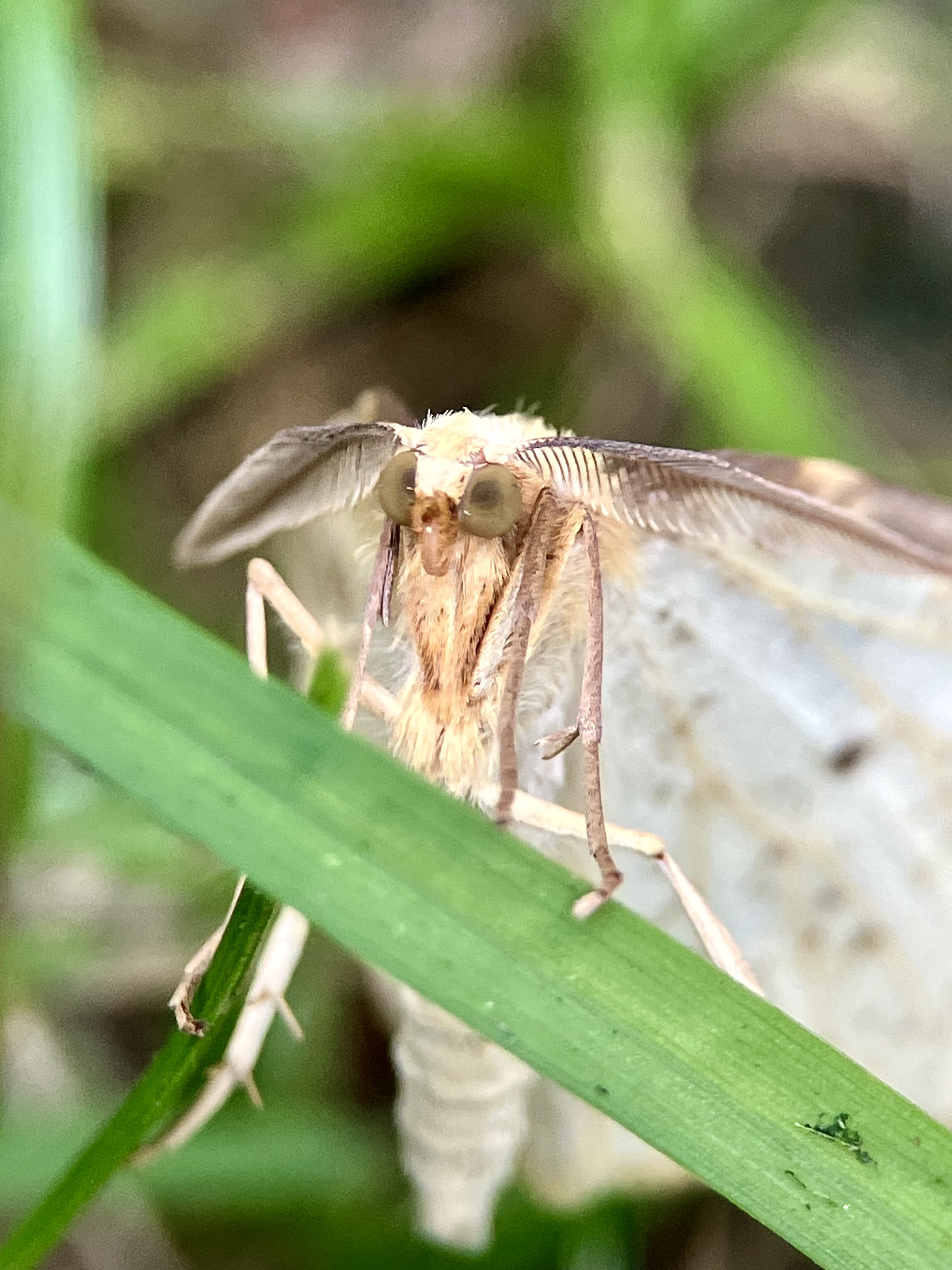
Canary thorn moth, (Neoterpes trianguliferata)

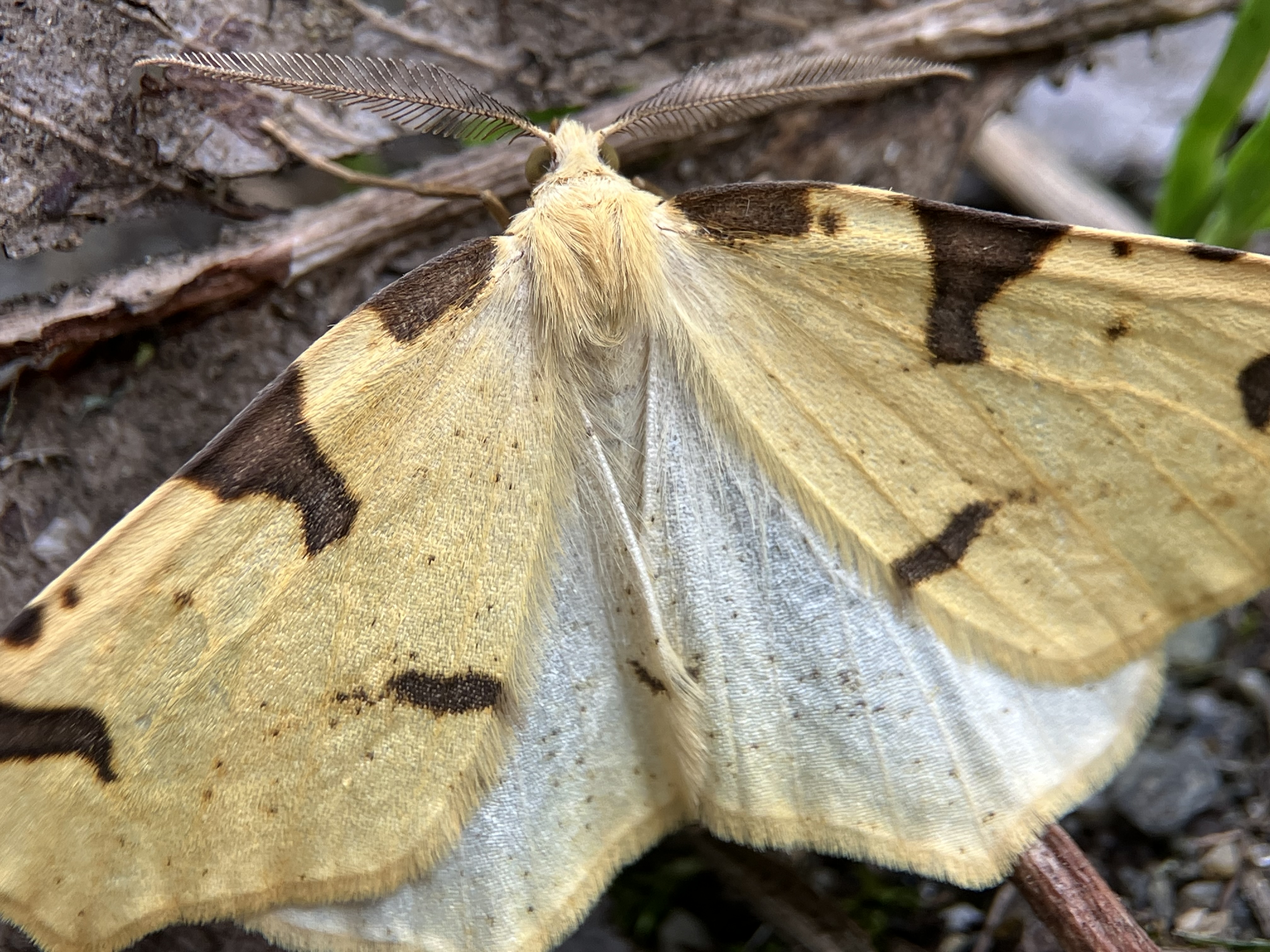
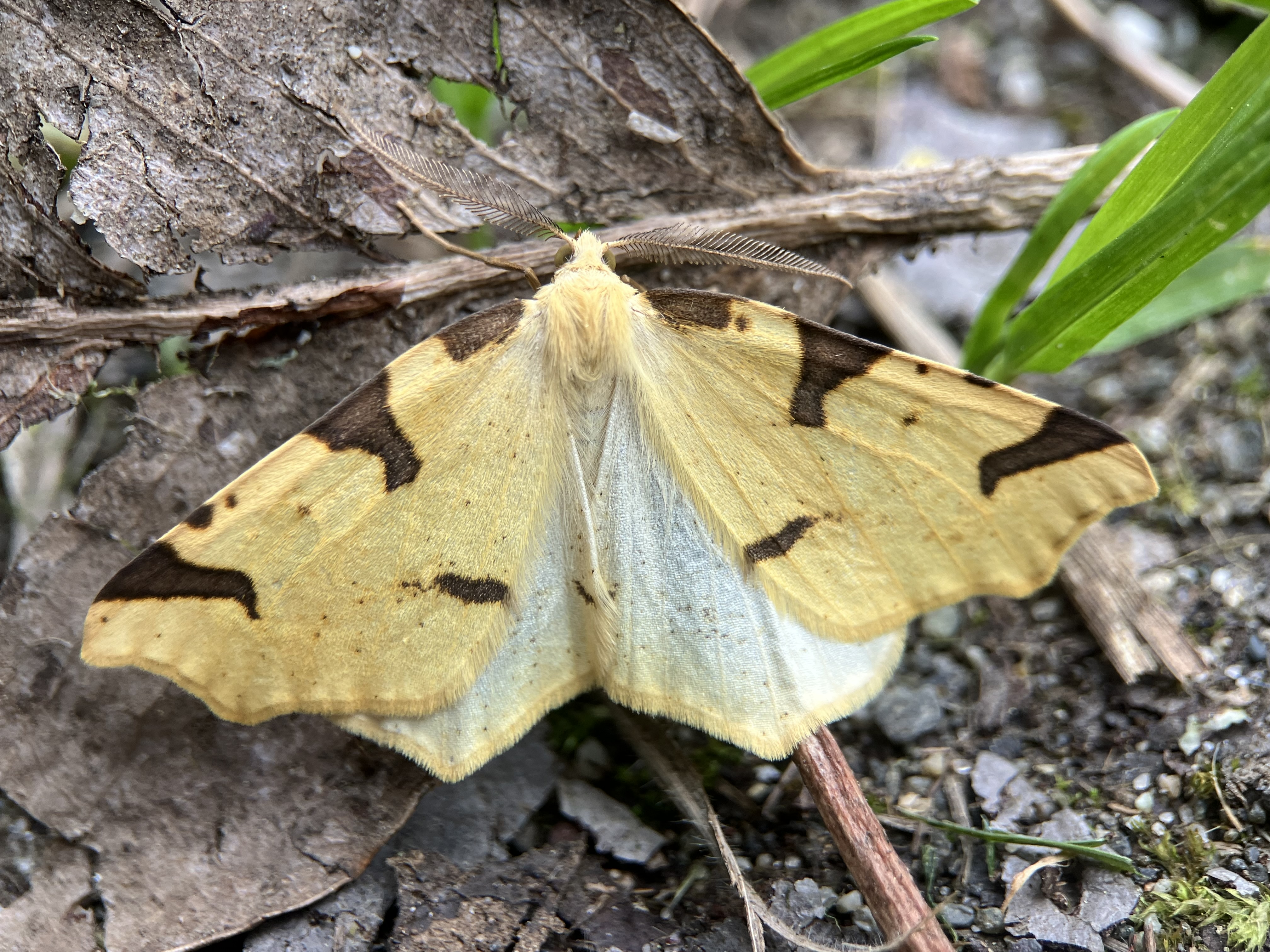
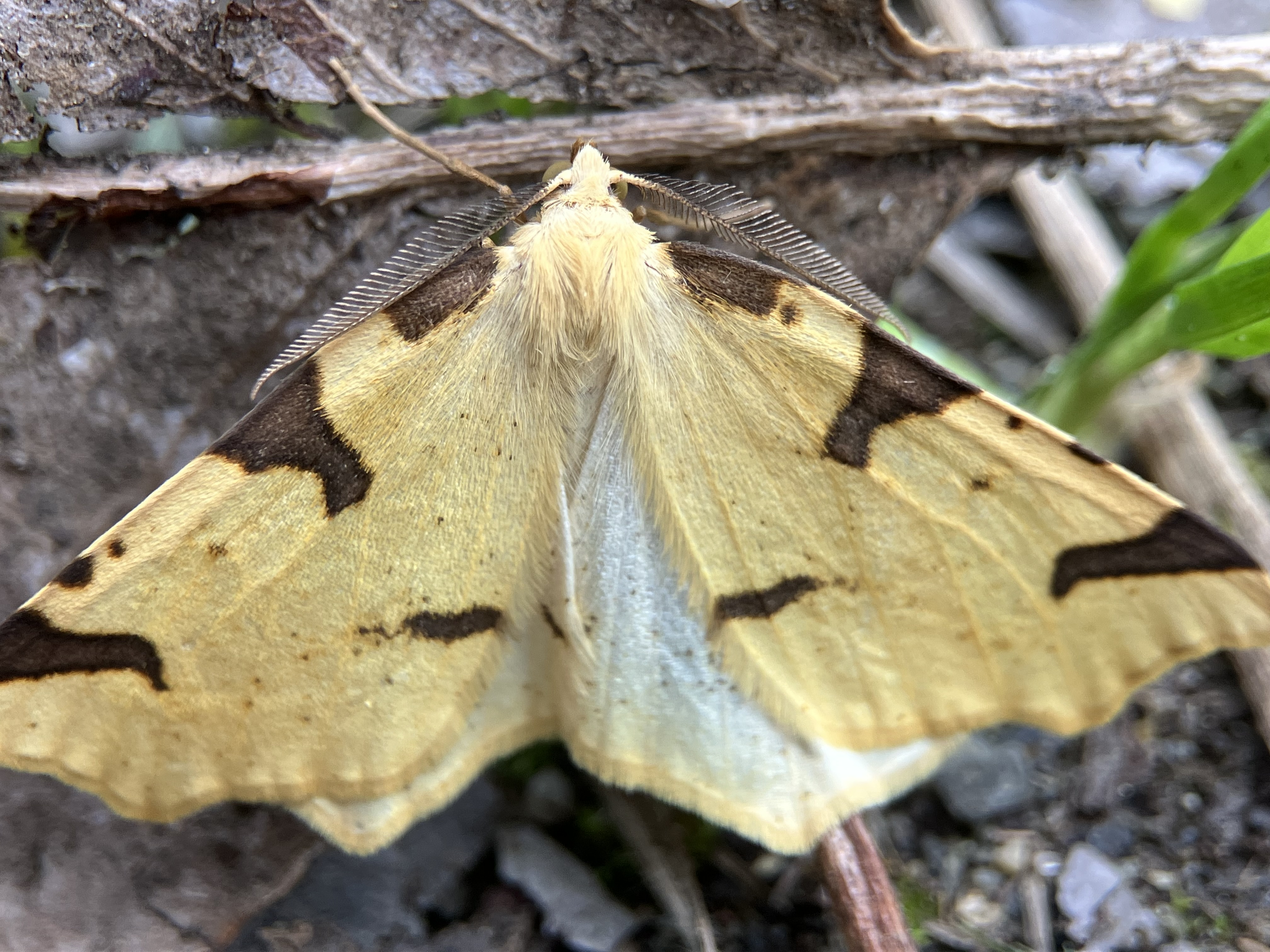
I found the most beautiful creature at my moth light this morning. It is the Canary Thorn Moth (Neoterpes trianguliferata ). I was surprised to see anything there given the drop in temperatures we’ve had the past few days. After a few photos, I got too close and he flew out of the open barn area into some grass, struggling a bit in the wind, so I was able to carefully coax him back into an egg carton to shelter the day back undercover and out of the rain.
If you’re wondering about the egg carton, I use these in my moth light set up to give the moths a secure place to hide when they settle down under the light for the night. The egg cartons are in a 5 gallon bucket. I have the “low end” set up, so no major investments in equipment. Anyone could do this at home. It’s fun to “moth” and see what species live around us. If you’re interested, shoot me an email and I’ll coach you on getting set up yourself. For the record, all of my specimens are photographed with respect and care, and allowed to live free. I do not take specimens for pinning. I definitely believe they are here to be admired in the wild, not in a glass case.



More about this species:
Neoterpes trianguliferata is a species of Geometrid moth that ranges from southern British Columbia to southwestern Alberta, south to Colorado, Utah, and California. The hostplants for larvae (the caterpillars) are Currants and Gooseberry (Ribes). I’ve linked information for some of the native host plants below in the reference section.
Larvae are twig mimics. Pupae sleep through the winter wrapped in a leaf, another reason to “leave the leaves” and refrain from burning or bagging and discarding the leaves around your home. You could inadvertently impact overwintering species like these and others. Adults are approximately 14-20mm (forewing length). You will see adults in flight between April-June in our area. From what I have been able to find as to the etymological meaning of the name, Neoterpes may translate to “new delight” and trianguliferata refers to the triangle-shaped markings on the forewings. It was indeed a delight to see this beauty today! A bit of sunshine on a rainy spring day.

References
Bressette, Dana Kelley. no date. Coast Black Gooseberry, Ribes divaricatum. Native Plants PNW. https://nativeplantspnw.com/coast-black-gooseberry-ribes-divaricatum/
Bressette, Dana Kelley. no date. Red Flowering Currant, Ribes sanguineum. Native Plants PNW. https://nativeplantspnw.com/red-flowering-currant-ribes-sanguineum/
Bugguide.net. 2023. Species Neoterpes trianguliferata – Hodges#6860. Bugguide. Iowa State University. https://bugguide.net/node/view/114007
Moth Photographers Group. Neoterpes trianguliferata (Packard, 1871). Mississippi State University. https://mothphotographersgroup.msstate.edu/species.php?hodges=6860
Nelson, Dan. 2021. Neoterpes trianguliferata. 10,000 THINGS OF THE PACIFIC NORTHWEST
Adventures of a Recreational Naturalist. http://10000thingsofthepnw.com/2021/08/08/neoterpes-trianguliferata/
 Bugging You From San Juan Island