
Category Archives: Uncategorized

The Meadow Spittlebug (Philaenus spumarius) aka “Foam Lover”

Meadow Spittlebug (Philaenus spumarius)
Zylstra Lake Preserve, San Juan Island, WA 9-7-19

I took this photo of a Meadow Spittlebug (Philaenus spumarius) on September 7, 2019 when I attended the San Juan County Land Bank’s open house at the new Zylstra Lake Preserve http://sjclandbank.org/zylstra-lake-preserve-san-juan-island/ . It was a bit cloudy, but fortunately it didn’t rain during the event.

While there weren’t many insects out and about, I was happy to get a shot of the adult version of this species. It was hanging out with some family members on the stem of a thistle growing alongside the walking path.

Meadow Spittlebugs on Thistle
Zylstra Lake Preserve
San Juan Island, WA
09-07-19

Spittlebugs are in the insect order Hemiptera and the family Cercopidae (1). You might recognize these as the mystery bug that hides as a nymph inside a frothy dollop of bubbles on stems of vegetation. This particular species is widespread in North America and very common in the Pacific Northwest (1). So, if you’re out for a walk in the springtime, you’ll see lots of vegetation that appears to have wads of spit stuck to it…and the tiny meadow nymph is hiding inside!

The Meadow Spittlebug (Philaenus spumarius) is also known as the Common Froghopper and it does indeed look very frog like to me. 🐸 Even more interesting, a Google search of the etymology of this little bug’s name yielded this (from Wikipedia):

“The genus name Philaenus comes from the Greek philein (“love”), while the species name spumarius is from the Latin spuma (“sparkling”), referred to the foam nests; the binomial Philaenus spumarius can be translated as “foam lover.”

The adult spittlebug is small (approximately 6mm in length). Both adults and nymphs (which go through 5 instars or developmental stages before reaching adulthood) feed on plant xylem and have been found to feed on over 450 species of plants (2,3,4). While they have the ability to transmit viruses and cause damage to plants from feeding, they are typically not considered serious pests unless they are present in large numbers. It was interesting to learn that the nymphs consume up to 280 times their own weight of plant sap in 24 hours (2,3,4).

Also interesting is that only the soft-bodied nymphs live in the foam. It provides them with protection from predation and from drying out (desiccation). The spittle is a fluid produced from their anus and combined with a surfactant secreted by epidermal glands near the end of their abdomen. Caudal appendages on the insect create air bubbles, turning the spittle into a frothy foam. The tiny (1/4″ long) spittlebug nymph usually rests on the plant facing downward. When the spittle is produced, it flows downward over the body and covers the nymph, concealing it and providing it with the moist habitat it requires as it develops (4).

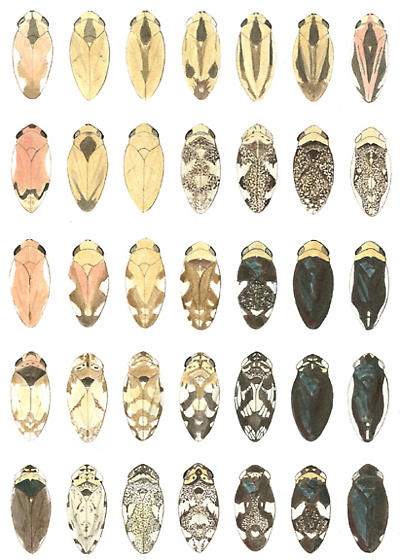
Another interesting bit about the Meadow Spittlebug is that it is quite polymorphic with no less than 16 adult color forms (1). Andy Hamilton (2006) has contributed a wonderful chart, shared on Bugguide https://bugguide.net/node/view/72602 to illustrate the color varieties of the adult forms of this highly variable species (1, 2). Because of the diversity among adult specimens within this species, many researchers have been interested in Philaenus spumarius for genetic study (4).

Andy Hamilton 2006 ~ bugguide.net

*I wanted to include a personal observation about natural enemies of spittlebugs. Hamilton (1982) gives the most detailed account of these, but I didn’t note any mention of predation by yellow jackets (Hymenoptera: Vespidae), or dragonflies (2). I have observed both of these flying through meadow grasses appearing (but not confirmed) to glean spittlebugs from plants in early summer on San Juan Island.

References:

1. Bugguide.net https://bugguide.net/node/view/7452

2. Hamilton, K.G.A., 1982, The spittlebugs of Canada: Homoptera: Cercopidae, Insects and Arachnids of Canada Handbook Series, 10, 102 http://esc-sec.ca/publications/aafc/

3. Horsfield, D., Evidence for xylem feeding by Philaenus spumarius(L.) (Homoptera: Cercopidae). Ent. Exp. Appl., 24: 95-99, 1978.

4. Yurtsever, Selcuk. (2000). On the meadow spittlebug Philaenus spumarius. Turkish Journal of Zoology. 24. 447-459.

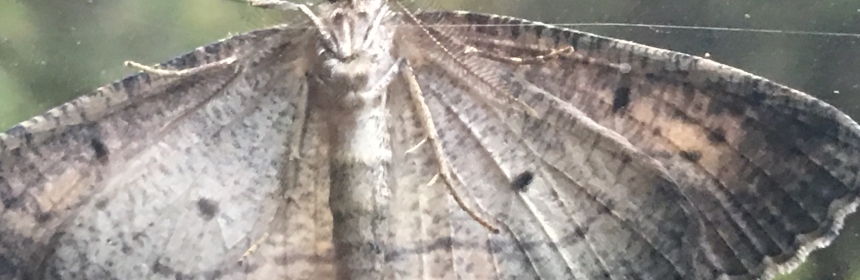
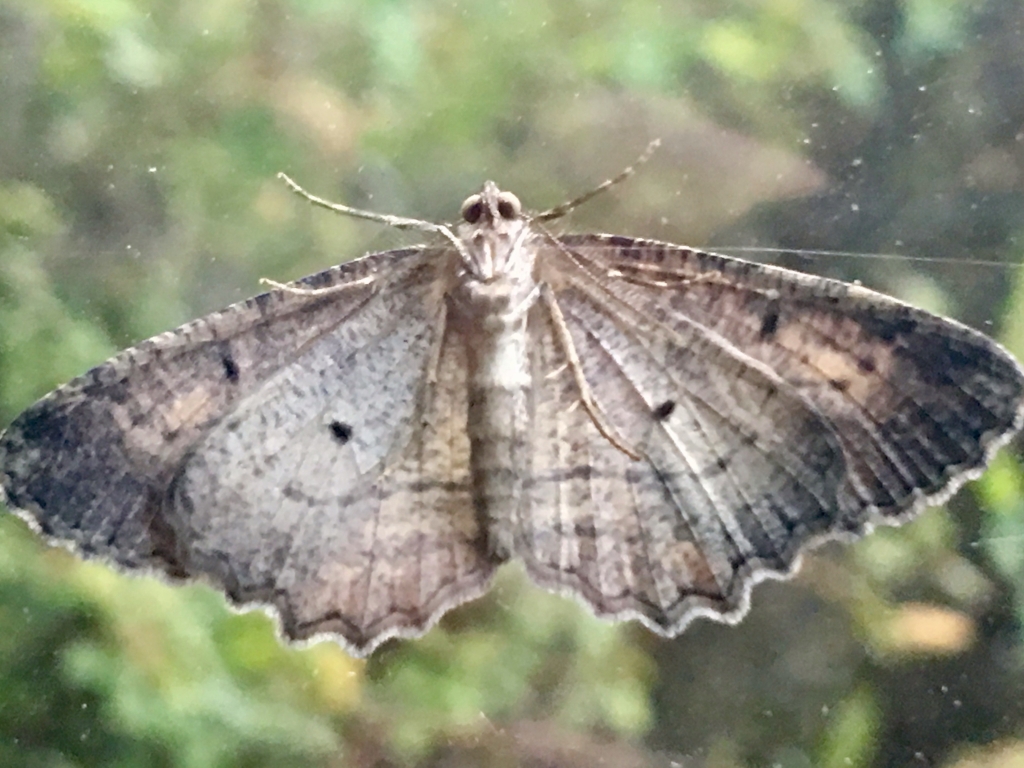
Brownlined Looper (Neoalcis californiaria)

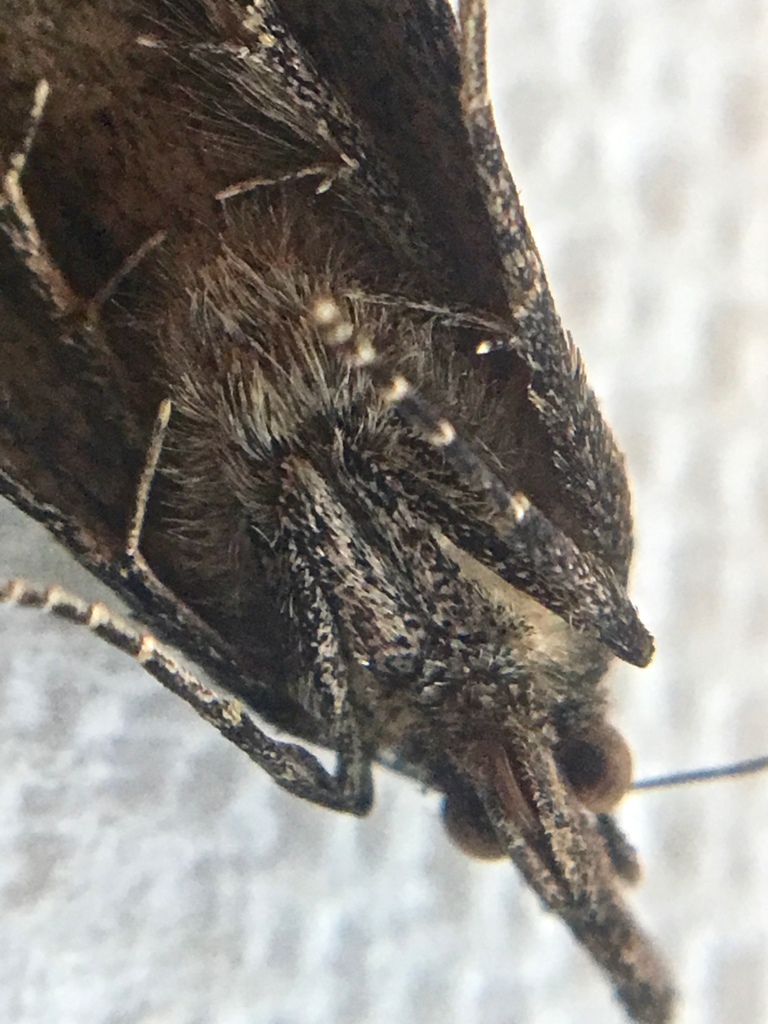
I found this specimen ready to hitch a ride on the car window when I was leaving a dinner on Sunday evening, August 25, 2019. Time of sighting was 7:32 pm. It managed to stay on the window glass as we pulled out of the driveway, but blew off as we began our drive home.

This is a Brownlined Looper moth, Neoalcis californiaria in the family Geometridae and is the single species in its genus in North America. Its distribution ranges from Southern California to British Columbia. Adults can be found flying between March and October in the Pacific Northwest, but have been documented flying as late as December in California. Larvae of this species feed mostly on conifers, including Douglas-Fir, Western Hemlock, Western Red Cedar, Grand Fir, Lodgepole Pine (Canadian Forest Service) as well as many broadleaf trees and shrubs (USGS).

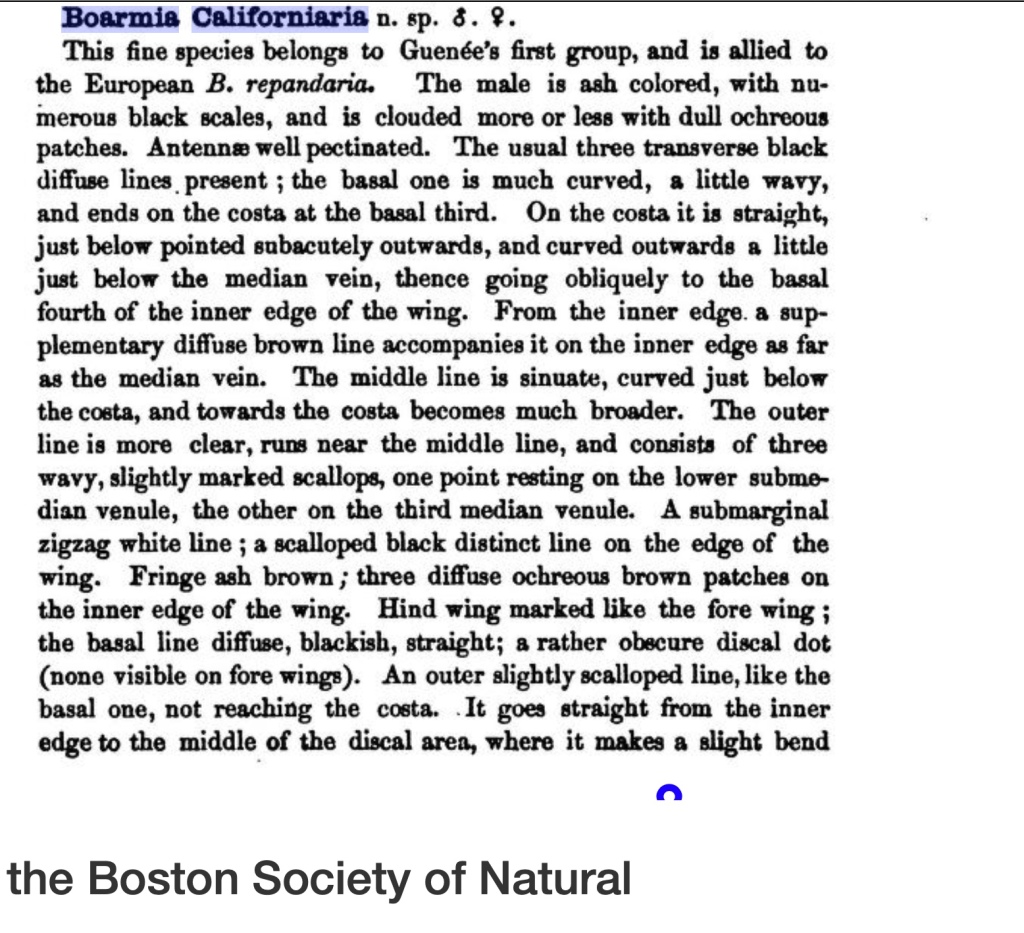
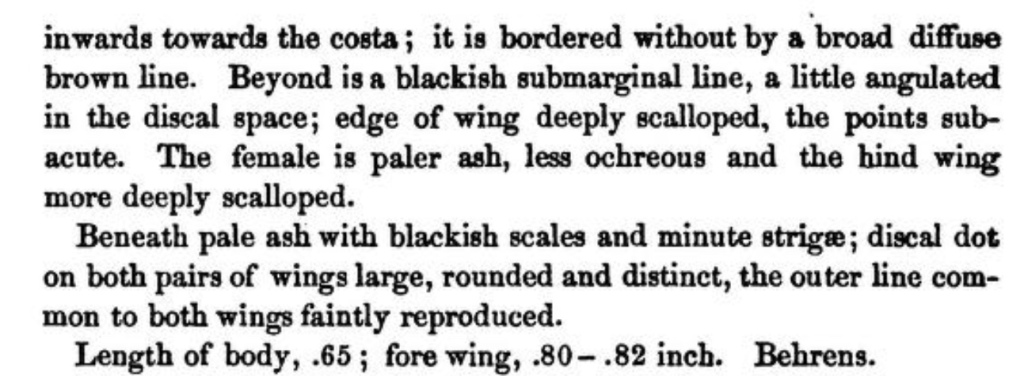
First described by American Entomologist, Alphaeus Spring Packard in 1871, this rather nondescript moth was initially named Boarmia californiaria. A description by Packard is found in the Proceedings of the Boston Society of Natural History. Volume 13 https://archive.org/details/proceedingsbost07histgoog/page/n39 or view description attached below.

Neoalcis californiaria
August 25, 2019, 7:32 pm
San Juan Island, WA
Neoalcis californiaria
August 25, 2019, 7:32 pm
San Juan Island, WA
Packard’s description of Boarmia californiaria
renamed Neoalcis californica
part 1
Packard’s description of Boarmia californiaria
renamed Neoalcis californica
part 2

References

Bugguide.net. https://bugguide.net/node/view/9696

North American Moth Photographers Group. Mississippi State University Digital Guide to Moth Identification http://mothphotographersgroup.msstate.edu/species.php?hodges=6435

Powell, J. A., and P. A. Opler 2009. Moths of Western North America. pl. 28.14; p. 208.

First recorded sighting on San Juan! Apantesis nevadensis superba, the Nevada Tiger Moth

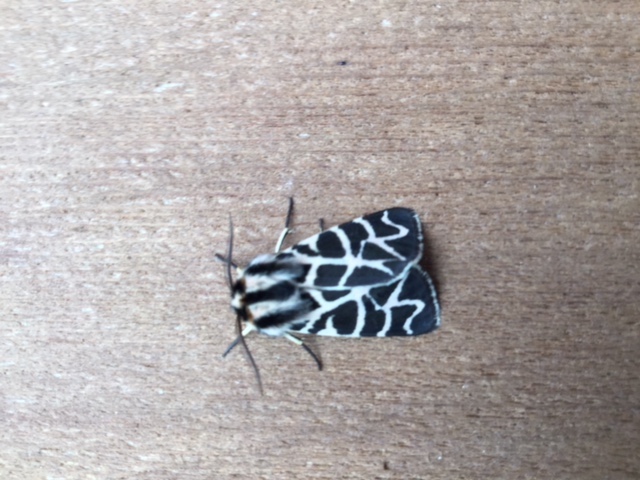
Sunday evening, August 18, 2019, my husband took me to a lovely Farm to Table dinner at Sweet Earth Farm, San Juan Island, WA http://sweetearthfarm.com/products/farm-events/ Aside from the amazing food and beautiful scenery, I got to sit at a table with some really great folks who, after finding out about my love of bugs, sent me a photo of a Tiger Moth that was on the side of their garage door. Turns out this particular moth was going to be pretty interesting!
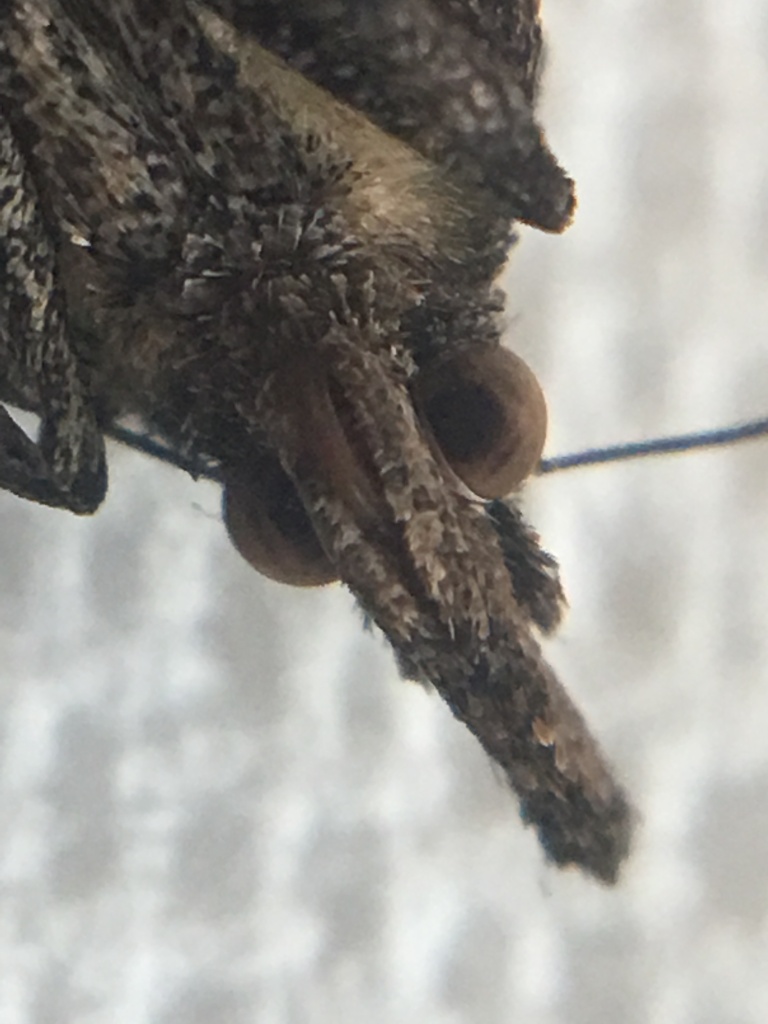
Apantesis nevadensis superba
08.22.18
San Juan Island, WA
photo by N. Hamlin

As I worked through my usual steps to ID the specimen, I noted the photo came to me with “Ornate Tiger Moth” in the subject line. This specimen was indeed very similar to the Ornate Tiger Moth (Apantesis ornata). To complicate things a bit more, not only has this family of moths (Tiger moths) been reclassified (from Arctiidae to Erebidae), but this genus has also recently been renamed. Formerly Grammia ornata, Apantesis ornata (Ornate Tiger Moth’s) have not been recorded in San Juan County and records for adult flying periods of this species are earlier than for this particular specimen. I believed this specimen was something different.

There were records of another species of Tiger Moth in the Pacific Northwest I came across that better matched the image of my photo and timing of adult emergence. Apantesis nevadensis, the Nevada Tiger Moth, has been recorded as widely distributed in the Pacific Northwest, but according to information on Pacific Northwest Moths http://pnwmoths.biol.wwu.edu/browse/family-erebidae/subfamily-arctiinae/tribe-arctiini/apantesis/apantesis-nevadensis/, A. nevadensis is “only found in a few locations west of the Cascade Mountain crest, including on Vancouver Island, the south Puget Sound, and coastal Oregon.”

However, a fairly recent (2007) review in Zootaxa by Ferguson and Schmidt described a subspecies of Apantesis nevadensis, A. n. superba that had been recorded on Vancouver Island, B.C., our neighbor. Could the San Juan’s be a new geographical locality for this subspecies?

Apantesis nevadensis superba
08.22.18
San Juan Island, WA
photo by N. Hamlin

I emailed the photo to Merrill A. Peterson at WWU. He has a great book available called Pacific Northwest Insects too. You can find it here ~ (https://pacificnorthwestinsects.com). Merrill is Professor and Chair of Biology and Insect Collection Curator at Western Washington University and my all around go-to person for confirmation of insects in our region. Merrill agreed that my ID was correct. Since this was a FIRST record for the San Juan’s, he asked if I could collect locality (GPS) data and date of sighting from the original photographer.

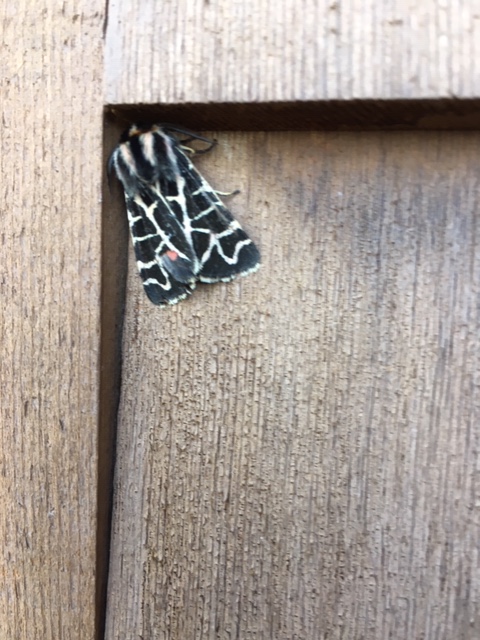
My next task was to email the gentleman who sat with us that night at dinner and ask him if he was willing to share this, enabling Merrill to post the record online. We needed first initial, last name, GPS data, and date of sighting. Not only did I receive a response with this information AND permission for me to use the photographs in my blog, but I received a photo of a second moth taken the very day this gentleman went out to register the GPS coordinates on his phone. Now we have a record of two sightings, almost exactly one year apart!
Apantesis nevadensis superba
08.28.19
San Juan Island, WA
photo by N. Hamlin

So how exactly can you tell the Apantesis nevada from Apantesis ornata?

Here are the morphological descriptions for adult specimens of each species, taken from http://www.bugguide.com to get you started. Please feel free to contact me here or at https://www.facebook.com/buggingyoufromSJI/ with questions or to report sightings of insects in the San Juan’s. 🐛🐞🦋🐜🐝🦗

Apantesis ornata ~

Adult: FW appear black, typically with a net-like pattern of extensive yellowish or rosy off-white transverse lines and thinner pale veins. HW color is variable from yellow-orange, orange, to orange-red, rarely entirely black. HW is heavily marked with black, including the basal wing, multiple spots, and an irregular marginal band. These are often fused to each other, especially near the wing margin. 

Apantesis nevada ~

 Adult: forewing black with 3 variably thin to wide pale bands crossing wing; subterminal line W-shaped, touching PM line at top of W, and outer margin at bottom; single pale line from base of costa to anal angle; hindwing varies from bright red with several black spots to pale pink with merged spots forming extensive black area; top of thorax white with 3 longitundinal black stripes; ptagia (collar) has one black spot on each side

If you’re interested in learning more about these and other species of moths, or have a sighting to report, you can visit Pacific Northwest Moths at http://pnwmoths.biol.wwu.edu. To see locality records for Apantesis nevadensis, including the first record(s) of this moth for the San Juan’s, you can link here ~ http://pnwmoths.biol.wwu.edu/browse/family-erebidae/subfamily-arctiinae/tribe-arctiini/apantesis/apantesis-nevadensis/

References

Ferguson, D. C. and C. Schmidt. 2007. Taxonomic review of the Grammia nevadensis species group (Lepidoptera: Arctiidae) with descriptions of two new species, Zootaxa 1405, pp. 39-49: 42-44.

Pacific Northwest Moths 2018. Apantesis nevadensis. http://pnwmoths.biol.wwu.edu/browse/family-erebidae/subfamily-arctiinae/tribe-arctiini/apantesis/apantesis-nevadensis/

Peterson, M. 2018. Pacific Northwest Insects. Seattle Audubon.

Powell, J.A. and P.A. Opler. 2009. Moths of Western North America. University of California Press.

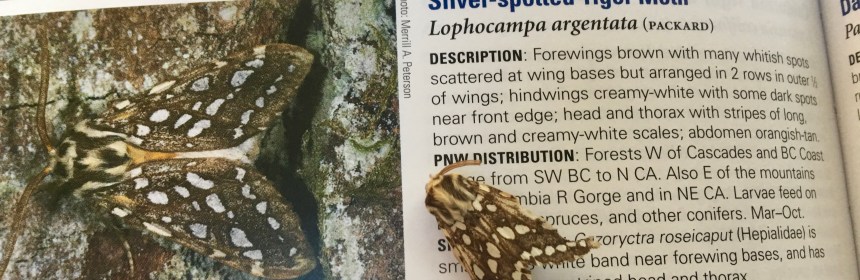
Silver-Spotted Tiger Moth (Lophocampa argentata)

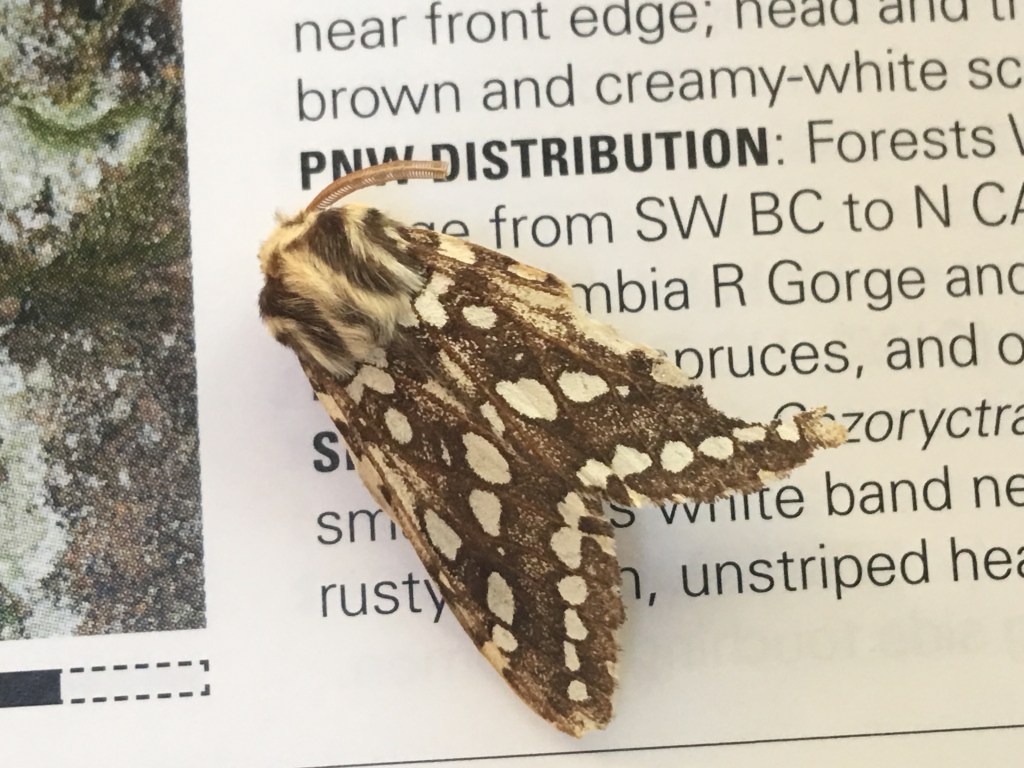
I found this specimen at the Friday Harbor Post Office yesterday and picked it up to save in my collection. It’s a bit bird-pecked, but worth keeping for passing around at my upcoming insect talk at the library in October.

Lophocampa argentata Silver-spotted Tiger Moth
San Juan Island, WA
photo by Cynthia Brast-Bormann
August 27, 2019

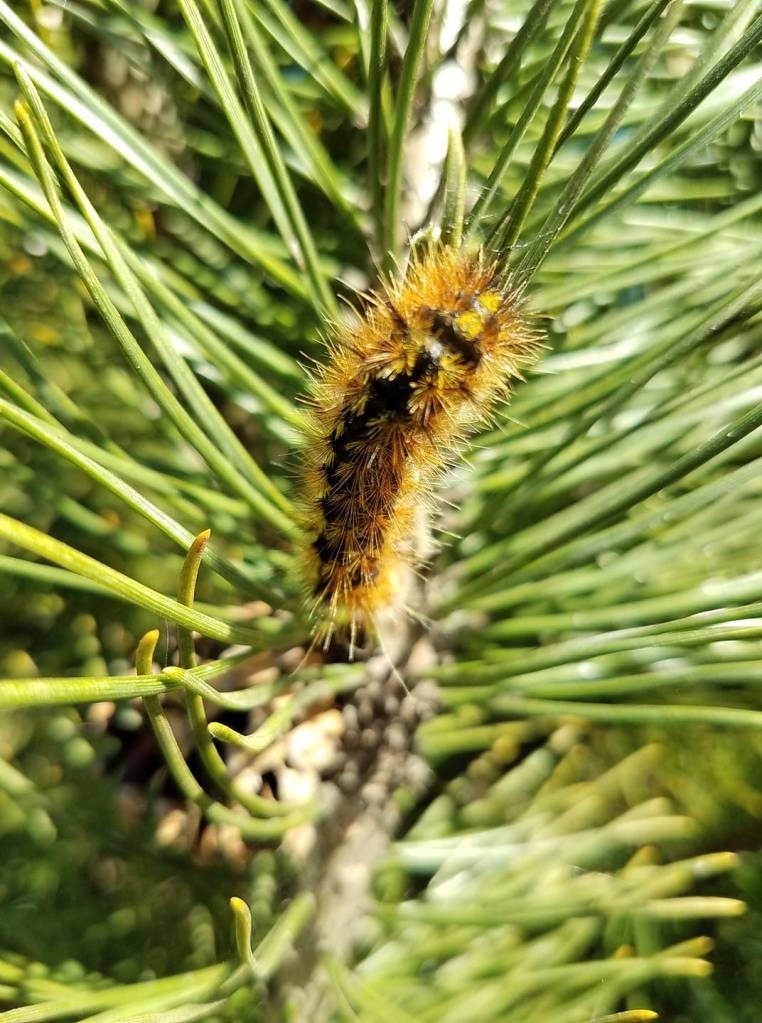
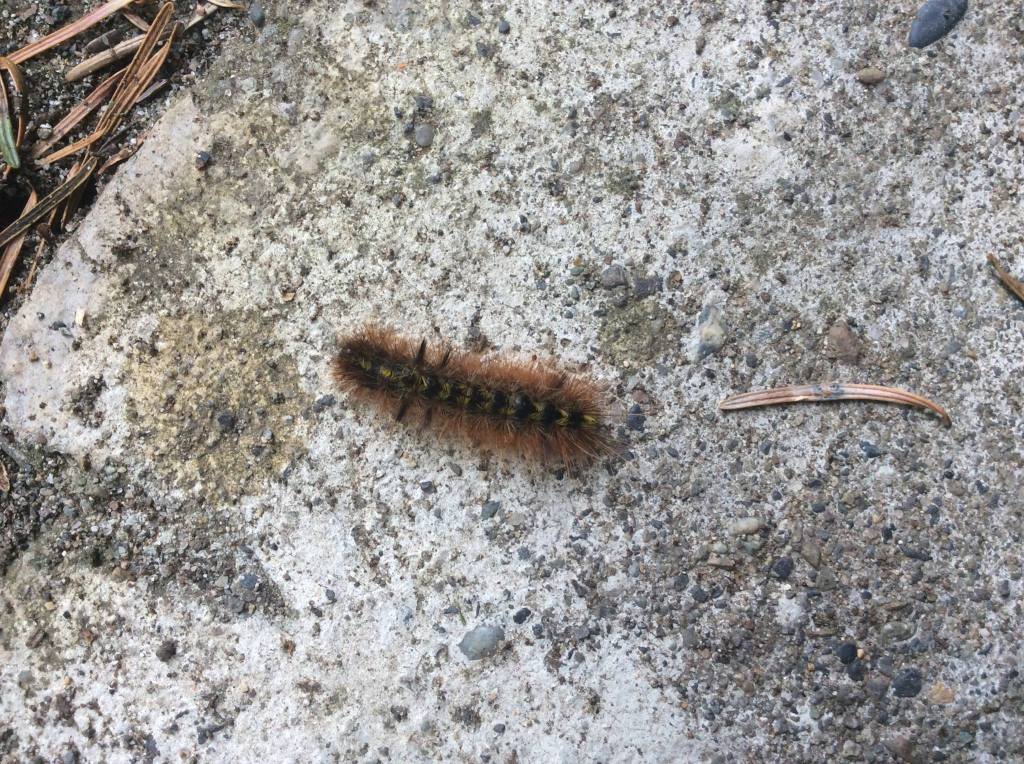
Lots of folks emailed me earlier in the year with photos of caterpillars they were finding. The larval form of this moth looks like the two photos below, depending on the developmental instar.

Silver-Spotted Tiger Moth Larva Lophocampa argentata
Orcas Island, WA 98250
May 9, 2019
photographed by K. Rose
Silver spotted tiger moth larva Lophocampa argentata
San Juan Island, WA
April 26, 2019
photographed by L. Narum

These moths are fairly common throughout the San Juan Islands. The larvae feed on Douglas Fir (Pseudotsuga menziesi) and other conifers. The name, argentum comes from Latin referring to the silver spots on the wings of adults.

While larvae are defoliators, they are not usually present in high enough numbers to cause economic damage or require any chemical control. Also, while very pretty to look at, the caterpillars do have urticating hairs which can cause stinging, burning, or rash in sensitive people. Take a photo or observe them, but resist the temptation to pick them up!

Lophocampa argentata
San Juan Island, WA
August 27, 2019
photo by Cynthia Brast-Bormann
Lophocampa argentata
San Juan Island, WA
August 27, 2019
photo by Cynthia Brast-Bormann

Varied Carpet Beetle Larva, Family: Dermestidae, Genus: Anthrenus

Found in windowsill crawling out of click beetle (Elateridae) body that was stuck inside spider webbing. August 24, 2019 San Juan Island, WA

Varied Carpet Beetle Larva (Anthrenus)
San Juan Island, WA
August 24, 2019

Carpet beetle larvae like to eat things composed of animal products (containing keratin) like wool or hair. Outdoors they like to feed on dead animals or scavenge inside animal nests. Your sweaters, carpets, and furniture items can be attractive to them and damaged if they build up in large numbers. Sometimes these beetle larvae can make people sick. Notice the many tiny hairs that cover the larva body. These are called hastisetae and can make sensitive people break out in hives or rashes if they come into contact with the larvae. The best way to keep these from building up to large numbers in your home is to vacuum often and adopt good sanitation practices.

Read more about them here: http://insectsinthecity.blogspot.com/2016/03/do-carpet-beetles-sting.html

Carpet beetle larva (lower specimen) found crawling out of Elateridae (click beetle) that was stuck in spider webbing on window sill inside home.

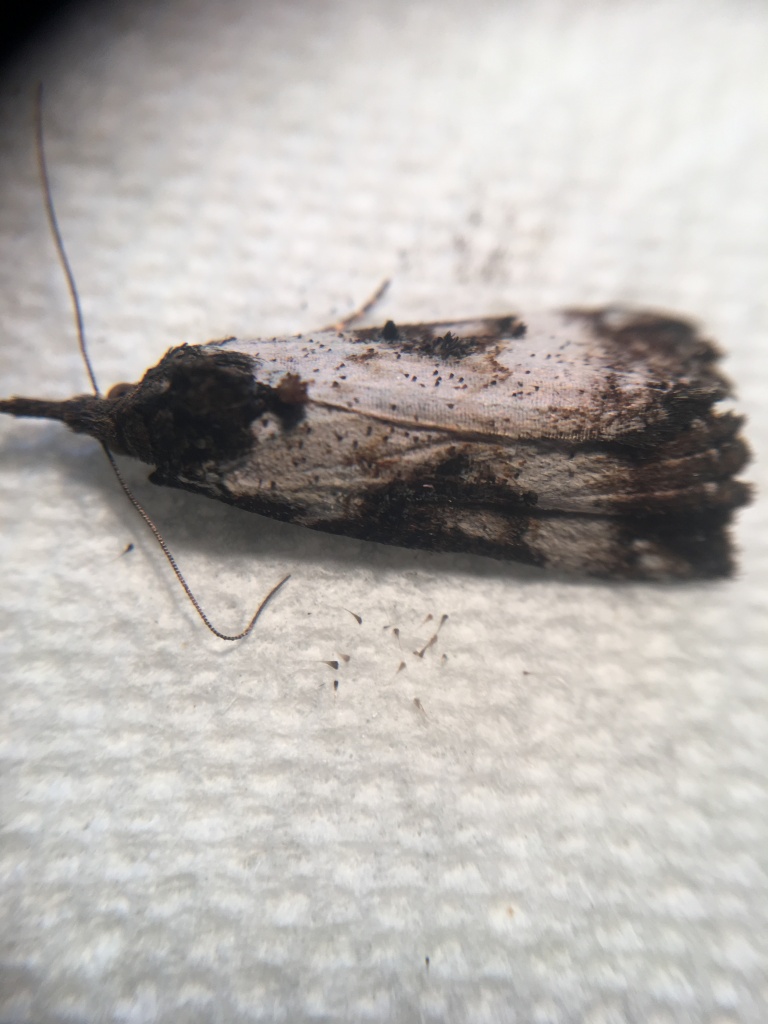
Hypena decorata

Family: Eribidae Hypena decorata August 20, 2019 San Juan Island, WA

I found this on the kitchen floor the other morning (August 20, 2019). It looked like a piece of tree bark had been tracked in. When I reached down to pick it up, I realized it was some sort of moth and one I’d not seen before.

Hypena decorata August 20, 2019

After taking photos of it (it was expired when I found it), I thumbed through my reference books, trying to see if I could identify it. After about an hour of skimming literature and photos, I finally grew frustrated and emailed Merrill Peterson at Western WA University to see if he’d seen it before.

That afternoon, I did indeed hear back from Merrill. He’s fantastic about responding and said he had to reach out to someone he knew, but finally got an answer for me.

Here’s what Merrill said, “It’s a strange Hypena decorata, like this one. I had to get some help to figure it out!” I was glad Merrill helped solve the mystery and now I can share what I found out about this moth.

Hypena decorata is in the family Eribidae, within the superfamily  Noctuoidea, the (Owlet Moths and kin). Hypena is Greek for “beard.” When you look at the fuzzy, long labial palms that project to form the moth’s snout, it does indeed look a bit like a beard.

According to the Bugguide reference, Lafontaine & Schmidt (2010) list 29 species of the genus Hypena in America north of Mexico. The moth is relatively rare to uncommon West of the Cascades, but found in southwestern British Columbia and western Oregon and Washington. Distribution records also show the species ranges to Southern California. Larvae are food plant specialists, feeding on nettles  (Urtica spp.).

Hypena decorata August 20, 2019

References:

http://pnwmoths.biol.wwu.edu/browse/family-erebidae/subfamily-hypeninae/hypena/hypena-decorata/

https://bugguide.net/node/view/511337

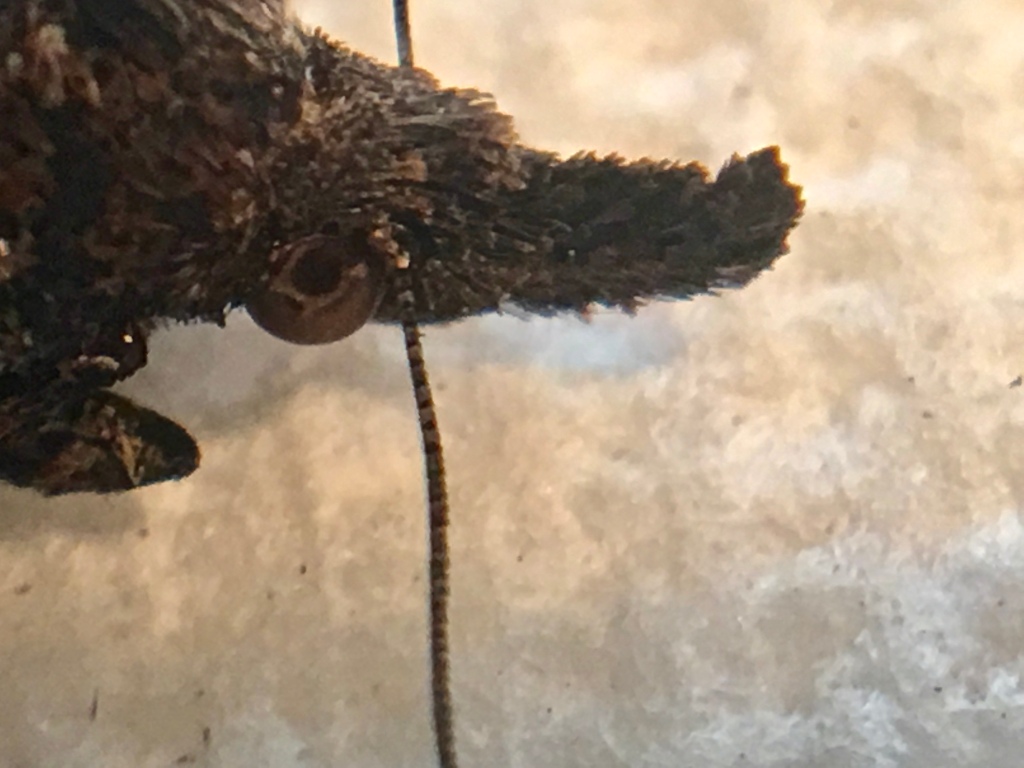
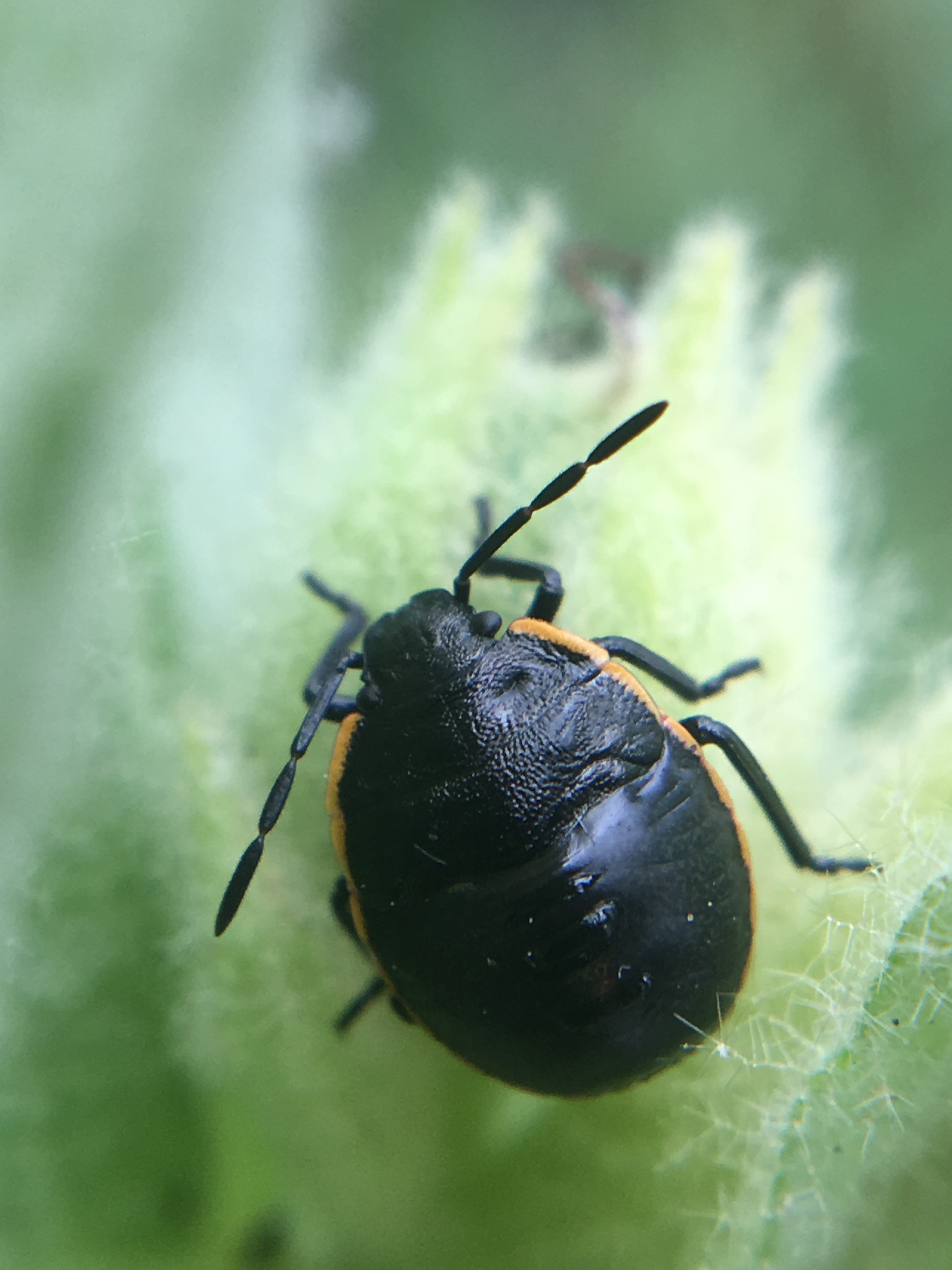
Chlorochroa ligata – Conchuela Bug

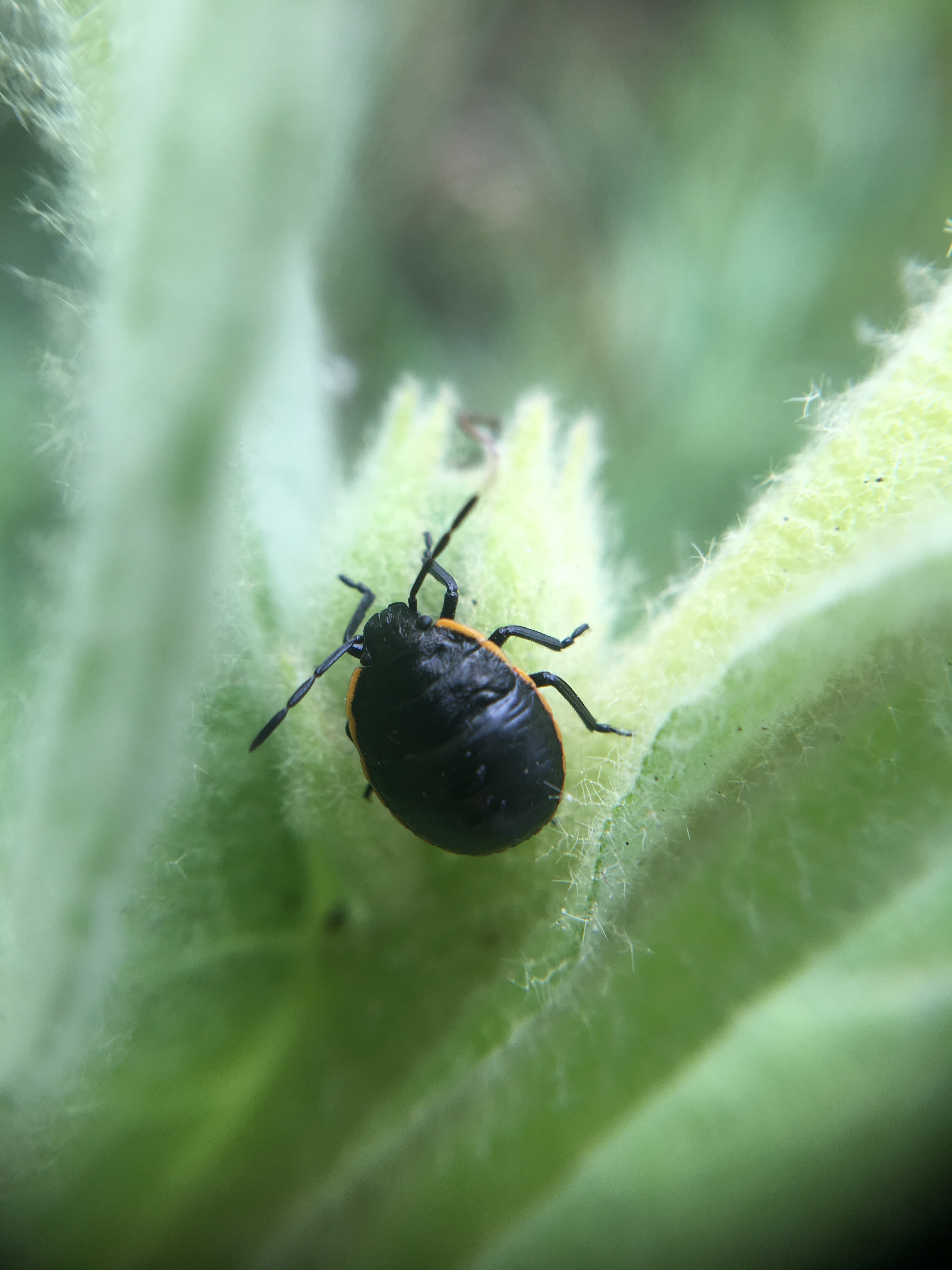
I spotted this round black bug yesterday on the leaf of a Mullein plant (Verbascum thapsus) yesterday (August 17, 2019). At first glance, you might think it a beetle, but upon closer examination, I recognized the yellowish outer margin from a larger, very similar specimen someone had asked me to identify earlier. This isn’t a beetle, but a BUG. True Bug, that is. It’s classified in the insect order Hemiptera. Hemiptera means “Half-wing” in Greek. This is a large order of insects with over 10,000 species in North America. It includes “bugs” like aphids, scale insects, cicadas, giant toe biters, stink and shield bugs (like this one!) and more.

Conchuela Bug (Chlorochroa ligata)
Found on Mullein plant (Verbascum thapsus)
San Juan Island, WA August 17, 2019

This specimen isn’t a full-grown Conchuela Bug, but a nymph. True bugs have what is called Hemimetabolous or incomplete metamorphosis. This means there are 3 stages of development that go from egg, to nymph, to adult. The nymph basically looks like a miniature version of the adult. To contrast, the Lepidoptera (moths and butterflies) and Coleoptera (beetles) have Holometabolous development with 4 stages that include egg, larva, pupa, and adult.

Conchuela is derived from Spanish and means the diminutive of concha shell. These bugs do indeed look like a little black shell with their hardened pronotum, scutellum and rounded body.

Conchuela Bug
Chlorochroa ligata
Photographed on Common Mullein
San Juan Island, WA August 17, 2019

In case bugs don’t interest you, perhaps the Hairy Woodpecker on a Mullein plant will. I’ve been enjoying watching these birds rock the Mullein back and forth like a clock pendulum, pecking away at the thousands of seeds held in a single flower head. https://youtu.be/U6lTDcHefz8

References:

https://bugguide.net/node/view/22454

White-lined Sphinx caterpillar (Hyles lineata)

I’m always excited when someone asks me to ID a bug for them! This came from the women over at Browne’s Garden Center – https://www.browneshomecenter.com/garden-center/, San Juan Island, WA. It’s the “black form” of the White-Lined Sphinx Moth (Hyles lineata). The larva are sometimes called Purslane caterpillars. They will eat Fireweed (Epilobium angustifolium), other fireweeds, and other various plants in the evening primrose family.

White-lined Sphinx Moth (Hyles lineata) caterpillar (black form)

Read more here:

http://www.silkmoths.bizland.com/Sphinx/hlinelin.htm https://bugguide.net/node/view/3071

Buzz…ards!

Ok. So maybe that’s not the scientific name for the Turkey Vulture (Cathartes aura) we have on San Juan Island, but the name “buzzard” is a colloquial catch-all, referring to these and other various large birds of prey. Scientific nomenclature aside, if you want to know how vultures came to be called buzzards (blame the early Colonial Americans for the confusion), take a look here https://www.thespruce.com/buzzards-vs-vultures-4171318

I finally dug out video footage of these turkey vulture chicks I filmed a few years ago. They were nesting on San Juan Island. I’ve heard from some folks that there was a nest on Lopez. I believe this is a fairly new occurrence, but maybe some of you who have lived here longer know if there have been vulture nests before. Here’s my account of this fascinating experience.

First, finding the nest was an accident. Someone dumped farm turkeys out in our area. Giant shout out here to Julie Duke at https://www.islandhaven.org Julie helped me catch the first turkey (Bob) and then took his family and friends (including one crazy guinea hen) and gave them a forever home at October Farm.

Bob the Farm Turkey
Rescued turkeys on their way to October Farm and Island Haven Animal Sanctuary
Guinea friend

After managing to catch all but the last two who were in the woods hiding, another neighbor trying to help round up these farm turkeys happened upon the vulture nest. When I went over to take a look, I noticed one seemed to be failing. I called and asked a Wolf Hollow rehabber https://wolfhollowwildlife.org to come take a look.

Wolf Hollow rehabber assesses Cathartes aura chick with metabolic bone disease

Sadly, the failing chick had metabolic bone disease. This means it didn’t get adequate nutrition (calcium and Vit. D) for the bones to grow correctly. Its wings were broken and feet malformed. The other chick was very healthy and would eventually fledge.

Second, I decided to write about this to help people see the value of dead trees. Especially OLD dead trees. Please don’t remove them from your property and if they are a risk of falling, you can have the tree “topped” so it leaves the rest as a snag for wildlife. Cutting it all the way down to the ground wastes a valuable resource for lots of things that depend on it.

These vulture parents selected a tree that had burned out on the inside and the nested in the bottom. When I say “nest,” they were pretty much on the dirt at the bottom. There were no twigs, moss, etc. lining it. It was just the hard ground. It was pretty stinky too. The chick that hadn’t fully developed still had white fluff and blue eyes.

Third, nests like these and other ground nesting birds’ nests are extremely vulnerable. Hikers with dogs should keep their pups leashed…ALL the time! These guys had absolutely no defense against a dog and counted on staying hidden. The defenses the birds have adapted to protect them from other wildlife include 1) the bad odor and 2) projectile vomiting.

I also noticed they would buzz like a nest of wasps or bees. The larger chick would turn and face the burned inside of the tree, completely concealing itself, all the while making the buzzing sound. Sometimes honey bees will establish hives in hollow trees and I wondered if the vultures count on the buzzing noise to be a deterrent to predators who might think they would be stung. Perhaps this is another reason they came to be called “buzzards?”

Thankfully, I was extremely considerate in my observation and didn’t antagonize them in any way. I felt very lucky to witness such amazing animals and appreciate all the wildlife we have around us. I was also thankful for Wolf Hollow and the gentle rehabber who assessed the smaller chick and made the sad decision that spared it further suffering.

The parents did not come back to nest in the tree again. Sadly, someone cut part of the tree up for firewood, probably never realizing what it had been.

Plum pesty! Hyalopterus pruni, the Mealy Plum Aphid

I posted yesterday about picking a twig from my plum tree that had a leaf or two with some weird, white, fluffy gunk on it. Like I do often, I put the leaf on my desk with the intent of looking at it more closely in the morning. You’d think some sort of learning curve would happen with this delayed examination habit of mine. For instance, the mishap of having deer tick eggs hatching and crawling all over my desk https://www.facebook.com/buggingyoufromSJI/posts/2375866245969416. I barely caught that one in time. It’s important to have sticky tape on your desk for emergencies!

Well, yesterday morning, July 31, 2019), I woke to find tiny green specks moving all over my desk. They were crawling off the leaf in all directions. I set down my coffee and grabbed my iPhone macro with the macro lens attachment and took a closer look. This is what I saw. https://youtu.be/gxDqhqZqpus

Hyalopterus pruni
San Juan Island, WA
July 30, 2019

As you can see, these guys are active! After doing a bit of research, I have determined them to be Hyalopterus pruni (Mealy plum aphid or reed aphid). These non-native aphids are found across the U.S. While numbers can build up to damaging levels, nature does have a built in control to manage these pests without using harmful insecticides. Those little eggs I posted about yesterday https://cynthiabrast.wordpress.com/2019/07/31/lacewing-eggs/ are going to be lacewings. Hungry lacewings with a veritable buffet awaiting them!

Hyalopterus pruni (Mealy plum aphid or reed aphid)
San Juan Island, WA
July 30, 2019
Hyalopterus pruni (Mealy plum aphid or reed aphid)
San Juan Island, WA
July 30, 2019
Hyalopterus pruni (Mealy plum aphid or reed aphid)
San Juan Island, WA
July 30, 2019

References:

https://influentialpoints.com/Gallery/Hyalopterus_aphids.htm

https://bugguide.net/node/view/176830

http://treefruit.wsu.edu/crop-protection/opm/less-common-aphids/

« Older Entries Recent Entries »