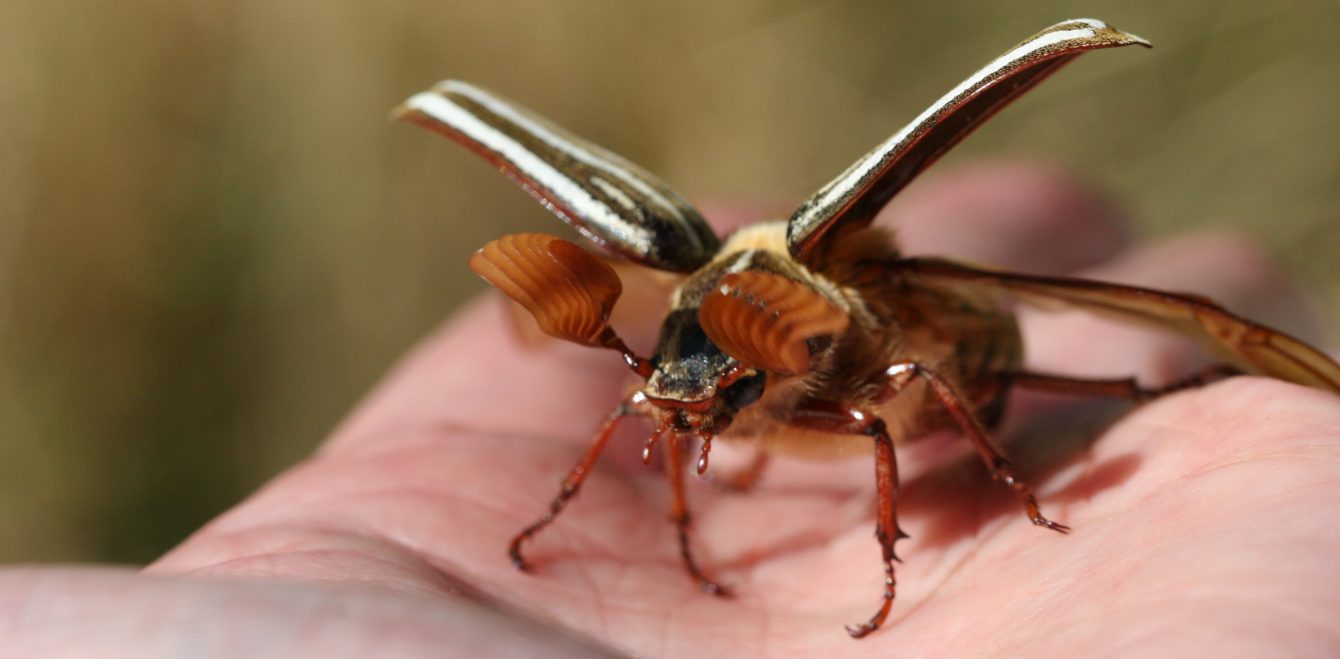
Category Archives: Uncategorized

Bugging You From Texas, Part deux

I’ve been home on San Juan Island, WA for 4 days now and clearly I picked up a bug traveling home. Not exactly the sort of bug I wanted, but it was inevitable given the crowded airplane and traveling stress. My husband came down with the BUG first. Then it hopped over to a new host – ME.

So, I’ve spent the afternoon on the couch labeling and sorting photos from one of our nature walks in Texas. This was the first of two hikes we took at the Lewisville Lake Environmental Learning Area Nature Preserve https://www.llela.org/about-llela/mission-and-vision. This area (approximately 2000 acres, I believe) has been conserved in conjunction with U.S. Army Corps of Engineers, the University of North Texas, the City of Lewisville, Lewisville ISD, the University of Texas in Arlington, and Texas A & M Agrilife Extension. It is a true jewel in the madness of the DFW metropolis where over 6.7 million people are displacing wildlife and native ecosystems are lost in the process. The BEST part of these hikes for me is the fact they do not allow dogs. NOT ANY! I am thrilled that the focus is on wildlife and habitat conservation and preservation instead of human recreation. I could actually be outdoors, enjoying nature AND viewing wildlife.

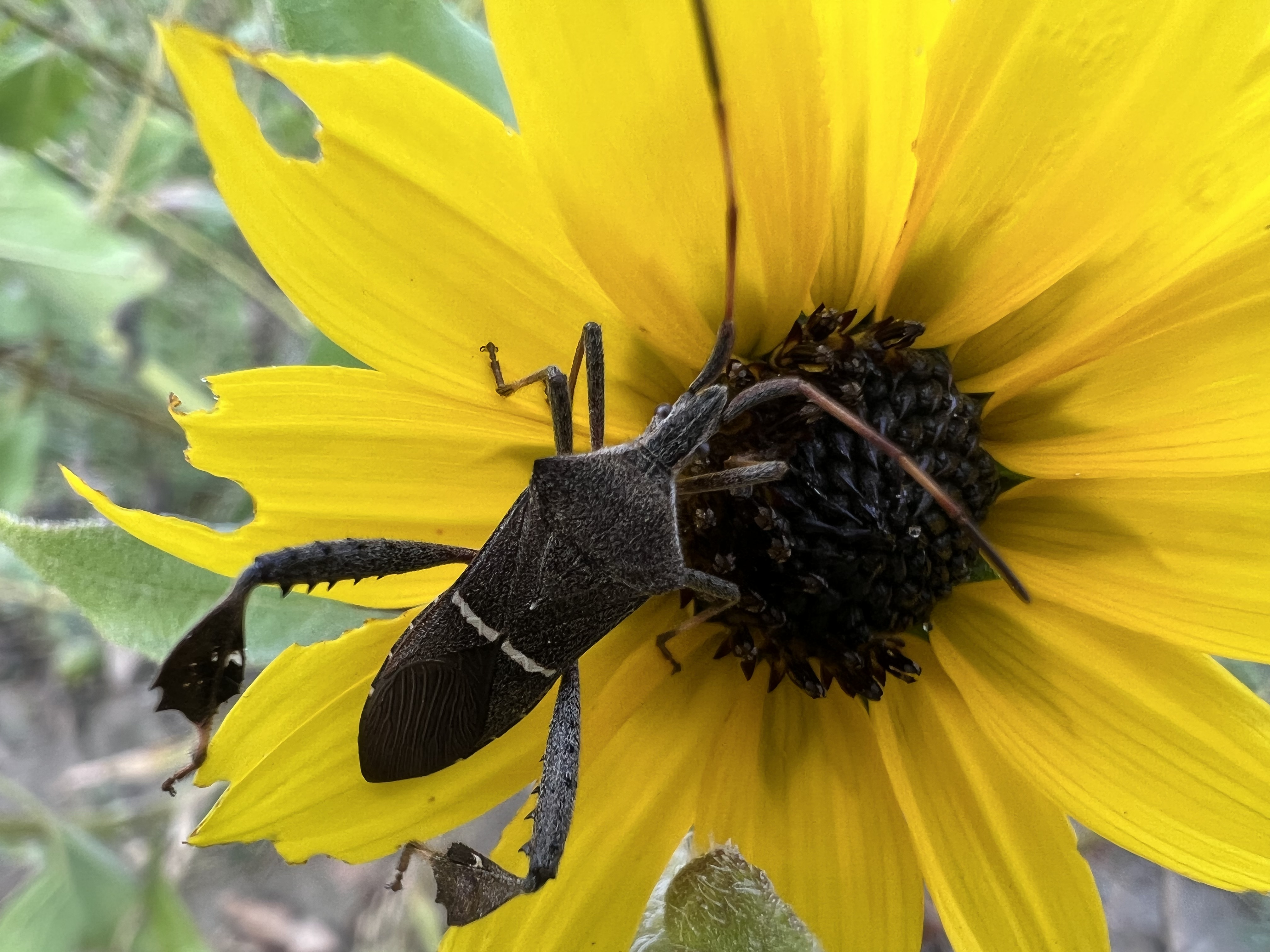
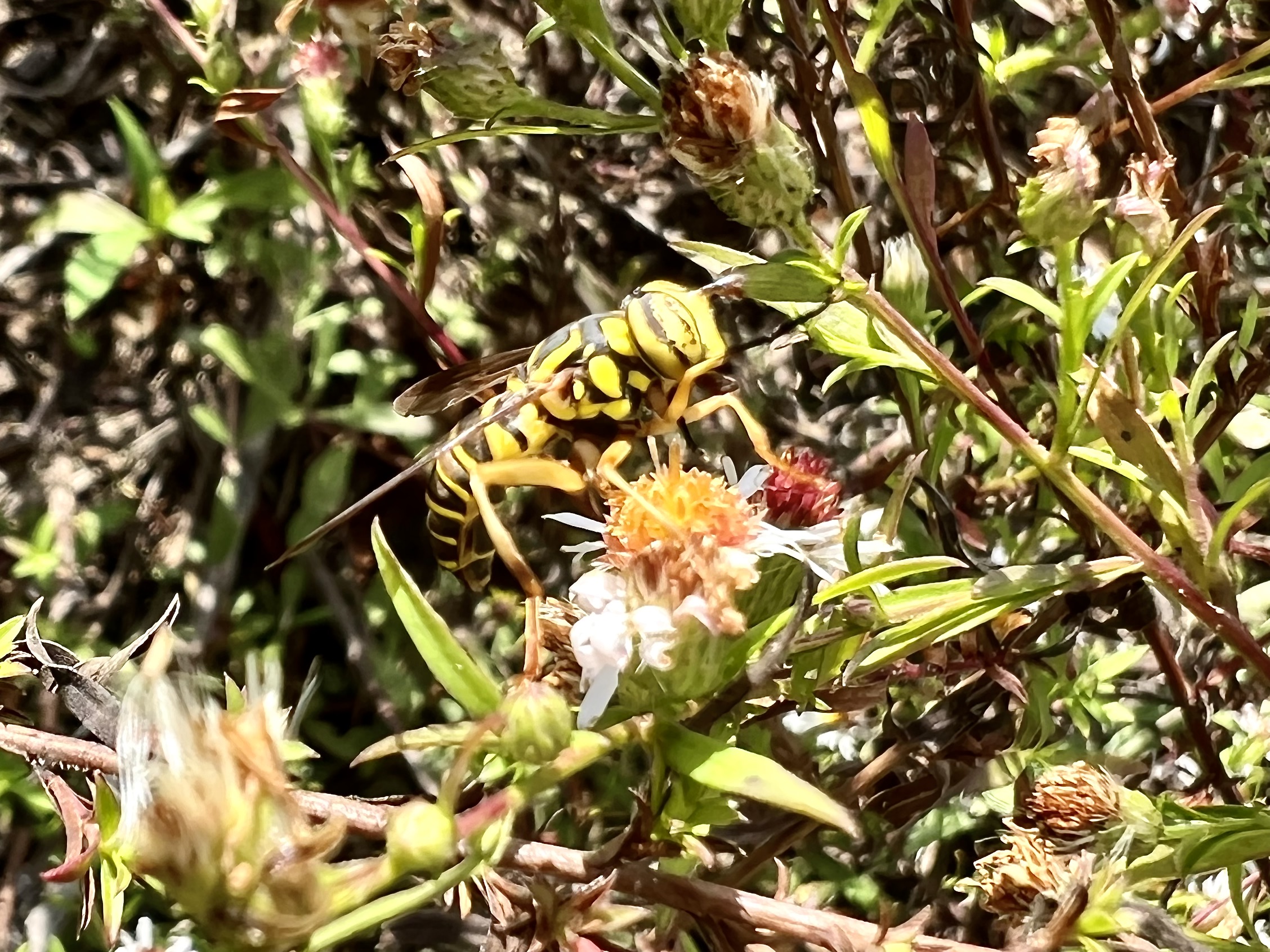
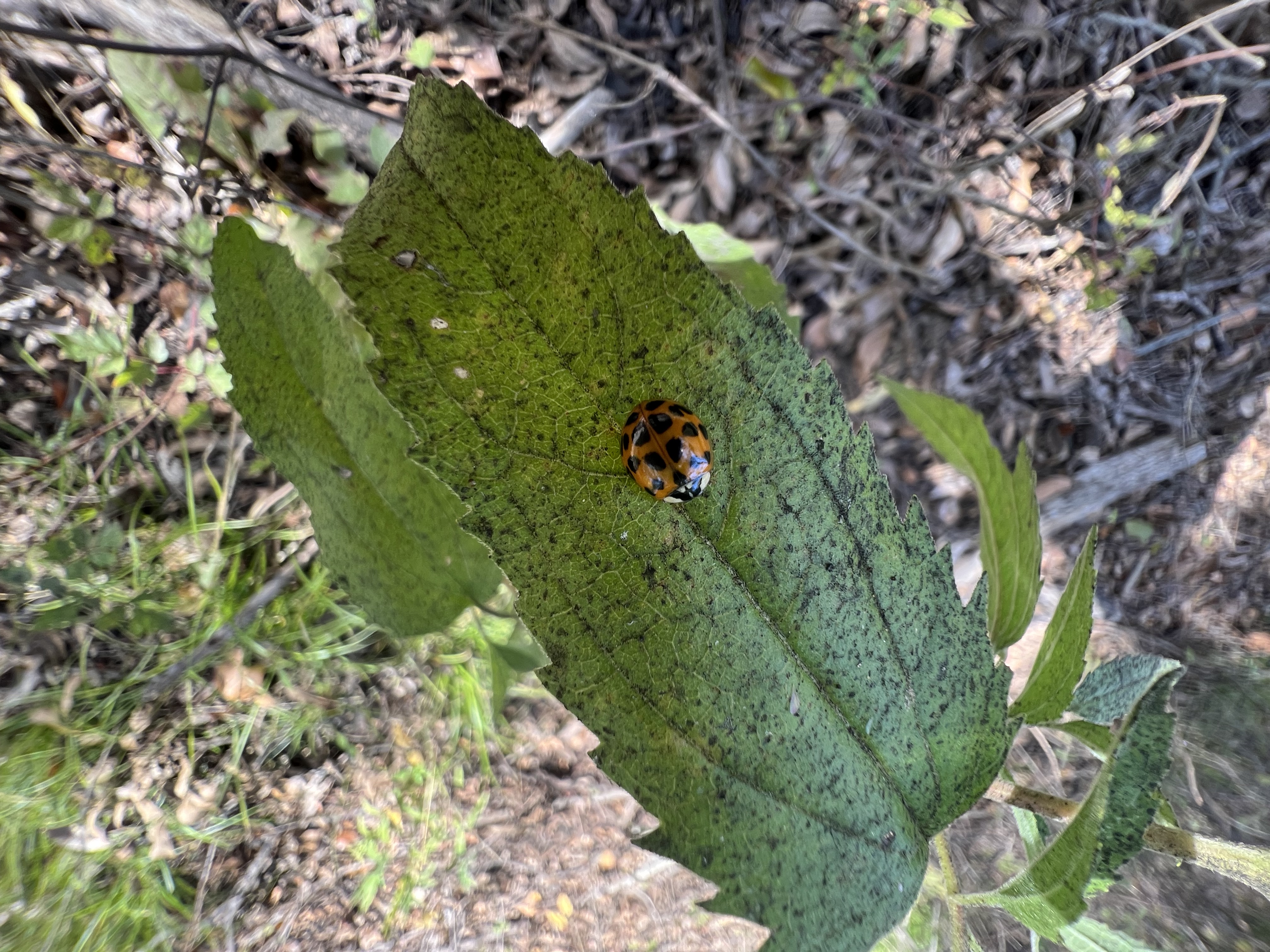
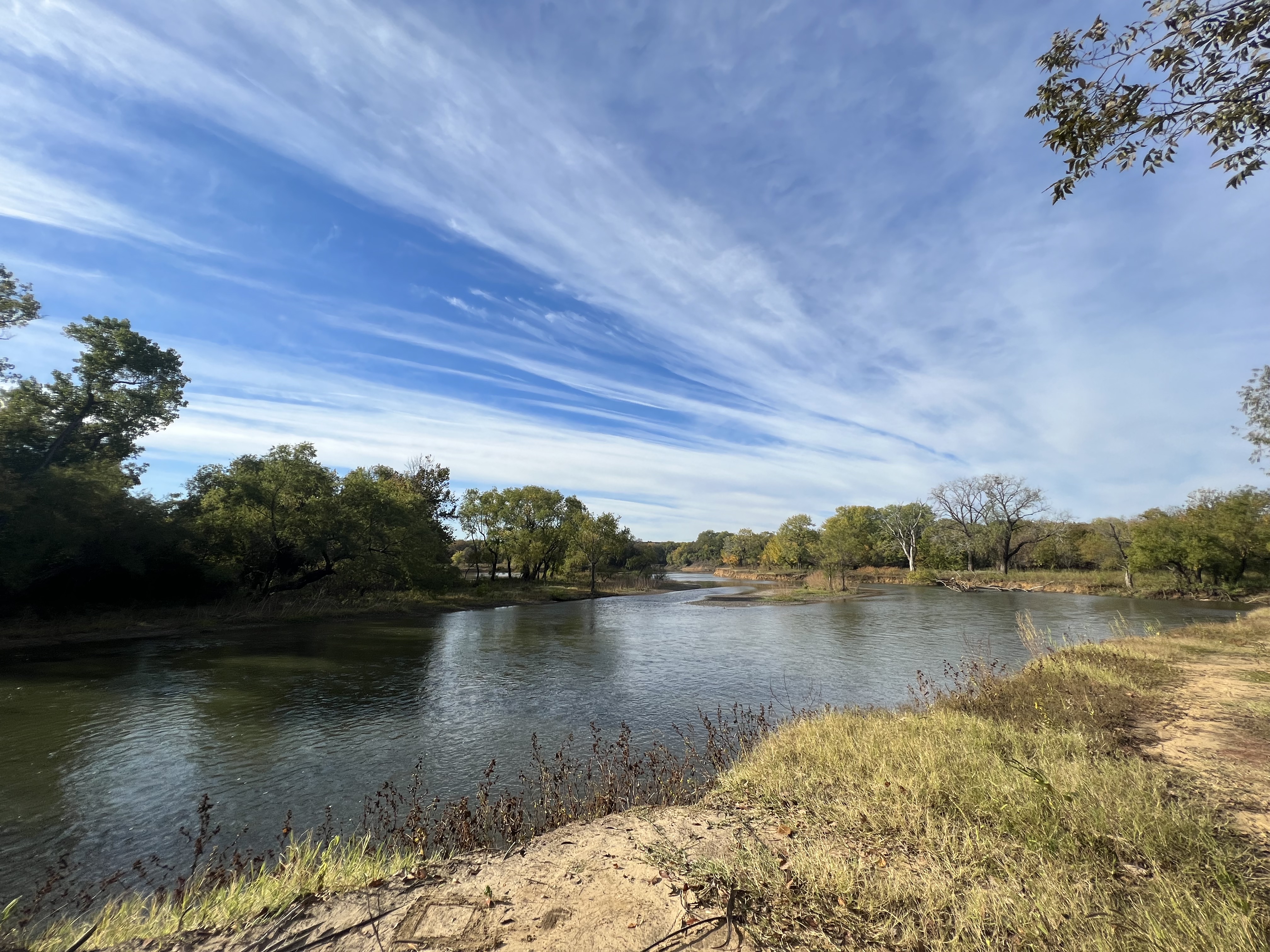
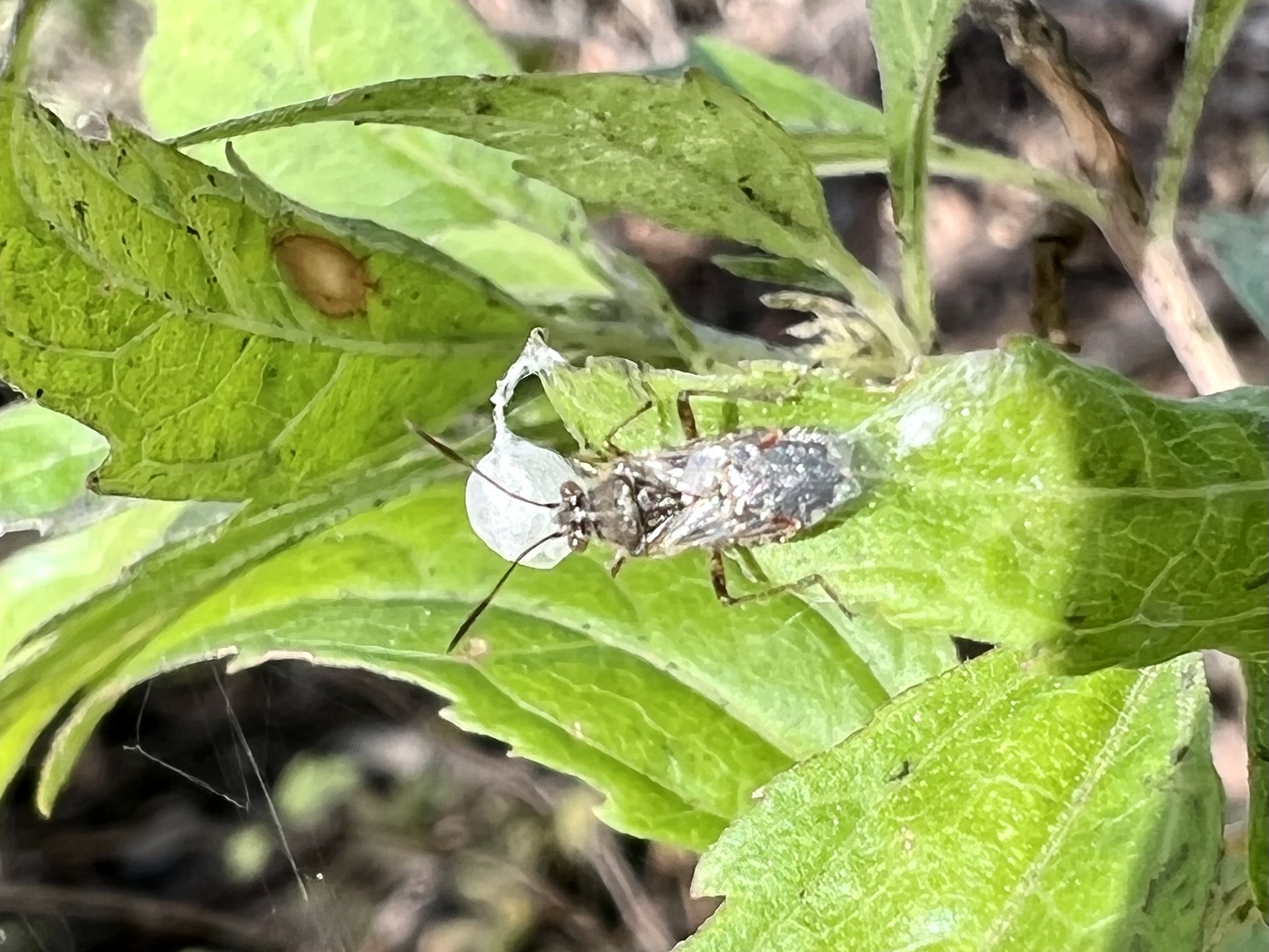
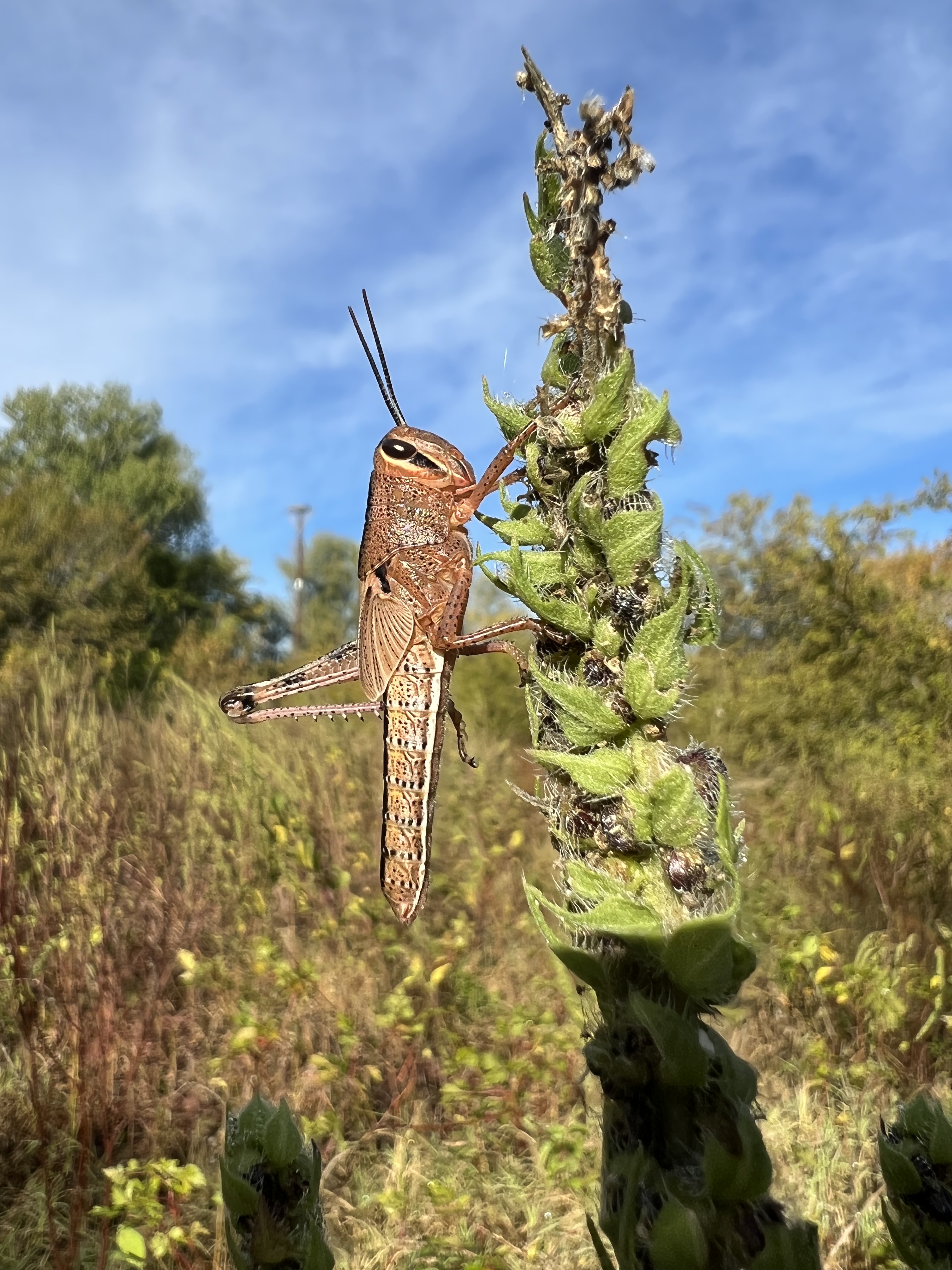
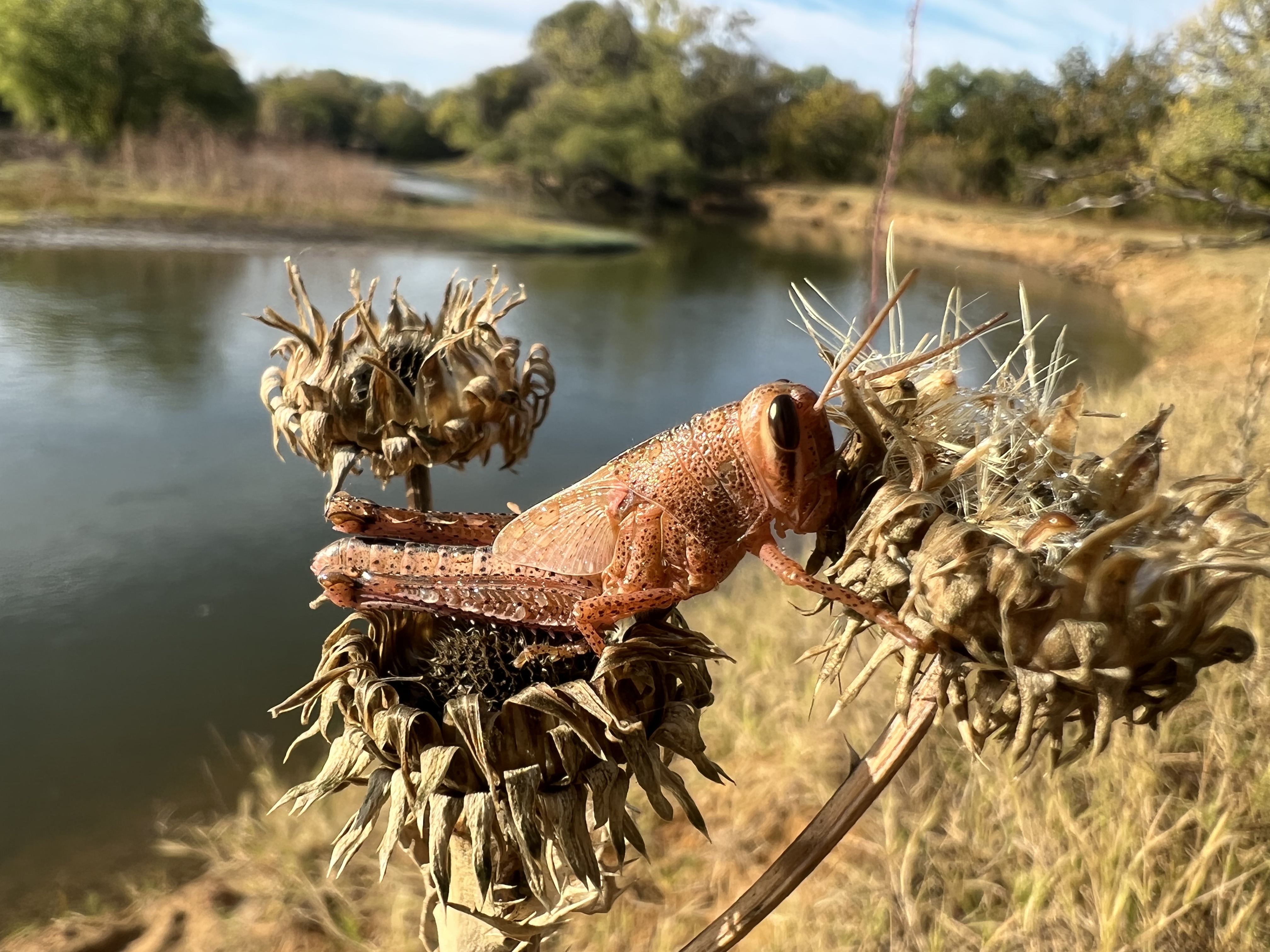
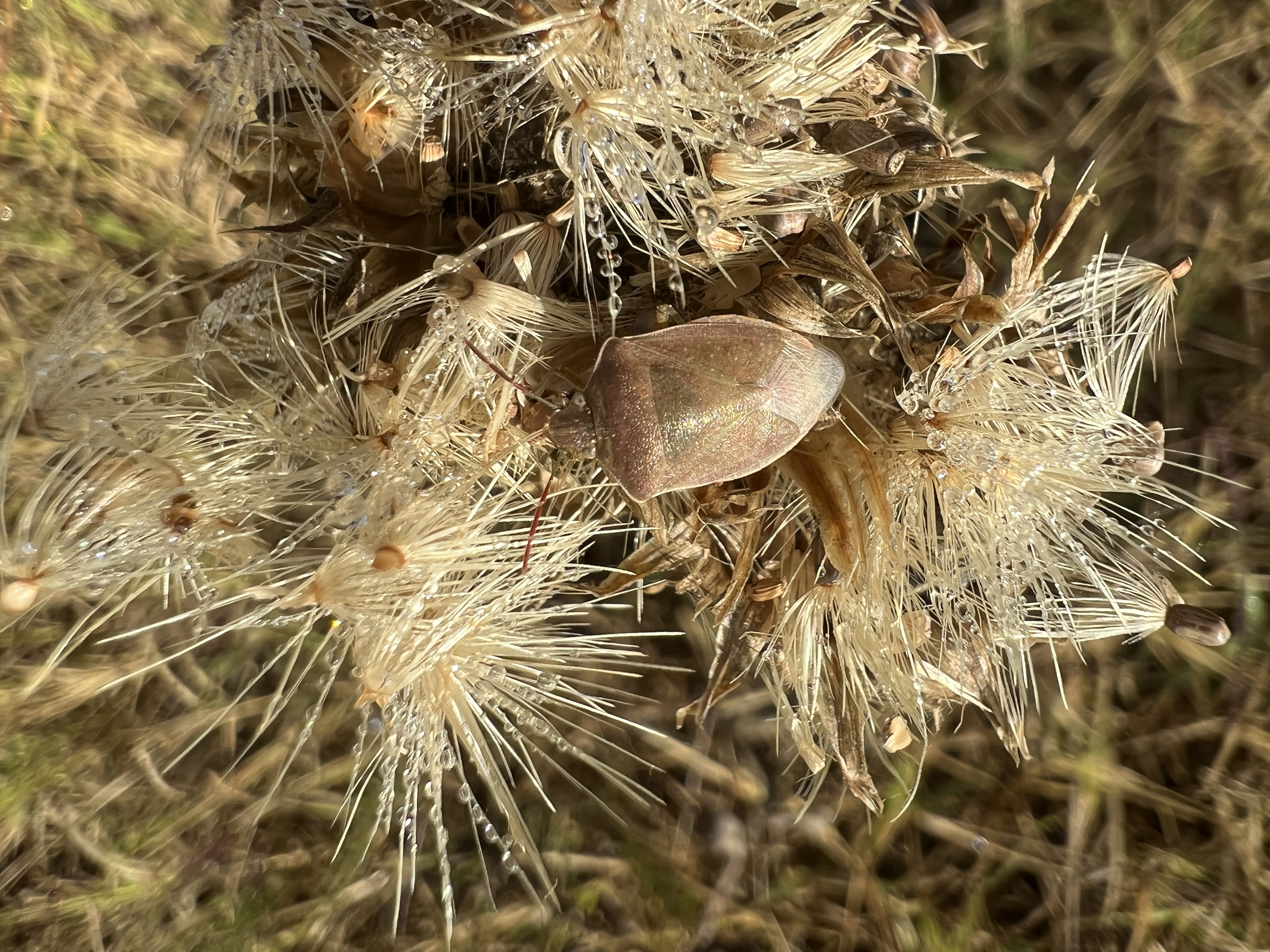
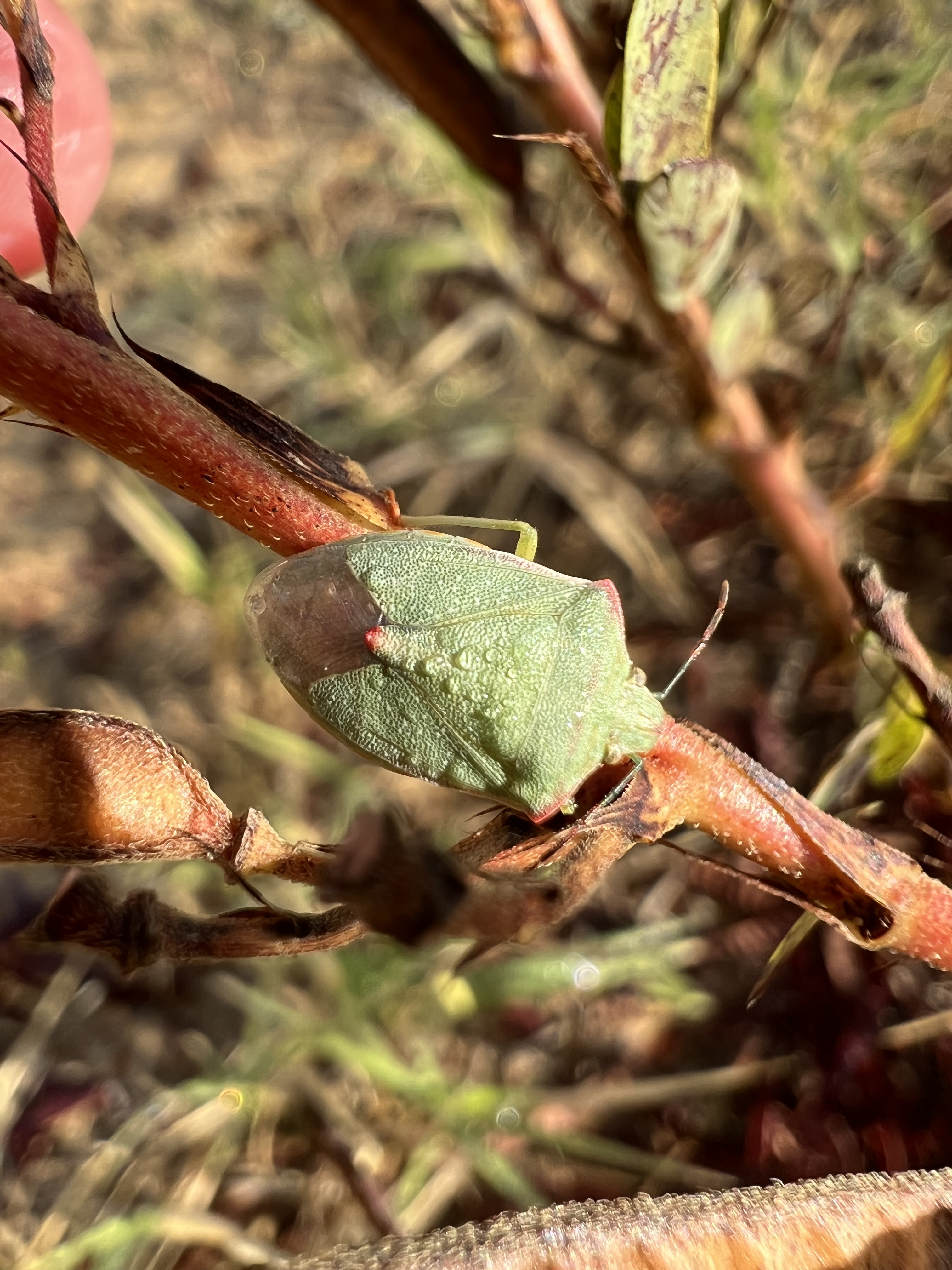
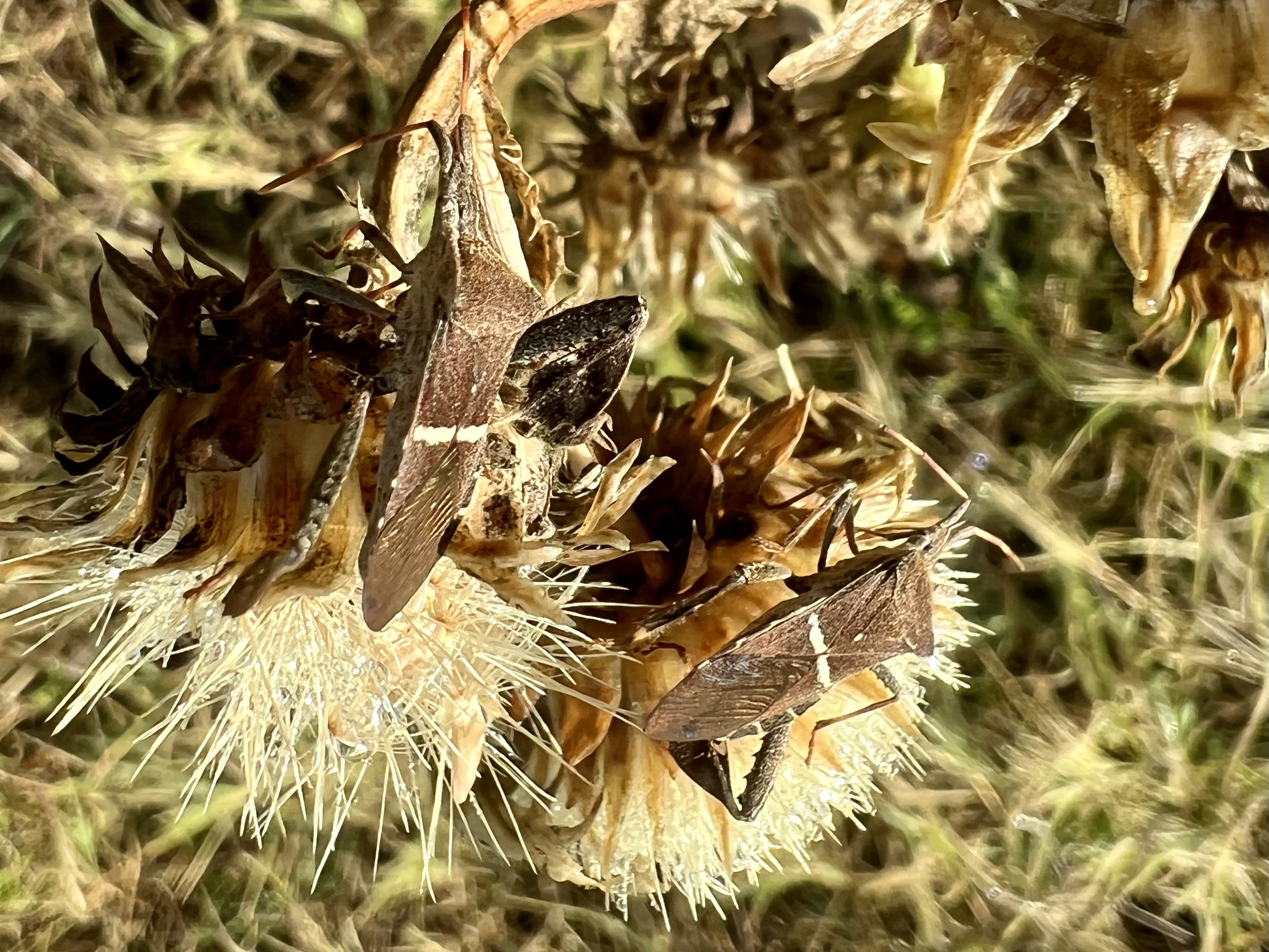
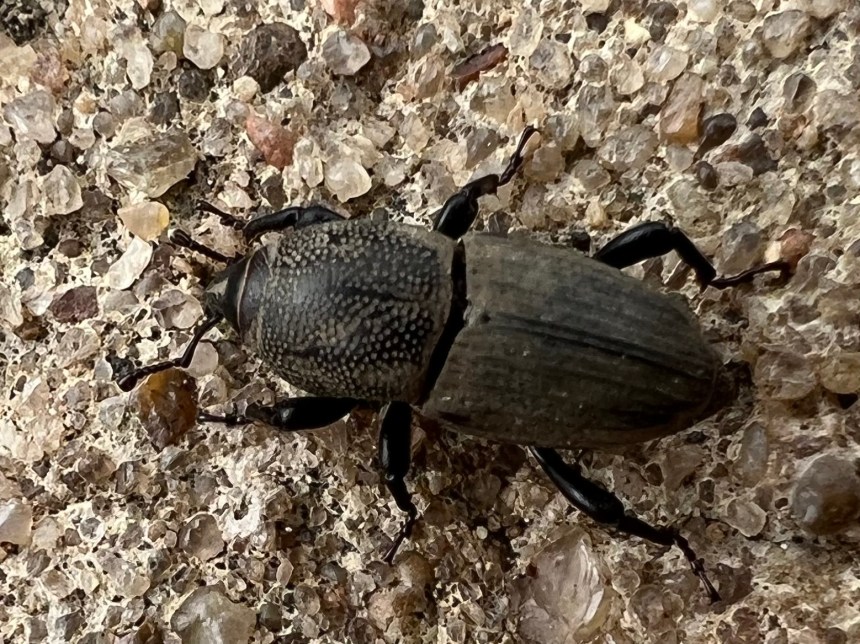
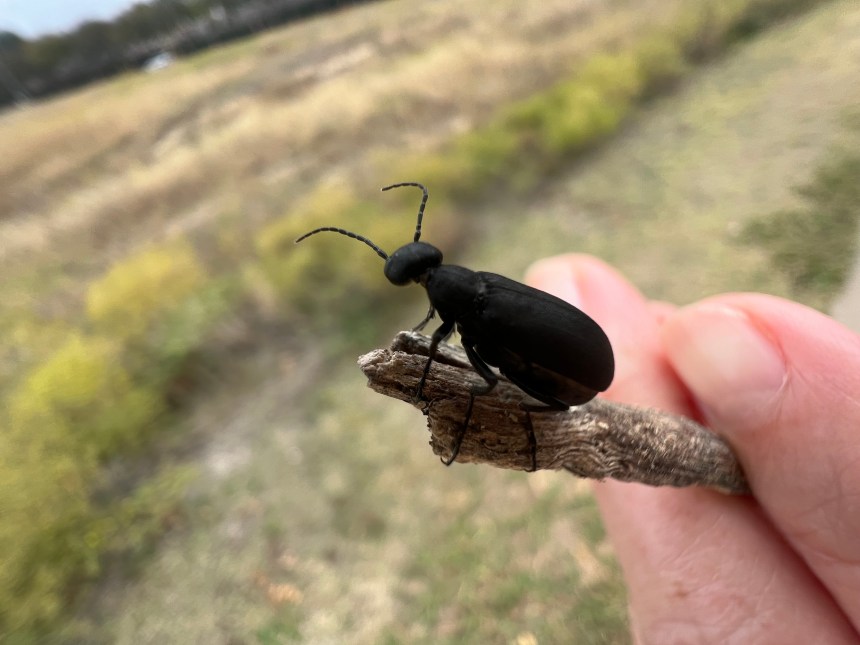
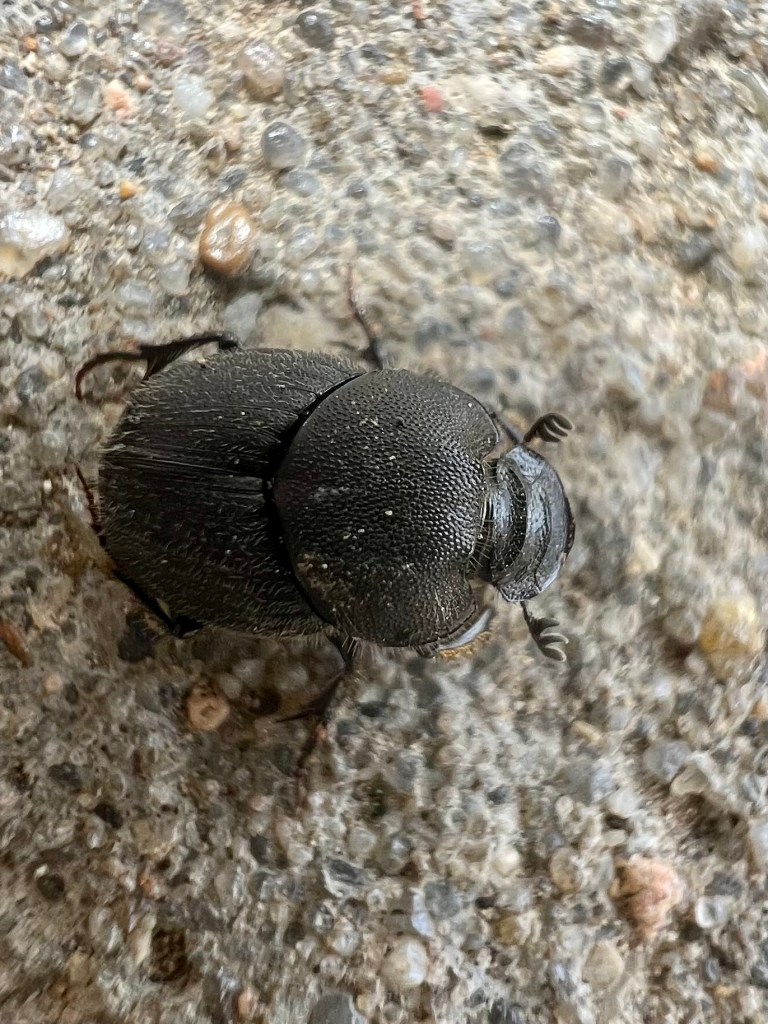
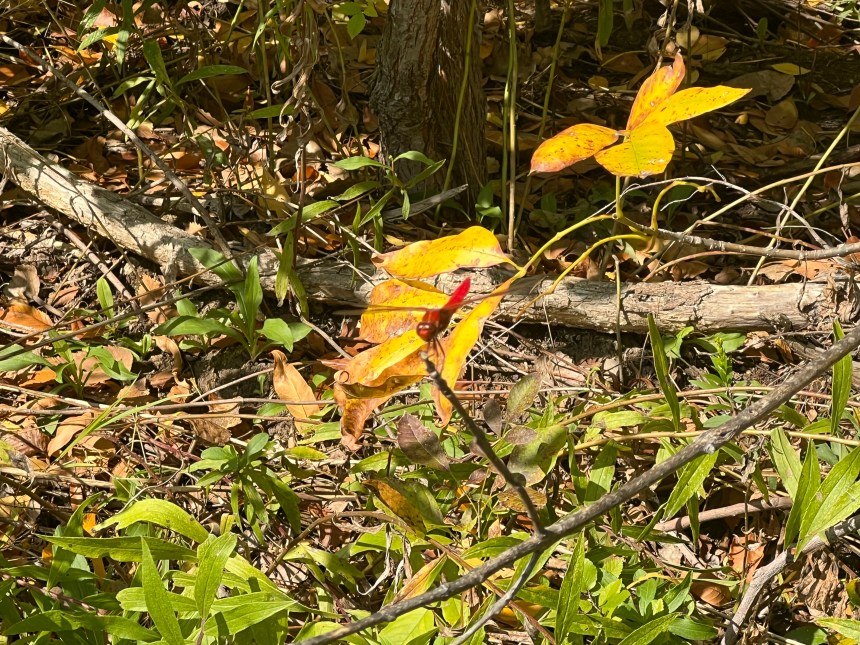
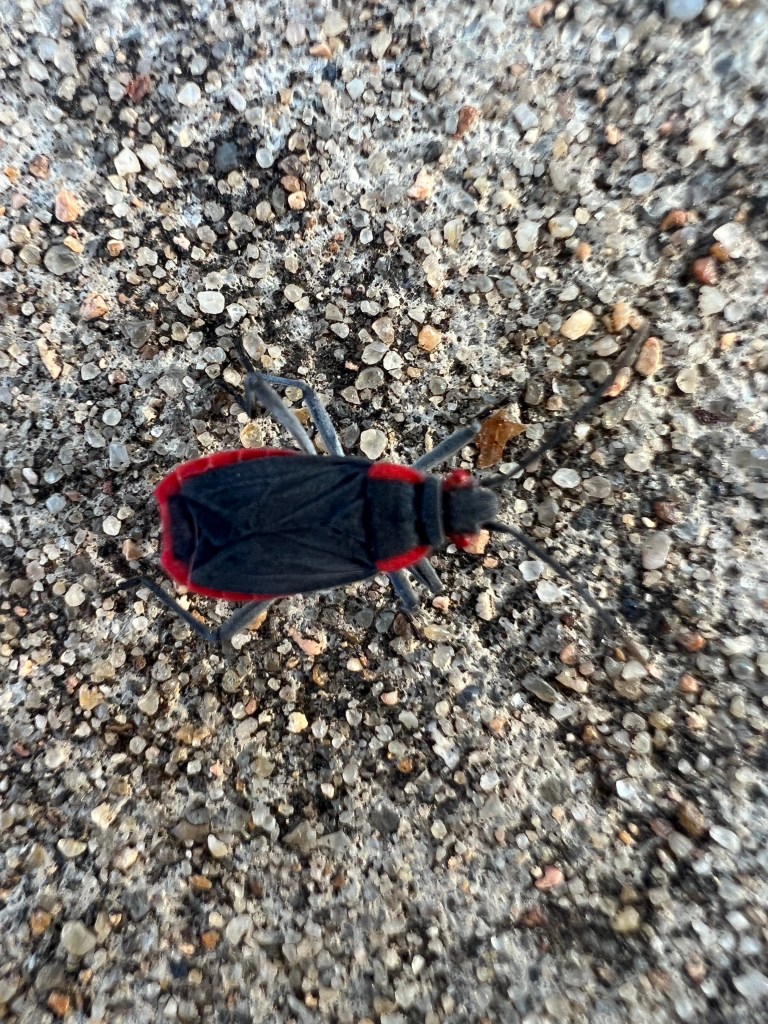
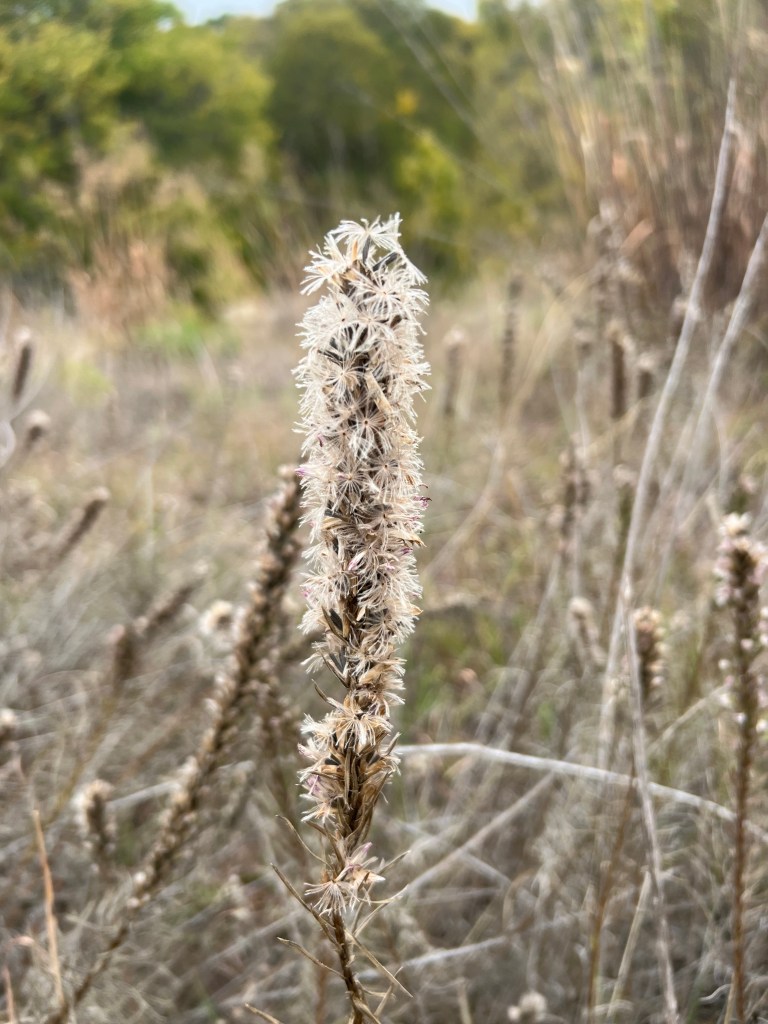
We’ve been to this preserve in prior trips to Texas. This year, we focused on hiking some trails we hadn’t been on before. Here is the gallery of some of the bugs I photographed, along with a few wonderful landscape scenes we viewed on the Redbud Trail – map here: https://www.llela.org/home/showdocument?id=9417

Please support environmental conservation wherever you are. This habitat may seem large at 2000 acres, but the former Blackland Prairie once covered 12 MILLION acres in the state of Texas. We need to set aside more if we are to weather the changes coming ahead.

Stay tuned for Bugging You From Texas, Part 3. I have more wonderful photos to share with you.

Bugging You From Texas! (Part 1)

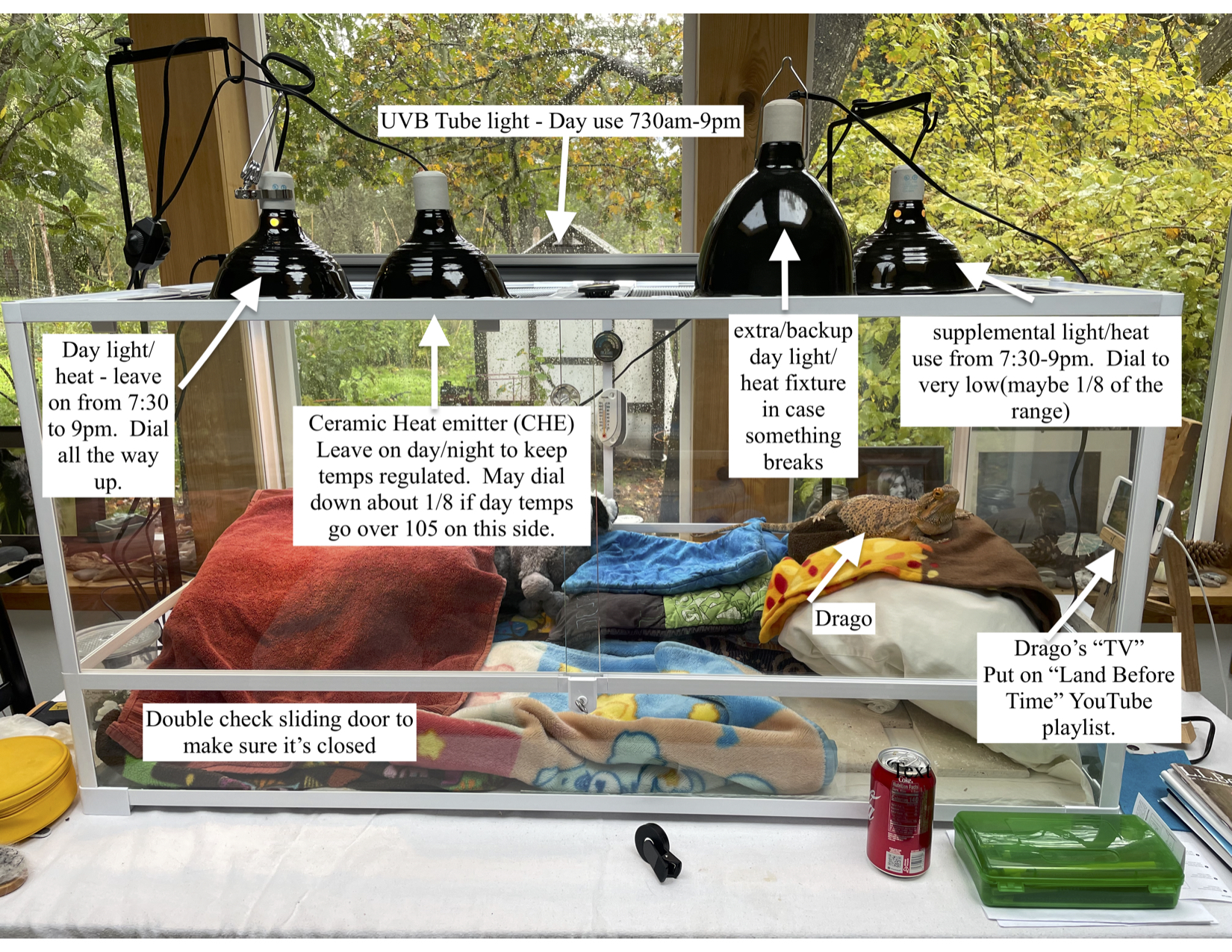
On October 26, 2022, hubby and I left the island to venture to Texas for ten days. I always leave the island with great trepidation because I do not like being separated from my fur and scale babies (two cats and one dragon). They always have a babysitter to care for them, but it’s not “momma,” and no one else I know is going to do things exactly like me. If I could clone myself, it would be easier to depart. Or, I could stay with them and send the clone with my husband. Seriously, I’m joking…or maybe not. Depends on how I’m feeling when you ask me.

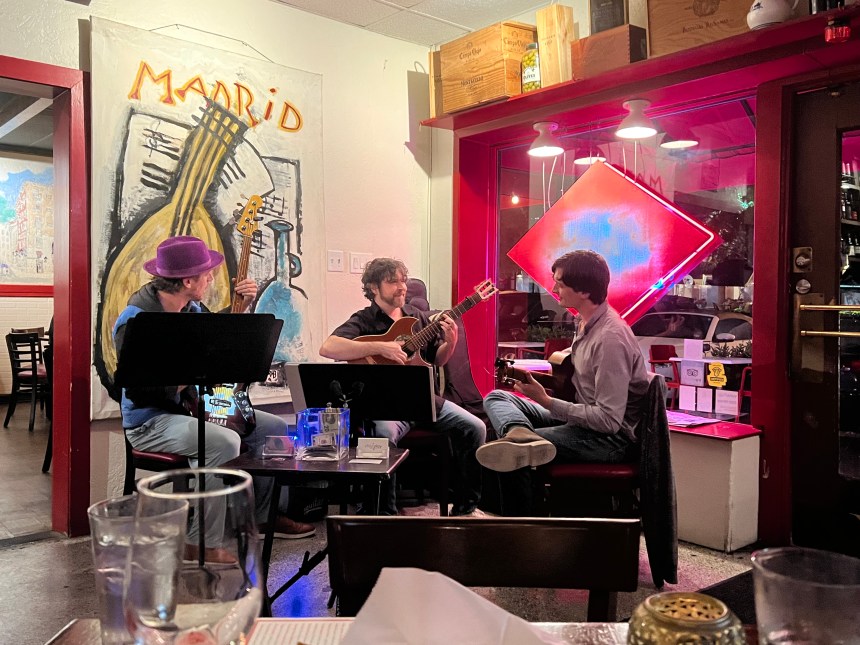
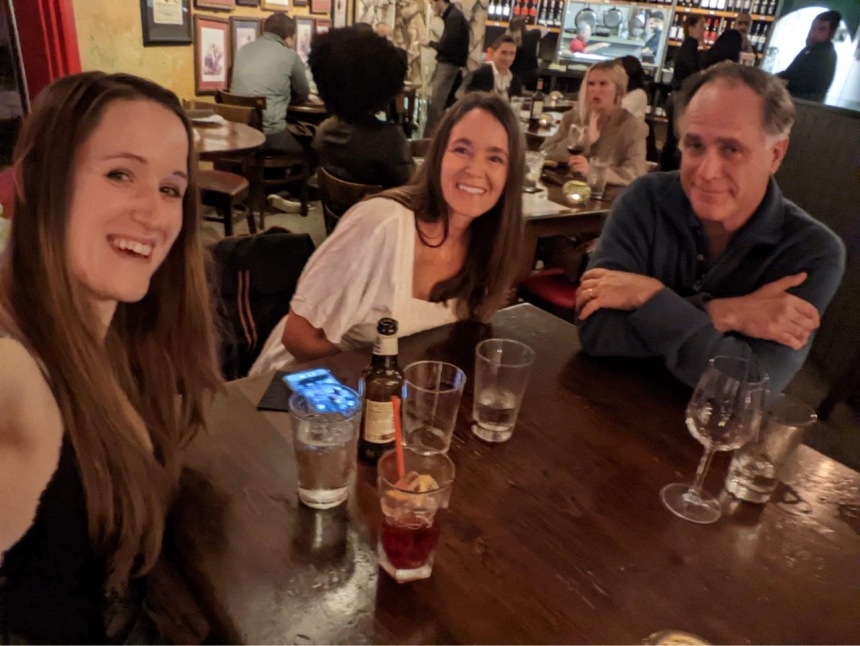
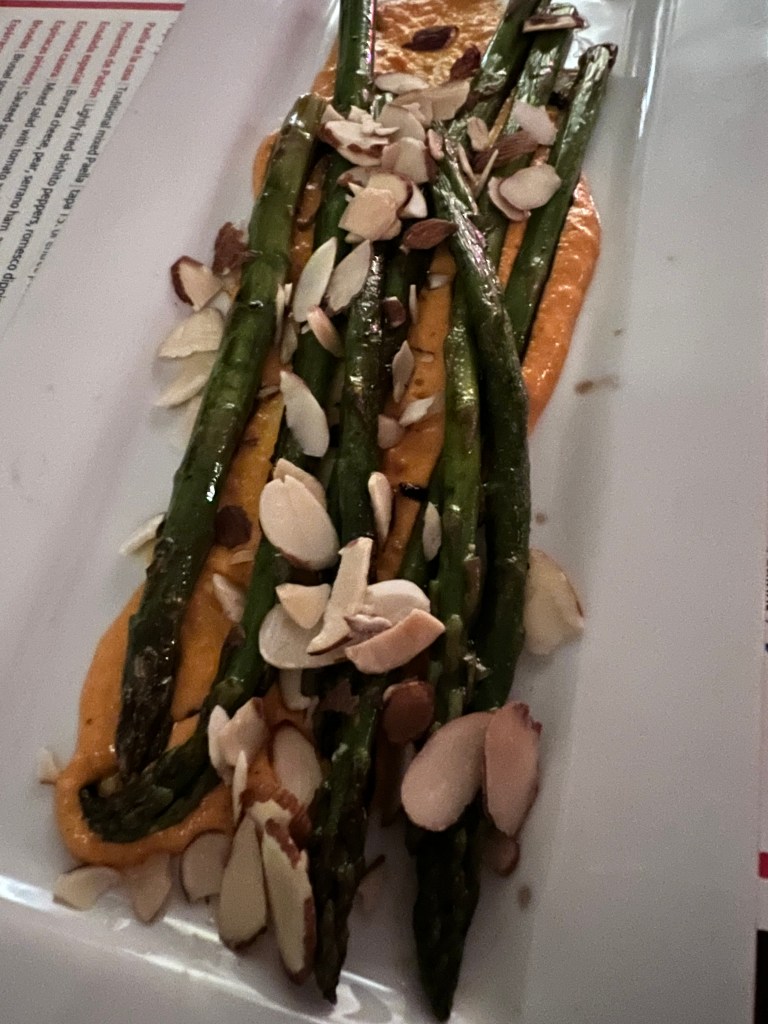
The trip was in reality, an essential one. After waiting three years, I have not been able to get into a specialty neurology clinic here in the PNW area. I have some “wiring” issues that are complicated and need further evaluation. I’m sure my family and my husband will nod their heads about me having the “wiring” issues. Nonetheless, I have been suffering without answers, so maybe we will have some after seeing Dr. Ansari in Frisco, TX. The other part of our trip is an annual family visit. We stayed with my parents in the Dallas area and visited with them and some of my former friends and neighbors. It would have been nice to drive south and see my brother in the Austin area too, but scheduling just didn’t work out. Some of our trip overlapped with my daughter flying down to visit as well. She coordinated a nice evening outing to Cafe Madrid in Dallas to hear her former guitar instructor and his group play Flameno music while we also enjoyed a fantastic meal at the restaurant.

Check out the slideshow of our Cafe Madrid experience below.

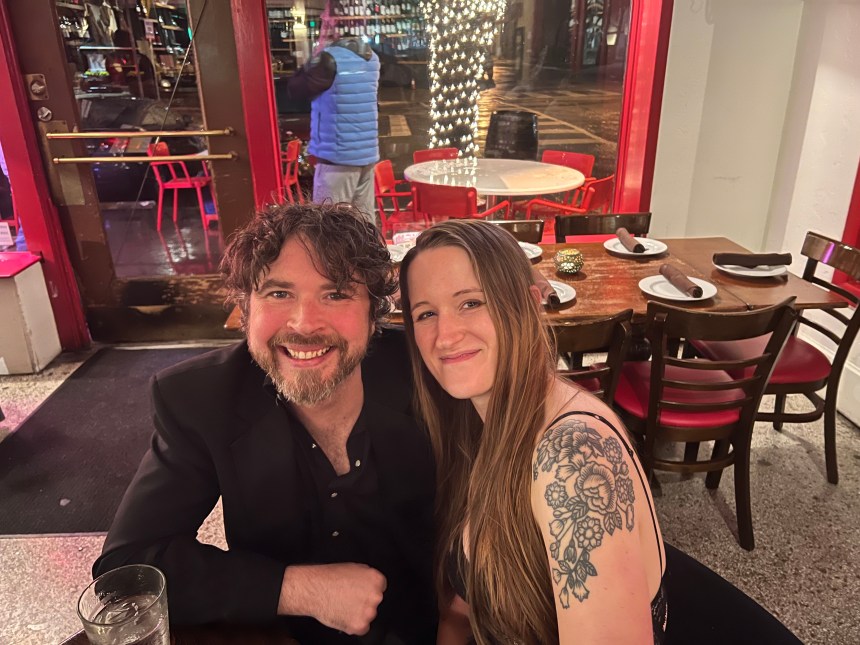
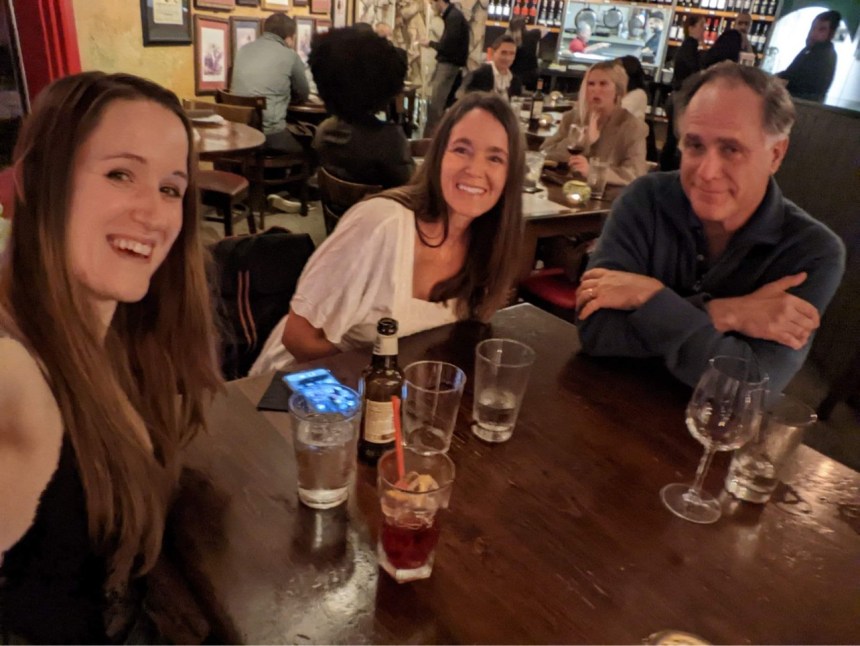
  • With Amanda and Lincoln at Cafe Madrid, Dallas, TX

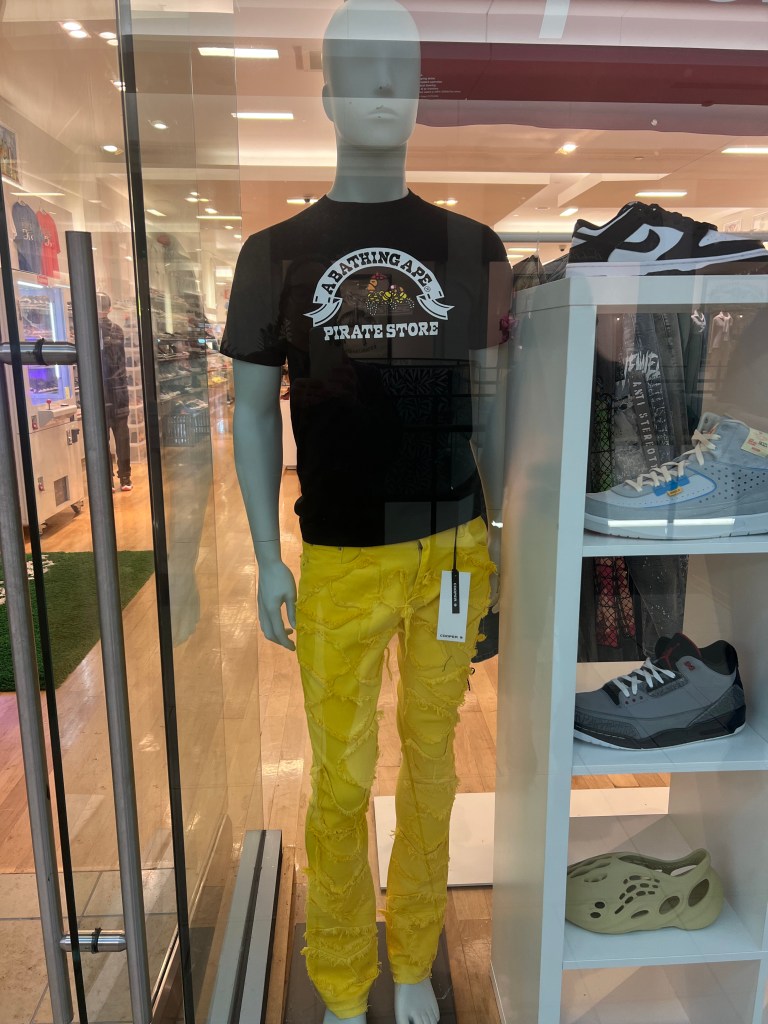
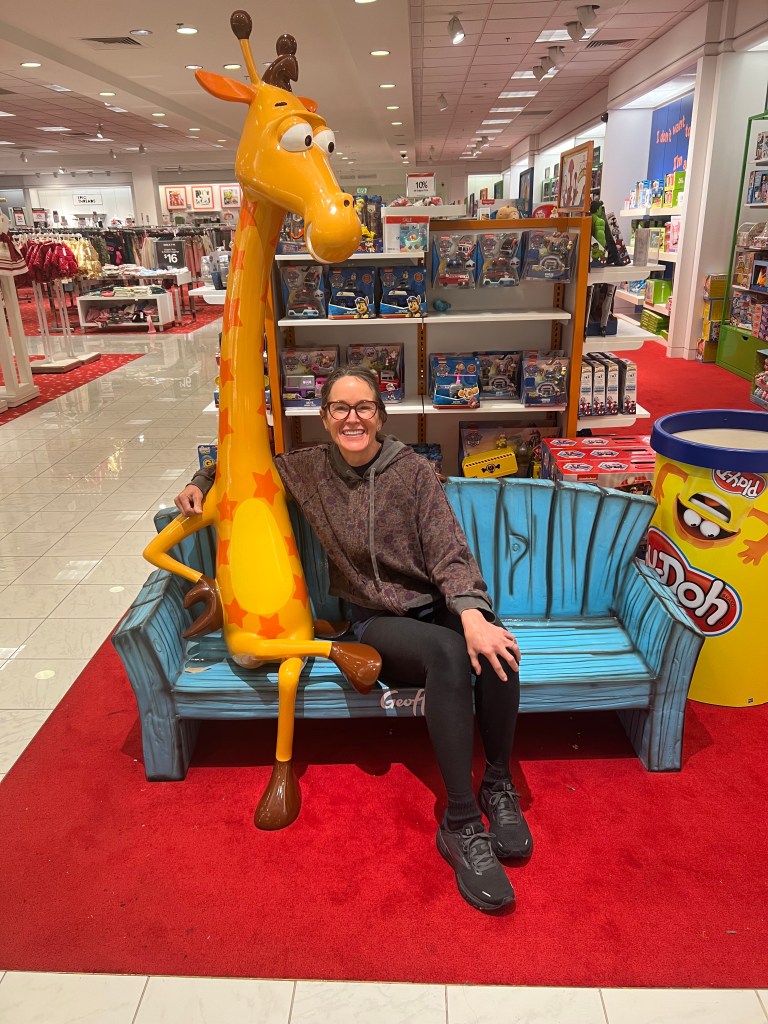
Since it was pouring right after we arrived, we managed some fun outings in spite of the rain. Out of sheer boredom and needing some exercise, we spent part of the second day mall-walking. If you have absolutely no idea what that is, good. This means you’ve had other options for exercise. Mall-walking is one of the few exercise options (outside of going to a gym) that most people in these suburban-y-sprawl-y areas have. There are few outside nature preserve options like we have out here and even when it isn’t pouring rain, it can be difficult to get outdoors because it is either way too hot or way too cold. This happens when you change the climate – driving giant suburbans, escalades, or behemoth trucks and living in McMansion-style houses on zero lot lines with lawns. When I say that the DFW area is a “sea of roofs” or ‘rooves’ if you’re particular about your grammar, is frankly, an understatement. There are a few homes with stately live oaks, but more than half with ZERO trees in the front or back micro yard. Perhaps if there were trees, the need to cool these homes wouldn’t require 4-5 giant a/c units (per home). It’s no wonder there are power outages and rolling blackouts in summertime, and don’t even get me started on the “necessity” of fertilizing those golf course lawns and all the wasted water applied so homeowners satisfy the HOA’s regulations to keep things green. Hmmm. What if these people adopted another interpretation of “green?” Could we re-wild our urban landscapes? Would anyone be accepting of transforming their green lawn into a treasure of native vegetation?

Mall-walking photos here.

After walking the mall for a few hours that afternoon, we met up with some long time friends of ours (Marlin and Chanel). These are two of my dearest friends in the world. We all met around 22 years ago at the local 24 Hour Fitness gym in Lewisville, TX. Every year, we’ve made a point of trying to get together to catch up and enjoy a meal. I think having Amanda around makes it all the more fun. They have enjoyed teasing her since she was about 7.

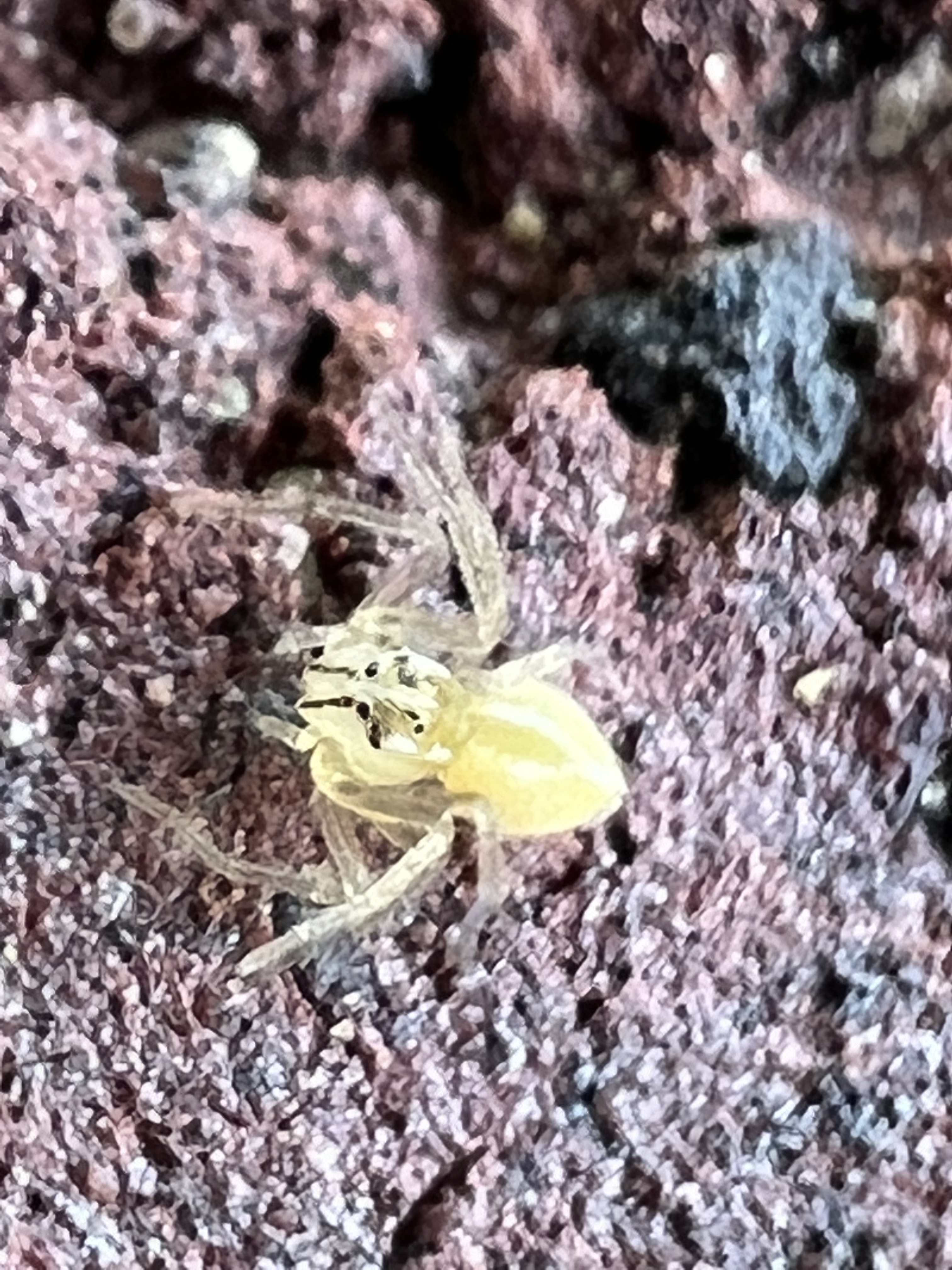
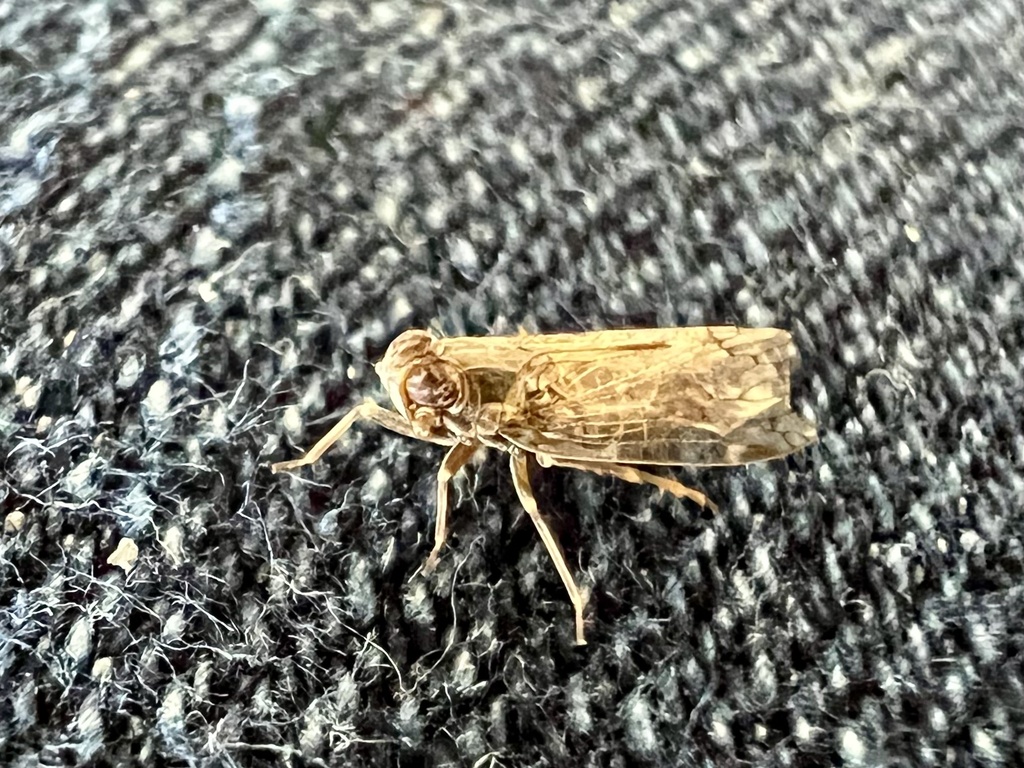
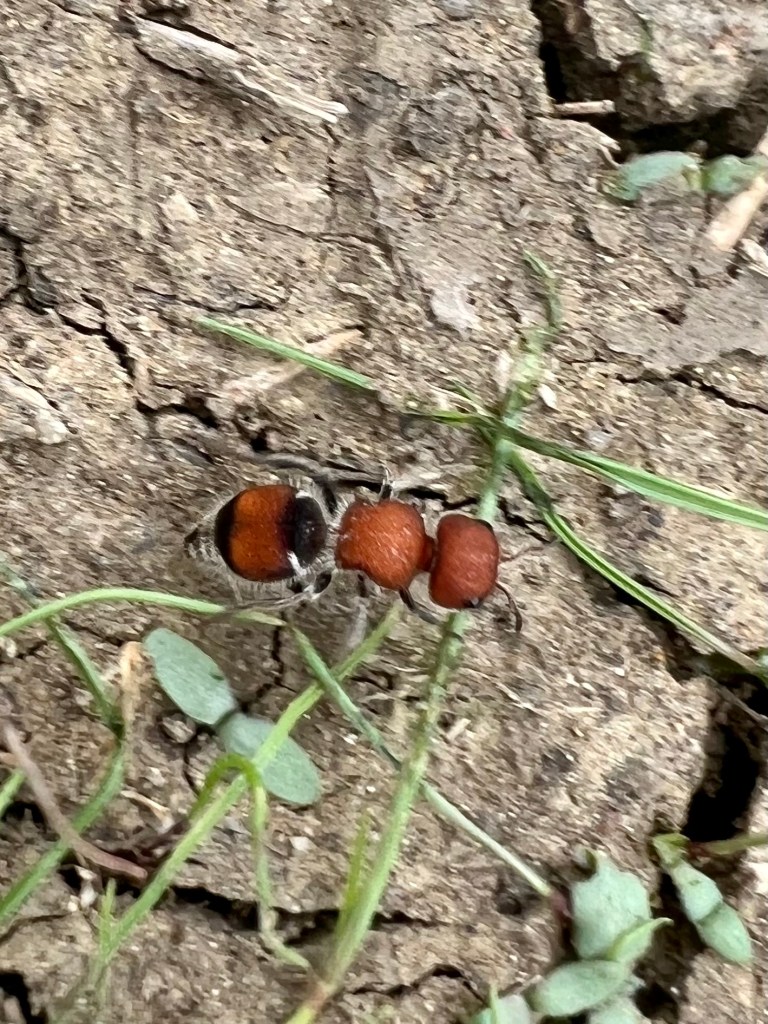
Here’s a few of the bugs that I found around my parents’ home. I think I saw more spiders than insects, but that works for me. Even though there weren’t many, we hit the jackpot over the next few days at the two local nature areas we visited.

I also viewed an amazing aggregation of colonial solitary bees in my parents backyard. These were swarming by the hundreds, low to the ground and going in and out of little ant-like sand castles. As best as I am able to tell, these are Blood bees (Sphecodes sp.). In the 2nd video below, you can see I got so excited, I was down on the ground filming the action as one little bee worked to pack the walls of the entrance and played peek-a-boo with me.

Blood bees (Sphecodes sp.)
Blood Bee (Sphecodes sp.) works on “sand castle” home.

The one thing that made me sad when I visited Texas was meeting some folks who literally asked me to explain to them what a nature preserve was. I kid you not. The phlebotomist was one. She had an 18 year career drawing blood for Quest Diagnostics and she was awesome at her job. I gave about 8 vials of blood and I didn’t faint or even feel a prick. She said she had never been to a nature preserve. Not once. Not ever. When I explained what we have on San Juan, she said, ” she imagined that would be wonderful.” I left pondering how many more people are out there like her. I also contemplated why some people in the San Juan Islands are so against nature preserves. Do we take these places for granted? We shouldn’t. If we don’t care and value them, and protect them from the greed of developers, we will lose them forever. Also, development drives up taxes for residents. If you don’t believe me, look it up. My parents’ 1200 square foot home has a tax bill of about 7K per year for Denton County, TX. They have a senior exemption that cuts this in half. The take away message is more people and more homes = more services needed, more upgrades and maintenance to utility infrastructures, roads, etc. On the other hand, when you include many nature preserves, trails, and wildlife corridors throughout neighborhoods, people are generally more inclined to get outdoors, exercise, and physical and mental health improves. Nature reduces healthcare costs. Think about that.

Keep reading and you’ll see some of the cool bugs I found at the nature areas we visited.

My husband and I visited the two nature areas within a 20 min. driving distance from my parents’ home. The first, Arbor Hills Nature Preserve in Plano, TX, is about 200 acres. It is overused and that has driven away most of the wildlife. Once, you could see road runners, bobcats, coyotes, and many more species. While I am happy it hasn’t been bulldozed for apartments and McMansions (there is actually a giant subdivision nearby called CASTLE HILLS), it is a mostly a giant urban dog park. Don’t get me wrong. Dogs can be wonderful companion animals. I’m not a dog hater at all, but when I see the slog of dog poo along trails or discarded poo bags in a creek, I want to cry. It would be one thing if you saw a dog on occasion, but since everyone seems to have a dog now, it displaces almost anything else that is trying to survive in the wild. So do outdoor cats. If I ruled the world, folks would keep their cats indoors or in catios. They would also be responsible about picking up and appropriately discarding pet waste! Don’t be too critical of my opinion. Companion animals are a huge part of climate change for the simple reason they eat meat. A lot of it. Ranching, and the demand for beef is one reason we will likely lose the Amazon rainforest – and every wild thing in it. It’s also the reason for wolf packs being culled in the West. Ranchers want the land for their cows – even Federal lands. Don’t believe me though. Look it up. If we are going to own pets, we need to make sure we save spaces for wildlife to live too. We need more nature preserves!

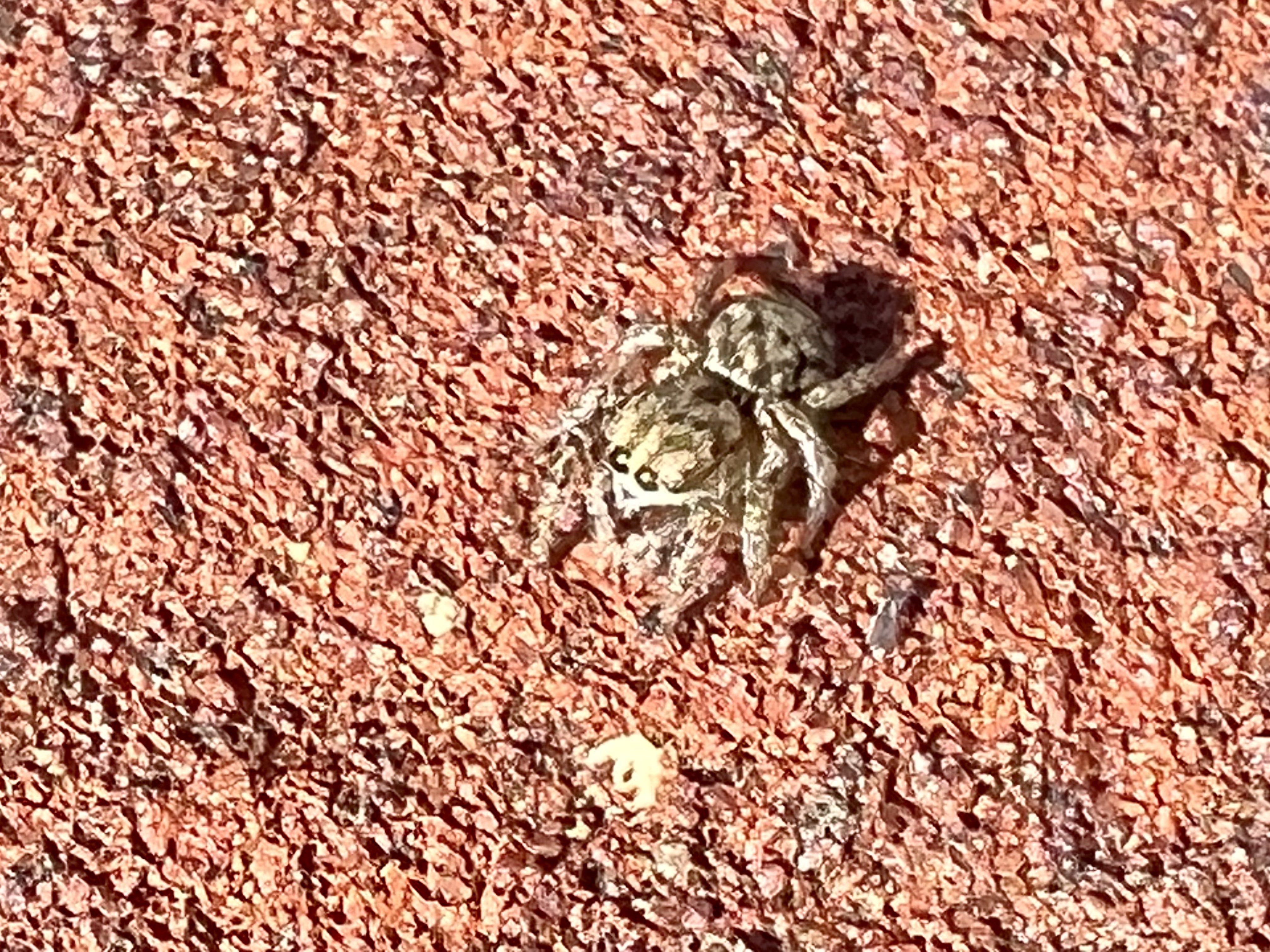
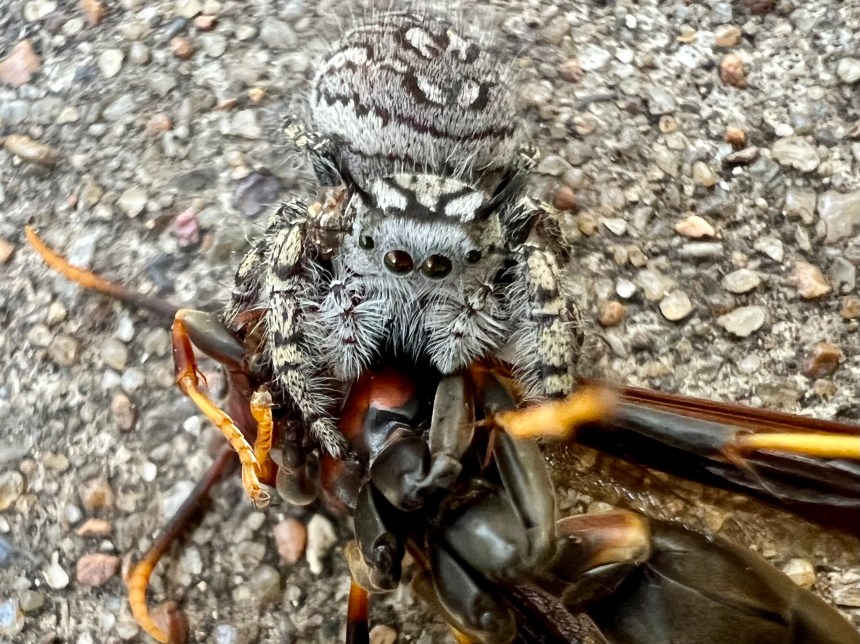
While most of the wildlife has gone missing in Arbor Hills “nature preserve turned dog park,” I did find some pretty cool bugs, including the sweetest jumping spider. I also saw a snake and my husband spotted a turtle swimming in the creek. I’m going to feature the jumping spider first here, then that sweet little turtle swimming in the creek, but all the rest of our sightings and my photos of the preserve can be viewed in the slideshow below.

High Eyelashed Jumping Spider (Phidippus mystaceus)

Pond Slider Turtle ( Trachemys scripta) in Arbor Hills Nature Preserve Creek

Slide show of Arbor Hills Nature Preserve, Plano, TX 2022

Thanks for reading. Stay tuned for more in Bugging You From Texas (Part deux). YEE HAW! 🤠

A Diurnal Firefly (and some of my thoughts about the declines of fireflies in general)

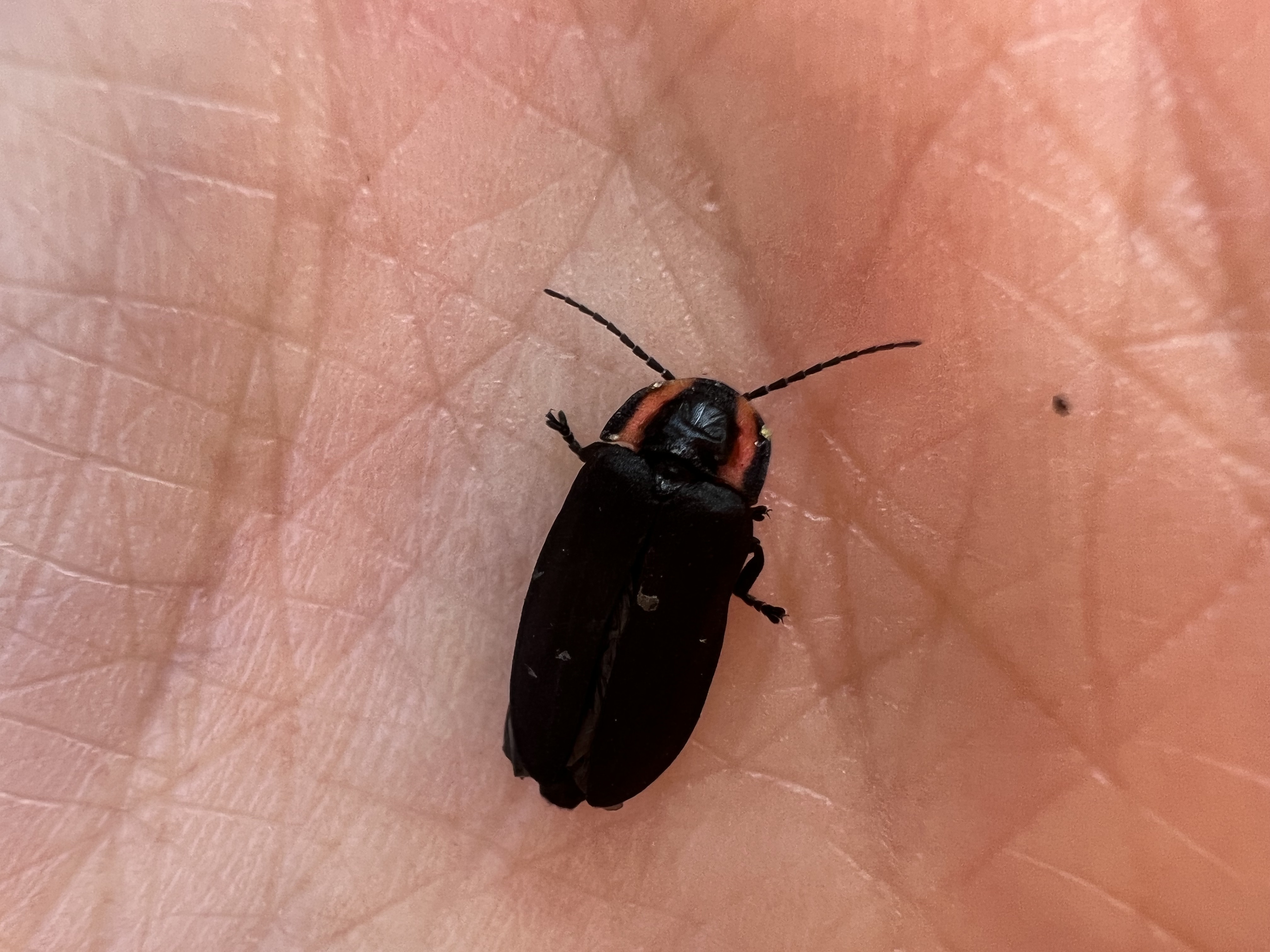
Winter Firefly (Ellychnia sp.)

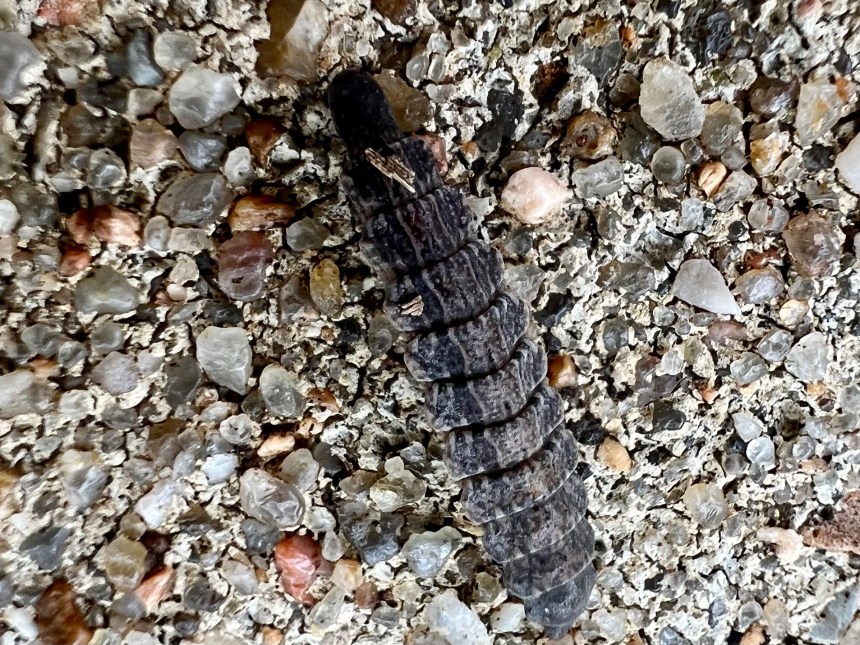
Here’s my “Bug of the day” (for Saturday, October 15, 2022).  I spied it on our wood table outside.  It’s a Diurnal Firefly in the genus Ellychnia.  The Latin name, Ellychnia, comes from Greek, lychnos, translating into ‘lamp’ or ‘lamp wick.’ Obviously, lamps are something associated with the nighttime or darkness.  However, the common name of this genus, diurnal, means “day.”   It’s only a bit confusing, right?  Also, this is a beetle in the family Lampyridae and not a fly at all.  The adults of this genus don’t light up at night or in the day either.  However, they are closely related to the fireflies that DO light up, or luminesce, at night found on the East Coast.  Since this genus, the Ellychnia, don’t have nighttime blinkers, they find their mates by detecting each other’s pheromones.   Lloyd (2002), notes however that all species of Lampyrid beetle larvae have an organ at the end of their abdominal segment 8 that bioluminesces. I’ve never found an Ellychnia larva myself, but these are referred to colloquially as “glow worms.”

Ellychnia sp. firefly

In our area, the genus Ellychnia are also known as winter fireflies.  This is because they spend the winter as adults, and are equipped to tolerate cold temperatures.  You might even see them on days when we have snow.  Larvae of this beetle genus hatch in early summer and live in leaf litter or under bark in decaying trees.  They are carnivorous predators of organisms like snails, slugs, earthworms, and soft-bodied insects.  

Winter Firefly (Ellychnia sp.)

Do we have any blinking species of fireflies in the PNW?  That’s an interesting question.  I found some literature that says we do, but I’m not certain this applies to the San Juan Islands, although a few sparse (and unsubstantiated) records from Vancouver Island, BC exist.  However, western records for flashing fireflies are known from interior B.C. (Cannings et al., 2010) and throughout the western U.S. as reported by Larry Buschman (2016).  

While fireflies that flash or bioluminesce are well known on the eastern side of the U.S. and North America, it is not exactly known how they moved all the way over to the western side.  There is an interesting commentary in the paper by Cannings et al. 2010, with the thought that perhaps at least one of the species of flashing fireflies reported in B.C., (Photinus obscurellus), may have arrived via the railways. 

Because luminescing fireflies are associated with wetlands, it would have been difficult for them to have crossed over the dry Rocky Mountain system without help. Cannings et al. (2010) report sightings across B.C. in association with railways, in fact, with most of these sightings falling within a 30 km distance from a railway.  The thought is that even going across the mountains in drier areas, most railways wound through low lying valleys where the topography is more likely to cross through wetlands.  Even the presence of railroad berms can create areas of new wetland habitat which may also have attributed to the westward distribution of these fireflies.  

Sadly, we have, and continue to degrade, pollute, drain, and lose wetlands in our continued (horrific) adherence to the destructive and entitled ideology of Manifest Destiny.  Development, ranching, hobby farms, and suburban sprawl have eliminated more than 50% of wetlands that previously existed in North America (Fallon et al., 2021).  The remainder have been seriously impacted by chemical pollutants, light pollution, and overall climate change, contributing to further declines to remaining populations.  We may lose all of the species of these iconic and charismatic summertime blinking lanterns without taking special steps to conserve and protect their habitat.   We will have no one to blame but ourselves either.  

Please support environmental conservation and protection in your community – wherever you live.  It is important to reduce our human footprint in order to preserve the natural world, its beauty, and our life support system to perpetuate for future generations.  

How can you help?  Live minimally.  Turn off outdoor lights at night.  Plant native vegetation.  Switch to use of non-toxic household products.  Don’t use lawn fertilizers or chemicals.  Better yet, get rid of your lawn and landscape with native plants.  Eat less meat.  It all adds up.  💡

References

Buschman, L. 2016. Field Guide to Western North American Fireflies. https://buggingyoufromsanjuanisland.com/wp-content/uploads/2022/10/ab7ca-westernfirefliesmarch2016a.pdf

Cannings, Robert & Branham, Marc & McVickar, R.H. 2010. The fireflies (Coleoptera: Lampyridae) of British Columbia, with special emphasis on the light-flashing species and their distribution, status and biology. Journal of the Entomological Society of British Columbia. 107. 33-41.

Fallon CE, Walker AC, Lewis S, Cicero J, Faust L, Heckscher CM, et al. 2021. Evaluating firefly extinction risk: Initial red list assessments for North America. PLoS ONE 16(11): e0259379. https://doi.org/10.1371/journal.pone.0259379

Fender, K.M. 1970. Ellychnia of western North America. (Coleoptera-Lampyridae). Northwest Science 44: 31-43.

Lloyd, J.E. 2002. Lampyridae Latreille 1817. Pp 187-196 in R.H. Arnett, Jr., M.C. Thomas, P.E. Skelly and. J.H. Frank (Eds.). American Beetles. Volume 2.

Bug Diary for October 6, 2022 ~ Metellina Spiders Share a Lunch Wrap, an Unusual Fly, Two Wandering Caterpillars, and “One- Eyed Wanda” Gets Rescued By a Seeing-Eye 👀Human.

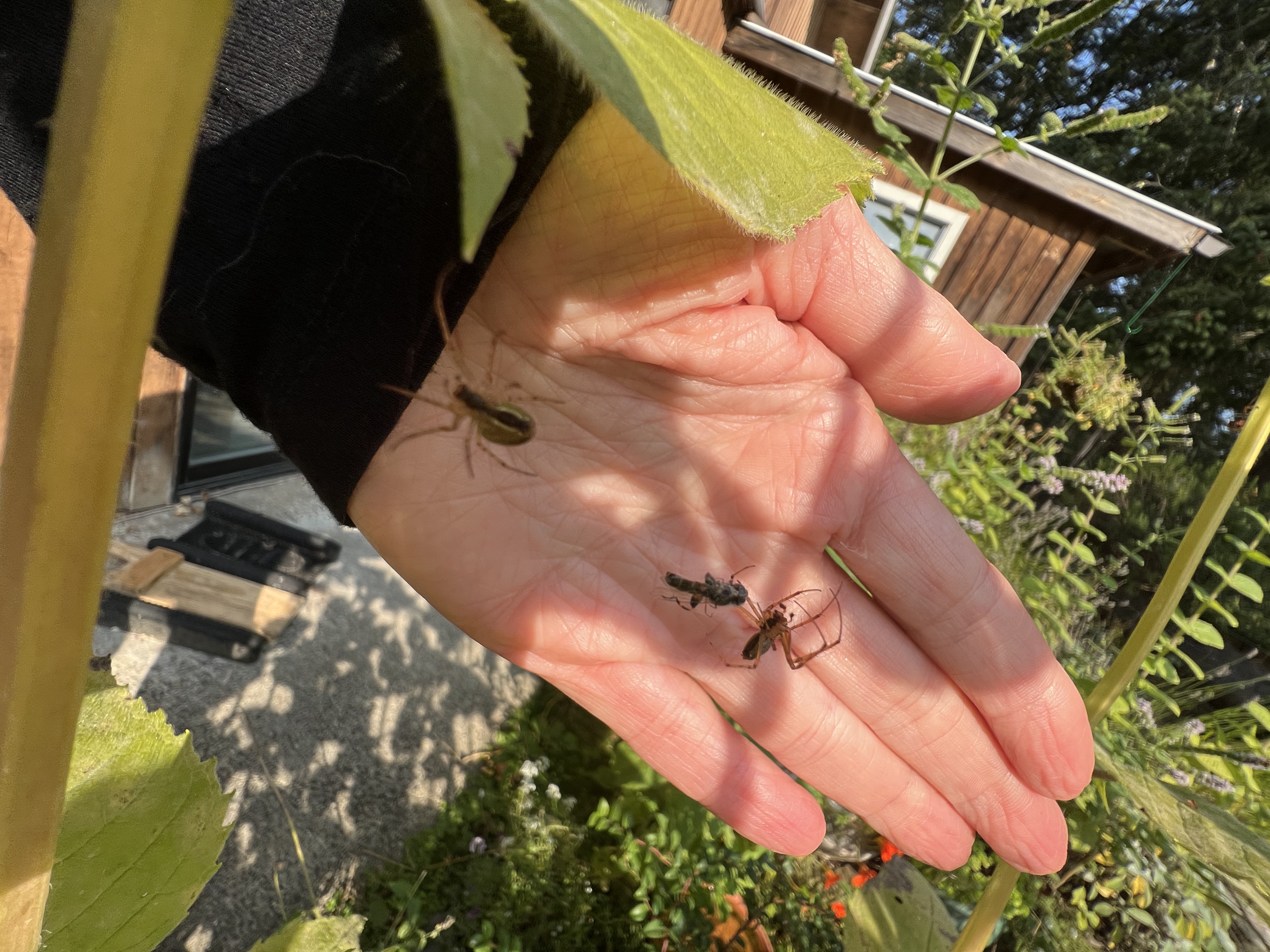
I was eating my lunch outdoors yesterday (October 6, 2022), and considering the end of season, depauperate community of bugs. There are fewer and fewer buzzing about the lingering tiny blossoms on my mint plants, which have been well-visited this season. Many of the winged flyers die out on their own accord. Lives spent – an ending synchronized with leaves falling from the trees. They’ve lived a season, maybe longer depending on the species. As adults, they’ve mated and sewn seeds for a new generation to emerge in spring. Some though, are captured and eaten by other organisms that are fueling stores for their own reproductive event – like these Long-jawed orb weaver spiders (Metallina segmentata) I witnessed, working together to wrap up their “lunch,” a Thick-legged Hoverfly (Syritta pipiens).

Metellina segmentata spiders (male and female) with lunch (Syritta pipiens) hoverfly

I didn’t realize it at the time, but depauperate was not to be the theme of my day!

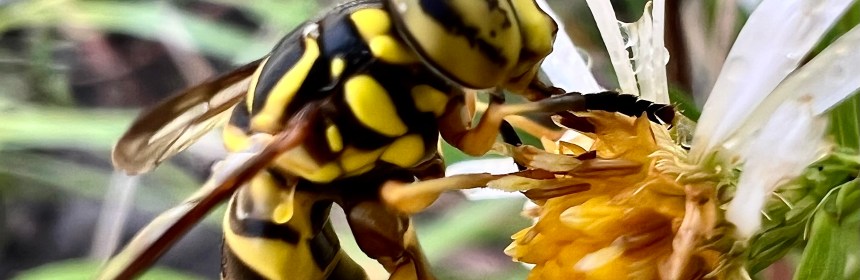
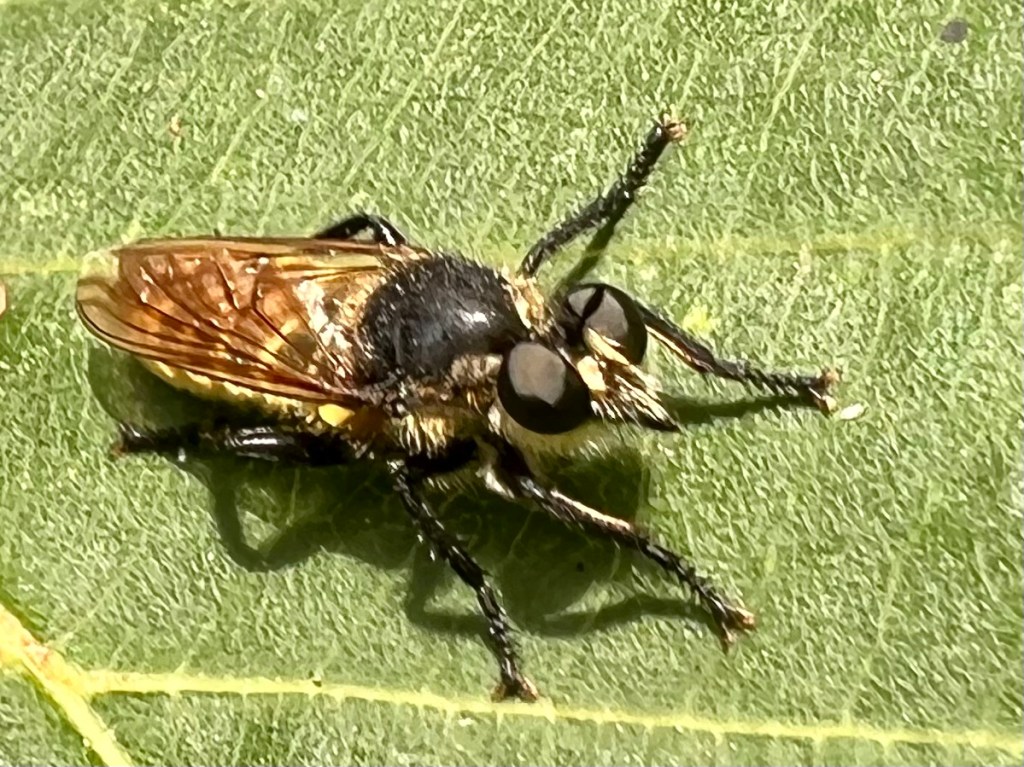
Shortly after observing and filming the spiders, I noted some buzzing around our fruitless cherry tree. I walked over, thinking to myself, “You’re getting too close to that Yellowjacket!” Well, it wasn’t a yellowjacket at all. It was a Robberfly (Laphria ventralis), I believe – and SHE was ovipositing into our tree.

Laphria ventralis Robber Fly – 10.6.22, San Juan Island, WA

Later this evening when I was showing my husband the photos, he asked what the eggs would eat when they hatch. I had to look it up. Well, Robber Fly larvae are known to prey on the eggs, larvae, and pupae of other insects, especially beetle larvae living in decaying trees. Read more about this linked here: https://www.geller-grimm.de/genera07.htm

This Robber fly was an incredible mimic of a Yellowjacket – not only in appearance, but also in the way she flew about the tree. Fascinated, I watched her find a niche under some old bark and begin to oviposit. She did not like my camera or my presence, but tolerated me to a degree. Then she buzzed right into my face with complete confidence her mimicry would chase me away. Guess what? It worked. At least temporarily.

Laphria ventralis Robber fly ovipositing 10.06.22 – San Juan Island, WA
Laphria ventralis 10.6.22 San Juan Island, WA
Buzz Off! Laphria ventralis Robber Fly 10.6.22

The next fun finds in Bug-landia were two caterpillars. I found an Eyed Sphinx Moth caterpillar (Smerinthus opthalmica) making headway down our driveway, undoubtedly wandering off to find a suitable location to pupate.

Smerinthus opthalmica (Eyed Sphinx Moth caterpillar) 10.6.22

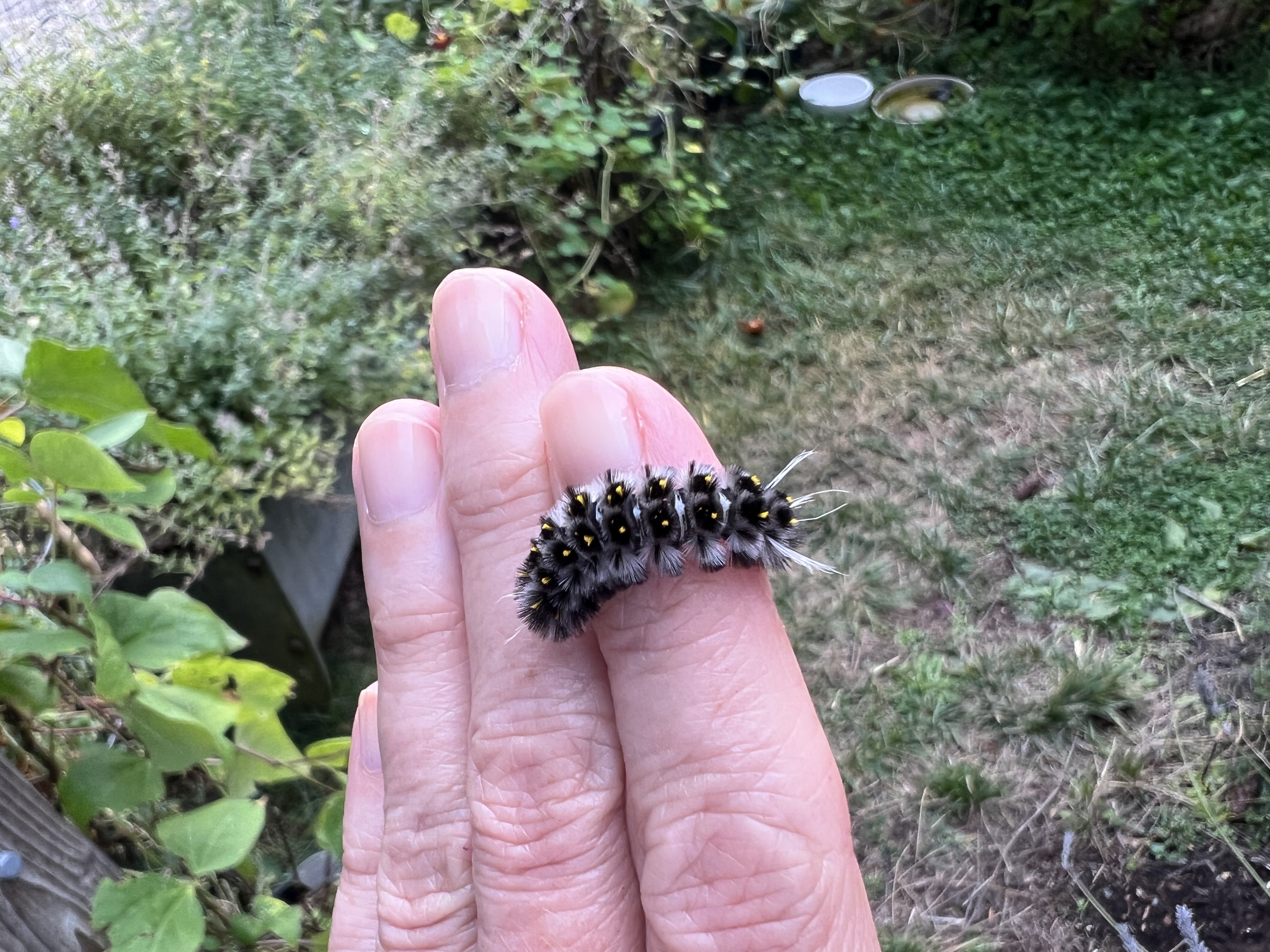
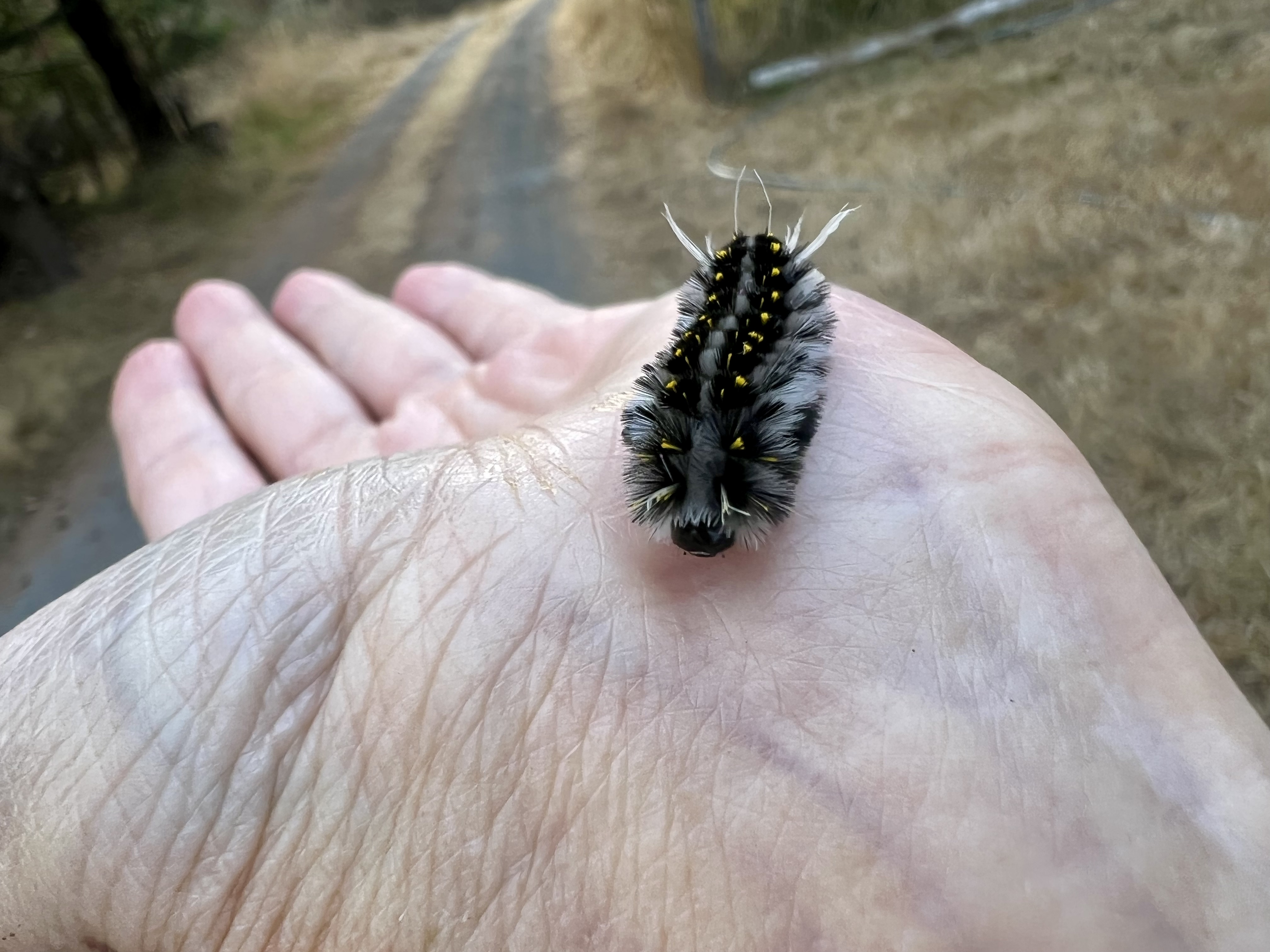
The second caterpillar I found is my absolute favorite moth species, the Rosy Aemilia moth (Lophocampa roseata). Since it was navigating down the middle of the road, I did gently relocate it to a safer spot so it wouldn’t get smooshed by the giant gravel trucks that fly up and down our once quiet country road.

Lophocampa roseata, the Rosy Amelia Moth caterpillar

Last, but not least is my new “pet.” I found her on my walk and she needed some help, so she’s come home to stay with us for some R&R, and a bit of end of life care. I’ve named her Wanda… One-Eyed Wanda. Wanda had evidently become an assault victim sometime just before I found her. The thought is that she was attacked and bitten by another female mantis – who evidently fled the scene before I got there. Poor wounded Wanda was not in great shape when I picked her up. She is missing an eye. It was not a pretty sight, but I couldn’t just leave her in the road.

Mantis religiosa (European mantis) and, “One-eyed Wanda”

She’s hanging out in the dining room tonight in a bug habitat/safe room so my indoor cats don’t batter her. I think she’s had enough battering in this life. I’m hoping she will still be able to lay an egg sack for me before she expires. Definitely plan to try and feed her tomorrow. I doctored her eye as best as I could. She can still see with the other one. Poor Wanda. 😦

Next up – Look for my post and forthcoming PowerPoint slide show about What’s Bugging Gary! Even better, check out the event (Garry Oak Conservation Symposium) in person if you’re on San Juan Island. It’s this Sunday at the Grange.


References and More Good Stuff to Check Out

Brast, C.L. 2018. Lophocampa roseata (ROSY AEMILIA). Bugging You From San Juan Island. https://buggingyoufromsanjuanisland.com/2018/10/02/lophocampa-roseata-rosy-aemilia/

Bugguide.net. 2022. Lophocampa roseata. https://bugguide.net/node/view/247272

Bugguide.net. 2022. Metellina segmentata. https://bugguide.net/node/view/153661

Cannings, R. A. 2014. The Robber Flies (Diptera: Asilidae) of Western Canadian Grasslands. Chapter 7.10.3752/9780968932179. http://staff.royalbcmuseum.bc.ca/wp-content/uploads/2014/06/Cannings-Asilidae-BSC-003-Vol4-Ch7-2014-.pdf

Cannings, R.A. 2007. Recent range expansion of the Praying Mantis, Mantis religiosa Linnaeus (Mantodeaz Mantidae), in British Columbia. Journal of the Entomological Society of British Columbia, 104, 73-80. https://journal.entsocbc.ca/index.php/journal/article/view/101

Geller-Grimm, F. Information on Robber Flies. https://www.geller-grimm.de/genera07.htm

McAtee, W.L. 1918. Key to the Nearctic Species of the Genus Laphria (Diptera, Asilidae). The Ohio Journal of Science. v19 n2 (December, 1918), 143-172. https://kb.osu.edu/handle/1811/2019

Nelson, D. 2022 Laphria Ventralis. 10,000 Things of the Pacific Northwest. Adventures of a Recreation Naturalist. http://10000thingsofthepnw.com/2021/07/31/laphria-ventralis/

Nelson, D. 2022. Metellina segmentata. 10,000 Things of the Pacific Northwest. Adventures of a Recreation Naturalist. http://10000thingsofthepnw.com/2020/10/25/metellina-segmentata/

Nelson, D. 2022. Smerinthus opthalmica. 10,000 Things of the Pacific Northwest. Adventures of a Recreation Naturalist. http://10000thingsofthepnw.com/2022/06/27/smerinthus-opthalmica/

PNW Moths. 2022. Lophocampa roseata. http://pnwmoths.biol.wwu.edu/browse/family-erebidae/subfamily-arctiinae/tribe-arctiini/lophocampa/lophocampa-roseata/

PNW Moths. 2022. Smerinthus opthalmica. http://pnwmoths.biol.wwu.edu/browse/family-sphingidae/subfamily-smerinthinae/smerinthus/smerinthus-ophthalmica/

Thanks for Reading! 🐛

September Spider Sleuthing in the San Juans

Don’t miss out on the 3rd Annual Spider Sleuthing in the San Juans – happening now and running through the entire month of September. Check out @Bugs of the San Juan Islands on Facebook for more posts an to see what others are sharing.

BUGGING YOU FROM San Juan Island's avatarBugging You From San Juan Island

Today is officially the first day of September Spider Sleuthing in the San Juans. I’m excited about seeing those “spidee” photos and learning together about some of the very cool things that spiders do. We’re also going to conquer any FEARS of spiders and to start off, I’m going to post a link so you can discover Lucas the Spider. If you don’t know about Lucas, he is the cutest spider in the world, AND he wants to be your friend. *Kid and Adult Friendly!

Check out the event on Facebook at https://fb.me/e/1HRI2PNFw

View original post

Birdie Buffet

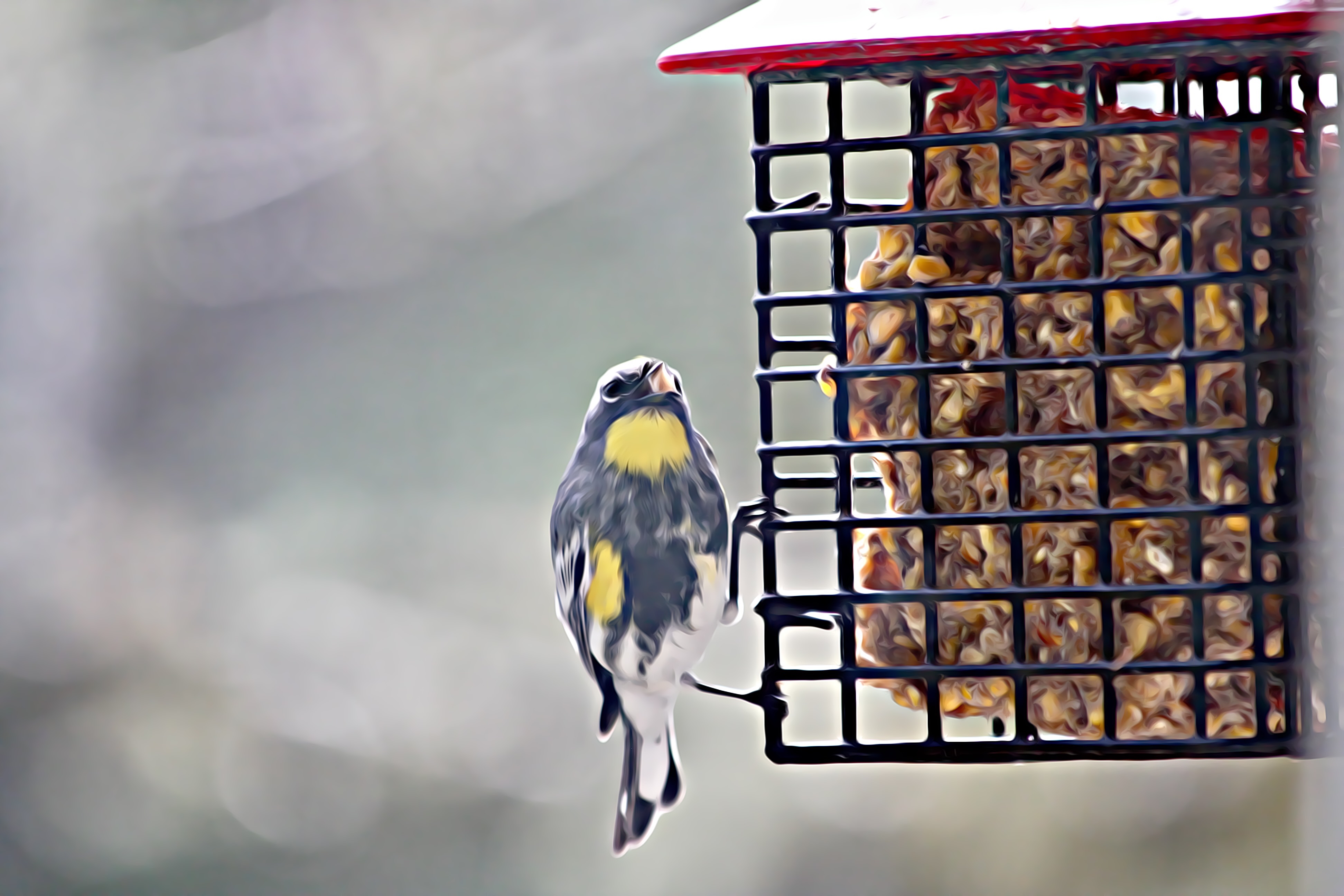
Yellow Rumped Warbler – San Juan Island, WA

I have an observation I was fortunate enough to see in person last September (2021) that I’d like to share, including a short video or two I filmed, and a wonderful animation slide made for me by one of our local San Juan Island artists, April Randall, who I asked to illustrate what I witnessed, but did not have an opportunity to record on camera.

We are entering the season – late summer/early fall, when some species of ants and termites send out their winged reproductives, also known in scientific lingo as “alates.” These flying individuals have reached reproductive maturity and their purpose is utilitarian: to fly away from home, mate, and establish a new colony…IF they are lucky enough not to be eaten or fall to some other random fate in nature.
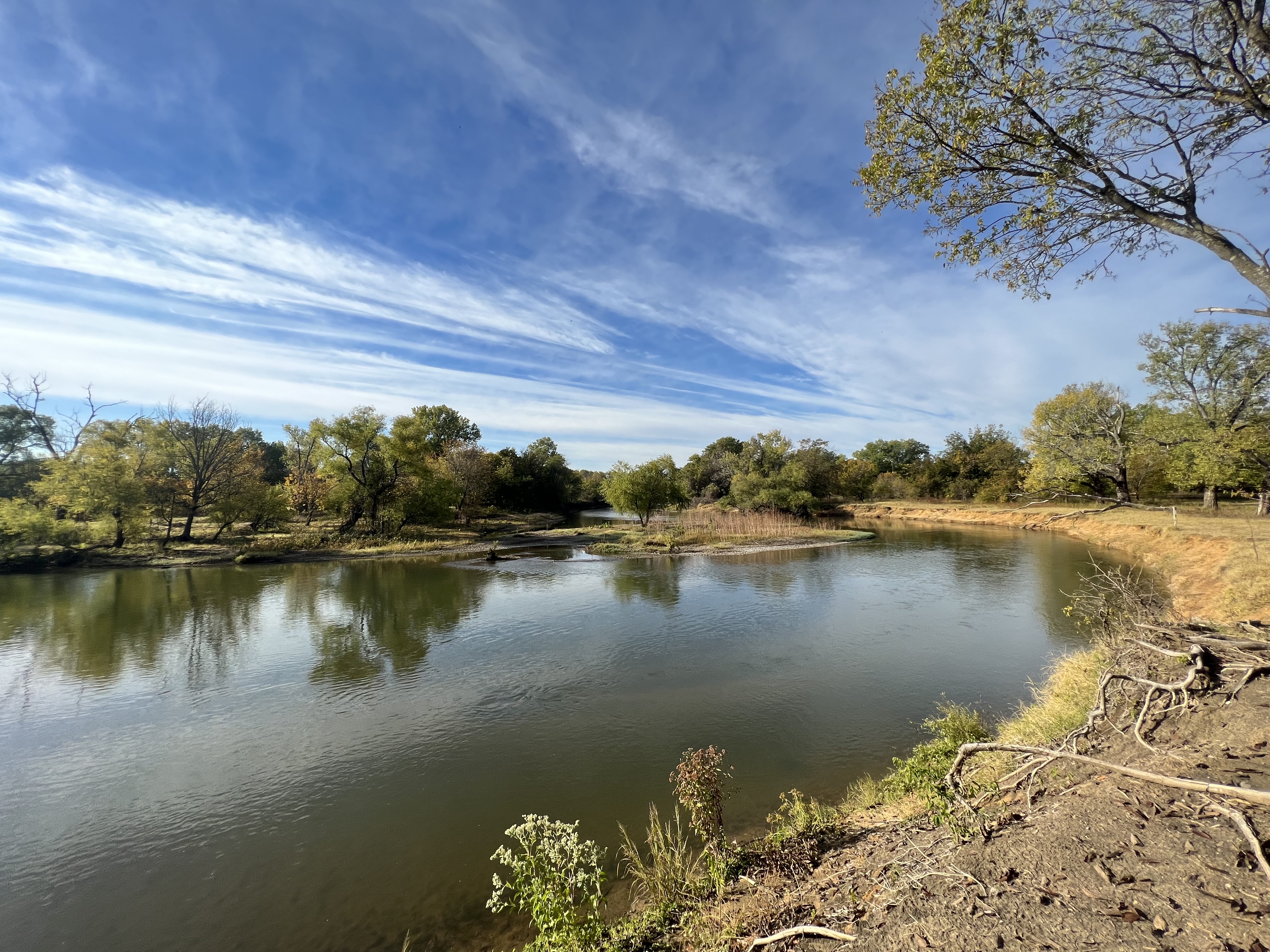
Over the past seven years, I’ve been able to watch as one particular colony of Western Subterranean Termites (Reticulitermes hesperus) sends out their offspring to do exactly this. The event happens annually during the first 12 days of September without fail. They swarm to the surface, exiting en-masse out of the little hole in the ground, to launch out into the great, wide world. The air is filled with their tiny black bodies and translucent wings – wings that last just long enough for them to disperse far enough away from home, so as to not compete with the parent colony.

Many, or probably it would be fair to say “most” of these winged reproductives or alates, aren’t successful, if by defining success, your measure is for them to begin a new colony. However, if you measure success from another perspective – that of Mother Nature, this event is indeed a success – for Mother Nature hasn’t forgotten the food web and the myriad of other species who must forage for food in order to survive.

In the videos below, you will see a close up of these Western Subterranean Termite alates emerging from their underground colony which lies below our driveway in a network of old Douglas fir roots that were cut down long ago by the former homeowner. As “momma” to a bearded dragon, I included some video of my pet, Drago, feasting on these termites as they emerged. Bearded Dragons are known to dine on termites in their native range in Australia, so I thought, “Why not?” Yes, he loves them! What I unfortunately don’t have video footage of is what we saw after we came back into the house. There was a little flock of Yellow-Rumped Warblers waiting for us (mostly for Drago) to leave that spot. As soon as the coast was clear, those little birds were down on the ground, eating the termites as fast as they emerged.

So here’s where I brought April into the picture. April made the animation and I think it’s important because it gives you something to share with your friends about how the food web works – or how it’s supposed to work. It’s also important because many, many people automatically see termites as something bad, a PEST. While that may be true if they are eating your home, it isn’t true in this case.

These termites have never bothered our home (not once in 7 years). We border a wooded area and there is plenty of habitat that termites need for survival. Some pest control operators will tell you right off though, that you have to be proactive. Get rid of the colony. Well, they also want you to PAY them, so don’t believe everything you hear. What I’d like you to consider is how Mother Nature is providing for these little birds – and other species of wildlife. The Warblers (and other wildlife) don’t have a grocery store to pop into whenever they are hungry. They rely on seasonal (often temporary surges) where food is abundant, so they can eat enough, storing energy to survive whenever they can’t find food. Feast or famine is a common theme for wildlife. They may even have to travel for long distances to take advantage of a resource. Because Yellow-Rumped Warblers can live for 6-7 years, they may well remember how to find this exact spot on our property each year.

Western Subterranean Termites (Reticulitermes hesperus)
Drago, the bearded dragon eats Western Subterranean Termites on San Juan Island – Sep. 12, 2021
Animation by April Randall, Orcas Island, WA

Please feel free to share with you friends and family. I hope you enjoy the animation. This year, I’m going to be waiting with my camera in hopes of capturing this special moment.

About Reticulitermes hesperus:

Lifespan of a Queen – up to 30 years

Family: Rhinotermitidae

Geographic Distribution: along the Pacific Coast (BC-CA-Mexico) east to ID & w. NV

References, Further Reading, and Artist Information

Bugguide (Reticulitermes Hesperus) https://bugguide.net/node/view/183940

Keller, Laurent. (1998). Queen lifespan and colony characteristics in ants and termites [Review]. Insectes Sociaux. 45. 235-246. 10.1007/s000400050084.

April Randall, The Windy Painter – https://www.instagram.com/windypainter/?hl=en&fbclid=IwAR26Joo9sFvw1KUnA_0tiQe2wObCAMTNh8Rzxy6pkZU1WKaMtD_vcmDEliw

Musings on the complicated topic of native pollinators, food production, and climate change

Bee Balm, nasturtiums, and Stinky daisies


Our native pollinators were slow to emerge this year in the San Juans because of the cool weather. Usually, we can rely on flies, solitary bees and wasps, and even moths, ants, and others to pollinate our fruit trees. I did see some species of flies out this spring, but again, weather conditions were poor. 

We have PLENTY of “pollinators” out in our yard right now. So, in trying to explain to people when they ask me about a decline in native pollinators, I have a few points I like to throw out for consideration.

1) honey bees are poor pollinators to keep on the island. It has to be above 50 degrees for them to come out of the hive.

2) native flies and other insects like moths (which fly at night and we don’t typically see) are better at pollinating in cooler temperatures.  While they also won’t be out if it’s rainy and super cold, they can fly in temperature ranges lower than 50 degrees F.  

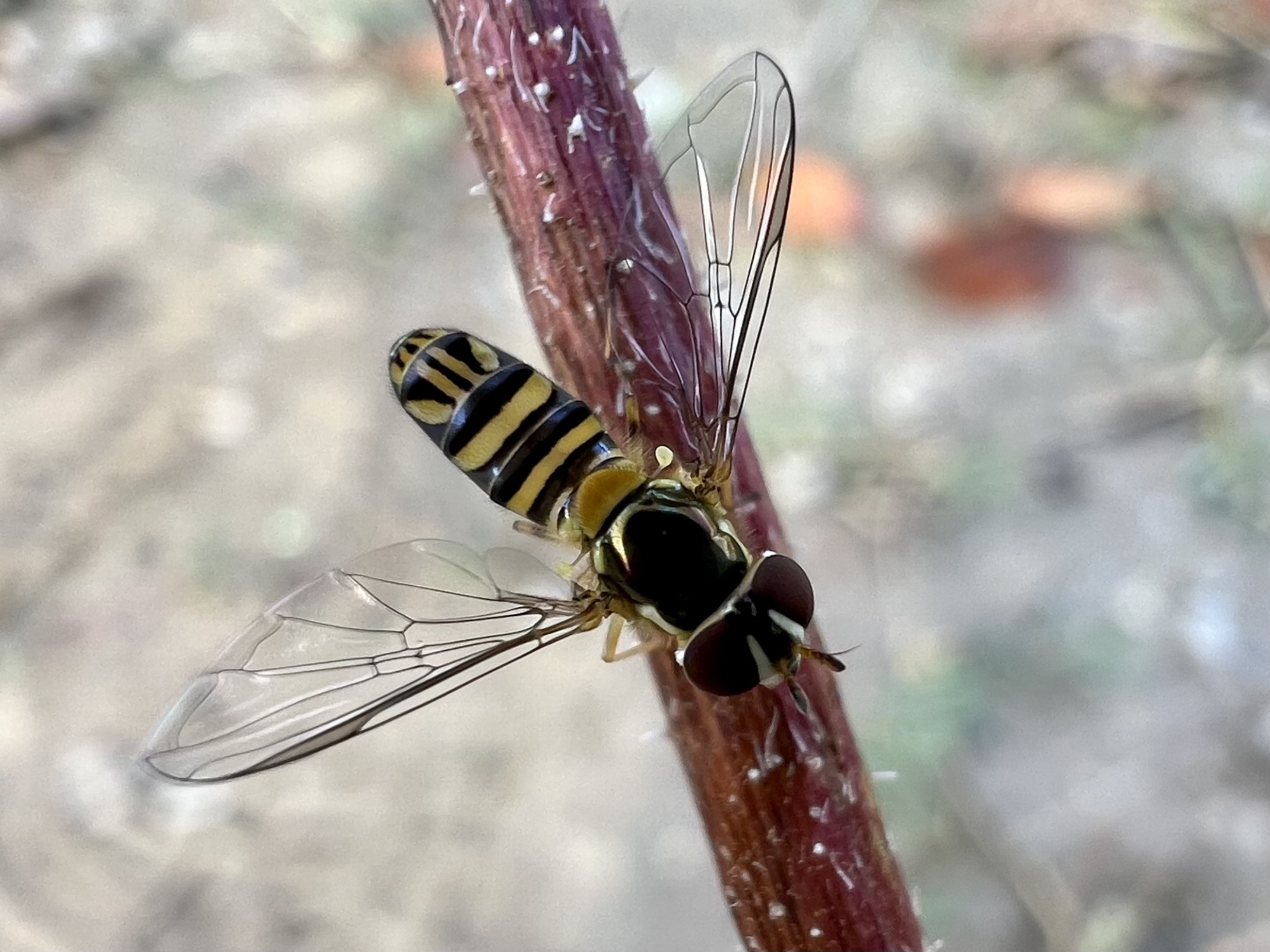
3) the critical importance of native pollinators may not be in their “pollination” services – but their role as pest predators and/or role in the food cycle for other organisms, and for creating biodiversity in our ecosystem, which helps keep everything healthier.   I think this part is important.  If you look at some of the plants we put in our gardens (native perennials), they actually do not require pollination to survive and reproduce, but do offer pollen and nectar to many insects, spiders, and hummingbirds.  Looking further at the food web, we need a variety of native insects for more than pollination.  Tachinid flies, syrphid flies, solitary wasps, ants, and even spiders can be pollinators, but also help regulate populations of orchard, garden, and forest pests.  

My take on all of this is as humans, our focus has largely been on how to grow food over environmental conservation and maintaining balanced, functioning ecosystems.  With climate change, many of our food growing operations may fail.  Our fruit trees (at least none that I know of) are not native.  In spite of the best intentions, conditions may decline to a point where we can’t produce great fruit here.  Weather is only one limiting factor.    We have poor soils or no soil in many locations, limited water resources, and the pressures of continuing development resulting in loss of natural habitats.  I don’t have the answers for you when it comes to fruit production or any way to personally mitigate climate change, so we may have to figure out a substitute for growing apples, plums, and such.  

Let’s go back to the importance of native pollinators though.  If you think of our island as a living organism with many different functions, it is important to have all the essential pieces to keep the “body” healthy.  These native pollinators (and the native plants they visit), and all the other myriad species of invertebrates, fungi, birds, mammals, amphibians, reptiles, soil, water, etc. are all part of the “body,” a body that has to fight off occasional or repeated assaults from being thrown off balance by exposures to external forces.  Just like we need a variety of foods and minerals and other things to keep our body healthy, so does an ecosystem.  We need all of these pieces (and that includes our native pollinators and all the other diverse species) to keep our island home healthy.  
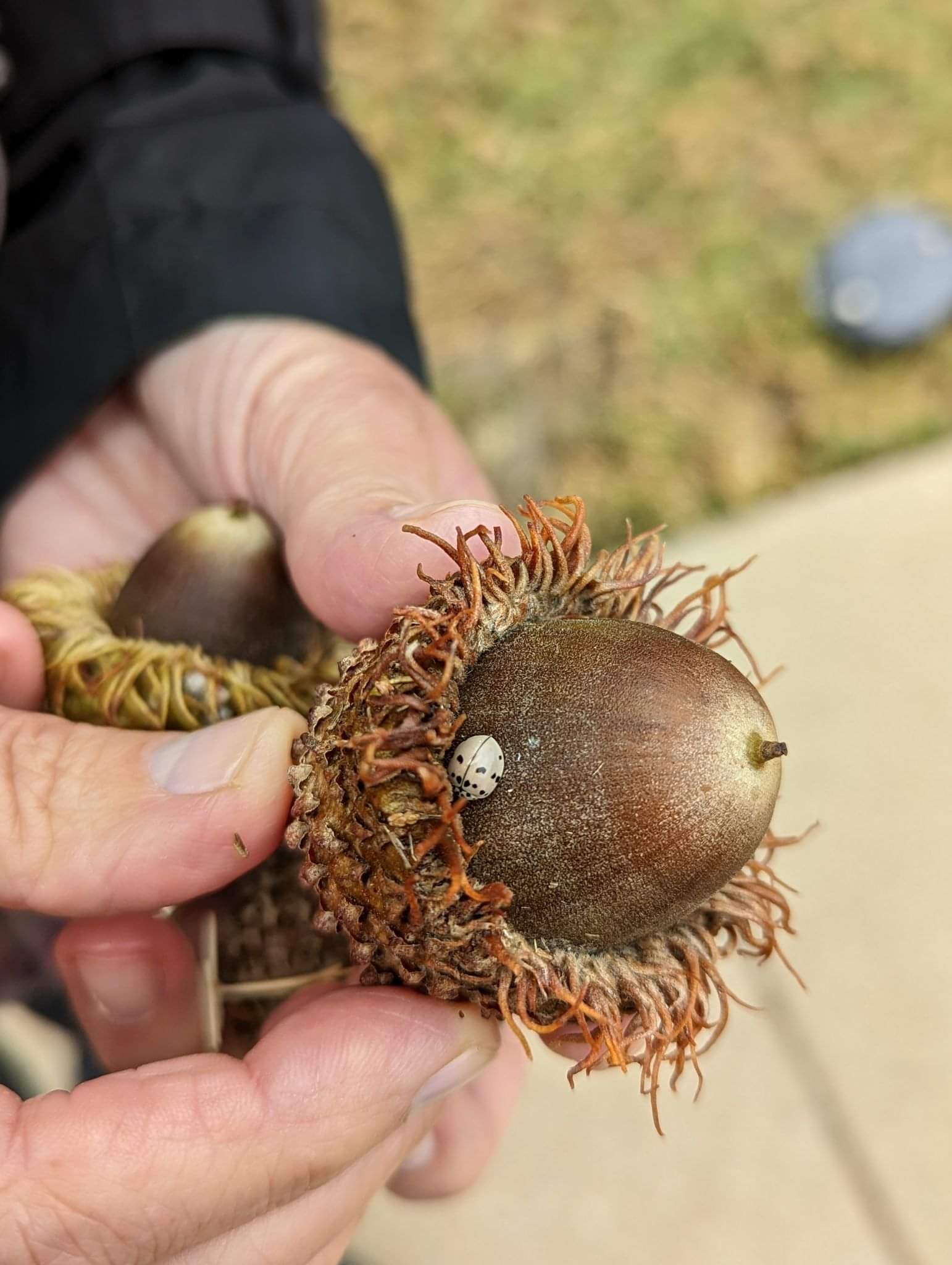
As to the fruit trees and other food crops requiring pollination, for now, some of these issues can be mediated by planting around your orchard and garden with plenty of diverse native species and providing habitat for all of these native species to develop.  Some of our practices of cleaning and sanitizing our orchards and gardens, burning yard clippings, and applying fertilizers and pesticides can adversely affect the biodiversity needed to help our food production thrive.   

I imagine it can be frustrating to see an orchard fail to produce fruit.  My grandparents were tenant farmers and wholly dependent on growing cotton and corn and the bit of garden and livestock they had around the home on the property they did not own.  When it was a drought year, and crops failed, things were utterly miserable.  Destitute would be a better adjective.  I believe we may have an inherent desire to be “part of the land,” and grow our own food, but sometimes, despite our best efforts, conditions aren’t favorable.  Crops fail.  Historically, we have tried (and failed) to control some of these external forces – like applying pesticides in amounts that probably will poison us forever.  

I’ve gone way beyond the “pollinator” topic here, but it is next to impossible for me to see a one-dimensional issue.  We have a much larger and more complex picture before us.  How do we either re-create or maintain a healthy functioning system, navigate the perils of climate change, and feed ourselves?  I like to believe that protecting diversity in our ecosystems is an important facet of this complex, multi-layered crisis we face. 

Resources and Further Reading

Washington Native Plant Society – https://www.wnps.org

Xerces Society – http://www.xerces.org

WSU Extension Master Gardeners of San Juan County – https://extension.wsu.edu/sanjuan/master-gardeners/

Living Jewels of San Juan

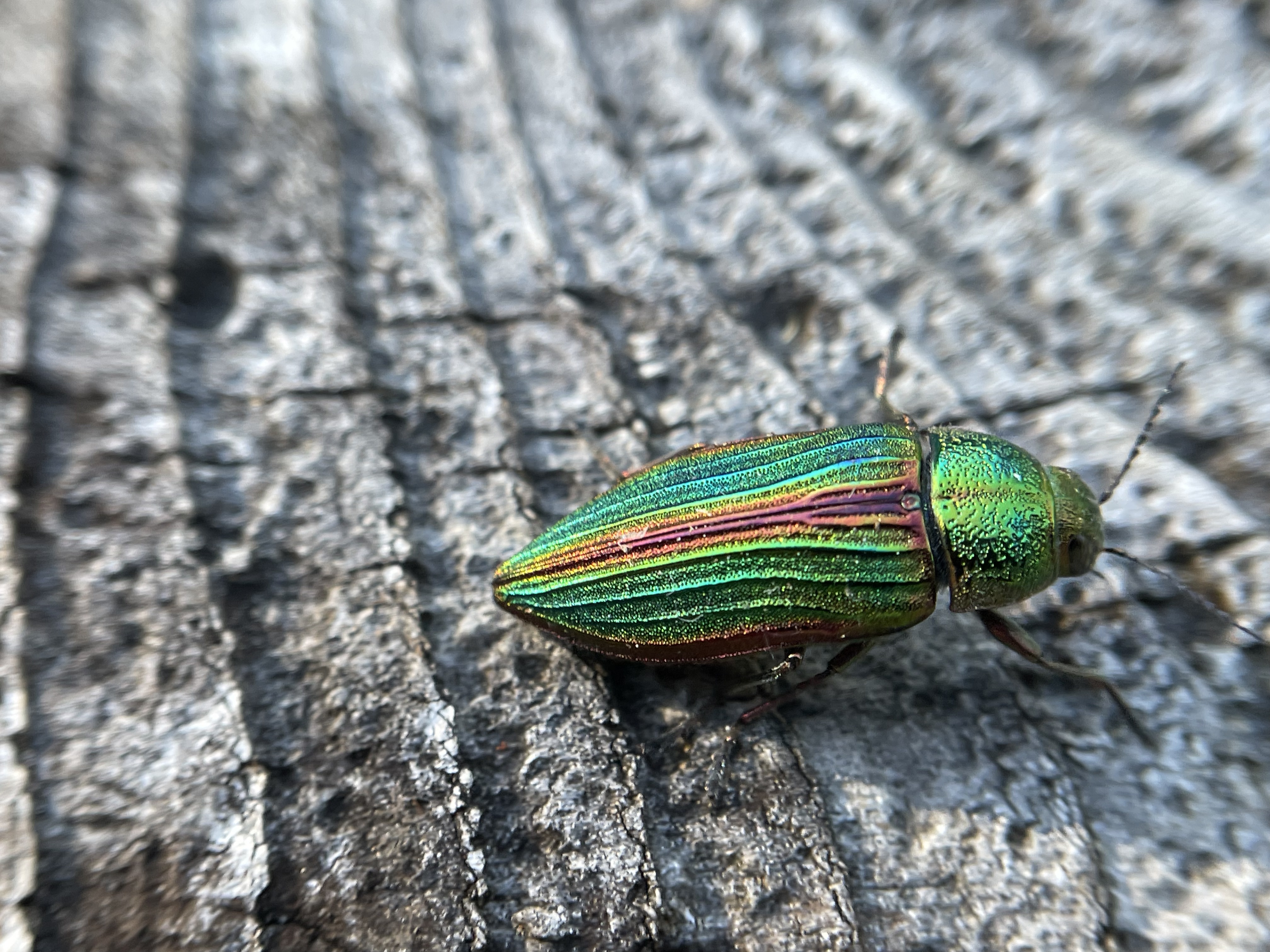
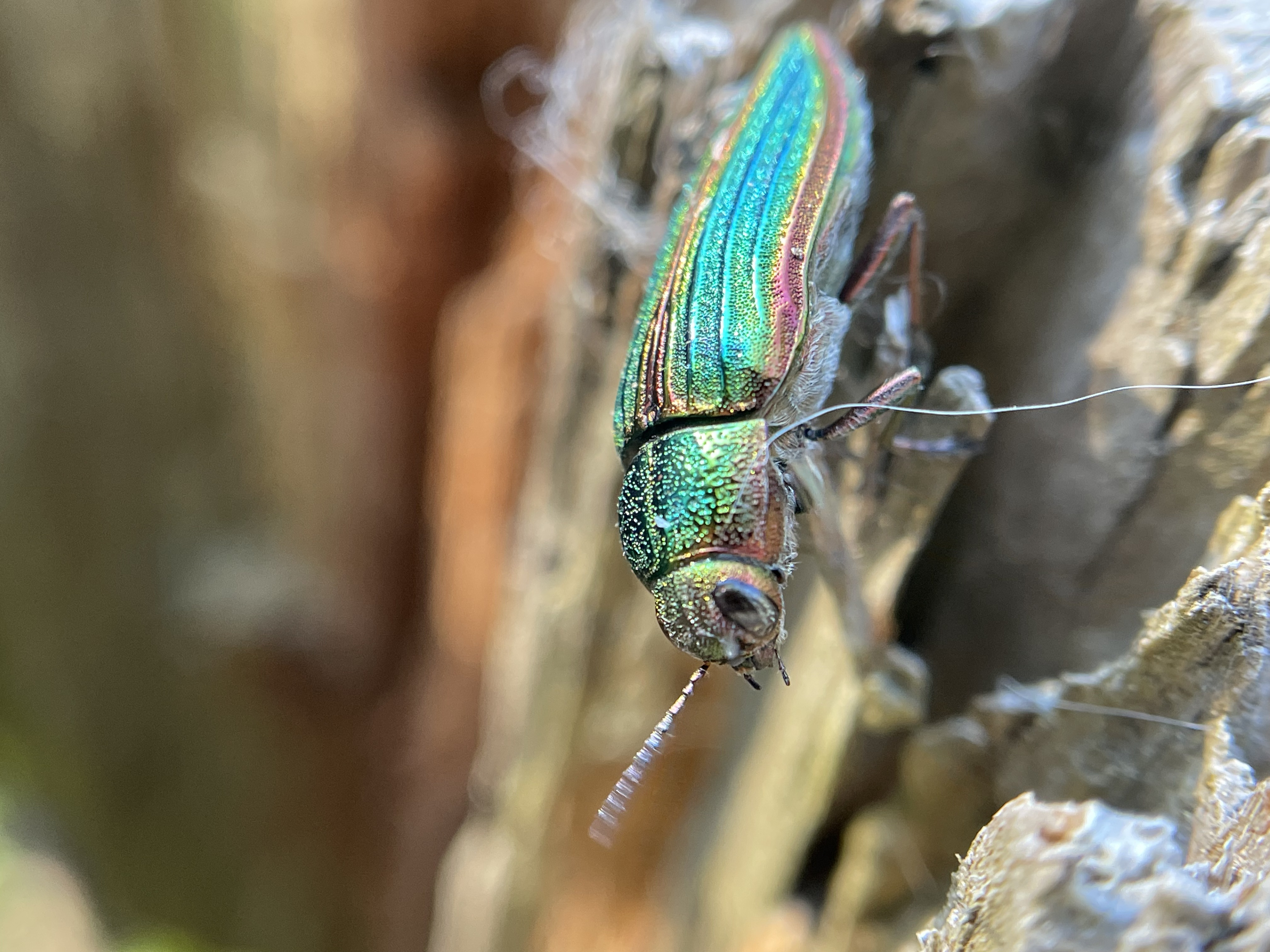
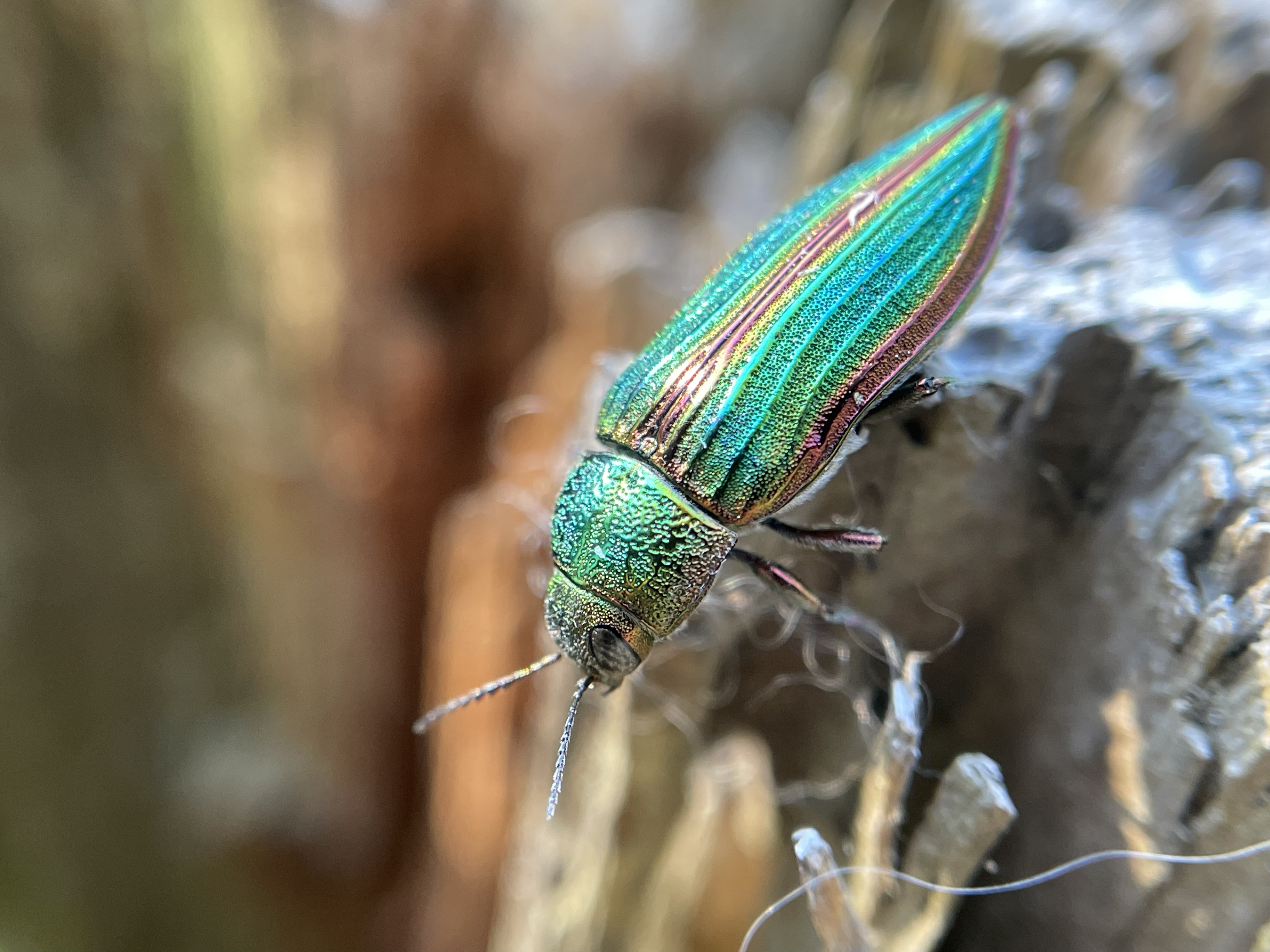
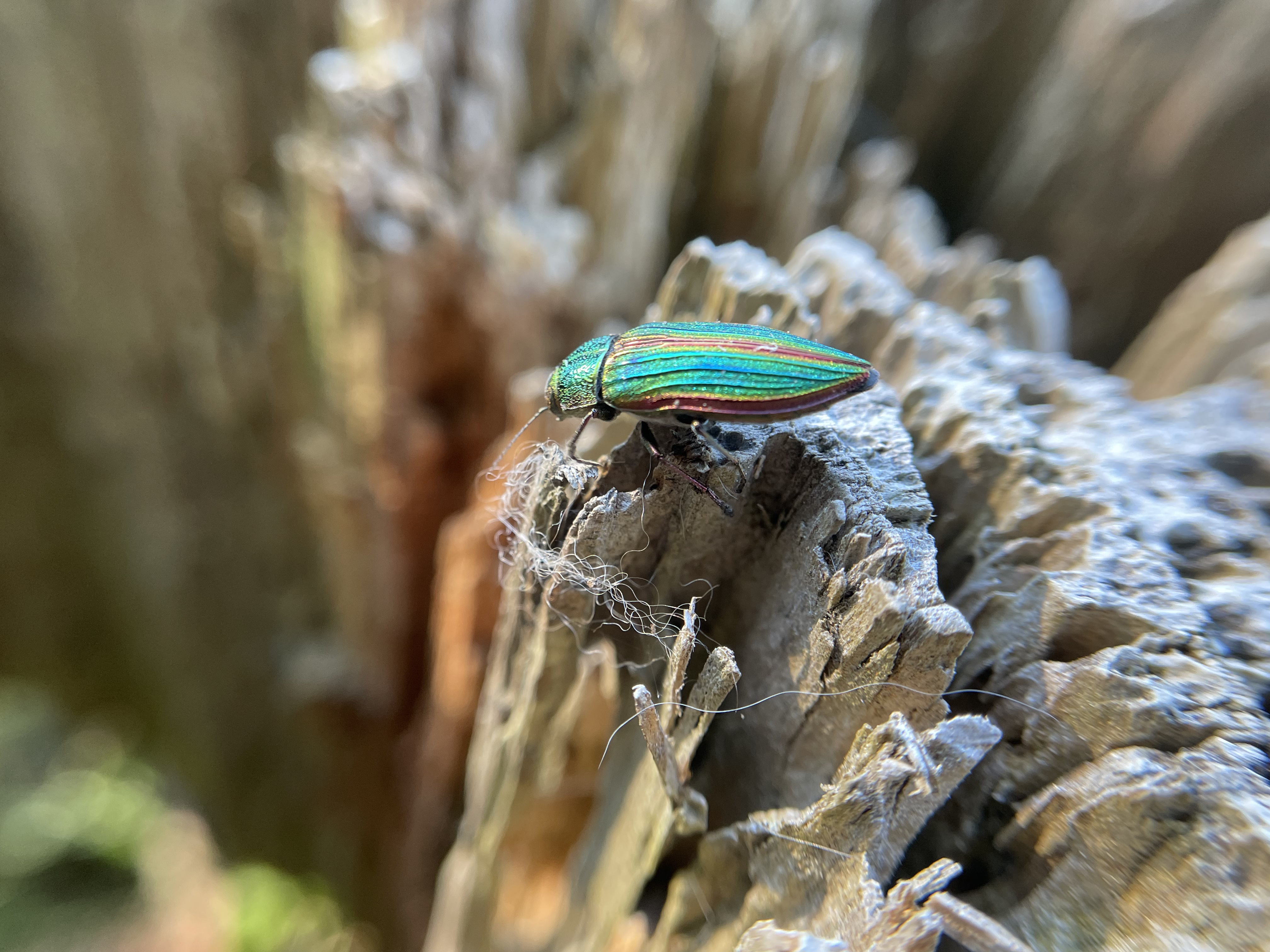
Buprestis aurulenta or Golden Buprestid Beetle

I found this little green beetle (and another sad little black and yellow beetle missing its antennae) in the pool yesterday. The black and yellow beetle is alive and… well, sort of living in a special habitat right now because of those missing antennae.

The green one was completely waterlogged and lifeless. I had left it on the table next to Drago’s enclosure last night, thinking I’d pin it and keep it in my collection. I am SO GLAD I DIDN’T stick it with a pin! This morning, I found it moving those little legs around at me. It was alive! RIP woke up.  

Golden Buprestid beetle (Buprestis aurulenta)

Golden Buprestid beetle (Buprestis aurulenta


This is a Golden Buprestid Beetle (Buprestis aurulenta). They are a native species in the Pacific Northwest. I have referred to them often as the Rip Van Winkle beetle because they take such a long time to develop from egg to adult. In fact, the record is 51 years!  


Why so long? Well, the developmental time depends a lot on the quality of what they’re eating (they develop in dead or dying trees) and miscellaneous environmental factors. When they come out as an adult, they leave behind a little oval hole. I think it adds character to your wood trim if you have them “sleeping” in timber used to build your house.

We had one in our door trim that didn’t make it all the way out and probably had been stuck for awhile before I noticed. It became a fascinating object to show anyone who came to visit our home.

Golden Buprestid stuck in door trim (March 20, 2016)

I’m not sure what gives them this beautiful iridescence, but they are undeniably one of nature’s jewels, thus the name “Jewel” Beetle. 

Golden Buprestid Beetle – San Juan Island 07.27.2022
Golden buprestid set free to fly away in the forest.

References and further reading:

Zeng, Y. 1995. University of Florida Book of Insect Records, Chapter 12 Longest Life Cycle. Department of Entomology & Nematology University of Florida, Gainesville, Florida 32611-0620 https://entnemdept.ufl.edu/walker/ufbir/files/pdf/UFBIR_Chapter12.pdf

Bugguide.net https://bugguide.net/node/view/74029

Nelson, D. 2021. Buprestis aurulenta (Golden Buprestid) 10,000 Things of the Pacific Northwest http://10000thingsofthepnw.com/2021/05/19/buprestis-aurulenta-golden-buprestid/

Jumping Jehoshaphat, the grasshoppers have arrived!

In the news…

I’m wondering if anyone is following the grasshopper outbreak in Oregon? If you don’t know about this, I’ll fill you in and include some links. Perhaps we need to round up our “mean-ole, hummingbird murdering mantids” (EXTREME SARCASM HERE!) and send them south to help out. Just kidding. If you read through the attached list of sources, you’ll see in one where they’ve now determined the mantids don’t have much of an impact on controlling grasshoppers (Fries, 2021).

If they are so bad (and from historical reports, they can indeed reach proportions on the scale of a Biblical plague), what do we do about them? Why is there such an outbreak?

Grasshopper populations cycle periodically, but it’s thought they are worst when conditions are dry. One theory is that a fungus that controls populations isn’t viable in these conditions and only works when we have damper weather.

Historically, control methods have been pretty toxic – everything from arsenic bait to other drastic measures – all environmentally hazardous. If you review old agricultural journals, records of exploding grasshopper populations conjure up images of something you’d see in a horror movie, only it was real. Historical photos exist of a landscape stripped of vegetation; bare fields and trees. Handles were eaten off wooden farm implements and fenceposts were eaten too. Crops were lost, people starved. There’s a reason it’s called a PLAGUE. 🦗🦗🦗

So, this is happening now in Oregon. Aphis is coordinating aerial spraying of wide swaths (millions of acres ) of land with an insecticide called diflubenzuron. Studies have shown diflubenzuron reduces populations of bees, butterflies, beetles, and many other species of insects. Aquatic invertebrates consumed by endangered fish and trout are also vulnerable (Xerces Society, 2022). Xerces Society has a federal lawsuit against Aphis to fight this grasshopper managment strategy. Application of this insecticide directly threatens endangered species like yellow-billed cuckoos, black-footed ferrets, bull trout, Ute ladies’-tresses orchids, Oregon spotted frogs and Spalding’s catchflies which are present in multiple states in which the insecticide spraying program operates (Xerces, 2022).

What can we do if we don’t spray? Well, I would encourage folks to look at the studies about the benefits of eating grasshoppers. They aren’t much different than shrimp. At a minimum, they could be netted, dried, and manufactured into feed for poultry, fish, and swine. We have to stop the madness. Dumping chemicals is only bringing our apocalypse closer. We won’t survive. The grasshoppers probably will. 🦗🦗🦗🦗🦗🦗🦗

References and Further Reading

Brown, M. 2021. Forget cicadas. Drought-stricken West is getting plagued by voracious grasshoppers. LA Times. https://www.latimes.com/world-nation/story/2021-06-24/western-drought-brings-voracious-grasshoppers

Cannings, R.A. 2007. Recent range expansion of the Praying Mantis, Mantis religiosa Linnaeus (Mantodeaz Mantidae), in British Columbia. Journal of the Entomological Society of British Columbia. 104 https://journal.entsocbc.ca/index.php/journal/article/view/101 or https://www.researchgate.net/publication/237474147_Recent_range_expansion_of_the_Praying_Mantis_Mantis_religiosa_Linnaeus_Mantodea_Mantidae_in_British_Columbia

Fries, J. 2021. Praying mantises alive and well in Okanagan. Kelowna Daily Courier. https://www.kelownadailycourier.ca/news/article_86bd5fc4-f18b-11eb-8614-d328402eb90c.html

Handschuh, D. 2021. The Hoppers are Here. Increase in number of grasshoppers noted across the Okanagan. Castanet. https://www.castanet.net/news/Vernon/343375/Increase-in-number-of-grasshoppers-noted-across-the-Okanagan

Larson, T. 2014. The Grasshopper Plague. Ghosts of North Dakota. https://ghostsofnorthdakota.com/2014/03/16/the-grasshopper-plague/

Morgan, Adam. 2014. IN 1937, Colorado Guard used flamethrowers and explosives against plague of locusts. National Guard. https://www.nationalguard.mil/news/article-view/article/575751/in-1937-colorado-guard-used-flamethrowers-and-explosives-against-plague-of-locu/

PARKER, J. R., R. C. NEWTON and R. L. SHOTWELL. 1955. Observations on mass flights and other activities of the migratory grasshopper. USDA Tech. Bull. 1109. 

Parker, J.R., Newton, R.C., and R.L. Shotwell. 1955. Observations on Mass Flights and Other Activities of the Migratory Grasshopper. U.S. Department of Agriculture https://play.google.com/store/books/details?id=KrMXAAAAYAAJ

Reinhardt and Ganzel. 2003. Grasshoppers were a plague during the 1930’s depression. Wessels Living History Farm, Nebraska. https://livinghistoryfarm.org/farminginthe30s/pests_02.html

Rush, C. 2022. ‘Biblical’ insect swarms spur Oregon push to fight pests. Info.News.CA https://infotel.ca/newsitem/us-destructive-grasshoppers/cp1339611467

Thistle, J. 2008-2009. ACCOMMODATING CATTLE: British Columbia’s “Wars” with Grasshoppers and “Wild Horses”1.  BC Studies; Vancouver Iss. 160, (Winter 2008/2009): 67-70,72-91,156 https://www.proquest.com/scholarly-journals/accommodating-cattle-british-columbias-wars-with/docview/196882595/se-2 or British Columbia’s “Wars” with Grasshoppers and “Wild Horses”1https://ojs.library.ubc.ca › article › download

Xerces Society. 2022. Lawsuit Launched Challenging USDA’s Failure to Protect Endangered Species From Insecticide Sprays Over Millions of Acres in U.S. West. https://xerces.org/press/lawsuit-launched-challenging-usdas-failure-to-protect-endangered-species-from-insecticide

We can EAT them! 

Imathiu, Samuel. 2020. Benefits and food safety concerns associated with consumption of edible insects. NFS Journal 18: 1-11. https://doi.org/10.1016/j.nfs.2019.11.002 https://www.sciencedirect.com/science/article/pii/S235236461930046X

Lopez-Santamarina A, Mondragon ADC, Lamas A, Miranda JM, Franco CM, Cepeda A. Animal-Origin Prebiotics Based on Chitin: An Alternative for the Future? A Critical Review. Foods. 2020 Jun 12;9(6):782. doi: 10.3390/foods9060782. PMID: 32545663; PMCID: PMC7353569. https://www.ncbi.nlm.nih.gov/pmc/articles/PMC7353569/

Shah AA, Totakul P, Matra M, Cherdthong A, Hanboonsong Y, Wanapat M. Nutritional composition of various insects and potential uses as alternative protein sources in animal diets. Anim Biosci. 2022 Feb;35(2):317-331. doi: 10.5713/ab.21.0447. Epub 2022 Jan 4. PMID: 34991214; PMCID: PMC8831828. https://www.ncbi.nlm.nih.gov/pmc/articles/PMC8831828/

Stull, Valerie. 2019. Bugs for our bugs? Edible insects and the microbiome. Global Soil Biodiversity Initiative. https://www.globalsoilbiodiversity.org/blog-beneath-our-feet/2019/2/27/bugs-for-our-bugs-edible-insects-and-the-microbiome

Swanson, S. 2019. This is a story about eating grasshoppers. Nevada Public Radio. Desert Companion Essay. https://knpr.org/desert-companion/2019-12/story-about-eating-grasshoppers

Yawaza, M. 2021. The History of Chapulines: ICE faculty and staff taste test edible grasshoppers from Mexico. ICE. https://ice.edu/blog/chapulines-mexican-food

Recipes

Grasshopper Tacos https://www.quericavida.com/recipes/grasshopper-tacos/35a7e337-7fb5-4ef3-b58b-50b7403b72ea

Recipe: Teriyaki Skewers with grasshoppers https://www.insectgourmet.com/teriyaki-skewers-with-grasshoppers/

More on Western Tent Caterpillars (Malocosoma californicum pluviale)

The Western Tent Caterpillar is probably one of the most studied and also one of the most loathed insects in the Pacific Northwest. I’m hoping to change attitudes by shining a light on some of the ecological facets of the species and how it connects to the larger food web. We often deem something a pest before really considering the whole picture. Is there anything good about a caterpillar eating leaves off a tree? It depends on a lot of factors. Why not take time to examine the web…and I’m not referring to the tent here either.

It was just last week in my community (San Juan Island), that I heard a story about a woman who fell and hit her head after getting on a ladder to BURN the tent caterpillars out of her fruit trees. Hmmm. Please don’t try this at home. It isn’t safe. Burning the tents out of trees can actually do more damage to the tree than the caterpillars do by eating the leaves.

The photos below show something that happens to the tent caterpillars we may not notice in our panic to eradicate them from our trees. The egg on the caterpillar was laid by a parasitic Tachinid fly. It chose the head, so the caterpillar can’t chew it off its body. The egg is shed when the caterpillar molts, but the fly is already developing inside the caterpillar. It will literally eat the caterpillar from the inside out. So, when you clip off those tents and throw them into the fire, you are also killing the natural and best pest predators along with them. Naturus interruptus! We do more harm than good by intervening.

Western Tent Caterpillar with Tachinid Fly egg on head
Western Tent Caterpillars (Malocosoma californicum pluviale) with deceased individuals in background likely affected by nucleopolyhedrovirus 

The Western Tent Moth caterpillars are affected by a few other parasitoids. Braconid wasps also attack them. Some lay eggs on the cocoons. There is also a nucleopolyhedrovirus that infects them when populations are high. In my rush to get this out, I may come back and edit, but I’ve referenced lots of great information below so you can read more about this on your own.

To add to all of this, over the weekend, my daughter and I found some tents in the orchard trees on our property. I might just be the ONLY resident in the San Juans excited to see them. Hmmm. Well, what I found was even more interesting. The tents had dead caterpillars inside and living family groups of earwigs. We also found a super cute jumping spider!

I was curious about this because earwigs are known to be garden pests, I did find some studies about earwigs that are PREDATORY on species of Lepidoptera. While these studies addressed other species of moths, the gist was that the plant species sends out a chemical signal that calls pest predators when it is being attacked by caterpillars. Every plant and pest predator sends and responds (respectively) to various signals, some very specific to each relationship. The plant is calling in the army! It may not always be earwigs, but there are wasps, flies, and others that come to aid the plant when it is under attack. Yes, it is very cool!!!

Earwigs and Jumping spider eat tent caterpillars

Oh, and those Western Tent Caterpillars turn into adult moths in mid summer. They are attracted to light. Turn off your outdoor lights. Nature will thank you and you will be less attractive to the mating moths. Many moth species also tend to fly off en-masse when they are mate seeking. These periodic, seasonal pulses of terrestrial invertebrates in our region end up in nearshore marine habitats when they fly out over the ocean.

Various studies have surveyed the stomach contents of Chinook and Coho Salmon, and other fishes in nearshore marine habitats during their first year at sea. Two studies I found reported finding Western Tent Moths and Spruce Budworm Moths (species considered as pests in northern boreal forests) in sampled gut contents. Brodeur et al., (1987) reported the following from one survey, “The incidence of several juvenile coho collected after the storm which had stomachs that were distended with over 100 of these insects exemplifies the ability of these juvenile coho to readily exploit these allochthonous inputs into the marine environment.” They were referring to the “pest” species, (Choristoneura occidentalis) or Spruce Budworm Moth in this instance. In Brennan et al. (2002), sampling of salmon in Central Puget Sound found insect prey included Western Tent Moths (Malocosoma sp.), and that “Lepidoptera in 2002 diets were gravimetrically dominated by tent caterpillar moths (Malocosoma sp.) 51% of Lepidoptera category by weight.” They also reported that Lepidoptera in their samples “were only abundant in 2002.” Coincidentally perhaps, this was a year of a recorded outbreak of tent caterpillars in WA state.

Other studies acknowledge terrestrial invertebrates as a better quality food than marine crustaceans for developing salmon. Periodic, cyclic, or seasonal events resulting in abundant insect flotsam in marine habitats may be missed, or difficult to record, but undoubtedly play a role in feeding fish in nearshore marine habitats.

Take away point here. Even bugs we see as pests have a role in ecosystems. Salmon and other species of wildlife don’t have grocery stores to visit when they need a meal. They rely on seasonal and periodic availability of food. It’s all they have, and it’s important for us to appreciate that.

Please take a moment to scroll through some of the photos below. Definitely check out the fantastic animation by April Randall about the adult moths flying out over the shoreline and being eaten by salmon! Don’t miss checking out those references and reading material too. If you are curious to know more, shoot me an email and I’m happy to send you literature for further reading.

Thank you!

Malocosoma californicum pluviale with Tachinid fly egg on head
Malocosoma californicum pluviale caterpillars affected by nucleopolyhedrovirus 

Jumping spider eating Malocosoma californicum pluviale caterpillar (photo credit to Alex Maas and artistic rendering by Cynthia Brast-Bormann)
Parasitized Malocosoma californicum pluviale cocoon (Tachinid fly parasite)
Animation by April Randall, Orcas Island

References and Further Reading

Bell, K., Naranjo-Guevara, N., Santos, R., Meadow, R., & Bento, J. (2020). Predatory Earwigs are Attracted by Herbivore-Induced Plant Volatiles Linked with Plant Growth-Promoting Rhizobacteria. Insects11(5), 271. https://doi.org/10.3390/insects11050271

Clark, E. C. (1958). Ecology of the Polyhedroses of Tent Caterpillars. Ecology39(1), 132–139. https://doi.org/10.2307/1929975

Ciesla, W. , Ragenovich, I.R. 2008. Western Tent Caterpillar. USDA Forest Insect and Disease Leaflet 119. https://www.fs.usda.gov/Internet/FSE_DOCUMENTS/fsbdev2_042847.pdf

Cooper, Dawn & Cory, Jenny & Theilmann, David & Myers, Judith. (2003). Nucleopolyhedroviruses of forest and western tent caterpillars: Cross-infectivity and evidence for activation of latent virus in high-density field populations. Ecological Entomology. 28. 41 – 50. 10.1046/j.1365-2311.2003.00474.x.

Dahlhoff, V. Woods, A. and B. Larkin. 2019. The Western Tent Caterpillar, Malocosoma californicum pluviale. MPG North Field Notes. https://www.mpgnorth.com/field-notes/2019/08/western-tent-caterpillar-malacosoma-californicum-pluviale

Furniss RL, Carolin VM. 1977. Western forest insects. U.S. Department of Agriculture, Forest Service, Washington, D.C. Miscellaneous Publication 1339. 654 p.

Knight, G. A.; Lavigne, R. J.; and Pogue, M. G. 1991. “The Parasitoid Complex of Forest Tent Caterpillar,
Malacosoma Disstria (Lepidoptera: Lasiocampidae), in Eastern Wyoming Shelterbelts,” The Great Lakes Entomologist, vol 24 (4) Available at: https://scholar.valpo.edu/tgle/vol24/iss4/7

Rodstrom, R & Resources, Greenwood & Portland, Oregon & John, J & Brown, John. (2017). FOREST AND WESTERN TENT CATERPILLARS Insect Pest Management in Hybrid Poplars Series. 10.13140/RG.2.2.24262.37442.

Stehr, F.W. & E.F. Cook 1968. A revision of the genus Malacosoma Hubner in North America (Lepidoptera: Lasiocampidae): systematics, biology, immatures, and parasites. Bulletin of the United States National Museum, (276): 1-321. https://archive.org/details/bulletinunitedst2761968unit/page/n6/mode/1up?view=theater

Witter JA, Kuhlman HM. 1972. A review of the parasites and predators of tent caterpillars (Malacosoma spp.) in North America. Minnesota Agricultural Experiment Station. Technical Bulletin 289. 48 p.

Additional References***Updated 06.23.2022

Brennan, J.S., K.F. Higgins, J.R. Cordell, and V.A. Stamatiou. 2004. Juvenile Salmon Composition, Timing Distribution, and Diet in Marine Nearshore Waters of Central Puget Sound in 2001-2002. King County Department of Natural Resources and Parks, Seattle Wa. 164pp.

Brodeur, R. D., Mundy, B. C., Pearcy, W. G., & Wisseman, R. W. 1987. The neustonic fauna in coastal waters of the northeast Pacific: abundance, distribution, and utilization by juvenile salmonids. Oregon State University Publication ORESU-T-87-001.

Brodeur, R. D. (1989). Neustonic feeding by juvenile salmonids in coastal waters of the Northeast Pacific. Canadian Journal of Zoology67(8), 1995-2007.

Brodeur, R. D., Lorz, H. V., & Pearcy, W. G. (1987). Food habits and dietary variability of pelagic nekton off Oregon and Washington, 1979-1984. NOAA Technical Report NMFS 57.  U.S. Department of Commerce National Oceanic and Atmospheric Administration National Marine Fisheries Service.

Cheng L, Birch M. 2008. Insect flotsam: an unstudied marine resource. Ecol Entomol 3:87–97.

Cheng L. 1975. Marine pleuston: animals at the sea-air interface. Oceanogr Mar Biol Annu Rev. 13:181–212.

Cheng, L., M. C. Birch. 2009. Terrestrial insects at sea.  Journal of the Marine Biological Association of the United Kingdom57, 4, (995-997).

DNR TreeLink. Tenting in the Trees. 2012. WSU Extension Puget Sound Stewardship E-Newletter 5:4

Drake, V.A., D. R. Reynolds, Radar Entomology: Observing Insect Flight and Migration (CABI, Wallingford, UK, 2012).

Duffy, E.J., D.A. Beauchamp, R. Sweeting, R. Beamish, and J. Brennan. 2010. Ontogenetic diet shifts of juvenile Chinook salmon in nearshore and offshore habitats of Puget Sound. Transactions of the American Fisheries Society. 139:803-823. 

Glick P. 1939. The distribution of insects, spiders, and mites in the air. Washington D.C.: US Department of Agriculture. 

Green K., 2011. The transport of nutrients and energy into the Australian Snowy Mountains by migrating bogong moths Agrotis infusaAustral. Ecol. 36, 25–34.

Gutierrez, L. 2011. Terrestrial invertebrate prey for juvenile Chinook salmon: Abundance and environmental controls on an interior Alaskan river. MS Thesis, University of Alaska Fairbanks, Fairbanks, AK. 

Hardy AC, Cheng L. 1986. Studies in the distribution of insects by aerial currents. III. Insect drift over the sea. Ecol Entomol. 113:283–90.

Helm RR. 2021. The mysterious ecosystem at the ocean’s surface. Plos Biology. Apr;19(4):e3001046.

Holland RA, Wikelski M, Wilcove DS. How and why do insects migrate? Science. 2006 Aug 11;313(5788):794-6. doi: 10.1126/science.1127272. PMID: 16902129.

Hu G, Lim KS, Horvitz N, Clark SJ, Reynolds DR, Sapir N, Chapman JW. Mass seasonal bioflows of high-flying insect migrants. Science. 2016 Dec 23;354(6319):1584-1587. doi: 10.1126/science.aah4379. PMID: 28008067.

Landry J. S., Parrott L., Could the lateral transfer of nutrients by outbreaking insects lead to consequential landscape-scale effects? Ecosphere 7, e01265 (2016).

Locke, A., S. Corey. 1986. Terrestrial and freshwater invertebrates in the neuston of the Bay of Fundy, Canada. Canadian Journal of Zoology64(7): 1535-1541. https://doi.org/10.1139/z86-228

Myers, J. 2000. Population fluctuations of the western tent caterpillar in southwestern British Columbia. Popul Ecol 42, 231–241. https://doi.org/10.1007/PL00012002

Peterson, C. 2013. Where Are the Yellow-billed Cuckoos? https://www.birdnote.org/listen/shows/where-are-yellow-billed-cuckoos

Satterfield, Dara & Sillett, T & Chapman, Jason & Altizer, Sonia & Marra, Peter. 2020. Seasonal insect migrations: massive, influential, and overlooked. Frontiers in Ecology and the Environment. 18. 10.1002/fee.2217.

Zaitsev, Y. P. (1971). Marine neustonology.

« Older Entries Recent Entries »