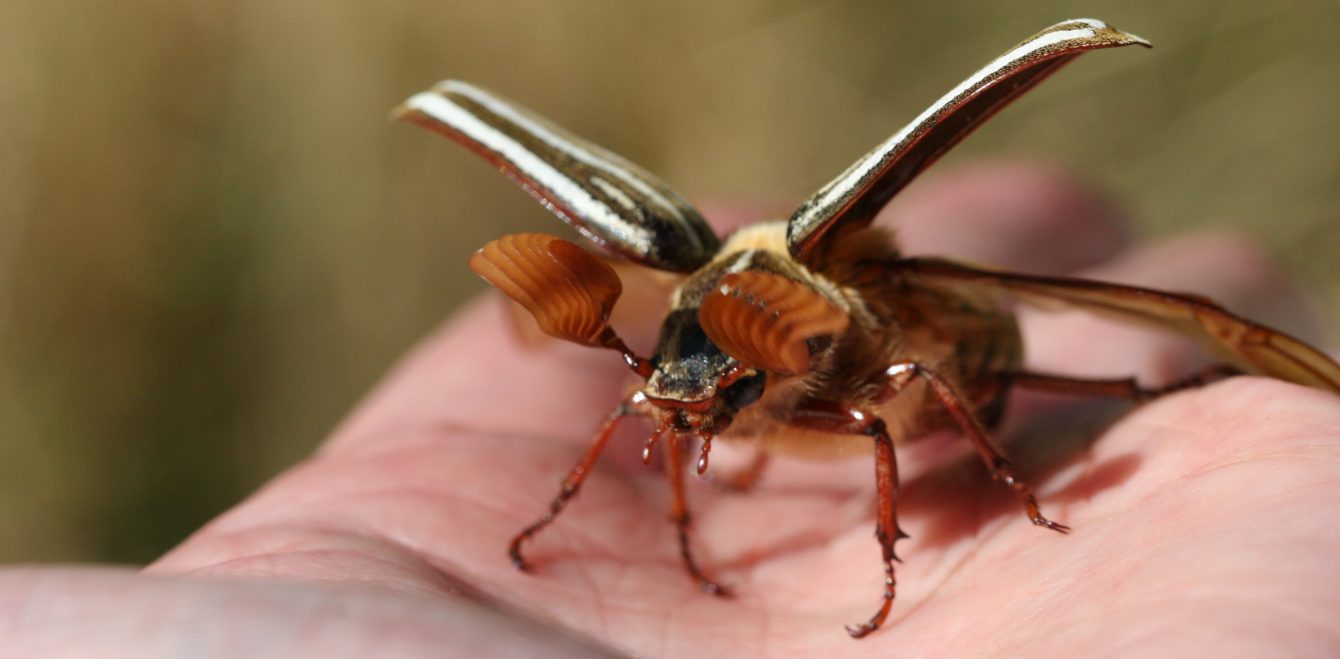
Discovering the Golden Paper Wasp: A Native Treasure
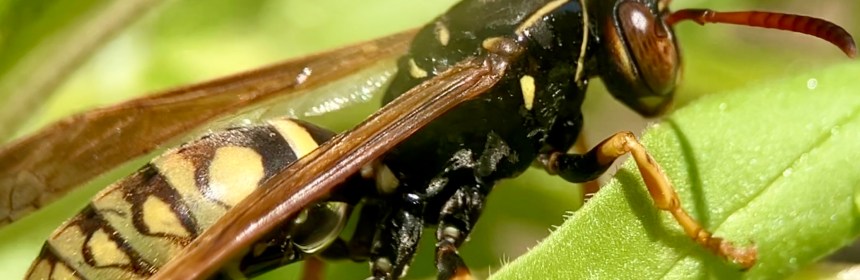
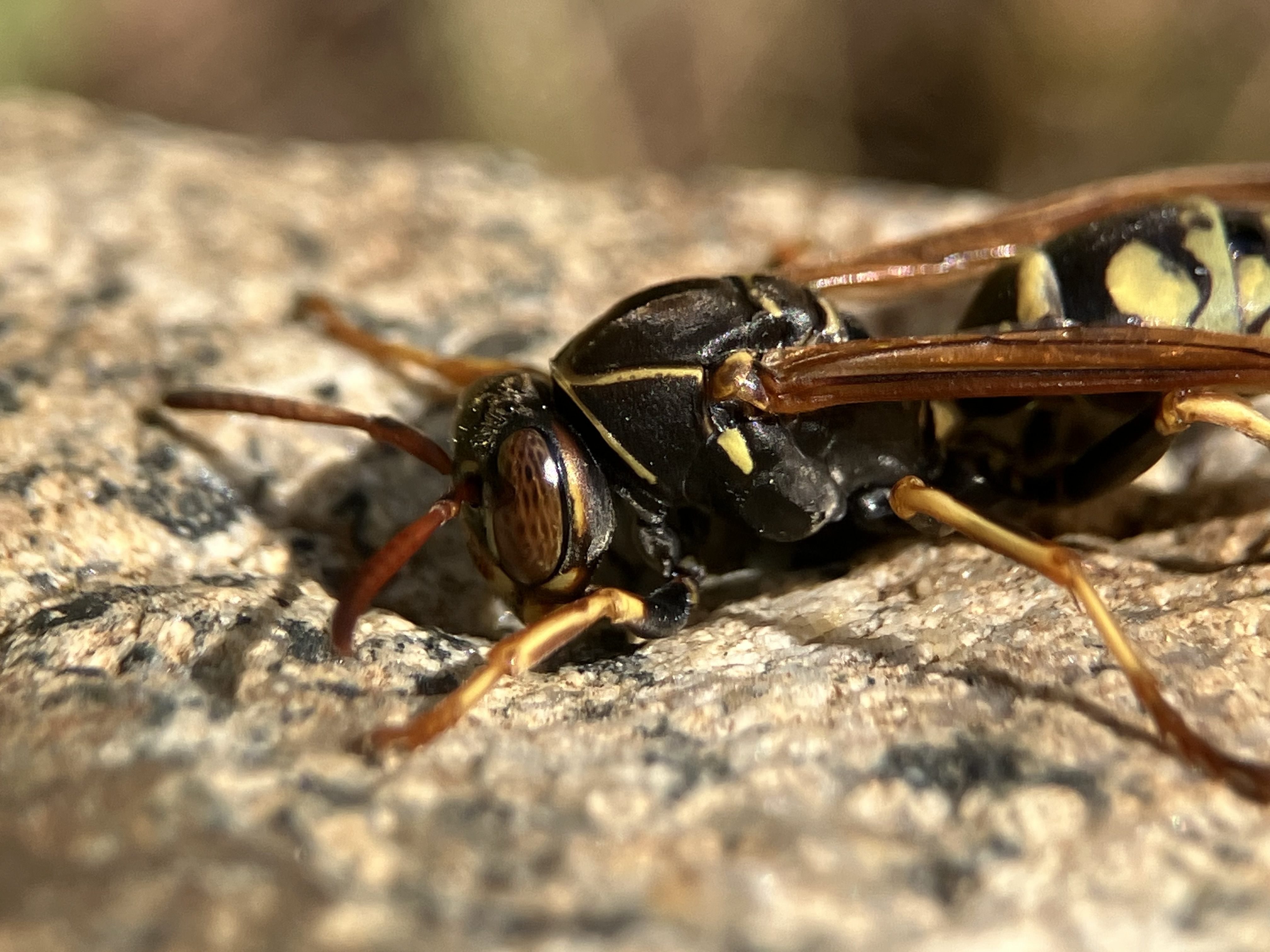
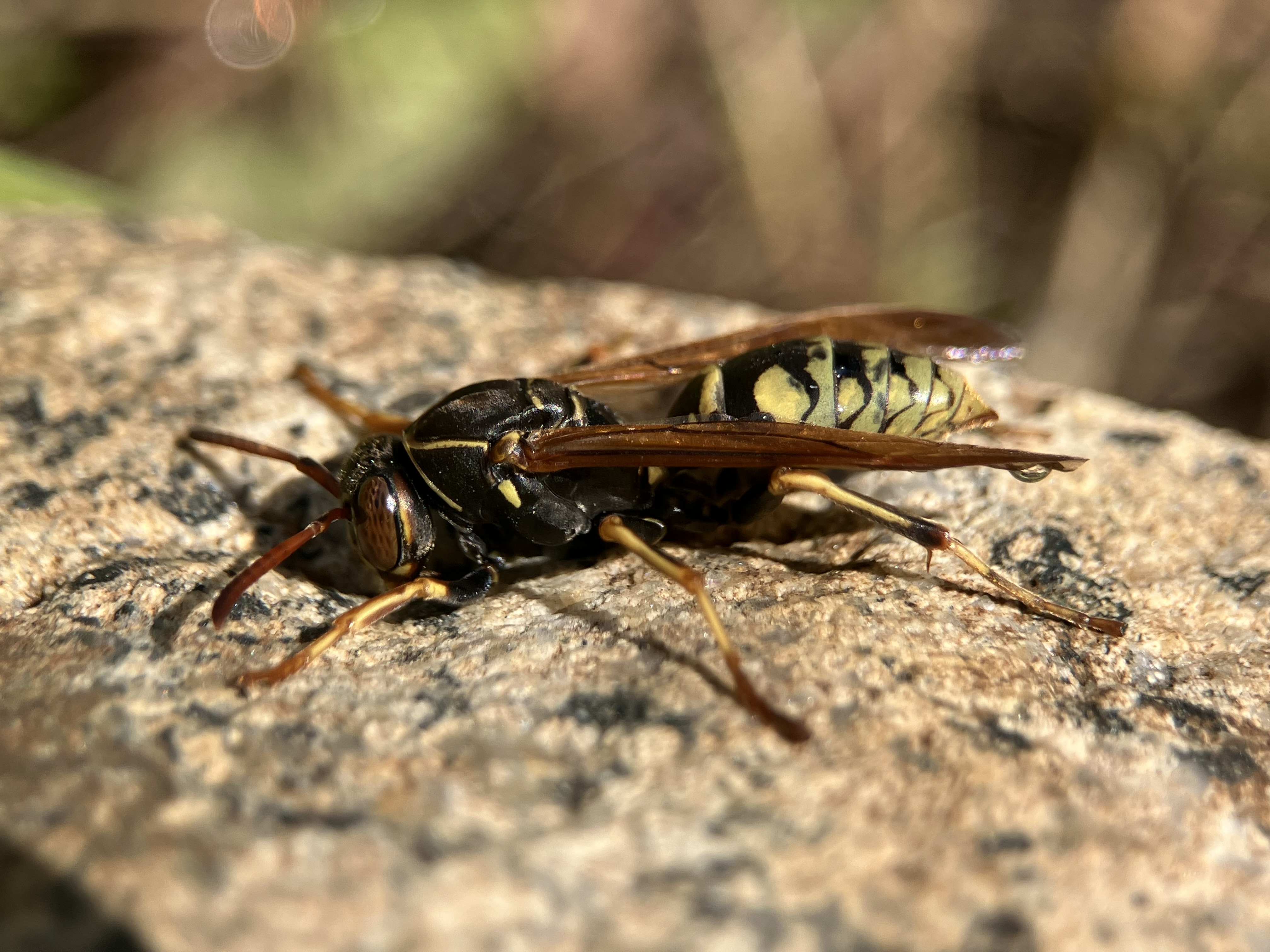
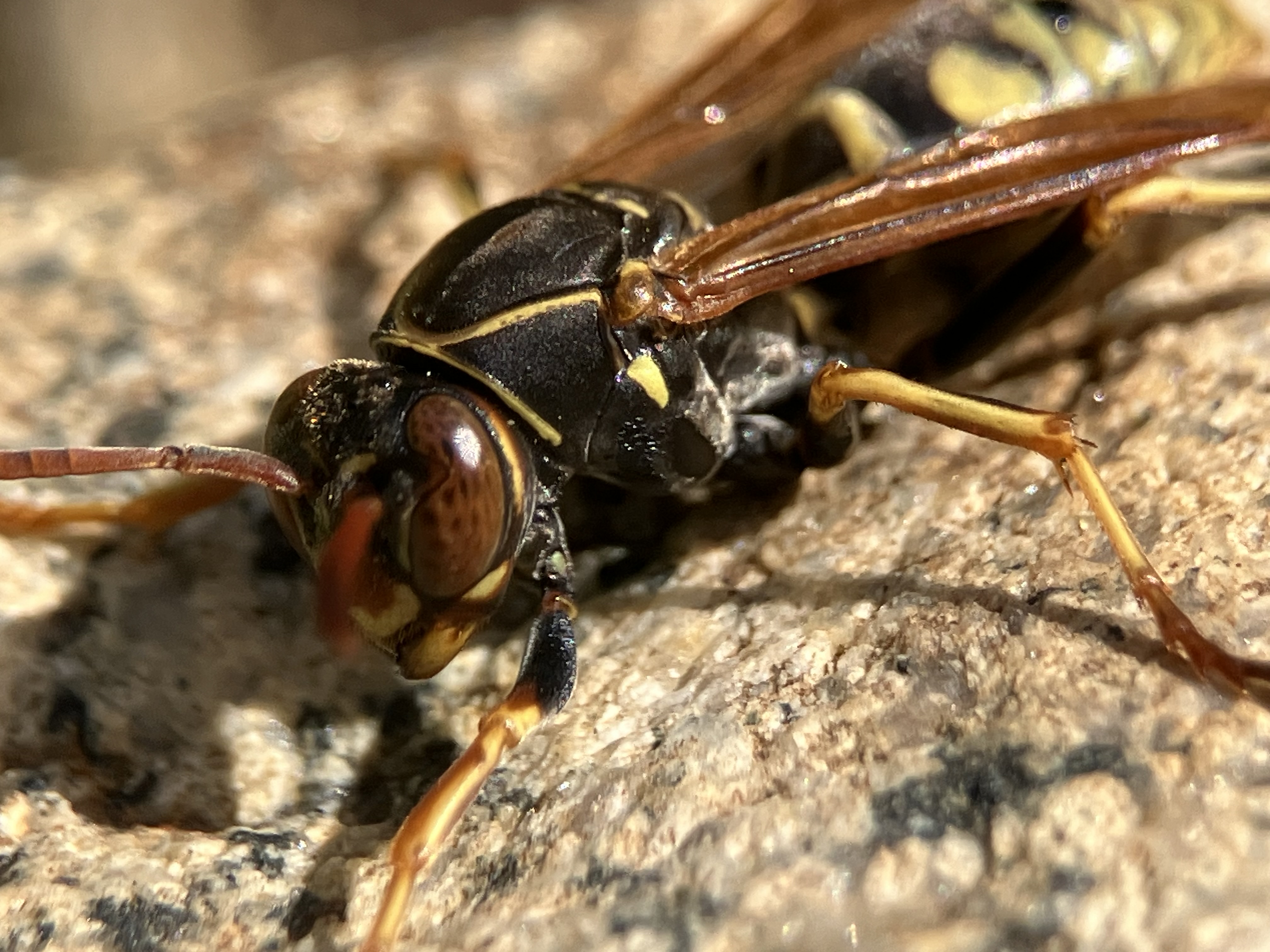
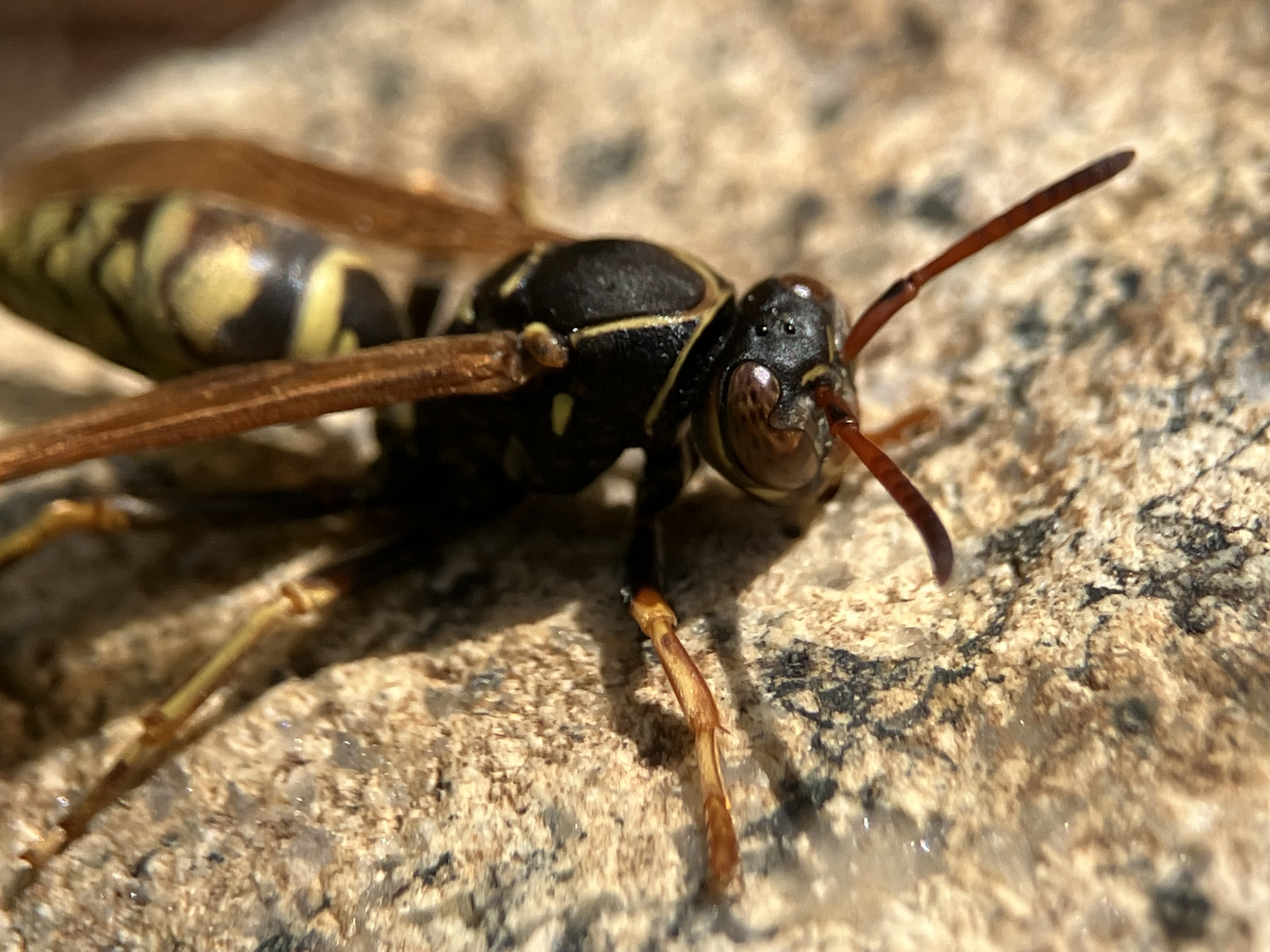
Polistes aurifer, a native paper wasp

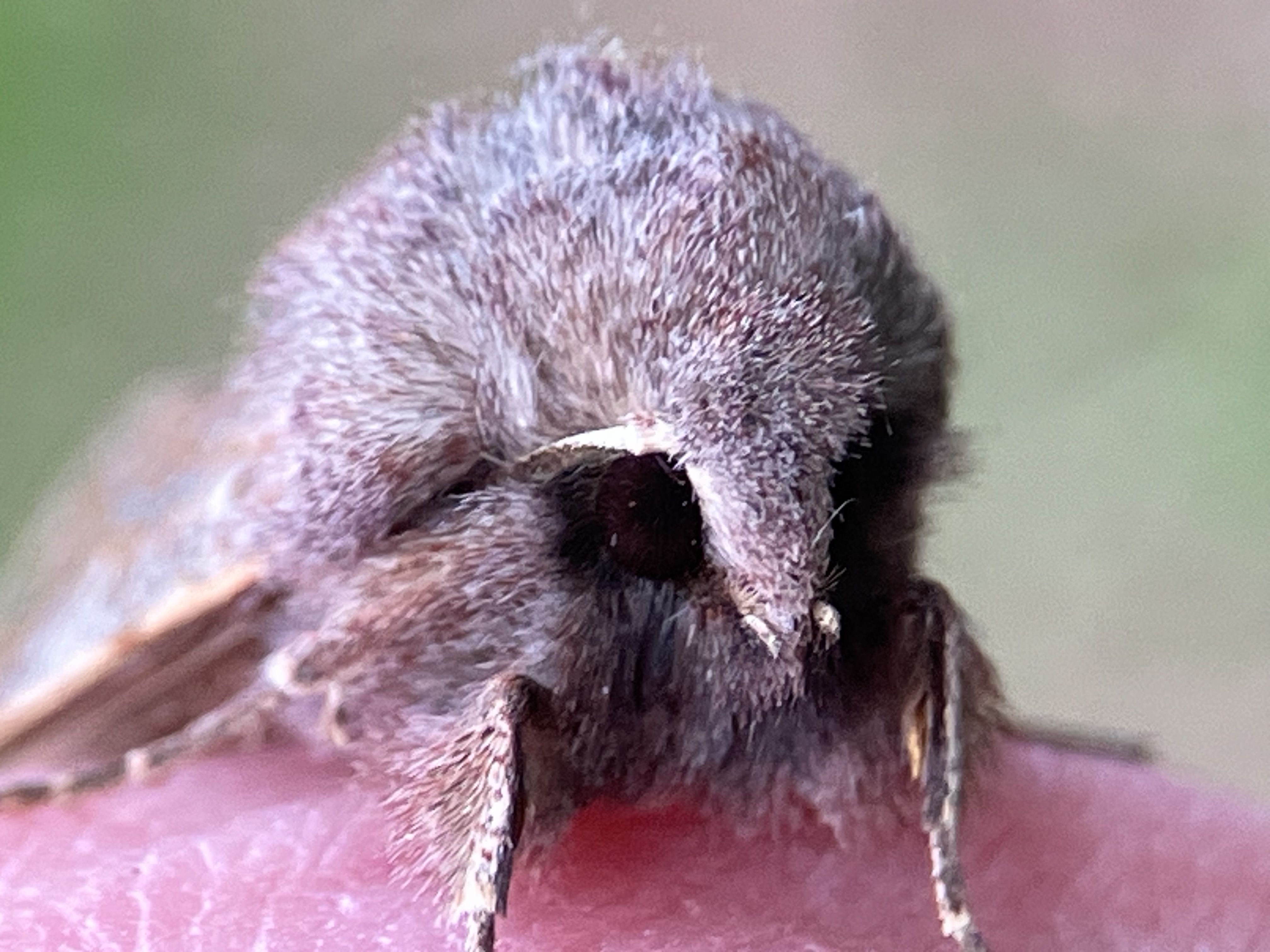
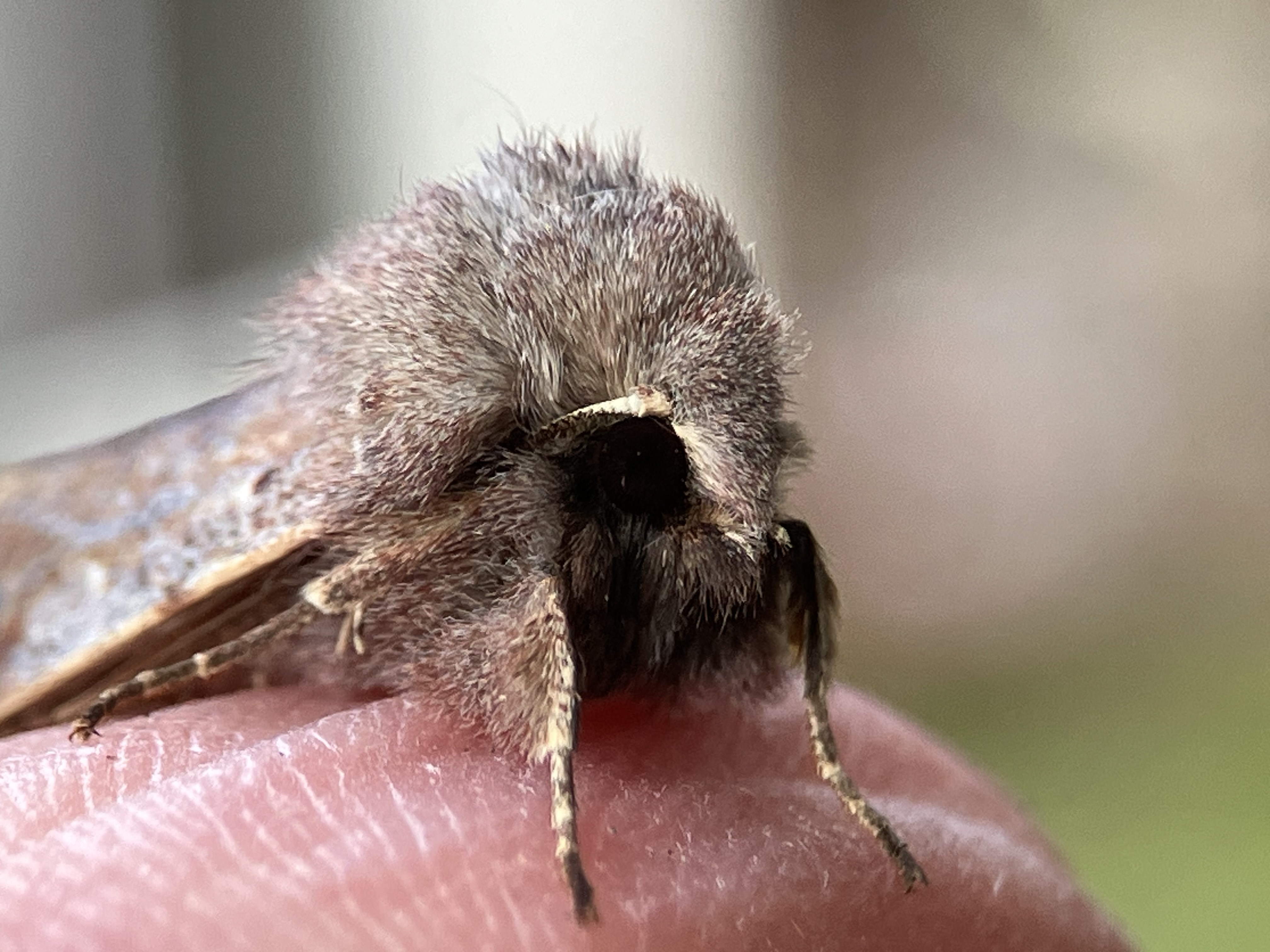
The other morning when I was watering our garden, I spied the most beautiful creature I’ve seen in a long time, a Golden Paper Wasp (Polistes aurifer). In fact, in sixteen years of living on San Juan Island, I have only seen one colony of these wasps (April 14, 2024) at the San Juan County Land Bank’s Mount Grant nature preserve. These wasps are native to North America and once considered a subspecies of Polistes fuscatus. However, P. aurifer has a western geographic distribution ranging from BC-CA to AB-MT-w.TX; ne. Mexico (Bugguide.net).

Polistes wasps build open faced nests suspended by a petiole in varied sites. Some select relatively exposed areas under eaves of structures or in shrub-type vegetation, while others utilize more protected cavities such as abandoned rodent burrows or hollow trees. Most often, the ones we see are the non native European paper wasp species (Polistes dominula), that seem very comfortable establishing their nests under the eaves of our homes.

It is believed the more frequently observed (P. dominula) are displacing native Polistes aurifer, but since it is more difficult for scientists studying insects in natural or wild habitats, most formal observations have taken place utilizing sites associated with man-made dwellings (Liebert, 2004). Liebert published a short communication in Insectes Sociaux (2004) where she describes finding ground nesting colonies of this species at an observation site in California, and concludes that the “displacement” theory may be overstated. However, given the loss of natural areas due to habitat loss/conversion, a decline in populations of the native P. aurifer (I believe) would more accurately be attributed to humans. Humans also unfortunately resort to wasp spray to eradicate nests around their homes without understanding that most nests pose minimal or no risk to human comings and goings.

Polistes wasps (native and non-native) are generally considered to be beneficial insects. They are pest predators, capturing and dismembering caterpillars to feed larvae they are rearing. In Eastern and Southern regions of the U.S., some species of Polistes wasps exert significant pressure on the cotton bollworm and the tobacco hornworm, both pests of considerable economic significance.

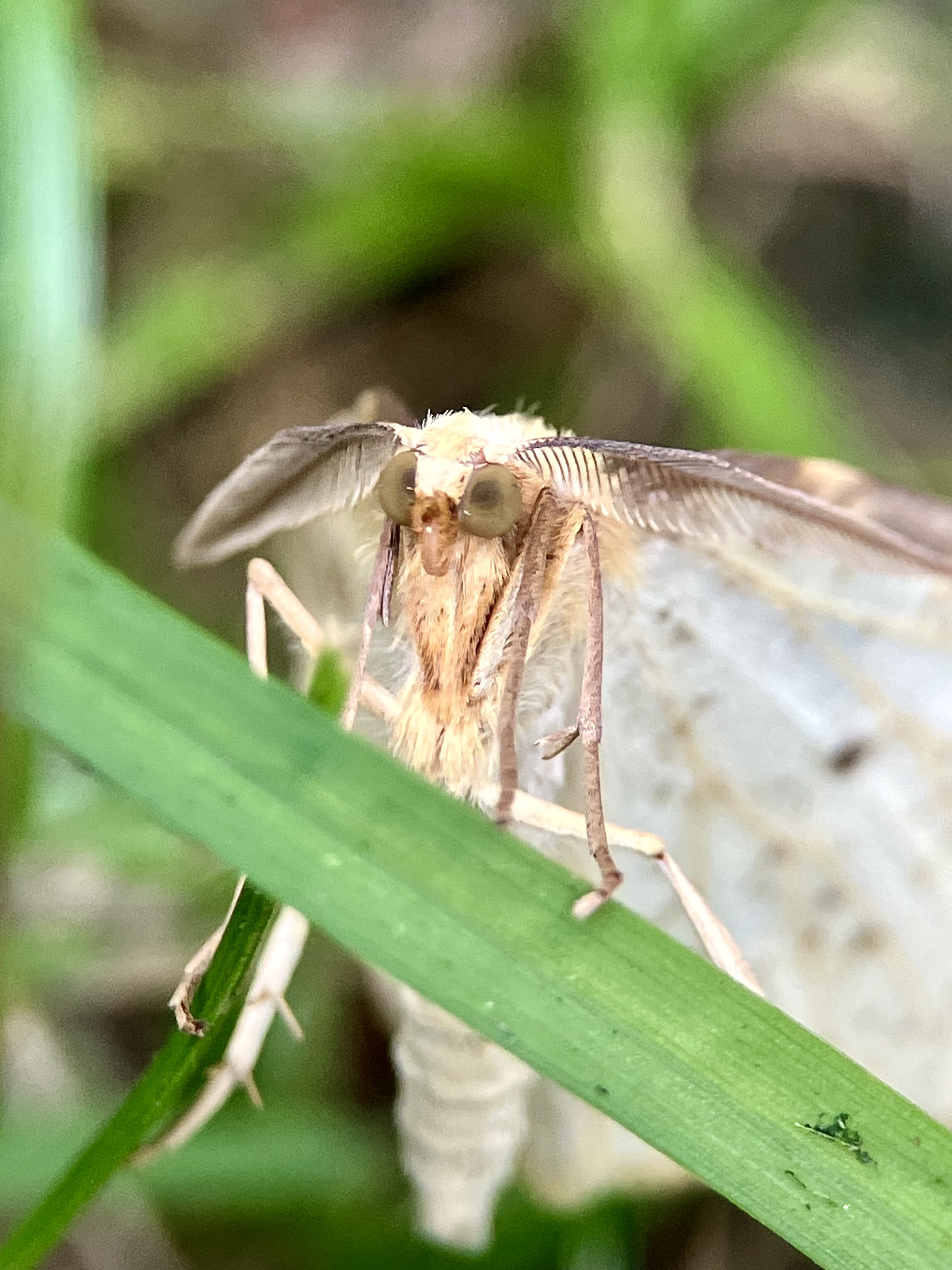
If you spy one of these Western natives, you’ll know immediately because they have the most beautiful golden brown or caramel colored eyes!

Thanks for reading. 🙂
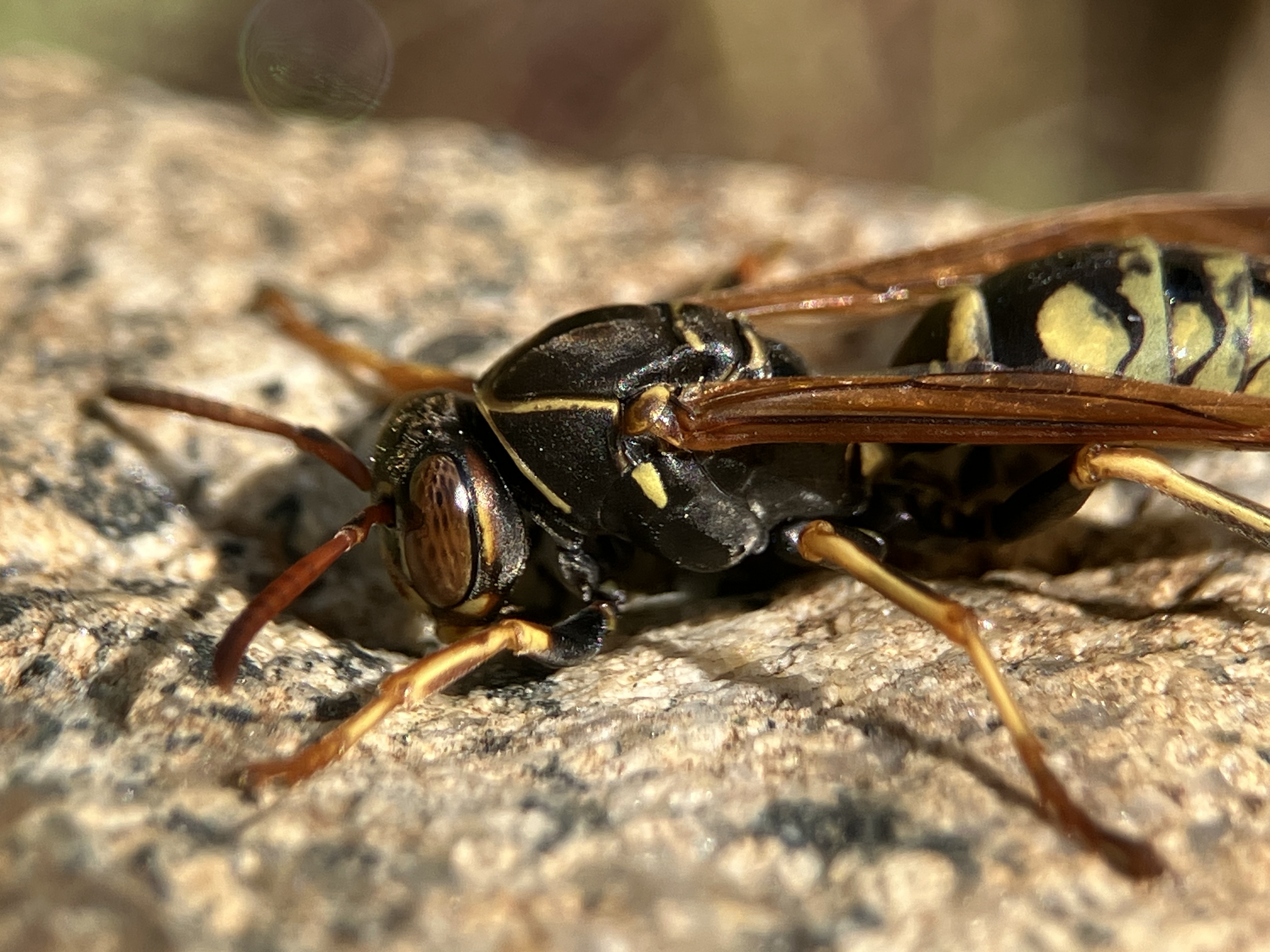
Polistes aurifer
Polistes aurifer
Polistes aurifer

References

Bohart, G. E. 1942. Notes on Some Feeding and Hibernation Habits of California Polistes (Hymenoptera, Vespidae). Pan-Pac. Ent. 18(1): 30-31. https://digitalcommons.usu.edu/piru_pubs/15/

Buck, M., Marshall, S.A. and Cheung D.K.B. 2008. Identification Atlas of the Vespidae (Hymenoptera, Aculeata) of the northeastern Nearctic region. Canadian Journal of Arthropod Identification No. 5: 492 pp. (PDF version).
Published on 19 February 2008. With 3 Tables and 1073 Figures.

Bugguide. 2023. Polistes aurifer. Bugguide.net. https://bugguide.net/node/view/24972

Liebert, Aviva. (2004). Ground nesting in the paper wasp Polistes aurifer (Hymenoptera, Vespidae). Insectes Sociaux – INSECTES SOC. 51. 99-100. 10.1007/s00040-003-0714-0.

p.s. I found another (naturally deceased) individual in our barn/shop, so perhaps we have had these around and I’ve just been missing them.

Polistes aurifer

Your Garden’s Guardian: A Soldier in Miniature (Silis sp.)

Soldier Beetle (Genus Silis)

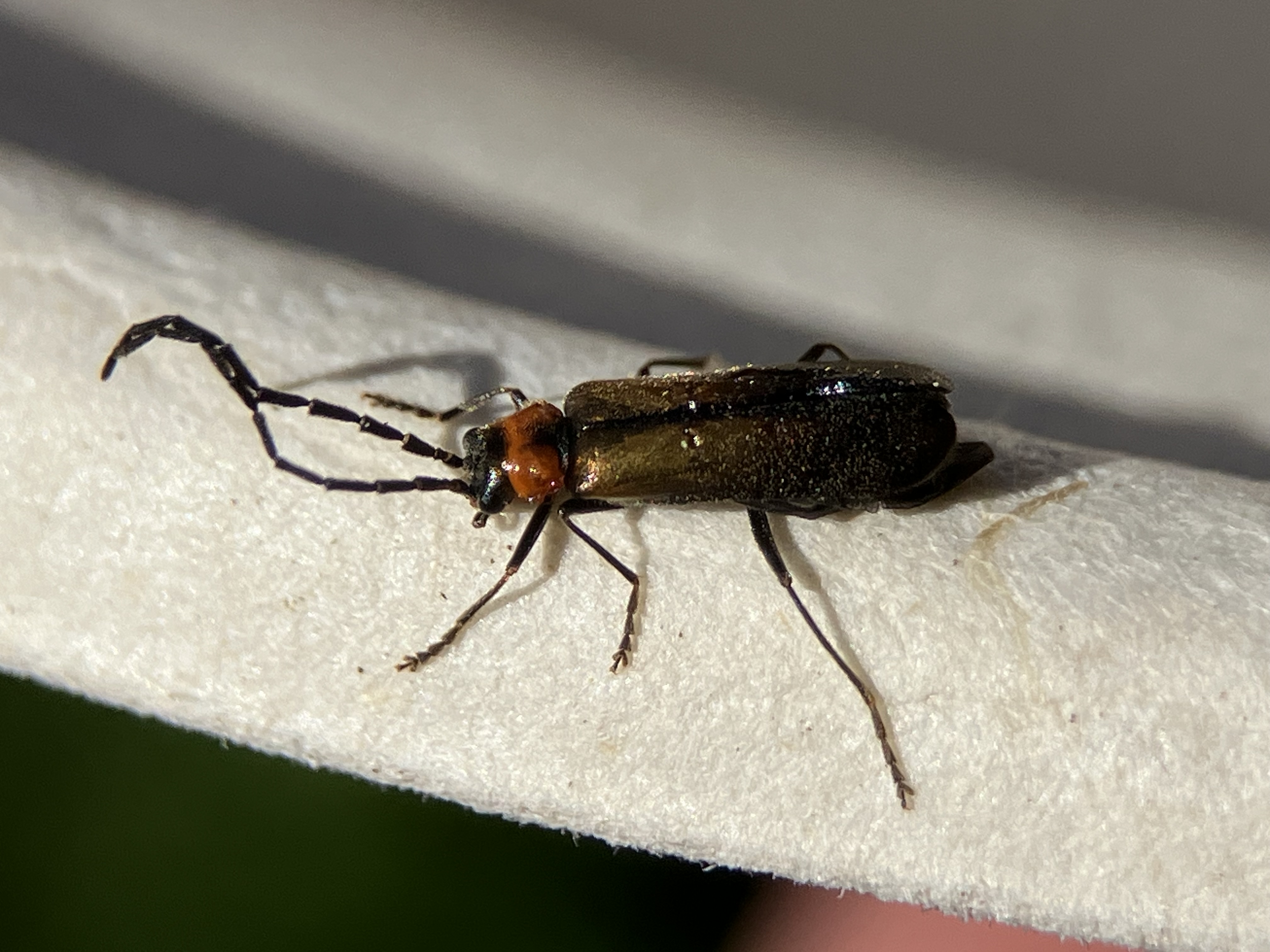
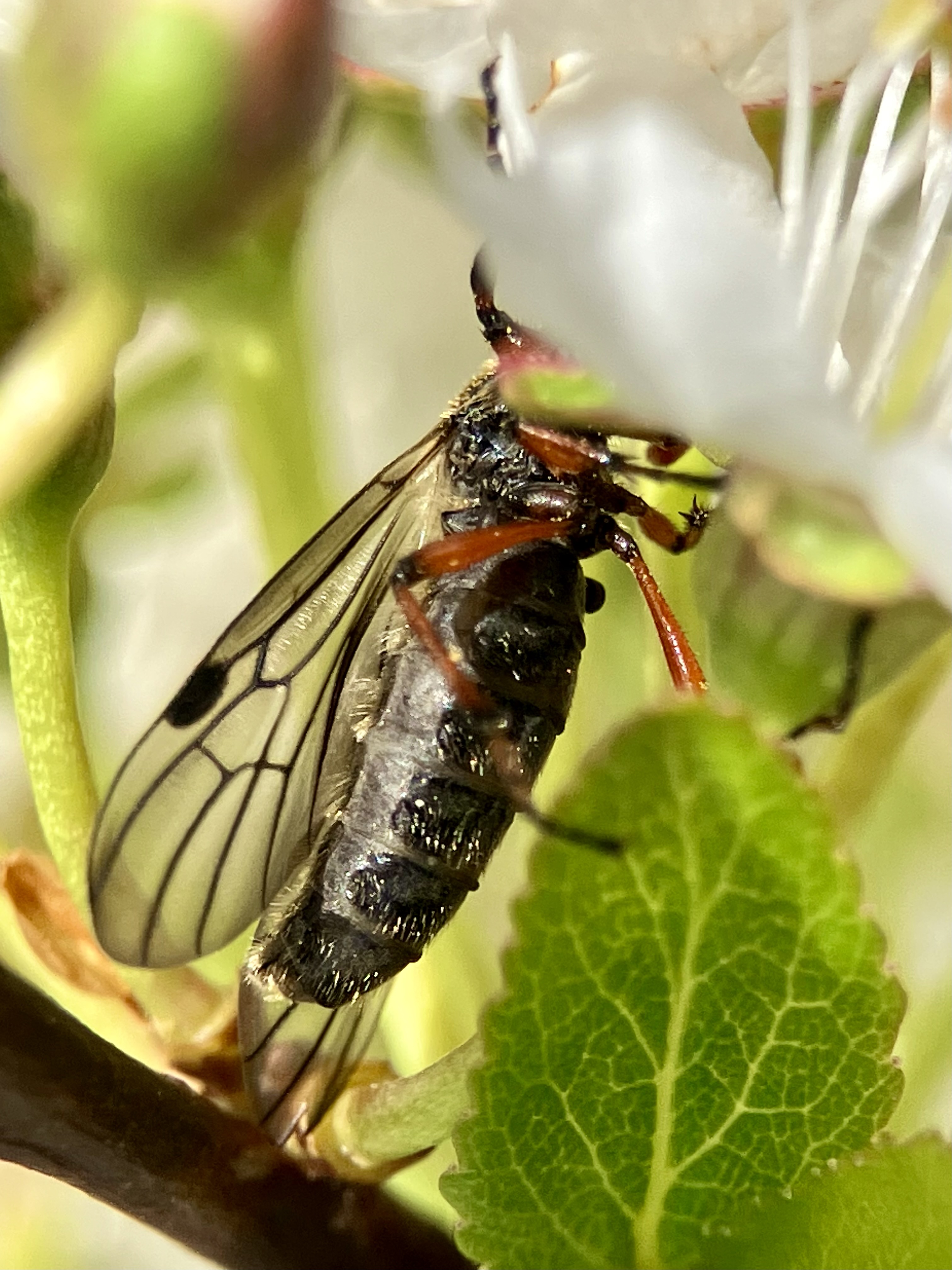
This tiny little friend (approx. 6mm) sporting a red collar is a soldier beetle in the family Cantharidae. It is in the Genus Silis, but there are so many species, that I will just leave it at the genus level for now.

Soldier Beetle (Genus Silis)

Silis beetles are quite cosmopolitan in distribution, associated with wooded areas and leaf litter, and active daytime fliers in early summer.

Adults are typically found on foliage and flowers. Primarily, they are pest predators, feeding on insects, but also serve as pollinators, feeding on nectar and pollen. Silis species are known to prey on aphid populations infesting trees, plants, and shrubs, so gardeners can appreciate them as a “friend.”

Silis beetles can also attack other groups of invertebrates, feeding on small soft-bodied specimens or consuming their eggs. However, the ecology of some species is remains to be investigated. While Fender (1973) found the larvae would eat earthworms and are mostly carnivorous in the soil, little else is known about the feeding habits in this stage. (Pelletier and Hébert , 2014).

The etymology of the nomenclature for the genus (Silis) comes from Σίλας in Greek. It is derived from the Latin name Silvanus, meaning “forest” or “wood,” and a contraction of the Greek form Silouanos, a transliteration of Silvanus. Silis or Silas is also associated with the Roman god of the countryside, Silvanus, a god who was worshipped by those who lived in wooded areas or worked with wood. Even older than the etymology is this tidbit. Silis beetles are quite ancient. Fairly recent research has identified specimens of the genus discovered in Baltic Amber (Parisi and Fanti, 2019).

Soldier Beetle (Genus Silis)

While I have now scooped a few out of our pool, thankfully in time to save them from drowning, some of them (perhaps the ones I’ve rescued) are also finding me. I have had them on my clothing and peeping in the door at me!

Thanks for reading!

Soldier Beetle (Genus Silis) looking in our door at me!

References

Bugguide 2025. Genus Silis. Iowa State University. https://bugguide.net/node/view/11961

Green, John Wagener. 1966. Revision of the Nearctic species of Silis (Cantharidae: Coleoptera). Proceedings of the California Academy of Sciences, 4th Series, 32, 447–513. https://www.biodiversitylibrary.org/part/52839

Pelletier, G., Hébert, C. 2014. The Cantharidae of Eastern Canada and Northeastern United States. Canadian Journal of Arthropod Identification No. 25. February 28, 2014. Available online doi: 10.3752/cjai.2014.25

Parisi, F. and Fanti, F. 2019. On the first Silis Charpentier, 1825 from Baltic amber (Coleoptera, Cantharidae), Foss. Rec., 22, 119–123, https://doi.org/10.5194/fr-22-119-2019

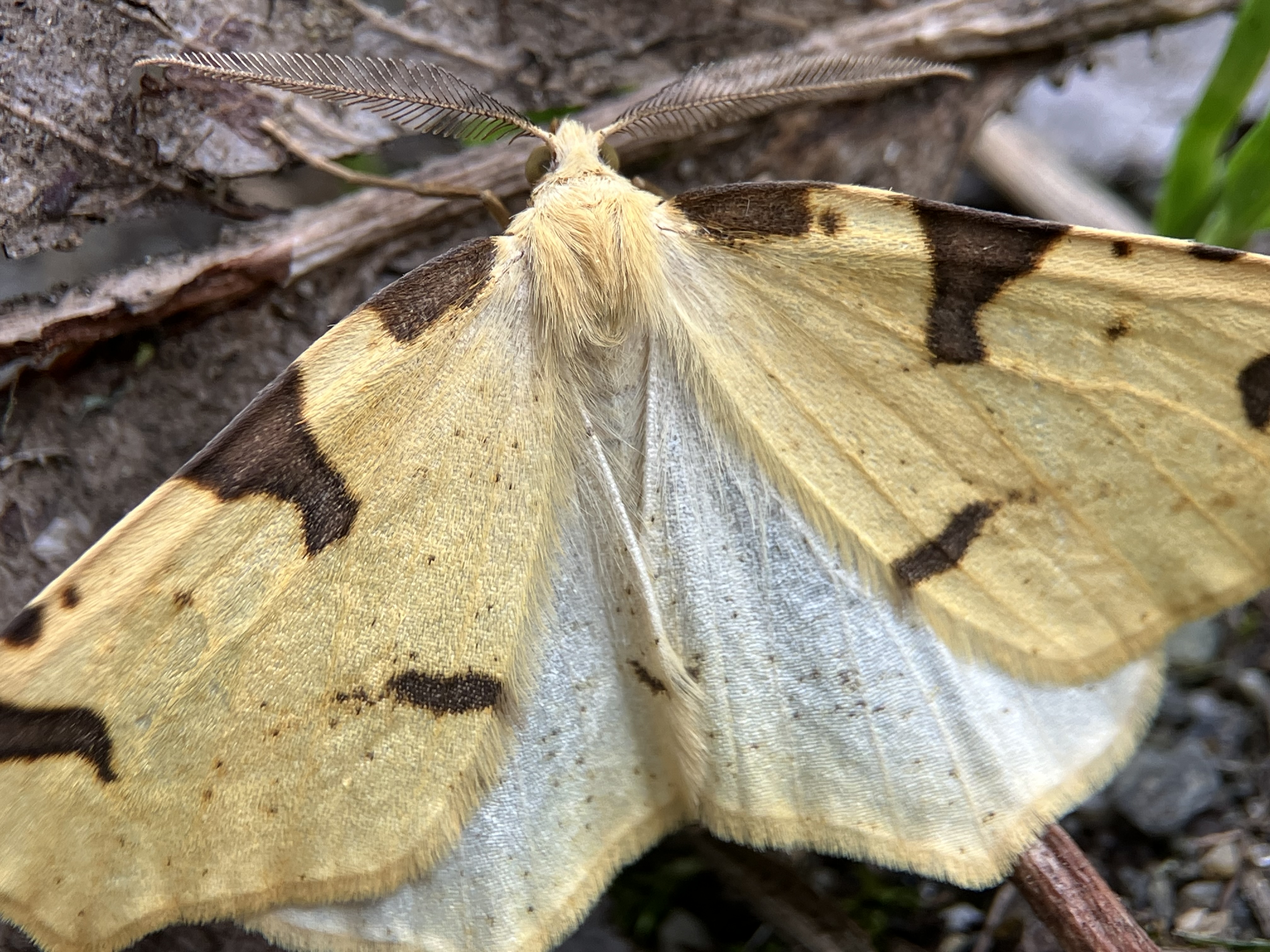
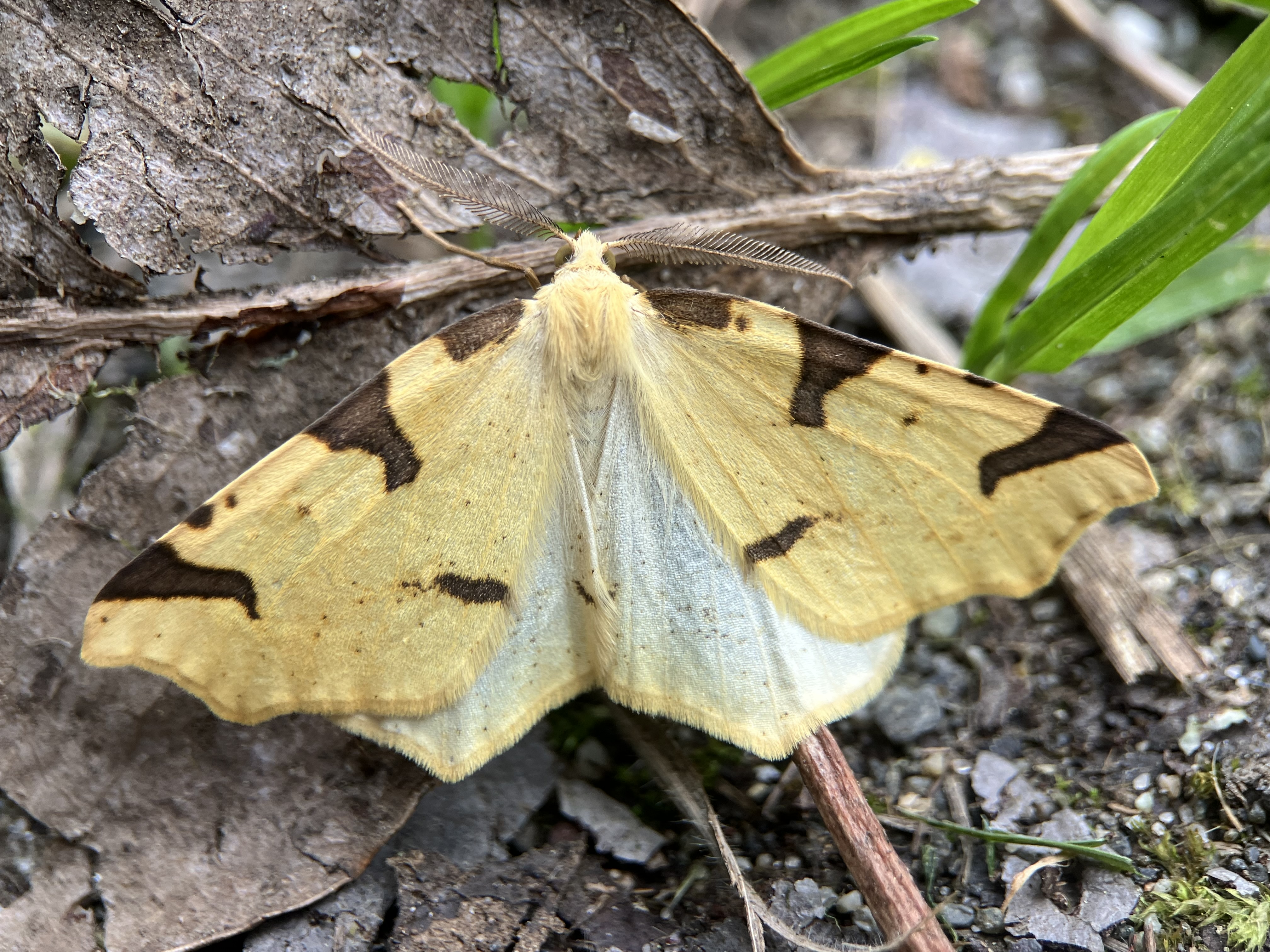
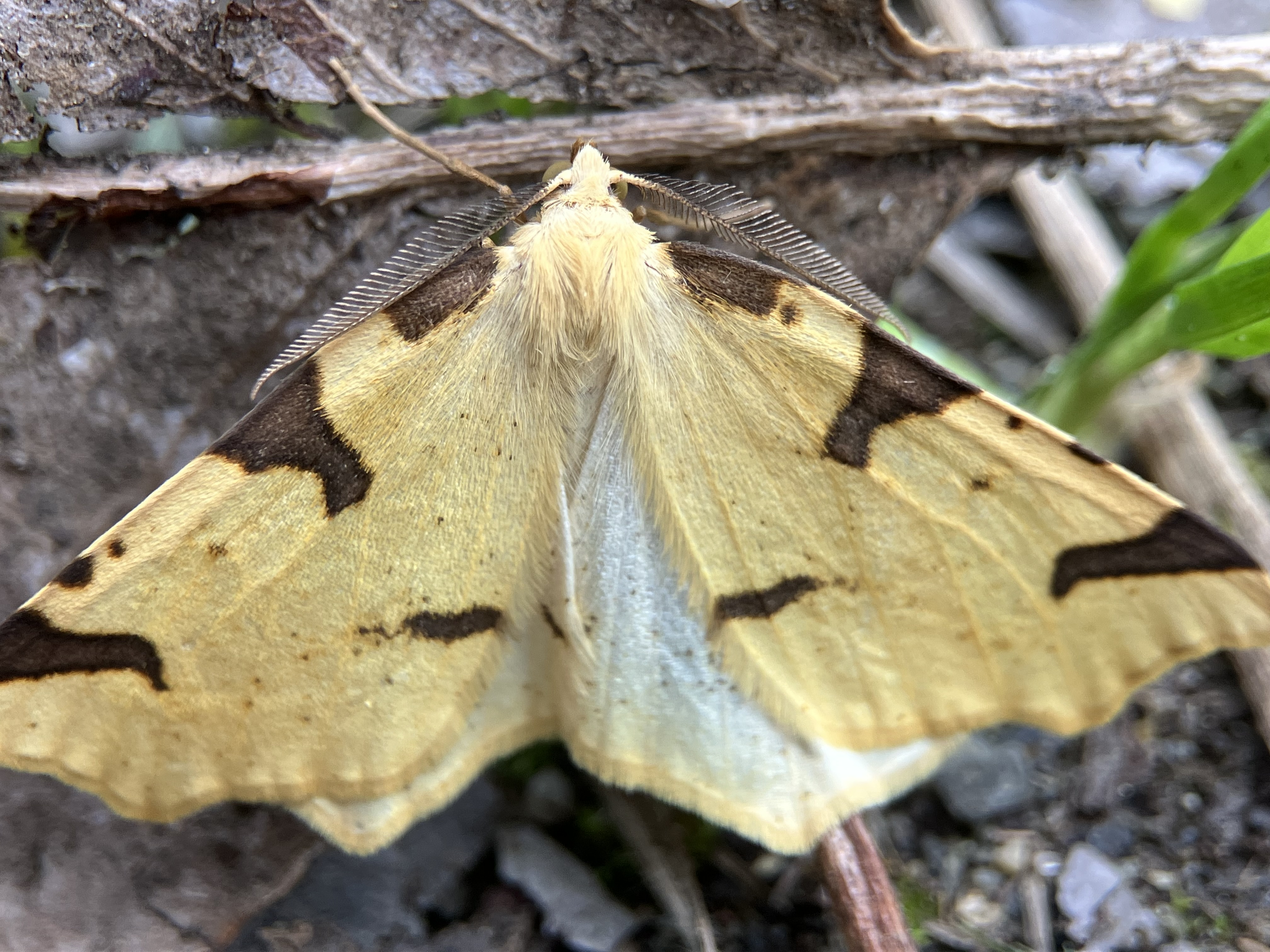
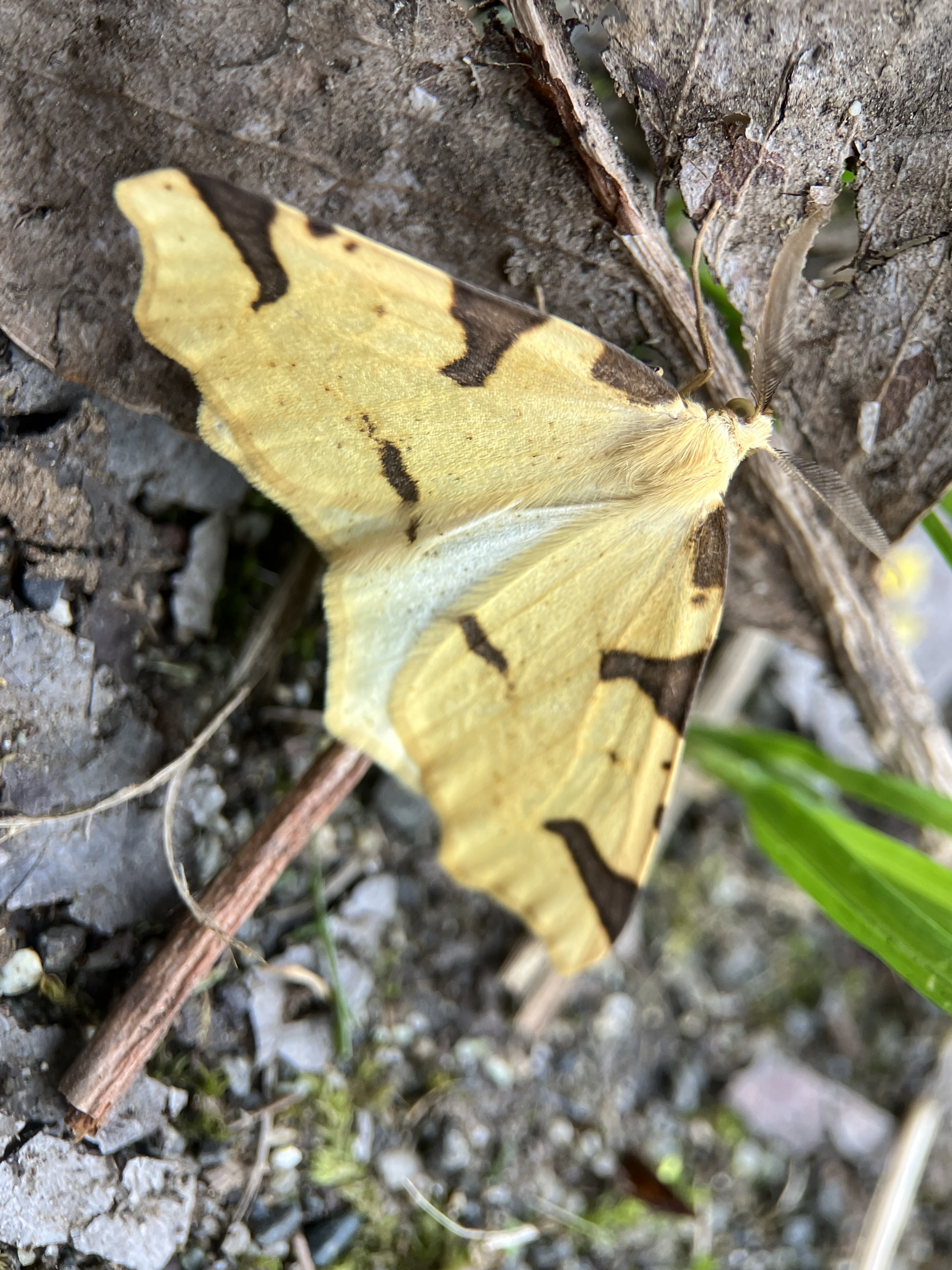
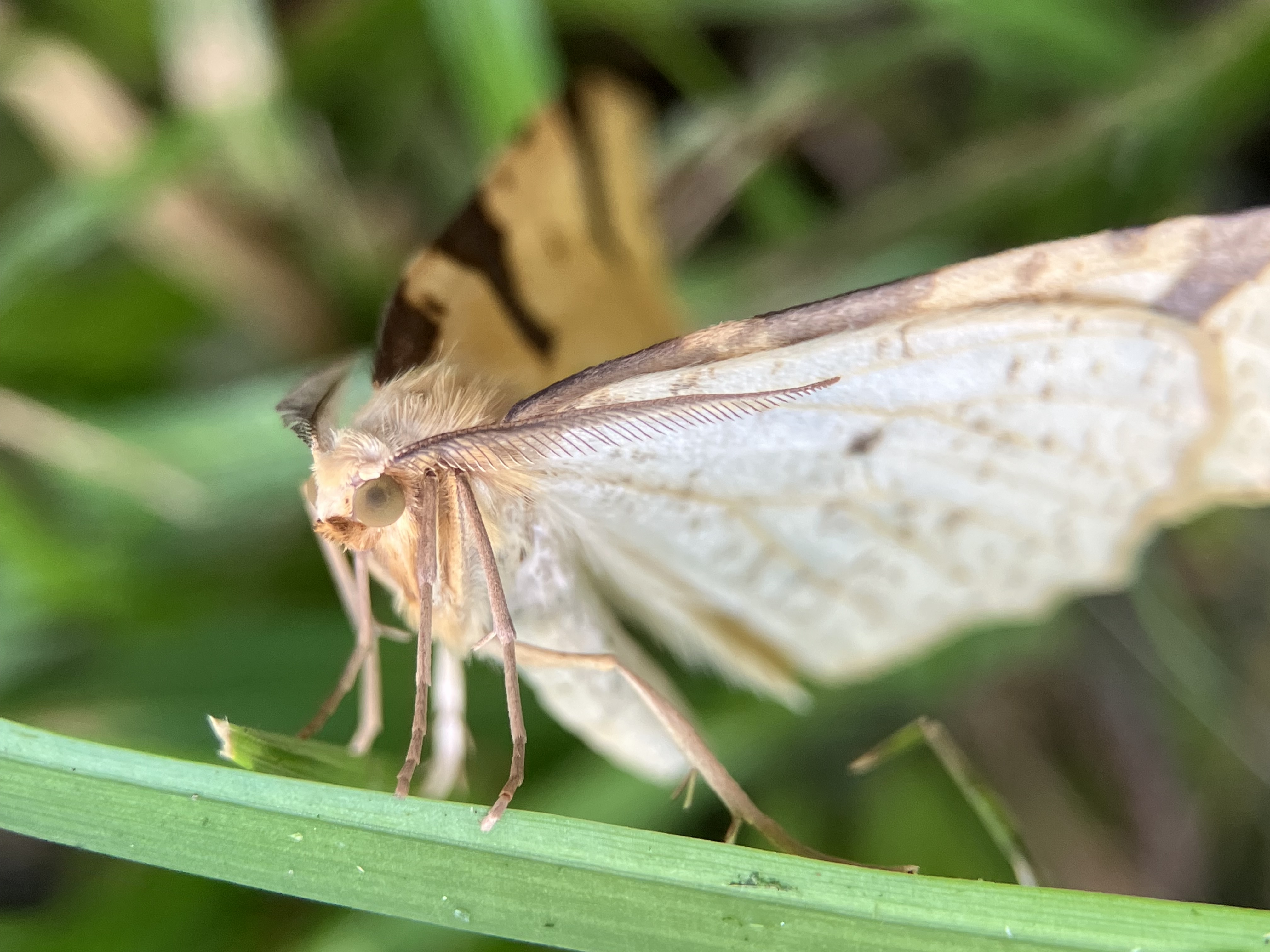
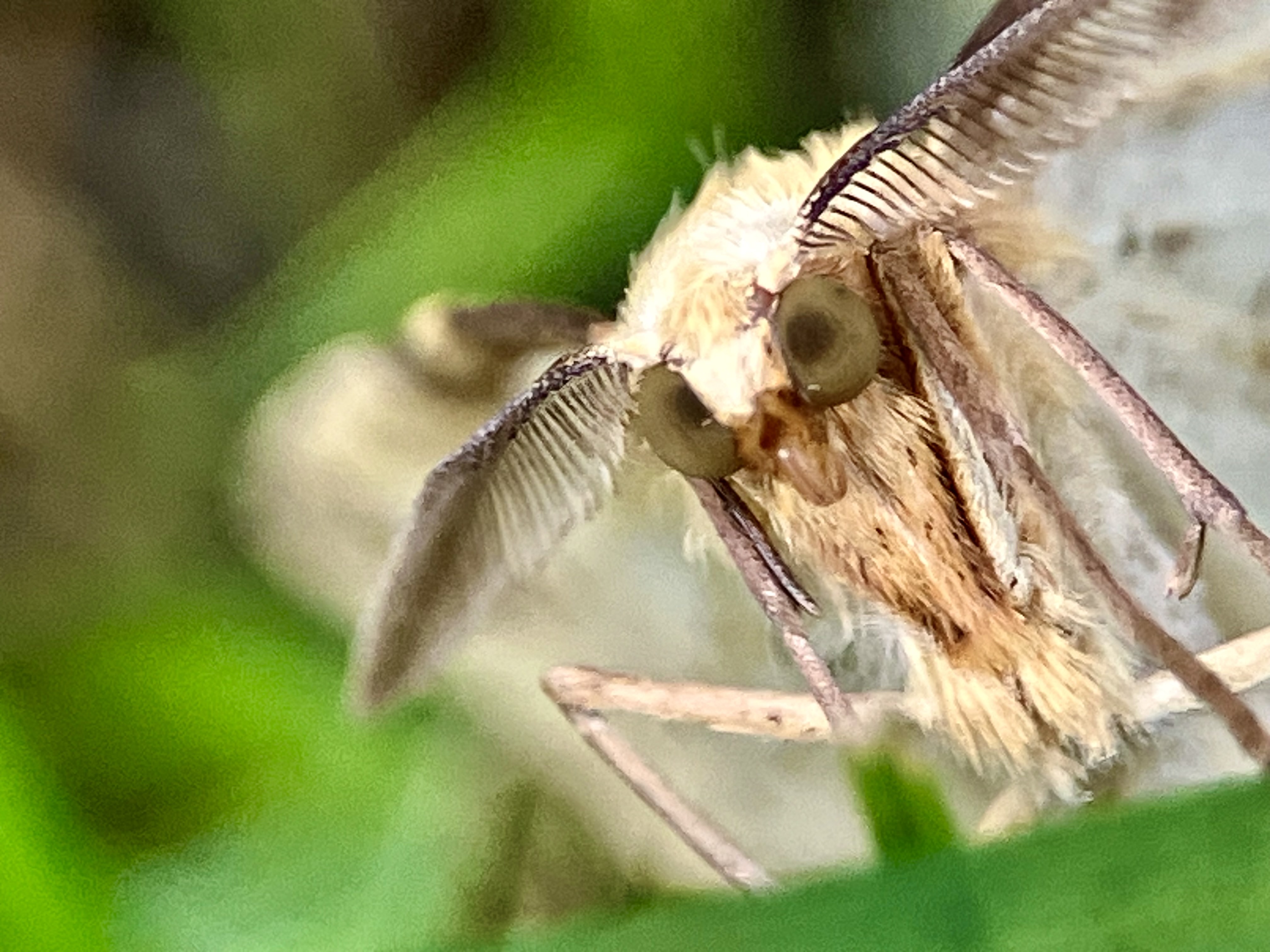
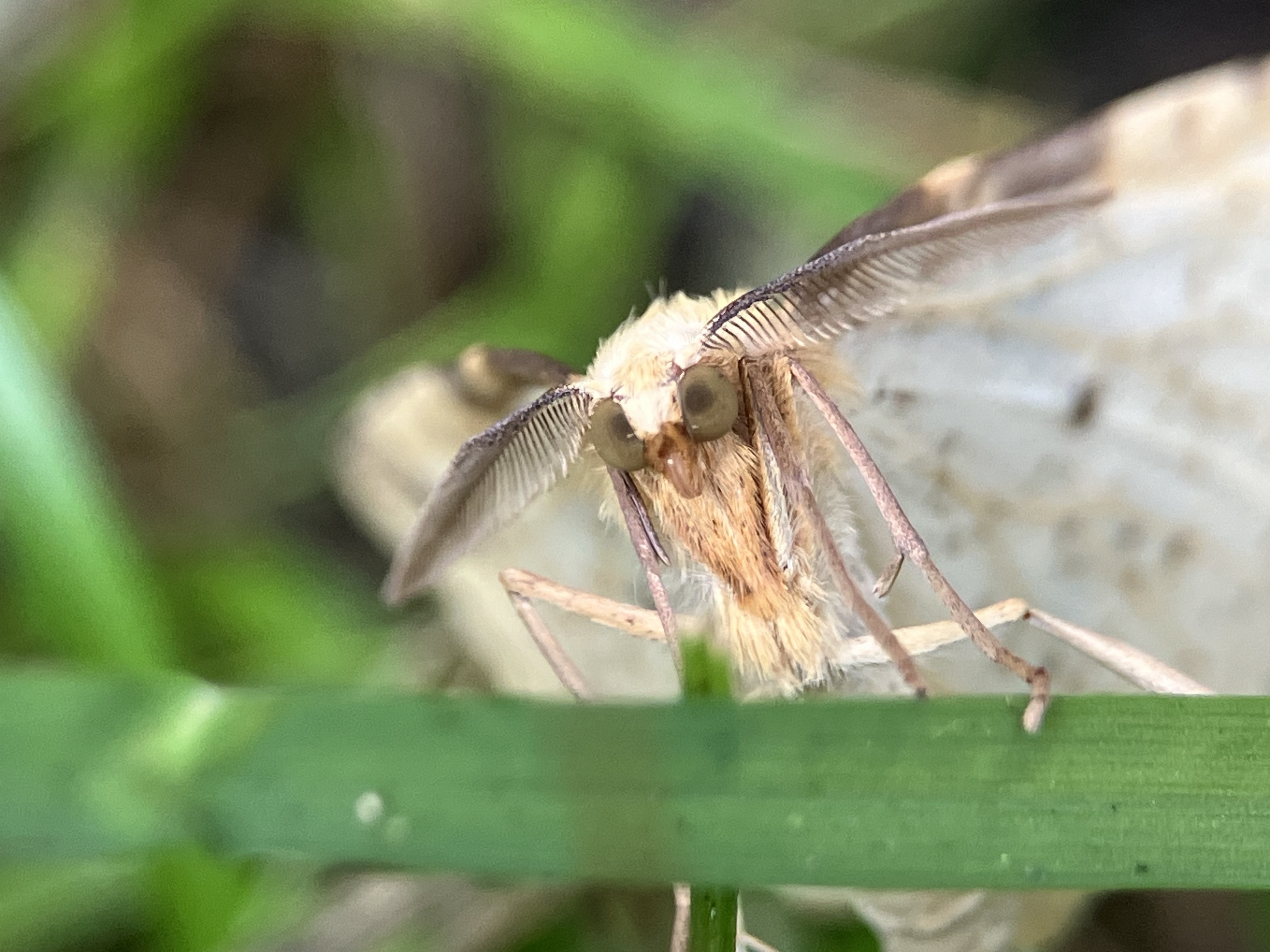
Canary thorn moth, (Neoterpes trianguliferata)

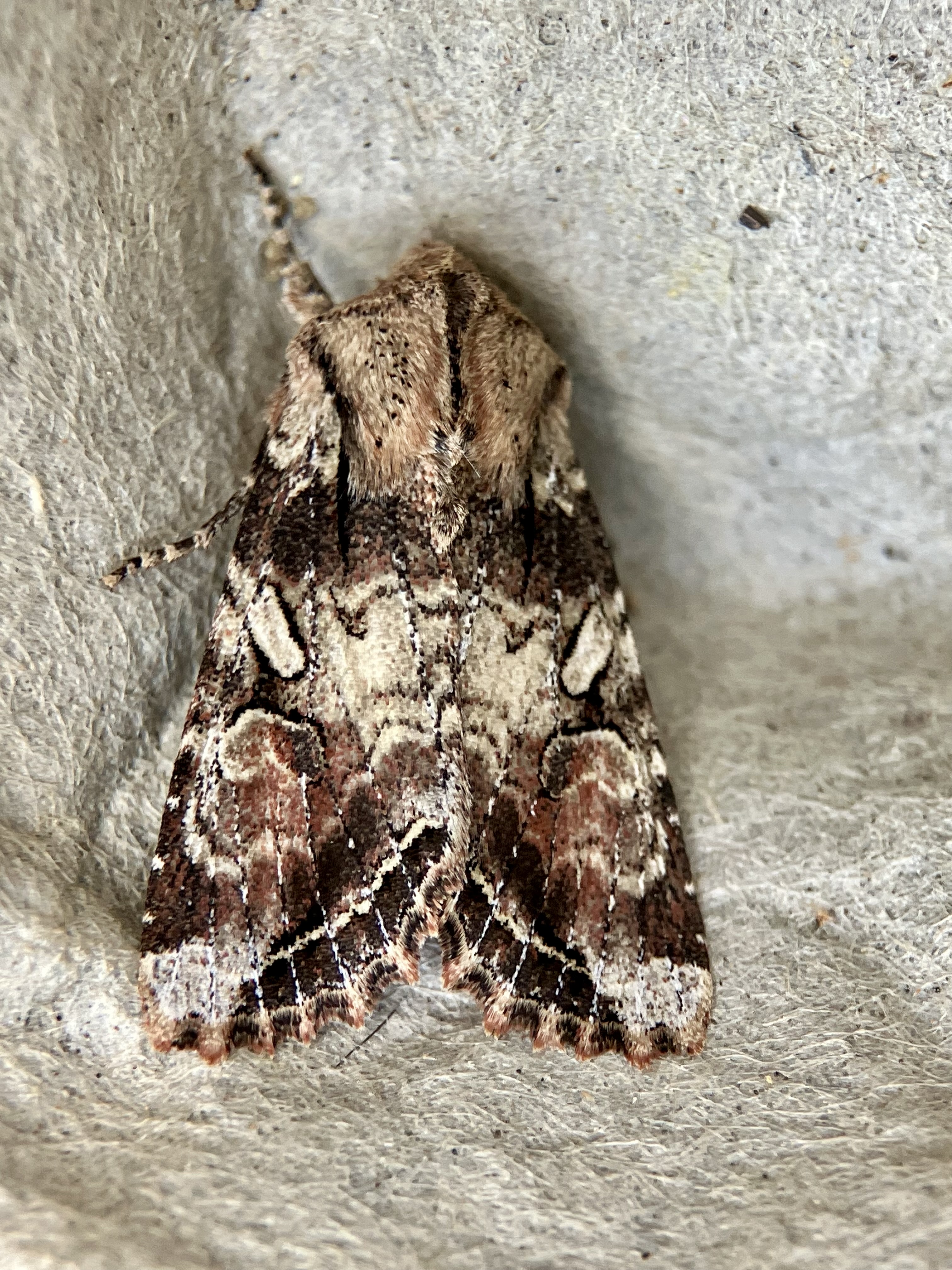
Canary thorn moth (Neoterpes trianguliferata)

I found the most beautiful creature at my moth light this morning. It is the Canary Thorn Moth (Neoterpes  trianguliferata ). I was surprised to see anything there given the drop in temperatures we’ve had the past few days. After a few photos, I got too close and he flew out of the open barn area into some grass, struggling a bit in the wind, so I was able to carefully coax him back into an egg carton to shelter the day back undercover and out of the rain.

If you’re wondering about the egg carton, I use these in my moth light set up to give the moths a secure place to hide when they settle down under the light for the night. The egg cartons are in a 5 gallon bucket. I have the “low end” set up, so no major investments in equipment. Anyone could do this at home. It’s fun to “moth” and see what species live around us. If you’re interested, shoot me an email and I’ll coach you on getting set up yourself. For the record, all of my specimens are photographed with respect and care, and allowed to live free. I do not take specimens for pinning. I definitely believe they are here to be admired in the wild, not in a glass case.

More about this species:

Neoterpes  trianguliferata is a species of Geometrid moth that ranges from southern British Columbia to southwestern Alberta, south to Colorado, Utah, and California. The hostplants for larvae (the caterpillars) are Currants and Gooseberry (Ribes). I’ve linked information for some of the native host plants below in the reference section.

Larvae are twig mimics. Pupae sleep through the winter wrapped in a leaf, another reason to “leave the leaves” and refrain from burning or bagging and discarding the leaves around your home. You could inadvertently impact overwintering species like these and others. Adults are approximately 14-20mm (forewing length). You will see adults in flight between April-June in our area. From what I have been able to find as to the etymological meaning of the name, Neoterpes may translate to “new delight” and trianguliferata refers to the triangle-shaped markings on the forewings. It was indeed a delight to see this beauty today! A bit of sunshine on a rainy spring day.

Canary thorn moth (Neoterpes trianguliferata)

References

Bressette, Dana Kelley. no date. Coast Black Gooseberry, Ribes divaricatum. Native Plants PNW. https://nativeplantspnw.com/coast-black-gooseberry-ribes-divaricatum/

Bressette, Dana Kelley. no date. Red Flowering Currant, Ribes sanguineum. Native Plants PNW. https://nativeplantspnw.com/red-flowering-currant-ribes-sanguineum/

Bugguide.net. 2023. Species Neoterpes trianguliferata – Hodges#6860. Bugguide. Iowa State University. https://bugguide.net/node/view/114007

Moth Photographers Group. Neoterpes trianguliferata (Packard, 1871). Mississippi State University. https://mothphotographersgroup.msstate.edu/species.php?hodges=6860

Nelson, Dan. 2021. Neoterpes trianguliferata. 10,000 THINGS OF THE PACIFIC NORTHWEST
Adventures of a Recreational Naturalist. http://10000thingsofthepnw.com/2021/08/08/neoterpes-trianguliferata/

Odonteus obesus, the Geo-trooper

Odonteus obesus

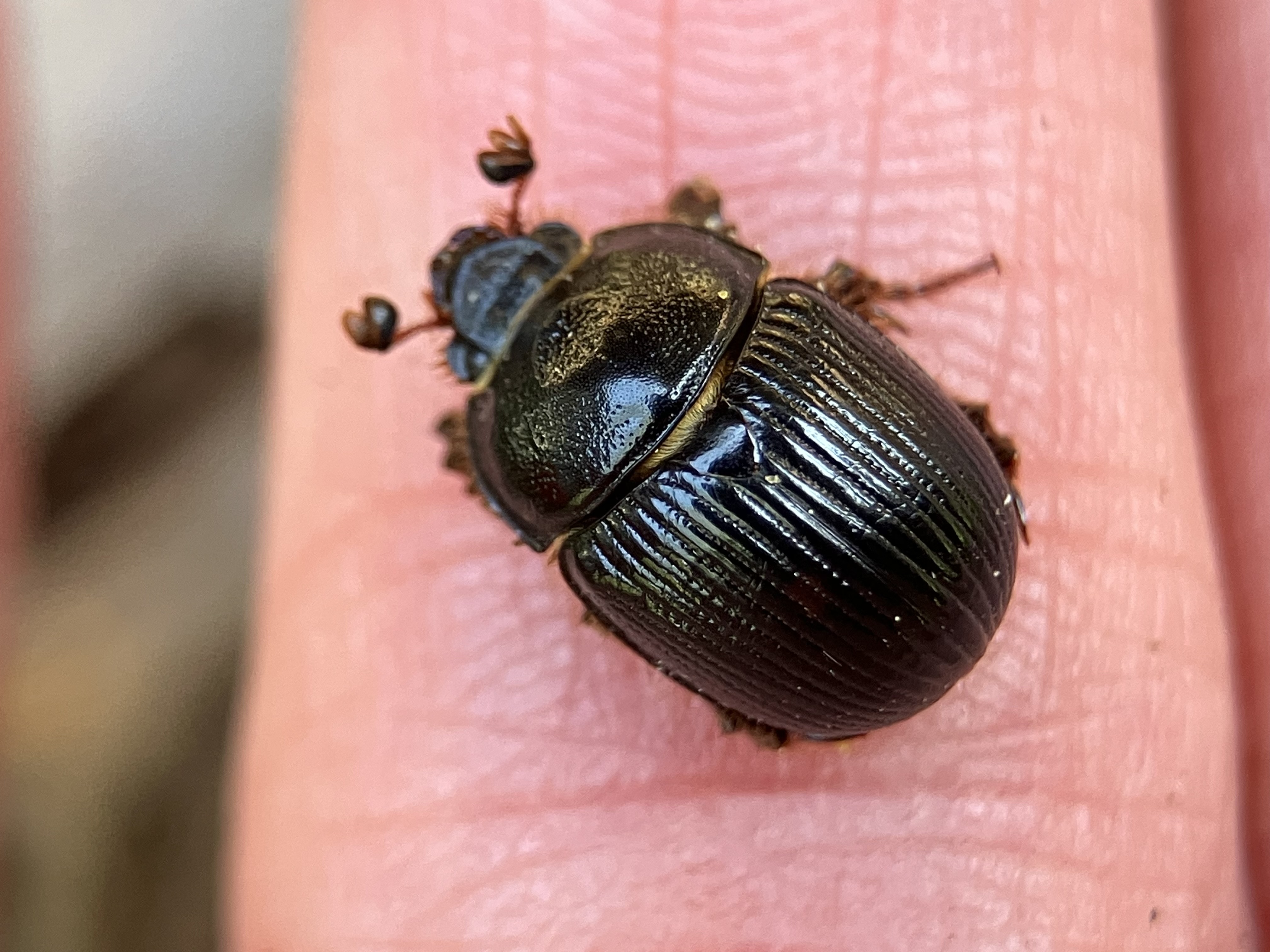
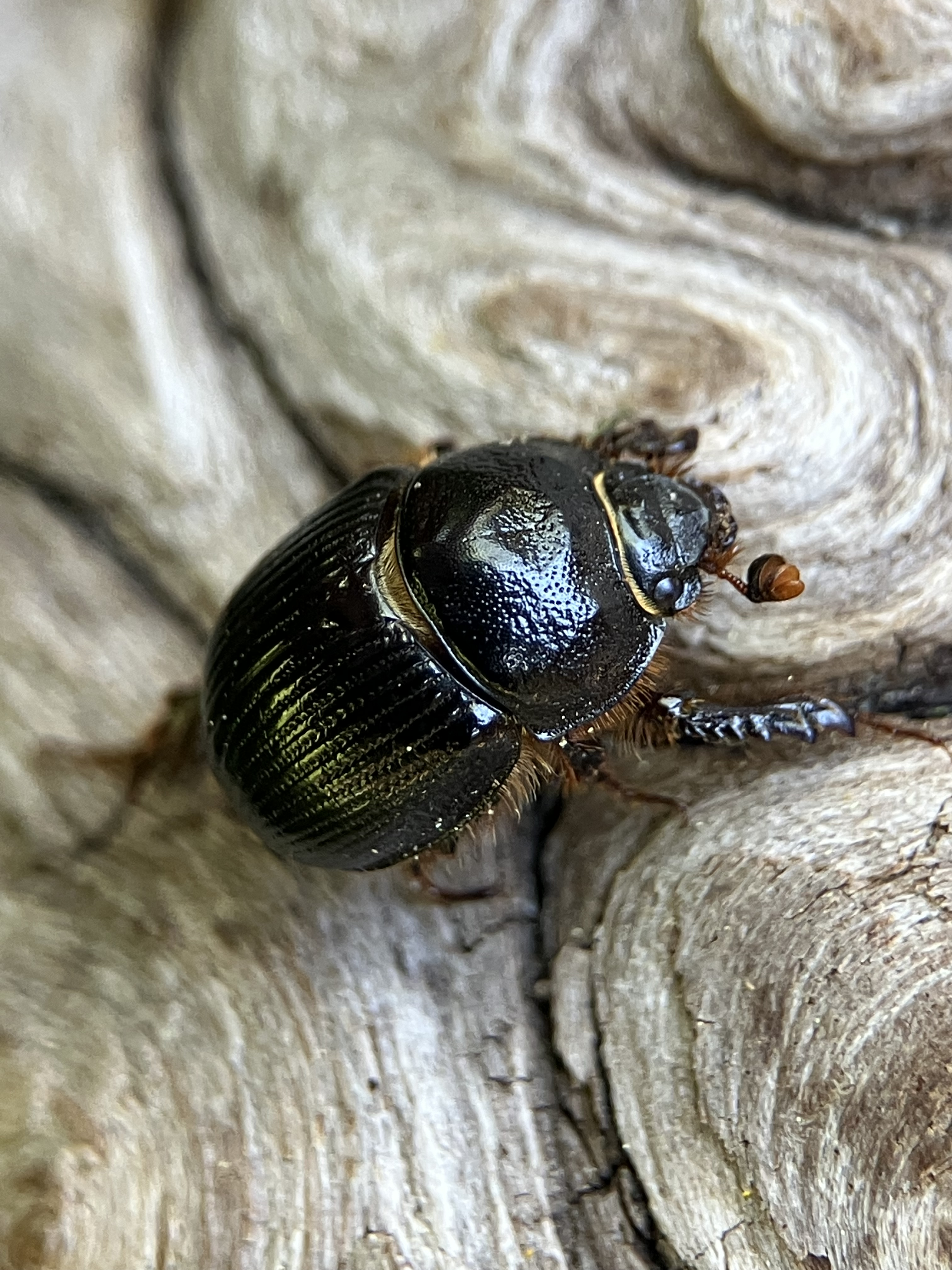
This is a post about one of the most unusual beetles I’ve ever found on San Juan Island. The species is Odonteus obesus. I’m hoping to attract a male specimen to my bug light after finding this female over the weekend, but haven’t had any luck yet. A few years ago, I found a male though. They are simply incredible, beautiful and weird all at once… like finding a unicorn in the forest. Literally! The male of this species has a sharply pointed unicorn horn that protrudes from the front of its head. If you are curious to see a male specimen, check out an earlier blog post I wrote about them here – https://buggingyoufromsanjuanisland.com/tag/odonteus-obesus/

These beetles are in the family Geotrupidae. “Geo” from Greek, meaning earth, and “trypetes” or “trupes” which means to bore or drill. In Europe, these beetles are referred to as dor beetles. “Dor” because they hum. Check out the etymology I’ve copied for you below for the word Dor.

Greek “dor” (δορ):Primarily used in Proto-Indo-European languages, “dor” and “dorn” meant “bee,” “hornet,” or “drone,” as explained by Wiktionary. It’s related to the Middle English “dorre” and Old English “dora,” also meaning “humming insect,”. 

Geotrupid beetles live in the earth in burrows they excavate that can be up to 4 feet deep, often in material composed of dead leaves, cow or horse dung, or humus. We don’t have any horse or cow dung in our yard, so I’m guessing the decaying forest leaf litter is a suitable substrate for them or perhaps they are incorporating deer or the dung of other wildlife (fox, raccoon, or rodents) for use.

Why are Geotrupid beetles (and other dung beetles ) extremely beneficial? They are a source of food for other wildlife that eat them, but perhaps even more important for the role they play in improving soils by adding nutrients and removing animal waste. The beetle’s burrowing nature helps build healthy soil by incorporating organic matter, resulting in increased soil friability (it isn’t as clumpy), improved soil aeration, as well as improved water-holding capacity.

Additionally, these, and other species of dung beetles, have been found to be effective biological control agents for gastrointestinal parasites of livestock. In agricultural areas, they “clean” the pasture by removing manure or decomposing material as they burrow into the earth https://attra.ncat.org/publication/dung-beetle-benefits-in-the-pasture-ecosystem/.

Unfortunately, the increasing dependence of livestock producers on veterinary anthelmintic medications is threatening populations of nature’s best (and free) helpers. Many of the worming medications (like Ivermectin) given to livestock, pass through into the dung and then kill off the dung beetles when they feed. The result is an increased reliance on veterinary medications to control livestock pests and parasites and decreased pasture health because there is no beetle to break down the animal dung. As the pasture is littered with scattered dung, it becomes harder for the livestock to feed because they will avoid areas contaminated with dung.

To learn more about this species and other dung beetles, please check out the linked references below.

Thanks for reading!

Odonteus obesus
Odonteus obesus
Odonteus obesus
Odonteus obesus
Odonteus obesus
Odonteus obesus
Odonteus obesus

References and Further Reading

Brast, Cynthia. 2022. Radar love. Odonteus obesus. Bugging You From San Juan Island. https://buggingyoufromsanjuanisland.com/tag/odonteus-obesus/

Bugguide.net. 2023. Geotrupidae Earth-Boring Scarab Beetles. Iowa State University. https://bugguide.net/node/view/6810

Entomologist.net. No Date. Beetles Dor Beetle (Geotrupes stercorarius) https://entomologist.net/beetles/62-geotrupes-stercorarius.html

Jameson, Mary Liz. 2005. Geotrupidae. Generic Guide to New World Scarab Beetles. UNL State Museum. https://unsm-ento.unl.edu/Guide/Scarabaeoidea/Geotrupidae/Geotrupidae-Overview/GeotrupidaeO.html

Thomas, Michelle. 2001, and Rodriguez, O. 2020. Dung Beetle Benefits in the Pasture Ecosystem. ATTRA Sustainable Agriculture. National Center for Appropriate Technology. https://attra.ncat.org/publication/dung-beetle-benefits-in-the-pasture-ecosystem/
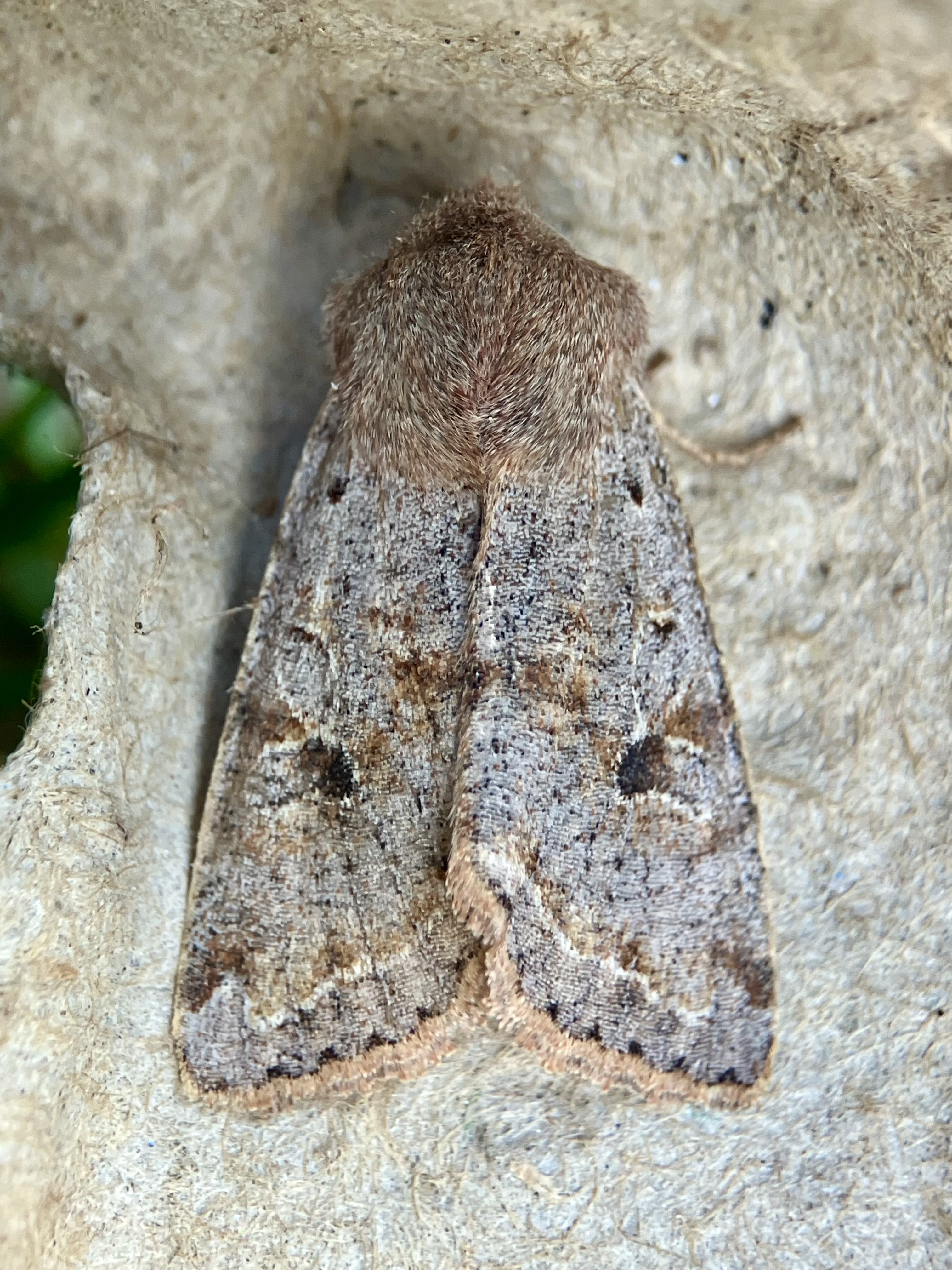
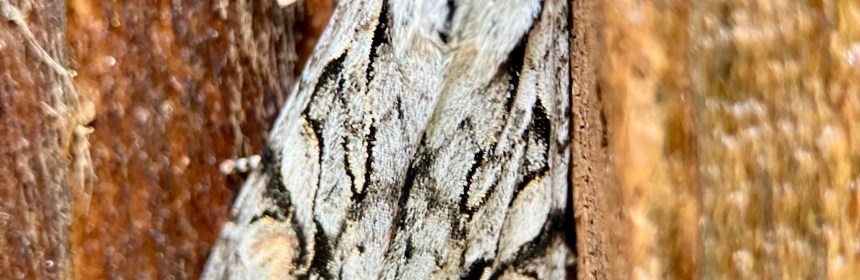
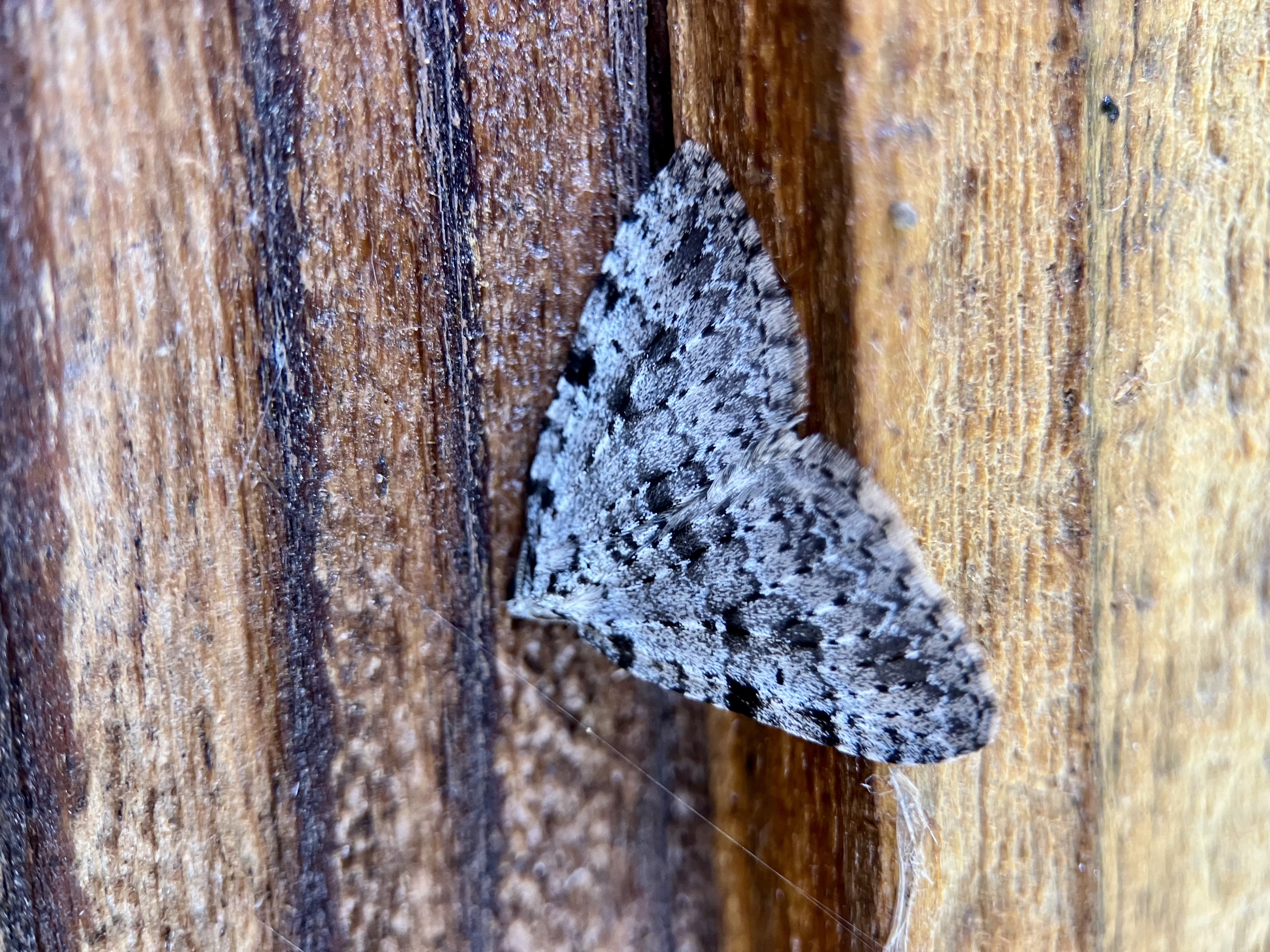
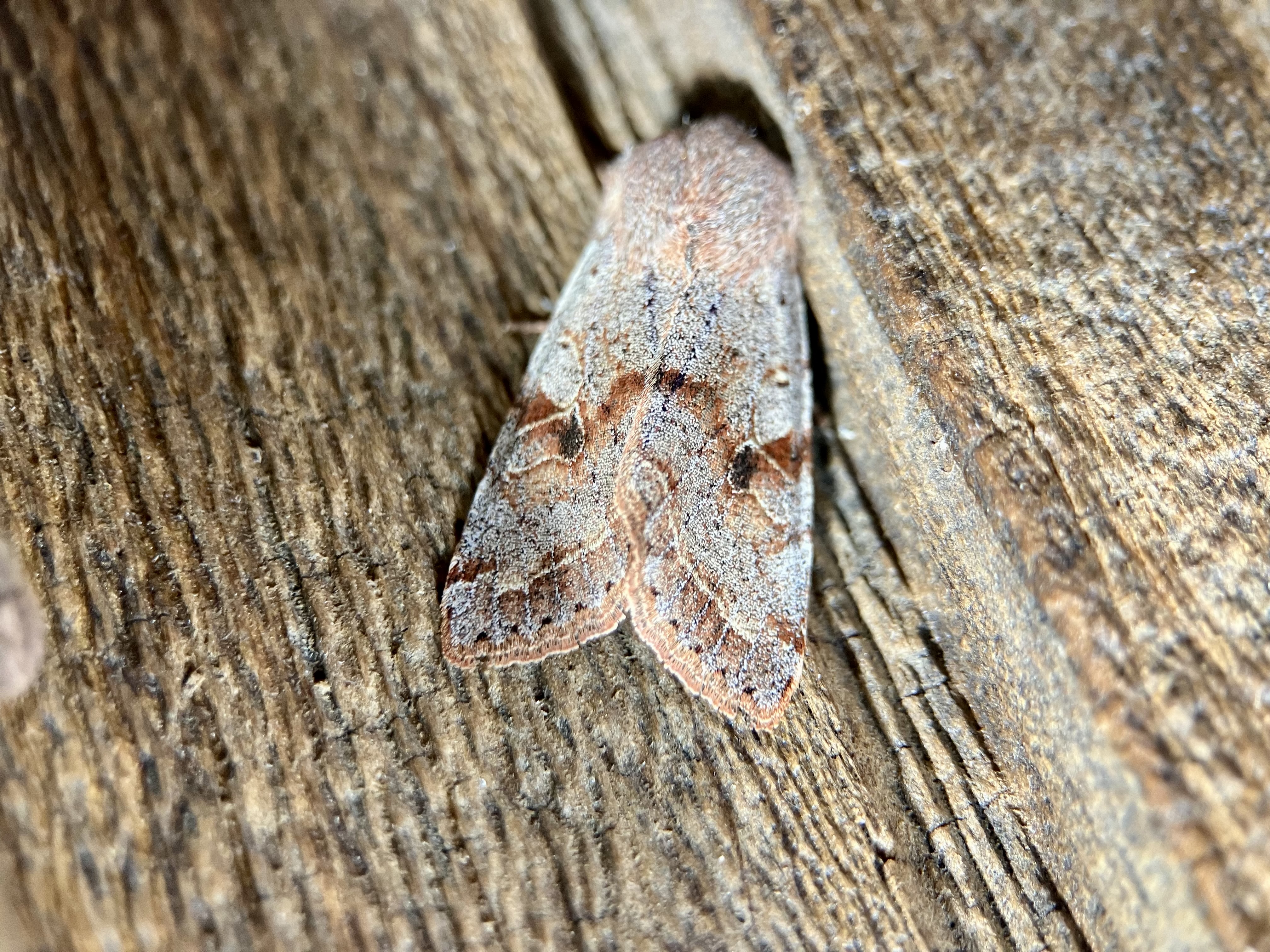
Moth Light/Bug Tally for 04.19.2025

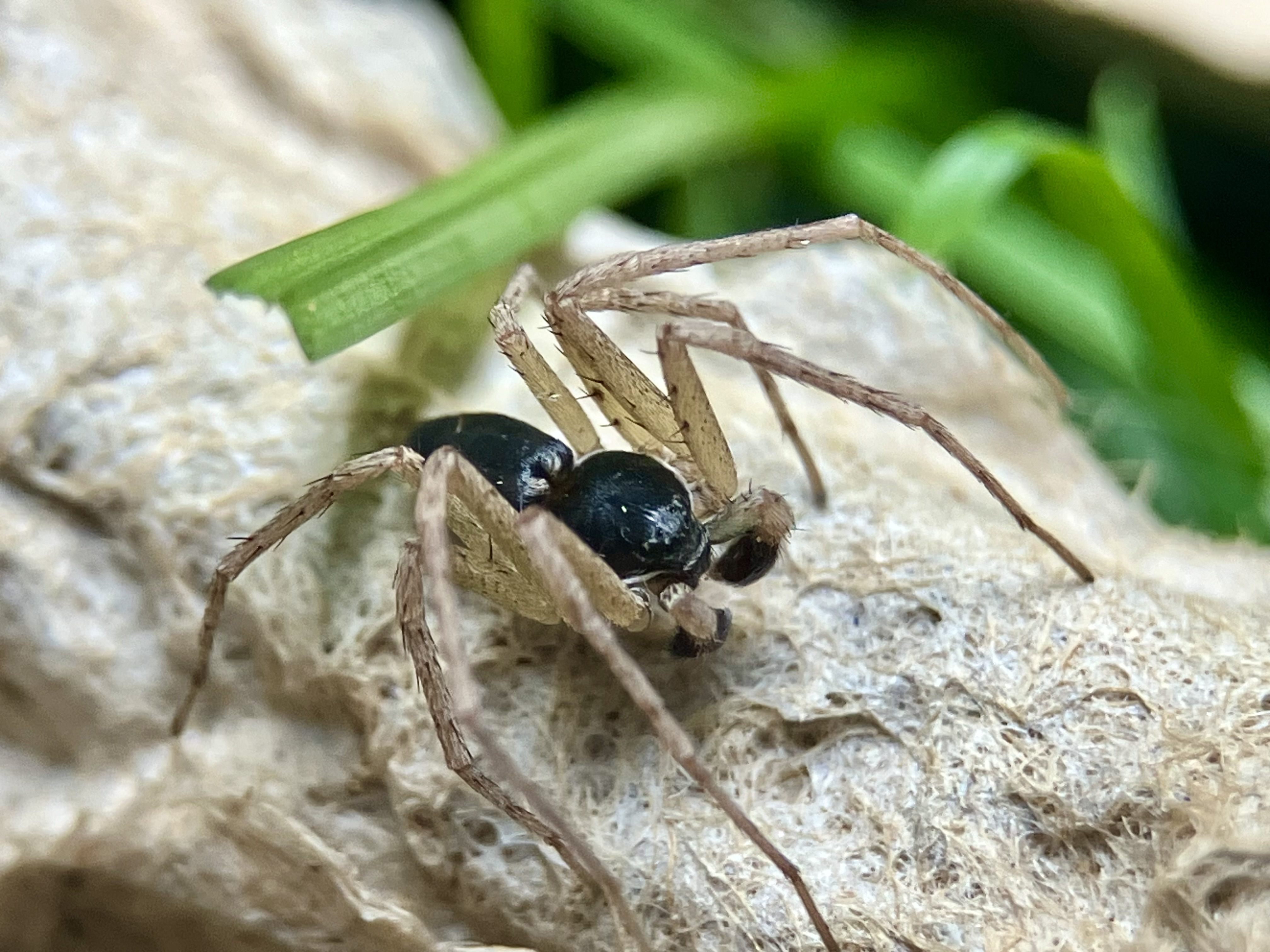
Here are some photos of specimens found from my light trap set up last night. The official tally is listed here as well.

Light Trap Count – 4.19.2025
37 specimens. Moths from 8 different Genera; 11 species. 1 Wasp species, 2 Beetle species, and 1 spider species.


Moths:
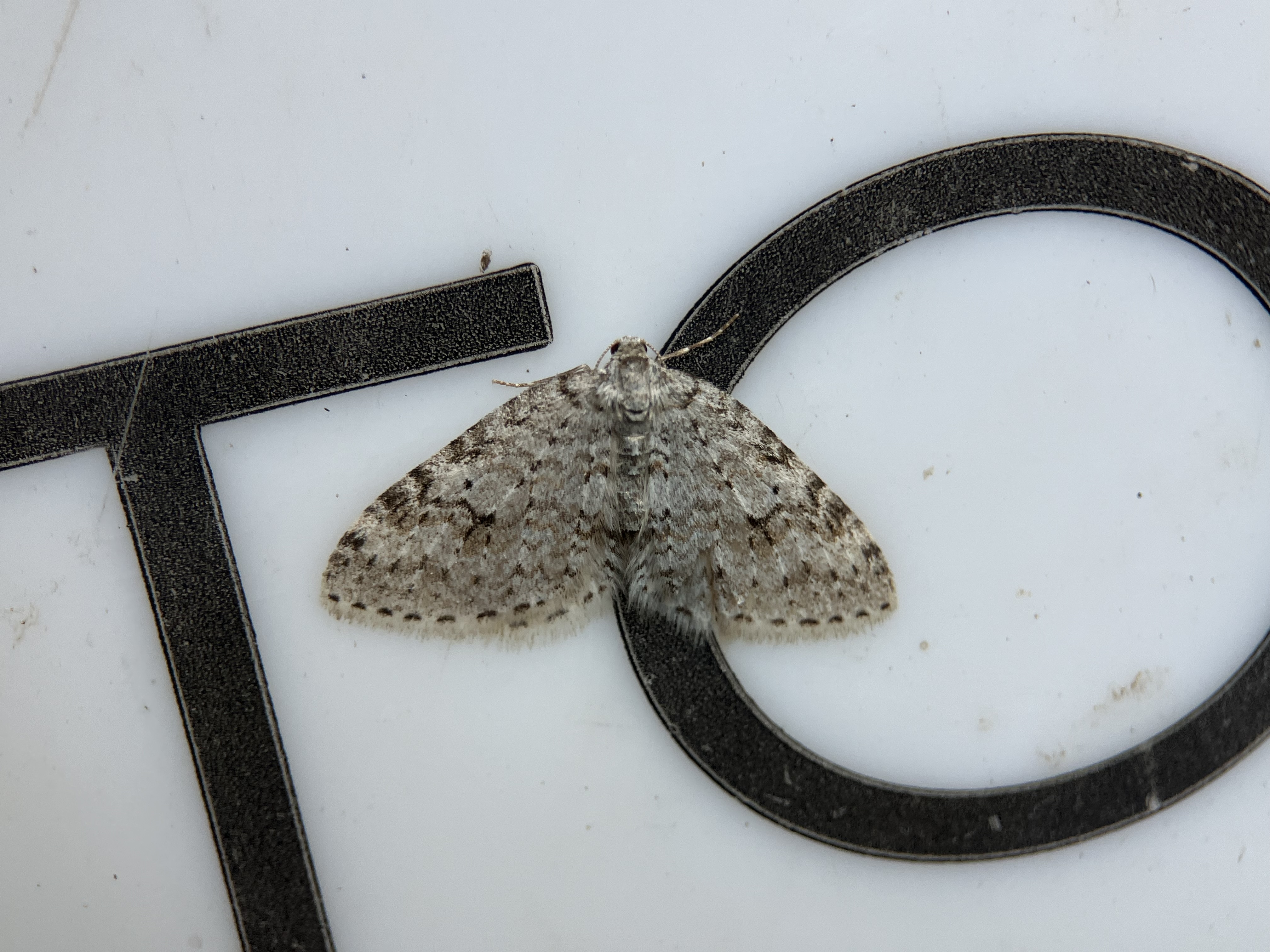
Orthosia transparens – 3
Orthosia hibisci – 9
Orthosia praeses – 7
Venusia pearsalli – 2
Eupithecia graefii – 1
Egira rubrica -1
Egira simplex- 1
Egira unknown (possibly one of the other two listed here) – 1
Feralia – 3
Perizoma curvilinea – 2
Behrensia conchiformis – 1
Emmelina mondactyla – 1

Beetles from 2 families (Carabidae and Curculionidae)

Carabidae: Diplotaxis sp. – 3

Curculionidae: Strophosoma melanogrammum – 3

Spider:
Philodromus dispar (male) – 1

Wasp:
Ophion sp. – 1

Location: San Juan Island, WA

Behrensia conchiformis

A spider with a hump

Metellina mimetoides

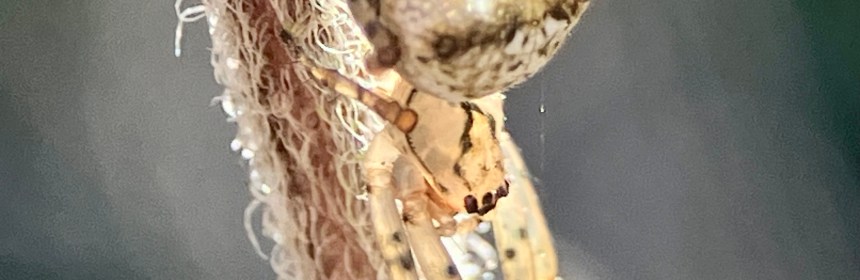
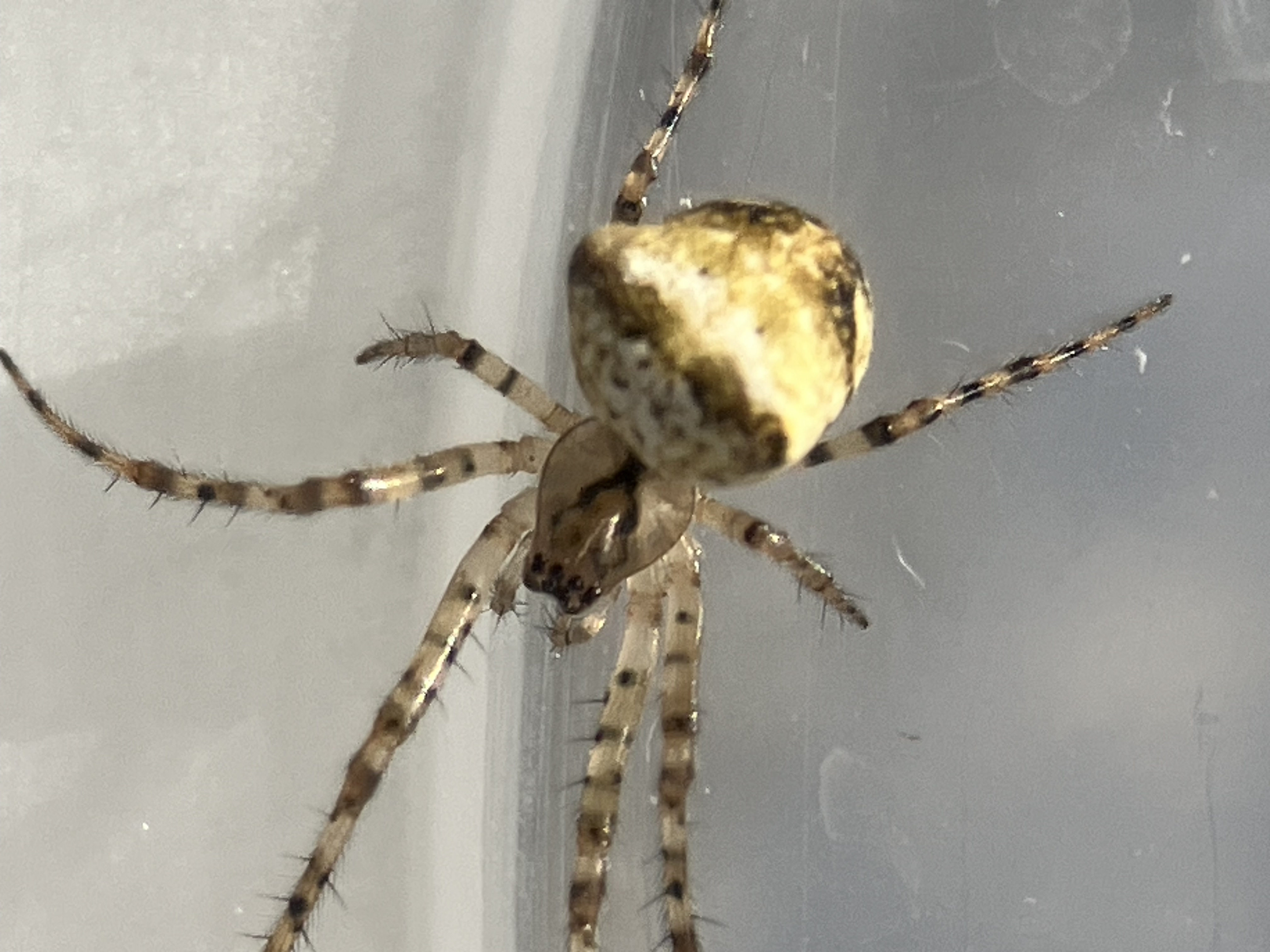
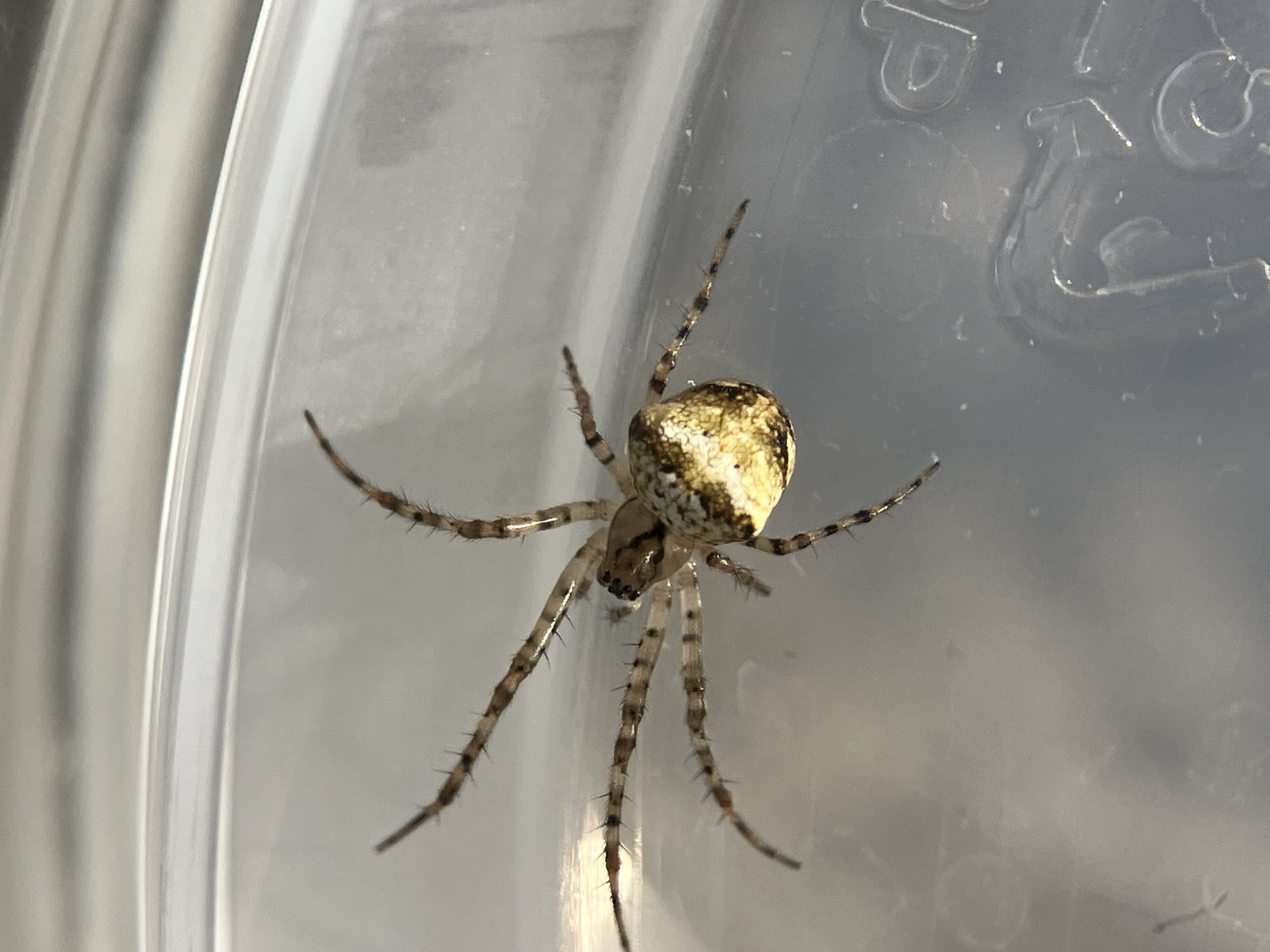
I thought I’d take a moment to profile a new-to-me spider found in my kitchen last week. This one was awfully small at about 4-5 mm, and threading the beginning of a web from my kitchen counter to the dishwasher. I needed a cup for my morning coffee, and the kitchen (at least our kitchen) is not a safe place for a free roaming spider. Not with Herman the Persian and his furry duster of a tail.

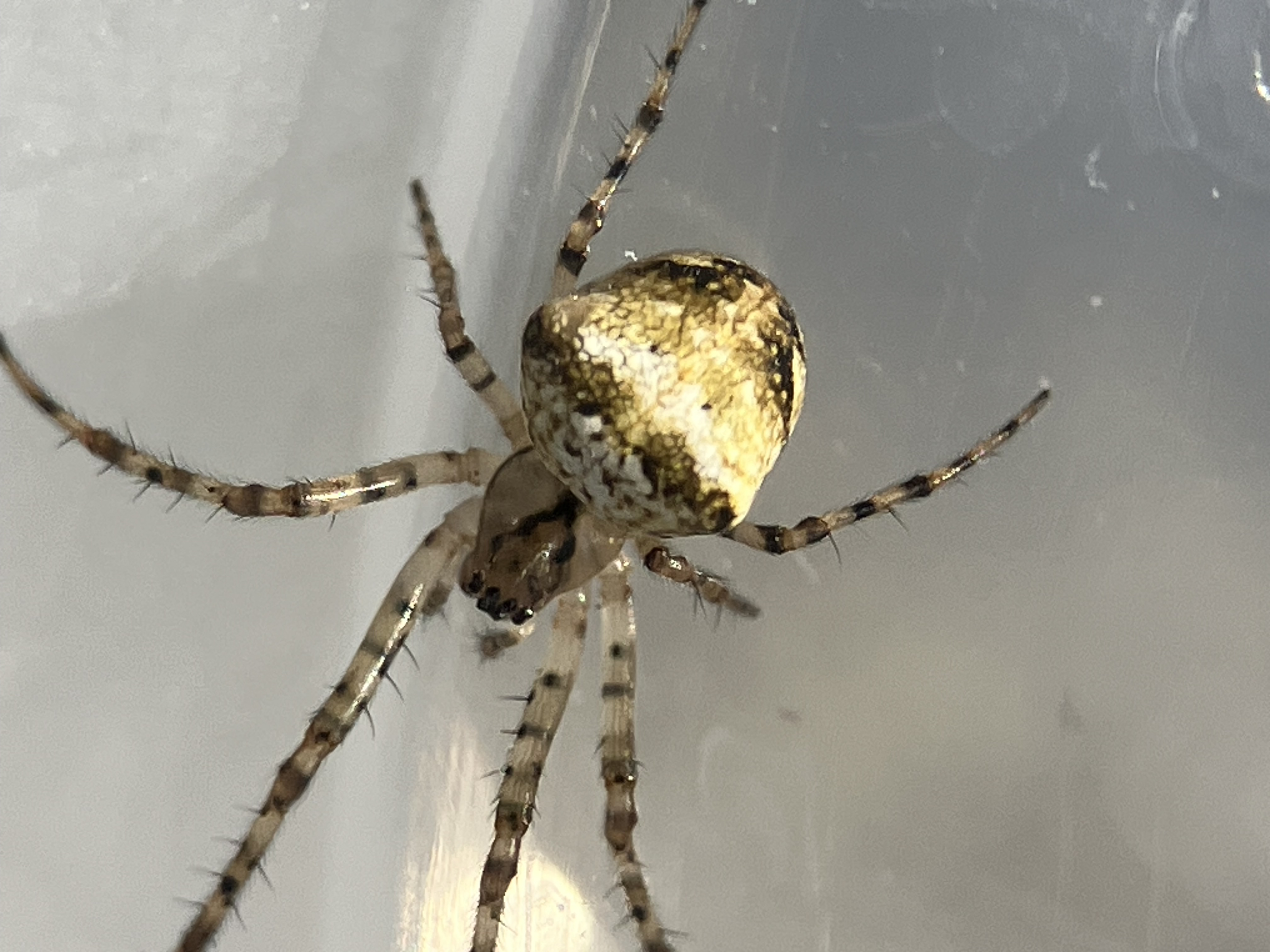
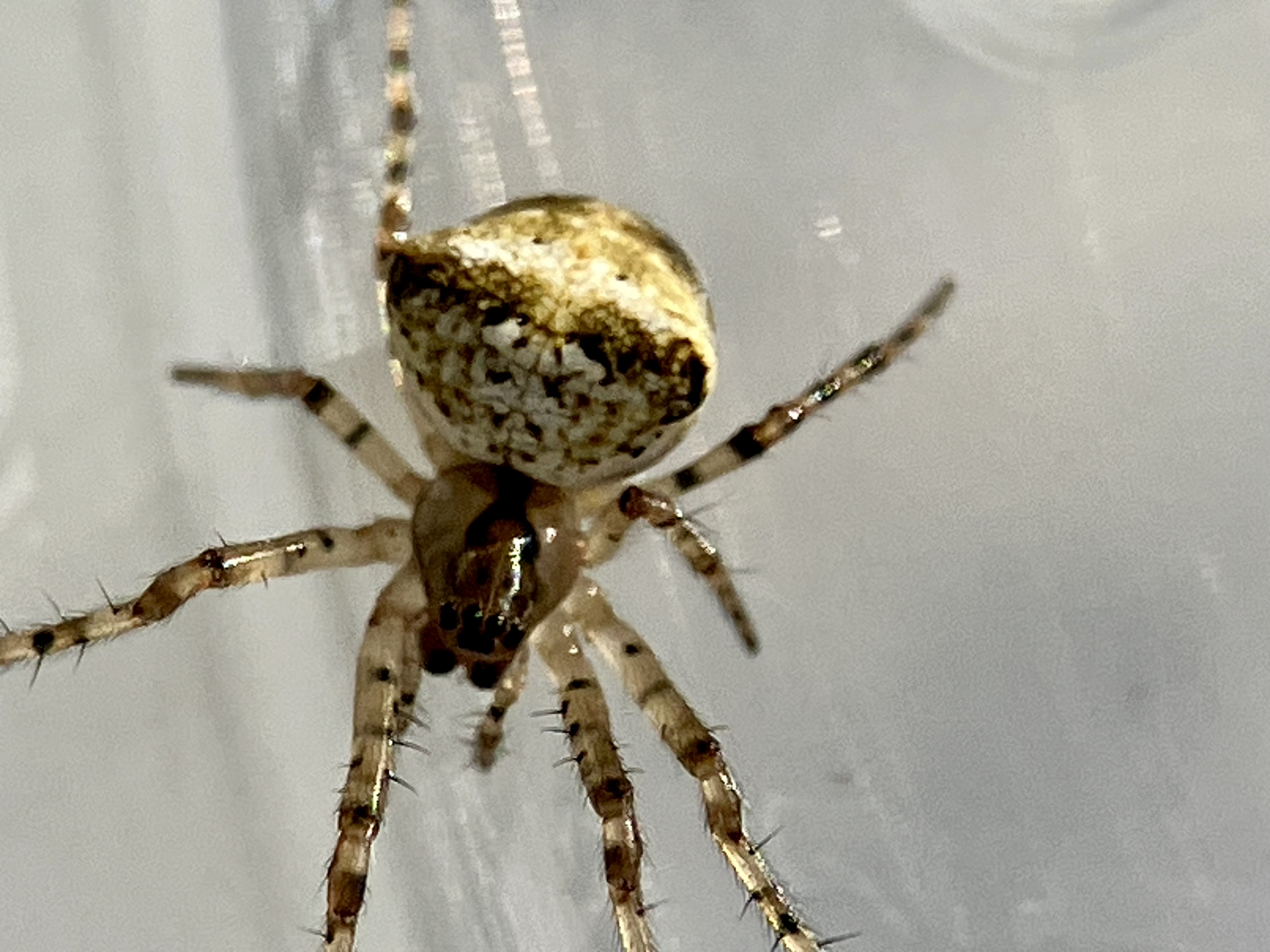
I collected her gently, took these photos, and released her outdoors on one of my mint plants. My efforts at ID-ing this unusual beauty, beyond family Tetragnathidae and possibly genus (Metellina) necessitated sending the photos to my friend, Rod Crawford at the Burke Museum, for further help.

Rod quickly wrote back with, “Metellina mimetoides, only local species in genus with humped abdomen.”

Metellina mimetoides is a species native to North America and found along the Pacific Coast from Southern California through Northern Washington. I would say these are not particularly abundant though. This was my first ever sighting of one on San Juan Island, WA.

And here she is!

Fantastic Fly Friday

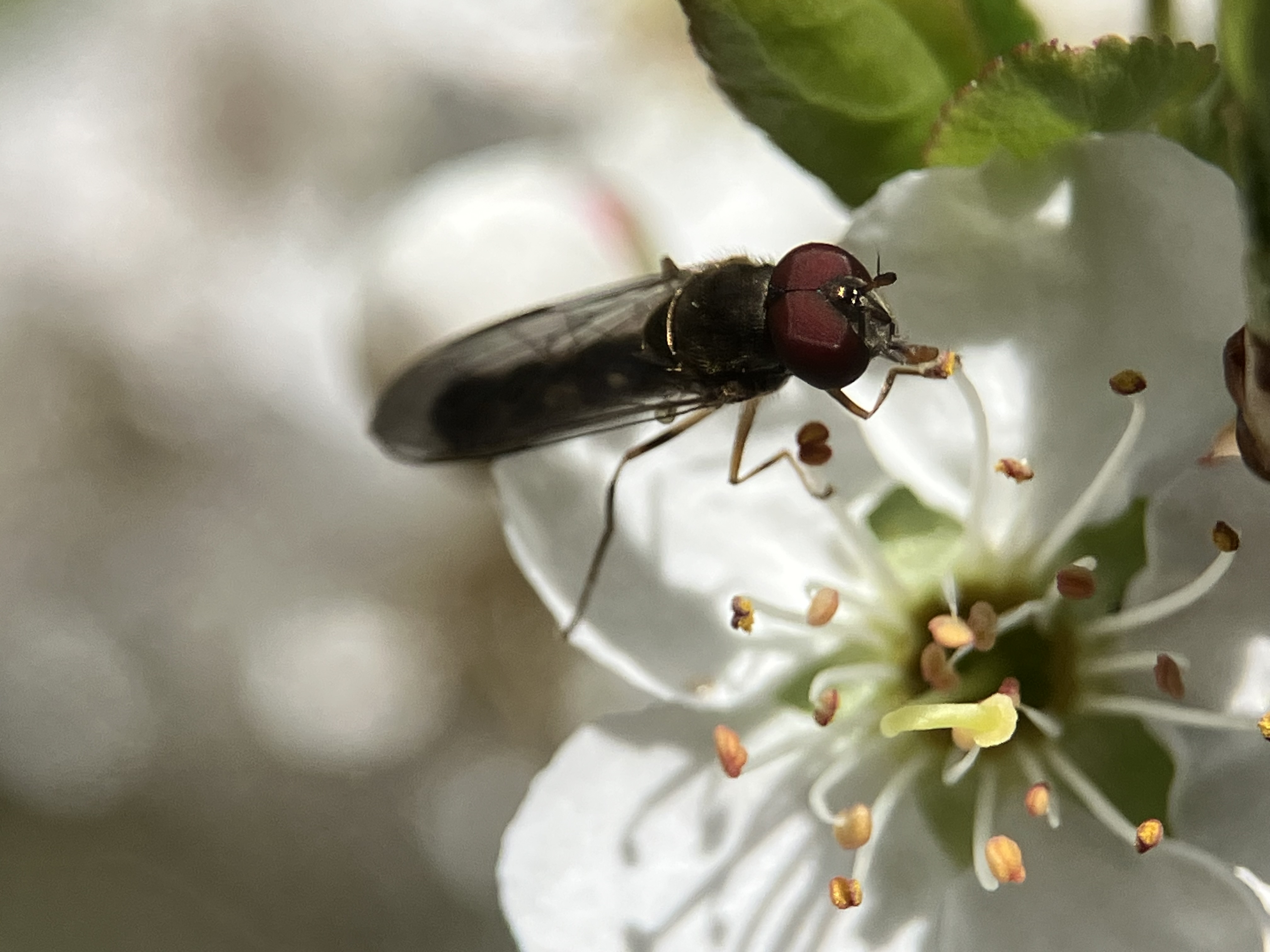
I thought I’d write up a short post about all the wonderful flies (and a few others) pollinating our plum trees in this cool spring weather. Why feature the flies? Well, for starters, the plum tree blossoms are white and flies love the color white. Another reason to feature the flies is because they are under-recognized and under appreciated, but very important pollinators. Some fly larvae even serve as pest predators, eating aphids. Others, like the tachinid fly below, use caterpillars that defoliate trees as hosts for their larvae to develop. Flies are also awesome because they do not sting! Some even “dance!” My favorite fly hasn’t shown up yet. It’s a Conopid Fly. More about that one later though…

Tachinid Fly (Epalpus signifier)

This past week in the media, there have been so many posts about the decline in honey bees. While there are some (unwanted) honey bees showing up on days when the temperatures climb above 50 degrees, honey bees aren’t active if it is cooler. Flies, on the other hand, are quite busy at work pollinating and do just fine when it might only be 40 outside. Flies are awesome! They need our support and appreciation.

I’d like to add (and I do know something about this because of my entomology background), that honey bees are just not necessary on San Juan Island. In fact, they might even be a very bad thing. They showed up at our plum tree as the temperature warmed up the other day, and as they arrived in increasing numbers, they kicked off ALL of the native pollinators that I had been observing. 😦

For honey bees to fly out of the hive and forage, they need temperatures above 50 degrees. In my experience keeping bees (as part of my graduate school work), they typically do not survive well on the island unless they are fed supplemental sugar water. Think about the ecological footprint of growing sugar to feed the bees!

Feeding honey bees attracts (and supports) the buildup of yellow jacket populations which are attracted to honey bee hive resources (including eating the honey bee brood developing in the hive), and honey bees also bring pests and pathogens that impact native bees (especially bumble bees). One more thing! If you are growing tomatoes, bumble bees are your pollinators, not honey bees.

I hope you will read and consider this recent study published about how honey bees were negatively impacting native pollinators on Giannutri Island in Italy. They were causing a decline in the populations of wild bees. In fact, the study cited an “alarming 80% decline in wild bee abundance over 4 years” (Pasquali et al. 2025). You can access this study to read it yourself here: https://www.cell.com/current-biology/pdfExtended/S0960-9822(25)00262-3

Enjoy the gallery of the native pollinators that I was fortunate to photograph and be able to share. Be a fly fan! Be a native bee fan! Learn about our unseen, but important night time pollinators (moths), and PLEASE LEAVE THE HONEY PIGS for the mainland industrial farm operations.

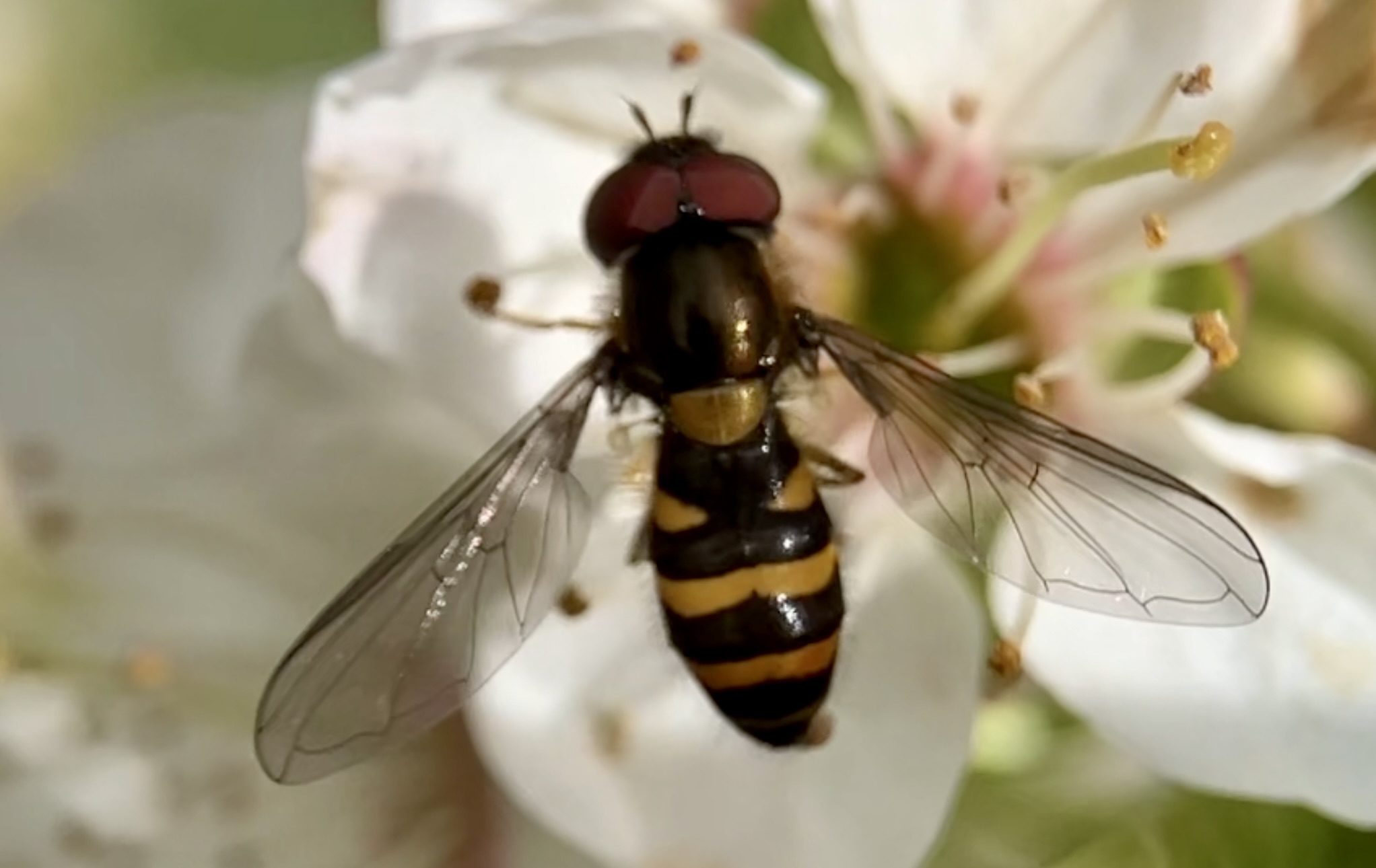
Syrphid Fly (Tribe Syrphini )
Golden Dung Fly (Scathophaga stercoraria)
Cluster Fly (Genus Pollenia)

Musca autumnalis
Sericomyia chalcopyga Western Pond Fly
Bibionid Fly (Bibio sp.) and Hybotidae Dance Fly (Bicellaria sp.)
(Melanostoma mellinum) Variable Duskyface Fly

References

Anderson, H. L. D. (2024). Nocturnal moth communities and potential pollinators of berry agroecosystems in British Columbia (T). University of British Columbia. Retrieved from https://open.library.ubc.ca/collections/ubctheses/24/items/1.0447737

KEARNS, C. A. 2001. North American dipteran pollinators: assessing their value and conservation status. Conservation Ecology 5(1): 5. [online] URL: http://www.consecol.org/vol5/iss1/art5/

Pasquali, Lorenzo & Bruschini, Claudia & Benetello, Fulvia & Bonifacino, Marco & Giannini, Francesca & Monterastelli, Elisa & Penco, Marco & Salvati, Vania & Simbula, Giulia & Skowron Volponi, Marta & Smargiassi, Stefania & van Tongeren, Elia & Vicari, Giorgio & Cini, Alessandro & Dapporto, Leonardo. (2025). Island-Wide Removal of Honey Bees Reveals Exploitative Trophic Competition with Strongly Declining Wild Bee Populations. 10.2139/ssrn.5081459. https://www.sciencedirect.com/science/article/pii/S0960982225002623#:~:text=Article-,Island%2Dwide%20removal%20of%20honeybees%20reveals%20exploitative%20trophic%20competition,strongly%20declining%20wild%20bee%20populations

Ssymank, A., Kearns, Bonn & Carol. Flies – Pollinators on two wings. The Diptera Site. https://diptera.myspecies.info/diptera/content/flies-–pollinators-two-wings

April 7, 2025 – A Million or More

Tiny springtails (Hypogastrura sp.)

I woke up this morning feeling like my head is going to explode. Migraine sufferers will identify. The throbbing continues, regardless of whatever you might throw at it. I managed to get little Olivia to the vet by 09:40 to get her spay stitches out and our vet cleaned her ears. She had a lot of wax buildup and came home with some antibiotic ear drops to ward off any potential infection that might be developing. Olivia is our latest rescue cat. She’s a sweet little Tortie Persian. Age 2. It’s been a delight to have her sharing our space and she’s made fast friends with our other two resident kitties (Herman and Nimbus).

Olivia the cat

After I got back home from town, I went back outside to walk around the yard a bit hoping the cool air would calm down my headache. I wandered over to look in the above ground pools we have for water catchment. One is in the shade and the other is in the sun. It’s pretty cool how they each have their own mini ecosystems going on.

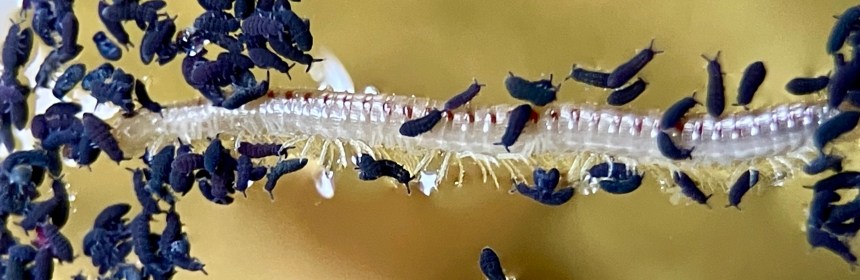
Hypogastrura sp. Springtails and a millipede raft

The shaded pool was the active one today. It was literally covered with a million or more of these teeny aquatic springtails. Initially, I believed the species to be Podura aquatica in the family Poduridae, but someone has suggested a different family (Hypogastruridae) altogether as a possibility. I may have to revisit my ID. Springtails or Collembola are tiny hexapods. The ones in my photo looked to be approx. 1mm in size. The blue-ish ones you see in the photo are mature specimens and the pinkish/orange ones are juveniles. I believe this could be a mating aggregation (Sánchez-García et. al, 2018). *** note *** Updating ID to family Hypogastruidae (Genus Hypogastrura) after looking at these under a microscope and seeing they have a reduced furcula (the little appendage on the back end that helps them jump).

Hypogastrura sp. springtails

There were so many of these that it looked as if the surface of the pool had been sprinkled with pepper. I found some in a water dish I had on the ground that were easier to photograph. There were a few rafting on a poor little millipede that somehow ended up in the water. It was still alive, so I fished it out and moved it to a nice damp spot in the soil.

An aggregation of tiny springtails (Hypogastrura sp.)
Hypogastrura sp. springtails

Some species of springtails are semi aquatic, living in fresh water. Others are common in soil and leaf litter where they influence decomposition processes and nutrient availability. Some are arboreal and are abundant in rain forest canopies. There are even springtails living successfully in polar regions (Hopkin,1997 ; Sanchez-Garcia et al, 2018).

Springtails hanging out with a deceased backswimmer (Notonectidae)

Raft of Hypogastrura sp. springtails photographed March 27, 2025 – San Juan Island, WA

Check out the reference list I have attached below for further reading. Some of these are really interesting!

References

Ádám Egri, György Kriska. 2019. How does the water springtail optically locate suitable habitats? Spectral sensitivity of phototaxis and polarotaxis in Podura aquatica. J Exp Biol 222 (9): jeb199760. https://journals.biologists.com/jeb/article/222/9/jeb199760/688/How-does-the-water-springtail-optically-locate

Bellini, B. C., Weiner, W. M., & Winck, B. R. 2023. Systematics, Ecology and Taxonomy of Collembola: Introduction to the Special Issue. Diversity, 15(2), 221. https://doi.org/10.3390/d15020221

Bugguide. 2025. Hypogastrura.

Childs, G. H. 1915. Some observations on the life history of the water springtail (Podura aquatica – 1758). MSc thesis, University of Minnesota, Minneapolis.

Heckman, C. W. 2018. Ecological Strategies of Aquatic Insects. Boca Raton: CRC Press, Taylor & Francis Group.

Hopkin SP. 1997. Biology of the Springtails (Insecta: Collembola). New York: Oxford Univ. Press.

Möllerke A, Brasse G, Bello J, Vidal DM, Dettner K, Zettel J, Berg MP, Scheu S, Leinaas HP, Schulz S. 2024. The unique epicuticular chemistry of Collembola – A cross-species analysis. iScience. 27(8):110416. doi: 10.1016/j.isci.2024.110416. PMID: 39139403; PMCID: PMC11321324.

Noble-Nesbitt, J. 1963. A site of water and ionic exchange with the medium in Podura aquatica L. (Collembola, Isotomidae). J. Exp. Biol. 40, 701-711.

Ortega-Jimenez VM, Challita EJ, Kim B, Ko H, Gwon M, Koh JS, Bhamla MS. 2022. Directional takeoff, aerial righting, and adhesion landing of semiaquatic springtails. Proc Natl Acad Sci U S A. 119(46):e2211283119. doi: 10.1073/pnas.2211283119. Epub 2022 Nov 7. PMID: 36343251; PMCID: PMC9674249.

Silje Marie Kristiansen, Katrine Borgå, Jan Thomas Rundberget, Hans Petter Leinaas, Effects on Life‐History Traits of Hypogastrura viatica (Collembola) Exposed to Imidacloprid Through Soil or Diet, Environmental Toxicology and Chemistry, Volume 40, Issue 11, 1 November 2021, Pages 3111–3122, https://doi.org/10.1002/etc.5187

Rusek, J. 1998. Biodiversity of Collembola and their functional role in the ecosystem. Biodiv. Conserv. 7, 1207-1219. https://doi.org/10.1023/A:1008887817883
Sánchez-García A, Peñalver E, Delclòs X, Engel MS. 2018. Mating and aggregative behaviors among basal hexapods in the Early Cretaceous. PLoS ONE 13(2): e0191669. https://doi.org/10.1371/journal.pone.0191669

Schulz, S., Messer, C., & Dettner, K. 1997. Poduran, an unusual tetraterpene from the springtail Podura aquatica. Tetrahedron Letters, 38(12), 2077–2080. doi:10.1016/s0040-4039(97)00341-9

Silje Marie Kristiansen, Katrine Borgå, Jan Thomas Rundberget, Hans Petter Leinaas, 2021. Effects on Life‐History Traits of Hypogastrura viatica (Collembola) Exposed to Imidacloprid Through Soil or Diet, Environmental Toxicology and Chemistry, Volume 40, Issue 11, Pages 3111–3122, https://doi.org/10.1002/etc.5187

Yule, Catherine & Yong, Hoi Sen. (2012). 33. Collembola. https://www.researchgate.net/publication/233727118_33_Collembola

April 5, 2025 – Herman finds a fly

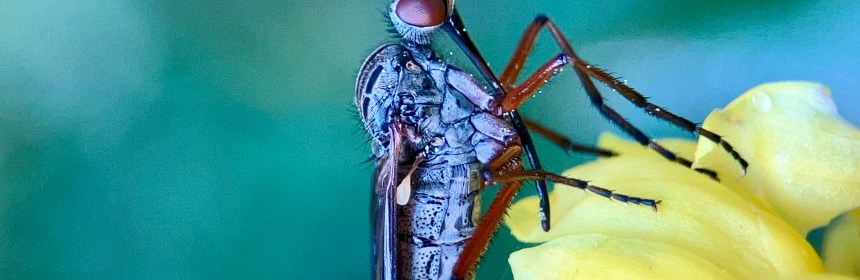
That’s right! Herman the Persian found something interesting in the yard when we were outside sunning ourselves a bit this afternoon. He found one of the Bibionid March flies (a female). If you read my post yesterday https://buggingyoufromsanjuanisland.com/2025/04/04/nuptial-gifts/, you might note that Bibionid flies were being hunted by Empis flies who rolled them into little balls as nuptial gifts used to woo the lady Empids to mate.

Female Bibionid fly digging chamber to lay her eggs.

Evidently, a few of these Bibionid flies escaped that destiny and actually mated with their own kind. THIS one, that Herman found, was hard at work digging her own death chamber where she would expire soon after laying her eggs. Incidentally, the adults are very short-lived, and in fact, live only about 5-7 days with the primary objective of mating, and for the adult female to lay her fertilized eggs. In spite of their brief existence, adults are also thought to be important early pollinators of orchard trees. Yes, you heard me right! Flies don’t get nearly as much credit for pollinating as they deserve to receive.


I watched her digging with her fossorial forelegs. It seemed to be an impossible task, but she made slow and steady progress. She was still hard at work before we went back into the house about half an hour later. I marked the spot with a rock so I could go back and check, but I suspect even with the rock nearby as a marker, it will be next to impossible to detect any disturbance in the soil tomorrow. We’re supposed to get rain this evening.


In approximately 30-35 days, the eggs she lays will hatch underground. The larvae will live in the top layer of soil and feed gregariously on leaf and needle litter, decaying organic matter, and sometimes on below-ground parts of plants.

If you’re curious, you can read more about Bibionid flies in the attached links. I did see some additional Empis fly males dancing about today with their Bibionid “balloons” or nuptial gift balls for prospective mates.

Thanks for reading. 🙂

References

Bugguide.net. 2025. Family Bibionidae – March flies. https://bugguide.net/node/view/3834

Morris, H. No date. The larval and pupal stages of the Bibionidae. Entomological Department, Institute of Plant Pathology, Rothamsted Experimental Station, Harpenden. https://core.ac.uk/download/pdf/212009582.pdf

April 2, 2025

I didn’t turn on my moth light last night. I thought about it, but supposed I just wasn’t feeling all that motivated. If I’m completely honest with myself, I am feeling a bit blue. Maybe more than a bit. I wrestle with feeling shut out of the “enviro” community on the island and have felt snubbed by some of the folks in certain organizations. Life on an island can be great, but there are times when it feels like you’re in a fishbowl. Some people don’t get beyond 8th grade social networks. Shrugging here. 🤷‍♀️ I am just going to continue to do my bug thing and if people want to connect, they are always welcome. Sometimes I get really great emails and feel like my efforts to share what I know about bugs matter. I hope so. We need bugs. Even the ones that aren’t perceived as charismatic as a butterfly or a bee.


Here’s a moth that made me think of a funny story to share. This one’s for my daughter. I hope she will get a laugh out of it. We used to have a rabbit named Izzy. Her full name was Izzy Belle Cottontail. She was supposed to be a wild rabbit. How did we come to have her? A neighbor’s dog killed her nest mates and she was the only one to survive. They brought her to me asking for help. She wasn’t but days or maybe even hours old. Her eyes were closed and her umbilical cord stump was still attached. I tried to give her to my rehabber friend, but she was overwhelmed. I ended up caring for Izzy. Bottle feeding every hour or so, even through the night. When she was old enough, we tried to release her. She ran back in the house and that was that. She came with us when we moved to Washington…all the way from Texas. If you want to see a video of Izzy, you can check out the YouTube link here: https://youtu.be/6S0qnwgzLbM?si=JsMYN8rG1Hfu67FB

Izzy Belle the Cottontail

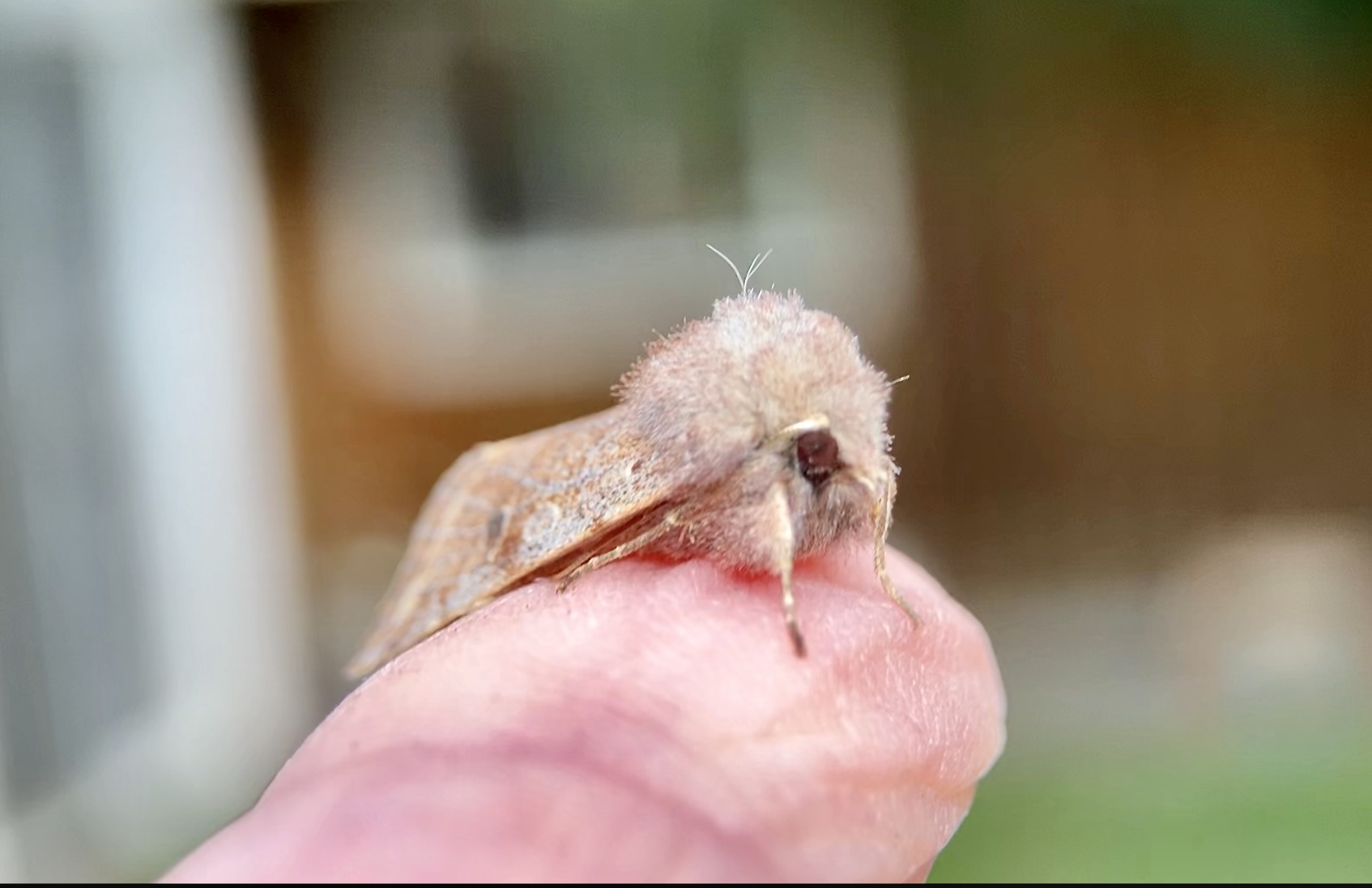
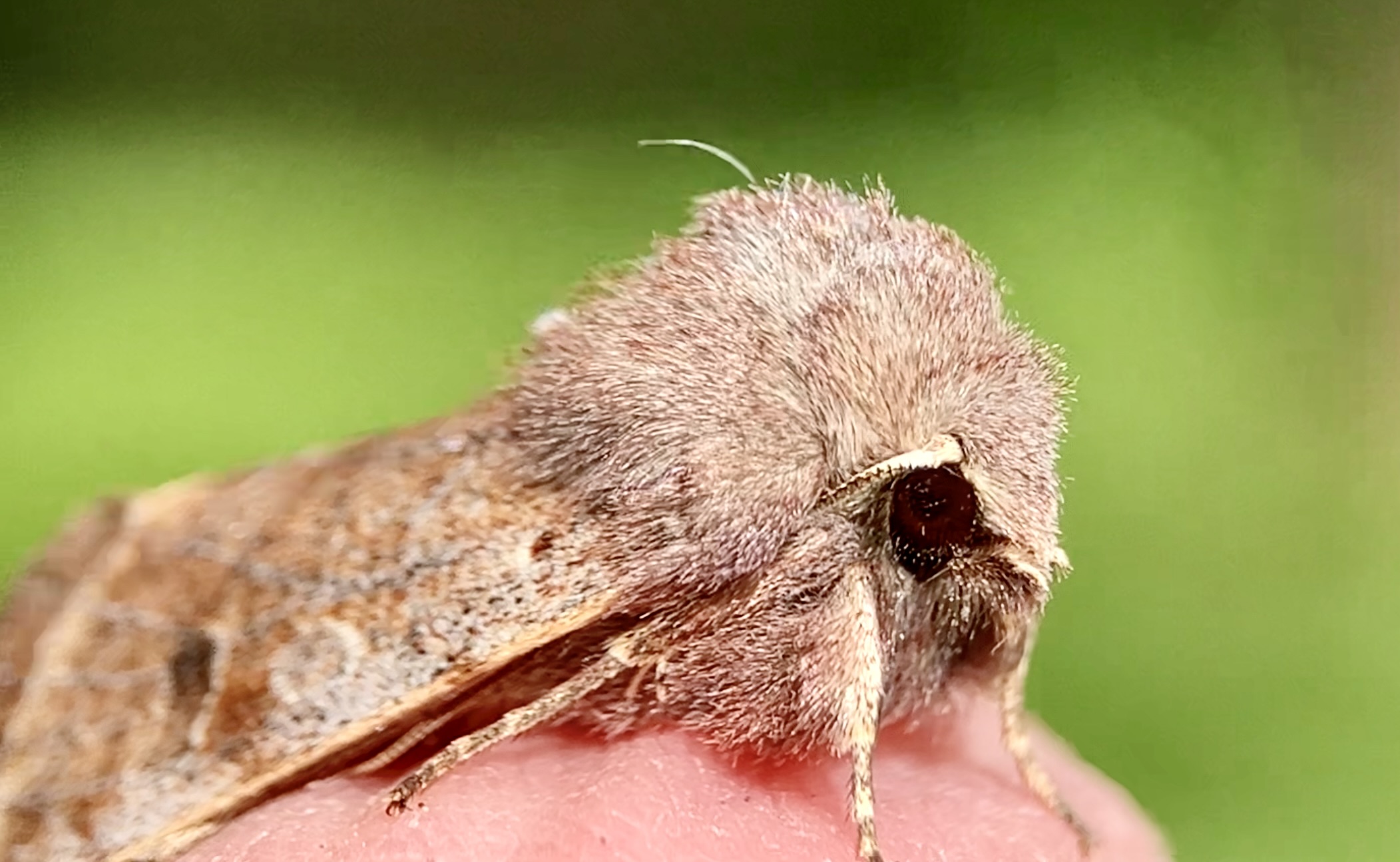
So why does this moth in the video below remind me of Izzy? Well, Izzy had a really bad habit of chewing things. Rabbits have to wear their teeth down, but I think young rabbits just want to try everything out. One morning my daughter got up and came to get me. She said, “Mom, Izzy gave me sprigs.” She did indeed have “sprigs” of hair sticking up where Izzy had chewed off pieces in the night. Izzy gave me sprigs a few times too. In spite of her chewing and other unfortunate habits, we loved Izzy dearly and she lived a very long and happy life with us.


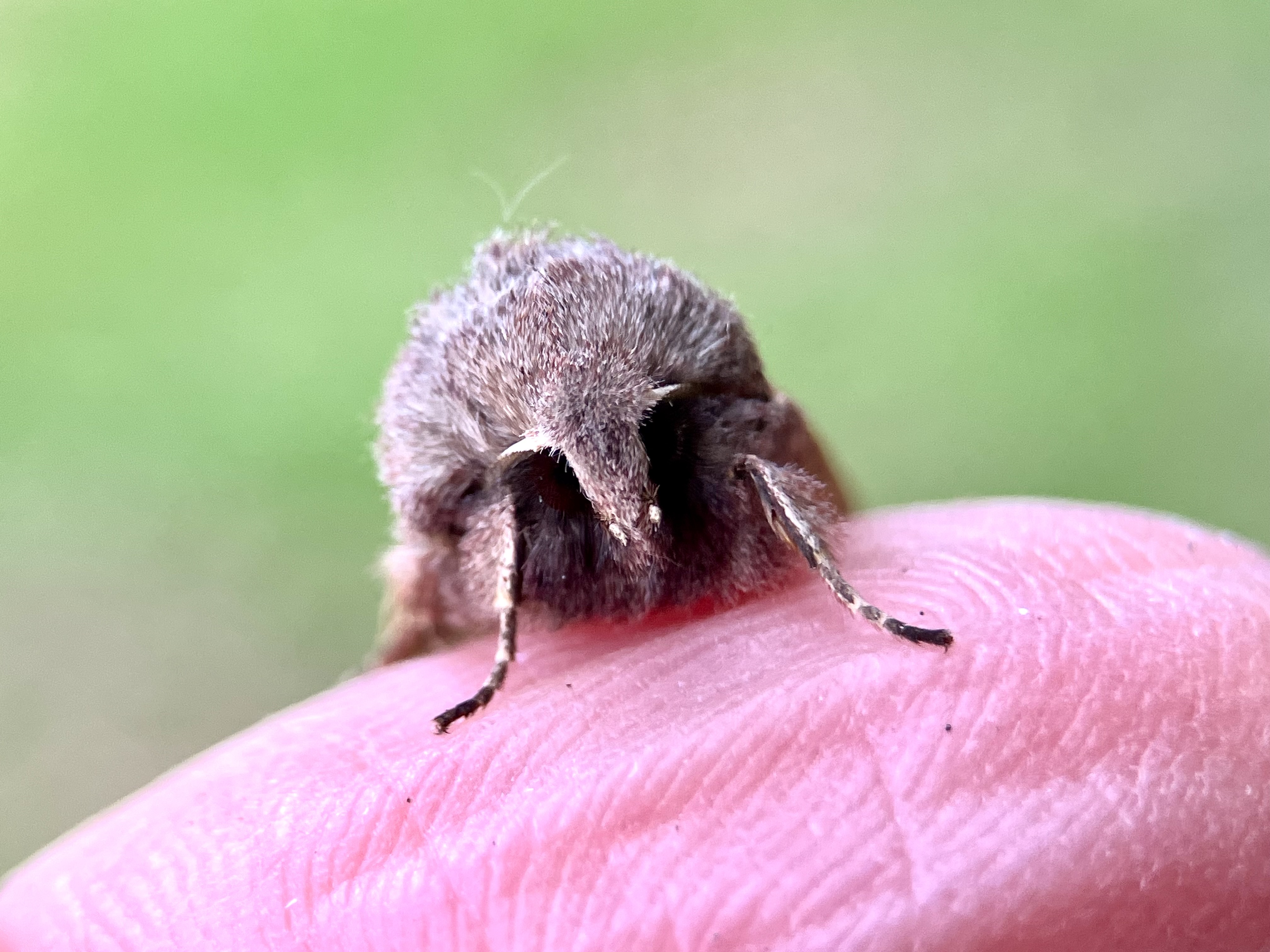
This little moth is Orthosia hibisci, the speckled green fruitworm moth. As you can see, it has little “sprigs” sticking up from the top of its head too. Those aren’t antennae, but they are cute! Orthosia hibisci is a moth in the Noctuid family. The caterpillars are sort of a generic green. They like chewing too, but fortunately, it’s limited to leaves. You might find them on willow, birch, maple, or other various deciduous trees (including fruit trees like plum and cherry). The adults are typically one of the earliest species to emerge in spring.

Orthosia hibisci, Speckled Green Fruitworm Moth, Observed April 1 2025 on San Juan Island, WA

Check out the links below to find out more about Orthosia hibisci

Bugguide.net https://bugguide.net/node/view/4865

Butterflies and Moths of North America https://www.butterfliesandmoths.org/species/Orthosia-hibisci

Moth Photographers Group https://mothphotographersgroup.msstate.edu/species.php?hodges=10495

« Older Entries Recent Entries »