Tag Archives: Anderson

Fabulous Fly Friday – Willow Lover
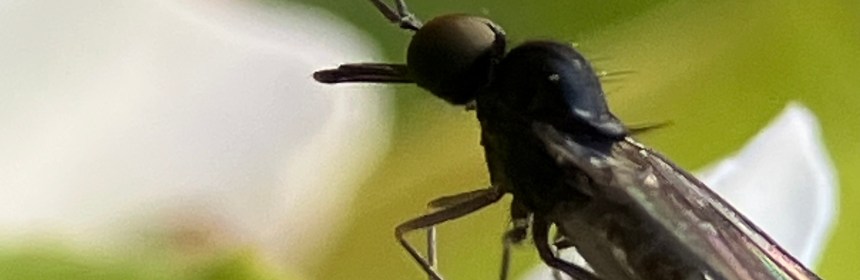
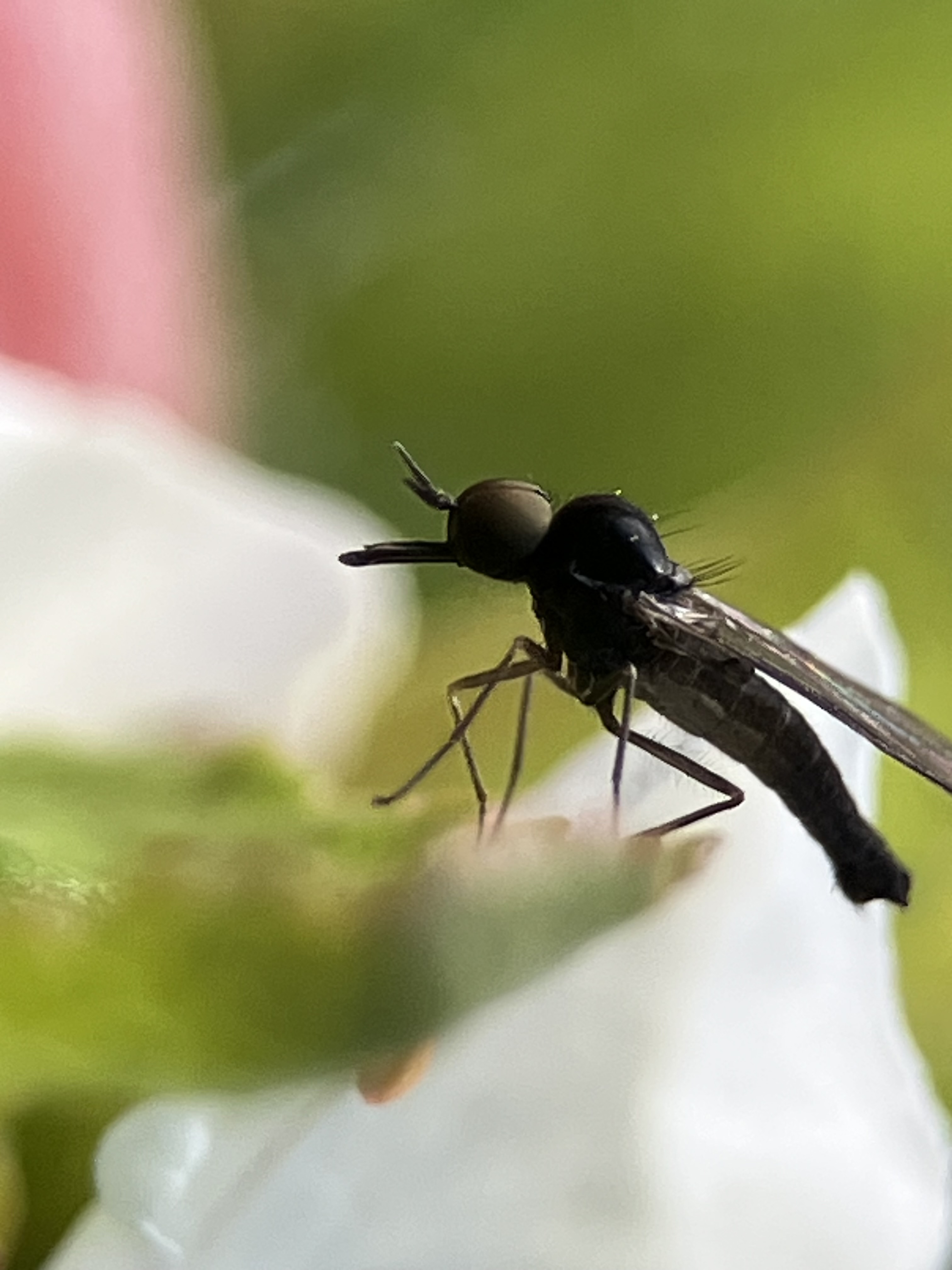
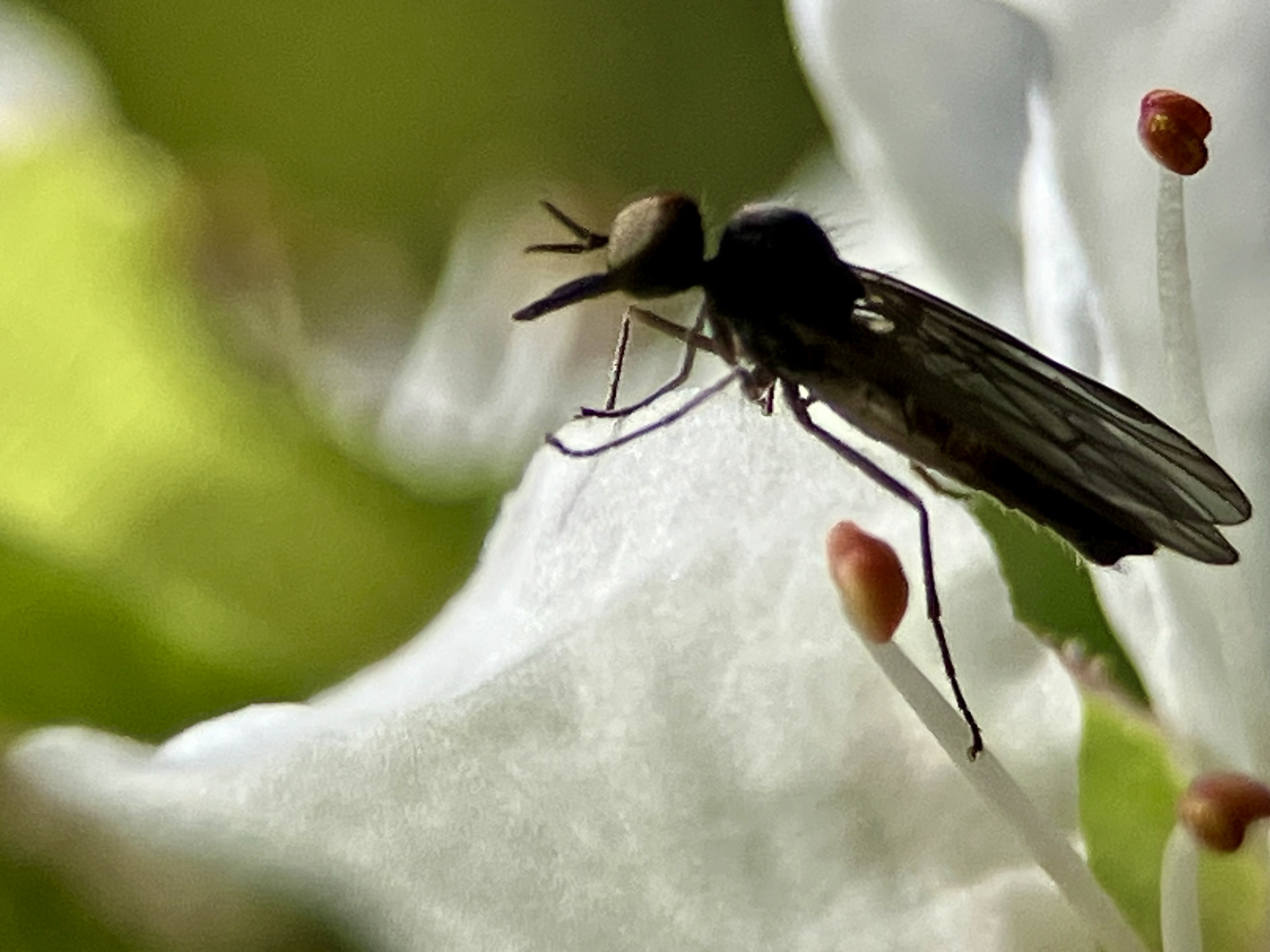
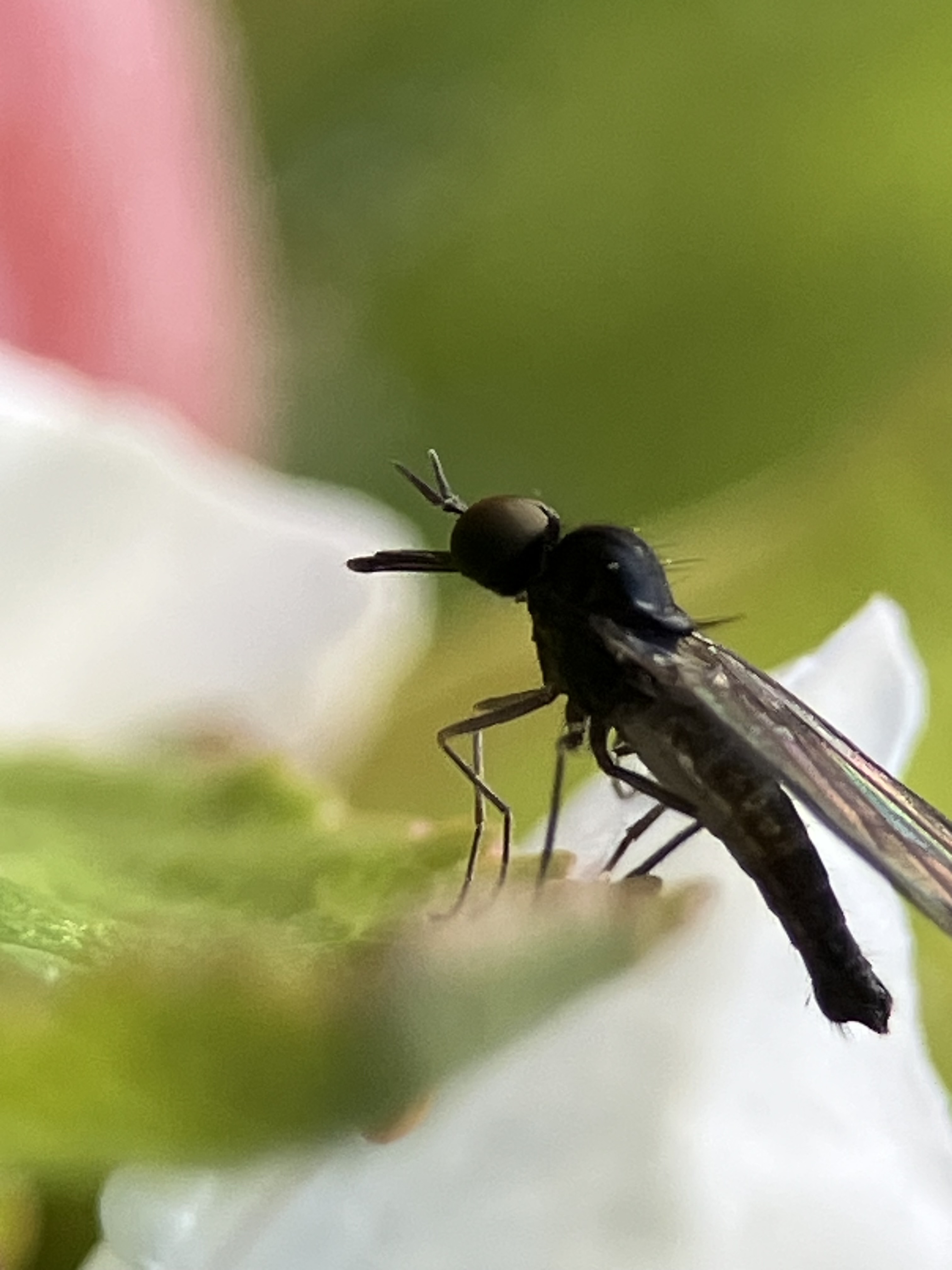
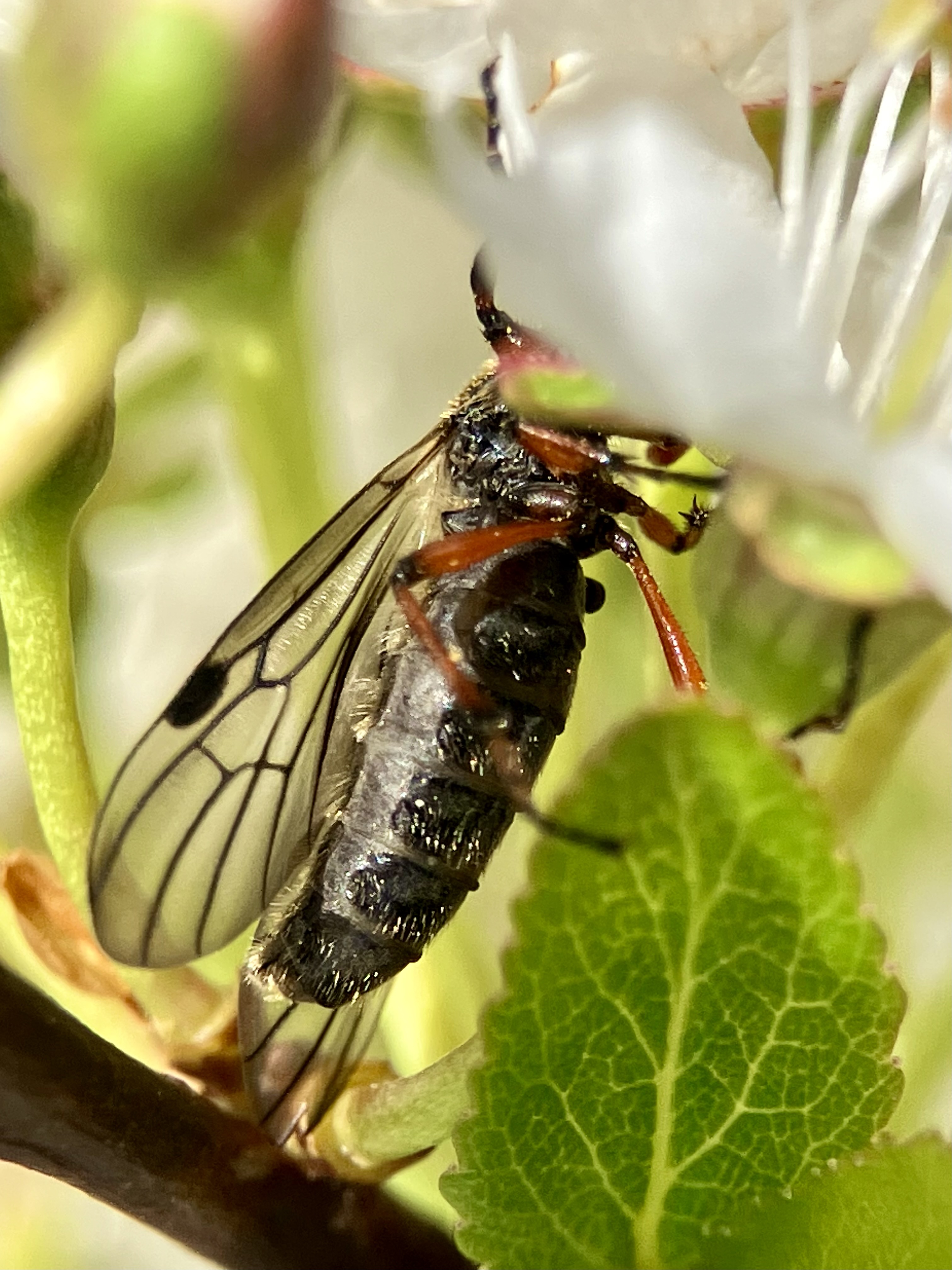
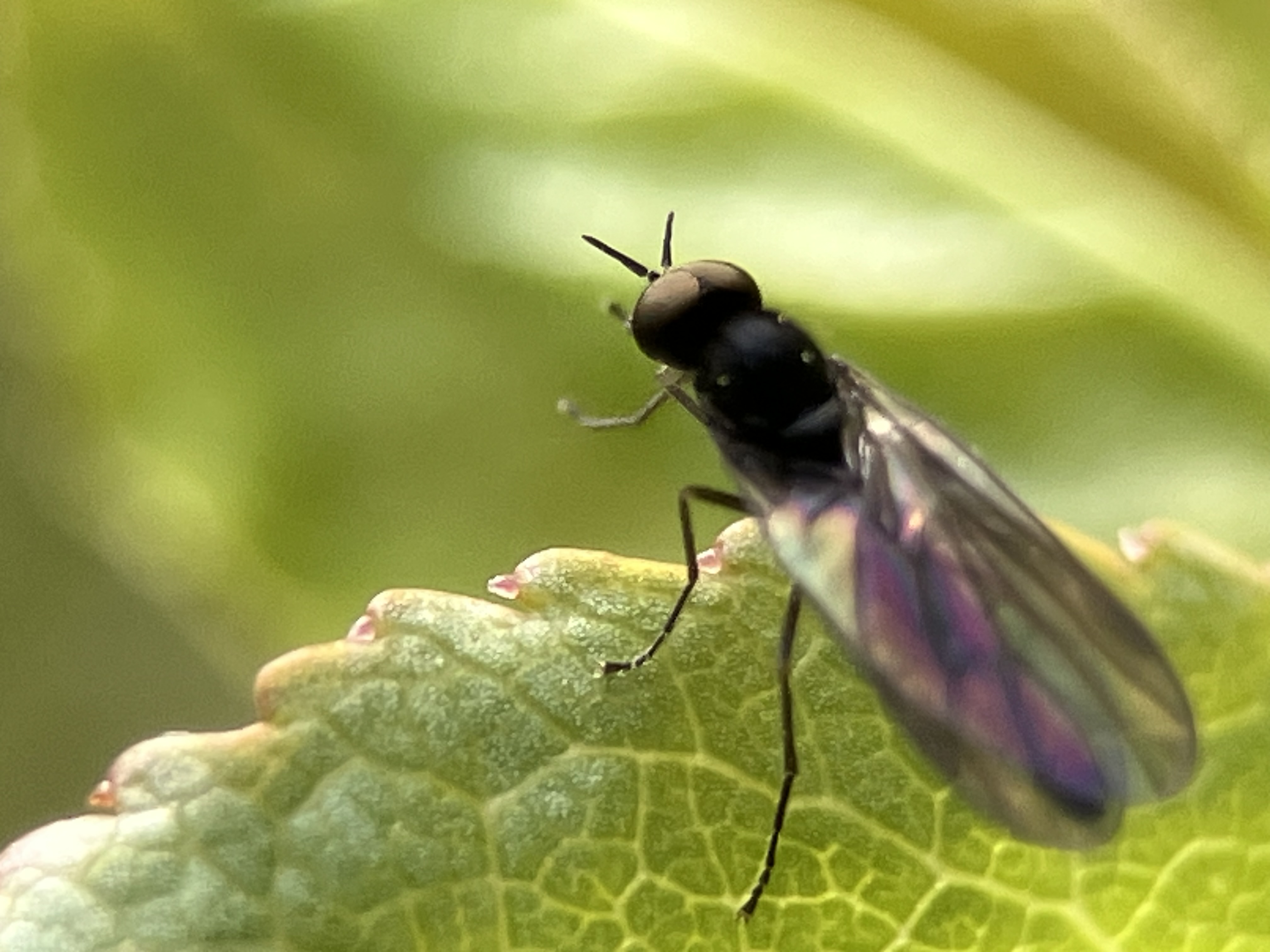
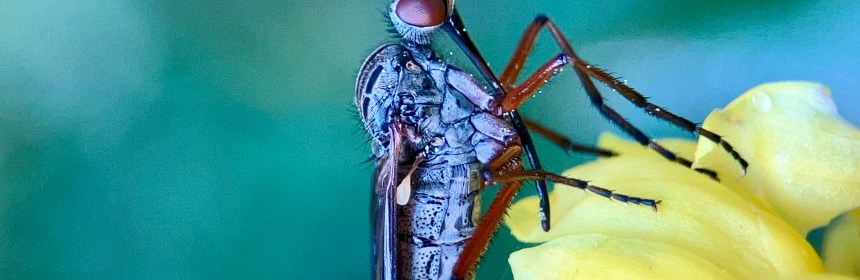
Iteaphila sp. Dance Fly

Today, I am sharing photos I took yesterday of one of our PNW early spring pollinators. This interesting specimen is a male species of Dance fly in one of my favorite fly groups, the Empidoidea ( Dance Flies, Long-legged flies, and allies). It is in Genus Iteaphila. The name Iteaphila translates to “Willow lover” (from Greek ἰτέα, willow, and φιλία, love).

These small, blackish flies are quite frequently found in early spring visiting the flowers of willows, salmon berries, wild cherry, maples, and currants. My specimen was visiting the flowers of our yellow plum trees. Flies in this genus are exclusively anthophilous, feeding only on pollen (Sinclair & Shamshev, 2012). Others in the superfamily Empidoidea are predatory on smaller invertebrates.
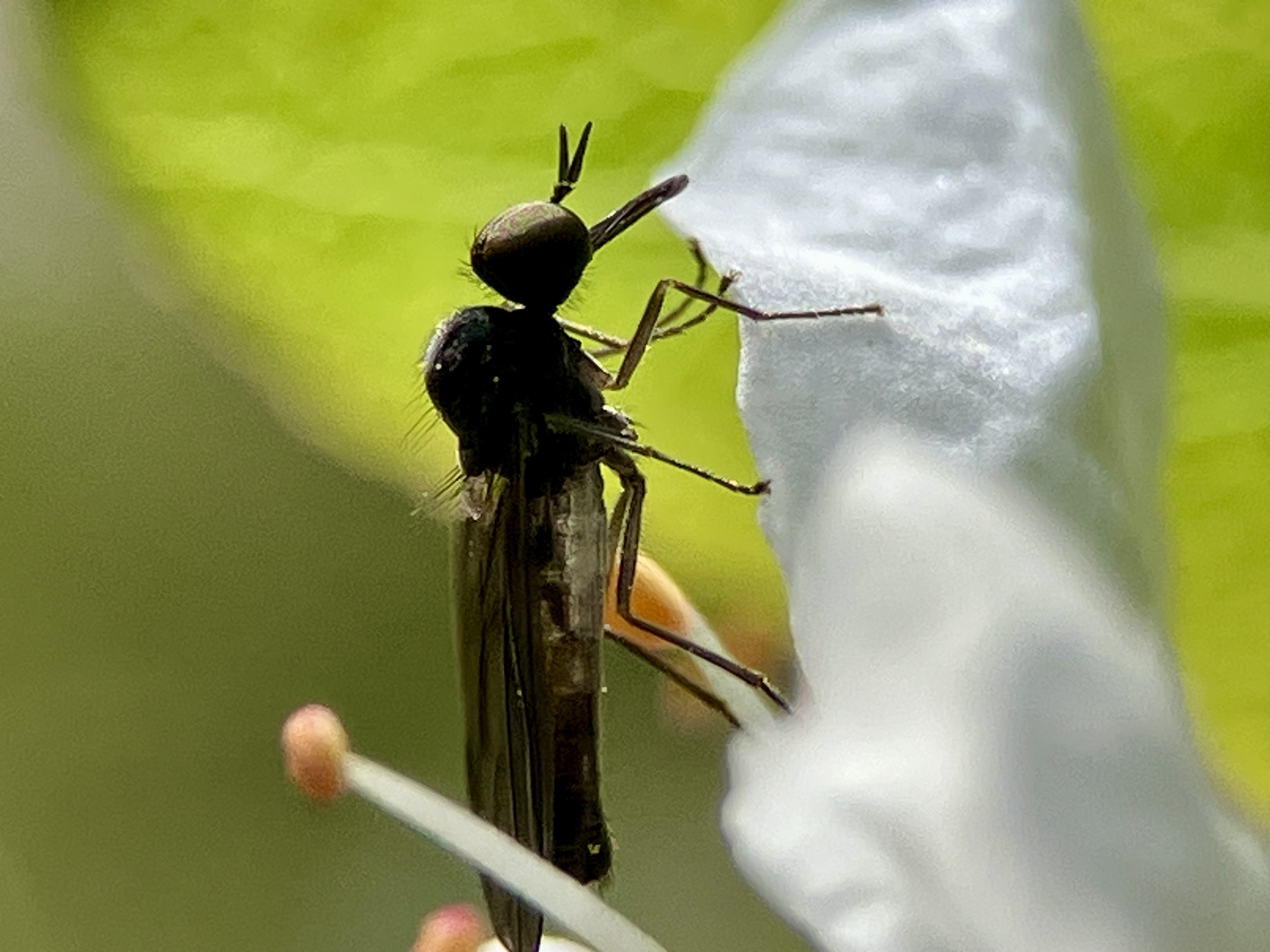
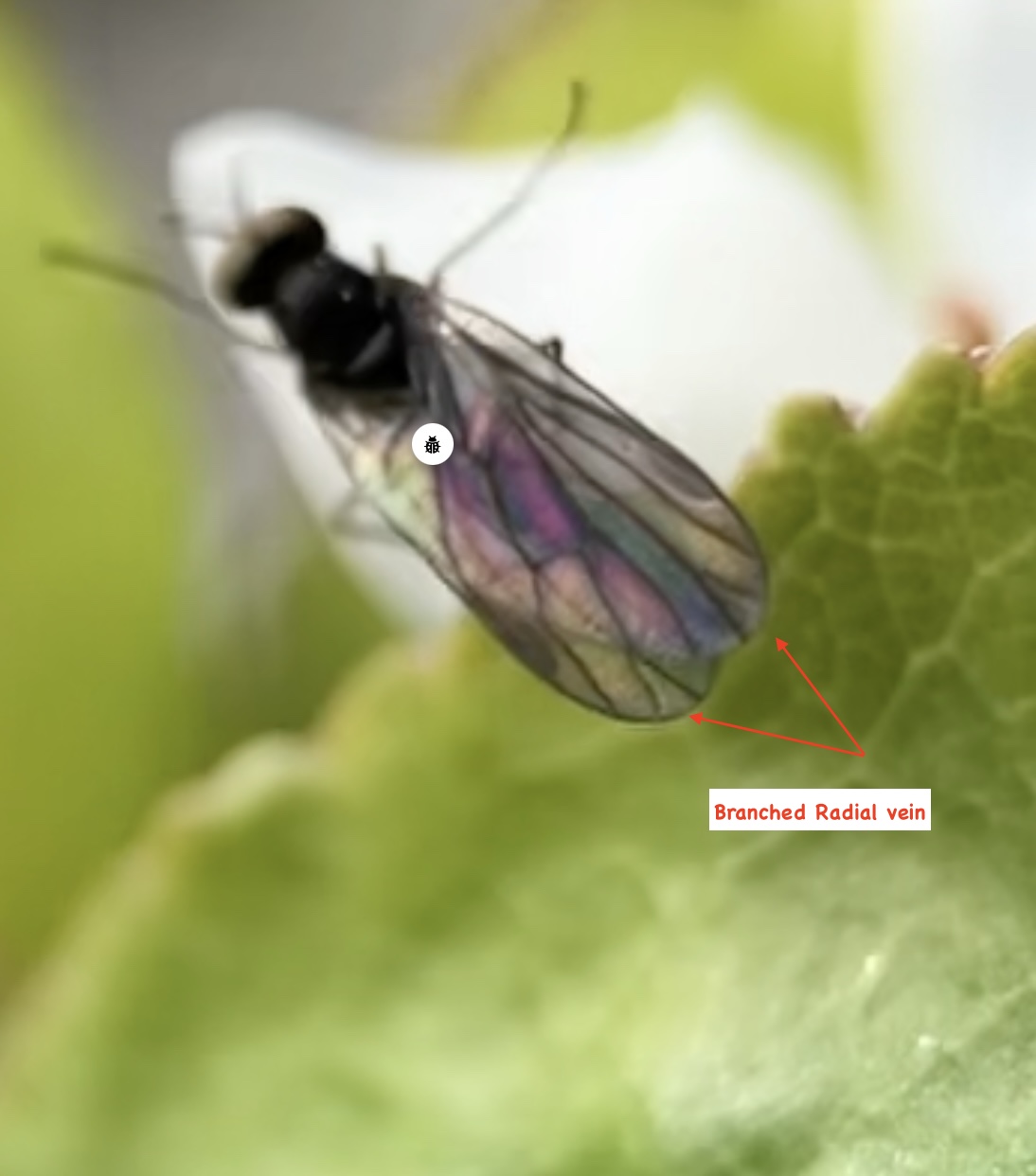
The Iteaphildae have undergone some taxonomic revisions. Now, they include individuals with both branched and unbranched radial wing veins. On this specimen, I was able to discern the presence of a branched radial wing vein. There is also the distinguishing scutellar setae (seen in Figure D) in the diagram (Sinclair et al., 2023).
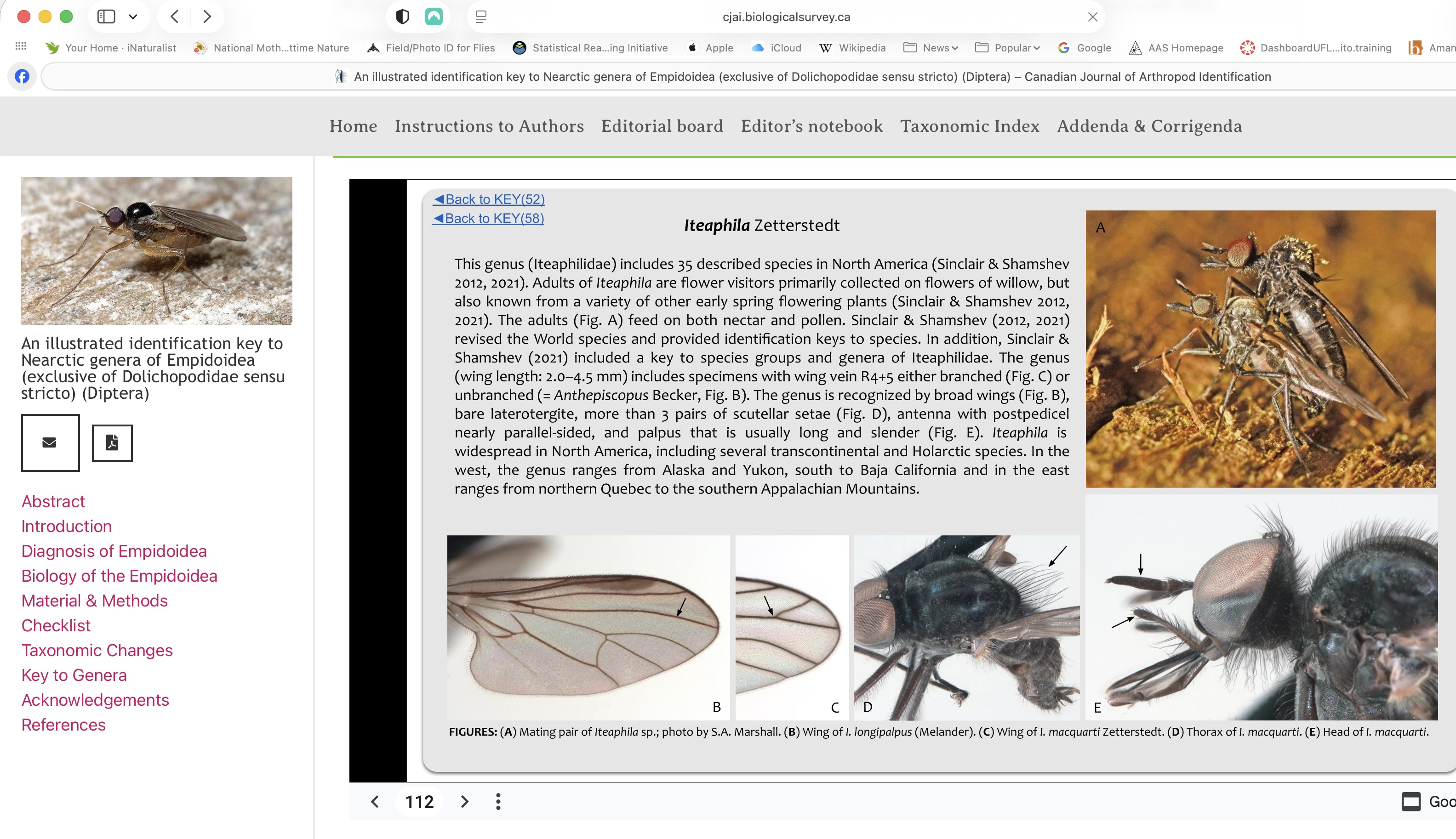
Iteaphila flies are widespread across North America. The Genus ranges from Alaska and the Yukon, south to Baja, California in the West and from Northern Quebec to the southern Appalachian Mountains in the East.

Iteaphila sp. Dance Fly

I spent a fair amount of time reading over the literature I used in my references throughout the day when I could take a break. It’s getting late, and I’d hoped to have my post finished earlier. Working later in the evening is a mixed bag. It’s quiet and calm, but fatigue sets in and you can easily make a mistake. I may come back and revise this, but after going through the taxonomic keys by Anderson, I believe this is quite likely to be the species Iteaphila fuliginosa. Then again, I may end up corrected by someone more knowledgeable than me, or I may end up correcting myself. I’m 100% certain, I wouldn’t be the first to do this either.
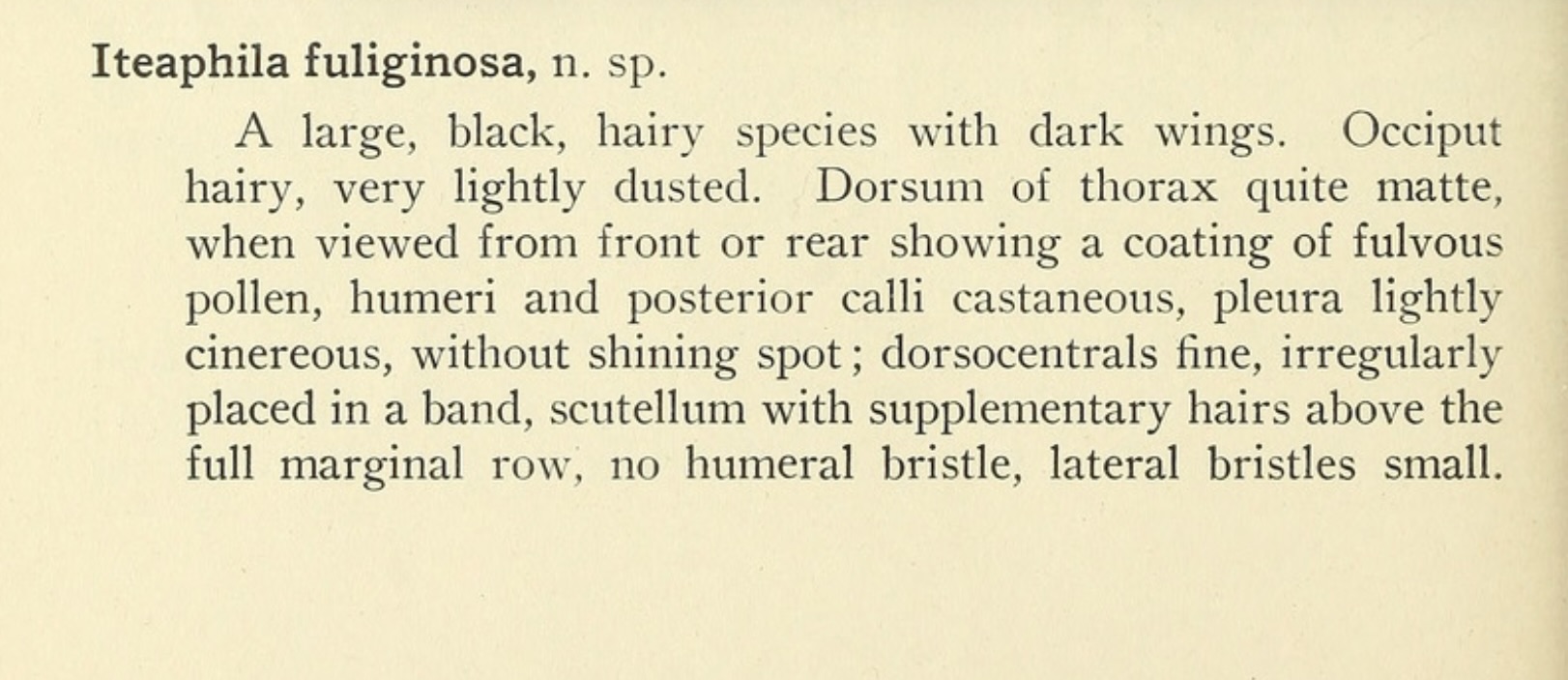
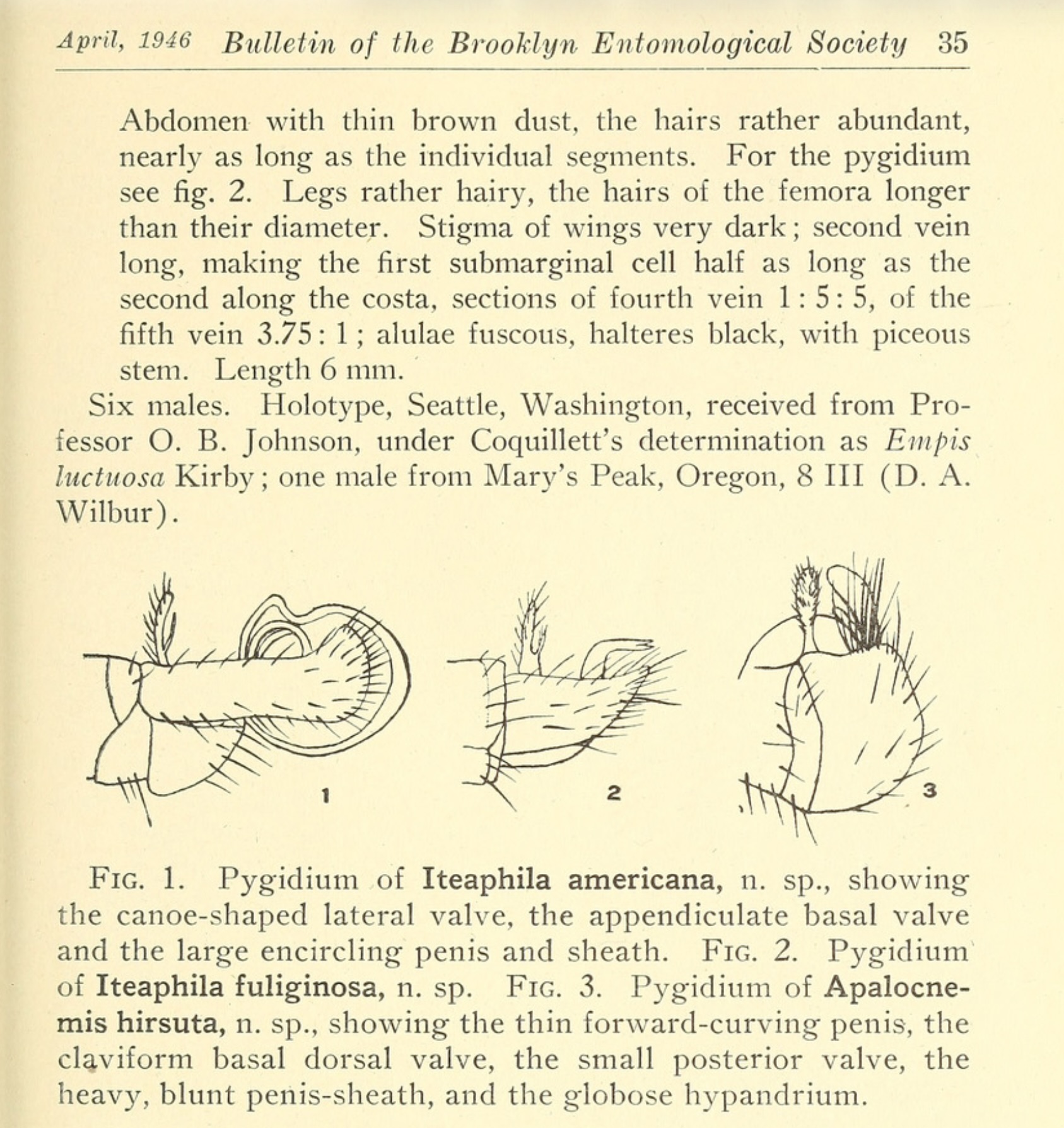
From Anderson, 1973

One might ask, “What is the value of a small, seemingly insignificant fly like this?” Aside from its role as an early spring pollinator, flies like this are part of the overarching food web. They provide nourishment for many organisms, ranging from other invertebrates (insects and spiders) to amphibians, reptiles, and baby birds. I would add that there is also value in the wonder of diversity in nature. It enriches our world. Hopefully we don’t take it for granted. It may be that a day comes along when it all disappears.

References

Anderson, D.R. 1973 A revision of the genus Iteaphila Zetterstedt of North America (Diptera: Empididae). MSc thesis, Utah State University, Logan, Utah, 59 pp.

Anderson, Douglas R., 1973. A Revision of the Genus Iteaphila Zetterstedt of North America (Diptera: Empididae). Biology. 389. https://digitalcommons.usu.edu/etd_biology/389

Bugguide. 2026. Iteaphila. Bugguide.net. Iowa State University Department of Plant Pathology, Entomology, and Microbiology. https://www.bugguide.net/node/view/332912

Cole, F. 1969. The Flies of Western North America. University of California Press. Berkeley and Los Angeles.

Melander, A.L. (1946) The Nearctic species of Iteaphila and Apalocnemis. Bulletin of the Brooklyn Entomological Society, 51, 29–40.

Sinclair, B.J. & Shamshev, I.V. 2012. World revision of Iteaphila macquarti group (Diptera: Empididae). Zootaxa, 3561 (1), 1–61. https://doi.org/10.11646/zootaxa.3561.1.1

Sinclair BJ, Shamshev IV. 2021. World revision of Iteaphila with unbranched radial vein (Diptera: Empidoidea: Iteaphilidae). Zootaxa. May 7;4968(1):189. doi: 10.11646/zootaxa.4968.1.1. PMID: 34186945.

Sinclair, B.J., Brooks, S.E., and Cumming, J.M. 2023. An illustrated identification key to Nearctic genera of Empidoidea (exclusive of Dolichopodidae sensu stricto) (Diptera). Canadian Journal of Arthropod Identification. CJAI 48. doi:10.3752/cjai.2023.48 https://cjai.biologicalsurvey.ca/articles/sbc-48/
Fantastic Fly Friday

I thought I’d write up a short post about all the wonderful flies (and a few others) pollinating our plum trees in this cool spring weather. Why feature the flies? Well, for starters, the plum tree blossoms are white and flies love the color white. Another reason to feature the flies is because they are under-recognized and under appreciated, but very important pollinators. Some fly larvae even serve as pest predators, eating aphids. Others, like the tachinid fly below, use caterpillars that defoliate trees as hosts for their larvae to develop. Flies are also awesome because they do not sting! Some even “dance!” My favorite fly hasn’t shown up yet. It’s a Conopid Fly. More about that one later though…

Tachinid Fly (Epalpus signifier)

This past week in the media, there have been so many posts about the decline in honey bees. While there are some (unwanted) honey bees showing up on days when the temperatures climb above 50 degrees, honey bees aren’t active if it is cooler. Flies, on the other hand, are quite busy at work pollinating and do just fine when it might only be 40 outside. Flies are awesome! They need our support and appreciation.

I’d like to add (and I do know something about this because of my entomology background), that honey bees are just not necessary on San Juan Island. In fact, they might even be a very bad thing. They showed up at our plum tree as the temperature warmed up the other day, and as they arrived in increasing numbers, they kicked off ALL of the native pollinators that I had been observing. 😦

For honey bees to fly out of the hive and forage, they need temperatures above 50 degrees. In my experience keeping bees (as part of my graduate school work), they typically do not survive well on the island unless they are fed supplemental sugar water. Think about the ecological footprint of growing sugar to feed the bees!

Feeding honey bees attracts (and supports) the buildup of yellow jacket populations which are attracted to honey bee hive resources (including eating the honey bee brood developing in the hive), and honey bees also bring pests and pathogens that impact native bees (especially bumble bees). One more thing! If you are growing tomatoes, bumble bees are your pollinators, not honey bees.

I hope you will read and consider this recent study published about how honey bees were negatively impacting native pollinators on Giannutri Island in Italy. They were causing a decline in the populations of wild bees. In fact, the study cited an “alarming 80% decline in wild bee abundance over 4 years” (Pasquali et al. 2025). You can access this study to read it yourself here: https://www.cell.com/current-biology/pdfExtended/S0960-9822(25)00262-3

Enjoy the gallery of the native pollinators that I was fortunate to photograph and be able to share. Be a fly fan! Be a native bee fan! Learn about our unseen, but important night time pollinators (moths), and PLEASE LEAVE THE HONEY PIGS for the mainland industrial farm operations.

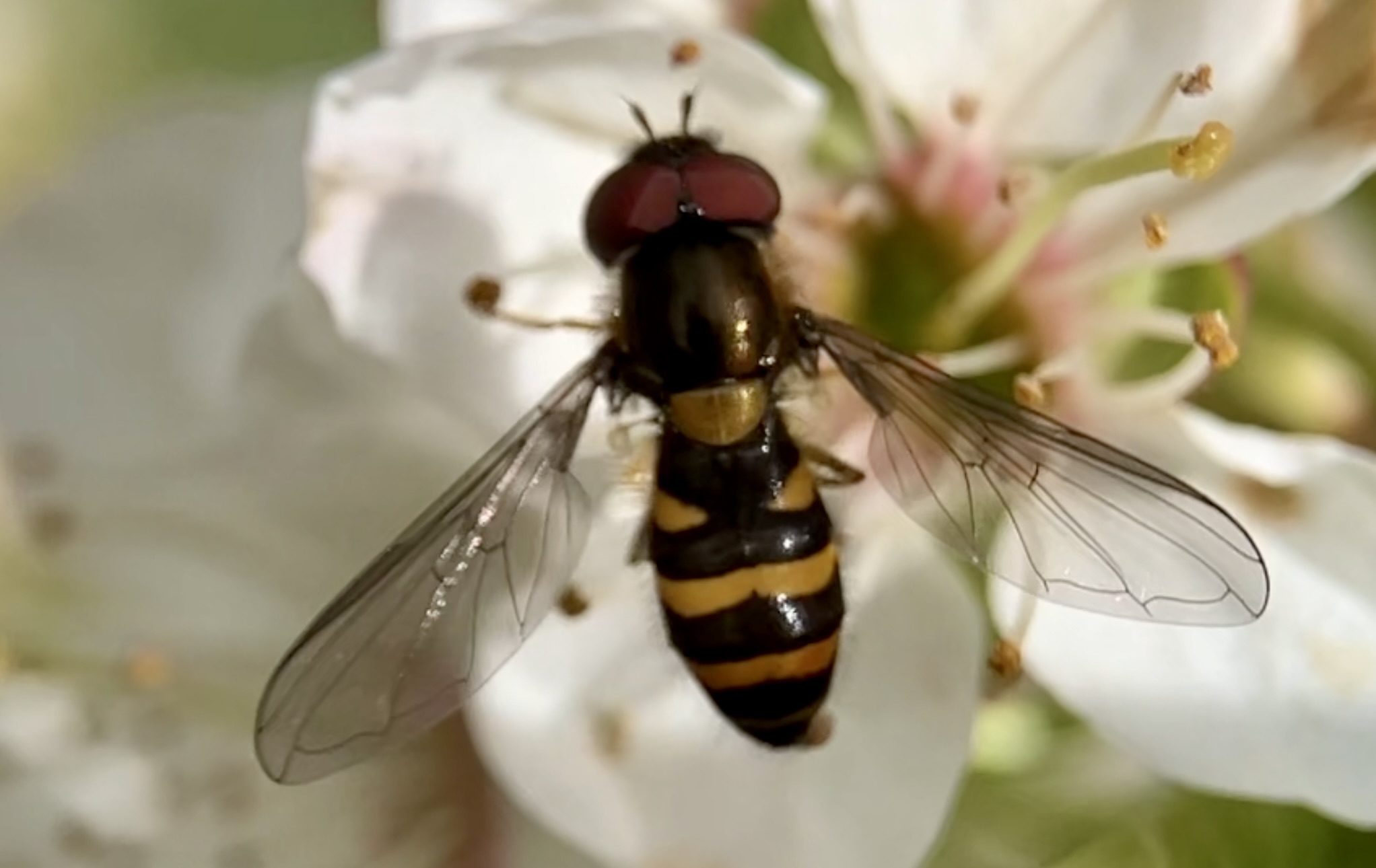
Syrphid Fly (Tribe Syrphini )
Golden Dung Fly (Scathophaga stercoraria)
Cluster Fly (Genus Pollenia)

Musca autumnalis
Sericomyia chalcopyga Western Pond Fly
Bibionid Fly (Bibio sp.) and Hybotidae Dance Fly (Bicellaria sp.)
(Melanostoma mellinum) Variable Duskyface Fly

References

Anderson, H. L. D. (2024). Nocturnal moth communities and potential pollinators of berry agroecosystems in British Columbia (T). University of British Columbia. Retrieved from https://open.library.ubc.ca/collections/ubctheses/24/items/1.0447737

KEARNS, C. A. 2001. North American dipteran pollinators: assessing their value and conservation status. Conservation Ecology 5(1): 5. [online] URL: http://www.consecol.org/vol5/iss1/art5/

Pasquali, Lorenzo & Bruschini, Claudia & Benetello, Fulvia & Bonifacino, Marco & Giannini, Francesca & Monterastelli, Elisa & Penco, Marco & Salvati, Vania & Simbula, Giulia & Skowron Volponi, Marta & Smargiassi, Stefania & van Tongeren, Elia & Vicari, Giorgio & Cini, Alessandro & Dapporto, Leonardo. (2025). Island-Wide Removal of Honey Bees Reveals Exploitative Trophic Competition with Strongly Declining Wild Bee Populations. 10.2139/ssrn.5081459. https://www.sciencedirect.com/science/article/pii/S0960982225002623#:~:text=Article-,Island%2Dwide%20removal%20of%20honeybees%20reveals%20exploitative%20trophic%20competition,strongly%20declining%20wild%20bee%20populations

Ssymank, A., Kearns, Bonn & Carol. Flies – Pollinators on two wings. The Diptera Site. https://diptera.myspecies.info/diptera/content/flies-–pollinators-two-wings