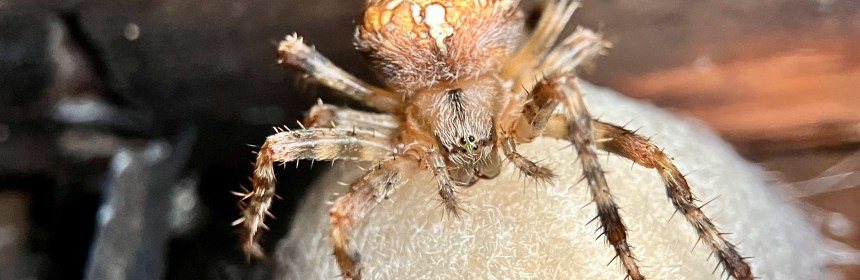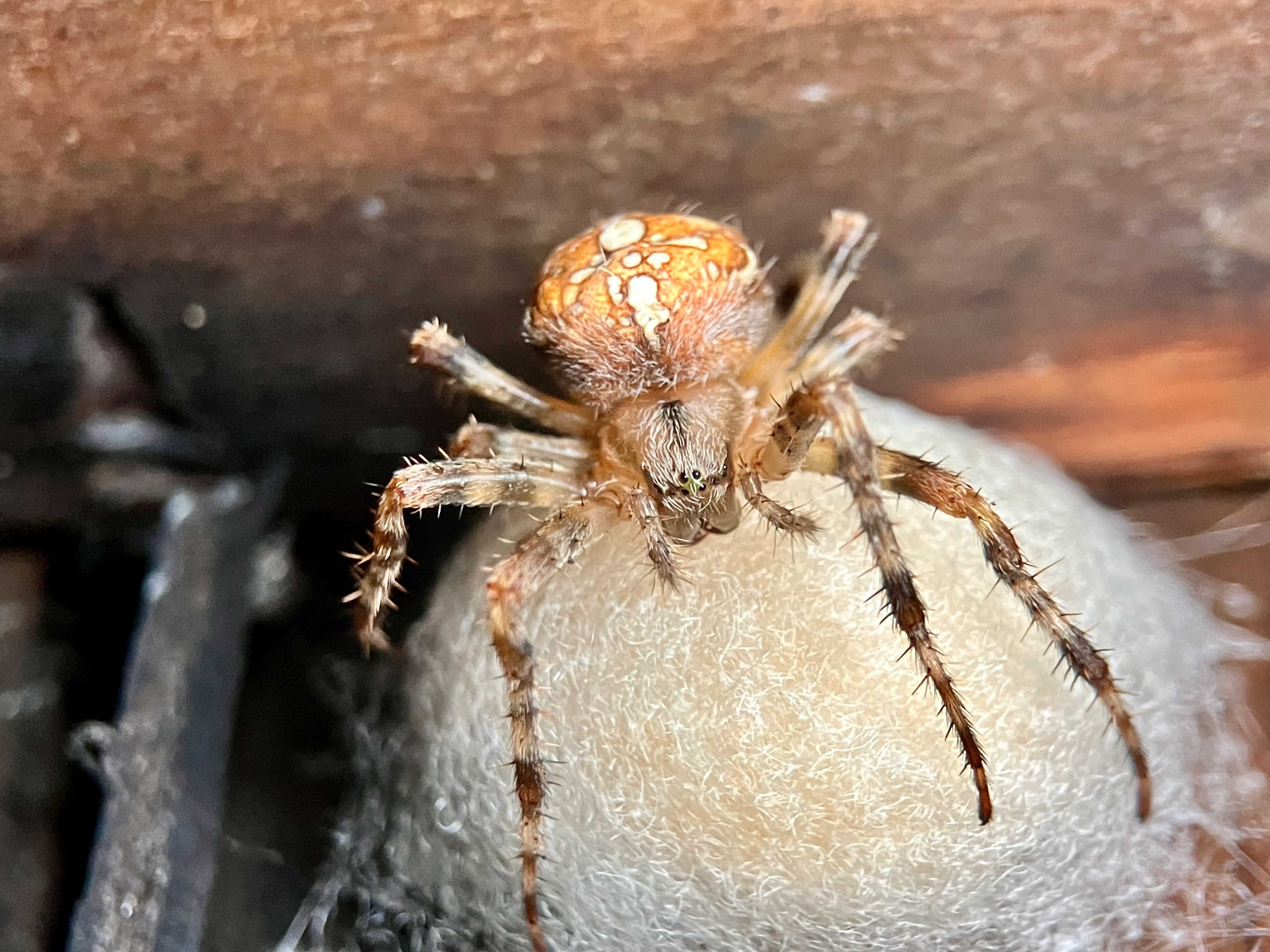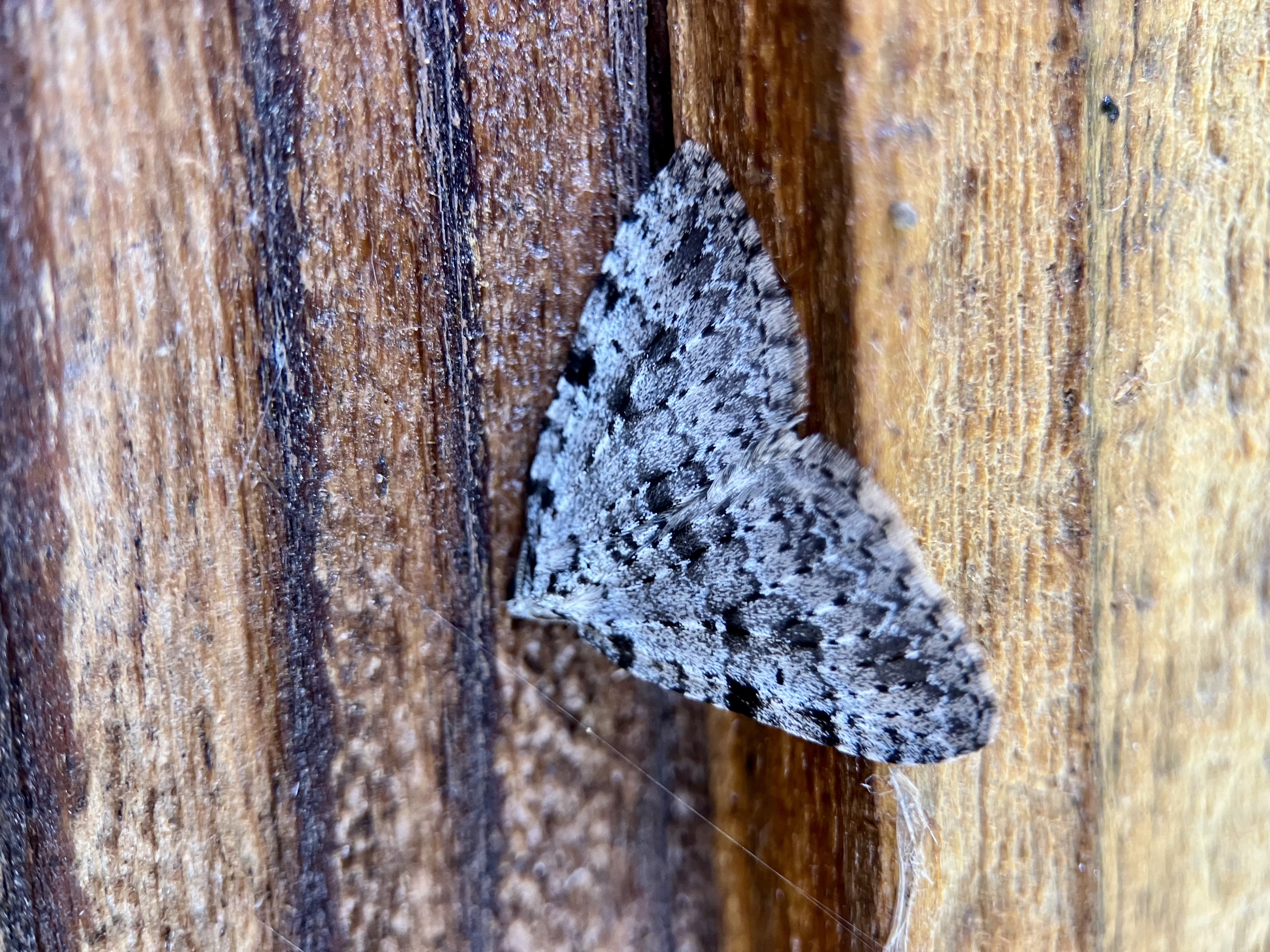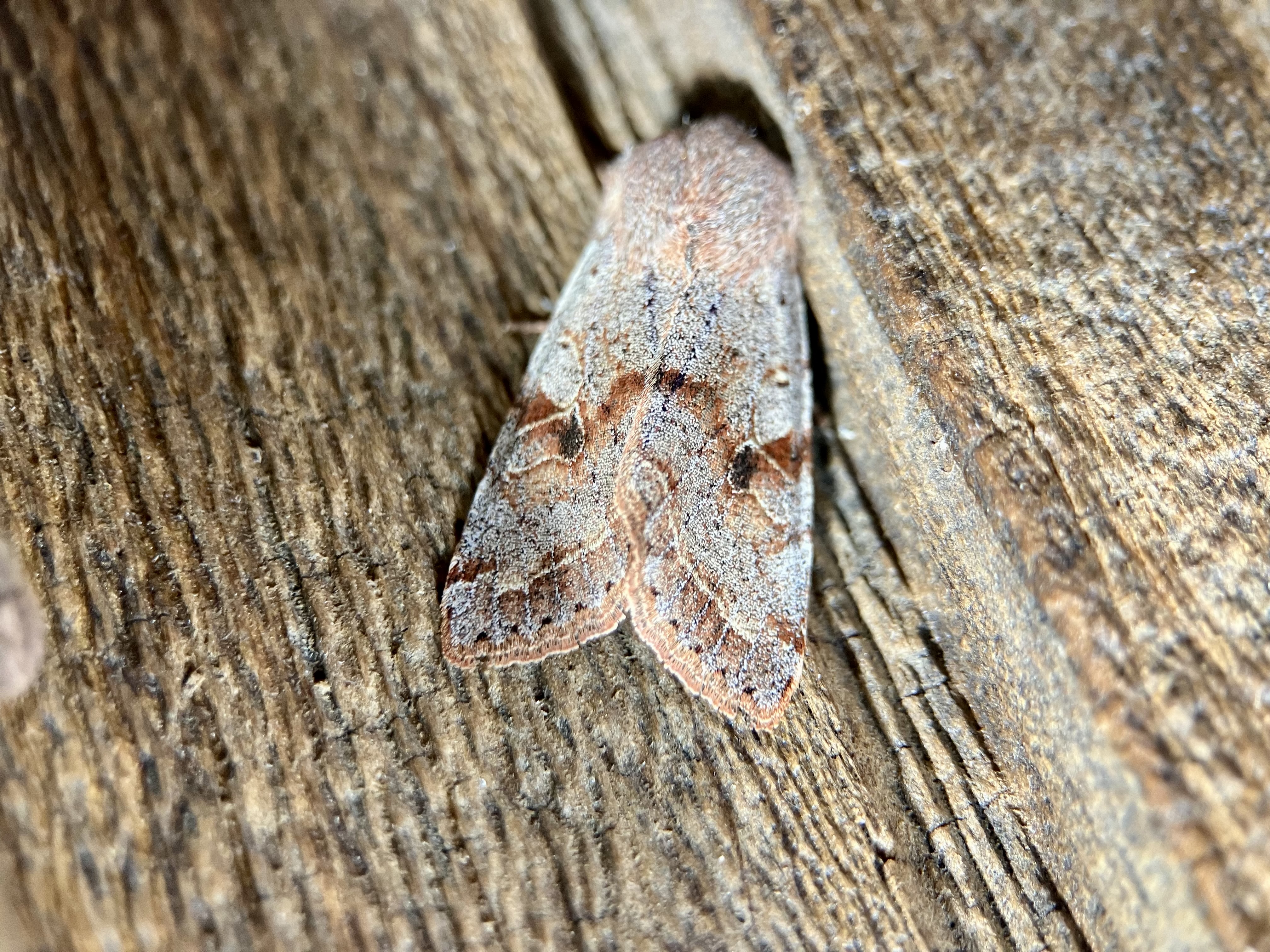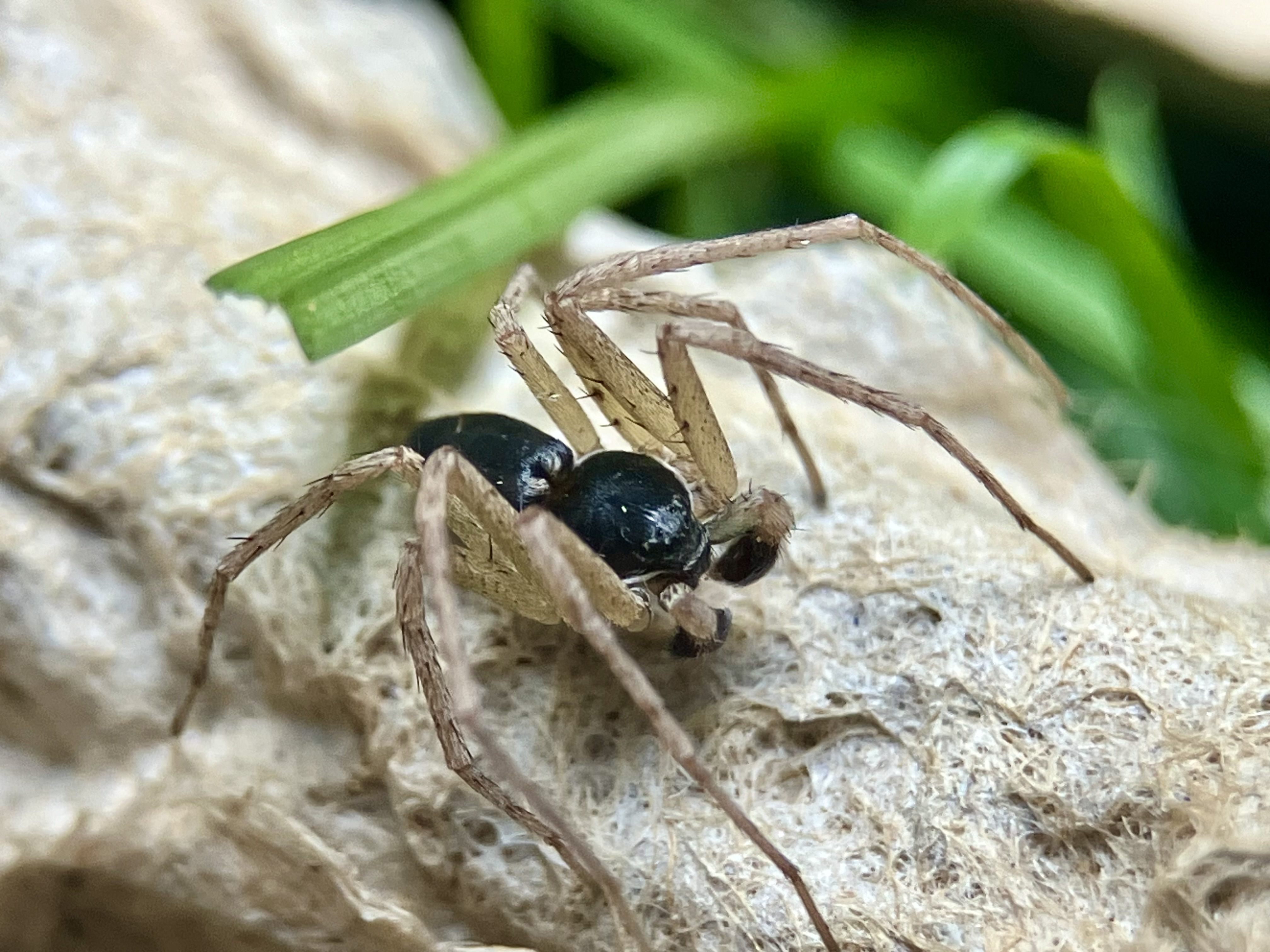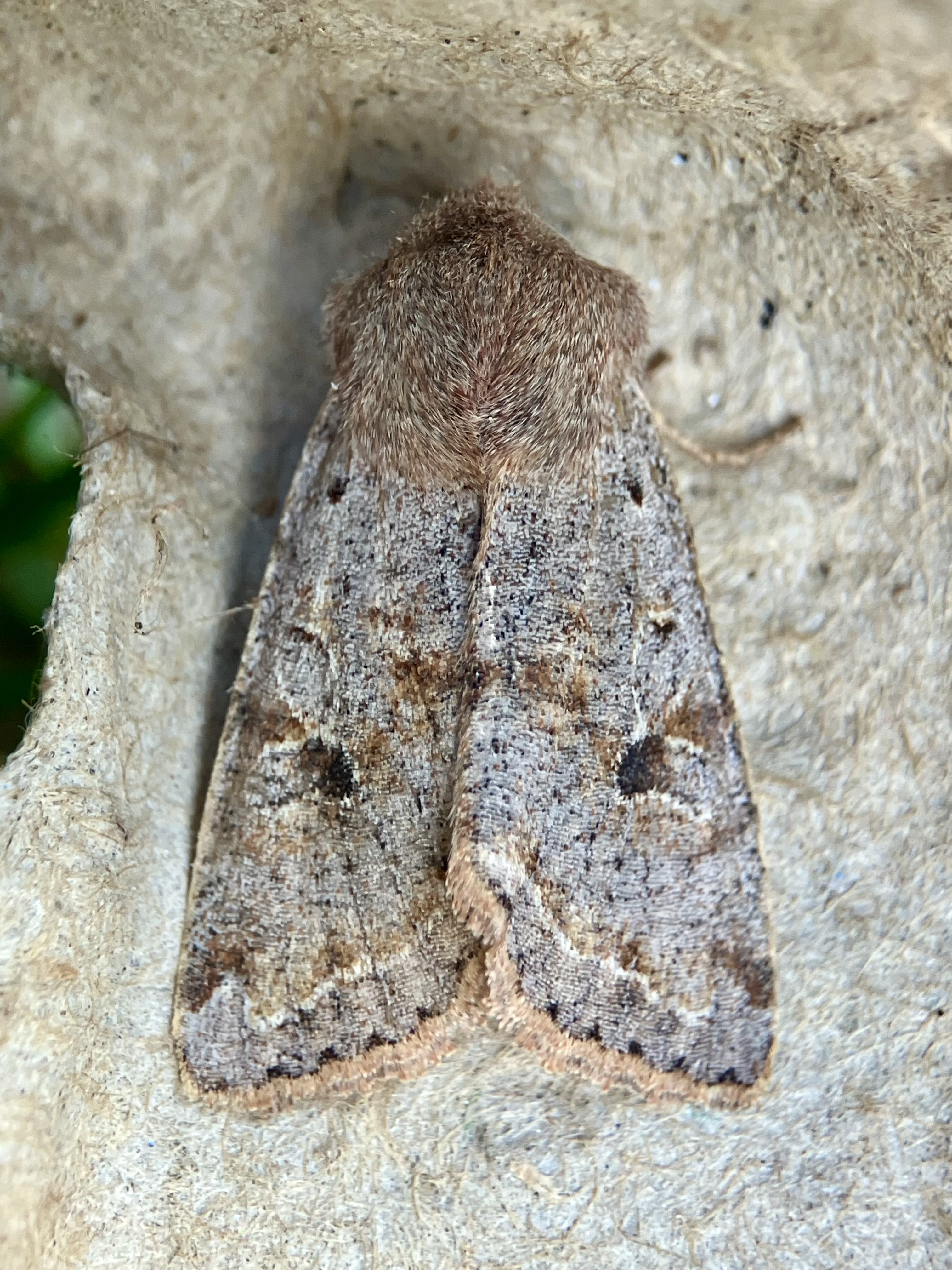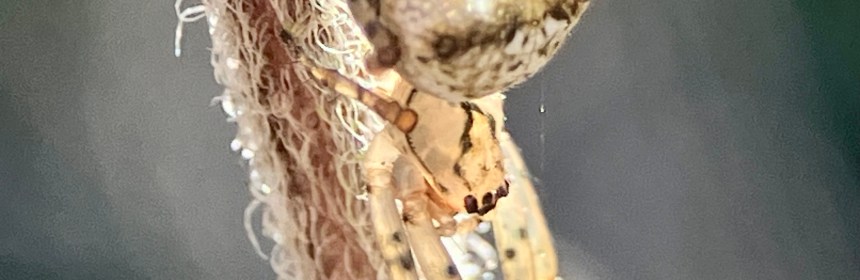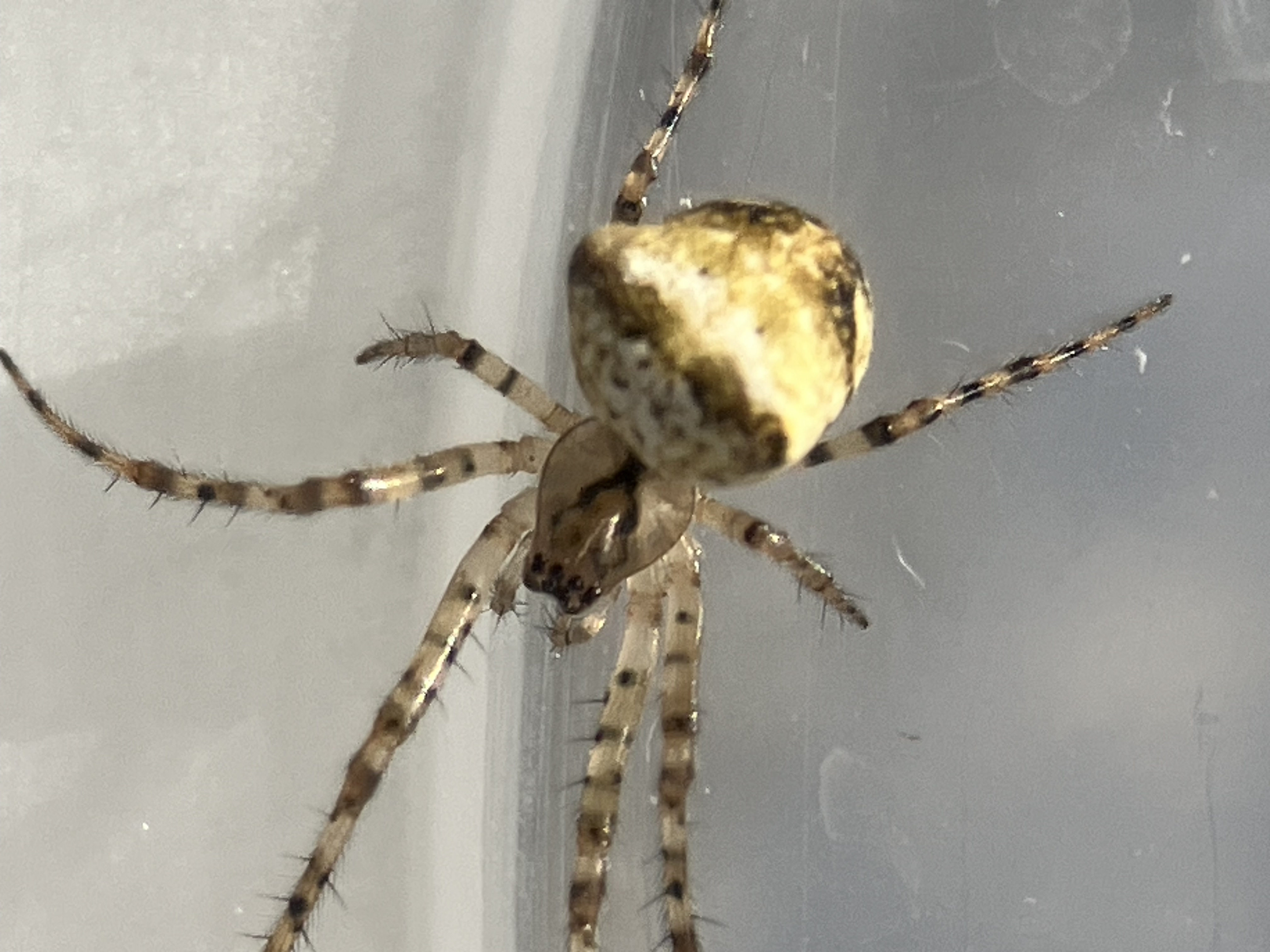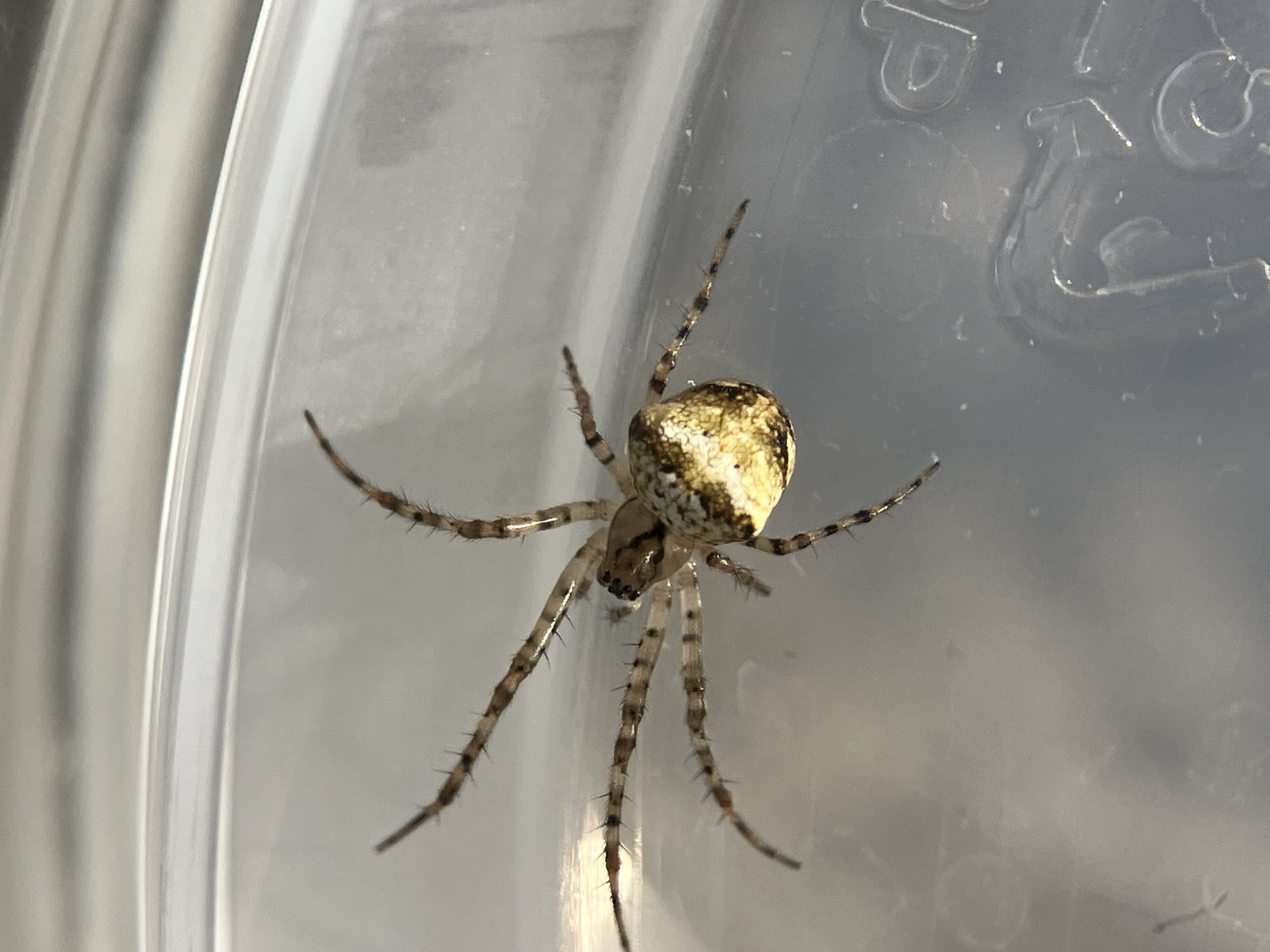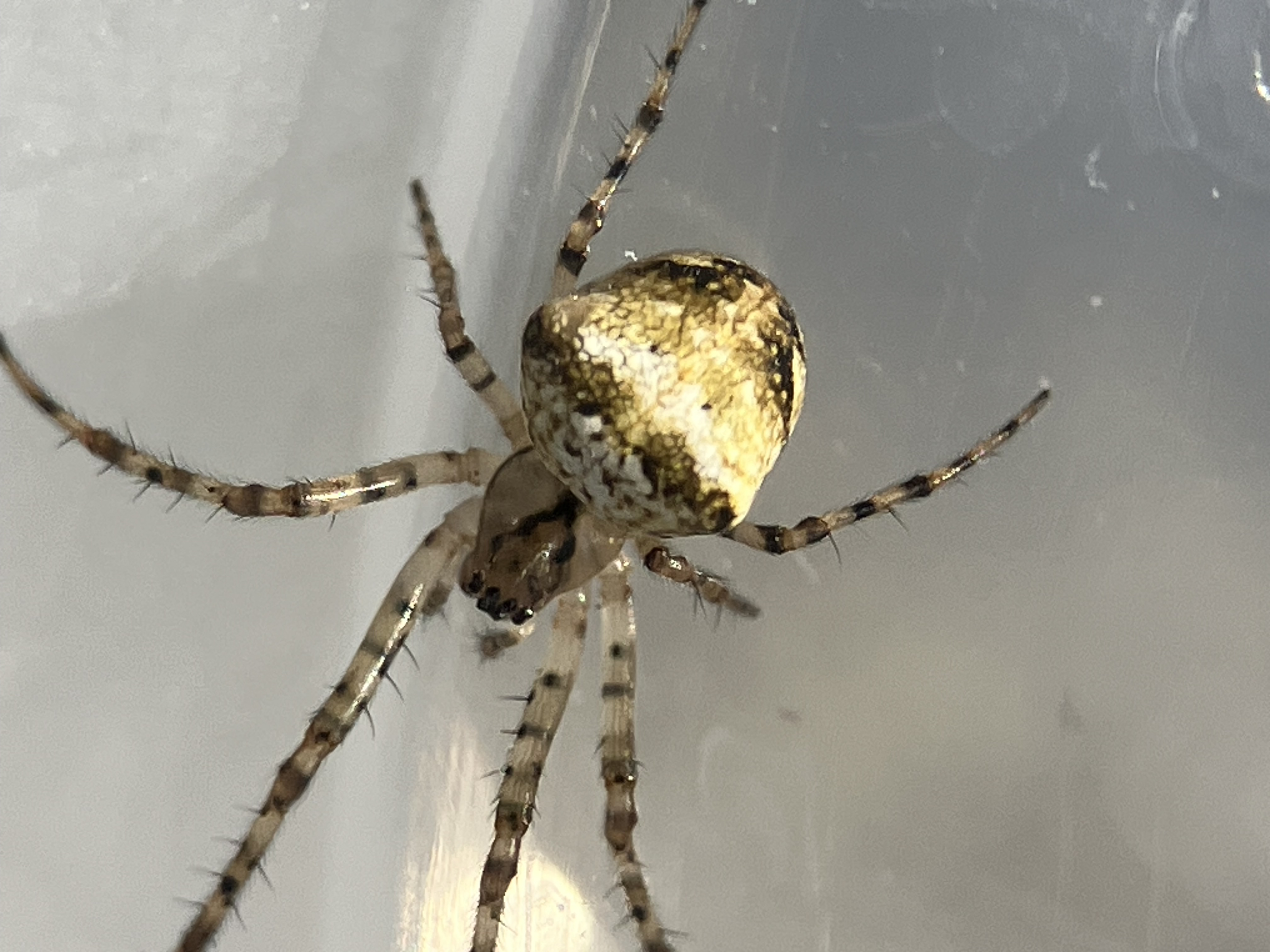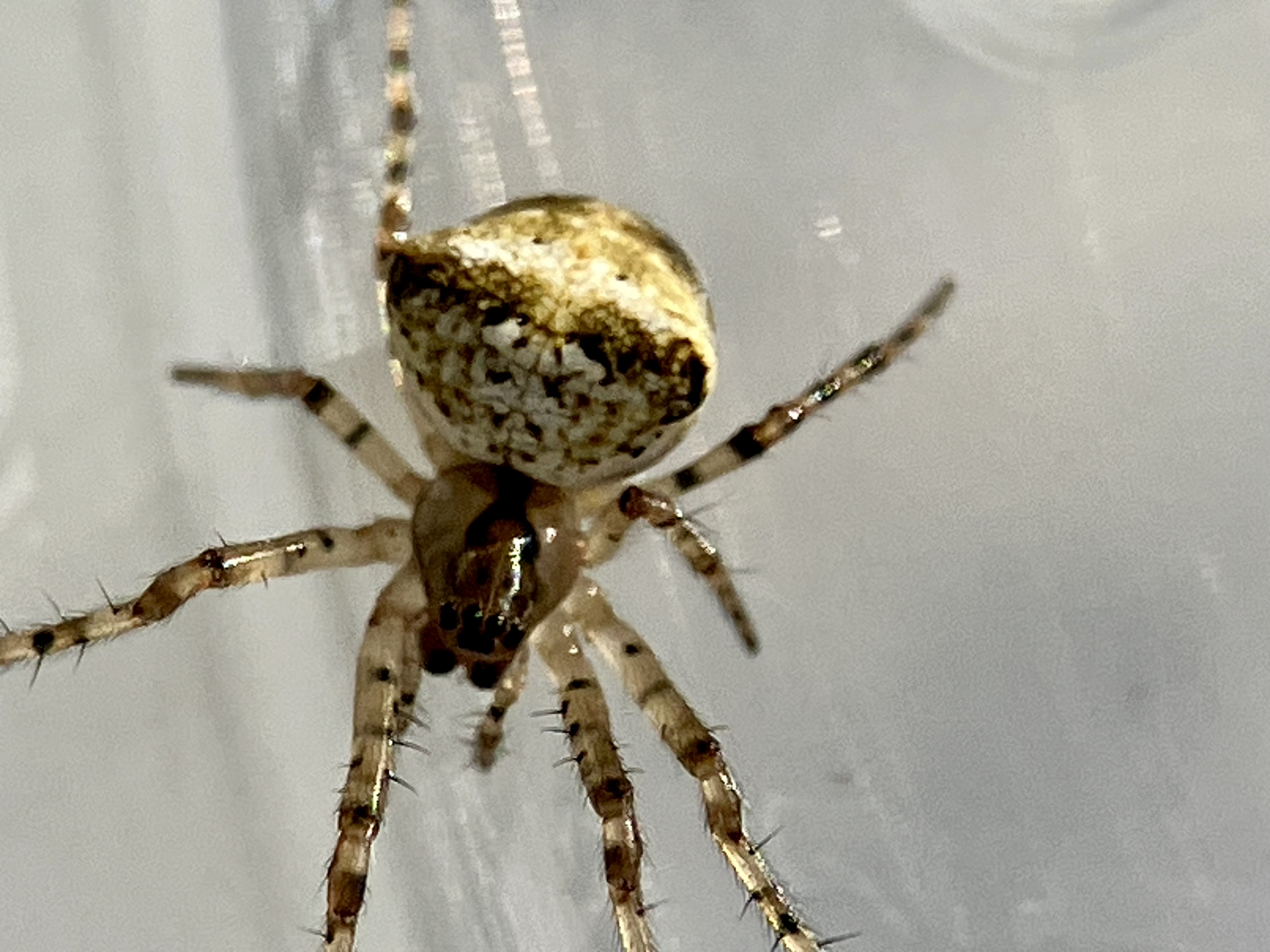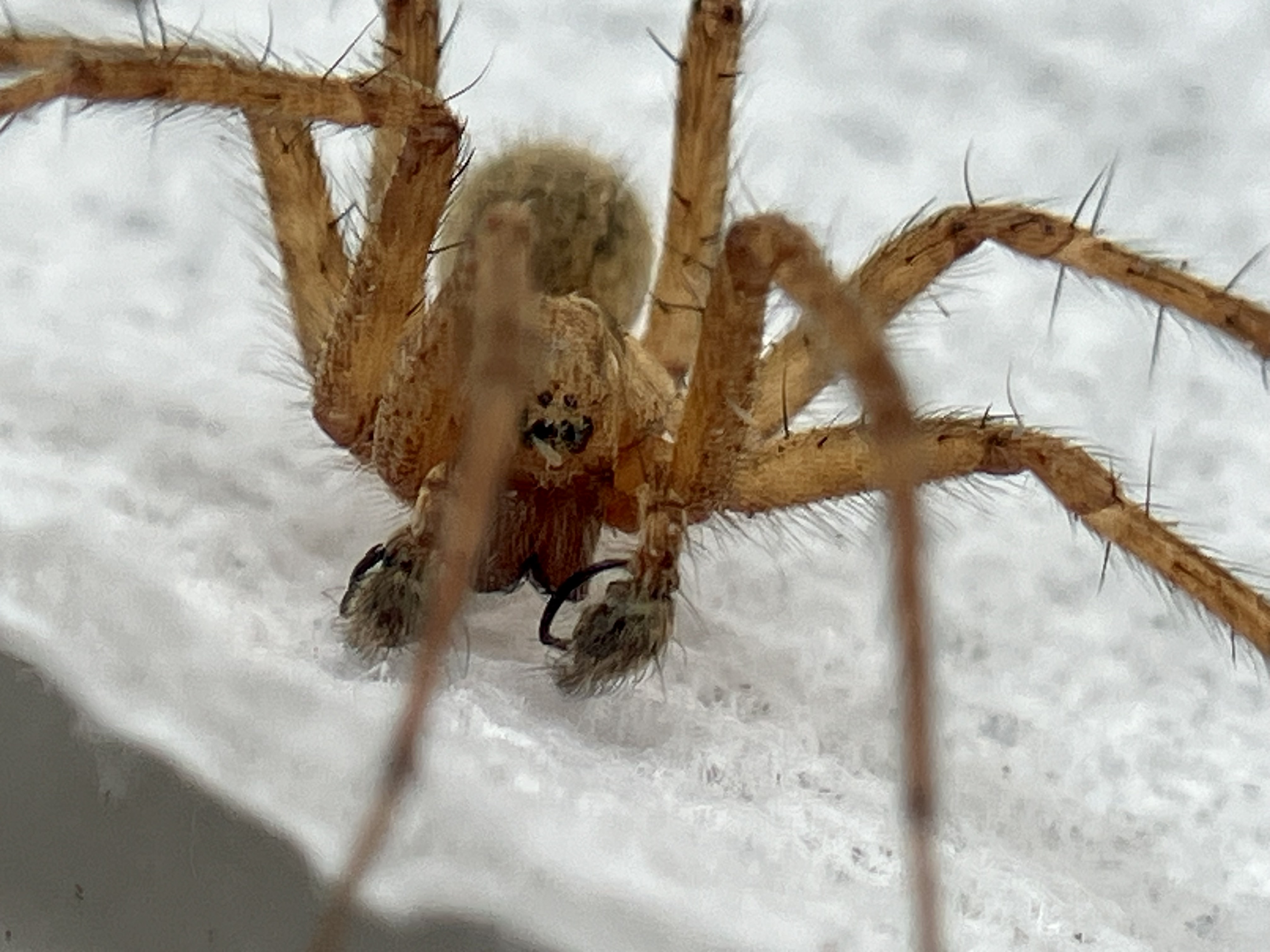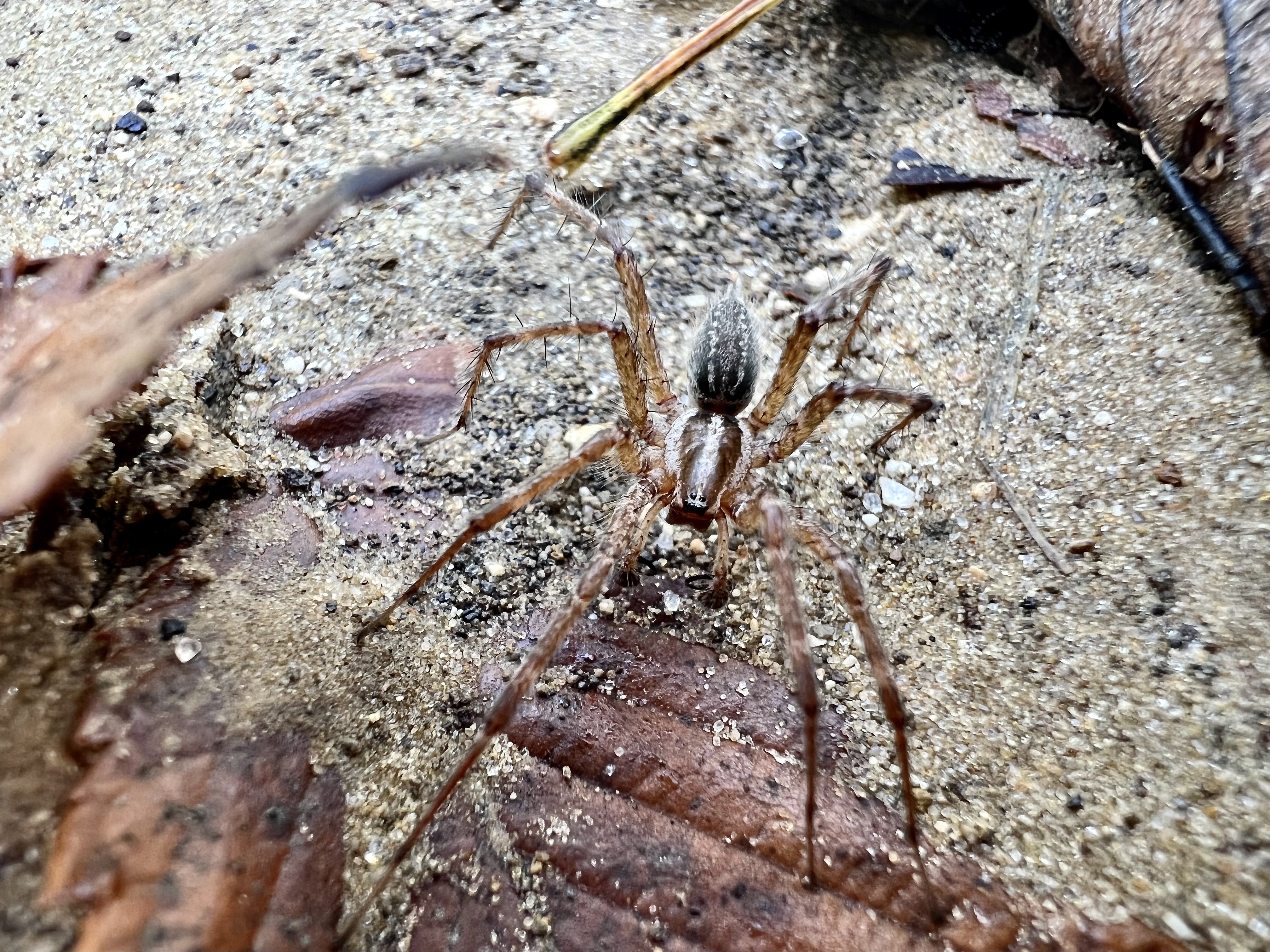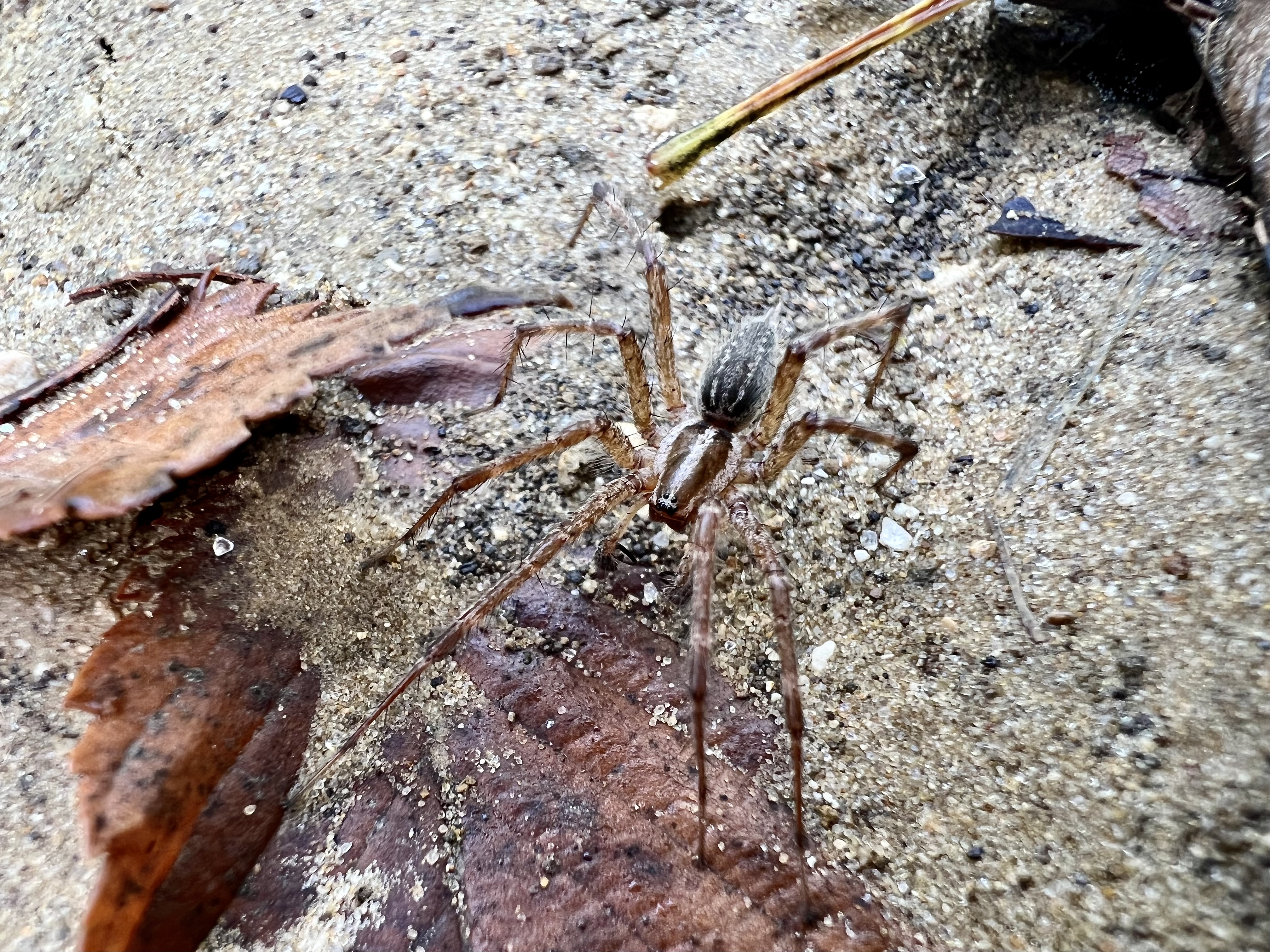
I thought I’d take a moment to profile a new-to-me spider found in my kitchen last week. This one was awfully small at about 4-5 mm, and threading the beginning of a web from my kitchen counter to the dishwasher. I needed a cup for my morning coffee, and the kitchen (at least our kitchen) is not a safe place for a free roaming spider. Not with Herman the Persian and his furry duster of a tail.
I collected her gently, took these photos, and released her outdoors on one of my mint plants. My efforts at ID-ing this unusual beauty, beyond family Tetragnathidae and possibly genus (Metellina) necessitated sending the photos to my friend, Rod Crawford at the Burke Museum, for further help.
Rod quickly wrote back with, “Metellina mimetoides, only local species in genus with humped abdomen.”
Metellina mimetoides is a species native to North America and found along the Pacific Coast from Southern California through Northern Washington. I would say these are not particularly abundant though. This was my first ever sighting of one on San Juan Island, WA.
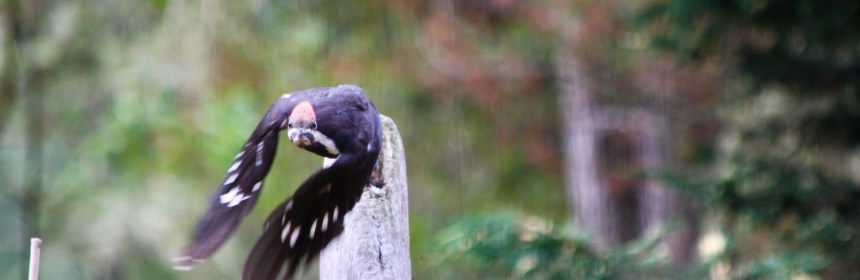
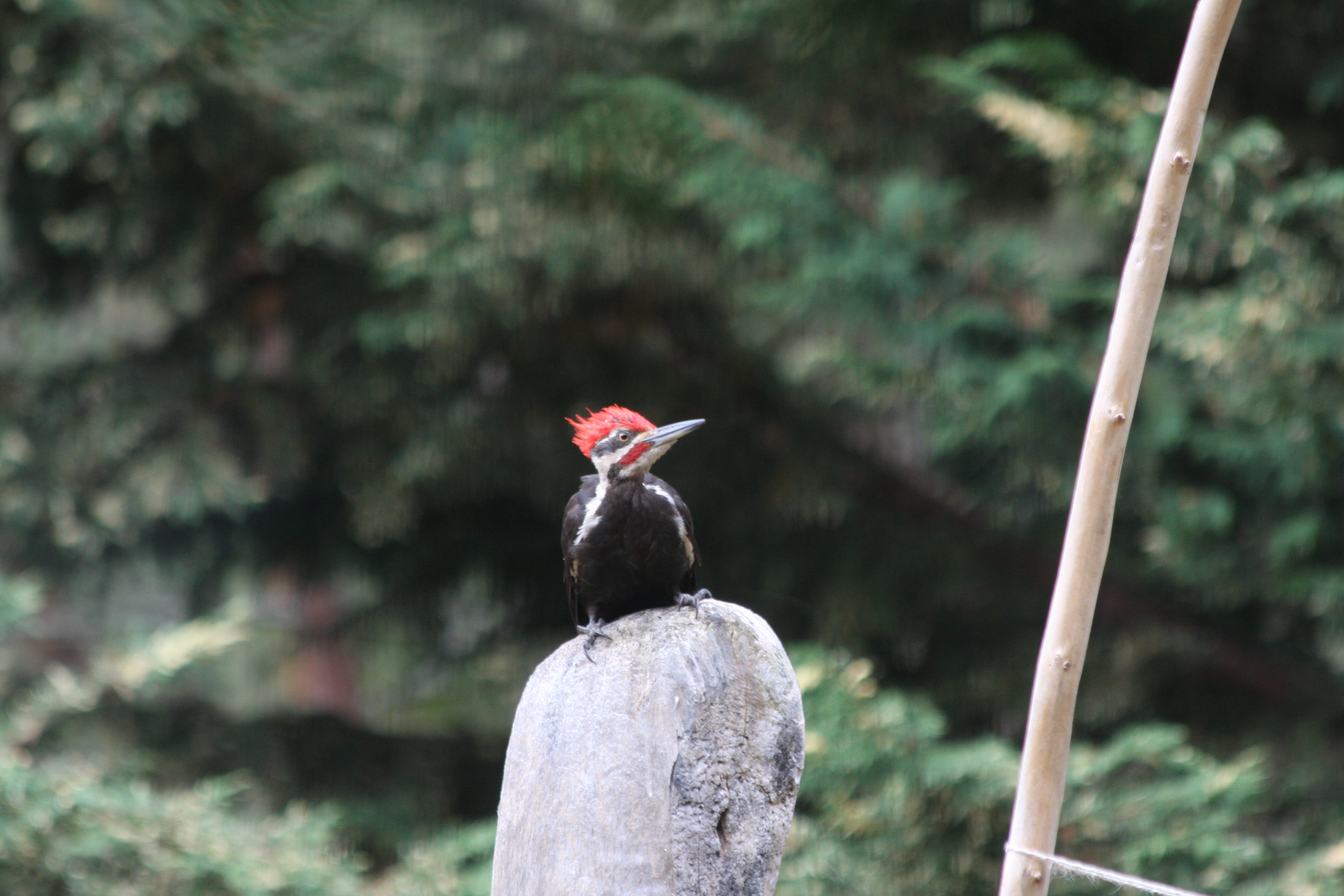
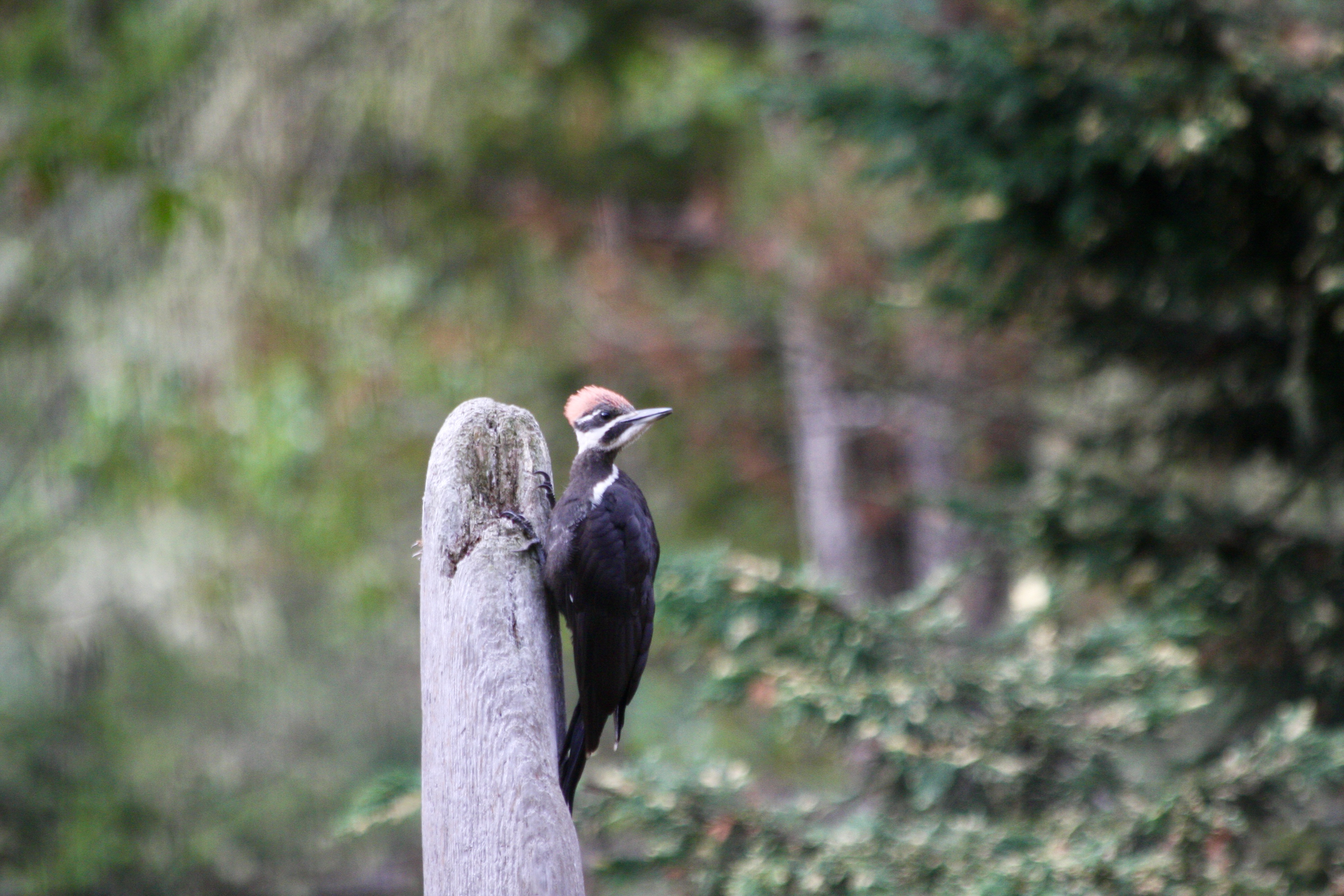
What do they eat? While they are indeed visiting our suet blocks during their reproductive season and will also come by in the winter when food is scarce, the actual diets of a Pileated Woodpecker (Dryocopus pileatus) or other species of woodpeckers are comprised of many of the wood-boring, tunneling, and wood-eating invertebrates that help forests stay healthy.
How could an insect (or an insect-eating bird) that bores into trees be good for a tree? As the saying goes, “sometimes it is hard to see the forest for the trees.” While this is complicated due to climate change, our narrow views tend to see herbivory or holes in a tree, and even a dying tree as a bad thing.
We have to step back to understand the whole picture – which is – a dynamic process. A healthy ecosystem is not static, but one of renewal and regeneration, always changing. The wood boring bugs that are eating inside a tree are (typically) part of the early breakdown stages of a tree that is already dying. As they tunnel and bore though the dying tree, they help decompose the dying parts, releasing nutrients back into the system for new trees and other organisms to grow.
Compared to a human lifespan, this is not a rapid process, but an ongoing, multi-generational one that sustains many other organisms over a vast period of time. In a nutshell, the birds, like these woodpeckers, take advantage of the dying trees hosting wood boring beetle larvae and other wood-eating or wood-tunneling bugs. As the beetles, and ants, or termites tunnel, chew, or eat through a tree, they attract and feeds other organisms that feed on the insects. The insects and the birds leave behind sawdust and frass which is, in turn, broken down by other organisms – earthworms, millipedes, centipedes, etc. In actuality, the processes at hand are far more complicated, but in a nutshell, healthy ecosystems include death.
When you walk out onto your property and see a dying tree, don’t necessarily see it as a bad thing. Watch for a while. Are the woodpeckers pecking holes? The tree may not fall over for many, many years. As it dies, it will host so many various lives: from spiders in tiny crevices, beautiful moths (often unseen, but important pollinators), iridescent beetles that will emerge from some of those tunnels, woodpeckers, cavity nesting birds, including owls that need a sheltered place to rest and rear young. Just maybe, if you consider these things, you will refrain from taking down and chipping or burning that “dying” or “dead” tree and leave it to stand many years instead. When it does finally fall, perhaps you will consider leaving it to decompose on the forest floor where it will continue to host the lives of many organisms that are necessary and good for a healthy and balanced ecosystem. Nature will thank you. The San Juan Islands are a special place. Let’s not turn our home into a mainland suburbia.
*Fun fact: The diets of Pileated Woodpeckers are known to be comprised of 85% carpenter ants. Re-think your decision to put insecticidal baits out around your property. Those stumps are the equivalent of a grocery store or local co-op for these birds. Leave them to decompose naturally.
References
Bull, E. L. (1987). Ecology of the pileated woodpecker in northeastern Oregon. The Journal of wildlife management, 472-481.
Some folks run screaming from spiders, but I am enjoying getting to know the ones that live around our home. They are all friendly and harmless and such. Spiders are more likely to be intimidated by a human, but some of them seem to be getting over their fear and might actually even recognize me. This morning I got this little one to agree to pose so you can see the uniqueness of his palp (scroll through the photos to find the red arrow). It’s unique because of the extra long embolus (read some interesting stuff about this linked below). This is a male funnel weaver (Agelenopsis oregonensis). I had help from Rod Crawford identifying him when I first spied him at my bug light a few weeks ago. Now, we are having daily morning meetups and this little spider is getting over his shyness.
Button Designed and Produced by Nancy May Knapp of Orcas Island, WA
If you live in San Juan County, WA, my blog topic today is for you. I’m seeing some posts on social media lately about pest control that I’m not too crazy about. We have so many people moving to our island now, many bringing with them the mainland suburbia mentality of spraying insecticides all over their yards and homes. Can we help folks understand the slogan, “You Have To Be More Careful With an Island?”
If you know someone who is concerned about caterpillars, ants, termites, wasps, mosquitoes, or spiders, and they are willing to talk to someone (me), I am more than happy to take a phone call or email to answer questions on how to AVOID use of unnecessary chemicals that can pose health risks to humans, pets, wildlife, and contaminate soil and water. Most , if not all, use of pest control services are completely unnecessary. Instead, learning about these organisms can go a long way to reducing fear and being able to coexist and/or tolerate living with them around our homes and properties. Some species of bugs are extremely critical to keeping our ecosystem healthy and balanced. ALL of them are part of the greater food web. With the intense development and land use changes happening in the islands, we need to remember to landscape with intentionality towards keeping our island healthy and oriented towards providing habitat for native species instead of displacing everything.
How to spread the word? You can message me here. I will respond. You may also reach me on Facebook at Bugs of the San Juan Islands. It’s a great spot to learn about the amazing bugs we have living alongside us.
1903. Hutchinson, C.E. A bolas-throwing spider. Sci. Amer., vol.89,no.10,p.172,figs.
Well, I am home on the couch, still sick and running fever. It was a miserable night. I don’t really feel much like reading or watching TV or anything. If I lie down to try and sleep, my nose gets so stuffy I can’t breathe. If you have a few minutes, I will share something fascinating about one of the cool spiders I’m reading about in Chapter 1 of my book, The Spider by John Crompton.
John admits in his book that taxonomy isn’t really his thing. His focus is on behaviors. The behaviors of invertebrates is truly intriguing to me. I will forever be curious about these creatures, how they live, what their lives are like, and such. I’m having to work a bit, googling as I read, as the scientific names of many of these spiders have changed over the years – with reclassifications and updates that will sort of make you crazy trying to figure out what they might be called NOW.
The spider I want to share about is an Australian Orb Weaver spider, formerly called Dicrostichus magnificus, now re-named Ordgarius magnificus. The common name for this spider is the Magnificent spider or Bolas spider, a very suitable common name indeed. Keep reading and you’ll see why!
During the daytime, this spider hangs out in cryptic retreats. Usually these are little tents constructed from silk-tied leaves of eucalyptus trees. At night, the spider will come out to hunt and this is where things become fascinating.
At dusk, the Bolas spider sits on a twig and gathers her tools or perhaps more appropriately, her tackle. She spins a short silk threat about 2 inches long and at the end of this “line” attaches a sticky globule. The name Bolas actually comes from a South American throwing weapon with a weight on the end.
When everything is ready, Ms. Bolas sits with this line dangling from one of her front legs and waits. Amazingly, she also has coated the “lure” of her line with a pheromone mimicking her intended prey. The pheromone is said to replicate the scent of a certain female moth in the Noctuid group, attracting unsuspecting males of the species into range.
Ms. Bolas is triggered into action when she senses the wing beats of unwary moths nearing her line. According to Crompton, she actually lifts her weighted line and whirls it around her head. As the moth comes closer, into lassooing distance, she casts her line. If luck has it, the lure (globule) sticks to the target.
Even more incredible is the discovery of yet another spider species) Cladomelea akermaini, an African species of Orbweaver who also hunts using a bolas. Crompton states that this species is able to cut off her lure and replace it with a fresh one when, during a fishing expedition similar to the Australian Ordgarius magnificus, the lure dries out.
I will leave you to read more of Crompton’s account of these spiders on your own. It is truly fascinating – the idea of spiders creating and using tools. We underestimate what we cannot see. For in observing these creatures, our eyes are opened and we are amazed.
I’ve been home on San Juan Island, WA for 4 days now and clearly I picked up a bug traveling home. Not exactly the sort of bug I wanted, but it was inevitable given the crowded airplane and traveling stress. My husband came down with the BUG first. Then it hopped over to a new host – ME.
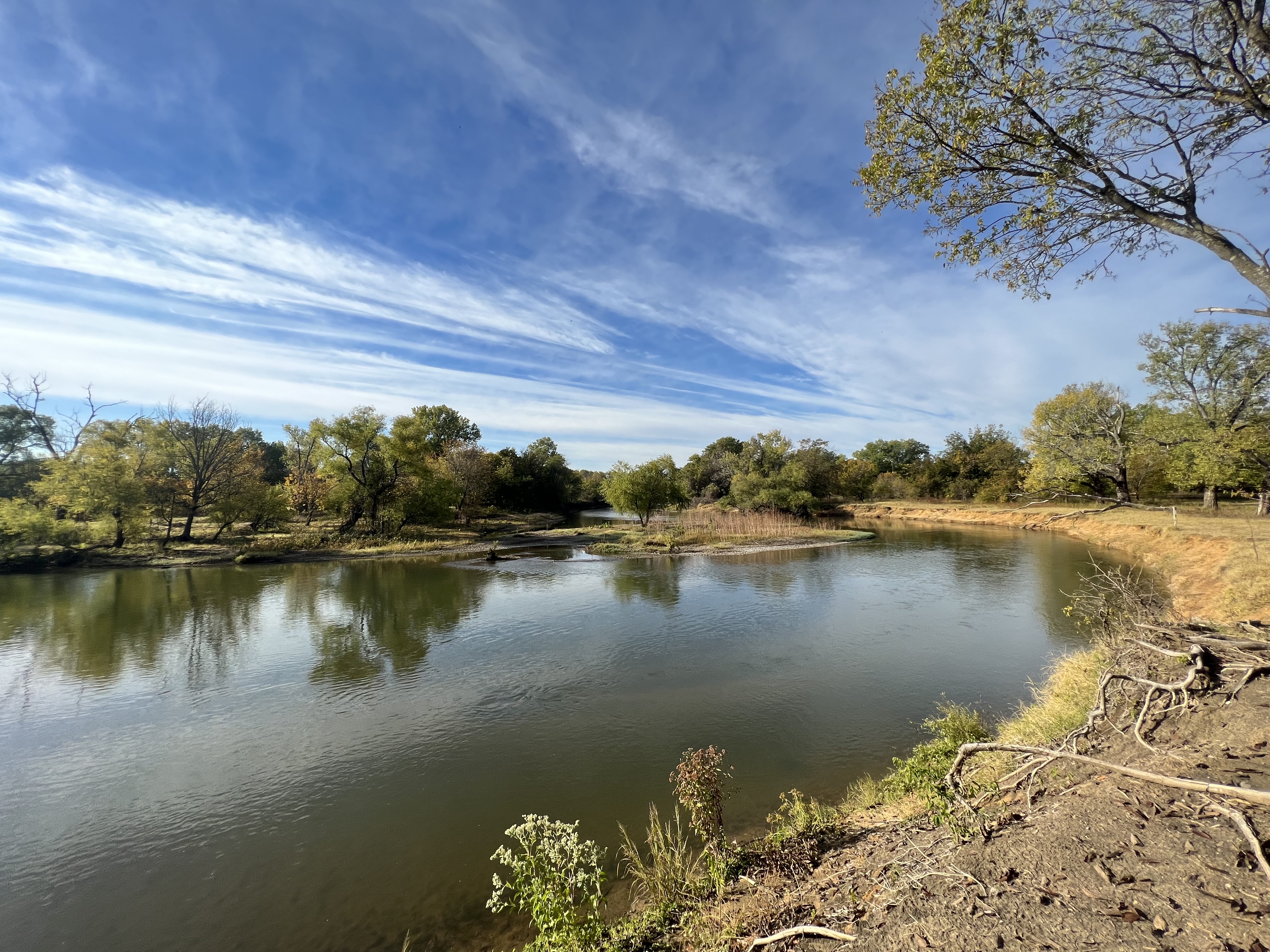
So, I’ve spent the afternoon on the couch labeling and sorting photos from one of our nature walks in Texas. This was the first of two hikes we took at the Lewisville Lake Environmental Learning Area Nature Preserve https://www.llela.org/about-llela/mission-and-vision. This area (approximately 2000 acres, I believe) has been conserved in conjunction with U.S. Army Corps of Engineers, the University of North Texas, the City of Lewisville, Lewisville ISD, the University of Texas in Arlington, and Texas A & M Agrilife Extension. It is a true jewel in the madness of the DFW metropolis where over 6.7 million people are displacing wildlife and native ecosystems are lost in the process. The BEST part of these hikes for me is the fact they do not allow dogs. NOT ANY! I am thrilled that the focus is on wildlife and habitat conservation and preservation instead of human recreation. I could actually be outdoors, enjoying nature AND viewing wildlife.
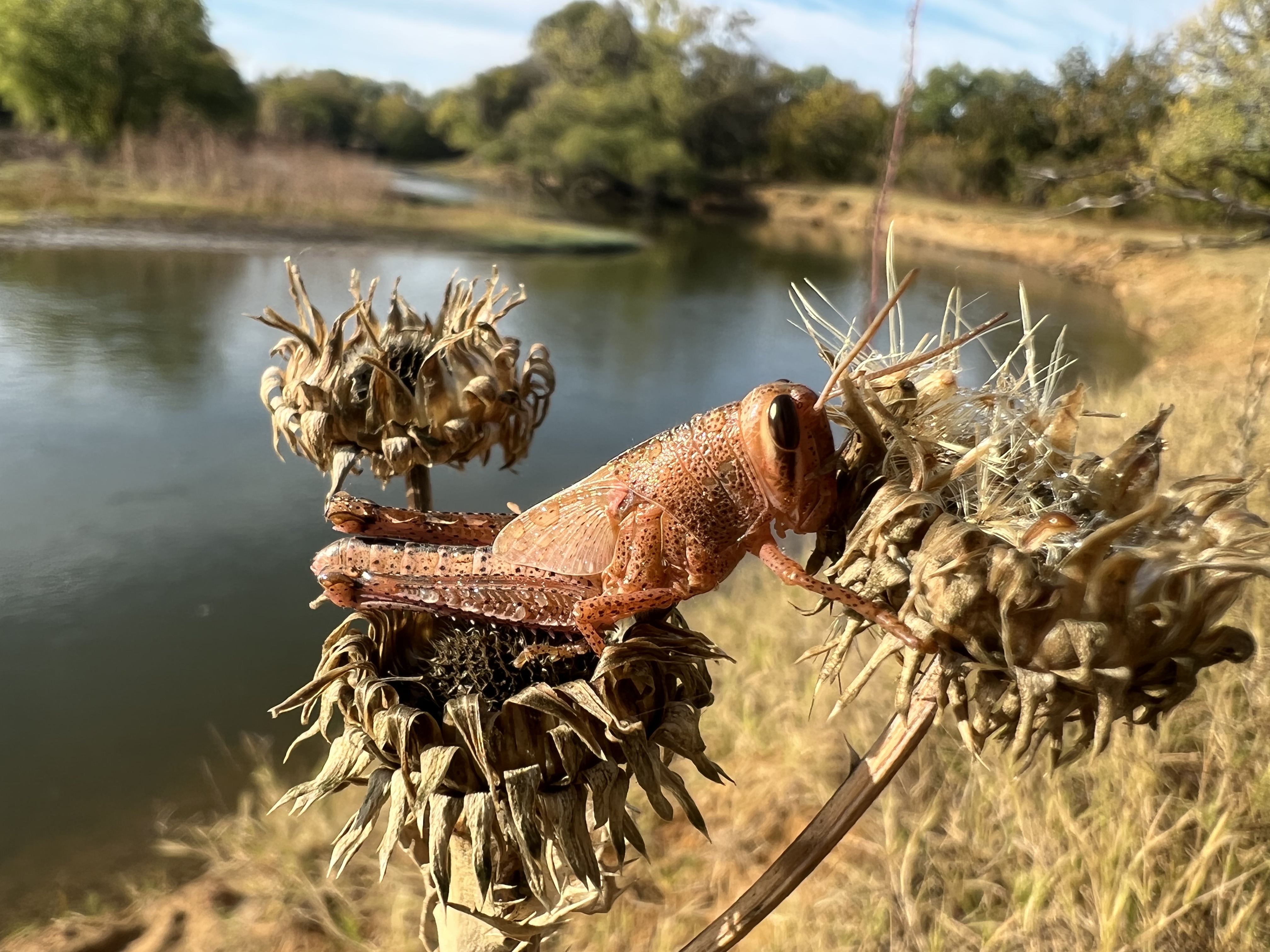
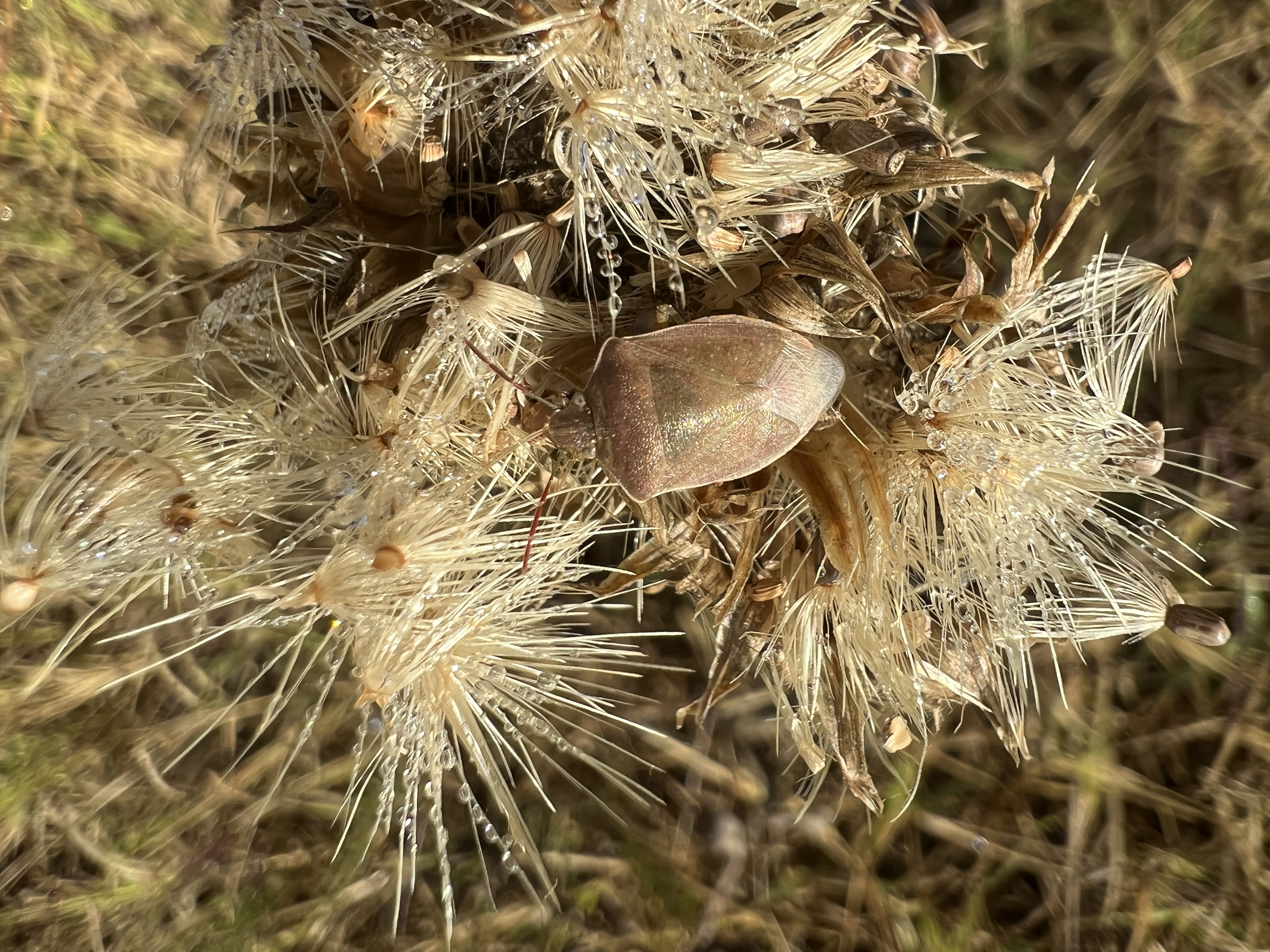
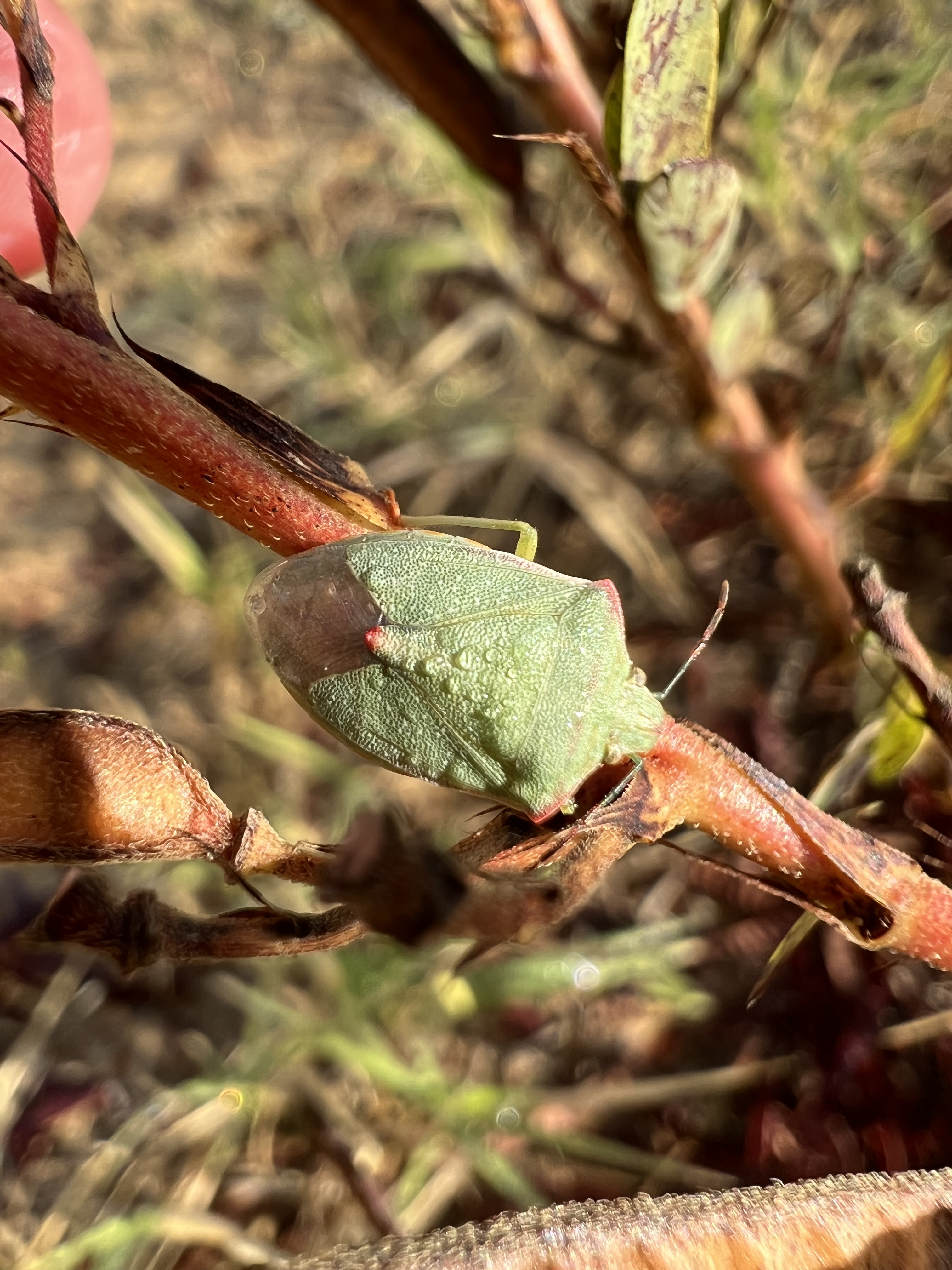
We’ve been to this preserve in prior trips to Texas. This year, we focused on hiking some trails we hadn’t been on before. Here is the gallery of some of the bugs I photographed, along with a few wonderful landscape scenes we viewed on the Redbud Trail – map here: https://www.llela.org/home/showdocument?id=9417
Please support environmental conservation wherever you are. This habitat may seem large at 2000 acres, but the former Blackland Prairie once covered 12 MILLION acres in the state of Texas. We need to set aside more if we are to weather the changes coming ahead.
Stay tuned for Bugging You From Texas, Part 3. I have more wonderful photos to share with you.
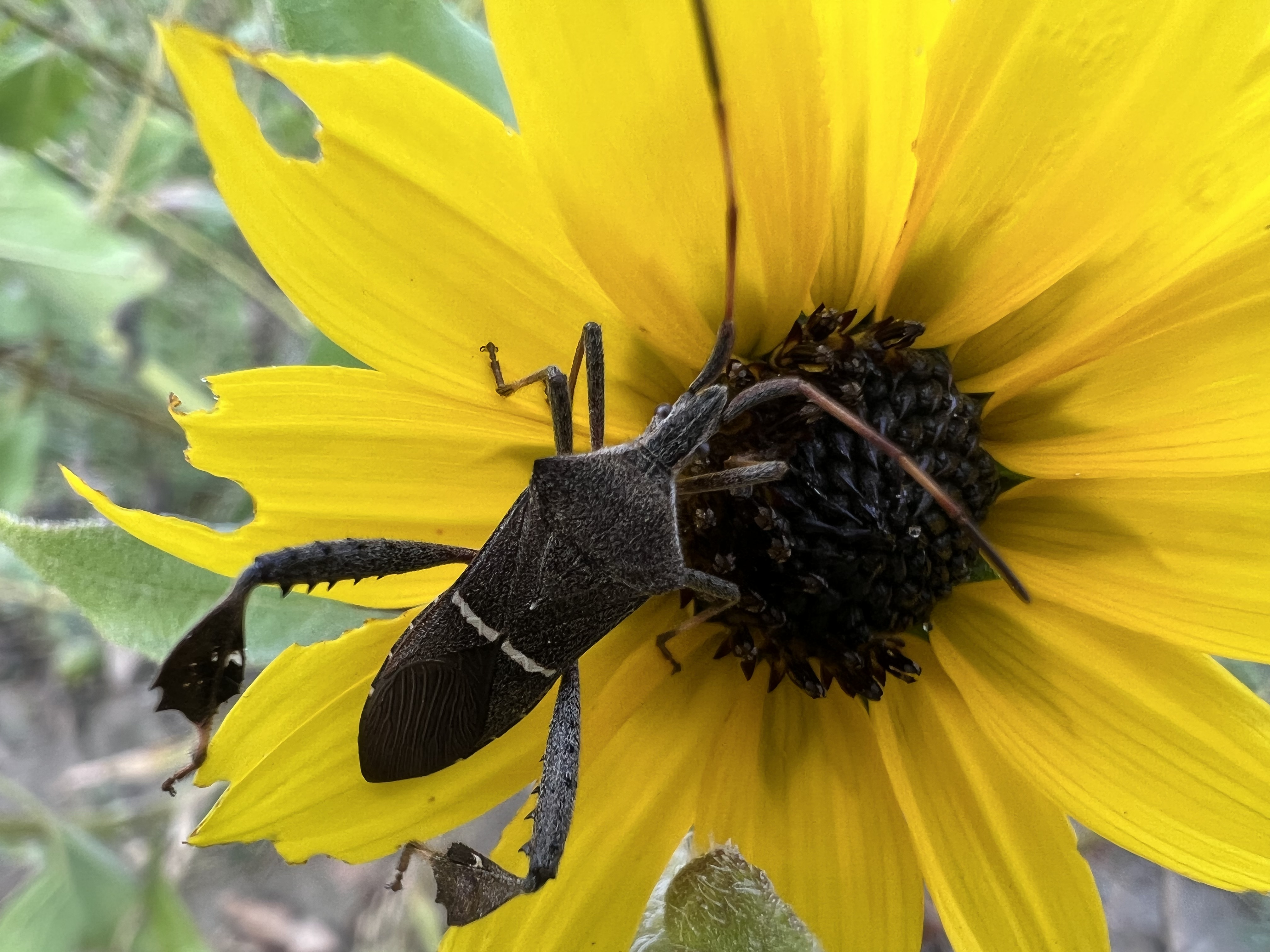
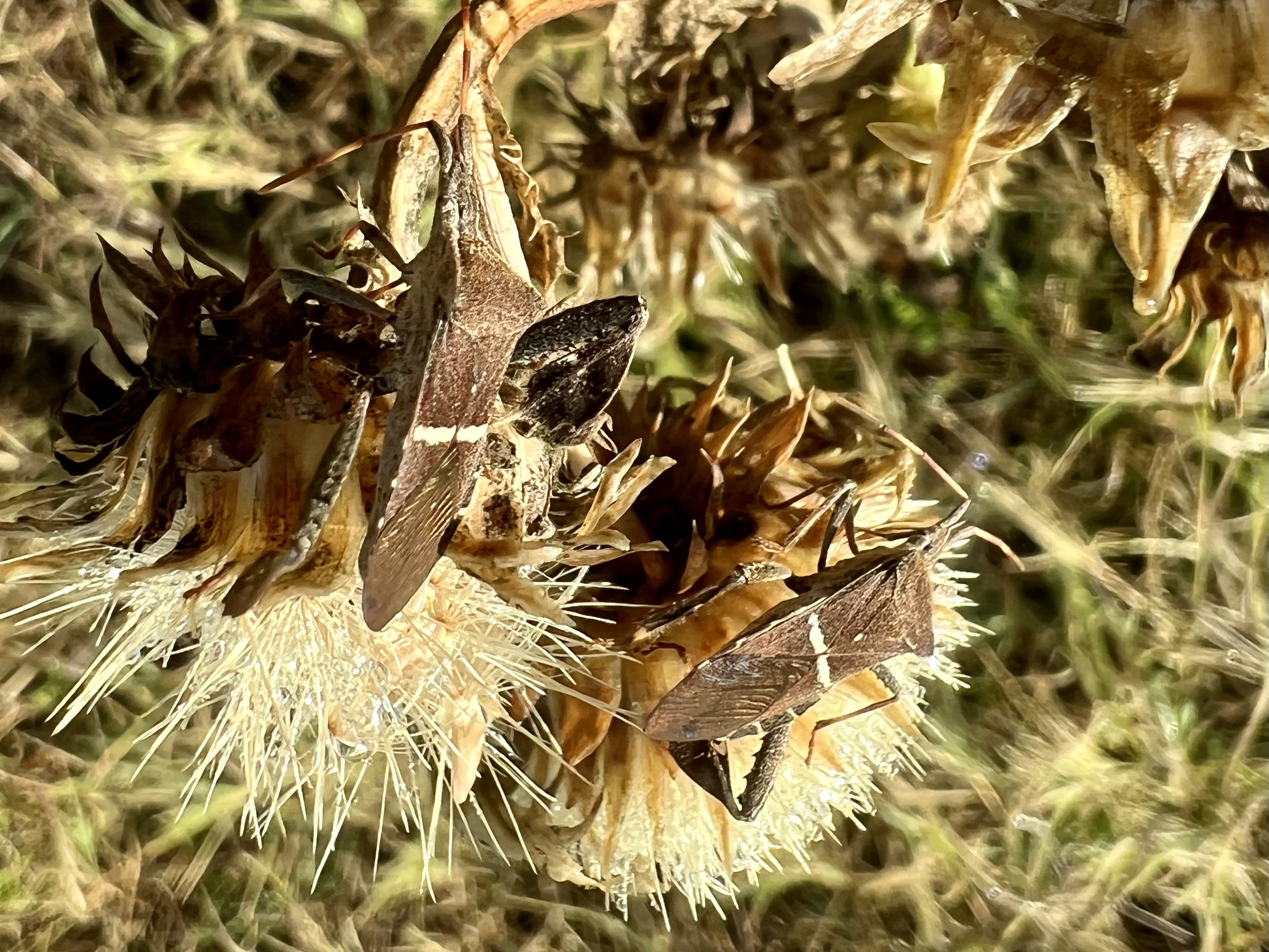
Trichopoda lanipesTrichopoda lanipesTrichopoda lanipesTrichopoda lanipesTrichopoda lanipesEastern Leaf-footed Bug
(Leptoglossus phyllopus)
Eastern Leaf-footed Bug
(Leptoglossus phyllopus)Eastern Leaf-footed Bug
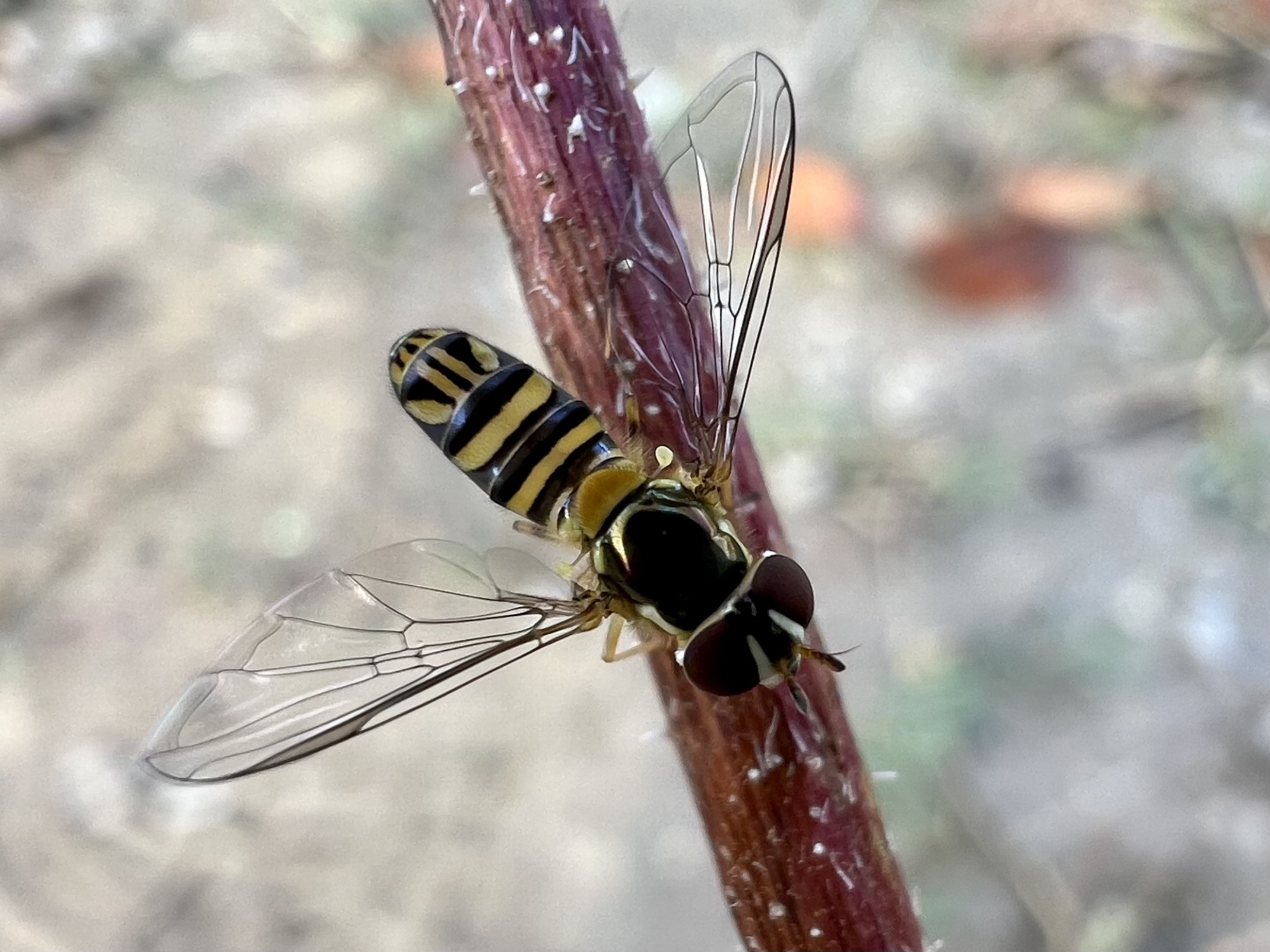
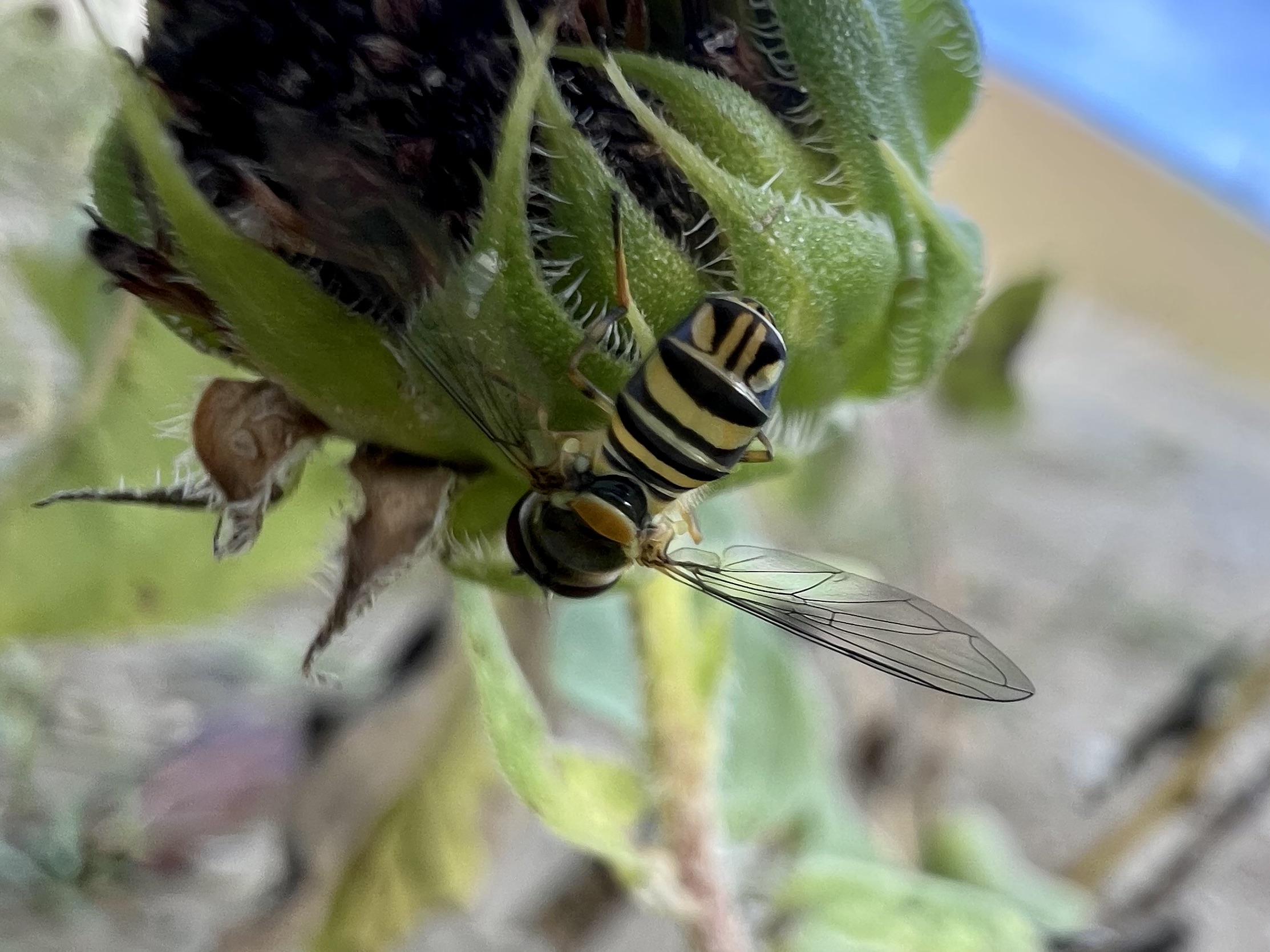
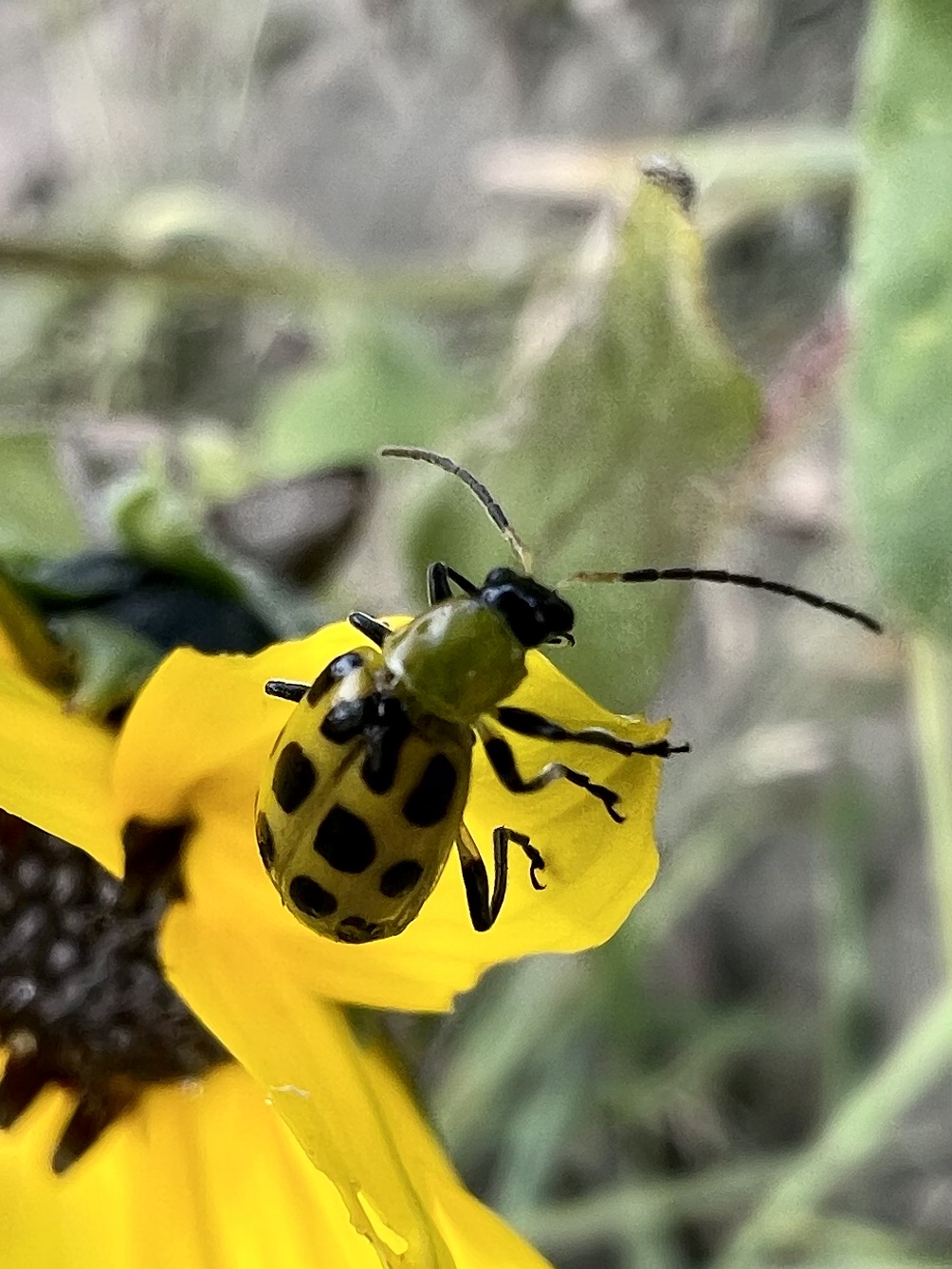
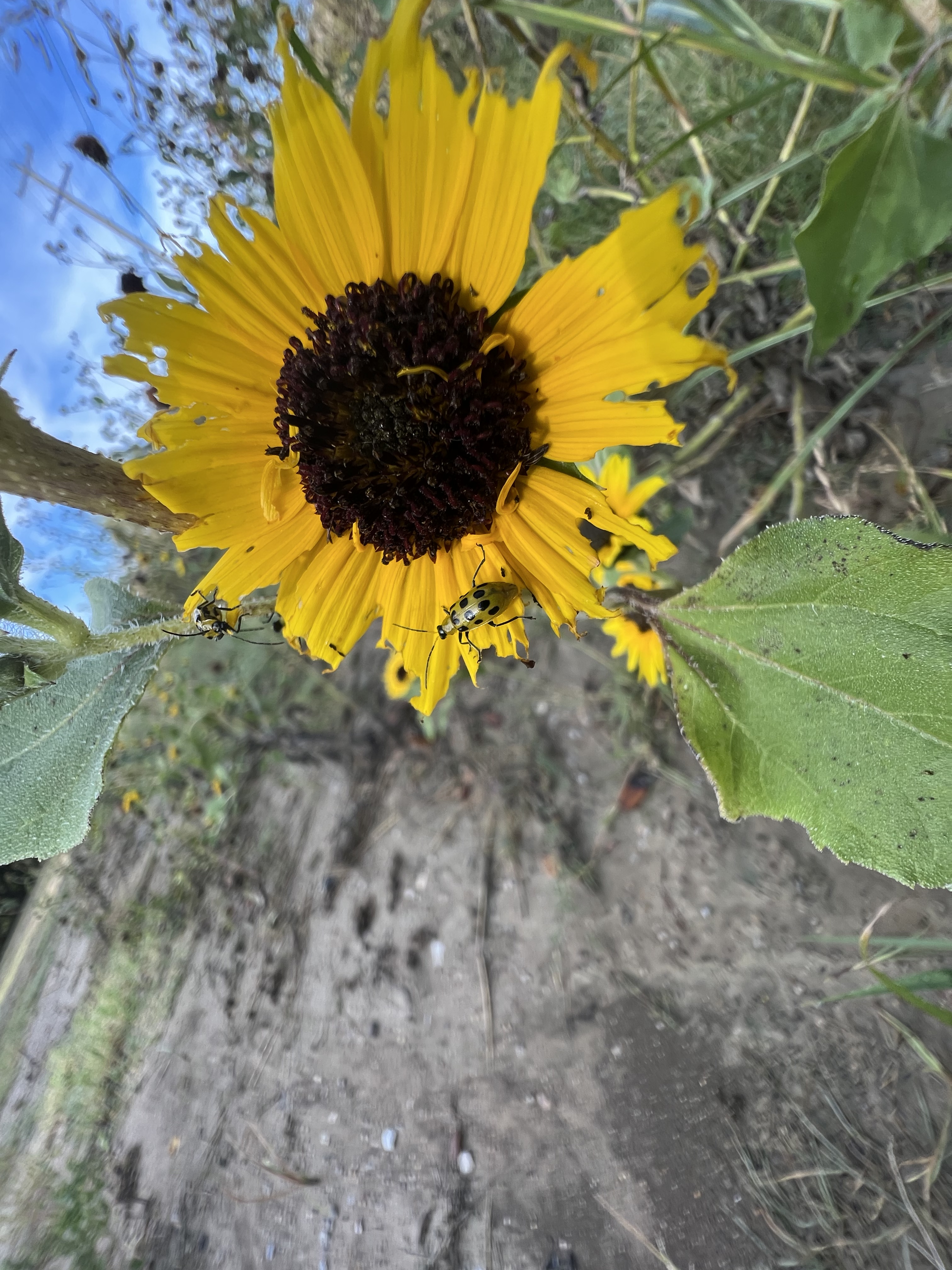
(Leptoglossus phyllopus)Oblique Streaktail (Allograpta obliqua)Oblique Streaktail (Allograpta obliqua)Oblique Streaktail (Allograpta obliqua)Oblique Streaktail (Allograpta obliqua)Oblique Streaktail (Allograpta obliqua)Oblique Streaktail (Allograpta obliqua)Oblique Streaktail (Allograpta obliqua)Spotted Cucumber beetle
(Diabrotica undecimpunctata)Spotted Cucumber beetle
(Diabrotica undecimpunctata)Grass Spiders
Genus Agelenopsis
Grass Spiders
Genus Agelenopsis
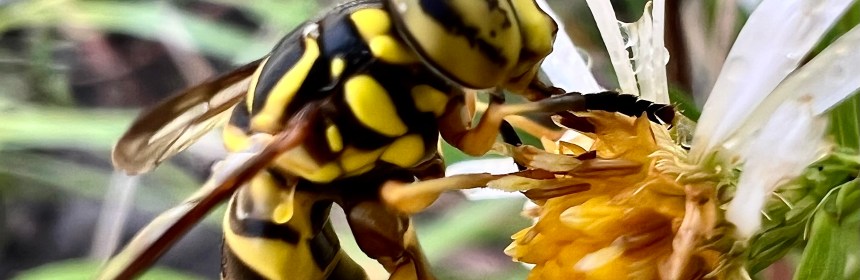
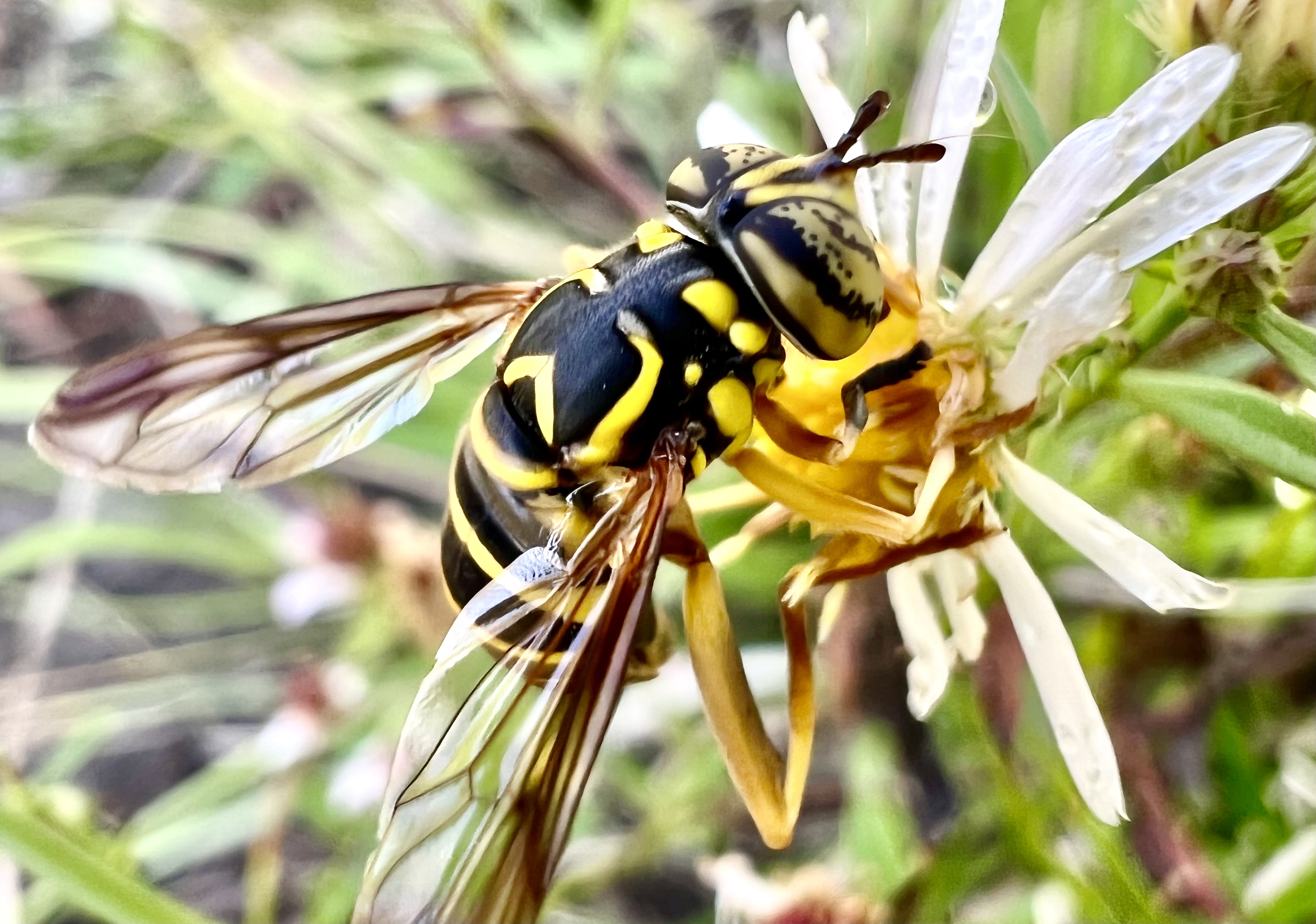
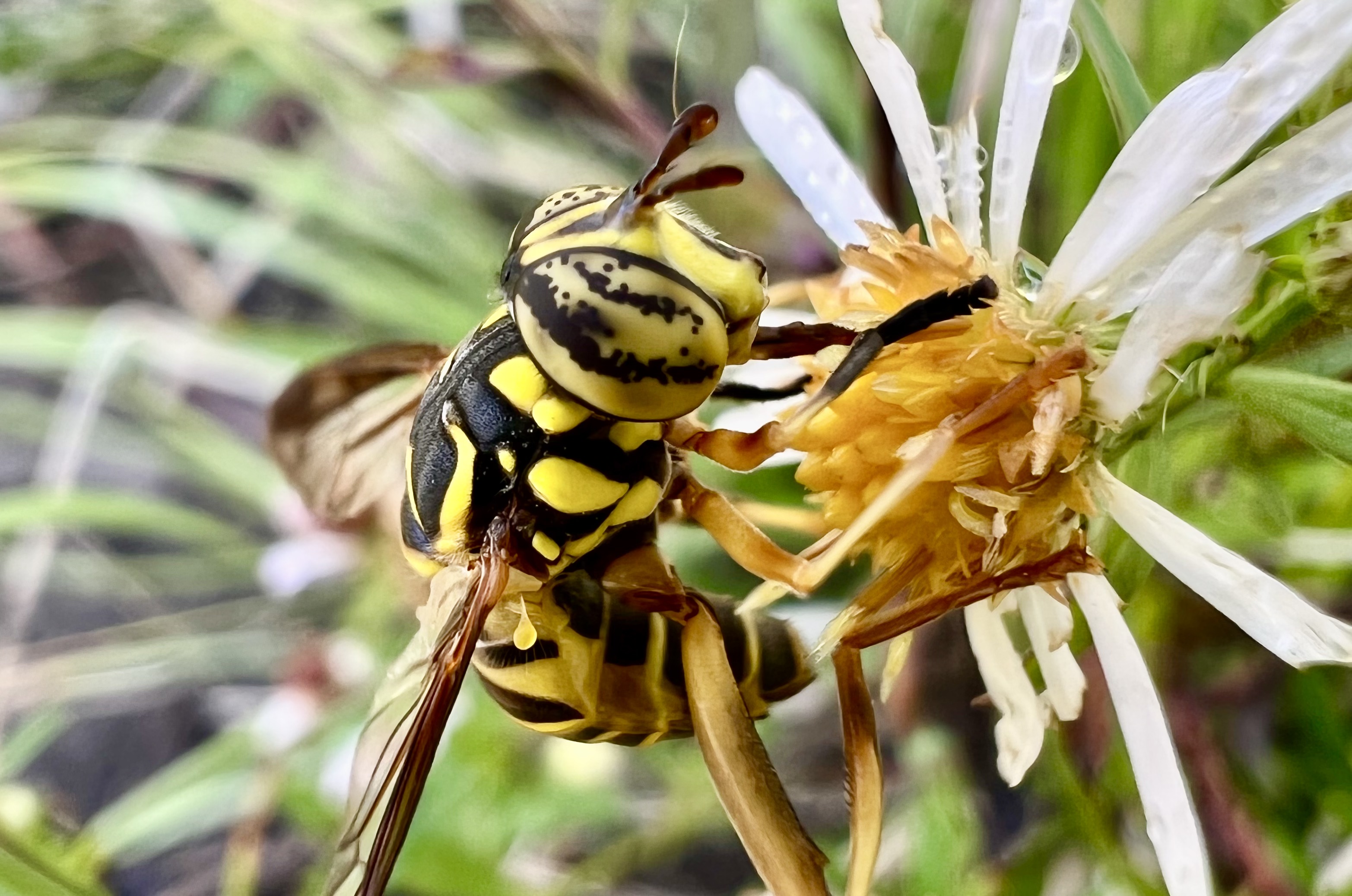
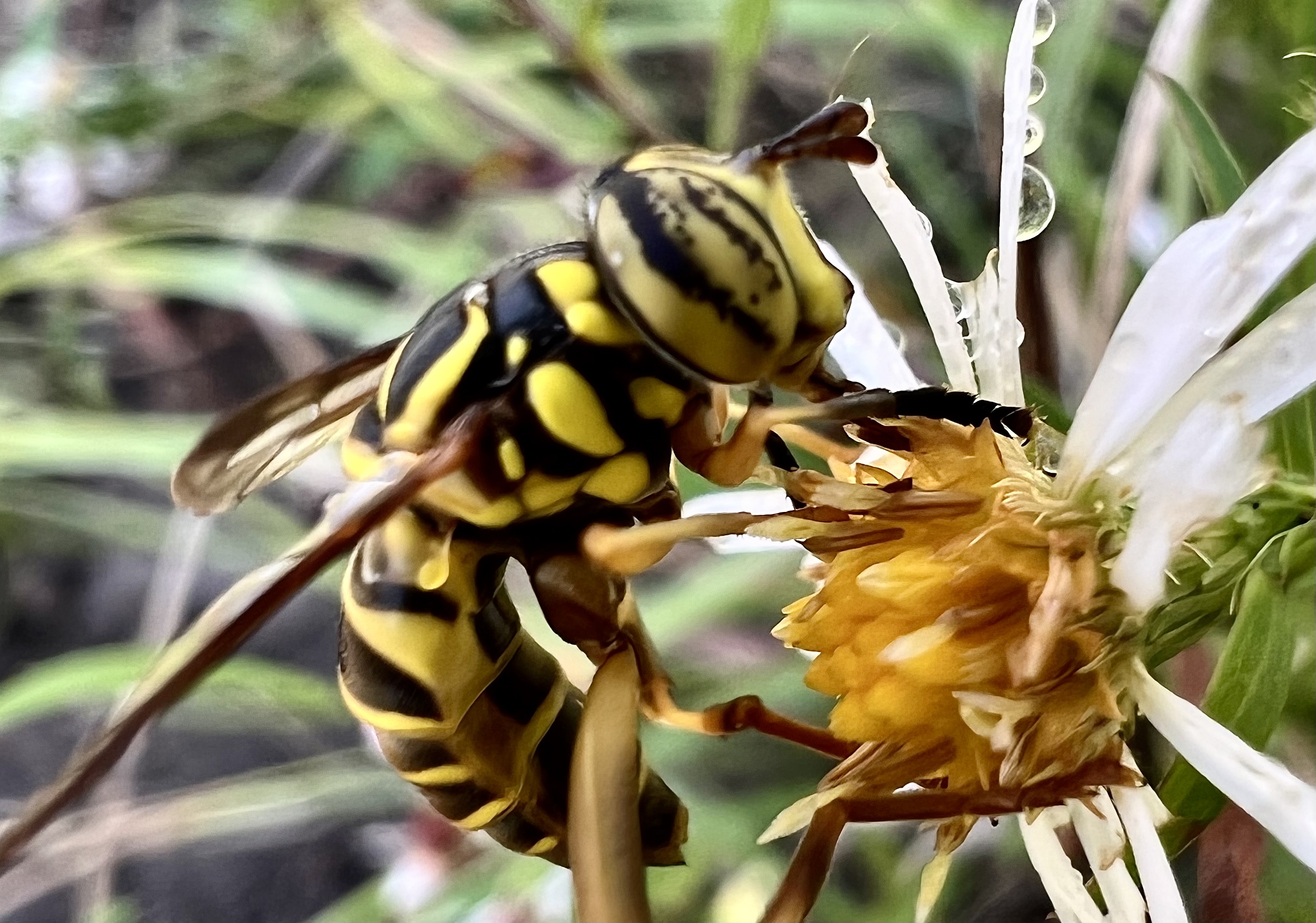
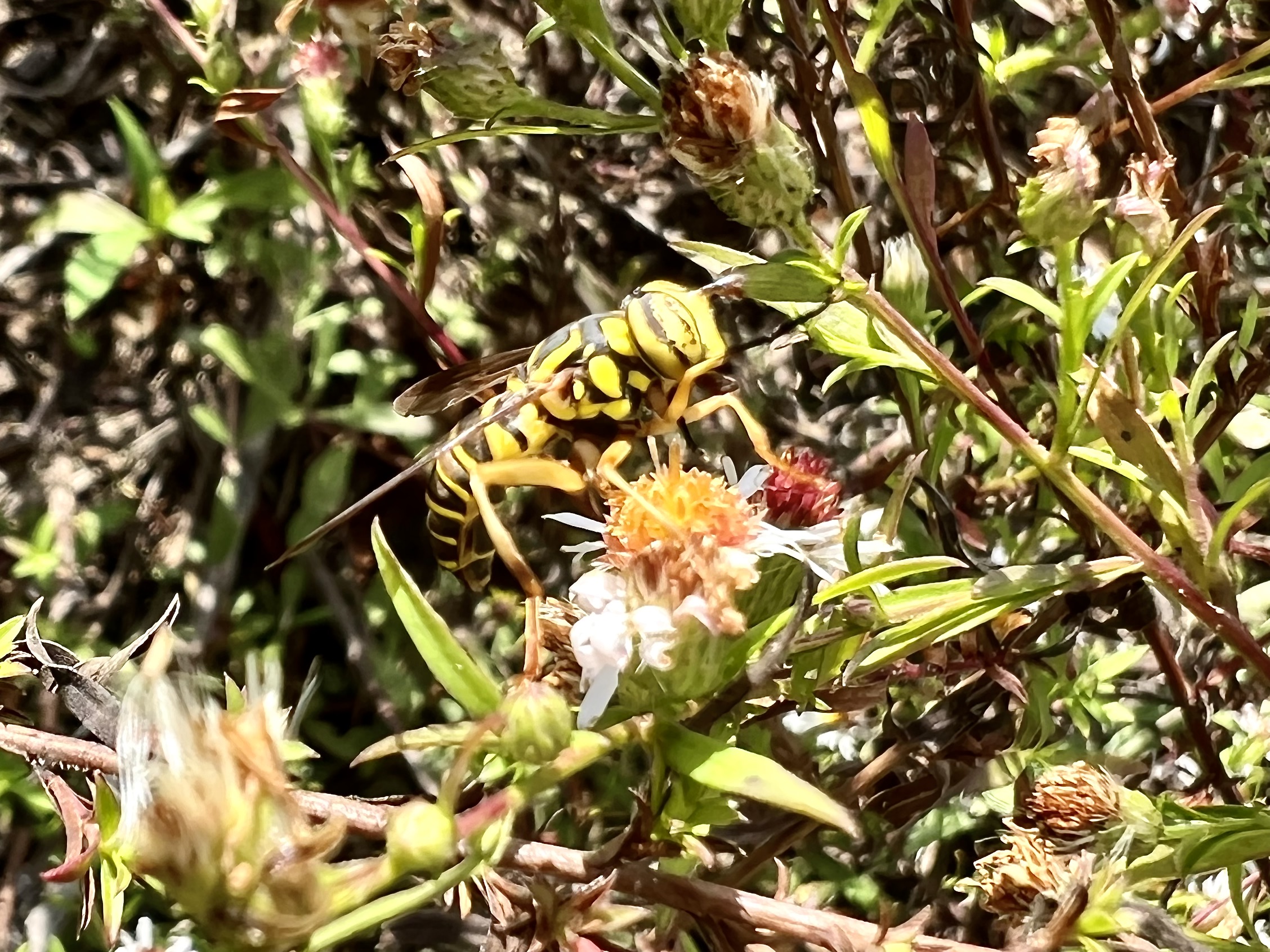
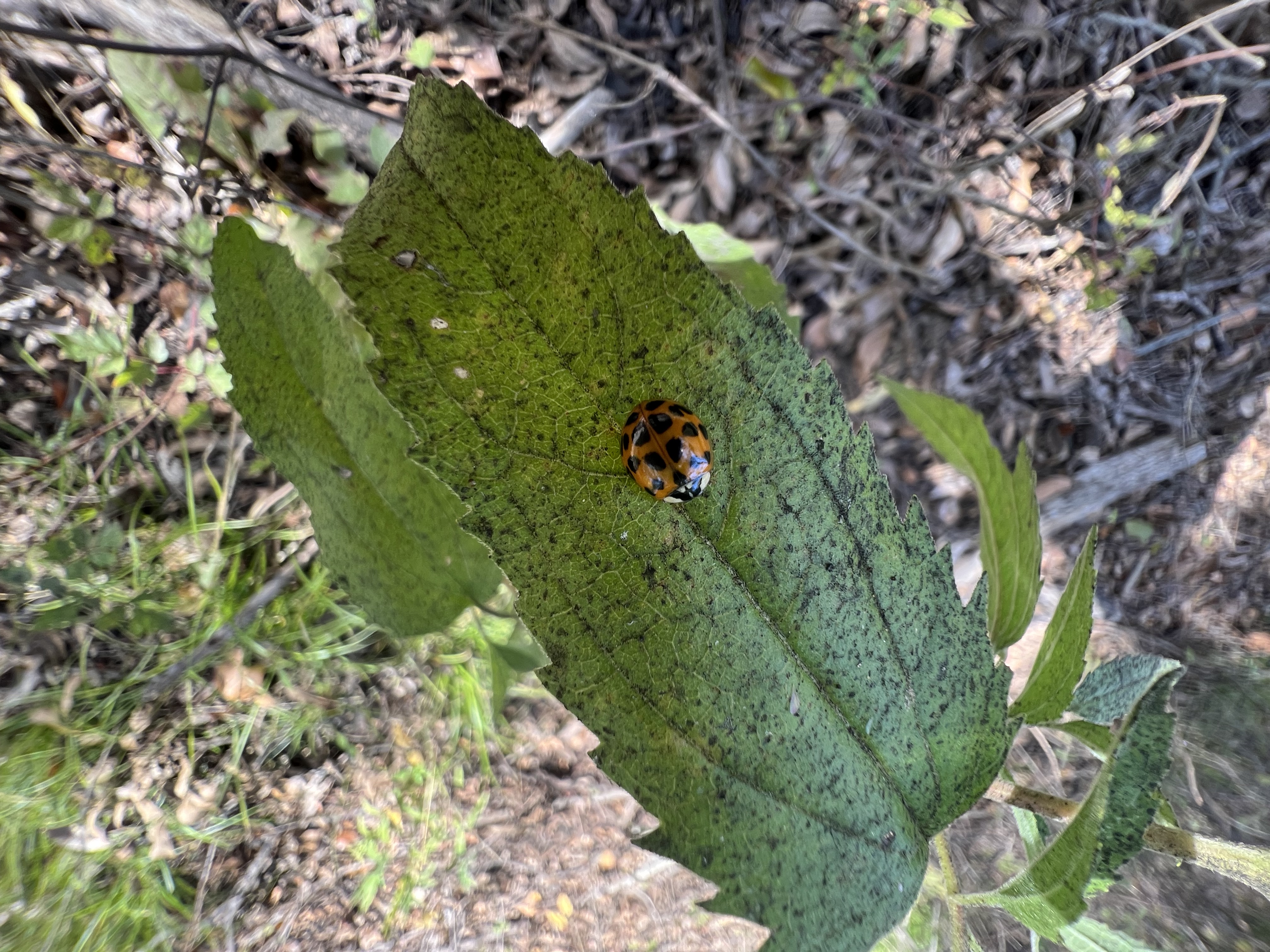
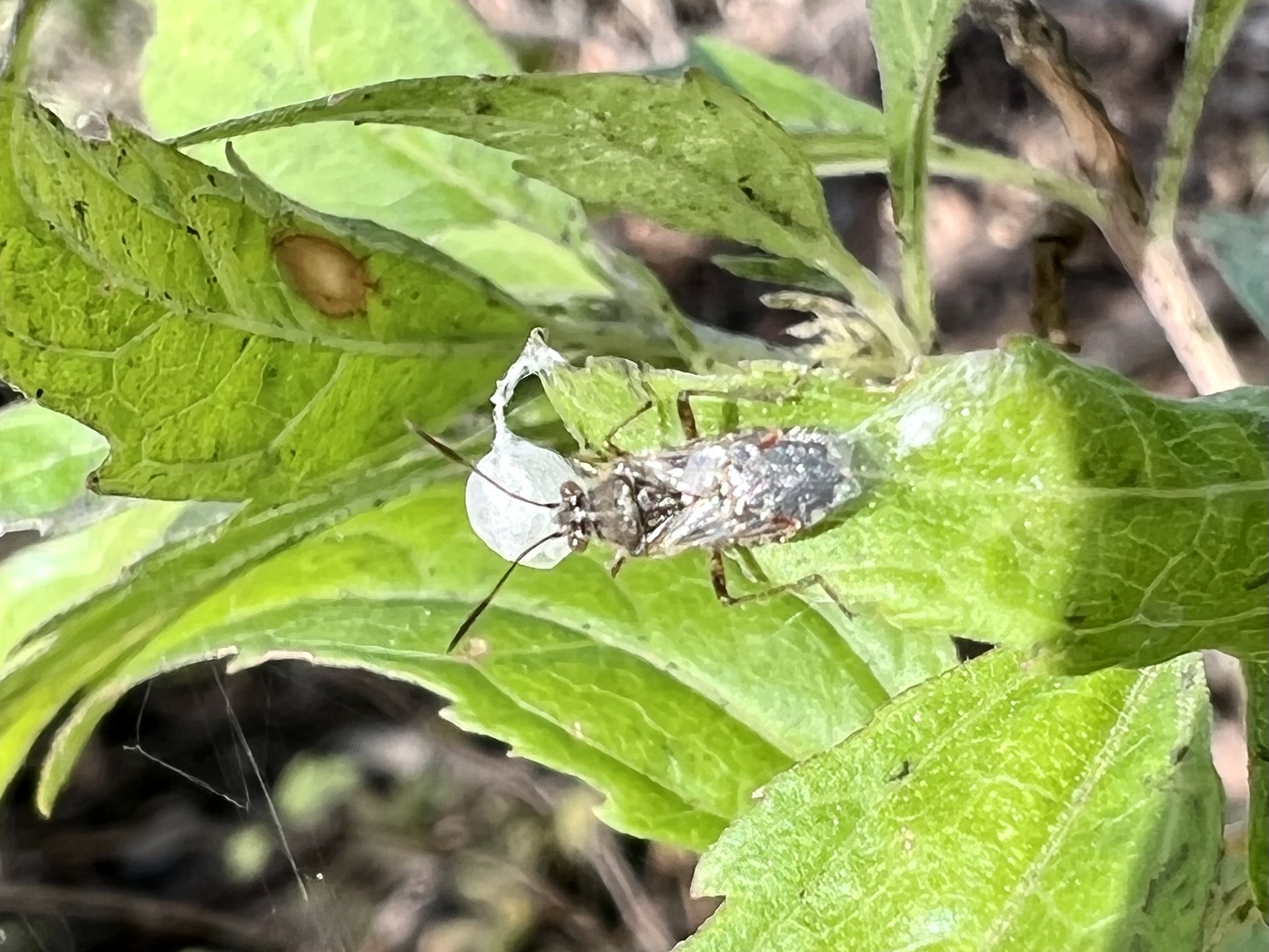
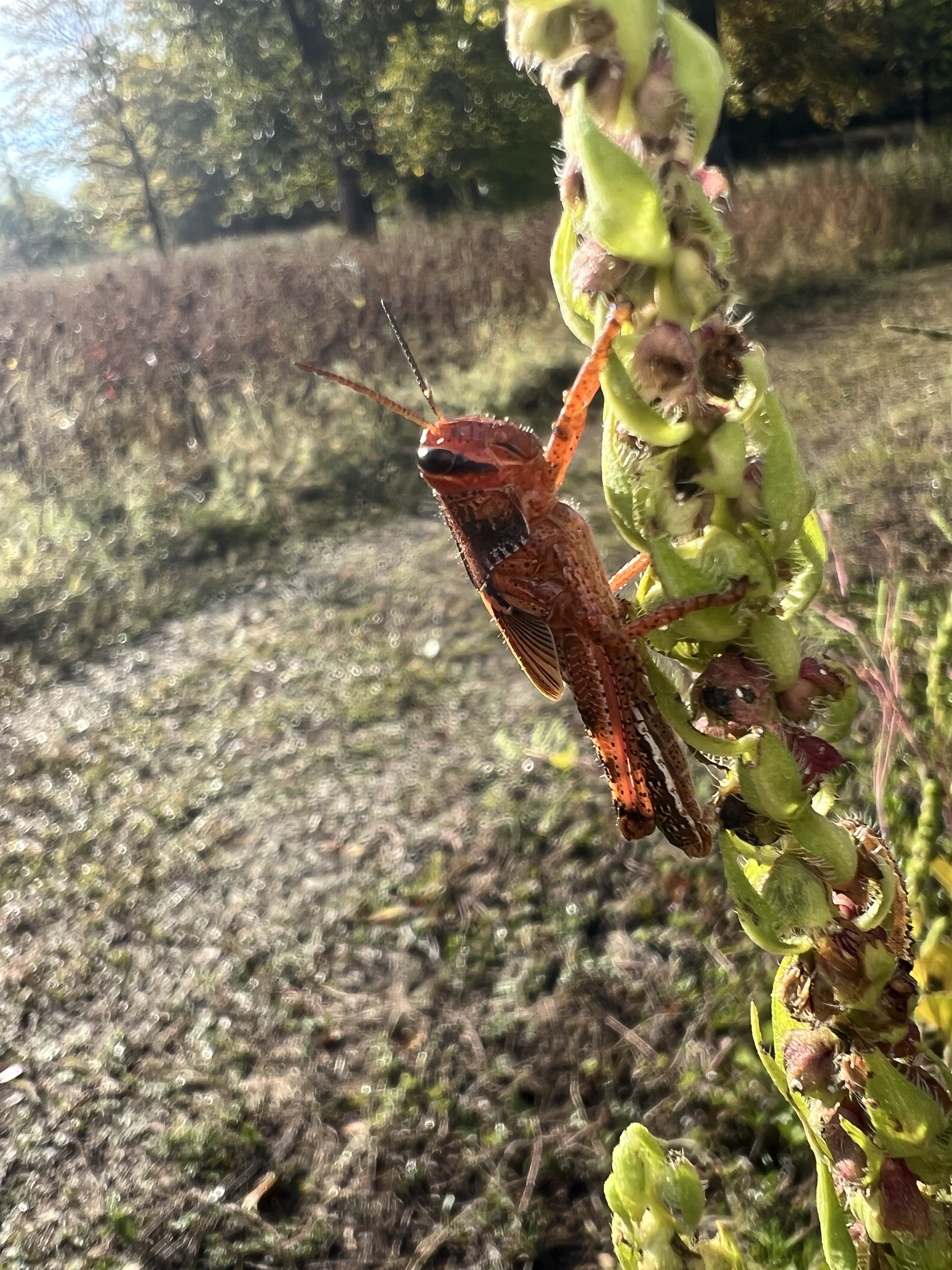
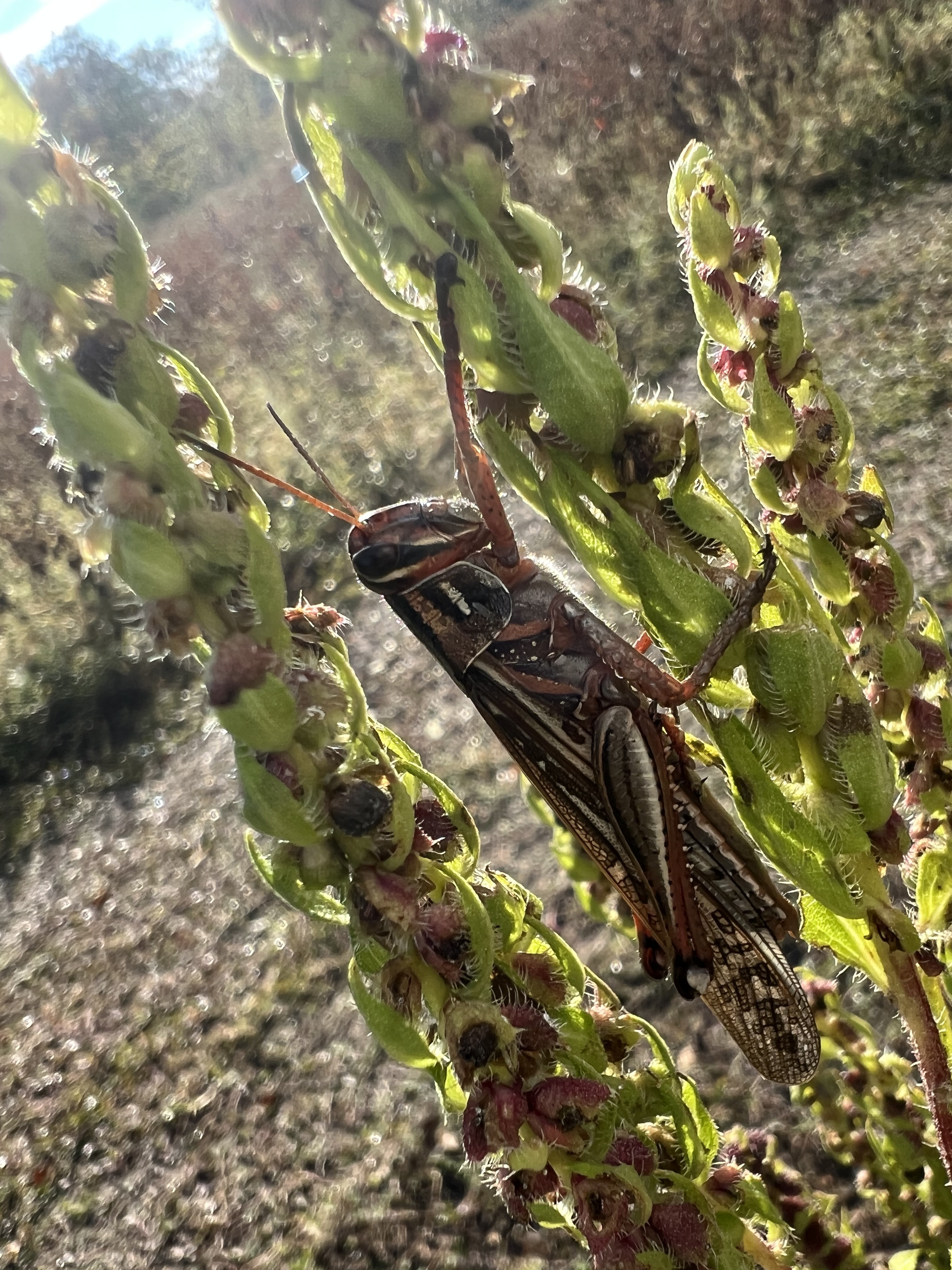
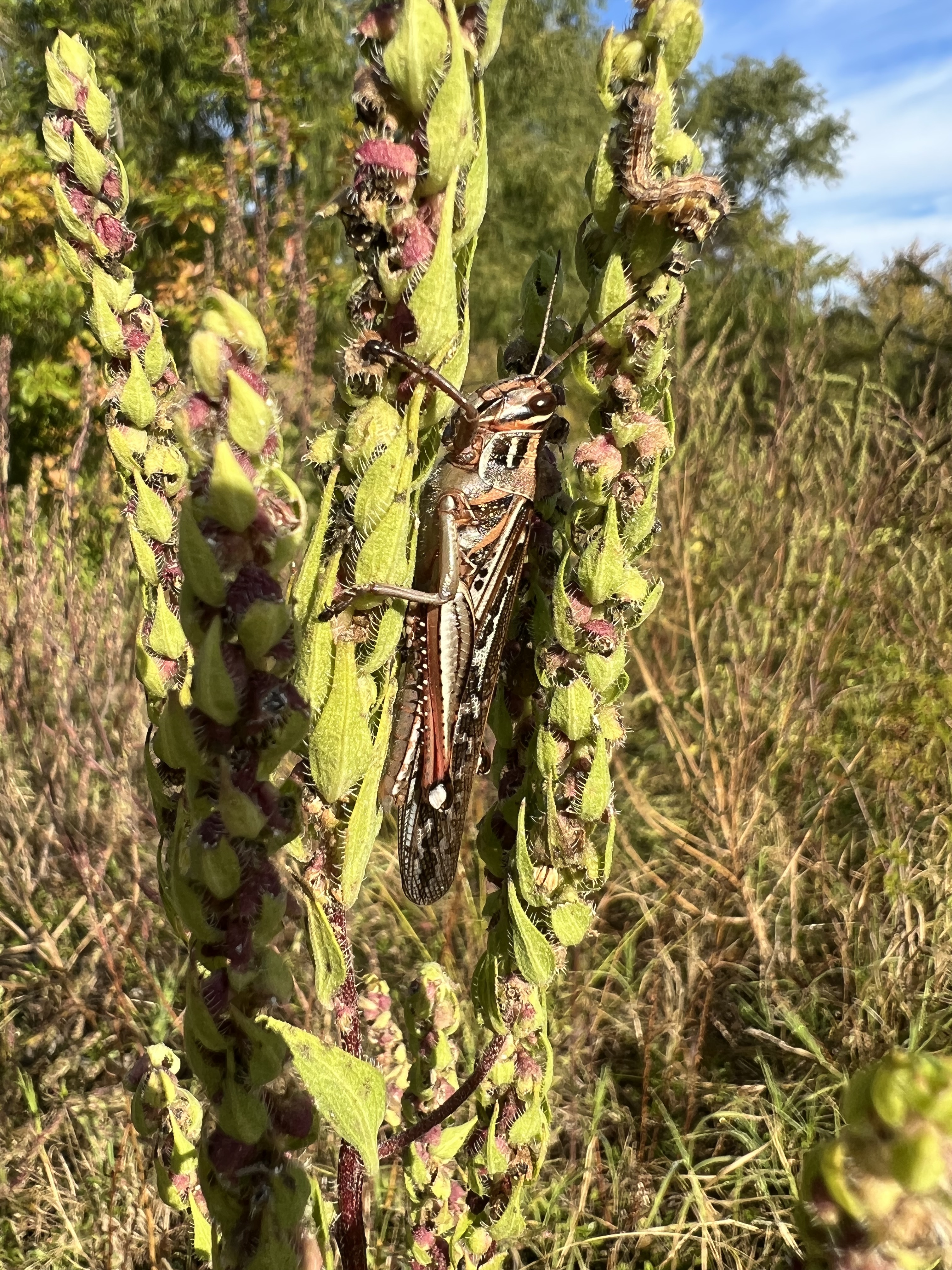
Eastern hornet fly Spilomyia longicornisEastern hornet fly Spilomyia longicornisEastern Hornet Fly (Spilomyia longicornis)Eastern Hornet Fly (Spilomyia longicornis)Eastern Hornet Fly (Spilomyia longicornis)Trichopoda lanipes Feather-legged flyEastern Hornet Fly (Spilomyia longicornis)Eastern Hornet Fly (Spilomyia longicornis)Asian Lady Beetle (Harmonia axyridis)Asian Lady Beetle (Harmonia axyridis)Elm Fork of the Trinity RiverHyaline Grass Bug ( Liorhyssus hyalinus)American Bird Grasshopper (Schistocerca americana)Thyanta custator ssp. accerra
a member of Stink Bugs Family Pentatomidae
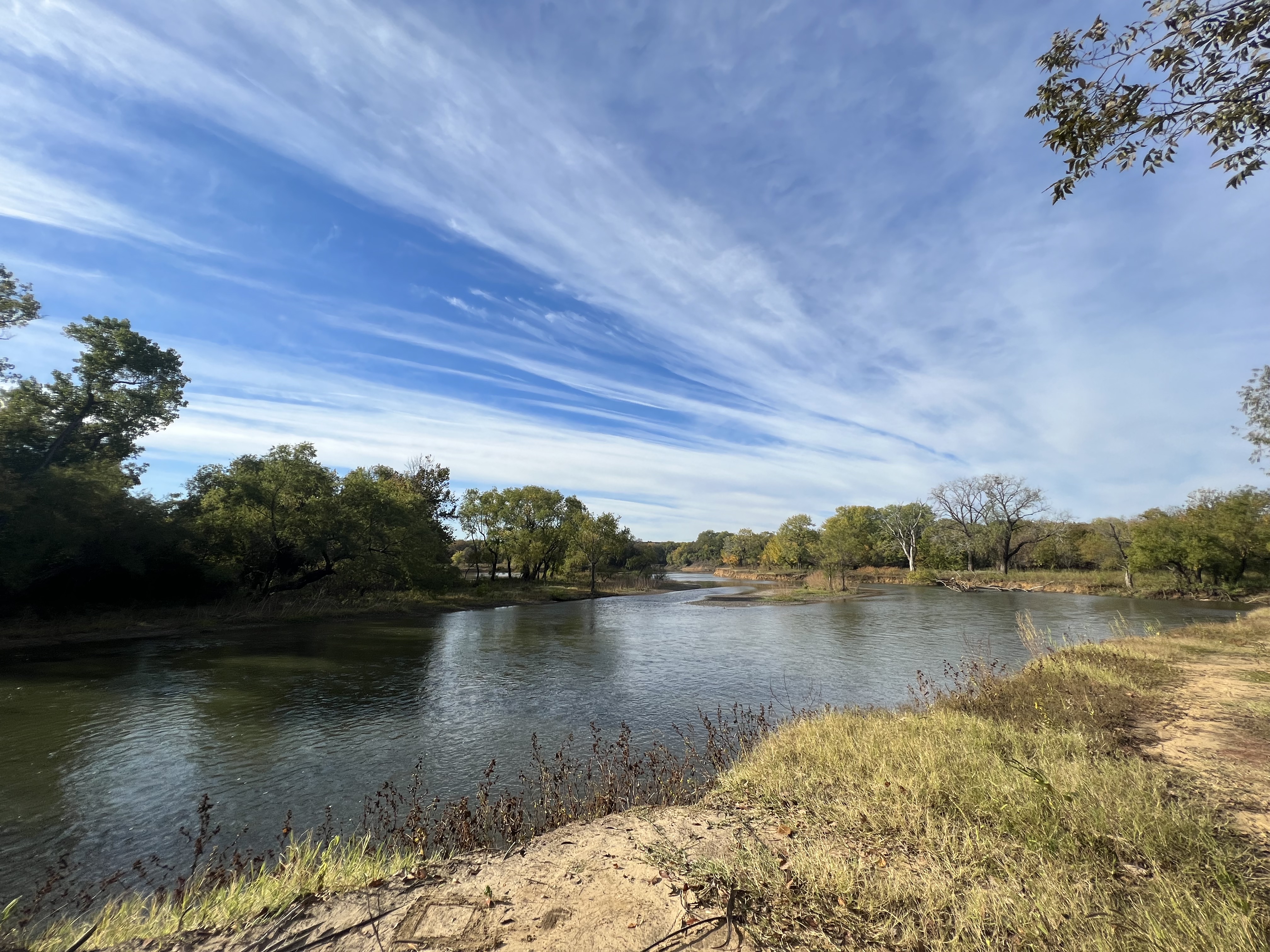
Elm Fork of the Trinity River
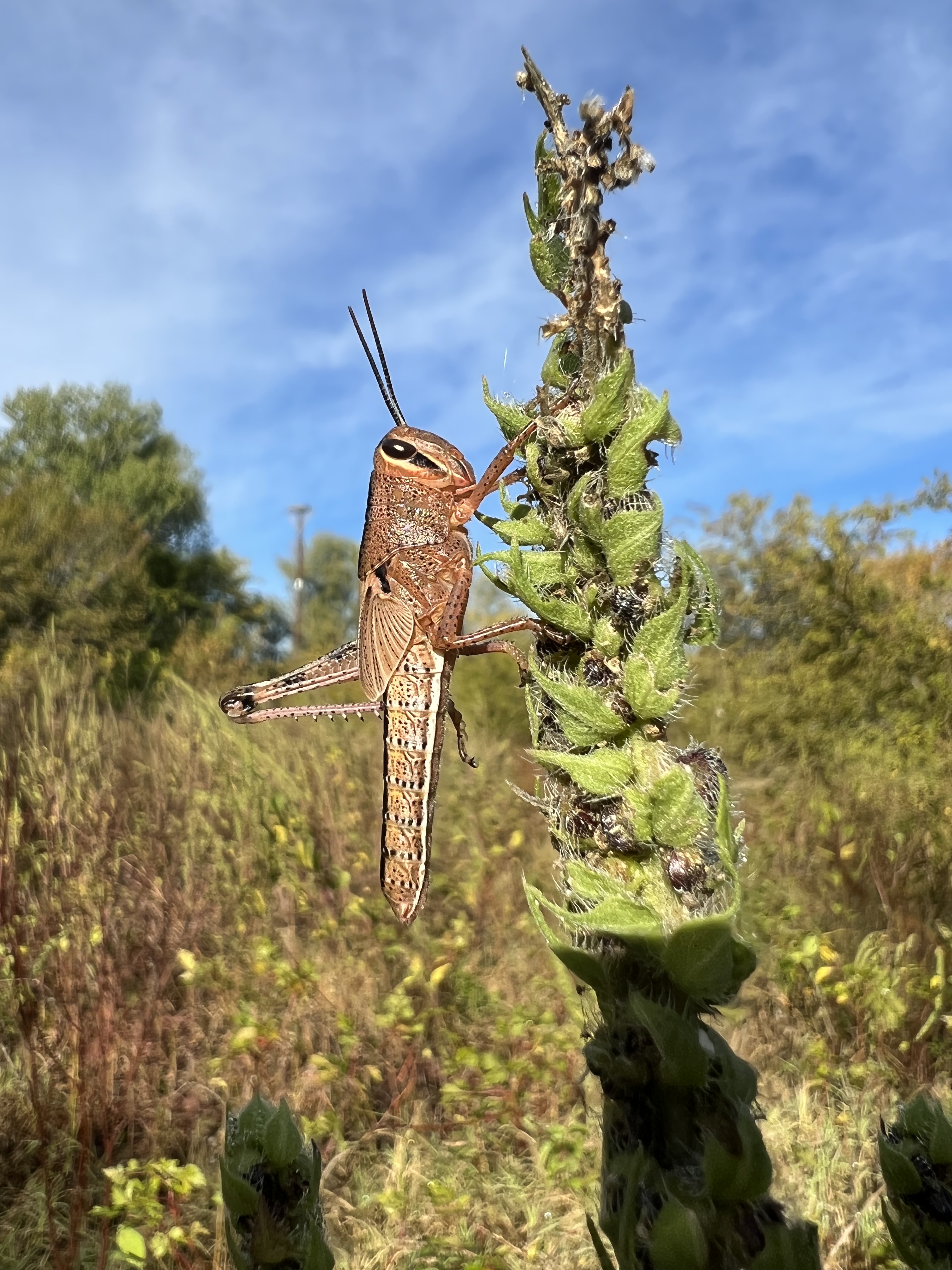
Lewisville Lake Environmental Learning Area Nature PreserveElm Fork of the Trinity RiverAmerican Bird Grasshopper (Schistocerca americana)I believe this is also Thyanta custator ssp. accerra
a member of Stink Bugs Family Pentatomidae
Thyanta custator ssp. accerra
a member of Stink Bugs Family Pentatomidae
Thyanta custator ssp. accerra
a member of Stink Bugs Family Pentatomidae
Thyanta custator ssp. accerra
a member of Stink Bugs Family Pentatomidae
Spotted Cucumber Beetle
Diabrotica undecimpunctata
Spotted Cucumber Beetle
Diabrotica undecimpunctataTrinity River-Elm Fork
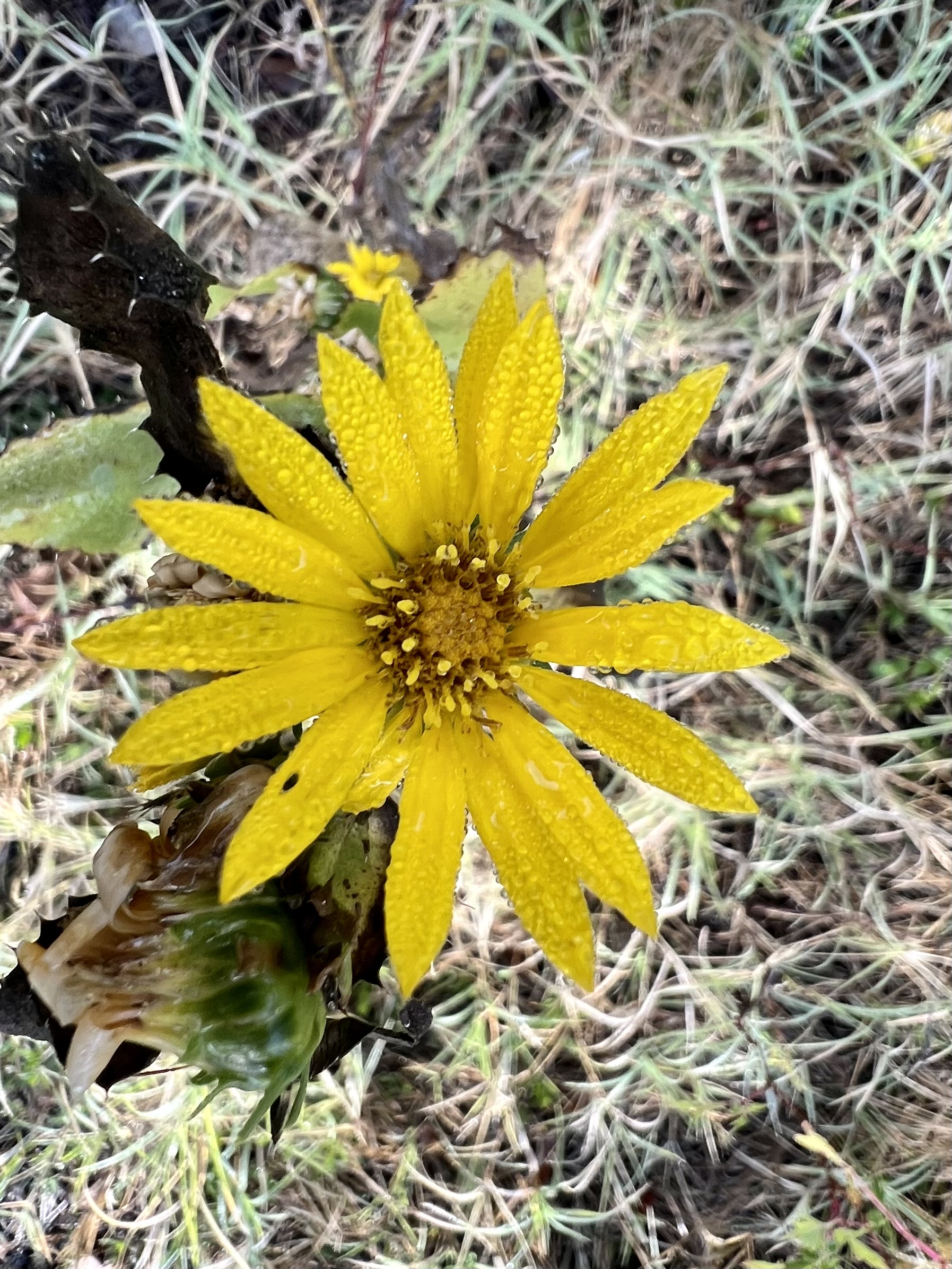
Lewisville Lake Environmental Learning Area Nature PreserveAmerican Bird Grasshopper (Schistocerca americana)I believe this is Narrowleaf Gumweed (Grindelia lanceolata) – a native aster species.Eastern Leaf footed bug (Leptoglossus phyllopus)American Bird Grasshopper (Schistocerca americana)American Bird Grasshopper (Schistocerca americana)American Bird Grasshopper (Schistocerca americana)American Bird Grasshopper (Schistocerca americana)Eastern Leaf footed bug (Leptoglossus phyllopus)Eastern Leaf footed bug (Leptoglossus phyllopus)Insect House by Elm Fork Master NaturalistsEastern Leaf-footed Bug (Leptoglossus phyllopus)
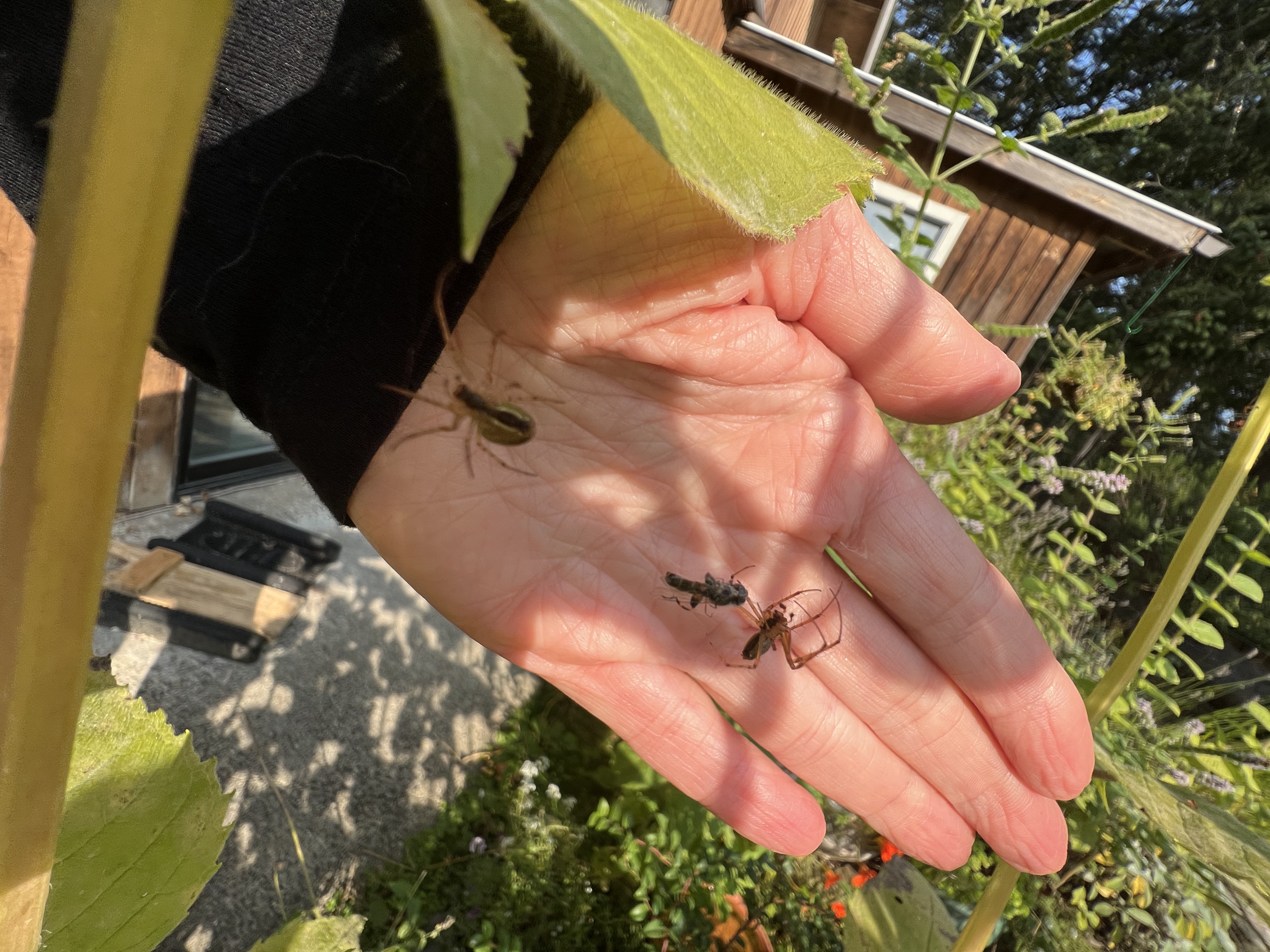
I was eating my lunch outdoors yesterday (October 6, 2022), and considering the end of season, depauperate community of bugs. There are fewer and fewer buzzing about the lingering tiny blossoms on my mint plants, which have been well-visited this season. Many of the winged flyers die out on their own accord. Lives spent – an ending synchronized with leaves falling from the trees. They’ve lived a season, maybe longer depending on the species. As adults, they’ve mated and sewn seeds for a new generation to emerge in spring. Some though, are captured and eaten by other organisms that are fueling stores for their own reproductive event – like these Long-jawed orb weaver spiders (Metallina segmentata) I witnessed, working together to wrap up their “lunch,” a Thick-legged Hoverfly (Syritta pipiens).
Metellina segmentata spiders (male and female) with lunch (Syritta pipiens) hoverflyLong Jawed Orb Weavers (Metellina segmentata) with prey, a Thick-Legged Hoverfly (Syritta pipiens)
I didn’t realize it at the time, but depauperate was not to be the theme of my day!
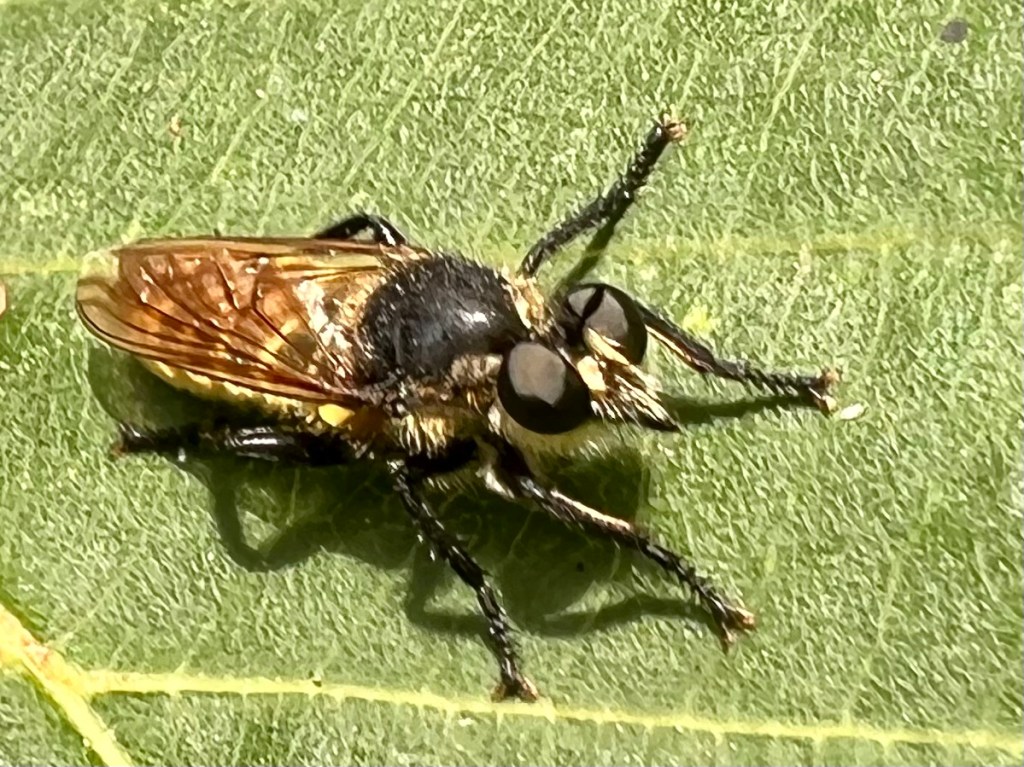
Shortly after observing and filming the spiders, I noted some buzzing around our fruitless cherry tree. I walked over, thinking to myself, “You’re getting too close to that Yellowjacket!” Well, it wasn’t a yellowjacket at all. It was a Robberfly (Laphria ventralis), I believe – and SHE was ovipositing into our tree.
Laphria ventralis Robber Fly – 10.6.22, San Juan Island, WA
Later this evening when I was showing my husband the photos, he asked what the eggs would eat when they hatch. I had to look it up. Well, Robber Fly larvae are known to prey on the eggs, larvae, and pupae of other insects, especially beetle larvae living in decaying trees. Read more about this linked here: https://www.geller-grimm.de/genera07.htm
This Robber fly was an incredible mimic of a Yellowjacket – not only in appearance, but also in the way she flew about the tree. Fascinated, I watched her find a niche under some old bark and begin to oviposit. She did not like my camera or my presence, but tolerated me to a degree. Then she buzzed right into my face with complete confidence her mimicry would chase me away. Guess what? It worked. At least temporarily.
Laphria ventralis Robber fly ovipositing 10.06.22 – San Juan Island, WA
Laphria ventralis 10.6.22 San Juan Island, WA
Buzz Off! Laphria ventralis Robber Fly 10.6.22
The next fun finds in Bug-landia were two caterpillars. I found an Eyed Sphinx Moth caterpillar (Smerinthus opthalmica) making headway down our driveway, undoubtedly wandering off to find a suitable location to pupate.
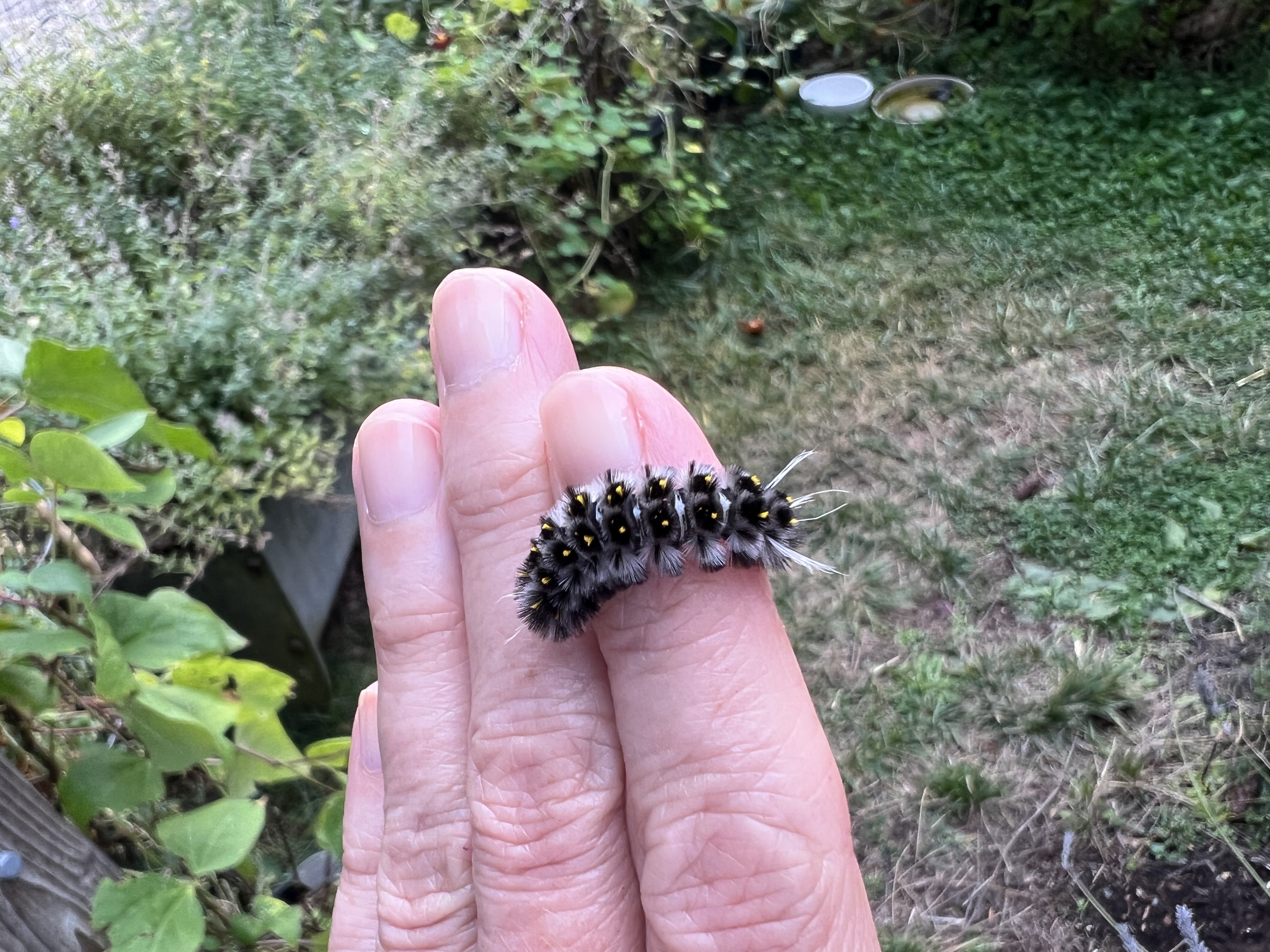
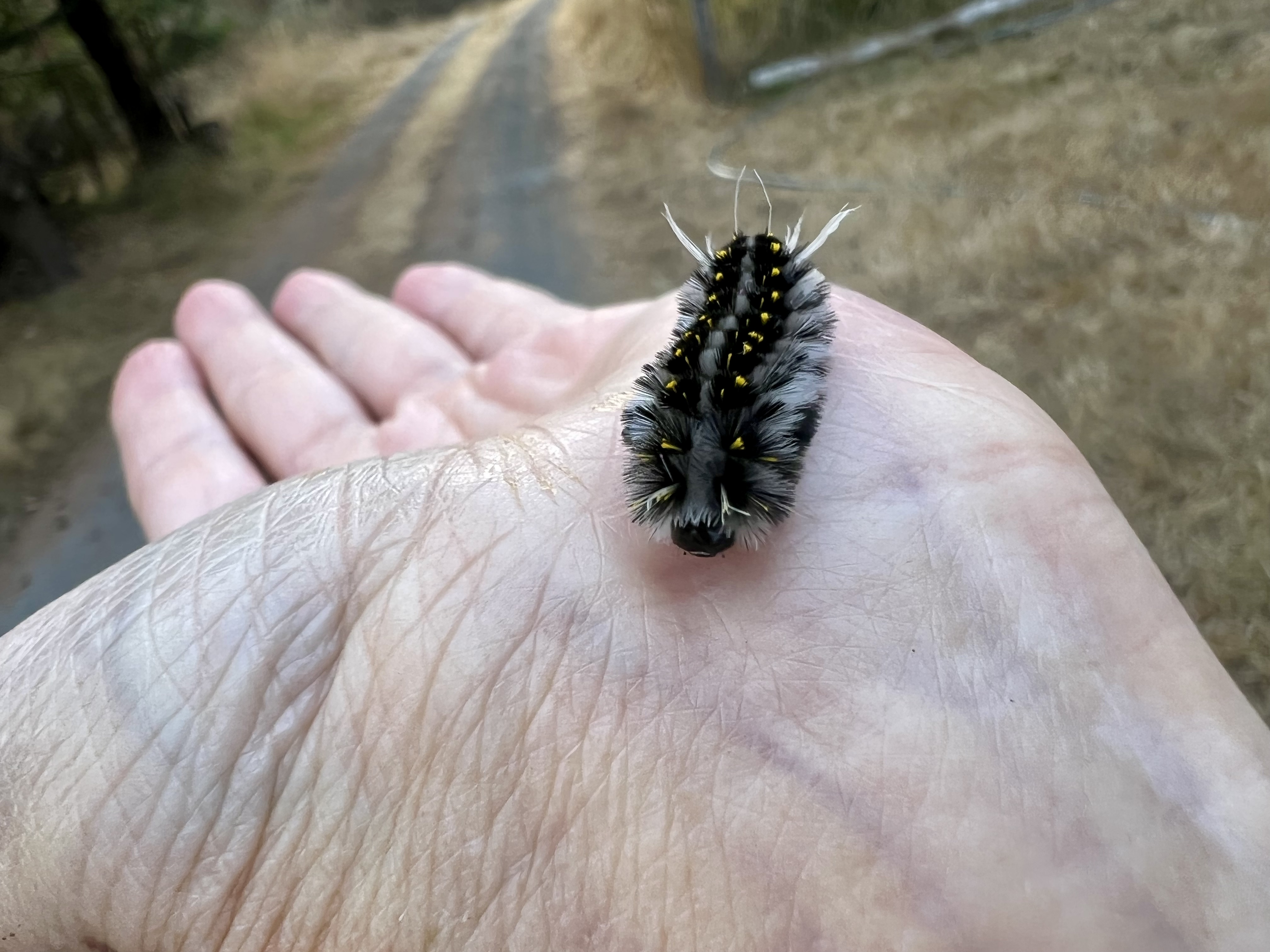
The second caterpillar I found is my absolute favorite moth species, the Rosy Aemilia moth (Lophocampa roseata). Since it was navigating down the middle of the road, I did gently relocate it to a safer spot so it wouldn’t get smooshed by the giant gravel trucks that fly up and down our once quiet country road.
Lophocampa roseata, the Rosy Amelia Moth caterpillar
Last, but not least is my new “pet.” I found her on my walk and she needed some help, so she’s come home to stay with us for some R&R, and a bit of end of life care. I’ve named her Wanda… One-Eyed Wanda. Wanda had evidently become an assault victim sometime just before I found her. The thought is that she was attacked and bitten by another female mantis – who evidently fled the scene before I got there. Poor wounded Wanda was not in great shape when I picked her up. She is missing an eye. It was not a pretty sight, but I couldn’t just leave her in the road.
She’s hanging out in the dining room tonight in a bug habitat/safe room so my indoor cats don’t batter her. I think she’s had enough battering in this life. I’m hoping she will still be able to lay an egg sack for me before she expires. Definitely plan to try and feed her tomorrow. I doctored her eye as best as I could. She can still see with the other one. Poor Wanda. 😦
Next up – Look for my post and forthcoming PowerPoint slide show about What’s Bugging Gary! Even better, check out the event (Garry Oak Conservation Symposium) in person if you’re on San Juan Island. It’s this Sunday at the Grange.
Cannings, R.A. 2007. Recent range expansion of the Praying Mantis, Mantis religiosa Linnaeus (Mantodeaz Mantidae), in British Columbia. Journal of the Entomological Society of British Columbia, 104, 73-80. https://journal.entsocbc.ca/index.php/journal/article/view/101
McAtee, W.L. 1918. Key to the Nearctic Species of the Genus Laphria (Diptera, Asilidae). The Ohio Journal of Science. v19 n2 (December, 1918), 143-172. https://kb.osu.edu/handle/1811/2019
Our native pollinators were slow to emerge this year in the San Juans because of the cool weather. Usually, we can rely on flies, solitary bees and wasps, and even moths, ants, and others to pollinate our fruit trees. I did see some species of flies out this spring, but again, weather conditions were poor.
We have PLENTY of “pollinators” out in our yard right now. So, in trying to explain to people when they ask me about a decline in native pollinators, I have a few points I like to throw out for consideration.
1) honey bees are poor pollinators to keep on the island. It has to be above 50 degrees for them to come out of the hive.
2) native flies and other insects like moths (which fly at night and we don’t typically see) are better at pollinating in cooler temperatures. While they also won’t be out if it’s rainy and super cold, they can fly in temperature ranges lower than 50 degrees F.
3) the critical importance of native pollinators may not be in their “pollination” services – but their role as pest predators and/or role in the food cycle for other organisms, and for creating biodiversity in our ecosystem, which helps keep everything healthier. I think this part is important. If you look at some of the plants we put in our gardens (native perennials), they actually do not require pollination to survive and reproduce, but do offer pollen and nectar to many insects, spiders, and hummingbirds. Looking further at the food web, we need a variety of native insects for more than pollination. Tachinid flies, syrphid flies, solitary wasps, ants, and even spiders can be pollinators, but also help regulate populations of orchard, garden, and forest pests.
My take on all of this is as humans, our focus has largely been on how to grow food over environmental conservation and maintaining balanced, functioning ecosystems. With climate change, many of our food growing operations may fail. Our fruit trees (at least none that I know of) are not native. In spite of the best intentions, conditions may decline to a point where we can’t produce great fruit here. Weather is only one limiting factor. We have poor soils or no soil in many locations, limited water resources, and the pressures of continuing development resulting in loss of natural habitats. I don’t have the answers for you when it comes to fruit production or any way to personally mitigate climate change, so we may have to figure out a substitute for growing apples, plums, and such.
Let’s go back to the importance of native pollinators though. If you think of our island as a living organism with many different functions, it is important to have all the essential pieces to keep the “body” healthy. These native pollinators (and the native plants they visit), and all the other myriad species of invertebrates, fungi, birds, mammals, amphibians, reptiles, soil, water, etc. are all part of the “body,” a body that has to fight off occasional or repeated assaults from being thrown off balance by exposures to external forces. Just like we need a variety of foods and minerals and other things to keep our body healthy, so does an ecosystem. We need all of these pieces (and that includes our native pollinators and all the other diverse species) to keep our island home healthy.
As to the fruit trees and other food crops requiring pollination, for now, some of these issues can be mediated by planting around your orchard and garden with plenty of diverse native species and providing habitat for all of these native species to develop. Some of our practices of cleaning and sanitizing our orchards and gardens, burning yard clippings, and applying fertilizers and pesticides can adversely affect the biodiversity needed to help our food production thrive.
I imagine it can be frustrating to see an orchard fail to produce fruit. My grandparents were tenant farmers and wholly dependent on growing cotton and corn and the bit of garden and livestock they had around the home on the property they did not own. When it was a drought year, and crops failed, things were utterly miserable. Destitute would be a better adjective. I believe we may have an inherent desire to be “part of the land,” and grow our own food, but sometimes, despite our best efforts, conditions aren’t favorable. Crops fail. Historically, we have tried (and failed) to control some of these external forces – like applying pesticides in amounts that probably will poison us forever.
I’ve gone way beyond the “pollinator” topic here, but it is next to impossible for me to see a one-dimensional issue. We have a much larger and more complex picture before us. How do we either re-create or maintain a healthy functioning system, navigate the perils of climate change, and feed ourselves? I like to believe that protecting diversity in our ecosystems is an important facet of this complex, multi-layered crisis we face.
I found this little green beetle (and another sad little black and yellow beetle missing its antennae) in the pool yesterday. The black and yellow beetle is alive and… well, sort of living in a special habitat right now because of those missing antennae.
The green one was completely waterlogged and lifeless. I had left it on the table next to Drago’s enclosure last night, thinking I’d pin it and keep it in my collection. I am SO GLAD I DIDN’T stick it with a pin! This morning, I found it moving those little legs around at me. It was alive! RIP woke up.
Golden Buprestid beetle (Buprestis aurulenta)
Golden Buprestid beetle (Buprestis aurulenta
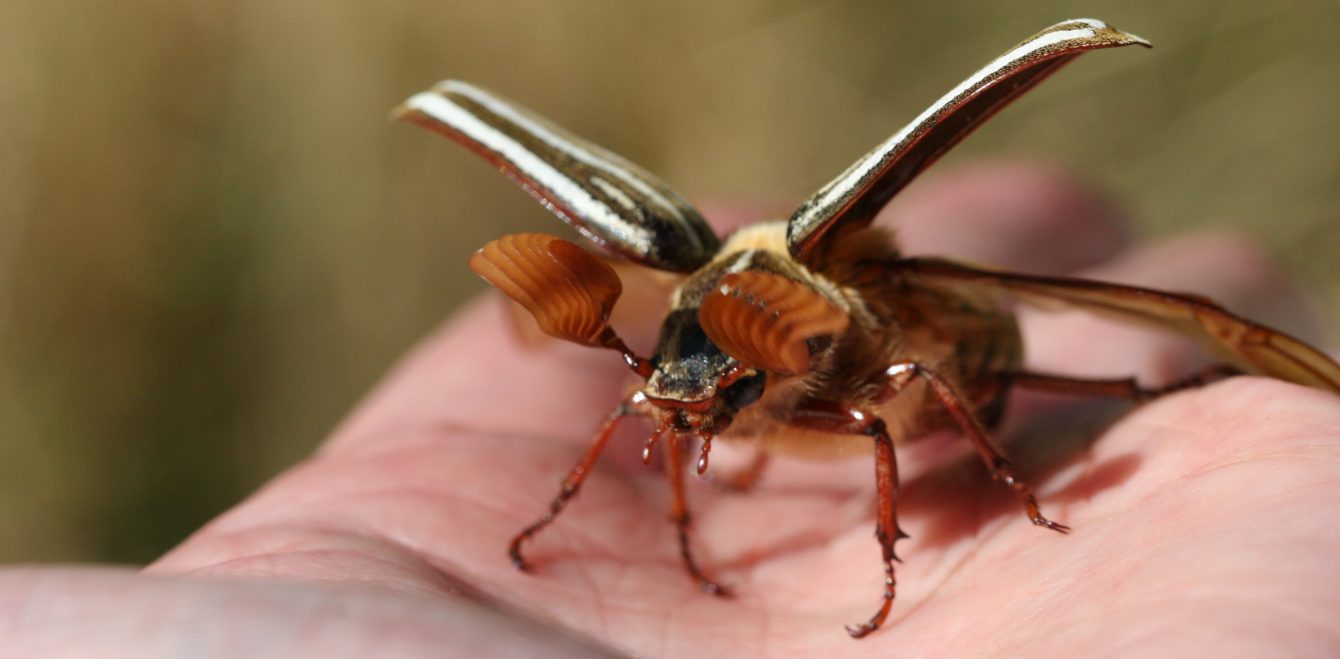
This is a Golden Buprestid Beetle (Buprestis aurulenta). They are a native species in the Pacific Northwest. I have referred to them often as the Rip Van Winkle beetle because they take such a long time to develop from egg to adult. In fact, the record is 51 years!
Why so long? Well, the developmental time depends a lot on the quality of what they’re eating (they develop in dead or dying trees) and miscellaneous environmental factors. When they come out as an adult, they leave behind a little oval hole. I think it adds character to your wood trim if you have them “sleeping” in timber used to build your house.
We had one in our door trim that didn’t make it all the way out and probably had been stuck for awhile before I noticed. It became a fascinating object to show anyone who came to visit our home.
Golden Buprestid stuck in door trim (March 20, 2016)
I’m not sure what gives them this beautiful iridescence, but they are undeniably one of nature’s jewels, thus the name “Jewel” Beetle.
Golden Buprestid Beetle – San Juan Island 07.27.2022
Golden buprestid set free to fly away in the forest.