Tag Archives: bees

Discovering the Golden Paper Wasp: A Native Treasure

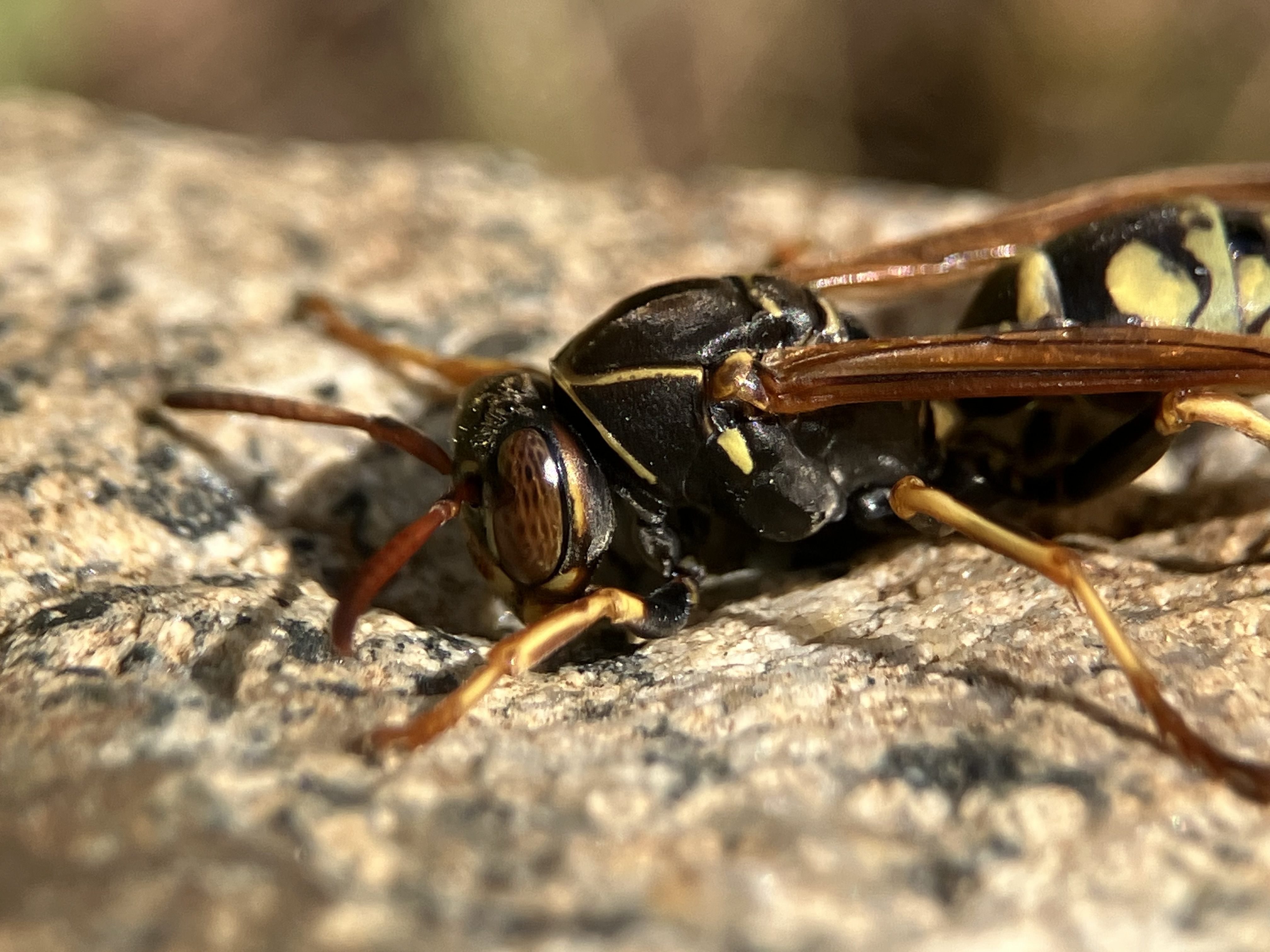
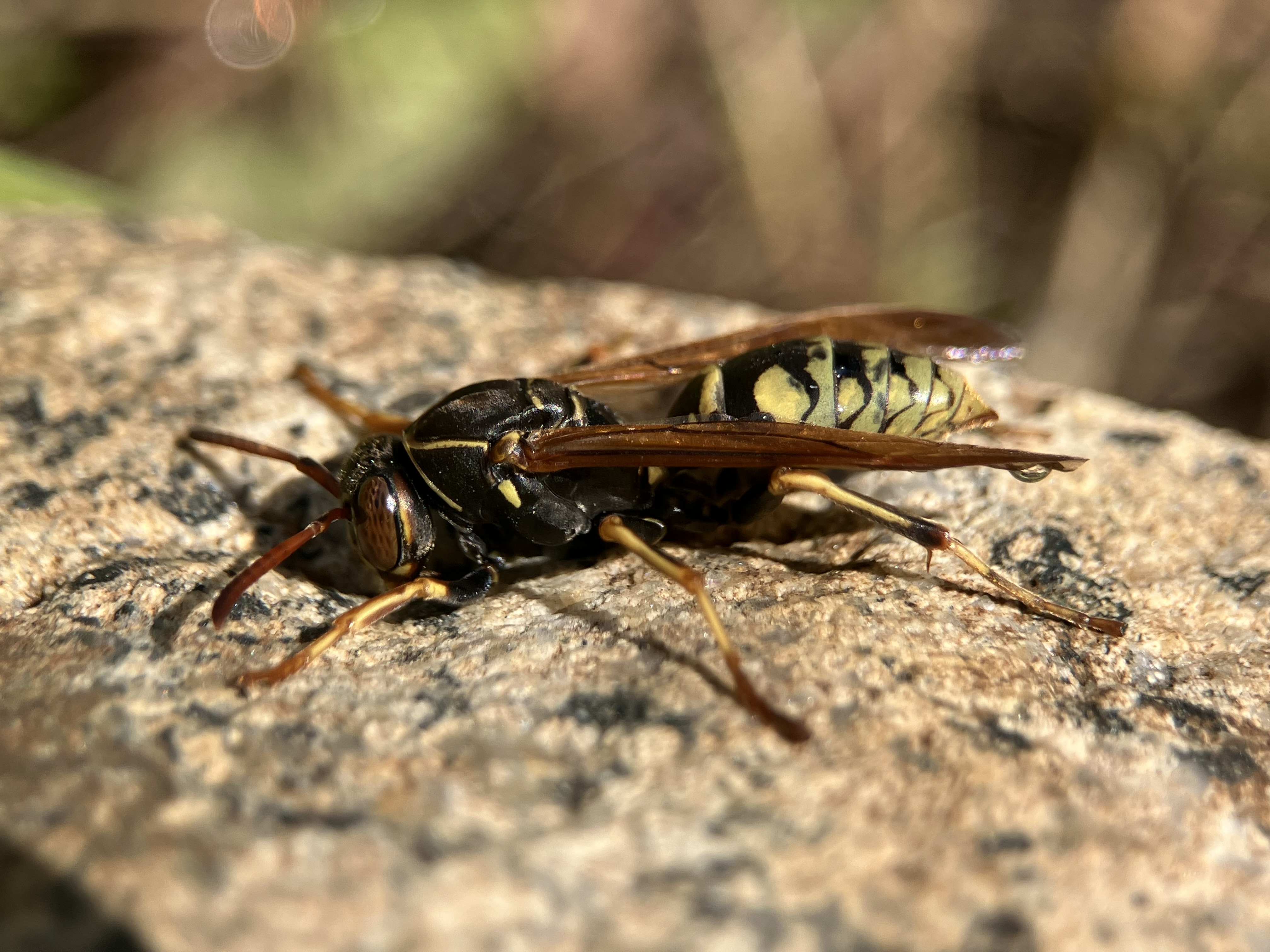
Polistes aurifer, a native paper wasp

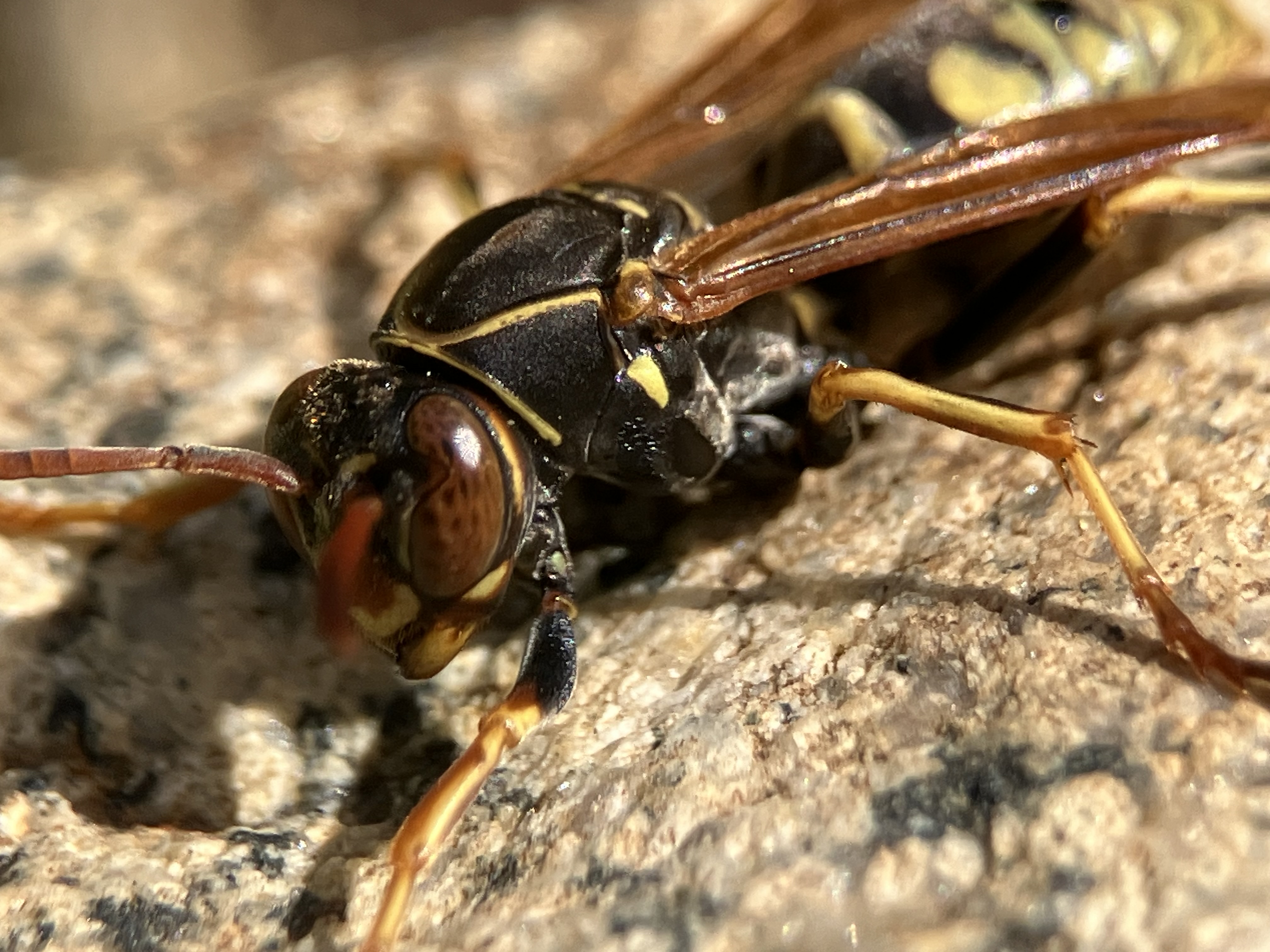
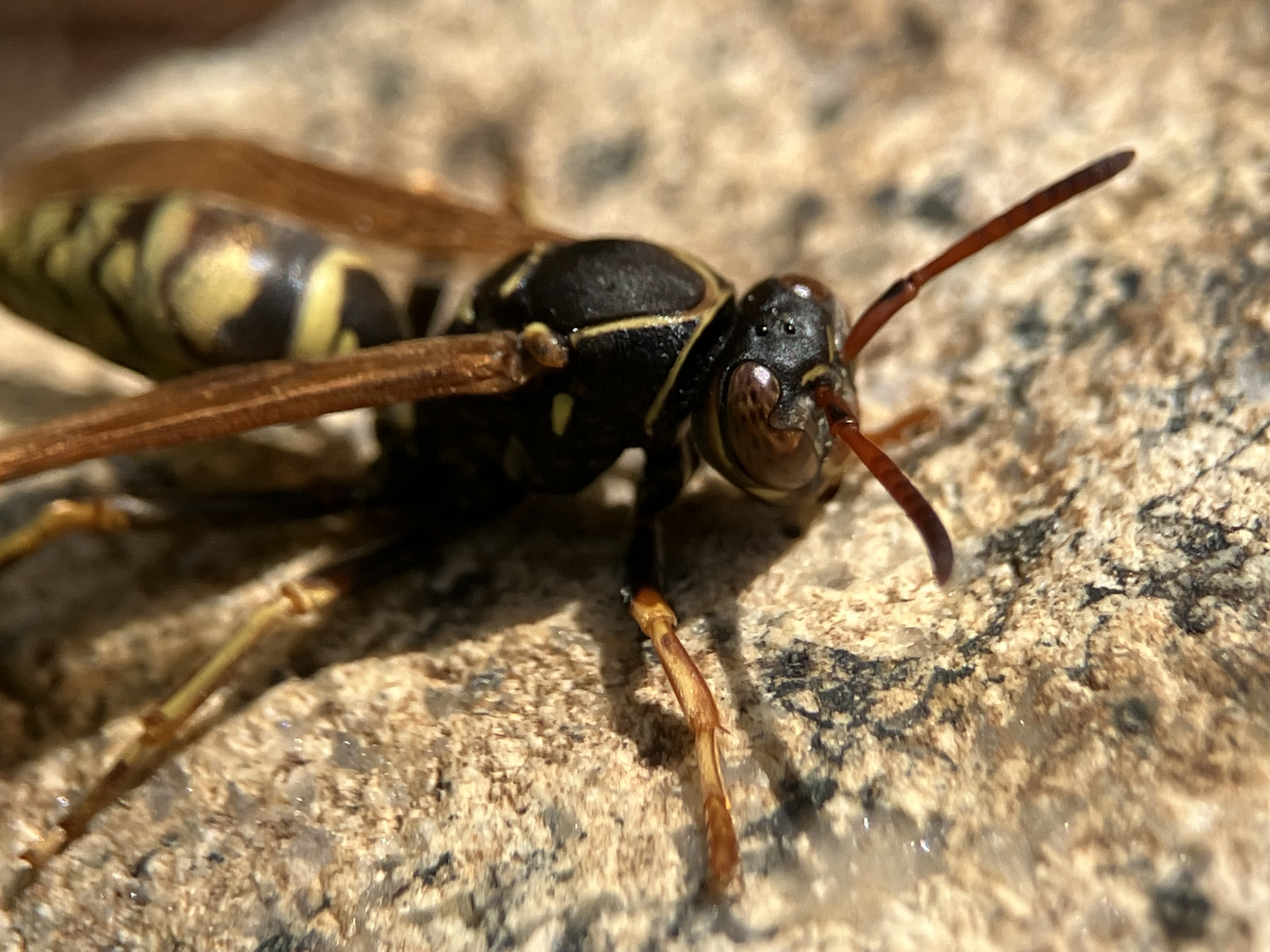
The other morning when I was watering our garden, I spied the most beautiful creature I’ve seen in a long time, a Golden Paper Wasp (Polistes aurifer). In fact, in sixteen years of living on San Juan Island, I have only seen one colony of these wasps (April 14, 2024) at the San Juan County Land Bank’s Mount Grant nature preserve. These wasps are native to North America and once considered a subspecies of Polistes fuscatus. However, P. aurifer has a western geographic distribution ranging from BC-CA to AB-MT-w.TX; ne. Mexico (Bugguide.net).

Polistes wasps build open faced nests suspended by a petiole in varied sites. Some select relatively exposed areas under eaves of structures or in shrub-type vegetation, while others utilize more protected cavities such as abandoned rodent burrows or hollow trees. Most often, the ones we see are the non native European paper wasp species (Polistes dominula), that seem very comfortable establishing their nests under the eaves of our homes.

It is believed the more frequently observed (P. dominula) are displacing native Polistes aurifer, but since it is more difficult for scientists studying insects in natural or wild habitats, most formal observations have taken place utilizing sites associated with man-made dwellings (Liebert, 2004). Liebert published a short communication in Insectes Sociaux (2004) where she describes finding ground nesting colonies of this species at an observation site in California, and concludes that the “displacement” theory may be overstated. However, given the loss of natural areas due to habitat loss/conversion, a decline in populations of the native P. aurifer (I believe) would more accurately be attributed to humans. Humans also unfortunately resort to wasp spray to eradicate nests around their homes without understanding that most nests pose minimal or no risk to human comings and goings.

Polistes wasps (native and non-native) are generally considered to be beneficial insects. They are pest predators, capturing and dismembering caterpillars to feed larvae they are rearing. In Eastern and Southern regions of the U.S., some species of Polistes wasps exert significant pressure on the cotton bollworm and the tobacco hornworm, both pests of considerable economic significance.

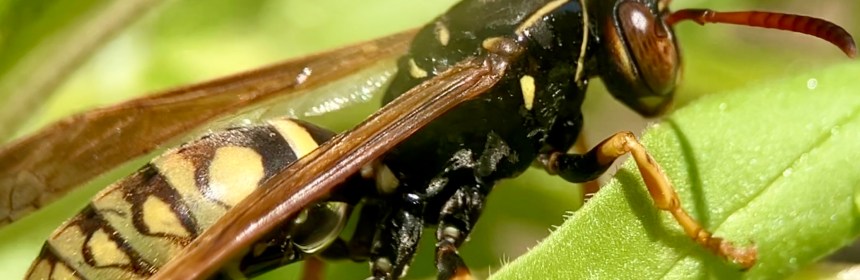
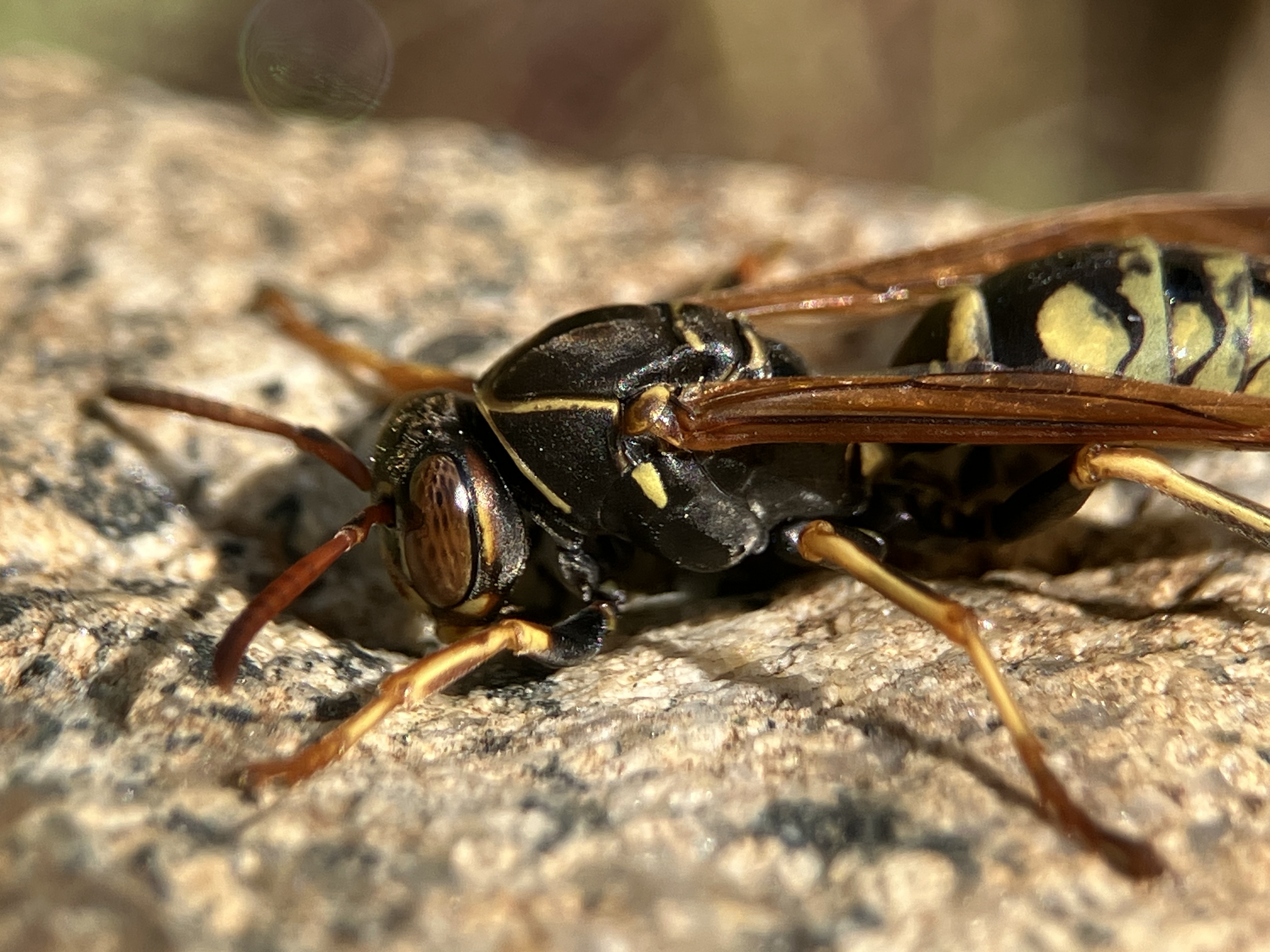
If you spy one of these Western natives, you’ll know immediately because they have the most beautiful golden brown or caramel colored eyes!

Thanks for reading. 🙂

Polistes aurifer
Polistes aurifer
Polistes aurifer

References

Bohart, G. E. 1942. Notes on Some Feeding and Hibernation Habits of California Polistes (Hymenoptera, Vespidae). Pan-Pac. Ent. 18(1): 30-31. https://digitalcommons.usu.edu/piru_pubs/15/

Buck, M., Marshall, S.A. and Cheung D.K.B. 2008. Identification Atlas of the Vespidae (Hymenoptera, Aculeata) of the northeastern Nearctic region. Canadian Journal of Arthropod Identification No. 5: 492 pp. (PDF version).
Published on 19 February 2008. With 3 Tables and 1073 Figures.

Bugguide. 2023. Polistes aurifer. Bugguide.net. https://bugguide.net/node/view/24972

Liebert, Aviva. (2004). Ground nesting in the paper wasp Polistes aurifer (Hymenoptera, Vespidae). Insectes Sociaux – INSECTES SOC. 51. 99-100. 10.1007/s00040-003-0714-0.

p.s. I found another (naturally deceased) individual in our barn/shop, so perhaps we have had these around and I’ve just been missing them.

Polistes aurifer

Fantastic Fly Friday

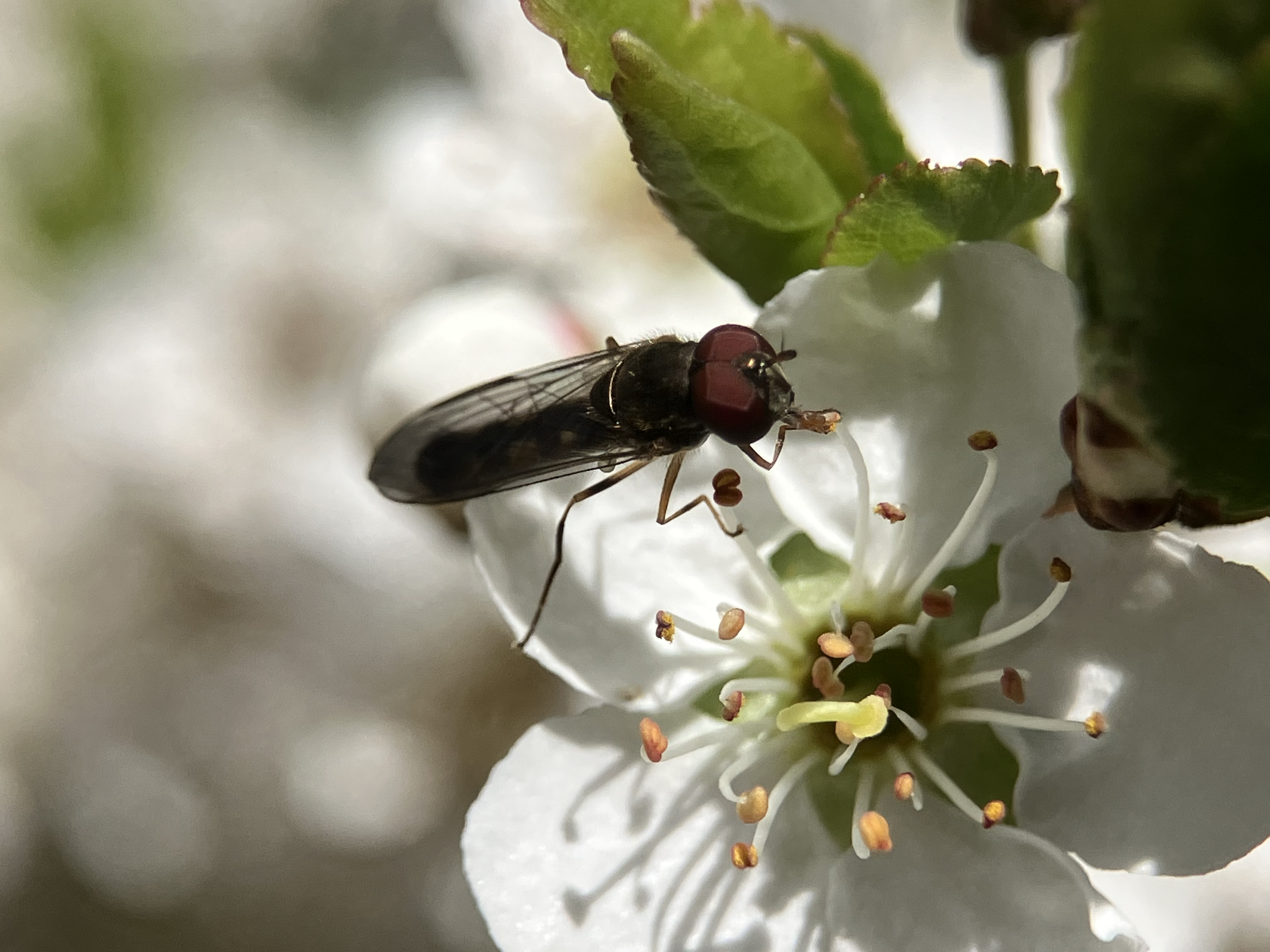
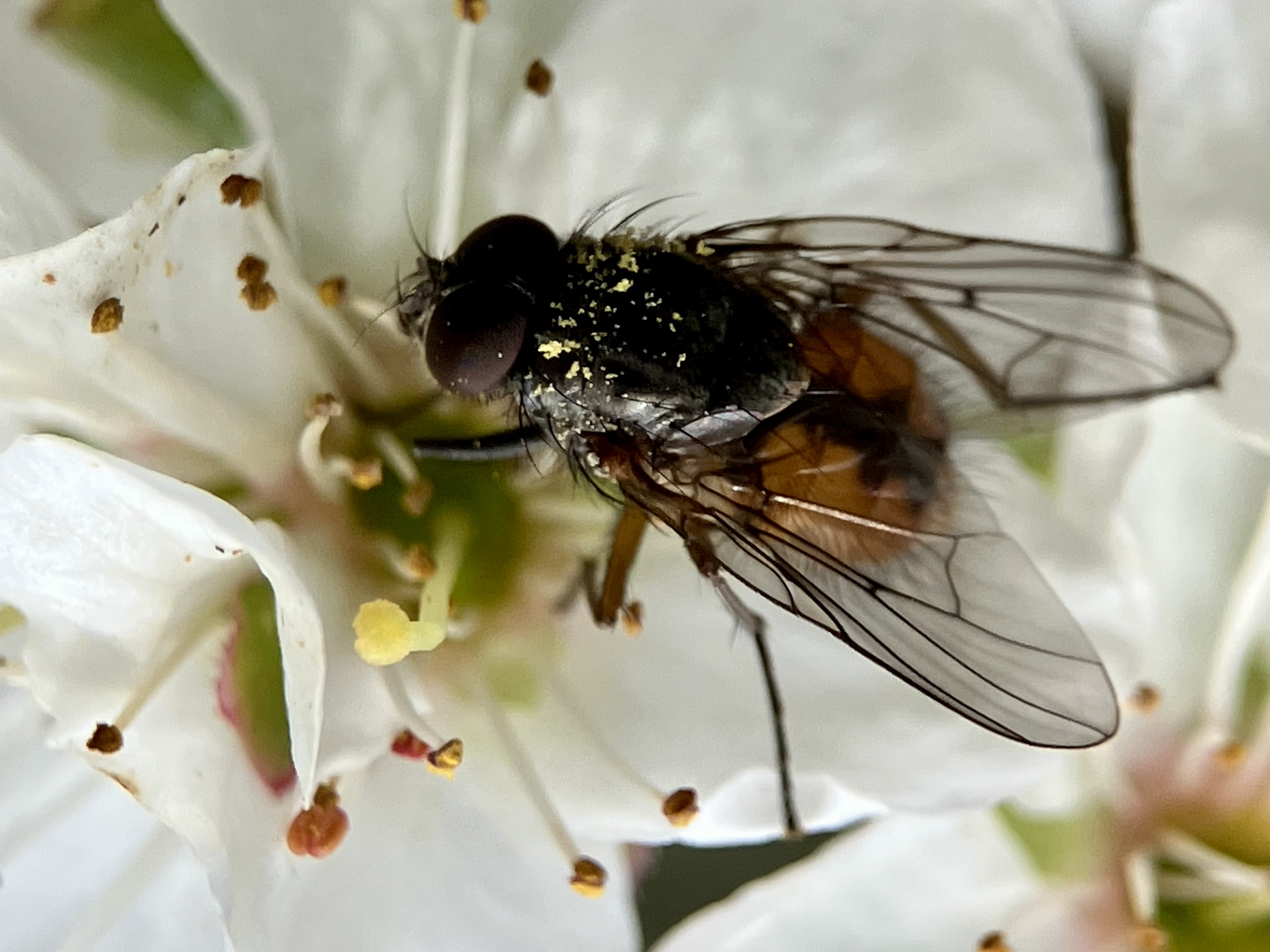
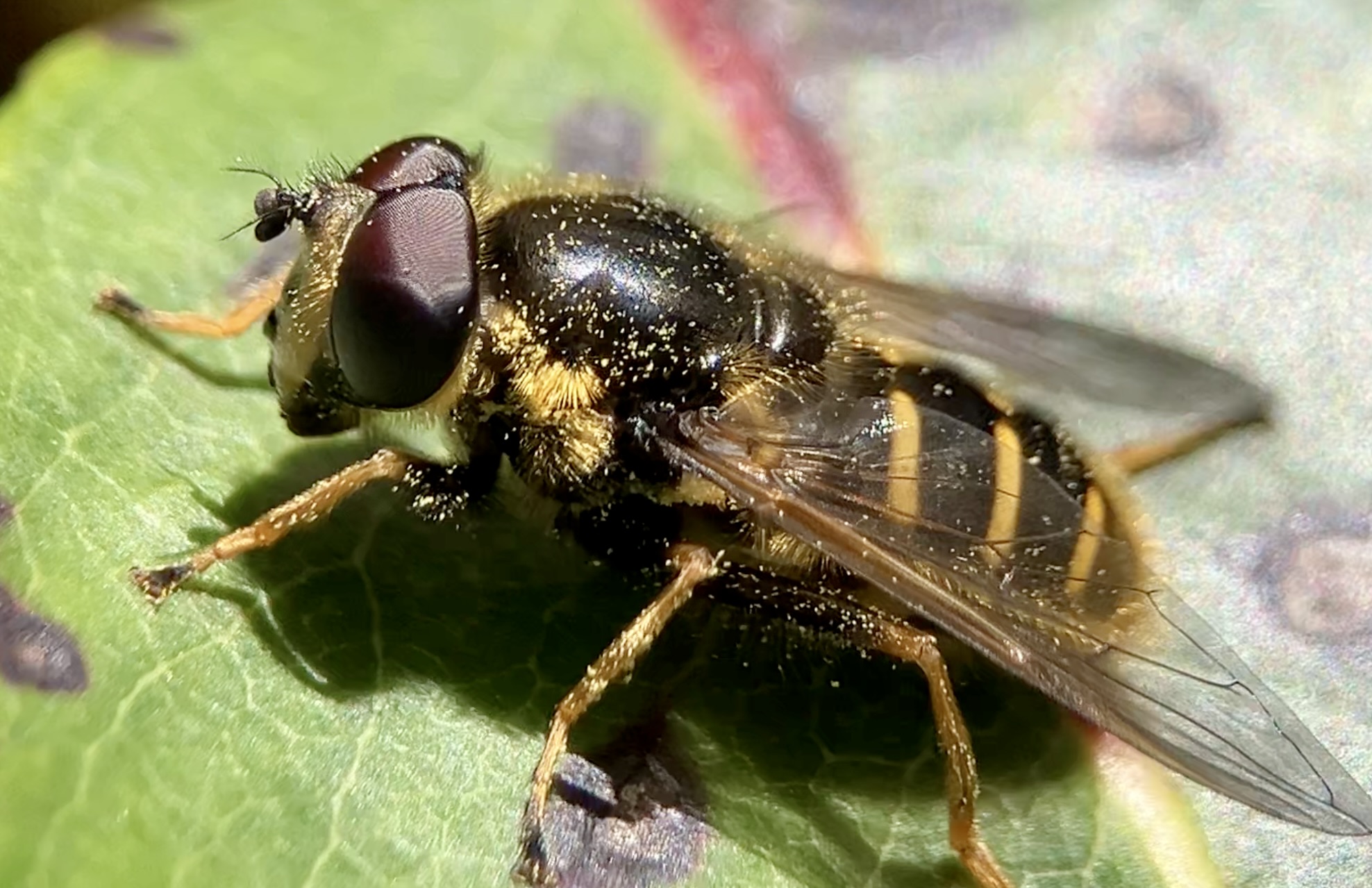
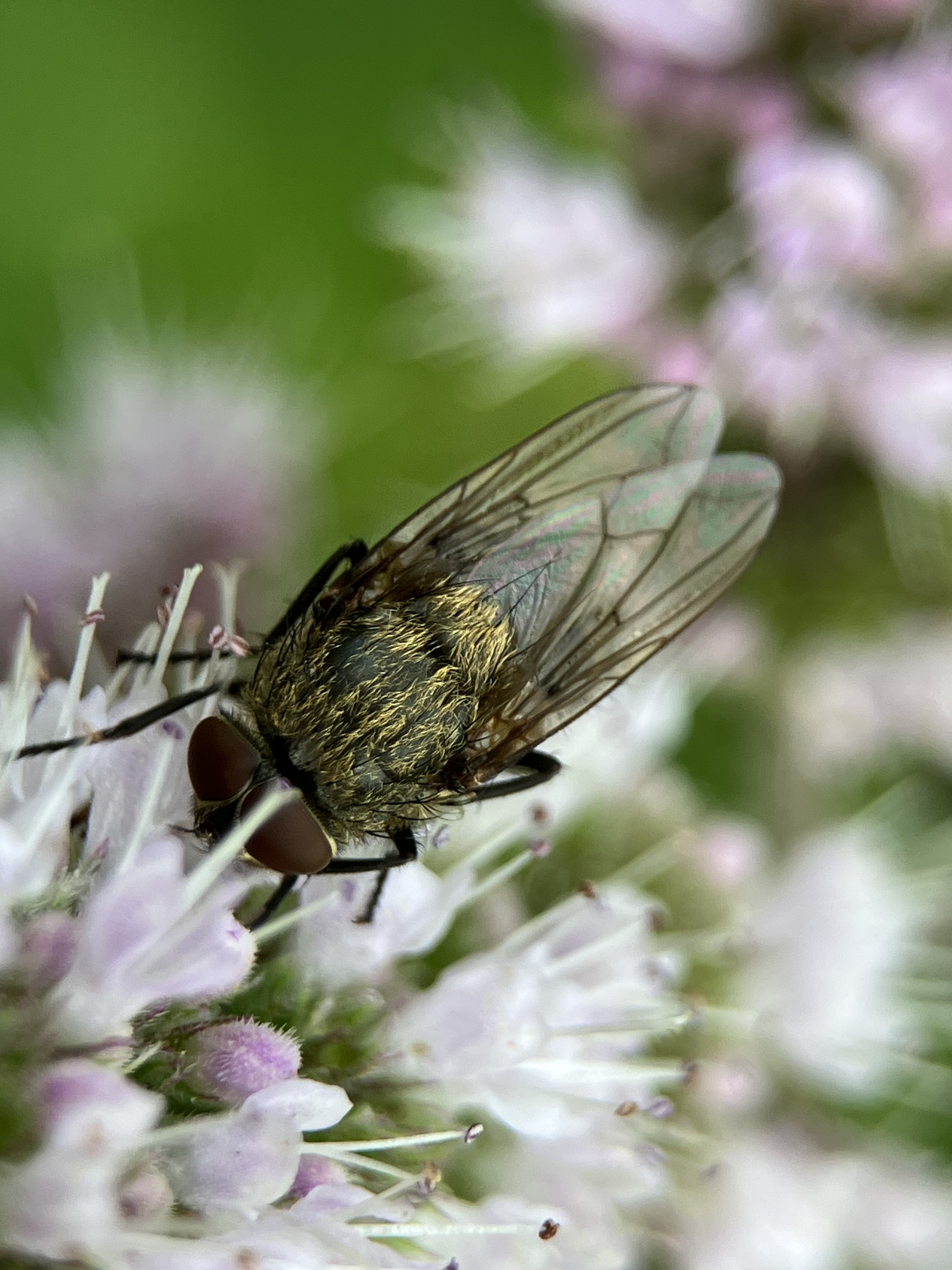
I thought I’d write up a short post about all the wonderful flies (and a few others) pollinating our plum trees in this cool spring weather. Why feature the flies? Well, for starters, the plum tree blossoms are white and flies love the color white. Another reason to feature the flies is because they are under-recognized and under appreciated, but very important pollinators. Some fly larvae even serve as pest predators, eating aphids. Others, like the tachinid fly below, use caterpillars that defoliate trees as hosts for their larvae to develop. Flies are also awesome because they do not sting! Some even “dance!” My favorite fly hasn’t shown up yet. It’s a Conopid Fly. More about that one later though…

Tachinid Fly (Epalpus signifier)

This past week in the media, there have been so many posts about the decline in honey bees. While there are some (unwanted) honey bees showing up on days when the temperatures climb above 50 degrees, honey bees aren’t active if it is cooler. Flies, on the other hand, are quite busy at work pollinating and do just fine when it might only be 40 outside. Flies are awesome! They need our support and appreciation.

I’d like to add (and I do know something about this because of my entomology background), that honey bees are just not necessary on San Juan Island. In fact, they might even be a very bad thing. They showed up at our plum tree as the temperature warmed up the other day, and as they arrived in increasing numbers, they kicked off ALL of the native pollinators that I had been observing. 😦

For honey bees to fly out of the hive and forage, they need temperatures above 50 degrees. In my experience keeping bees (as part of my graduate school work), they typically do not survive well on the island unless they are fed supplemental sugar water. Think about the ecological footprint of growing sugar to feed the bees!

Feeding honey bees attracts (and supports) the buildup of yellow jacket populations which are attracted to honey bee hive resources (including eating the honey bee brood developing in the hive), and honey bees also bring pests and pathogens that impact native bees (especially bumble bees). One more thing! If you are growing tomatoes, bumble bees are your pollinators, not honey bees.

I hope you will read and consider this recent study published about how honey bees were negatively impacting native pollinators on Giannutri Island in Italy. They were causing a decline in the populations of wild bees. In fact, the study cited an “alarming 80% decline in wild bee abundance over 4 years” (Pasquali et al. 2025). You can access this study to read it yourself here: https://www.cell.com/current-biology/pdfExtended/S0960-9822(25)00262-3

Enjoy the gallery of the native pollinators that I was fortunate to photograph and be able to share. Be a fly fan! Be a native bee fan! Learn about our unseen, but important night time pollinators (moths), and PLEASE LEAVE THE HONEY PIGS for the mainland industrial farm operations.

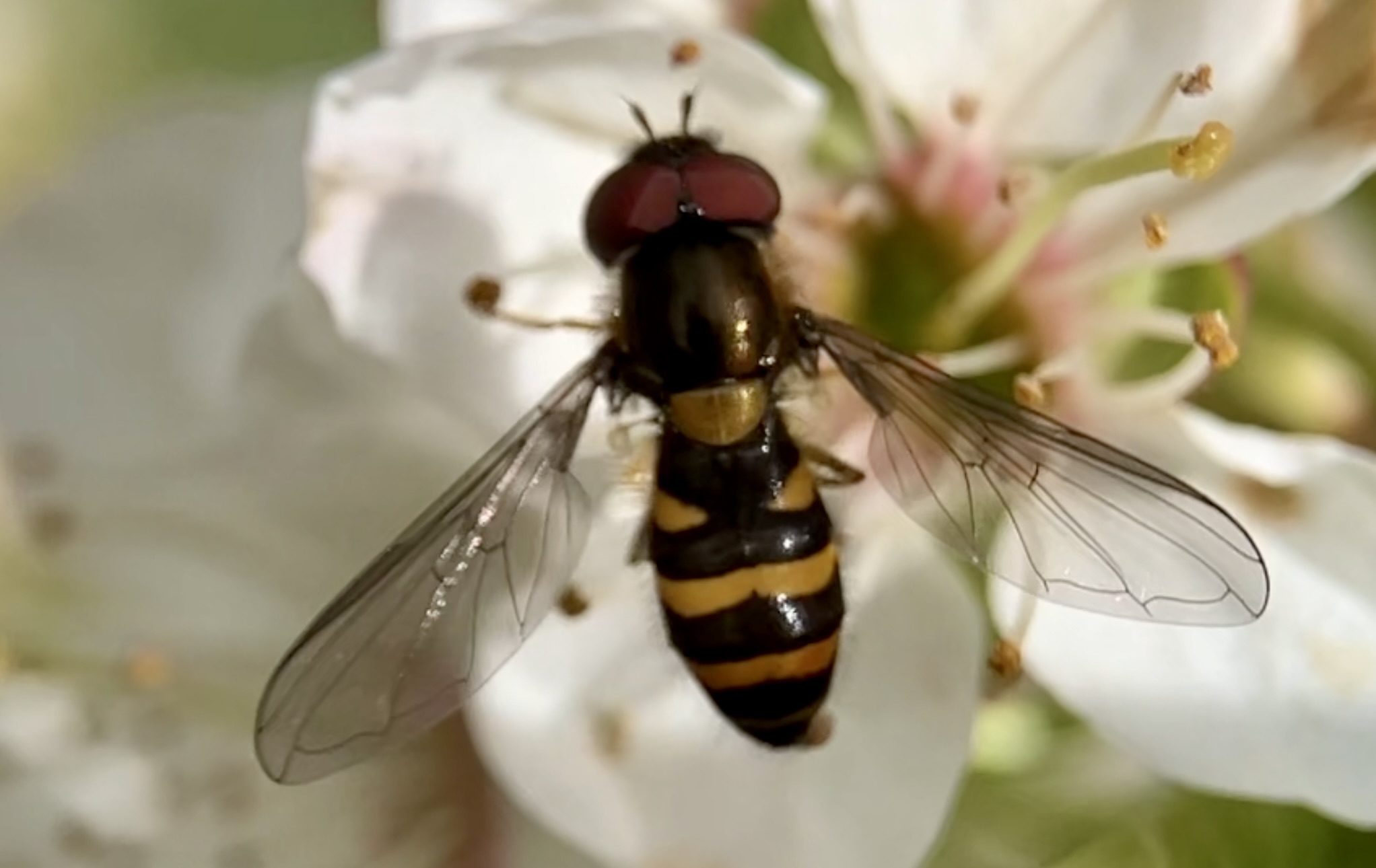
Syrphid Fly (Tribe Syrphini )
Golden Dung Fly (Scathophaga stercoraria)
Cluster Fly (Genus Pollenia)

Musca autumnalis
Sericomyia chalcopyga Western Pond Fly
Bibionid Fly (Bibio sp.) and Hybotidae Dance Fly (Bicellaria sp.)
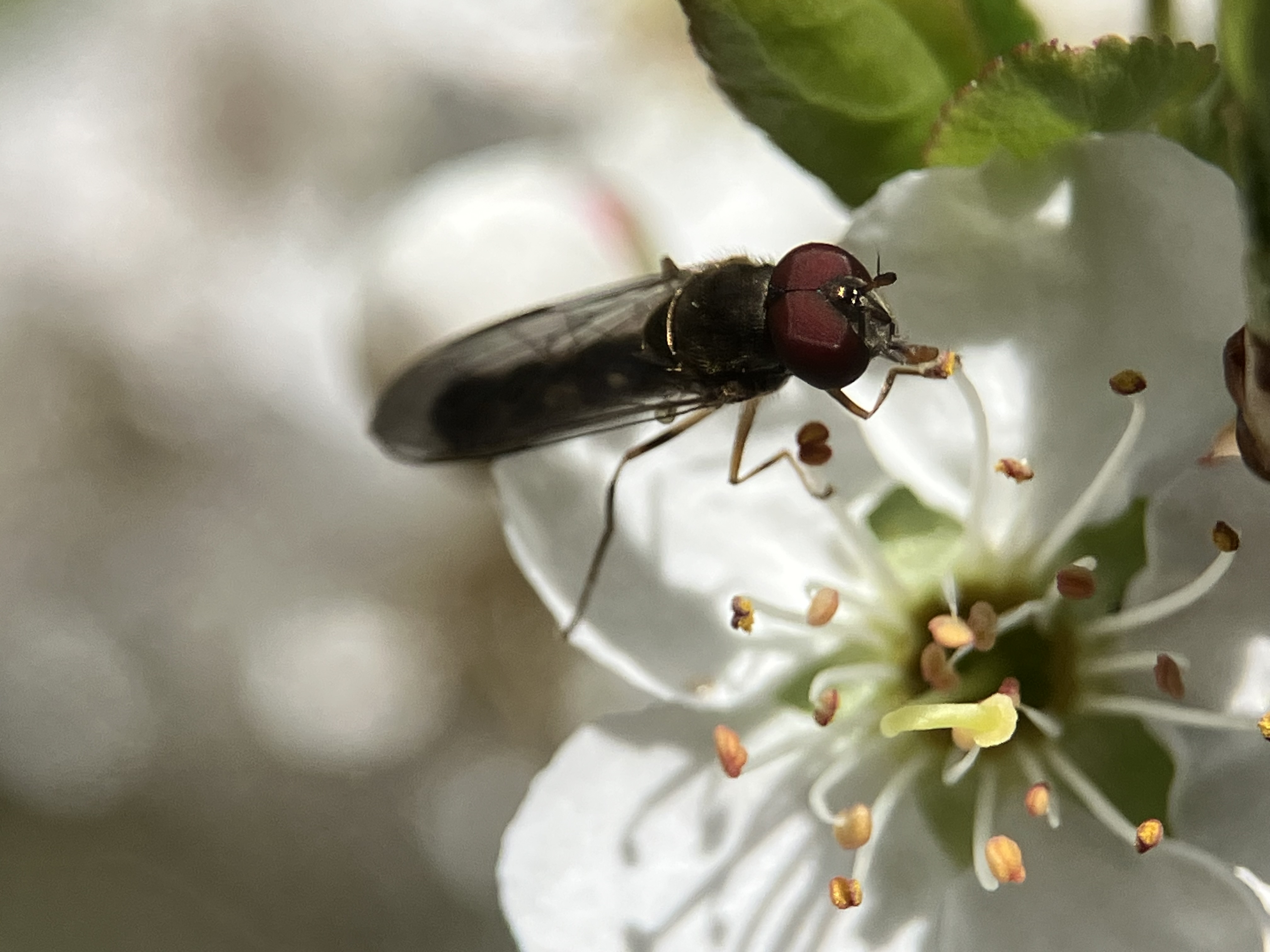
(Melanostoma mellinum) Variable Duskyface Fly

References

Anderson, H. L. D. (2024). Nocturnal moth communities and potential pollinators of berry agroecosystems in British Columbia (T). University of British Columbia. Retrieved from https://open.library.ubc.ca/collections/ubctheses/24/items/1.0447737

KEARNS, C. A. 2001. North American dipteran pollinators: assessing their value and conservation status. Conservation Ecology 5(1): 5. [online] URL: http://www.consecol.org/vol5/iss1/art5/

Pasquali, Lorenzo & Bruschini, Claudia & Benetello, Fulvia & Bonifacino, Marco & Giannini, Francesca & Monterastelli, Elisa & Penco, Marco & Salvati, Vania & Simbula, Giulia & Skowron Volponi, Marta & Smargiassi, Stefania & van Tongeren, Elia & Vicari, Giorgio & Cini, Alessandro & Dapporto, Leonardo. (2025). Island-Wide Removal of Honey Bees Reveals Exploitative Trophic Competition with Strongly Declining Wild Bee Populations. 10.2139/ssrn.5081459. https://www.sciencedirect.com/science/article/pii/S0960982225002623#:~:text=Article-,Island%2Dwide%20removal%20of%20honeybees%20reveals%20exploitative%20trophic%20competition,strongly%20declining%20wild%20bee%20populations

Ssymank, A., Kearns, Bonn & Carol. Flies – Pollinators on two wings. The Diptera Site. https://diptera.myspecies.info/diptera/content/flies-–pollinators-two-wings

Where ARE all the pollinators?

Yellowish Cuckoo Bumble Bee (Bombus flavidus)

Lots of folks are asking, “Where are the pollinators?”  I’m getting comments and questions about the absence of bees.  Should we be concerned? Probably.

It’s been a weird spring/summer with lots of temperature fluctuations.  That impacts when things bloom and what food is available.  Bumble bees can fly when the temperatures are lower and I did see and hear them when our Golden Chain tree was in full bloom about two weeks ago.   They may be on other blooming florals right now – like blackberries.  If you have Catmint (Nepeta), Lavender, and Tomatoes or Nasturtiums about, the bumble bees should find these in another week or so.   Usually I see them on Foxglove (Digitalis) and also in our Rhododendrons, but Foxglove is biennial and we don’t have any blooming this year, and I believe the Rhododendrons are already done blooming for the season.

In general though, I am noticing an overall decline in abundance of many insect species.  We have two above ground, freshwater pools for water catchment and in years past, there have been lots and lots of insects needing rescue because they fell in and couldn’t get out.  I was skimming bugs twice a day and this year, I might have found 4 or 5 needing rescue.  That’s 4 or 5 total – when I used to find 20-30 floating in the morning.

That said, there are a few species where populations seem quite abundant.  I’ve found lots of the tiny and very cute Broom Seed Beetles (Genus Bruchidius) everywhere in the yard.   If you see these little black peppercorn-sized beetles, they are friends (a biocontrol for scotch broom).  

Broom seed beetles on Nasturtium

So, is the overall decline in invertebrate populations because of climate change or something else?  I think the decline of invertebrate species is due to a multitude of factors:  habitat loss due to land use changes, weather fluctuations/climate change, introduction of pathogens as species move into previously unoccupied territory (due to climate shifts), but especially from pollution and contamination by all the products we use. These are additive and include anything and everything that leaves trace residues behind.   It’s multifactorial and complex.  Humans and our practices are altering ecosystems.  

How to help?  I don’t have any great answers.  Can the few who actually care initiate changes and change the minds of the masses of people who don’t care and don’t want to change?  Our education system isn’t helping.  We continue to promote attitudes (even as adults who should know better) that evoke fear responses around insects, spiders, (and don’t even get me started on snakes) in our children.  Instead of teaching children about ecology, biology, and life sciences, we shriek when we see a spider or a roach or mosquito and grab the can of raid.   We want to garden and seek out gardening advice, but historically, even the extension communities have been pretty un-environmental in their approach to insects.  For that matter, most of our Land Grant Universities’ agricultural and entomology  departments have been funded by the large agrochemical industry.  They have promoted use of pesticides over cultural practices.  The agrochemical industry makes tons of pesticides that are applied all over the world every year.  It’s a huge part of our economy.  MONEY trumps nature.

My advice? Be curious about what you are using.  Learn about ecology and food webs.  OBSERVE nature.  Investigate where your food comes from.  When you buy garden or landscape plants, ask the company about what practices they are using to grow these plants.  Choose native plants for landscaping.  Look around your home and read the labels on what products you are using – especially for any products going down the drain.   If you have pets, look up the ingredients on the products you use for treating fleas and ticks.  Flea and tick treatments have neonicotinoids that are excreted in urine and poo.  Ask your vet about alternatives. We all need to think about the implications of this.  Neonicotinoids are killing our pollinators and other invertebrates.  

References and further reading

Bonmatin JM, Giorio C, Girolami V, Goulson D, Kreutzweiser DP, Krupke C, Liess M, Long E, Marzaro M, Mitchell EA, Noome DA, Simon-Delso N, Tapparo A. 2015. Environmental fate and exposure; neonicotinoids and fipronil. Environ Sci Pollut Res Int. Jan;22(1):35-67. doi: 10.1007/s11356-014-3332-7. Epub 2014 Aug 7. PMID: 25096486; PMCID: PMC4284396. https://pubmed.ncbi.nlm.nih.gov/25096486/

Webb DT, Zhi H, Kolpin DW, Klaper RD, Iwanowicz LR, LeFevre GH. 2021. Emerging investigator series: municipal wastewater as a year-round point source of neonicotinoid insecticides that persist in an effluent-dominated stream. Environ Sci Process Impacts. May 26;23(5):678-688. doi: 10.1039/d1em00065a. PMID: 33889902; PMCID: PMC8159912. https://www.ncbi.nlm.nih.gov/pmc/articles/PMC8159912/

University of Sussex. 2020. Pesticides commonly used as flea treatments for pets are contaminating English rivers. ScienceDaily. 17 November http://www.sciencedaily.com/releases/2020/11/201117085940.htm https://www.sciencedaily.com/releases/2020/11/201117085940.htm#:~:text=Researchers%20at%20the%20University%20of,far%20exceeded%20accepted%20safe%20limits

Beyond Pesticides. 2018. Victory! State Finds Imidacloprid Insecticide Too Risky For Use in Willapa Bay. Daily News Blog. https://beyondpesticides.org/dailynewsblog/2018/04/victory-imidacloprid-risky-use-sensitive-bay-permit-request-denied/

Beyond Pesticides. 2017. Poisoned Waterways. https://www.beyondpesticides.org/assets/media/documents/bp-37.1-PoisonedWaterways-cited2.pdf

Is He Stuck or Just Sleeping?

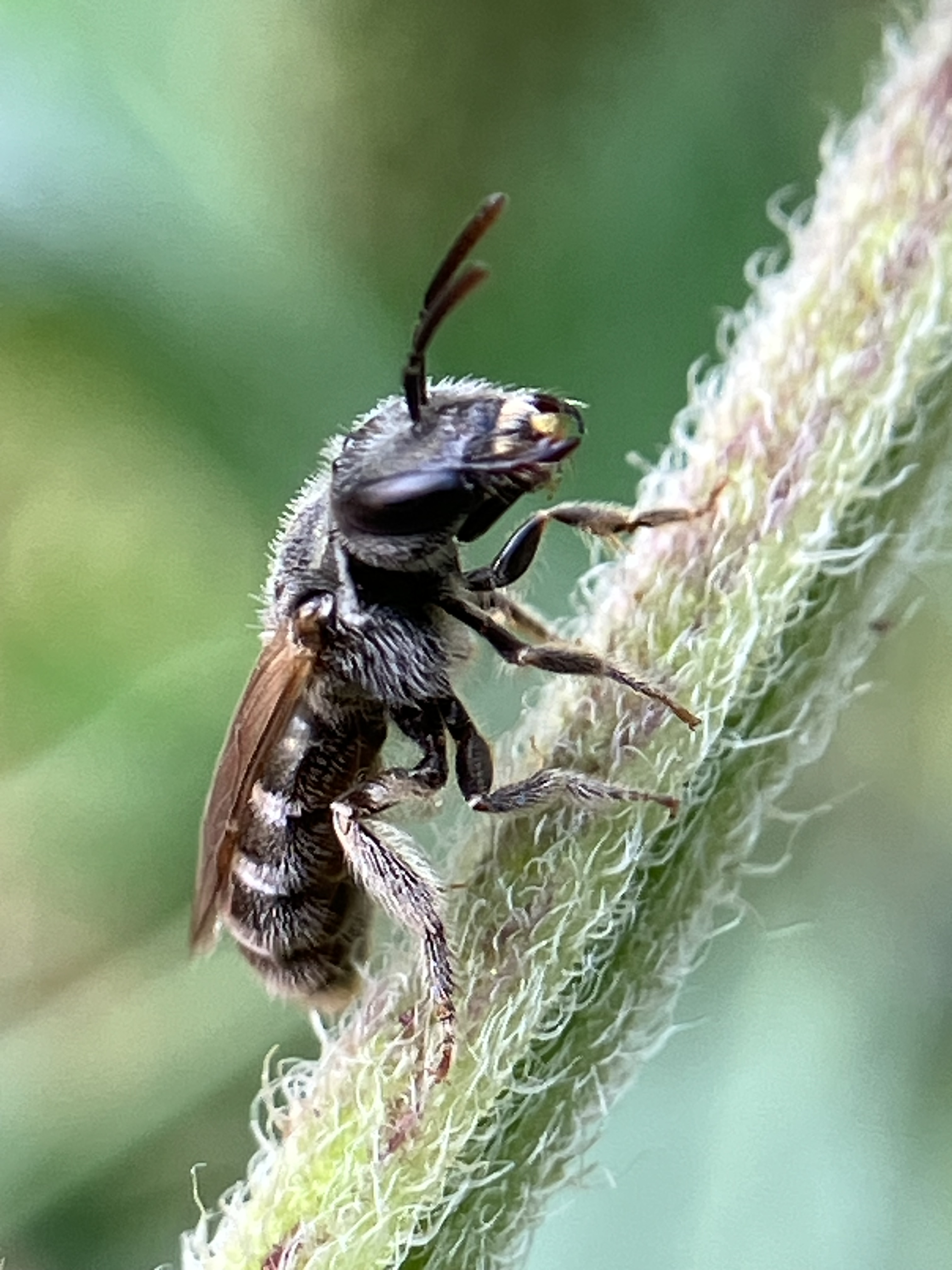
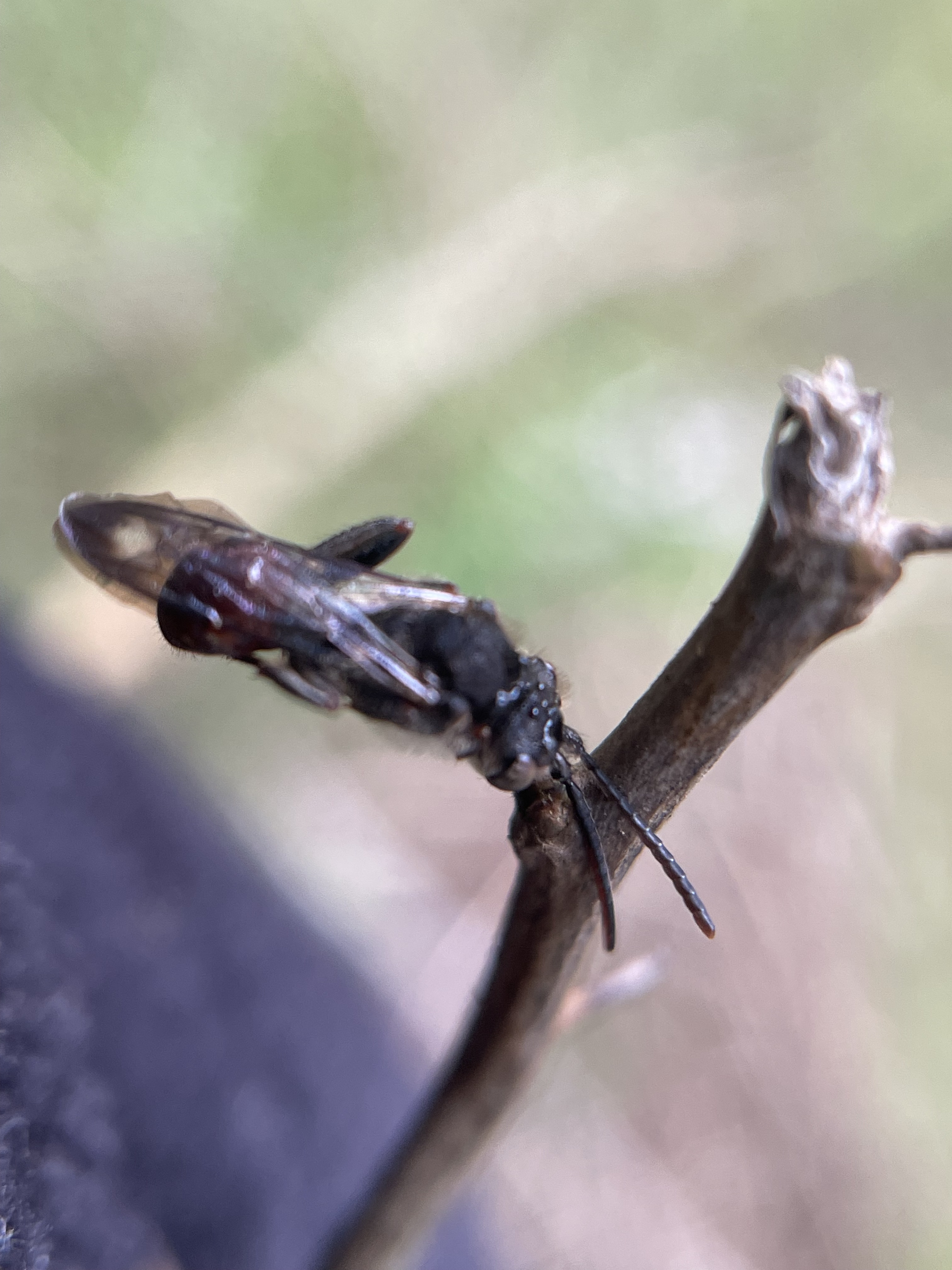
I found this tiny bee who looked to be stuck to a thorn on my Bois D’Arc tree this afternoon. At first glance, I thought perhaps a March fly, and a dead one at that, but it turned out this is a most likely a “he” Nomad bee, and he wasn’t stuck at all, but just sleeping.

Nomad Bee – Stuck or Just Sleeping (March 26, 2022)

I learned something new today about bees that I did not know. My friend, Eric Eaton’s wife (link to Eric’s book about wasps in my Read More section) , shared with me that some bees will often sleep in this manner, attached to a substrate like this thorn or a twig, by their mandibles. Thanks Heidi! 🙂

Nomad Bee – Stuck or Just Sleeping (March 26, 2022)

Nomad Bee – Stuck or Just Sleeping (March 26, 2022)
Nomad Bee (March 26, 2022)

My bee was definitely gripping the end of the thorn with its mandibles. Before I found out my bee was only napping, I wasn’t certain what was going on. I worried maybe the bee had fallen victim to some weird fungus and was now locked in a death vise. Worries unfounded! The little bee released his grip as I was about to clip the end of the twig (with bee attached) and take it into the house to view under the microscope.

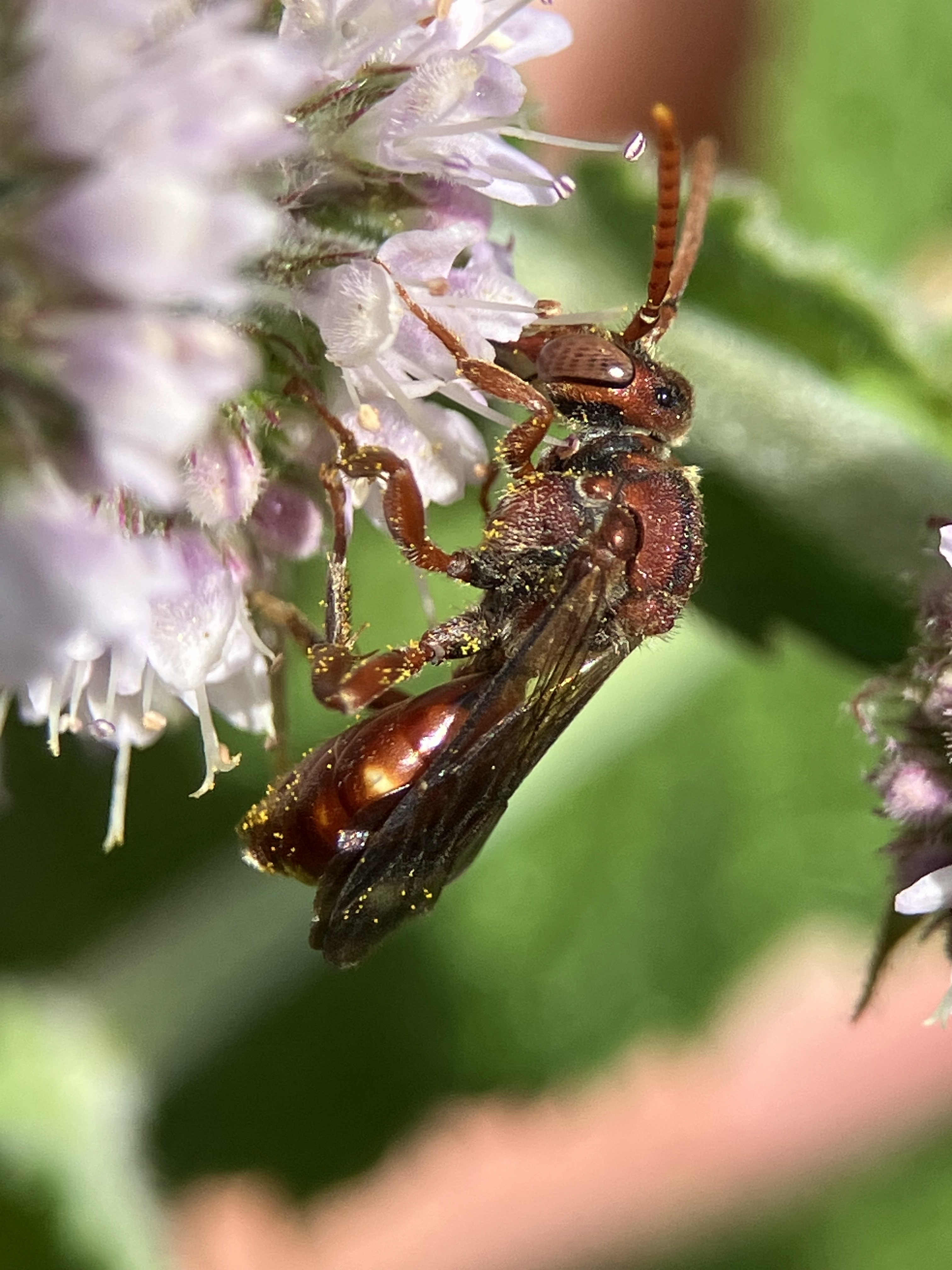
Nomad bees are pretty cool. They are cuckoo bees, cleptoparasites of other bees (usually Andrena bees or Melitta bees) and target the nest provisions gathered by the host bees for their own young. Nomad bees will find the nests of host bees using olfactory and visual cues. The fertilized female will lay her eggs in these nests, where her offspring will develop after devouring the offspring of the host bee, and eating the food the host parent had provisioned.

Nomad Bee (March 26, 2022)

Check out the video footage of this little bee as he woke up this afternoon and read more about Nomad bees in the attached links in my Read More section.

Read More About Nomad Bees Here

  1. Bugguide.net – Nomada https://bugguide.net/node/view/5211
  2. Alexander, B. A. 1994. Species-groups and cladistic analysis of the cleptoparasitic bee genus Nomada (Hymenoptera: Apoidea). University of Kansas Science Bulletin 55: 175-238. (Full Text)
  3. Eaton, Eric. 2021. Wasps: The Astonishing Diversity of a Misunderstood Insect. Princeton University Press. https://press.princeton.edu/books/hardcover/9780691211428/wasps
  4. Rankin, C. 2021. Introducing the Nomad Bees. Natural History Society of Northumbria. https://www.nhsn.org.uk/nomad-bees/

Thanks for reading!

Cynthia Brast is an independent entomologist living on San Juan Island. Check out her YouTube Channel, Bugging You From San Juan Island to see more amazing 6 and 8-legged creatures found in the San Juans. https://www.youtube.com/user/buggingyoufromsji/featured

Is our fear of murder hornets turning us into the real murderers?

A neighbor sent me this video footage late last night.  She asks, “Why are all the black and yellow bumble bees on the ground dying?”  This occurred locally at an island lavender farm where the bumble bees are LOVED and no one is applying any pesticides.  In the video you can certainly see the bees she refers to.  Why only those?  

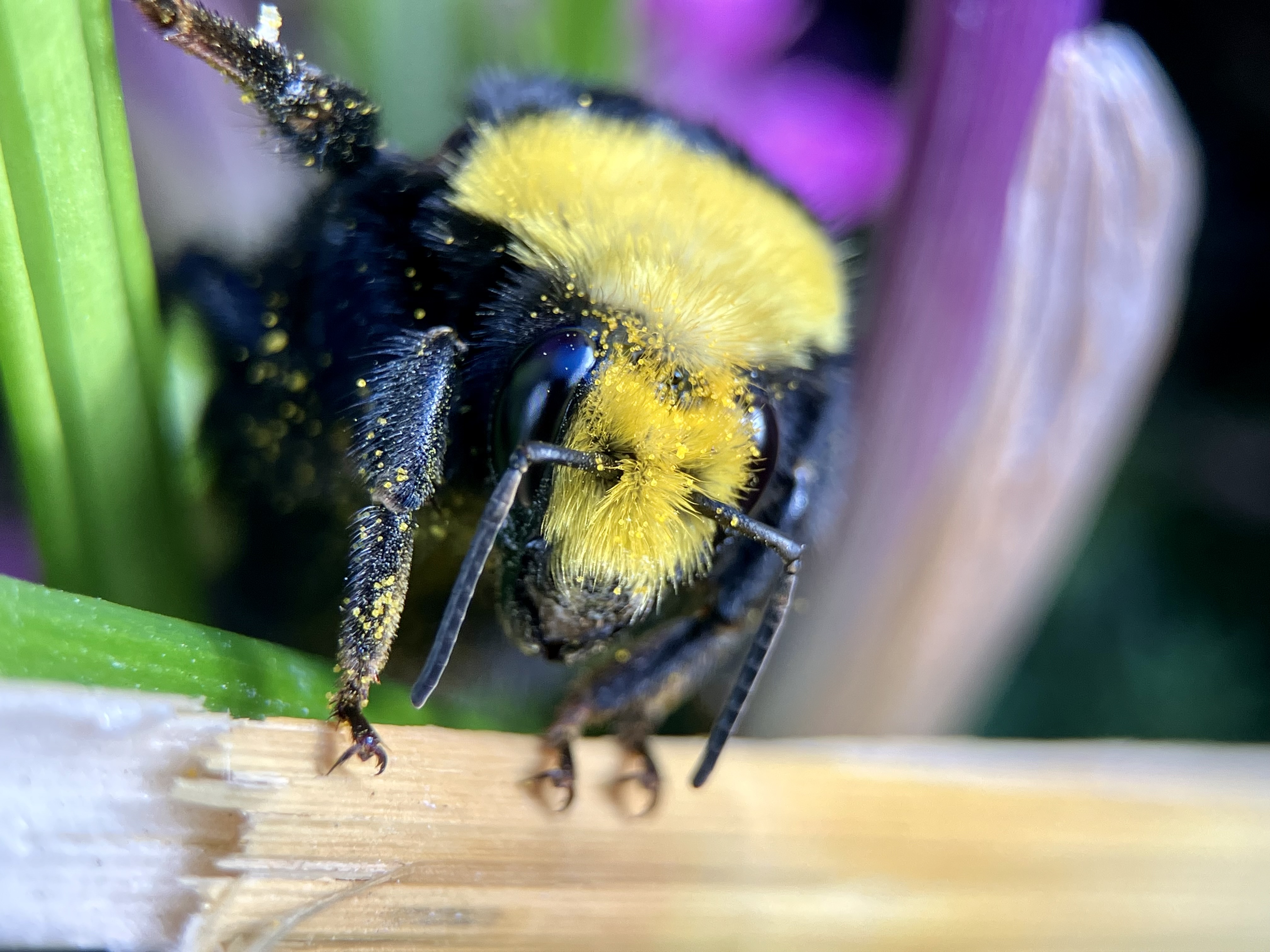
The dying bees are the lovely Yellow-Faced bumble bees, Bombus vosnesenskii.  I personally appreciate these because not only are they avid tomato pollinators, but they have such adorably chubby and fuzzy bodies with a yellow face and a yellow band around their little black bottom. 

Bombus vosnesenskii, Yellow-faced Bumble Bee

Bumble bees are cavity nesters.  Many will select an empty mouse burrow in the ground to create their nest. The fertilized queen overwinters and begins her colony in late March or early April, foraging for herself and the eggs she laid that would soon hatch into larvae needing to be fed.  

Bumble bee nest on San Juan Island, WA 2010

In order to obtain nutrients necessary for survival, bumble bee foragers can travel long distances (up to 11 miles), especially here as our growing season ends in summer.  Right now, they are visiting the lavender in bloom.

These poor bees are most likely victims of pesticide.  The fact that all of them are the same species, at the same location, indicates to me that someone applied pesticide at their nest site, likely a property owner within foraging distance of the worker bees visiting the lavender farm.  The workers dispersed from the nest to try to do what they are programmed to do (forage for food), but simply succumbed to the toxic residues that some fearful homeowner applied.  

“I can’t have bees in my yard!”  “I’m allergic.”  “I have pets.”  “I hate insects.” “It could be murder hornets.”  

Do you want to have food? 

If you, as a homeowner, continue spraying your yard every time you see a bee and can’t learn to live with them, you are going to be the end of all of us.  Bumble bees are some of our most important agricultural pollinators.  More important than honey bees!  

The dying bees in this video are native bees.  “Native” means they are adapted to this environment.  They have the ability to survive here better than European honey bees (Apis mellifera) which are not native.  Honey bees were transported to North America by Europeans who brought sheep, cattle, swine, and other domesticated species to this continent.  

Back to the over-sensationalized “murder hornets.”  This term makes me angry!  😡 The media hype is much like the hype over the mantids that are going to eat our hummingbirds !  Just because it is printed in the paper doesn’t mean it is the whole truth or entirely accurate.  The primary reason the Asian Giant Hornet (Vespa mandarinia) is of concern is their ability to kill European honey bees (Apis mellifera), an agricultural commodity.  To read some of the news stories, you’d think we were dealing with Africanized Bees…remember those? 

It is possible Vespa mandarinia will not survive here.  They aren’t native.  They will be susceptible to parasites, and viral, bacterial, and fungal diseases (not unlike the same problems our non-native European honey bees face) potentially making it difficult for populations to establish themselves.   We could also, as many Asians do, learn to eat them. Yes, do read the publication about them in my references section!

Please put that can of pesticide away.  Don’t spray.  If you are truly afraid of bees, then educate yourself about how to live alongside them.  First off, don’t wear shades of blue or black colors when you’re near an area that has bees.  Bumble bees and honey bees are attracted to these colors.  Avoid wearing fragrances.  Wash your clothing in unscented detergent and avoid using those noxious, heavily scented dryer sheets.  Finally, if you do see an insect that you believe is the Asian Giant Hornet, take a photo or collect the specimen if it is already dead and contact WSU following these guidelines. 

In Washington State only, people should report potential sightings of the AGH through the Washington State Department of Agriculture’s website. Outside of Washington, contact your state apiary inspector. If it is safe to do so, take a photo or collect a dead specimen of the pest to help experts identify the insect.

In the meantime, please don’t fall victim to media hype and do your best not to murder innocent bumble bees!   

References and further reading: 

Bombus vosnesenskii. Bugguide.net https://bugguide.net/node/view/19538

John M. Mola, Neal M. Williams. (2019) A review of methods for the study of bumble bee movement. Apidologie 56. 

Jha, Shalene, and Claire Kremen. (2019) Resource diversity and landscape-level homogeneity drive native bee foraging. Proceedings of the National Academy of Sciences of the United States of America vol. 110,2: 555-8. doi:10.1073/pnas.1208682110

Sujaya Rao, George Hoffman, Julie Kirby & Danielle Horne (2019) Remarkable long-distance returns to a forage patch by artificially displaced wild bumble bees (Hymenoptera: Apidae), Journal of Apicultural Research, 58:4, 522-530, DOI: 10.1080/00218839.2019.1584962

(Vespa mandarinia) Asian giant hornet. New Pest Response Guidelines. (2020) USDA Animal and Plant Health Inspection Service. Plant Protection and Quarantine. https://cms.agr.wa.gov/WSDAKentico/Documents/PP/PestProgram/Vespa_mandarinia_NPRG_10Feb2020-(002).pdf

All Wet! April 26, 2018

A water trough and cool morning temperatures equate with a desperate situation if your wings are wet and they aren’t the inflatable kind that keep you afloat.  I rescued two, soon to be drowned, little specimens yesterday morning and can tell you, they were “happy” to  dry off in the sunshine ☀️ .

The first rescue was a delicate, Green Lacewing in the family Chrysopidae.   Lacewings are in the insect order Neuroptera which means nerve-winged insect.  It is named for the intricate, sheer, net-like pattern of its wings.  They are valued because they prey on garden and orchard pests insects like aphids.  The intriguing thing about this specimen (make sure to pay close attention to frames 0.22 and 0.24 in the video) was its reaction to my voice when I stopped Millhouse the cat from interfering with my cinematography.  The Lacewing appears to have a look of surprise when it hears me.

The second rescue from the water trough is the beautiful, iridescent green cuckoo bee you see in the video below.  Cuckoo bees are actually wasps in the insect order Hymenoptera, and family Chrysididae.  While they are pollinators in that adults seek out nectar for food from flowers, they are named, like the cuckoo bird, after their habit of seeking out nests of other wasp and bee species to steal food, or the life of developing larvae as a host for their own young.   Never-mind that part of the life cycle of this bee.  It is truly a gem, glittering in the sunshine…a jewel worn by a new spring blossom in the garden.


Blue Orchard Bee ~ Osmia lignaria

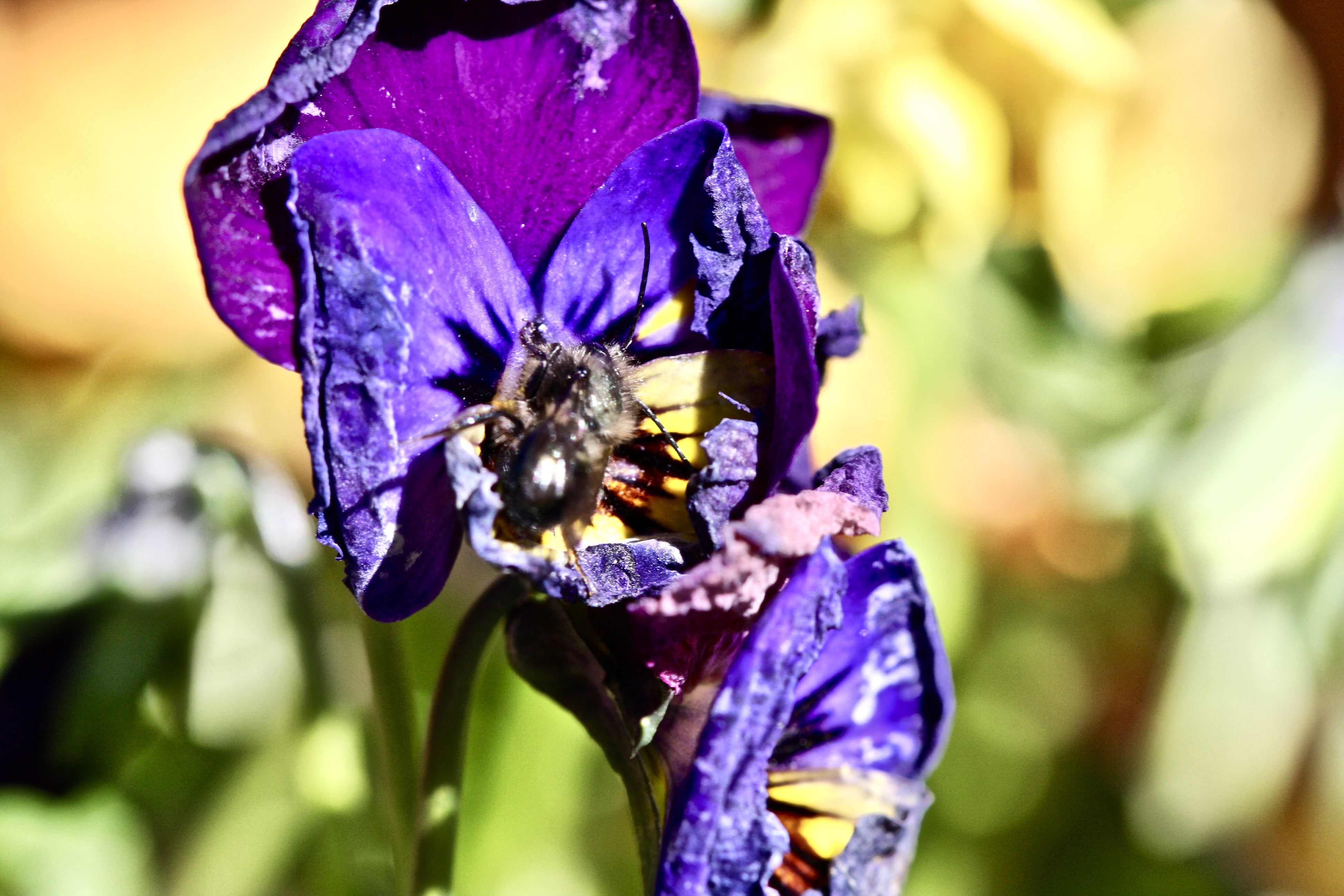
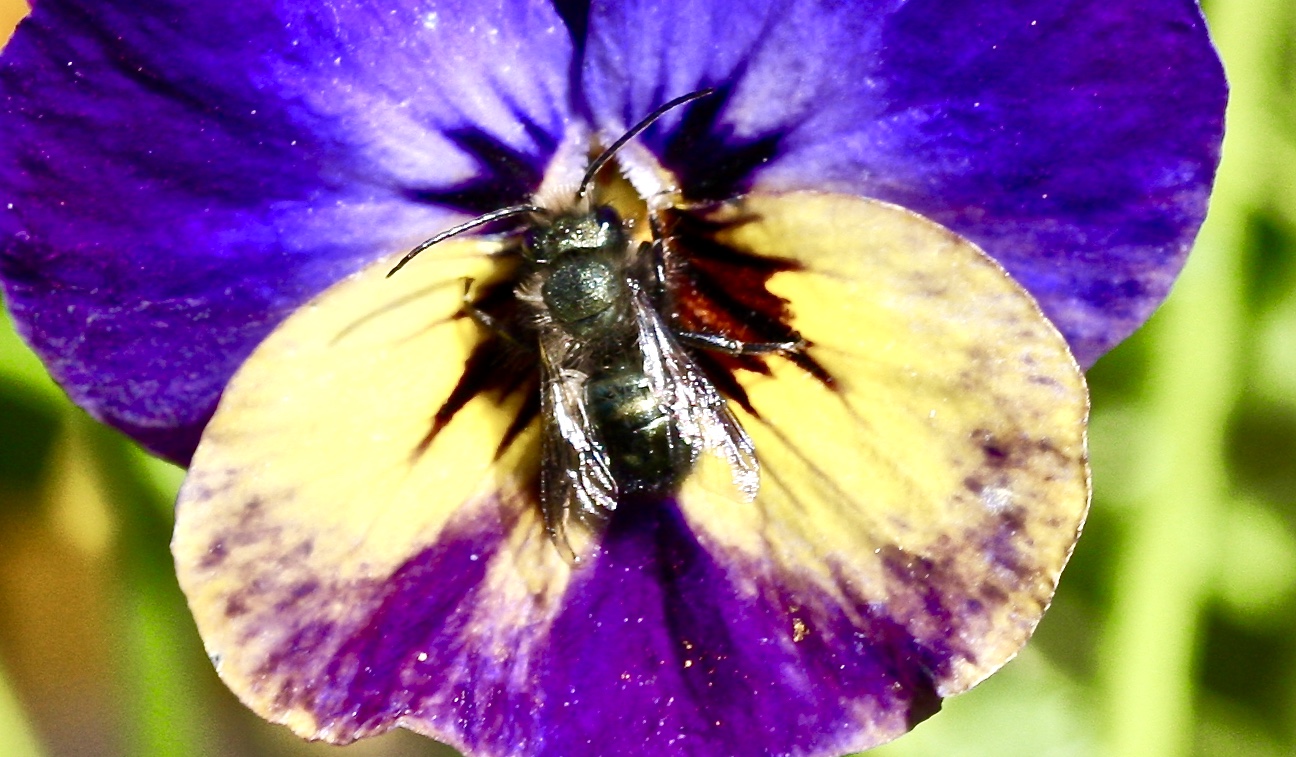
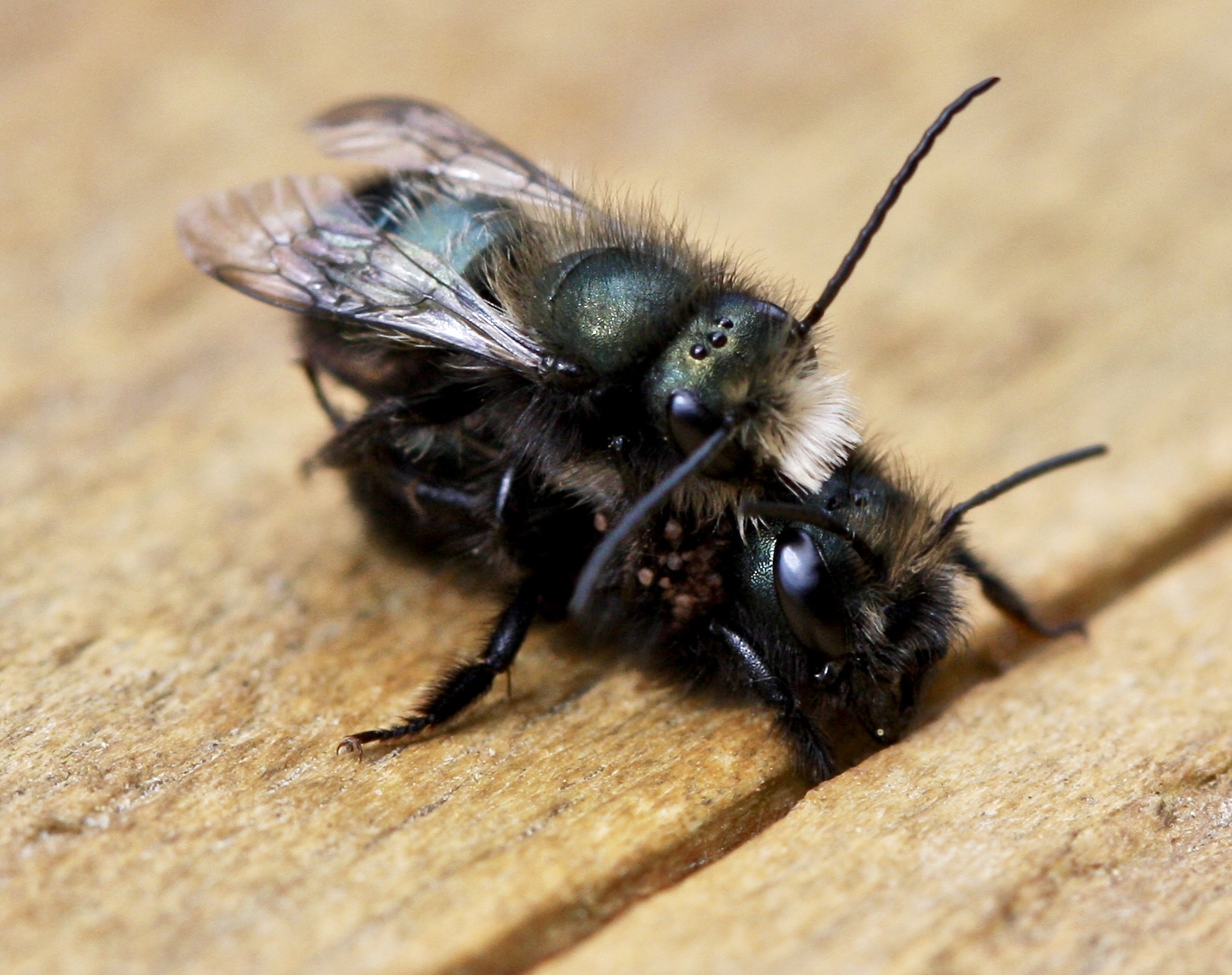
Sighted April 12, 2018, San Juan Island, WA.  Blue Orchard Mason Bee (Osmia lignaria).   These are important early (native)  pollinators.  Adults hibernate overwinter and emerge from March to May.  Blue Orchard Mason Bees are being managed as orchard pollinators as they are excellent at pollinating fruit trees such as pear, cherry, plum, and apple, as well as quince and others, including blueberries.   Blue Orchard Mason Bees and other solitary bees in the genus Megachilidae (like leaf-cutting bees) carry pollen on their bellies instead of special baskets on their hind legs like honey bees.  The Blue Orchard Mason Bee use tubular cavities for nests, partitioning each brood cell with a wall of mud.   Although similar in size, Blue Orchard bees are easy to distinguish from honey bees because they are metallic in coloring, often dark blue or blue-black.

fullsizeoutput_1cff

Family: Megachilidae, Genus: Osmia (Mason bee)Osmia ligaria – Blue Orchard Bee

fullsizeoutput_1d03

Family: Megachilidae, Genus: Osmia (Mason bee)

Osmia spp.  Mason bees

Osmia spp. (Osmia lignaria) mating ~ April 15, 2017

Read more about Blue Orchard Mason Bees (Osmia lignaria) here:  

https://www.fs.fed.us/wildflowers/pollinators/pollinator-of-the-month/mason_bees.shtml

http://entnemdept.ufl.edu/creatures/MISC/BEES/blue_orchard_bee.htm


Hiving the Bees!

Hiving my First Bees


    by Cynthia Brast

San Juan Island, WA


They’ve arrived!

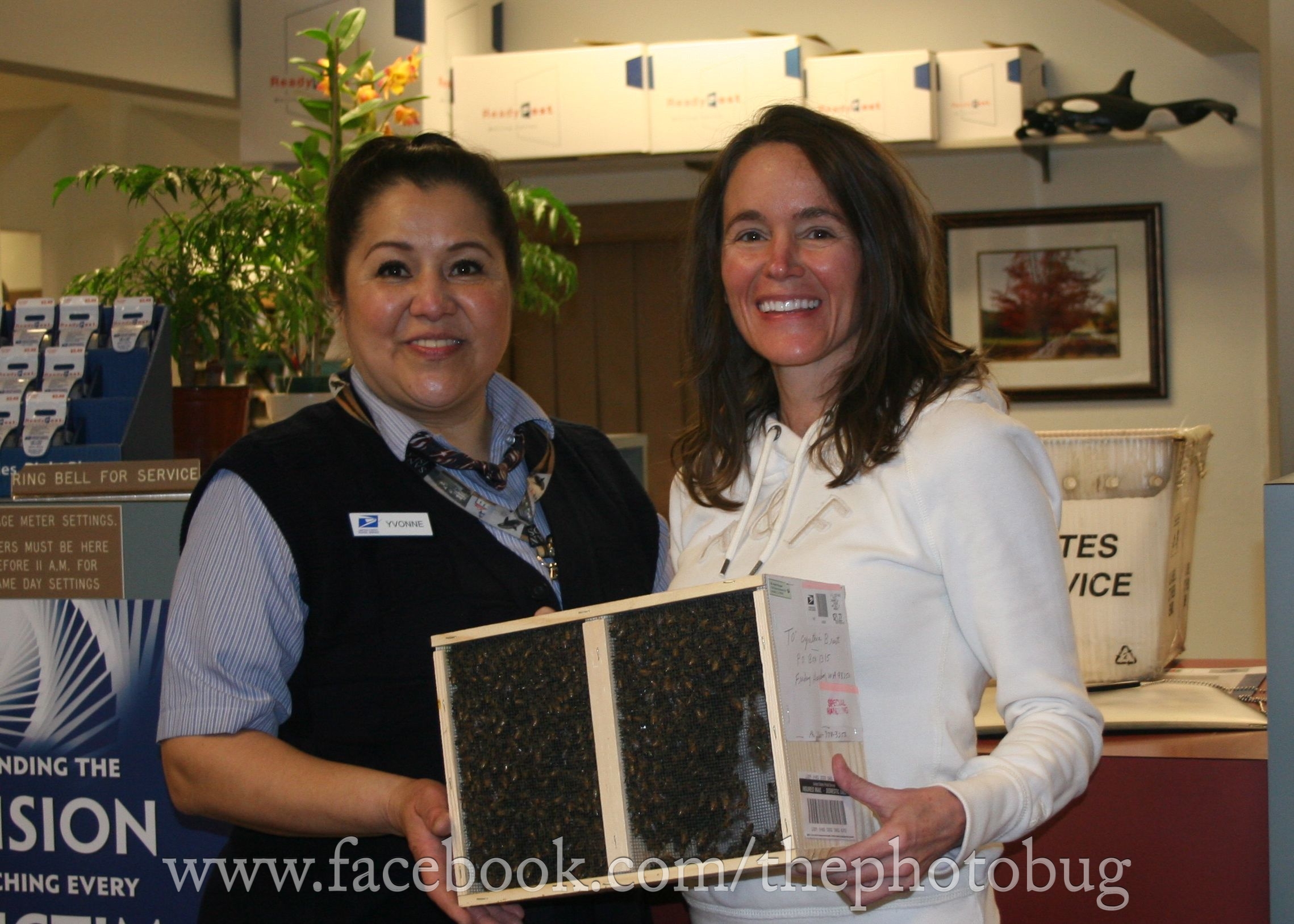
The bees came today – April 11, 2012, after shipping from Oroville, CA on April 9.  I picked them up this morning at the Friday Harbor Post after they called at 07:30 a.m. to let me know the bees had arrived.

My package of Italian bees was calm and quiet when I put them into my vehicle, but I noticed more activity as I drove the 12 miles to my house.  Upon arriving, I sprayed the package with a mist of sugar water in a 1:1 ratio.  I was mesmerized by the energy coming from the package.  There was a natural heat radiating from the box, and a rhythm…almost like a heart beating.  I also noticed a sweet, fragrant, bees-waxy smell diffusing from the package.

My plan is to hive the package today after 4:30 p.m.  I am waiting for my daughter to come home so she can observe…and take photos!  The bees have spent the afternoon in the basement area of my house where it is about 60 degrees and quiet.

Unfortunately we’ve had some rain here today.  Outside right now at 4:13 p.m., the temperature is at 50 degrees.  We have a light drizzle.  I misted the bees again about an hour ago.

My hive site is actually up against my house.  Partly for convenience for me and partly because that spot has a good overhang from the roof where the hive will stay dry and also to help the bees stay warmer since we are in the Pacific Northwest.  The added heat will be especially helpful in the cold winters here.

To prepare for my installation, I have one deep super with 9 frames inside.  I am going to mist the frames lightly with the sugar water solution beforehand.  When I am ready to start, I’ll mist the package of bees, turning the box carefully to make sure I’ve covered them.  This will keep them from flying out and also distract them as they will be eager to clean the sugar water mist off themselves.  Then, I will remove the can of sugar water in the package and take out the queen.  I definitely want to check to make sure she’s healthy and look for her mark.  I have a cardboard piece to cover the hole left in the package after I remove the can of sugar syrup so the bees don’t start to escape before I’m ready to put them in the hive.

So, after the queen is out and checked, I am going to take out the cork that seals her queen cage and stick a marshmallow there to allow the workers to release her on their own.  Having the marshmallow there allows the rest of the bees to “accept” the queen while chewing through the marshmallow.  In a couple of days, the marshmallow will be removed by the workers, giving them time to get acquainted with the queen inside and set her free.

The queen cage will need to be hung, marshmallow end up between two of the frames in the deep super.  There is a metal strip that I can bend over the top of the frames, providing a nice, secure hook.  Then, my plan for the best release given the wet drizzle outside is to stack two empty shallow supers on top of the deep and gently turn the box of bees upside down over the bottom deep super.  The shallow supers will allow me to leave the packaged bee box inside the hive overnight and will be kinder to the bees than shaking them out where some may try flying off in the wet weather.  I also plan to put my Boardman feeder jar inside the hive, placing it on top of two wood strips over the deep hive frames.  This is so the bees won’t have to crawl down through the deep super and into the Boardman feeder at the hive bottom tonight, and will make it easier for them to access the sugar syrup after their transition from the package.  I also have a 2nd jar feeder that I am going to place along with the other, giving them plenty of food for the night.

Did I mention???  The bee suit I ordered still hasn’t arrived.  I have a pair of gloves and a veil.  That’s all the gear I will use this evening.  Hopefully the bees will bee-kind!


How it went!


Hiving the package went surprisingly well for me as a new”bee.”   I encountered only one small hitch in the process and actually could have installed the bees sans the veil.  There was quite a hum from the package, but the bees must have sensed the evening was upon them and had clustered pretty well together.

I had all my equipment/supplies at hand:  spray bottle of sugar water, hive tool, the hive supers, a small nail, marshmallow, cardboard, and a small screwdriver.   After misting the bees, I carefully opened the package.  The tape was cumbersome and I took care to peel all of it off the box.  I used the small screwdriver to pry the edge of the feeder can up and carefully removed it, covering the opening with my piece of cardboard while I set the can aside.

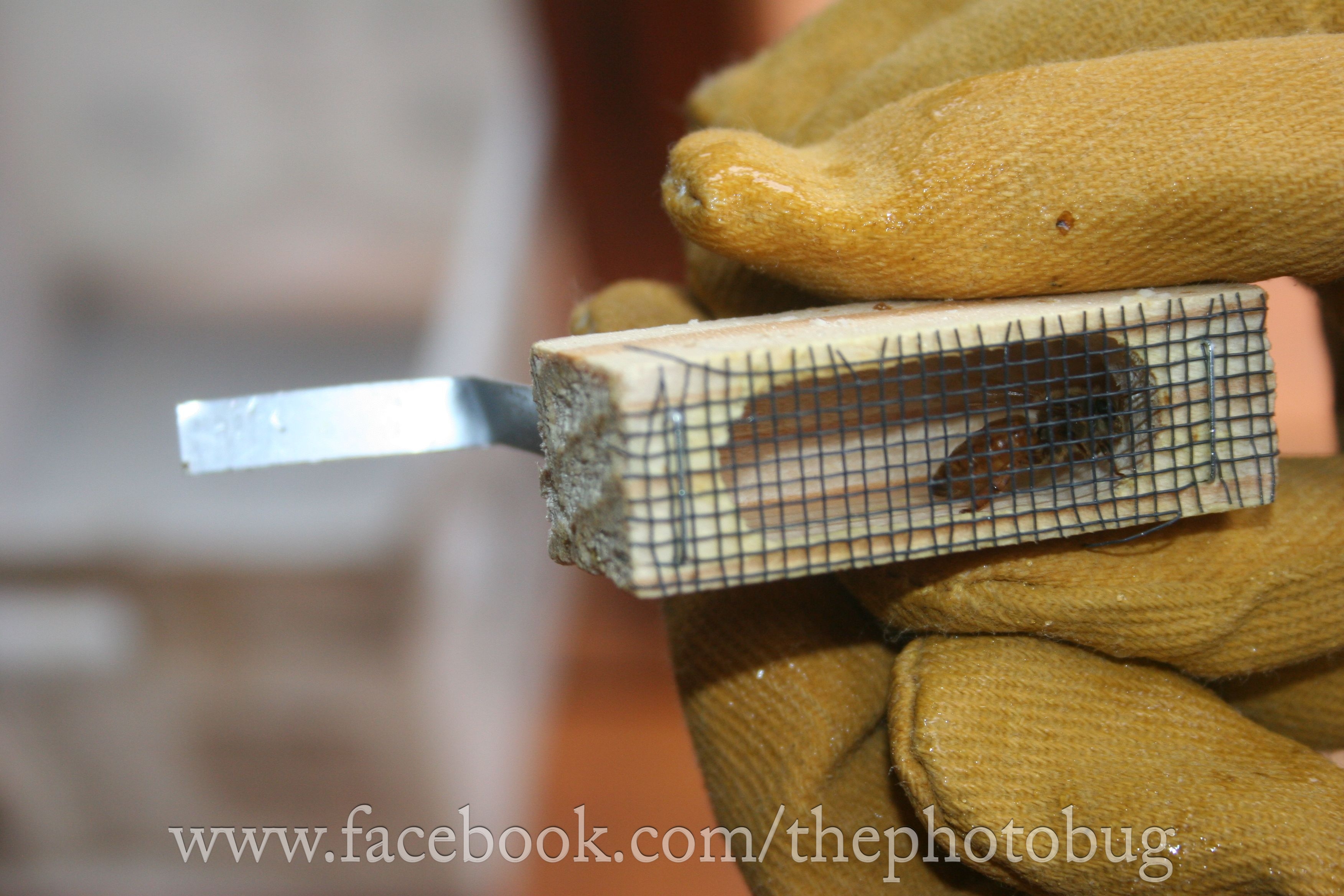
Next, I removed the queen.  Her wooden cage was hung in the package with a small metal extension that hooked into a groove at the top of the package.  I slid the metal through the groove and then removed the cardboard makeshift cover over the top to allow me to bring the queen cage out.   I replaced the cardboard over the package opening and set my hive tool on top to hold it in place while I checked the queen.

The queen was in the cage alone with no attendants.  She was active and looked to be healthy.  My “hitch” in the installation came at this point though as I realized she was not marked.  I also did not have my reading glasses on under the veil and it was impossible to see if she was clipped.  I should have taken the time to remove my gloves and veil and go into the house to get my glasses.  It was raining and the gear was cumbersome, the porch had become slippery because some of the mist from the sugar water drifted, so in hindsight, I should have just made sure my glasses were outside and handy.  This is good information for me as the next time I will feel more confident in the process and probably ditch the veil if not the gloves.

I went ahead with the queen installation and removed the cork from her cage using my small nail to pry it out and carefully replacing it with a marshmallow, so the bees will be able to release her themselves.   I hung the queen cage over one of the 9 frames I had spaced in the deep super except that I hung her with the marshmallow side down.  This shouldn’t be a problem as there were no attendants inside her cage to block any exit if they died.

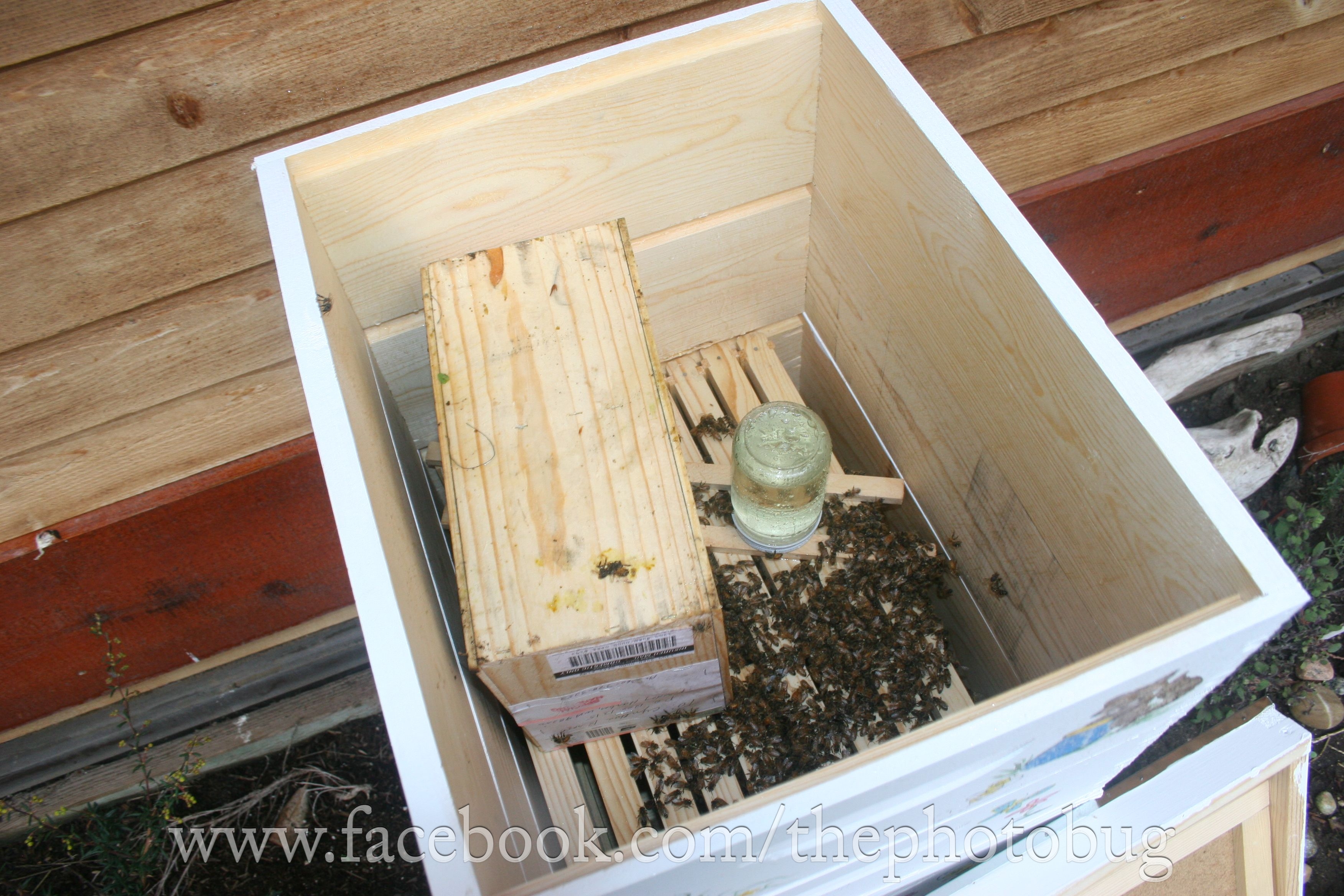
Next came the bees.  As outlined earlier, I had two empty shallow supers I set on top of the deep and I inverted the box, slid the cardboard covering the opening away and the bees were able to come out onto the frames.  This went really well.  There were a few fliers, but I gently misted the bees again to keep them from escaping.

After positioning the package so I could leave it in the hive overnight, I then set the jar feeder I had prepared next to the package.  The jar feeder I inverted and set on two small wood pieces that would elevate the jar just enough to allow the bees easy access.  This also went extremely well and I was able to complete the installation by placing the inner and outer cover on the hive.

My last steps were to take my extra Boardman feeder jar and place it on outside holder of the hive.  Originally, I had intended to put both feeder jars inside the hive, but changed my mind in the process.  I had trouble getting the Boardman holder to stay in position and had to wiggle it in next to the entrance reducer.  At first, there were some bees coming out under the Boardman feeder and this allowed me to see that it wasn’t pushed in all the way.  With that corrected and my entrance reducer in place, I had finished and the bees were ready for their first night in a new hive.

Photos

My daughter was great and assisted me in the installation by handing me equipment as necessary, but most importantly, she documented the process by taking photos and video.  Some photos can be found below and are also available to view on Facebook at http://www.facebook.com/thephotobug.

Image

With Yvonne at the Friday Harbor Post Office

San Juan Island, WA 98250

 Image

Donning my gloves!

Image

Removing the Queen Cage

Image

The Queen!

Image

Putting the package of bees into the hive.

Image

Inside view

Image

All Done!

The End!