Tag Archives: Beetles of Western North America

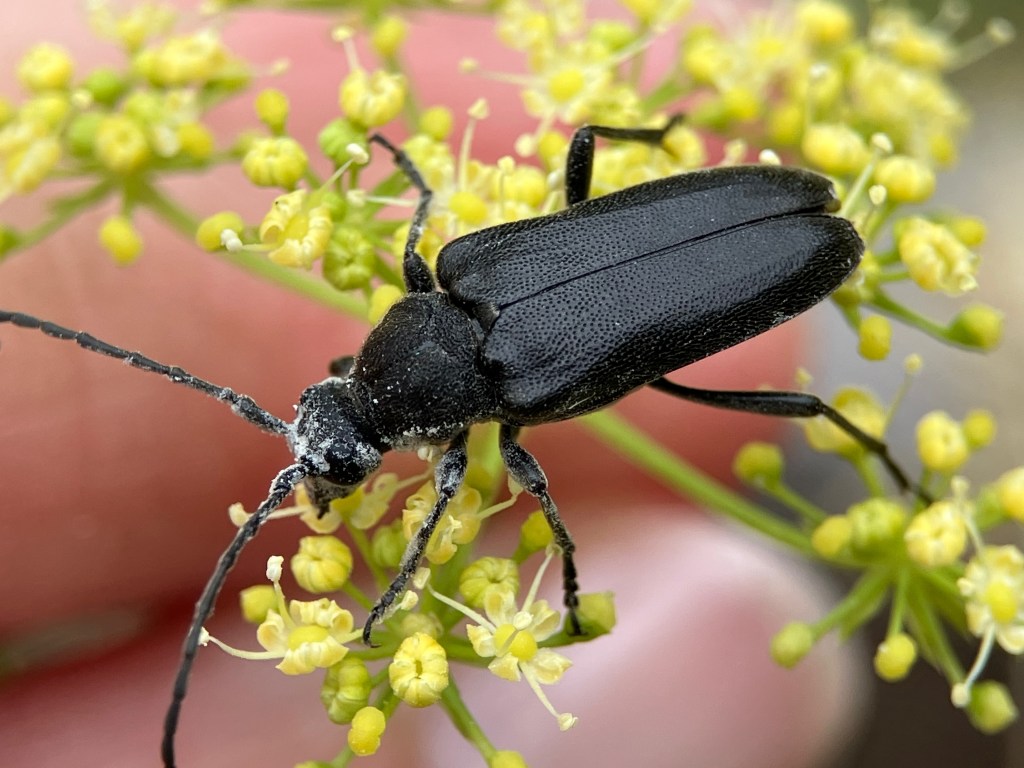
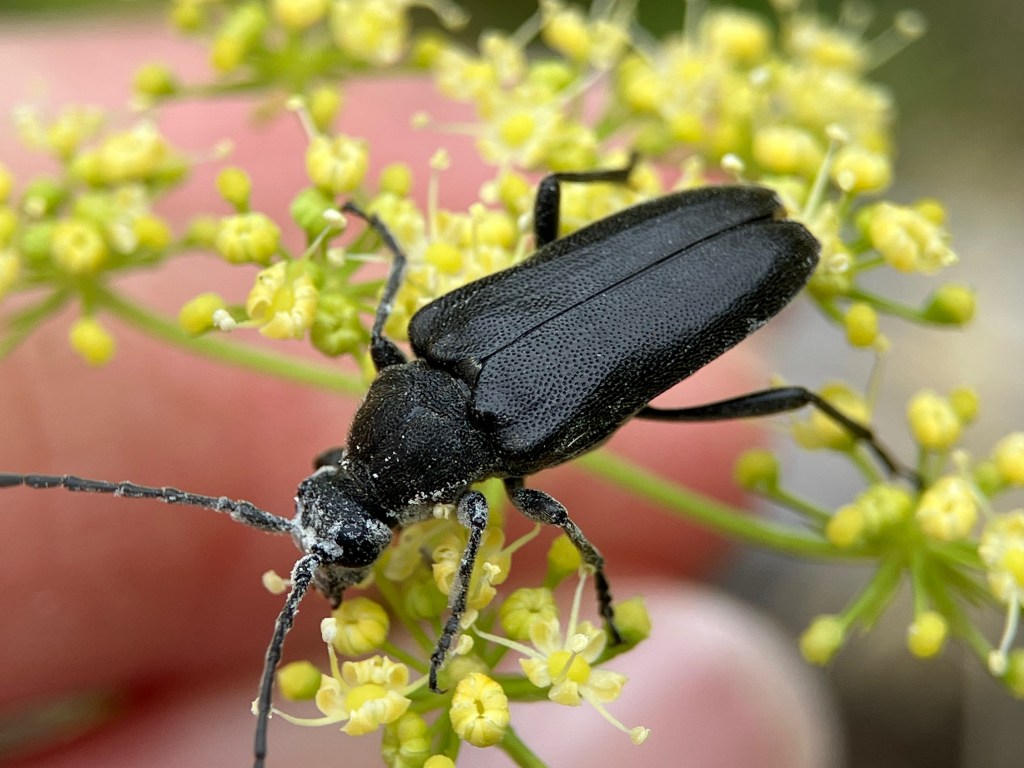
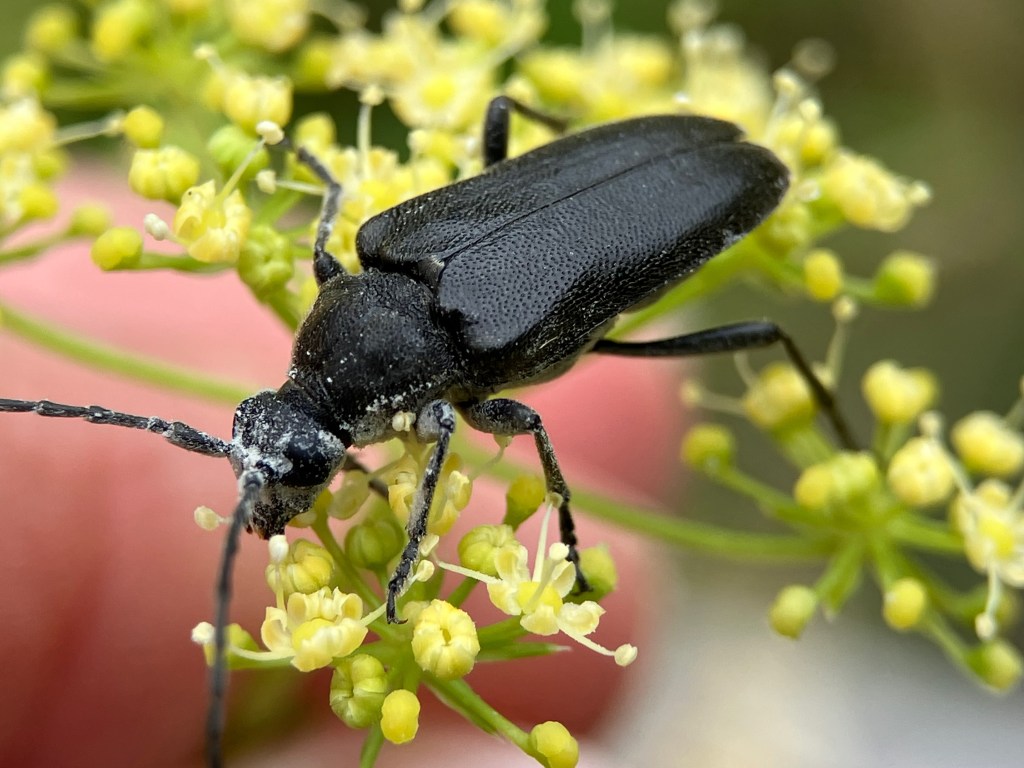
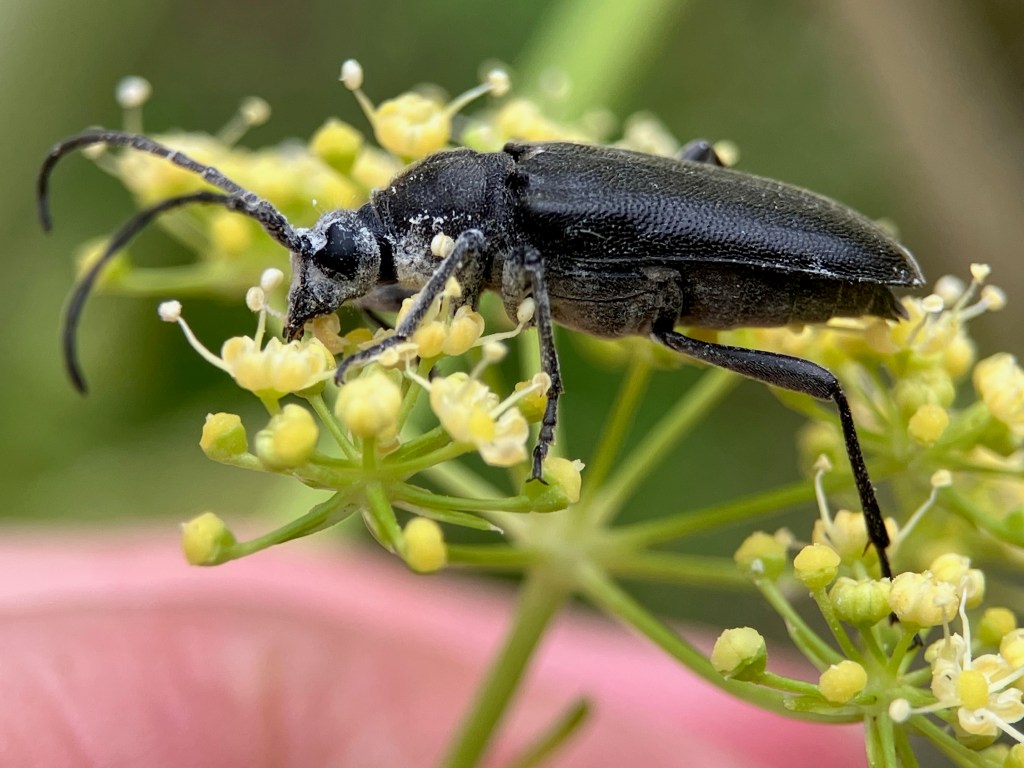
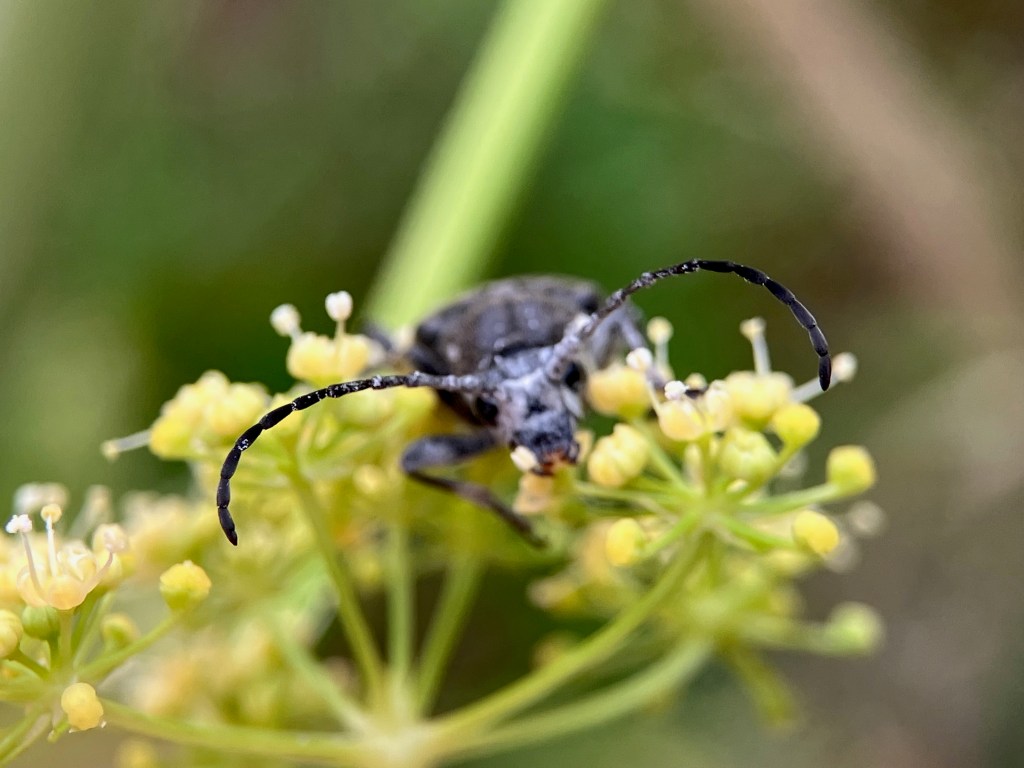
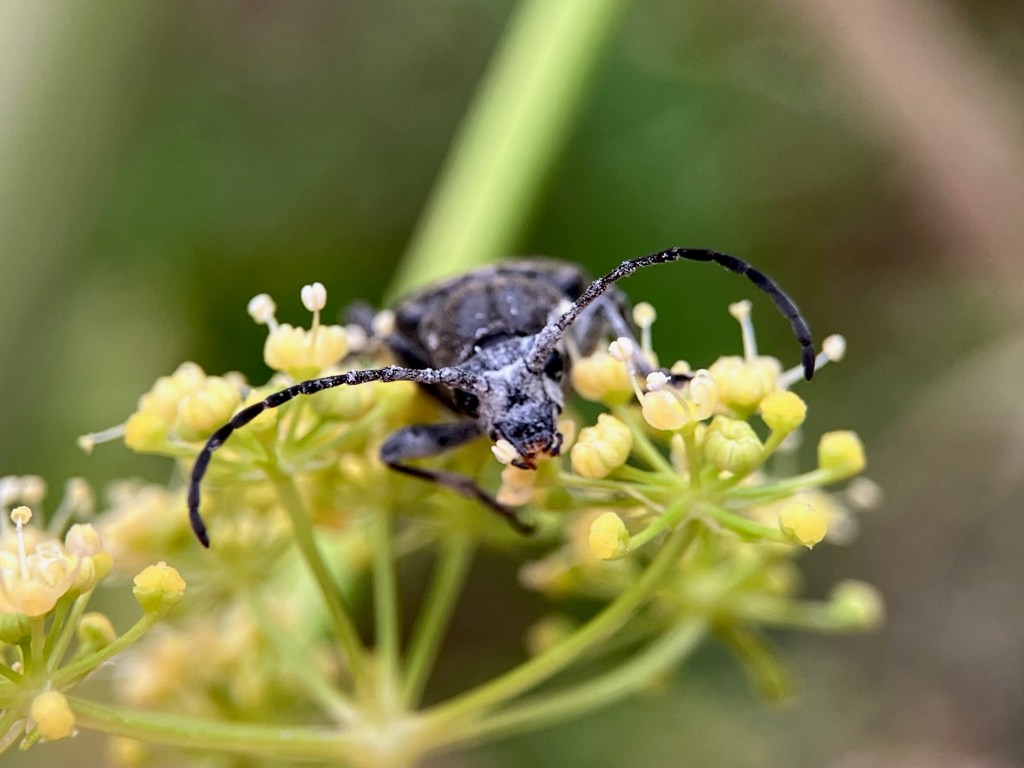
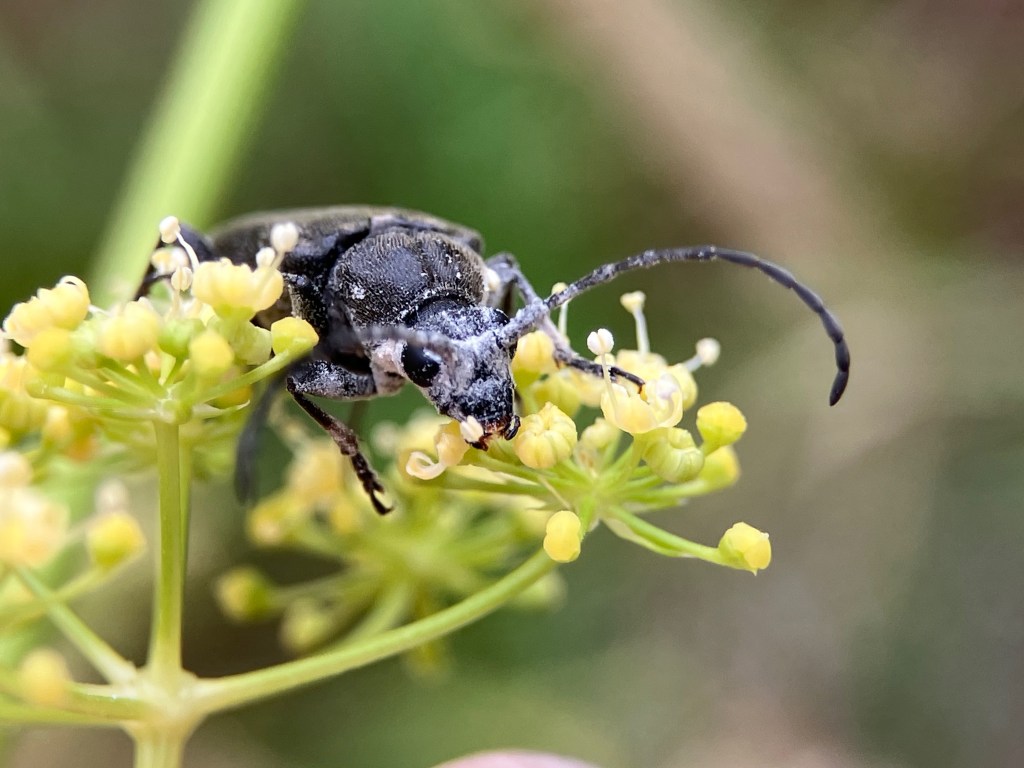
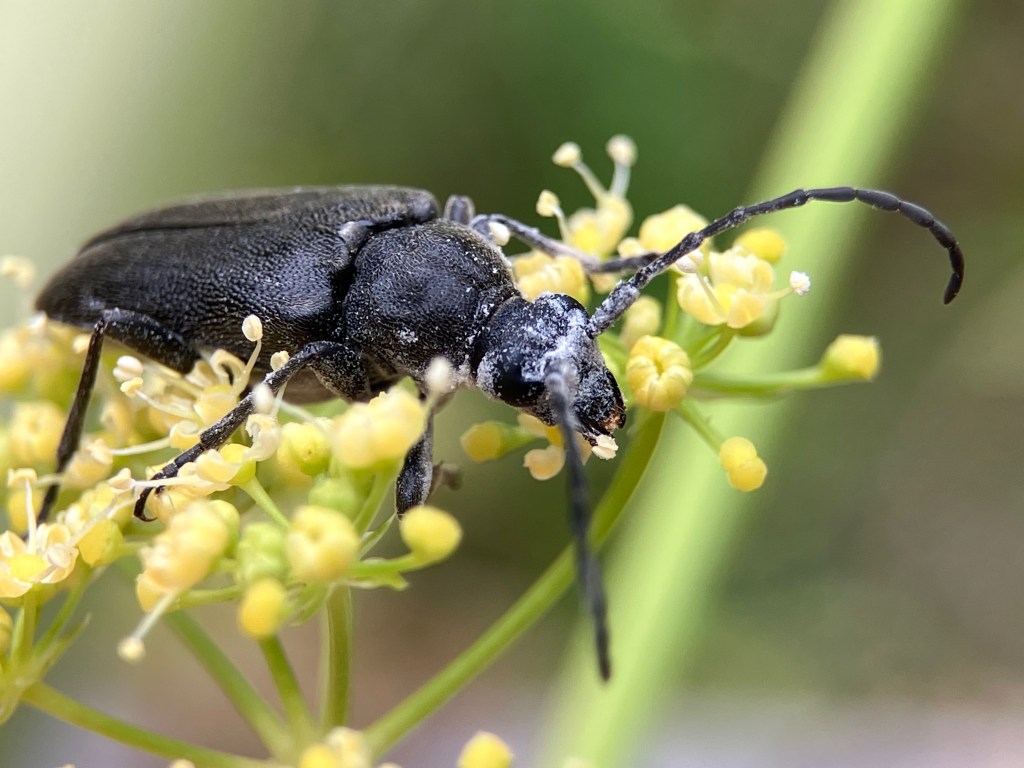
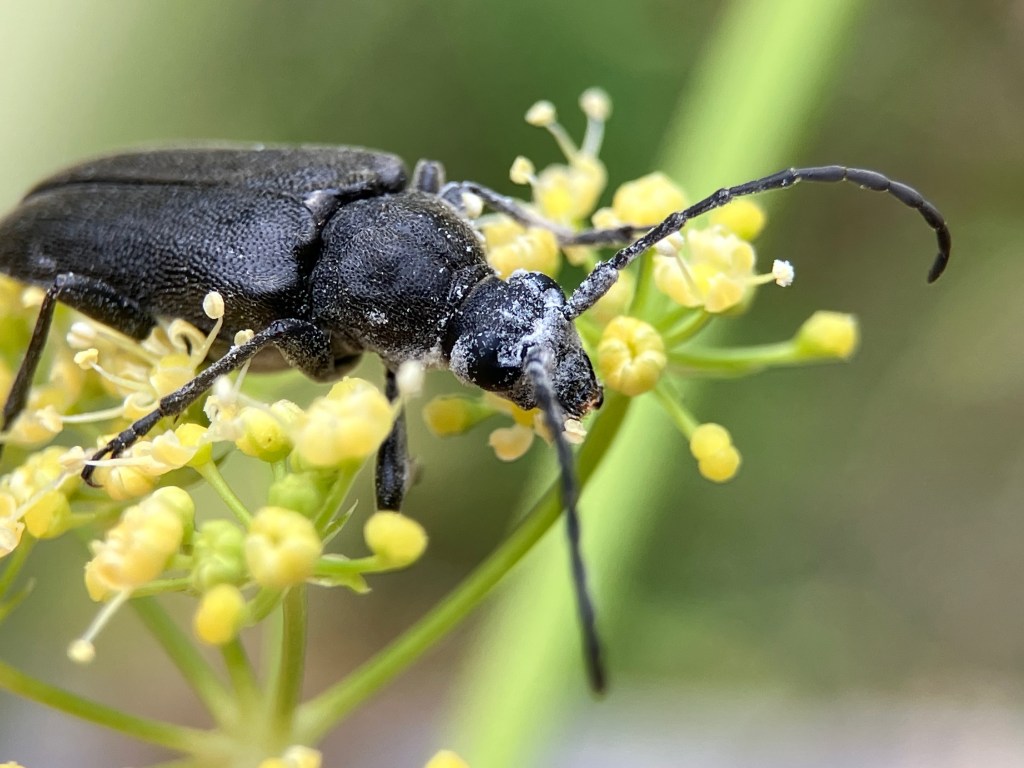
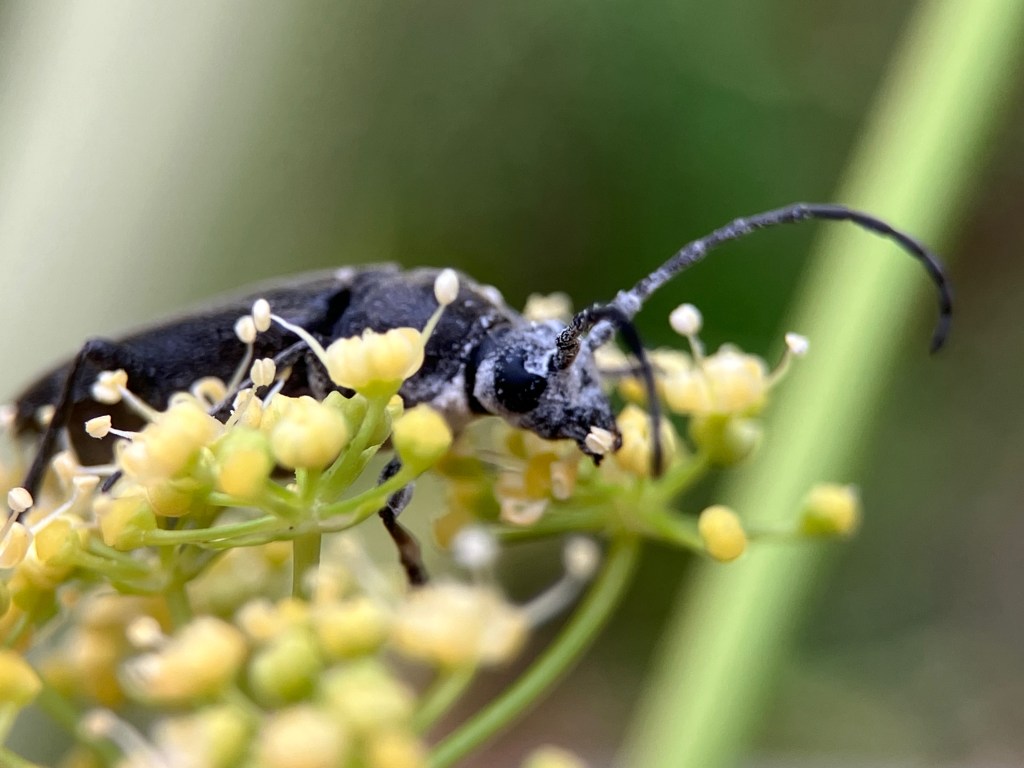
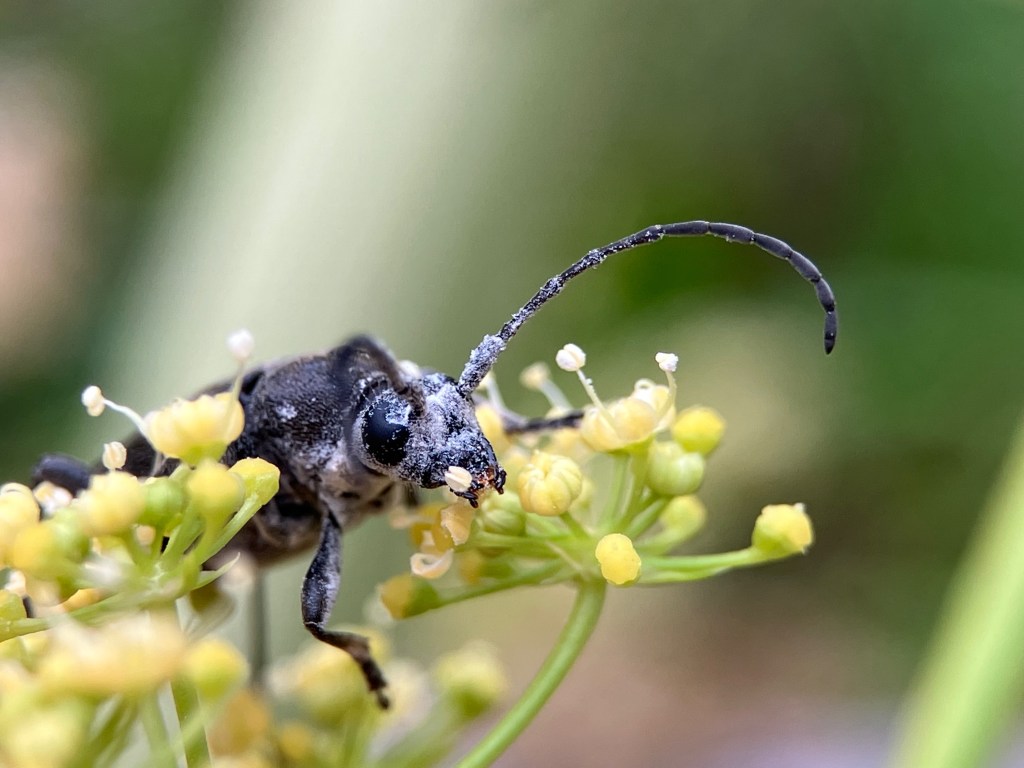
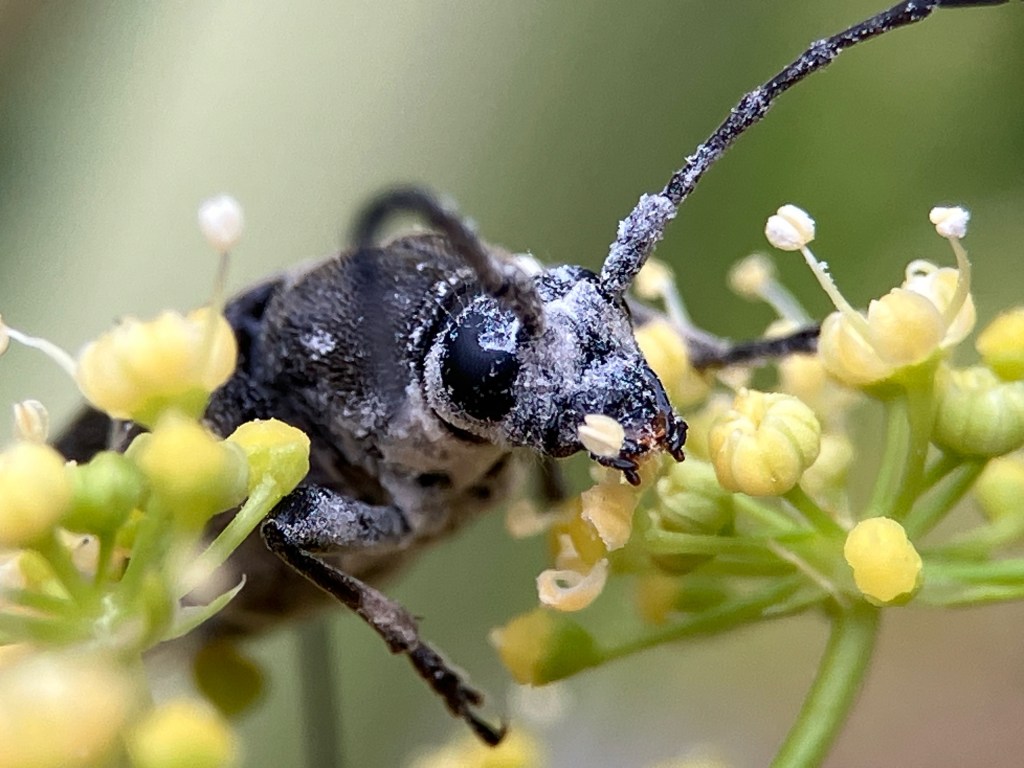
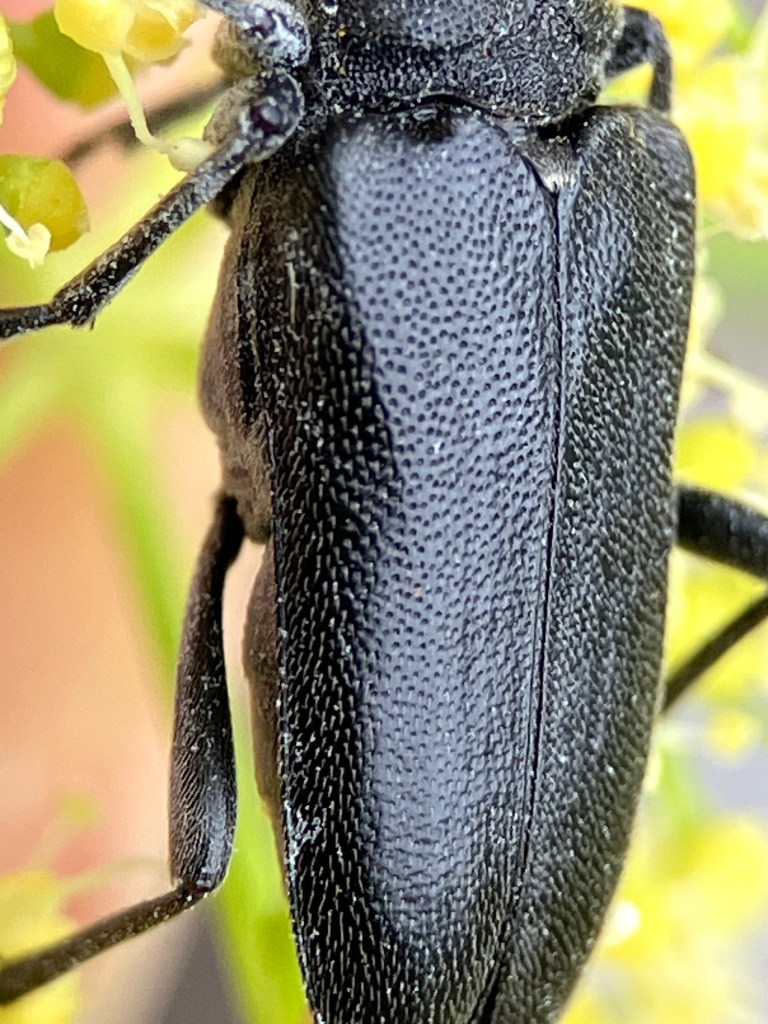
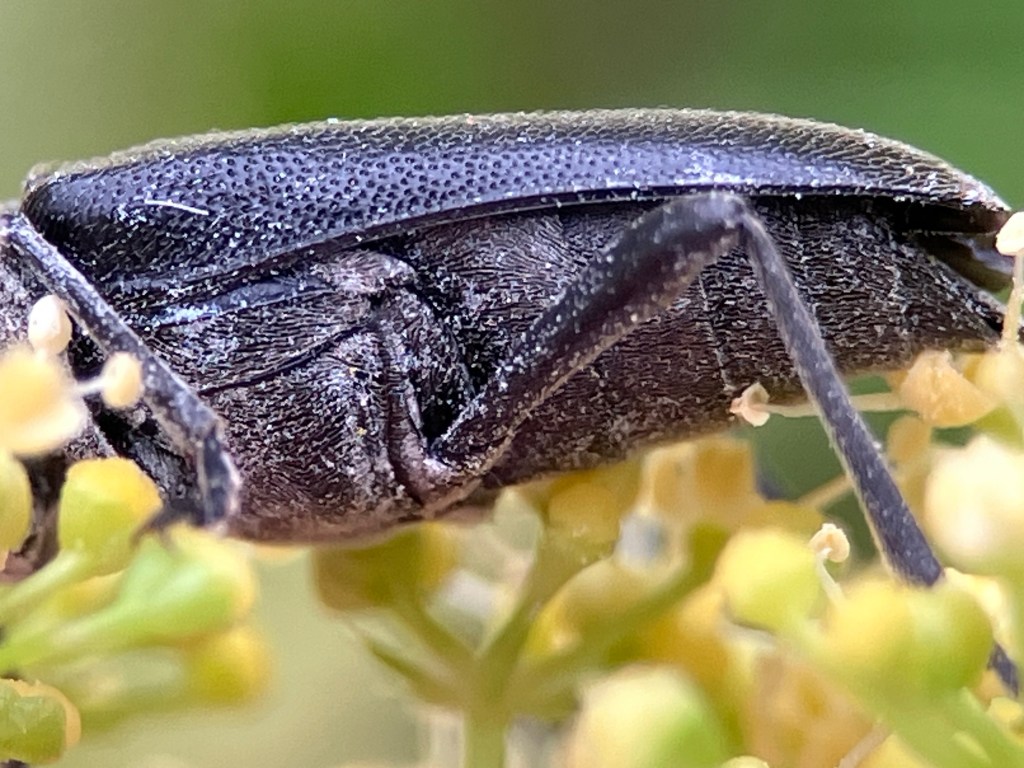
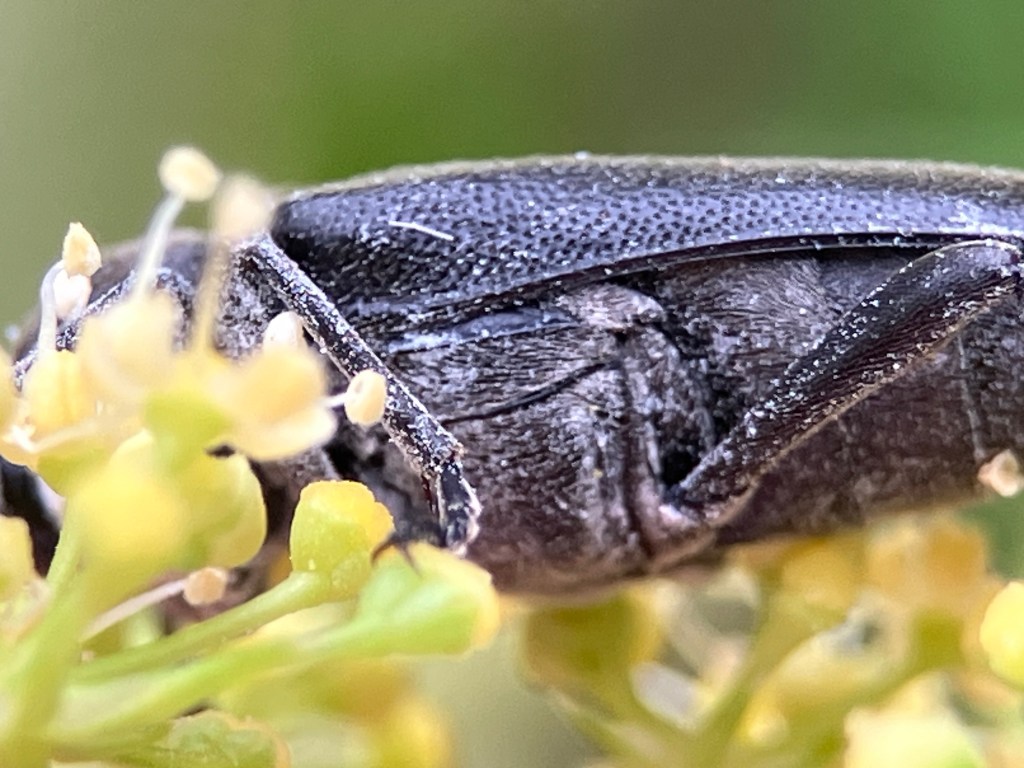
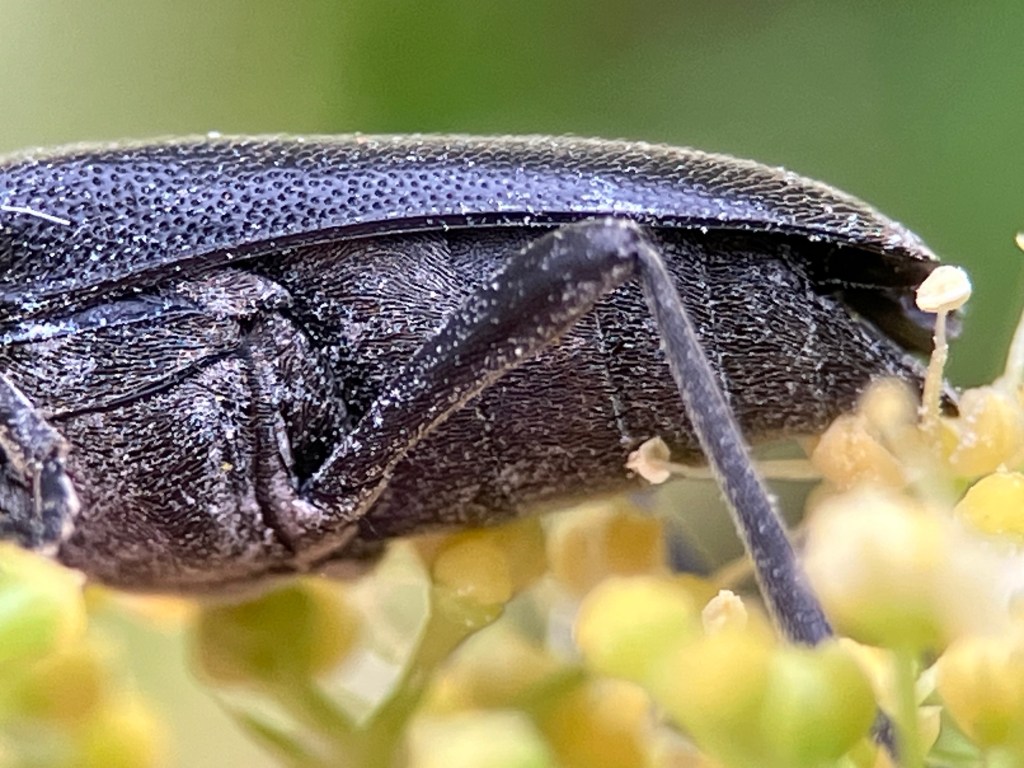
Lepturopsis dolorosa
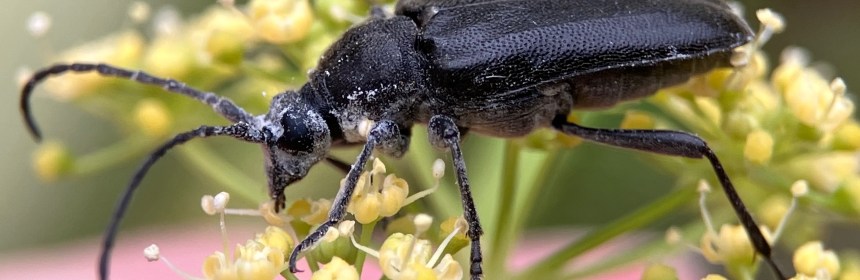
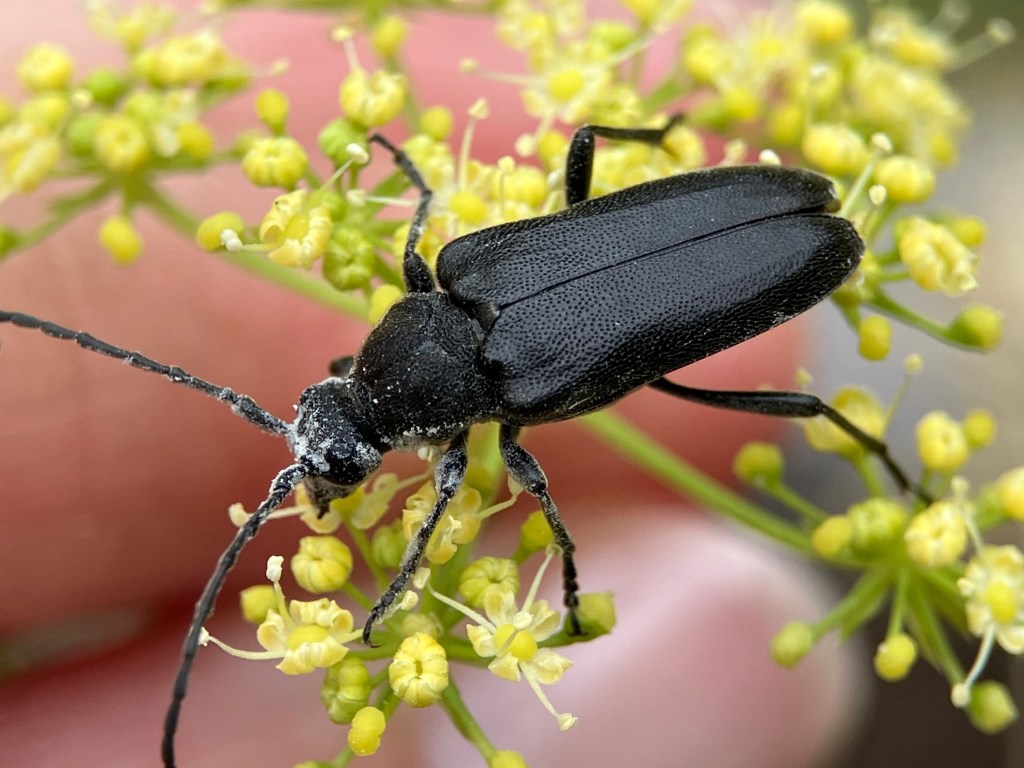
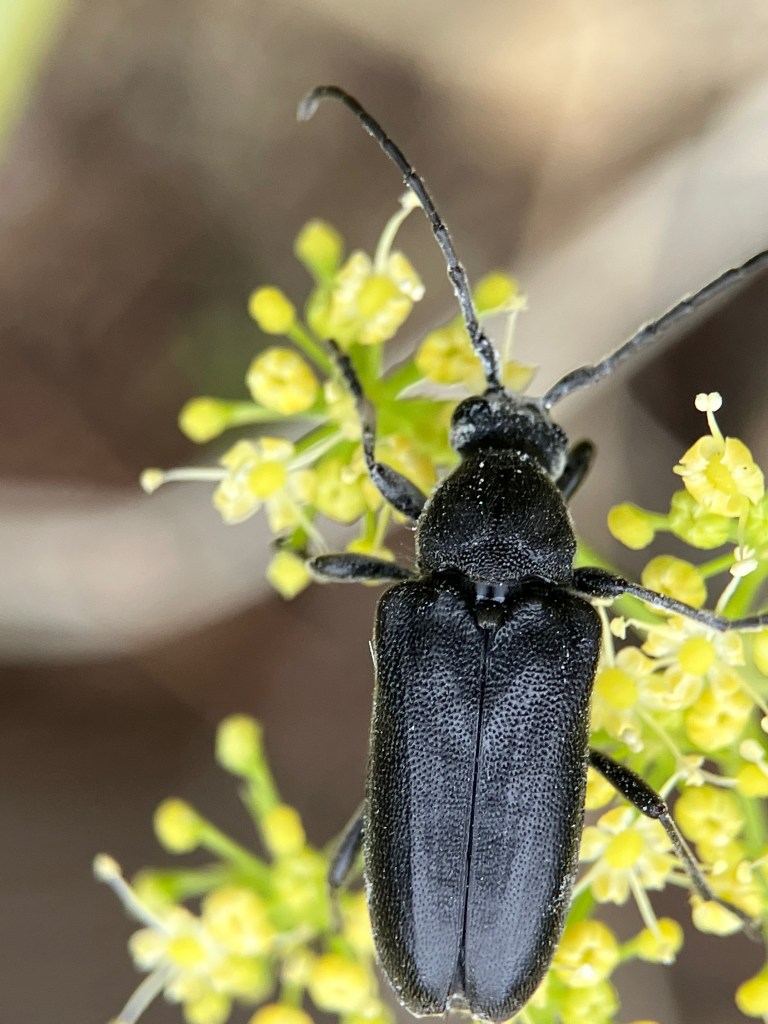
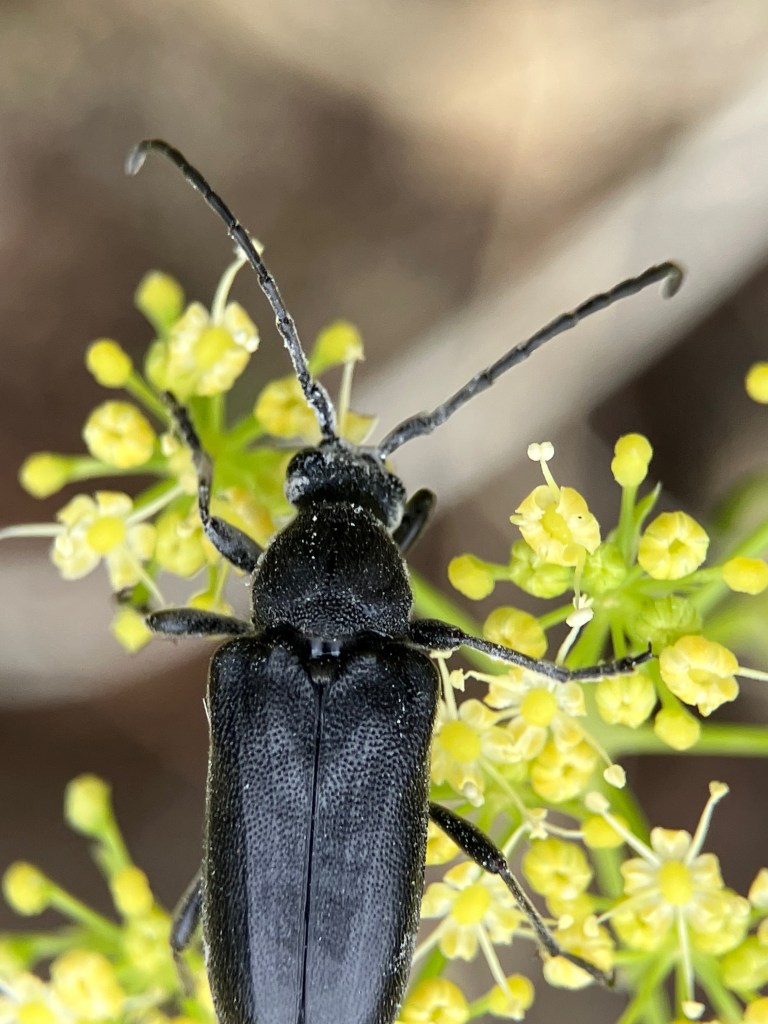
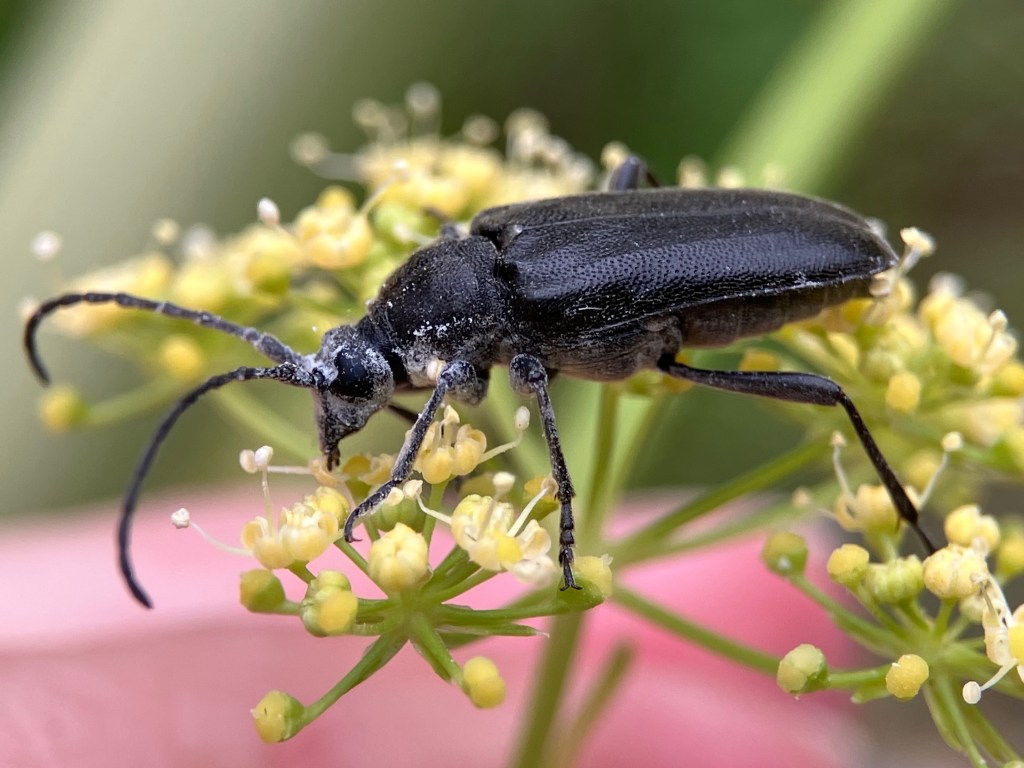
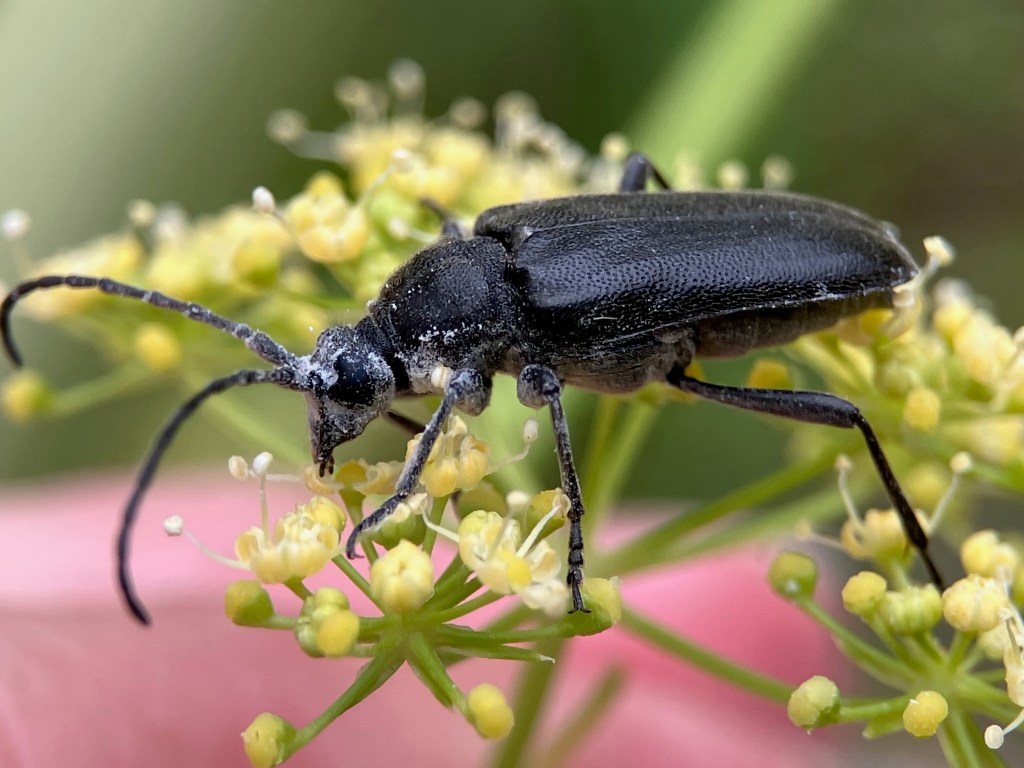
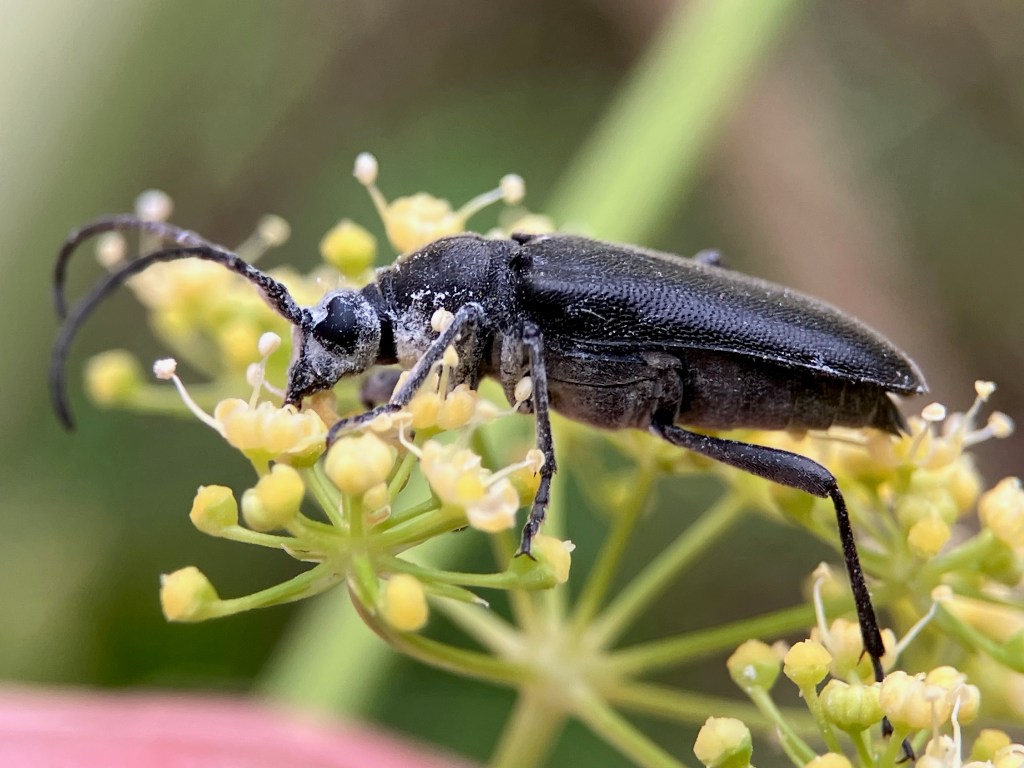
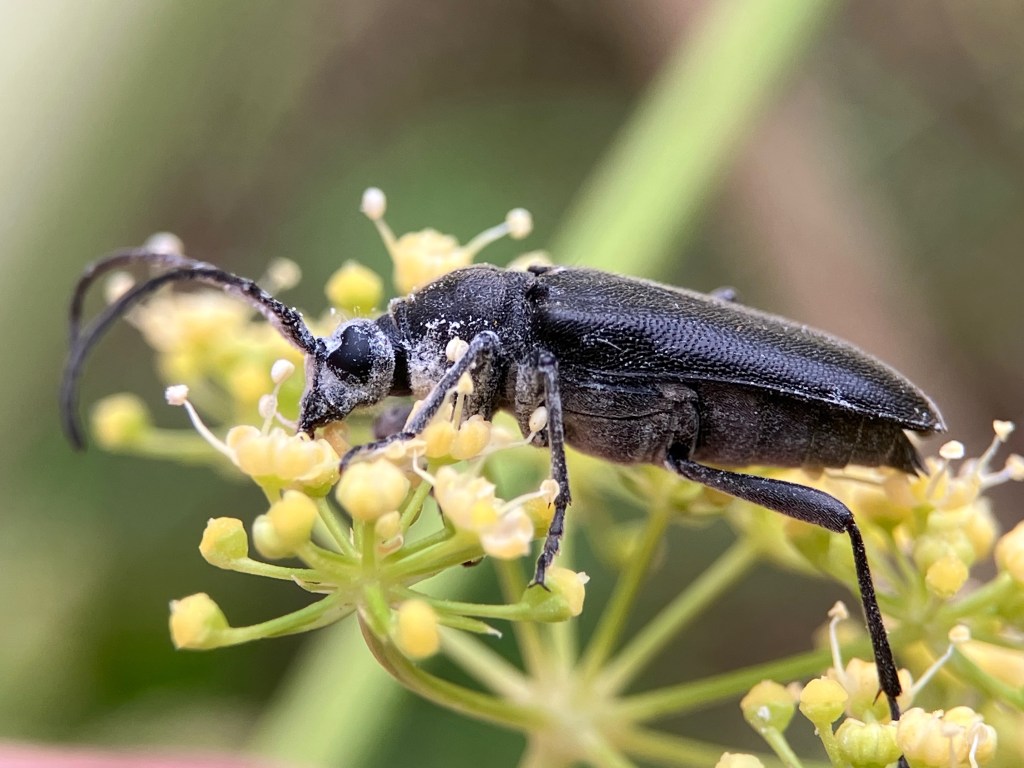
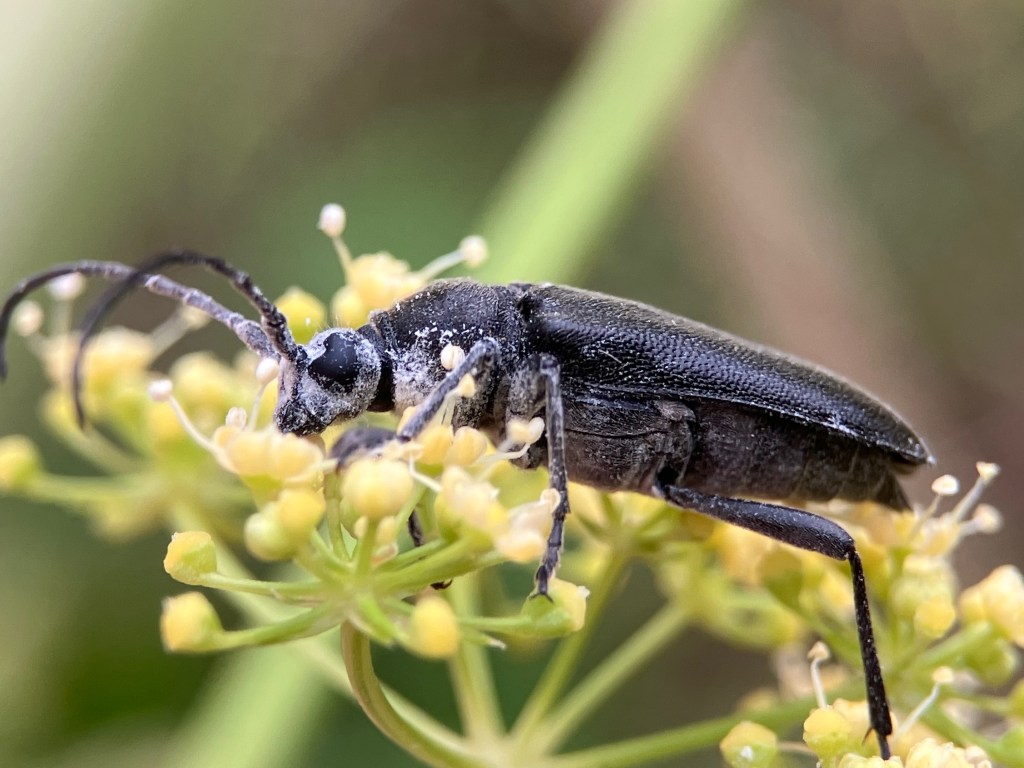
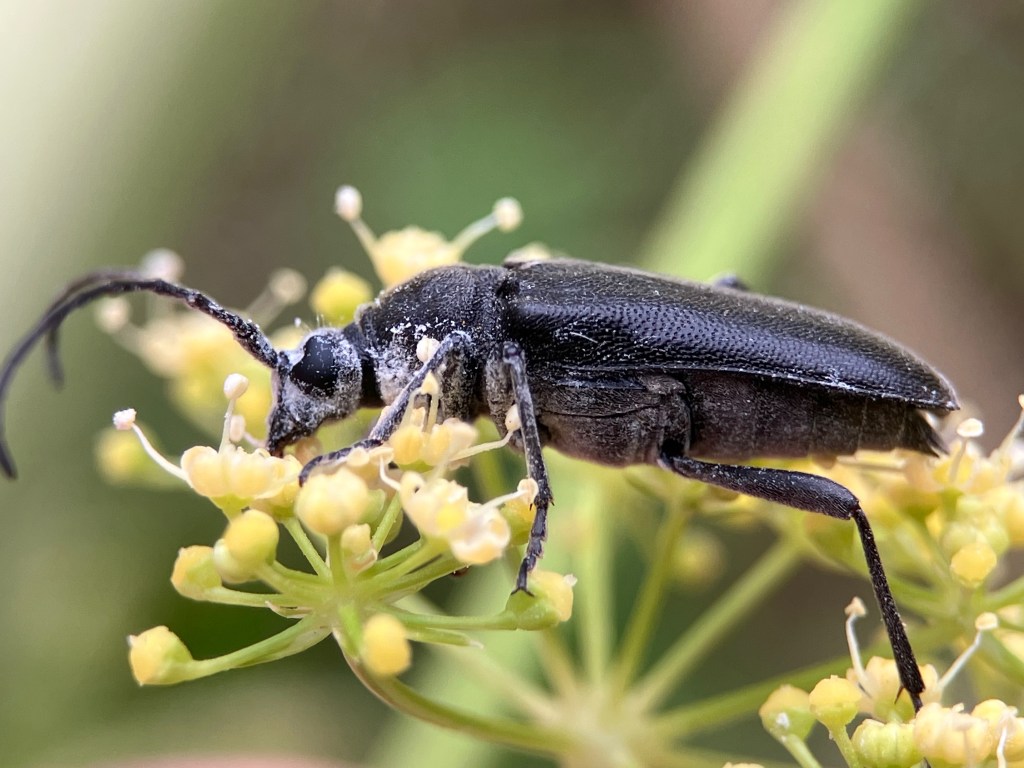
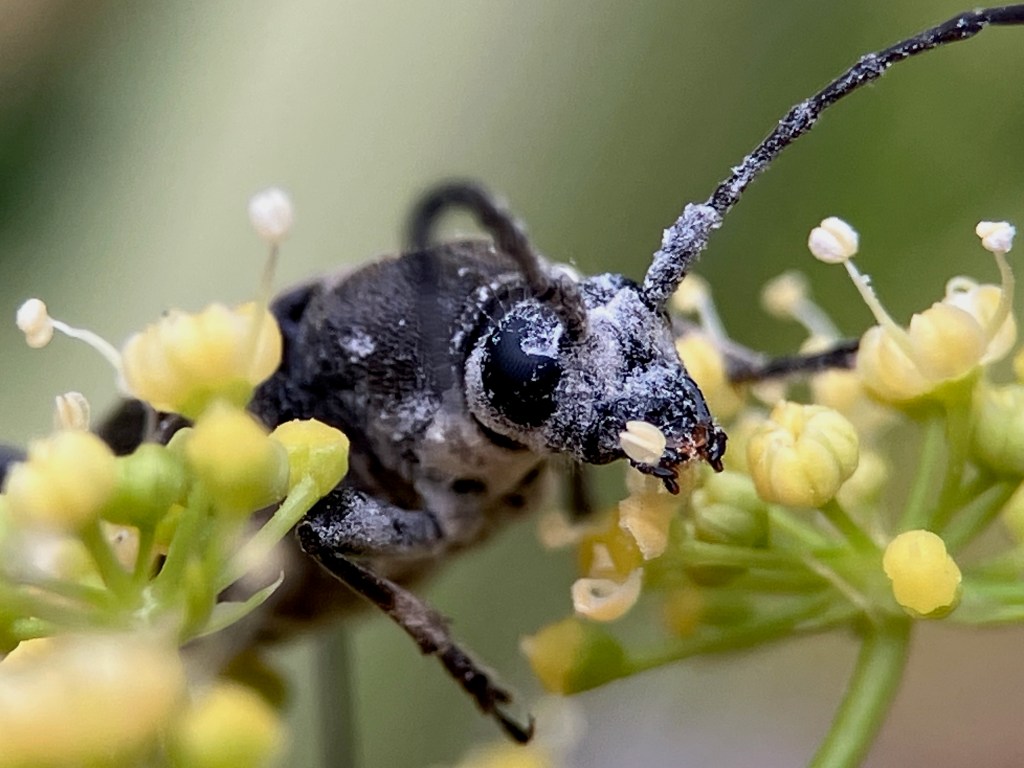
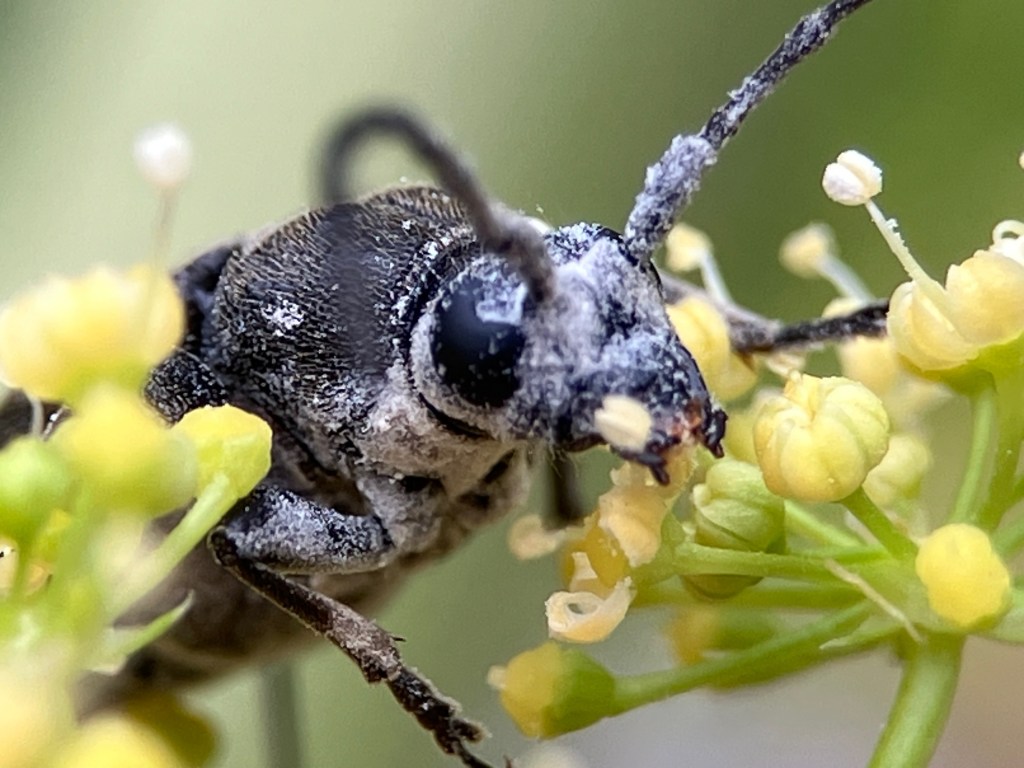
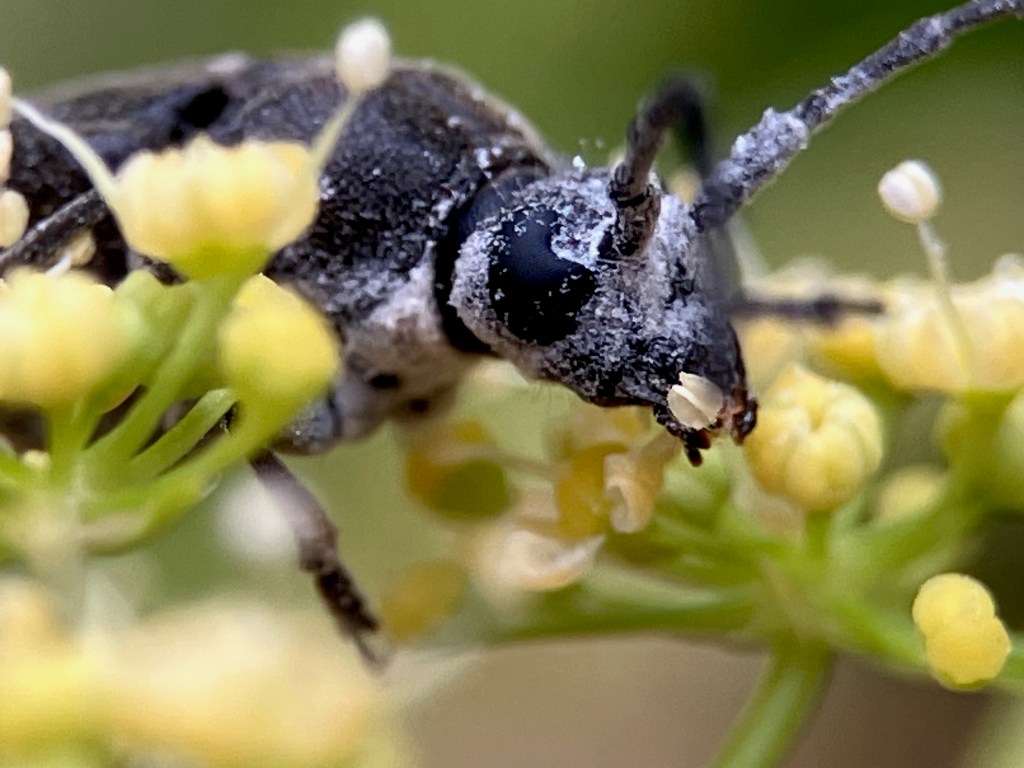
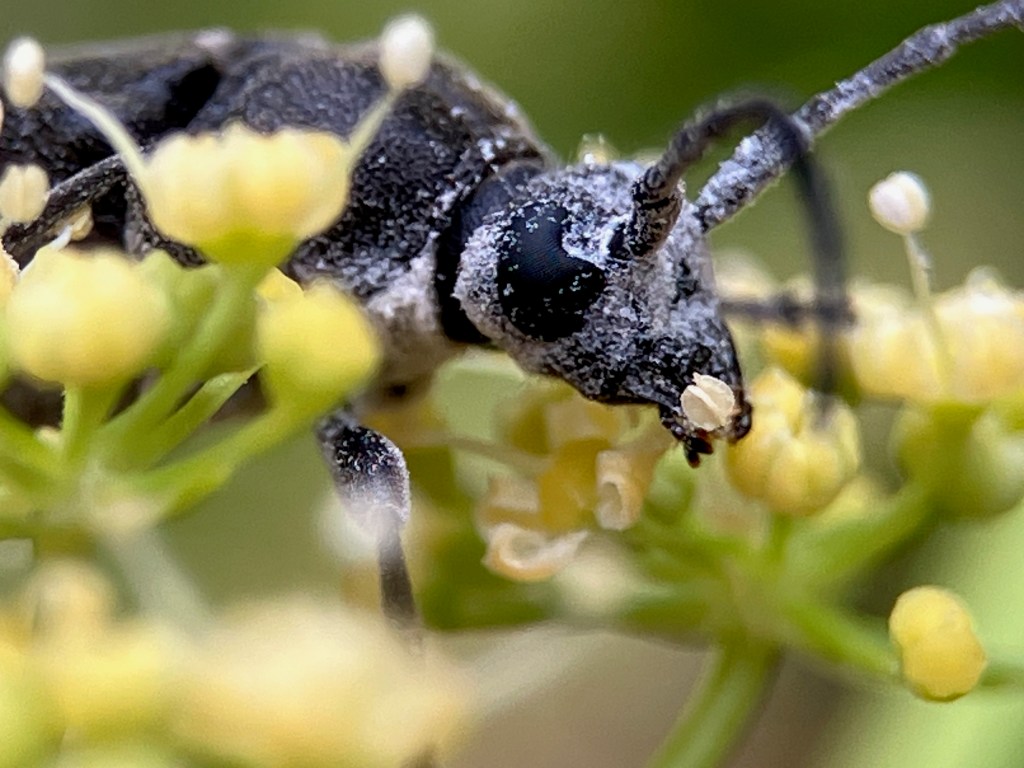
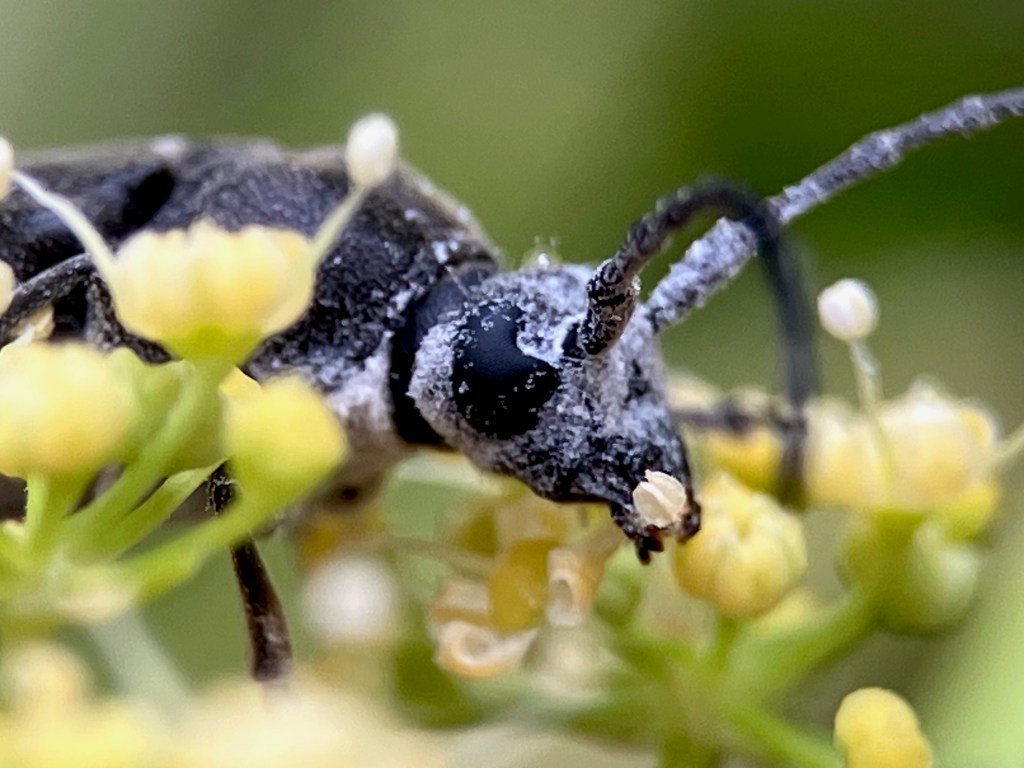
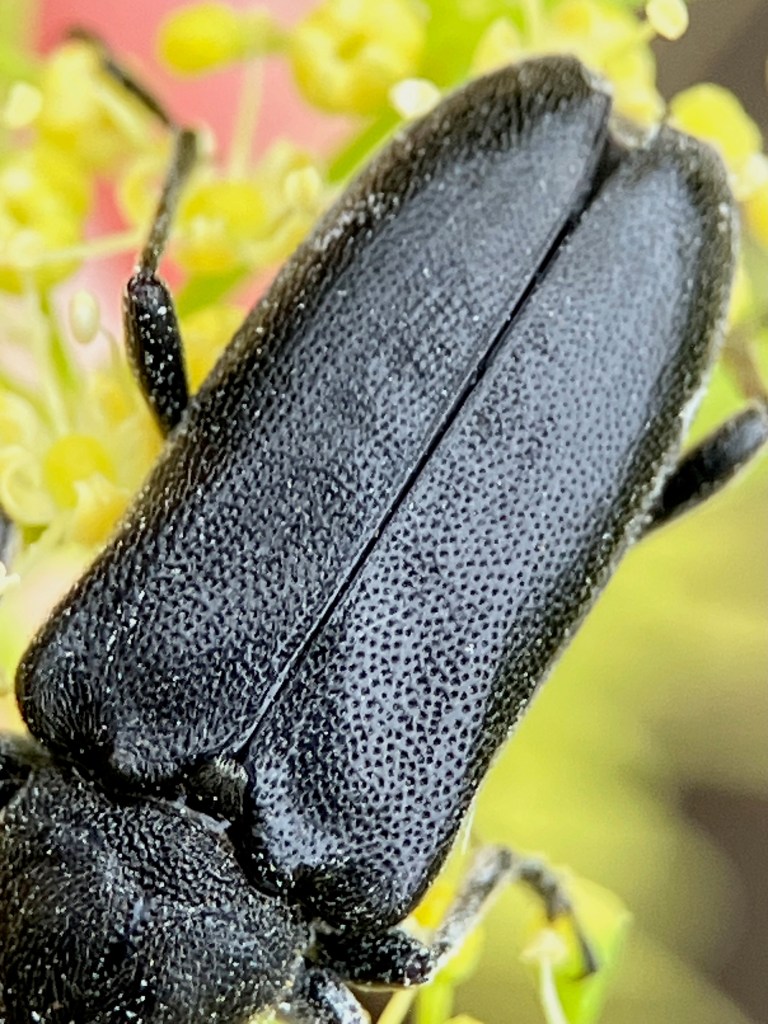
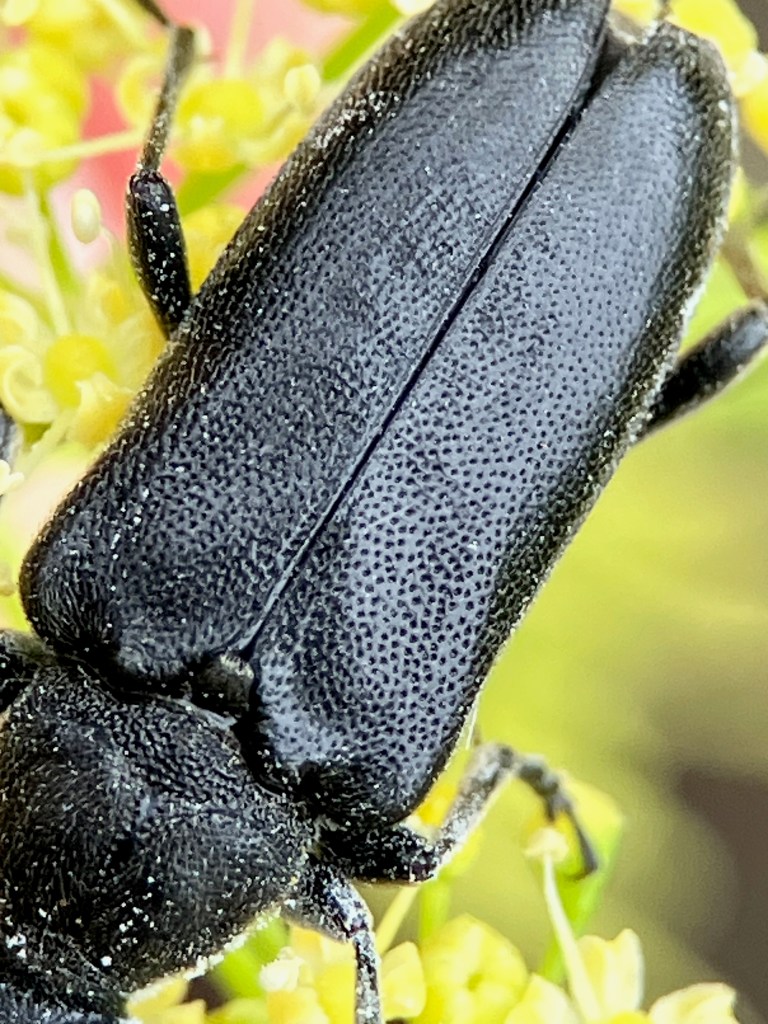
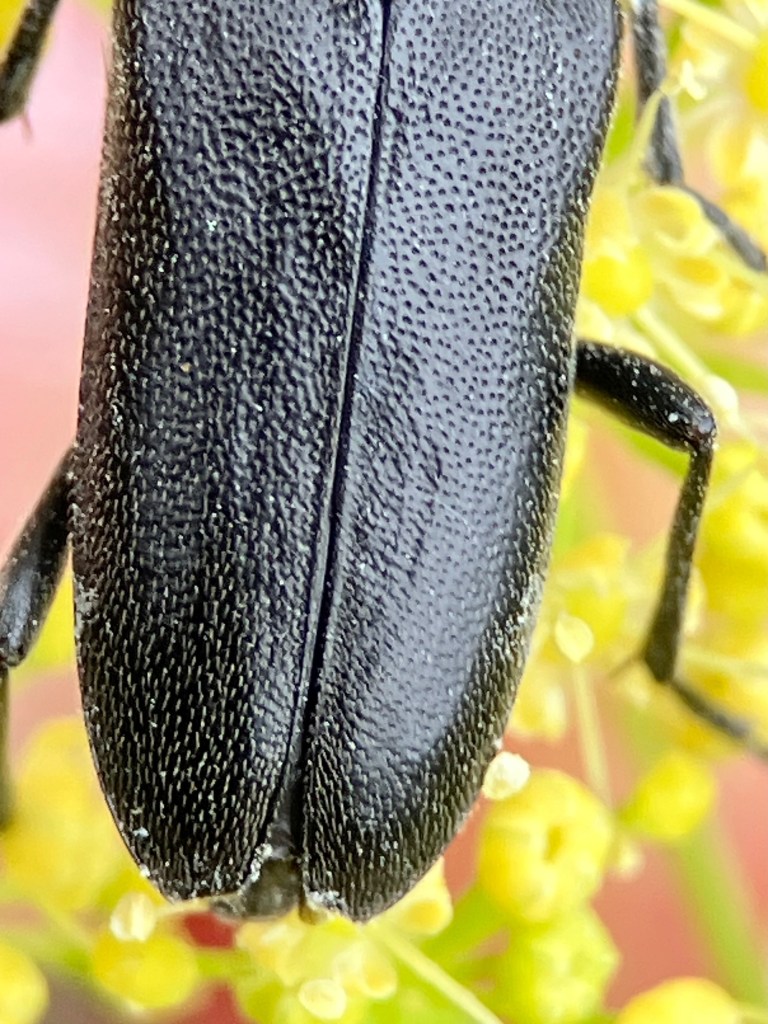
It was overcast and cool the morning of July 25, 2026, but I went down to poke around in our overgrown, un-tended orchard to look at a parsley plant that had bloomed. Over the past few days, it had been attracting some flies I was interested in. Unfortunately, there was little to no activity of any sort to observe. I was about to walk back to the house when I spied this handsome black beetle on the bottom portion of the stalk of the lone parsley.

It was like the beetle had emerged from thin air. I know I had scanned all parts of the plant. Scoured is more like it. For days, I have been trying to find two particular flies (one a Spilomyia sp., and the other a Cylindromyia sp.). Unfortunately, neither were around. I’ll take the beetle as a win. This beetle is cool!

It’s a type of Longhorn beetle in the family Cerambycidae. The species is Lepturopsis dolorosa. I thumbed through my copy of Beetles of Western North America (by a great guy named Art Evans). I found my bug on page 467. The description matched. Size = about 11-12mm, head constricts abruptly behind eyes, pronotum is wider than long.

Adults are diurnal and known to feed on various spring and summer flowers. I didn’t find parsley on the list, but yarrow, ceanothus, elderberry, goldenrod, spirea, and mullein are some others listed. Beetle larvae are associated with Douglas fir. In Furniss and Carolin’s (1977) Western Forest Insects, I read that larvae in this group, formerly in Genus Anoplodera, develop in dead trees. This gives them the job of nutrient recycler! The range of geographic distribution is from British Columbia and Idaho, down to California.

The French meaning of this beetle’s name is pretty sad. Literally. Longicorne endeuillé translates to Sorrowful flower longhorn beetle. I wonder if the beetle is supposed to be sorrowful or if the flower the beetle visits is sorrowful?

Unfortunately, I did not find much in the way of information about this species on my usual go-to (bugguide.net), but I did contribute my images to the site.

Thanks for reading.

References

Evans, A.V. 2021. Beetles of Western North America. Princeton University Press. 624 p.

HARDY, G. A. 1942. Notes on some wood-boring beetles of Saanich, Vancouver Island, B. C. (Coleoptera, Cerambycidae & Buprestidae). Proceedings of the Entomological Society of British Columbia, Victoria 39: 9–13.

No Author. Lepturopsis dolorosa. 2026. Bugguide.net https://www.bugguide.net/node/view/167043

Watch Me Take Off!

It’s a short clip, and you’ll have to check out the end to see this little beetle take flight. I fished this one out of the pool and it’s the 2nd one I’ve seen this week, albeit a new one for me to observe. I believe this is Hylastes macer, but hoping a friend will take a look for me to confirm. I have tentatively based my ID on size (approx 5mm) and locale being under our Shore Pine trees, but I wasn’t confident using Wood’s key with only my photo and video in lieu of an actual specimen under the microscope. At minimum, Hylastes should be correct for Genus. These beetles are in the family Curculionidae and subfamily Scolytinae, one of the Bark and Ambrosia beetle species.  

As to their life history, they construct galleries in phloem tissues of roots and stumps of Pinus or Pine trees and occasionally Picea or Spruce trees. According to Atkinson (2024), there are six species of Hylastes known in Washington State. Some of the species in this genus range from BC to CA. For more on distribution, take a look at Wood, 1982.

While identifying a bug is part of the process, the most fun for me is observing their behaviors. I knew when I saw the march of those little front feet, that the launch was about to take place.

References and Further Reading: 

Atkinson, T.H.  2024. Regional Checklist: Bark and Ambrosia Beetles of Washington. Bark and Ambrosia Beetles of Washington.  U.S. Forest Service. https://www.barkbeetles.info/regional_chklist_condensed.php#hylastes

Bugguide.net. 2024. Halastes macer. https://bugguide.net/node/view/495026 

Evans, A. 2021. Beetles of Western North America. Princeton University Press.

Wood, S.L. 1982. The bark and ambrosia beetles of North and Central America (Coleoptera: Scolytidae), a taxonomic monograph. Great Basin Nat. Mem. 6: 1-1356.

A Minute Scavenger

I found this very tiny (1mm) beetle on the rim of the pool outside yesterday (Dec. 8, 2023). In my investigational efforts to identify my specimen, I have concluded it should be one of the Minute Brown Scavenger Beetles in the family Latridiidae (pronounced la-trid-eye-i-dee). As to species, I think it is Cartodere bifasciata – based on the color pattern of elytra – black markings between 2nd and 5th stria in anteriour third and behind middle; lateral black spot in about middle. (Bugguide, 2014).

This particular species is an Australian native and likely introduced to North America via international shipping. Records show this species in Nova Scotia about 1989 (Majka et al 2009). Looking on iNaturalist for observational reports of this species, I see a few (about 15 or so) in the box I drew. You can see in the attached screenshot the general area where they are turning up in the Western US. Again, likely introduced via international shipping cargo.

Reported observations of Cartodere bifasciata in the PNW Region

Adults of beetles in this family are generally known to feed on the reproductive structures of fungi, plant and animal materials, and slime molds (Evans, 2021). They are found in association with wet or damp habitats in open or forested areas, especially in leaf litter, decomposing wood, on trees, herbaceous vegetation, and in bird, mammalian, or hymenopteran nests (Majka, 2009).

Cartodere bifasciata

References and Further Reading

Bugguide 2014. Cartodere bifasciata. Iowa State University. https://bugguide.net/node/view/108526

Evans, A. V. 2021. Beetles of Western North America. Princeton University Press, N.J.

Majka CG, Langor D, Rücker WH. 2009. Latridiidae (Coleoptera) of Atlantic Canada: new records, keys to identification, new synonyms, distribution, and zoogeography. The Canadian Entomologist. 141(4):317-370. doi:10.4039/n09-050.