Tag Archives: Birds

Exploring Dry Soils: Nature’s Resilience in Difficult Conditions

Globular springtail (Fasciosminthurus quinquefasciatus)

I’m quite fascinated by the rapid colonization of the very dry soil in the strip where our internet fiber cable was installed this past spring. Because disturbed soils can be great for seeding native wildflowers, I threw out several packets of a Pacific Northwest seed blend to see what might grow and I’ve been checking often to see what is coming up. In spite of the very dry weather we are having, there are some lovely Bird’s-eye Gilia (Gilia tricolor) blooming now.
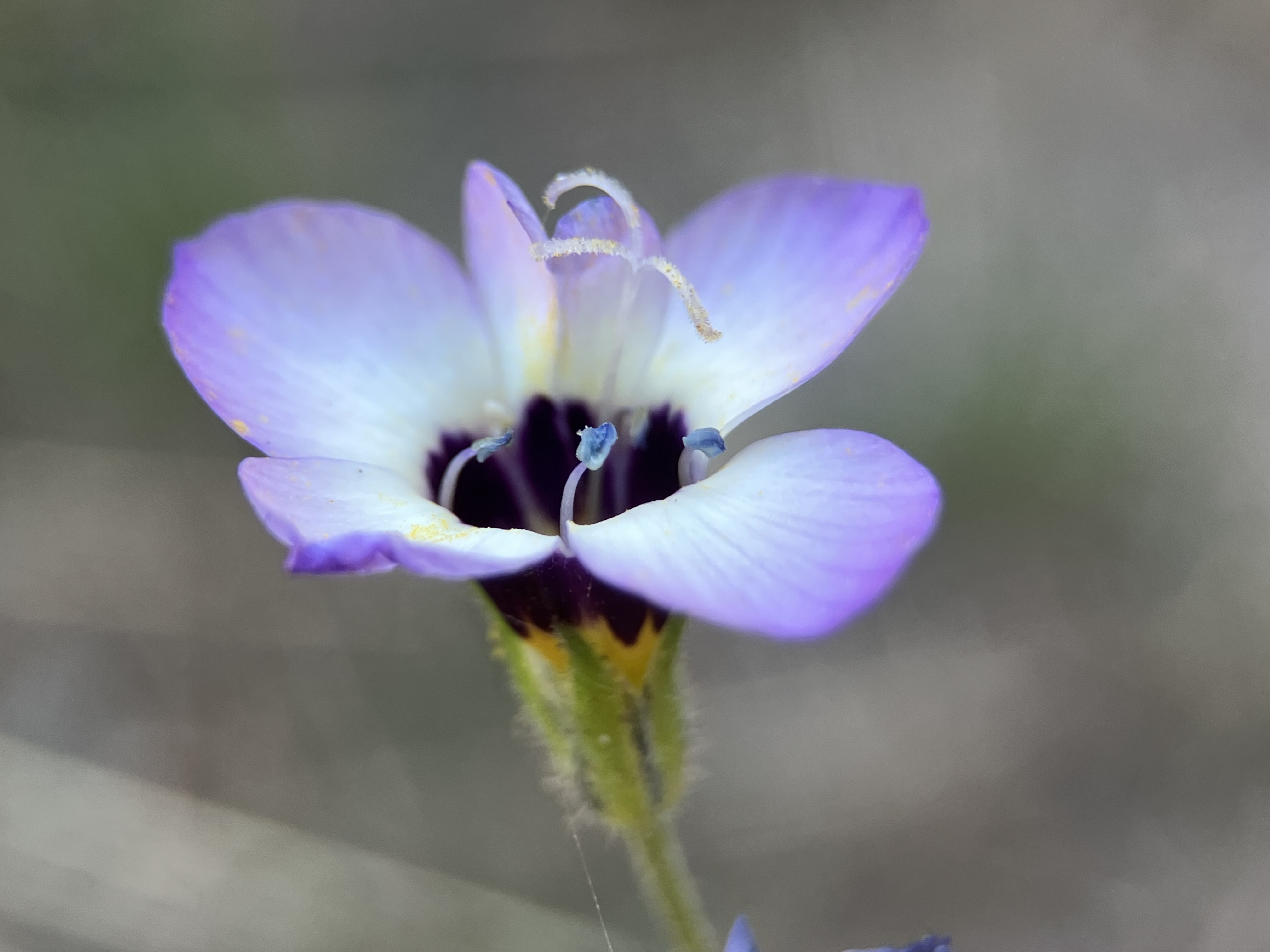
Bird’s-eye Gilia (Gilia tricolor)

I see some Farewell to Spring (Clarkia sp.) popping up too, though they have not bloomed yet. There are others I have yet to identify. It’s been so hot and dry, I’m hoping the lack of water doesn’t ruin my efforts at re-wilding this spot.

In spite of the dry, cracked earth, there are Andrena sp. mining bees already claiming this strip. There are little holes everywhere.

I also saw one quite unique hole surrounded with round dirt “pebbles,” that looked to have been arranged to mark the entrance.

As I leaned closer to inspect this architectural oddity, I saw something I would never have even noticed without the help of my macro lens. It was a colony of Globular springtails (Fasciosminthurus quinquefasciatus). There were easily about 8 or so. Can you spy the one on one of the “pebbles?”

I was able to get one or two in focus. These springtails are incredibly small – perhaps only 1mm, and recognizable by the 5 transverse bands (jailbird stripes) across the dorsal abdomen. This species is unique among springtails in that while most species require moist habitats to survive, F. quinquefasciatus thrives in arid environments with little to no vegetation in areas with southern or south western exposure.

If you follow closely in the video here, you might notice that the individual I was tracking either pooped or laid an egg on that piece of straw (between the 45 and 55 second mark. I will add some still shots clipped from the video as well.

A personal note ~ While our daily lives are often complicated with work and family obligations, as well as anxieties many of us have about climate change and political uncertainties, taking time to notice the natural world around, even in seemingly uninhabitable habitats can bring a bit of hope. There is life around us. We just might have to sit on the ground and get dirty to see it.

Thank you for reading and thank you for caring about nature.
April 6, 2025 – A Wet Spring Day

Last night, I did manage to get my moth light working again and set things up to see what I might find this morning. While I didn’t really want to get out of bed at 7:30, keeping a routine is important to me. I find it tremendously helpful in managing the ups and downs of one’s mental perspective. You’ll have to bear with me a bit though. I will get to the moths, but have to vent about something that upset me. One of my three cats was chattering at the sliding door when I walked towards the kitchen. I looked out to see what he was watching, and there was a little bird on the ground, obviously suffering from some unfortunate injury (most likely from our neighbor’s free roaming cat). That made me feel sad and angry and it wasn’t the best start to my day.


Don’t get me wrong. I love cats, but I don’t agree that it is OK to allow your feline friend to maim and kill wildlife. I do take my kitties outside with me into our fenced area for supervised recess, but I DO NOT ever leave my cats out alone and certainly do not allow the killing of wildlife. Not even bugs. Drago the lizard may get away with bug murder on occasion, but his impact is quite minor compared to the magnitude of damage done by free roaming cats when it comes to decimating wildlife.

We need to get people to change and become more responsible pet owners. If you disagree with me on this, I might add that I also saw someone’s cat was literally ripped apart on their front porch by two unleashed huskies in Friday Harbor yesterday. That also makes me sad and angry. I blame the cat owner AND the dog owner. It was senseless and preventable.

I think humans need a license to own a pet. We also need ANIMAL CONTROL in San Juan County. There is none and these huskies have been loose and killed cats before. However, if the cat owner was allowing the cat to roam outside unsupervised and unprotected, that’s another layer to the incident. What if someone had left their baby in a stroller long enough to run inside for keys, a purse, etc.? No one should own a husky as a pet. They are notorious for getting loose and killing things. But humans are not all that smart are they?


I did go out to check on the bird. It sort of looked like a finch, or maybe even a female cowbird (except it was too small to be a cowbird). Let’s just say the head looked like a female cowbird’s, but the body was more finch like in size.

It can hop. I put a bit of seed out on the ground and left it alone. It would just stress the bird for me to try and capture it. Maybe it will recover.

Please don’t say, it’s just nature, because cats are not native here. Also, my neighbor’s cat dug up all of my garden pea starts last year and pooped in the garden bed. Pea starts are expensive. People need to keep their cats indoors, or in a catio, or just supervise them outside so they don’t cause problems or be killed by dogs that should not be owned by humans as pets.

After I checked on the bird, I did go and look at my moth bucket. There were 7 specimens. Not many, but I went through them and here’s what I found. Six moths and one wasp.

Cerastis enigmatica, the Enigmatic Dart Moth
Orthosia hibisci, the Speckled Green Fruitworm Moth
Egira crucialis , I believe. Egira for certain though
Orthosia sp. I am undecided about species for this one.
Ophion wasp.

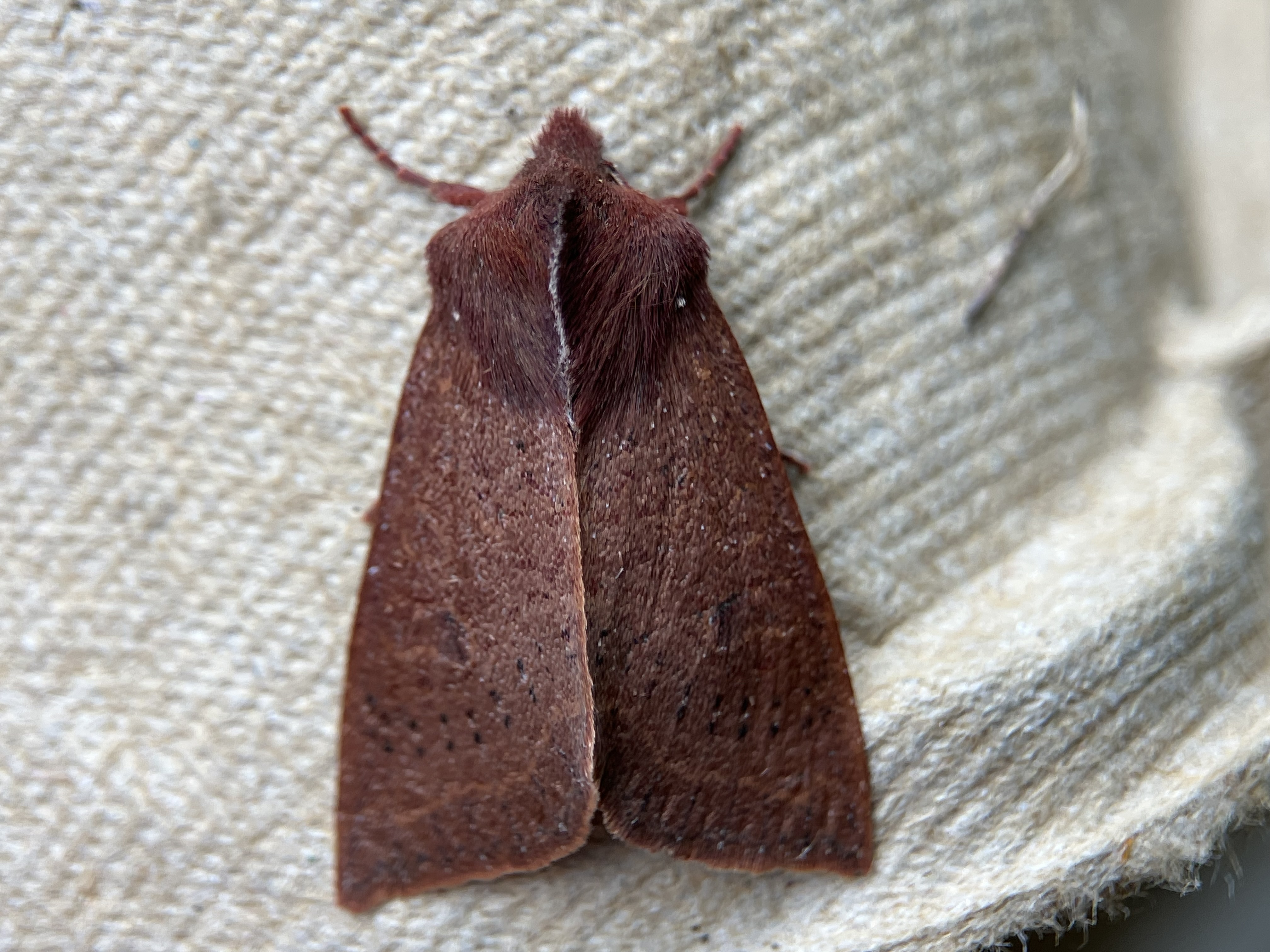
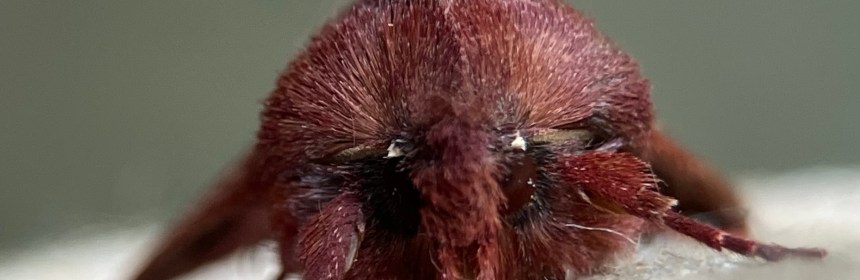
The next moth below looks like it has a little pixie cap on. It’s one of my favorites. The red colors are so pretty. It’s in genus Orthosia like some of the others above, but I believe this one is Orthosia transparens.

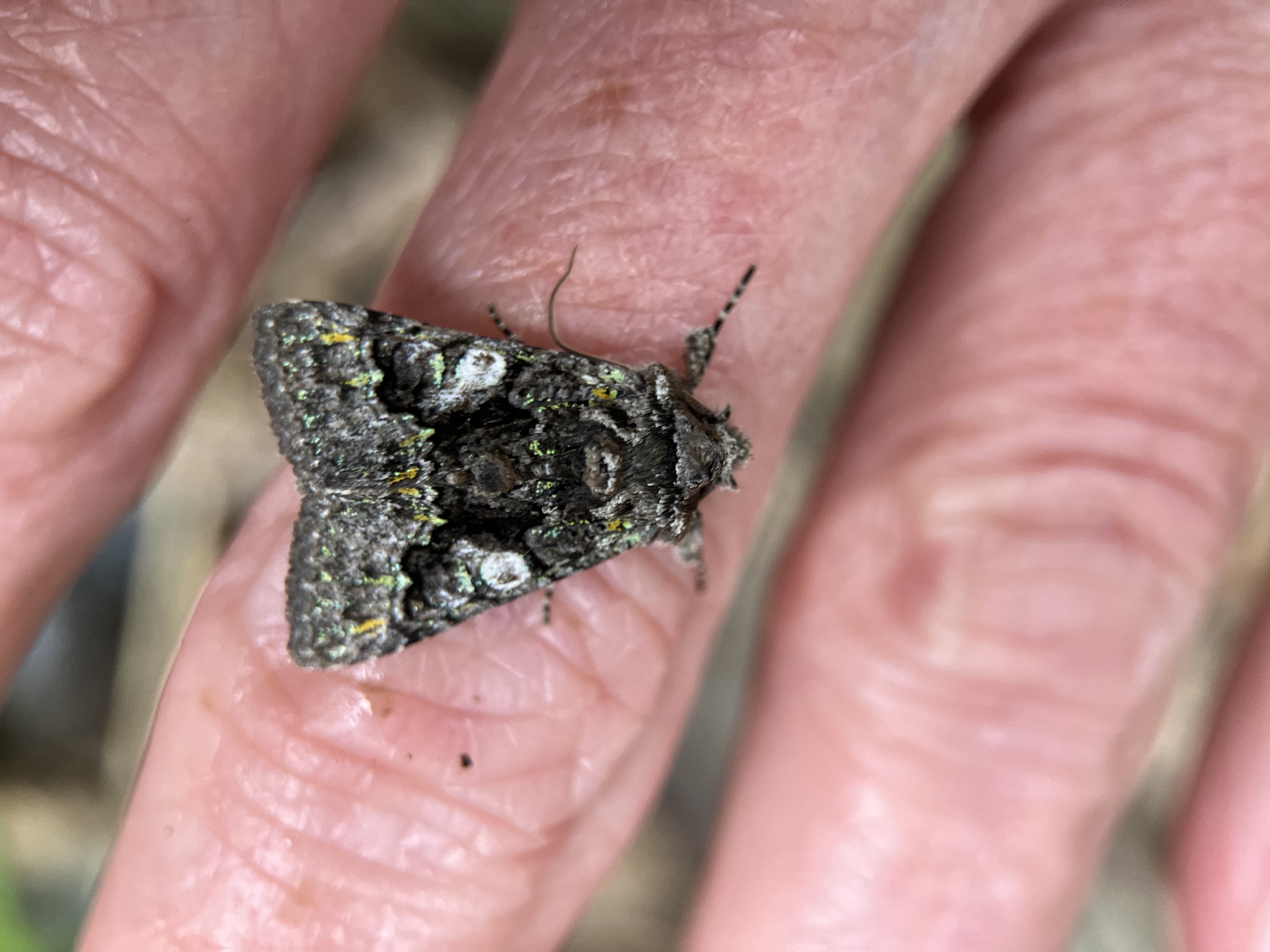
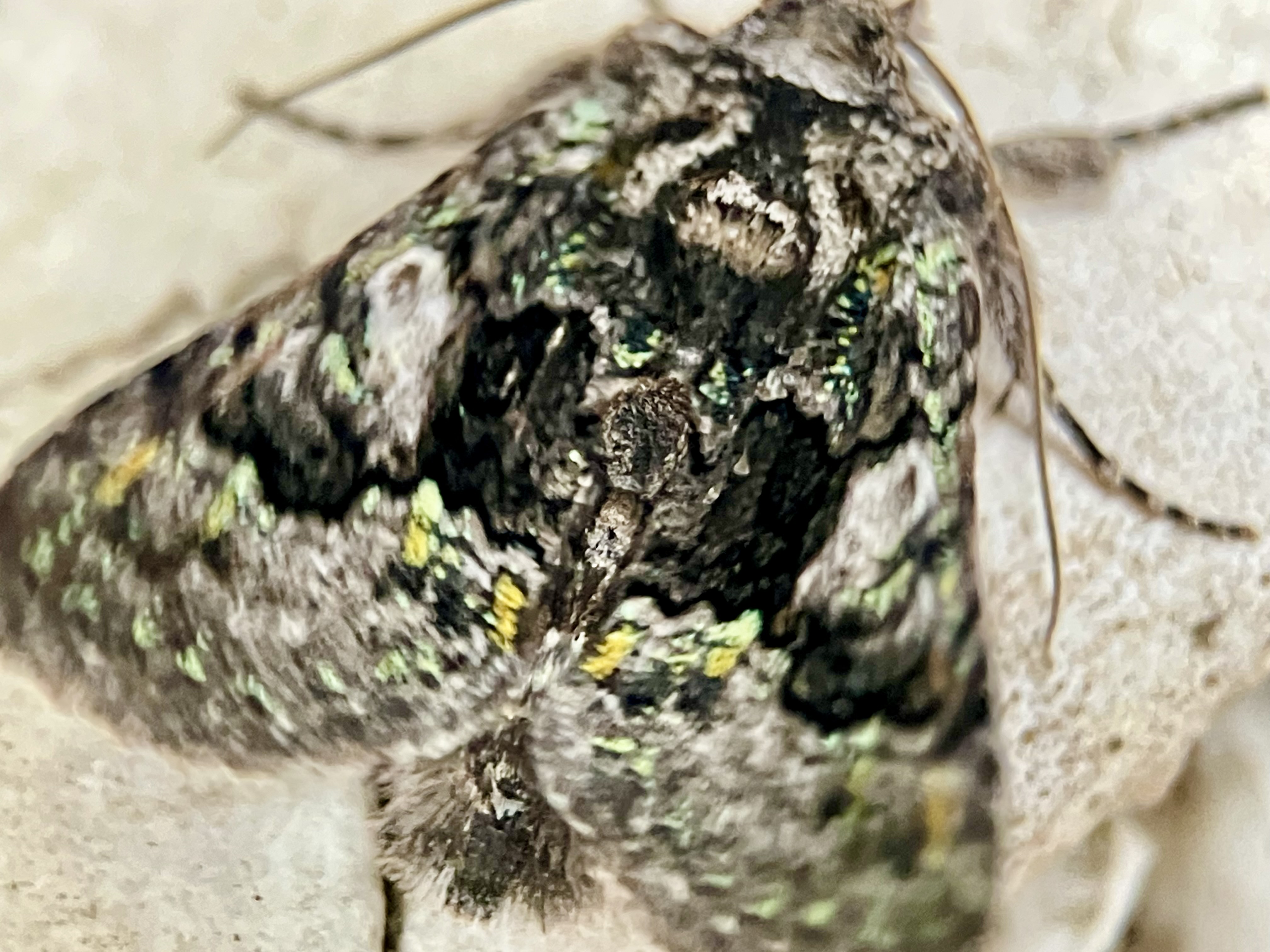
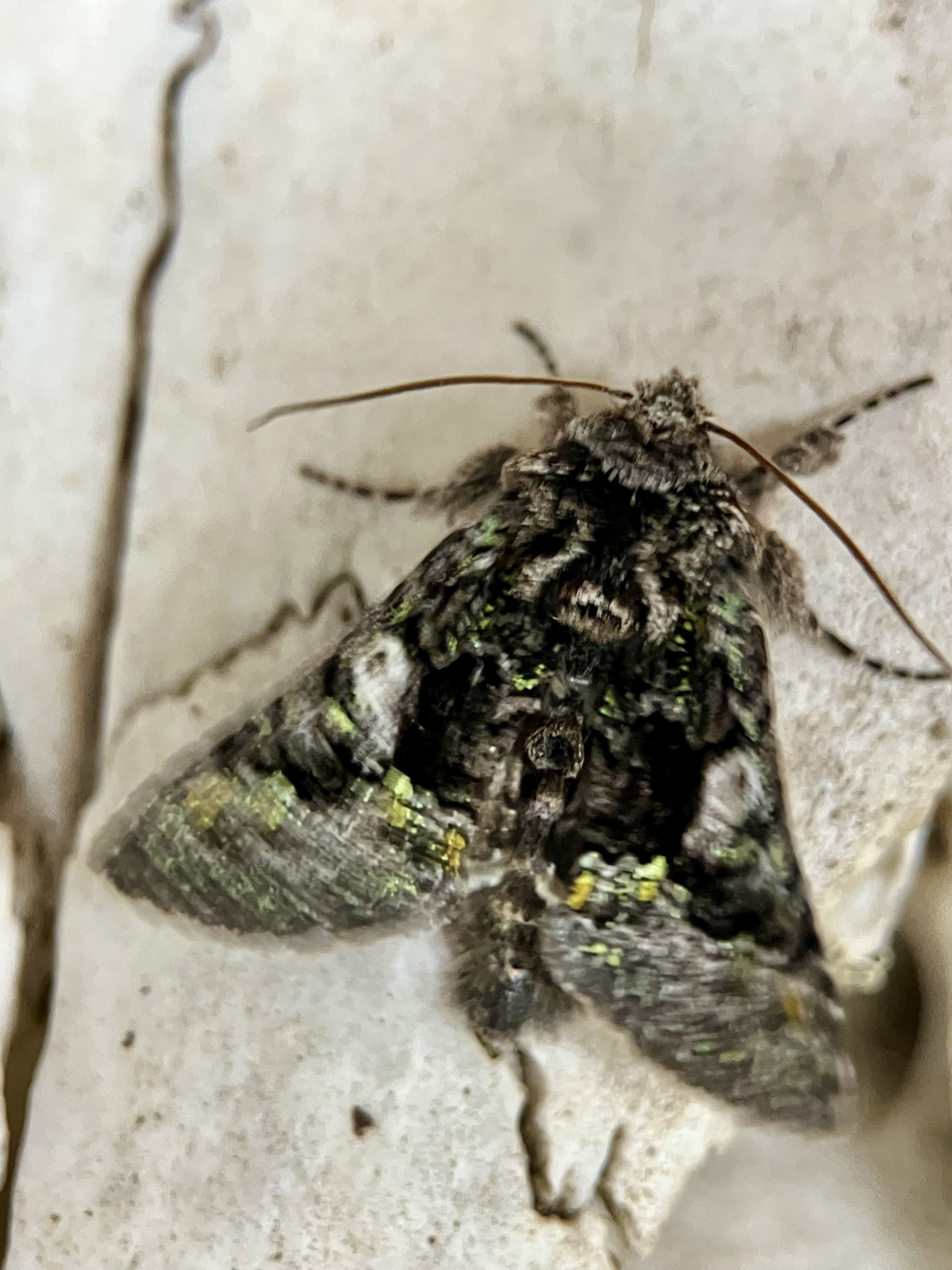
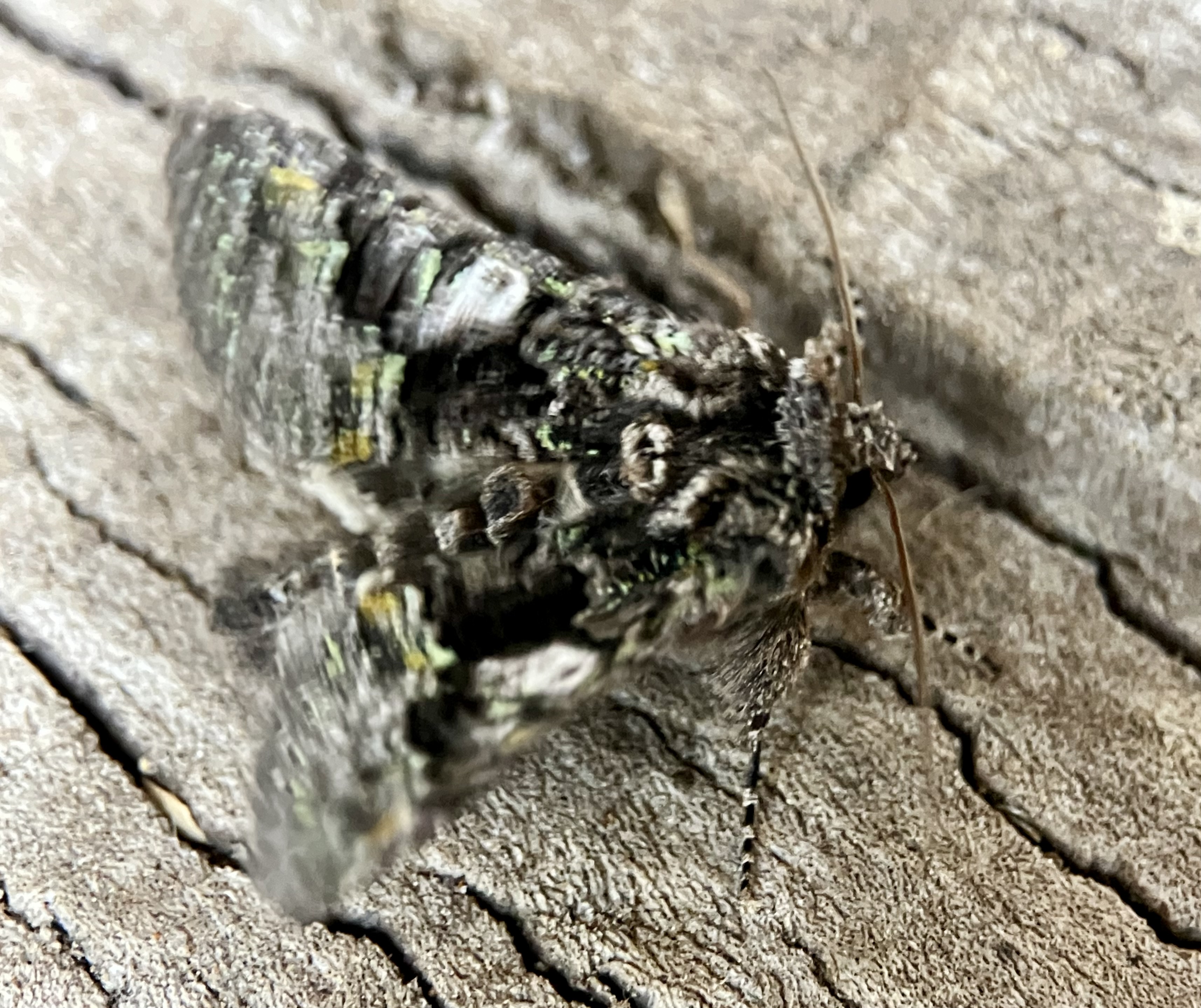
I saved the best one for last. I have only seen this moth on two other occasions, but it one so remarkable, you remember it well. This is an owlet moth called Behrensia conchiformis. I would love to discover what makes the interesting metallic colors in the wings. The larvae of this species are foodplant specialists. They feed only on honeysuckle (Lonicera spp.) and snowberry (Symphoricarpos spp.) in the Caprifoliaceae.

Thanks for reading…especially for reading my rambling rants of the day. While I’d like to stick to just bugs, I am finding it somewhat therapeutic to include my feelings here, and to interject some of my opinions. They are mine and yours may be different. I respect that, but I hope perhaps upon reflection, even someone who might initially disagree with my perspective, might have a change of heart.

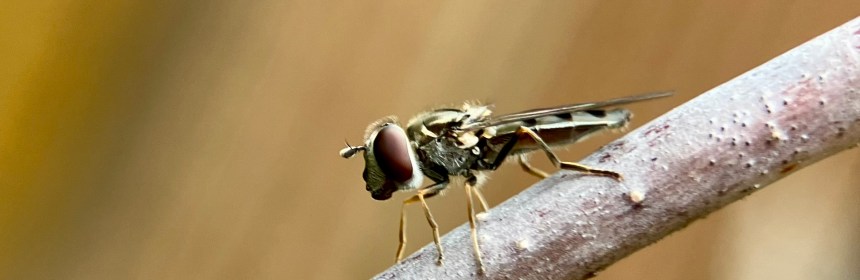
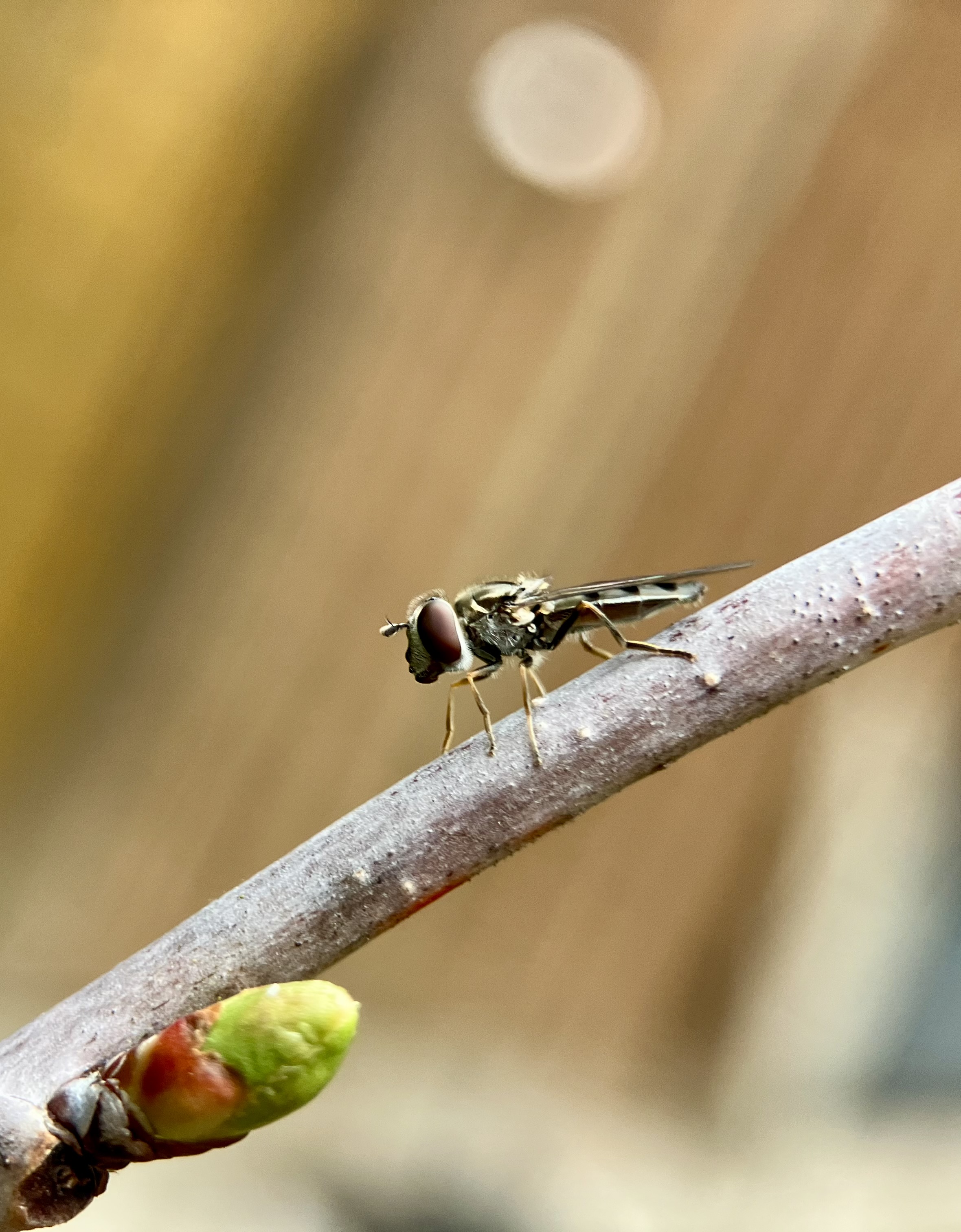
A Sedgesitter

This was Wednesday’s bug of the day. I’m a day behind writing up my post. Although I have tried to get out for a quick bug search every day, it’s been overcast and/or drizzly here this past week. I was excited to see this little fly hunkered down on a twig of our fruitless cherry tree, the tree that I whacked off as an unwanted upstart for several years before I discovered how interesting it is.

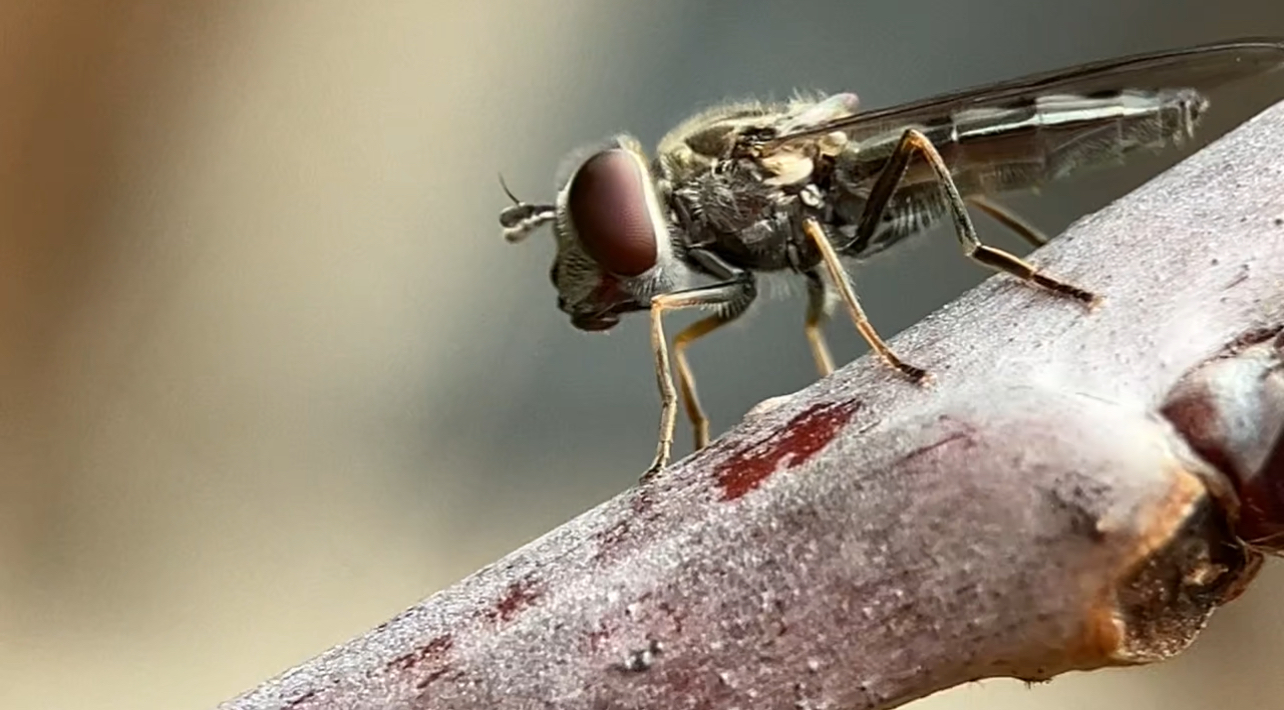
Western Forest Sedgesitter, (Platycheirus trichopus), I believe

That tree is a mini ecosystem: floral nectaries that feed the aphids, aphids, slave making ants that have fights to the death (winning) with the carpenter ants that try to invade our home every spring, and the birds that rip the leaves apart trying to get the aphids. Now I can add Syrphid flies to the list!

That’s what this is. A syrphid fly. Syrphid flies eat aphids. It would make perfect sense for this adult to lay eggs on the tree, though I’m not sure what would happen because the ants that farm those aphids are certainly willing to die defending them. I could definitely see the ants overtaking the syrphid fly larvae. Nevertheless, the fly flew off. Somewhere.

I believe this particular fly is the Syrphid fly species Platycheirus trichopus, the Western Forest Sedgesitter. While difficult to ID to species, I did reference the helpful ID guide by fly expert, Even Dankowicz. https://docs.google.com/presentation/d/19F1qRGpmNDgaGE13M2SMUBlI846JicTOYjIescjVTHw/preview?slide=id.g8918834f0e_0_92

This species, as mentioned earlier is pretty small at only about 6.8-9.4 mm. Geographic distribution ranges from the Rocky Mountains west from Alaska to Mexico (bugguide.net). Adults of this genus are known to feed on the pollen of wind pollinated plants like Willow (Salix sp.) and various grasses (Poaceae), and sedges (Cyperaceae). It is believed they are better adapted to activity in cooler temperatures and that fits with yesterday’s rather gloomy spring day.

Thanks for reading!

References:

Dankowicz, Even (2023). “Common Pipizini, Paragini, and Bacchini Species of the Southwestern U.S. (CA NV AZ UT NM CO)”The Fly Guide: Field/Photo ID for Flies. pp. 9–10.

Bugguide.net. 2025. Syrphidae. https://bugguide.net/node/view/196

Bird notes 🎶

Something happened in the yard yesterday afternoon. We have a fruitless cherry tree in a cage that I didn’t plant. At least I think it’s a fruitless cherry tree. It sort of popped up on its own.

In the beginning, I didn’t really want it there, so I cut it down – a few times. It kept coming back, intent on sticking around. A couple of years ago, I just stopped trying to get rid of it. I even put a little cage around it. That was actually for the juncos that built a nest in the grass below that little tree though, to keep them safe from the mower.

Aside from me personally whacking it down a few times, the little tree has suffered other adversities. It has been attacked by cherry slugs (sawfly larvae). They ate its leaves.

Sawfly larva or Cherry Slug

It has had a few tent caterpillars munching too. One year that it was super dry, it lost its leaves and I thought it was dead. Only it came back again. I started to pay more attention to this little tree, even watering it in the summer. It’s not very tall, but this year it looks more healthy than ever before.

Last year, I noticed in the spring that it put out these cool little red bumps on the stem just above the leaf.

extrafloral nectaries
Formica ascerva ant at extrafloral nectaries

Those little bumps soon had little red and black ants visiting. I learned the red bumps are extrafloral nectaries. They produce nectar that attracts pollinators to the tree. I haven’t seen any flowers, so I’m not sure what would be pollinated. Maybe the tree isn’t old enough yet. I’m still learning. I sure need to figure out if I’m right that it’s a fruitless cherry.

Well, the other thing that is interesting is shortly after the little red bumps attract the red and black ants, there are little black aphids. I’ve seen this for 2 years in a row now. The ants tend those little aphid flocks like sheep. They are guarding them in exchange for the sugary honey dew the aphids produce.

The aphids and the ants seem to multiply. I have seen 2 or 3 ants per leaf with aphids. Not all the leaves have aphids, but maybe 1/3 of the tree does, and each guarded by the ants. The ants are Formica ascerva species.

They are interesting in their own right because aside from guarding the “sheep,” they also are fierce warriors, driving away (and killing) the large Camponotus sp. carpenter ants that try to invade every spring.

This colony of Formica ants lives under a bedroom of our home. They are welcome to stay since they don’t eat wood.

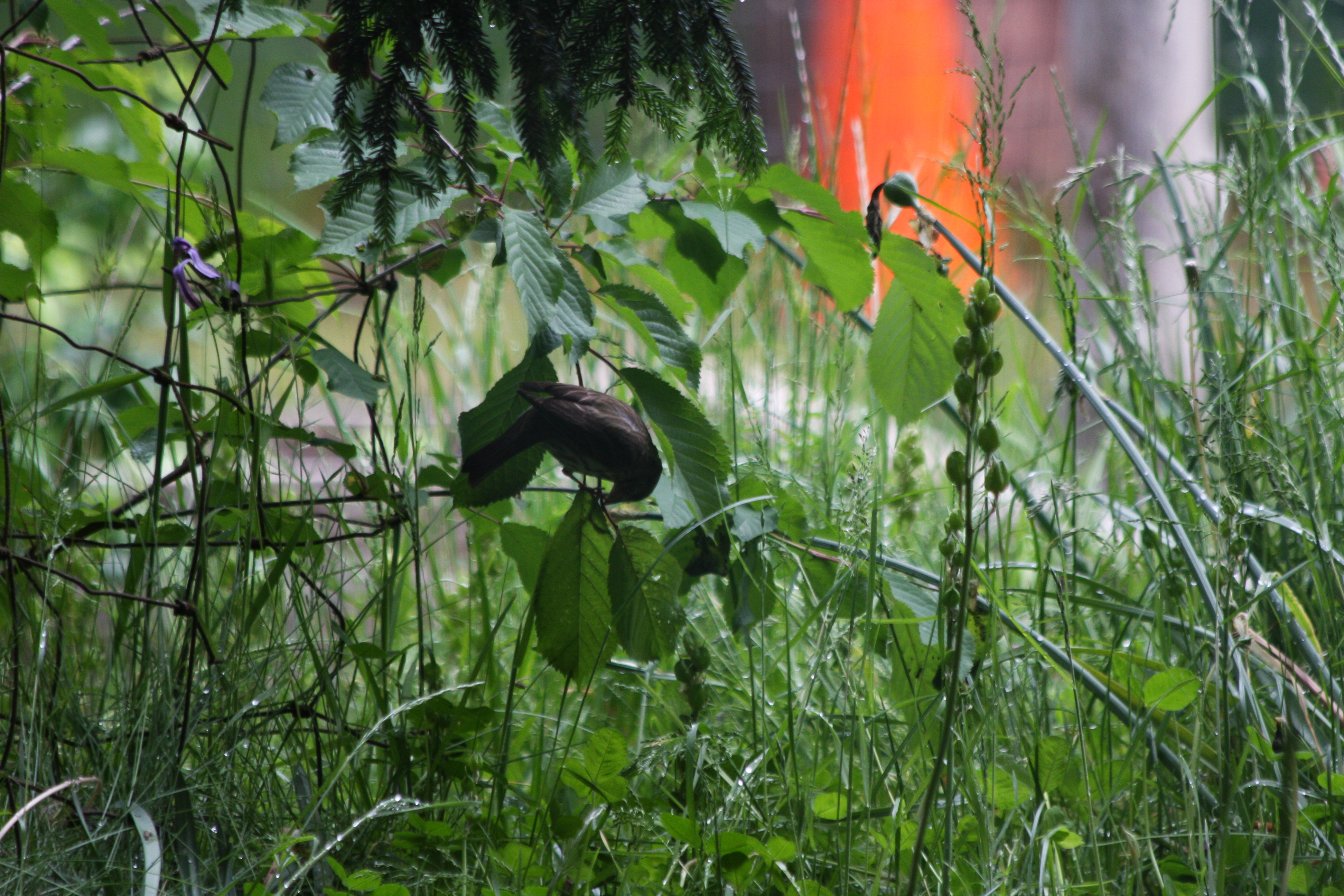
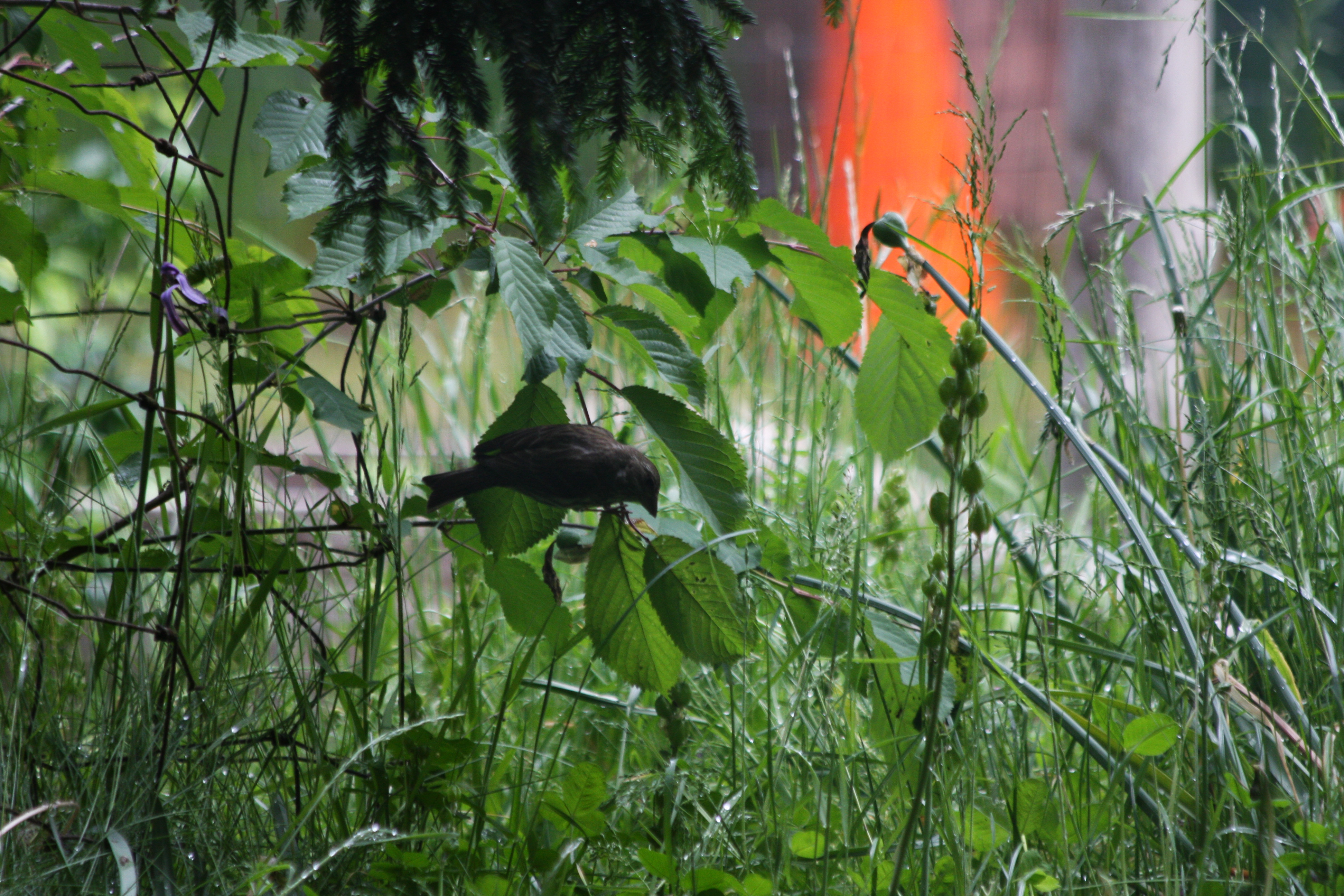
Today, when I looked out the window though, I saw something challenging the fearsome Formica ants. There were birds inside the tree caging and they were hungrily pecking and even tearing at the leaves with aphids. I grabbed and clumsily set up my camera to video the scene.

Birds attacking aphids farmed by Formica ascerva ants

I saw finches first, then there was a chickadee, and even a hummingbird. I thought I saw bumble bees, but they wouldn’t have been eating the aphids. Perhaps they were visiting the extrafloral nectaries or maybe even sipping honeydew produced by the aphids, but I wasn’t close enough to be certain.

Afterwards, I went out to survey the damage. I saw one leaf with lots of shreds. Aphid parts scattered about. Ants wandering somewhat aimlessly. Another leaf had an ant that died courageously in battle protecting his little flock.

I wanted to share my observations with you because a lot of folks really dislike aphids. Others also dislike ants and don’t understand their role in nature’s ecosystems. Maybe this will help others to understand there are a lot of hungry birds that eat aphids (and ants). Without them, the birds might not find enough food to feed their nestlings. It’s all part of the cycle of life.

If you see aphids your garden that you are worried about, you can mitigate some of their feeding damage by hanging a hummingbird feeder nearby. The hummingbirds have to have protein along with all that carbohydrate sugar water and they will most certainly find your aphids delicious. In fact, insects and spiders make up about 85 % of the diet of hummingbirds. Birds need bugs. And not all ants are pests. Some are extremely beneficial. I challenge you to take up bird and bug watching. You will not be disappointed!

Thanks for reading!

Below are more images of the birds feeding on the aphids inside the caged tree.

References and further reading

Bentley, B. L. (1977). Extrafloral Nectaries and Protection by Pugnacious Bodyguards. Annual Review of Ecology and Systematics8, 407–427. http://www.jstor.org/stable/2096735

Bugguide. 2024. Formica Ascerva. https://bugguide.net/node/view/497956