Tag Archives: bug

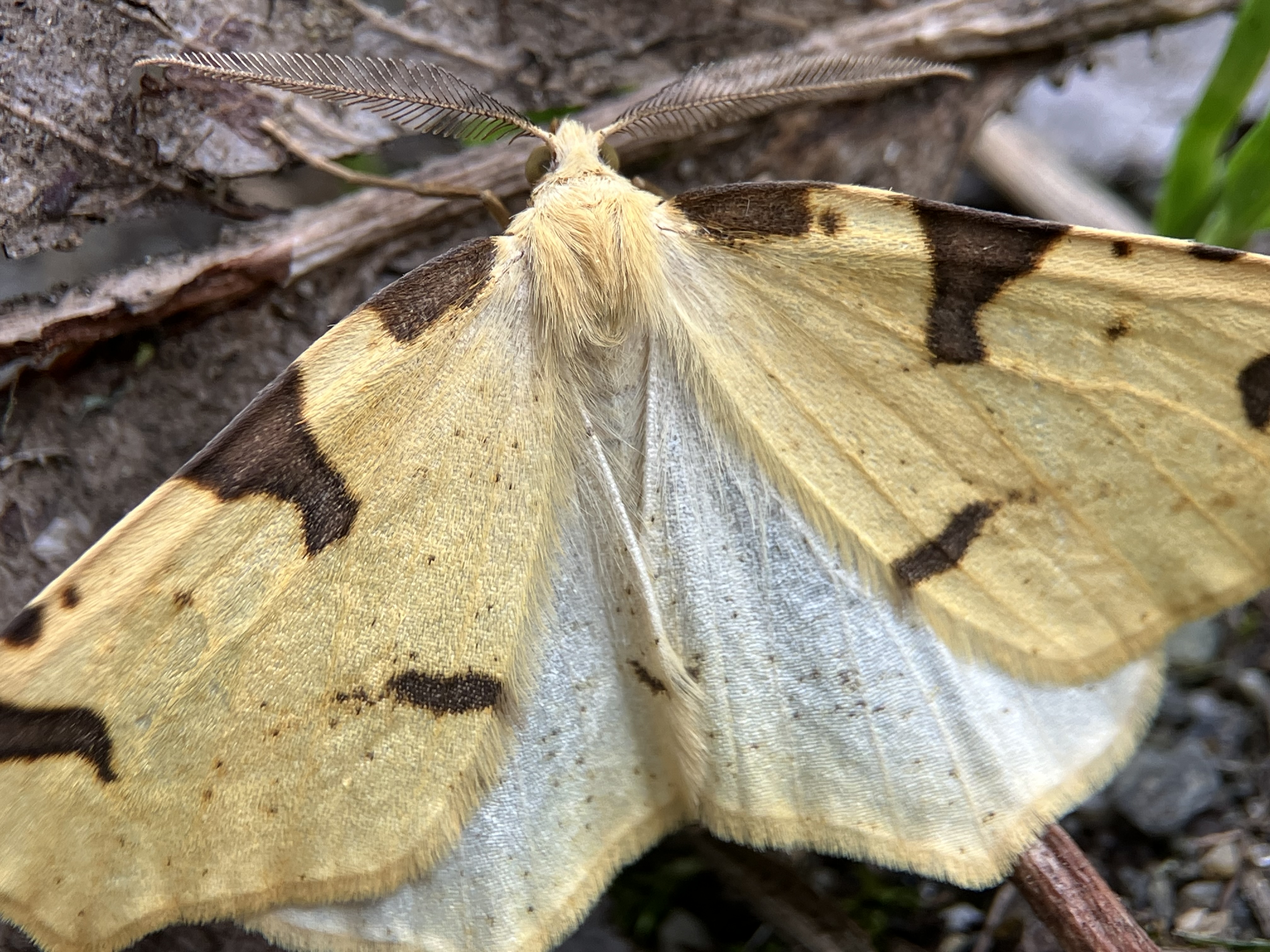
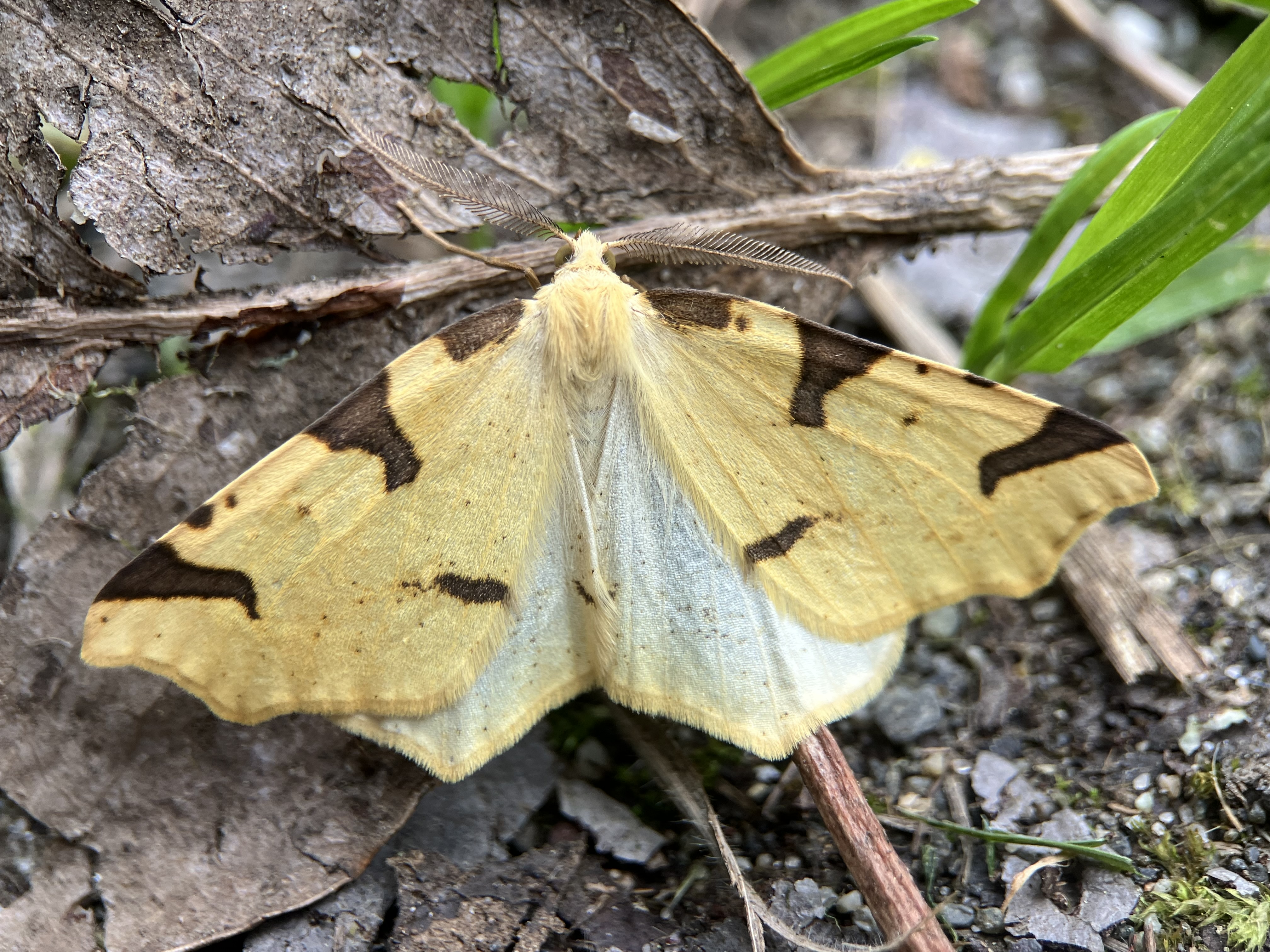
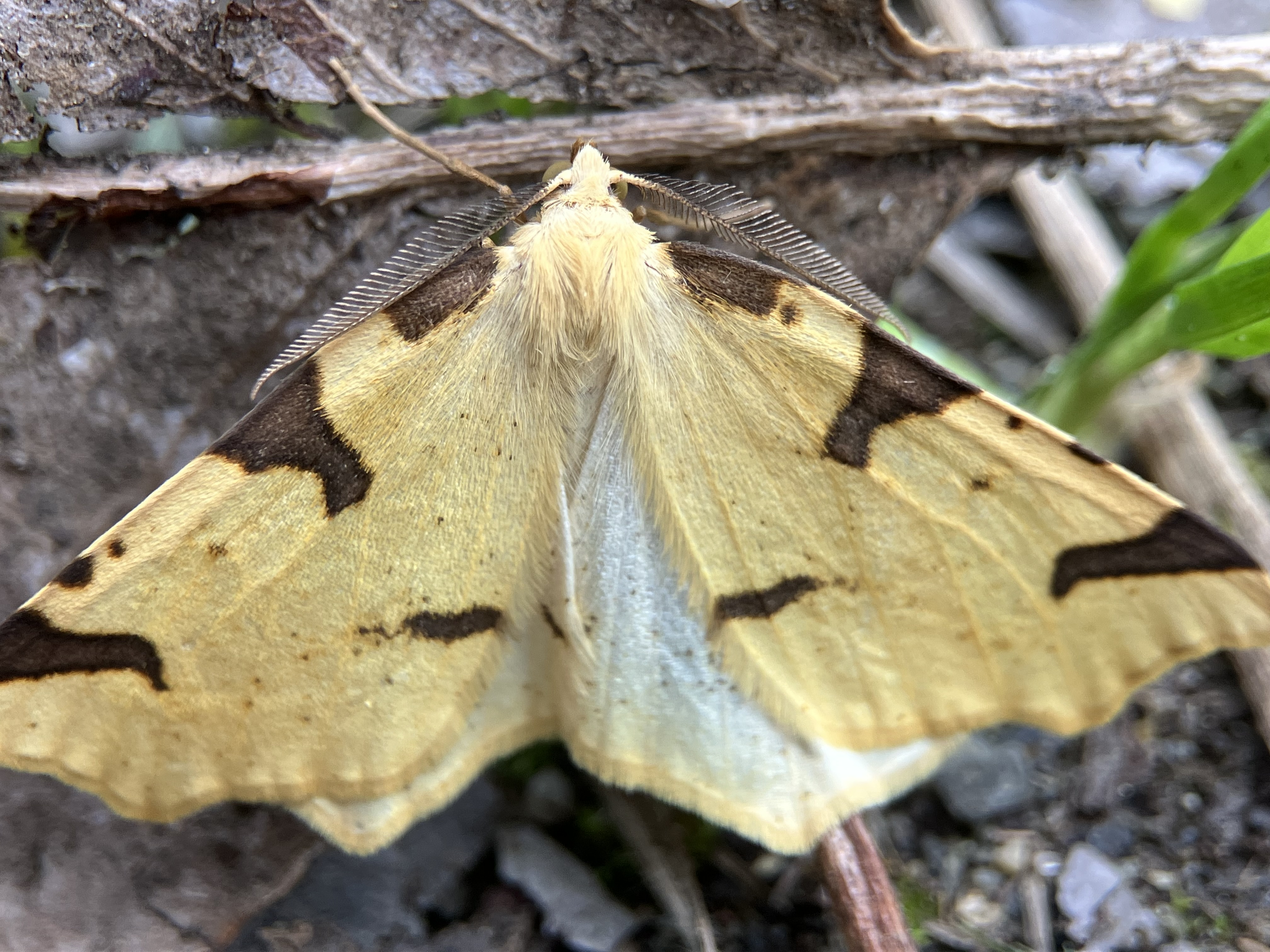
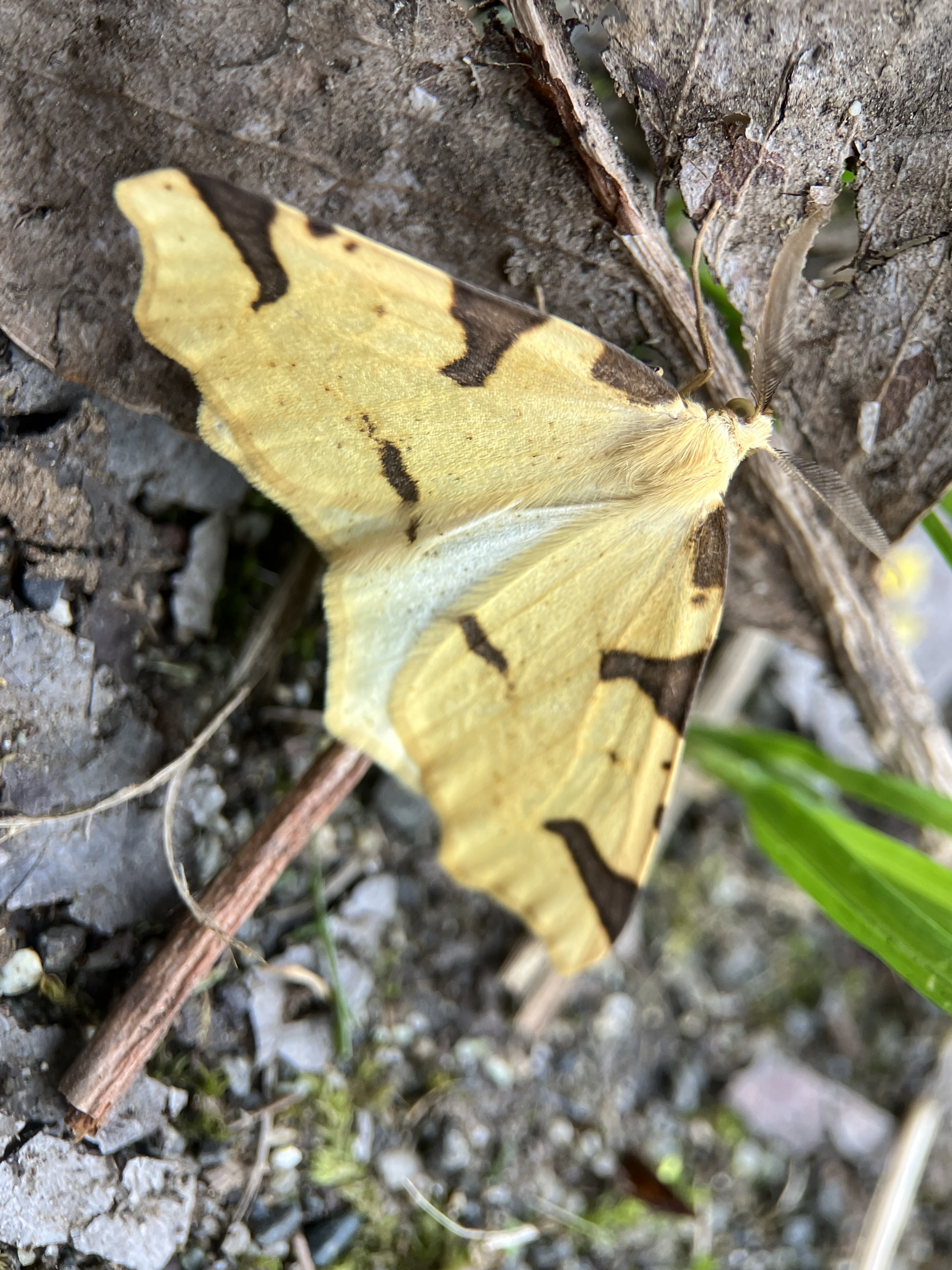
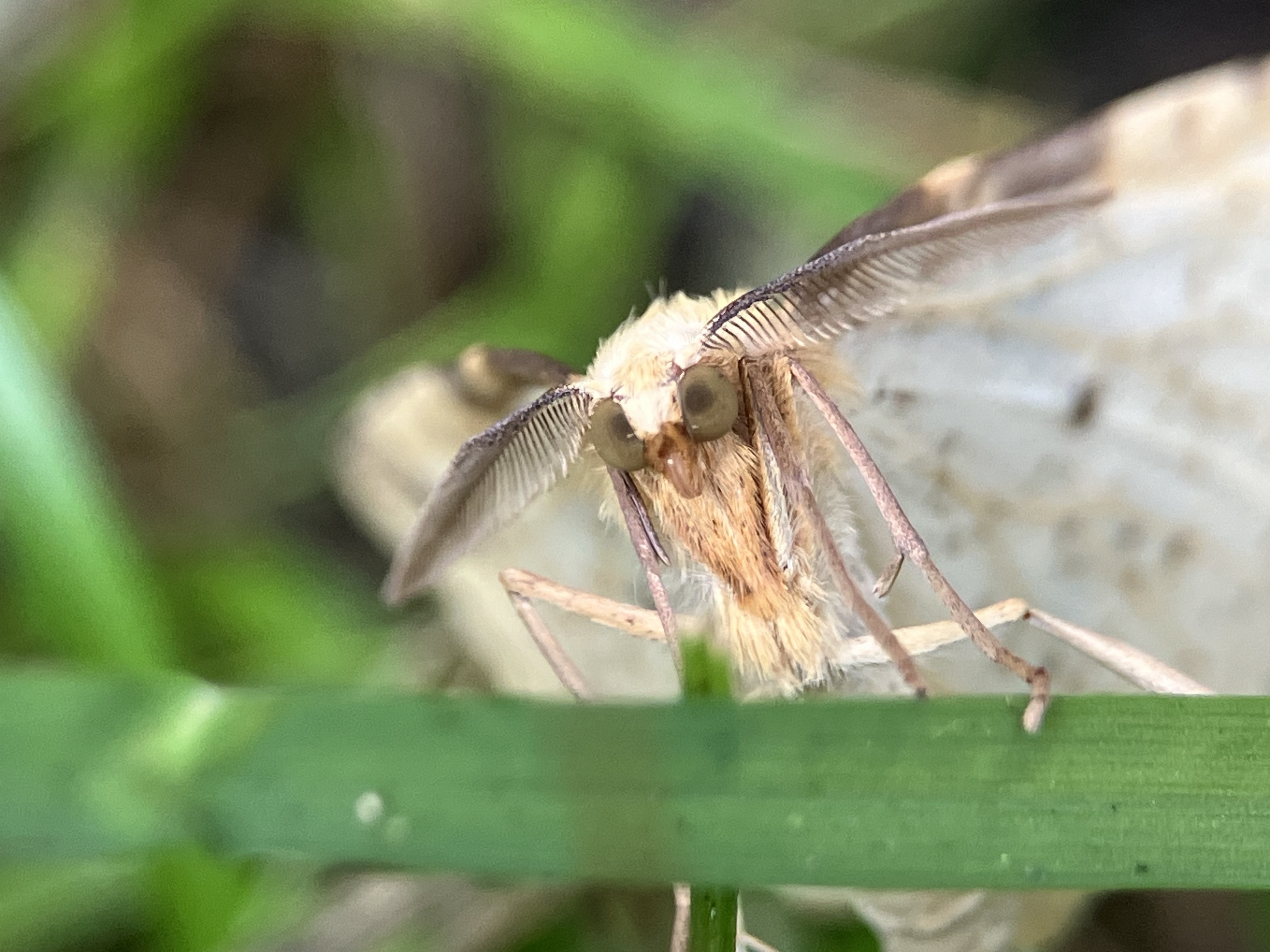
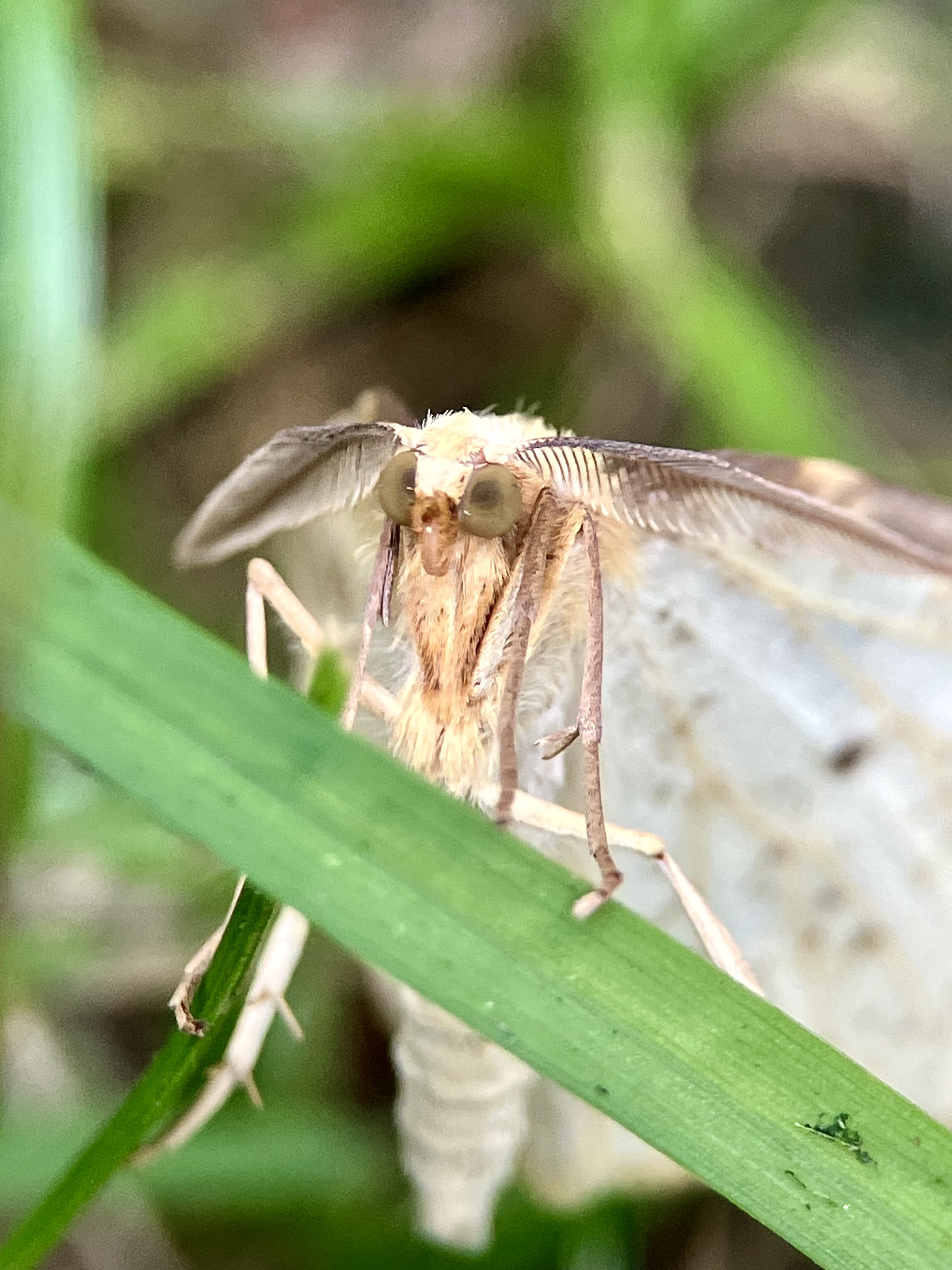
Canary thorn moth, (Neoterpes trianguliferata)

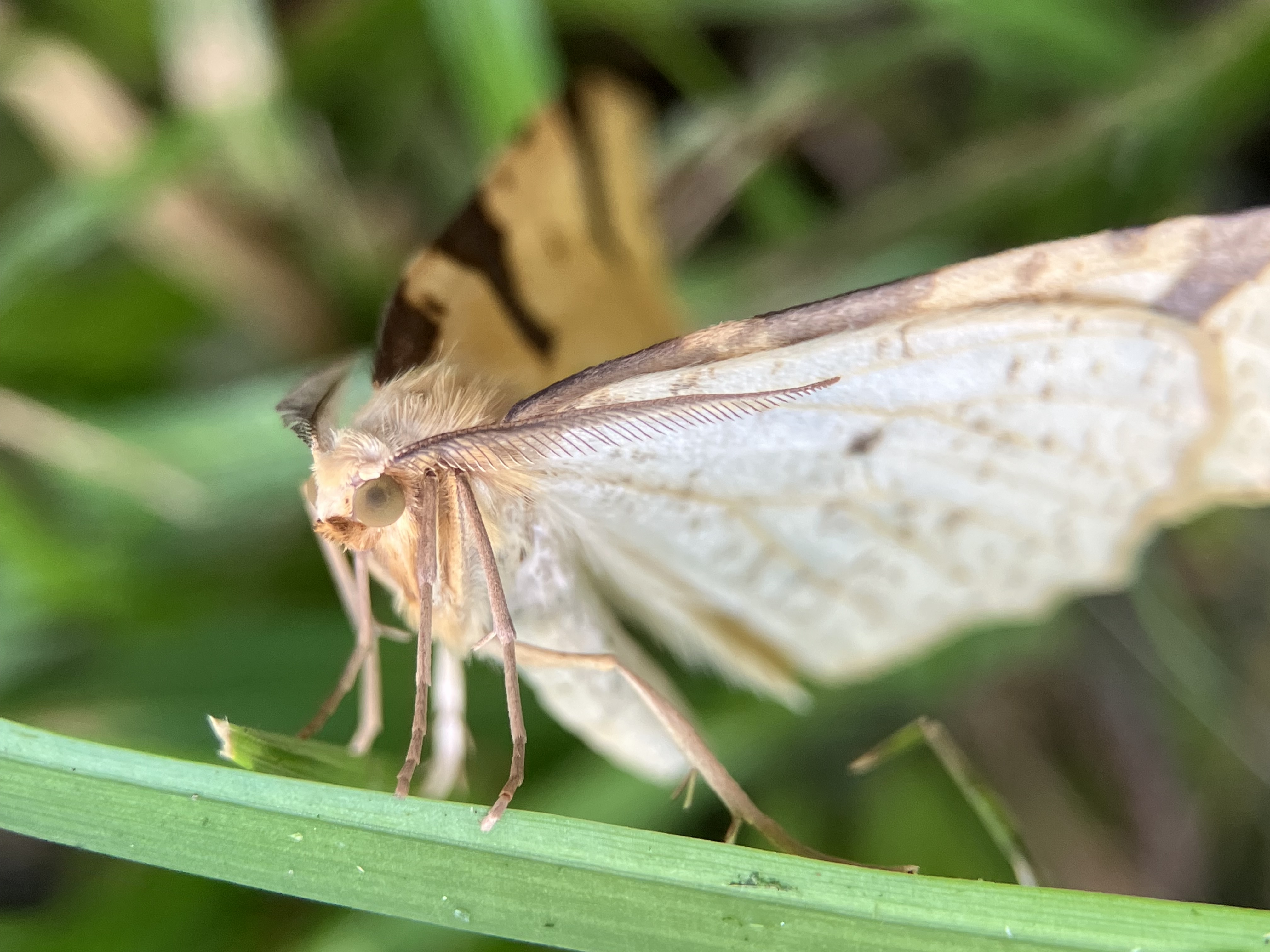
Canary thorn moth (Neoterpes trianguliferata)

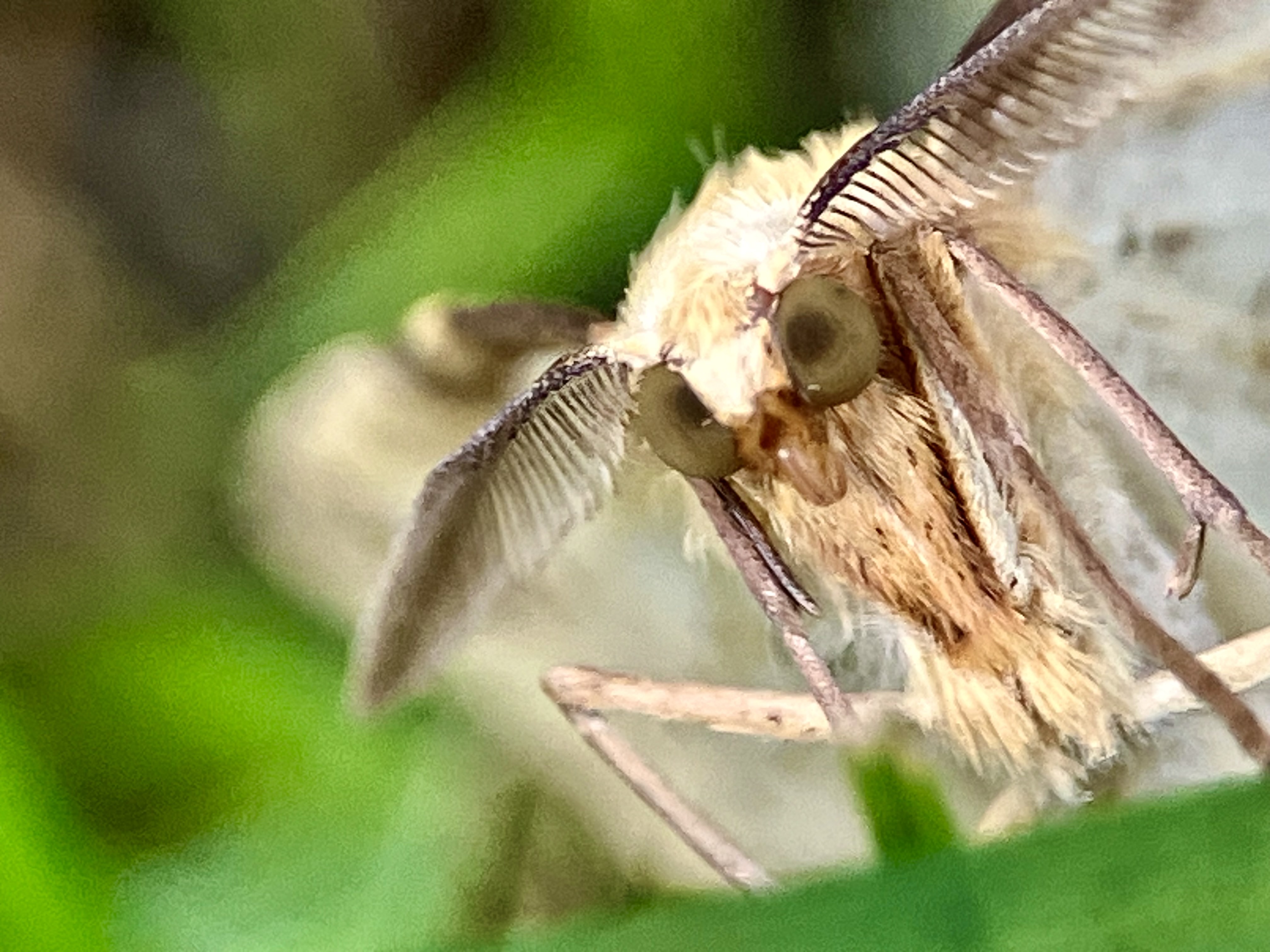
I found the most beautiful creature at my moth light this morning. It is the Canary Thorn Moth (Neoterpes  trianguliferata ). I was surprised to see anything there given the drop in temperatures we’ve had the past few days. After a few photos, I got too close and he flew out of the open barn area into some grass, struggling a bit in the wind, so I was able to carefully coax him back into an egg carton to shelter the day back undercover and out of the rain.

If you’re wondering about the egg carton, I use these in my moth light set up to give the moths a secure place to hide when they settle down under the light for the night. The egg cartons are in a 5 gallon bucket. I have the “low end” set up, so no major investments in equipment. Anyone could do this at home. It’s fun to “moth” and see what species live around us. If you’re interested, shoot me an email and I’ll coach you on getting set up yourself. For the record, all of my specimens are photographed with respect and care, and allowed to live free. I do not take specimens for pinning. I definitely believe they are here to be admired in the wild, not in a glass case.

More about this species:

Neoterpes  trianguliferata is a species of Geometrid moth that ranges from southern British Columbia to southwestern Alberta, south to Colorado, Utah, and California. The hostplants for larvae (the caterpillars) are Currants and Gooseberry (Ribes). I’ve linked information for some of the native host plants below in the reference section.

Larvae are twig mimics. Pupae sleep through the winter wrapped in a leaf, another reason to “leave the leaves” and refrain from burning or bagging and discarding the leaves around your home. You could inadvertently impact overwintering species like these and others. Adults are approximately 14-20mm (forewing length). You will see adults in flight between April-June in our area. From what I have been able to find as to the etymological meaning of the name, Neoterpes may translate to “new delight” and trianguliferata refers to the triangle-shaped markings on the forewings. It was indeed a delight to see this beauty today! A bit of sunshine on a rainy spring day.

Canary thorn moth (Neoterpes trianguliferata)

References

Bressette, Dana Kelley. no date. Coast Black Gooseberry, Ribes divaricatum. Native Plants PNW. https://nativeplantspnw.com/coast-black-gooseberry-ribes-divaricatum/

Bressette, Dana Kelley. no date. Red Flowering Currant, Ribes sanguineum. Native Plants PNW. https://nativeplantspnw.com/red-flowering-currant-ribes-sanguineum/

Bugguide.net. 2023. Species Neoterpes trianguliferata – Hodges#6860. Bugguide. Iowa State University. https://bugguide.net/node/view/114007

Moth Photographers Group. Neoterpes trianguliferata (Packard, 1871). Mississippi State University. https://mothphotographersgroup.msstate.edu/species.php?hodges=6860

Nelson, Dan. 2021. Neoterpes trianguliferata. 10,000 THINGS OF THE PACIFIC NORTHWEST
Adventures of a Recreational Naturalist. http://10000thingsofthepnw.com/2021/08/08/neoterpes-trianguliferata/

Odonteus obesus, the Geo-trooper

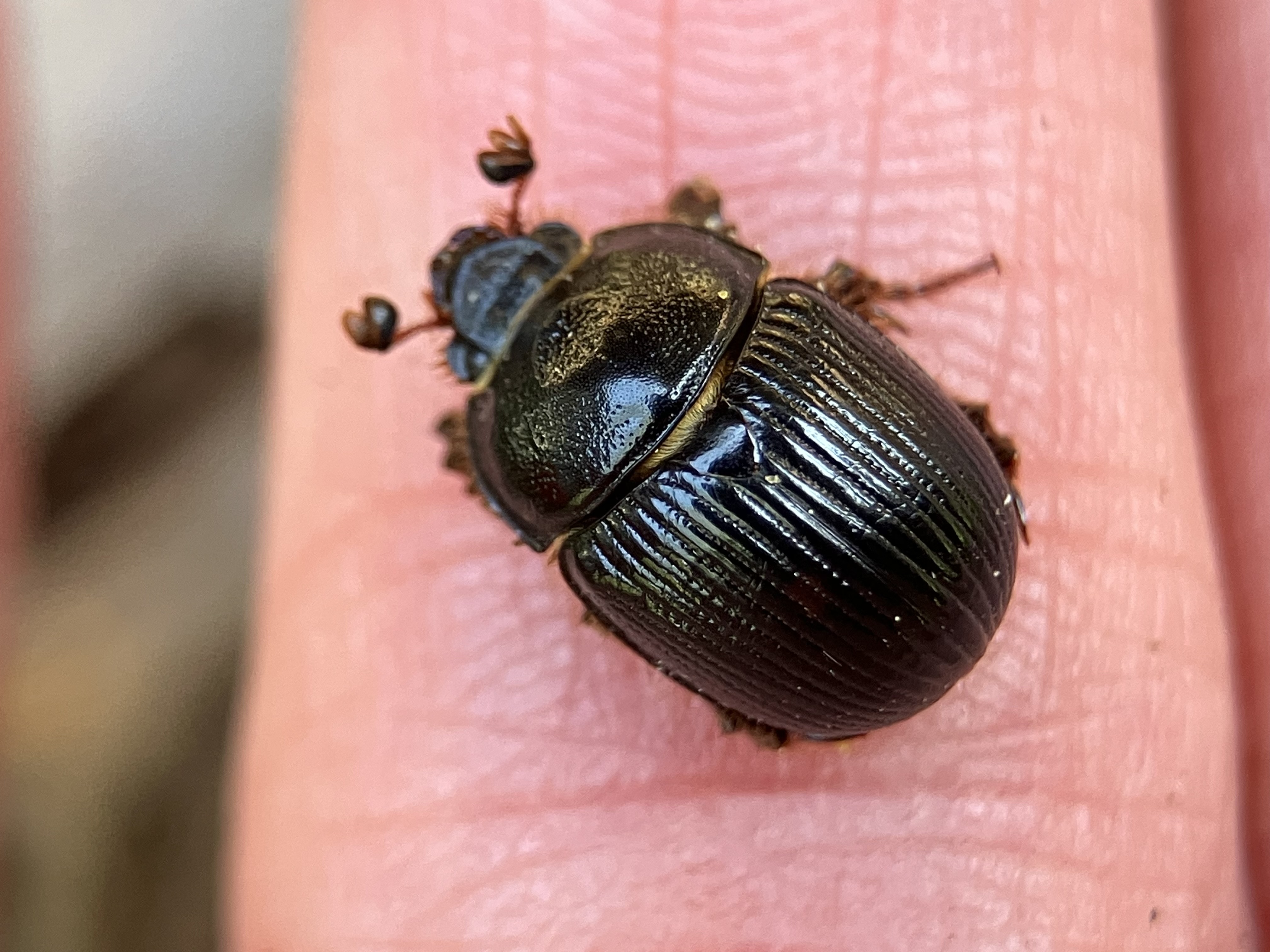
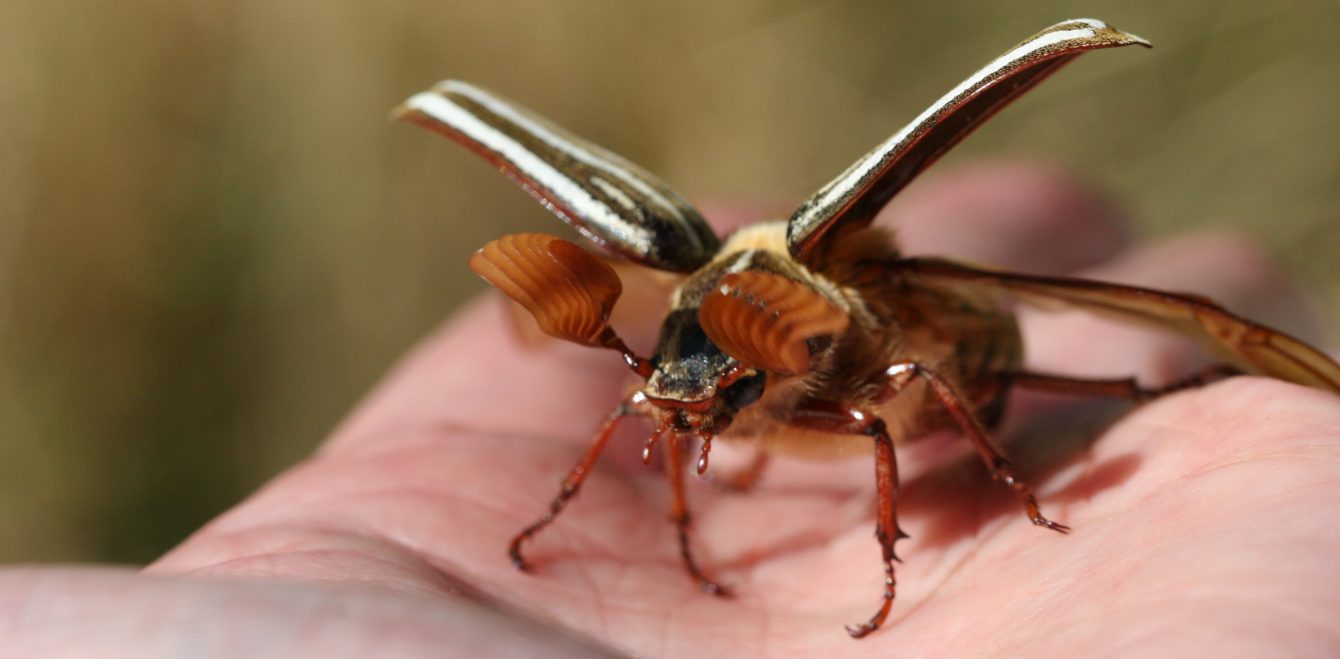
Odonteus obesus

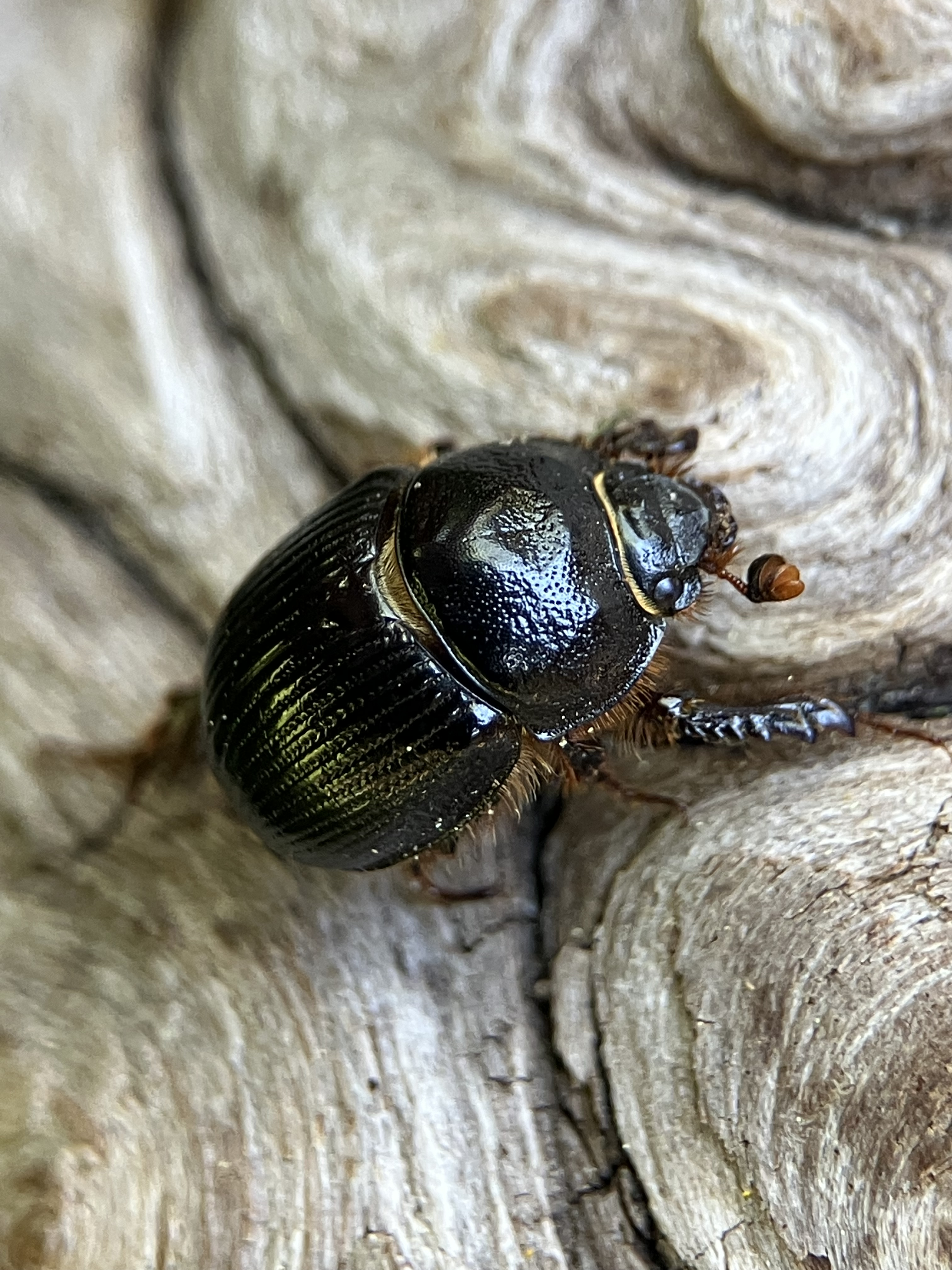
This is a post about one of the most unusual beetles I’ve ever found on San Juan Island. The species is Odonteus obesus. I’m hoping to attract a male specimen to my bug light after finding this female over the weekend, but haven’t had any luck yet. A few years ago, I found a male though. They are simply incredible, beautiful and weird all at once… like finding a unicorn in the forest. Literally! The male of this species has a sharply pointed unicorn horn that protrudes from the front of its head. If you are curious to see a male specimen, check out an earlier blog post I wrote about them here – https://buggingyoufromsanjuanisland.com/tag/odonteus-obesus/

These beetles are in the family Geotrupidae. “Geo” from Greek, meaning earth, and “trypetes” or “trupes” which means to bore or drill. In Europe, these beetles are referred to as dor beetles. “Dor” because they hum. Check out the etymology I’ve copied for you below for the word Dor.

Greek “dor” (δορ):Primarily used in Proto-Indo-European languages, “dor” and “dorn” meant “bee,” “hornet,” or “drone,” as explained by Wiktionary. It’s related to the Middle English “dorre” and Old English “dora,” also meaning “humming insect,”. 

Geotrupid beetles live in the earth in burrows they excavate that can be up to 4 feet deep, often in material composed of dead leaves, cow or horse dung, or humus. We don’t have any horse or cow dung in our yard, so I’m guessing the decaying forest leaf litter is a suitable substrate for them or perhaps they are incorporating deer or the dung of other wildlife (fox, raccoon, or rodents) for use.

Why are Geotrupid beetles (and other dung beetles ) extremely beneficial? They are a source of food for other wildlife that eat them, but perhaps even more important for the role they play in improving soils by adding nutrients and removing animal waste. The beetle’s burrowing nature helps build healthy soil by incorporating organic matter, resulting in increased soil friability (it isn’t as clumpy), improved soil aeration, as well as improved water-holding capacity.

Additionally, these, and other species of dung beetles, have been found to be effective biological control agents for gastrointestinal parasites of livestock. In agricultural areas, they “clean” the pasture by removing manure or decomposing material as they burrow into the earth https://attra.ncat.org/publication/dung-beetle-benefits-in-the-pasture-ecosystem/.

Unfortunately, the increasing dependence of livestock producers on veterinary anthelmintic medications is threatening populations of nature’s best (and free) helpers. Many of the worming medications (like Ivermectin) given to livestock, pass through into the dung and then kill off the dung beetles when they feed. The result is an increased reliance on veterinary medications to control livestock pests and parasites and decreased pasture health because there is no beetle to break down the animal dung. As the pasture is littered with scattered dung, it becomes harder for the livestock to feed because they will avoid areas contaminated with dung.

To learn more about this species and other dung beetles, please check out the linked references below.

Thanks for reading!

Odonteus obesus
Odonteus obesus
Odonteus obesus
Odonteus obesus
Odonteus obesus
Odonteus obesus
Odonteus obesus

References and Further Reading

Brast, Cynthia. 2022. Radar love. Odonteus obesus. Bugging You From San Juan Island. https://buggingyoufromsanjuanisland.com/tag/odonteus-obesus/

Bugguide.net. 2023. Geotrupidae Earth-Boring Scarab Beetles. Iowa State University. https://bugguide.net/node/view/6810

Entomologist.net. No Date. Beetles Dor Beetle (Geotrupes stercorarius) https://entomologist.net/beetles/62-geotrupes-stercorarius.html

Jameson, Mary Liz. 2005. Geotrupidae. Generic Guide to New World Scarab Beetles. UNL State Museum. https://unsm-ento.unl.edu/Guide/Scarabaeoidea/Geotrupidae/Geotrupidae-Overview/GeotrupidaeO.html

Thomas, Michelle. 2001, and Rodriguez, O. 2020. Dung Beetle Benefits in the Pasture Ecosystem. ATTRA Sustainable Agriculture. National Center for Appropriate Technology. https://attra.ncat.org/publication/dung-beetle-benefits-in-the-pasture-ecosystem/

April 5, 2025 – Herman finds a fly

That’s right! Herman the Persian found something interesting in the yard when we were outside sunning ourselves a bit this afternoon. He found one of the Bibionid March flies (a female). If you read my post yesterday https://buggingyoufromsanjuanisland.com/2025/04/04/nuptial-gifts/, you might note that Bibionid flies were being hunted by Empis flies who rolled them into little balls as nuptial gifts used to woo the lady Empids to mate.

Female Bibionid fly digging chamber to lay her eggs.

Evidently, a few of these Bibionid flies escaped that destiny and actually mated with their own kind. THIS one, that Herman found, was hard at work digging her own death chamber where she would expire soon after laying her eggs. Incidentally, the adults are very short-lived, and in fact, live only about 5-7 days with the primary objective of mating, and for the adult female to lay her fertilized eggs. In spite of their brief existence, adults are also thought to be important early pollinators of orchard trees. Yes, you heard me right! Flies don’t get nearly as much credit for pollinating as they deserve to receive.


I watched her digging with her fossorial forelegs. It seemed to be an impossible task, but she made slow and steady progress. She was still hard at work before we went back into the house about half an hour later. I marked the spot with a rock so I could go back and check, but I suspect even with the rock nearby as a marker, it will be next to impossible to detect any disturbance in the soil tomorrow. We’re supposed to get rain this evening.


In approximately 30-35 days, the eggs she lays will hatch underground. The larvae will live in the top layer of soil and feed gregariously on leaf and needle litter, decaying organic matter, and sometimes on below-ground parts of plants.

If you’re curious, you can read more about Bibionid flies in the attached links. I did see some additional Empis fly males dancing about today with their Bibionid “balloons” or nuptial gift balls for prospective mates.

Thanks for reading. 🙂

References

Bugguide.net. 2025. Family Bibionidae – March flies. https://bugguide.net/node/view/3834

Morris, H. No date. The larval and pupal stages of the Bibionidae. Entomological Department, Institute of Plant Pathology, Rothamsted Experimental Station, Harpenden. https://core.ac.uk/download/pdf/212009582.pdf

Green Ostomid beetle

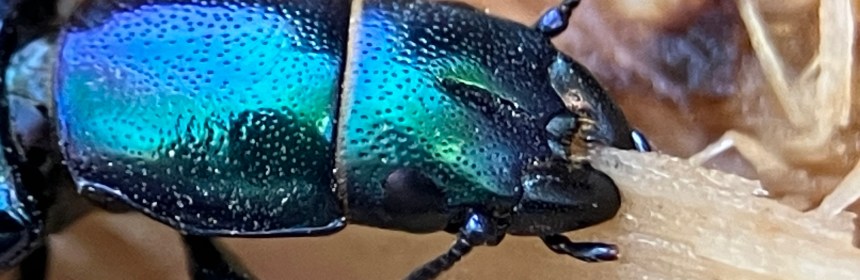
I found this gorgeous BENEFICIAL Green Ostomid beetle yesterday on the floor of our barn in the sand. Moved him over to some alder logs we have stacked as wildlife habitat and discovered he appeared to be quite thirsty. Yes, I did actually bring him some more water to drink from our outdoor above ground “pond.” More in the video description. Also want to add that if you have Alders on your property – please don’t grind them up or burn them. They are extremely important resources for many species of wildlife. They hold water even as dead trees, and they are full of insects that feed many birds (and other insects and spiders).

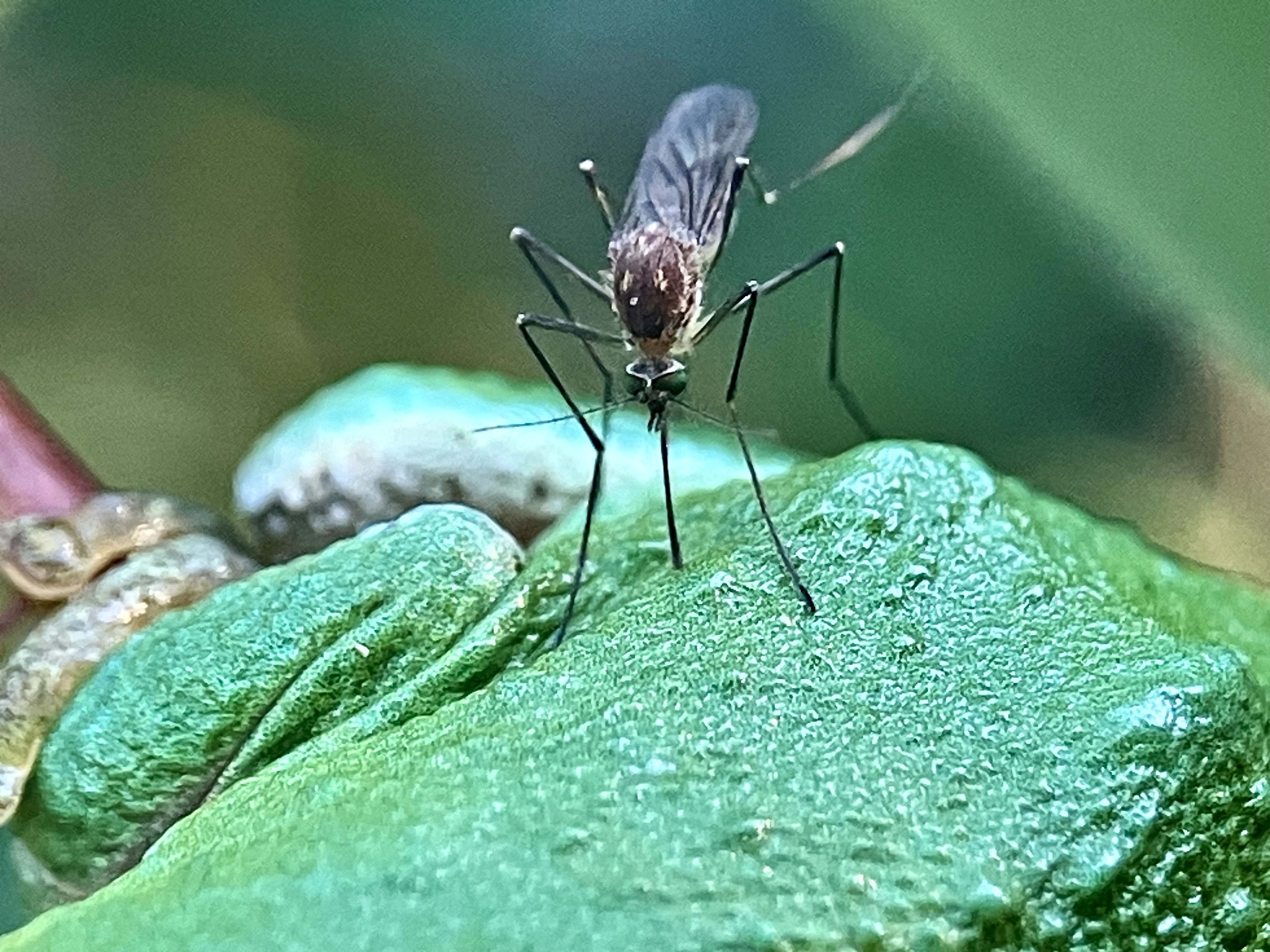
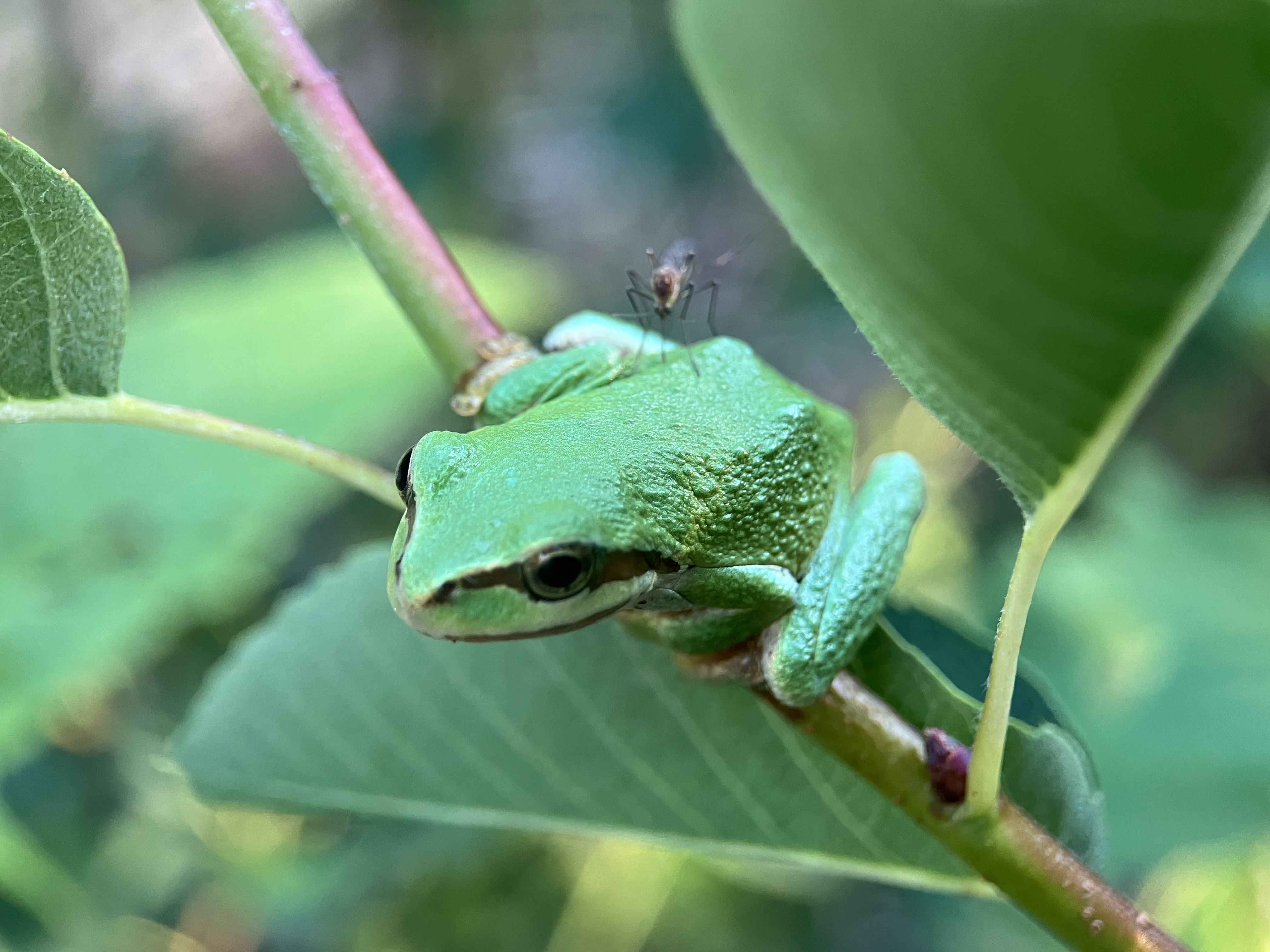
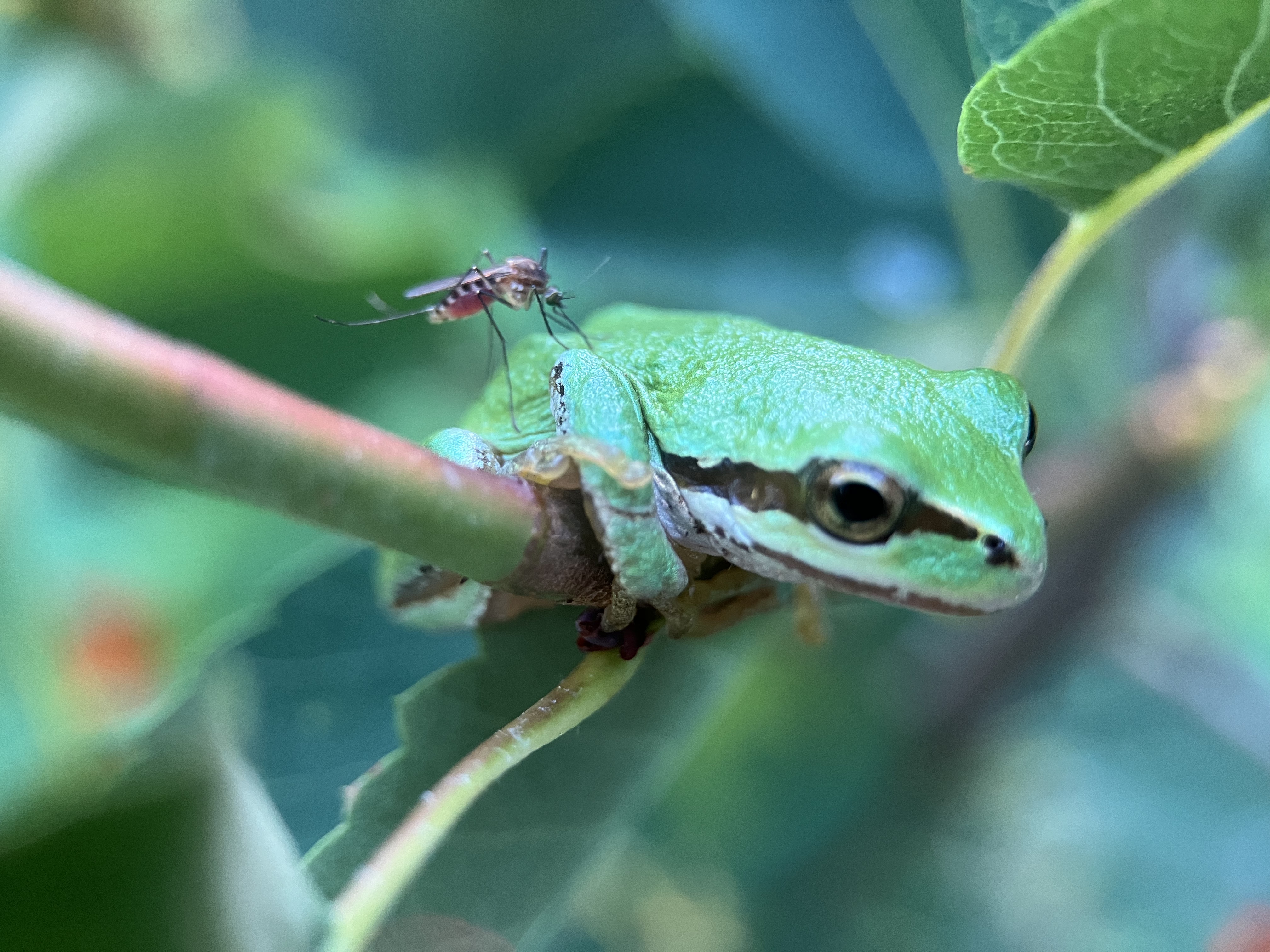
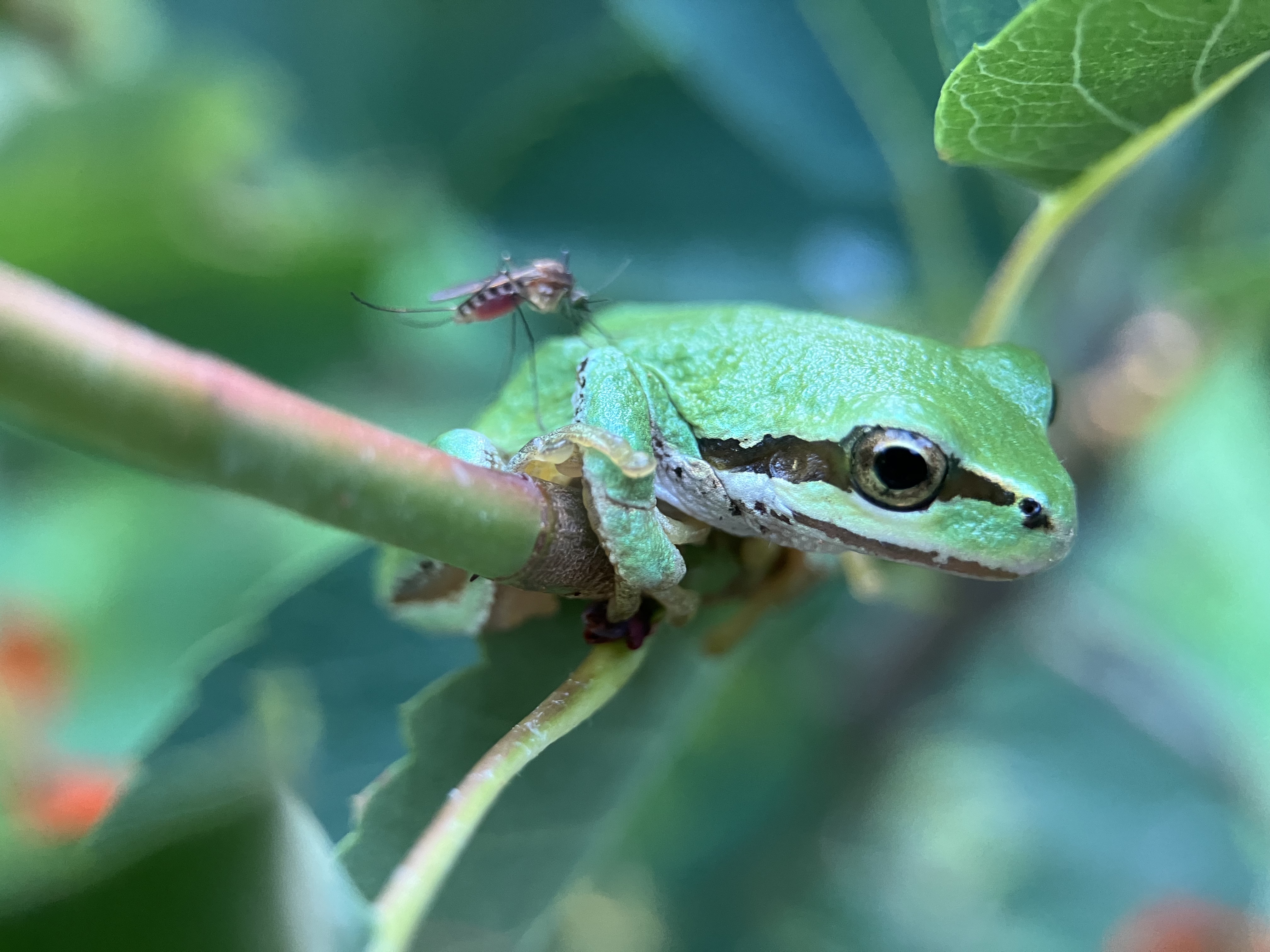
Culex territans, the Northern Frog Biting Mosquito

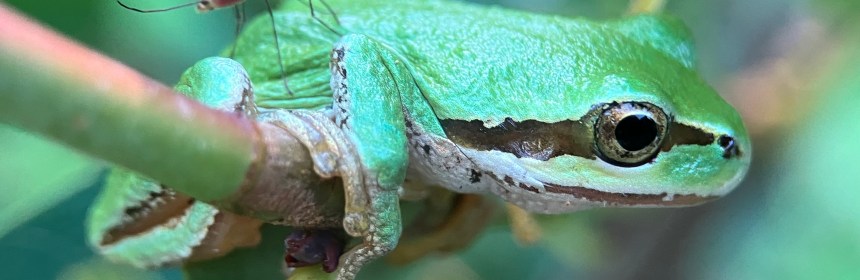
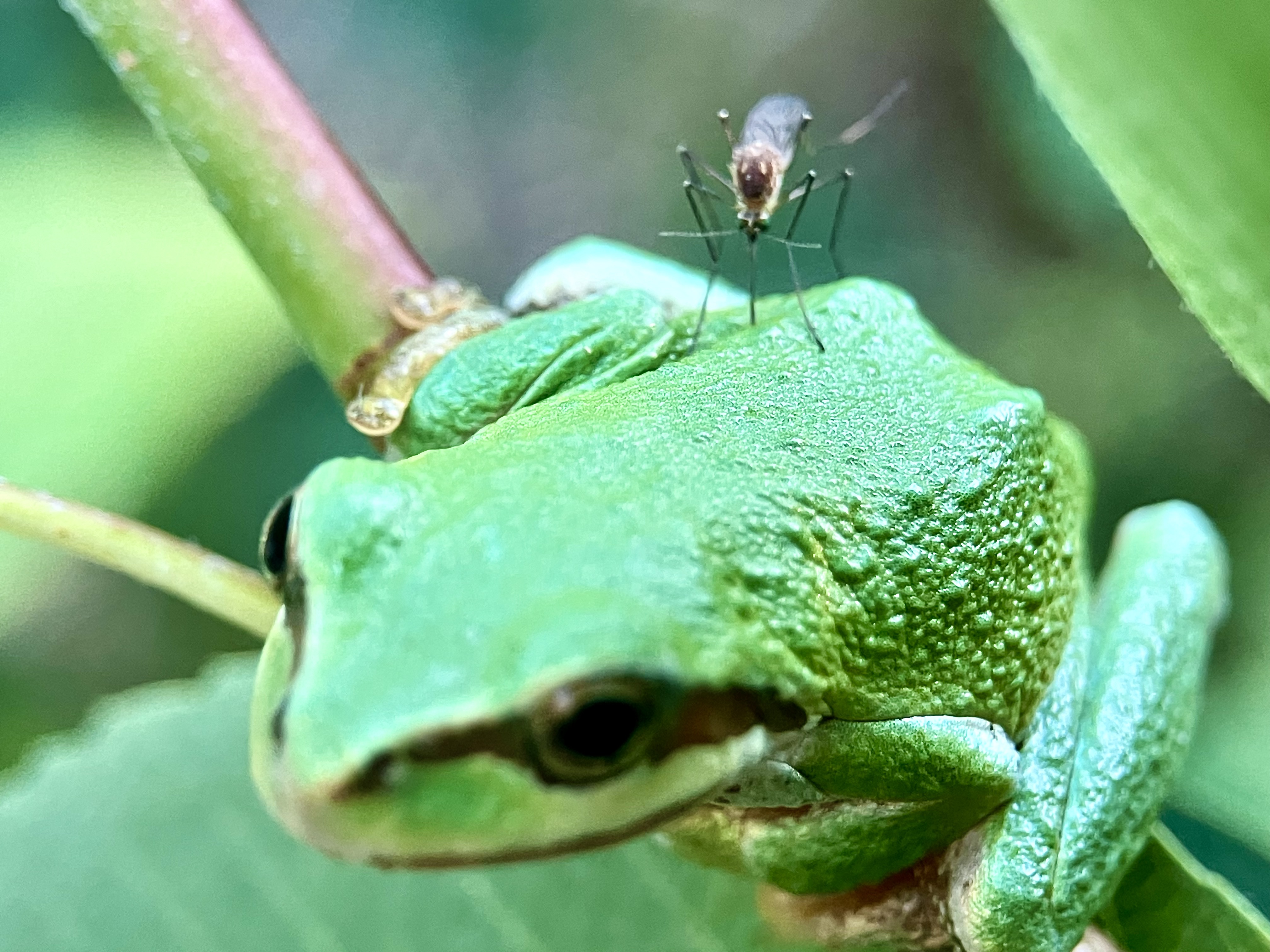
Watch and you’ll see this incredibly amazing association. This is Culex territans, the Northern Frog Biting Mosquito. Culex territans is found in a wide variety of habitats, but is most commonly associated with freshwater marshes, bogs, and ponds or streams with emergent vegetation.

Culex territans prefers feeding on cold blooded animals (amphibians and reptiles), but feeds most frequently on Anurans (frogs and toads). Here you see the mosquito feeding on a Pacific Tree Frog (Pseudacris regilla). The MOST interesting thing about this species is that females find their amphibian hosts via phonotaxis. This means they find their host via acoustics. They utilize the frog vocalizations to locate these animals for bloodmeals (Bartlett-Healy et al., 2008b). Mosquitoes can hear! 🦟🦻🏻

Location: San Juan Island, WA
ID: Culex territans (my ID confirmed by UF mosquito expert, Lawrence Reeves)
More info.: https://edis.ifas.ufl.edu/publication/IN1394

References and Further Reading

Barnhart, Max. 2023. A male mosquito’s hairy ears tune into mates. New research suggests we can stop that. Goats and Soda. Stories of Life in a Changing World. NPR. https://www.npr.org/sections/goatsandsoda/2023/08/18/1194390459/hairy-ears-of-male-mosquitoes-help-them-find-the-ladies-can-we-disrupt-their-hea#:~:text=It’s%20true!,waves%20pass%20through%20the%20air.

Bartlett-Healy,K. Wayne Crans, Randy Gaugler. 2008. Phonotaxis to Amphibian Vocalizations in Culex territans (Diptera: Culicidae), Annals of the Entomological Society of America. 101 (1) 95–103. https://doi.org/10.1603/0013-8746(2008)101[95:PTAVIC]2.0.CO;2

Bhosale, Chanakya R., Burkett-Cadena, N.D., Mathias, D.K., 2023.  NORTHERN FROG BITING MOSQUITO CULEX TERRITANS (WALKER 1856) (INSECTA: DIPTERA: CULICIDAE). UF IFAS Extension PUBLICATION #EENY-803. https://edis.ifas.ufl.edu/publication/IN1394 

Bugguide.net. 2023. Culex territans. Iowa State university Extension. https://bugguide.net/node/view/60953

Hoover Pantoja-Sánchez, Brian C. Leavell, Bianca Rendon, W. A. Priyanka P. de-Silva, Richa Singh, Jian Zhou, Gil Menda, Ronald R. Hoy, Ronald N. Miles, Neil D. Sanscrainte, Ximena E. Bernal; Tiny spies: mosquito antennae are sensitive sensors for eavesdropping on frog calls. J Exp Biol 15 December 2023; 226 (24): jeb245359. doi: https://doi.org/10.1242/jeb.245359

McIver SB. 1969. Notes on the biology of Culex territans Walker. Mosquito News 29: 135 -136. https://doi.org/10.1111/j.1752-7325.1969.tb02823.

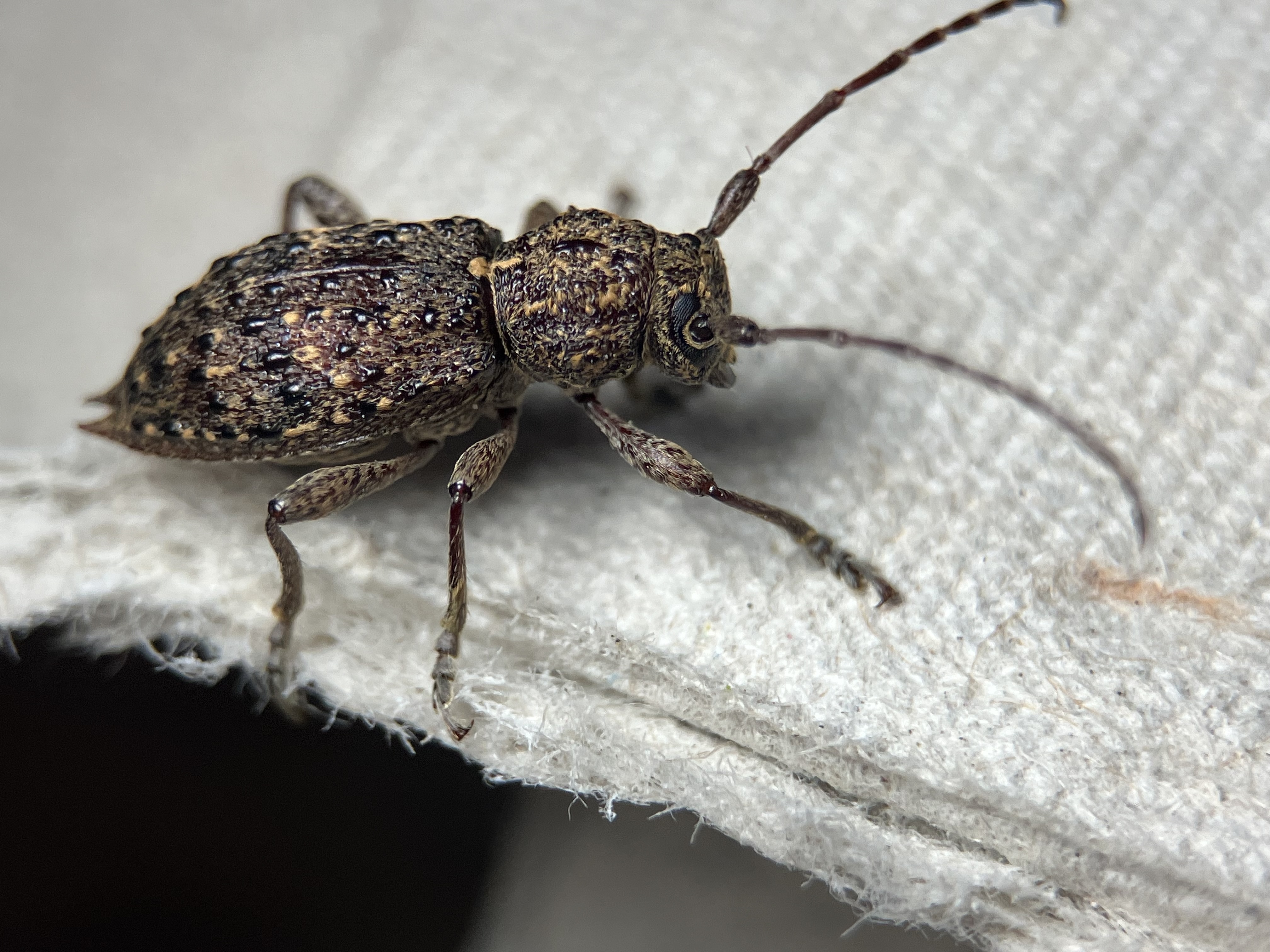
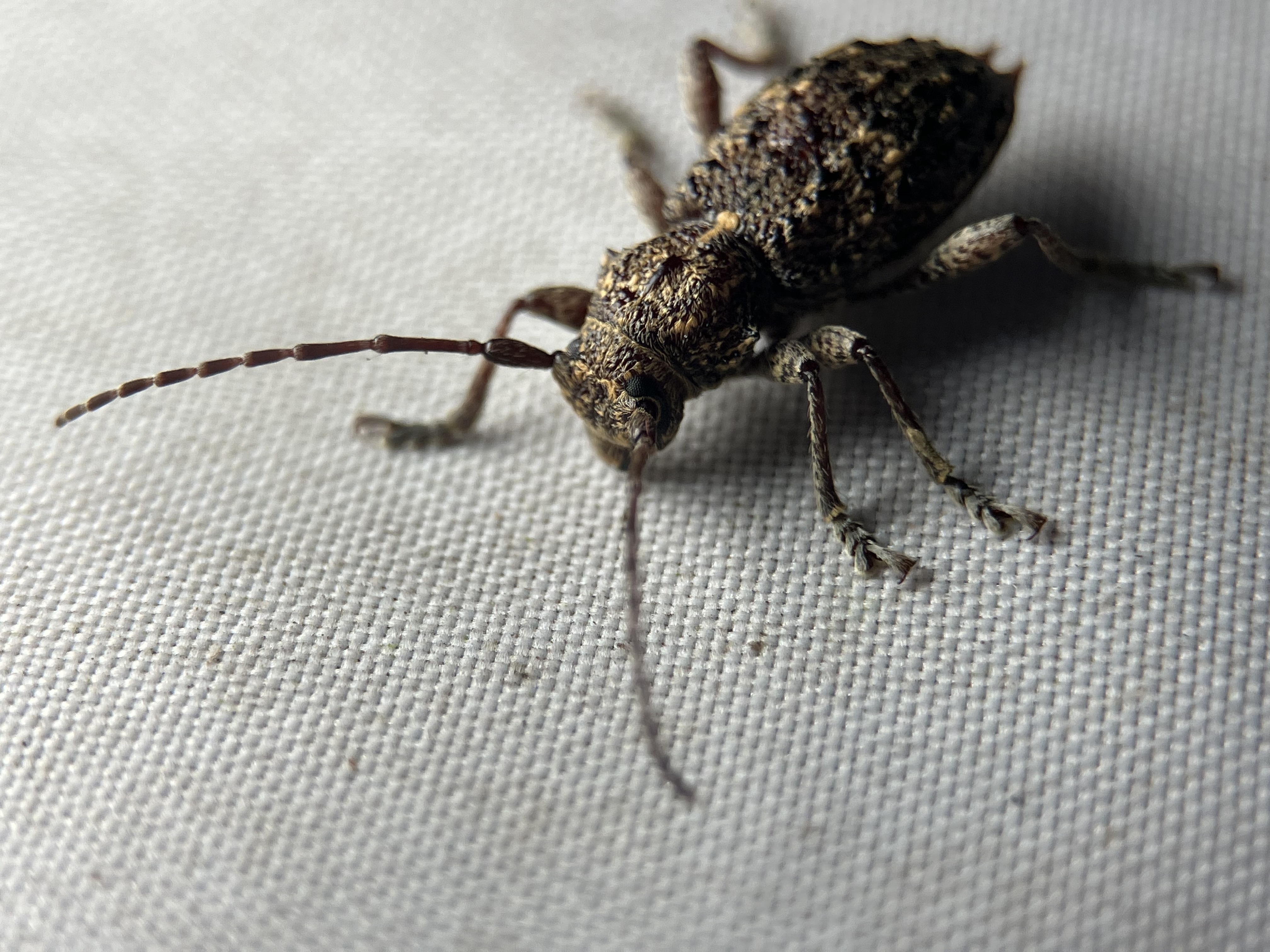
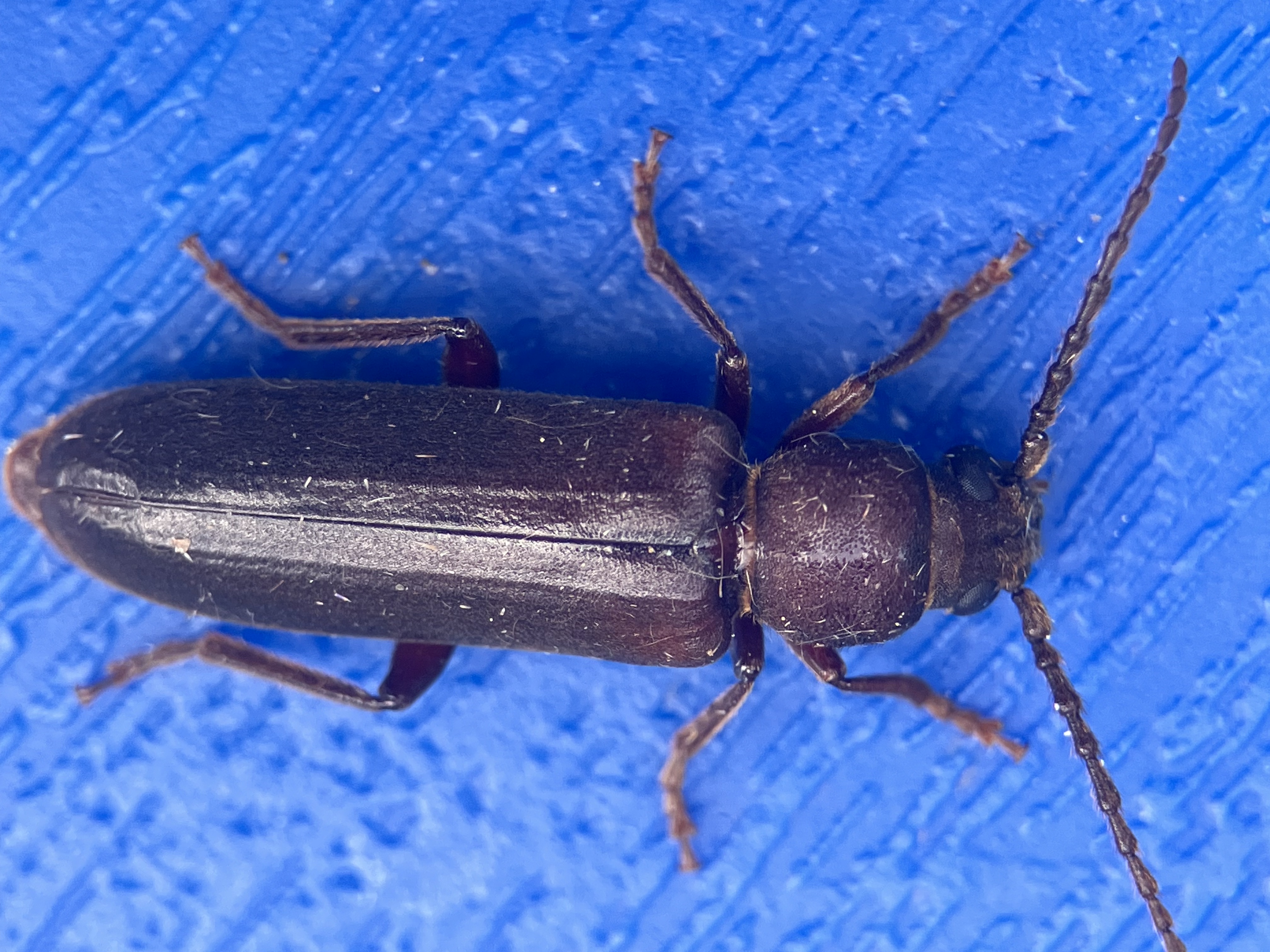
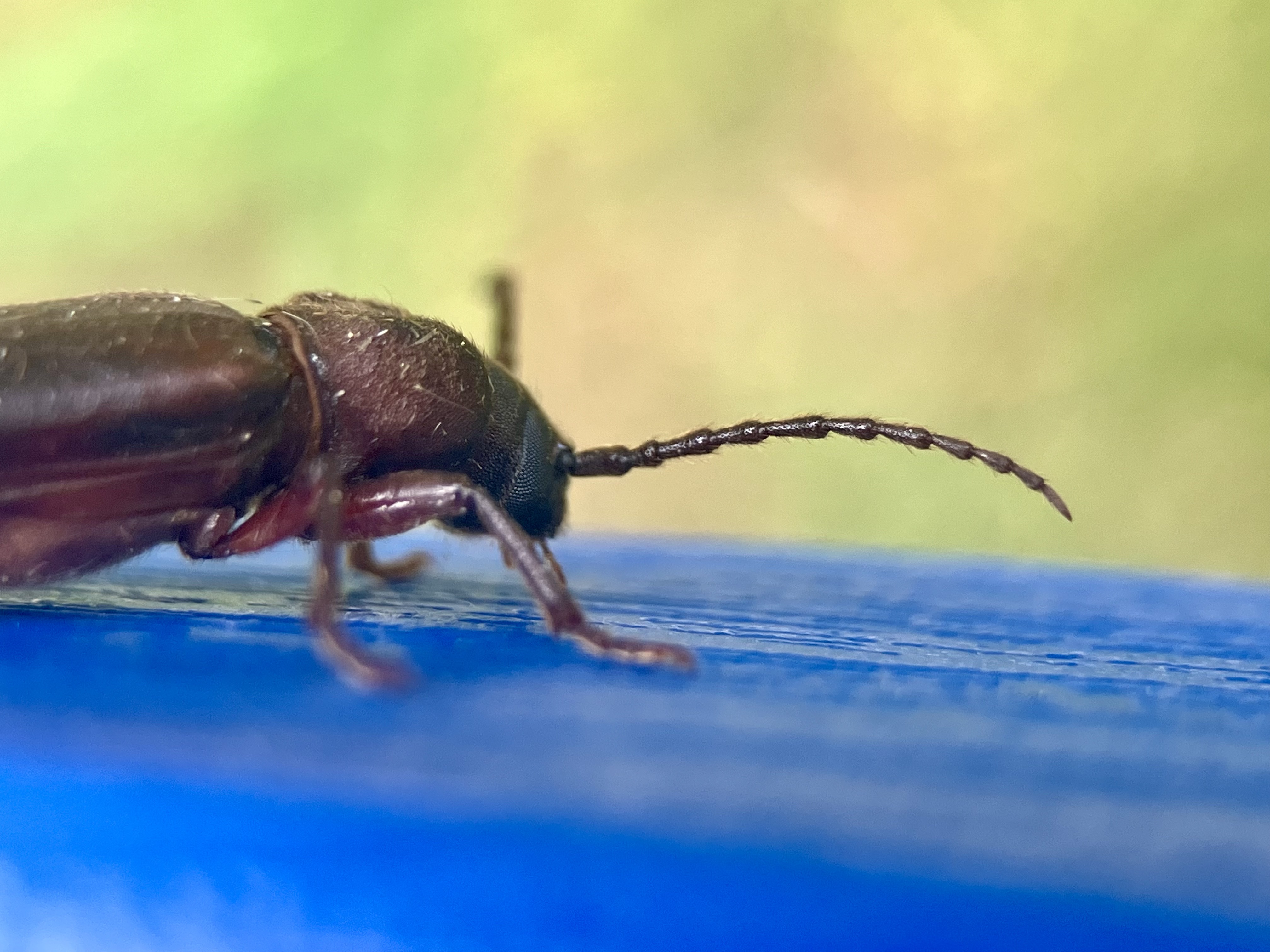
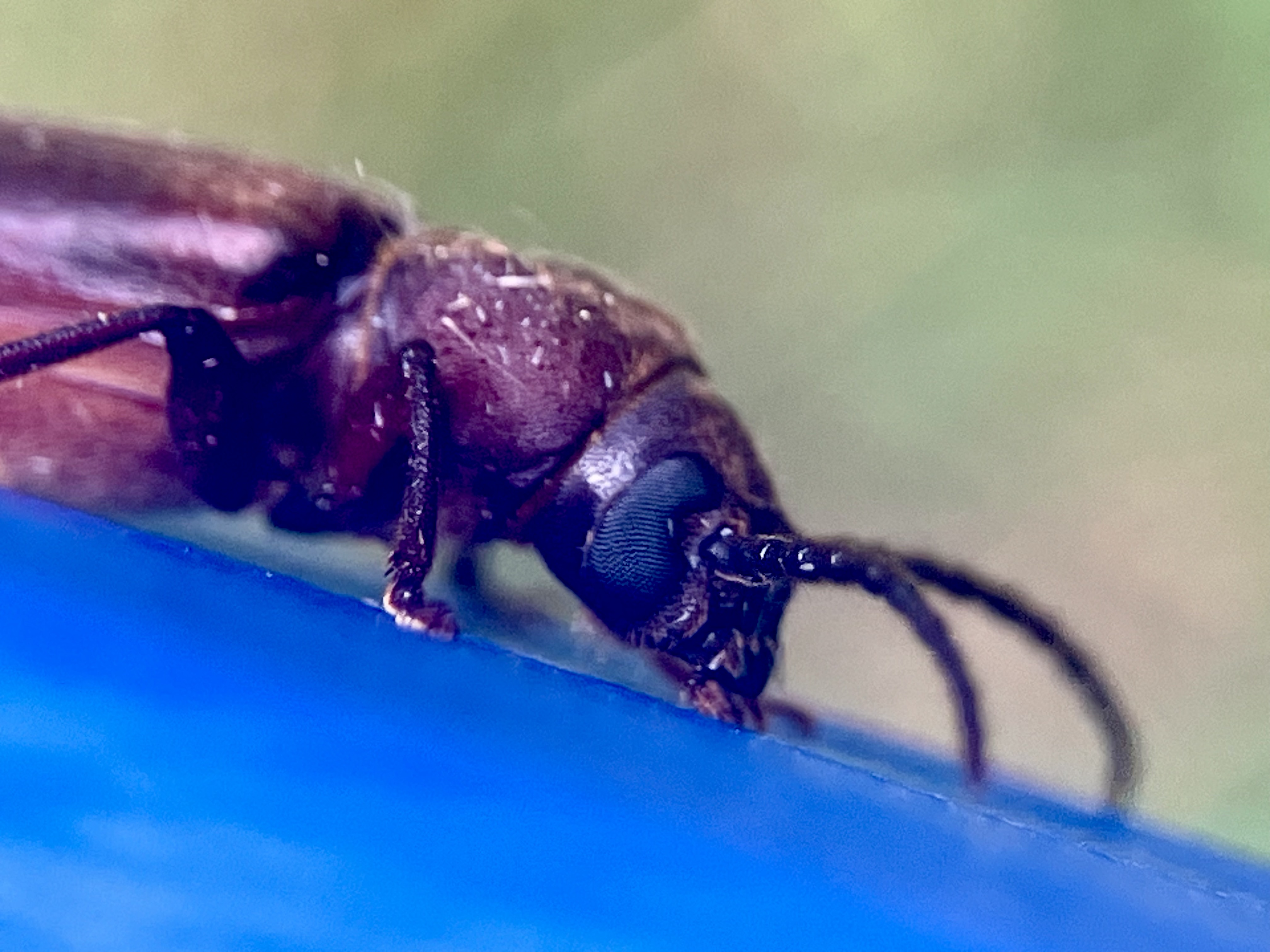
Megasemum asperum, a Cerambycid Beetle

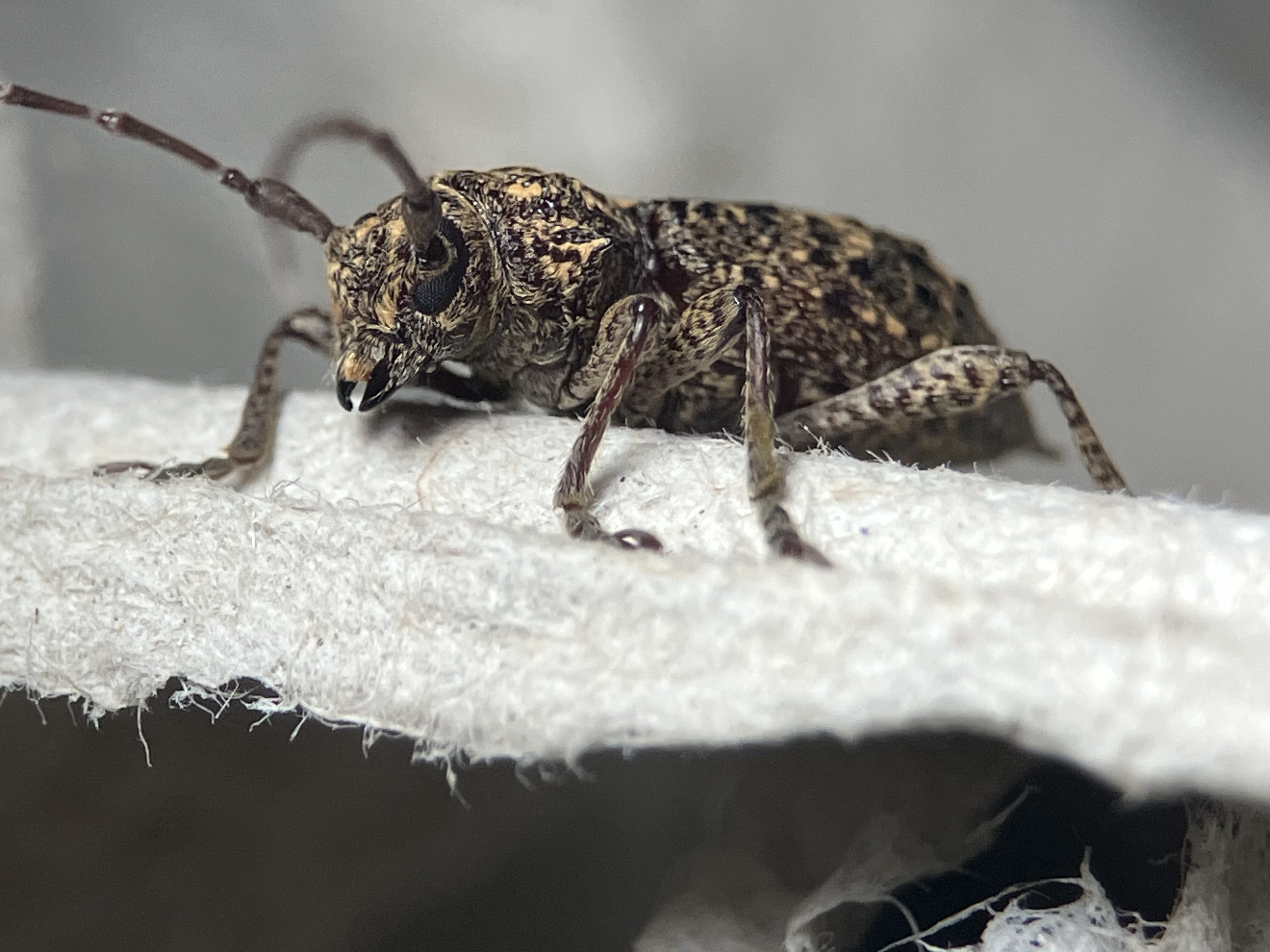
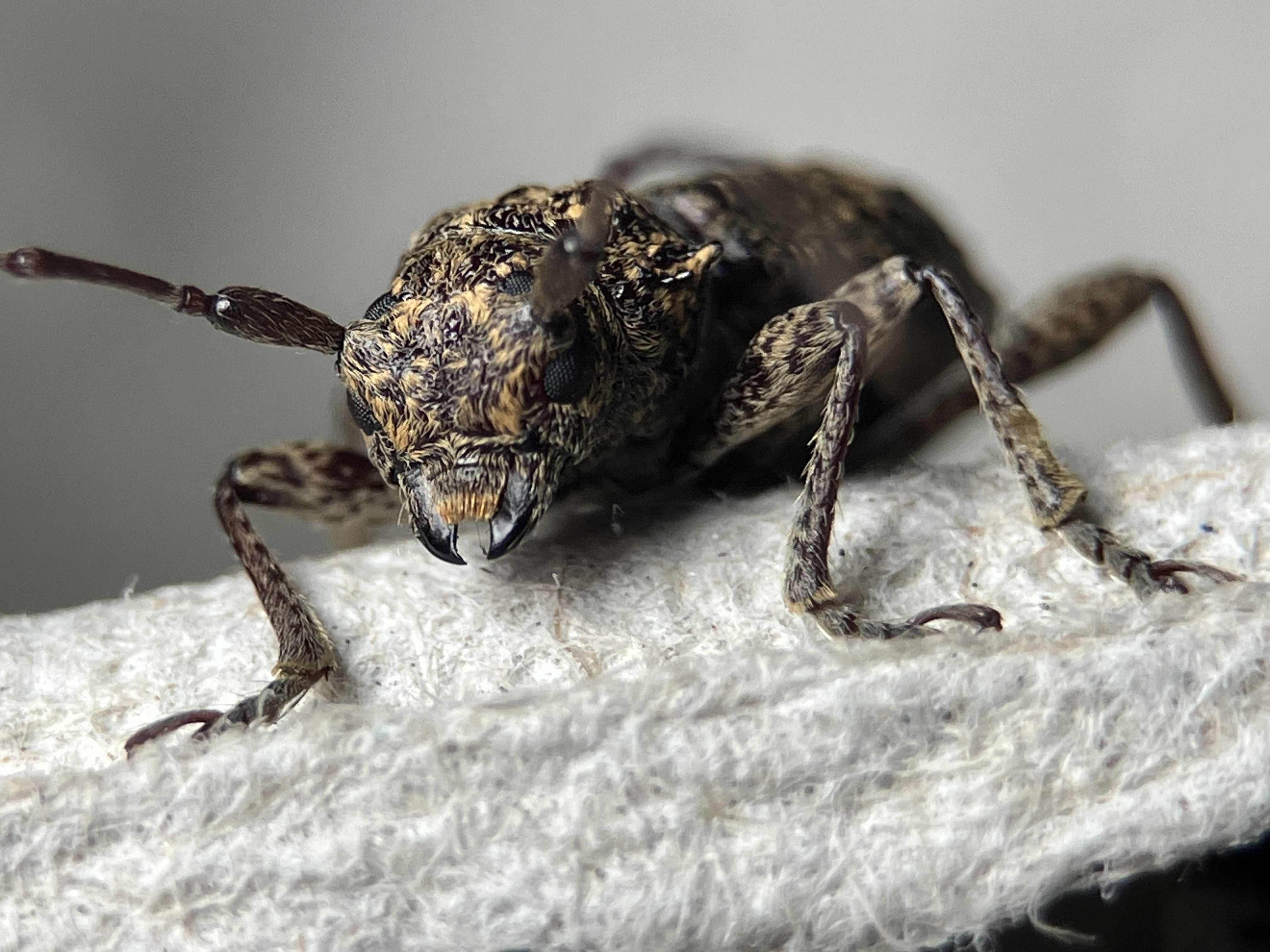
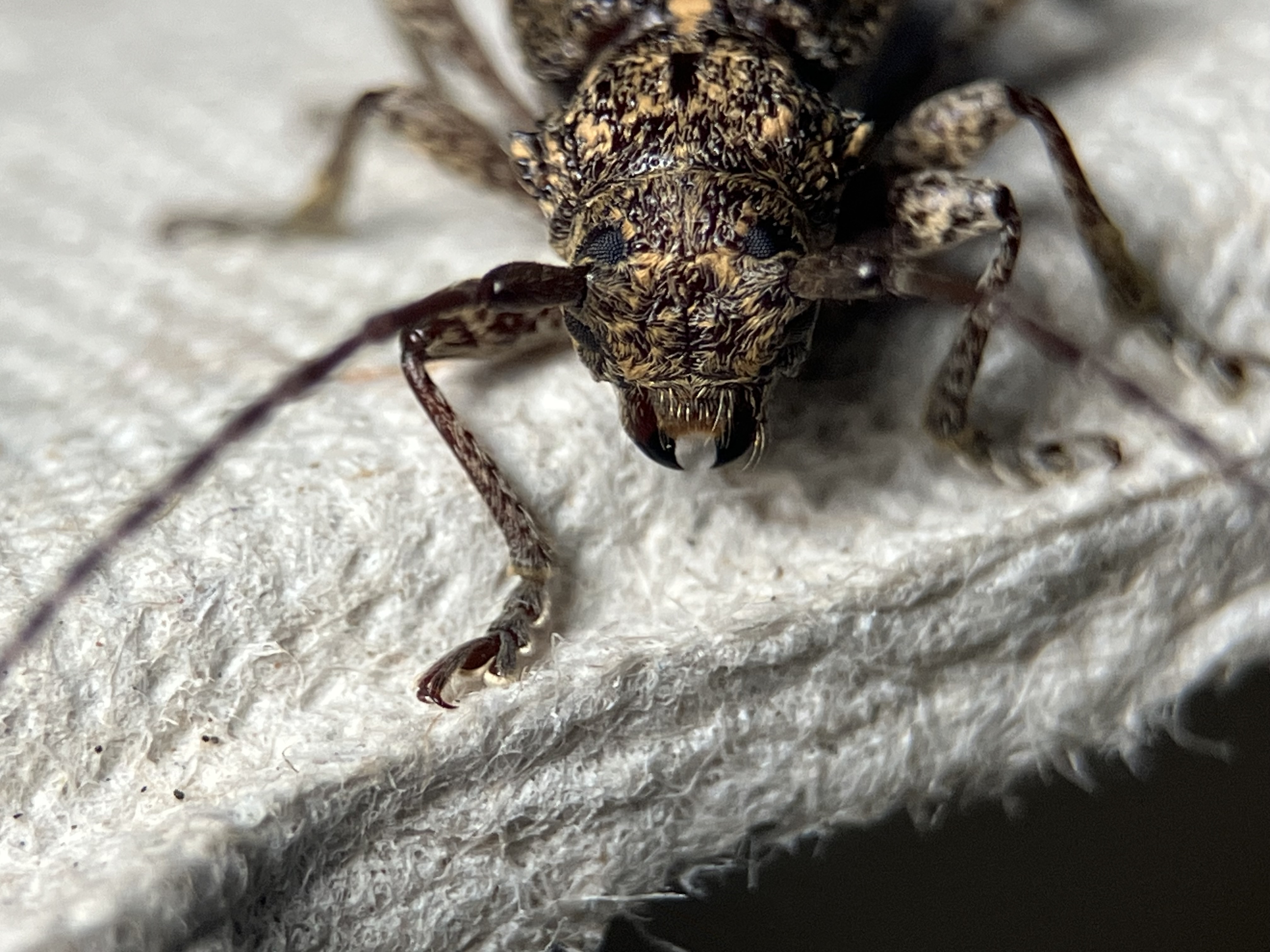
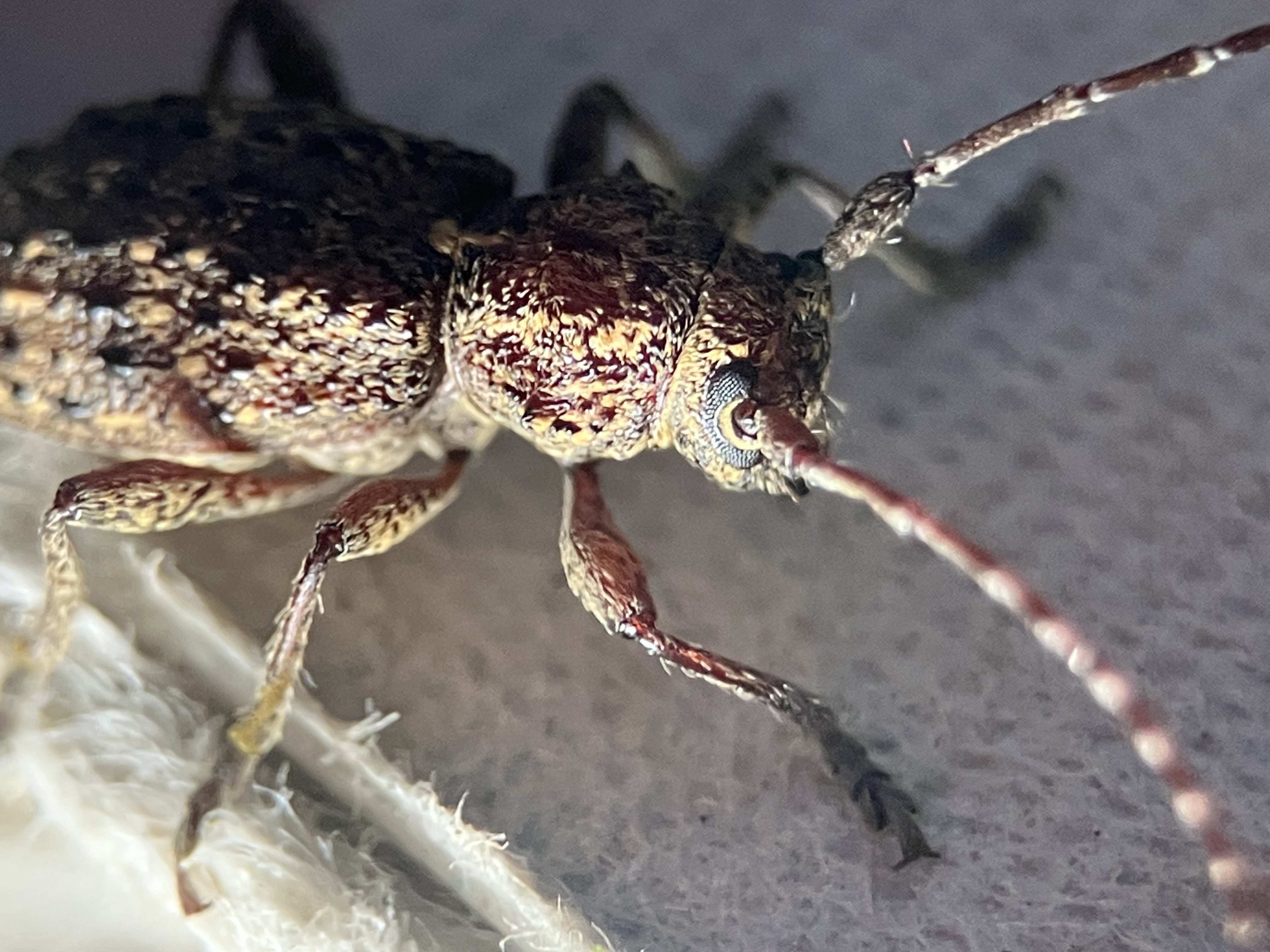
Here is a new-to-me Cerambycid (longhorn) beetle. I haven’t added one of these to my photo collection in the 15 years I’ve lived on San Juan Island, so note here that they are “UNCOMMON” and not populous in number.

This species is the only one in its genus in North America. It is Megasemum asperum. I see in perusing iNaturalist.org that there have been 67 reported observations dating back to 2007.

Location: San Juan Island, WA

ID: Megasemum asperum

From Bugguide.net

Size: 18-25mm

Season: July to August (this is when you could see an adult)

Numbers: a single species in the New World & in NE Asia

It was described by John Lawrence LeConte in 1854

From Beetles of Western North America – “Larvae mine Douglas-fir (Pseudotsuga menziesii) and fir (Abies). Adults are attracted to lights during the summer. Found in coniferous forests of western North America,” (Dr. Art Evans, entomologist, 2021).

Your take away message – NOT a pest. NOT a tree killer. NATIVE species! Performs important recycling of nutrients role in ecosystems allowing regeneration in our forests. Appreciate Biodiversity.

Thanks for reading!

Nut Leaf Weevil

I found a’nutter weevil! They’ve been everywhere this week! Looks like this may be the Nut Leaf Weevil (Strophosoma melanogrammum). These weevils feed on the leaves of broad leafed shrubs. I saw it on a chunk of rotting alder. It was pretty small and tough to photograph in low light. Probably about 3.2 mm in size. San Juan Island, WA October 13, 2021.

Strophosoma melanogrammum 

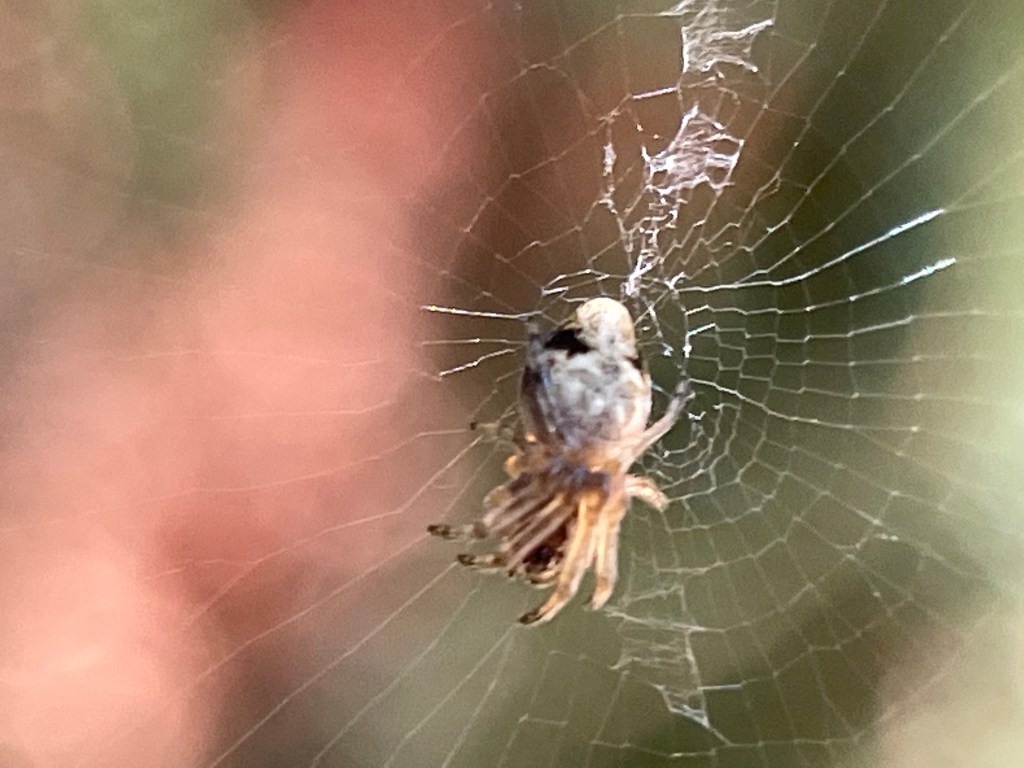
The Teeny Tiny “Trashline Orb Weaver” – Yes, that’s really the name!

Trashline Orb Weaver (Cyclosa sp.) San Juan Island, WA 09.06.2021

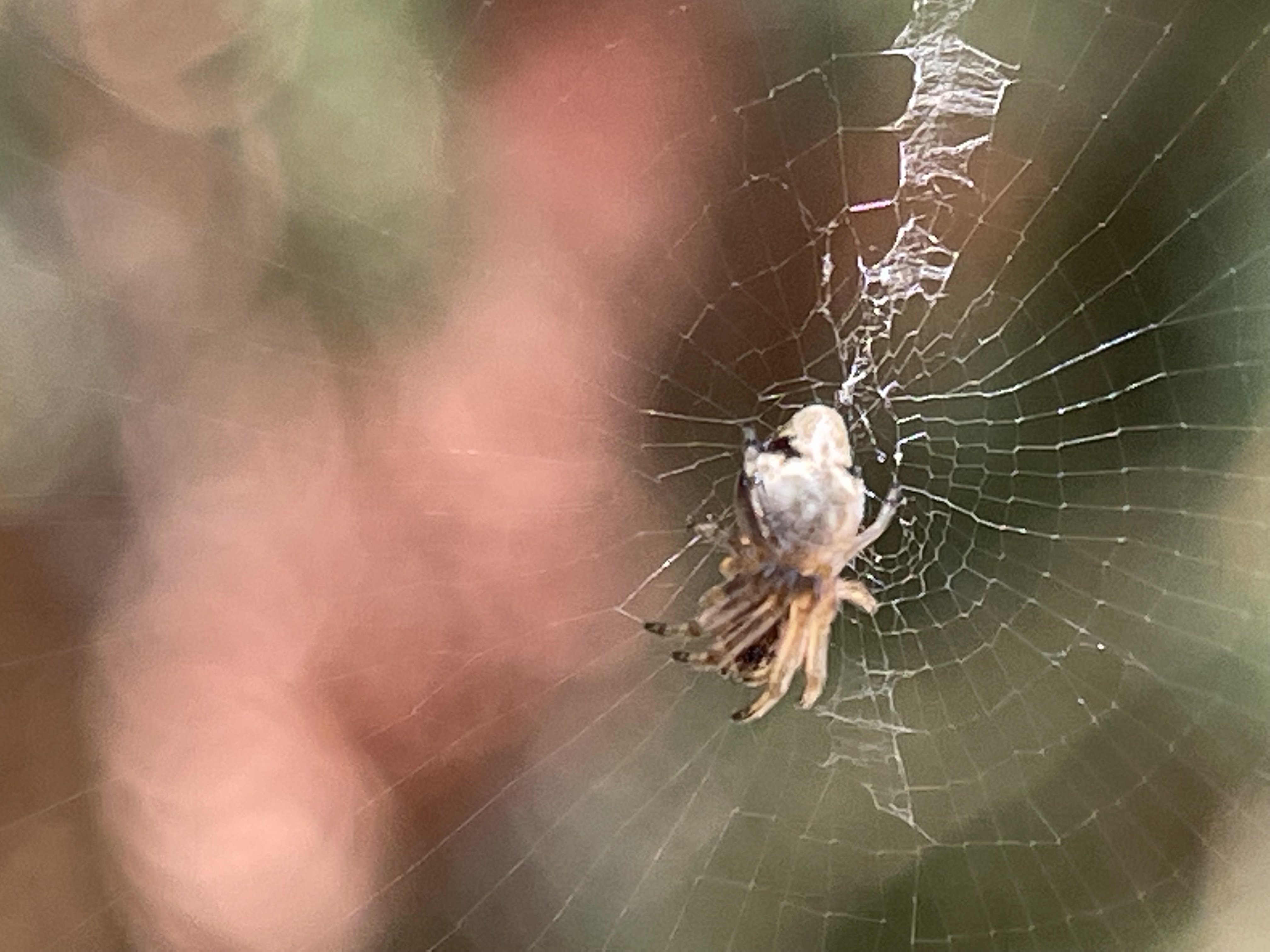
I am very nearly blind when I try to see things up close, so it truly surprises me how I SEE things like the tiny “laundry” line of dead bugs this little orb weaver had strewn along a filmy thread between the boughs of our fir tree. At first, I thought it was just debris, stuck to the remnant of a spider thread, long abandoned. Upon closer inspection, I saw more threads and then my attention focused on the center, where I was able to discern what looked like teeny legs curled up around a body.

Trashline Orb Weaver

I used my clip on macro lens to get a better look. Indeed, there was a tiny spider in the center. I thought it was dead. That’s EXACTLY what the spider was hoping I’d think, and then I’d move on and the spider could enjoy the morning sun, and maybe a tiny bug for breakfast too.

Trashline Orb Weaver

Trashline Orb Weaver

I had a hard time getting decent photos. Even with the macro lens, focusing was tough. The wind would blow at just the WRONG second and I’d have to start all over again. I couldn’t find my tripod, but finally got a decent pole to help me balance, and went out to take photos at different times over a period of 2 days. I even went out last night and took a picture.

Awake or Sleeping? Trashline Orb Weaver (Cyclosa sp.) at night. San Juan Island 09.07.2021

It was fairly easy to identify the spider to Genus (Cyclosa), but species ???? . After going through the literature I had, I narrowed it to 2 possibilities, but reached out to Rod Crawford for help. Rod is the curator of arachnids at Seattle’s Burke Museum and this is what he says,

“Yes, it’s a Cyclosa. This time of year all Cyclosa are juvenile, and I for one cannot distinguish between our 2 species (C. conica, C. turbinata) as juveniles. However, C. conica is more common.”

So, my little spider with a laundry line of bugs is either Cyclosa conica or Cyclosa turbinata.

Why exactly do they string the debris along their web lines? Well, again, this debris is usually made up of dead bugs and other tiny bits of debris attached to the silk line. Typically, the spider is positioned somewhere in the middle, using the debris as camouflage against predators. Often, the female spiders’ egg sacks are attached to this “laundry line” too. I think laundry line sounds better than trash line, but I don’t think I get to rename the spider.

There are five species of Cyclosa spiders in North America, north of Mexico. I believe we only have the two mentioned by Rod here. I’m going back out to check on my new friend after I finish my post. Enjoy the day and remember to Be Nice to Spiders!

Thanks for reading.

References and Fun Reading

Eaton, E. 2012. Spider Sunday: Trashline Orb Weavers. Bug Eric Blogspot. http://bugeric.blogspot.com/2012/06/spider-sunday-trashline-orb-weavers.html

Bugguide.net. 2021. Genus Cyclosa – Trashline Orb Weavers. https://bugguide.net/node/view/1989

Trashline Orb Weavers. Missouri Department of Conservation. https://mdc.mo.gov/discover-nature/field-guide/trashline-orbweavers

Xestoleptura crassipes

Xestoleptura crassipes
San Juan Island, WA
July 16, 2019

Xestoleptura crassipes is a species of flower longhorn beetle. Taxonomically it is placed in order Coleoptera, family Cerambycidae. The species name “crassipes” means “thick-legged.” Adults are attracted to flowers (June-September) and larvae are wood borers, found in forested areas and associated with firs and oaks. Adult body length approximately 10-17mm.

I photographed this specimen on July 16, 2019. It was the only one on the daisy plant by my front door. On the morning of July 18, there remained the single beetle (or I believed it to be the same one). That evening, I observed a 2nd beetle feeding on an adjacent flower. This morning (July 19th, 2019), they were both gone. Perhaps this was a successful meetup for finding a mate. 🌼

Xestoleptura crassipes feeding on daisy pollen

Enchoria lacteata

fullsizeoutput_2289

Enchoria lacteata

Enchoria lacteata (Packard) is a relatively small moth with forewings measuring only 0.9-1.1 cm in length.    Adults have a remarkable zig-zag pattern on forewings made up of various shades of brown and buff.  They are diurnal (daytime) fliers and emerge from late February to May.  Sightings are often in grassy areas or edges of moist woodlands.  Larval host plants are various species of miner’s lettuce, Claytonia (Portulacaceae).  Check out the following link for more information on miner’s lettuce.  It’s edible! https://www.ediblewildfood.com/miners-lettuce.aspx

Enchoria lacteata

Enchoria lacteata crawling onto my pruning tool.

IMG_9131

Enchoria lacteata between my work glove and pruning tool


References:

POWELL, JERRY A., and PAUL A. OPLER. Moths of Western North America. 1st ed., University of California Press, 2009.

https://bugguide.net/node/view/46115

http://mothphotographersgroup.msstate.edu/species.php?hodges=7403


« Older Entries