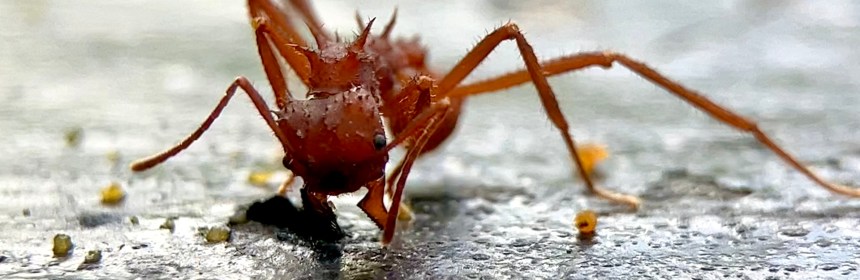
Acromyrmex octospinosus scraping something off the railing that led down to the Cenote. I’m not sure what the bird species was in the background. Location: Tulum, Quintana Roo, MX
This is a Neotropical leaf cutter ant, Acromyrmex octospinosus, a taxonomically challenging species complex of fungus farming ants found ranging from Brazil to Northern Mexico, and including Cuba and the Lesser Antilles (Mera-Rodriguez et al.,2025).
I observed more than a few of these while we were visiting in Quintana Roo, MX in late January. This one was on the handrail of the steps leading down to a cenote in a shaded area in Tulum. I also found specimens daily in the swimming pool at the property where we lodged during our stay.
These spiky, dark-red leaf cutter ants practice what is known as fungiculture, meaning they utilize fresh vegetation, including flowers, to grow their obligate fungal symbionts. The spiny projections on the exoskeleton of the ant help it to maneuver vegetative material around on their backs. These fungus-farming ants provide their fungal cultivars with food, dispersal, waste management services, and protection.
This fungus farming practice is extraordinarily sophisticated and the ants’ investment in labor even includes “weeding” their food garden. The ants even have their own sanitizing and pharmacy tools on hand. They have special infrabuccal pockets https://sci-hub.su/10.1016/j.asd.2022.101154 to filter the material they collect for their fungus gardens, screening out spores of fungal contaminants that might interfere with the ants’ specialized garden (Quinlan, 1978). They are also able to produce antimicrobials to protect their fungi from pathogens. The ant farmers utilize the fungi they cultivate as their main food source for themselves and their larvae.
Leaf Cutter Ant in Tulum, MX
I don’t have time to go into an extensive write-up about them, but did link some interesting papers and websites for your review in case you’re interested in learning more.
Thanks for reading! 🙂
References
AntWiki. 2026. Acromyrmex octospinosus. https://www.antwiki.org/wiki/Acromyrmex_octospinosus#Life_History_Traits Barke, J., Seipke, R. F., Grüschow, S., Heavens, D., Drou, N., Bibb, M. J., … & Hutchings, M. I. 2010. A mixed community of actinomycetes produce multiple antibiotics for the fungus farming ant Acromyrmex octospinosus. BMC biology, 8(1), 109.
Mera‐Rodríguez, D., Fernández‐Marín, H., & Rabeling, C. 2025. Phylogenomic approach to integrative taxonomy resolves a century‐old taxonomic puzzle and the evolutionary history of the Acromyrmex octospinosus species complex. Systematic Entomology, 50(3), 469-494.
Quinlan, R.J., Cherrett, J.M. 1978. Studies on the role of the infrabuccal pocket of the leaf-cutting ant Acromyrmex octospinosus (Reich) (Hym., Formicidae). Ins. Soc 25, 237–245 . https://doi.org/10.1007/BF02224744
Quinlan, R.J. and Cherrett, J.M. 1978, Aspects of the symbiosis of the leaf-cutting ant Acromyrmex octospinosus (Reich) and its food fungus. Ecological Entomology, 3: 221-230. https://doi.org/10.1111/j.1365-2311.1978.tb00922.x
Wetterer, James. 1991. Foraging Ecology of the Leaf-Cutting Ant Acromyrmex Octospinosus in a Costa Rican Rain Forest. Psyche. 98. 361-371. 10.1155/1991/46737.
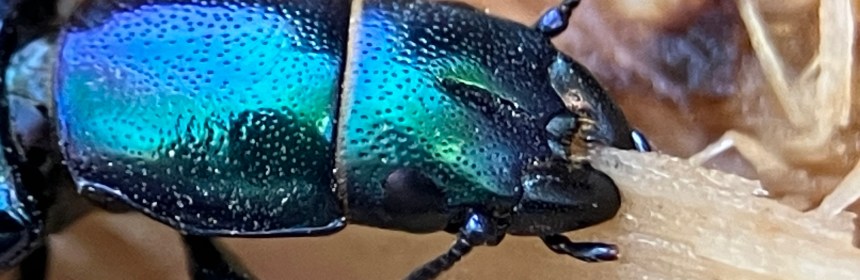
I found this gorgeous BENEFICIAL Green Ostomid beetle yesterday on the floor of our barn in the sand. Moved him over to some alder logs we have stacked as wildlife habitat and discovered he appeared to be quite thirsty. Yes, I did actually bring him some more water to drink from our outdoor above ground “pond.” More in the video description. Also want to add that if you have Alders on your property – please don’t grind them up or burn them. They are extremely important resources for many species of wildlife. They hold water even as dead trees, and they are full of insects that feed many birds (and other insects and spiders).
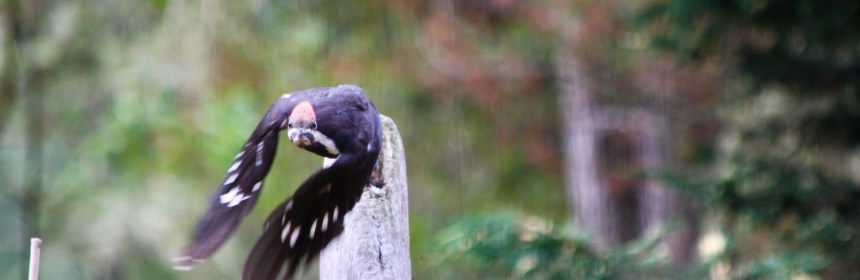
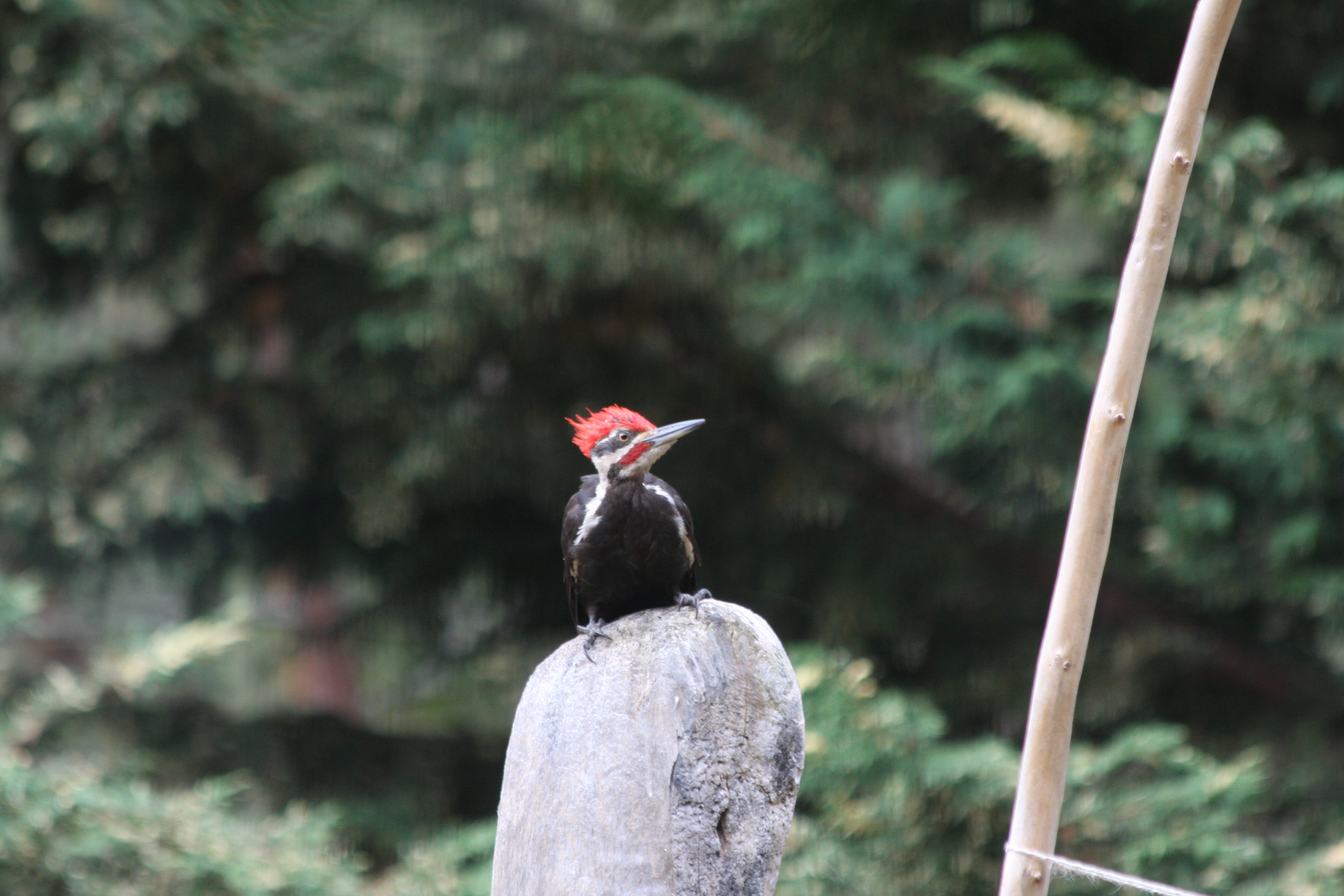
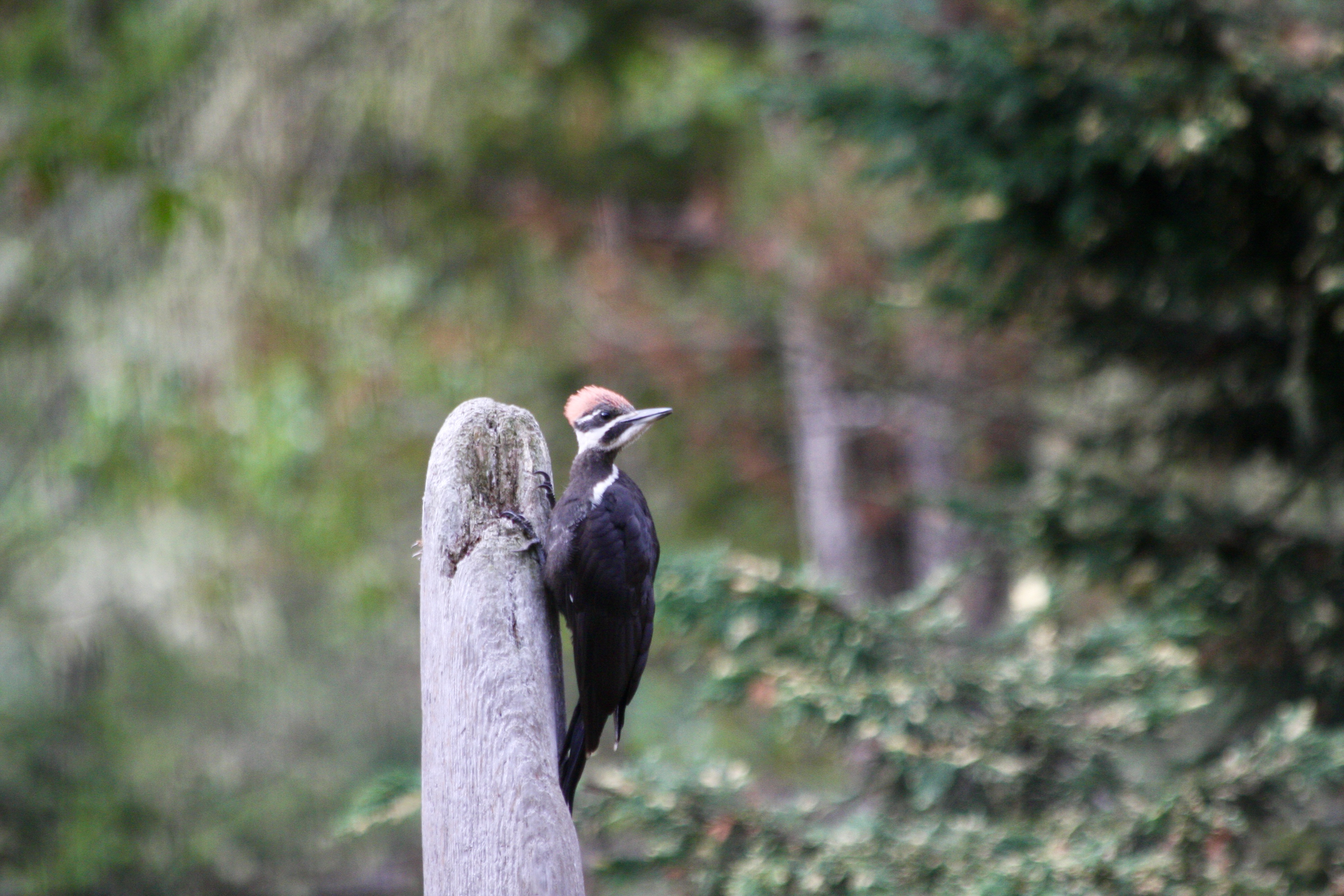
What do they eat? While they are indeed visiting our suet blocks during their reproductive season and will also come by in the winter when food is scarce, the actual diets of a Pileated Woodpecker (Dryocopus pileatus) or other species of woodpeckers are comprised of many of the wood-boring, tunneling, and wood-eating invertebrates that help forests stay healthy.
How could an insect (or an insect-eating bird) that bores into trees be good for a tree? As the saying goes, “sometimes it is hard to see the forest for the trees.” While this is complicated due to climate change, our narrow views tend to see herbivory or holes in a tree, and even a dying tree as a bad thing.
We have to step back to understand the whole picture – which is – a dynamic process. A healthy ecosystem is not static, but one of renewal and regeneration, always changing. The wood boring bugs that are eating inside a tree are (typically) part of the early breakdown stages of a tree that is already dying. As they tunnel and bore though the dying tree, they help decompose the dying parts, releasing nutrients back into the system for new trees and other organisms to grow.
Compared to a human lifespan, this is not a rapid process, but an ongoing, multi-generational one that sustains many other organisms over a vast period of time. In a nutshell, the birds, like these woodpeckers, take advantage of the dying trees hosting wood boring beetle larvae and other wood-eating or wood-tunneling bugs. As the beetles, and ants, or termites tunnel, chew, or eat through a tree, they attract and feeds other organisms that feed on the insects. The insects and the birds leave behind sawdust and frass which is, in turn, broken down by other organisms – earthworms, millipedes, centipedes, etc. In actuality, the processes at hand are far more complicated, but in a nutshell, healthy ecosystems include death.
When you walk out onto your property and see a dying tree, don’t necessarily see it as a bad thing. Watch for a while. Are the woodpeckers pecking holes? The tree may not fall over for many, many years. As it dies, it will host so many various lives: from spiders in tiny crevices, beautiful moths (often unseen, but important pollinators), iridescent beetles that will emerge from some of those tunnels, woodpeckers, cavity nesting birds, including owls that need a sheltered place to rest and rear young. Just maybe, if you consider these things, you will refrain from taking down and chipping or burning that “dying” or “dead” tree and leave it to stand many years instead. When it does finally fall, perhaps you will consider leaving it to decompose on the forest floor where it will continue to host the lives of many organisms that are necessary and good for a healthy and balanced ecosystem. Nature will thank you. The San Juan Islands are a special place. Let’s not turn our home into a mainland suburbia.
*Fun fact: The diets of Pileated Woodpeckers are known to be comprised of 85% carpenter ants. Re-think your decision to put insecticidal baits out around your property. Those stumps are the equivalent of a grocery store or local co-op for these birds. Leave them to decompose naturally.
References
Bull, E. L. (1987). Ecology of the pileated woodpecker in northeastern Oregon. The Journal of wildlife management, 472-481.
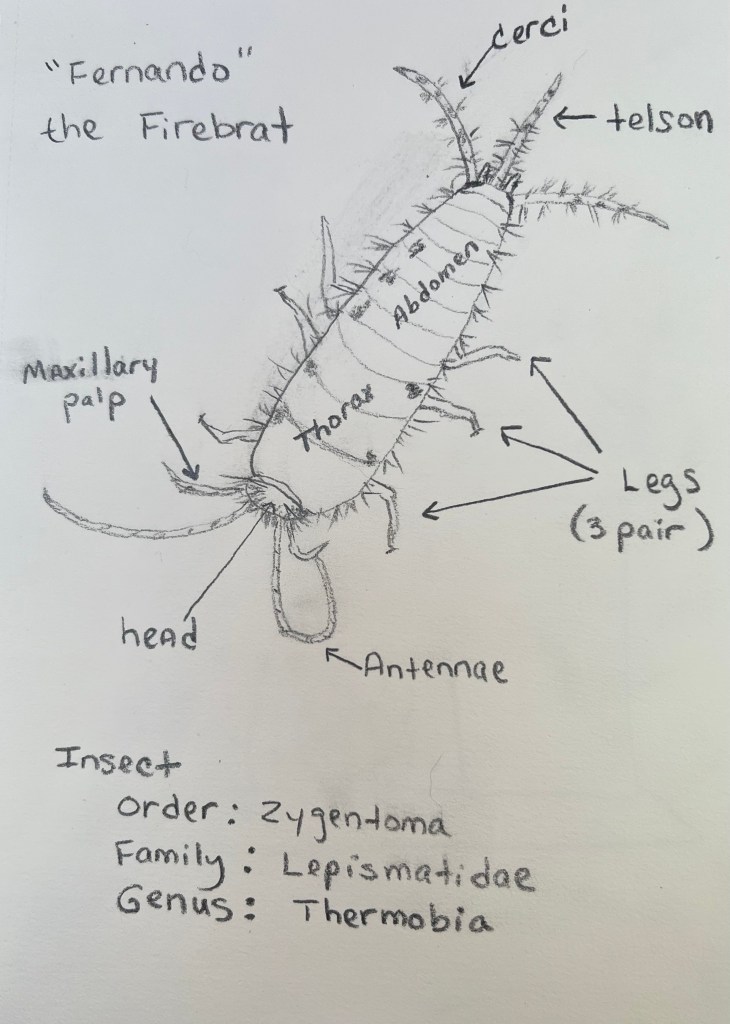
I’ve been meaning to post this for awhile now. Catching up on projects like this will help mark time until our cold winter weather gives way to warm spring sunshine. This is a story about a brave little bug that came back in my suitcase from our pre-covid trip to Mexico. His name was Fernando. The drawings are something I worked on during the long rainy days we were stuck indoors.
My husband took me to Los Cabos, Mexico in January 2019 for some sunshine. It gets so dreary and dark in the Pacific Northwest that spending ten days visiting the Baja Peninsula confers many health benefits. These include replenishing your vitamin D levels and improving your mood if you suffer Seasonal Affective Disorder.
Getting to Mexico from Seattle is a bit of a journey – the worst of it getting off San Juan Island since our ferry system is reliably unreliable. We flew Alaska Airlines direct to Los Cabos. They have newer planes and nice flight attendants, so our experience was pretty stress free. We rented a car in Los Cabos and began our adventure, but since I’m not a travel writer, this story isn’t going to be about traveling through Baja. Trust me that we got the sunshine we needed. Our experience in Mexico was mostly wonderful. The people were nice, food delicious, and we felt safe. Caveat…my ONLY issue was with our airbnb hostess who let her cat free roam and it brought me an injured gecko. Being Drago’s mom has increased my awareness of how Herps (reptiles and amphibians) are susceptible to pain just like we are. It’s not cool to let your cat go out and torture wildlife. That’s in your control as a cat owner and please be a responsible cat owner. Keep kitty in a catio, on a leash, supervised with you watching closely when outdoors, or INSIDE! Rant over.
This is Fernando’s story:
Fernando lived in a little driftwood “casa” on a Los Cabos beach where he could lounge and enjoy the warm sunshine every day. Little did I know I was sneaking Fernando back into the USA when I picked up that piece of driftwood to bring home as a souvenir. My bad. Very bad for poor Fernando. I didn’t know he was clinging to his casa, scared out of his wits. He was completely hidden, and even managed to evade detection by customs when we flew home from Mexico to re-enter the USA. I discovered the tiny, unhappy stowaway when I was unpacking my suitcase once we got home. Since he was alive and needing care, I also decided he needed a name. I came up with the name Fernando, which means “brave traveler” in Spanish. I guess Fernando was pretty brave to leave his homeland and family behind. We promised to repatriate Fernando the following year, but sadly that didn’t happen. The pandemic happened. Fernando was stuck in the cold, dreary PNW that winter. Although he was provided with a warm stove for heat, food, and water, he didn’t live long enough to return to Baja. Poor Fernando. I tried to visualize a happy ending for him. Viva Mexico!
Fernando was very happy living on the beach in Los Cabos. His favorite activity was to broil himself in the sun while reading Gringo Daily.
Fernando found himself on an involuntary trip when the tourist picked up his driftwood casa to bring home as a souvenir. Poor Fernando.
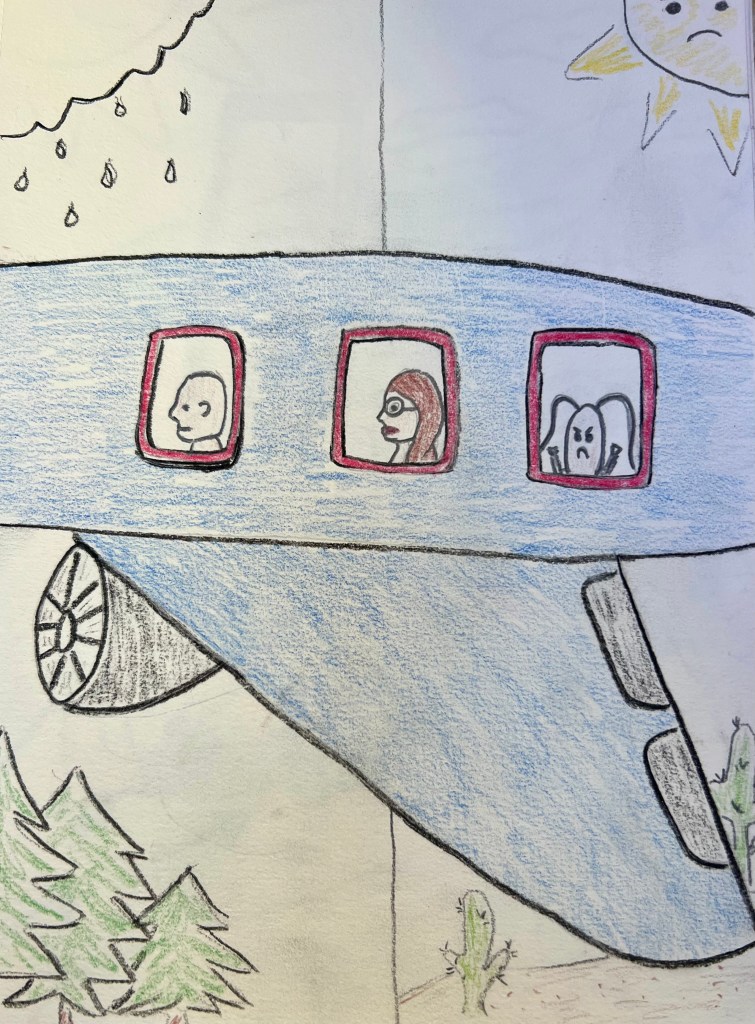
He was miserable on the flight – leaving his home and heading to the very cold, very dreary, and very gray skies of the Pacific Northwest. Poor Fernando. No more sunshine. 😦
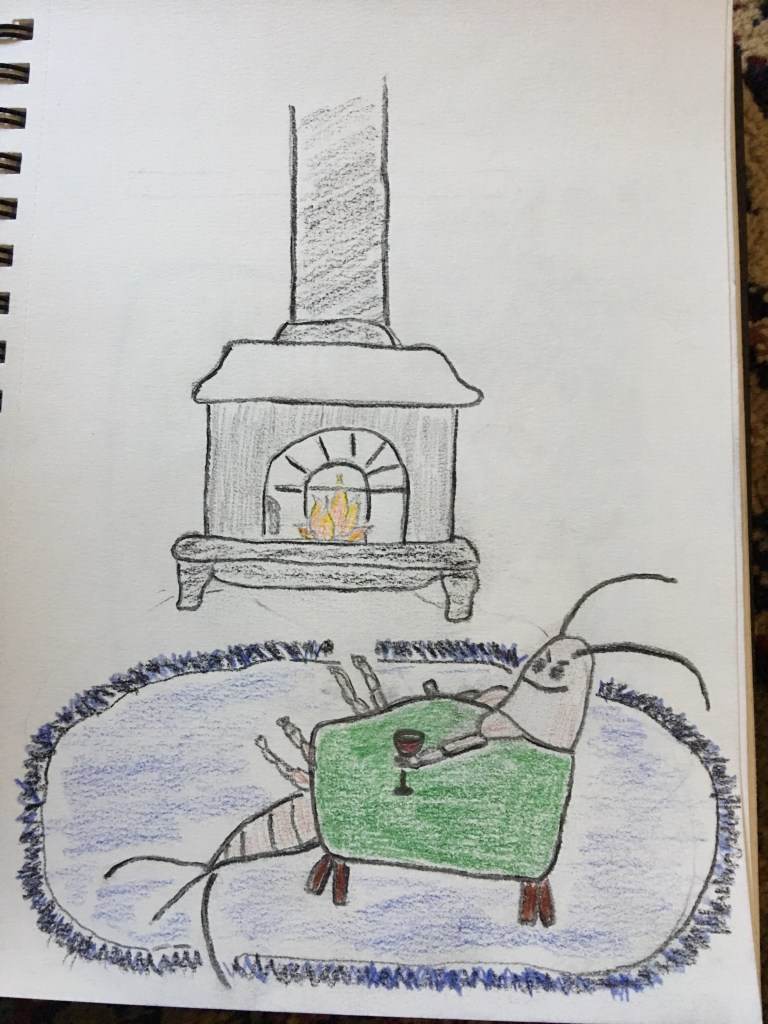
When he was discovered, Fernando’s hostess tried to make him as comfortable as possible. He got a nice warm spot by the fire.
Fernando dreamed of returning to Mexico. Unfortunately, that didn’t happen, but we hope that Fernando’s spirit made its way back to that sunny beach. RIP Fernando.
Here’s a morphological illustration of Fernando the Firebrat. While I was pretty sure Fernando goes into genus Thermobia, I could be wrong. Given that he was found outside on the beach, he may be in another genus within the family Lepismatidae.
The Western Tent Caterpillar is probably one of the most studied and also one of the most loathed insects in the Pacific Northwest. I’m hoping to change attitudes by shining a light on some of the ecological facets of the species and how it connects to the larger food web. We often deem something a pest before really considering the whole picture. Is there anything good about a caterpillar eating leaves off a tree? It depends on a lot of factors. Why not take time to examine the web…and I’m not referring to the tent here either.
It was just last week in my community (San Juan Island), that I heard a story about a woman who fell and hit her head after getting on a ladder to BURN the tent caterpillars out of her fruit trees. Hmmm. Please don’t try this at home. It isn’t safe. Burning the tents out of trees can actually do more damage to the tree than the caterpillars do by eating the leaves.
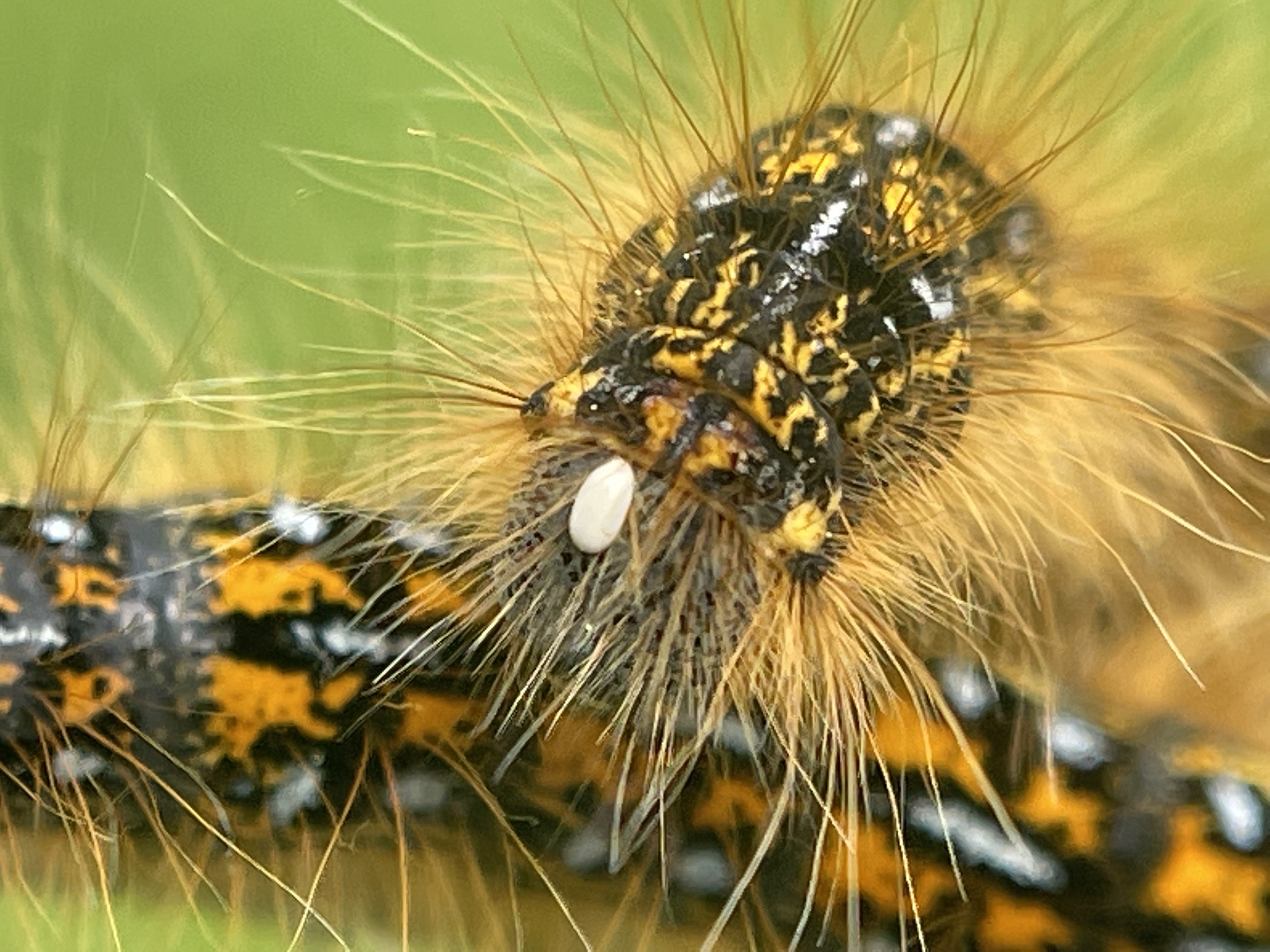
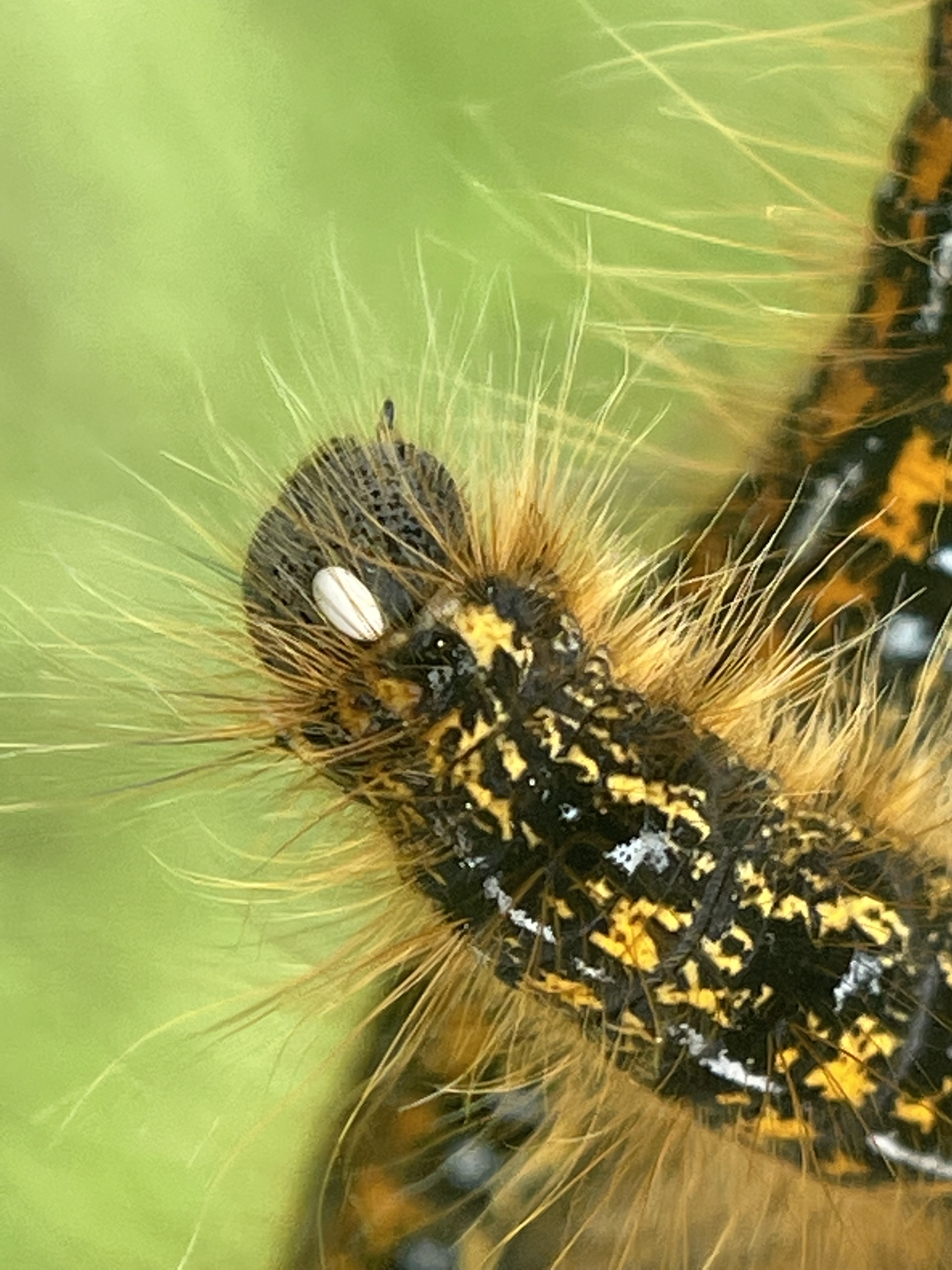
The photos below show something that happens to the tent caterpillars we may not notice in our panic to eradicate them from our trees. The egg on the caterpillar was laid by a parasitic Tachinid fly. It chose the head, so the caterpillar can’t chew it off its body. The egg is shed when the caterpillar molts, but the fly is already developing inside the caterpillar. It will literally eat the caterpillar from the inside out. So, when you clip off those tents and throw them into the fire, you are also killing the natural and best pest predators along with them. Naturus interruptus! We do more harm than good by intervening.
Western Tent Caterpillar with Tachinid Fly egg on headWestern Tent Caterpillars (Malocosoma californicum pluviale) with deceased individuals in background likely affected by nucleopolyhedrovirus
The Western Tent Moth caterpillars are affected by a few other parasitoids. Braconid wasps also attack them. Some lay eggs on the cocoons. There is also a nucleopolyhedrovirus that infects them when populations are high. In my rush to get this out, I may come back and edit, but I’ve referenced lots of great information below so you can read more about this on your own.
To add to all of this, over the weekend, my daughter and I found some tents in the orchard trees on our property. I might just be the ONLY resident in the San Juans excited to see them. Hmmm. Well, what I found was even more interesting. The tents had dead caterpillars inside and living family groups of earwigs. We also found a super cute jumping spider!
I was curious about this because earwigs are known to be garden pests, I did find some studies about earwigs that are PREDATORY on species of Lepidoptera. While these studies addressed other species of moths, the gist was that the plant species sends out a chemical signal that calls pest predators when it is being attacked by caterpillars. Every plant and pest predator sends and responds (respectively) to various signals, some very specific to each relationship. The plant is calling in the army! It may not always be earwigs, but there are wasps, flies, and others that come to aid the plant when it is under attack. Yes, it is very cool!!!
Earwigs and Jumping spider eat tent caterpillars
Oh, and those Western Tent Caterpillars turn into adult moths in mid summer. They are attracted to light. Turn off your outdoor lights. Nature will thank you and you will be less attractive to the mating moths. Many moth species also tend to fly off en-masse when they are mate seeking. These periodic, seasonal pulses of terrestrial invertebrates in our region end up in nearshore marine habitats when they fly out over the ocean.
Various studies have surveyed the stomach contents of Chinook and Coho Salmon, and other fishes in nearshore marine habitats during their first year at sea. Two studies I found reported finding Western Tent Moths and Spruce Budworm Moths (species considered as pests in northern boreal forests) in sampled gut contents. Brodeur et al., (1987) reported the following from one survey, “The incidence of several juvenile coho collected after the storm which had stomachs that were distended with over 100 of these insects exemplifies the ability of these juvenile coho to readily exploit these allochthonous inputs into the marine environment.” They were referring to the “pest” species, (Choristoneura occidentalis) or Spruce Budworm Moth in this instance. In Brennan et al. (2002), sampling of salmon in Central Puget Sound found insect prey included Western Tent Moths (Malocosoma sp.), and that “Lepidoptera in 2002 diets were gravimetrically dominated by tent caterpillar moths (Malocosoma sp.) 51% of Lepidoptera category by weight.” They also reported that Lepidoptera in their samples “were only abundant in 2002.” Coincidentally perhaps, this was a year of a recorded outbreak of tent caterpillars in WA state.
Other studies acknowledge terrestrial invertebrates as a better quality food than marine crustaceans for developing salmon. Periodic, cyclic, or seasonal events resulting in abundant insect flotsam in marine habitats may be missed, or difficult to record, but undoubtedly play a role in feeding fish in nearshore marine habitats.
Take away point here. Even bugs we see as pests have a role in ecosystems. Salmon and other species of wildlife don’t have grocery stores to visit when they need a meal. They rely on seasonal and periodic availability of food. It’s all they have, and it’s important for us to appreciate that.
Please take a moment to scroll through some of the photos below. Definitely check out the fantastic animation by April Randall about the adult moths flying out over the shoreline and being eaten by salmon! Don’t miss checking out those references and reading material too. If you are curious to know more, shoot me an email and I’m happy to send you literature for further reading.
Thank you!
Malocosoma californicum pluviale with Tachinid fly egg on headMalocosoma californicum pluviale caterpillars affected by nucleopolyhedrovirus
Jumping spider eating Malocosoma californicum pluviale caterpillar (photo credit to Alex Maas and artistic rendering by Cynthia Brast-Bormann)Parasitized Malocosoma californicum pluviale cocoon (Tachinid fly parasite)
Animation by April Randall, Orcas Island
References and Further Reading
Bell, K., Naranjo-Guevara, N., Santos, R., Meadow, R., & Bento, J. (2020). Predatory Earwigs are Attracted by Herbivore-Induced Plant Volatiles Linked with Plant Growth-Promoting Rhizobacteria. Insects, 11(5), 271. https://doi.org/10.3390/insects11050271
Clark, E. C. (1958). Ecology of the Polyhedroses of Tent Caterpillars. Ecology, 39(1), 132–139. https://doi.org/10.2307/1929975
Cooper, Dawn & Cory, Jenny & Theilmann, David & Myers, Judith. (2003). Nucleopolyhedroviruses of forest and western tent caterpillars: Cross-infectivity and evidence for activation of latent virus in high-density field populations. Ecological Entomology. 28. 41 – 50. 10.1046/j.1365-2311.2003.00474.x.
Furniss RL, Carolin VM. 1977. Western forest insects. U.S. Department of Agriculture, Forest Service, Washington, D.C. Miscellaneous Publication 1339. 654 p.
Knight, G. A.; Lavigne, R. J.; and Pogue, M. G. 1991. “The Parasitoid Complex of Forest Tent Caterpillar, Malacosoma Disstria (Lepidoptera: Lasiocampidae), in Eastern Wyoming Shelterbelts,” The Great Lakes Entomologist, vol 24 (4) Available at: https://scholar.valpo.edu/tgle/vol24/iss4/7
Rodstrom, R & Resources, Greenwood & Portland, Oregon & John, J & Brown, John. (2017). FOREST AND WESTERN TENT CATERPILLARS Insect Pest Management in Hybrid Poplars Series. 10.13140/RG.2.2.24262.37442.
Witter JA, Kuhlman HM. 1972. A review of the parasites and predators of tent caterpillars (Malacosoma spp.) in North America. Minnesota Agricultural Experiment Station. Technical Bulletin 289. 48 p.
Additional References***Updated 06.23.2022
Brennan, J.S., K.F. Higgins, J.R. Cordell, and V.A. Stamatiou. 2004. Juvenile Salmon Composition, Timing Distribution, and Diet in Marine Nearshore Waters of Central Puget Sound in 2001-2002. King County Department of Natural Resources and Parks, Seattle Wa. 164pp.
Brodeur, R. D., Mundy, B. C., Pearcy, W. G., & Wisseman, R. W. 1987. The neustonic fauna in coastal waters of the northeast Pacific: abundance, distribution, and utilization by juvenile salmonids. Oregon State University Publication ORESU-T-87-001.
Brodeur, R. D. (1989). Neustonic feeding by juvenile salmonids in coastal waters of the Northeast Pacific. Canadian Journal of Zoology, 67(8), 1995-2007.
Brodeur, R. D., Lorz, H. V., & Pearcy, W. G. (1987). Food habits and dietary variability of pelagic nekton off Oregon and Washington, 1979-1984. NOAA Technical Report NMFS 57. U.S. Department of Commerce National Oceanic and Atmospheric Administration National Marine Fisheries Service.
Cheng L, Birch M. 2008. Insect flotsam: an unstudied marine resource. Ecol Entomol 3:87–97.
Cheng L. 1975. Marine pleuston: animals at the sea-air interface. Oceanogr Mar Biol Annu Rev. 13:181–212.
Cheng, L., M. C. Birch. 2009. Terrestrial insects at sea. Journal of the Marine Biological Association of the United Kingdom. 57, 4, (995-997).
DNR TreeLink. Tenting in the Trees. 2012. WSU Extension Puget Sound Stewardship E-Newletter 5:4
Drake, V.A., D. R. Reynolds, Radar Entomology: Observing Insect Flight and Migration (CABI, Wallingford, UK, 2012).
Duffy, E.J., D.A. Beauchamp, R. Sweeting, R. Beamish, and J. Brennan. 2010. Ontogenetic diet shifts of juvenile Chinook salmon in nearshore and offshore habitats of Puget Sound. Transactions of the American Fisheries Society. 139:803-823.
Glick P. 1939. The distribution of insects, spiders, and mites in the air. Washington D.C.: US Department of Agriculture.
Green K., 2011. The transport of nutrients and energy into the Australian Snowy Mountains by migrating bogong moths Agrotis infusa. Austral. Ecol.36, 25–34.
Gutierrez, L. 2011. Terrestrial invertebrate prey for juvenile Chinook salmon: Abundance and environmental controls on an interior Alaskan river. MS Thesis, University of Alaska Fairbanks, Fairbanks, AK.
Hardy AC, Cheng L. 1986. Studies in the distribution of insects by aerial currents. III. Insect drift over the sea. Ecol Entomol. 113:283–90.
Helm RR. 2021. The mysterious ecosystem at the ocean’s surface. Plos Biology. Apr;19(4):e3001046.
Holland RA, Wikelski M, Wilcove DS. How and why do insects migrate? Science. 2006 Aug 11;313(5788):794-6. doi: 10.1126/science.1127272. PMID: 16902129.
Hu G, Lim KS, Horvitz N, Clark SJ, Reynolds DR, Sapir N, Chapman JW. Mass seasonal bioflows of high-flying insect migrants. Science. 2016 Dec 23;354(6319):1584-1587. doi: 10.1126/science.aah4379. PMID: 28008067.
Landry J. S., Parrott L., Could the lateral transfer of nutrients by outbreaking insects lead to consequential landscape-scale effects? Ecosphere7, e01265 (2016).
Locke, A., S. Corey. 1986. Terrestrial and freshwater invertebrates in the neuston of the Bay of Fundy, Canada. Canadian Journal of Zoology. 64(7): 1535-1541. https://doi.org/10.1139/z86-228
Myers, J. 2000. Population fluctuations of the western tent caterpillar in southwestern British Columbia. Popul Ecol42, 231–241. https://doi.org/10.1007/PL00012002
Satterfield, Dara & Sillett, T & Chapman, Jason & Altizer, Sonia & Marra, Peter. 2020. Seasonal insect migrations: massive, influential, and overlooked. Frontiers in Ecology and the Environment. 18. 10.1002/fee.2217.












 Bugging You From San Juan Island