Tag Archives: Bugs

December 18, 2025, A Kybos bug story
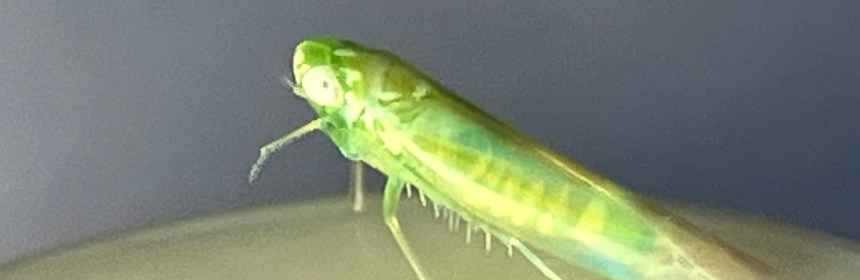
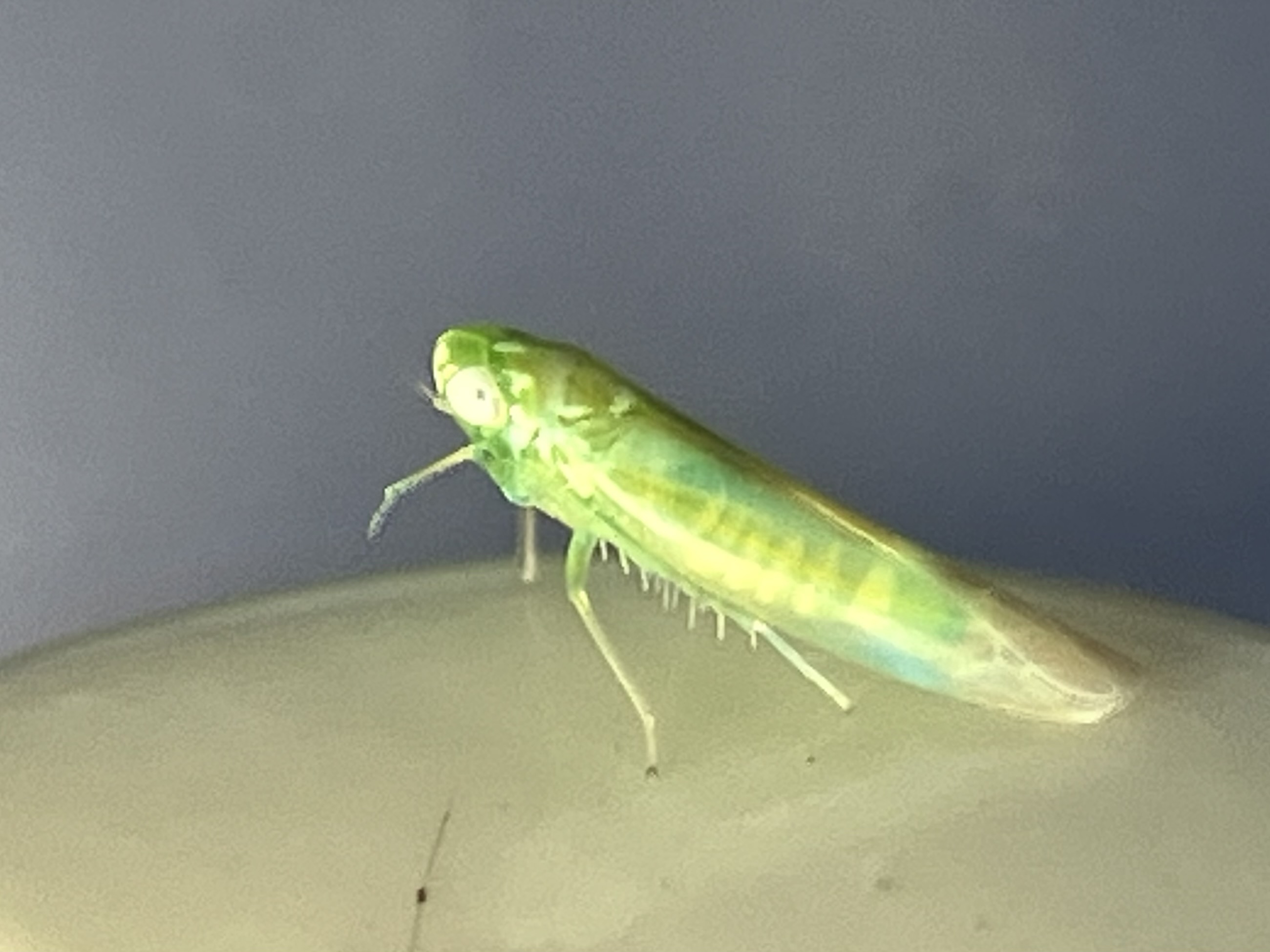
Kybos sp. Leafhopper, I believe

It’s been a good while since I’ve written up a blog post, but I found something I thought worth sharing after seeing these little ones on the side of our above ground pool the afternoon of December 18, 2025.   My story, however, is going to take us back to September of 2022.


One evening, carrying out the recycles to our barn storage area, I noticed this pile of sawdust and peculiar arrangement of little green bugs around a hole in the middle on a cedar log in our yard.
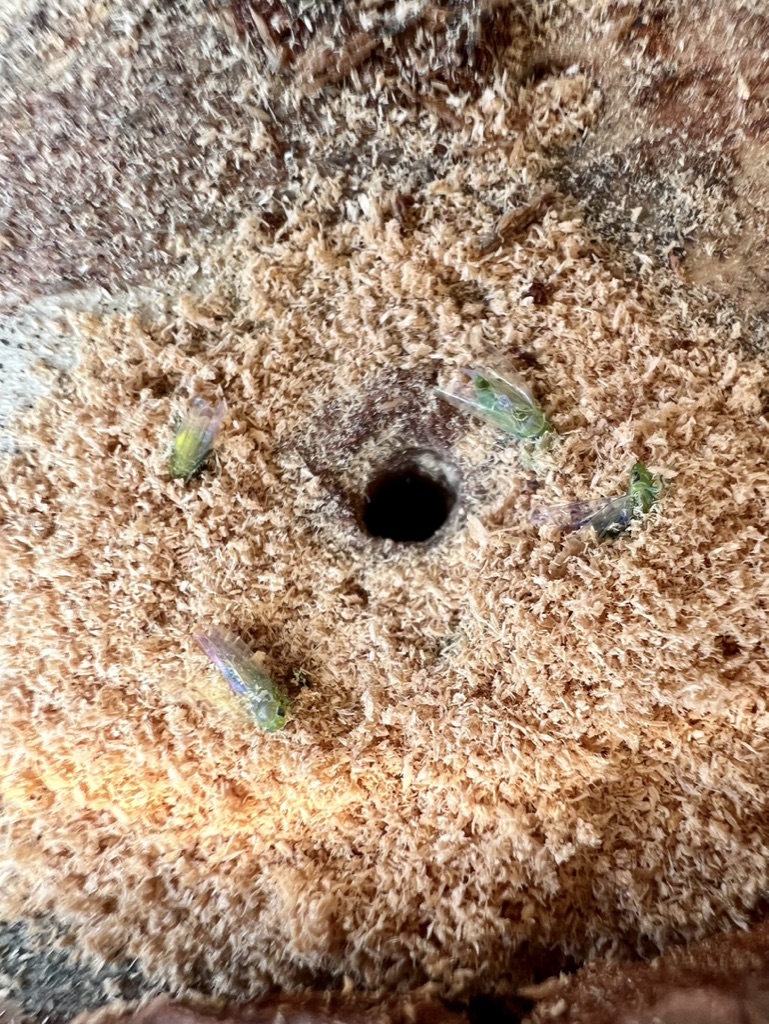
September 6, 2022

Identification of the occupant and creator of this unique arrangement took me awhile.   I believe the wasp is a Crabronid wasp in the genus Crossocerus.   She was using an old beetle exit hole as the perfect burrow for her nest construction. 

Crossocerus sp. Crabronid Wasp – September 27, 2022

Fascinated, I sat and watched her for hours on end for about two weeks.  She would be gone by morning when I woke up, but at the end of the day, I’d find a little pile of sawdust from her excavation work and a circle of ONLY these green bugs arranged so carefully on top. 

Just before sunset, she would return to pack in her assembled collection of tiny prizes one at a time, provisioning each of the cells she had constructed for her eggs with the little iridescent green bugs, paralyzed, but still alive.  Creepy, right?  Later, the eggs she would lay in these cells would hatch into little wasp larvae and consume the still-living, little green bugs…one by one.

Alas, later that winter, I noticed my wasp’s cluster of burrows in that log had been excavated by one of our resident Hairy Woodpeckers.   They find all the buried bugs – especially it seems they find the ones in the wood siding of our house.  We have a line of little holes pecked all ‘round.  Naughty birds! 


Identifying the little green bugs took me a long while. Mostly, because I get distracted and have to come back to a multitude of projects! I believe these little green bugs are in the genus Kybos.  Kybos bugs are a type of leafhopper in the family Cicadellidae. They are associated with Salix sp. (Willows) and (Populus sp.) Poplars which are their host plants (Hamilton, 1972).  The bugs feed on sap.  That would certainly fit.  We have lots of Willows nearby and three Quaking Aspen trees on our property.    

And the wasp?  One of the identifying features of Crossocerus is the ocelli form an equilateral triangle.  In the video, I think I can make out just enough of this to be definitive.   The ecology for some species in this genera also fits with a description found in Krombein (1979) about this group modifying pre-existing cavities or burrows in wood formed by wood boring insects.    

The relationship between this wasp and the Kybos leafhoppers was intriguing to me because it was the ONLY species of bug I found the little wasp to collect and arrange to provision her offspring with. While I looked for information about this relationship extensively, I did not find any literature with previously reported documentation about this. Krombein (1979) mentions the collection of prey for various species, but none more specific than family Cicadellidae.

I wish it had been possible to identify the wasp to species. It would be amazing to see this again. Perhaps I will be lucky enough to stumble upon another one in action one day.


Coming back to the video I began with.  Yesterday, December 18, 2025, I saw another of those little green bugs on the side of our pool.  It was hanging out with a friend, a Bark Louse (Eptopsocus sp).  Either they were enjoying the wind in their antennae or hanging onto the rim for their very lives.  It was a very blustery day! 

Kybos sp. Leafhopper and Eptopsocus sp. bark louse, December 18, 2025, San Juan Island, WA

References

Bugguide.net. 2025. Kybos. Iowa State University. https://bugguide.net/node/view/120601

Hamilton,  K G A. (1972). The leafhopper genus Empoasca subgenus Kybos in southern interior of British Columbia. Journal of the Entomological Society of British Columbia, 69, 58–67. https://www.biodiversitylibrary.org/part/213774

Krombein,  Karl V. (1979). Catalog of hymenoptera in America north of Mexico (Vol. 2). Smithsonian Institution Press. https://www.biodiversitylibrary.org/item/26295

Krombein,  Karl V. (1979). Catalog of hymenoptera in America north of Mexico (Vol. 2, p. 1665). Smithsonian Institution Press. https://www.biodiversitylibrary.org/page/4575889

Cutworm parasite

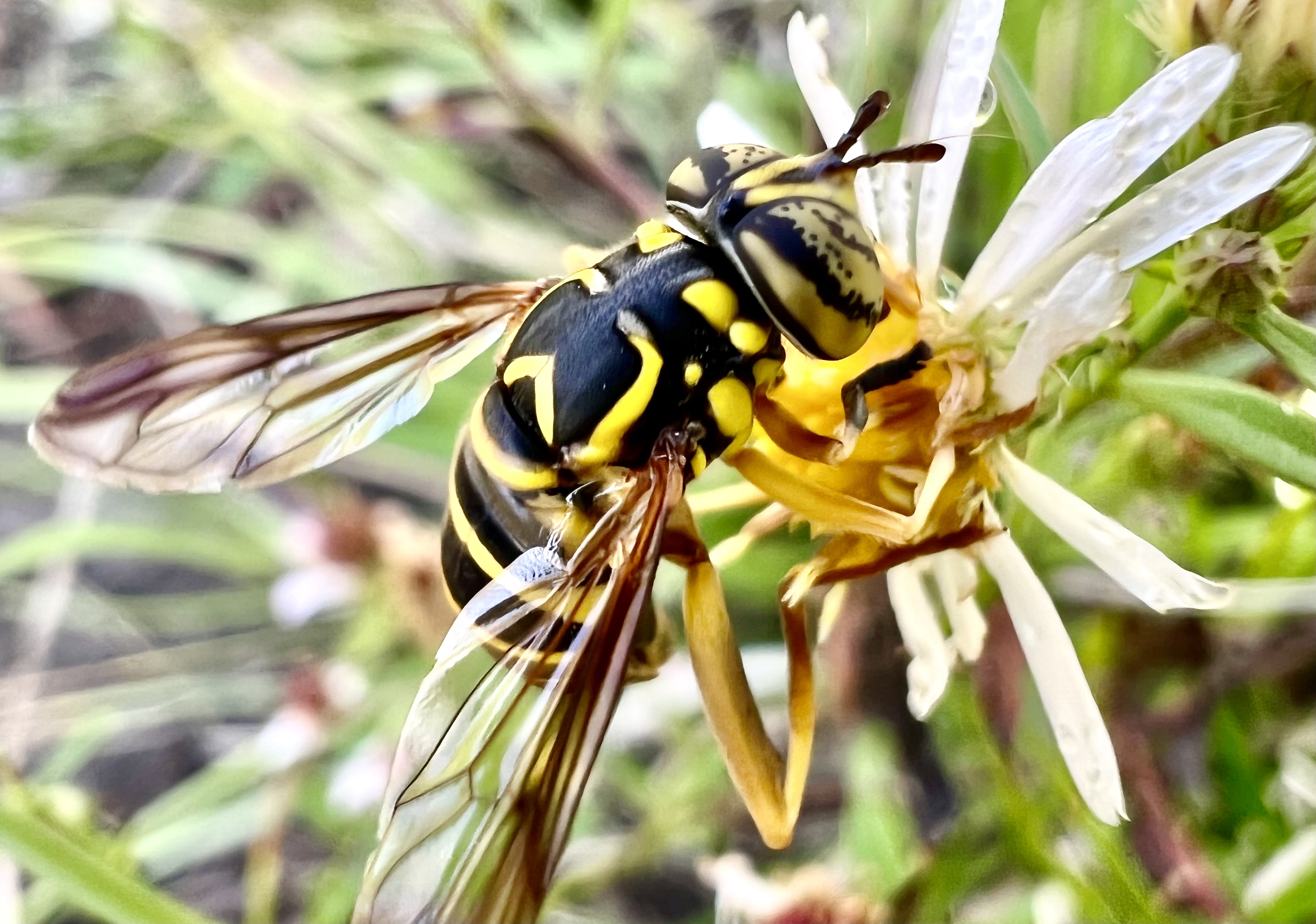
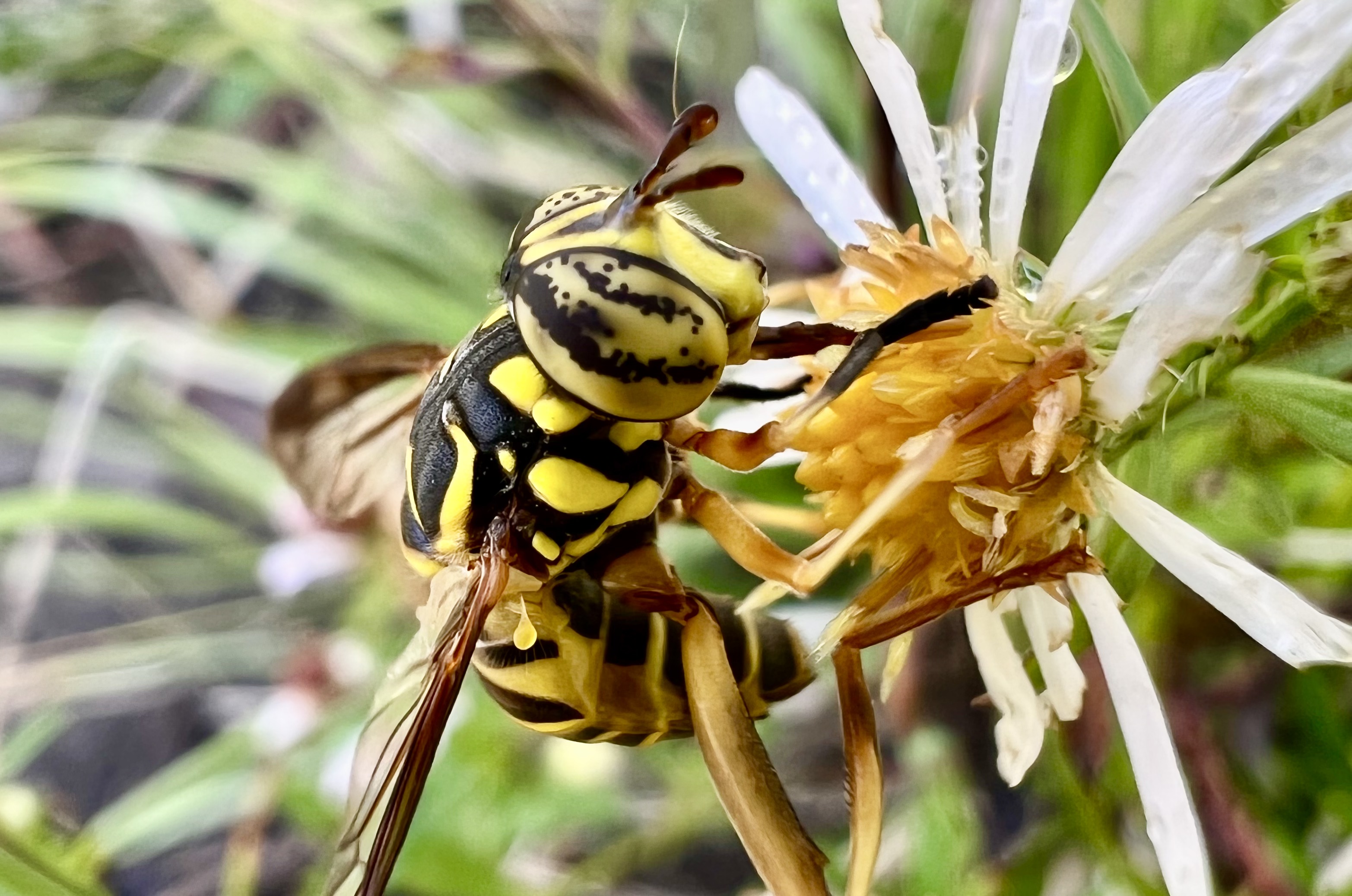
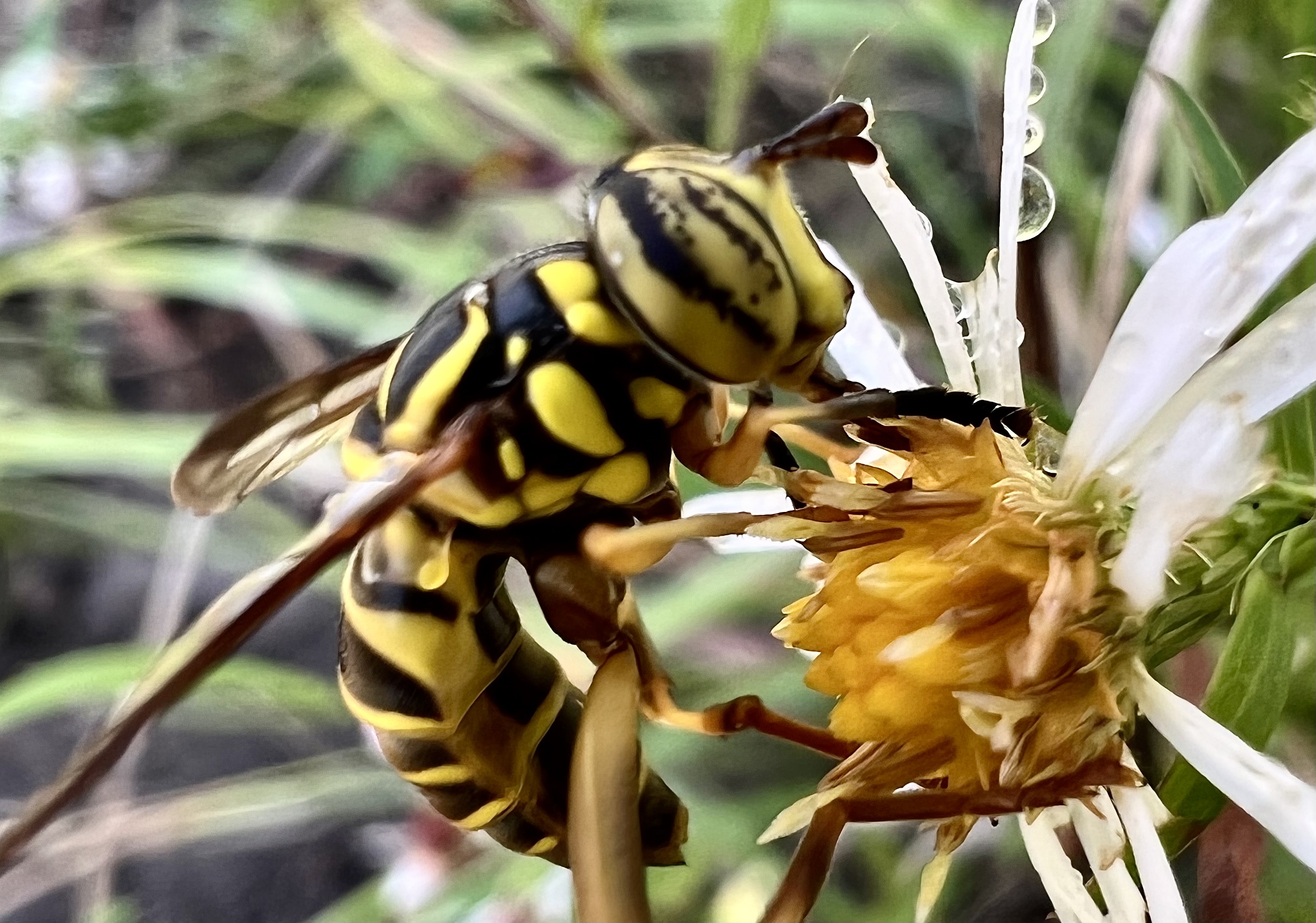
I’m doing a short write up of this fly just to get you thinking a bit.  It was observed April 29, 2024 on San Juan Island, WA. While identification to Genus/Species may not be possible until I can actually catch a specimen to be keyed out, it is Family Tachinidae and Tribe Goniini.   Hoping to come back with at least a Genus update at some point. 

What I want to SHARE is the life history of this tribe of flies.  The Goniini flies are parasites of various Lepidoptera, mostly Noctuids, Arctiids, and Lymantriids.  Translating this for you a bit, it would be cutworms (if you’re a gardener) , tiger moths, and tussock moths.  

How does this play out? 

The female Goniini fly lays a “black microtype,” usually ovate and flattened egg, varying in size from very small to medium, on foliage utilized by the feeding host caterpillar.  The caterpillar (usually Noctuids) munch the foliage, ingesting the fly egg.  The caterpillar will continue feeding and then wander off to complete its life cycle as a pupa. At some point after ingestion by the caterpillar, the fly egg hatches and the fly larva develops inside the body of the pupating moth that is inside its chrysalis.  

A myriad of ecological relationships exist in nature that are often unobserved. Many remain undescribed or unknown. Sometimes, they are disrupted by humans who intervene out of ignorance. If you’re one of those folks who squish what you believe are cutworm pupae in your garden bed, you might be smooshing the pest predator developing inside.

Noctuid moth pupa

References

  1. No Author. 2024. Tachinidae. Spencer Entomological Collection. Beaty Biodiversity Museum. https://www.zoology.ubc.ca/entomology/main/Diptera/Tachinidae/
  2. Wood, D. M. 2013. Manual of Nearctic Diptera. Tachinidae Resources. https://www.uoguelph.ca/nadsfly/Tach/Nearctic/Manual/Manualhome.html
  3. Cole. Frank, R. 1969. The Flies of Western North America. University of California Press. Berkeley, CA.

Bugging You From Texas, Part deux

I’ve been home on San Juan Island, WA for 4 days now and clearly I picked up a bug traveling home. Not exactly the sort of bug I wanted, but it was inevitable given the crowded airplane and traveling stress. My husband came down with the BUG first. Then it hopped over to a new host – ME.

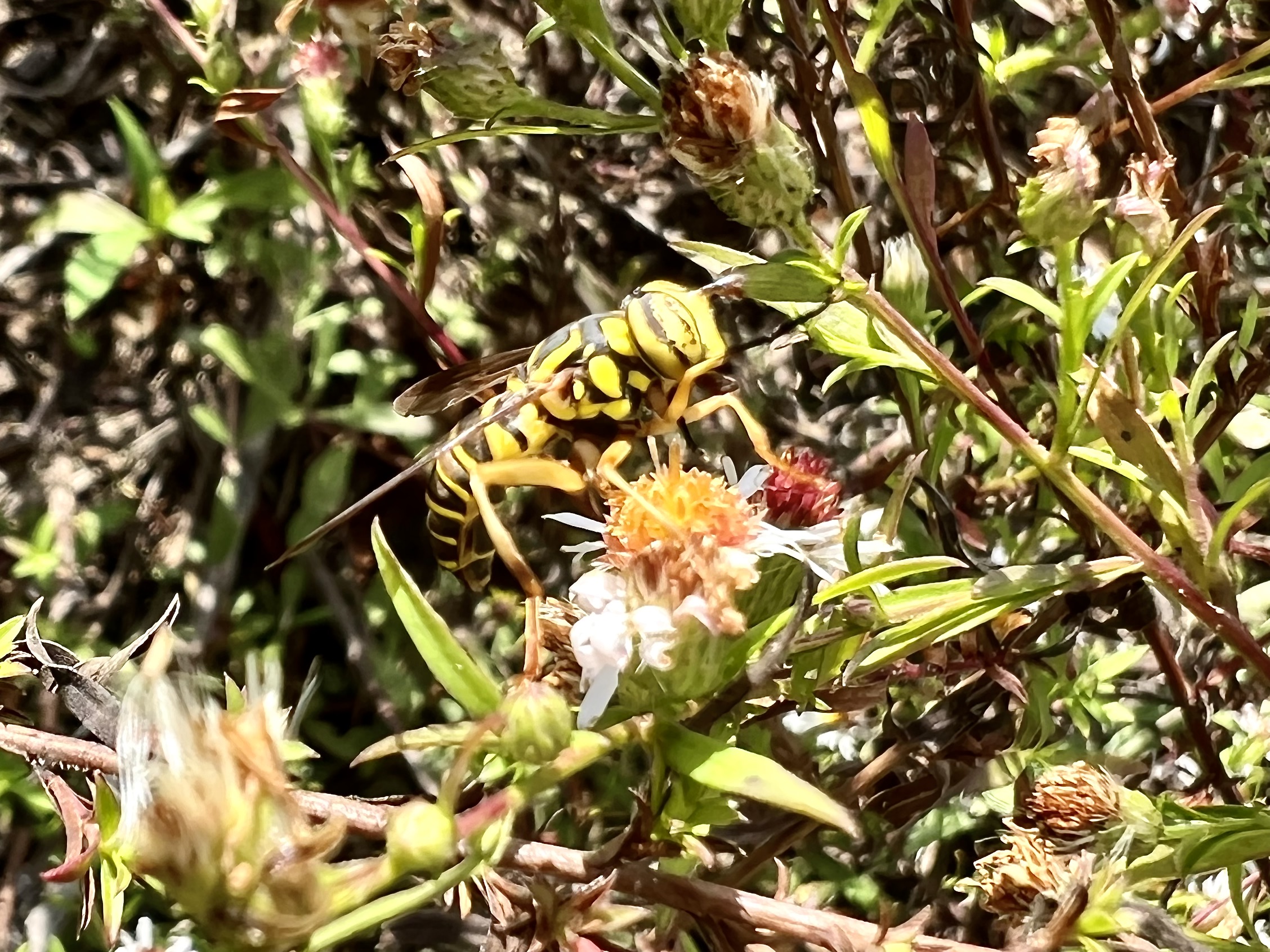
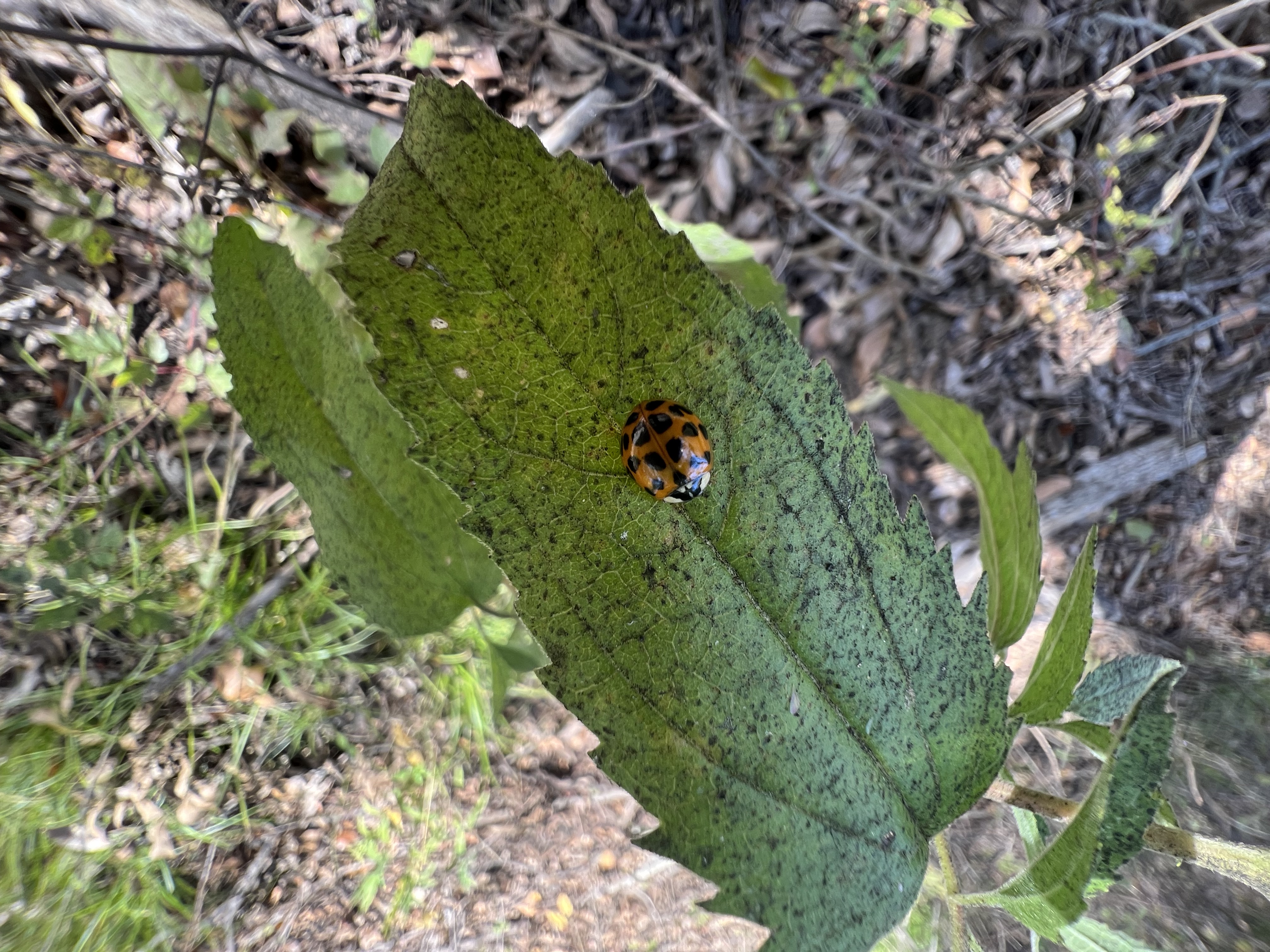
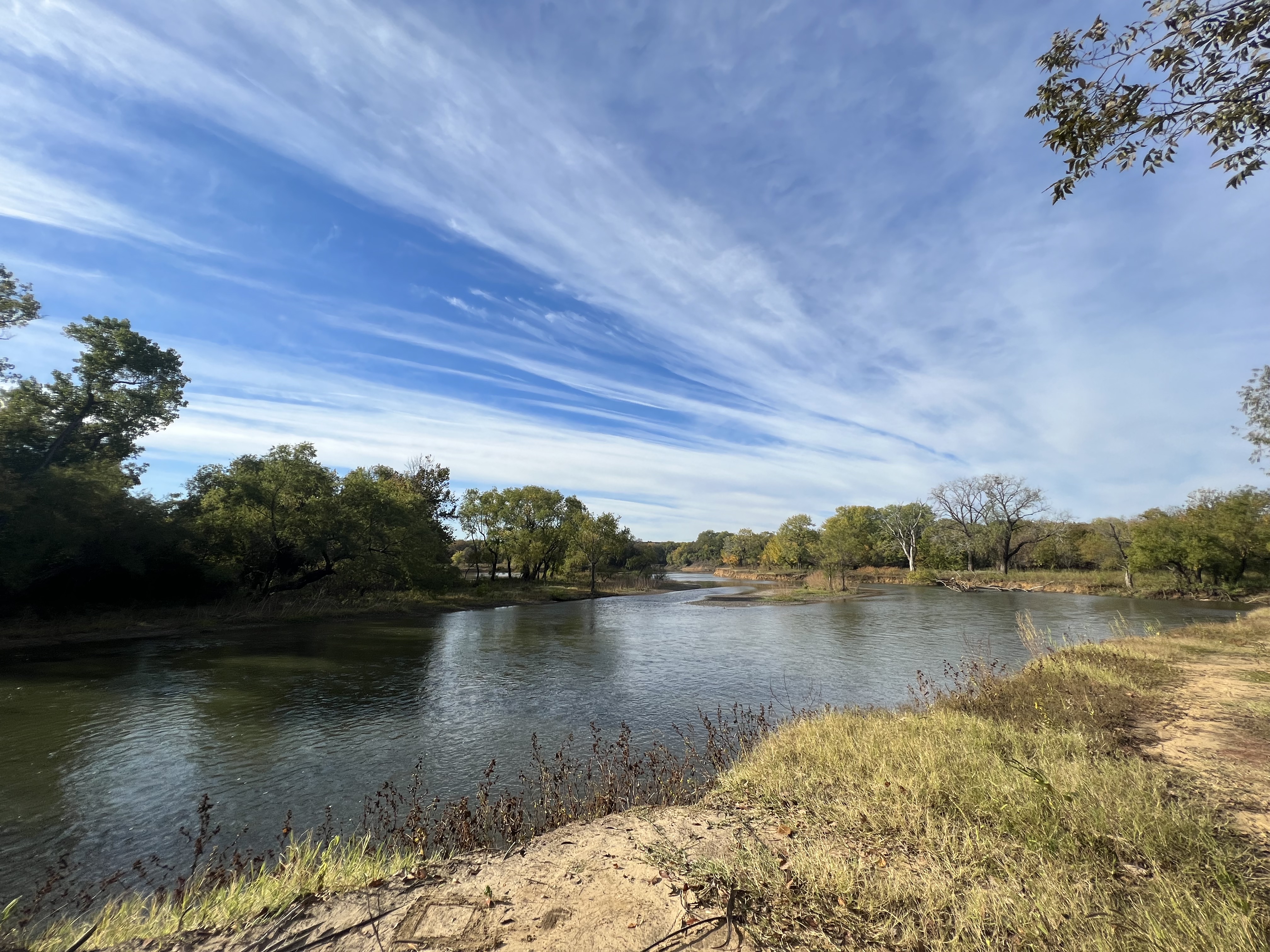
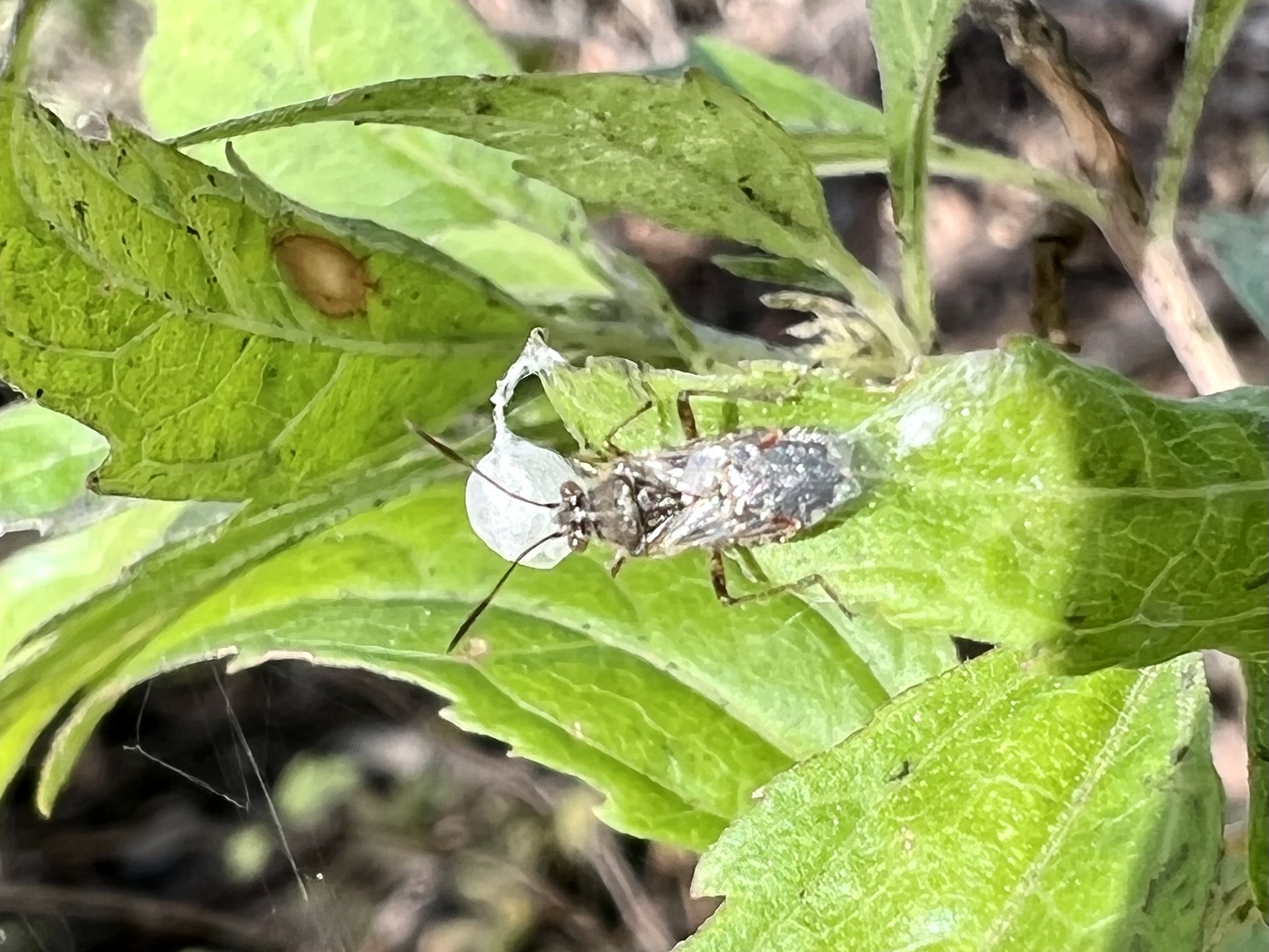
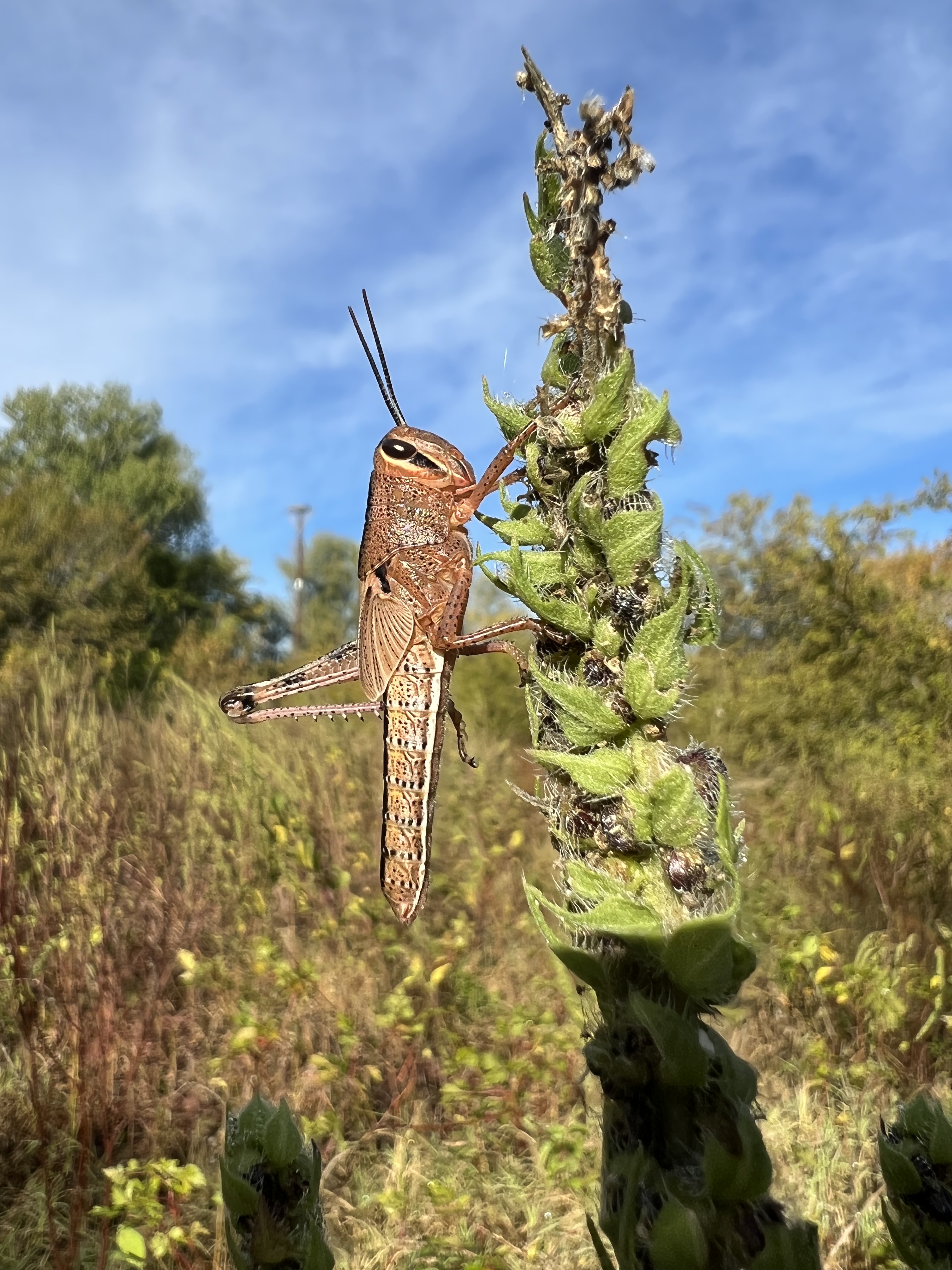
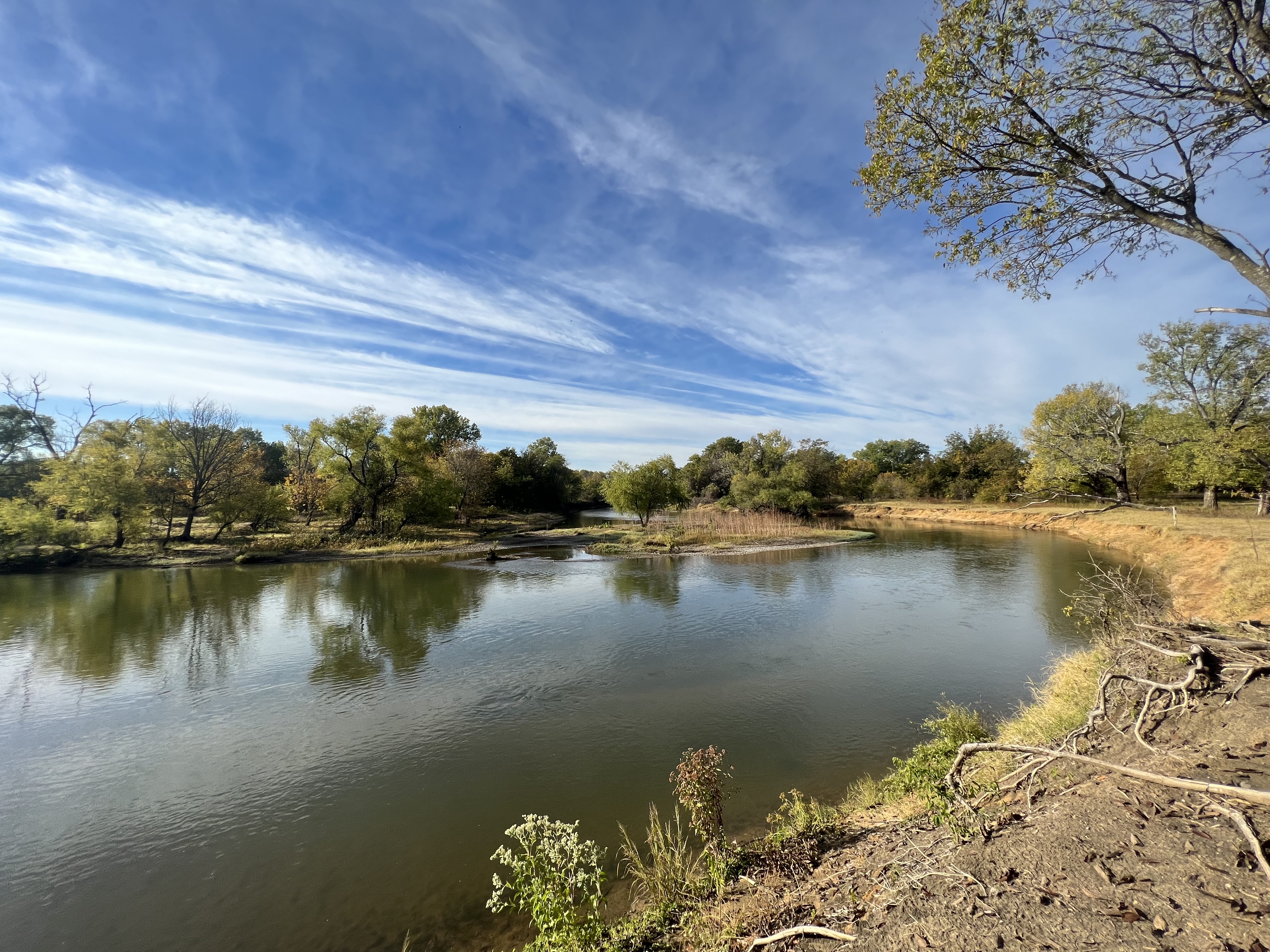
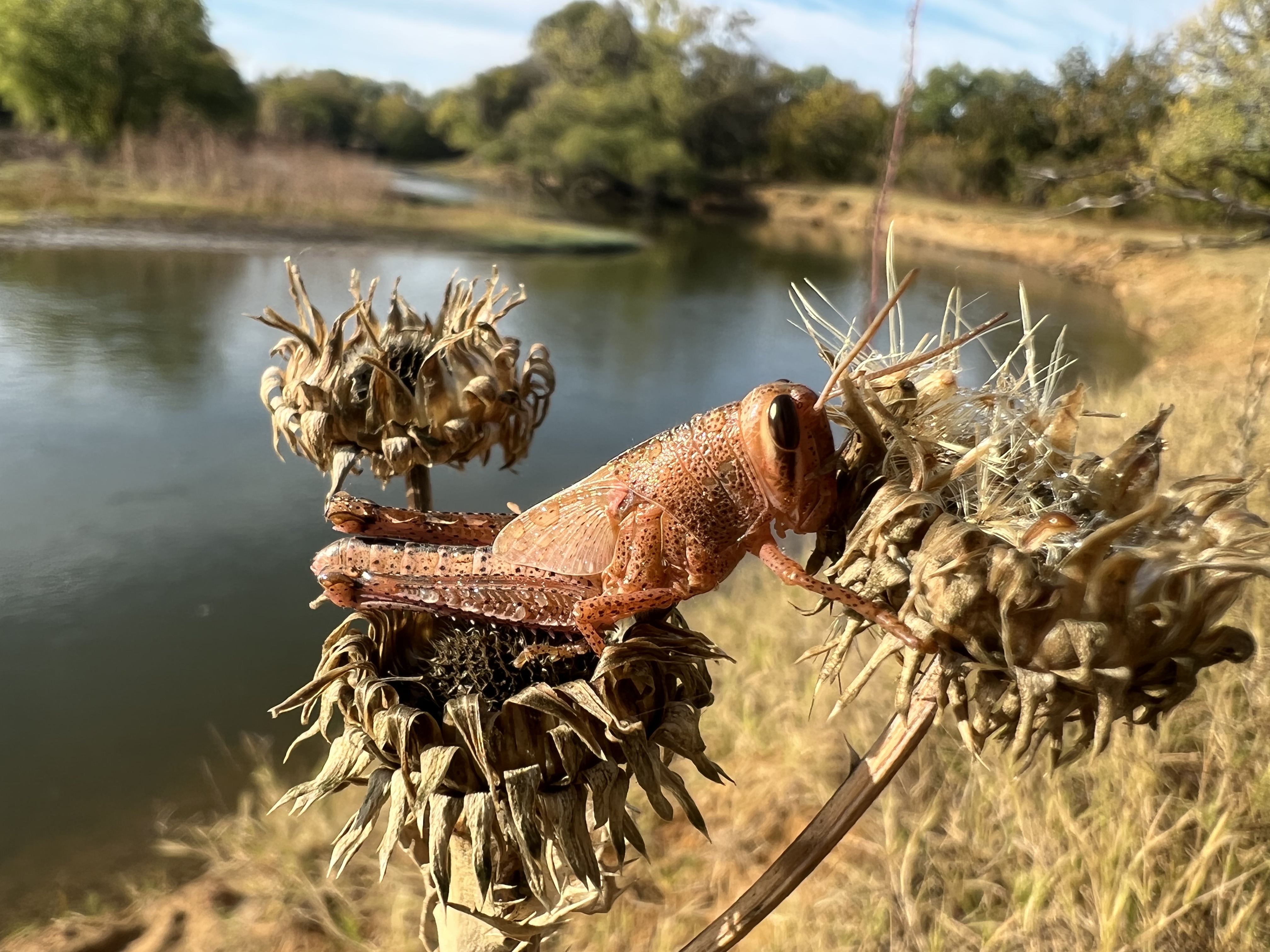
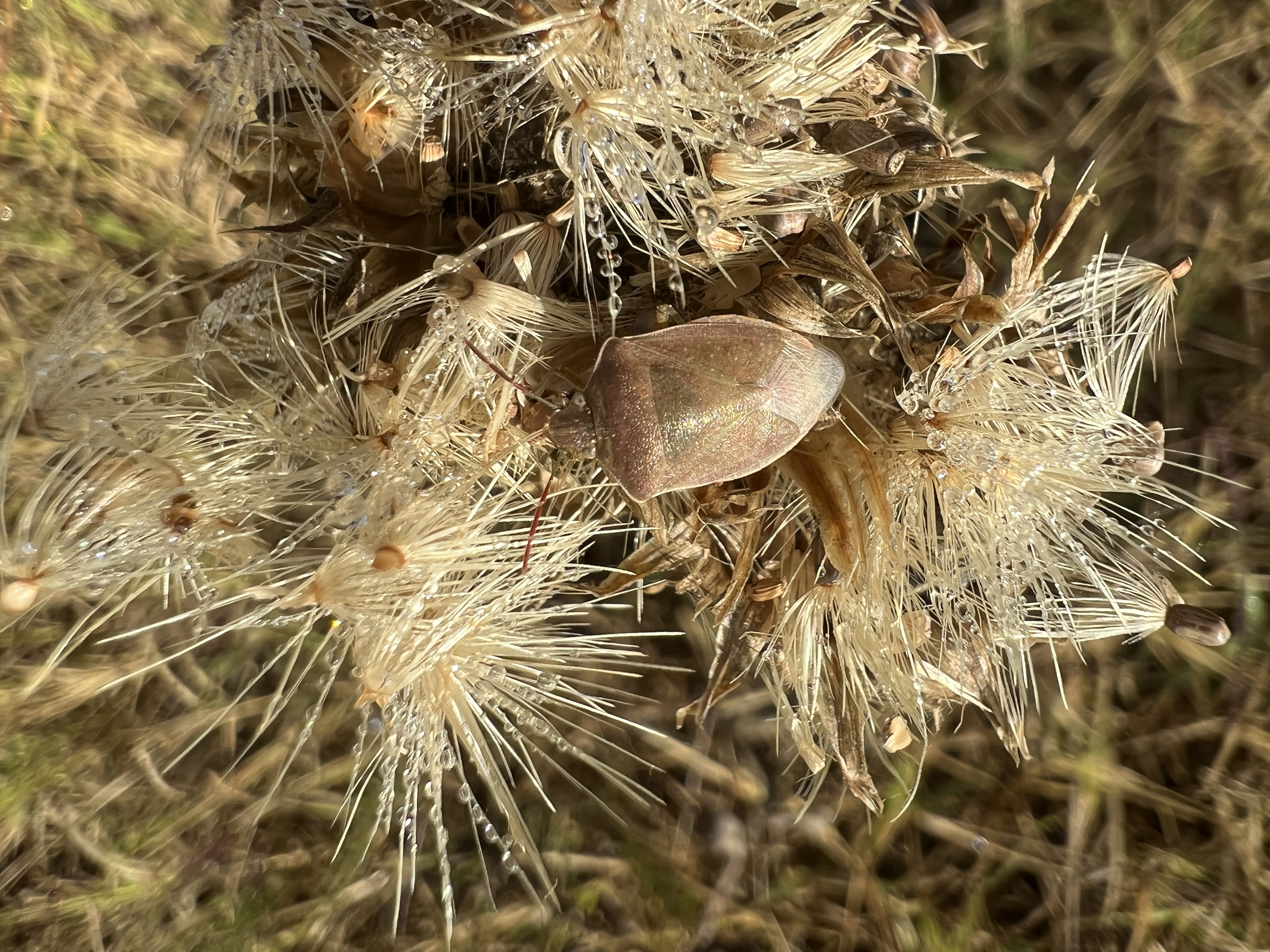
So, I’ve spent the afternoon on the couch labeling and sorting photos from one of our nature walks in Texas. This was the first of two hikes we took at the Lewisville Lake Environmental Learning Area Nature Preserve https://www.llela.org/about-llela/mission-and-vision. This area (approximately 2000 acres, I believe) has been conserved in conjunction with U.S. Army Corps of Engineers, the University of North Texas, the City of Lewisville, Lewisville ISD, the University of Texas in Arlington, and Texas A & M Agrilife Extension. It is a true jewel in the madness of the DFW metropolis where over 6.7 million people are displacing wildlife and native ecosystems are lost in the process. The BEST part of these hikes for me is the fact they do not allow dogs. NOT ANY! I am thrilled that the focus is on wildlife and habitat conservation and preservation instead of human recreation. I could actually be outdoors, enjoying nature AND viewing wildlife.

We’ve been to this preserve in prior trips to Texas. This year, we focused on hiking some trails we hadn’t been on before. Here is the gallery of some of the bugs I photographed, along with a few wonderful landscape scenes we viewed on the Redbud Trail – map here: https://www.llela.org/home/showdocument?id=9417

Please support environmental conservation wherever you are. This habitat may seem large at 2000 acres, but the former Blackland Prairie once covered 12 MILLION acres in the state of Texas. We need to set aside more if we are to weather the changes coming ahead.

Stay tuned for Bugging You From Texas, Part 3. I have more wonderful photos to share with you.

Radar Love

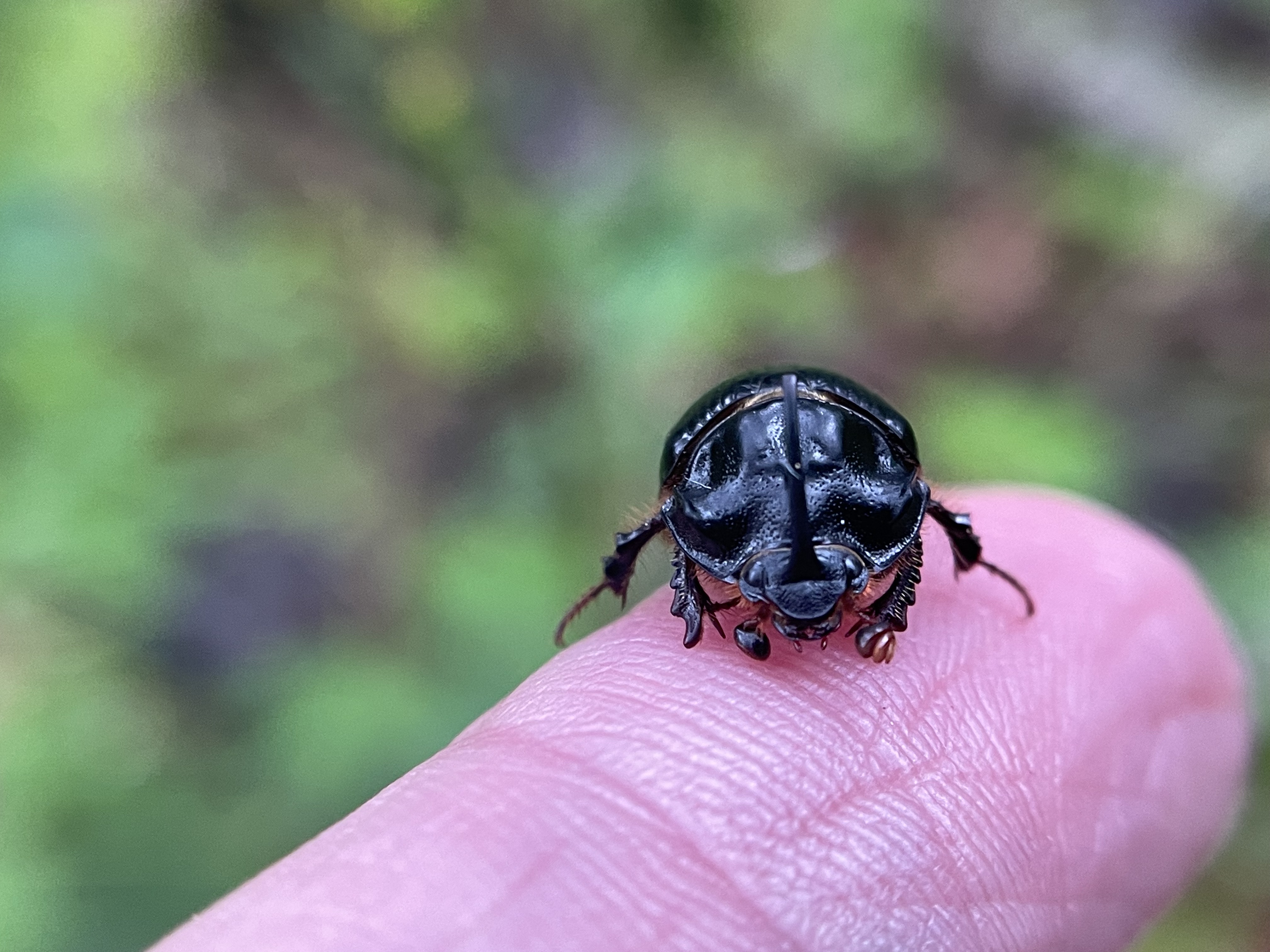
Hello Everyone!  Meet my new bug friend, Radar Love ❤️  He must have crashed the wrong party.  Radar gone wrong!  I found him floating in our pool, in the midst of those raucous “dippers” (the Diplotaxis beetles).  Radar Love was so happy I didn’t let him drown, and even happier that I didn’t stick him with a pin and add him to the bug equivalent of a stamp collection.  We hung out together for a bit and I took some photos and video to remember him by.  Radar Love was released into the forest so he can make more of his kind.  

Odonteus obesus
Odonteus obesus

Odonteus obesus
Odonteus obesus
Odonteus obesus

Location:  San Juan Island

ID: Geotruipidae (Odonteus obsesus)

Special thanks to my friend, Michelle Sloan Bos and Tyler Hedlund for ID assistance with this.  I was rushing to get ready for my special spider outing.  More about that later.  For now, enjoy this rare and exciting  sighting of a most special little beetle that calls San Juan Island his home.  

More Info: https://bugguide.net/node/view/160586

Odonteus obesus

Happy Hour and Bug Beer!

For all you foodies out there, here’s a new one for you. Beer brewers are isolating yeast from insects, including bees, wasps, and even crickets. Don’t worry, no actual bug parts are going to be in your drink. Drink up and enjoy the buzz!

https://www.foodandwine.com/drinks/researchers-brewing-beer-bug-yeast