I posted a few images last week to my iNaturalist page to see if I could get help from some experts in the butterfly community to ID this Polygonia butterfly past genus. It sparked a lively amount of conversation and I finally received a comment in the thread from West Seattle-based nature guide, ecological consultant and botanist, Stewart Wechsler, stating, “@cyndibrast Looks like you have the first confirmed Polygonia oreas iNaturalist observation for the San Juan Islands!” I would also throw out that the first person to correctly speculate the ID for this is my friend, lepidopterist David Droppers, who suggested I post in a wider audience to see what feedback I might receive.
Cool! So, I have the first Oreas Anglewing iNat. Sighting for San Juan County. 😀
Polygonia oreas – March 29, 2023, San Juan County, WA
Have there been others? Probably. Not everyone is using iNaturalist, so some sightings may not be on the radar for other bug enthusiasts. I like it to keep all my bug sightings organized and categorized and all that stuff and using iNaturalist makes it easy to find things when I want to go back to reference one. If you don’t have the iNat. app, give it a try. It makes your outdoor experiences a lot more interesting in a nerdy, scientific way. You can be a naturalist on your hike. It’s fun!
Here’s a bit of information about this interesting butterfly, now officially recorded on San Juan Island. Links to sources included below.
Oreas Anglewing (Polygonia oreas)
*From (C. LaBar 2013) and (Björklund, N.H. 2018-2022)*
SIZE: Wingspan of 40 to 50 mm (up to 2 inches)
Key ID Features: Above orange with black blotches and spots, often with very jagged wing edges, submarginal row of yellow chevrons and brown to black marginal band. HW above has yellow patches adjacent to dark marginal band. Below dark gray to black, with lighter gray striations, and prominent white flattened “v” (pointed at the bottom, often looking like a gull in flight) with no hooks in center of HW.
Similar species: Darker below than other comma species, white “v” mark on HW below lacks barbs. Other comma species either have stronger green submarginal shading below or the “comma” mark on HW below is curved (not a pointed “v”) or barbed or both.
Male: rusty orange and gold with black spots, dark brown wing margin with row of bright yellow spots. Ventral is variegated in contrasting shades of dark brown and black. White comma on VHW.
Female: slightly lighter dorsal and ventral colors and less-distinct ventral mottling.
Egg: green.
Larva: first two instars are brown and pale beige with black hairs and spines. Last three instars are mostly black with thin, white or yellowish bands around each segment and covered with rows of yellow-orange spines.
Pupa: mottled reddish brown, white and gray, with three pairs of silver spots.
Larval hostplants: currants (Ribes), primarily swamp currant (R. viscosissimum), also including R. divericatum (straggly gooseberry), and R. lacustre (swamp gooseberry).
Habitat: Forest fringes, especially in older stands, riparian areas and ravines, subalpine meadows.
Range: Coast Range, Willamette Valley, Western Cascades, east slope of Cascades, Wallowa Mtns, Blue Mtns. Season: Late February to mid-September Abundance: Uncommon
On October 26, 2022, hubby and I left the island to venture to Texas for ten days. I always leave the island with great trepidation because I do not like being separated from my fur and scale babies (two cats and one dragon). They always have a babysitter to care for them, but it’s not “momma,” and no one else I know is going to do things exactly like me. If I could clone myself, it would be easier to depart. Or, I could stay with them and send the clone with my husband. Seriously, I’m joking…or maybe not. Depends on how I’m feeling when you ask me.
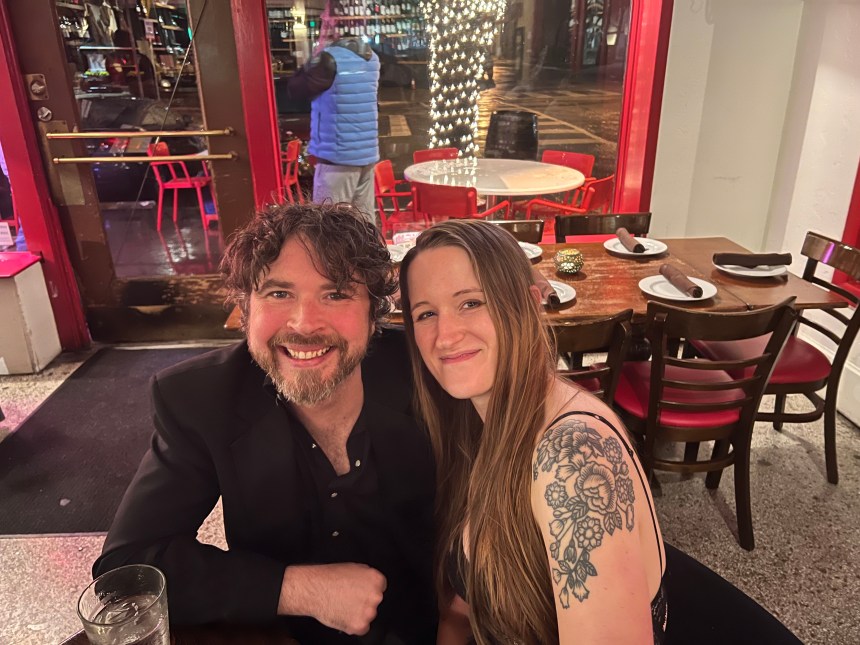
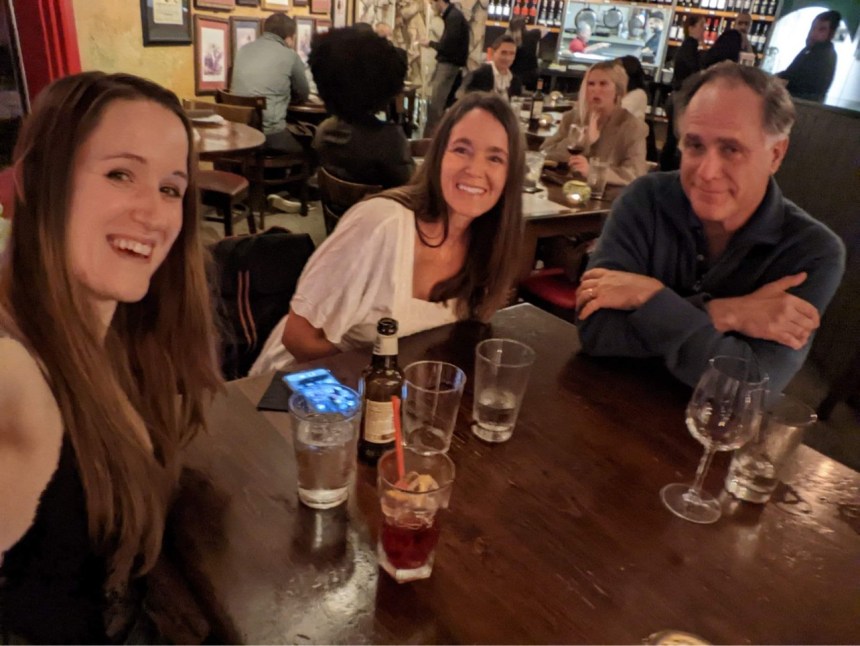
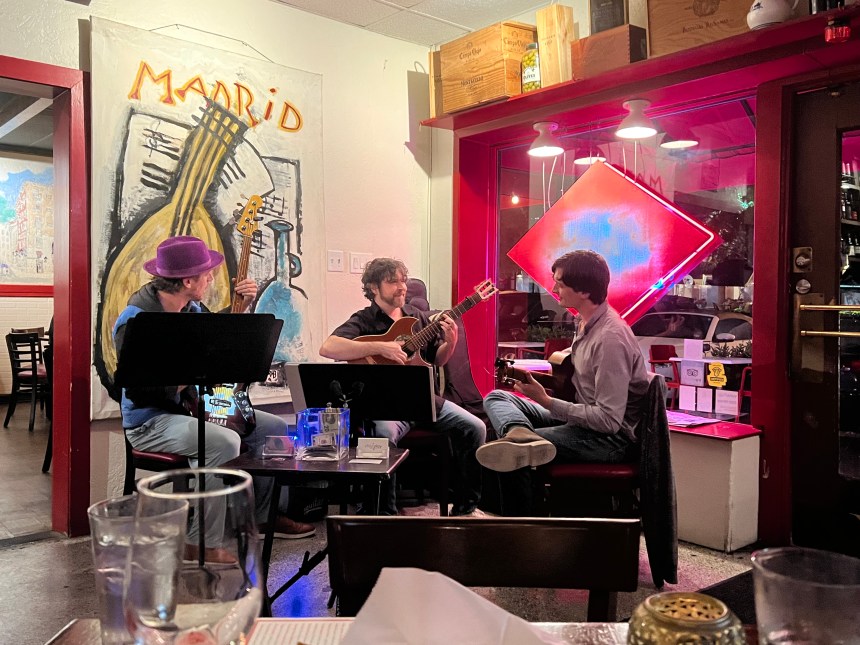
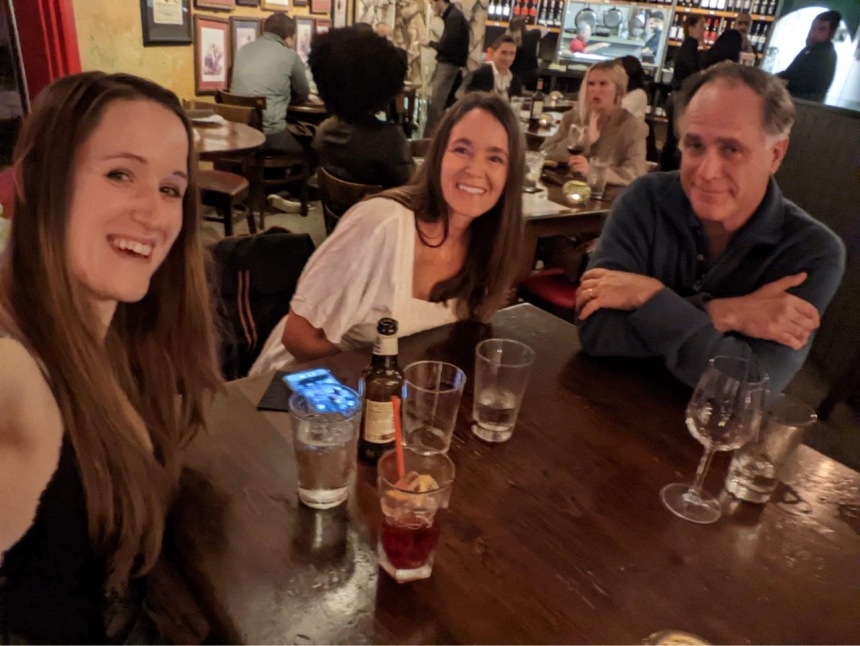
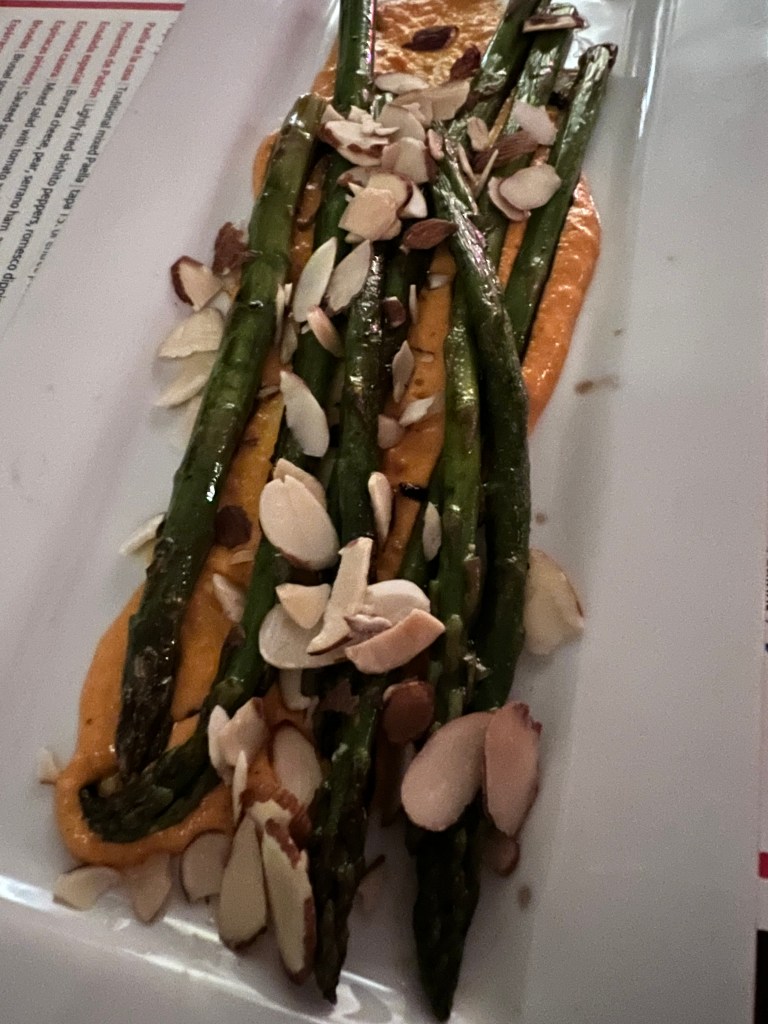
The trip was in reality, an essential one. After waiting three years, I have not been able to get into a specialty neurology clinic here in the PNW area. I have some “wiring” issues that are complicated and need further evaluation. I’m sure my family and my husband will nod their heads about me having the “wiring” issues. Nonetheless, I have been suffering without answers, so maybe we will have some after seeing Dr. Ansari in Frisco, TX. The other part of our trip is an annual family visit. We stayed with my parents in the Dallas area and visited with them and some of my former friends and neighbors. It would have been nice to drive south and see my brother in the Austin area too, but scheduling just didn’t work out. Some of our trip overlapped with my daughter flying down to visit as well. She coordinated a nice evening outing to Cafe Madrid in Dallas to hear her former guitar instructor and his group play Flameno music while we also enjoyed a fantastic meal at the restaurant.
Check out the slideshow of our Cafe Madrid experience below.
Joel Pipkin and Amanda at Cafe Madrid
Amanda
Amanda with Me and Lincoln at Cafe Madrid, Dallas, TX
Good beer!
Joel’s music trio at Cafe Madrid
Music at Cafe Madrid, Dallas, TX
With Amanda and Lincoln at Cafe Madrid, Dallas, TX
Tapas at Cafe Madrid, Dallas. TX
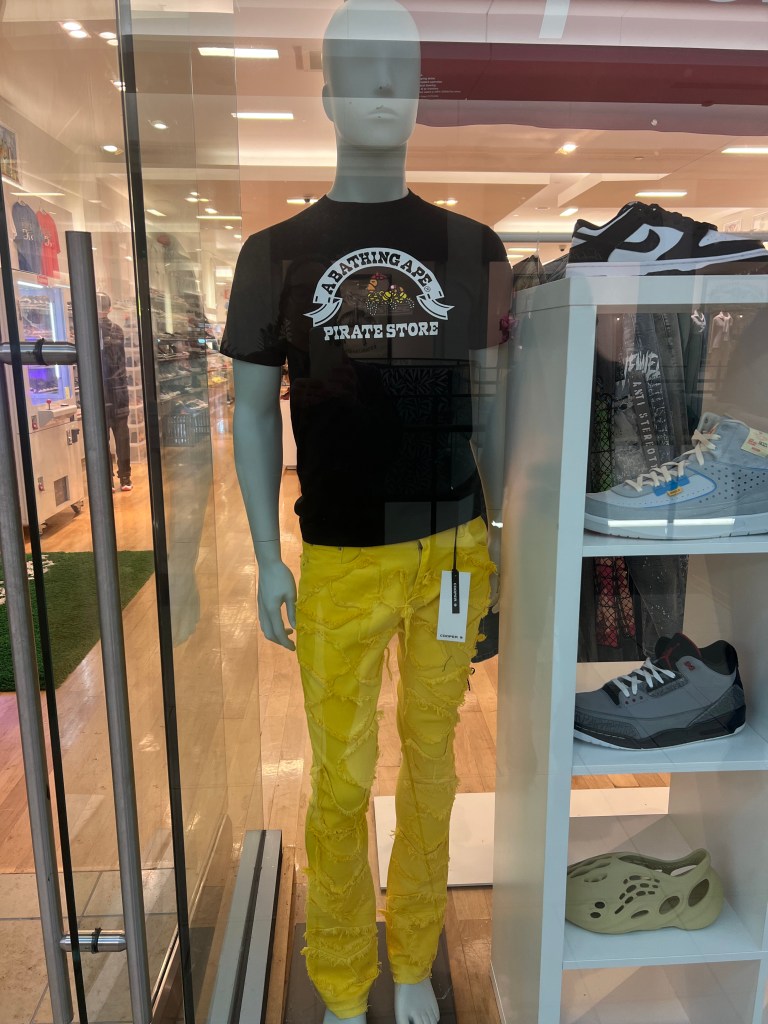
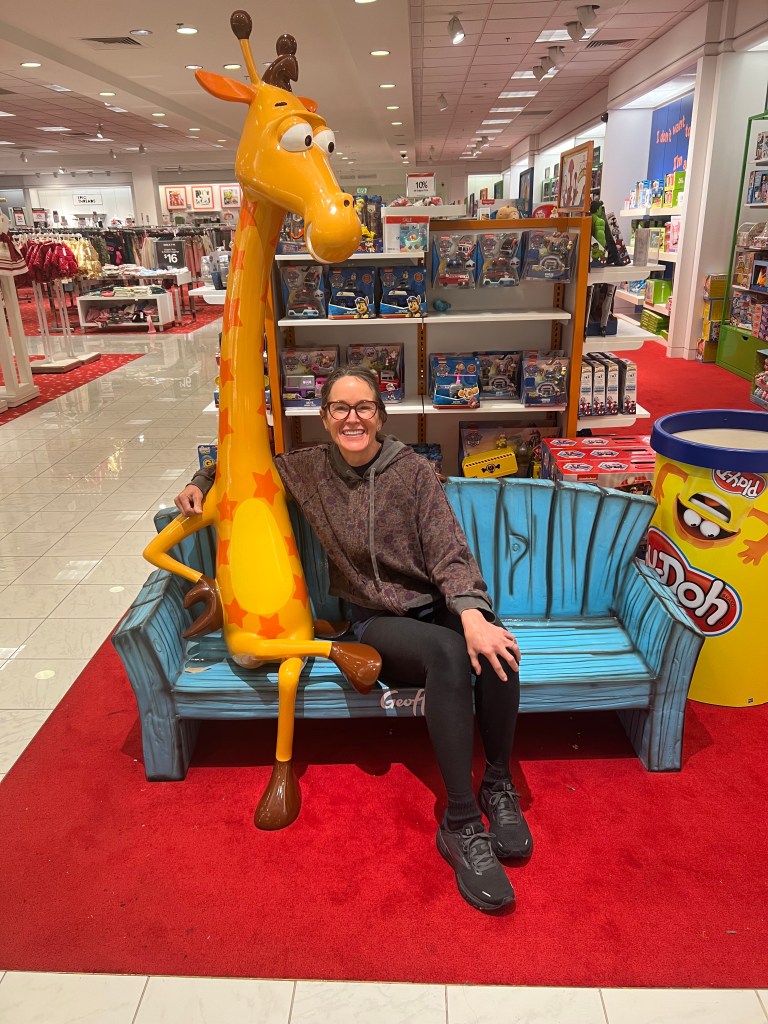
Since it was pouring right after we arrived, we managed some fun outings in spite of the rain. Out of sheer boredom and needing some exercise, we spent part of the second day mall-walking. If you have absolutely no idea what that is, good. This means you’ve had other options for exercise. Mall-walking is one of the few exercise options (outside of going to a gym) that most people in these suburban-y-sprawl-y areas have. There are few outside nature preserve options like we have out here and even when it isn’t pouring rain, it can be difficult to get outdoors because it is either way too hot or way too cold. This happens when you change the climate – driving giant suburbans, escalades, or behemoth trucks and living in McMansion-style houses on zero lot lines with lawns. When I say that the DFW area is a “sea of roofs” or ‘rooves’ if you’re particular about your grammar, is frankly, an understatement. There are a few homes with stately live oaks, but more than half with ZERO trees in the front or back micro yard. Perhaps if there were trees, the need to cool these homes wouldn’t require 4-5 giant a/c units (per home). It’s no wonder there are power outages and rolling blackouts in summertime, and don’t even get me started on the “necessity” of fertilizing those golf course lawns and all the wasted water applied so homeowners satisfy the HOA’s regulations to keep things green. Hmmm. What if these people adopted another interpretation of “green?” Could we re-wild our urban landscapes? Would anyone be accepting of transforming their green lawn into a treasure of native vegetation?
Mall-walking photos here.
Amanda on the glam bench
Man stuff
Unicorn anyone?
More man stuff. Digging those yellow pants.
Robot
I’ve got my eye on you!
Toy store fun!
Dragon stuff
More Dragon Stuff
Dinos for Drago
Dino-pillow
On Drago’s Christmas List
More Dragon toys
After walking the mall for a few hours that afternoon, we met up with some long time friends of ours (Marlin and Chanel). These are two of my dearest friends in the world. We all met around 22 years ago at the local 24 Hour Fitness gym in Lewisville, TX. Every year, we’ve made a point of trying to get together to catch up and enjoy a meal. I think having Amanda around makes it all the more fun. They have enjoyed teasing her since she was about 7.
Amanda and Marlin
Marlin, Amanda, and Chanel
Marlin, Amanda, and Chanel
Marlin, Amanda, and Chanel
Marlin, Amanda, and Chanel
Marlin, Me, and Chanel
Here’s a few of the bugs that I found around my parents’ home. I think I saw more spiders than insects, but that works for me. Even though there weren’t many, we hit the jackpot over the next few days at the two local nature areas we visited.
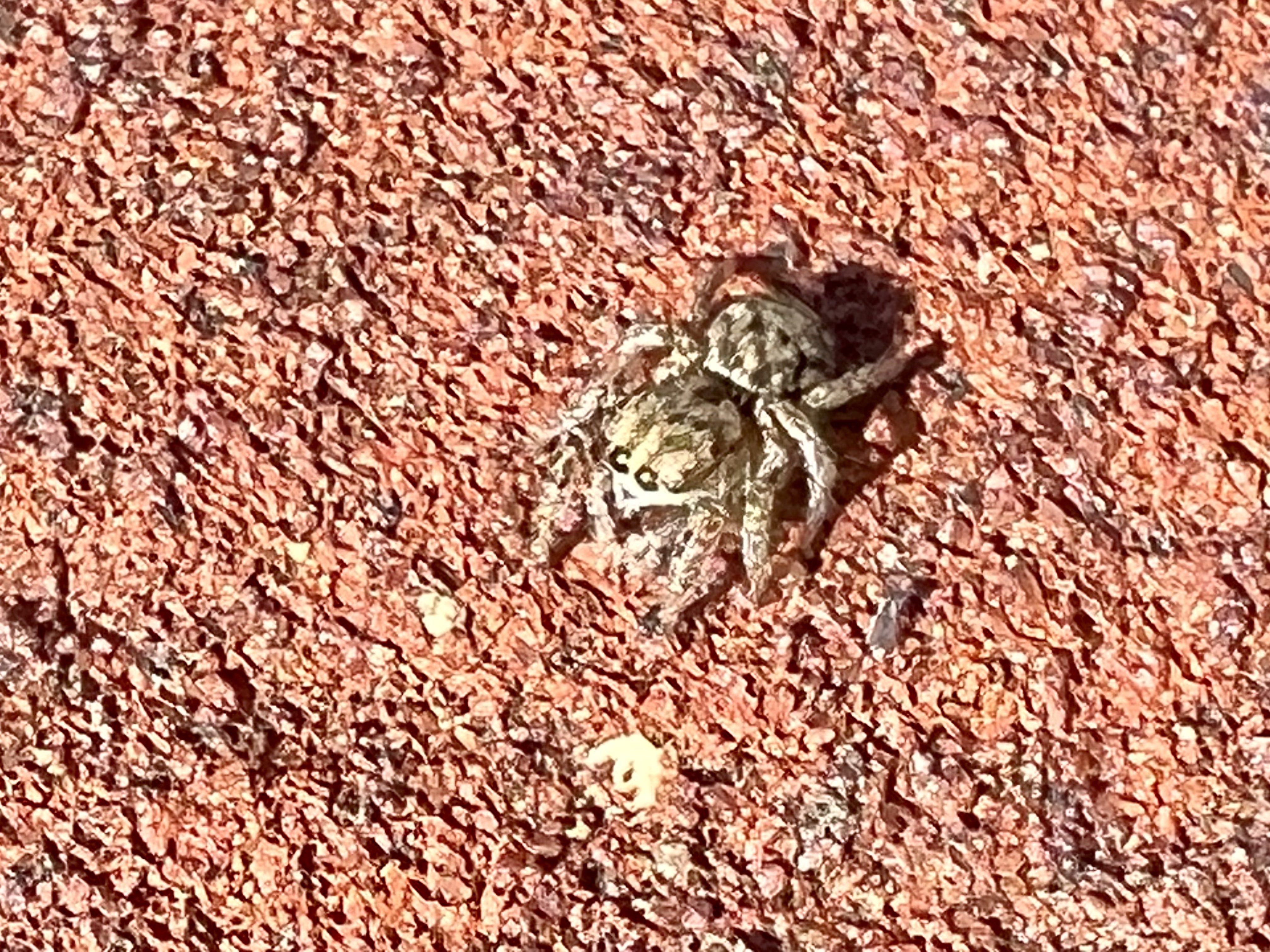
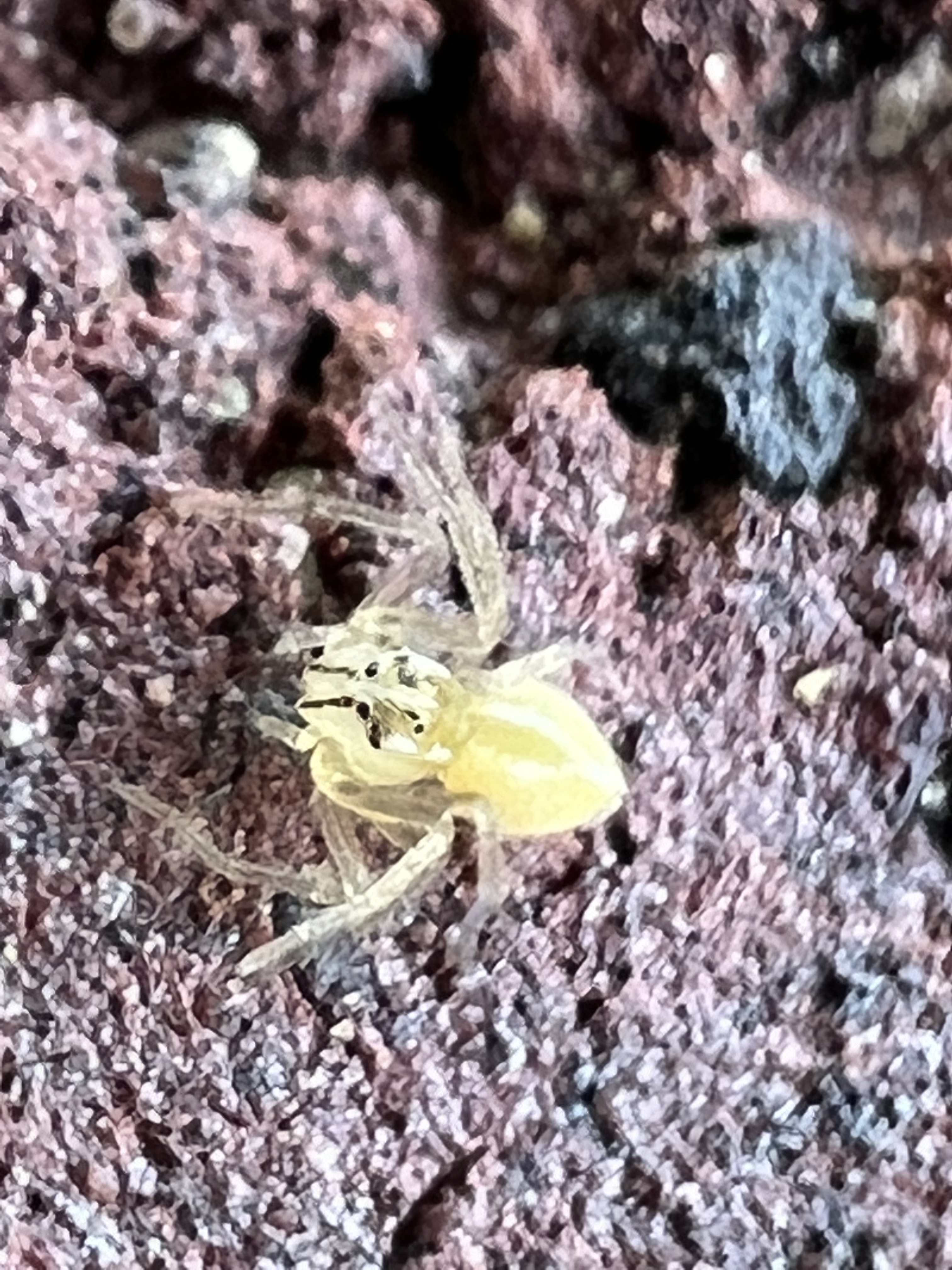
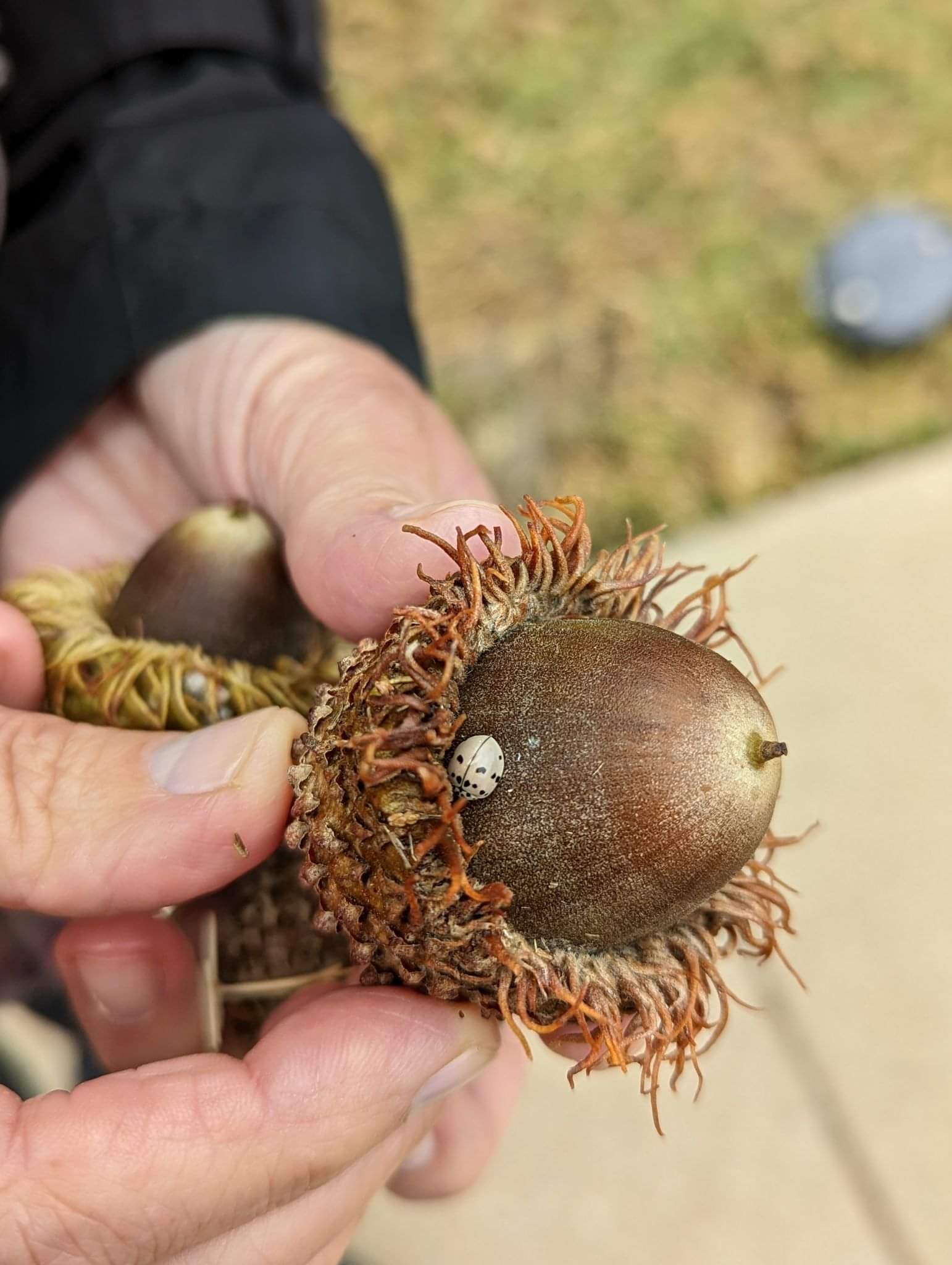
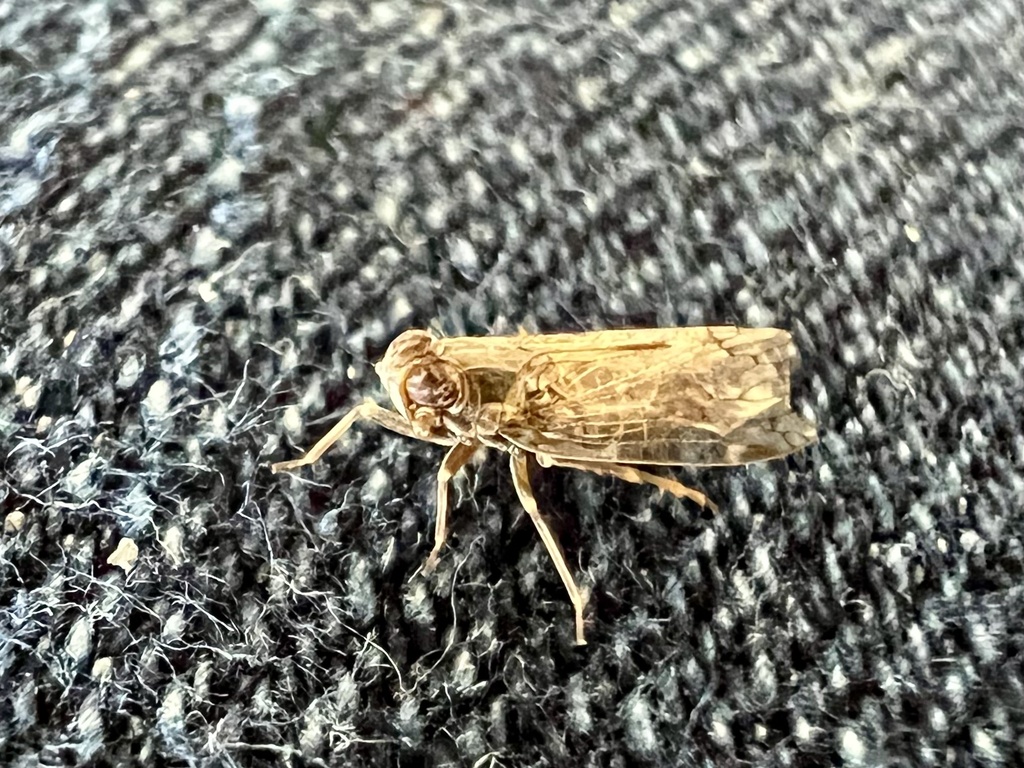
Non-biting midge Family Chironomidae Zelus sp. Assassin BugPhilodromus spiderThomisoidea Crab SpiderTetragnatha Spider Paradise Jumping Spider (Habronattus sp)Band wing fly (Chaetopsis)Oxyopes salticus lynx spiderNut and Acorn Weevil CurculioAshy-Gray Lady Beetle ( Olla v-nigrum)Ashy-Gray Lady Beetle ( Olla v-nigrum)Cixiid Planthopper (Family Cixiidae)Unknown Hemiptera/HopperGreen Cloverworm Moth (Hypena scabra)Micromus posticus Brown LacewingBugs around my parents’ home in Carrollton, TX
I also viewed an amazing aggregation of colonial solitary bees in my parents backyard. These were swarming by the hundreds, low to the ground and going in and out of little ant-like sand castles. As best as I am able to tell, these are Blood bees (Sphecodes sp.). In the 2nd video below, you can see I got so excited, I was down on the ground filming the action as one little bee worked to pack the walls of the entrance and played peek-a-boo with me.
Blood bees (Sphecodes sp.)
Blood Bee (Sphecodes sp.) works on “sand castle” home.
The one thing that made me sad when I visited Texas was meeting some folks who literally asked me to explain to them what a nature preserve was. I kid you not. The phlebotomist was one. She had an 18 year career drawing blood for Quest Diagnostics and she was awesome at her job. I gave about 8 vials of blood and I didn’t faint or even feel a prick. She said she had never been to a nature preserve. Not once. Not ever. When I explained what we have on San Juan, she said, ” she imagined that would be wonderful.” I left pondering how many more people are out there like her. I also contemplated why some people in the San Juan Islands are so against nature preserves. Do we take these places for granted? We shouldn’t. If we don’t care and value them, and protect them from the greed of developers, we will lose them forever. Also, development drives up taxes for residents. If you don’t believe me, look it up. My parents’ 1200 square foot home has a tax bill of about 7K per year for Denton County, TX. They have a senior exemption that cuts this in half. The take away message is more people and more homes = more services needed, more upgrades and maintenance to utility infrastructures, roads, etc. On the other hand, when you include many nature preserves, trails, and wildlife corridors throughout neighborhoods, people are generally more inclined to get outdoors, exercise, and physical and mental health improves. Nature reduces healthcare costs. Think about that.
Keep reading and you’ll see some of the cool bugs I found at the nature areas we visited.
My husband and I visited the two nature areas within a 20 min. driving distance from my parents’ home. The first, Arbor Hills Nature Preserve in Plano, TX, is about 200 acres. It is overused and that has driven away most of the wildlife. Once, you could see road runners, bobcats, coyotes, and many more species. While I am happy it hasn’t been bulldozed for apartments and McMansions (there is actually a giant subdivision nearby called CASTLE HILLS), it is a mostly a giant urban dog park. Don’t get me wrong. Dogs can be wonderful companion animals. I’m not a dog hater at all, but when I see the slog of dog poo along trails or discarded poo bags in a creek, I want to cry. It would be one thing if you saw a dog on occasion, but since everyone seems to have a dog now, it displaces almost anything else that is trying to survive in the wild. So do outdoor cats. If I ruled the world, folks would keep their cats indoors or in catios. They would also be responsible about picking up and appropriately discarding pet waste! Don’t be too critical of my opinion. Companion animals are a huge part of climate change for the simple reason they eat meat. A lot of it. Ranching, and the demand for beef is one reason we will likely lose the Amazon rainforest – and every wild thing in it. It’s also the reason for wolf packs being culled in the West. Ranchers want the land for their cows – even Federal lands. Don’t believe me though. Look it up. If we are going to own pets, we need to make sure we save spaces for wildlife to live too. We need more nature preserves!
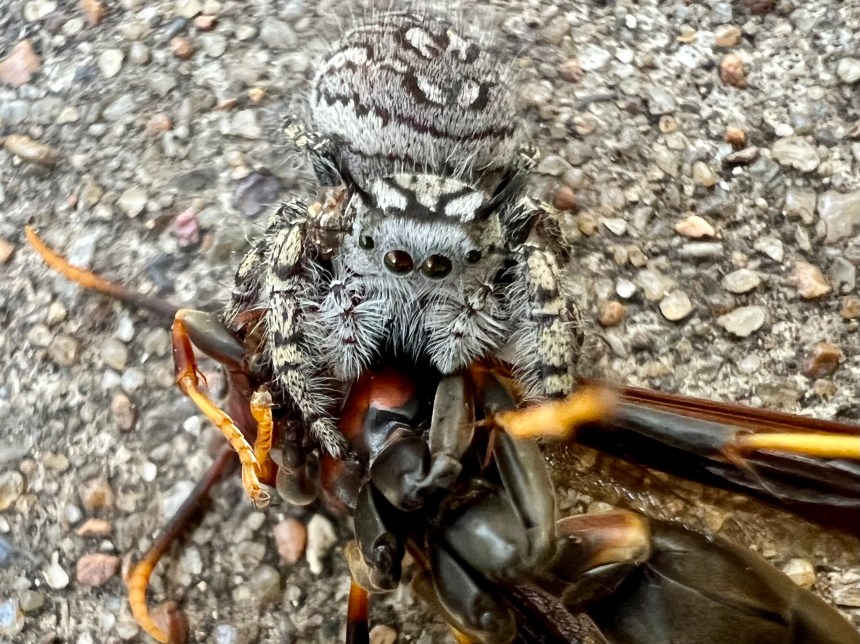
While most of the wildlife has gone missing in Arbor Hills “nature preserve turned dog park,” I did find some pretty cool bugs, including the sweetest jumping spider. I also saw a snake and my husband spotted a turtle swimming in the creek. I’m going to feature the jumping spider first here, then that sweet little turtle swimming in the creek, but all the rest of our sightings and my photos of the preserve can be viewed in the slideshow below.
High Eyelashed Jumping Spider (Phidippus mystaceus)
Pond Slider Turtle ( Trachemys scripta) in Arbor Hills Nature Preserve Creek
Slide show of Arbor Hills Nature Preserve, Plano, TX 2022
Gray Hairstreak (Strymon melinus)
Chrysolina auripennis
Chrysolina auripennis
Chrysolina auripennis
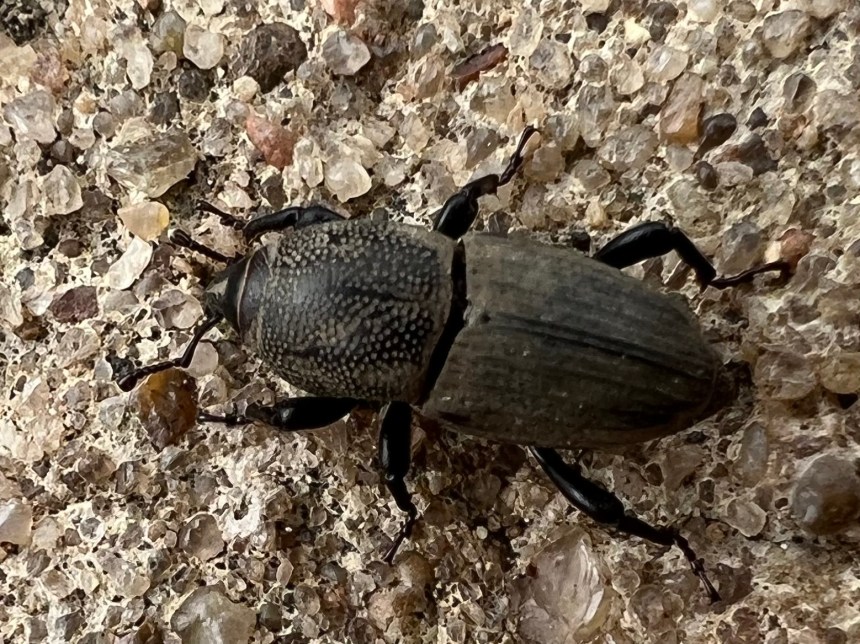
Billbug Weevil (Sphenophorus sp)
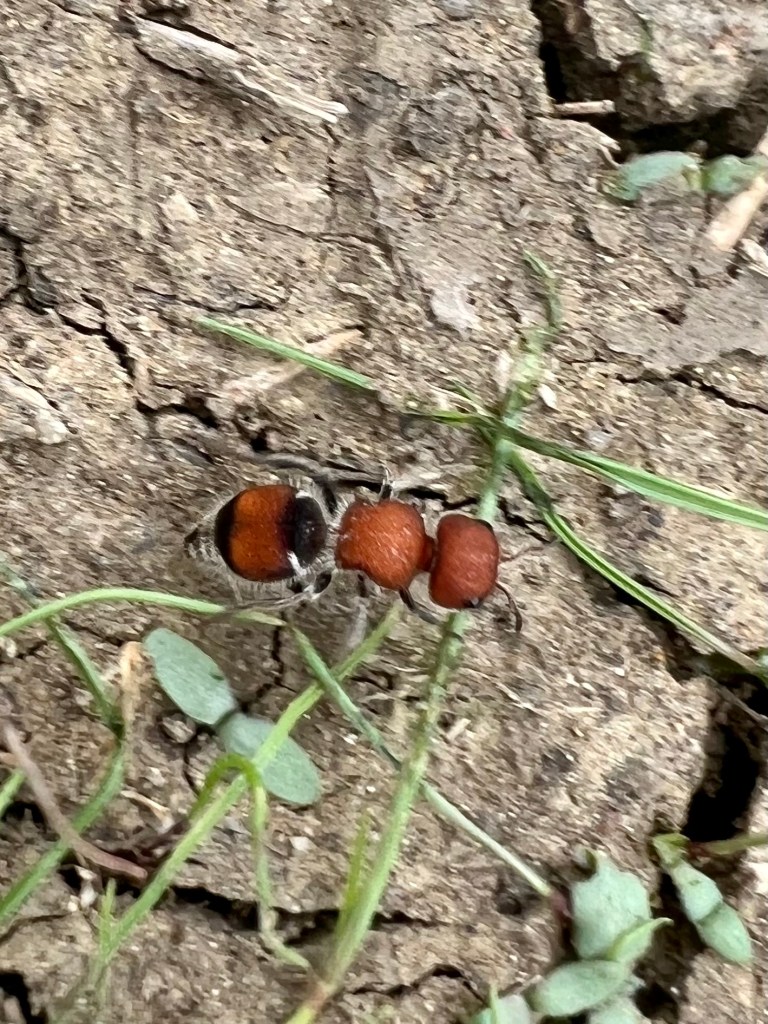
Velvet Ant (Pseudomethoca oceola)
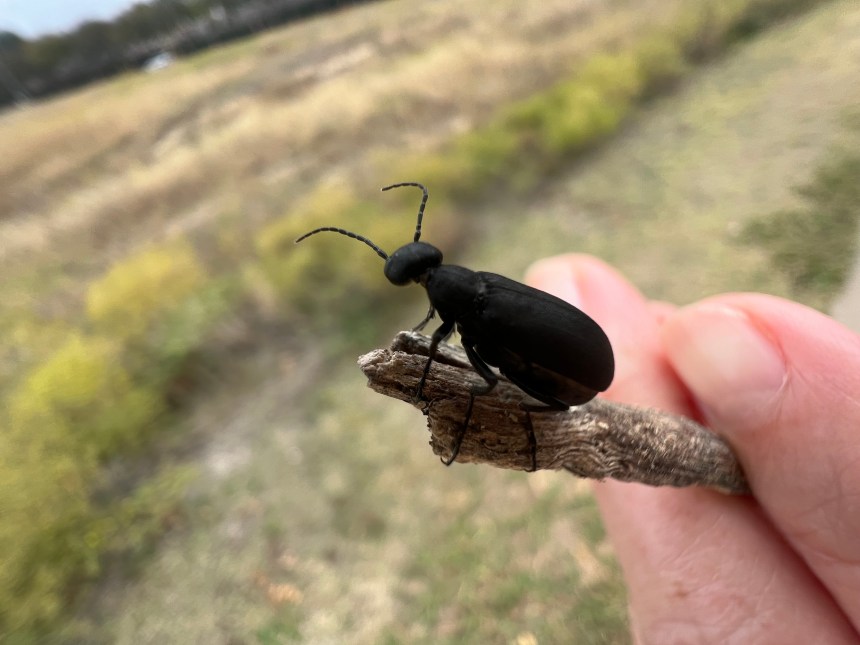
Epicauta pensylvanica blister beetle
Oak Apple Gall
Me!
Poblicia fuliginosa, a lanternfly
Poblicia fuliginosa, a lanternfly
Sphenophorus coesifrons
Swift Feather Legged Fly (Trichopoda pennipes)
Swift Feather Legged Fly (Trichopoda pennipes)
Swift Feather Legged Fly (Trichopoda pennipes)
Epicauta pensylvanica blister beetle
Ground Beetle (Harpalus sp.) *probably
Polistes annularis Wasp
Rough Green Snake Opheodrys aestivus
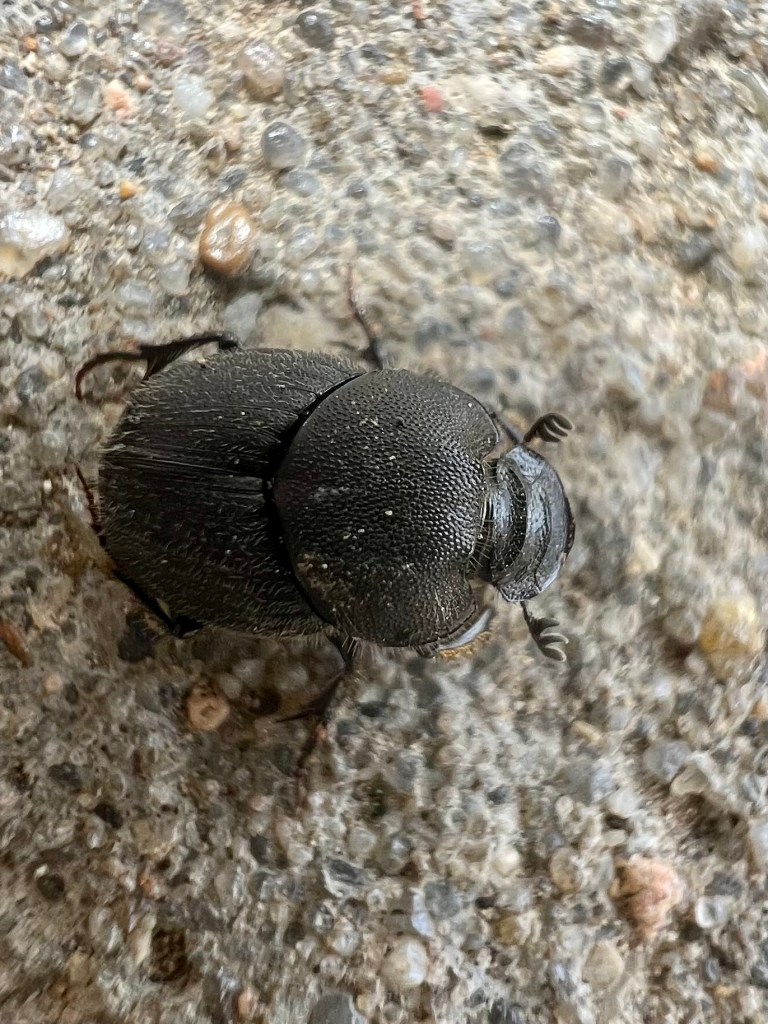
Onthophagus sp. Scarab Beetle
Elf Shoe Stink Bug (Menecles insertus)
Onthophagus sp. Scarab Beetle
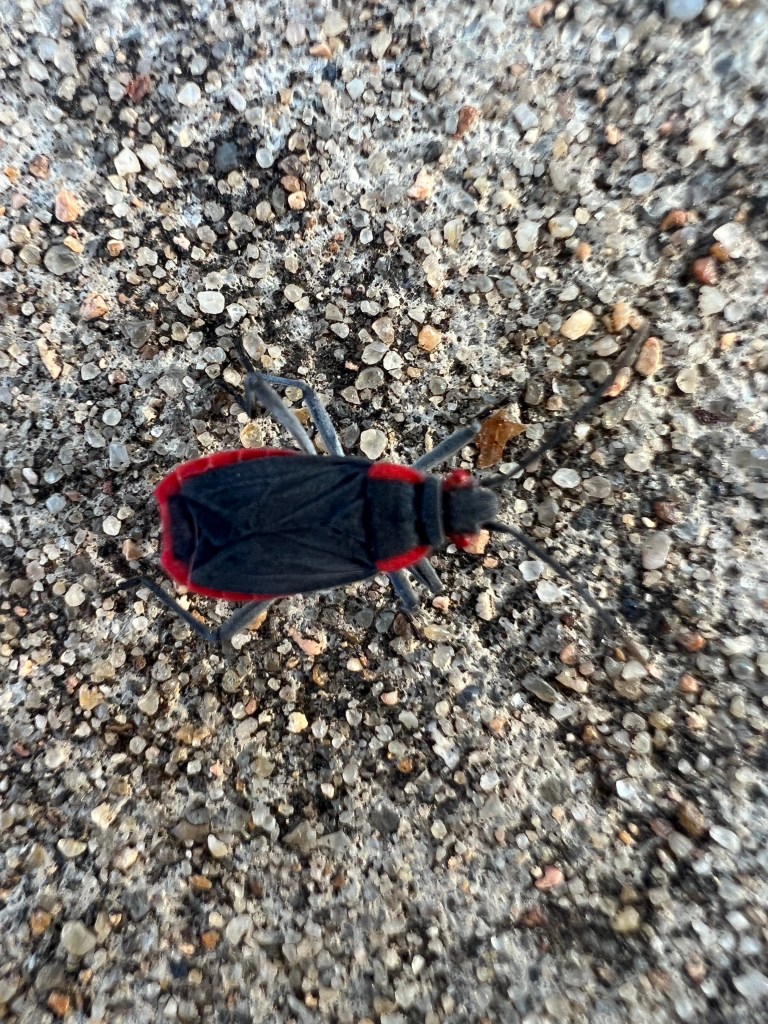
Soapberry bug Red shouldered bug (Jadera haematoloma)
Eastern Hornet Fly (Spilomyia longicornis)
Eastern Hornet Fly (Spilomyia longicornis)
Eastern Hornet Fly (Spilomyia longicornis)
Common Checkered Skimmer (Burnsius communis)
Swift Setwing Dythemis velox
Libellula croceipennis or Neon Skimmer
Globular cactus (Tribe Cacteae)
Springwater Dancer (Argia plana)
Unknown millipede
Creek at Arbor Hills Nature Preserve
Trail
Trail
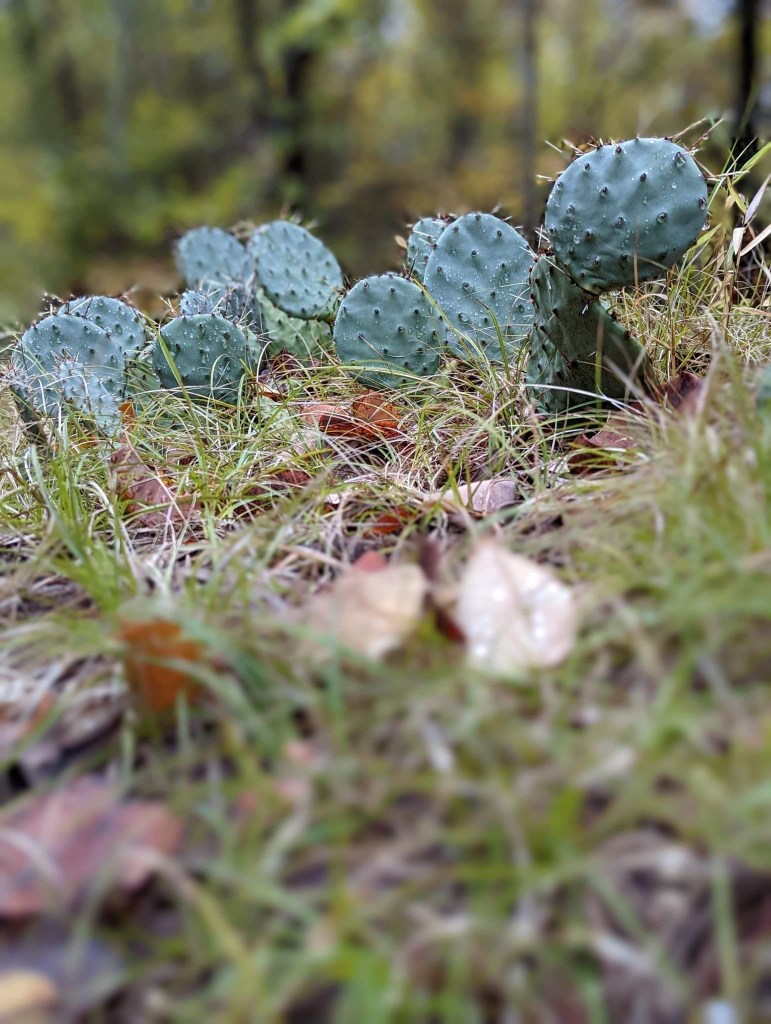
Prickly pear cactus
Hercules’ Club Tree trunk ( Zanthoxylum clava-herculis)
Trail
Overlook at Arbor Hills Nature Preserve
With my husband at the overlook
Hercules’ Club Tree trunk ( Zanthoxylum clava-herculis)
Eve’s Necklacepod (Styphnolobium affine)
Springwater Dancer (Argia plana)
Striped Bark Scorpion (Centruroides vittatus) with Photuris larva (lightning bug)
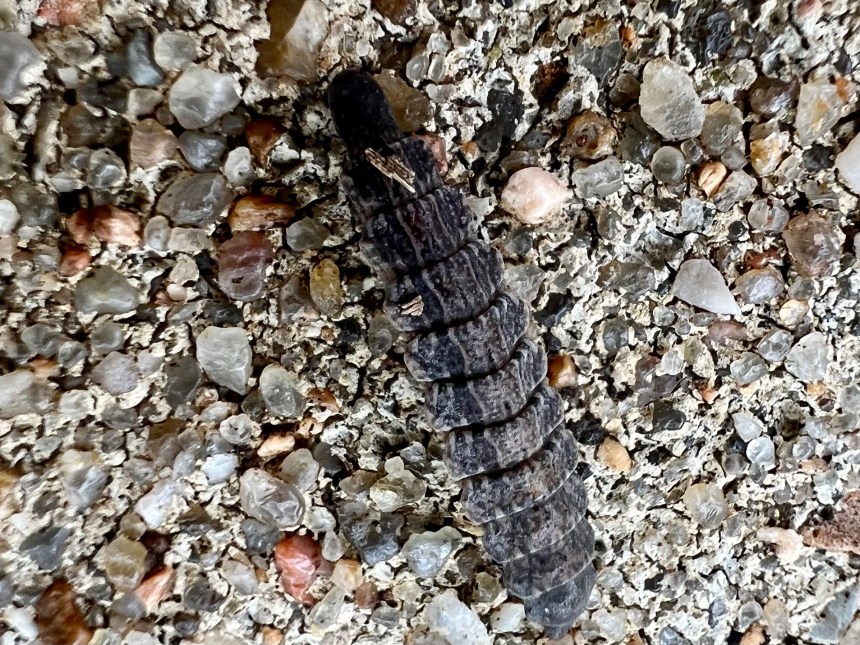
Photuris (Lightning Bug) larva
Lincoln
Amanda
Four-spotted Green Lacewing (Chrysopa quadripunctata)
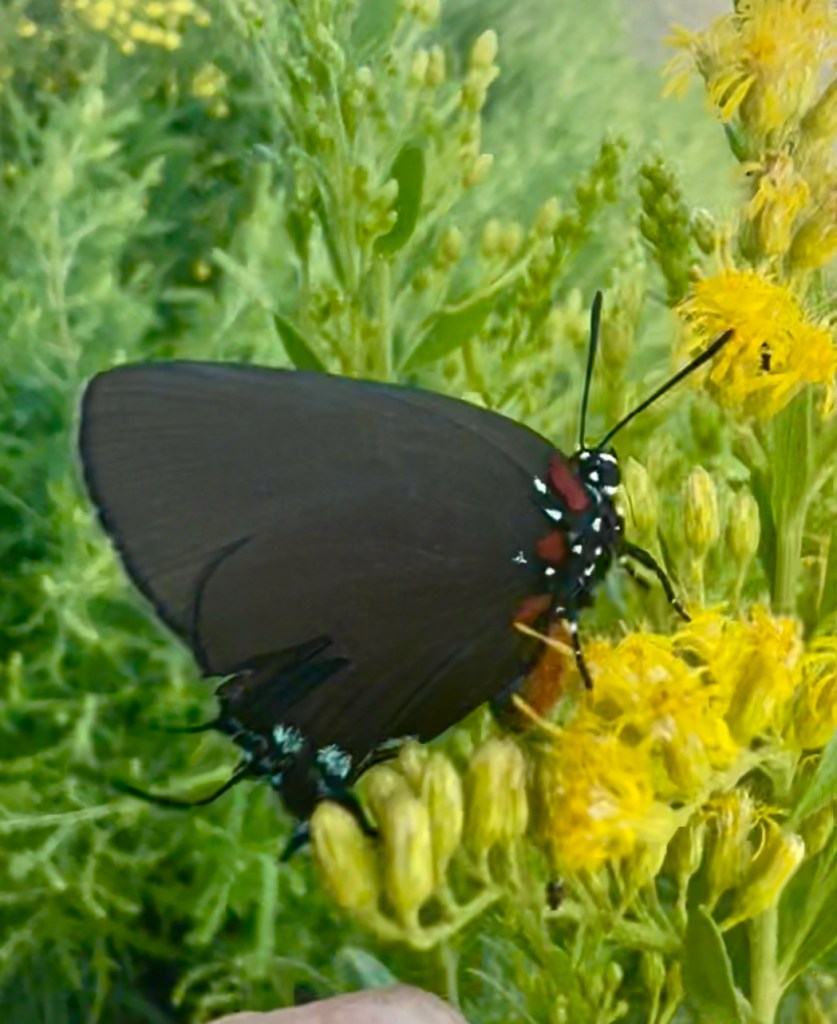
Atlides halesus Great Purple Hairstreak
Polistes Paper Wasp
High Eyelashed Jumping Spider (Phidippus mystaceus)
Soapberry bug Red shouldered bug (Jadera haematoloma)
Polistes annularis
Striped Bark Scorpion (Centruroides vittatus)
Arbor Hills landscape
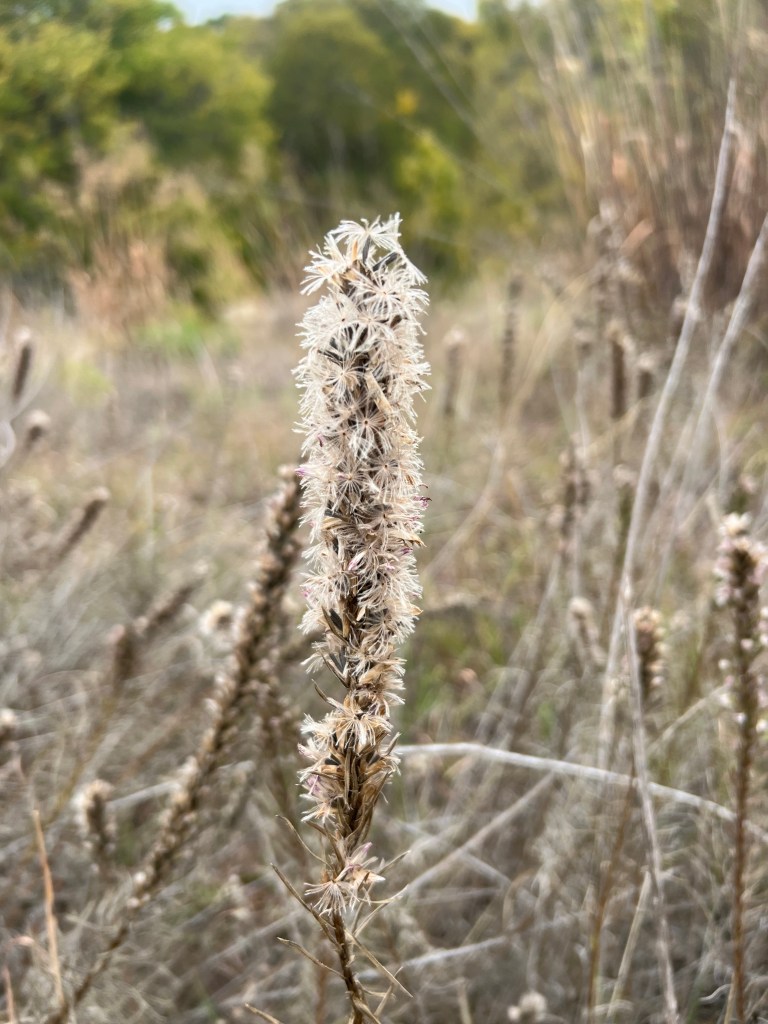
Blazing Stars (Genus Liatris)
Tunnel
Train
Splitgill mushroom (Schizophyllum commune) on Mesquite tree
Thanks for reading. Stay tuned for more in Bugging You From Texas (Part deux). YEE HAW! 🤠
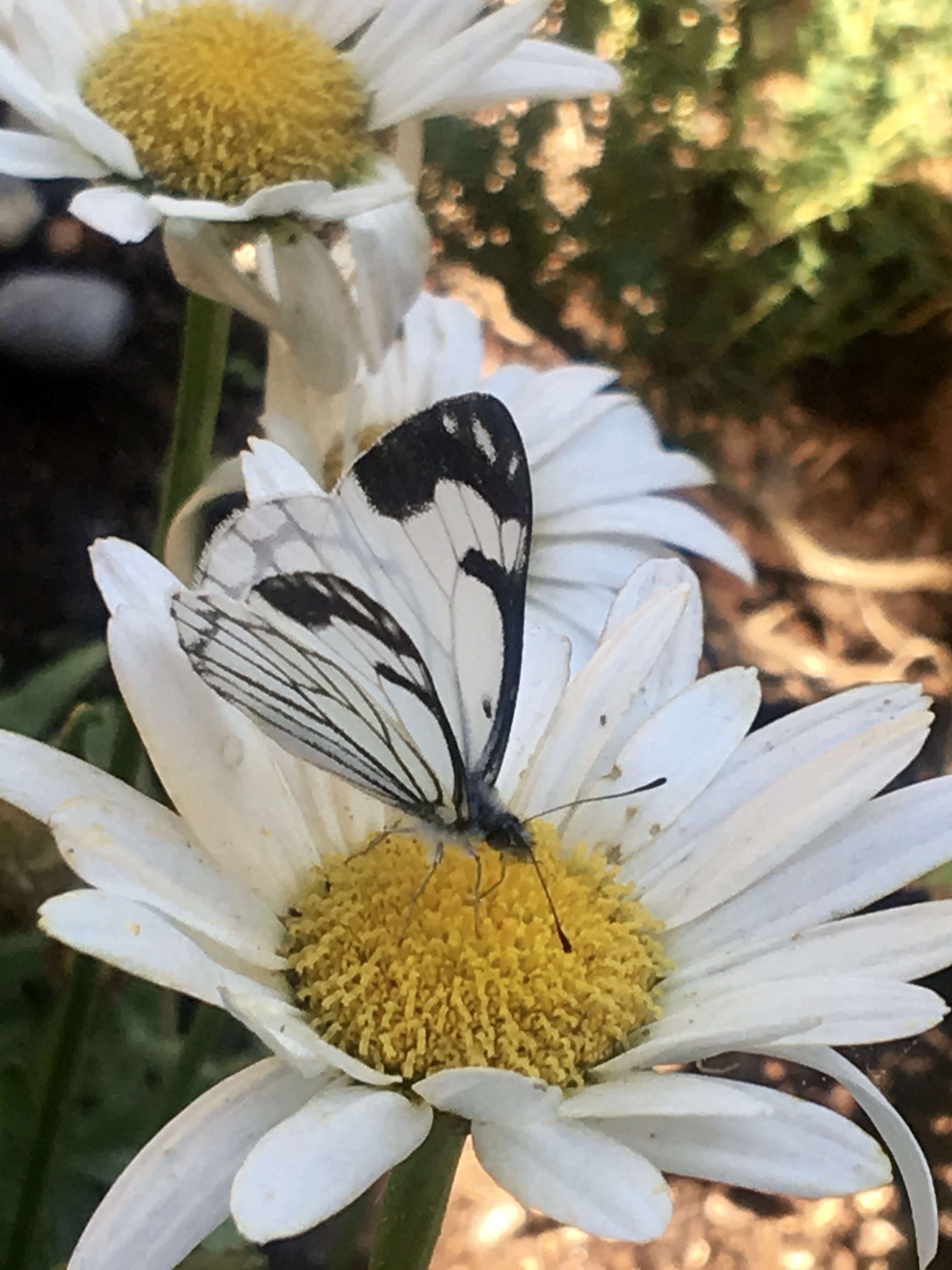
It was breezy earlier this afternoon when I spotted this beauty feeding on my daisies. This is a Neophasia menapia – or the Pine White Butterfly. I’ve been worried since we’ve put up deer fencing that the butterflies wouldn’t be able to find their way through the fence into my flower garden, but I shouldn’t have worried. The butterflies ever-so-gracefully float over the top.
I’m sure the butterflies and other pollinators appreciate that my daisies aren’t headless amputees this year, courtesy of our resident deer who now can only gaze at them. It’s hard to understand why the deer would even want to eat those flowers because they’re kind of stinky. To my nose, they smell a bit of cat urine. Lots of insects seem to like those sorts of smells though. These daisies can stay outside. I won’t be displaying them in a vase on my dining table.
Pine White Butterfly on Daisy Neophasia menapia July 26, 2019 San Juan Island, WA
The Pine White Butterfly larvae feed on Ponderosa Pine and Douglas fir. Adults emerge typically between the months of July and October. Look for little green eggs on the needles of pines and firs sometime beginning in October. The eggs will overwinter and hatch sometime in June the following summer, coinciding with the emergence of new foliage on the trees. Larvae typically only feed on old needles, but can become a “pest” when they feed on the new needles and/or population levels are high and the tree is repeatedly defoliated. Natural controls help keep caterpillar populations balanced. Larvae pupate in late July for about 15-20 days before emerging as adults to begin a new cycle.
Pine White Butterfly (Neophasia menapia ) on Daisy July 26, 2019 San Juan Island, WA
Would you like to read more? Check out the links I’ve added below.
I love my catmint! The deer don’t like it, but pollinators absolutely DO! Every year, I wait in anticipation to see what visits the tiny purple-indigo flowers. I’ve had everything from hummingbirds to bumblebees, moths, and butterflies. Today, I took two short clips of the Pale Tiger Swallowtail (Papilio eurymedon) visiting the blooms. There have been as many as seven or eight fluttering about at a time.
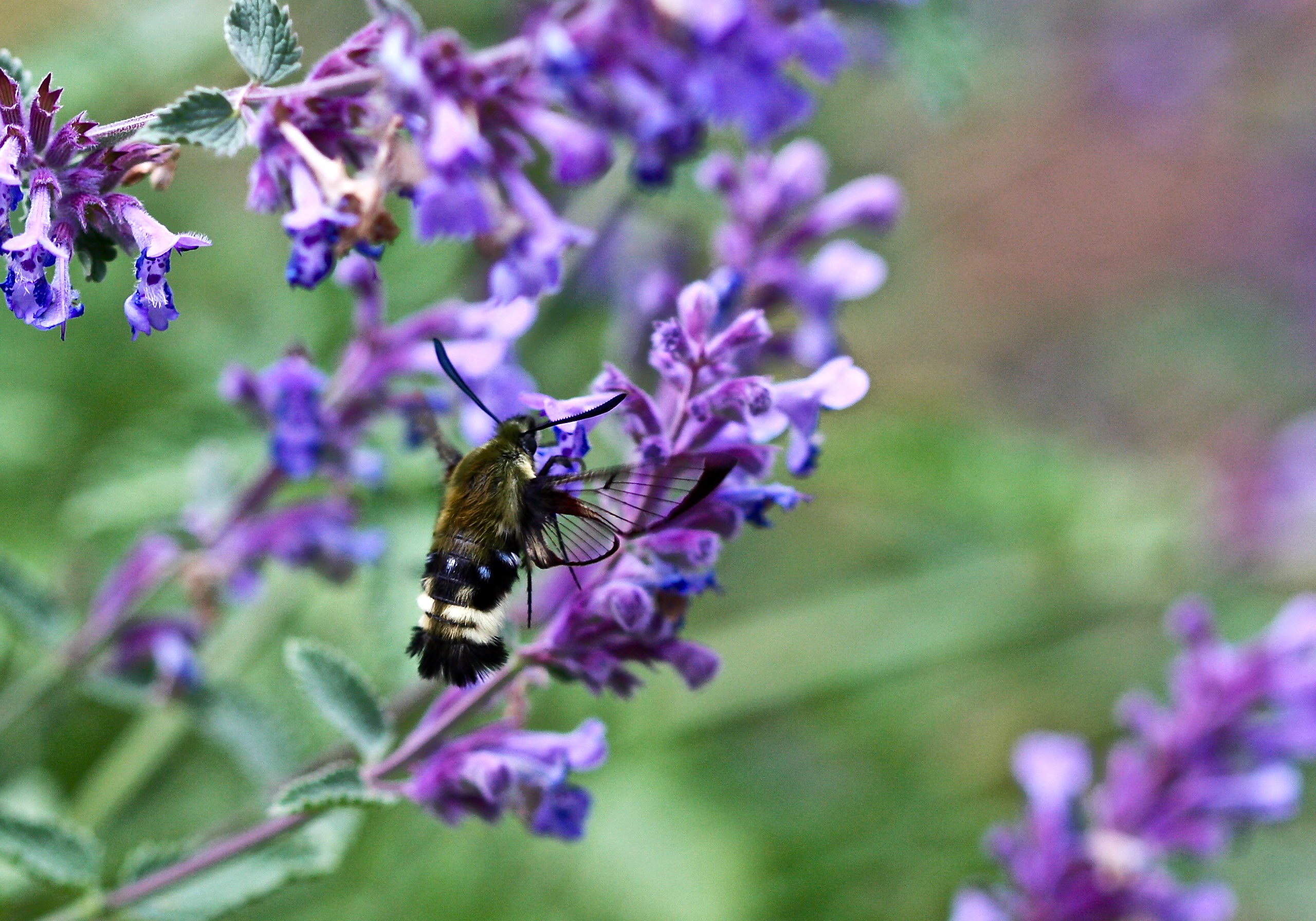
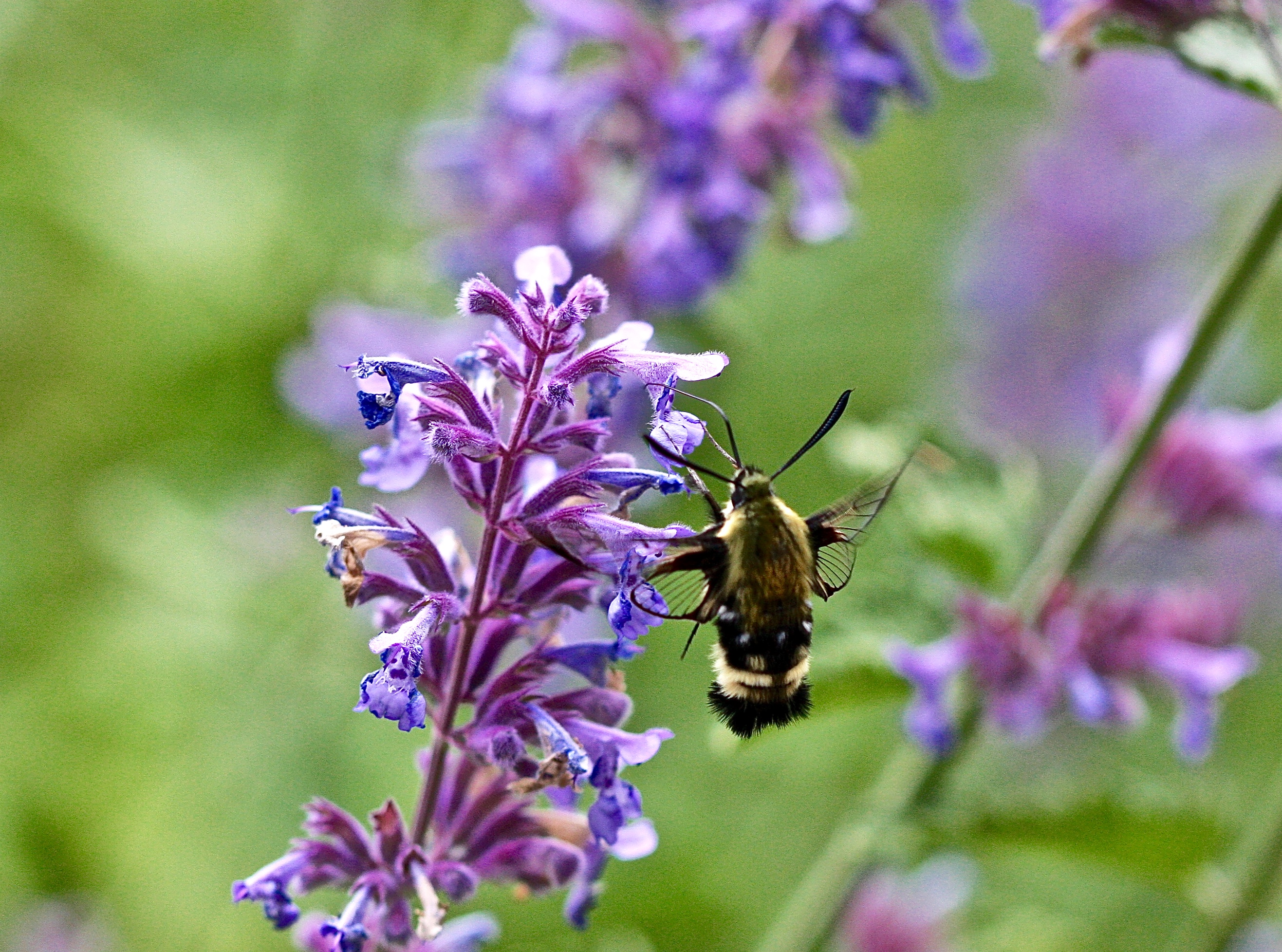
I keep hoping to see my very favorite of the pollinators visiting the catmint, but have to make a point of going around dusk. It’s been a few years, but the catmint is also a favorite of the elusive hummingbird moth (Hemaris diffinis). Here is one I photographed in June of 2016. Also known as the Snowberry Clearwing moth, these fuzzy, large-bodied but nimble fliers are also called Bumblebee or Hawk moths.
Hemaris diffinis on Catmint photo by Cynthia Brast June 1, 2016. San Juan Island, WA













































 Bugging You From San Juan Island