Tag Archives: carrion

Bubbles

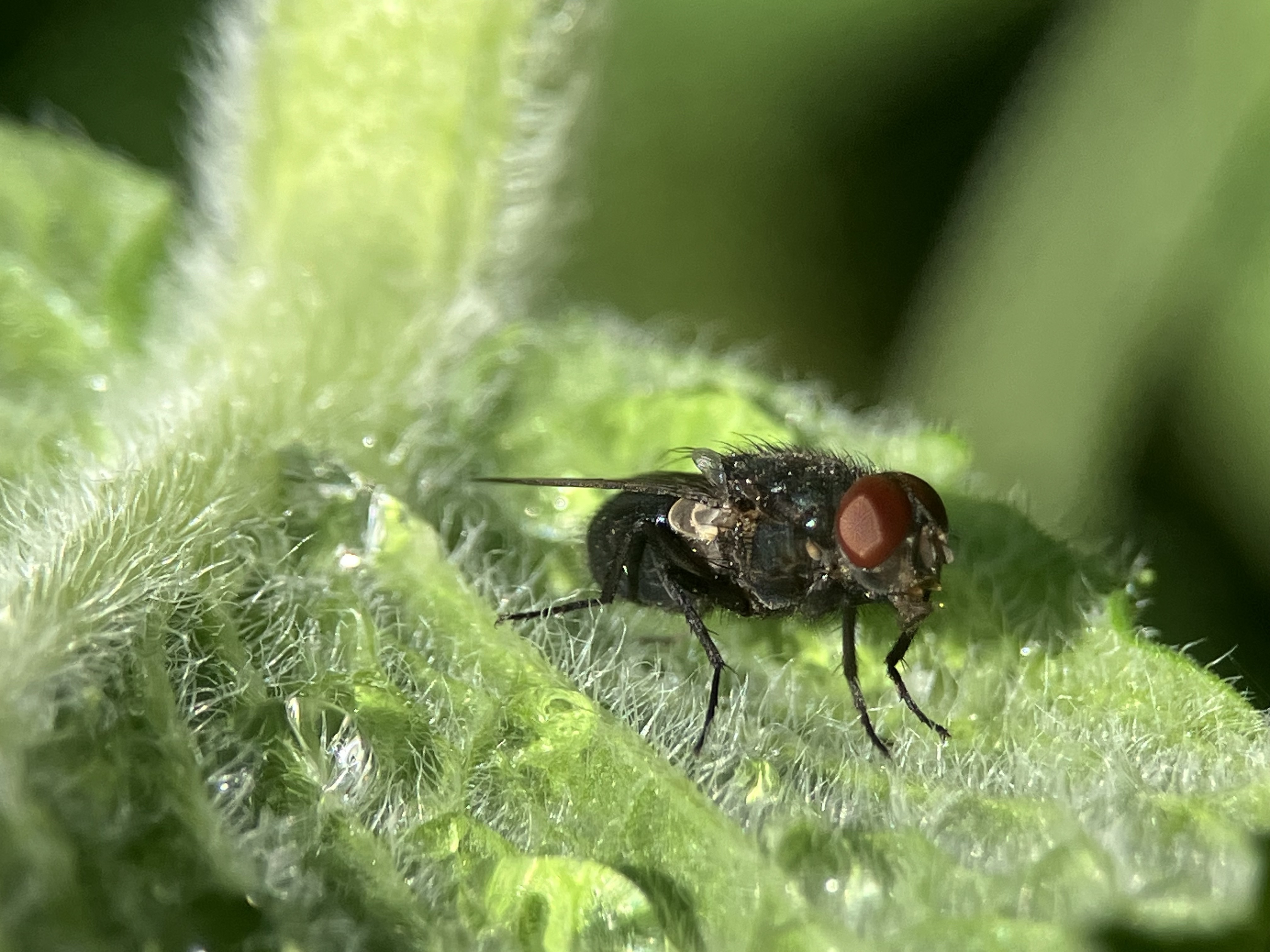
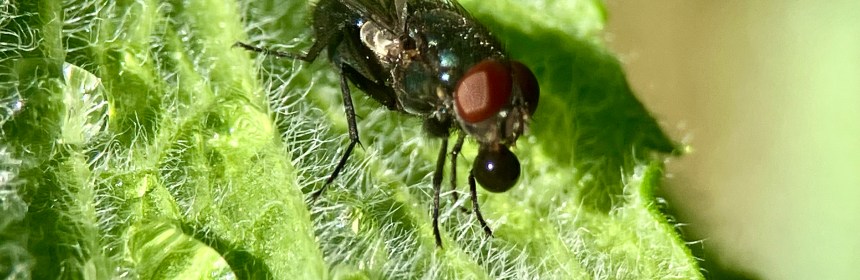
Well, this little fly got my attention yesterday. We had a contest. The fly bet it could outlast my grip on my phone as I took video of the bubble blowing. We called a tie somewhere around the 4 minute mark when my hand was shaking and I was about to drop my phone. The fly, quite satisfied with its performance, waltzed about on the mint leaf and posed for a few still photos, after I got the blood flowing into my hand again.

This is a Black Blow Fly (Phormia regina) in the family Calliphoridae. These flies are found ranging throughout North America, Eurasia, and Hawaii. They are a species of importance in the science of Forensics. Blow flies are attracted to dung and carrion, and when found on a corpse, they can be used to estimate time of death. The larvae or maggots of sterile blow flies are also used in the cleaning of wounds, removing decaying flesh and secreting antimicrobial peptides as they feed (Díaz-Roa et. al. 2018). Occasionally, they can contribute to secondary myiasis “fly-strike” of wounds in livestock, wildlife, and pets.

Phormia regina Fly – San Juan Island, WA 07.11.2024

Why is the fly blowing bubbles? It’s not black bubblegum. I’m not sure why the bubbles were black in color. Perhaps something to do with what the fly had been eating. The fly is blowing bubbles to cool down and it’s actually called BUBBLING. Take a look at Ray Cannon’s Nature Notes and you’ll learn it’s part of an evaporative process where the fly moves a droplet of fluid in and out and of their buccopharyngeal cavity over and again before eventually swallowing it (Gomes et al., 2018, Cannon, R. 2020).
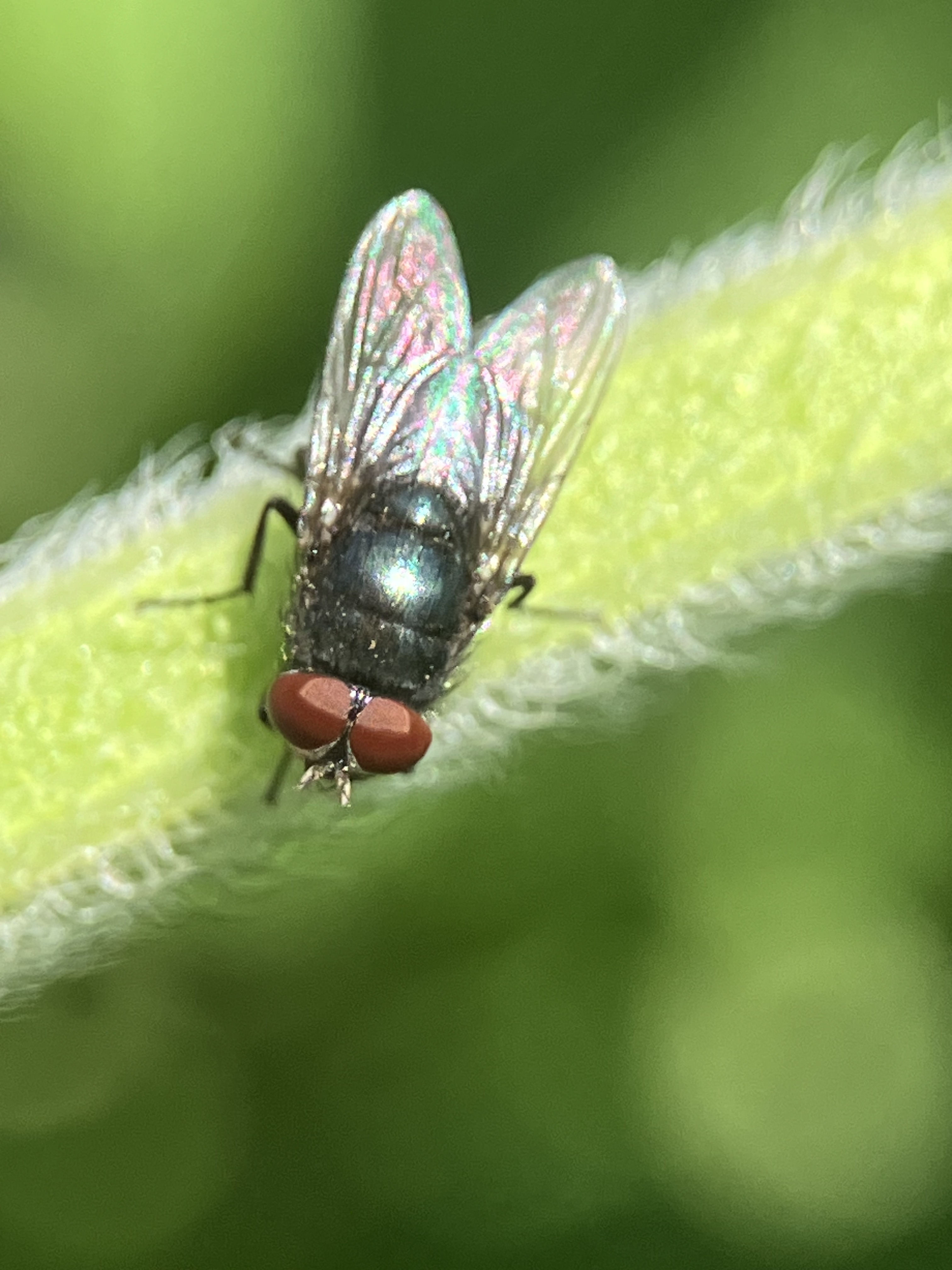
Phormia regina Fly – San Juan Island, WA 07.11.2024

Flies aren’t the only group that practices bubbling. Various species of Hymenoptera also use this method to cool themselves and also to evaporate the excess water from the food (nectar) they’ve consumed (Portman et. al. 2021).

Thanks for stopping by!

References and Further Reading

Cannon, Ray. 2020. Flies Blowing Bubbles. Ray Cannon’s Nature Notes. https://rcannon992.com/2020/09/07/flies-blowing-bubbles/

Díaz-Roa A, Patarroyo MA, Bello FJ, Da Silva PI Jr. 2018. Sarconesin: Sarconesiopsis magellanica Blowfly Larval Excretions and Secretions With Antibacterial Properties. Front Microbiol. Sep 28;9:2249. doi: 10.3389/fmicb.2018.02249. PMID: 30323791; PMCID: PMC6172317. https://www.ncbi.nlm.nih.gov/pmc/articles/PMC6172317/

Gomes, G., Köberle, R., Von Zuben, C. J., & Andrade, D. V. 2018. Droplet bubbling evaporatively cools a blowfly. Scientific reports8 (1), 1-7.

Murray, T. 2023. Species Phormia regina – Black Blow Fly. Bugguide. https://bugguide.net/node/view/53678

Portman, Z., Ascher, J. & Cariveau, D. 2021. Nectar concentrating behavior by bees (Hymenoptera: Anthophila). Apidologie 52, 1169–1194. https://link.springer.com/article/10.1007/s13592-021-00895-1
Buzz…ards!

Ok. So maybe that’s not the scientific name for the Turkey Vulture (Cathartes aura) we have on San Juan Island, but the name “buzzard” is a colloquial catch-all, referring to these and other various large birds of prey. Scientific nomenclature aside, if you want to know how vultures came to be called buzzards (blame the early Colonial Americans for the confusion), take a look here https://www.thespruce.com/buzzards-vs-vultures-4171318

I finally dug out video footage of these turkey vulture chicks I filmed a few years ago. They were nesting on San Juan Island. I’ve heard from some folks that there was a nest on Lopez. I believe this is a fairly new occurrence, but maybe some of you who have lived here longer know if there have been vulture nests before. Here’s my account of this fascinating experience.

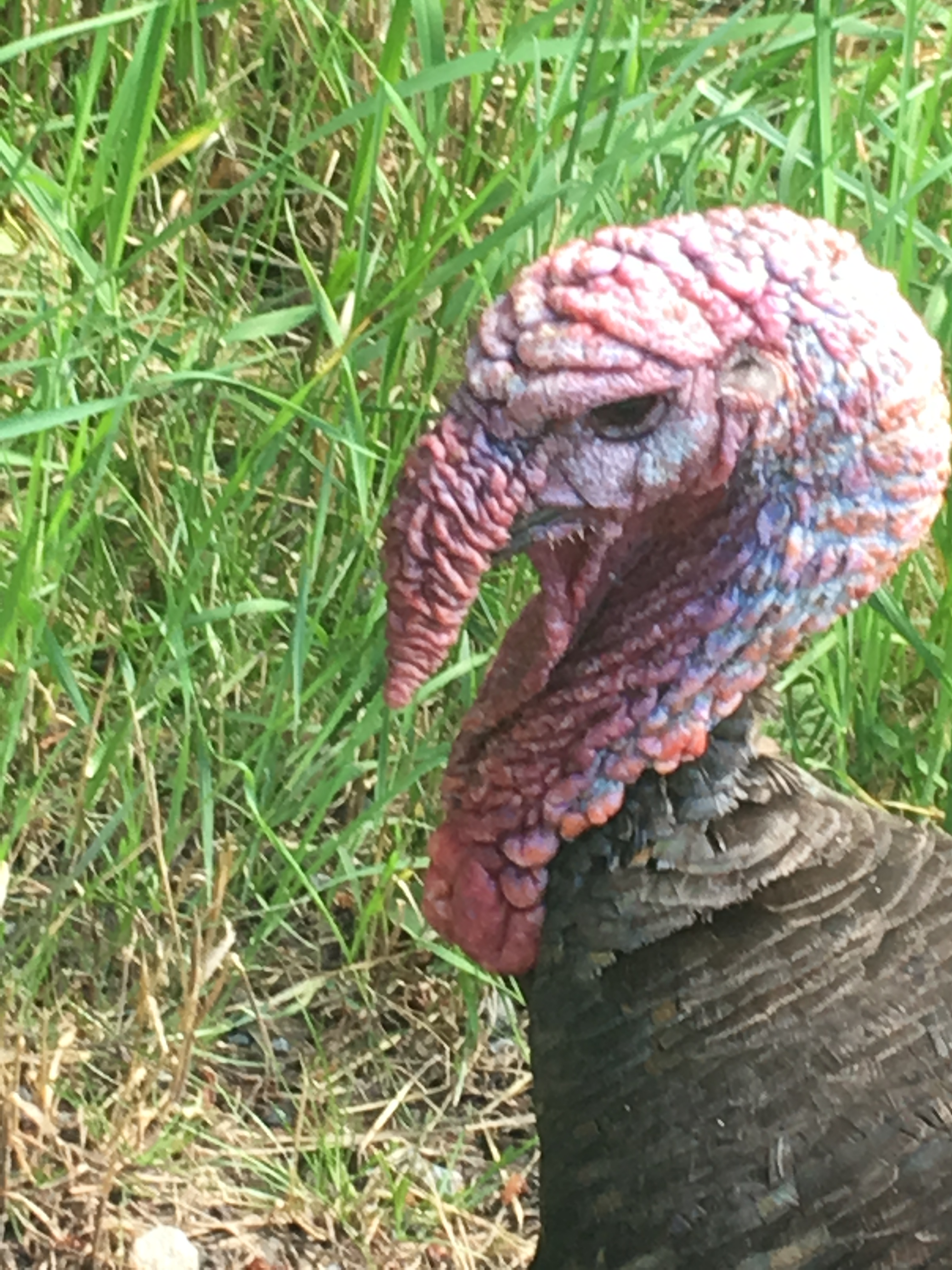
First, finding the nest was an accident. Someone dumped farm turkeys out in our area. Giant shout out here to Julie Duke at https://www.islandhaven.org Julie helped me catch the first turkey (Bob) and then took his family and friends (including one crazy guinea hen) and gave them a forever home at October Farm.

Bob the Farm Turkey
Rescued turkeys on their way to October Farm and Island Haven Animal Sanctuary
Guinea friend

After managing to catch all but the last two who were in the woods hiding, another neighbor trying to help round up these farm turkeys happened upon the vulture nest. When I went over to take a look, I noticed one seemed to be failing. I called and asked a Wolf Hollow rehabber https://wolfhollowwildlife.org to come take a look.

Wolf Hollow rehabber assesses Cathartes aura chick with metabolic bone disease

Sadly, the failing chick had metabolic bone disease. This means it didn’t get adequate nutrition (calcium and Vit. D) for the bones to grow correctly. Its wings were broken and feet malformed. The other chick was very healthy and would eventually fledge.

Second, I decided to write about this to help people see the value of dead trees. Especially OLD dead trees. Please don’t remove them from your property and if they are a risk of falling, you can have the tree “topped” so it leaves the rest as a snag for wildlife. Cutting it all the way down to the ground wastes a valuable resource for lots of things that depend on it.

These vulture parents selected a tree that had burned out on the inside and the nested in the bottom. When I say “nest,” they were pretty much on the dirt at the bottom. There were no twigs, moss, etc. lining it. It was just the hard ground. It was pretty stinky too. The chick that hadn’t fully developed still had white fluff and blue eyes.

Third, nests like these and other ground nesting birds’ nests are extremely vulnerable. Hikers with dogs should keep their pups leashed…ALL the time! These guys had absolutely no defense against a dog and counted on staying hidden. The defenses the birds have adapted to protect them from other wildlife include 1) the bad odor and 2) projectile vomiting.

I also noticed they would buzz like a nest of wasps or bees. The larger chick would turn and face the burned inside of the tree, completely concealing itself, all the while making the buzzing sound. Sometimes honey bees will establish hives in hollow trees and I wondered if the vultures count on the buzzing noise to be a deterrent to predators who might think they would be stung. Perhaps this is another reason they came to be called “buzzards?”

Thankfully, I was extremely considerate in my observation and didn’t antagonize them in any way. I felt very lucky to witness such amazing animals and appreciate all the wildlife we have around us. I was also thankful for Wolf Hollow and the gentle rehabber who assessed the smaller chick and made the sad decision that spared it further suffering.

The parents did not come back to nest in the tree again. Sadly, someone cut part of the tree up for firewood, probably never realizing what it had been.