Tag Archives: Cerambycidae

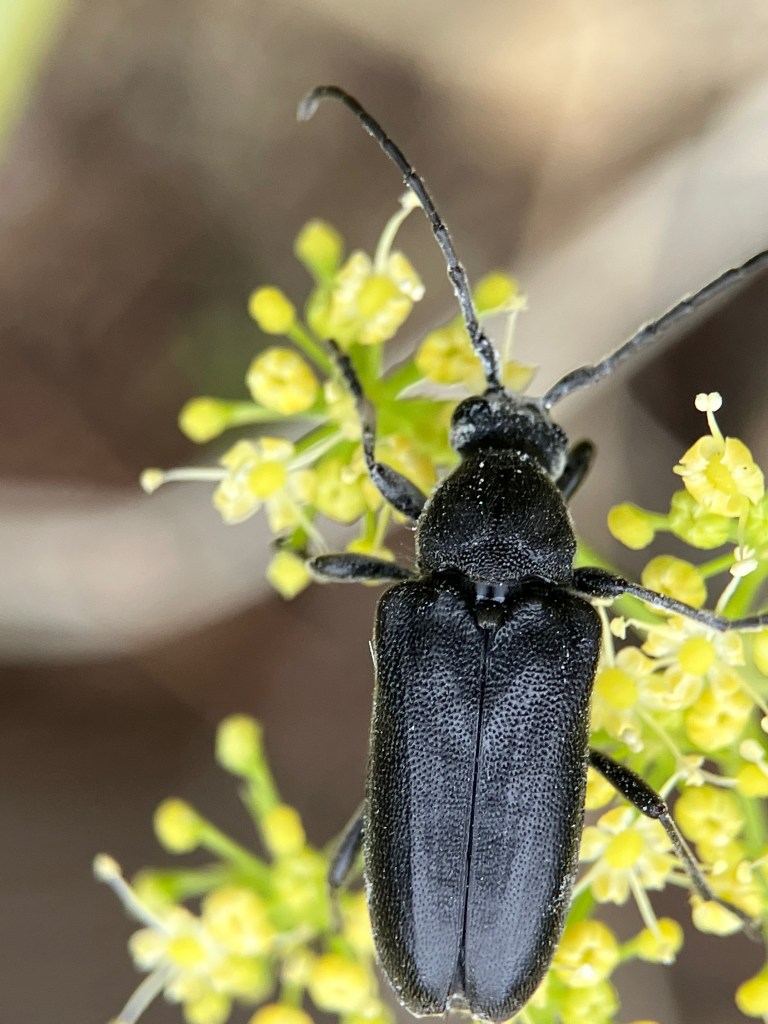
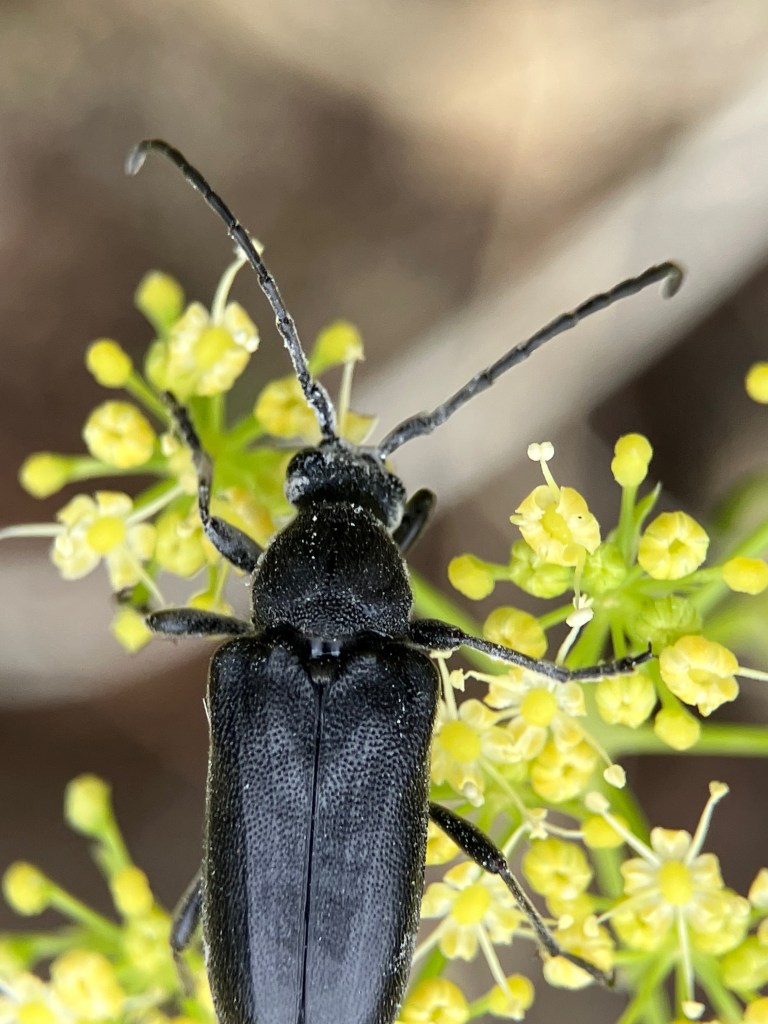
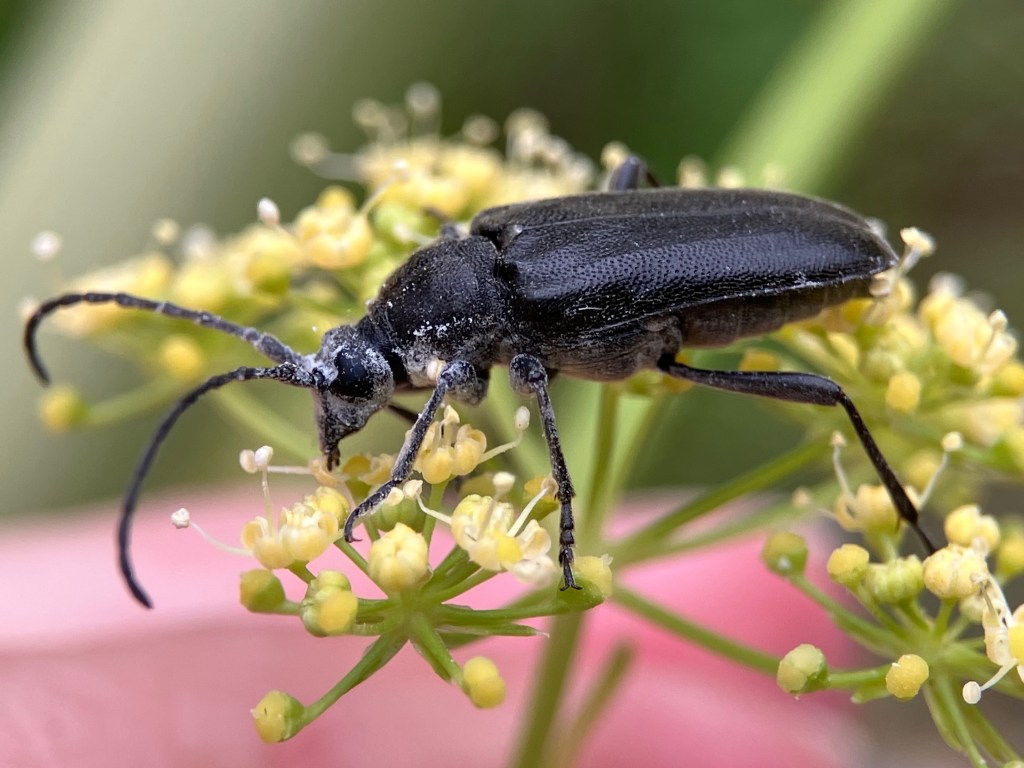
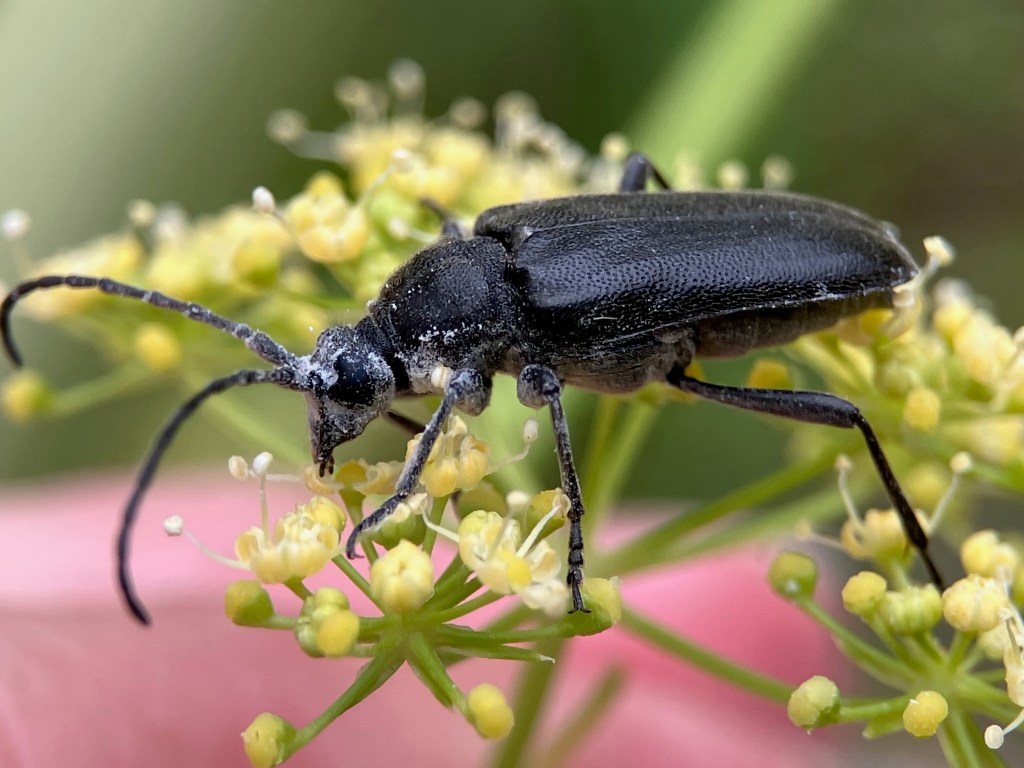
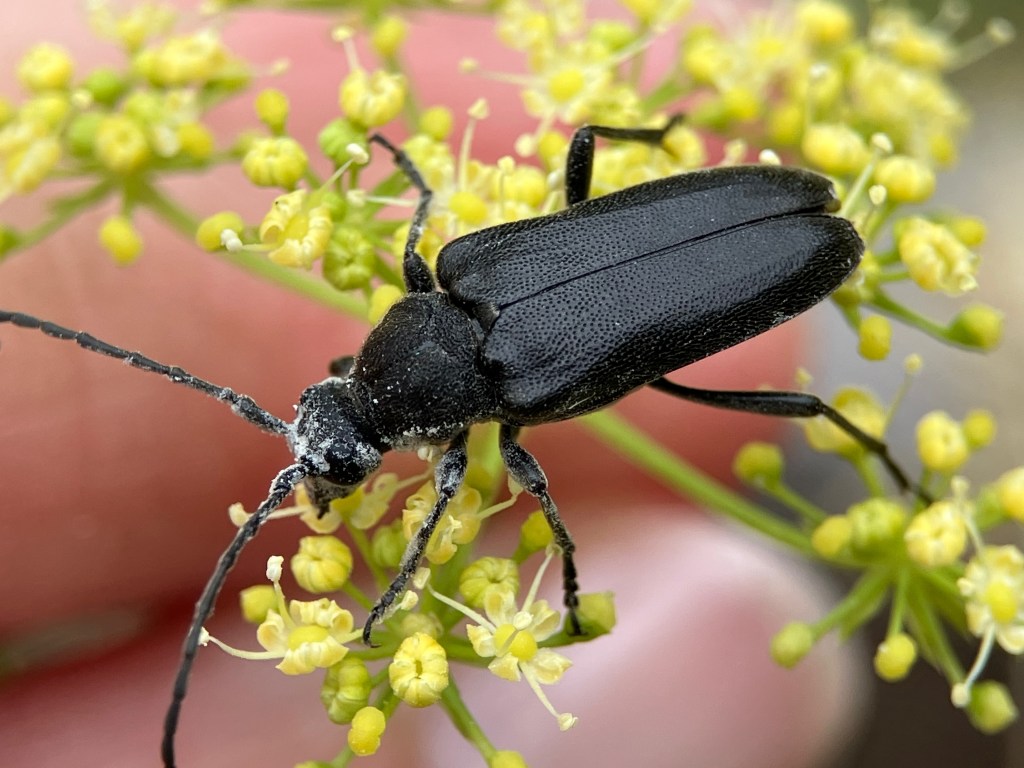
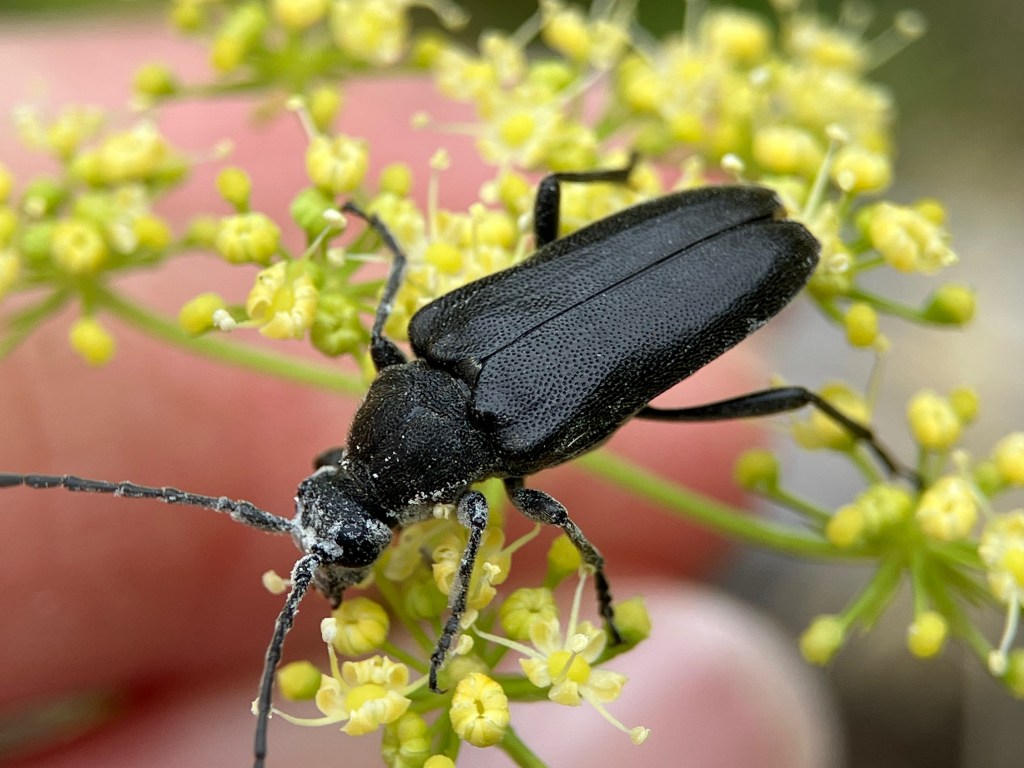
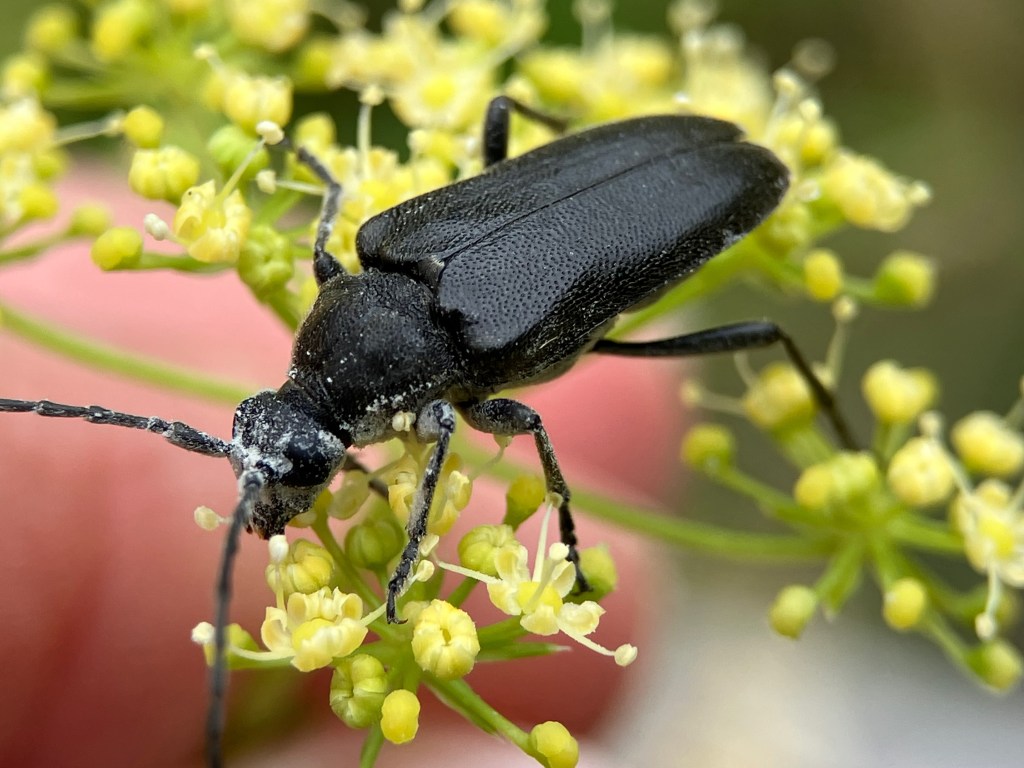
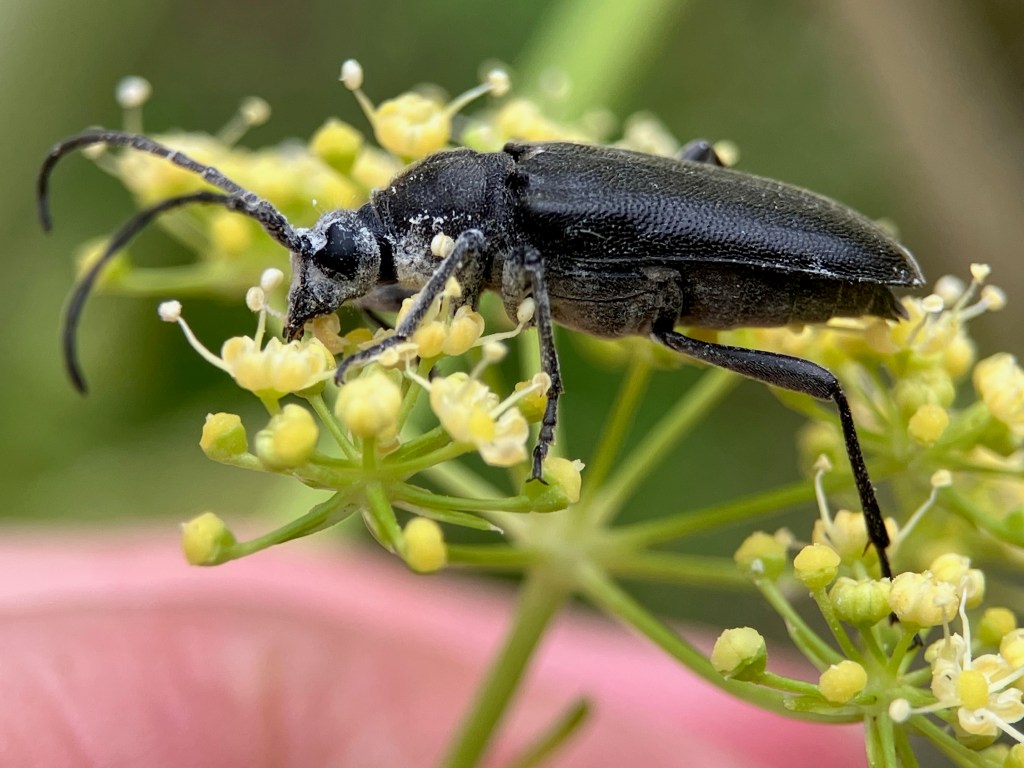
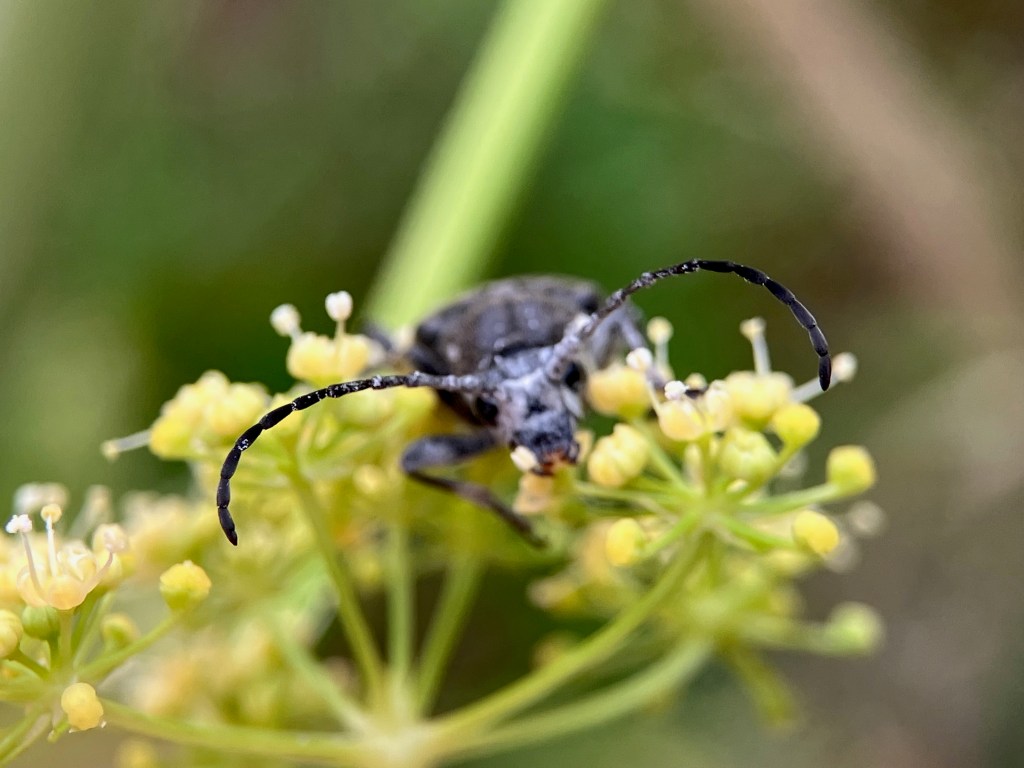
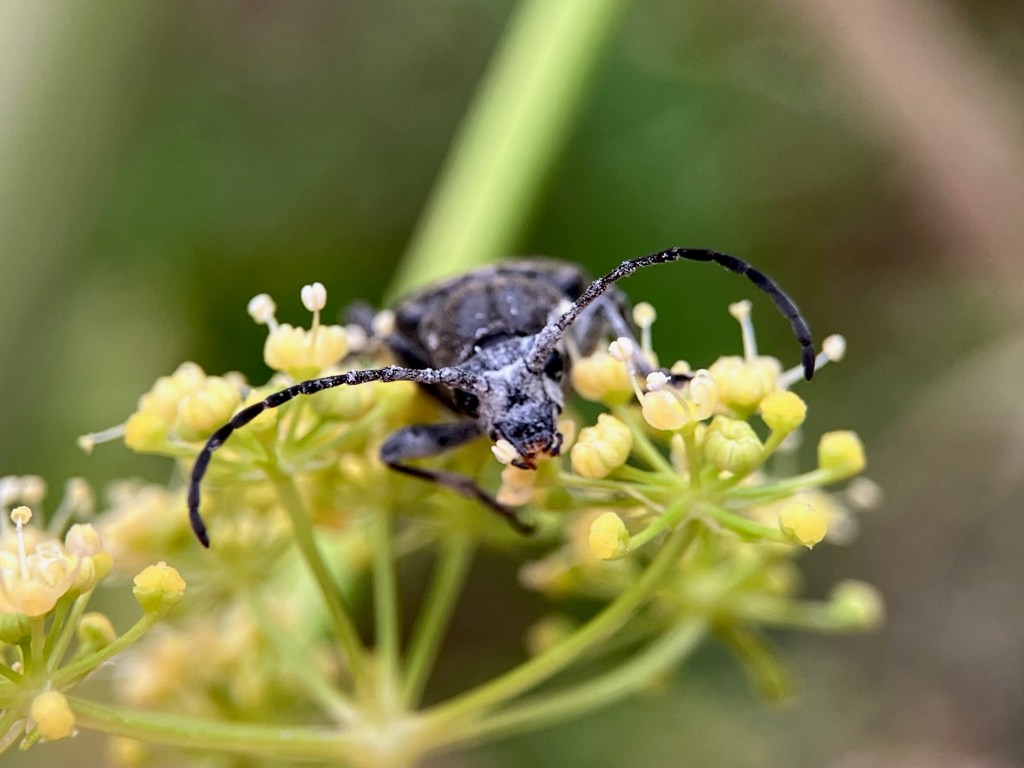
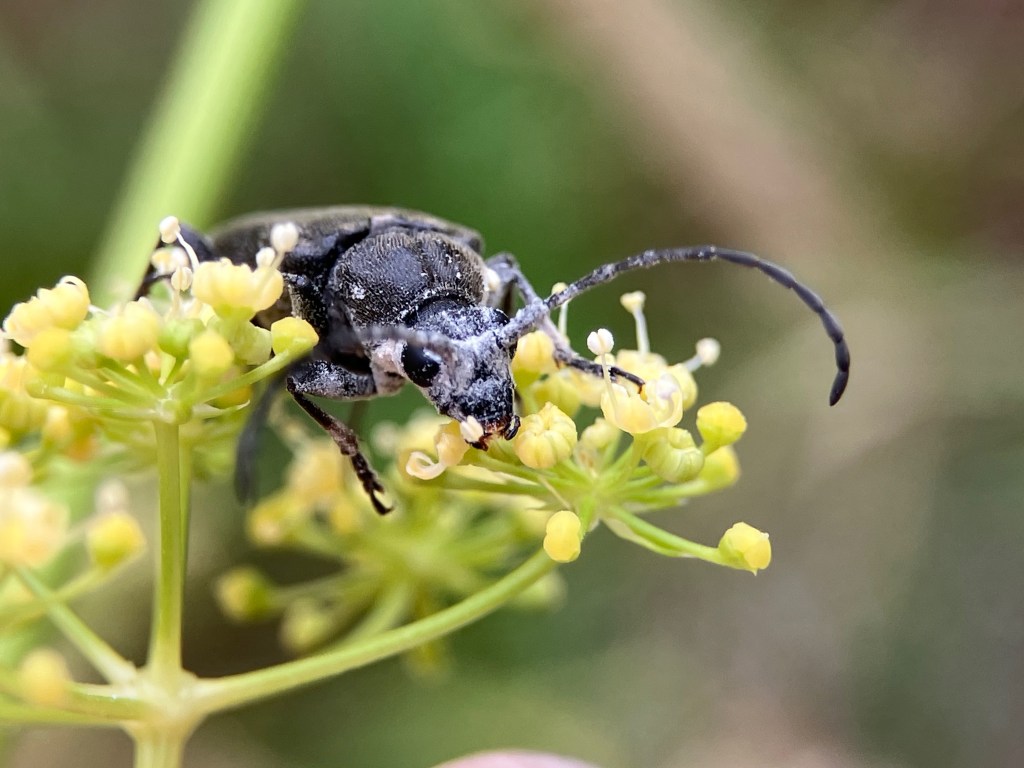
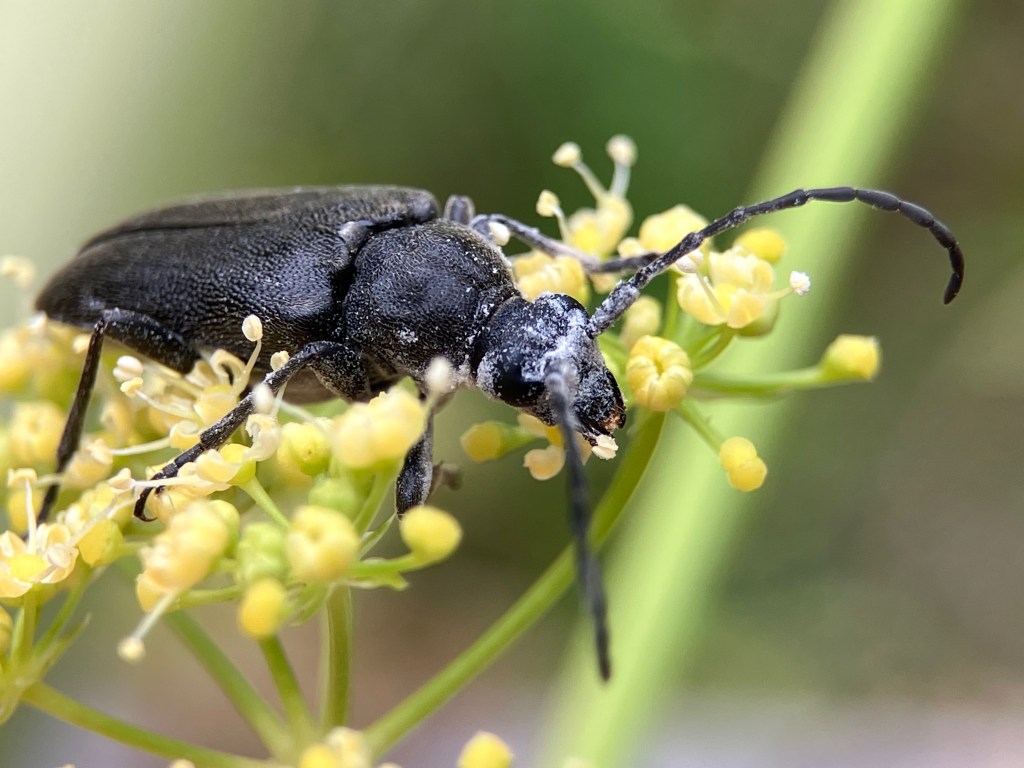
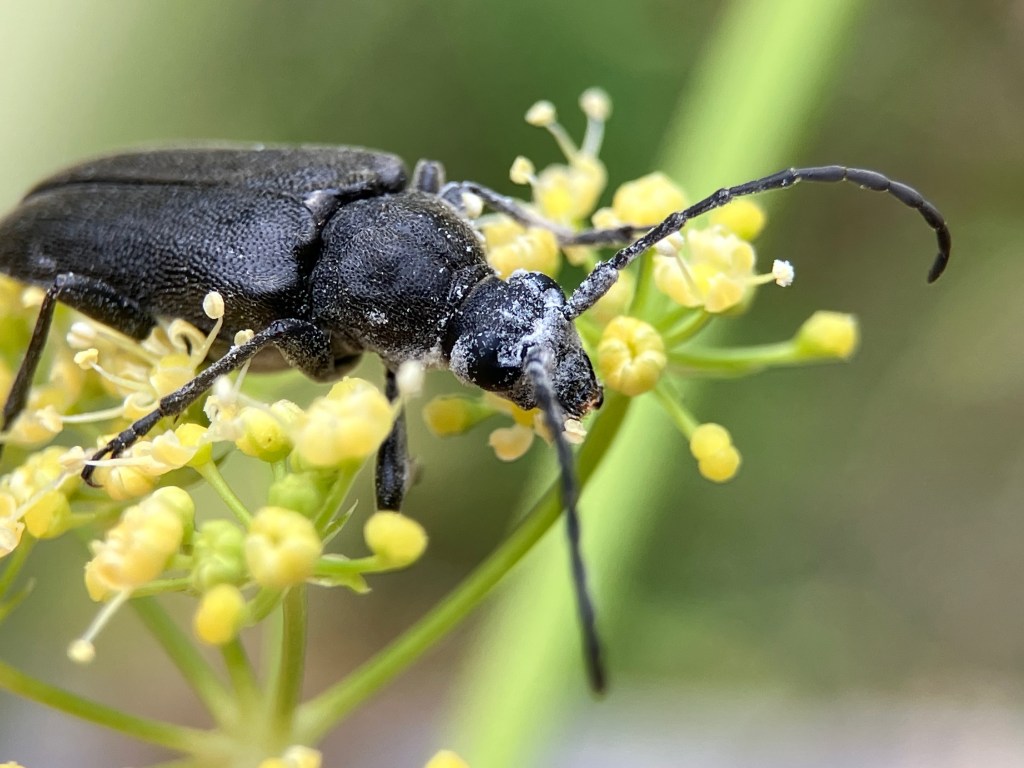
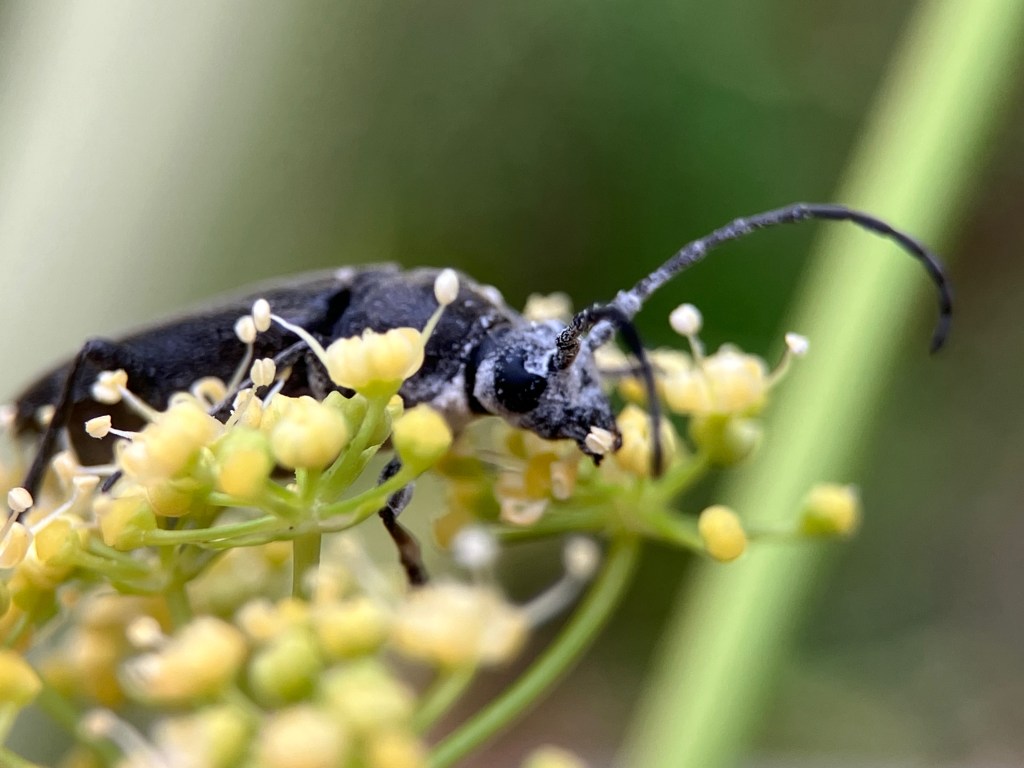
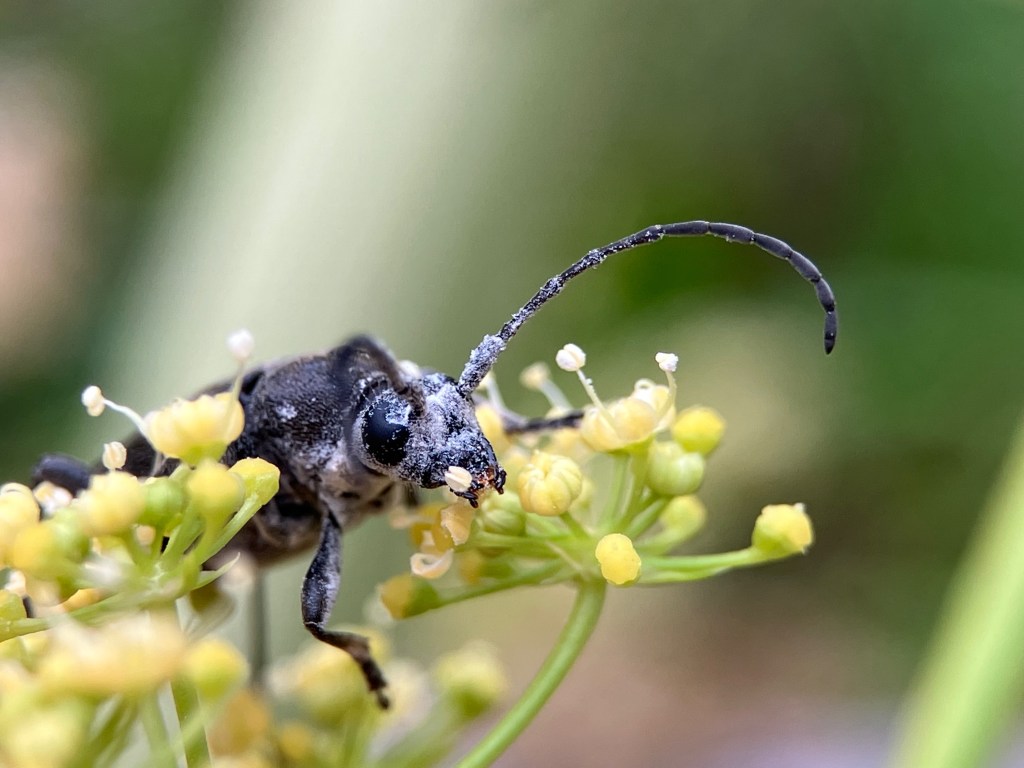
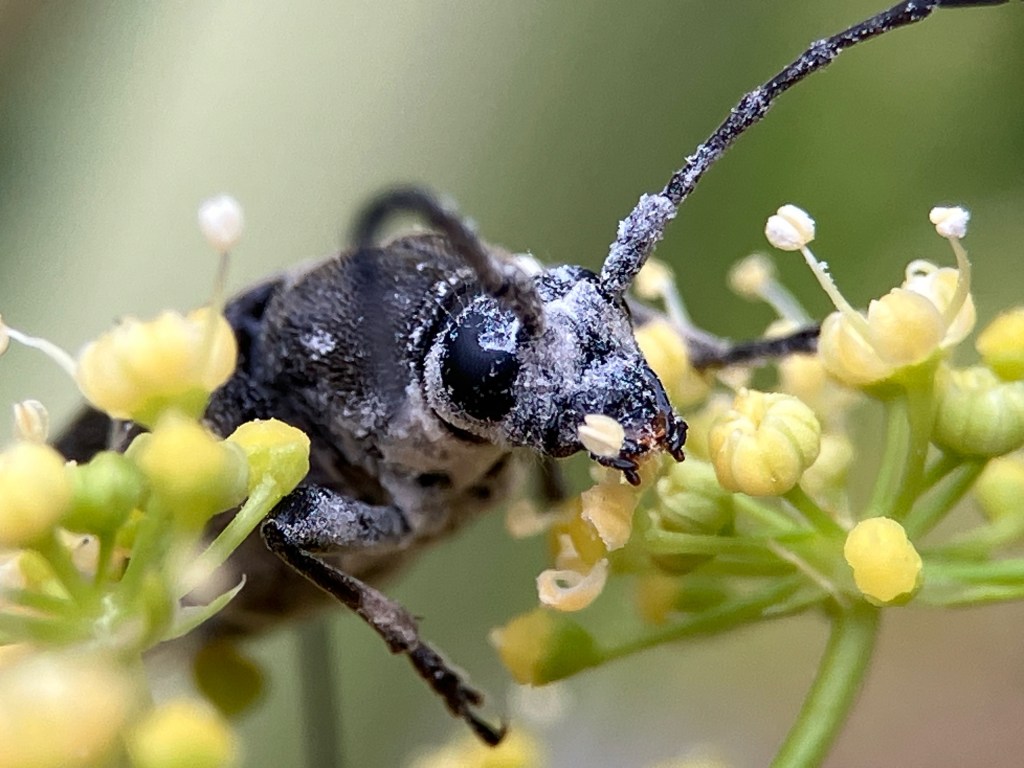
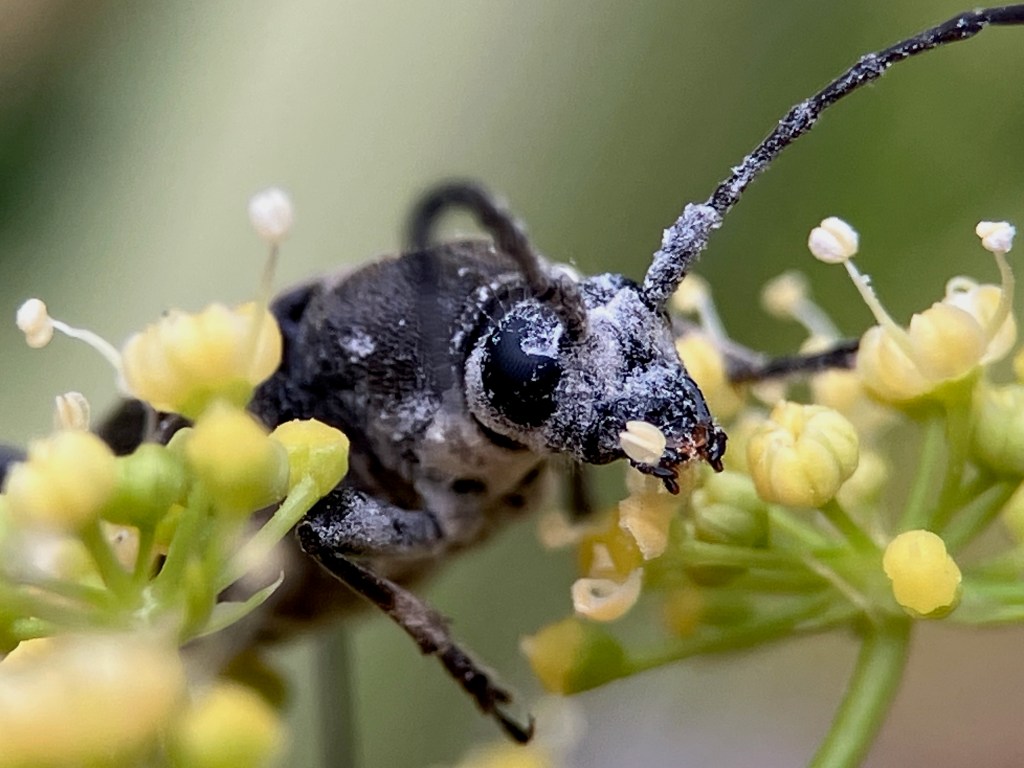
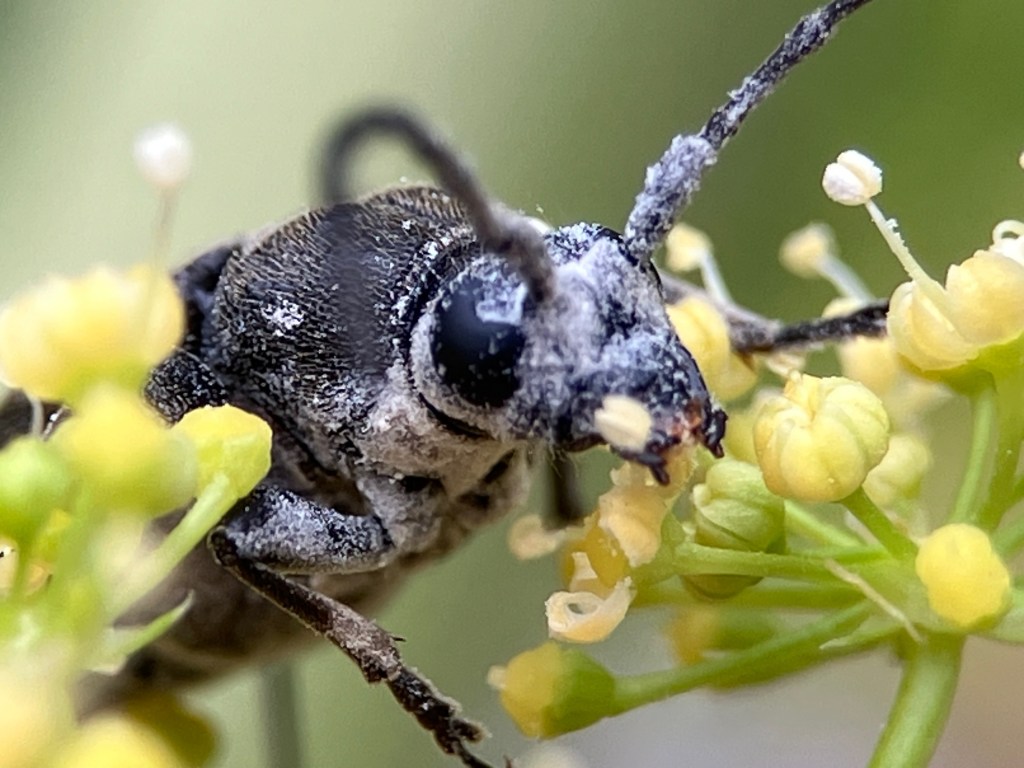
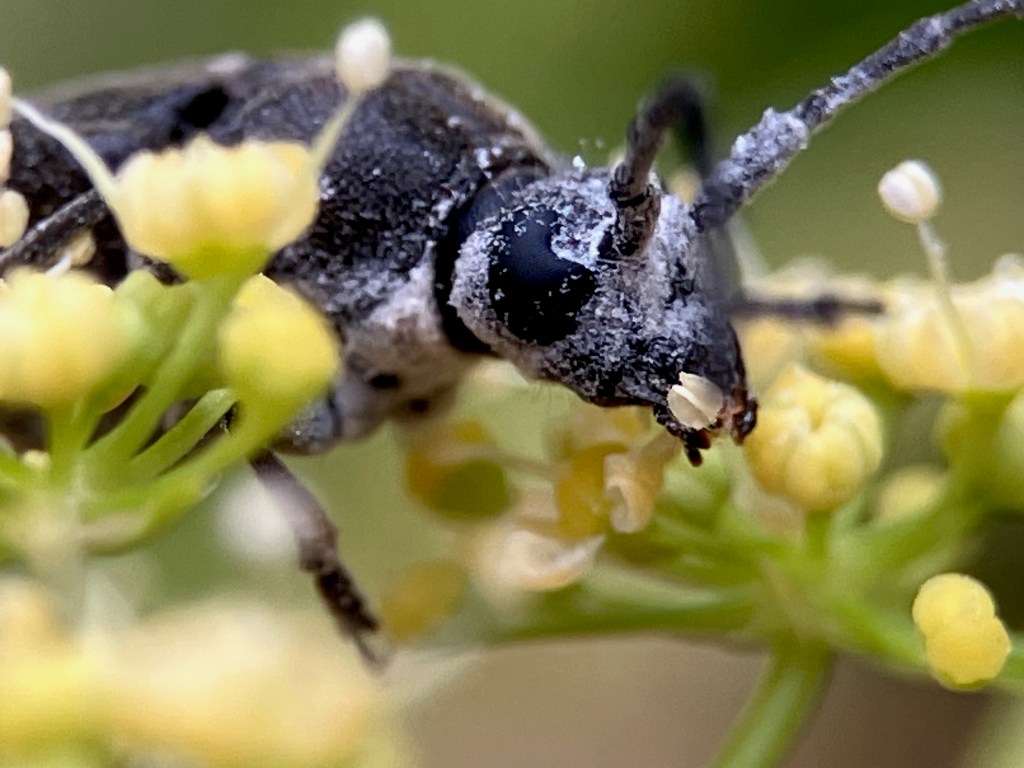
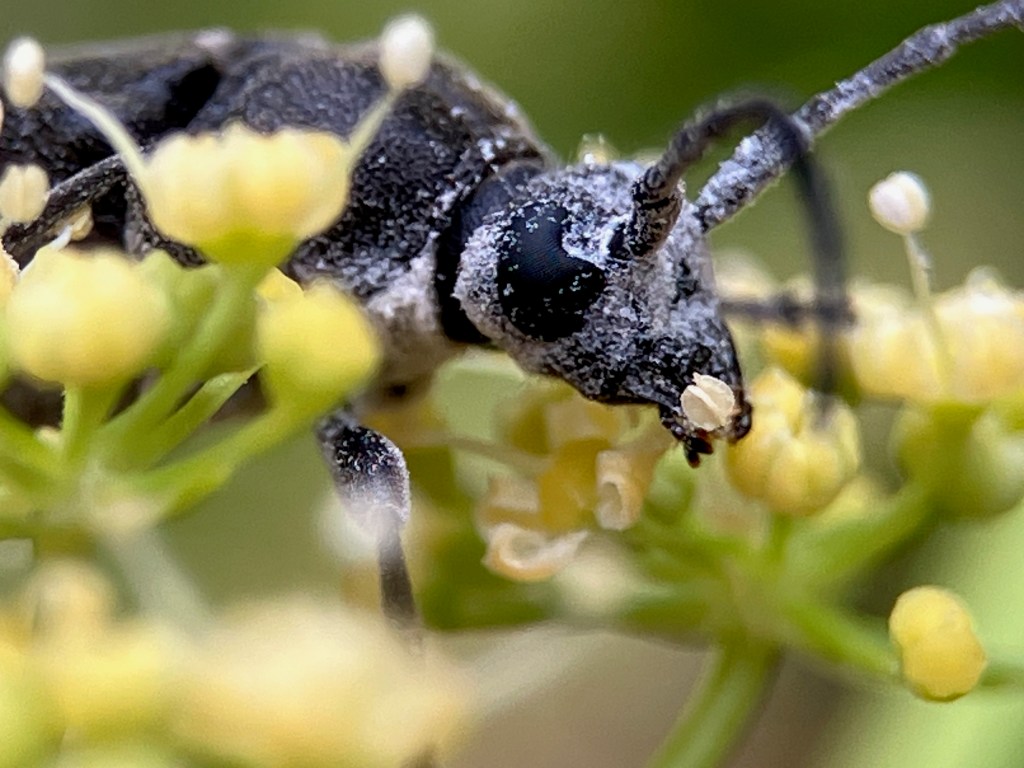
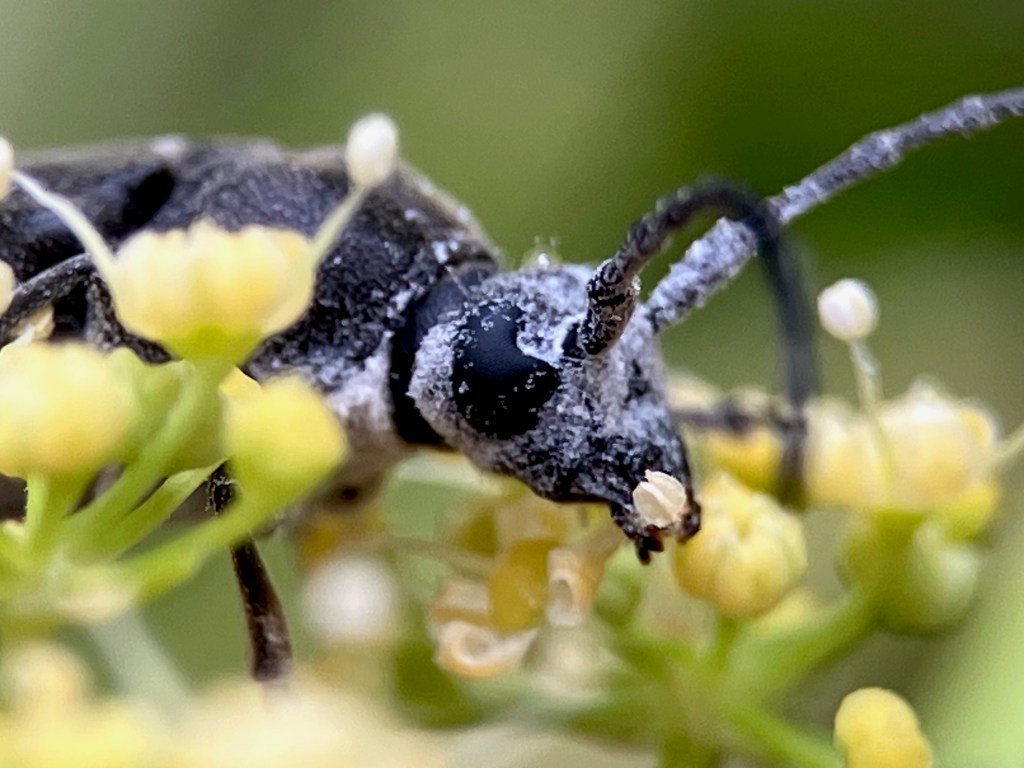
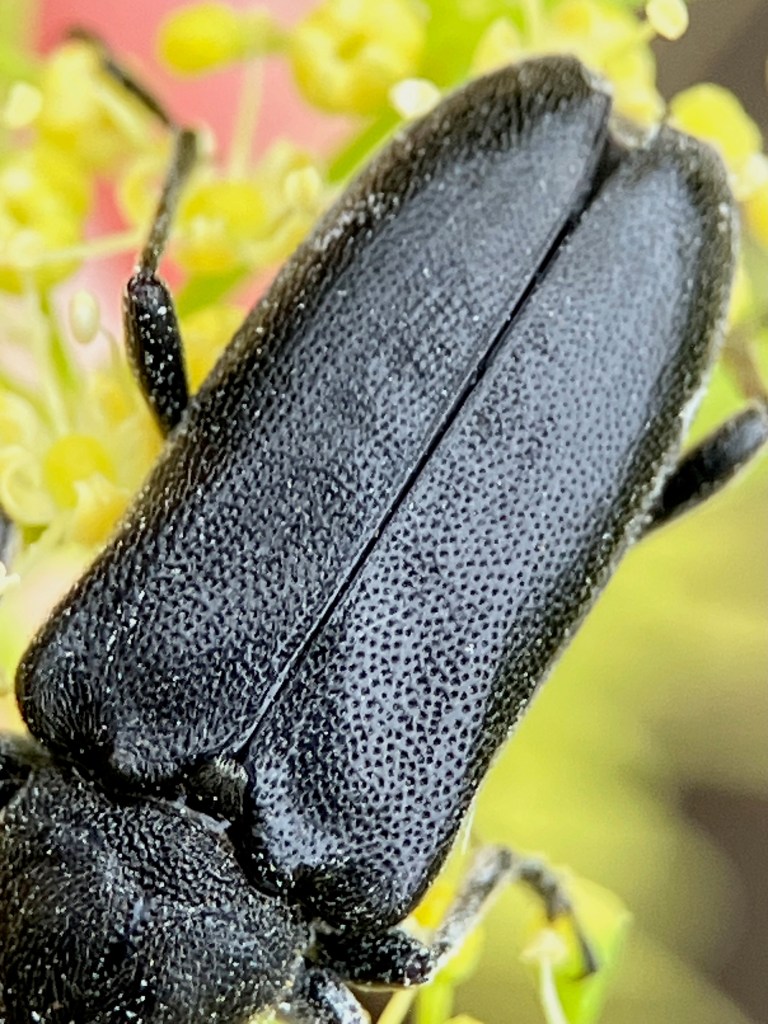
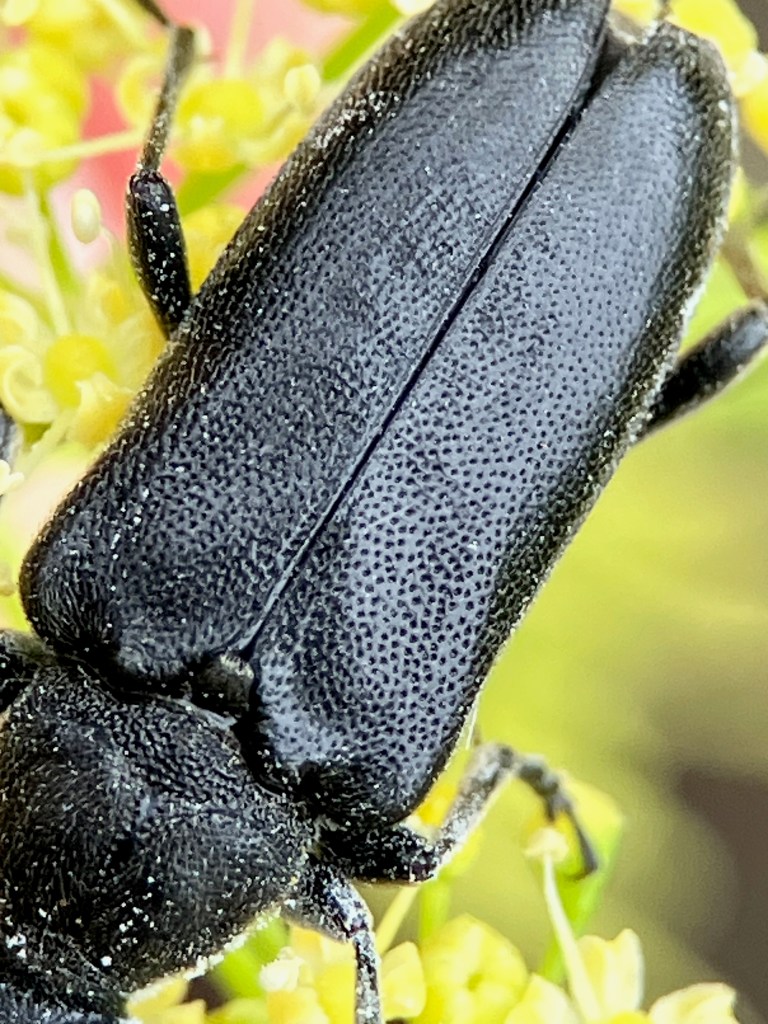
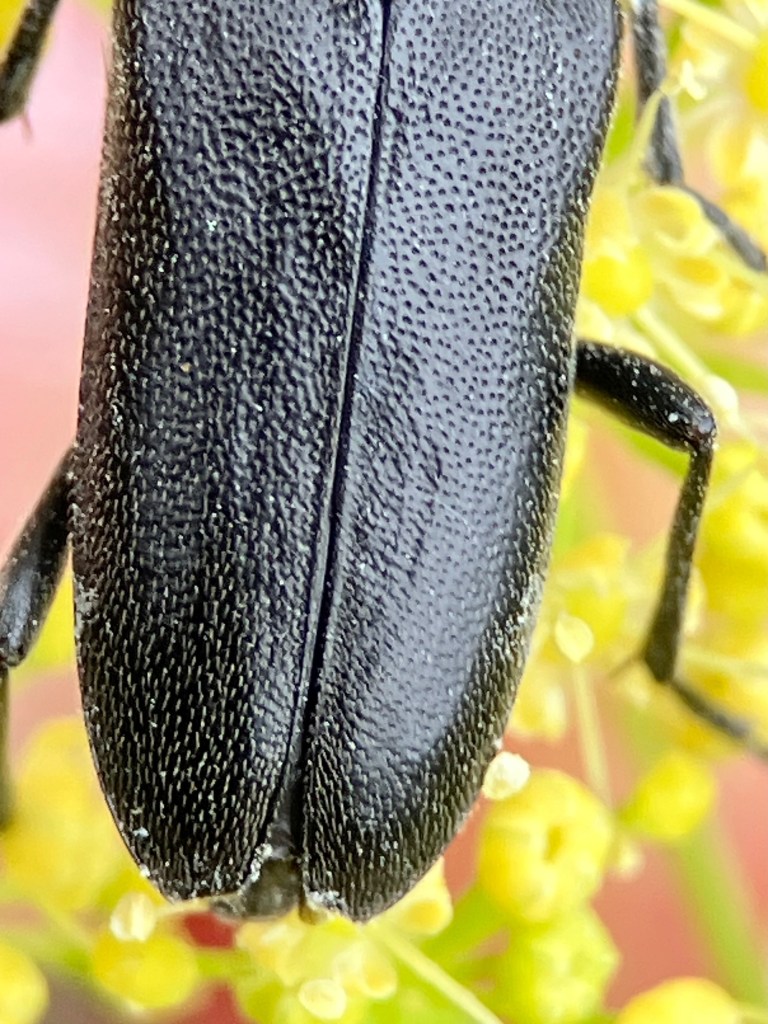
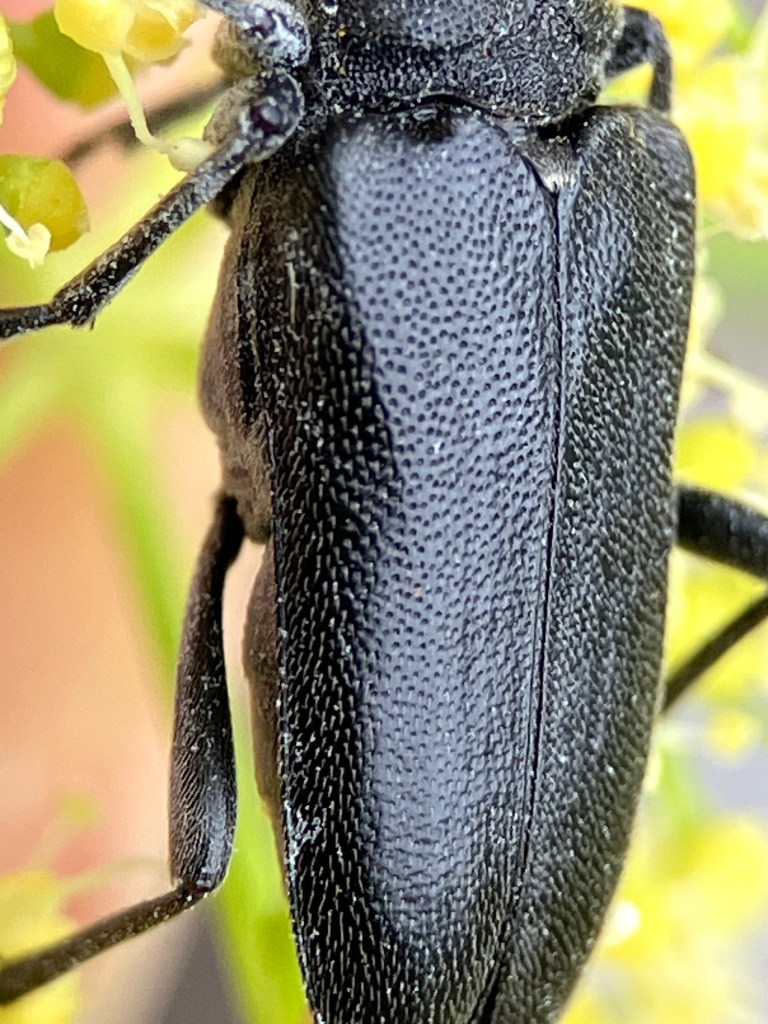
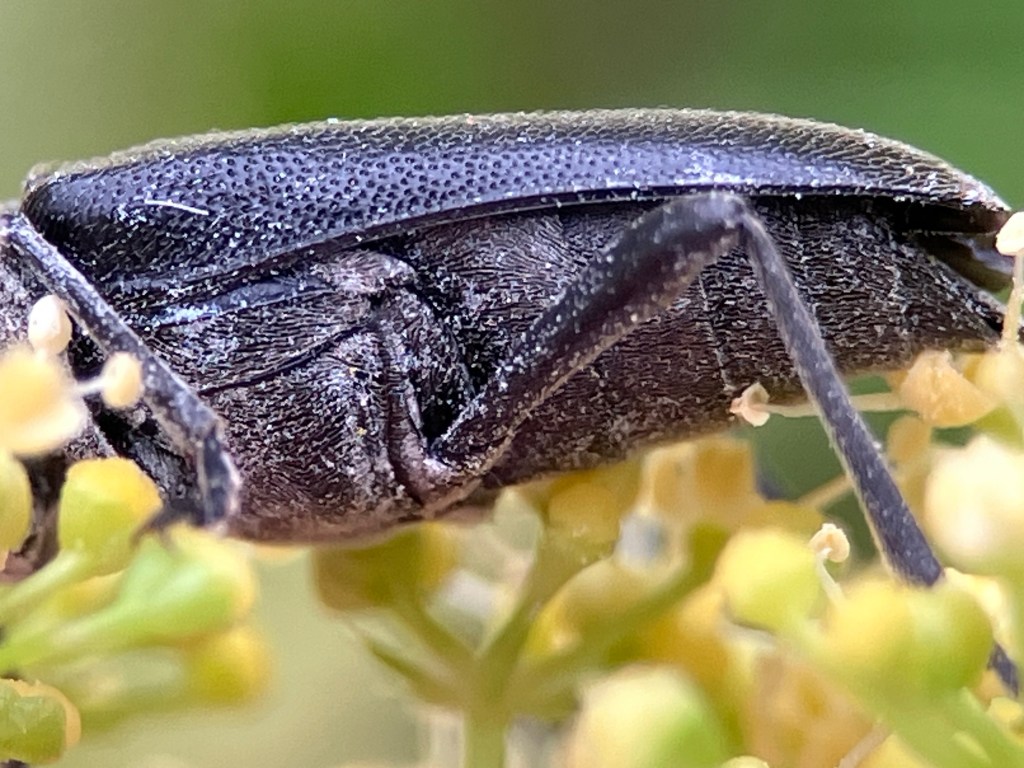
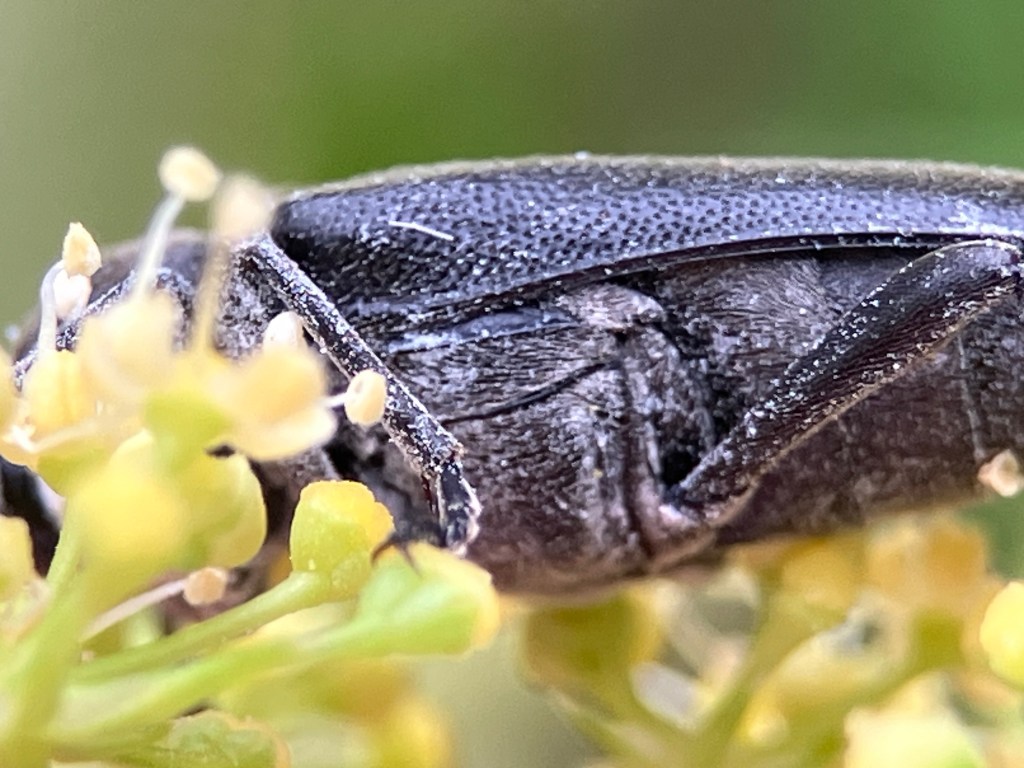
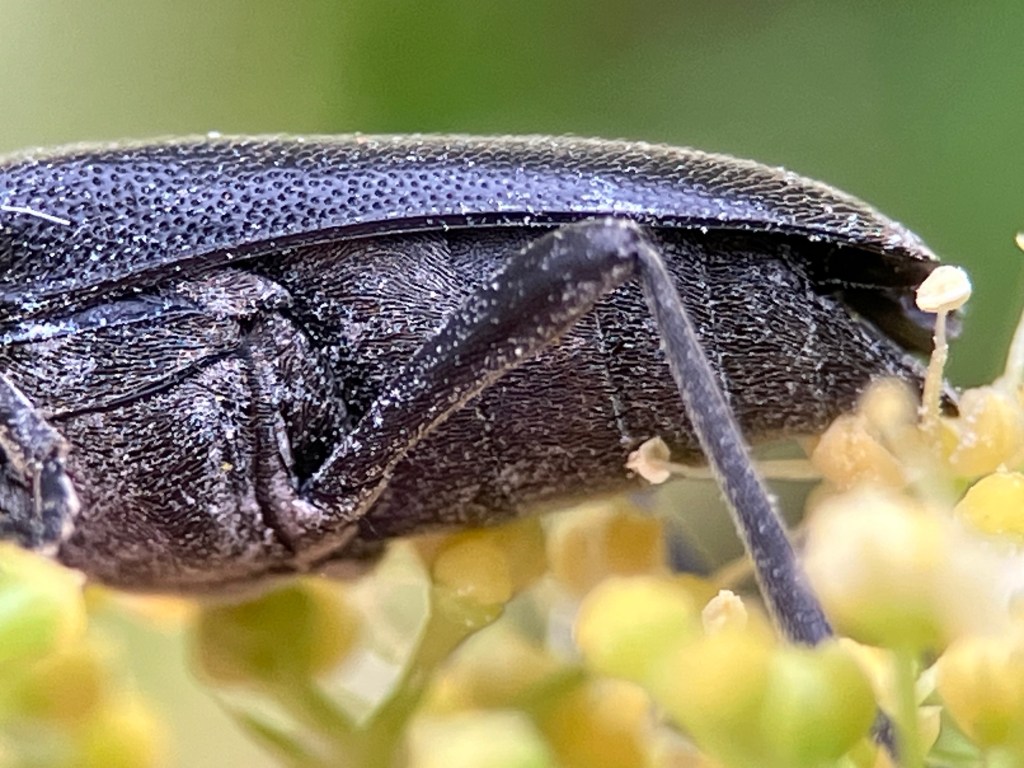
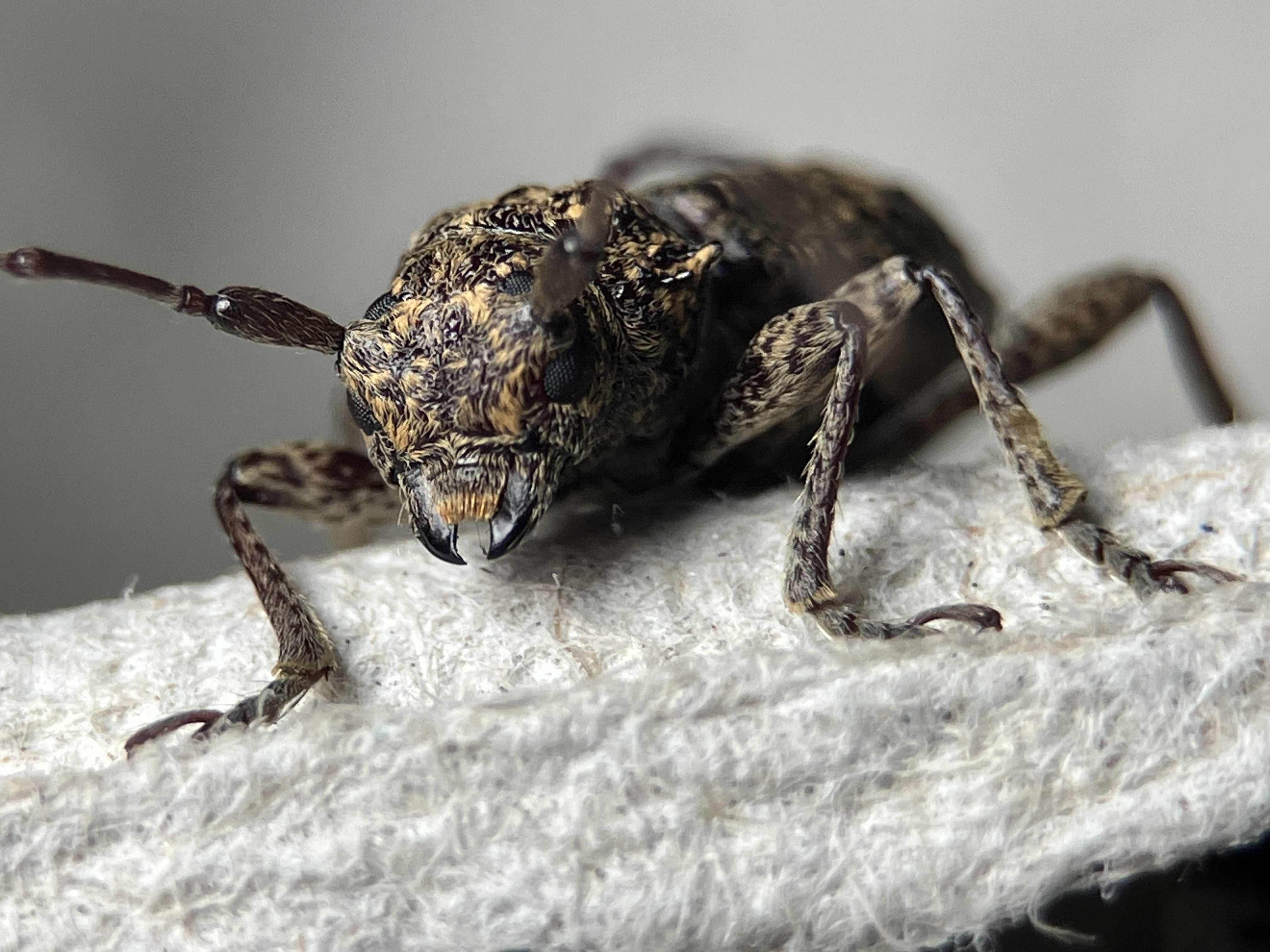
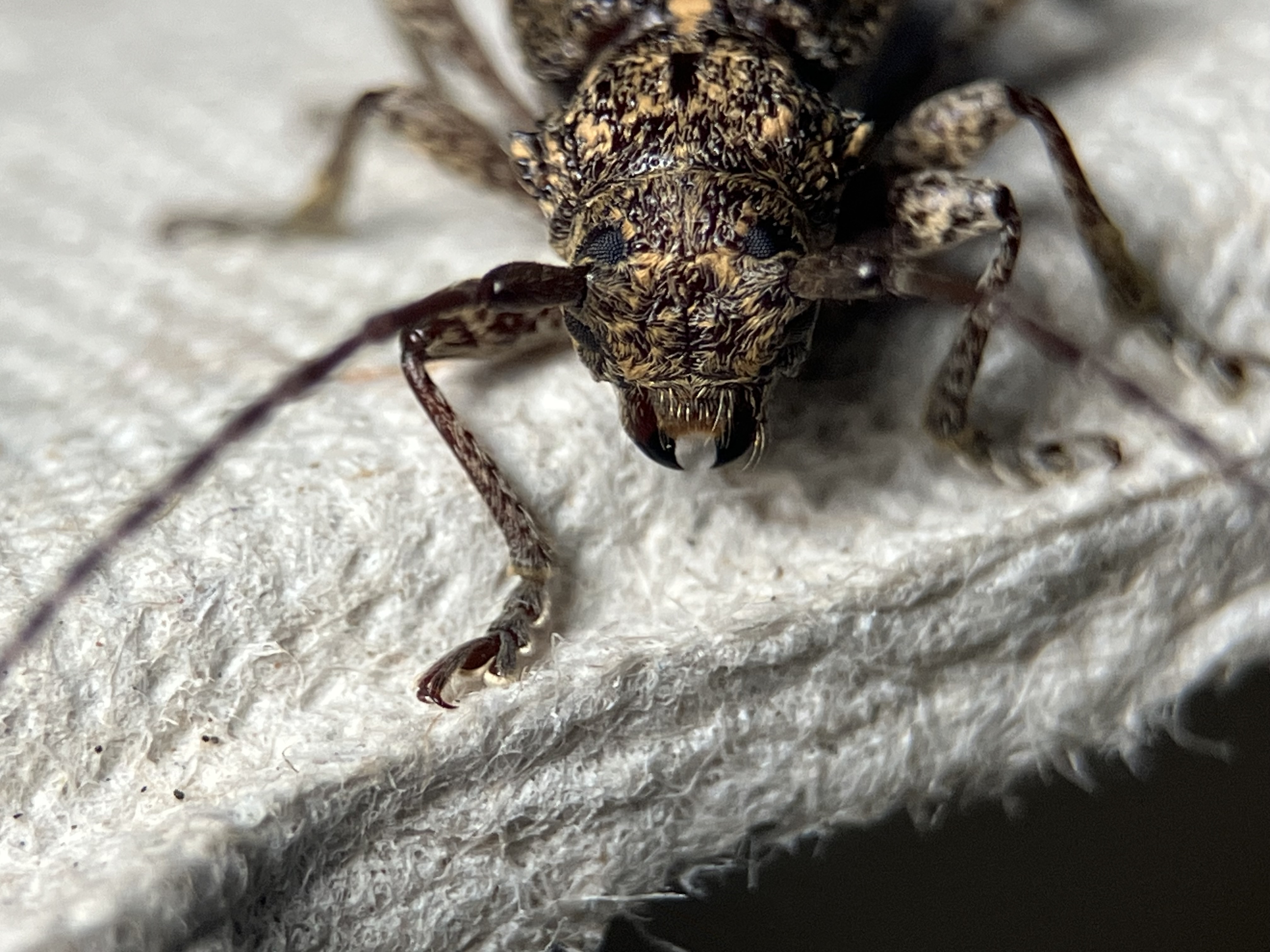
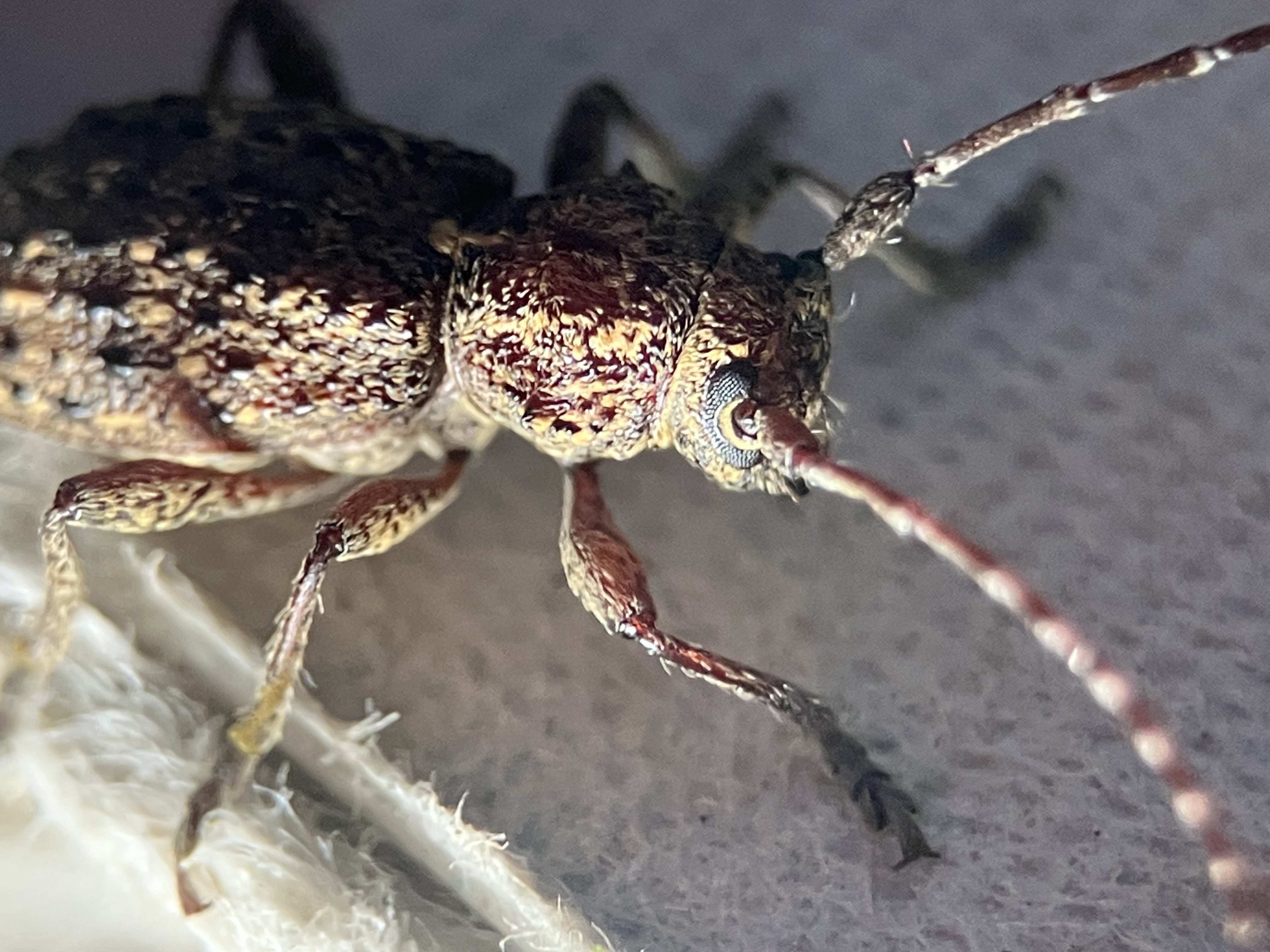
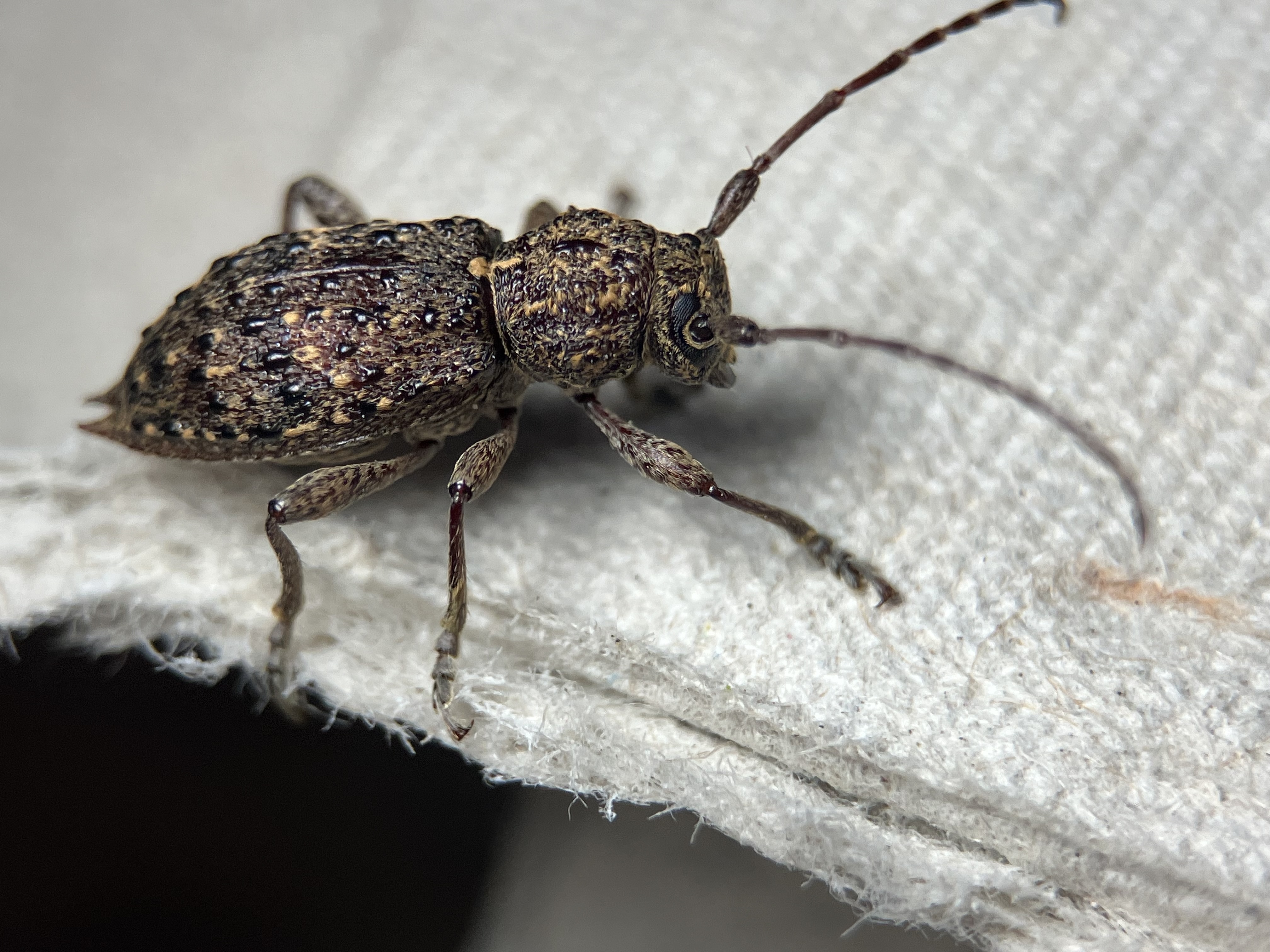
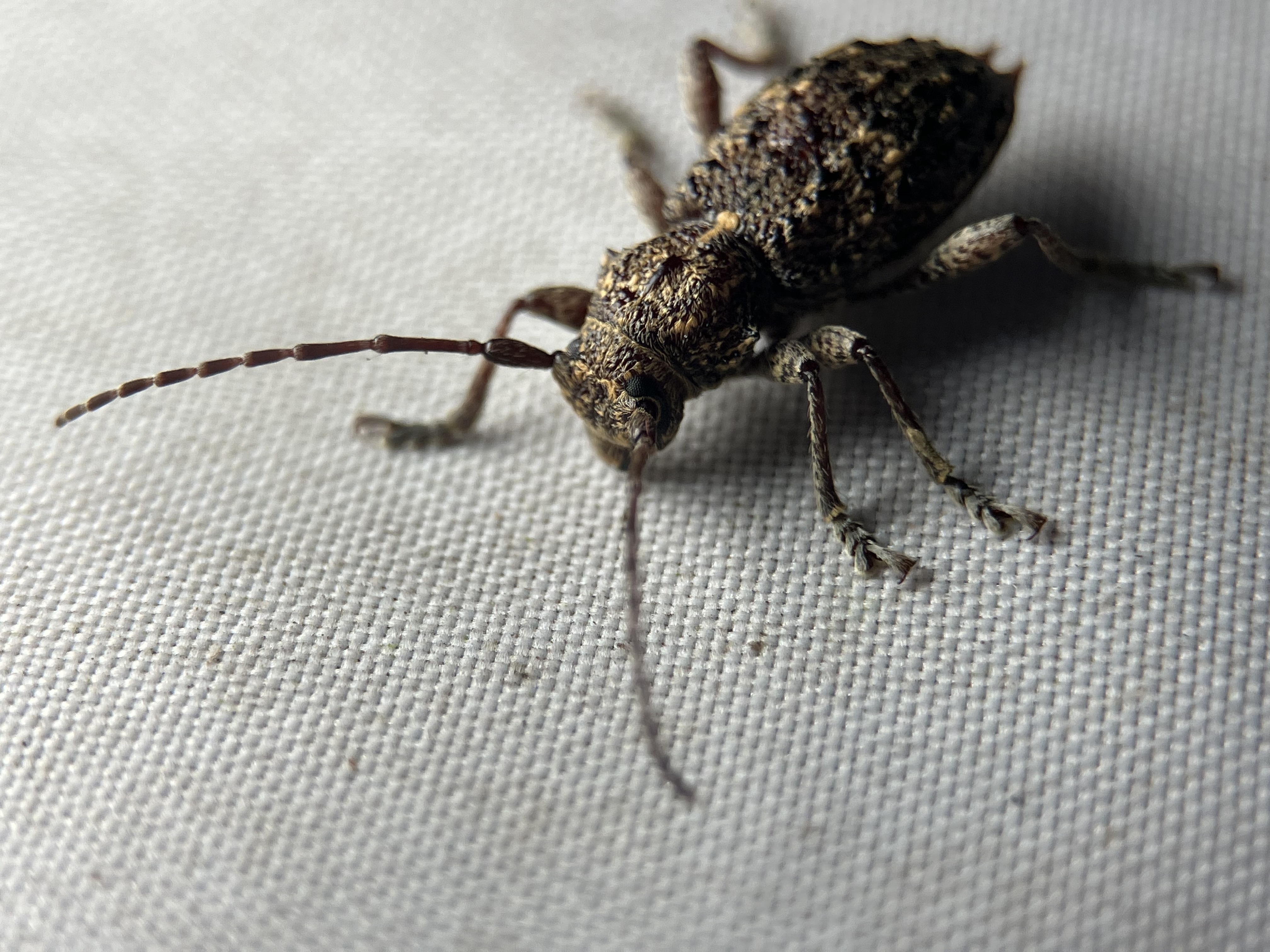
Lepturopsis dolorosa
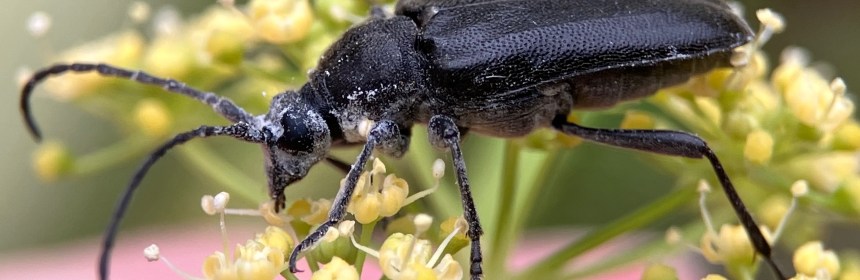
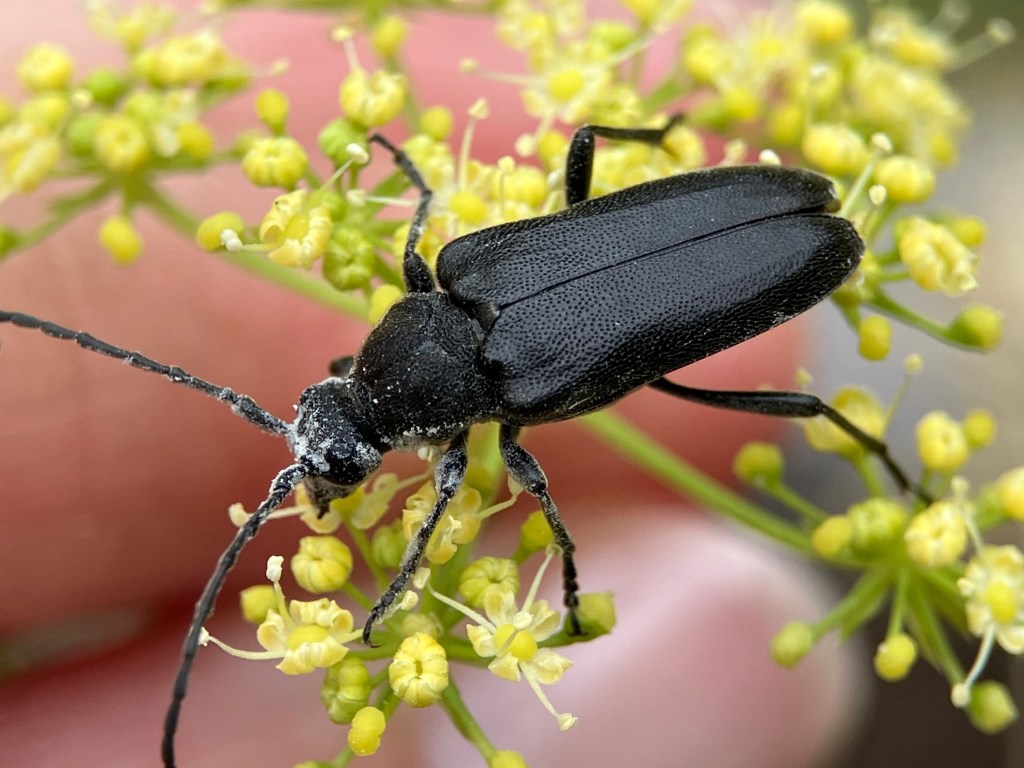
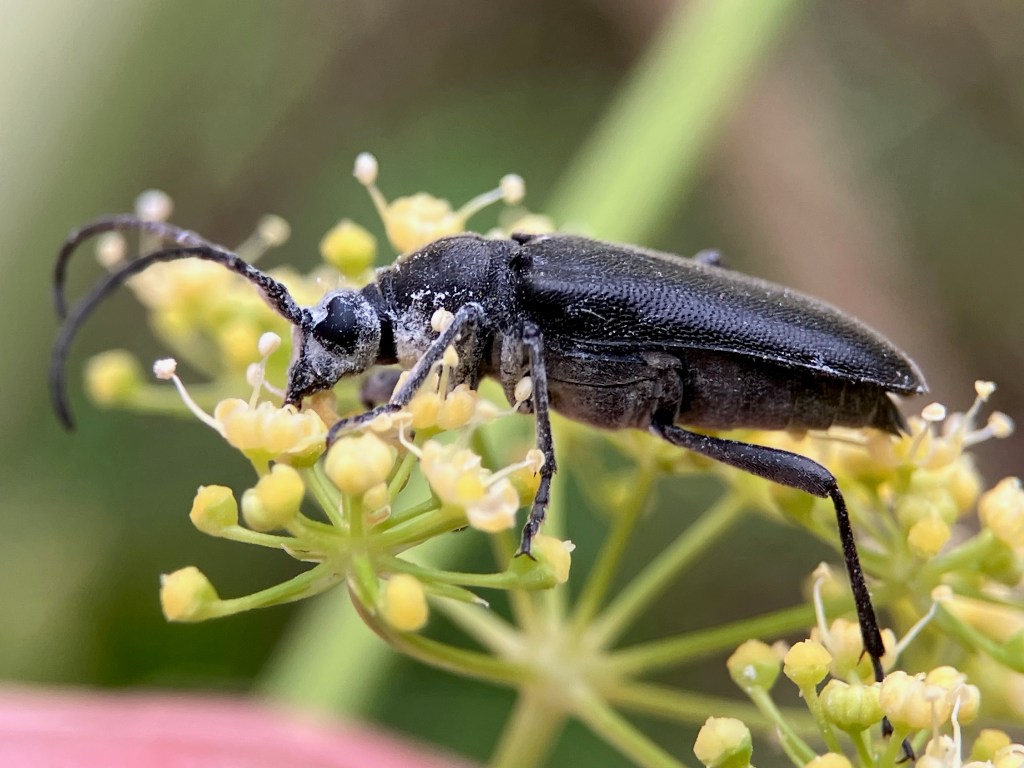
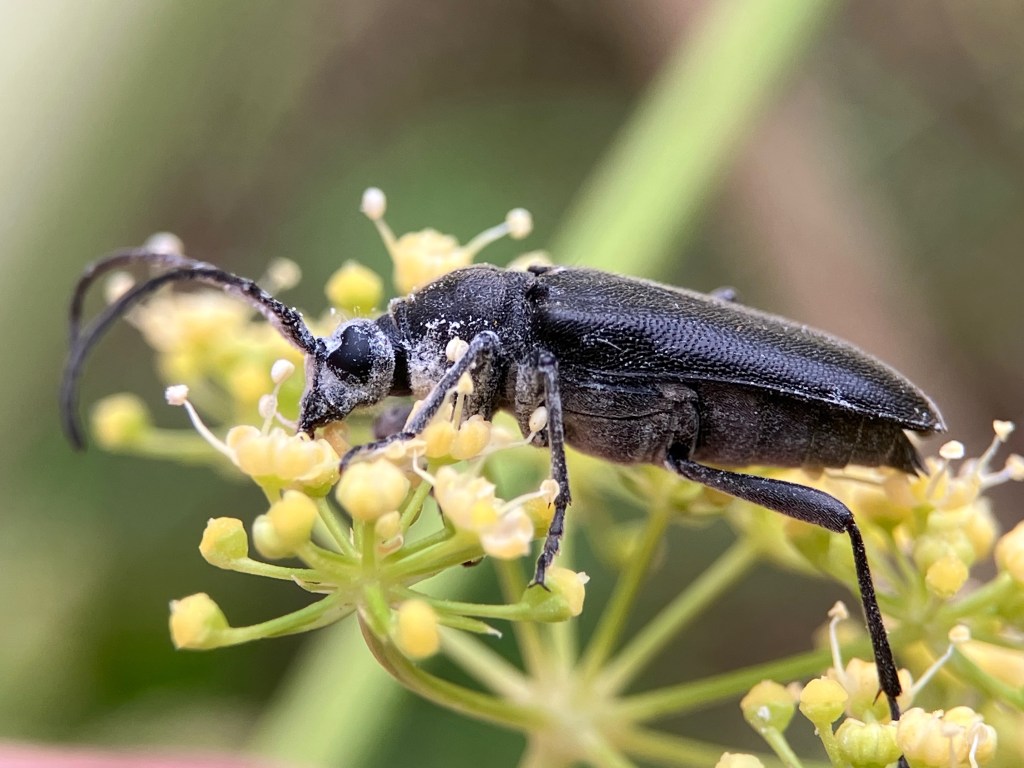
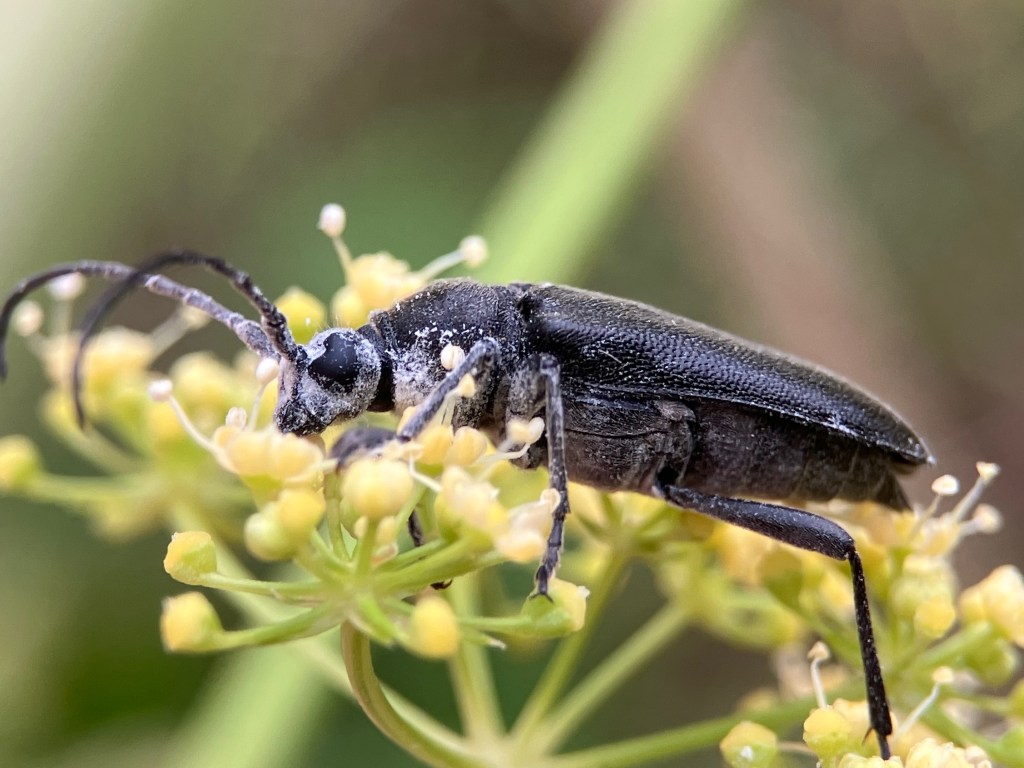
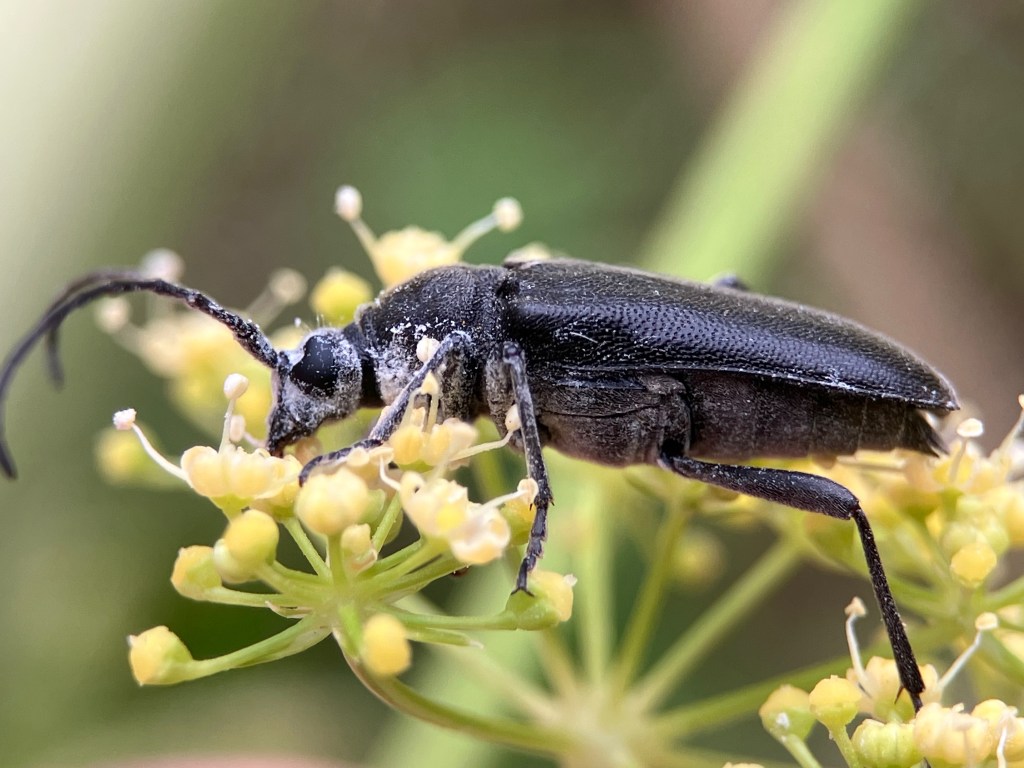
It was overcast and cool the morning of July 25, 2026, but I went down to poke around in our overgrown, un-tended orchard to look at a parsley plant that had bloomed. Over the past few days, it had been attracting some flies I was interested in. Unfortunately, there was little to no activity of any sort to observe. I was about to walk back to the house when I spied this handsome black beetle on the bottom portion of the stalk of the lone parsley.

It was like the beetle had emerged from thin air. I know I had scanned all parts of the plant. Scoured is more like it. For days, I have been trying to find two particular flies (one a Spilomyia sp., and the other a Cylindromyia sp.). Unfortunately, neither were around. I’ll take the beetle as a win. This beetle is cool!

It’s a type of Longhorn beetle in the family Cerambycidae. The species is Lepturopsis dolorosa. I thumbed through my copy of Beetles of Western North America (by a great guy named Art Evans). I found my bug on page 467. The description matched. Size = about 11-12mm, head constricts abruptly behind eyes, pronotum is wider than long.

Adults are diurnal and known to feed on various spring and summer flowers. I didn’t find parsley on the list, but yarrow, ceanothus, elderberry, goldenrod, spirea, and mullein are some others listed. Beetle larvae are associated with Douglas fir. In Furniss and Carolin’s (1977) Western Forest Insects, I read that larvae in this group, formerly in Genus Anoplodera, develop in dead trees. This gives them the job of nutrient recycler! The range of geographic distribution is from British Columbia and Idaho, down to California.

The French meaning of this beetle’s name is pretty sad. Literally. Longicorne endeuillé translates to Sorrowful flower longhorn beetle. I wonder if the beetle is supposed to be sorrowful or if the flower the beetle visits is sorrowful?

Unfortunately, I did not find much in the way of information about this species on my usual go-to (bugguide.net), but I did contribute my images to the site.

Thanks for reading.

References

Evans, A.V. 2021. Beetles of Western North America. Princeton University Press. 624 p.

HARDY, G. A. 1942. Notes on some wood-boring beetles of Saanich, Vancouver Island, B. C. (Coleoptera, Cerambycidae & Buprestidae). Proceedings of the Entomological Society of British Columbia, Victoria 39: 9–13.

No Author. Lepturopsis dolorosa. 2026. Bugguide.net https://www.bugguide.net/node/view/167043
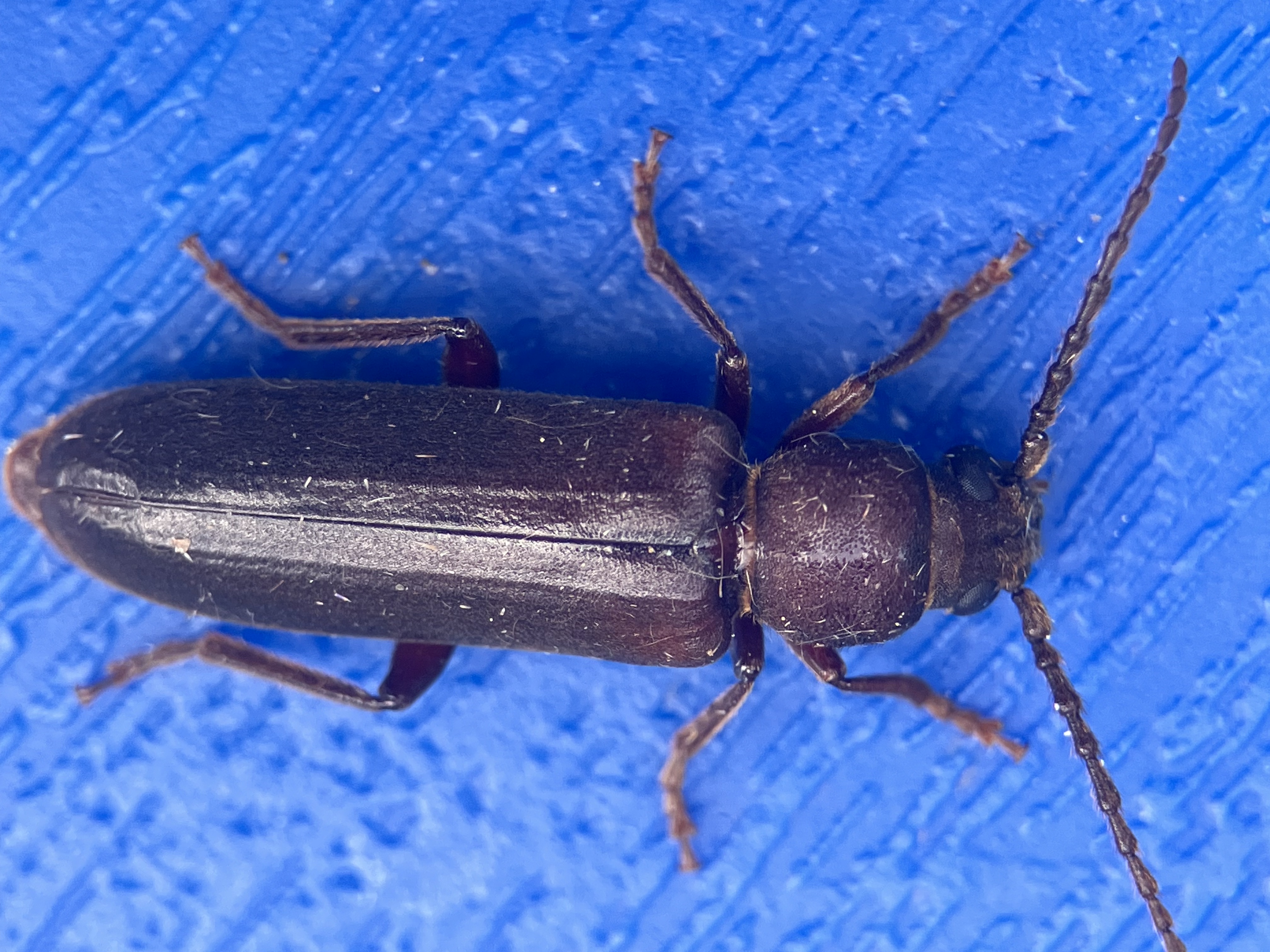
Bug of the Weekend (Plectrura spinicauda)

Plectrua spinicauda

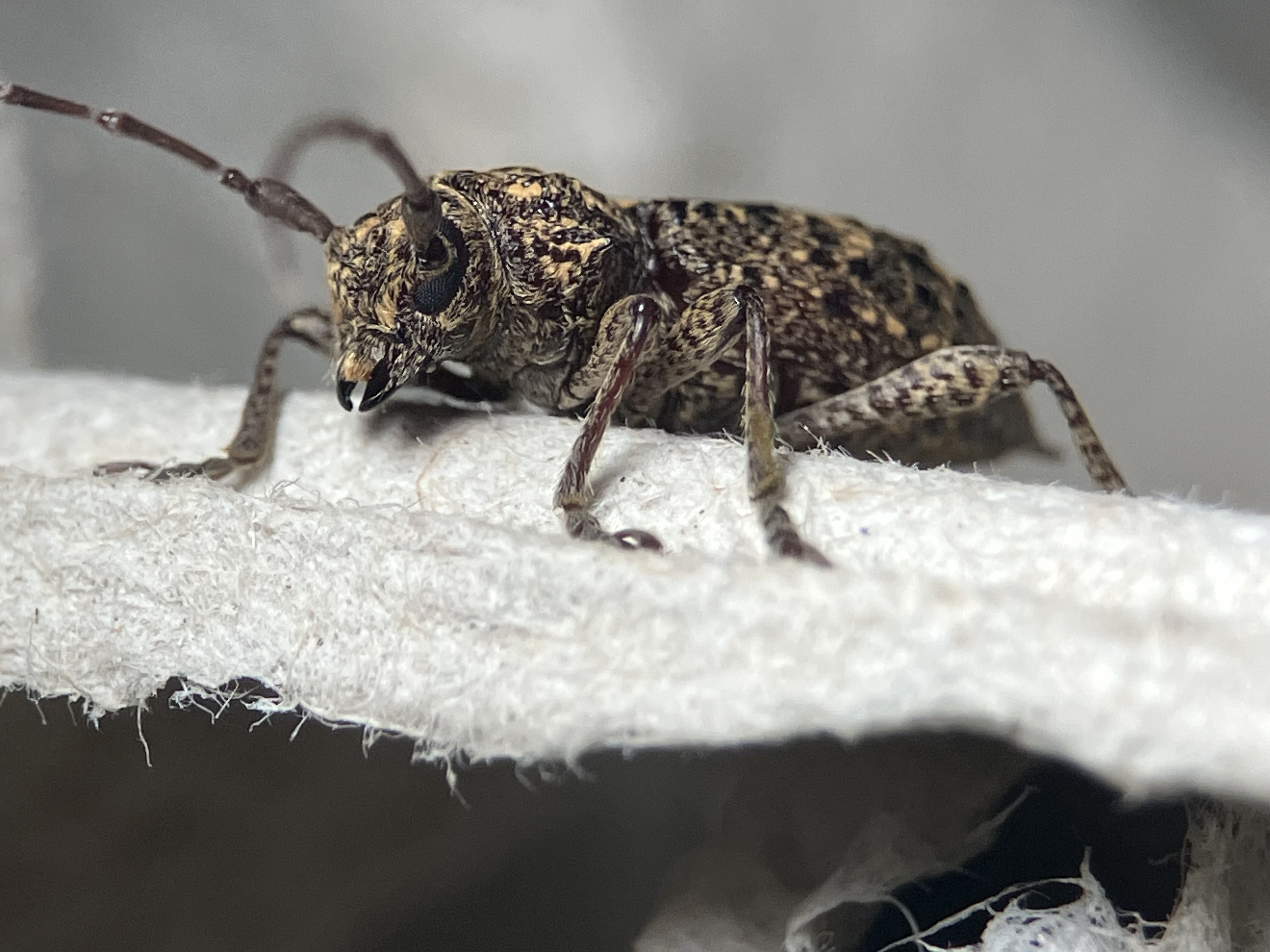
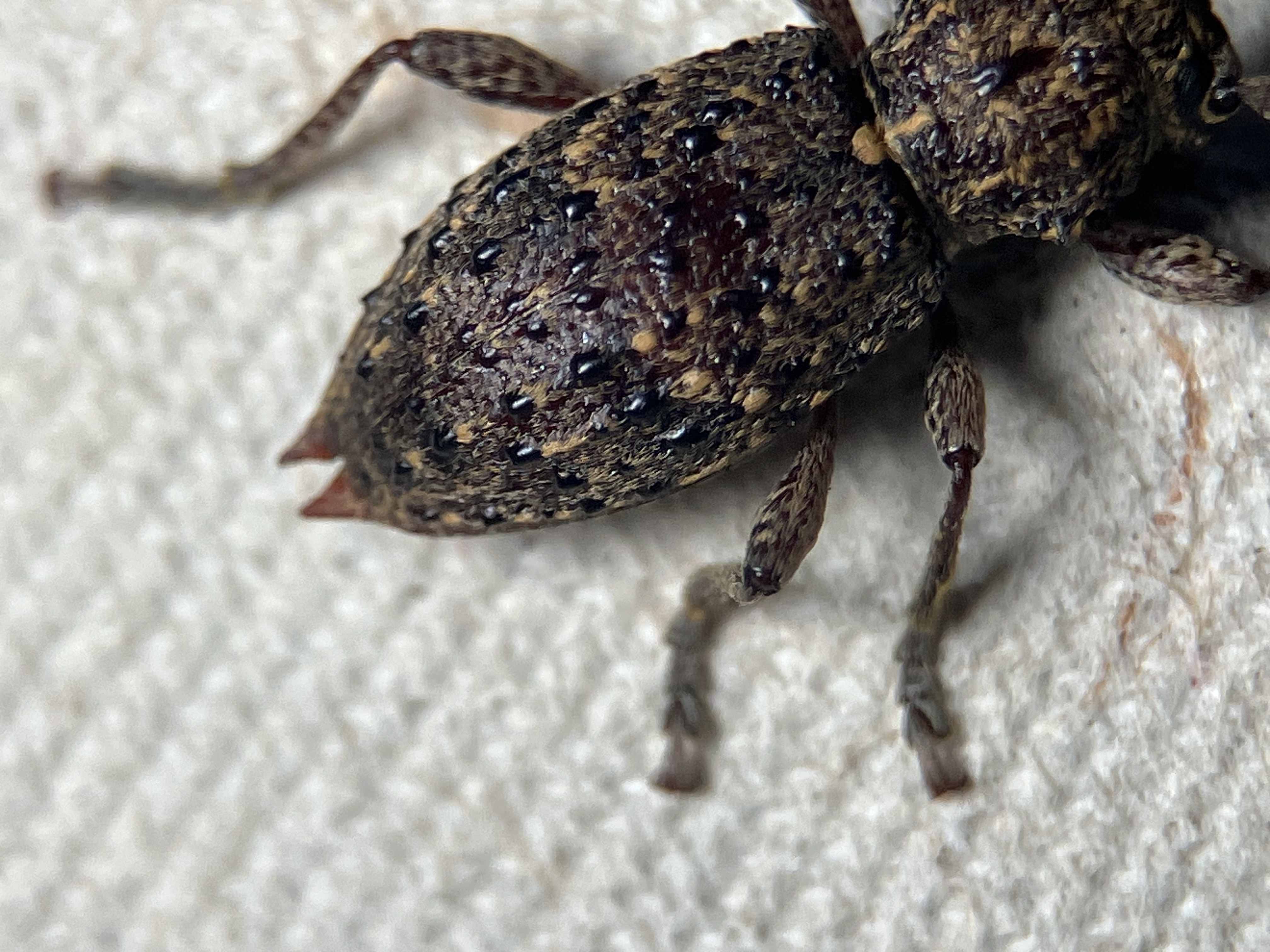
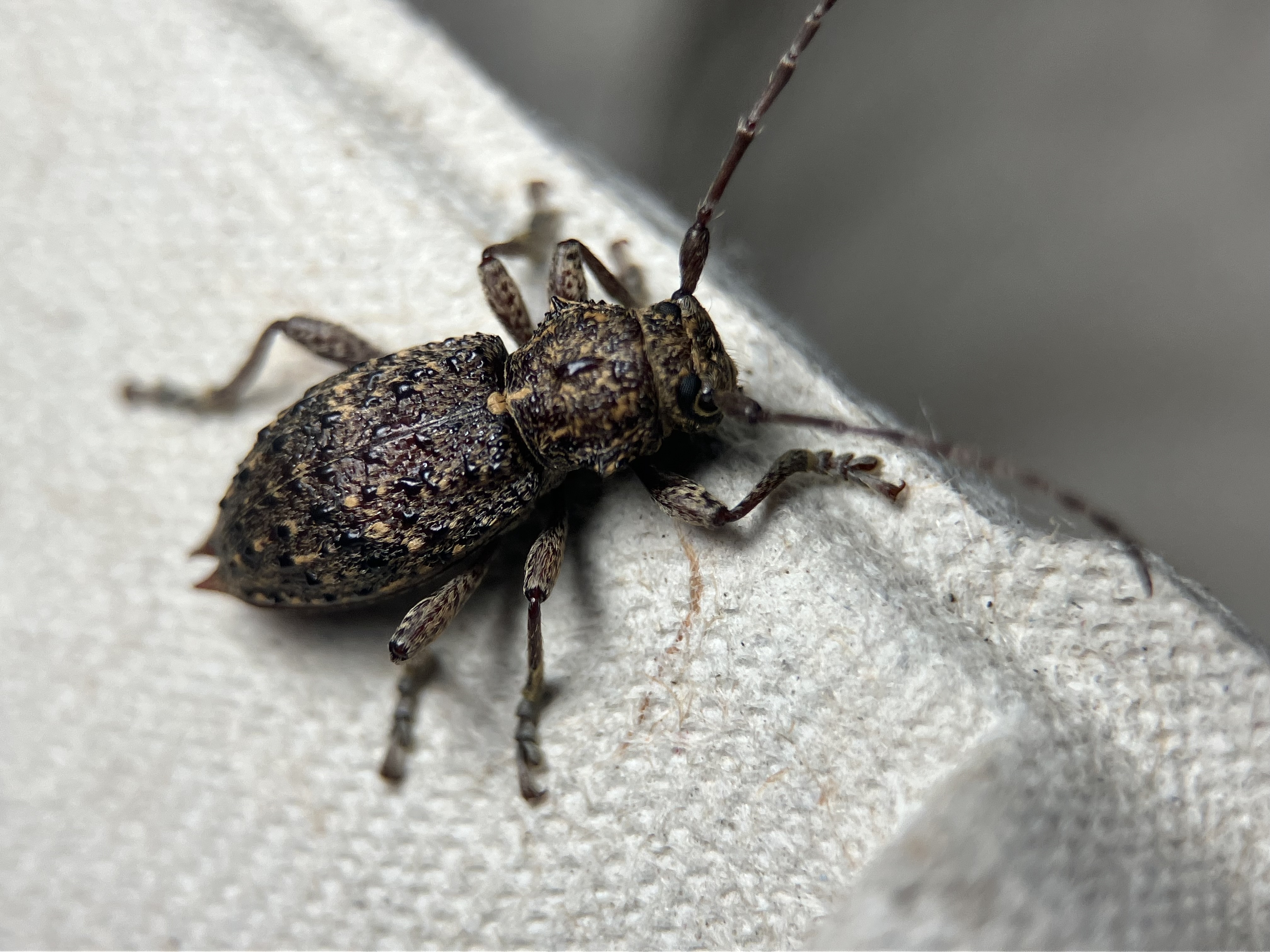
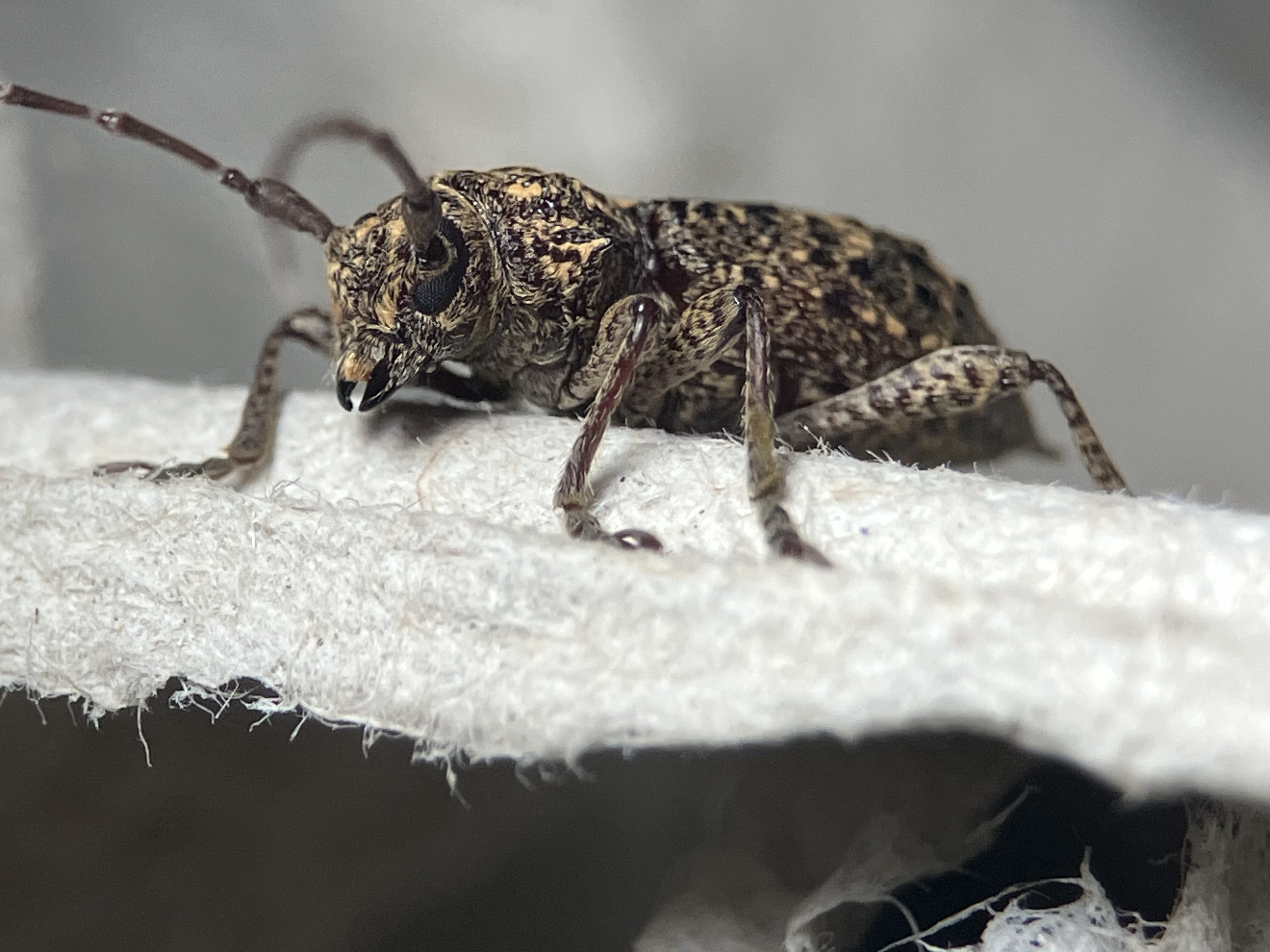
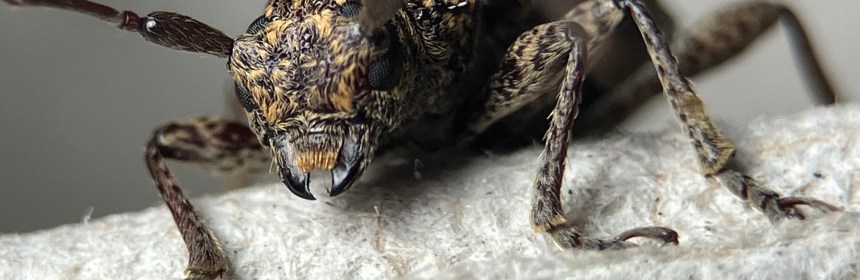
This unusual looking critter is a Long horned beetle in the family Cerambycidae, sometimes referred to as the Thorn- Tailed Longhorn Beetle because of the spiny projections at the posterior end of its body. The species is Plectrura spinicauda. Etymology for this bug’s binomial nomenclature consists of the generic name, derived from a combination of plektron (Greek for instrument to strike/pick) or plekein (to weave/twist) with oura (Greek for tail), and the species epithet combines from Latin spina (spine/thorn) and cauda (tail), translating to “spiny tail.”

Plectrua spinicauda

They are native to North America, with a geographic distribution in Western N. America (Alaska-n CA). P. spinicauda is a flightless beetle species with cool wrap around eyes, and as the name suggests, thorny projections at the end of its abdomen. The larvae have been found to develop in Alder, Willow, and Maple. They are important as decomposers and nutrient recyclers.

Author’s note. It is quite common for people to state that wood boring beetles kill trees. This is not necessarily true at all. In fact, most trees that are attacked by beetles are already in a state of decline. Just like humans decline with age or become ill with health problems, so do other things. Nature’s way of handling diseased and dying trees is to send beetles in (all sorts of beetle species) to help with the decomposition process – to recycle waste products and release nutrients back into the environment for other life forms to utilize.

Spraying a tree with pesticides as a preventative from the course of nature only worsens the situation. If you step back to assess the situation, you might ask yourself why the tree is dying. Is it from drought, heat, competition from other nearby trees, did someone weed whack too close to the trunk and cut or scar the bark? Are you running your lawn mower over exposed roots? Is the tree a short-lived species or maybe just entering the sunset of its lifespan?

There are many various reasons for trees to decline and die. Don’t blame the beetles for doing their job. They don’t just clean up the mess, but they feed many other organisms with their own lives. Beetle larvae are wonderful food for woodpeckers and other birds. Birds are in decline. Do something! Care! Get a book at your local library about how to create habitat so you have diversity of life and a healthy ecosystem in your yard space.

Thanks for reading!

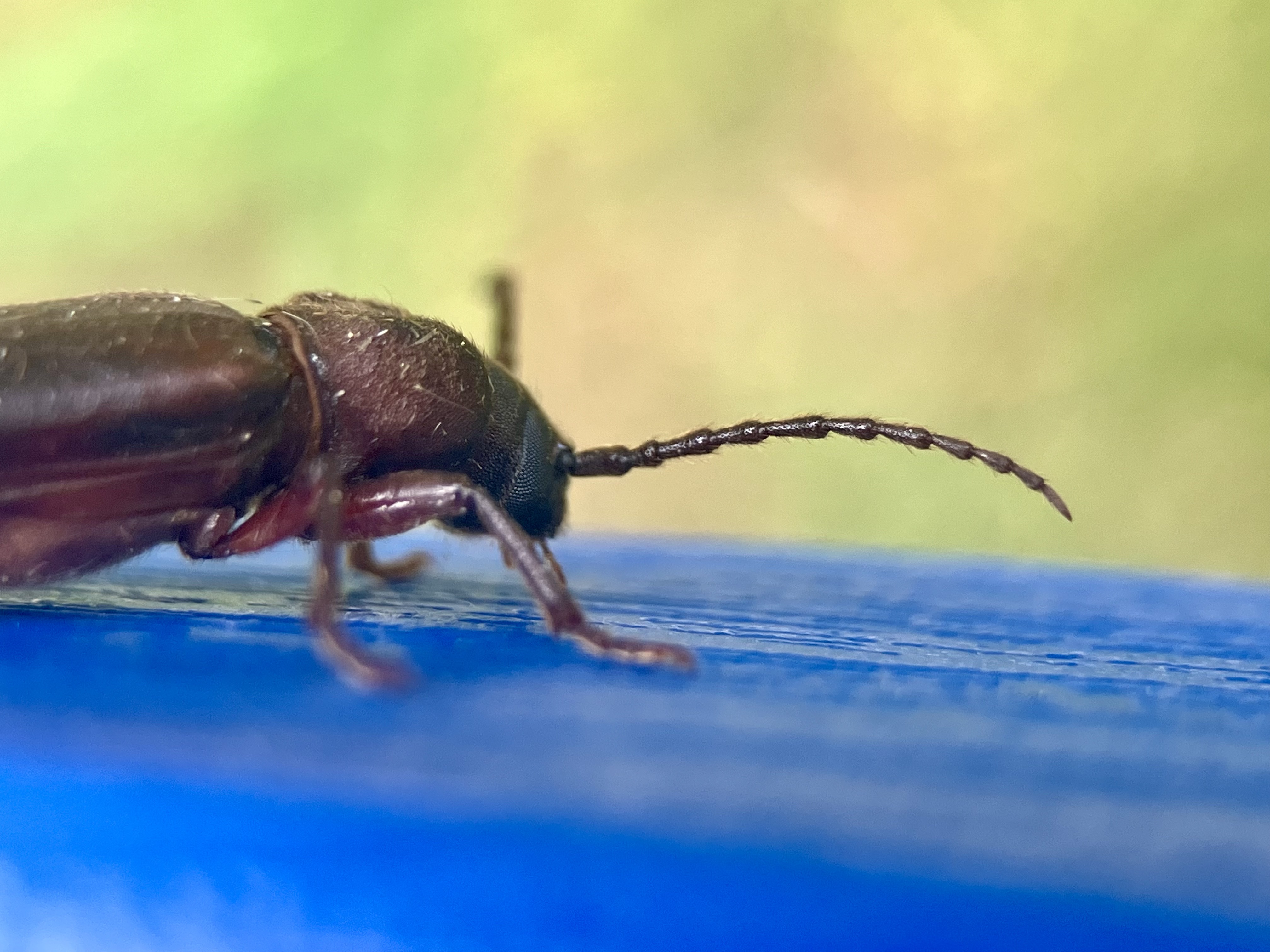
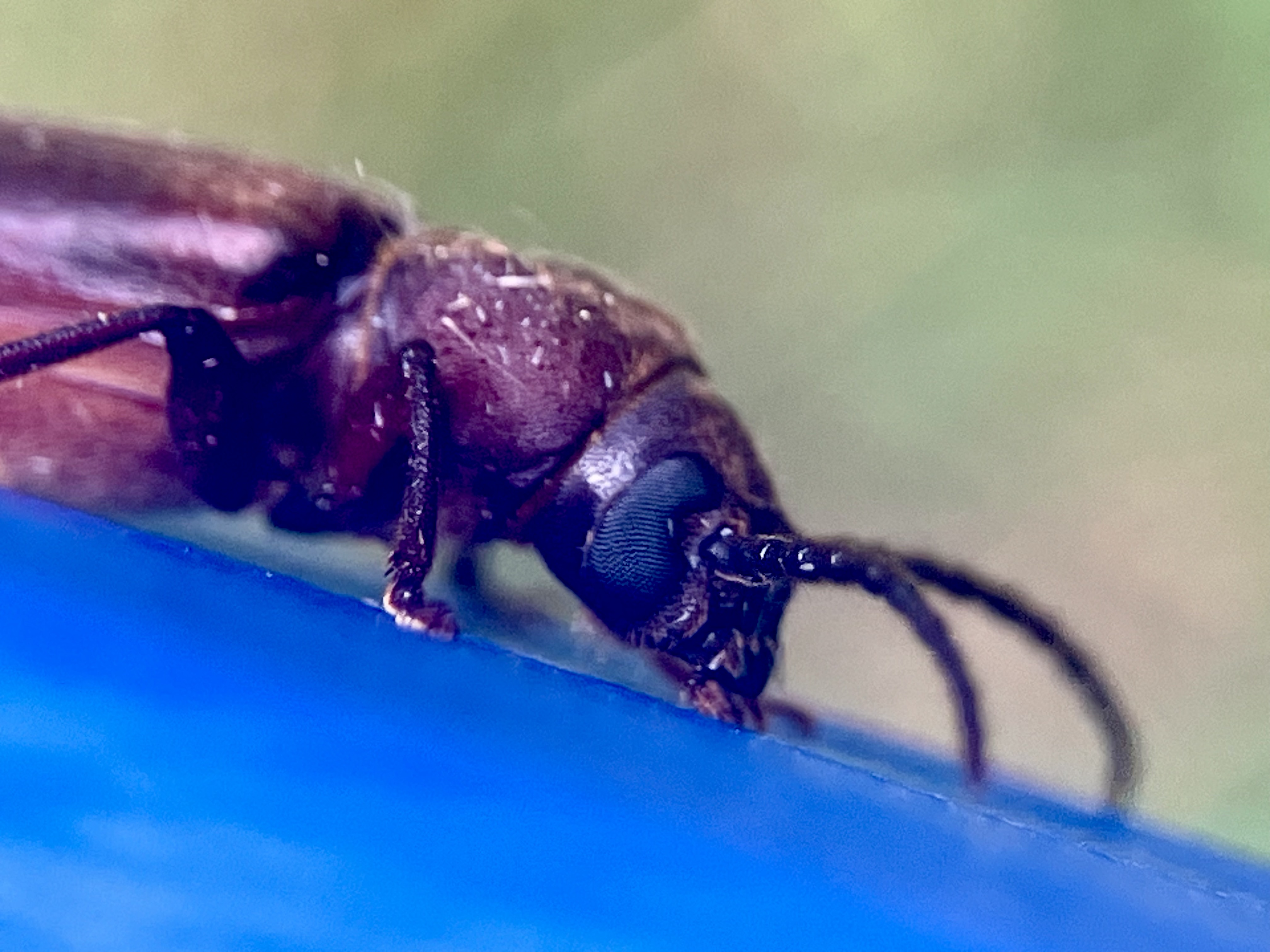
Megasemum asperum, a Cerambycid Beetle

Here is a new-to-me Cerambycid (longhorn) beetle. I haven’t added one of these to my photo collection in the 15 years I’ve lived on San Juan Island, so note here that they are “UNCOMMON” and not populous in number.

This species is the only one in its genus in North America. It is Megasemum asperum. I see in perusing iNaturalist.org that there have been 67 reported observations dating back to 2007.

Location: San Juan Island, WA

ID: Megasemum asperum

From Bugguide.net

Size: 18-25mm

Season: July to August (this is when you could see an adult)

Numbers: a single species in the New World & in NE Asia

It was described by John Lawrence LeConte in 1854

From Beetles of Western North America – “Larvae mine Douglas-fir (Pseudotsuga menziesii) and fir (Abies). Adults are attracted to lights during the summer. Found in coniferous forests of western North America,” (Dr. Art Evans, entomologist, 2021).

Your take away message – NOT a pest. NOT a tree killer. NATIVE species! Performs important recycling of nutrients role in ecosystems allowing regeneration in our forests. Appreciate Biodiversity.

Thanks for reading!

Good neighbors

So my neighbor brought me a bug this afternoon and it’s not even my birthday! Thank you Julia. You made my day! 🐝🐛🦋🦗🐞

(Trichocnemis spiculatus) The Ponderous Borer or Western Pine Sawyer

Ponderous Borer (Trichocnemis spiculatus)
Trichocnemis spiculatus
San Juan Island, WA
July 31, 2019
Trichocnemis spiculatus
San Juan Island, WA
July 31, 2019

Last year, I had someone from Orcas, Island, WA submit a fabulous video of one of these with footage of it ovipositing! Check out this link to watch more here ~ https://www.facebook.com/joysmurf/videos/10155670480191451/

Xestoleptura crassipes

Xestoleptura crassipes
San Juan Island, WA
July 16, 2019

Xestoleptura crassipes is a species of flower longhorn beetle. Taxonomically it is placed in order Coleoptera, family Cerambycidae. The species name “crassipes” means “thick-legged.” Adults are attracted to flowers (June-September) and larvae are wood borers, found in forested areas and associated with firs and oaks. Adult body length approximately 10-17mm.

I photographed this specimen on July 16, 2019. It was the only one on the daisy plant by my front door. On the morning of July 18, there remained the single beetle (or I believed it to be the same one). That evening, I observed a 2nd beetle feeding on an adjacent flower. This morning (July 19th, 2019), they were both gone. Perhaps this was a successful meetup for finding a mate. 🌼

Xestoleptura crassipes feeding on daisy pollen

Xestoleptura crassipes on Pearly Everlasting (Anaphalis margaritacea)

Xestoleptura crassipes

Flower Long-horned Beetle (Xestoleptura crassipes) on Pearly Everlasting (Anaphalis margaritacea)