It was 51 and sunny to partly cloudy yesterday afternoon about 4pm when I meandered down to our unkempt orchard to look for pollinators. The temps had dropped the night before to around 34-35, so you could say it is still pretty chilly here in the PNW on San Juan Island. At least it is in our neck of the woods.
We have a couple of Yellow Plum trees in bloom. Don’t ask me the species. I don’t know. I might get ONE or TWO plums a year if I get lucky. It’s not for lack of fruit. It’s my lack of ambition or desire to go down and collect them all and I am NEVER EVER peeling plums again to make jam or anything like that ever again in my life. The time I did, it took my wrists months and months to recover. Also, I just don’t want to be a homesteader. Don’t get me wrong, I love living on 7 acres, but it is not because I can have a garden. It’s largely because I didn’t want to have close neighbors. I won’t get into that here, but let me tell you that 7 acres is nowhere near large enough. You need a hundred, and your house needs to be in the middle.
So, what flies do I have to show you today? There were four species I counted, maybe five, but the fifth one was so tiny, I didn’t work on any identification for that one. There was only one solitary bee. I’ll point out here that there were ZERO honey bees. #1, it’s too cold, and #2 because they can’t fly in temps over 50, they are not going to be the ones pollinating your fruit trees. It’s largely flies, moths, and maybe some ants and beetles. Mostly it is flies.
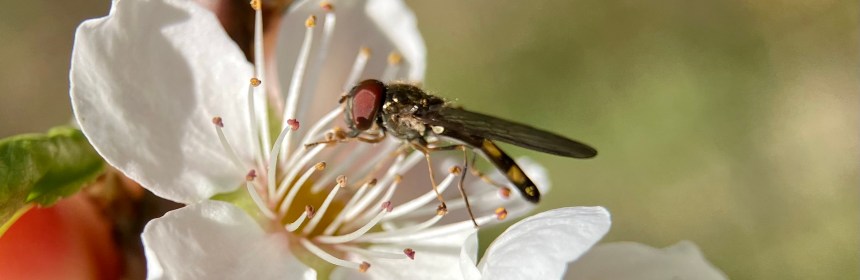
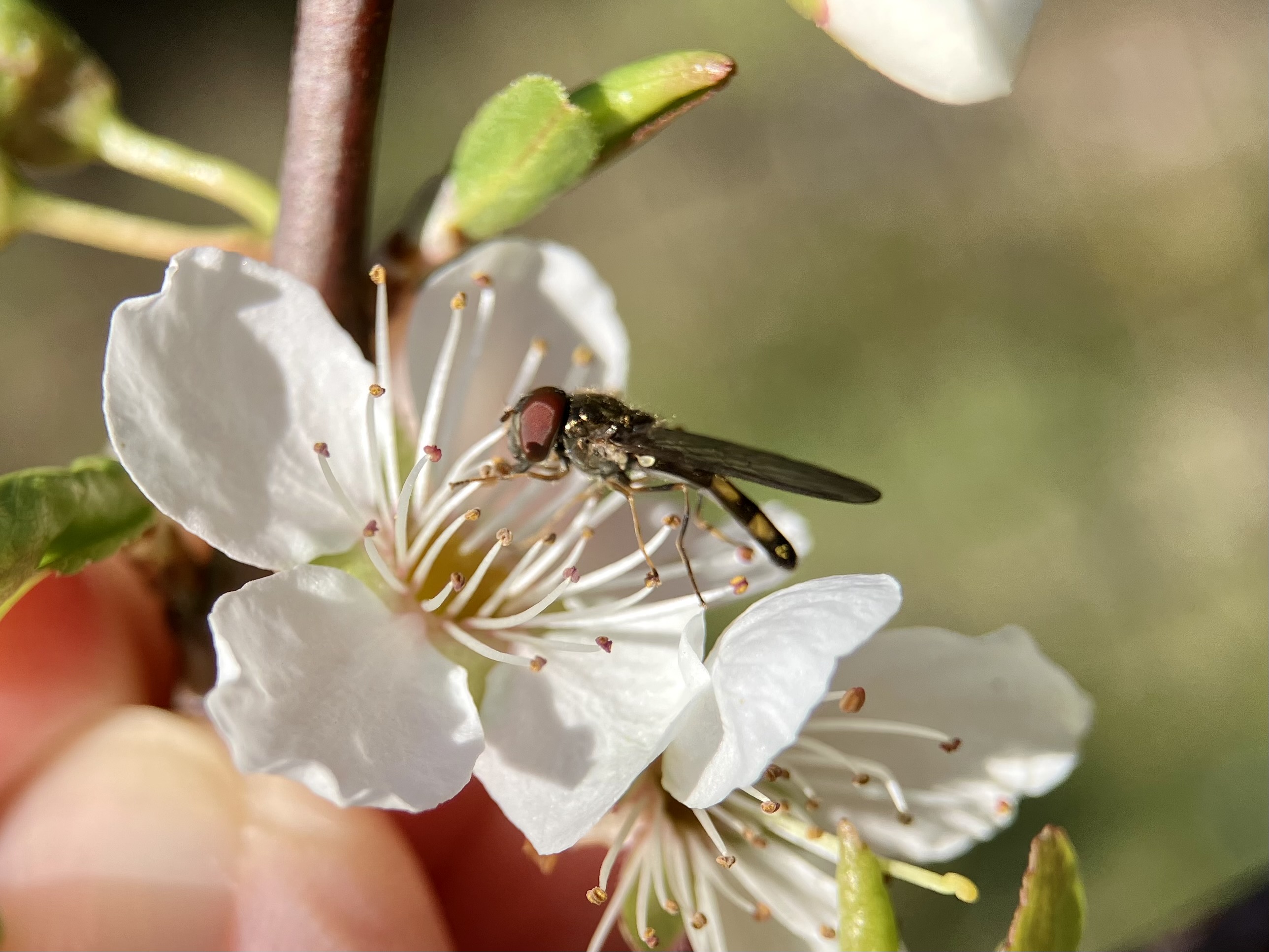
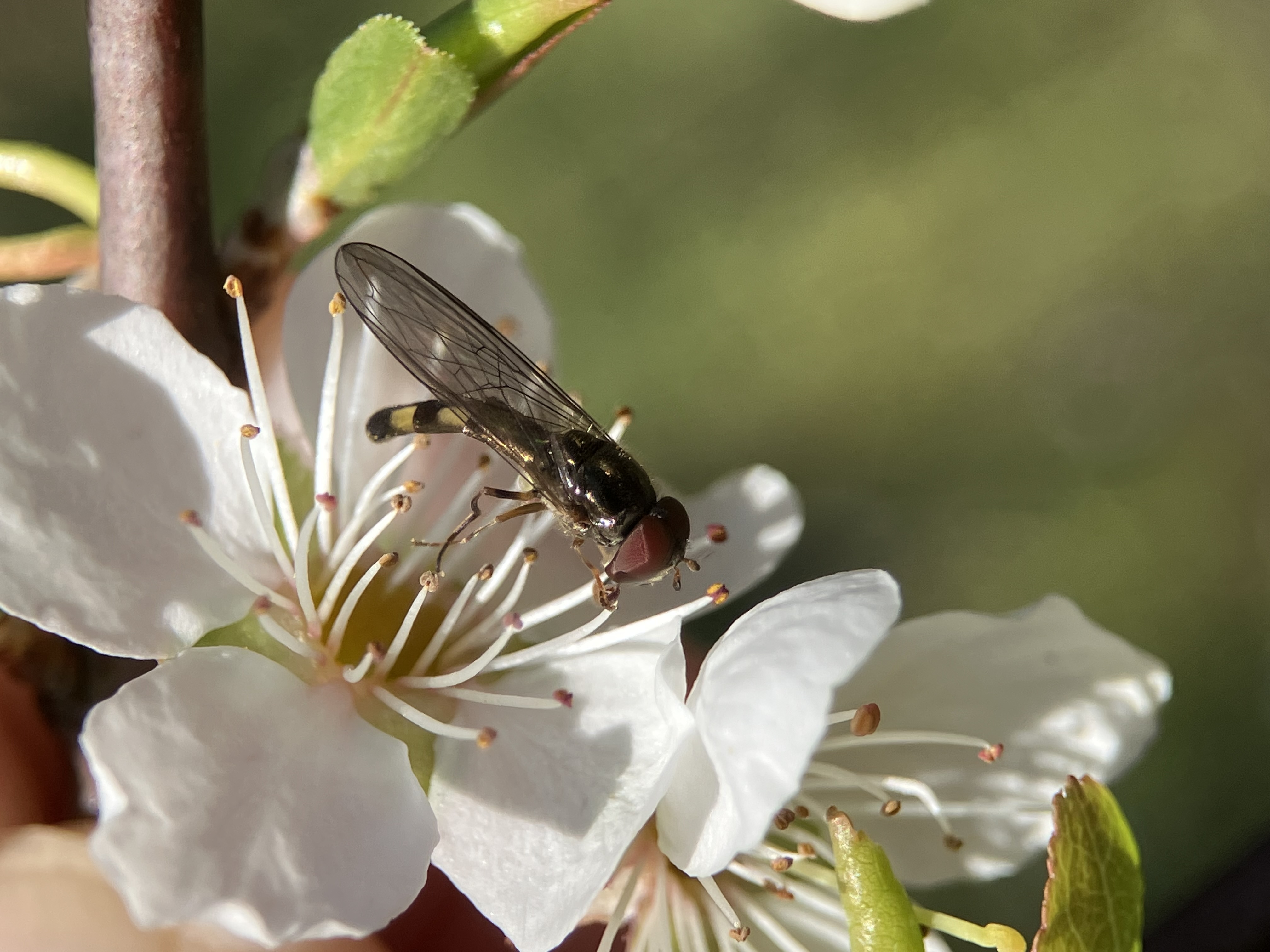
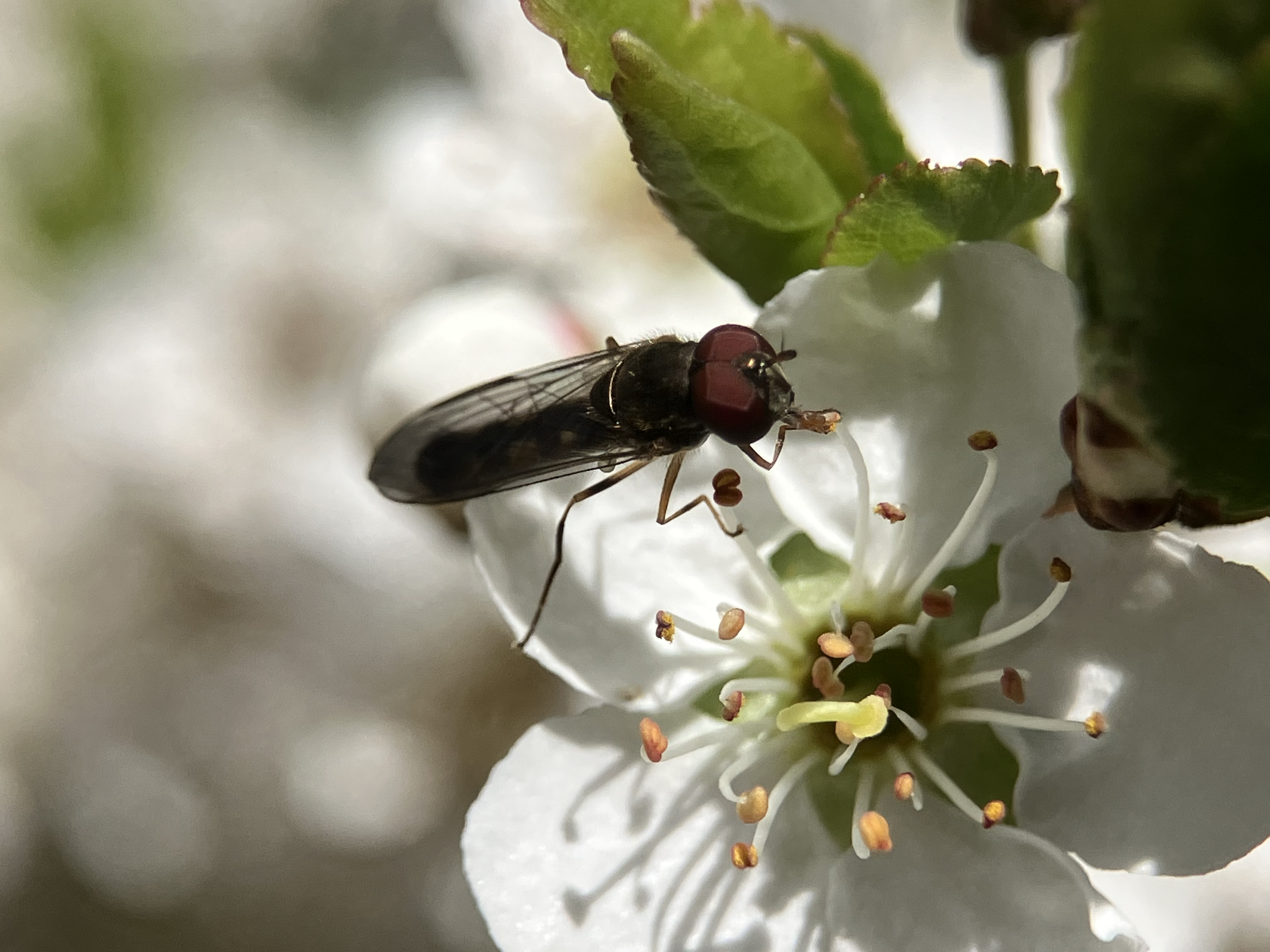
(Melanostoma mellinum) Variable Duskyface Fly
(Melanostoma mellinum) Variable Duskyface Fly
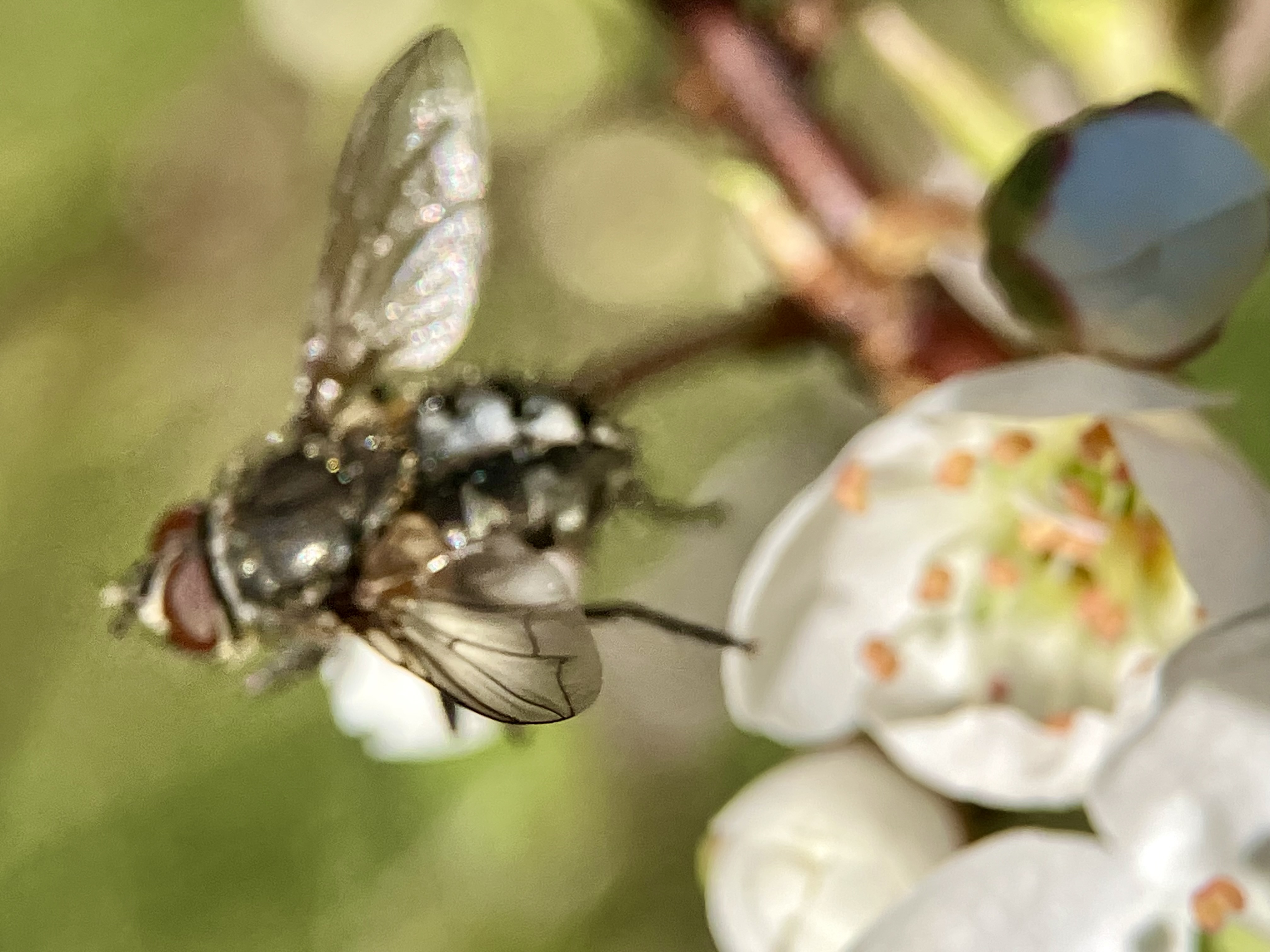
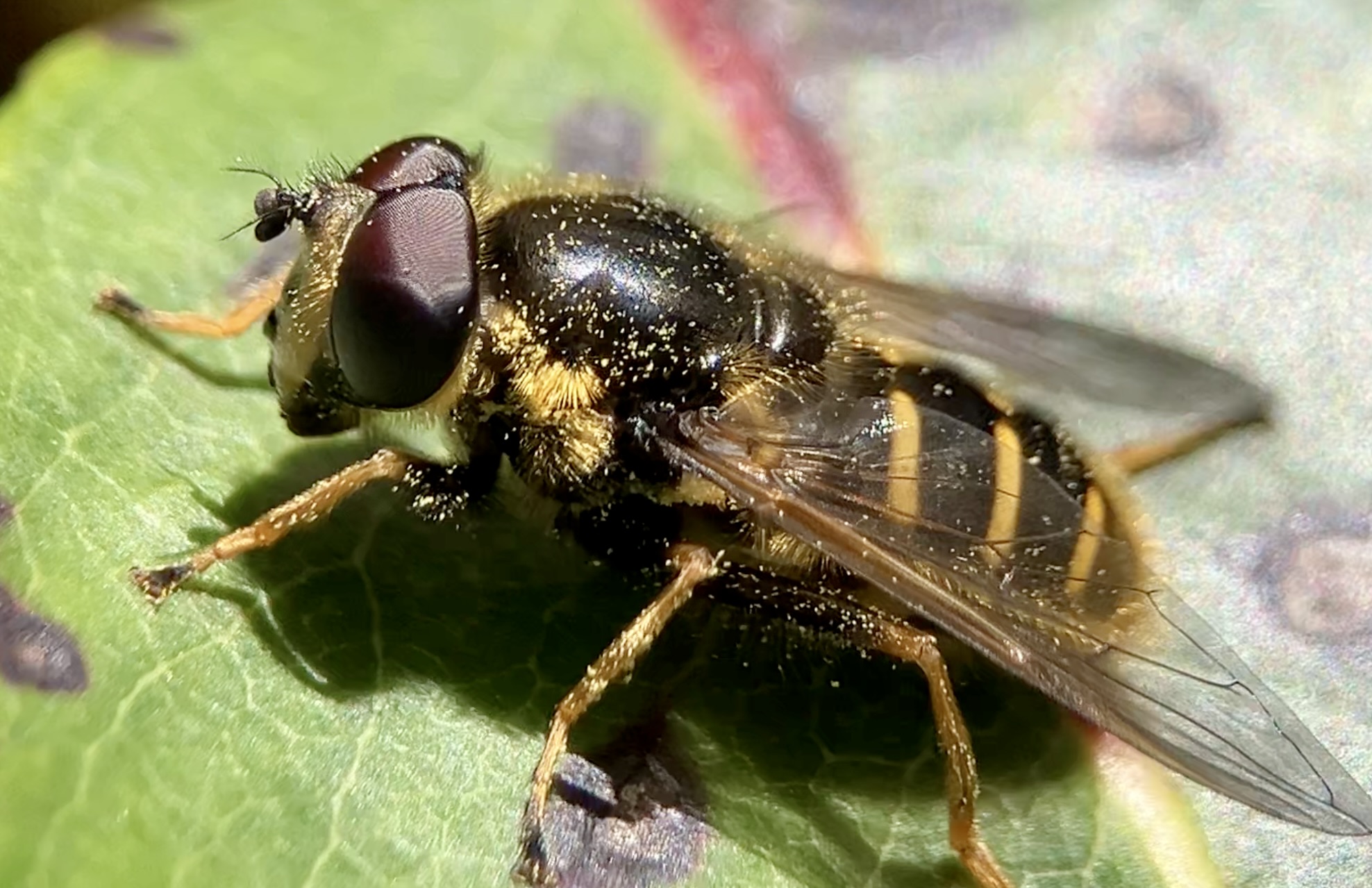
Fly #1 The Variable Duskyface Fly (Melanostoma mellinum). This is a species of Syrphid Fly and I believe my specimen to be male. Syrphid flies are wonderful in gardens and orchards. They not only pollinate, but they scavenge aphids away in their larval form. Watch this one in action here
(Melanostoma mellinum) Variable Duskyface Fly
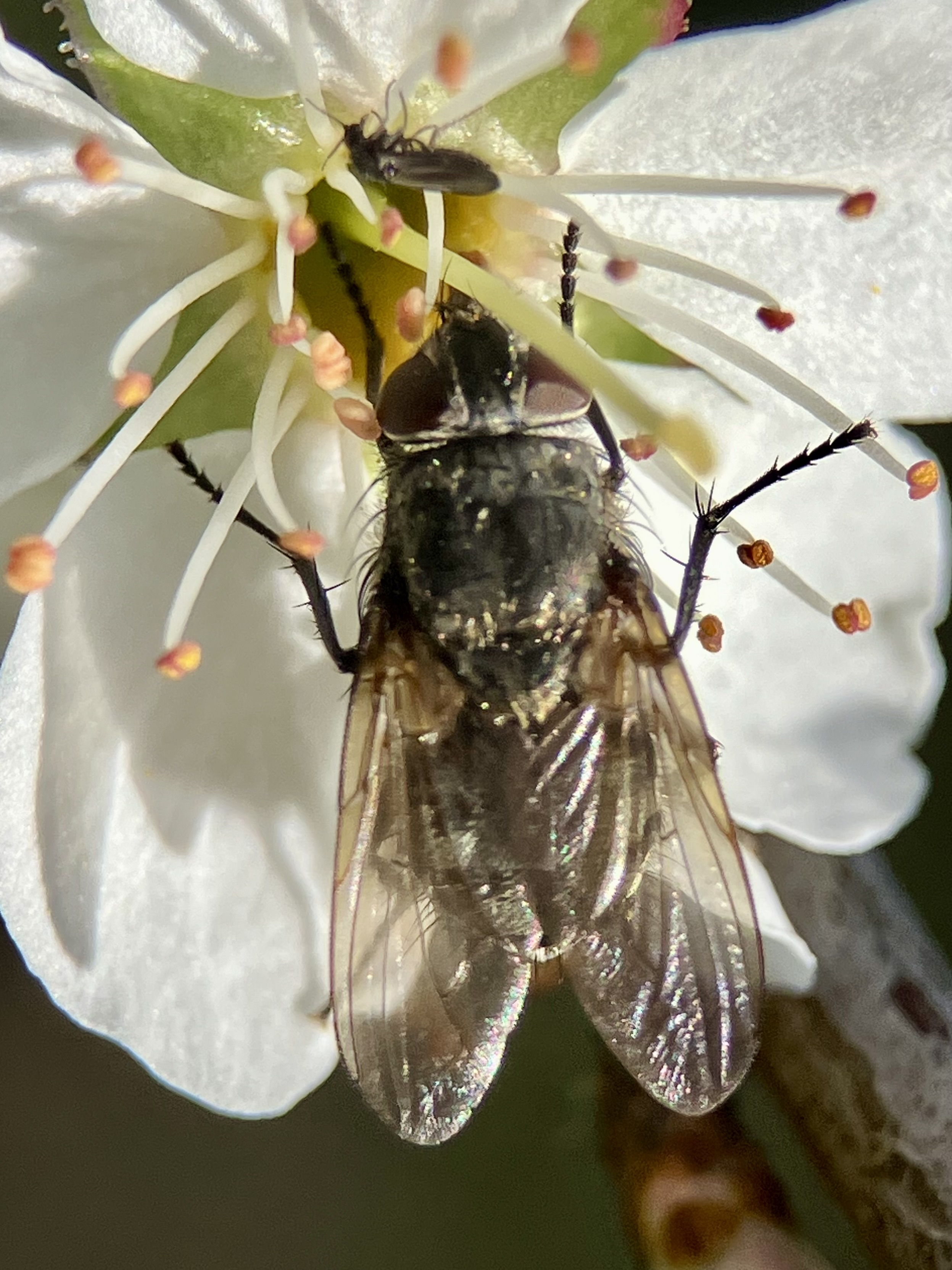
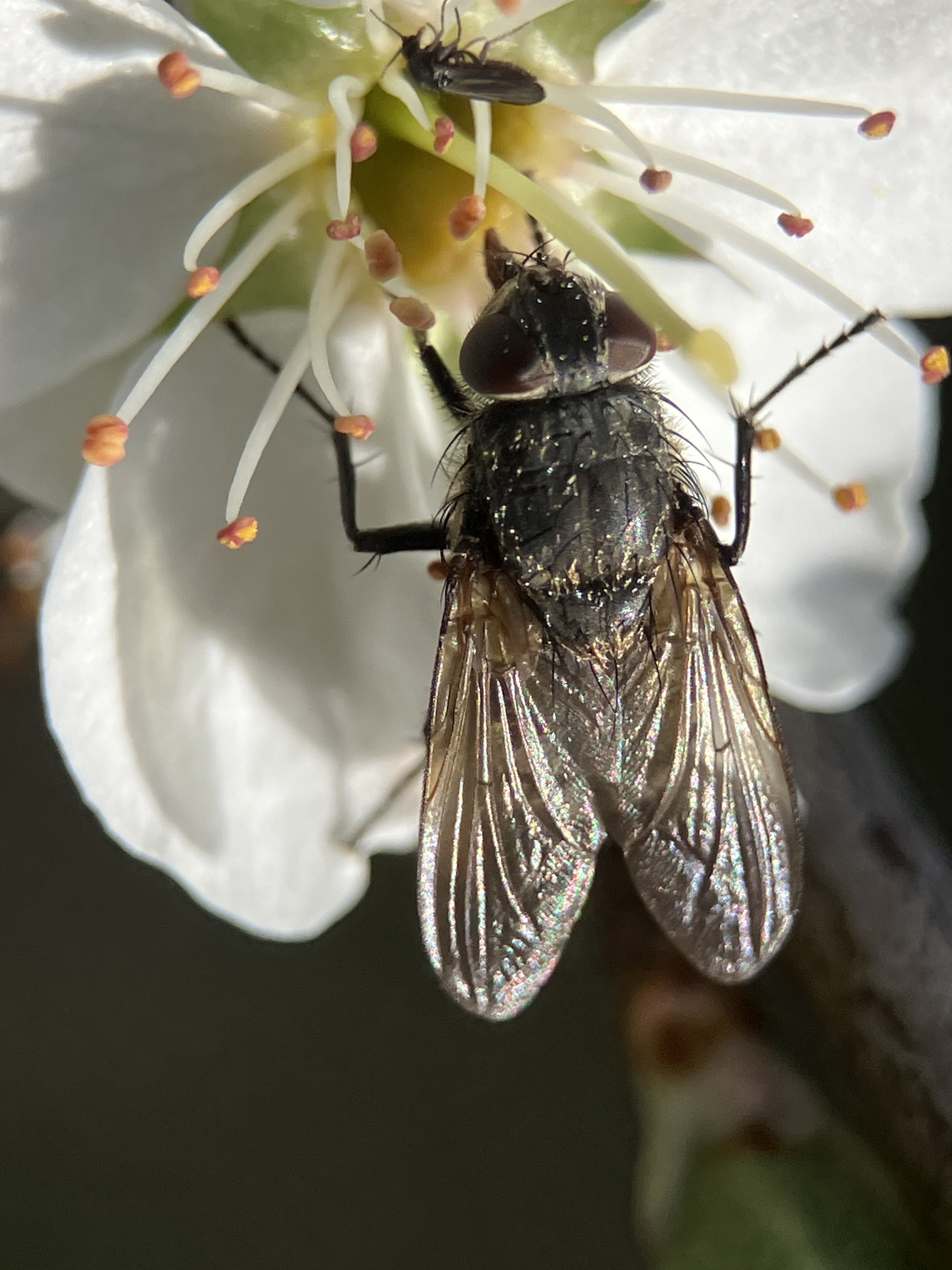
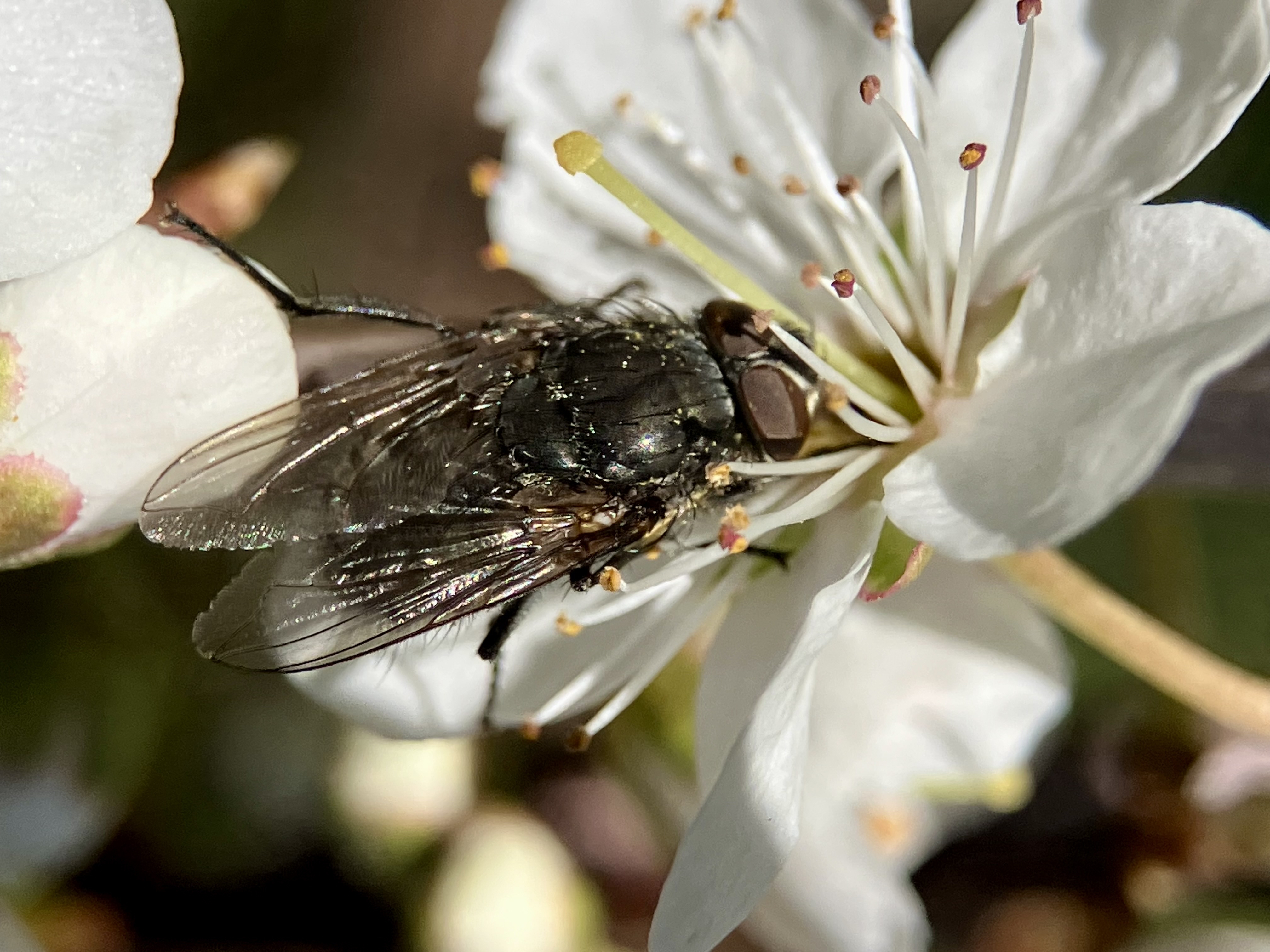
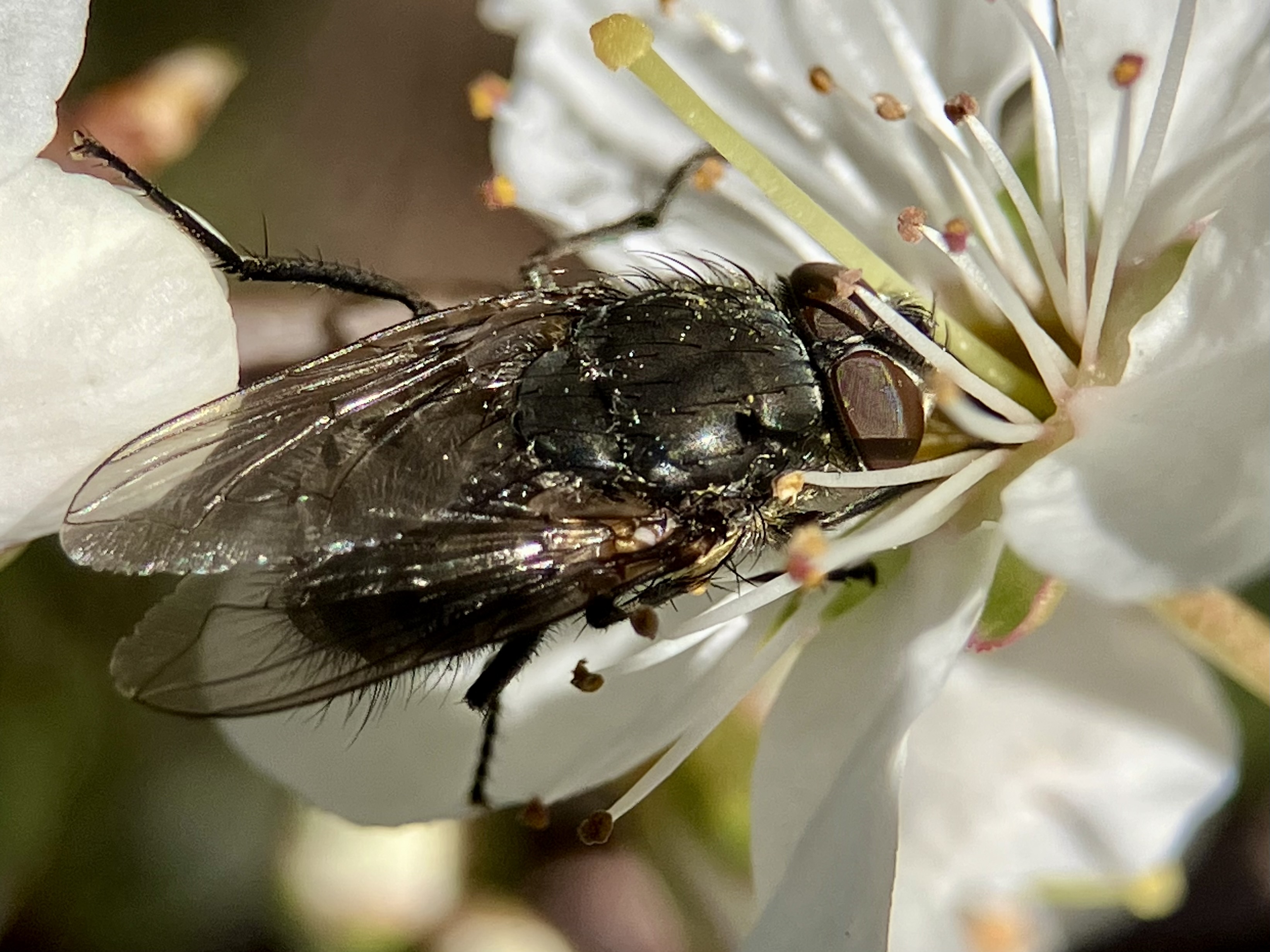
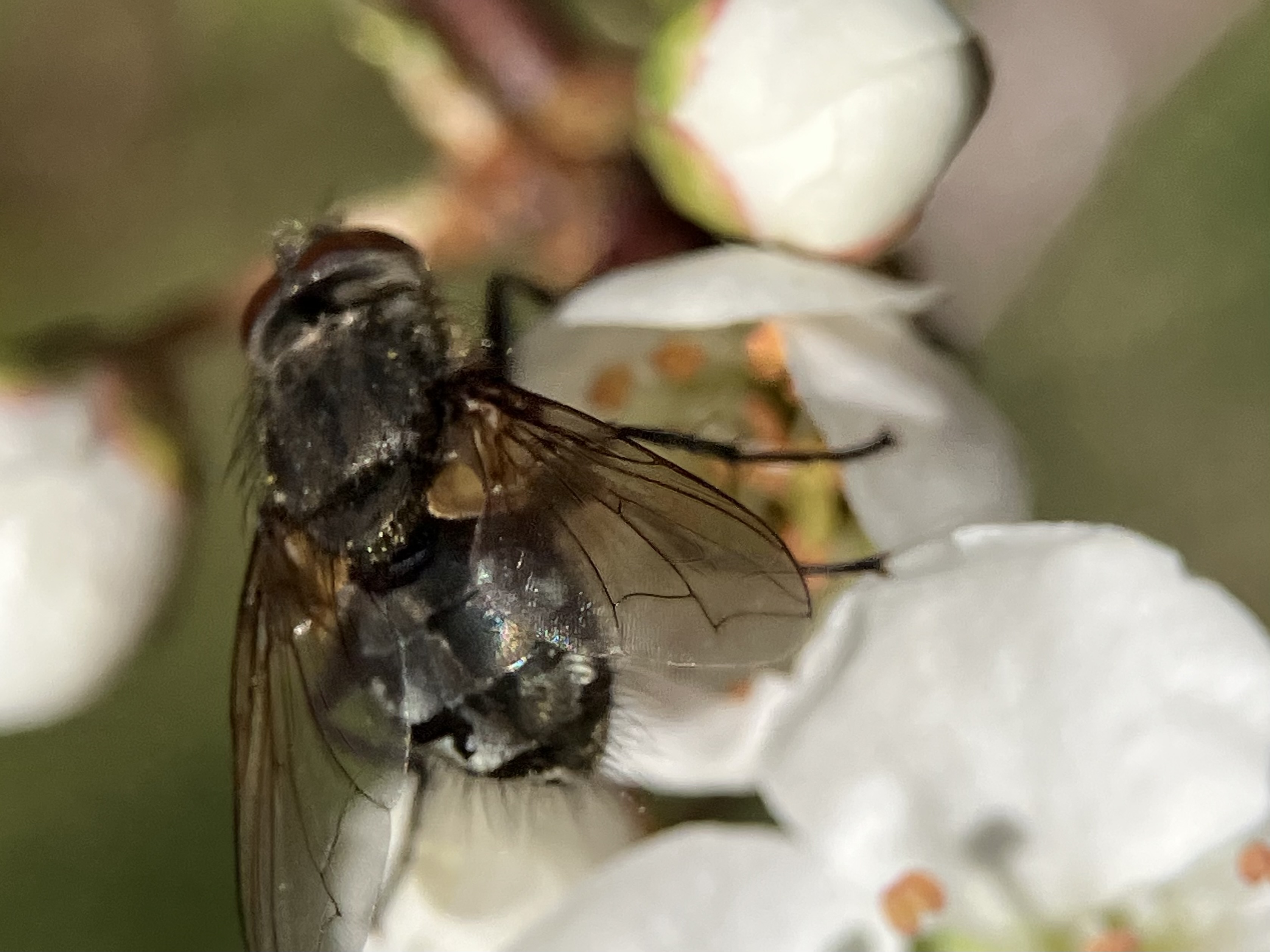
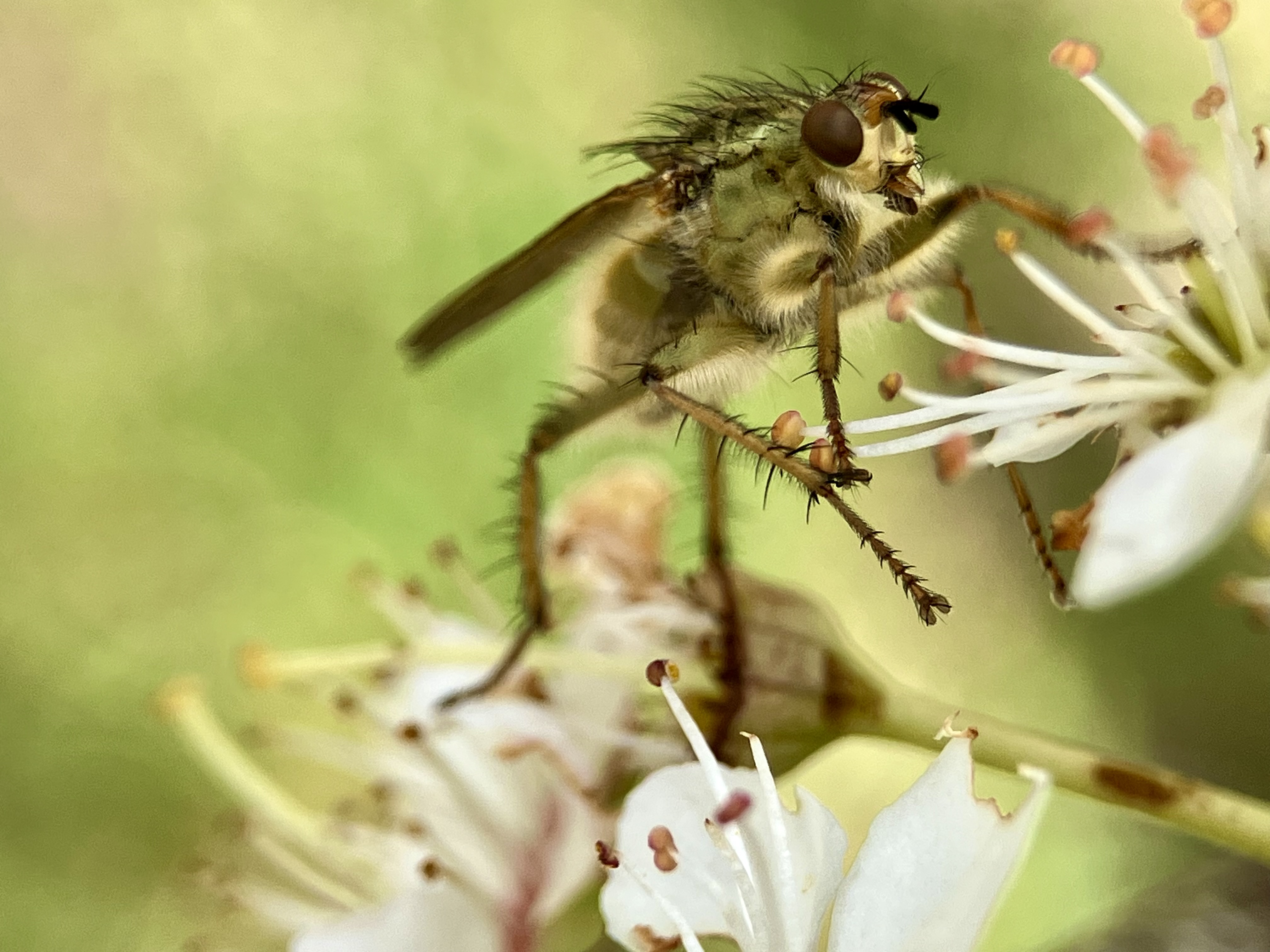
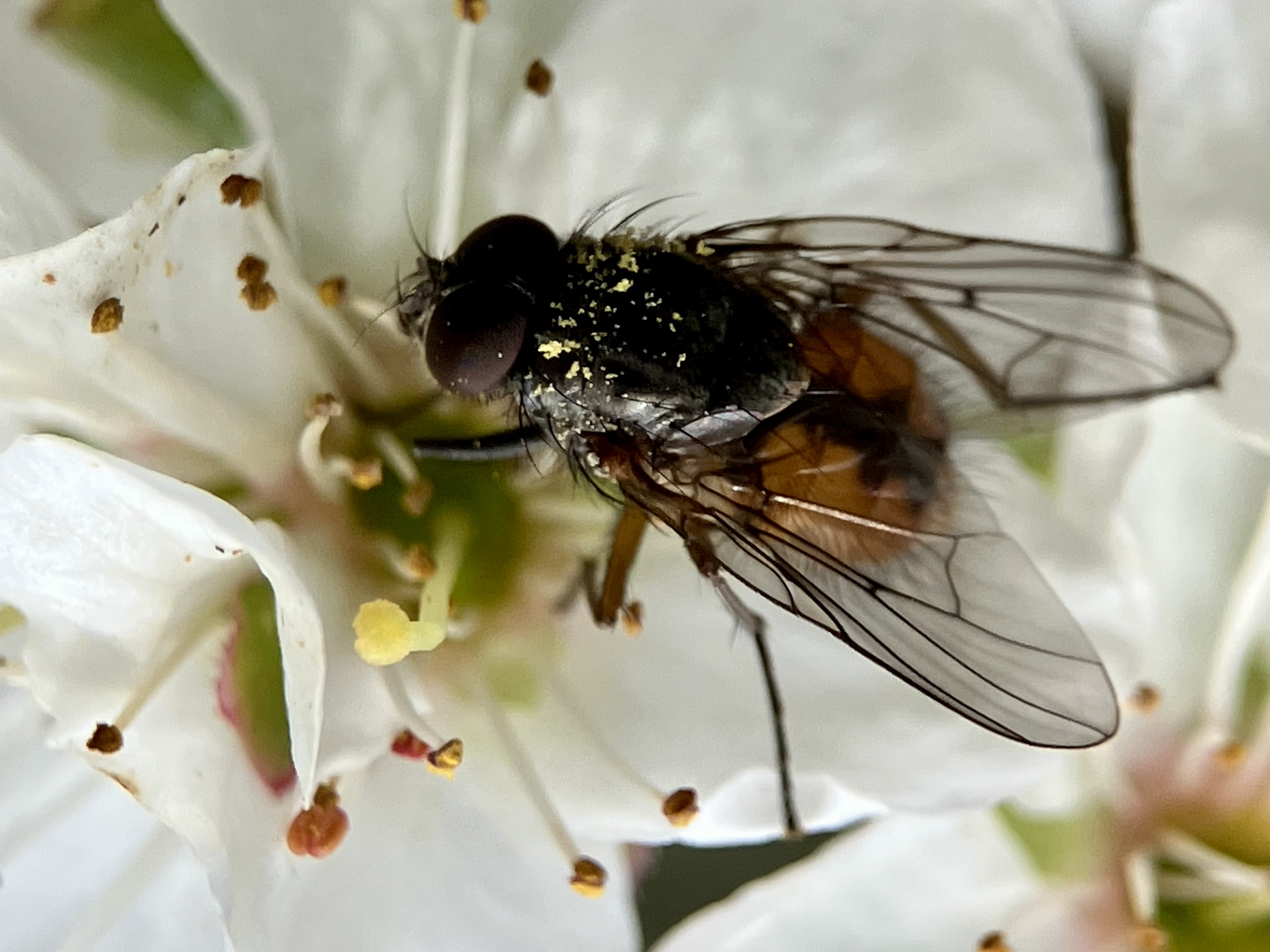
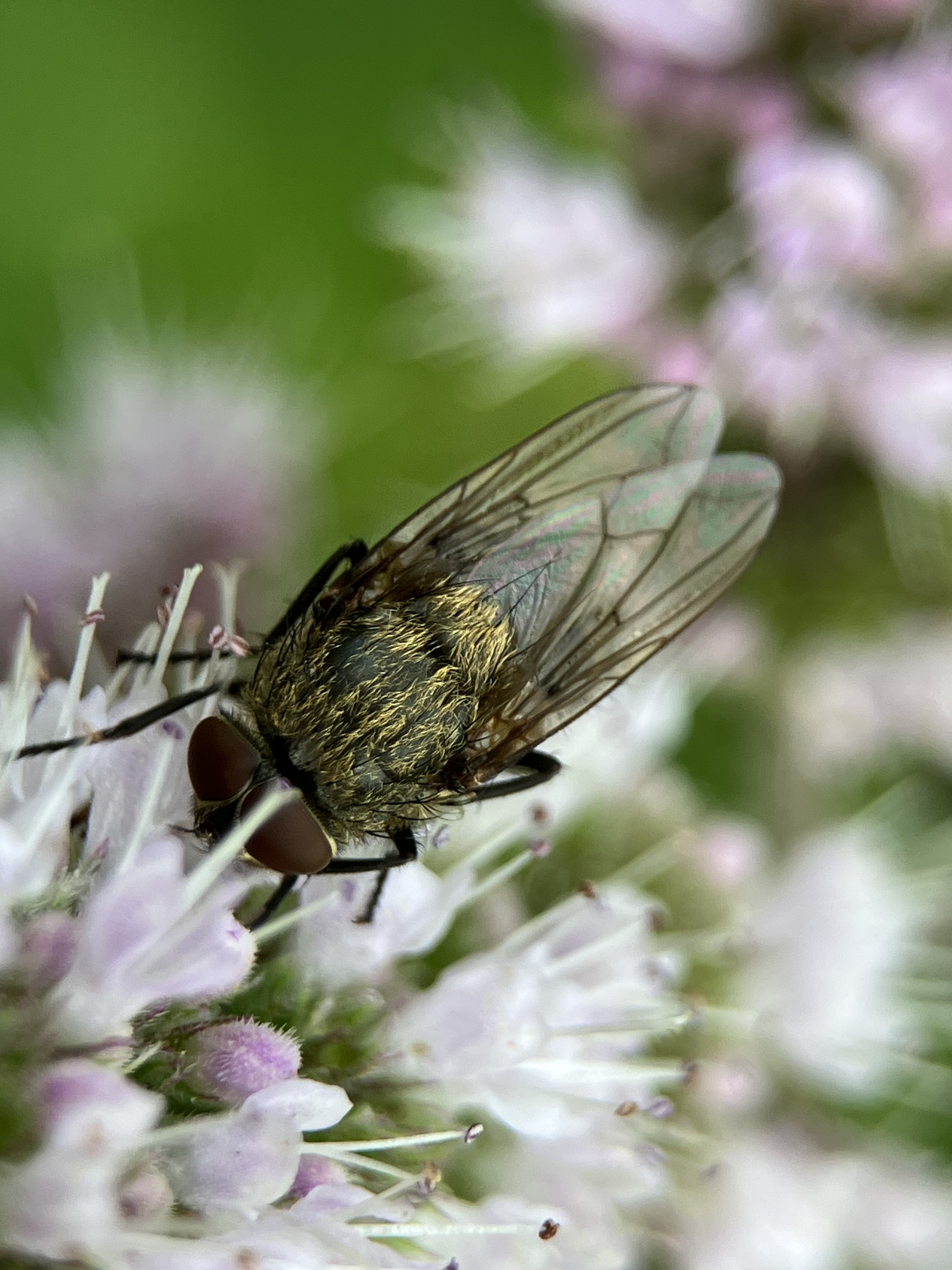
Fly #2 The Cluster Fly (Pollenia sp.) Pollenia flies have had some taxonomic revisions that I am not completely up to speed with, but suffice to say that they are now in their own family (Pollenidae) and I’ll attach some references at the end if you want to deep dive into the literature and try and figure out the species here.
What I can tell you about these flies is they got their name because they will sometimes overwinter in human structures (clustering). They are an Old World group, so these are not native to North America. They are parasites of earthworms, or at least one of the species in the Genus is. They also were ALL over the plum tree. I bet I counted fifty of these.
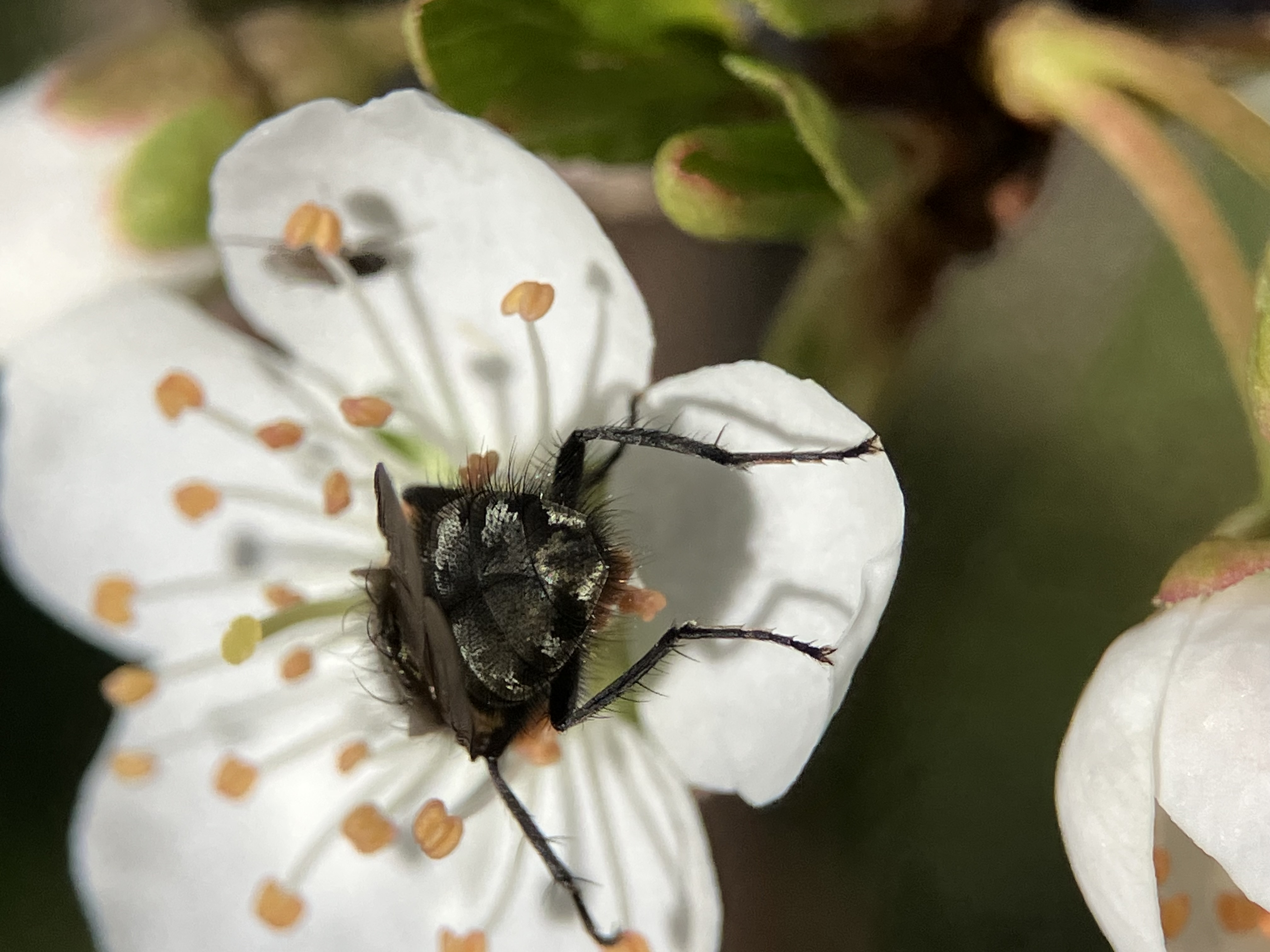
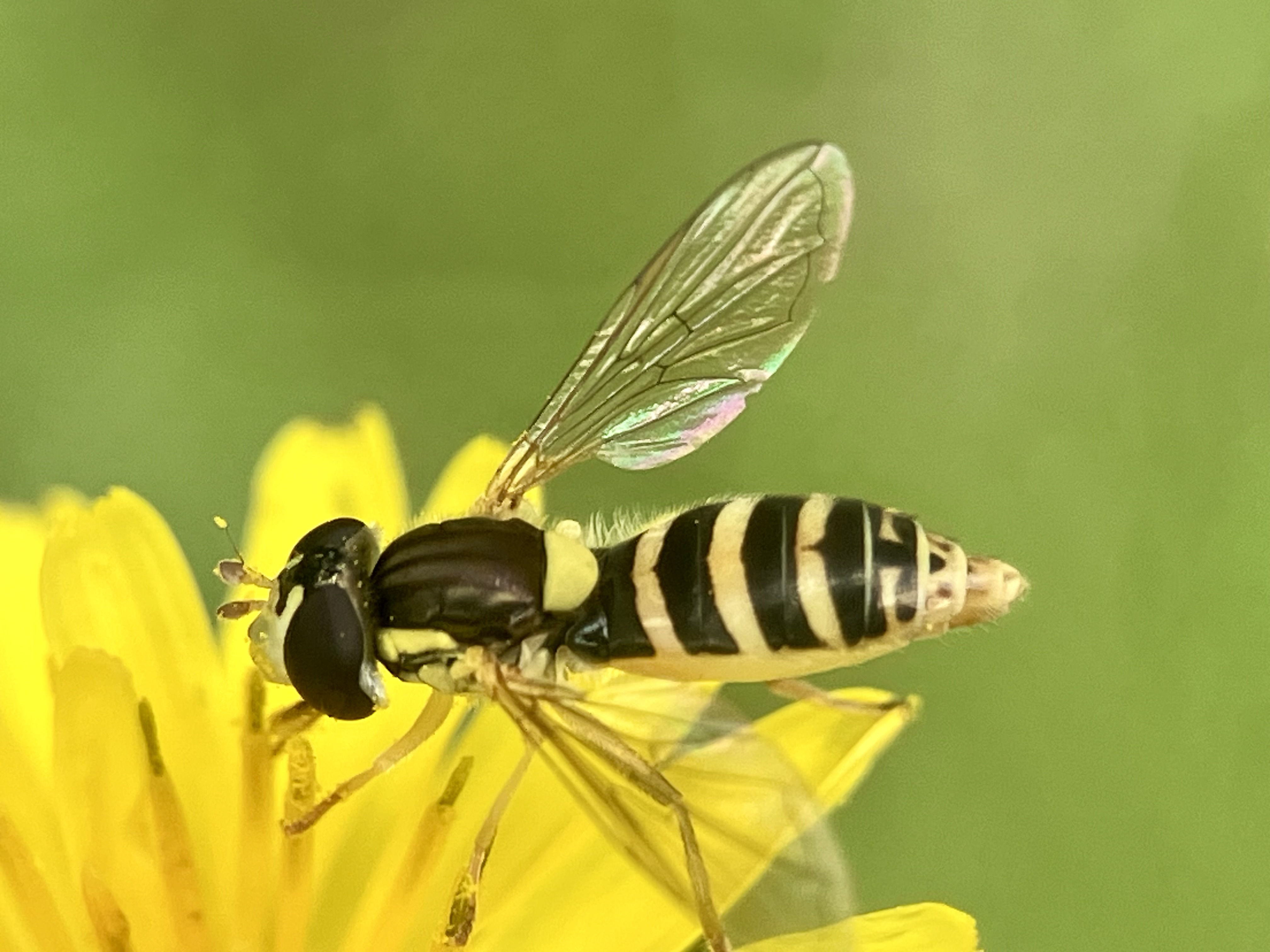
Fly #3, I believe this one (below) is the Greater Spring Blacklet (Cheilosia grossa), a species of Hoverfly in the family Syrphidae. This species is native to Europe and was introduced to the United States as a biocontrol for thistles. The adult is obviously enjoying its role as a plum tree pollinator and its offspring (the larvae) will help manage the thistles on our property, I suppose.
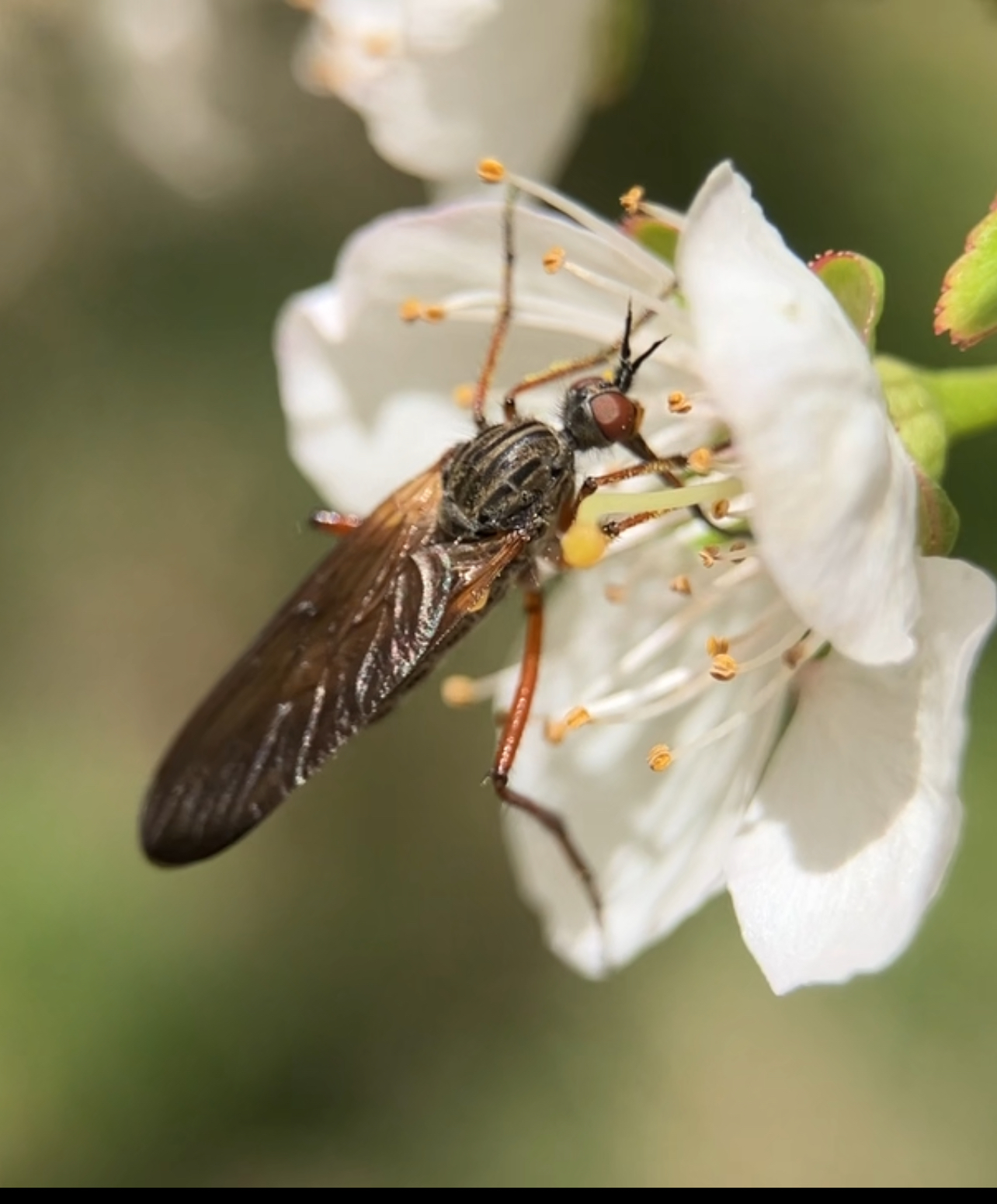
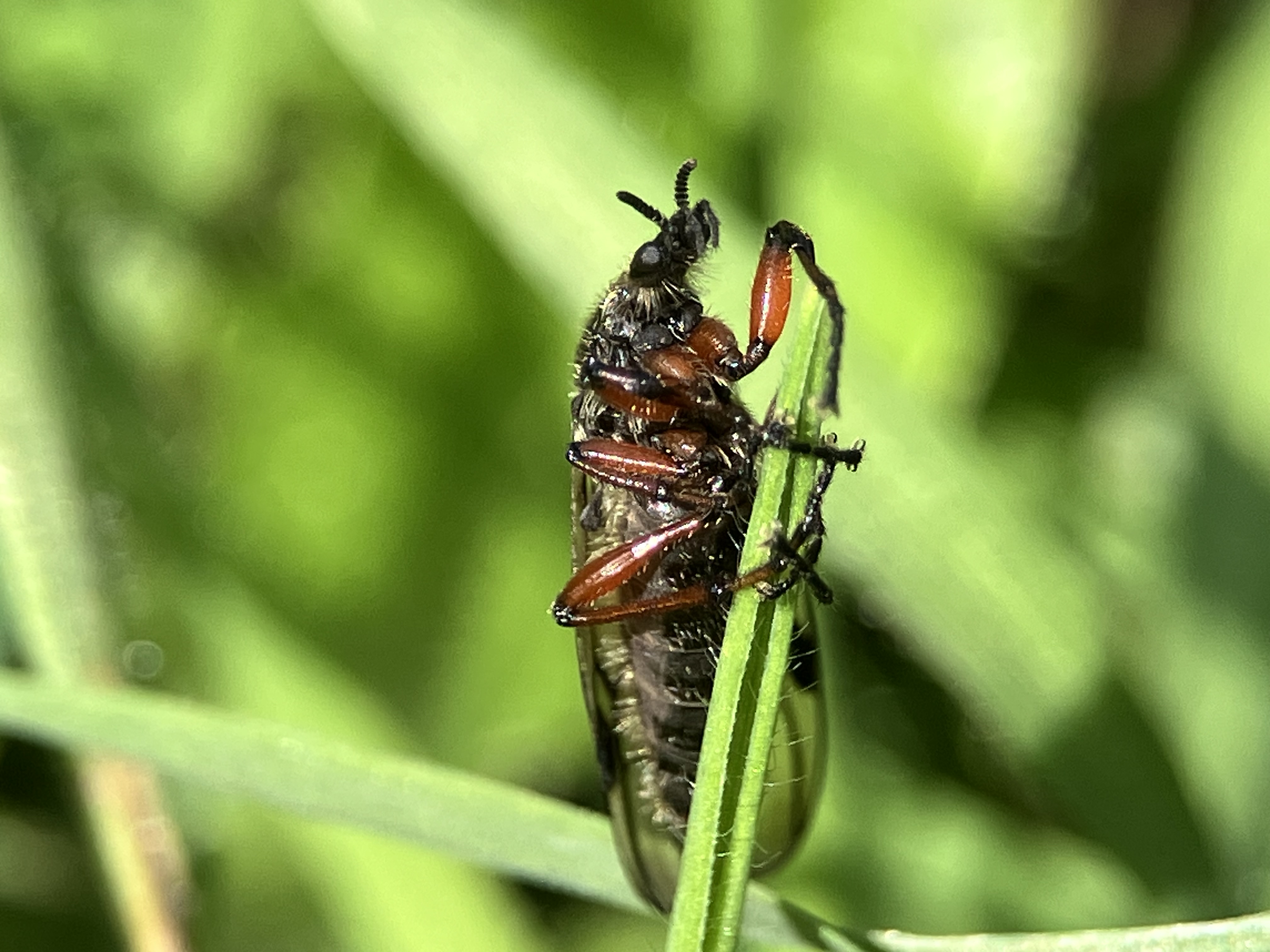
Fly #4 is Empis barbatoides, a Dance Fly. I had to stand on my tippy toes to try and get this video clip for you. I love this species of fly. They are so cool. The males catch other fly species, like March flies (Bibionidae) and make little balloon packets to woo a female. If you don’t believe me, you can read one of my earlier blog posts about them. I know a spot where the males seem to gather together to dance too. I keep hoping I’ll get some good video of them dancing to share.
And that’s all for tonight. It’s late and I’m going to bed. Just remember to repeat to your friends that FLIES are your friendly pollinators, and some of them are pest predators too. We need more people to advocate for them. They aren’t always a pest! 🪰
References
Alcock , John. 1973. The mating behaviour of Empis barbatoides Melander and Empis poplitea Loew (Diptera: Empididae), Journal of Natural History, 7:4, 411-420, DOI: 10.1080/00222937300770301
Gisondi S, Rognes K, Badano D, Pape T, Cerretti P (2020) The world Polleniidae (Diptera, Oestroidea): key to genera and checklist of species. ZooKeys 971: 105-155. https://doi.org/10.3897/zookeys.971.51283
Jewiss-Gaines, A., Marshall, S.A., Whitworth, T.L. 2012. Cluster flies (Calliphoridae: Polleniinae: Pollenia) of North America. Canadian Journal of Arthropod Identification No. 19, 15 February 2012, available online at doi: 10.3752/cjai.2012.19
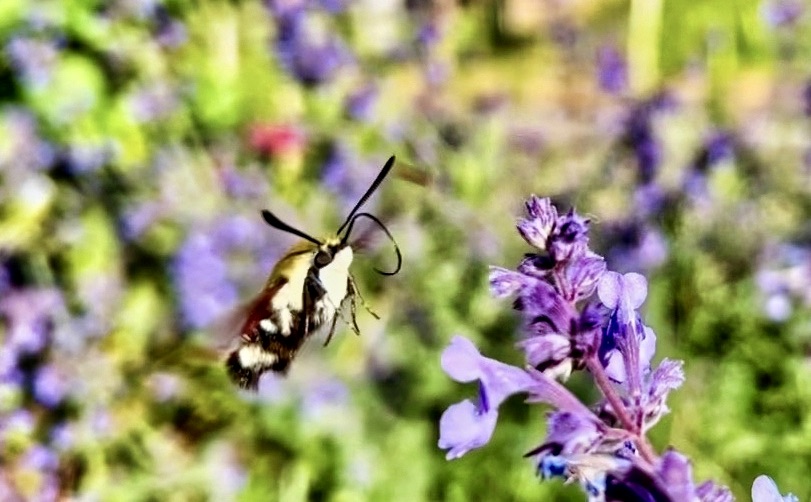
Hemaris thetis moth nectaring at Catmint (Nepeta sp.)
With spring around the corner, I thought it might be a good time to write up a post about bees. For those of you who don’t know me, I’ve been a San Juan Island resident now for over 17 years. When I was finishing my Masters Degree in Entomology and Nematology, I was required to take bee keeping as part of my advanced Apiculture coursework.
My former bee keeping days! 2010
I won’t lie, I did enjoy the bees. I had one of the hives under a bedroom window, and it smelled so wonderful to open that window and smell the bees in the house. In my studies, I learned a lot about social insects. The other thing I learned was bee keeping sure is an expensive endeavor.
Why? Well mostly because the bees had to be replaced every year after they died over the winter from starvation. They didn’t always starve, but in the 6 years or so of keeping bees on the island, I think my longest surviving hive lasted about 4 seasons. That one, I can assure you, only lasted that long because I fed them sugar water. I was feeding the bees a quart of sugar water at least twice a day. They had all of that, and I never took any honey from my hives. All the costs added up. They also sting.
In my experience, I concluded honey bees weren’t exactly the best pollinators here either. As I spent more and more time in my study of insects and moved to a property with an old orchard (plums and apple trees), I saw the insects doing most of the pollination were flies. We have some incredibly cool species of flies too! At night, the insects pollinating these trees included many moths. Just an FYI, flies and moths are particularly attracted to the color white (same color as early flowering fruit trees).
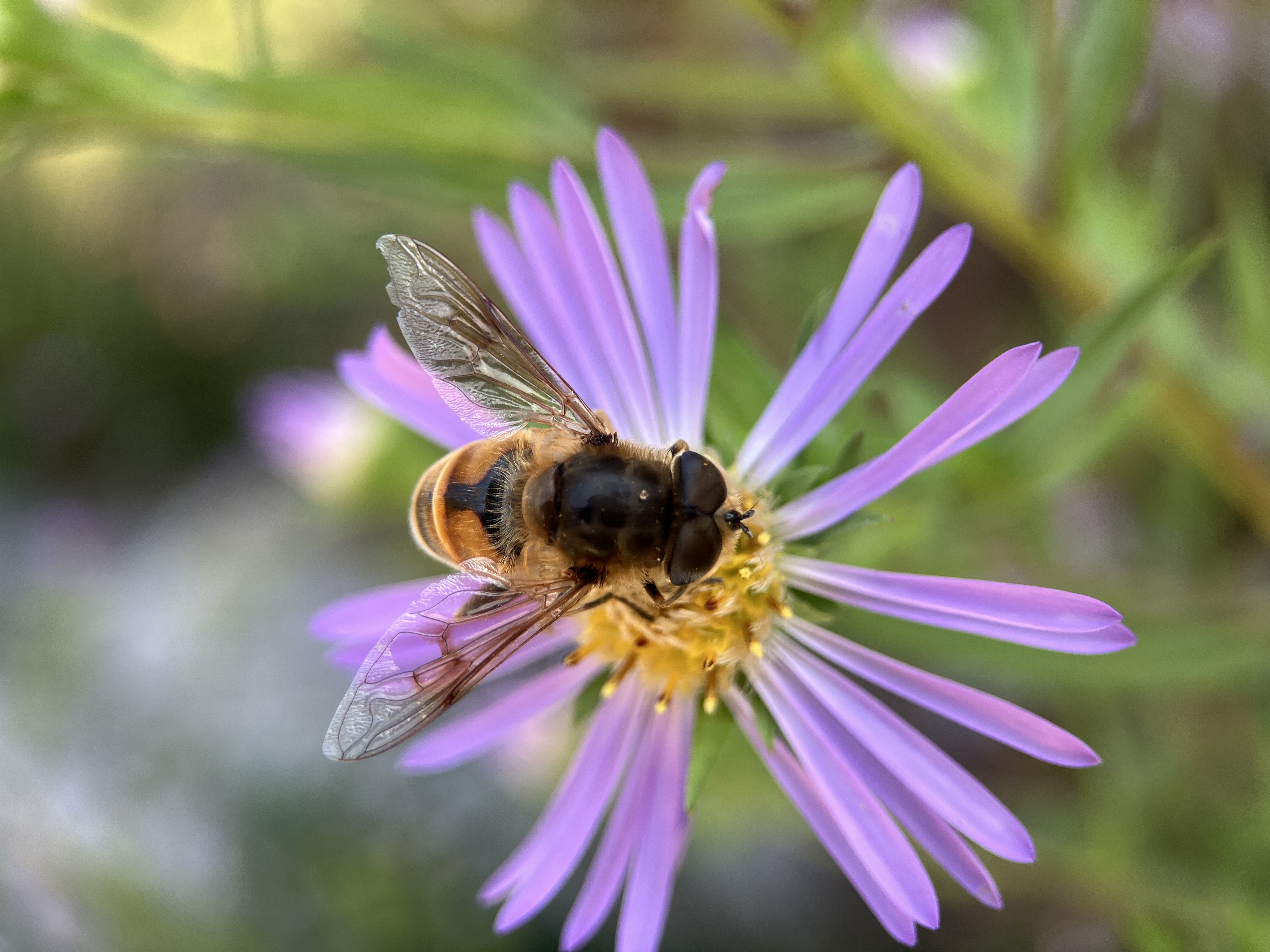
Eristalis tenax fly on Aster
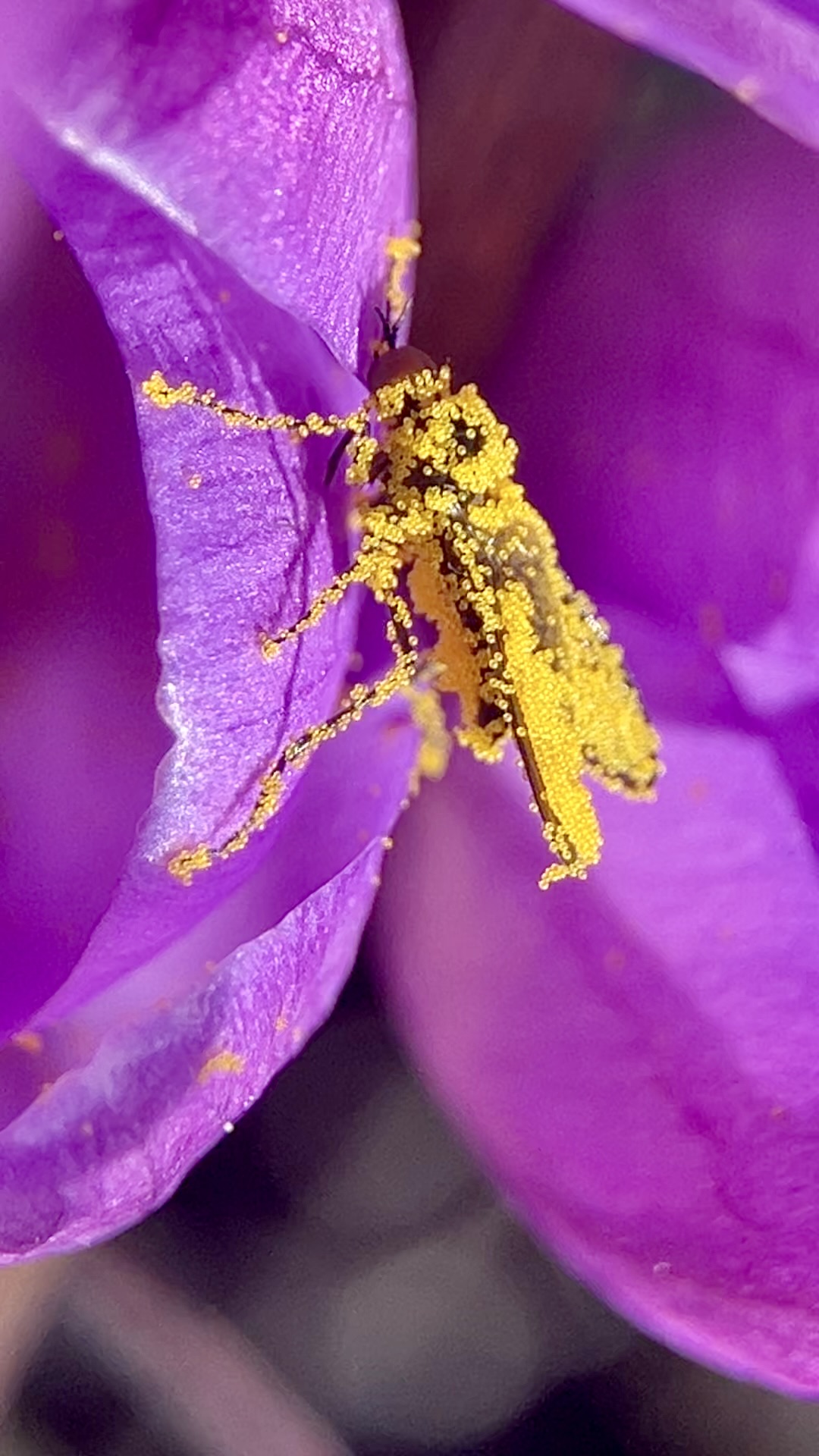
Empididae Dance Fly Covered in PollenEmpis barbatoidesEmpis sp. Golden Dung Fly (Scathophaga stercoraria) Forked Globetail (Sphaerophoria sulphuripes ), a Syrphid Fly Melanostoma mellinum Variable Duskyface Fly, a Syrphid Fly Musca sp. (I believe Musca autumnalis)Sericomyia chalcopyga – Western Pond Fly, A Syrphid FlyPollenia sp. Cluster fly
Honestly, I am not much of a food gardener, but I do love watching for insects in our garden and observing the relationships that exist. Not just between the insects and the plants, but also the relationships between different species of insects (and I’ll lump spiders in here too).
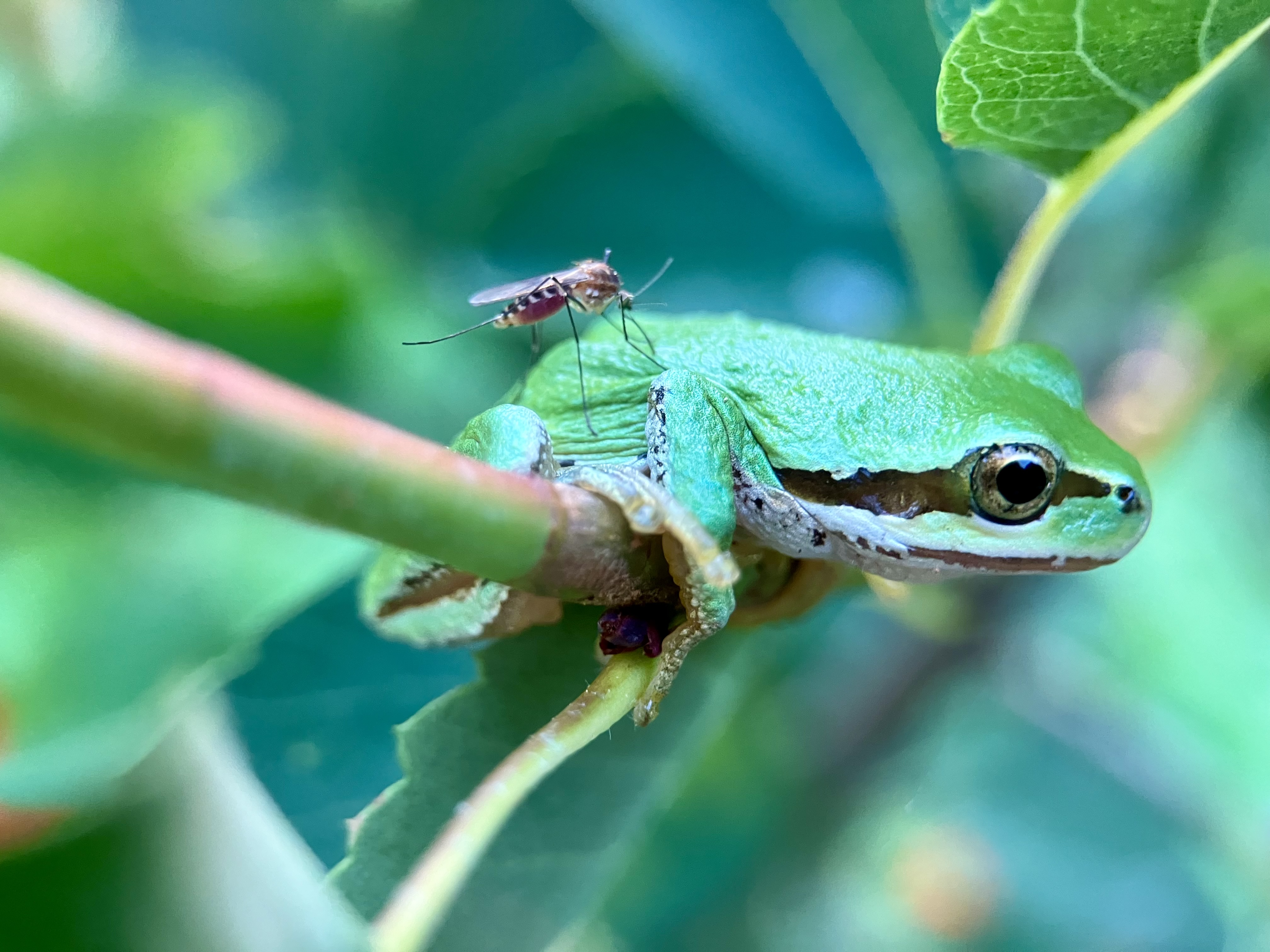
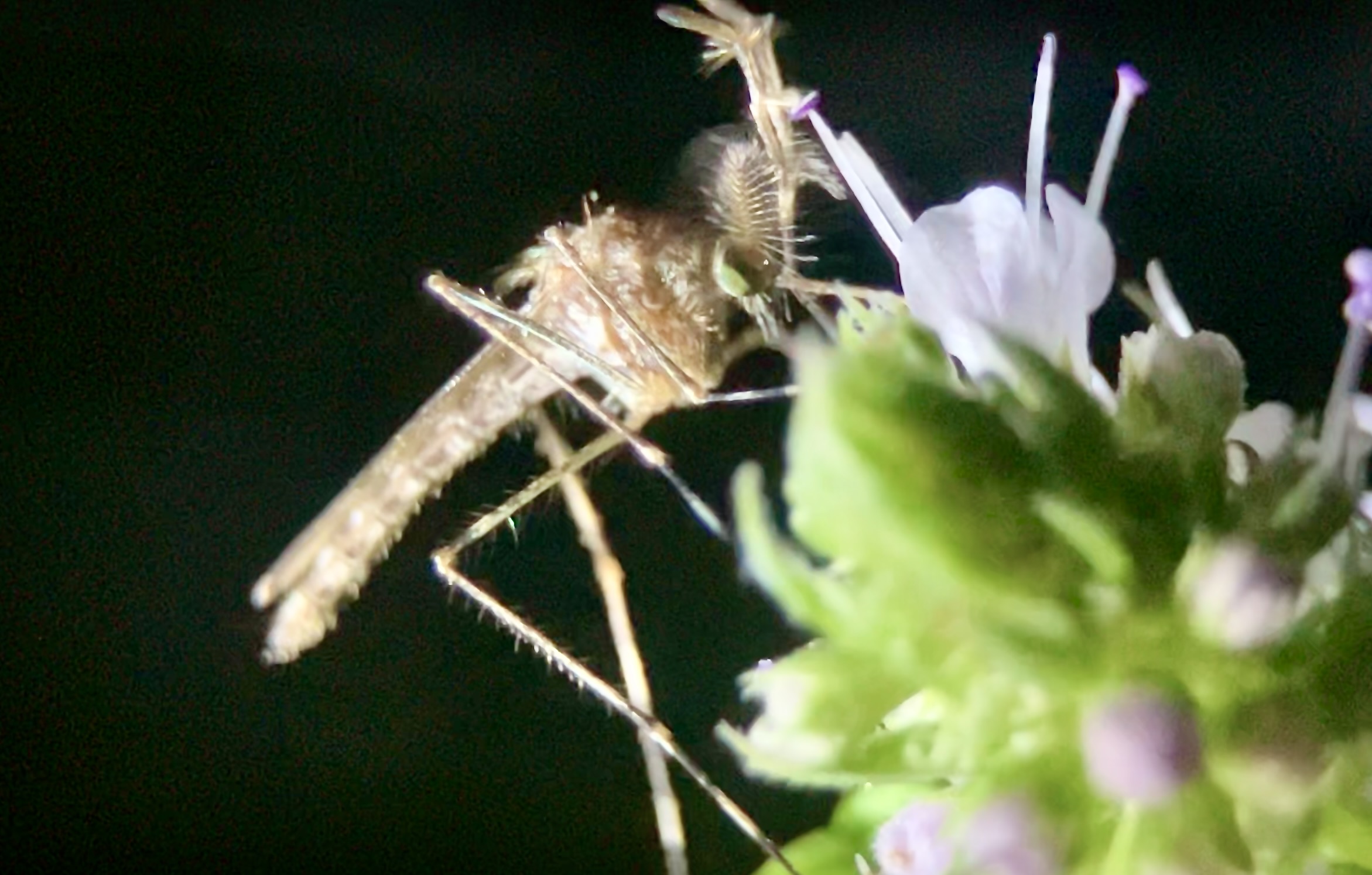
Every year, I watch our resident chickadees and nuthatches glean insects off twigs and branches. Nature’s pest control. The little tree frogs gobble bugs off garden plants. Those same frogs are also food for a species of female mosquito. Yes, you might detest mosquitoes, but even mosquitoes are pollinators. Go out at night with a flashlight and look at those fruit tree flowers!
Culex territans mosquito feeding on tree frogMale mosquito, night time pollinator
Even now, in February, I watch our year round, Anna’s hummingbirds zip along eaves of our home taking spider webbing to glue their nests together. They also eat many small bugs like fungus gnats and other small flies, even spiders!
If you just take a moment to look closely, there are many varied relationships between species at all trophic levels going on around us that have evolved to work in balance in our island ecosystem. Native species usually have multiple roles in the ecosystem. Some are pollinators, but also pest predators. Others we may consider pests, but they are also predators of pests. Most are food for some other organism in the food chain. Remember too, that just as we are healthier with a diverse diet, other organisms also stay healthy from sourcing nutrients from an assortment of food. When we lose diversity, we all suffer. We need a complex working ecosystem, and that comes from nature!
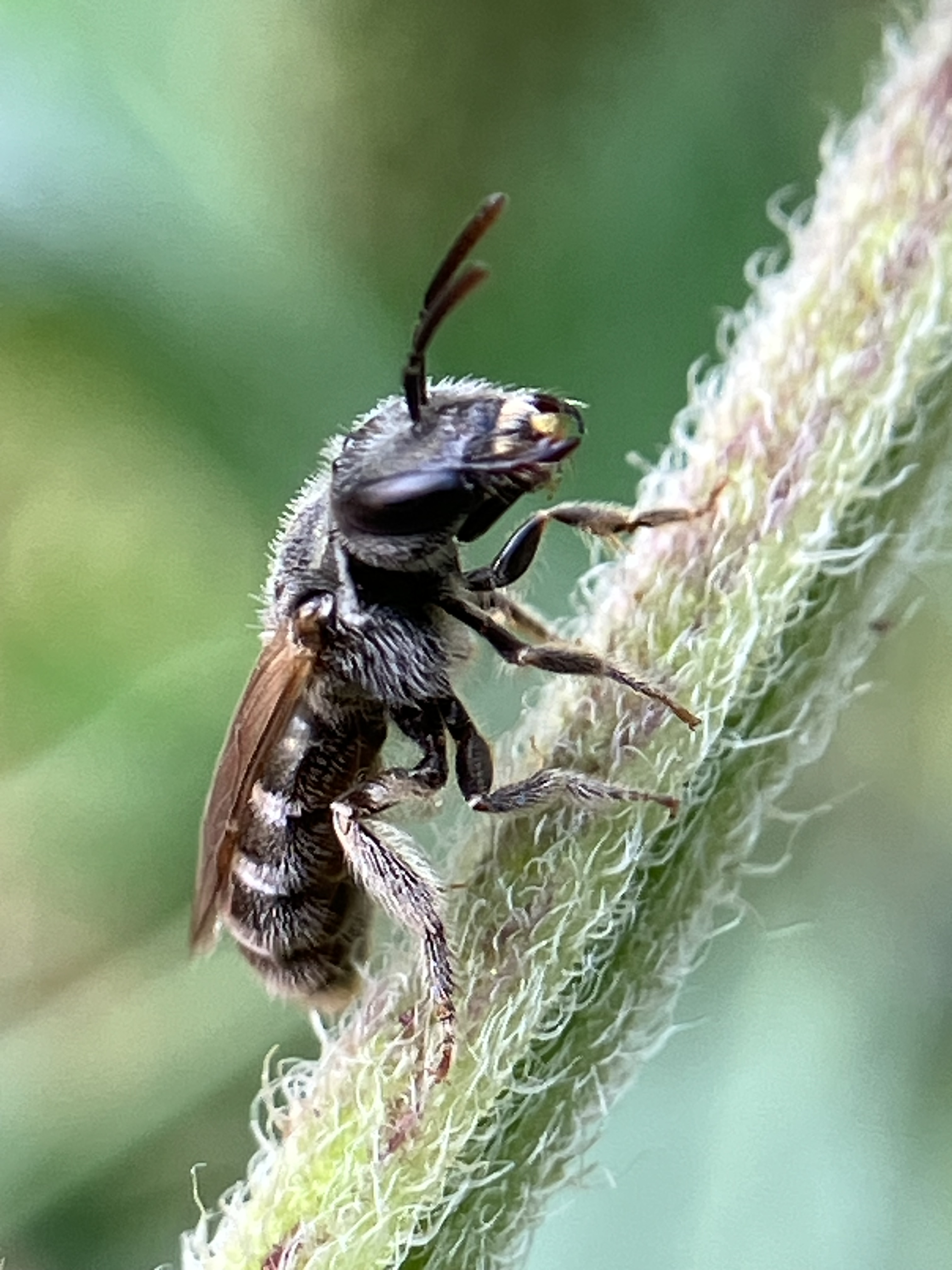
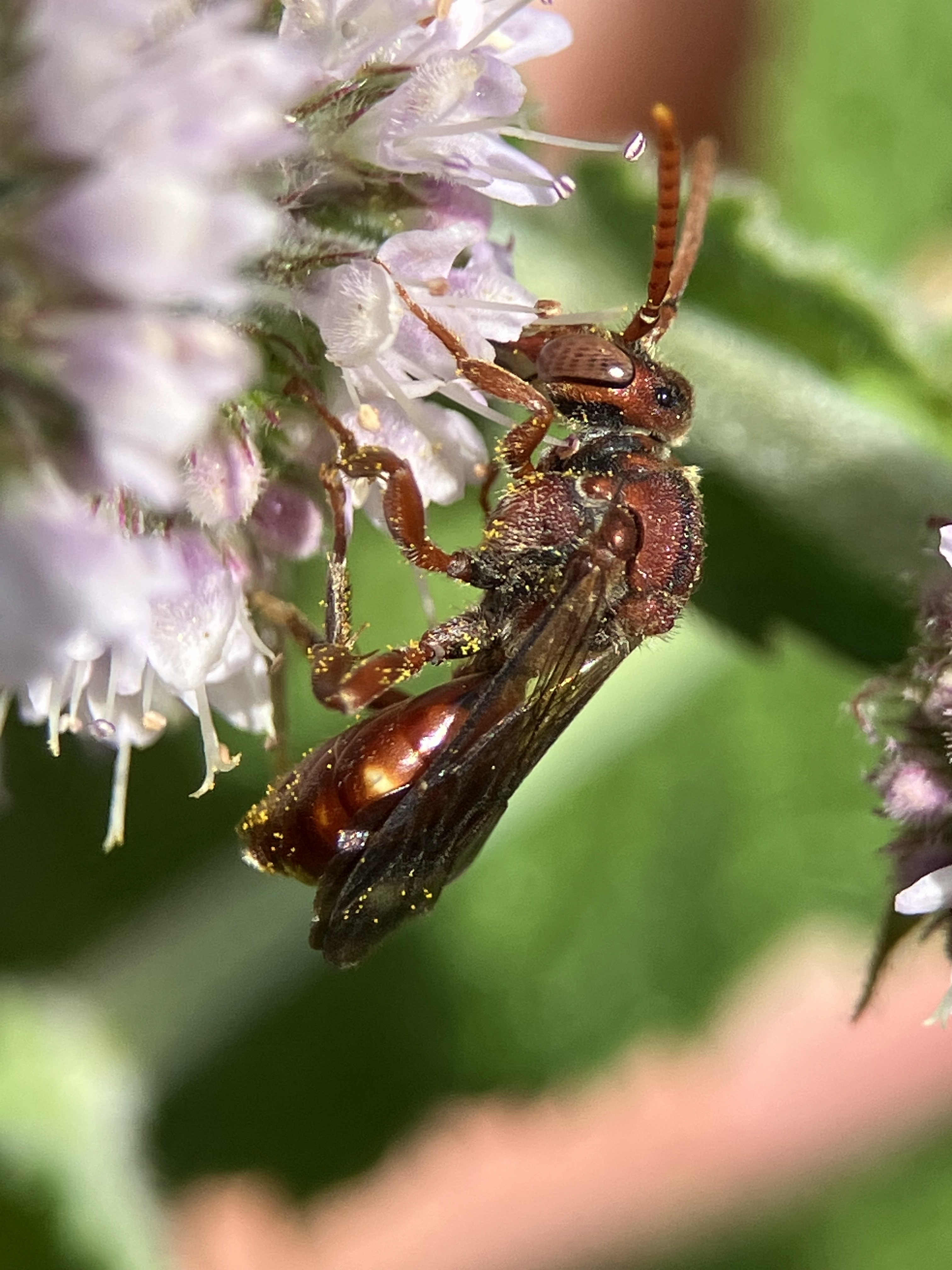
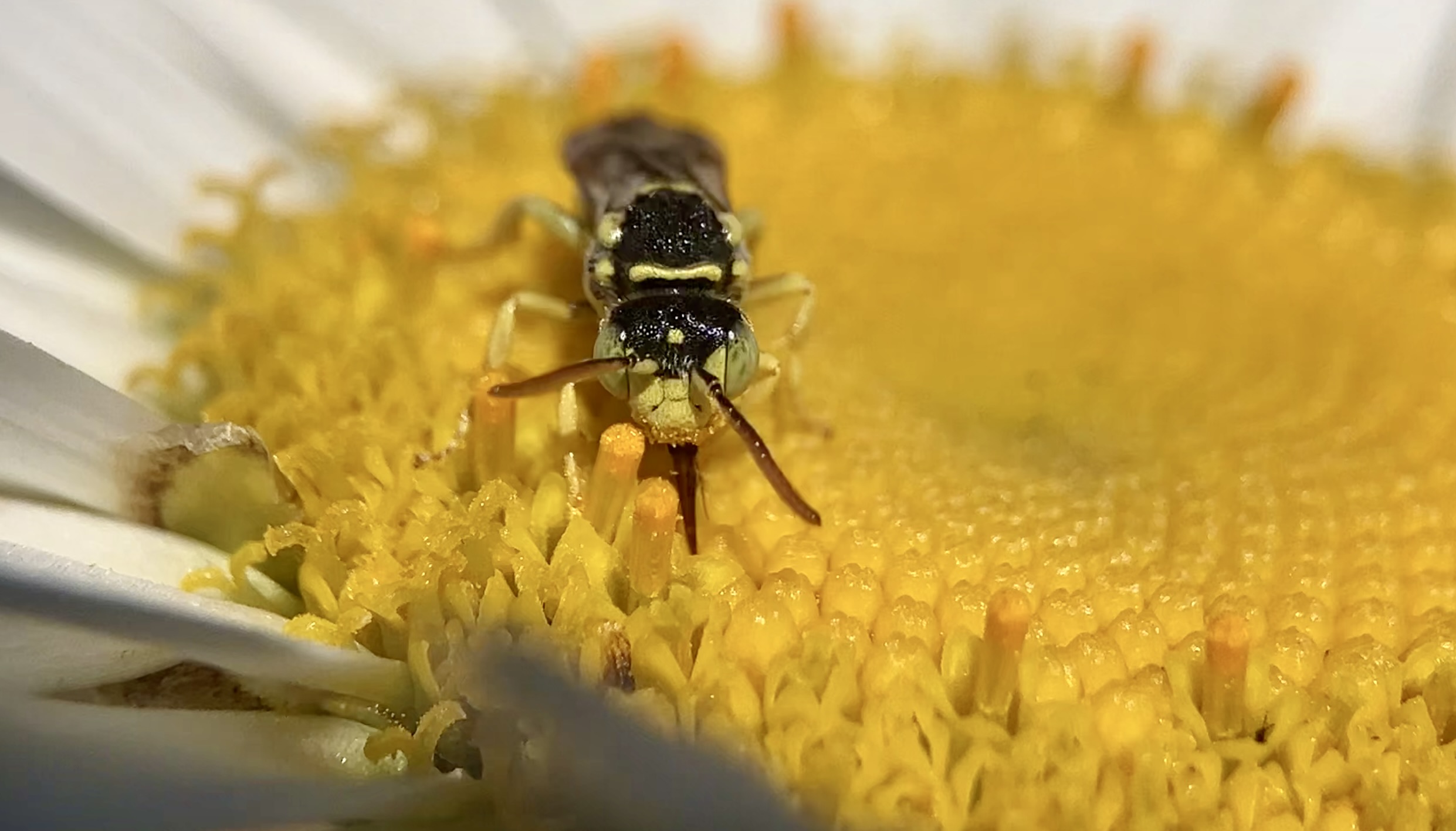
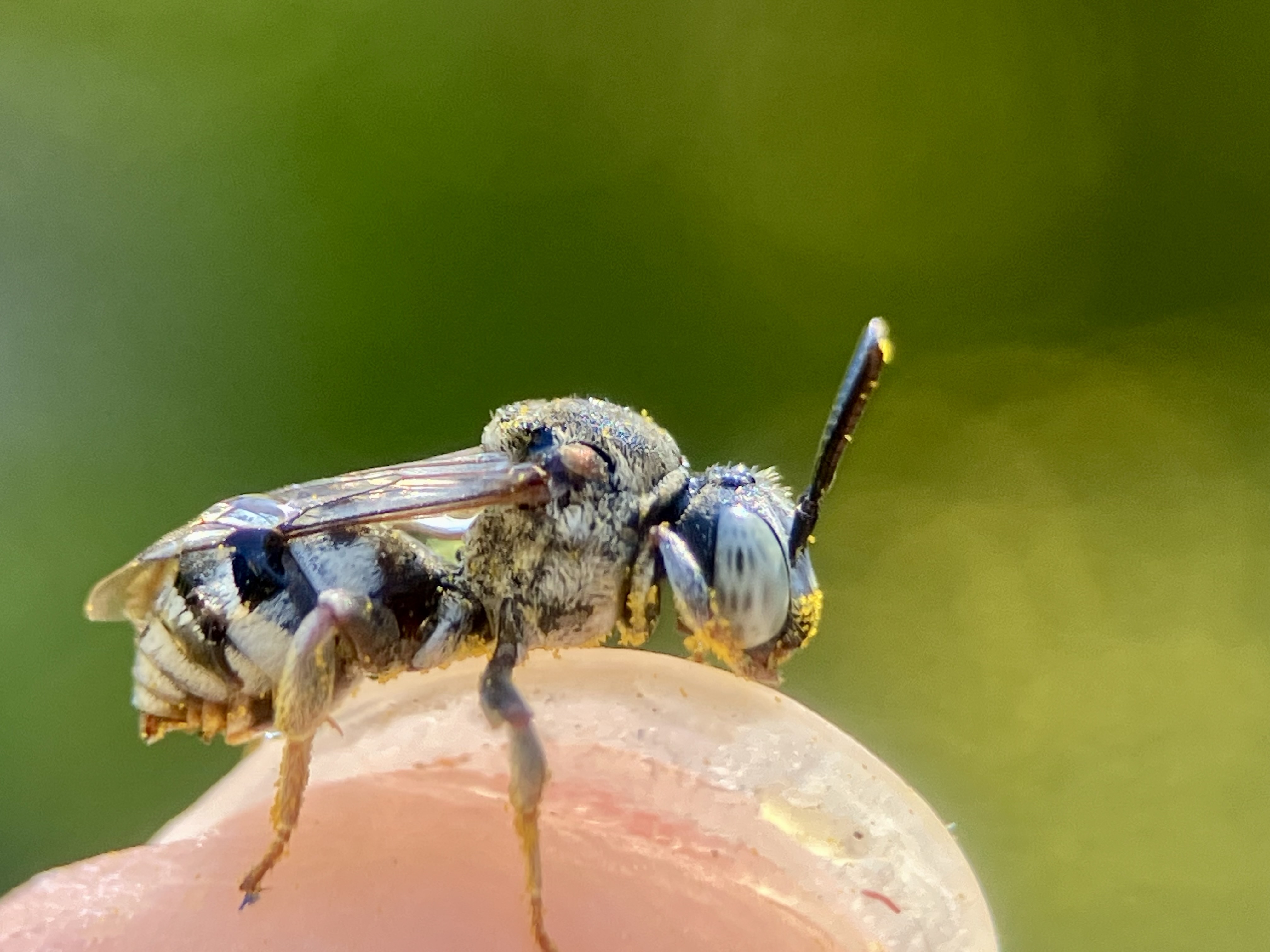
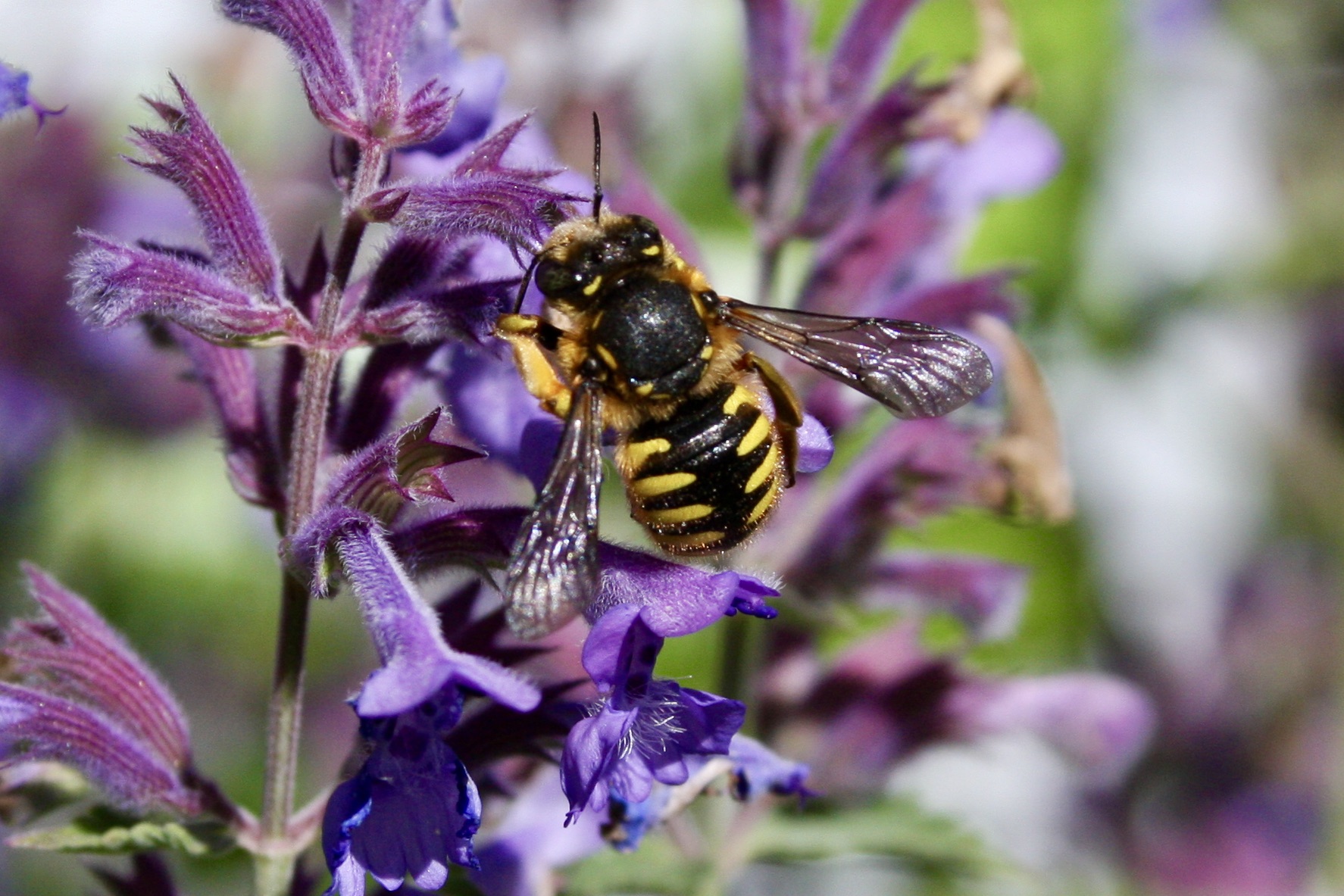
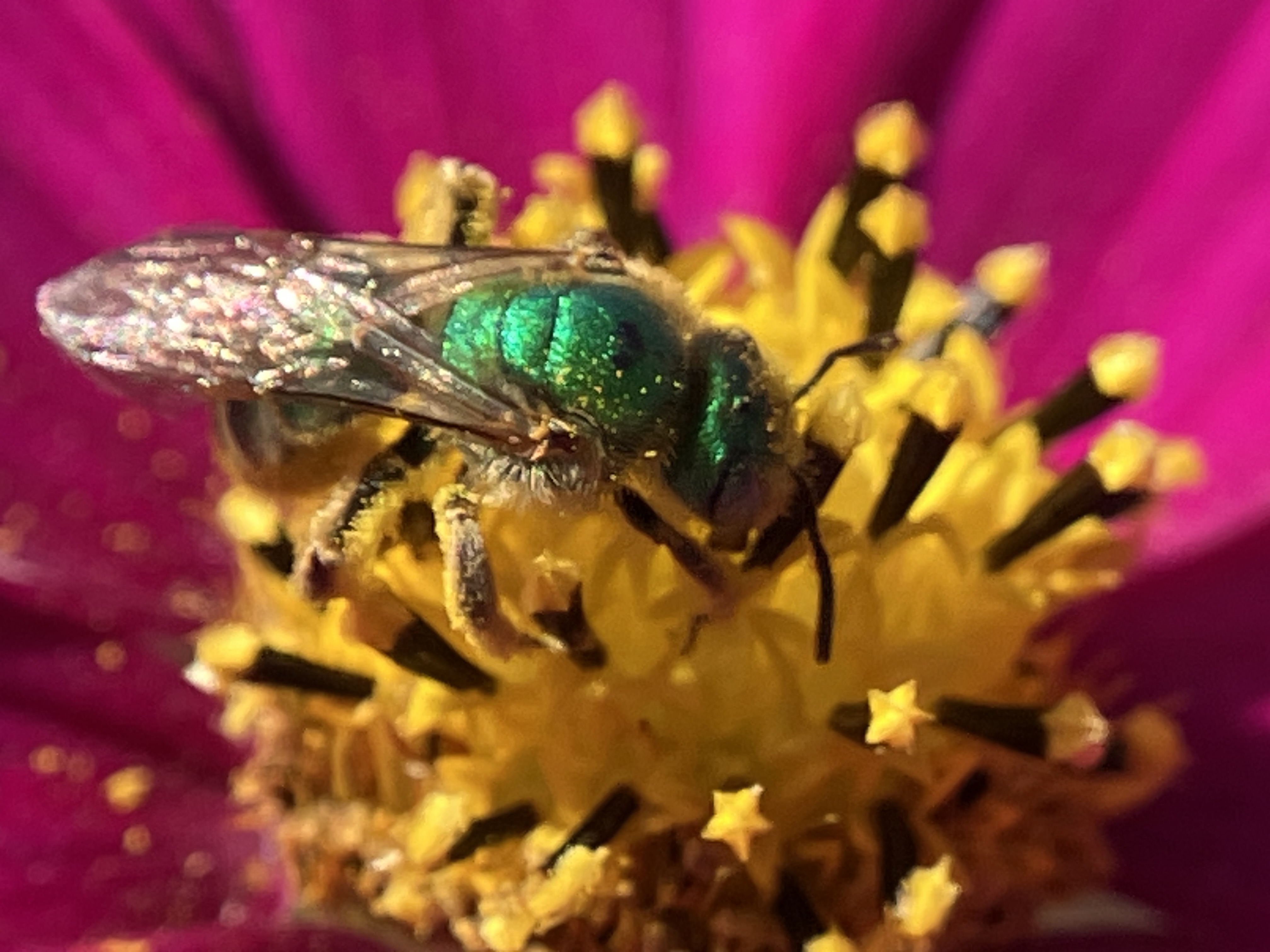
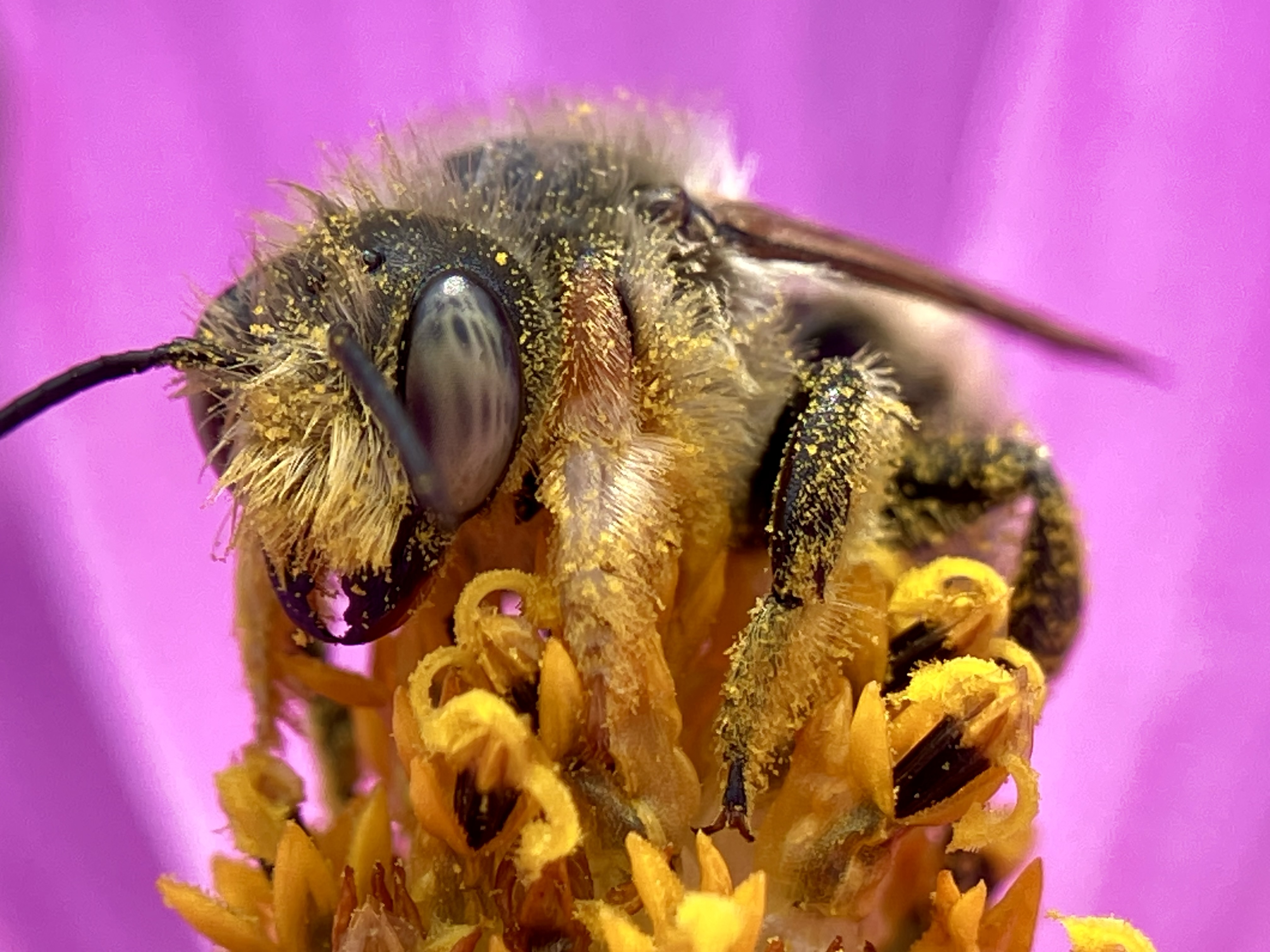
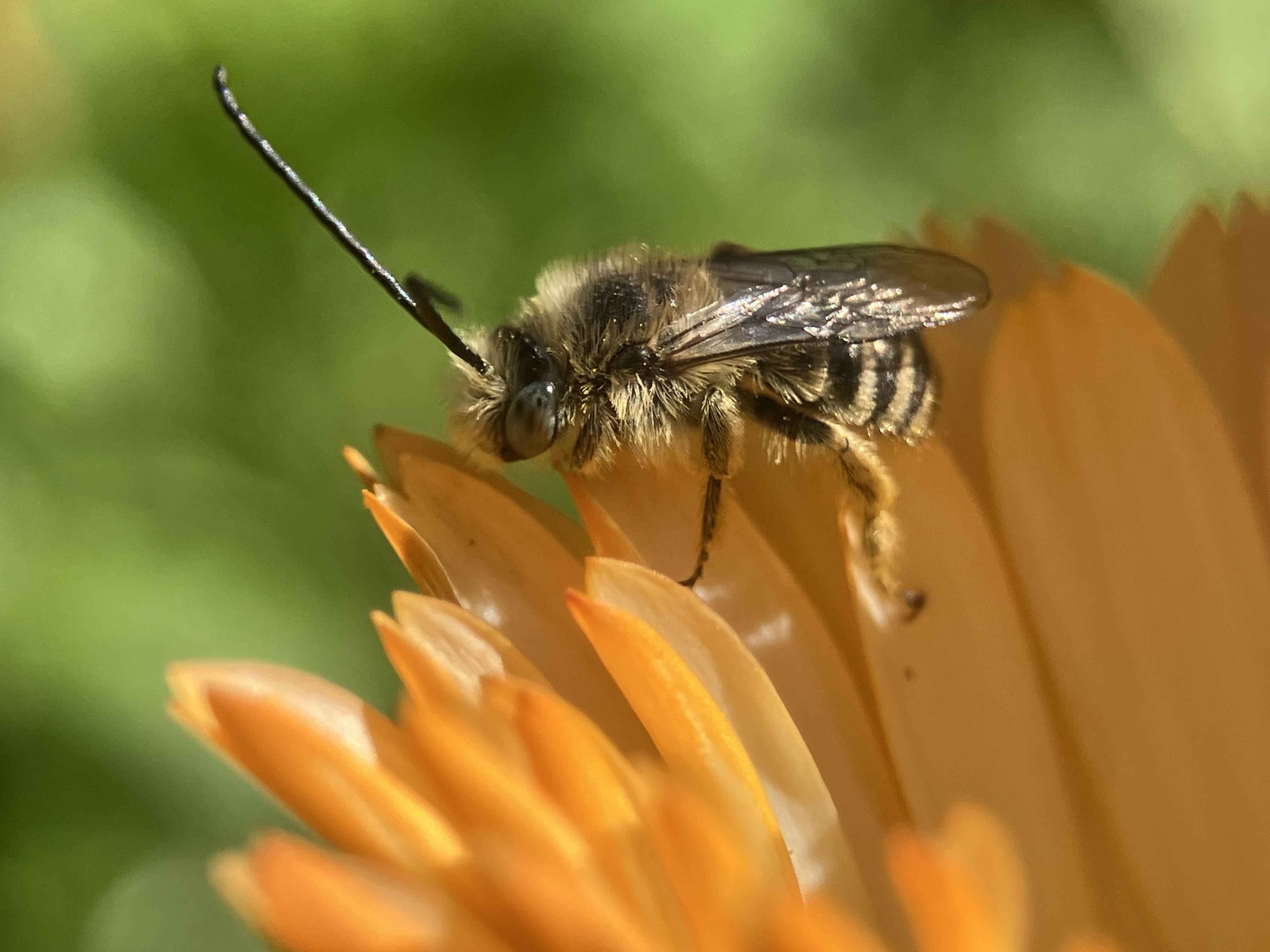
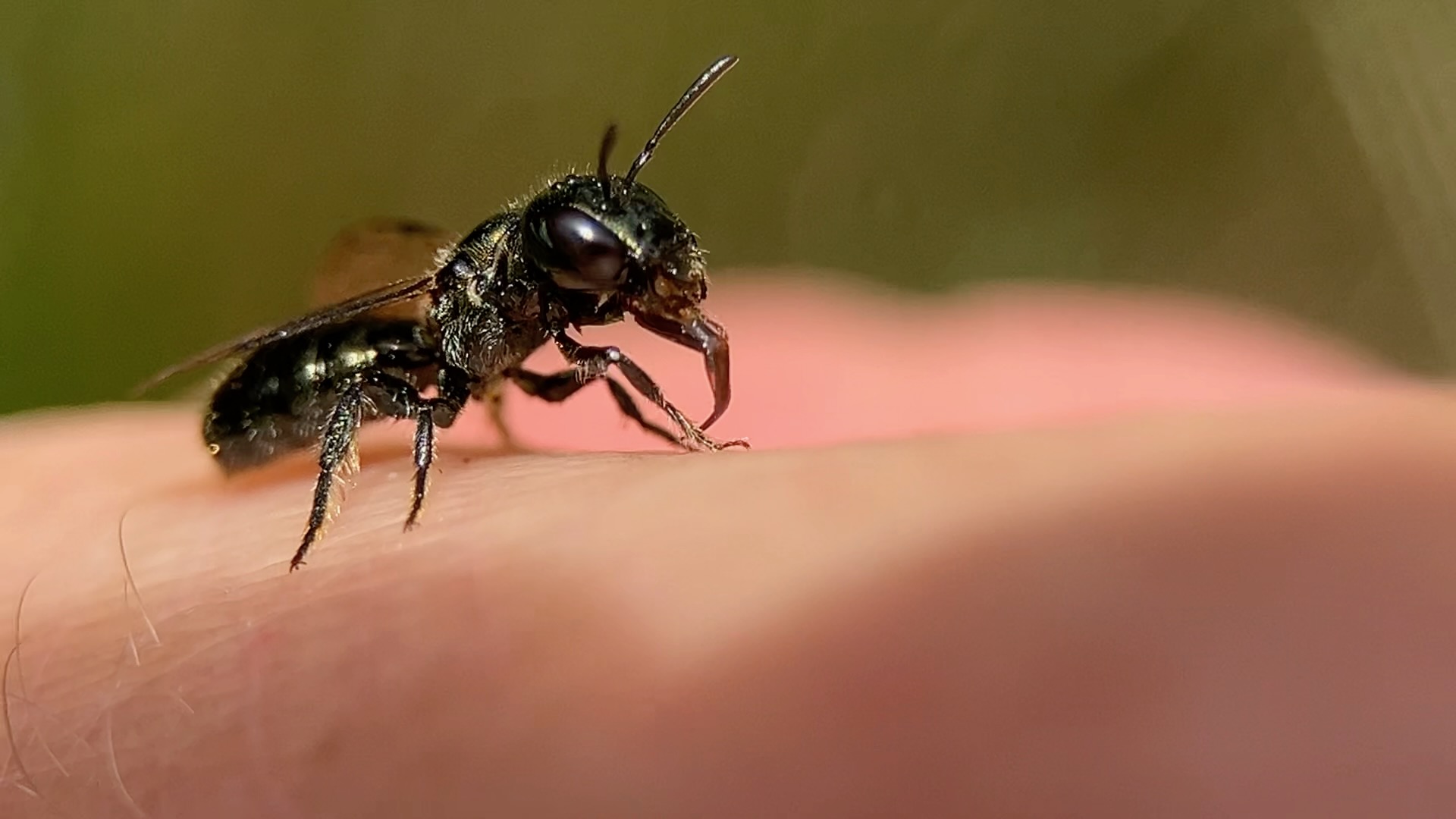
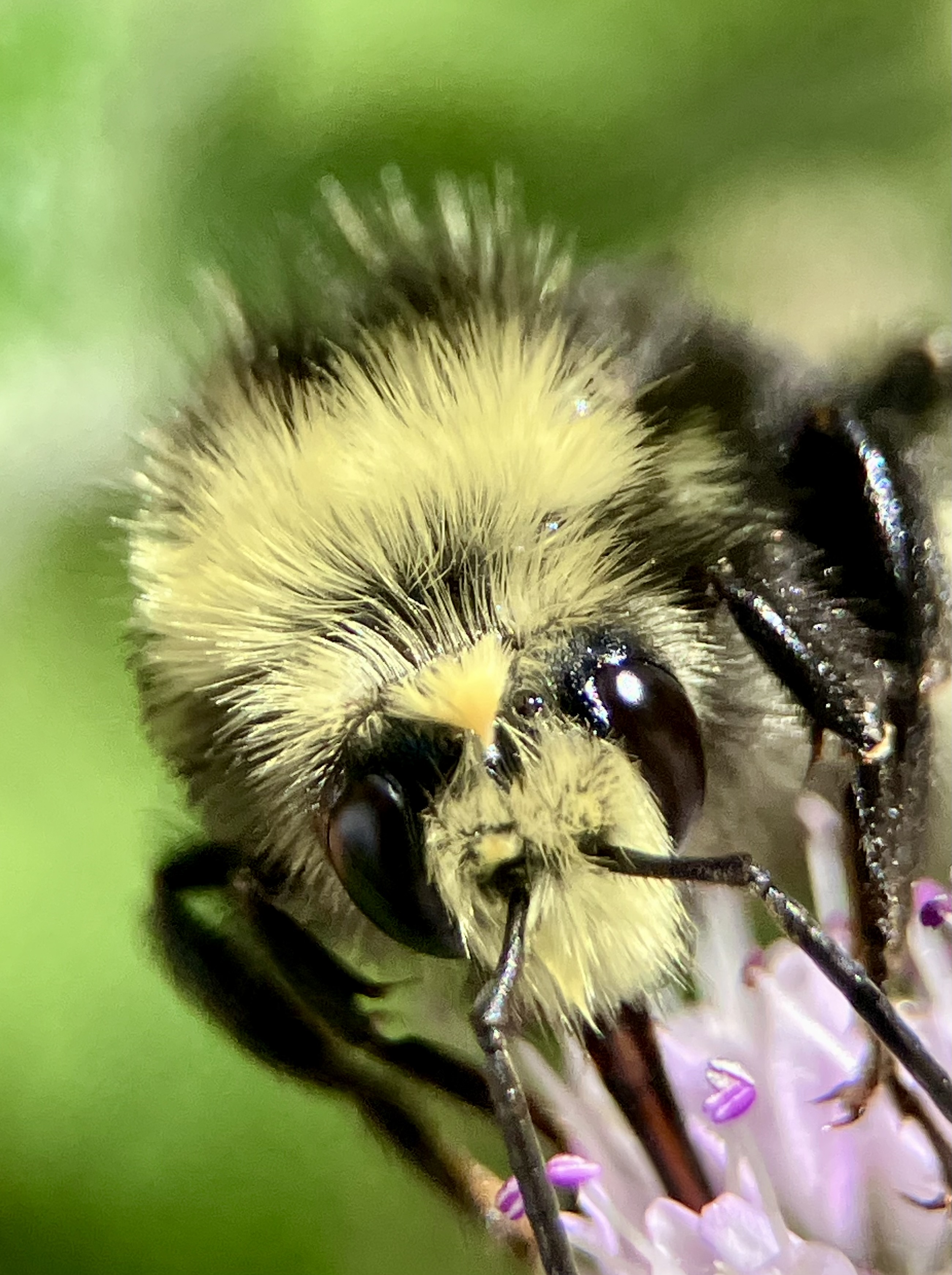
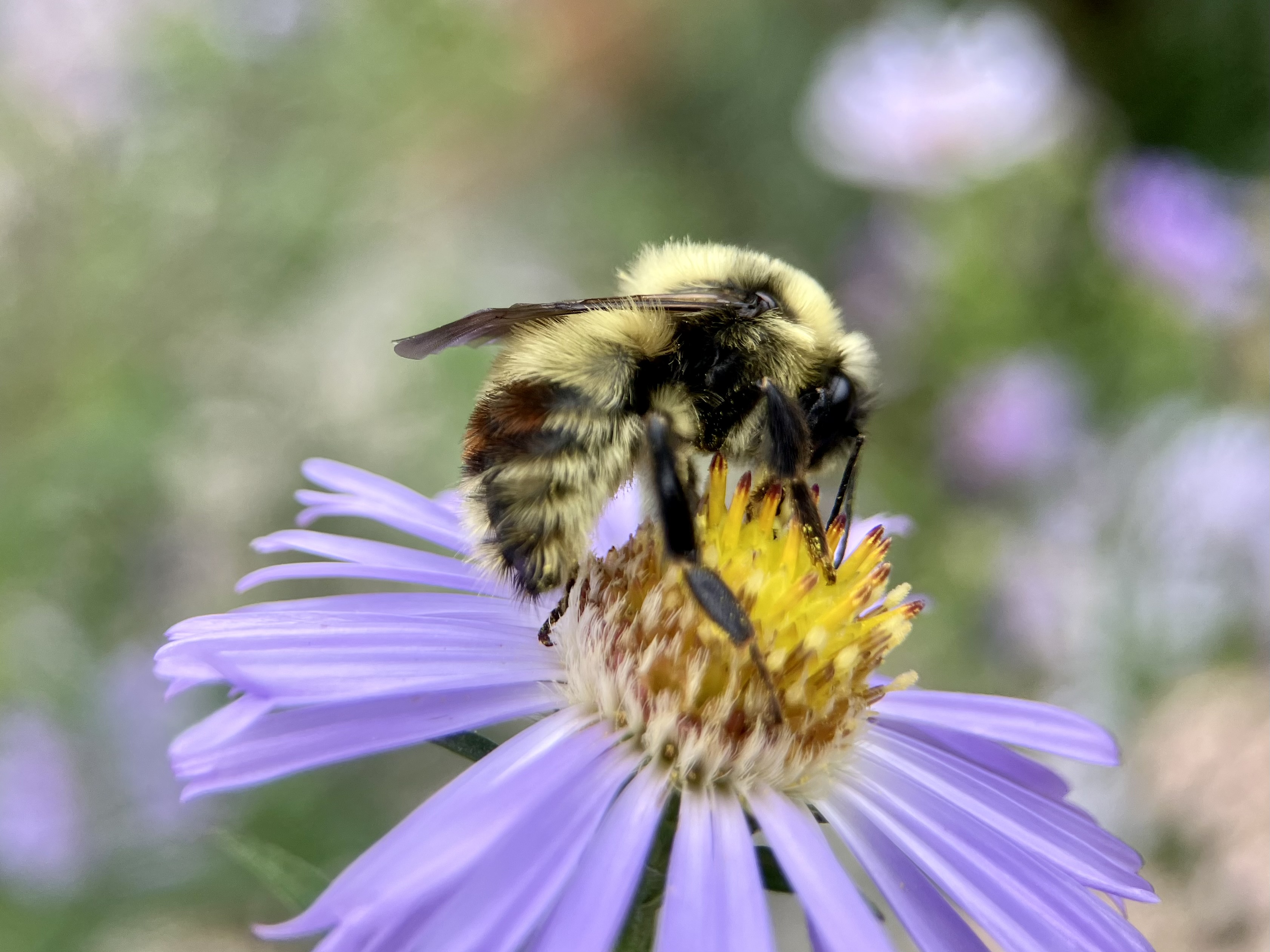
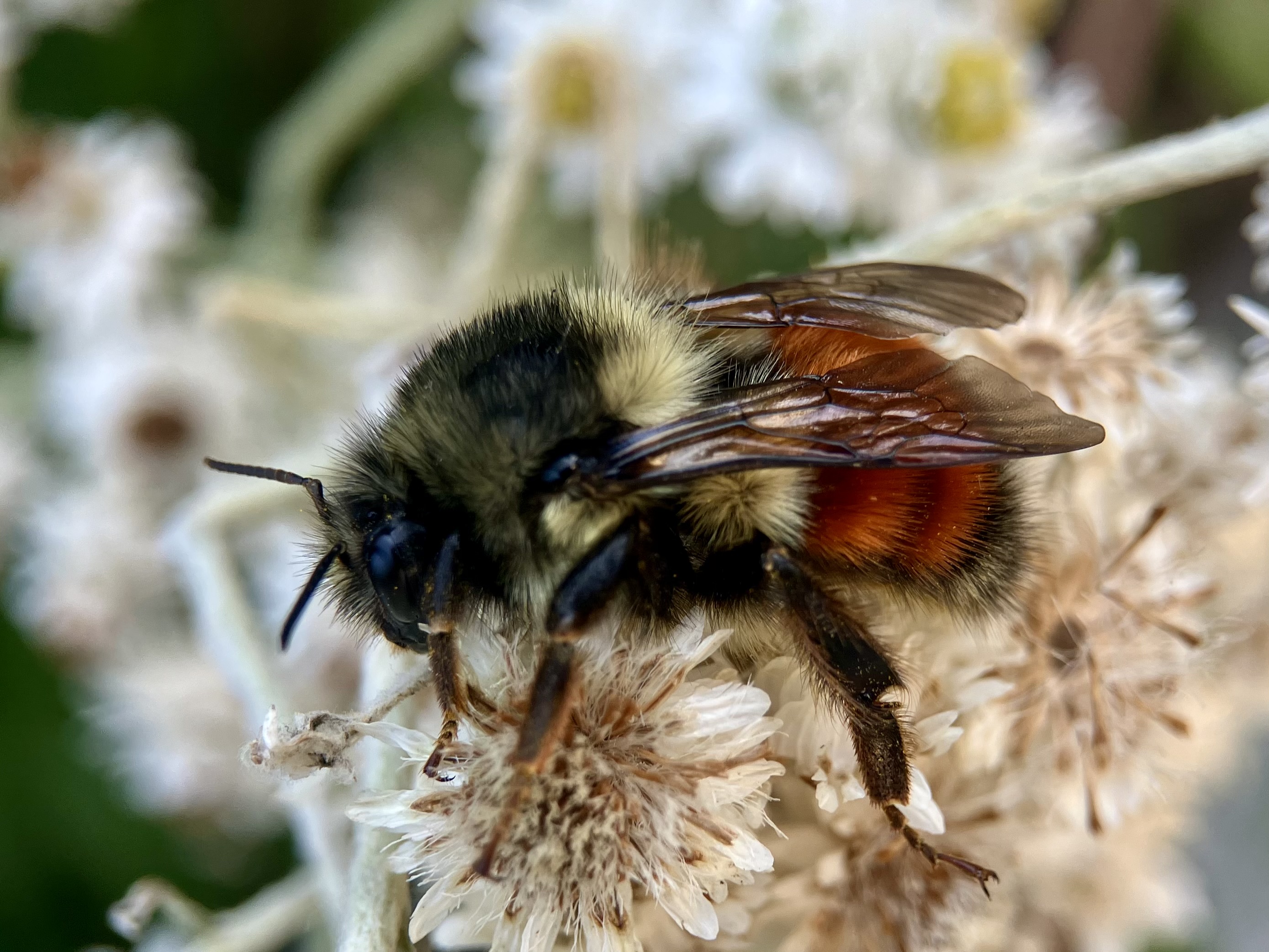
Some of our island native bee pollinators include bumble bees, sweat bees, alkali bees, blood bees, orchard bees, leaf cutter bees, nomad bees, digger bees, fairy bees, and others. These bees may not produce honey, but they are pollinators of immensely great value.
Golden Furrow Bees Subgenus Seladoniaa member of Furrow Bees Genus HalictusNomad BeeNomad BeeTriepeolus Cuckoo BeeMining Bee (Genus Andrena)Lasioglossum bee Sleeping beeAnthidium manicatum European Wool Carder Bee 06.28.2020Agapostemon Sweat beeMegachile bee
In fact, research over the past decade is illuminating just how critical these native bees and other native pollinators are for biodiversity. Biodiversity that is disappearing from our world due to habitat loss, land use changes, agricultural practices, and competition over resources with non-native species (like honey bees). You don’t have to take my word for it though. The Washington Native Bee Society and the Xerces Society will give you similar information.
Try Googling a bit on your own and you might find some pretty cool statistics about how native bees are actually better pollinators than honey bees, AND that their pollination services can yield larger, healthier fruits (like blueberries and strawberries for example). Competition over resources and displacement of native bees due to honey bee keeping isn’t limited to our island or our state. It’s been something happening world wide where honey bees are used for agricultural practices, whether for pollination or honey production. The encouraging news is that supporting native pollinators is gaining momentum. I’ve compiled a resource list for you to look at, read, and share if you are inclined.
Ceratina bee
If you are still dead set on setting up a honey bee hive, I’m happy to walk you through it. I can give you a list of everything you’ll need, provide the cost of all those supplies, and advise you on how not to get stung, why you should never eat a banana near your bee hive, what problems you can anticipate with pests and pathogens, and how to avoid losing your bees due to swarming. I will also tell you that if you set up a honey bee hive, you must file and register your colony with WSDA per state law. Hopefully, you will make your way to the same conclusion as I have. It’s cheaper and also ethically responsible to support native pollinators and conserve habitat in your own yard for pollinator diversity. It’s also quite fun and rewarding to watch and learn about native bees and the bugs you probably never even knew existed.
KEARNS, C. A. 2001. North American dipteran pollinators: assessing their value and conservation status. Conservation Ecology 5(1): 5. [online] URL: http://www.consecol.org/vol5/iss1/art5/
MacInnis, G, Forrest, JRK. 2019. Pollination by wild bees yields larger strawberries than pollination by honey bees. J Appl Ecol. 56: 824– 832. https://doi.org/10.1111/1365-2664.13344
Mallinger, R.E. and Gratton, C., 2015. Species richness of wild bees, but not the use of managed honeybees, increases fruit set of a pollinator-dependent crop. J Appl Ecol. 52: 323-330. https://doi.org/10.1111/1365-2664.12377
Angelella GM, McCullough CT, O’Rourke ME. 2021. Honey bee hives decrease wild bee abundance, species richness, and fruit count on farms regardless of wildflower strips. Sci Rep. Feb 5;11(1):3202. doi: 10.1038/s41598-021-81967-1. Erratum in: Sci Rep. 2021 Aug 17;11(1):17043. doi: 10.1038/s41598-021-95368-x. PMID: 33547371; PMCID: PMC7865060. https://pmc.ncbi.nlm.nih.gov/articles/PMC7865060/
Page, Maureen L., and Neal M. Williams. 2023. “ Honey Bee Introductions Displace Native Bees and Decrease Pollination of a Native Wildflower.” Ecology 104(2): e3939. https://doi.org/10.1002/ecy.3939
Lorenzo Pasquali, Claudia Bruschini, Fulvia Benetello, Marco Bonifacino, Francesca Giannini, Elisa Monterastelli, Marco Penco, Sabrina Pesarini, Vania Salvati, Giulia Simbula, Marta Skowron Volponi, Stefania Smargiassi, Elia van Tongeren, Giorgio Vicari, Alessandro Cini, Leonardo Dapporto. 2025. Island-wide removal of honeybees reveals exploitative trophic competition with strongly declining wild bee populations. Current Biology. 35(7) : 1576-1590.e12, ISSN 0960-9822, https://doi.org/10.1016/j.cub.2025.02.048https://www.sciencedirect.com/science/article/pii/S0960982225002623
Thomson, D. (2004), COMPETITIVE INTERACTIONS BETWEEN THE INVASIVE EUROPEAN HONEY BEE AND NATIVE BUMBLE BEES. Ecology, 85: 458-470. https://doi.org/10.1890/02-0626
This afternoon I would rate a 10/10 for entomological adventure. It happened outside, just behind our barn about 3:30pm. I went out to feed our resident raven and took a stroll over to a sunny corner of our property. As I neared an old barbed wire fence line, I noticed an aggregation of flies bobbing around over one of the native Ocean Spray (Holodiscus discolor) shrubs. Moving closer, as stealthily as possible, I saw these were Empis dance flies and I got very excited. There seemed to be about 15-20 in the group.
Empis Dance Fly (male) with Bibionid fly nuptial gift
I watched as I stood in the sun. The sun’s warmth felt really good on my body. Hopefully, we will have more sunshine and some days of vitamin D will infuse my cells and pull me out of this funk I have been wallowing in. The flies dancing in the sun were a sight. I crept forward a bit closer, trying not to slip into the fencing, but enough so as to get some video to share.
You will have to forgive me for the shake in the footage. It is not easy to remain steady and focus on a nervous fly that leaves its perch if you so much as breathe too deeply when you are moving the camera close enough to zoom in for a good macro shot. I think I was holding my breath a lot while I was trying to take pictures.
Empis Dance Fly with nuptial offering
This fly should be classified in the genus Empis. Last year, I found Empis barbatoides in our orchard. You can read an earlier blog post I wrote about them here https://buggingyoufromsanjuanisland.com/category/dance-fly/empis-barbatoides/ I believe these may be the same species, but I say this with a caveat. I am hoping to get my hands on a copy of the revisions by Sinclair, Brooks, and Cumming I have referenced below. It appears I may need this and the updated keys to try and ID my fly beyond genus level, so I’ve emailed the lead author and hopefully will hear something back.
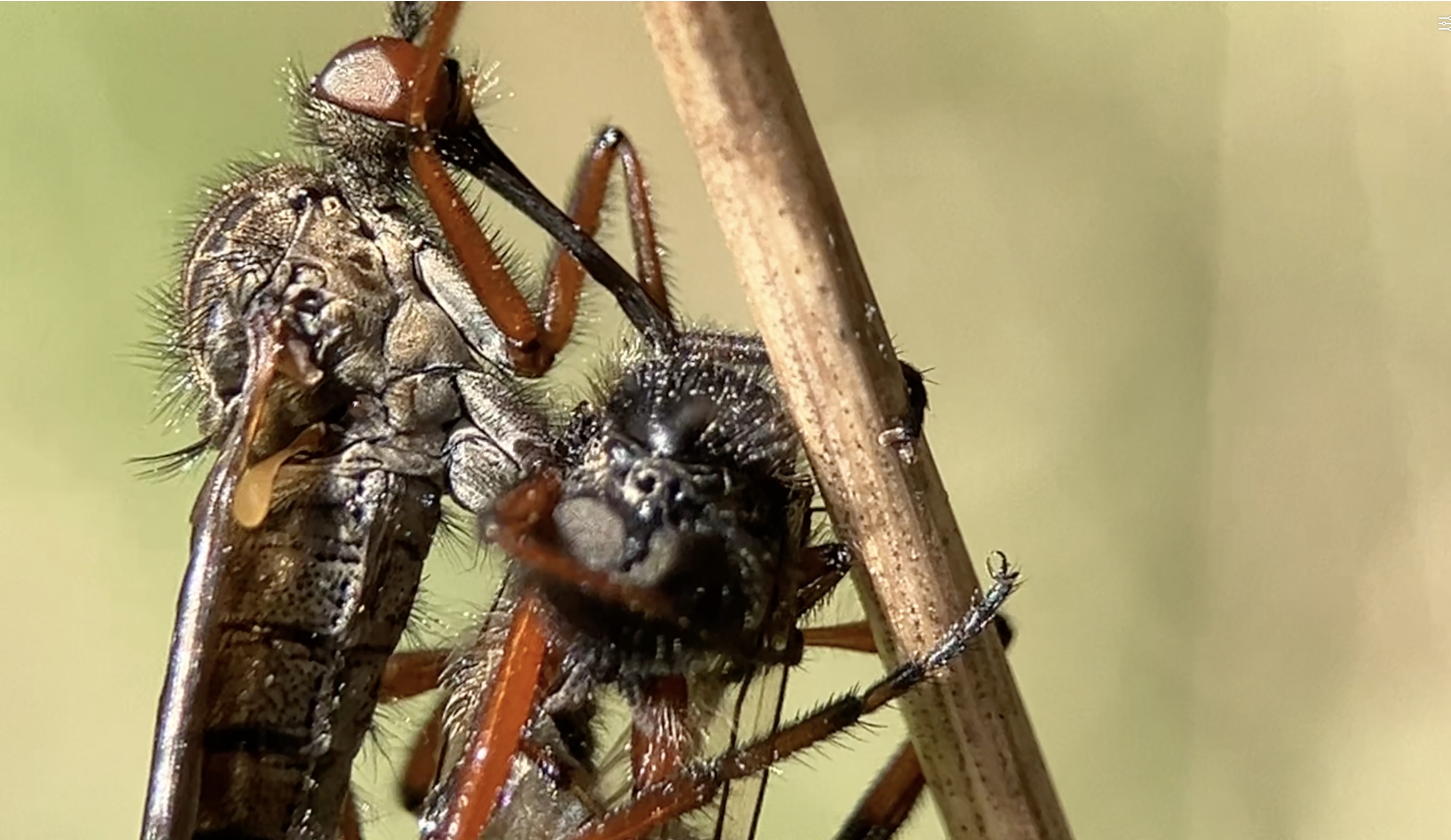
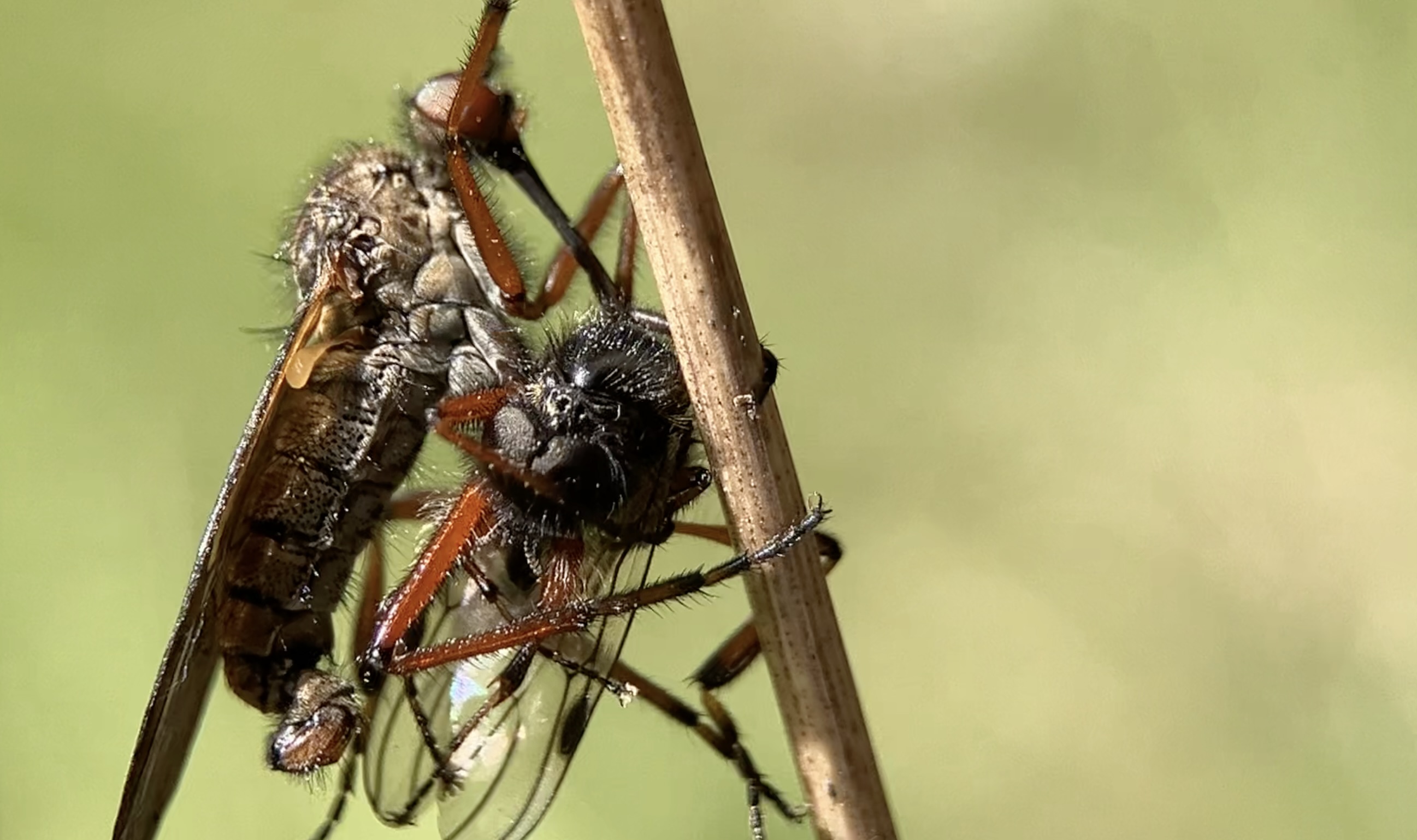
If you look closely, you’ll see in some of the photos the fly is holding a balled up insect. This is a species of March fly in the family Bibionidae. I saw a few hiding around in the tall grass like this one in the photo below.
March fly (Bibionidae) hiding in the grass
Evidently, they were being picked out by the male flies and rolled up into a nice nuptial gift to present to a female Empis fly to entice her to mate. The male Empis fly will carry this balled up dead insect and “dance” around to attract a female. That’s what I found so fascinating to actually watch in person. It isn’t every day you see something like this! Since flies seem to be attracted to certain spots for mating aggregations (it’s called hilltopping), perhaps this is a spot where I might be lucky enough to see this action again.
References and Further Reading:
Alcock , John. 1973. The mating behaviour of Empis barbatoides Melander and Empis poplitea Loew (Diptera: Empididae), Journal of Natural History, 7:4, 411-420, DOI: 10.1080/00222937300770301
Sinclair BJ, Brooks SE, Cumming JM. Revision of the western Nearctic species of Empis subgenus Enoplempis (Diptera: Empididae). Zootaxa. 2025 Mar 31;5615(1):1-200. doi: 10.11646/zootaxa.5615.1.1. PMID: 40173481. https://pubmed.ncbi.nlm.nih.gov/40173481/
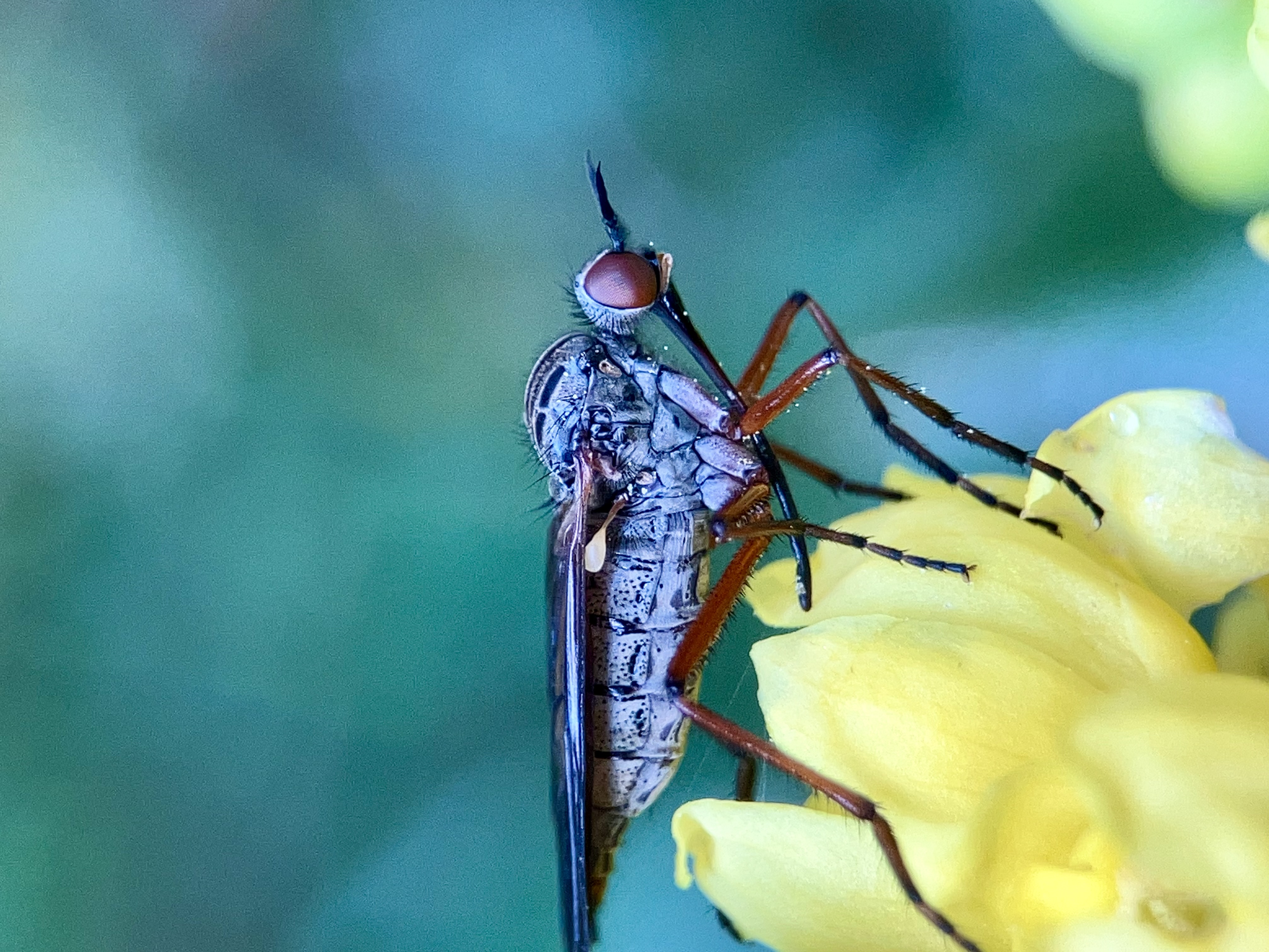
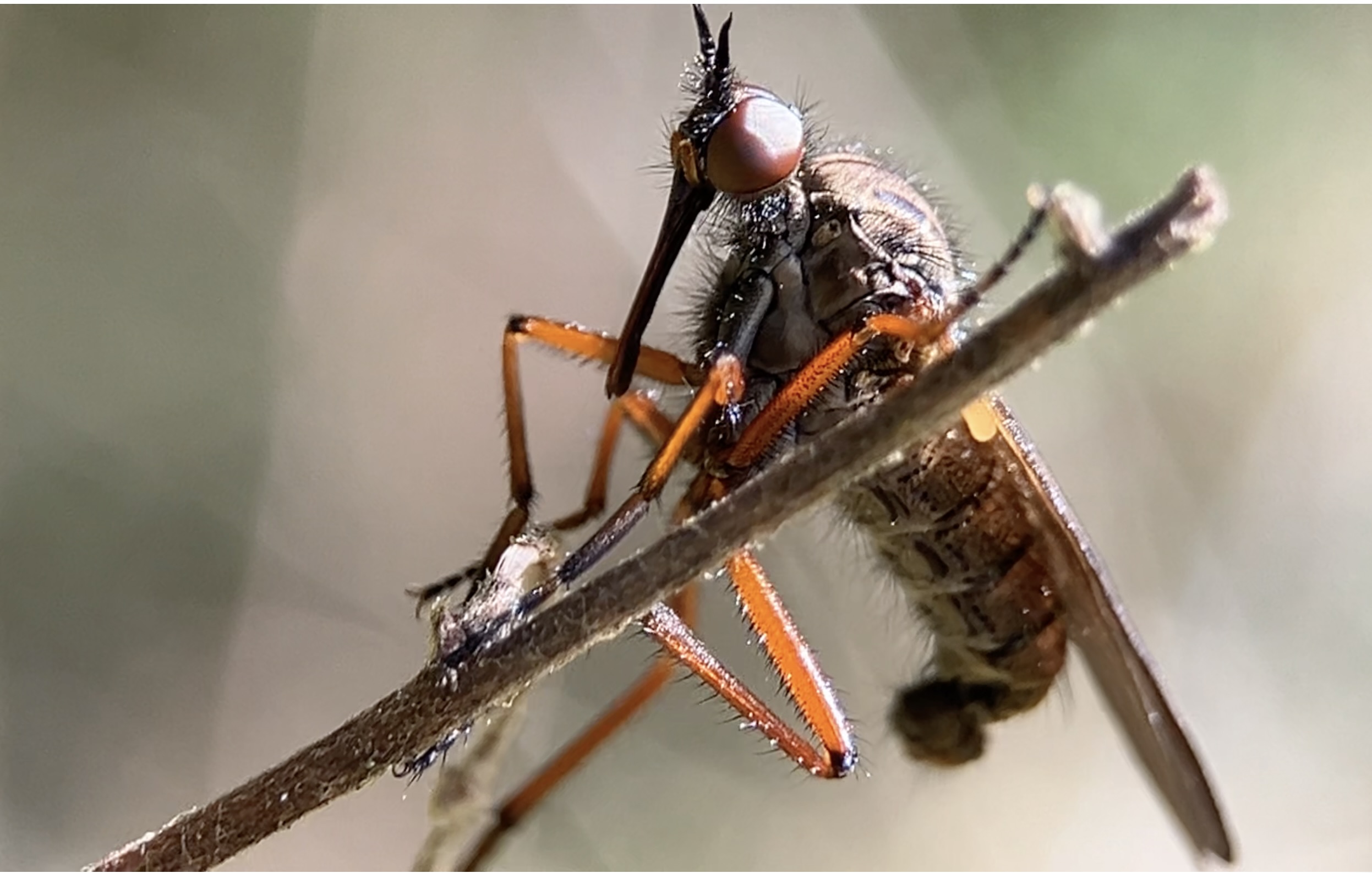
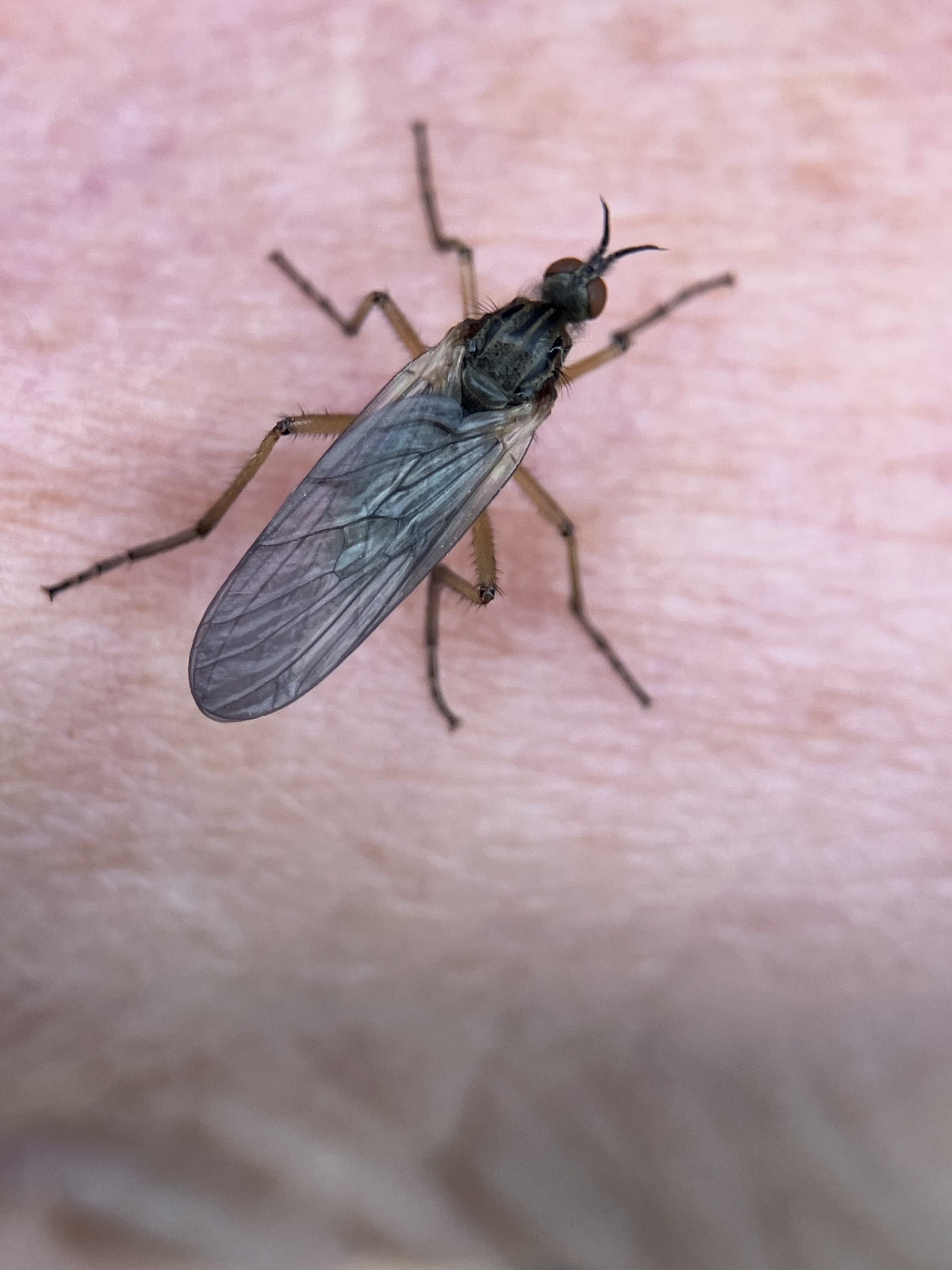
I had an amazing BUG day! It’s always amazing when you find one as interesting as this one. Check out the proboscis.
This is Empis barbatoides, I believe, a species of Dance fly in the family Empididae. SHE (you can see her ovipositor at the end), was in the back of my truck on some cardboard I am using for landscaping.
I find the behavior of these flies to be so interesting. When they are in mating swarms, the male flies will dance about to entice the female. The most fascinating part is they often are carrying a captured insect, usually a Bibionid fly, wrapped in silk, as an offering or nuptial gift.
Females seem to prefer a male with the most enticing balloon. Some males only carry an empty ball of silk. My guess is they get whoever is leftover. 😉
These flies and their developing larvae are found in moist wooded habitats (mixed deciduous and coniferous) with many clearings and open patches.
Larvae are often in decaying vegetation, or even under the bark of trees.
Adult flies are approx 9-10mm
For some fantastic (not mine) photos of the males carrying balloons, check out the bugguide link below.
References
Alcock , John. 1973. The mating behaviour of Empis barbatoides Melander and Empis poplitea Loew (Diptera: Empididae), Journal of Natural History, 7:4, 411-420, DOI: 10.1080/00222937300770301












 Bugging You From San Juan Island