I found this interesting beetle on the side of our pool the other afternoon and realized I’d actually seen one like it about a week earlier, so I did some digging to figure out what it was. This is a Spider Beetle (subfamily Ptininae), and the species is Ptinus sexpunctatus or Six Spotted Spider Beetle.
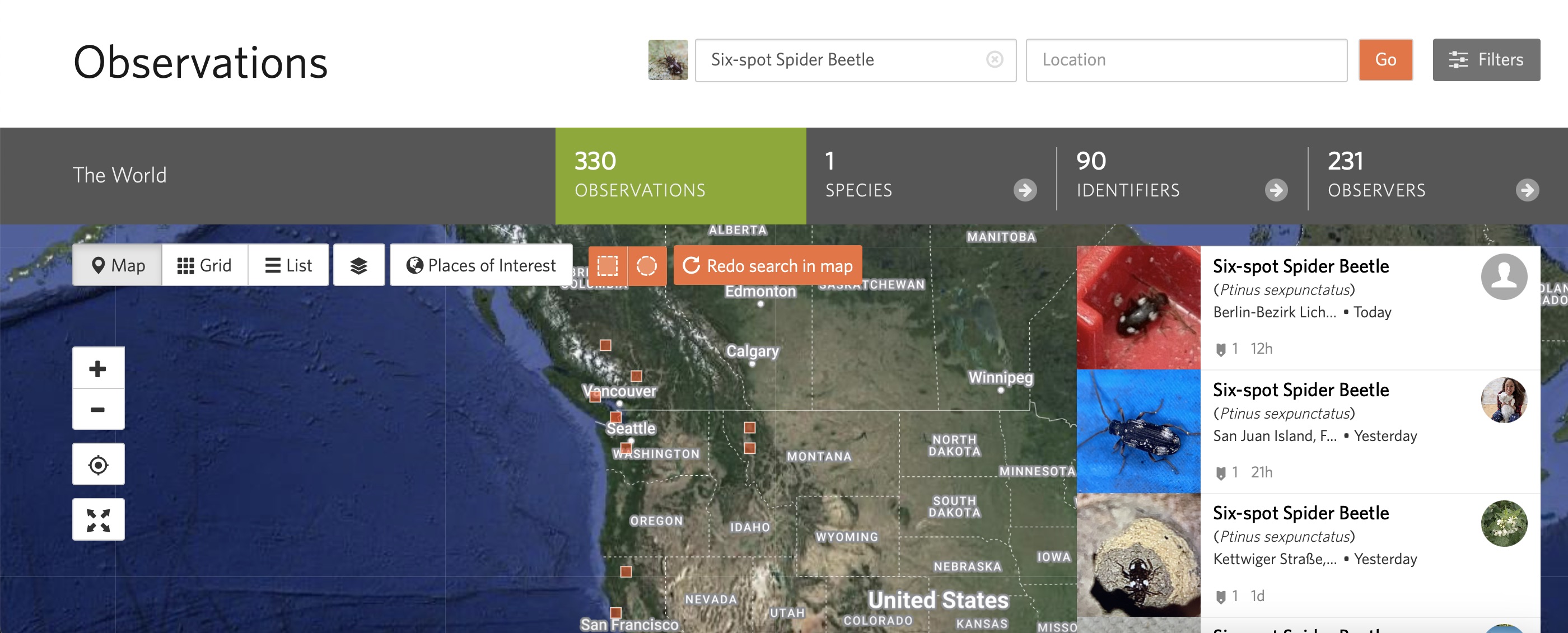
These beetles are quite small at about 2.8-4.2 mm. I used my clip-on Apexel macro lens to get these photos. What I found about this beetle’s life history is that the species is not native to North America. The very first record I found was in Pennsylvania in 1915 where the beetle entered via an imported English Walnut, but subsequent discoveries of populations are as recent as 2003 in Nova Scotia, and 2004 in Utah (Majka et al. 2007). I have not found any data as to how recently they may have arrived in the PNW, and found only 1 other record in WA state, aside from my own, when I searched on iNaturalist
Records of Ptinus sexpunctatus – iNaturalist (as of 05.25.2024)
Within its native range, Ptinus sexpunctatus, is a known associate of cavity- nesting solitary bees. These include bees in the genera Osmia and Megachile. It has also been collected in the galleries of longhorned beetles (Cerambycidae) in oak (Quercus) forests (Majka et al. 2007). Because of these associations, it is possible that Ptinus sexpunctatus was accidentally imported when two Osmia bee species, Osmia cornuta (Latreille) from Spain and O. cornifrons (Radosz- kowski) from Japan, were introduced into the United States for research and evaluation as pollinators of tree fruits (Cane 2003; Majka et al. 2007). Majka et al. (2007) believe that after arriving in the U.S., Ptinus sexpunctatus colonized the nests of our native Osmia bee, (Osmia lignaria).
The relationship and impact of the nest association between Ptinus sexpunctatus and Osmia lignaria needs further study. Some observations of these associations in Europe describe the beetle as being destructive to Osmia nests, preying on bee larvae and pupae (Majka et al 2007).
Cane, J. H. 2003. Exotic nonsocial bees (Hymenoptera: Apiformes) in North America: Ecological implications. pp. 113–126. In, K. Strickler and J. H. Cane (Editors). For Nonnative crops, Whence Pollinators of the Future? Thomas Say Publications in Entomology: Proceedings. Entomological Society of America. Lanham, Maryland, U.S.A. 204 pp.
Majka C.G., Philips T.K., Sheffield C. (2007) Ptinus sexpunctatus Panzer (Coleoptera: Anobiidae, Ptininae) newly recorded in North America. Entomological News 118: 73-76 (Full text)
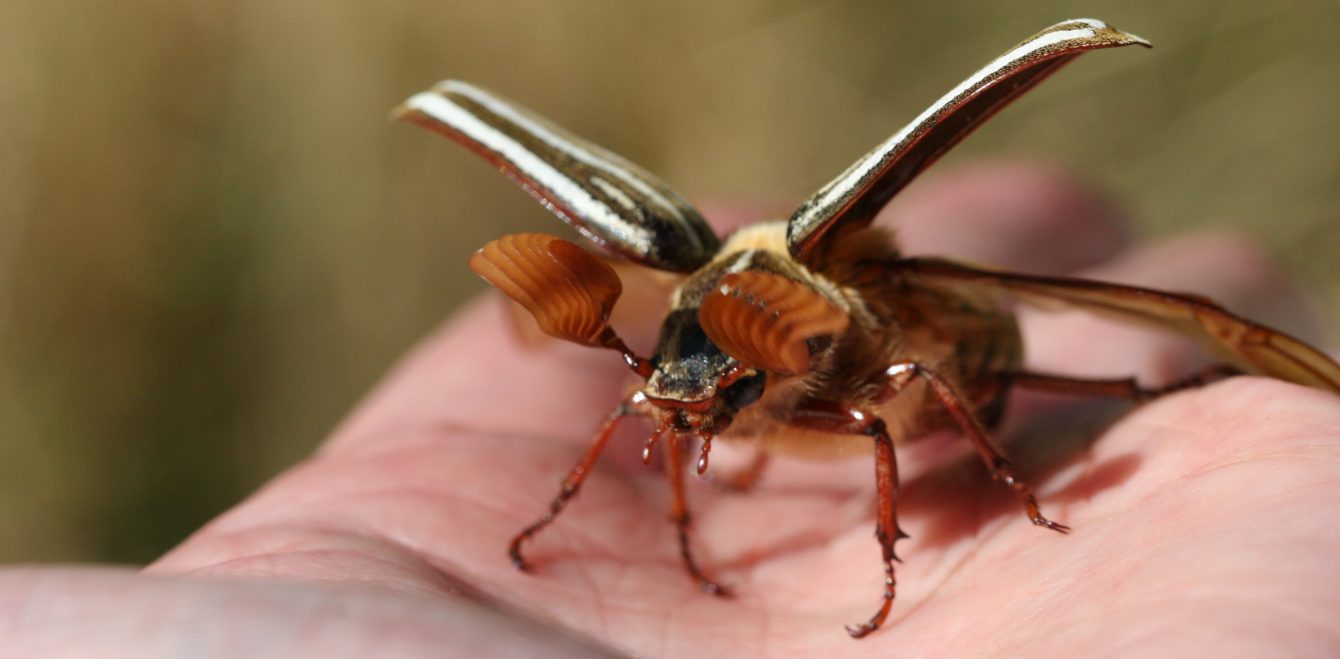
It’s a short clip, and you’ll have to check out the end to see this little beetle take flight. I fished this one out of the pool and it’s the 2nd one I’ve seen this week, albeit a new one for me to observe. I believe this is Hylastes macer, but hoping a friend will take a look for me to confirm. I have tentatively based my ID on size (approx 5mm) and locale being under our Shore Pine trees, but I wasn’t confident using Wood’s key with only my photo and video in lieu of an actual specimen under the microscope. At minimum, Hylastes should be correct for Genus. These beetles are in the family Curculionidae and subfamily Scolytinae, one of the Bark and Ambrosia beetle species.
As to their life history, they construct galleries in phloem tissues of roots and stumps of Pinus or Pine trees and occasionally Picea or Spruce trees. According to Atkinson (2024), there are six species of Hylastes known in Washington State. Some of the species in this genus range from BC to CA. For more on distribution, take a look at Wood, 1982.
While identifying a bug is part of the process, the most fun for me is observing their behaviors. I knew when I saw the march of those little front feet, that the launch was about to take place.
Evans, A. 2021. Beetles of Western North America. Princeton University Press.
Wood, S.L. 1982. The bark and ambrosia beetles of North and Central America (Coleoptera: Scolytidae), a taxonomic monograph. Great Basin Nat. Mem. 6: 1-1356.
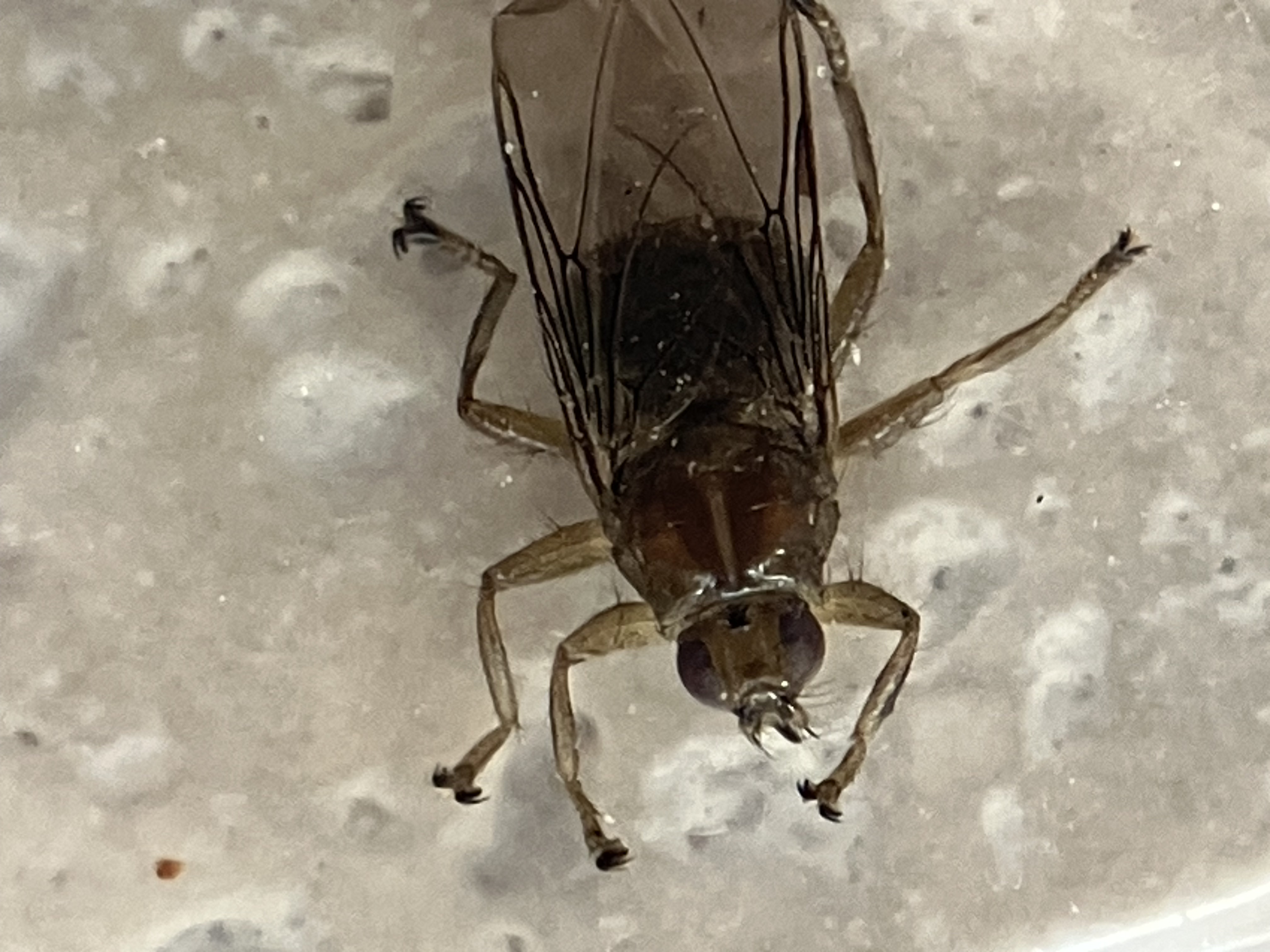
I’m doing a short write up of this fly just to get you thinking a bit. It was observed April 29, 2024 on San Juan Island, WA. While identification to Genus/Species may not be possible until I can actually catch a specimen to be keyed out, it is Family Tachinidae and Tribe Goniini. Hoping to come back with at least a Genus update at some point.
What I want to SHARE is the life history of this tribe of flies. The Goniini flies are parasites of various Lepidoptera, mostly Noctuids, Arctiids, and Lymantriids. Translating this for you a bit, it would be cutworms (if you’re a gardener) , tiger moths, and tussock moths.
How does this play out?
The female Goniini fly lays a “black microtype,” usually ovate and flattened egg, varying in size from very small to medium, on foliage utilized by the feeding host caterpillar. The caterpillar (usually Noctuids) munch the foliage, ingesting the fly egg. The caterpillar will continue feeding and then wander off to complete its life cycle as a pupa. At some point after ingestion by the caterpillar, the fly egg hatches and the fly larva develops inside the body of the pupating moth that is inside its chrysalis.
A myriad of ecological relationships exist in nature that are often unobserved. Many remain undescribed or unknown. Sometimes, they are disrupted by humans who intervene out of ignorance. If you’re one of those folks who squish what you believe are cutworm pupae in your garden bed, you might be smooshing the pest predator developing inside.
Hmmm, I was trying to think of a catchy title. “Louse in the House” made you look, right? Well, indeed one did escape and I can’t find it. Would you like to come over for dinner tonight? I thought I saw it flying around the dining room.
Here’s how it happened. Yesterday afternoon, a bird hit the window. It was a hard strike on a window where we haven’t had many bird collisions. I suppose I’ll have to make more Acopian Bird Blinds to put up. They’ve sure help mitigate the bird strikes. Link to DIY instructions here: https://www.birdsavers.com/make-your-own/
Back to the bird. I went out to see if the poor bird was still alive. It was, but died in my hands soon after I picked it up and carried it into the house to assess for injuries. I took the bird into the bathroom so I could shut out my ever-curious indoor cats, Herman and Nimbus. After realizing I was holding a lifeless body, I set the bird down in the bathtub. Right away, I noticed a fly crawling through the bird’s feathers. Hurriedly, I left the bathroom, grabbed my camera, and went back to examine my specimen more closely.
Hippoboscid Fly (Icosta americana)
As I bent over to look through the feathers, a fly zoomed up and nearly entered my nostril. I backed away, rubbing my nose. Wouldn’t be my first strange experience with a fly. There was that incident with the botfly that could have been a medical ophthalmological emergency. Don’t ask. You truly don’t want to know.
Leaning back over the tub, I started to look through the feathers again, but thought better. I went out of the bathroom again. This time to retrieve a large plastic bag and a collection vial for specimens. The bird went into the clear plastic bag. Now, I could look while containing the flies in the bag if there were others to be found.
I found two more.
These are Louse Flies in the family Hippoboscidae. The ID for this particular species is Icosta americana. Also, my husband identified the bird as a juvenile Brown Headed Cowbird (Molothrus ater). Strangely, this species is known to be chiefly associated with the bird families Accipitridae (birds of prey – hawks), Phasianidae (pheasants), and Strigidae (owls). So, why might it be on a cowbird? The bizarre exception. Maybe the cowbird parents laid their egg in the nest of one of the above? I suppose it will be a mystery.
Hippoboscid louse flies are pretty interesting. First off, don’t they look weird? Trust me when I tell you they are one of the most bizarre families of flies out there. They are obligate ectoparasites that feed on the blood of their host, nothing else. Unlike other fly groups, both male and female flies in this family feed exclusively on blood.
There are more than 200 species of Hippoboscid flies, and each species is particular about what sort of host it feeds on. Some feed on sheep, some on deer, others on bats, but the ones I found feed on birds. In fact, approximately 75% of species of Hippoboscid flies are bird parasites. Of these 75%, some are so picky, they only prefer a particular species of bird.
Another interesting thing about these flies is the fact they vector diseases like Avian Malaria, West Nile virus, and various Trypanosomes among the host species they parasitize. Unlike some other Hippoboscid species which have deciduous wings (wings that are quickly lost when reaching a host), the ones that parasitize birds can fly during their entire adult life. This means if their host dies, like my bird that hit the window, the flies are able to leave the bird’s body and fly off to parasitize another bird host.
While one fly may have attempted to target my nose, these flies are not known to parasitize humans, although incidental bites have been recorded. Some species of female Hippoboscid flies are actually known to only be able to develop their eggs from the blood of their particular host species.
While on a host, Hippoboscid flies move about with ease. They have bodies that are dorso-ventrally flattened, somewhat like an unfed tick body or a squished bug body. In fact, the Hippoboscid flies that parasitize deer are often mistaken for ticks. Because of the flattened body, sometimes these flies are referred to as flat flies. This shape makes it easy for them to glide between fur or feathers, and it also makes it hard for the host to groom them off.
The most remarkable thing about Hippoboscid flies is their reproductive biology. It is known by the term, Adenotrophic viviparity. Adenotrophic viviparity is where eggs hatch inside the female, and the larvae are fed internally until they are mature enough to pupate. In layman lingo, the female fly gives birth to a single live larva just as it is ready to pupate. She has invested all her resources into producing a single offspring.
This is unique as most fly species cast eggs onto a substrate and the eggs hatch into larvae, feed independently of the parent, pupate, and emerge as adults. With Hippoboscid flies, the female parent retains the single egg inside her uterus, the egg hatches into a larva, and she feeds it with special milk glands until the larva reaches the last stage of larval development or “prepuparium.” Finally, the adult fly “births” her offspring larva enclosed in a shell that quickly hardens into a true pupa. With Hippoboscid species that parasitize birds, the adult fly will leave her pupa in a bird’s nest or roosting site where it can easily find a host when emerges as an adult. For more on the life cycle of Hippoboscidae, you can view one of my YouTube videos here – https://youtu.be/zCD1B2GjCxU
*** In case you’re sitting here scratching your head and I wasn’t clear in the text, ALL of the collective names for Hippoboscid Flies include the following: Flat Fly, Louse Fly, Ked Fly, or just plain ole Ked. And yes, they ARE known to have a painful bite!
References and Further Reading
Coatney, G. R. (1931). On the Biology of the Pigeon Fly, Pseudolynchia maura Bigot (Diptera, Hippoboscidae). Parasitology, 23(04), 525.
Dick, C.W. 2006. Checklist of world Hippoboscidae (Diptera: Hippoboscoidea); Department of Zoology, Field Museum of Natural History: Chicago, IL, USA, pp. 1–7.
Levesque-Beaudin, V. Sinclair, B.J. 2021. Louse fly (Diptera, Hippoboscidae) associations with raptors in southern Canada, with new North American and European records. International Journal for Parasitology: Parasites and Wildlife, 16: 168-174. ISSN 2213-2244. https://doi.org/10.1016/j.ijppaw.2021.09.007
Maa, T. C. 1969. a Revised Checklist & Concise Host Index of Hippoboscidae (Diptera). Pacific Insects Monog., Honolulu: Bishop Museum, Honolulu, Hawaii. 20: 261–299. http://hbs.bishopmuseum.org/fiji/pdf/maa1969b.pdf
Santolíková,A.;Brzonˇová, J.;Cˇepicˇka,I.;Svobodová,M. 2022. Avian Louse Flies and Their Trypanosomes: New Vectors, New Lineages and Host–Parasite Associations. Microorganisms. 10, 584. https://doi.org/10.3390/ microorganisms10030584
Button Designed and Produced by Nancy May Knapp of Orcas Island, WA
If you live in San Juan County, WA, my blog topic today is for you. I’m seeing some posts on social media lately about pest control that I’m not too crazy about. We have so many people moving to our island now, many bringing with them the mainland suburbia mentality of spraying insecticides all over their yards and homes. Can we help folks understand the slogan, “You Have To Be More Careful With an Island?”
If you know someone who is concerned about caterpillars, ants, termites, wasps, mosquitoes, or spiders, and they are willing to talk to someone (me), I am more than happy to take a phone call or email to answer questions on how to AVOID use of unnecessary chemicals that can pose health risks to humans, pets, wildlife, and contaminate soil and water. Most , if not all, use of pest control services are completely unnecessary. Instead, learning about these organisms can go a long way to reducing fear and being able to coexist and/or tolerate living with them around our homes and properties. Some species of bugs are extremely critical to keeping our ecosystem healthy and balanced. ALL of them are part of the greater food web. With the intense development and land use changes happening in the islands, we need to remember to landscape with intentionality towards keeping our island healthy and oriented towards providing habitat for native species instead of displacing everything.
How to spread the word? You can message me here. I will respond. You may also reach me on Facebook at Bugs of the San Juan Islands. It’s a great spot to learn about the amazing bugs we have living alongside us.
Last night I tried out a black light tube instead of my UVB light or the miserable fail of the switched-off porch light I wrote about yesterday. My thoughts on the black light? Not effective. Either the light was the issue or there just weren’t many moths flying about last night at all. I did find a few moths. Mostly, I found small micro-moths. Some are hardly noticeable at all. At first glance, you could mistake them for a drop of bird poo on the bucket. In a tree or shrub, you might miss them entirely. It takes magnification to see them clearly.
Tonight, I’m going to go back to the UVB tube light. Hopefully with better results. If you’re interested in knowing more about MOTHING or finding out about National Moth Week, feel free to reach out or check out the link here – https://nationalmothweek.org
Here’s my Gallery for Day FIVE. Thanks for stopping by!
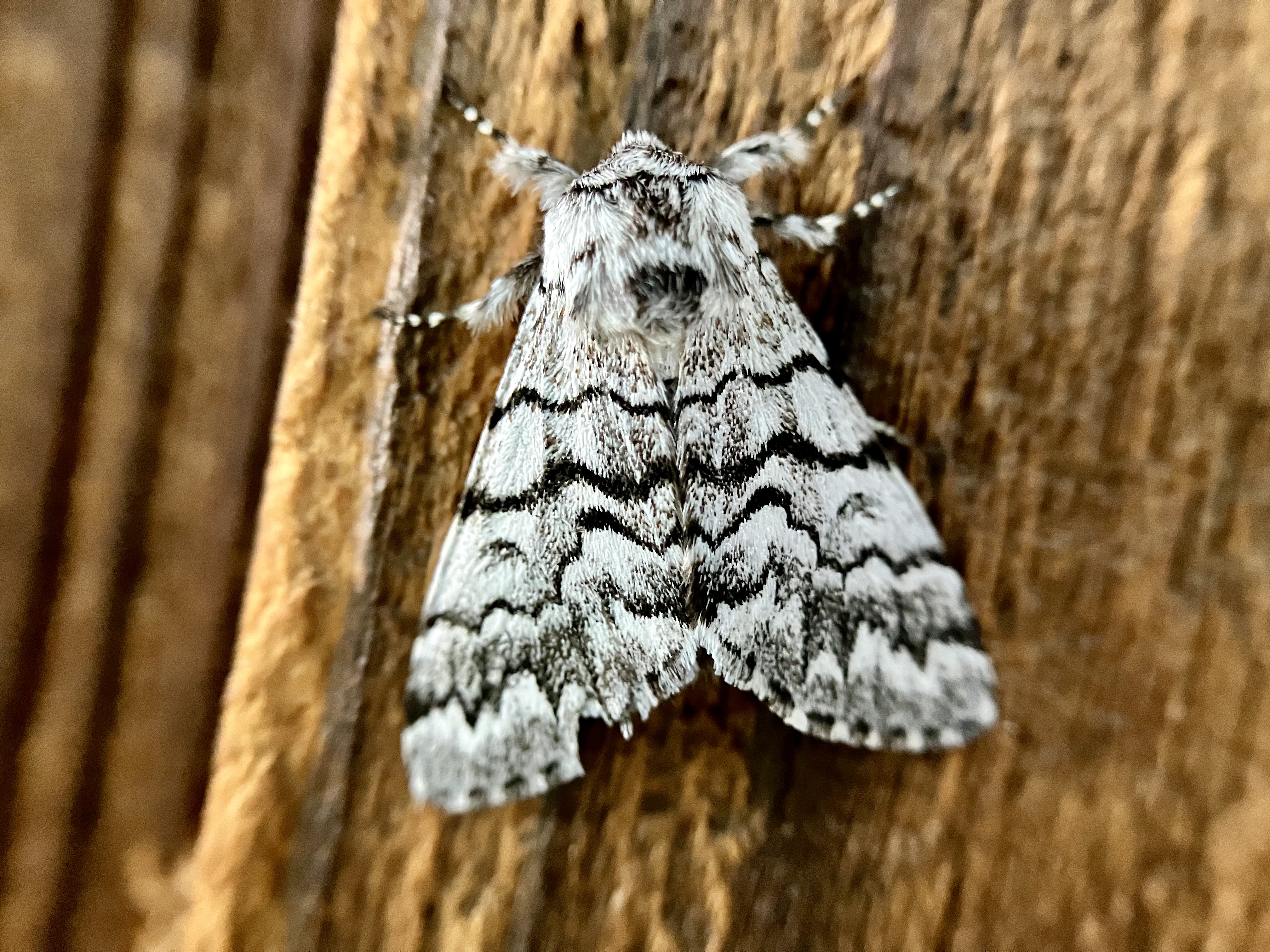
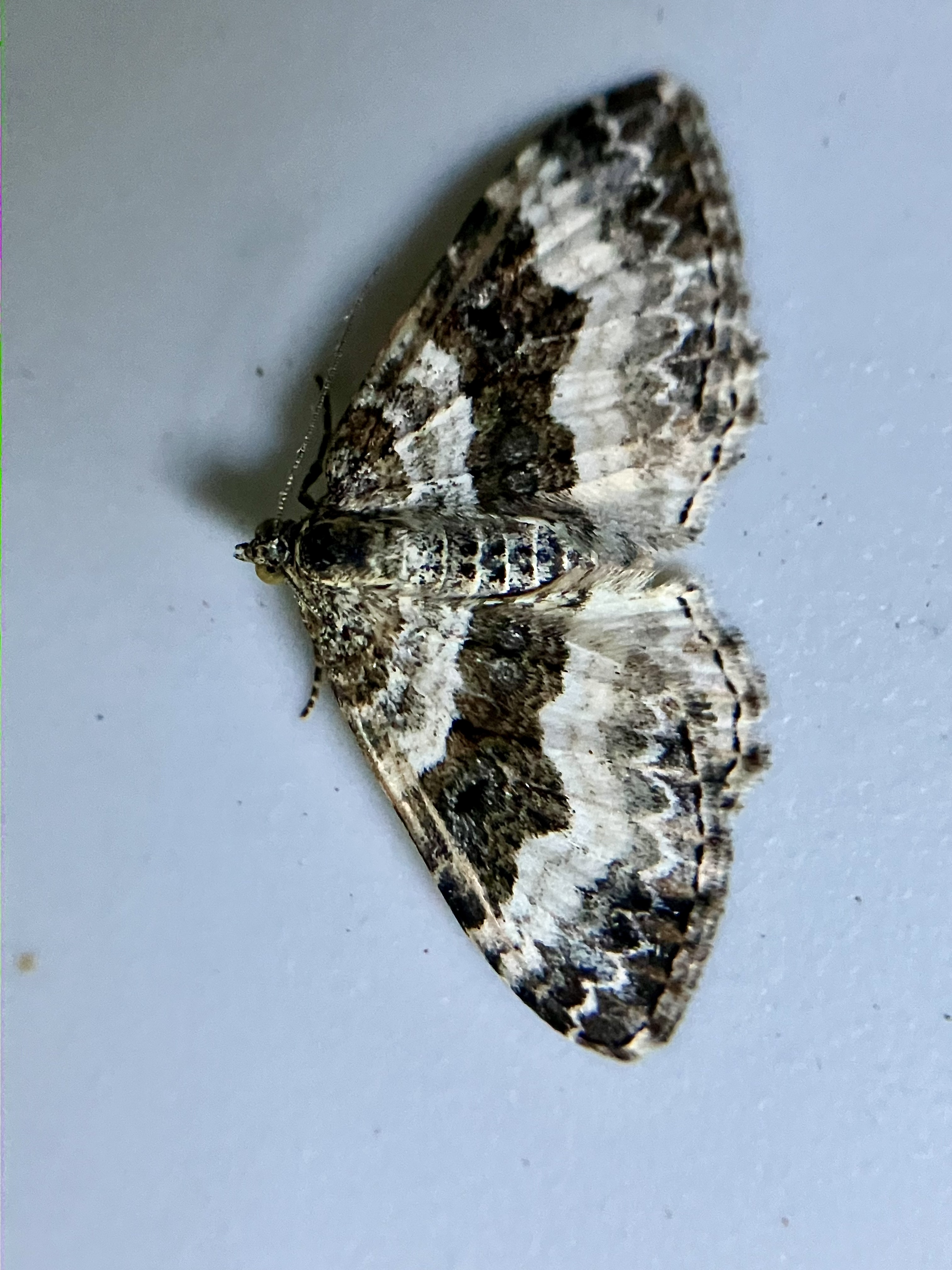
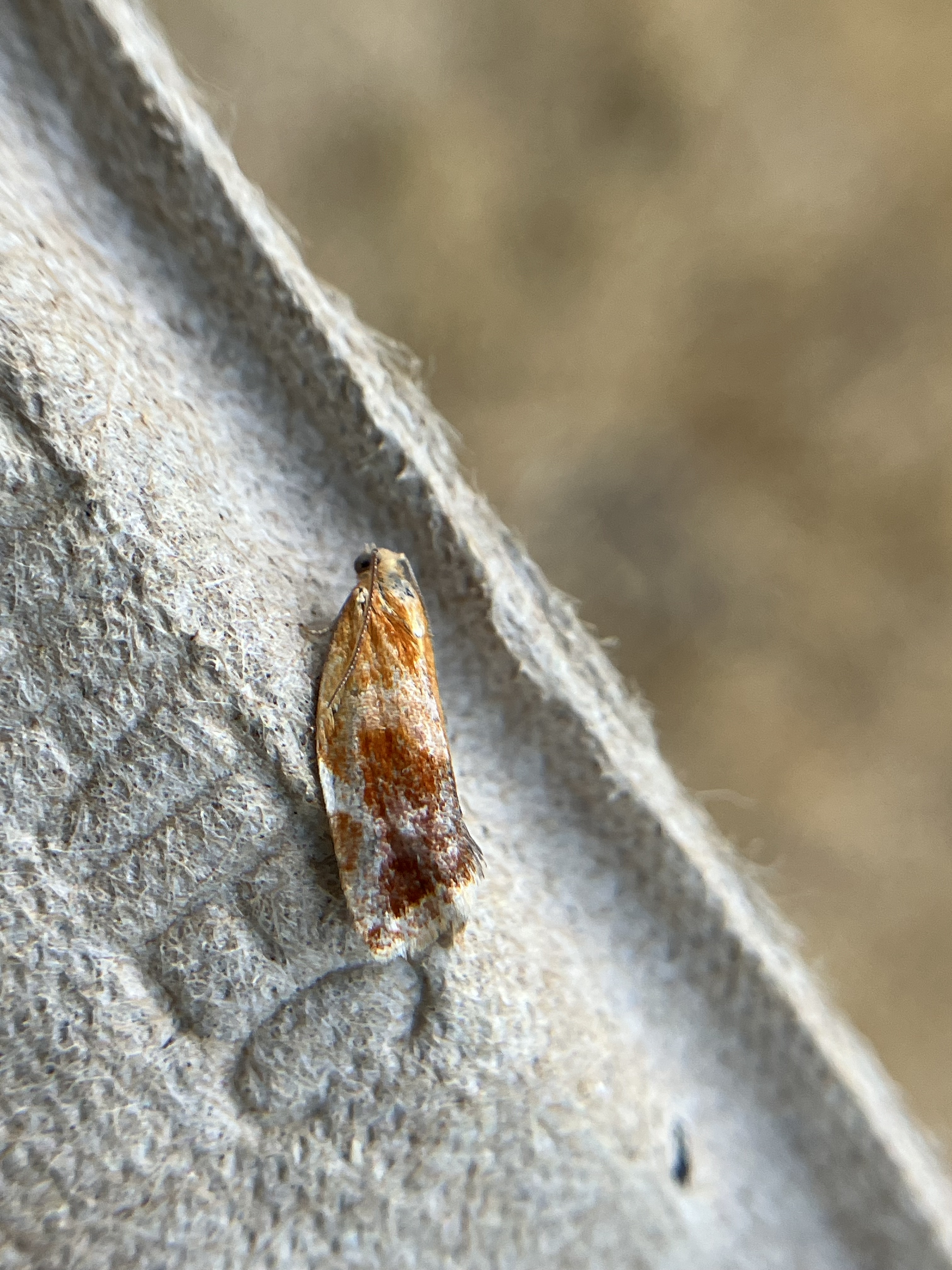
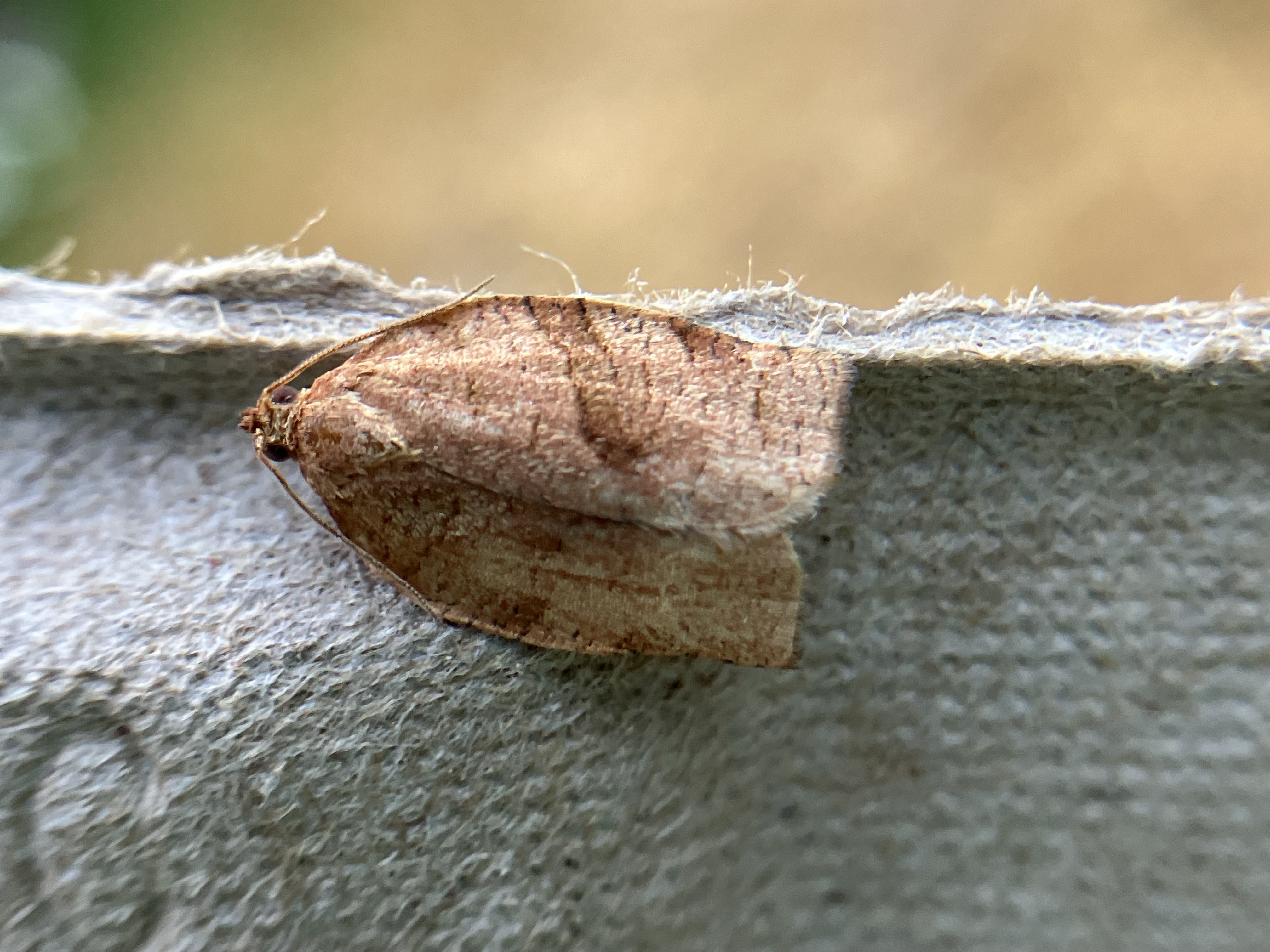
Pero mizonBrown lined Looper, (Neoalcis californiaria)Possibly one of the Knot Horn Moths, Family Pyralidae, Subfamily PhycitinaeDouble Banded Carpet moth (Spargania magnoliata) I believeGenus Ephestiodes, one of the snout moths in the family PyralidaeGenus Ephestiodes, one of the snout moths in the family PyralidaeGenus EphestioidesPero mizonGenus EphestiodesTribe Archipini, one of the Tortrix mothsGenus Ephestiodes, one of the snout moths in the family Pyralidae
Last night’s mothing efforts were a giant FAIL. It rained in the San Juan’s yesterday. When I went to turn on my UV light before bed last night, I discovered it was soaking wet. I didn’t want to be the first known MOTHING casualty by electrocuting myself, so I turned on our porch light instead. 💡
What could possibly go wrong?
My husband got up at 2 AM and turned out my light. GRRRR. Hubby is in the DAWG-HOUSE! 🤣 Woof! 🐶
No moths to post today, but this gives me an opportunity to write up the first of a series of posts I’ve been meaning to work on. Stay tuned for WHAT’S BITING ME?
Thanks for reading. Hopefully, I will be back with some more moths tomorrow.
Today (June 22) marks the start of National Moth Week, 2023. For anyone interested in participating or learning more about how to “MOTH,” check out the National Moth Week website here: https://nationalmothweek.org.
I’ll be brief, but start by introducing myself. I’m Cynthia (Brast-Bormann) and I am an entomologist who lives on San Juan Island. My “work” is on a volunteer basis. Because of my love for insects, spiders, and the natural world, I endeavor to share my enthusiasm and knowledge with our community and anyone else who would like to know more about these charismatic critters that are all too often targeted for eating leaves, buzzing, sometimes biting or stinging, but mostly for merely existing. We stop short of recognizing they are food for other organisms, work to control pest populations (without noxious chemicals), and they help us to have food (pollination). Without insects and spiders, we would be in a deep heap of doo! Pardon my French.
Each day of National Moth Week – which runs through July 30, 2023, I will be posting a gallery of what shows up at my light trap each night, hopefully with an ID along with the photos I post. Please feel free to let me know if you see something misidentified. 🙂
If you’re interested in Mothing, or learning more about other bugs, you may contact me with questions via email or join the Facebook Group, Bugs of the San Juan Islands at https://www.facebook.com/groups/3594158544144419
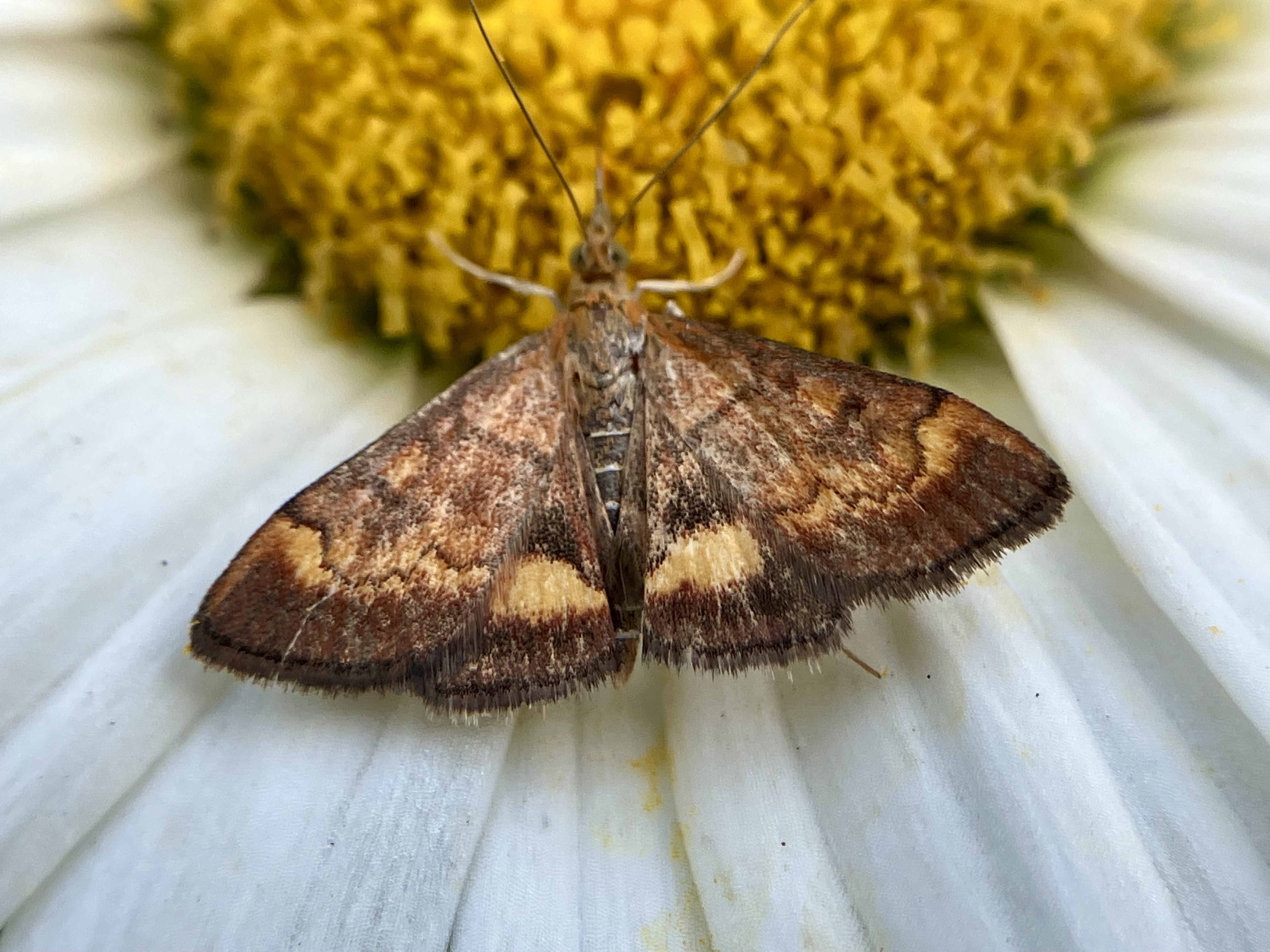
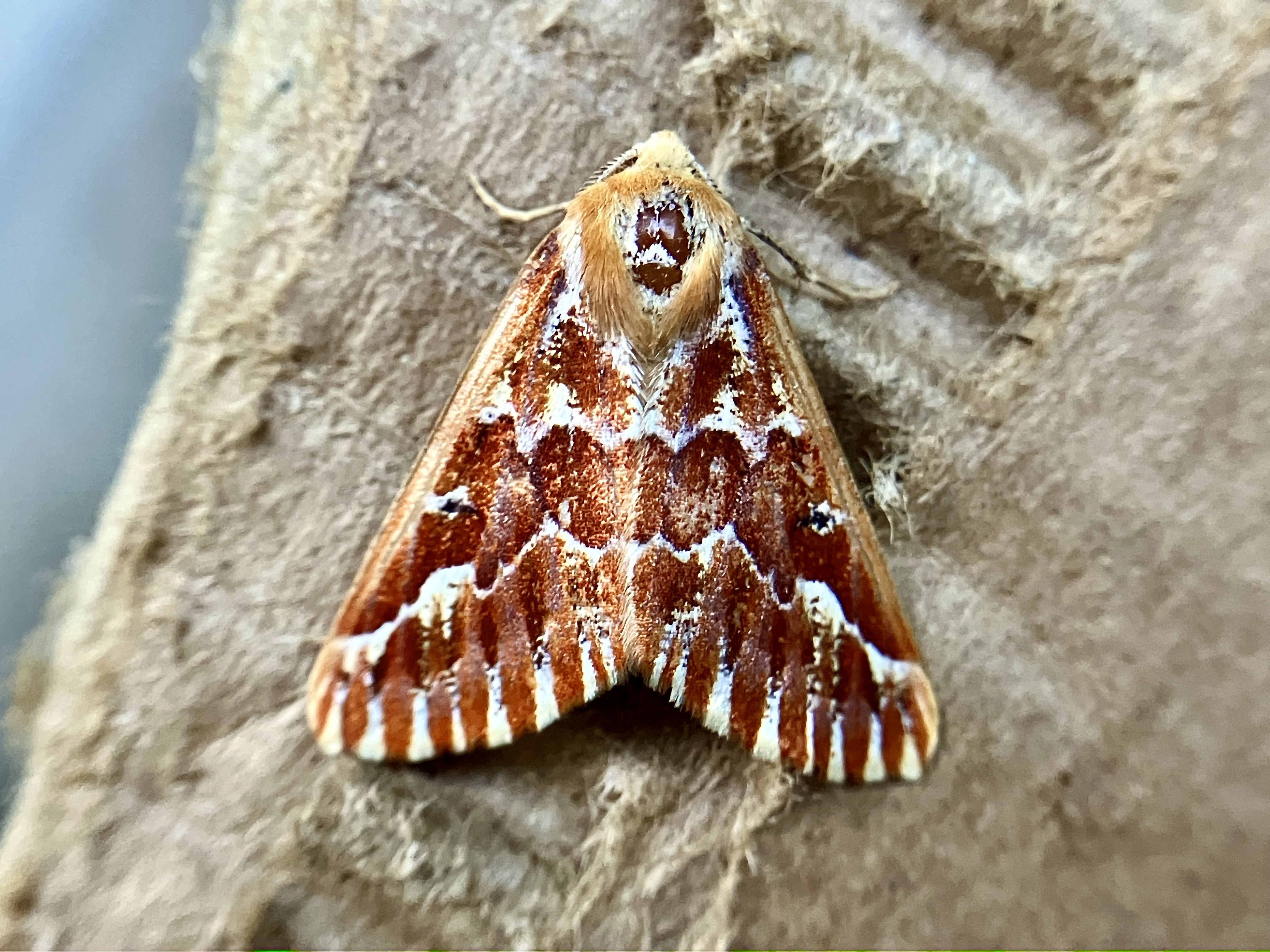
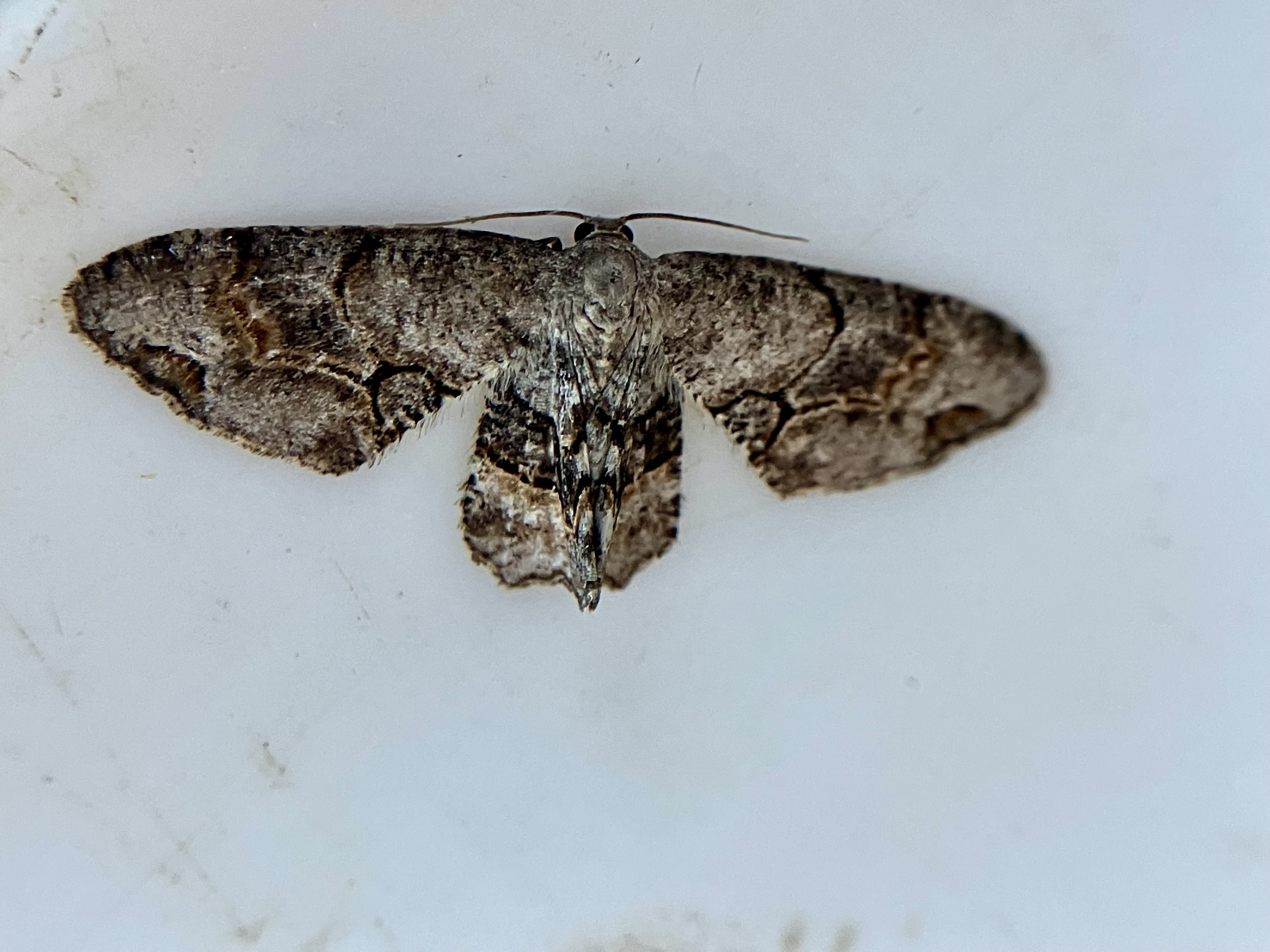
California Pyrausta Moth (Pyrausta californicalis)Western Panthea Moth (Panthea virginarius)Small Magpie (Anania hortulata)(Arta epicoenalis), a Pyralid mothGenus Eppirhoe Western Conifer Looper (Caripeta aequaliaria)Diamondback Moth (Plutella xylostella)Tribe Archipini – TortricidaeGray Scoopwing (Callizzia amorata)Choristoneura mothStamnoctenis pearsalli, a Carpet Moth (I think)Stamnoctenis pearsalli, a Carpet Moth (I think)Stamnoctenis pearsalli, a Carpet Moth (I think)Stamnoctenis pearsalli, a Carpet Moth (I think)Stamnoctenis pearsalli, a Carpet Moth (I think)Stamnoctenis pearsalli, a Carpet Moth (I think)Stamnoctenis pearsalli, a Carpet Moth (I think)Stamnoctenis pearsalli, a Carpet Moth (I think)Stamnoctenis pearsalli, a Carpet Moth (I think)Horned Spanworm Moth (Nematocampa resistaria)Unknown Noctuid moth
Leading up to the Twelfth Annual National Moth Week, July 22-30, 2023 https://nationalmothweek.org, I am getting into moth mode with some early collecting to see what is flying about the forest near our home at night.
My first attempts at this were quite unsatisfying, save for the two awesome beetles that came to visit. The bug station I set up just wasn’t yielding much in the way of moths, at least until I discovered my station had been discovered by some thieving yellow jackets who were picking off my moths right in front of my eyes. Something had to change. I sure didn’t want to lure in these beautiful creatures to become a breakfast buffet.
I got some very helpful advice from a friend named Carl. Carl is an expert moth-er, and he recommended putting some egg cartons in my bug bucket so they would have a place to hide. I tried this last night, adding two egg cartons and some pieces of cardboard. Then, I went to hang my bucket up and turn on the light – EXCEPT, those darn yellow jackets showed up at 9 pm. They must have excellent memory. I suppose they wanted to be first in line at the moth buffet.
I moved my bug bucket and light to another location. It was a success. Here is the assortment of moths I collected last night. All were handled with gentle care and photographed. Afterwards, I moved them to hiding spots in the forest to make them less susceptible to predation.
If you’re interested in participating locally in National Moth Week, please don’t hesitate to reach out for more information. You can find me via email at cynthiabrast@icloud.com or on Facebook at Bugs of the San Juan Islands – a private group, but easy to join by answering a couple of questions and agreeing to follow the group rules to prove you aren’t a spammer and won’t be disruptive. 😉
I finally got a few photos of these two after trying (and failing) in my attempts when I first spotted them on Sunday. Curiously, they were “bumping” onto tiny little cones on our fir tree, creating intermittent bursts of pollen with each “hit.” I wondered if they were perhaps eating pollen in advance of mating – with protein a necessary element in egg production.
These flies aren’t extraordinarily abundant. I checked my bug records, and the only other one I’ve seen in the yard was May 2, 2021. They are unique enough that I remembered looking them up and finding that the West Coast species is actually a subspecies, thus the 3rd name, angustipennis, tacked on to the binomial (Phoroctenia vittata).
Going back through my computer, I did find my previous source. Sometimes my computer filing system actually works and I remember to put labels and tags on my saved papers. It makes it so much easier to find them again! Re-reading the paper by Oosterbroek, Pjotr & Bygebjerg, Rune & Munk, Thorkild (2006), I was especially interested in their antennal illustrations, but found another part about the larvae interesting. They state, “the larvae of all these species develop in decaying wood of deciduous trees and might turn out to represent an especially significant conservation and monitoring element of the saproxylic fauna, as most of the species are rather scarce and some of them even very rare. Moreover, they are usually confined to old forests, orchards and similar habitats where there has been a long continuity of the presence of old, dying and fallen trees (Stubbs 2003).”
Our Landscape is Changing
The area near our home has remnants of older growth trees, though many are being cut and cleared for development, and the creation of homesteads. I worry that we will lose some of these species as the forests become more and more fragmented and the trees are more stressed with the advent of higher temperatures brought about by climate and landscape change. Yes, cutting trees = hotter spaces. We need trees! And bugs. Or will sorely regret our choices and actions when we are face to face with the reality of the great die-off of species.
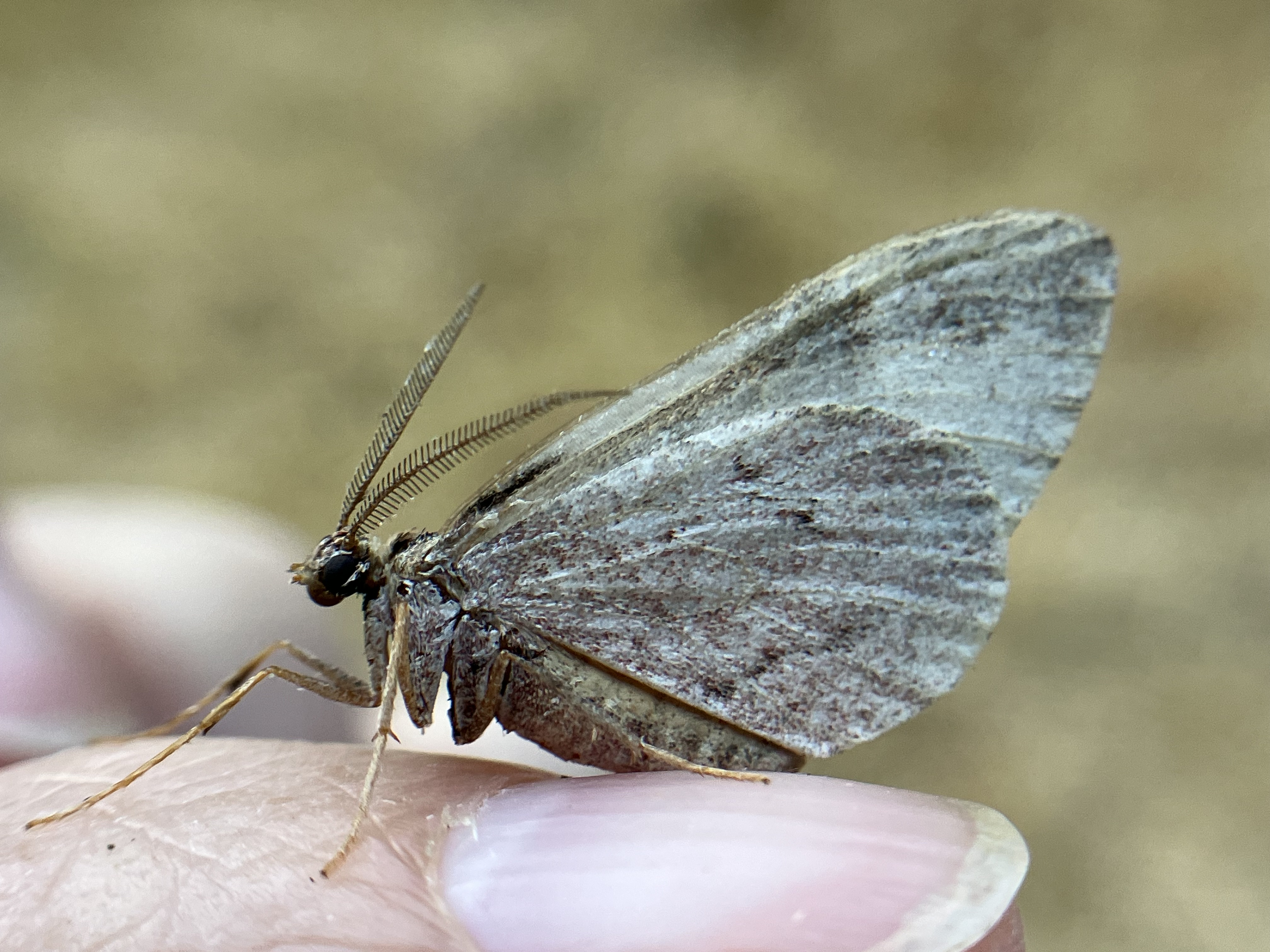
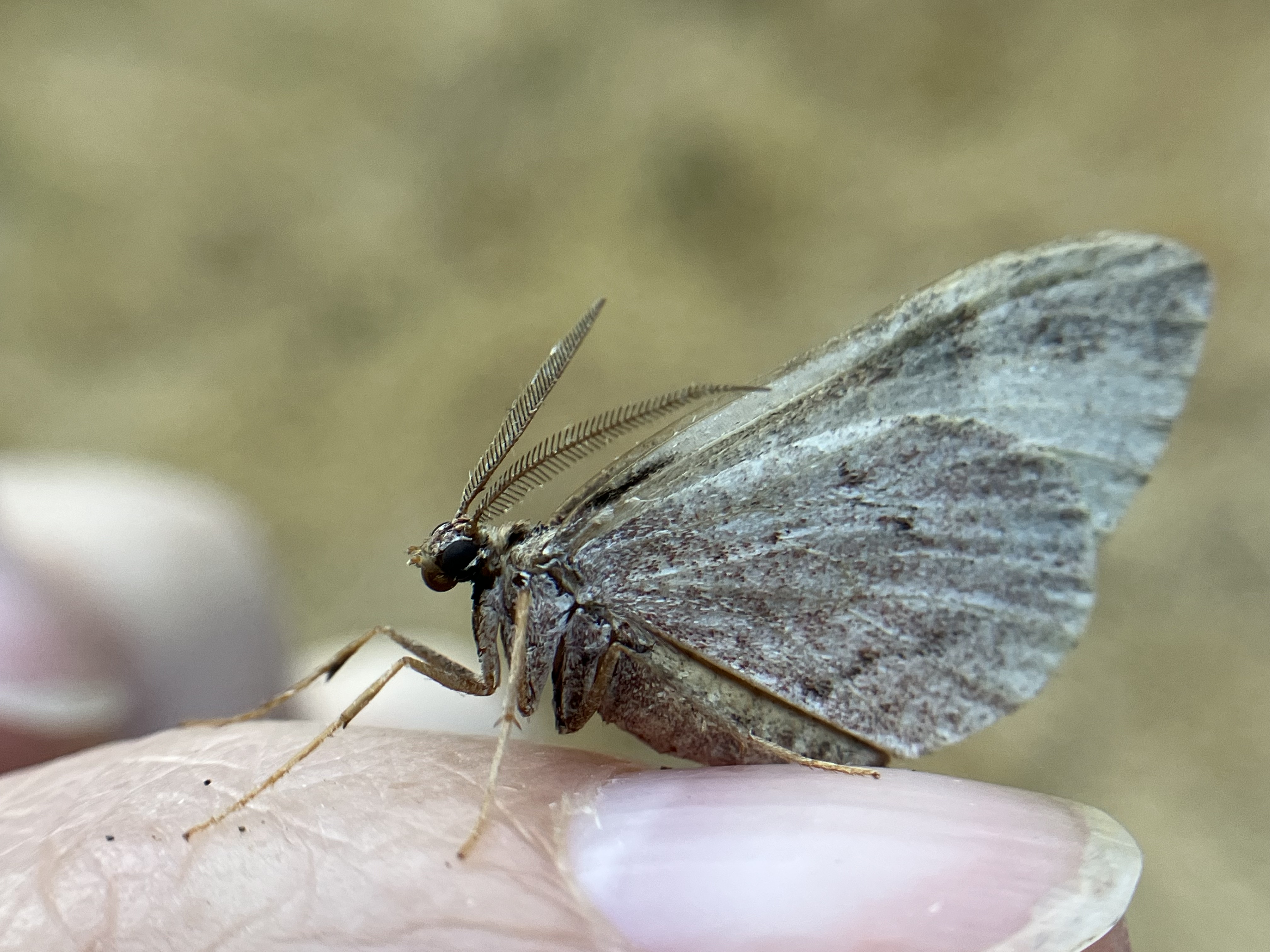
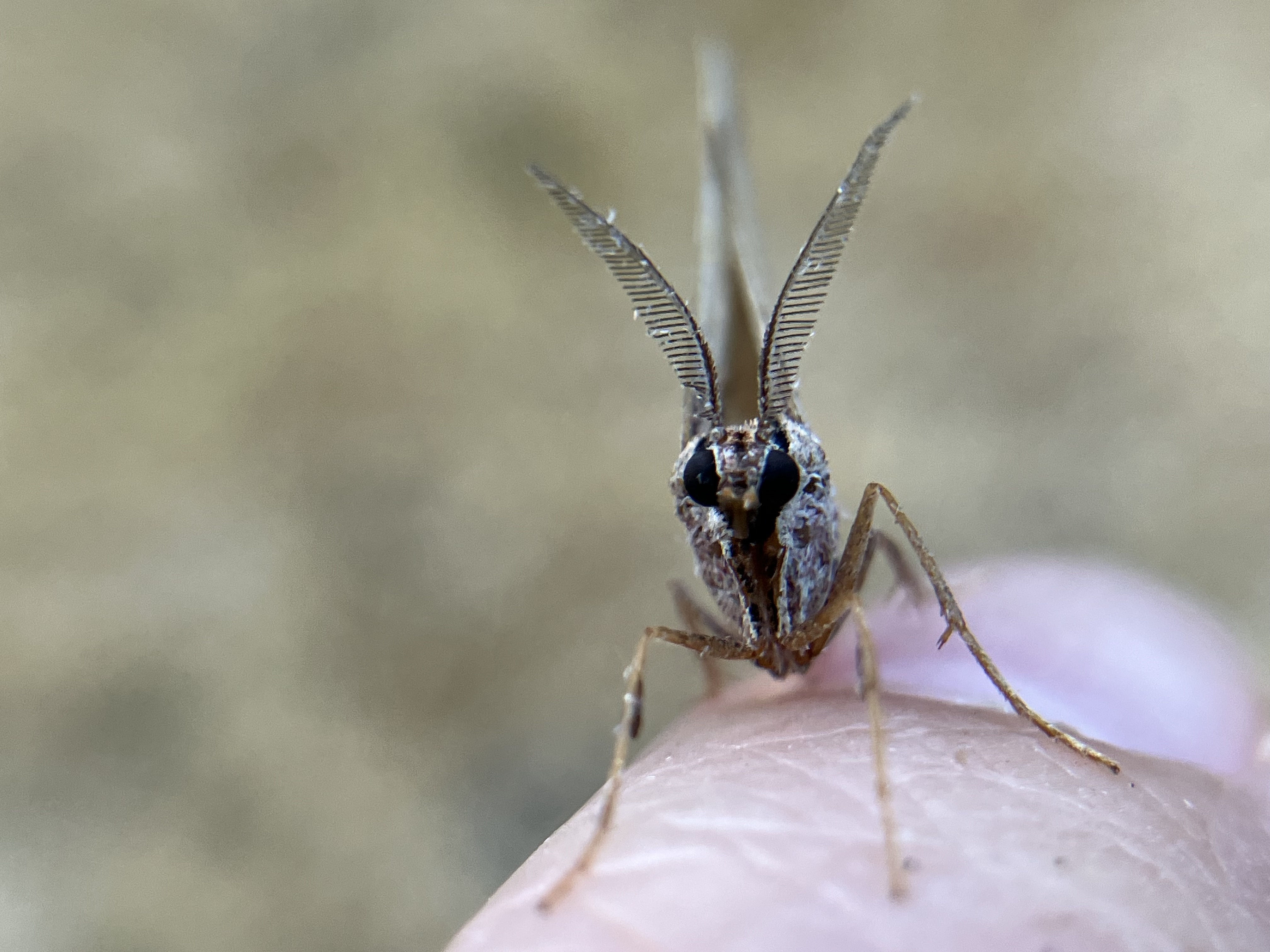
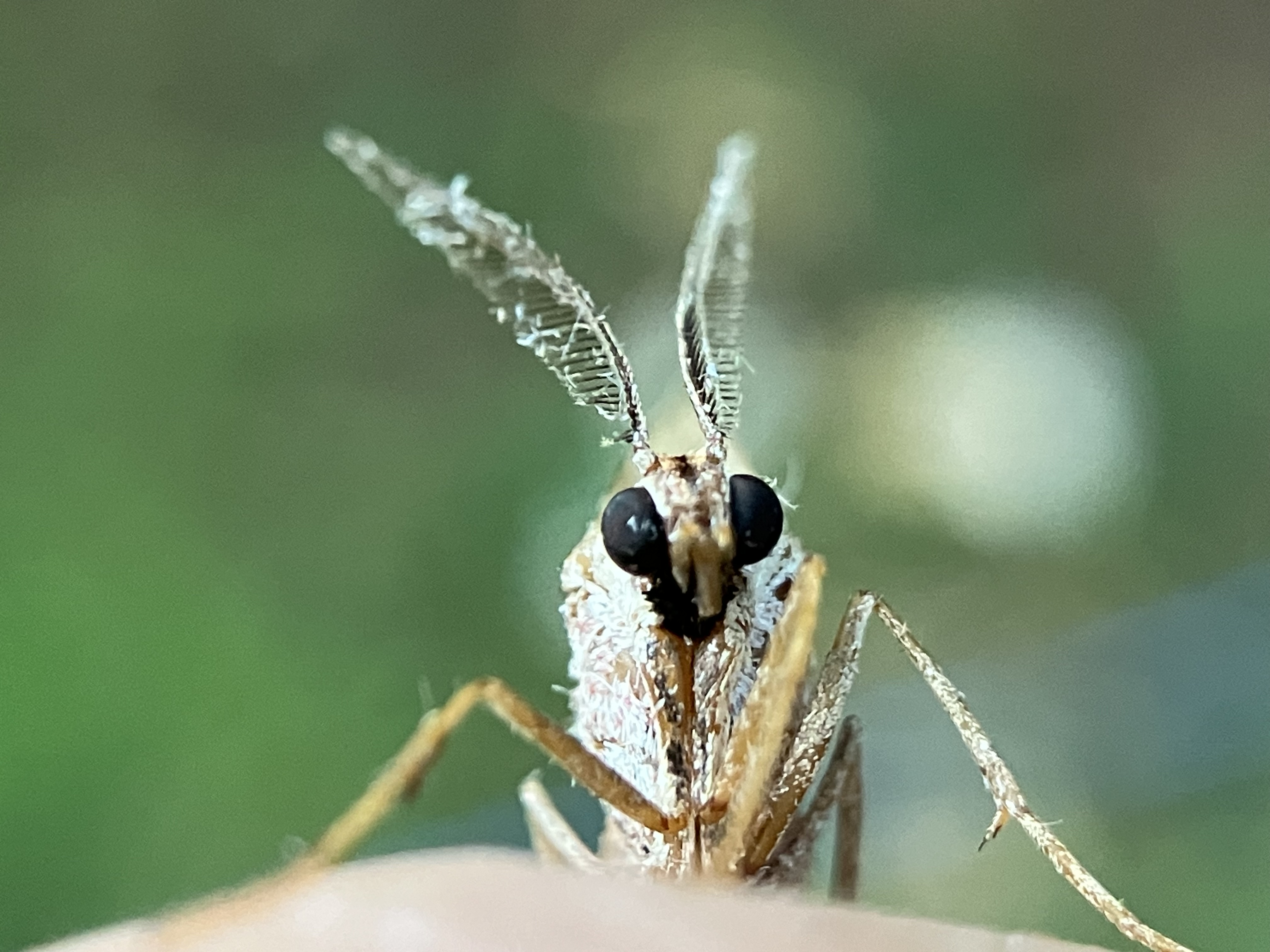
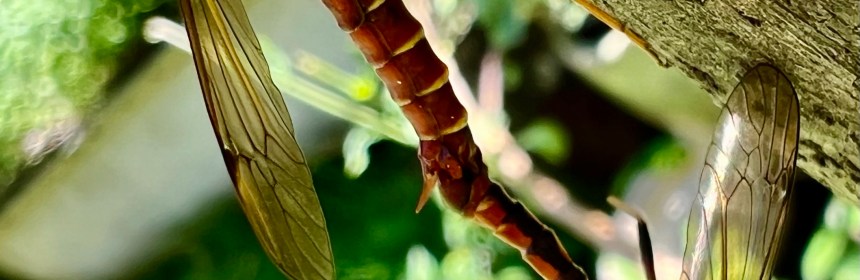
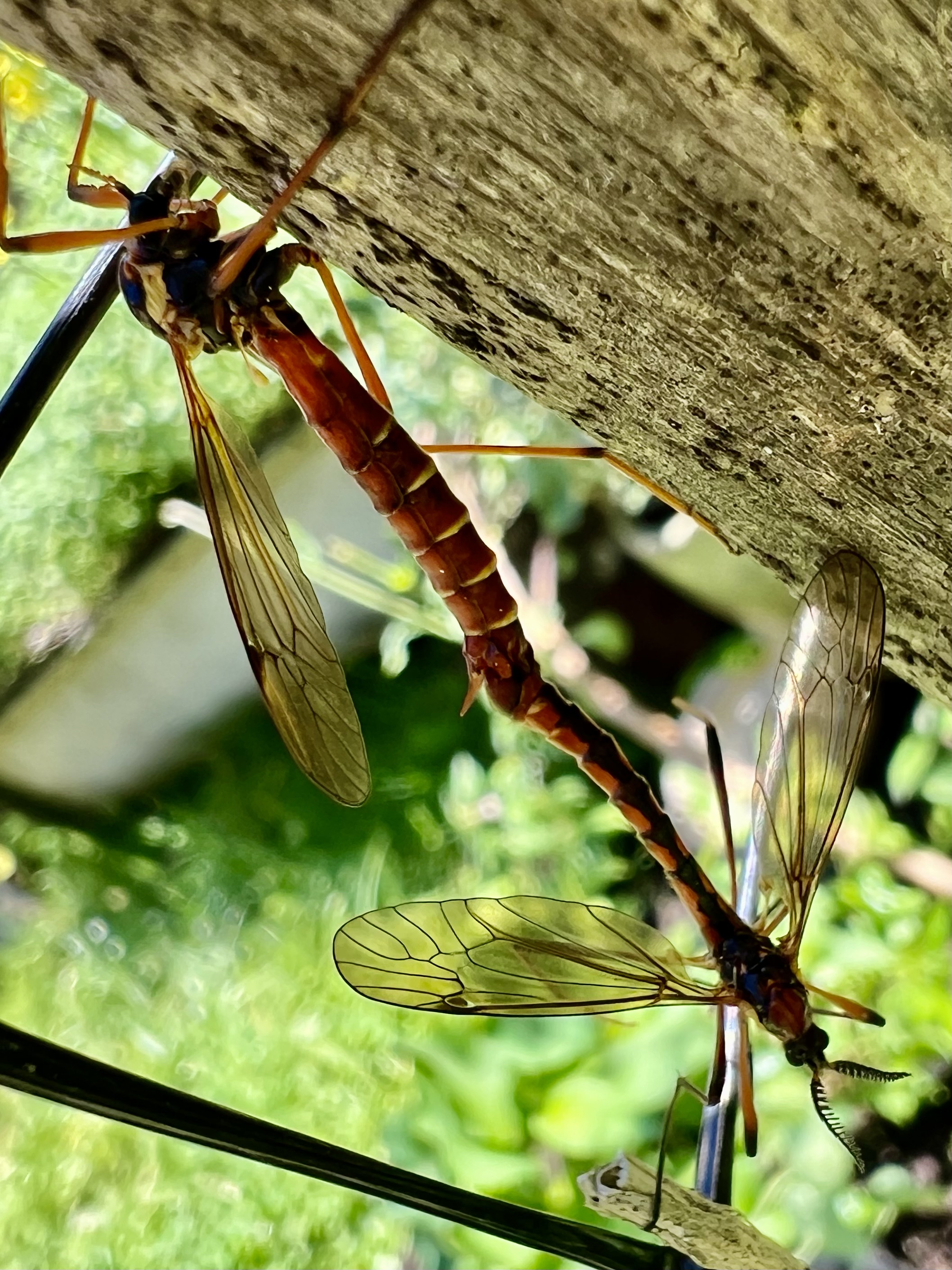
Back to the antennae for these Tiger Craneflies. Can you spot the male and the female in my photos? The male antennae are quite distinctive with their comb-like shape. Entomologists describe the comb-like antennae as Pectinate. If you haven’t figured it out yet, the male is the smaller of the pair. His antennae are wider, and he’s hanging on the bottom.
Tiger Craneflies (Phoroctenia vittata angustipennis) – Note the striking comb-like antennae of the males
Why might craneflies be useful? Well, aside from population size being an indicator for forest ecological relationships, they make great food for wildlife, especially baby birds and their parents.






















 Bugging You From San Juan Island