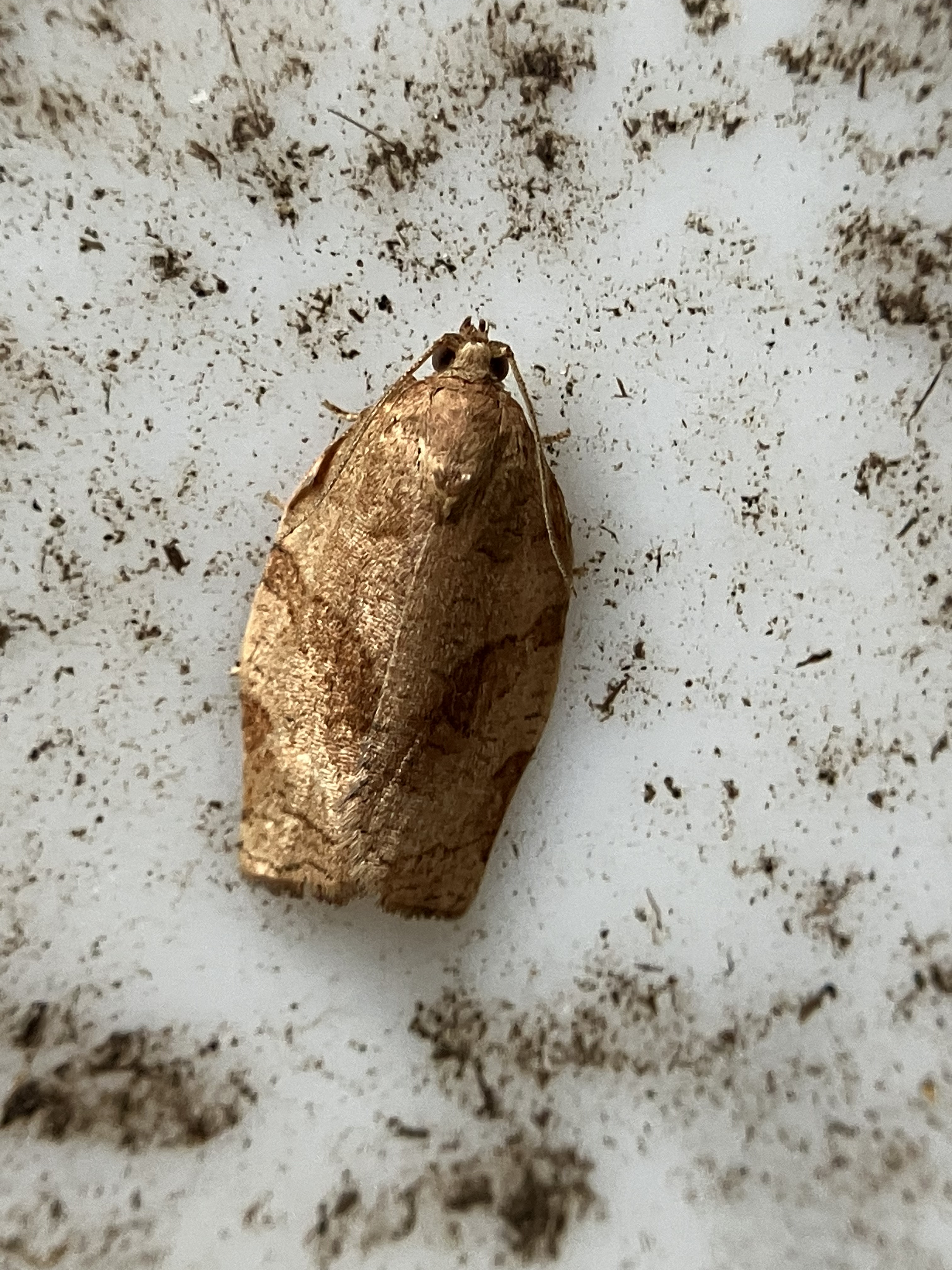
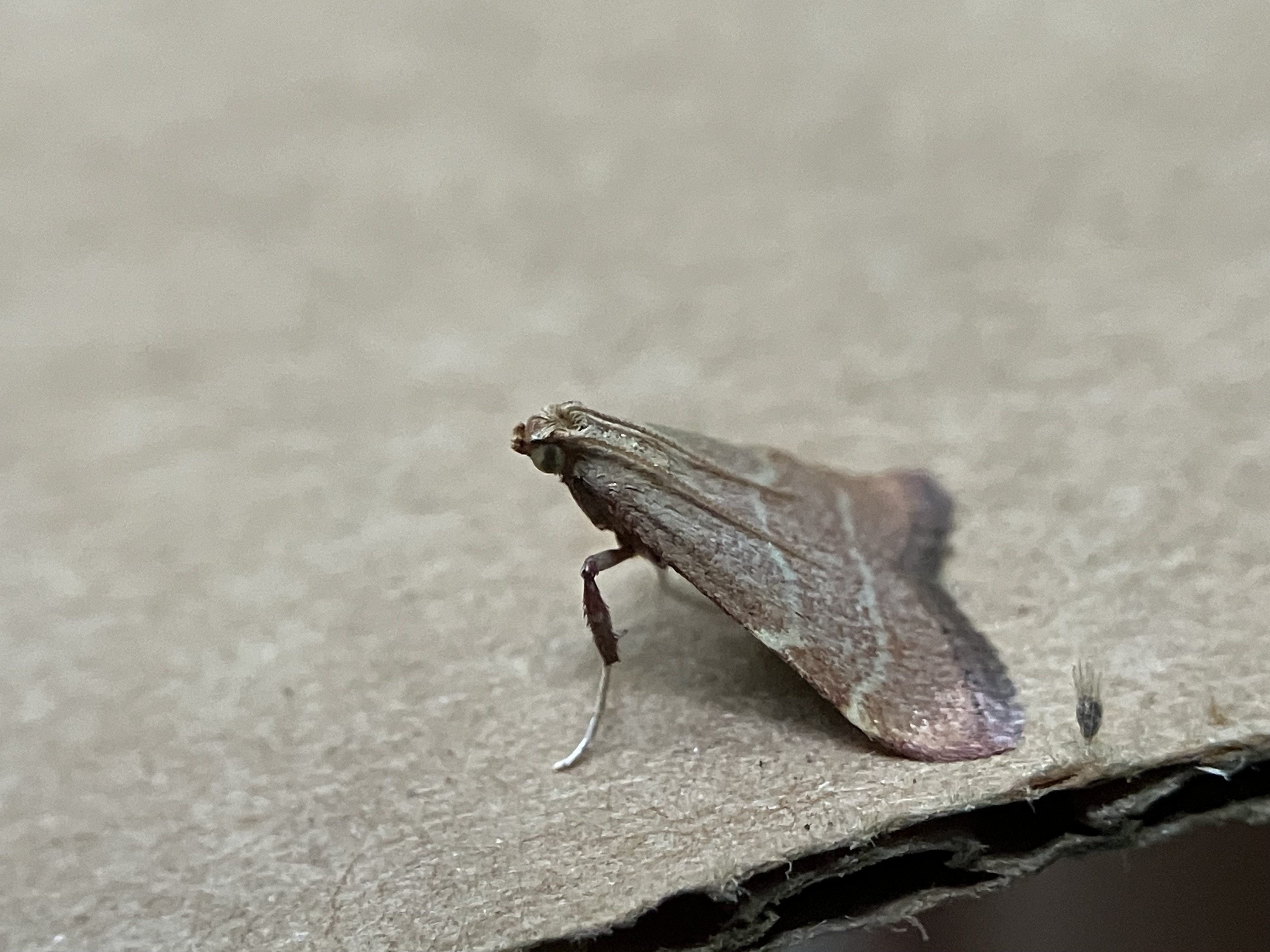
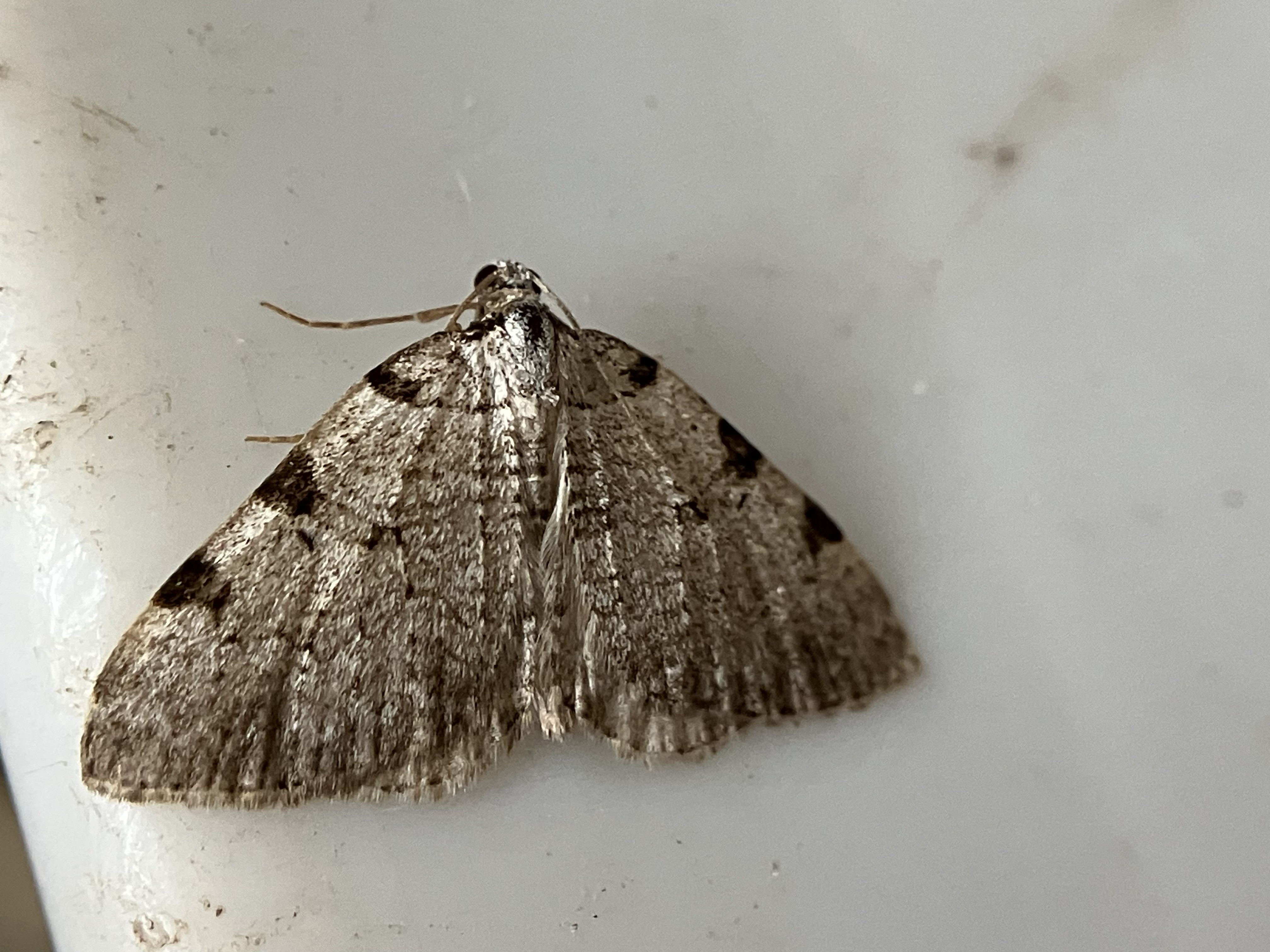
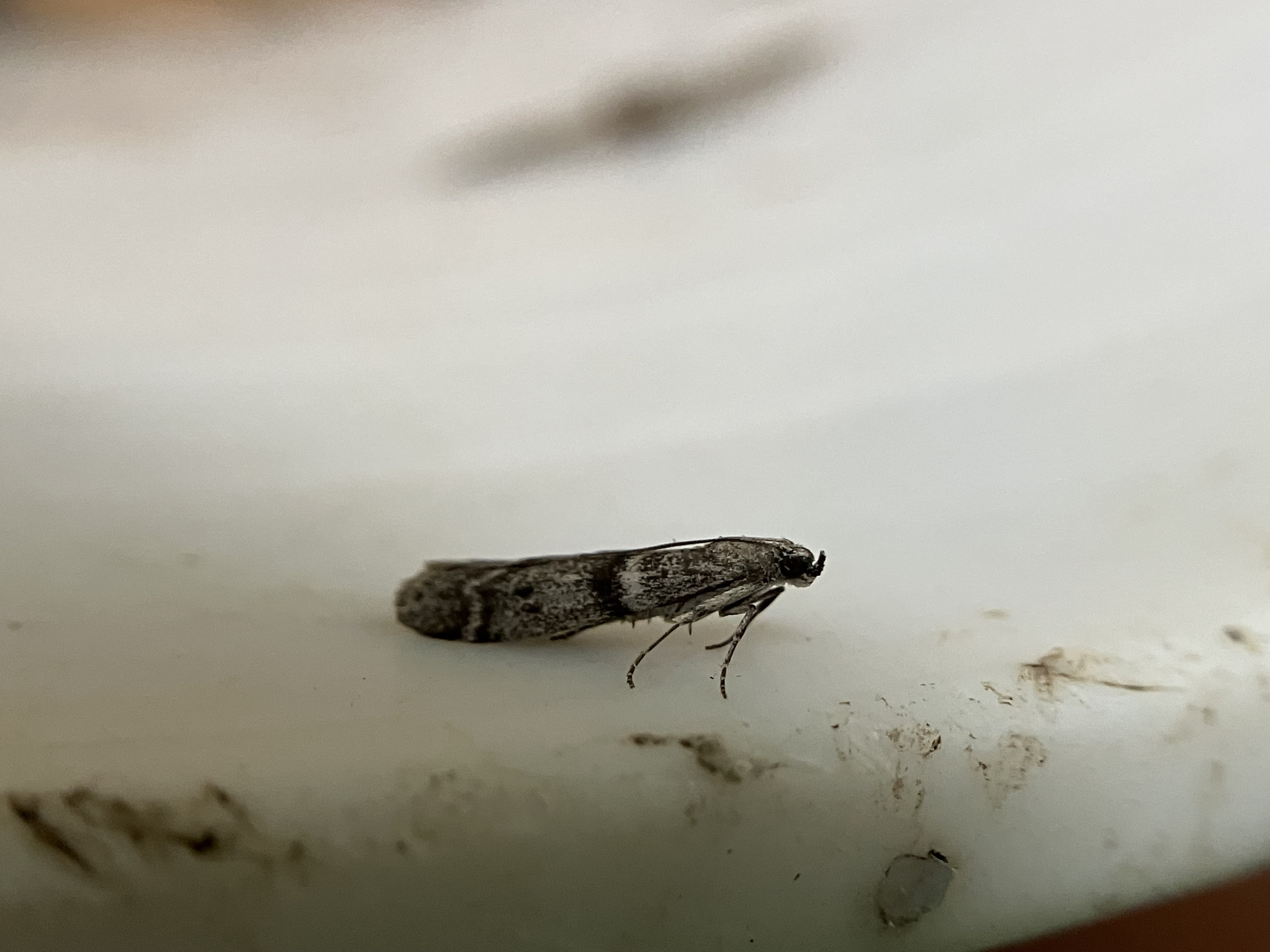
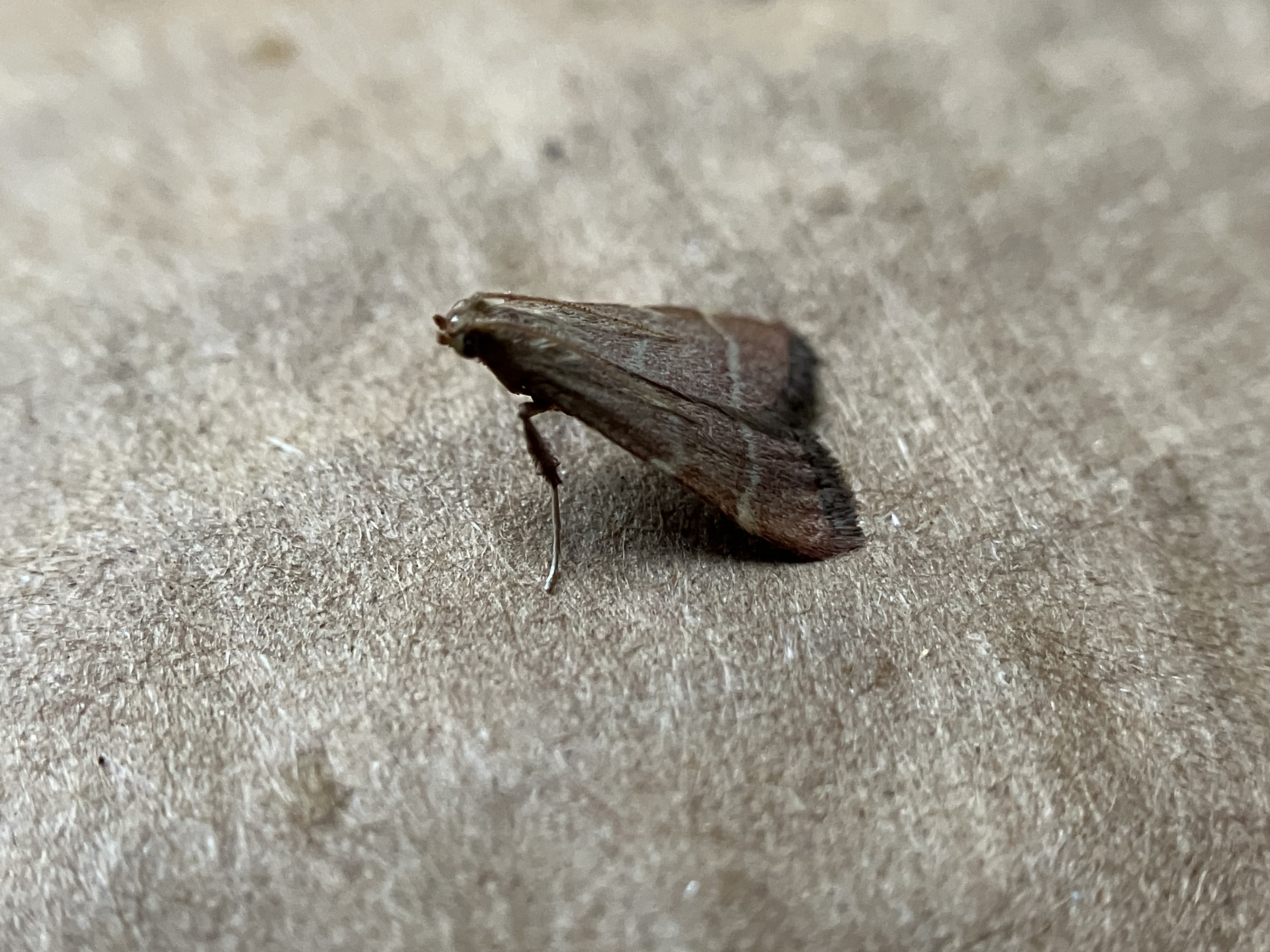
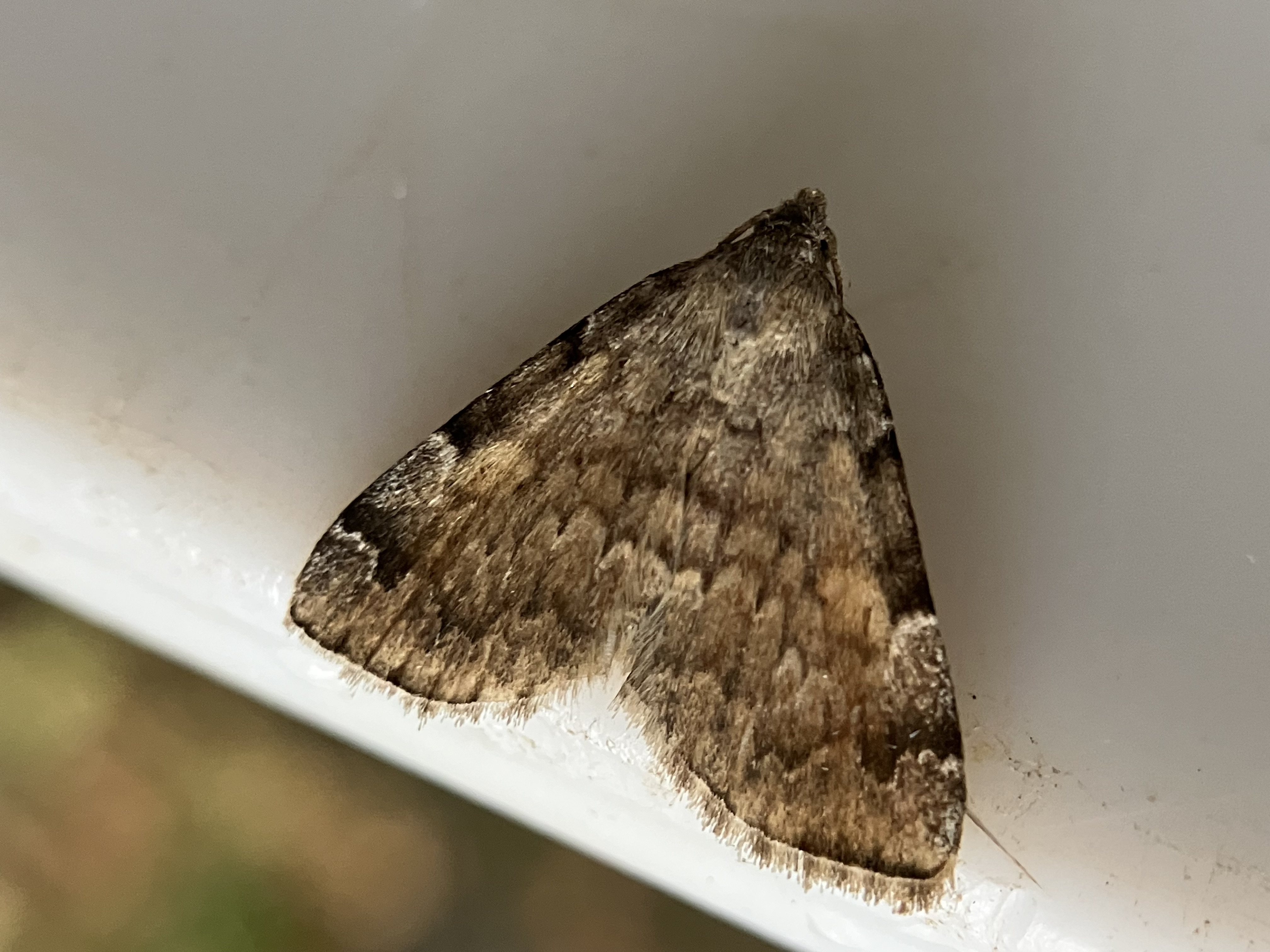
Here’s today’s grouping of moths from last night’s mothing effort. It’s raining today in the San Juans. We sure do need the rain since it’s been so dry, but I got pretty wet outside this morning trying to sort moths and take photographs. The moisture will definitely be good for insect populations and also keep my flower garden blooming a bit longer this season.
If you’re interested in learning about what species of moths (or other insects and spiders) we have in the San Juans, feel free to reach out. I am always happy to answer questions. For anyone interested in participating in National Moth Week, here’s a link to their website – https://nationalmothweek.org
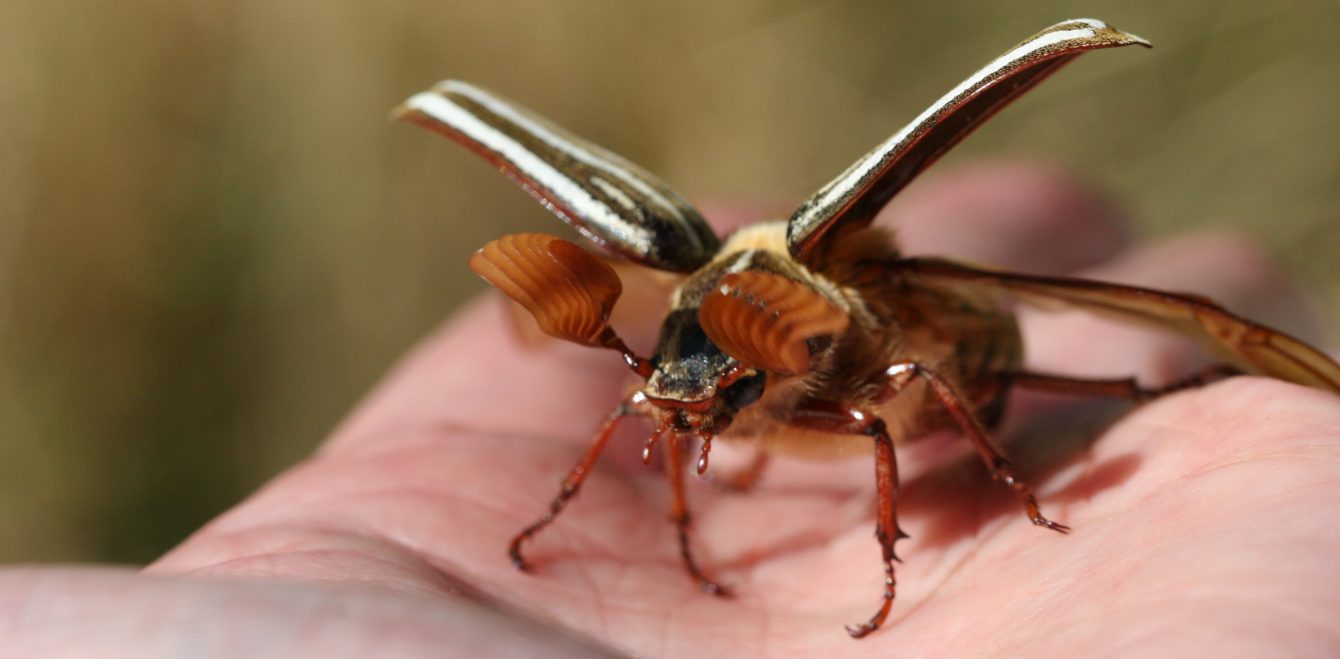
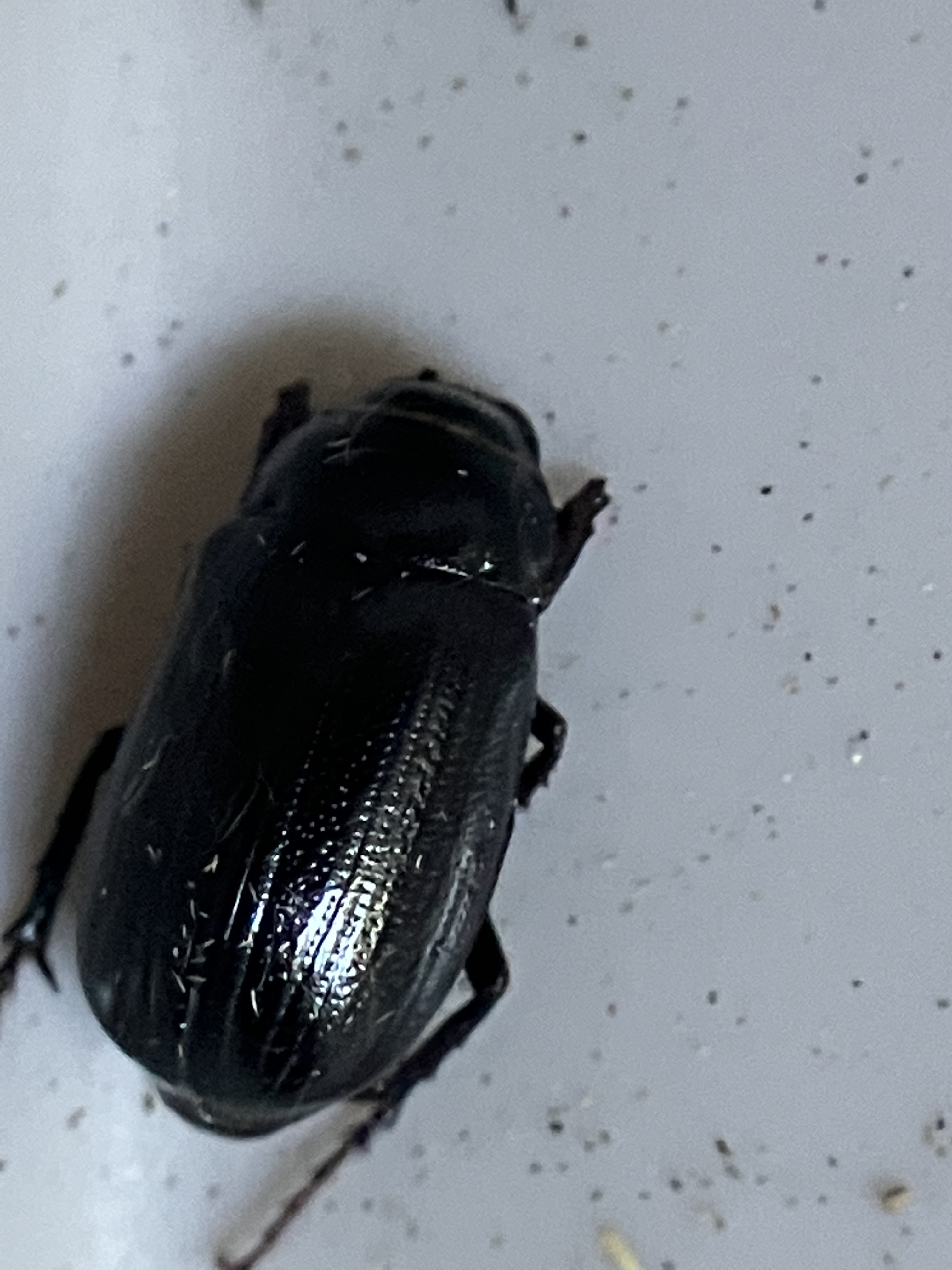
Boy was I disappointed today when I found this beetle on the path near my home and it was HEADLESS!
This is one of my favorite San Juan Island beetles. It is the ground beetle Zacotus matthewsii, also known by the common name Matthew’s Angry Gnashing Beetle. “Zacotus” translates from Greek into “Very Angry” in English. I’m certain I’ve never seen one angry, but this one may indeed have been angry right before it lost its head. Or perhaps the predator that removed it took this beetle entirely by surprise.
I can tell you the EXACT date I last saw one of these beetles. They are reported as “rare.” It was February 16, 2020. Also in roughly the same spot. The beetles are associated with conifer forests and believed to prefer old-growth areas. There are some old trees near our home, but I believe San Juan is losing many, many trees. Lots to new home construction (happening at a rate that I never imagined), and some to the impact of a warming climate – likely accelerated by all the land use changes in the region. Many times I feel extremely saddened by the loss of nature. It is happening so fast. We are becoming suburbia.
Tried to post last night, but our internet speed is TERRIBLE. Gotta love that about living on San Juan. It’s always been slow. Once upon a time, we lost internet for more than 2 weeks. 🤦♀️
I’m behind in sorting out all my bug bucket visitors and yesterday was a setback. Our well lost pressure. That’s a disaster in mid summer when all I could think of was how I’d have to watch my beautiful flowers wither away in the searing sun and die.
Someone trying to be helpful made a suggestion about how I could do laundry at the laundry mat in town. Personally, given the toxic fragrances in laundry products like Bounce, Gain, and Tide, I’d rather wash my underwear out in the murky pond on our property. If you use these products, you might consider switching to something less noxious. Also, I highly recommend reading some of Ann Steinemann’s research on chemicals in household products. You can link to her work here https://research.jcu.edu.au/portfolio/anne.steinemann/
Really, the last thing I was worried about was laundry! It’s BUG season. I’m certain I have enough clothes to last 3 weeks and you can always clean up with baby wipes and my momma taught me you can wear your underwear inside out if you are in a pickle and can’t wash them! 😉 Thankfully, our issue was just a burned out capacitor and we have water! Grateful for the help from our former homeowners and our local island well service Mauldin’s Well Service. I’ll catch up with everything else eventually.
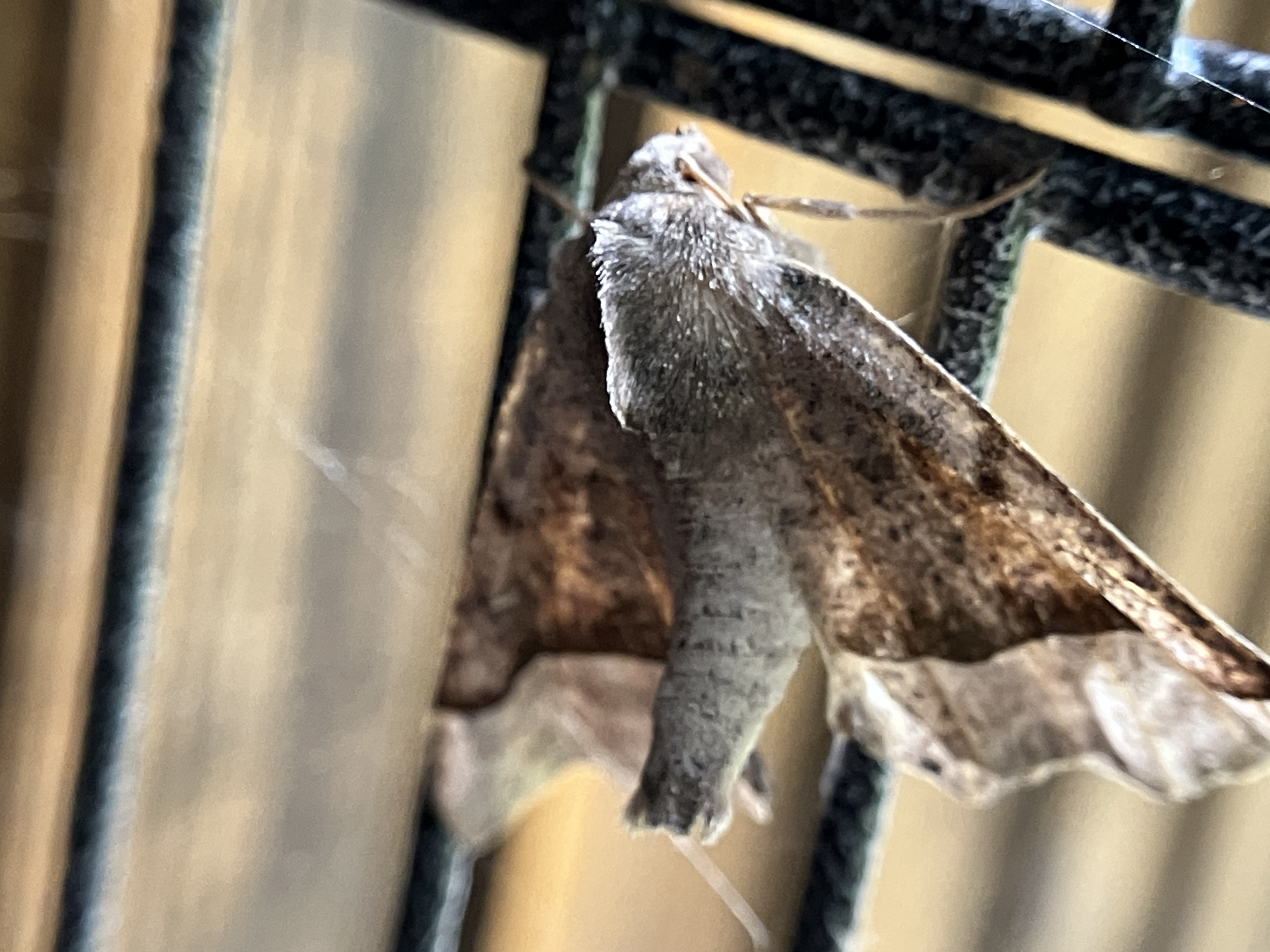
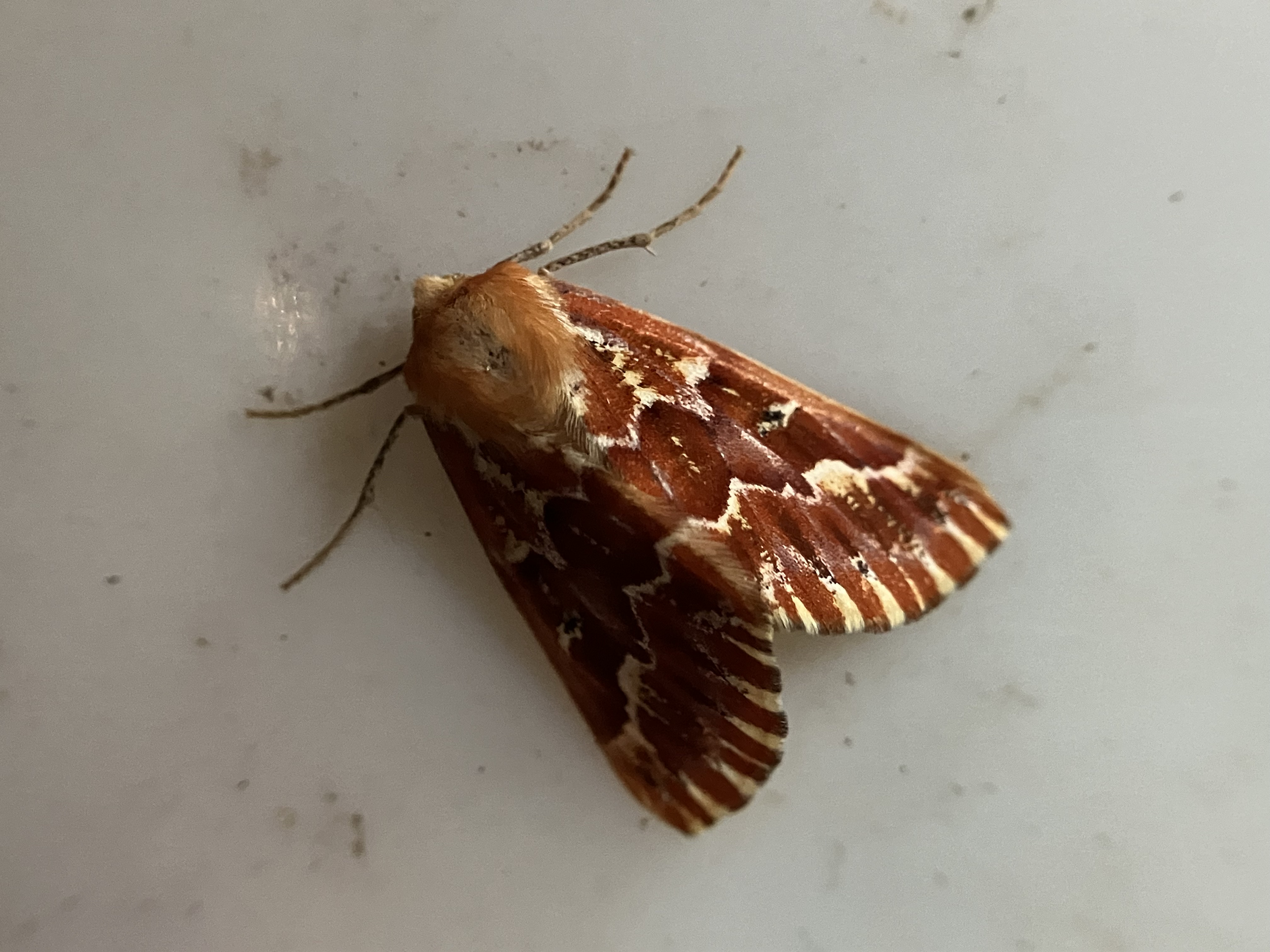
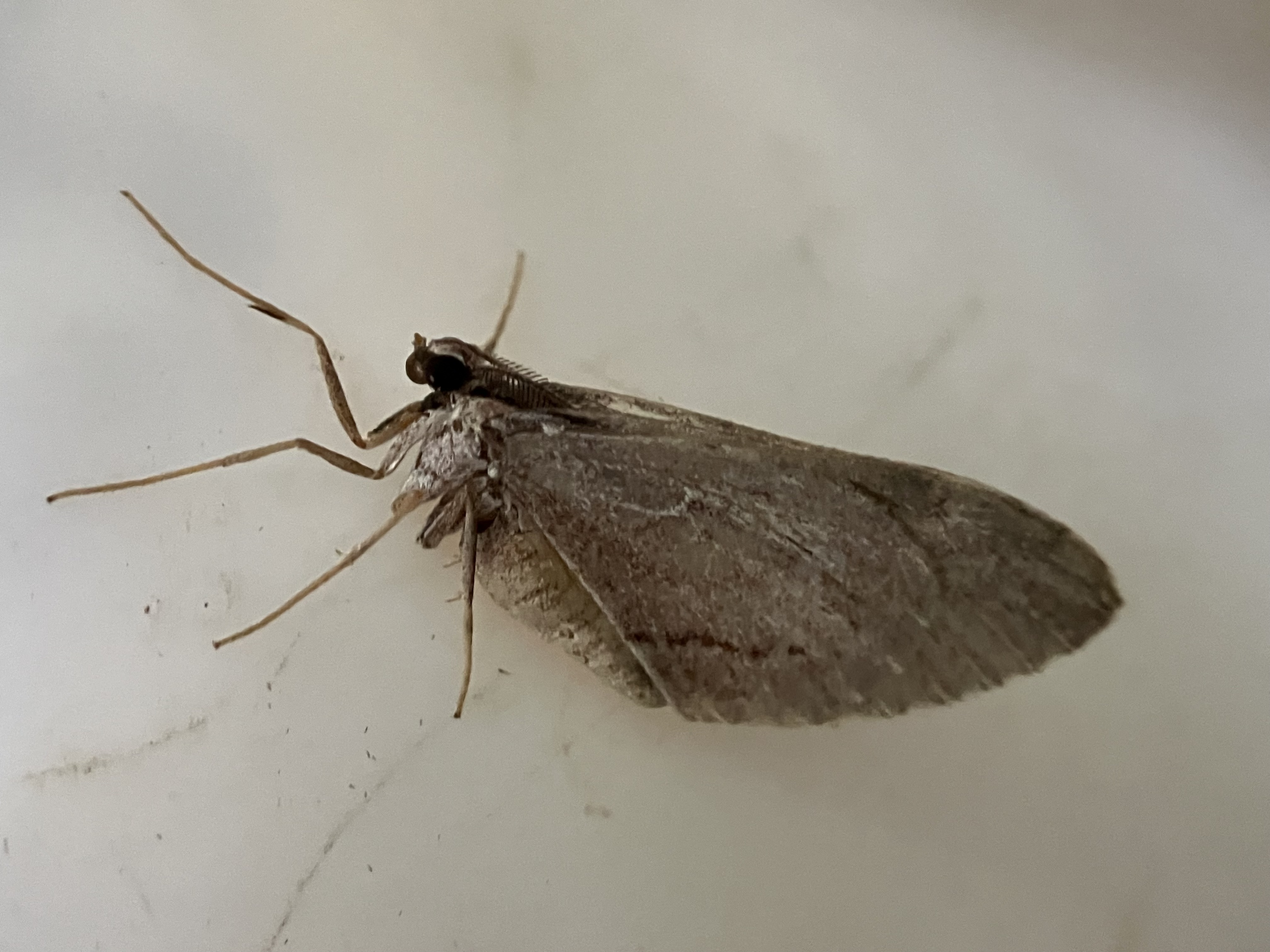
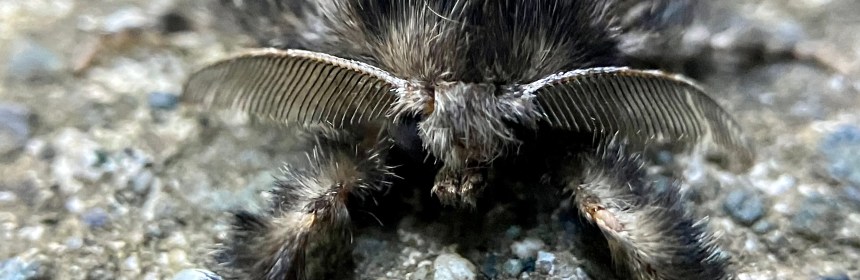
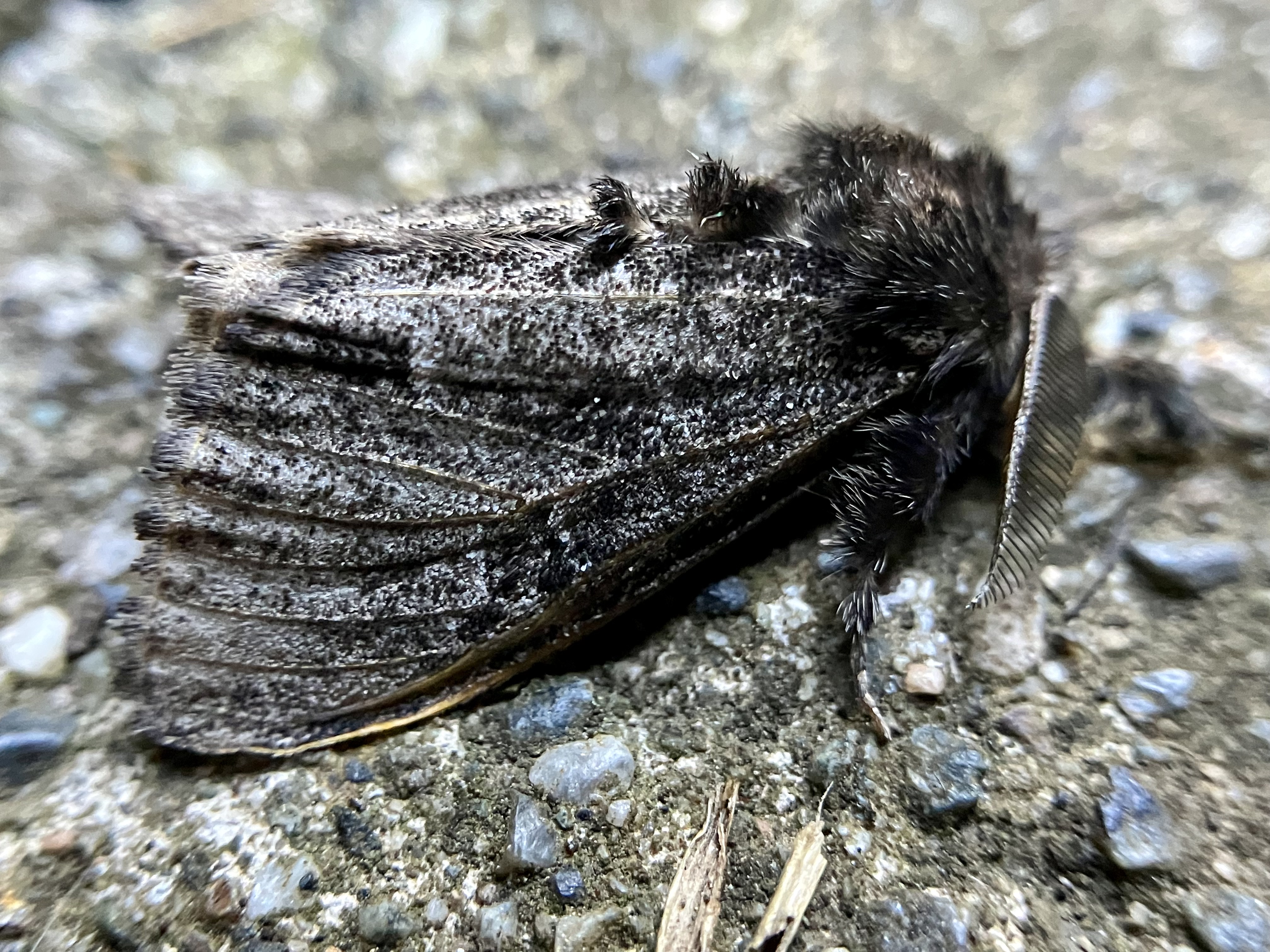
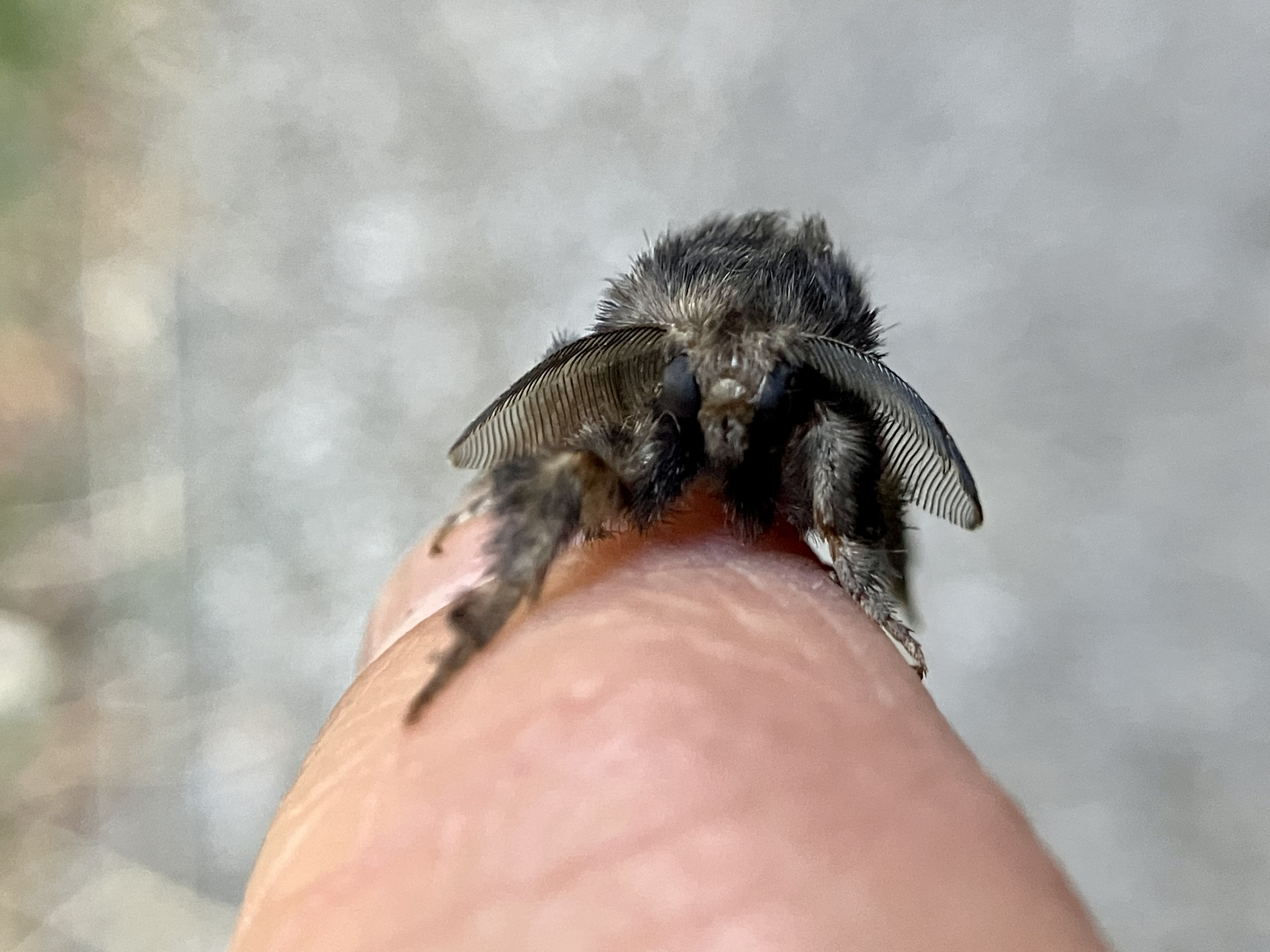
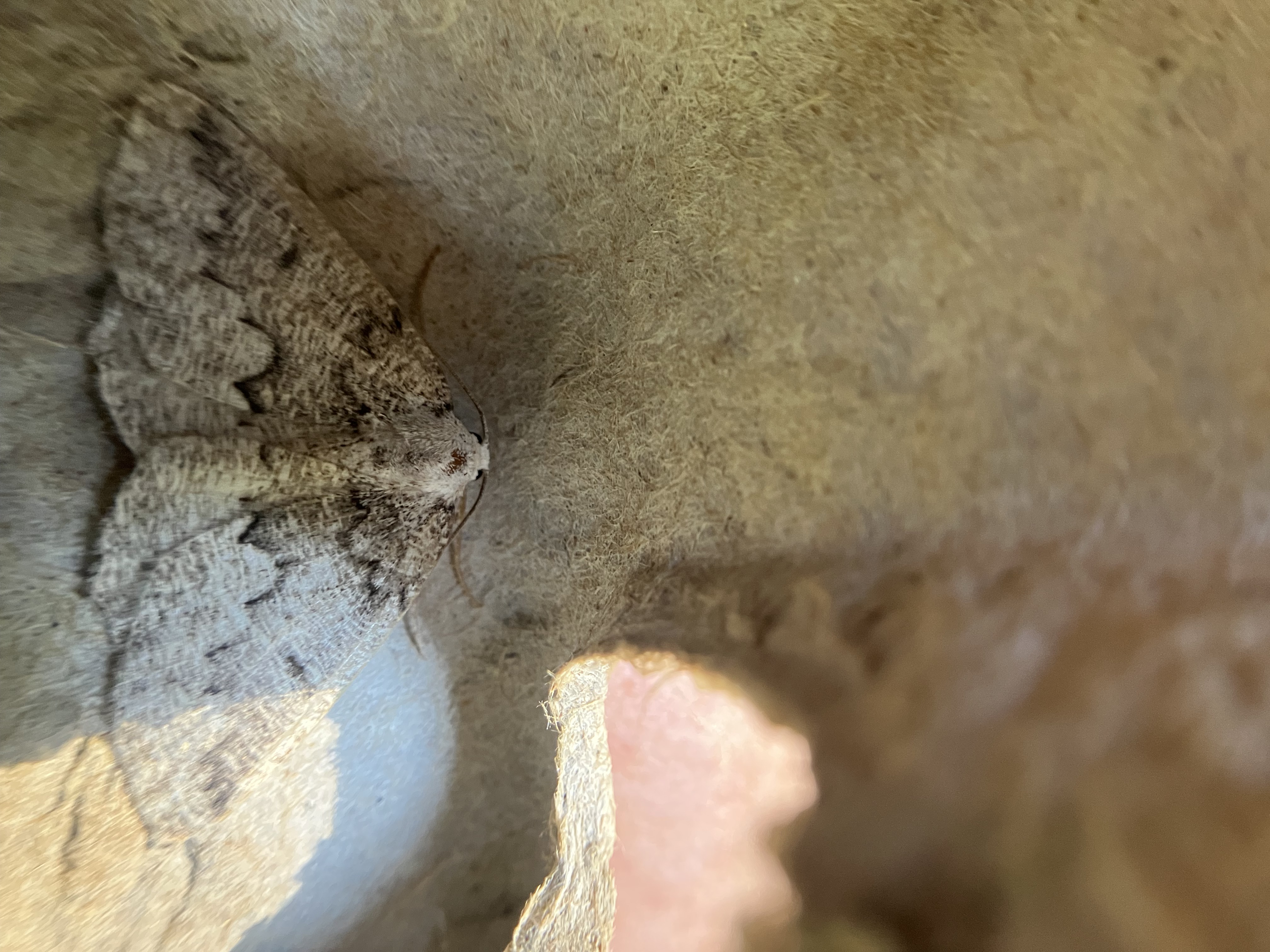
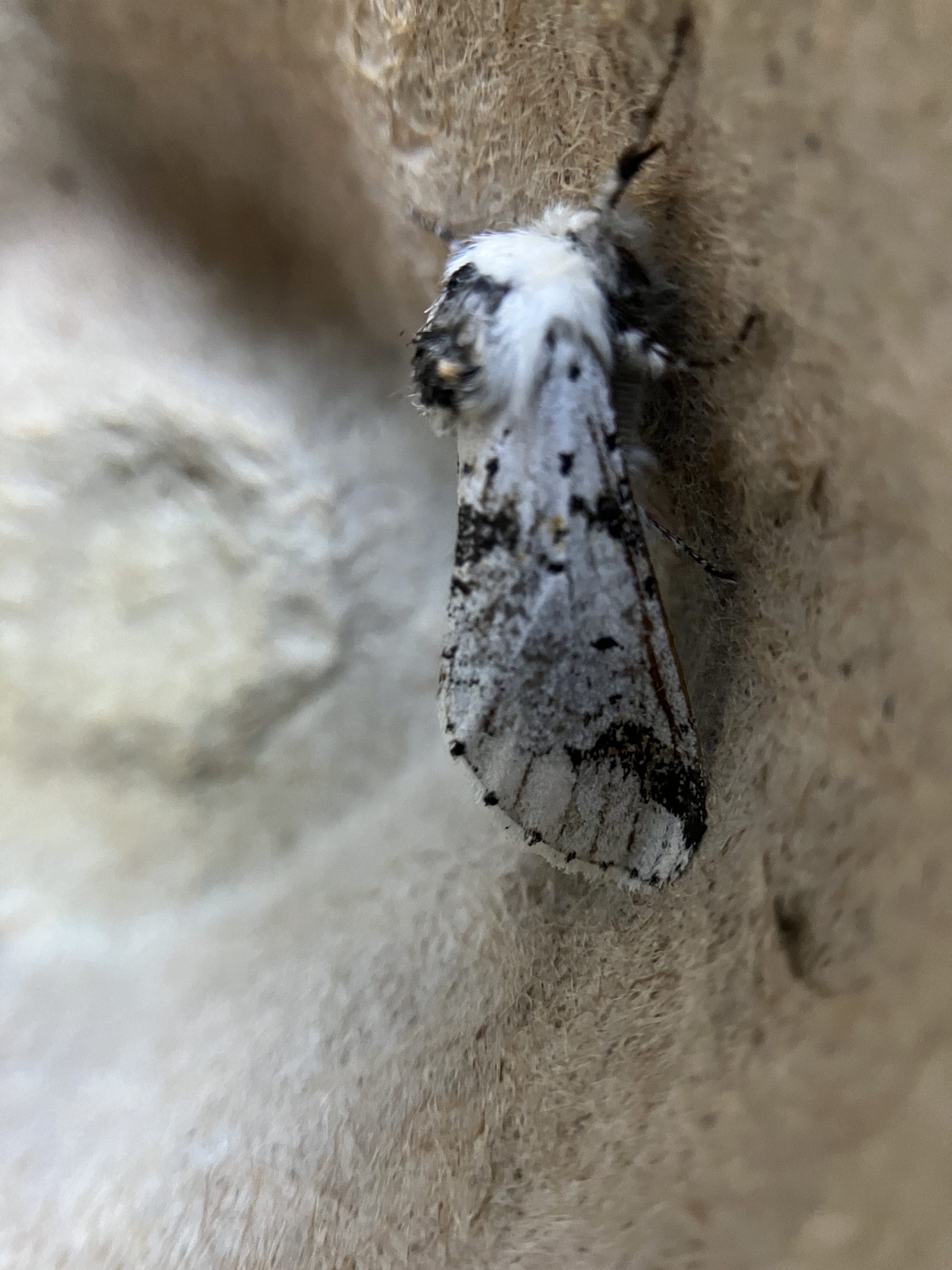
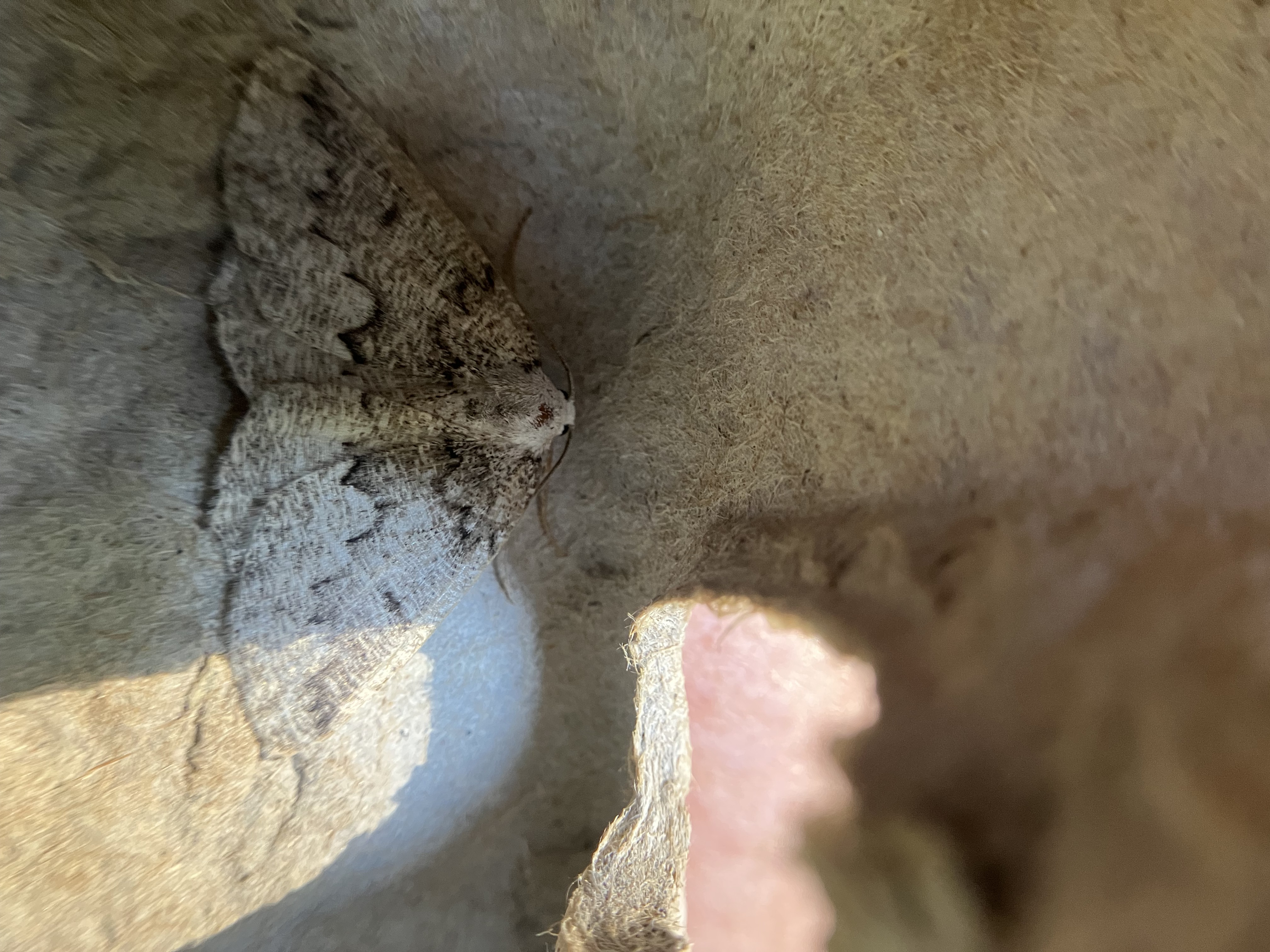
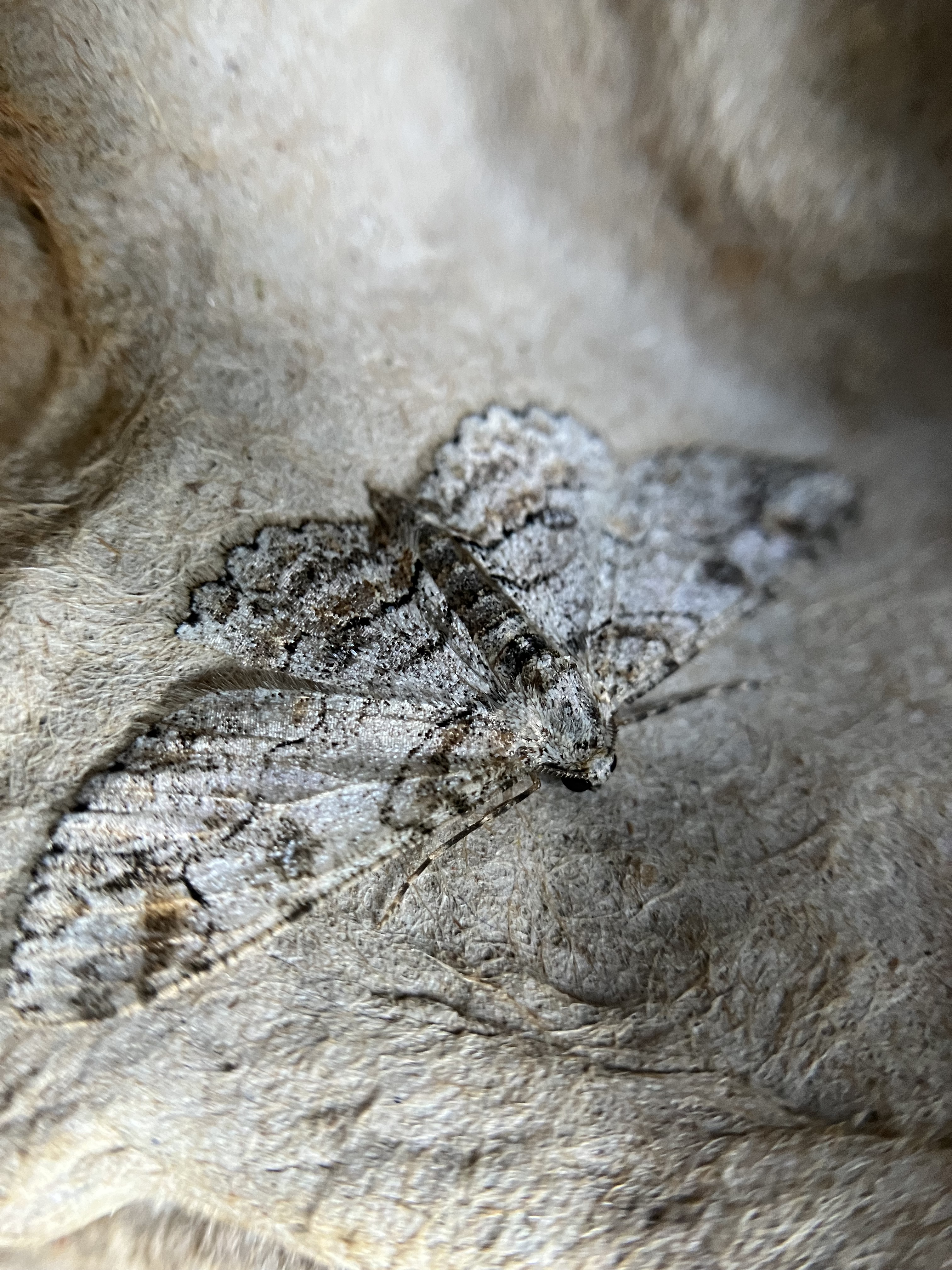
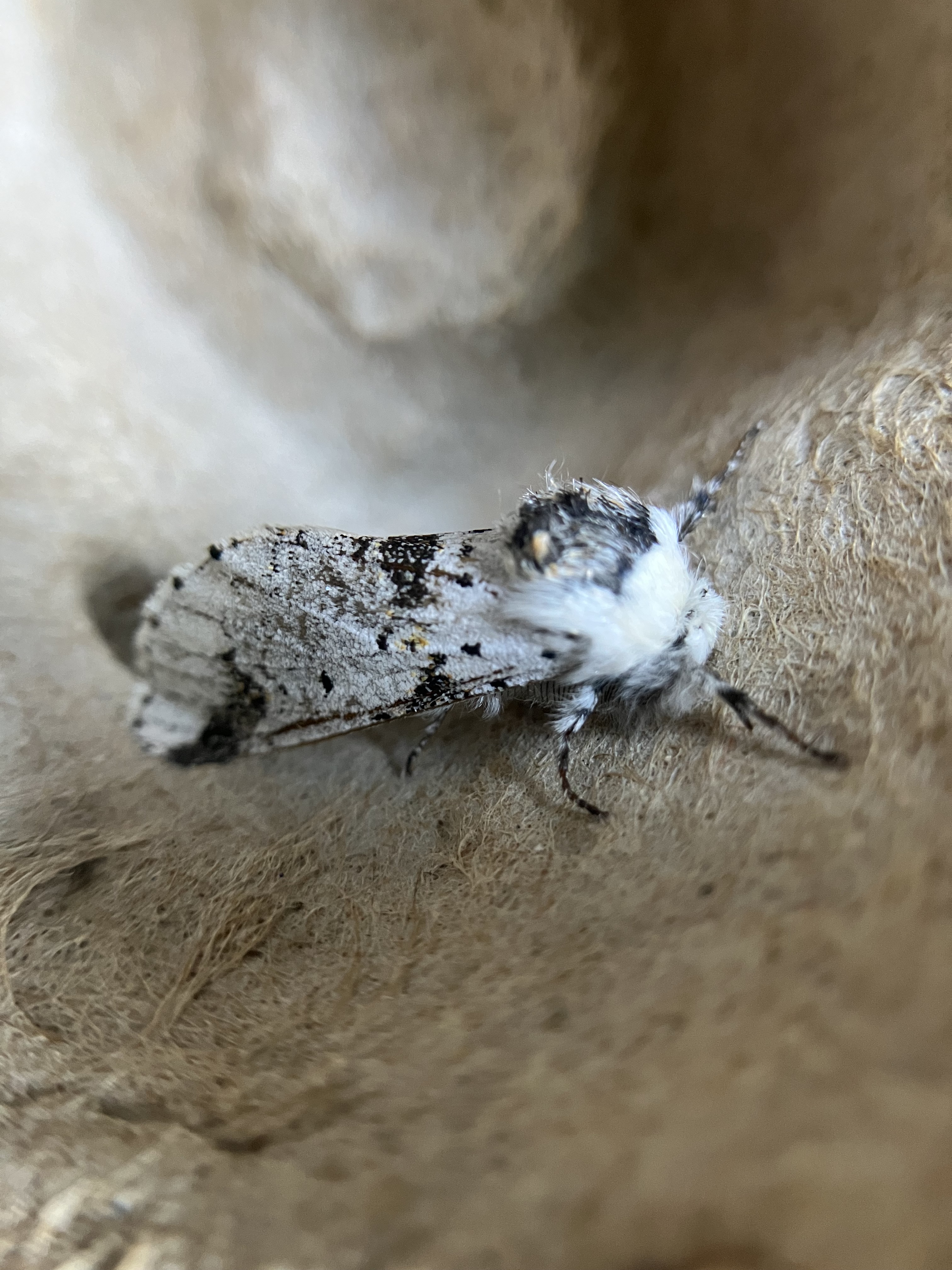
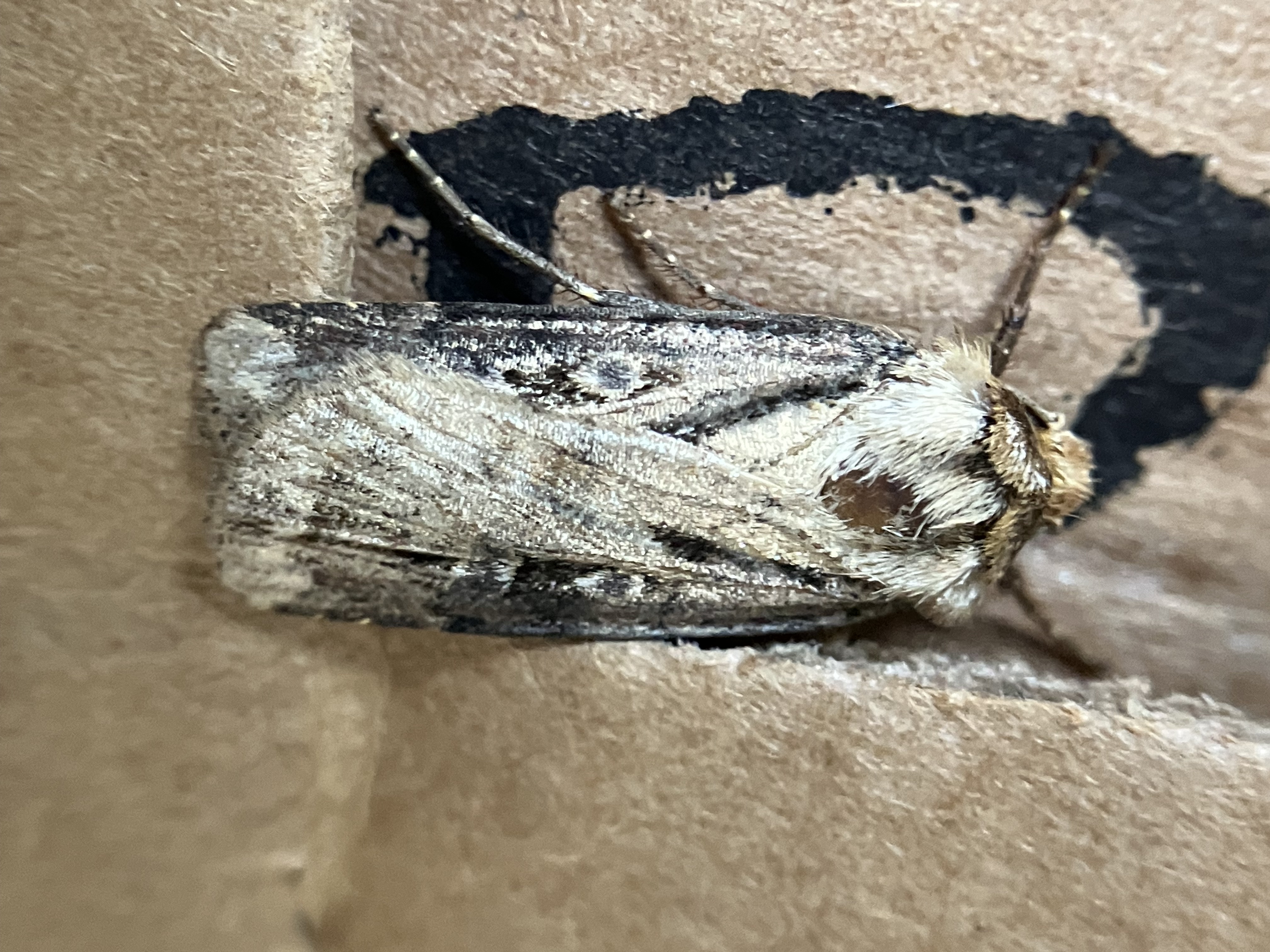
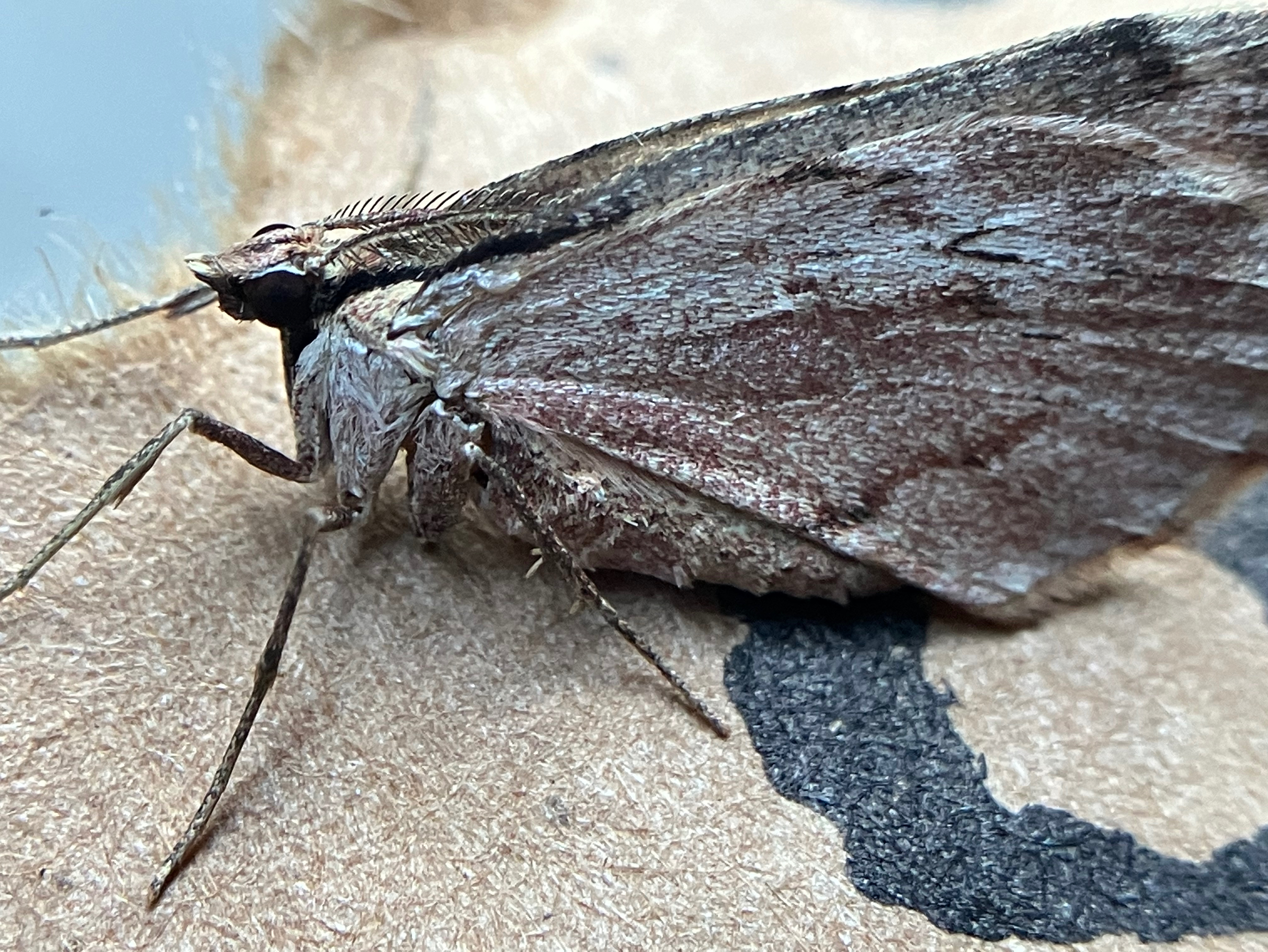
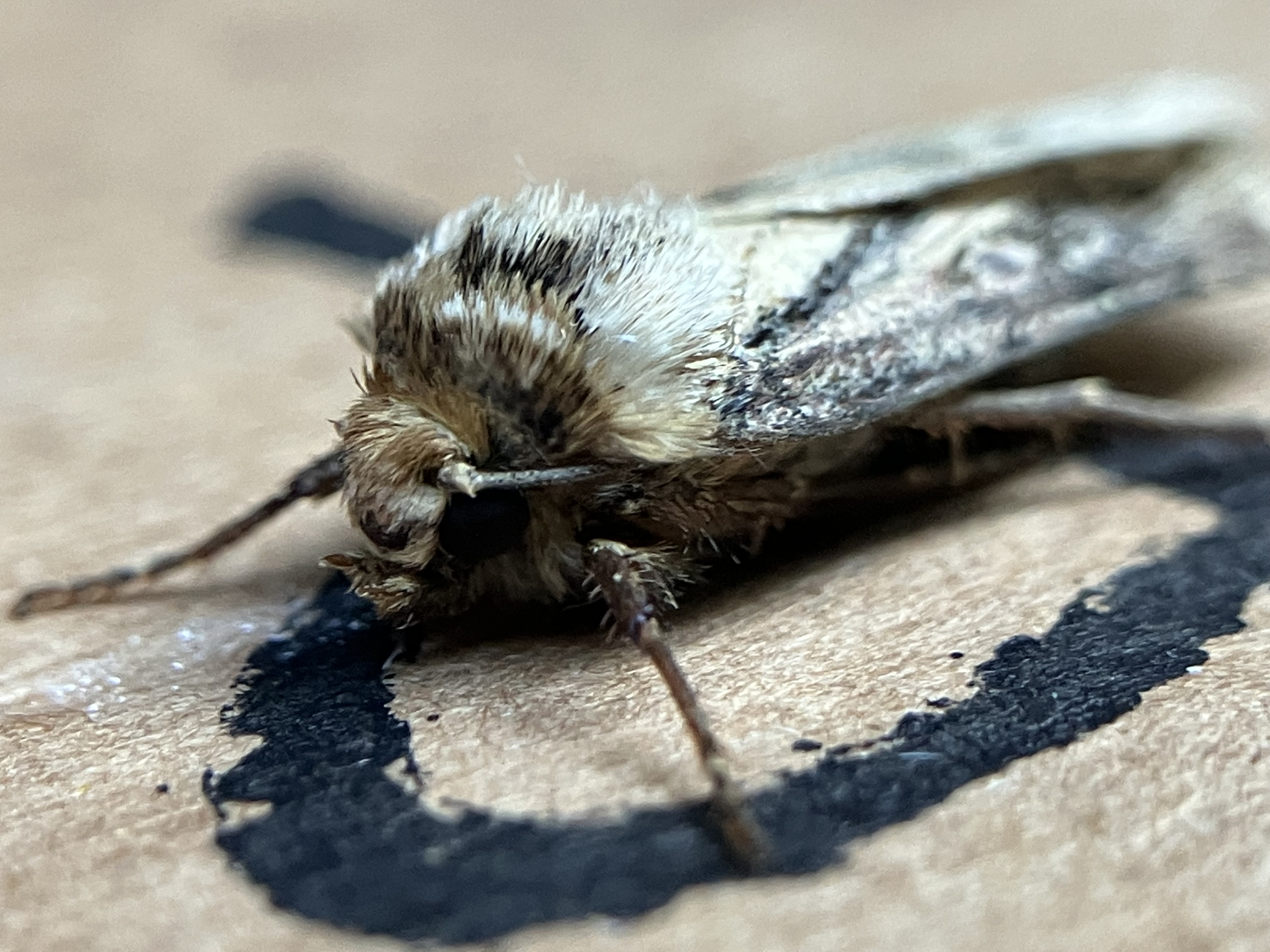
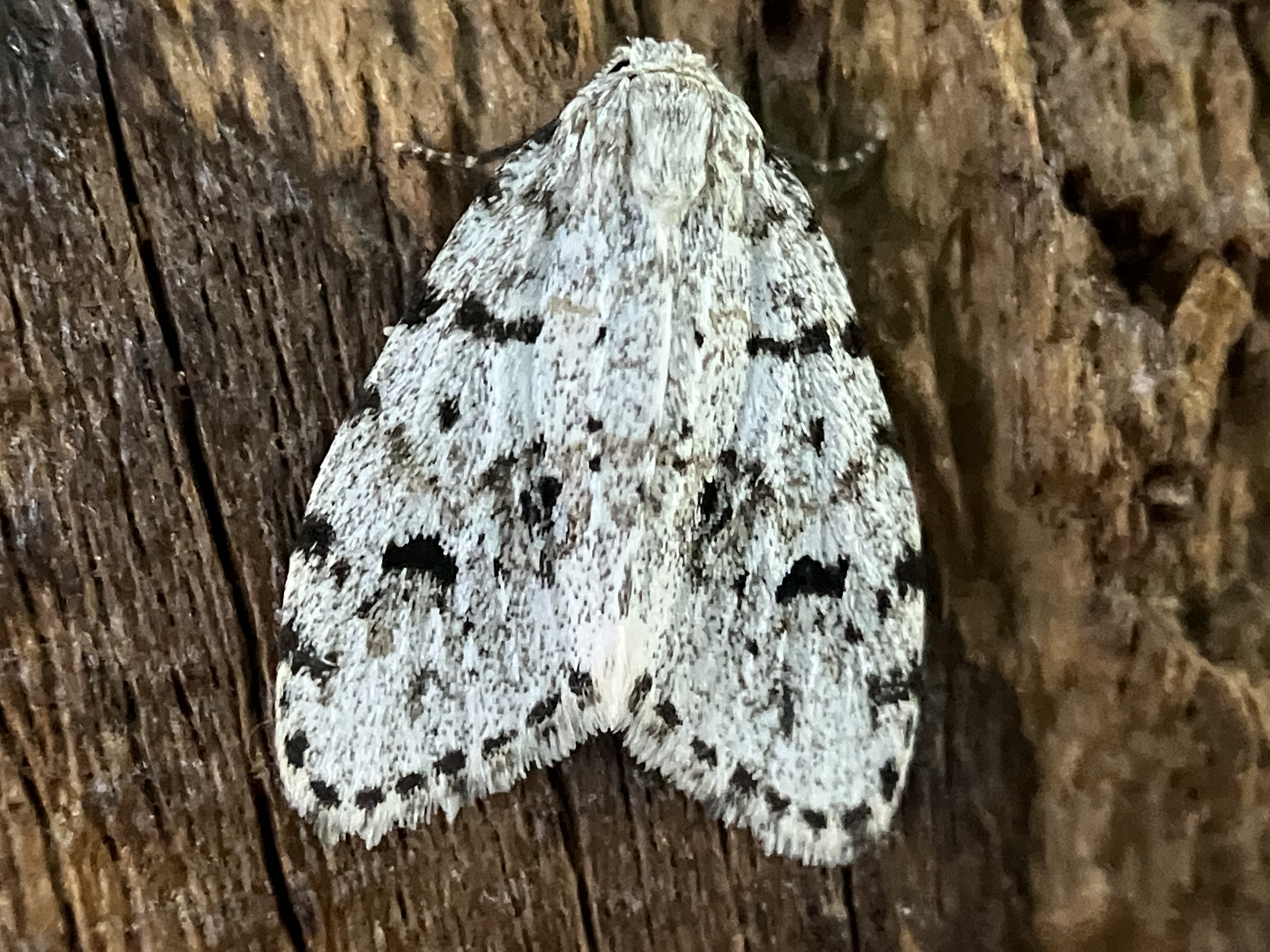
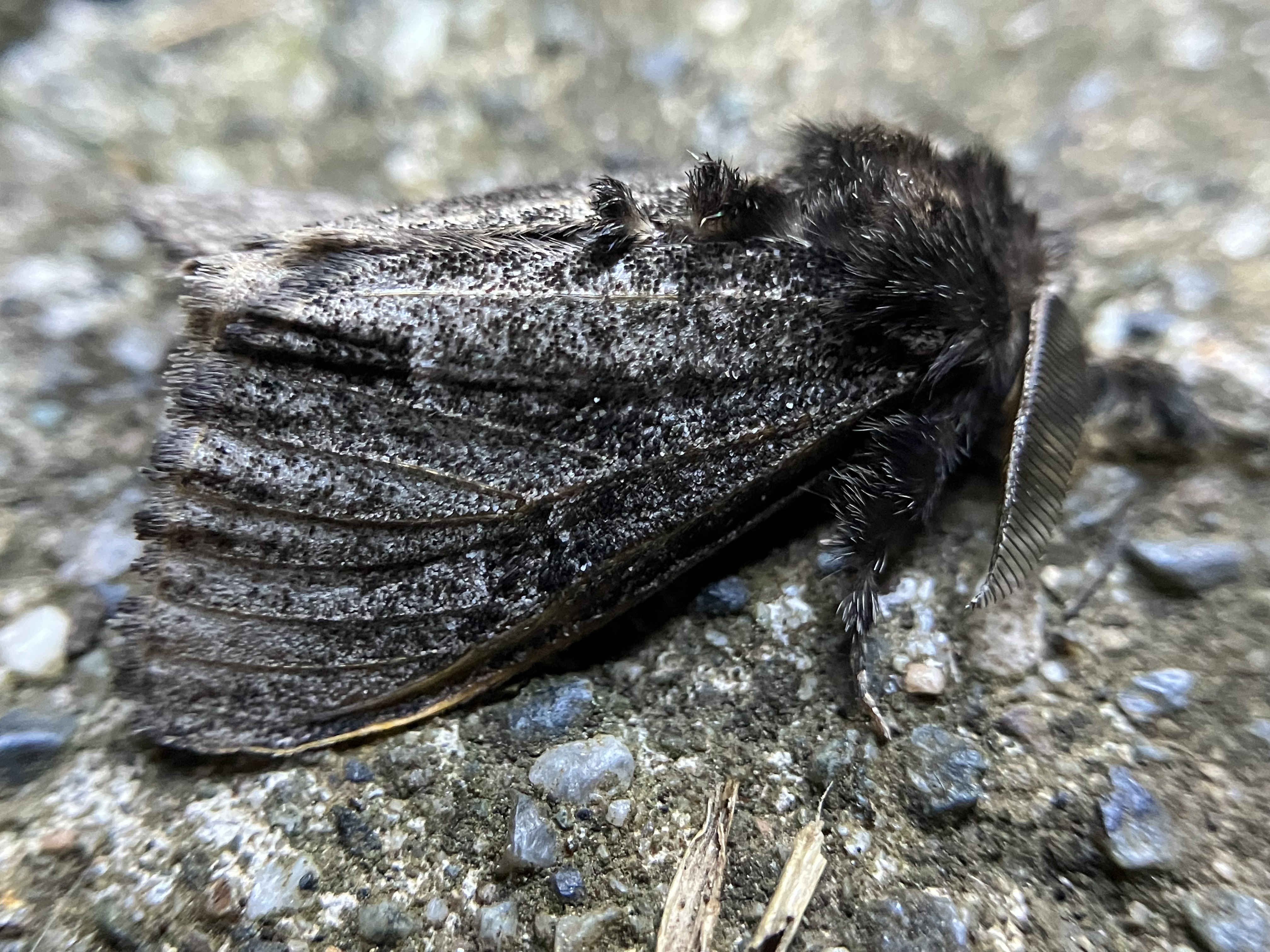
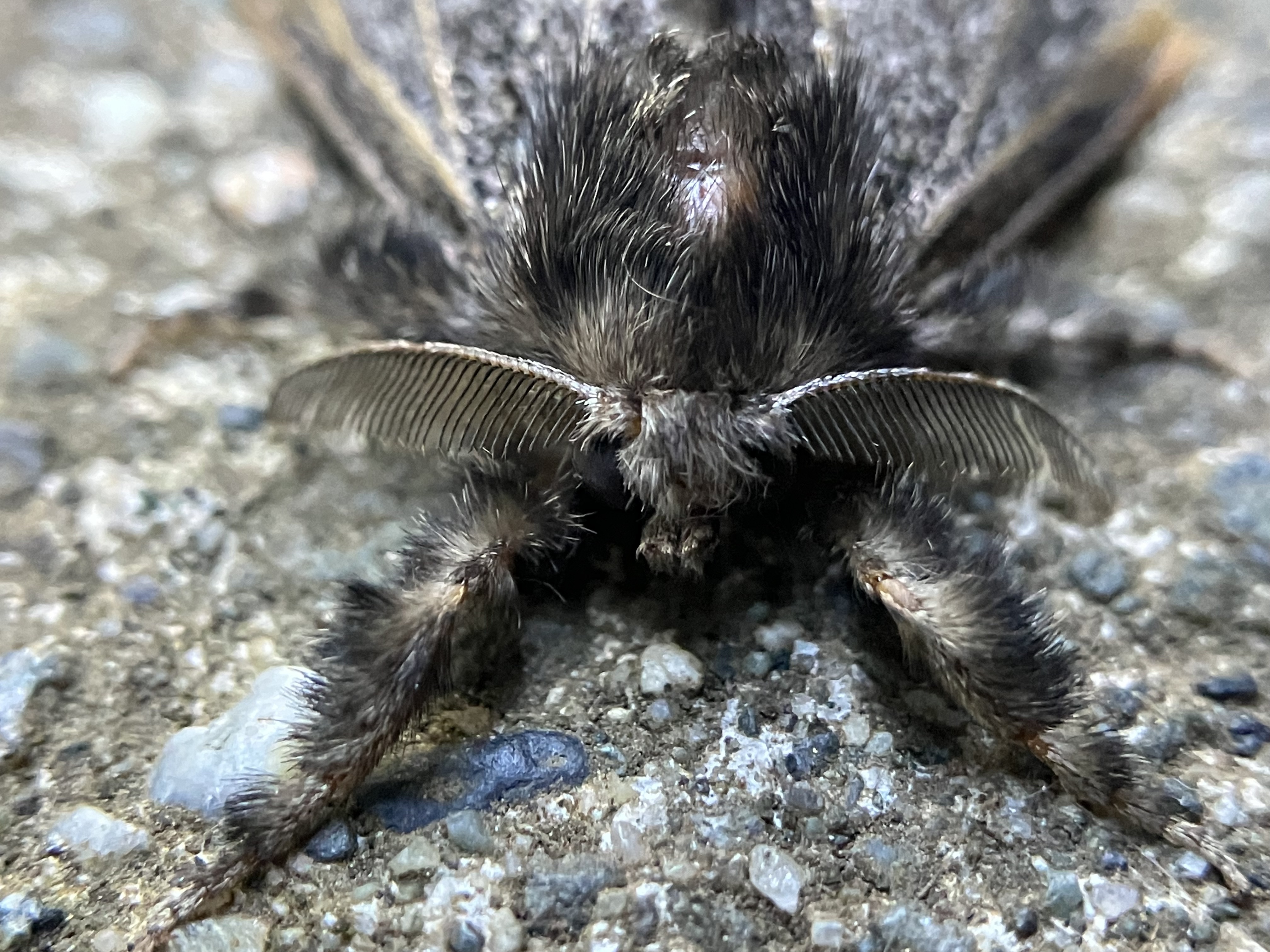
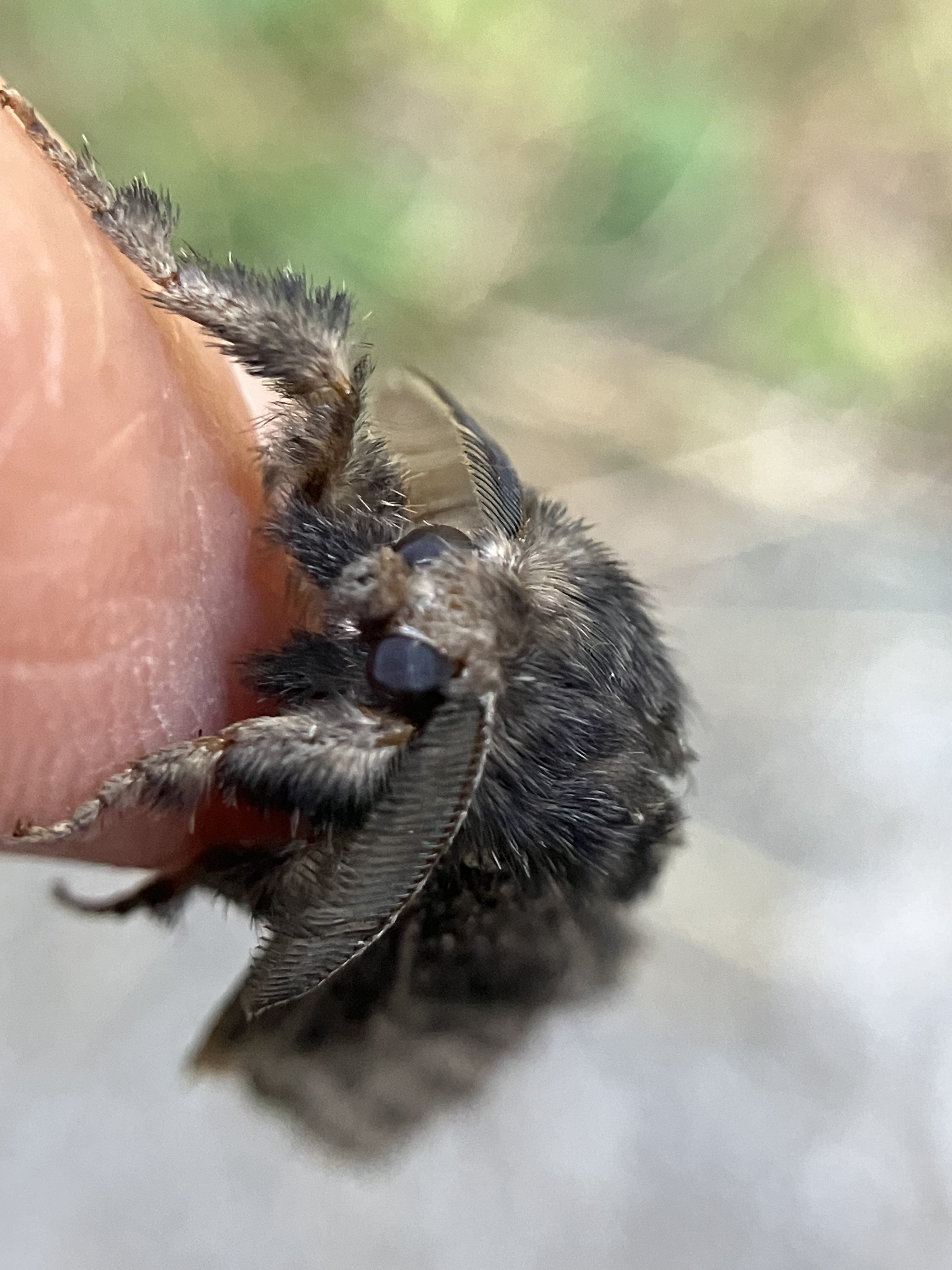
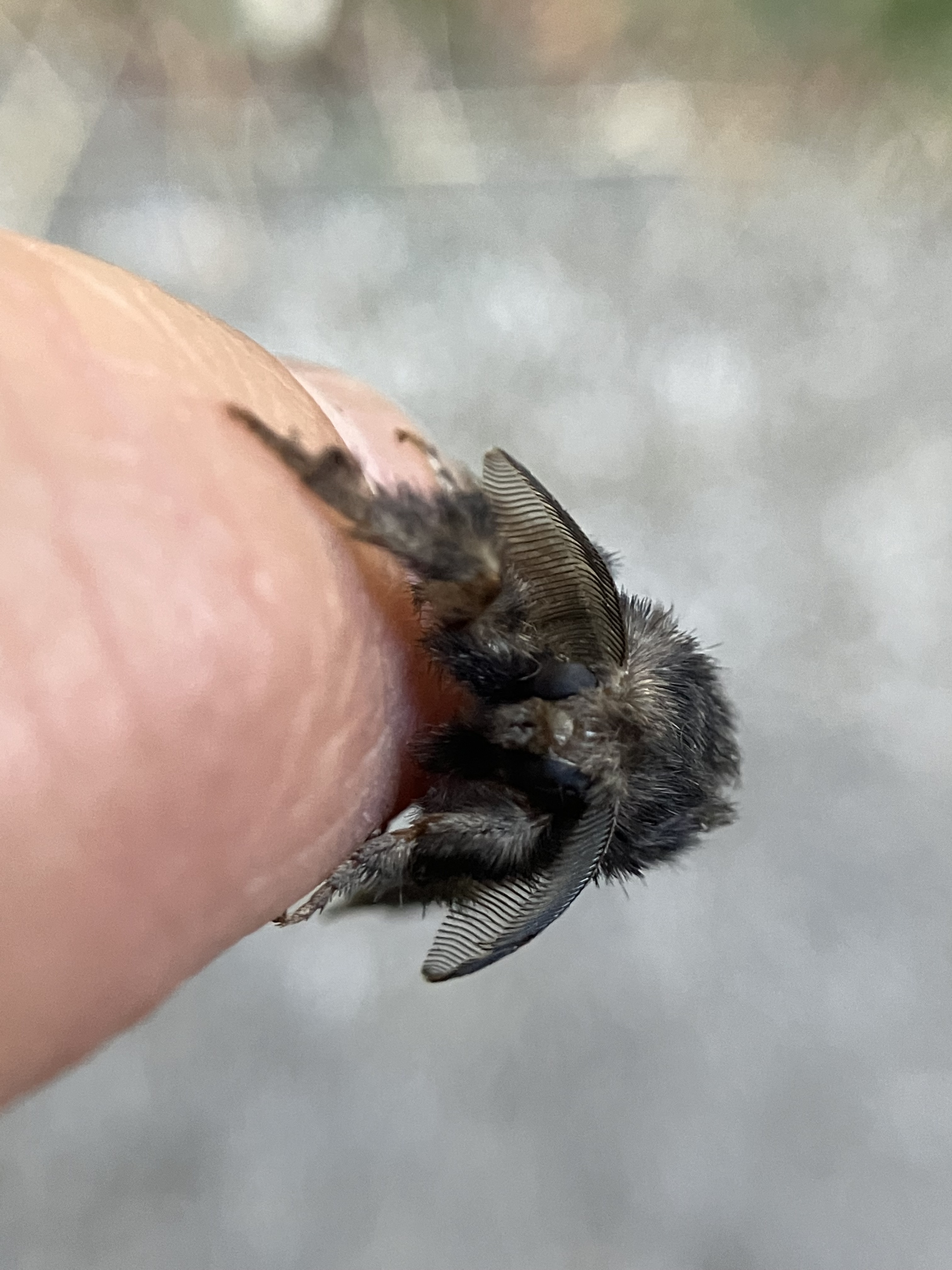
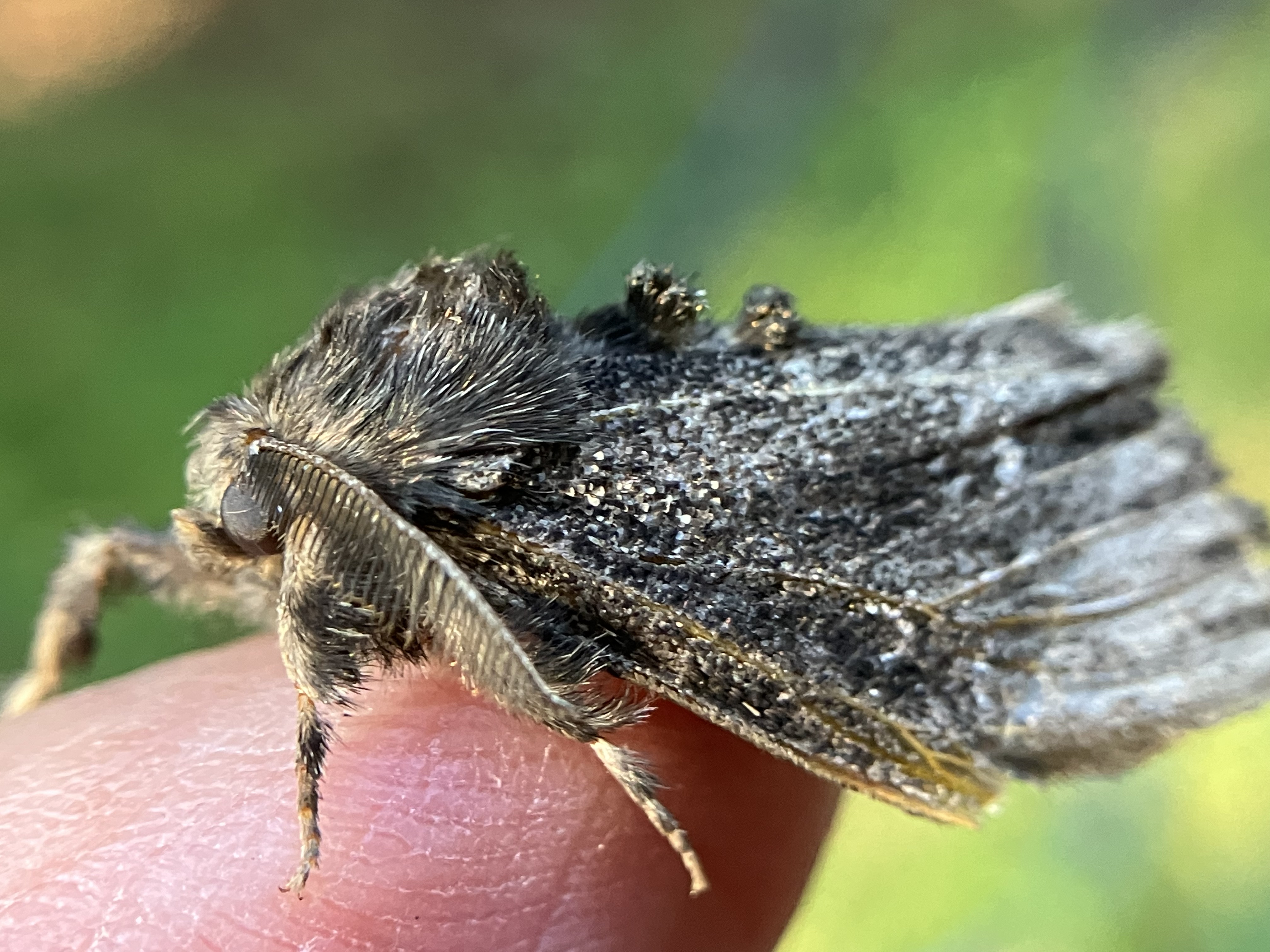
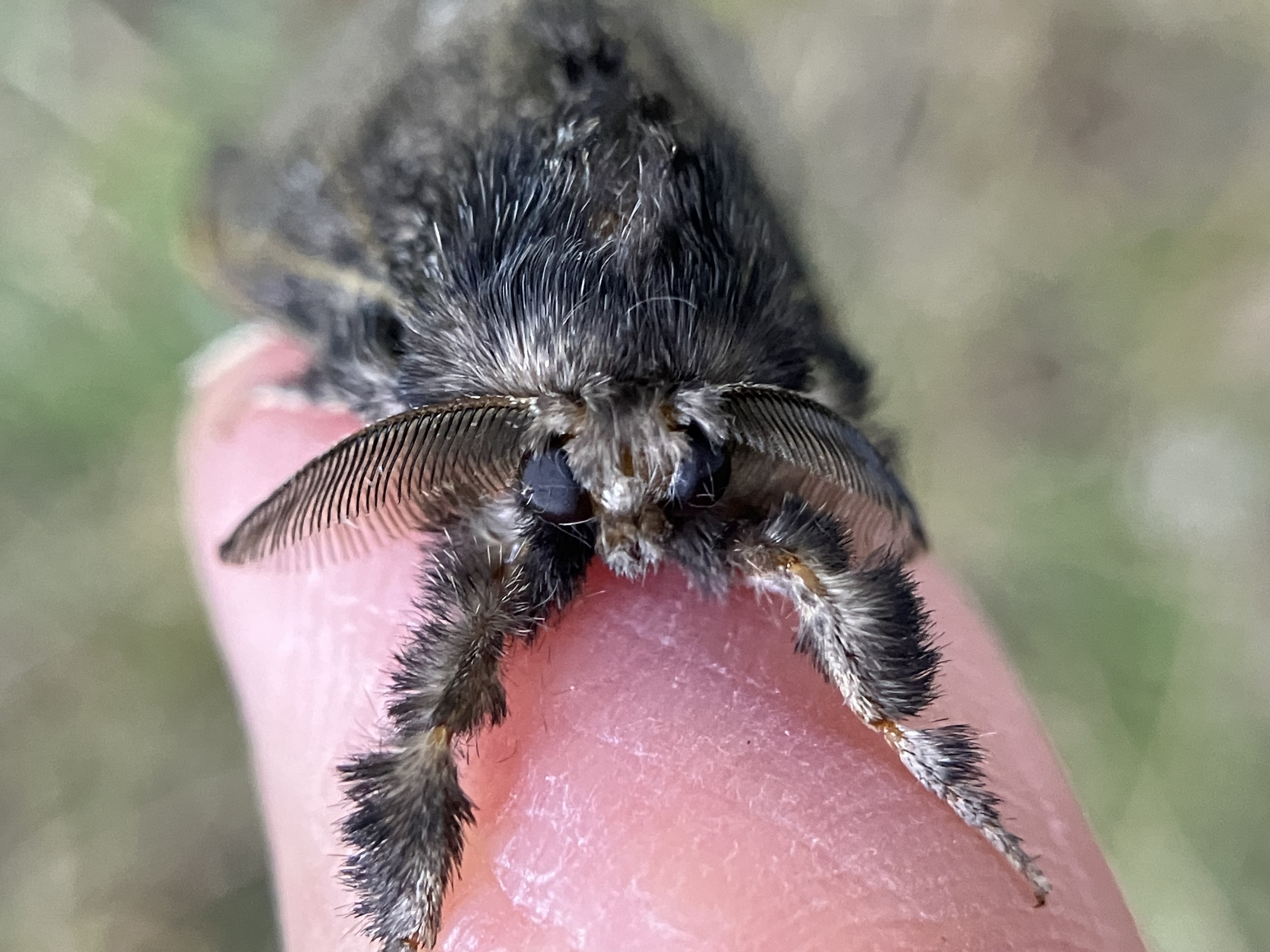
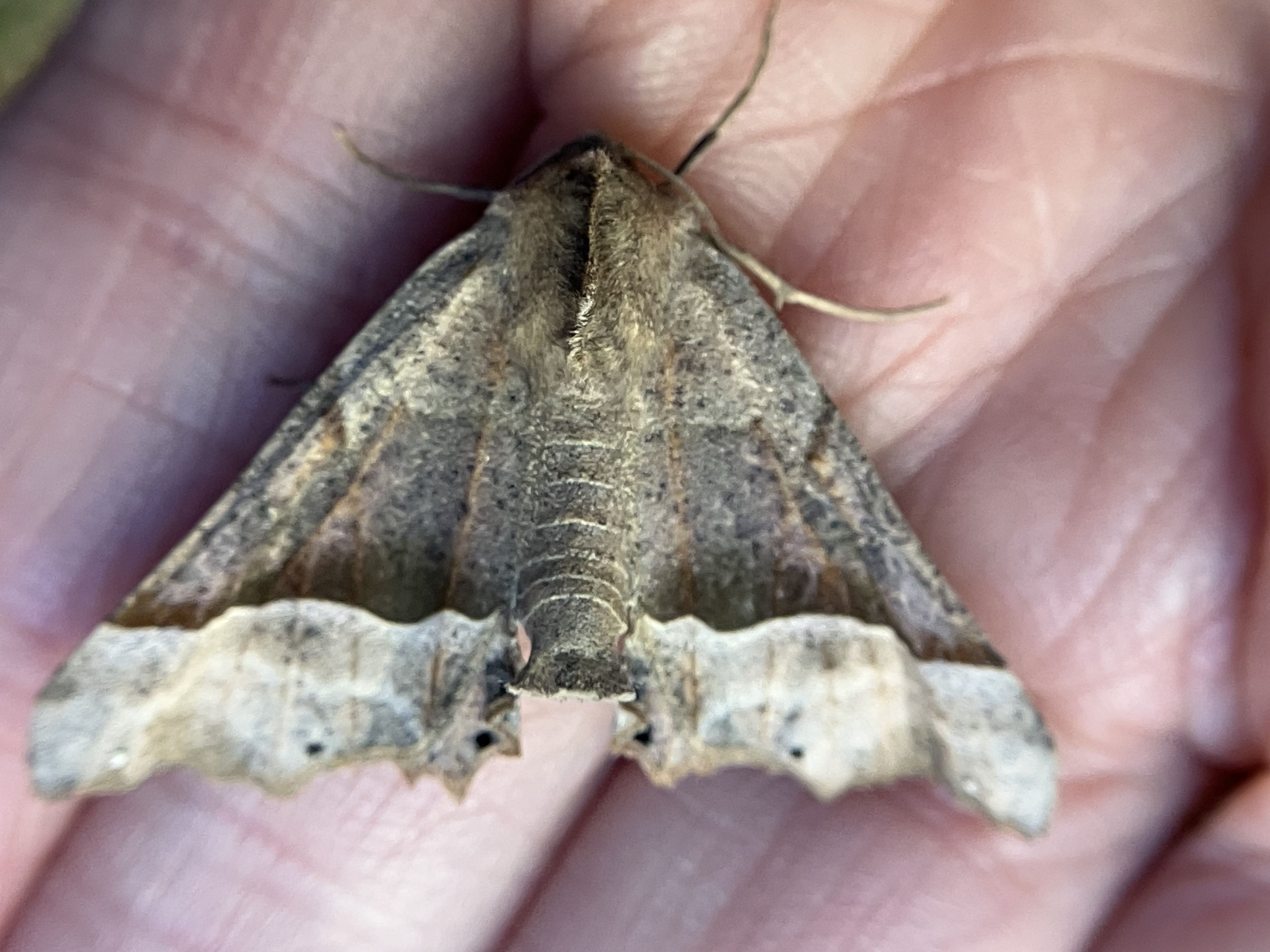
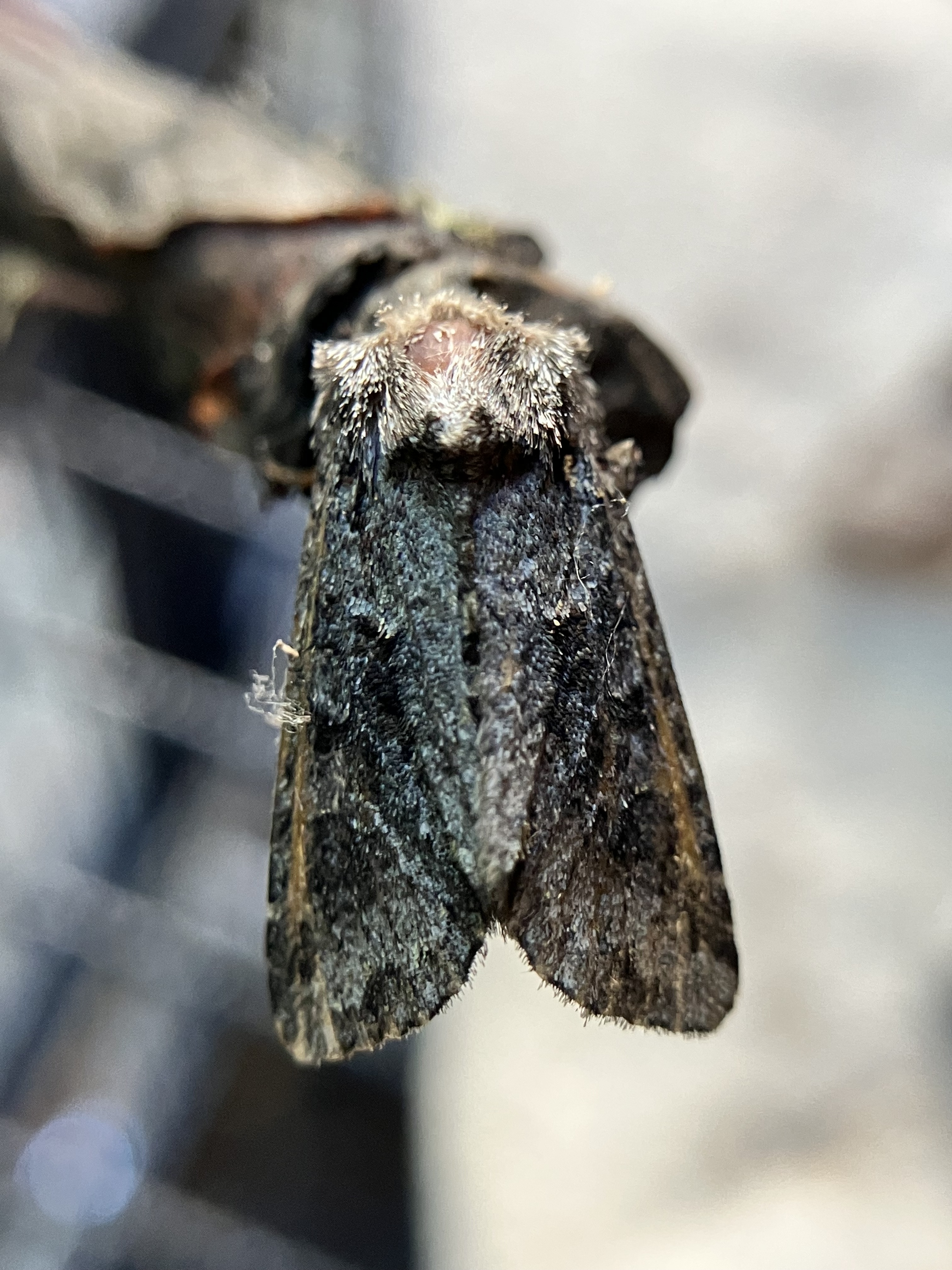
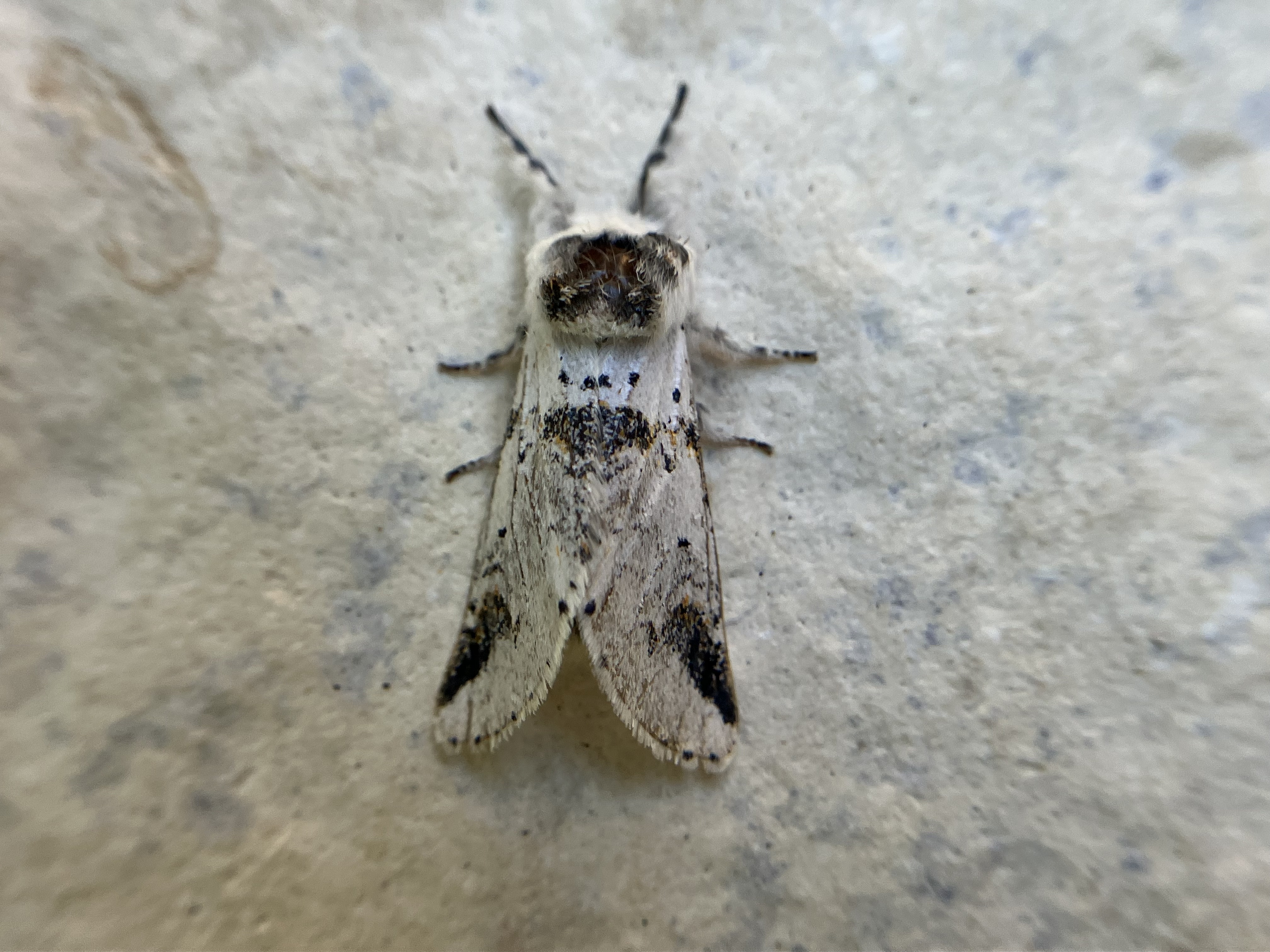
For now, here’s a cute moth I found in the bucket Thursday evening. I believe it’s a species of Erebidae moth, Dasychira grisefacta. To me, it looks like a wee little grumpy bat. 🦇
We are getting closer to National Moth Week 2023 (July 22-30). I am continuing my head start. If you’ve been following along, you’ll see I am posting a daily gallery of what I’ve collected in my bug bucket with UVB light each night when I check the next morning.
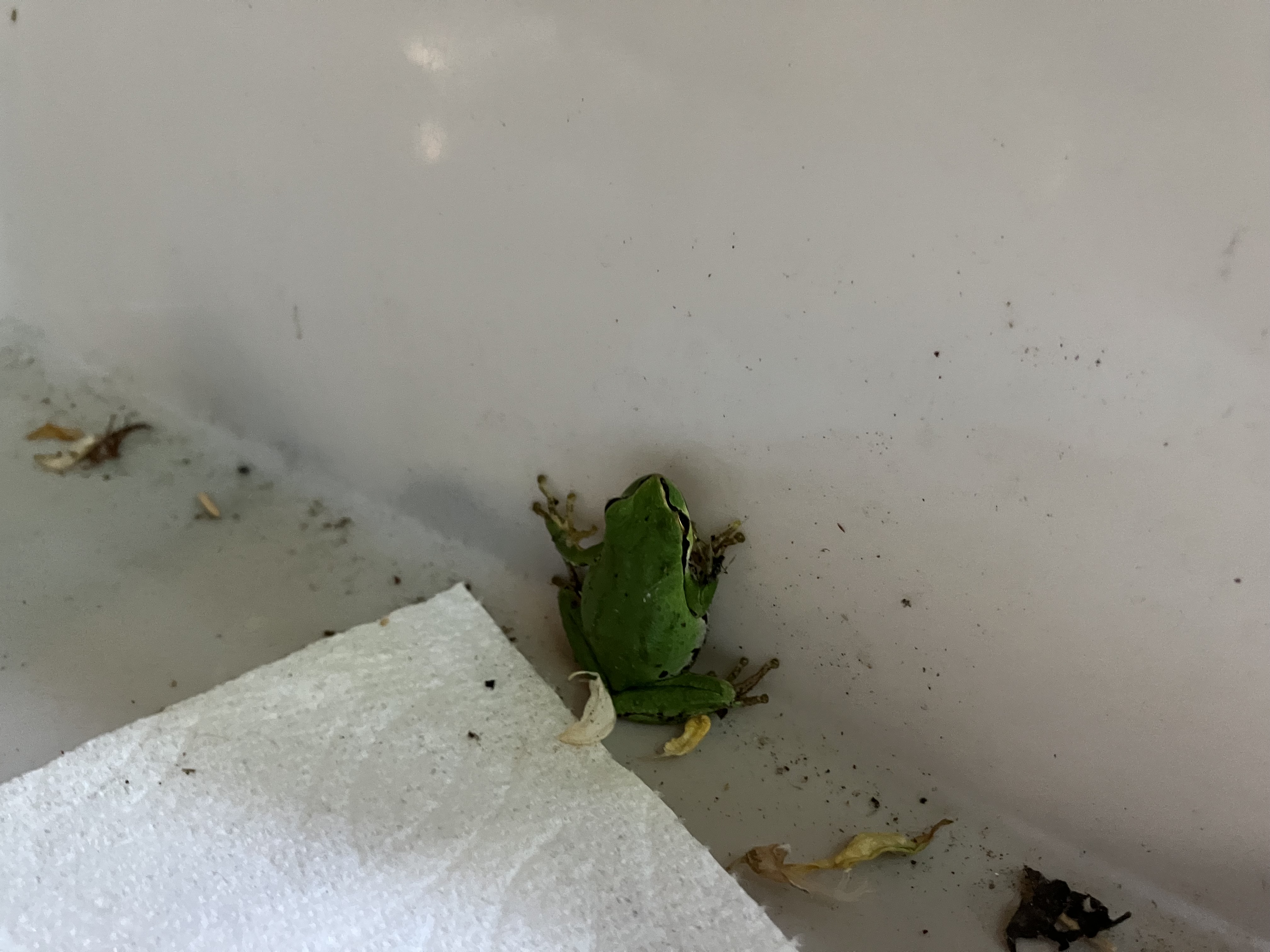
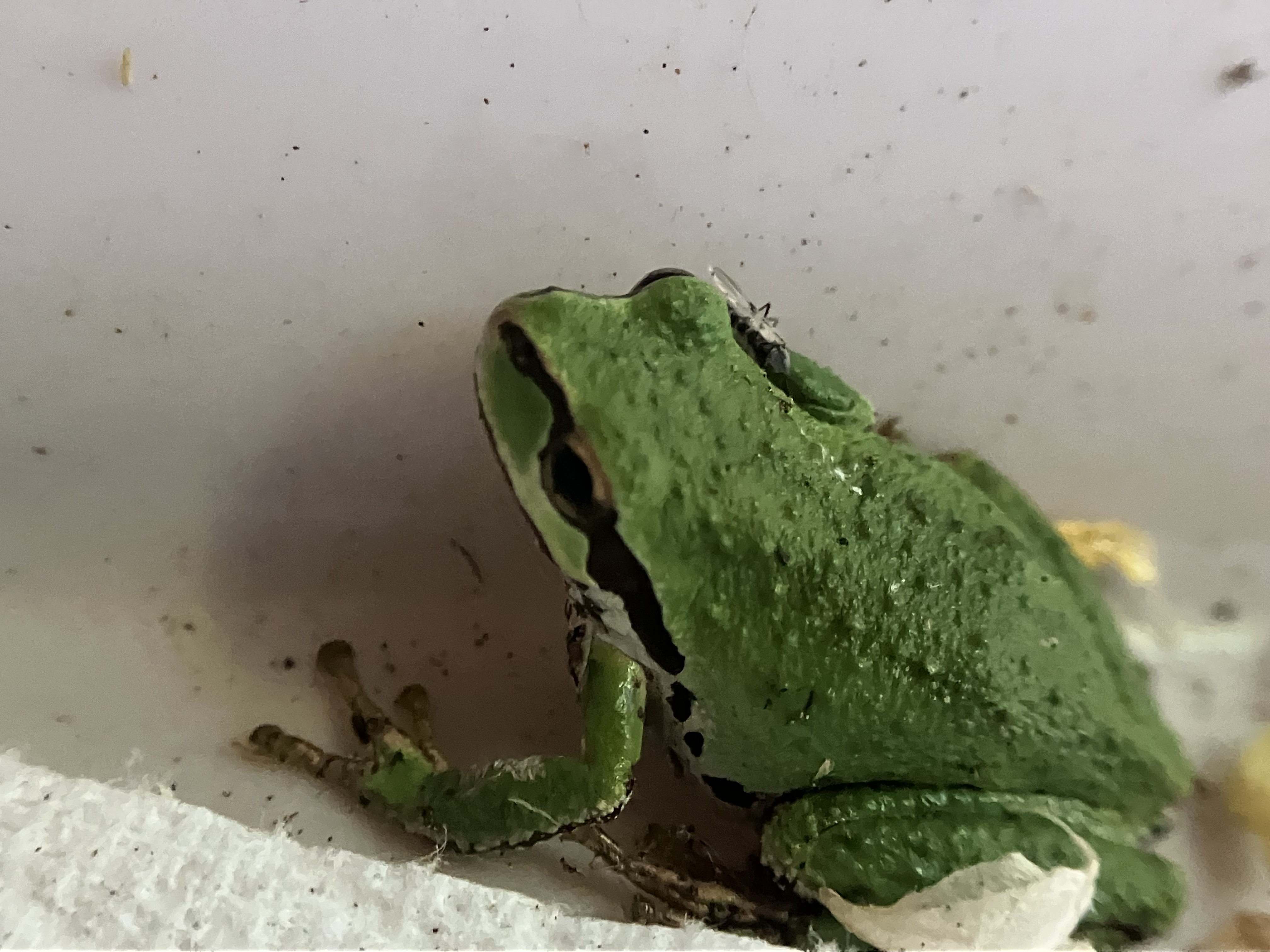
It took me a good while today to sit down and try to work out ID’s for my specimens. ALL specimens found in the bucket are handled with gentle care and safely released back into cryptic hiding spots to better avoid predation by birds, yellow jackets, and other predaceous insects. Probably add in spiders, though I have not seen many in this dry spell of weather we are having. I did have an unexpected guest show up in the bucket this morning. A frog. Yes, if you set the buffet up, the dinner guests will inevitably find it. 🐸
I’ll add the link to the National Moth Week website here https://nationalmothweek.org and if you are interested in participating and can’t figure out what you need to do or need advice on how to MOTH, feel free to reach out. Check out the gallery below and thanks for stopping by!
Gallery
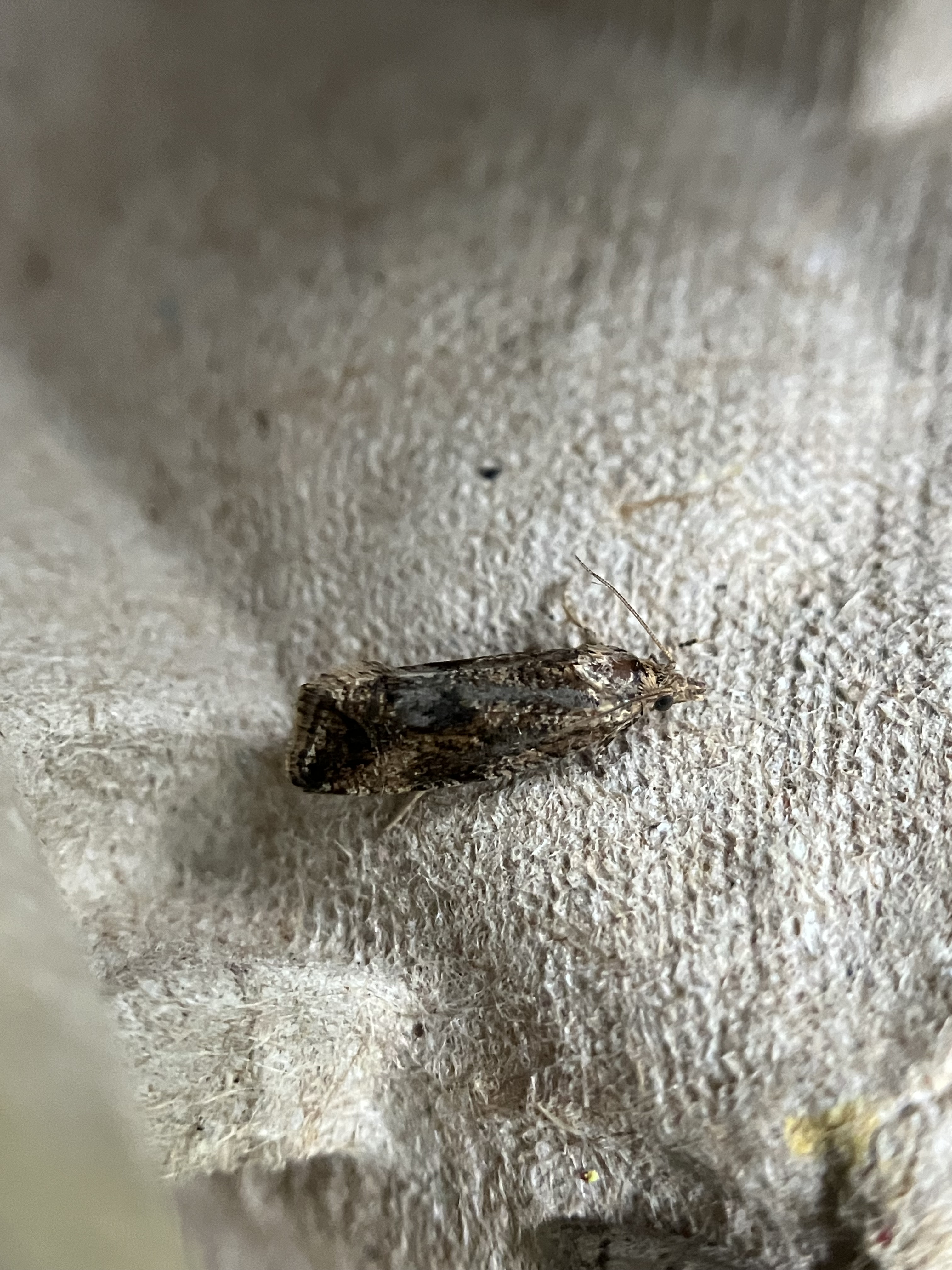
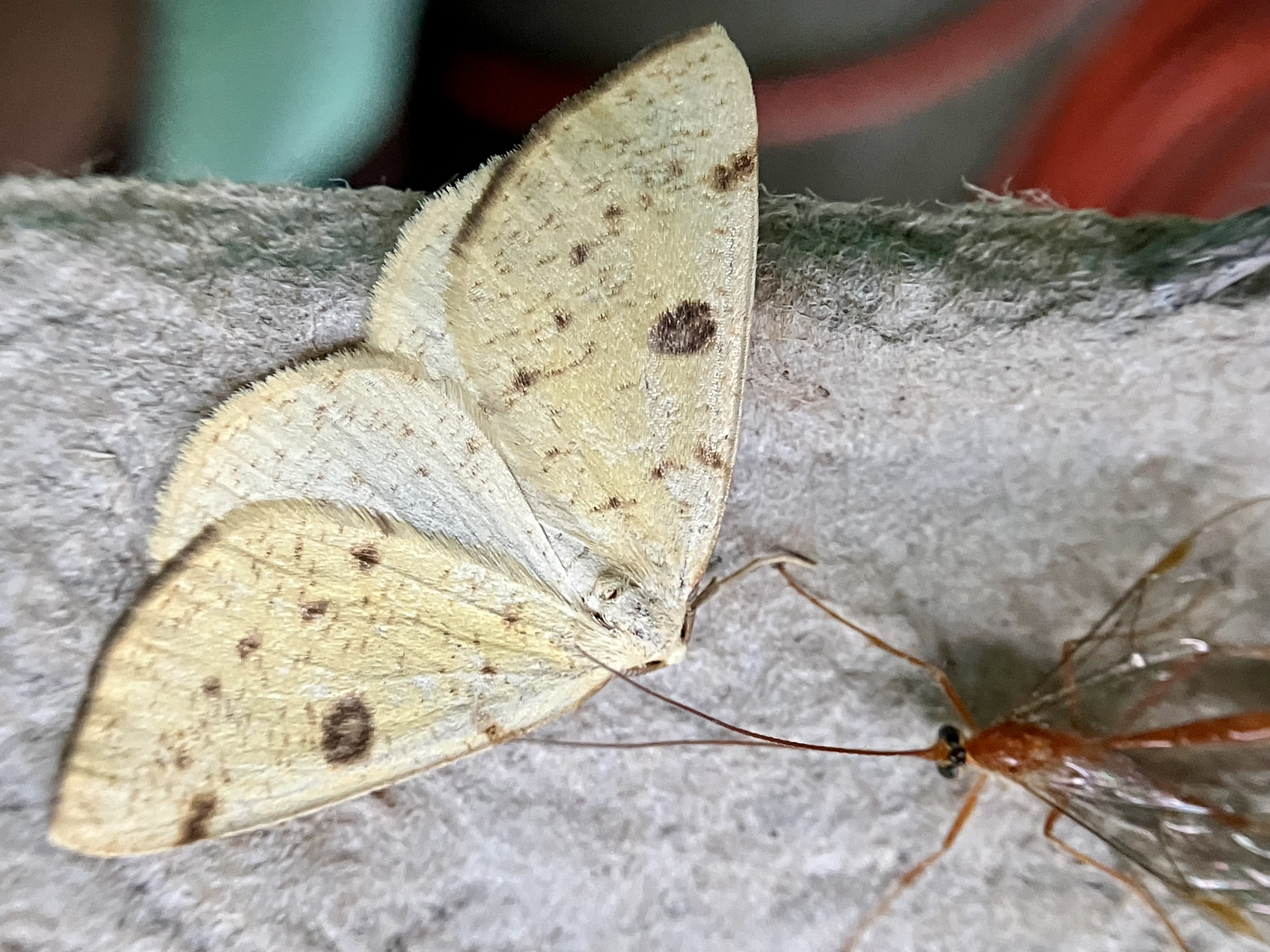
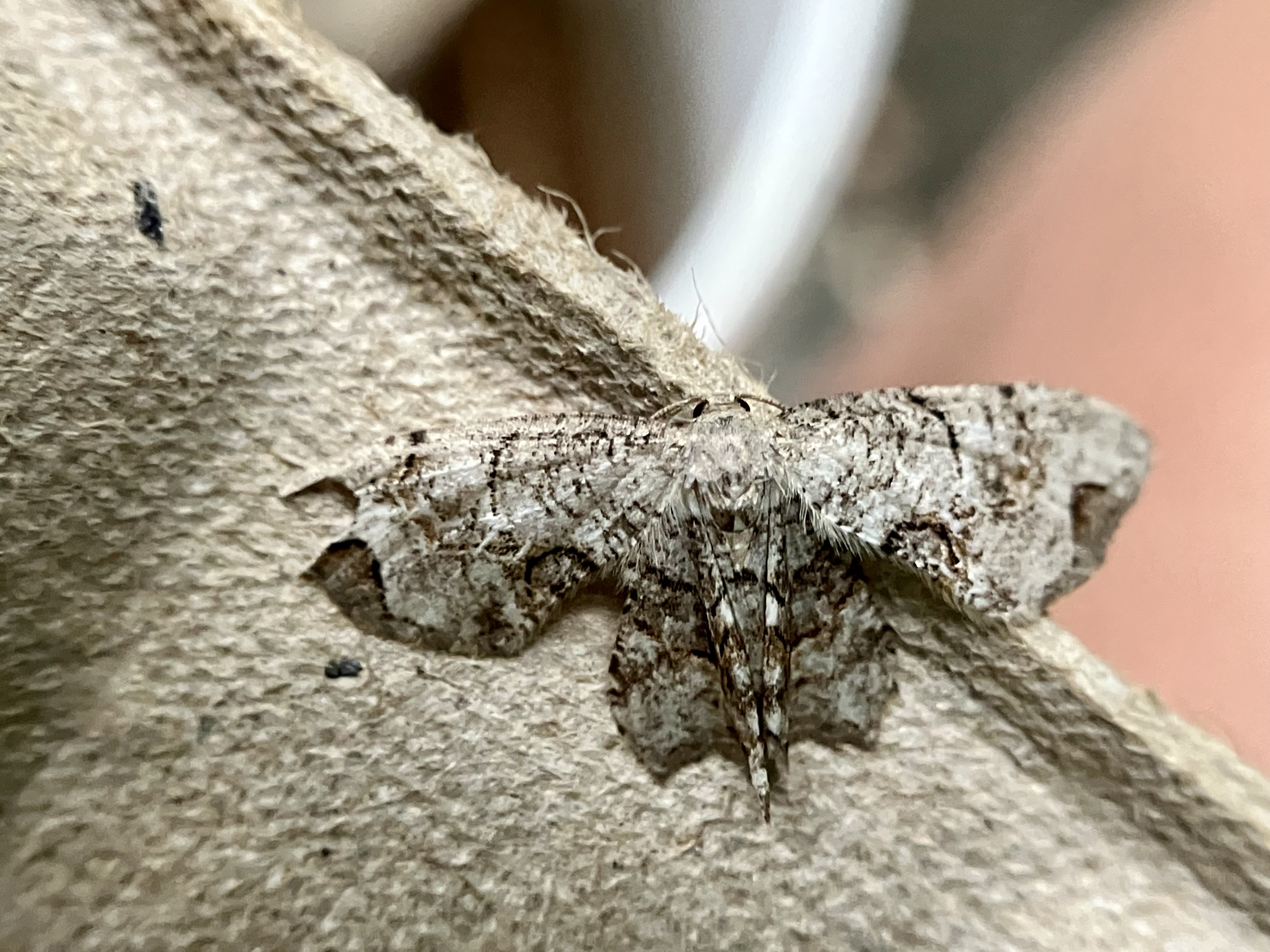
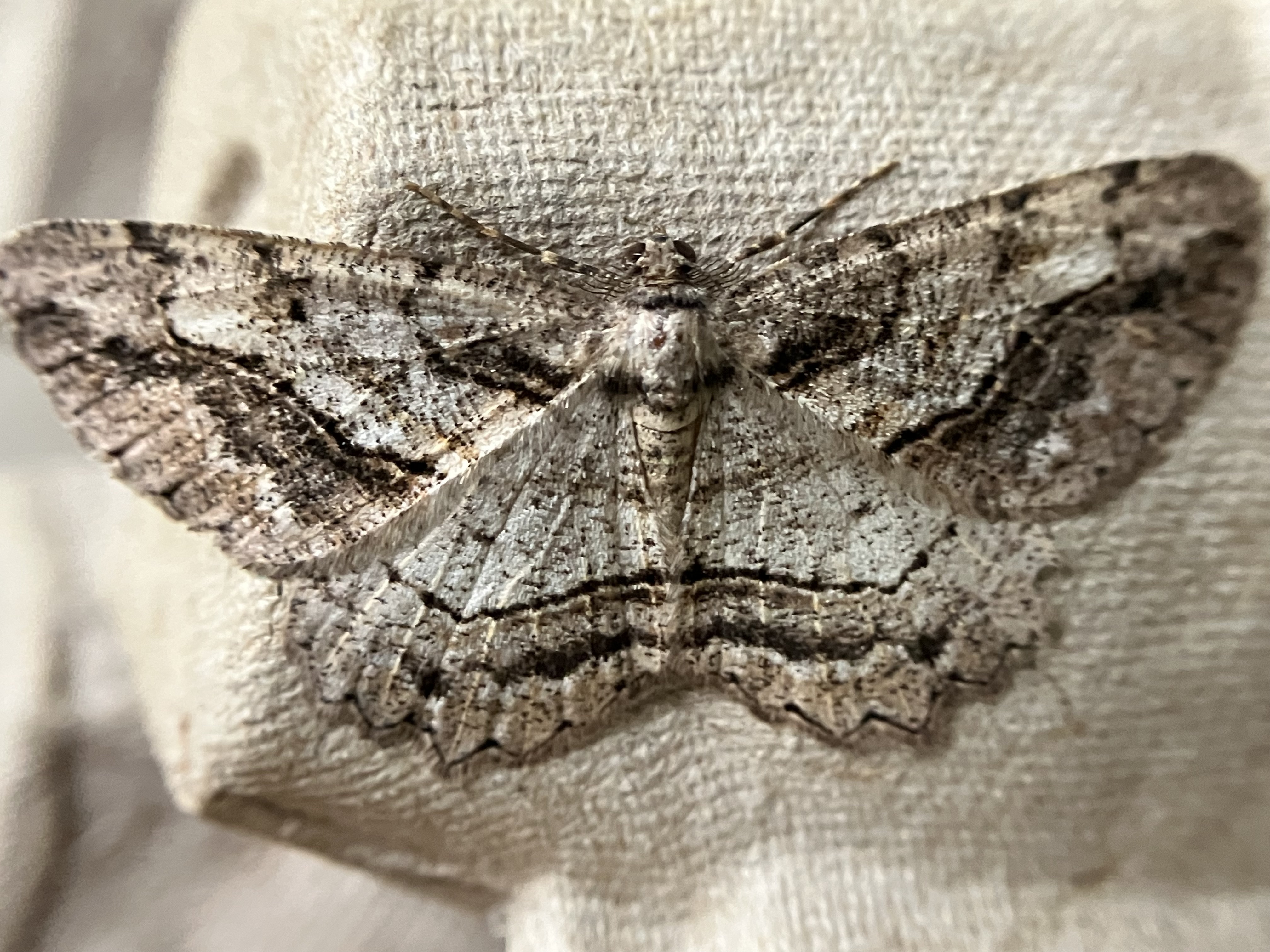
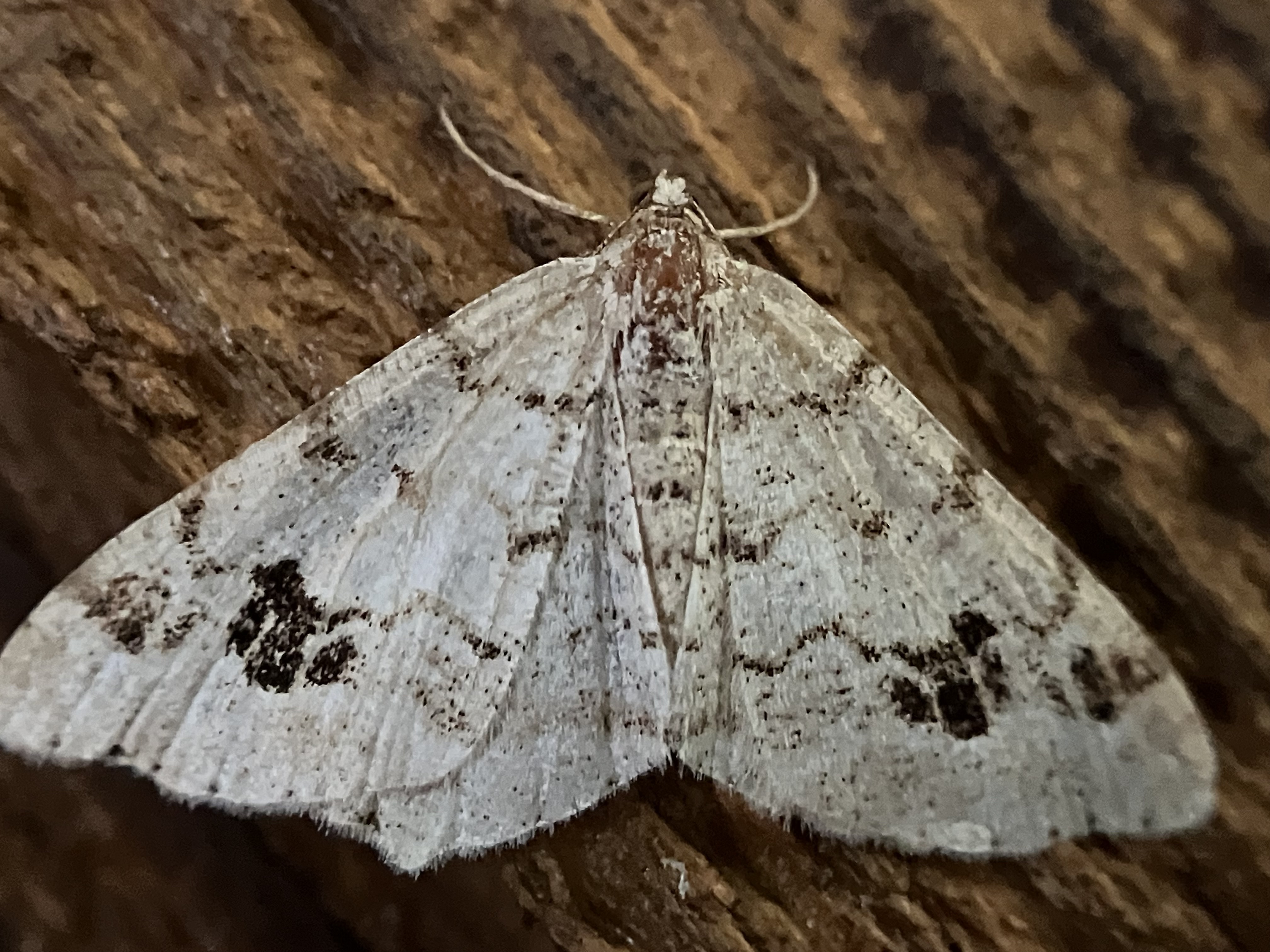
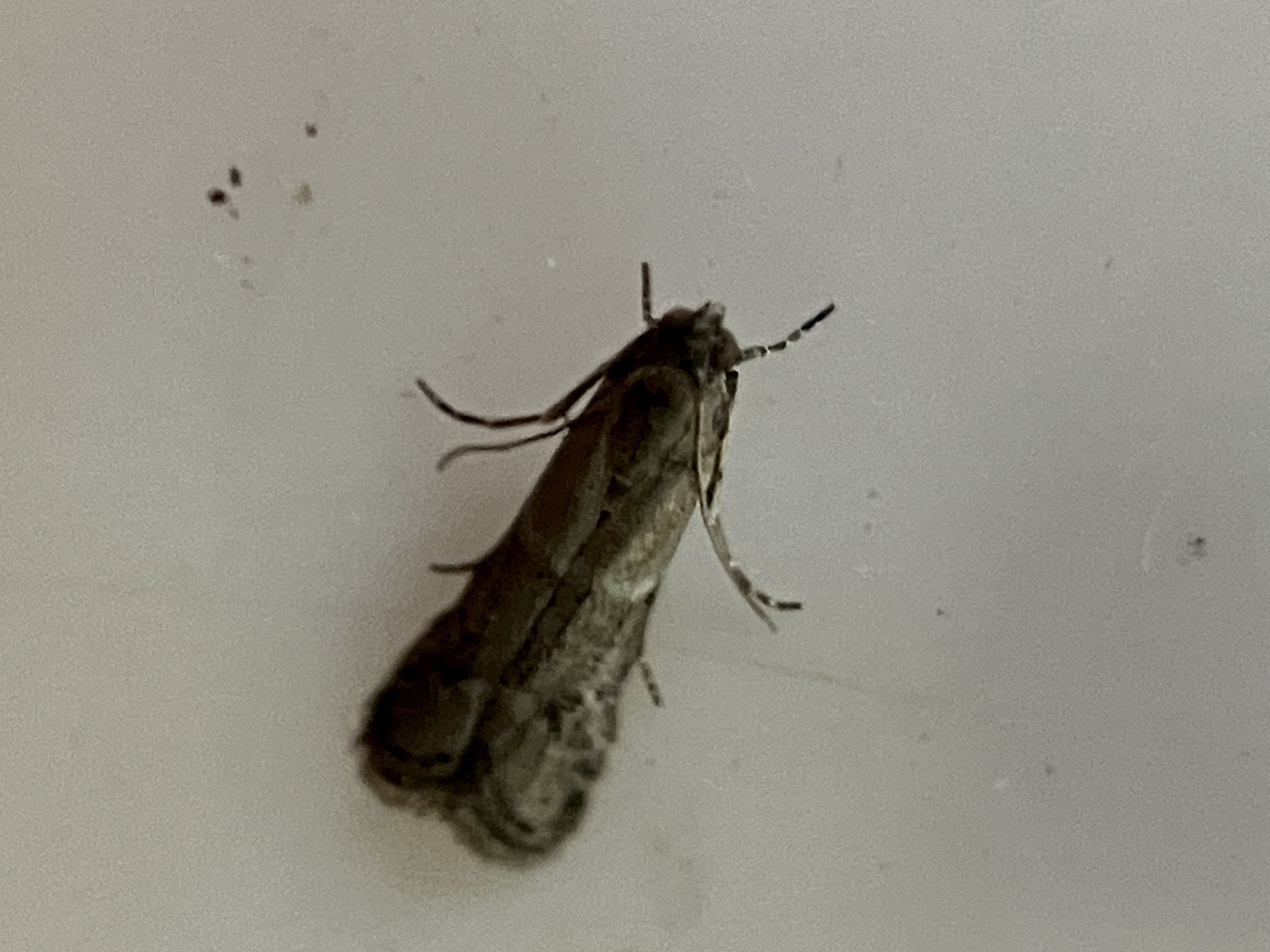
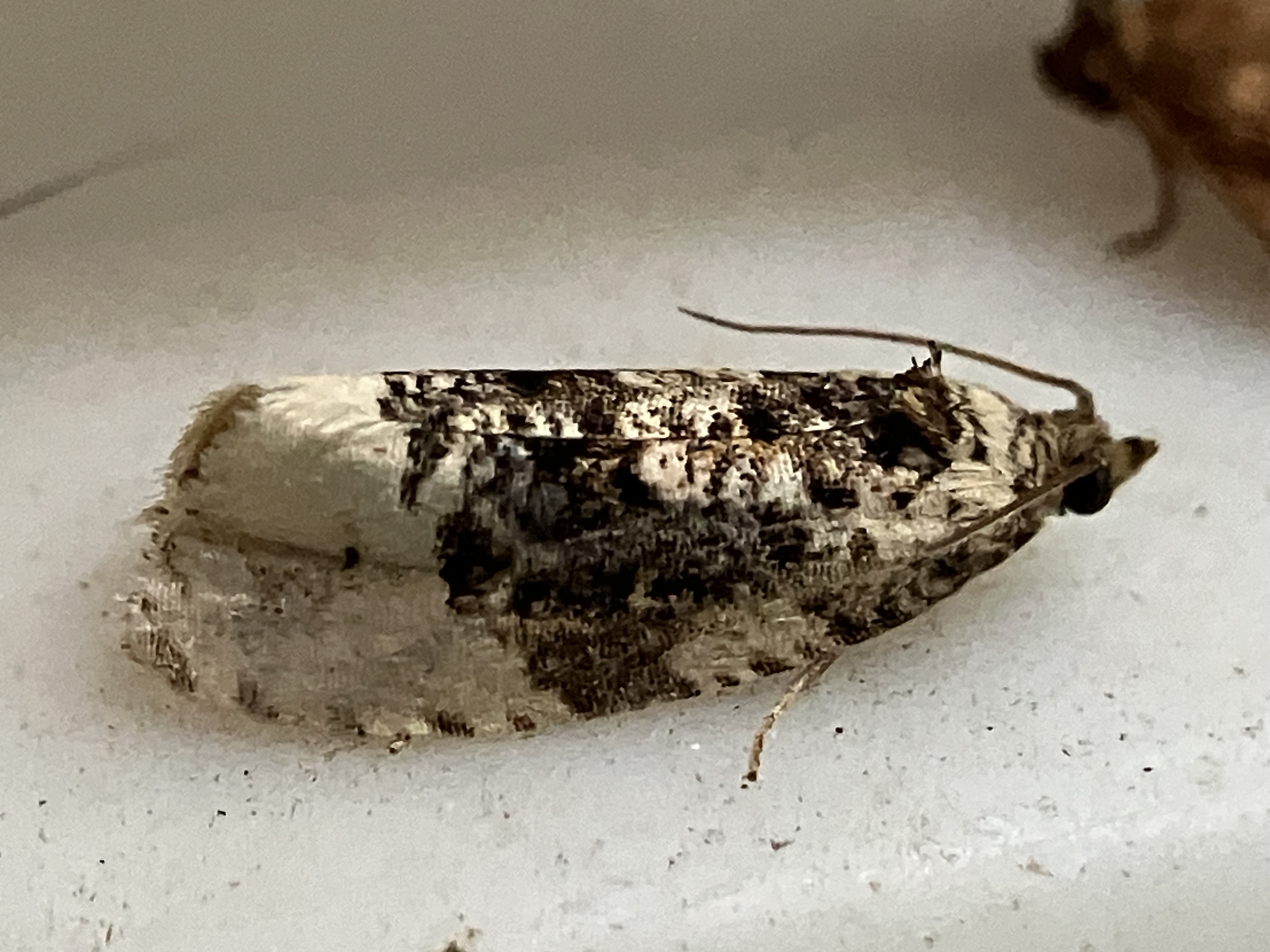
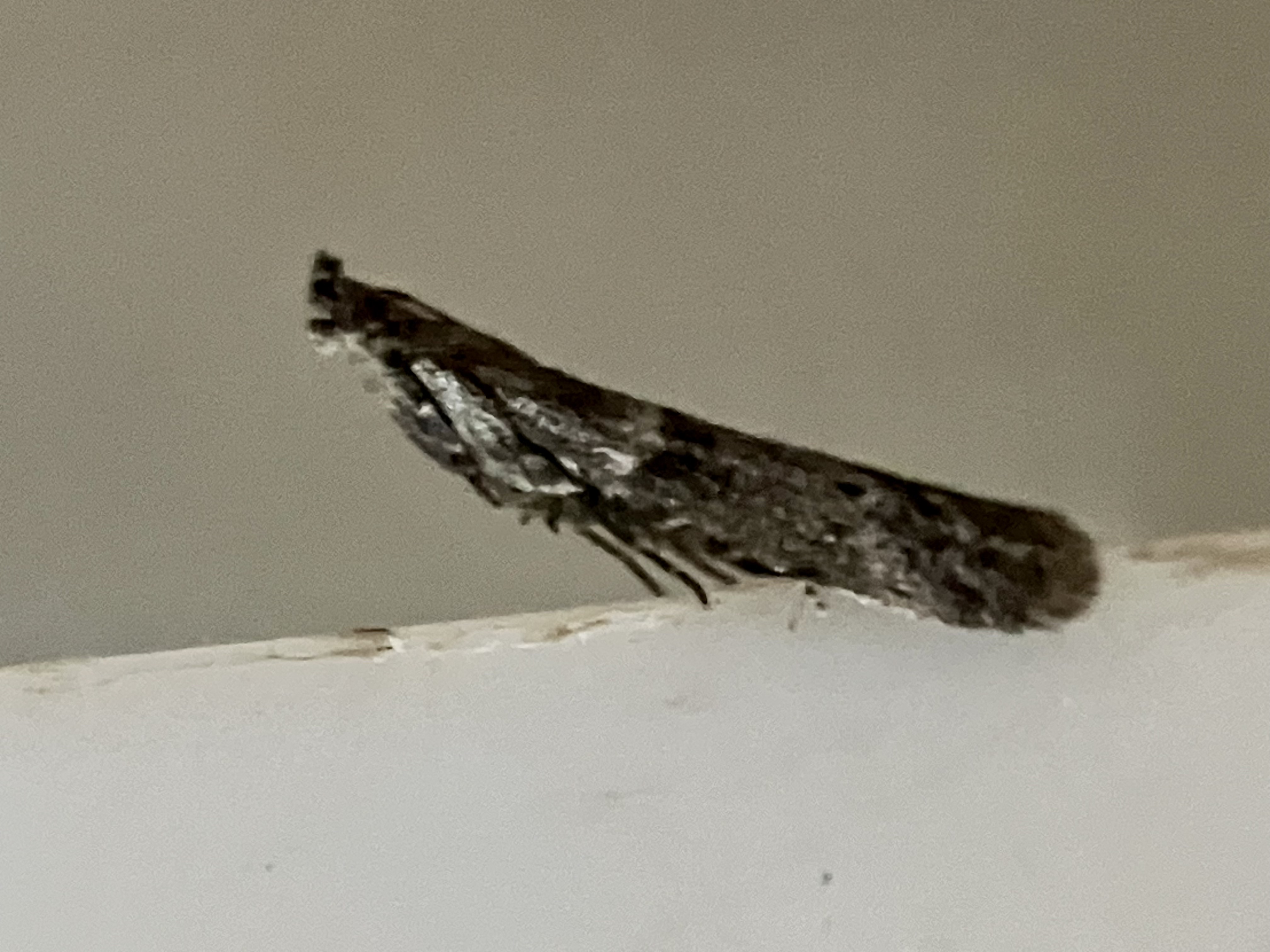
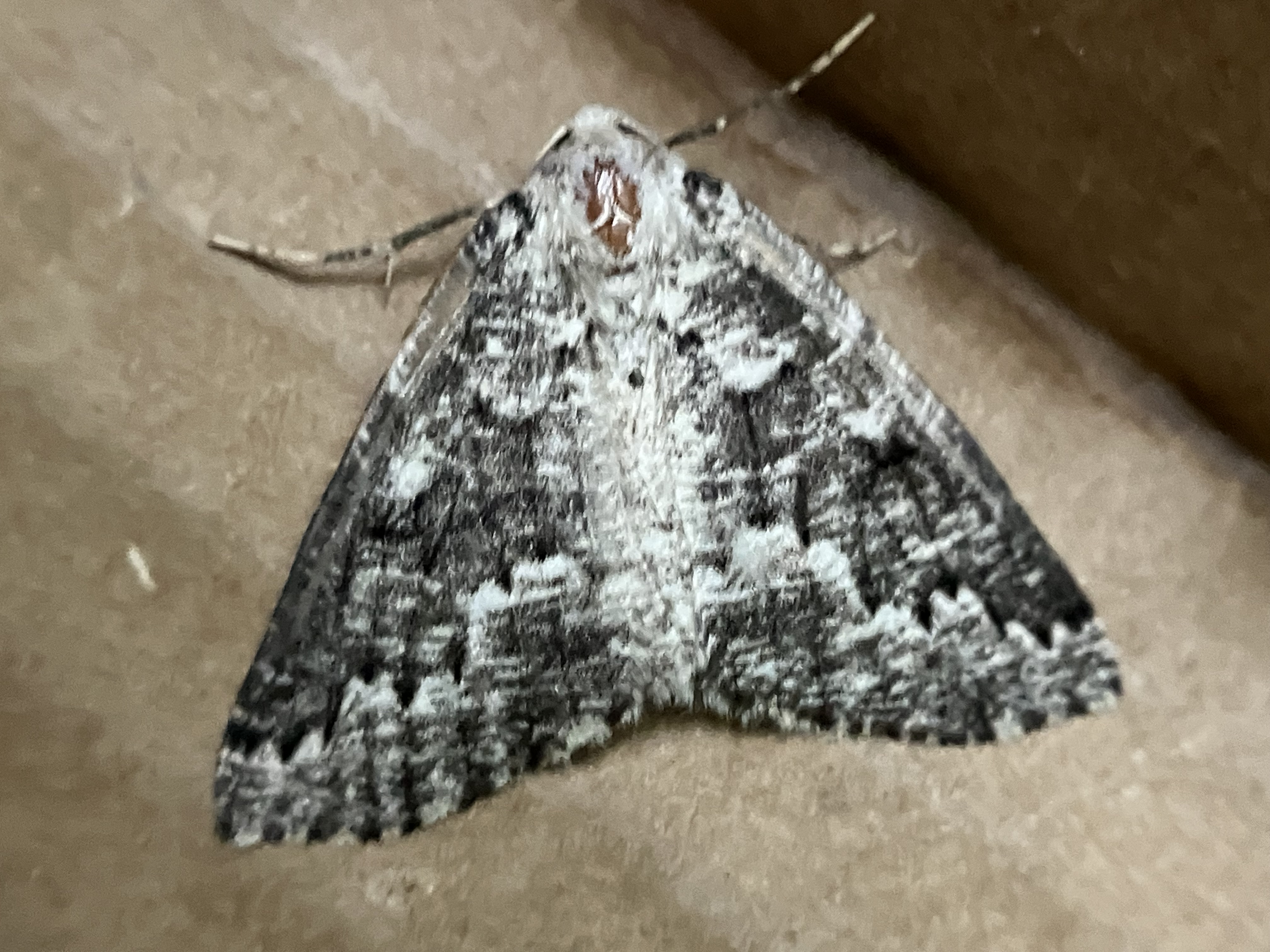
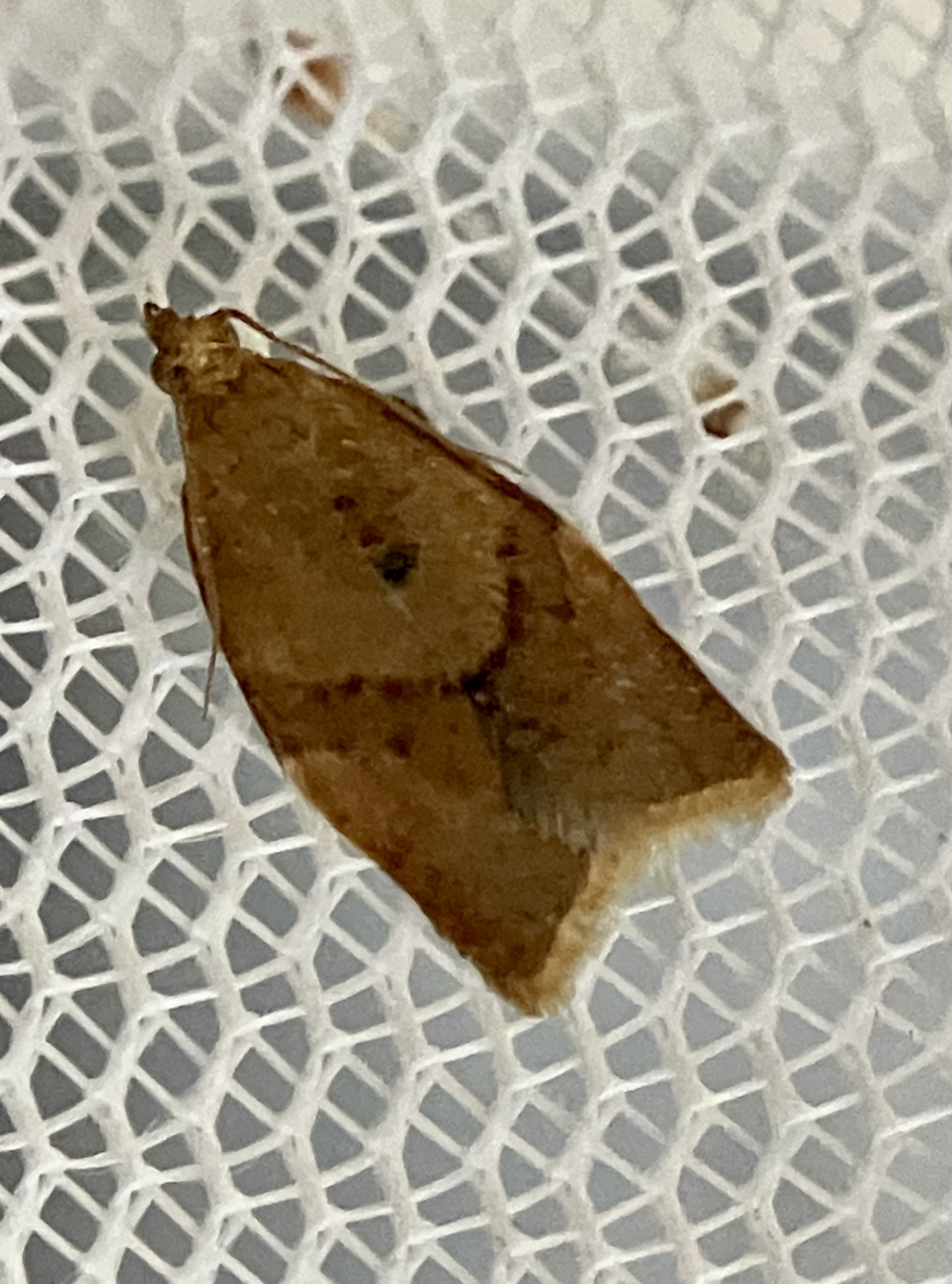
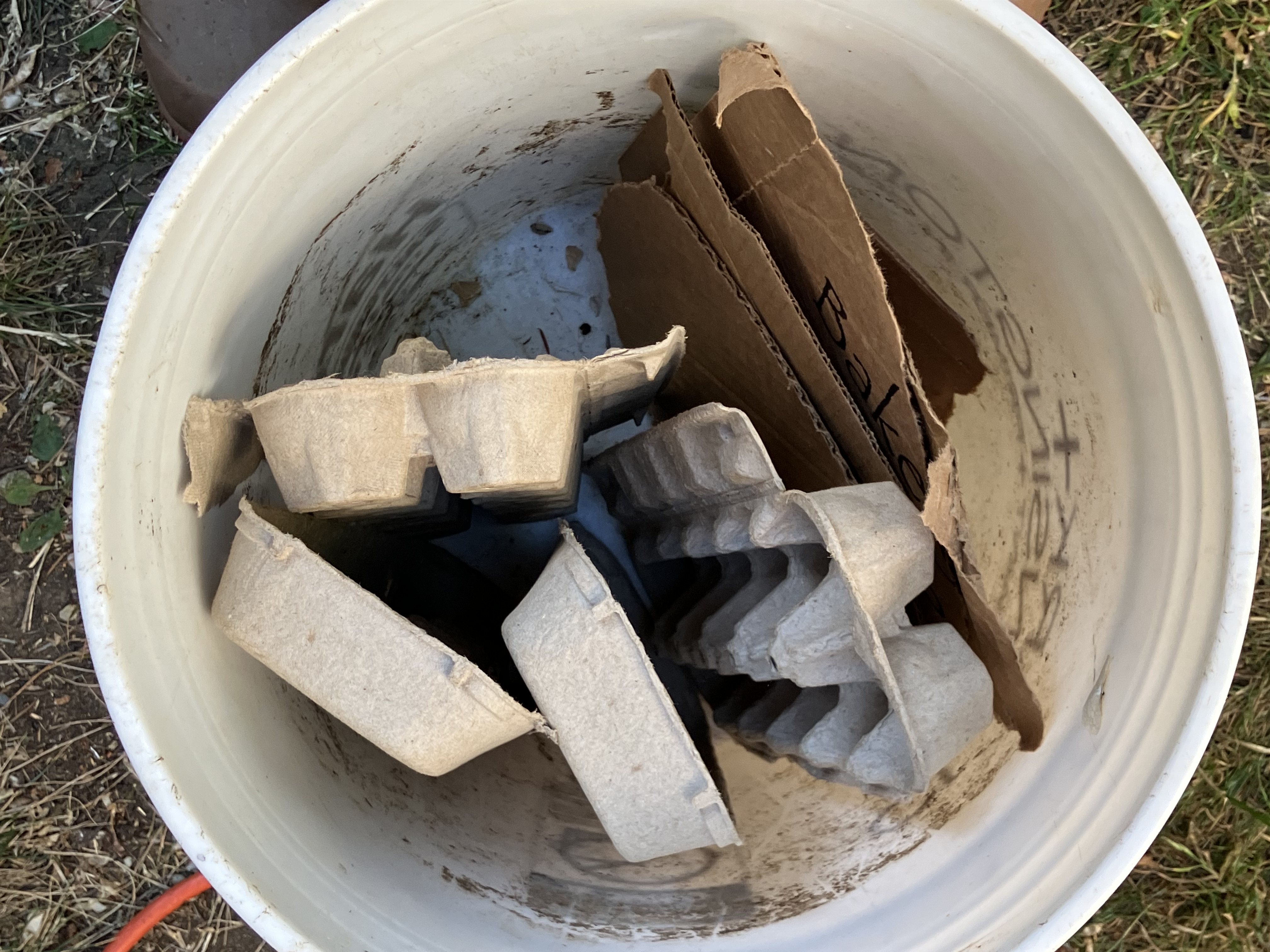
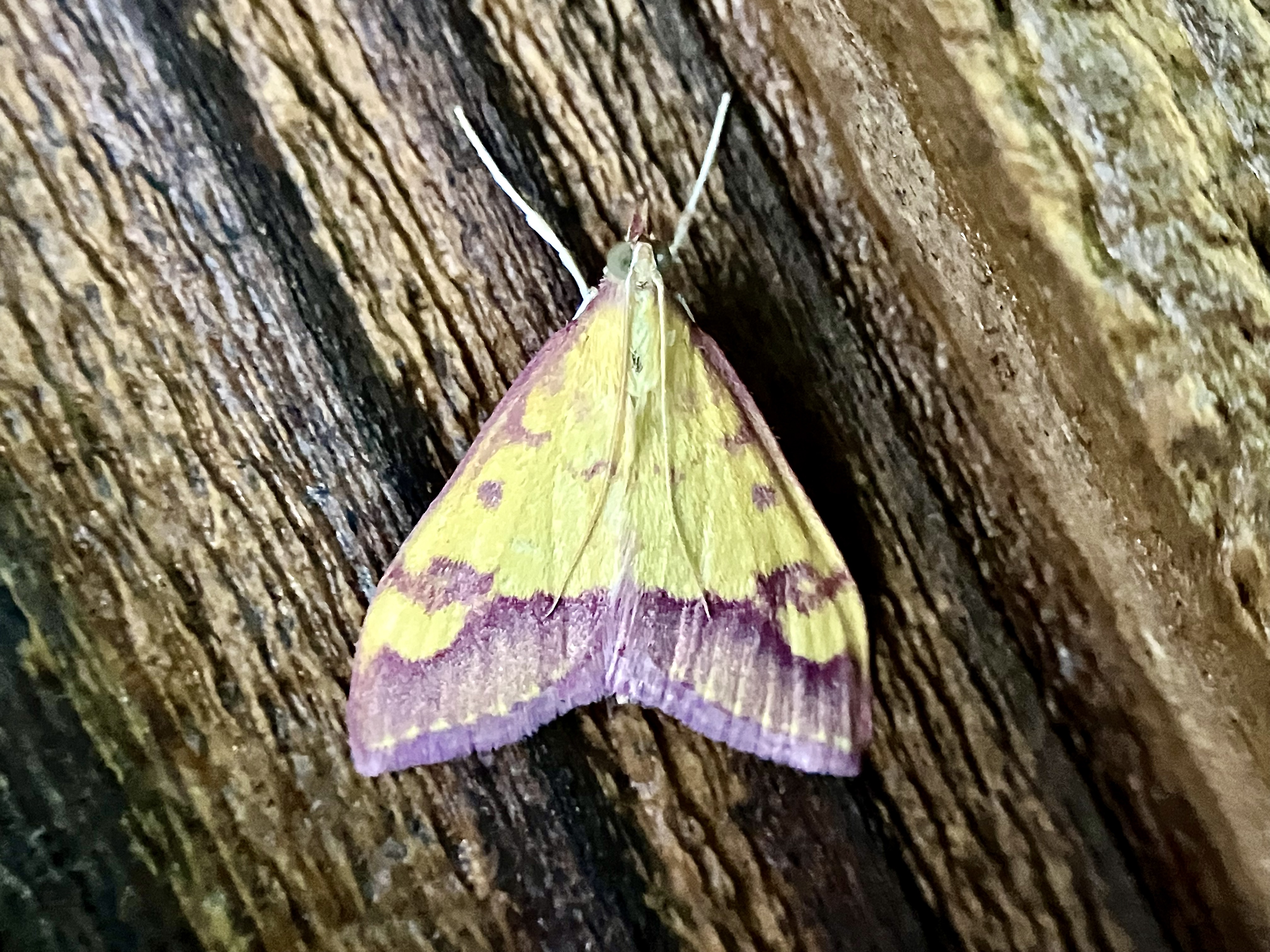
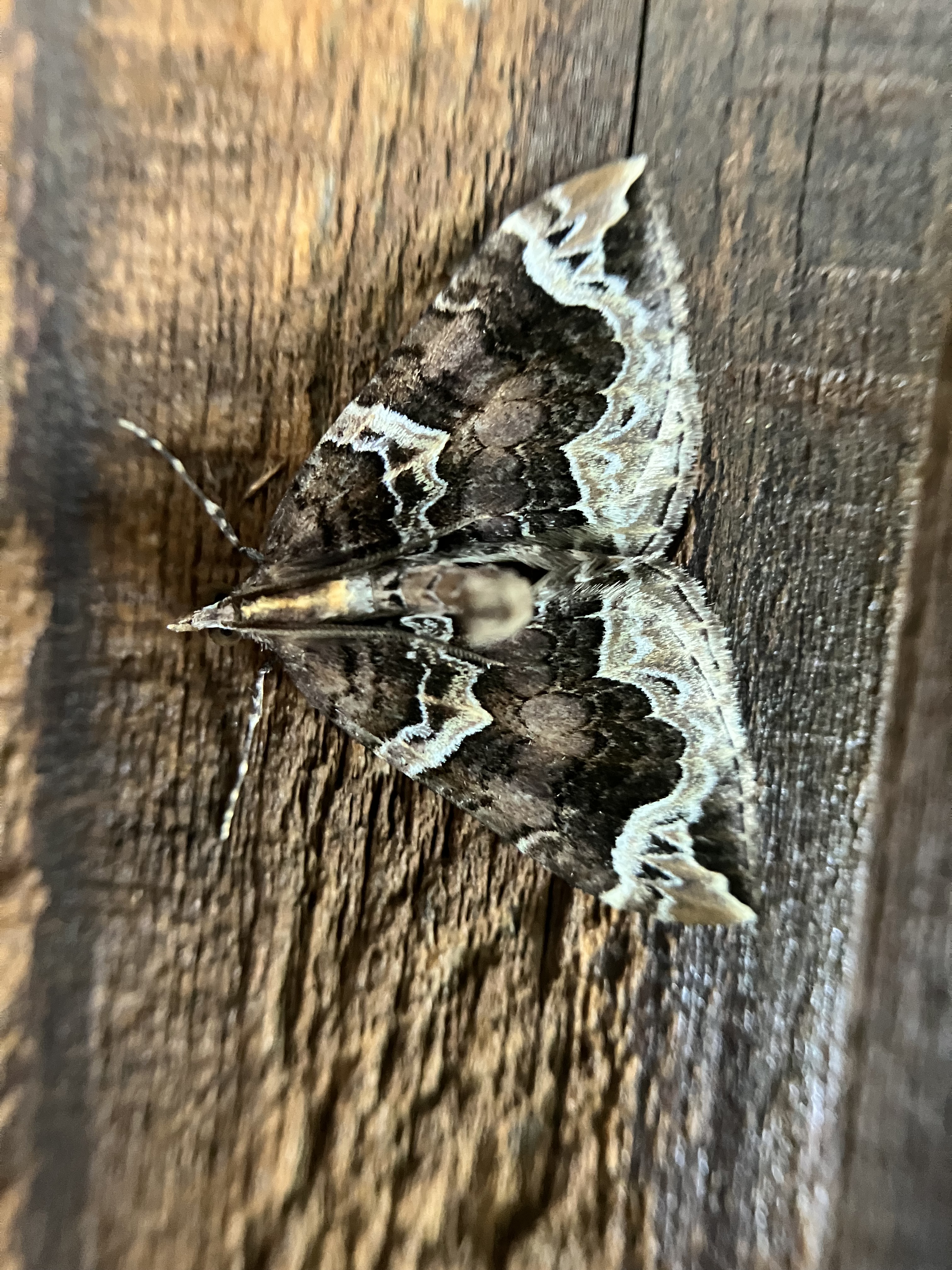
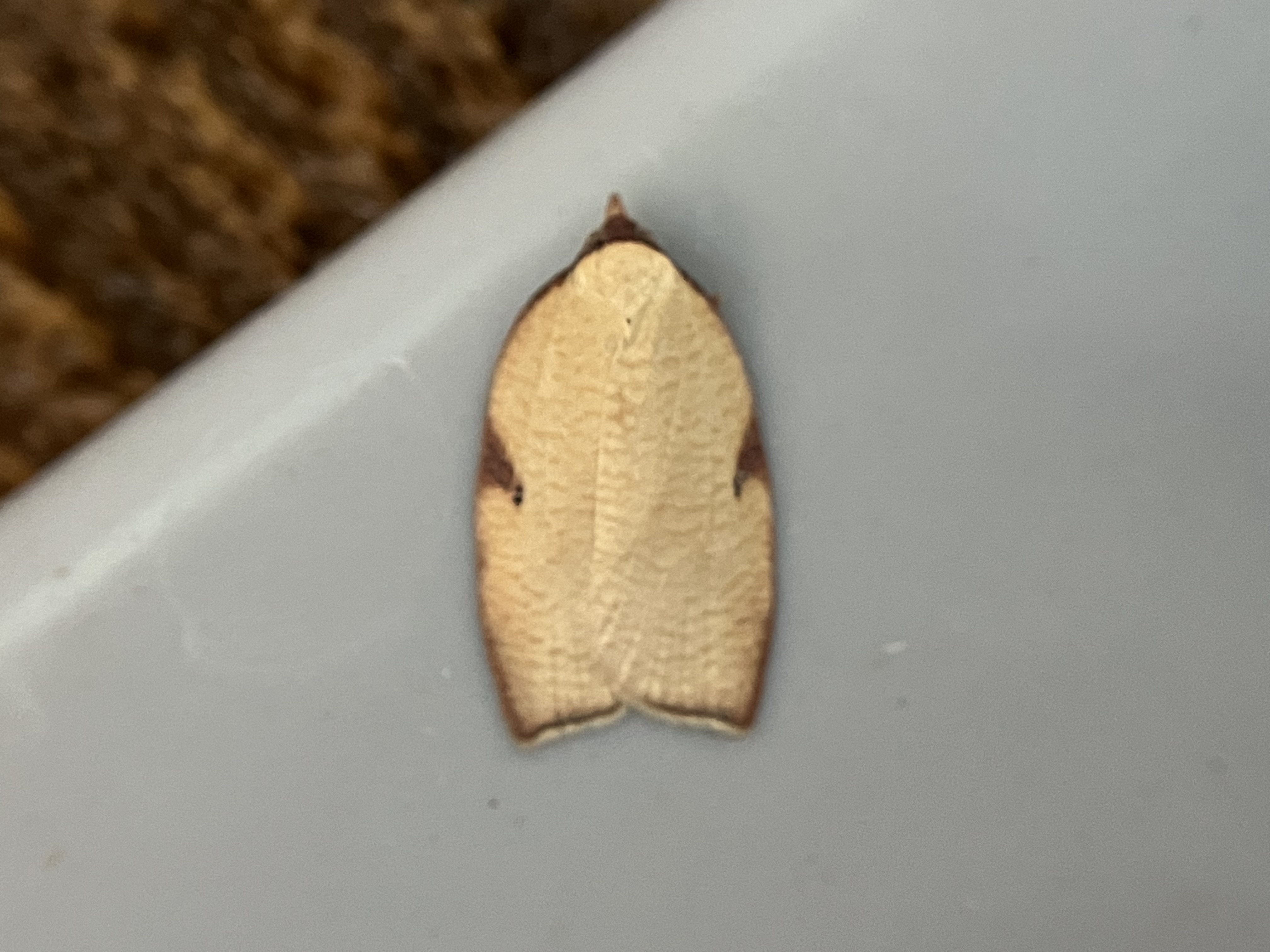
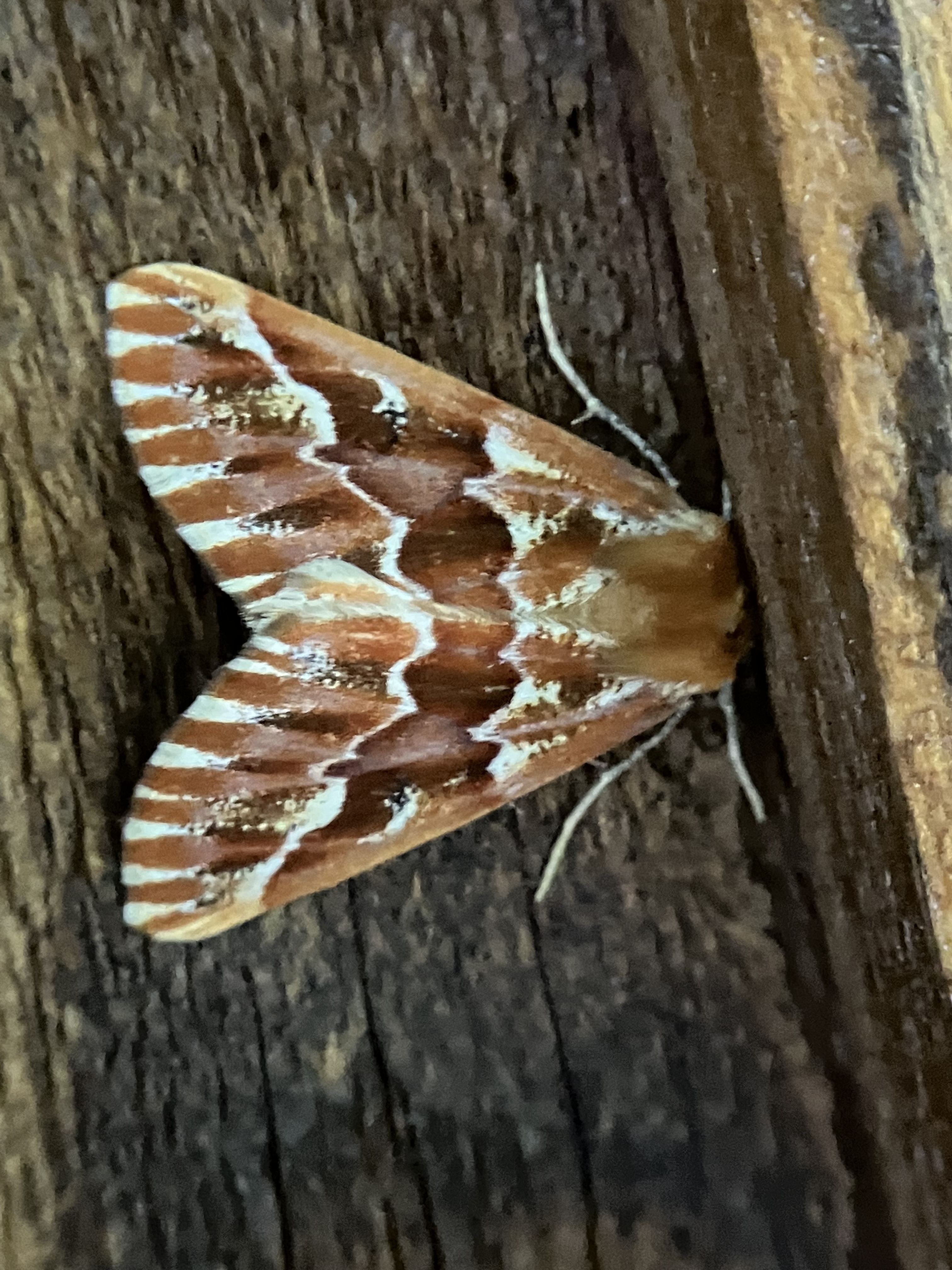
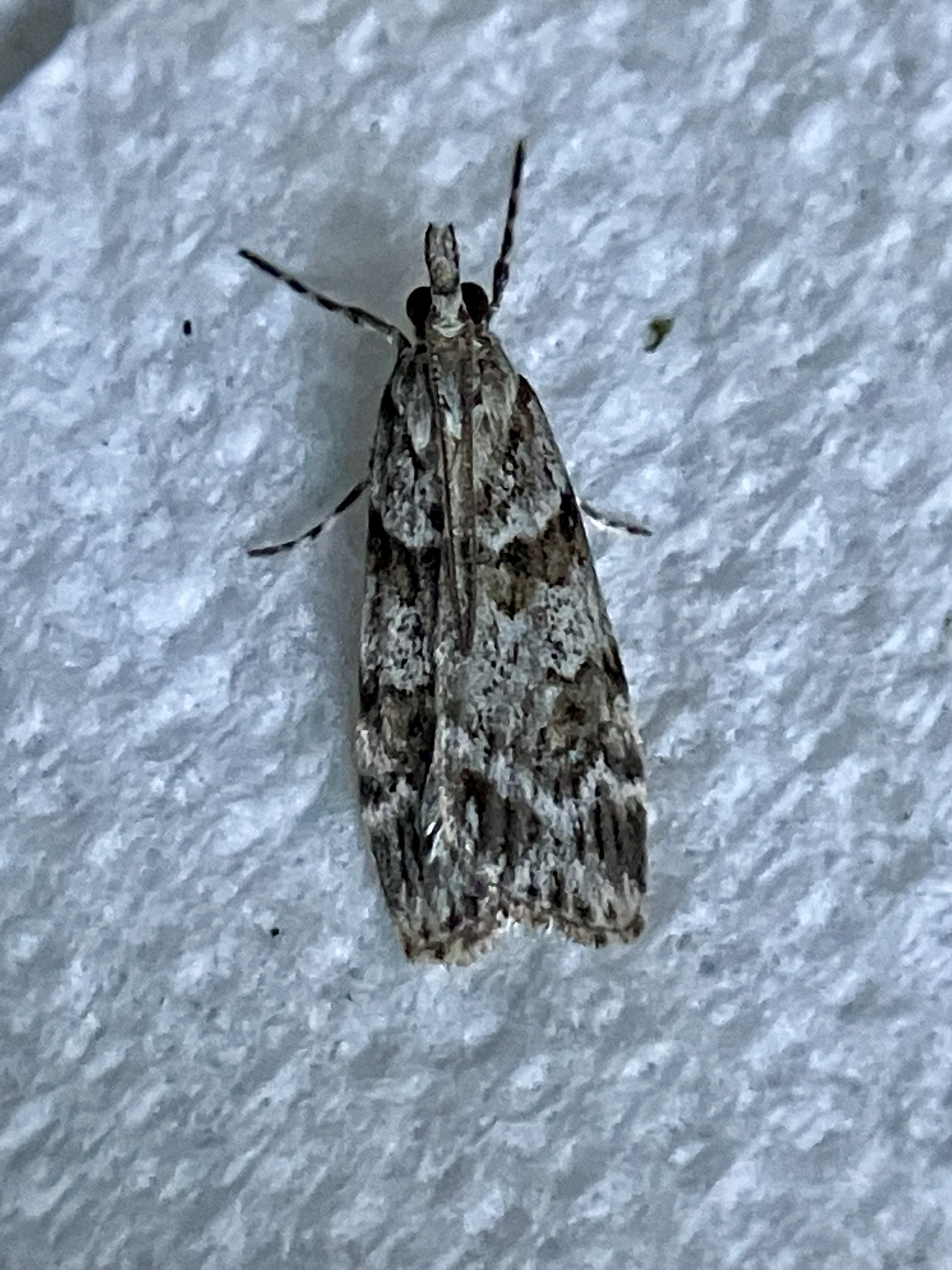
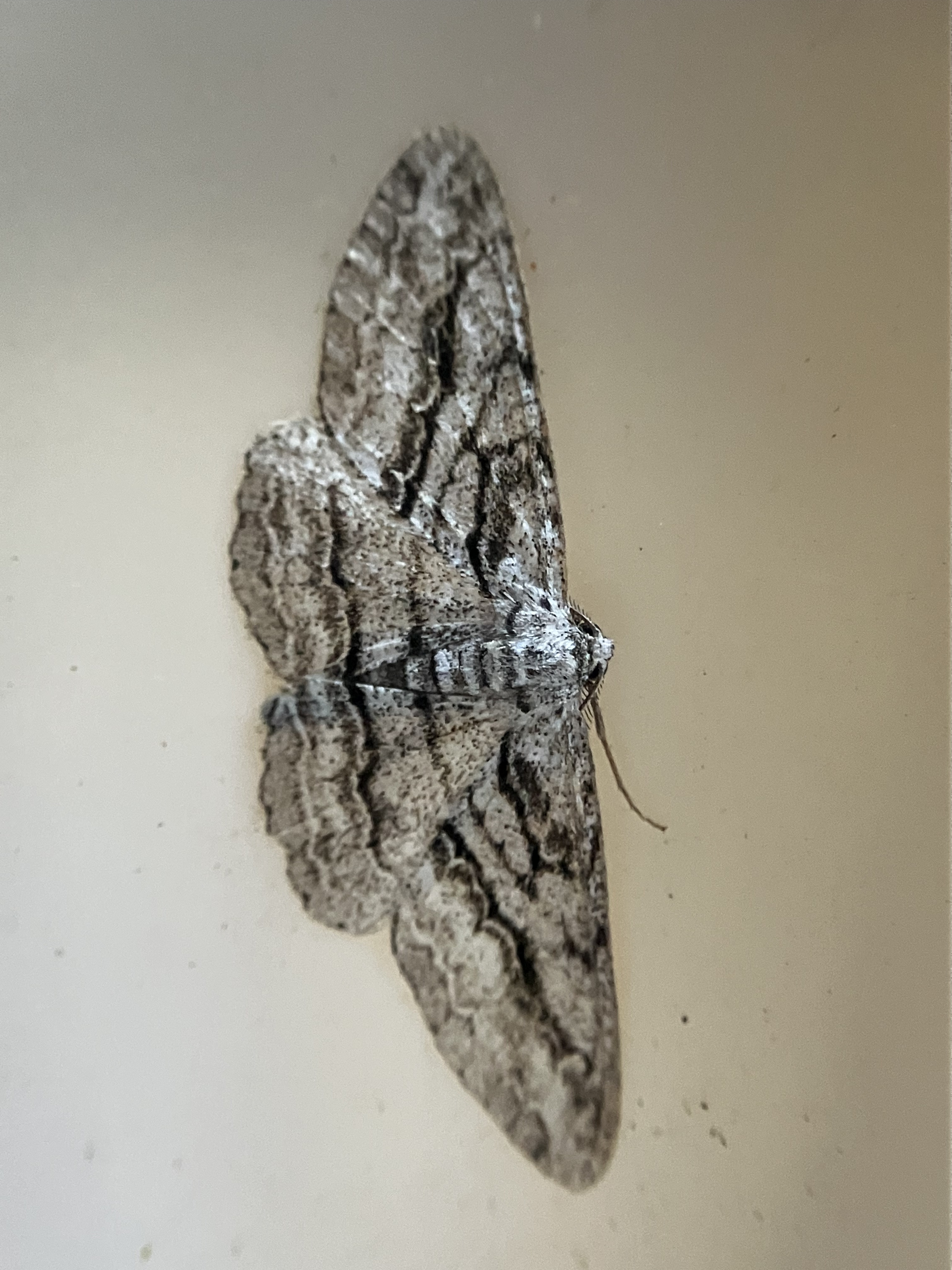
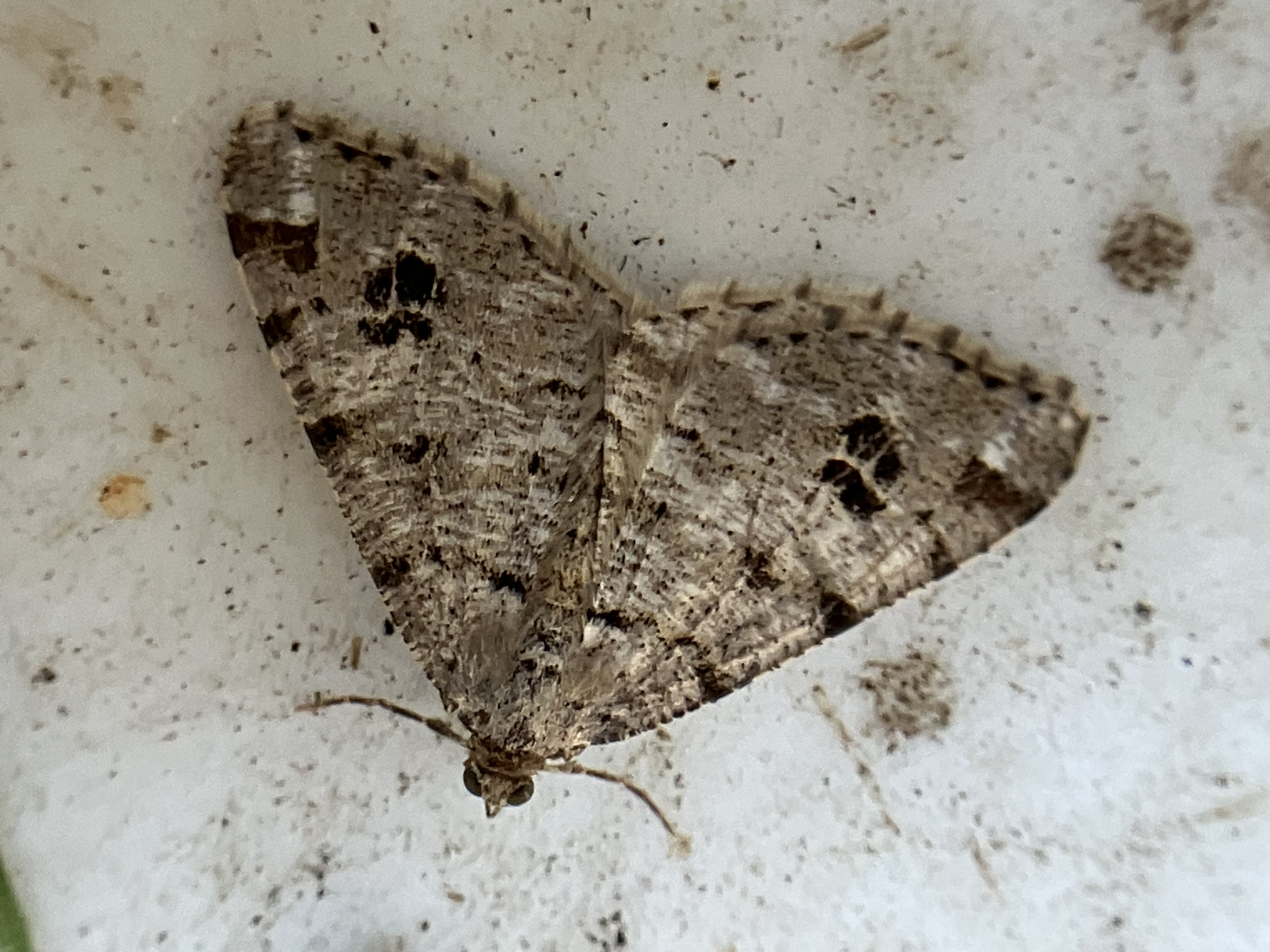
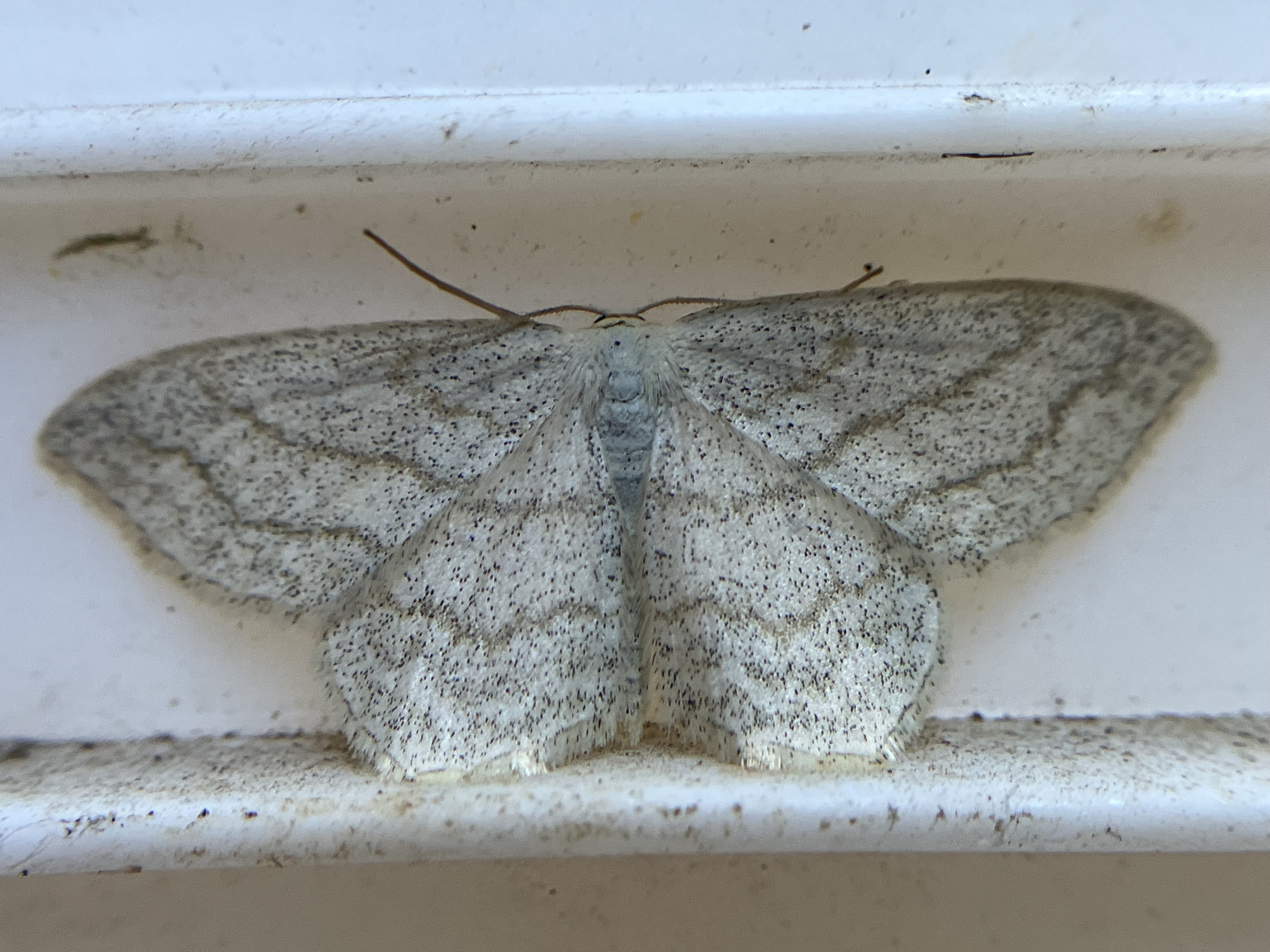
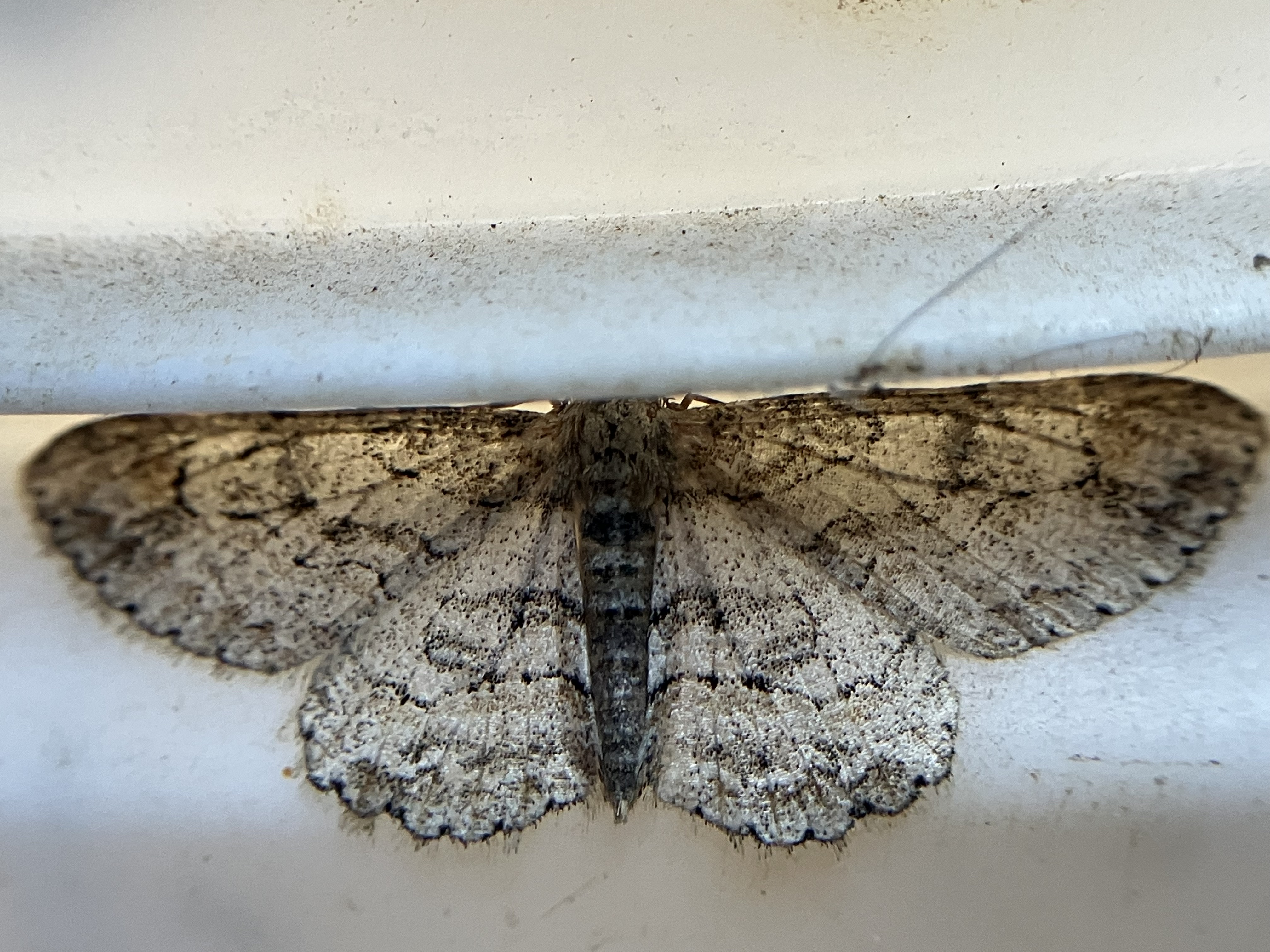
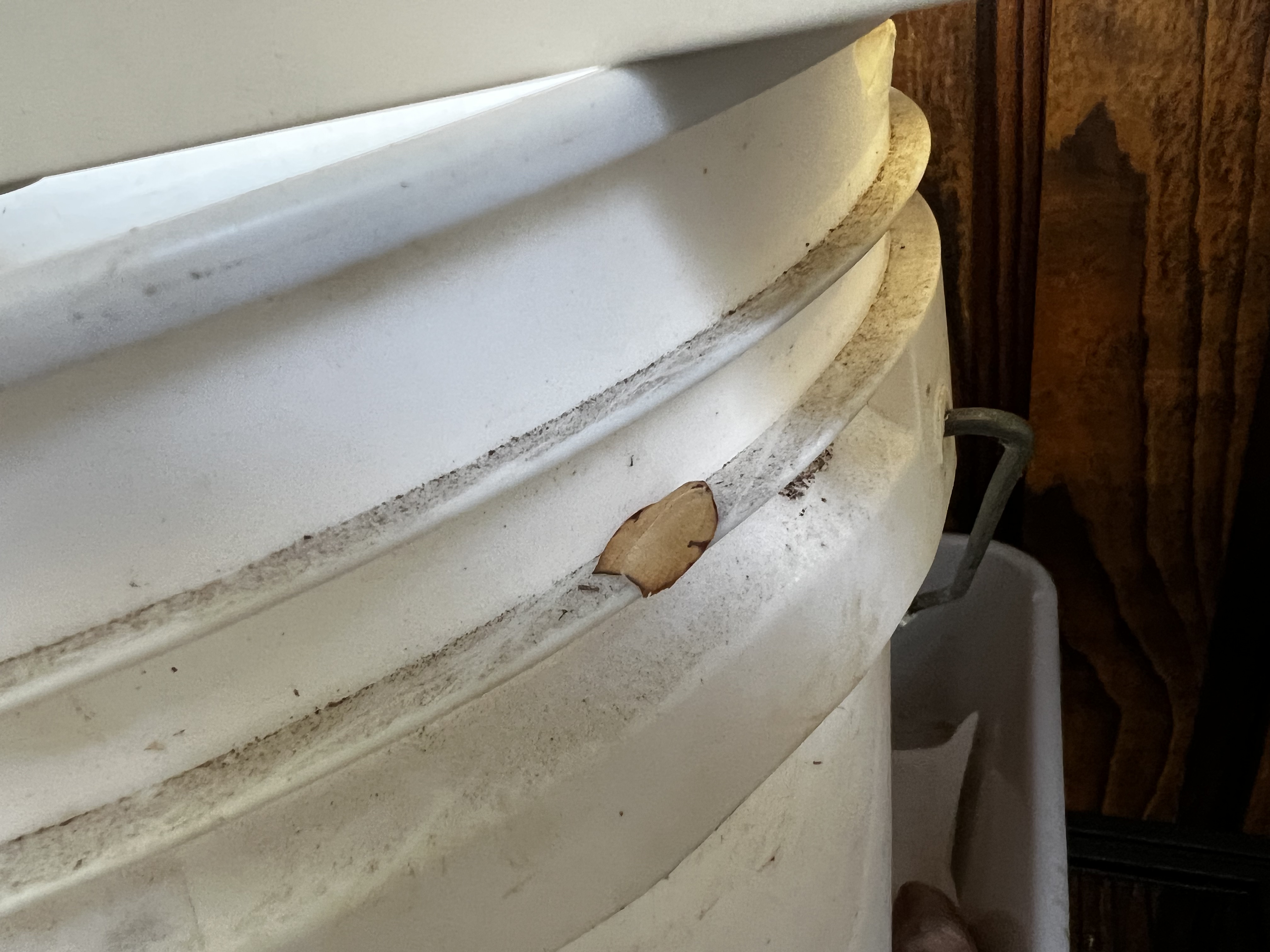
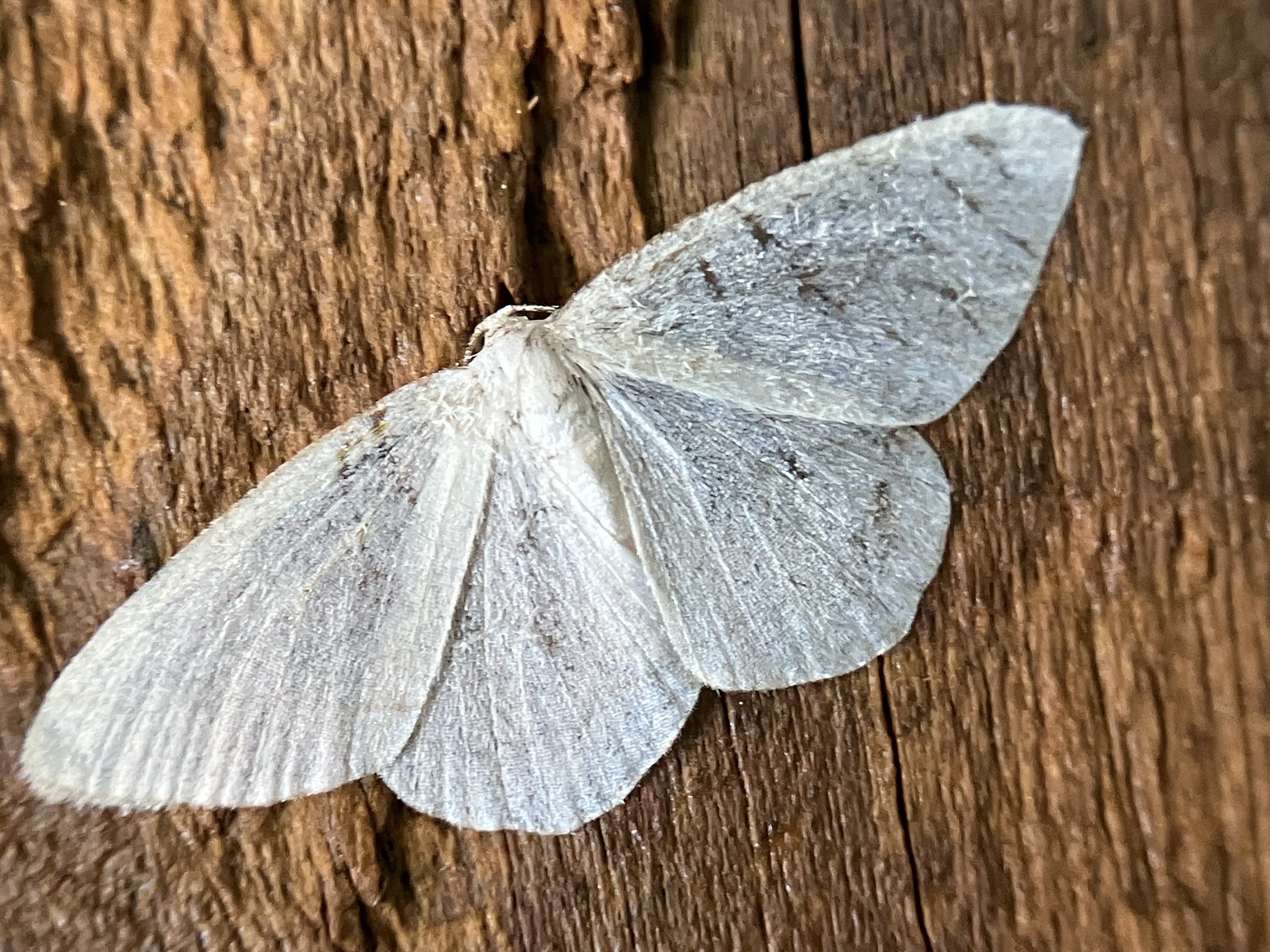
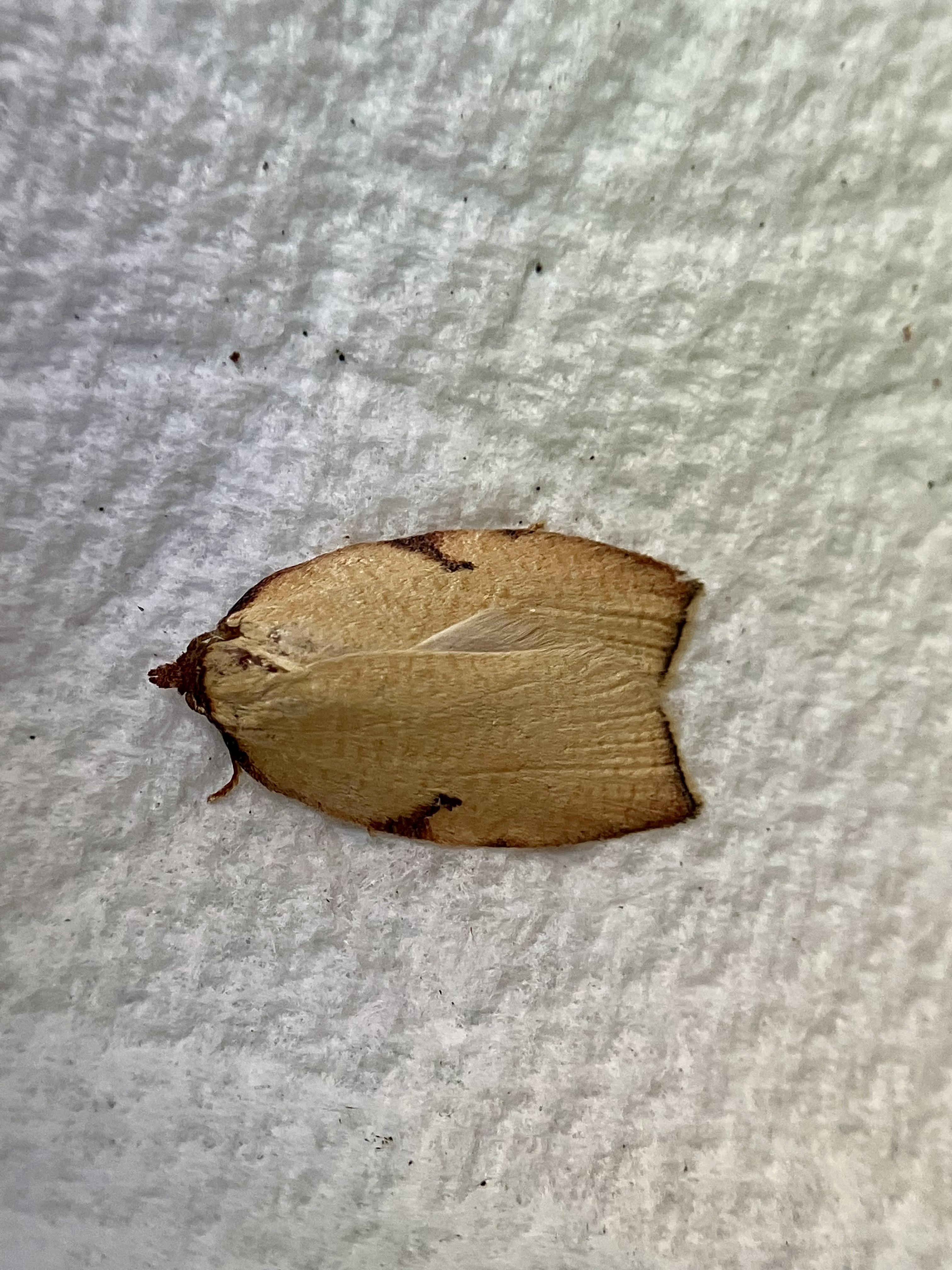
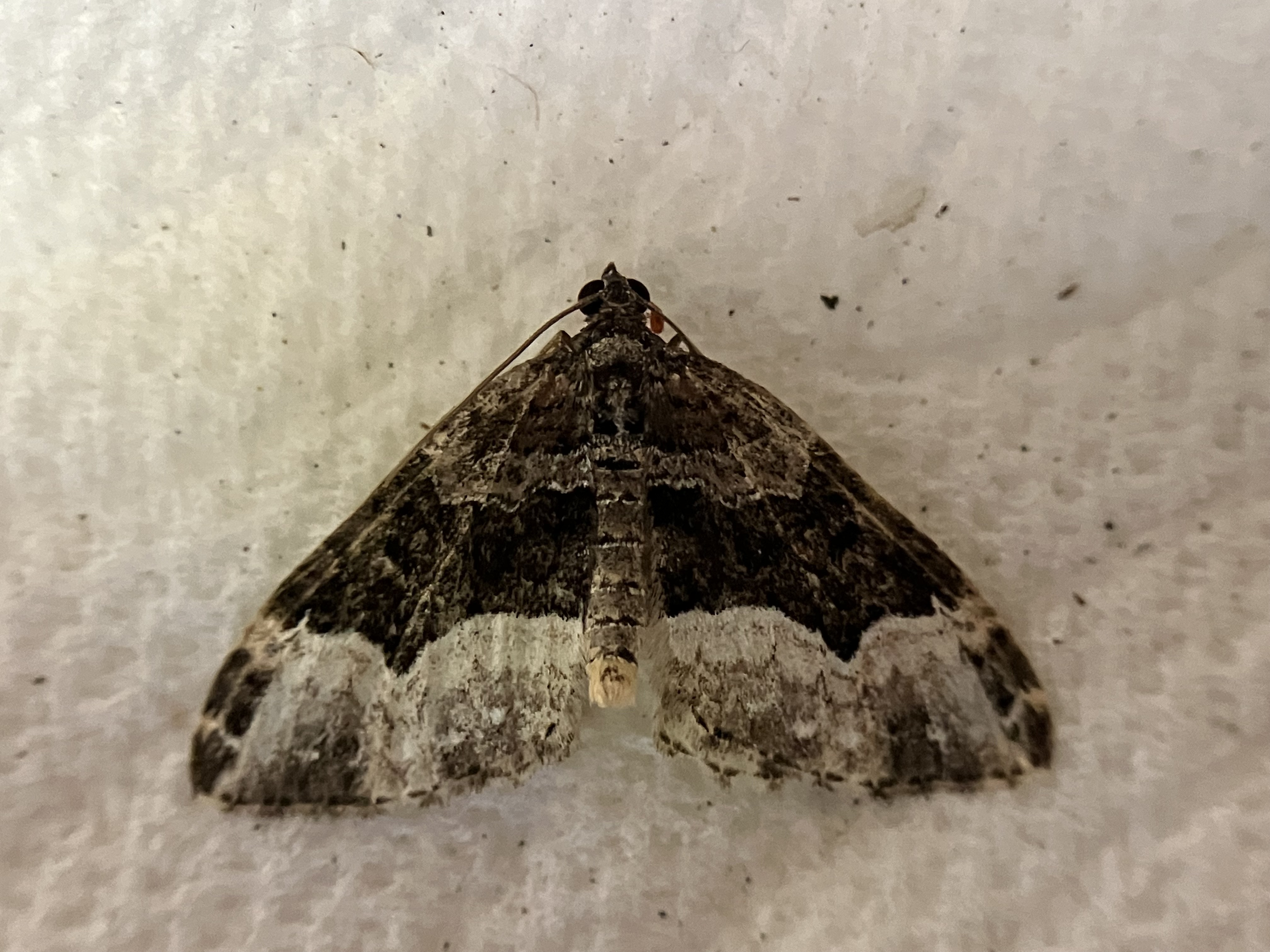
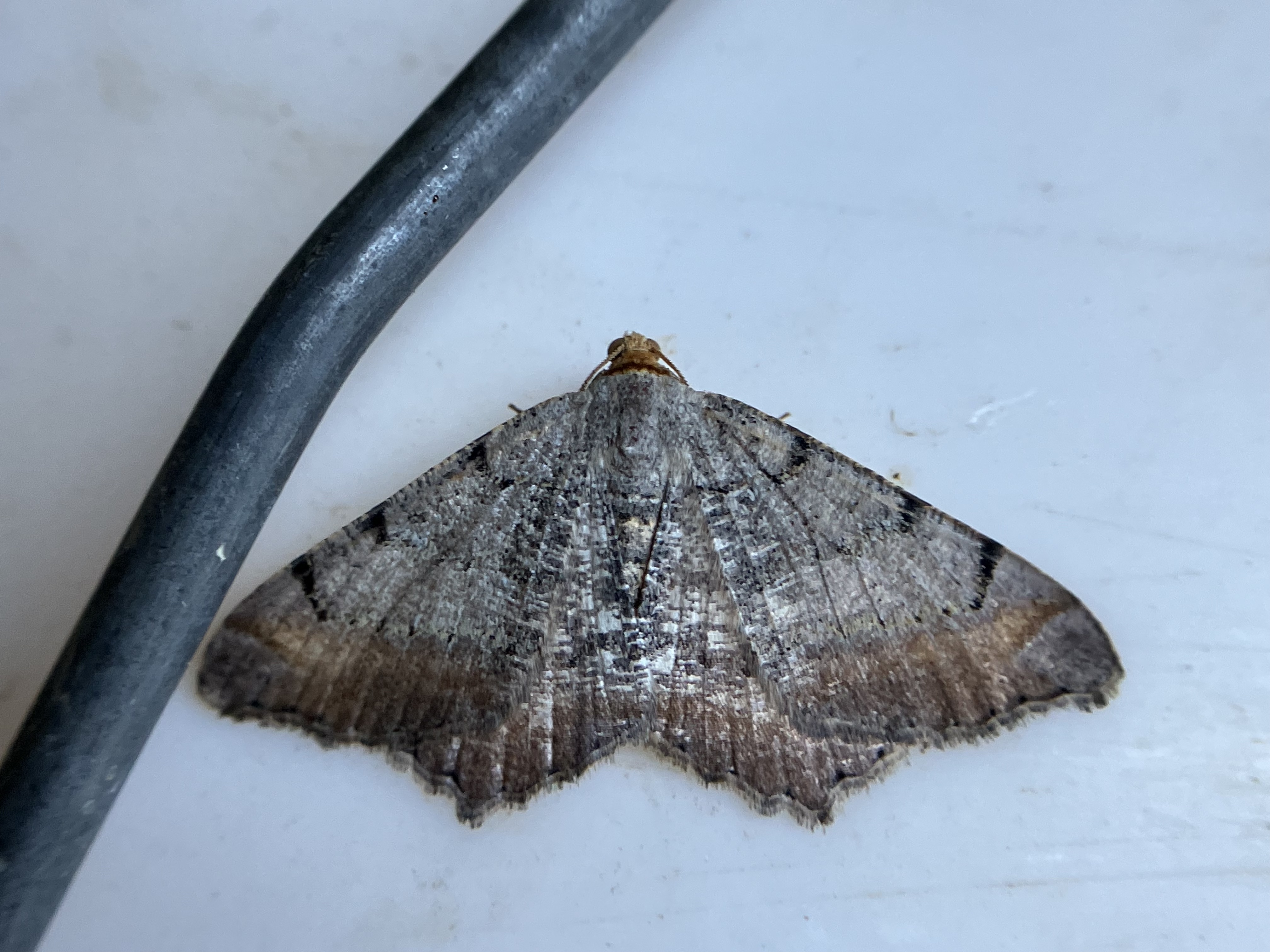
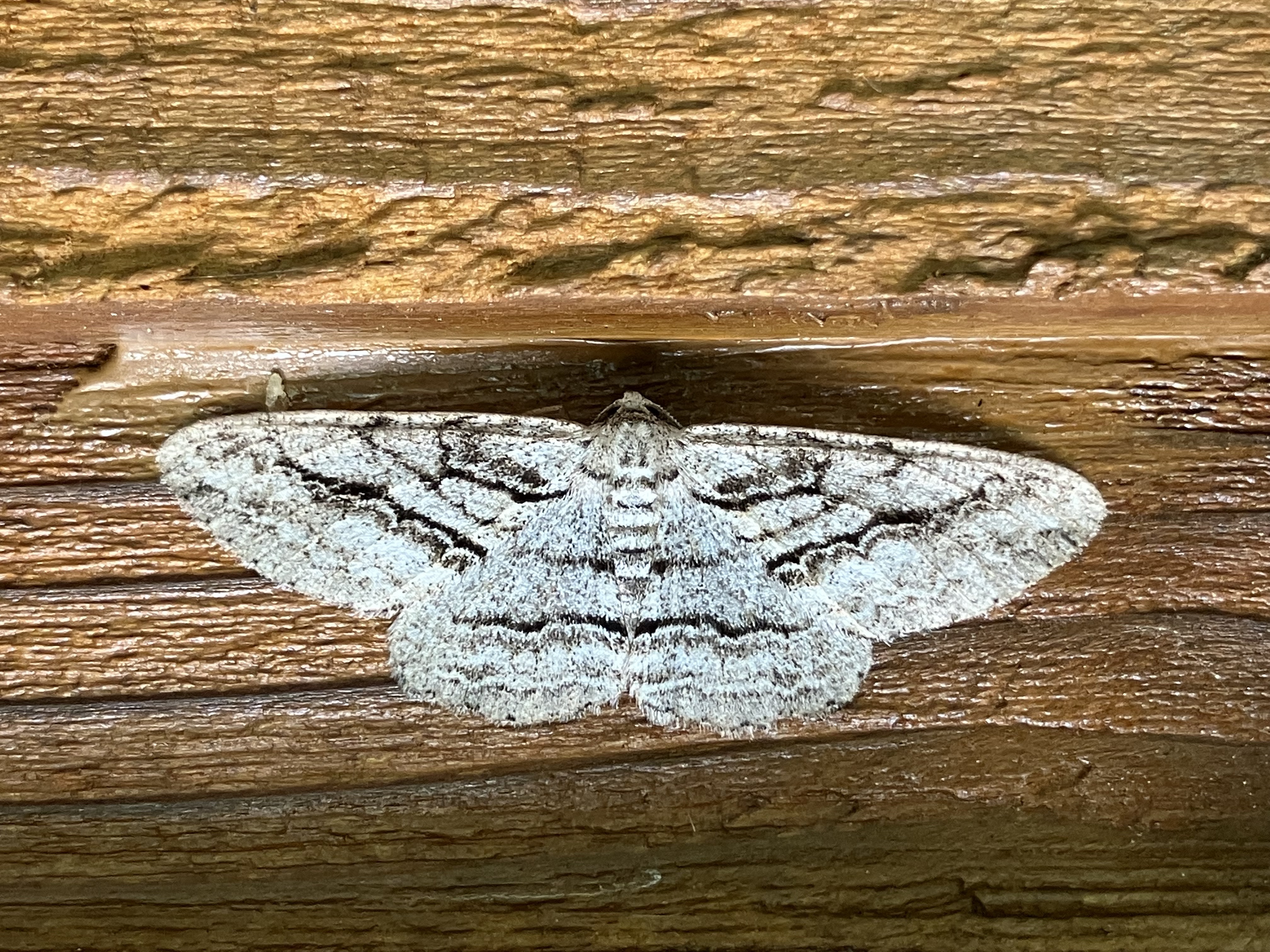
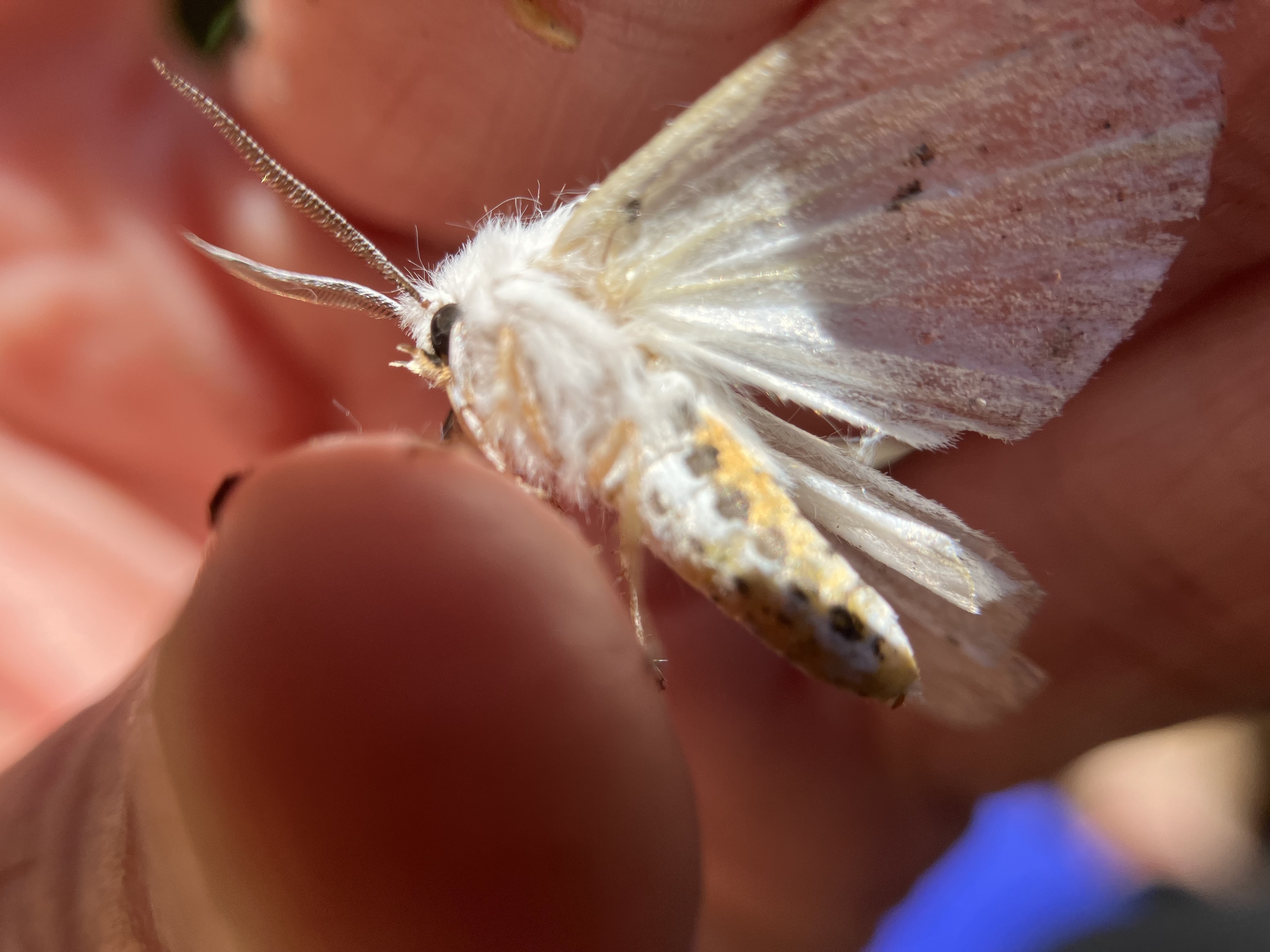
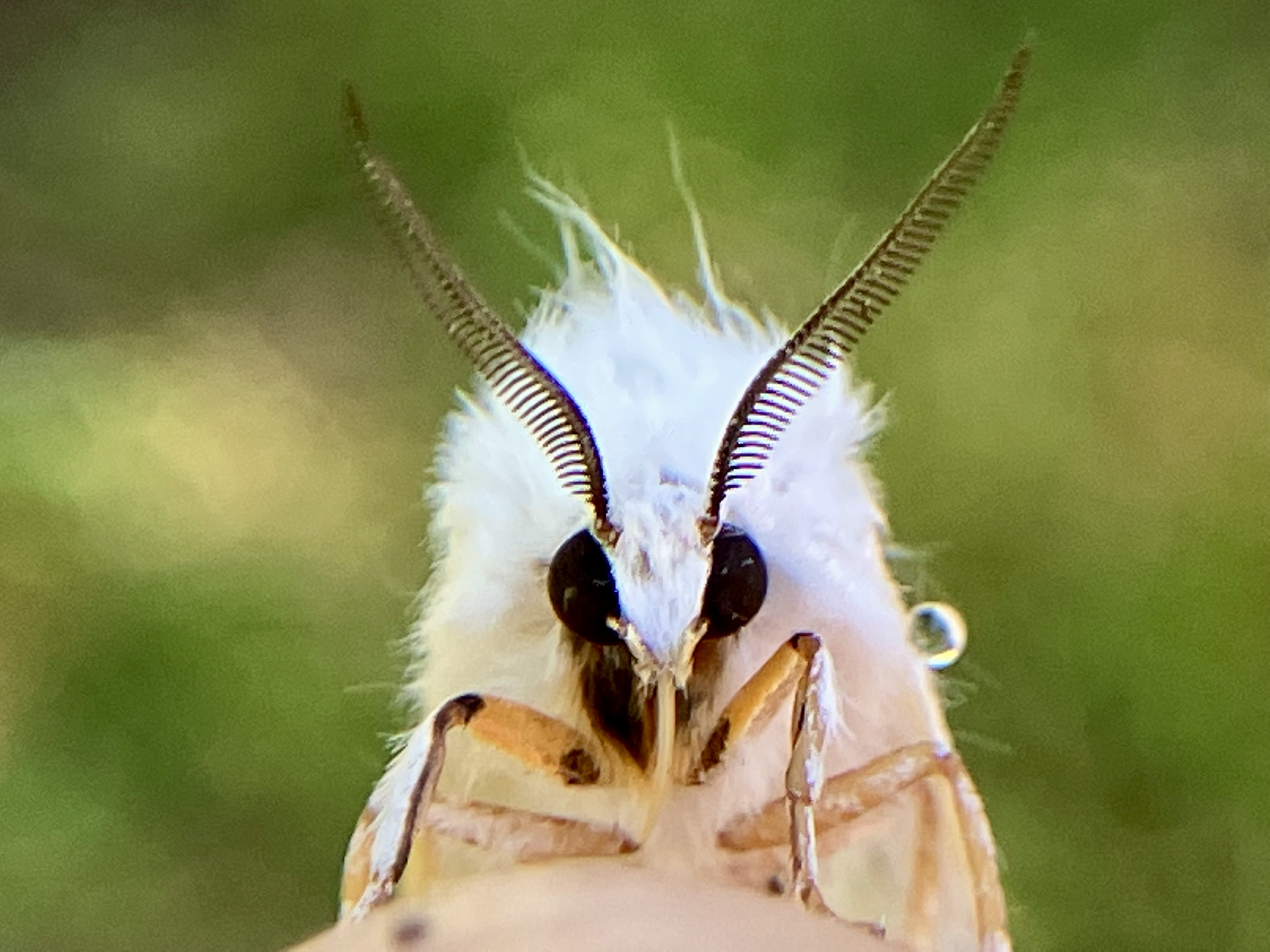
Bug Bucket Bug BucketBug Bucket with Egg Cartons for th moths to hide inside Northern Pacific Tree Frog (Pseudacis regilla)Pyrausta perrubralisNorthwestern Phoenix Moth (Eulithis xylina)Western Avocado Leafroller Moth (Amorbia cuneanum)Western Conifer Looper (Caripeta aequaliaria)Grass Moth Genus ScopariaDiplotaxis sp. Scarab BeetleSubfamily EnnominaeNorthern Pacific Tree Frog (Pseudacis regilla)Packards Girdle Moth (Sabulodes packardata)Northwestern Phoenix Moth (Eulithis xylina)Packards Girdle Moth (Sabulodes packardata)Packards Girdle Moth (Sabulodes packardata)Zigzag Furcula Moth (Furcula scolopendrina)Packards Girdle Moth (Sabulodes packardata)Iridopsis emasculatum I believeZigzag Furcula Moth (Furcula scolopendrina)Agrotis sp. , Family NoctuidaeAgrotis sp. , Family NoctuidaeStamnoctenis sp. , Family GeometridaeAgrotis sp. Stamnoctenis sp. GeometridaeWestern Tent Moth (Malacosoma californicum) left, and Virginia Tiger Moth (Spilosoma virginica) rightPale Marked Angle (Macaria signaria)Unknown, but cute!Simple Wave (Scopula junctaria)EnnonominaeGenus IridopsisTribe BoarmiiniKnot Horn Moth (Subfamily Phycitinae) – family PyralidaeUnknown, but check out the reflection in the image.Little White Lichen Moth (Clemensia albata)Erebidae, and Dasychira grisefacta, I believe. Erebidae, and Dasychira grisefacta, I believe. Erebidae, and Dasychira grisefacta, I believe. Erebidae, and Dasychira grisefacta, I believe. Erebidae, and Dasychira grisefacta, I believe. Erebidae, and Dasychira grisefacta, I believe. Erebidae, and Dasychira grisefacta, I believe.
I believe this is Dasychira griefacta . It takes off somewhat awkwardly but made it up into a tall fir tree.
Continuing on to another morning’s findings (07.13.2023), I am extremely happy with how adding the egg cartons to my bug bucket are improving my moth collecting. Side note here – I am only collecting photos and these critters are handled with gentle care and released to places where they are able to hide from predators during the day. I even go so far as to color match their hidey spots. 😉
Photos of the specimens found are in the gallery below along with some pics of my set up. National Moth Week is July 22-30, so if you are interested in participating, please check out the link here https://nationalmothweek.org, and feel free to reach out if you have any questions. You can send me an email or find me on Facebook (Bugs of the San Juan Islands) at https://www.facebook.com/groups/3594158544144419 .
Thanks for reading!
Gallery
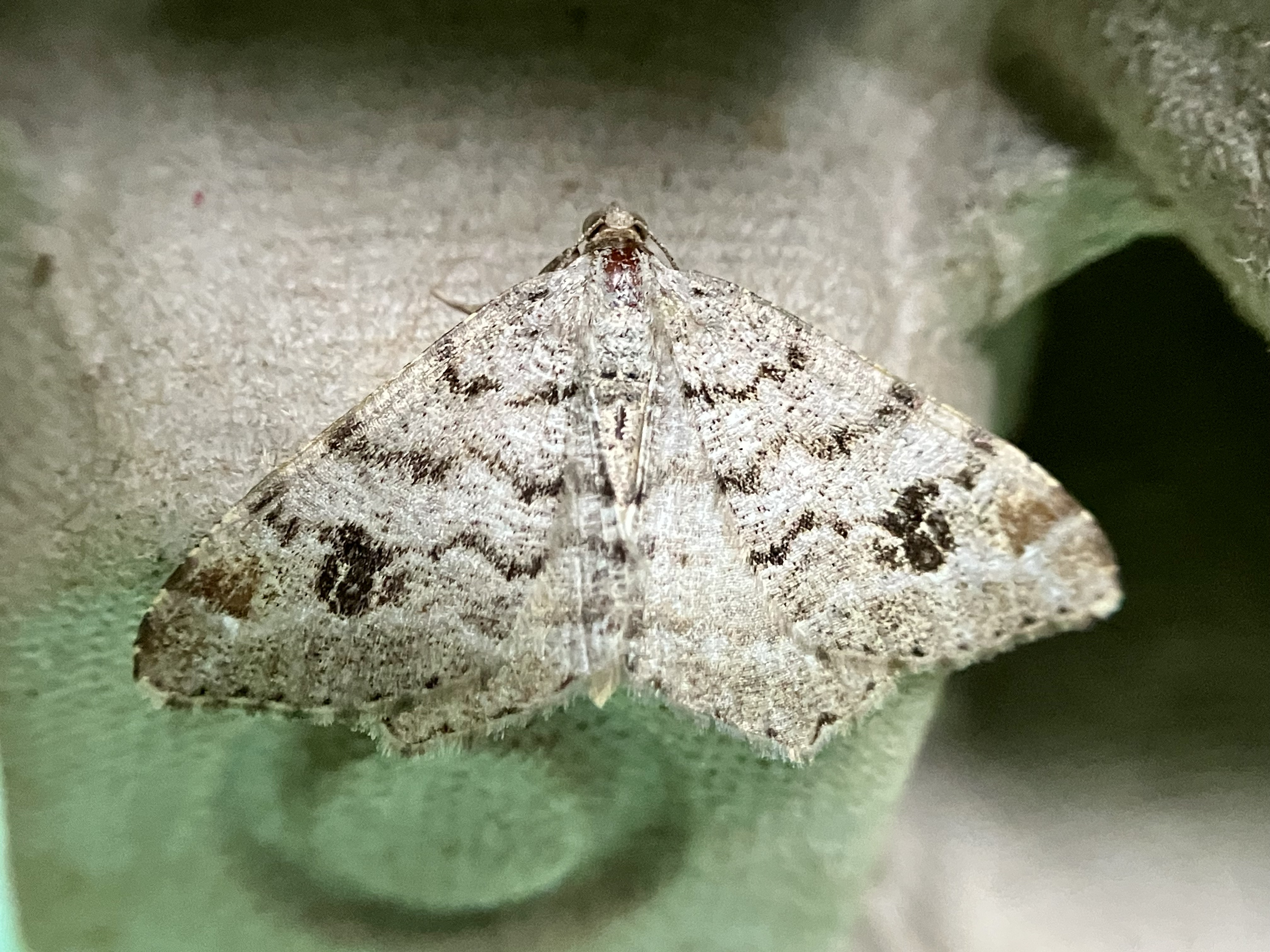
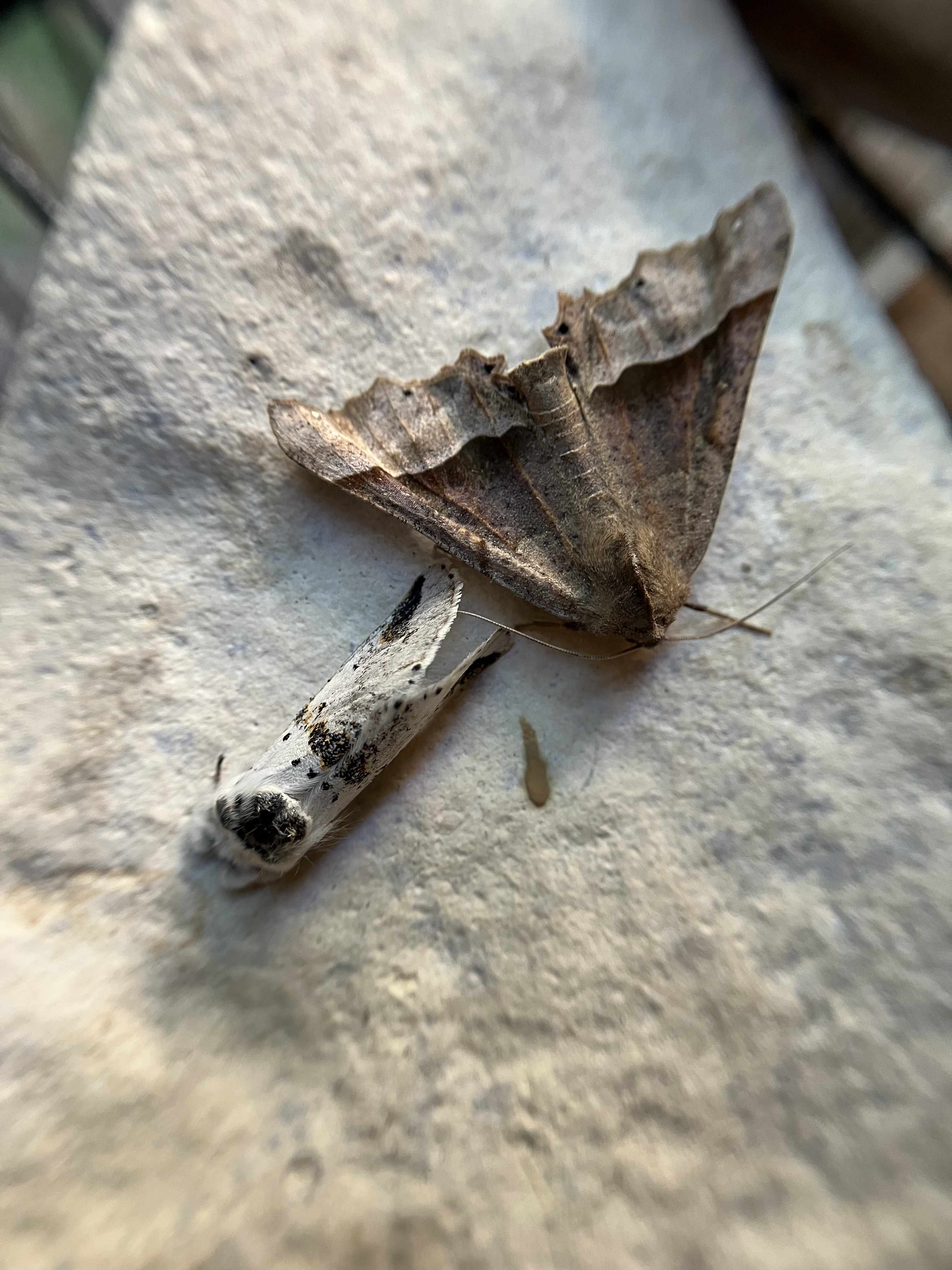
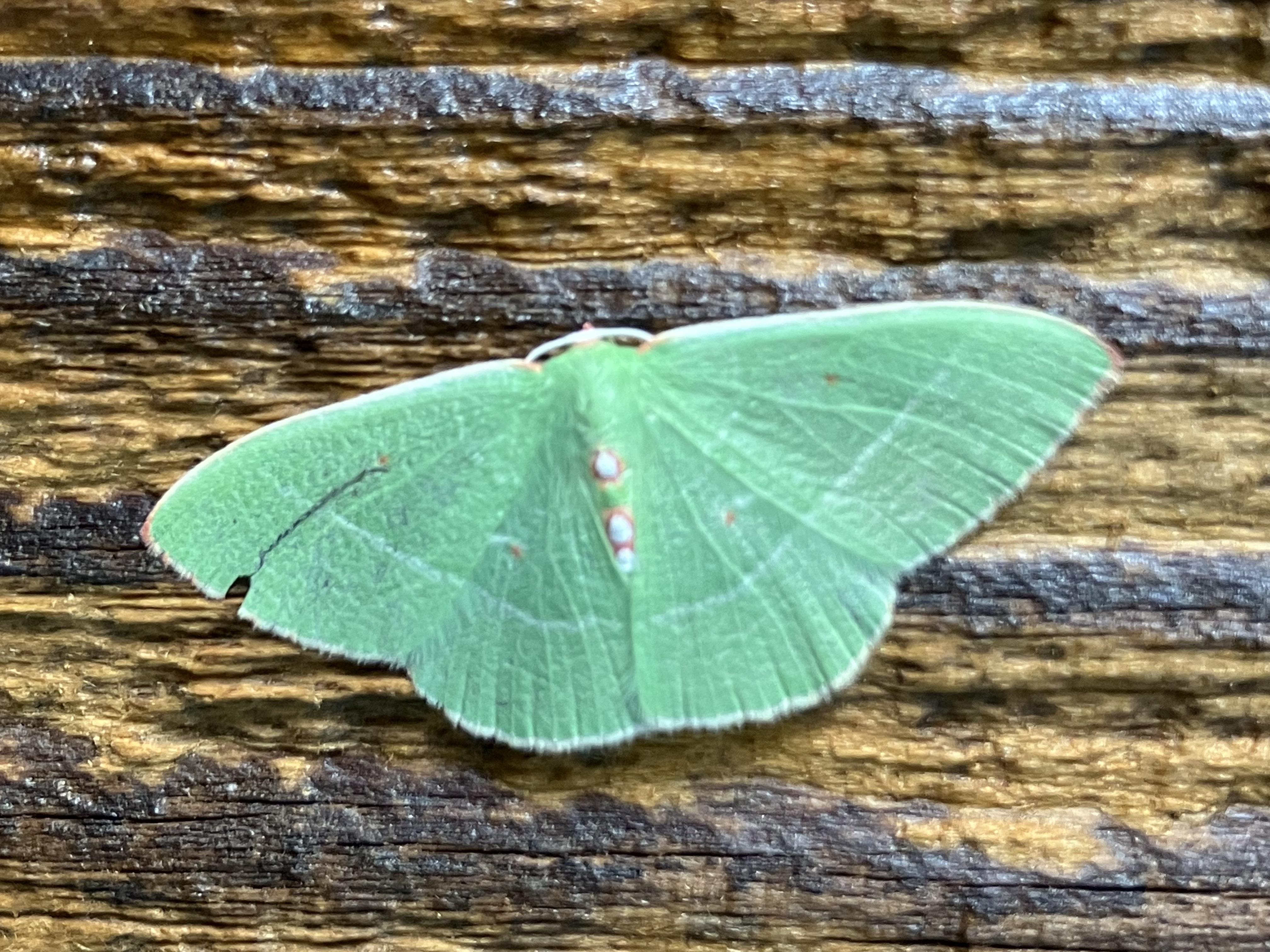
Bug Bucket with UVB light on topBug Bucket with egg cartons inside for moths to have hiding spotsWestern Avocado Leafroller Moth I believe, (Amorbia cuneanum)Unknown Geometrid moth (Subfamily Ennominae)I think this one is the Double Striped Scoparia Moth (Scoparia biplagialis)Western Avocado Leafroller Moth I believe, (Amorbia cuneanum)American Sharp-angled Carpet Moth (Euphoria intermediata)Perhaps (Macaria adonis)Pero mizonPero mizon mothZigzag furlcula moth (Furcula scolopendrina) left, and Pero mizon moth on the rightColumbian Emerald Moth (Nemoria darwiniata)EnnonominaeTortricid moth (Genus Pandemis) I believeBug bucket interior with egg cartons and cardboard for moths to have hiding spotsNoctuinaeZigzag furcula moths and Pero mizon mothVirginia Tiger Moth (Spilosoma virginica)Virginia Tiger Moth (Spilosoma virginica)Virginia Tiger Moth (Spilosoma virginica)Virginia Tiger Moth (Spilosoma virginica)Zigzag Furcula Moth (Furcula scolopendrina)
Leading up to the Twelfth Annual National Moth Week, July 22-30, 2023 https://nationalmothweek.org, I am getting into moth mode with some early collecting to see what is flying about the forest near our home at night.
My first attempts at this were quite unsatisfying, save for the two awesome beetles that came to visit. The bug station I set up just wasn’t yielding much in the way of moths, at least until I discovered my station had been discovered by some thieving yellow jackets who were picking off my moths right in front of my eyes. Something had to change. I sure didn’t want to lure in these beautiful creatures to become a breakfast buffet.
I got some very helpful advice from a friend named Carl. Carl is an expert moth-er, and he recommended putting some egg cartons in my bug bucket so they would have a place to hide. I tried this last night, adding two egg cartons and some pieces of cardboard. Then, I went to hang my bucket up and turn on the light – EXCEPT, those darn yellow jackets showed up at 9 pm. They must have excellent memory. I suppose they wanted to be first in line at the moth buffet.
I moved my bug bucket and light to another location. It was a success. Here is the assortment of moths I collected last night. All were handled with gentle care and photographed. Afterwards, I moved them to hiding spots in the forest to make them less susceptible to predation.
If you’re interested in participating locally in National Moth Week, please don’t hesitate to reach out for more information. You can find me via email at cynthiabrast@icloud.com or on Facebook at Bugs of the San Juan Islands – a private group, but easy to join by answering a couple of questions and agreeing to follow the group rules to prove you aren’t a spammer and won’t be disruptive. 😉
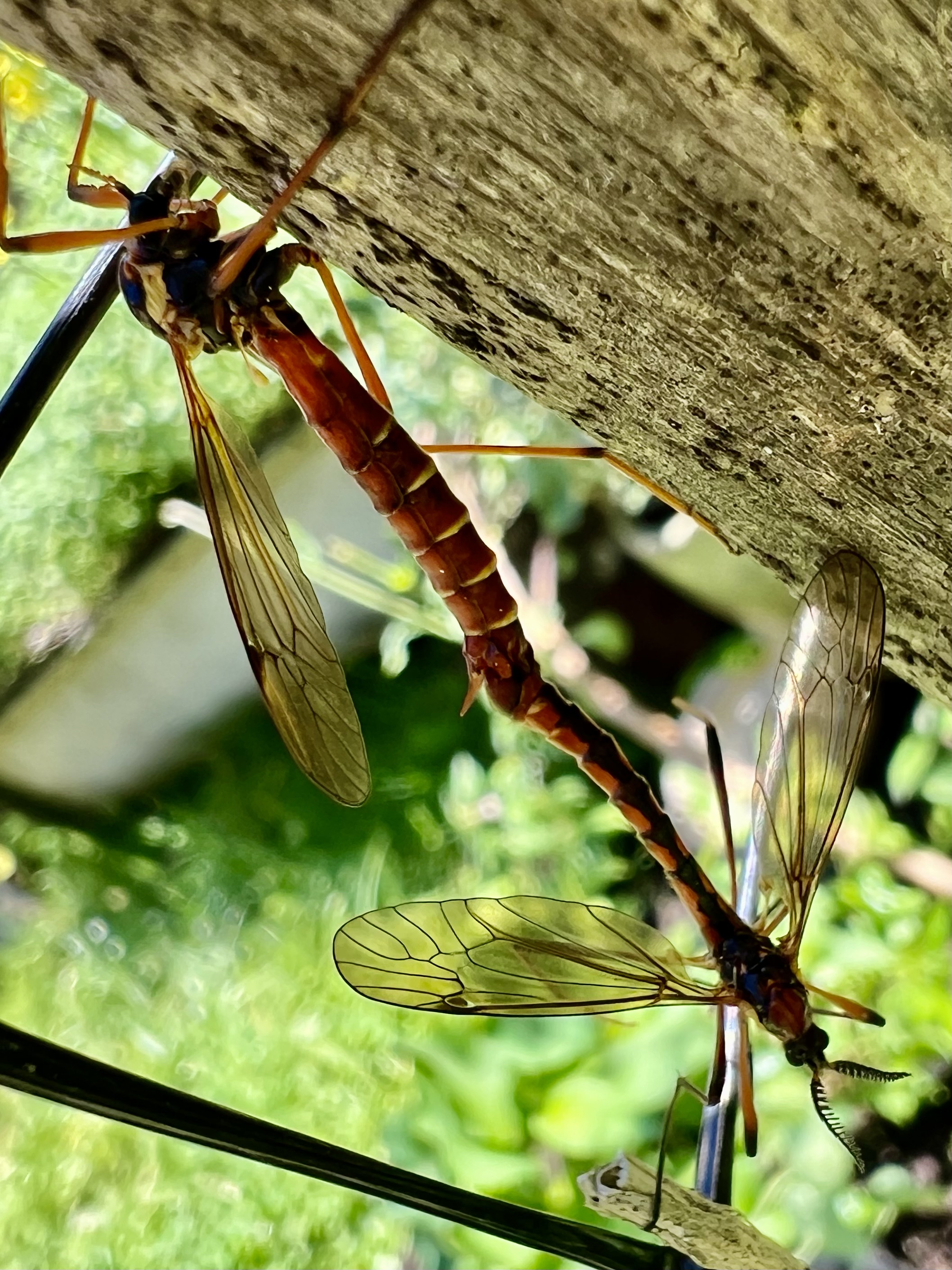
I finally got a few photos of these two after trying (and failing) in my attempts when I first spotted them on Sunday. Curiously, they were “bumping” onto tiny little cones on our fir tree, creating intermittent bursts of pollen with each “hit.” I wondered if they were perhaps eating pollen in advance of mating – with protein a necessary element in egg production.
These flies aren’t extraordinarily abundant. I checked my bug records, and the only other one I’ve seen in the yard was May 2, 2021. They are unique enough that I remembered looking them up and finding that the West Coast species is actually a subspecies, thus the 3rd name, angustipennis, tacked on to the binomial (Phoroctenia vittata).
Going back through my computer, I did find my previous source. Sometimes my computer filing system actually works and I remember to put labels and tags on my saved papers. It makes it so much easier to find them again! Re-reading the paper by Oosterbroek, Pjotr & Bygebjerg, Rune & Munk, Thorkild (2006), I was especially interested in their antennal illustrations, but found another part about the larvae interesting. They state, “the larvae of all these species develop in decaying wood of deciduous trees and might turn out to represent an especially significant conservation and monitoring element of the saproxylic fauna, as most of the species are rather scarce and some of them even very rare. Moreover, they are usually confined to old forests, orchards and similar habitats where there has been a long continuity of the presence of old, dying and fallen trees (Stubbs 2003).”
Our Landscape is Changing
The area near our home has remnants of older growth trees, though many are being cut and cleared for development, and the creation of homesteads. I worry that we will lose some of these species as the forests become more and more fragmented and the trees are more stressed with the advent of higher temperatures brought about by climate and landscape change. Yes, cutting trees = hotter spaces. We need trees! And bugs. Or will sorely regret our choices and actions when we are face to face with the reality of the great die-off of species.
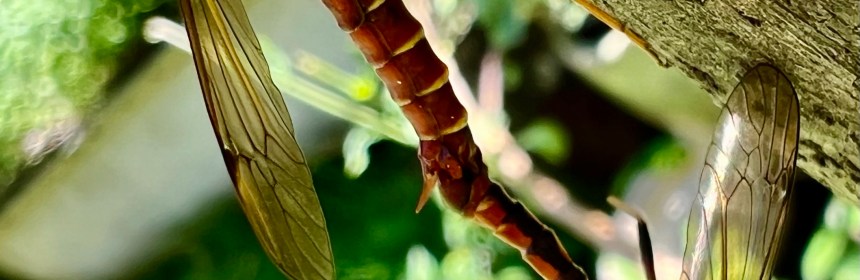
Back to the antennae for these Tiger Craneflies. Can you spot the male and the female in my photos? The male antennae are quite distinctive with their comb-like shape. Entomologists describe the comb-like antennae as Pectinate. If you haven’t figured it out yet, the male is the smaller of the pair. His antennae are wider, and he’s hanging on the bottom.
Tiger Craneflies (Phoroctenia vittata angustipennis) – Note the striking comb-like antennae of the males
Why might craneflies be useful? Well, aside from population size being an indicator for forest ecological relationships, they make great food for wildlife, especially baby birds and their parents.
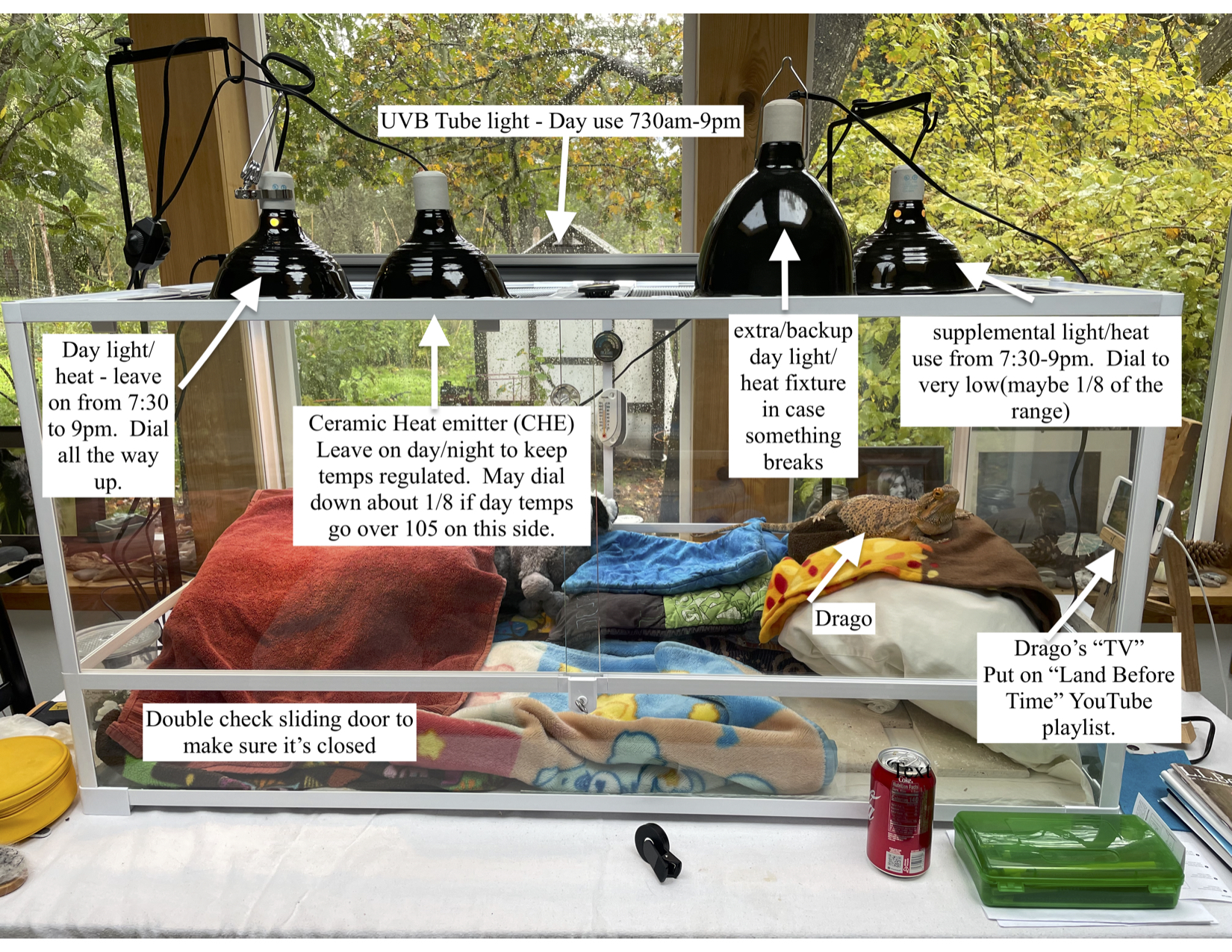
Here’s what I have compiled for anyone contemplating acquiring a bearded dragon. These are not inexpensive animals to own or keep and many are impulse purchases. My Drago came to us as a re-home, after another re-home. To the best of my knowledge, I am his 3rd owner, though I don’t really think of “owning” him, rather being his caregiver and advocate. Please do NOT buy your child a pet to teach responsibility or as a “REWARD” or “BRIBE.” If you have kids you need to bribe, get them a therapist and fix that problem when they are young. Animals should not be sold or traded to make a child happy. Children are not mature enough to care for a Bearded Dragon. Parents end up taking over and the animal suffers when families are too busy. Please don’t buy a bearded dragon to impress your friends. Before you walk out of the Pet Store with a 10 gallon tank, a lizard, and a bunch of stinking crickets, read through this! If you proceed with getting your bearded dragon, please adopt from a rescue group.
Supply List/Price List for Caring for Bearded Dragon
Enclosure/tank with screened top and front open doors (minimum size is 55 gallons, but for an adult bearded dragon, you will need a 4x2x2 (120 gallon) enclosure. My advice? Just get the 120 Gallon from the start!
CHE fixture – same as for basking light – Fluker’s 8.5” Clamp lamp with dimmer $20.95 (multiply this x 2 because you need 2 CHE’s for a 120 gallon enclosure) $41.90
UVB tube light – MOST IMPORTANT PIECE of equipment. Do not get a bearded dragon if you cannot afford to buy and replace these 4 times per year. Your animal will get metabolic bone disease and suffer greatly as its bones disintegrate.
Food – ALSO IMPORTANT. Don’t think your bearded dragon will survive its entire life on stinking pellet food, crickets, or mealworms.
Babies and juvenile dragons need 80% of their diet to be high quality feeder bugs. Dubia roaches and Black Soldier Fly larvae are good staples. Your little dragon will be hungry and EAT at least 25 roaches or fly larvae per day. You can buy 25 medium dubia roaches online for about $7.25, then add shipping to that. If you are feeding your pet 25 per day, get a lottery ticket and pray you win. Soldier fly larva are cheaper and you can get about 100 for $3, but again, add shipping. Also pray the weather cooperates and they arrive alive. Your animal is hungry and can starve if you don’t feed it. The secret remedy for all of this is to start your own colony of Dubia roaches. I can write a “how to” for that if you’re interested. My feeder bug price checks come from Dubia.com. I don’t care what Petco or Petland or any other stupid pet store tells you, you should not feed crickets as a staple. They are dirty. Don’t dump them into your reptile enclosure either. They will chew on your pet.
Substrate – this is what goes on the floor of your enclosure. If you have a baby dragon, use paper towels (NO FRAGRANCES). They are sensitive to fragrances and the chemicals in things like air fresheners, laundry detergents, dryer sheets are extremely toxic to their respiratory system. Use of paper towels will allow you to see their poo and urate and remind you to CLEAN UP after them so they don’t get a nasty respiratory infection when ammonia from their urate builds up in the tank. It’s gross. You also need to learn how to look at their poo and urate so you can tell if they are healthy or not. As you become more experienced, you can change to something else. If you use repticarpet, plan to change it daily, launder in hot water – NO FRAGRANCE OR DRYER SHEETS – and replace it DAILY.
Cleaners – Use white vinegar and hot water. $5 for a jug at Marketplace. No bleach. No alcohol. No scented cleaners.
Time and attention. Think about how YOU would feel stuck in an enclosure 24 hours a day where you are dependent on someone else to feed you, clean up after you, entertain you at least a bit, etc.). If you are working full time and/or you have children in school all day, this is NOT a good pet. In reality, they shouldn’t be pets at all. Please do not get your child one of these animals as a pet because they HAVE to have one or to teach them responsibility. Teach your child to be responsible about making their bed, folding cloths, sweeping the porch, doing homework. Don’t use an animal to teach responsibility. You will be doing the work and they have a normal lifespan of 15 years in captivity. If they live a shorter life, it may be from owner neglect and that will be on you. If you work from home or have a set up where you can take your dragon with you back and forth to work and home (think of all the expenses times 2), then maybe you can give an animal like this a decent quality of life.
Veterinary care. We do not have any experienced reptile vets in the islands. You will have to travel off island to find an experienced and capable vet. I have names, but again, this is not cheap or easy given our reliance on ferries.
Pet sitting. Going rate is about $60 per day. You will have to train someone to care for your animal. Good luck.
Estimate – not including the animal = Approximately $763.45 start up and plan on at least $196 monthly for food (25 roaches per day for a growing baby or juvenile dragon) – not including shipping charges.
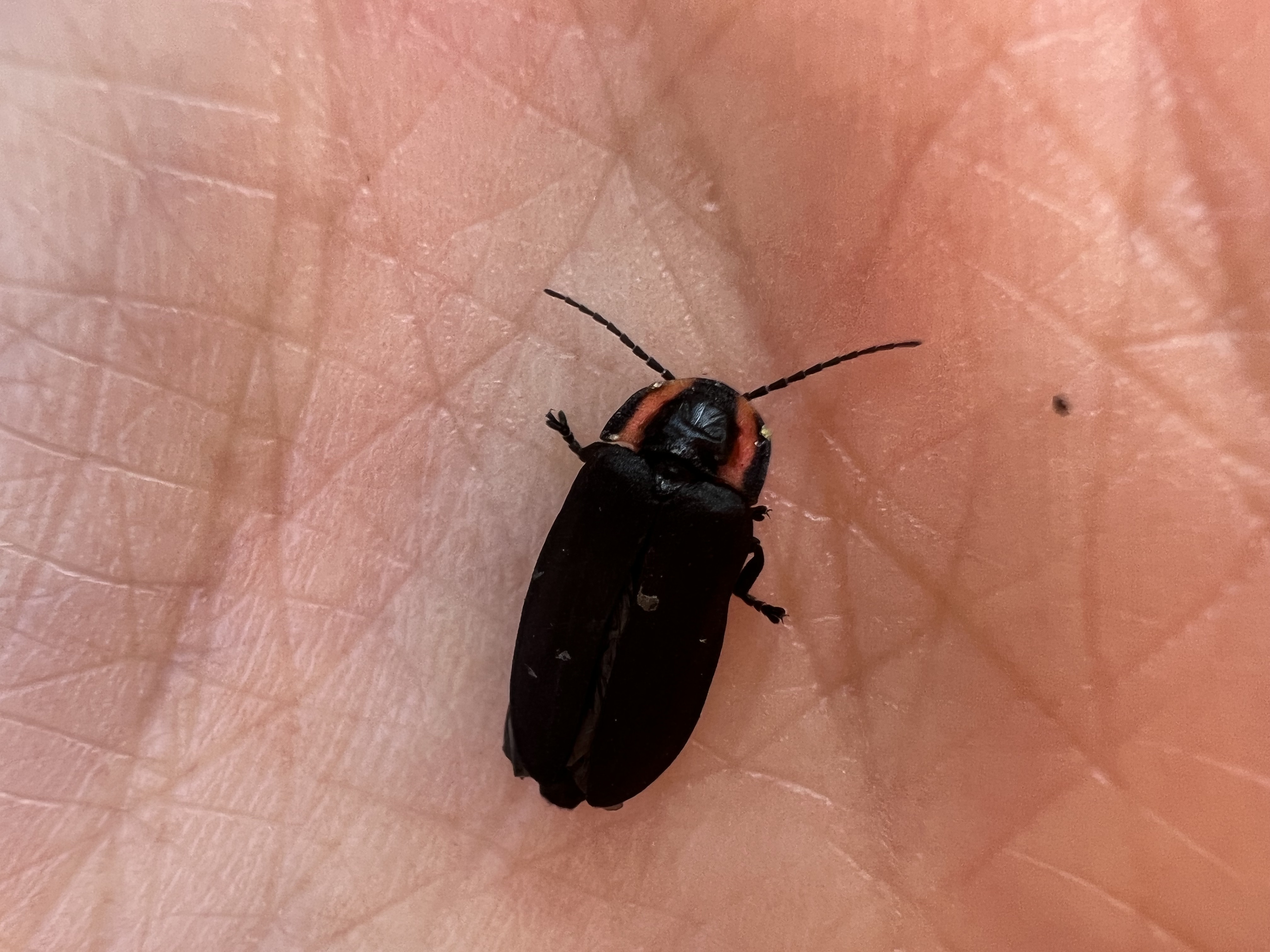
Here’s my “Bug of the day” (for Saturday, October 15, 2022). I spied it on our wood table outside. It’s a Diurnal Firefly in the genus Ellychnia. The Latin name, Ellychnia, comes from Greek, lychnos, translating into ‘lamp’ or ‘lamp wick.’ Obviously, lamps are something associated with the nighttime or darkness. However, the common name of this genus, diurnal, means “day.” It’s only a bit confusing, right? Also, this is a beetle in the family Lampyridae and not a fly at all. The adults of this genus don’t light up at night or in the day either. However, they are closely related to the fireflies that DO light up, or luminesce, at night found on the East Coast. Since this genus, the Ellychnia, don’t have nighttime blinkers, they find their mates by detecting each other’s pheromones. Lloyd (2002), notes however that all species of Lampyrid beetle larvae have an organ at the end of their abdominal segment 8 that bioluminesces. I’ve never found an Ellychnia larva myself, but these are referred to colloquially as “glow worms.”
Ellychnia sp. firefly
In our area, the genus Ellychnia are also known as winter fireflies. This is because they spend the winter as adults, and are equipped to tolerate cold temperatures. You might even see them on days when we have snow. Larvae of this beetle genus hatch in early summer and live in leaf litter or under bark in decaying trees. They are carnivorous predators of organisms like snails, slugs, earthworms, and soft-bodied insects.
Winter Firefly (Ellychnia sp.)
Do we have any blinking species of fireflies in the PNW? That’s an interesting question. I found some literature that says we do, but I’m not certain this applies to the San Juan Islands, although a few sparse (and unsubstantiated) records from Vancouver Island, BC exist. However, western records for flashing fireflies are known from interior B.C. (Cannings et al., 2010) and throughout the western U.S. as reported by Larry Buschman (2016).
While fireflies that flash or bioluminesce are well known on the eastern side of the U.S. and North America, it is not exactly known how they moved all the way over to the western side. There is an interesting commentary in the paper by Cannings et al. 2010, with the thought that perhaps at least one of the species of flashing fireflies reported in B.C., (Photinus obscurellus), may have arrived via the railways.
Because luminescing fireflies are associated with wetlands, it would have been difficult for them to have crossed over the dry Rocky Mountain system without help. Cannings et al. (2010) report sightings across B.C. in association with railways, in fact, with most of these sightings falling within a 30 km distance from a railway. The thought is that even going across the mountains in drier areas, most railways wound through low lying valleys where the topography is more likely to cross through wetlands. Even the presence of railroad berms can create areas of new wetland habitat which may also have attributed to the westward distribution of these fireflies.
Sadly, we have, and continue to degrade, pollute, drain, and lose wetlands in our continued (horrific) adherence to the destructive and entitled ideology of Manifest Destiny. Development, ranching, hobby farms, and suburban sprawl have eliminated more than 50% of wetlands that previously existed in North America (Fallon et al., 2021). The remainder have been seriously impacted by chemical pollutants, light pollution, and overall climate change, contributing to further declines to remaining populations. We may lose all of the species of these iconic and charismatic summertime blinking lanterns without taking special steps to conserve and protect their habitat. We will have no one to blame but ourselves either.
Please support environmental conservation and protection in your community – wherever you live. It is important to reduce our human footprint in order to preserve the natural world, its beauty, and our life support system to perpetuate for future generations.
How can you help? Live minimally. Turn off outdoor lights at night. Plant native vegetation. Switch to use of non-toxic household products. Don’t use lawn fertilizers or chemicals. Better yet, get rid of your lawn and landscape with native plants. Eat less meat. It all adds up. 💡
Cannings, Robert & Branham, Marc & McVickar, R.H. 2010. The fireflies (Coleoptera: Lampyridae) of British Columbia, with special emphasis on the light-flashing species and their distribution, status and biology. Journal of the Entomological Society of British Columbia. 107. 33-41.
Fallon CE, Walker AC, Lewis S, Cicero J, Faust L, Heckscher CM, et al. 2021. Evaluating firefly extinction risk: Initial red list assessments for North America. PLoS ONE 16(11): e0259379. https://doi.org/10.1371/journal.pone.0259379
Fender, K.M. 1970. Ellychnia of western North America. (Coleoptera-Lampyridae). Northwest Science 44: 31-43.
Lloyd, J.E. 2002. Lampyridae Latreille 1817. Pp 187-196 in R.H. Arnett, Jr., M.C. Thomas, P.E. Skelly and. J.H. Frank (Eds.). American Beetles. Volume 2.
I have an observation I was fortunate enough to see in person last September (2021) that I’d like to share, including a short video or two I filmed, and a wonderful animation slide made for me by one of our local San Juan Island artists, April Randall, who I asked to illustrate what I witnessed, but did not have an opportunity to record on camera.
We are entering the season – late summer/early fall, when some species of ants and termites send out their winged reproductives, also known in scientific lingo as “alates.” These flying individuals have reached reproductive maturity and their purpose is utilitarian: to fly away from home, mate, and establish a new colony…IF they are lucky enough not to be eaten or fall to some other random fate in nature.
Over the past seven years, I’ve been able to watch as one particular colony of Western Subterranean Termites (Reticulitermes hesperus) sends out their offspring to do exactly this. The event happens annually during the first 12 days of September without fail. They swarm to the surface, exiting en-masse out of the little hole in the ground, to launch out into the great, wide world. The air is filled with their tiny black bodies and translucent wings – wings that last just long enough for them to disperse far enough away from home, so as to not compete with the parent colony.
Many, or probably it would be fair to say “most” of these winged reproductives or alates, aren’t successful, if by defining success, your measure is for them to begin a new colony. However, if you measure success from another perspective – that of Mother Nature, this event is indeed a success – for Mother Nature hasn’t forgotten the food web and the myriad of other species who must forage for food in order to survive.
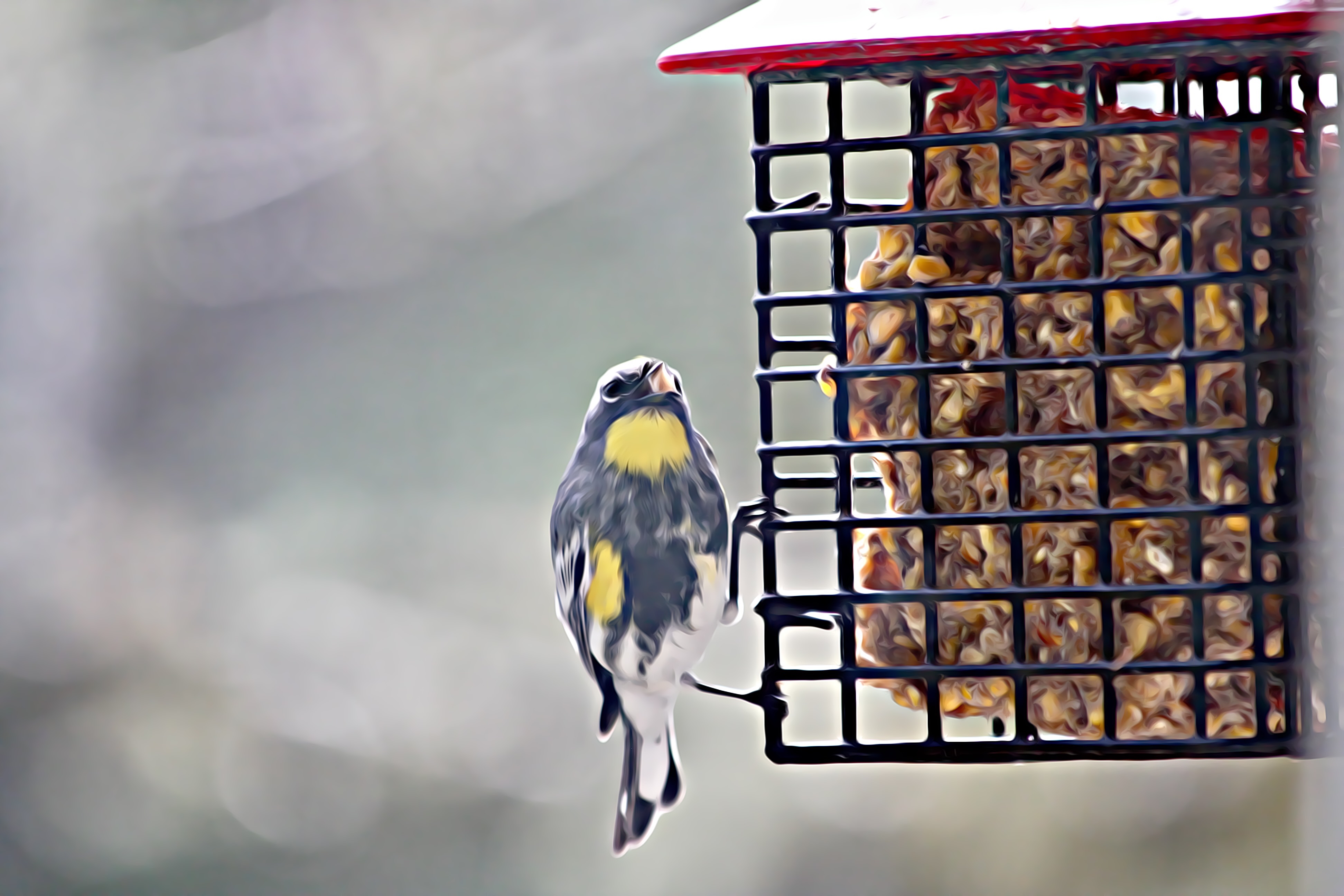
In the videos below, you will see a close up of these Western Subterranean Termite alates emerging from their underground colony which lies below our driveway in a network of old Douglas fir roots that were cut down long ago by the former homeowner. As “momma” to a bearded dragon, I included some video of my pet, Drago, feasting on these termites as they emerged. Bearded Dragons are known to dine on termites in their native range in Australia, so I thought, “Why not?” Yes, he loves them! What I unfortunately don’t have video footage of is what we saw after we came back into the house. There was a little flock of Yellow-Rumped Warblers waiting for us (mostly for Drago) to leave that spot. As soon as the coast was clear, those little birds were down on the ground, eating the termites as fast as they emerged.
So here’s where I brought April into the picture. April made the animation and I think it’s important because it gives you something to share with your friends about how the food web works – or how it’s supposed to work. It’s also important because many, many people automatically see termites as something bad, a PEST. While that may be true if they are eating your home, it isn’t true in this case.
These termites have never bothered our home (not once in 7 years). We border a wooded area and there is plenty of habitat that termites need for survival. Some pest control operators will tell you right off though, that you have to be proactive. Get rid of the colony. Well, they also want you to PAY them, so don’t believe everything you hear. What I’d like you to consider is how Mother Nature is providing for these little birds – and other species of wildlife. The Warblers (and other wildlife) don’t have a grocery store to pop into whenever they are hungry. They rely on seasonal (often temporary surges) where food is abundant, so they can eat enough, storing energy to survive whenever they can’t find food. Feast or famine is a common theme for wildlife. They may even have to travel for long distances to take advantage of a resource. Because Yellow-Rumped Warblers can live for 6-7 years, they may well remember how to find this exact spot on our property each year.
Western Subterranean Termites (Reticulitermes hesperus)
Drago, the bearded dragon eats Western Subterranean Termites on San Juan Island – Sep. 12, 2021
Animation by April Randall, Orcas Island, WA
Please feel free to share with you friends and family. I hope you enjoy the animation. This year, I’m going to be waiting with my camera in hopes of capturing this special moment.
About Reticulitermes hesperus:
Lifespan of a Queen – up to 30 years
Family: Rhinotermitidae
Geographic Distribution: along the Pacific Coast (BC-CA-Mexico) east to ID & w. NV
References, Further Reading, and Artist Information
Keller, Laurent. (1998). Queen lifespan and colony characteristics in ants and termites [Review]. Insectes Sociaux. 45. 235-246. 10.1007/s000400050084.








































 Bugging You From San Juan Island