Tag Archives: Geometridae

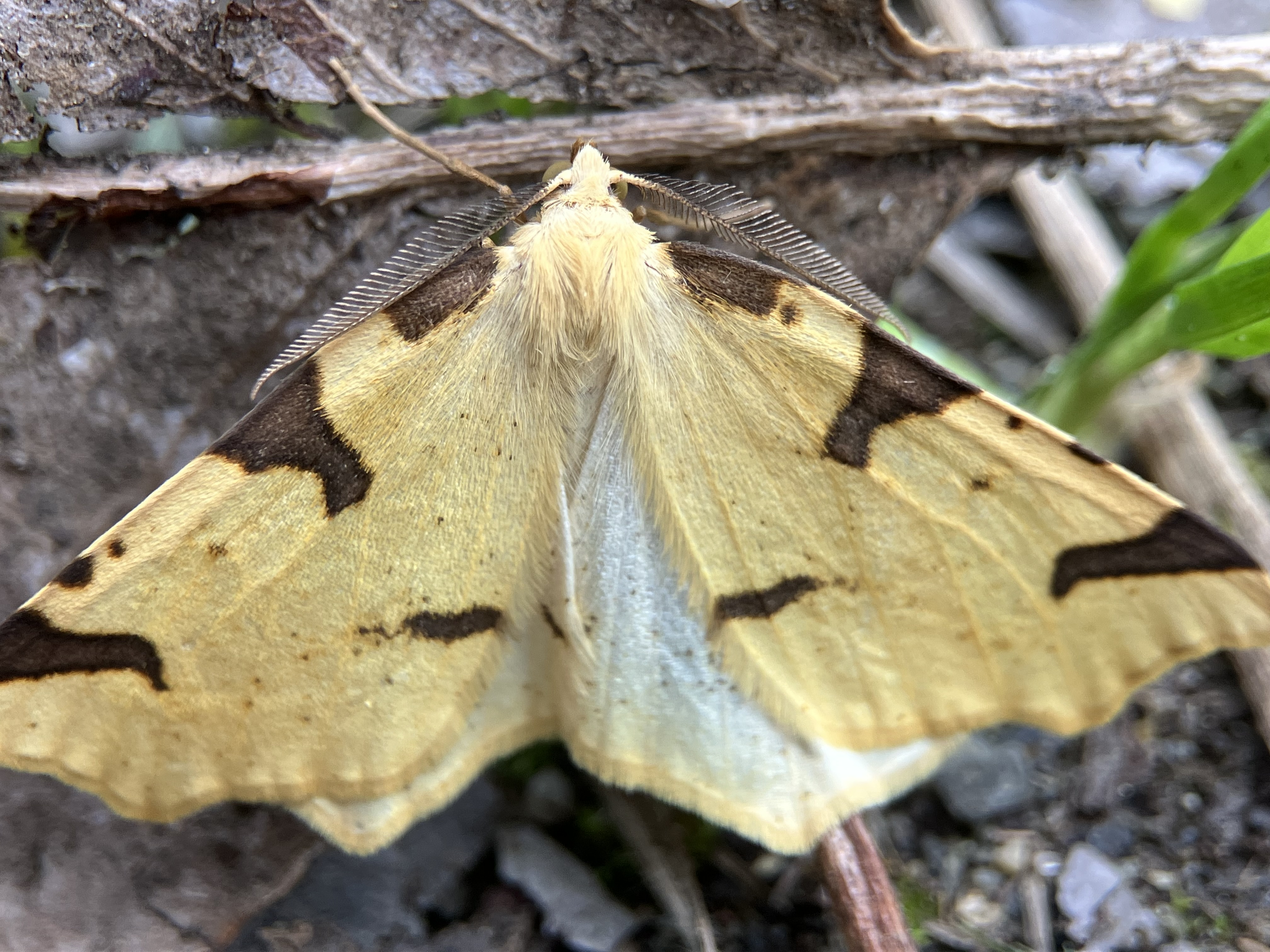
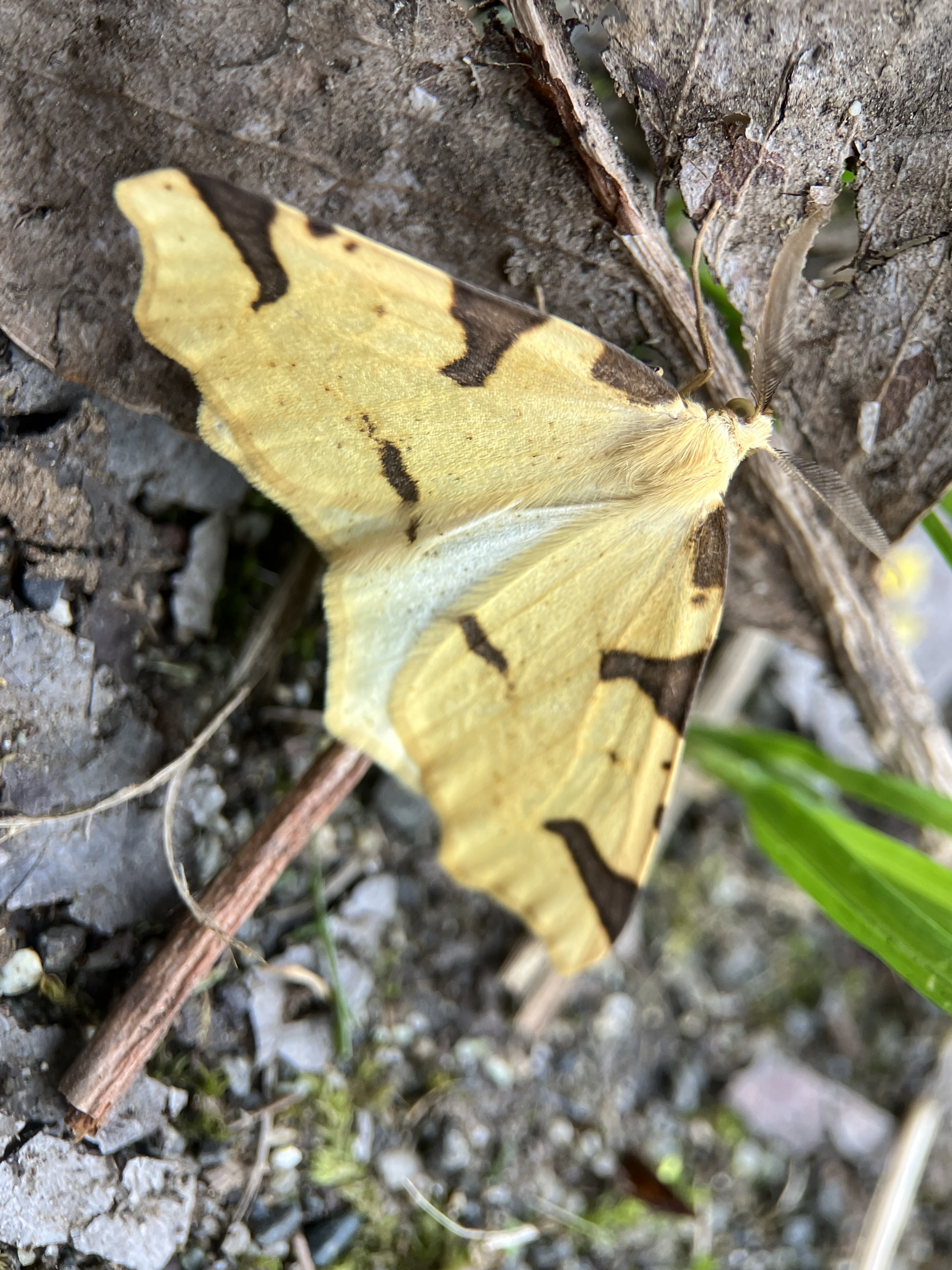
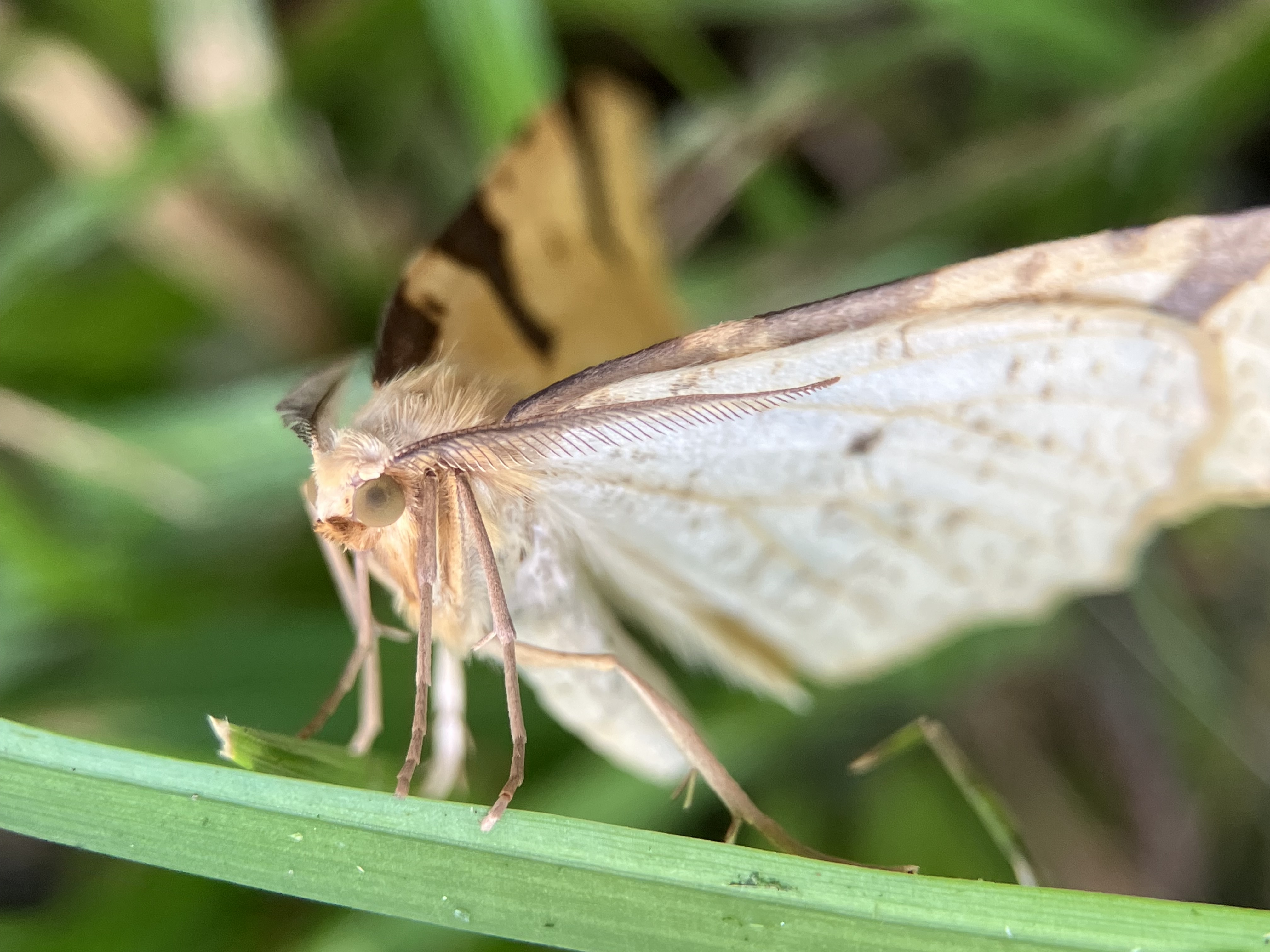
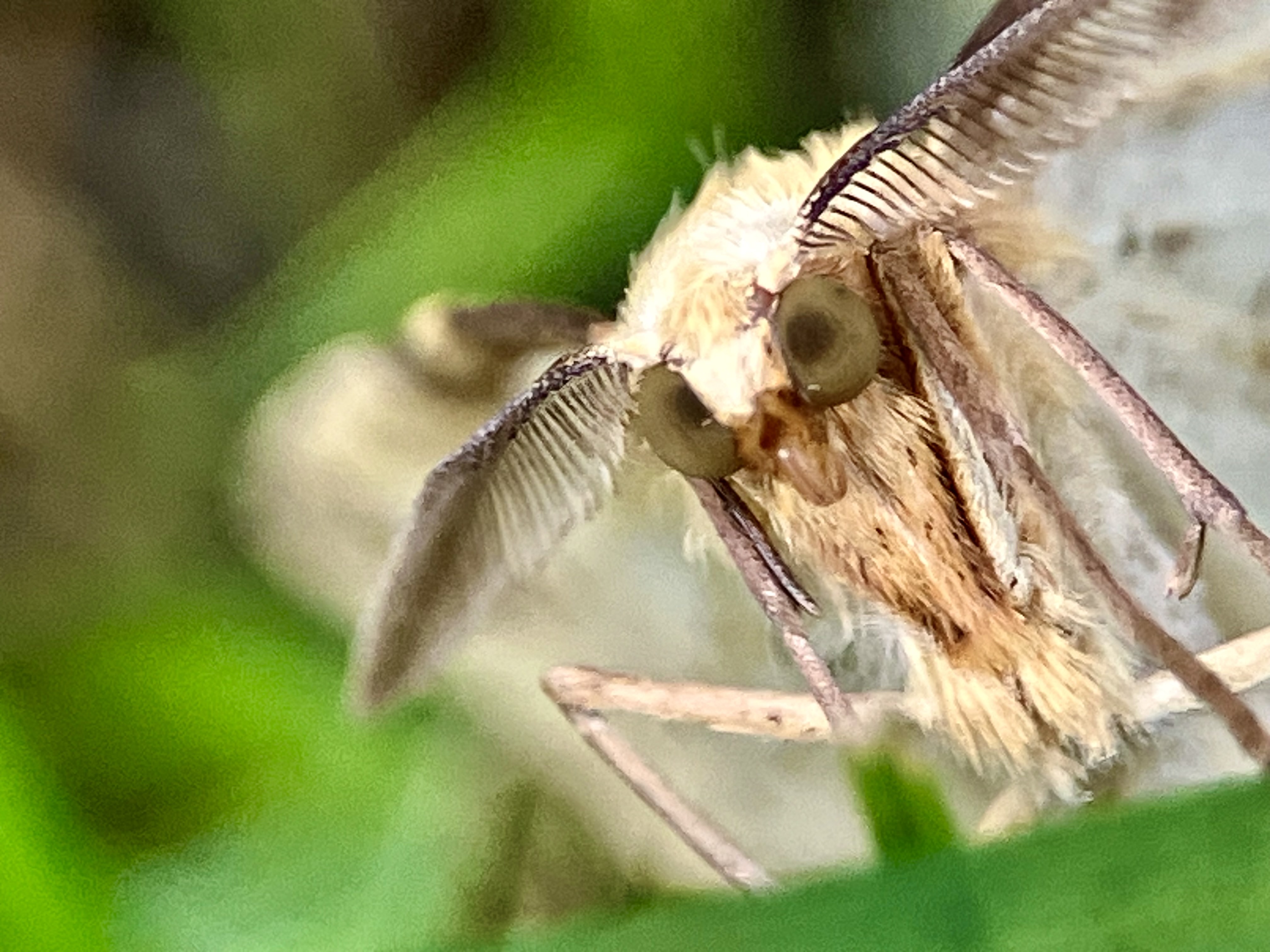
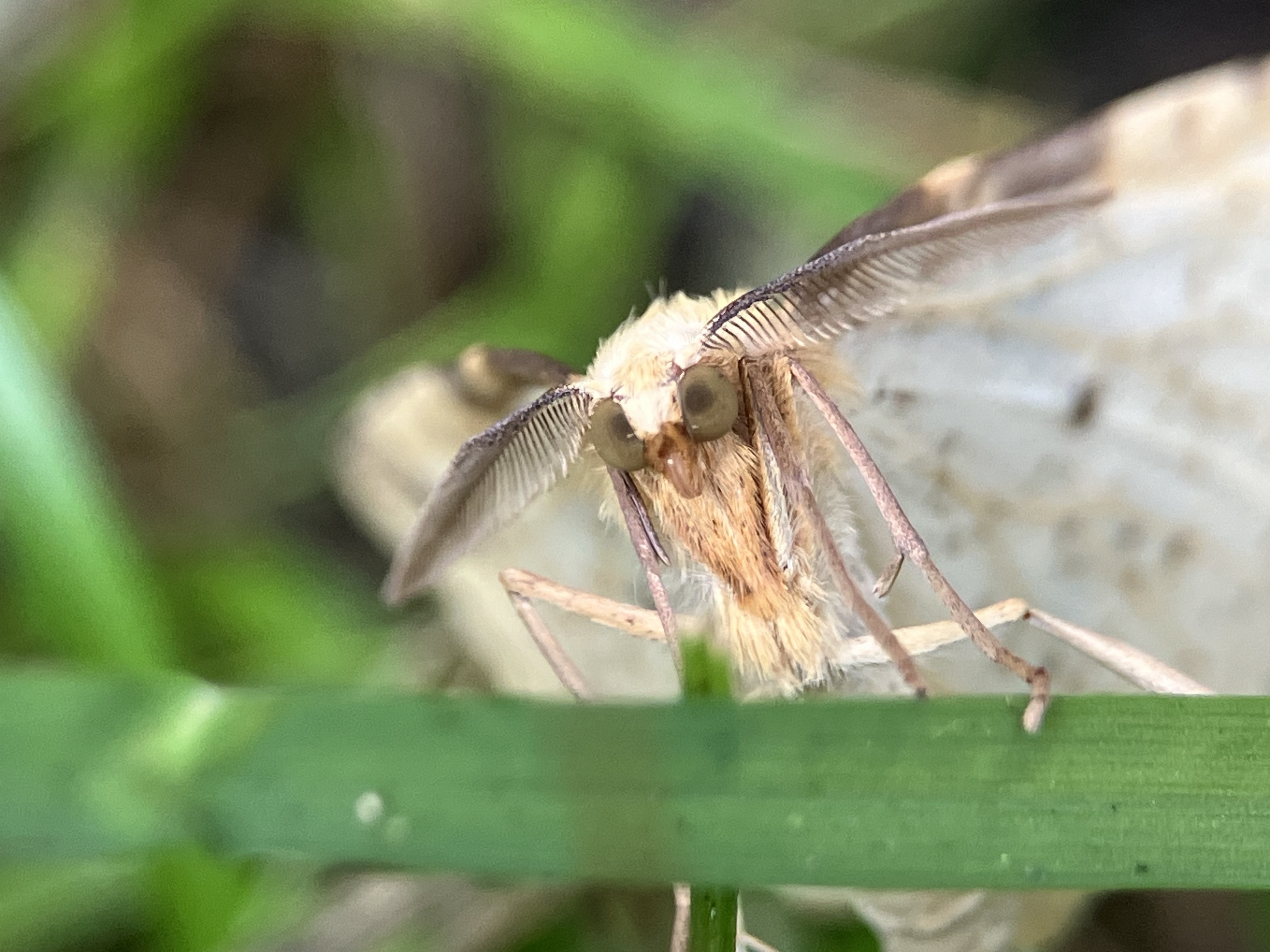
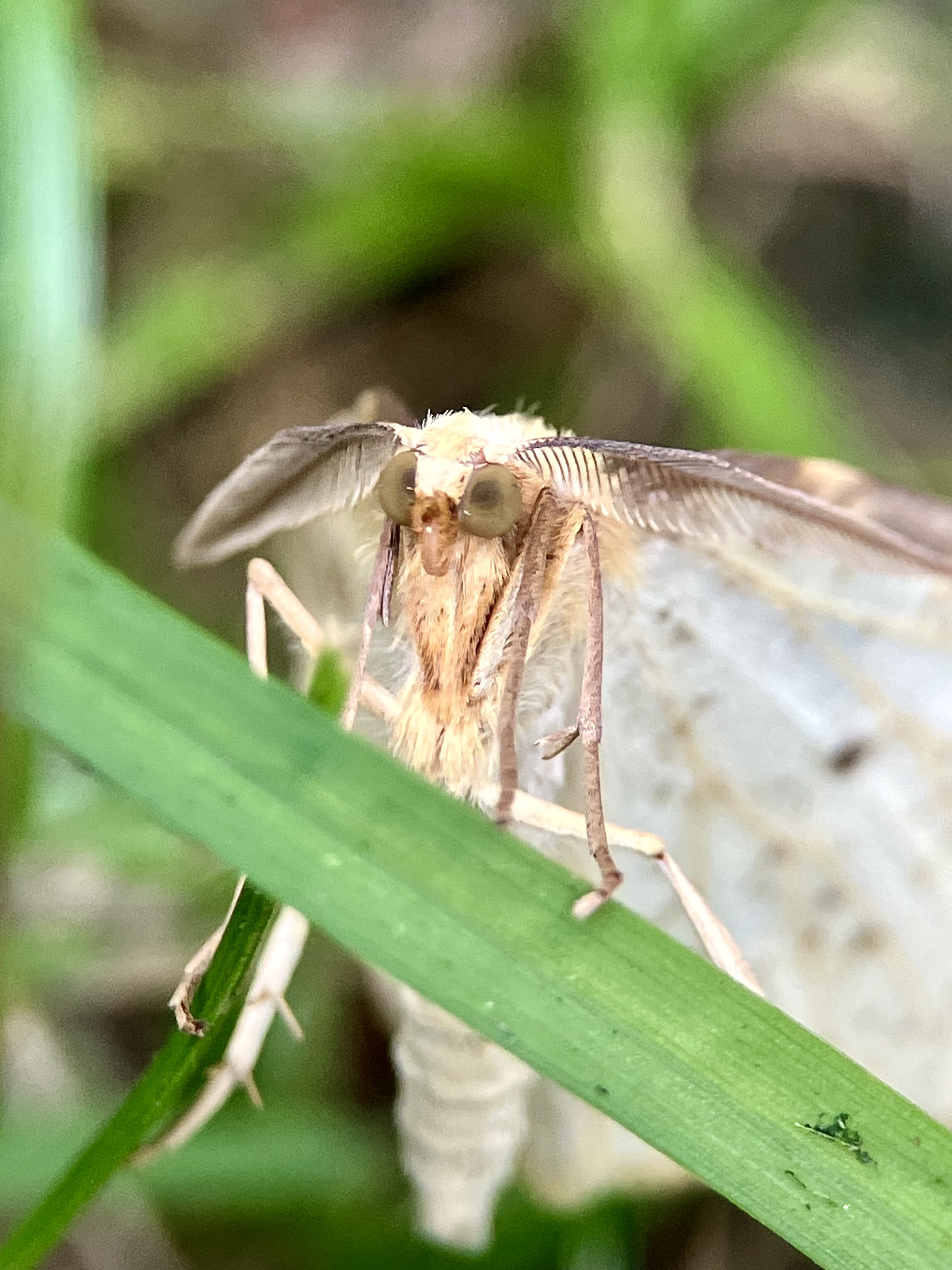
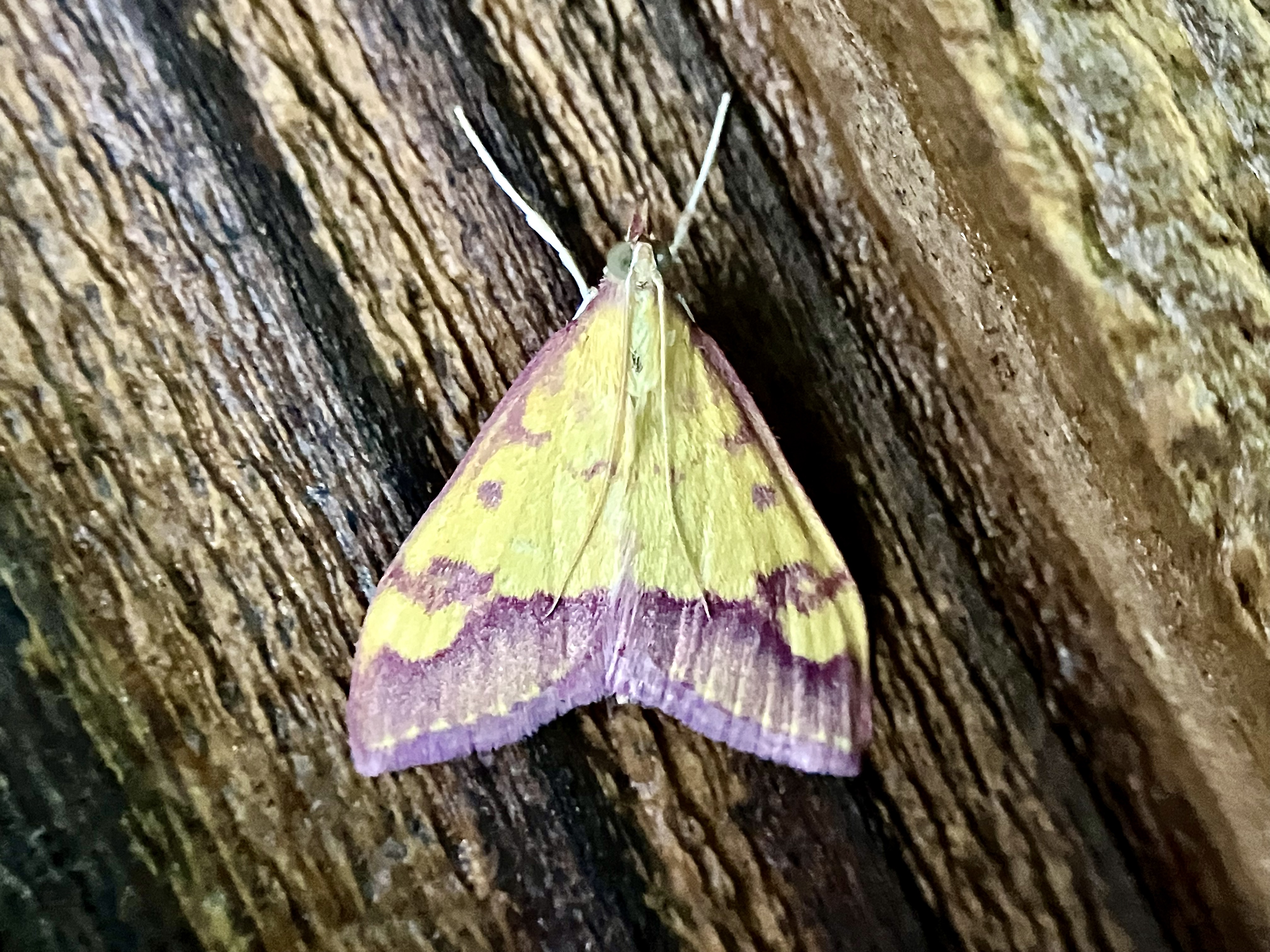
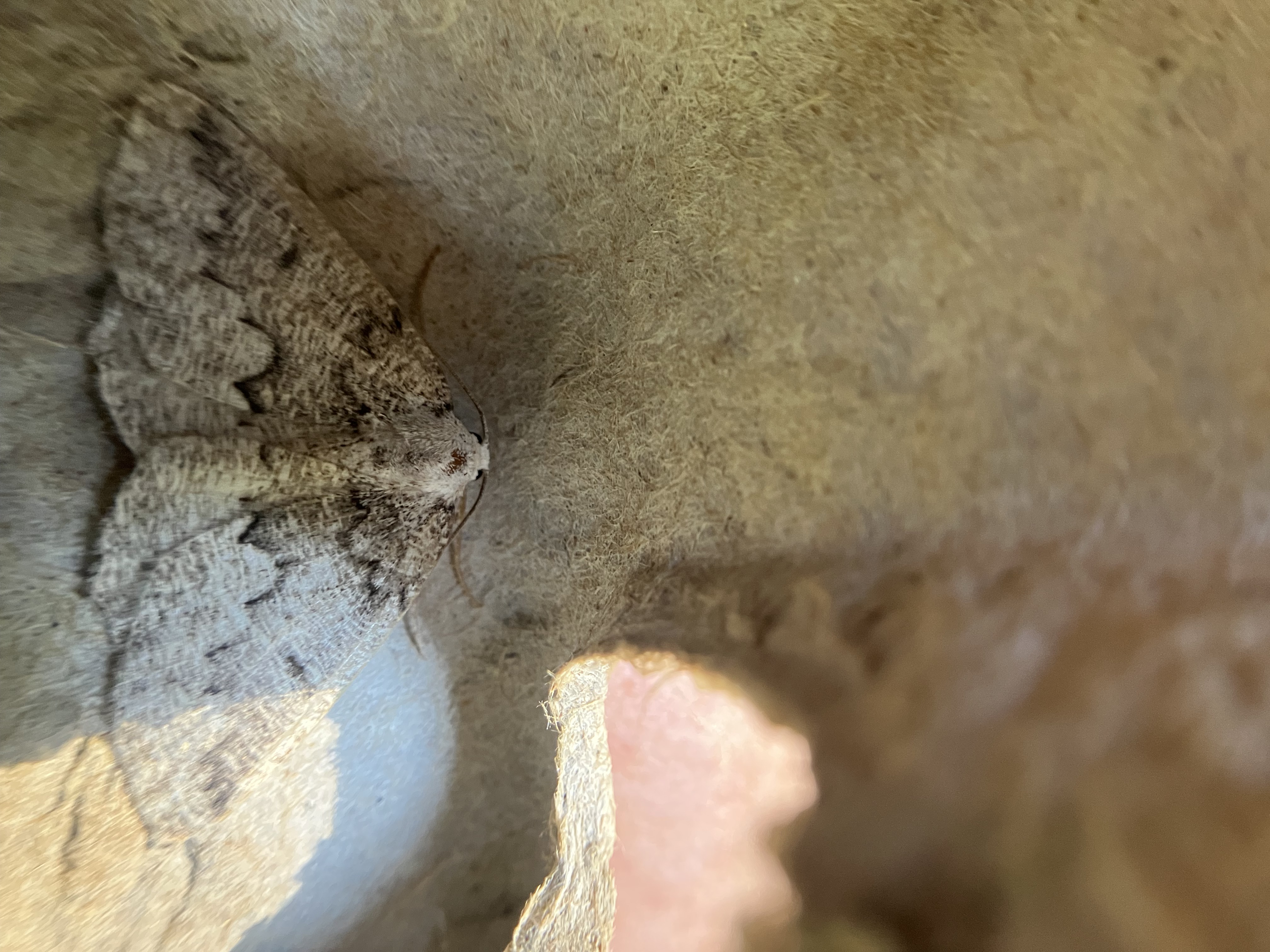
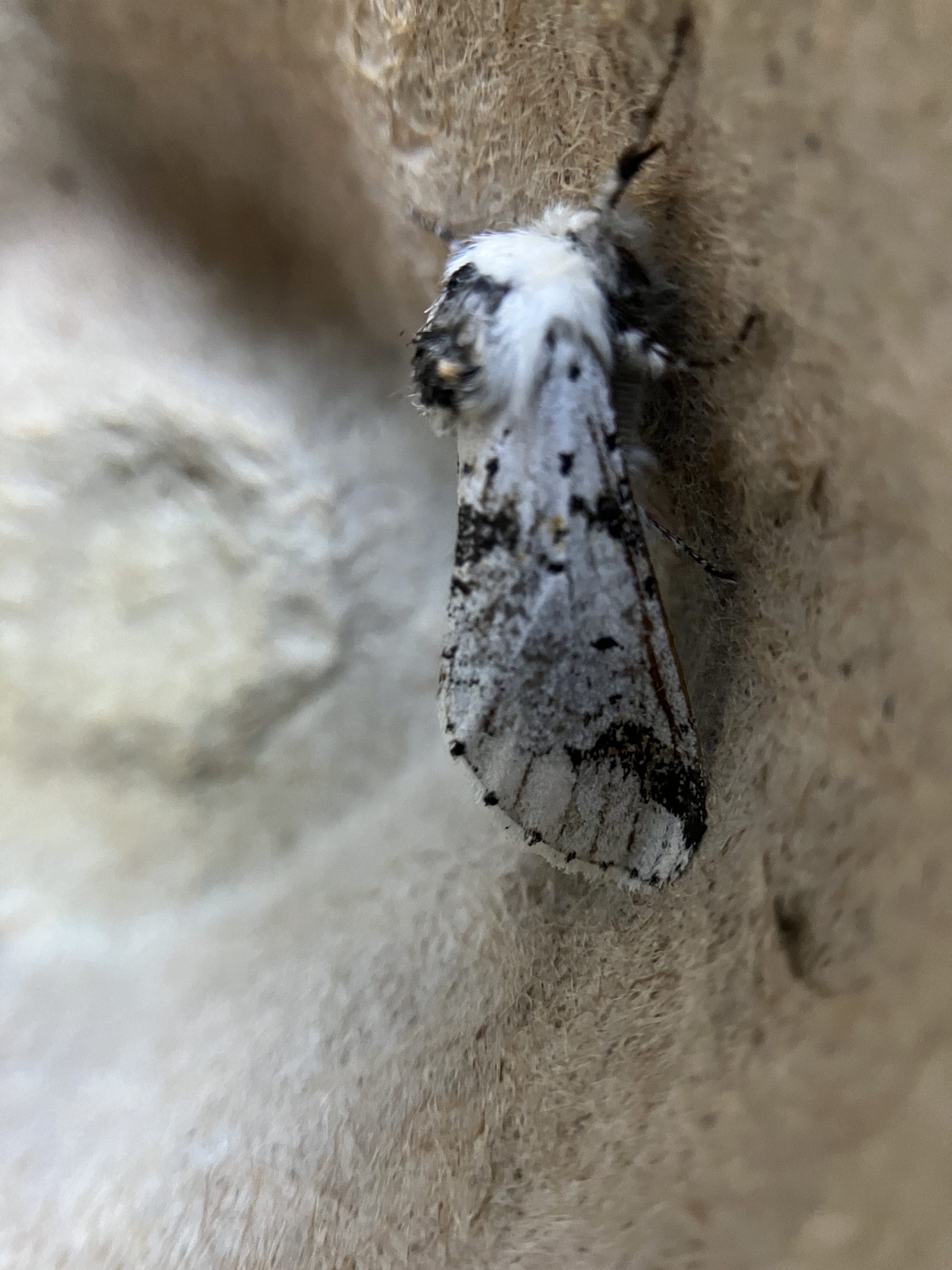
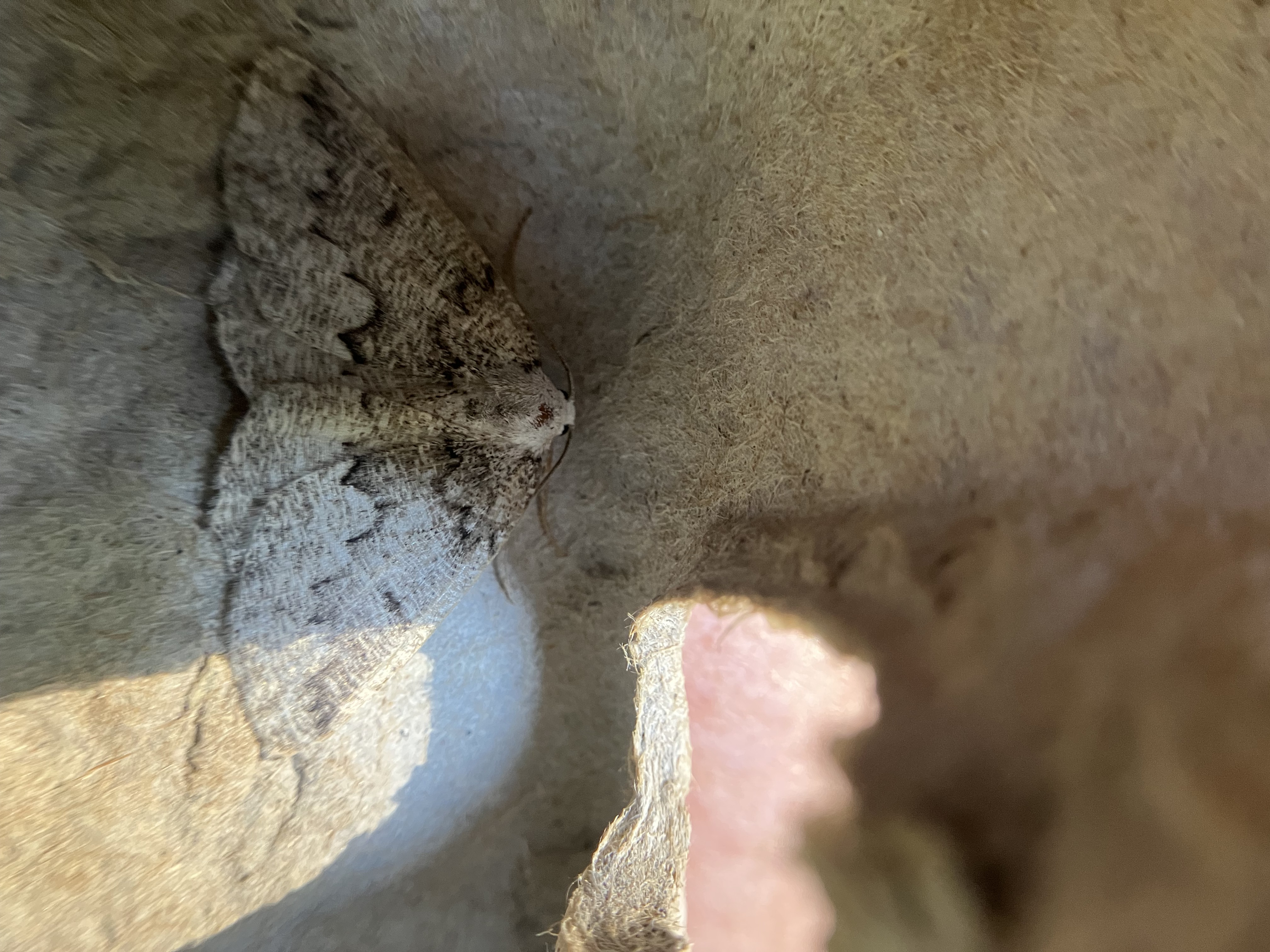
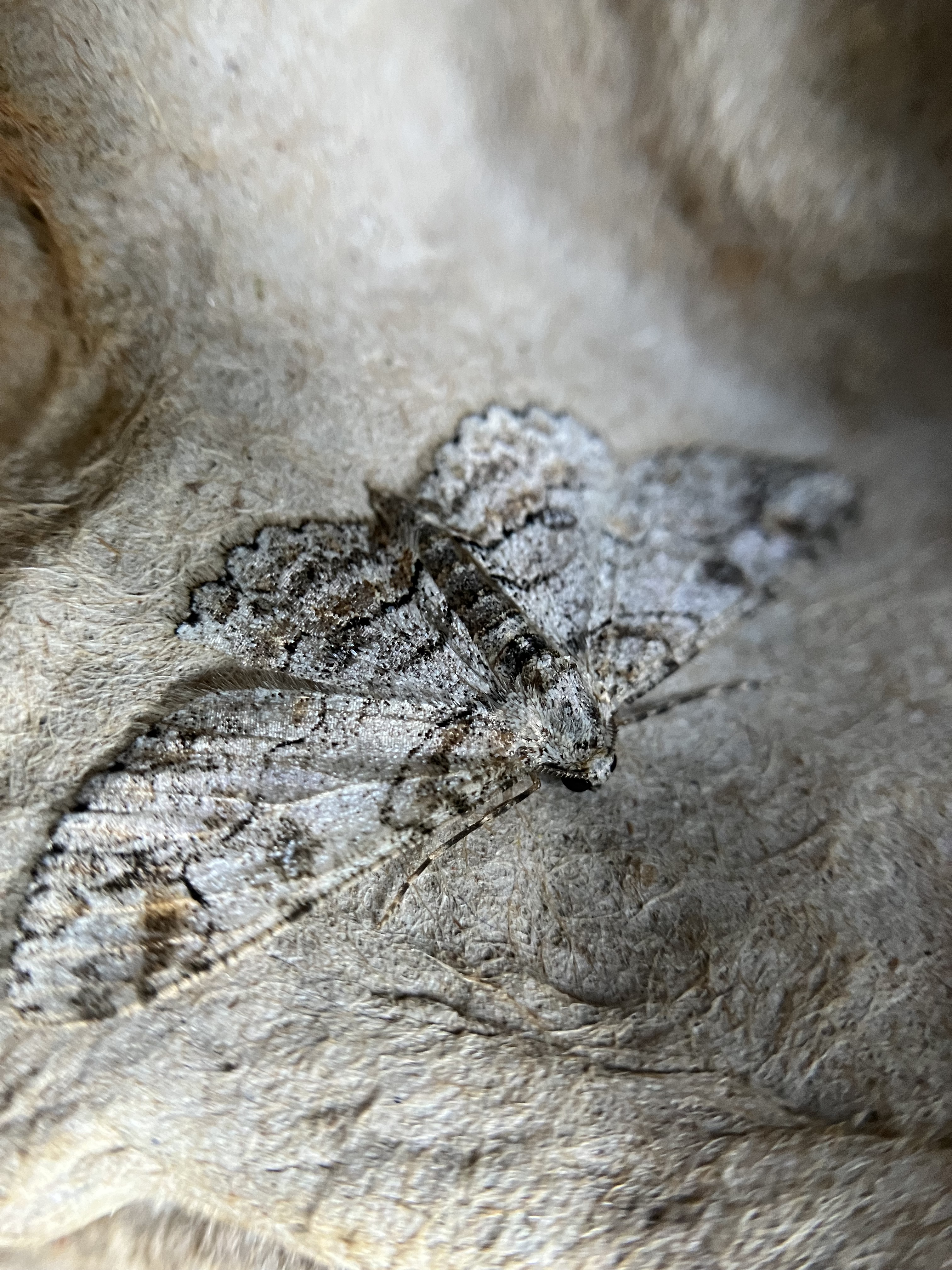
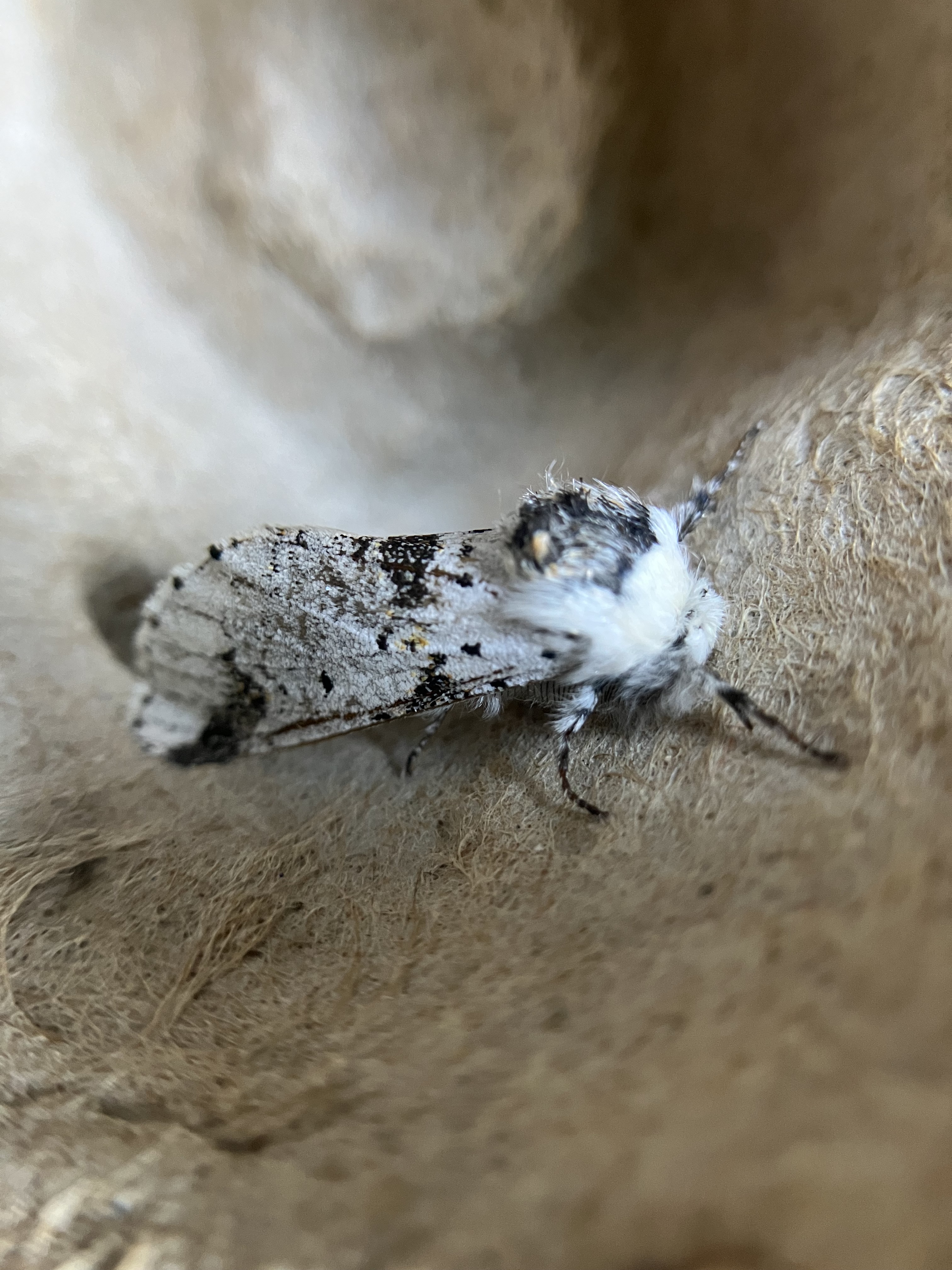
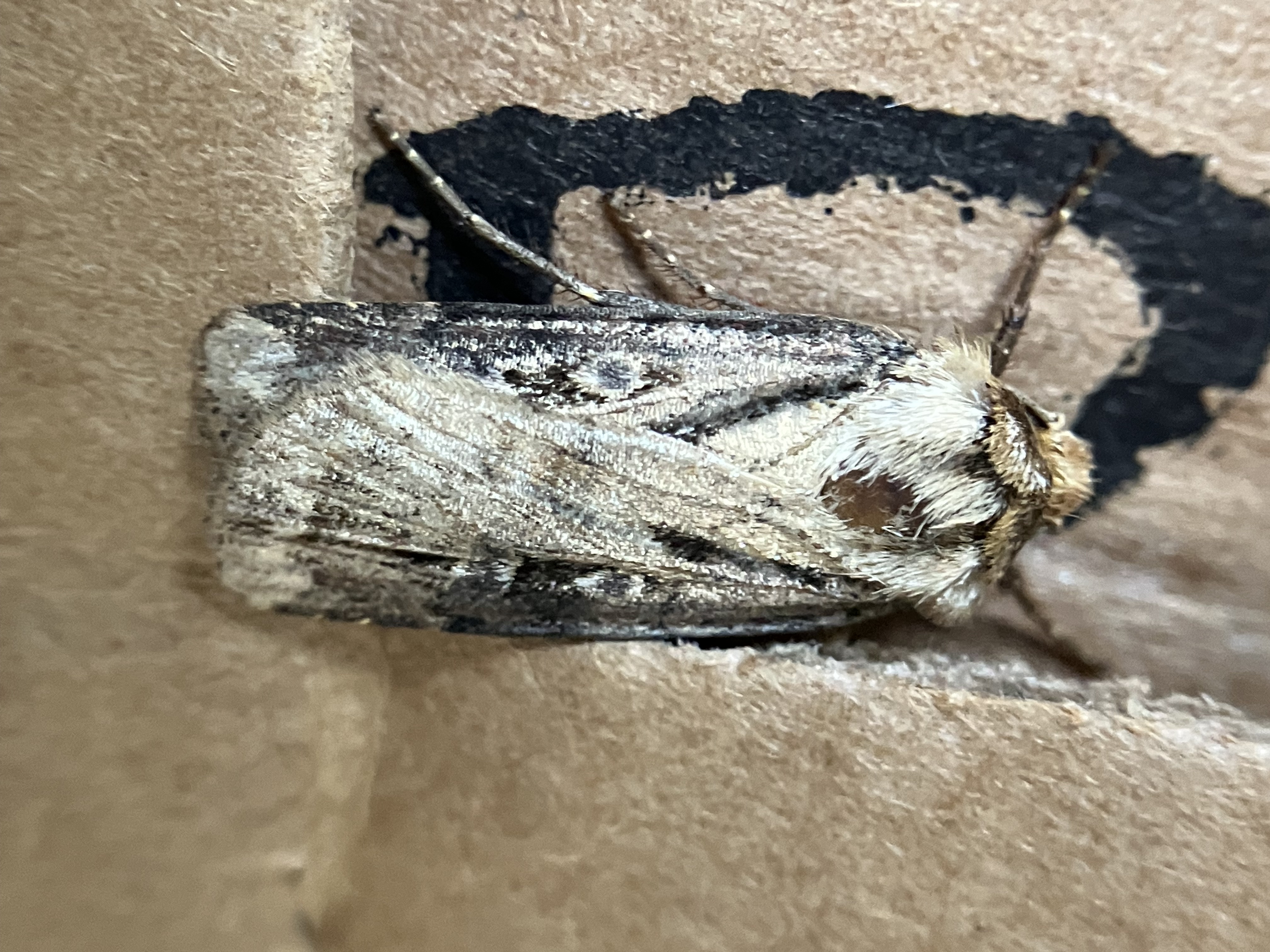
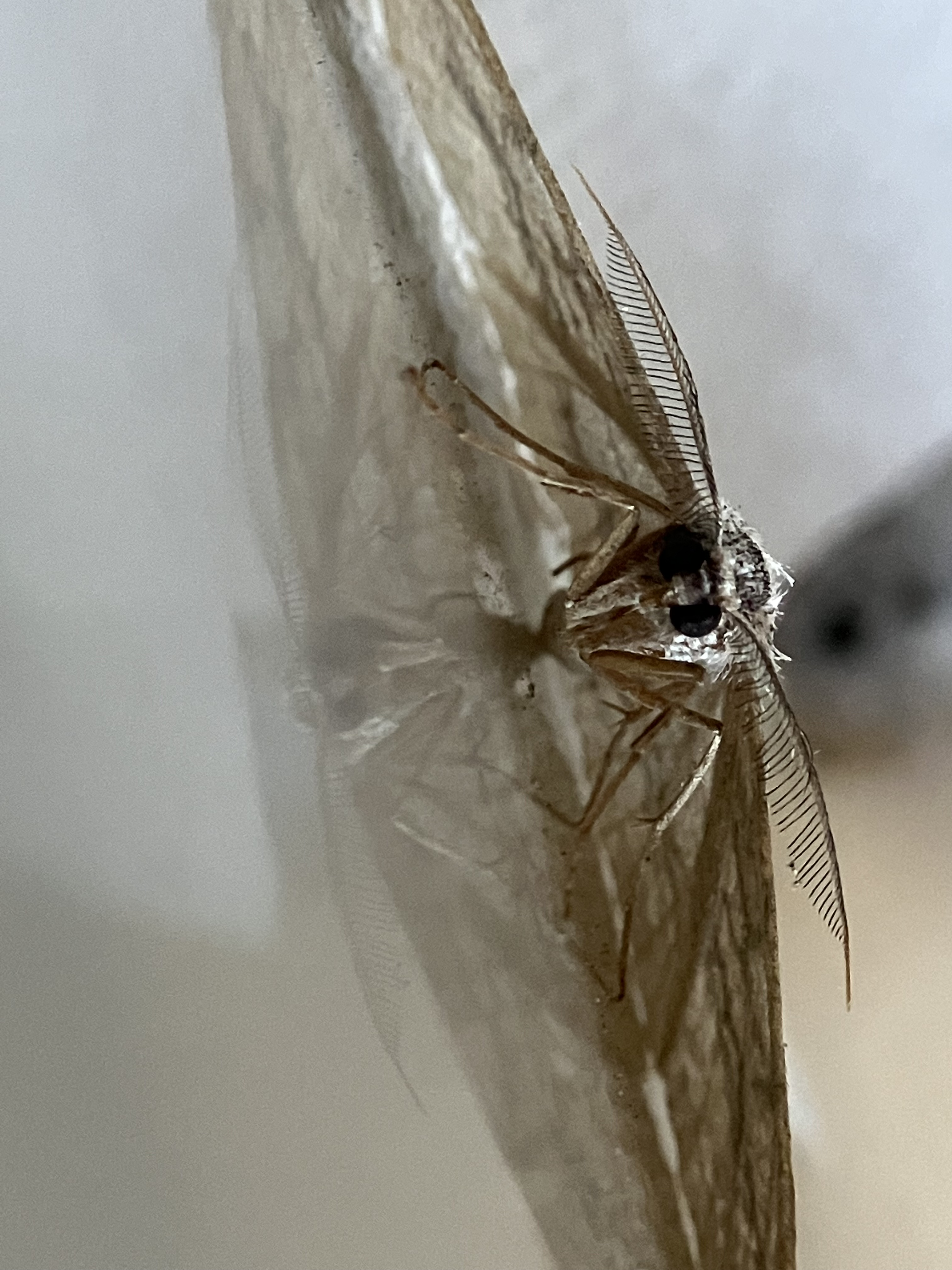
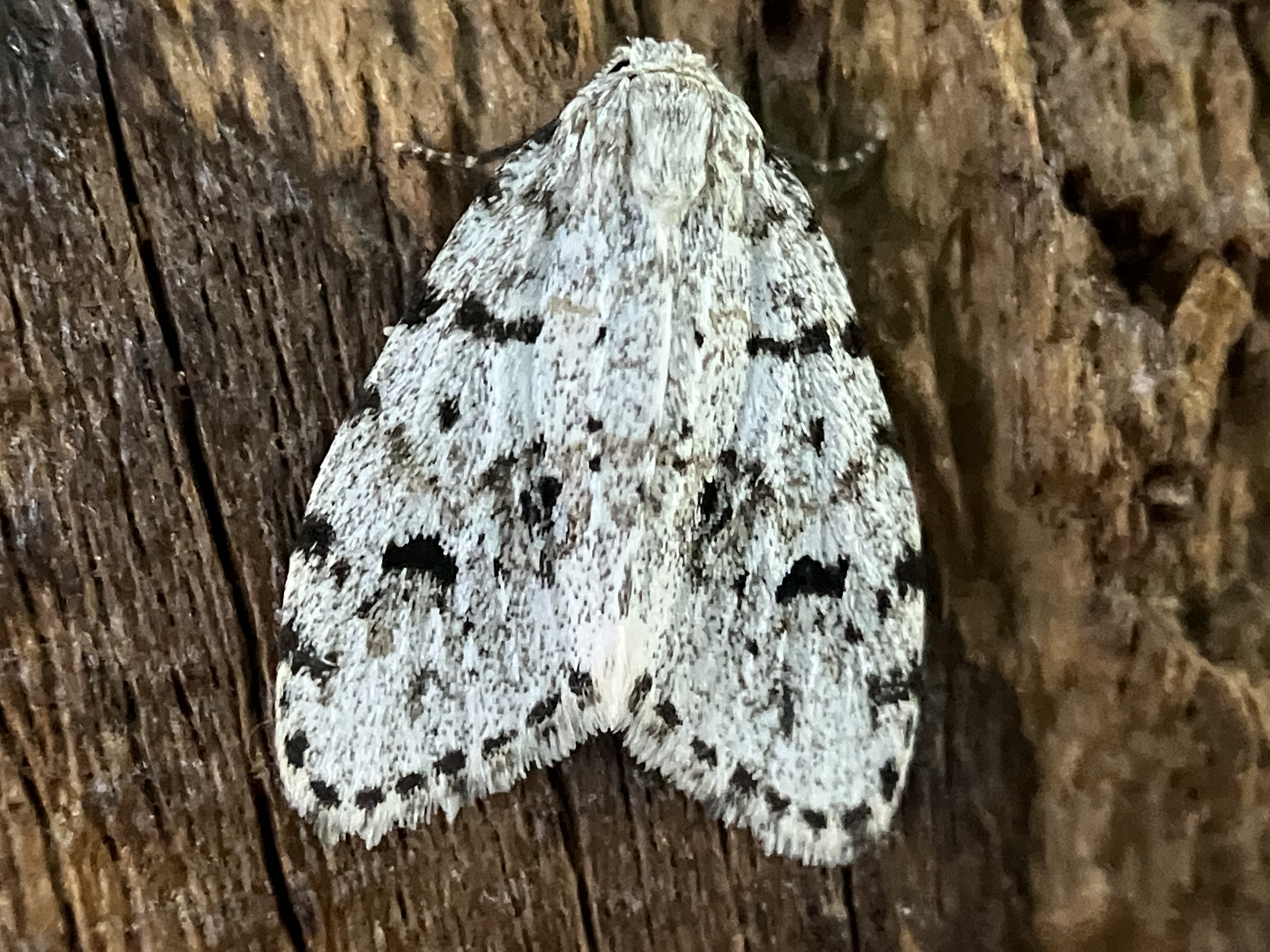
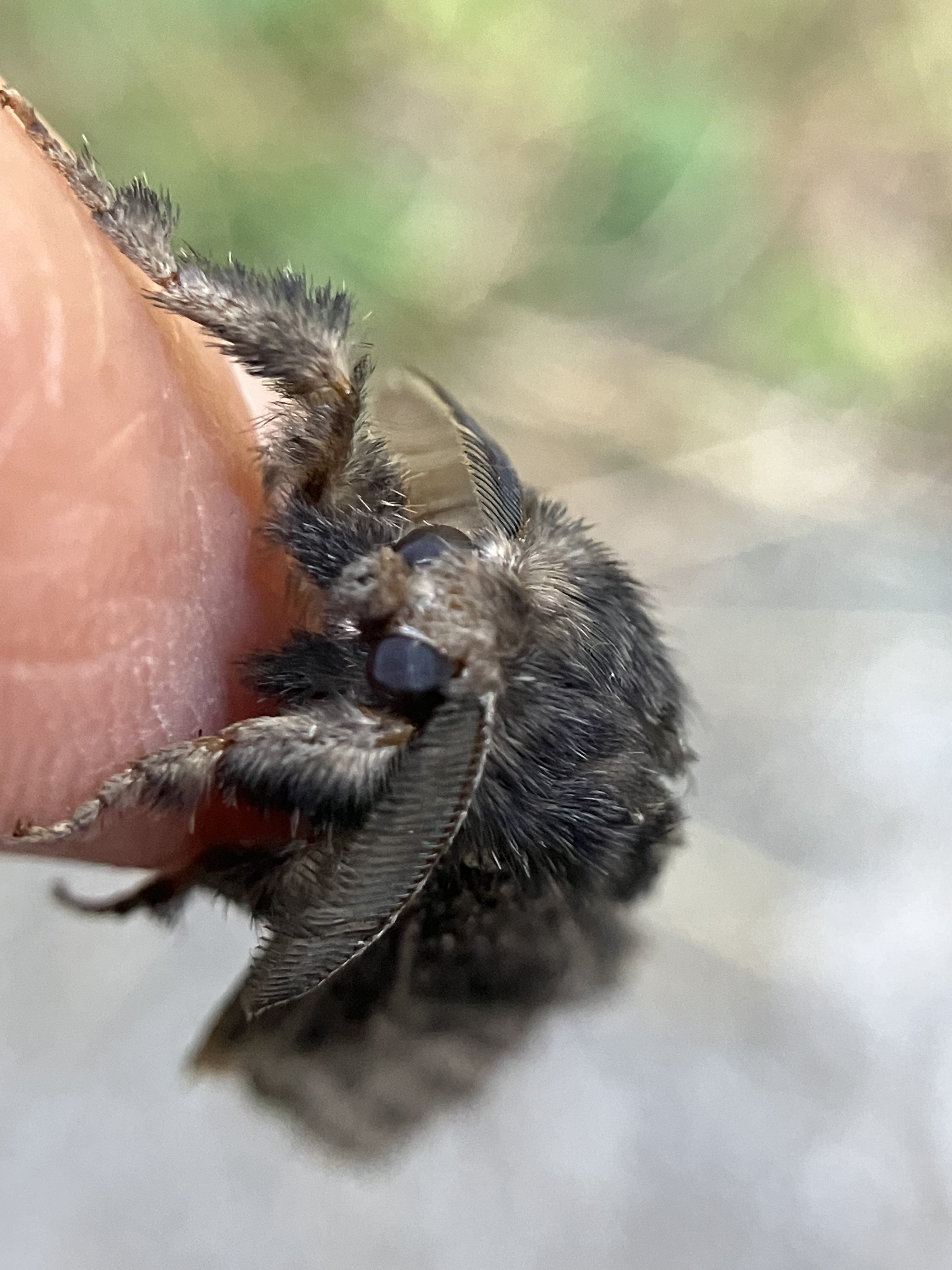
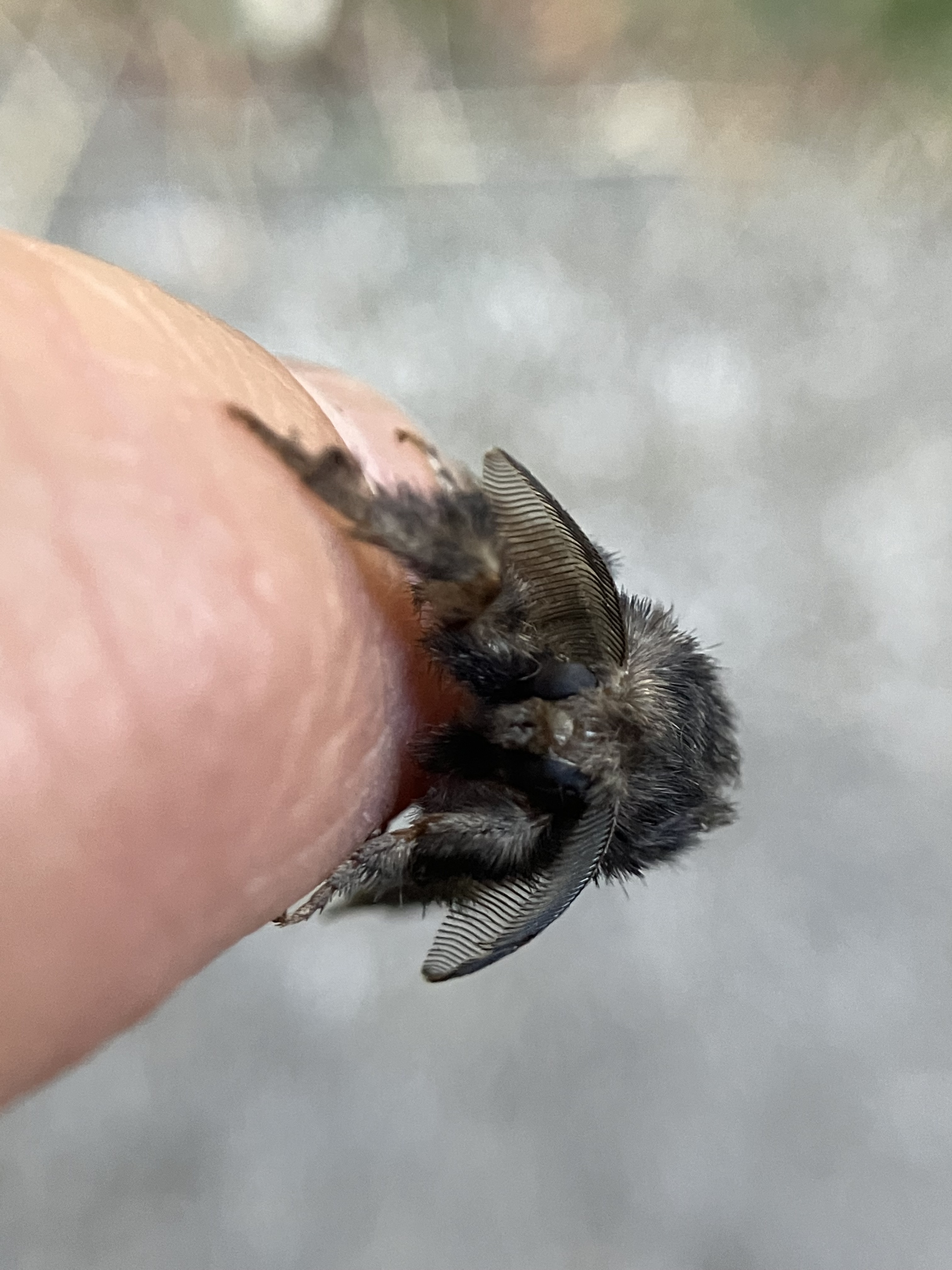
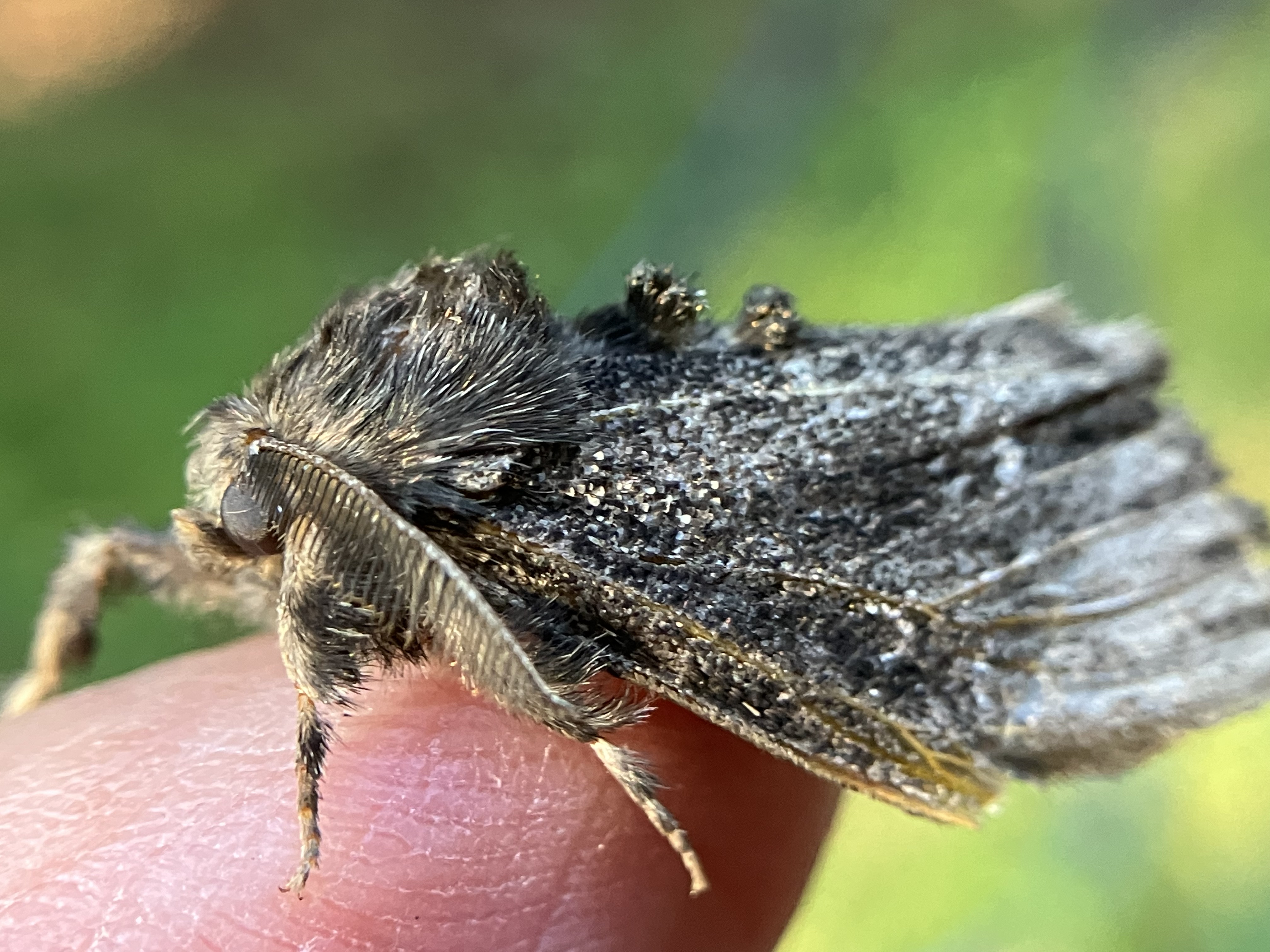
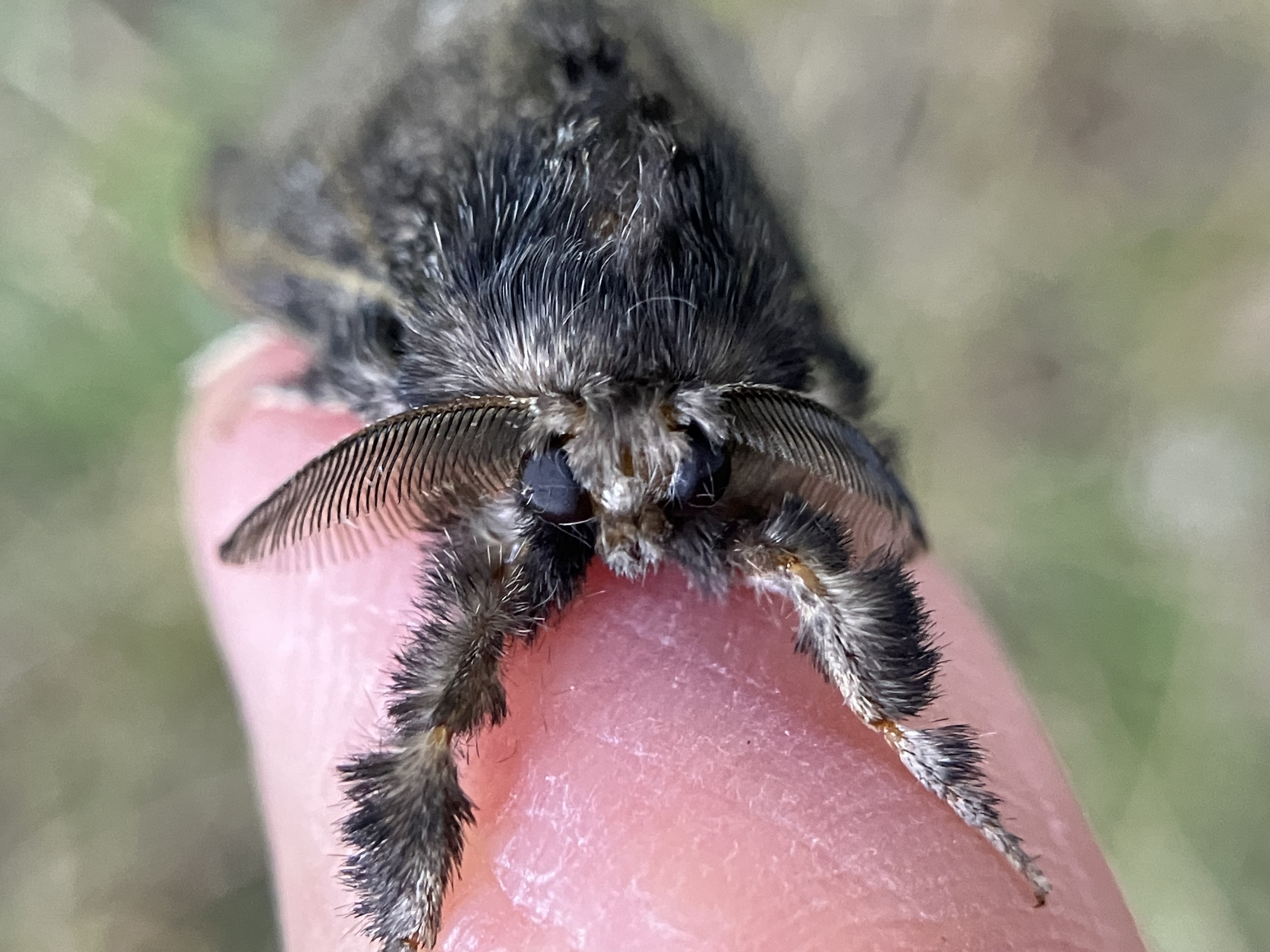
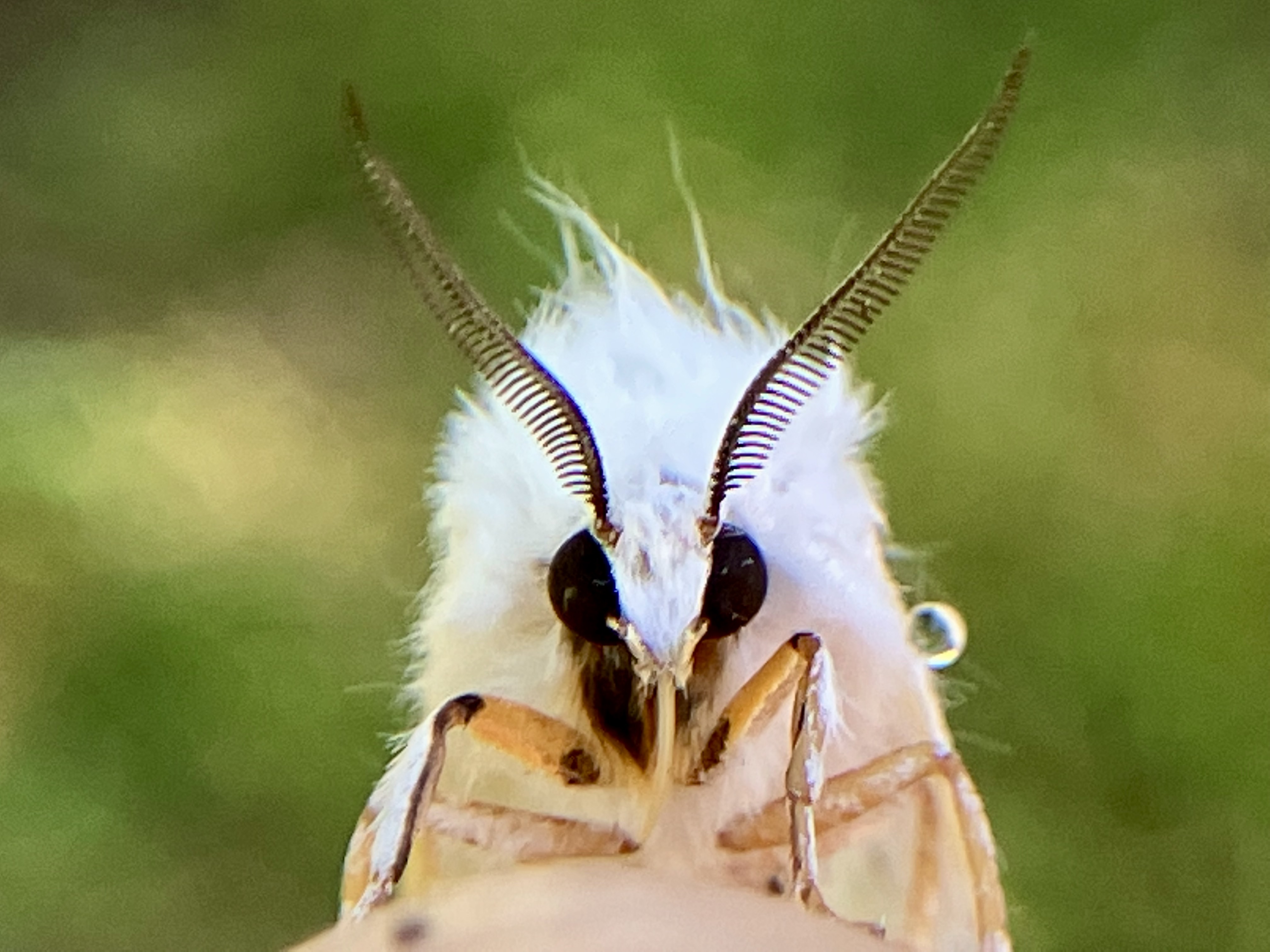
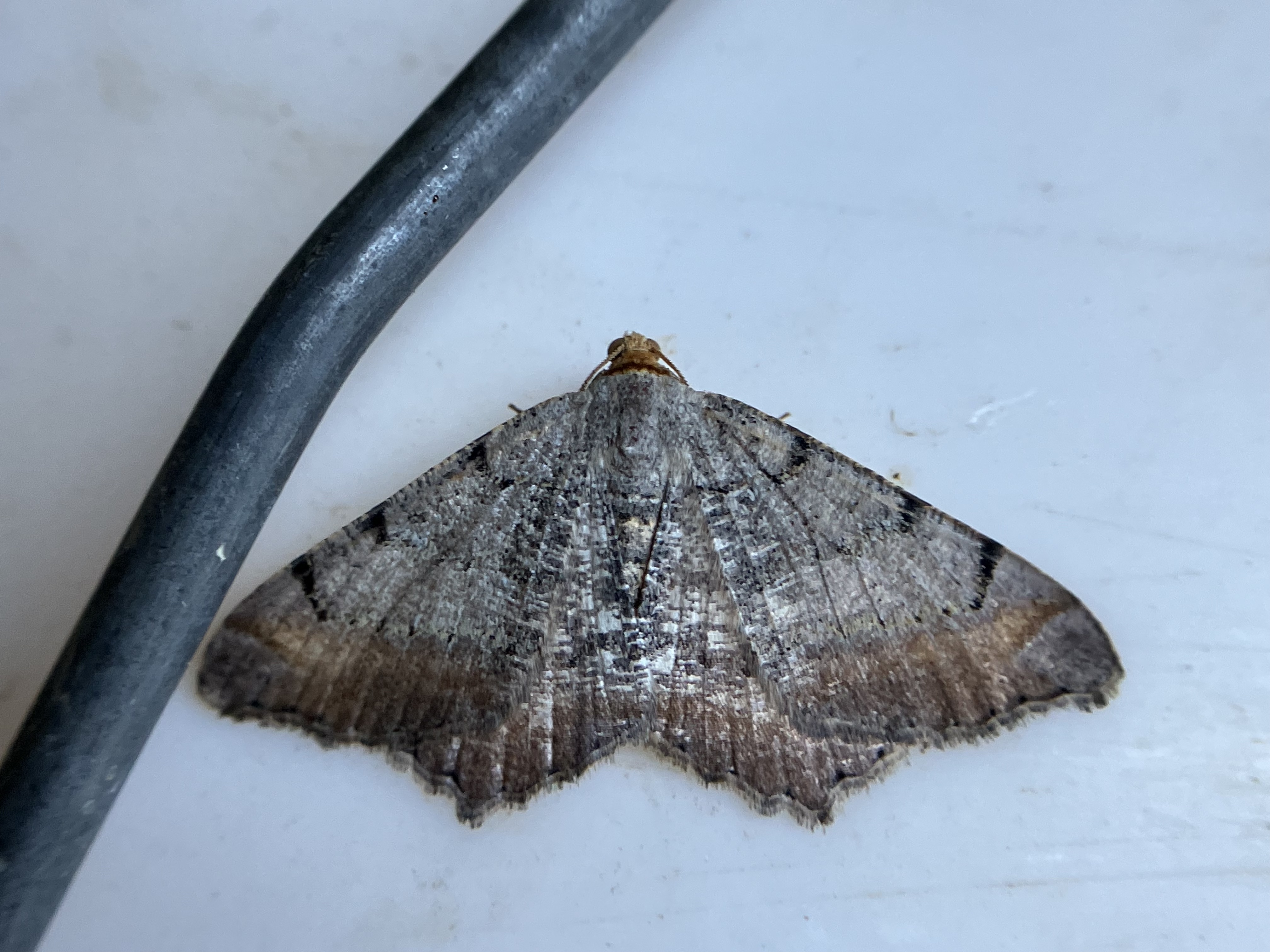
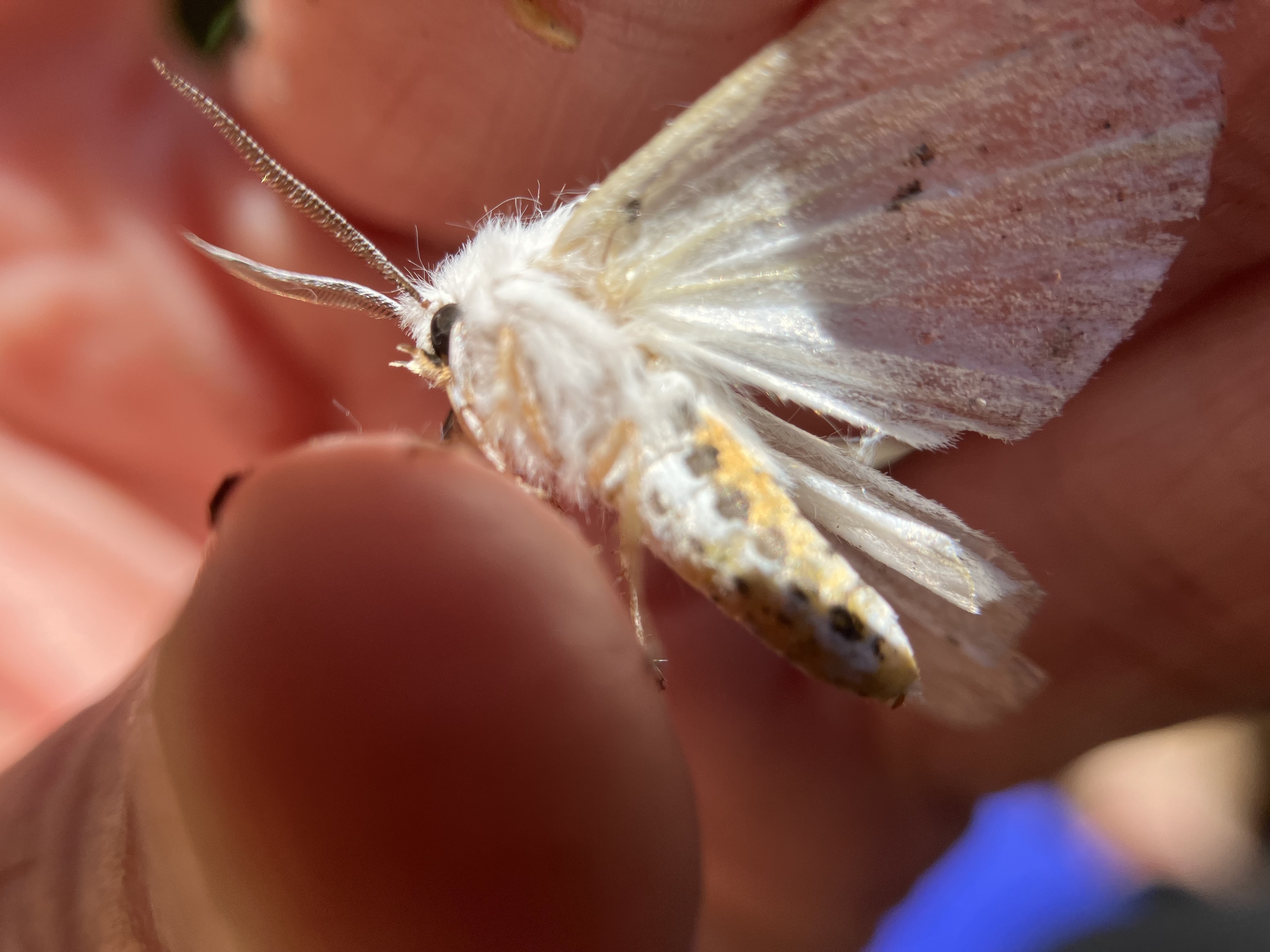
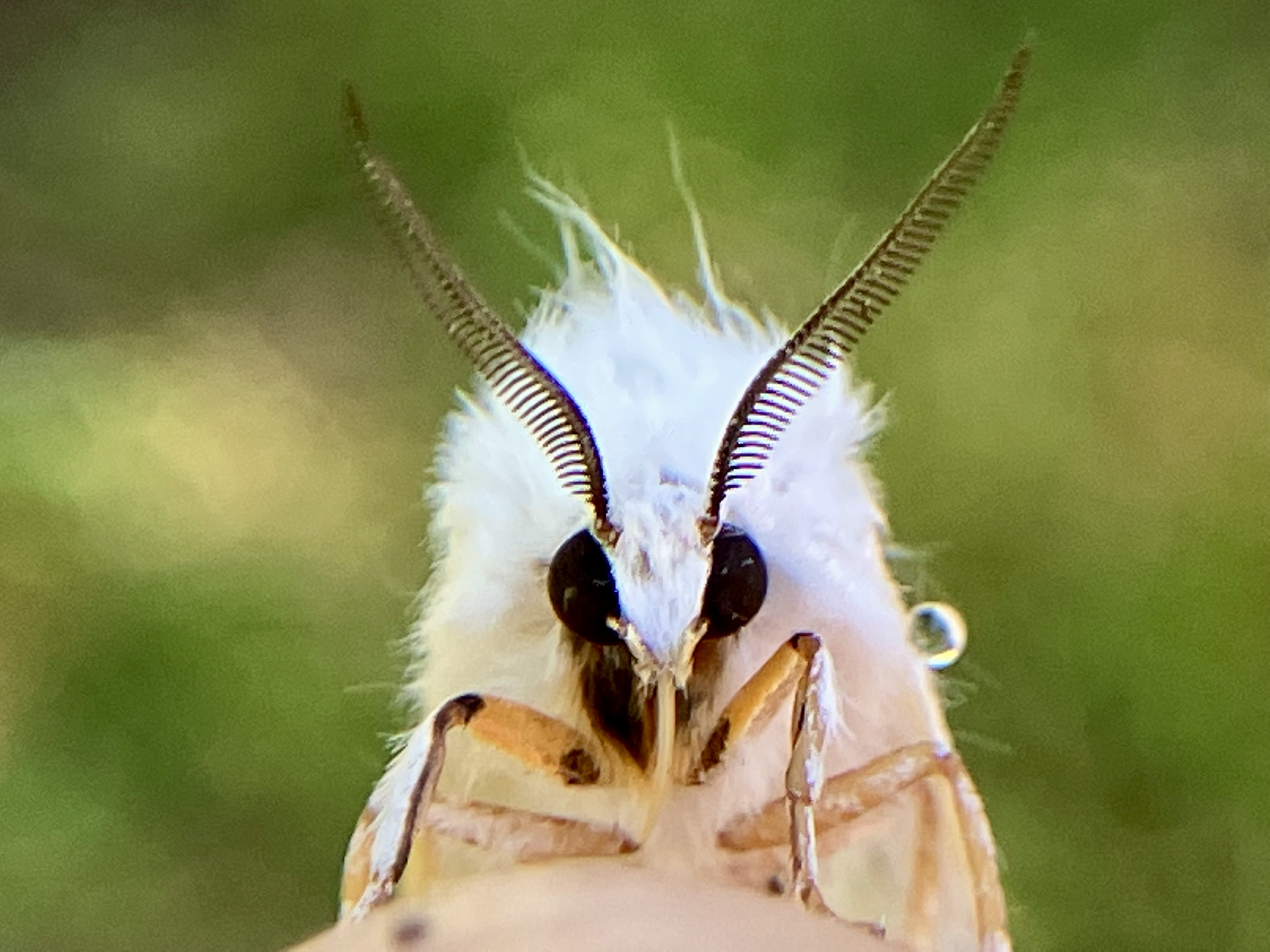
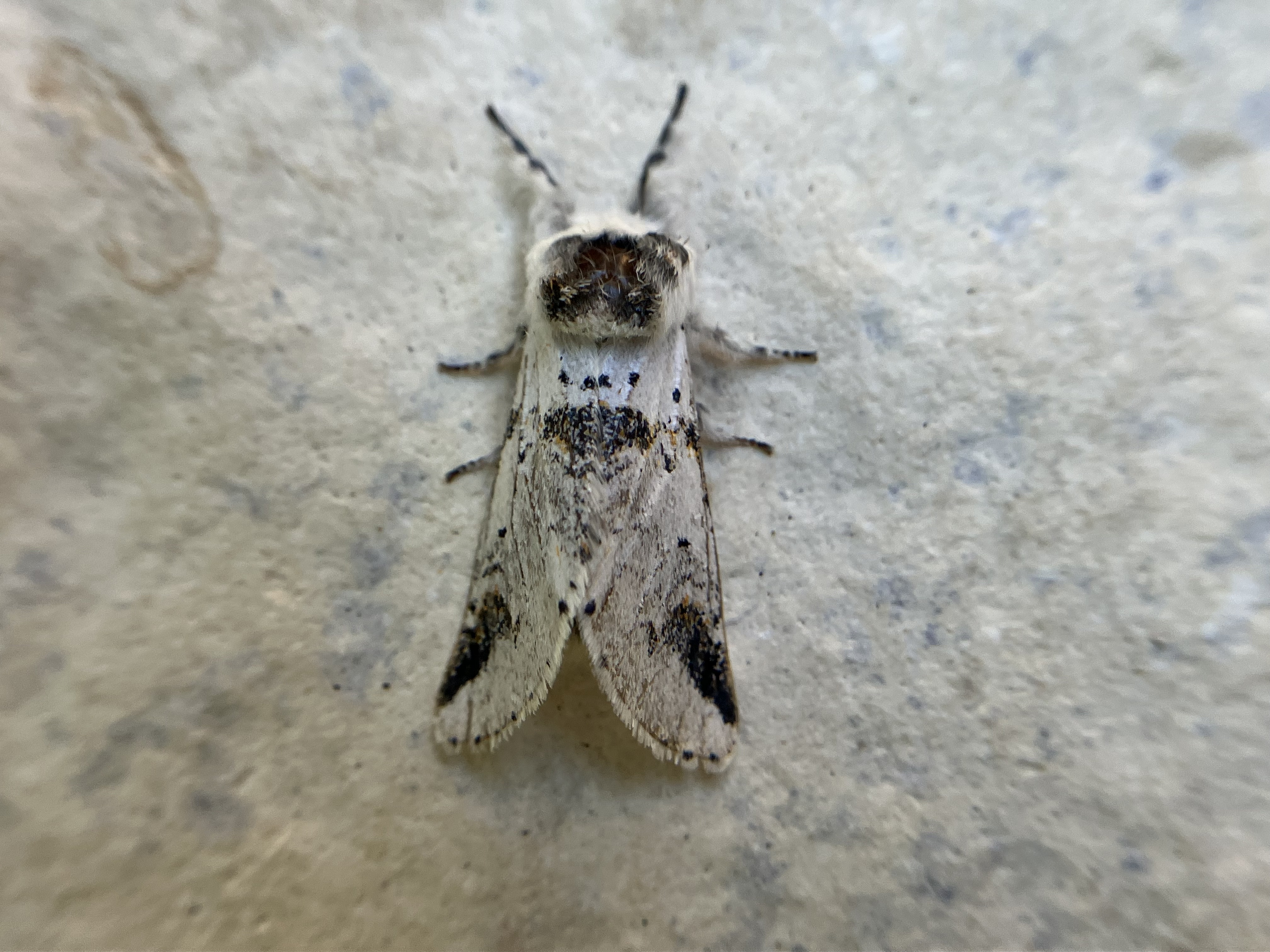
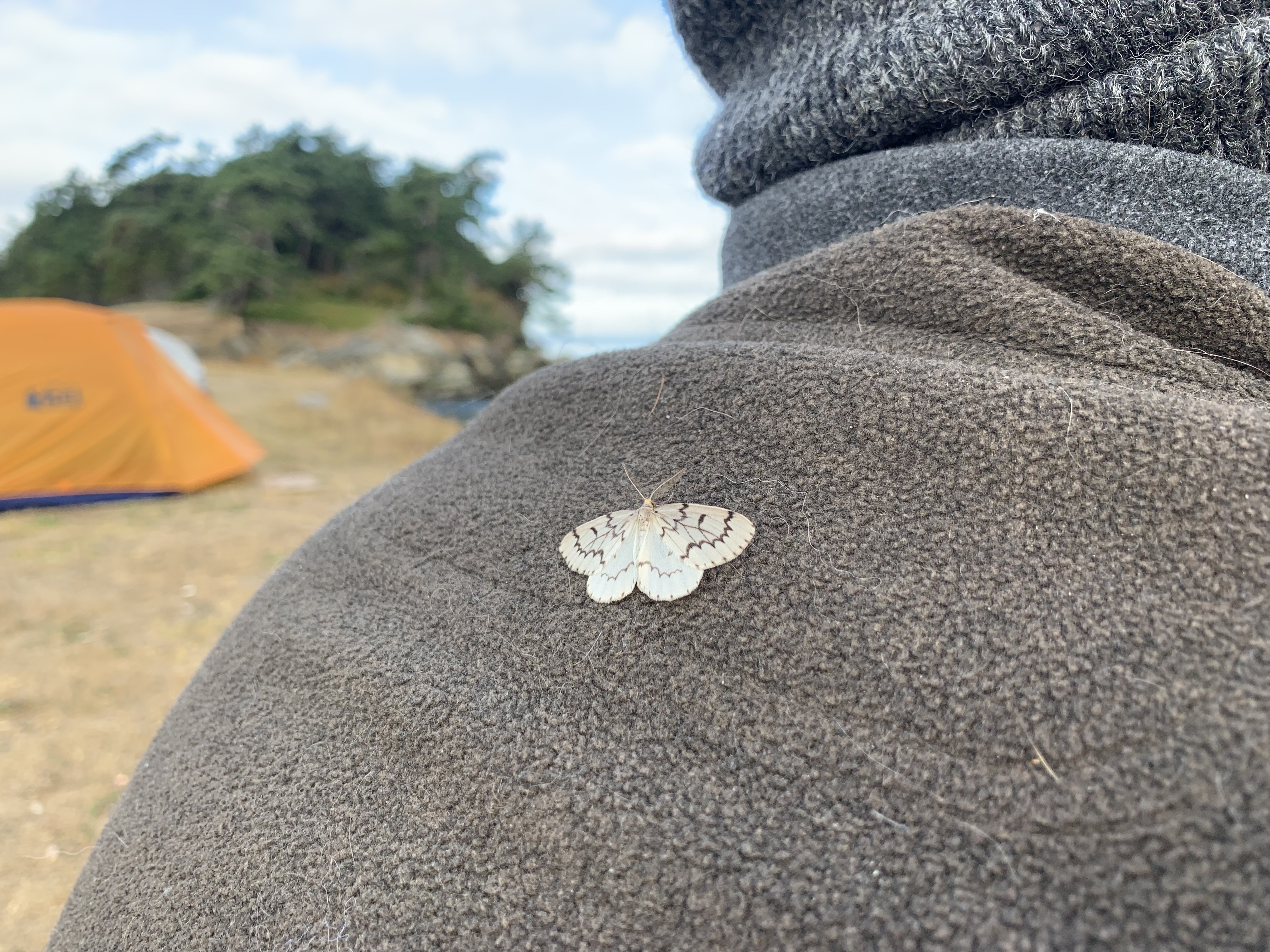
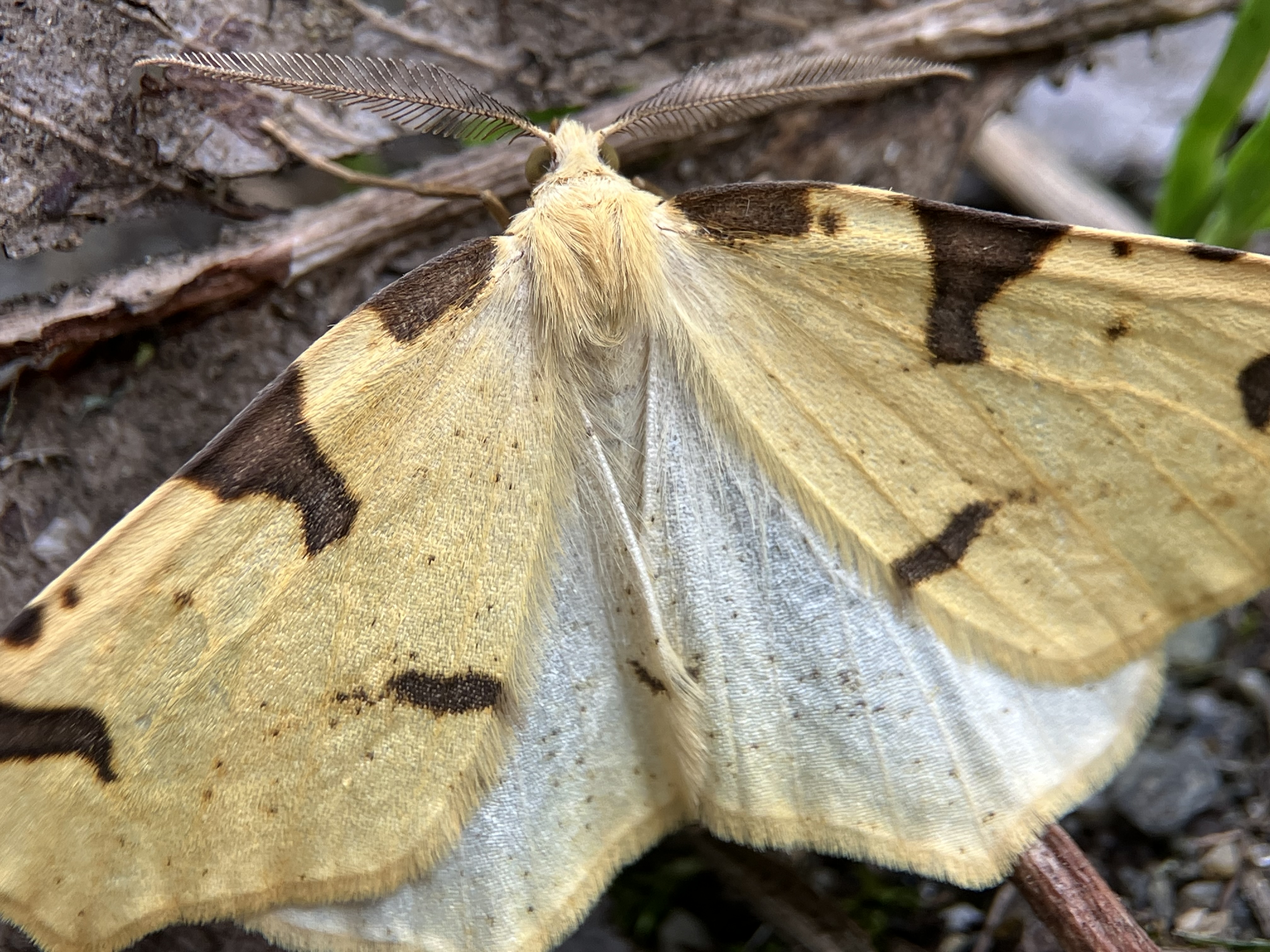
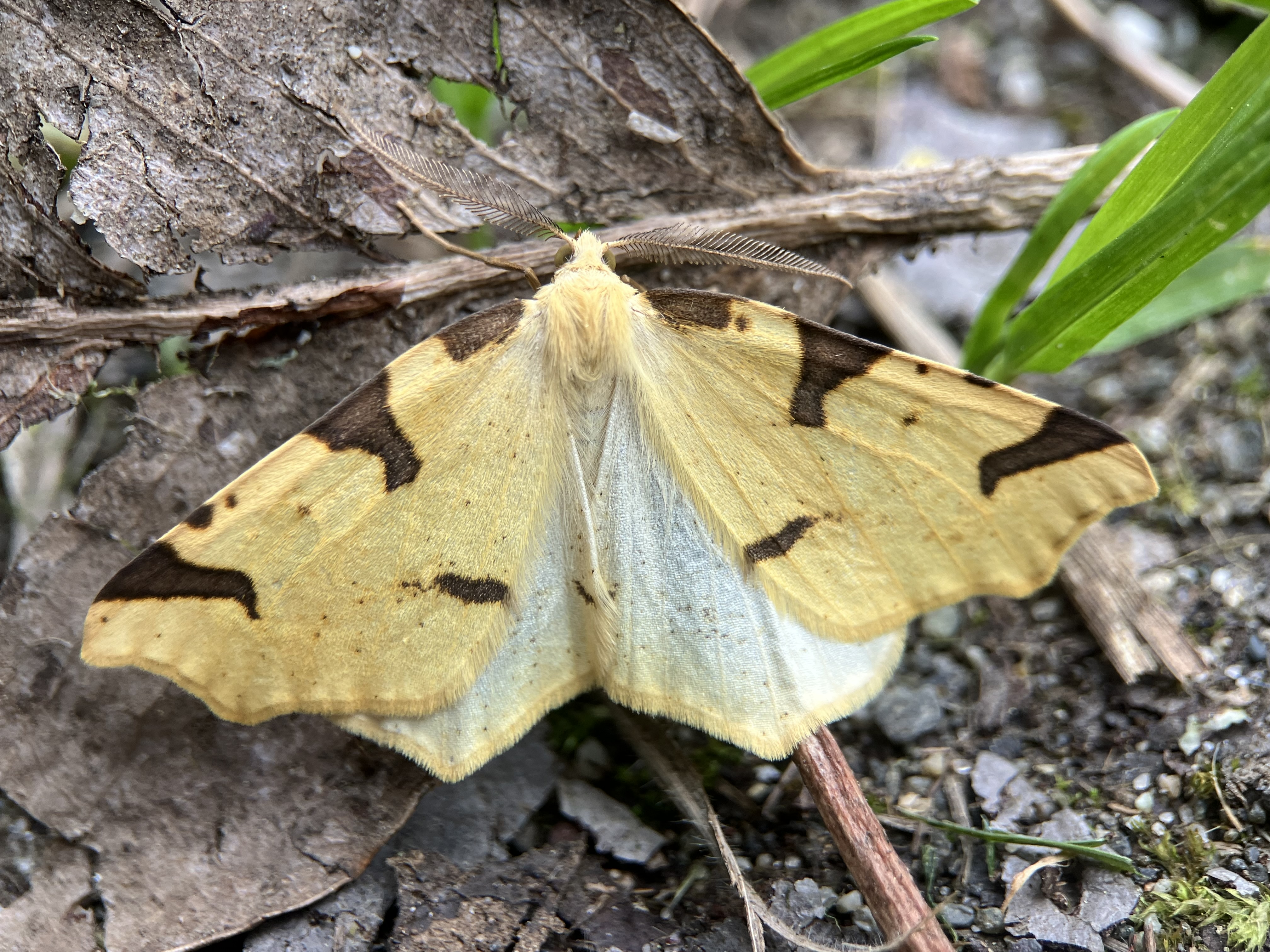
Canary thorn moth, (Neoterpes trianguliferata)

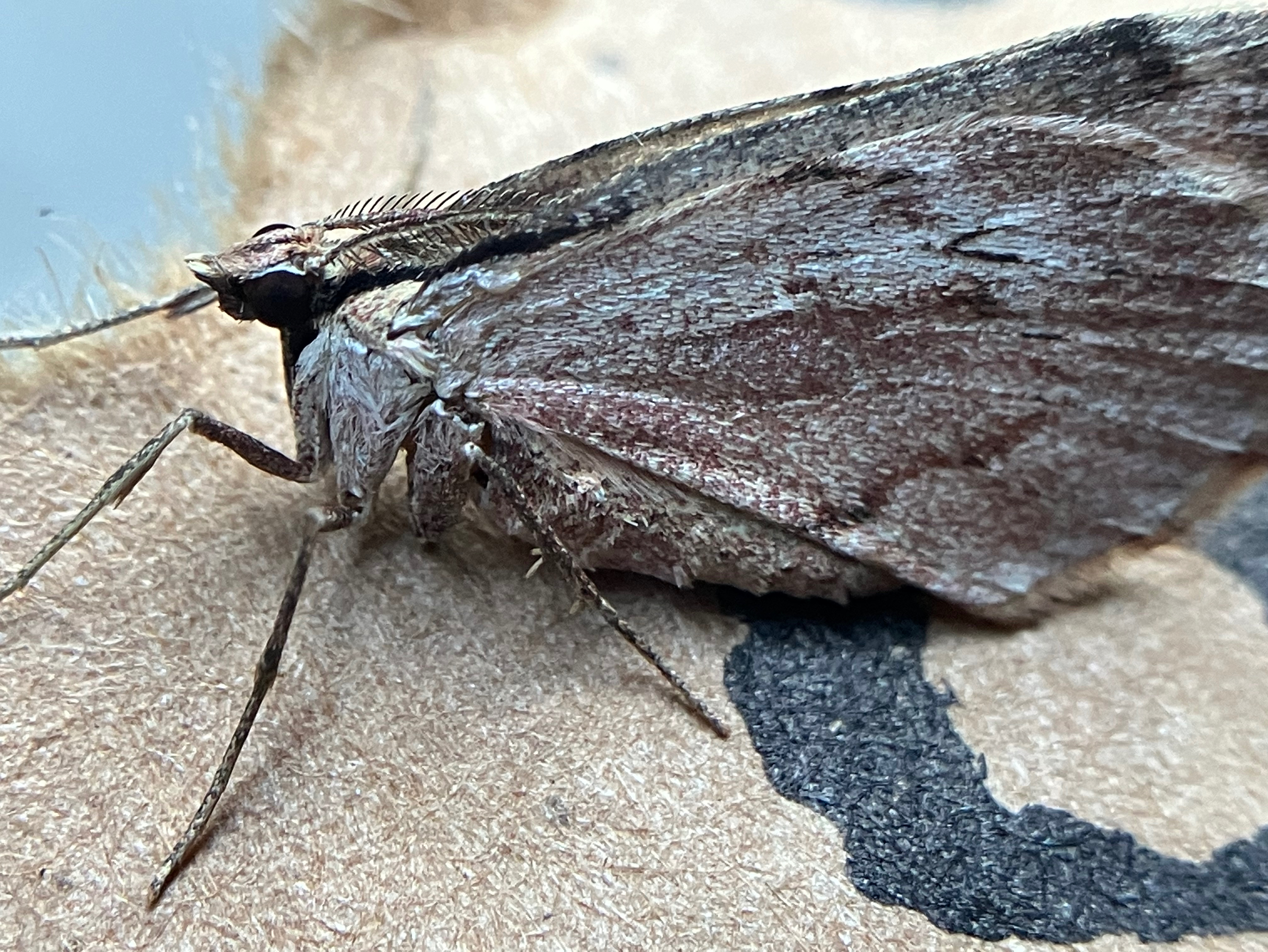
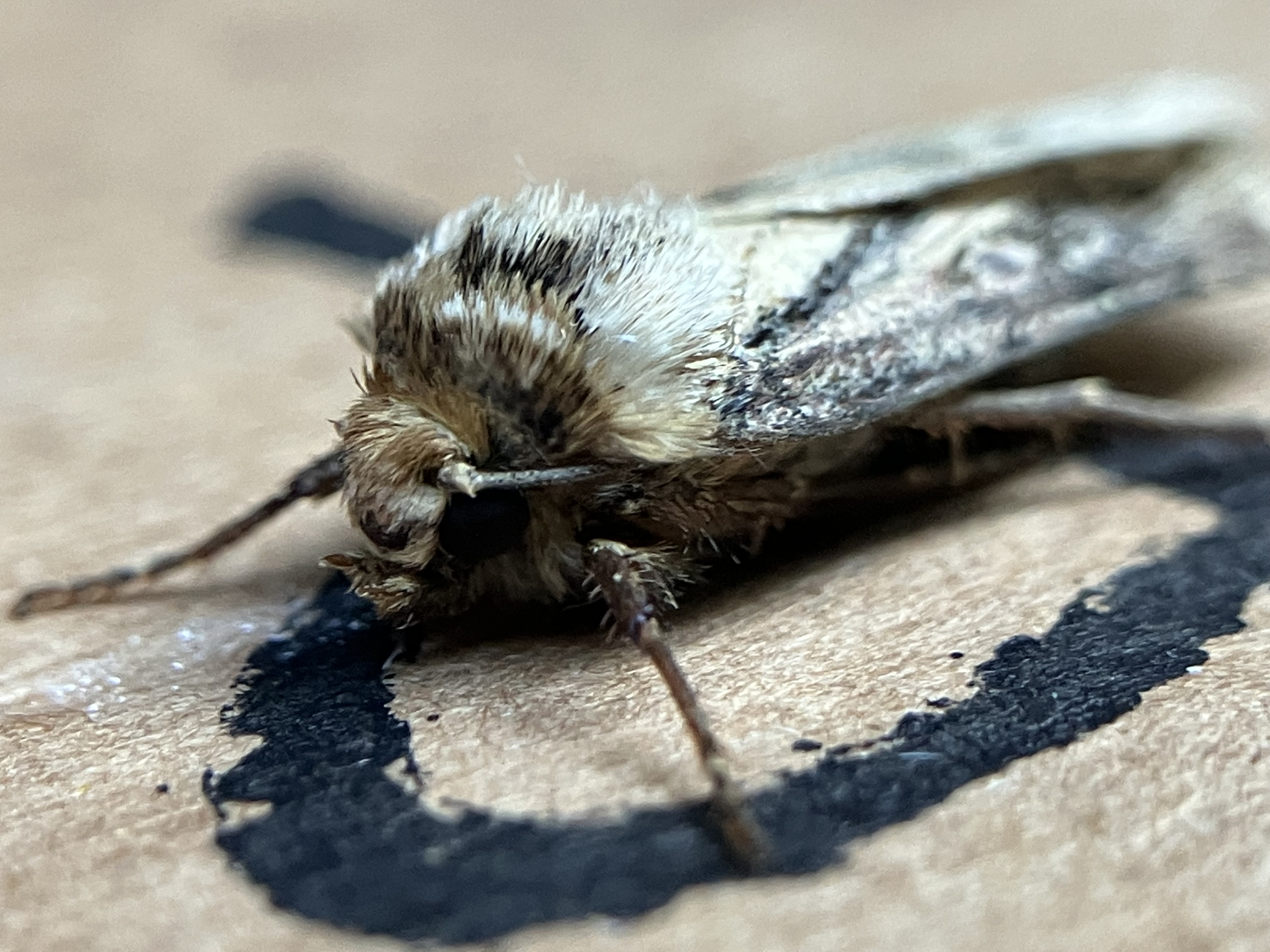
Canary thorn moth (Neoterpes trianguliferata)

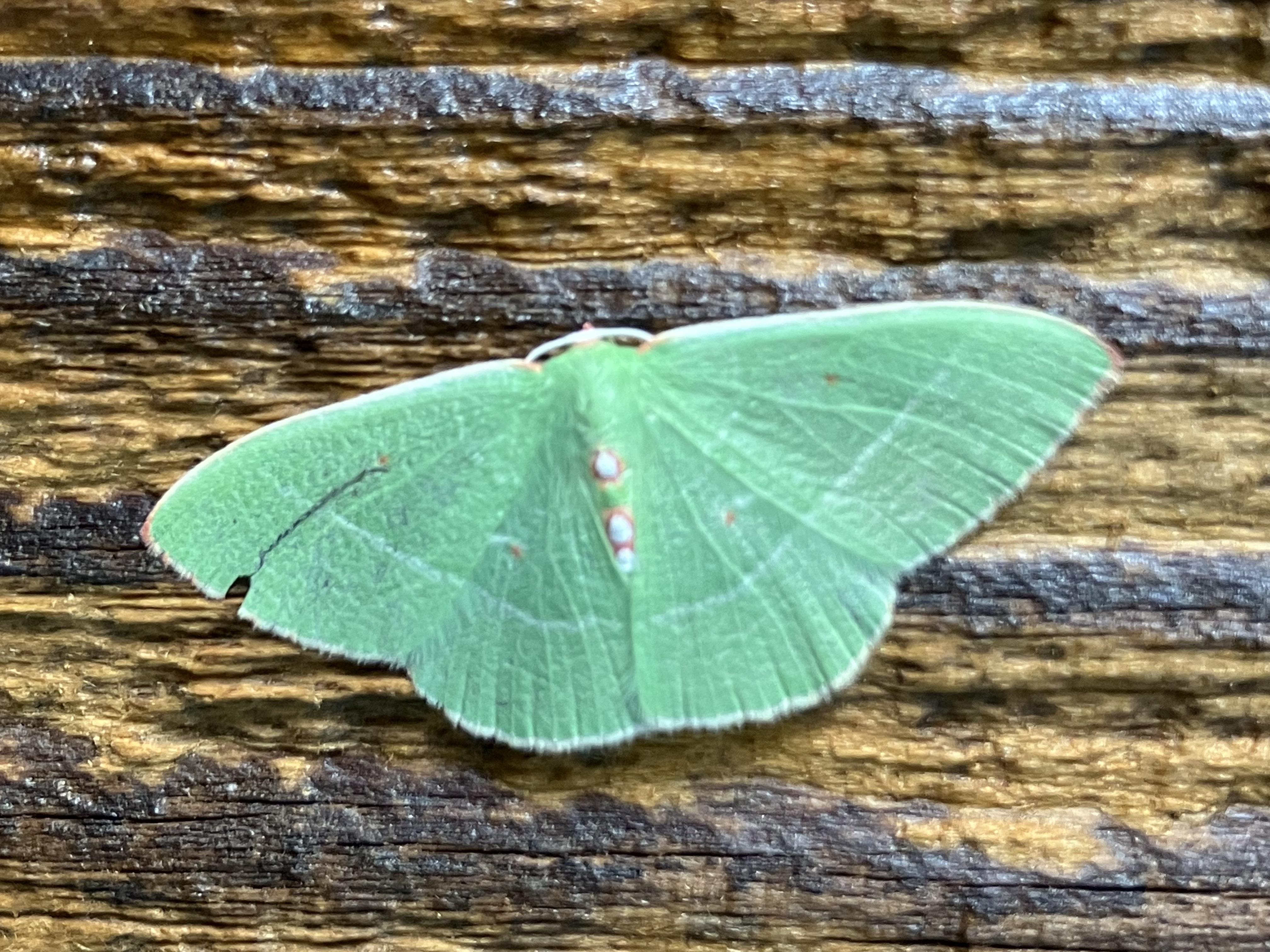
I found the most beautiful creature at my moth light this morning. It is the Canary Thorn Moth (Neoterpes  trianguliferata ). I was surprised to see anything there given the drop in temperatures we’ve had the past few days. After a few photos, I got too close and he flew out of the open barn area into some grass, struggling a bit in the wind, so I was able to carefully coax him back into an egg carton to shelter the day back undercover and out of the rain.

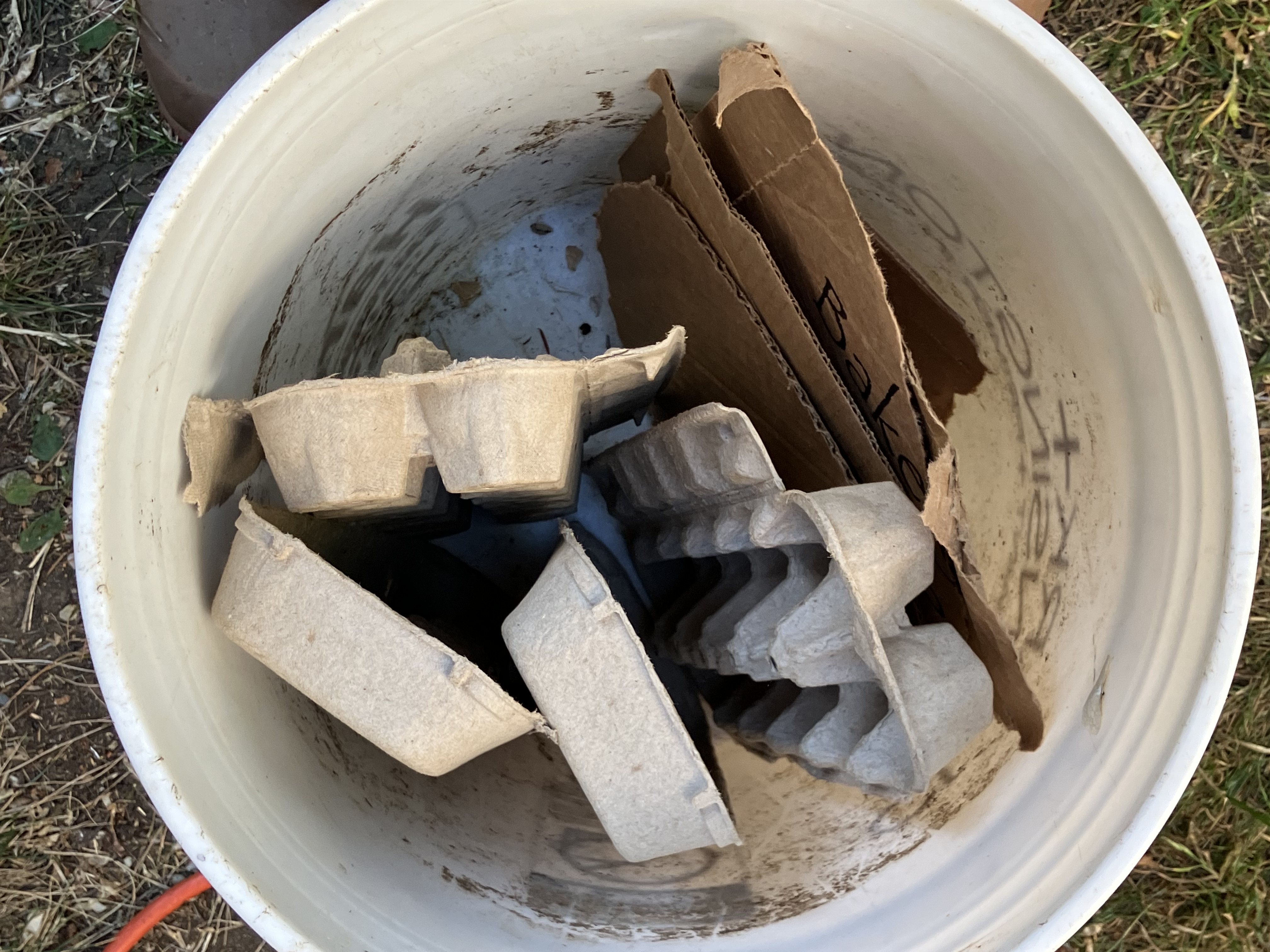
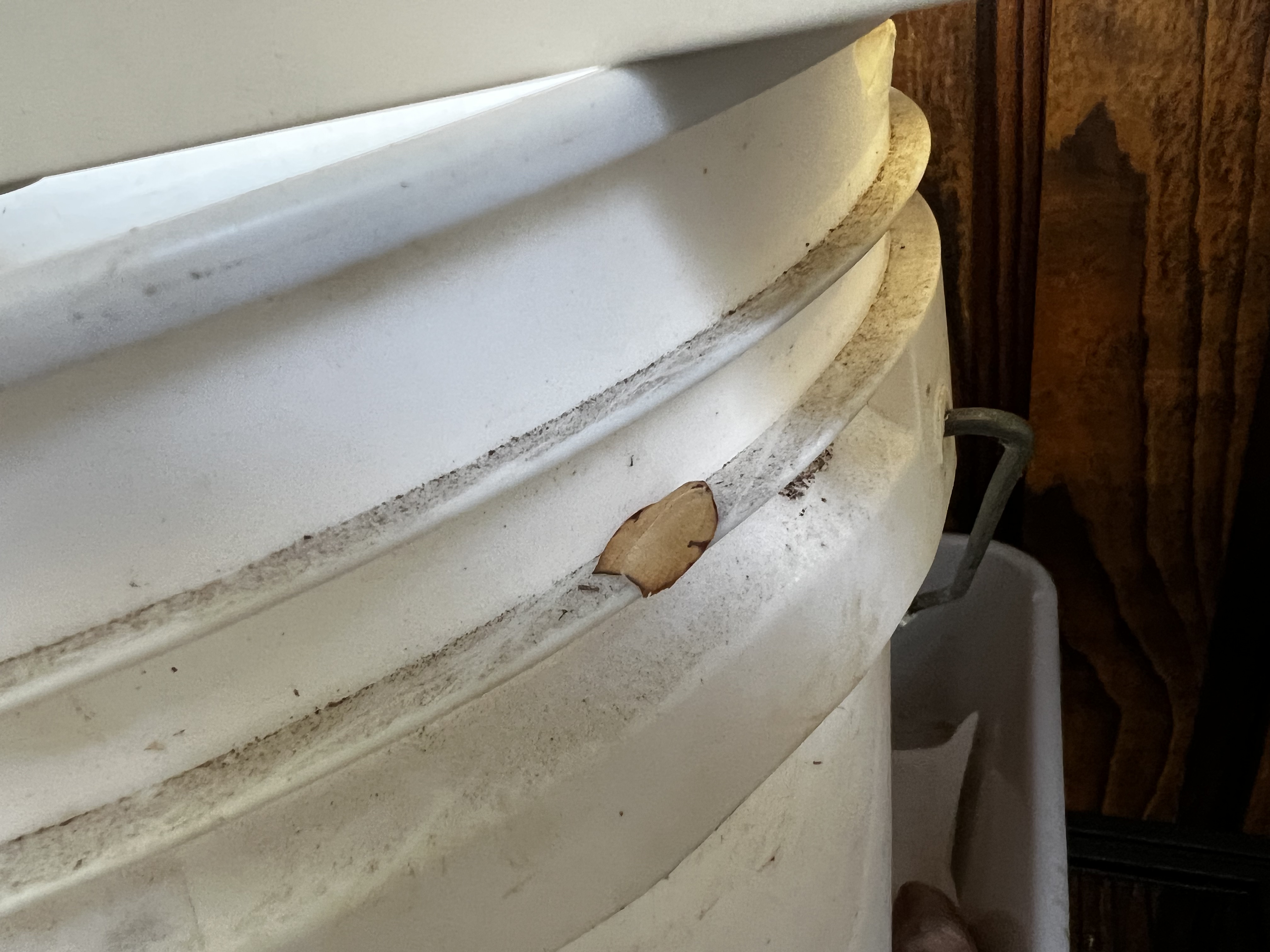
If you’re wondering about the egg carton, I use these in my moth light set up to give the moths a secure place to hide when they settle down under the light for the night. The egg cartons are in a 5 gallon bucket. I have the “low end” set up, so no major investments in equipment. Anyone could do this at home. It’s fun to “moth” and see what species live around us. If you’re interested, shoot me an email and I’ll coach you on getting set up yourself. For the record, all of my specimens are photographed with respect and care, and allowed to live free. I do not take specimens for pinning. I definitely believe they are here to be admired in the wild, not in a glass case.
More about this species:

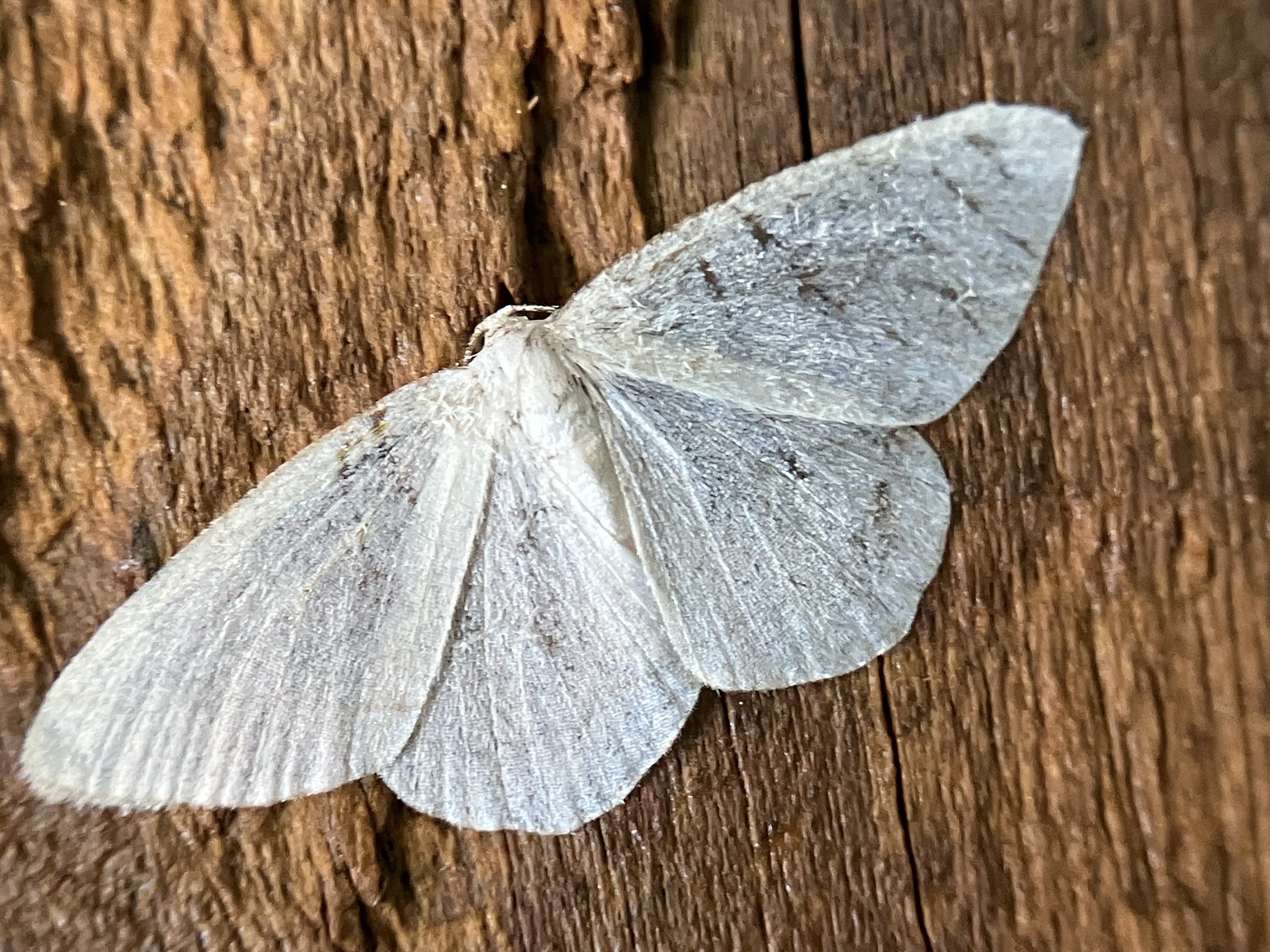
Neoterpes  trianguliferata is a species of Geometrid moth that ranges from southern British Columbia to southwestern Alberta, south to Colorado, Utah, and California. The hostplants for larvae (the caterpillars) are Currants and Gooseberry (Ribes). I’ve linked information for some of the native host plants below in the reference section.

Larvae are twig mimics. Pupae sleep through the winter wrapped in a leaf, another reason to “leave the leaves” and refrain from burning or bagging and discarding the leaves around your home. You could inadvertently impact overwintering species like these and others. Adults are approximately 14-20mm (forewing length). You will see adults in flight between April-June in our area. From what I have been able to find as to the etymological meaning of the name, Neoterpes may translate to “new delight” and trianguliferata refers to the triangle-shaped markings on the forewings. It was indeed a delight to see this beauty today! A bit of sunshine on a rainy spring day.

Canary thorn moth (Neoterpes trianguliferata)

References

Bressette, Dana Kelley. no date. Coast Black Gooseberry, Ribes divaricatum. Native Plants PNW. https://nativeplantspnw.com/coast-black-gooseberry-ribes-divaricatum/

Bressette, Dana Kelley. no date. Red Flowering Currant, Ribes sanguineum. Native Plants PNW. https://nativeplantspnw.com/red-flowering-currant-ribes-sanguineum/

Bugguide.net. 2023. Species Neoterpes trianguliferata – Hodges#6860. Bugguide. Iowa State University. https://bugguide.net/node/view/114007

Moth Photographers Group. Neoterpes trianguliferata (Packard, 1871). Mississippi State University. https://mothphotographersgroup.msstate.edu/species.php?hodges=6860

Nelson, Dan. 2021. Neoterpes trianguliferata. 10,000 THINGS OF THE PACIFIC NORTHWEST
Adventures of a Recreational Naturalist. http://10000thingsofthepnw.com/2021/08/08/neoterpes-trianguliferata/

Bug Bucket Friday

We are getting closer to National Moth Week 2023 (July 22-30). I am continuing my head start. If you’ve been following along, you’ll see I am posting a daily gallery of what I’ve collected in my bug bucket with UVB light each night when I check the next morning.

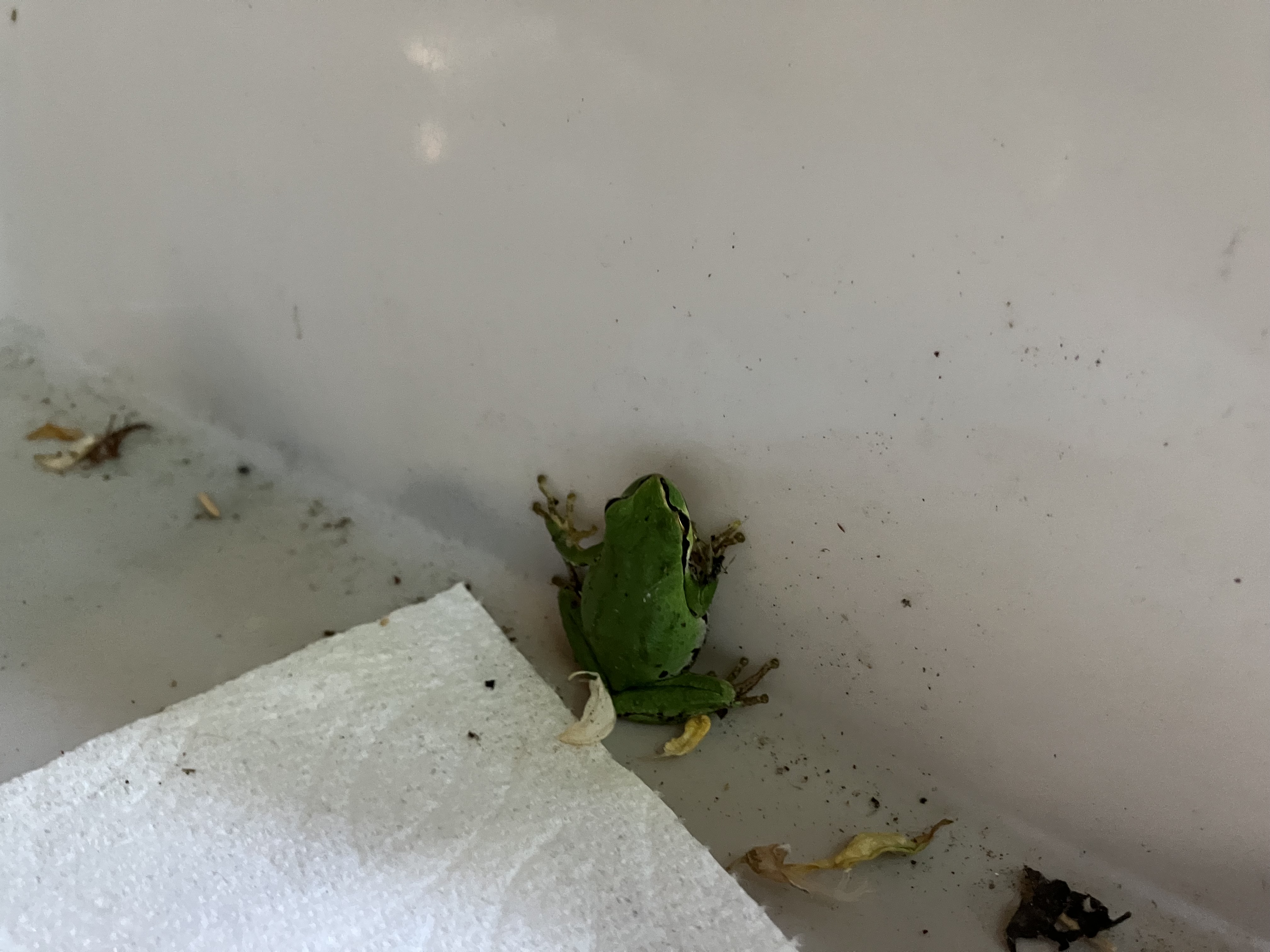
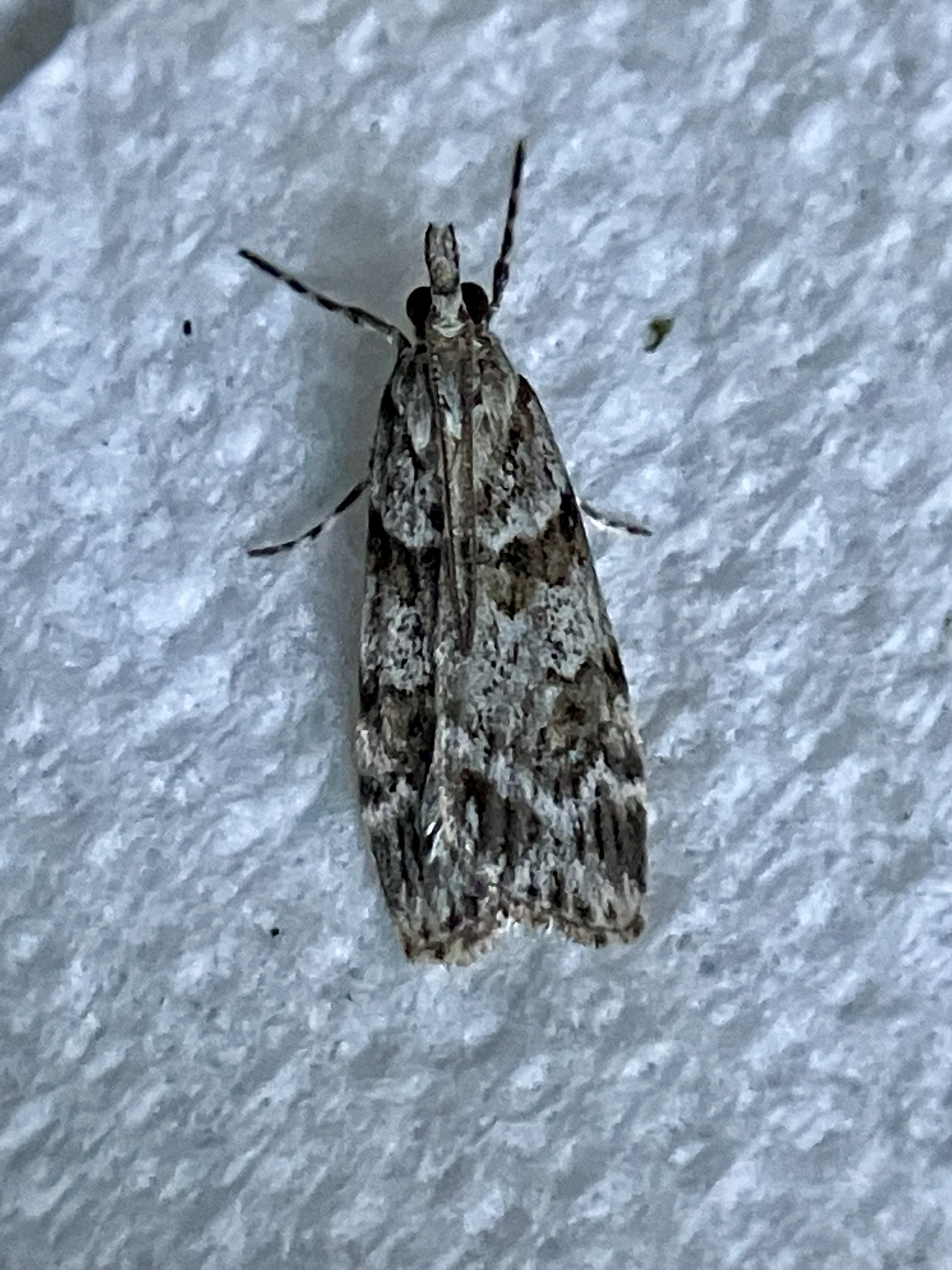
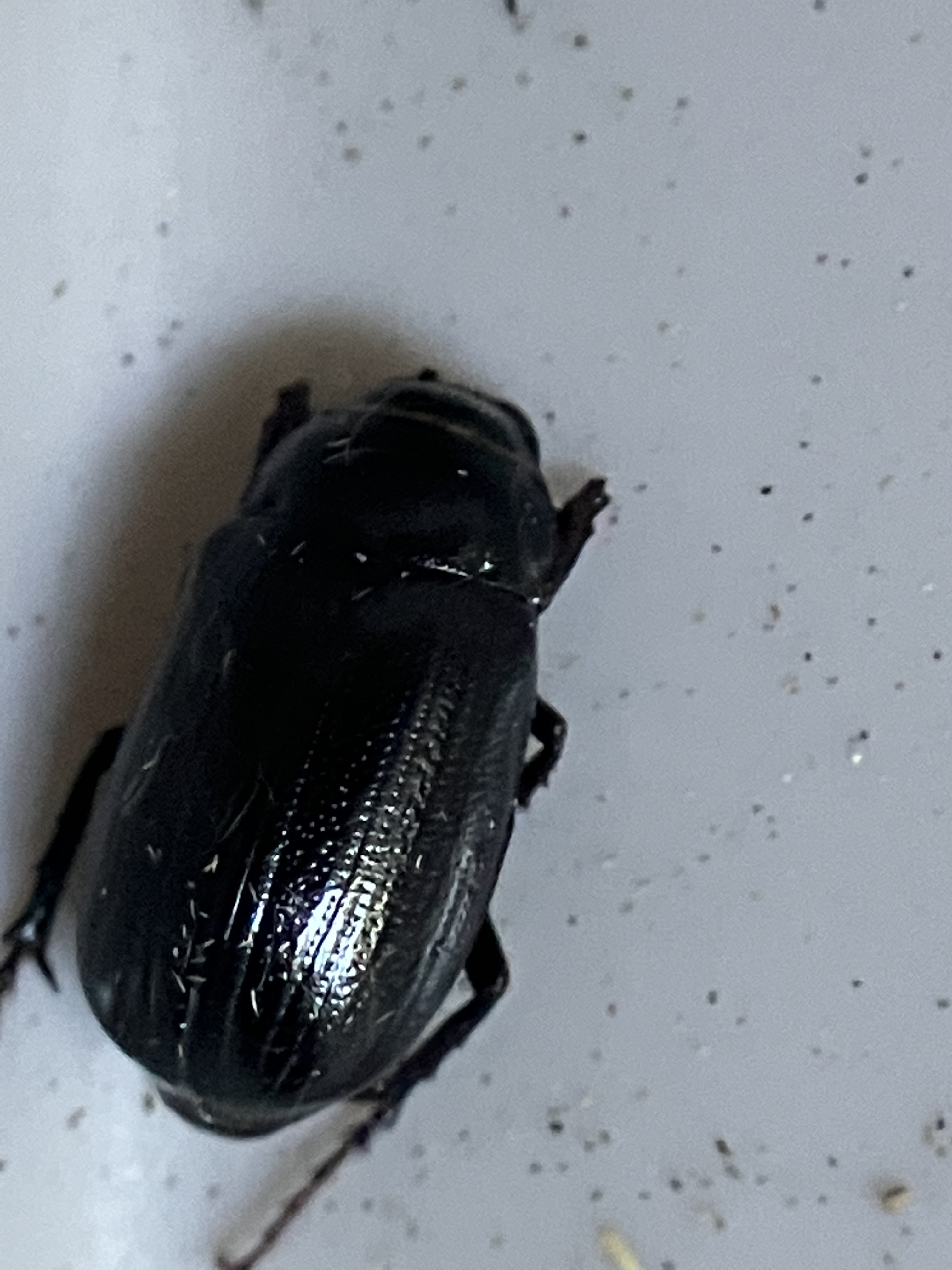
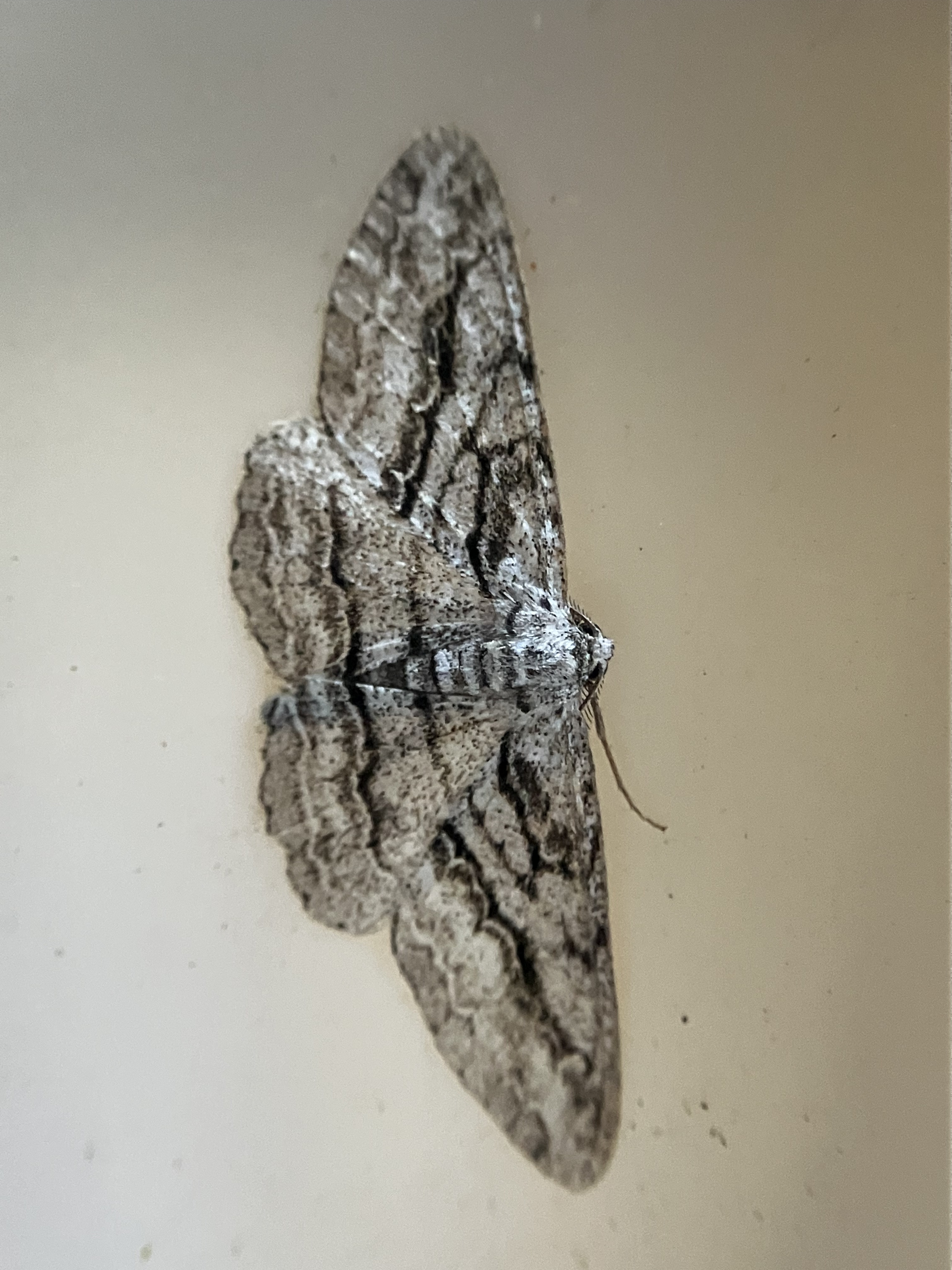
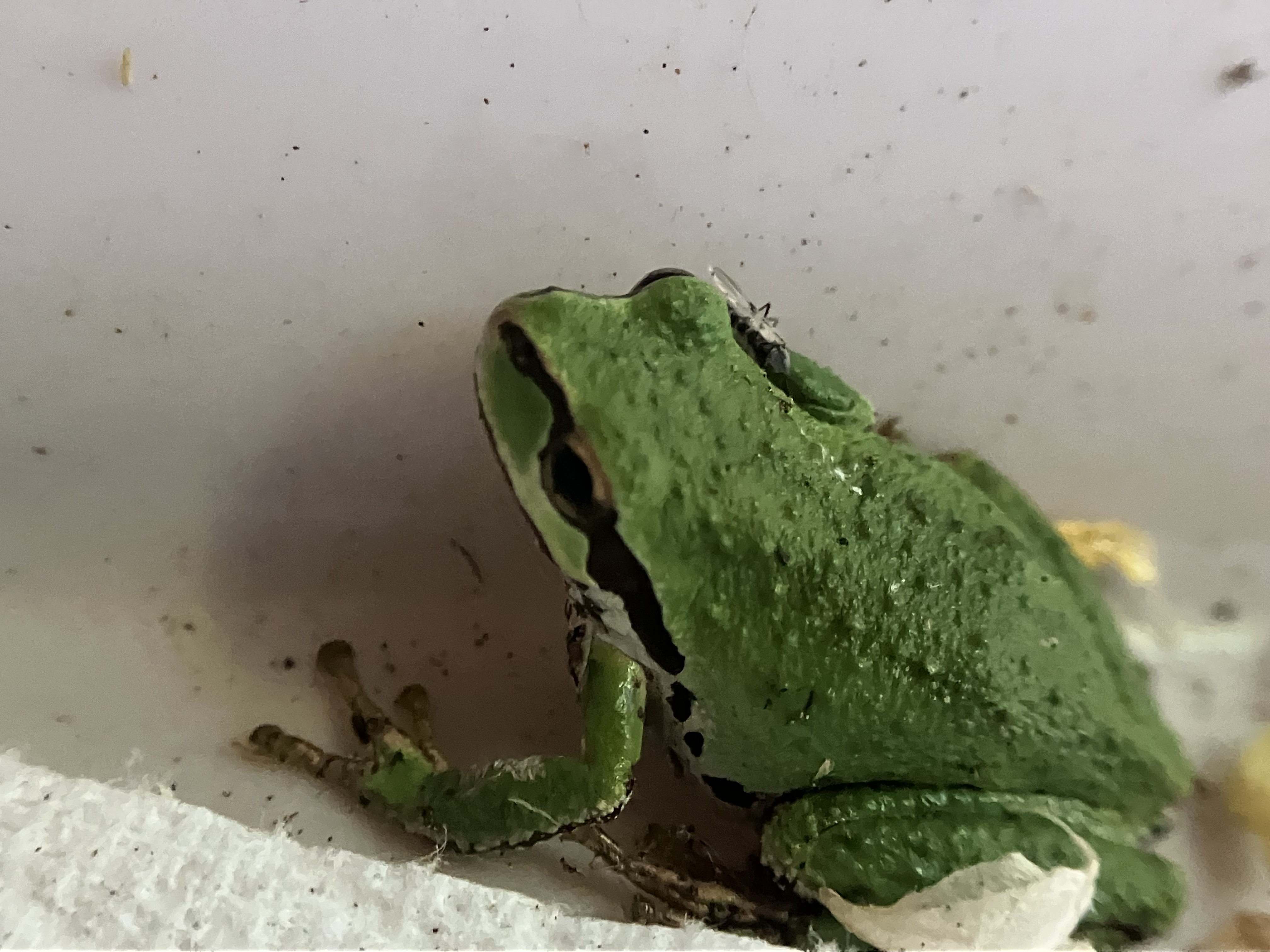
It took me a good while today to sit down and try to work out ID’s for my specimens. ALL specimens found in the bucket are handled with gentle care and safely released back into cryptic hiding spots to better avoid predation by birds, yellow jackets, and other predaceous insects. Probably add in spiders, though I have not seen many in this dry spell of weather we are having. I did have an unexpected guest show up in the bucket this morning. A frog. Yes, if you set the buffet up, the dinner guests will inevitably find it. 🐸

I’ll add the link to the National Moth Week website here https://nationalmothweek.org and if you are interested in participating and can’t figure out what you need to do or need advice on how to MOTH, feel free to reach out. Check out the gallery below and thanks for stopping by!

Gallery

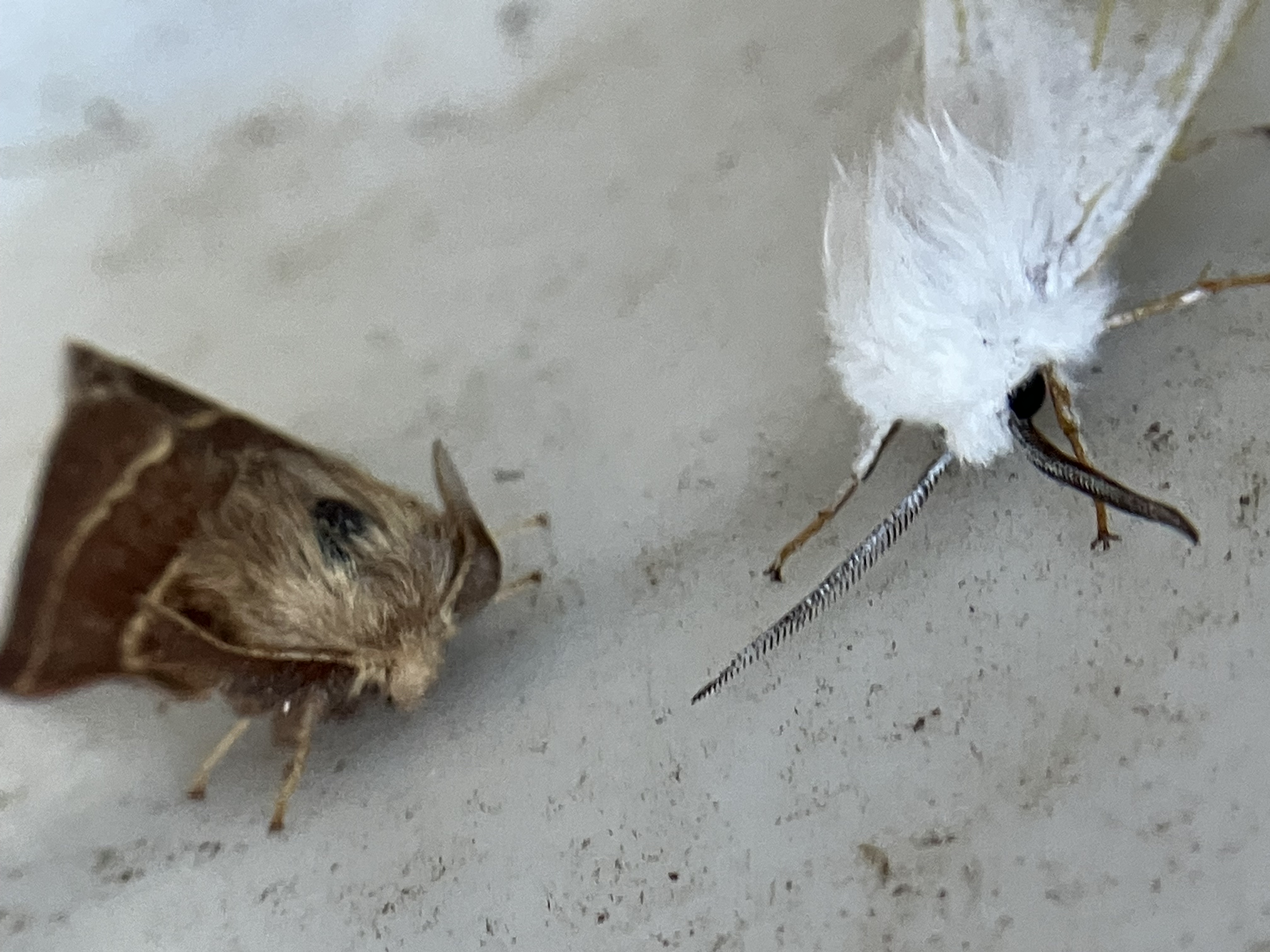
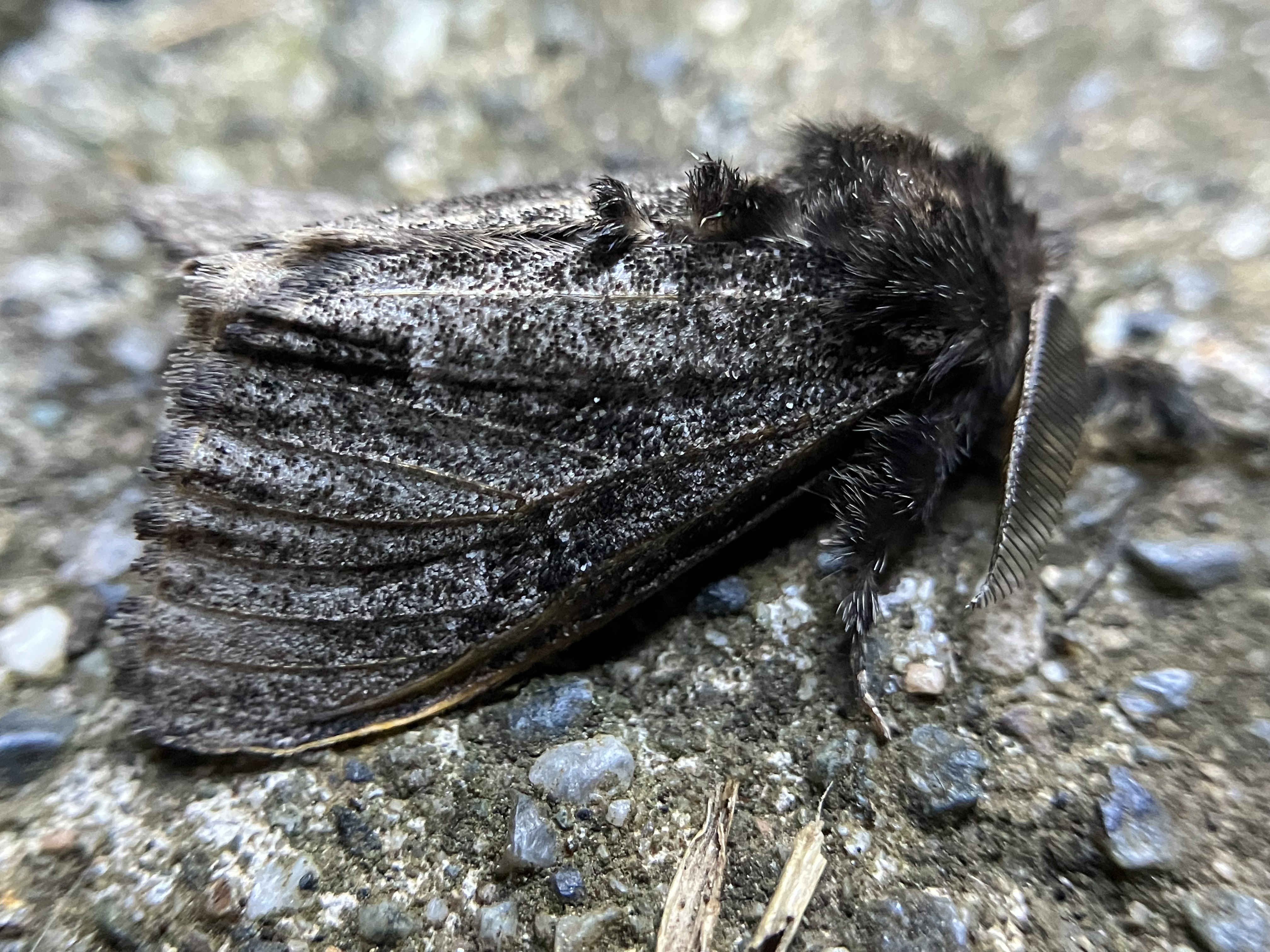
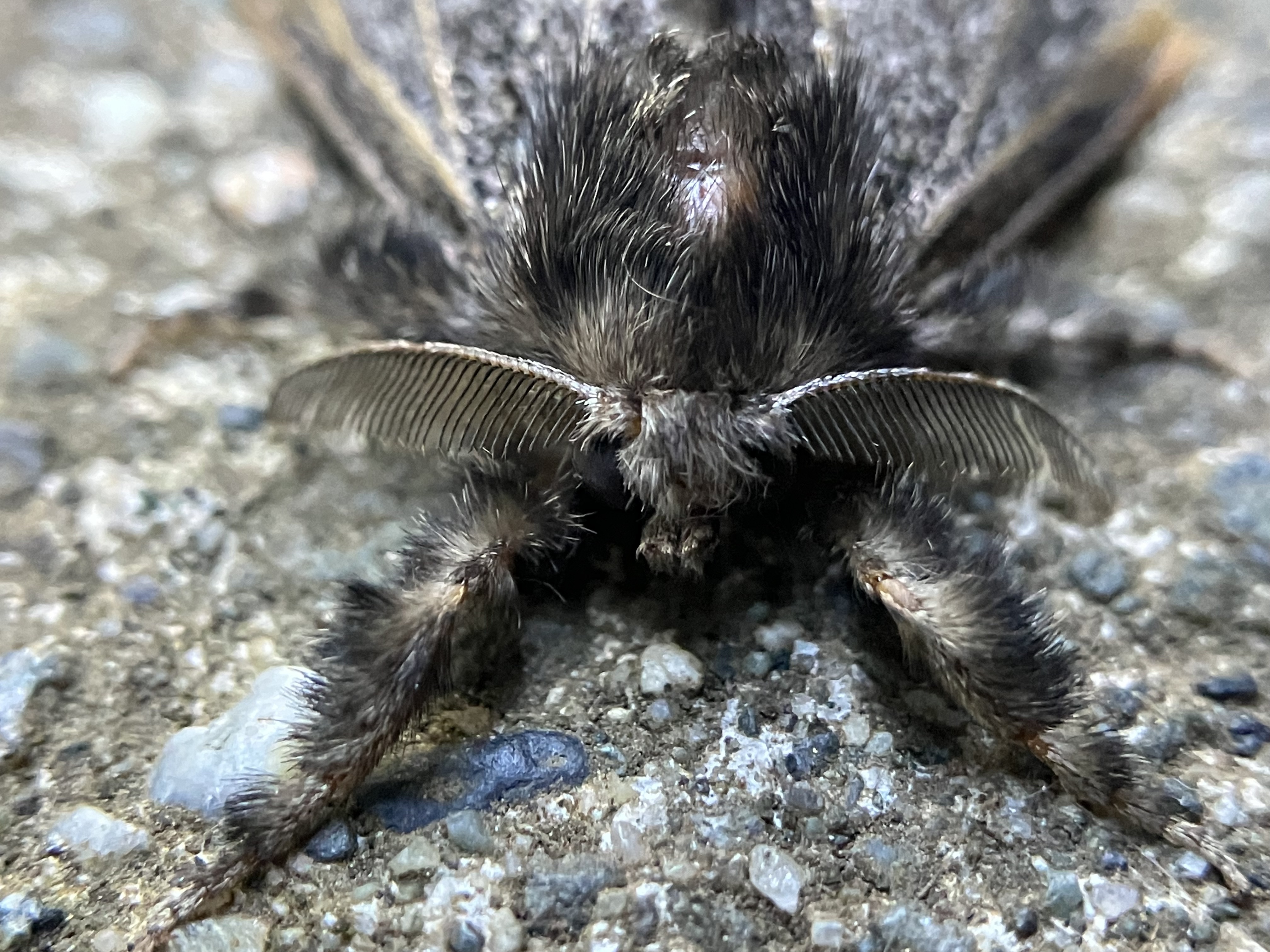
I believe this is Dasychira griefacta . It takes off somewhat awkwardly but made it up into a tall fir tree.

Bug Bucket Thursday – July 13, 2023

Virginia Tiger Moth (Spilosoma virginica)

Continuing on to another morning’s findings (07.13.2023), I am extremely happy with how adding the egg cartons to my bug bucket are improving my moth collecting. Side note here – I am only collecting photos and these critters are handled with gentle care and released to places where they are able to hide from predators during the day. I even go so far as to color match their hidey spots. 😉

Photos of the specimens found are in the gallery below along with some pics of my set up. National Moth Week is July 22-30, so if you are interested in participating, please check out the link here https://nationalmothweek.org, and feel free to reach out if you have any questions. You can send me an email or find me on Facebook (Bugs of the San Juan Islands) at https://www.facebook.com/groups/3594158544144419 .

Thanks for reading!

Gallery

Bug Bucket Wednesday

Eyed Sphinx Moth (Smerinthus ophthalmica)

Leading up to the Twelfth Annual National Moth Week, July 22-30, 2023 https://nationalmothweek.org, I am getting into moth mode with some early collecting to see what is flying about the forest near our home at night.

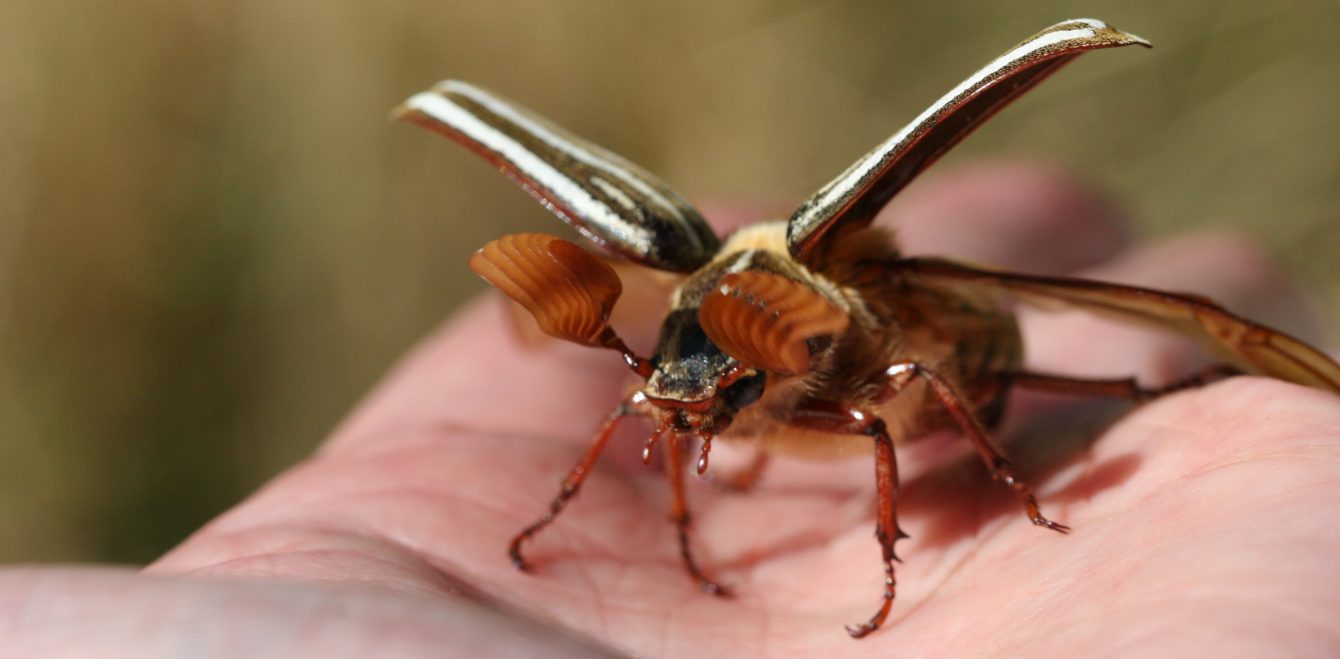
My first attempts at this were quite unsatisfying, save for the two awesome beetles that came to visit. The bug station I set up just wasn’t yielding much in the way of moths, at least until I discovered my station had been discovered by some thieving yellow jackets who were picking off my moths right in front of my eyes. Something had to change. I sure didn’t want to lure in these beautiful creatures to become a breakfast buffet.


I got some very helpful advice from a friend named Carl. Carl is an expert moth-er, and he recommended putting some egg cartons in my bug bucket so they would have a place to hide. I tried this last night, adding two egg cartons and some pieces of cardboard. Then, I went to hang my bucket up and turn on the light – EXCEPT, those darn yellow jackets showed up at 9 pm. They must have excellent memory. I suppose they wanted to be first in line at the moth buffet.


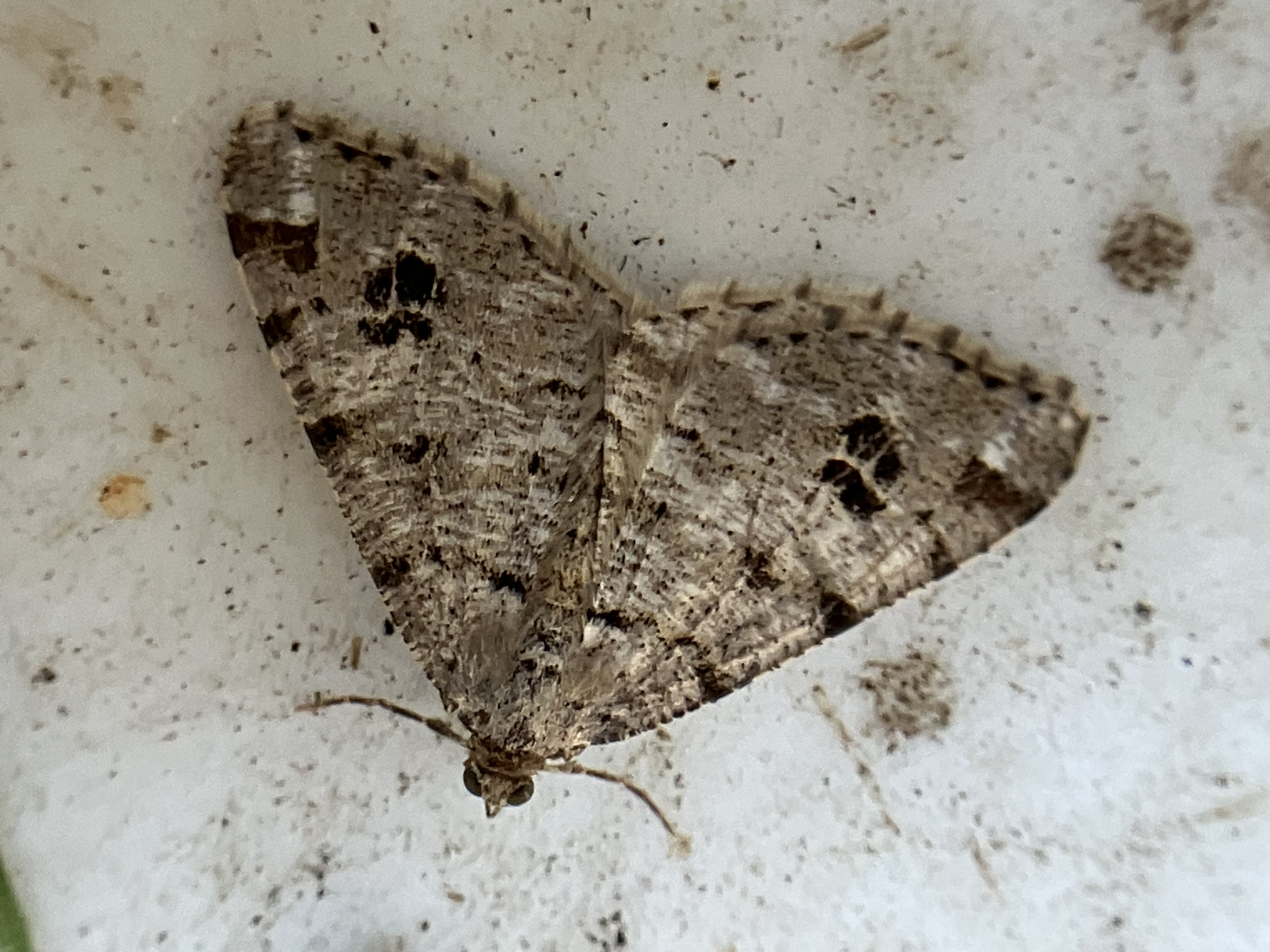
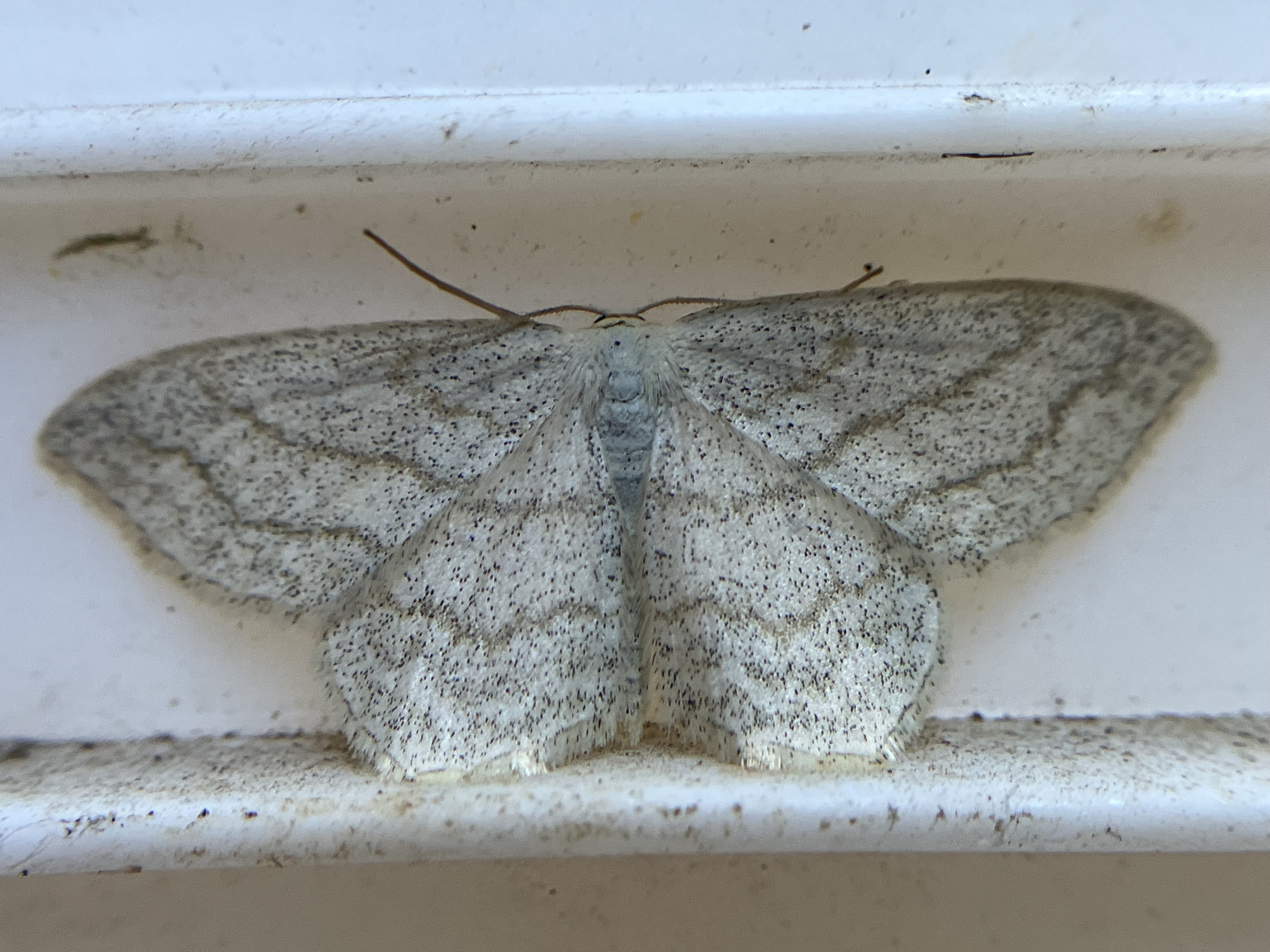
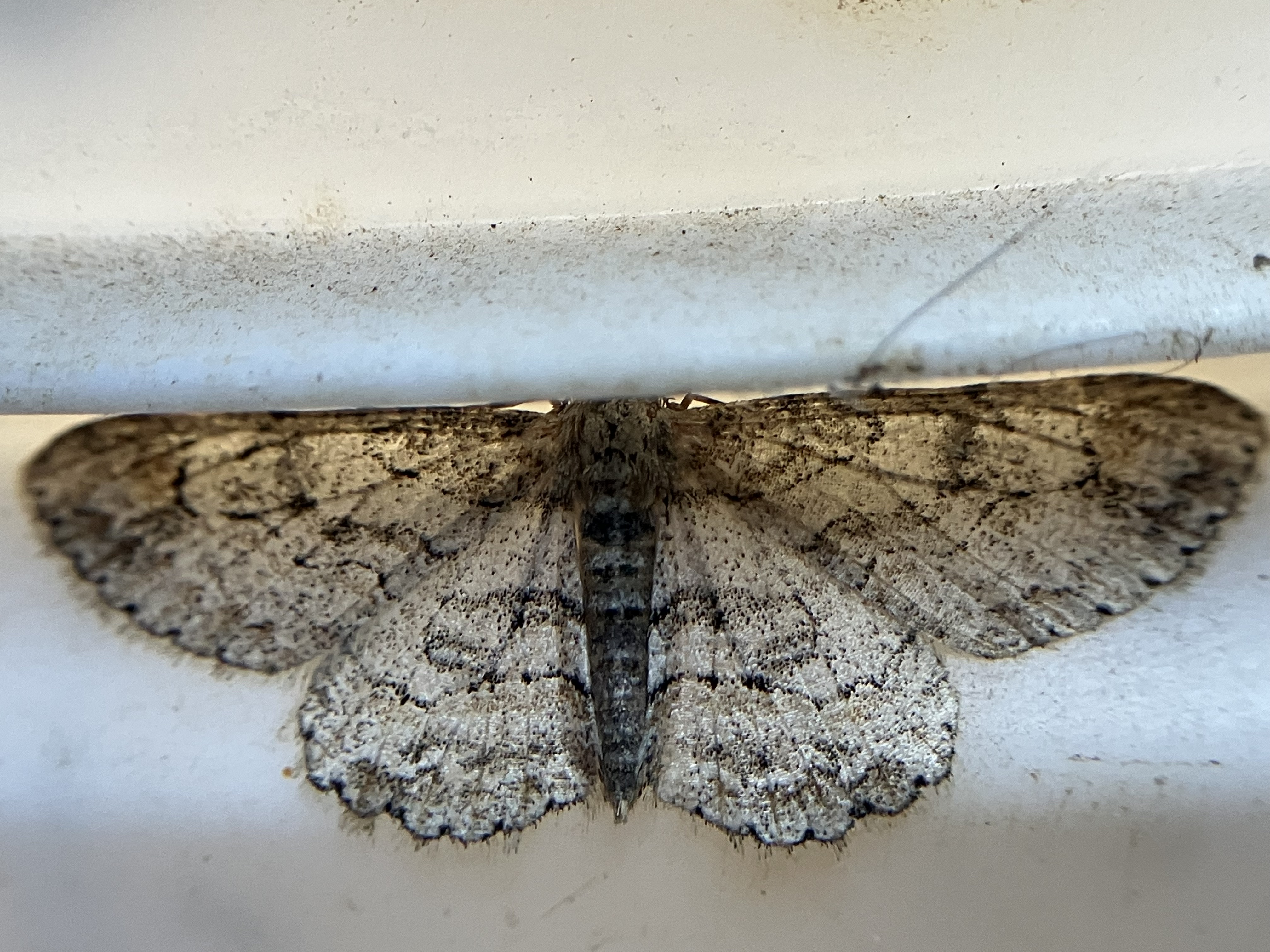
I moved my bug bucket and light to another location. It was a success. Here is the assortment of moths I collected last night. All were handled with gentle care and photographed. Afterwards, I moved them to hiding spots in the forest to make them less susceptible to predation.

Gallery Below

If you’re interested in participating locally in National Moth Week, please don’t hesitate to reach out for more information. You can find me via email at cynthiabrast@icloud.com or on Facebook at Bugs of the San Juan Islands – a private group, but easy to join by answering a couple of questions and agreeing to follow the group rules to prove you aren’t a spammer and won’t be disruptive. 😉

Thanks for viewing!

Flight of The Phantoms (Phantom Hemlock Loopers – Nepytia phantasmaria)

Yesterday, August 29, 2021, I received an email from C. Croll requesting ID of a moth photographed by T. Ormenyi. Their query read,

“I live on Orcas and kayak quite a bit. Today I was paddling from Patos Island back home, and there were thousands of moths in the air. They were heading from south to north. We first saw them on Patos but then all the way home. Some had fallen onto the water on the crossing. ”

And,

“I had not witnessed so many moths all traveling together before. Seemed like a migration of some sort? When they first arrived I thought there were cottonwood seeds floating on the breeze, took a second to realize that it was moths. The air was full of them for almost an hour. “

Phantom Hemlock Looper (Nepytia phantasmaria ) – photo by Tessa Ormenyi

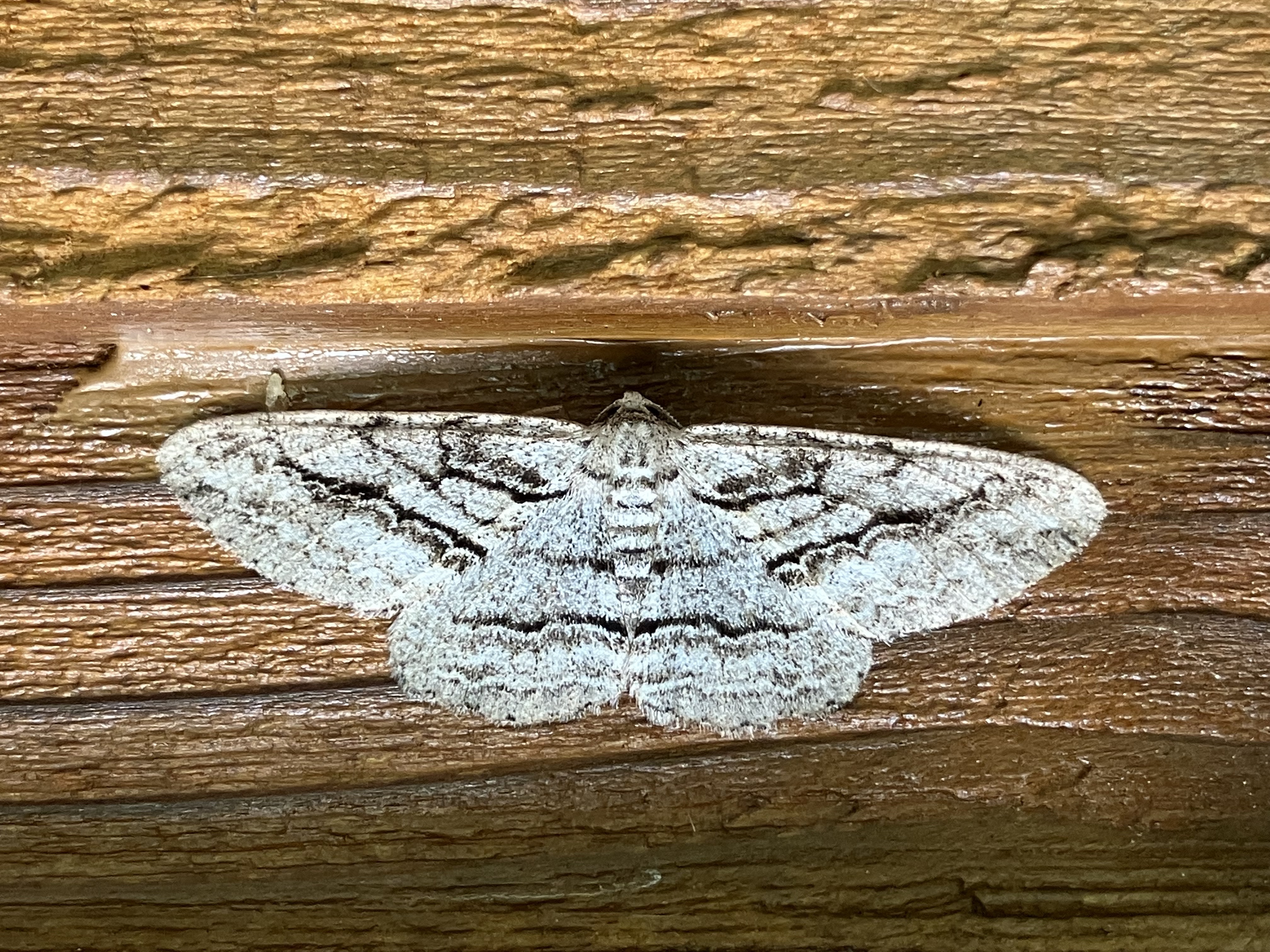
These moths sighted by Calvin and Tessa are the Phantom Hemlock Loopers, (Nepytia phantasmaria). They are in the family Geometridae. This species ranges from southern BC to California. There is one generation produced per year and larvae feed on conifers, including Western Hemlock, Douglas-fir, Grand Fir, Amabilis Fir, Sitka Spruce, and Western Red cedar (Bugguide.net).

Adults typically emerge in fall (September and October), so seeing them now is a bit earlier than when I’ve typically collected specimens at my porch light on San Juan Island. Last year, I photographed my first specimen of the season on Sept. 7, 2020. As these moths are nocturnally active, Calvin and Tessa’s report of of them traveling en-masse like this during daylight was intriguing. I was curious to know more.

William H. Hendrix III’s thesis titled Migration and behavioral studies of two adult noctuid (Lepidoptera: Noctuidae) species plus feeding observations of some moths common to Iowa (1990), cites (Johnson, 1969), stating these migration events are part of the “oogenesis flight syndrome” stage where the newly emerged adult insects move en-masse before reproduction and egg laying takes place. Hendrix (1990) also provides some theories as to WHY these moths migrate in the first place. Several theories have attempted to explain this, but he concludes, “Migration, consequently, occurs primarily in young adults and its chief function is to allow escape from unfavorable habitats and allow colonization of a broad range of environments” (Hendrix, 1990).

After reading about this particular species, I believe the migration witnessed yesterday could be attributed to either 1) the sudden weather change we experienced overnight in the islands, or 2) the lack of suitable habitat for reproduction because of the drought we are experiencing. I’m guessing the drought may have more to do with this and we will see more evidence as other species struggle to survive the coming environmental shifts associated with global warming.

Thanks to Calvin and Tessa for sending in their observations!

References and Further Reading

https://bugguide.net/node/view/88329

http://mothphotographersgroup.msstate.edu/species.php?hodges=6907

Edwards, D.. (2011). Activity rhythms of Lepidopterous defoliators. II. Halisidota argentata Pack. (Arctiidae) and Nepytia phantasmaria Strkr. (Geometridae). Canadian Journal of Zoology. 42. 939-958. 10.1139/z64-093.

Hendrix, William Hurston III, “Migration and behavioral studies of two adult noctuid (Lepidoptera: Noctuidae) species plus feeding observations of some moths common to Iowa ” (1990). Retrospective Theses and Dissertations. 9373. https://lib.dr.iastate.edu/rtd/9373 https://lib.dr.iastate.edu/cgi/viewcontent.cgi?article=10372&context=rtd

Johnson, C. G. 1969. Lepidoptera: Long-distance displacement. In MigrationandDispersalofInsectsbyFlight. Methuen&Co.,Ltd., London. 763 pp.

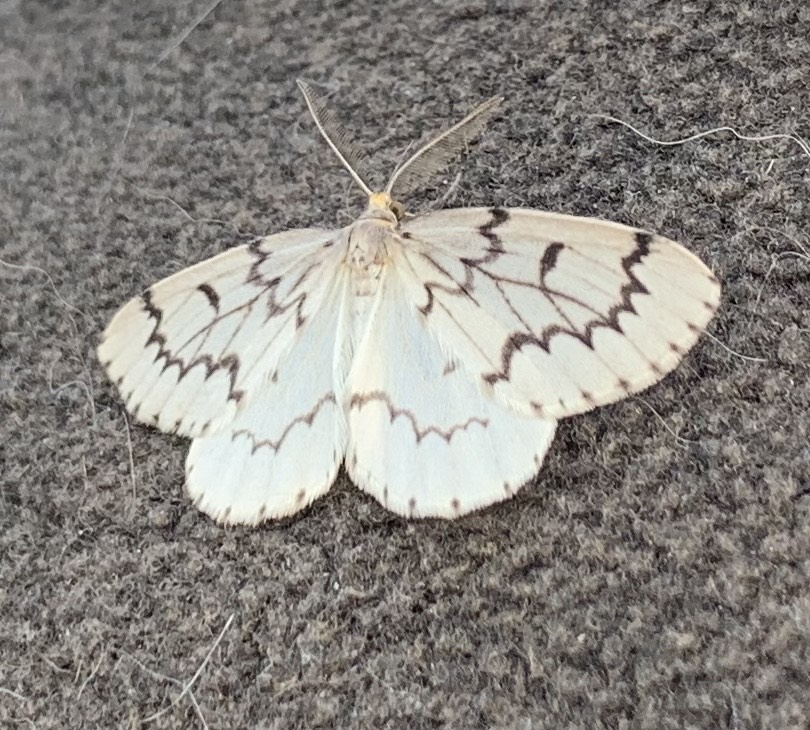
Enchoria lacteata

fullsizeoutput_2289

Enchoria lacteata

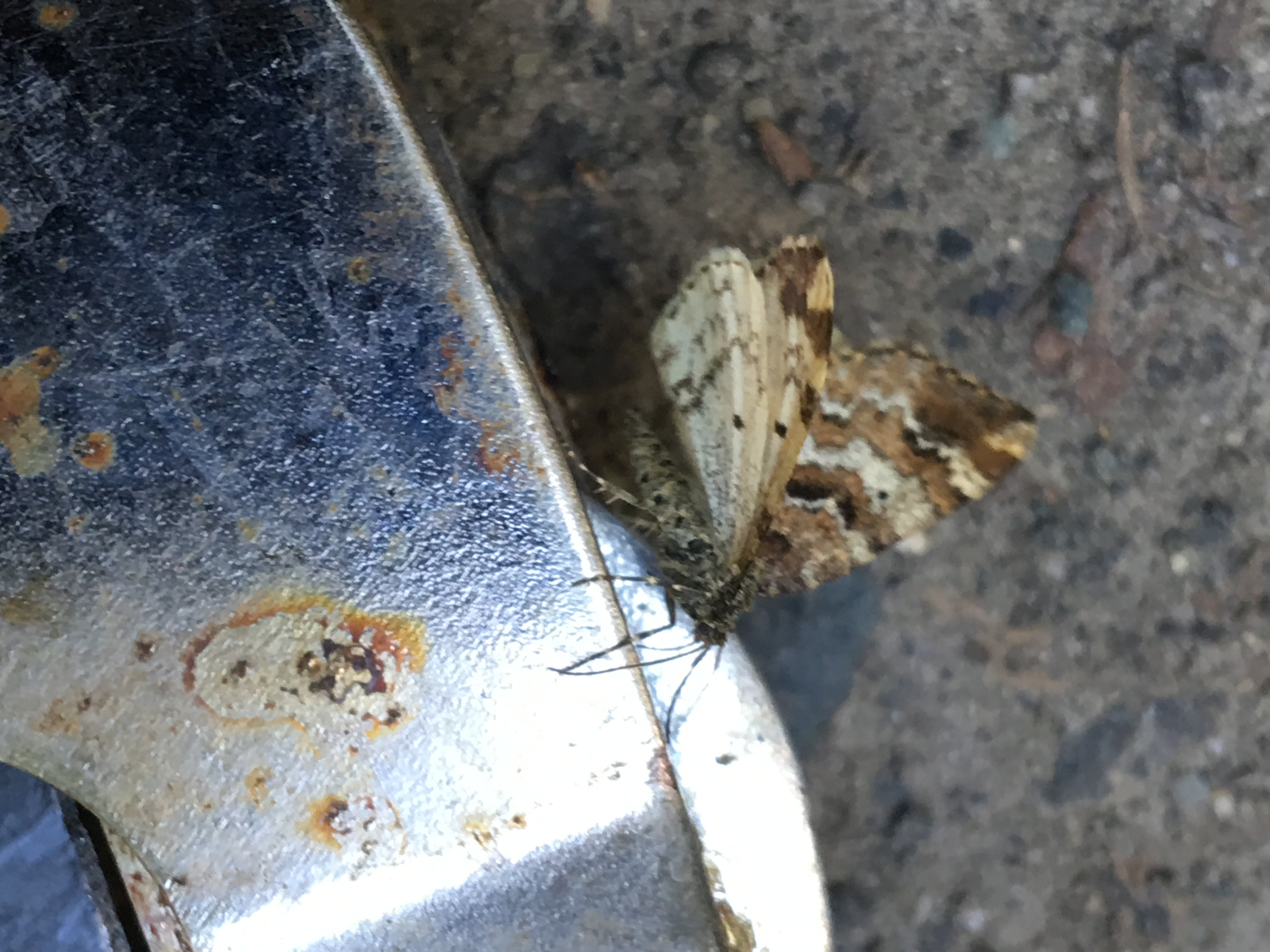
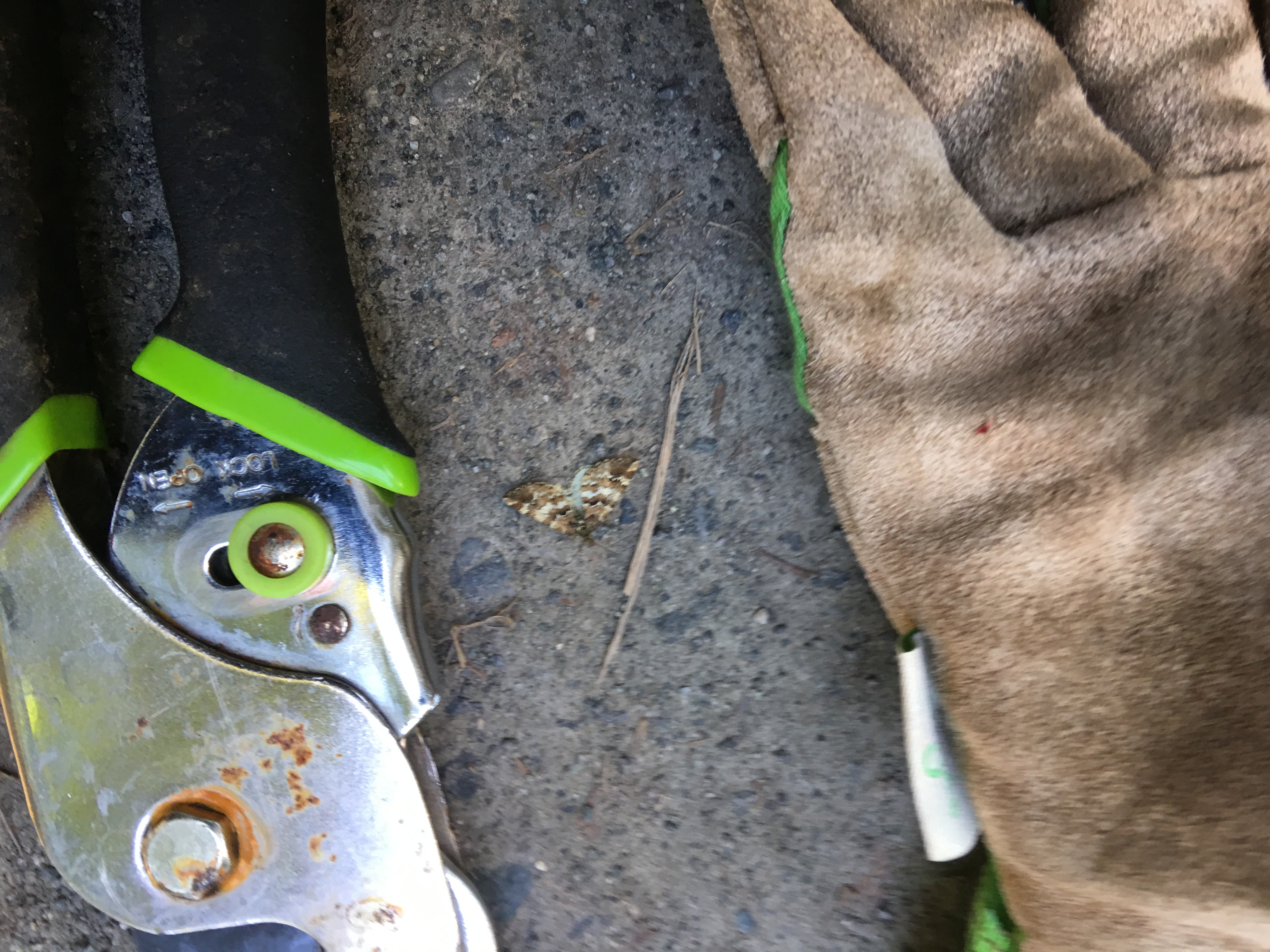
Enchoria lacteata (Packard) is a relatively small moth with forewings measuring only 0.9-1.1 cm in length.    Adults have a remarkable zig-zag pattern on forewings made up of various shades of brown and buff.  They are diurnal (daytime) fliers and emerge from late February to May.  Sightings are often in grassy areas or edges of moist woodlands.  Larval host plants are various species of miner’s lettuce, Claytonia (Portulacaceae).  Check out the following link for more information on miner’s lettuce.  It’s edible! https://www.ediblewildfood.com/miners-lettuce.aspx

Enchoria lacteata

Enchoria lacteata crawling onto my pruning tool.

IMG_9131

Enchoria lacteata between my work glove and pruning tool


References:

POWELL, JERRY A., and PAUL A. OPLER. Moths of Western North America. 1st ed., University of California Press, 2009.

https://bugguide.net/node/view/46115

http://mothphotographersgroup.msstate.edu/species.php?hodges=7403