Tag Archives: green fly

Mitten feet

This is one of my “Know your pest predators” posts, featuring one of our PNW flies. Flies are all too often maligned and under-appreciated. We think of flies as spreading disease and being a nuisance, yet many of them perform incredibly important jobs as pollinators and pest predators. Yesterday I was sleuthing flies in the yard and found these metallic green beauties. Here is a Dolichopus (“doe-LICK-uh-pus”) male and female. The “dolicho-“ part means “long”, and the “-pus/-pod” part means “leg” or “foot.”

Some species of Dolichopus males (like this one) have little “flags ” or “mitten” front feet they wave or flap around to woo the ladies. Reading about this very large group of flies has been interesting and you can learn more about their courtship behaviors in Van DuZee et al. (1921).

Dolichopus sp. male fly

These flies are predators of small, soft-bodied invertebrates as adults and during their larval stage. You can thank them for helping keep populations of aphids under control in your garden.

Dolichopus sp. fly (male)

You’ll find these flies in northern latitudes in North America. “Dolichopus species are among the largest and most common members of the family Dolichopodidae in North America. The majority of Dolichopus species prefer humid habitats and some are restricted to saltmarshes,” (Pollet et al. 2004).


References:

MARC A.A. POLLET, SCOTT E. BROOKS, JEFFREY M. CUMMING. 2004. “CATALOG OF THE DOLICHOPODIDAE (DIPTERA) OF AMERICA NORTH OF MEXICO,” Bulletin of the American Museum of Natural History, 283, 1-114,

Van Duzee, M. C., Cole, Fr R., and Aldrich, John Merton. 1921. “The dipterous genus Dolichopus Latreille in North America.” Bulletin of the United States National Museum. i–vi, 1-304, 16 pls. https://doi.org/10.5479/si.03629236.116.i

Key to male nearctic Dolichopus species here – https://digitallibrary.amnh.org/items/5c3c75c8-27ae-47e6-acac-59ec0c30d1cb/full
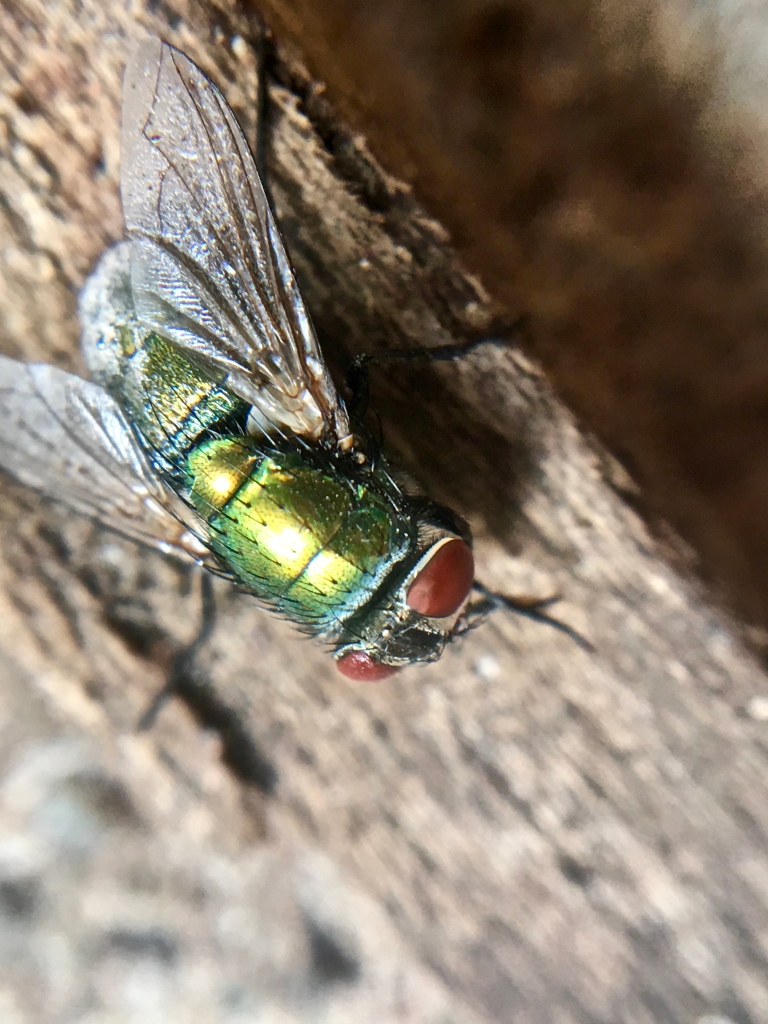
Green Bottle Fly (Lucilia sericata)

Green Bottle Fly (Lucilia sericata) July 9, 2019 San Juan Island, WA

This shiny green bottle fly, a blow fly in the family Calliphoridae, is widely distributed across North America. A frequent visitor to garbage, feces, and carrion, it can mechanically transmit disease, but it is probably more well known for other notable roles it plays in veterinary, medical, and forensic science.

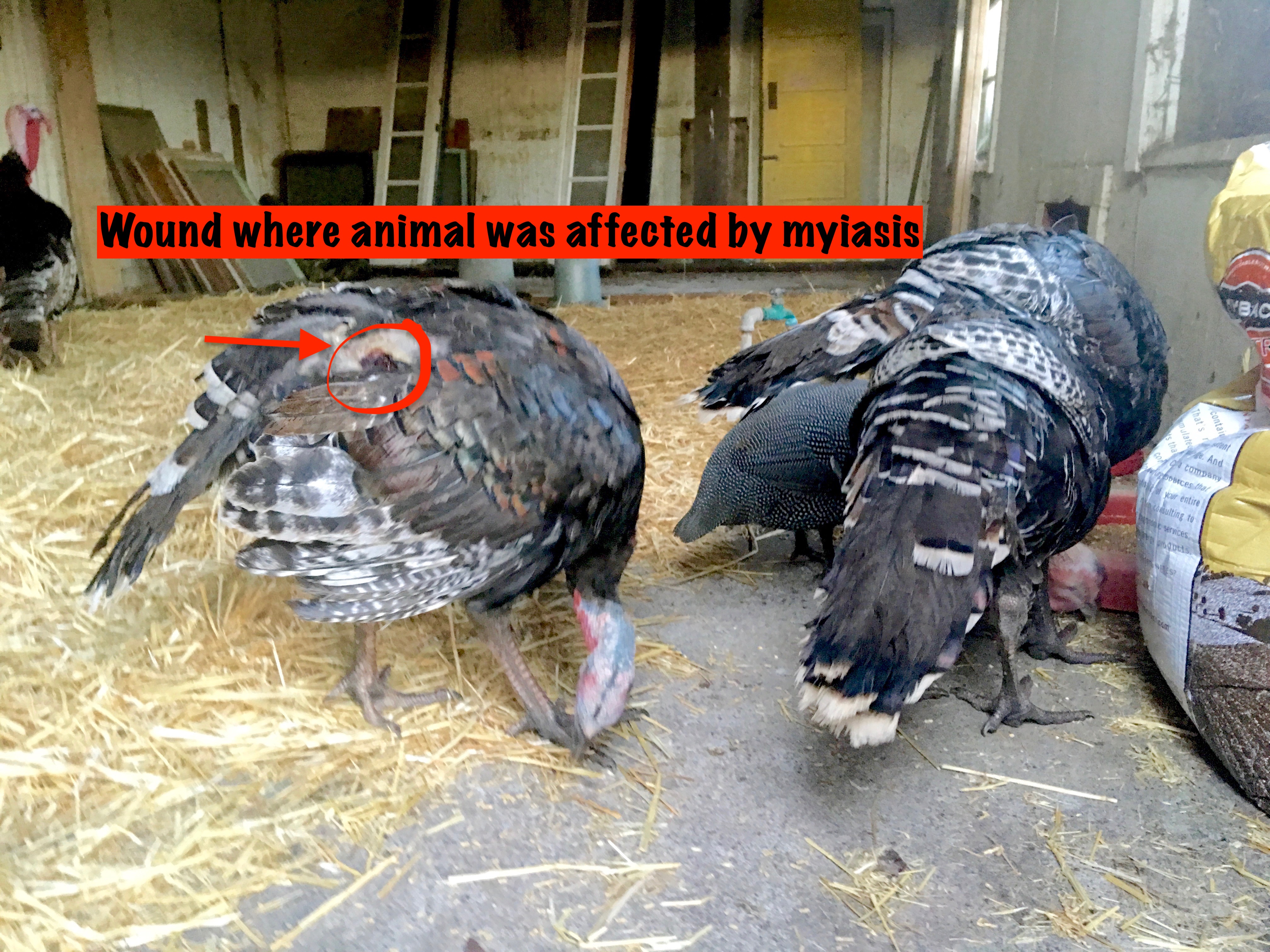
In veterinary science, Lucilia sericata can cause loss of livestock when animals are affected by the larval form of the fly in a condition known as myiasis or fly strike. Animals affected by fly strike can die when fly larva invade living tissue if they are not treated.

In July of 2016, I helped rescue some turkeys someone had dumped near our home. Upon closer examination of the photos I had taken of them, I was able to see a wound one of the turkeys had. The veterinarian who examined the turkey determined there was serious tissue damage due to fly strike and the turkey was euthanized. So, all animals (even birds) are subject to this condition. Good animal husbandry includes regular examination of animals and treating wounds promptly, with appropriate wound care/dressing to protect the animal from fly contact.

In medical science, Green bottle fly larva are known for their role in wound care. In a practice called maggot therapy, larva of Lucilia sericata are placed on an infected wound to clean out the necrotic tissue. Interestingly, as the larvae feed on the dying tissue, they secrete enzymes that are bactericidal, further aiding in healing the wound.

Finally, in forensic science, the timing of the development of this fly has been adapted and well utilized for establishing a time of death, aiding in law enforcement investigations when a body is found.

If you’d like to read more about this shiny little fly, please check out the links below.

http://entnemdept.ufl.edu/creatures/livestock/flies/lucilia_sericata.htm

htthttps://bugguide.net/node/view/53775

https://www.hindawi.com/journals/criid/2018/5067569/

https://pdfs.semanticscholar.org/d1a4/97c592968996ff73b91740b25e9005f09433.pdf