It’s been a good while since I’ve written up a blog post, but I found something I thought worth sharing after seeing these little ones on the side of our above ground pool the afternoon of December 18, 2025. My story, however, is going to take us back to September of 2022.
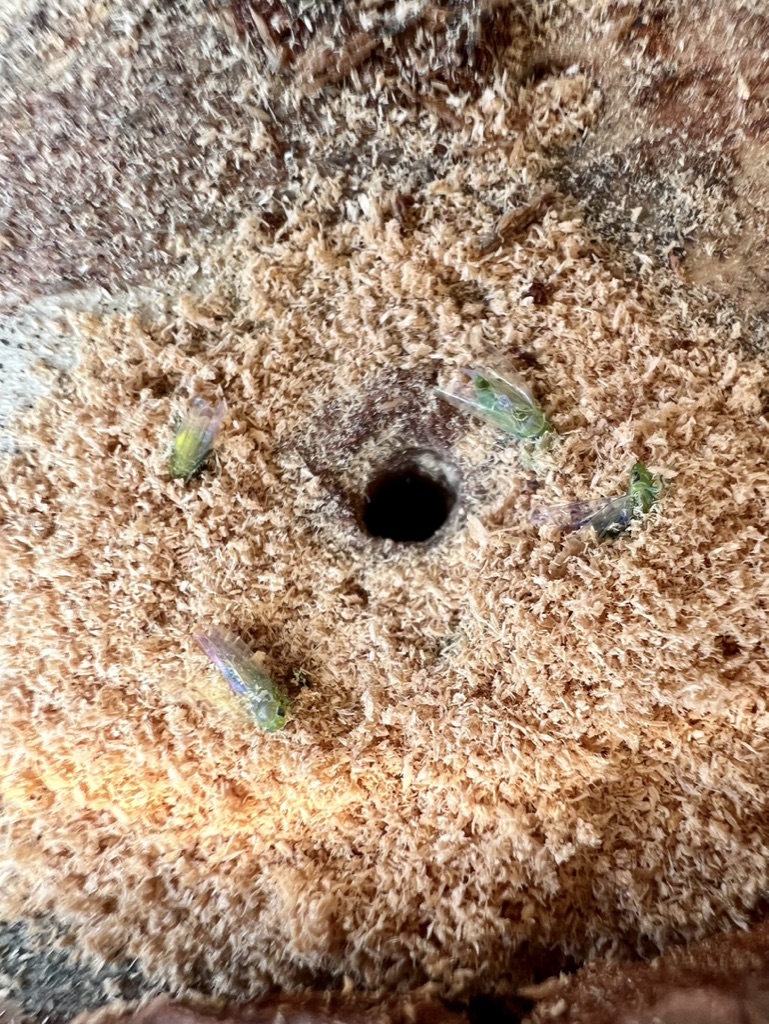
One evening, carrying out the recycles to our barn storage area, I noticed this pile of sawdust and peculiar arrangement of little green bugs around a hole in the middle on a cedar log in our yard.
September 6, 2022
Identification of the occupant and creator of this unique arrangement took me awhile. I believe the wasp is a Crabronid wasp in the genus Crossocerus. She was using an old beetle exit hole as the perfect burrow for her nest construction.
Crossocerus sp. Crabronid Wasp – September 27, 2022
Fascinated, I sat and watched her for hours on end for about two weeks. She would be gone by morning when I woke up, but at the end of the day, I’d find a little pile of sawdust from her excavation work and a circle of ONLY these green bugs arranged so carefully on top.
Just before sunset, she would return to pack in her assembled collection of tiny prizes one at a time, provisioning each of the cells she had constructed for her eggs with the little iridescent green bugs, paralyzed, but still alive. Creepy, right? Later, the eggs she would lay in these cells would hatch into little wasp larvae and consume the still-living, little green bugs…one by one.
Alas, later that winter, I noticed my wasp’s cluster of burrows in that log had been excavated by one of our resident Hairy Woodpeckers. They find all the buried bugs – especially it seems they find the ones in the wood siding of our house. We have a line of little holes pecked all ‘round. Naughty birds!
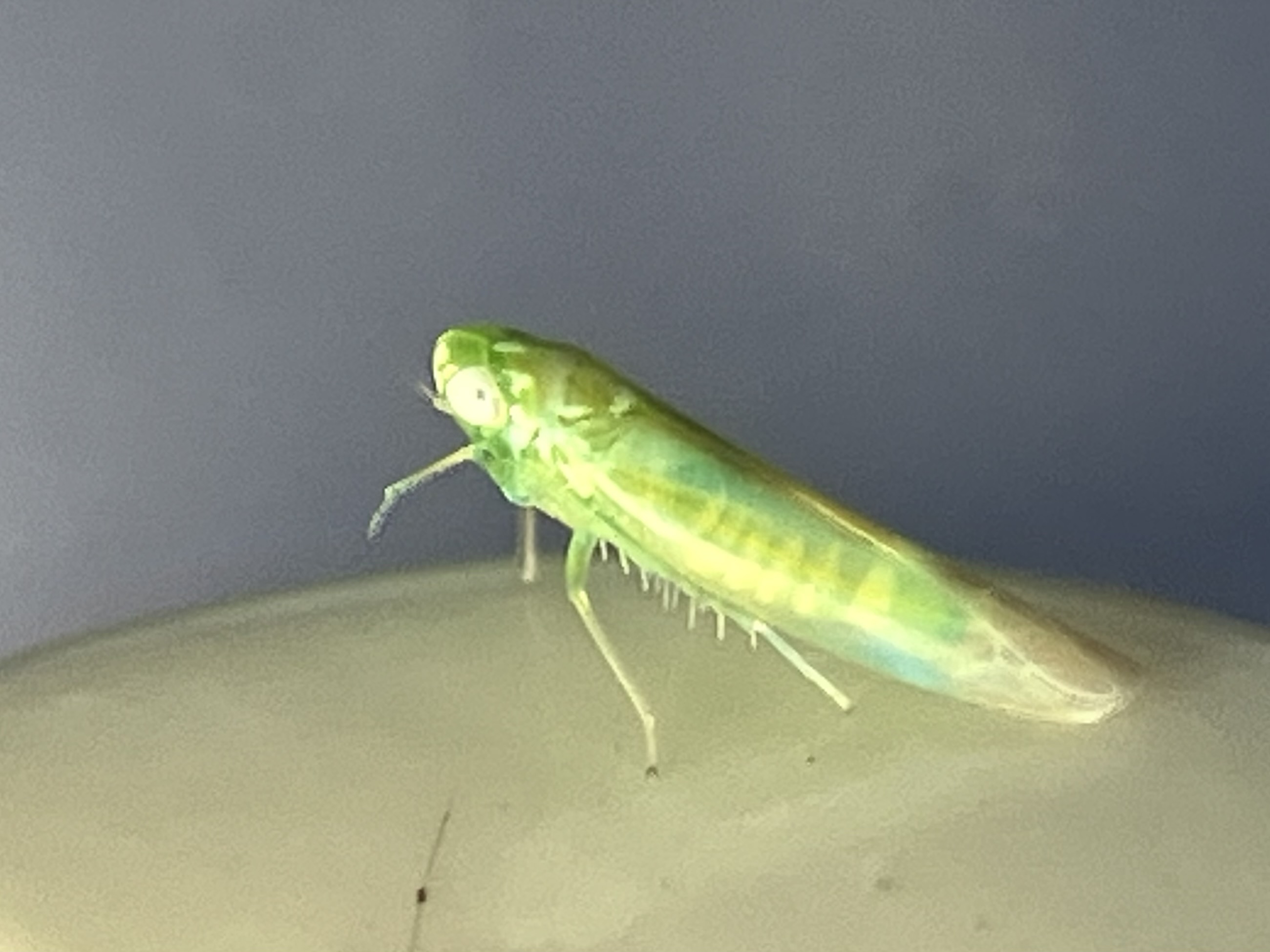
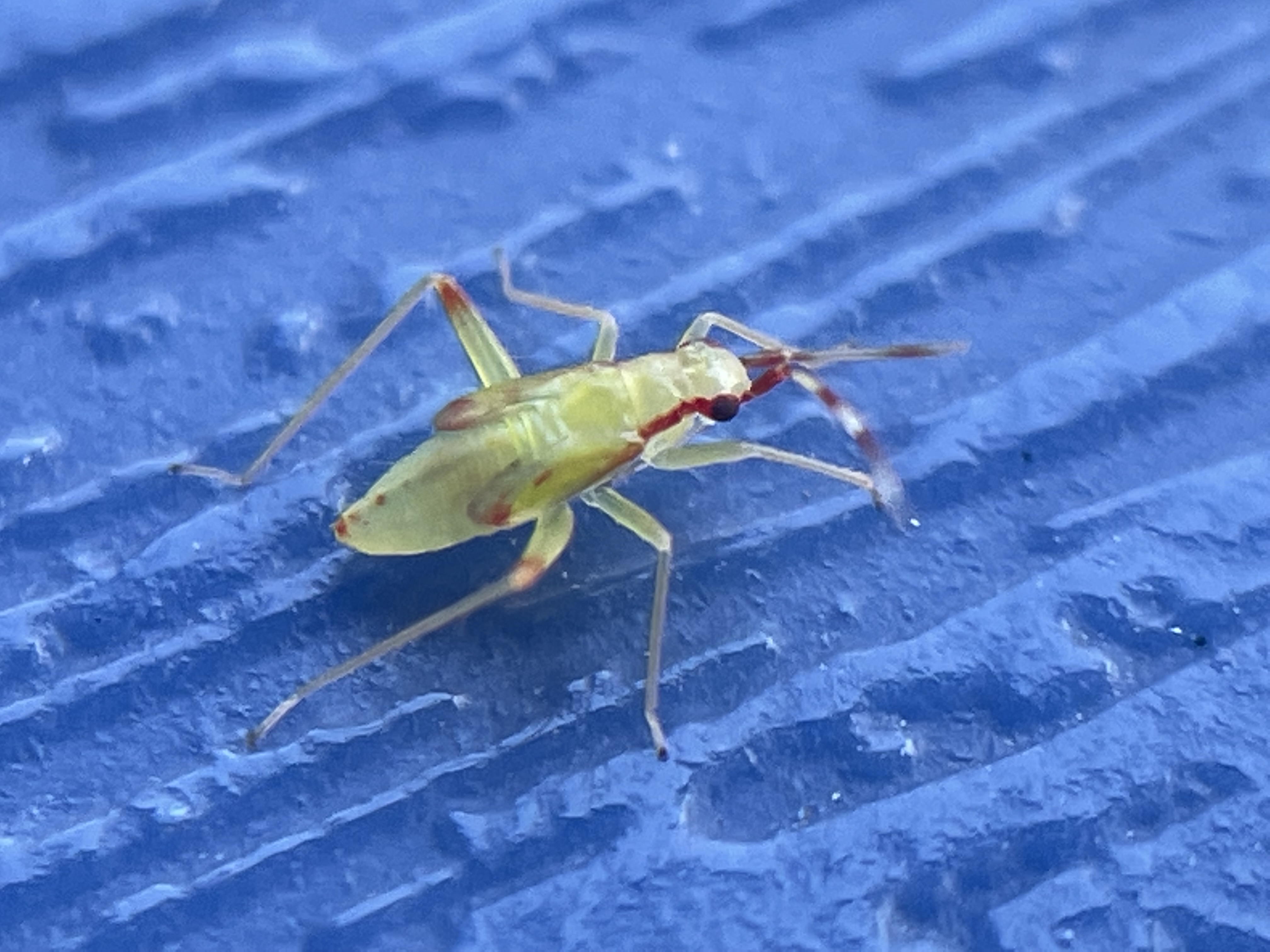
Identifying the little green bugs took me a long while. Mostly, because I get distracted and have to come back to a multitude of projects! I believe these little green bugs are in the genus Kybos. Kybos bugs are a type of leafhopper in the family Cicadellidae. They are associated with Salix sp. (Willows) and (Populus sp.) Poplars which are their host plants (Hamilton, 1972). The bugs feed on sap. That would certainly fit. We have lots of Willows nearby and three Quaking Aspen trees on our property.
And the wasp? One of the identifying features of Crossocerus is the ocelli form an equilateral triangle. In the video, I think I can make out just enough of this to be definitive. The ecology for some species in this genera also fits with a description found in Krombein (1979) about this group modifying pre-existing cavities or burrows in wood formed by wood boring insects.
The relationship between this wasp and the Kybos leafhoppers was intriguing to me because it was the ONLY species of bug I found the little wasp to collect and arrange to provision her offspring with. While I looked for information about this relationship extensively, I did not find any literature with previously reported documentation about this. Krombein (1979) mentions the collection of prey for various species, but none more specific than family Cicadellidae.
I wish it had been possible to identify the wasp to species. It would be amazing to see this again. Perhaps I will be lucky enough to stumble upon another one in action one day.
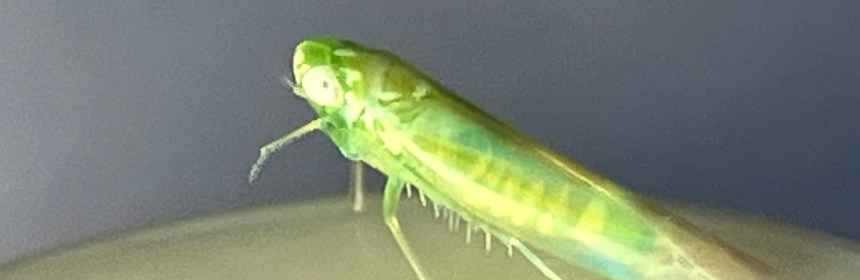
Coming back to the video I began with. Yesterday, December 18, 2025, I saw another of those little green bugs on the side of our pool. It was hanging out with a friend, a Bark Louse (Eptopsocus sp). Either they were enjoying the wind in their antennae or hanging onto the rim for their very lives. It was a very blustery day!
Kybos sp. Leafhopper and Eptopsocus sp. bark louse, December 18, 2025, San Juan Island, WA
Hamilton, K G A. (1972). The leafhopper genus Empoasca subgenus Kybos in southern interior of British Columbia. Journal of the Entomological Society of British Columbia, 69, 58–67. https://www.biodiversitylibrary.org/part/213774
I may have used this title before, so I’ll have to double check, and perhaps since I get this query frequently I will go back and edit with a numerical system or something like that.
So in this video, I am receiving a bite from 1) a mosquito? 2) a tick? or 3) a thrips? or 4) a bug?
If you chose option 4, a bug, you are correct. Indeed it is a bug, but not just any kind of bug. It is a bug in that it falls into the insect order Hemiptera (the true bugs). This “bug” is a species named Campyloneura virgula, a type of plant bug in the family Miridae.
It’s not the first time one has bitten me either, though most of my reactive bites on San Juan Island have been from thrips in the summertime when it is super dry and they are looking for moisture. I react badly to thrips bites. My husband says they are so small you can’t even see them. I think he really believes I am imagining them, but hey, I’m the entomologist in our family, right?
They’re not imaginary.
Neither is this biter. You can see the action on my ankle for yourself.
Then read the reference material and watch out for ankle biters in your yard.
On October 26, 2022, hubby and I left the island to venture to Texas for ten days. I always leave the island with great trepidation because I do not like being separated from my fur and scale babies (two cats and one dragon). They always have a babysitter to care for them, but it’s not “momma,” and no one else I know is going to do things exactly like me. If I could clone myself, it would be easier to depart. Or, I could stay with them and send the clone with my husband. Seriously, I’m joking…or maybe not. Depends on how I’m feeling when you ask me.
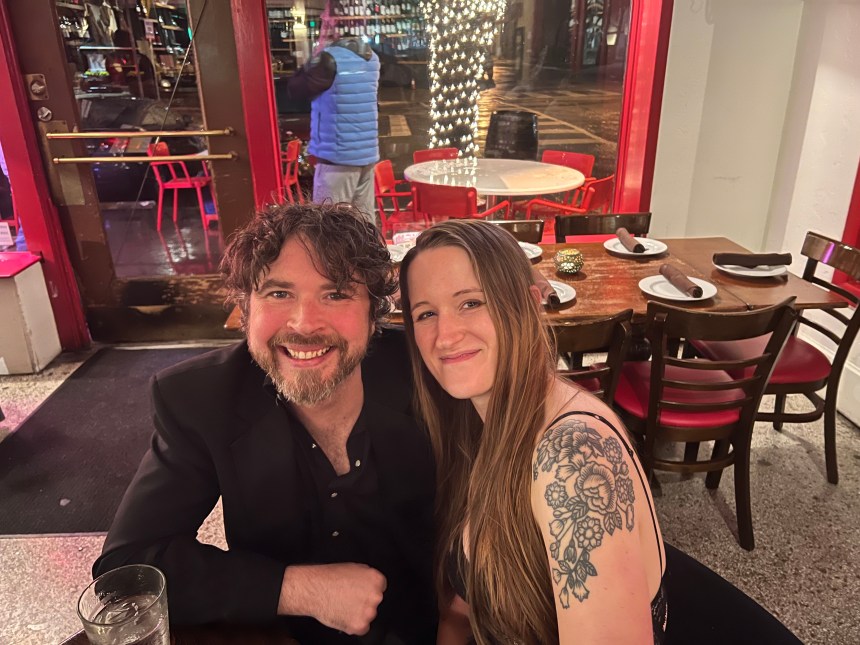
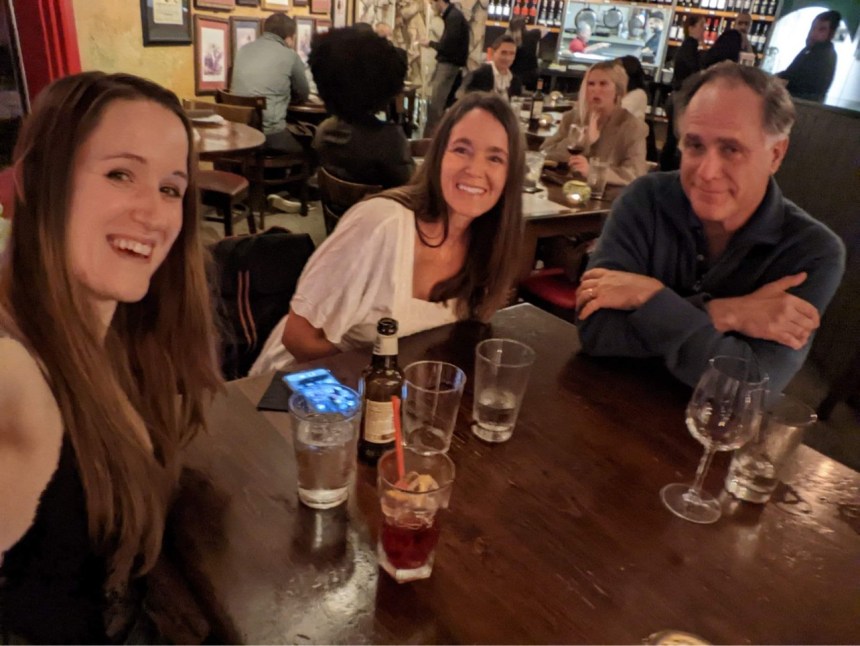
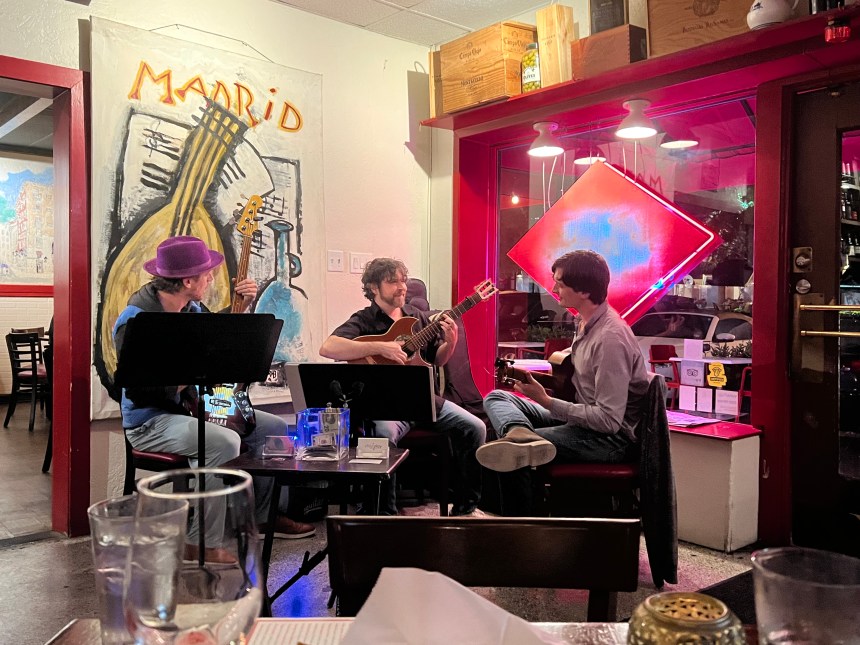
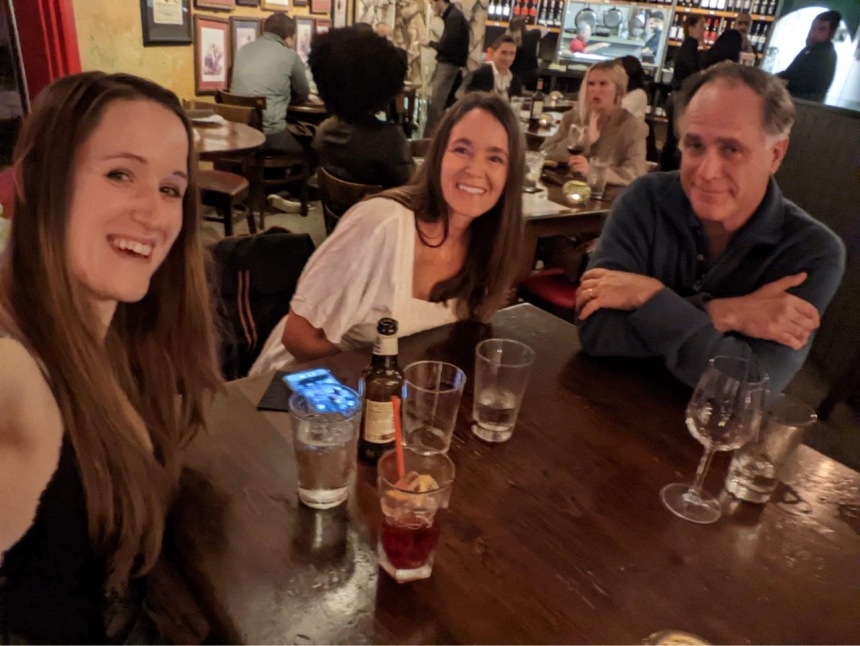
The trip was in reality, an essential one. After waiting three years, I have not been able to get into a specialty neurology clinic here in the PNW area. I have some “wiring” issues that are complicated and need further evaluation. I’m sure my family and my husband will nod their heads about me having the “wiring” issues. Nonetheless, I have been suffering without answers, so maybe we will have some after seeing Dr. Ansari in Frisco, TX. The other part of our trip is an annual family visit. We stayed with my parents in the Dallas area and visited with them and some of my former friends and neighbors. It would have been nice to drive south and see my brother in the Austin area too, but scheduling just didn’t work out. Some of our trip overlapped with my daughter flying down to visit as well. She coordinated a nice evening outing to Cafe Madrid in Dallas to hear her former guitar instructor and his group play Flameno music while we also enjoyed a fantastic meal at the restaurant.
Check out the slideshow of our Cafe Madrid experience below.
Joel Pipkin and Amanda at Cafe Madrid
Amanda
Amanda with Me and Lincoln at Cafe Madrid, Dallas, TX
Good beer!
Joel’s music trio at Cafe Madrid
Music at Cafe Madrid, Dallas, TX
With Amanda and Lincoln at Cafe Madrid, Dallas, TX
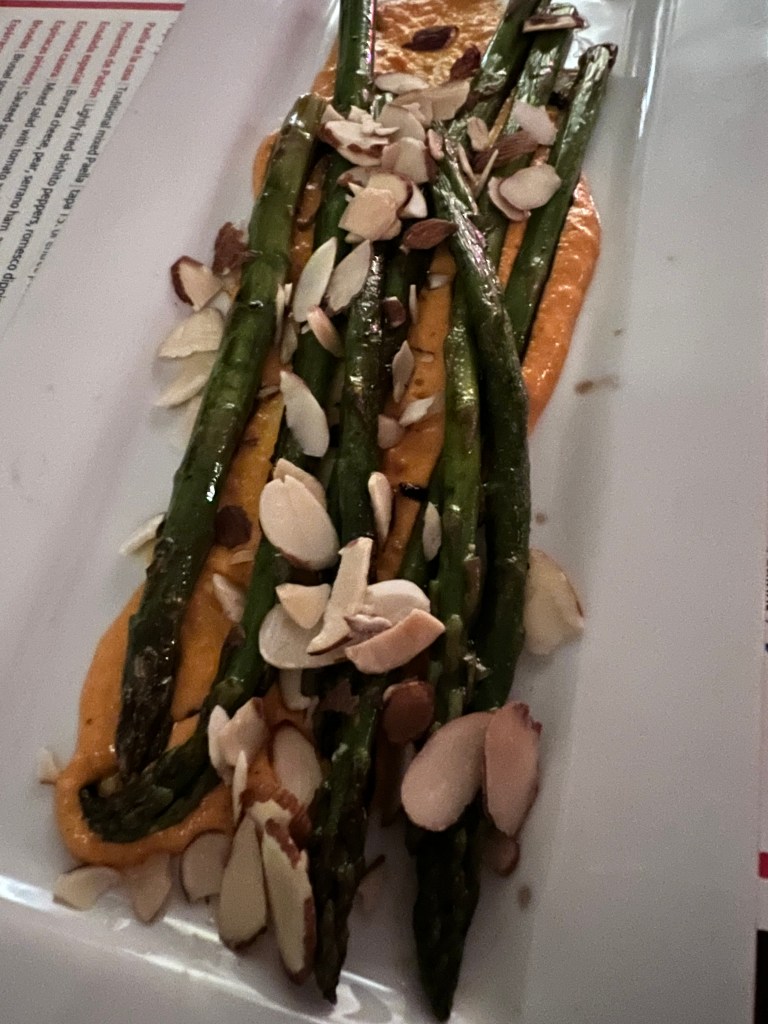
Tapas at Cafe Madrid, Dallas. TX
Since it was pouring right after we arrived, we managed some fun outings in spite of the rain. Out of sheer boredom and needing some exercise, we spent part of the second day mall-walking. If you have absolutely no idea what that is, good. This means you’ve had other options for exercise. Mall-walking is one of the few exercise options (outside of going to a gym) that most people in these suburban-y-sprawl-y areas have. There are few outside nature preserve options like we have out here and even when it isn’t pouring rain, it can be difficult to get outdoors because it is either way too hot or way too cold. This happens when you change the climate – driving giant suburbans, escalades, or behemoth trucks and living in McMansion-style houses on zero lot lines with lawns. When I say that the DFW area is a “sea of roofs” or ‘rooves’ if you’re particular about your grammar, is frankly, an understatement. There are a few homes with stately live oaks, but more than half with ZERO trees in the front or back micro yard. Perhaps if there were trees, the need to cool these homes wouldn’t require 4-5 giant a/c units (per home). It’s no wonder there are power outages and rolling blackouts in summertime, and don’t even get me started on the “necessity” of fertilizing those golf course lawns and all the wasted water applied so homeowners satisfy the HOA’s regulations to keep things green. Hmmm. What if these people adopted another interpretation of “green?” Could we re-wild our urban landscapes? Would anyone be accepting of transforming their green lawn into a treasure of native vegetation?
Mall-walking photos here.
Amanda on the glam bench
Man stuff
Unicorn anyone?
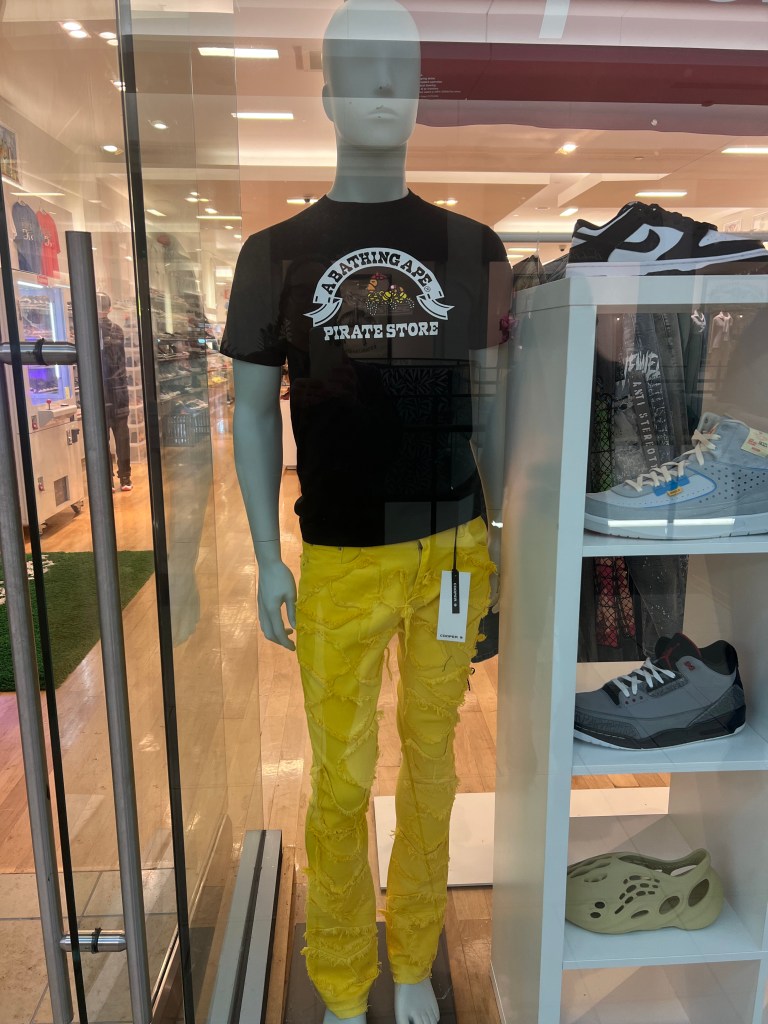
More man stuff. Digging those yellow pants.
Robot
I’ve got my eye on you!
Toy store fun!
Dragon stuff
More Dragon Stuff
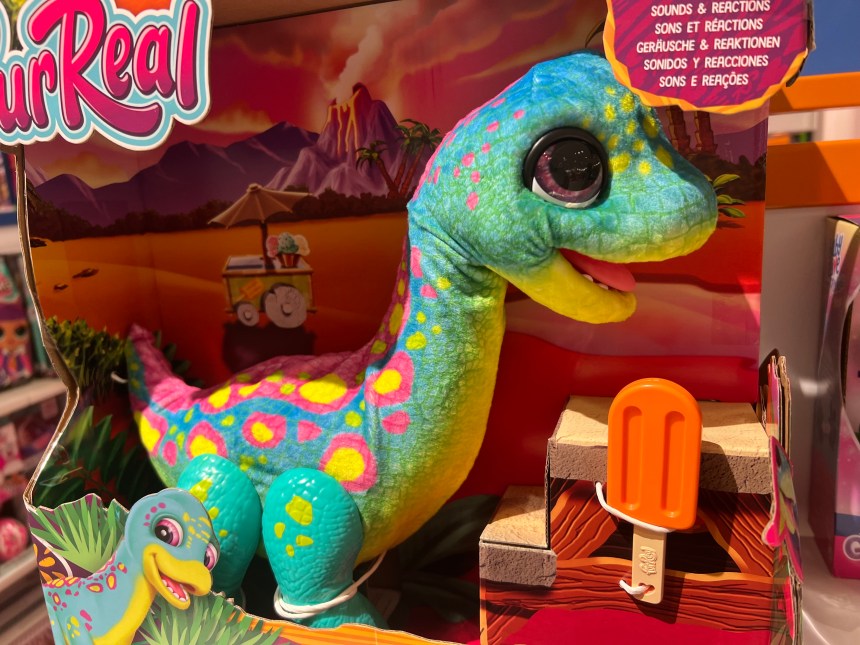
Dinos for Drago
Dino-pillow
On Drago’s Christmas List
More Dragon toys
After walking the mall for a few hours that afternoon, we met up with some long time friends of ours (Marlin and Chanel). These are two of my dearest friends in the world. We all met around 22 years ago at the local 24 Hour Fitness gym in Lewisville, TX. Every year, we’ve made a point of trying to get together to catch up and enjoy a meal. I think having Amanda around makes it all the more fun. They have enjoyed teasing her since she was about 7.
Amanda and Marlin
Marlin, Amanda, and Chanel
Marlin, Amanda, and Chanel
Marlin, Amanda, and Chanel
Marlin, Amanda, and Chanel
Marlin, Me, and Chanel
Here’s a few of the bugs that I found around my parents’ home. I think I saw more spiders than insects, but that works for me. Even though there weren’t many, we hit the jackpot over the next few days at the two local nature areas we visited.
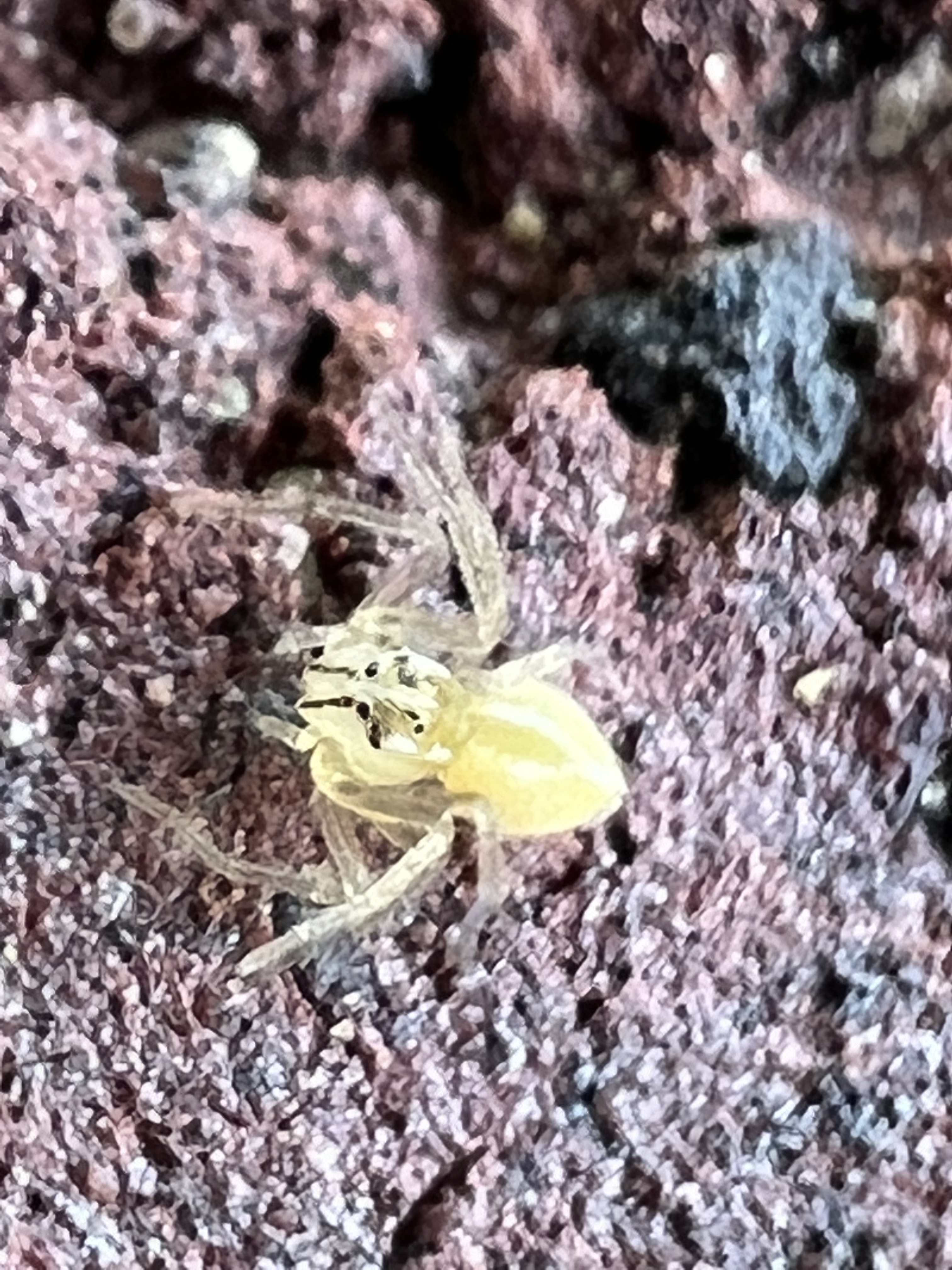
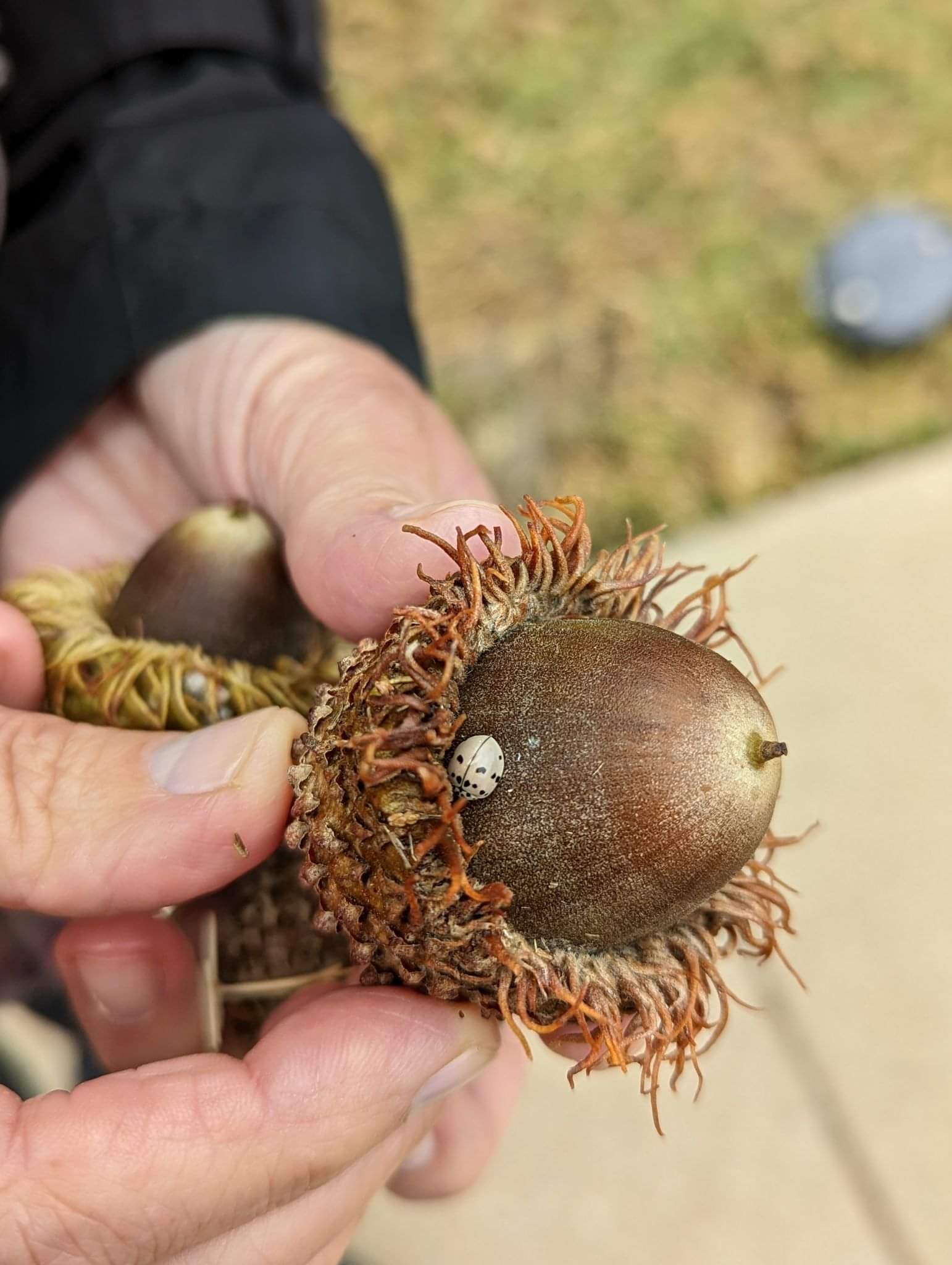
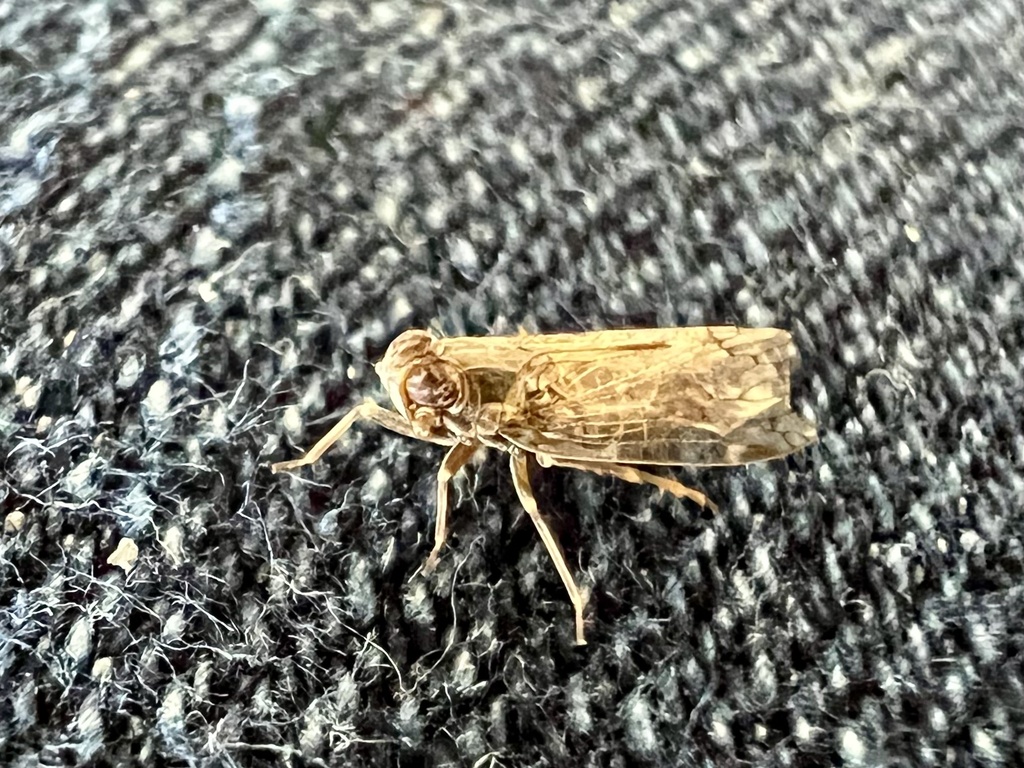
Non-biting midge Family Chironomidae Zelus sp. Assassin BugPhilodromus spiderThomisoidea Crab SpiderTetragnatha Spider Paradise Jumping Spider (Habronattus sp)Band wing fly (Chaetopsis)Oxyopes salticus lynx spiderNut and Acorn Weevil CurculioAshy-Gray Lady Beetle ( Olla v-nigrum)Ashy-Gray Lady Beetle ( Olla v-nigrum)Cixiid Planthopper (Family Cixiidae)Unknown Hemiptera/HopperGreen Cloverworm Moth (Hypena scabra)Micromus posticus Brown LacewingBugs around my parents’ home in Carrollton, TX
I also viewed an amazing aggregation of colonial solitary bees in my parents backyard. These were swarming by the hundreds, low to the ground and going in and out of little ant-like sand castles. As best as I am able to tell, these are Blood bees (Sphecodes sp.). In the 2nd video below, you can see I got so excited, I was down on the ground filming the action as one little bee worked to pack the walls of the entrance and played peek-a-boo with me.
Blood bees (Sphecodes sp.)
Blood Bee (Sphecodes sp.) works on “sand castle” home.
The one thing that made me sad when I visited Texas was meeting some folks who literally asked me to explain to them what a nature preserve was. I kid you not. The phlebotomist was one. She had an 18 year career drawing blood for Quest Diagnostics and she was awesome at her job. I gave about 8 vials of blood and I didn’t faint or even feel a prick. She said she had never been to a nature preserve. Not once. Not ever. When I explained what we have on San Juan, she said, ” she imagined that would be wonderful.” I left pondering how many more people are out there like her. I also contemplated why some people in the San Juan Islands are so against nature preserves. Do we take these places for granted? We shouldn’t. If we don’t care and value them, and protect them from the greed of developers, we will lose them forever. Also, development drives up taxes for residents. If you don’t believe me, look it up. My parents’ 1200 square foot home has a tax bill of about 7K per year for Denton County, TX. They have a senior exemption that cuts this in half. The take away message is more people and more homes = more services needed, more upgrades and maintenance to utility infrastructures, roads, etc. On the other hand, when you include many nature preserves, trails, and wildlife corridors throughout neighborhoods, people are generally more inclined to get outdoors, exercise, and physical and mental health improves. Nature reduces healthcare costs. Think about that.
Keep reading and you’ll see some of the cool bugs I found at the nature areas we visited.
My husband and I visited the two nature areas within a 20 min. driving distance from my parents’ home. The first, Arbor Hills Nature Preserve in Plano, TX, is about 200 acres. It is overused and that has driven away most of the wildlife. Once, you could see road runners, bobcats, coyotes, and many more species. While I am happy it hasn’t been bulldozed for apartments and McMansions (there is actually a giant subdivision nearby called CASTLE HILLS), it is a mostly a giant urban dog park. Don’t get me wrong. Dogs can be wonderful companion animals. I’m not a dog hater at all, but when I see the slog of dog poo along trails or discarded poo bags in a creek, I want to cry. It would be one thing if you saw a dog on occasion, but since everyone seems to have a dog now, it displaces almost anything else that is trying to survive in the wild. So do outdoor cats. If I ruled the world, folks would keep their cats indoors or in catios. They would also be responsible about picking up and appropriately discarding pet waste! Don’t be too critical of my opinion. Companion animals are a huge part of climate change for the simple reason they eat meat. A lot of it. Ranching, and the demand for beef is one reason we will likely lose the Amazon rainforest – and every wild thing in it. It’s also the reason for wolf packs being culled in the West. Ranchers want the land for their cows – even Federal lands. Don’t believe me though. Look it up. If we are going to own pets, we need to make sure we save spaces for wildlife to live too. We need more nature preserves!
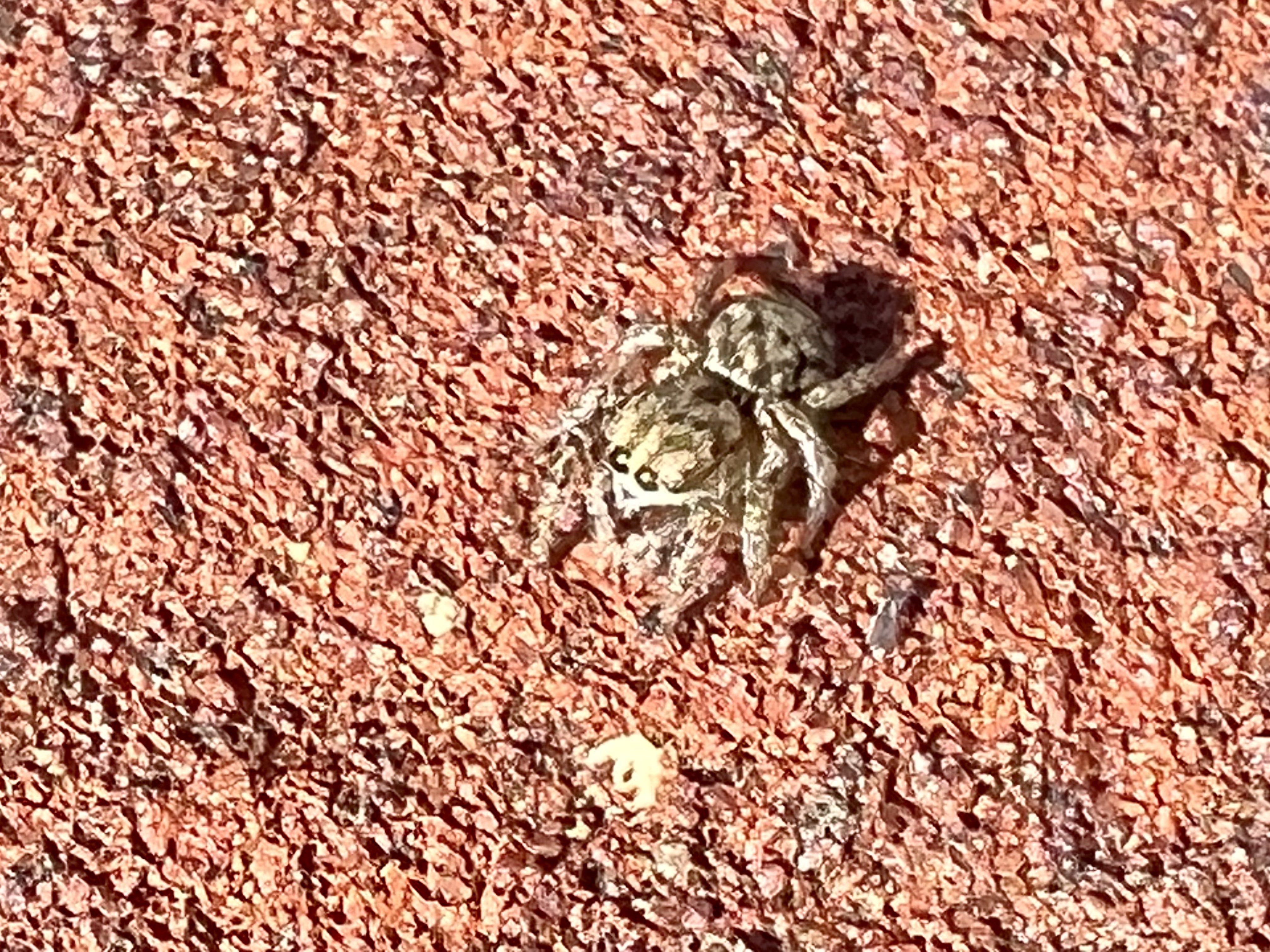
While most of the wildlife has gone missing in Arbor Hills “nature preserve turned dog park,” I did find some pretty cool bugs, including the sweetest jumping spider. I also saw a snake and my husband spotted a turtle swimming in the creek. I’m going to feature the jumping spider first here, then that sweet little turtle swimming in the creek, but all the rest of our sightings and my photos of the preserve can be viewed in the slideshow below.
High Eyelashed Jumping Spider (Phidippus mystaceus)
Pond Slider Turtle ( Trachemys scripta) in Arbor Hills Nature Preserve Creek
Slide show of Arbor Hills Nature Preserve, Plano, TX 2022
Gray Hairstreak (Strymon melinus)
Chrysolina auripennis
Chrysolina auripennis
Chrysolina auripennis
Billbug Weevil (Sphenophorus sp)
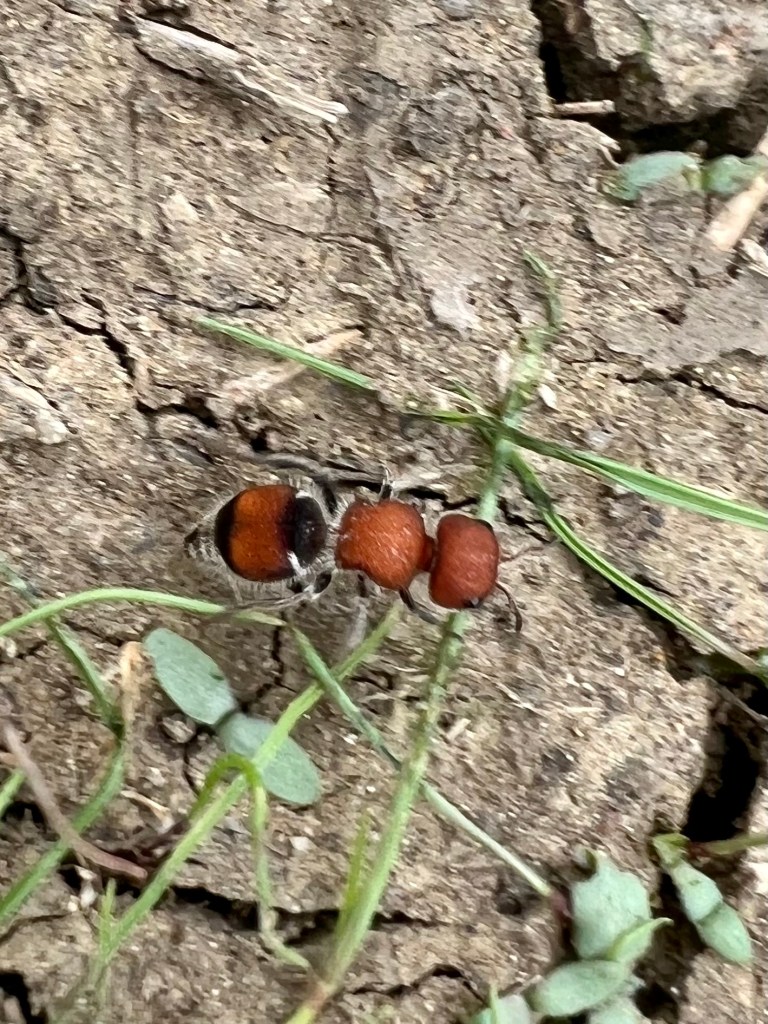
Velvet Ant (Pseudomethoca oceola)
Epicauta pensylvanica blister beetle
Oak Apple Gall
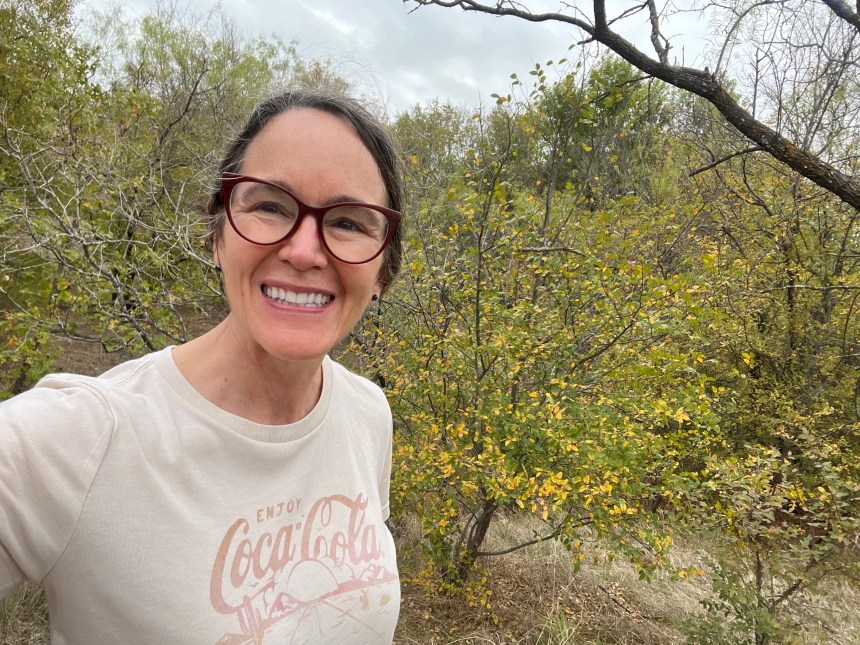
Me!
Poblicia fuliginosa, a lanternfly
Poblicia fuliginosa, a lanternfly
Sphenophorus coesifrons
Swift Feather Legged Fly (Trichopoda pennipes)
Swift Feather Legged Fly (Trichopoda pennipes)
Swift Feather Legged Fly (Trichopoda pennipes)
Epicauta pensylvanica blister beetle
Ground Beetle (Harpalus sp.) *probably
Polistes annularis Wasp
Rough Green Snake Opheodrys aestivus
Onthophagus sp. Scarab Beetle
Elf Shoe Stink Bug (Menecles insertus)
Onthophagus sp. Scarab Beetle
Soapberry bug Red shouldered bug (Jadera haematoloma)
Eastern Hornet Fly (Spilomyia longicornis)
Eastern Hornet Fly (Spilomyia longicornis)
Eastern Hornet Fly (Spilomyia longicornis)
Common Checkered Skimmer (Burnsius communis)
Swift Setwing Dythemis velox
Libellula croceipennis or Neon Skimmer
Globular cactus (Tribe Cacteae)
Springwater Dancer (Argia plana)
Unknown millipede
Creek at Arbor Hills Nature Preserve
Trail
Trail
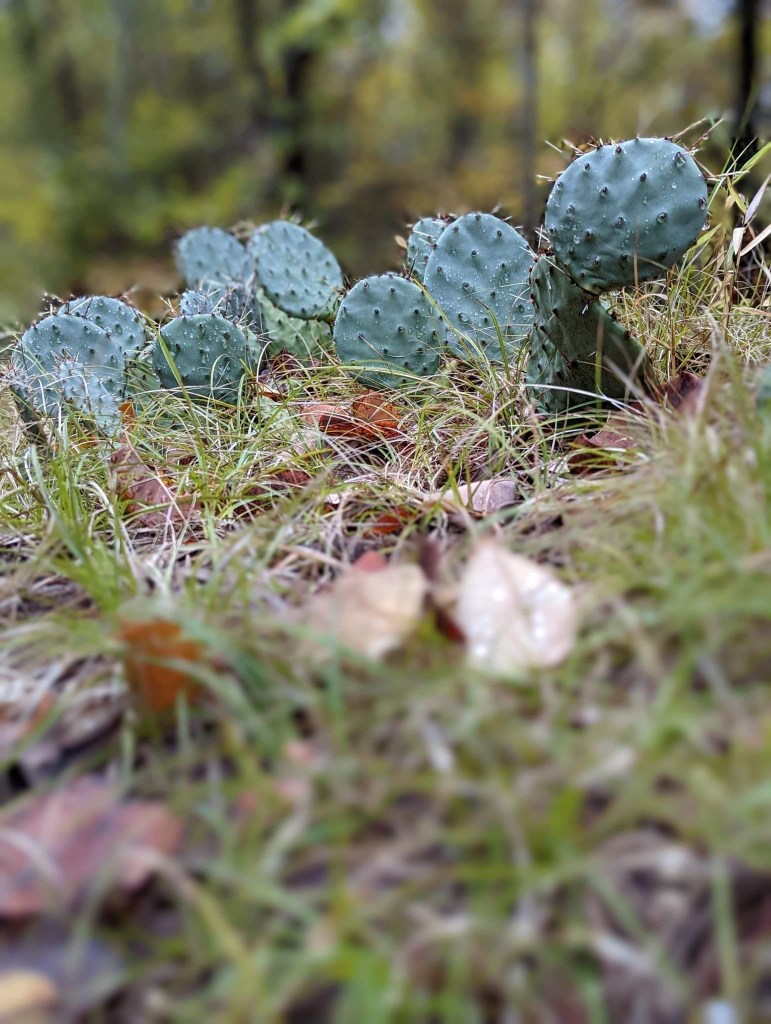
Prickly pear cactus
Hercules’ Club Tree trunk ( Zanthoxylum clava-herculis)
Trail
Overlook at Arbor Hills Nature Preserve
With my husband at the overlook
Hercules’ Club Tree trunk ( Zanthoxylum clava-herculis)
Eve’s Necklacepod (Styphnolobium affine)
Springwater Dancer (Argia plana)
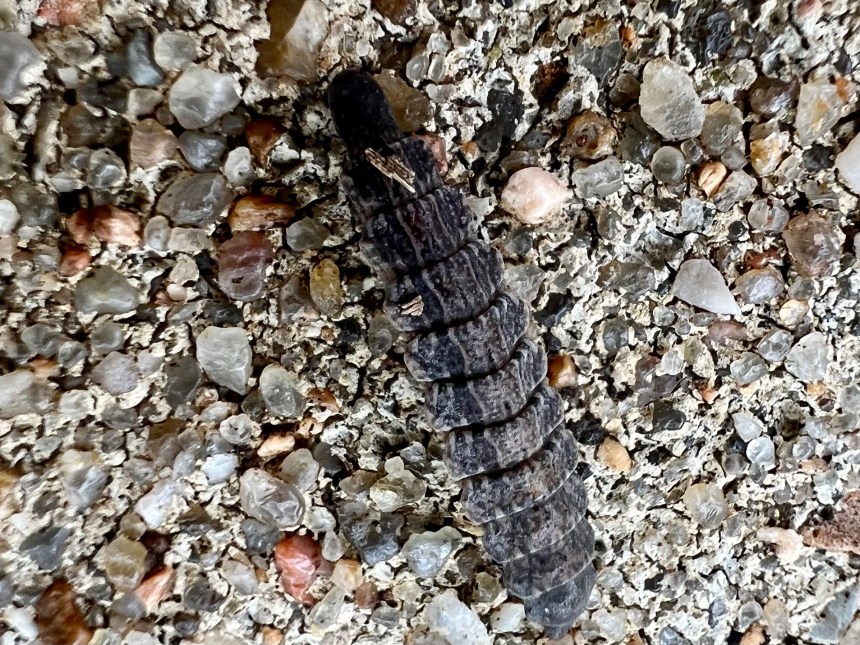
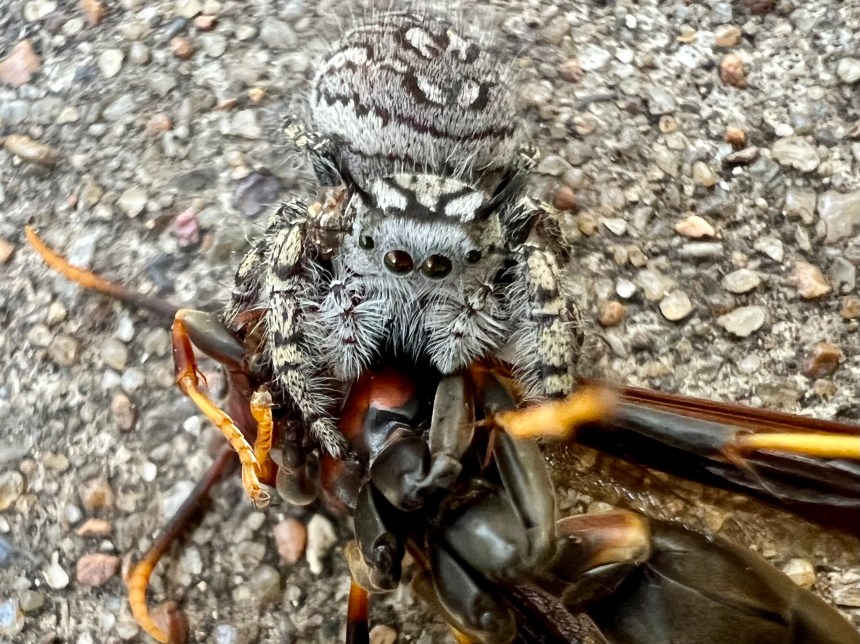
Striped Bark Scorpion (Centruroides vittatus) with Photuris larva (lightning bug)
Photuris (Lightning Bug) larva
Lincoln
Amanda
Four-spotted Green Lacewing (Chrysopa quadripunctata)
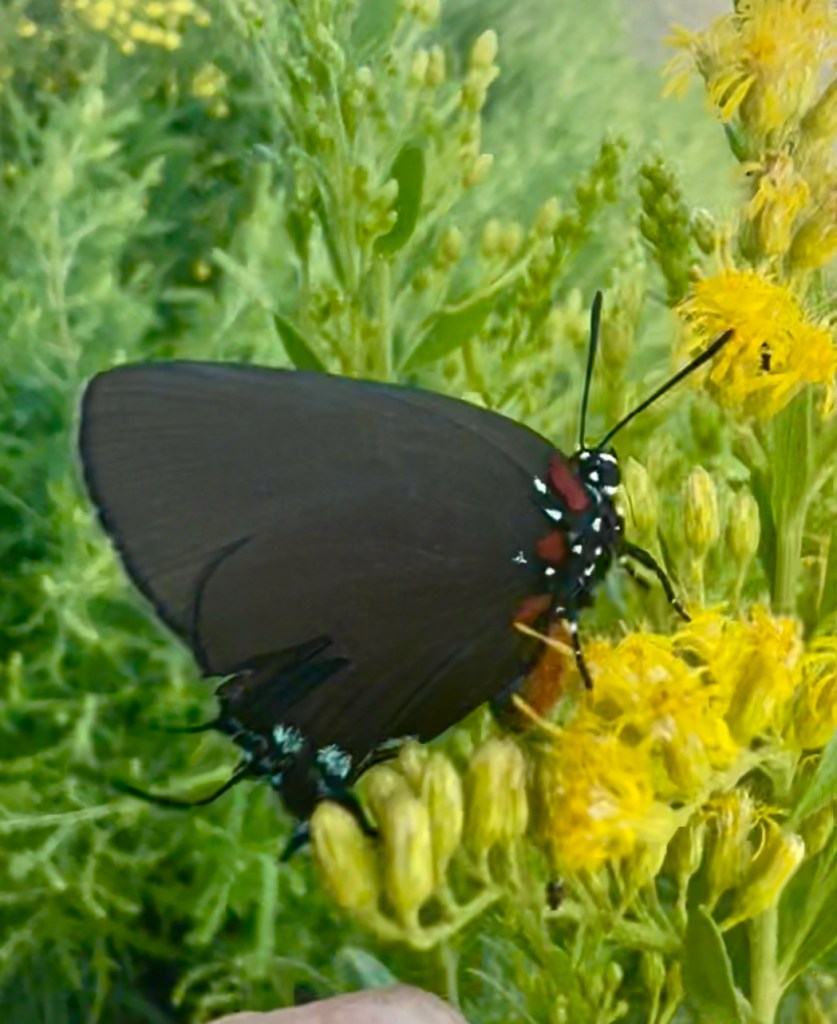
Atlides halesus Great Purple Hairstreak
Polistes Paper Wasp
High Eyelashed Jumping Spider (Phidippus mystaceus)
Soapberry bug Red shouldered bug (Jadera haematoloma)
Polistes annularis
Striped Bark Scorpion (Centruroides vittatus)
Arbor Hills landscape
Blazing Stars (Genus Liatris)
Tunnel
Train
Splitgill mushroom (Schizophyllum commune) on Mesquite tree
Thanks for reading. Stay tuned for more in Bugging You From Texas (Part deux). YEE HAW! 🤠
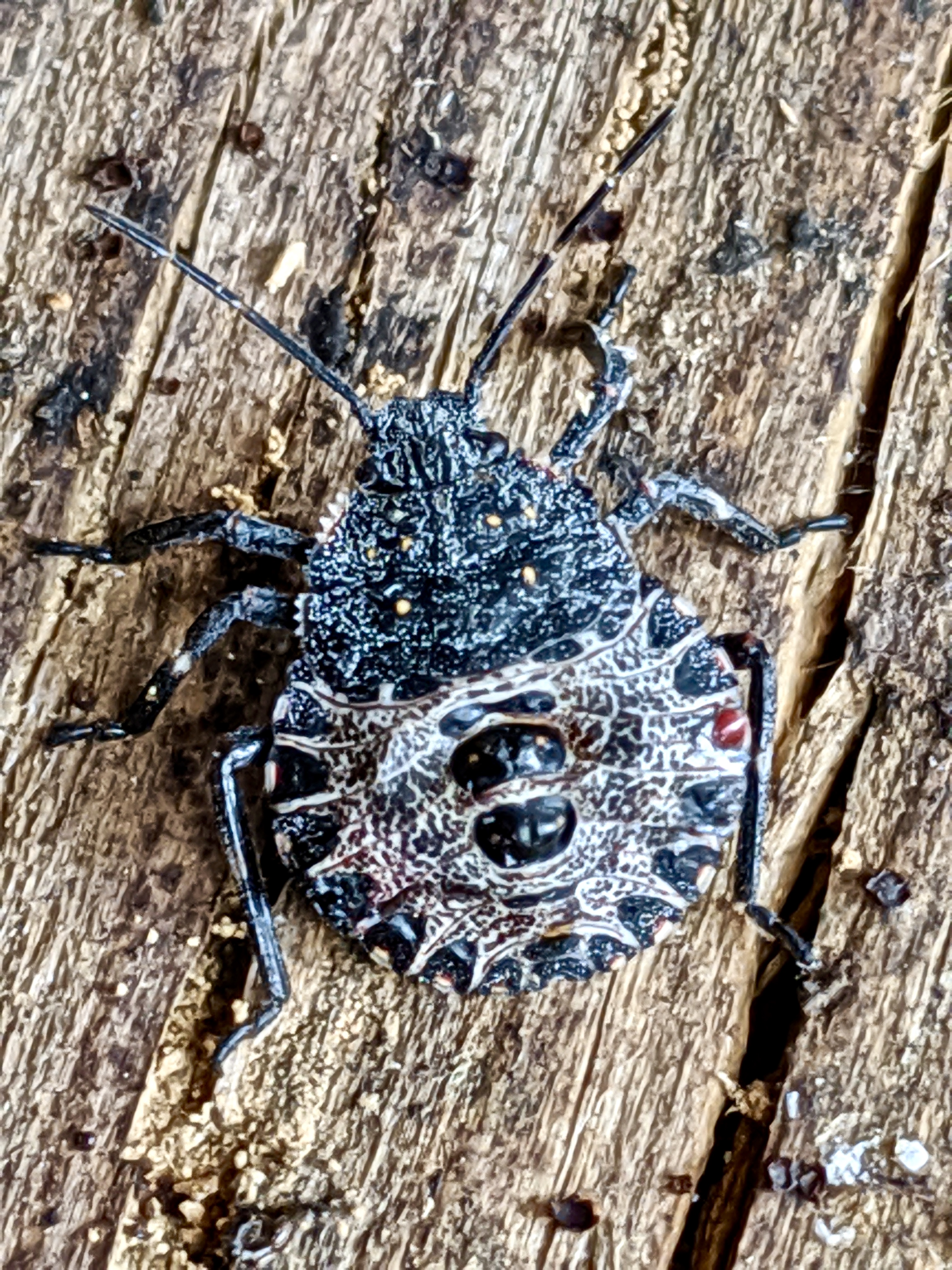
This is a quick post! I just wanted to share the stink bug nymph I found over the weekend (Sunday, Sept. 1, 2019). It’s a Rough Stink Bug nymph, in the genus Brochymena. I believe it’s Brochymena quadripustulata, the Four-humped Stink Bug. However, Brochymena sulcata and B. affinis are two other species found in our area so similar, they are difficult to distinguish.
Brochymena quadripustulata nymph
Often Brochymena stink bugs are confused with the Brown Marmorated Stink Bug, Halyomorpha halys. These two species can be distinguished by the teeth on the outer edge of the pronoun found on Brochymena spp. and the lack of white rings on Brochymena spp. antennae. Great diagram here ~ http://www.stopbmsb.org/stink-bug-basics/look-alike-insects/%23nbsb
I’m not certain what the red spot is on the bug in my photo, but curiously, I found another photo on bugguide.net with a similar spot https://bugguide.net/node/view/1596719/bgimage . I wish I’d kept my specimen for further investigation, but let it go after taking a few photos. The quality of the photo when enlarged just isn’t good enough to determine if the spot is a parasite. My first thought was it sure looks like a honey bee varroa mite, but I haven’t found any literature describing mites on stink bugs. For the time being, it’s on my “shelf” of things to figure out.
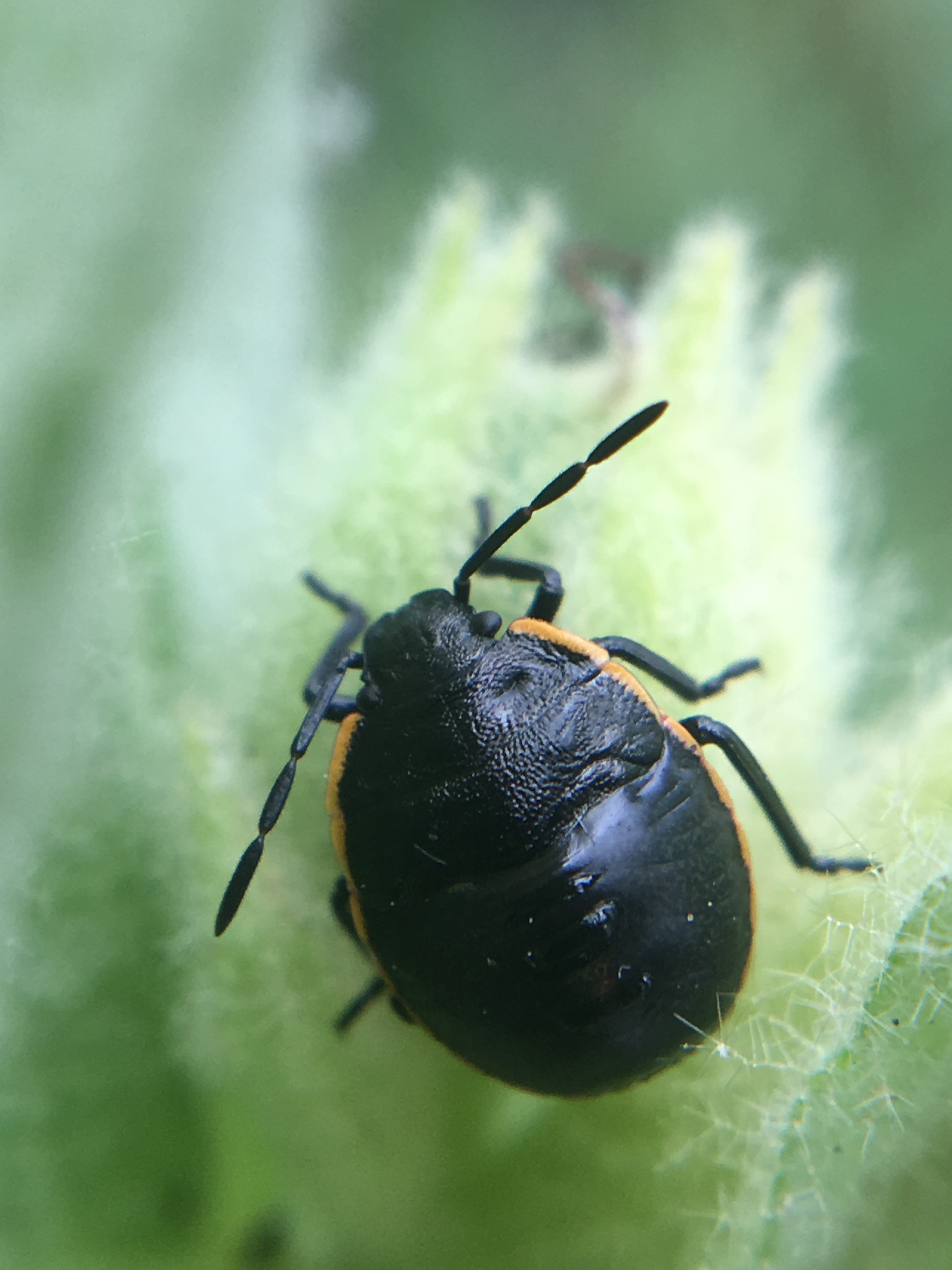
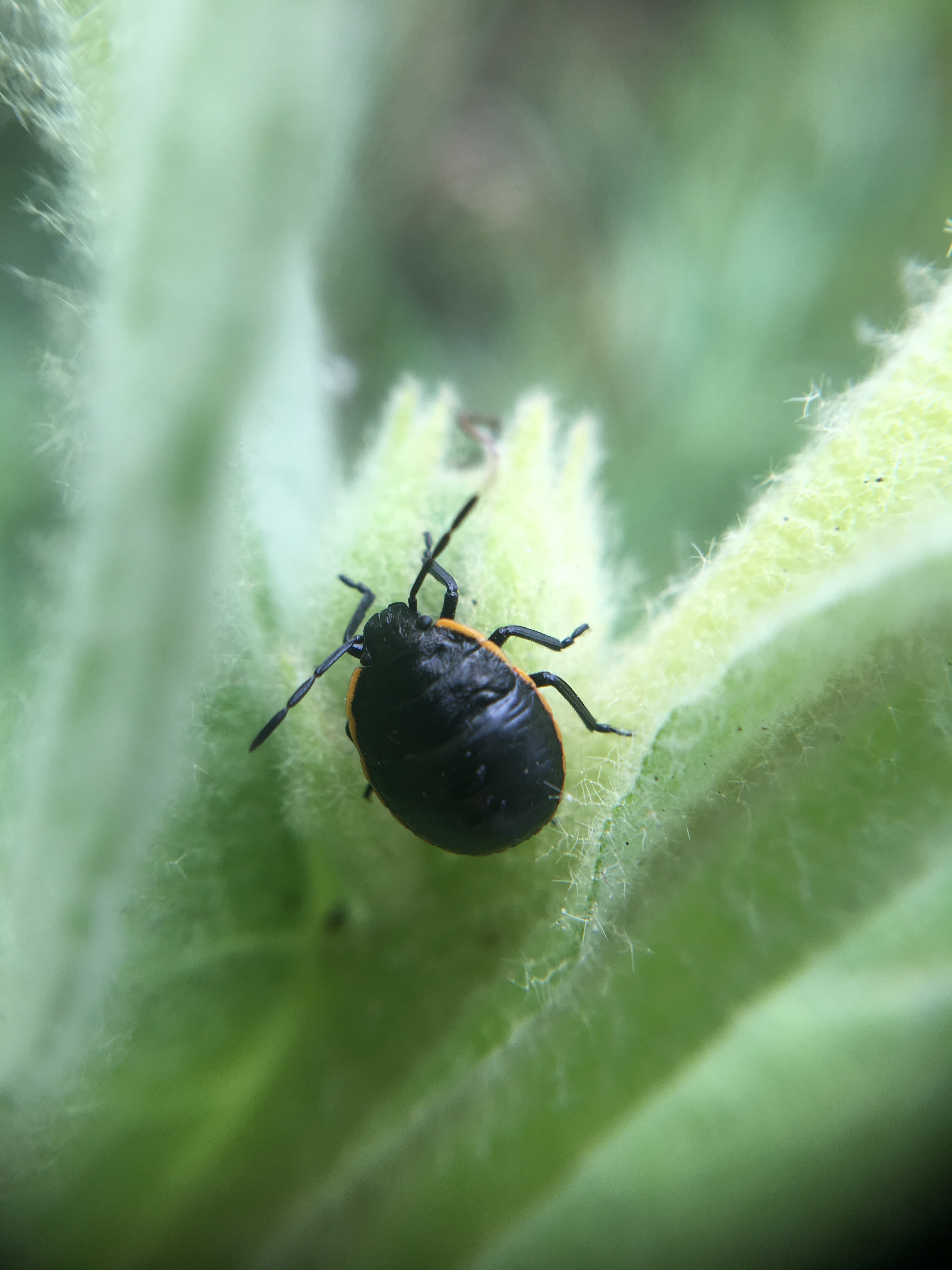
I spotted this round black bug yesterday on the leaf of a Mullein plant (Verbascum thapsus) yesterday (August 17, 2019). At first glance, you might think it a beetle, but upon closer examination, I recognized the yellowish outer margin from a larger, very similar specimen someone had asked me to identify earlier. This isn’t a beetle, but a BUG. True Bug, that is. It’s classified in the insect order Hemiptera. Hemiptera means “Half-wing” in Greek. This is a large order of insects with over 10,000 species in North America. It includes “bugs” like aphids, scale insects, cicadas, giant toe biters, stink and shield bugs (like this one!) and more.
Conchuela Bug (Chlorochroa ligata) Found on Mullein plant (Verbascum thapsus) San Juan Island, WA August 17, 2019
This specimen isn’t a full-grown Conchuela Bug, but a nymph. True bugs have what is called Hemimetabolous or incomplete metamorphosis. This means there are 3 stages of development that go from egg, to nymph, to adult. The nymph basically looks like a miniature version of the adult. To contrast, the Lepidoptera (moths and butterflies) and Coleoptera (beetles) have Holometabolous development with 4 stages that include egg, larva, pupa, and adult.
Conchuela is derived from Spanish and means the diminutive of concha shell. These bugs do indeed look like a little black shell with their hardened pronotum, scutellum and rounded body.
Conchuela Bug Chlorochroa ligata Photographed on Common Mullein San Juan Island, WA August 17, 2019
In case bugs don’t interest you, perhaps the Hairy Woodpecker on a Mullein plant will. I’ve been enjoying watching these birds rock the Mullein back and forth like a clock pendulum, pecking away at the thousands of seeds held in a single flower head. https://youtu.be/U6lTDcHefz8
I’ve been stuck in the house all week with the flu…a BAD case of the flu. You don’t want it! Trust me. So, what does the very bored, sniffling, coughing entomologist do to pass the time when she’s sick? Why play with bugs of course!
My honey brought me this from the back deck…(such a thoughtful man!).
I wonder if he knew that had he not been more careful, our house could have been filled with “le pew de le bug,” a very unpleasant odor! While I probably wouldn’t have suffered (since I’m all stopped up), he certainly would have noticed.
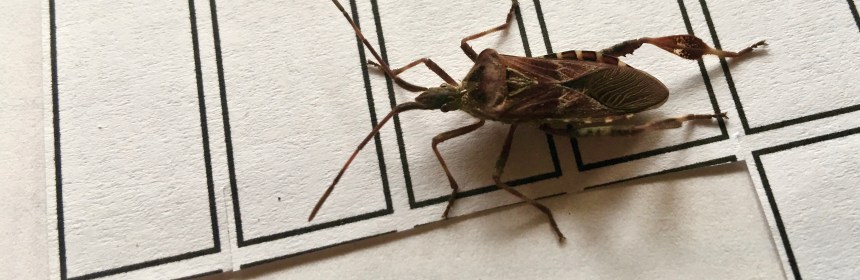
So, what is this bug? Well, it’s not a “bug,” it’s an INSECT. You know….6 legs, chitinous exoskeleton, antennae, three main body parts (head, thorax, and abdomen). More specifically, THIS INSECT is a Western Conifer Seed Bug (Leptoglossus occidentalis). It is classified in the order Hemiptera, family Coreidae (Leaf-footed Bugs and Squash Bugs).
No….please don’t take that literally. I’m certain this fella (or femme) would not like to be “squashed!” I don’t advocate squashing any insect. They’re ALL interesting…in one way or another.
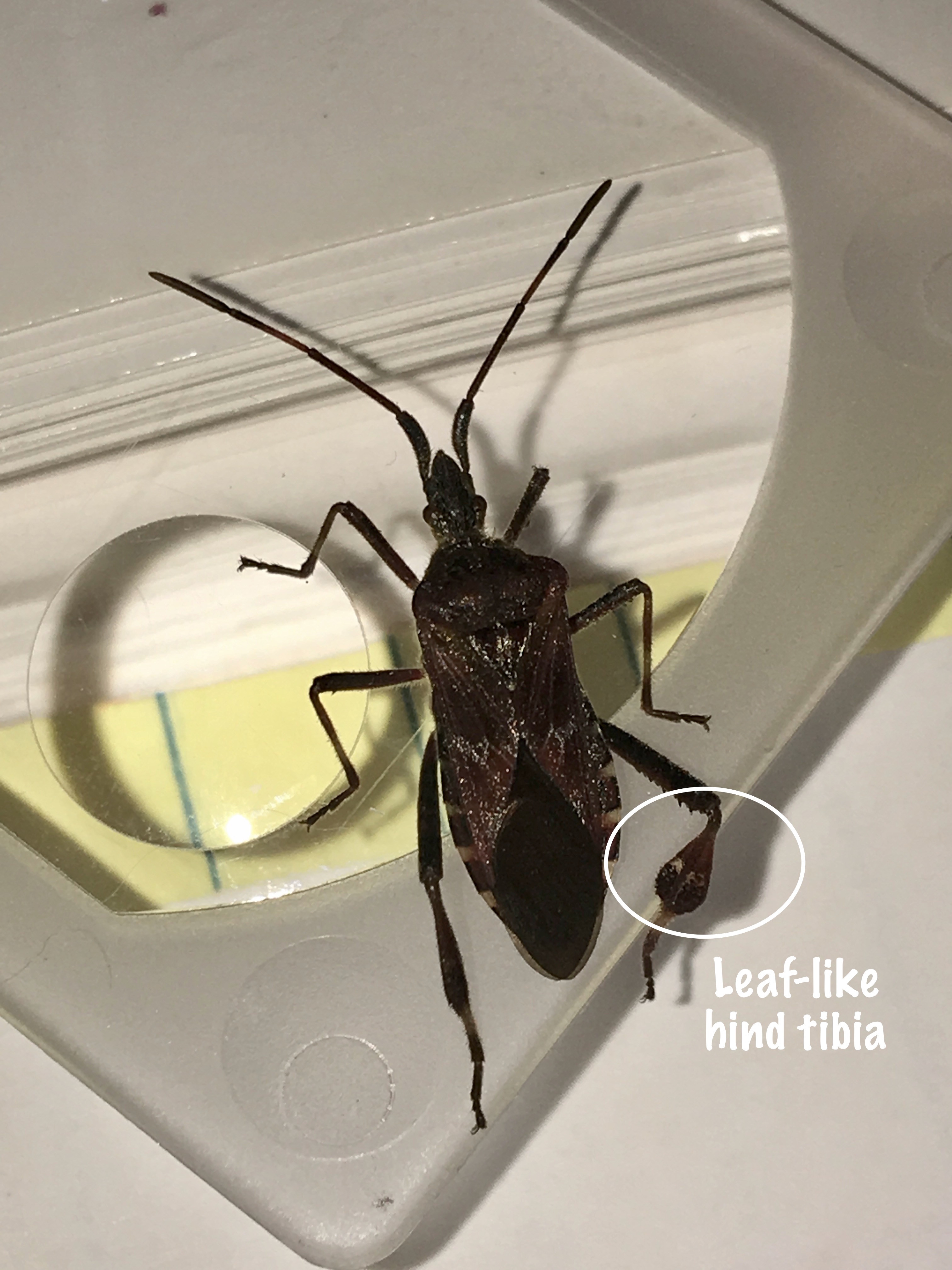
The Coreidae or Squash Bugs are medium to large in size. They are usually brownish colored. This one has what I would describe as the beautiful color, Bronze! Please also note the leaf-like hind tibia, a feature characteristic of some species in this particular family.
What does it eat? It feeds on vegetation. Check out the very long, piercing Rostrum or Proboscis tucked carefully along the underside of this one’s body.
The Rostrum is used like a straw to suck the juices from conifers including Douglas Fir (Pseudotsuga menziesii) and Lodgepole Pine (Pinus contorta). Other species are vegetable pests. Hence the “Squash Bug” moniker. It also has the characteristic SCENT GLANDS that will secrete the particularly stinky odor if you poke it too much when you are trying to get it to pose for a picture! “Le pew de le bug!”











































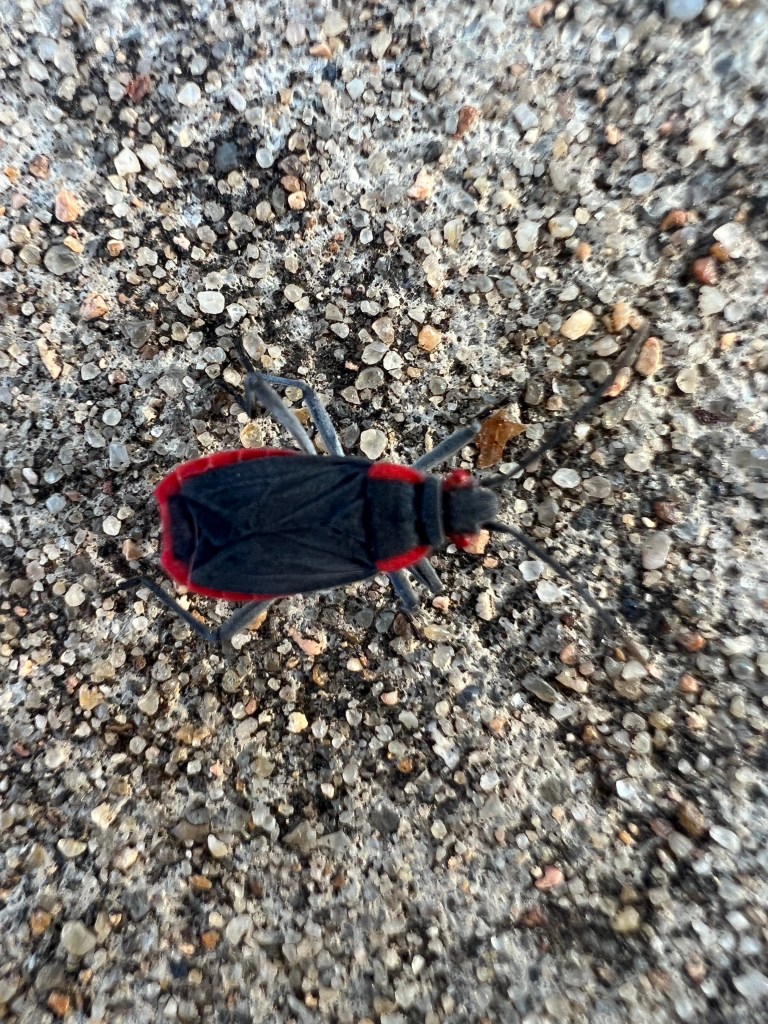


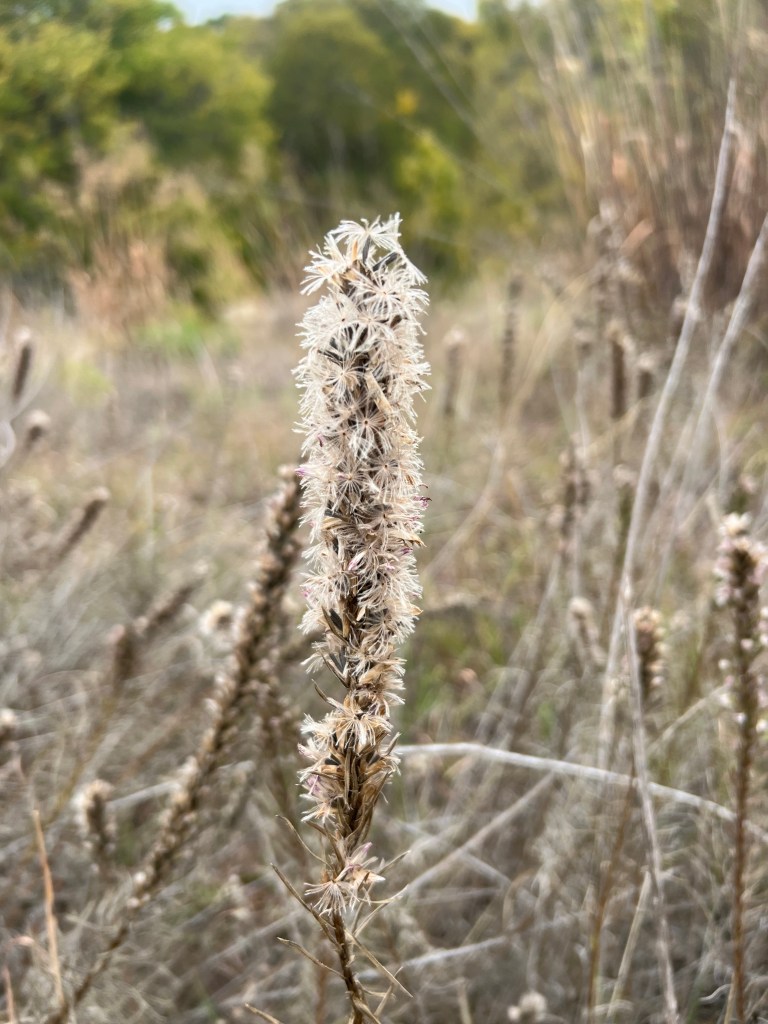




 Bugging You From San Juan Island