Tag Archives: hiking

What’s Biting Me?

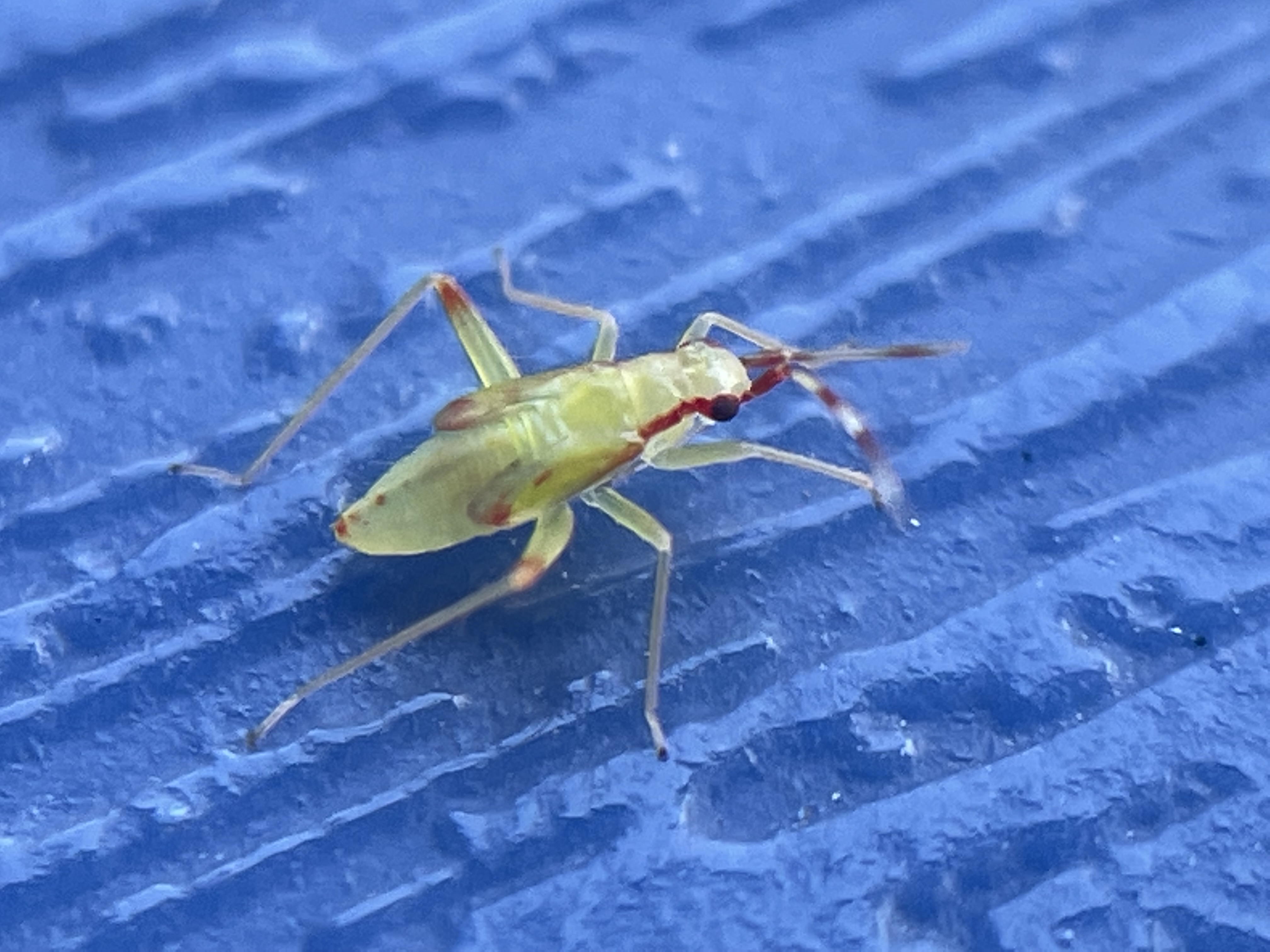
Campyloneura virgula

I may have used this title before, so I’ll have to double check, and perhaps since I get this query frequently I will go back and edit with a numerical system or something like that.

So in this video, I am receiving a bite from 1) a mosquito? 2) a tick? or 3) a thrips? or 4) a bug?

If you chose option 4, a bug, you are correct. Indeed it is a bug, but not just any kind of bug. It is a bug in that it falls into the insect order Hemiptera (the true bugs). This “bug” is a species named Campyloneura virgula, a type of plant bug in the family Miridae.

It’s not the first time one has bitten me either, though most of my reactive bites on San Juan Island have been from thrips in the summertime when it is super dry and they are looking for moisture. I react badly to thrips bites. My husband says they are so small you can’t even see them. I think he really believes I am imagining them, but hey, I’m the entomologist in our family, right?

They’re not imaginary.

Neither is this biter. You can see the action on my ankle for yourself.

Then read the reference material and watch out for ankle biters in your yard.

References

Thomas J. Henry “First Eastern North American Records of Campyloneura virgula (Hemiptera: Heteroptera: Miridae: Bryocorinae),” Proceedings of the Entomological Society of Washington, 114(1), 159-163, (1 January 2012). https://bioone.org/journals/proceedings-of-the-entomological-society-of-washington/volume-114/issue-1/082.114.0101/First-Eastern-North-American-Records-of-Campyloneura-virgula-Hemiptera/10.4289/082.114.0101.short#:~:text=It%20also%20is%20known%20to,(Lattin%20and%20Stonedahl%201984).

Zarrabi Ahrabi, Salar & Şakacı, Zafer & Akyıldız, Gürkan & Gargili, Ayşen & Talay, Şengül & Kar, Sirri. (2024). Human Biting Plant Bug Campyloneura virgula (Hemiptera: Miridae): First Case Report in Türkiye. Clinical and Experimental Health Sciences. 10.33808/clinexphealthsci.1268203. https://www.researchgate.net/publication/381681450_Human_Biting_Plant_Bug_Campyloneura_virgula_Hemiptera_Miridae_First_Case_Report_in_Turkiye

Western Thatching Ants (Formica obscuripes)

Formica obscuripes, Western Thatching Ant

I went for a walk yesterday on Three Corner Lake Road just to get out of the house. Springtime on San Juan Island has been cold and dreary, but sometimes there’s a moment or two when the sun peeks out, giving a bit of hope that the winter doldrums are coming to an end. Don’t get me wrong, I love the Pacific Northwest, but the Visitor Center’s claim that San Juan gets 247 days of sunshine a year is a stretch. I think they actually count the days when it is overcast and rainy as long as the sun peeks out for just a minute before the clouds darken the day again.

It was cold and I wasn’t expecting to see any insect activity, so I was surprised to find this long time ant colony with a mass of individuals near the top of the nest. The sun had been out intermittently, so I believe what was happening was the workers were at the surface to warm themselves (thermoregulating). There were a few straggling workers carrying thatch debris (conifer needles) to the nest from the forest. If the weather had been nicer, I would have enjoyed plopping myself into a chair to ant watch for an hour or so. They are quite pretty when you see them up close.

Western Thatching Ants (Formica obscuripes) are native to our region. They seem to like forest edge habitat, and you’ll find the nests situated in areas where there is some clearing to take advantage of the sun’s warmth. These ants are considered general omnivore-predators. They scavenge or prey upon insects and other arthropods for food. Foraging activity takes place both on the ground and on vegetation, including high in trees. Thatch ants also harvest honeydew from aphids and other homopterans as well as from extrafloral nectaries. You can read more about extrafloral nectaries or EFN’s (little nectar producing glands on plants) here https://bygl.osu.edu/node/1774 or check out one of my earlier blog posts about them here https://buggingyoufromsanjuanisland.com/2022/05/17/what-are-extra-floral-nectaries%EF%BF%BC/

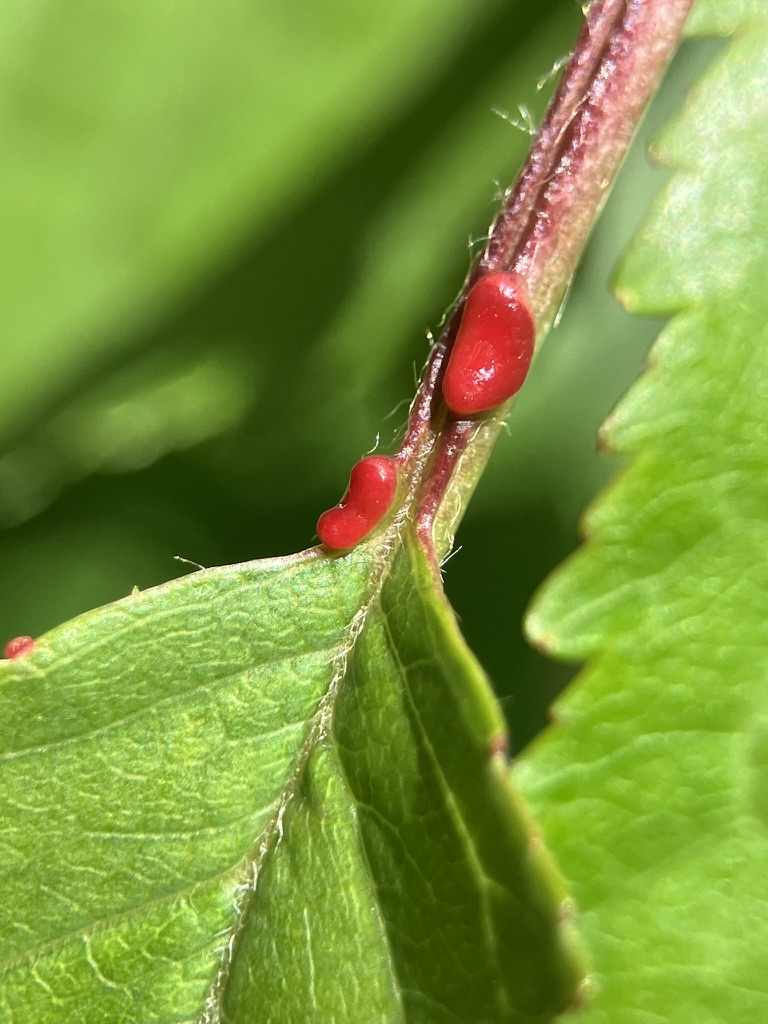
Extrafloral nectary on Fruitless Cherry Tree

The ant workers are considered weakly polymorphic, which means they have only slight variations in size and shape within the worker caste as opposed to other species where workers may be monomorphic (all the same size and shape), or strongly polymorphic (a high degree of variability between worker sizes and shapes). You can read more about polymorphism in ants here https://www.antwiki.org/wiki/images/1/1c/Wheeler_1908f.pdf .

Given all the information you’ll find from pest control companies online about these ants and others, you might ask, why or if there is any benefit to having these ants around. The answer is YES! Western Thatching ants are beneficial in ecosystems because they not only aerate the soil with their burrowing practices in nest construction, but they also provide FREE pest control, helping regulate populations of other insects that defoliate forests, fruit trees, and even our vegetable gardens. They also help clean up the environment through scavenging dead animals. There is no need to eradicate these nests and if you get into ant watching, they might provide a bit of intriguing summer entertainment. Pull up your lawn chairs and sit and watch with your friends. As long as you aren’t poking the nest, they are not inclined to bother you at all.

Thanks for reading!

References:

Formica obsuripes. 2025. Bugguide.net. https://bugguide.net/node/view/31269

Formica obscuripes. 2025. AntWiki. https://www.antwiki.org/wiki/Formica_obscuripes

McIver, J.D., Torolf, T.R., Cimon, N.J. 1997. A supercolony of the thatch ant Formica obscuripes forel (Hymenoptera: Formicidae) from the Blue Mountains of Oregon. Northwest science., Vol.71(1), pp.18-29. https://rex.libraries.wsu.edu/esploro/outputs/journalArticle/A-supercolony-of-the-thatch-ant/99900502747101842