Tag Archives: iNaturalist

Why You Should Appreciate Native Plants: Ocean Spray Insights

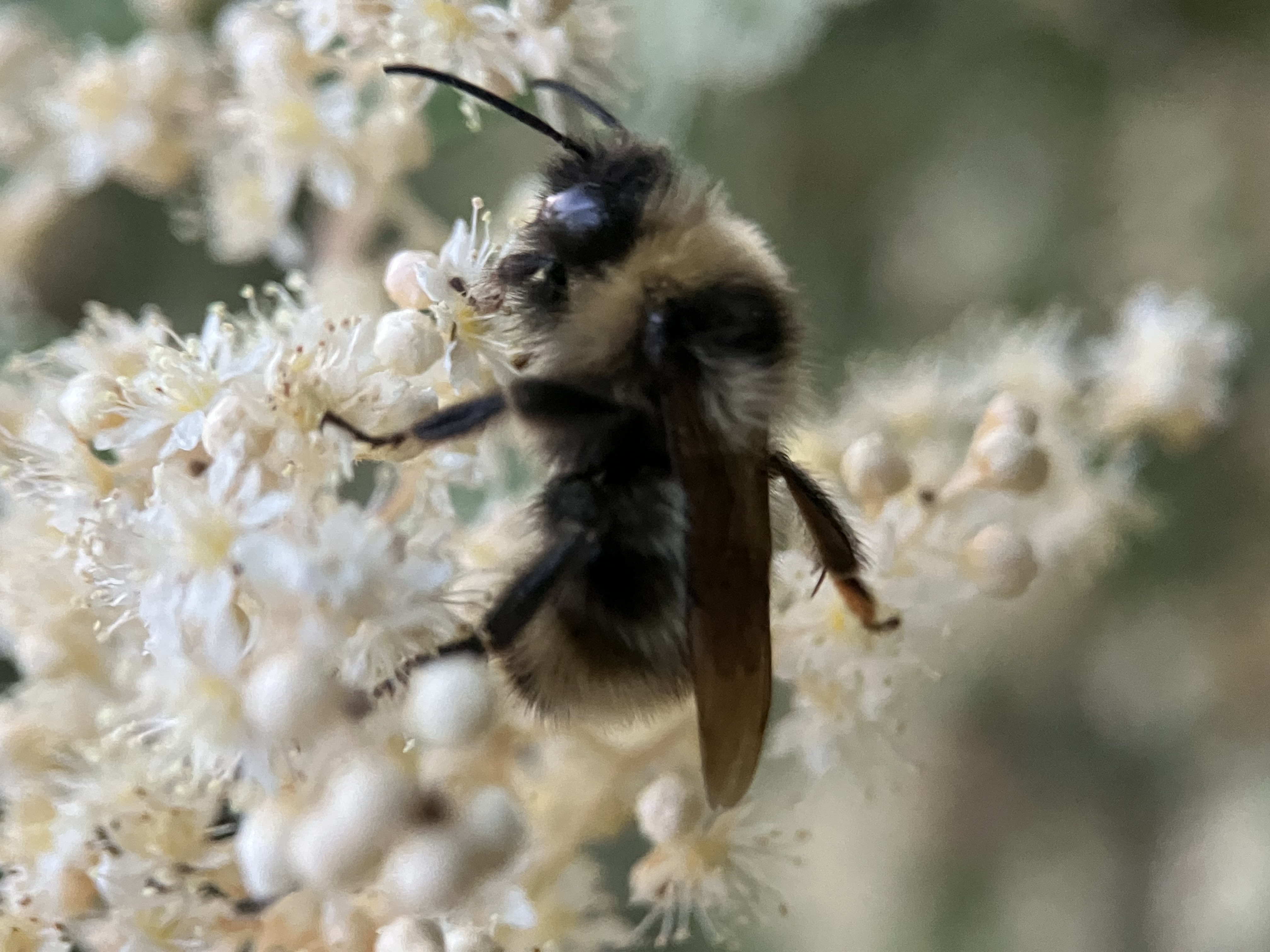
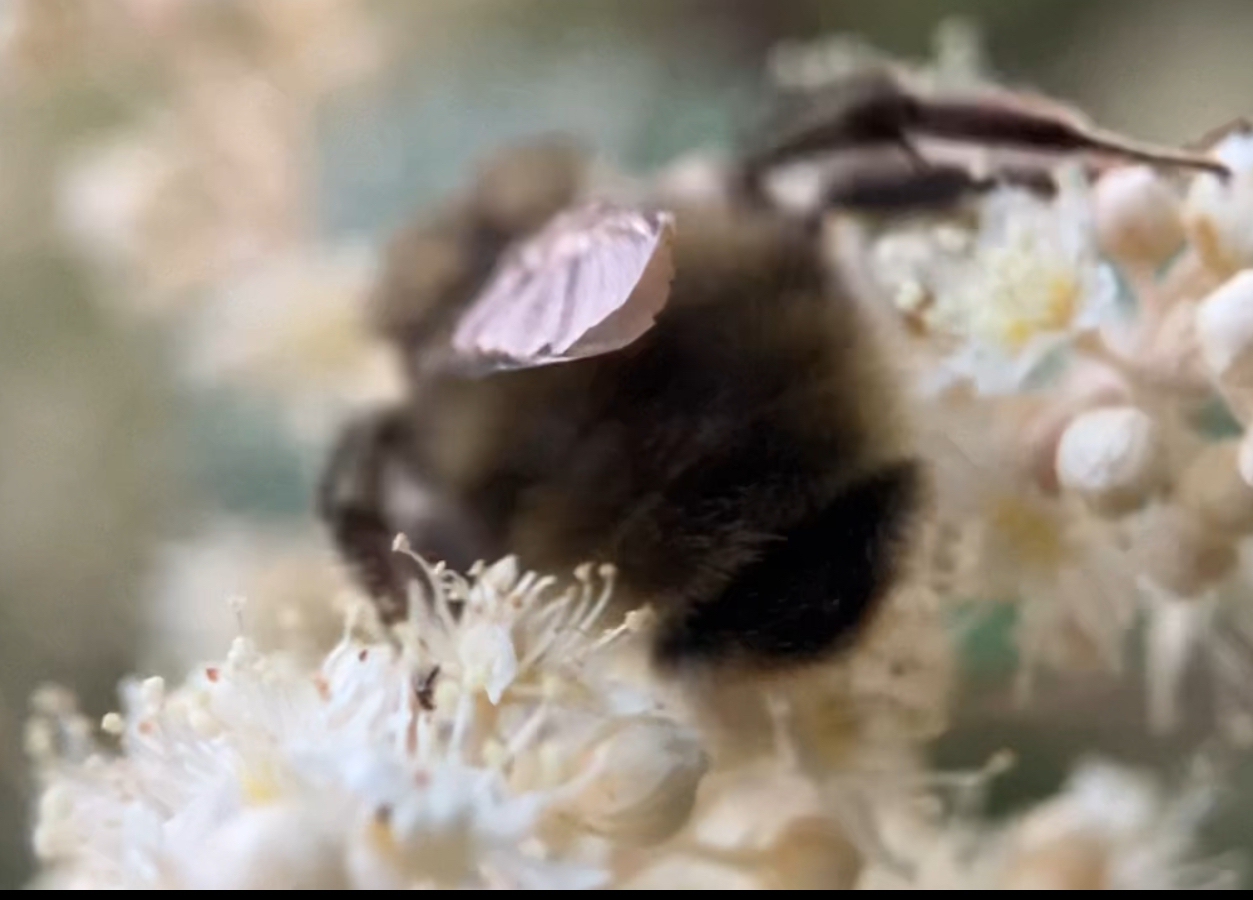
Cuckoo Bumble Bee on Ocean Spray

For the past few years, I have observed one of our native shrubs to see what pollinators are visiting. Calscape has recorded Ocean Spray (Holodiscus discolor) as a host plant to approximately 14 species of Lepidoptera. Yet, I have actually never seen a single pollinator visiting the cascades of snowy white, delicate blossoms. I’ve also heard from a handful of local folks on San Juan Island. They say Ocean Spray is “invasive” and should be brush-hogged. According to them, it’s a “fire hazard.” This view is disturbing to me. I felt it important to find concrete evidence of this native plant’s value in our ecosystem.

Bombus flavidus ssp. flavidus

Well, the other evening, I documented the first pollinator I’ve ever seen visiting these blossoms. There is a gorgeous Ocean Spray out our bathroom window. I noticed movement in the upper portions of the shrub. It wasn’t windy, so something else was causing the movement. I went out later, around 9:00 pm, to investigate the cause of the disturbances. Can you guess what I found? Bumble bees!

Bombus flavidus ssp. flavidus

I also experienced annoyance from another buzzer. A Cattail mosquito, Coquillettidia perturbans (say co-KEE-luh-tih-dee-uh PURR-tuh-binz) promptly discovered my bare arm. It slipped its hypodermic proboscis into my epidermis with effortless precision, a precision superior to any medical professional’s injection. I didn’t feel it at all.

Cattail mosquito (Coquillettidia perturbans)

I would describe the bites from these mosquitoes as a very mild annoyance. I didn’t have any after-reaction at all. It was certainly not anything like the bites from some of the other insects I’ve experienced here, especially not thrips. I’m definitely not a thrips fan! You can read about thrips here in case you’re interested. https://buggingyoufromsanjuanisland.com/2021/06/29/public-health-alert-and-some-free-advice/


Getting back to the other buzz in the Ocean Spray. The buzz I was so happy to discover is the bumble bee (Bombus flavidus ssp. flavidus). I didn’t make the identification to subspecies on my own. That was with the help of a fellow named John Ascher on iNaturalist. If you’re curious about his work, you can learn more here: https://extension.oregonstate.edu/podcast/pollination-podcast/137-john-ascher-problem-measuring-bee-decline

Bombus flavidus ssp. flavidus

Bombus flavidus is a species of Cuckoo Bumble Bee, and one of the most widespread species in the world. These bees don’t have a worker cast like other species of bumble bees. They find nests of other bumble bees to occupy and invade these nests. The host bumble bee workers then rear the offspring of the cuckoo bumble bee along with their own offspring.

I hope my discovery leaves you curious about what pollinators visit Ocean Spray in your yard. My next goal is to make nighttime observations. I want to see what is visiting the flowers while they are still in bloom. I suspect they have nocturnal pollinators. If you find any, I hope you’ll report your findings with me. 🙂


To see more of San Juan Island’s invertebrates, please join and follow me on iNaturalist – https://www.inaturalist.org/observations?place_id=any&user_id=cyndibrast&verifiable=any . If you have never used iNaturalist, try it out! I love it because it’s a way to connect with other entomologists. It also helps me organize my findings into appropriate categories for referencing when I want to look something up.

You can also find my bug observations on Facebook at https://www.facebook.com/cynthia.brast.bormann or join one of the bug groups I help admin: Bugs of the San Juan Islands at https://www.facebook.com/groups/3594158544144419 or Pacific Northwest Bugs at https://www.facebook.com/groups/904079732957442/


Also, please don’t go crazy with the brush hog. Nature loves messy. Humans cause fires. We can do much on that end to prevent them by changing our behaviors and being more careful. Scraping the earth bare and/or parking out your parcel to be “fire wise” is actually not kind to nature. We need to protect habitat for the wild things, not eradicate it. Even mosquitoes have a role in the food web.

Thanks for reading!

Bombus flavidus ssp. flavidus

References

Brast, C. 2021. IT’S ALL CONNECTED! KNOW YOUR ECOSYSTEM – BUTTERFLIES AND MOTHS LOVE OCEAN SPRAY (HOLODISCUS DISCOLOR). Bugging You From San Juan Island. https://buggingyoufromsanjuanisland.com/tag/holodiscus-discolor/

No author. 2024. Fernald Cuckoo Bee Bombus flavidus. Bumble Bee Atlas and the Xerces Society for Insect Conservation. https://www.bumblebeeatlas.org/pages/bombus-flavidus

No author. No date. Ocean Spray (Holodiscus discolor). Calscape – California Native Plant Society.

Mayer, M. 2021. Cuckoo Combo: Re-Classification Makes Bombus flavidus World’s Most Widespread Bumble Bee. Entomology Today. https://entomologytoday.org/2021/04/28/cuckoo-combo-reclassification-bombus-flavidus-worlds-most-widespread-bumble-bee/

Murray, T. 2024. Species Coquillettidia perturbans. Bugguide. Iowa State University. https://bugguide.net/node/view/26971

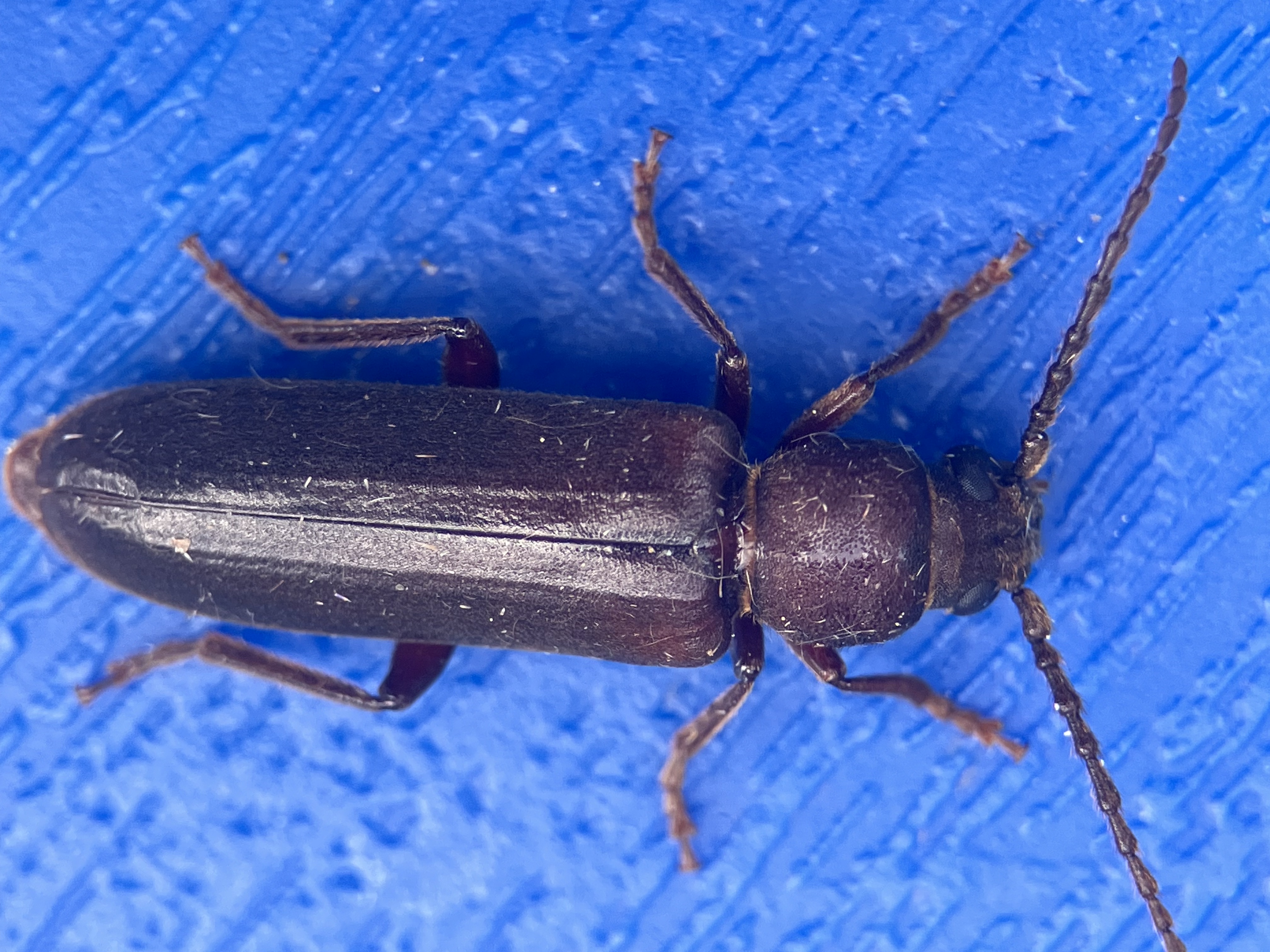
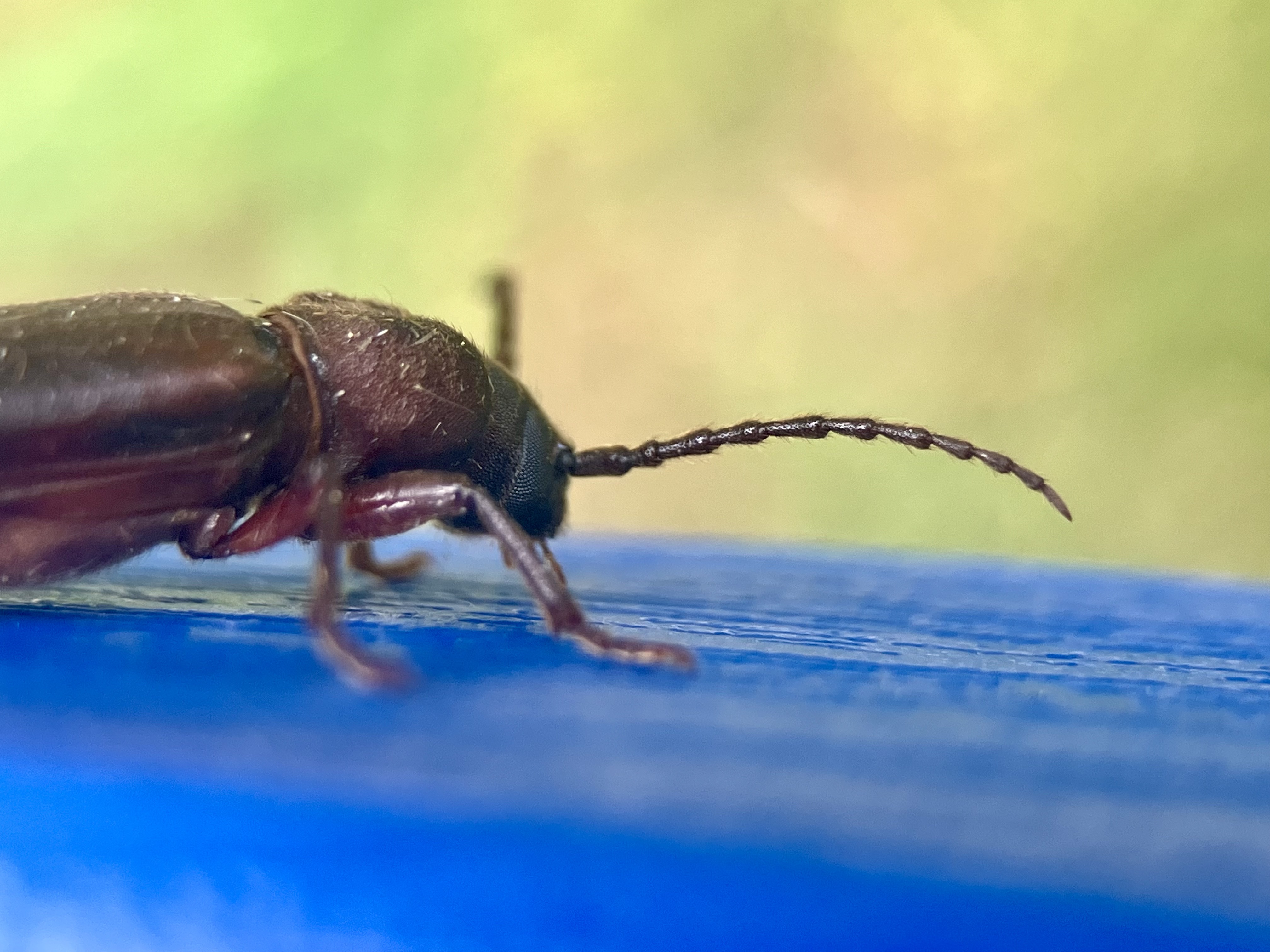
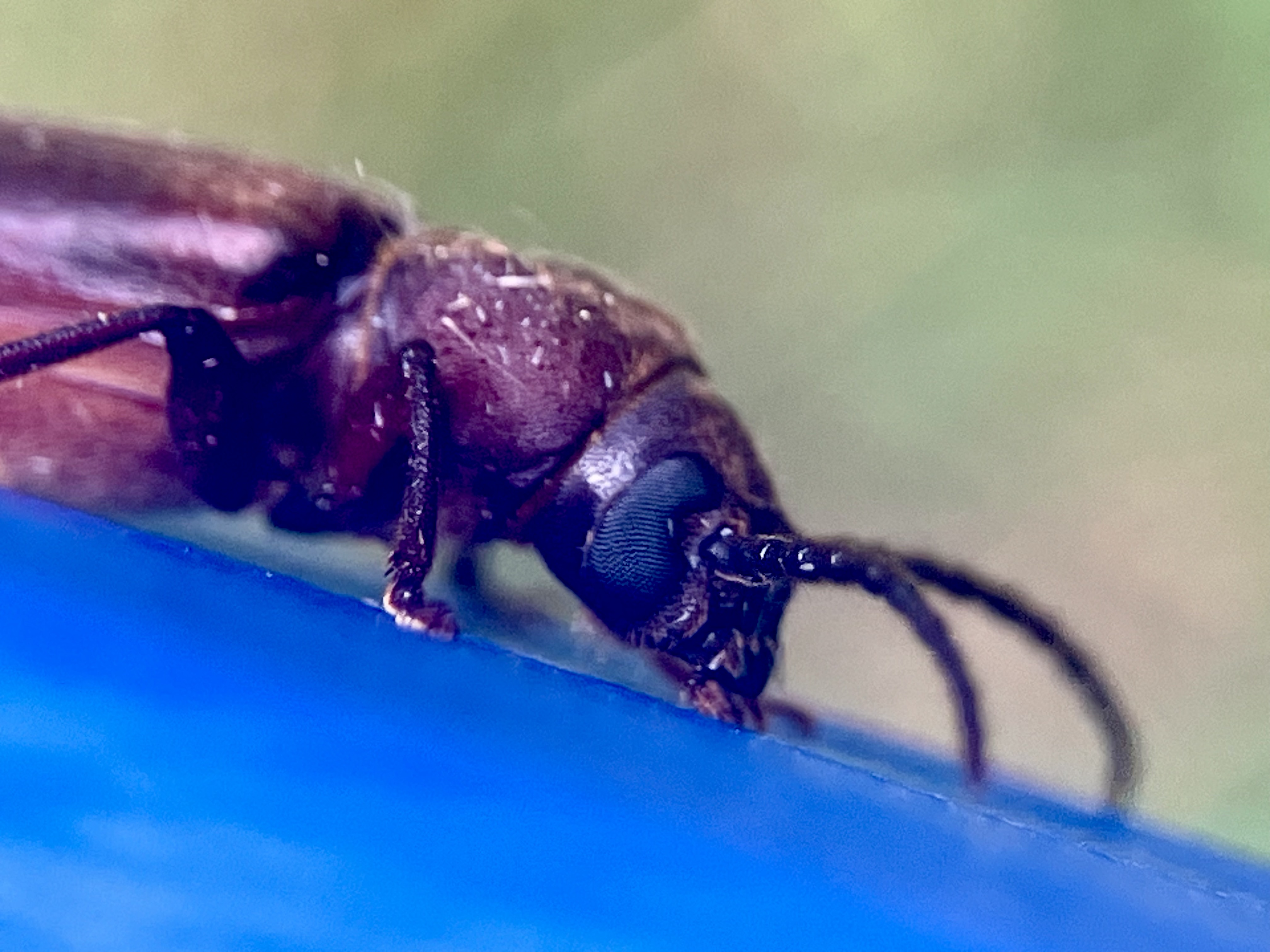
Megasemum asperum, a Cerambycid Beetle

Here is a new-to-me Cerambycid (longhorn) beetle. I haven’t added one of these to my photo collection in the 15 years I’ve lived on San Juan Island, so note here that they are “UNCOMMON” and not populous in number.

This species is the only one in its genus in North America. It is Megasemum asperum. I see in perusing iNaturalist.org that there have been 67 reported observations dating back to 2007.

Location: San Juan Island, WA

ID: Megasemum asperum

From Bugguide.net

Size: 18-25mm

Season: July to August (this is when you could see an adult)

Numbers: a single species in the New World & in NE Asia

It was described by John Lawrence LeConte in 1854

From Beetles of Western North America – “Larvae mine Douglas-fir (Pseudotsuga menziesii) and fir (Abies). Adults are attracted to lights during the summer. Found in coniferous forests of western North America,” (Dr. Art Evans, entomologist, 2021).

Your take away message – NOT a pest. NOT a tree killer. NATIVE species! Performs important recycling of nutrients role in ecosystems allowing regeneration in our forests. Appreciate Biodiversity.

Thanks for reading!

Six Spotted Spider Beetle

Spider Beetle (Ptinus sexpunctatus) May 24, 2024

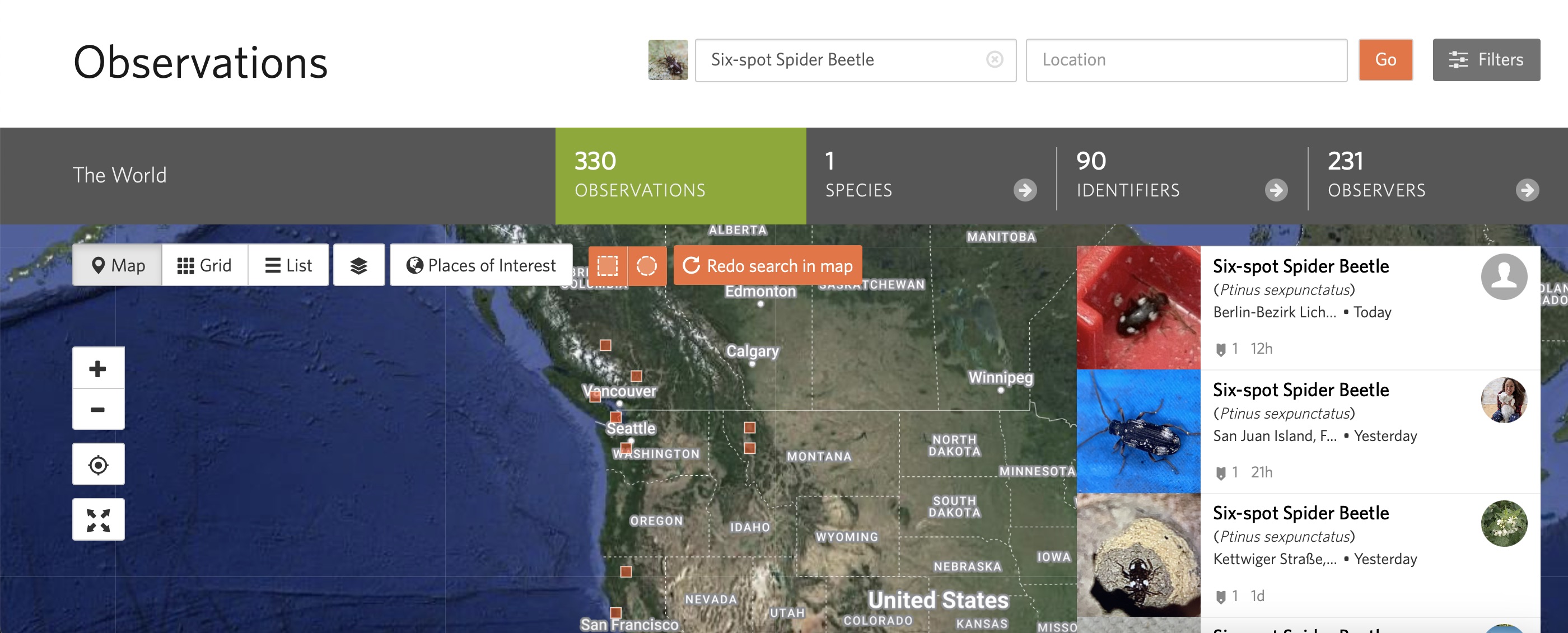
I found this interesting beetle on the side of our pool the other afternoon and realized I’d actually seen one like it about a week earlier, so I did some digging to figure out what it was. This is a Spider Beetle (subfamily Ptininae), and the species is Ptinus sexpunctatus or Six Spotted Spider Beetle.

These beetles are quite small at about 2.8-4.2 mm. I used my clip-on Apexel macro lens to get these photos. What I found about this beetle’s life history is that the species is not native to North America. The very first record I found was in Pennsylvania in 1915 where the beetle entered via an imported English Walnut, but subsequent discoveries of populations are as recent as 2003 in Nova Scotia, and 2004 in Utah (Majka et al. 2007). I have not found any data as to how recently they may have arrived in the PNW, and found only 1 other record in WA state, aside from my own, when I searched on iNaturalist

Records of Ptinus sexpunctatus – iNaturalist (as of 05.25.2024)

Within its native range, Ptinus sexpunctatus, is a known associate of cavity- nesting solitary bees. These include bees in the genera Osmia and Megachile. It has also been collected in the galleries of longhorned beetles (Cerambycidae) in oak (Quercus) forests (Majka et al. 2007). Because of these associations, it is possible that Ptinus sexpunctatus was accidentally imported when two Osmia bee species, Osmia cornuta (Latreille) from Spain and O. cornifrons (Radosz- kowski) from Japan, were introduced into the United States for research and evaluation as pollinators of tree fruits  (Cane 2003; Majka et al. 2007). Majka et al. (2007) believe that after arriving in the U.S., Ptinus sexpunctatus colonized the nests of our native Osmia bee, (Osmia lignaria).

The relationship and impact of the nest association between Ptinus sexpunctatus and Osmia lignaria needs further study. Some observations of these associations in Europe describe the beetle as being destructive to Osmia nests, preying on bee larvae and pupae (Majka et al 2007).

References and Further Reading

Bugguide.net. 2007. Pinus sexpunctatus. https://bugguide.net/node/view/107176

Cane, J. H. 2003. Exotic nonsocial bees (Hymenoptera: Apiformes) in North America: Ecological implications. pp. 113–126. In, K. Strickler and J. H. Cane (Editors). For Nonnative crops, Whence Pollinators of the Future? Thomas Say Publications in Entomology: Proceedings. Entomological Society of America. Lanham, Maryland, U.S.A. 204 pp.

Majka C.G., Philips T.K., Sheffield C. (2007) Ptinus sexpunctatus Panzer (Coleoptera: Anobiidae, Ptininae) newly recorded in North America. Entomological News 118: 73-76 (Full text)

Oreas Anglewing (Polygonia oreas)

I posted a few images last week to my iNaturalist page to see if I could get help from some experts in the butterfly community to ID this Polygonia butterfly past genus. It sparked a lively amount of conversation and I finally received a comment in the thread from West Seattle-based nature guide, ecological consultant and botanist, Stewart Wechsler, stating, “@cyndibrast Looks like you have the first confirmed Polygonia oreas iNaturalist observation for the San Juan Islands!” I would also throw out that the first person to correctly speculate the ID for this is my friend, lepidopterist David Droppers, who suggested I post in a wider audience to see what feedback I might receive.

Cool! So, I have the first Oreas Anglewing iNat. Sighting for San Juan County. 😀

Polygonia oreas – March 29, 2023, San Juan County, WA

Have there been others? Probably. Not everyone is using iNaturalist, so some sightings may not be on the radar for other bug enthusiasts. I like it to keep all my bug sightings organized and categorized and all that stuff and using iNaturalist makes it easy to find things when I want to go back to reference one. If you don’t have the iNat. app, give it a try. It makes your outdoor experiences a lot more interesting in a nerdy, scientific way. You can be a naturalist on your hike. It’s fun!

Here’s a bit of information about this interesting butterfly, now officially recorded on San Juan Island. Links to sources included below.

Oreas Anglewing (Polygonia oreas)

*From (C. LaBar 2013) and (Björklund, N.H. 2018-2022)*

SIZE: Wingspan of 40 to 50 mm (up to 2 inches)

Key ID Features: Above orange with black blotches and spots, often with very jagged wing edges, submarginal row of yellow chevrons and brown to black marginal band. HW above has yellow patches adjacent to dark marginal band. Below dark gray to black, with lighter gray striations, and prominent white flattened “v” (pointed at the bottom, often looking like a gull in flight) with no hooks in center of HW.


Similar species: Darker below than other comma species, white “v” mark on HW below lacks barbs. Other comma species either have stronger green submarginal shading below or the “comma” mark on HW below is curved (not a pointed “v”) or barbed or both.


Male: rusty orange and gold with black spots, dark brown wing margin with row of bright yellow spots. Ventral is variegated in contrasting shades of dark brown and black. White comma on VHW.


Female: slightly lighter dorsal and ventral colors and less-distinct ventral mottling.


Egg: green.


Larva: first two instars are brown and pale beige with black hairs and spines. Last three instars are mostly black with thin, white or yellowish bands around each segment and covered with rows of yellow-orange spines.


Pupa: mottled reddish brown, white and gray, with three pairs of silver spots.


Larval hostplants:  currants (Ribes), primarily swamp currant (R. viscosissimum), also including R. divericatum (straggly gooseberry), and R. lacustre (swamp gooseberry).


Habitat: Forest fringes, especially in older stands, riparian areas and ravines, subalpine meadows.


Range: Coast Range, Willamette Valley, Western Cascades, east slope of Cascades, Wallowa Mtns, Blue Mtns.

Season: Late February to mid-September

Abundance: Uncommon

Conservation Status: Secure

References and Further Reading

1. Bugguide.net. Polygonia oreas. https://bugguide.net/node/view/25041
2. Björklund, N.H. 2018-2022. Butterflies of Oregon. Oreas comma. https://www.butterfliesoforegon.com/polygonia-oreas

3. Brast, C. 2015-2023. iNaturalist Profile and recorded sightings https://www.inaturalist.org/people/cyndibrast
4. LaBar, C. , 2018. Northwest Butterflies. http://northwestbutterflies.blogspot.com/2018/03/species-profile-polygonia-anglewings.html and https://northwestbutterflies.com

5. Nicholson, M. 2013. Into the woods with Stewart Wechsler. Westside Seattle. https://www.westsideseattle.com/west-seattle-herald/2013/07/18/woods-stewart-wechsler

6 .Scott, J. A. 1984. A Review of Polygonia progne (oreas) and P. gracilis (zephyrus)(Nymphalidae), including a new Subspecies. Journal of Research on the Lepidoptera 23(3):197-210 https://web.archive.org/web/20220513003524id_/https://www.biodiversitylibrary.org/partpdf/266758

7. Thompson, E. 2018. Naturalist taking inventory of Snohomish County butterflies
David Droppers, of Lynnwood, is documenting the species along popular Mountain Loop Highway trails. The Chat. https://www.heraldnet.com/life/naturalist-taking-inventory-of-snohomish-county-butterflies/

What’s Bugging Garry? (Gary is an Oak Tree in case you’re wondering)

So, this was not without a LOT of frustration on my end – due to lack of practice converting Powerpoint presentations to YouTube. The audio just wouldn’t sync. Finally…figured…it…out. 🤦‍♀️ Here’s my presentation from this past Sunday’s Garry Oak Symposium at the Grange. Feel free to watch and ask questions if you weren’t able to attend. For anyone interested, I’ve included references and literature at the end. Sorry in advance if there are some audio issues. They are minor and I just decided to go with it. 🙂 I’d like to add a special thanks to April Randall for her amazing artwork. She drew “Garry,” as in Garry the Oak Tree. Enjoy!

Garry Oak Symposium 2022, San Juan Island, WA