I may have used this title before, so I’ll have to double check, and perhaps since I get this query frequently I will go back and edit with a numerical system or something like that.
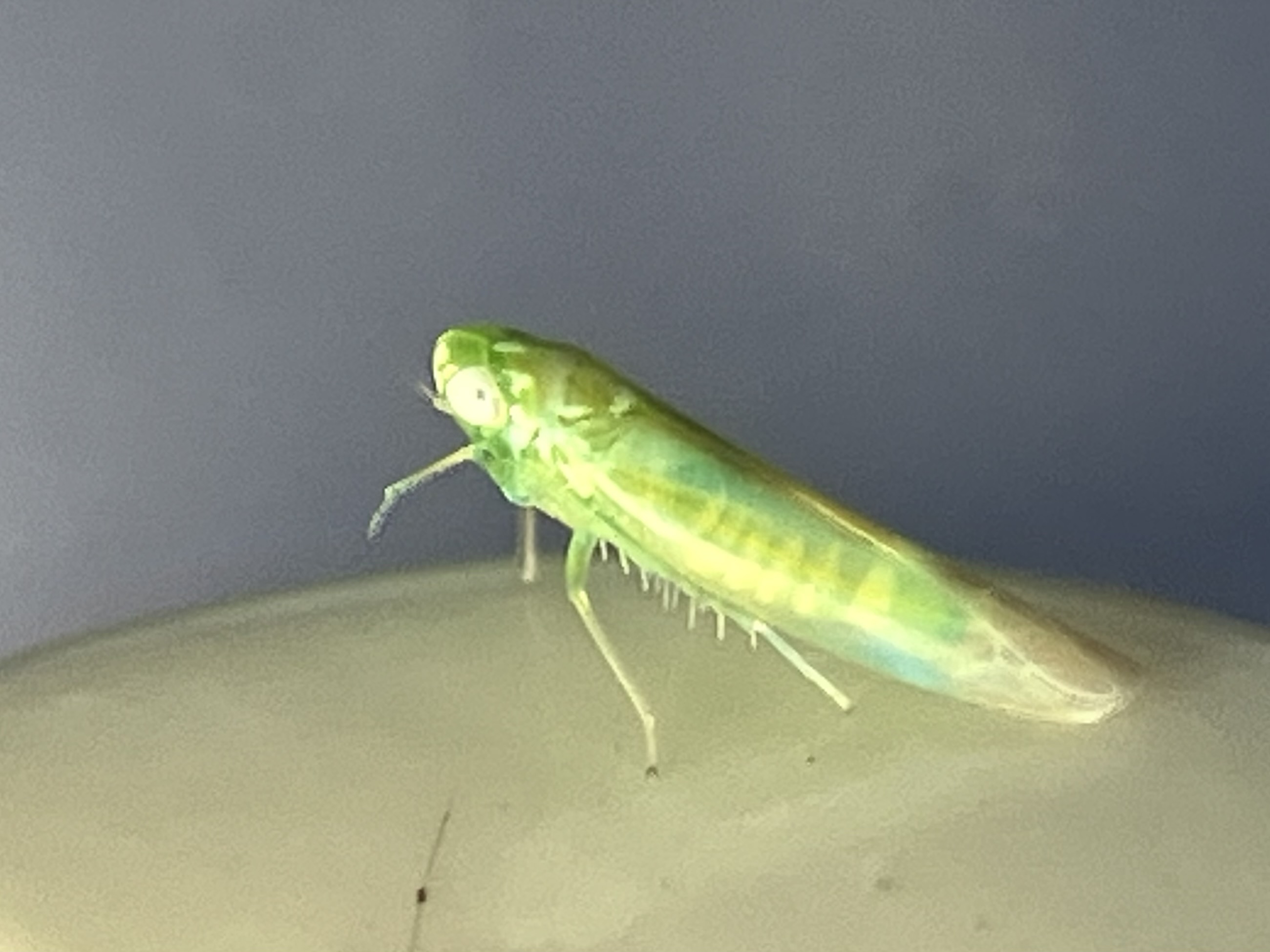
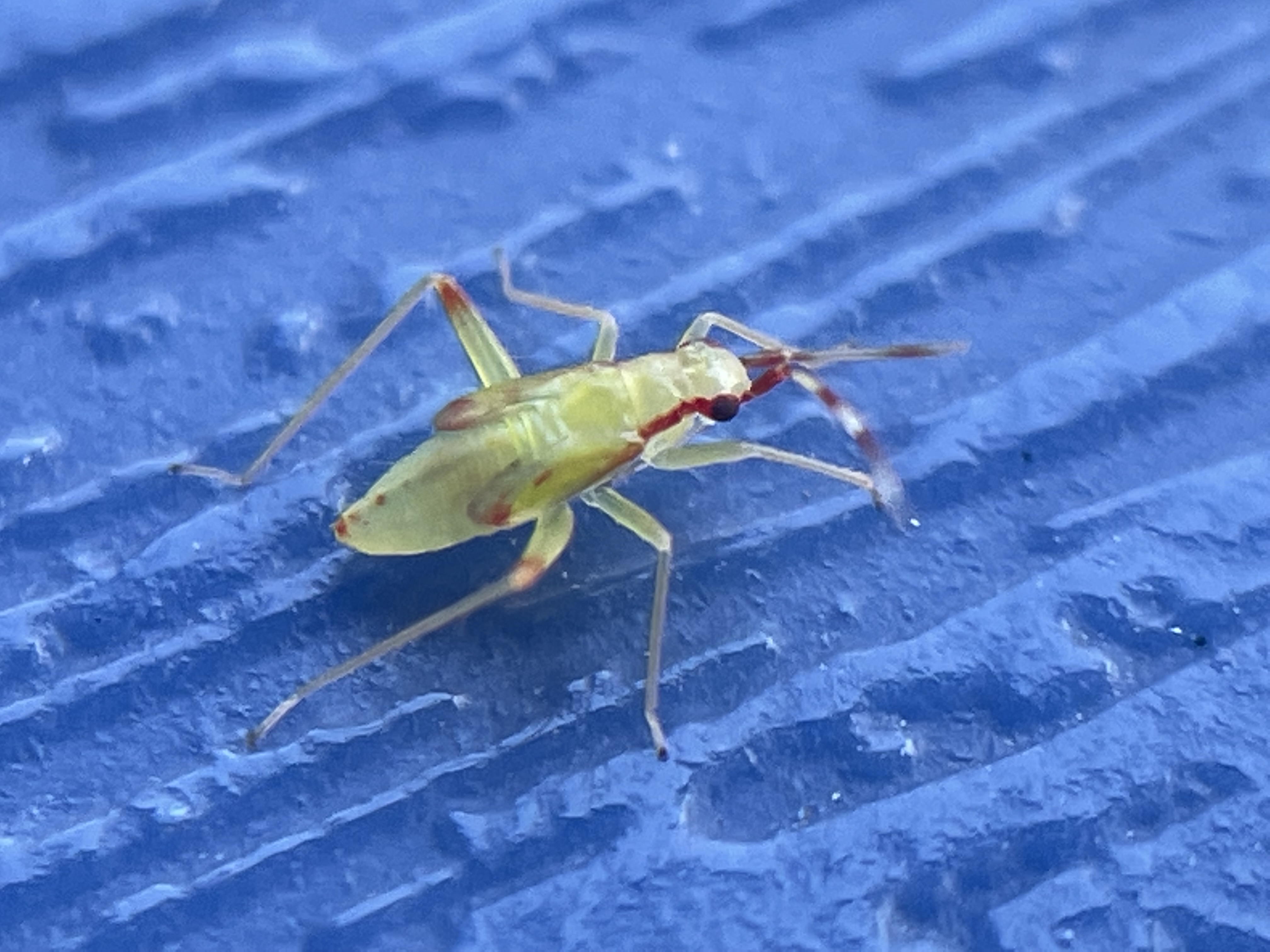
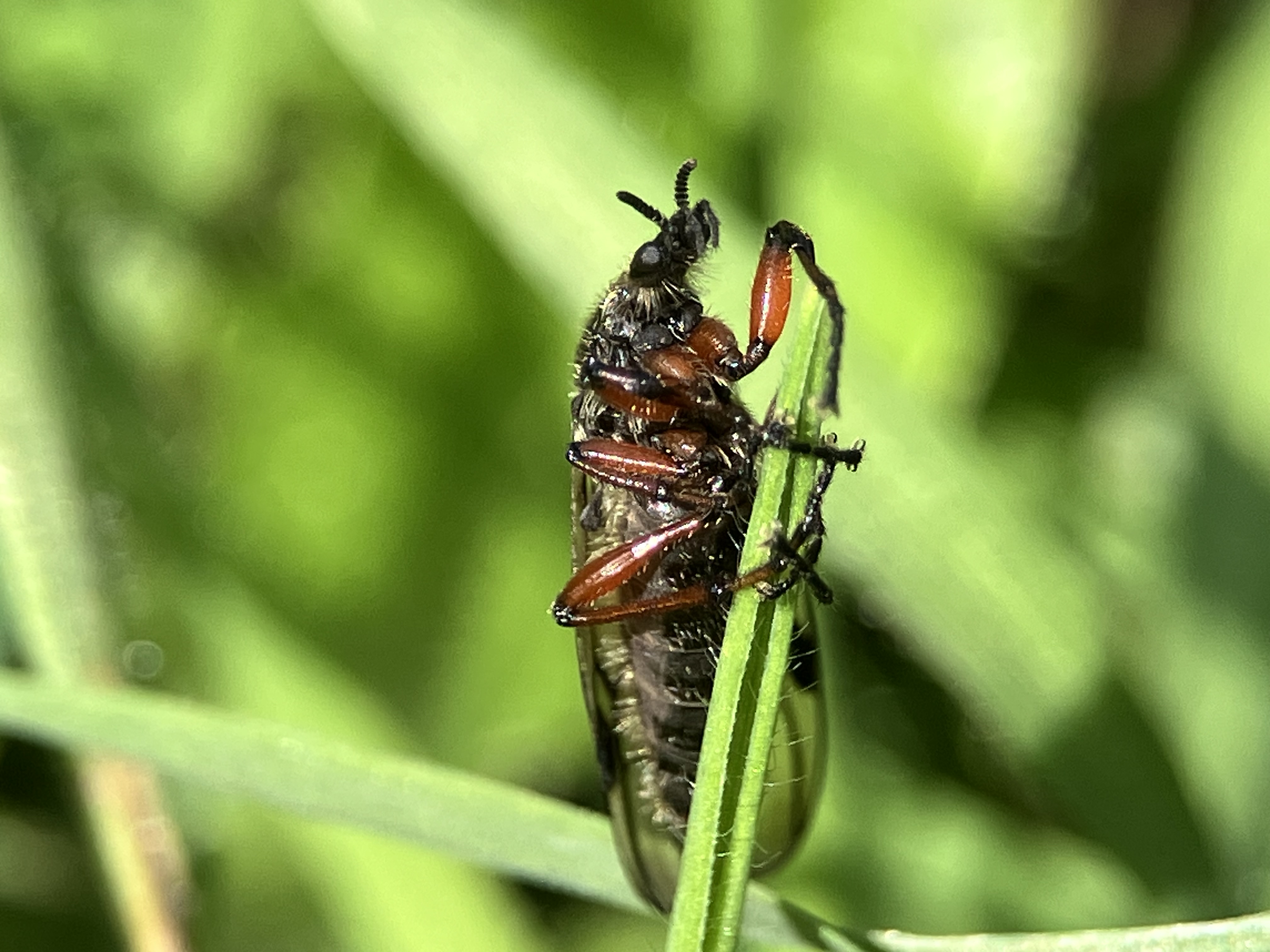
So in this video, I am receiving a bite from 1) a mosquito? 2) a tick? or 3) a thrips? or 4) a bug?
If you chose option 4, a bug, you are correct. Indeed it is a bug, but not just any kind of bug. It is a bug in that it falls into the insect order Hemiptera (the true bugs). This “bug” is a species named Campyloneura virgula, a type of plant bug in the family Miridae.
It’s not the first time one has bitten me either, though most of my reactive bites on San Juan Island have been from thrips in the summertime when it is super dry and they are looking for moisture. I react badly to thrips bites. My husband says they are so small you can’t even see them. I think he really believes I am imagining them, but hey, I’m the entomologist in our family, right?
They’re not imaginary.
Neither is this biter. You can see the action on my ankle for yourself.
Then read the reference material and watch out for ankle biters in your yard.
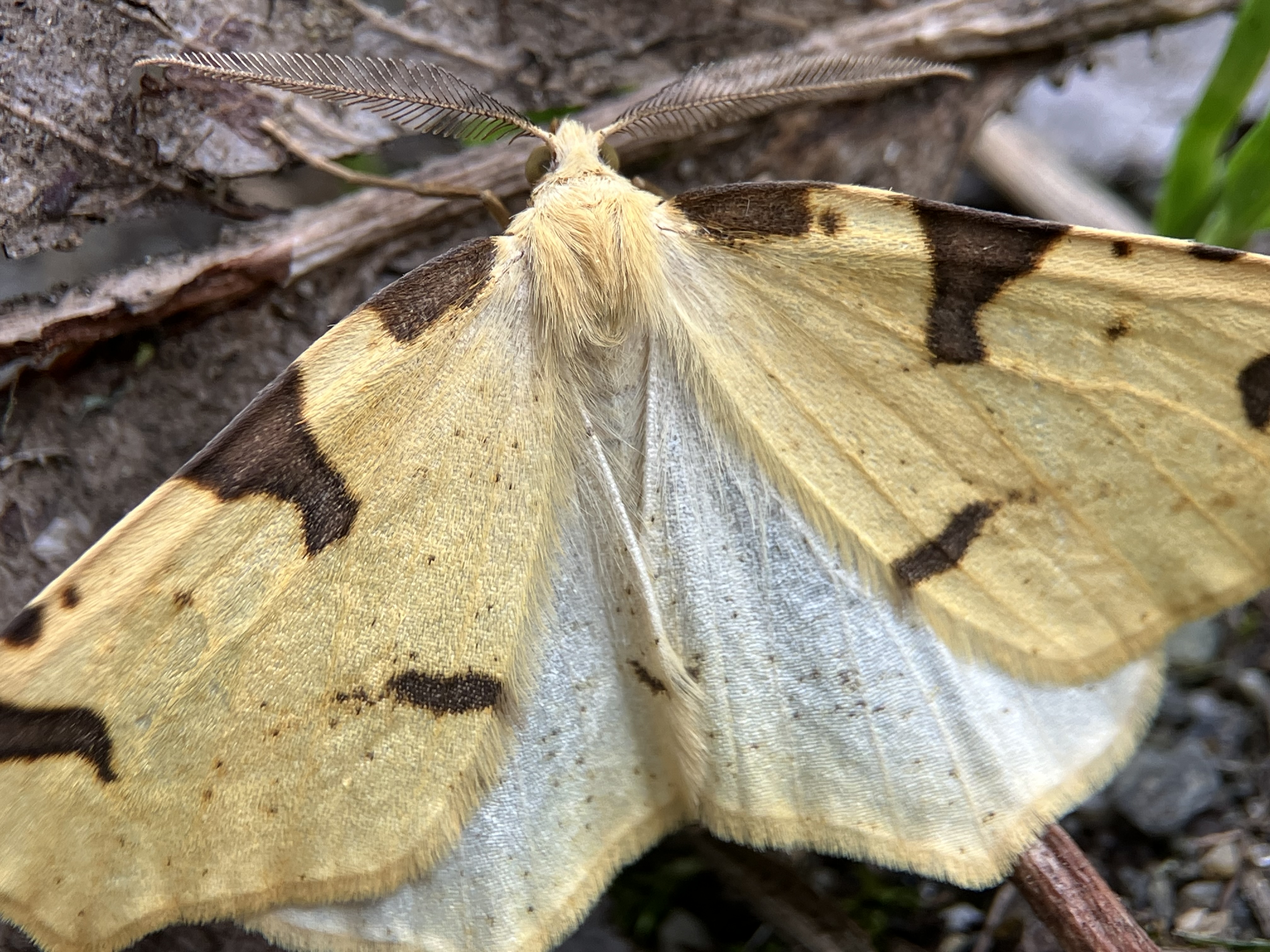
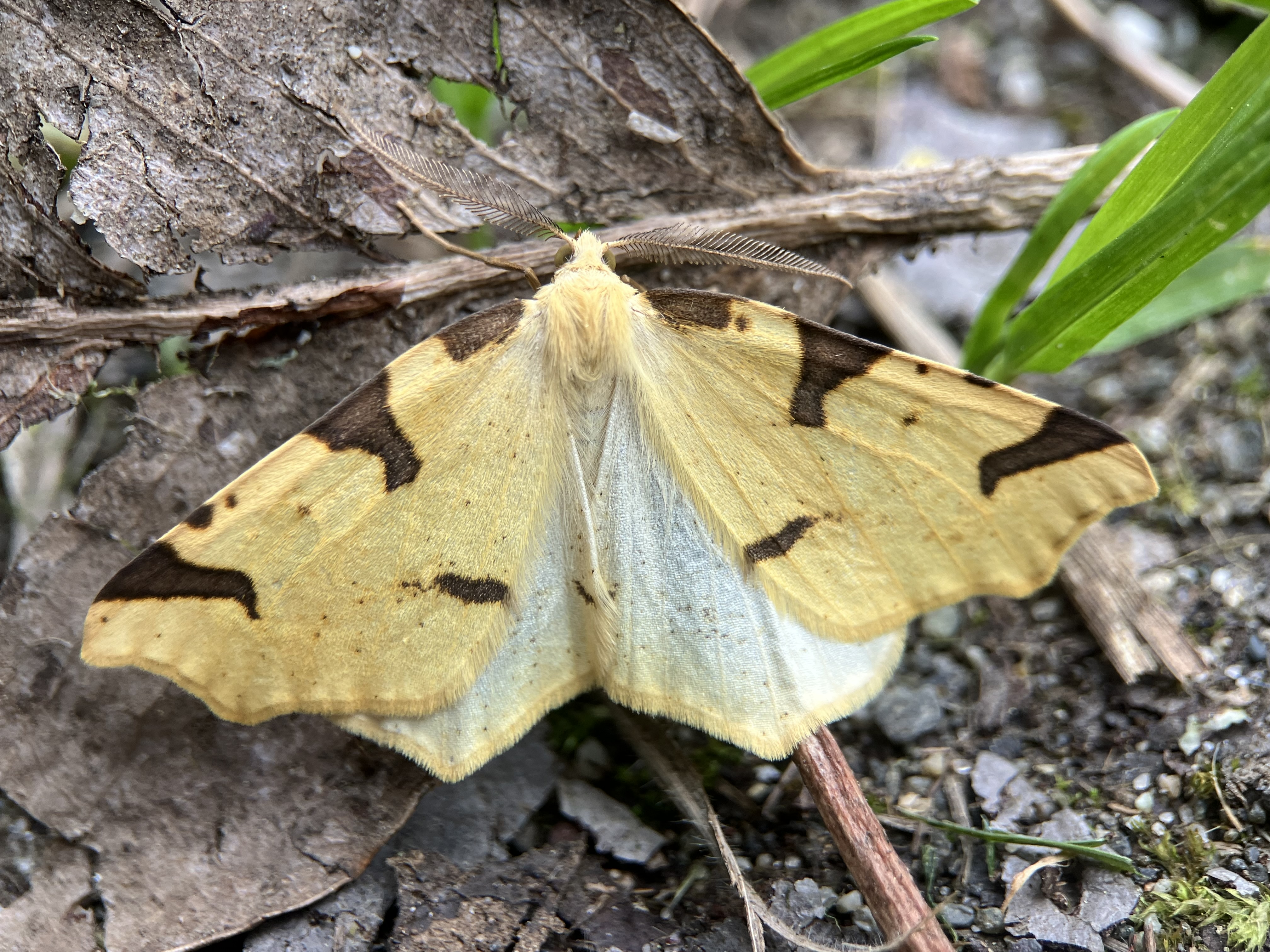
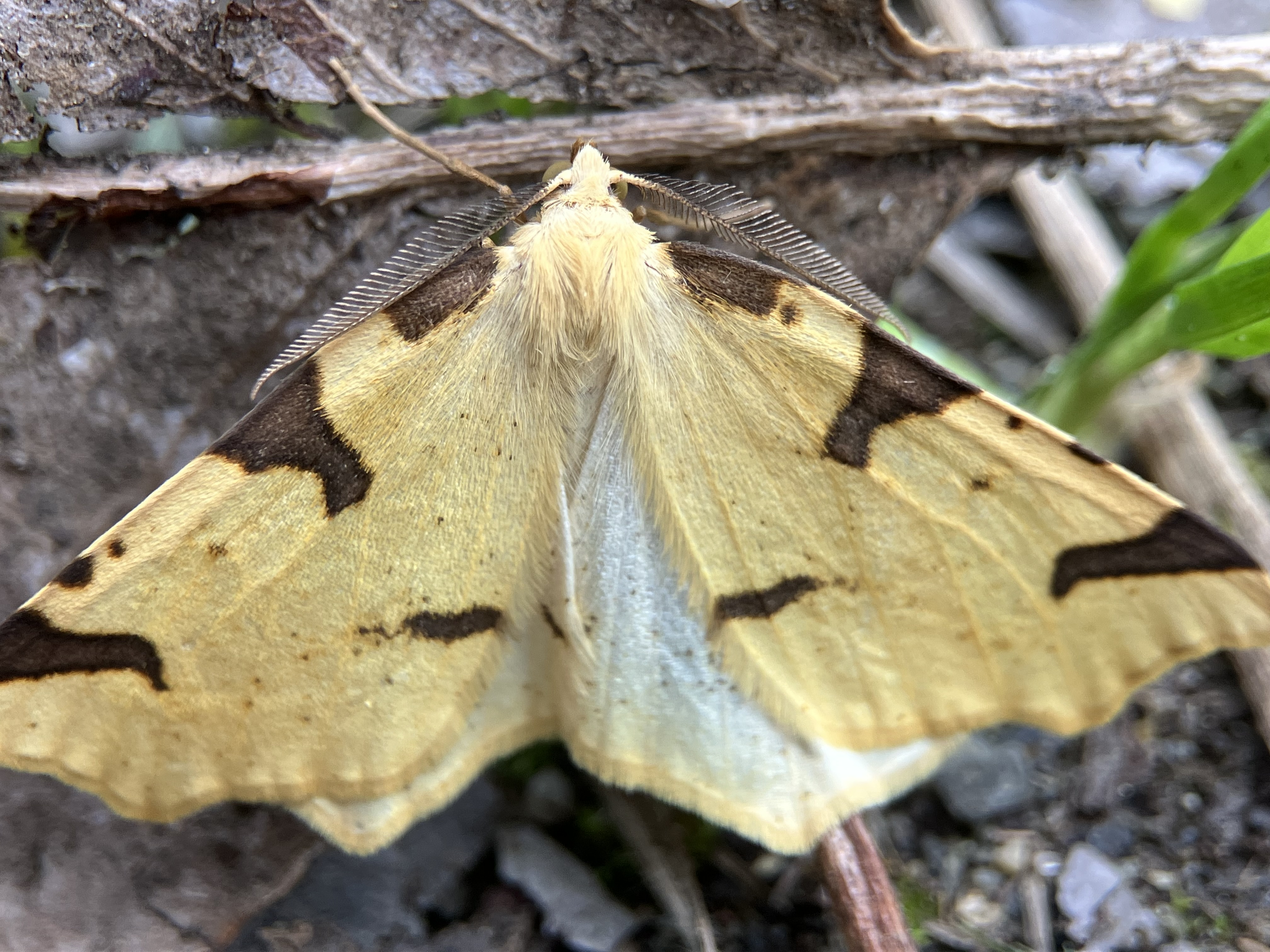
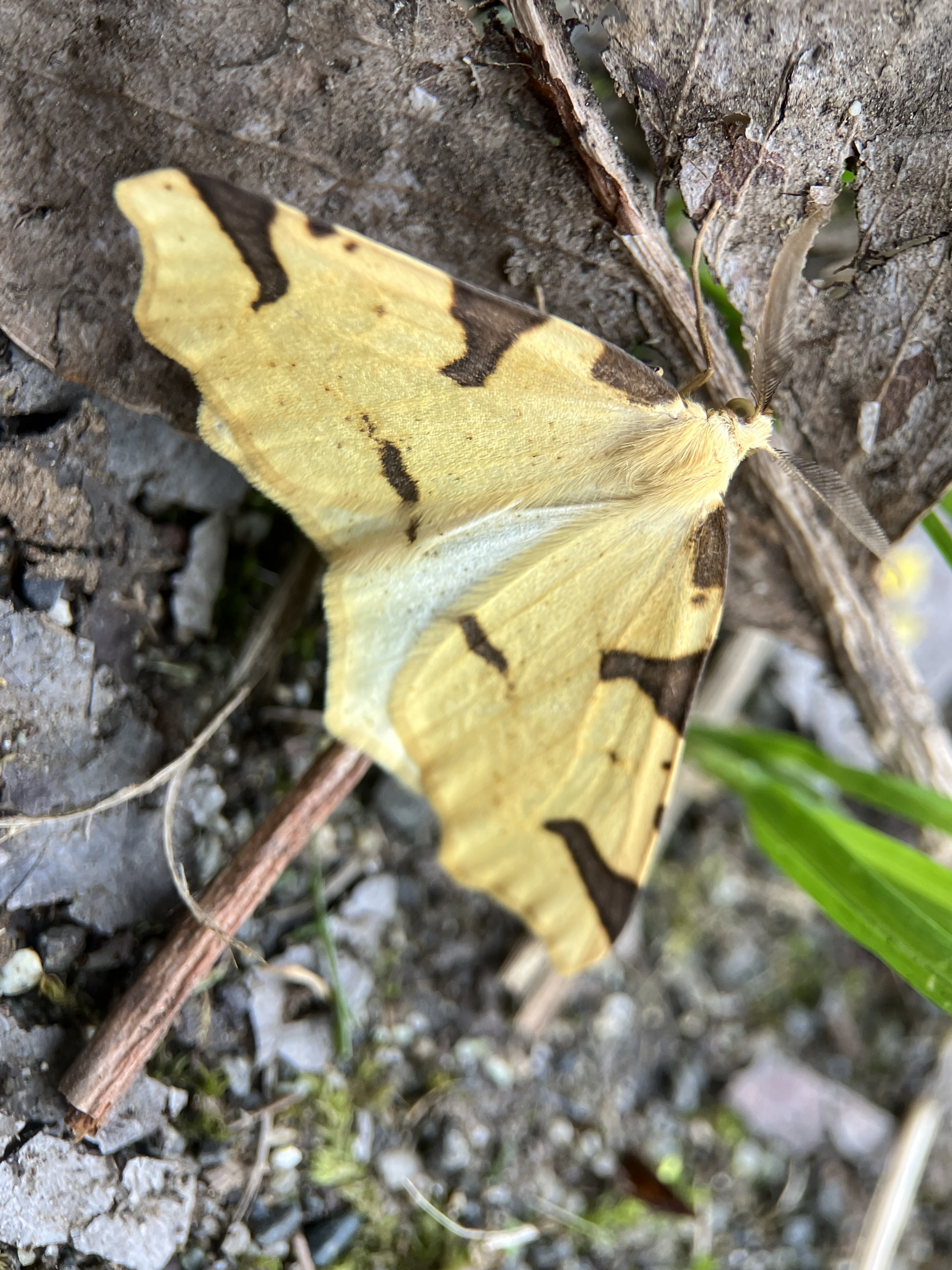
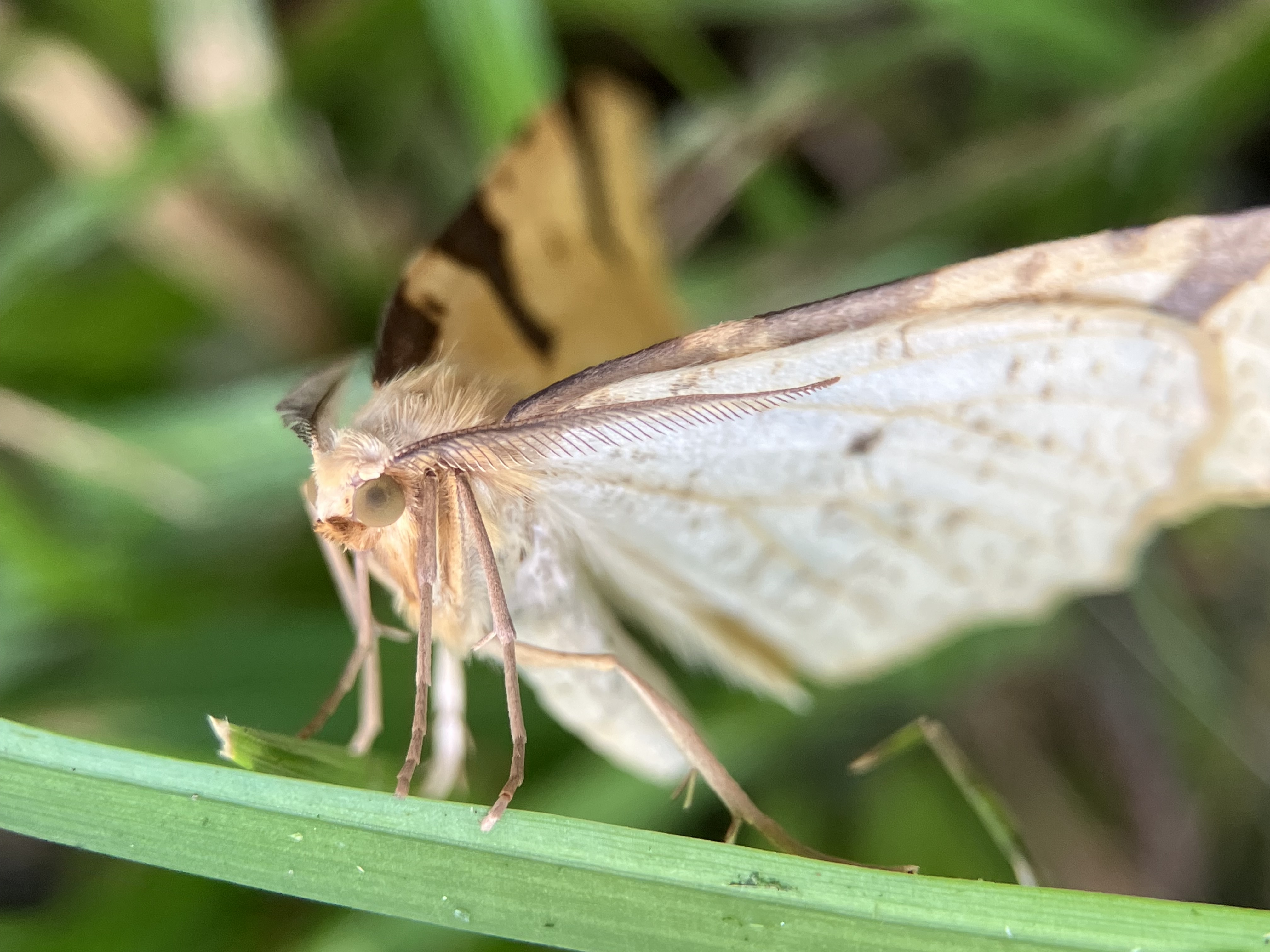
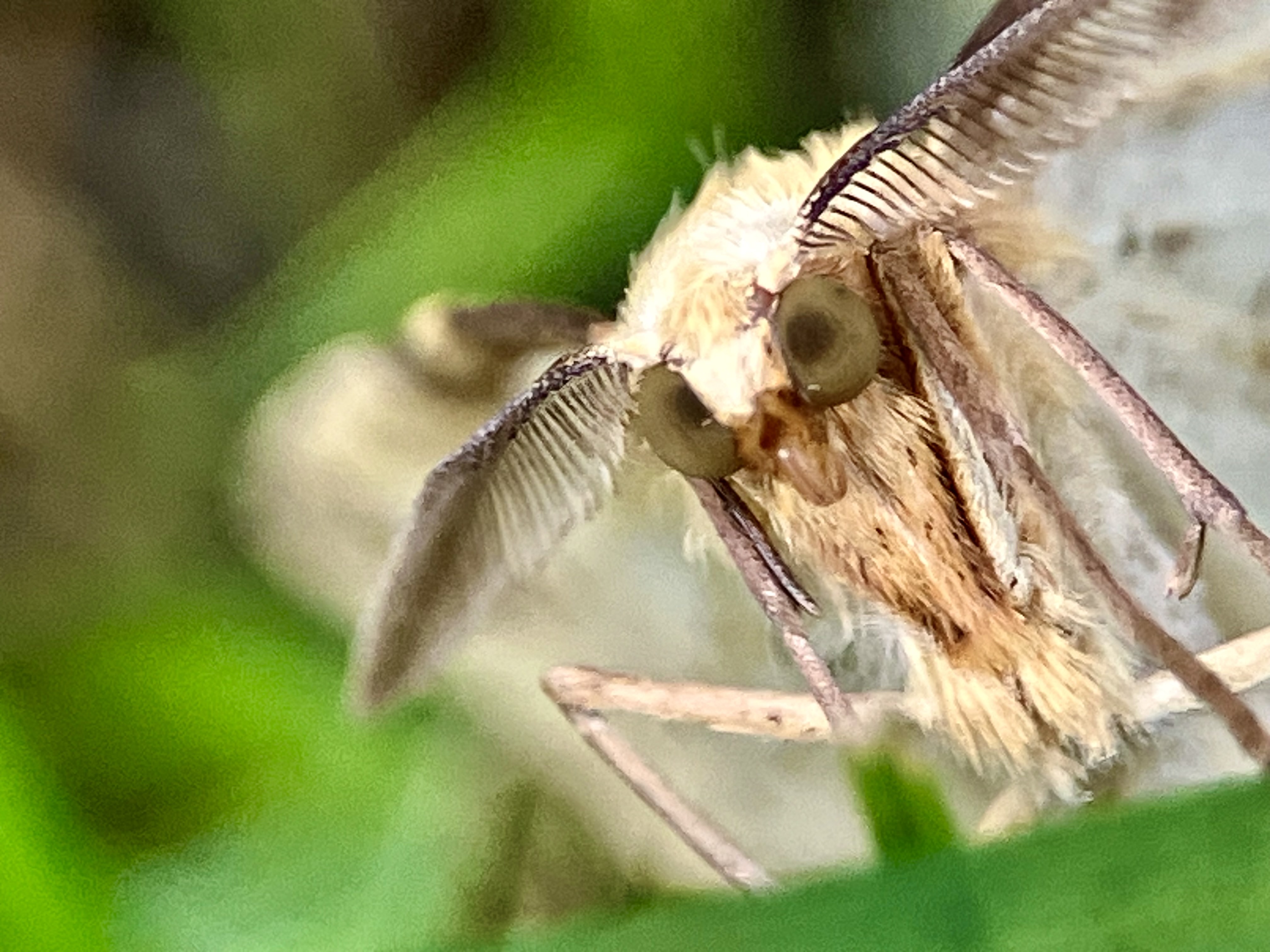
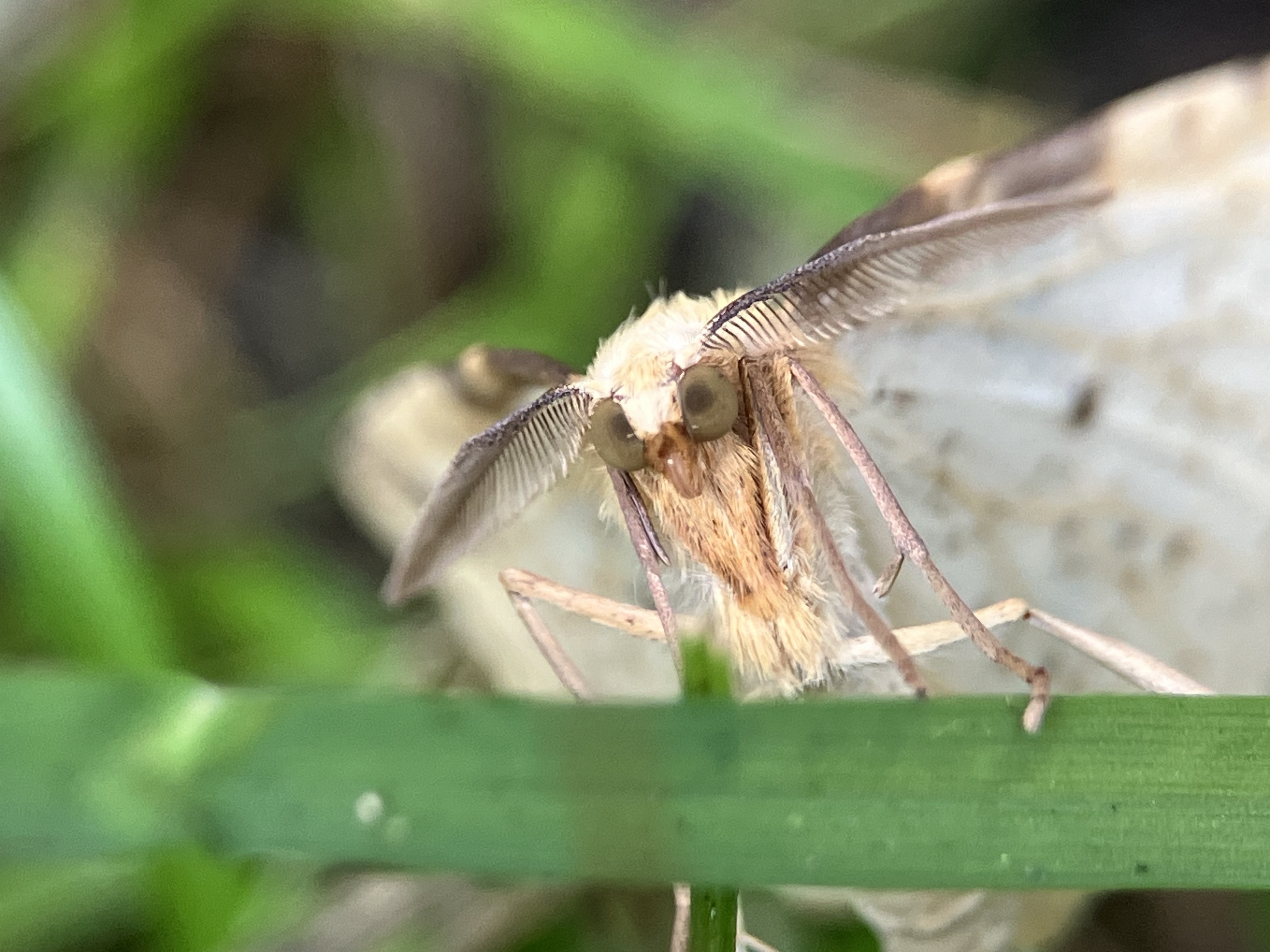
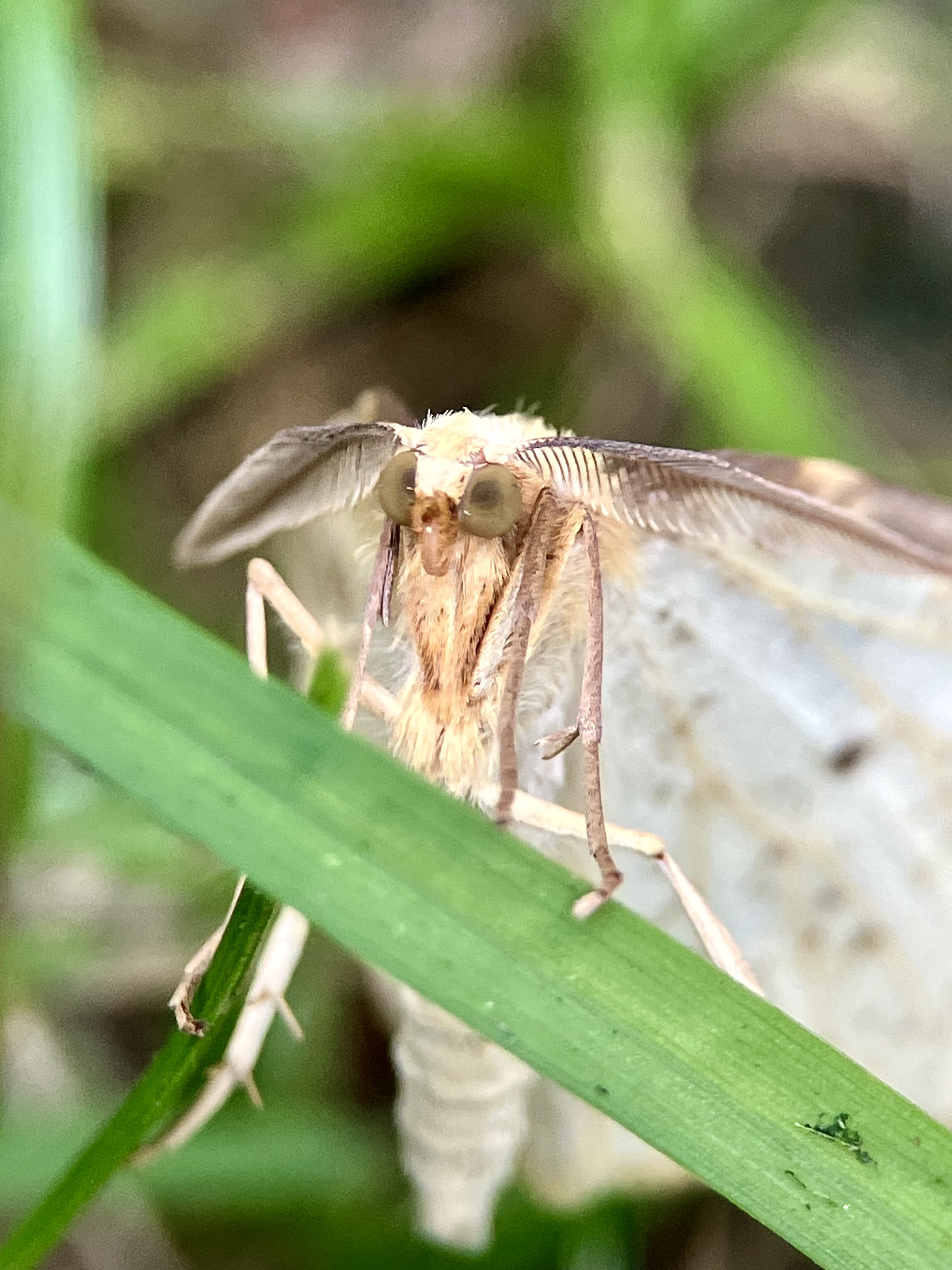
I found the most beautiful creature at my moth light this morning. It is the Canary Thorn Moth (Neoterpes trianguliferata ). I was surprised to see anything there given the drop in temperatures we’ve had the past few days. After a few photos, I got too close and he flew out of the open barn area into some grass, struggling a bit in the wind, so I was able to carefully coax him back into an egg carton to shelter the day back undercover and out of the rain.
If you’re wondering about the egg carton, I use these in my moth light set up to give the moths a secure place to hide when they settle down under the light for the night. The egg cartons are in a 5 gallon bucket. I have the “low end” set up, so no major investments in equipment. Anyone could do this at home. It’s fun to “moth” and see what species live around us. If you’re interested, shoot me an email and I’ll coach you on getting set up yourself. For the record, all of my specimens are photographed with respect and care, and allowed to live free. I do not take specimens for pinning. I definitely believe they are here to be admired in the wild, not in a glass case.
Neoterpes trianguliferata is a species of Geometrid moth that ranges from southern British Columbia to southwestern Alberta, south to Colorado, Utah, and California. The hostplants for larvae (the caterpillars) are Currants and Gooseberry (Ribes). I’ve linked information for some of the native host plants below in the reference section.
Larvae are twig mimics. Pupae sleep through the winter wrapped in a leaf, another reason to “leave the leaves” and refrain from burning or bagging and discarding the leaves around your home. You could inadvertently impact overwintering species like these and others. Adults are approximately 14-20mm (forewing length). You will see adults in flight between April-June in our area. From what I have been able to find as to the etymological meaning of the name, Neoterpes may translate to “new delight” and trianguliferata refers to the triangle-shaped markings on the forewings. It was indeed a delight to see this beauty today! A bit of sunshine on a rainy spring day.
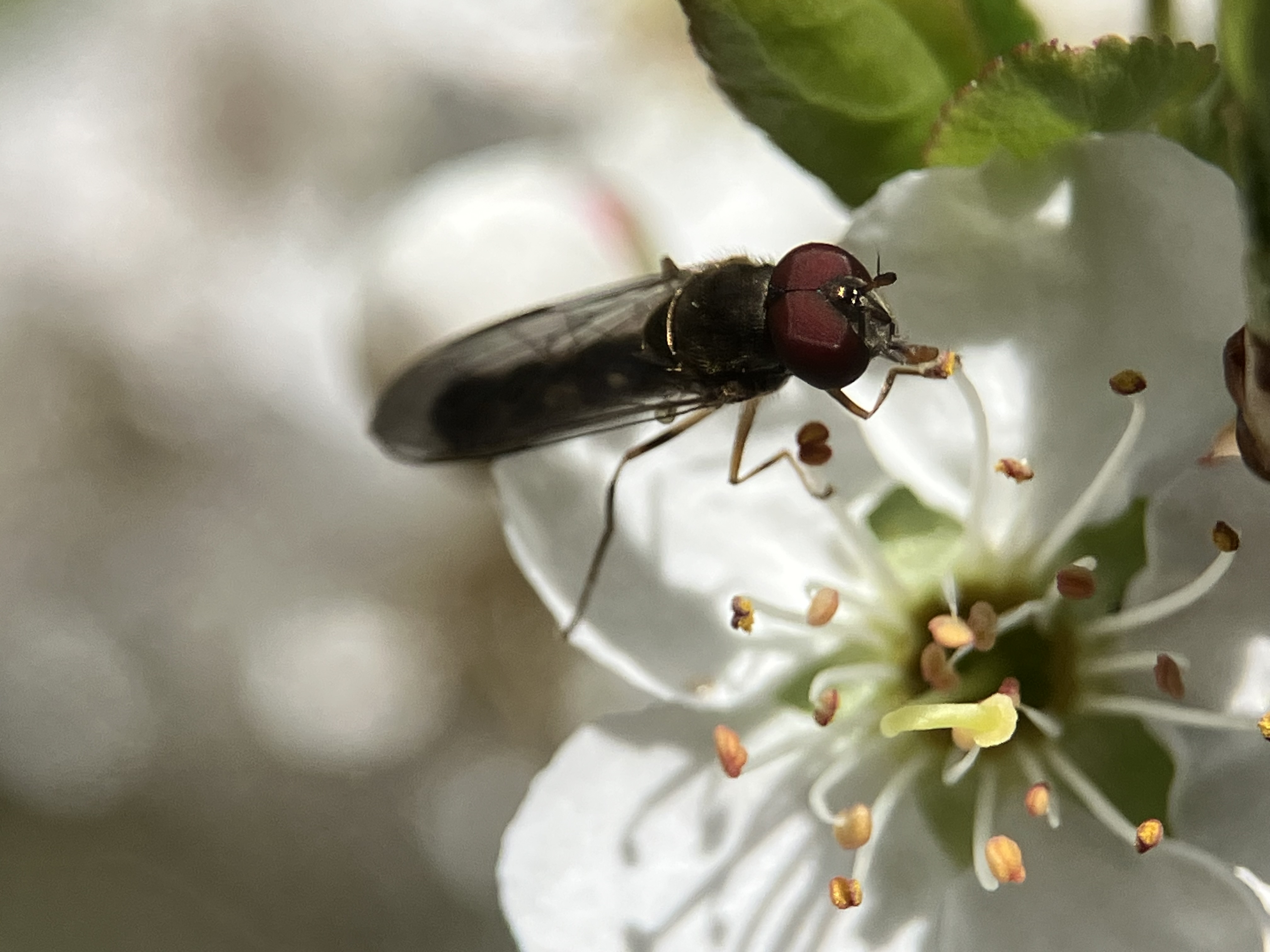
I thought I’d write up a short post about all the wonderful flies (and a few others) pollinating our plum trees in this cool spring weather. Why feature the flies? Well, for starters, the plum tree blossoms are white and flies love the color white. Another reason to feature the flies is because they are under-recognized and under appreciated, but very important pollinators. Some fly larvae even serve as pest predators, eating aphids. Others, like the tachinid fly below, use caterpillars that defoliate trees as hosts for their larvae to develop. Flies are also awesome because they do not sting! Some even “dance!” My favorite fly hasn’t shown up yet. It’s a Conopid Fly. More about that one later though…
Tachinid Fly (Epalpus signifier)
This past week in the media, there have been so many posts about the decline in honey bees. While there are some (unwanted) honey bees showing up on days when the temperatures climb above 50 degrees, honey bees aren’t active if it is cooler. Flies, on the other hand, are quite busy at work pollinating and do just fine when it might only be 40 outside. Flies are awesome! They need our support and appreciation.
I’d like to add (and I do know something about this because of my entomology background), that honey bees are just not necessary on San Juan Island. In fact, they might even be a very bad thing. They showed up at our plum tree as the temperature warmed up the other day, and as they arrived in increasing numbers, they kicked off ALL of the native pollinators that I had been observing. 😦
For honey bees to fly out of the hive and forage, they need temperatures above 50 degrees. In my experience keeping bees (as part of my graduate school work), they typically do not survive well on the island unless they are fed supplemental sugar water. Think about the ecological footprint of growing sugar to feed the bees!
Feeding honey bees attracts (and supports) the buildup of yellow jacket populations which are attracted to honey bee hive resources (including eating the honey bee brood developing in the hive), and honey bees also bring pests and pathogens that impact native bees (especially bumble bees). One more thing! If you are growing tomatoes, bumble bees are your pollinators, not honey bees.
I hope you will read and consider this recent study published about how honey bees were negatively impacting native pollinators on Giannutri Island in Italy. They were causing a decline in the populations of wild bees. In fact, the study cited an “alarming 80% decline in wild bee abundance over 4 years” (Pasquali et al. 2025). You can access this study to read it yourself here: https://www.cell.com/current-biology/pdfExtended/S0960-9822(25)00262-3
Enjoy the gallery of the native pollinators that I was fortunate to photograph and be able to share. Be a fly fan! Be a native bee fan! Learn about our unseen, but important night time pollinators (moths), and PLEASE LEAVE THE HONEY PIGS for the mainland industrial farm operations.
KEARNS, C. A. 2001. North American dipteran pollinators: assessing their value and conservation status. Conservation Ecology 5(1): 5. [online] URL: http://www.consecol.org/vol5/iss1/art5/
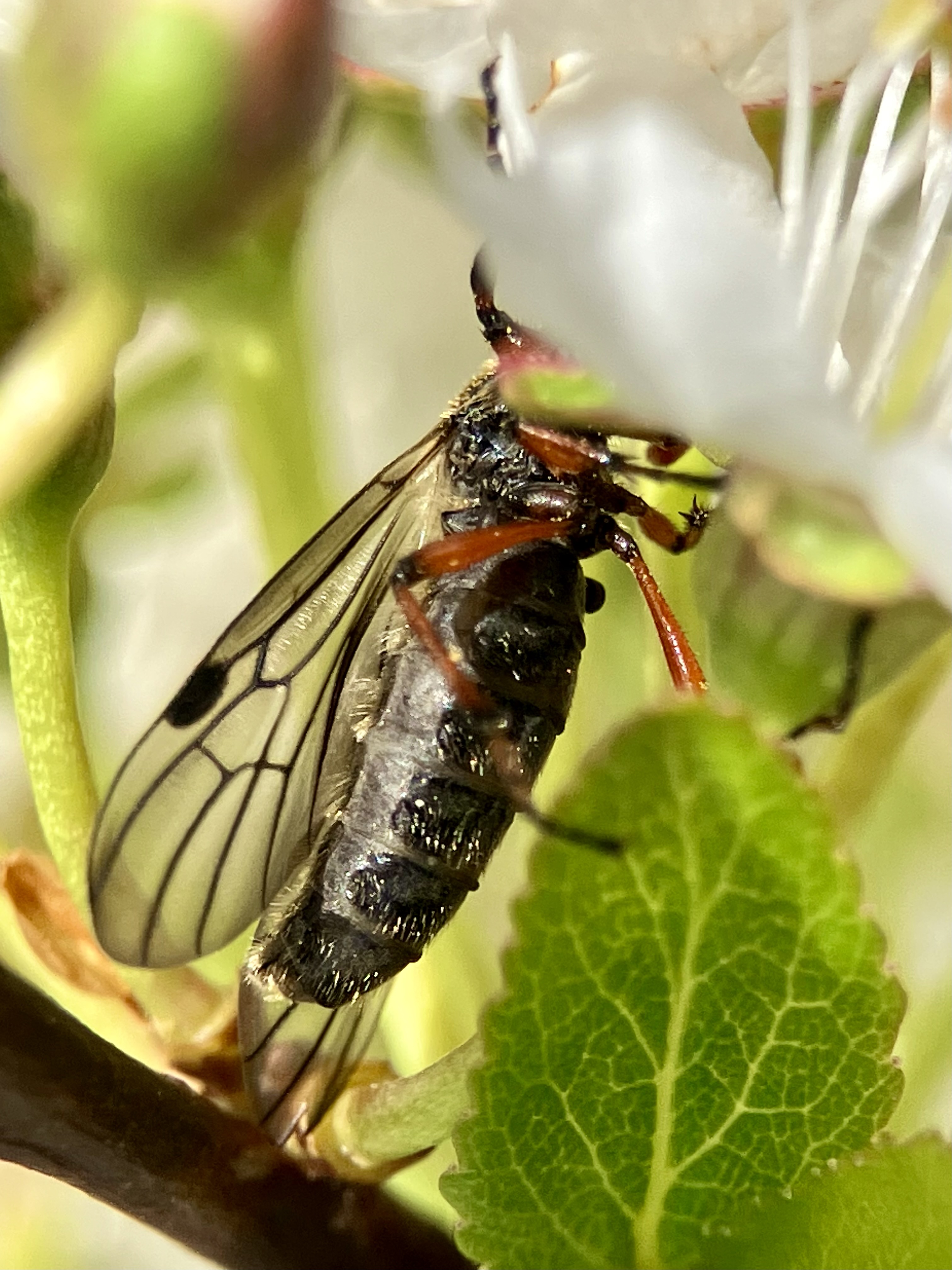
That’s right! Herman the Persian found something interesting in the yard when we were outside sunning ourselves a bit this afternoon. He found one of the Bibionid March flies (a female). If you read my post yesterday https://buggingyoufromsanjuanisland.com/2025/04/04/nuptial-gifts/, you might note that Bibionid flies were being hunted by Empis flies who rolled them into little balls as nuptial gifts used to woo the lady Empids to mate.
Female Bibionid fly digging chamber to lay her eggs.
Evidently, a few of these Bibionid flies escaped that destiny and actually mated with their own kind. THIS one, that Herman found, was hard at work digging her own death chamber where she would expire soon after laying her eggs. Incidentally, the adults are very short-lived, and in fact, live only about 5-7 days with the primary objective of mating, and for the adult female to lay her fertilized eggs. In spite of their brief existence, adults are also thought to be important early pollinators of orchard trees. Yes, you heard me right! Flies don’t get nearly as much credit for pollinating as they deserve to receive.
I watched her digging with her fossorial forelegs. It seemed to be an impossible task, but she made slow and steady progress. She was still hard at work before we went back into the house about half an hour later. I marked the spot with a rock so I could go back and check, but I suspect even with the rock nearby as a marker, it will be next to impossible to detect any disturbance in the soil tomorrow. We’re supposed to get rain this evening.
In approximately 30-35 days, the eggs she lays will hatch underground. The larvae will live in the top layer of soil and feed gregariously on leaf and needle litter, decaying organic matter, and sometimes on below-ground parts of plants.
If you’re curious, you can read more about Bibionid flies in the attached links. I did see some additional Empis fly males dancing about today with their Bibionid “balloons” or nuptial gift balls for prospective mates.
Morris, H. No date. The larval and pupal stages of the Bibionidae. Entomological Department, Institute of Plant Pathology, Rothamsted ExperimentalStation, Harpenden. https://core.ac.uk/download/pdf/212009582.pdf
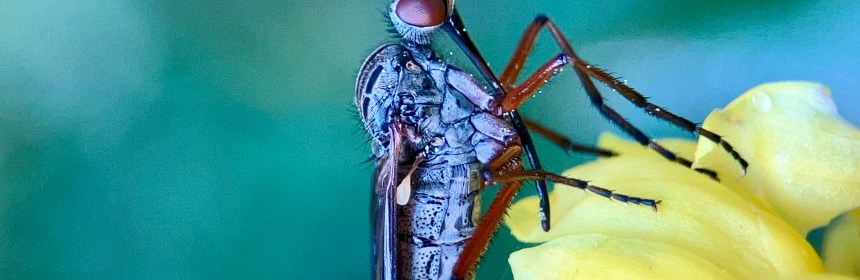
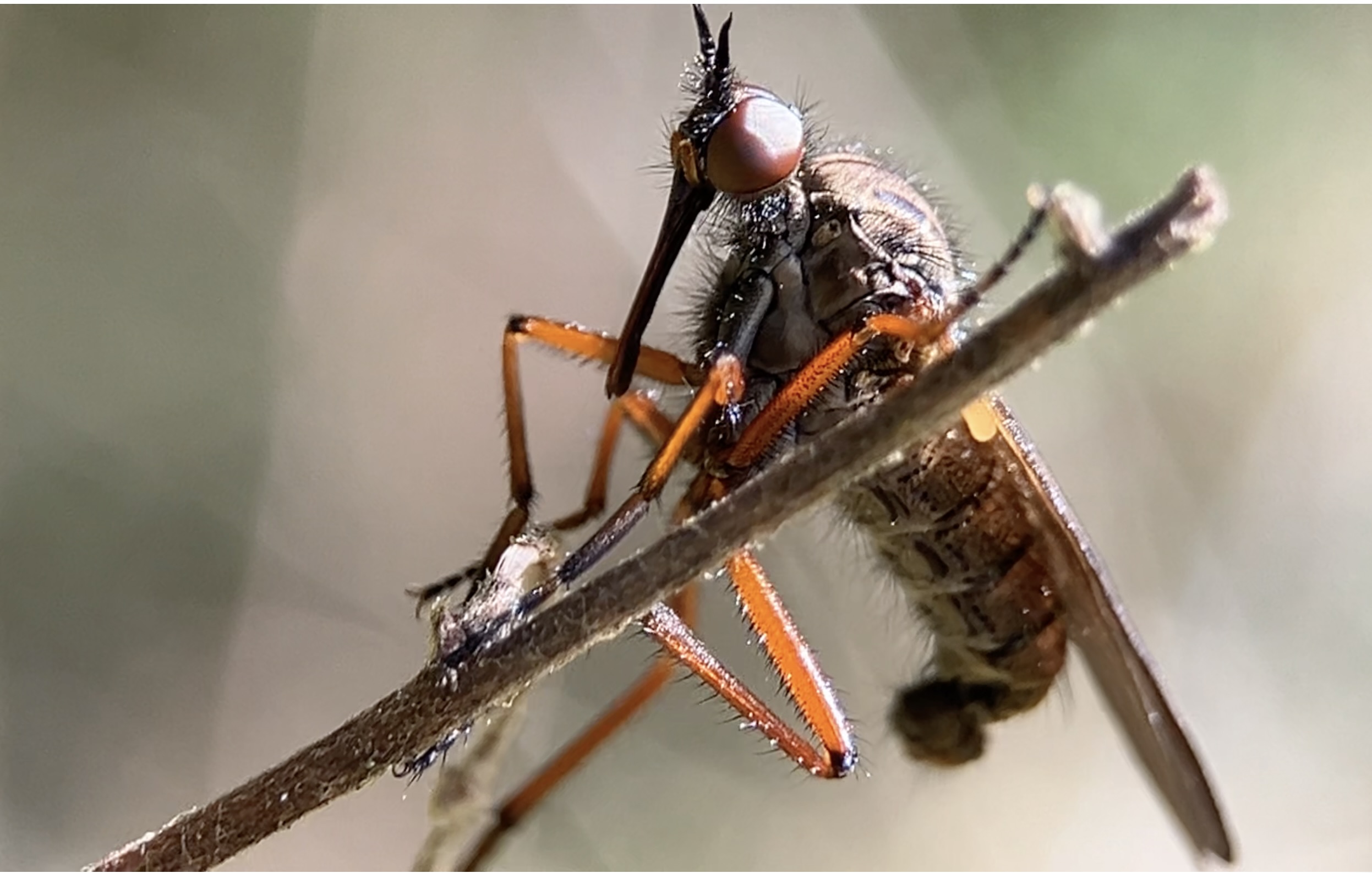
This afternoon I would rate a 10/10 for entomological adventure. It happened outside, just behind our barn about 3:30pm. I went out to feed our resident raven and took a stroll over to a sunny corner of our property. As I neared an old barbed wire fence line, I noticed an aggregation of flies bobbing around over one of the native Ocean Spray (Holodiscus discolor) shrubs. Moving closer, as stealthily as possible, I saw these were Empis dance flies and I got very excited. There seemed to be about 15-20 in the group.
Empis Dance Fly (male) with Bibionid fly nuptial gift
I watched as I stood in the sun. The sun’s warmth felt really good on my body. Hopefully, we will have more sunshine and some days of vitamin D will infuse my cells and pull me out of this funk I have been wallowing in. The flies dancing in the sun were a sight. I crept forward a bit closer, trying not to slip into the fencing, but enough so as to get some video to share.
You will have to forgive me for the shake in the footage. It is not easy to remain steady and focus on a nervous fly that leaves its perch if you so much as breathe too deeply when you are moving the camera close enough to zoom in for a good macro shot. I think I was holding my breath a lot while I was trying to take pictures.
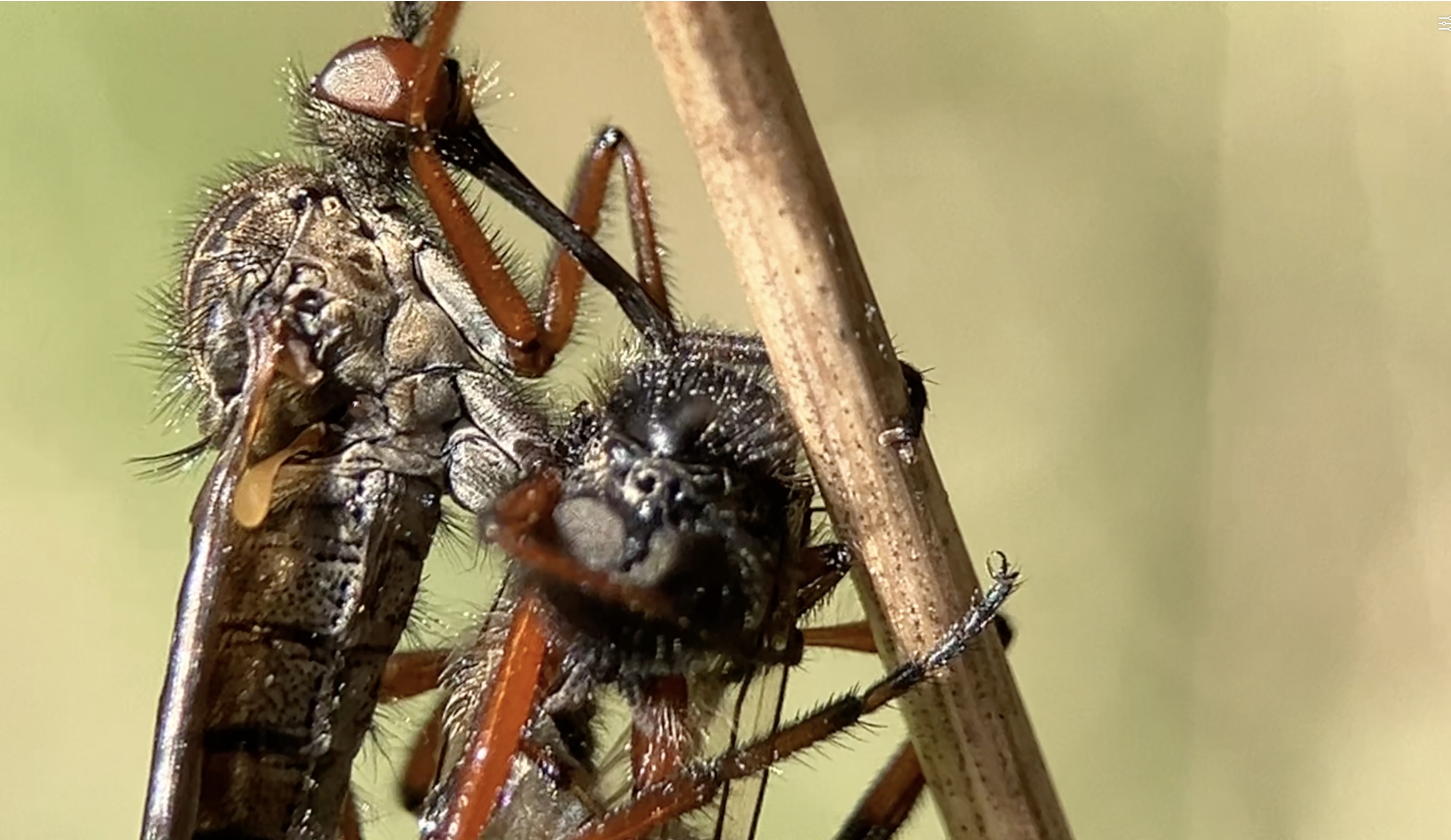
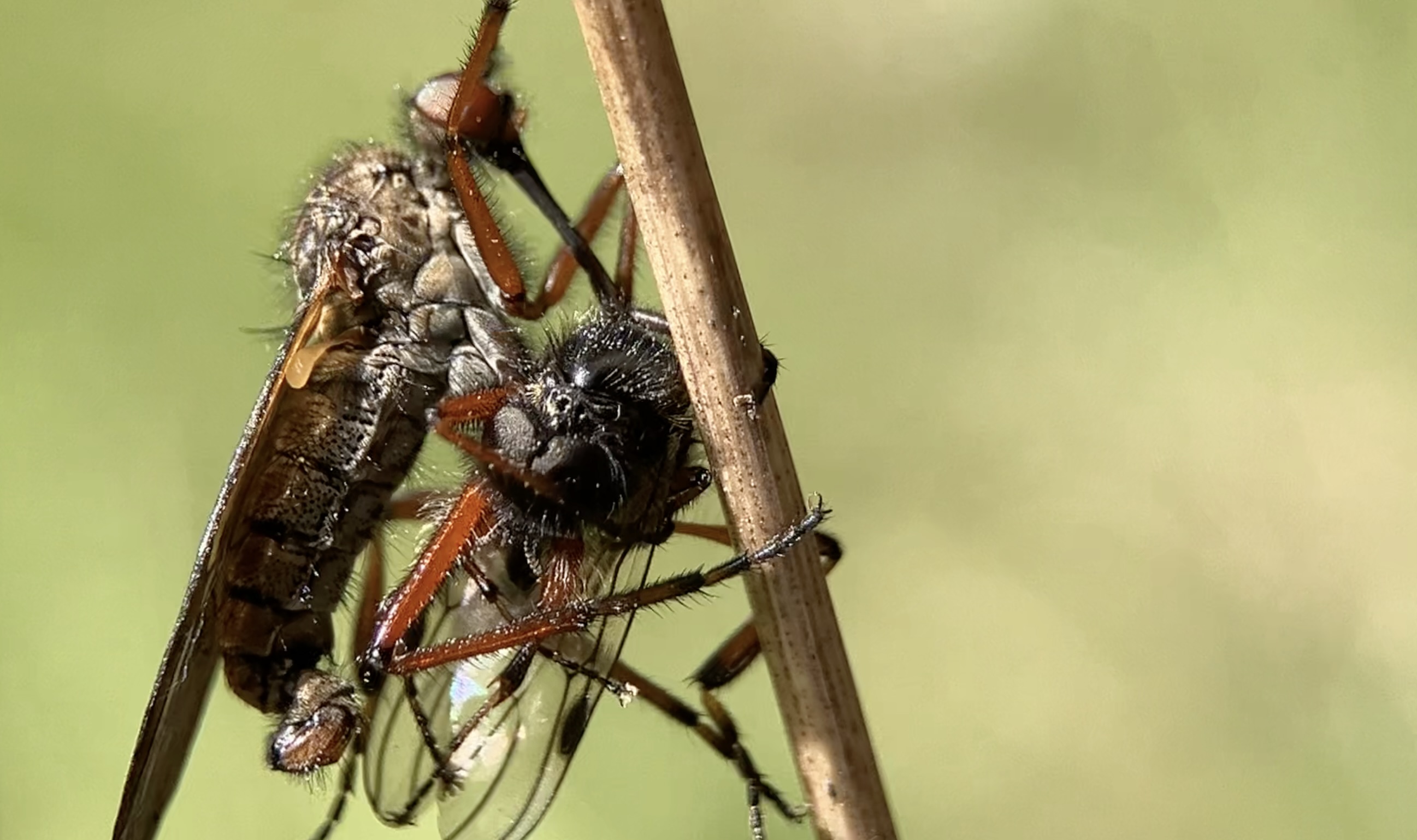
Empis Dance Fly with nuptial offering
This fly should be classified in the genus Empis. Last year, I found Empis barbatoides in our orchard. You can read an earlier blog post I wrote about them here https://buggingyoufromsanjuanisland.com/category/dance-fly/empis-barbatoides/ I believe these may be the same species, but I say this with a caveat. I am hoping to get my hands on a copy of the revisions by Sinclair, Brooks, and Cumming I have referenced below. It appears I may need this and the updated keys to try and ID my fly beyond genus level, so I’ve emailed the lead author and hopefully will hear something back.
If you look closely, you’ll see in some of the photos the fly is holding a balled up insect. This is a species of March fly in the family Bibionidae. I saw a few hiding around in the tall grass like this one in the photo below.
March fly (Bibionidae) hiding in the grass
Evidently, they were being picked out by the male flies and rolled up into a nice nuptial gift to present to a female Empis fly to entice her to mate. The male Empis fly will carry this balled up dead insect and “dance” around to attract a female. That’s what I found so fascinating to actually watch in person. It isn’t every day you see something like this! Since flies seem to be attracted to certain spots for mating aggregations (it’s called hilltopping), perhaps this is a spot where I might be lucky enough to see this action again.
References and Further Reading:
Alcock , John. 1973. The mating behaviour of Empis barbatoides Melander and Empis poplitea Loew (Diptera: Empididae), Journal of Natural History, 7:4, 411-420, DOI: 10.1080/00222937300770301
Sinclair BJ, Brooks SE, Cumming JM. Revision of the western Nearctic species of Empis subgenus Enoplempis (Diptera: Empididae). Zootaxa. 2025 Mar 31;5615(1):1-200. doi: 10.11646/zootaxa.5615.1.1. PMID: 40173481. https://pubmed.ncbi.nlm.nih.gov/40173481/
I didn’t turn on my moth light last night. I thought about it, but supposed I just wasn’t feeling all that motivated. If I’m completely honest with myself, I am feeling a bit blue. Maybe more than a bit. I wrestle with feeling shut out of the “enviro” community on the island and have felt snubbed by some of the folks in certain organizations. Life on an island can be great, but there are times when it feels like you’re in a fishbowl. Some people don’t get beyond 8th grade social networks. Shrugging here. 🤷♀️ I am just going to continue to do my bug thing and if people want to connect, they are always welcome. Sometimes I get really great emails and feel like my efforts to share what I know about bugs matter. I hope so. We need bugs. Even the ones that aren’t perceived as charismatic as a butterfly or a bee.
Here’s a moth that made me think of a funny story to share. This one’s for my daughter. I hope she will get a laugh out of it. We used to have a rabbit named Izzy. Her full name was Izzy Belle Cottontail. She was supposed to be a wild rabbit. How did we come to have her? A neighbor’s dog killed her nest mates and she was the only one to survive. They brought her to me asking for help. She wasn’t but days or maybe even hours old. Her eyes were closed and her umbilical cord stump was still attached. I tried to give her to my rehabber friend, but she was overwhelmed. I ended up caring for Izzy. Bottle feeding every hour or so, even through the night. When she was old enough, we tried to release her. She ran back in the house and that was that. She came with us when we moved to Washington…all the way from Texas. If you want to see a video of Izzy, you can check out the YouTube link here: https://youtu.be/6S0qnwgzLbM?si=JsMYN8rG1Hfu67FB
Izzy Belle the Cottontail
So why does this moth in the video below remind me of Izzy? Well, Izzy had a really bad habit of chewing things. Rabbits have to wear their teeth down, but I think young rabbits just want to try everything out. One morning my daughter got up and came to get me. She said, “Mom, Izzy gave me sprigs.” She did indeed have “sprigs” of hair sticking up where Izzy had chewed off pieces in the night. Izzy gave me sprigs a few times too. In spite of her chewing and other unfortunate habits, we loved Izzy dearly and she lived a very long and happy life with us.
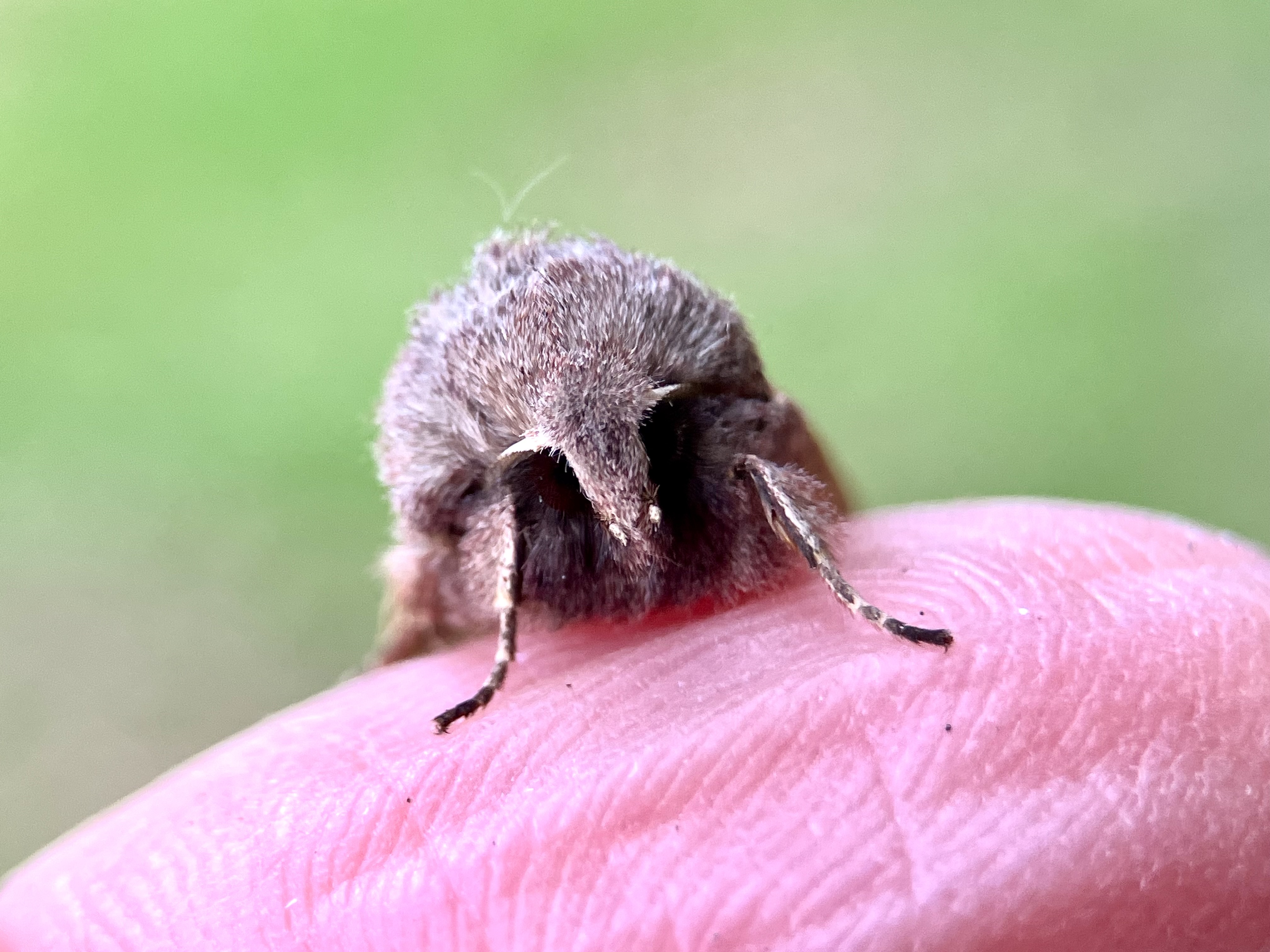
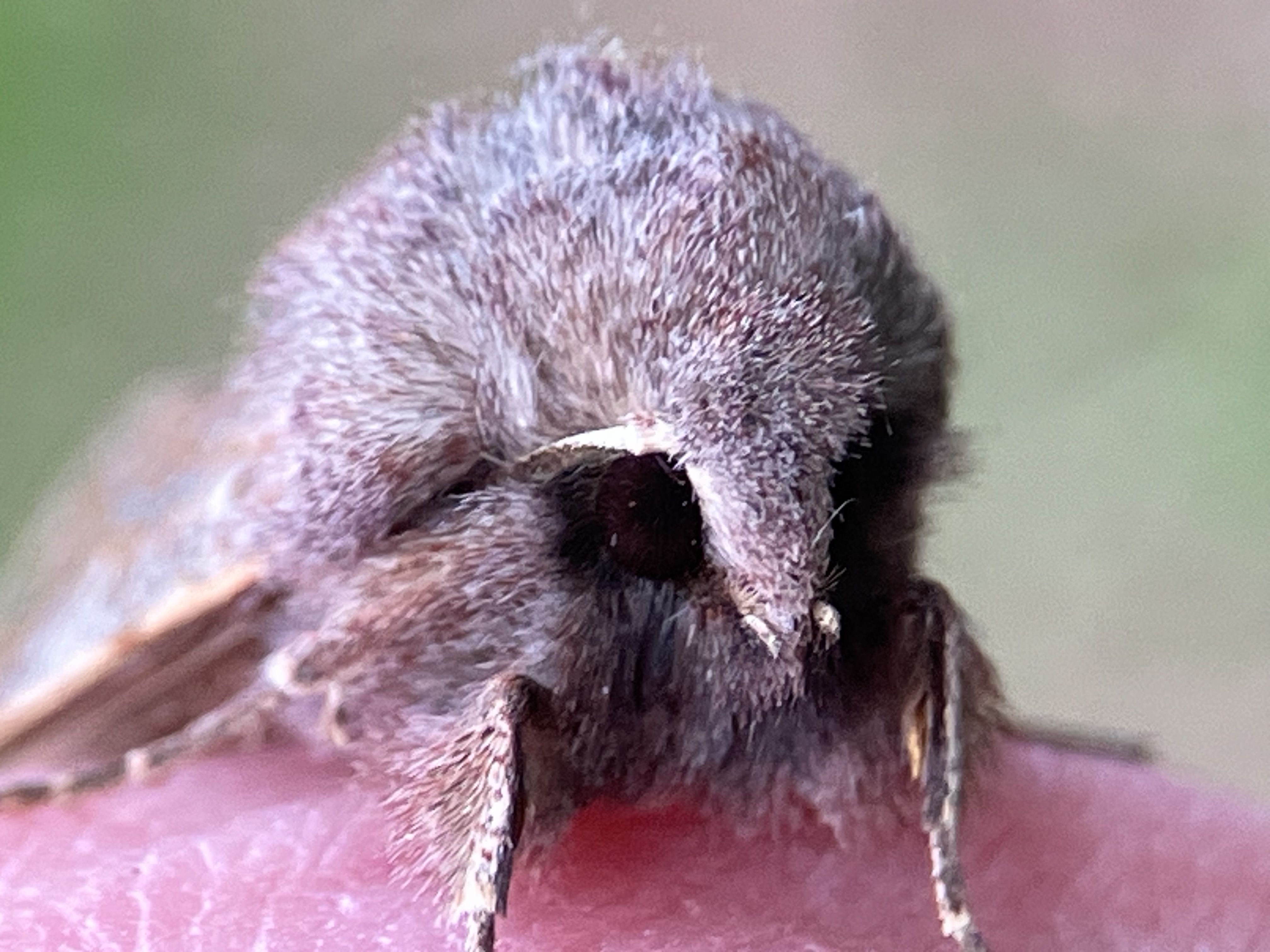
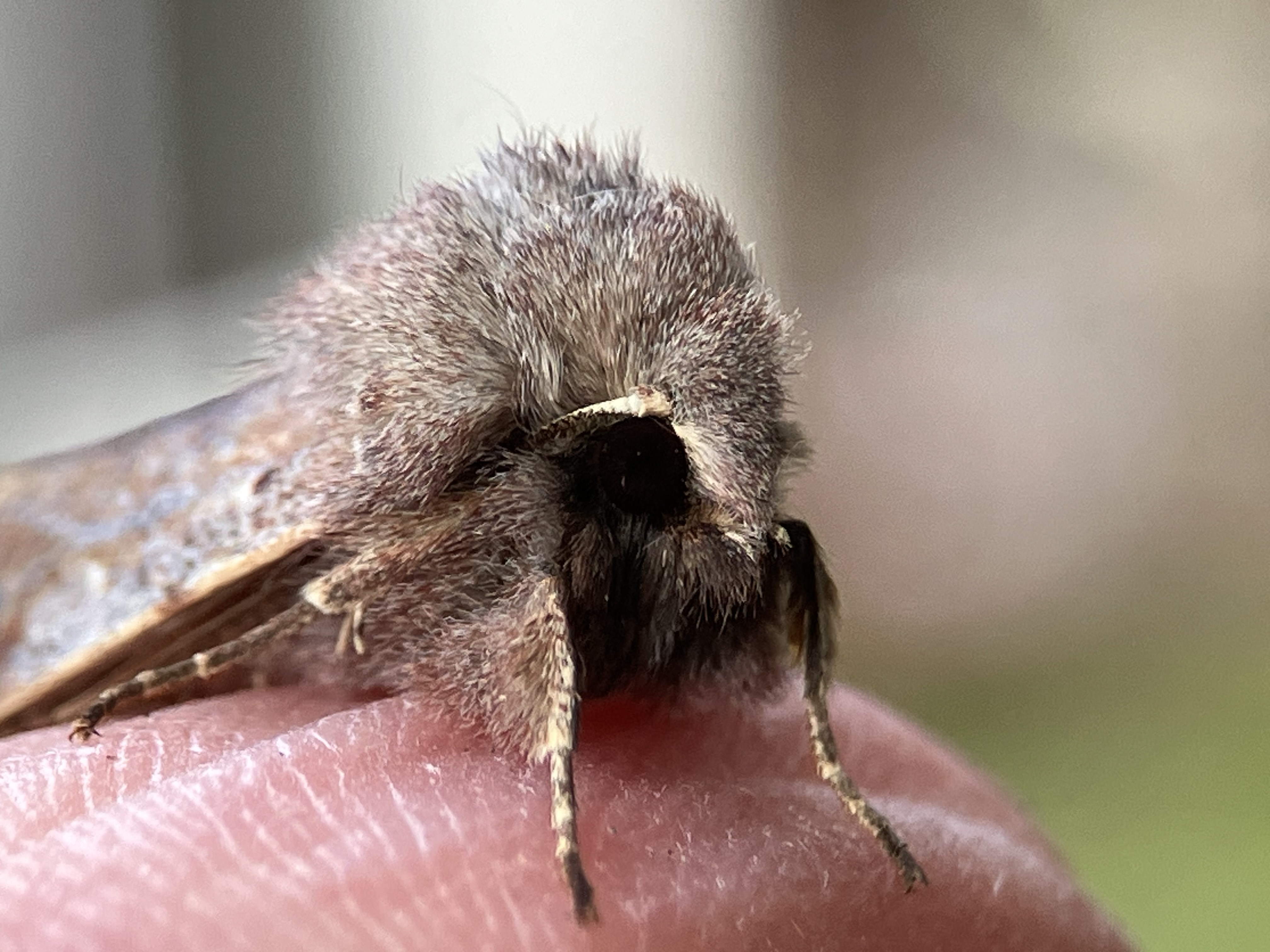
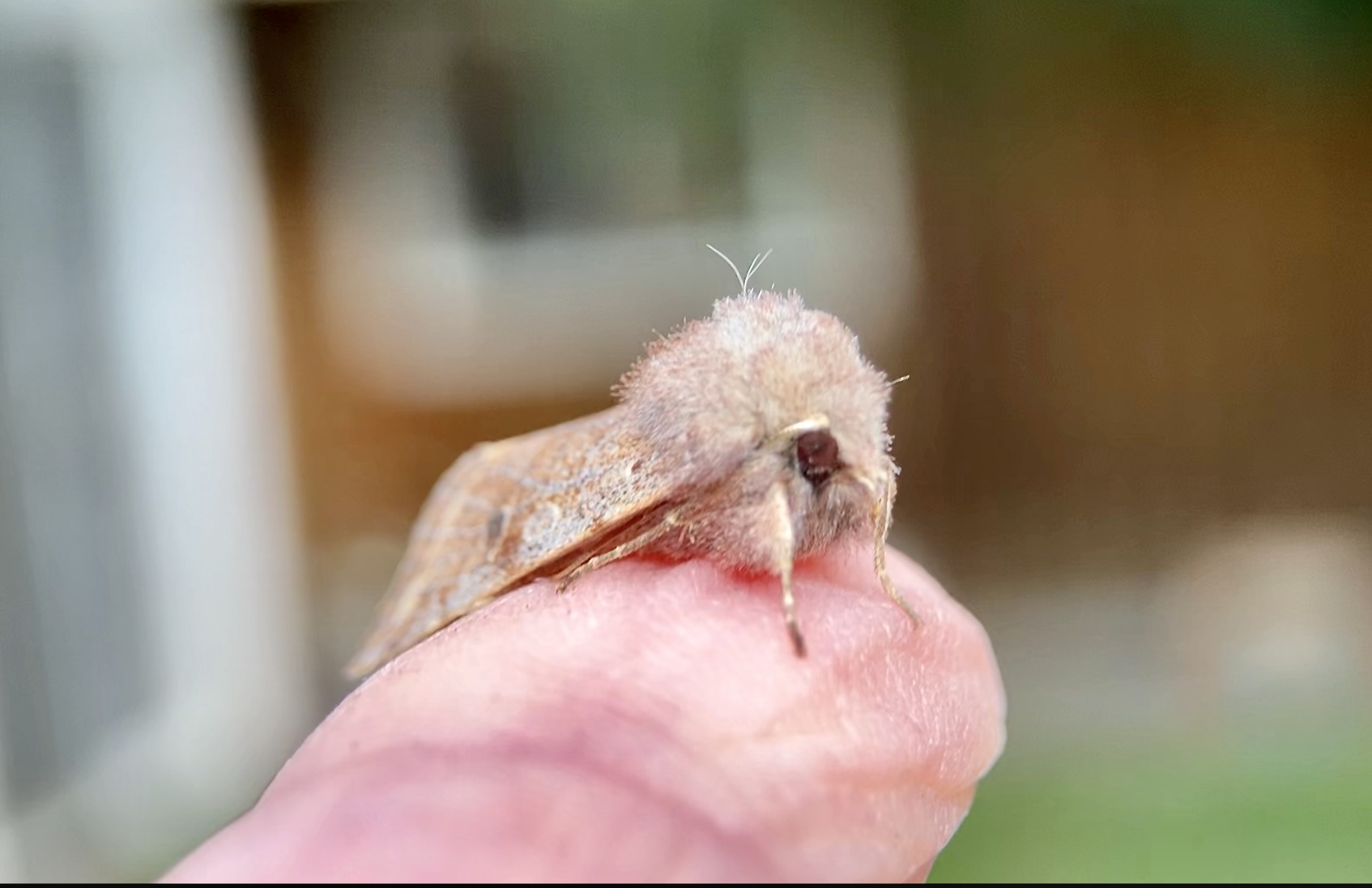
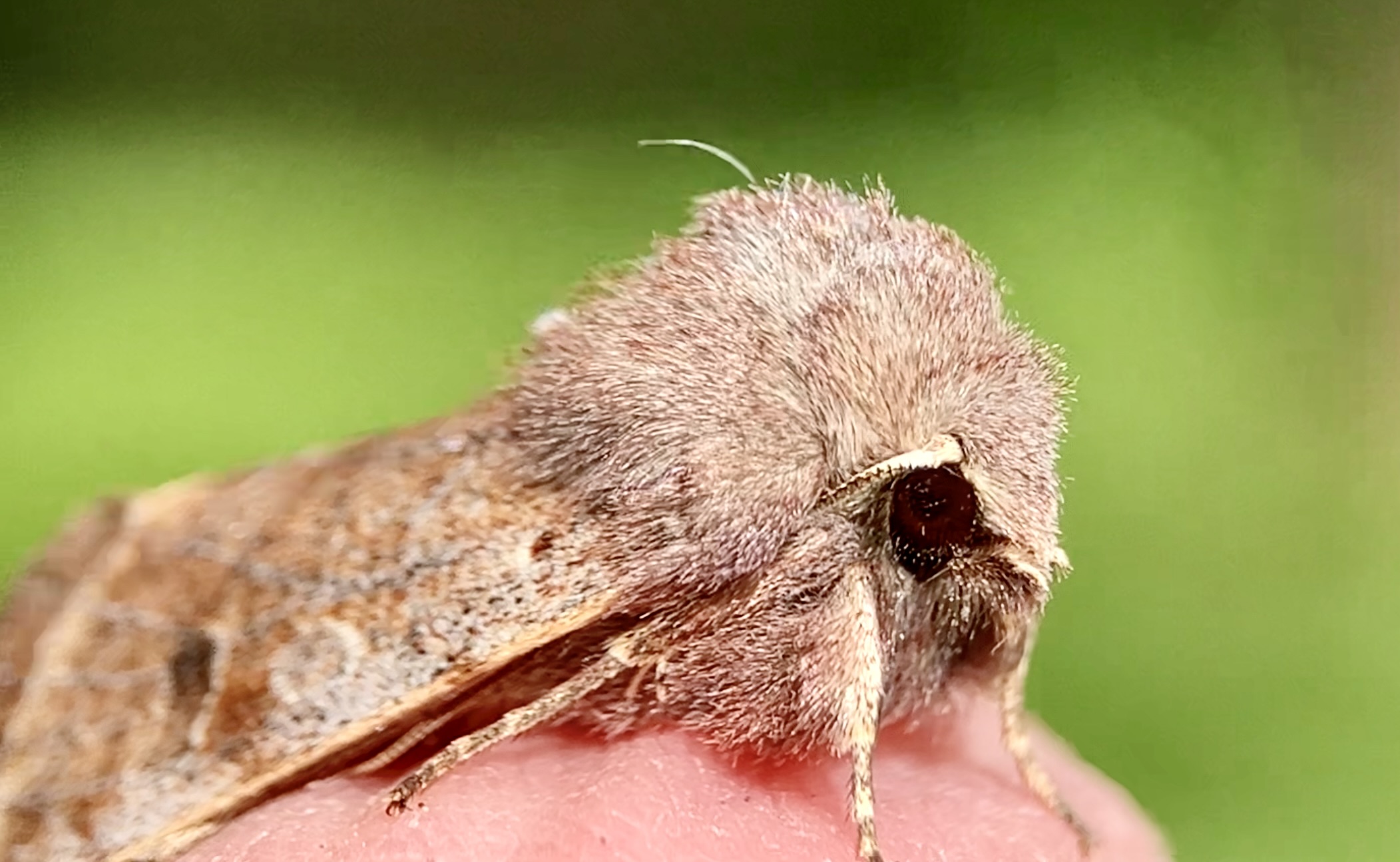
This little moth is Orthosia hibisci, the speckled green fruitworm moth. As you can see, it has little “sprigs” sticking up from the top of its head too. Those aren’t antennae, but they are cute! Orthosia hibisci is a moth in the Noctuid family. The caterpillars are sort of a generic green. They like chewing too, but fortunately, it’s limited to leaves. You might find them on willow, birch, maple, or other various deciduous trees (including fruit trees like plum and cherry). The adults are typically one of the earliest species to emerge in spring.
Orthosia hibisci, Speckled Green Fruitworm Moth, Observed April 1 2025 on San Juan Island, WA Orthosia hibisci, Speckled Green Fruitworm MothOrthosia hibisci, Speckled Green Fruitworm MothOrthosia hibisci, Speckled Green Fruitworm MothOrthosia hibisci, Speckled Green Fruitworm MothOrthosia hibisci, Speckled Green Fruitworm MothOrthosia hibisci, Speckled Green Fruitworm MothOrthosia hibisci, Speckled Green Fruitworm MothOrthosia hibisci, Speckled Green Fruitworm MothOrthosia hibisci, Speckled Green Fruitworm Moth
Check out the links below to find out more about Orthosia hibisci
I went for a walk yesterday on Three Corner Lake Road just to get out of the house. Springtime on San Juan Island has been cold and dreary, but sometimes there’s a moment or two when the sun peeks out, giving a bit of hope that the winter doldrums are coming to an end. Don’t get me wrong, I love the Pacific Northwest, but the Visitor Center’s claim that San Juan gets 247 days of sunshine a year is a stretch. I think they actually count the days when it is overcast and rainy as long as the sun peeks out for just a minute before the clouds darken the day again.
It was cold and I wasn’t expecting to see any insect activity, so I was surprised to find this long time ant colony with a mass of individuals near the top of the nest. The sun had been out intermittently, so I believe what was happening was the workers were at the surface to warm themselves (thermoregulating). There were a few straggling workers carrying thatch debris (conifer needles) to the nest from the forest. If the weather had been nicer, I would have enjoyed plopping myself into a chair to ant watch for an hour or so. They are quite pretty when you see them up close.
Western Thatching Ants (Formica obscuripes) are native to our region. They seem to like forest edge habitat, and you’ll find the nests situated in areas where there is some clearing to take advantage of the sun’s warmth. These ants are considered general omnivore-predators. They scavenge or prey upon insects and other arthropods for food. Foraging activity takes place both on the ground and on vegetation, including high in trees. Thatch ants also harvest honeydew from aphids and other homopterans as well as from extrafloral nectaries. You can read more about extrafloral nectaries or EFN’s (little nectar producing glands on plants) here https://bygl.osu.edu/node/1774 or check out one of my earlier blog posts about them here https://buggingyoufromsanjuanisland.com/2022/05/17/what-are-extra-floral-nectaries%EF%BF%BC/
Extrafloral nectary on Fruitless Cherry Tree
The ant workers are considered weakly polymorphic, which means they have only slight variations in size and shape within the worker caste as opposed to other species where workers may be monomorphic (all the same size and shape), or strongly polymorphic (a high degree of variability between worker sizes and shapes). You can read more about polymorphism in ants here https://www.antwiki.org/wiki/images/1/1c/Wheeler_1908f.pdf .
Given all the information you’ll find from pest control companies online about these ants and others, you might ask, why or if there is any benefit to having these ants around. The answer is YES! Western Thatching ants are beneficial in ecosystems because they not only aerate the soil with their burrowing practices in nest construction, but they also provide FREE pest control, helping regulate populations of other insects that defoliate forests, fruit trees, and even our vegetable gardens. They also help clean up the environment through scavenging dead animals. There is no need to eradicate these nests and if you get into ant watching, they might provide a bit of intriguing summer entertainment. Pull up your lawn chairs and sit and watch with your friends. As long as you aren’t poking the nest, they are not inclined to bother you at all.
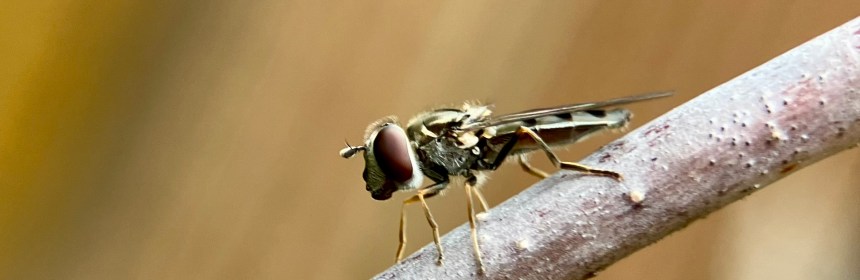
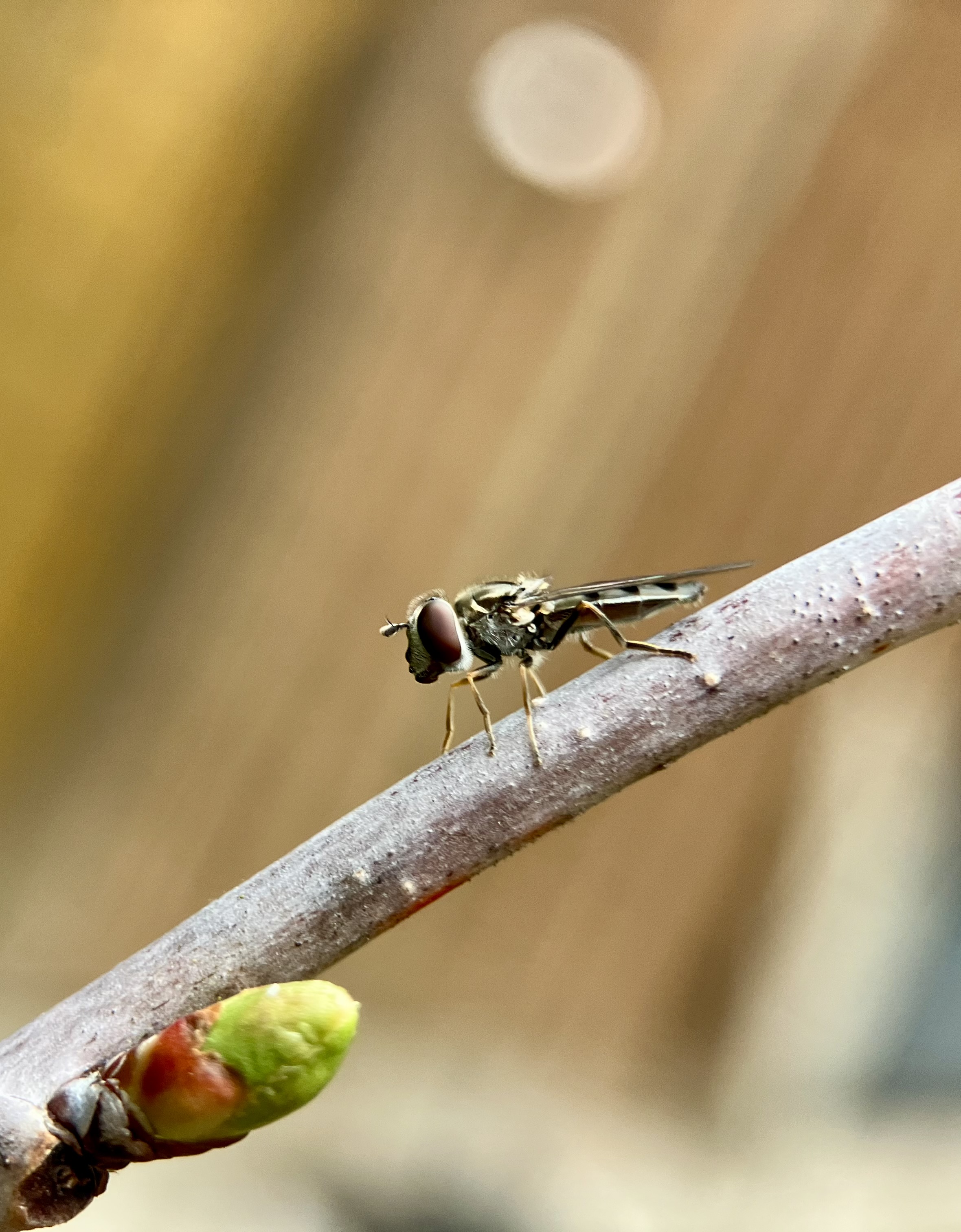
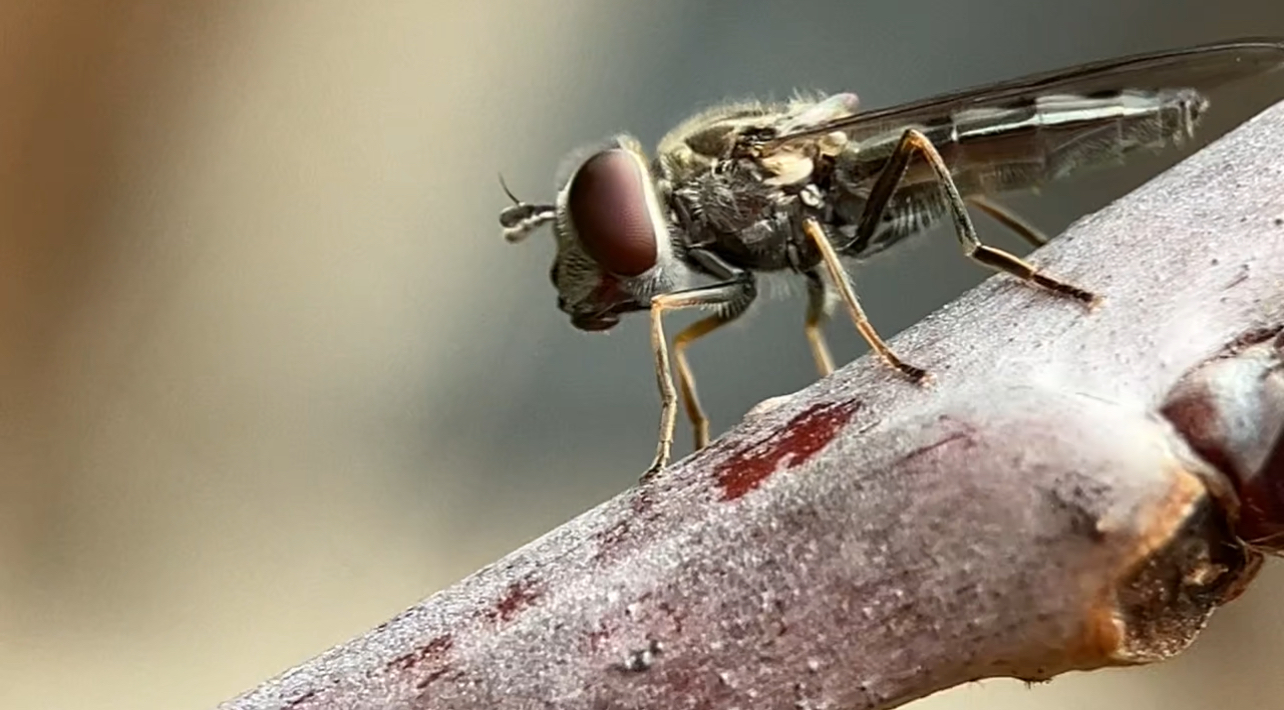
This was Wednesday’s bug of the day. I’m a day behind writing up my post. Although I have tried to get out for a quick bug search every day, it’s been overcast and/or drizzly here this past week. I was excited to see this little fly hunkered down on a twig of our fruitless cherry tree, the tree that I whacked off as an unwanted upstart for several years before I discovered how interesting it is.
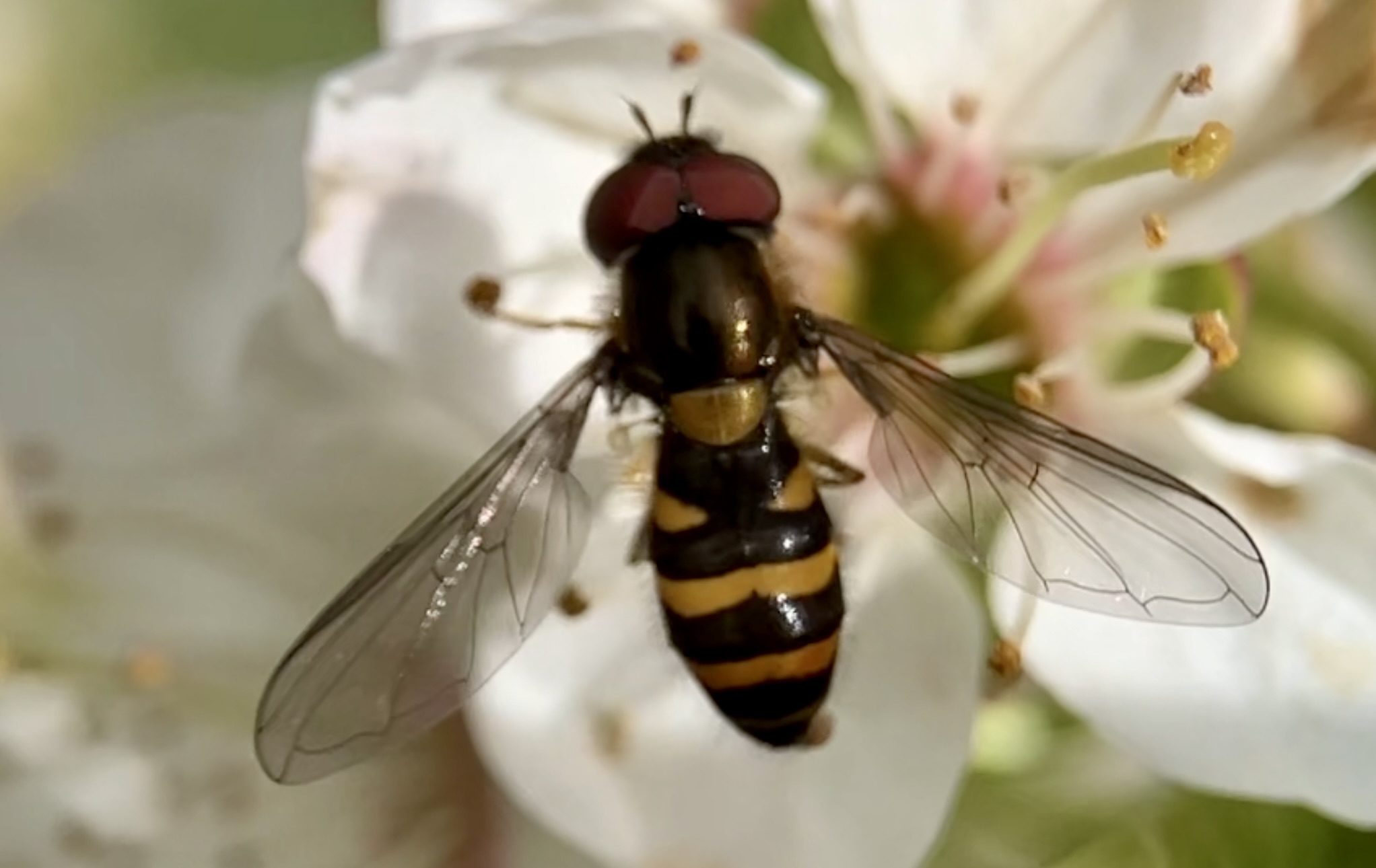
Western Forest Sedgesitter, (Platycheirus trichopus), I believe
That tree is a mini ecosystem: floral nectaries that feed the aphids, aphids, slave making ants that have fights to the death (winning) with the carpenter ants that try to invade our home every spring, and the birds that rip the leaves apart trying to get the aphids. Now I can add Syrphid flies to the list!
That’s what this is. A syrphid fly. Syrphid flies eat aphids. It would make perfect sense for this adult to lay eggs on the tree, though I’m not sure what would happen because the ants that farm those aphids are certainly willing to die defending them. I could definitely see the ants overtaking the syrphid fly larvae. Nevertheless, the fly flew off. Somewhere.
This species, as mentioned earlier is pretty small at only about 6.8-9.4 mm. Geographic distribution ranges from the Rocky Mountains west from Alaska to Mexico (bugguide.net). Adults of this genus are known to feed on the pollen of wind pollinated plants like Willow (Salix sp.) and various grasses (Poaceae), and sedges (Cyperaceae). It is believed they are better adapted to activity in cooler temperatures and that fits with yesterday’s rather gloomy spring day.
Something happened in the yard yesterday afternoon. We have a fruitless cherry tree in a cage that I didn’t plant. At least I think it’s a fruitless cherry tree. It sort of popped up on its own.
In the beginning, I didn’t really want it there, so I cut it down – a few times. It kept coming back, intent on sticking around. A couple of years ago, I just stopped trying to get rid of it. I even put a little cage around it. That was actually for the juncos that built a nest in the grass below that little tree though, to keep them safe from the mower.
Aside from me personally whacking it down a few times, the little tree has suffered other adversities. It has been attacked by cherry slugs (sawfly larvae). They ate its leaves.
Sawfly larva or Cherry Slug
It has had a few tent caterpillars munching too. One year that it was super dry, it lost its leaves and I thought it was dead. Only it came back again. I started to pay more attention to this little tree, even watering it in the summer. It’s not very tall, but this year it looks more healthy than ever before.
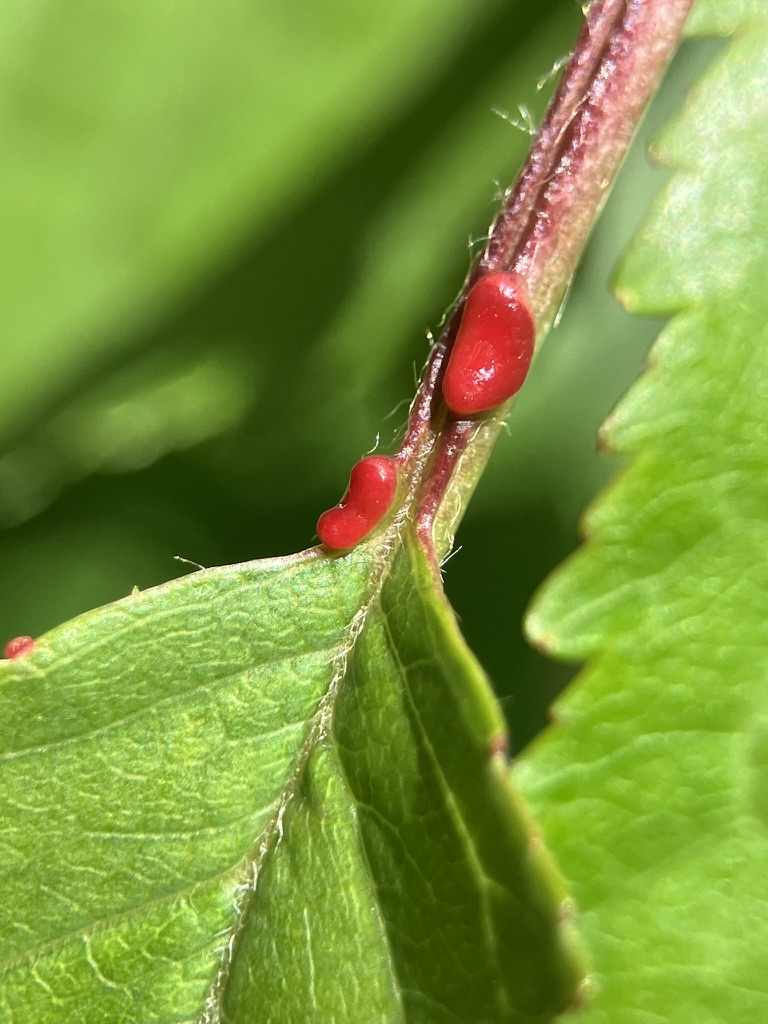
Last year, I noticed in the spring that it put out these cool little red bumps on the stem just above the leaf.
extrafloral nectariesFormica ascerva ant at extrafloral nectaries
Those little bumps soon had little red and black ants visiting. I learned the red bumps are extrafloral nectaries. They produce nectar that attracts pollinators to the tree. I haven’t seen any flowers, so I’m not sure what would be pollinated. Maybe the tree isn’t old enough yet. I’m still learning. I sure need to figure out if I’m right that it’s a fruitless cherry.
Well, the other thing that is interesting is shortly after the little red bumps attract the red and black ants, there are little black aphids. I’ve seen this for 2 years in a row now. The ants tend those little aphid flocks like sheep. They are guarding them in exchange for the sugary honey dew the aphids produce.
The aphids and the ants seem to multiply. I have seen 2 or 3 ants per leaf with aphids. Not all the leaves have aphids, but maybe 1/3 of the tree does, and each guarded by the ants. The ants are Formica ascerva species.
They are interesting in their own right because aside from guarding the “sheep,” they also are fierce warriors, driving away (and killing) the large Camponotus sp. carpenter ants that try to invade every spring.
This colony of Formica ants lives under a bedroom of our home. They are welcome to stay since they don’t eat wood.
Today, when I looked out the window though, I saw something challenging the fearsome Formica ants. There were birds inside the tree caging and they were hungrily pecking and even tearing at the leaves with aphids. I grabbed and clumsily set up my camera to video the scene.
Birds attacking aphids farmed by Formica ascerva ants
I saw finches first, then there was a chickadee, and even a hummingbird. I thought I saw bumble bees, but they wouldn’t have been eating the aphids. Perhaps they were visiting the extrafloral nectaries or maybe even sipping honeydew produced by the aphids, but I wasn’t close enough to be certain.
Afterwards, I went out to survey the damage. I saw one leaf with lots of shreds. Aphid parts scattered about. Ants wandering somewhat aimlessly. Another leaf had an ant that died courageously in battle protecting his little flock.
I wanted to share my observations with you because a lot of folks really dislike aphids. Others also dislike ants and don’t understand their role in nature’s ecosystems. Maybe this will help others to understand there are a lot of hungry birds that eat aphids (and ants). Without them, the birds might not find enough food to feed their nestlings. It’s all part of the cycle of life.
If you see aphids your garden that you are worried about, you can mitigate some of their feeding damage by hanging a hummingbird feeder nearby. The hummingbirds have to have protein along with all that carbohydrate sugar water and they will most certainly find your aphids delicious. In fact, insects and spiders make up about 85 % of the diet of hummingbirds. Birds need bugs. And not all ants are pests. Some are extremely beneficial. I challenge you to take up bird and bug watching. You will not be disappointed!
Thanks for reading!
Below are more images of the birds feeding on the aphids inside the caged tree.
References and further reading
Bentley, B. L. (1977). Extrafloral Nectaries and Protection by Pugnacious Bodyguards. Annual Review of Ecology and Systematics, 8, 407–427. http://www.jstor.org/stable/2096735
I’m doing a short write up of this fly just to get you thinking a bit. It was observed April 29, 2024 on San Juan Island, WA. While identification to Genus/Species may not be possible until I can actually catch a specimen to be keyed out, it is Family Tachinidae and Tribe Goniini. Hoping to come back with at least a Genus update at some point.
What I want to SHARE is the life history of this tribe of flies. The Goniini flies are parasites of various Lepidoptera, mostly Noctuids, Arctiids, and Lymantriids. Translating this for you a bit, it would be cutworms (if you’re a gardener) , tiger moths, and tussock moths.
How does this play out?
The female Goniini fly lays a “black microtype,” usually ovate and flattened egg, varying in size from very small to medium, on foliage utilized by the feeding host caterpillar. The caterpillar (usually Noctuids) munch the foliage, ingesting the fly egg. The caterpillar will continue feeding and then wander off to complete its life cycle as a pupa. At some point after ingestion by the caterpillar, the fly egg hatches and the fly larva develops inside the body of the pupating moth that is inside its chrysalis.
A myriad of ecological relationships exist in nature that are often unobserved. Many remain undescribed or unknown. Sometimes, they are disrupted by humans who intervene out of ignorance. If you’re one of those folks who squish what you believe are cutworm pupae in your garden bed, you might be smooshing the pest predator developing inside.