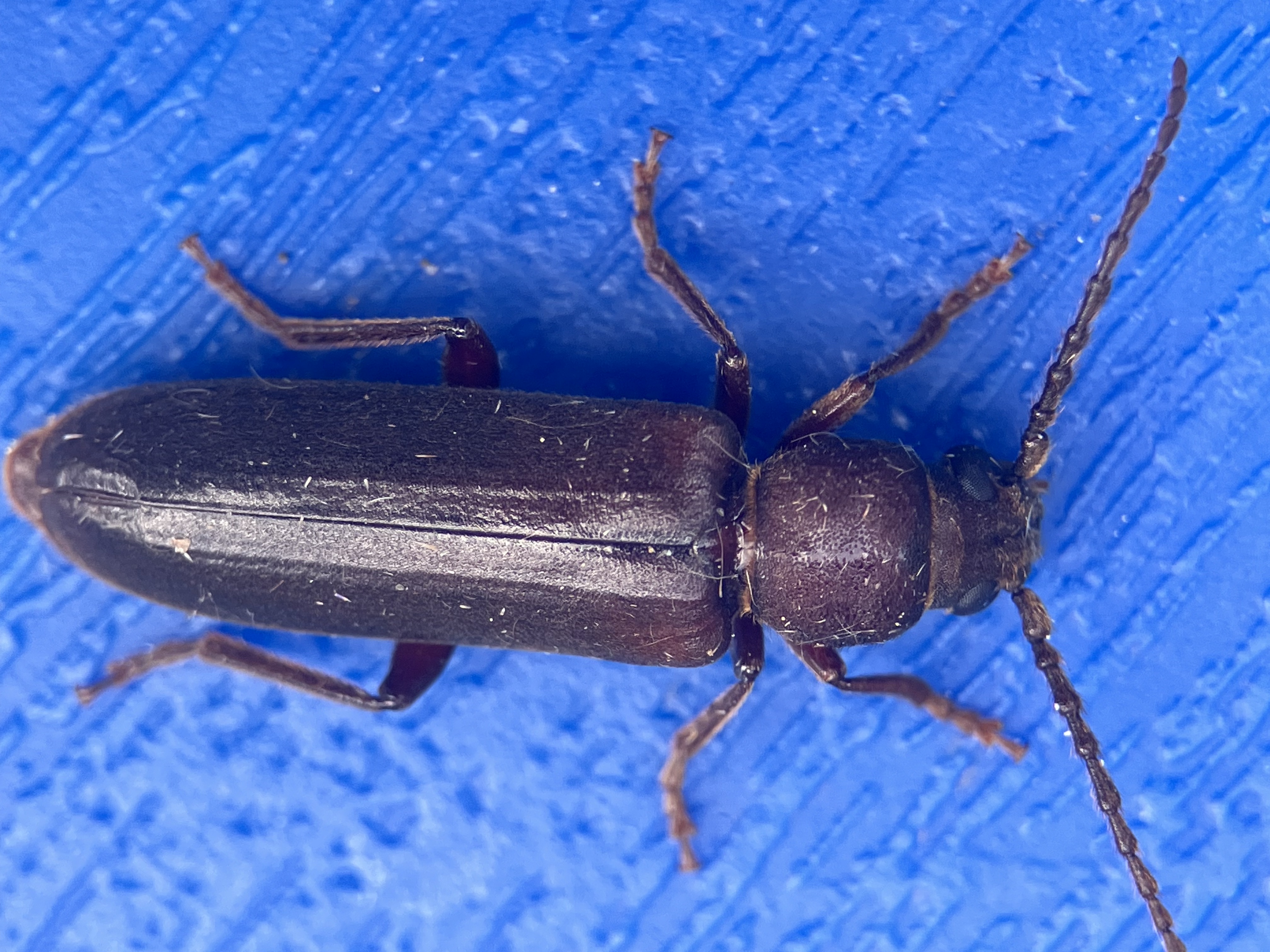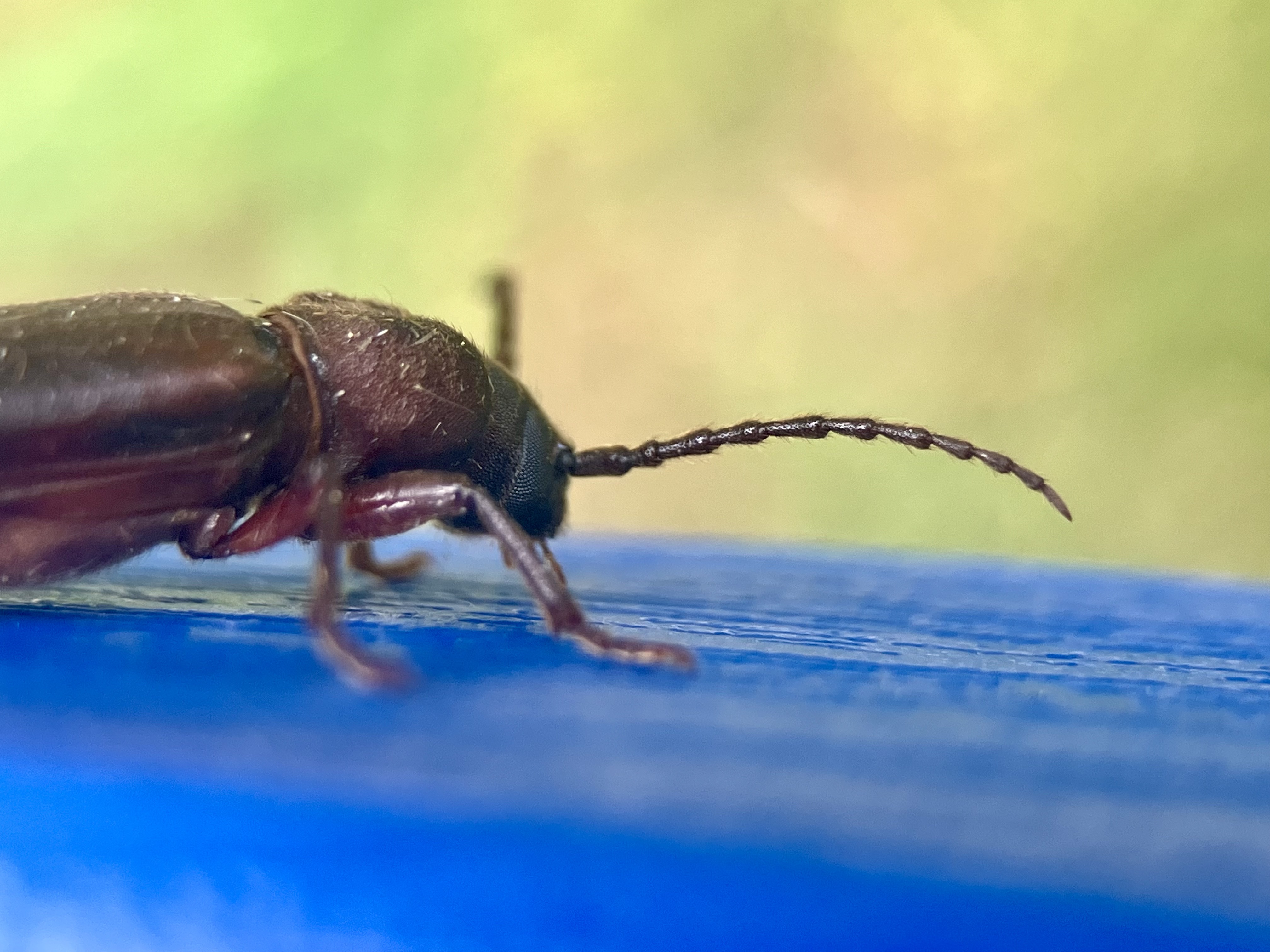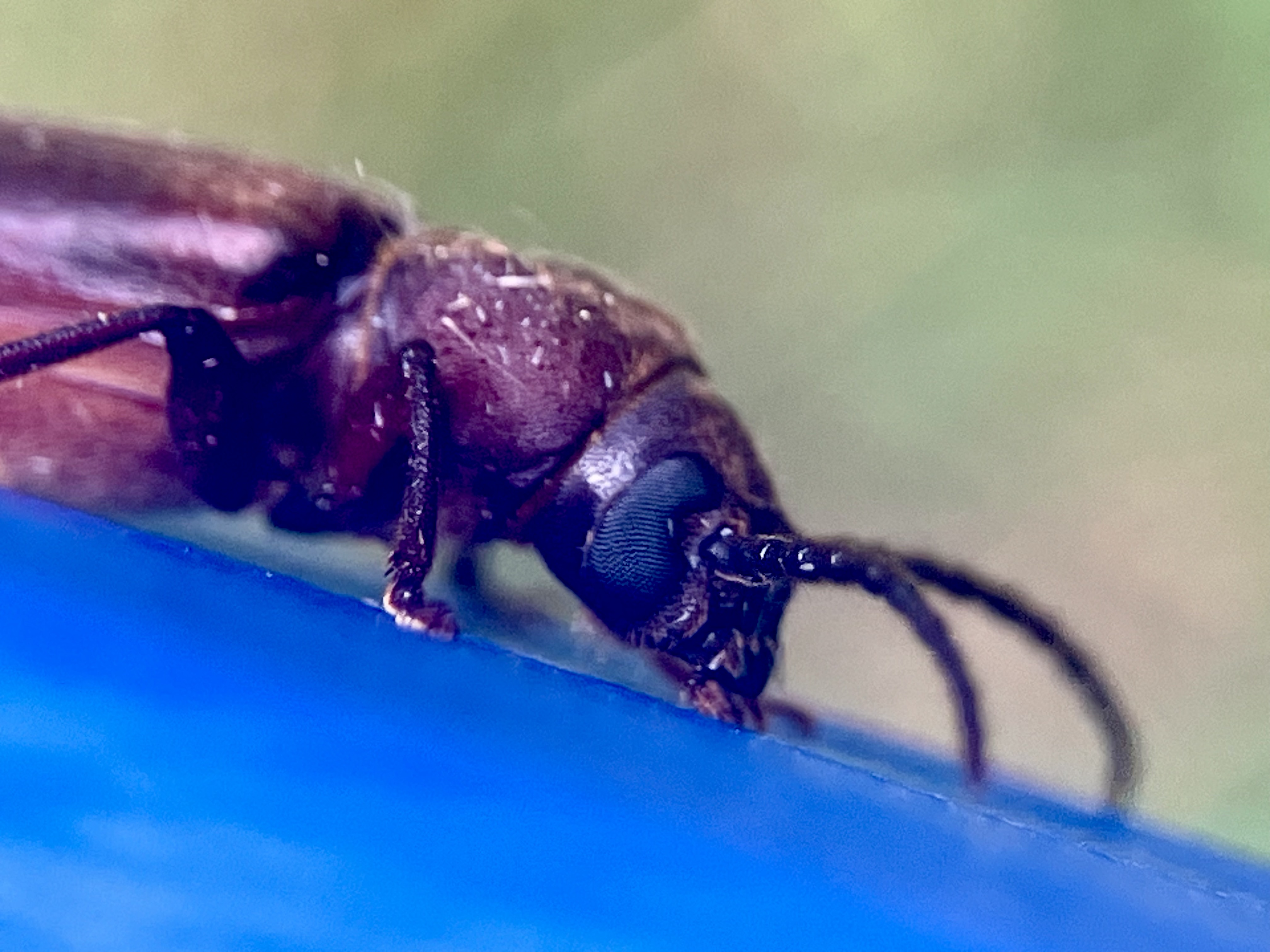
Lepturopsis dolorosa
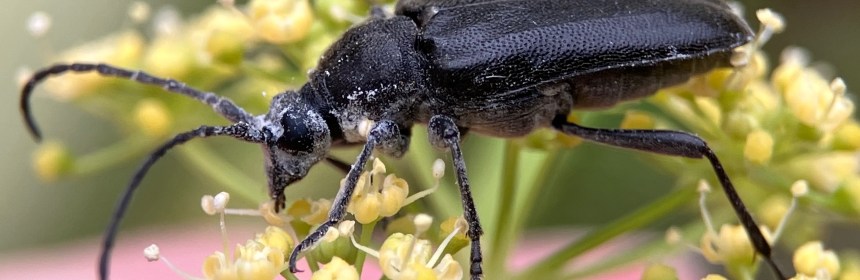
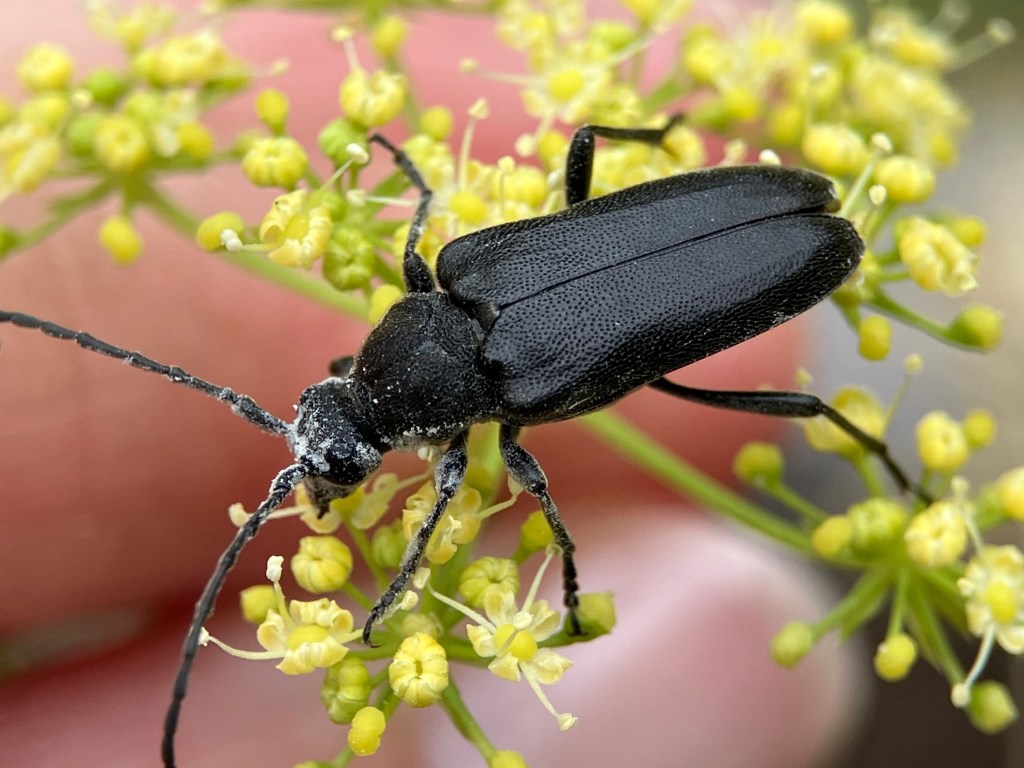
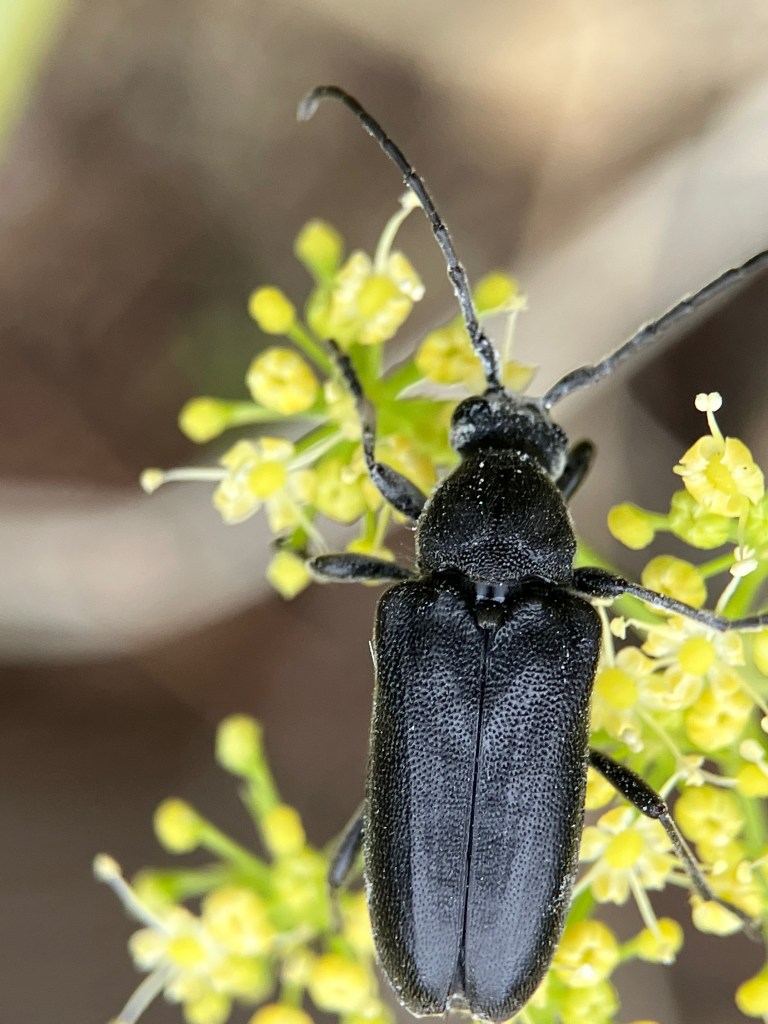
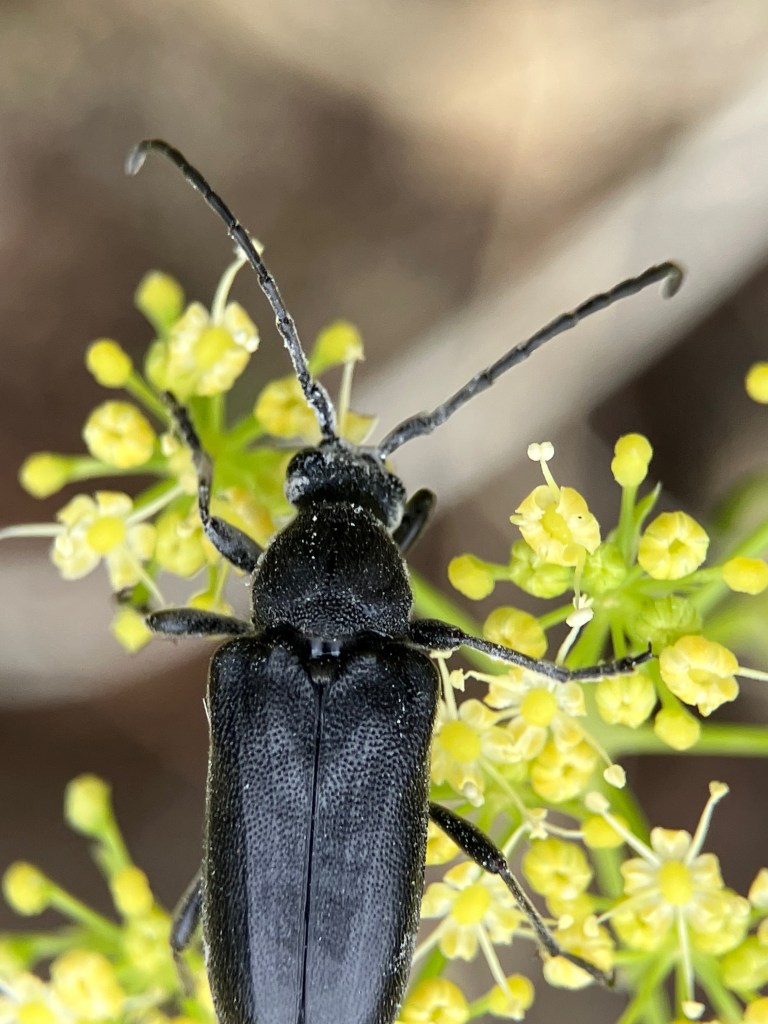
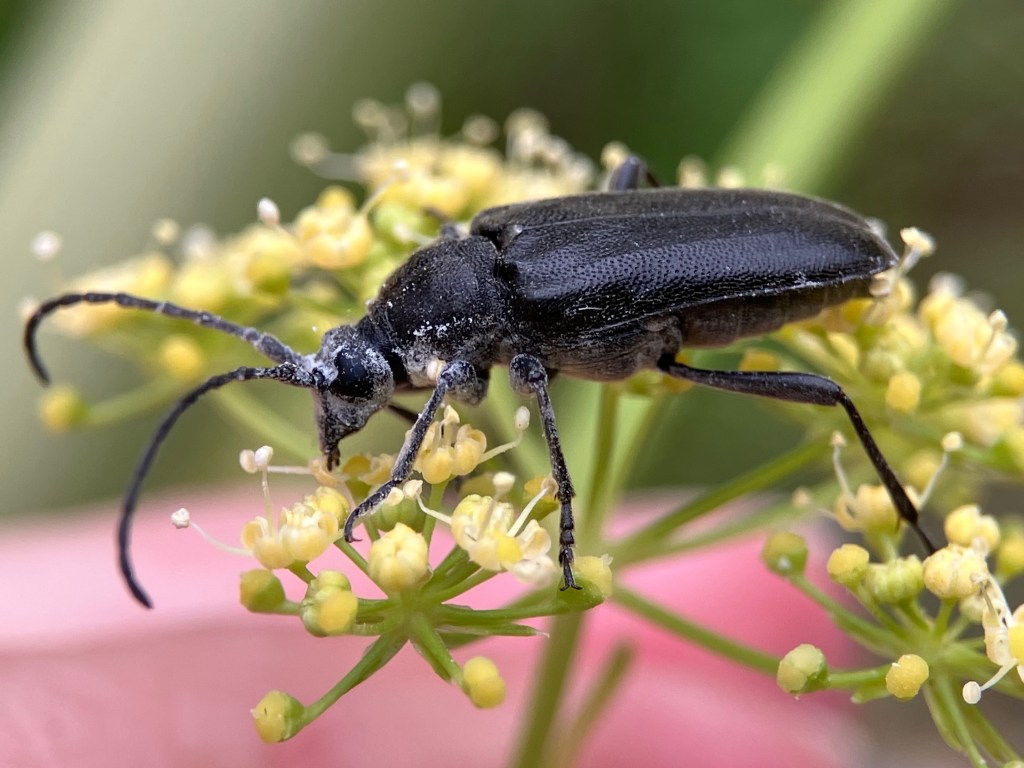
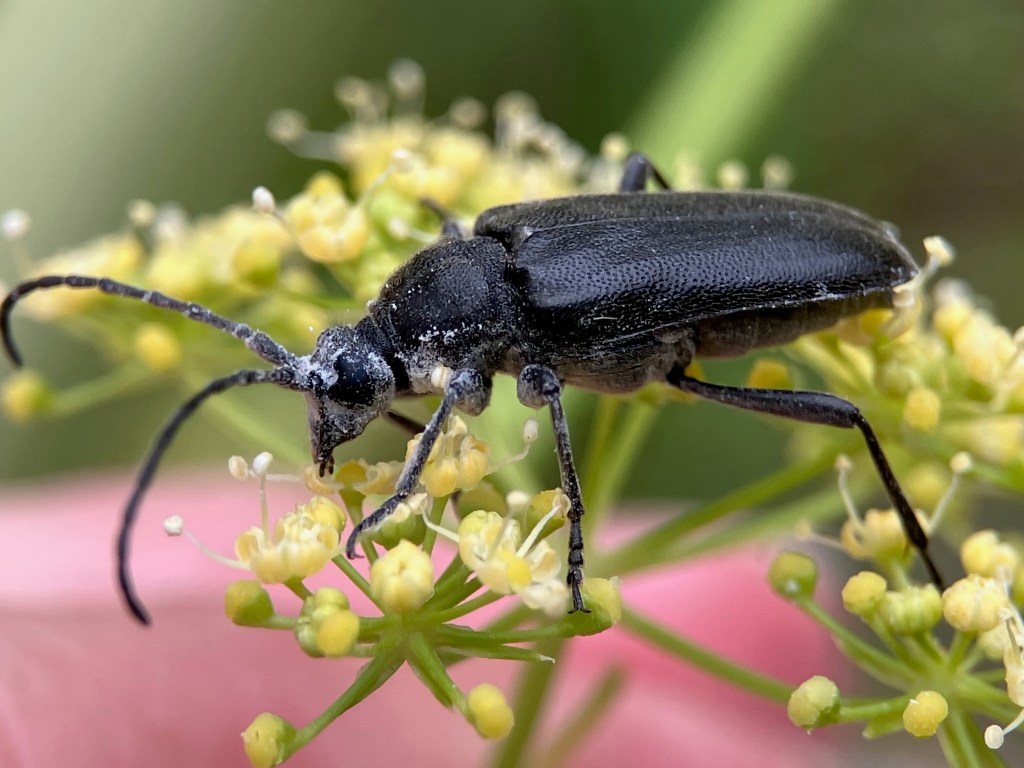
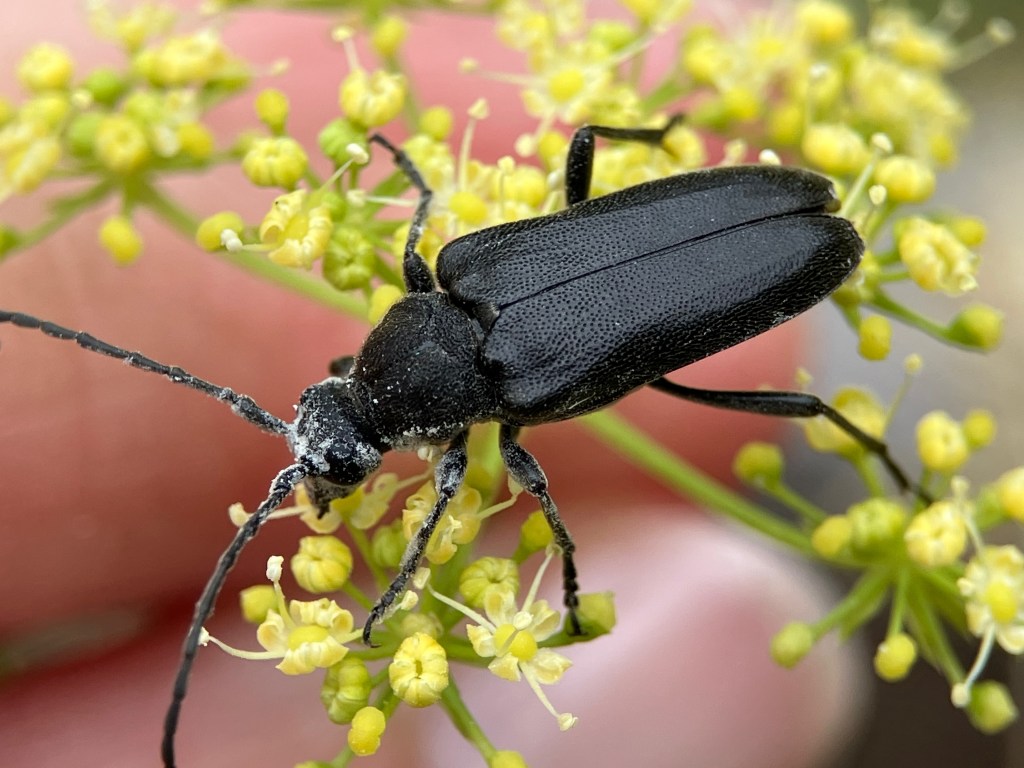
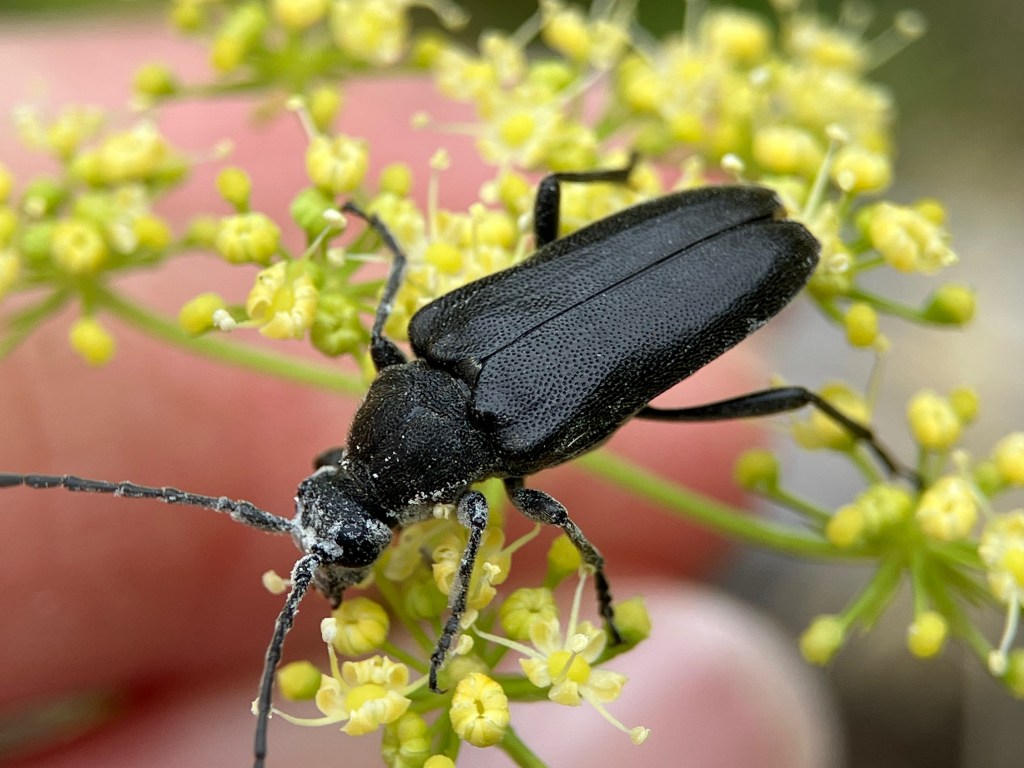
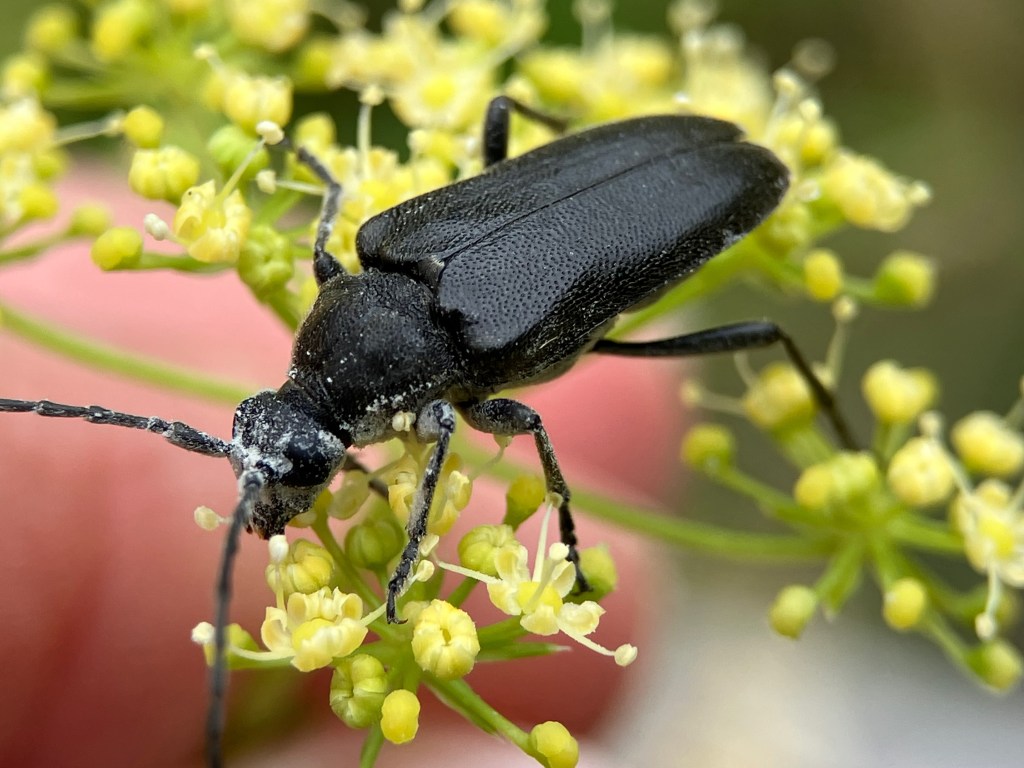
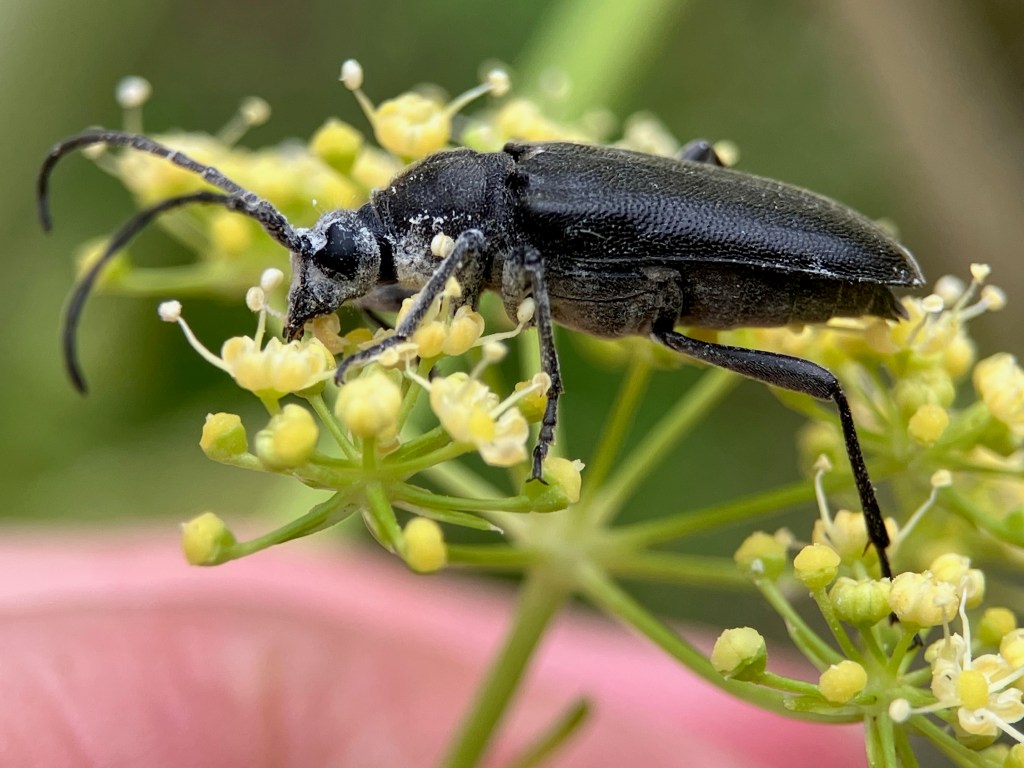
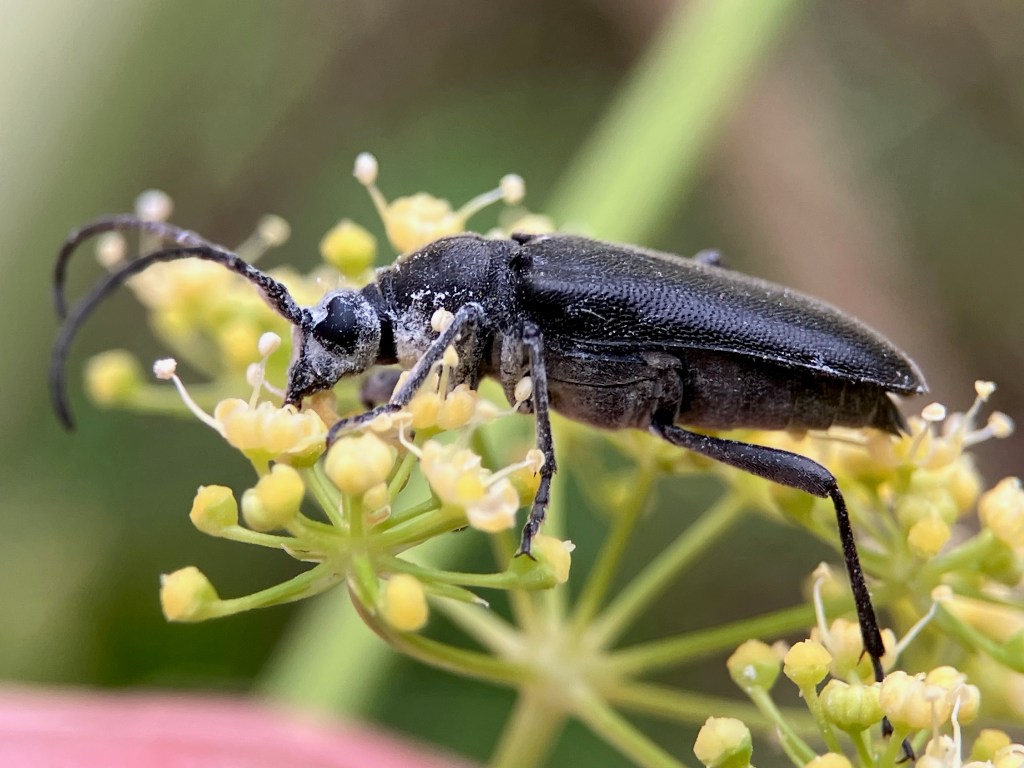
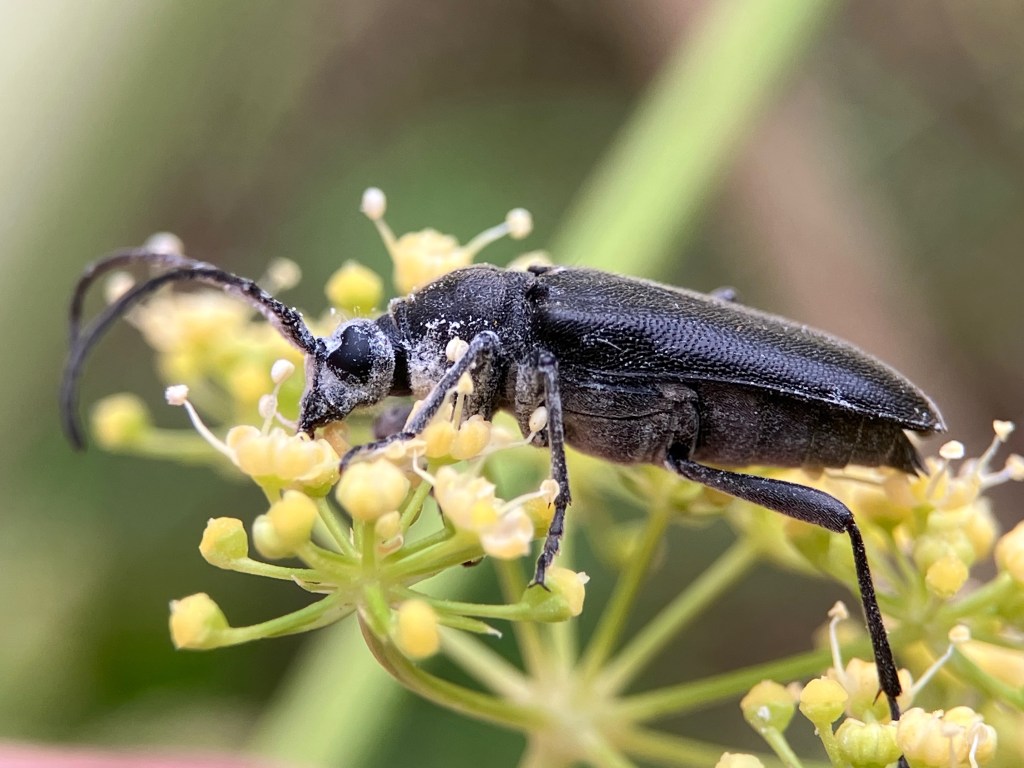
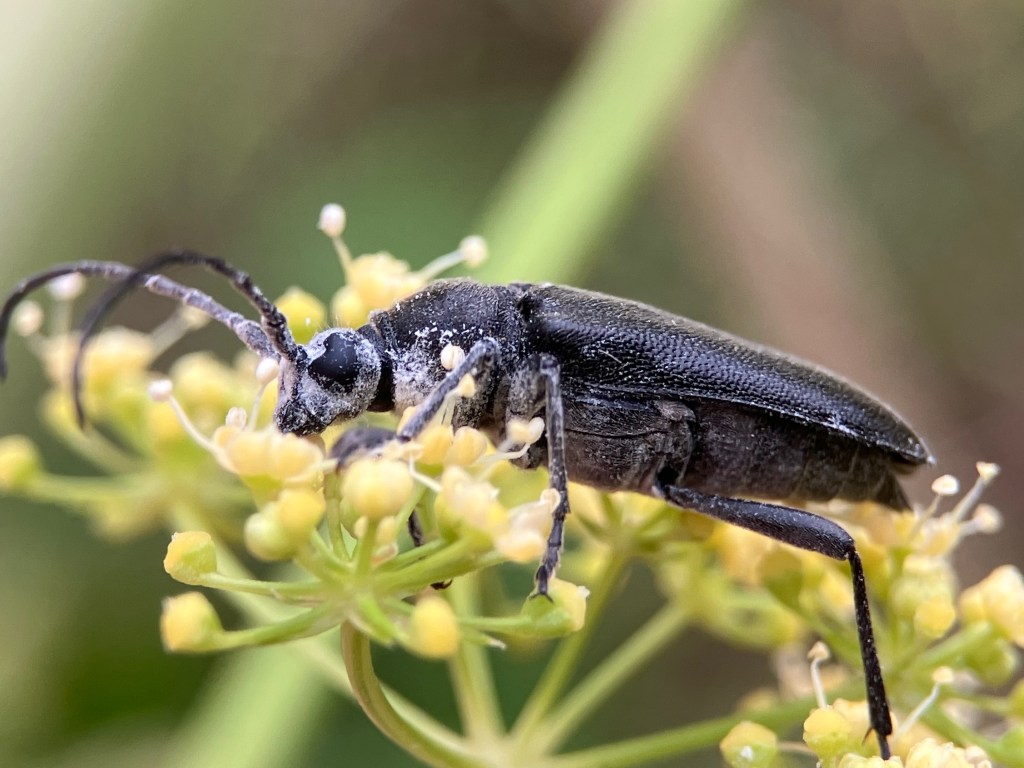
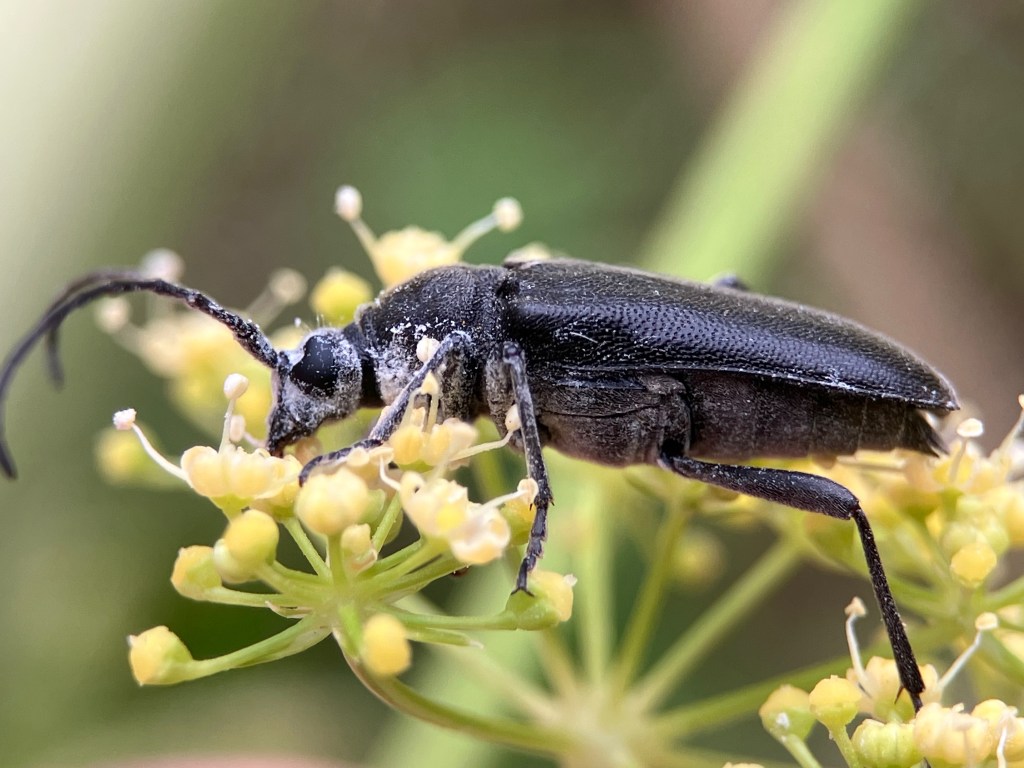
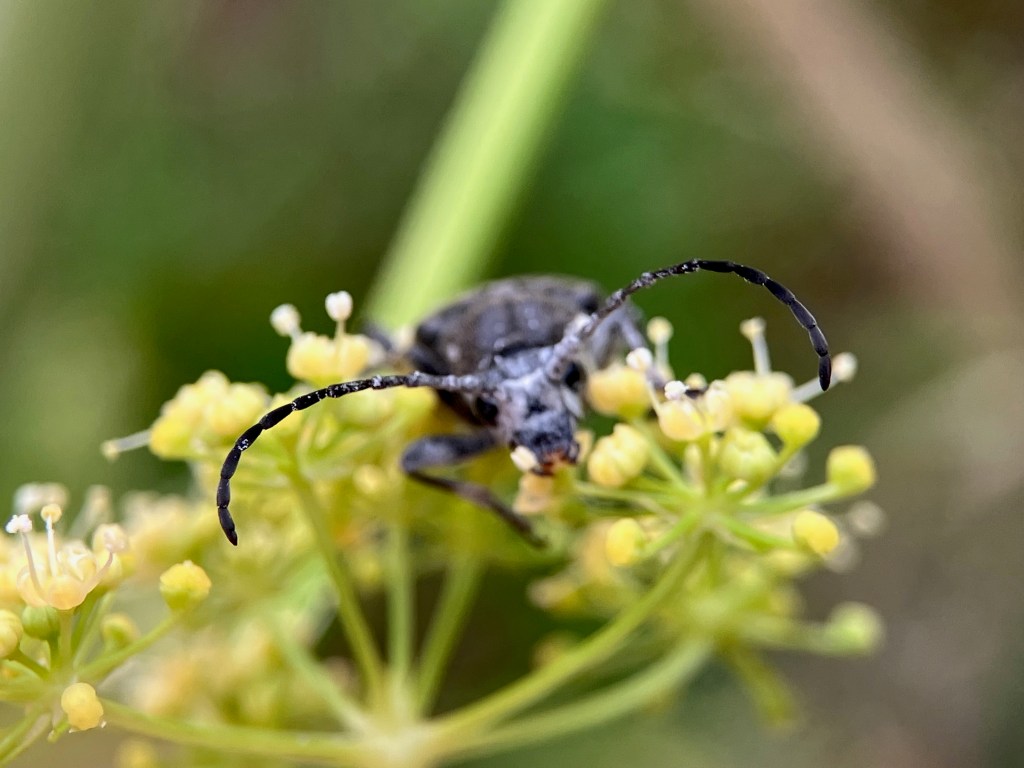
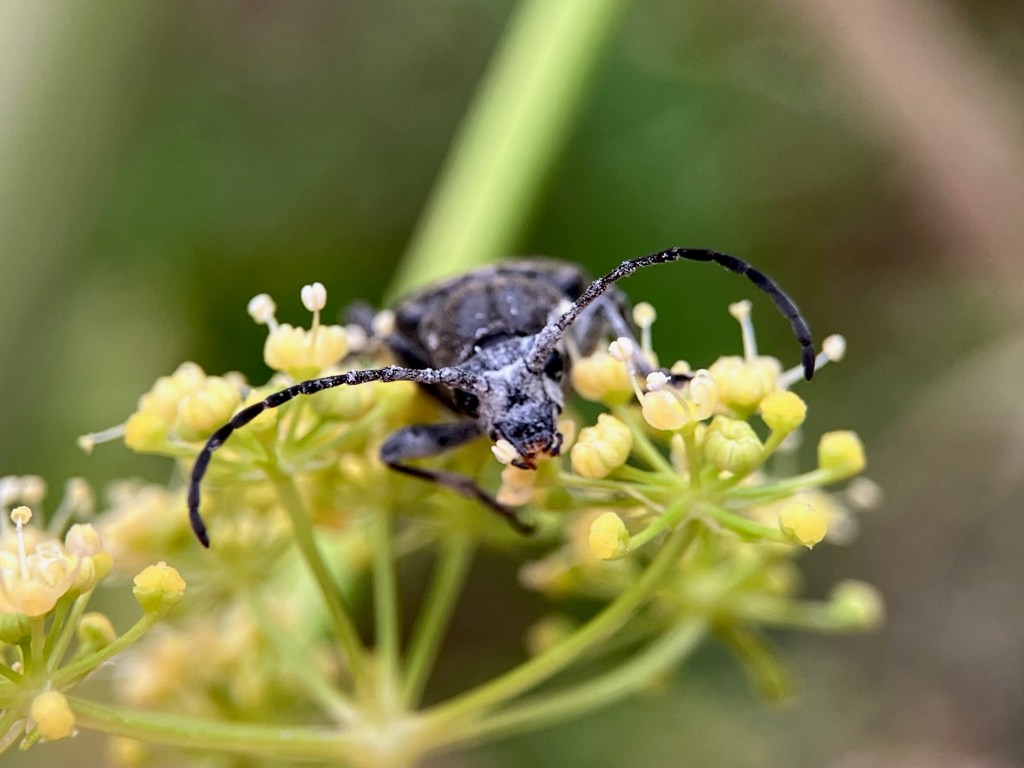
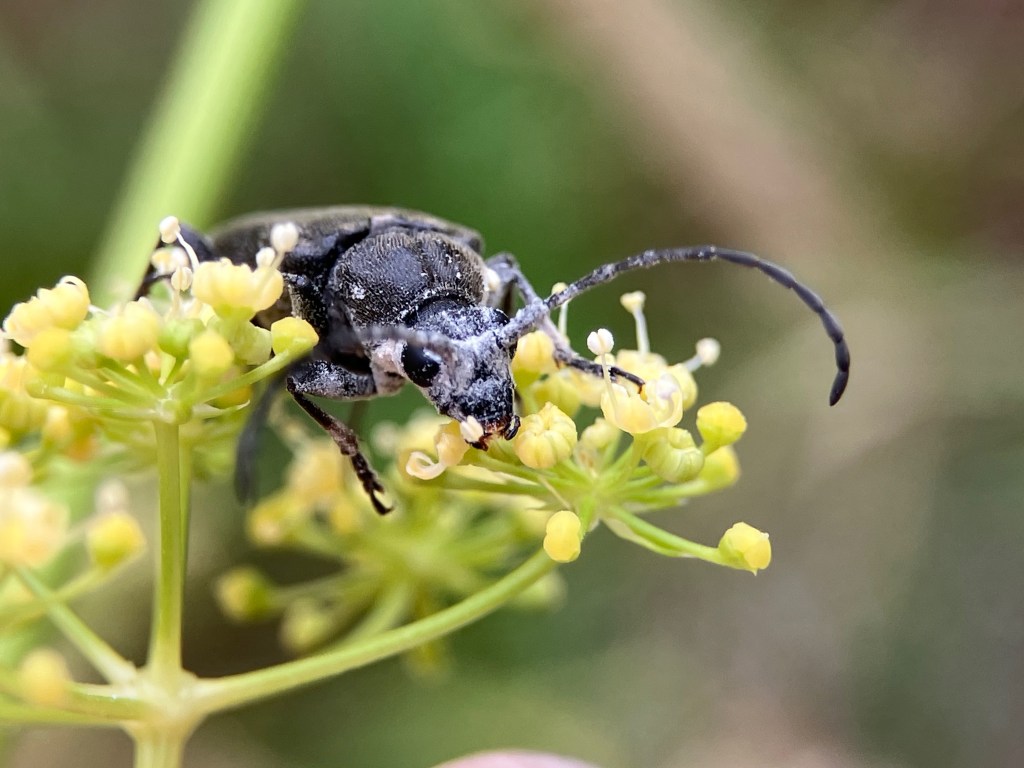
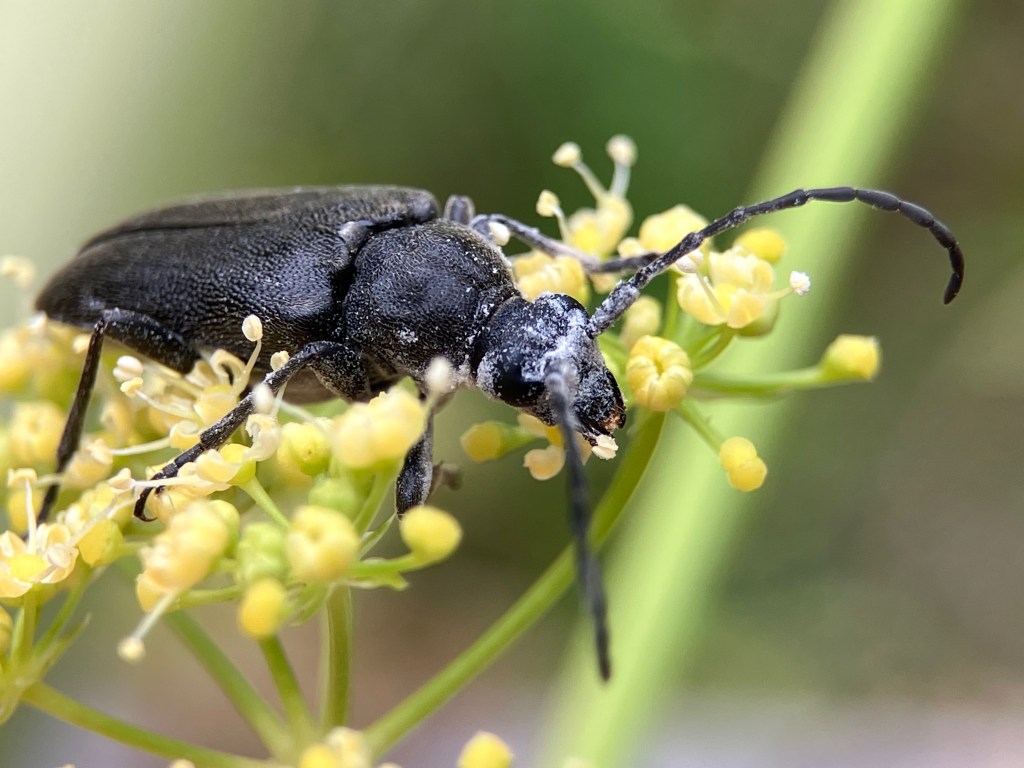
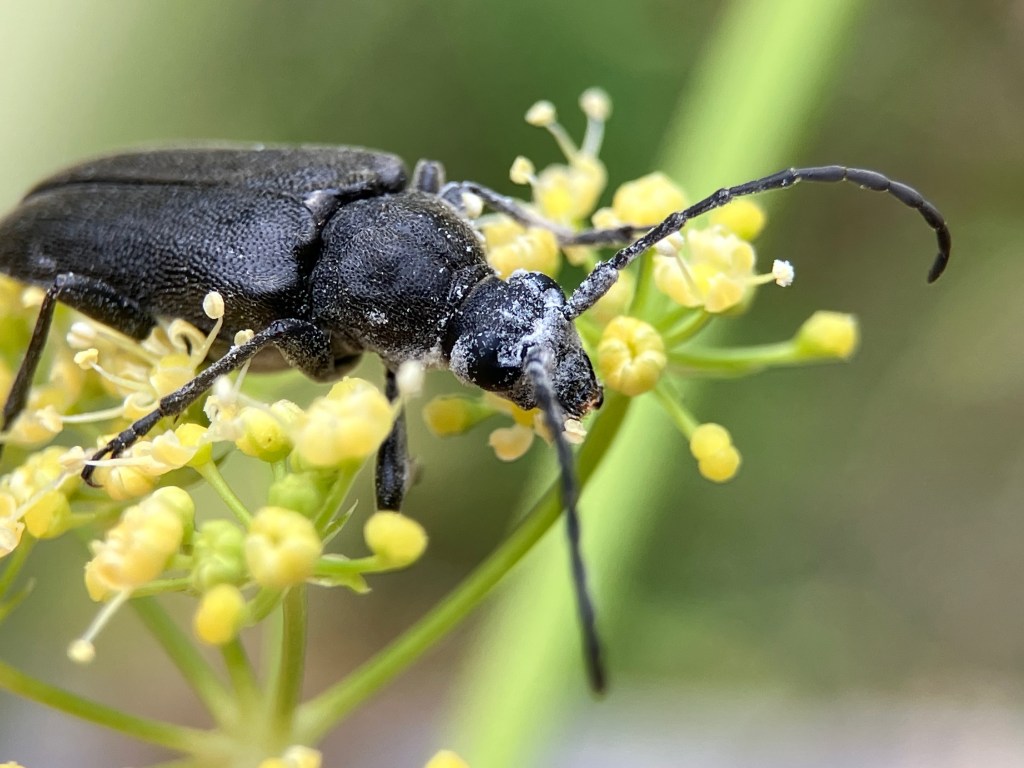
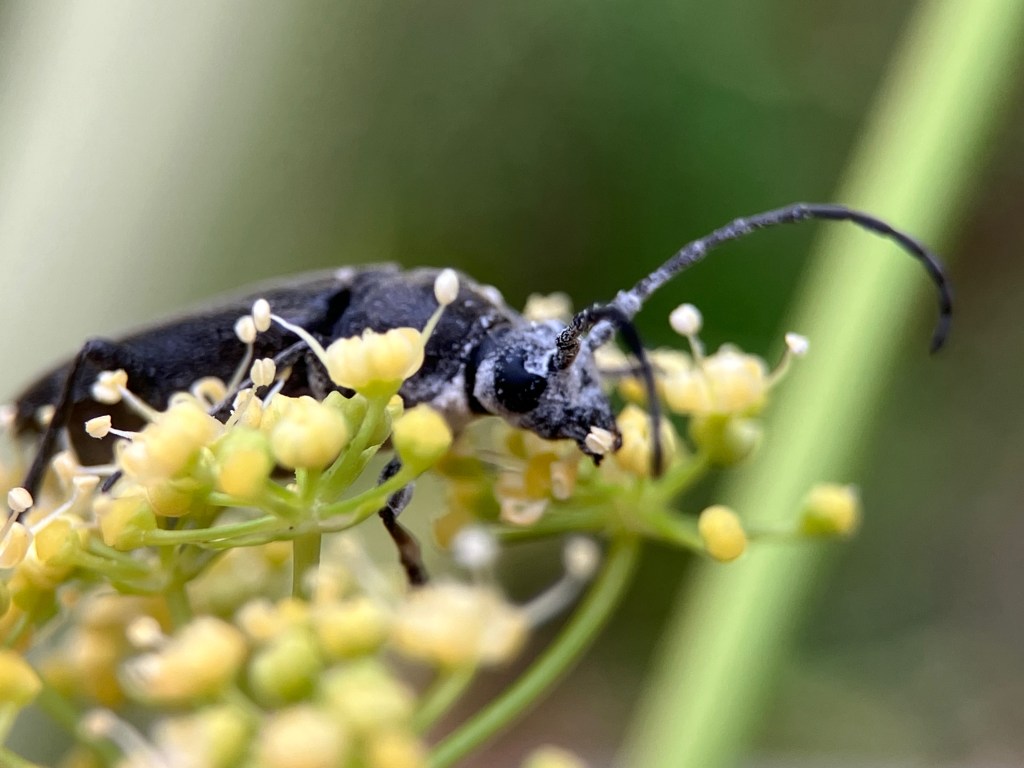
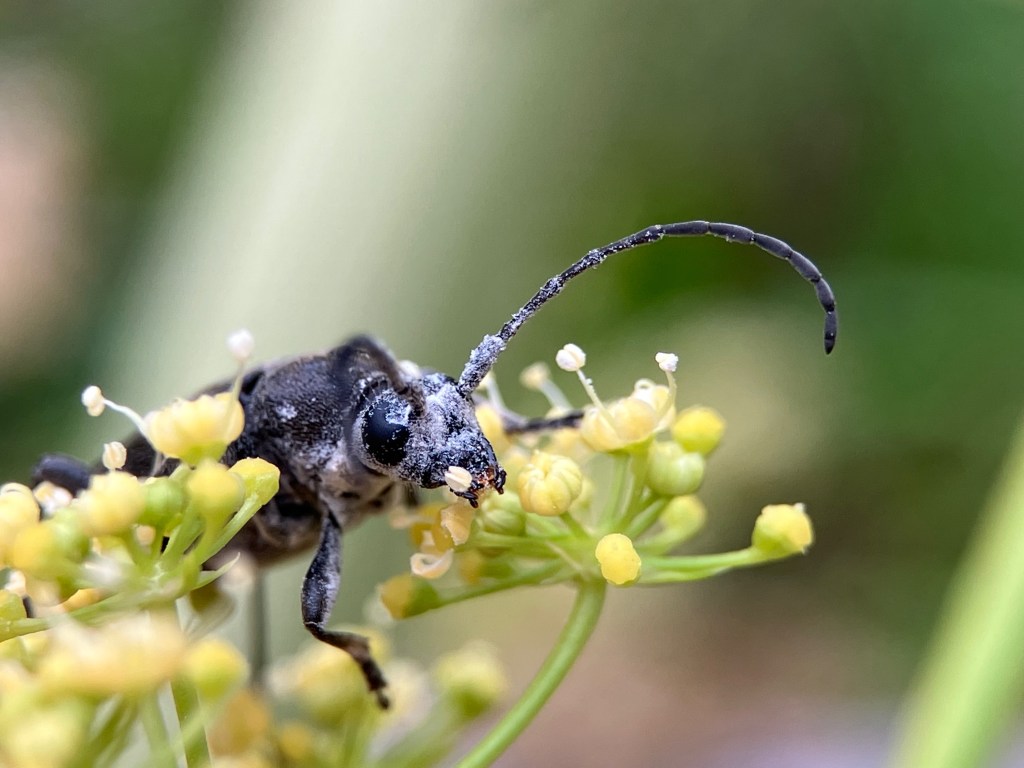
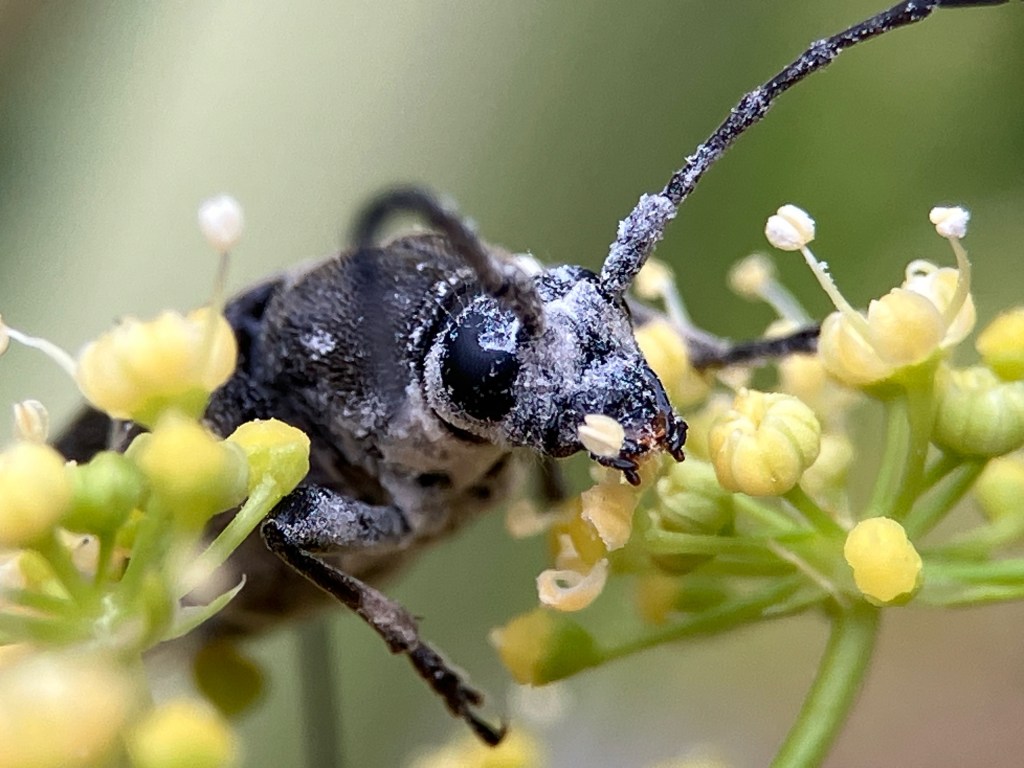
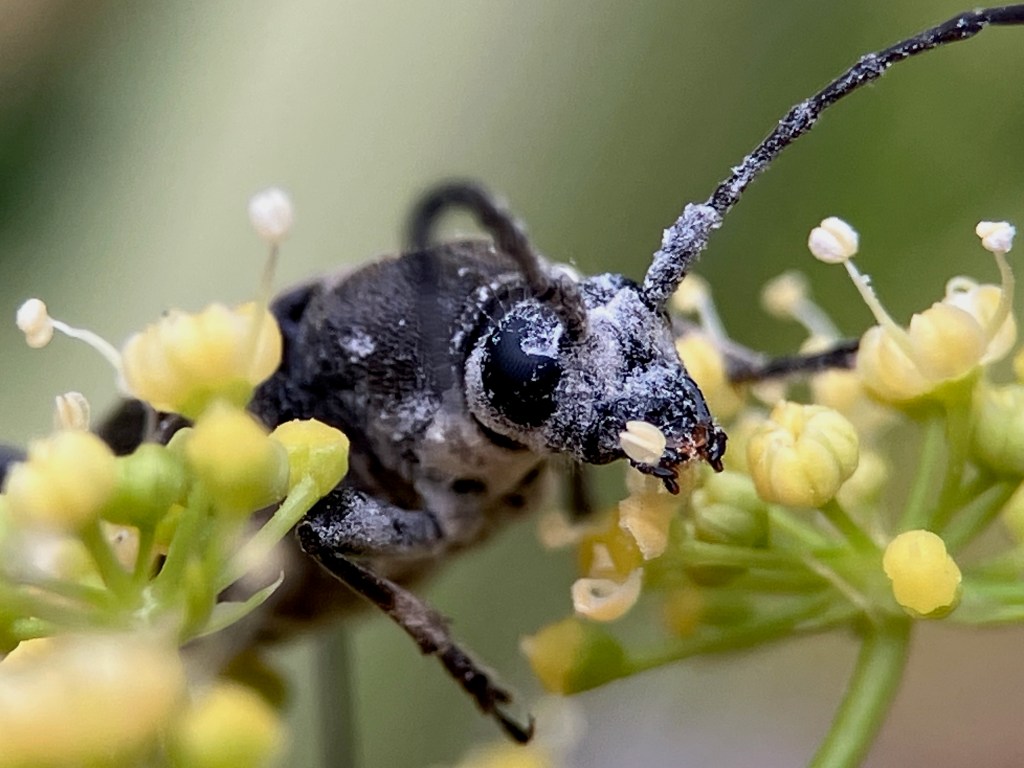
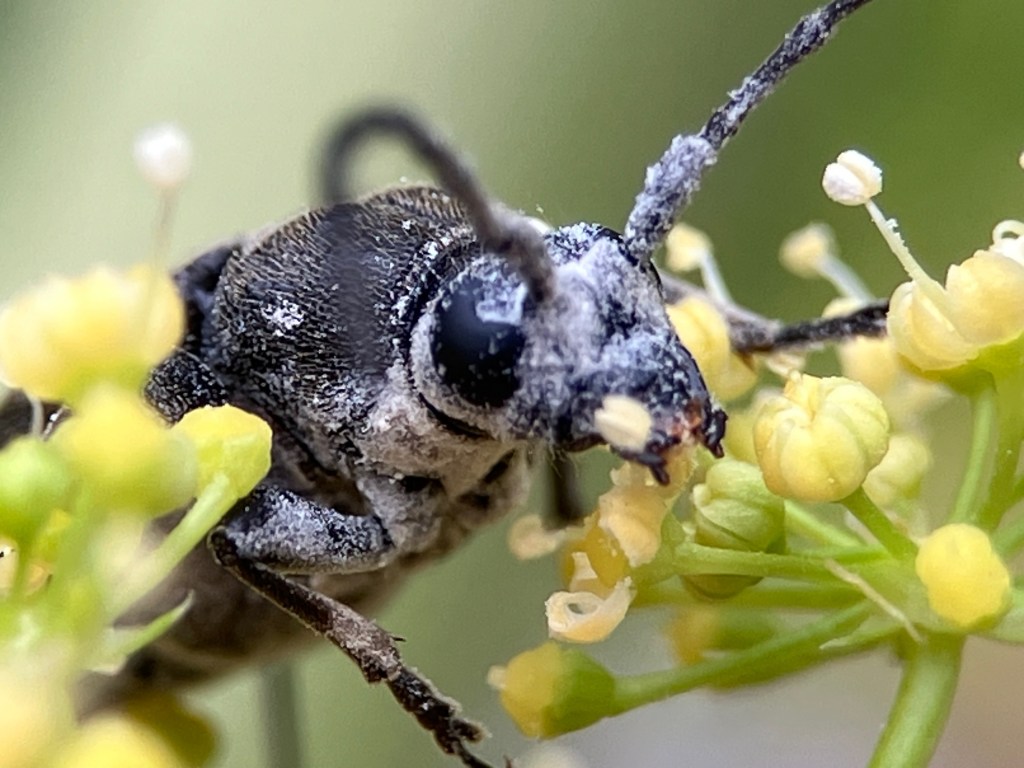
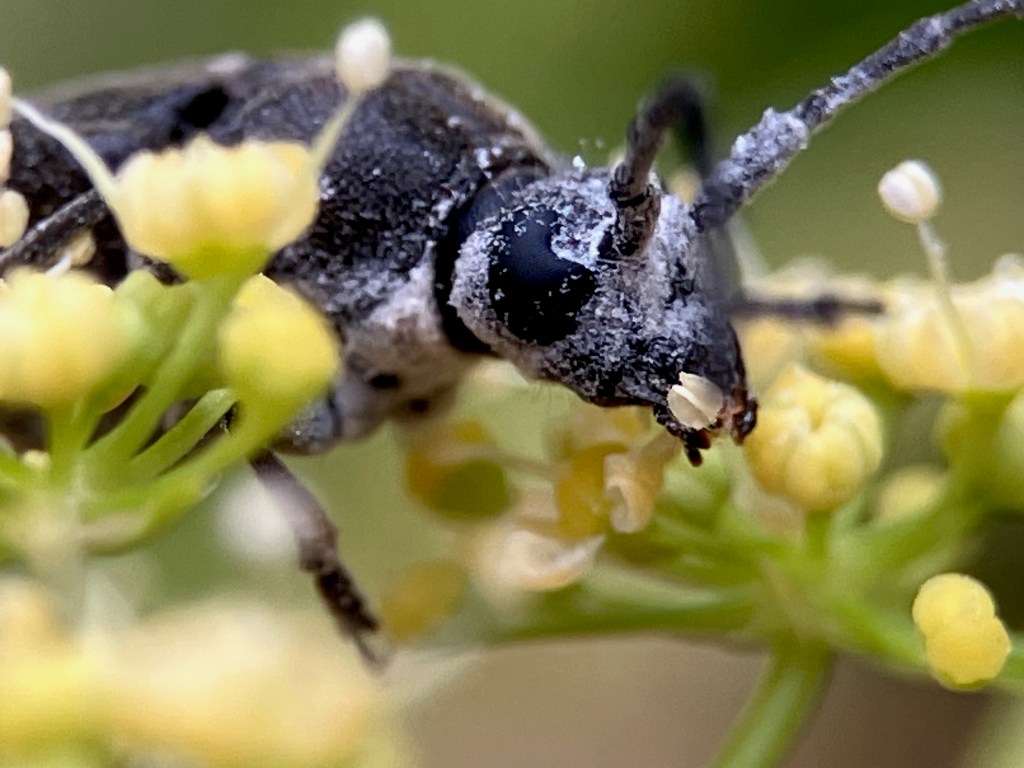
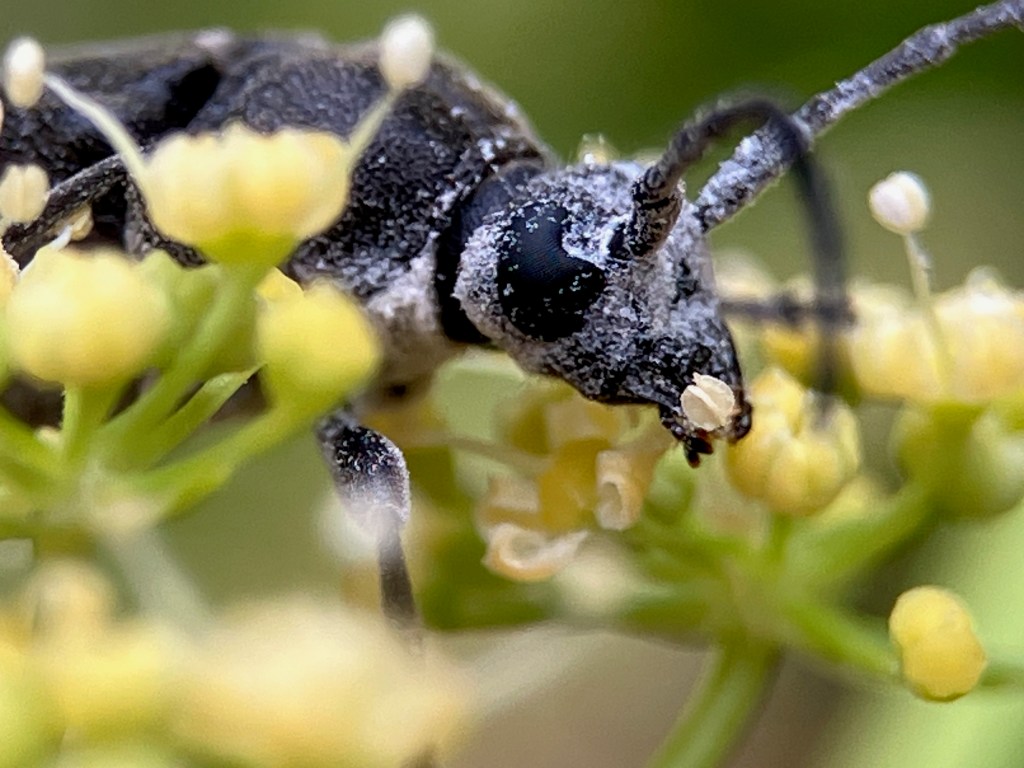
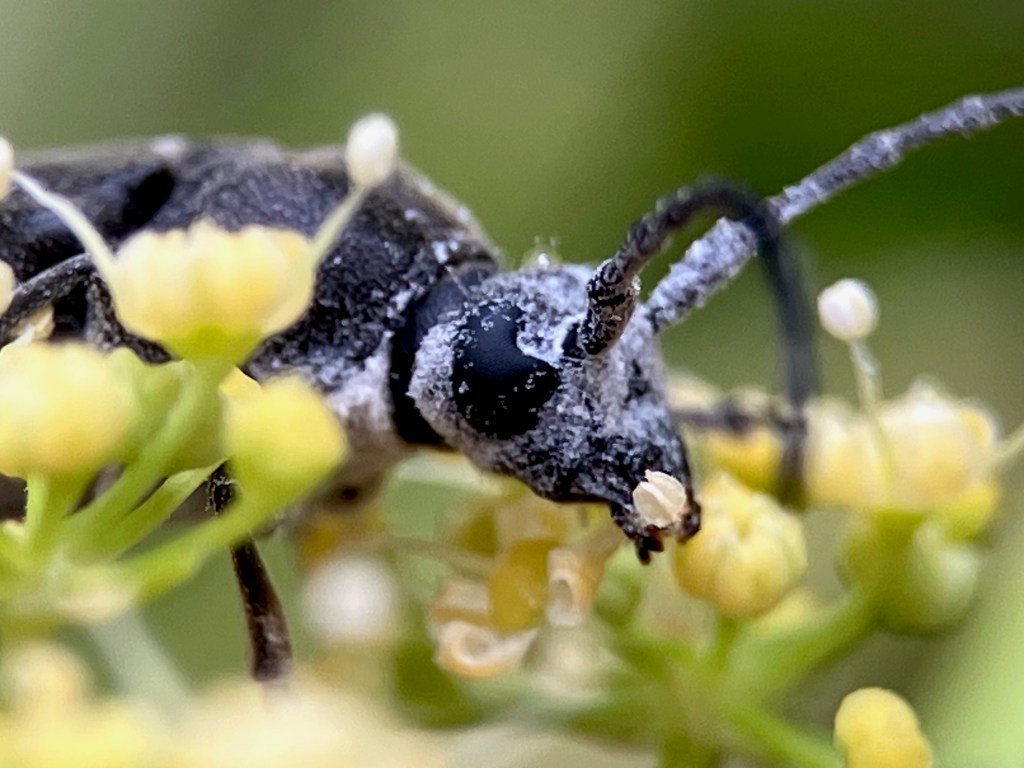
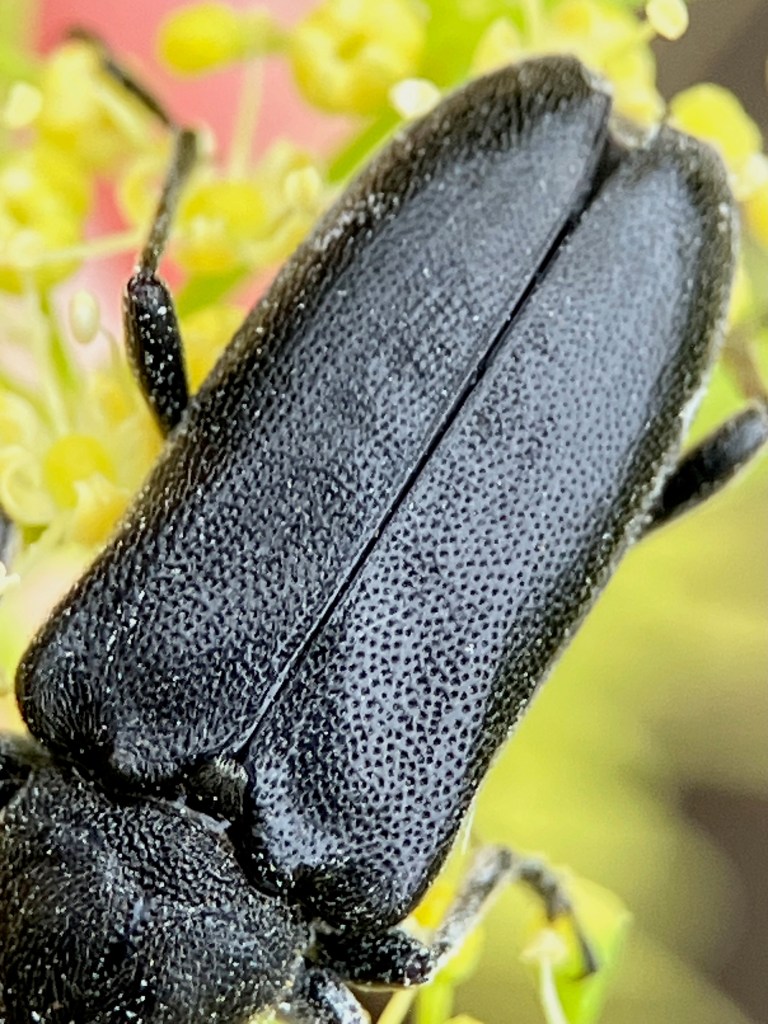
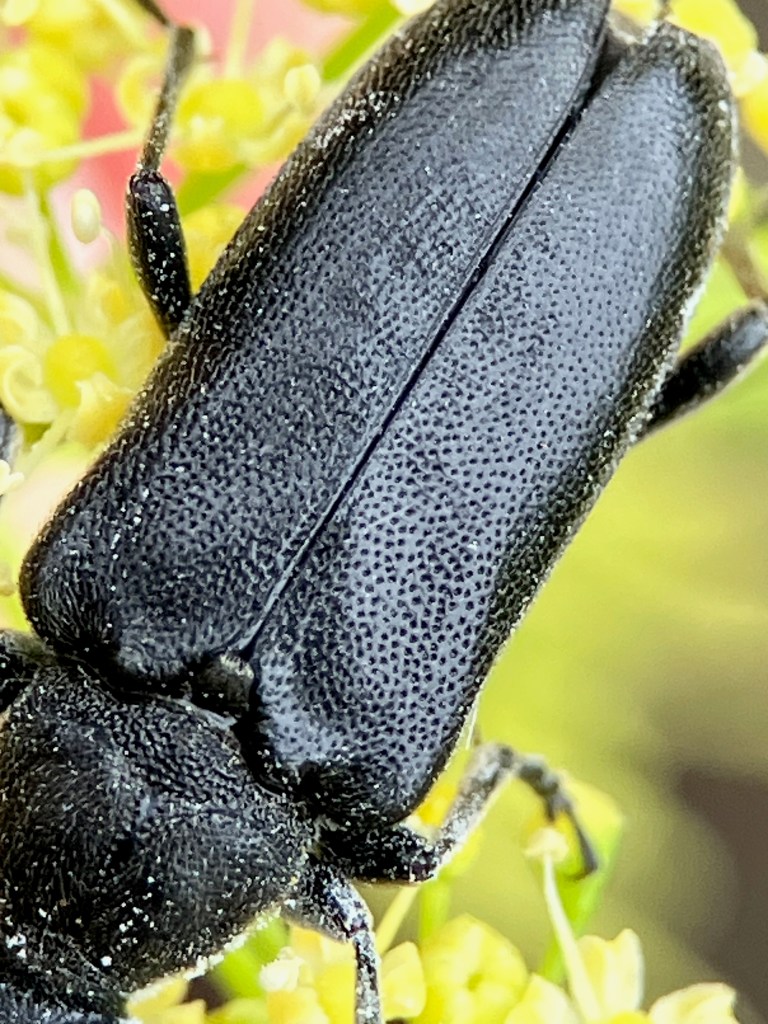
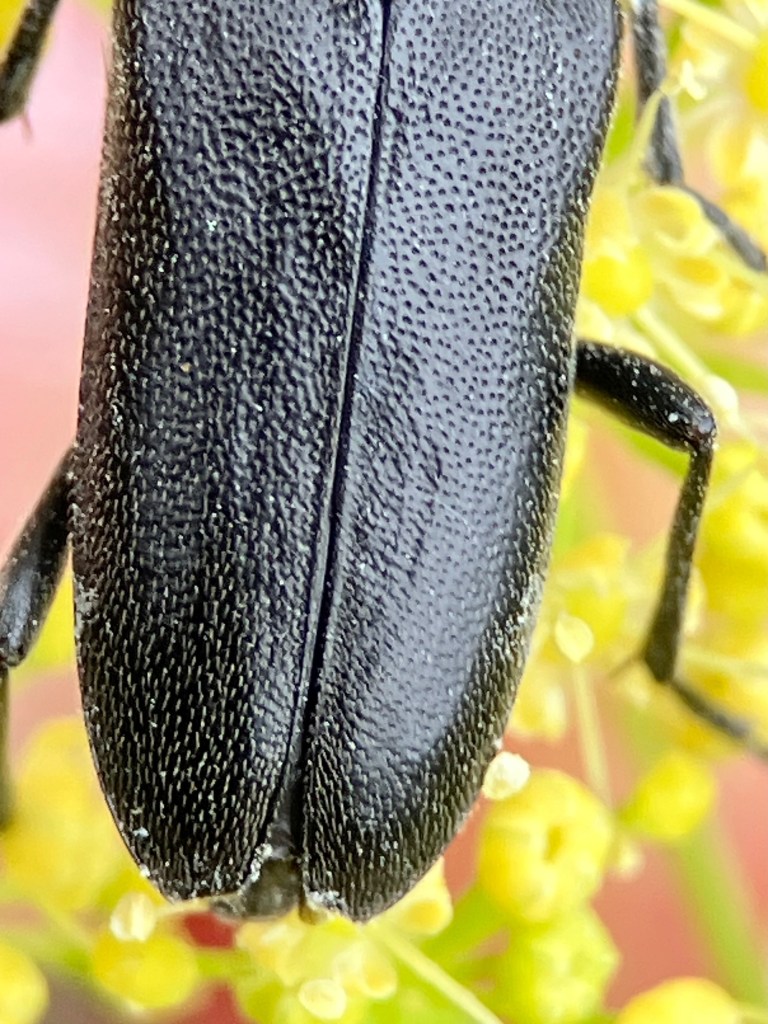
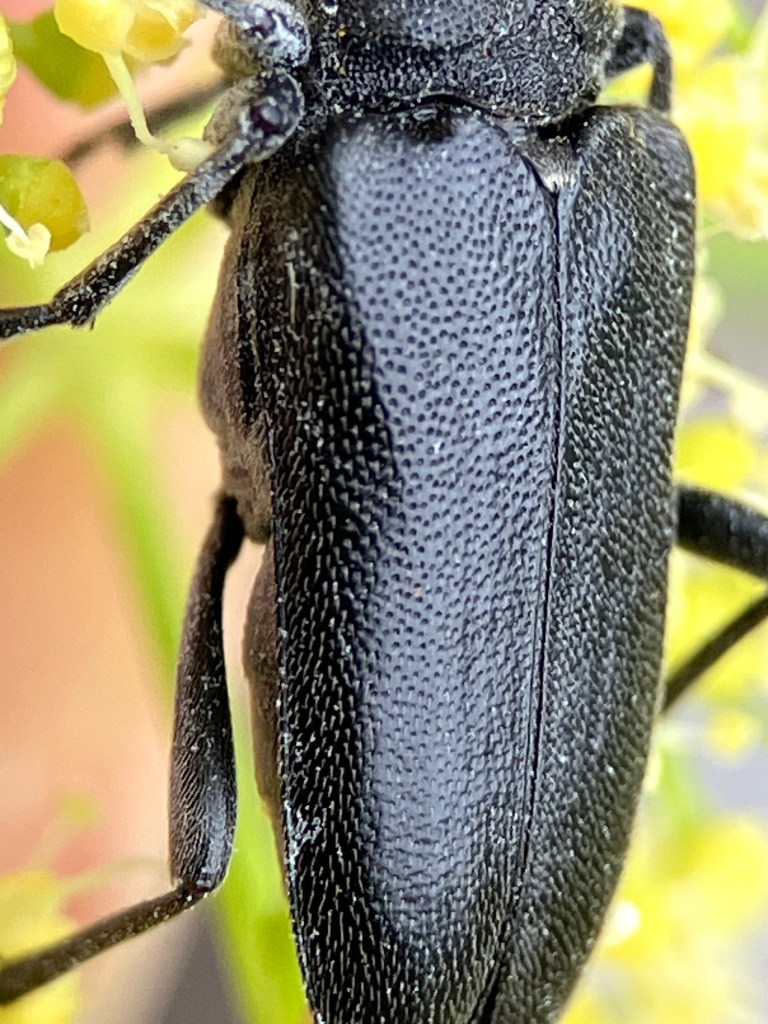
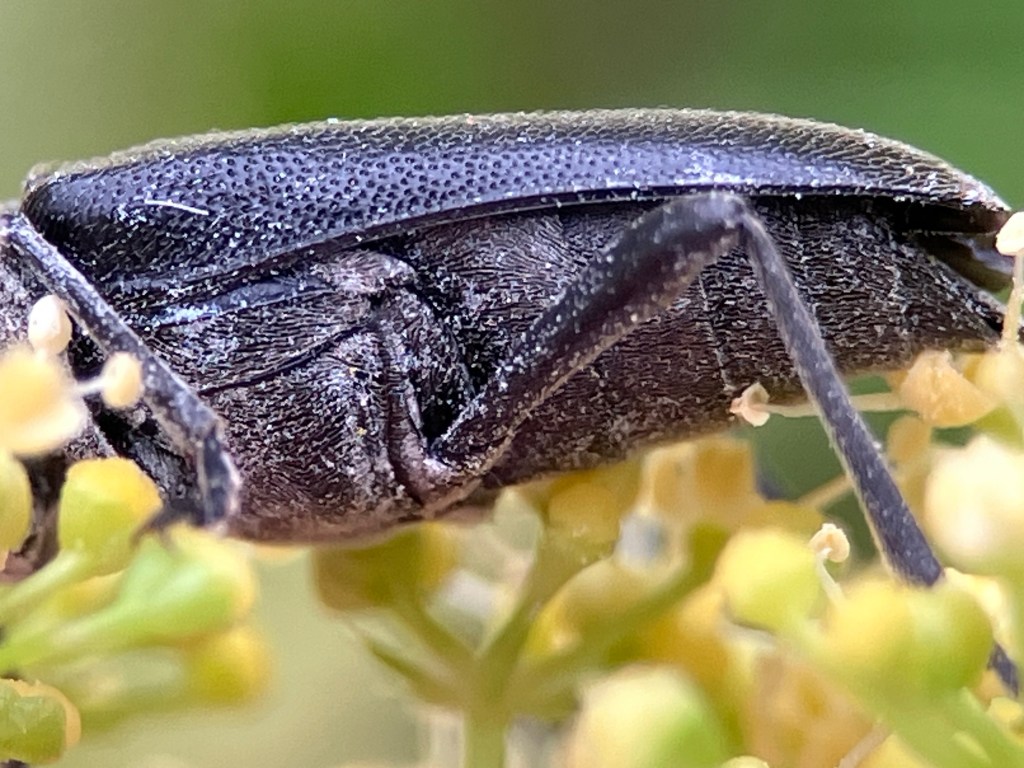
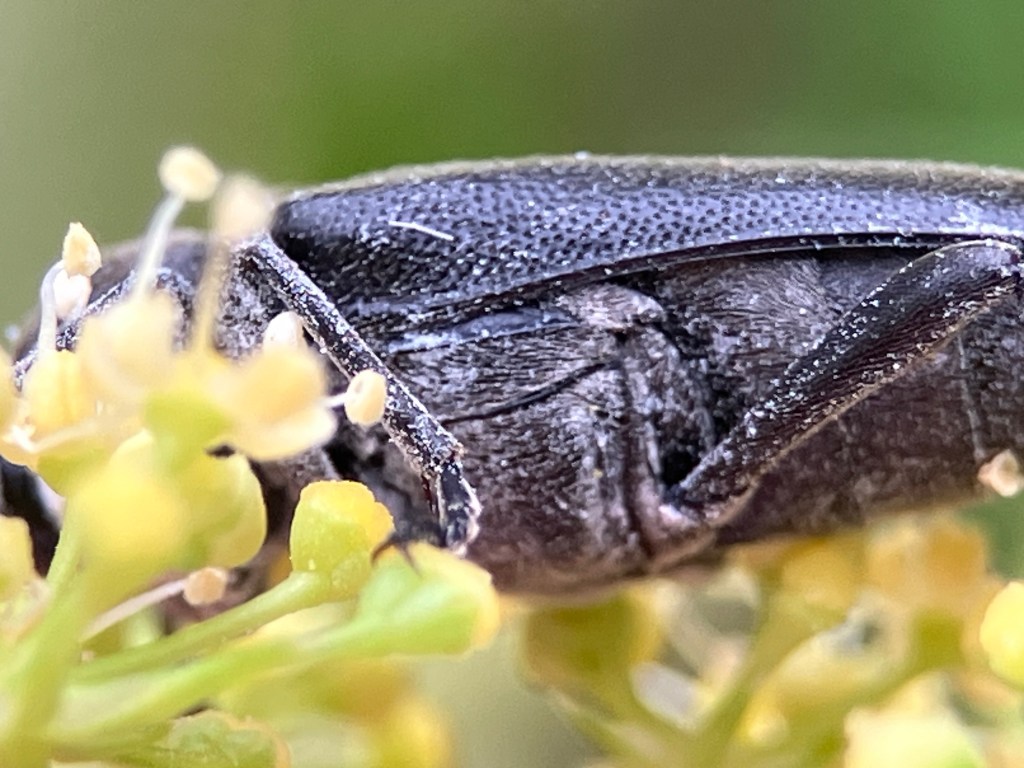
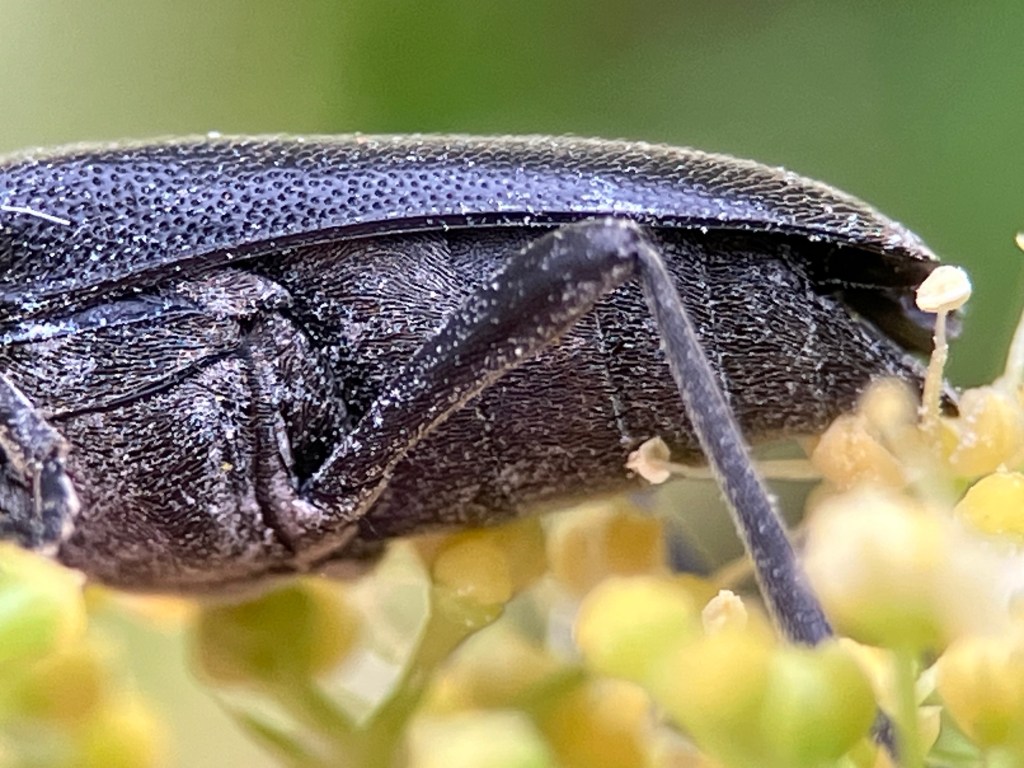
It was overcast and cool the morning of July 25, 2026, but I went down to poke around in our overgrown, un-tended orchard to look at a parsley plant that had bloomed. Over the past few days, it had been attracting some flies I was interested in. Unfortunately, there was little to no activity of any sort to observe. I was about to walk back to the house when I spied this handsome black beetle on the bottom portion of the stalk of the lone parsley.
It was like the beetle had emerged from thin air. I know I had scanned all parts of the plant. Scoured is more like it. For days, I have been trying to find two particular flies (one a Spilomyia sp., and the other a Cylindromyia sp.). Unfortunately, neither were around. I’ll take the beetle as a win. This beetle is cool!
It’s a type of Longhorn beetle in the family Cerambycidae. The species is Lepturopsis dolorosa. I thumbed through my copy of Beetles of Western North America (by a great guy named Art Evans). I found my bug on page 467. The description matched. Size = about 11-12mm, head constricts abruptly behind eyes, pronotum is wider than long.
Adults are diurnal and known to feed on various spring and summer flowers. I didn’t find parsley on the list, but yarrow, ceanothus, elderberry, goldenrod, spirea, and mullein are some others listed. Beetle larvae are associated with Douglas fir. In Furniss and Carolin’s (1977) Western Forest Insects, I read that larvae in this group, formerly in Genus Anoplodera, develop in dead trees. This gives them the job of nutrient recycler! The range of geographic distribution is from British Columbia and Idaho, down to California.
The French meaning of this beetle’s name is pretty sad. Literally. Longicorne endeuillé translates to Sorrowful flower longhorn beetle. I wonder if the beetle is supposed to be sorrowful or if the flower the beetle visits is sorrowful?
Unfortunately, I did not find much in the way of information about this species on my usual go-to (bugguide.net), but I did contribute my images to the site.
Thanks for reading.
References
Evans, A.V. 2021. Beetles of Western North America. Princeton University Press. 624 p.
HARDY, G. A. 1942. Notes on some wood-boring beetles of Saanich, Vancouver Island, B. C. (Coleoptera, Cerambycidae & Buprestidae). Proceedings of the Entomological Society of British Columbia, Victoria 39: 9–13.
No Author. Lepturopsis dolorosa. 2026. Bugguide.net https://www.bugguide.net/node/view/167043