Tag Archives: March Fly

April 5, 2025 – Herman finds a fly

That’s right! Herman the Persian found something interesting in the yard when we were outside sunning ourselves a bit this afternoon. He found one of the Bibionid March flies (a female). If you read my post yesterday https://buggingyoufromsanjuanisland.com/2025/04/04/nuptial-gifts/, you might note that Bibionid flies were being hunted by Empis flies who rolled them into little balls as nuptial gifts used to woo the lady Empids to mate.

Female Bibionid fly digging chamber to lay her eggs.

Evidently, a few of these Bibionid flies escaped that destiny and actually mated with their own kind. THIS one, that Herman found, was hard at work digging her own death chamber where she would expire soon after laying her eggs. Incidentally, the adults are very short-lived, and in fact, live only about 5-7 days with the primary objective of mating, and for the adult female to lay her fertilized eggs. In spite of their brief existence, adults are also thought to be important early pollinators of orchard trees. Yes, you heard me right! Flies don’t get nearly as much credit for pollinating as they deserve to receive.


I watched her digging with her fossorial forelegs. It seemed to be an impossible task, but she made slow and steady progress. She was still hard at work before we went back into the house about half an hour later. I marked the spot with a rock so I could go back and check, but I suspect even with the rock nearby as a marker, it will be next to impossible to detect any disturbance in the soil tomorrow. We’re supposed to get rain this evening.


In approximately 30-35 days, the eggs she lays will hatch underground. The larvae will live in the top layer of soil and feed gregariously on leaf and needle litter, decaying organic matter, and sometimes on below-ground parts of plants.

If you’re curious, you can read more about Bibionid flies in the attached links. I did see some additional Empis fly males dancing about today with their Bibionid “balloons” or nuptial gift balls for prospective mates.

Thanks for reading. 🙂

References

Bugguide.net. 2025. Family Bibionidae – March flies. https://bugguide.net/node/view/3834

Morris, H. No date. The larval and pupal stages of the Bibionidae. Entomological Department, Institute of Plant Pathology, Rothamsted Experimental Station, Harpenden. https://core.ac.uk/download/pdf/212009582.pdf

Nuptial Gifts

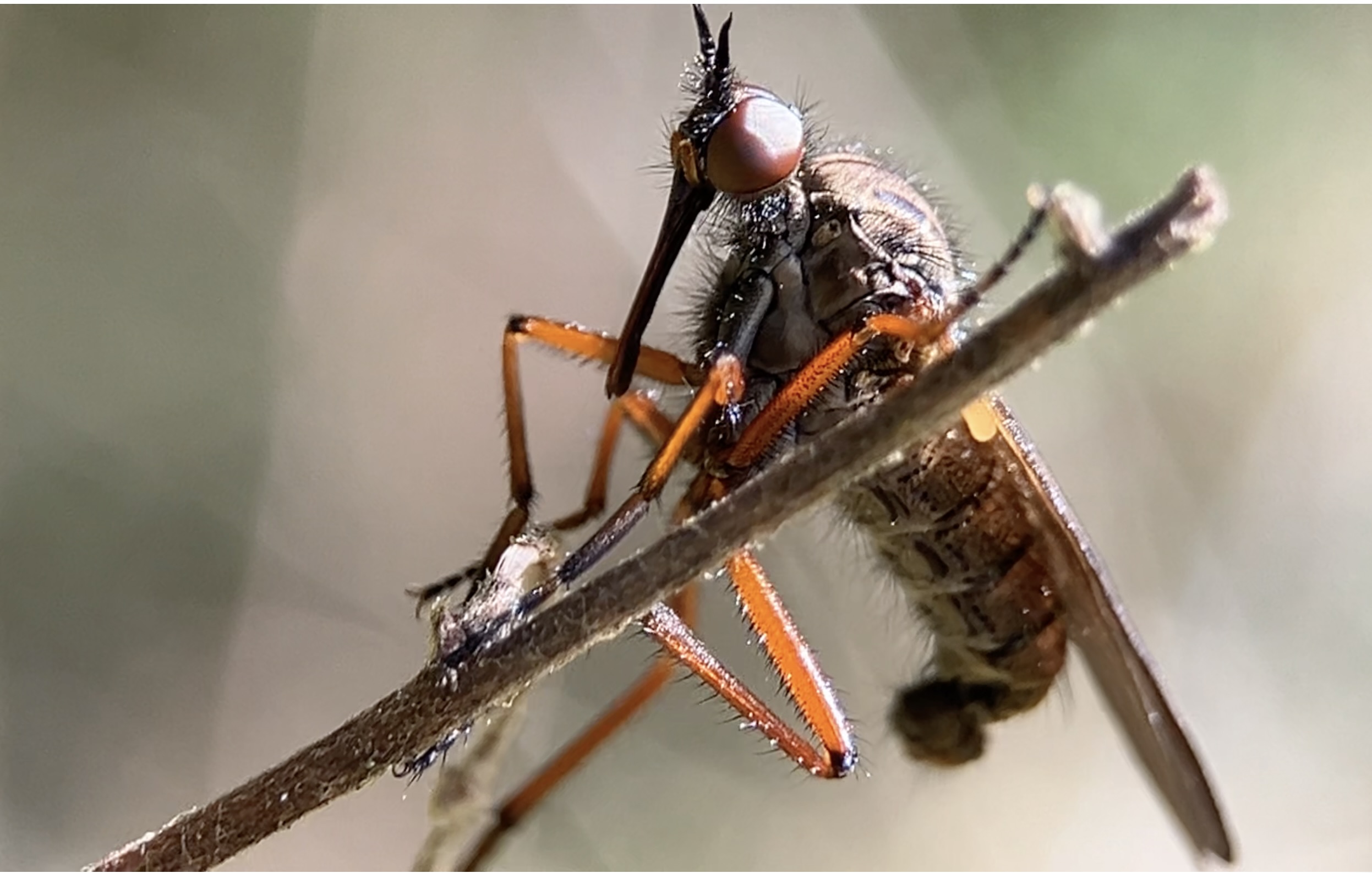
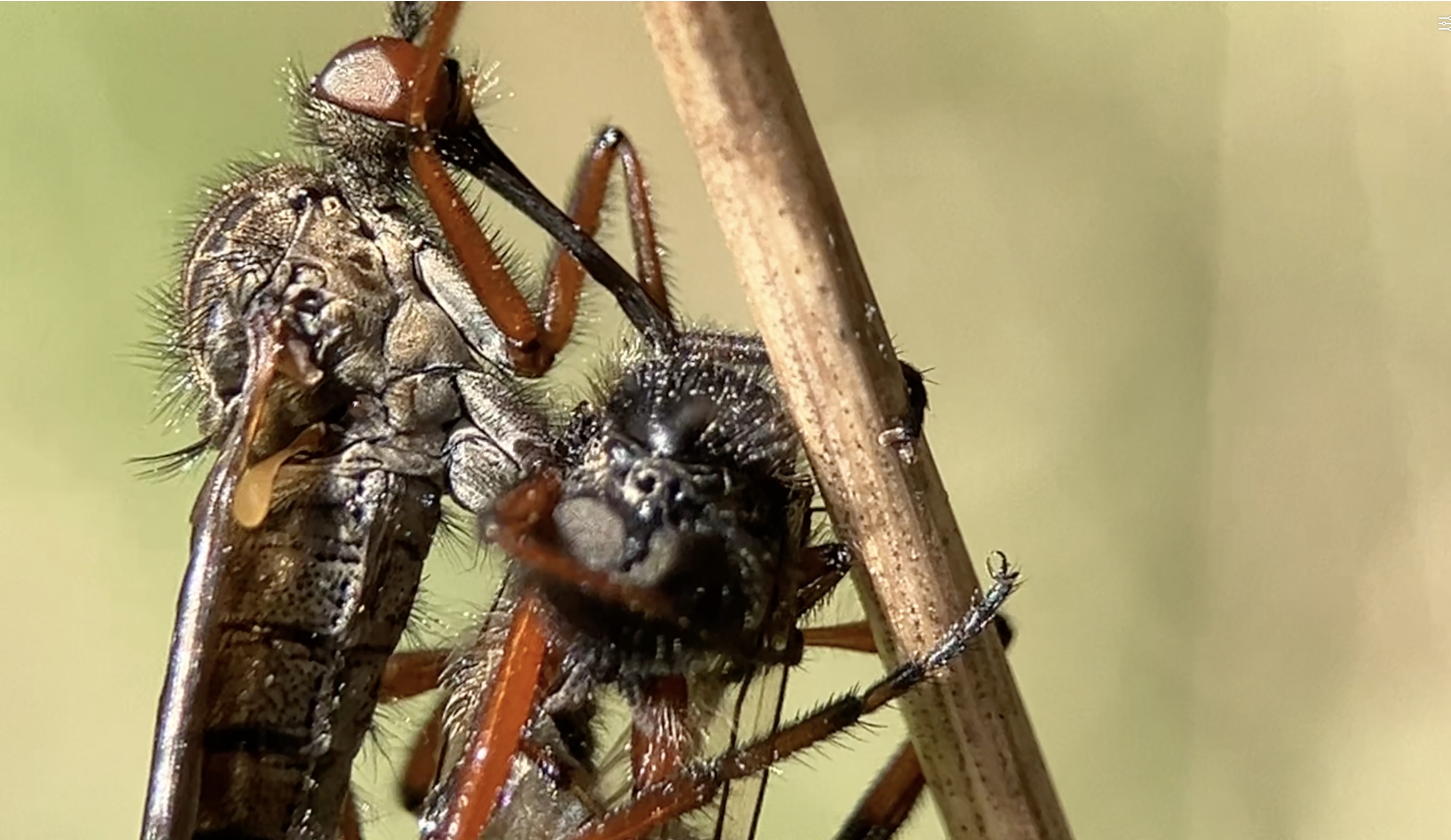
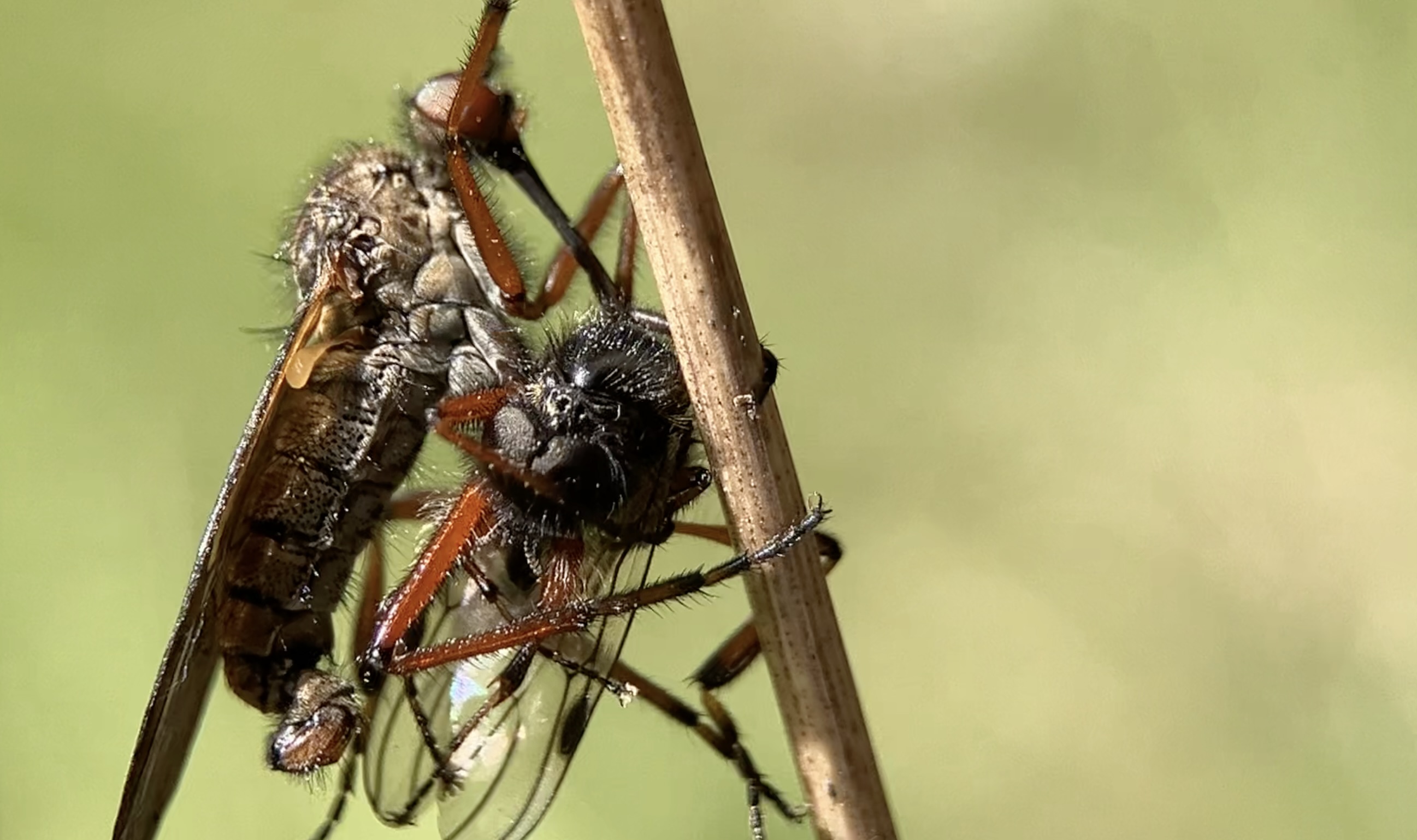
Empis Dance Fly with Bibionidae fly as nuptial offering for a female Empis fly

This afternoon I would rate a 10/10 for entomological adventure. It happened outside, just behind our barn about 3:30pm. I went out to feed our resident raven and took a stroll over to a sunny corner of our property. As I neared an old barbed wire fence line, I noticed an aggregation of flies bobbing around over one of the native Ocean Spray (Holodiscus discolor) shrubs. Moving closer, as stealthily as possible, I saw these were Empis dance flies and I got very excited. There seemed to be about 15-20 in the group.

Empis Dance Fly (male) with Bibionid fly nuptial gift

I watched as I stood in the sun. The sun’s warmth felt really good on my body. Hopefully, we will have more sunshine and some days of vitamin D will infuse my cells and pull me out of this funk I have been wallowing in. The flies dancing in the sun were a sight. I crept forward a bit closer, trying not to slip into the fencing, but enough so as to get some video to share.

You will have to forgive me for the shake in the footage. It is not easy to remain steady and focus on a nervous fly that leaves its perch if you so much as breathe too deeply when you are moving the camera close enough to zoom in for a good macro shot. I think I was holding my breath a lot while I was trying to take pictures.

Empis Dance Fly with nuptial offering

This fly should be classified in the genus Empis. Last year, I found Empis barbatoides in our orchard. You can read an earlier blog post I wrote about them here https://buggingyoufromsanjuanisland.com/category/dance-fly/empis-barbatoides/ I believe these may be the same species, but I say this with a caveat. I am hoping to get my hands on a copy of the revisions by Sinclair, Brooks, and Cumming I have referenced below. It appears I may need this and the updated keys to try and ID my fly beyond genus level, so I’ve emailed the lead author and hopefully will hear something back.

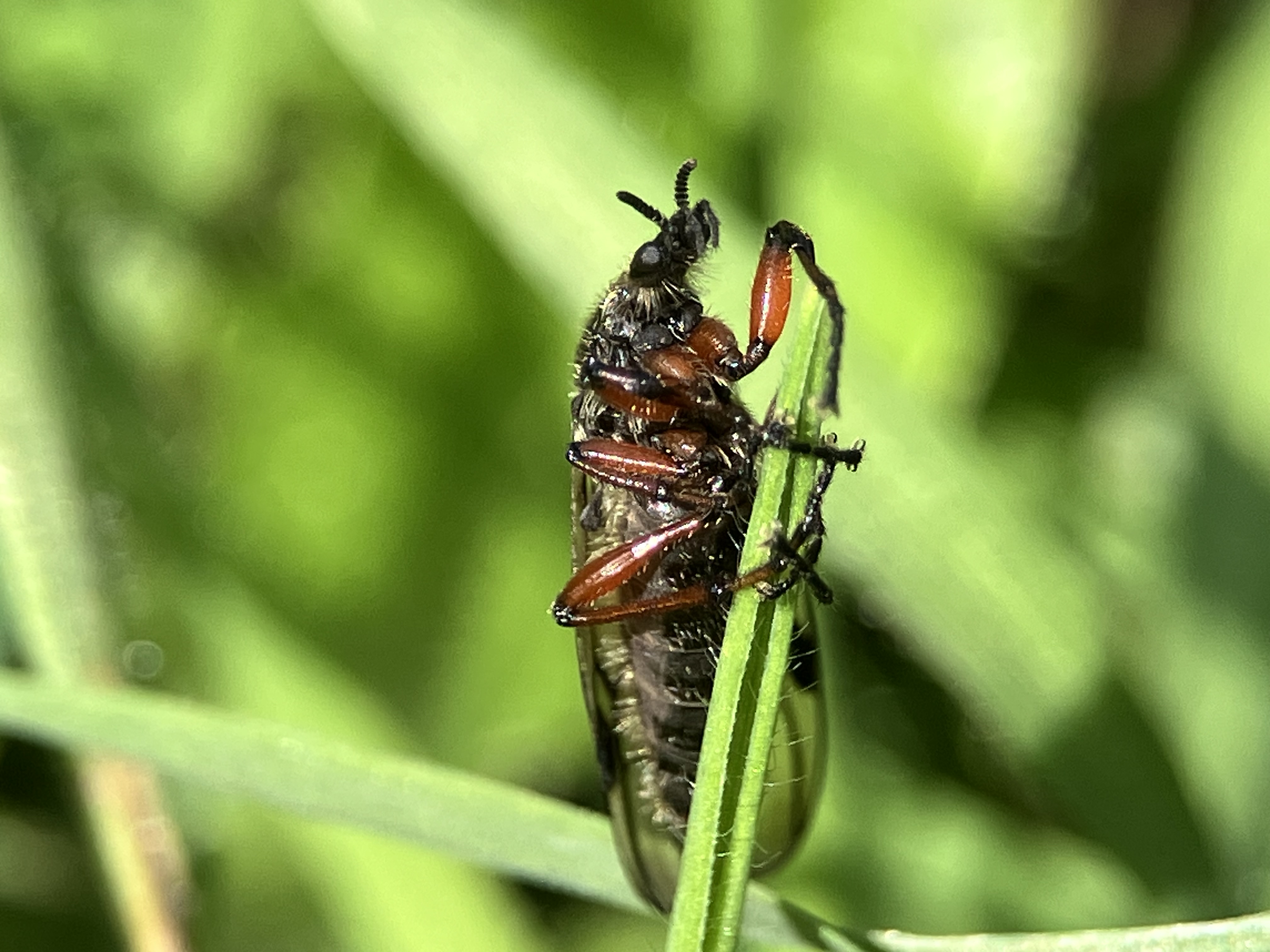
If you look closely, you’ll see in some of the photos the fly is holding a balled up insect. This is a species of March fly in the family Bibionidae. I saw a few hiding around in the tall grass like this one in the photo below.

March fly (Bibionidae) hiding in the grass

Evidently, they were being picked out by the male flies and rolled up into a nice nuptial gift to present to a female Empis fly to entice her to mate. The male Empis fly will carry this balled up dead insect and “dance” around to attract a female. That’s what I found so fascinating to actually watch in person. It isn’t every day you see something like this! Since flies seem to be attracted to certain spots for mating aggregations (it’s called hilltopping), perhaps this is a spot where I might be lucky enough to see this action again.

References and Further Reading:

Alcock , John. 1973. The mating behaviour of Empis barbatoides Melander and Empis poplitea Loew (Diptera: Empididae), Journal of Natural History, 7:4, 411-420, DOI: 10.1080/00222937300770301

Bugguide. 2023. Family Empididae – Dance Flies. https://bugguide.net/node/view/6578

Pehling, D. 2004. Empis Dance Flies Empis spp. Bug of the Month . Scarabogram. https://crawford.tardigrade.net/bugs/BugofMonth40.html

Sinclair BJ, Brooks SE, Cumming JM. Revision of the western Nearctic species of Empis subgenus Enoplempis (Diptera: Empididae). Zootaxa. 2025 Mar 31;5615(1):1-200. doi: 10.11646/zootaxa.5615.1.1. PMID: 40173481. https://pubmed.ncbi.nlm.nih.gov/40173481/