The social media giant we all have become overly dependent on in recent years, had a big, giant F-A-I-L today. The entire site was down. I couldn’t share bug photos or look to see what crazy or amazing things my friends had been up to. I also couldn’t watch the fabulous video of the frog and bearded dragon that I’ve been replaying over, and over, and over because it’s so DARN cute! You can find it on Tik Tok if you can’t find it on Facebook.
In the void, I resorted to the fail safe backup. It’s called E-mail. I really feel old because I actually remember how we communicated before the advent of cyberspace – handwriting letters that you put a stamp on and eventually were delivered by USPS.
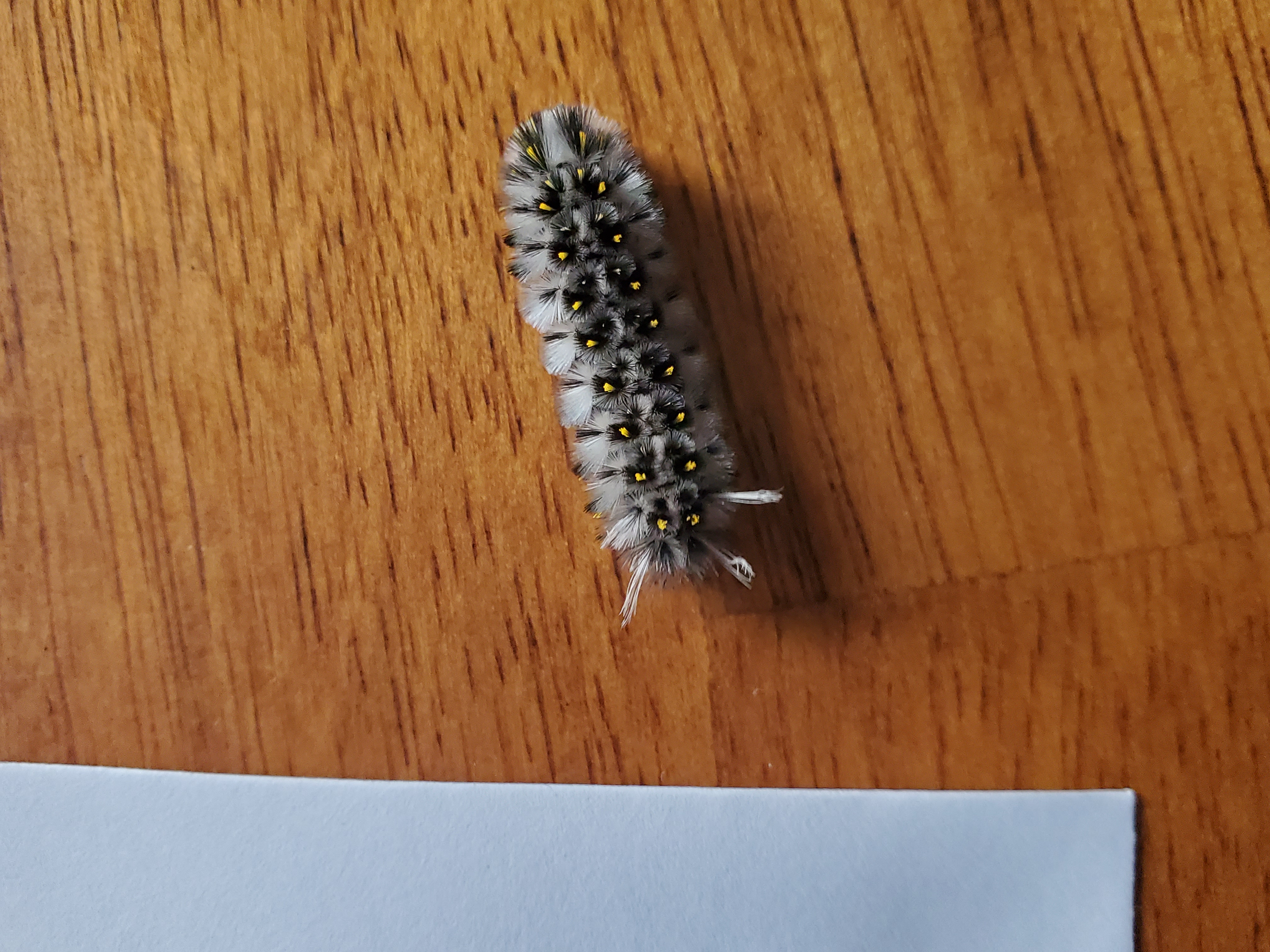
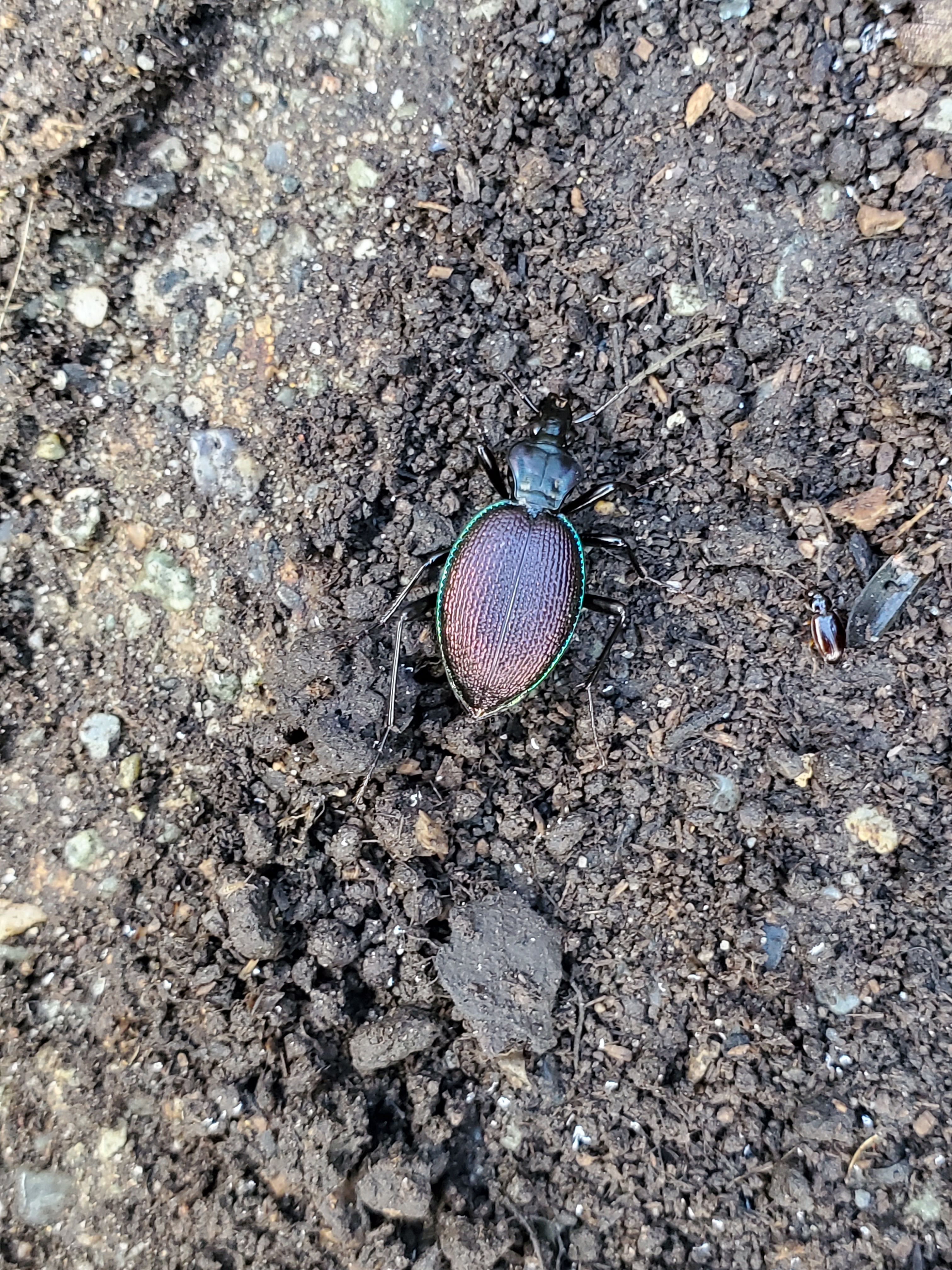
So, in my email, I actually had received two nice bug pictures I want to share with you. Victoria Compton (who is running for Friday Harbor Port Commissioner btw) sent these to me. The first, a caterpillar, is going to turn into my favorite moth, Lophocampa roseata or the Rosy Amelia Moth. The 2nd, is a ground beetle in the family Carabidae (Scaphinotus marginatus) – also sometimes called the Margined Snail-eating Carabid Beetle.
Happy Bug Viewing! Thanks for checking these out and thanks for sending the photos Victoria! You have my vote. 😉
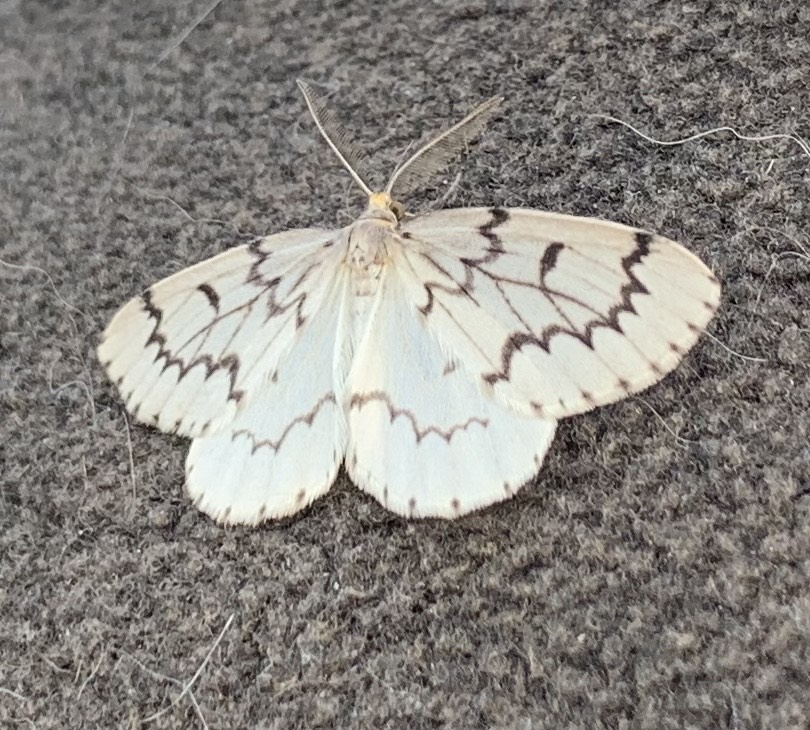
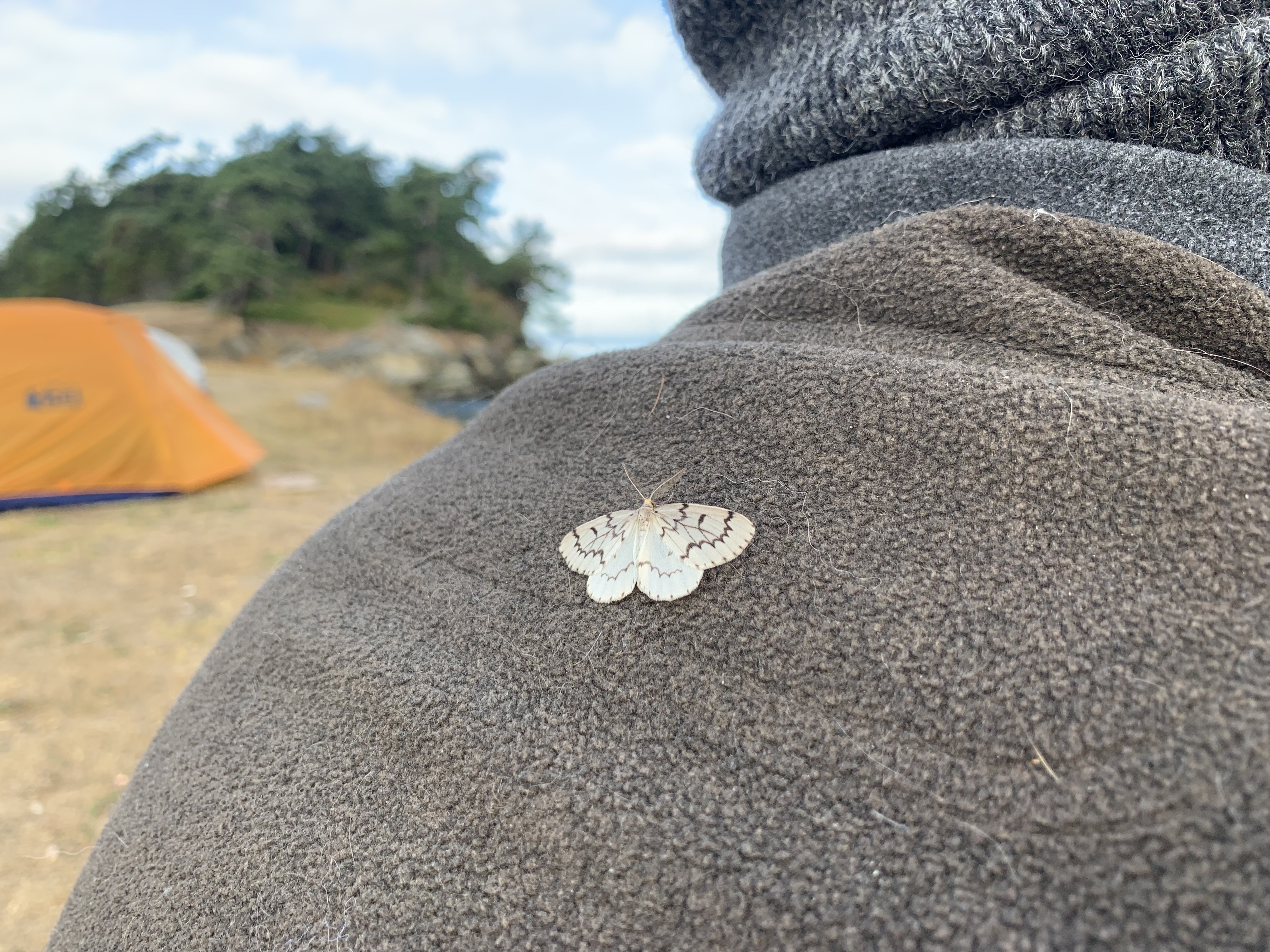
Yesterday, August 29, 2021, I received an email from C. Croll requesting ID of a moth photographed by T. Ormenyi. Their query read,
“I live on Orcas and kayak quite a bit. Today I was paddling from Patos Island back home, and there were thousands of moths in the air. They were heading from south to north. We first saw them on Patos but then all the way home. Some had fallen onto the water on the crossing. ”
And,
“I had not witnessed so many moths all traveling together before. Seemed like a migration of some sort? When they first arrived I thought there were cottonwood seeds floating on the breeze, took a second to realize that it was moths. The air was full of them for almost an hour. “
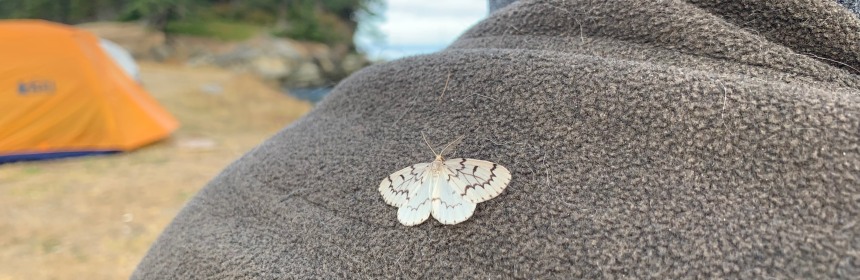
These moths sighted by Calvin and Tessa are the Phantom Hemlock Loopers, (Nepytia phantasmaria). They are in the family Geometridae. This species ranges from southern BC to California. There is one generation produced per year and larvae feed on conifers, including Western Hemlock, Douglas-fir, Grand Fir, Amabilis Fir, Sitka Spruce, and Western Red cedar (Bugguide.net).
Adults typically emerge in fall (September and October), so seeing them now is a bit earlier than when I’ve typically collected specimens at my porch light on San Juan Island. Last year, I photographed my first specimen of the season on Sept. 7, 2020. As these moths are nocturnally active, Calvin and Tessa’s report of of them traveling en-masse like this during daylight was intriguing. I was curious to know more.
William H. Hendrix III’s thesis titled Migration and behavioral studies of two adult noctuid (Lepidoptera: Noctuidae) species plus feeding observations of some moths common to Iowa (1990), cites (Johnson, 1969), stating these migration events are part of the “oogenesis flight syndrome” stage where the newly emerged adult insects move en-masse before reproduction and egg laying takes place. Hendrix (1990) also provides some theories as to WHY these moths migrate in the first place. Several theories have attempted to explain this, but he concludes, “Migration, consequently, occurs primarily in young adults and its chief function is to allow escape from unfavorable habitats and allow colonization of a broad range of environments” (Hendrix, 1990).
After reading about this particular species, I believe the migration witnessed yesterday could be attributed to either 1) the sudden weather change we experienced overnight in the islands, or 2) the lack of suitable habitat for reproduction because of the drought we are experiencing. I’m guessing the drought may have more to do with this and we will see more evidence as other species struggle to survive the coming environmental shifts associated with global warming.
Thanks to Calvin and Tessa for sending in their observations!
Edwards, D.. (2011). Activity rhythms of Lepidopterous defoliators. II. Halisidota argentata Pack. (Arctiidae) and Nepytia phantasmaria Strkr. (Geometridae). Canadian Journal of Zoology. 42. 939-958. 10.1139/z64-093.
Hendrix, William Hurston III, “Migration and behavioral studies of two adult noctuid (Lepidoptera: Noctuidae) species plus feeding observations of some moths common to Iowa ” (1990). Retrospective Theses and Dissertations. 9373. https://lib.dr.iastate.edu/rtd/9373 https://lib.dr.iastate.edu/cgi/viewcontent.cgi?article=10372&context=rtd
Johnson, C. G. 1969. Lepidoptera: Long-distance displacement. In MigrationandDispersalofInsectsbyFlight. Methuen&Co.,Ltd., London. 763 pp.
Saturday, September 19, 2020. San Juan Island, WA – Caterpillar rescue!
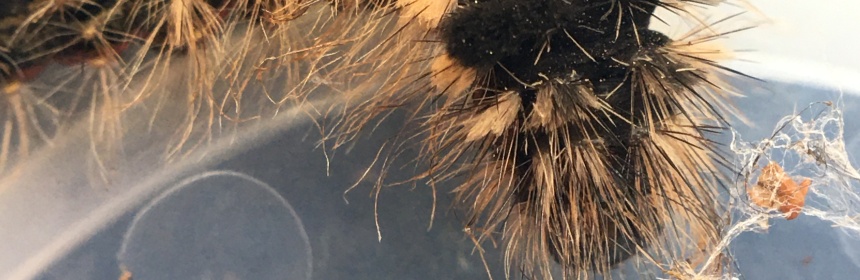
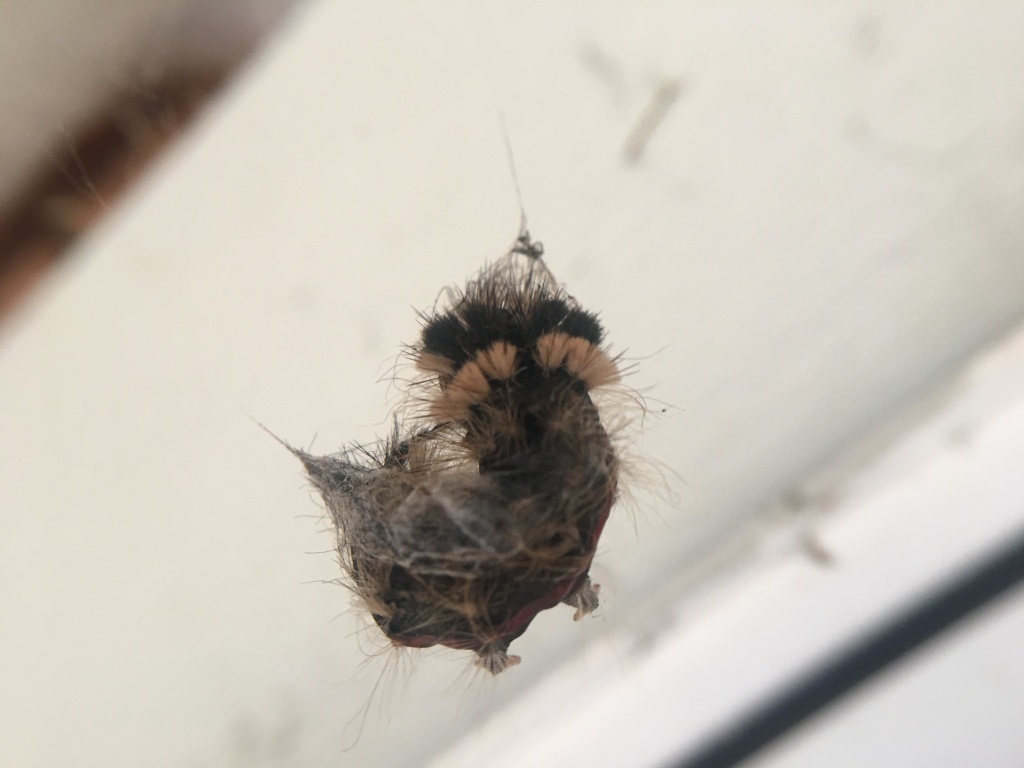
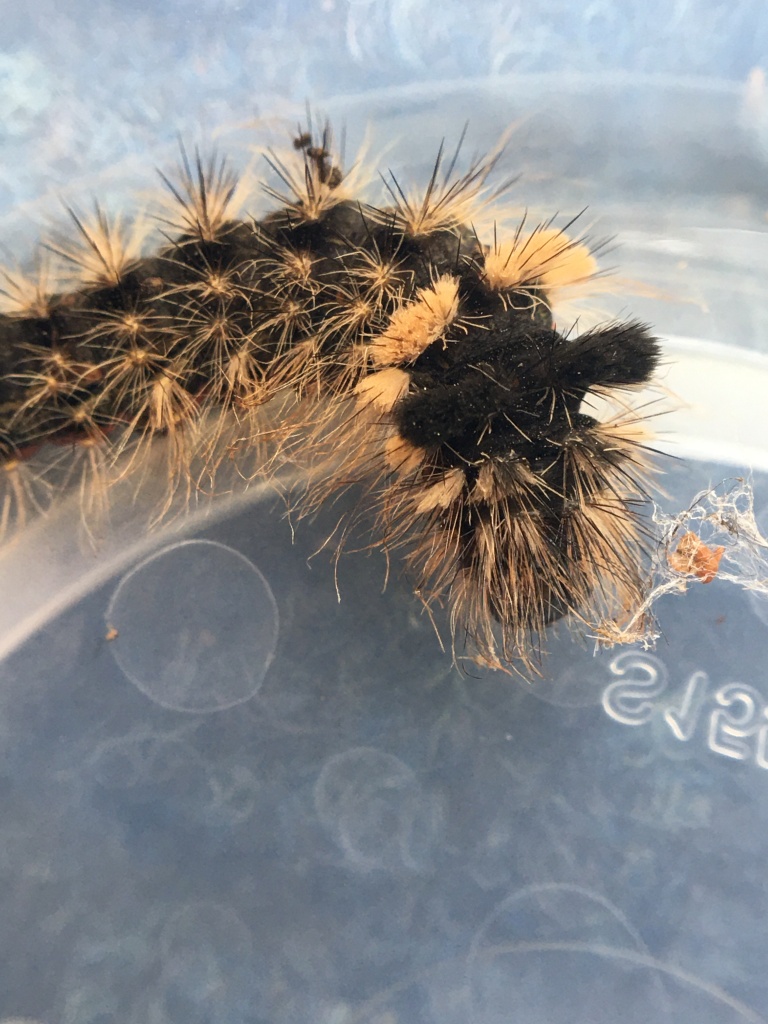
Acronita impleta – Yellow-haired Dagger Moth caterpillar. San Juan Island, WA 09.19.2020
I found one of these several years ago (September 20, 2017 to be exact), so I recognized it immediately when I saw it squirming in the spider webbing along the house this morning. My husband said I should just leave it alone. “Nature is ugly sometimes and you can’t interfere.” Well, when it was still there four hours later, suspended mid air, and still squirming, my tendency to SAVE things kicked in. The spider living above that web was actually dead. I’m not feeling very guilty about stealing food from a dead spider.
Acronita impleta – Yellow-haired Dagger Moth caterpillar. San Juan Island, WA 09.19.2020
Acronita impleta – Yellow-haired Dagger Moth caterpillar. San Juan Island, WA 09.19.2020
I got a cup and gently pulled at the web and began the process of freeing this caterpillar. It took finding my reading glasses and getting some fine-pointed tools to gently ply away the sticky bonds and clean the strands off the caterpillar hairs.
Acronita impleta – Yellow-haired Dagger Moth caterpillar. San Juan Island, WA 09.19.2020
Yellow-haired Dagger Moth (Acronita impleta)
I think it looks pretty good! I even picked it some dinner and we’ll see if I can keep it healthy through pupation and adulthood.
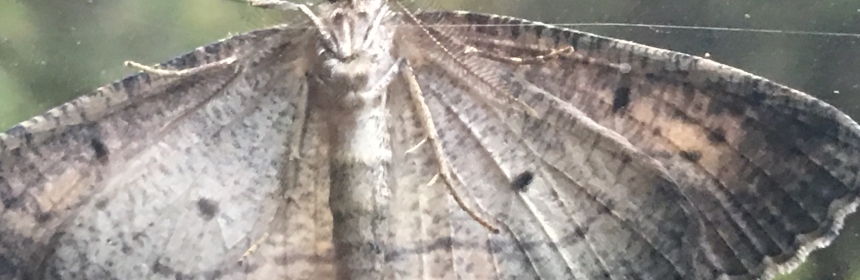
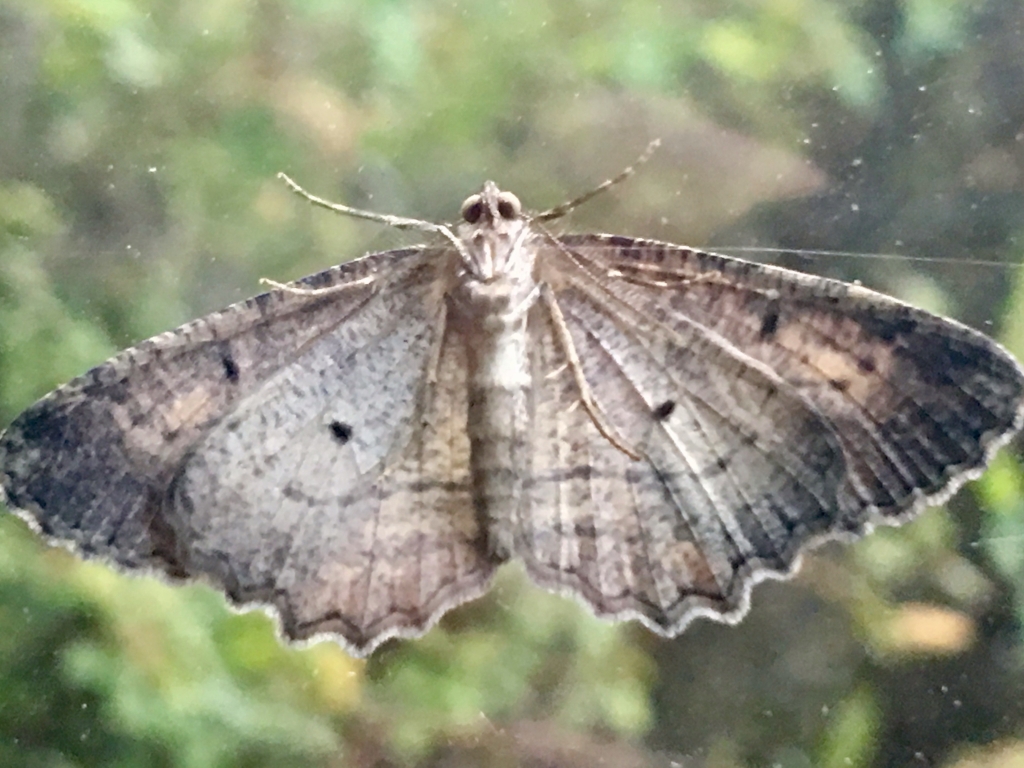
I found this specimen ready to hitch a ride on the car window when I was leaving a dinner on Sunday evening, August 25, 2019. Time of sighting was 7:32 pm. It managed to stay on the window glass as we pulled out of the driveway, but blew off as we began our drive home.
This is a Brownlined Looper moth, Neoalcis californiaria in the family Geometridae and is the single species in its genus in North America. Its distribution ranges from Southern California to British Columbia. Adults can be found flying between March and October in the Pacific Northwest, but have been documented flying as late as December in California. Larvae of this species feed mostly on conifers, including Douglas-Fir, Western Hemlock, Western Red Cedar, Grand Fir, Lodgepole Pine (Canadian Forest Service) as well as many broadleaf trees and shrubs (USGS).
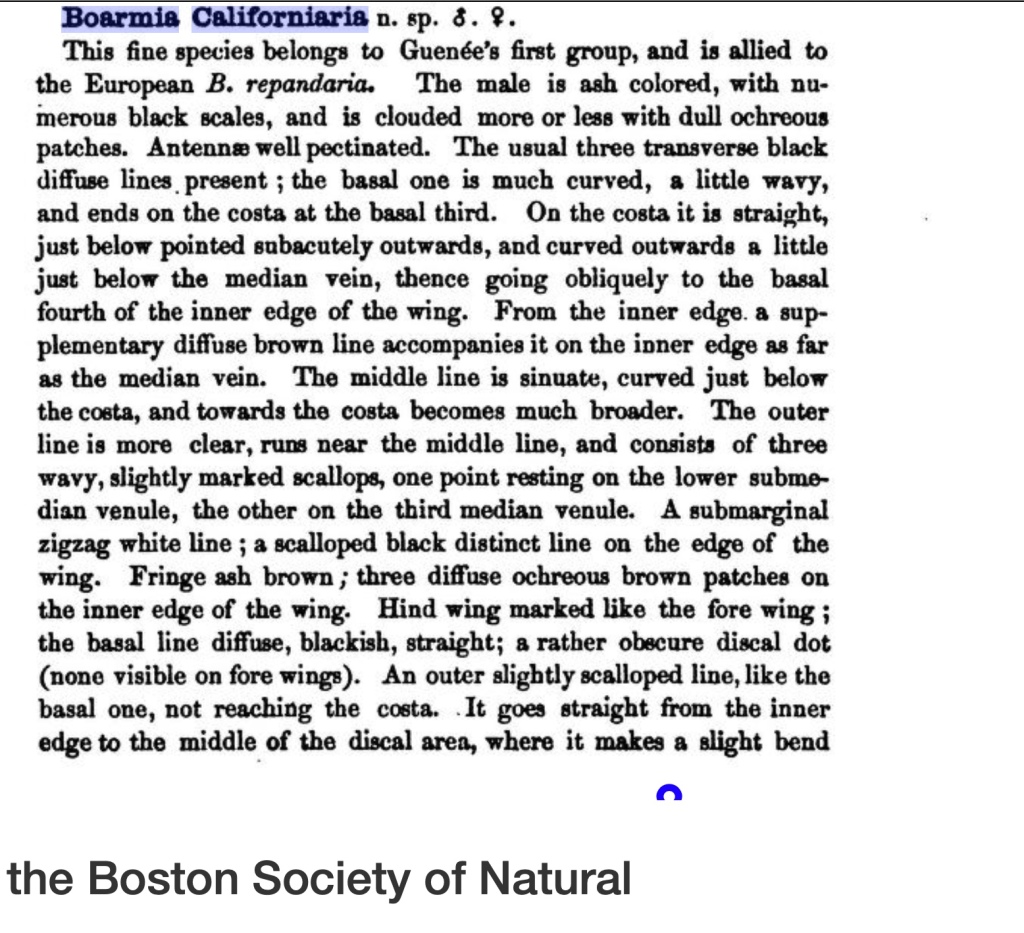
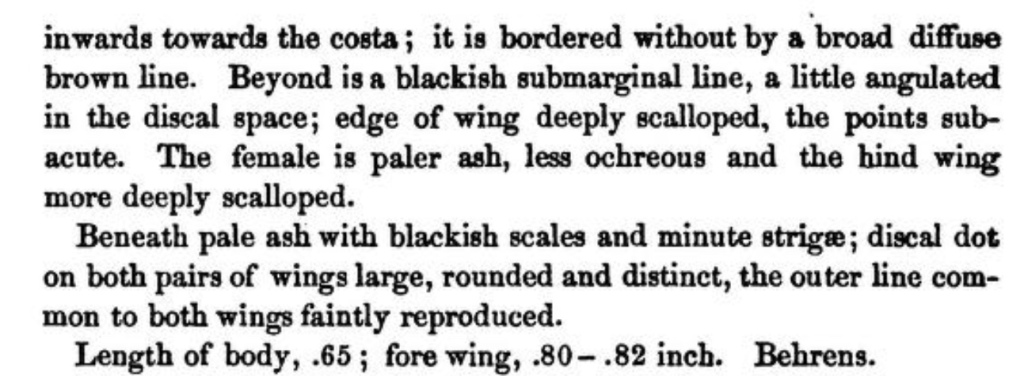
First described by American Entomologist, Alphaeus Spring Packard in 1871, this rather nondescript moth was initially named Boarmiacaliforniaria. A description by Packard is found in the Proceedings of the Boston Society of Natural History. Volume 13 https://archive.org/details/proceedingsbost07histgoog/page/n39 or view description attached below.
Neoalcis californiaria August 25, 2019, 7:32 pm San Juan Island, WANeoalcis californiaria August 25, 2019, 7:32 pm San Juan Island, WAPackard’s description of Boarmia californiaria renamed Neoalcis californica part 1Packard’s description of Boarmia californiaria renamed Neoalcis californica part 2
I found this specimen at the Friday Harbor Post Office yesterday and picked it up to save in my collection. It’s a bit bird-pecked, but worth keeping for passing around at my upcoming insect talk at the library in October.
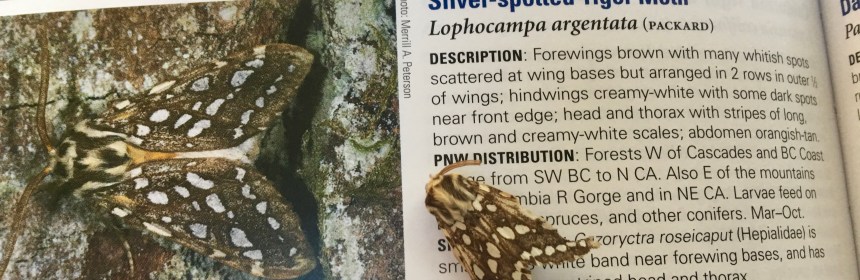
Lophocampa argentata Silver-spotted Tiger Moth San Juan Island, WA photo by Cynthia Brast-Bormann August 27, 2019
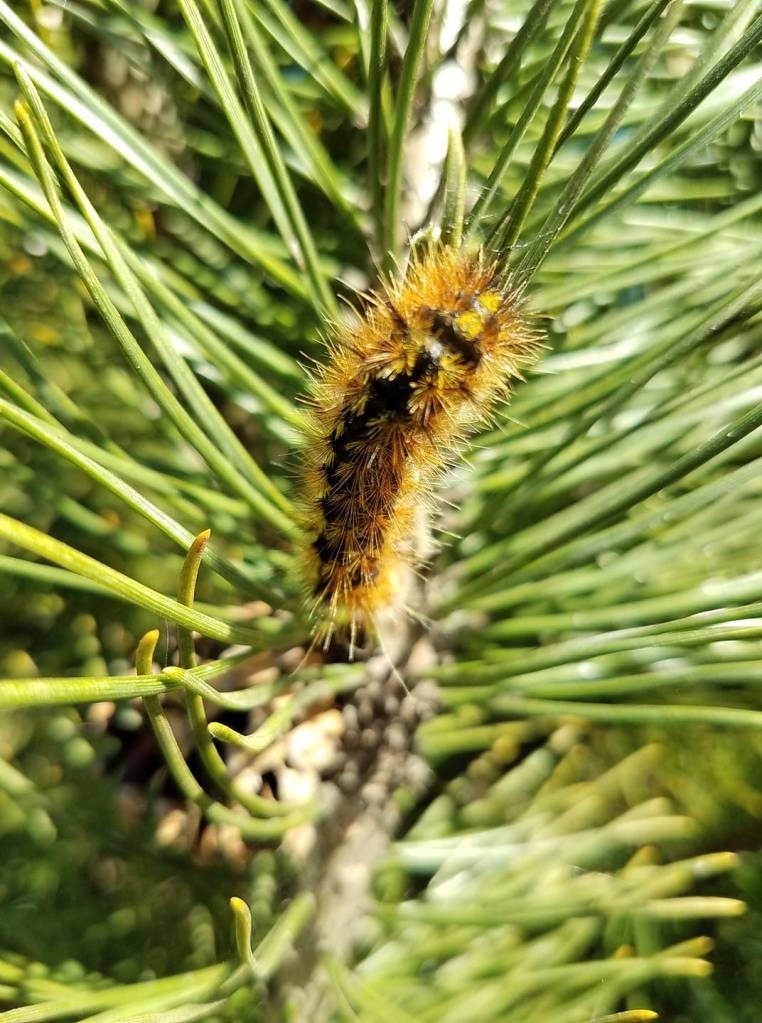
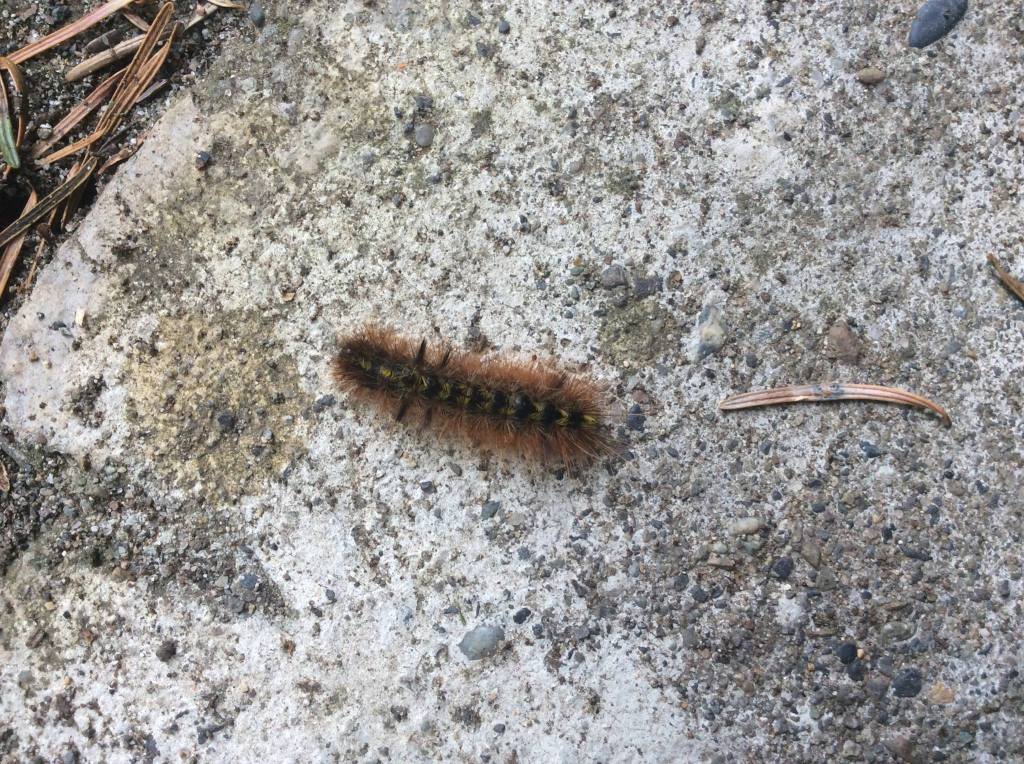
Lots of folks emailed me earlier in the year with photos of caterpillars they were finding. The larval form of this moth looks like the two photos below, depending on the developmental instar.
Silver-Spotted Tiger Moth Larva Lophocampa argentata Orcas Island, WA 98250 May 9, 2019 photographed by K. RoseSilver spotted tiger moth larva Lophocampa argentata San Juan Island, WA April 26, 2019 photographed by L. Narum
These moths are fairly common throughout the San Juan Islands. The larvae feed on Douglas Fir (Pseudotsuga menziesi) and other conifers. The name, argentum comes from Latin referring to the silver spots on the wings of adults.
While larvae are defoliators, they are not usually present in high enough numbers to cause economic damage or require any chemical control. Also, while very pretty to look at, the caterpillars do have urticating hairs which can cause stinging, burning, or rash in sensitive people. Take a photo or observe them, but resist the temptation to pick them up!
Lophocampa argentata San Juan Island, WA August 27, 2019 photo by Cynthia Brast-BormannLophocampa argentata San Juan Island, WA August 27, 2019 photo by Cynthia Brast-Bormann
I’m always excited when someone asks me to ID a bug for them! This came from the women over at Browne’s Garden Center – https://www.browneshomecenter.com/garden-center/, San Juan Island, WA. It’s the “black form” of the White-Lined Sphinx Moth (Hyles lineata). The larva are sometimes called Purslane caterpillars. They will eat Fireweed (Epilobium angustifolium), other fireweeds, and other various plants in the evening primrose family.
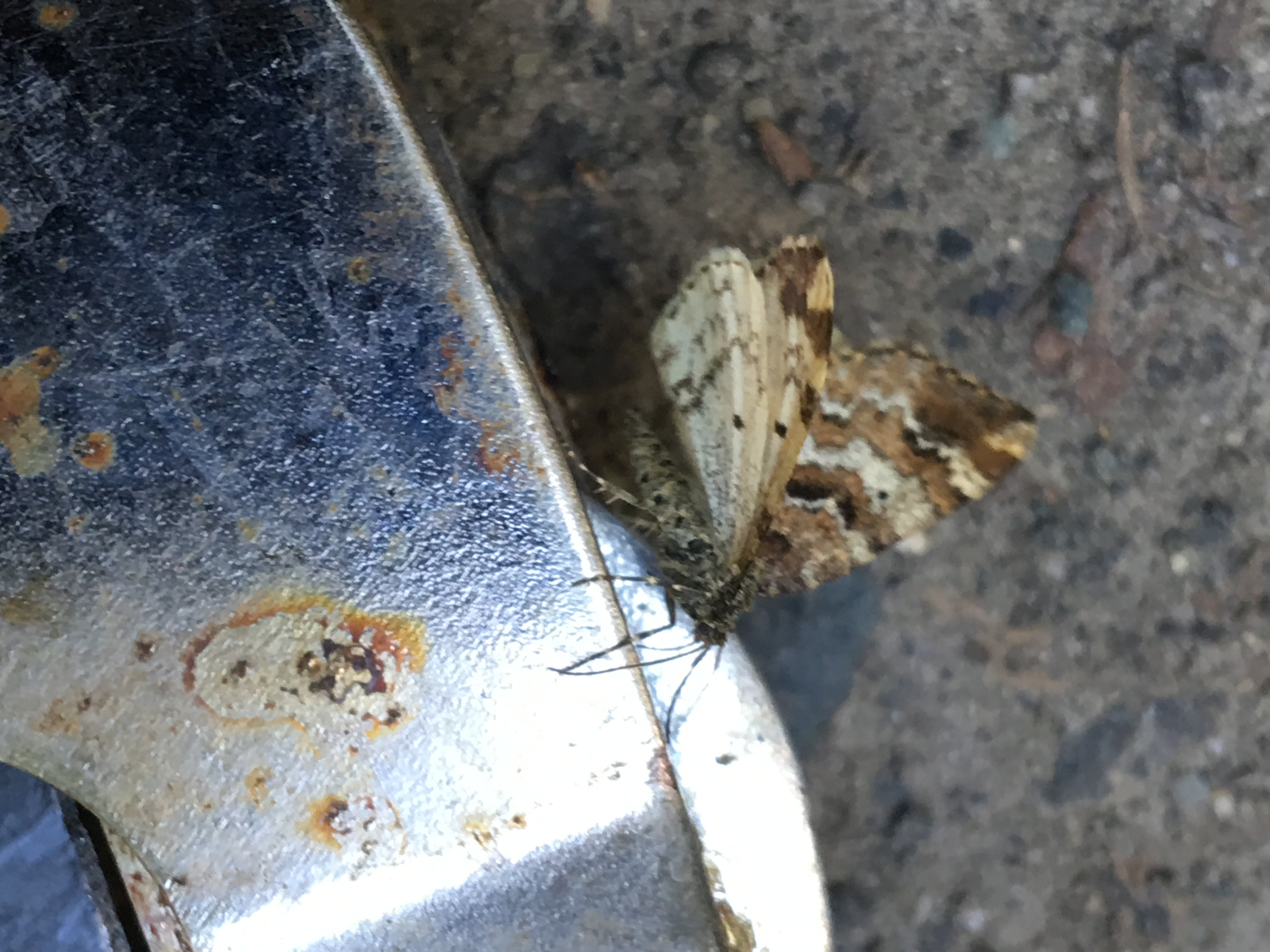
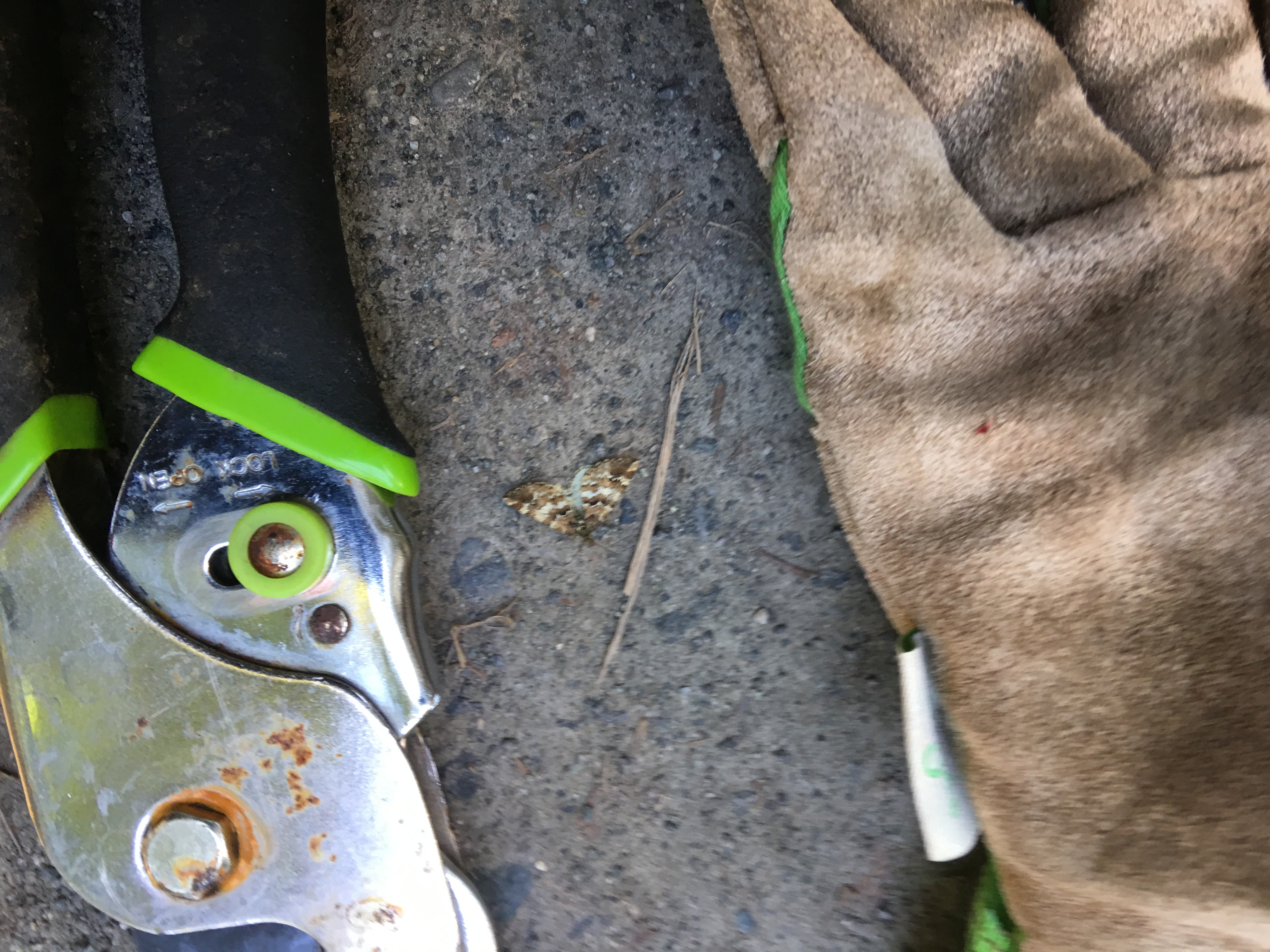
Enchoria lacteata (Packard) is a relatively small moth with forewings measuring only 0.9-1.1 cm in length. Adults have a remarkable zig-zag pattern on forewings made up of various shades of brown and buff. They are diurnal (daytime) fliers and emerge from late February to May. Sightings are often in grassy areas or edges of moist woodlands. Larval host plants are various species of miner’s lettuce, Claytonia (Portulacaceae). Check out the following link for more information on miner’s lettuce. It’s edible! https://www.ediblewildfood.com/miners-lettuce.aspx
Enchoria lacteata crawling onto my pruning tool.
Enchoria lacteata between my work glove and pruning tool
References:
POWELL, JERRY A., and PAUL A. OPLER. Moths of Western North America. 1st ed., University of California Press, 2009.
I spent a good part of the day combing through my insect photos from the past 9 years. There are thousands. Finally, I found the ones I was searching for. I credit Victoria Compton on San Juan Island, WA for helping me out on this one. She sent a photo the other day to my email with a caterpillar and had suggested an ID. Not only was she correct, but in ID’ing the caterpillar, it enabled me to match up one of my adult moth photos that had been sitting around nameless since 2016. The photos I found today were of the same caterpillar that had been a mystery to me since 2013. It’s a nice “aha” moment when you connect the dots! Below are the pics for you to see.
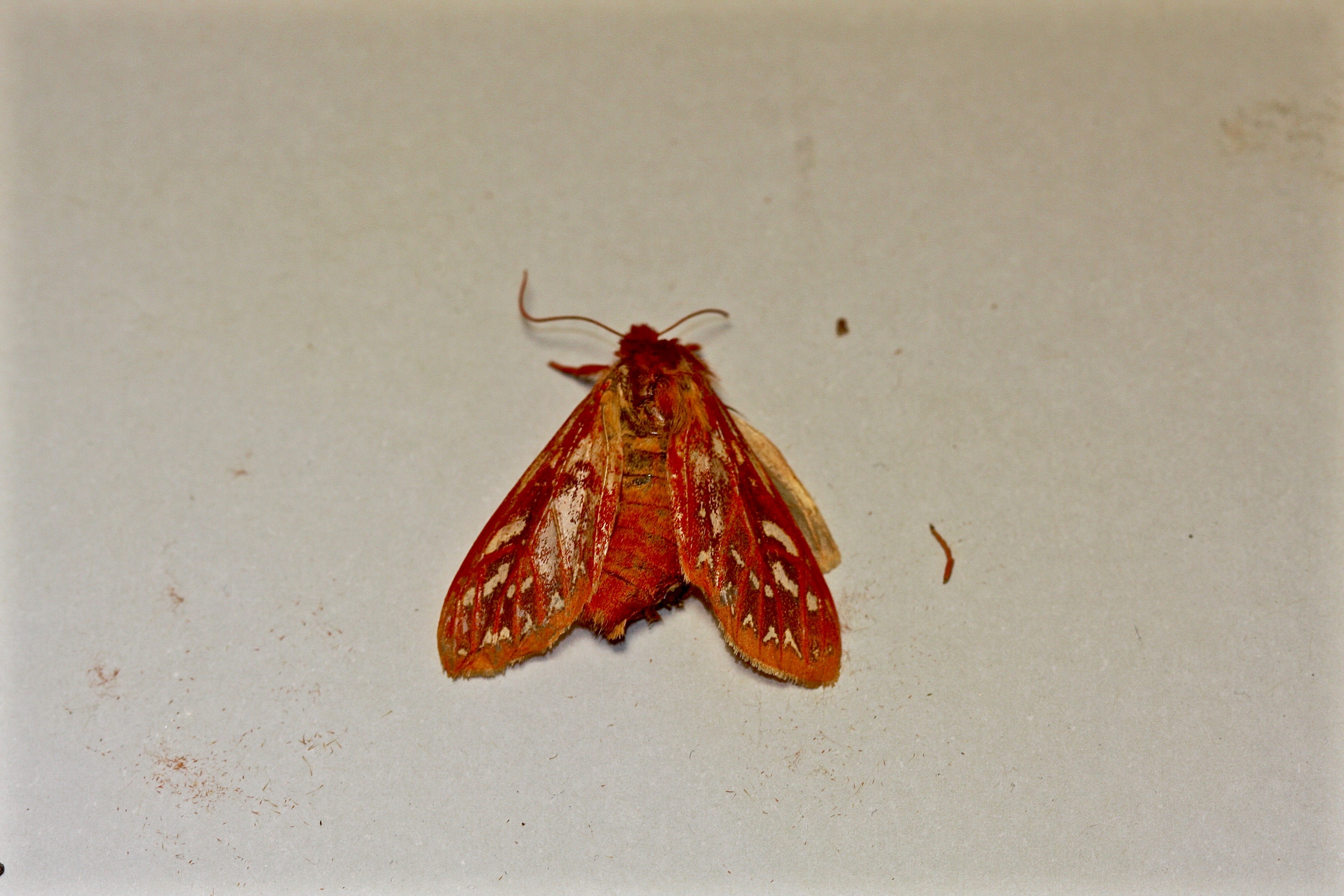
Lophocampa roseata Photographed July 10, 2016 San Juan Island, WA
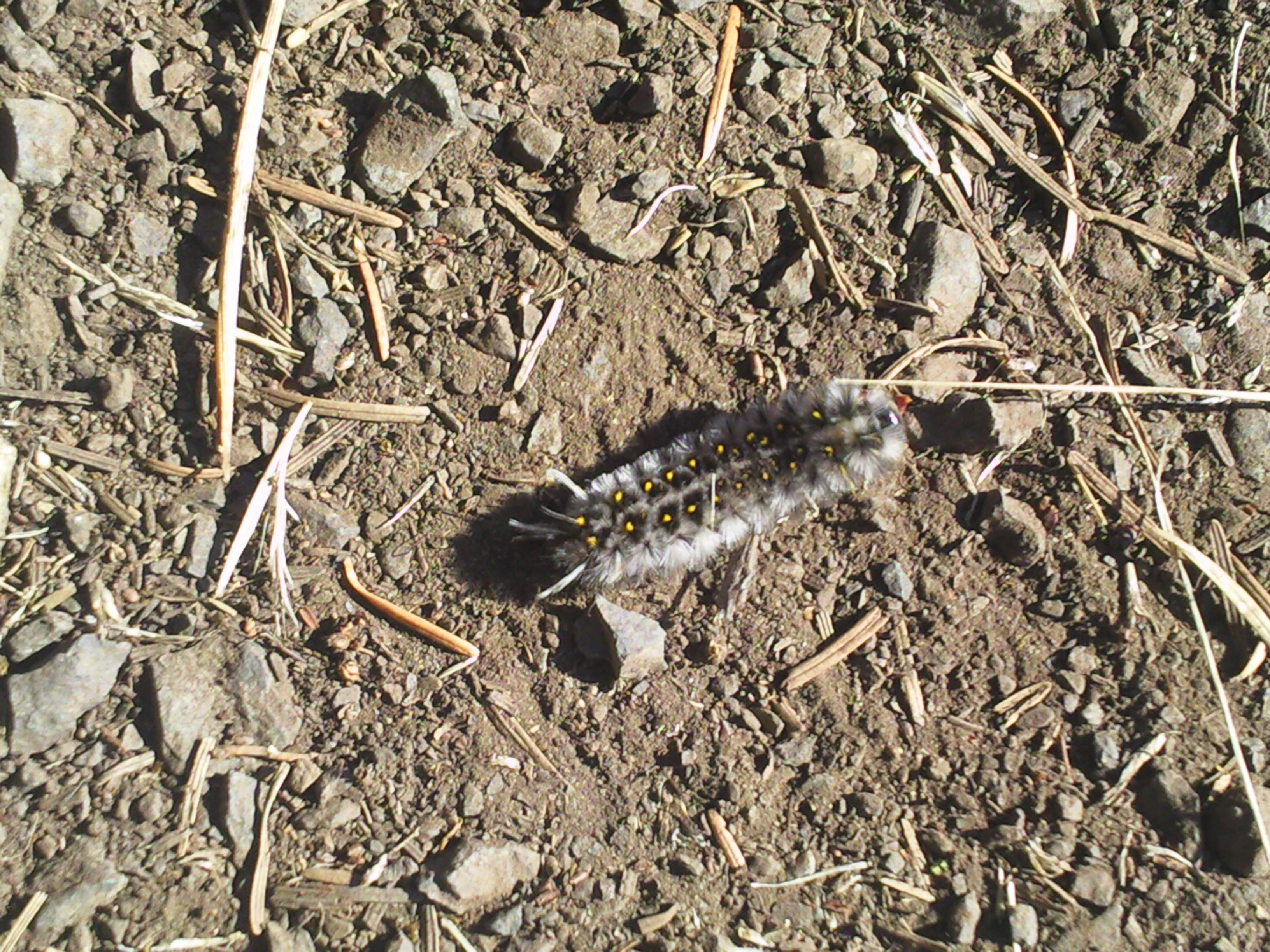
Lophocampa roseata larva Photographed October 6, 2013 San Juan Island, WA
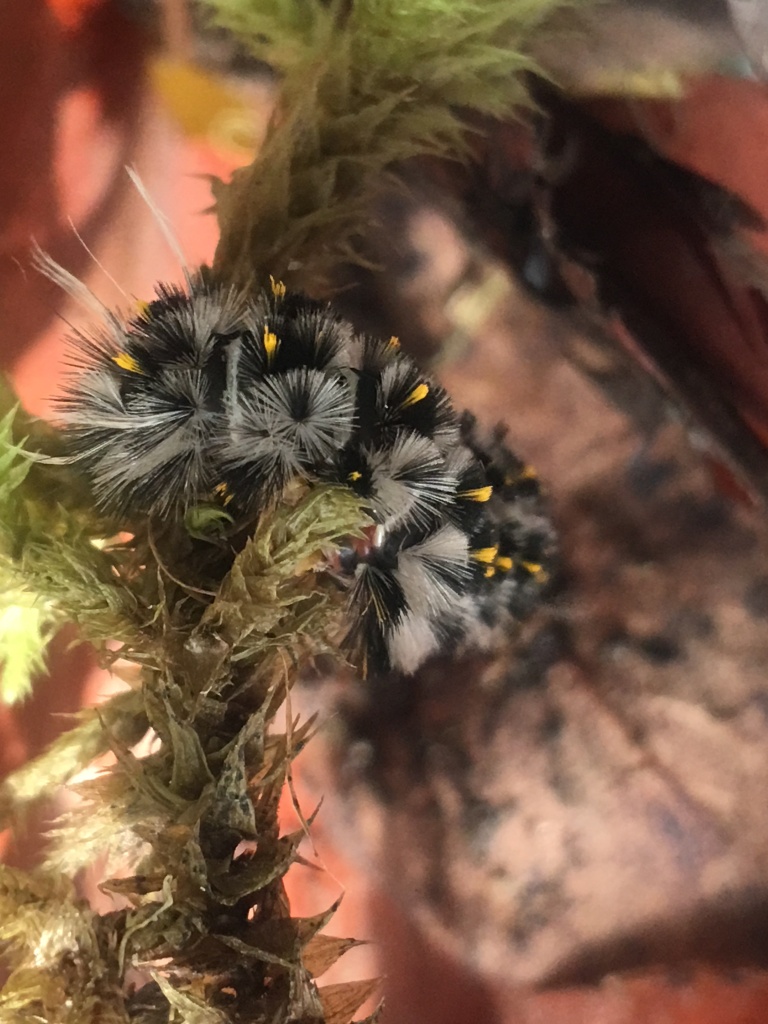
This is a Tiger moth in the family Erebidae, subfamily Arctiinae. The scientific name is Lophocampa roseata (also known as the Rosy aemilia). It was first described by Francis Walker in 1868. They are found in Western Oregon and Washington as well as in Southwestern B.C. and are associated with habitats of conifer forests and maple trees. The sources I checked list them as somewhat rare and Natureserve lists them as “critically imperiled.” So, I guess we have another beautiful Lepidoptera on San Juan Island to care for along with the Marble Butterfly!
***Critically imperiled Tiger Moth. Please post/email photos if you live in San Juan County, WA and come across one in the adult or larval stage. Thanks!
Lophocampa roseata larva Photographed October 6, 2013 by Cynthia Brast San Juan Island, WA
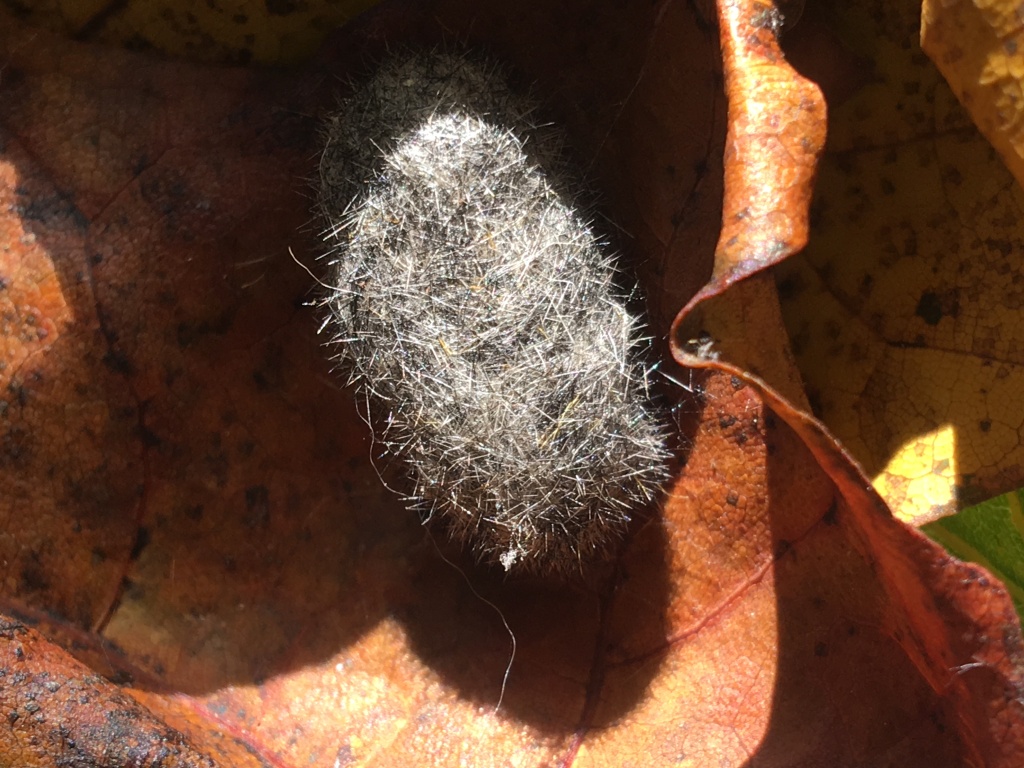
Lophocampa roseata larva Photographed September 26, 2018by Victoria Compton San Juan Island, WA
I love my catmint! The deer don’t like it, but pollinators absolutely DO! Every year, I wait in anticipation to see what visits the tiny purple-indigo flowers. I’ve had everything from hummingbirds to bumblebees, moths, and butterflies. Today, I took two short clips of the Pale Tiger Swallowtail (Papilio eurymedon) visiting the blooms. There have been as many as seven or eight fluttering about at a time.
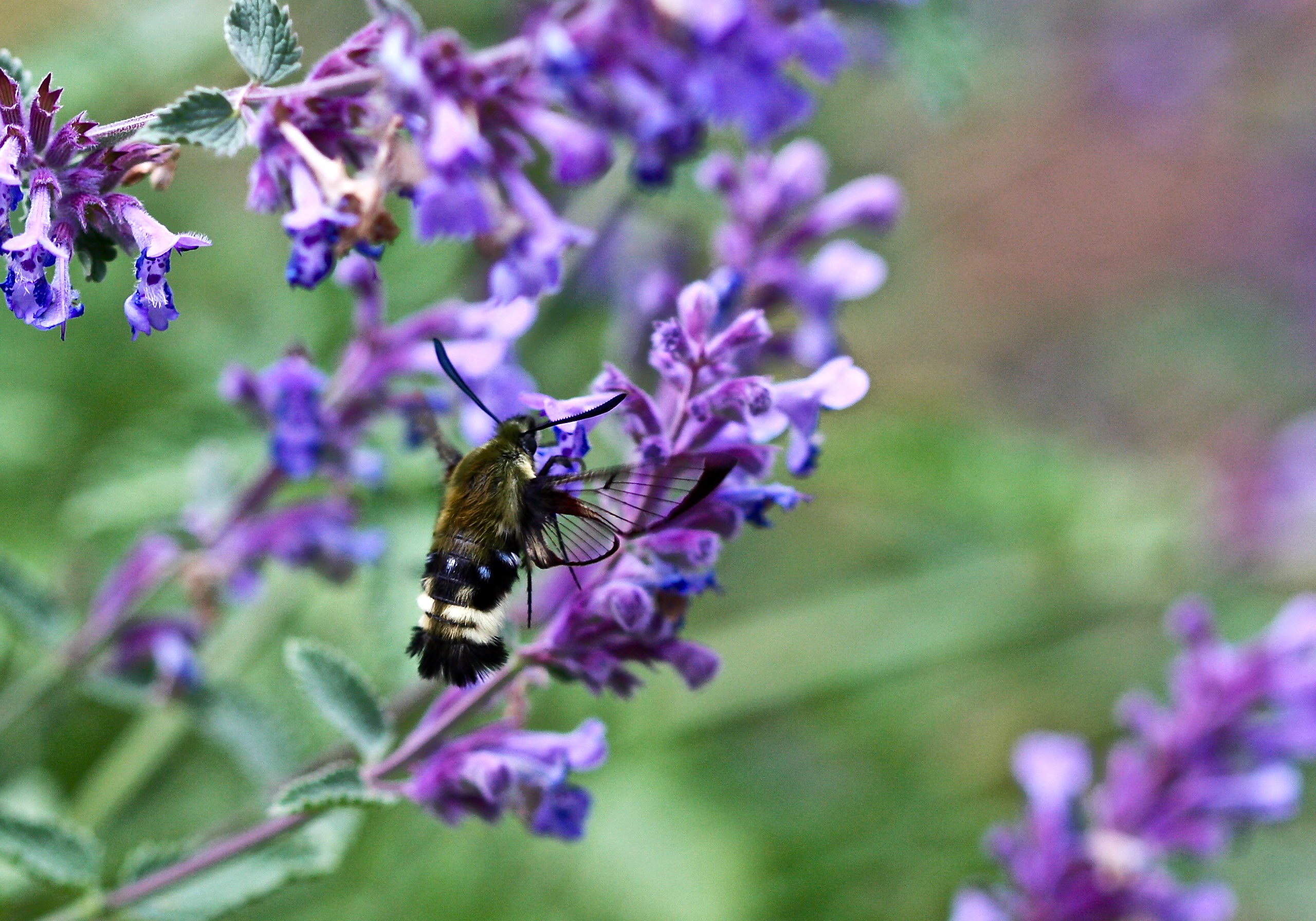
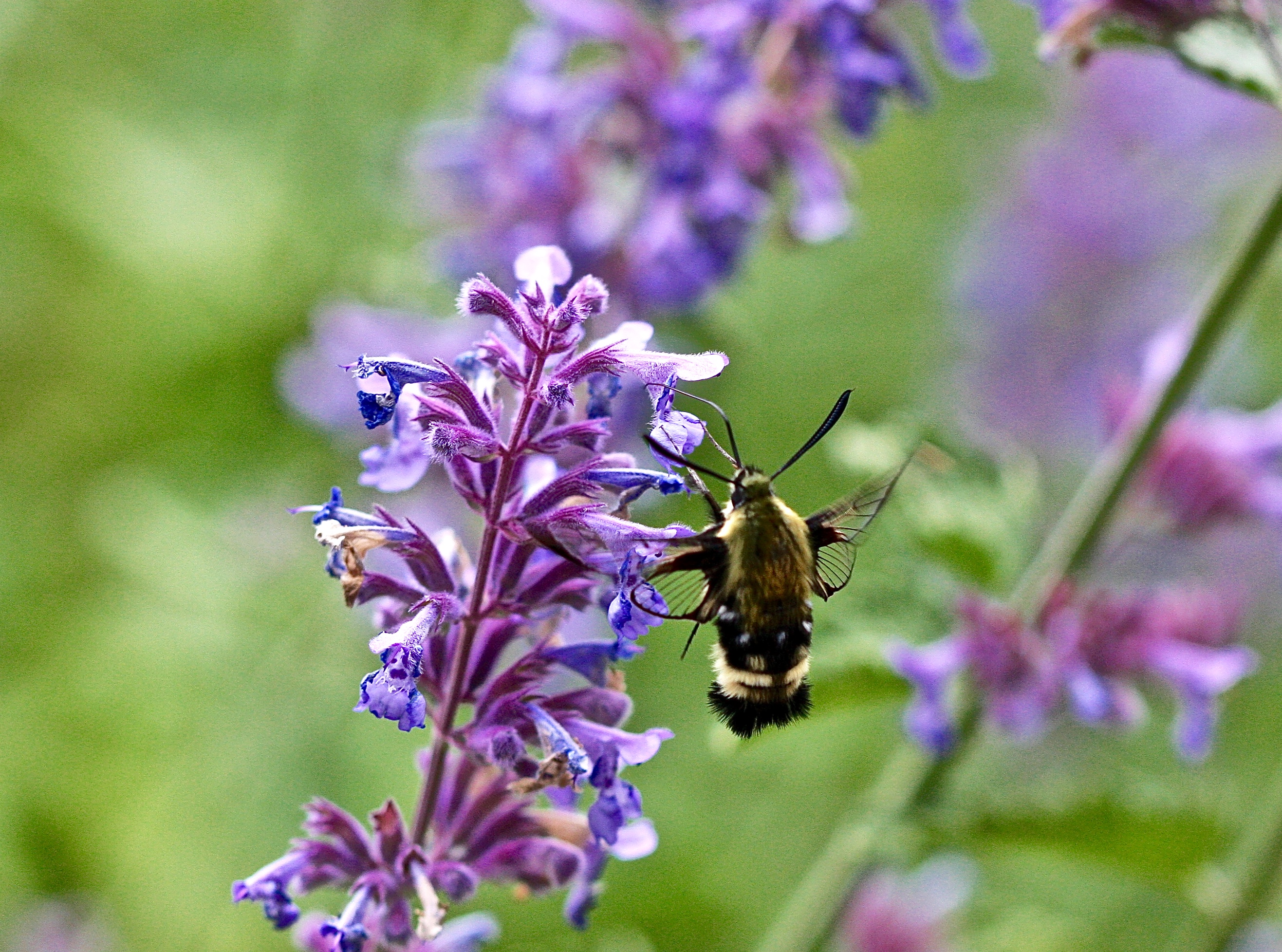
I keep hoping to see my very favorite of the pollinators visiting the catmint, but have to make a point of going around dusk. It’s been a few years, but the catmint is also a favorite of the elusive hummingbird moth (Hemaris diffinis). Here is one I photographed in June of 2016. Also known as the Snowberry Clearwing moth, these fuzzy, large-bodied but nimble fliers are also called Bumblebee or Hawk moths.
Hemaris diffinis on Catmint photo by Cynthia Brast June 1, 2016. San Juan Island, WA
Alucitidae or “many-plume moth” ~ Distinguished from other families of moths by their delicate wings, fringed like the “feathers of a peacock.” They are only 3-13 mm long, gray or brown in color, and lack abdominal tympana. They have filiform antennae, a well-developed proboscis and are nocturnal. About 130 species have been described but there are just three species in America north of Mexico. Read more about them in Moths of Western North America by Jerry A. Powell and Paul A. Opler.








 Bugging You From San Juan Island