Tag Archives: nature

Western Thatching Ants (Formica obscuripes)

Formica obscuripes, Western Thatching Ant

I went for a walk yesterday on Three Corner Lake Road just to get out of the house. Springtime on San Juan Island has been cold and dreary, but sometimes there’s a moment or two when the sun peeks out, giving a bit of hope that the winter doldrums are coming to an end. Don’t get me wrong, I love the Pacific Northwest, but the Visitor Center’s claim that San Juan gets 247 days of sunshine a year is a stretch. I think they actually count the days when it is overcast and rainy as long as the sun peeks out for just a minute before the clouds darken the day again.

It was cold and I wasn’t expecting to see any insect activity, so I was surprised to find this long time ant colony with a mass of individuals near the top of the nest. The sun had been out intermittently, so I believe what was happening was the workers were at the surface to warm themselves (thermoregulating). There were a few straggling workers carrying thatch debris (conifer needles) to the nest from the forest. If the weather had been nicer, I would have enjoyed plopping myself into a chair to ant watch for an hour or so. They are quite pretty when you see them up close.

Western Thatching Ants (Formica obscuripes) are native to our region. They seem to like forest edge habitat, and you’ll find the nests situated in areas where there is some clearing to take advantage of the sun’s warmth. These ants are considered general omnivore-predators. They scavenge or prey upon insects and other arthropods for food. Foraging activity takes place both on the ground and on vegetation, including high in trees. Thatch ants also harvest honeydew from aphids and other homopterans as well as from extrafloral nectaries. You can read more about extrafloral nectaries or EFN’s (little nectar producing glands on plants) here https://bygl.osu.edu/node/1774 or check out one of my earlier blog posts about them here https://buggingyoufromsanjuanisland.com/2022/05/17/what-are-extra-floral-nectaries%EF%BF%BC/

Extrafloral nectary on Fruitless Cherry Tree

The ant workers are considered weakly polymorphic, which means they have only slight variations in size and shape within the worker caste as opposed to other species where workers may be monomorphic (all the same size and shape), or strongly polymorphic (a high degree of variability between worker sizes and shapes). You can read more about polymorphism in ants here https://www.antwiki.org/wiki/images/1/1c/Wheeler_1908f.pdf .

Given all the information you’ll find from pest control companies online about these ants and others, you might ask, why or if there is any benefit to having these ants around. The answer is YES! Western Thatching ants are beneficial in ecosystems because they not only aerate the soil with their burrowing practices in nest construction, but they also provide FREE pest control, helping regulate populations of other insects that defoliate forests, fruit trees, and even our vegetable gardens. They also help clean up the environment through scavenging dead animals. There is no need to eradicate these nests and if you get into ant watching, they might provide a bit of intriguing summer entertainment. Pull up your lawn chairs and sit and watch with your friends. As long as you aren’t poking the nest, they are not inclined to bother you at all.

Thanks for reading!

References:

Formica obsuripes. 2025. Bugguide.net. https://bugguide.net/node/view/31269

Formica obscuripes. 2025. AntWiki. https://www.antwiki.org/wiki/Formica_obscuripes

McIver, J.D., Torolf, T.R., Cimon, N.J. 1997. A supercolony of the thatch ant Formica obscuripes forel (Hymenoptera: Formicidae) from the Blue Mountains of Oregon. Northwest science., Vol.71(1), pp.18-29. https://rex.libraries.wsu.edu/esploro/outputs/journalArticle/A-supercolony-of-the-thatch-ant/99900502747101842

A Sedgesitter

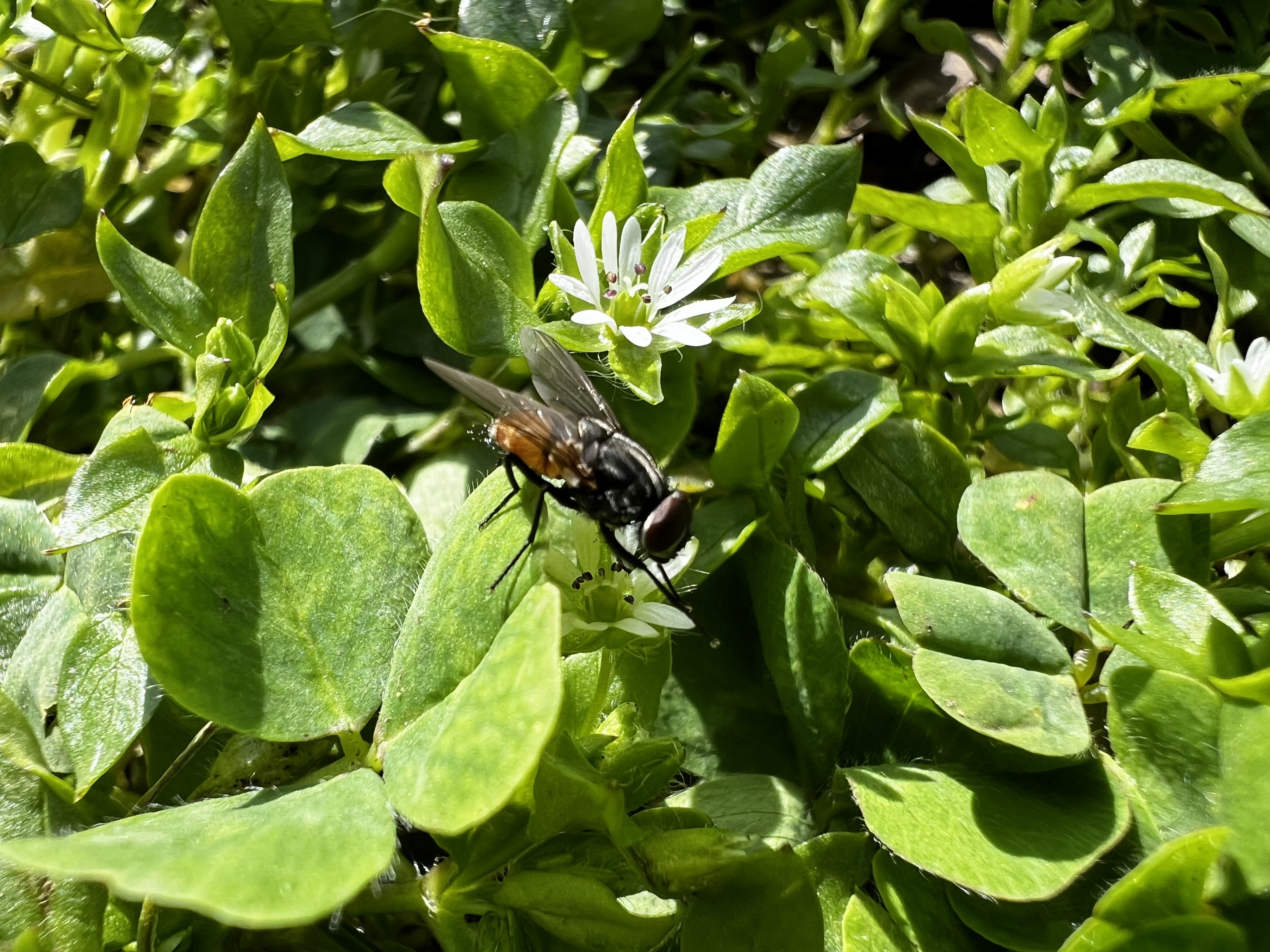
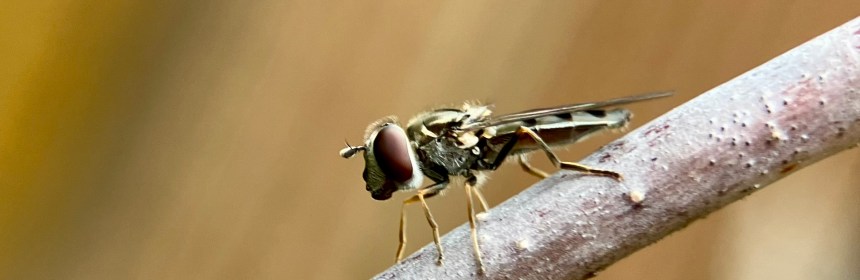
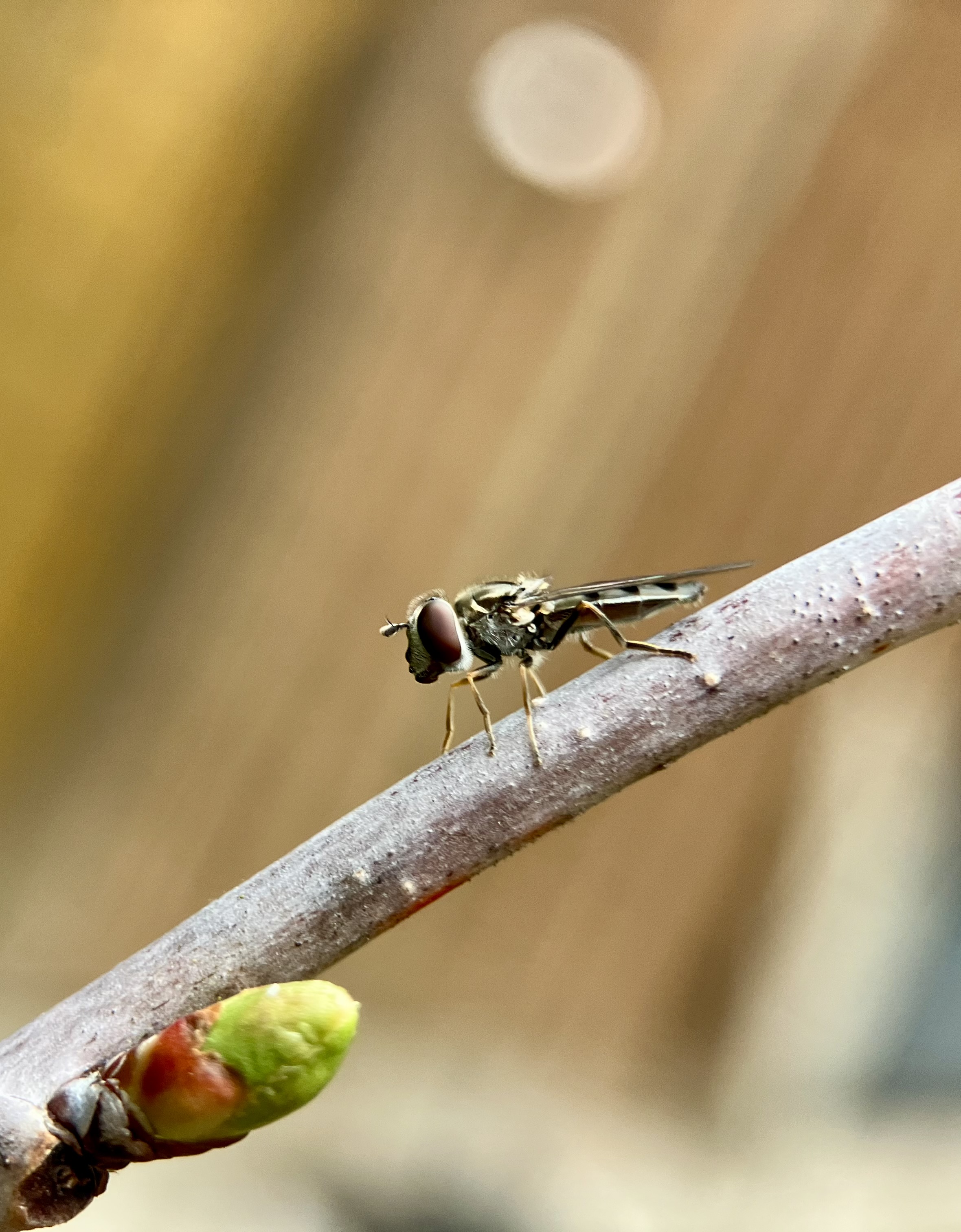
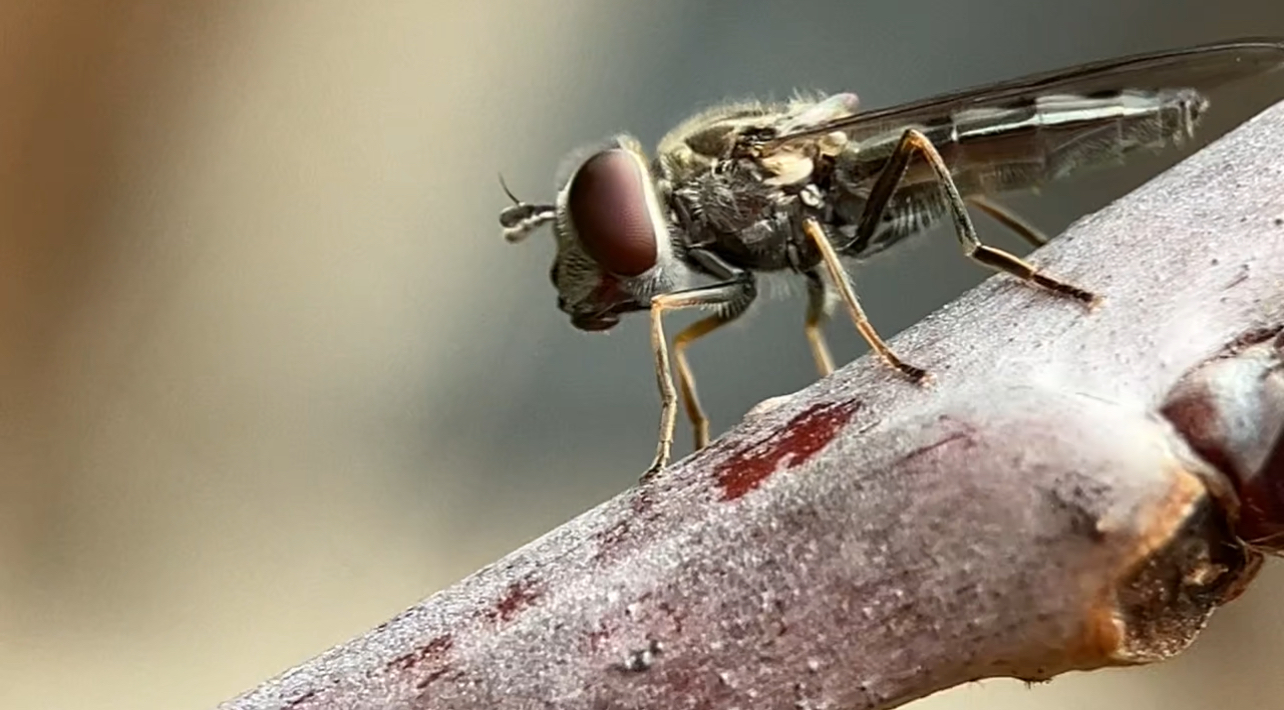
This was Wednesday’s bug of the day. I’m a day behind writing up my post. Although I have tried to get out for a quick bug search every day, it’s been overcast and/or drizzly here this past week. I was excited to see this little fly hunkered down on a twig of our fruitless cherry tree, the tree that I whacked off as an unwanted upstart for several years before I discovered how interesting it is.

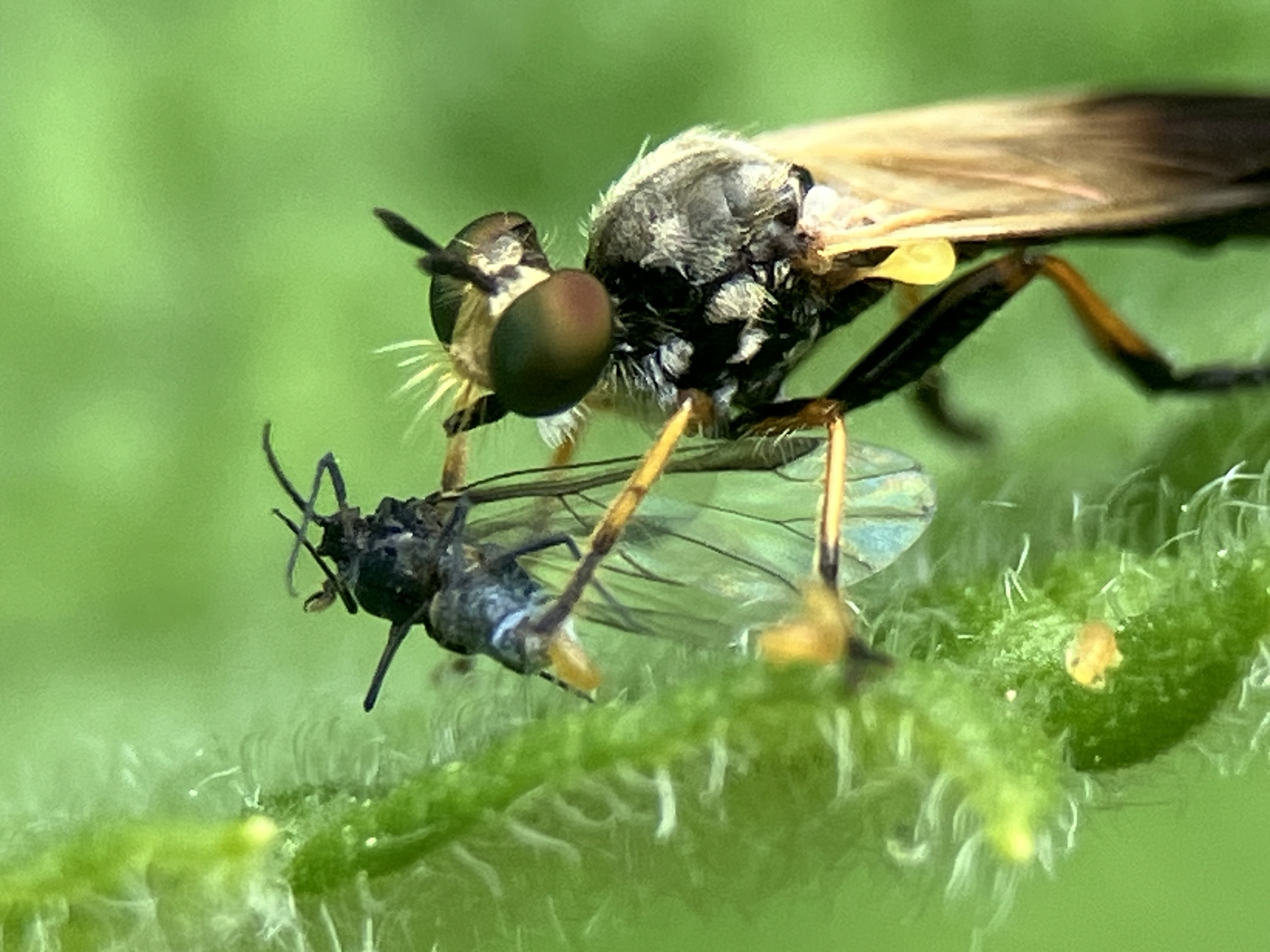
Western Forest Sedgesitter, (Platycheirus trichopus), I believe

That tree is a mini ecosystem: floral nectaries that feed the aphids, aphids, slave making ants that have fights to the death (winning) with the carpenter ants that try to invade our home every spring, and the birds that rip the leaves apart trying to get the aphids. Now I can add Syrphid flies to the list!

That’s what this is. A syrphid fly. Syrphid flies eat aphids. It would make perfect sense for this adult to lay eggs on the tree, though I’m not sure what would happen because the ants that farm those aphids are certainly willing to die defending them. I could definitely see the ants overtaking the syrphid fly larvae. Nevertheless, the fly flew off. Somewhere.

I believe this particular fly is the Syrphid fly species Platycheirus trichopus, the Western Forest Sedgesitter. While difficult to ID to species, I did reference the helpful ID guide by fly expert, Even Dankowicz. https://docs.google.com/presentation/d/19F1qRGpmNDgaGE13M2SMUBlI846JicTOYjIescjVTHw/preview?slide=id.g8918834f0e_0_92

This species, as mentioned earlier is pretty small at only about 6.8-9.4 mm. Geographic distribution ranges from the Rocky Mountains west from Alaska to Mexico (bugguide.net). Adults of this genus are known to feed on the pollen of wind pollinated plants like Willow (Salix sp.) and various grasses (Poaceae), and sedges (Cyperaceae). It is believed they are better adapted to activity in cooler temperatures and that fits with yesterday’s rather gloomy spring day.

Thanks for reading!

References:

Dankowicz, Even (2023). “Common Pipizini, Paragini, and Bacchini Species of the Southwestern U.S. (CA NV AZ UT NM CO)”The Fly Guide: Field/Photo ID for Flies. pp. 9–10.

Bugguide.net. 2025. Syrphidae. https://bugguide.net/node/view/196

The Hitch-hiker

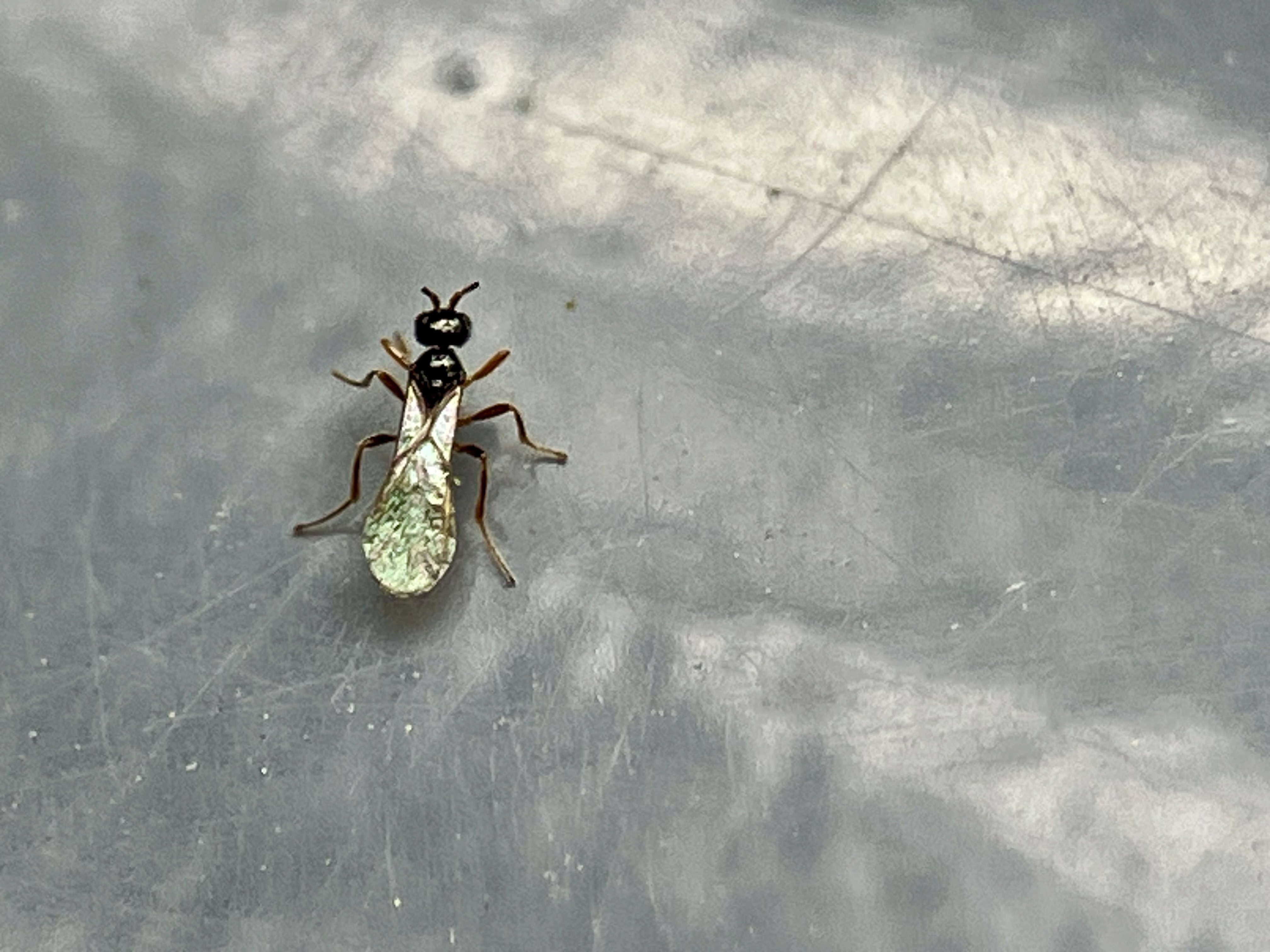
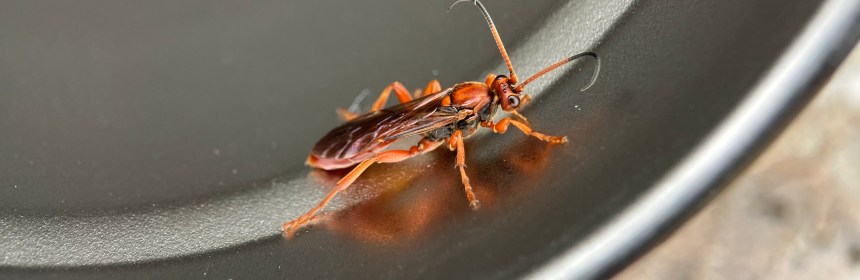
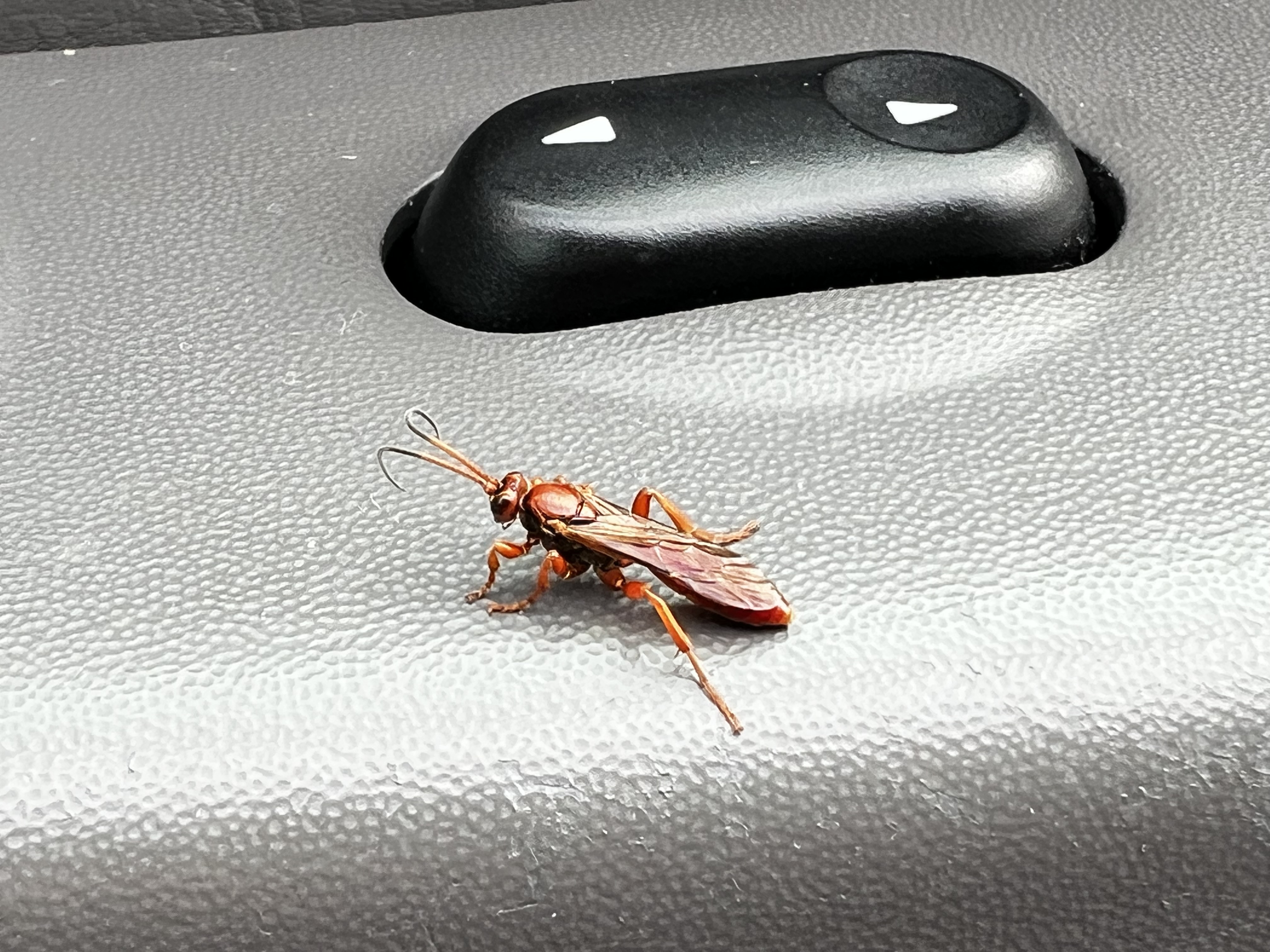
Spilichneumon Wasp at Marketplace in Friday Harbor

Today as I was leaving the store after grocery shopping in Friday Harbor at Marketplace (the store it took me forever to find when I first moved here, and known as the store for the “locals”), I opened the door to my truck and found this cute little red wasp on the door handle. I’m not sure how it got there, but this is one hitch-hiker I had no problem picking up. And, pick it up, I did! I conveniently scooped it to safety in a brand new insulated cup I scored on sale at our local Ace Hardware for $10. It has little bears and forest trees on it. It was also perfect for securing the wasp for our ride back to the house.

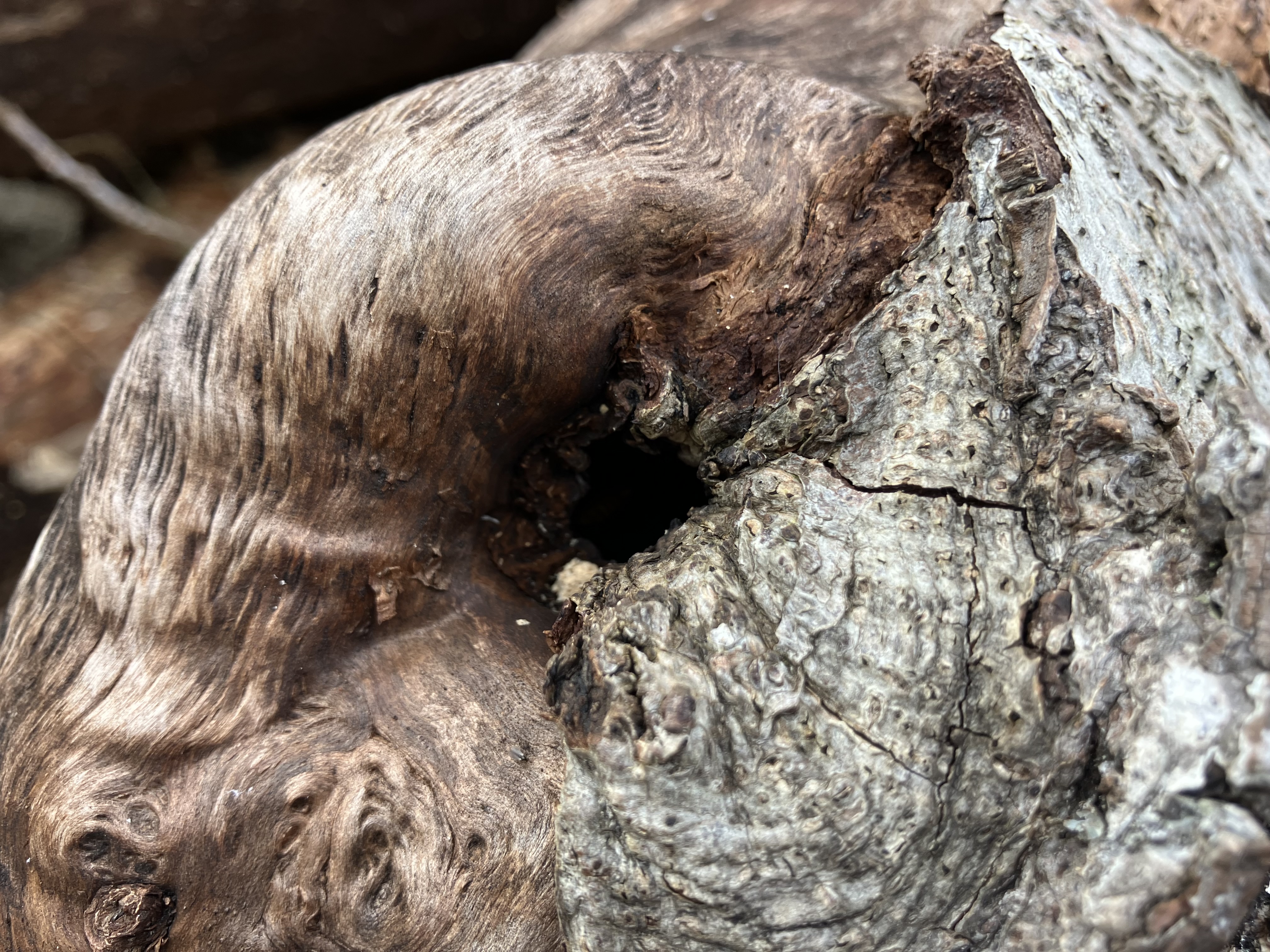
When I got home, I left the cup by the door for a bit to unload my groceries, but got my camera afterwards and carried my hitch-hiker over to a stack of alder logs we collected and piled up into a wildlife stack. Those logs are “dead” to most humans, but for all the little critters that were in them when they blew over and broke into chunks, they are FULL of life! One had a perfect knot hole that my wasp targeted right away and will probably stay holed up for the better part of next week since we have rain in the forecast. I wish more people would see dead and dying trees as something of value (other than to chip or burn). They are stores of food for birds, and shelter for many other organisms. Dead and dying trees are often more interesting to me than live ones. You just have to change your perspective and perhaps you will see what I do too!

The wasp critter is in the family Ichneumonidae. It’s in the Genus Spilichneumon, I believe. These wasps hunt and parasitize Noctuid moth caterpillars. They are most excellent pest predators! The female wasp will lay one egg inside each caterpillar she finds and then her egg will hatch and the larva will develop in the caterpillar’s body. That’s THE END of the caterpillar. 🐛

Thanks for reading!

Knothole in tree

If you are curious to learn more, here are two links to get you started. https://bugeric.blogspot.com/2012/03/wasp-wednesday-spilichneumon.html and https://bugguide.net/node/view/444129

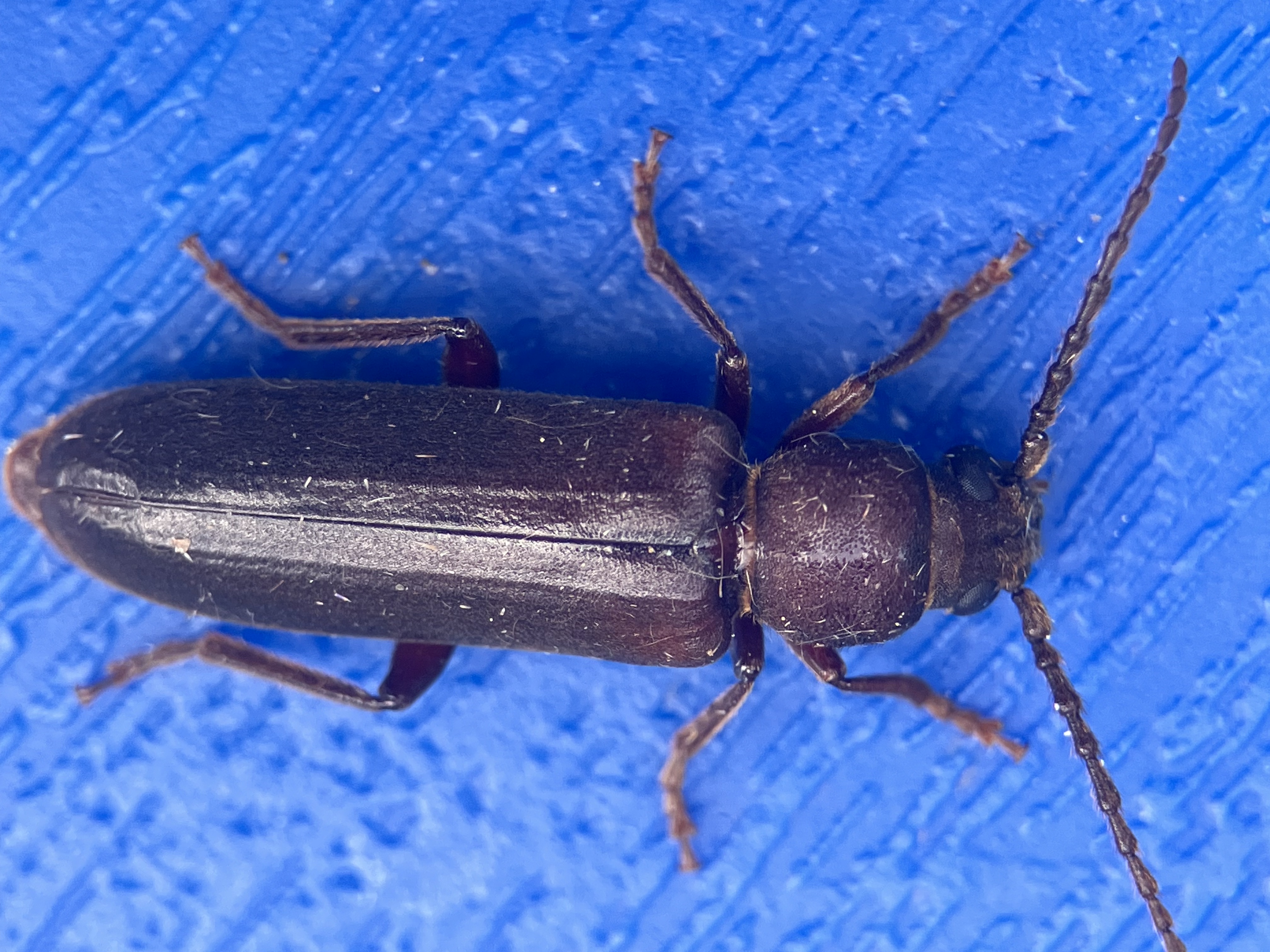
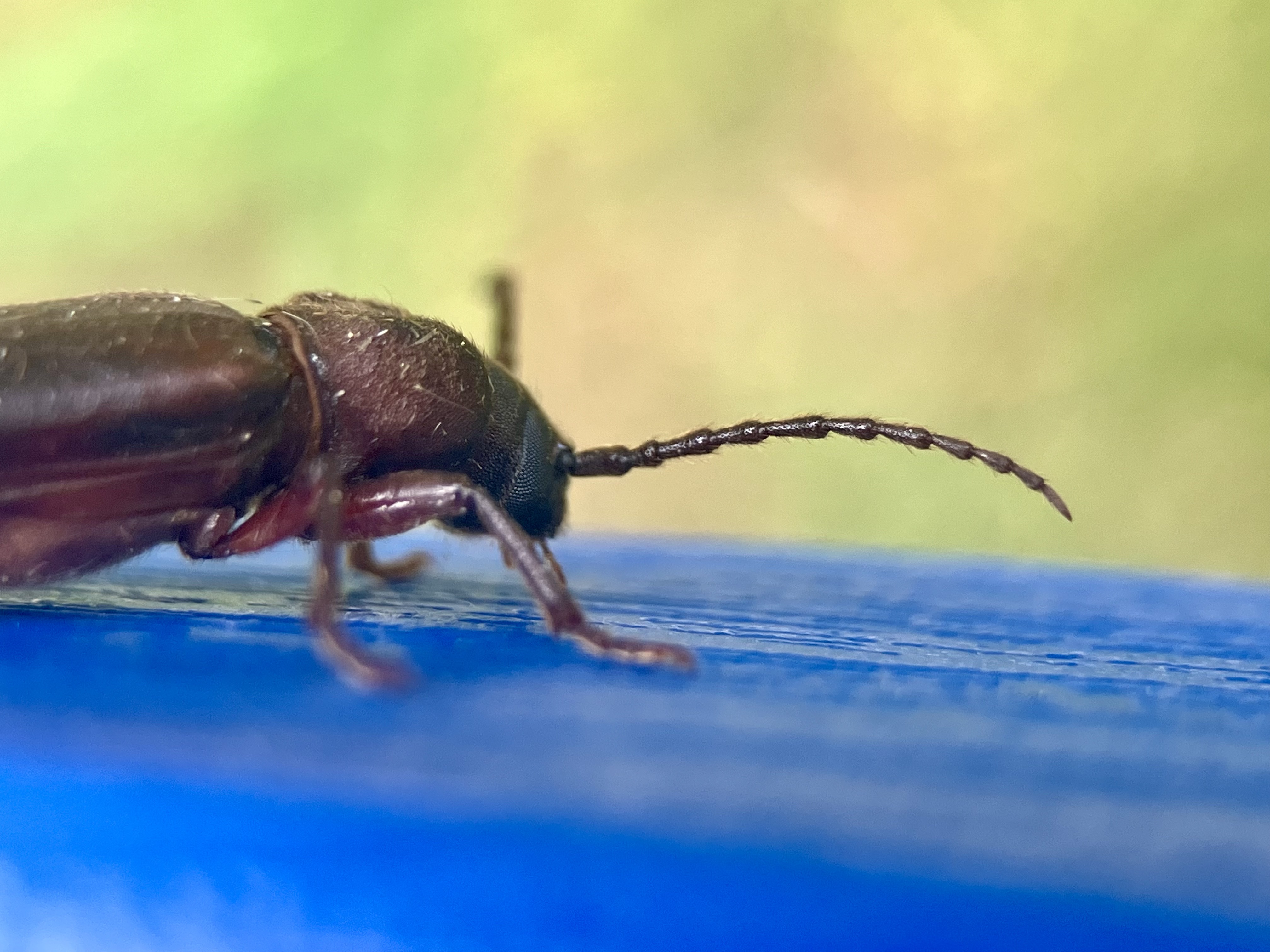
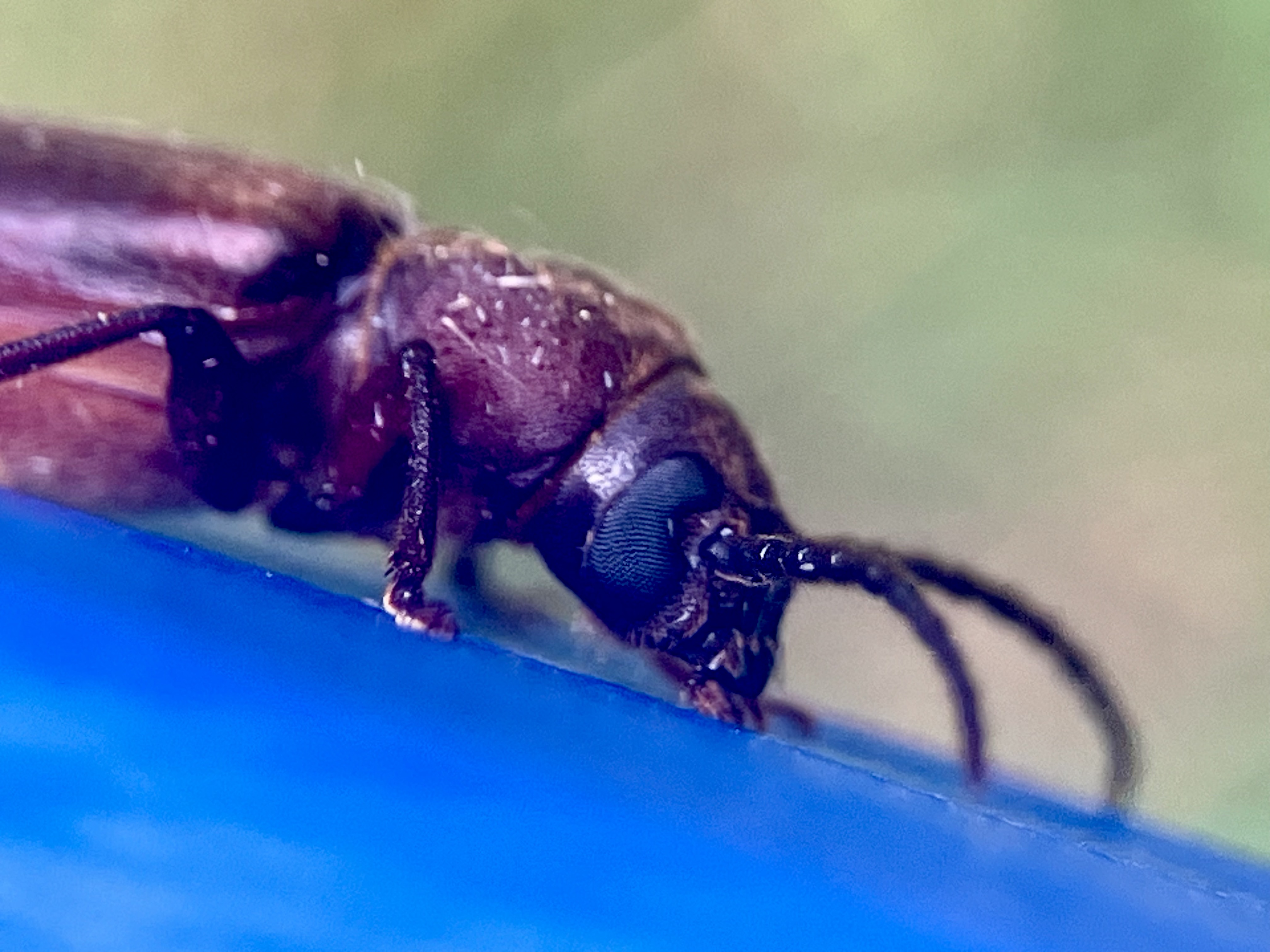
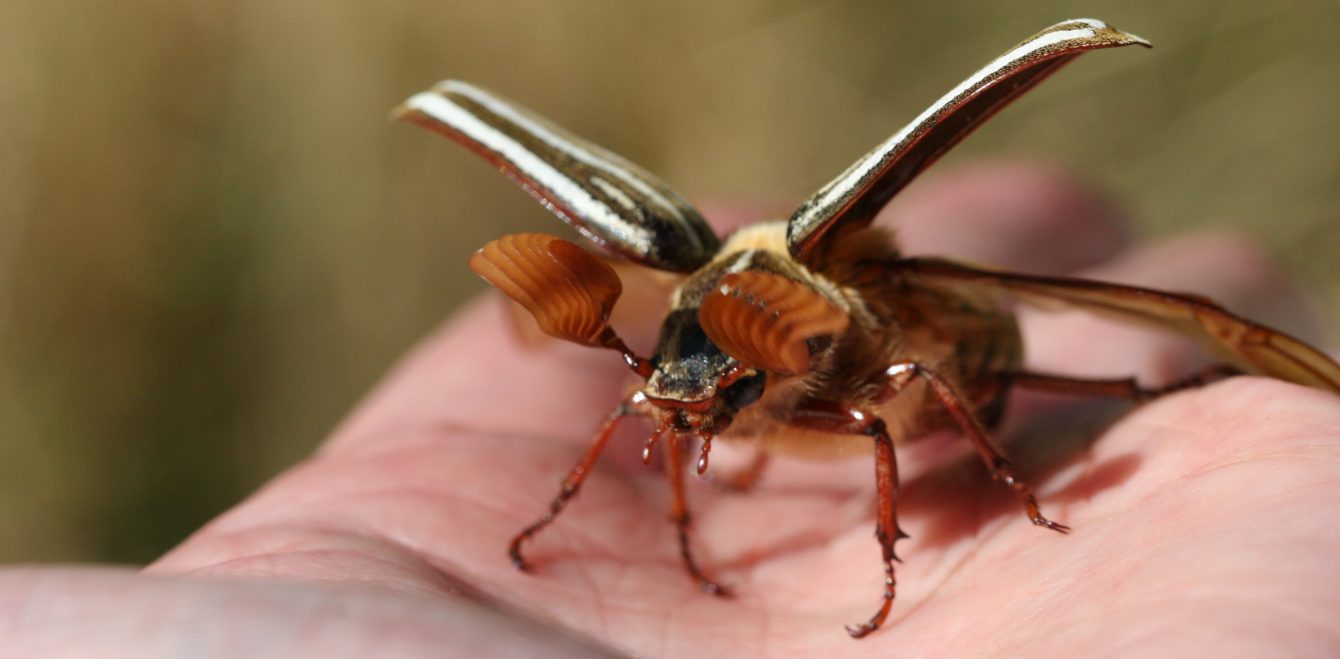
Megasemum asperum, a Cerambycid Beetle

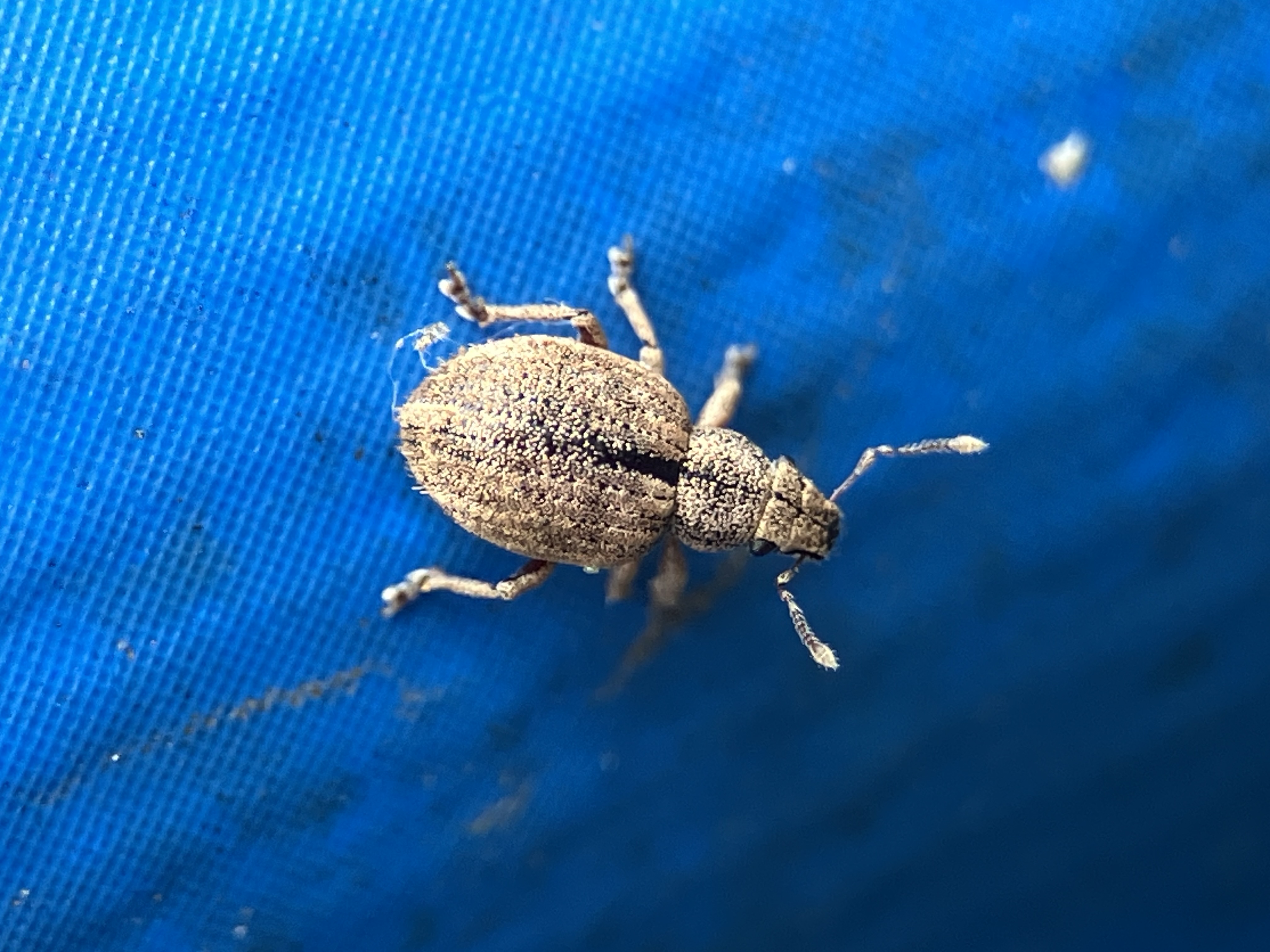
Here is a new-to-me Cerambycid (longhorn) beetle. I haven’t added one of these to my photo collection in the 15 years I’ve lived on San Juan Island, so note here that they are “UNCOMMON” and not populous in number.

This species is the only one in its genus in North America. It is Megasemum asperum. I see in perusing iNaturalist.org that there have been 67 reported observations dating back to 2007.

Location: San Juan Island, WA

ID: Megasemum asperum

From Bugguide.net

Size: 18-25mm

Season: July to August (this is when you could see an adult)

Numbers: a single species in the New World & in NE Asia

It was described by John Lawrence LeConte in 1854

From Beetles of Western North America – “Larvae mine Douglas-fir (Pseudotsuga menziesii) and fir (Abies). Adults are attracted to lights during the summer. Found in coniferous forests of western North America,” (Dr. Art Evans, entomologist, 2021).

Your take away message – NOT a pest. NOT a tree killer. NATIVE species! Performs important recycling of nutrients role in ecosystems allowing regeneration in our forests. Appreciate Biodiversity.

Thanks for reading!

Know Your Pest Predators – Make Friends with Eudioctria sackeni

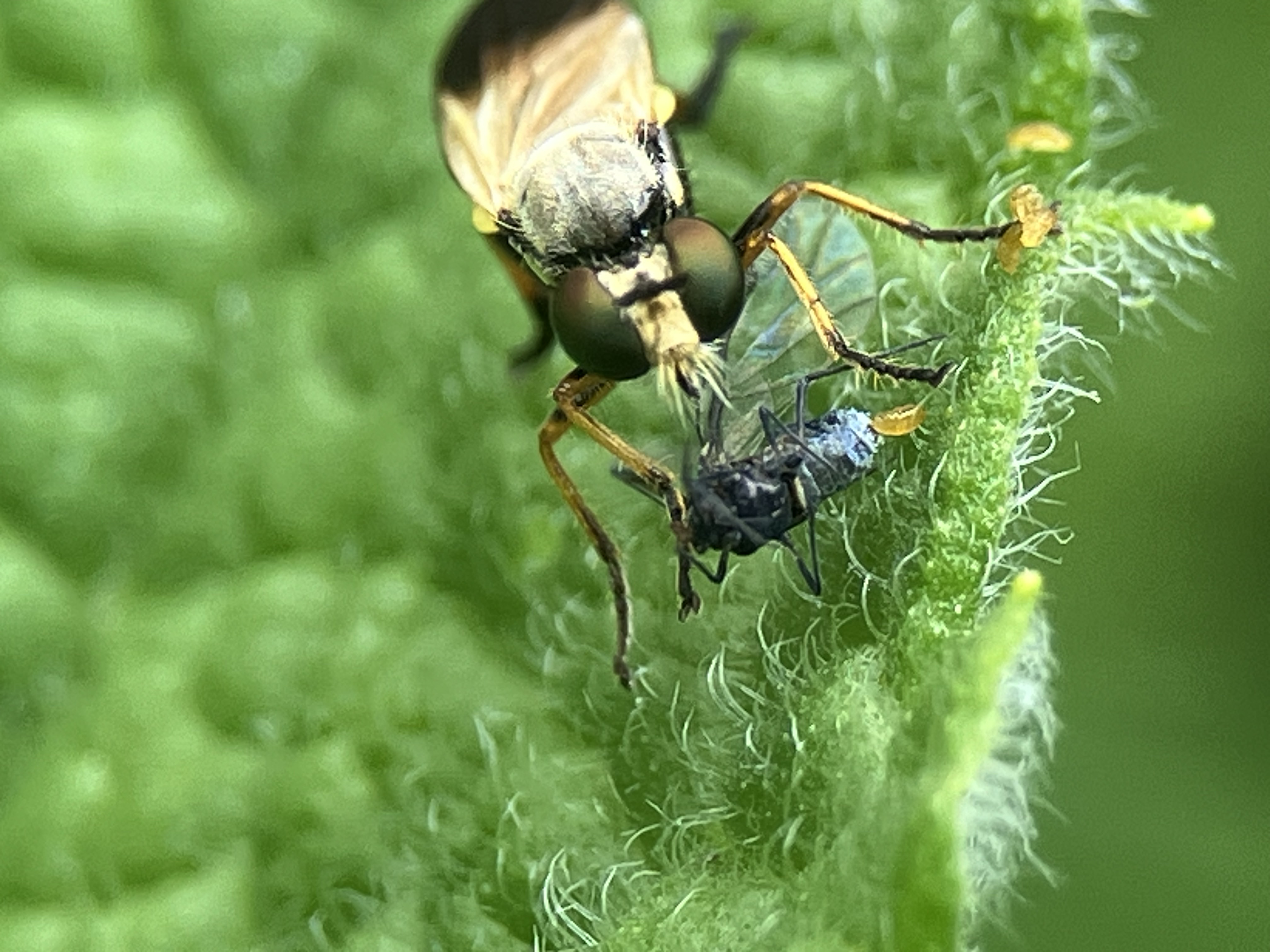
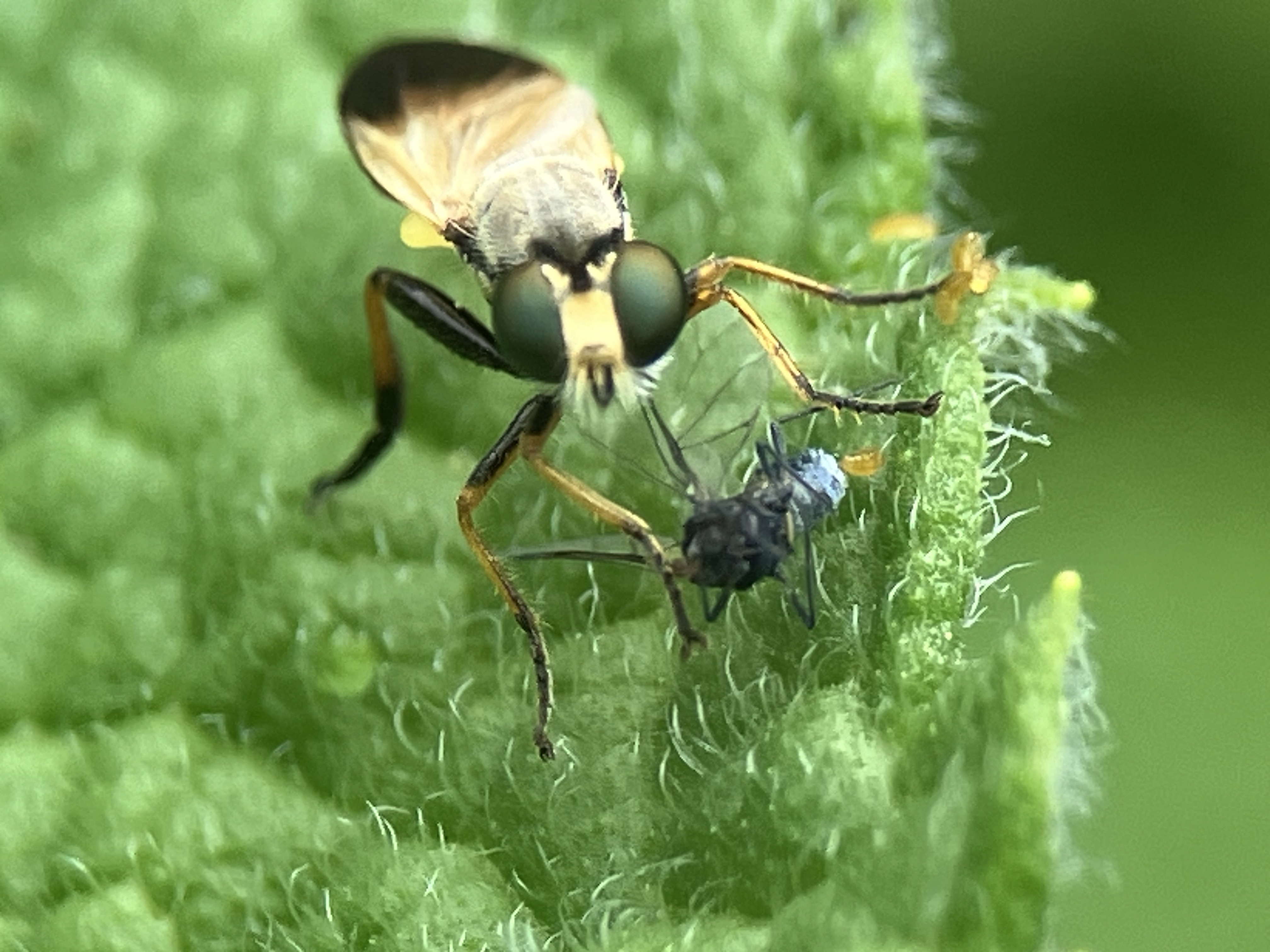
Eudioctria sackeni Robber Fly

This is one of my favorite garden residents (Eudioctria sackeni), or the Sacken Longhorn Robber. I remember the first time I saw one of these, I thought, “Wow, it’s an Ombre Fly!” If you didn’t know, “ombre” means the blending of one particular color hue to another, often from light tints to dark. The coloration in this particular fly is distinctly “ombre,” though it varies in individuals within the species.

Eudioctria flies are in the family group, Asilidae or Robber flies. They are voracious predators of small insects that can be pests of gardens and orchards. Here, you see this one enjoying a small dipteran (fly) of some variety, perched on the leaf of one of my mint plants. The mint is a popular scouting platform. On any given day in the summer, I’ll see 4 or 5 of these flies in a six foot strip of mint which has become quite abundant in the yard over the past few years. The mint seems to be quite attractive to pollinators, and it also provides shelter for other bugs and critters. Our little tree frogs love to sit in the mint too.

Reference and further reading

Species Eudioctria sackeni – Sacken Longhorn Robber. BugGuide. https://bugguide.net/node/view/60617

What’s Biting Me? Episode ONE, San Juan Sniper

I’m going to start a new bug series called “What’s Biting Me?”  

I’m starting this series because I have such bad reactions to bug bites in general, and I’m exasperated when people blame mosquitoes and spiders for everything.  Also, if you’re one of those who is tired of it getting crowded here in the San Juans, feel free to share this with anyone who is thinking about moving here – or with anyone you WISH would move off the island.   Maybe they’ll decide to live somewhere else.   😉


Epidode ONE, the San Juan Sniper

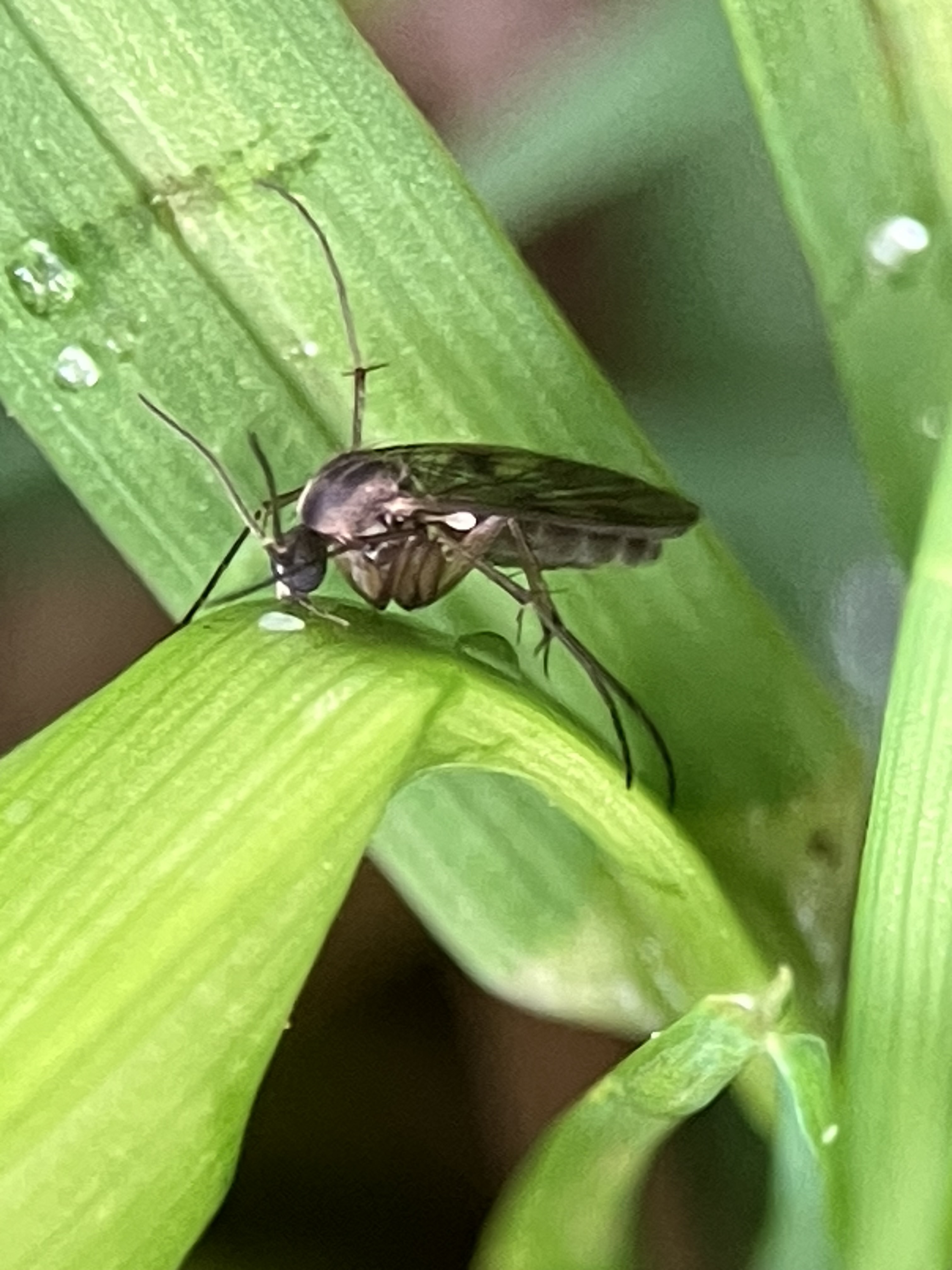
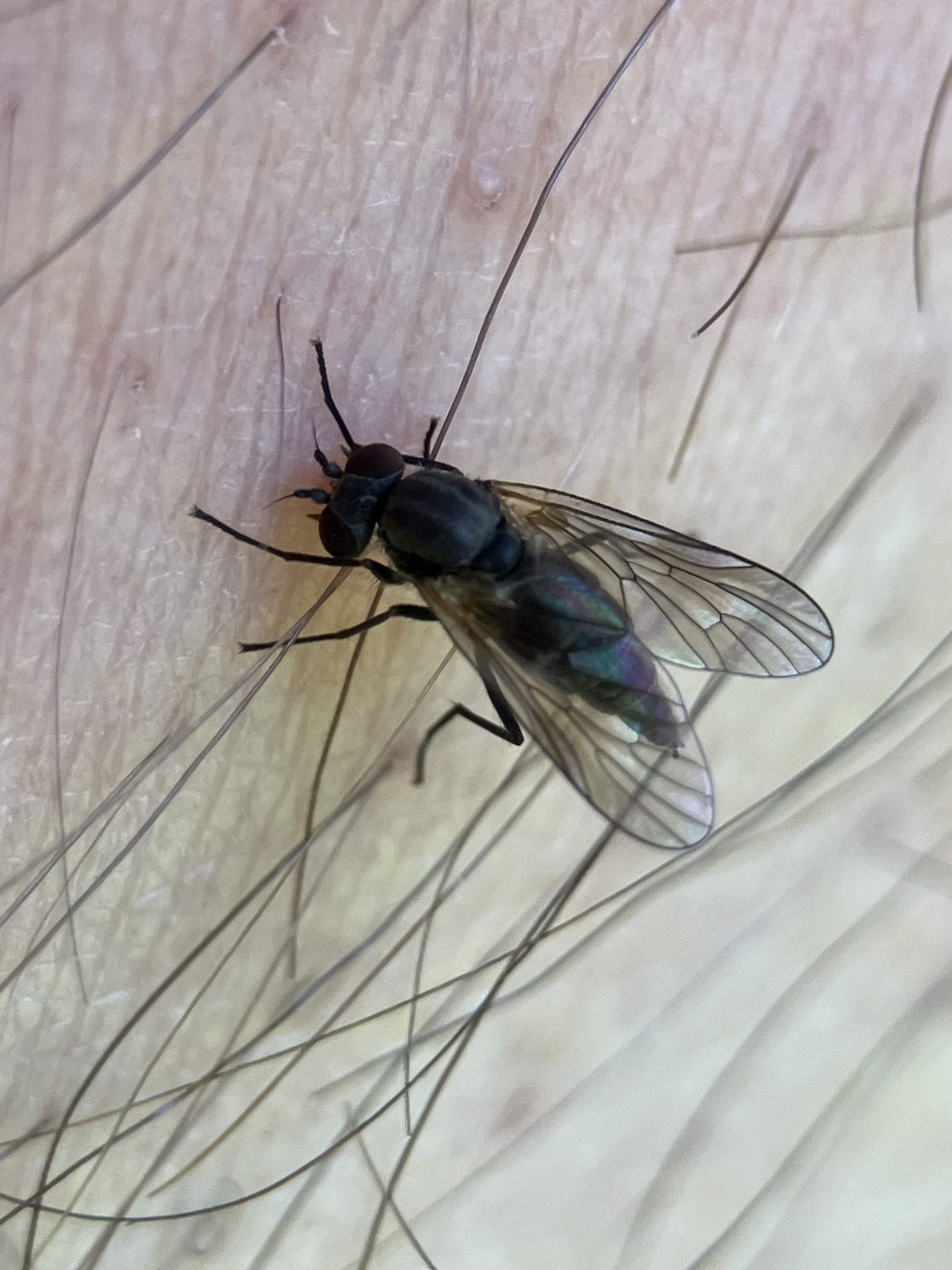
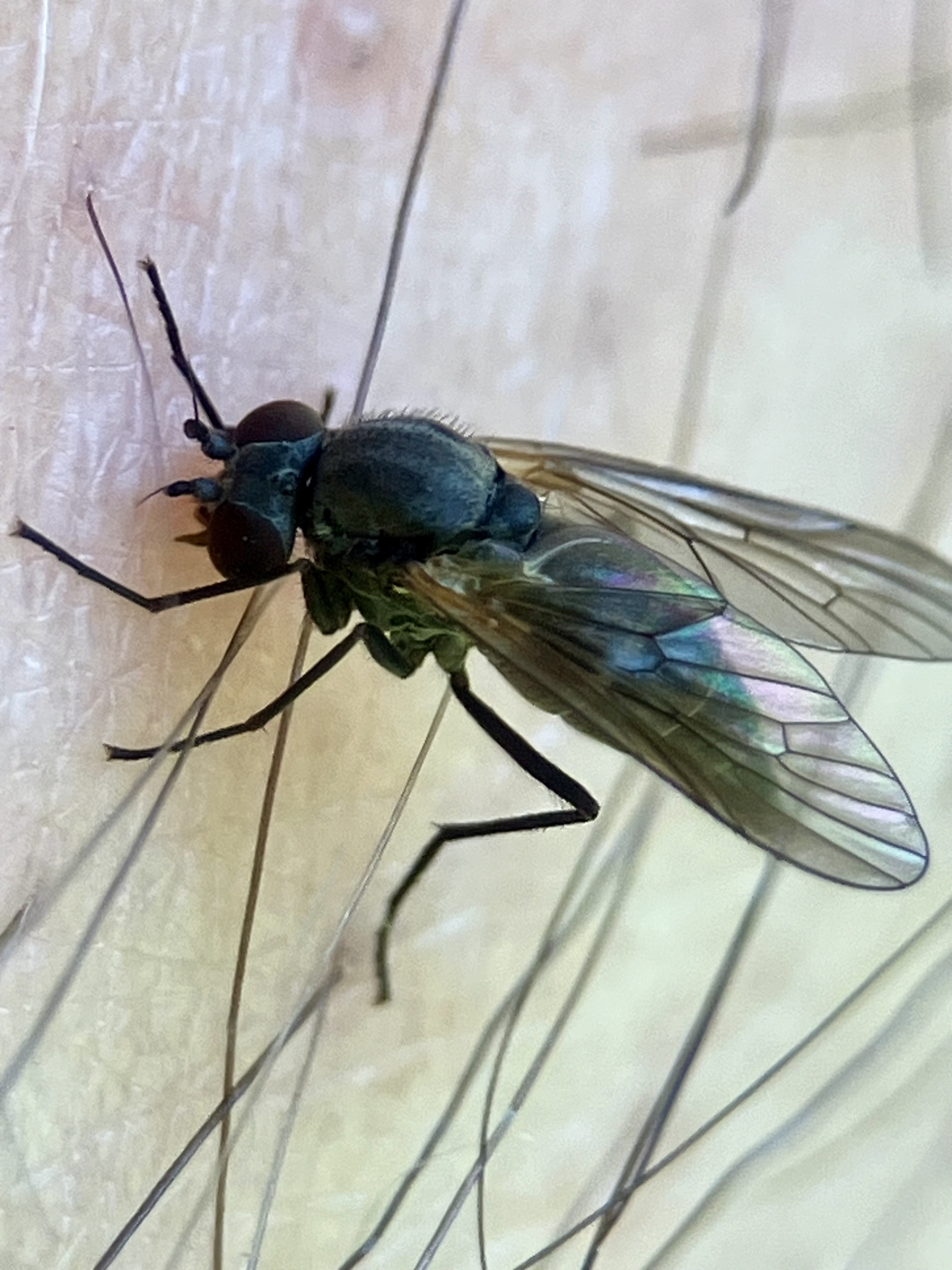
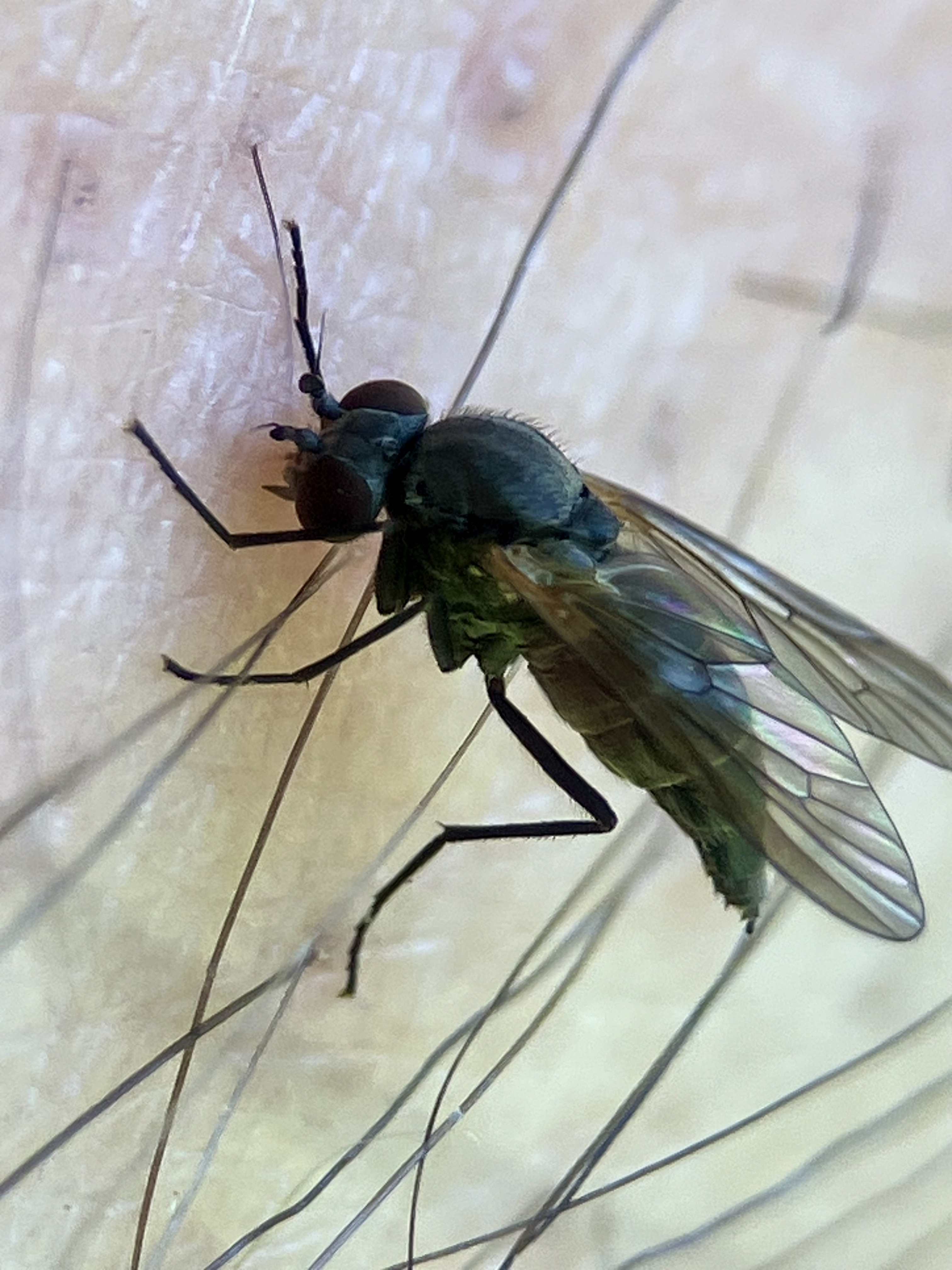
This is one of the Rocky Mountain Bite Flies (Symphoromyia sp.).  It’s a Snipe fly in the family Family Rhagionidae, and it bit my husband today.   Those are NOT my hairy legs.  They’re my husband’s.  

Rocky Mountain Bite Flies (Symphoromyia sp)

After getting some pictures, I went inside to look up what information I could find about the Genus and narrow down what species are in WA state. In doing so, I came across this interesting, and disturbing medical case report of a woman who had a severe allergic reaction to the bites of these flies.  Now this was in the 70’s, in Forks, WA, but if this fly had bitten ME instead of my husband, it’s very likely I’d be the next case write up.  

Rocky Mountain Bite Flies (Symphoromyia sp)

Attaching the paper in the link here if you care to read it.  The woman could have D-I-E-D from anaphylactic shock.  

You’ve been warned.  

No worries, just stay indoors and you’ll avoid being bitten by the San Juan Sniper.  


Symphoromyia Genus

Size: 4.7-9mm

Food: Females of some species of this genus are blood feeders. Symphoromyia females are common biting pests in the west. Males do not take blood meals. Both adults and larvae will prey on small insects.  

Habitat: Adults are commonly found in woods near moist places, often found on foliage or grass, positioned with head resting head downward. Larvae occur in moist meadow soil, moss, decaying wood (incl. galleries of wood-boring insects), under bark, occasionally in water (bug guide.net).

References and Further Reading

Aldrich, J. M. 1905. A Catalogue of North American Diptera. Smithsonian Miscellaneous Collections 46:680.

Bowser, Matt. 2017. Refuge Notebook: The bad biter par excellence. Peninsula Clarion. https://www.peninsulaclarion.com/life/refuge-notebook-the-bad-biter-par-excellence/#:~:text=Very%20little%20research%20has%20been,not%20known%20to%20transmit%20disease.

Bugguide.net. Family Rhagionidae (Snipe Flies). https://bugguide.net/node/view/116

Kerr, Peter H. 2004. REVISION OF THE GENERA OF THE RHAGIONIDAE OF THE WORLD (DIPTERA: BRACHYCERA). Doctor of Philosophy Dissertation. University of Maryland, College Park. https://drum.lib.umd.edu/items/7f964daf-76bd-467e-ac36-18a523ac5e5a

Turner WJ. A case of severe human allergic reaction to bites of Symphoromyia (Diptera: Rhagionidae). J Med Entomol. 1979 Feb 8;15(2):138-9. doi: 10.1093/jmedent/15.2.138. PMID: 448692 https://www.tesble.com/10.1093/jmedent/15.2.138

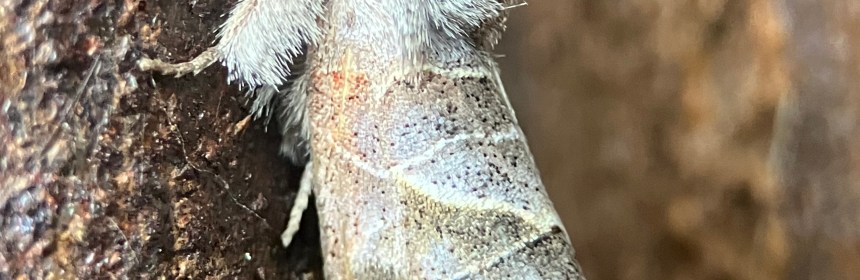
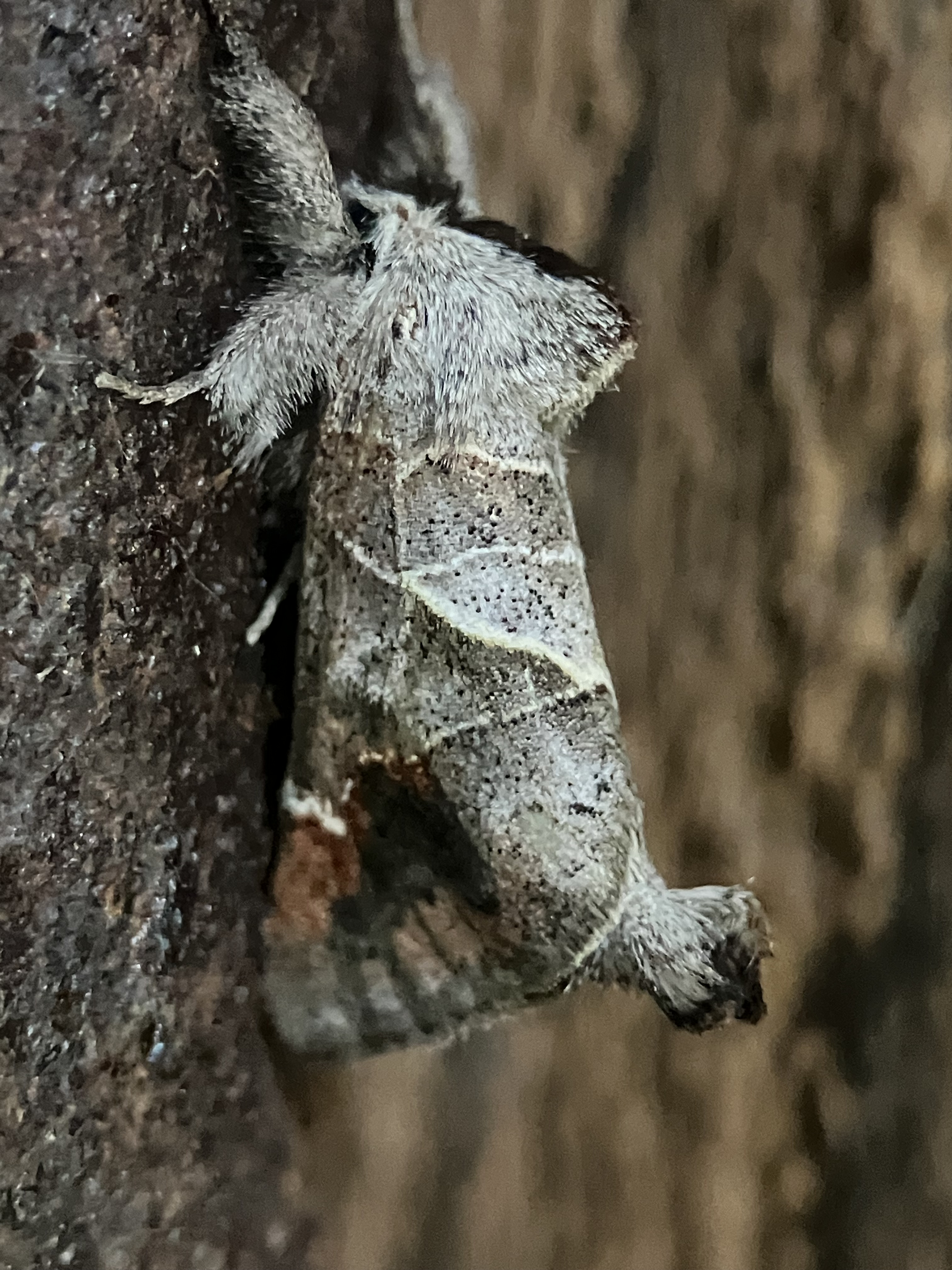
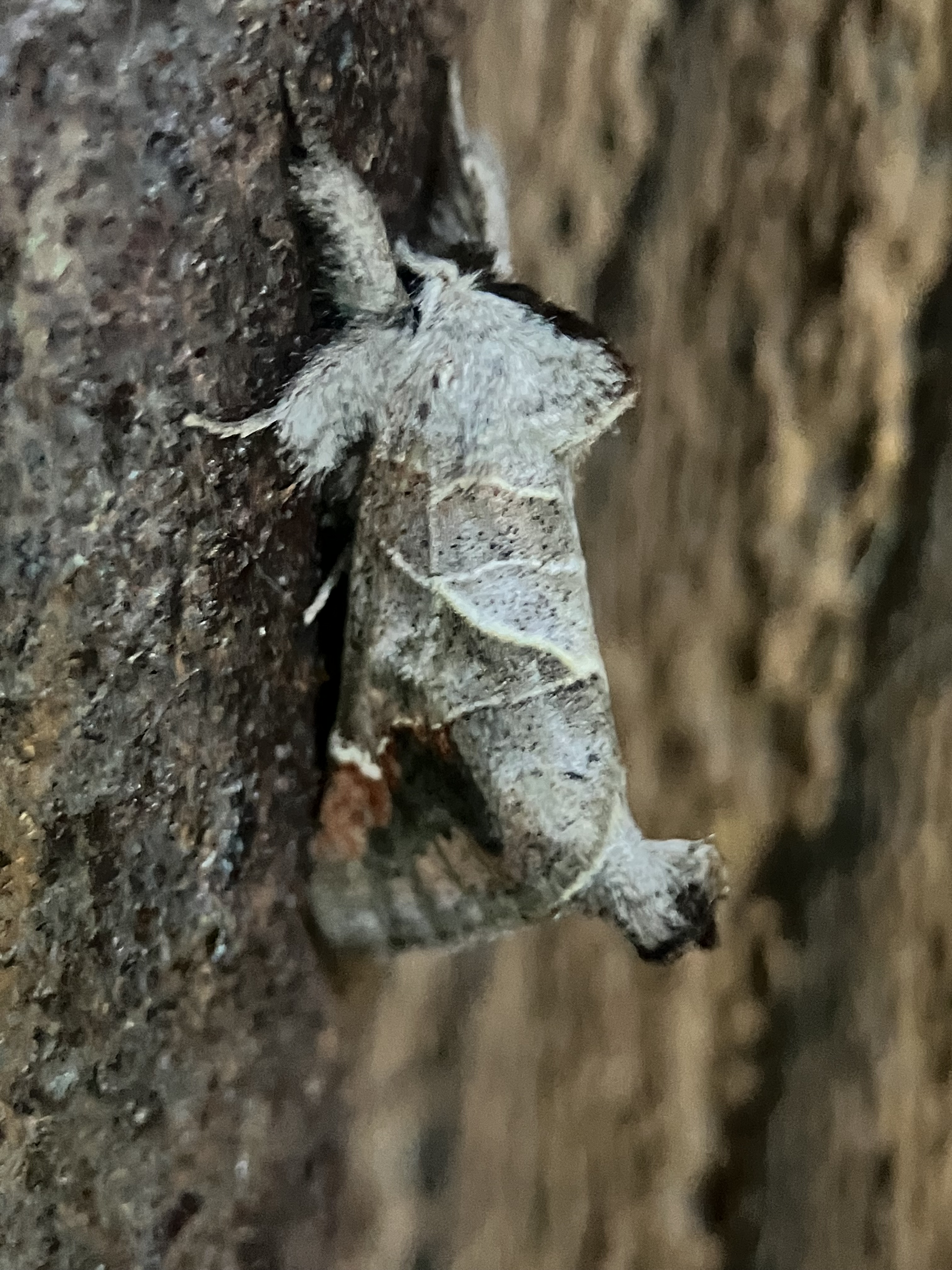
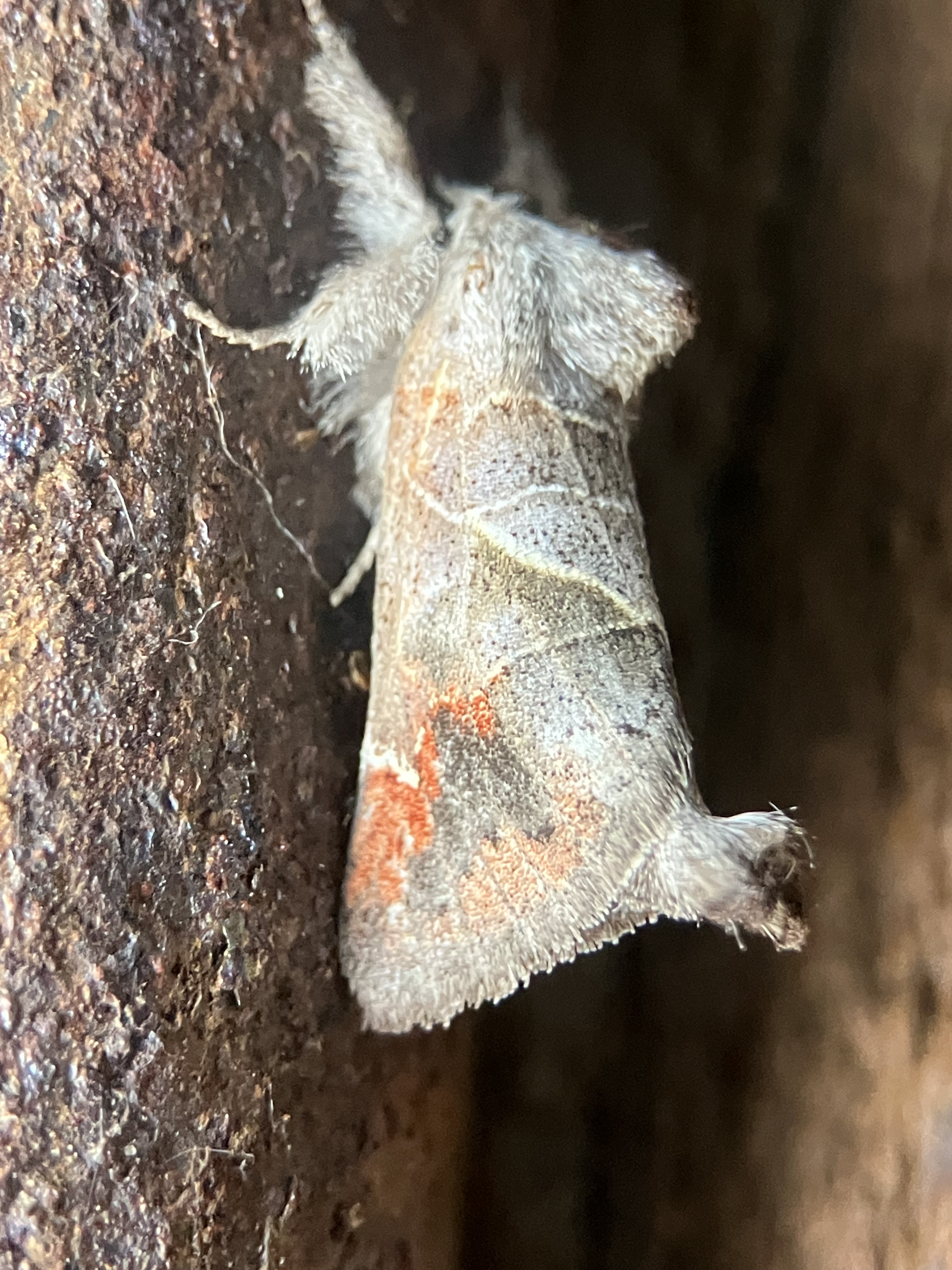
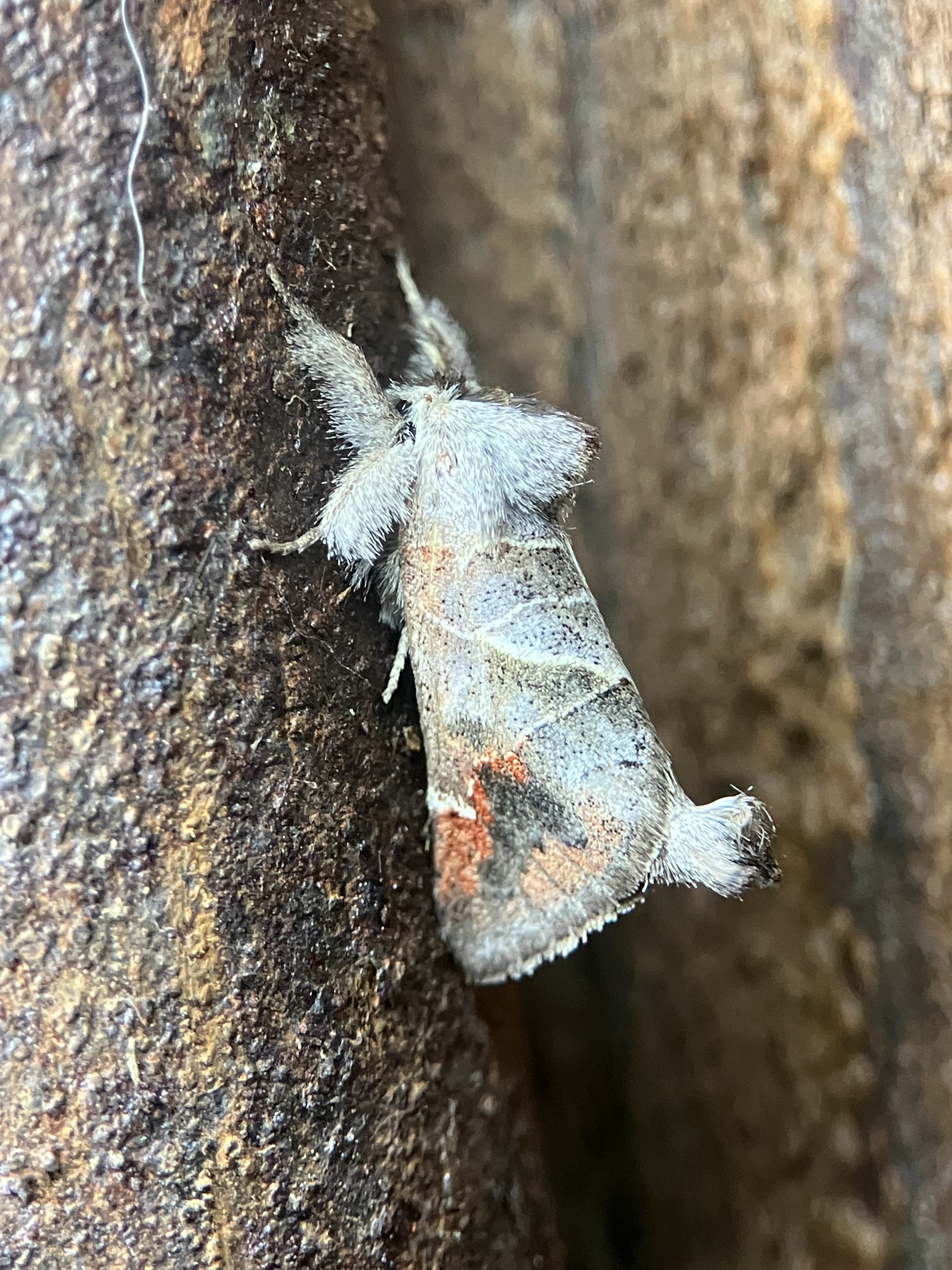
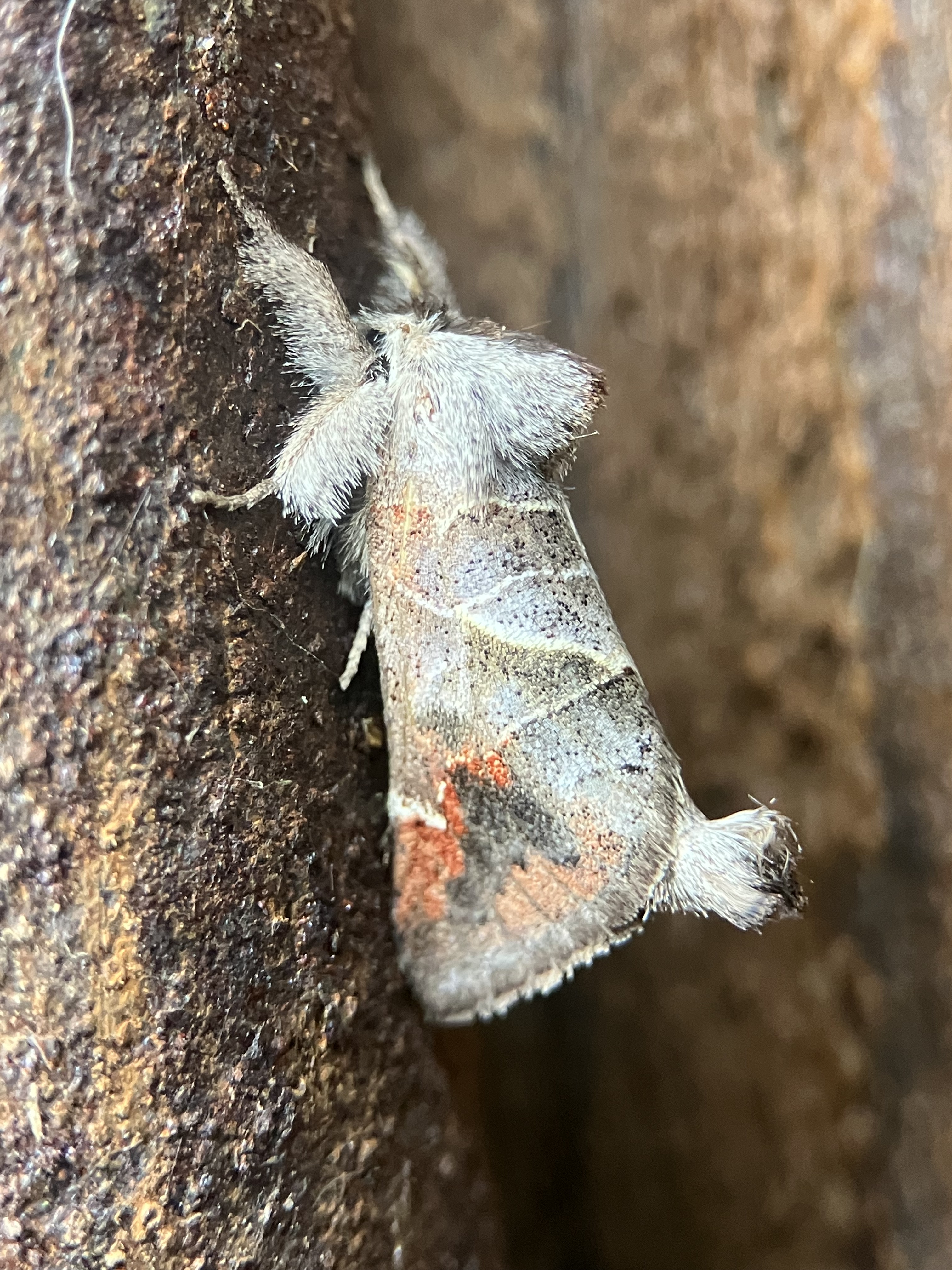
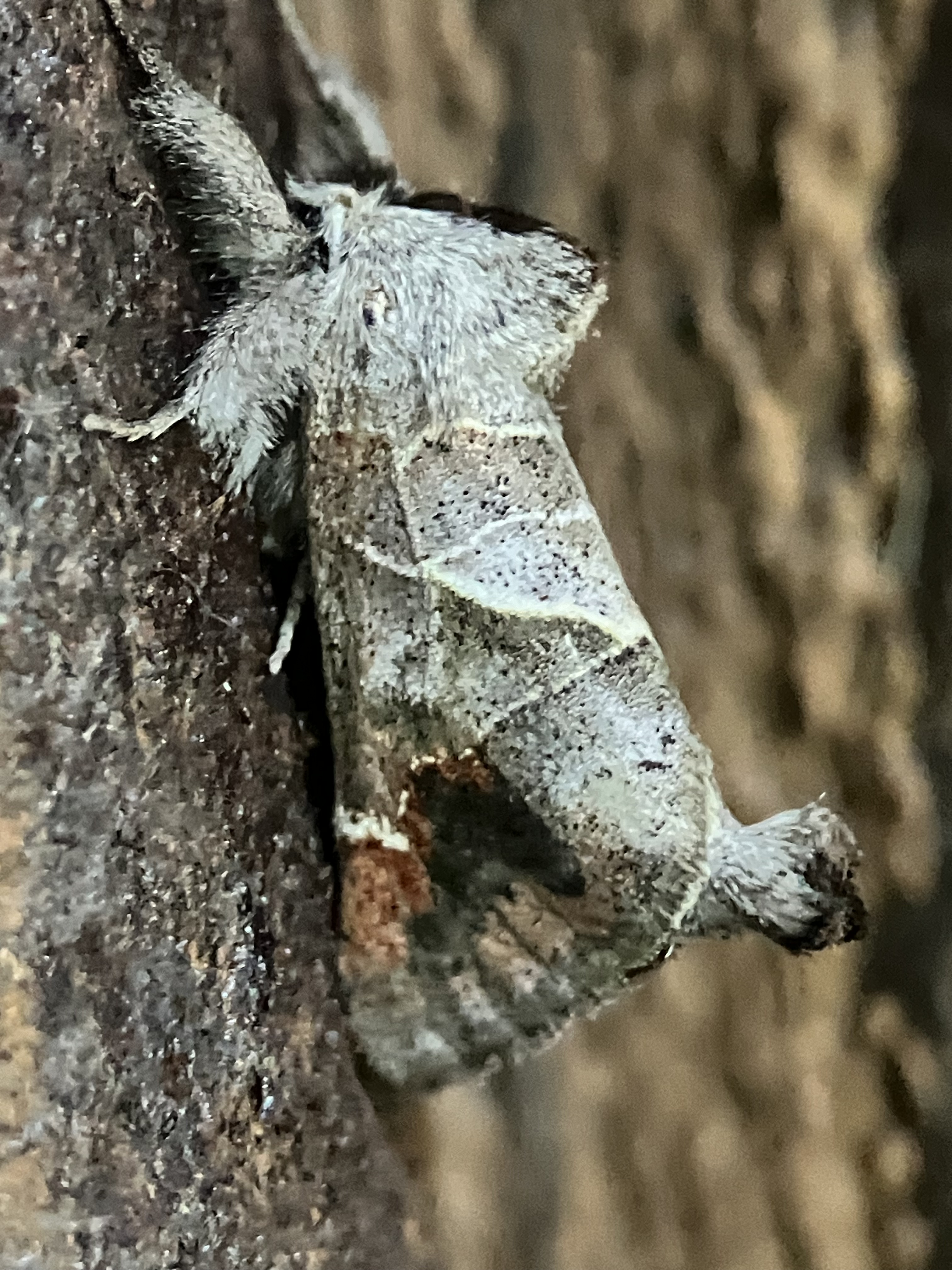
Apical Prominent moth (Clostera apicalis)

I had my moth light up last night and found a handful of specimens still hanging out this morning at 06:30 when I got up, grabbed my coffee and went to check the station since the birds tend to start counting my specimens if I don’t beat them to the job. The problem with the birds counting is they EAT as they count. It’s even more irritating when the Yellowjackets are competing for tally rights.


Here’s a moth that was new to me. This is the Apical Prominent moth (Clostera apicalis). It is in the family Notodontidae (Prominent Moths),Subfamily Pygaerinae.

Clostera apicalis uses birch, poplar, and willow as host plants for larval development and sometimes the larvae form communal nests woven of silk threads.

The geographic range of this species is recorded from the northeastern and western U.S., across Canada, and north into the Northwest Territories. In the North, the species is univoltine ( one generation per year), and in the south, bivoltine (two generations per year). You will find adults flying from the months of May to August and larvae developing in August and September.

References

Bugguide.net https://bugguide.net/node/view/25181

North American Moth Photographers Group http://mothphotographersgroup.msstate.edu/species.php?hodges=7901

Thanks for stopping by!

The Owl (and others)

Today was a day of bird encounters. I saw our poor little cowbird that can’t fly because he’s been injured (likely by our neighbor’s marauding outdoor cat). He’s survived three nights so far even though he seems to have a wing injury and I haven’t figured out yet if I can capture him to check. He’s had his little mate following him around.

Cowbird male

I know it’s a cowbird and cowbirds are brood parasites, but they are actually quite beautiful little birds and I feel sympathy for wildlife that are impacted by our human “pets.” It isn’t fair and we should do much better to keep our pets under control. I don’t know what my response would be if I see this cat attacking our Tanager or one of the Grosbeaks. It is doing what cats do and the problem isn’t the cat, but the owner who evidently doesn’t care and is probably too lazy to clean a litter box and play with the cat and keep it inside. Ok. So, I vented. Sigh…

I was going out to take a walk in nature to unwind when I heard a sad little thunk on our window. We have Acopian Bird Savers https://www.birdsavers.com/make-your-own/ on the largest window, but not the smaller one. That’s gonna change. I’m going to put them on ALL our windows.

Well, I looked out and saw a tiny little nuthatch on the ground, on its back, mouth open, but it was breathing. I ran out to pick it up and when I scooped that little creature into my hand, its feet wrapped around my finger so tightly that I felt hopeful. It was a newly fledged nuthatch. I sat with it quietly in the shade under the suet feeder, my hand stretched out onto my knee into a little cup shape.

The bird closed its eyes and slept a bit. I talked to it very very softly. An adult nuthatch landed on the feeder above, eyeing me cautiously. I believe it was the parent. I spoke to the adult too, trying to convey my earnest intent not to harm her child. The little one blinked and looked about. Then it closed its eyes and slept a bit again. The parent flew over to the fruitless cherry tree to another feeder, then off, I expect to feed another hungry mouth.

After a good 15 minutes, the little nuthatch was much more alert. It kept eyeing the suet feeder and the adult bird that returned again and again. I rose slowly from sitting, carefully supporting the little one – still gripping my finger. Raising my arm, I chose a small branch just beside the suet feeder and in a breath, the little one hopped off my finger and onto the new perch.

The adult nuthatch flew onto a nearby branch and I saw the fledgling flutter its little wings like baby birds do to get their parents’ attention to be fed. In another breath, it was airborne, flying after the parent. I was so grateful for a happy end to that incident.

My walk down our road was uneventful for the most part. I did see a Clown millipede (Harpahe crossing the wetland area and squatted down to observe its somewhat awkward, but systematic locomotion. It almost looks suspended in motion over the ground. After making sure it was safely out of harm’s way and not in a car path, I continued on.

(Harpahe hayadienana) Clown millipede

My destination was the “soon to open officially” nature preserve. I have walked on this property for about 10 years now. It is an amazing place.

Giant cedars tower overhead through the wetland. Along the seasonal stream, the path I took meanders amidst the primordial assortment of ferns, swamp lanterns, and horsetail. There are creatures there in the forest. If you see them, you will leave feeling a sense of awe.

Twinflowers on the forest floor

Red legged frogs, salamanders, and newts make their homes in the wetland. They dine on the myriad of invertebrates that live in the stream and mud. On the forest floor, you’ll find Night-stalking tiger beetles (Omus dejeanii) with fierce jaws hunting for prey. If you’re really really lucky, you might see the burgundy metallic carabid beetle (Zacotus matthewsii) that I’ve only seen less than a handful of times in the past decade. Overhead, you’ll hear the family of ravens that have a nearby nest. Always in the same place.

Northern Red-legged Frog Rana aurora
Greater Night Stalking Tiger Beetle (Omus dejeanii)
Zacotus matthewsii

The hawks hunt in a small clearing where the stream attracts other animals that come for a drink. There are other birds hidden too. Flycatchers nesting in rotting snags, Pileated Woodpeckers drilling after carpenter ants. And the owl.

The owl has been there for a long time. You can hear it calling in the night – “Who Cooks for You?” It was wonderful before there were too many houses. Now, it is harder and harder to hear the owl over the din of barking dogs. In the woods though, the owl has a baby.

I heard it calling the other day. Screeching is more like it. I heard the noise before saw them. The mother owl was watching me cautiously from high above. A snake dangled from her mouth. In spite of this, I heard her utter sounds of caution to her child. She flew over to feed it as I quietly backed out of the area. I did not want to disrupt them and when I walk, I try always to remember that I am entering the home of others. I walk quietly and respect their spaces.

Momma owl with snake

Today, when I walked back to the place of the owl, I heard the baby again. It was calling repeatedly, but mom was nowhere to be seen. Again, I backed away quietly, hoping the owl was able to find food for her little one. They must hunt through the day and not only at night in order to rear their offspring.

I thought of the owl as I walked back to the trailhead and then I momentarily became distracted as I reached the site where I’d been poking around in a raccoon carcass on the trail. There are some very cool bugs that you find in carrion. Unfortunately, the remains were not to be found.

Stepping off the trail to look in the underbrush for any sign of the carcass, I heard a flutter overhead. I looked up and she was there. It was the mother owl.

She landed on a branch right in front of me. I was too dumbfounded to move. We stayed like that for what seemed like a very long minute. She gazed at me and I watched her in turn, not daring to blink. There was no threat. I felt like she knew me.

The robins were not happy and began to flail at her, creating a cacophony of rebuke. She ignored them. I slowly brought my phone around and took a video of her. She just looked at me.

Then she looked around, gazing through the forest at things unseen. After about five minutes, she reoriented her body, turning away from me, surveying the surrounding area. With a glance back at me, she flew away.

This encounter is why saving spaces for WILDLIFE is so incredibly important to me. These places should belong to them. When we visit a preserve, remember that. It is their home.

I hope others will reflect on what I’ve shared, and maybe there will be one less person who lets their dog off leash or one less person who throws trash onto the forest floor. Think about the creatures that call these places home. Walk softly and be respectful of their need and struggle to survive in ever-shrinking spaces.

Thank you for reading. Support Conservation. Save Spaces for Nature.

Bird notes 🎶

Something happened in the yard yesterday afternoon. We have a fruitless cherry tree in a cage that I didn’t plant. At least I think it’s a fruitless cherry tree. It sort of popped up on its own.

In the beginning, I didn’t really want it there, so I cut it down – a few times. It kept coming back, intent on sticking around. A couple of years ago, I just stopped trying to get rid of it. I even put a little cage around it. That was actually for the juncos that built a nest in the grass below that little tree though, to keep them safe from the mower.

Aside from me personally whacking it down a few times, the little tree has suffered other adversities. It has been attacked by cherry slugs (sawfly larvae). They ate its leaves.

Sawfly larva or Cherry Slug

It has had a few tent caterpillars munching too. One year that it was super dry, it lost its leaves and I thought it was dead. Only it came back again. I started to pay more attention to this little tree, even watering it in the summer. It’s not very tall, but this year it looks more healthy than ever before.

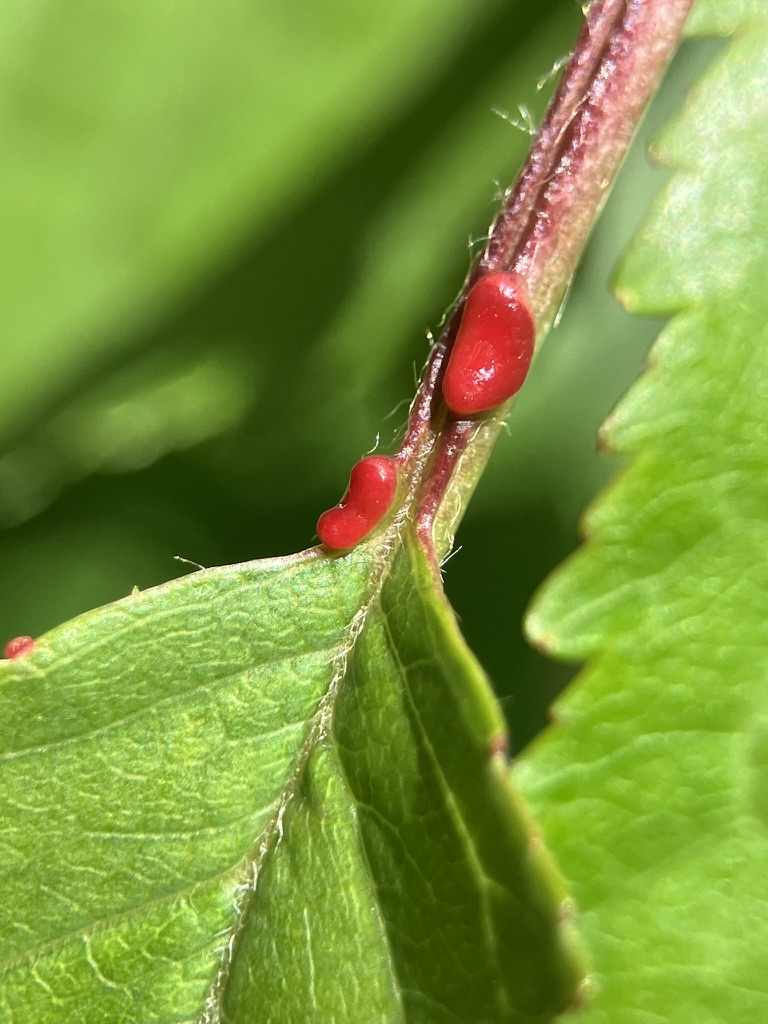
Last year, I noticed in the spring that it put out these cool little red bumps on the stem just above the leaf.

extrafloral nectaries
Formica ascerva ant at extrafloral nectaries

Those little bumps soon had little red and black ants visiting. I learned the red bumps are extrafloral nectaries. They produce nectar that attracts pollinators to the tree. I haven’t seen any flowers, so I’m not sure what would be pollinated. Maybe the tree isn’t old enough yet. I’m still learning. I sure need to figure out if I’m right that it’s a fruitless cherry.

Well, the other thing that is interesting is shortly after the little red bumps attract the red and black ants, there are little black aphids. I’ve seen this for 2 years in a row now. The ants tend those little aphid flocks like sheep. They are guarding them in exchange for the sugary honey dew the aphids produce.

The aphids and the ants seem to multiply. I have seen 2 or 3 ants per leaf with aphids. Not all the leaves have aphids, but maybe 1/3 of the tree does, and each guarded by the ants. The ants are Formica ascerva species.

They are interesting in their own right because aside from guarding the “sheep,” they also are fierce warriors, driving away (and killing) the large Camponotus sp. carpenter ants that try to invade every spring.

This colony of Formica ants lives under a bedroom of our home. They are welcome to stay since they don’t eat wood.

Today, when I looked out the window though, I saw something challenging the fearsome Formica ants. There were birds inside the tree caging and they were hungrily pecking and even tearing at the leaves with aphids. I grabbed and clumsily set up my camera to video the scene.

Birds attacking aphids farmed by Formica ascerva ants

I saw finches first, then there was a chickadee, and even a hummingbird. I thought I saw bumble bees, but they wouldn’t have been eating the aphids. Perhaps they were visiting the extrafloral nectaries or maybe even sipping honeydew produced by the aphids, but I wasn’t close enough to be certain.

Afterwards, I went out to survey the damage. I saw one leaf with lots of shreds. Aphid parts scattered about. Ants wandering somewhat aimlessly. Another leaf had an ant that died courageously in battle protecting his little flock.

I wanted to share my observations with you because a lot of folks really dislike aphids. Others also dislike ants and don’t understand their role in nature’s ecosystems. Maybe this will help others to understand there are a lot of hungry birds that eat aphids (and ants). Without them, the birds might not find enough food to feed their nestlings. It’s all part of the cycle of life.

If you see aphids your garden that you are worried about, you can mitigate some of their feeding damage by hanging a hummingbird feeder nearby. The hummingbirds have to have protein along with all that carbohydrate sugar water and they will most certainly find your aphids delicious. In fact, insects and spiders make up about 85 % of the diet of hummingbirds. Birds need bugs. And not all ants are pests. Some are extremely beneficial. I challenge you to take up bird and bug watching. You will not be disappointed!

Thanks for reading!

Below are more images of the birds feeding on the aphids inside the caged tree.

References and further reading

Bentley, B. L. (1977). Extrafloral Nectaries and Protection by Pugnacious Bodyguards. Annual Review of Ecology and Systematics8, 407–427. http://www.jstor.org/stable/2096735

Bugguide. 2024. Formica Ascerva. https://bugguide.net/node/view/497956

Salal (Gaultheria shallon), a native plant to nurture

Salal patch in forested area – San Juan Island, WA

I feel compelled to write up a short blog piece this morning before I move on to other tasks of the day. Last week, I tried to address some disturbing misinformation on social media about a native plant in the Pacific Northwest. The plant is a woody evergreen shrub, Gaultheria shallon or Salal. The misinformation is coming from a few folks insisting that Salal burns easily and should be removed in “fire-wising” around your home.

I have some genuine issues around the extreme measures some folks take in fire-wising, as well as the lack of knowledge around the impact these extreme measures have on ecological relationships. The fire-wise practices of removing all forest understory are incredibly destructive.

Removing the understory impacts your forest trees by exposing the soil to drying out much faster, it also removes habitat (shelter and food) for many many species of birds, lizards, flying squirrels, and others. When you pull out Salal, you are taking away an important winter food resource deer browse upon, the berries that feed birds, and the leaves that support the development of our native Brown Elfin Butterly (Callophrys augustinus).

Callophrys augustinus – May 27, 2023

But don’t just take my word on the importance of this native shrub. If you are still concerned about protecting your property, be resourceful and smart about what actions you take. Figure out how to cache enough water over the winter to irrigate around your property and keep things from drying out. Follow local guidelines during burn bans. Use common sense when things start to dry out more in summer/fall. Care a bit about the creatures (including the trees, shrubs, and plants) that call our island home.

For more assistance, see the various resources below. If you don’t still don’t find what you need, our local county conservation district is one of the best places to go for additional help.

References:

Brown Elfin Butterfly (Callophrys augustinus) https://bugguide.net/node/view/3049

Pacific Northwest Native Plants Magic Books (Gaultheria shallon) https://sites.evergreen.edu/nativeplantmagicbook/salal/

Salal, Galtheria shallon . Native Plants PNW http://nativeplantspnw.com/salal-gaultheria-shallon/

San Juan County Conservation District https://www.sanjuanislandscd.org

Fire Resistant Plants for the Puget Sound Basin. King County Forestry Program. https://your.kingcounty.gov/dnrp/library/water-and-land/forestry/forestfire/FirewisePlantsPugetSoundBasin-2011.pdf

Wildfire Preparedness San Juan County – https://www.sanjuancountywa.gov/DocumentCenter/View/21430/Wildfire-Fact-Sheet

Washington State DNR – Fire Preparedness. https://www.dnr.wa.gov/firewise

« Older Entries Recent Entries »