Spider Sack Sneakers
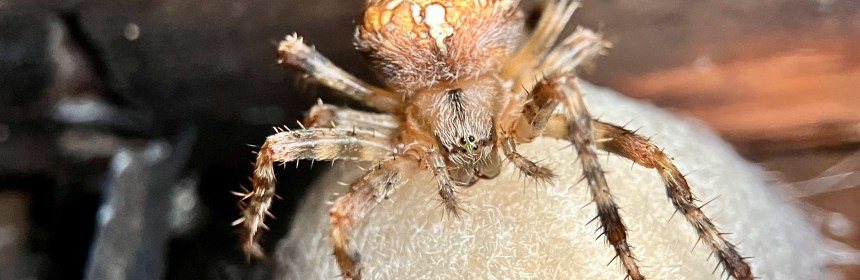
I wanted to show you something I noticed the other morning when I went out to check my moth light. When I was trying to photograph a moth on one of the beams of our covered deck, I noticed something else had been disturbed. If you follow along with my blog and social media posts, you may have seen photos and video I posted on YouTube https://youtu.be/vUlu32SyvZg?si=Z8TrNSzt29tJidkd back in December of 2025. This video features a female Cross Orb Weaver (Araneus diadematus) constructing her egg sack. It’s pretty cool, so watch it if you get a chance.
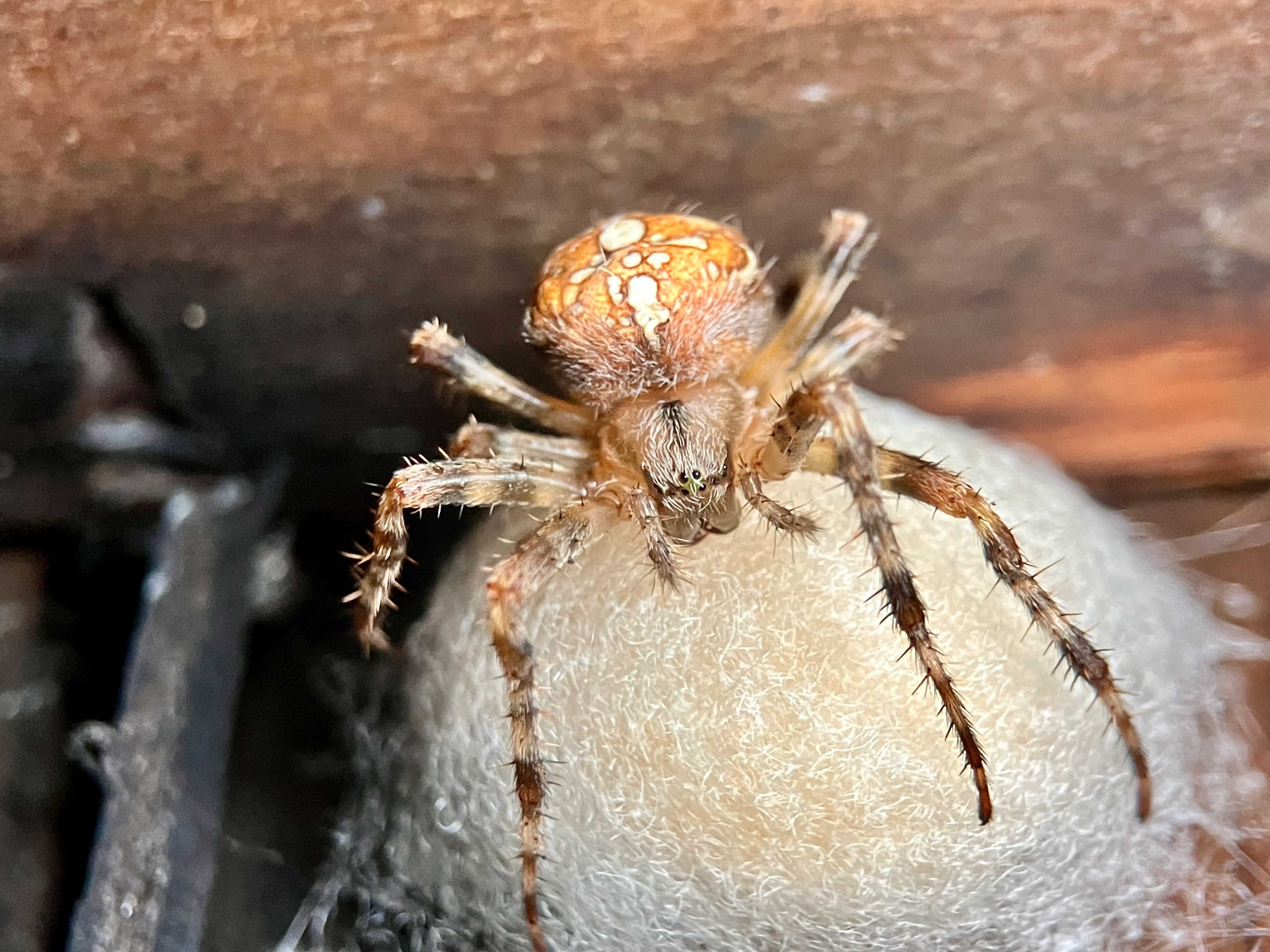
The female spider stayed on her egg sack, guarding it and probably resting from all of her hard work. She was there for more than a week. Maybe two. I noticed one morning after the temperatures had become quite cold, that she was no longer in her spot. Perhaps she dropped to the deck floor in the night and was picked up by one of our resident Juncos for breakfast. I had grown quite fond of watching her, so it was sad to find her missing. Yes, I was also a fan of Charlotte so long ago.
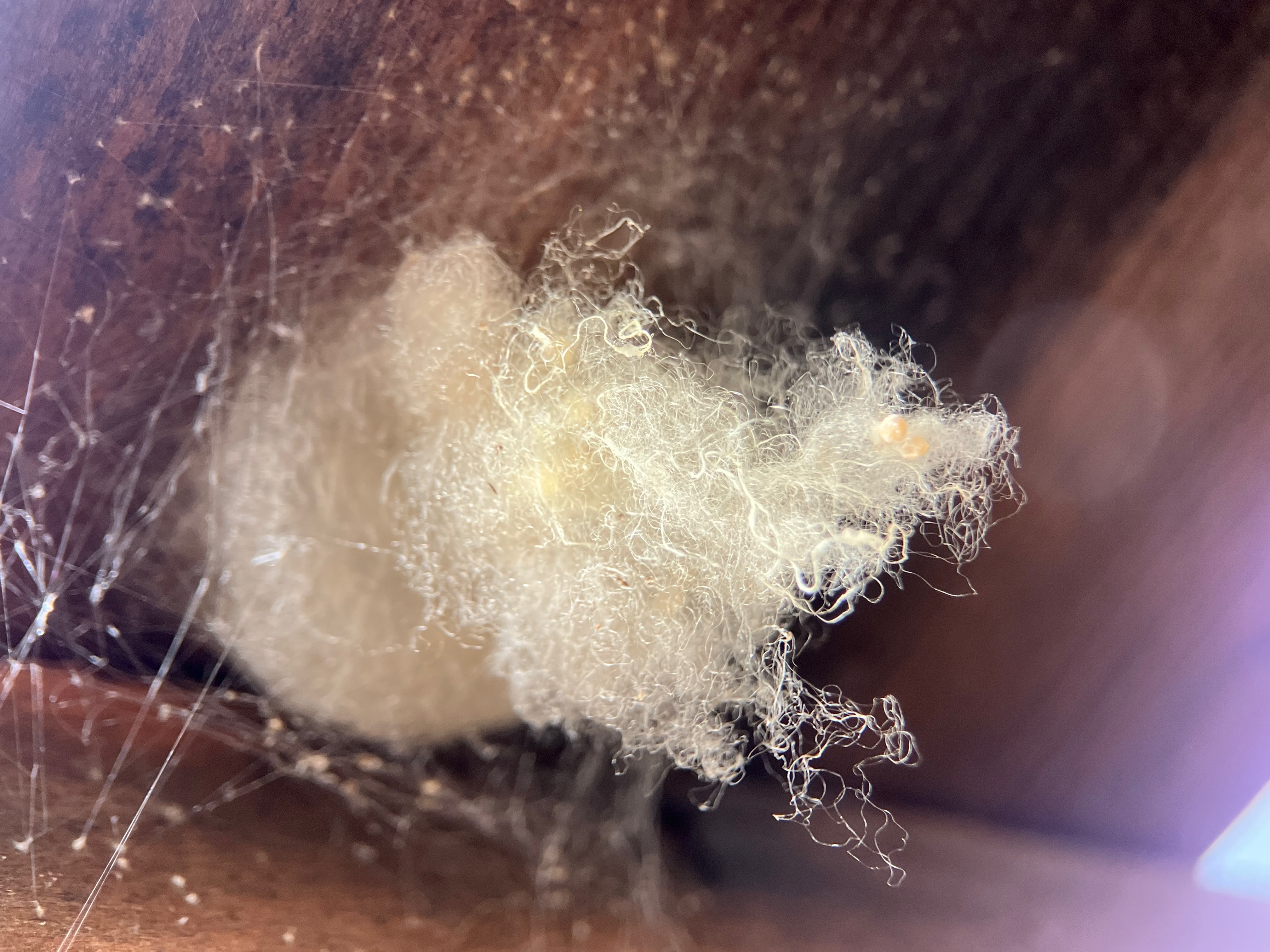
I have been keeping an eye on MY Charlotte’s incubating little ones since then, and was surprised to see that some of the beautifully woven fibers of her baby bassinet had been plucked away.
It’s not a huge surprise. This beautiful silk is likely the perfect lining for a tiny hummingbird nest. My hunch is one of our little Anna’s hummingbirds plucked from the spider sac to cushion her own eggs.
I don’t know if the spiderlings developing in the remains of this egg sack are still viable, but I will continue to watch and film them if I see activity.
Fun facts for you ~ Hummingbirds and other birds feed their nestlings spiders because they contain the amino acid, taurine, essential for brain development. Hummingbirds’ diets are actually comprised of approximately 80% insects and spiders. Hummingbirds (especially growing babies) need sources of protein in their diet. Adults rely on sugar water (and plant nectar, and even aphid honeydew) as sources of carbohydrates.
The best way to support hummingbirds and other wildlife in your area is to get rid of your lawn. Leave the leaves in the fall and don’t go overboard cleaning things up in Spring. Leave the moths, flies, native bees, and other insects that are still sleeping, undisturbed. Grow native plants that produce nectar and feed insects, and minimize or eliminate any use of fertilizers, herbicides, and pesticides around your home. The world will be better for it. 🌎 🕷️🪲🐞🍃
References
Bartlett, P. 2018. Fueling the Hummingbird’s Extreme Biology. Fundamentals. Johns Hopkins University. https://www.hopkinsmedicine.org/news/articles/2018/10/fueling-the-hummingbirds-extreme-biology
Choose Natives. 2026. How to Feed a Hummingbird. https://choosenatives.org/articles/how-to-feed-hummingbird-part-i-insects-protein/
Connor, J. 2010. Not All Sweetness And Light: The Real Diet Of Hummingbird. All About Birds. Cornell Lab. https://www.allaboutbirds.org/news/not-all-sweetness-and-light-the-real-diet-of-hummingbirds/
Kelly, J. W. 1955. History of the Nesting of an Anna Hummingbird. The Condor, 57(6), 347–353. https://doi.org/10.2307/1364792
University of Glasgow. 2007. Super spiders make bolder birds. University of Glasgow. https://www.gla.ac.uk/news/archiveofnews/2007/august/headline_37851_en.html
Williamson, S. 2015. Nesting material for hummingbirds. https://fieldguidetohummingbirds.com/nesting-material-hummingbirds/
 Bugging You From San Juan Island