Here’s a quick rundown of what I spied at my bug light when I checked this morning. I did move the bucket and light to a new location across from our house in our open air barn.
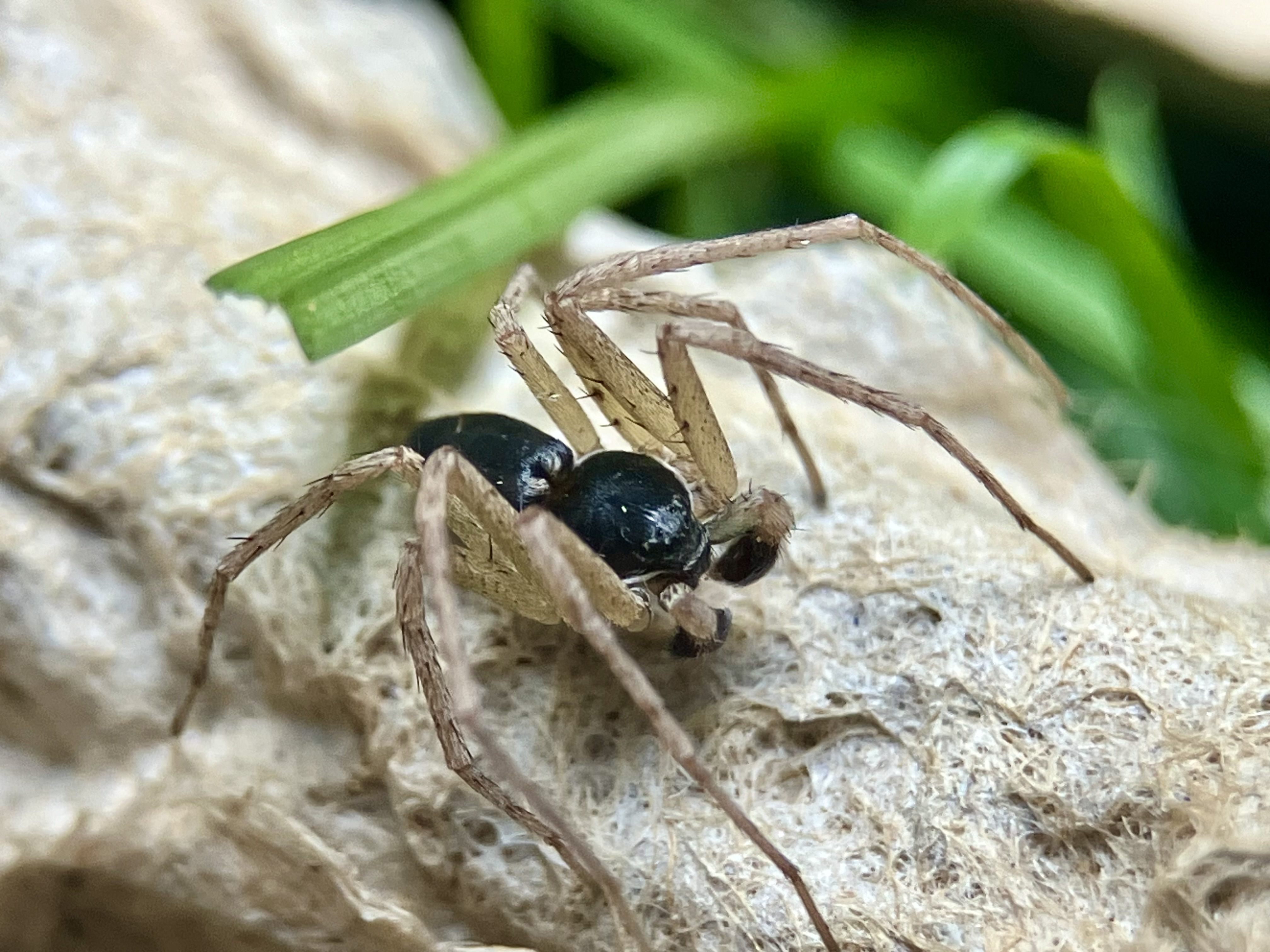
There were nine species of moths (31 individuals), two species of Coleoptera (beetles), and one wasp that I believe is Ophion sp.
Moths:
Egira perlubens = 1
Egira (either E. simplex or E. crucialis) = 3
Egira rubrica = 1
Orthosia transparens = 5
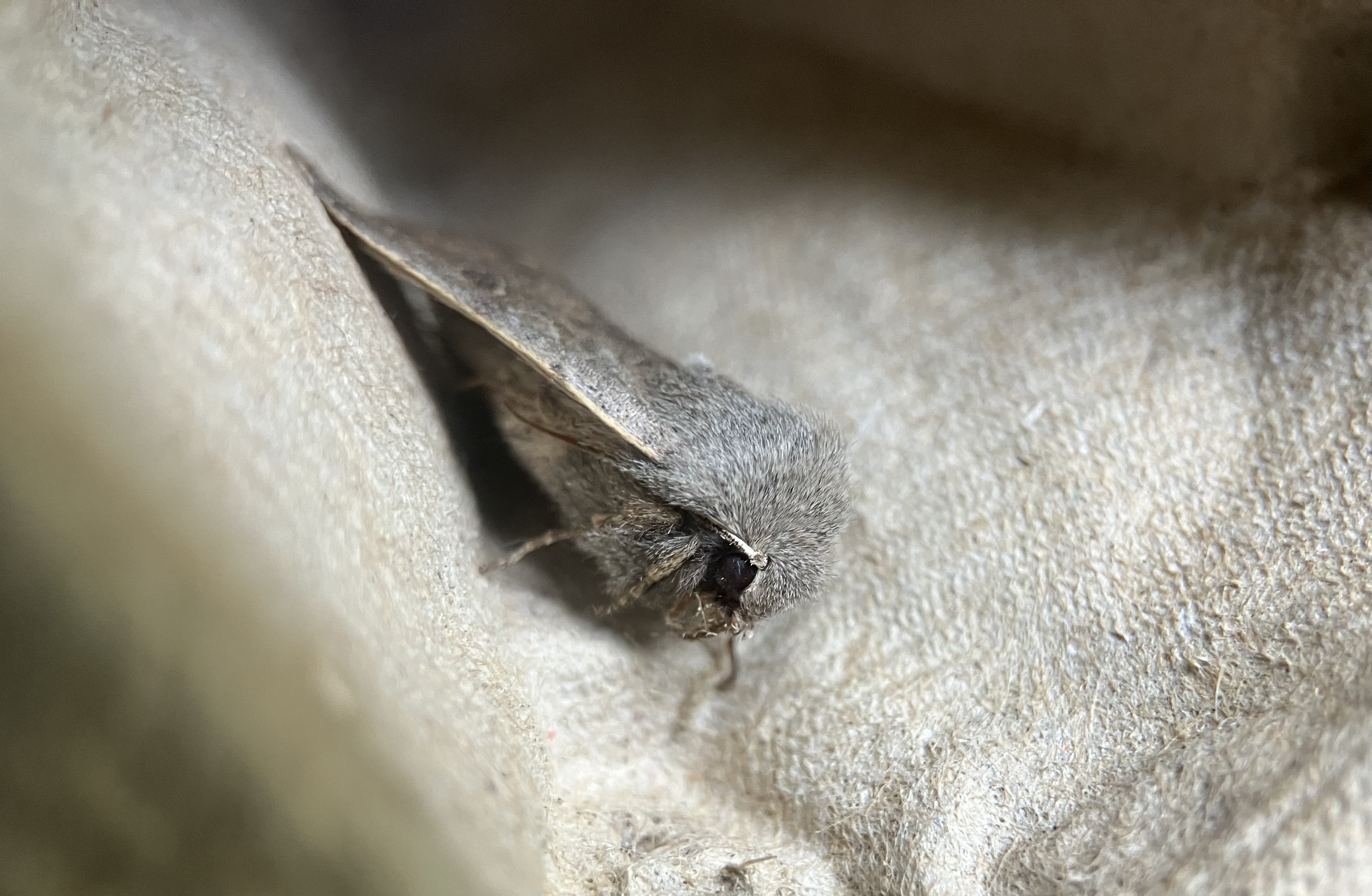
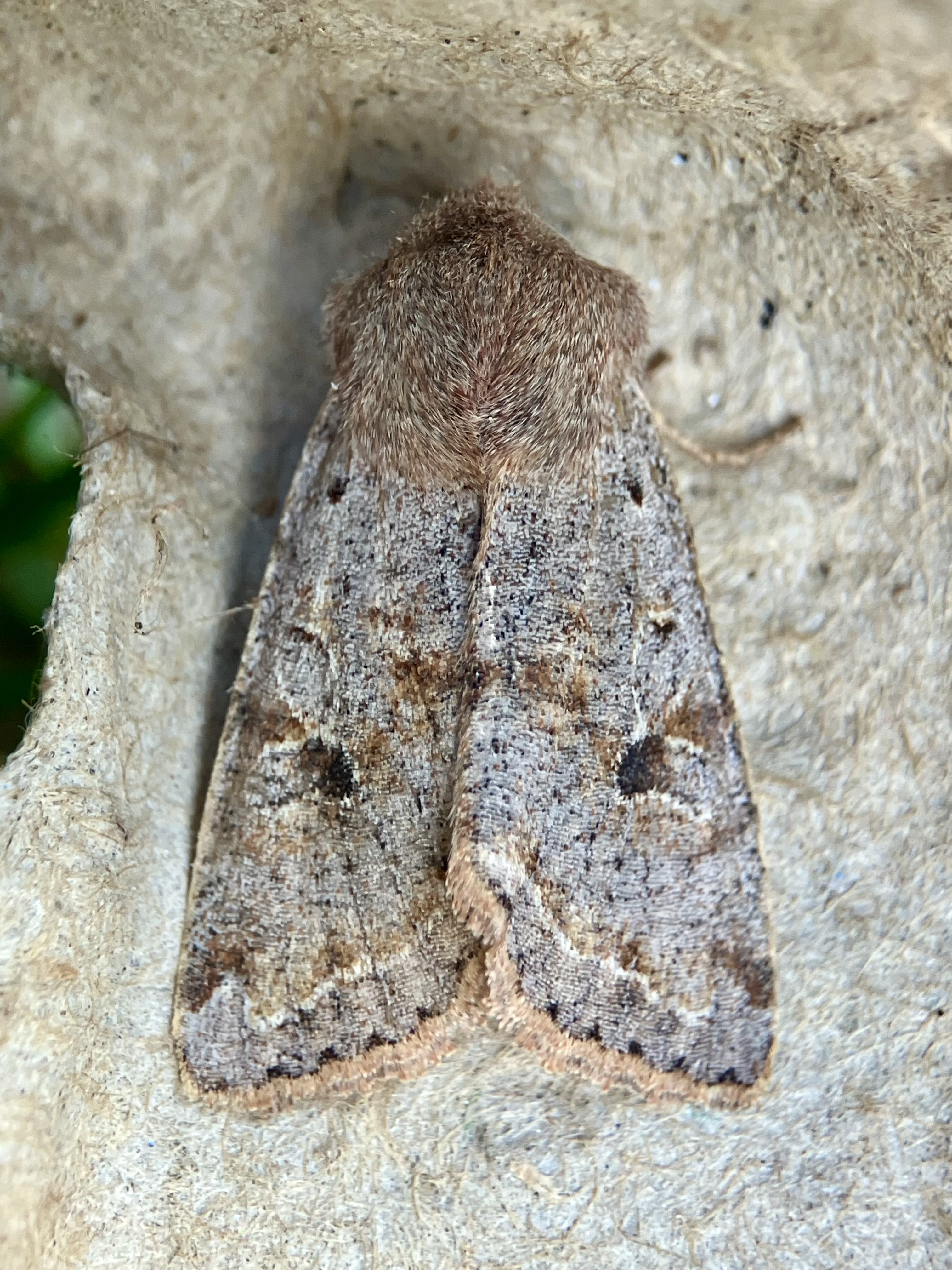
Orthosia hibisci = 8
Orthosia praeses = 8
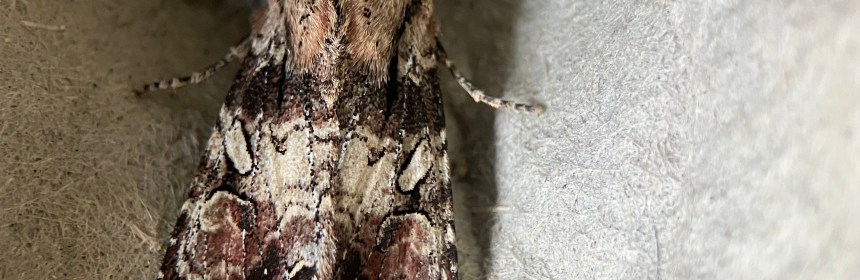
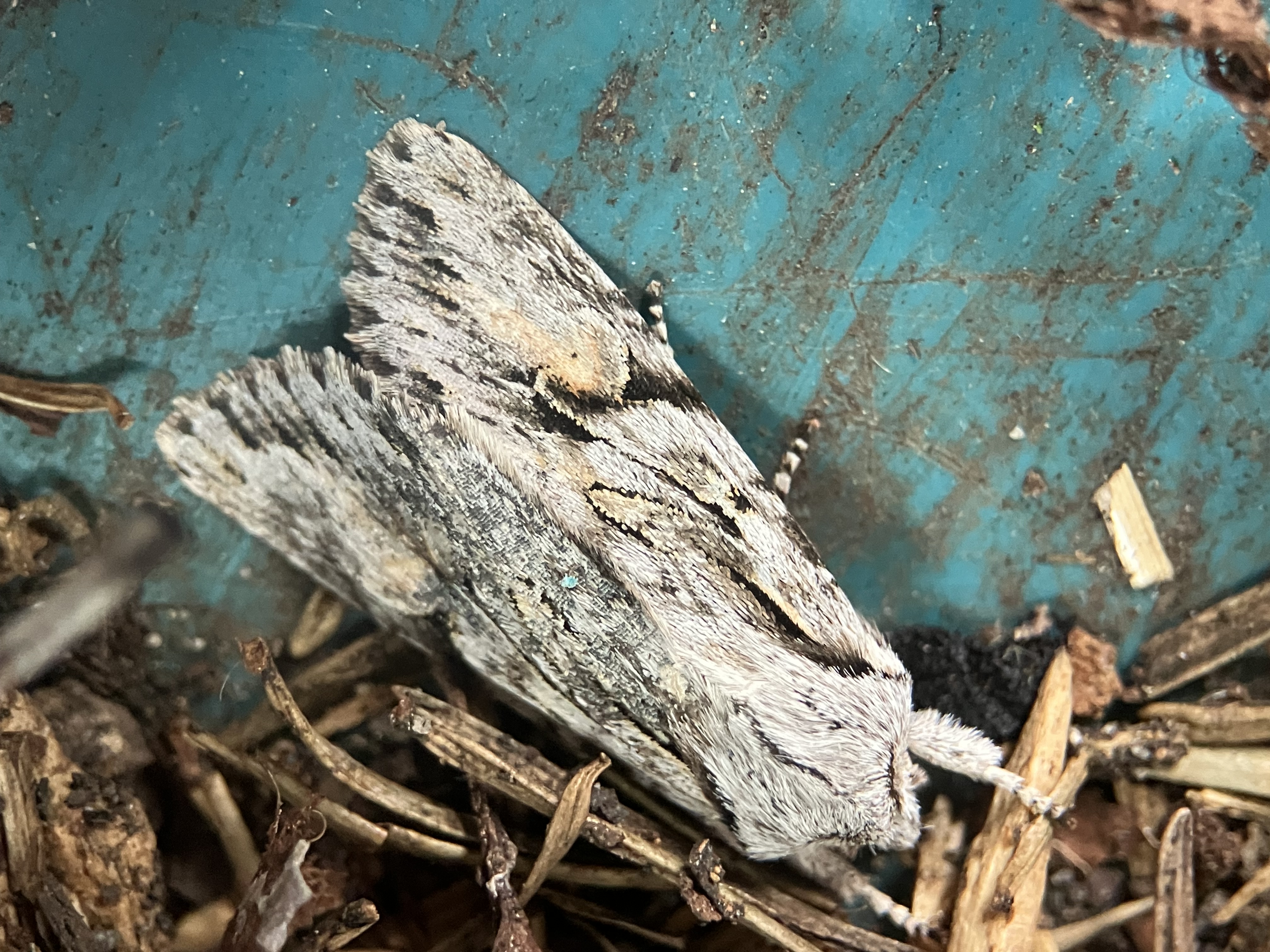
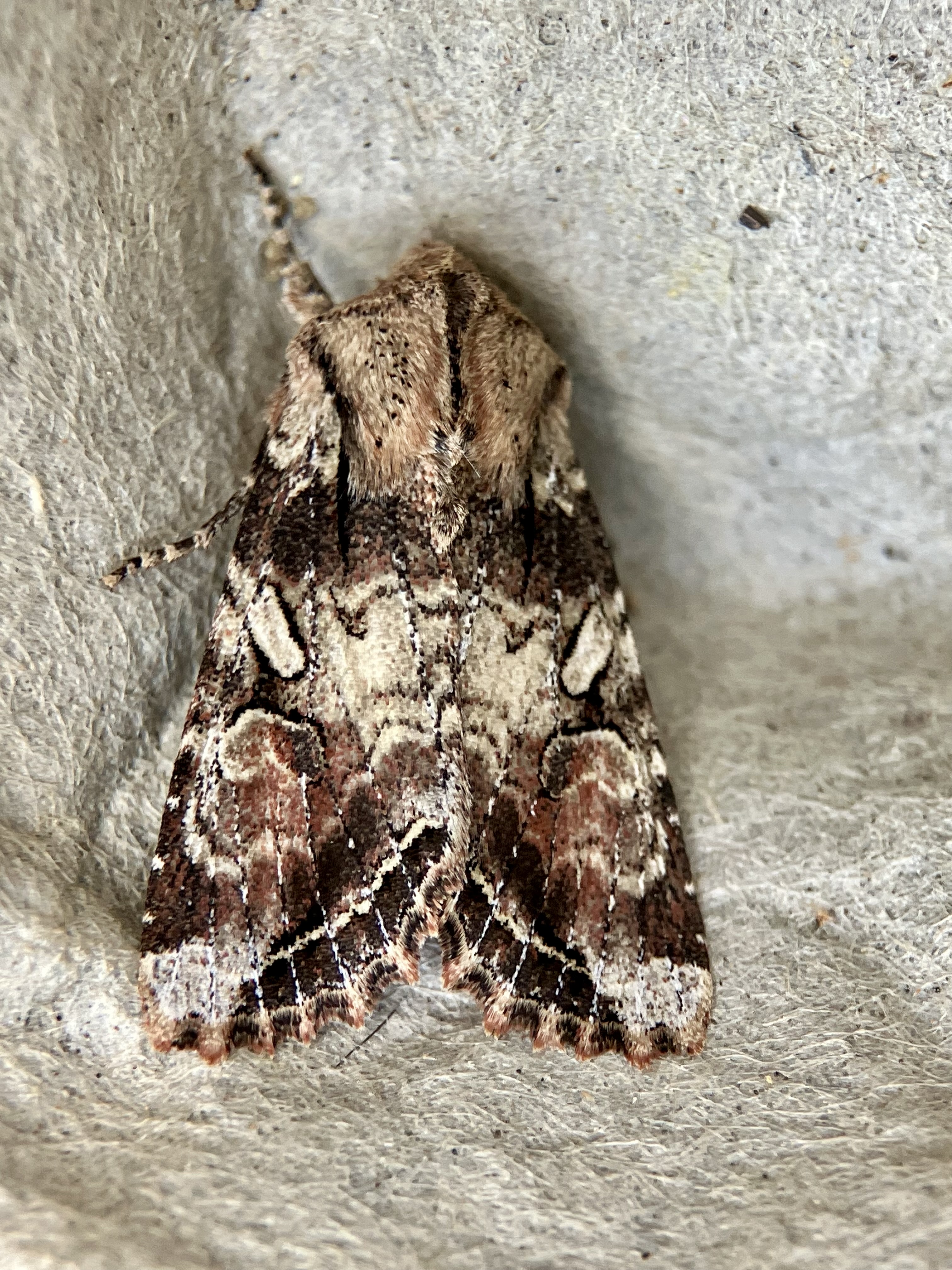
Feralia comstocki = 2
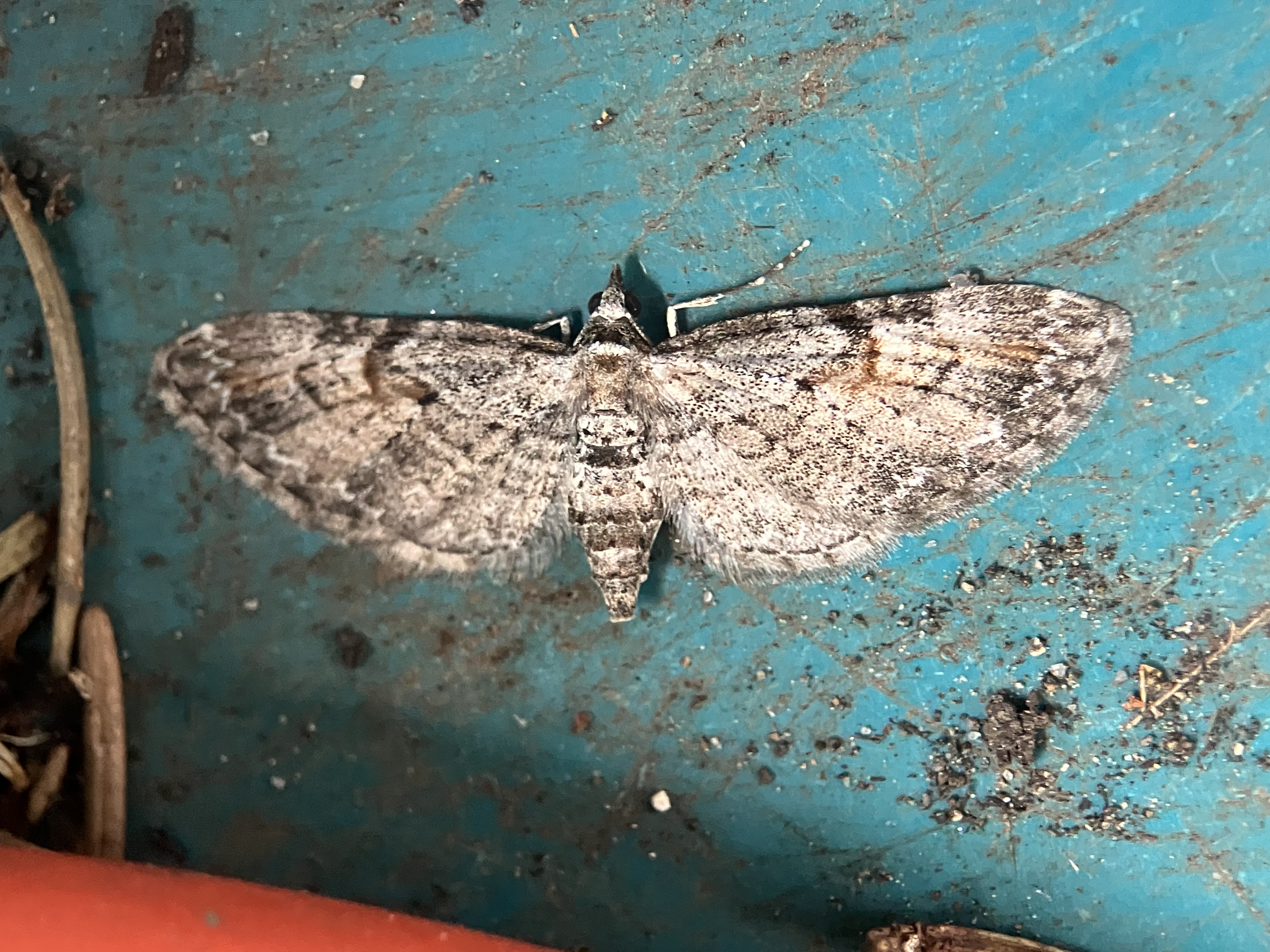
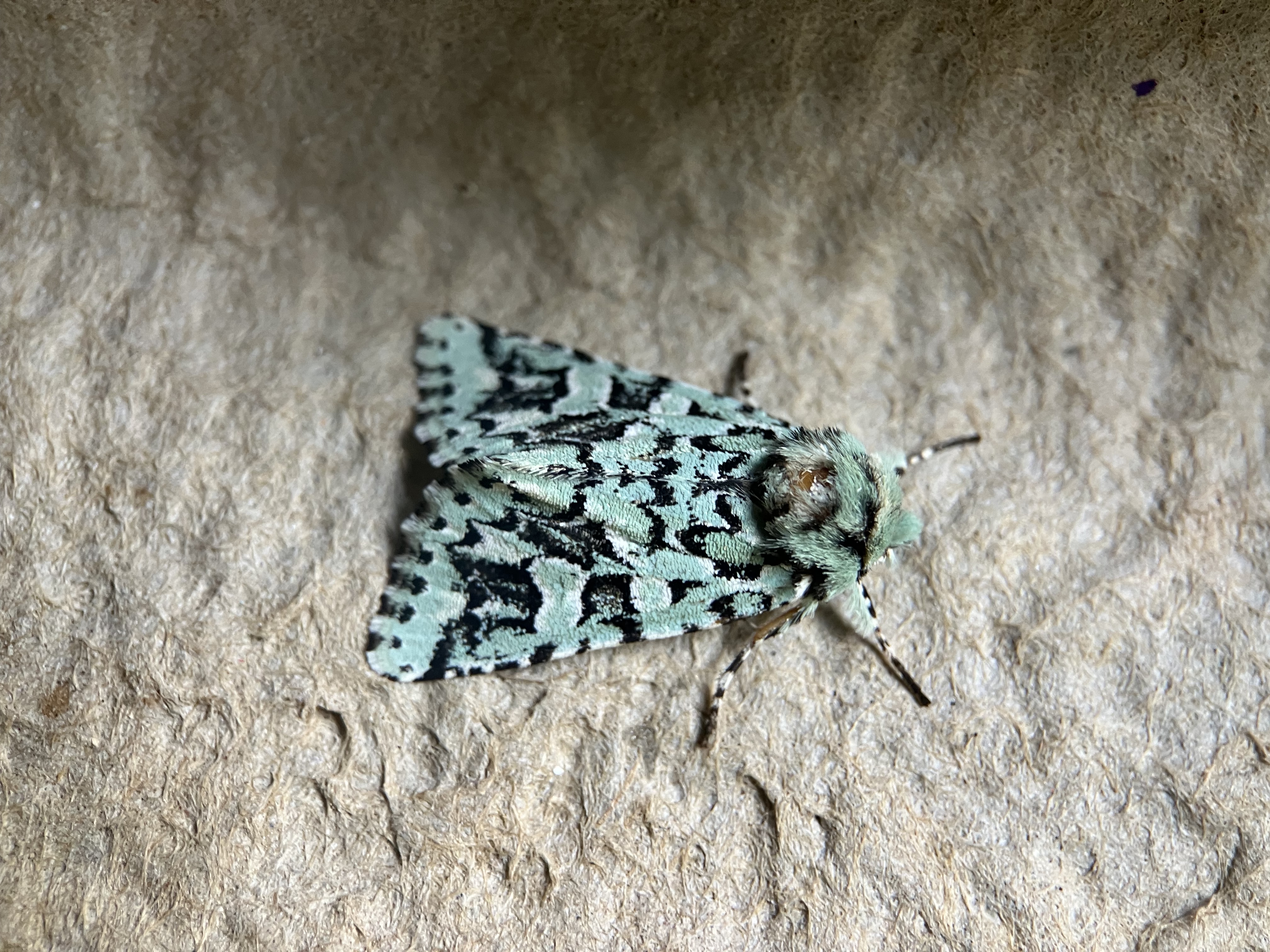
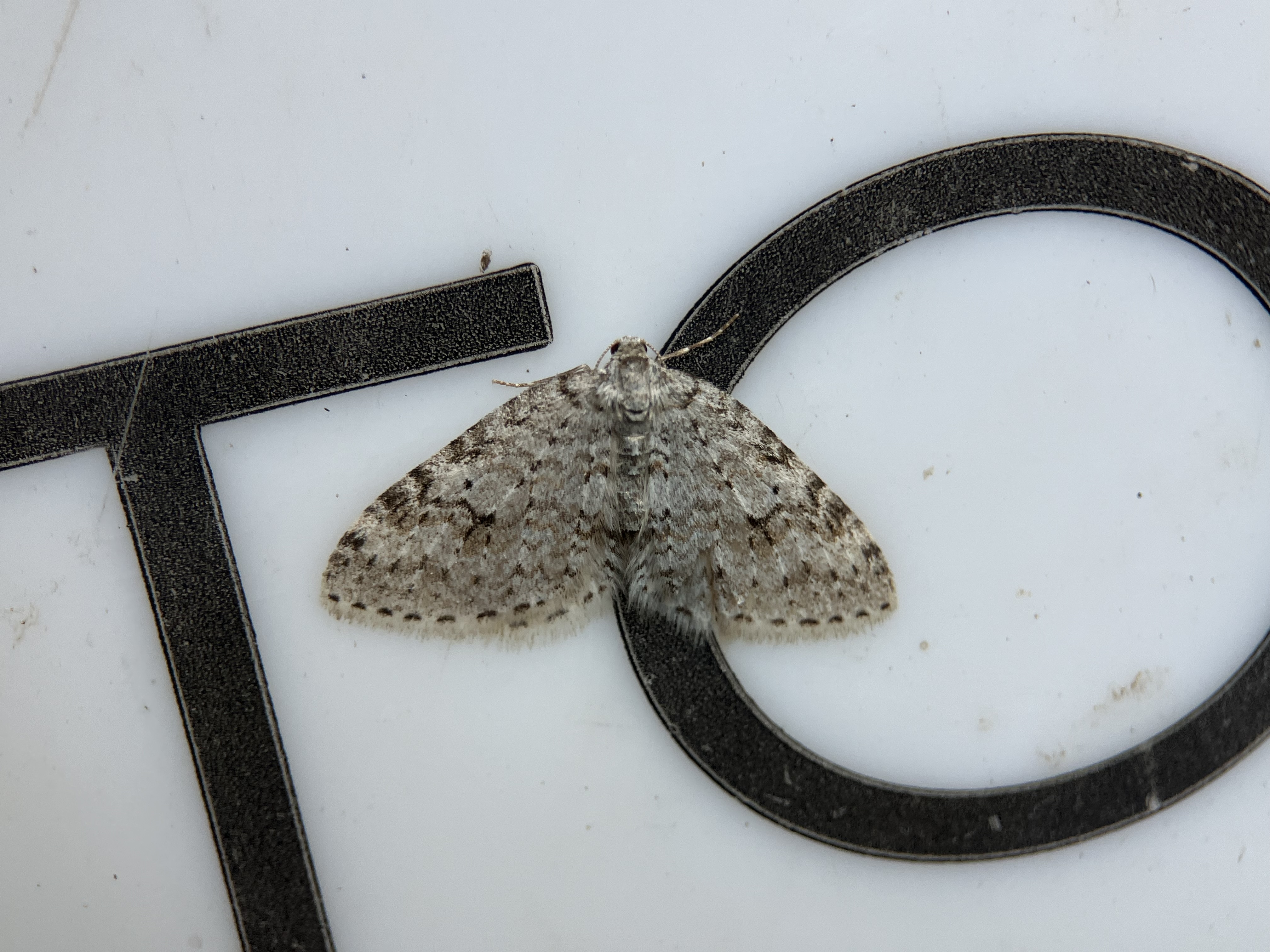
Eupithecia graefii = 2
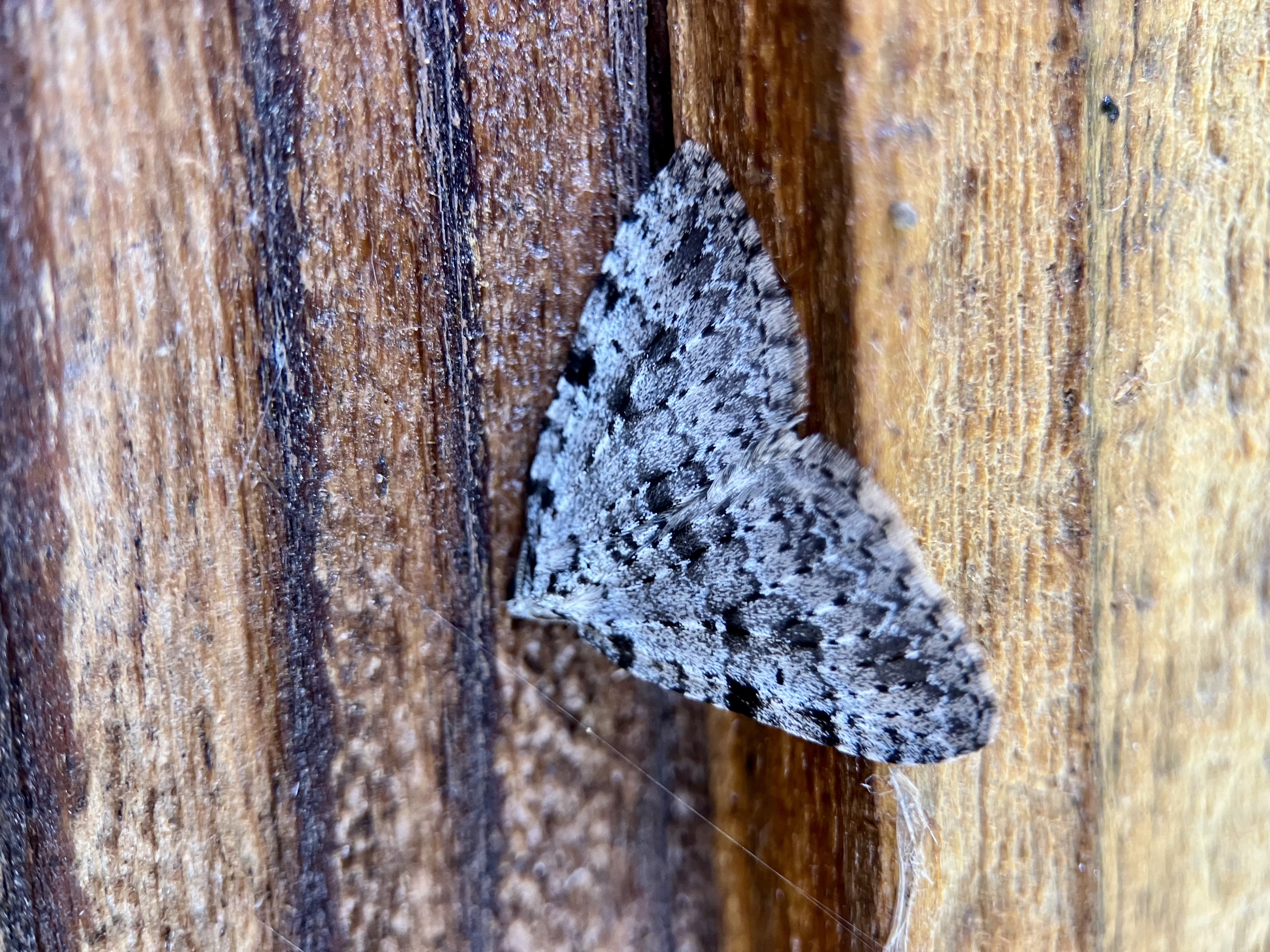
Melanolophia imitata = 1
Beetles:
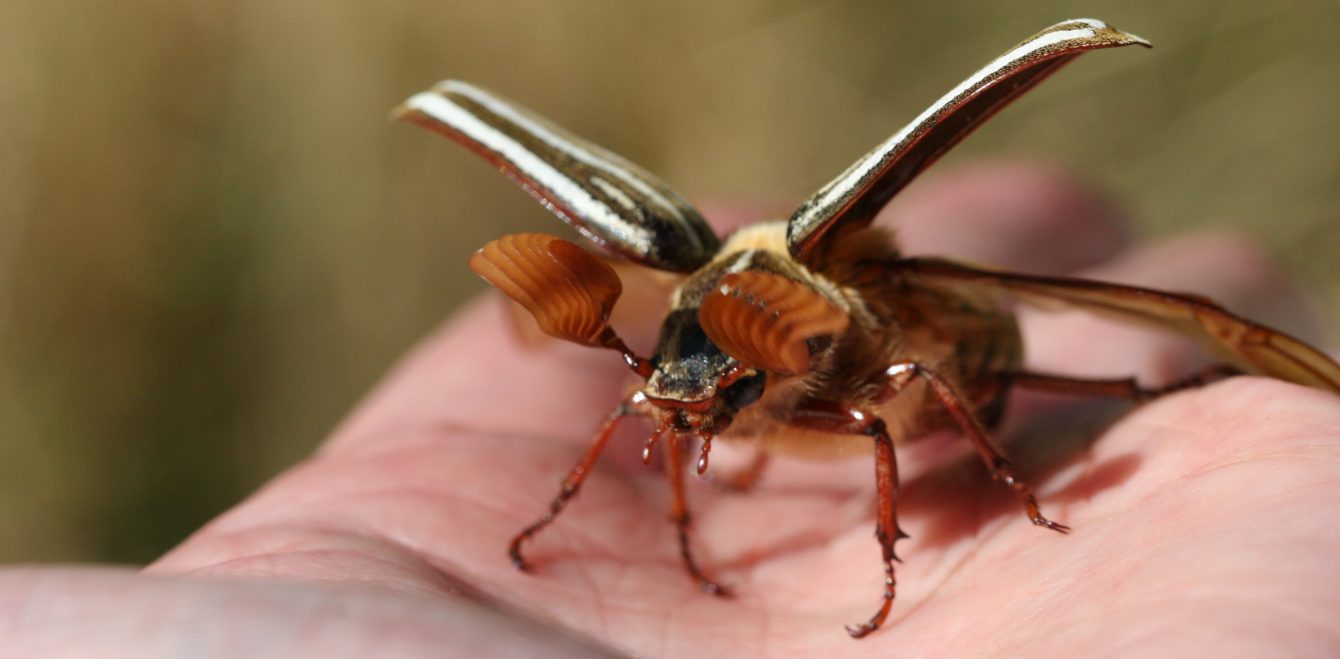
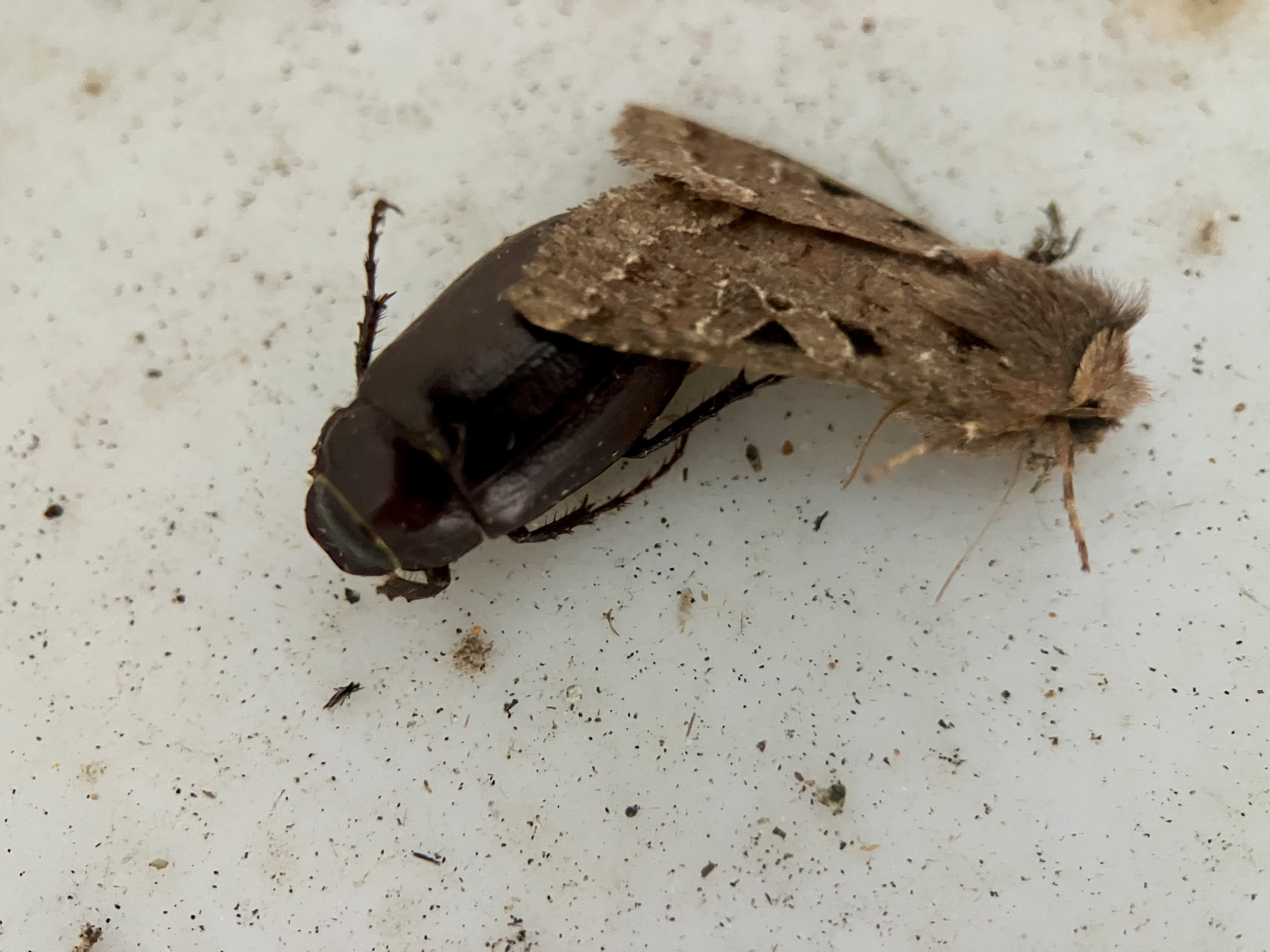
Diplotaxis sp. = 2
Strophosoma melanogrammum = 1
Wasps:
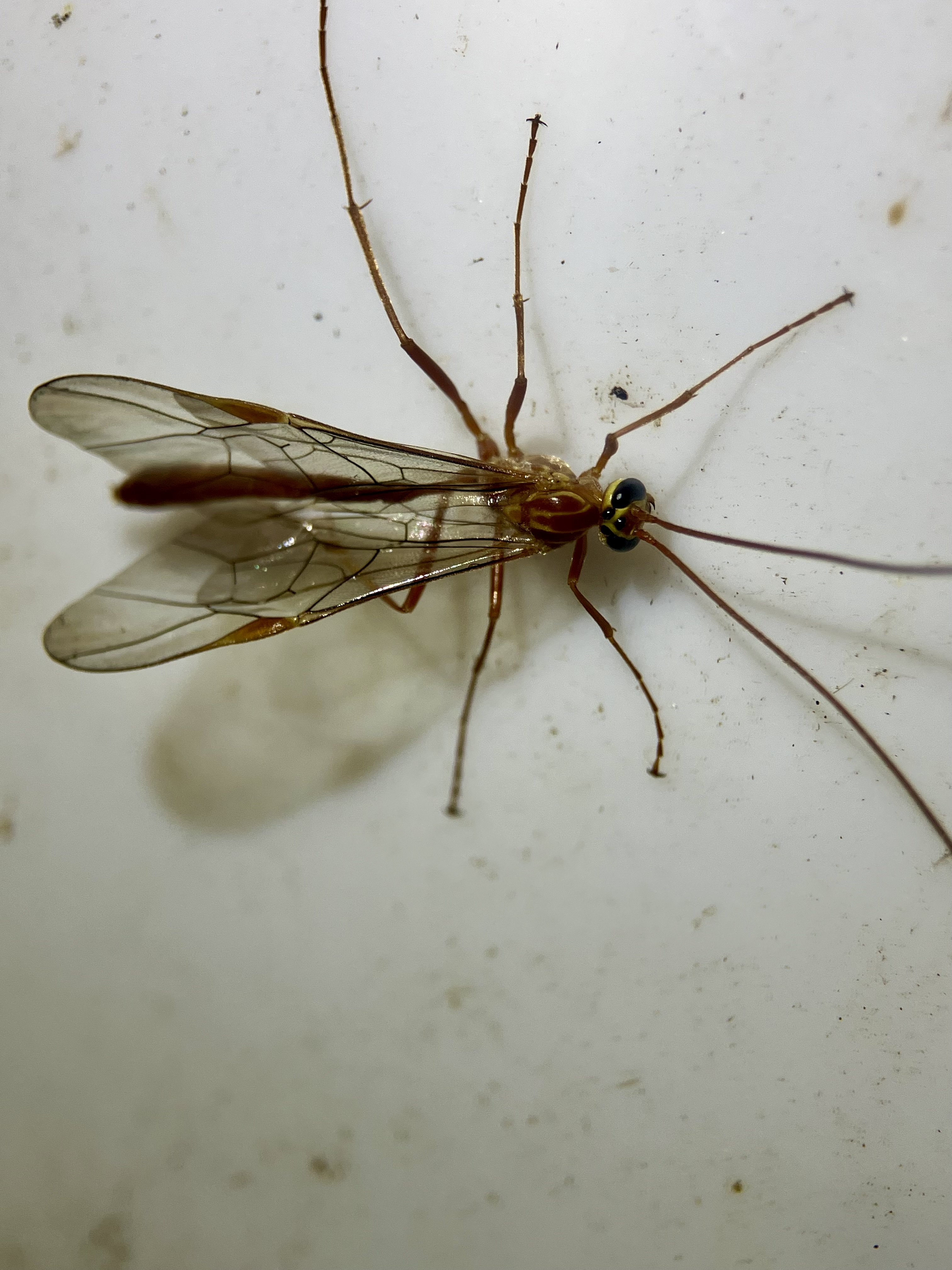
Ophion sp. = 1
Melanolophia imitataStrophosoma melanogrammumFeralia comstockiEupithecia graefiiEgira sp. (Either E. simplex or E. crucialis)Orthosia transparensOphion sp. I believeEgira rubricaOrthosia transparens Orthosia presesOrthosia hibisciFeralia comstockiOrthosia praesesDiplotaxis sp. beetle with Orthosia praesesOrthosia hibisiciEgira perlubensEgira sp. Eupithecia graefii
If I may, I’d like to leave you with something to consider. When you rake your leaves and clean your yard – especially if you are burning, chipping, or bagging and removing all those things that fall onto the ground, you are eliminating habitat for native species. If you can refrain the urge to spring clean around your property, you can help support life.
These may be somewhat drab colored moths and you may not even like them, but they sustain other organisms, including plants, because moths are also nighttime pollinators. Each species has a niche, and a role in the ecosystem (and ultimately the food web).
Please take note of nature around you. It’s actually beautiful and mysterious. Whether you like it or not though, nature is life. Nature matters. Little things like leaving the leaves can make a difference. Care.
Last night, I did manage to get my moth light working again and set things up to see what I might find this morning. While I didn’t really want to get out of bed at 7:30, keeping a routine is important to me. I find it tremendously helpful in managing the ups and downs of one’s mental perspective. You’ll have to bear with me a bit though. I will get to the moths, but have to vent about something that upset me. One of my three cats was chattering at the sliding door when I walked towards the kitchen. I looked out to see what he was watching, and there was a little bird on the ground, obviously suffering from some unfortunate injury (most likely from our neighbor’s free roaming cat). That made me feel sad and angry and it wasn’t the best start to my day.
Don’t get me wrong. I love cats, but I don’t agree that it is OK to allow your feline friend to maim and kill wildlife. I do take my kitties outside with me into our fenced area for supervised recess, but I DO NOT ever leave my cats out alone and certainly do not allow the killing of wildlife. Not even bugs. Drago the lizard may get away with bug murder on occasion, but his impact is quite minor compared to the magnitude of damage done by free roaming cats when it comes to decimating wildlife.
We need to get people to change and become more responsible pet owners. If you disagree with me on this, I might add that I also saw someone’s cat was literally ripped apart on their front porch by two unleashed huskies in Friday Harbor yesterday. That also makes me sad and angry. I blame the cat owner AND the dog owner. It was senseless and preventable.
I think humans need a license to own a pet. We also need ANIMAL CONTROL in San Juan County. There is none and these huskies have been loose and killed cats before. However, if the cat owner was allowing the cat to roam outside unsupervised and unprotected, that’s another layer to the incident. What if someone had left their baby in a stroller long enough to run inside for keys, a purse, etc.? No one should own a husky as a pet. They are notorious for getting loose and killing things. But humans are not all that smart are they?
I did go out to check on the bird. It sort of looked like a finch, or maybe even a female cowbird (except it was too small to be a cowbird). Let’s just say the head looked like a female cowbird’s, but the body was more finch like in size.
It can hop. I put a bit of seed out on the ground and left it alone. It would just stress the bird for me to try and capture it. Maybe it will recover.
Please don’t say, it’s just nature, because cats are not native here. Also, my neighbor’s cat dug up all of my garden pea starts last year and pooped in the garden bed. Pea starts are expensive. People need to keep their cats indoors, or in a catio, or just supervise them outside so they don’t cause problems or be killed by dogs that should not be owned by humans as pets.
After I checked on the bird, I did go and look at my moth bucket. There were 7 specimens. Not many, but I went through them and here’s what I found. Six moths and one wasp.
Cerastis enigmatica, the Enigmatic Dart Moth Orthosia hibisci, the Speckled Green Fruitworm MothEgira crucialis , I believe. Egira for certain though Orthosia sp. I am undecided about species for this one. Ophion wasp.
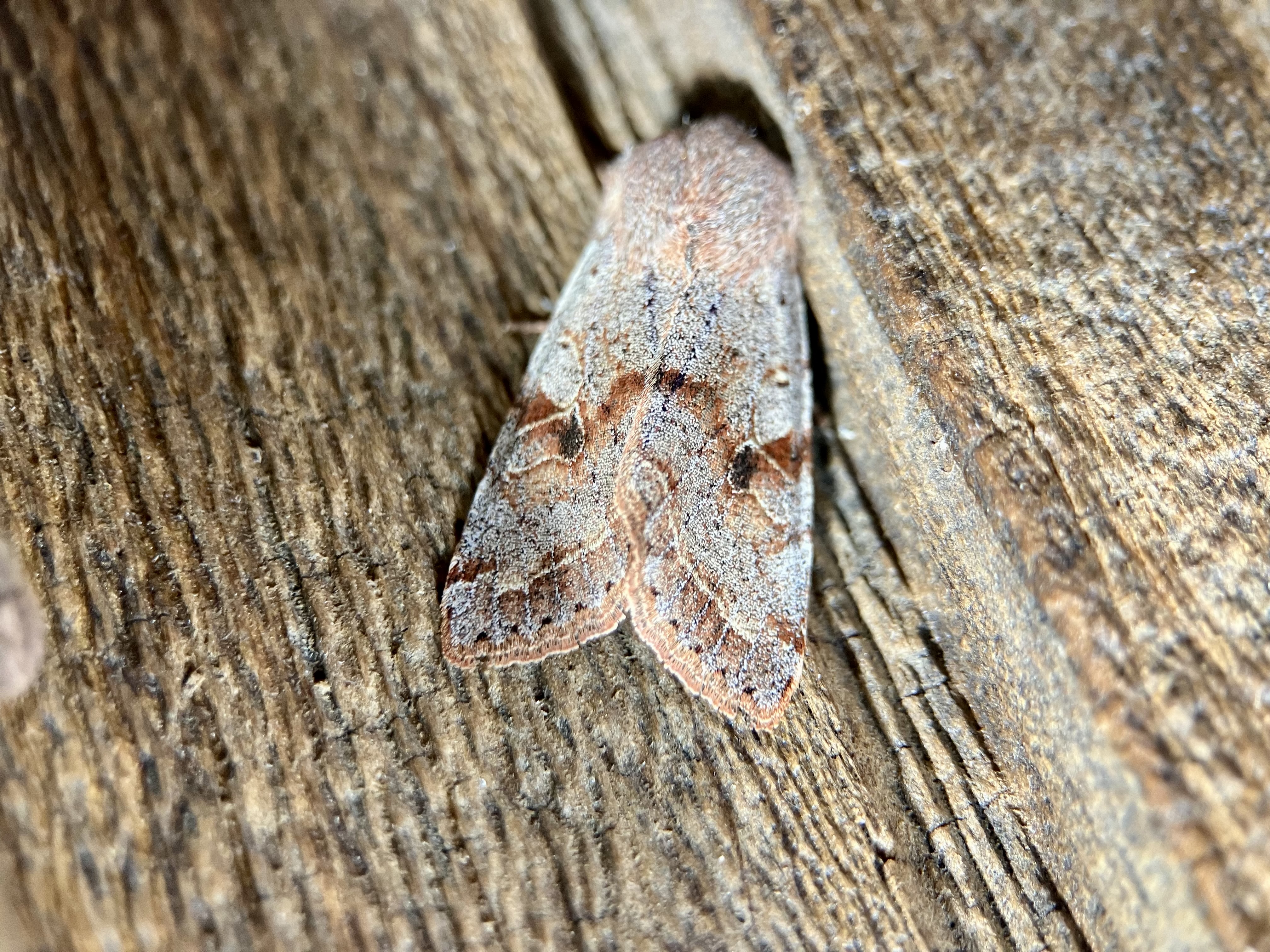
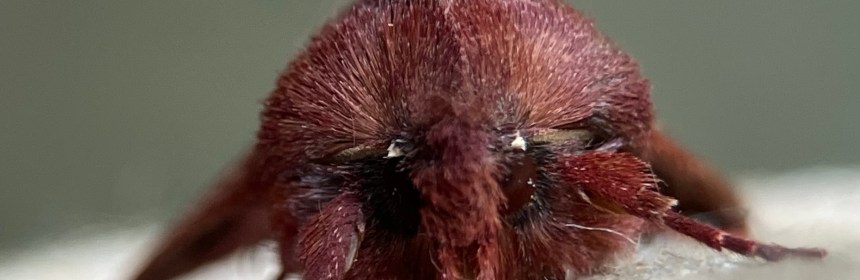
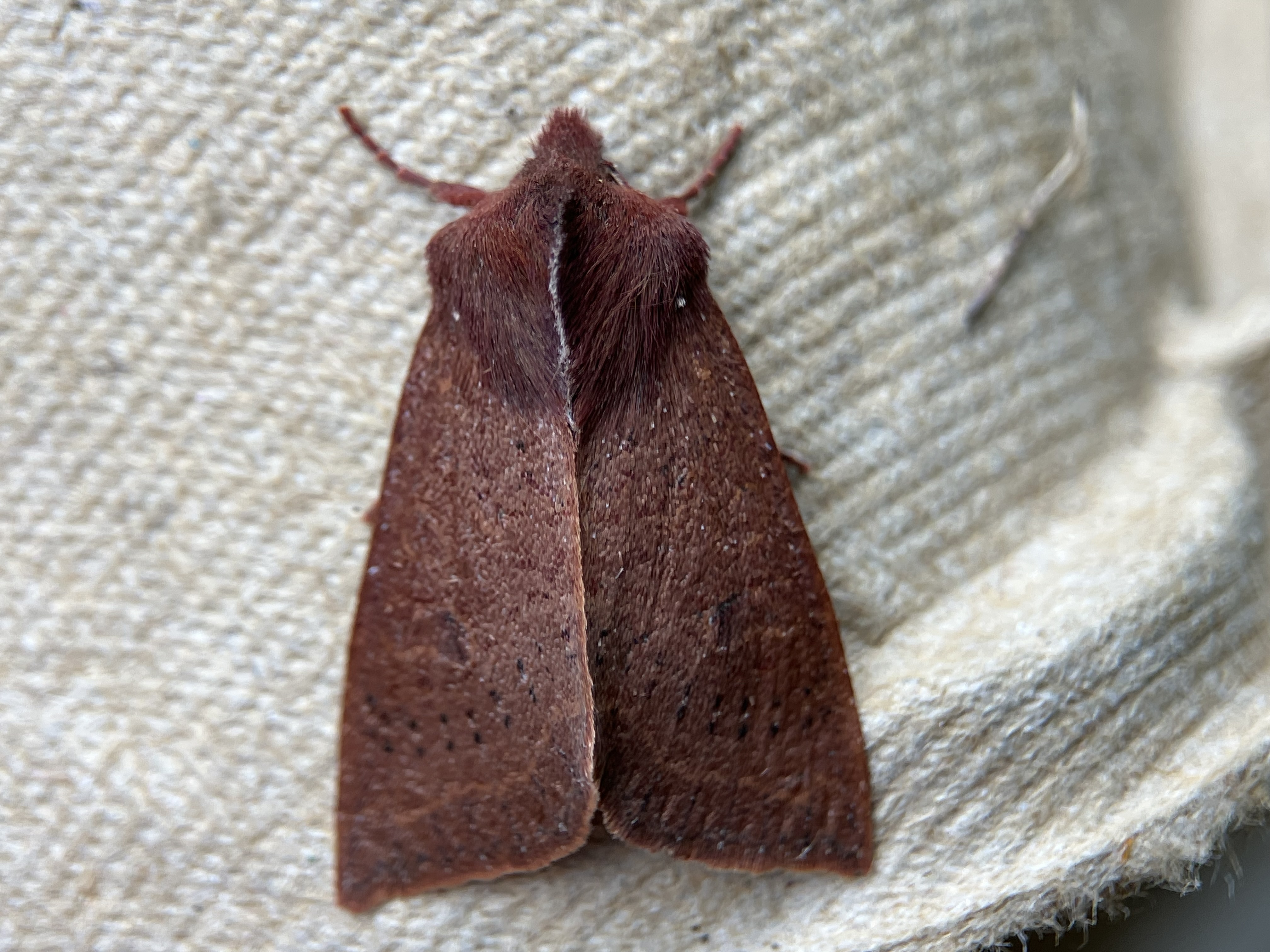
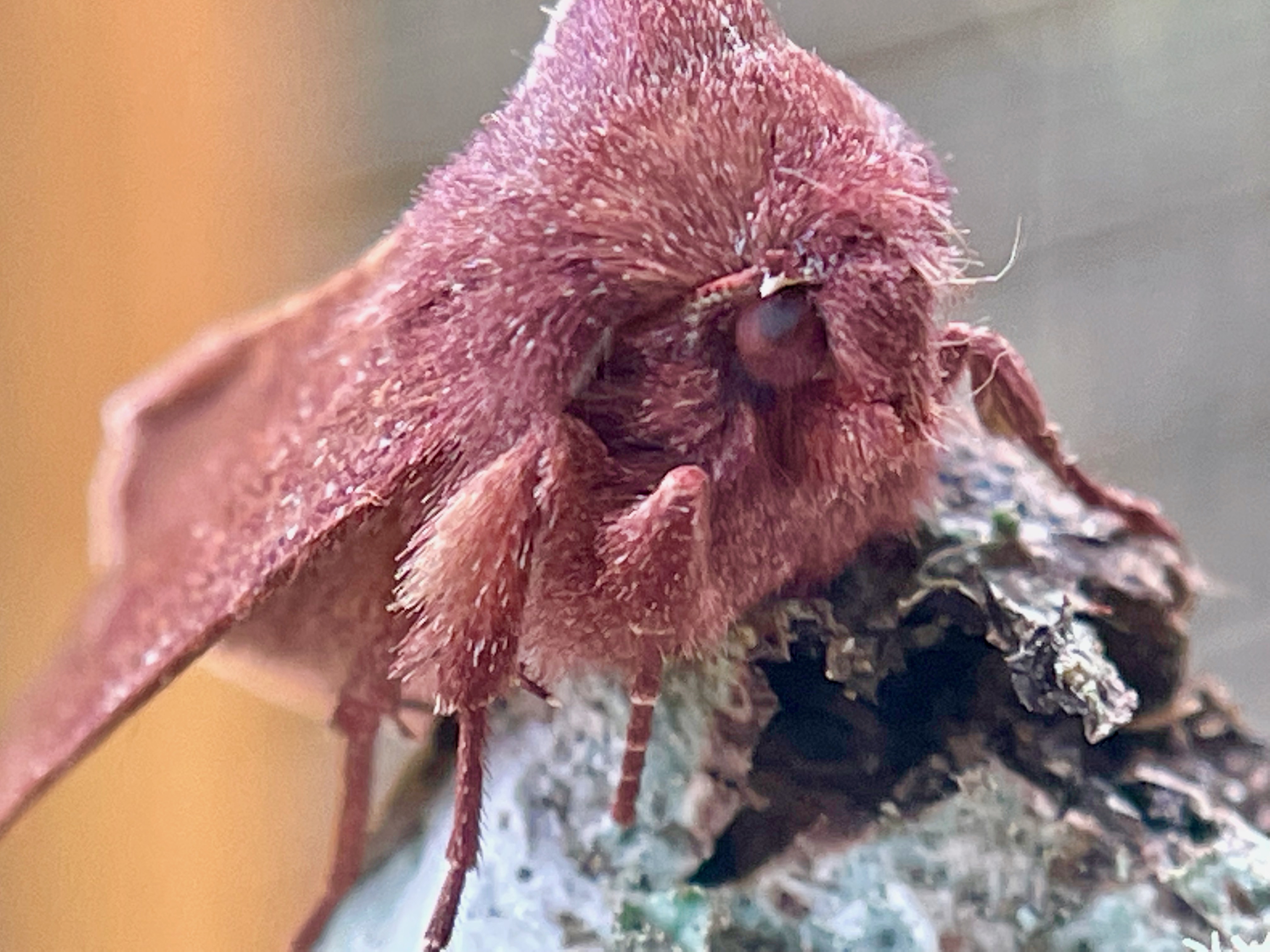
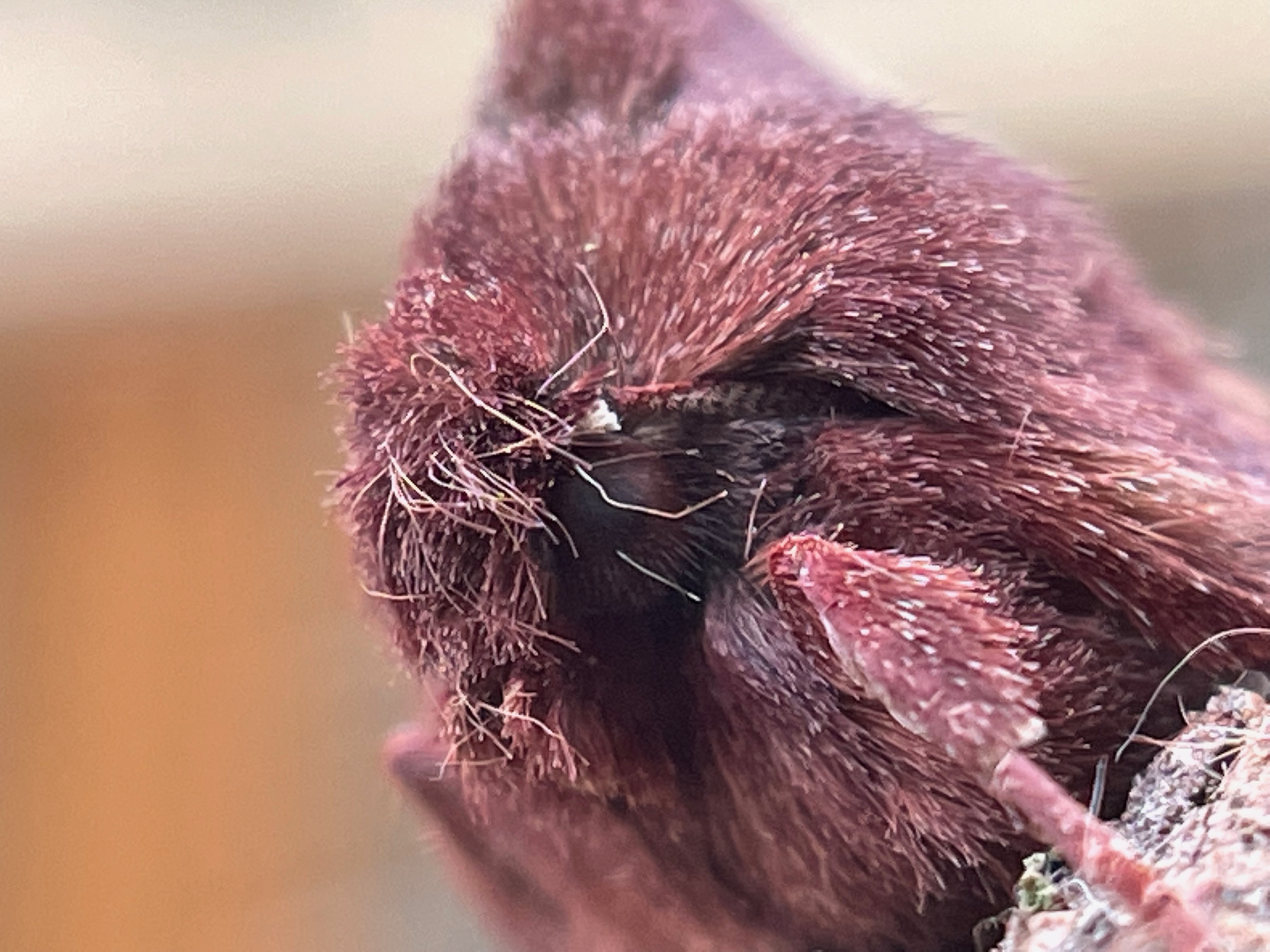
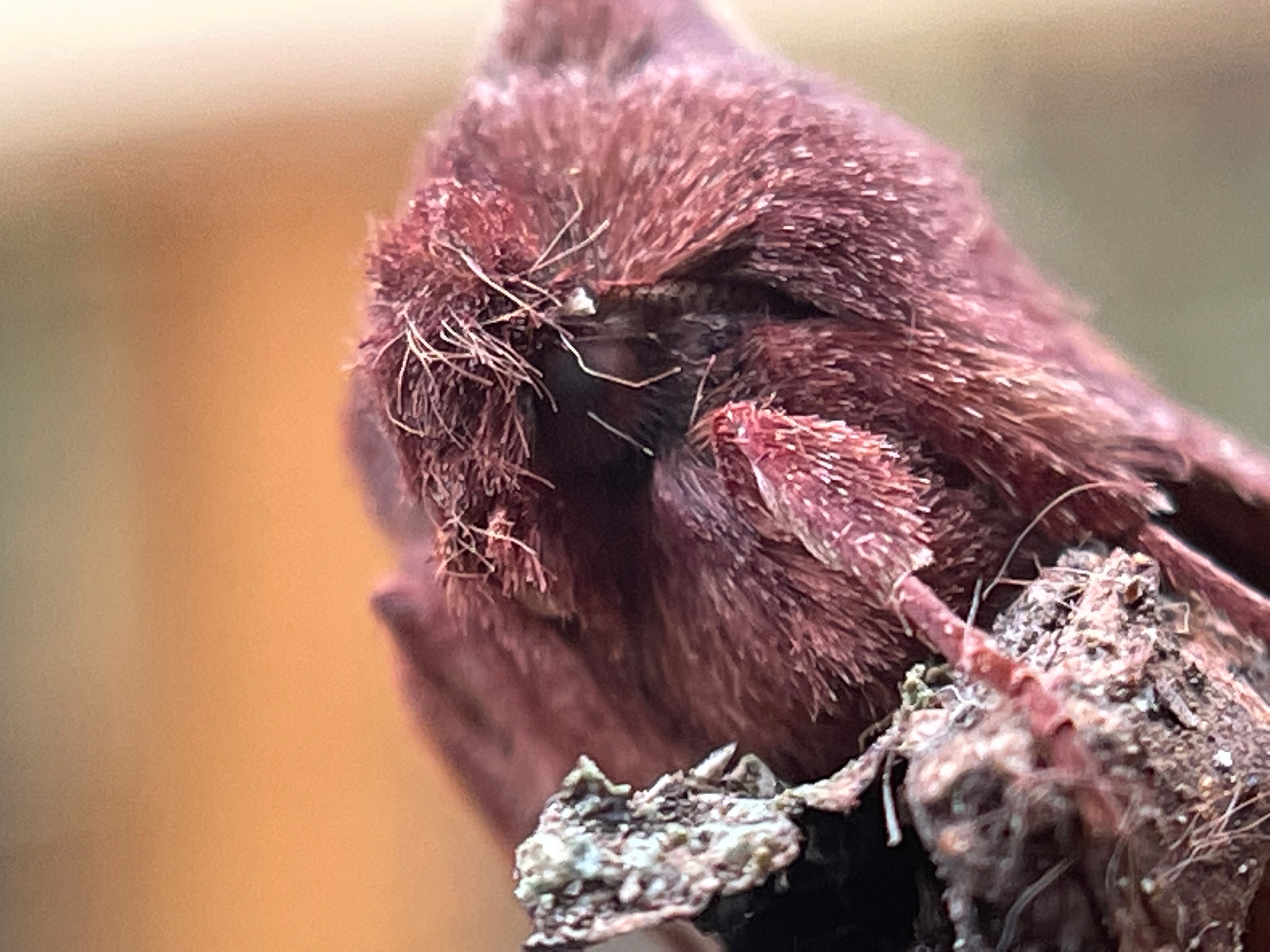
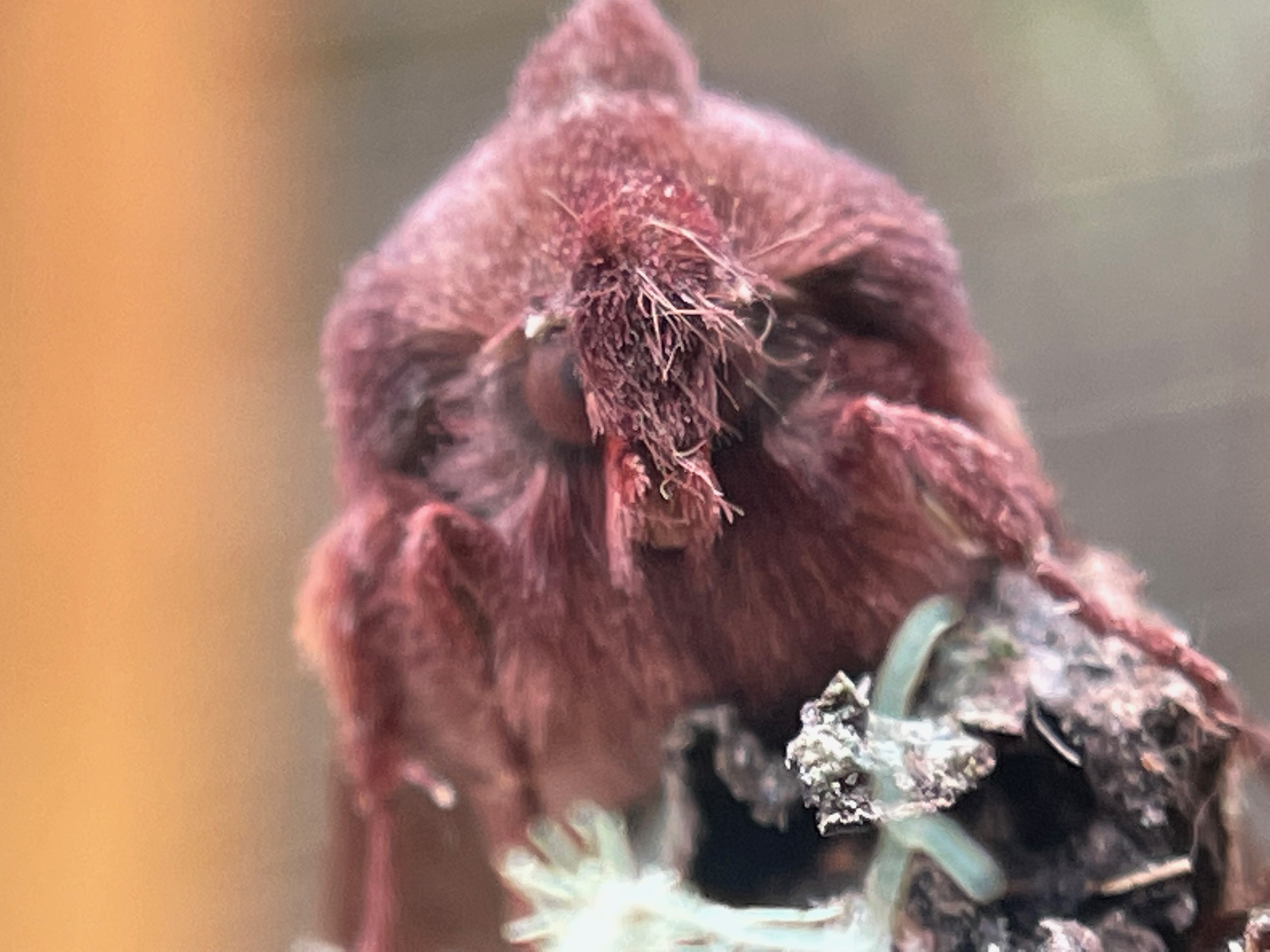
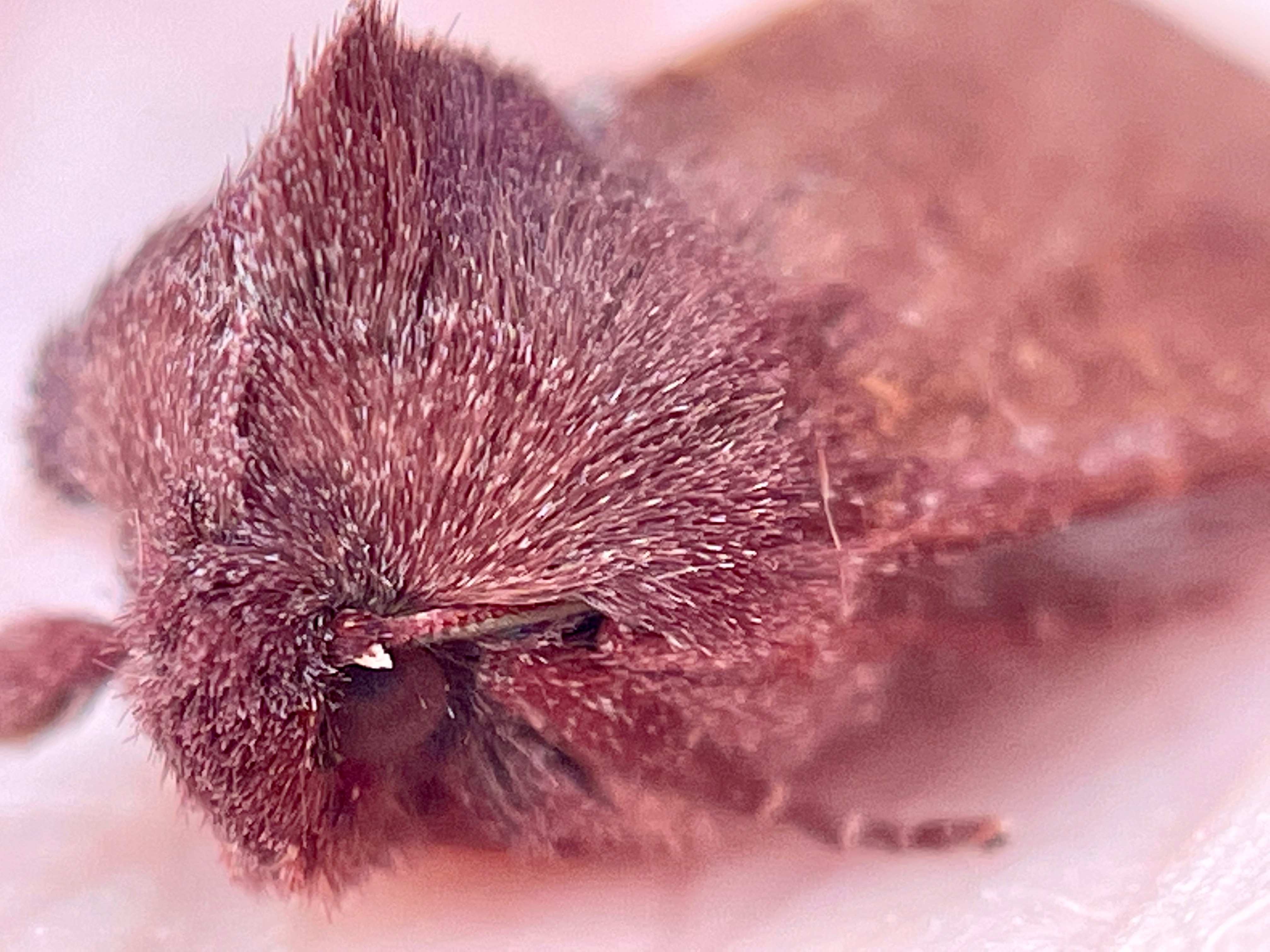
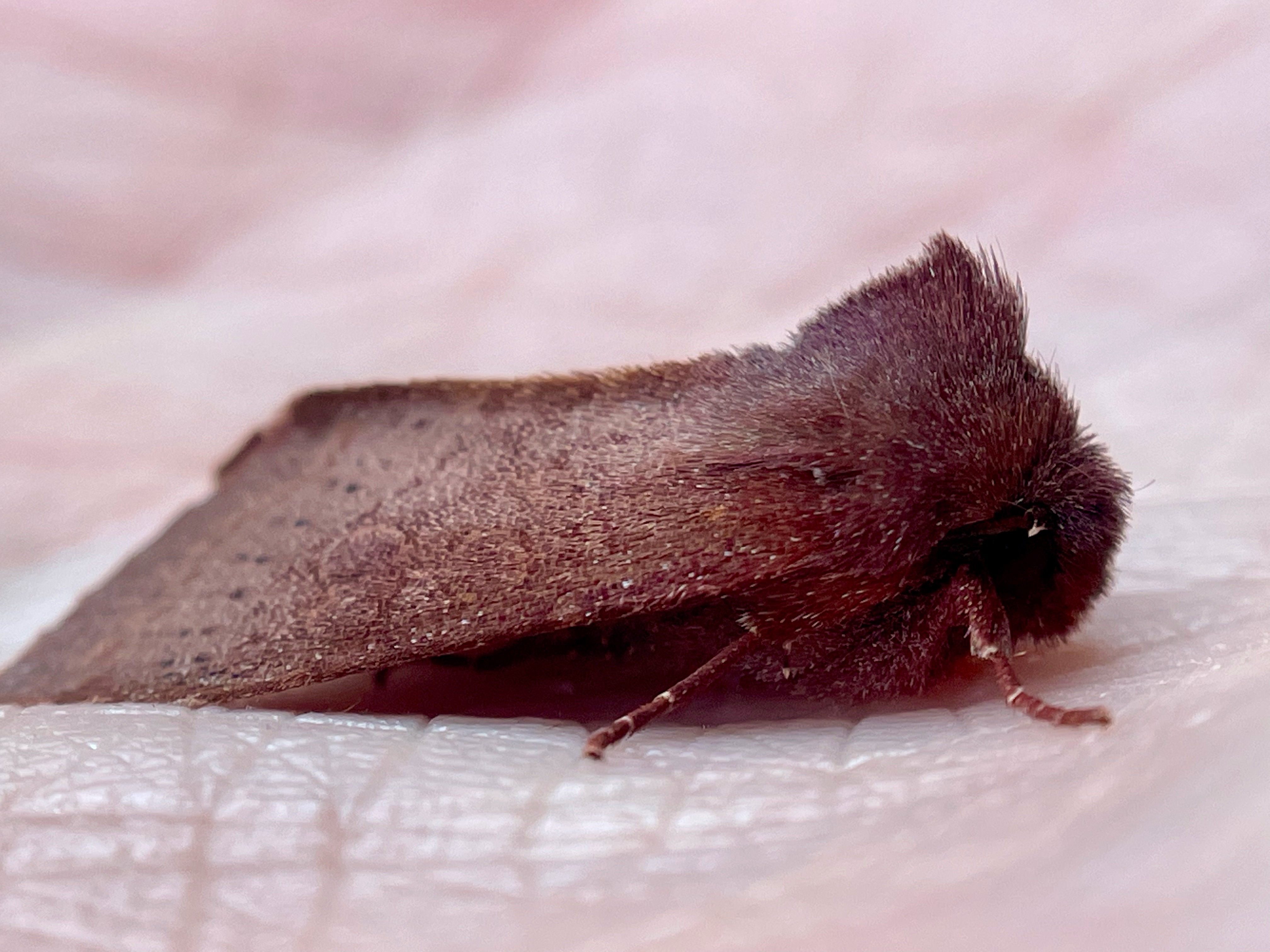
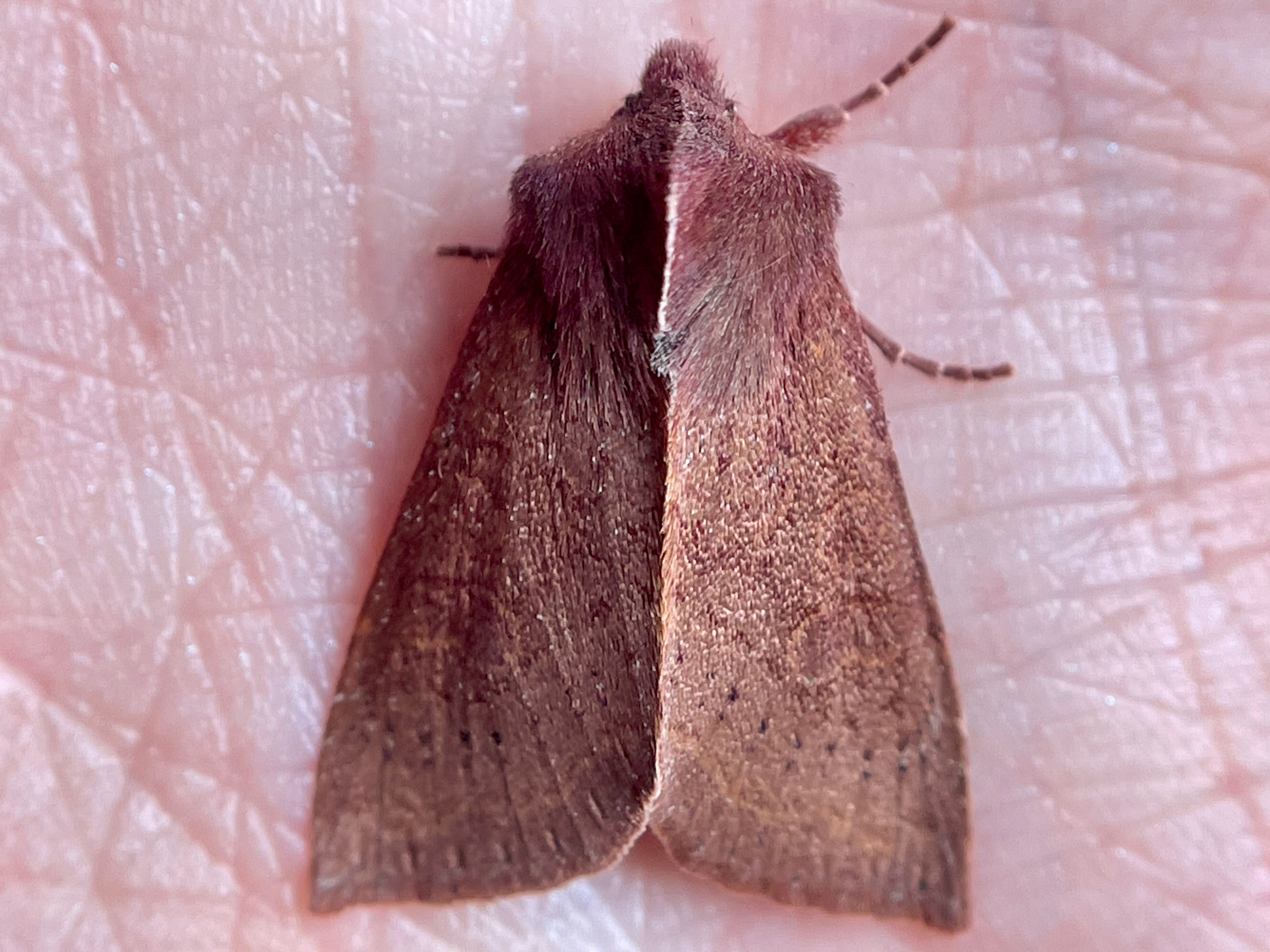
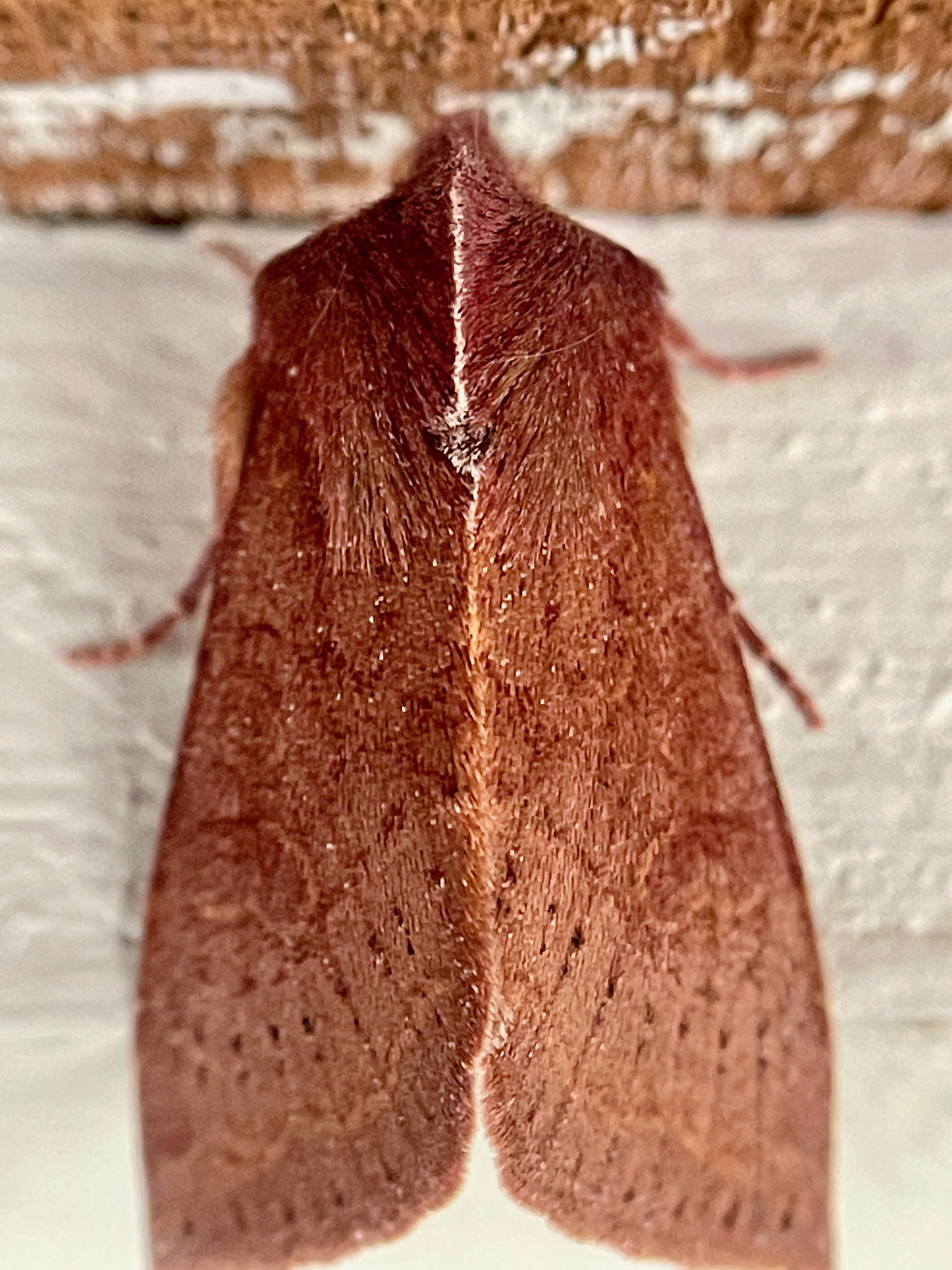
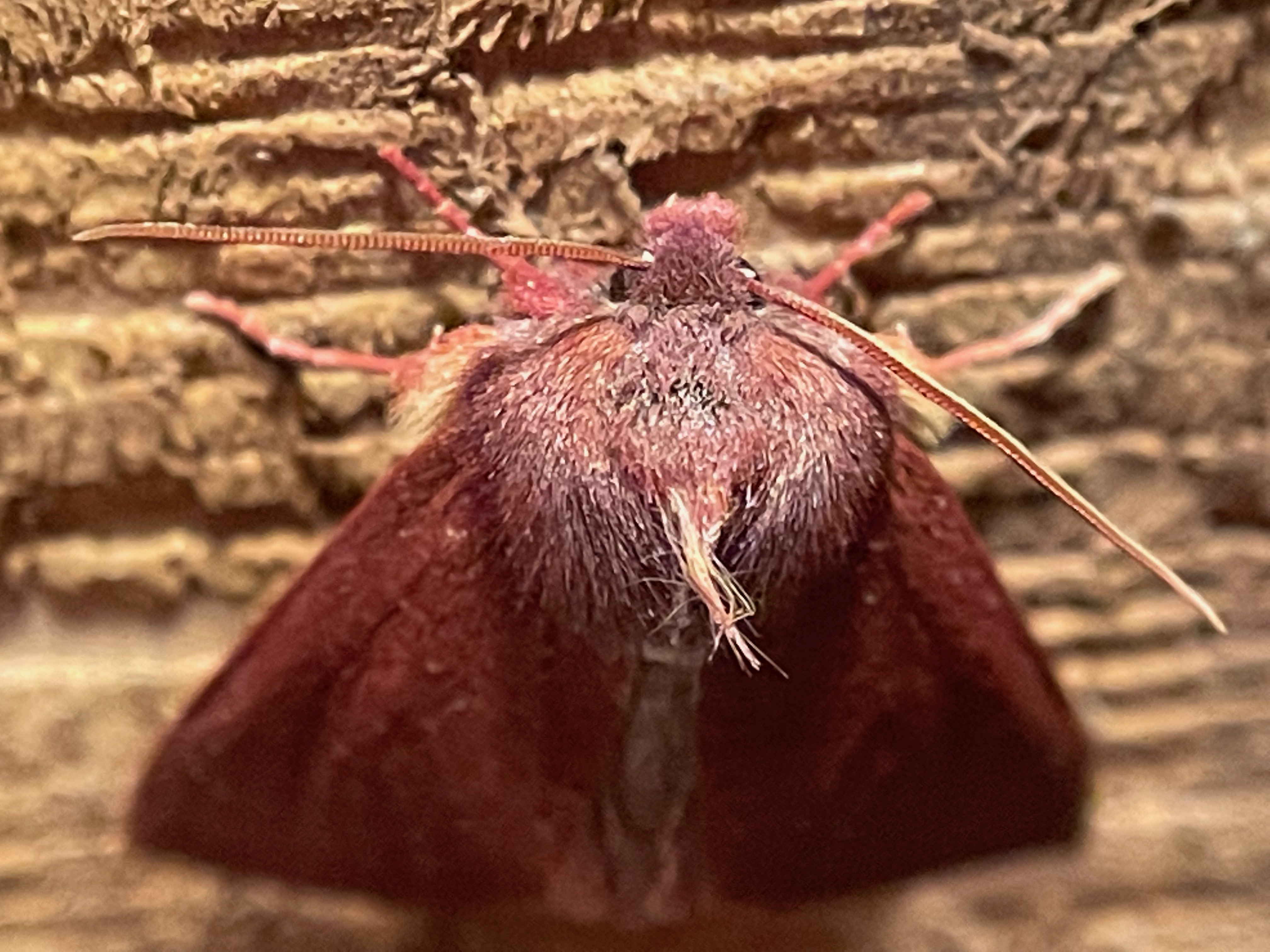
The next moth below looks like it has a little pixie cap on. It’s one of my favorites. The red colors are so pretty. It’s in genus Orthosia like some of the others above, but I believe this one is Orthosia transparens.
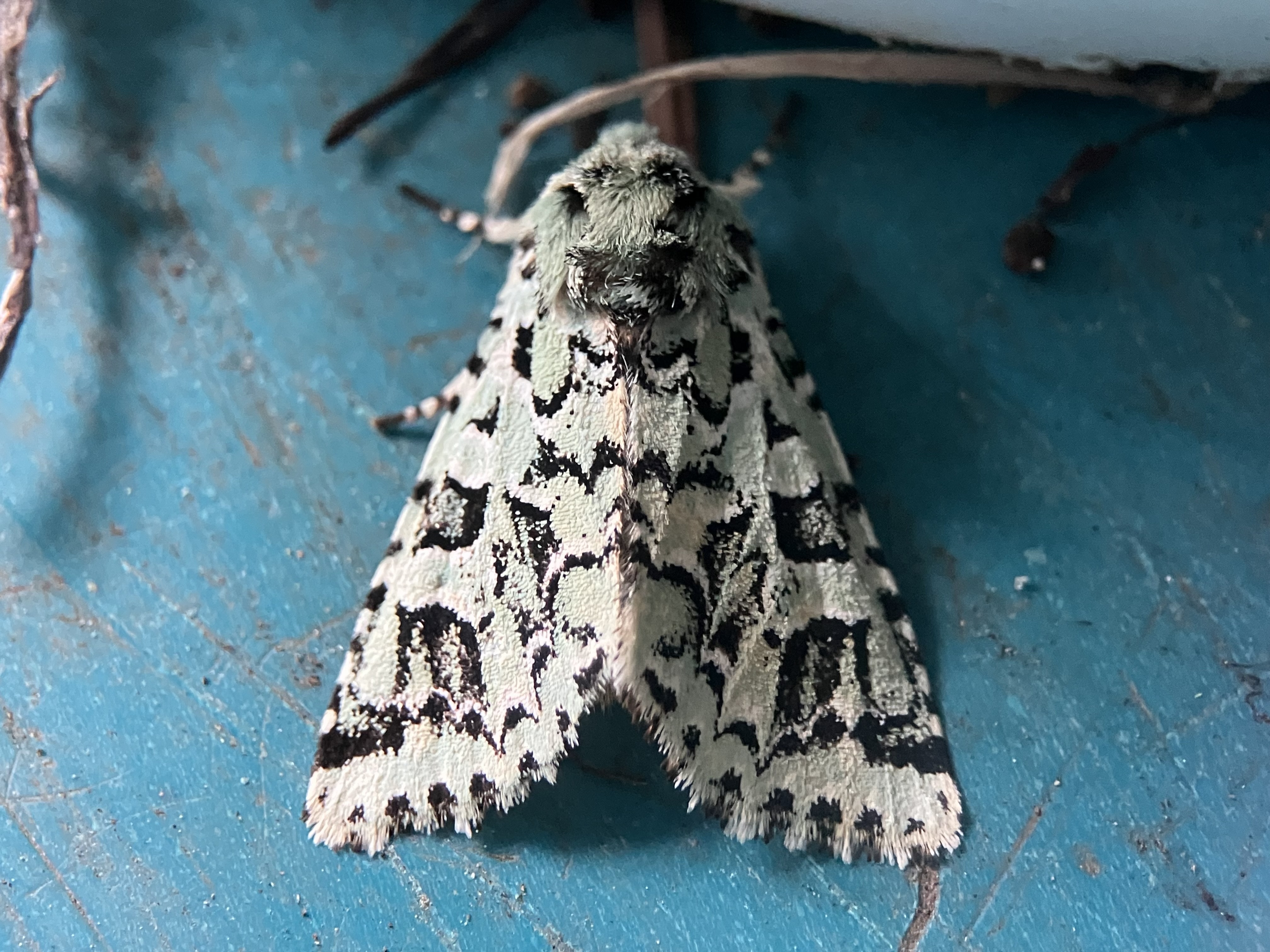
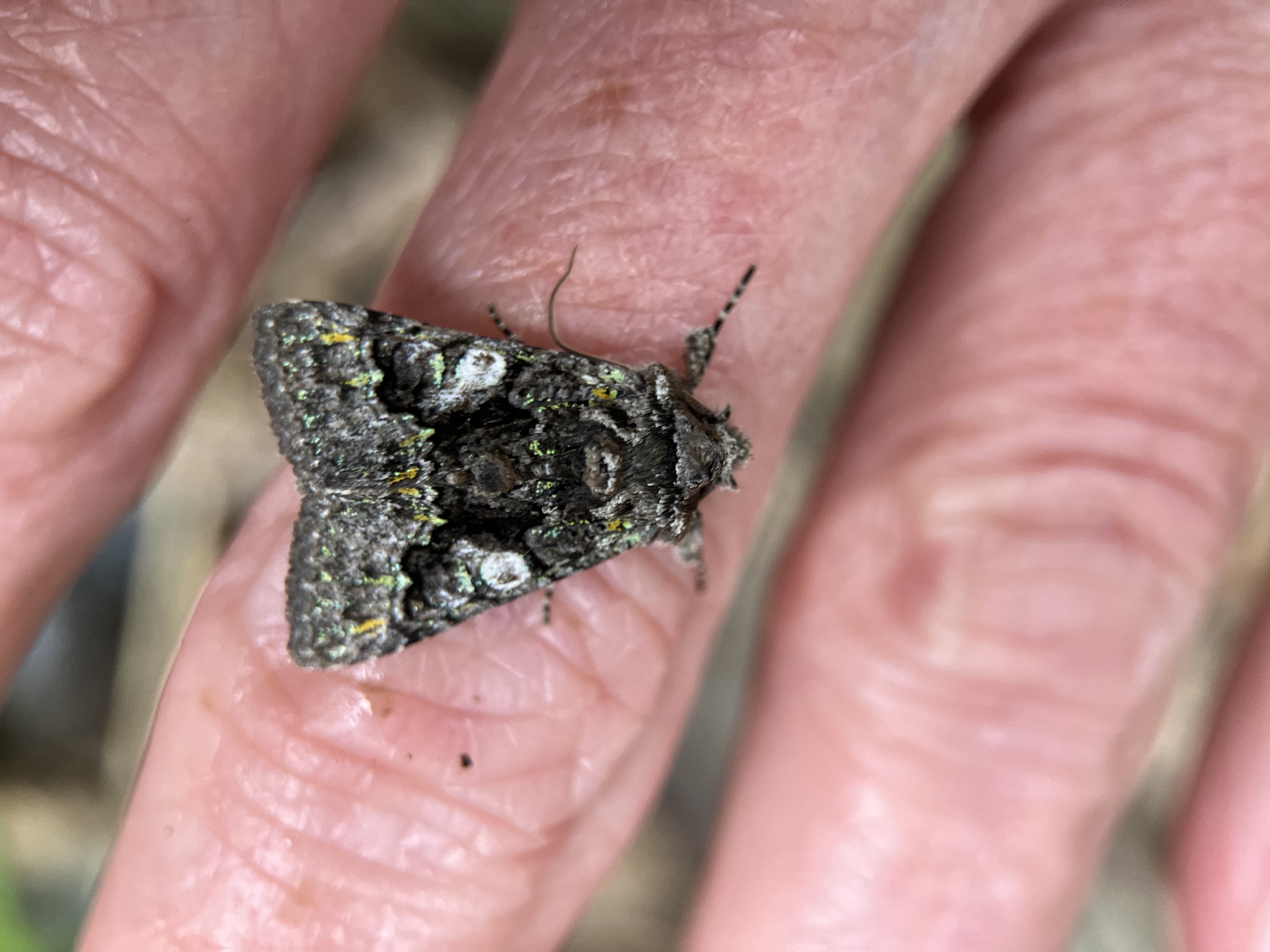
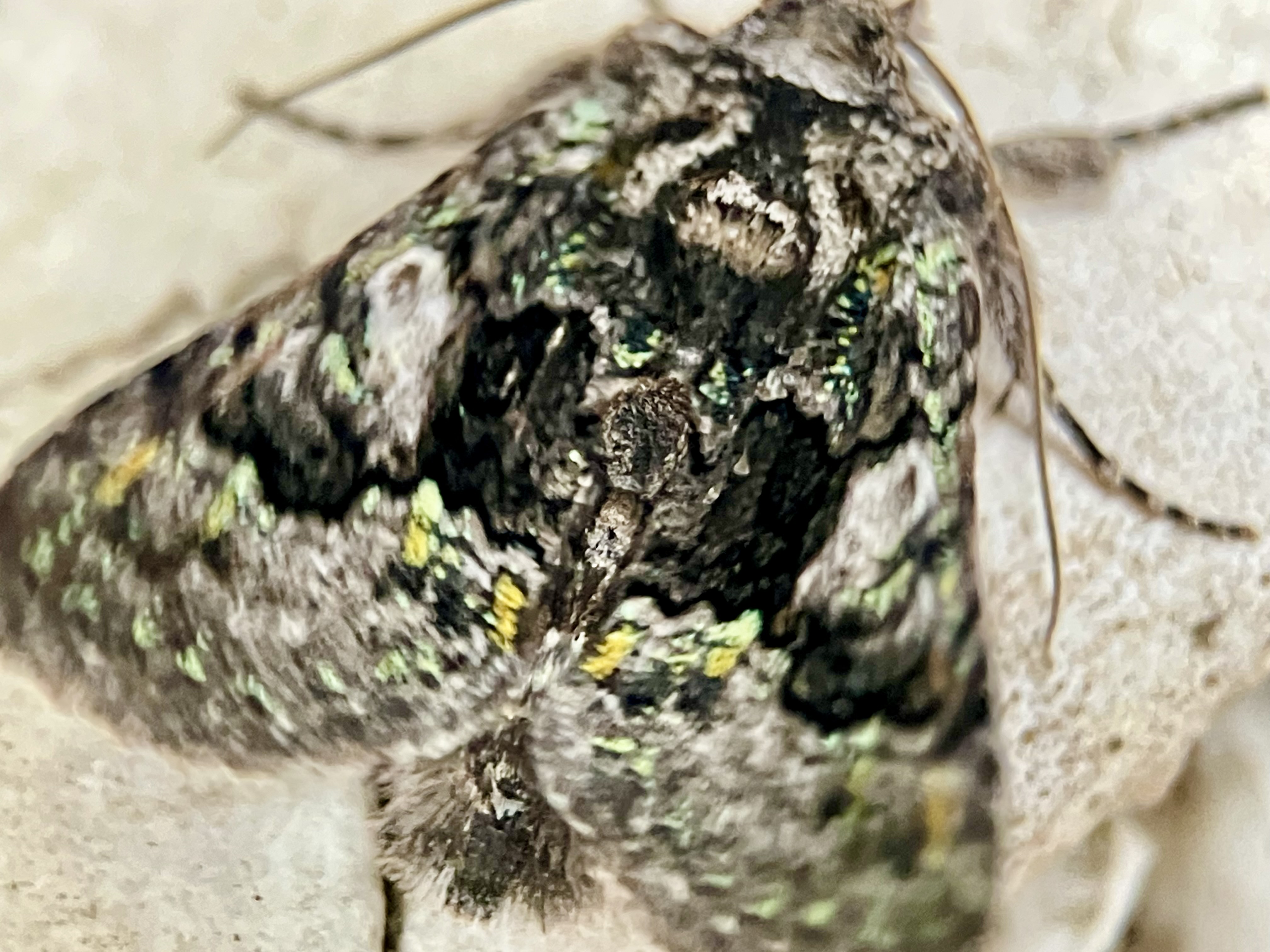
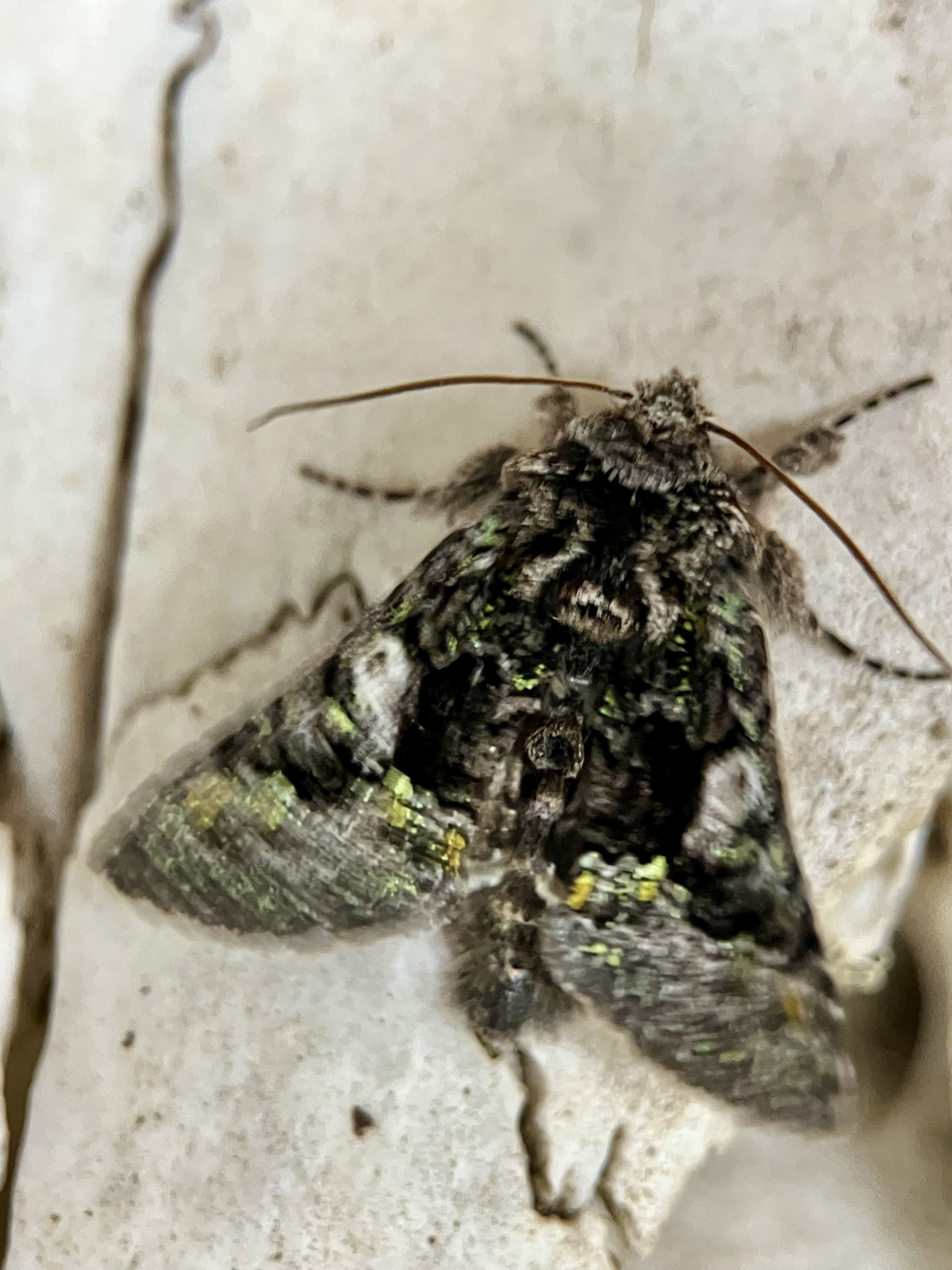
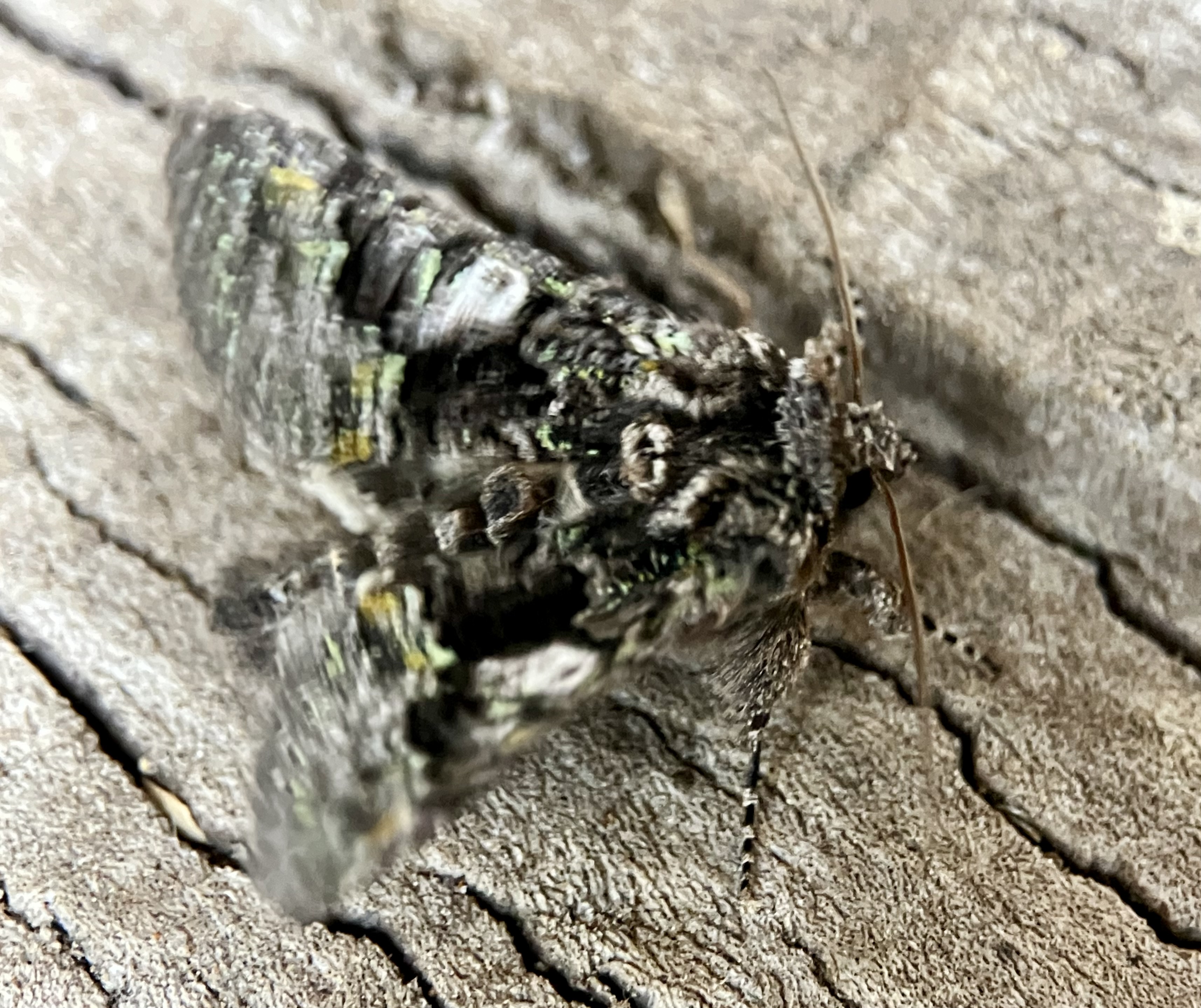
I saved the best one for last. I have only seen this moth on two other occasions, but it one so remarkable, you remember it well. This is an owlet moth called Behrensia conchiformis. I would love to discover what makes the interesting metallic colors in the wings. The larvae of this species are foodplant specialists. They feed only on honeysuckle (Lonicera spp.) and snowberry (Symphoricarpos spp.) in the Caprifoliaceae.
Thanks for reading…especially for reading my rambling rants of the day. While I’d like to stick to just bugs, I am finding it somewhat therapeutic to include my feelings here, and to interject some of my opinions. They are mine and yours may be different. I respect that, but I hope perhaps upon reflection, even someone who might initially disagree with my perspective, might have a change of heart.
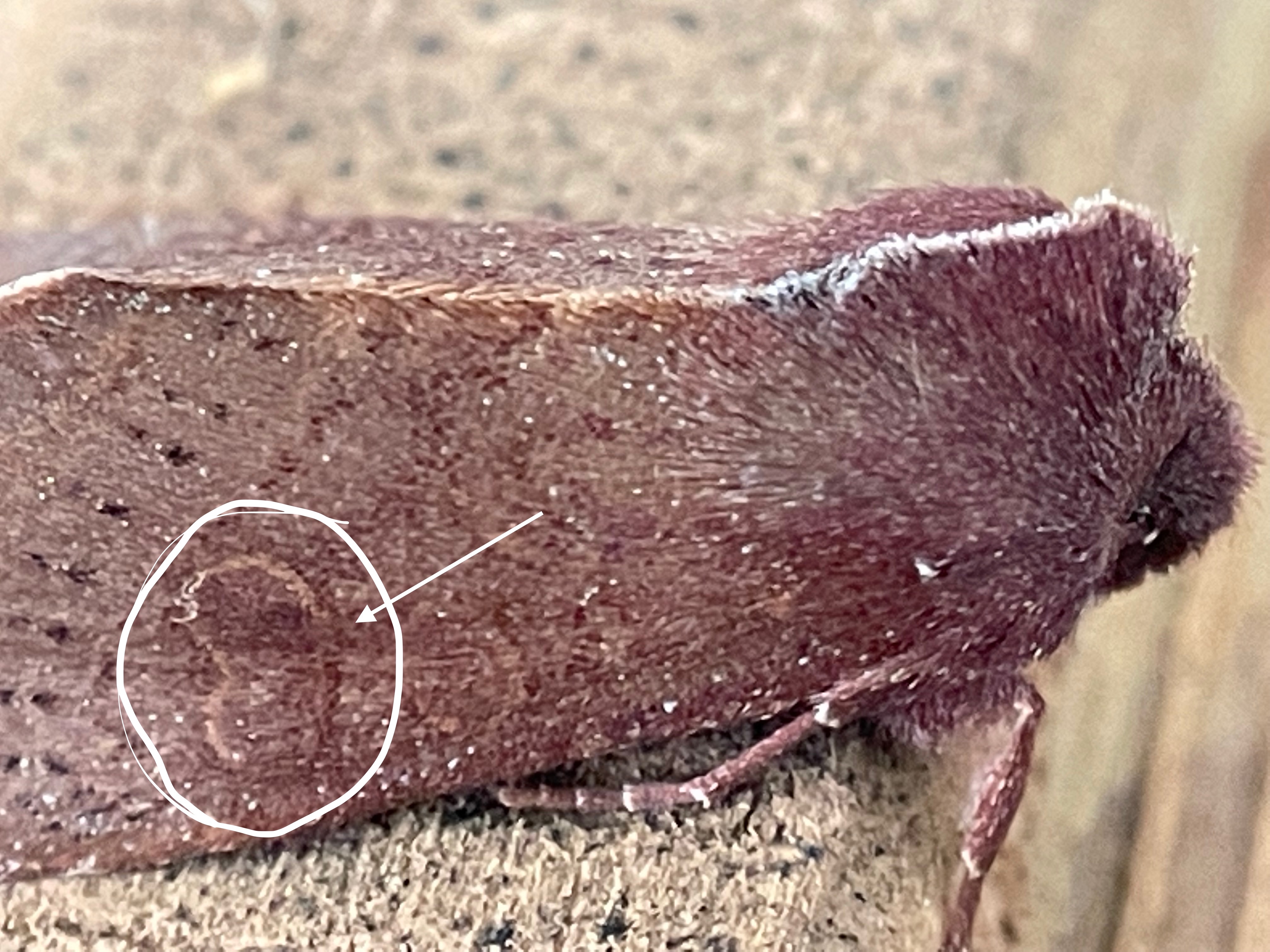
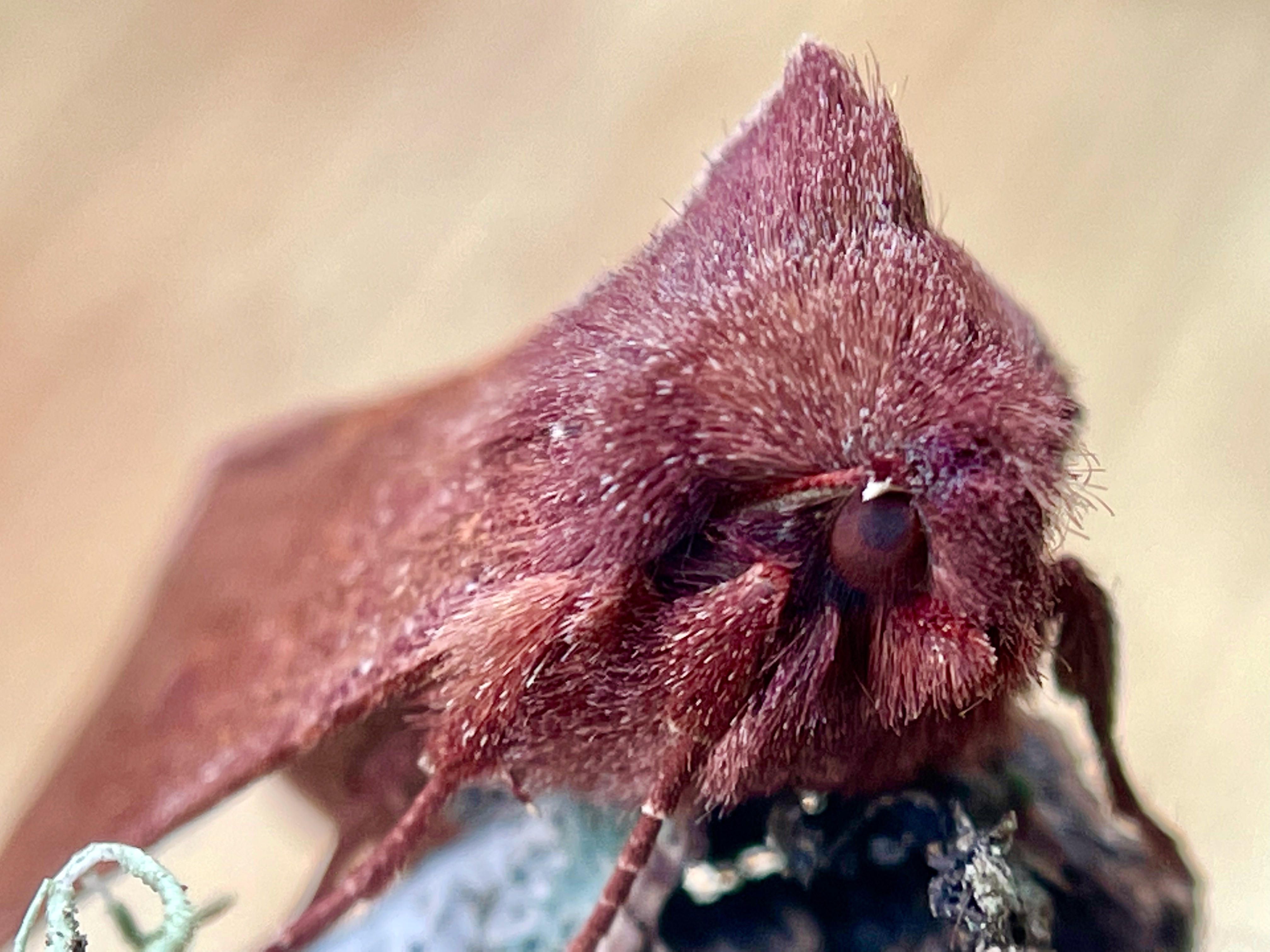
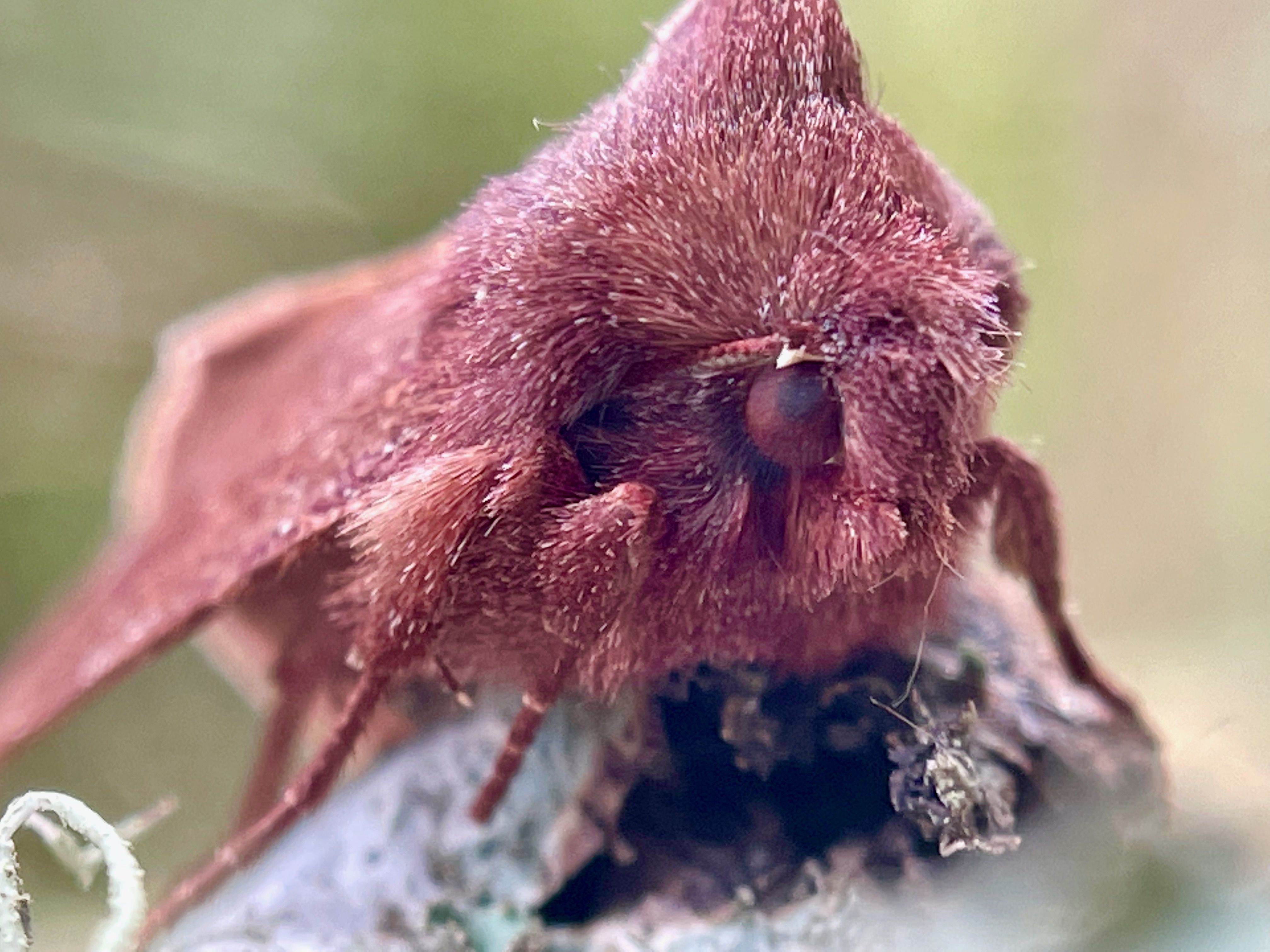
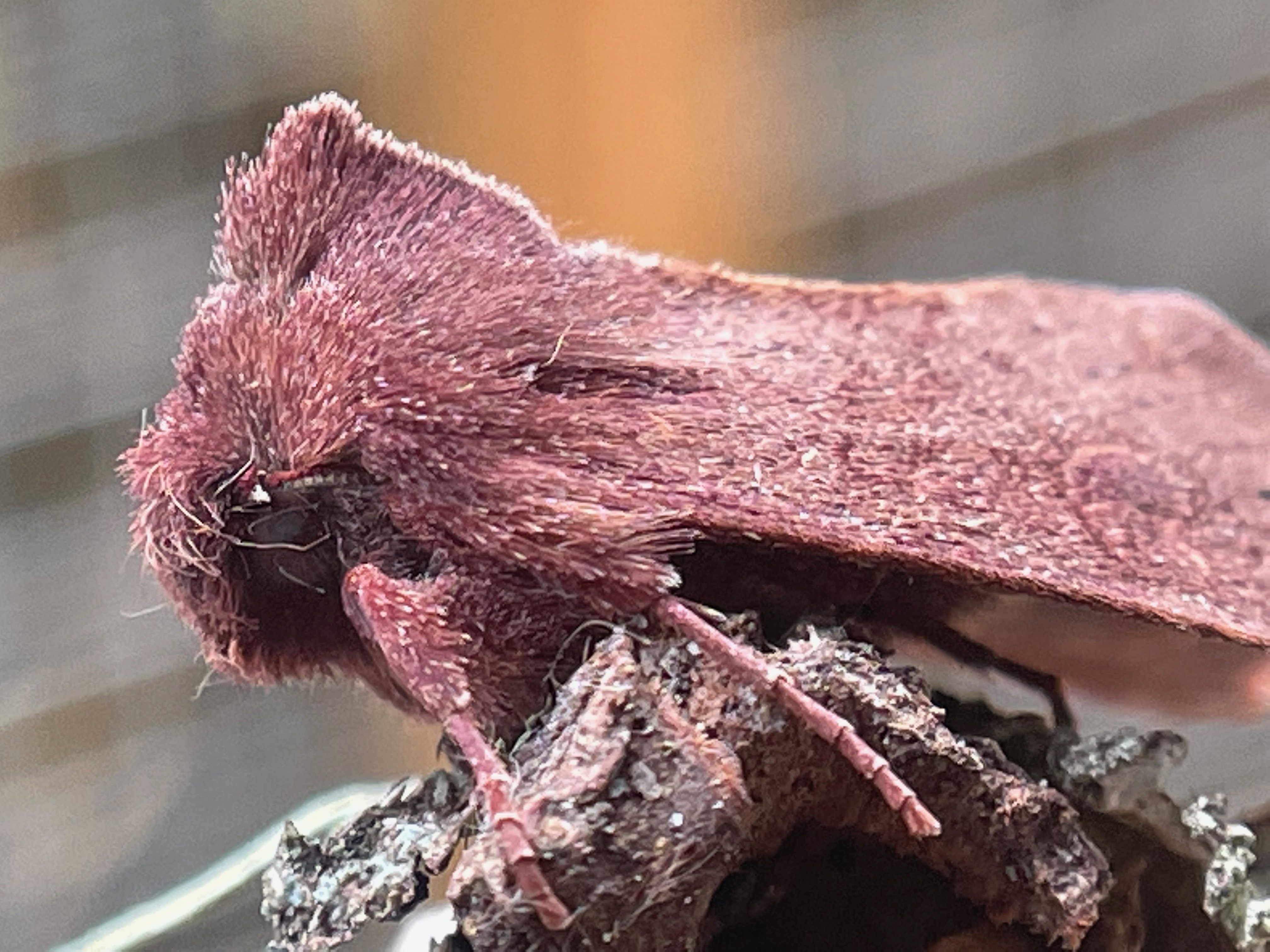
Orthosia transparens – the Transparent Quaker Moth
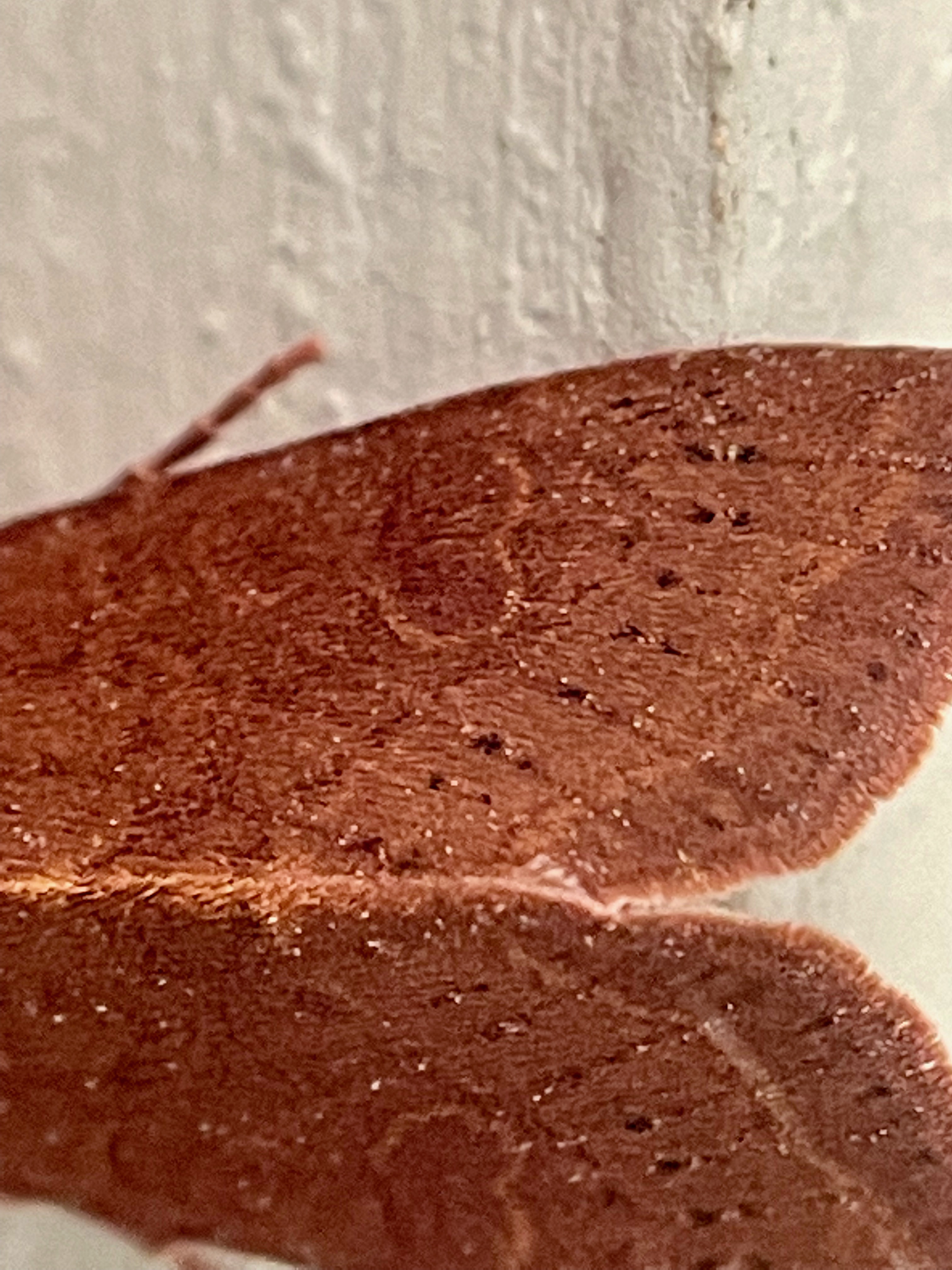
I’d really love it if I could rename this moth. Strawberry muppet heart moth is what I’d call it. Check out the little heart-shaped markings on it’s wings.
Orthosia transparensOrthosia transparensOrthosia transparensOrthosia transparens – with heart mark on wing
Orthosia transparens is a medium sized (15-17mm) , brownish red Noctuid moth that flies in our region in early spring. The common name for the species is Transparent Quaker Moth. Caterpillar food plants include salal (Gaultheria shallon), madrone (Arbutus menziesii), and rhododendron (Rhododendron macrophyllum). This species is native to the PNW region and not considered pests of economic significance. A map of the geographic distribution can be accessed here – http://mothphotographersgroup.msstate.edu/species.php?hodges=10479
Noctuidae is the family with the awful common name, “cutworm,” which leads folks to deem them evil little garden gremlins that should be stomped on or tossed out on the ground for birds to scavenge. Not all cutworms are bad, and certainly many more of us would embrace them if we knew they were going to turn out to be so cute.
I’m fine with a bit of herbivory on our salal, madrone, and rhododendrons. These little Strawberry Muppets are welcome to fly to my porch light any spring night.


























 Bugging You From San Juan Island