Discovering the Golden Paper Wasp: A Native Treasure
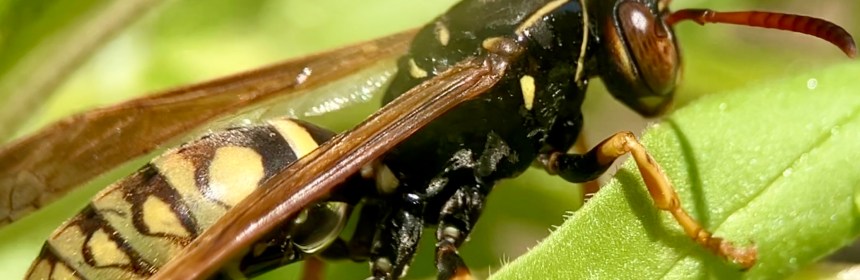
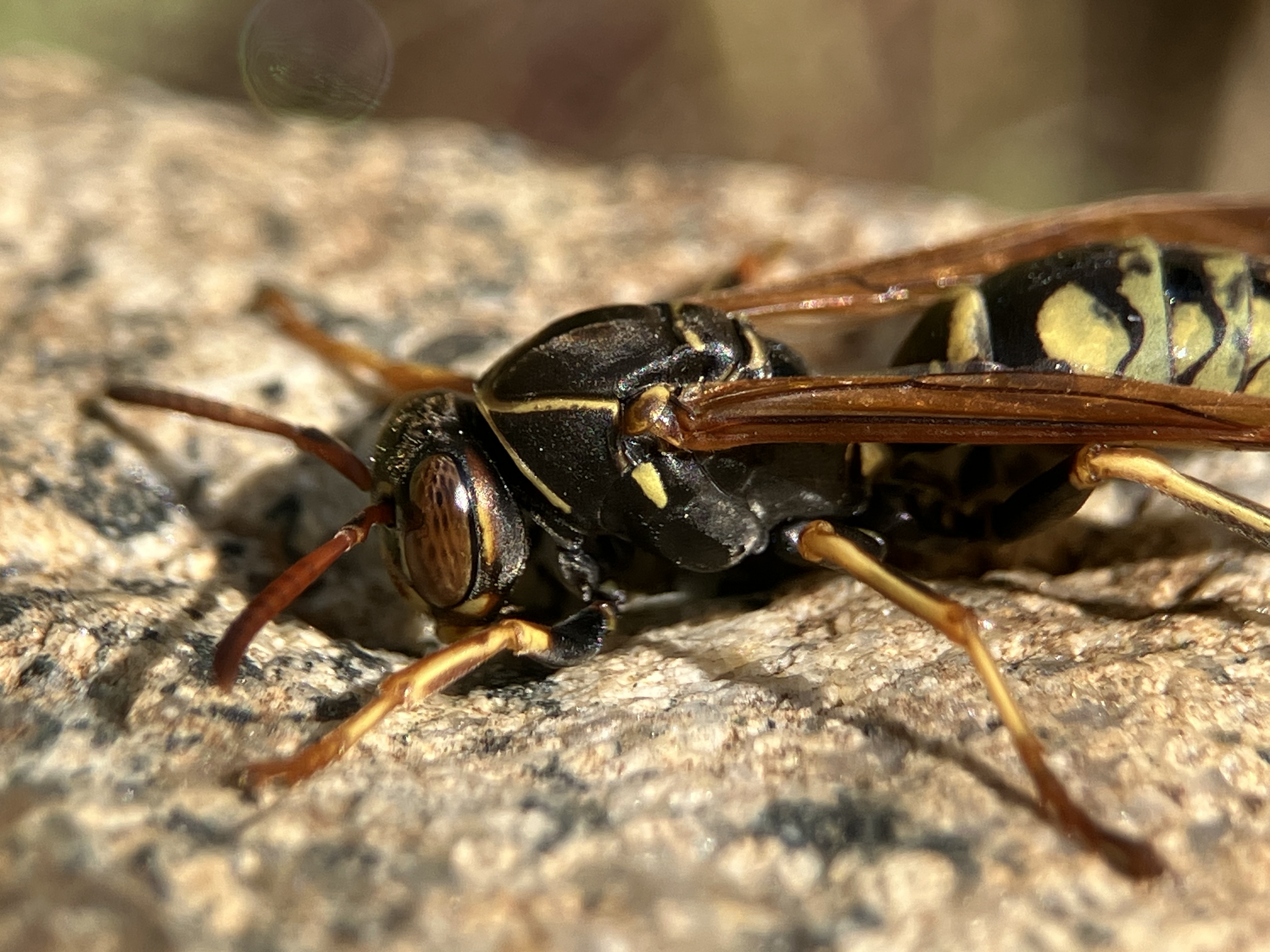
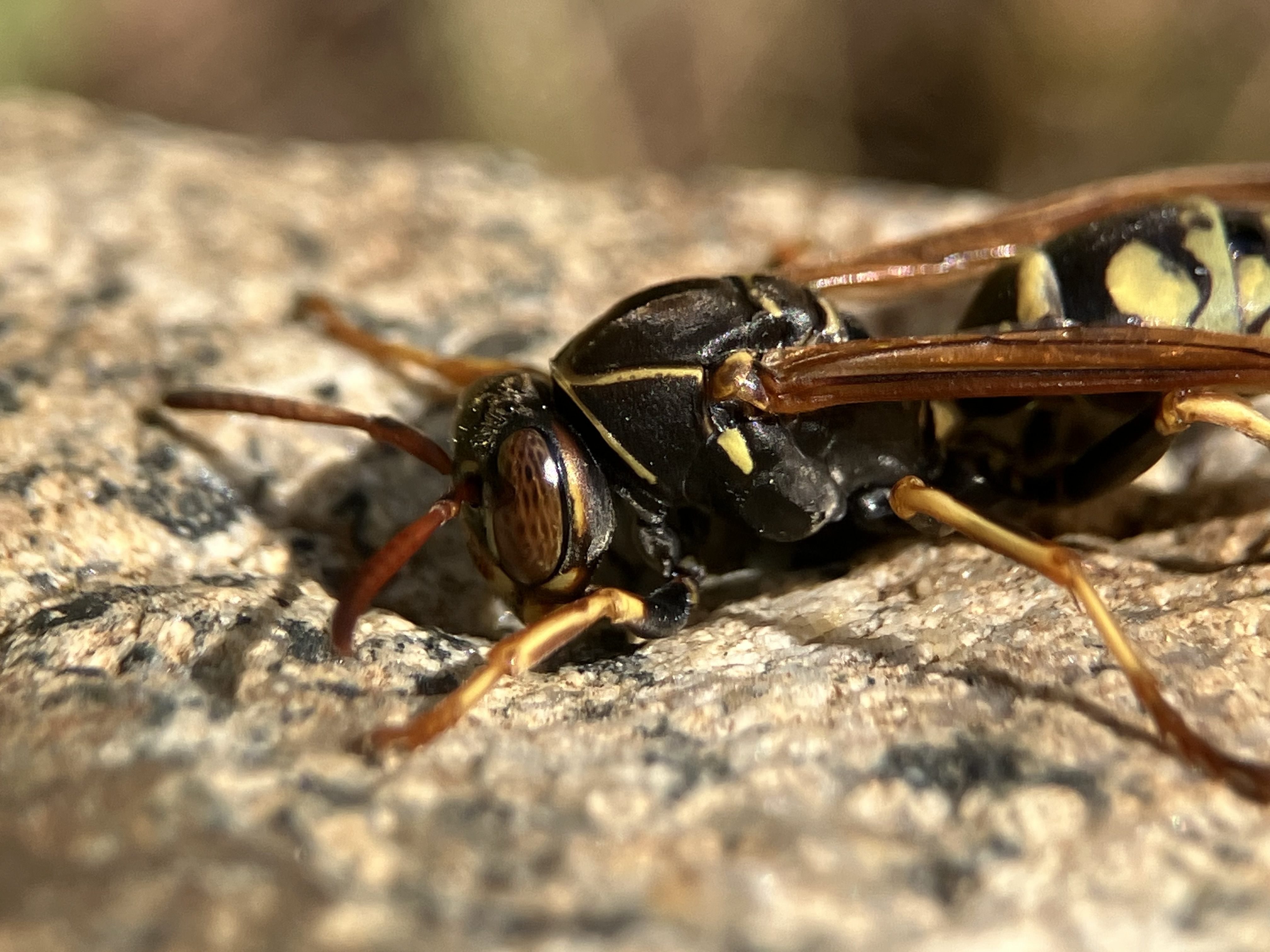
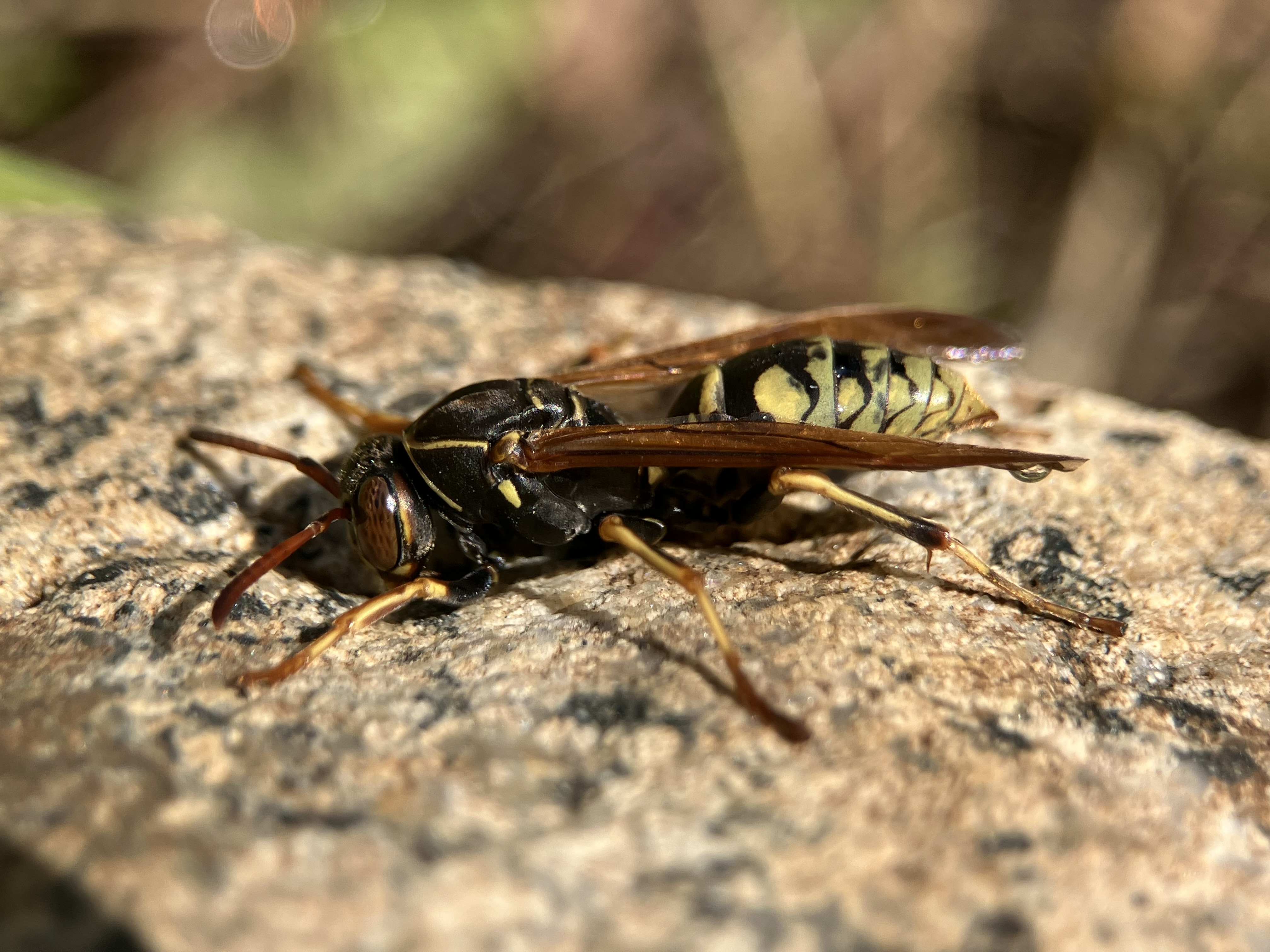
The other morning when I was watering our garden, I spied the most beautiful creature I’ve seen in a long time, a Golden Paper Wasp (Polistes aurifer). In fact, in sixteen years of living on San Juan Island, I have only seen one colony of these wasps (April 14, 2024) at the San Juan County Land Bank’s Mount Grant nature preserve. These wasps are native to North America and once considered a subspecies of Polistes fuscatus. However, P. aurifer has a western geographic distribution ranging from BC-CA to AB-MT-w.TX; ne. Mexico (Bugguide.net).
Polistes wasps build open faced nests suspended by a petiole in varied sites. Some select relatively exposed areas under eaves of structures or in shrub-type vegetation, while others utilize more protected cavities such as abandoned rodent burrows or hollow trees. Most often, the ones we see are the non native European paper wasp species (Polistes dominula), that seem very comfortable establishing their nests under the eaves of our homes.
It is believed the more frequently observed (P. dominula) are displacing native Polistes aurifer, but since it is more difficult for scientists studying insects in natural or wild habitats, most formal observations have taken place utilizing sites associated with man-made dwellings (Liebert, 2004). Liebert published a short communication in Insectes Sociaux (2004) where she describes finding ground nesting colonies of this species at an observation site in California, and concludes that the “displacement” theory may be overstated. However, given the loss of natural areas due to habitat loss/conversion, a decline in populations of the native P. aurifer (I believe) would more accurately be attributed to humans. Humans also unfortunately resort to wasp spray to eradicate nests around their homes without understanding that most nests pose minimal or no risk to human comings and goings.
Polistes wasps (native and non-native) are generally considered to be beneficial insects. They are pest predators, capturing and dismembering caterpillars to feed larvae they are rearing. In Eastern and Southern regions of the U.S., some species of Polistes wasps exert significant pressure on the cotton bollworm and the tobacco hornworm, both pests of considerable economic significance.
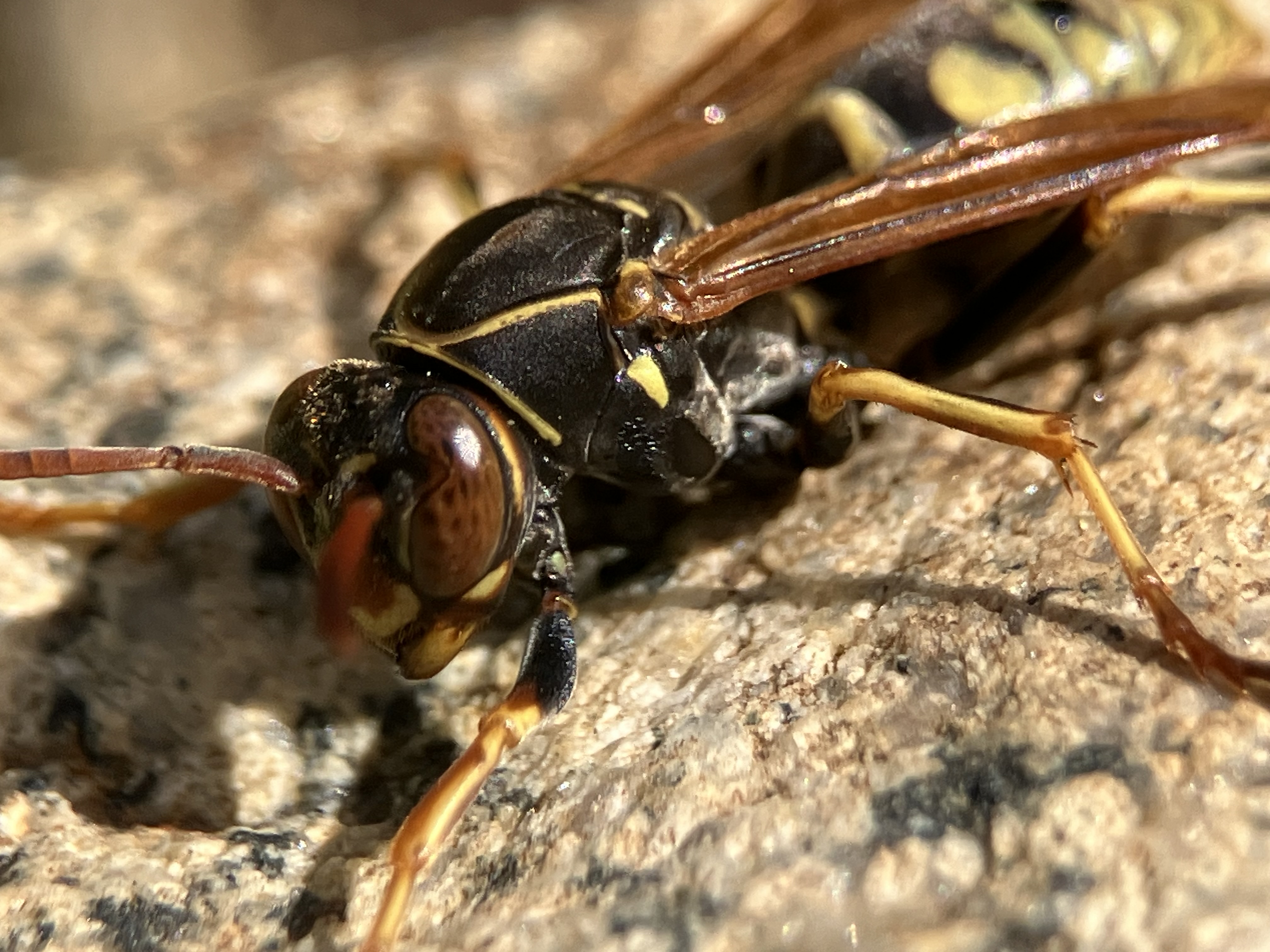
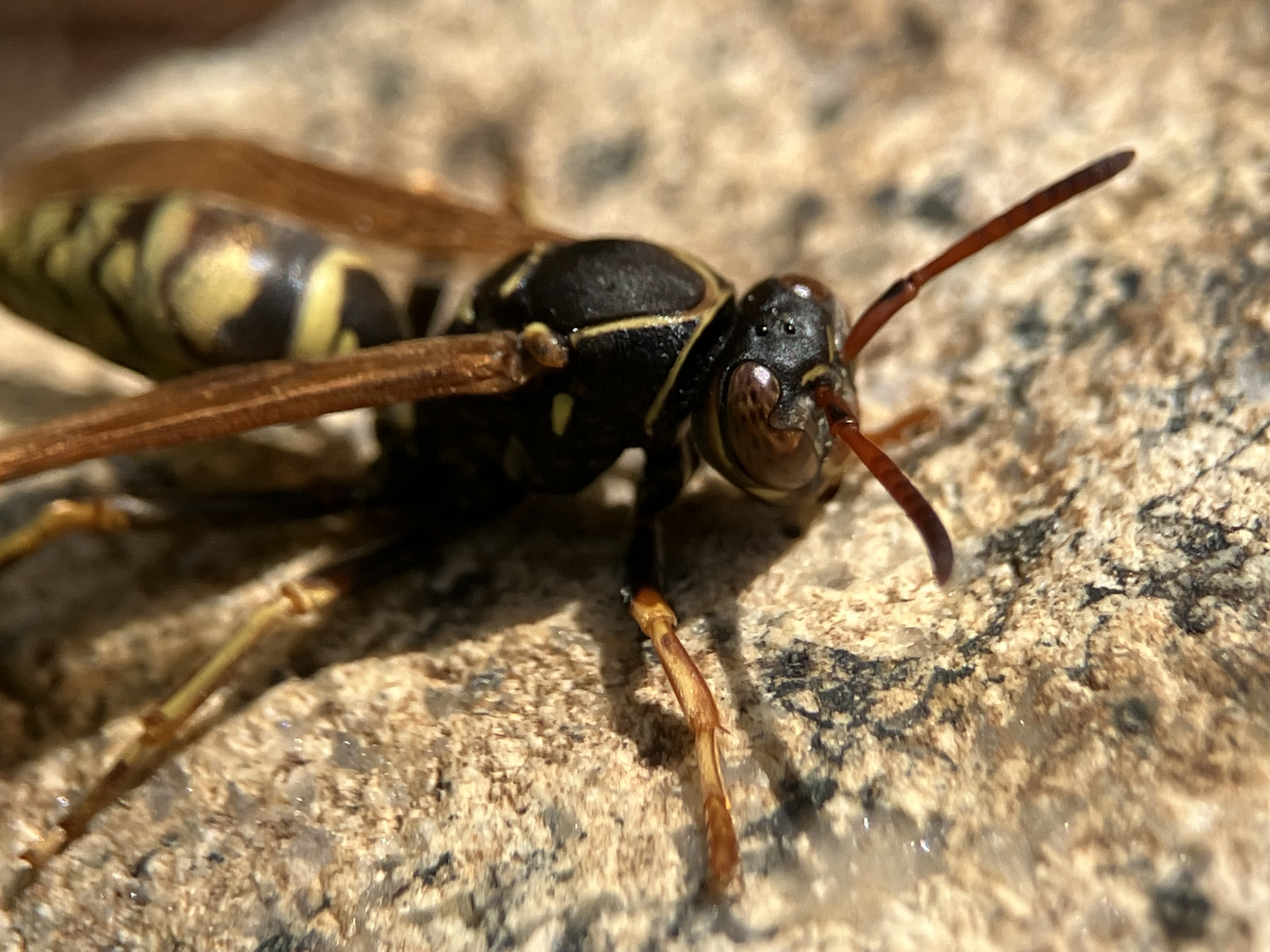
If you spy one of these Western natives, you’ll know immediately because they have the most beautiful golden brown or caramel colored eyes!
Thanks for reading. 🙂




References
Bohart, G. E. 1942. Notes on Some Feeding and Hibernation Habits of California Polistes (Hymenoptera, Vespidae). Pan-Pac. Ent. 18(1): 30-31. https://digitalcommons.usu.edu/piru_pubs/15/
Buck, M., Marshall, S.A. and Cheung D.K.B. 2008. Identification Atlas of the Vespidae (Hymenoptera, Aculeata) of the northeastern Nearctic region. Canadian Journal of Arthropod Identification No. 5: 492 pp. (PDF version).
Published on 19 February 2008. With 3 Tables and 1073 Figures.
Bugguide. 2023. Polistes aurifer. Bugguide.net. https://bugguide.net/node/view/24972
Liebert, Aviva. (2004). Ground nesting in the paper wasp Polistes aurifer (Hymenoptera, Vespidae). Insectes Sociaux – INSECTES SOC. 51. 99-100. 10.1007/s00040-003-0714-0.
p.s. I found another (naturally deceased) individual in our barn/shop, so perhaps we have had these around and I’ve just been missing them.


 Bugging You From San Juan Island