Tag Archives: photography

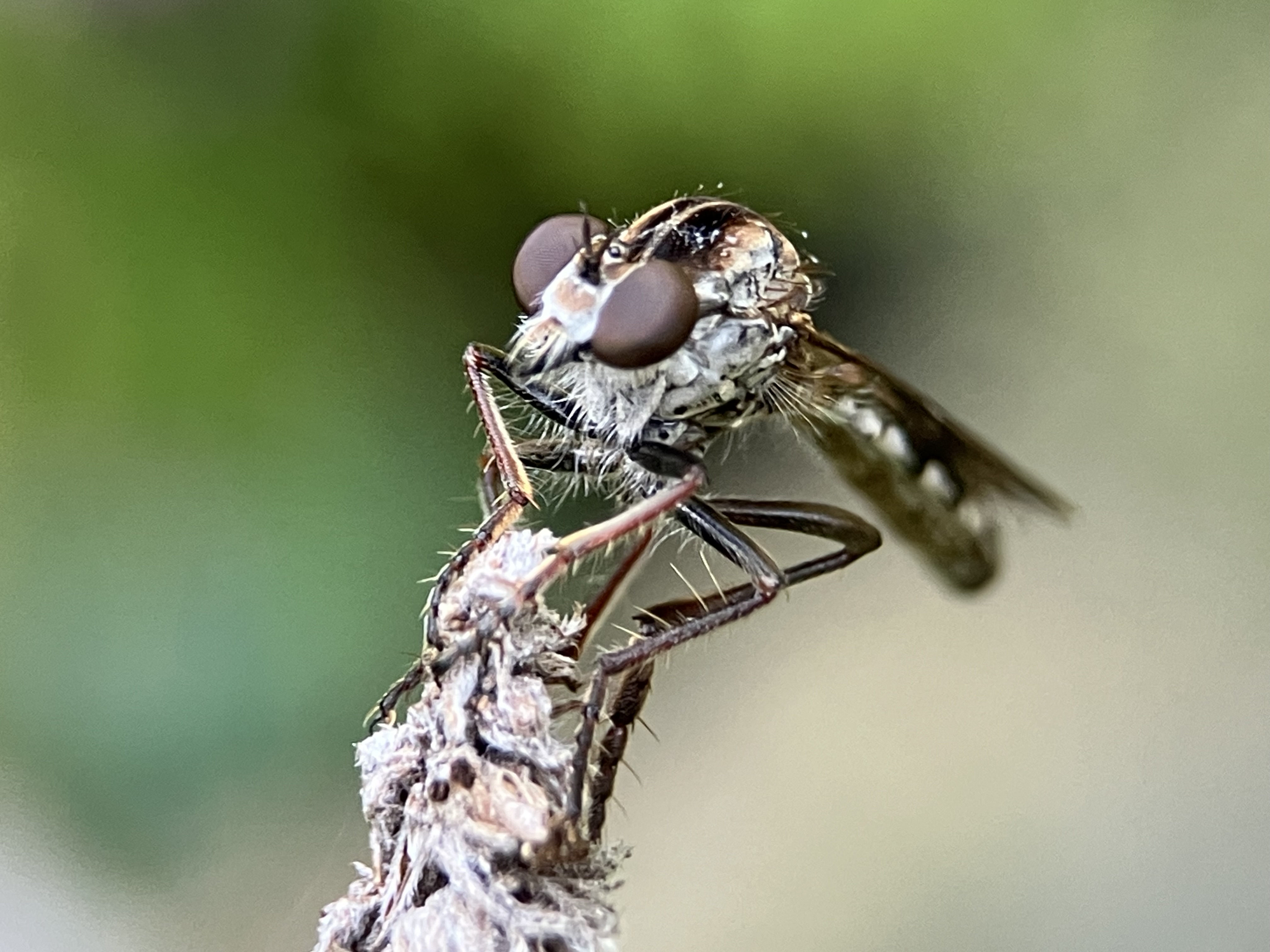
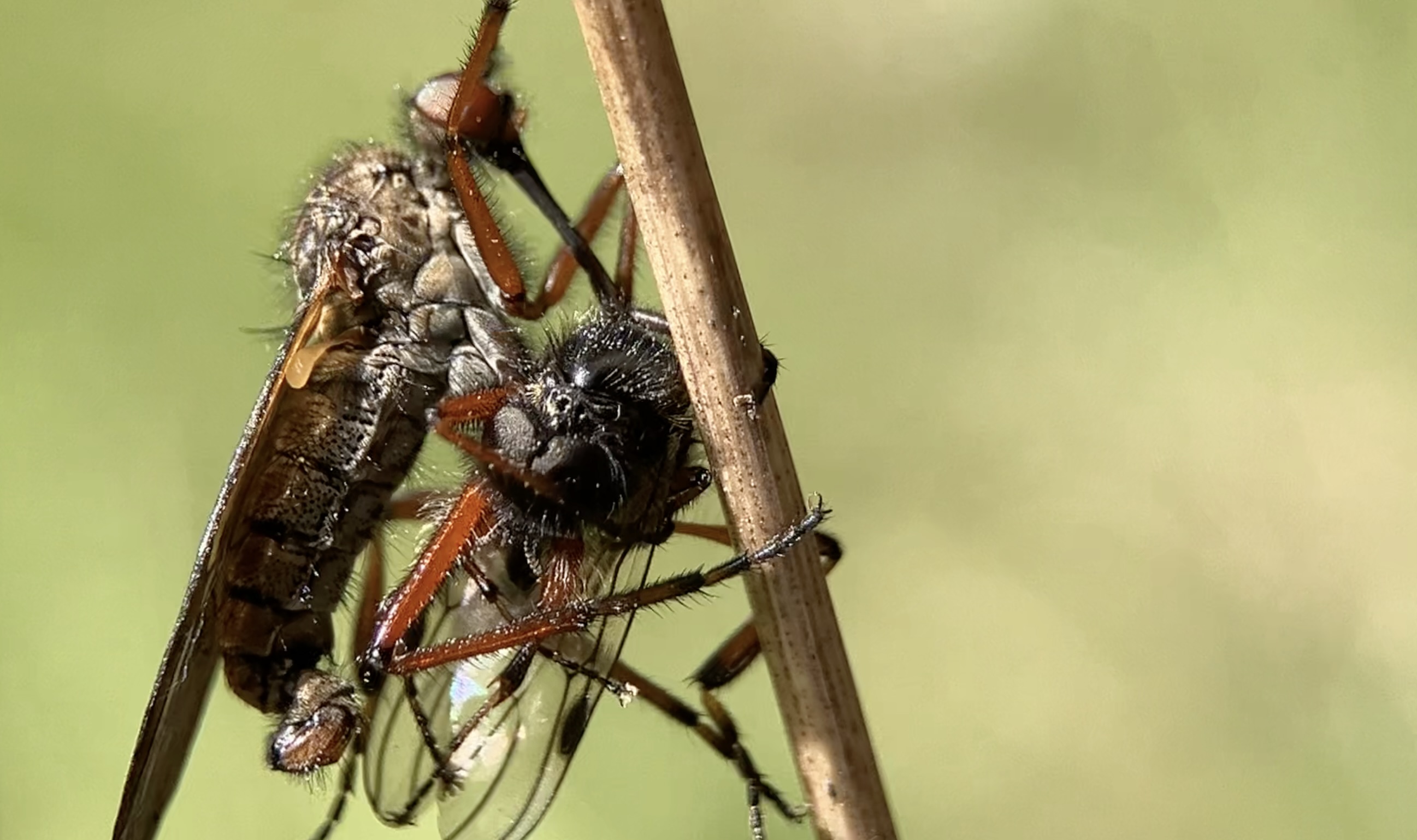
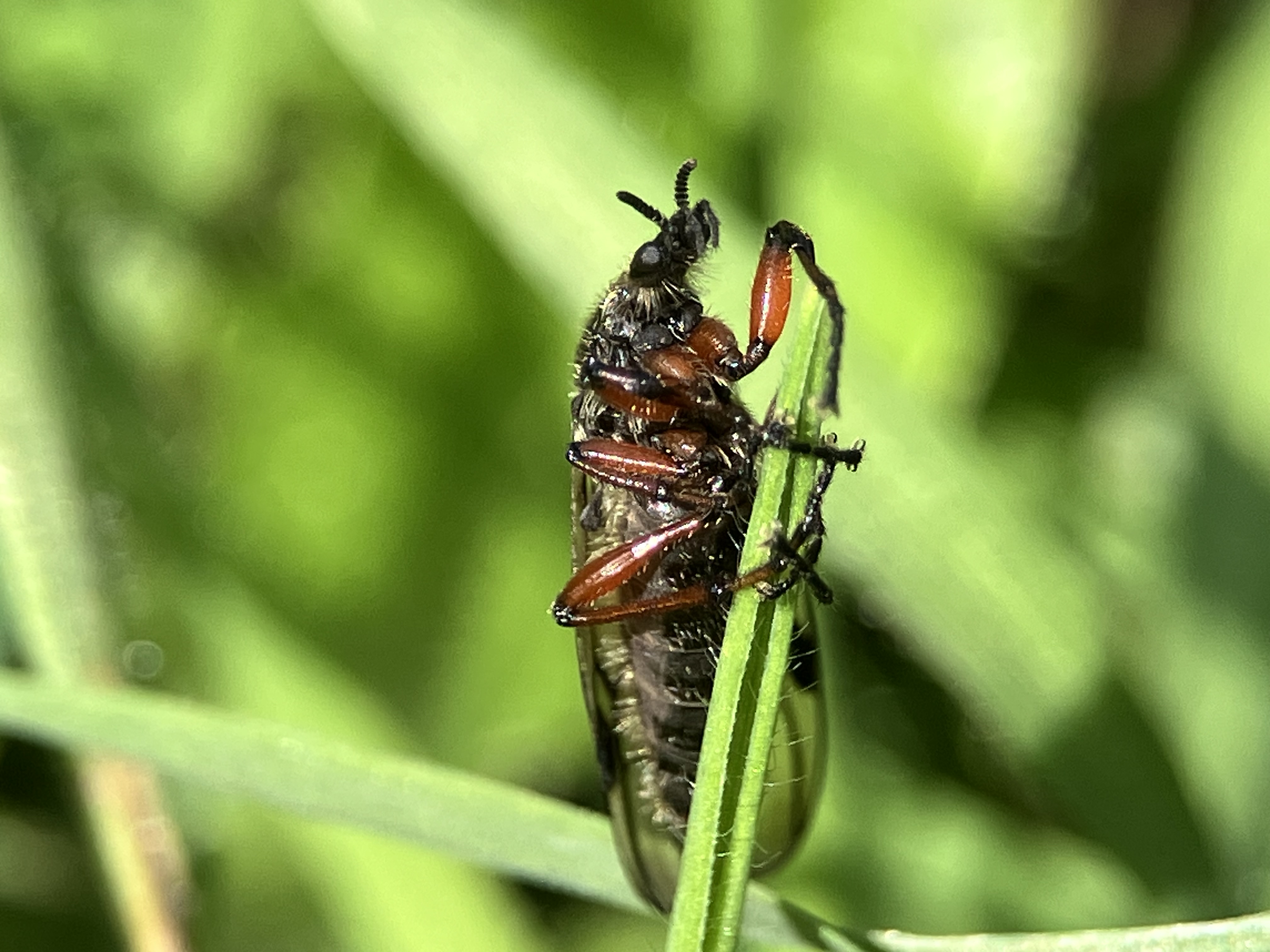
Identifying the Nicocles canadensis Robber Fly

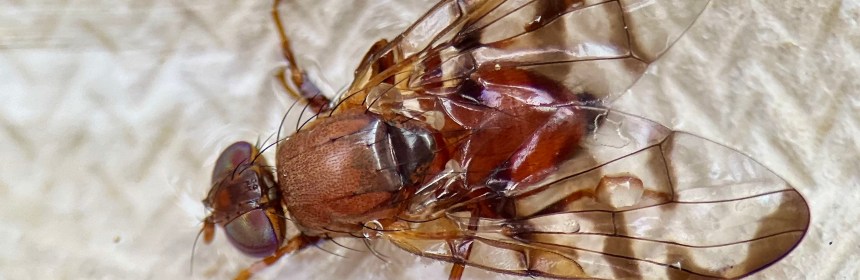
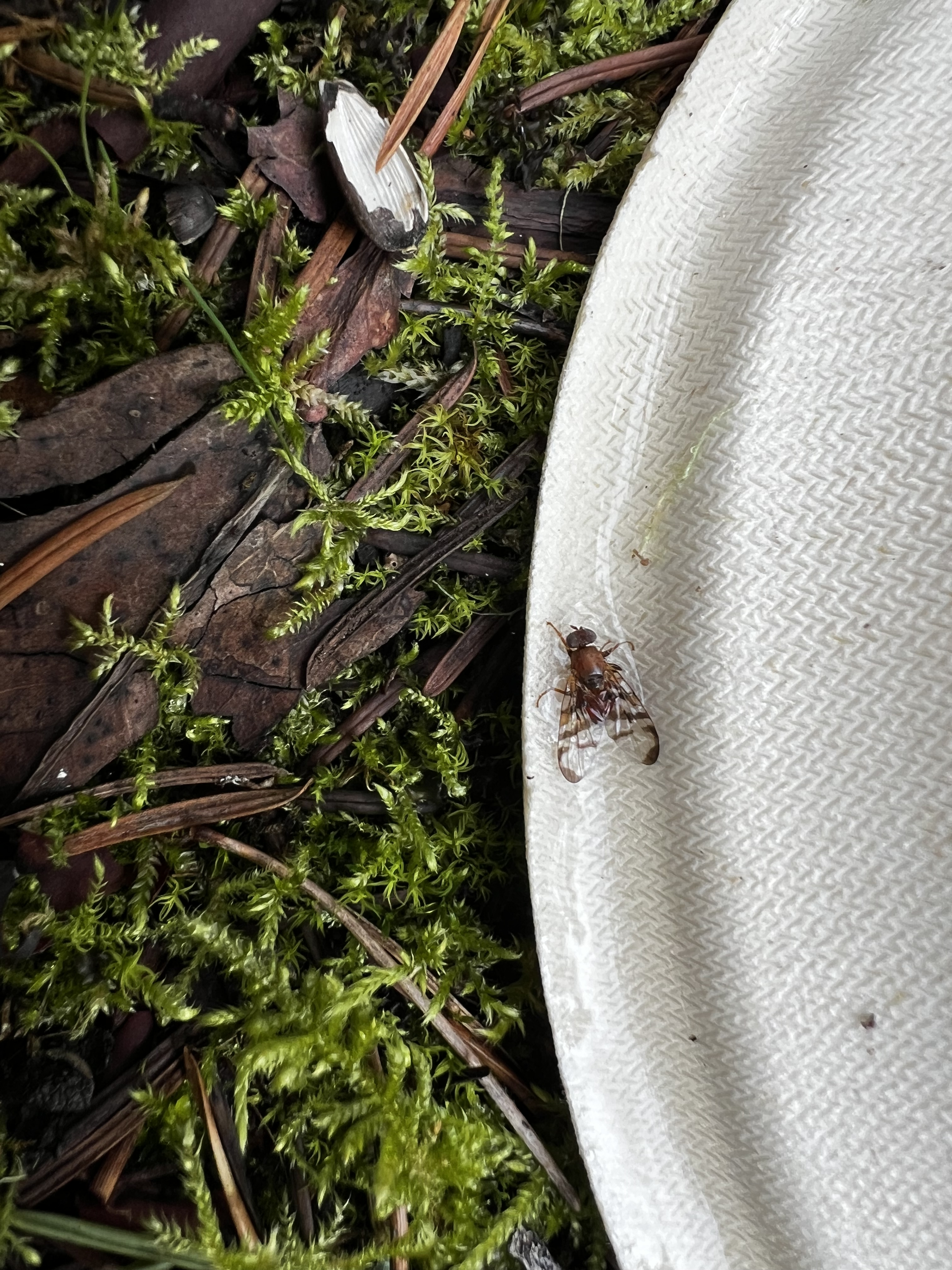
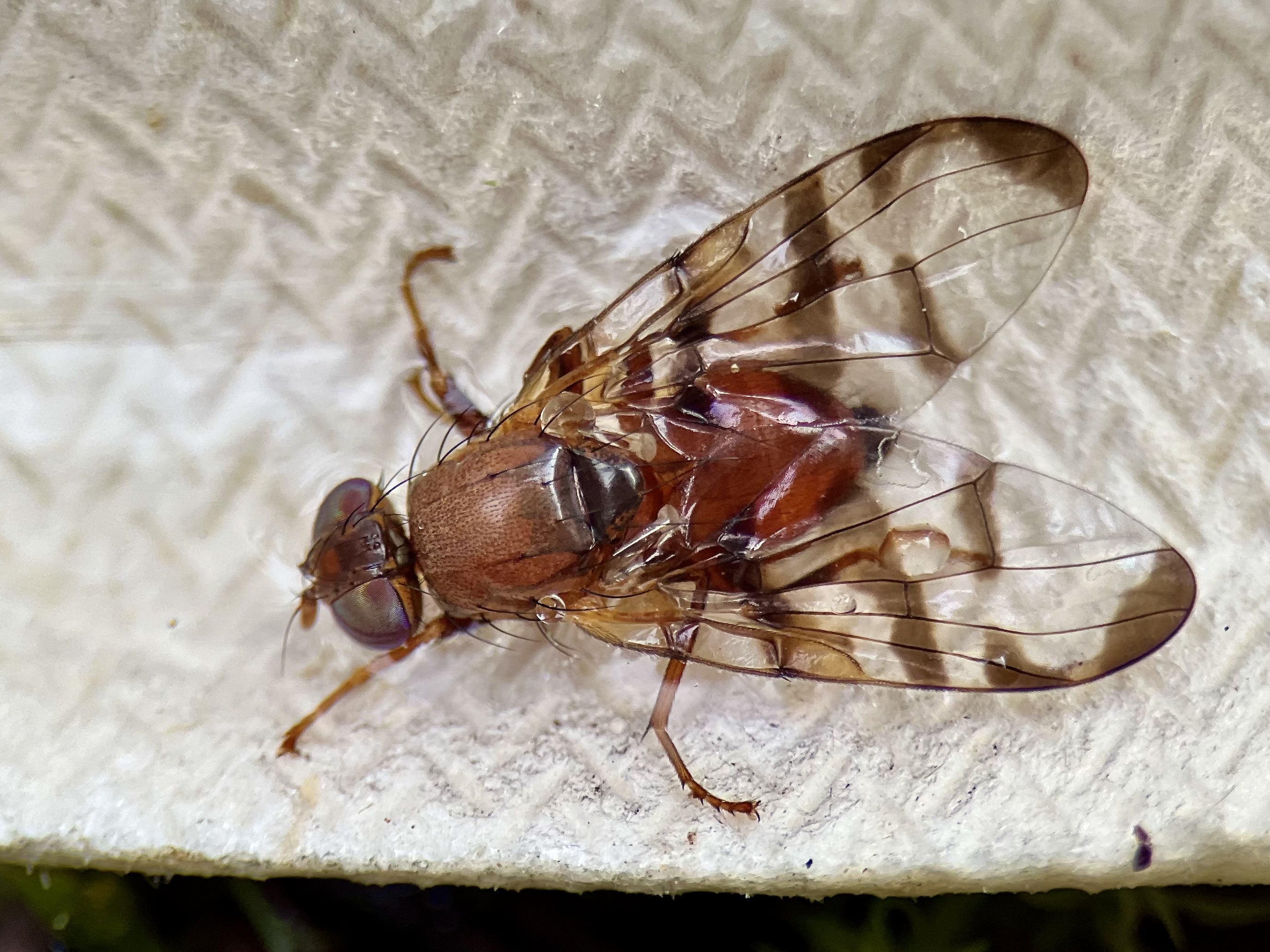
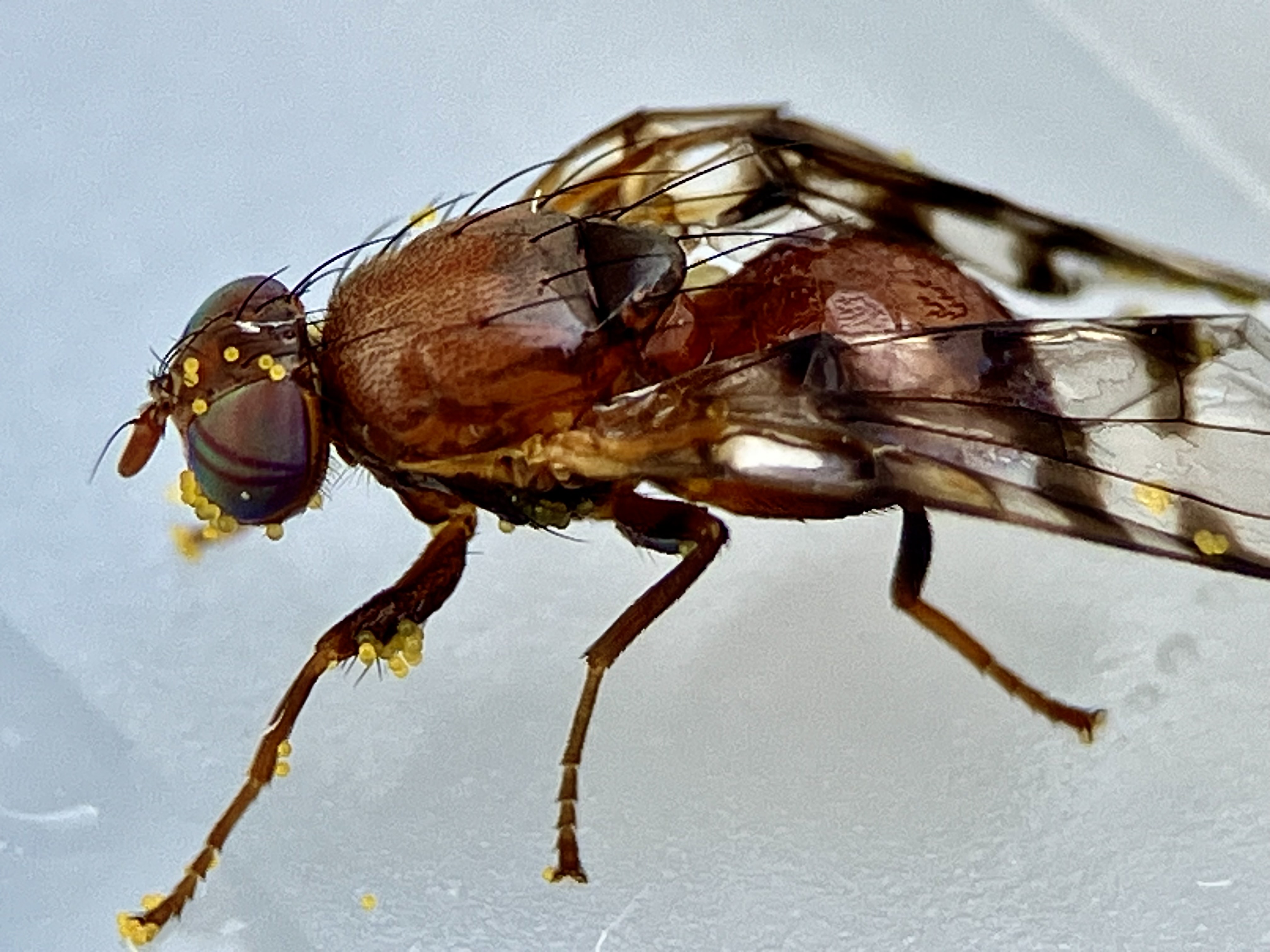
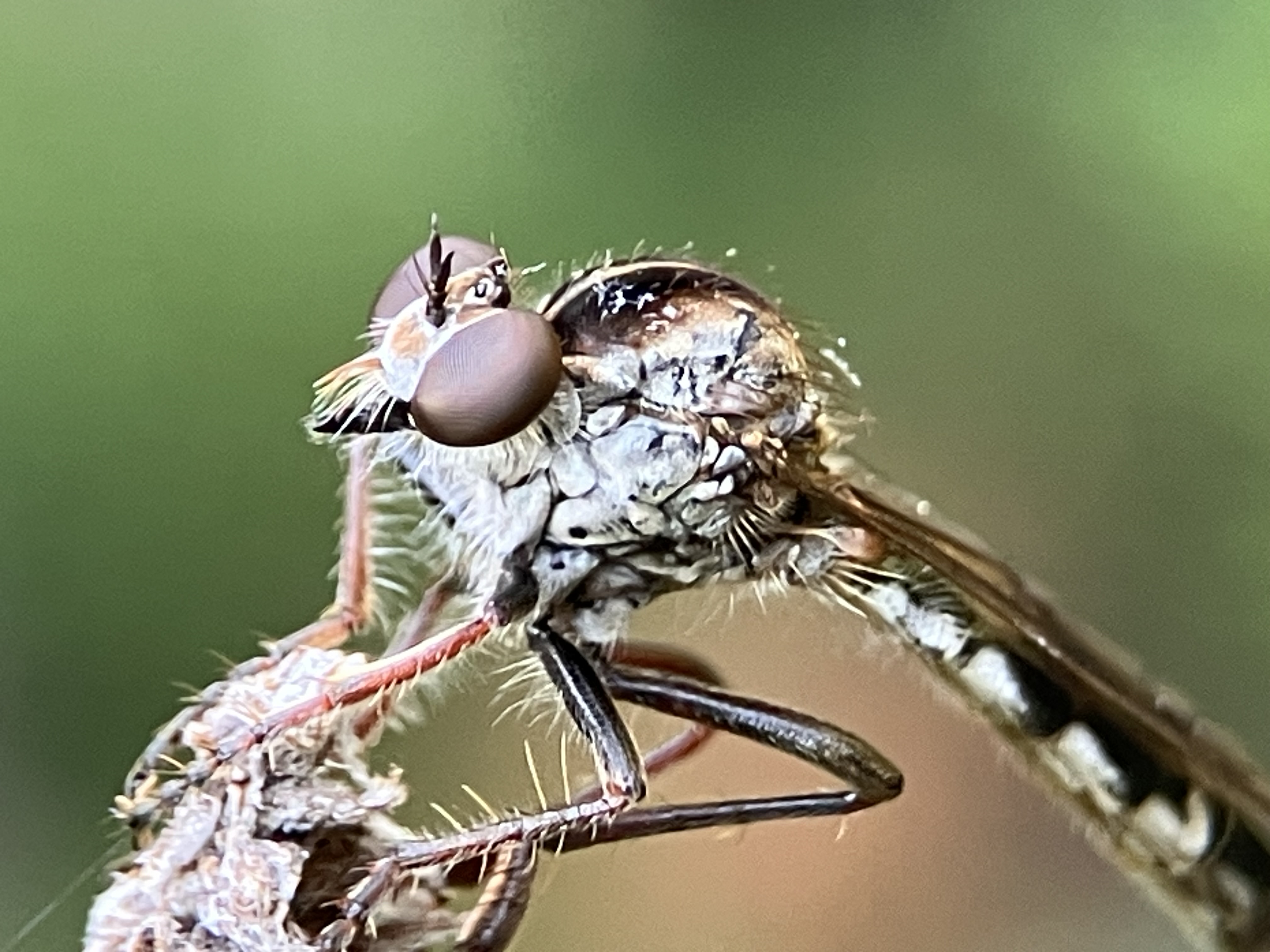
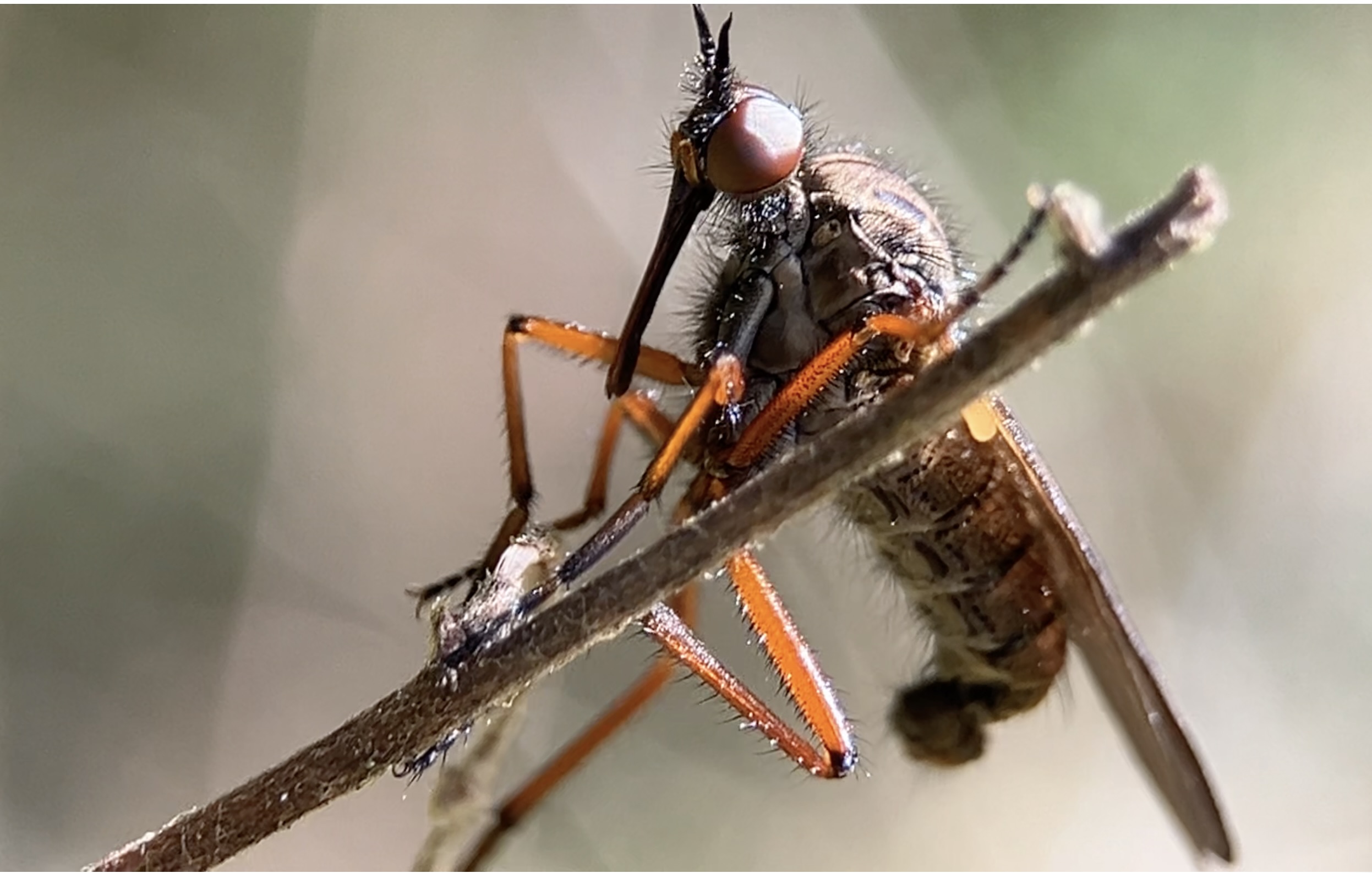
Robber Fly (Asilidae), Nicocles sp.

It has taken a bit of time to finally sort out genus and species for this very cool Robber fly with beautiful caramel-brown mottled wings I spied the evening of June 6, 2025. It perched on a dried apple mint stem from last season, no doubt scouting the terrain to see what might be on the menu for dinner. Robber flies (Family Asilidae) are predatory. They catch other small invertebrates to eat, paralyzing them with special salivary digestive enzymes and then sucking up the liquified contents through the proboscis (Cannings, 2013).

Getting to an identification beyond Genus for this one has been incredibly frustrating, and complicating the process is the limitation of the key I was using (Wilcox, 1946), which primarily describes male specimens.

Robert Cannings has studied the Asilidae for many years in British Columbia and states this genus “sorely requires systematic attention.” I finally just gave up and reached out to Rob for help. He wrote me and said, “I’m pretty sure this is Nicocles canadensis. It’s a female, and some females are difficult, even when under a scope, because the Wilcox key, which is the best we have for now, deals with them poorly and concentrates on males. Nicocles canadensis is the species in the genus most often seen on BC’s south coast and, I assume, in your area.”

This is the only Nicocles fly I’ve ever found on our property on San Juan. According to Rob’s 2014 publication (linked in the references below) in Canada, ” Nicocles canadensis is restricted to Garry oak savanna and adjacent dry woodland on southern Vancouver Island (Saanich is the type locality),” so I anticipate this may be similar for our neighboring area.

Check out the attached references if you are interested in learning more about Robber Flies in our region.

Thanks for reading!

References

Cannings, R.A. 2014. The Robber Flies (Diptera: Asilidae) of Western Canadian Grasslands. 10.3752/9780968932179.ch7. https://www.researchgate.net/publication/268524943_The_Robber_Flies_Diptera_Asilidae_of_Western_Canadian_Grasslands

Cannings, R.A. 2013. Robber Flies (INSECTA: DIPTERA: ASILIDAE) Of The Montane Cordillera Ecozone.

Cannings, R.A. 1994. Robber Flies (Diptera: Asilidae) new to Canada, British Columbia, Yukon,
and the Northwest Territories with notes on distribution and habitat. J. Entomol. Soc.
British Columbia
: 91: 19-26. https://www.biodiversitylibrary.org/part/213777

Cole, F. R. 1969. The Flies of Western North America. University of California Press. Berkeley and Los Angeles.

Fisher, E.M., and Wilcox, J. 1997. Catalogue of the robber flies (Diptera: Asilidae) of the
Nearctic Region. Unpublished preliminary draft.https://staff.royalbcmuseum.bc.ca/wp-content/uploads/2013/08/Catalog-Nearctic-Fisher-Wilcox-1997-manuscript-copy.pdf

Geller-Grimm, F. 2008. Robber Flies (Asilidae). Internet site at http://www.geller-grimm.de/asilidae.htm

Melander, A.L. (1924) Studies in Asilidae (Diptera). Psyche [1923] 30: 207-19. https://onlinelibrary.wiley.com/doi/pdf/10.1155/1923/83461

Wilcox, J. 1946. New Nicocles with a key to the species (Diptera, Asilidae). Bulletin of the Brooklyn Entomological Society 40 (1945): 161-165; New York – Lancaster. https://www.biodiversitylibrary.org/page/50573094#page/180/mode/1up

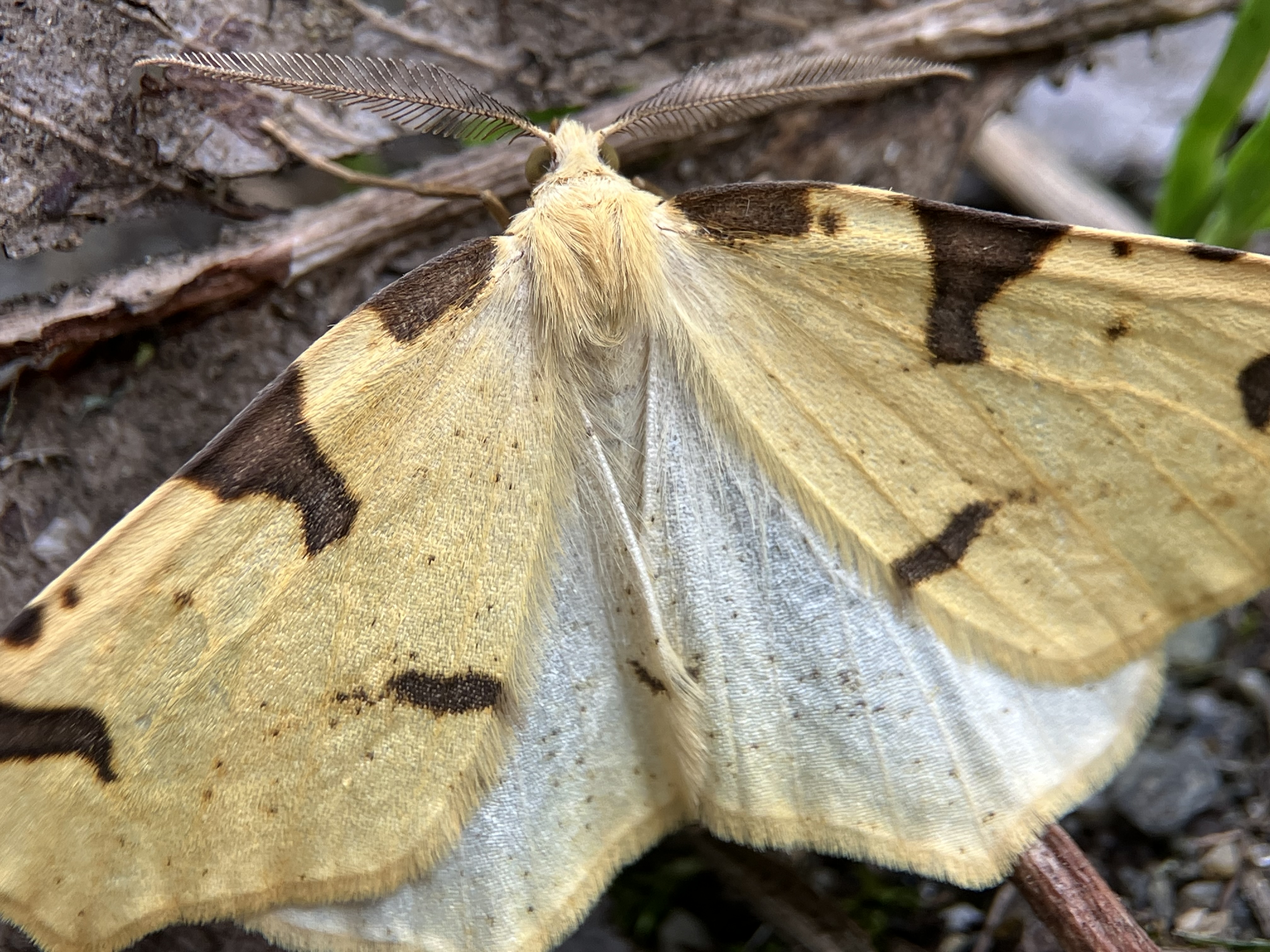
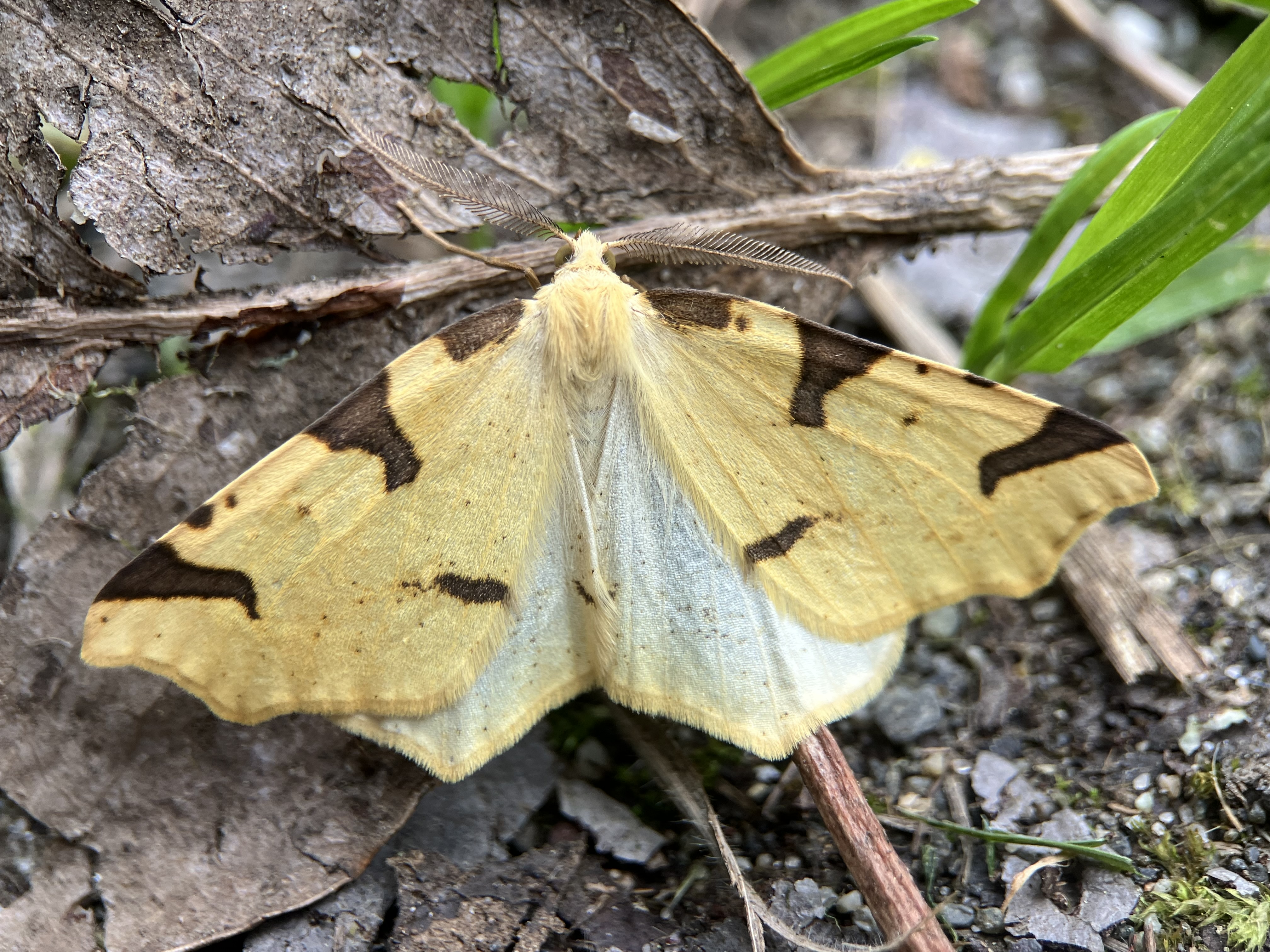
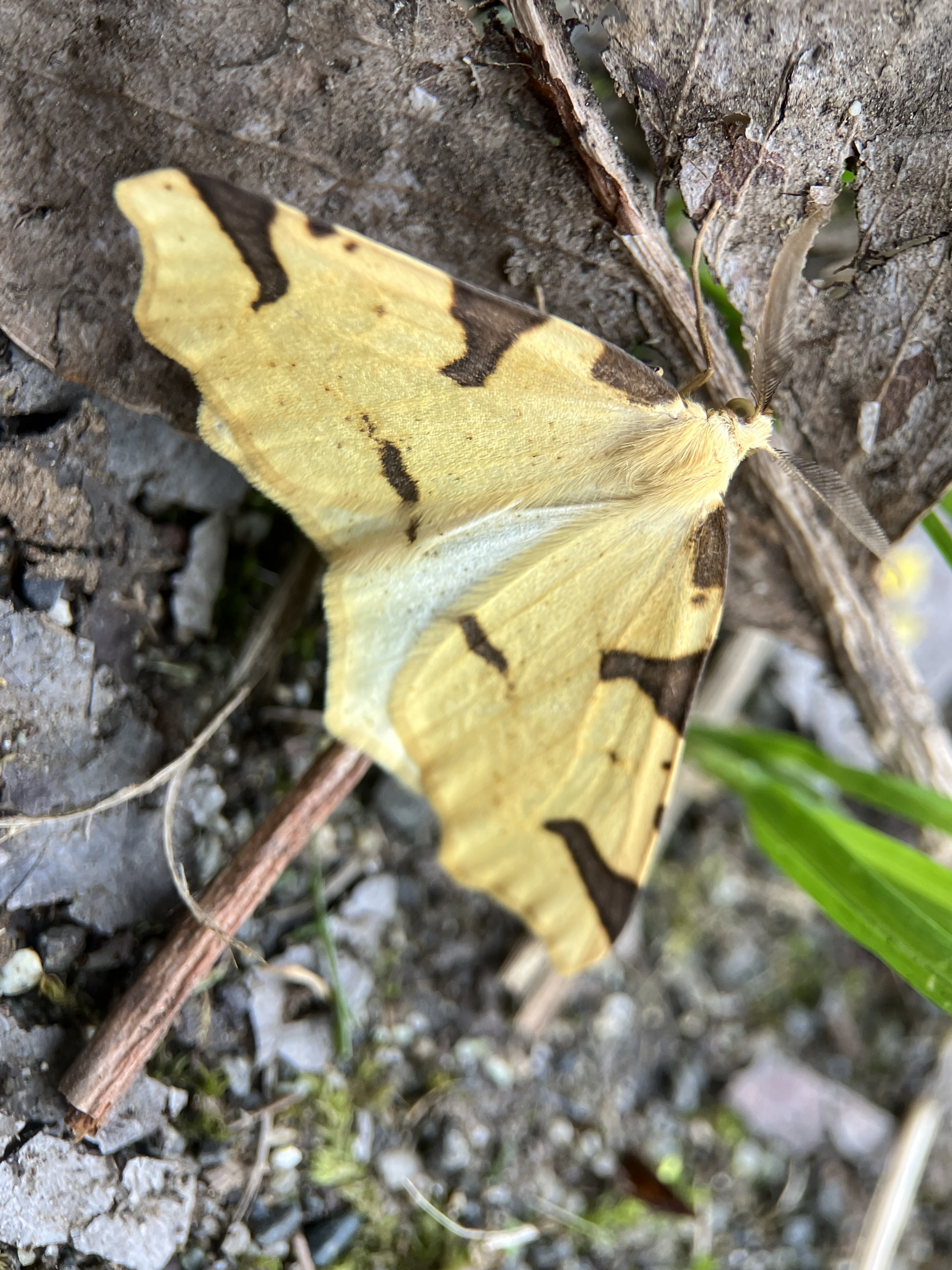
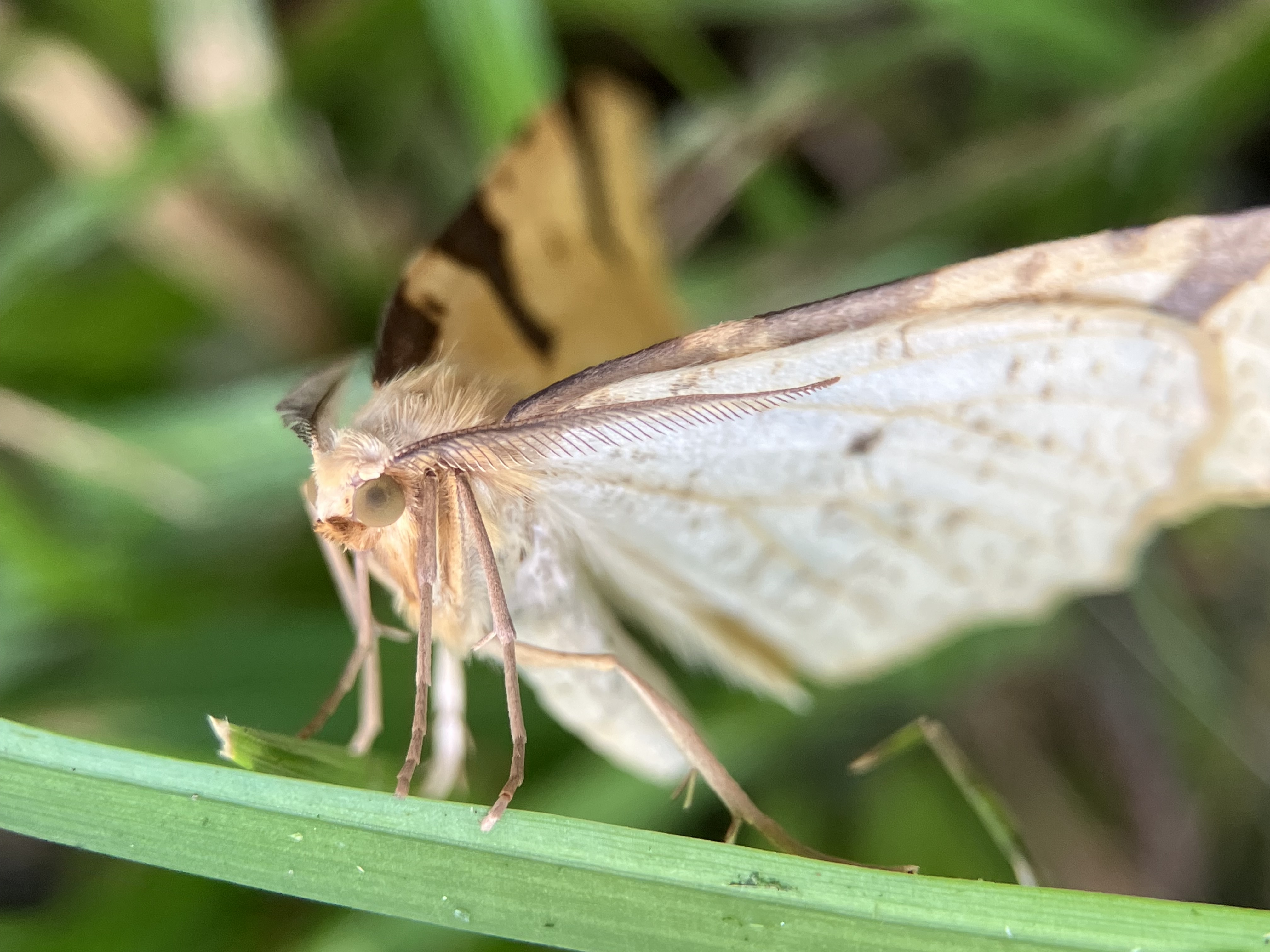
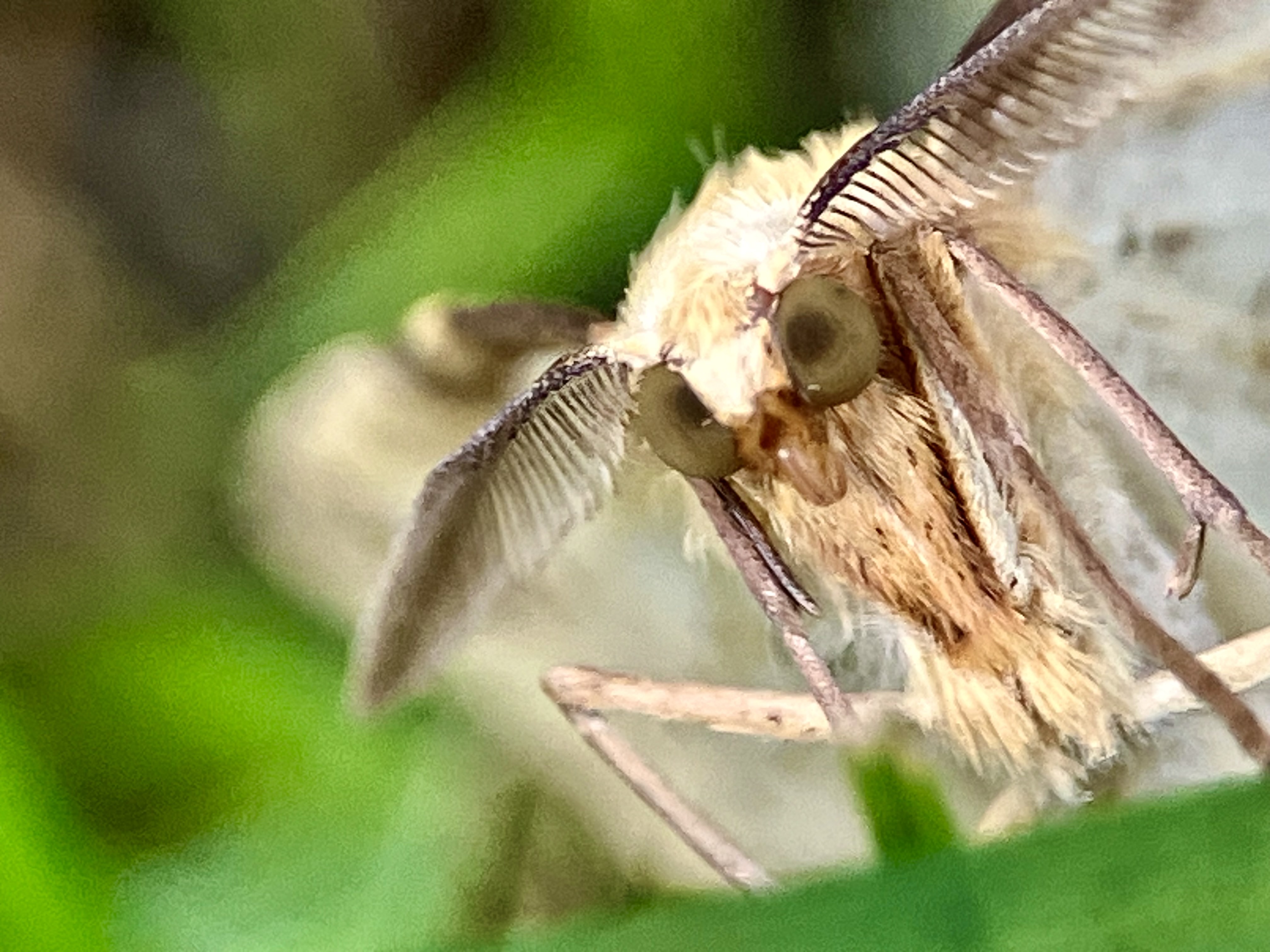
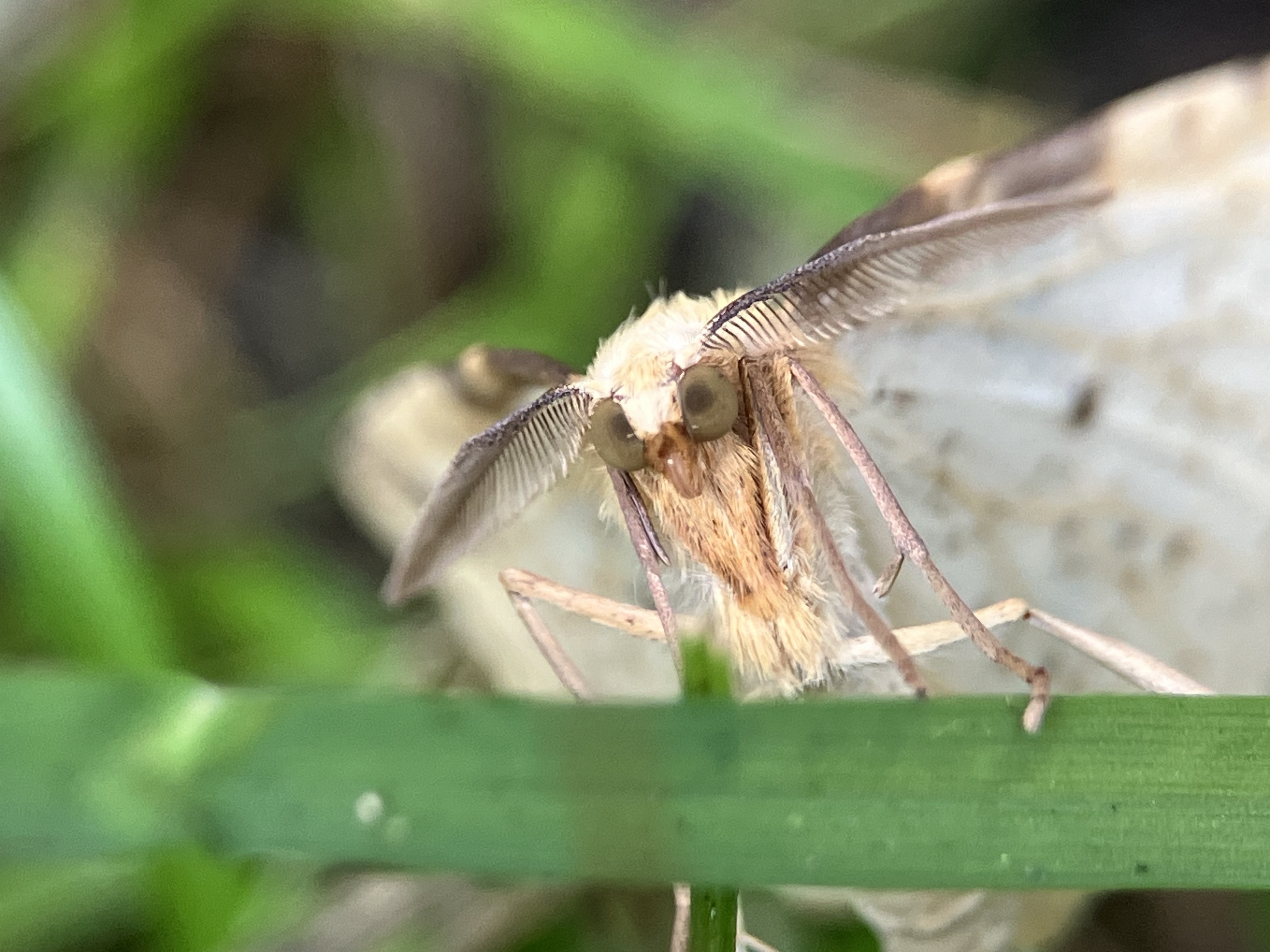
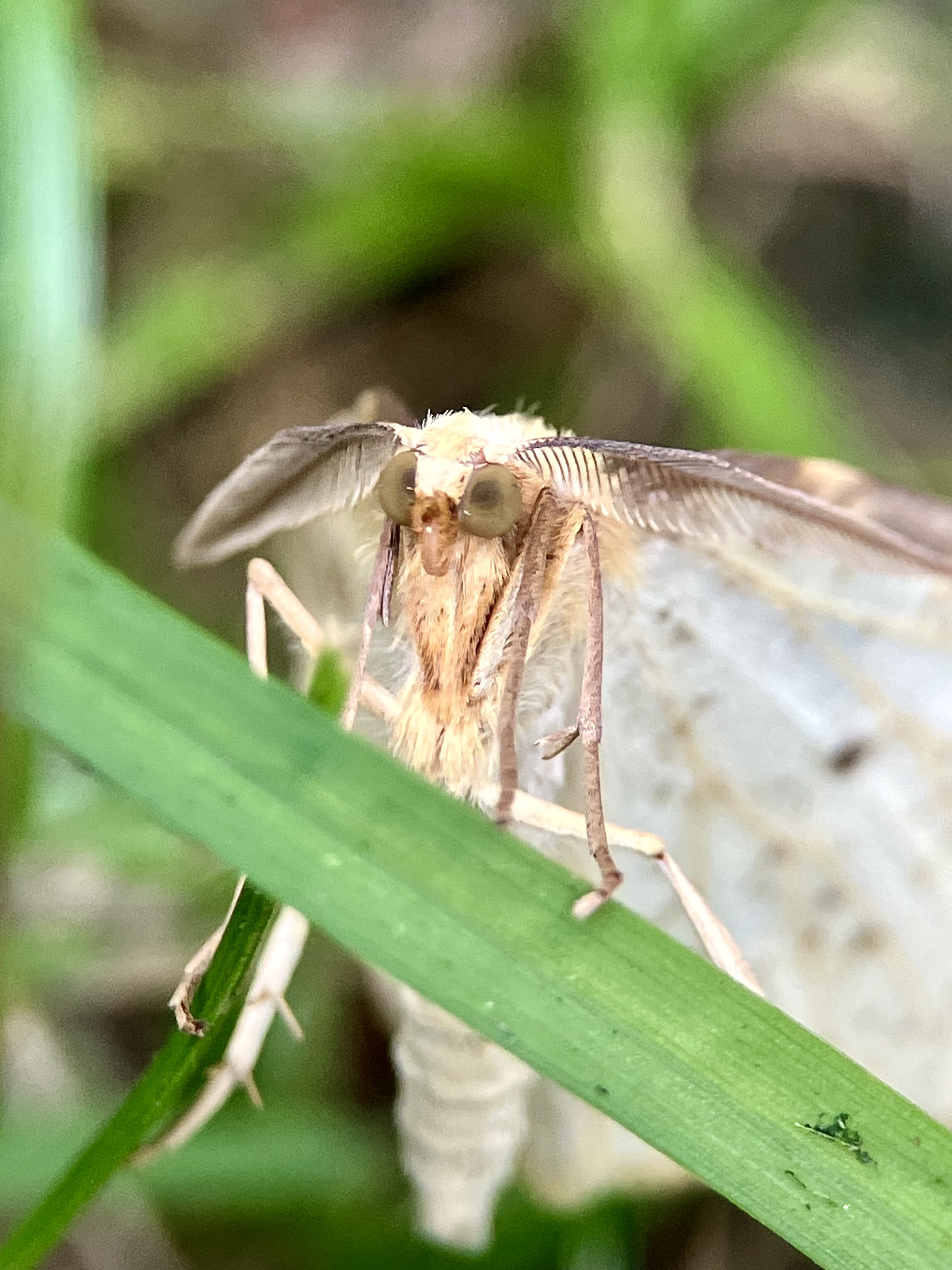
Canary thorn moth, (Neoterpes trianguliferata)

Canary thorn moth (Neoterpes trianguliferata)

I found the most beautiful creature at my moth light this morning. It is the Canary Thorn Moth (Neoterpes  trianguliferata ). I was surprised to see anything there given the drop in temperatures we’ve had the past few days. After a few photos, I got too close and he flew out of the open barn area into some grass, struggling a bit in the wind, so I was able to carefully coax him back into an egg carton to shelter the day back undercover and out of the rain.

If you’re wondering about the egg carton, I use these in my moth light set up to give the moths a secure place to hide when they settle down under the light for the night. The egg cartons are in a 5 gallon bucket. I have the “low end” set up, so no major investments in equipment. Anyone could do this at home. It’s fun to “moth” and see what species live around us. If you’re interested, shoot me an email and I’ll coach you on getting set up yourself. For the record, all of my specimens are photographed with respect and care, and allowed to live free. I do not take specimens for pinning. I definitely believe they are here to be admired in the wild, not in a glass case.

More about this species:

Neoterpes  trianguliferata is a species of Geometrid moth that ranges from southern British Columbia to southwestern Alberta, south to Colorado, Utah, and California. The hostplants for larvae (the caterpillars) are Currants and Gooseberry (Ribes). I’ve linked information for some of the native host plants below in the reference section.

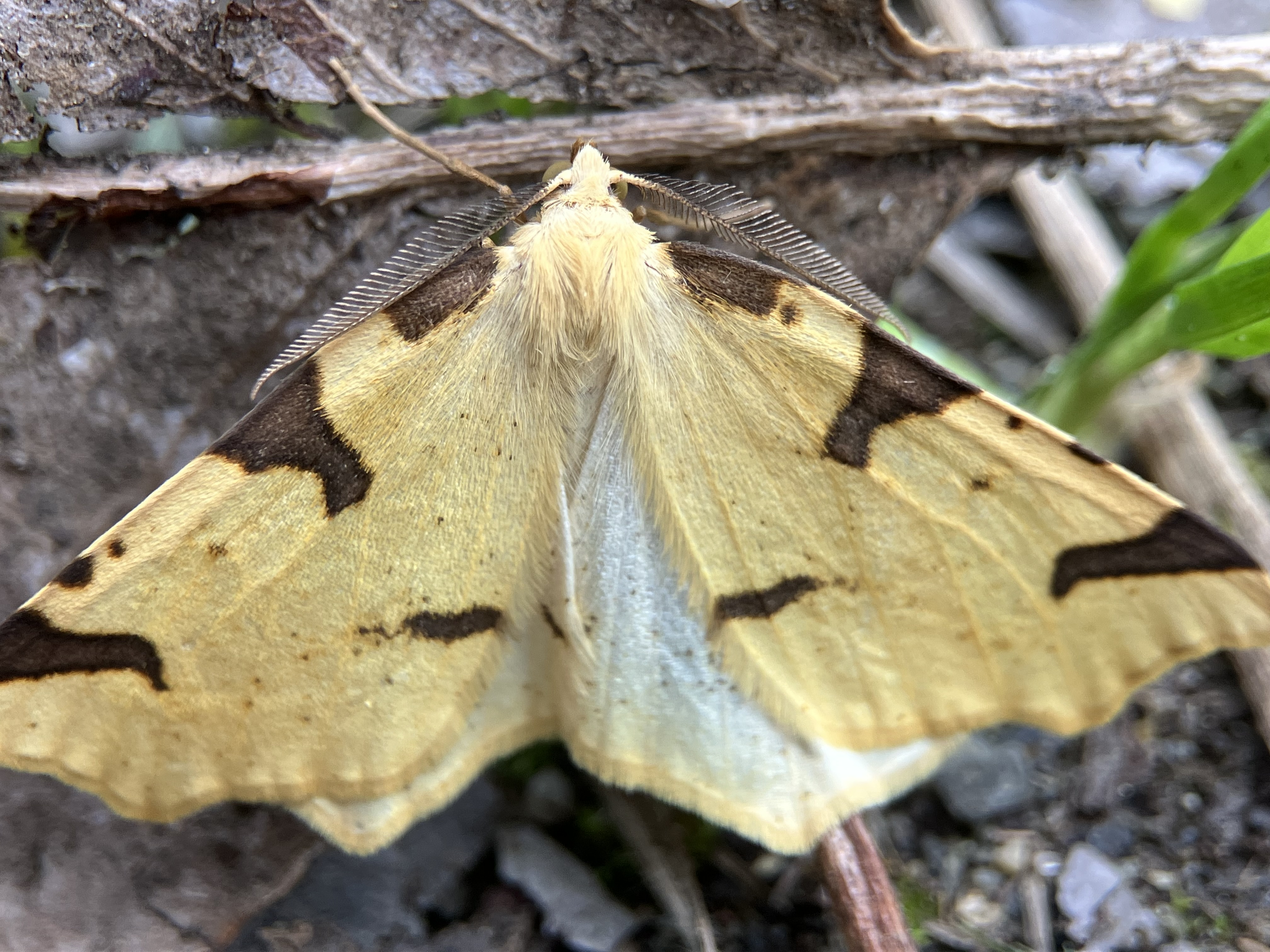
Larvae are twig mimics. Pupae sleep through the winter wrapped in a leaf, another reason to “leave the leaves” and refrain from burning or bagging and discarding the leaves around your home. You could inadvertently impact overwintering species like these and others. Adults are approximately 14-20mm (forewing length). You will see adults in flight between April-June in our area. From what I have been able to find as to the etymological meaning of the name, Neoterpes may translate to “new delight” and trianguliferata refers to the triangle-shaped markings on the forewings. It was indeed a delight to see this beauty today! A bit of sunshine on a rainy spring day.

Canary thorn moth (Neoterpes trianguliferata)

References

Bressette, Dana Kelley. no date. Coast Black Gooseberry, Ribes divaricatum. Native Plants PNW. https://nativeplantspnw.com/coast-black-gooseberry-ribes-divaricatum/

Bressette, Dana Kelley. no date. Red Flowering Currant, Ribes sanguineum. Native Plants PNW. https://nativeplantspnw.com/red-flowering-currant-ribes-sanguineum/

Bugguide.net. 2023. Species Neoterpes trianguliferata – Hodges#6860. Bugguide. Iowa State University. https://bugguide.net/node/view/114007

Moth Photographers Group. Neoterpes trianguliferata (Packard, 1871). Mississippi State University. https://mothphotographersgroup.msstate.edu/species.php?hodges=6860

Nelson, Dan. 2021. Neoterpes trianguliferata. 10,000 THINGS OF THE PACIFIC NORTHWEST
Adventures of a Recreational Naturalist. http://10000thingsofthepnw.com/2021/08/08/neoterpes-trianguliferata/

April 7, 2025 – A Million or More

Tiny springtails (Hypogastrura sp.)

I woke up this morning feeling like my head is going to explode. Migraine sufferers will identify. The throbbing continues, regardless of whatever you might throw at it. I managed to get little Olivia to the vet by 09:40 to get her spay stitches out and our vet cleaned her ears. She had a lot of wax buildup and came home with some antibiotic ear drops to ward off any potential infection that might be developing. Olivia is our latest rescue cat. She’s a sweet little Tortie Persian. Age 2. It’s been a delight to have her sharing our space and she’s made fast friends with our other two resident kitties (Herman and Nimbus).

Olivia the cat

After I got back home from town, I went back outside to walk around the yard a bit hoping the cool air would calm down my headache. I wandered over to look in the above ground pools we have for water catchment. One is in the shade and the other is in the sun. It’s pretty cool how they each have their own mini ecosystems going on.

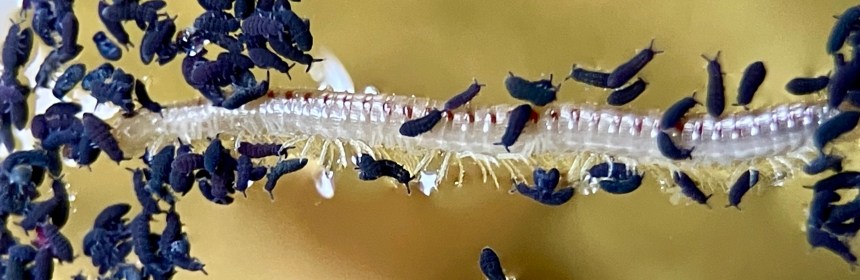
Hypogastrura sp. Springtails and a millipede raft

The shaded pool was the active one today. It was literally covered with a million or more of these teeny aquatic springtails. Initially, I believed the species to be Podura aquatica in the family Poduridae, but someone has suggested a different family (Hypogastruridae) altogether as a possibility. I may have to revisit my ID. Springtails or Collembola are tiny hexapods. The ones in my photo looked to be approx. 1mm in size. The blue-ish ones you see in the photo are mature specimens and the pinkish/orange ones are juveniles. I believe this could be a mating aggregation (Sánchez-García et. al, 2018). *** note *** Updating ID to family Hypogastruidae (Genus Hypogastrura) after looking at these under a microscope and seeing they have a reduced furcula (the little appendage on the back end that helps them jump).

Hypogastrura sp. springtails

There were so many of these that it looked as if the surface of the pool had been sprinkled with pepper. I found some in a water dish I had on the ground that were easier to photograph. There were a few rafting on a poor little millipede that somehow ended up in the water. It was still alive, so I fished it out and moved it to a nice damp spot in the soil.

An aggregation of tiny springtails (Hypogastrura sp.)
Hypogastrura sp. springtails

Some species of springtails are semi aquatic, living in fresh water. Others are common in soil and leaf litter where they influence decomposition processes and nutrient availability. Some are arboreal and are abundant in rain forest canopies. There are even springtails living successfully in polar regions (Hopkin,1997 ; Sanchez-Garcia et al, 2018).

Springtails hanging out with a deceased backswimmer (Notonectidae)

Raft of Hypogastrura sp. springtails photographed March 27, 2025 – San Juan Island, WA

Check out the reference list I have attached below for further reading. Some of these are really interesting!

References

Ádám Egri, György Kriska. 2019. How does the water springtail optically locate suitable habitats? Spectral sensitivity of phototaxis and polarotaxis in Podura aquatica. J Exp Biol 222 (9): jeb199760. https://journals.biologists.com/jeb/article/222/9/jeb199760/688/How-does-the-water-springtail-optically-locate

Bellini, B. C., Weiner, W. M., & Winck, B. R. 2023. Systematics, Ecology and Taxonomy of Collembola: Introduction to the Special Issue. Diversity, 15(2), 221. https://doi.org/10.3390/d15020221

Bugguide. 2025. Hypogastrura.

Childs, G. H. 1915. Some observations on the life history of the water springtail (Podura aquatica – 1758). MSc thesis, University of Minnesota, Minneapolis.

Heckman, C. W. 2018. Ecological Strategies of Aquatic Insects. Boca Raton: CRC Press, Taylor & Francis Group.

Hopkin SP. 1997. Biology of the Springtails (Insecta: Collembola). New York: Oxford Univ. Press.

Möllerke A, Brasse G, Bello J, Vidal DM, Dettner K, Zettel J, Berg MP, Scheu S, Leinaas HP, Schulz S. 2024. The unique epicuticular chemistry of Collembola – A cross-species analysis. iScience. 27(8):110416. doi: 10.1016/j.isci.2024.110416. PMID: 39139403; PMCID: PMC11321324.

Noble-Nesbitt, J. 1963. A site of water and ionic exchange with the medium in Podura aquatica L. (Collembola, Isotomidae). J. Exp. Biol. 40, 701-711.

Ortega-Jimenez VM, Challita EJ, Kim B, Ko H, Gwon M, Koh JS, Bhamla MS. 2022. Directional takeoff, aerial righting, and adhesion landing of semiaquatic springtails. Proc Natl Acad Sci U S A. 119(46):e2211283119. doi: 10.1073/pnas.2211283119. Epub 2022 Nov 7. PMID: 36343251; PMCID: PMC9674249.

Silje Marie Kristiansen, Katrine Borgå, Jan Thomas Rundberget, Hans Petter Leinaas, Effects on Life‐History Traits of Hypogastrura viatica (Collembola) Exposed to Imidacloprid Through Soil or Diet, Environmental Toxicology and Chemistry, Volume 40, Issue 11, 1 November 2021, Pages 3111–3122, https://doi.org/10.1002/etc.5187

Rusek, J. 1998. Biodiversity of Collembola and their functional role in the ecosystem. Biodiv. Conserv. 7, 1207-1219. https://doi.org/10.1023/A:1008887817883

Sánchez-García A, Peñalver E, Delclòs X, Engel MS. 2018. Mating and aggregative behaviors among basal hexapods in the Early Cretaceous. PLoS ONE 13(2): e0191669. https://doi.org/10.1371/journal.pone.0191669

Schulz, S., Messer, C., & Dettner, K. 1997. Poduran, an unusual tetraterpene from the springtail Podura aquatica. Tetrahedron Letters, 38(12), 2077–2080. doi:10.1016/s0040-4039(97)00341-9

Silje Marie Kristiansen, Katrine Borgå, Jan Thomas Rundberget, Hans Petter Leinaas, 2021. Effects on Life‐History Traits of Hypogastrura viatica (Collembola) Exposed to Imidacloprid Through Soil or Diet, Environmental Toxicology and Chemistry, Volume 40, Issue 11, Pages 3111–3122, https://doi.org/10.1002/etc.5187

Yule, Catherine & Yong, Hoi Sen. (2012). 33. Collembola. https://www.researchgate.net/publication/233727118_33_Collembola

April 5, 2025 – Herman finds a fly

That’s right! Herman the Persian found something interesting in the yard when we were outside sunning ourselves a bit this afternoon. He found one of the Bibionid March flies (a female). If you read my post yesterday https://buggingyoufromsanjuanisland.com/2025/04/04/nuptial-gifts/, you might note that Bibionid flies were being hunted by Empis flies who rolled them into little balls as nuptial gifts used to woo the lady Empids to mate.

Female Bibionid fly digging chamber to lay her eggs.

Evidently, a few of these Bibionid flies escaped that destiny and actually mated with their own kind. THIS one, that Herman found, was hard at work digging her own death chamber where she would expire soon after laying her eggs. Incidentally, the adults are very short-lived, and in fact, live only about 5-7 days with the primary objective of mating, and for the adult female to lay her fertilized eggs. In spite of their brief existence, adults are also thought to be important early pollinators of orchard trees. Yes, you heard me right! Flies don’t get nearly as much credit for pollinating as they deserve to receive.


I watched her digging with her fossorial forelegs. It seemed to be an impossible task, but she made slow and steady progress. She was still hard at work before we went back into the house about half an hour later. I marked the spot with a rock so I could go back and check, but I suspect even with the rock nearby as a marker, it will be next to impossible to detect any disturbance in the soil tomorrow. We’re supposed to get rain this evening.


In approximately 30-35 days, the eggs she lays will hatch underground. The larvae will live in the top layer of soil and feed gregariously on leaf and needle litter, decaying organic matter, and sometimes on below-ground parts of plants.

If you’re curious, you can read more about Bibionid flies in the attached links. I did see some additional Empis fly males dancing about today with their Bibionid “balloons” or nuptial gift balls for prospective mates.

Thanks for reading. 🙂

References

Bugguide.net. 2025. Family Bibionidae – March flies. https://bugguide.net/node/view/3834

Morris, H. No date. The larval and pupal stages of the Bibionidae. Entomological Department, Institute of Plant Pathology, Rothamsted Experimental Station, Harpenden. https://core.ac.uk/download/pdf/212009582.pdf

Nuptial Gifts

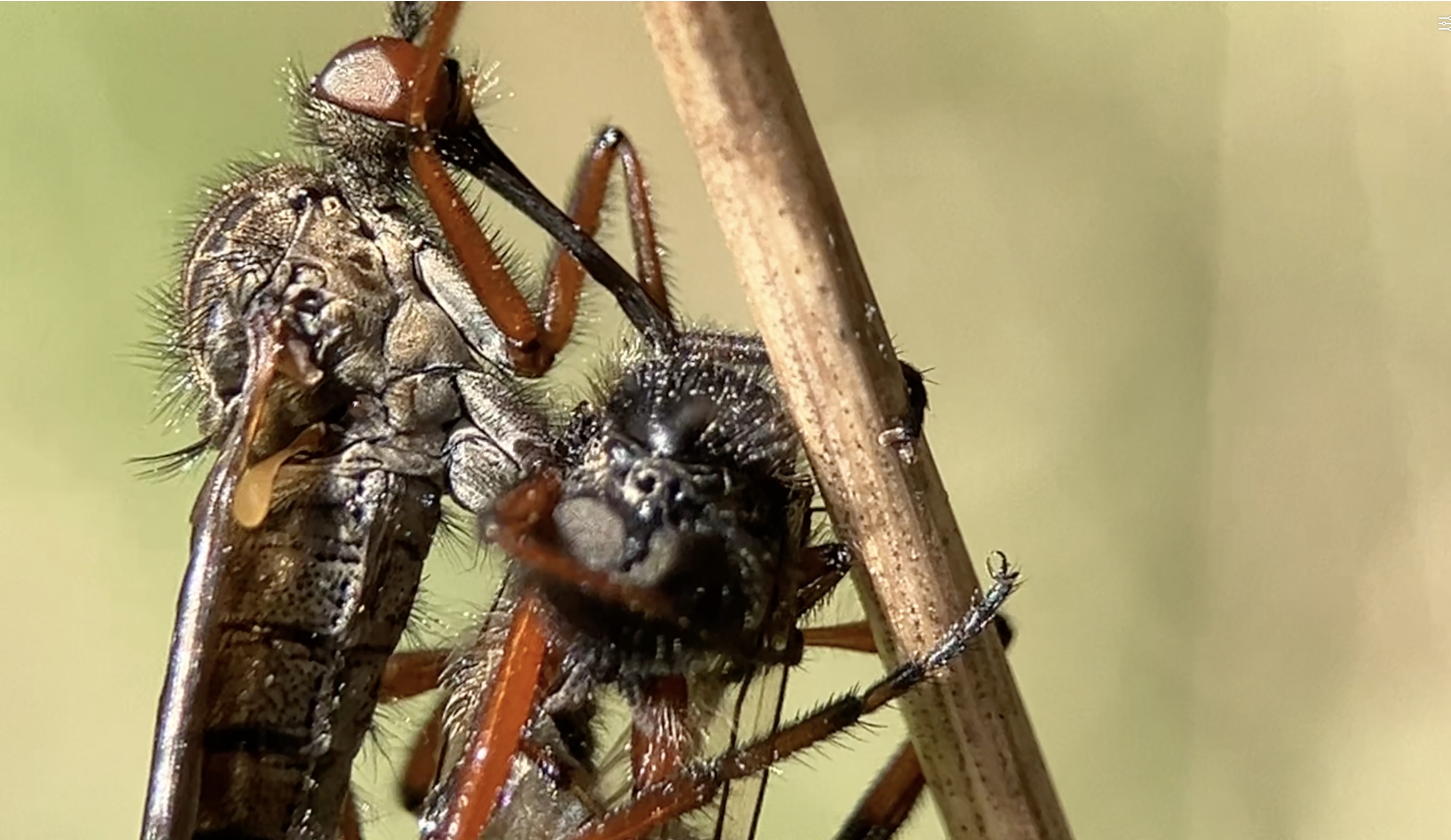
Empis Dance Fly with Bibionidae fly as nuptial offering for a female Empis fly

This afternoon I would rate a 10/10 for entomological adventure. It happened outside, just behind our barn about 3:30pm. I went out to feed our resident raven and took a stroll over to a sunny corner of our property. As I neared an old barbed wire fence line, I noticed an aggregation of flies bobbing around over one of the native Ocean Spray (Holodiscus discolor) shrubs. Moving closer, as stealthily as possible, I saw these were Empis dance flies and I got very excited. There seemed to be about 15-20 in the group.

Empis Dance Fly (male) with Bibionid fly nuptial gift

I watched as I stood in the sun. The sun’s warmth felt really good on my body. Hopefully, we will have more sunshine and some days of vitamin D will infuse my cells and pull me out of this funk I have been wallowing in. The flies dancing in the sun were a sight. I crept forward a bit closer, trying not to slip into the fencing, but enough so as to get some video to share.

You will have to forgive me for the shake in the footage. It is not easy to remain steady and focus on a nervous fly that leaves its perch if you so much as breathe too deeply when you are moving the camera close enough to zoom in for a good macro shot. I think I was holding my breath a lot while I was trying to take pictures.

Empis Dance Fly with nuptial offering

This fly should be classified in the genus Empis. Last year, I found Empis barbatoides in our orchard. You can read an earlier blog post I wrote about them here https://buggingyoufromsanjuanisland.com/category/dance-fly/empis-barbatoides/ I believe these may be the same species, but I say this with a caveat. I am hoping to get my hands on a copy of the revisions by Sinclair, Brooks, and Cumming I have referenced below. It appears I may need this and the updated keys to try and ID my fly beyond genus level, so I’ve emailed the lead author and hopefully will hear something back.

If you look closely, you’ll see in some of the photos the fly is holding a balled up insect. This is a species of March fly in the family Bibionidae. I saw a few hiding around in the tall grass like this one in the photo below.

March fly (Bibionidae) hiding in the grass

Evidently, they were being picked out by the male flies and rolled up into a nice nuptial gift to present to a female Empis fly to entice her to mate. The male Empis fly will carry this balled up dead insect and “dance” around to attract a female. That’s what I found so fascinating to actually watch in person. It isn’t every day you see something like this! Since flies seem to be attracted to certain spots for mating aggregations (it’s called hilltopping), perhaps this is a spot where I might be lucky enough to see this action again.

References and Further Reading:

Alcock , John. 1973. The mating behaviour of Empis barbatoides Melander and Empis poplitea Loew (Diptera: Empididae), Journal of Natural History, 7:4, 411-420, DOI: 10.1080/00222937300770301

Bugguide. 2023. Family Empididae – Dance Flies. https://bugguide.net/node/view/6578

Pehling, D. 2004. Empis Dance Flies Empis spp. Bug of the Month . Scarabogram. https://crawford.tardigrade.net/bugs/BugofMonth40.html

Sinclair BJ, Brooks SE, Cumming JM. Revision of the western Nearctic species of Empis subgenus Enoplempis (Diptera: Empididae). Zootaxa. 2025 Mar 31;5615(1):1-200. doi: 10.11646/zootaxa.5615.1.1. PMID: 40173481. https://pubmed.ncbi.nlm.nih.gov/40173481/