Yesterday I was the lifeguard. And, I had swimmers needing saving!
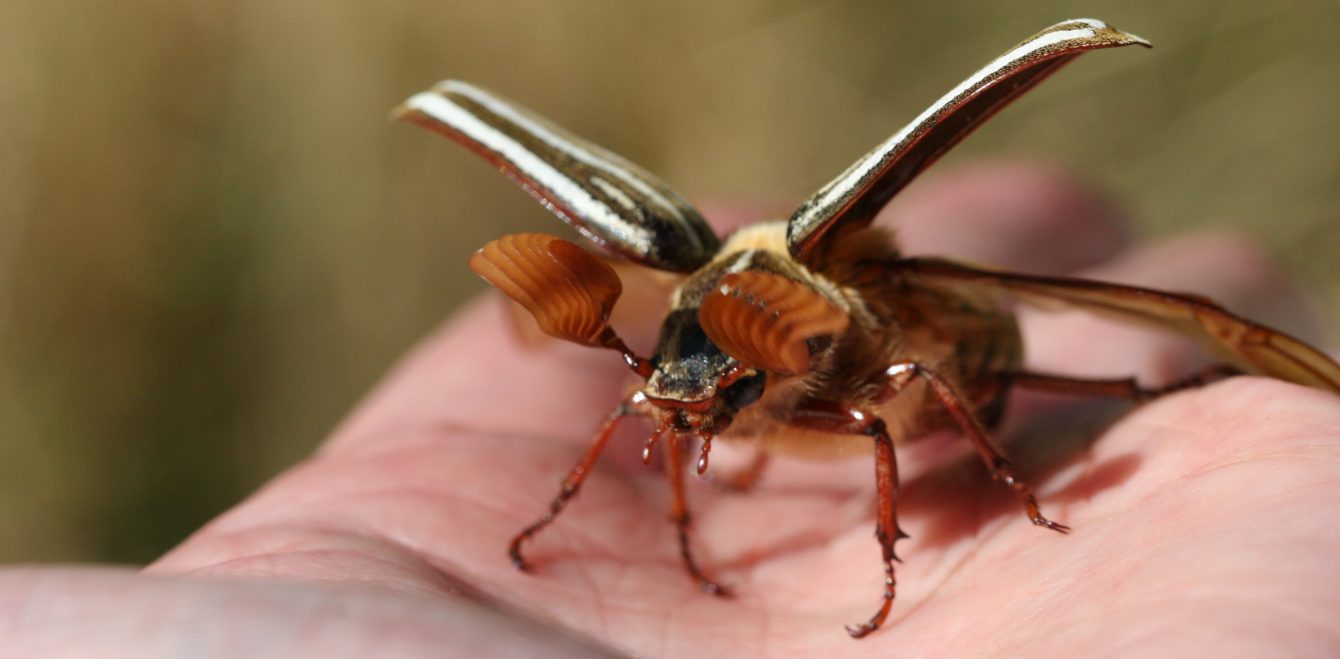
Hister Beetle (Genus Margarinotus I believe) – April 7, 2022 San Juan Island, WA
Here’s one of the species I used a piece of cardboard to rescue from drowning. This is a beetle in the family Histeridae, also known as a Clown Beetle. I told him no more clowning around without a life jacket. 🤣 Watch as it wrings its hindwings out, rolling them in under the leathery elytra (the outer wings).
I believe this beetle is in the genus Margarinotus. For ID beyond this, I’d need more time and a lot of patience. However, I can tell you I’ve learned some species of Hister beetles are associated with the nests of rodents, birds, and even ants and termites. They are pest predators, meaning they eat other insects at all life stages. They also are especially adept predators of fly eggs. You can often find them in leaf litter, dung, carrion, and under tree bark, or living in those ant mounds where they may be fed by ants, eat the leftovers the ants discard, or in some cases, they eat the ants!
Some other curious tidbits about these beetles include their acting ability. They play dead (Thanatosis) to deter predators. The word Hister is derived from Latin and means “Actor.”
Hister Beetle (I believe Margarinotus sp) – San Juan Island, WA
Wenzel, R. L. (1960). Three new histerid beetles from the Pacific Northwest, with records and synonymies of additional species (Coleoptera: Histeridae). https://www.biodiversitylibrary.org/page/2847194
I found another species of Sawfly in our above ground pool today. This one is entirely black. Size is approximately 7-8mm. This looks to be in the genus Dolerus. From what I’ve found about host plants, it looks like the larvae feed on most grasses and horsetail. Females deposit eggs into the plant tissue where they hatch and the larvae will feed for approximately one month before exiting and pupating overwinter in the surrounding soil. There is one generation (univoltine) per year and adults emerge in early spring. Adults are recorded as feeding on tree sap from Maple (Acer), Apple (Malus), and Pear (Pyrus). They also take nectar from Willow (Salix) flowers, and from Cherry and Plum (Prunus) flowers. This means they do provide some pollination activity.
Looks like WWU Biology Department is working on a web page for Sawfly identification, but it’s not up and running yet. You can find their link below and bookmark it to check out at a later date.
Dolerus sp. SawflyDolerus sp. Sawfly – San Juan Island, WA 03.29.2022
Dolerus Sawfly – Specimen #2
References and Further Reading
Baine Q, Looney C (2019) Plant associations for three sawfly species (Hymenoptera, Tenthredinidae) in the Pacific Northwest. Journal of Hymenoptera Research 74: 27–33. https://doi.org/10.3897/jhr.74.46795
Looney C, Smith DR, Collman SJ, Langor DW, Peterson MA (2016) Sawflies (Hymenoptera, Symphyta) newly recorded from Washington State. Journal of Hymenoptera Research 49: 129–159. doi: 10.3897/JHR.49.7104
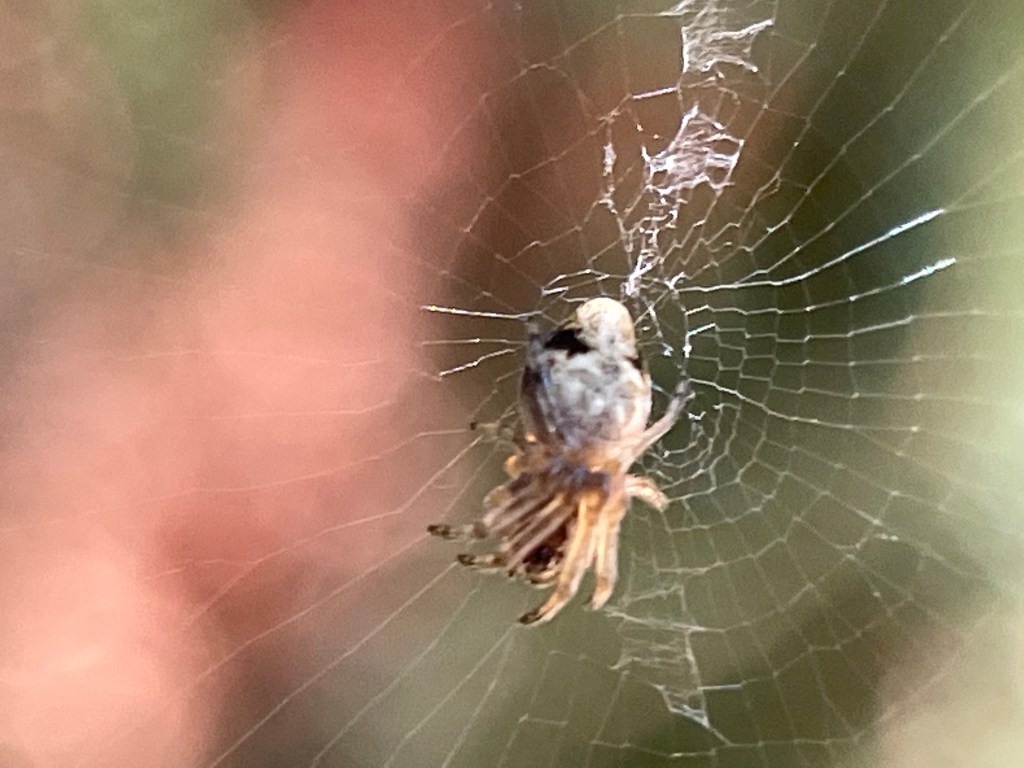
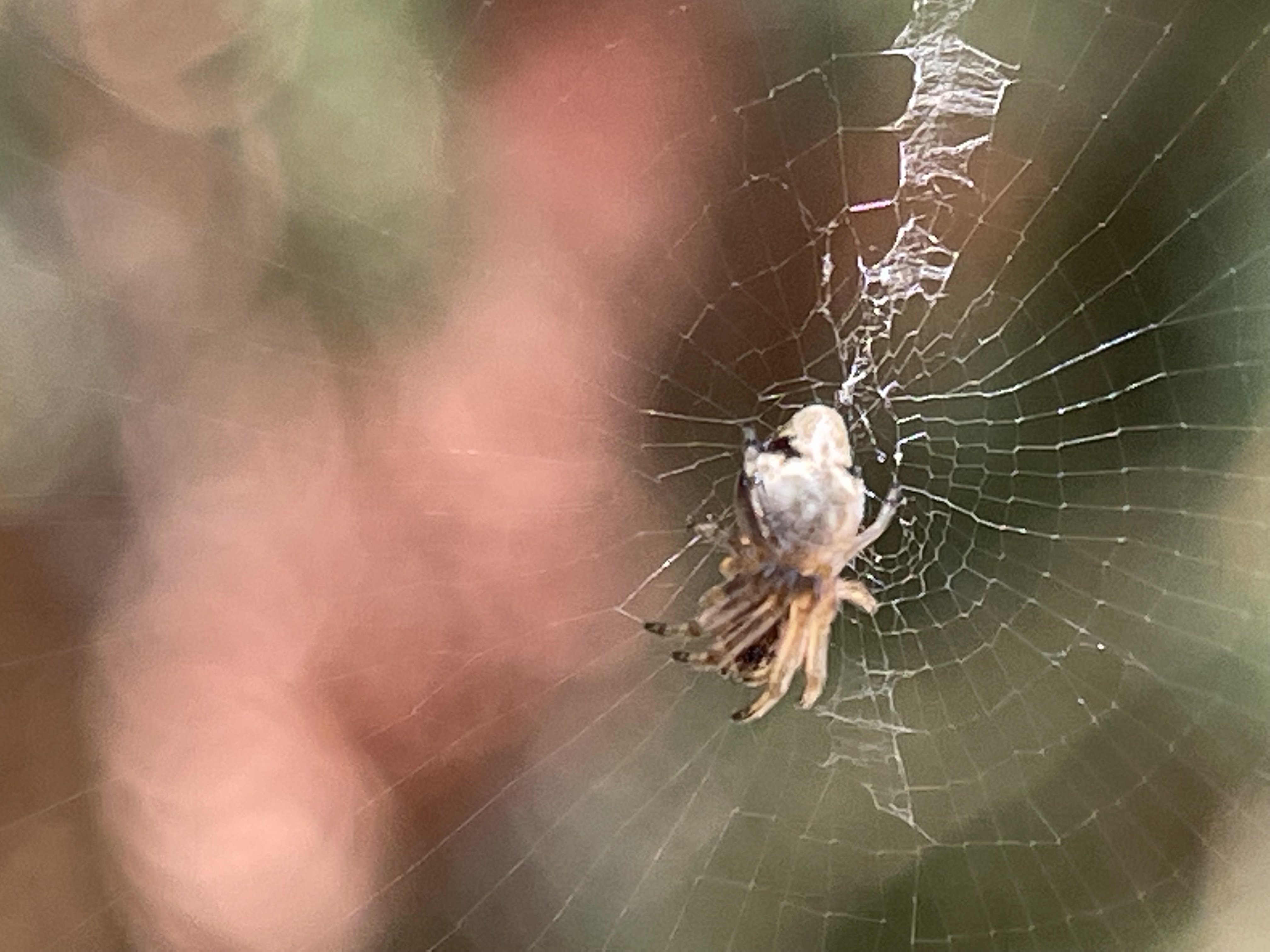
Trashline Orb Weaver (Cyclosa sp.) San Juan Island, WA 09.06.2021
I am very nearly blind when I try to see things up close, so it truly surprises me how I SEE things like the tiny “laundry” line of dead bugs this little orb weaver had strewn along a filmy thread between the boughs of our fir tree. At first, I thought it was just debris, stuck to the remnant of a spider thread, long abandoned. Upon closer inspection, I saw more threads and then my attention focused on the center, where I was able to discern what looked like teeny legs curled up around a body.
Trashline Orb Weaver
I used my clip on macro lens to get a better look. Indeed, there was a tiny spider in the center. I thought it was dead. That’s EXACTLY what the spider was hoping I’d think, and then I’d move on and the spider could enjoy the morning sun, and maybe a tiny bug for breakfast too.
Trashline Orb Weaver
Cyclosa sp. Trashline Orb Weaver 09.07.2021
Trashline Orb Weaver (Cyclosa sp.) San Juan Island, WA 09.07.2021
Trashline Orb Weaver
I had a hard time getting decent photos. Even with the macro lens, focusing was tough. The wind would blow at just the WRONG second and I’d have to start all over again. I couldn’t find my tripod, but finally got a decent pole to help me balance, and went out to take photos at different times over a period of 2 days. I even went out last night and took a picture.
Awake or Sleeping? Trashline Orb Weaver (Cyclosa sp.) at night. San Juan Island 09.07.2021
It was fairly easy to identify the spider to Genus (Cyclosa), but species ???? . After going through the literature I had, I narrowed it to 2 possibilities, but reached out to Rod Crawford for help. Rod is the curator of arachnids at Seattle’s Burke Museum and this is what he says,
“Yes, it’s a Cyclosa. This time of year all Cyclosa are juvenile, and I for one cannot distinguish between our 2 species (C. conica, C. turbinata) as juveniles. However, C. conica is more common.”
So, my little spider with a laundry line of bugs is either Cyclosa conica or Cyclosa turbinata.
Why exactly do they string the debris along their web lines? Well, again, this debris is usually made up of dead bugs and other tiny bits of debris attached to the silk line. Typically, the spider is positioned somewhere in the middle, using the debris as camouflage against predators. Often, the female spiders’ egg sacks are attached to this “laundry line” too. I think laundry line sounds better than trash line, but I don’t think I get to rename the spider.
There are five species of Cyclosa spiders in North America, north of Mexico. I believe we only have the two mentioned by Rod here. I’m going back out to check on my new friend after I finish my post. Enjoy the day and remember to Be Nice to Spiders!
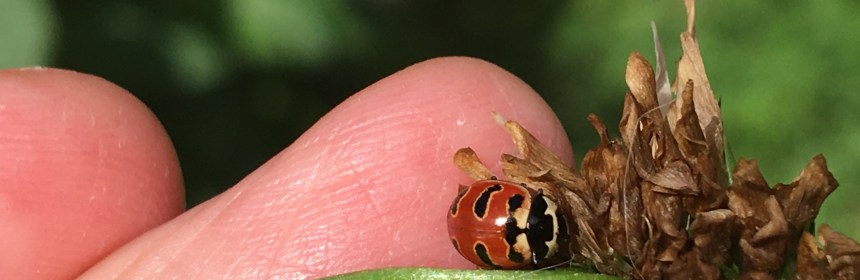
I found my first Three Banded Lady Beetle (Coccinella trifasciata subversa) this morning in the patch of clover in front of my home. At least I believe it is the subspecies ‘subversa’ according to the information I found online and referencing the distribution map. While I did not find much information about this particular species pertaining to life in the Pacific Northwest, I did find that according to the Lost Ladybug Project, this species (Coccinella trifasciata) is considered a species of greatest conservation need in the state of New York.
Coccinella trifasciata subversa on clover Photo by Cynthia Brast-Bormann San Juan Island, WA 07.06.2020Distribution map of Coccinella trifasciata subversa
So, because I’m interested in Lady Beetles and conservation, I submitted my photos today to the Lost Ladybug Project. They’re keeping records of sightings and I believe it’s important to collect and share data that help us understand more about the lives all of all the amazing critters we share the planet with.
If you see a Lady Beetle you are interested in knowing more about, take a look at the Lost Ladybug Project here – http://www.lostladybug.org/index.php
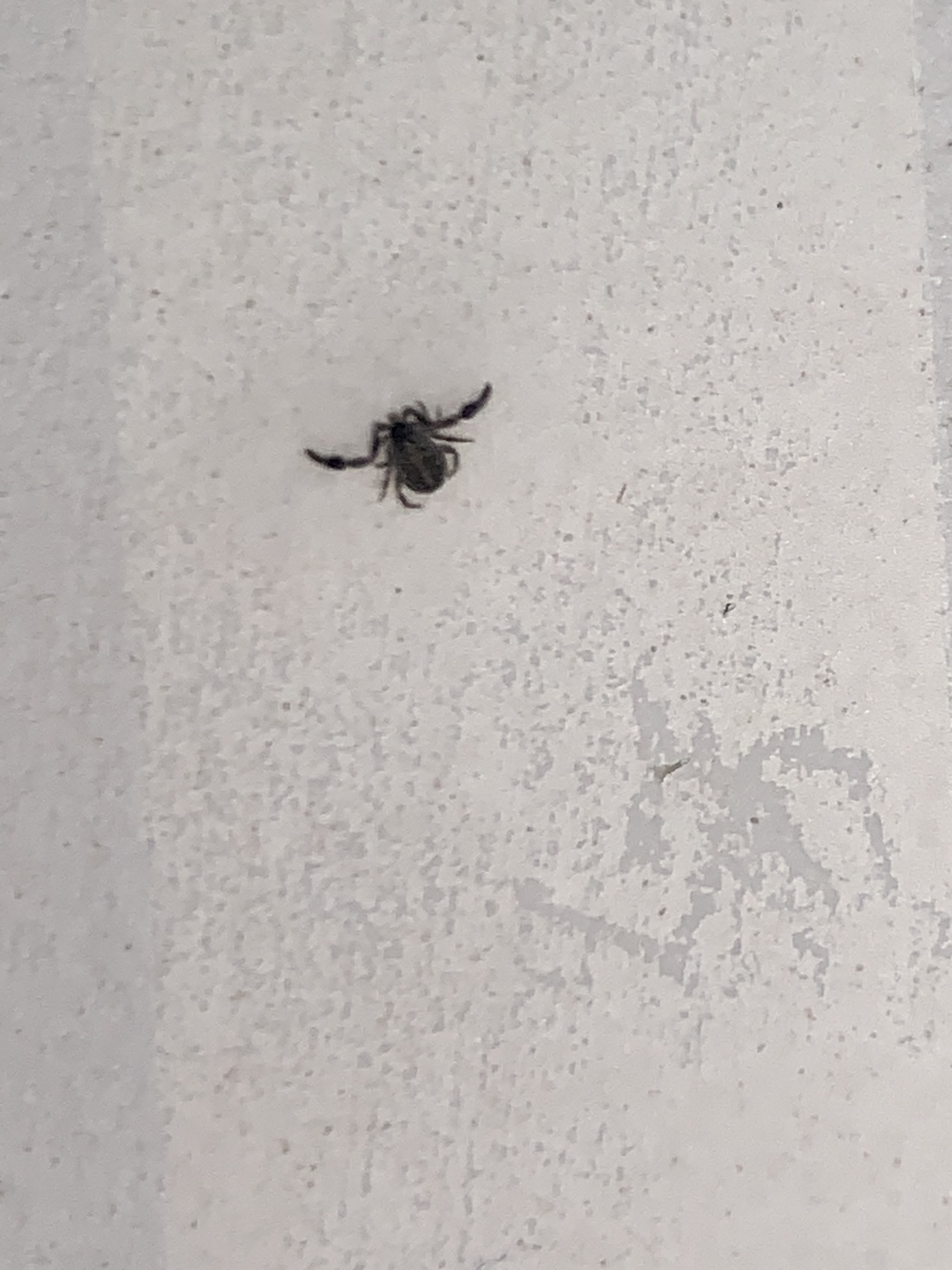
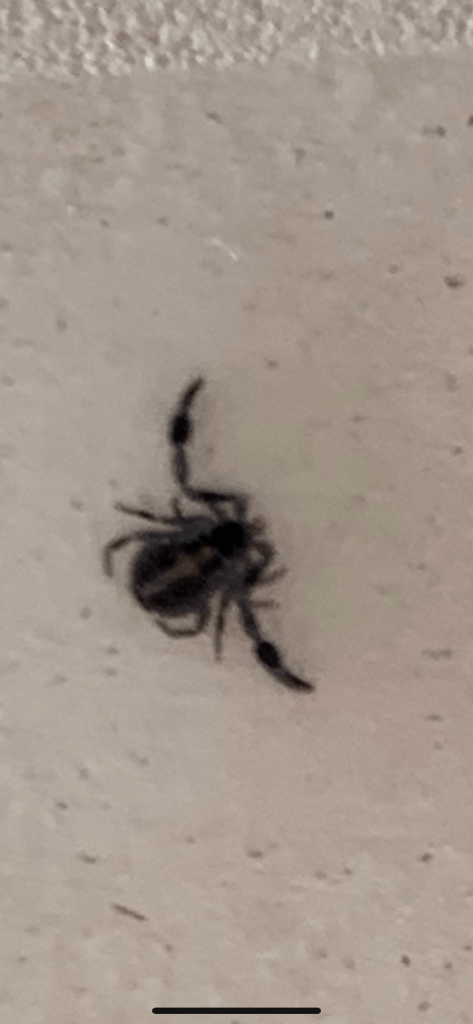
House Pseudoscorpion (Cheliferidae cancroides) 2/28/2020 San Juan Island photo by T. SantoraHouse Pseudoscorpion (Cheliferidae cancroides) 2/28/2020 San Juan Island photo by T. Santora
House Pseudoscorpion (Cheliferidae cancroides)
House Pseudoscorpion (Cheliferidae cancroides)
House Pseudoscorpion (Cheliferidae cancroides)
House Pseudoscorpion (Cheliferidae cancroides) 2/28/2020 San Juan Island photos by T. Santora
This little creature was photographed on February 28, 2020 by Trever Santora on San Juan Island, WA.
It’s a Pseudoscorpion! Found on the windowsill of his house and no larger than a tiny sesame seed, I believe it to be an immature House Pseudoscorpion (Cheliferidae cancroides).
Keep an eye out for these. They’re quite harmless to humans and can’t sting or bite you. Pseudoscorpions are predacious and beneficial because they eat other organisms that are pests. Some live in birds’ nests and eat the mites that can build up and harm nestlings.
Since they don’t have wings and can’t fly, pseudoscorpions move around by phoresy. That means they’ll hitch a ride on someone who can! Not just birds, but bees, wasps, and flies can also provide a free lift.
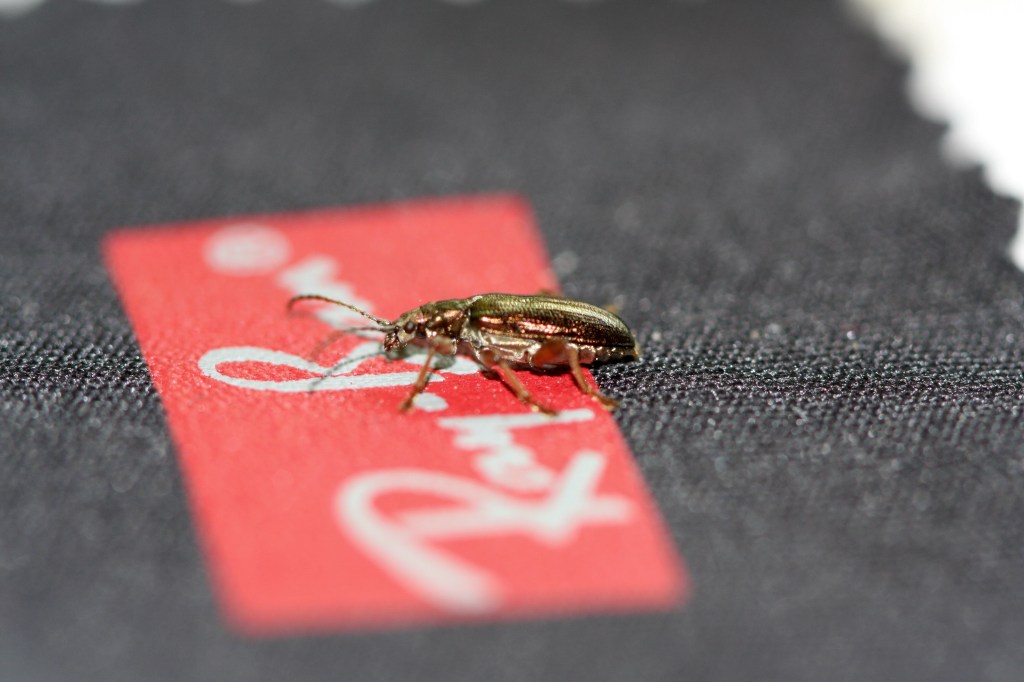
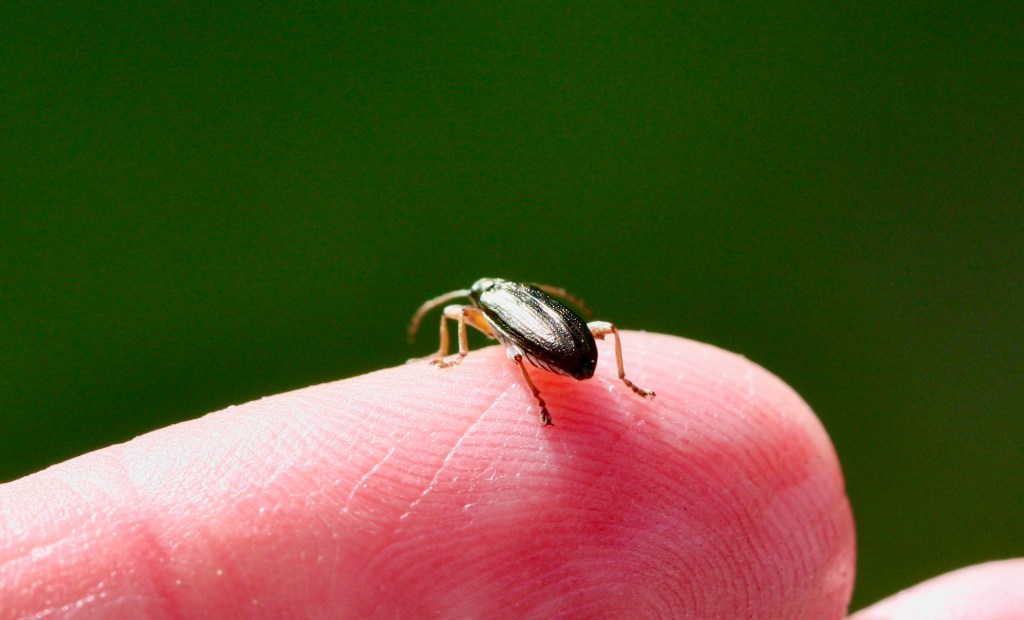
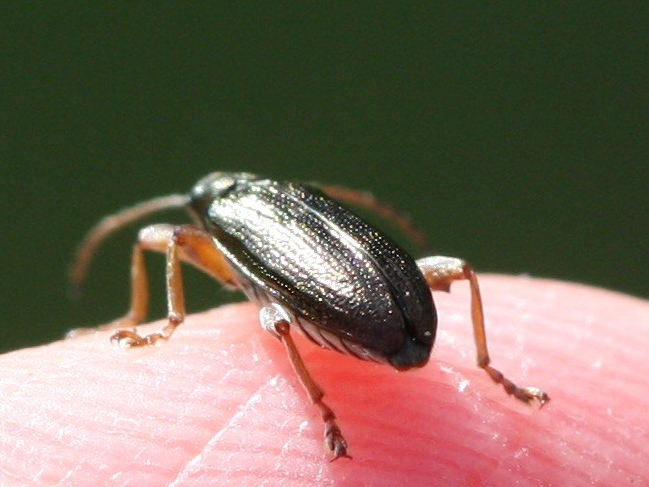
I really enjoy the days when I have an opportunity to go over insect images I’ve taken, but haven’t yet had the chance to identify. This small (approx 7-8mm), metallic beetle is a leaf beetle in the family Chrysomelidae. It’s a Long-horned Leaf Beetle (Plateumaris germari). They are associated with aquatic habitats and this specimen was found near a wetland habitat on San Juan Island, WA., May 12, 2015. Yes. I’m slow at getting around to sorting things, but was happy to share this one today.
Long-horned Leaf Beetle Plateumaris germari San Juan Island, WA May 12, 2015 photo by Cynthia BrastLong-horned Leaf Beetle Plateumaris germariLong-horned Leaf Beetle Plateumaris germariLong-horned Leaf Beetle Plateumaris germariLong-horned Leaf Beetle Plateumaris germari
Someone in San Juan County is being tested by the CDC for possible infection with the novel coronavirus (COVID-19). The person’s ID and island of residence has not been released. If confirmed, this would be the first instance of the virus in San Juan County and the second case in WA state. https://www.sanjuanjournal.com/news/person-under-investigation-for-novel-coronavirus/
Lots of folks think living on an island is some sort of safe haven. I’ve spent a bit of time thinking about this and I just don’t believe that to be true. First off, if everyone got sick, we definitely do NOT have the capacity to care for people in hospitals. Probably we would quickly run out of supplies. It’s really doubtful that anyone would want to deliver things to the island if we had some type of epidemic. We could easily run out of food and fuel.
If I’ve learned anything in the ten-plus years I’ve lived here, it’s that you should be prepared to care for yourself. Whether it’s an earthquake or other natural disaster, government breakdown (that could certainly happen given our current administration), or disease outbreak, a plan is essential! While I know we have some truly dedicated medical professionals on our island, they are limited. There’s also not any prescription drug that will cure you of coronavirus if you get it. This links to the limited treatment options that may be available or under development https://www.livescience.com/possible-treatments-new-coronavirus.html
So, my plan (if anyone in my household gets sick) is to have my self-treatment items in order. Here’s my list:
Pedialyte, Gatorade, and Ginger Ale. For rehydration!
Lemon Balm. Strong antiviral properties. Use a tincture or make a tea.
Ginger. Also strong antiviral properties.
Saltine Crackers
White rice
Licorice Tea
Lysine
Saline Spray
Motrin/Tylenol
Vick’s Vapor Rub
If you can think of anything I might have left off, please feel free to write and let me know! P.S. I’m not a doctor. These are my own HOME remedies. Use your own good judgement and wash your hands a lot!
References:
Barak, Vivian & Halperin, T & Kalickman, I. (2001). The effect of Sambucol, a black elderberry-based, natural product, on the production of human cytokines: I. Inflammatory cytokines. European cytokine network. 12. 290-6.
Castillo-Maldonado I, Moreno-Altamirano MMB, Serrano-Gallardo LB (2017) Anti-dengue serotype-2 activity effect of Sambucus nigra leaves-and flowers-derived compounds. Virol Res Rev 1: DOI: 10.15761/VRR.1000117
Chen, C., Zuckerman, D.M., Brantley, S. et al. Sambucus nigra extracts inhibit infectious bronchitis virus at an early point during replication. BMC Vet Res 10, 24 (2014). https://doi.org/10.1186/1746-6148-10-24
Ganjhu RK, Mudgal PP, Maity H, et al. Herbal plants and plant preparations as remedial approach for viral diseases. Virusdisease. 2015 Dec;26(4):225-236. DOI: 10.1007/s13337-015-0276-6.
Karimi, S., Mohammadi, A.A., & Dadras, H. (2014). The effect of Echinacea purpurea and Sambucus nigra L. on H9N2 avian influenza virus in infected chicken embryo.
Krawitz, C., Mraheil, M. A., Stein, M., Imirzalioglu, C., Domann, E., Pleschka, S., & Hain, T. (2011). Inhibitory activity of a standardized elderberry liquid extract against clinically-relevant human respiratory bacterial pathogens and influenza A and B viruses. BMC complementary and alternative medicine, 11, 16. https://doi.org/10.1186/1472-6882-11-16
Porter, R. S., and Bode, R. F. ( 2017) A Review of the Antiviral Properties of Black Elder (Sambucus nigra L.) Products. Phytother. Res., 31: 533– 554. doi: 10.1002/ptr.5782.
Roschek, Bill & Fink, Ryan & Mcmichael, Matthew & Li, Dan & Alberte, Randall. (2009). Elderberry Flavonoids Bind to and Prevent H1N1 Infection in-vitro. Phytochemistry. 70. 1255-61. 10.1016/j.phytochem.2009.06.003.
Zakay-Rones, Z., Varsano, N., Zlotnik, M., Manor, O., Regev, L., Schlesinger, M., & Mumcuoglu, M. (1995). Inhibition of several strains of influenza virus in vitro and reduction of symptoms by an elderberry extract (Sambucus nigra L.) during an outbreak of influenza B Panama. Journal of alternative and complementary medicine (New York, N.Y.), 1(4), 361–369. https://doi.org/10.1089/acm.1995.1.361
Z ZAKAY-RONES1, E THOM2, T WOLLAN3 AND J WADSTEIN4. (2004). Randomized Study of the Efficacy and Safety of Oral Elderberry Extract in the Treatment of Influenza A and B Virus Infections. The Journal of International Medical Research. 32: 132 – 140. https://journals.sagepub.com/doi/pdf/10.1177/147323000403200205
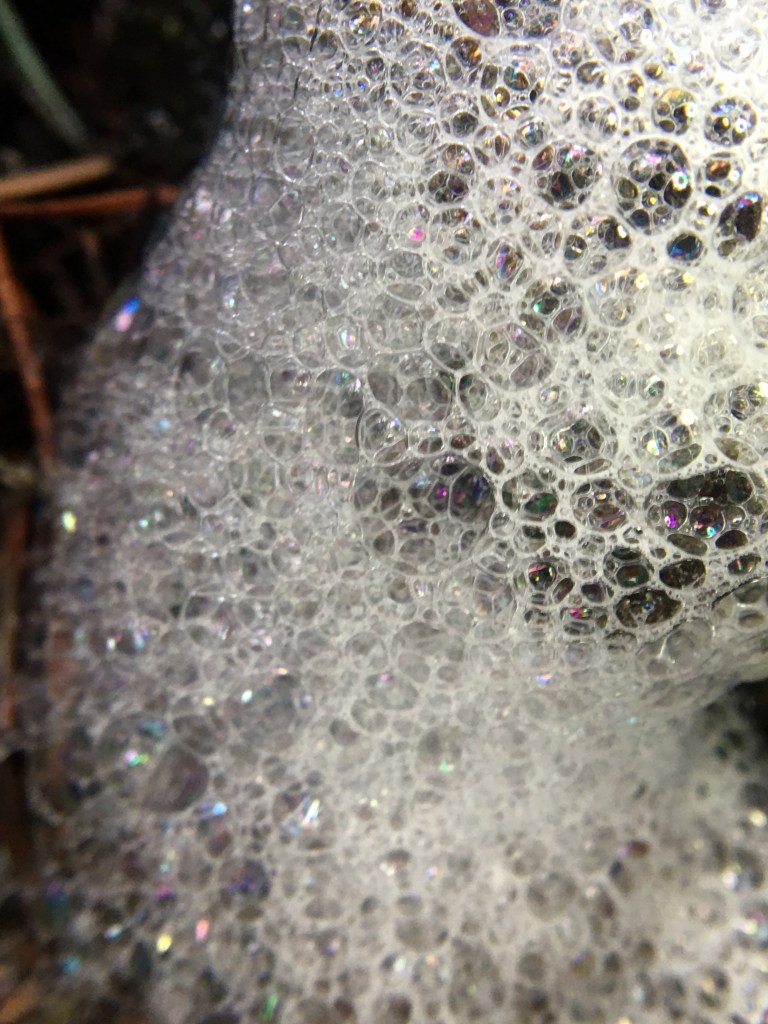
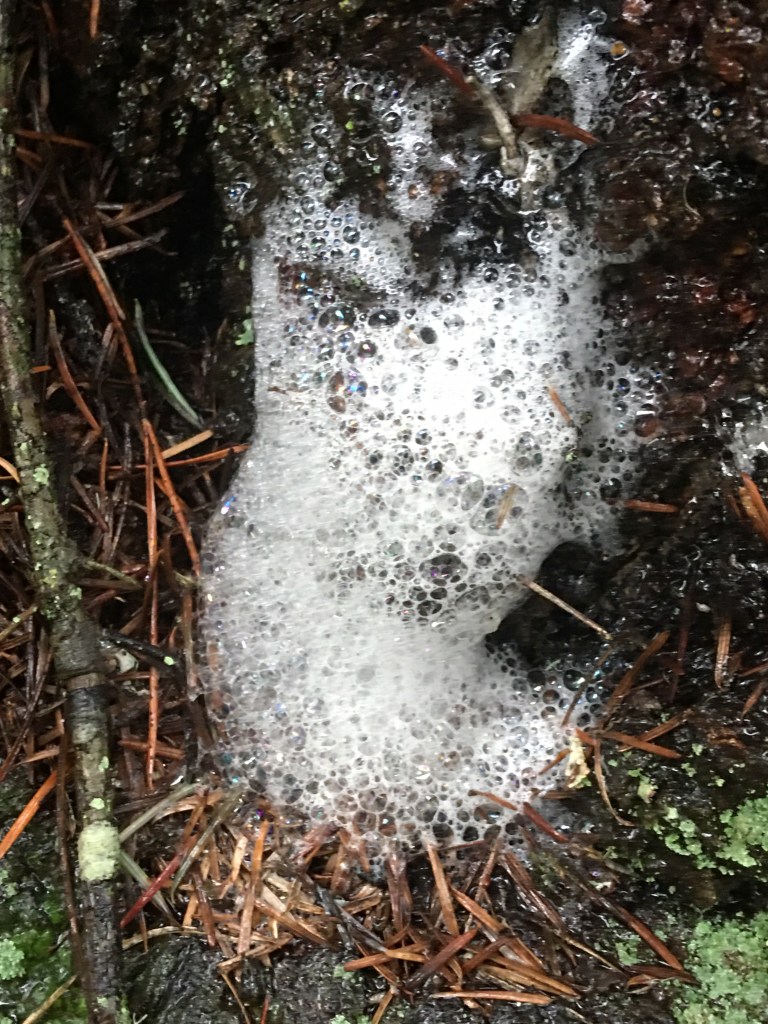
I knew the headline would be catchy! I was indeed flummoxed (or greatly bewildered) when I saw the foam blobs on our Douglas fir trees today after the rain subsided enough for me to walk around outside. We’ve had a DELUGE of rain in the Pacific Northwest this year. Rumor has it, the rain is record-setting!
Back to the giant spit-wad looking blobs of bubbles on those trees…. Here’s what I saw.
Pseudotsuga menziesii Douglas fir trunk with foam blob
I’m an entomologist, so when I saw this I thought, “it sure looks a lot like the foamy froth that spittle bugs make.” However, I quickly discounted this possibility (unless there was some sort of really LARGE undiscovered species hiding out on San Juan Island that is) because it’s way too early in the season for them.
What WOULD we do without Google? Seriously! I typed in a search. My first query was “what do Pacific tree frog eggs look like?” I was skeptical, but since I heard tree frogs around me in the woods and since it is REALLY wet outside, I thought maybe one or two of these frogs got confused and used the tree instead of one of the thousands of water puddles I was trying to avoid stepping in. Nope. Not tree frogs. My next query read like this…”weird, foam mass on Douglas fir tree trunk.” I got a few things, but quickly narrowed the possibility to the sites that had photos that looked like mine.
I discovered these oozing foamy spots are called SLIME FLUX, also known as a condition of the tree called WETWOOD. Sounds bad. Might be.
I’ve not had a chance to read through all of this material. It sure seems like there is a link between harmful bacteria, water, possibly insects, and the resulting foam. but will share it here for you to reference. https://www.fs.fed.us/pnw/pubs/pnw_gtr112.pdf
While scanning this document, the term that popped out at me was “slime-flux insects” on page 8. I’ll have to do some more reading to investigate this. If you beat me to it, please feel free to share your comments. Curious minds want to know!
***Update
I’ve been doing a bit more reading about slime flux and foamy trees this evening (check out this site http://www.wonderofeverydaynature.com/2016/03/26/155/) and found an alternative and possibly more probable cause. While the foam can be caused by bacterial infections, it also is known to form after periods of heavy rain when a chemical reaction of sorts occurs. The rain interacts with soap-like components found in the sap from pine trees (and probably this includes fir trees as well), creating foam similar to what I observed today. It can also form from air pollutants that land on the trees after dry periods and create foam when rain hits the tree bark.
Fi Fi Fo Foam! I learned the best way to tell the difference between friend or foe foam is to take a whiff. Bacterial infections produce a foul-smelling foam that bubbles out as tree tissue is broken down, forming alcohol and carbon dioxide gas. This foam will often attract insects like bees, flies, wasps, and ants.
“Bacteria, commonly found in soil and water, take up residence in young trees or gain entrance to older trees through wounds. The bacteria, including species of Clostridium, Bacillus, Enterobacter, Klebsiella, and Pseudomonas, grow within the tree using the sap as a nutrient source. As the sap is used, oxygen in the heartwood is depleted (creating anaerobic conditions), methane is produced, the pH of the sap is increased (pH 6 in healthy trees to pH 7 to 8 in wetwood), and a high pressure develops in the wood (60 psi in affected trees vs. 5-10 psi in wetwood-free trees). The resulting environment greatly inhibits the growth of fungi that can cause interior rots. The liquid kills grass and other herbaceous plants that it contacts at the base of the tree. The wood of affected trees has greatly reduced value as lumber because of the unsightly discoloration. Affected wood dries much more slowly than wood taken from wetwood-free trees.”
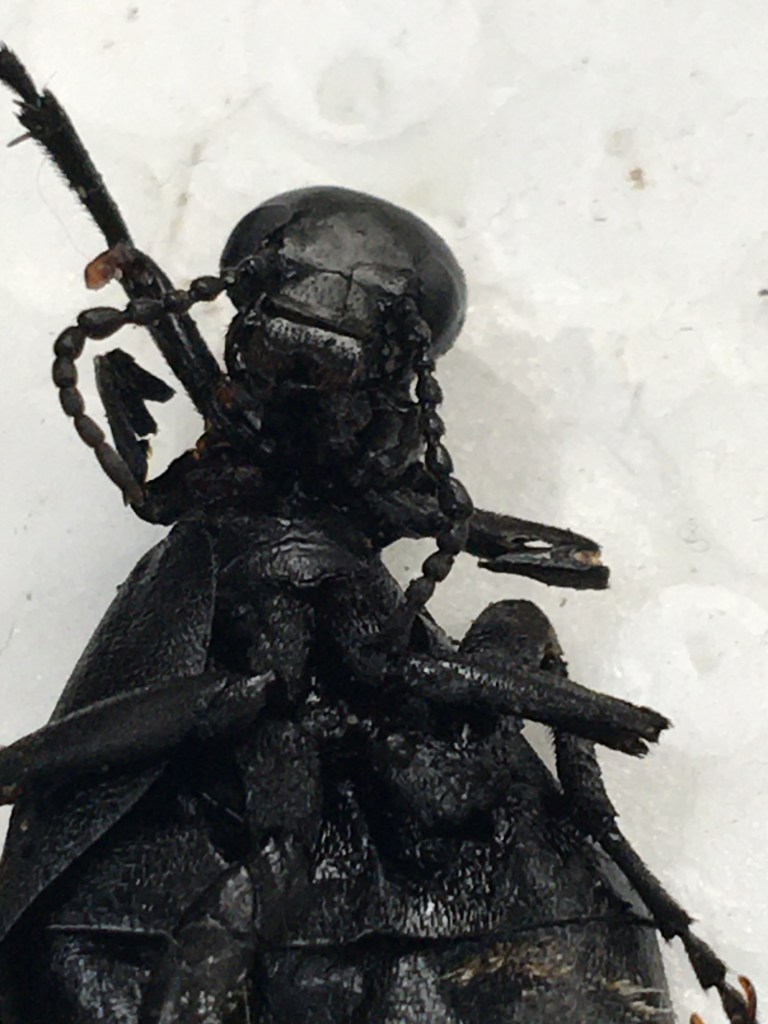
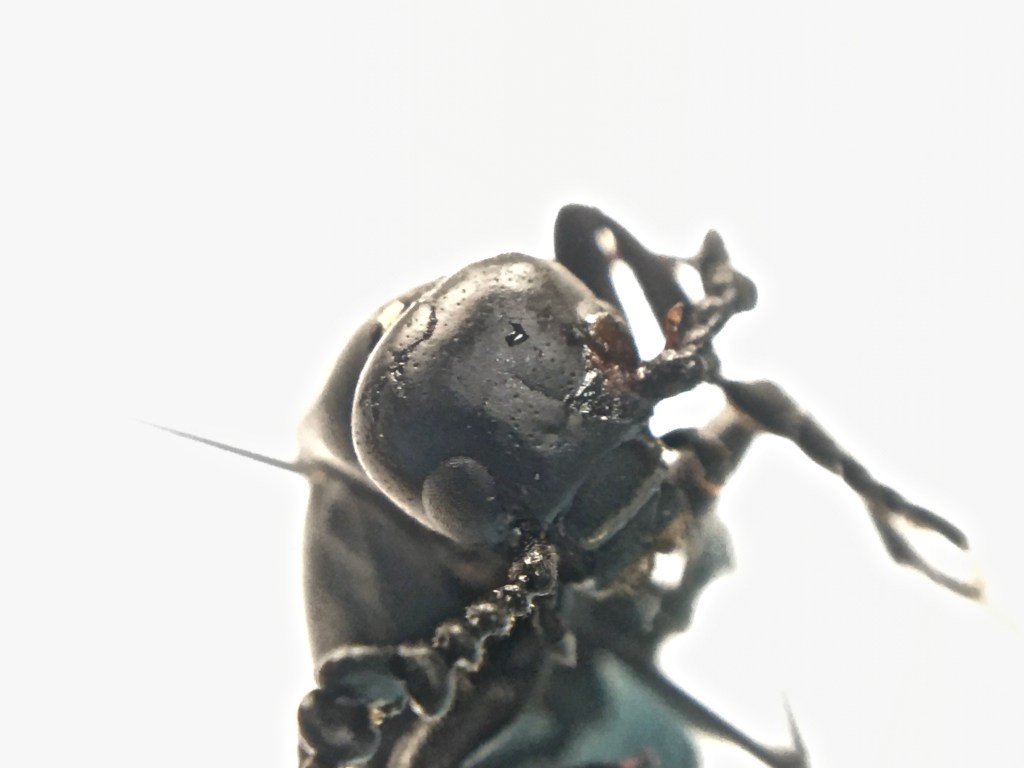
Meloe strigulosus Ventral view San Juan Island, WA 11/2/2019
I posted back in April about an encounter with Blister Beetles not far from my house. You can read about that here ~ (https://cynthiabrast.wordpress.com/2019/04/16/a-blistery-spring-day/ ). Over the weekend of November 2-3, I came across quite a few more of these in the exact same spot as in April. This time I didn’t see any live beetles, but there were at least 25-30 dead in the road.
Meloe strigulosus San Juan Island, WA 11/2/2019
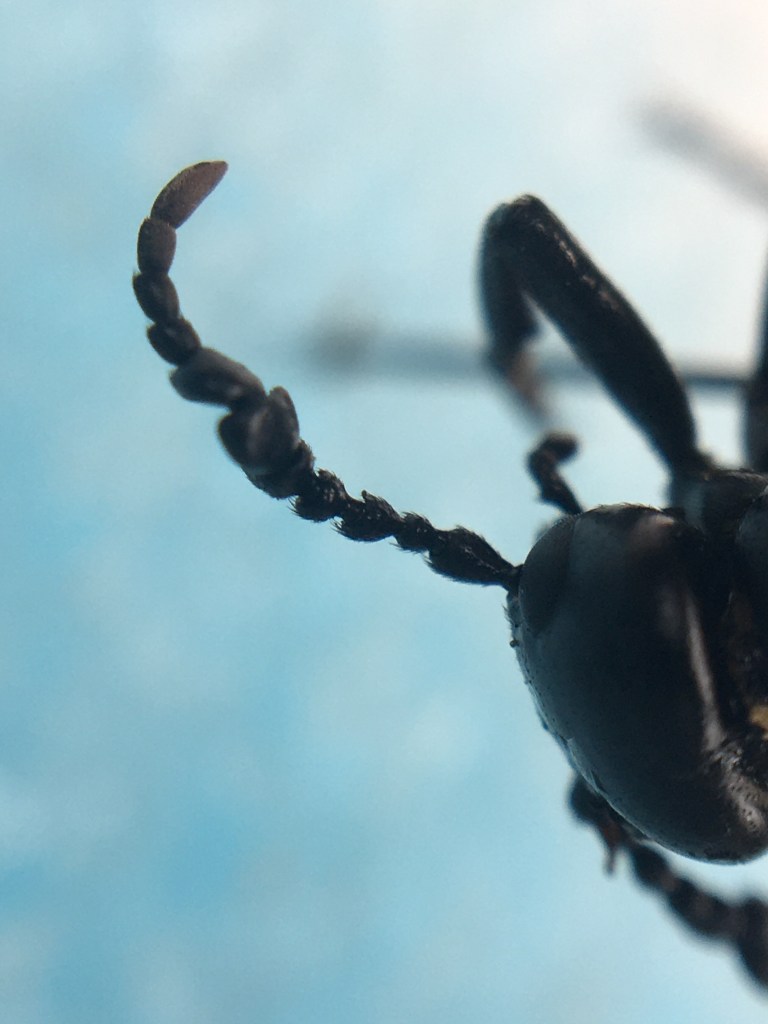
Ever the opportunist, I scraped up as many that weren’t quite so smushed into a container and brought them home. Out of the 5 I collected, 2 were male, 2 were female, and one missed antennae altogether. Given the number of beetles in the road in this one spot, I believe this was a mating aggregation.
Meloe strigulosus (male) San Juan Island, WA 11/2/2019
So, I’ve been reading about them and communicating with a two experts on blister beetles. If you don’t know what these are, they are significant because of a defensive chemical in them called Cantharidin. Cantharidin is quite toxic and it’s a blistering agent. This is where they got the name Blister Beetles in the first place.
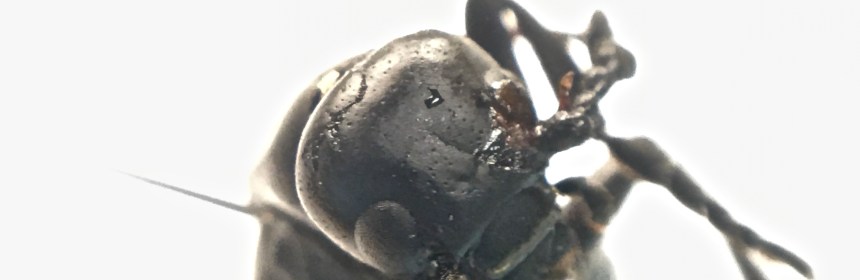
antennal segmentation of male Meloe strigulosus San Juan Island, WA 11/2/2019
Since my first sighting of these beetles back in April, I’ve learned quite a bit about them. The ones here (Meloe strigulosus) are black, flightless, tanker-like beetles, carrying around a cargo of toxic brew. They are sometimes a hazard to livestock (actually almost all mammals) that might eat them because the Cantharidin is toxic. Horses, goats, cows, and sheep that eat alfalfa hay can get really sick with colic if there are even parts of dead beetles in the hay.
While we don’t really know exactly how Cantharidin is produced in the beetle, we do know these two things: 1) it’s produced in the male and transferred to the female during mating. 2) the female transfers Cantharidin as a protective coating for her eggs during oviposition. It’s believed that the first instar larvae (called triungulin) are equipped with a supply of Cantharidin as well.
After hatching, the triungulin crawl up onto flowers to hang out and wait to attach to the hairs of a visiting bee, riding back to its nesting site. The later developmental stages of larvae are protected underground or in holes in wood where native bees are developing. They consume the developing bee eggs, larvae and nest provisions (pollen and nectar).
Is there anything good about blister beetles? Well, strangely, the populations of some species of blister beetles are timed to coincide with grasshopper abundance. Adult blister beetles feed on grasshopper eggs. That’s good, right?
What else? Humans have used Cantharidin for years to remove warts and to remove tattoos as well. For ages, it has been used as a sexual stimulant. Even birds called Great Bustards have picked up on this! Read more here: https://www.ncbi.nlm.nih.gov/pmc/articles/PMC6521026/
Blister beetles seem to be beneficial to some other species of beetles too. There is one beetle that actually has been found to chew on the blister beetle as a means of obtaining Cantharidin for its own protection. Other animals like toads, frogs, and armadillos are known to eat these beetles or use them in some way to confer protection. There is even a nuthatch that uses the beetle to “sweep” the wood where it wants to build a nest to protect it from parasites.
Back to my weekend sighting and collection of a few of these specimens. I had two that were intact enough to pin for my collection. I wore nitrile gloves to make sure I didn’t come into contact with any blistering agent. It’s a good thing I did. Some fluid made contact with one of the fingers of my gloved hand and actually started eating through it. That’s pretty caustic!
If you’re interested in more information about them, I’m happy to email some of my collected literature. There are also links you can check out in my previous post from April.
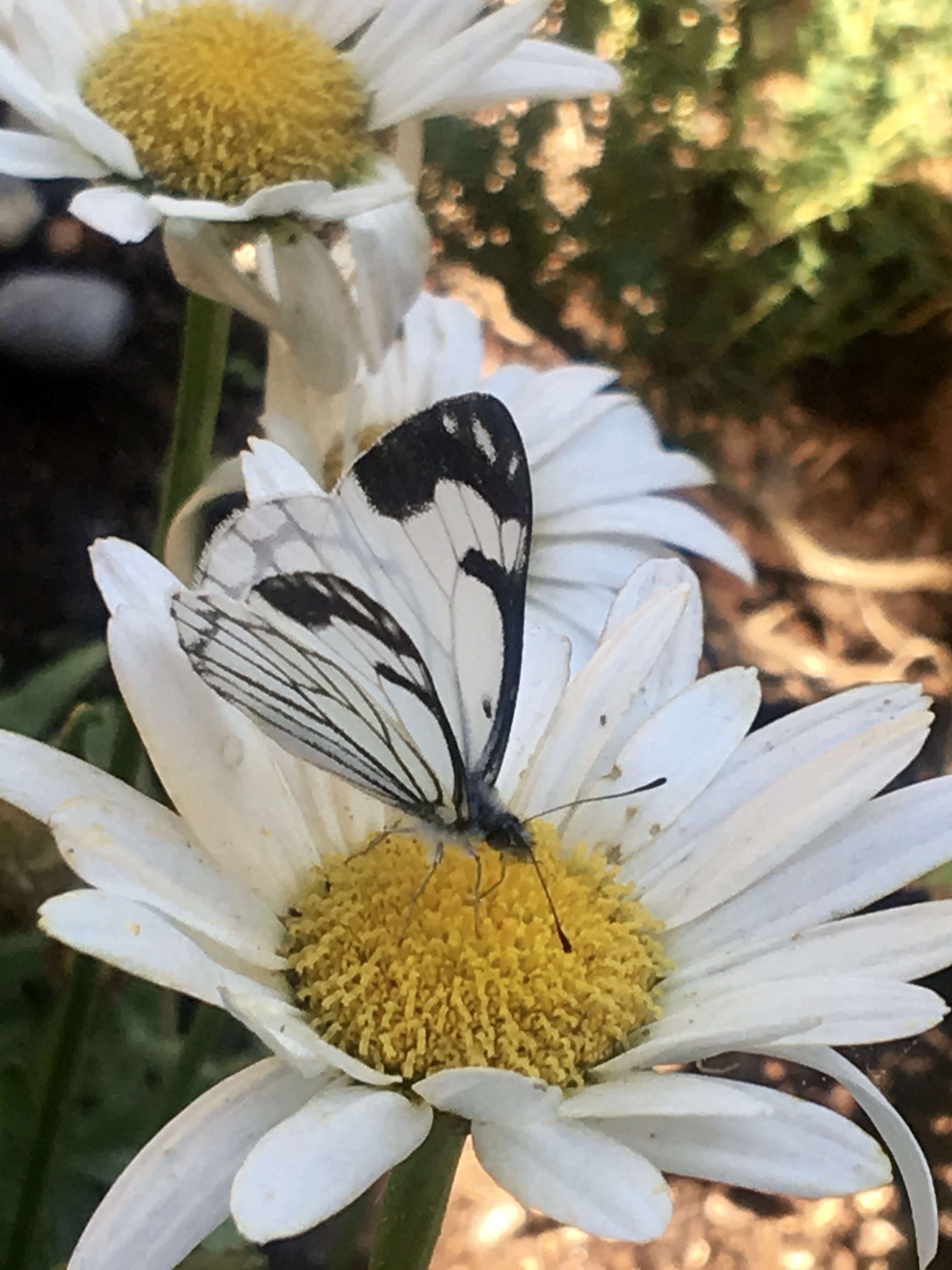
It was breezy earlier this afternoon when I spotted this beauty feeding on my daisies. This is a Neophasia menapia – or the Pine White Butterfly. I’ve been worried since we’ve put up deer fencing that the butterflies wouldn’t be able to find their way through the fence into my flower garden, but I shouldn’t have worried. The butterflies ever-so-gracefully float over the top.
I’m sure the butterflies and other pollinators appreciate that my daisies aren’t headless amputees this year, courtesy of our resident deer who now can only gaze at them. It’s hard to understand why the deer would even want to eat those flowers because they’re kind of stinky. To my nose, they smell a bit of cat urine. Lots of insects seem to like those sorts of smells though. These daisies can stay outside. I won’t be displaying them in a vase on my dining table.
Pine White Butterfly on Daisy Neophasia menapia July 26, 2019 San Juan Island, WA
The Pine White Butterfly larvae feed on Ponderosa Pine and Douglas fir. Adults emerge typically between the months of July and October. Look for little green eggs on the needles of pines and firs sometime beginning in October. The eggs will overwinter and hatch sometime in June the following summer, coinciding with the emergence of new foliage on the trees. Larvae typically only feed on old needles, but can become a “pest” when they feed on the new needles and/or population levels are high and the tree is repeatedly defoliated. Natural controls help keep caterpillar populations balanced. Larvae pupate in late July for about 15-20 days before emerging as adults to begin a new cycle.
Pine White Butterfly (Neophasia menapia ) on Daisy July 26, 2019 San Juan Island, WA
Would you like to read more? Check out the links I’ve added below.
















 Bugging You From San Juan Island