Tag Archives: san juan island

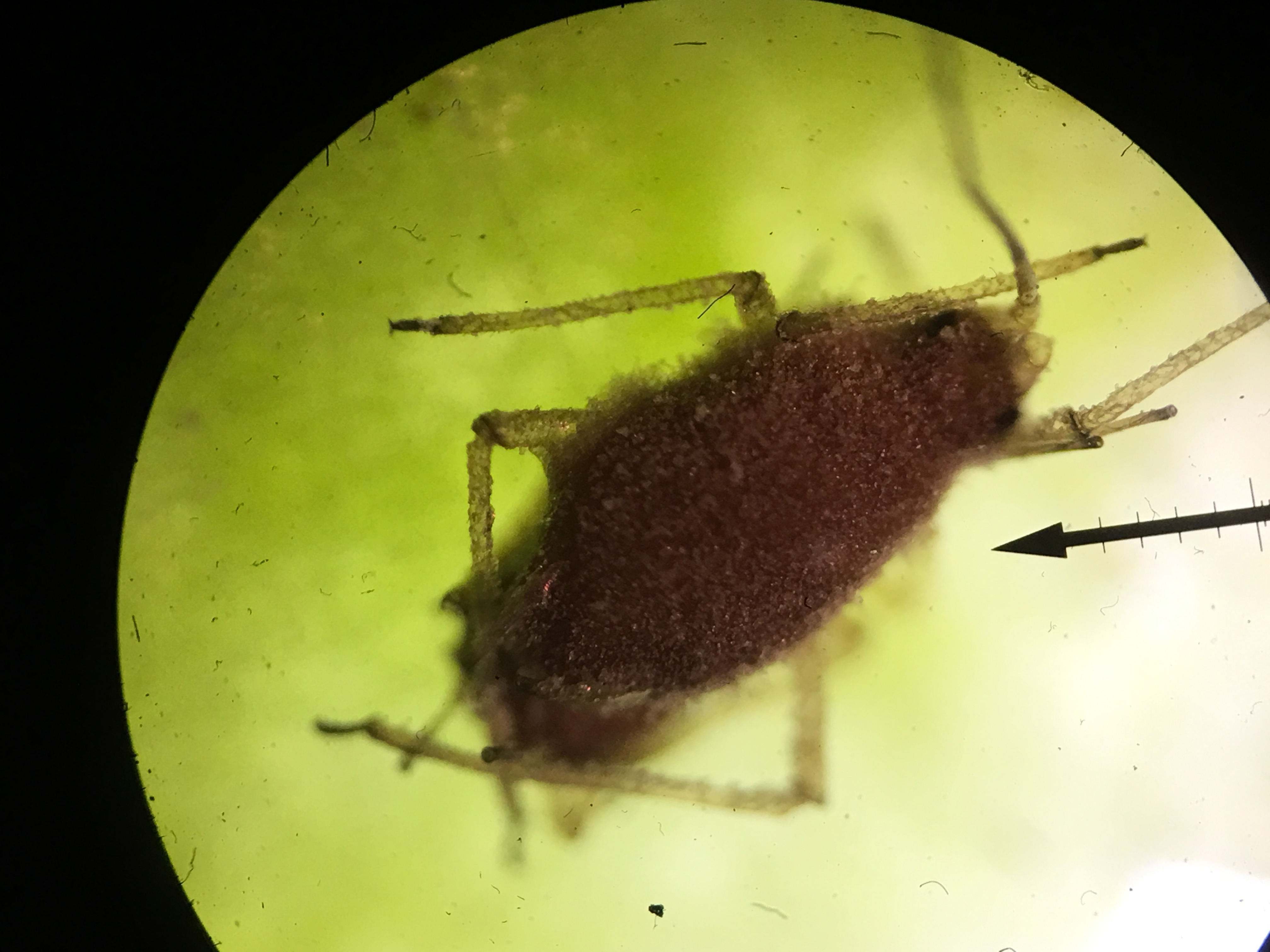
Plum pesty! Hyalopterus pruni, the Mealy Plum Aphid

I posted yesterday about picking a twig from my plum tree that had a leaf or two with some weird, white, fluffy gunk on it. Like I do often, I put the leaf on my desk with the intent of looking at it more closely in the morning. You’d think some sort of learning curve would happen with this delayed examination habit of mine. For instance, the mishap of having deer tick eggs hatching and crawling all over my desk https://www.facebook.com/buggingyoufromSJI/posts/2375866245969416. I barely caught that one in time. It’s important to have sticky tape on your desk for emergencies!

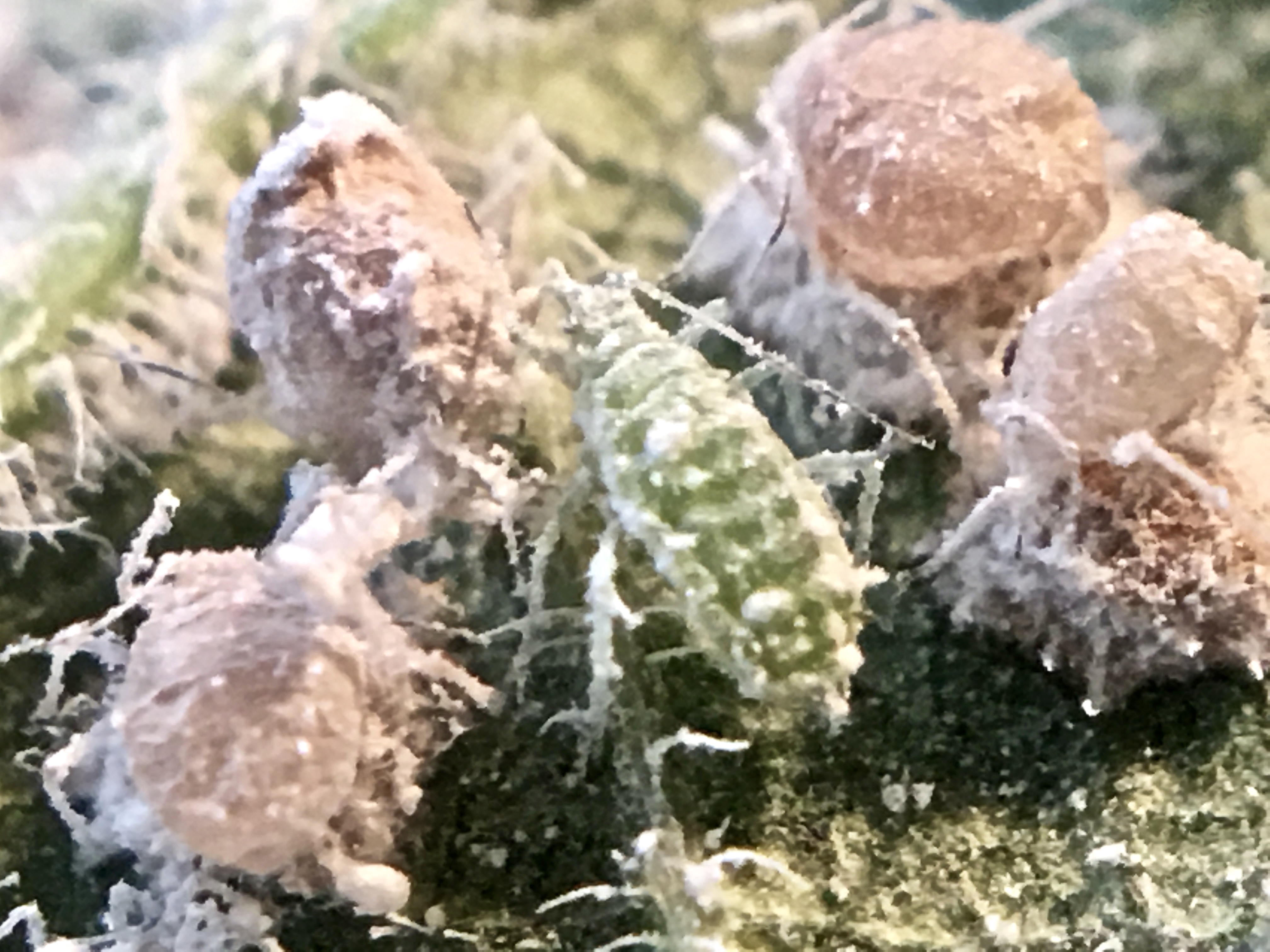
Well, yesterday morning, July 31, 2019), I woke to find tiny green specks moving all over my desk. They were crawling off the leaf in all directions. I set down my coffee and grabbed my iPhone macro with the macro lens attachment and took a closer look. This is what I saw. https://youtu.be/gxDqhqZqpus

Hyalopterus pruni
San Juan Island, WA
July 30, 2019

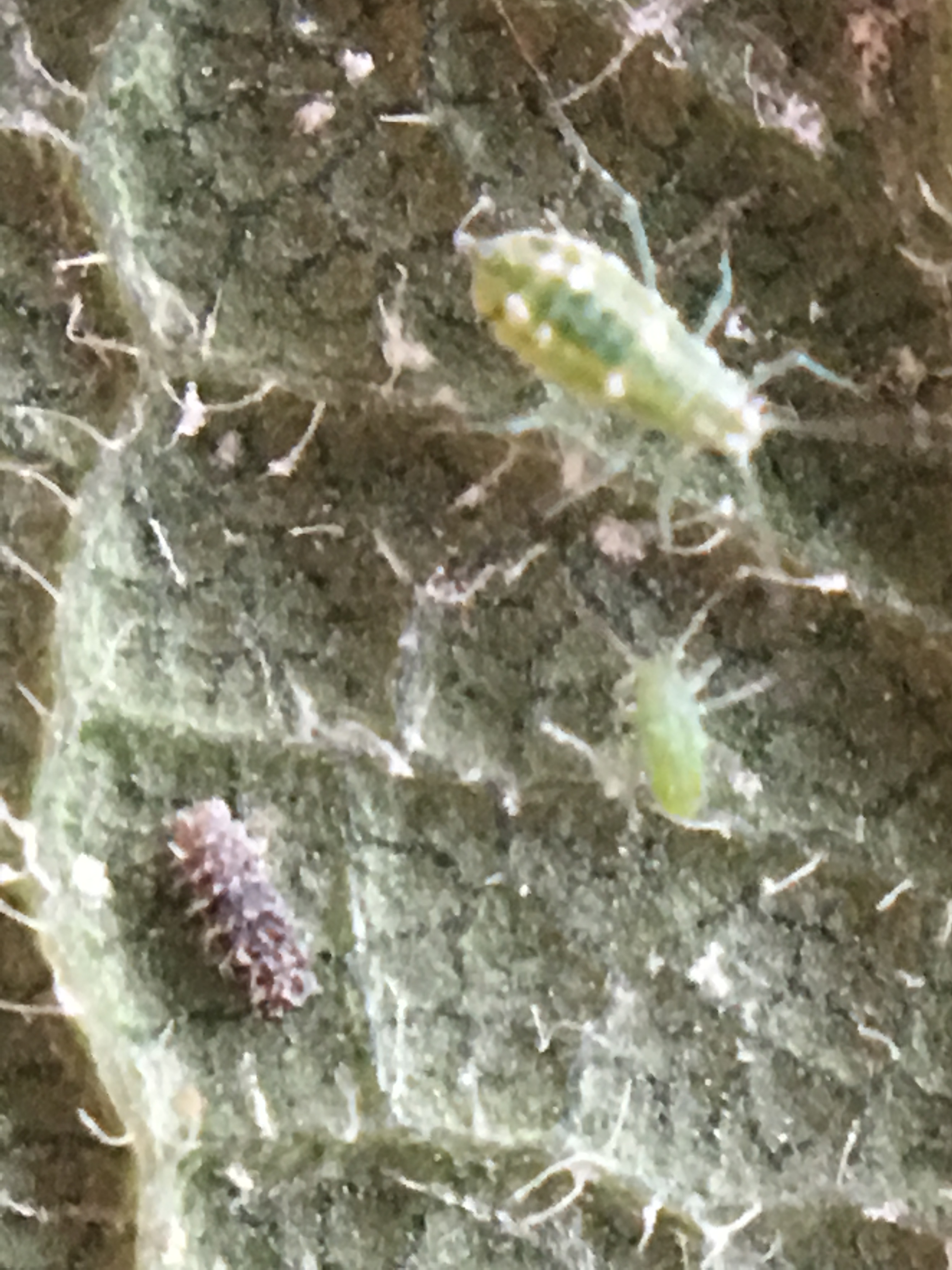
As you can see, these guys are active! After doing a bit of research, I have determined them to be Hyalopterus pruni (Mealy plum aphid or reed aphid). These non-native aphids are found across the U.S. While numbers can build up to damaging levels, nature does have a built in control to manage these pests without using harmful insecticides. Those little eggs I posted about yesterday https://cynthiabrast.wordpress.com/2019/07/31/lacewing-eggs/ are going to be lacewings. Hungry lacewings with a veritable buffet awaiting them!

Hyalopterus pruni (Mealy plum aphid or reed aphid)
San Juan Island, WA
July 30, 2019
Hyalopterus pruni (Mealy plum aphid or reed aphid)
San Juan Island, WA
July 30, 2019
Hyalopterus pruni (Mealy plum aphid or reed aphid)
San Juan Island, WA
July 30, 2019

References:

https://influentialpoints.com/Gallery/Hyalopterus_aphids.htm

https://bugguide.net/node/view/176830

http://treefruit.wsu.edu/crop-protection/opm/less-common-aphids/

Good neighbors

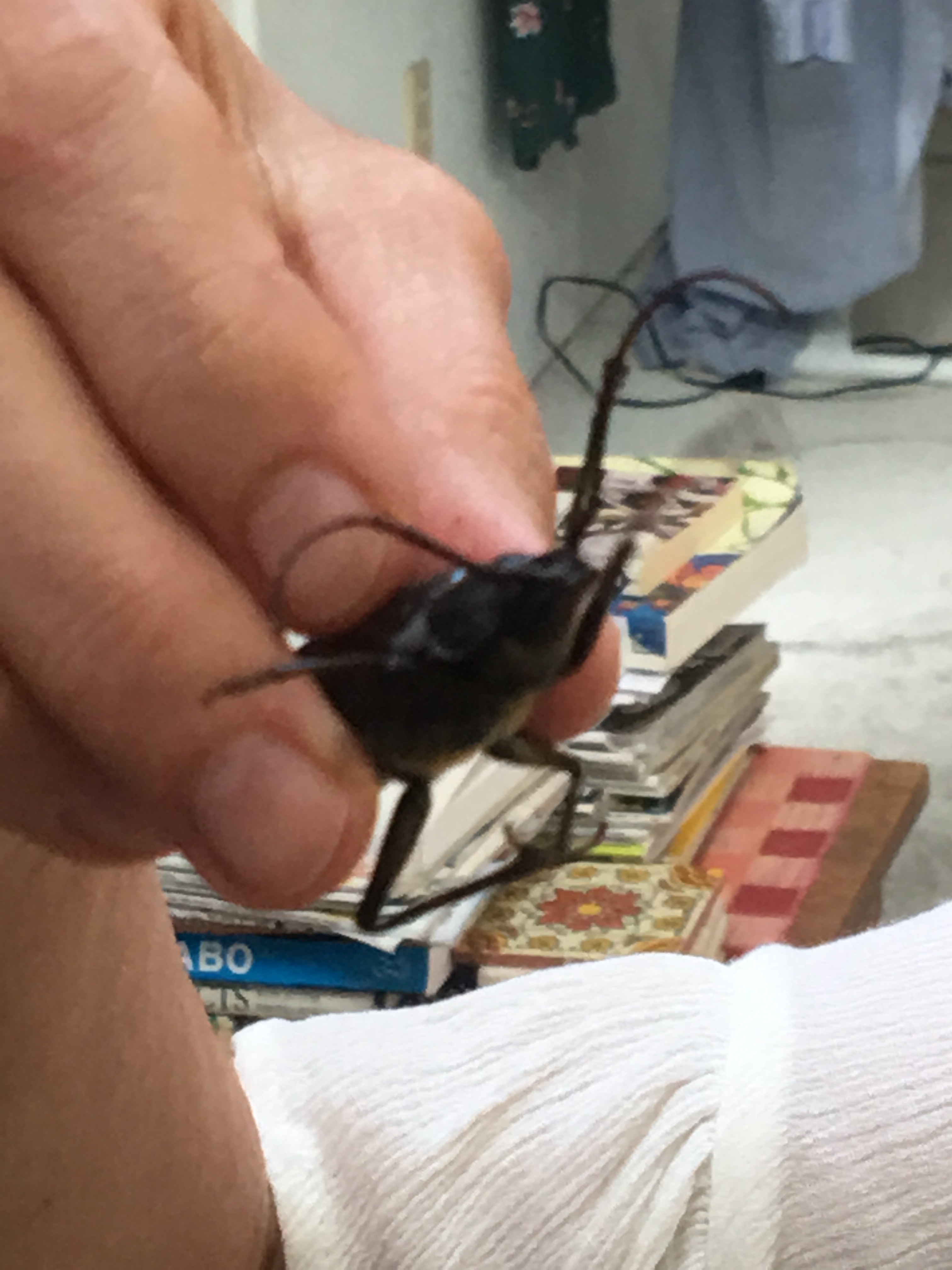
So my neighbor brought me a bug this afternoon and it’s not even my birthday! Thank you Julia. You made my day! 🐝🐛🦋🦗🐞

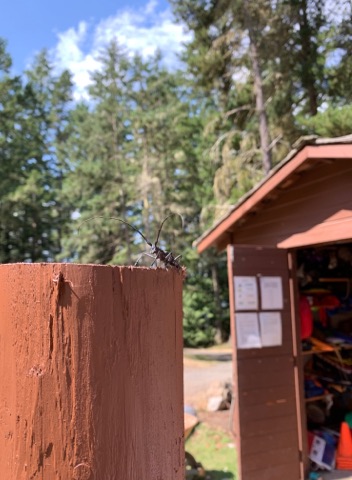
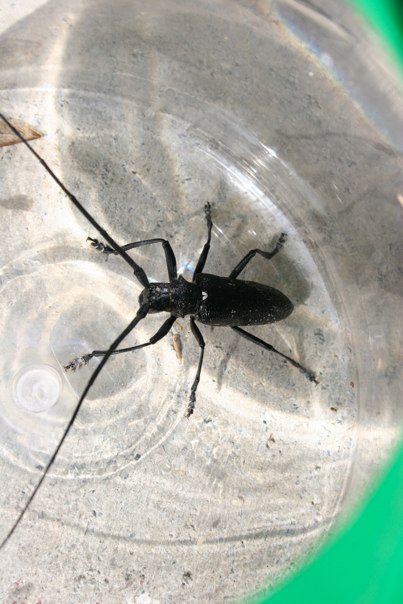
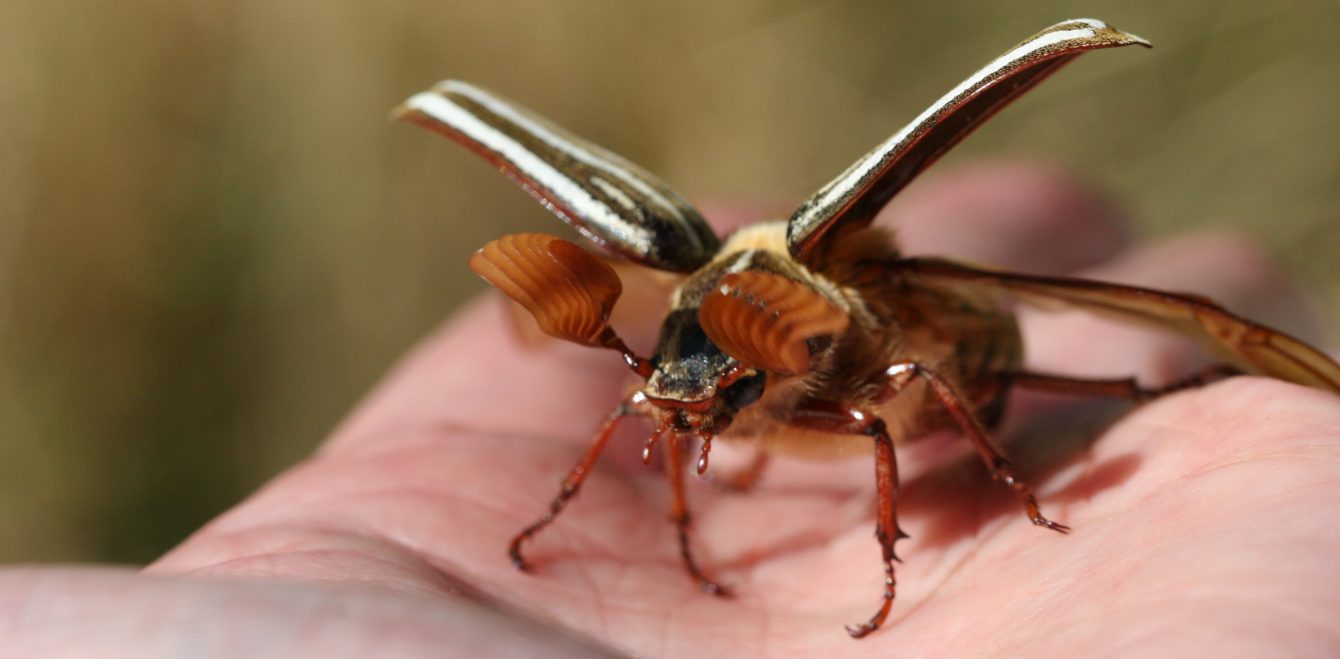
(Trichocnemis spiculatus) The Ponderous Borer or Western Pine Sawyer

Ponderous Borer (Trichocnemis spiculatus)
Trichocnemis spiculatus
San Juan Island, WA
July 31, 2019
Trichocnemis spiculatus
San Juan Island, WA
July 31, 2019

Last year, I had someone from Orcas, Island, WA submit a fabulous video of one of these with footage of it ovipositing! Check out this link to watch more here ~ https://www.facebook.com/joysmurf/videos/10155670480191451/

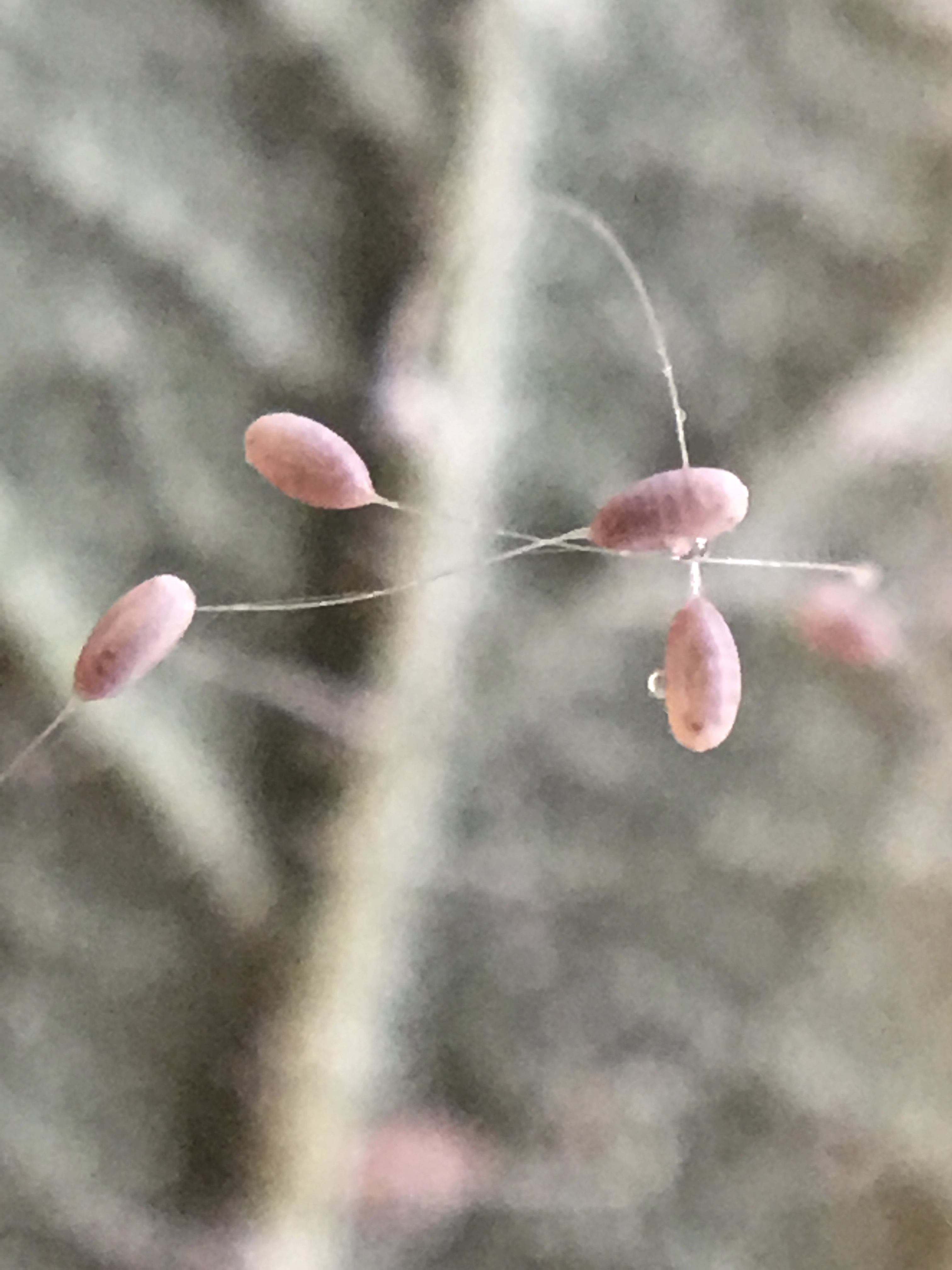
Lacewing eggs

I photographed these tiny, delicate eggs this morning using my macro lens attachment and my iPhone camera. Yesterday evening (July 30, 2019), I picked a leaf from my plum tree because I saw something odd. Not these eggs because they were far too small to see without magnification. Instead, I saw fuzzy white particles that sure looked to me like pest insects had taken up residence. I’m sharing the eggs in this post first. I believe they’re lacewing eggs. Lacewings are beneficial in the garden and voracious predators of small, soft-bodied insects. Check back tomorrow for Part 2 where I’ll share the rest of my discovery with some video of what else I found on those leaves.

Lacewing eggs
07/30/19
San Juan Island, WA

Read more about lacewings here https://www.gardeningknowhow.com/garden-how-to/beneficial/lacewing-insect-eggs-larvae.htm

Grasshoppers in Sin City

Sin City has a new attraction. It’s not the Radio City Rockettes, but they have lots of legs. It’s not a new Cirque du Soleil group, but they can jump and fly through the air with the greatest of ease. This is one animal show that even Siegfried and Roy can’t tame. In fact, most folks (unless you’re an entomologist) would prefer to miss this show when visiting Sin City. Chances are, you are going to get a front row seat whether you want it or not.

The grasshoppers are Las Vegas’ latest and greatest performers. This is NOT the name of a new hip hop, jazz, or rock band either. But there are thousands already performing and more showing up to audition every day. The “invasion” is not the name of a new dance. It’s not the grand opening of a new luxury hotel, but rather the new theme for the whole city. Grasshopper season!

Grasshopper swarm in Las Vegas 2019

https://www.nbcnews.com/news/us-news/grasshopper-swarm-las-vegas-so-large-it-likely-showing-weather-n1035406

This, in fact, reminds me of the crickets that invaded Highland Park Mall in Austin, TX long ago when I worked in the men’s shirts and ties department at Foleys. We had at least a 4 inch layer of crickets that made their way into the first set of entry doors. They had literally piled up on top of one another. Some had gone past the 2nd set of doors and were now in the plastic packaged shirts and the lucite display cubicles. When you tried to pick them out, they squirted out this horribly staining and smelly vomit or fecal matter that made the entire problem so much worse. When mall maintenance workers came around to suck all those crickets in the entry doors up with a vacuum, creating a horrible odor of vacuumed crickets, that did it for me. I didn’t show up for my shift ever again. No notice either. I just couldn’t handle it. (Kinda funny in hindsight that I eventually became a master’s-degreed entomologist). Check out this link to see I’m not exaggerating here one bit! https://www.dallasnews.com/news/from-the-archives/2018/08/14/invaded-crickets-dallasites-battled-swarms-clogged-clocks-plowed-doors

Now I live on San Juan Island. A small, somewhat delightful (unless it’s summertime and the height of a gazillion tourists descending up on us) rural community, accessible by small airplanes or ferry. Last year we had some residents getting pretty worked up by our invasion of praying mantises. I fielded some questions about how they might eat up our hummingbirds. Comments about them ranged from “they’re horribly invasive” to “they’re going to eat all our pollinators.” I smiled and tried to explain as politely as I could how there are only 3 officially documented cases of hummingbirds being captured and eaten by mantises in the United States since the 1800’s, and those were Chinese Mantids, not the smaller European Mantid that is making it’s way west. https://sanjuanislander.com/news-articles/environment-science-whales/environment/28146/revenge-of-the-mantids

As far as pollinators getting eaten by mantids, well, that happens. Everything in nature gets eaten by something. Native species of robber flies and dragonflies eat our cute little bees. So do native spiders and birds. Yes, mantids eat lots of things. Like grasshoppers. That’s why they were introduced to North America in the first place. Which brings me to how I’d like to hand out vintage agricultural reports from the 1930’s and 40’s to some of these panicked individuals and ask them if they’d like to have a few praying mantids on the island or a 6 inch deep layer of grasshoppers! It can happen!

As for those reveling grasshoppers in Sin City…let’s hope what happens in Vegas, stays in Vegas!

More reading:

https://livinghistoryfarm.org/farminginthe30s/pests_02.html https://www.historynet.com/1874-the-year-of-the-locust.htm https://www.nationalguard.mil/News/Article-View/Article/575751/in-1937-colorado-guard-used-flamethrowers-and-explosives-against-plague-of-locu/

Neophasia menapia – Pine White Butterfly

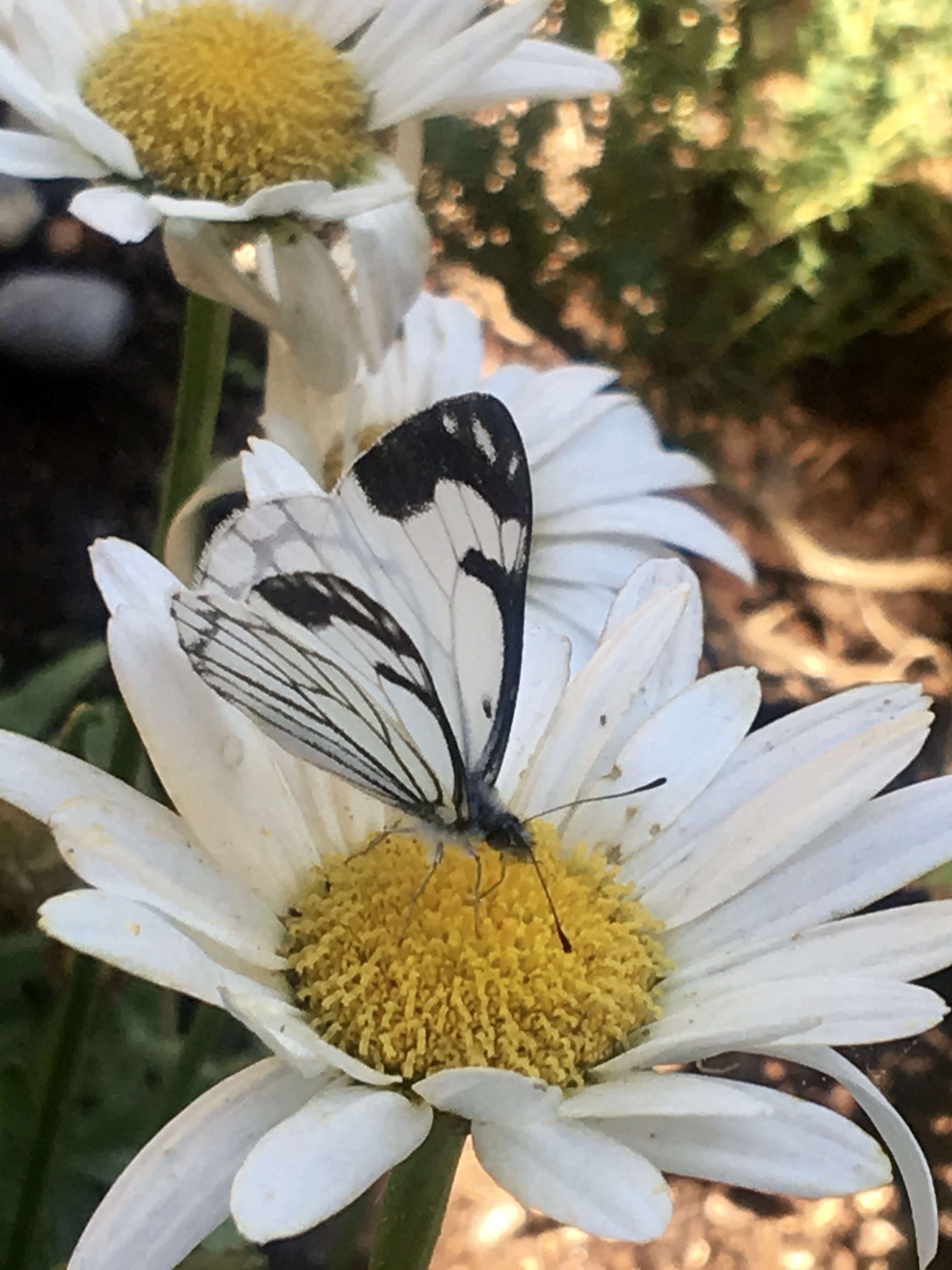
It was breezy earlier this afternoon when I spotted this beauty feeding on my daisies. This is a Neophasia menapia – or the Pine White Butterfly. I’ve been worried since we’ve put up deer fencing that the butterflies wouldn’t be able to find their way through the fence into my flower garden, but I shouldn’t have worried. The butterflies ever-so-gracefully float over the top.

I’m sure the butterflies and other pollinators appreciate that my daisies aren’t headless amputees this year, courtesy of our resident deer who now can only gaze at them. It’s hard to understand why the deer would even want to eat those flowers because they’re kind of stinky. To my nose, they smell a bit of cat urine. Lots of insects seem to like those sorts of smells though. These daisies can stay outside. I won’t be displaying them in a vase on my dining table.

Pine White Butterfly on Daisy
Neophasia menapia 
July 26, 2019
San Juan Island, WA

The Pine White Butterfly larvae feed on Ponderosa Pine and Douglas fir. Adults emerge typically between the months of July and October. Look for little green eggs on the needles of pines and firs sometime beginning in October. The eggs will overwinter and hatch sometime in June the following summer, coinciding with the emergence of new foliage on the trees. Larvae typically only feed on old needles, but can become a “pest” when they feed on the new needles and/or population levels are high and the tree is repeatedly defoliated. Natural controls help keep caterpillar populations balanced. Larvae pupate in late July for about 15-20 days before emerging as adults to begin a new cycle.

Pine White Butterfly (Neophasia menapia ) on Daisy
July 26, 2019
San Juan Island, WA

Would you like to read more? Check out the links I’ve added below.

https://bugguide.net/node/view/69083

https://www.fs.usda.gov/Internet/FSE_DOCUMENTS/stelprdb5347775.pdf

http://web.forestry.ubc.ca/fetch21/FRST308/lab5/neophasia_menapia/pine.html

Aliens in the Garden

I’ve seen some pretty fascinating insects over the years, but using this clip on macro lens https://www.amazon.com/dp/B07LG651ZD/ref=sspa_dk_detail_3?psc=1&pd_rd_i=B07LG651ZD my husband bought me to use with my iPhone has opened up a whole new world. Last night we went down to our garden and while he was busy picking lettuce and tomatoes, I wandered around inspecting leaves and flowers with my new “eye.” I saw aliens! 👽

While I can’t tell you the exact names of all of these creatures, I can tell you that 7 pm must be dinnertime for some of them…like these micro beetles all over my flowering parsley. https://youtu.be/9_NRtS1HJTg

Unidentified micro beetles on Parsley blossoms
July 21, 2019
San Juan Island, WA

One of my favorites was this ladybug larva. I’ve been seeing several different species of ladybugs in the garden. This larva is probably Coccinella septempunctata or the Seven Spotted Lady Bug. A voracious predator, ladybug adults and larvae love to eat aphids. Curiously, while I saw plenty of aphids in my garden, I also saw some strangely mutant ones, so keep reading and scroll down for photos.

Ladybug larva
July 21, 2019
San Juan Island, WA
photo by Cynthia Brast-Bormann

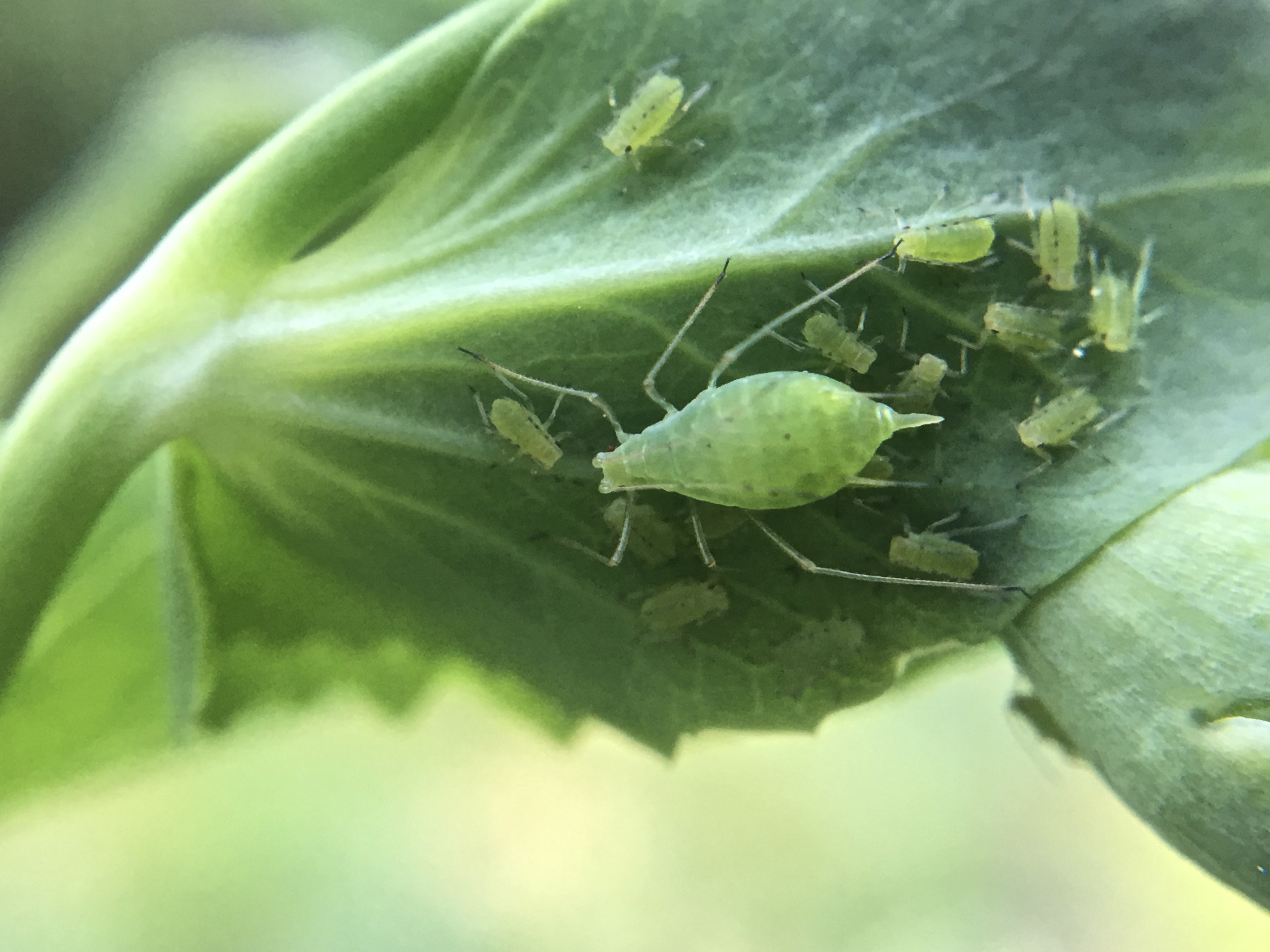
The normal, healthy aphids look like this one. Isn’t she sort of cute watching over all her little babies on the leaf!

Mom aphid with young nymphs
July 21, 2019
San Juan Island, WA
photo by Cynthia Brast-Bormann
Mom aphid with young nymphs
July 21, 2019
San Juan Island, WA
photo by Cynthia Brast-Bormann

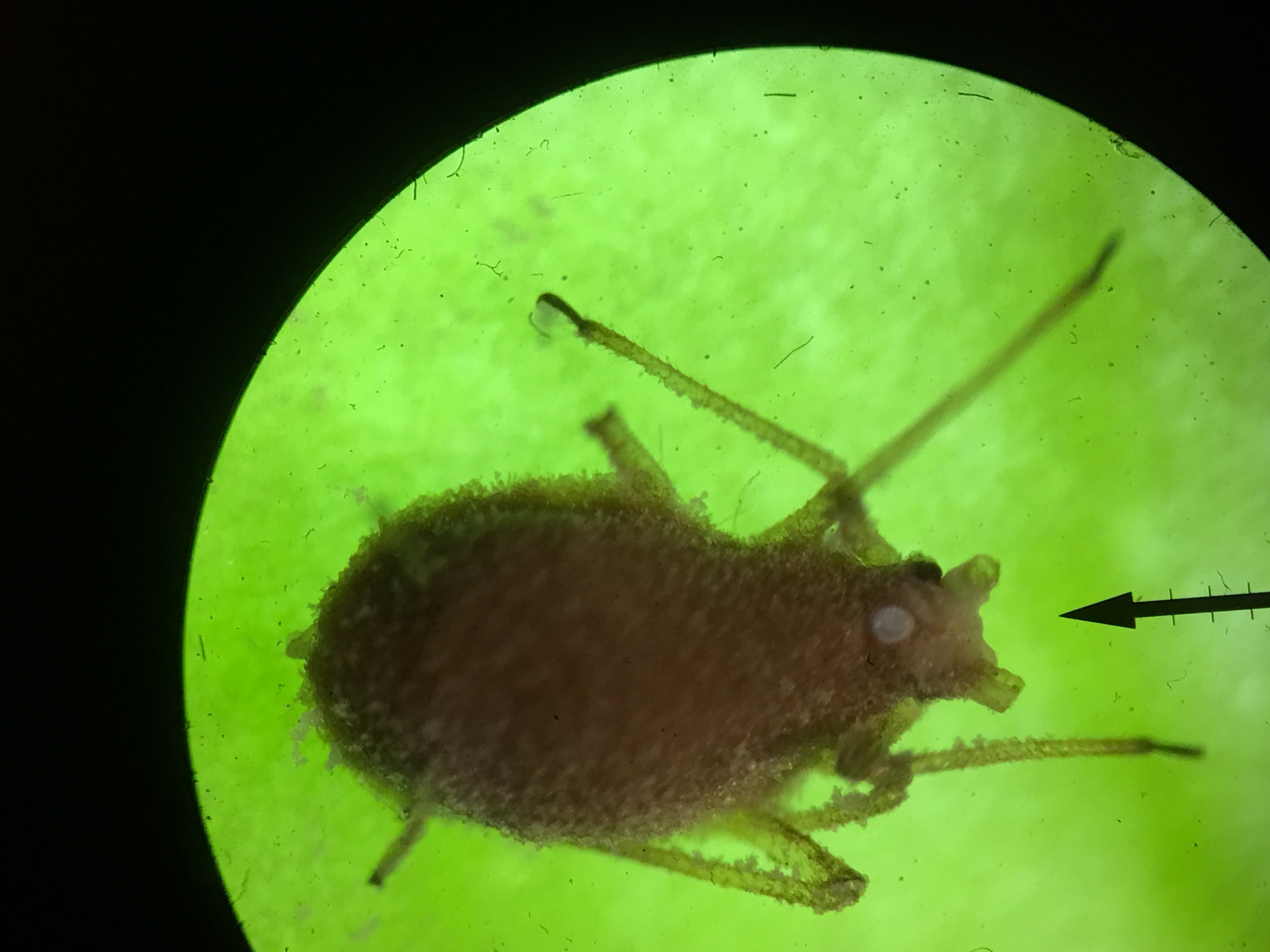
The strange aphids I noticed when I was picking peas. I am not 100% certain, but I believe this is a pea aphid that has been infected with fungi. After doing a bit of reading about these fungal pathogens, I believe it could possibly be (Pandora neoaphidis), an aphid specific entomopathogenic fungus that acts as a biocontrol for aphid populations. The taxonomy and ecological roles of fungi is beyond the scope of my knowledge and experience, so if you decide to read more about this, I suggest googling “Pandora neoaphidis” with “biocontrol.” One interesting bit I did note in my reading was that certain native ladybugs won’t eat aphids that are infected with the fungi, but that the non-native Asian ladybird beetle, Harmonia axyridis eats aphids indiscriminately, fungal infected ones too! Since I was eating peas while I was picking, I’m glad I stopped before popping the pea with these in my mouth. While I’m not entirely opposed to eating insects, I imagine my taste to be a bit more like the native lady bugs.

Pea aphid with fungal pathogen, possibly ( Pandora neoaphidis)
July 21, 2019
San Juan Island, WA
photo by Cynthia Brast-Bormann
Pea aphid under the microscope
possibly infected with (Pandora neoaphidis)
July 21, 2019
San Juan Island, WA
photo by Cynthia Brast-Bormann
Pea aphid with entomopathogenic fungi
July 21, 2019
San Juan Island, WA
photo by Cynthia Brast-Bormann

The next image is of the weirdest looking creature yet. This is another aphid, but instead of entomopathogenic fungi, it is the victim of a parasitic wasp that has injected it with eggs that will hatch, consume the remainder of the aphid body, then eat their way out. Here’s a link to another photo I found online of this stranger-than-strange occurrence in nature. http://www.aphotofauna.com/hymenoptera_wasp_praon_mummified_aphid_22-09-14.html

The Alien
Mummified aphid infected with parasitic wasp larva
July 21, 2019
San Juan Island, WA
photo by Cynthia Brast-Bormann

Western Blood-red Lady Beetle

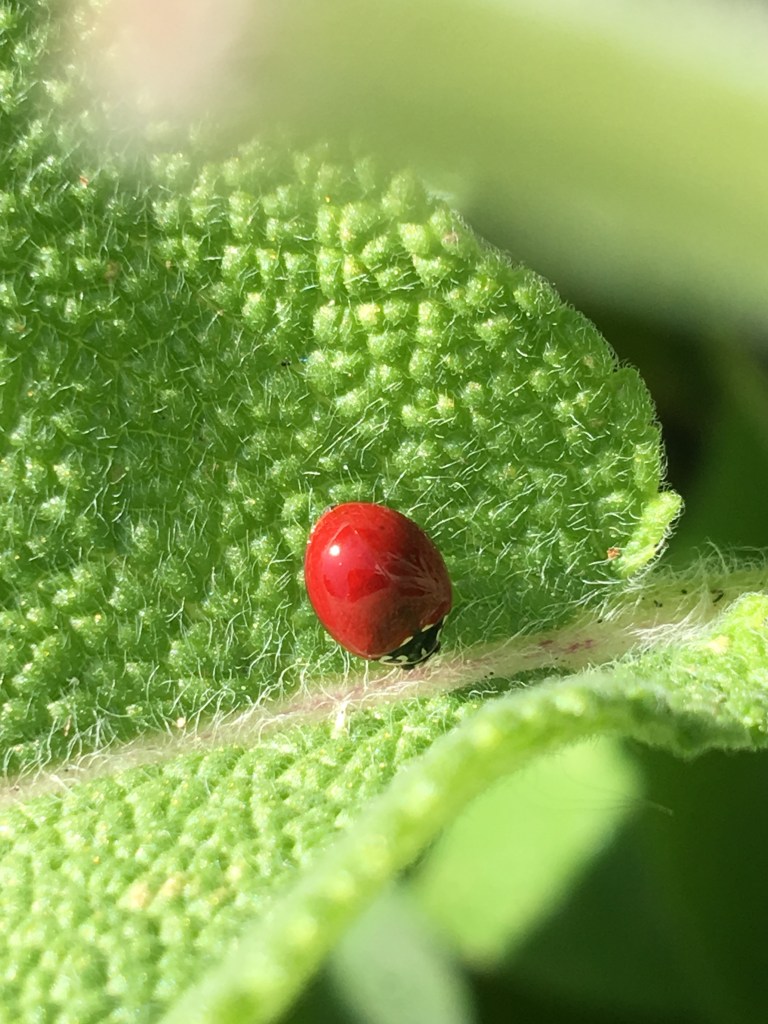
I found three different species of Lady Beetles in my garden this past weekend and wanted to share a bit about them with you. I’ll start with the Western Blood-red Lady Beetle or (Cycloneda polita), also sometimes called the “Polished Lady Bug.”

If you are someone who needs reading glasses (like me) to see things up close, you could easily be fooled into thinking the spot of red on the plant leaf is a drop of blood. Given how accident prone I am, when I first spotted this one, I figured I’d poked my finger again on one of the prickly berry vines that are coming up in my raised garden beds. Upon closer inspection, I was glad I had my camera phone handy.

Western Blood-red Lady Beetle (Cycloneda polita)
July 14, 2019
San Juan Island, WA

Ladybird or ladybug beetles are a large and very diverse group of beetles. They are classified in the insect order Coleoptera, family Coccinellidae. Most are known to be highly beneficial, feeding on garden pests like aphids. The Western Blood-red Lady Beetle is one of our native ladybird beetle species. Unfortunately, research is indicating we are losing our native ladybird beetle populations as they are outcompeted by imported non-native ladybird beetles released for biological control.

Western Blood Red Ladybird Beetle (Cycloneda polita) on Daisy
July 19, 2019
San Juan Island, WA
Western Blood red Ladybird Beetle (Cycloneda polita)
July 19, 2019
San Juan Island, WA

Further information can be found by following the links below.

*Distribution of Cycloneda politahttps://www.discoverlife.org/mp/20p?res=720&see=I_JEL1585;&start=http://www.discoverlife.org/users/l/Losey,_John/JEL.html

*Lost Ladybug project http://www.lostladybug.org/files/LLP%204HSet3-6.pdf

*Bugguide https://bugguide.net/node/view/15623

Xestoleptura crassipes

Xestoleptura crassipes
San Juan Island, WA
July 16, 2019

Xestoleptura crassipes is a species of flower longhorn beetle. Taxonomically it is placed in order Coleoptera, family Cerambycidae. The species name “crassipes” means “thick-legged.” Adults are attracted to flowers (June-September) and larvae are wood borers, found in forested areas and associated with firs and oaks. Adult body length approximately 10-17mm.

I photographed this specimen on July 16, 2019. It was the only one on the daisy plant by my front door. On the morning of July 18, there remained the single beetle (or I believed it to be the same one). That evening, I observed a 2nd beetle feeding on an adjacent flower. This morning (July 19th, 2019), they were both gone. Perhaps this was a successful meetup for finding a mate. 🌼

Xestoleptura crassipes feeding on daisy pollen

Beetle larva versus earthworm

I love finding strange and unusual things when I’m out and about. This definitely can be categorized as one of those moments when the microfauna is weirdly charismatic. And in a parking lot no less. I came upon this European Ground Beetle larva after visiting my husband at his office. We’d gone out for a nice lunch and upon our return, I discovered we weren’t the only ones having lunch. This fellow could give those people who enter contests to eat the most hotdogs some serious competition!

Green Bottle Fly (Lucilia sericata)

Green Bottle Fly (Lucilia sericata) July 9, 2019 San Juan Island, WA

This shiny green bottle fly, a blow fly in the family Calliphoridae, is widely distributed across North America. A frequent visitor to garbage, feces, and carrion, it can mechanically transmit disease, but it is probably more well known for other notable roles it plays in veterinary, medical, and forensic science.

In veterinary science, Lucilia sericata can cause loss of livestock when animals are affected by the larval form of the fly in a condition known as myiasis or fly strike. Animals affected by fly strike can die when fly larva invade living tissue if they are not treated.

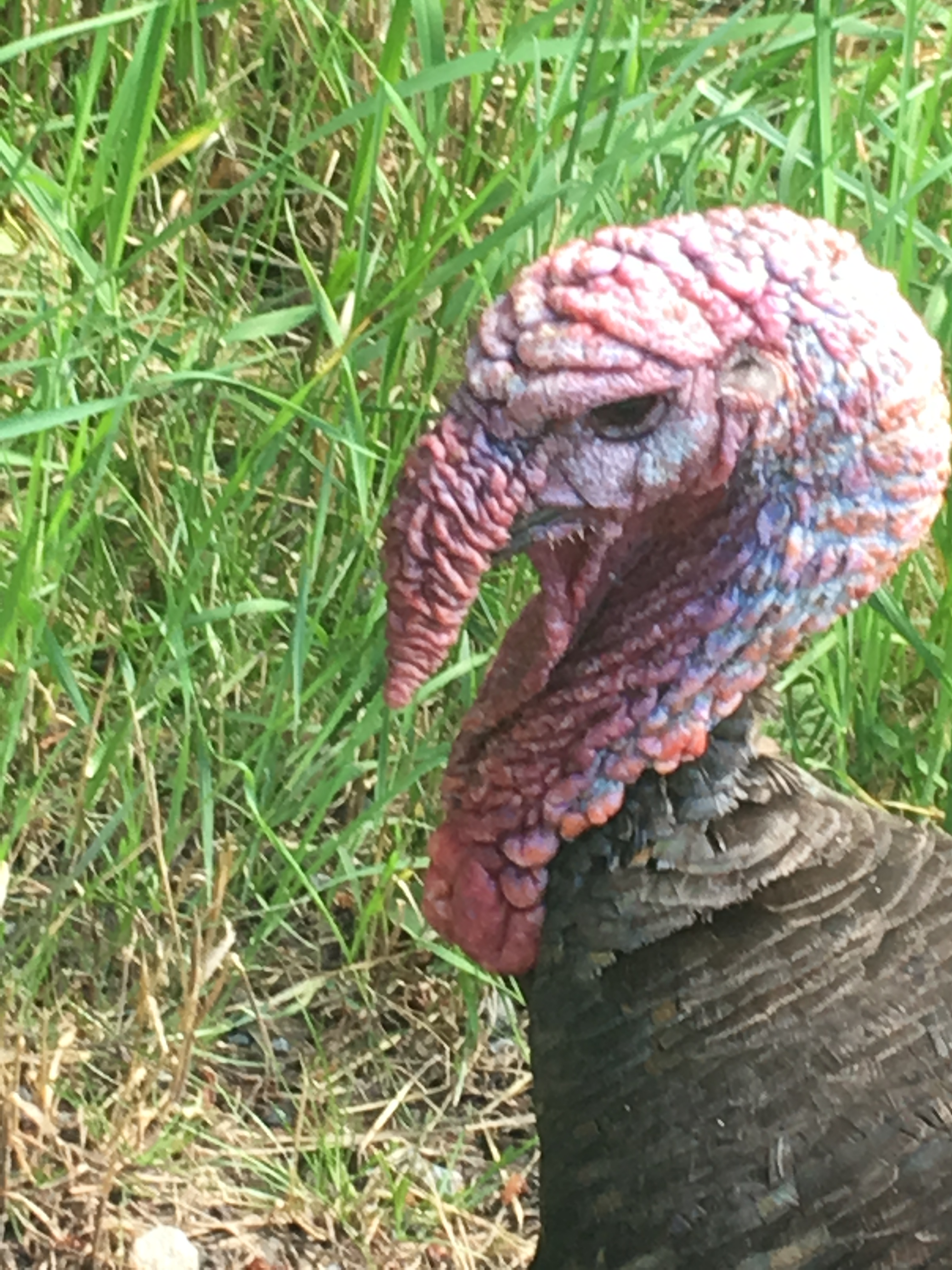
In July of 2016, I helped rescue some turkeys someone had dumped near our home. Upon closer examination of the photos I had taken of them, I was able to see a wound one of the turkeys had. The veterinarian who examined the turkey determined there was serious tissue damage due to fly strike and the turkey was euthanized. So, all animals (even birds) are subject to this condition. Good animal husbandry includes regular examination of animals and treating wounds promptly, with appropriate wound care/dressing to protect the animal from fly contact.

In medical science, Green bottle fly larva are known for their role in wound care. In a practice called maggot therapy, larva of Lucilia sericata are placed on an infected wound to clean out the necrotic tissue. Interestingly, as the larvae feed on the dying tissue, they secrete enzymes that are bactericidal, further aiding in healing the wound.

Finally, in forensic science, the timing of the development of this fly has been adapted and well utilized for establishing a time of death, aiding in law enforcement investigations when a body is found.

If you’d like to read more about this shiny little fly, please check out the links below.

http://entnemdept.ufl.edu/creatures/livestock/flies/lucilia_sericata.htm

htthttps://bugguide.net/node/view/53775

https://www.hindawi.com/journals/criid/2018/5067569/

https://pdfs.semanticscholar.org/d1a4/97c592968996ff73b91740b25e9005f09433.pdf

« Older Entries Recent Entries »