Tag Archives: Stretchia muricina

Moth Roundup for Friday, April 10, 2026
This morning started out great until I sat down to try and write up my blog post for the morning. I was, and still hope, to be able to get out my Fantastic Fly Friday post because I do have a very cool fly to show you today too. Unfortunately, I lost all my work this morning because our internet is T-E-R-R-I-B-L-E! I attribute some of it to life on an island. There’s definitely a big trade off. It is not paradise. Ask me if you ever think about moving to an island and I’ll share my list!

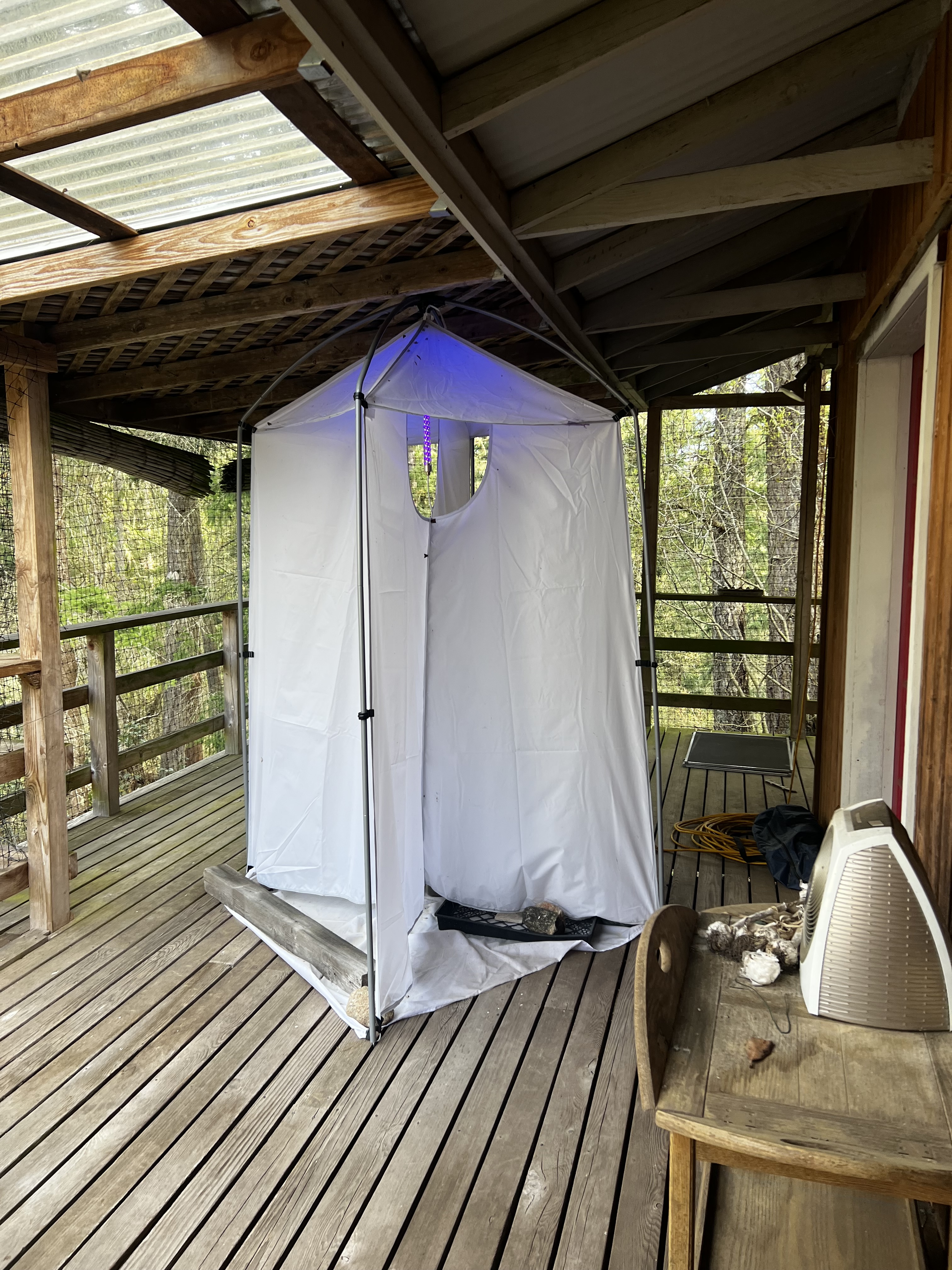
Back to my moths though. I have my light and tent from Ecology Supplies going year round on our deck. It’s a great spot because it’s covered, so I don’t get wet when it’s raining. The only thing I’ve had to do is anchor my tent so it doesn’t walk around in the wind.
Here is the little grouping of moths I arranged this morning. All were handled with great care. I am not pinning these specimens. There’s no need for me to do that because with the detail I get from macro photography, and my knowledge and experience observing species out here for almost 18 years now, I’m pretty familiar with most of them. There is no pleasure for me in killing them and sticking a pin in these poor little ones just so I can add them to a physical collection to brag about on social media.

In fact, for me, killing them would put me in the same category as that awful man named Cody Roberts who tortured that poor wolf and took a selfie in a bar before killing it. How anyone feels OK about taking the life of something for a trophy is beyond me. Some people take little insect “trophies.” I’m not really fine with that. Probably I will have plenty of criticism over this, but those citizen science folks who want to advocate for collecting bees or butterflies, or whatever, so they can claim fame as an “expert,” make me uncomfortable. Those photos of the now dead and pinned bees you grabbed off your currants to pin for your “bee expert” class that you bragged about collecting and posted on social media made me feel sad. Take a photo. Stop exploiting life.

You learn more by observing and taking photos and videos than you will ever learn by sticking a pin. I really appreciated my former entomology taxonomy professor, Paul Choate who encouraged me to utilize macro photography and learn by observation instead of merely making a physical collection. While I did have to do this as part of my entomology program requirement, he made an exception so that 30% of my curated collection could include macro photography of my specimens. I also learned how to utilize specimens I found that were already deceased. I think the most disturbing part for me now is seeing the celebration posts I see by folks gleefully sharing their “catch.” There’s nothing to celebrate about killing. Nothing.

I’ve said my piece.

Please enjoy these living beauties I photographed to share with you.
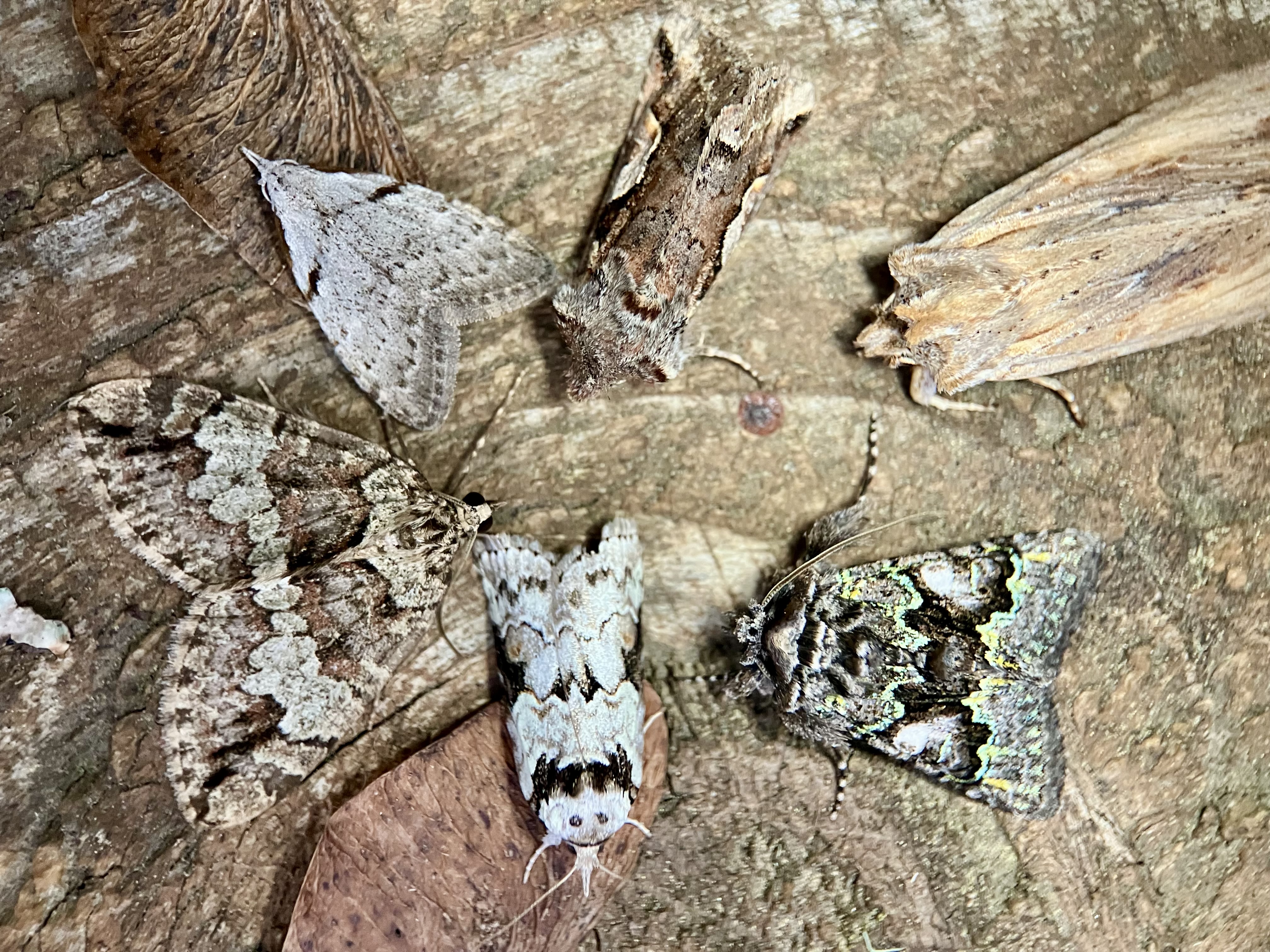
top left to right, Ceanothus Nola moth (Nola minna), Stretchia muricina, Lithophane sp. (I believe L. amanda). bottom left to right, Hydriomena sp. Geometrid moth, Frigid Owlet moth (Nycteola frigidana), and the Owlet Moth (Behrensia conchiformis)

Creepy Evil Cutworms?

What adjective would you use to describe a cutworm? Perhaps pest? Something like the evil caterpillar, Mister Mind, one of Captain Marvel’s archenemies in the DC comic strip series?

If you’re a gardener, the name “cutworm” may conjure up an evil worm that wants to eat your vegetables.

If you have a lawn or own a golf course, cutworms may be the gremlins that destroy turf grass. Now personally, I think five year olds should make policy around cutworms because there aren’t many five year olds who actually WANT to eat their veggies. They’ll see reason in defending the cutworm gremlin.

I’m not a golfer, and don’t have a lawn, so I personally don’t care too much if cutworms munch turf grass. Those sites should be classified as biohazard sites right along with nuclear waste if you ask me. They’ve had so many chemicals dumped on them over the years, they can’t be anything but noxious, environmentally toxic sponges.

Seriously, stop for a moment and Google “cutworm.” What pops up? Ads for every sort of pesticide imaginable. There may a be one or two advertised as “Safer” (yep, that’s a brand name), or natural, but they are designed with the same, single, solitary mission. Nuke the cutworm.

How many average American citizens do you think, can really distinguish between one sort of cutworm or another? Did you know the name, cutworm, is used to describe the larval or caterpillar form of a whole grouping of Lepidoptera that fall into the family Noctuidae?

If you’re really into bugs, or you are an entomologist (like me), then you also might know that the family Noctuidae has another name. These so-called cutworms (some are also called army worms) are the OWLET MOTHS. Why do you think? Well, because when they grow up, they look so unbelievably cute – like owls. Also, like this one! I named him Henry!

Henry is the cutest little dude around. His scientific name is Stretchia muricina. I think that name sounds a little bit Italian to me, but he’s not part of the mafia. Actually, Henry looks more like a teeny little lion or maybe even like Orson the Wheely Bird in Sid and Marty Krofft’s late 60’s TV show, HR PufnStuff.

Seymour the Spider and Orson the Wheely Bird – HR Pufnstuf

Whatever YOU see when you look at Henry, you’ve got to agree that he’s cute.

Henry (Stretchia muricina), an Owlet Moth

Henry used to be a cutworm. People are trying to kill him!

Henry isn’t a horrible garden pest though. When Henry was a caterpillar, he was more interested in eating a bit of your native currants. Sure, we all love to look at the beautiful flowers on our currants in the springtime, but he didn’t eat the flowers. He just ate a few leaves. There aren’t many cutworms like Henry. Just a few. They aren’t the same as the massive hoards of army worms that show up in the grass, or the cutworms that want to enjoy your newly sprouted veggies.

It’s pretty tough for a regular person to positively ID a caterpillar, so Henry recommends resisting the urge to grab that powder, spray, or torch. Don’t judge all cutworms to be evil. There are some tools you can take advantage of to help you sort caterpillars. Take a look at these links below and embrace diversity in the world. Caterpillars have feelings too!

  1. Calscape.org https://calscape.org – Lists plants and invertebrates associated with plants. While some may be out of our region, many do overlap. Extremely useful. I wish WSU had one of these sites!
  2. Caterpillar ID https://www.caterpillaridentification.org
  3. Caterpillar ID Washington State – https://www.caterpillaridentification.org/caterpillars-by-state-listing.php?reach=Washington
  4. Washington Native Plant Society Caterpillars https://www.wnps.org/blog/some-washington-caterpillars
  5. Pacific Northwest Moths http://pnwmoths.biol.wwu.edu
  6. Washington Moths https://www.butterflyidentification.org/moths-by-state-listing.php?reach=Washington
  7. Bugs of the San Juan Islands https://www.facebook.com/groups/bugsofthesanjuanislands
  8. Stretchia muricina species page http://mothphotographersgroup.msstate.edu/species.php?hodges=10473
  9. Stretchia muricina Bugguide species page https://bugguide.net/node/view/134890

Check out the rest of Henry’s adorable photos here. I found him last night hanging out on our deck. He was afraid of me at first and actually played dead (the entomological term for that is Thanatosis, so you can impress your family and friends). Once Henry figured out I had no intent to harm, he decided to pose and show off a bit. After his photoshoot, Henry went back to his spot on the wood siding.