Fantastic Fly Friday, Plum Tree Pollinators 🪰
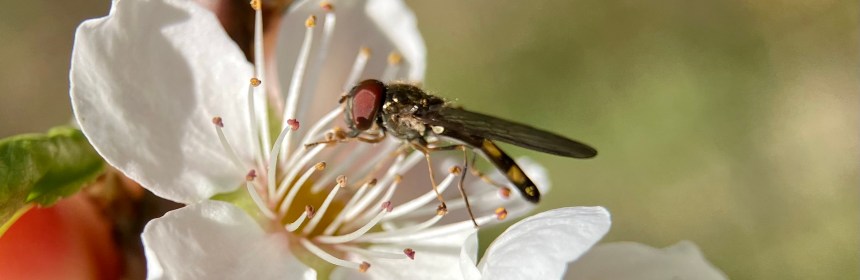
It was 51 and sunny to partly cloudy yesterday afternoon about 4pm when I meandered down to our unkempt orchard to look for pollinators. The temps had dropped the night before to around 34-35, so you could say it is still pretty chilly here in the PNW on San Juan Island. At least it is in our neck of the woods.
We have a couple of Yellow Plum trees in bloom. Don’t ask me the species. I don’t know. I might get ONE or TWO plums a year if I get lucky. It’s not for lack of fruit. It’s my lack of ambition or desire to go down and collect them all and I am NEVER EVER peeling plums again to make jam or anything like that ever again in my life. The time I did, it took my wrists months and months to recover. Also, I just don’t want to be a homesteader. Don’t get me wrong, I love living on 7 acres, but it is not because I can have a garden. It’s largely because I didn’t want to have close neighbors. I won’t get into that here, but let me tell you that 7 acres is nowhere near large enough. You need a hundred, and your house needs to be in the middle.
So, what flies do I have to show you today? There were four species I counted, maybe five, but the fifth one was so tiny, I didn’t work on any identification for that one. There was only one solitary bee. I’ll point out here that there were ZERO honey bees. #1, it’s too cold, and #2 because they can’t fly in temps over 50, they are not going to be the ones pollinating your fruit trees. It’s largely flies, moths, and maybe some ants and beetles. Mostly it is flies.
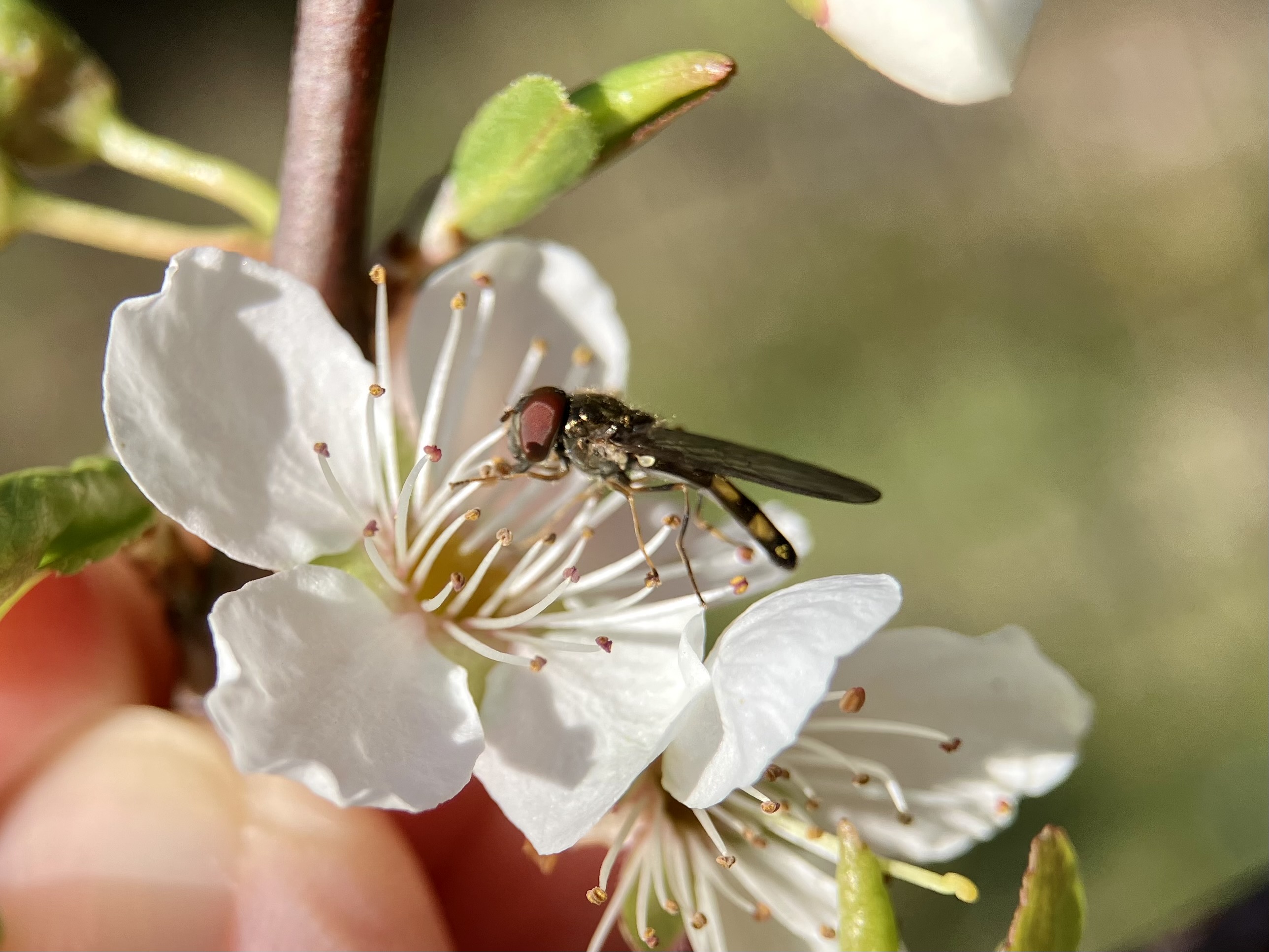
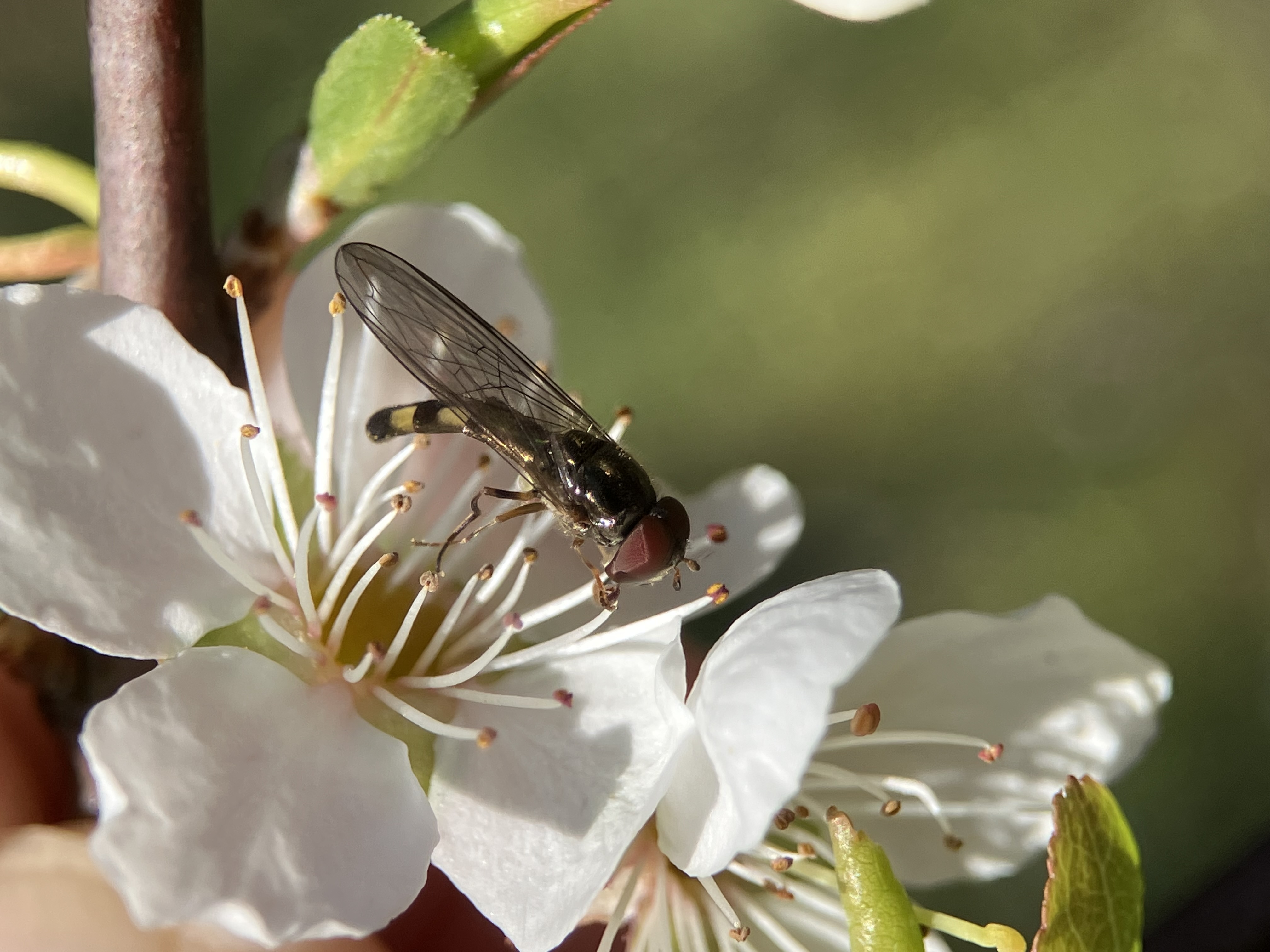
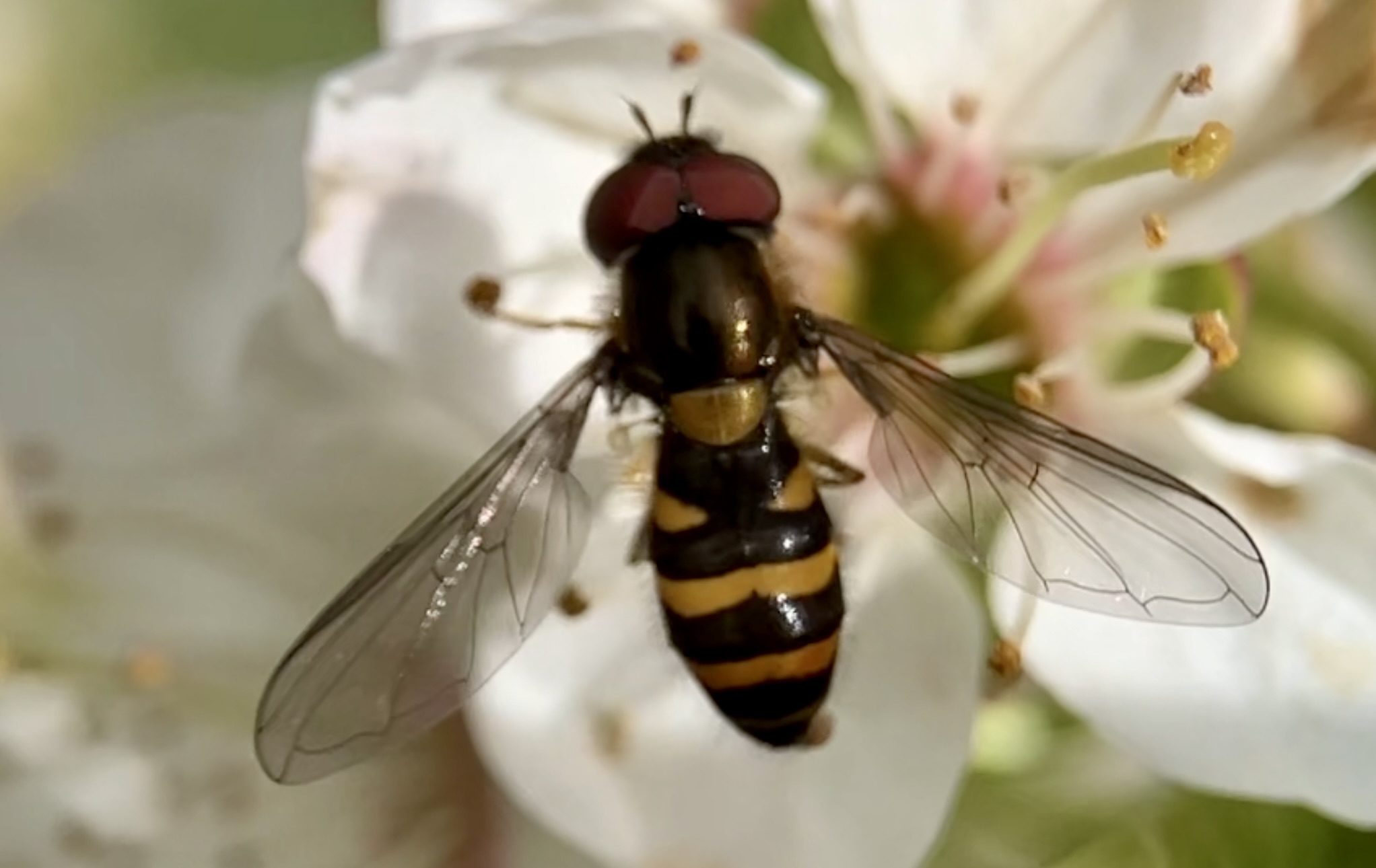
Fly #1 The Variable Duskyface Fly (Melanostoma mellinum). This is a species of Syrphid Fly and I believe my specimen to be male. Syrphid flies are wonderful in gardens and orchards. They not only pollinate, but they scavenge aphids away in their larval form. Watch this one in action here
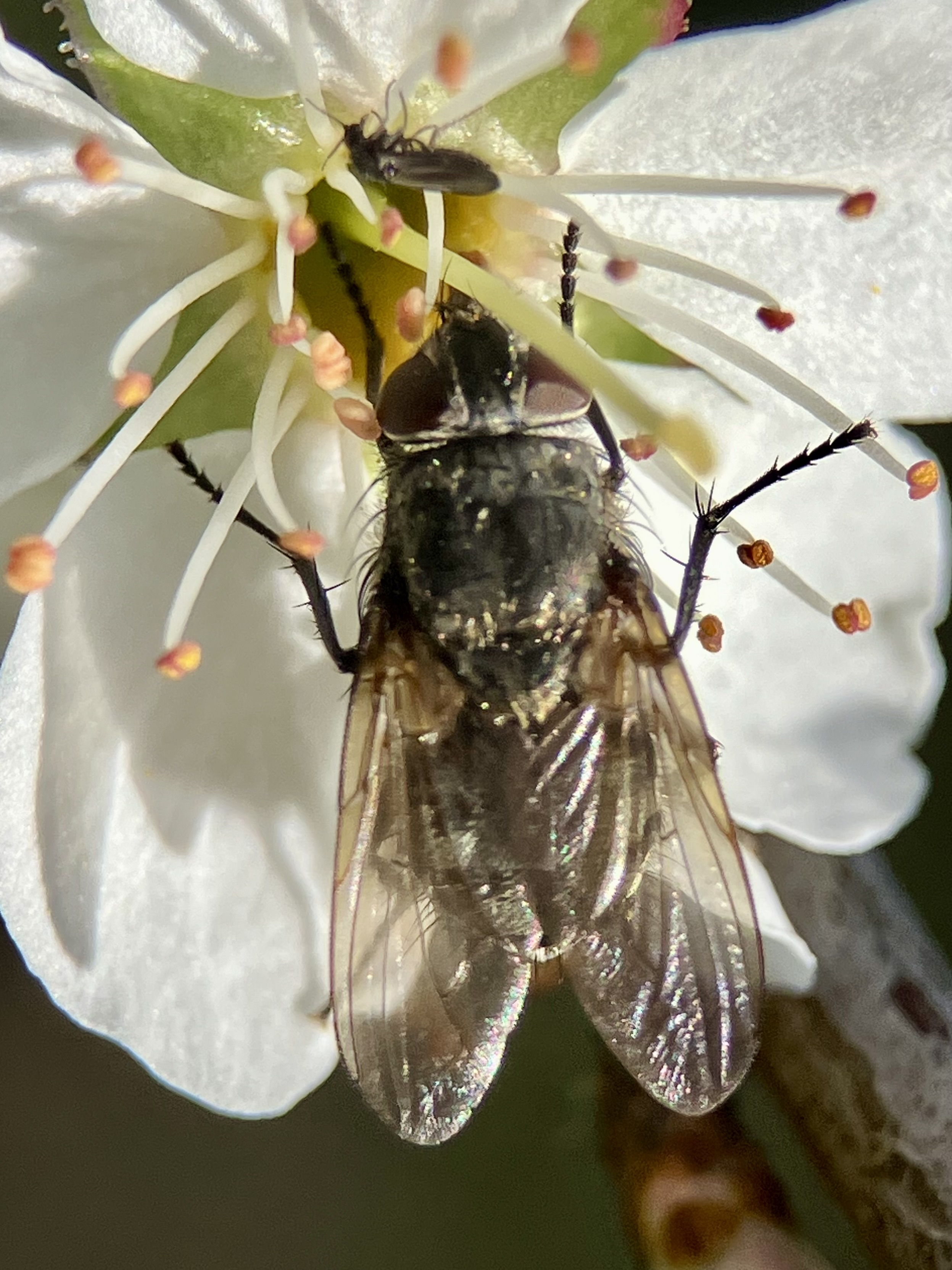
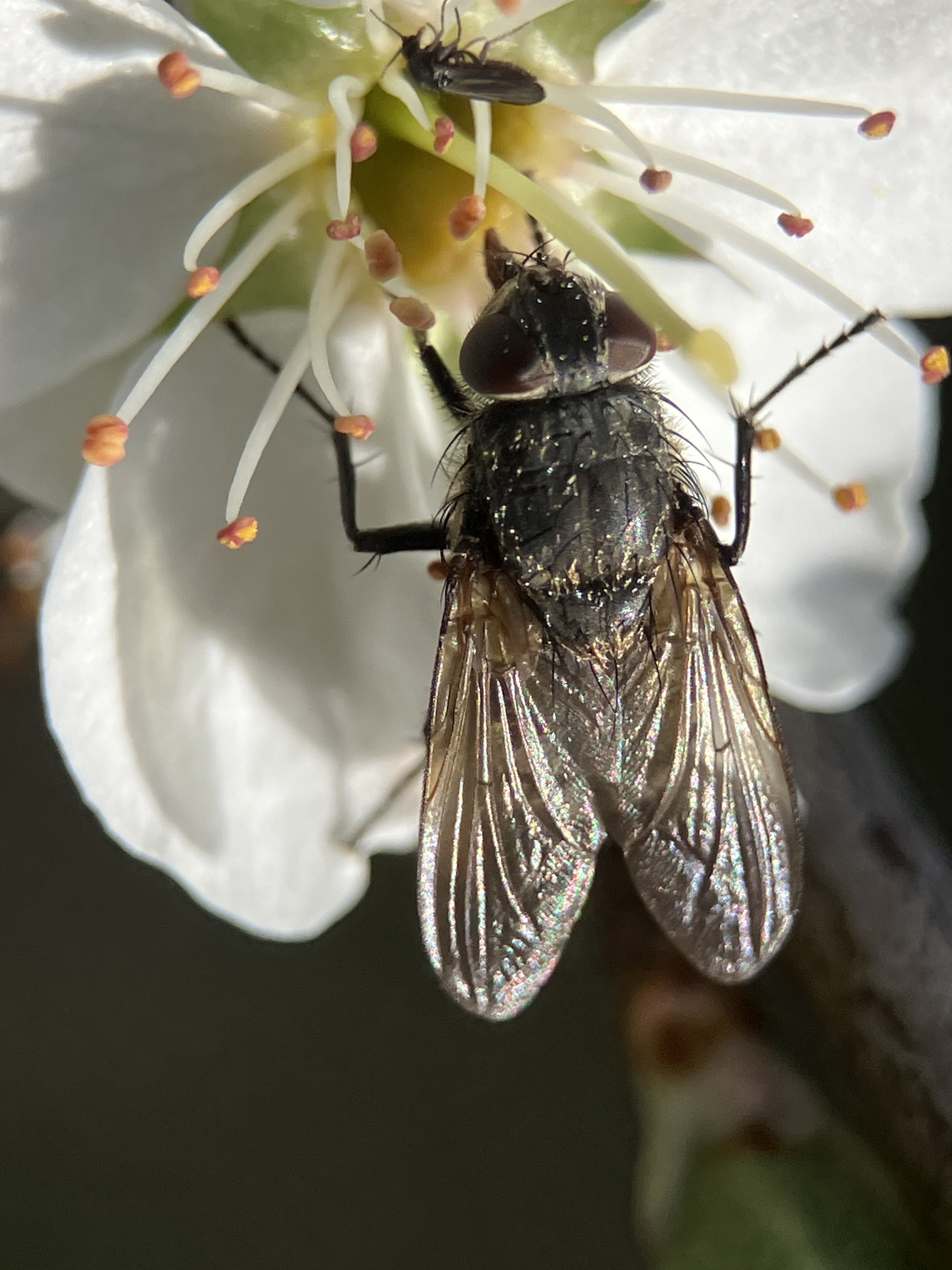
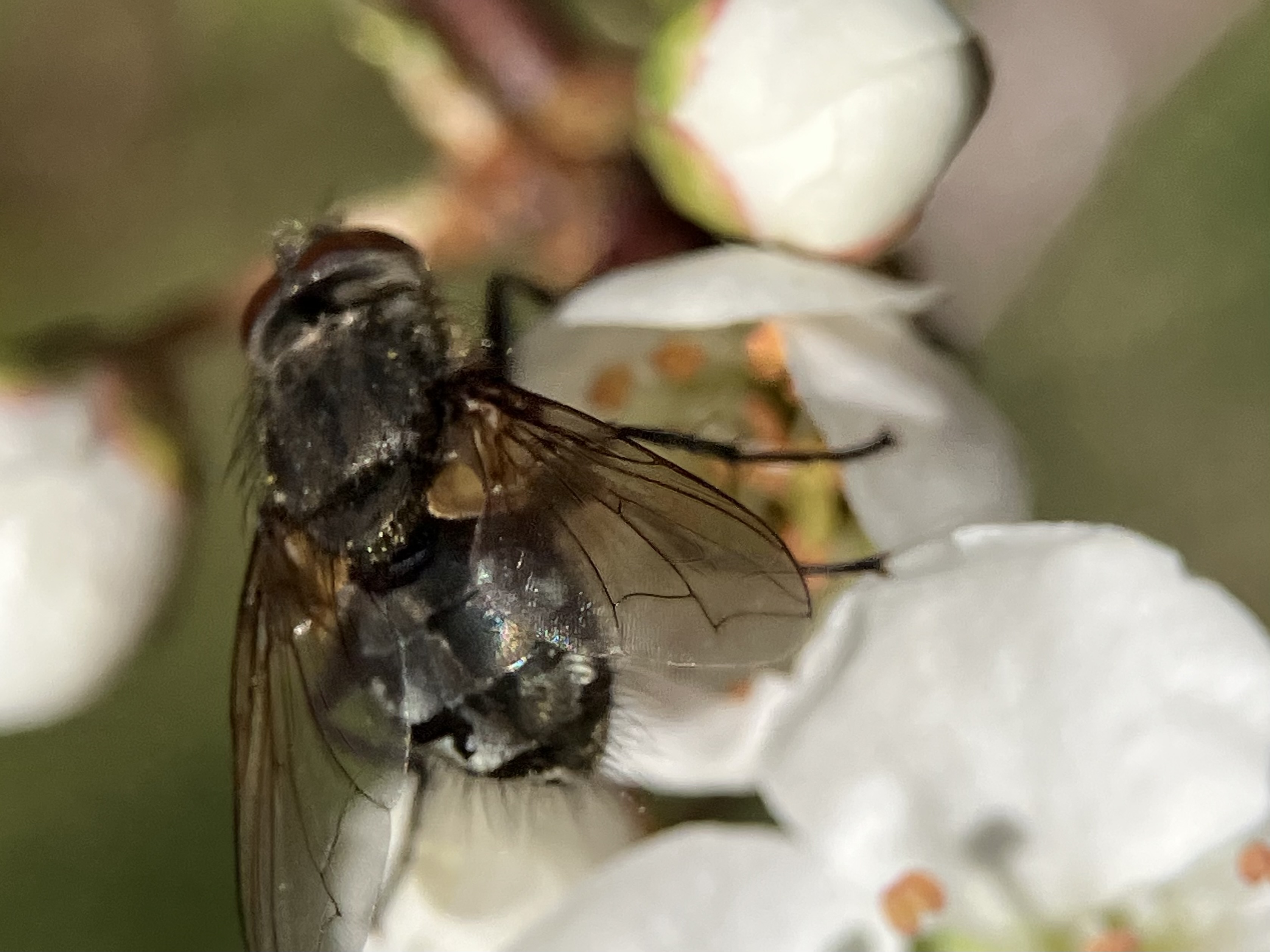
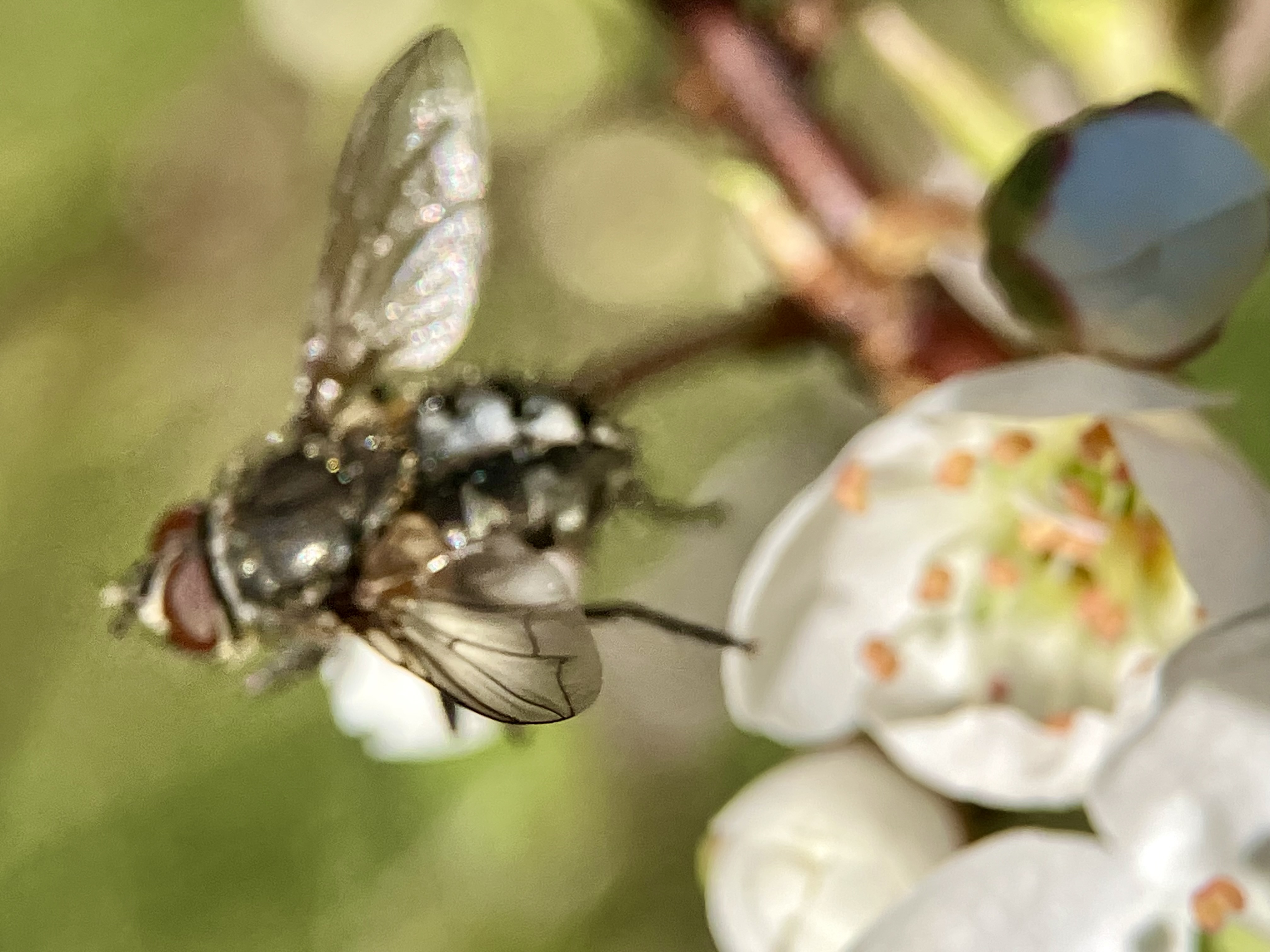
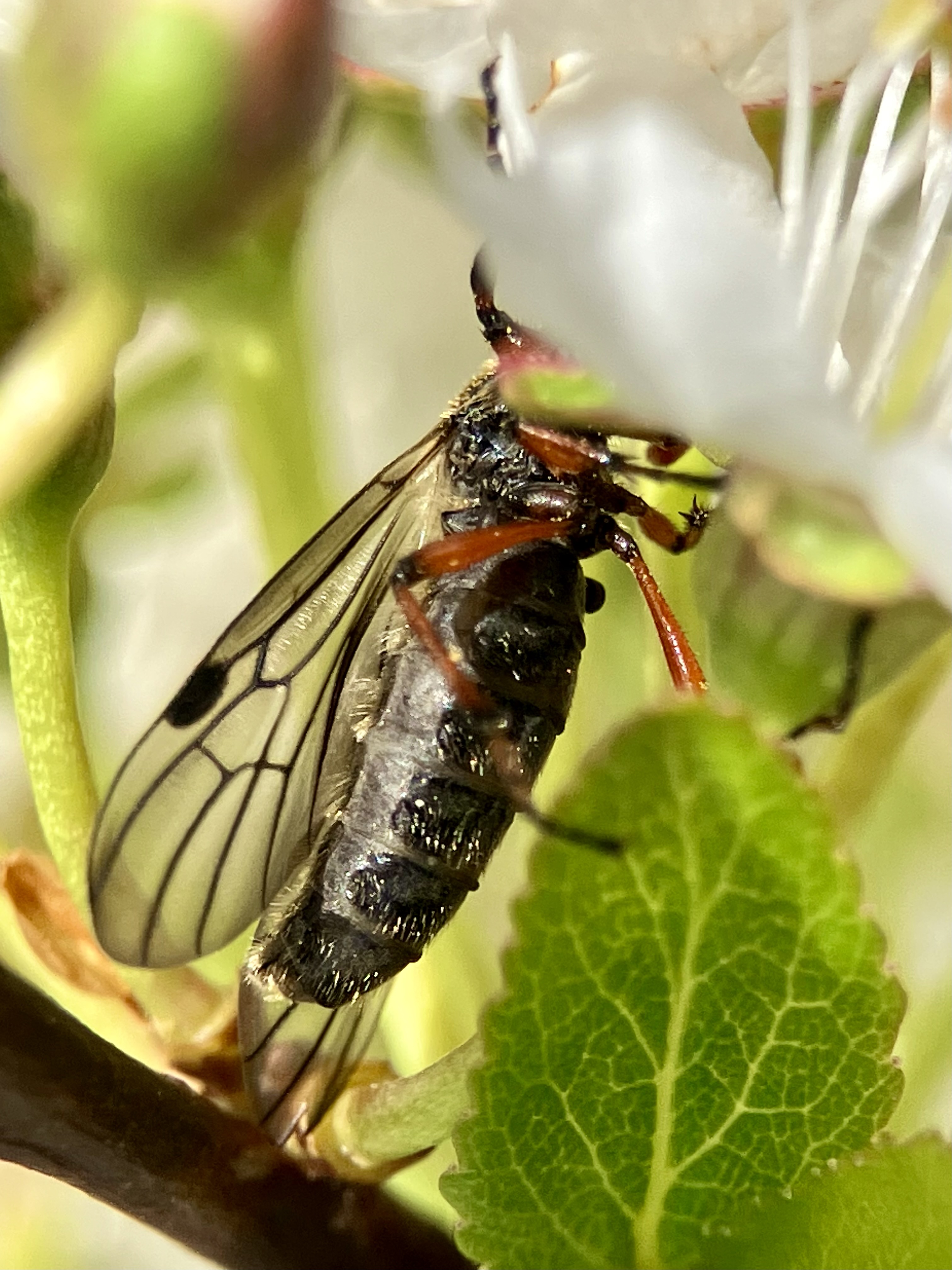
Fly #2 The Cluster Fly (Pollenia sp.) Pollenia flies have had some taxonomic revisions that I am not completely up to speed with, but suffice to say that they are now in their own family (Pollenidae) and I’ll attach some references at the end if you want to deep dive into the literature and try and figure out the species here.
What I can tell you about these flies is they got their name because they will sometimes overwinter in human structures (clustering). They are an Old World group, so these are not native to North America. They are parasites of earthworms, or at least one of the species in the Genus is. They also were ALL over the plum tree. I bet I counted fifty of these.
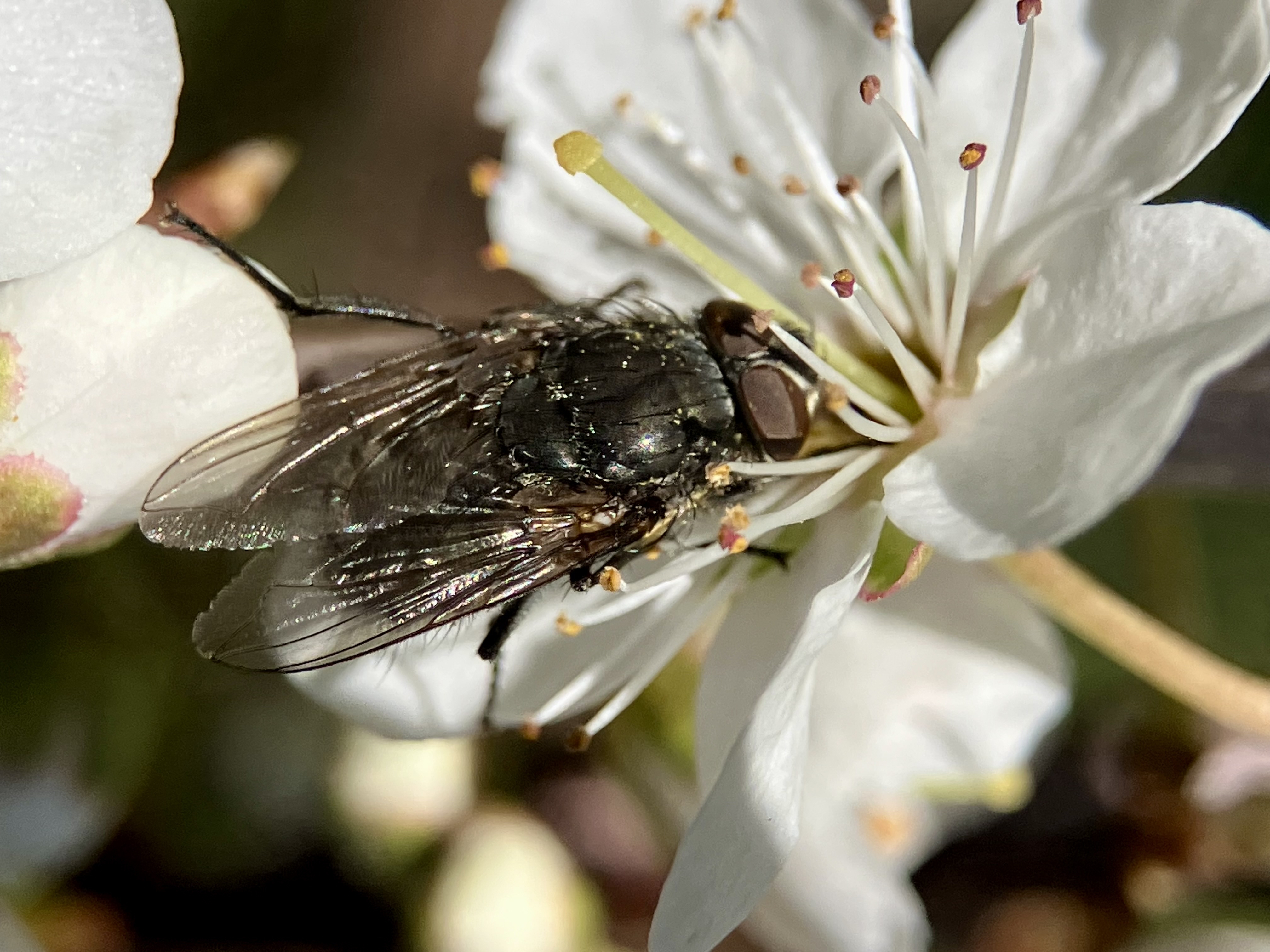
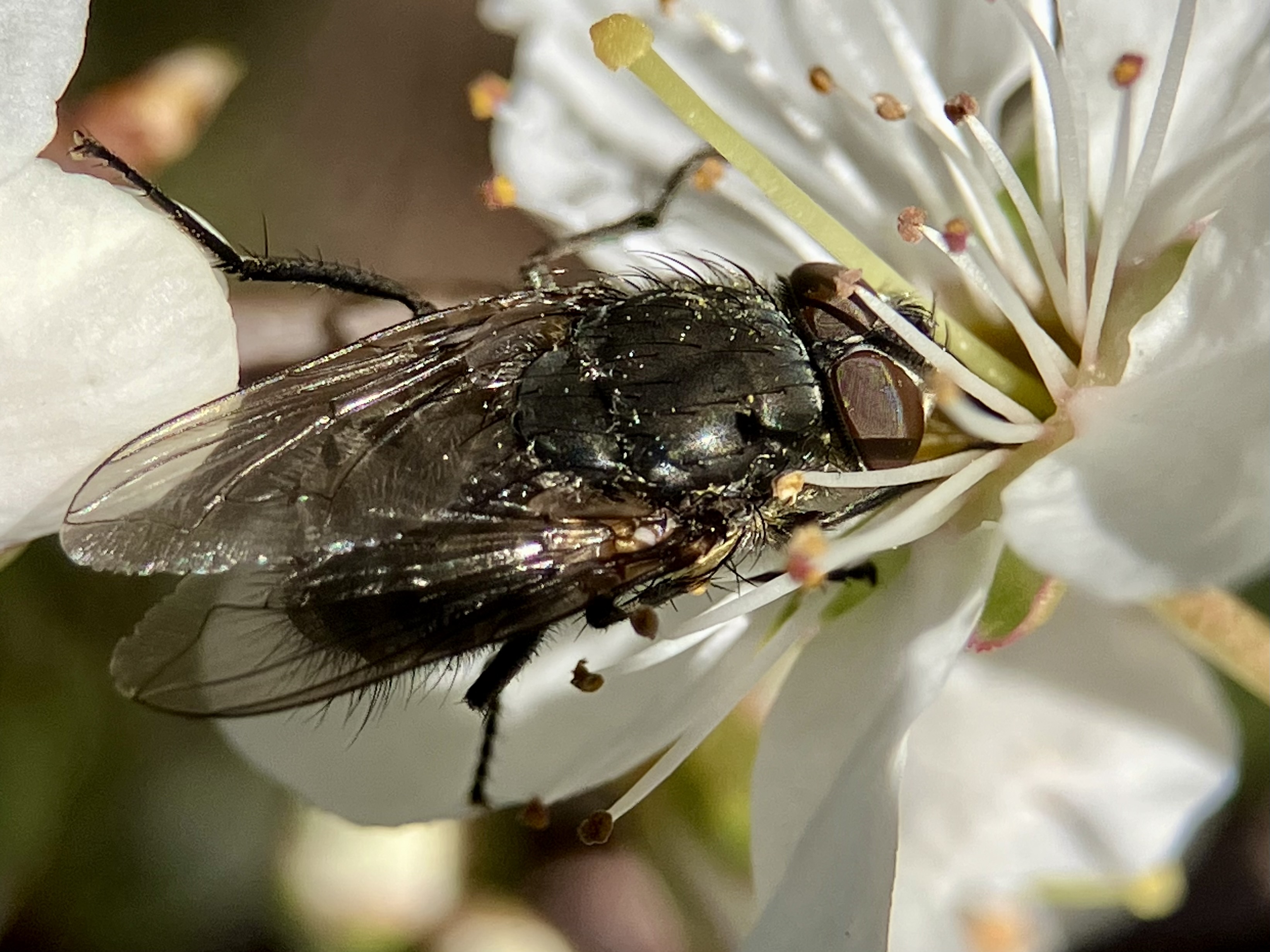
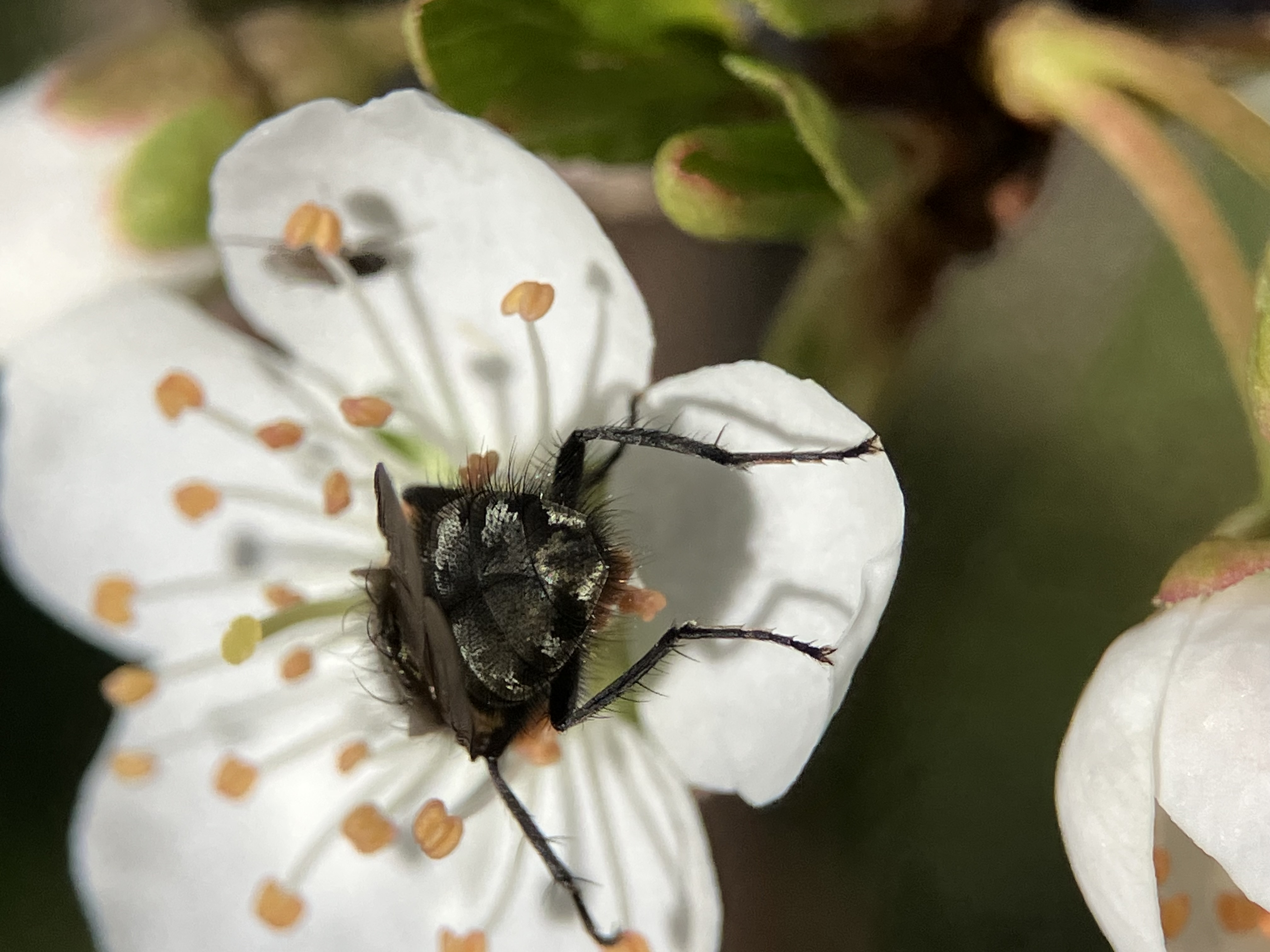
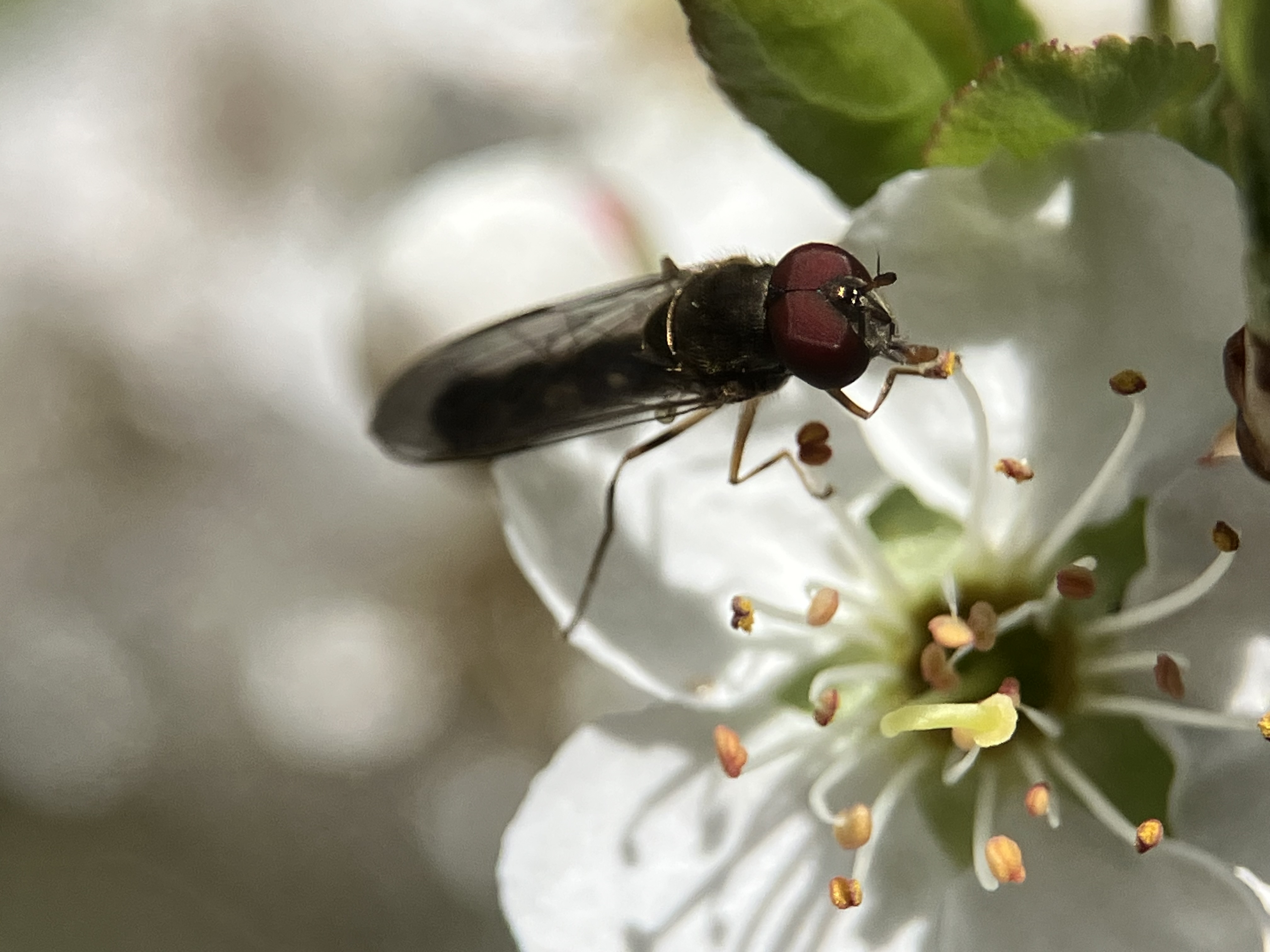
Fly #3, I believe this one (below) is the Greater Spring Blacklet (Cheilosia grossa), a species of Hoverfly in the family Syrphidae. This species is native to Europe and was introduced to the United States as a biocontrol for thistles. The adult is obviously enjoying its role as a plum tree pollinator and its offspring (the larvae) will help manage the thistles on our property, I suppose.
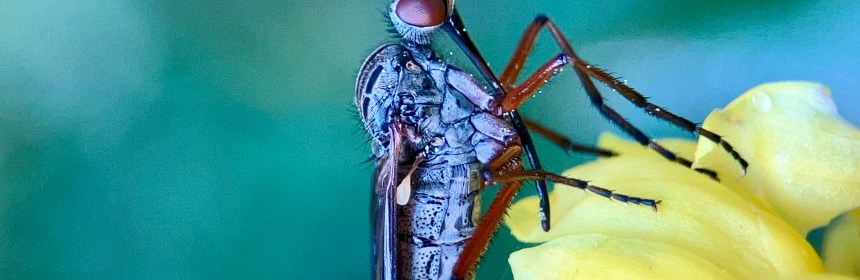
Fly #4 is Empis barbatoides, a Dance Fly. I had to stand on my tippy toes to try and get this video clip for you. I love this species of fly. They are so cool. The males catch other fly species, like March flies (Bibionidae) and make little balloon packets to woo a female. If you don’t believe me, you can read one of my earlier blog posts about them. I know a spot where the males seem to gather together to dance too. I keep hoping I’ll get some good video of them dancing to share.
And that’s all for tonight. It’s late and I’m going to bed. Just remember to repeat to your friends that FLIES are your friendly pollinators, and some of them are pest predators too. We need more people to advocate for them. They aren’t always a pest! 🪰
References
Alcock , John. 1973. The mating behaviour of Empis barbatoides Melander and Empis poplitea Loew (Diptera: Empididae), Journal of Natural History, 7:4, 411-420, DOI: 10.1080/00222937300770301
Brast, C. 2024. Dance With Me. Bugging You From San Juan Island. https://buggingyoufromsanjuanisland.com/2024/03/27/dance-with-me/
Bugguide. 2026. Cheilosia grossa. https://www.bugguide.net/node/view/1032753
Bugguide. 2026. Melanostoma mellinum. https://www.bugguide.net/node/view/36894
Gisondi S, Rognes K, Badano D, Pape T, Cerretti P (2020) The world Polleniidae (Diptera, Oestroidea): key to genera and checklist of species. ZooKeys 971: 105-155. https://doi.org/10.3897/zookeys.971.51283
Jewiss-Gaines, A., Marshall, S.A., Whitworth, T.L. 2012. Cluster flies (Calliphoridae: Polleniinae: Pollenia) of North America. Canadian Journal of Arthropod Identification No. 19, 15 February 2012, available online at doi: 10.3752/cjai.2012.19







 Bugging You From San Juan Island