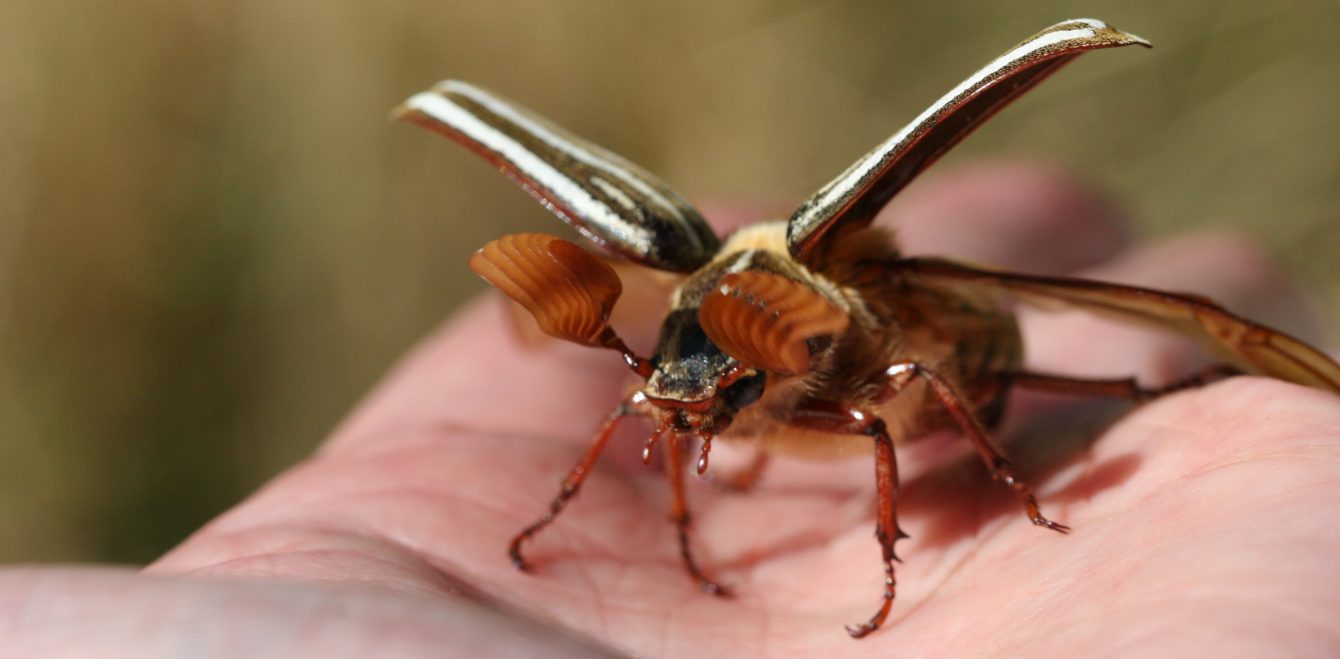
Fantastic Fly Friday
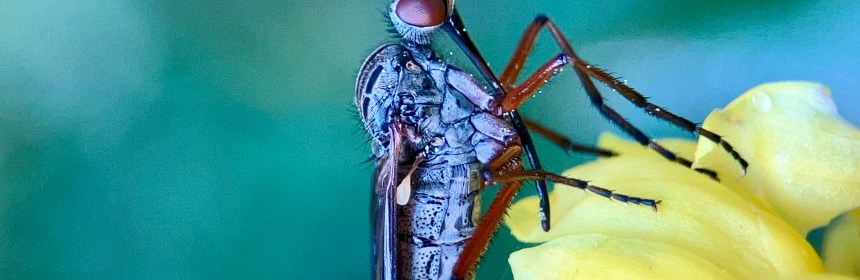
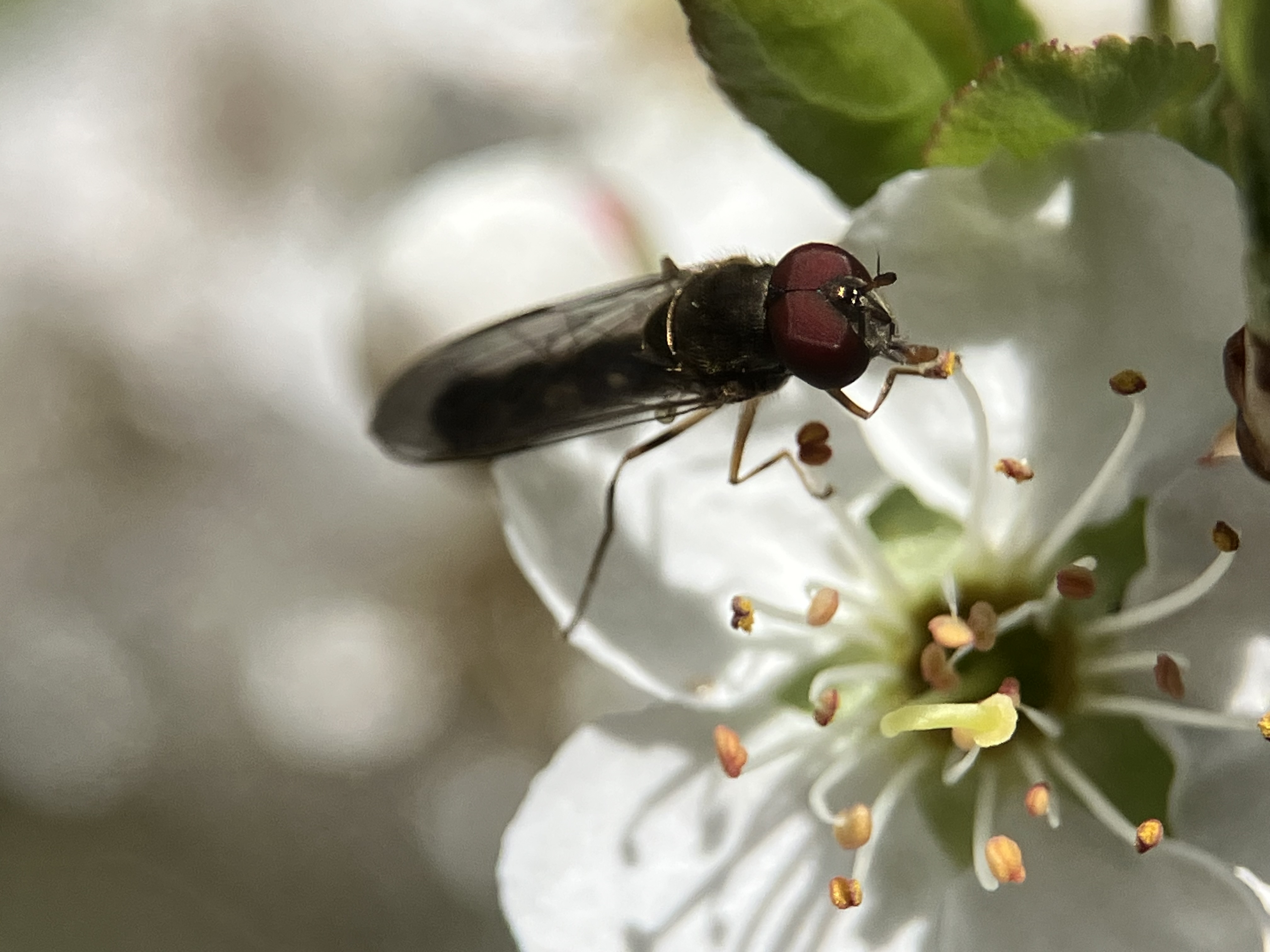
I thought I’d write up a short post about all the wonderful flies (and a few others) pollinating our plum trees in this cool spring weather. Why feature the flies? Well, for starters, the plum tree blossoms are white and flies love the color white. Another reason to feature the flies is because they are under-recognized and under appreciated, but very important pollinators. Some fly larvae even serve as pest predators, eating aphids. Others, like the tachinid fly below, use caterpillars that defoliate trees as hosts for their larvae to develop. Flies are also awesome because they do not sting! Some even “dance!” My favorite fly hasn’t shown up yet. It’s a Conopid Fly. More about that one later though…
This past week in the media, there have been so many posts about the decline in honey bees. While there are some (unwanted) honey bees showing up on days when the temperatures climb above 50 degrees, honey bees aren’t active if it is cooler. Flies, on the other hand, are quite busy at work pollinating and do just fine when it might only be 40 outside. Flies are awesome! They need our support and appreciation.
I’d like to add (and I do know something about this because of my entomology background), that honey bees are just not necessary on San Juan Island. In fact, they might even be a very bad thing. They showed up at our plum tree as the temperature warmed up the other day, and as they arrived in increasing numbers, they kicked off ALL of the native pollinators that I had been observing. 😦
For honey bees to fly out of the hive and forage, they need temperatures above 50 degrees. In my experience keeping bees (as part of my graduate school work), they typically do not survive well on the island unless they are fed supplemental sugar water. Think about the ecological footprint of growing sugar to feed the bees!
Feeding honey bees attracts (and supports) the buildup of yellow jacket populations which are attracted to honey bee hive resources (including eating the honey bee brood developing in the hive), and honey bees also bring pests and pathogens that impact native bees (especially bumble bees). One more thing! If you are growing tomatoes, bumble bees are your pollinators, not honey bees.
I hope you will read and consider this recent study published about how honey bees were negatively impacting native pollinators on Giannutri Island in Italy. They were causing a decline in the populations of wild bees. In fact, the study cited an “alarming 80% decline in wild bee abundance over 4 years” (Pasquali et al. 2025). You can access this study to read it yourself here: https://www.cell.com/current-biology/pdfExtended/S0960-9822(25)00262-3
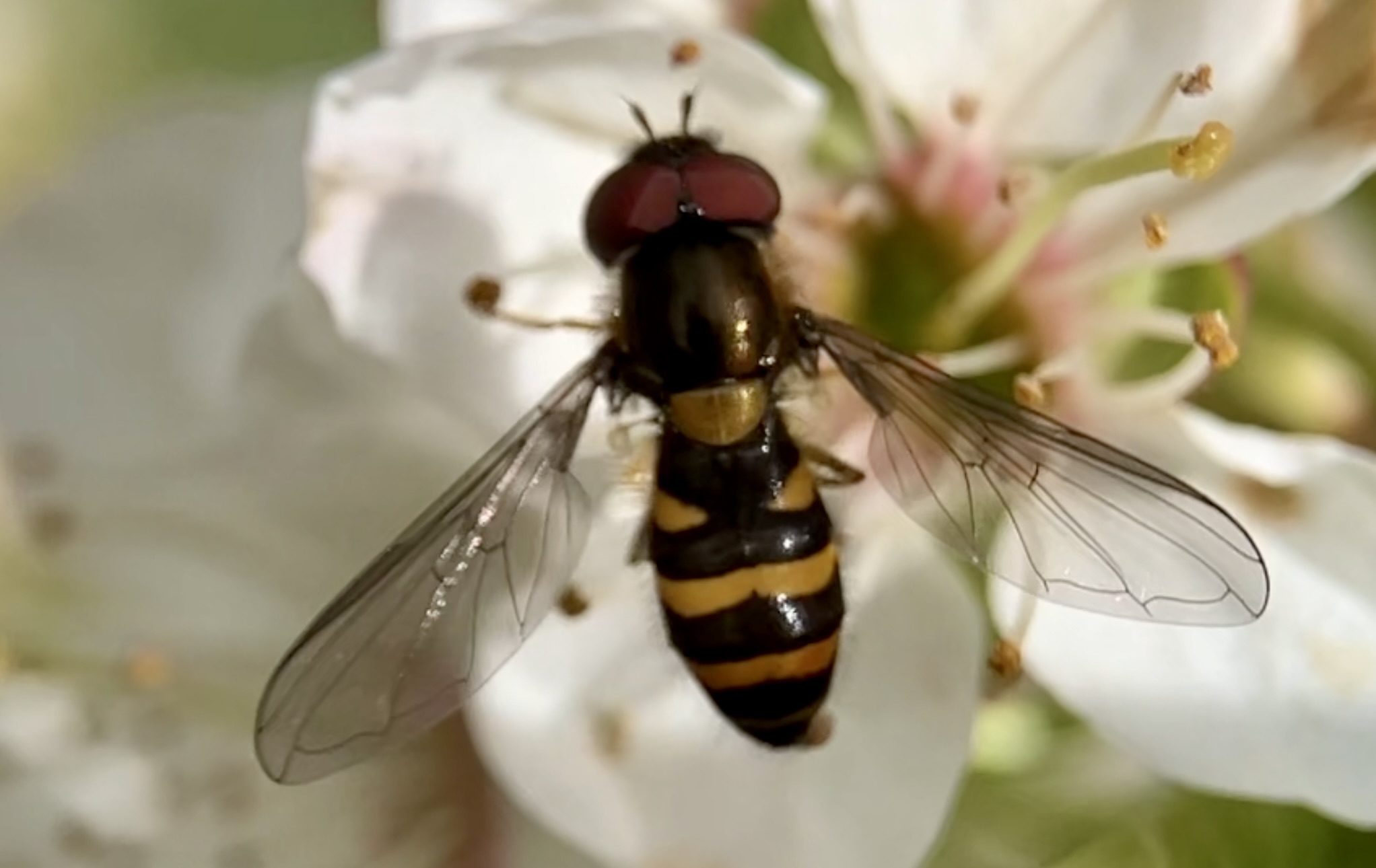
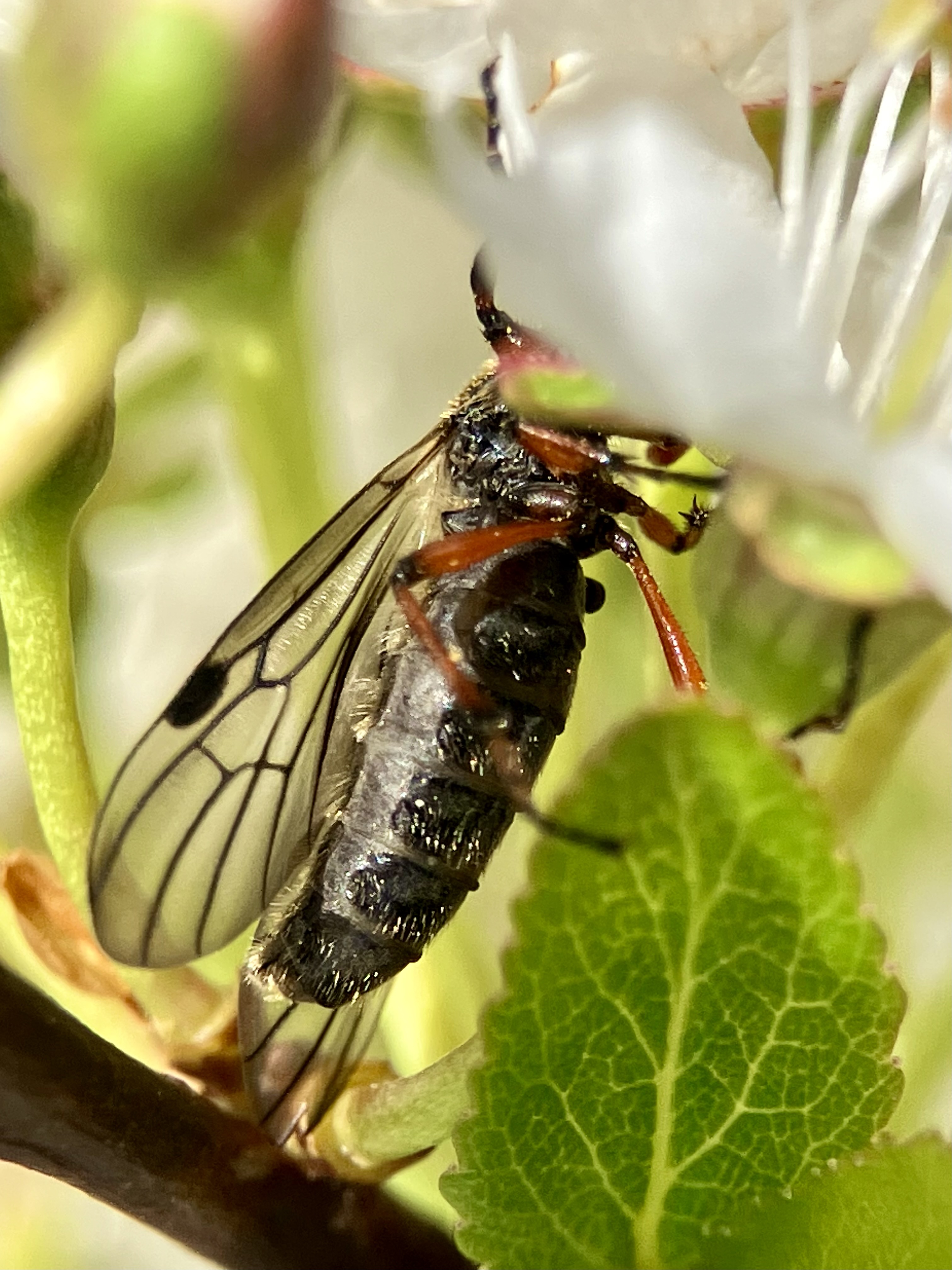
Enjoy the gallery of the native pollinators that I was fortunate to photograph and be able to share. Be a fly fan! Be a native bee fan! Learn about our unseen, but important night time pollinators (moths), and PLEASE LEAVE THE HONEY PIGS for the mainland industrial farm operations.





References
Anderson, H. L. D. (2024). Nocturnal moth communities and potential pollinators of berry agroecosystems in British Columbia (T). University of British Columbia. Retrieved from https://open.library.ubc.ca/collections/ubctheses/24/items/1.0447737
KEARNS, C. A. 2001. North American dipteran pollinators: assessing their value and conservation status. Conservation Ecology 5(1): 5. [online] URL: http://www.consecol.org/vol5/iss1/art5/
Pasquali, Lorenzo & Bruschini, Claudia & Benetello, Fulvia & Bonifacino, Marco & Giannini, Francesca & Monterastelli, Elisa & Penco, Marco & Salvati, Vania & Simbula, Giulia & Skowron Volponi, Marta & Smargiassi, Stefania & van Tongeren, Elia & Vicari, Giorgio & Cini, Alessandro & Dapporto, Leonardo. (2025). Island-Wide Removal of Honey Bees Reveals Exploitative Trophic Competition with Strongly Declining Wild Bee Populations. 10.2139/ssrn.5081459. https://www.sciencedirect.com/science/article/pii/S0960982225002623#:~:text=Article-,Island%2Dwide%20removal%20of%20honeybees%20reveals%20exploitative%20trophic%20competition,strongly%20declining%20wild%20bee%20populations
Ssymank, A., Kearns, Bonn & Carol. Flies – Pollinators on two wings. The Diptera Site. https://diptera.myspecies.info/diptera/content/flies-–pollinators-two-wings


 Bugging You From San Juan Island