Author Archives: BUGGING YOU FROM San Juan Island

Second Post in the Series: “NOT A MURDERER! JUST BECAUSE WE WEAR STRIPES, WE DIDN’T ESCAPE FROM PRISON AND WE AREN’T OUT TO KILL YOU!” I’m not BAAAAd, I’m A Wool Carder BEE 🐝

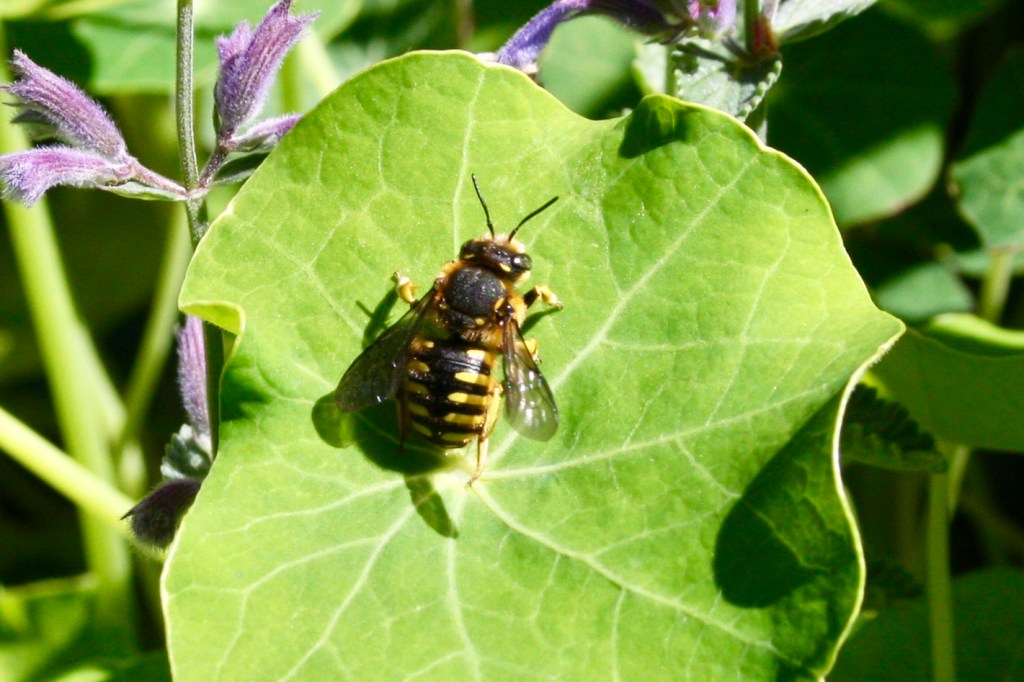
Meet Woolly Wool Carder. Woolly gets a bad rep because Woolly LOOKS like a Yellowjacket Wasp. All Woolly wants to do is find that patch of Lambswool in your garden or flower bed and take enough to make a nice cozy bed for its babies.
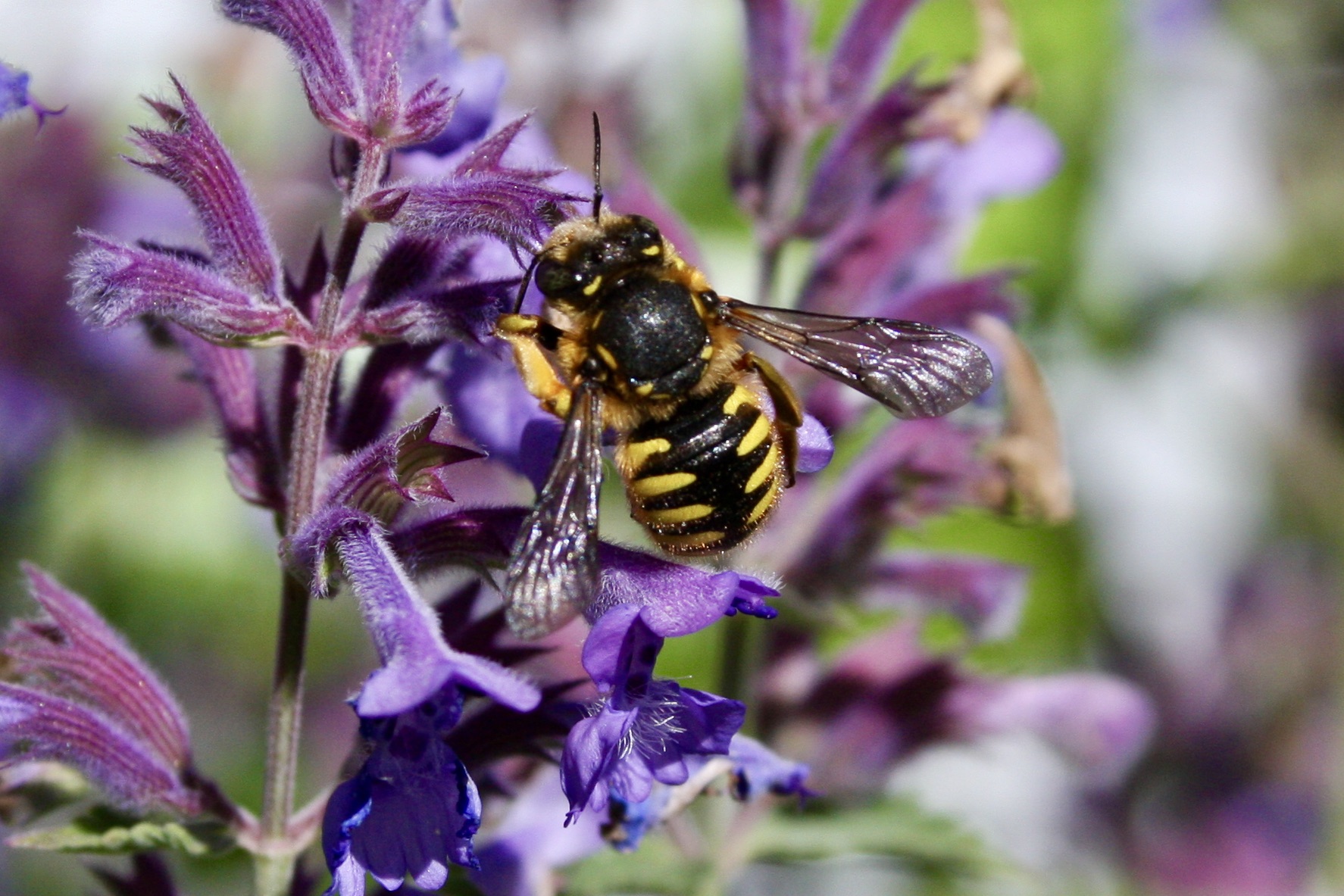
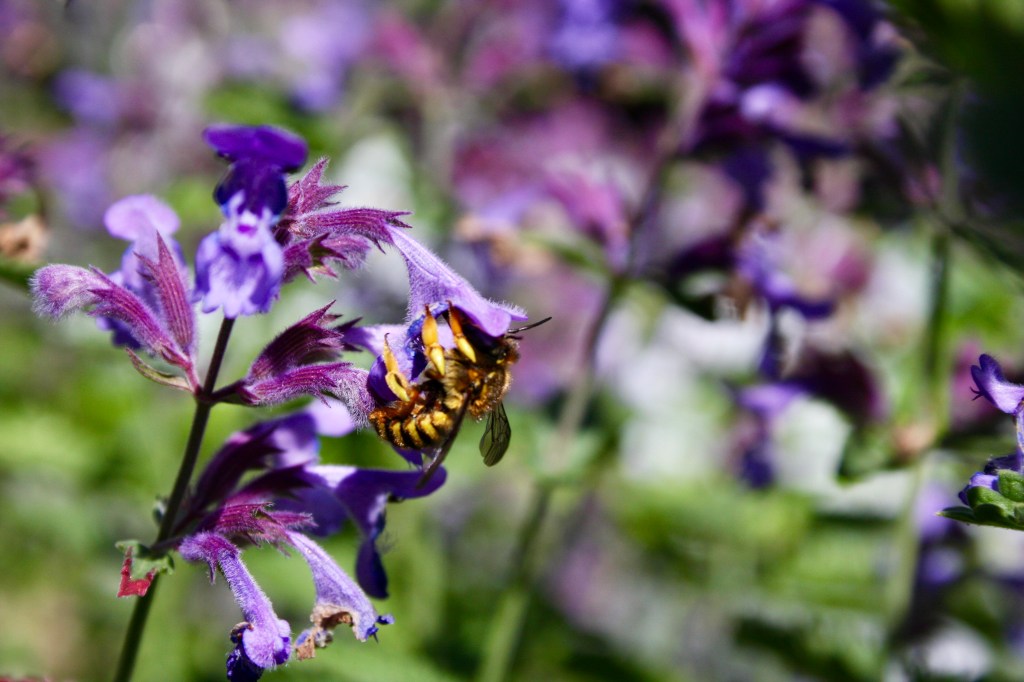
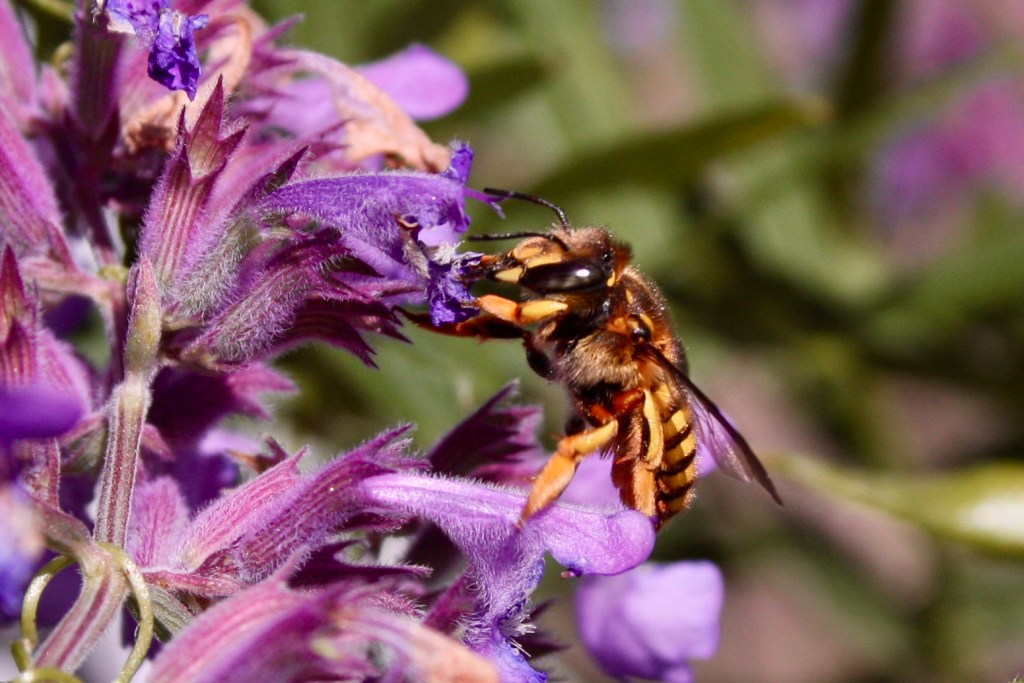
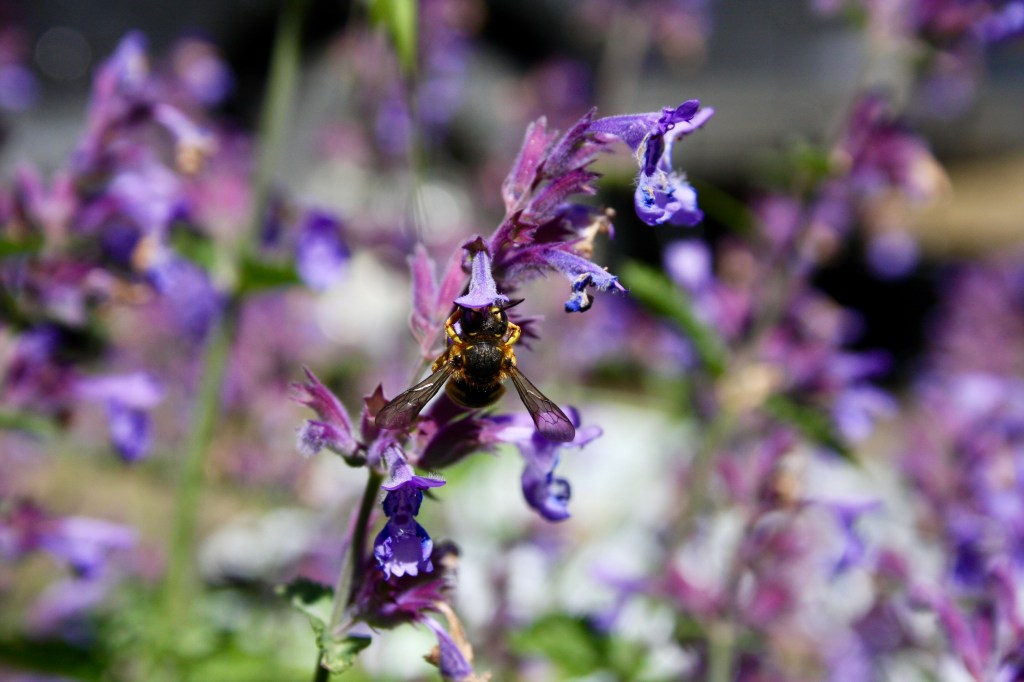
Wool Carder Bee (Anthidium manicatum) on Nepeta spp. (Catmint)

The European Wool Carder Bee (Anthidium manicatum) at first glance, looks like a somewhat chubby Yellowjacket. While these stouter and hairy-bodied bees mimic the barbed stingers everyone wants to avoid, they aren’t going to harm you at all. They don’t even have stingers, though the males do have some spines at the end of their abdomen they can use defensively against other flying insects that might be perceived as a threat to their food source or territory.

Wool Carders are smaller than most Yellowjackets. They are about the size of honey bees or between 11 and 17 mm. They are very brightly colored with yellow and black markings, but again, the distinguishing features to differentiate them from Yellowjackets are 1) they’re hairy and 2) they’re stout!

Other than sipping nectar from flowers, these solitary, cavity nesters are all about finding wool to make a cozy bed for their babies. Actually, aside from the uhm…deed, the female is the one doing all the provisioning for a nest. She will card “wool,” using her mandibles to scrape bits of trichomes (or hairs) from lambs ears or other fuzzy plants (especially those in the mint family) to make a cushioned bed on which to lay her egg. Each egg is provisioned with enough nectar and pollen to supply the developing larva with nutrients to reach pupation.

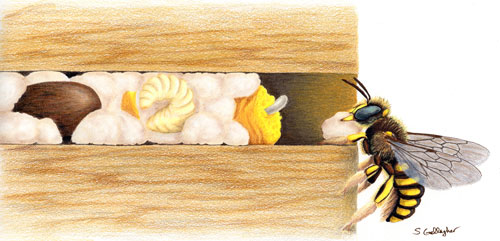
Wool Carder Bee nest – Illustration by Samantha Gallagher, University of Florida

The European Wool Carder Bee is native to Europe, Northern Africa, and Western Asia, but has become cosmopolitan in distribution. While non-native, it has become widely adapted to various habitats in North America. These bees are not dangerous to humans or pets. They are effective pollinators, but sometimes outcompete native bees for resources.

Human or Pet Risk factor NONE

References and Additional Reading:

  1. Species Anthidium manicatum – European Woolcarder http://Species Anthidium manicatum – European Woolcarder

2. Featured Creatures http://entnemdept.ufl.edu/creatures/MISC/BEES/Anthidium_manicatum.html

3. Campion, A. European Wool Carder Bees: Likable Bullies The World’s Best Gardening Blog

4. Bumblebee Conservation Trust Wool carder bee (Anthidium manicatum) https://www.bumblebeeconservation.org/woolcarderbee/
NOT A Murderer! Just Because We Wear Stripes, We Didn’t escape from Prison and we aren’t out to Kill you!

Menacing Murder Hornets are making headlines everywhere these days and giving many of our beneficial wasps a bad rap.  Before you grab that can of bug spray, follow along for the next week or two while I profile the good guys and give you tips on how to ID the ones you’ll see on the San Juan Islands.  

Wasp #1 – The Western Sand Wasp (Bembix americana)

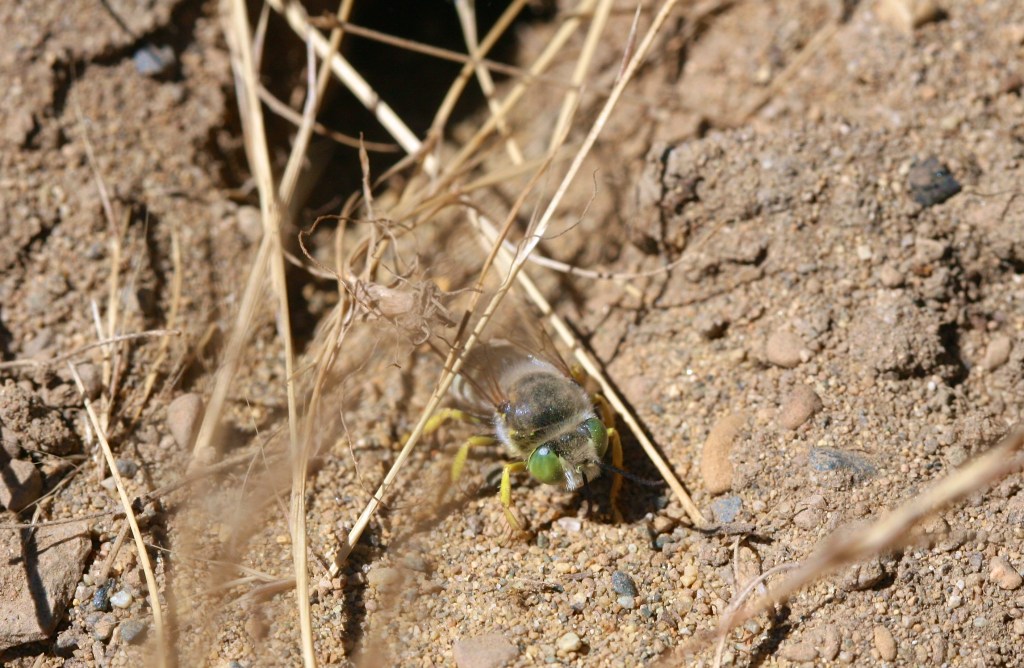
Bembix americana – Western Sand Wasp – San Juan Island, WA

On San Juan Island, if you’re out along the beach bluffs on the west side or anywhere at American Camp, Eagle Cove, or Jackson’s Beach and the nearby quarry, you may notice them hovering and darting about above the sand or spots of bare earth.  Western Sand Wasps are solitary digger wasps in the family Crabronidae.  Males and females emerge simultaneously and their entire adult life is to sip nectar from flowers, mate, and reproduce.  

After mating, it is the female who will provision her nest.  She scours the sand and nearby areas, hunting insects and arachnids to supply her developing offspring in underground burrows.  She will oviposit one egg in a single burrow, leaving it with a zombied insect, continuing until all her eggs are laid.  But her work is not over.  She must continue to check and feed each of her larvae in their individual burrows after the eggs hatch, making sure that they do not starve as they develop.   Fast fact…a single larva can eat more than 20 flies before it pupates!  

So she digs…and digs…and digs!  These wasps are able to dig so fast, they can disappear under the sand in a matter of seconds.  

video by Cynthia Brast-Bormann, San Juan Island, WA

Human or Pet Risk factor LOW  

Unless you are walking barefoot in the sand and mange to step on one of these, you are highly unlikely to be stung.  Wear foot coverings and enjoy your hike or picnic.  They’re not going to murder you!

References and other interesting reading:

Bugguide: https://bugguide.net/node/view/79847

Eaton, E. 2015. Sand Wasps, Genus Bembix. Bug Eric. http://bugeric.blogspot.com/2015/01/sand-wasps-genus-bembix.html

Garvey, K. 2016. An Insect You May Overlook. The Bug Squad. UC Davis. https://ucanr.edu/blogs/blogcore/postdetail.cfm?postnum=21912

Malinek, J. 2016. Bembix americana. Janamalinekphotoblogspot. http://janamalinekphoto.blogspot.com/2016/08/western-sand-wasp-bembix-americana.html

Thatch Ants Attack Caterpillar

I had my bearded dragon outdoors the other afternoon to get his 20 minutes of sunshine (me too!) when I spied something unusual moving in the grass. The object of my attention was a fairly large caterpillar lying in the middle of 25-30 voracious Thatching Ants (Formica obscuripes), intent on relocating the caterpillar (their dinner), even if they had to do it one bite at a time.

Observing them at work, I thought of how the Egyptian pyramids were built. Humans. Lots of them. Carrying those giant blocks and stacking them required formidable effort. Perhaps these ants in their orchestrated labor efforts would successfully lug this lepidopteran larvae back to their nest.

I did not stay and watch to the end. I watched just long enough and filmed this clip. I felt a bit sad for the caterpillar, wondered about the butterfly or moth it might have become, and I marveled a little about these industrious ants that cooperate for the collective benefit of the colony.

Ants are pretty amazing. 🐜🐜🐜

Stay tuned for more on Thatch Ants!

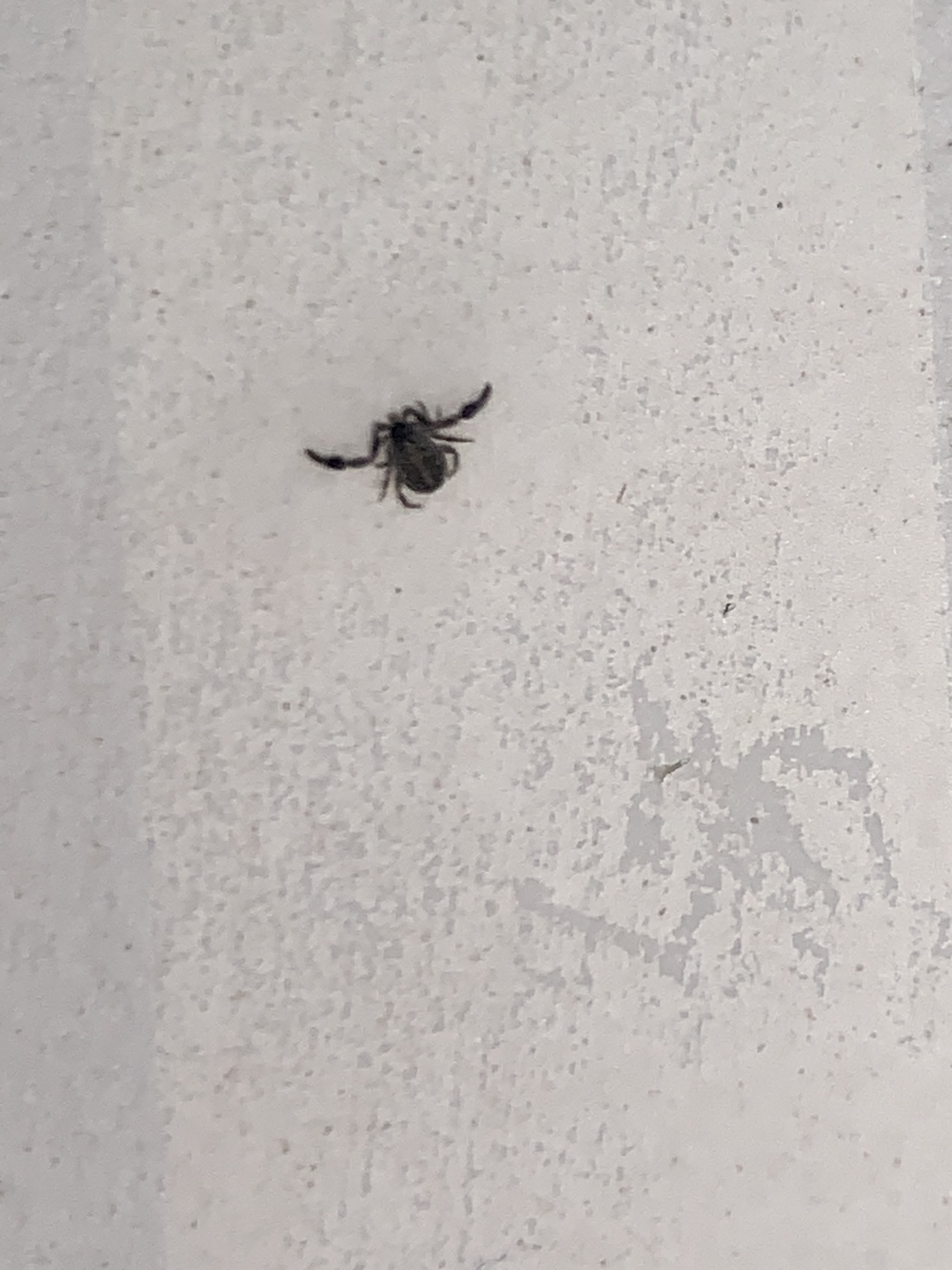
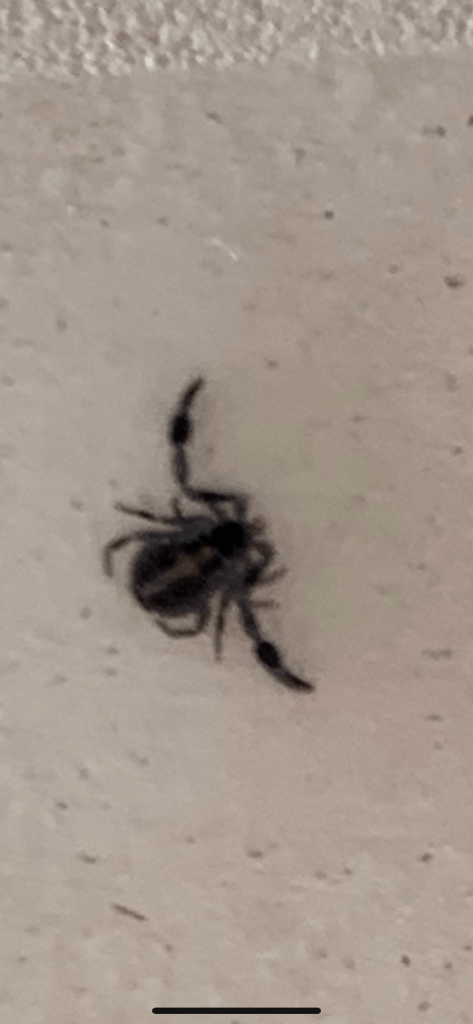
The House Pseudoscorpion (Cheliferidae cancroides)

I got the coolest picture of a bug on Friday! 

House Pseudoscorpion (Cheliferidae cancroides)
2/28/2020
San Juan Island
photo by T. Santora
House Pseudoscorpion (Cheliferidae cancroides)
2/28/2020
San Juan Island
photo by T. Santora

This little creature was photographed on February 28, 2020 by Trever Santora on San Juan Island, WA.

It’s a Pseudoscorpion! Found on the windowsill of his house and no larger than a tiny sesame seed, I believe it to be an immature House Pseudoscorpion (Cheliferidae cancroides). 

Keep an eye out for these. They’re quite harmless to humans and can’t sting or bite you. Pseudoscorpions are predacious and beneficial because they eat other organisms that are pests. Some live in birds’ nests and eat the mites that can build up and harm nestlings. 

Since they don’t have wings and can’t fly, pseudoscorpions move around by phoresy. That means they’ll hitch a ride on someone who can! Not just birds, but bees, wasps, and flies can also provide a free lift.

Check out https://bugguide.net/node/view/728962 for more information.

Thanks for reading 🌻

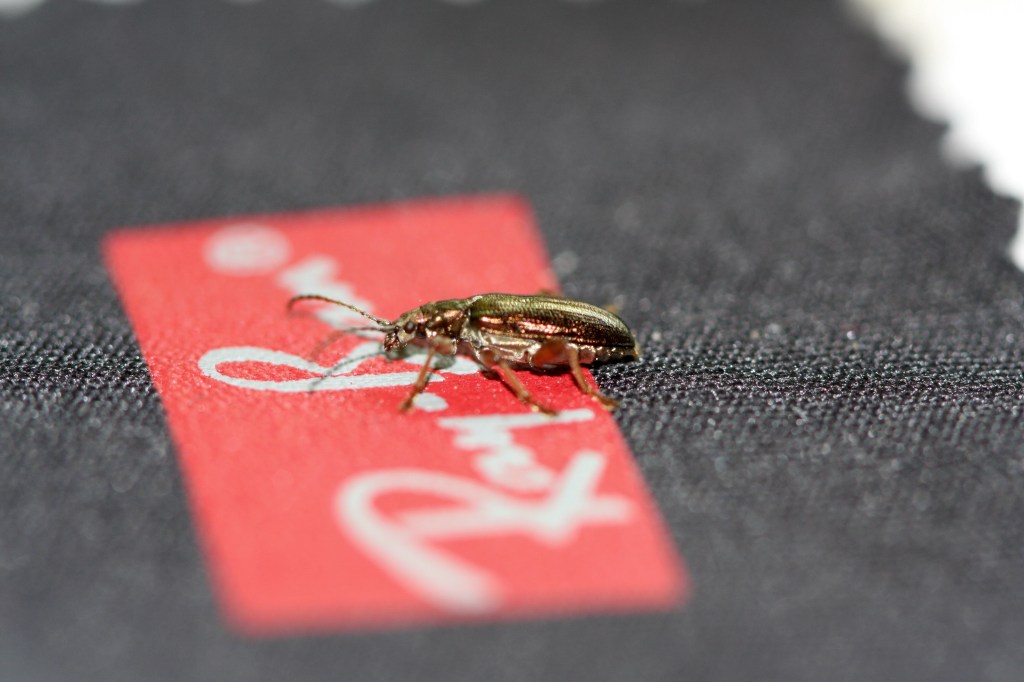
Long-horned Leaf Beetle (Plateumaris germari)

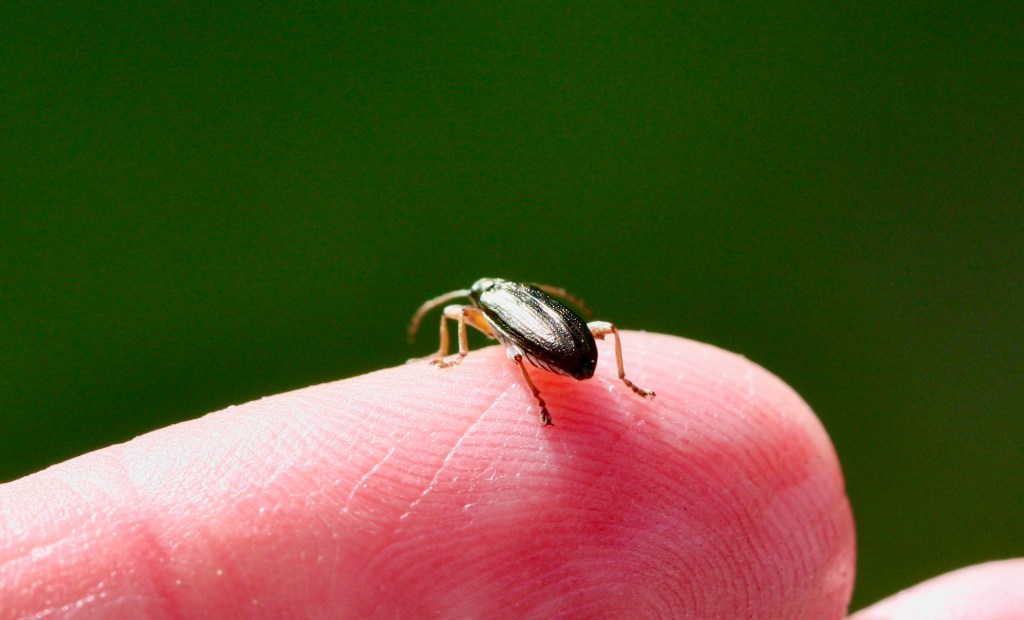
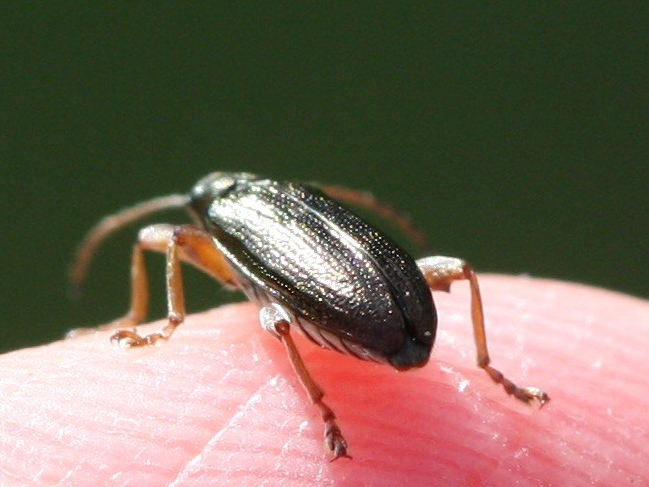
I really enjoy the days when I have an opportunity to go over insect images I’ve taken, but haven’t yet had the chance to identify. This small (approx 7-8mm), metallic beetle is a leaf beetle in the family Chrysomelidae. It’s a Long-horned Leaf Beetle (Plateumaris germari). They are associated with aquatic habitats and this specimen was found near a wetland habitat on San Juan Island, WA., May 12, 2015. Yes. I’m slow at getting around to sorting things, but was happy to share this one today.

Long-horned Leaf Beetle
Plateumaris germari
San Juan Island, WA
May 12, 2015
photo by Cynthia Brast
Long-horned Leaf Beetle
Plateumaris germari
Long-horned Leaf Beetle
Plateumaris germari
Long-horned Leaf Beetle
Plateumaris germari
Long-horned Leaf Beetle
Plateumaris germari

References: https://bugguide.net/node/view/601794

Happy Hour and Bug Beer!

For all you foodies out there, here’s a new one for you. Beer brewers are isolating yeast from insects, including bees, wasps, and even crickets. Don’t worry, no actual bug parts are going to be in your drink. Drink up and enjoy the buzz!

https://www.foodandwine.com/drinks/researchers-brewing-beer-bug-yeast

Pardosa spp. Thin-legged Wolf Spider

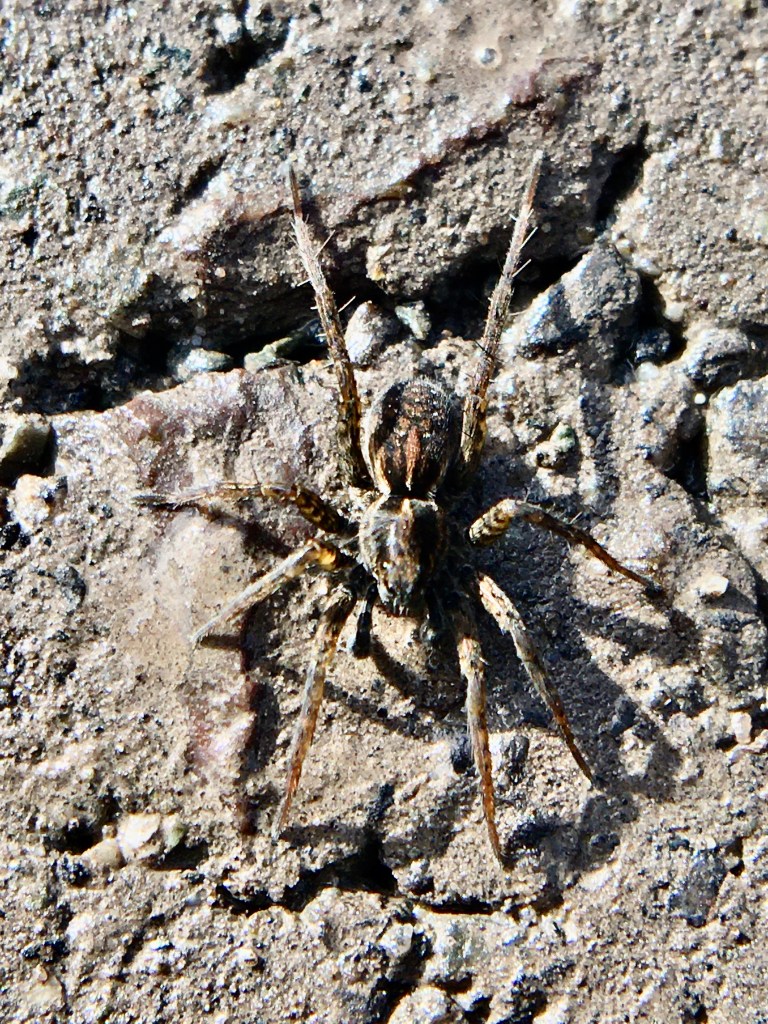
Here’s another spider for you. I photographed this one yesterday, February 22, 2019, on the dirt road near my home on San Juan Island, WA. There were two of them, but in the past, I’ve seen up to twenty crawling around (and they move extremely fast) in this (usually sunny) spot. My ID attempt here is that it’s some type of wolf spider. Size is approximately 3-4mm. The photos were taken with a macro clip on lens for iPhone.

Pardosa spp. Thin-legged wolf spider
2.22.2020
Three Corner Lake Road, San Juan Island, WA
ID credits thanks to A. Pelegrin and L. Paxson
Pardosa spp. Thin-legged wolf spider
2.22.2020
Three Corner Lake Road, San Juan Island, WA
ID credits thanks to A. Pelegrin and L. Paxson

The short video clip below is from the same spot in the road on April 20, 2019. On this occasion, there were LOTS of these long-legged wanderers and they are super fast!

Pardosa spp. Thin-legged Wolf Spider
San Juan Island,WA
April 20, 2019

References:

https://bugguide.net/node/view/3389

http://www.americanarachnology.org/JoA_free/JoA_v32_n1/arac-032-01-0055.pdf

Cicurina spp. February 19, 2020

This spider is in the genus Cicurina, also known as the Cave Meshweaver or Cave Spider. Pronounced “sik-uhr-EYE-nuh,” the Latin name translates to “tame” or “mild.”

From Buggide.net and according to Rod Crawford:

Cicurina of Western Washington: “C. pusilla is by far the commonest. C. simplex and C. “idahoana” (really an undescribed species related to idahoana, in my opinion) are moderately common. Cicurina tersa is less common than the previous three. The other Cicurina of western Washington are actually rare here, C. tacomaand C. intermedia.” ~Rod Crawford

Cicurina spp.
Found in Rotting Fir log. 2.19.2020. Three Corner Lake Road, San Juan Island, WA
Size – approx 5mm
Photo by Cynthia Brast-Bormann
Identified by A. Pelegrin and L. Paxson at Pacfic Norwest Bugs
Cicurina spp.
Found in Rotting Fir log. 2.19.2020. Three Corner Lake Road, San Juan Island, WA
Size – approx 5mm
Photo by Cynthia Brast-Bormann
Identified by A. Pelegrin and L. Paxson at Pacfic Norwest Bugs

References:

Adams, R.J. 1970. Field Guide to the Spiders of California and the Pacific Coast States. California Natural History Guides. University of California Press. Los Angeles.

https://www.facebook.com/photo.php?fbid=10219387419670050&set=gm.3092310434134350&type=3&theater&ifg=1

https://bugguide.net/node/view/236713

Gold and Brown Rove Beetle (Ontholestes cingulatus)

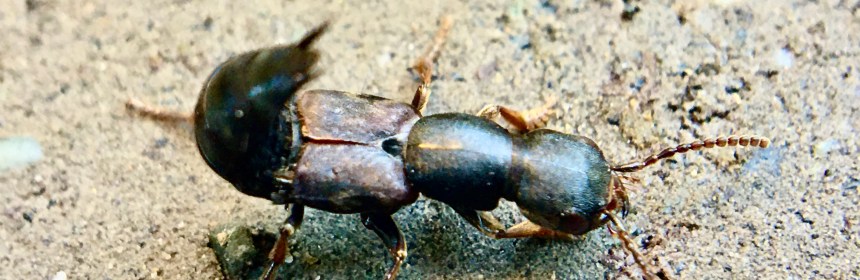
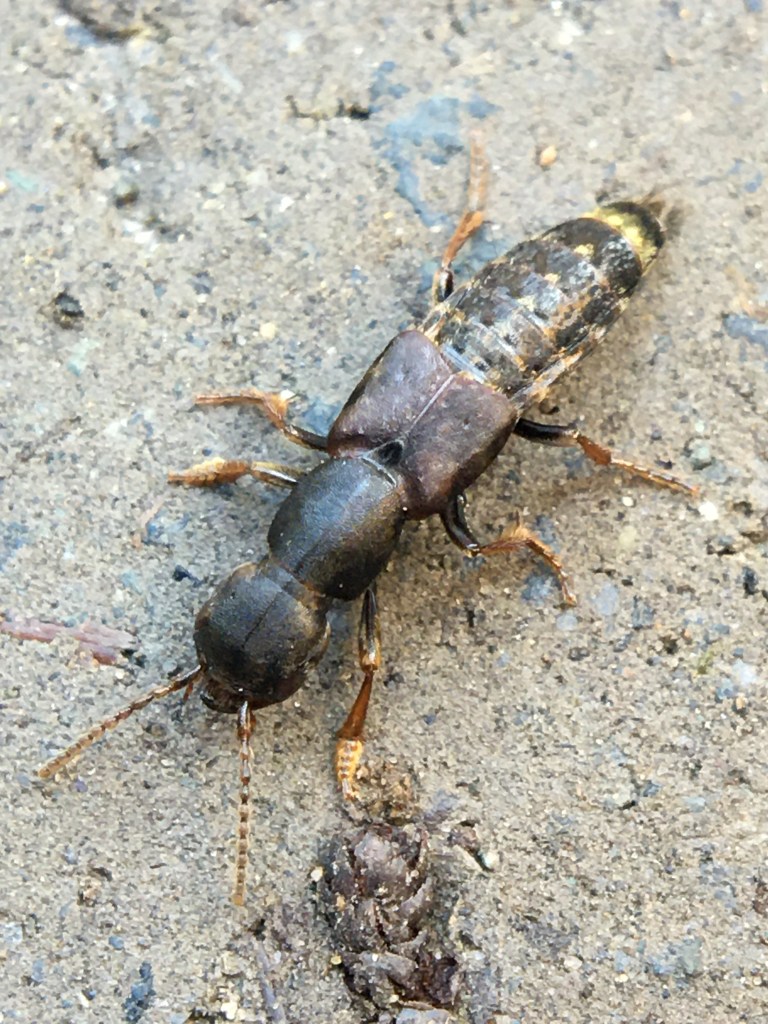
I only saw a handful of insects yesterday when I went out to look along the road near my home. The most remarkable of these (and the easiest to see) without magnifying tools, was the slender, brown rove beetle with the sunshine tail!

Gold and Brown Rove Beetles are fairly small, slender, and typically pretty agile. They have a brown body with little yellow hairs (setae) at the end of their “tail.” Another patch of this golden setae wraps around their “belly,” like a little yellow ‘belt,’ This one was indeed on the smaller side at about 12 mm. However, given the outdoor temperature was still pretty low, it wasn’t agile enough to escape a short photo session.

Ontholestes cingulatus (Gold and Brown Rove Beetle) 2.19.2020
Three Corner Lake Road, San Juan Island, WA

I’ll admit, I poked it (very gently) to see if I could get a photo of it with its tail up. When threatened, they have defense glands that emit a chemical fluid. I found out (after reading through the Journal of Chemical Ecology from 1990) that researchers found this defense fluid is made up primarily of a chemical called iridodial (Huth and Dettner, 1990).

Here’s a photo of my beetle exuding the defense fluid! Note the little white bubble at the end of its tail.

Ontholestes cingulatus Gold and Brown Rove Beetle emitting defense fluid
2.19.2020
San Juan Island, WA

Here in the next photo, you can see it without the defense fluid.

Ontholestes cingulatus Gold and Brown Rove Beetle
2.19.2020
San Juan Island, WA

Being curious, I had to investigate a bit about the chemical properties of iridoids. I was intrigued to learn that “iridoids are secondary metabolites present in various plants, especially in species belonging to the Apocynaceae, Lamiaceae, Loganiaceae, Rubiaceae, Scrophulariaceae and Verbenaceae families, Viljoen et al., (2012).” Tundis et. al., (2008) found that “iridoids exhibit a wide range of bioactivity, such as neuroprotective, antinflammatory and immunomodulator, hepatoprotective and cardioprotective effects.” Findings also included iridoid compounds also possessed anticancer, antioxidant, antimicrobic, hypoglycaemic, hypolipidemic, choleretic, antispasmodic and purgative properties (Tundis et al., 2008).

While I didn’t find much information (yet) utilizing iridoid secretions from insects, I did begin to wonder if that tiny drop of fluid could have provided some anti-inflammatory benefit for the migraine headache I’d been suffering from for days. I’ve been working with a friend of mine who is a research pharmacokineticist, helping to edit his papers and those of some associates he has in China. Probably, I’ll pass this along since they’re always looking for ideas on how to develop/synthesize new pharmaceuticals and biomimicry seems to be the new frontier.

Ontholestes cingulatus Gold and Brown Rove Beetle
2.19.2020
San Juan Island, WA

References:

Huth, A. and K. Dettner. 1990. Defense chemicals from abdominal glands of 13 rove beetle species of sub tribe Staphylinia (Coleoptera:Staphylinidae, Staphylininae). Journal of Chemical Ecology, 16:9, pp 2691-2711.

Tundis, R., Loizzo, M.R., Menichini, F., Statti, G.A., and F. Menichini. 2008. Biological and Pharmacological Activities of Iridoids: Recent Developments, Mini-Reviews in Medicinal Chemistry. 8: 399. https://doi.org/10.2174/138955708783955926

Viljoen A., Mncwangi N., Vermaak I. Anti-inflammatory iridoids of botanical origin. 2012. Curr. Med. Chem. 19:2104–2127. doi: 10.2174/092986712800229005

« Older Entries Recent Entries »